<?xml version="1.0" encoding="ISO-8859-1"?><article xmlns:mml="http://www.w3.org/1998/Math/MathML" xmlns:xlink="http://www.w3.org/1999/xlink" xmlns:xsi="http://www.w3.org/2001/XMLSchema-instance">
<front>
<journal-meta>
<journal-id>0375-0760</journal-id>
<journal-title><![CDATA[Revista Cubana de Medicina Tropical]]></journal-title>
<abbrev-journal-title><![CDATA[Rev Cubana Med Trop]]></abbrev-journal-title>
<issn>0375-0760</issn>
<publisher>
<publisher-name><![CDATA[Centro Nacional de Información de Ciencias Médicas]]></publisher-name>
</publisher>
</journal-meta>
<article-meta>
<article-id>S0375-07601998000100012</article-id>
<title-group>
<article-title xml:lang="es"><![CDATA[Comportamiento de la mortalidad por leptospirosis en Cuba, 1987-1993]]></article-title>
</title-group>
<contrib-group>
<contrib contrib-type="author">
<name>
<surname><![CDATA[Padilla Pérez]]></surname>
<given-names><![CDATA[Oslando]]></given-names>
</name>
<xref ref-type="aff" rid="A01"/>
</contrib>
<contrib contrib-type="author">
<name>
<surname><![CDATA[Toledo Vila]]></surname>
<given-names><![CDATA[Herio de Jesús]]></given-names>
</name>
<xref ref-type="aff" rid="A01"/>
</contrib>
<contrib contrib-type="author">
<name>
<surname><![CDATA[Vidal García]]></surname>
<given-names><![CDATA[Ignacio]]></given-names>
</name>
<xref ref-type="aff" rid="A01"/>
</contrib>
<contrib contrib-type="author">
<name>
<surname><![CDATA[Rodríguez Ávila]]></surname>
<given-names><![CDATA[Iraida]]></given-names>
</name>
<xref ref-type="aff" rid="A01"/>
</contrib>
</contrib-group>
<aff id="A01">
<institution><![CDATA[,Instituto de Medicina Tropical Pedro Kourí  ]]></institution>
<addr-line><![CDATA[Ciudad de La Habana ]]></addr-line>
<country>Cuba</country>
</aff>
<pub-date pub-type="pub">
<day>00</day>
<month>04</month>
<year>1998</year>
</pub-date>
<pub-date pub-type="epub">
<day>00</day>
<month>04</month>
<year>1998</year>
</pub-date>
<volume>50</volume>
<numero>1</numero>
<fpage>61</fpage>
<lpage>66</lpage>
<copyright-statement/>
<copyright-year/>
<self-uri xlink:href="http://scielo.sld.cu/scielo.php?script=sci_arttext&amp;pid=S0375-07601998000100012&amp;lng=en&amp;nrm=iso"></self-uri><self-uri xlink:href="http://scielo.sld.cu/scielo.php?script=sci_abstract&amp;pid=S0375-07601998000100012&amp;lng=en&amp;nrm=iso"></self-uri><self-uri xlink:href="http://scielo.sld.cu/scielo.php?script=sci_pdf&amp;pid=S0375-07601998000100012&amp;lng=en&amp;nrm=iso"></self-uri><abstract abstract-type="short" xml:lang="es"><p><![CDATA[Se realizó un estudio descriptivo con los datos disponibles en la Dirección Nacional de Estadísticas del Ministerio de Salud Pública sobre los 397 fallecidos por leptospirosis en Cuba durante el período comprendido entre 1987 y 1993. Se tabularon según grupos etarios, sexo, lugar de residencia, fecha de defunción, realización de la necropsia y ocupación al fallecer. Se calcularon los años de vida potencial perdidos para el grupo de 0 a 65 años. Se observó un incremento brusco de la tasa en 1993, que alcanzó un valor de 1,03 por 100 000 habitantes. Las tasas más altas se registraron en los mayores de 50 años. La alta tasa en el sexo masculino fue la que determinó el comportamiento global de ésta. Los meses más afectados fueron: octubre, noviembre y junio. Las mayores tasas se encontraron en el municipio especial Isla de la Juventud y en la provincia de Las Tunas. El grupo de población más afectado fue el de los jubilados, seguido de los obreros de la producción y los obreros agrícolas.]]></p></abstract>
<abstract abstract-type="short" xml:lang="en"><p><![CDATA[It was conducted a descriptive study of the data available at the National Statistics Division of the Ministry of Public Health on the 397 deaths caused by leptospirosis in Cuba from 1987 to 1993. Data were tabulated according to age, sex, place of residence, death date, necropsy, and occupation on dying. The years of potential life lost by the age group 0-65 were calculated. In 1993, it was observed a rough increase of the rate that reached a value of 1.03 per 100 000 inhabitants. The highest rates were registered among those over 50. The high rate attained by males determined their general behavior. The incidence of this disease rose in October, November and June. The Isle of Youth special municipality and Las Tunas were the provinces with the greatest rates. The retired were the most affected followed by the factory and agricultural workers.]]></p></abstract>
<kwd-group>
<kwd lng="es"><![CDATA[LEPTOSPIROSIS]]></kwd>
<kwd lng="es"><![CDATA[TASA DE MORTALIDAD]]></kwd>
<kwd lng="es"><![CDATA[EPIDEMIOLOGIA DESCRIPTIVA]]></kwd>
<kwd lng="es"><![CDATA[CUBA]]></kwd>
<kwd lng="en"><![CDATA[LEPTOSPIROSIS]]></kwd>
<kwd lng="en"><![CDATA[MORTALITY RATE]]></kwd>
<kwd lng="en"><![CDATA[EPIDEMIOLOGY, DESCRIPTIVE]]></kwd>
<kwd lng="en"><![CDATA[CUBA]]></kwd>
</kwd-group>
</article-meta>
</front><body><![CDATA[ <P>INSTITUTO DE MEDICINA TROPICAL "PEDRO KOUR&Iacute;" </P> <H2>Comportamiento de la mortalidad por leptospirosis en Cuba, 1987-1993</H2>     <P><A HREF="#autores"><I>Lic. Oslando Padilla P&eacute;rez,<SUP>1&nbsp;</SUP> Dr. C. Herio de Jes&uacute;s Toledo Vila,<SUP>2&nbsp;</SUP> Lic. Ignacio Vidal Garc&iacute;a<SUP>1 </SUP>y Lic. Iraida Rodr&iacute;guez &Aacute;vila<SUP>3</sup></I></A> </P> <H4>RESUMEN</H4>     <P>Se realiz&oacute; un estudio descriptivo con los datos disponibles en la Direcci&oacute;n Nacional de Estad&iacute;sticas del Ministerio de Salud P&uacute;blica sobre los 397 fallecidos por leptospirosis en Cuba durante el per&iacute;odo comprendido entre 1987 y 1993. Se tabularon seg&uacute;n grupos etarios, sexo, lugar de residencia, fecha de defunci&oacute;n, realizaci&oacute;n de la necropsia y ocupaci&oacute;n al fallecer. Se calcularon los a&ntilde;os de vida potencial perdidos para el grupo de 0 a 65 a&ntilde;os. Se observ&oacute; un incremento brusco de la tasa en 1993, que alcanz&oacute; un valor de 1,03 por 100 000 habitantes. Las tasas m&aacute;s altas se registraron en los mayores de 50 a&ntilde;os. La alta tasa en el sexo masculino fue la que determin&oacute; el comportamiento global de &eacute;sta. Los meses m&aacute;s afectados fueron: octubre, noviembre y junio. Las mayores tasas se encontraron en el municipio especial Isla de la Juventud y en la provincia de Las Tunas. El grupo de poblaci&oacute;n m&aacute;s afectado fue el de los jubilados, seguido de los obreros de la producci&oacute;n y los obreros agr&iacute;colas. </P>     <P>Descriptores DeCS: LEPTOSPIROSIS/mortalidad; TASA DE MORTALIDAD; EPIDEMIOLOGIA DESCRIPTIVA; CUBA. </P>     <P>La leptospirosis es una zoonosis de amplia distribuci&oacute;n mundial, que se favorece en los climas tropicales y c&aacute;lidos y las zonas h&uacute;medas. Es causada por espiroquetas del g&eacute;nero <I>Leptospira</I>, las cuales penetran por la piel y las mucosas, por contacto con agua contaminada con orina de animales infectados, entre los que se destacan las ratas, los ratones, el ganado bovino, el cerdo y el perro. Los grupos de mayor riesgo ocupacional son los trabajadores de los arrozales, los cortadores de ca&ntilde;a de az&uacute;car y otros obreros agr&iacute;colas, trabajadores de mataderos, de alcantarillados y otras personas que por sus actividades dom&eacute;sticas u ocupacionales tienen contacto directo o indirecto con la orina de los animales.<SUP>2</SUP> </P>     <P>En Cuba, la leptospirosis se distribuye por todo el pa&iacute;s, y el n&uacute;mero de casos diagnosticados, que ven&iacute;a en descenso hasta 1987, a partir de ese a&ntilde;o se ha incrementado y alcanza tasas de morbilidad de 5,3; 7,2 y 9,8 x 100 000 habitantes en los a&ntilde;os 1992, 1993 y 1994, respectivamente.<SUP>3</SUP> Las provincias m&aacute;s afectadas son: Villa Clara, Ciego de &Aacute;vila, Camag&uuml;ey y Cienfuegos, mientras que los meses en que m&aacute;s casos se reportan son octubre, noviembre y diciembre (Han Kala, AL. Leptospirosis humana [Tesis de terminaci&oacute;n de residencia de Microbiolog&iacute;a] Instituto de Medicina Tropical "Pedro Kour&iacute;" 1992:11-17). </P>     <P>La tasa de letalidad por esta enfermedad es baja, pero aumenta conforme avanza la edad y puede llegar al 20 % o m&aacute;s en los pacientes con ictericia y lesi&oacute;n renal que no han sido tratados con di&aacute;lisis renal.<SUP>4-7</SUP> </P>     <P>En Cuba se ha producido un incremento de los fallecimientos por esta causa, de 46 en 1990 a 112 en 1993. </P>     <P>Por tal motivo se decide realizar este estudio preliminar para caracterizar la mortalidad por leptospirosis en Cuba en el per&iacute;odo comprendido entre 1987 y 1993, para precisar su tendencia e identificar las variables que caracterizan a los grupos poblacionales donde ha ocurrido un mayor n&uacute;mero de defunciones, a los efectos de utilizarlas en el dise&ntilde;o de un sistema de vigilancia. </P> <H4>M&Eacute;TODOS</H4>     <P>Se obtuvieron los datos de los 397 fallecimientos por leptospirosis en Cuba durante el per&iacute;odo comprendido entre 1987 y 1993, de la Direcci&oacute;n Nacional de Estad&iacute;sticas del Ministerio de Salud P&uacute;blica (MINSAP), que se encontraban almacenados en soporte magn&eacute;tico en ficheros .DBF. Se decidi&oacute; analizar los datos correspondientes a este per&iacute;odo ya que los anteriores a 1987 no se encuentran sobre soporte magn&eacute;tico y los de 1994 todav&iacute;a eran provisionales. </P>     ]]></body>
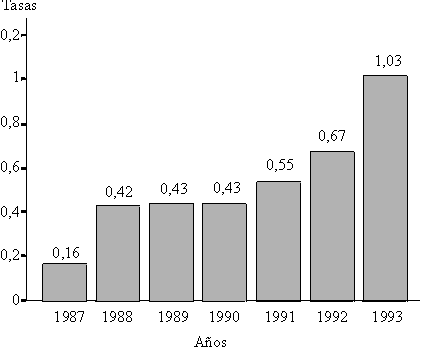
<body><![CDATA[<P>De cada uno de los fallecidos se seleccionaron los siguientes datos: edad en a&ntilde;os, sexo, ocupaci&oacute;n, lugar de residencia habitual, fecha de defunci&oacute;n y realizaci&oacute;n de la necropsia. </P>     <P>Los datos de poblaci&oacute;n estructurados por edades, sexos y provincias se obtuvieron en el Departamento de Demograf&iacute;a del Instituto de Investigaciones Estad&iacute;sticas (INSIE) del Comit&eacute; Estatal de Estad&iacute;sticas (CEE). </P>     <P>Para el procesamiento de los datos se utiliz&oacute; el sistema EPI-INFO versi&oacute;n 6.0 y para la presentaci&oacute;n de los gr&aacute;ficos el sistema HG3. Se calcularon las tasas crudas anuales y la raz&oacute;n estandarizada de mortalidad (REM), la cual expresa la raz&oacute;n entre la tasa real y la tasa esperada para cada provincia, por grupos etarios. Para el an&aacute;lisis de la tasa seg&uacute;n estructura de edades y sexos se tom&oacute; para los 7 a&ntilde;os del estudio como poblaci&oacute;n patr&oacute;n, la del a&ntilde;o 1991. </P>     <P>Los grupos etarios seleccionados son los que habitualmente utiliza el MINSAP: menores de 1 a&ntilde;o, de 1 a 4 a&ntilde;os, de 5 a 14 a&ntilde;os, de 15 a 49 a&ntilde;os, de 50 a 64 a&ntilde;os, de 65 y m&aacute;s a&ntilde;os. </P>     <P>Se realizaron tambi&eacute;n estratificaciones por ocupaci&oacute;n. Se calcularon tantos por cientos, tasas por 100 000 habitantes, a&ntilde;os de vida potencial perdidos (AVPP) para el grupo de edad de 0 a 65 a&ntilde;os. Se aplicaron pruebas de significaci&oacute;n estad&iacute;stica (comparaci&oacute;n de proporciones) para determinar diferencias entre provincias, sexos y grupos etarios. Se aplic&oacute; la prueba de Kruskal-Wallis con el fin de determinar si era significativa la variaci&oacute;n mensual de la mortalidad por leptospirosis en el per&iacute;odo estudiado. </P> <H4>RESULTADOS</H4>     <P>En este estudio el n&uacute;mero de defunciones anuales mostr&oacute; una tendencia ascendente desde 17 en 1987 hasta 112 en 1993, con lo cual la tasa de mortalidad por leptospirosis en Cuba (x 100 000 habitantes) en el per&iacute;odo estudiando se increment&oacute; desde 0,16 en 1987 hasta 0,42 en 1988, luego se mantiene estable hasta 1990 donde comienza un incremento paulatino durante 1991 y 1992, y luego un incremento brusco en 1993, cuando alcanza una taza de 1,03 (fig. 1). </P>     <P ALIGN="CENTER"><A HREF="/img/revistas/mtr/v50n1/fig112198.gif"><IMG SRC="/img/revistas/mtr/v50n1/fig112198.gif" BORDER=0 WIDTH=137 HEIGHT=112 ALT="Figura 1"></A></P>     
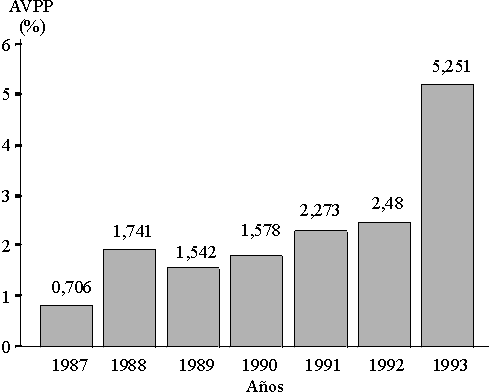
<P ALIGN="CENTER">Fig. 1. Tasas de mortalidad por a&ntilde;os (por 100 000 habitantes).</P>     <P ALIGN="CENTER">Fuente: Direcci&oacute;n Nacional de Estad&iacute;sticas del MINSAP.</P>     <P>Se perdieron por esta causa 6 238 a&ntilde;os de vida potencial (AVPP), lo cual represent&oacute; el 2 % del total de AVPP por todas las enfermedades infecciosas en el pa&iacute;s en este per&iacute;odo, el a&ntilde;o m&aacute;s afectado fue 1993 con el 5,25 % (fig. 2). </P>     ]]></body>
<body><![CDATA[<P ALIGN="CENTER"><A HREF="/img/revistas/mtr/v50n1/fig212198.gif"><IMG SRC="/img/revistas/mtr/v50n1/fig212198.gif" BORDER=0 WIDTH=188 HEIGHT=150 ALT="Figura 2"></A></P>     
<P ALIGN="CENTER">Fig. 2. A&ntilde;os de vida potencial perdidos por leptospirosis.</P>     <P ALIGN="CENTER">% AVPP: Tanto por ciento respecto al total de AVPP por todas las enfermedades infecciosas</P>     <P ALIGN="CENTER">Fuente: Direcci&oacute;n Nacional de Estad&iacute;sticas del MINSAP.</P>     <P>El promedio de a&ntilde;os perdidos por cada fallecido fue de 15, lo que habla de mortalidad en edades adultas fundamentalmente. </P>     <P>Seg&uacute;n grupos etarios, se pueden agrupar &eacute;stos en 3 estratos bien diferenciados estad&iacute;sticamente, ellos son: los menores de 15 a&ntilde;os, con tasa pr&aacute;cticamente en 0; los del grupo de 15 a 49 a&ntilde;os con tasa media de 0,4077 y los mayores de 50 con tasas mayores (a=0,05) (tabla 1). En el grupo de edades de 15 a 49 a&ntilde;os, se observa un incremento de la tasa de 1987 a 1988 y luego de 1992 a 1993. En el grupo de 50 a 64 a&ntilde;os, el incremento que se produjo de 1987 a 1988 se mantuvo como progresivo hasta 1993. En el grupo de los mayores de 65 a&ntilde;os, la tasa se mantuvo estable hasta 1990 y luego ocurri&oacute; un aumento moderado hasta 1993, que ubic&oacute; la tasa al final del per&iacute;odo en 2,714 la cual quintuplica la de 1987 que fue de 0,522. </P>     <P ALIGN="CENTER">TABLA 1. Defunciones y tasas x100 000 habitantes por leptospirosis por a&ntilde;o y grupo etario</P>     <P ALIGN="CENTER">    <CENTER><TABLE CELLSPACING=1 BORDER=0 CELLPADDING=4 WIDTH=617> <TR><TD WIDTH="11%" VALIGN="BOTTOM">     <P>Grupo etario (a&ntilde;os)&nbsp;</TD> <TD WIDTH="22%" VALIGN="BOTTOM" COLSPAN=2>     ]]></body>
<body><![CDATA[<P ALIGN="CENTER">5-14</TD> <TD WIDTH="22%" VALIGN="BOTTOM" COLSPAN=2>     <P ALIGN="CENTER">15-49</TD> <TD WIDTH="22%" VALIGN="BOTTOM" COLSPAN=2>     <P ALIGN="CENTER">50-64</TD> <TD WIDTH="22%" VALIGN="BOTTOM" COLSPAN=2>     <P ALIGN="CENTER">65 y m&aacute;s</TD> </TR> <TR><TD WIDTH="11%" VALIGN="BOTTOM">     <P>A&ntilde;o&nbsp;</TD> <TD WIDTH="11%" VALIGN="BOTTOM">     <P ALIGN="CENTER">Defunciones</TD> <TD WIDTH="11%" VALIGN="BOTTOM">     <P ALIGN="CENTER">Tasas</TD> <TD WIDTH="11%" VALIGN="BOTTOM">     <P ALIGN="CENTER">Defunciones</TD> <TD WIDTH="11%" VALIGN="BOTTOM">     <P ALIGN="CENTER">Tasas</TD> <TD WIDTH="11%" VALIGN="BOTTOM">     <P ALIGN="CENTER">Defunciones</TD> <TD WIDTH="11%" VALIGN="BOTTOM">     ]]></body>
<body><![CDATA[<P ALIGN="CENTER">Tasas</TD> <TD WIDTH="11%" VALIGN="BOTTOM">     <P ALIGN="CENTER">Defunciones</TD> <TD WIDTH="11%" VALIGN="BOTTOM">     <P ALIGN="CENTER">Tasas</TD> </TR> <TR><TD WIDTH="11%" VALIGN="TOP">     <P>1987</TD> <TD WIDTH="11%" VALIGN="TOP">     <P ALIGN="CENTER">1</TD> <TD WIDTH="11%" VALIGN="TOP">     <P ALIGN="CENTER">0,066</TD> <TD WIDTH="11%" VALIGN="TOP">     <P ALIGN="CENTER">8</TD> <TD WIDTH="11%" VALIGN="TOP">     <P ALIGN="CENTER">0,131</TD> <TD WIDTH="11%" VALIGN="TOP">     <P ALIGN="CENTER">3</TD> <TD WIDTH="11%" VALIGN="TOP">     <P ALIGN="CENTER">0,233</TD> <TD WIDTH="11%" VALIGN="TOP">     ]]></body>
<body><![CDATA[<P ALIGN="CENTER">5</TD> <TD WIDTH="11%" VALIGN="TOP">     <P ALIGN="CENTER">0,522</TD> </TR> <TR><TD WIDTH="11%" VALIGN="TOP">     <P>1988</TD> <TD WIDTH="11%" VALIGN="TOP">     <P ALIGN="CENTER">0</TD> <TD WIDTH="11%" VALIGN="TOP">     <P ALIGN="CENTER">0,000</TD> <TD WIDTH="11%" VALIGN="TOP">     <P ALIGN="CENTER">21</TD> <TD WIDTH="11%" VALIGN="TOP">     <P ALIGN="CENTER">0,343</TD> <TD WIDTH="11%" VALIGN="TOP">     <P ALIGN="CENTER">14</TD> <TD WIDTH="11%" VALIGN="TOP">     <P ALIGN="CENTER">1,087</TD> <TD WIDTH="11%" VALIGN="TOP">     <P ALIGN="CENTER">9</TD> <TD WIDTH="11%" VALIGN="TOP">     ]]></body>
<body><![CDATA[<P ALIGN="CENTER">0,939</TD> </TR> <TR><TD WIDTH="11%" VALIGN="TOP">     <P>1989</TD> <TD WIDTH="11%" VALIGN="TOP">     <P ALIGN="CENTER">0</TD> <TD WIDTH="11%" VALIGN="TOP">     <P ALIGN="CENTER">0,000</TD> <TD WIDTH="11%" VALIGN="TOP">     <P ALIGN="CENTER">18</TD> <TD WIDTH="11%" VALIGN="TOP">     <P ALIGN="CENTER">0,294</TD> <TD WIDTH="11%" VALIGN="TOP">     <P ALIGN="CENTER">17</TD> <TD WIDTH="11%" VALIGN="TOP">     <P ALIGN="CENTER">1,320</TD> <TD WIDTH="11%" VALIGN="TOP">     <P ALIGN="CENTER">10</TD> <TD WIDTH="11%" VALIGN="TOP">     <P ALIGN="CENTER">1,044</TD> </TR> <TR><TD WIDTH="11%" VALIGN="TOP">     ]]></body>
<body><![CDATA[<P>1990</TD> <TD WIDTH="11%" VALIGN="TOP">     <P ALIGN="CENTER">0</TD> <TD WIDTH="11%" VALIGN="TOP">     <P ALIGN="CENTER">0,000</TD> <TD WIDTH="11%" VALIGN="TOP">     <P ALIGN="CENTER">21</TD> <TD WIDTH="11%" VALIGN="TOP">     <P ALIGN="CENTER">0,343</TD> <TD WIDTH="11%" VALIGN="TOP">     <P ALIGN="CENTER">16</TD> <TD WIDTH="11%" VALIGN="TOP">     <P ALIGN="CENTER">1,242</TD> <TD WIDTH="11%" VALIGN="TOP">     <P ALIGN="CENTER">9</TD> <TD WIDTH="11%" VALIGN="TOP">     <P ALIGN="CENTER">0,939</TD> </TR> <TR><TD WIDTH="11%" VALIGN="TOP">     <P>1991</TD> <TD WIDTH="11%" VALIGN="TOP">     ]]></body>
<body><![CDATA[<P ALIGN="CENTER">0</TD> <TD WIDTH="11%" VALIGN="TOP">     <P ALIGN="CENTER">0,000</TD> <TD WIDTH="11%" VALIGN="TOP">     <P ALIGN="CENTER">25</TD> <TD WIDTH="11%" VALIGN="TOP">     <P ALIGN="CENTER">0,408</TD> <TD WIDTH="11%" VALIGN="TOP">     <P ALIGN="CENTER">19</TD> <TD WIDTH="11%" VALIGN="TOP">     <P ALIGN="CENTER">1,475</TD> <TD WIDTH="11%" VALIGN="TOP">     <P ALIGN="CENTER">16</TD> <TD WIDTH="11%" VALIGN="TOP">     <P ALIGN="CENTER">1,670</TD> </TR> <TR><TD WIDTH="11%" VALIGN="TOP">     <P>1992</TD> <TD WIDTH="11%" VALIGN="TOP">     <P ALIGN="CENTER">0</TD> <TD WIDTH="11%" VALIGN="TOP">     ]]></body>
<body><![CDATA[<P ALIGN="CENTER">0,000</TD> <TD WIDTH="11%" VALIGN="TOP">     <P ALIGN="CENTER">27</TD> <TD WIDTH="11%" VALIGN="TOP">     <P ALIGN="CENTER">0,441</TD> <TD WIDTH="11%" VALIGN="TOP">     <P ALIGN="CENTER">24</TD> <TD WIDTH="11%" VALIGN="TOP">     <P ALIGN="CENTER">1,864</TD> <TD WIDTH="11%" VALIGN="TOP">     <P ALIGN="CENTER">22</TD> <TD WIDTH="11%" VALIGN="TOP">     <P ALIGN="CENTER">2,296</TD> </TR> <TR><TD WIDTH="11%" VALIGN="TOP">     <P>1993</TD> <TD WIDTH="11%" VALIGN="TOP">     <P ALIGN="CENTER">3</TD> <TD WIDTH="11%" VALIGN="TOP">     <P ALIGN="CENTER">0,197</TD> <TD WIDTH="11%" VALIGN="TOP">     ]]></body>
<body><![CDATA[<P ALIGN="CENTER">55</TD> <TD WIDTH="11%" VALIGN="TOP">     <P ALIGN="CENTER">0,898</TD> <TD WIDTH="11%" VALIGN="TOP">     <P ALIGN="CENTER">28</TD> <TD WIDTH="11%" VALIGN="TOP">     <P ALIGN="CENTER">2,174</TD> <TD WIDTH="11%" VALIGN="TOP">     <P ALIGN="CENTER">26</TD> <TD WIDTH="11%" VALIGN="TOP">     <P ALIGN="CENTER">2,714</TD> </TR> </TABLE> </CENTER>    <p></P>      <P ALIGN="CENTER">Fuente: Direcci&oacute;n Nacional de Estad&iacute;sticas del MINSAP.</P>     <P>Existi&oacute; mayor mortalidad en el sexo masculino en las edades mayores de 15 a&ntilde;os (a=0,01), que determin&oacute; el comportamiento global de la tasa (fig. 3). </P>     <P ALIGN="CENTER"><A HREF="/img/revistas/mtr/v50n1/fig312198.gif"><IMG SRC="/img/revistas/mtr/v50n1/fig312198.gif" BORDER=0 WIDTH=156 HEIGHT=89 ALT="Figura 3"></A></P>     
]]></body>
<body><![CDATA[<P ALIGN="CENTER">Fig. 3. Tasas de mortalidad por grupos etarios y sexo (por 100 000 habitantes).</P>     <P ALIGN="CENTER">Fuente: Direcci&oacute;n Nacional de Estad&iacute;sticas del MINSAP.</P>     <P>Los mayores n&uacute;meros de fallecimientos ocurrieron en octubre, noviembre y junio, en orden decreciente. </P>     <P>El municipio especial Isla de la Juventud y la provincia de Las Tunas fueron las que mayores REM presentaron en el per&iacute;odo analizado, seguidas por Sancti Sp&iacute;ritus y la provincia de La Habana (fig 4). </P>     <P ALIGN="CENTER"><A HREF="/img/revistas/mtr/v50n1/fig412198.gif"><IMG SRC="/img/revistas/mtr/v50n1/fig412198.gif" BORDER=0 WIDTH=231 HEIGHT=90 ALT="Figura 4"></A></P>     
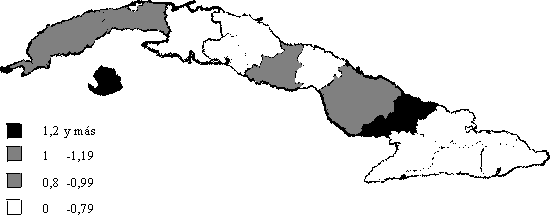
<P ALIGN="CENTER">Fig. 4. Distribuci&oacute;n espacial de la raz&oacute;n estandarizada de mortalidad por leptospirosis.</P>     <P>El grupo de poblaci&oacute;n m&aacute;s afectado fue el de los jubilados (con 91 fallecidos en los 7 a&ntilde;os de estudio), seguido de los trabajadores de la producci&oacute;n (con 82 fallecidos) y el de los trabajadores agr&iacute;colas (con 62 fallecidos) (tabla 2). </P>     <P ALIGN="CENTER">TABLA 2. Fallecidos por leptospirosis seg&uacute;n a&ntilde;o y ocupaci&oacute;n</P>     <P ALIGN="CENTER">    <CENTER><TABLE CELLSPACING=1 BORDER=0 CELLPADDING=4 WIDTH=624> <TR><TD WIDTH="10%" VALIGN="BOTTOM" ROWSPAN=2>     ]]></body>
<body><![CDATA[<P>Ocupaci&oacute;n&nbsp;</TD> <TD WIDTH="90%" VALIGN="BOTTOM" COLSPAN=9>     <P ALIGN="CENTER">A&ntilde;o</TD> </TR> <TR><TD WIDTH="10%" VALIGN="BOTTOM">     <P ALIGN="CENTER">1987</TD> <TD WIDTH="10%" VALIGN="BOTTOM">     <P ALIGN="CENTER">1988</TD> <TD WIDTH="10%" VALIGN="BOTTOM">     <P ALIGN="CENTER">1989</TD> <TD WIDTH="10%" VALIGN="BOTTOM">     <P ALIGN="CENTER">1990</TD> <TD WIDTH="10%" VALIGN="BOTTOM">     <P ALIGN="CENTER">1991</TD> <TD WIDTH="10%" VALIGN="BOTTOM">     <P ALIGN="CENTER">1992</TD> <TD WIDTH="10%" VALIGN="BOTTOM">     <P ALIGN="CENTER">1993</TD> <TD WIDTH="10%" VALIGN="BOTTOM">     <P ALIGN="CENTER">Total</TD> <TD WIDTH="10%" VALIGN="BOTTOM">     ]]></body>
<body><![CDATA[<P ALIGN="CENTER">%</TD> </TR> <TR><TD WIDTH="10%" VALIGN="TOP">     <P>Trabajador agr&iacute;cola</TD> <TD WIDTH="10%" VALIGN="TOP">     <P ALIGN="CENTER">1</TD> <TD WIDTH="10%" VALIGN="TOP">     <P ALIGN="CENTER">8</TD> <TD WIDTH="10%" VALIGN="TOP">     <P ALIGN="CENTER">8</TD> <TD WIDTH="10%" VALIGN="TOP">     <P ALIGN="CENTER">7</TD> <TD WIDTH="10%" VALIGN="TOP">     <P ALIGN="CENTER">10</TD> <TD WIDTH="10%" VALIGN="TOP">     <P ALIGN="CENTER">9</TD> <TD WIDTH="10%" VALIGN="TOP">     <P ALIGN="CENTER">19</TD> <TD WIDTH="10%" VALIGN="TOP">     <P ALIGN="CENTER">62</TD> <TD WIDTH="10%" VALIGN="TOP">     ]]></body>
<body><![CDATA[<P ALIGN="CENTER">15,6</TD> </TR> <TR><TD WIDTH="10%" VALIGN="TOP">     <P>Trabajador de la producci&oacute;n</TD> <TD WIDTH="10%" VALIGN="TOP">     <P ALIGN="CENTER">4</TD> <TD WIDTH="10%" VALIGN="TOP">     <P ALIGN="CENTER">8</TD> <TD WIDTH="10%" VALIGN="TOP">     <P ALIGN="CENTER">8</TD> <TD WIDTH="10%" VALIGN="TOP">     <P ALIGN="CENTER">13</TD> <TD WIDTH="10%" VALIGN="TOP">     <P ALIGN="CENTER">8</TD> <TD WIDTH="10%" VALIGN="TOP">     <P ALIGN="CENTER">15</TD> <TD WIDTH="10%" VALIGN="TOP">     <P ALIGN="CENTER">26</TD> <TD WIDTH="10%" VALIGN="TOP">     <P ALIGN="CENTER">82</TD> <TD WIDTH="10%" VALIGN="TOP">     ]]></body>
<body><![CDATA[<P ALIGN="CENTER">20,6</TD> </TR> <TR><TD WIDTH="10%" VALIGN="TOP">     <P>Trabajador de servicios</TD> <TD WIDTH="10%" VALIGN="TOP">     <P ALIGN="CENTER">3</TD> <TD WIDTH="10%" VALIGN="TOP">     <P ALIGN="CENTER">5</TD> <TD WIDTH="10%" VALIGN="TOP">     <P ALIGN="CENTER">4</TD> <TD WIDTH="10%" VALIGN="TOP">     <P ALIGN="CENTER">3</TD> <TD WIDTH="10%" VALIGN="TOP">     <P ALIGN="CENTER">9</TD> <TD WIDTH="10%" VALIGN="TOP">     <P ALIGN="CENTER">7</TD> <TD WIDTH="10%" VALIGN="TOP">     <P ALIGN="CENTER">6</TD> <TD WIDTH="10%" VALIGN="TOP">     <P ALIGN="CENTER">37</TD> <TD WIDTH="10%" VALIGN="TOP">     ]]></body>
<body><![CDATA[<P ALIGN="CENTER">9,32</TD> </TR> <TR><TD WIDTH="10%" VALIGN="TOP">     <P>FAR y ND*</TD> <TD WIDTH="10%" VALIGN="TOP">     <P ALIGN="CENTER">0</TD> <TD WIDTH="10%" VALIGN="TOP">     <P ALIGN="CENTER">0</TD> <TD WIDTH="10%" VALIGN="TOP">     <P ALIGN="CENTER">1</TD> <TD WIDTH="10%" VALIGN="TOP">     <P ALIGN="CENTER">1</TD> <TD WIDTH="10%" VALIGN="TOP">     <P ALIGN="CENTER">4</TD> <TD WIDTH="10%" VALIGN="TOP">     <P ALIGN="CENTER">5</TD> <TD WIDTH="10%" VALIGN="TOP">     <P ALIGN="CENTER">7</TD> <TD WIDTH="10%" VALIGN="TOP">     <P ALIGN="CENTER">18</TD> <TD WIDTH="10%" VALIGN="TOP">     ]]></body>
<body><![CDATA[<P ALIGN="CENTER">4,53</TD> </TR> <TR><TD WIDTH="10%" VALIGN="TOP">     <P>Jubilados</TD> <TD WIDTH="10%" VALIGN="TOP">     <P ALIGN="CENTER">3</TD> <TD WIDTH="10%" VALIGN="TOP">     <P ALIGN="CENTER">12</TD> <TD WIDTH="10%" VALIGN="TOP">     <P ALIGN="CENTER">8</TD> <TD WIDTH="10%" VALIGN="TOP">     <P ALIGN="CENTER">13</TD> <TD WIDTH="10%" VALIGN="TOP">     <P ALIGN="CENTER">13</TD> <TD WIDTH="10%" VALIGN="TOP">     <P ALIGN="CENTER">21</TD> <TD WIDTH="10%" VALIGN="TOP">     <P ALIGN="CENTER">21</TD> <TD WIDTH="10%" VALIGN="TOP">     <P ALIGN="CENTER">91</TD> <TD WIDTH="10%" VALIGN="TOP">     ]]></body>
<body><![CDATA[<P ALIGN="CENTER">22,9</TD> </TR> <TR><TD WIDTH="10%" VALIGN="TOP">     <P>Estudiantes</TD> <TD WIDTH="10%" VALIGN="TOP">     <P ALIGN="CENTER">2</TD> <TD WIDTH="10%" VALIGN="TOP">     <P ALIGN="CENTER">0</TD> <TD WIDTH="10%" VALIGN="TOP">     <P ALIGN="CENTER">0</TD> <TD WIDTH="10%" VALIGN="TOP">     <P ALIGN="CENTER">0</TD> <TD WIDTH="10%" VALIGN="TOP">     <P ALIGN="CENTER">2</TD> <TD WIDTH="10%" VALIGN="TOP">     <P ALIGN="CENTER">0</TD> <TD WIDTH="10%" VALIGN="TOP">     <P ALIGN="CENTER">3</TD> <TD WIDTH="10%" VALIGN="TOP">     <P ALIGN="CENTER">7</TD> <TD WIDTH="10%" VALIGN="TOP">     ]]></body>
<body><![CDATA[<P ALIGN="CENTER">1,76</TD> </TR> <TR><TD WIDTH="10%" VALIGN="TOP">     <P>Otros</TD> <TD WIDTH="10%" VALIGN="TOP">     <P ALIGN="CENTER">4</TD> <TD WIDTH="10%" VALIGN="TOP">     <P ALIGN="CENTER">11</TD> <TD WIDTH="10%" VALIGN="TOP">     <P ALIGN="CENTER">16</TD> <TD WIDTH="10%" VALIGN="TOP">     <P ALIGN="CENTER">9</TD> <TD WIDTH="10%" VALIGN="TOP">     <P ALIGN="CENTER">14</TD> <TD WIDTH="10%" VALIGN="TOP">     <P ALIGN="CENTER">16</TD> <TD WIDTH="10%" VALIGN="TOP">     <P ALIGN="CENTER">30</TD> <TD WIDTH="10%" VALIGN="TOP">     <P ALIGN="CENTER">100</TD> <TD WIDTH="10%" VALIGN="TOP">     ]]></body>
<body><![CDATA[<P ALIGN="CENTER">25,2</TD> </TR> </TABLE> </CENTER>    <p></P>      <P ALIGN="CENTER">* Fuerzas Armadas Revolucionarias y ocupaci&oacute;n no declarada.</P>     <P ALIGN="CENTER">Fuente: Direcci&oacute;n Nacional de Estad&iacute;sticas del MINSAP.</P>     <P>El porcentaje de necropsias realizadas a los fallecidos por leptospirosis en nuestro pa&iacute;s ha disminuido progresivamente de 94,2&nbsp; % en 1987 a 78,6 % en 1993, mientras que el tanto por ciento de confirmaci&oacute;n por necropsia ha aumentado, en este &uacute;ltimo a&ntilde;o se alcanza por encima del 40 % de los fallecidos (fig. 5). </P>     <P ALIGN="CENTER"><A HREF="/img/revistas/mtr/v50n1/fig512198.gif"><IMG SRC="/img/revistas/mtr/v50n1/fig512198.gif" BORDER=0 WIDTH=215 HEIGHT=118 ALT="Figura 5"></A></P>     
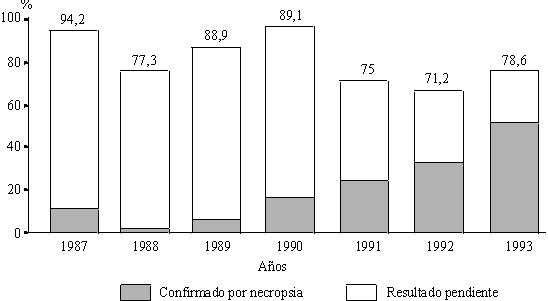
<P ALIGN="CENTER">Fig. 5. Tanto por ciento de necropsias por a&ntilde;o.</P>     <P ALIGN="CENTER">Fuente: Direcci&oacute;n Nacional de Estad&iacute;sticas del MINSAP.</P>     <P>La provincia de Cienfuegos logr&oacute; realizar el 100 % de las necropsias a sus fallecidos, aunque s&oacute;lo confirma el 25 % de ellos y el resto est&aacute; pendiente de recibirse la informaci&oacute;n. </P> <H4>DISCUSI&Oacute;N</H4>     <P>Seg&uacute;n los informes del Ministerio de Salud P&uacute;blica de Cuba, se hab&iacute;an reportado entre 15 y 26 de-funciones anuales por leptospirosis entre los a&ntilde;os 1982 y 1986, para una tasa anual de mortalidad entre 0,2 y 0,3 (x100 000 habitantes).<SUP>8-14</SUP> En el per&iacute;odo estudiado por nosotros dicha tasa anual se mantuvo por encima de los valores observados en el per&iacute;odo previo, que muestra un aumento brusco al final de &eacute;ste. </P>     ]]></body>
<body><![CDATA[<P>En nuestro trabajo encontramos que, tal y como se reporta en la literatura, la mayor mortalidad coincide con la &eacute;poca lluviosa,<SUP>2 </SUP>adem&aacute;s, que la mayor mortalidad en edades adultas y en el sexo masculino refleja lo que se conoce acerca de los grupos de riesgo para esta enfermedad. </P>     <P>Que el aumento del n&uacute;mero de casos produzca un aumento en el n&uacute;mero de muertes, aunque aparentemente l&oacute;gico, es algo que no deber&iacute;a ocurrir si tenemos en cuenta que casi todas estas muertes son evitables si llegan a ser atendidas tempranamente. </P>     <P>Entre los resultados que pudiera ser de inter&eacute;s dedicarle alg&uacute;n tipo de estudio posterior, al menos hay 3 que queremos destacar: primero, las provincias que en un estudio realizado en el per&iacute;odo 1982-1991<SUP>1</SUP> fueron las m&aacute;s afectadas (Villa Clara, Ciego de &Aacute;vila, Camag&uuml;ey y Cienfuegos), ahora aparecen con bajas REM, mientras que las que ahora tienen altas REM, all&iacute; no aparec&iacute;an entre las problem&aacute;ticas, o sea, se ha producido un cambio en el patr&oacute;n geogr&aacute;fico de la mortalidad por leptospirosis. Segundo, a pesar de que la clasificaci&oacute;n por ocupaci&oacute;n que aparece en el certificado de defunci&oacute;n no nos permiti&oacute; realizar un an&aacute;lisis m&aacute;s exhaustivo en este sentido, fue identificado como grupo poblacional con mayor n&uacute;mero de muertes el de los jubilados. Es posible que &eacute;stos sean jubilados que se han dedicado al cultivo de la tierra o a trabajos en el hogar que est&aacute;n m&aacute;s frecuentemente relacionados con la leptospirosis. Si se quiere hacer un trabajo que arroje m&aacute;s luz en cuanto al riesgo ocupacional de fallecer por leptospirosis habr&aacute; que pensar en otra fuente de informaci&oacute;n distinta al certificado de defunci&oacute;n. Tercero, surge a la luz de este estudio la hip&oacute;tesis de si las defunciones ocurridas en los hombres mayores de 50 a&ntilde;os en junio, octubre y noviembre de 1993 podr&iacute;an expresar un aumento en los factores de riesgo para esta enfermedad y/o demora en el diagn&oacute;stico y tratamiento de los afectados, para comprobar la cual habr&iacute;a que dise&ntilde;ar un estudio particular de la situaci&oacute;n que ocurri&oacute;. </P>     <P>Por &uacute;ltimo, queremos llamar la atenci&oacute;n sobre el alto porcentaje de necropsias cuyo resultado permanece pendiente y que introducen un sesgo innecesario en estudios de este tipo, ya que es un trabajo realizado cuyo resultado no se recoge. </P> <H4>SUMMARY</H4>     <P>It was conducted a descriptive study of the data available at the National Statistics Division of the Ministry of Public Health on the 397 deaths caused by leptospirosis in Cuba from 1987 to 1993. Data were tabulated according to age, sex, place of residence, death date, necropsy, and occupation on dying. The years of potential life lost by the age group 0-65 were calculated. In 1993, it was observed a rough increase of the rate that reached a value of 1.03 per 100 000 inhabitants. The highest rates were registered among those over 50. The high rate attained by males determined their general behavior. The incidence of this disease rose in October, November and June. The Isle of Youth special municipality and Las Tunas were the provinces with the greatest rates. The retired were the most affected followed by the factory and agricultural workers. </P>     <P>Subject headings: LEPTOSPIROSIS/mortality; MORTALITY RATE; EPIDEMIOLOGY, DESCRIPTIVE; CUBA. </P> <H4>REFERENCIAS BIBLIOGR&Aacute;FICAS</H4> <OL>      <!-- ref --><LI>Everard COR. Leptospiral infection: a household serosurvey in urban and rural communities in Barbados and Trinidad. Am J Trop Med Parasitol 1990;84(3):255-66.</LI>    <!-- ref --><LI>Castillo Acosta M. Epidemiolog&iacute;a. La Habana:Editorial Pueblo y Educaci&oacute;n, 1984:83-4.</LI>    <!-- ref --><LI>Instituto de Medicina Tropical "Pedro Kour&iacute;". Grupo de Vigilancia Epidemiol&oacute;gica. Bol Epidemiol 1995;5(Esp):1.</LI>    <!-- ref --><LI>Benenson A. El control de las enfermedades transmisibles en el hombre. Washington, DC: OPS, 1992:333-6. (Publicaci&oacute;n Cient&iacute;fica; No.538).</LI>    <!-- ref --><LI>Hoeprich PD. Tratado de enfermedades infecciosas. La Habana: Editorial Cient&iacute;fico-T&eacute;cnica, 1982:638-42.</LI>    <!-- ref --><LI>Acha PN. Zoonosis y enfermedades transmisibles comunes al hombre y los animales. Washington,DC:OPS, 1984:117-9.</LI>    <!-- ref --><LI>Emond BTD. Infection. Oxford: Bleckwell Scientific, 1989: 153-6.</LI>    <!-- ref --><LI>Cuba. Ministerio de Salud P&uacute;blica. Informe anual. La Habana, 1983.</LI>    <!-- ref --><LI><U>_____</u>. Informe anual. La Habana, 1984.</LI>    <!-- ref --><LI><U>_____</u>. Informe anual. La Habana, 1985.</LI>    <!-- ref --><LI><U>_____</u>. Informe anual. La Habana, 1986.</LI>    <!-- ref --><LI>_____. Informe anual. La Habana, 1987.</LI>    <!-- ref --><LI><U>_____</u>. Informe anual. La Habana, 1988.</LI>    <!-- ref --><LI><U>_____</u>. Informe anual. La Habana, 1989.</LI>    </OL>      <P>Recibido: 9 de septiembre de 1996. Aprobado: 20 de febrero de 1997. </P>     <P>Lic. <I>Oslando Padilla P&eacute;rez</I>. Instituto de Medicina Tropical "Pedro Kour&iacute;". Apartado 601, Marianao 13, Ciudad de La Habana, Cuba. </P>     <P><SUP>1</sup>&nbsp;<A NAME="autores"></A>Licenciado en Matem&aacute;ticas.     <BR> <SUP>2</SUP> Doctor en Ciencias M&eacute;dicas. Investigador Auxiliar.     <BR> <SUP>3</SUP> Licenciada en Geograf&iacute;a. </P> <H5></H5>     ]]></body><back>
<ref-list>
<ref id="B1">
<nlm-citation citation-type="journal">
<person-group person-group-type="author">
<name>
<surname><![CDATA[Everard]]></surname>
<given-names><![CDATA[COR]]></given-names>
</name>
</person-group>
<article-title xml:lang="en"><![CDATA[Leptospiral infection: a household serosurvey in urban and rural communities in Barbados and Trinidad]]></article-title>
<source><![CDATA[Am J Trop Med Parasitol]]></source>
<year>1990</year>
<volume>84</volume>
<numero>3</numero>
<issue>3</issue>
<page-range>255-66</page-range></nlm-citation>
</ref>
<ref id="B2">
<nlm-citation citation-type="book">
<person-group person-group-type="author">
<name>
<surname><![CDATA[Castillo Acosta]]></surname>
<given-names><![CDATA[M]]></given-names>
</name>
</person-group>
<source><![CDATA[Epidemiología]]></source>
<year>1984</year>
<page-range>83-4.</page-range><publisher-loc><![CDATA[La Habana ]]></publisher-loc>
<publisher-name><![CDATA[Editorial Pueblo y Educación]]></publisher-name>
</nlm-citation>
</ref>
<ref id="B3">
<nlm-citation citation-type="journal">
<collab>Instituto de Medicina Tropical "Pedro Kourí"</collab>
<article-title xml:lang="es"><![CDATA[Grupo de Vigilancia Epidemiológica]]></article-title>
<source><![CDATA[Bol Epidemiol]]></source>
<year>1995</year>
<volume>5</volume>
<numero>( Esp): 1.</numero>
<issue>( Esp): 1.</issue>
</nlm-citation>
</ref>
<ref id="B4">
<nlm-citation citation-type="book">
<person-group person-group-type="author">
<name>
<surname><![CDATA[Benenson]]></surname>
<given-names><![CDATA[A]]></given-names>
</name>
</person-group>
<source><![CDATA[El control de las enfermedades transmisibles en el hombre]]></source>
<year>1992</year>
<page-range>333-6.</page-range><publisher-loc><![CDATA[Washington, DC ]]></publisher-loc>
<publisher-name><![CDATA[OPS]]></publisher-name>
</nlm-citation>
</ref>
<ref id="B5">
<nlm-citation citation-type="book">
<person-group person-group-type="author">
<name>
<surname><![CDATA[Hoeprich]]></surname>
<given-names><![CDATA[PD]]></given-names>
</name>
</person-group>
<source><![CDATA[Tratado de enfermedades infecciosas.]]></source>
<year>1982</year>
<page-range>638-42</page-range><publisher-loc><![CDATA[La Habana ]]></publisher-loc>
<publisher-name><![CDATA[Editorial Científico-Técnica,]]></publisher-name>
</nlm-citation>
</ref>
<ref id="B6">
<nlm-citation citation-type="book">
<person-group person-group-type="author">
<name>
<surname><![CDATA[Acha]]></surname>
<given-names><![CDATA[PN]]></given-names>
</name>
</person-group>
<source><![CDATA[Zoonosis y enfermedades transmisibles comunes al hombre y los animales]]></source>
<year>1984</year>
<page-range>117-9</page-range><publisher-loc><![CDATA[Washington,DC ]]></publisher-loc>
<publisher-name><![CDATA[OPS]]></publisher-name>
</nlm-citation>
</ref>
<ref id="B7">
<nlm-citation citation-type="book">
<person-group person-group-type="author">
<name>
<surname><![CDATA[Emond]]></surname>
<given-names><![CDATA[BTD]]></given-names>
</name>
</person-group>
<source><![CDATA[Infection]]></source>
<year>1989</year>
<page-range>153-6</page-range><publisher-loc><![CDATA[Oxford ]]></publisher-loc>
<publisher-name><![CDATA[Bleckwell Scientific]]></publisher-name>
</nlm-citation>
</ref>
<ref id="B8">
<nlm-citation citation-type="">
<collab>Ministerio de Salud Pública</collab>
<source><![CDATA[Informe anual]]></source>
<year>1983</year>
<publisher-loc><![CDATA[La Habana ]]></publisher-loc>
</nlm-citation>
</ref>
<ref id="B9">
<nlm-citation citation-type="">
<source><![CDATA[Informe anual]]></source>
<year>1984</year>
<publisher-loc><![CDATA[La Habana ]]></publisher-loc>
</nlm-citation>
</ref>
<ref id="B10">
<nlm-citation citation-type="">
<source><![CDATA[Informe anual]]></source>
<year>1985</year>
<publisher-loc><![CDATA[La Habana ]]></publisher-loc>
</nlm-citation>
</ref>
<ref id="B11">
<nlm-citation citation-type="">
<source><![CDATA[Informe anual]]></source>
<year>1986</year>
<publisher-loc><![CDATA[La Habana ]]></publisher-loc>
</nlm-citation>
</ref>
<ref id="B12">
<nlm-citation citation-type="">
<source><![CDATA[Informe anual]]></source>
<year>1987</year>
<publisher-loc><![CDATA[La Habana ]]></publisher-loc>
</nlm-citation>
</ref>
<ref id="B13">
<nlm-citation citation-type="">
<source><![CDATA[Informe anual]]></source>
<year>1988</year>
<publisher-loc><![CDATA[La Habana ]]></publisher-loc>
</nlm-citation>
</ref>
<ref id="B14">
<nlm-citation citation-type="">
<source><![CDATA[Informe anual]]></source>
<year>1989</year>
<publisher-loc><![CDATA[La Habana ]]></publisher-loc>
</nlm-citation>
</ref>
</ref-list>
</back>
</article>