<?xml version="1.0" encoding="ISO-8859-1"?><article xmlns:mml="http://www.w3.org/1998/Math/MathML" xmlns:xlink="http://www.w3.org/1999/xlink" xmlns:xsi="http://www.w3.org/2001/XMLSchema-instance">
<front>
<journal-meta>
<journal-id>1010-2752</journal-id>
<journal-title><![CDATA[Revista de Protección Vegetal]]></journal-title>
<abbrev-journal-title><![CDATA[Rev. Protección Veg.]]></abbrev-journal-title>
<issn>1010-2752</issn>
<publisher>
<publisher-name><![CDATA[Centro Nacional de Sanidad Agropecuaria]]></publisher-name>
</publisher>
</journal-meta>
<article-meta>
<article-id>S1010-27522010000200002</article-id>
<title-group>
<article-title xml:lang="es"><![CDATA[EVALUACIÓN DE LOS PARÁMETROS ANALÍTICOS PARA LA DETECCIÓN MOLECULAR DE POTYVIRUS QUE AFECTAN AL CULTIVO DEL PIMIENTO EN CUBA]]></article-title>
<article-title xml:lang="en"><![CDATA[EVALUATION OF ANALITICAL PARAMETERS FOR THE MOLECULAR DETECTION OF POTYVIRUSES AFFECTING PEPPER CROPS IN CUBA]]></article-title>
</title-group>
<contrib-group>
<contrib contrib-type="author">
<name>
<surname><![CDATA[Díaz]]></surname>
<given-names><![CDATA[Acela]]></given-names>
</name>
<xref ref-type="aff" rid="A01"/>
</contrib>
<contrib contrib-type="author">
<name>
<surname><![CDATA[Quiñones]]></surname>
<given-names><![CDATA[Madelaine]]></given-names>
</name>
<xref ref-type="aff" rid="A02"/>
</contrib>
<contrib contrib-type="author">
<name>
<surname><![CDATA[Hernández]]></surname>
<given-names><![CDATA[Annia]]></given-names>
</name>
<xref ref-type="aff" rid="A01"/>
</contrib>
<contrib contrib-type="author">
<name>
<surname><![CDATA[del Barrio]]></surname>
<given-names><![CDATA[Gloria]]></given-names>
</name>
<xref ref-type="aff" rid="A01"/>
</contrib>
</contrib-group>
<aff id="A01">
<institution><![CDATA[,Universidad de La Habana Facultad de Biología Departamento de Microbiología y Virología]]></institution>
<addr-line><![CDATA[Ciudad de La Haban ]]></addr-line>
<country>Cuba</country>
</aff>
<aff id="A02">
<institution><![CDATA[,Centro Nacional de Sanidad Agropecuaria (CENSA) Dirección de Protección de Plantas Grupo de Fitopatología]]></institution>
<addr-line><![CDATA[La Habana ]]></addr-line>
<country>Cuba</country>
</aff>
<pub-date pub-type="pub">
<day>00</day>
<month>08</month>
<year>2010</year>
</pub-date>
<pub-date pub-type="epub">
<day>00</day>
<month>08</month>
<year>2010</year>
</pub-date>
<volume>25</volume>
<numero>2</numero>
<fpage>80</fpage>
<lpage>87</lpage>
<copyright-statement/>
<copyright-year/>
<self-uri xlink:href="http://scielo.sld.cu/scielo.php?script=sci_arttext&amp;pid=S1010-27522010000200002&amp;lng=en&amp;nrm=iso"></self-uri><self-uri xlink:href="http://scielo.sld.cu/scielo.php?script=sci_abstract&amp;pid=S1010-27522010000200002&amp;lng=en&amp;nrm=iso"></self-uri><self-uri xlink:href="http://scielo.sld.cu/scielo.php?script=sci_pdf&amp;pid=S1010-27522010000200002&amp;lng=en&amp;nrm=iso"></self-uri><abstract abstract-type="short" xml:lang="es"><p><![CDATA[El género Capsicum (Solanaceae), es originario del continente americano y comprende alrededor de 25 especies, de las cuales cinco son cultivables. Las condiciones ambientales en que se desarrolla esta hortaliza, su forma de explotación, así como los tipos y variedades utilizadas, han traído consigo una amplia diversidad en cuanto a plagas y epifitias que causan importantes mermas en su producción. Entre ellas, las enfermedades virales constituyen la principal dificultad para el desarrollo del cultivo y de estas, las causadas por los miembros del género Potyvirus, se consideran entre las de mayor importancia económica. Este trabajo tiene como objetivo validar un ensayo de RT-PCR para el diagnóstico molecular de potyvirus, empleando cebadores genéricos. Los resultados evidencian que la RT-PCR resulta eficiente para el diagnóstico de potyvirus en el cultivo del pimiento con parámetros analíticos de desempeño superiores al 97%, validándose por primera vez en Cuba una técnica molecular para el diagnóstico de potyvirus. Además, se aportan nuevos elementos metodológicos en la validación de ensayos moleculares de nueva generación facilitando la reproducibilidad de los procedimientos en los laboratorios de diagnóstico.]]></p></abstract>
<abstract abstract-type="short" xml:lang="en"><p><![CDATA[The genus Capsicum (Solanaceae) is originally from the American continent and includes around 25 species, but only 5 are used in agriculture. The environmental conditions in the development of this crop, the kind of exploitation, and the different cultivars have led to a large diversity of diseases causing important reductions in pepper production. Among them, the viral diseases are the first difficulty for the development of the crop. At the same time, pepper plants are primarily affected by potyviruses (Potyviridae family). The main goal of this work was the validation of a technique for the molecular diagnosis of potyviruses using RT-PCR with generics primers. The results showed that RT-PCR was efficient for potyvirus diagnosis in pepper plants with analytical parameters higher than 97%. It is the first time that a molecular technique is validated in Cuba for potyvirus diagnosis]]></p></abstract>
<kwd-group>
<kwd lng="es"><![CDATA[potyvirus]]></kwd>
<kwd lng="es"><![CDATA[pimiento]]></kwd>
<kwd lng="es"><![CDATA[diagnóstico]]></kwd>
<kwd lng="es"><![CDATA[RT-PCR]]></kwd>
<kwd lng="en"><![CDATA[potyvirus]]></kwd>
<kwd lng="en"><![CDATA[pepper]]></kwd>
<kwd lng="en"><![CDATA[diagnosis]]></kwd>
<kwd lng="en"><![CDATA[PCR]]></kwd>
</kwd-group>
</article-meta>
</front><body><![CDATA[ <p align="right"><font face="Verdana, Arial, Helvetica, sans-serif" size="2"><B>Art&iacute;culo    original</b></font></p>     <p>&nbsp;</p>     <p>&nbsp; </p>     <DIV class="Sect"   ><FONT size="+1" color="#000000"><B>        <P   align="left" ><font face="Verdana, Arial, Helvetica, sans-serif" size="4">EVALUACI&Oacute;N      DE LOS PAR&Aacute;METROS ANAL&Iacute;TICOS PARA LA DETECCI&Oacute;N MOLECULAR      DE POTYVIRUS QUE AFECTAN AL CULTIVO DEL PIMIENTO EN CUBA</font></P >       <P   align="center" >&nbsp;</P >       <P   align="left" ><font size="+1"><font size="+1"><font face="Verdana, Arial, Helvetica, sans-serif" size="2"><b><font size="3">EVALUATION      OF ANALITICAL PARAMETERS FOR THE MOLECULAR DETECTION OF POTYVIRUSES AFFECTING      PEPPER CROPS IN CUBA</font></b></font></font></font></P >   </B>        <P   align="center" >&nbsp;</P >       <P   align="center" >&nbsp;</P >       <P   align="left" ><font face="Verdana, Arial, Helvetica, sans-serif" size="2"><b>Acela D&iacute;az*,      Madelaine Qui&ntilde;ones**, Annia Hern&aacute;ndez*,<Sup> </Sup> Gloria del      Barrio* </b></font></P >   <B><FONT size="+1"><FONT size="+1">        ]]></body>
<body><![CDATA[<P   align="center" > </P >   </font></font></B>        <P   align="justify" ><font size="2" face="Verdana, Arial, Helvetica, sans-serif"><I>* Departamento      de Microbiolog&iacute;a y Virolog&iacute;a. Facultad de Biolog&iacute;a, Universidad      de La Habana, Calle 25 esquina J, Ciudad de La Habana, Cuba CP 10347, **Grupo      de Fitopatolog&iacute;a. Direcci&oacute;n de Protecci&oacute;n de Plantas.      Centro Nacional de Sanidad Agropecuaria (CENSA). Carretera de Jamaica y Autopista      Nacional. Apdo 10, San Jos&eacute; de las Lajas, La Habana, Cuba. Correo electr&oacute;nico:<a href="mailto:acela@fbio.uh.cu">acela@fbio.uh.cu</a></I></font></P >       <P   align="justify" >&nbsp;</P >       <P   align="justify" >&nbsp;</P >   </font>    <hr noshade size="1">   <FONT size="+1" color="#000000">        <P   align="justify" ><FONT size="+1"><FONT size="+1"><font face="Verdana, Arial, Helvetica, sans-serif" size="2"><B>RESUMEN</b></font></font></font></P >       <P   align="justify" ><FONT size="+1"><FONT size="+1"><font face="Verdana, Arial, Helvetica, sans-serif" size="2">El      g&eacute;nero <I>Capsicum </I>(<I>Solanaceae</I>), es originario del continente      americano y comprende alrededor de 25 especies, de las cuales cinco son cultivables.      Las condiciones ambientales en que se desarrolla esta hortaliza, su forma      de explotaci&oacute;n, as&iacute; como los tipos y variedades utilizadas,      han tra&iacute;do consigo una amplia diversidad en cuanto a plagas y epifitias      que causan importantes mermas en su producci&oacute;n. Entre ellas, las enfermedades      virales constituyen la principal dificultad para el desarrollo del cultivo      y de estas, las causadas por los miembros del g&eacute;nero Potyvirus<I>,</I>      se consideran entre las de mayor importancia econ&oacute;mica. Este trabajo      tiene como objetivo validar un ensayo de RT-PCR para el diagn&oacute;stico      molecular de potyvirus, empleando cebadores gen&eacute;ricos. Los resultados      evidencian que la RT-PCR resulta eficiente para el diagn&oacute;stico de potyvirus      en el cultivo del pimiento con par&aacute;metros anal&iacute;ticos de desempe&ntilde;o      superiores al 97%, valid&aacute;ndose por primera vez en Cuba una t&eacute;cnica      molecular para el diagn&oacute;stico de potyvirus. Adem&aacute;s, se aportan      nuevos elementos metodol&oacute;gicos en la validaci&oacute;n de ensayos moleculares      de nueva generaci&oacute;n facilitando la reproducibilidad de los procedimientos      en los laboratorios de diagn&oacute;stico. </font></font></font></P >   <FONT size="+1"><FONT size="+1">        <P   align="justify" > </P >       <P   align="left" ><b><font face="Verdana, Arial, Helvetica, sans-serif" size="2">Palabras clave:</font></b><font face="Verdana, Arial, Helvetica, sans-serif" size="2"><B>      </B>potyvirus, pimiento, diagn&oacute;stico, RT-PCR</font></P >   </font></font></font>   <hr noshade size="1">   <FONT size="+1" color="#000000"><FONT size="+1"><FONT size="+1">        <P   align="left" ><font face="Verdana, Arial, Helvetica, sans-serif" size="2"><b>ABSTRACT</b></font></P >       <P   align="left" ><font face="Verdana, Arial, Helvetica, sans-serif" size="2">The genus <I>Capsicum</I>      (<I>Solanaceae</I>) is originally from the American continent and includes      around 25 species, but only 5 are used in agriculture. The environmental conditions      in the development of this crop, the kind of exploitation, and the different      cultivars have led to a large diversity of diseases causing important reductions      in pepper production. Among them, the viral diseases are the first difficulty      for the development of the crop. At the same time, pepper plants are primarily      affected by potyviruses (<I>Potyviridae</I> family). The main goal of this      work was the validation of a technique for the molecular diagnosis of potyviruses      using RT-PCR with generics primers. The results showed that RT-PCR was efficient      for potyvirus diagnosis in pepper plants with analytical parameters higher      than 97%. It is the first time that a molecular technique is validated in      Cuba for potyvirus diagnosis.</font></P >       ]]></body>
<body><![CDATA[<P   align="left" ><font face="Verdana, Arial, Helvetica, sans-serif" size="2"><b>Key words: </b>potyvirus;      pepper; diagnosis; PCR</font></P >   </font></font></font>    <hr noshade size="1">   <FONT size="+1" color="#000000"><FONT size="+1"><FONT size="+1">        <P   align="justify" >&nbsp;</P >       <P   align="justify" >&nbsp;</P >       <P   align="justify" ><font face="Verdana, Arial, Helvetica, sans-serif" size="3"><b>INTRODUCCI&Oacute;N</b></font></P >       <P   align="justify" ><font face="Verdana, Arial, Helvetica, sans-serif" size="2">Las especies de pimiento      (<I>Capsicum annuum</I> L.), pertenecientes a la familia de las Solan&aacute;ceas      fueron introducidas en Europa desde Am&eacute;rica. Son originarias de Am&eacute;rica      Central y del Sur, siendo las primeras hortalizas empleadas como condimentos.      Actualmente, en el comercio mundial de condimentos, ocupan el segundo lugar,      tanto econ&oacute;mica como productivamente, y se ubican despu&eacute;s de      la pimienta negra. El pimiento dulce, cultivado en todo el mundo se consume      tambi&eacute;n en estado fresco. Algunas variedades, con alto nivel de pungencia      (picantes), adem&aacute;s de utilizarse como alimento, se emplean como medicamentos.      Tanto el pimiento pungente como el dulce, enriquecen la dieta por sus notables      contenidos en vitaminas A y C (1). </font></P >       <P   align="justify" > </P >       <P   align="justify" ><font face="Verdana, Arial, Helvetica, sans-serif" size="2">En nuestro pa&iacute;s,      el pimiento ha ocupado, tradicionalmente, un &aacute;rea cultivada de 2000      ha, con una producci&oacute;n anual de unas 20 000 toneladas. Sin embargo,      en los &uacute;ltimos a&ntilde;os con el desarrollo de la agricultura urbana      y periurbana, estos niveles se han incrementado considerablemente. Las variedades      comerciales com&uacute;nmente utilizadas han sido la California Wonder, Espa&ntilde;ol      Liliana, Maor, Lical, SC 81, as&iacute; como h&iacute;bridos en el sistema      de cultivos protegidos. En este cultivo, la productividad se ha visto afectada      anualmente debido a la presencia de plagas y enfermedades que pueden ocasionar      da&ntilde;os econ&oacute;micos de un 100% en la misma (2). </font></P >       <P   align="justify" > </P >       <P   align="justify" ><font face="Verdana, Arial, Helvetica, sans-serif" size="2">A nivel mundial,      los cultivares de pimiento se han visto severamente afectados por las epifitias      de origen viral; donde se destacan fundamentalmente: el Virus Y de la Papa      (PVY), el Virus del Mosaico del Pepino (CMV), el Virus del Estriado del Tabaco      (TSV), el Virus del Bronceado del Tomate (TSWV), el Virus del Mosaico del      Tabaco (TMV), el Virus del Mosaico del Tomate (ToMV), el Virus del Grabado      del Tabaco (TEV) y el Virus del Moteado del Pimiento (Pep MoV) (3). Dentro      de ellos, el PVY es considerado el potyvirus que mayormente afecta este cultivo      en nuestro pa&iacute;s (2), llegando a provocar p&eacute;rdidas por encima      del 30% de la producci&oacute;n cuando la infecci&oacute;n se produce en &eacute;pocas      tempranas de crecimiento. </font></P >       <P   align="justify" > </P >       ]]></body>
<body><![CDATA[<P   align="justify" ><font face="Verdana, Arial, Helvetica, sans-serif" size="2">Los s&iacute;ntomas      producidos como resultado de la infecci&oacute;n con potyvirus pueden ser      muy diversos y var&iacute;an en dependencia de la especie afectada, el aislado      presente y las condiciones ambientales. De manera general, en condiciones      de campo, estos virus causan en las plantas infectadas un mosaico con moteado      y arrugado de las hojas apicales y un bandeado oscuro de las venas de las      hojas totalmente expandidas (4). Tambi&eacute;n se ha demostrado que en ocasiones      se puede encontrar una ausencia total de s&iacute;ntomas, aunque las plantas      se encuentren infectadas por el virus (5). Esto podr&iacute;a estar dado porque      las condiciones no sean las adecuadas para el desarrollo de los mismos o porque      la planta infectada sea tolerante a la enfermedad y no los manifieste; hecho      bastante frecuente en los virus vegetales (6). </font></P >       <P   align="justify" > </P >       <P   align="justify" ><font face="Verdana, Arial, Helvetica, sans-serif" size="2">En Cuba, en los &uacute;ltimos      a&ntilde;os se ha comenzado a observar un fuerte incremento de los s&iacute;ntomas      asociados a estos virus en este cultivo, fundamentalmente en las zonas central      y occidental del pa&iacute;s (7), lo que supone la incidencia de nuevos potyvirus      circulantes o variantes recombinantes de los virus ya presentes, comportamiento      que es muy frecuente en esta familia viral (8). </font></P >       <P   align="justify" ><font face="Verdana, Arial, Helvetica, sans-serif" size="2">De modo general,      la problem&aacute;tica del diagn&oacute;stico de virus vegetales se ha abordado      con diferentes enfoques, y todos han estado condicionados inevitablemente      por el desarrollo y avance de la tecnolog&iacute;a, transitando desde el an&aacute;lisis      de s&iacute;ntomas en plantas indicadoras, la microscop&iacute;a electr&oacute;nica,      el empleo de m&eacute;todos serol&oacute;gicos e inmunoenzim&aacute;ticos,      donde se destacan el ELISA y sus variantes, hasta las t&eacute;cnicas moleculares      de nueva generaci&oacute;n. Las metodolog&iacute;as Inmunoqu&iacute;micas      y las de Biolog&iacute;a Molecular, son las principales v&iacute;as para la      identificaci&oacute;n y diagn&oacute;stico de los potyvirus (9,10,11,12,13,14).      Teniendo en cuenta lo anteriormente planteado, este trabajo tiene como objetivo      validar un ensayo de RT-PCR para el diagn&oacute;stico molecular de potyvirus,      empleando cebadores gen&eacute;ricos.</font></P >       <P   align="justify" >&nbsp;</P >       <P   align="justify" > </P >       <P   align="justify" > </P >   <B>        <P   align="justify" ><font face="Verdana, Arial, Helvetica, sans-serif" size="3">MATERIALES Y M&Eacute;TODOS      </font></P >       <P   align="justify" > </P >       <P   align="justify" ><font face="Verdana, Arial, Helvetica, sans-serif" size="2">Establecimiento de      controles de referencia positivos y negativos para el ensayo </font></P >   </B>        ]]></body>
<body><![CDATA[<P   align="justify" ><font face="Verdana, Arial, Helvetica, sans-serif" size="2">Se sembraron 100      plantas de <I>C. annuum </I>var<I>.</I> Espa&ntilde;ol Liliana en suelo Ferral&iacute;tico      Rojo Compactado y se mantuvieron en condiciones controladas de casa de cristal.      Transcurridos 15 d&iacute;as, se inocularon mec&aacute;nicamente las primeras      dos hojas verdaderas de cada planta, empleando carborumdum en polvo como abrasivo.      El inoculante se prepar&oacute; partiendo de hojas de papa liofilizadas infectadas      con PVY a una diluci&oacute;n de 1:5 en buffer fosfato de sodio (pH 7,2).      </font></P >       <P   align="justify" ><font face="Verdana, Arial, Helvetica, sans-serif" size="2">Veinti&uacute;n d&iacute;as      despu&eacute;s, se colect&oacute; la segunda hoja abierta de la regi&oacute;n      apical de cada planta, para realizar la extracci&oacute;n de los ARN totales,      los que se consideraron como los controles positivos del ensayo. Paralelamente      se sembraron otras 100 plantas de la misma variedad en un suelo Ferral&iacute;tico      Rojo Compactado y se mantuvieron en condiciones controladas de casa de cristal      separadas espacialmente de las plantas infectadas. Transcurridos 21 d&iacute;as,      se colect&oacute; la segunda hoja abierta de la regi&oacute;n apical de cada      planta, para realizar la extracci&oacute;n de los ARN totales, los que se      consideraron como los controles negativos del ensayo. </font></P >       <P   align="justify" > </P >       <P   align="justify" ><font face="Verdana, Arial, Helvetica, sans-serif" size="2"><B>Establecimiento      de las condiciones de realizaci&oacute;n de la RT-PCR </b></font></P >       <P   align="justify" ><font face="Verdana, Arial, Helvetica, sans-serif" size="2">Para la extracci&oacute;n      de ARN totales, se colectaron 0,5 g de hojas de cada planta (100 inoculadas      y 100 sanas) y se maceraron en nitr&oacute;geno l&iacute;quido. A continuaci&oacute;n,      el macerado se proces&oacute; siguiendo la metodolog&iacute;a descrita por      Krause-Sakate (15), basada en una precipitaci&oacute;n con cloruro de litio.      El precipitado se sec&oacute; al vac&iacute;o y se resuspendi&oacute; en 50      &micro;L de agua libre de RNAsa (Sigma). </font></P >       <P   align="justify" > </P >       <P   align="justify" ><font face="Verdana, Arial, Helvetica, sans-serif" size="2">Para detectar la      presencia de potyvirus en los controles de referencia mediante la RT-PCR se      utilizaron los cebadores CP1 y CP2 (16) que se presentan en la <a href="/img/revistas/rpv/v25n2/f0102210.gif">Tabla      1</a>.</font></P >       
<P   align="justify" ><font face="Verdana, Arial, Helvetica, sans-serif" size="2">Para el montaje de      la t&eacute;cnica, se prepar&oacute; la mezcla de la reacci&oacute;n de RT-      PCR en un volumen final de 50 &micro;L. La misma estuvo compuesta por 0,8      mM dNTPs (Promega), 0,6 &micro;M de cada cebador, 2,5 mM de cloruro de magnesio<Sub>,      </Sub>12 unidades del inhibidor de ribonucleasas RNAsin (Promega), 3 unidades      de la enzima retrotranscriptasa AMV (Promega) y 2,5 unidades de la enzima      Taq polimerasa (Promega) en buffer de reacci&oacute;n 10X (compuesto por buffer      Tris-HCl 1M, pH 8,8; sulfato de amonio 1M; EDTA 0,5M, pH 8); agua libre de      ribonuclesasas (Sigma) y 2 &micro;L del ARN extra&iacute;do. El programa de      amplificaci&oacute;n establecido para el ensayo aparece en la <a href="/img/revistas/rpv/v25n2/f0202210.gif">Tabla      2</a>.</font></P >       
<P   align="justify" ><font face="Verdana, Arial, Helvetica, sans-serif" size="2">Los productos de      la PCR (10 &micro;L cada producto) se analizaron mediante electroforesis en      gel de agarosa al 1,5 % en Tamp&oacute;n TBE (Tris, &aacute;cido b&oacute;rico      y EDTA) 1X te&ntilde;ido con 1 &micro;g.mL<Sup>-1</Sup> de bromuro de etidio,      de acuerdo al procedimiento descrito por Sambrook <I>et al</I>. (17). Se incluy&oacute;      un marcador de peso molecular (DNA Ladder) 100 pb (Promega) con un rango de      tallas de 100-1500 pb. Las bandas se visualizaron a una longitud de onda de      312 nm en un transiluminador (Uvitec) y se fotografiaron con c&aacute;mara      digital (Hewlett Packard C6324 A) para registrar los resultados. </font></P >   <FONT size="+1"><FONT size="+1"><FONT size="+1"><FONT size="+1"><FONT size="+1"><FONT size="+1"><FONT size="+1"><FONT size="+1">        <P   align="justify" > </P >       ]]></body>
<body><![CDATA[<P   align="justify" ><font face="Verdana, Arial, Helvetica, sans-serif" size="2"><B>Establecimiento      del l&iacute;mite de detecci&oacute;n </b></font></P >       <P   align="justify" ><font face="Verdana, Arial, Helvetica, sans-serif" size="2">Para establecer el      l&iacute;mite de detecci&oacute;n de la t&eacute;cnica, se determin&oacute;      la concentraci&oacute;n inicial del extracto de ARN, procedente de una de      las muestras de pimiento previamente inoculadas y comprobada la infecci&oacute;n      mediante RT-PCR. La lectura de la D.O. se determin&oacute; a una longitud      de onda de 260 nm en un espectrofot&oacute;metro LassosSpec (Lasso Biotech,      LTDA). Una vez calculada la concentraci&oacute;n inicial de la muestra (17),      se procedi&oacute; a la realizaci&oacute;n de diluciones seriadas (de base      10) para la obtenci&oacute;n de soluciones con concentraciones de ARN desde      1 &micro;g hasta 100 pg. Estas soluciones se utilizaron como muestra para      el ensayo de RT-PCR. Se realizaron dos repeticiones del experimento. </font></P >       <P   align="justify" > </P >       <P   align="justify" ><font face="Verdana, Arial, Helvetica, sans-serif" size="2"><B>Evaluaci&oacute;n      de la repetibilidad </b></font></P >       <P   align="justify" ><font face="Verdana, Arial, Helvetica, sans-serif" size="2">Para evaluar la repetibilidad      del ensayo, se seleccionaron 10 controles positivos y 10 negativos. Se realizaron      tres repeticiones intraensayos (evaluaci&oacute;n de una muestra tres veces      en un mismo ensayo) y cinco interensayos (evaluaci&oacute;n de las muestras      en cinco ensayos diferentes). Se determin&oacute; el porcentaje de concordancia      de los resultados obtenidos en los ensayos. </font></P >       <P   align="justify" > </P >       <P   align="justify" ><font face="Verdana, Arial, Helvetica, sans-serif" size="2"><B>Determinaci&oacute;n      de los par&aacute;metros anal&iacute;ticos de desempe&ntilde;o del ensayo      RT-PCR </b></font></P >       <P   align="justify" ><font face="Verdana, Arial, Helvetica, sans-serif" size="2">Para la validaci&oacute;n      del m&eacute;todo de diagn&oacute;stico se utilizaron los 200 controles de      referencia positivos y negativos de pimiento (100 de cada uno), previamente      descritos. Se calcularon los &iacute;ndices o par&aacute;metros de desempe&ntilde;o      anal&iacute;ticos<B> </B>del ensayo RT-PCR, seg&uacute;n la metodolog&iacute;a      establecida por Peralta y Villoch (18) (<a href="/img/revistas/rpv/v25n2/f0302210.gif">Tabla      3</a>).</font></P >       
<P   align="justify" ><font face="Verdana, Arial, Helvetica, sans-serif" size="2"><b>An&aacute;lisis      biom&eacute;tricos </b></font></P >   <FONT size="+1"><FONT size="+1"><B></B>        <P   align="justify" ><font face="Verdana, Arial, Helvetica, sans-serif" size="2">Los resultados se      analizaron estad&iacute;sticamente mediante la Prueba de Comparaci&oacute;n      m&uacute;ltiple de proporciones, completada con una Prueba de Tukey. Adem&aacute;s      se realiz&oacute; la Prueba de comparaci&oacute;n de porcentajes, todas ellas      contenidas en el paquete STATISTICA (versi&oacute;n 6,2).</font></P >       ]]></body>
<body><![CDATA[<P   align="justify" >&nbsp;</P >       <P   align="justify" ><font face="Verdana, Arial, Helvetica, sans-serif" size="2"><B><font size="3">RESULTADOS      Y DISCUSI&Oacute;N </font> </b></font></P >   <B>        <P   align="justify" > </P >       <P   align="justify" ><font face="Verdana, Arial, Helvetica, sans-serif" size="2">Controles de referencia      </font></P >   </B>        <P   align="justify" ><font face="Verdana, Arial, Helvetica, sans-serif" size="2">Las muestras foliares      de pimiento inoculadas<I>,</I> mostraron s&iacute;ntomas t&iacute;picos de      infecci&oacute;n por potyvirus, lo que se denota por la aparici&oacute;n de      mosaico, arrugamiento en las hojas y retardo en el crecimiento (<a href="/img/revistas/rpv/v25n2/f0402210.jpg">Fig.      1B</a>). En los controles negativos no aparecieron s&iacute;ntomas visibles      (<a href="/img/revistas/rpv/v25n2/f0402210.jpg">Fig. 1A</a>) lo que permite      emplearlos como controles negativos en la validaci&oacute;n de la metodolog&iacute;a      evaluada. </font></P >       
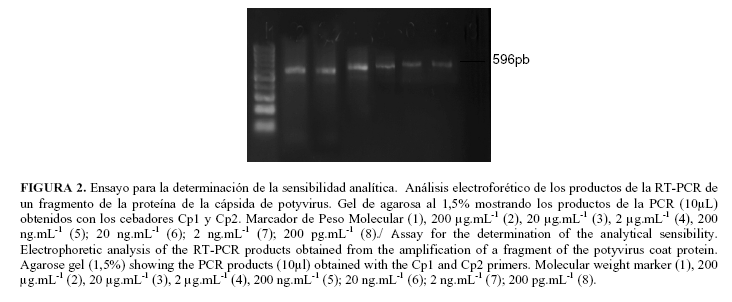
<P   align="justify" ><font face="Verdana, Arial, Helvetica, sans-serif" size="2">Al evaluar las plantas      inoculadas, mediante la RT-PCR, se evidencia que se logr&oacute; un 97% de      infecci&oacute;n de las plantas de pimiento inoculadas, lo que indica que      la forma de inoculaci&oacute;n (mec&aacute;nica utilizando carborundum) y      cantidad de inoculo (30 &micro;L) empleado fue adecuada. Estos m&eacute;todos      tambi&eacute;n han sido utilizados en estudios relacionados con otras interacciones      planta-pat&oacute;geno (9 ,10,19,20), demostr&aacute;ndose en todos los casos      su eficiencia para estos fines. </font></P >   <FONT size="+1"><FONT size="+1">        <P   align="justify" > </P >   <B>        <P   align="justify" ><font face="Verdana, Arial, Helvetica, sans-serif" size="2">Determinaci&oacute;n      del l&iacute;mite de detecci&oacute;n del ensayo </font></P >   </B>        <P   align="justify" ><font face="Verdana, Arial, Helvetica, sans-serif" size="2">El ensayo de RT-PCR      propuesto mostr&oacute; un bajo l&iacute;mite de detecci&oacute;n del genoma      viral en el macerado de la planta (2 ng.mL<Sup>-1</Sup>) (<a href="/img/revistas/rpv/v25n2/f0502210.gif">Fig.      2</a>), lo que puede atribuirse b&aacute;sicamente a la amplificaci&oacute;n      cebador-dependiente, la que est&aacute; directamente relacionada con el correcto      dise&ntilde;o de los oligonucle&oacute;tidos y la adecuada selecci&oacute;n      de la diana a amplificar.</font></P >   <FONT size="+1"><FONT size="+1"><FONT size="+1"><FONT size="+1"><FONT size="+1"><FONT size="+1"><FONT size="+1"><FONT size="+1"><FONT size="+1"><FONT size="+1"><FONT size="+1"><FONT size="+1"><FONT size="+1"><FONT size="+1"><FONT size="+1"><FONT size="+1"><FONT size="+1"><FONT size="+1"><FONT size="+1"><FONT size="+1"><FONT size="+1"><FONT size="+1"><FONT size="+1"><FONT size="+1"><FONT size="+1"><FONT size="+1"><FONT size="+1"><FONT size="+1"><FONT size="+1"><FONT size="+1"><FONT size="+1"><FONT size="+1">        
<P   align="justify" > </P >       ]]></body>
<body><![CDATA[<P   align="justify" ><font face="Verdana, Arial, Helvetica, sans-serif" size="2">Los ensayos de PCR      muestran en general bajo l&iacute;mite de detecci&oacute;n debido al principio      de amplificaci&oacute;n y a que no necesitan la completa integridad del agente      a detectar. No obstante, ensayos de este tipo pueden no alcanzar todo el potencial      de detecci&oacute;n esperado debido a diferentes factores, entre los que se      destacan: la presencia de inhibidores de la reacci&oacute;n, el inadecuado      dise&ntilde;o de cebadores o la no optimizaci&oacute;n del ensayo. </font></P >       <P   align="justify" > </P >       <P   align="justify" ><font face="Verdana, Arial, Helvetica, sans-serif" size="2"><B>Evaluaci&oacute;n      de la repetibilidad </b></font></P >       <P   align="justify" ><font face="Verdana, Arial, Helvetica, sans-serif" size="2">Los resultados de      las r&eacute;plicas efectuadas intraensayos e interensayos para determinar      la repetibilidad del m&eacute;todo de RT-PCR en una sola etapa evaluada, presentaron      un 100% de concordancia, tal como se muestra en la <a href="/img/revistas/rpv/v25n2/f0602210.gif">Figura      3</a>. Por lo que se demuestra su eficiencia y no fue necesario realizar an&aacute;lisis      estad&iacute;sticos que determinaran la presencia de diferencias significativas.</font></P >   <FONT size="+1">        
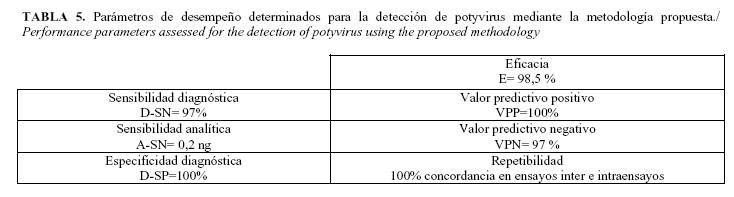
<P   align="left" > </P >   <FONT size="+1"><B>        <P   align="left" ><font face="Verdana, Arial, Helvetica, sans-serif" size="2">Determinaci&oacute;n      de los par&aacute;metros de desempe&ntilde;o anal&iacute;ticos del ensayo      RT-PCR </font></P >   </B>        <P   align="justify" ><font face="Verdana, Arial, Helvetica, sans-serif" size="2">Los resultados de      la evaluaci&oacute;n de los controles positivos y negativos por la metodolog&iacute;a      de diagn&oacute;stico propuesta, se muestran en la <a href="/img/revistas/rpv/v25n2/f0702210.gif">Tabla      4</a>. En la <a href="/img/revistas/rpv/v25n2/f0802210.gif">Tabla 5</a>      se observan los par&aacute;metros de desempe&ntilde;o anal&iacute;tico, determinados      sobre la base de estos resultados. </font></P >       
<P   align="justify" > </P >       <P   align="justify" ><FONT size="+1"></font><font face="Verdana, Arial, Helvetica, sans-serif" size="2">El      m&eacute;todo establecido, en el que utiliza la Reacci&oacute;n en Cadena      de la Polimerasa con Transcripci&oacute;n Reversa para determinar la presencia      de potyvirus en plantas de pimiento, mostr&oacute; una eficacia de 97%, cifra      que demuestra la factibilidad de su aplicaci&oacute;n en el establecimiento      de m&eacute;todos de biolog&iacute;a molecular para el diagn&oacute;stico      en fitopatolog&iacute;a. </font></P >   <FONT size="+1"><FONT size="+1">        <P   align="justify" ><font face="Verdana, Arial, Helvetica, sans-serif" size="2">Estos resultados      se corresponden con los informados por Soto <I>et al.</I> (19), Iglesia <I>et      al.</I> (21) y Soto (22), en los que se proponen ensayos moleculares para      la detecci&oacute;n de fitopat&oacute;genos, apoy&aacute;ndose en la metodolog&iacute;a      para validar m&eacute;todos de diagn&oacute;stico descrita por Peralta y Villoch      (18). Asimismo, estudios realizados por Mart&iacute;nez (23), en los que se      eval&uacute;an muestras provenientes de los programas de mejoramiento gen&eacute;tico      de tomate en Cuba, demostraron la utilidad de los par&aacute;metros anal&iacute;ticos      estimados en la validaci&oacute;n de los m&eacute;todos moleculares para el      diagn&oacute;stico de enfermedades asociadas a las plantas. </font></P >       ]]></body>
<body><![CDATA[<P   align="justify" > </P >       <P   align="justify" ><font face="Verdana, Arial, Helvetica, sans-serif" size="2">La presencia de tres      falsos negativos, puede estar relacionada con la sensibilidad de la t&eacute;cnica      utilizada y con errores experimentales en el proceso de extracci&oacute;n      de ARN, que es una de las fases m&aacute;s cr&iacute;ticas en este trabajo.      En este sentido, la t&eacute;cnica ELISA-DAS ha sido muy utilizada para la      detecci&oacute;n de potyvirus en plantas (5,24,25), sin embargo, en la actualidad      las t&eacute;cnicas de biolog&iacute;a molecular desempe&ntilde;an una funci&oacute;n      importante en el diagn&oacute;stico de estas entidades (13,16,26,27). Estas      t&eacute;cnicas son superiores a las inmunoqu&iacute;micas en especificidad      y sensibilidad, adem&aacute;s de ofrecer mayores posibilidades de detecci&oacute;n      y brindar una informaci&oacute;n m&aacute;s completa sobre los pat&oacute;genos      en cuesti&oacute;n </font></P >       <P   align="justify" > </P >       <P   align="justify" ><font face="Verdana, Arial, Helvetica, sans-serif" size="2">Aunque existen numerosos      ejemplos de validaci&oacute;n de diagnosticadores de uso humano y veterinario      (27), estos son pr&aacute;cticamente inexistentes en la bibliograf&iacute;a      con relaci&oacute;n a los medios de detecci&oacute;n de fitopat&oacute;genos      y las t&eacute;cnicas moleculares en general. Lo m&aacute;s com&uacute;n es      referir el l&iacute;mite de detecci&oacute;n de la t&eacute;cnica y su especificidad      anal&iacute;tica, encontr&aacute;ndose algunos ejemplos que informan los porcentajes      de coincidencia con otros ensayos o la ocurrencia de falsos positivos o falsos      negativos (28), sin que con ello lleguen a una verdadera evaluaci&oacute;n      de los medios y m&eacute;todos en cuesti&oacute;n. </font></P >       <P   align="justify" > </P >       <P   align="justify" ><font face="Verdana, Arial, Helvetica, sans-serif" size="2">Estos resultados      tienen importancia y aplicaci&oacute;n pr&aacute;ctica, demostrando la eficiencia      de la t&eacute;cnica RT-PCR para el diagn&oacute;stico molecular de potyvirus      en el cultivo del pimiento en Cuba. Adem&aacute;s, aportan nuevos elementos      metodol&oacute;gicos en la validaci&oacute;n de ensayos moleculares de nueva      generaci&oacute;n, garantizan la calidad del diagn&oacute;stico y enriquecen      los elementos para la estandarizaci&oacute;n de este tipo de ensayo, facilitando      la reproducibilidad de los procedimientos en los laboratorios de diagn&oacute;stico.</font></P >       <P   align="justify" >&nbsp;</P >       <P   align="justify" ><font face="Verdana, Arial, Helvetica, sans-serif" size="2"><B><font size="3">AGRADECIMIENTOS      </font> </b></font></P >   <B>        <P   align="center" > </P >   </B>        <P   align="justify" ><font face="Verdana, Arial, Helvetica, sans-serif" size="2">Los autores agradecen      al Centro Nacional de Sanidad Agropecuaria por su apoyo en el desarrollo de      este trabajo, el que forma parte de la Maestr&iacute;a en Microbiolog&iacute;a,      Menci&oacute;n en Virolog&iacute;a de Acela D&iacute;az de la Osa, desarrollada      como producto de la colaboraci&oacute;n entre ambas instituciones.</font></P >       ]]></body>
<body><![CDATA[<P   align="justify" >&nbsp;</P >       <P   align="justify" ><font face="Verdana, Arial, Helvetica, sans-serif" size="3"><b>REFERENCIAS</b></font></P >   </font></font></font></font></font></font></font></font></font></font></font></font></font></font></font></font></font></font></font></font></font></font></font></font></font></font></font></font></font></font></font></font></font></font></font></font></font></font></font></font></font></font></font></font></font></font></font></font></font></font></font>       <!-- ref --><p><FONT size="+1" color="#000000"><FONT size="+1"><FONT size="+1"><FONT size="+1"><FONT size="+1"><FONT size="+1"><FONT size="+1"><FONT size="+1"><FONT size="+1"><FONT size="+1"><FONT size="+1"><FONT size="+1"><FONT size="+1"><FONT size="+1"><FONT size="+1"><FONT size="+1"><FONT size="+1"><FONT size="+1"><FONT size="+1"><FONT size="+1"><FONT size="+1"><FONT size="+1"><FONT size="+1"><FONT size="+1"><FONT size="+1"><FONT size="+1"><FONT size="+1"><FONT size="+1"><FONT size="+1"><FONT size="+1"><FONT size="+1"><FONT size="+1"><FONT size="+1"><FONT size="+1"><FONT size="+1"><FONT size="+1"><FONT size="+1"><FONT size="+1"><FONT size="+1"><FONT size="+1"><FONT size="+1"><FONT size="+1"><FONT size="+1"><FONT size="+1"><FONT size="+1"><FONT size="+1"><FONT size="+1"><FONT size="+1"><FONT size="+1"><FONT size="+1"><font size="+1" color="#000000"><font size="+1"><font size="+1"><font size="+1"><font size="+1"><font size="+1"><font size="+1"><font size="+1"><font size="+1"><font size="+1"><font size="+1"><font size="+1"><font size="+1"><font size="+1"><font size="+1"><font size="+1"><font size="+1"><font size="+1"><font size="+1"><font size="+1"><font size="+1"><font size="+1"><font size="+1"><font size="+1"><font size="+1"><font size="+1"><font size="+1"><font size="+1"><font size="+1"><font size="+1"><font size="+1"><font size="+1"><font size="+1"><font size="+1"><font size="+1"><font size="+1"><font size="+1"><font size="+1"><font size="+1"><font size="+1"><font size="+1"><font size="+1"><font size="+1"><font size="+1"><font size="+1"><font size="+1"><font size="+1"><font size="+1"><font size="+1"><font size="+1"><font size="+1"><font face="Verdana, Arial, Helvetica, sans-serif" size="2">1.      Innes NL. Growing Vegetables for Home and Market. FAO Diversification booklet      11. Rome: FAO. 2009; p. 91.</font></font></font></font></font></font></font></font></font></font></font></font></font></font></font></font></font></font></font></font></font></font></font></font></font></font></font></font></font></font></font></font></font></font></font></font></font></font></font></font></font></font></font></font></font></font></font></font></font></font></font></font></font></font></font></font></font></font></font></font></font></font></font></font></font></font></font></font></font></font></font></font></font></font></font></font></font></font></font></font></font></font></font></font></font></font></font></font></font></font></font></font></font></font></font></font></font></font></font></font></font></font><!-- ref --><p><font size="+1" color="#000000"><font size="+1"><font size="+1"><font size="+1"><font size="+1"><font size="+1"><font size="+1"><font size="+1"><font size="+1"><font size="+1"><font size="+1"><font size="+1"><font size="+1"><font size="+1"><font size="+1"><font size="+1"><font size="+1"><font size="+1"><font size="+1"><font size="+1"><font size="+1"><font size="+1"><font size="+1"><font size="+1"><font size="+1"><font size="+1"><font size="+1"><font size="+1"><font size="+1"><font size="+1"><font size="+1"><font size="+1"><font size="+1"><font size="+1"><font size="+1"><font size="+1"><font size="+1"><font size="+1"><font size="+1"><font size="+1"><font size="+1"><font size="+1"><font size="+1"><font size="+1"><font size="+1"><font size="+1"><font size="+1"><font size="+1"><font size="+1"><font size="+1"><font size="+1"><font face="Verdana, Arial, Helvetica, sans-serif" size="2">2.      Rodr&iacute;guez,Y, Depestre T, G&oacute;mez O. Obtenci&oacute;n de l&iacute;neas      de pimiento (<i>Capsicum annuum</i>) progenitoras de h&iacute;bridos F1 resistentes      a enfermedades virales, a partir del estudio de cuatro sub-poblaciones. Cien      Inv Agron. 2007;34(3):237-242.</font></font></font></font></font></font></font></font></font></font></font></font></font></font></font></font></font></font></font></font></font></font></font></font></font></font></font></font></font></font></font></font></font></font></font></font></font></font></font></font></font></font></font></font></font></font></font></font></font></font></font></font><!-- ref --><p><font size="+1" color="#000000"><font size="+1"><font size="+1"><font size="+1"><font size="+1"><font size="+1"><font size="+1"><font size="+1"><font size="+1"><font size="+1"><font size="+1"><font size="+1"><font size="+1"><font size="+1"><font size="+1"><font size="+1"><font size="+1"><font size="+1"><font size="+1"><font size="+1"><font size="+1"><font size="+1"><font size="+1"><font size="+1"><font size="+1"><font size="+1"><font size="+1"><font size="+1"><font size="+1"><font size="+1"><font size="+1"><font size="+1"><font size="+1"><font size="+1"><font size="+1"><font size="+1"><font size="+1"><font size="+1"><font size="+1"><font size="+1"><font size="+1"><font size="+1"><font size="+1"><font size="+1"><font size="+1"><font size="+1"><font size="+1"><font size="+1"><font size="+1"><font size="+1"><font size="+1"><font face="Verdana, Arial, Helvetica, sans-serif" size="2">3.      Ha C, Revill P, Harding RM, Vu M, Dale JL. Identification and sequence analysis      of potyviruses infecting crops in Vietnam. Arch Virol. 2007;153:45-60. </font></font></font></font></font></font></font></font></font></font></font></font></font></font></font></font></font></font></font></font></font></font></font></font></font></font></font></font></font></font></font></font></font></font></font></font></font></font></font></font></font></font></font></font></font></font></font></font></font></font></font></font><p><font size="+1" color="#000000"><font size="+1"><font size="+1"><font size="+1"><font size="+1"><font size="+1"><font size="+1"><font size="+1"><font size="+1"><font size="+1"><font size="+1"><font size="+1"><font size="+1"><font size="+1"><font size="+1"><font size="+1"><font size="+1"><font size="+1"><font size="+1"><font size="+1"><font size="+1"><font size="+1"><font size="+1"><font size="+1"><font size="+1"><font size="+1"><font size="+1"><font size="+1"><font size="+1"><font size="+1"><font size="+1"><font size="+1"><font size="+1"><font size="+1"><font size="+1"><font size="+1"><font size="+1"><font size="+1"><font size="+1"><font size="+1"><font size="+1"><font size="+1"><font size="+1"><font size="+1"><font size="+1"><font size="+1"><font size="+1"><font size="+1"><font size="+1"><font size="+1"><font size="+1"><font face="Verdana, Arial, Helvetica, sans-serif" size="2">4.      Agrios GN. Plant Diseases caused by Viruses. Plant Pathology. Fifth Edition.      Elsevier Academia Press. 2005; p. 724-820.</font></font></font></font></font></font></font></font></font></font></font></font></font></font></font></font></font></font></font></font></font></font></font></font></font></font></font></font></font></font></font></font></font></font></font></font></font></font></font></font></font></font></font></font></font></font></font></font></font></font></font></font></p>       <!-- ref --><p><font size="+1" color="#000000"><font size="+1"><font size="+1"><font size="+1"><font size="+1"><font size="+1"><font size="+1"><font size="+1"><font size="+1"><font size="+1"><font size="+1"><font size="+1"><font size="+1"><font size="+1"><font size="+1"><font size="+1"><font size="+1"><font size="+1"><font size="+1"><font size="+1"><font size="+1"><font size="+1"><font size="+1"><font size="+1"><font size="+1"><font size="+1"><font size="+1"><font size="+1"><font size="+1"><font size="+1"><font size="+1"><font size="+1"><font size="+1"><font size="+1"><font size="+1"><font size="+1"><font size="+1"><font size="+1"><font size="+1"><font size="+1"><font size="+1"><font size="+1"><font size="+1"><font size="+1"><font size="+1"><font size="+1"><font size="+1"><font size="+1"><font size="+1"><font size="+1"><font size="+1"><font face="Verdana, Arial, Helvetica, sans-serif" size="2">5.      Aramburu J, Galipienso L, Matas M. Characterization of potato virus Y isolates      from tomato crops in northeast Spain. Eur J Plant Pathol. 2006;115:247-258.      </font></font></font></font></font></font></font></font></font></font></font></font></font></font></font></font></font></font></font></font></font></font></font></font></font></font></font></font></font></font></font></font></font></font></font></font></font></font></font></font></font></font></font></font></font></font></font></font></font></font></font></font><!-- ref --><p><FONT size="+1" color="#000000"><FONT size="+1"><FONT size="+1"><FONT size="+1"><FONT size="+1"><FONT size="+1"><FONT size="+1"><FONT size="+1"><FONT size="+1"><FONT size="+1"><FONT size="+1"><FONT size="+1"><FONT size="+1"><FONT size="+1"><FONT size="+1"><FONT size="+1"><FONT size="+1"><FONT size="+1"><FONT size="+1"><FONT size="+1"><FONT size="+1"><FONT size="+1"><FONT size="+1"><FONT size="+1"><FONT size="+1"><FONT size="+1"><FONT size="+1"><FONT size="+1"><FONT size="+1"><FONT size="+1"><FONT size="+1"><FONT size="+1"><FONT size="+1"><FONT size="+1"><FONT size="+1"><FONT size="+1"><FONT size="+1"><FONT size="+1"><FONT size="+1"><FONT size="+1"><FONT size="+1"><FONT size="+1"><FONT size="+1"><FONT size="+1"><FONT size="+1"><FONT size="+1"><FONT size="+1"><FONT size="+1"><FONT size="+1"><FONT size="+1"><FONT size="+1">      </font><font size="+1" color="#000000"><font size="+1"><font size="+1"><font size="+1"><font size="+1"><font size="+1"><font size="+1"><font size="+1"><font size="+1"><font size="+1"><font size="+1"><font size="+1"><font size="+1"><font size="+1"><font size="+1"><font size="+1"><font size="+1"><font size="+1"><font size="+1"><font size="+1"><font size="+1"><font size="+1"><font size="+1"><font size="+1"><font size="+1"><font size="+1"><font size="+1"><font size="+1"><font size="+1"><font size="+1"><font size="+1"><font size="+1"><font size="+1"><font size="+1"><font size="+1"><font size="+1"><font size="+1"><font size="+1"><font size="+1"><font size="+1"><font size="+1"><font size="+1"><font size="+1"><font size="+1"><font size="+1"><font size="+1"><font size="+1"><font size="+1"><font size="+1"><font size="+1"><font size="+1"><font face="Verdana, Arial, Helvetica, sans-serif" size="2">6.      Mart&iacute;nez Y, Fonseca D, Peralta EL. Conocimiento y diagn&oacute;stico      del virus del bronceado del tomate (TSWV), una necesidad de la agricultura      cubana. Rev Protecci&oacute;n Veg. 2005;20(1):11-19.</font></font></font></font></font></font></font></font></font></font></font></font></font></font></font></font></font></font></font></font></font></font></font></font></font></font></font></font></font></font></font></font></font></font></font></font></font></font></font></font></font></font></font></font></font></font></font></font></font></font></font></font></font></font></font></font></font></font></font></font></font></font></font></font></font></font></font></font></font></font></font></font></font></font></font></font></font></font></font></font></font></font></font></font></font></font></font></font></font></font></font></font></font></font></font></font></font></font></font></font></font></font><!-- ref --><p><font size="+1" color="#000000"><font size="+1"><font size="+1"><font size="+1"><font size="+1"><font size="+1"><font size="+1"><font size="+1"><font size="+1"><font size="+1"><font size="+1"><font size="+1"><font size="+1"><font size="+1"><font size="+1"><font size="+1"><font size="+1"><font size="+1"><font size="+1"><font size="+1"><font size="+1"><font size="+1"><font size="+1"><font size="+1"><font size="+1"><font size="+1"><font size="+1"><font size="+1"><font size="+1"><font size="+1"><font size="+1"><font size="+1"><font size="+1"><font size="+1"><font size="+1"><font size="+1"><font size="+1"><font size="+1"><font size="+1"><font size="+1"><font size="+1"><font size="+1"><font size="+1"><font size="+1"><font size="+1"><font size="+1"><font size="+1"><font size="+1"><font size="+1"><font size="+1"><font size="+1"><font face="Verdana, Arial, Helvetica, sans-serif" size="2">7.      Rodr&iacute;guez Y, Rangel E, Centeno F, Mendoza A, Parra A. Virus diseases      affecting sweet pepper (<i>Capsicum annuum</i>) in Quibor Valley, Venezuela.      In: Proc. Of the 16<sup>th</sup> Int. Pepper Conference. Tampico, Tamaulipas.      November, 2002; p.12.</font></font></font></font></font></font></font></font></font></font></font></font></font></font></font></font></font></font></font></font></font></font></font></font></font></font></font></font></font></font></font></font></font></font></font></font></font></font></font></font></font></font></font></font></font></font></font></font></font></font></font></font><!-- ref --><p><font size="+1" color="#000000"><font size="+1"><font size="+1"><font size="+1"><font size="+1"><font size="+1"><font size="+1"><font size="+1"><font size="+1"><font size="+1"><font size="+1"><font size="+1"><font size="+1"><font size="+1"><font size="+1"><font size="+1"><font size="+1"><font size="+1"><font size="+1"><font size="+1"><font size="+1"><font size="+1"><font size="+1"><font size="+1"><font size="+1"><font size="+1"><font size="+1"><font size="+1"><font size="+1"><font size="+1"><font size="+1"><font size="+1"><font size="+1"><font size="+1"><font size="+1"><font size="+1"><font size="+1"><font size="+1"><font size="+1"><font size="+1"><font size="+1"><font size="+1"><font size="+1"><font size="+1"><font size="+1"><font size="+1"><font size="+1"><font size="+1"><font size="+1"><font size="+1"><font size="+1"><font size="+1"><font size="+1"><font size="+1"><font size="+1"><font size="+1"><font size="+1"><font size="+1"><font size="+1"><font face="Verdana, Arial, Helvetica, sans-serif" size="2">9.      Chen J, Zheng HY, Shi YH, Adams MJ, Wei CB, Lin L, et al. Detection and characterisation      of a second potyvirus from Thunberg fritillary in China. Arch Virol. 2006;151:439-447.      </font></font></font></font></font></font></font></font></font></font></font></font></font></font></font></font></font></font></font></font></font></font></font></font></font></font></font></font></font></font></font></font></font></font></font></font></font></font></font></font></font></font></font></font></font></font></font></font></font></font></font></font></font></font></font></font></font></font></font></font><!-- ref --><p><font size="+1" color="#000000"><font size="+1"><font size="+1"><font size="+1"><font size="+1"><font size="+1"><font size="+1"><font size="+1"><font size="+1"><font size="+1"><font size="+1"><font size="+1"><font size="+1"><font size="+1"><font size="+1"><font size="+1"><font size="+1"><font size="+1"><font size="+1"><font size="+1"><font size="+1"><font size="+1"><font size="+1"><font size="+1"><font size="+1"><font size="+1"><font size="+1"><font size="+1"><font size="+1"><font size="+1"><font size="+1"><font size="+1"><font size="+1"><font size="+1"><font size="+1"><font size="+1"><font size="+1"><font size="+1"><font size="+1"><font size="+1"><font size="+1"><font size="+1"><font size="+1"><font size="+1"><font size="+1"><font size="+1"><font size="+1"><font size="+1"><font size="+1"><font size="+1"><font size="+1"><font size="+1"><font size="+1"><font size="+1"><font size="+1"><font size="+1"><font size="+1"><font size="+1"><font size="+1"><font face="Verdana, Arial, Helvetica, sans-serif" size="2">10.      Huang CH, Hu WC, Yang TC, Chang YC. Zantedeschia mild mosaic virus, a new      widespread virus in calla lily, detected by ELISA, dot blot hibridization      and IC-RT-PCR. Plant Pathol. 2007;56:186-189. </font></font></font></font></font></font></font></font></font></font></font></font></font></font></font></font></font></font></font></font></font></font></font></font></font></font></font></font></font></font></font></font></font></font></font></font></font></font></font></font></font></font></font></font></font></font></font></font></font></font></font></font></font></font></font></font></font></font></font></font><!-- ref --><p><FONT size="+1" color="#000000"><FONT size="+1"><FONT size="+1"><FONT size="+1"><FONT size="+1"><FONT size="+1"><FONT size="+1"><FONT size="+1"><FONT size="+1"><FONT size="+1"><FONT size="+1"><FONT size="+1"><FONT size="+1"><FONT size="+1"><FONT size="+1"><FONT size="+1"><FONT size="+1"><FONT size="+1"><FONT size="+1"><FONT size="+1"><FONT size="+1"><FONT size="+1"><FONT size="+1"><FONT size="+1"><FONT size="+1"><FONT size="+1"><FONT size="+1"><FONT size="+1"><FONT size="+1"><FONT size="+1"><FONT size="+1"><FONT size="+1"><FONT size="+1"><FONT size="+1"><FONT size="+1"><FONT size="+1"><FONT size="+1"><FONT size="+1"><FONT size="+1"><FONT size="+1"><FONT size="+1"><FONT size="+1"><FONT size="+1"><FONT size="+1"><FONT size="+1"><FONT size="+1"><FONT size="+1"><FONT size="+1"><FONT size="+1"><FONT size="+1"><font size="+1" color="#000000"><font size="+1"><font size="+1"><font size="+1"><font size="+1"><font size="+1"><font size="+1"><font size="+1"><font size="+1"><font size="+1"><font size="+1"><font size="+1"><font size="+1"><font size="+1"><font size="+1"><font size="+1"><font size="+1"><font size="+1"><font size="+1"><font size="+1"><font size="+1"><font size="+1"><font size="+1"><font size="+1"><font size="+1"><font size="+1"><font size="+1"><font size="+1"><font size="+1"><font size="+1"><font size="+1"><font size="+1"><font size="+1"><font size="+1"><font size="+1"><font size="+1"><font size="+1"><font size="+1"><font size="+1"><font size="+1"><font size="+1"><font size="+1"><font size="+1"><font size="+1"><font size="+1"><font size="+1"><font size="+1"><font size="+1"><font size="+1"><font size="+1"><font size="+1"><font size="+1"><font size="+1"><font size="+1"><font size="+1"><font size="+1"><font size="+1"><font size="+1"><font size="+1"><font face="Verdana, Arial, Helvetica, sans-serif" size="2">11.      Melcher U, Muthukumar V, Wiley GB, Min BE, Palmer MW, Verchot-Lubicz J, et      al. Evidence for novel viruses by analysis of nucleic acids in virus-like      particle fractions from <i>Ambrosia psilostachya</i>. J Virol Methods. 2008;152:49-55.</font></font></font></font></font></font></font></font></font></font></font></font></font></font></font></font></font></font></font></font></font></font></font></font></font></font></font></font></font></font></font></font></font></font></font></font></font></font></font></font></font></font></font></font></font></font></font></font></font></font></font></font></font></font></font></font></font></font></font></font></font></font></font></font></font></font></font></font></font></font></font></font></font></font></font></font></font></font></font></font></font></font></font></font></font></font></font></font></font></font></font></font></font></font></font></font></font></font></font></font></font></font></font></font></font></font></font></font></font></font><p><font size="+1" color="#000000"><font size="+1"><font size="+1"><font size="+1"><font size="+1"><font size="+1"><font size="+1"><font size="+1"><font size="+1"><font size="+1"><font size="+1"><font size="+1"><font size="+1"><font size="+1"><font size="+1"><font size="+1"><font size="+1"><font size="+1"><font size="+1"><font size="+1"><font size="+1"><font size="+1"><font size="+1"><font size="+1"><font size="+1"><font size="+1"><font size="+1"><font size="+1"><font size="+1"><font size="+1"><font size="+1"><font size="+1"><font size="+1"><font size="+1"><font size="+1"><font size="+1"><font size="+1"><font size="+1"><font size="+1"><font size="+1"><font size="+1"><font size="+1"><font size="+1"><font size="+1"><font size="+1"><font size="+1"><font size="+1"><font size="+1"><font size="+1"><font size="+1"><font size="+1"><font size="+1"><font size="+1"><font size="+1"><font size="+1"><font size="+1"><font size="+1"><font size="+1"><font size="+1"><font face="Verdana, Arial, Helvetica, sans-serif" size="2">12.      Balijja A, Kvarnheden A, Turchetti T. A non-phenol&ndash;chloroform extraction      of double-stranded RNA from plant and fungal tissues. J Virol Methods. 2008;152:32-37.      </font></font></font></font></font></font></font></font></font></font></font></font></font></font></font></font></font></font></font></font></font></font></font></font></font></font></font></font></font></font></font></font></font></font></font></font></font></font></font></font></font></font></font></font></font></font></font></font></font></font></font></font></font></font></font></font></font></font></font></font></p>       <!-- ref --><p><font size="+1" color="#000000"><font size="+1"><font size="+1"><font size="+1"><font size="+1"><font size="+1"><font size="+1"><font size="+1"><font size="+1"><font size="+1"><font size="+1"><font size="+1"><font size="+1"><font size="+1"><font size="+1"><font size="+1"><font size="+1"><font size="+1"><font size="+1"><font size="+1"><font size="+1"><font size="+1"><font size="+1"><font size="+1"><font size="+1"><font size="+1"><font size="+1"><font size="+1"><font size="+1"><font size="+1"><font size="+1"><font size="+1"><font size="+1"><font size="+1"><font size="+1"><font size="+1"><font size="+1"><font size="+1"><font size="+1"><font size="+1"><font size="+1"><font size="+1"><font size="+1"><font size="+1"><font size="+1"><font size="+1"><font size="+1"><font size="+1"><font size="+1"><font size="+1"><font size="+1"><font size="+1"><font size="+1"><font size="+1"><font size="+1"><font size="+1"><font size="+1"><font size="+1"><font size="+1"><font face="Verdana, Arial, Helvetica, sans-serif" size="2">13.      Kreuze JF, Perez A, Untiveros M, Quispe D, Fuentes S, Barker I. Complete viral      genome sequence and discovery of novel viruses by deep sequencing of small      RNAs: A generic method for diagnosis, discovery and sequencing of viruses.      Virology. 2009;388:1-7. </font></font></font></font></font></font></font></font></font></font></font></font></font></font></font></font></font></font></font></font></font></font></font></font></font></font></font></font></font></font></font></font></font></font></font></font></font></font></font></font></font></font></font></font></font></font></font></font></font></font></font></font></font></font></font></font></font></font></font></font><!-- ref --><p><font size="+1" color="#000000"><font size="+1"><font size="+1"><font size="+1"><font size="+1"><font size="+1"><font size="+1"><font size="+1"><font size="+1"><font size="+1"><font size="+1"><font size="+1"><font size="+1"><font size="+1"><font size="+1"><font size="+1"><font size="+1"><font size="+1"><font size="+1"><font size="+1"><font size="+1"><font size="+1"><font size="+1"><font size="+1"><font size="+1"><font size="+1"><font size="+1"><font size="+1"><font size="+1"><font size="+1"><font size="+1"><font size="+1"><font size="+1"><font size="+1"><font size="+1"><font size="+1"><font size="+1"><font size="+1"><font size="+1"><font size="+1"><font size="+1"><font size="+1"><font size="+1"><font size="+1"><font size="+1"><font size="+1"><font size="+1"><font size="+1"><font size="+1"><font size="+1"><font size="+1"><font size="+1"><font size="+1"><font size="+1"><font size="+1"><font size="+1"><font size="+1"><font size="+1"><font size="+1"><font face="Verdana, Arial, Helvetica, sans-serif" size="2">14.      Hua X, Meachama T, Ewinga L, Gray SM, Karaseva AV. A novel recombinant strain      of Potato virus Y suggests a new viral genetic determinant of vein necrosis      in tobacco. Virus Res. 2009;143:68-76. </font></font></font></font></font></font></font></font></font></font></font></font></font></font></font></font></font></font></font></font></font></font></font></font></font></font></font></font></font></font></font></font></font></font></font></font></font></font></font></font></font></font></font></font></font></font></font></font></font></font></font></font></font></font></font></font></font></font></font></font><!-- ref --><p><font size="+1" color="#000000"><font size="+1"><font size="+1"><font size="+1"><font size="+1"><font size="+1"><font size="+1"><font size="+1"><font size="+1"><font size="+1"><font size="+1"><font size="+1"><font size="+1"><font size="+1"><font size="+1"><font size="+1"><font size="+1"><font size="+1"><font size="+1"><font size="+1"><font size="+1"><font size="+1"><font size="+1"><font size="+1"><font size="+1"><font size="+1"><font size="+1"><font size="+1"><font size="+1"><font size="+1"><font size="+1"><font size="+1"><font size="+1"><font size="+1"><font size="+1"><font size="+1"><font size="+1"><font size="+1"><font size="+1"><font size="+1"><font size="+1"><font size="+1"><font size="+1"><font size="+1"><font size="+1"><font size="+1"><font size="+1"><font size="+1"><font size="+1"><font size="+1"><font size="+1"><font size="+1"><font size="+1"><font size="+1"><font size="+1"><font size="+1"><font size="+1"><font size="+1"><font size="+1"><font face="Verdana, Arial, Helvetica, sans-serif" size="2">15.      Krause-Sakate R, Mello RN, Pavan MA, Zambolim EM, Carvalho MG, L&ecirc; Gall      O, et al. Molecular characterization of two Brazilian isolates of <i>Lettuce      mosaic virus</i> with distinct biological properties. Fitopatol Bras. 2001;26(2):153-157.</font></font></font></font></font></font></font></font></font></font></font></font></font></font></font></font></font></font></font></font></font></font></font></font></font></font></font></font></font></font></font></font></font></font></font></font></font></font></font></font></font></font></font></font></font></font></font></font></font></font></font></font></font></font></font></font></font></font></font></font><!-- ref --><p><font size="+1" color="#000000"><font size="+1"><font size="+1"><font size="+1"><font size="+1"><font size="+1"><font size="+1"><font size="+1"><font size="+1"><font size="+1"><font size="+1"><font size="+1"><font size="+1"><font size="+1"><font size="+1"><font size="+1"><font size="+1"><font size="+1"><font size="+1"><font size="+1"><font size="+1"><font size="+1"><font size="+1"><font size="+1"><font size="+1"><font size="+1"><font size="+1"><font size="+1"><font size="+1"><font size="+1"><font size="+1"><font size="+1"><font size="+1"><font size="+1"><font size="+1"><font size="+1"><font size="+1"><font size="+1"><font size="+1"><font size="+1"><font size="+1"><font size="+1"><font size="+1"><font size="+1"><font size="+1"><font size="+1"><font size="+1"><font size="+1"><font size="+1"><font size="+1"><font size="+1"><font size="+1"><font size="+1"><font size="+1"><font size="+1"><font size="+1"><font size="+1"><font size="+1"><font size="+1"><font face="Verdana, Arial, Helvetica, sans-serif" size="2">16.      Rigotti S, Gugerli P. Rapid identification of potato virus Y strains by one-step      triplex RT-PCR. J Gen Virol. 2007;140:90-94.</font></font></font></font></font></font></font></font></font></font></font></font></font></font></font></font></font></font></font></font></font></font></font></font></font></font></font></font></font></font></font></font></font></font></font></font></font></font></font></font></font></font></font></font></font></font></font></font></font></font></font></font></font></font></font></font></font></font></font></font><!-- ref --><p><font size="+1" color="#000000"><font size="+1"><font size="+1"><font size="+1"><font size="+1"><font size="+1"><font size="+1"><font size="+1"><font size="+1"><font size="+1"><font size="+1"><font size="+1"><font size="+1"><font size="+1"><font size="+1"><font size="+1"><font size="+1"><font size="+1"><font size="+1"><font size="+1"><font size="+1"><font size="+1"><font size="+1"><font size="+1"><font size="+1"><font size="+1"><font size="+1"><font size="+1"><font size="+1"><font size="+1"><font size="+1"><font size="+1"><font size="+1"><font size="+1"><font size="+1"><font size="+1"><font size="+1"><font size="+1"><font size="+1"><font size="+1"><font size="+1"><font size="+1"><font size="+1"><font size="+1"><font size="+1"><font size="+1"><font size="+1"><font size="+1"><font size="+1"><font size="+1"><font size="+1"><font size="+1"><font size="+1"><font size="+1"><font size="+1"><font size="+1"><font size="+1"><font size="+1"><font size="+1"><font face="Verdana, Arial, Helvetica, sans-serif" size="2">17.      Sambroock J, Fritsch EF, Maniatis T. Molecular Cloning: A Laboratory Manual      (second ed.), Cold Spring Harbor Laboratory Press, New York; 1989.</font></font></font></font></font></font></font></font></font></font></font></font></font></font></font></font></font></font></font></font></font></font></font></font></font></font></font></font></font></font></font></font></font></font></font></font></font></font></font></font></font></font></font></font></font></font></font></font></font></font></font></font></font></font></font></font></font></font></font></font><!-- ref --><p><font size="+1" color="#000000"><font size="+1"><font size="+1"><font size="+1"><font size="+1"><font size="+1"><font size="+1"><font size="+1"><font size="+1"><font size="+1"><font size="+1"><font size="+1"><font size="+1"><font size="+1"><font size="+1"><font size="+1"><font size="+1"><font size="+1"><font size="+1"><font size="+1"><font size="+1"><font size="+1"><font size="+1"><font size="+1"><font size="+1"><font size="+1"><font size="+1"><font size="+1"><font size="+1"><font size="+1"><font size="+1"><font size="+1"><font size="+1"><font size="+1"><font size="+1"><font size="+1"><font size="+1"><font size="+1"><font size="+1"><font size="+1"><font size="+1"><font size="+1"><font size="+1"><font size="+1"><font size="+1"><font size="+1"><font size="+1"><font size="+1"><font size="+1"><font size="+1"><font size="+1"><font size="+1"><font size="+1"><font size="+1"><font size="+1"><font size="+1"><font size="+1"><font size="+1"><font size="+1"><font face="Verdana, Arial, Helvetica, sans-serif" size="2">18.      Peralta EL, Villoch A. Validaci&oacute;n de ensayos inmunoqu&iacute;micos      y moleculares utilizados para el diagn&oacute;stico de fitopat&oacute;genos.      En: Res&uacute;menes del X Congreso Latinoamericano de Fitopatolog&iacute;a,      #153, Gualdalajara, M&eacute;xico; 1999.</font></font></font></font></font></font></font></font></font></font></font></font></font></font></font></font></font></font></font></font></font></font></font></font></font></font></font></font></font></font></font></font></font></font></font></font></font></font></font></font></font></font></font></font></font></font></font></font></font></font></font></font></font></font></font></font></font></font></font></font><!-- ref --><p><font size="+1" color="#000000"><font size="+1"><font size="+1"><font size="+1"><font size="+1"><font size="+1"><font size="+1"><font size="+1"><font size="+1"><font size="+1"><font size="+1"><font size="+1"><font size="+1"><font size="+1"><font size="+1"><font size="+1"><font size="+1"><font size="+1"><font size="+1"><font size="+1"><font size="+1"><font size="+1"><font size="+1"><font size="+1"><font size="+1"><font size="+1"><font size="+1"><font size="+1"><font size="+1"><font size="+1"><font size="+1"><font size="+1"><font size="+1"><font size="+1"><font size="+1"><font size="+1"><font size="+1"><font size="+1"><font size="+1"><font size="+1"><font size="+1"><font size="+1"><font size="+1"><font size="+1"><font size="+1"><font size="+1"><font size="+1"><font size="+1"><font size="+1"><font size="+1"><font size="+1"><font size="+1"><font size="+1"><font size="+1"><font size="+1"><font size="+1"><font size="+1"><font size="+1"><font size="+1"><font face="Verdana, Arial, Helvetica, sans-serif" size="2">19.      Soto M, Gonz&aacute;lez L, Peralta EL, P&eacute;rez R. Empleo de plantas de      pepino como amplificador biol&oacute;gico para la detecci&oacute;n del viroide      del enanismo del l&uacute;pulo (HSVD) en c&iacute;tricos. Rev Protecci&oacute;n      Veg. 2008;23(1):1-10. </font></font></font></font></font></font></font></font></font></font></font></font></font></font></font></font></font></font></font></font></font></font></font></font></font></font></font></font></font></font></font></font></font></font></font></font></font></font></font></font></font></font></font></font></font></font></font></font></font></font></font></font></font></font></font></font></font></font></font></font><!-- ref --><p><font size="+1" color="#000000"><font size="+1"><font size="+1"><font size="+1"><font size="+1"><font size="+1"><font size="+1"><font size="+1"><font size="+1"><font size="+1"><font size="+1"><font size="+1"><font size="+1"><font size="+1"><font size="+1"><font size="+1"><font size="+1"><font size="+1"><font size="+1"><font size="+1"><font size="+1"><font size="+1"><font size="+1"><font size="+1"><font size="+1"><font size="+1"><font size="+1"><font size="+1"><font size="+1"><font size="+1"><font size="+1"><font size="+1"><font size="+1"><font size="+1"><font size="+1"><font size="+1"><font size="+1"><font size="+1"><font size="+1"><font size="+1"><font size="+1"><font size="+1"><font size="+1"><font size="+1"><font size="+1"><font size="+1"><font size="+1"><font size="+1"><font size="+1"><font size="+1"><font size="+1"><font size="+1"><font size="+1"><font size="+1"><font size="+1"><font size="+1"><font size="+1"><font size="+1"><font size="+1"><font face="Verdana, Arial, Helvetica, sans-serif" size="2">20.      Mota LDC, Della Vecchia MGS, Gioria R, Kitajima EW, Rezende JMA, Camargo LEA,      et al. Pfaffia mosaic virus: a new potyvirus found infecting <i>Pfaffia glomerata</i>      in Brazil. Plant Pathol. 2004;53:368-373.</font></font></font></font></font></font></font></font></font></font></font></font></font></font></font></font></font></font></font></font></font></font></font></font></font></font></font></font></font></font></font></font></font></font></font></font></font></font></font></font></font></font></font></font></font></font></font></font></font></font></font></font></font></font></font></font></font></font></font></font><!-- ref --><p><font size="+1" color="#000000"><font size="+1"><font size="+1"><font size="+1"><font size="+1"><font size="+1"><font size="+1"><font size="+1"><font size="+1"><font size="+1"><font size="+1"><font size="+1"><font size="+1"><font size="+1"><font size="+1"><font size="+1"><font size="+1"><font size="+1"><font size="+1"><font size="+1"><font size="+1"><font size="+1"><font size="+1"><font size="+1"><font size="+1"><font size="+1"><font size="+1"><font size="+1"><font size="+1"><font size="+1"><font size="+1"><font size="+1"><font size="+1"><font size="+1"><font size="+1"><font size="+1"><font size="+1"><font size="+1"><font size="+1"><font size="+1"><font size="+1"><font size="+1"><font size="+1"><font size="+1"><font size="+1"><font size="+1"><font size="+1"><font size="+1"><font size="+1"><font size="+1"><font size="+1"><font size="+1"><font size="+1"><font size="+1"><font size="+1"><font size="+1"><font size="+1"><font size="+1"><font size="+1"><font face="Verdana, Arial, Helvetica, sans-serif" size="2">21.      Iglesia-Lozano A, D&iacute;az M, Peralta EL, Pazos V, &Aacute;lvarez E. Diagn&oacute;stico      del raquitismo de los reto&ntilde;os de la ca&ntilde;a de az&uacute;car (<i>Leifsonia      xyli </i>subsp <i>xyli</i>) mediante la t&eacute;cnica de la reacci&oacute;n      en cadena de la polimerasa anidada (NPCR). Rev Protecci&oacute;n Veg. 2003;18(1):19-22.</font></font></font></font></font></font></font></font></font></font></font></font></font></font></font></font></font></font></font></font></font></font></font></font></font></font></font></font></font></font></font></font></font></font></font></font></font></font></font></font></font></font></font></font></font></font></font></font></font></font></font></font></font></font></font></font></font></font></font></font><!-- ref --><p><font size="+1" color="#000000"><font size="+1"><font size="+1"><font size="+1"><font size="+1"><font size="+1"><font size="+1"><font size="+1"><font size="+1"><font size="+1"><font size="+1"><font size="+1"><font size="+1"><font size="+1"><font size="+1"><font size="+1"><font size="+1"><font size="+1"><font size="+1"><font size="+1"><font size="+1"><font size="+1"><font size="+1"><font size="+1"><font size="+1"><font size="+1"><font size="+1"><font size="+1"><font size="+1"><font size="+1"><font size="+1"><font size="+1"><font size="+1"><font size="+1"><font size="+1"><font size="+1"><font size="+1"><font size="+1"><font size="+1"><font size="+1"><font size="+1"><font size="+1"><font size="+1"><font size="+1"><font size="+1"><font size="+1"><font size="+1"><font size="+1"><font size="+1"><font size="+1"><font size="+1"><font size="+1"><font size="+1"><font size="+1"><font size="+1"><font size="+1"><font size="+1"><font size="+1"><font size="+1"><font size="+1" color="#000000"><font size="+1"><font size="+1"><font size="+1"><font size="+1"><font size="+1"><font size="+1"><font size="+1"><font size="+1"><font size="+1"><font size="+1"><font size="+1"><font size="+1"><font size="+1"><font size="+1"><font size="+1"><font size="+1"><font size="+1"><font size="+1"><font size="+1"><font size="+1"><font size="+1"><font size="+1"><font size="+1"><font size="+1"><font size="+1"><font size="+1"><font size="+1"><font size="+1"><font size="+1"><font size="+1"><font size="+1"><font size="+1"><font size="+1"><font size="+1"><font size="+1"><font size="+1"><font size="+1"><font size="+1"><font size="+1"><font size="+1"><font size="+1"><font size="+1"><font size="+1"><font size="+1"><font size="+1"><font size="+1"><font size="+1"><font size="+1"><font size="+1"><font size="+1"><font size="+1"><font size="+1"><font size="+1"><font size="+1"><font size="+1"><font size="+1"><font size="+1"><font size="+1"><font face="Verdana, Arial, Helvetica, sans-serif" size="2">22.      Soto M. Caracterizaci&oacute;n molecular de variantes de secuencias del viroide      del enanismo del l&uacute;pulo (HSVd). Tesis presentada en opci&oacute;n al      grado de Doctor en Ciencias Biol&oacute;gicas. Universidad de La Habana. Cuba;      2005.</font></font></font></font></font></font></font></font></font></font></font></font></font></font></font></font></font></font></font></font></font></font></font></font></font></font></font></font></font></font></font></font></font></font></font></font></font></font></font></font></font></font></font></font></font></font></font></font></font></font></font></font></font></font></font></font></font></font></font></font></font></font></font></font></font></font></font></font></font></font></font></font></font></font></font></font></font></font></font></font></font></font></font></font></font></font></font></font></font></font></font></font></font></font></font></font></font></font></font></font></font></font></font></font></font></font></font></font></font></font></font></font></font></font></font></font></font></font></font><p><font size="+1" color="#000000"><font size="+1"><font size="+1"><font size="+1"><font size="+1"><font size="+1"><font size="+1"><font size="+1"><font size="+1"><font size="+1"><font size="+1"><font size="+1"><font size="+1"><font size="+1"><font size="+1"><font size="+1"><font size="+1"><font size="+1"><font size="+1"><font size="+1"><font size="+1"><font size="+1"><font size="+1"><font size="+1"><font size="+1"><font size="+1"><font size="+1"><font size="+1"><font size="+1"><font size="+1"><font size="+1"><font size="+1"><font size="+1"><font size="+1"><font size="+1"><font size="+1"><font size="+1"><font size="+1"><font size="+1"><font size="+1"><font size="+1"><font size="+1"><font size="+1"><font size="+1"><font size="+1"><font size="+1"><font size="+1"><font size="+1"><font size="+1"><font size="+1"><font size="+1"><font size="+1"><font size="+1"><font size="+1"><font size="+1"><font size="+1"><font size="+1"><font size="+1"><font size="+1"><font face="Verdana, Arial, Helvetica, sans-serif" size="2">23.      Mart&iacute;nez Y. (1998): Contribuci&oacute;n al conocimiento de geminivirus      que afectan el cultivo del tomate (<i>Lycopersicon esculentum</i> Mill) en      Cuba. Tesis en opci&oacute;n al grado de Doctor en Ciencias Agr&iacute;colas.      CENSA, Habana. </font></font></font></font></font></font></font></font></font></font></font></font></font></font></font></font></font></font></font></font></font></font></font></font></font></font></font></font></font></font></font></font></font></font></font></font></font></font></font></font></font></font></font></font></font></font></font></font></font></font></font></font></font></font></font></font></font></font></font></font></p>       <!-- ref --><p><font size="+1" color="#000000"><font size="+1"><font size="+1"><font size="+1"><font size="+1"><font size="+1"><font size="+1"><font size="+1"><font size="+1"><font size="+1"><font size="+1"><font size="+1"><font size="+1"><font size="+1"><font size="+1"><font size="+1"><font size="+1"><font size="+1"><font size="+1"><font size="+1"><font size="+1"><font size="+1"><font size="+1"><font size="+1"><font size="+1"><font size="+1"><font size="+1"><font size="+1"><font size="+1"><font size="+1"><font size="+1"><font size="+1"><font size="+1"><font size="+1"><font size="+1"><font size="+1"><font size="+1"><font size="+1"><font size="+1"><font size="+1"><font size="+1"><font size="+1"><font size="+1"><font size="+1"><font size="+1"><font size="+1"><font size="+1"><font size="+1"><font size="+1"><font size="+1"><font size="+1"><font size="+1"><font size="+1"><font size="+1"><font size="+1"><font size="+1"><font size="+1"><font size="+1"><font size="+1"><font face="Verdana, Arial, Helvetica, sans-serif" size="2">24.      Clark MF, Adams AN. Characteristics of the Microplae Meted of Enzyme Linked      Immunoabsorbent Assay (Elisa) for the Detection of Plant Viruses. J Gen Virol.      1977;34:475-483. </font></font></font></font></font></font></font></font></font></font></font></font></font></font></font></font></font></font></font></font></font></font></font></font></font></font></font></font></font></font></font></font></font></font></font></font></font></font></font></font></font></font></font></font></font></font></font></font></font></font></font></font></font></font></font></font></font></font></font></font><!-- ref --><p><font size="+1" color="#000000"><font size="+1"><font size="+1"><font size="+1"><font size="+1"><font size="+1"><font size="+1"><font size="+1"><font size="+1"><font size="+1"><font size="+1"><font size="+1"><font size="+1"><font size="+1"><font size="+1"><font size="+1"><font size="+1"><font size="+1"><font size="+1"><font size="+1"><font size="+1"><font size="+1"><font size="+1"><font size="+1"><font size="+1"><font size="+1"><font size="+1"><font size="+1"><font size="+1"><font size="+1"><font size="+1"><font size="+1"><font size="+1"><font size="+1"><font size="+1"><font size="+1"><font size="+1"><font size="+1"><font size="+1"><font size="+1"><font size="+1"><font size="+1"><font size="+1"><font size="+1"><font size="+1"><font size="+1"><font size="+1"><font size="+1"><font size="+1"><font size="+1"><font size="+1"><font size="+1"><font size="+1"><font size="+1"><font size="+1"><font size="+1"><font size="+1"><font size="+1"><font size="+1"><font face="Verdana, Arial, Helvetica, sans-serif" size="2">25.      D&iacute;az de la Osa A. Diagn&oacute;stico molecular de Potyvirus en el cultivo      del pimiento (<i>Capsicum annuum </i>L) en Cuba. Tesis presentada en opci&oacute;n      al T&iacute;tulo Acad&eacute;mico de Maestro en Microbiolog&iacute;a. Universidad      de La Habana. Cuba; 2009.</font></font></font></font></font></font></font></font></font></font></font></font></font></font></font></font></font></font></font></font></font></font></font></font></font></font></font></font></font></font></font></font></font></font></font></font></font></font></font></font></font></font></font></font></font></font></font></font></font></font></font></font></font></font></font></font></font></font></font></font><!-- ref --><p><font size="+1" color="#000000"><font size="+1"><font size="+1"><font size="+1"><font size="+1"><font size="+1"><font size="+1"><font size="+1"><font size="+1"><font size="+1"><font size="+1"><font size="+1"><font size="+1"><font size="+1"><font size="+1"><font size="+1"><font size="+1"><font size="+1"><font size="+1"><font size="+1"><font size="+1"><font size="+1"><font size="+1"><font size="+1"><font size="+1"><font size="+1"><font size="+1"><font size="+1"><font size="+1"><font size="+1"><font size="+1"><font size="+1"><font size="+1"><font size="+1"><font size="+1"><font size="+1"><font size="+1"><font size="+1"><font size="+1"><font size="+1"><font size="+1"><font size="+1"><font size="+1"><font size="+1"><font size="+1"><font size="+1"><font size="+1"><font size="+1"><font size="+1"><font size="+1"><font size="+1"><font size="+1"><font size="+1"><font size="+1"><font size="+1"><font size="+1"><font size="+1"><font size="+1"><font size="+1"><font size="+1" color="#000000"><font size="+1"><font size="+1"><font size="+1"><font size="+1"><font size="+1"><font size="+1"><font size="+1"><font size="+1"><font size="+1"><font size="+1"><font size="+1"><font size="+1"><font size="+1"><font size="+1"><font size="+1"><font size="+1"><font size="+1"><font size="+1"><font size="+1"><font size="+1"><font size="+1"><font size="+1"><font size="+1"><font size="+1"><font size="+1"><font size="+1"><font size="+1"><font size="+1"><font size="+1"><font size="+1"><font size="+1"><font size="+1"><font size="+1"><font size="+1"><font size="+1"><font size="+1"><font size="+1"><font size="+1"><font size="+1"><font size="+1"><font size="+1"><font size="+1"><font size="+1"><font size="+1"><font size="+1"><font size="+1"><font size="+1"><font size="+1"><font size="+1"><font size="+1"><font size="+1"><font size="+1"><font size="+1"><font size="+1"><font size="+1"><font size="+1"><font size="+1"><font size="+1"><font face="Verdana, Arial, Helvetica, sans-serif" size="2">26.      Gonz&aacute;lez L. Principales t&eacute;cnicas moleculares aplicadas al estudio      de las plantas. Facultad de Biolog&iacute;a, Universidad de La Habana; 2006.</font></font></font></font></font></font></font></font></font></font></font></font></font></font></font></font></font></font></font></font></font></font></font></font></font></font></font></font></font></font></font></font></font></font></font></font></font></font></font></font></font></font></font></font></font></font></font></font></font></font></font></font></font></font></font></font></font></font></font></font></font></font></font></font></font></font></font></font></font></font></font></font></font></font></font></font></font></font></font></font></font></font></font></font></font></font></font></font></font></font></font></font></font></font></font></font></font></font></font></font></font></font></font></font></font></font></font></font></font></font></font></font></font></font></font></font></font></font></font><!-- ref --><p><font size="+1" color="#000000"><font size="+1"><font size="+1"><font size="+1"><font size="+1"><font size="+1"><font size="+1"><font size="+1"><font size="+1"><font size="+1"><font size="+1"><font size="+1"><font size="+1"><font size="+1"><font size="+1"><font size="+1"><font size="+1"><font size="+1"><font size="+1"><font size="+1"><font size="+1"><font size="+1"><font size="+1"><font size="+1"><font size="+1"><font size="+1"><font size="+1"><font size="+1"><font size="+1"><font size="+1"><font size="+1"><font size="+1"><font size="+1"><font size="+1"><font size="+1"><font size="+1"><font size="+1"><font size="+1"><font size="+1"><font size="+1"><font size="+1"><font size="+1"><font size="+1"><font size="+1"><font size="+1"><font size="+1"><font size="+1"><font size="+1"><font size="+1"><font size="+1"><font size="+1"><font size="+1"><font size="+1"><font size="+1"><font size="+1"><font size="+1"><font size="+1"><font size="+1"><font size="+1"><font face="Verdana, Arial, Helvetica, sans-serif" size="2">27.      Wiedbrauk DL, Stoerker J. Quality assurance in the molecular virology laboratory.      In: Wiedbrauk DL, Farkas DH, editord. Molecular methods for virus detection.      Academic Press. 1995; Cap. 2:25-37.</font></font></font></font></font></font></font></font></font></font></font></font></font></font></font></font></font></font></font></font></font></font></font></font></font></font></font></font></font></font></font></font></font></font></font></font></font></font></font></font></font></font></font></font></font></font></font></font></font></font></font></font></font></font></font></font></font></font></font></font><!-- ref --><p><font size="+1" color="#000000"><font size="+1"><font size="+1"><font size="+1"><font size="+1"><font size="+1"><font size="+1"><font size="+1"><font size="+1"><font size="+1"><font size="+1"><font size="+1"><font size="+1"><font size="+1"><font size="+1"><font size="+1"><font size="+1"><font size="+1"><font size="+1"><font size="+1"><font size="+1"><font size="+1"><font size="+1"><font size="+1"><font size="+1"><font size="+1"><font size="+1"><font size="+1"><font size="+1"><font size="+1"><font size="+1"><font size="+1"><font size="+1"><font size="+1"><font size="+1"><font size="+1"><font size="+1"><font size="+1"><font size="+1"><font size="+1"><font size="+1"><font size="+1"><font size="+1"><font size="+1"><font size="+1"><font size="+1"><font size="+1"><font size="+1"><font size="+1"><font size="+1"><font size="+1"><font size="+1"><font size="+1"><font size="+1"><font size="+1"><font size="+1"><font size="+1"><font size="+1"><font size="+1"><font face="Verdana, Arial, Helvetica, sans-serif" size="2">28.      Dieffenbach CW, Dveksler GS. Setting up a PCR Laboratory. PCR Methods and      Applications. 1-17, 1993.</font></font></font></font></font></font></font></font></font></font></font></font></font></font></font></font></font></font></font></font></font></font></font></font></font></font></font></font></font></font></font></font></font></font></font></font></font></font></font></font></font></font></font></font></font></font></font></font></font></font></font></font></font></font></font></font></font></font></font></font><p>&nbsp;</p>       ]]></body>
<body><![CDATA[<p>&nbsp;</p>       <p><FONT size="+1" color="#000000"><FONT size="+1"><FONT size="+1"><FONT size="+1"><FONT size="+1"><FONT size="+1"><FONT size="+1"><FONT size="+1"><FONT size="+1"><FONT size="+1"><FONT size="+1"><FONT size="+1"><FONT size="+1"><FONT size="+1"><FONT size="+1"><FONT size="+1"><FONT size="+1"><FONT size="+1"><FONT size="+1"><FONT size="+1"><FONT size="+1"><FONT size="+1"><FONT size="+1"><FONT size="+1"><FONT size="+1"><FONT size="+1"><FONT size="+1"><FONT size="+1"><FONT size="+1"><FONT size="+1"><FONT size="+1"><FONT size="+1"><FONT size="+1"><FONT size="+1"><FONT size="+1"><FONT size="+1"><FONT size="+1"><FONT size="+1"><FONT size="+1"><FONT size="+1"><FONT size="+1"><FONT size="+1"><FONT size="+1"><FONT size="+1"><FONT size="+1"><FONT size="+1"><FONT size="+1"><FONT size="+1"><FONT size="+1"><FONT size="+1"><FONT size="+1"><FONT size="+1"><FONT size="+1"><FONT size="+1"><FONT size="+1"><FONT size="+1"><FONT size="+1"><FONT size="+1"><FONT size="+1"></font></font></font></font></font></font></font></font></font></font></font></font></font></font></font></font></font></font></font></font></font></font></font></font></font></font></font></font></font></font></font></font></font></font></font></font></font></font></font></font></font></font></font></font></font></font></font></font></font></font></font></font></font></font></font></font></font></font></font><font face="Verdana, Arial, Helvetica, sans-serif" size="2"><B>(Recibido      14-12-2009; Aceptado 19-5-2010) </b></font></p>   <FONT size="+1" color="#000000"><FONT size="+1"><FONT size="+1"><FONT size="+1"><FONT size="+1"><FONT size="+1"><FONT size="+1"><FONT size="+1"><FONT size="+1"><FONT size="+1"><FONT size="+1"><FONT size="+1"><FONT size="+1"><FONT size="+1"><FONT size="+1"><FONT size="+1"><FONT size="+1"><FONT size="+1"><FONT size="+1"><FONT size="+1"><FONT size="+1"><FONT size="+1"><FONT size="+1"><FONT size="+1"><FONT size="+1"><FONT size="+1"><FONT size="+1"><FONT size="+1"><FONT size="+1"><FONT size="+1"><FONT size="+1"><FONT size="+1"><FONT size="+1"><FONT size="+1"><FONT size="+1"><FONT size="+1"><FONT size="+1"><FONT size="+1"><FONT size="+1"><FONT size="+1"><FONT size="+1"><FONT size="+1"><FONT size="+1"><FONT size="+1"><FONT size="+1"><FONT size="+1"><FONT size="+1"><FONT size="+1"><FONT size="+1"><FONT size="+1"><FONT size="+1"><FONT size="+1"><FONT size="+1"><FONT size="+1"><FONT size="+1"><FONT size="+1"><FONT size="+1"><FONT size="+1"><FONT size="+1"></font></font></font></font></font></font></font></font></font></font></font></font></font></font></font></font></font></font></font></font></font></font></font></font></font></font></font></font></font></font></font></font></font></font></font></font></font></font></font></font></font></font></font></font></font></font></font></font></font></font></font></font></font></font></font></font></font></font></font></DIV >      ]]></body><back>
<ref-list>
<ref id="B1">
<label>1</label><nlm-citation citation-type="">
<person-group person-group-type="author">
<name>
<surname><![CDATA[Innes]]></surname>
<given-names><![CDATA[NL]]></given-names>
</name>
</person-group>
<source><![CDATA[Growing Vegetables for Home and Market: FAO Diversification booklet 11]]></source>
<year>2009</year>
<page-range>91</page-range><publisher-loc><![CDATA[Rome ]]></publisher-loc>
</nlm-citation>
</ref>
<ref id="B2">
<label>2</label><nlm-citation citation-type="journal">
<person-group person-group-type="author">
<name>
<surname><![CDATA[Rodríguez]]></surname>
<given-names><![CDATA[Y]]></given-names>
</name>
<name>
<surname><![CDATA[Depestre]]></surname>
<given-names><![CDATA[T]]></given-names>
</name>
<name>
<surname><![CDATA[Gómez]]></surname>
<given-names><![CDATA[O]]></given-names>
</name>
</person-group>
<article-title xml:lang="es"><![CDATA[Obtención de líneas de pimiento (Capsicum annuum) progenitoras de híbridos F1 resistentes a enfermedades virales, a partir del estudio de cuatro sub-poblaciones]]></article-title>
<source><![CDATA[Cien Inv Agron]]></source>
<year>2007</year>
<volume>34</volume>
<numero>3</numero>
<issue>3</issue>
<page-range>237-242</page-range></nlm-citation>
</ref>
<ref id="B3">
<label>3</label><nlm-citation citation-type="journal">
<person-group person-group-type="author">
<name>
<surname><![CDATA[Ha]]></surname>
<given-names><![CDATA[C]]></given-names>
</name>
<name>
<surname><![CDATA[Revill]]></surname>
<given-names><![CDATA[P]]></given-names>
</name>
<name>
<surname><![CDATA[Harding]]></surname>
<given-names><![CDATA[RM]]></given-names>
</name>
<name>
<surname><![CDATA[Vu]]></surname>
<given-names><![CDATA[M]]></given-names>
</name>
<name>
<surname><![CDATA[Dale]]></surname>
<given-names><![CDATA[JL]]></given-names>
</name>
</person-group>
<article-title xml:lang="en"><![CDATA[Identification and sequence analysis of potyviruses infecting crops in Vietnam]]></article-title>
<source><![CDATA[Arch Virol]]></source>
<year>2007</year>
<volume>153</volume>
<page-range>45-60</page-range></nlm-citation>
</ref>
<ref id="B4">
<label>4</label><nlm-citation citation-type="book">
<person-group person-group-type="author">
<name>
<surname><![CDATA[Agrios]]></surname>
<given-names><![CDATA[GN]]></given-names>
</name>
</person-group>
<source><![CDATA[Plant Diseases caused by Viruses: Plant Pathology]]></source>
<year>2005</year>
<edition>5th</edition>
<page-range>724-820</page-range><publisher-name><![CDATA[Elsevier Academia Press]]></publisher-name>
</nlm-citation>
</ref>
<ref id="B5">
<label>5</label><nlm-citation citation-type="journal">
<person-group person-group-type="author">
<name>
<surname><![CDATA[Aramburu]]></surname>
<given-names><![CDATA[J]]></given-names>
</name>
<name>
<surname><![CDATA[Galipienso]]></surname>
<given-names><![CDATA[L]]></given-names>
</name>
<name>
<surname><![CDATA[Matas]]></surname>
<given-names><![CDATA[M]]></given-names>
</name>
</person-group>
<article-title xml:lang="en"><![CDATA[Characterization of potato virus Y isolates from tomato crops in northeast Spain]]></article-title>
<source><![CDATA[Eur J Plant Pathol]]></source>
<year>2006</year>
<volume>115</volume>
<page-range>247-258</page-range></nlm-citation>
</ref>
<ref id="B6">
<label>6</label><nlm-citation citation-type="journal">
<person-group person-group-type="author">
<name>
<surname><![CDATA[Martínez]]></surname>
<given-names><![CDATA[Y]]></given-names>
</name>
<name>
<surname><![CDATA[Fonseca]]></surname>
<given-names><![CDATA[D]]></given-names>
</name>
<name>
<surname><![CDATA[Peralta]]></surname>
<given-names><![CDATA[EL]]></given-names>
</name>
</person-group>
<article-title xml:lang="es"><![CDATA[Conocimiento y diagnóstico del virus del bronceado del tomate (TSWV), una necesidad de la agricultura cubana]]></article-title>
<source><![CDATA[Rev Protección Veg]]></source>
<year>2005</year>
<volume>20</volume>
<numero>1</numero>
<issue>1</issue>
<page-range>11-19</page-range></nlm-citation>
</ref>
<ref id="B7">
<label>7</label><nlm-citation citation-type="confpro">
<person-group person-group-type="author">
<name>
<surname><![CDATA[Rodríguez]]></surname>
<given-names><![CDATA[Y]]></given-names>
</name>
<name>
<surname><![CDATA[Rangel]]></surname>
<given-names><![CDATA[E]]></given-names>
</name>
<name>
<surname><![CDATA[Centeno]]></surname>
<given-names><![CDATA[F]]></given-names>
</name>
<name>
<surname><![CDATA[Mendoza]]></surname>
<given-names><![CDATA[A]]></given-names>
</name>
<name>
<surname><![CDATA[Parra]]></surname>
<given-names><![CDATA[A]]></given-names>
</name>
</person-group>
<article-title xml:lang="en"><![CDATA[Virus diseases affecting sweet pepper (Capsicum annuum) in Quibor Valley, Venezuela]]></article-title>
<source><![CDATA[]]></source>
<year></year>
<conf-name><![CDATA[ Proc. Of the 16th Int. Pepper Conference]]></conf-name>
<conf-date>November, 2002</conf-date>
<conf-loc>Tampico Tamaulipas</conf-loc>
</nlm-citation>
</ref>
<ref id="B8">
<label>9</label><nlm-citation citation-type="journal">
<person-group person-group-type="author">
<name>
<surname><![CDATA[Chen]]></surname>
<given-names><![CDATA[J]]></given-names>
</name>
<name>
<surname><![CDATA[Zheng]]></surname>
<given-names><![CDATA[HY]]></given-names>
</name>
<name>
<surname><![CDATA[Shi]]></surname>
<given-names><![CDATA[YH]]></given-names>
</name>
<name>
<surname><![CDATA[Adams]]></surname>
<given-names><![CDATA[MJ]]></given-names>
</name>
<name>
<surname><![CDATA[Wei]]></surname>
<given-names><![CDATA[CB]]></given-names>
</name>
<name>
<surname><![CDATA[Lin]]></surname>
<given-names><![CDATA[L]]></given-names>
</name>
</person-group>
<article-title xml:lang="en"><![CDATA[Detection and characterisation of a second potyvirus from Thunberg fritillary in China]]></article-title>
<source><![CDATA[Arch Virol]]></source>
<year>2006</year>
<volume>151</volume>
<page-range>439-447</page-range></nlm-citation>
</ref>
<ref id="B9">
<label>10</label><nlm-citation citation-type="journal">
<person-group person-group-type="author">
<name>
<surname><![CDATA[Huang]]></surname>
<given-names><![CDATA[CH]]></given-names>
</name>
<name>
<surname><![CDATA[Hu]]></surname>
<given-names><![CDATA[WC]]></given-names>
</name>
<name>
<surname><![CDATA[Yang]]></surname>
<given-names><![CDATA[TC]]></given-names>
</name>
<name>
<surname><![CDATA[Chang]]></surname>
<given-names><![CDATA[YC]]></given-names>
</name>
</person-group>
<article-title xml:lang="en"><![CDATA[Zantedeschia mild mosaic virus, a new widespread virus in calla lily, detected by ELISA, dot blot hibridization and IC-RT-PCR]]></article-title>
<source><![CDATA[Plant Pathol]]></source>
<year>2007</year>
<volume>56</volume>
<page-range>186-189</page-range></nlm-citation>
</ref>
<ref id="B10">
<label>11</label><nlm-citation citation-type="journal">
<person-group person-group-type="author">
<name>
<surname><![CDATA[Melcher]]></surname>
<given-names><![CDATA[U]]></given-names>
</name>
<name>
<surname><![CDATA[Muthukumar]]></surname>
<given-names><![CDATA[V]]></given-names>
</name>
<name>
<surname><![CDATA[Wiley]]></surname>
<given-names><![CDATA[GB]]></given-names>
</name>
<name>
<surname><![CDATA[Min]]></surname>
<given-names><![CDATA[BE]]></given-names>
</name>
<name>
<surname><![CDATA[Palmer]]></surname>
<given-names><![CDATA[MW]]></given-names>
</name>
<name>
<surname><![CDATA[VerchotLubicz]]></surname>
<given-names><![CDATA[J]]></given-names>
</name>
</person-group>
<article-title xml:lang="en"><![CDATA[Evidence for novel viruses by analysis of nucleic acids in virus-like particle fractions from Ambrosia psilostachya]]></article-title>
<source><![CDATA[J Virol Methods]]></source>
<year>2008</year>
<volume>152</volume>
<page-range>49-55</page-range></nlm-citation>
</ref>
<ref id="B11">
<label>12</label><nlm-citation citation-type="journal">
<person-group person-group-type="author">
<name>
<surname><![CDATA[Balijja]]></surname>
<given-names><![CDATA[A]]></given-names>
</name>
<name>
<surname><![CDATA[Kvarnheden]]></surname>
<given-names><![CDATA[A]]></given-names>
</name>
<name>
<surname><![CDATA[Turchetti]]></surname>
<given-names><![CDATA[T]]></given-names>
</name>
</person-group>
<article-title xml:lang="en"><![CDATA[A non-phenol-chloroform extraction of double-stranded RNA from plant and fungal tissues]]></article-title>
<source><![CDATA[J Virol Methods]]></source>
<year>2008</year>
<volume>152</volume>
<page-range>32-37</page-range></nlm-citation>
</ref>
<ref id="B12">
<label>13</label><nlm-citation citation-type="journal">
<person-group person-group-type="author">
<name>
<surname><![CDATA[Kreuze]]></surname>
<given-names><![CDATA[JF]]></given-names>
</name>
<name>
<surname><![CDATA[Perez]]></surname>
<given-names><![CDATA[A]]></given-names>
</name>
<name>
<surname><![CDATA[Untiveros]]></surname>
<given-names><![CDATA[M]]></given-names>
</name>
<name>
<surname><![CDATA[Quispe]]></surname>
<given-names><![CDATA[D]]></given-names>
</name>
<name>
<surname><![CDATA[Fuentes]]></surname>
<given-names><![CDATA[S]]></given-names>
</name>
<name>
<surname><![CDATA[Barker]]></surname>
<given-names><![CDATA[I]]></given-names>
</name>
</person-group>
<article-title xml:lang="en"><![CDATA[Complete viral genome sequence and discovery of novel viruses by deep sequencing of small RNAs: A generic method for diagnosis, discovery and sequencing of viruses]]></article-title>
<source><![CDATA[Virology]]></source>
<year>2009</year>
<volume>388</volume>
<page-range>1-7</page-range></nlm-citation>
</ref>
<ref id="B13">
<label>14</label><nlm-citation citation-type="journal">
<person-group person-group-type="author">
<name>
<surname><![CDATA[Hua]]></surname>
<given-names><![CDATA[X]]></given-names>
</name>
<name>
<surname><![CDATA[Meachama]]></surname>
<given-names><![CDATA[T]]></given-names>
</name>
<name>
<surname><![CDATA[Ewinga]]></surname>
<given-names><![CDATA[L]]></given-names>
</name>
<name>
<surname><![CDATA[Gray]]></surname>
<given-names><![CDATA[SM]]></given-names>
</name>
<name>
<surname><![CDATA[Karaseva]]></surname>
<given-names><![CDATA[AV]]></given-names>
</name>
</person-group>
<article-title xml:lang="en"><![CDATA[A novel recombinant strain of Potato virus Y suggests a new viral genetic determinant of vein necrosis in tobacco]]></article-title>
<source><![CDATA[Virus Res]]></source>
<year>2009</year>
<volume>143</volume>
<page-range>68-76</page-range></nlm-citation>
</ref>
<ref id="B14">
<label>15</label><nlm-citation citation-type="journal">
<person-group person-group-type="author">
<name>
<surname><![CDATA[Krause-Sakate]]></surname>
<given-names><![CDATA[R]]></given-names>
</name>
<name>
<surname><![CDATA[Mello]]></surname>
<given-names><![CDATA[RN]]></given-names>
</name>
<name>
<surname><![CDATA[Pavan]]></surname>
<given-names><![CDATA[MA]]></given-names>
</name>
<name>
<surname><![CDATA[Zambolim]]></surname>
<given-names><![CDATA[EM]]></given-names>
</name>
<name>
<surname><![CDATA[Carvalho]]></surname>
<given-names><![CDATA[MG]]></given-names>
</name>
<name>
<surname><![CDATA[Lê Gall]]></surname>
<given-names><![CDATA[O]]></given-names>
</name>
</person-group>
<article-title xml:lang="en"><![CDATA[Molecular characterization of two Brazilian isolates of Lettuce mosaic virus with distinct biological properties]]></article-title>
<source><![CDATA[Fitopatol Bras]]></source>
<year>2001</year>
<volume>26</volume>
<numero>2</numero>
<issue>2</issue>
<page-range>153-157</page-range></nlm-citation>
</ref>
<ref id="B15">
<label>16</label><nlm-citation citation-type="journal">
<person-group person-group-type="author">
<name>
<surname><![CDATA[Rigotti]]></surname>
<given-names><![CDATA[S]]></given-names>
</name>
<name>
<surname><![CDATA[Gugerli]]></surname>
<given-names><![CDATA[P]]></given-names>
</name>
</person-group>
<article-title xml:lang="en"><![CDATA[Rapid identification of potato virus Y strains by one-step triplex RT-PCR]]></article-title>
<source><![CDATA[J Gen Virol]]></source>
<year>2007</year>
<volume>140</volume>
<page-range>90-94</page-range></nlm-citation>
</ref>
<ref id="B16">
<label>17</label><nlm-citation citation-type="book">
<person-group person-group-type="author">
<name>
<surname><![CDATA[Sambroock]]></surname>
<given-names><![CDATA[J]]></given-names>
</name>
<name>
<surname><![CDATA[Fritsch]]></surname>
<given-names><![CDATA[EF]]></given-names>
</name>
<name>
<surname><![CDATA[Maniatis]]></surname>
<given-names><![CDATA[T]]></given-names>
</name>
</person-group>
<source><![CDATA[Molecular Cloning: A Laboratory Manual]]></source>
<year>1989</year>
<edition>second</edition>
<publisher-loc><![CDATA[^eNew York New York]]></publisher-loc>
<publisher-name><![CDATA[Cold Spring Harbor Laboratory Press]]></publisher-name>
</nlm-citation>
</ref>
<ref id="B17">
<label>18</label><nlm-citation citation-type="confpro">
<person-group person-group-type="author">
<name>
<surname><![CDATA[Peralta]]></surname>
<given-names><![CDATA[EL]]></given-names>
</name>
<name>
<surname><![CDATA[Villoch]]></surname>
<given-names><![CDATA[A]]></given-names>
</name>
</person-group>
<article-title xml:lang="es"><![CDATA[Validación de ensayos inmunoquímicos y moleculares utilizados para el diagnóstico de fitopatógenos]]></article-title>
<source><![CDATA[]]></source>
<year></year>
<conf-name><![CDATA[ Resúmenes del X Congreso Latinoamericano de Fitopatología]]></conf-name>
<conf-date>1999</conf-date>
<conf-loc>Gualdalajara Gualdalajara</conf-loc>
</nlm-citation>
</ref>
<ref id="B18">
<label>19</label><nlm-citation citation-type="journal">
<person-group person-group-type="author">
<name>
<surname><![CDATA[Soto]]></surname>
<given-names><![CDATA[M]]></given-names>
</name>
<name>
<surname><![CDATA[González]]></surname>
<given-names><![CDATA[L]]></given-names>
</name>
<name>
<surname><![CDATA[Peralta]]></surname>
<given-names><![CDATA[EL]]></given-names>
</name>
<name>
<surname><![CDATA[Pérez]]></surname>
<given-names><![CDATA[R]]></given-names>
</name>
</person-group>
<article-title xml:lang="es"><![CDATA[Empleo de plantas de pepino como amplificador biológico para la detección del viroide del enanismo del lúpulo (HSVD) en cítricos]]></article-title>
<source><![CDATA[Rev Protección Veg]]></source>
<year>2008</year>
<volume>23</volume>
<numero>1</numero>
<issue>1</issue>
<page-range>1-10</page-range></nlm-citation>
</ref>
<ref id="B19">
<label>20</label><nlm-citation citation-type="journal">
<person-group person-group-type="author">
<name>
<surname><![CDATA[Mota]]></surname>
<given-names><![CDATA[LDC]]></given-names>
</name>
<name>
<surname><![CDATA[Della Vecchia]]></surname>
<given-names><![CDATA[MGS]]></given-names>
</name>
<name>
<surname><![CDATA[Gioria]]></surname>
<given-names><![CDATA[R]]></given-names>
</name>
<name>
<surname><![CDATA[Kitajima]]></surname>
<given-names><![CDATA[EW]]></given-names>
</name>
<name>
<surname><![CDATA[Rezende]]></surname>
<given-names><![CDATA[JMA]]></given-names>
</name>
<name>
<surname><![CDATA[Camargo]]></surname>
<given-names><![CDATA[LEA]]></given-names>
</name>
</person-group>
<article-title xml:lang="en"><![CDATA[Pfaffia mosaic virus: a new potyvirus found infecting Pfaffia glomerata in Brazil]]></article-title>
<source><![CDATA[Plant Pathol]]></source>
<year>2004</year>
<volume>53</volume>
<page-range>368-373</page-range></nlm-citation>
</ref>
<ref id="B20">
<label>21</label><nlm-citation citation-type="journal">
<person-group person-group-type="author">
<name>
<surname><![CDATA[Iglesia-Lozano]]></surname>
<given-names><![CDATA[A]]></given-names>
</name>
<name>
<surname><![CDATA[Díaz]]></surname>
<given-names><![CDATA[M]]></given-names>
</name>
<name>
<surname><![CDATA[Peralta]]></surname>
<given-names><![CDATA[EL]]></given-names>
</name>
<name>
<surname><![CDATA[Pazos]]></surname>
<given-names><![CDATA[V]]></given-names>
</name>
<name>
<surname><![CDATA[Álvarez]]></surname>
<given-names><![CDATA[E]]></given-names>
</name>
</person-group>
<article-title xml:lang="es"><![CDATA[Diagnóstico del raquitismo de los retoños de la caña de azúcar (Leifsonia xyli subsp xyli) mediante la técnica de la reacción en cadena de la polimerasa anidada (NPCR)]]></article-title>
<source><![CDATA[Rev Protección Veg]]></source>
<year>2003</year>
<volume>18</volume>
<numero>1</numero>
<issue>1</issue>
<page-range>19-22</page-range></nlm-citation>
</ref>
<ref id="B21">
<label>22</label><nlm-citation citation-type="">
<person-group person-group-type="author">
<name>
<surname><![CDATA[Soto]]></surname>
<given-names><![CDATA[M]]></given-names>
</name>
</person-group>
<source><![CDATA[Caracterización molecular de variantes de secuencias del viroide del enanismo del lúpulo (HSVd)]]></source>
<year></year>
</nlm-citation>
</ref>
<ref id="B22">
<label>23</label><nlm-citation citation-type="">
<person-group person-group-type="author">
<name>
<surname><![CDATA[Martínez]]></surname>
<given-names><![CDATA[Y]]></given-names>
</name>
</person-group>
<source><![CDATA[Contribución al conocimiento de geminivirus que afectan el cultivo del tomate (Lycopersicon esculentum Mill) en Cuba]]></source>
<year></year>
</nlm-citation>
</ref>
<ref id="B23">
<label>24</label><nlm-citation citation-type="journal">
<person-group person-group-type="author">
<name>
<surname><![CDATA[Clark]]></surname>
<given-names><![CDATA[MF]]></given-names>
</name>
<name>
<surname><![CDATA[Adams]]></surname>
<given-names><![CDATA[AN]]></given-names>
</name>
</person-group>
<article-title xml:lang="en"><![CDATA[Characteristics of the Microplae Meted of Enzyme Linked Immunoabsorbent Assay (Elisa) for the Detection of Plant Viruses]]></article-title>
<source><![CDATA[J Gen Virol]]></source>
<year>1977</year>
<volume>34</volume>
<page-range>475-483</page-range></nlm-citation>
</ref>
<ref id="B24">
<label>25</label><nlm-citation citation-type="">
<person-group person-group-type="author">
<name>
<surname><![CDATA[Díaz de la Osa]]></surname>
<given-names><![CDATA[A]]></given-names>
</name>
</person-group>
<source><![CDATA[Diagnóstico molecular de Potyvirus en el cultivo del pimiento (Capsicum annuum L) en Cuba]]></source>
<year></year>
</nlm-citation>
</ref>
<ref id="B25">
<label>26</label><nlm-citation citation-type="book">
<person-group person-group-type="author">
<name>
<surname><![CDATA[González]]></surname>
<given-names><![CDATA[L]]></given-names>
</name>
</person-group>
<source><![CDATA[Principales técnicas moleculares aplicadas al estudio de las plantas]]></source>
<year>2006</year>
<publisher-name><![CDATA[Universidad de La Habana]]></publisher-name>
</nlm-citation>
</ref>
<ref id="B26">
<label>27</label><nlm-citation citation-type="book">
<person-group person-group-type="author">
<name>
<surname><![CDATA[Wiedbrauk]]></surname>
<given-names><![CDATA[DL]]></given-names>
</name>
<name>
<surname><![CDATA[Stoerker]]></surname>
<given-names><![CDATA[J]]></given-names>
</name>
</person-group>
<article-title xml:lang="en"><![CDATA[Quality assurance in the molecular virology laboratory]]></article-title>
<person-group person-group-type="editor">
<name>
<surname><![CDATA[Wiedbrauk]]></surname>
<given-names><![CDATA[DL]]></given-names>
</name>
<name>
<surname><![CDATA[Farkas]]></surname>
<given-names><![CDATA[DH]]></given-names>
</name>
</person-group>
<source><![CDATA[Molecular methods for virus detection]]></source>
<year>1995</year>
<page-range>25-37</page-range><publisher-name><![CDATA[Academic Press]]></publisher-name>
</nlm-citation>
</ref>
<ref id="B27">
<label>28</label><nlm-citation citation-type="">
<person-group person-group-type="author">
<name>
<surname><![CDATA[Dieffenbach]]></surname>
<given-names><![CDATA[CW]]></given-names>
</name>
<name>
<surname><![CDATA[Dveksler]]></surname>
<given-names><![CDATA[GS]]></given-names>
</name>
</person-group>
<source><![CDATA[Setting up a PCR Laboratory: PCR Methods and Applications]]></source>
<year>1993</year>
<page-range>1-17</page-range></nlm-citation>
</ref>
</ref-list>
</back>
</article>