


Plant secondary metabolites as an alternative in pest management. I: Background, research approaches and trends
Metabolitos secundarios de origen botánico como una alternativa en el manejo de plagas. I: Antecedentes, enfoques de investigación y tendencias
Oriela Pino, Yaíma Sánchez, Miriam M. Rojas
Grupo de Plagas Agrícolas, Dirección de Sanidad Vegetal, Centro Nacional de Sanidad Agropecuaria (CENSA), Apartado 10, San José de las Lajas, Mayabeque, Cuba. Correo electrónico: oriela@censa.edu.cu. Teléfono: 863014 ext-148
]]>
ABSTRACT
In the search for alternative solutions to plant health problems, the interest in plants and their chemo-biodiversity as a source of bioactive secondary metabolites has increased. Among the topics considered in this review are the general aspects and approaches to study plant secondary metabolites from the pest management perspective, including the progress achieved in the discovery process of new potential biopesticides. A background and the present situation of the development and use of these metabolites in pest management are covered emphasizing their perspectives and challenges. For a successful research and development process leading to a commercial product, a wide range of criteria (biological, environmental, toxicological, regulatory, and commercial) must be satisfied from the beginning. Among the major challenges to be faced by the candidate products to reach the market are the sustainable use of raw materials, the standardization of chemically complex extracts, and the regulatory requirements and approval. The unique set of secondary metabolites produced by plants may play an important role in a sustainable pest management as new products directly, as novel chemical frameworks for synthesis and/or for identifying original modes of action. The potential of plants and their secondary metabolites for plant health could be used in different strategies: employing the whole plant, crop residues and part of plants, and using plant chemicals and extracts in integrated or ecological pest management acting directly on the target pest or inducing resistance.
Key words: secondary metabolites, plants, pest management.
RESUMEN
En la búsqueda de soluciones alternativas a los problemas en la sanidad vegetal, se ha incrementado el interés en las plantas y su quimio-biodiversidad como fuente de metabolitos secundarios bioactivos. Entre los tópicos considerados en esta revisión se encuentran los aspectos generales y enfoques para el estudio de estos metabolitos, relacionados con el manejo de plagas, con énfasis en los progresos logrados en el proceso de descubrimiento de nuevos bioplaguicidas potenciales. Se abordan los antecedentes y la situación actual en el desarrollo y uso de estos metabolitos en el manejo de plagas, resaltando perspectivas y retos. Para que un proceso de investigación y desarrollo sea exitoso y conduzca a un producto comercial, deben considerarse, desde el inicio, una amplia gama de criterios (biológicos, ambientales, toxicológicos, normativos y comerciales). Entre los principales retos que enfrentan los candidatos para llegar al mercado, están el uso sostenible de la materia prima, la estandarización de extractos químicamente complejos y los requisitos regulatorios. El conjunto único de metabolitos secundarios que se produce en las plantas, resulta importante en un manejo sostenible de plagas como nuevos productos directamente, como estructuras líderes para la síntesis y/o en la identificación de modos de acción novedosos. El potencial de las plantas y sus metabolitos para la sanidad vegetal puede ser utilizado en diferentes estrategias: el empleo de toda la planta, residuos de cultivos y partes de las plantas y el uso de compuestos y los extractos en el manejo integrado o ecológico de plagas, actuando directamente sobre la plaga diana o induciendo resistencia.
Palabras clave: metabolitos secundarios, plantas, manejo de plagas.
INTRODUCTION ]]>
Agriculture will increasingly be expected to provide not only food for a world population continuously growing, but also crops for their conversion into renewable fuels and chemical feedstocks. This will further increase the demand for higher crop yields per unit area, requiring chemicals used in crop production to be even more sophisticated (1). To a large extent, agriculture development has been due to the use of synthetic pesticides to reduce the losses caused by pests. At the same time, some of these products have affected human health and have created environmental and pest-resistance problems (2). In order to contribute to programmes of integrated crop management, products for plant protection are required to display high effectiveness and specificity, demonstrate benign environmental and toxicological profiles, and be biodegradable (1).In the search for alternative solutions to crop protection problems, the interest in plants and their chemo-biodiversity as a source of bioactive substances has increased. Plants are capable of synthesizing an overwhelming variety of small organic molecules called secondary metabolites, usually with very complex and unique carbon skeleton structures (3). These subtances have been used for the benefit of humankind for many years as crop protection agents (4).
Plants release chemical compounds into the environment and when they are used as cover crops, mulch, smother crops, intercrops or green manures, or grown in rotational sequences, can combat insect pests and disease pathogens and improve farm yields (5). Botanicals include crude or semirefined extracts and isolated or purified compounds from various plants species and commercial products (3).
Where a physiological effect on a pest was required, early compounds were simply extracted from a source and used as an impure mixture of chemicals, one or more of which gave the required response. The science of natural products has advanced significantly in recent times, and these compounds are being used as products in their own right as pure (or at least characterised) compounds, as new chemical skeletons that can be modified by the ingenious synthesis chemist or as indicators of new, effective biochemical modes of action (increasingly important in a world of high-throughput in vitro screening) (6).
Among the topics considered in this review are the general aspects and approaches to study plant secondary metabolites from the pest management perspective, including the progress achieved in the discovery process of new potential biopesticides. A background and the present situation of the development and use of these metabolites in pest management are covered discussing their perspectives and challenges.
General aspects and approaches to the study of plant secondary metabolites from the pest management perspective
A characteristic feature of plants and other sessile organisms, which cannot run away in case of danger and do not have an immune system to combat pathogens, is their capacity to synthesize an enormous variety of low molecular weight compounds, the so-called secondary metabolites (7). To date, the number of described structures exceeds 100,000 (8,9). This rich diversity results in part from an evolutionary process driven by selection for acquisition of improved defence against microbial attack or insect/animal predation (10). By definition, these compounds are not essential for the growth and development of a plant but rather are required for the interaction of plants with their environment (3).
The biosynthesis of several secondary metabolites is constitutive, whereas in many plants it can be induced and enhanced by biological stress conditions, such as wounding or infection (11,12). The simplest functional definitions recognize phytoalexins as compounds that are synthesised de novo (as opposed to being released by, for example, hydrolytic activity) and phytoanticipins as pre-formed infectional inhibitors. These definitions are based on the dynamic of the synthesis of the molecule, not on its chemical structure; so, the distinction between phytoalexin and phytoanticipin is not always obvious. Some compounds may be phytoalexins in one species and phytoanticipins in others. A good example is the methylated flavanone sakuranetin, which accumulates constitutively in leaf glands of blackcurrant (Ribes nigrum L.), but which is a major inducible antimicrobial metabolite in rice (Oryza sativa L.) leaves. In cases where a constitutive metabolite is produced in larger amounts after infection, its status as a phytoalexin would depend on whether or not the constitutive concentrations were sufficient to be antimicrobial (10).
Secondary metabolites have been studied using the approach of classical phytochemistry, focused on knowledge of the chemical components of a plant. Often, plant secondary metabolites may be referred to as plant natural products, in which case they illicit effects on other organisms. There are three broad categories of plant secondary metabolites as natural products: terpenes and terpenoids (~25,000 types, 55%), alkaloids (~12,000 types, 27%), and phenolic compounds (~8,000 types, 18%) (13). Related plant families generally make use of related chemical structures for defence (for example, isoflavonoids in the Fabaceae, sesquiterpenes in the Solanaceae), although some chemical classes are used for defensive functions across taxa (for example, phenylpropanoid derivatives) (10).
When the role of secondary metabolites in natural interactions between organisms is considered, they are called infochemicals or semiochemicals, terms commonly used in studies of these substances by chemical ecology. According to the definition of the Organization for Economic Cooperation and Development (OECD) (14), semiochemicals are chemicals emitted by plants, animals, and other organisms that evoke a behavioural or physiological response in individuals of the same or other species. They include pheromones and allelochemicals (15). ]]>
Allelochemicals are semiochemicals produced by individuals of one species that modify the behaviour of individuals of a different species (i.e., an interspecific effect). They include allomones (emitting species benefits), kairomones (receptor species benefits) and synomones (both species benefit). Pheromones are semiochemicals produced by individuals of a species that modify the behaviour of other individuals of the same species (i.e., an intraspecific effect).In all these relations, the living organisms exert their effects by the production of biologically active secondary metabolites. Most semiochemicals are volatile because of their low molecular weight. The volatility gives to this chemical signal an advantage for communication because it can travel long distances in the wind (15).
Allelopathy is an ecological phenomenon whereby secondary metabolites synthesised by plants (and microorganisms too) influence biological and agricultural systems; they may be either stimulatory or inhibitory. Under favourable environmental conditions, these chemical compounds are released into the environment through the processes of volatilisation, root exudation, decomposition and/or leaching, thereby affecting the growth of adjacent plants and/or pests (5).
Secondary metabolite studies conducted using the chemical ecology approach, have shown that substances released by plants are also involved in tritrophic interactions in ecosystems. Myrcene, along with TMTT and (E)- ocimene, has previously been implicated in the change of the behavioural response of the stink bug egg parasitoid, Telenomus podisi Ash., to soybean plants treated with cis-jasmone (16). By applying a natural plant defence activator such as cis-jasmone to the crop, not only the parasitoid efficiency was increased, but aphid colonisation could also be reduced, providing a more effective control strategy (17).
The ecological impacts of secondary metabolites extend beyond plant-insect coevolution. Their roles above and below ground include the attraction of predatory species upon herbivory attack, but additionally, these chemical compounds may act as chemical messengers which influence the expression of genes involved in plant defense mechanisms or even influence gene expression of neighboring plants (13).
As results of the development of other researches, natural products have been used to protect plants from pathogens indirectly by induction of systemic acquired resistance (SAR), including phytoalexins. These SAR-inducing compounds and preparations are termed elicitors (12). Since such activity is indirect, the pathogen cannot evolve resistance directly to the elicitor, making such products excellent candidates for the integrated disease management. Plant inducers act on a very broad spectrum of plant species and fungal and viral pathogens as well, whilst the expression of their efficacy is influenced by environmental conditions, genotype, the physiological stage of the treated plants, and crop nutrition (15).
The plant kingdom represents a huge reservoir of new molecules to be discovered; the plants produce enormous varieties of chemicals which are believed to be important in mediating the interaction between plants and their environment. There is plethora of scientific and ethnobotanical literature listing plants with known pest control properties (2). Over 2000 plant species are known to have pesticidal properties, and many of these plants are used by farmers in developing countries (18,19).
It is estimated, however, that only 2030% of higher plants have been investigated so far (7). Within a single species, 5000 to 20 000 individual primary and secondary compounds may be produced, although most of them as trace amounts which usually are overlooked in a phytochemical analysis (7). Only a small percentage of plants has been screened for pesticidal activity, and in addition, many such studies are not complete and often bioassay procedures used have been inadequate or inappropriate (20,21). Potentially useful biological compounds remain undiscovered, uninvestigated, undeveloped, or underutilized from this reservoir of plant material (7,8,22).
Discovery process of new potential biopesticides
Initially, trial and error experiments led to the discovery of uses of secondary metabolites and to the development of procedures for their extraction and use. The botanical extracts are obtained from plant fractionation by various processes and their composition varies depending on the botanical sample, the experimental conditions, and the physicochemical properties of the compounds (23). The complexity of the plant metabolism results in a large number of molecules, and the extracts from the same plant are not only complex, moreover their molecular composition is very variable from one extraction to another (15). The modern chemistry has discovered the structures of many of these biologically active compounds, and systematic studies of natural products for plant protection became recognized within the field of chemistry (9). ]]>
The approaches employed when studying secondary metabolites, to achieve applied significance, must combine three readily available technologies: 1) separation techniques (extraction, partitioning, and chromatography), 2) structural elucidation methods (spectrometry, chemical conversions, and X-ray crystallography), and 3) bioassays. Extracts must be screened for biological activity, the active extracts selected, fractionated by directed bioassays and the bioactive compounds identified and then exploited (Figure 1) (24). Bioassay-guided fractionation has proven successful as a well-established platform to isolate and characterize active constituents present in natural product extracts; however, sometimes such an approach requires multiple chromatographic steps and large amounts of biological material (25).Recent technological improvements in the area of chromatographic separation methods have nevertheless provided new possibilities to accelerate the overall process of bioassay-guided fractionation. The increasing sophistication of such techniques by linking them directly (on-line) or indirectly by adding an additional step of sample concentration (at-line) with analytical assays allows the more rapid dereplication of extracts (identifying known natural products prior to thorough characterization) thereby focusing resources on novel molecules (25). Improvements in high-throughput metabolite profiling, using gas chromatography or liquid chromatography linked to mass spectrometry, make it possible to screen for changes in the levels of several hundred plant metabolites in a single sample (10).
Metabolomics (the study of global metabolite profiles in a system, e.g., cell, tissue, or organism, under a given set of conditions) offers a new way of studying complex molecular problems and is particularly applicable for natural products research. Craige Trenerry and Rochfor (26) presented an overview of the instrumentation and data management tools required for metabolomics. The analysis of the metabolites synthesised by a biological system (the metabolome) is particularly challenging due to the diverse chemical nature of the metabolites, and uses techniques such as high-field nuclear magnetic resonance (NMR) spectroscopy and mass spectrometry (MS), either stand alone or hyphenated with gas chromatography (GC), liquid chromatography (LC), and capillary electrophoresis (CE), to measure populations of low-molecular-weight metabolites in biological systems. Advanced statistical and bioinformatics tools are then used to maximize the recovery of information and interpret the large data sets generated.
Nowadays, small amounts of samples are required to complete the discovery process due to the miniaturisation of the bioassay designs (microinmersion method, use of 96 well plates as dispositive for assaying, bioautography, etc.) (25,27) and the use of online systems to separate and identify bioactive compounds (HPLC-NMR, LC-MS/MS, CG-MS/MS, GCxGC-TOF MS, HPLC-SPE-NMR, etc.) (25,26,28,29). Also, for instance, by using modern high field NMR instruments, the entire dataset (1H, 13C, DEPT, HMQC or HSQC, COSY, HMBC, NOESY), necessary to elucidate the structure of an unknown natural product of reasonable molecular weight (<1kDa), can be obtained on one overnight run of a 10-100 mM sample (25,26,30).
The computer-assisted structure elucidation of natural products and the dereplication process allow concentrating research efforts on new bioactive compounds and significantly reducing the time taken to determine the structure of complex secondary metabolites (28,30). Although active constituents present in extracts can now be identified more quickly as less time is expended on the purification of inactive constituents, still appreciable amount of time is invested if the bioactive compounds need to be isolated for the determination of their structure and in-depth biological testing (25).
At the different stages of the process for discovering and developing products for plant protection, the combination of in vitro and in vivo bioassays is recommended. In vivo screens give an early realistic read-out of efficacy in the practical context and in vitro tests have particular utility in unearthing new mode of action targets (1). The isolation, which still remains a crucial step in each phytochemical study, has to be guided by an appropriate bioassay. Criteria that distinguish good bioassays are: reproducibility; linearity over a reasonable dose or concentration range; and predetermined endpoints (31). Several reliable and very sensitive bioassay techniques which are indicative of toxicity are known.
These bioassay techniques, with exception of perhaps a few, cannot be used as a rapid, general screening procedure for the detection of toxic secondary metabolites because of cost, specificity, sophistication or objection by animal rights activists. Simple biological test systems are of prime importance to identify the active principles; the brine shrimp lethality test (BST) is a general bioassay, in this regard considered particularly useful (32). BST might be readily utilised by natural products chemists; each laboratory worker conducts his/her own bioassays, and receives rapid, reproducible feed-back of statistically reliable bioassay results. It easily utilizes a large number of organisms for statistical validation and requires no special equipment and a relatively small amount of sample (220 mg or less) (24). In this way, the novel bioactive compounds can be rapidly detected and isolated through bioactivity-guided screening and fractionations of the plant extracts.
Conventional biological screenings of chemicals have been focused on acute toxicity and many biossays are aimed to select substances that are the most potent and have rapid action (9). In contrast, insect-plant chemical interactions in nature are more subtle and most plant defensive chemicals discourage insect herbivore, either by deterring feeding and oviposition or by impairing larval growth, rather than killing outright (9,21,33). For the past years there has been an increased interest in the behavioural manipulation of insect pests for their management, as an alternative to broad-spectrum insecticides. Specific bioassays are designed to detect repellent, antifeedant and deterrent effects (34).
However, the demonstration of bioactivity in the laboratory is simply the first step in the development of a commercial product, and numerous other criteria must be satisfied before the true commercial potential can be realised (34). Among the advancements in the discovery process for new molecules for crop protection, in which the chemistry is guided by experiments that indicate the properties which constitute premium products contributing to agricultural sustainability, tests that provide early information on environmental and toxicological properties as well as the spectrum of biological activity are also included (1). Empirical tests are needed to confirm low nontarget toxicity (especially low mammalian toxicity), and persistence under field conditions needs to be assessed (34).
The mode of action is among the features of a bioactive compound that largely determine whether the above mentioned issues are addressed or not, and subsequently whether its commercial development will be addressed. The early discovery of the mode of action of bioactive compounds could accelerate pesticide research and development by reducing the required time and costs. The screening of such compounds with respect to their mode of action requires accurate and robust bioanalytical tools. Metabolomics is a powerful bioanalytical tool that will likely play a significant role in the acceleration of the discovery of mode of action of bioactive compounds (35). Plant defense chemicals (or combinations thereof) that exhibit more than one mode of action should be especially suitable for crop protection (36). ]]>
Other studies are focused on the appropriate formulation of the identified plant metabolites/combinations to achieve a long-lasting pesticidal effect once applied in field conditions. These will determine the overall efficacy of the chosen substance and its applicability for different spatial and temporal scales as well as cropping systems (20).Persistence and other aspects of field performance can be partly addressed through proper formulation, provided that solvents and adjuvants used are compatible with conventional application equipment and can maintain a cost to the enduser that is competitive with that of other pest management products (34). Current trends in formulation involves the development of green pesticide technology, using oil-in-water micro-emulsions as a nano-pesticide delivery system to replace the traditional emulsifiable concentrates (oil), in order to reduce the use of organic solvent and increase the dispersity, wettability and penetration properties of the droplets (37).
Plant secondary metabolites are besides recognised as a good source providing lead structures for the development of analogues (4,8). Indeed, three out of the five most commonly used insecticide classes (neonicotinoids, pyrethroids, and other natural products) are natural product or natural product-derived, accounting for 19.5%, 15.7%, and 7.6% of the combined worldwide sales (12). Synthetic compounds were discovered primarily by carrying out trial and error structural changes to lead molecules with the aim of improving pesticidal properties and lowering mammalian toxicity. More recently, the use of computer-assisted quantitative structure activity relationship (QSAR) approaches and bioinformatics tools have provided useful results in developing new pesticides. Futhermore, advances in synthetic chemistry are providing efficient and environmentally benign manufacturing processes for modern crop protection chemicals (1).
The research and development of pesticides of natural origin can be approached from different points of view: bioactive compounds characterisation, mode of action, synergetic effects, specificity of pest control, toxicology, ecotoxicology, quality control, stability studies, etc. As far as this process considers the study of these aspects and provides knowledge of how to meet the challenges for each particular candidate, it will transit more likely to hit the road to a stable place in the market.
Background and present situation of the development and use of plant metabolites in pest management
In the early days, cultivational controls such as rotational farming, selection of resistant crops, and physical controls were used for crop protection. Gradually, different chemicals with pest control properties were used in man-made ecosystems. The pesticidal properties of plants and their secondary metabolites have been used by mankind since ancient times, especially in cultures with strong herbal tradition (4).
The Chinese used pyrethrum and derris species and the Romans hellebore species as insect control agents. In early times of agricultural development, spices, such as cinnamon, mustard, nutmeg and pepper were used to protect food from insect attack. These practices in agriculture date back at least two millennia in ancient China, Egypt, Greece, and India; even in Europe and North America, the documented use of botanicals extends back more than 150 years (2).
Before the Second World War, four main groups of compounds were commonly used: nicotine and alkaloids, rotenone and rotenoids, pyrethrum and pyrethrins, and vegetable oils (4). Some of them had several inconvenient properties because of their toxicity on non target species (nicotine) or the instability of the molecules (pyrethrum). As a consequence, the use of these substances decreased with the commercialisation of chemically synthesised insecticides which moreover were easier to produce and handle and were less expensive (15). The use of botanical pesticides was relegated to markets, such as household products, garden and veterinary uses.
Recent history shows that the continuous and massive use of synthetic pesticides has produced several unexpected side effects, such as acute and chronic toxicity to human, development of resistance in pests, elimination of natural biocontrol and pollination agents, insect resurgence, effects on non-target organisms, and environmental contamination with potential effects on the entire food chain (2,36,38,39). Governments responded to these problems with regulatory action, banning or severely restricting the most damaging products and creating policies to replace chemicals of concern with those demonstrated to pose fewer or lesser risks to human health and the environment (2,3,15).
In the United States, these policies are reflected by the definition of «reduced risk» pesticides by the Environmental Protection Agency in the early 1990s with their favored regulatory status, and by the Food Quality Protection Act (1996), which, in reappraising safe levels of pesticide residues in foods, is having the net effect of removing most synthetic insecticides developed before 1980 from use in agriculture (2). ]]>
The regulation of plant protection products in the European Union (EU), influencing the natural pesticides, was firstly harmonized under Directive 91/414/EEC in 1993. This directive established agreed criteria for considering the safety of active substances, as well as the safety and effectiveness of formulated products. A re-registration process was adopted for products already in the market and only 26% have passed the harmonized EU safety assessment (3,15). In 2011, Regulation (EC) 1107/2009 introduces some new criteria for registration of plant protection products from plant origin as basic substances and low risk pesticides. In addition, it will establish some new requirements, such as the introduction of hazard based criteria, assessment of cumulative and synergistic effects, comparative assessment and endocrine disruption. According to the new Dir 2009/128/EC on sustainable use of plant protection products Member states should adopt National Action Plans, to reduce risk and impact of the use of pesticides on human health and the environment by 2012, and encourage the development and introduction of low inputs pesticide production giving priority, where it is possible, to non chemical methods (3).These changes in the regulatory environment appeared to heighten the impetus for the discovery and development of alternative pest management productsthose with reduced health and environmental impactsincluding pesticides derived from plants (2). The scientific literature describes hundreds of isolated plant secondary metabolites that show behaviour (repellence, oviposition deterrence, feeding deterrence) or physiologic (acute toxicity, developmental disruption, growth inhibition) effects to pests at least in laboratory bioassays (21).
Although so many compounds have been isolated, characterised and evaluated as pesticidal compounds, not much headway has been made in the commercialisation of such products. Most of this literature deals with compounds with promising activity that are not commercially available (6). Yet in spite of the scale of this research enterprise, only a handful of botanical insecticides are in commercial use on vegetable and fruit crops today, with significant commercial development of only two new sources of botanicals in the past 20 years (neem and essential oils) (2). Some natural compounds and preparations that have been characterised and have found a commercial application as crop protection agents are listed in Table 1a, 1b, 1c.
Nevertheless, even for some commercial products the actual active components and their modes of action against individual plant pathogens are largely unknown (12). For decades, the use of botanicals was more focused on the control of insects than on other plant pests; they are repellent, antifeedant, antinutritional, and/or neurotoxic. More generally, they affect the biotic potential of parasites and pests. Plant extracts and allelochemicals also act on a broad diversity of species like nematodes, phytopathogenic microorganisms, as well as other species plants (allelopathy). In recent years, the improvement of knowledge of plant resistance mechanisms against bio-aggressors underlined that plants allelochemicals play an essential role in plant defence and some plant extracts were identified as inducers of resistance and already registered and marketed (15).
The major constituents of the most commercialised plant based pesticides are showed in figure 2. Quantitatively in the biopesticide market, the most important botanical is pyrethrum (e.g., in USA, it is registered for being use in agricultural, residential, commercial, industrial, and public health sites) (15), followed by neem, rotenone and essential oils, typically used as insecticides (e.g., pyrethrum, rotenone, rape seed oil, quassia extract, neem oil, nicotine), repellents (e.g., citronella), fungicides (e.g., laminarine, fennel oil, lecithine), herbicides (e.g., pine oil), sprouting inhibitors (e.g., caravay seed oil) and adjuvants such as stickers and spreaders (e.g., pine oil) (2,3,6). The use of rotenone and nicotine for insect control has been largely discontinued in most industrialized countries due to environmental hazards and toxicity issues (3,21).
Main barriers to commercialisation of botanical pesticides are: (a) availability and sustainability of the botanical resource; (b) stability, standardisation, and quality control of the chemically complex extracts based on quantification of active ingredients; and (c) the regulatory approval, normally requiring costly toxicological evaluation of the candidate product (9,21). For each of these barriers, there are also important cost considerations. Other drawbacks or limitations are the slow action of many botanicalsgrowers must gain confidence in insecticides that do not produce an immediate «knockdown» effectand the lack of residual action for most botanicals (2).
Regarding the availability of biomass and sustainable use of the plant species, sources that can be established as a crop (if possible during all the year) are recommended to guarantee the supply of raw material for producing botanical pesticides on a commercial scale, unless it has an extremely high natural abundance. Additionally, to preserve the balance in the ecosystem, these plants should not compete for good soil, fertilizer, and water and preferably from the local context. An economically advantageous exploitation is achieved if they can be used for multiple purposes (39). Plant essential oils have numerous uses as fragrances and flavorings, and the massive volumes required to satisfy these industries maintain low prices that make their use as insecticides attractive (2).
Standardisation of complex mixtures of plant materials is a challenge because plants are subject to natural variation (figure 3). The variation within different commercial extracts is also influenced by different methods of cultivation, environmental factors, time of harvesting, extraction procedures and storage conditions (40). Therefore, for a phytochemical to become a marketable product, its efficacy is not the only requirement; the practical requirements include sourcing and standardizing it from a naturally variable source.
The standardisation of natural product-based anti-insect preparations has really the biggest constraint and has subsequently been hindered their potential marketability compared with conventional pesticides (21). For a botanical insecticide to provide a reliable level of efficacy to the user, there must be some degree of chemical standardization, presumably based on the putative active ingredient(s). To achieve standardization, the producer must have an analytical method and the equipment necessary for analysis and may need to mix or blend extracts from different sources, which requires storage facilities and is partially dependent on the inherent stability of the active principles in the source plant material or extracts thereof held in storage (2).
Regulatory approval remains the most formidable barrier to the commercialisation of new botanical pesticides (2). Registration of Plant Protection Products based on botanicals follows rules originally developed for the risk assessment of synthetic chemical compounds. The authorization for commercial use is only given if unacceptable negative effects to humans and the environment can be excluded. ]]>
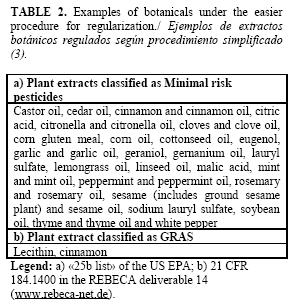
Under considerations based on experiments and reliable data, many natural products are now considered to be minimum risk pesticides (15). For some plants and plant extracts, which are currently listed in «25b list» of the US EPA and all substances with GRAS status (Table 2), reduced data are required for the registration (3). Several plant essential oils and their constituents are exempt from registration in the United States, attributed to their long use history as food and beverage flavorings or as culinary spices. This exemption has facilitated the rapid development and commercialisation of pesticides based on these materials as active ingredients (2).The regulatory framework pertaining to the introduction of new molecules is placing escalating demands upon the research and development process. It is clearly imperative that new molecule introductions meet the stringent requirements related to human health and environmental protection in addition to effectiveness. Factors that are important to sustainable farming are now key drivers in discovery regimes, as are the requirements for inclusion in integrated crop management programmes (1).
Overall in the present economic and political environment, there seem to be good opportunities for the development of phytochemical-based pesticides in several marketplaces. Direct application includes the use of products or extracts used directly in farming; they may also be used in mixtures with other commercial products or synergists (36).The commercialised pesticides, including plant allelochemicals and botanicals, can be used in both organic and conventional agriculture depending on the formulation.
According to Regnault-Roger (15), the global market for biopesticides was worth an estimated $1.6 billion in 2009, but is expected to increase to $3,3 billion in 2014 for a 5-year compound annual growth rate of 15,6%. These figures underline that biopesticide industry growth continues, but progress has to be done before biopesticides will share the plant protection products market with synthetic pesticides (biopesticide market represented 2,5% of the global pesticide market in 2005). North America is the leader for using biocontrol products (44%), followed by Asia (24%) and Europe (20%); Africa and South-Central America represent only 14%. However, the demand for natural biopesticides is rising steadily in all parts of the world.
Interest in commercially available natural pest management materials for use in organic agriculture and `green' pest management has grown substantially in recent years (6). This strong increase coincides with the growth of control of pest in the sector of high-value crops like vegetables in greenhouses, vineyard, tree and fruit farming. Biocontrol will develop not only through the enhancement of organic farming but also through Integrated Pest Management (15). Also, due to their low mammalian toxicity and residuality, these products may be applied indoor, in gardens, in treatments short time before and post harvest and their effect will protect crop products during transportation and storage with minimum risk for consumers.
In industrialized countries, botanicals will likely remain niche products, used in situations where human safety is paramount (31). The best role for botanicals in these countries is in public health (mosquito, cockroach abatement) and for consumer (home and garden) use. In agriculture their primary use will be in organic food production (21). Rather than considered as stand-alone products, botanicals might be better placed as products in crop protectant rotations, especially in light of the documented resistance of the diamondback moth to Bacillus thuringiensis and spinosad due to overuse (2).
Organic production is estimated to be growing by 8% to 15% per annum in Europe and North America; for example in France, the highlighted goals of Ecophyto 2018 plane are: «to achieve 50% reduction in the use of pesticides by 2018, if feasible» and «that the total areas certified as organic agriculture go from the present 2% to 6% in 2012, and eventually to 20% by 2020» (3) and it is in those marketplaces that botanicals face the fewest competitors (2). In 2009 in California, botanicals accounted for only 8.4% of biopesticides used, but their use grew by 245% between 2003 and 2009 (21).
In developing countries, the traditional use of plants and plant derivatives for protection of stored products is long established. There are major opportunites for the development and use of less refined botanical insectides for domestic and agriculture use in these countries; however, food crops produced in those countries for export must meet the stringent regulatory requirements of the importing country. (21).
The development of resistance by pests and weeds to current molecules will ensure that new products displaying novel biochemical modes of action will be highly prized (1). The potential of secondary metabolites for plant protection could be used in a more recent alternative strategy aiming at reinforcing the plant defence by developing its own mechanisms through allelochemicals (15). Mixtures of natural products (as found in plant essential oils or extracts) may be more effective insect control agents (acute toxicants, growth/feeding inhibitors, repellents and attractants), for both resistant and susceptible pests. This can be explained on the basis that different constituents in the mixture might have different modes of action or target sites in the insect or are capable of inhibiting the detoxification enzymes that normally degrade a single constituent (36). ]]>
Alternative pest control tactics for other pests suggest combining methods for improved efficacy. Of particular interest are nontoxic compounds that show some selectivity toward a pest insect but not toward its natural enemies, pollinators, and the environment. Successful manipulation of pest behaviour could provide protection of the resource (crop plant) through the use of stimuli that either enhance or inhibit a particular behaviour and ultimately change its expression (34,41).The push-pull strategy is an example of a coordinated management strategy involving the behavioural manipulation of insects. Push-pull proposes the use of combinations of deterrents/repellents and attractive stimuli to direct the movement of insects away from protected resources. Economic crops are protected from pests by repellent plants, antifeedants, or oviposition deterrents. At the same time, pests are localized on trap crops, using aggregative semiochemicals and attractants, so that a selective control agent (e.g., biological control) can be used to reduce pest populations (42).
General Comments
There is a continuous need to develop new plant protection products because of the growing demand of food, environmental reasons, increasing stringent ecotoxicological and toxicological requirements, and the continuous development of pest resistance to available pesticides. Plants produce a unique set of secondary metabolites that may play an important role in a sustainable pest management as new products directly or as novel chemical frameworks for synthesis; they are also important for identifying original modes of action. For a successful research and development process leading to a commercial product, a wide range of criteria (especially biological, environmental, toxicological, regulatory, and commercial) must be satisfied from the beginning. Among the major challenges to be faced by the candidates (new or known phytochemicals) to reach the market are the sustainable use of raw materials (availability and accessibility), standardization of chemically complex extracts, and the regulatory requirements and approval.
The potential of plants and their secondary metabolites for plant protection could be used in different strategies: employing the whole plant (rotation, intercropping), crop residues and part of plants (green manures) and using plant chemicals and extracts in integrated or ecological pest management acting directly on the target pest (behavioural and/or physiological bioactivities) or enhancing induced resistance; in both the confined environment and conventional agricultural systems. In agriculture, the most important niches for botanical pesticides are found in organic production applications, storage pest control, gardens, seed and postharvest treatments.
The authors express sincere thanks to Prof Murray B. Isman and Prof Michael Wink for providing access to their vast scientific literature. We thank Dr. Eduardo Sistachs and Dr. Mayra Rodríguez for carefully and helpfully reviewing this manuscript.
REFERENCES
1. Smith K, Evans DA, El-Hiti GA. Role of modern chemistry in sustainable arable crop protection. Phil Trans R Soc B. 2008;363:623-637.
2. Isman MB. Botanical insecticides, deterrents, and repellents in modern agriculture and an increasingly regulated world. Annu Rev Entomol. 2006;51:45-66.
3. Cavoski I, Caboni P, Miano T. Natural Pesticides and Future Perspectives. In: Stoytcheva M, editor. Pesticides in the Modern World - Pesticides Use and Management. Available from: http://www.intechopen.com/articles/show/title/natural-pesticides-and-future-perspectives; 2011. p. 169-90.
4. Singh Rattan R, Anuradha S. Plant secondary metabolites in the sustainable diamondback moth (Plutella xylostella L.) management. Indian Journal of Fundamental and Applied Life Sciences. 2011;1(3):295-309.
5. Farooq M, Jabran K, Cheema ZA, Wahid A, Siddique KHM. The role of allelopathy in agricultural pest management. Pest Manag Sci. 2011;67:493-506.
6. Copping LG, Duke SO. Natural products that have been used commercially as crop protection agents. Pest Manag Sci. 2007;63:524-554.
7. Wink M. Introduction: biochemistry, physiology and ecological functions of secondary metabolites. Annual Plant Reviews. 2010;40:1-19.
8. Ribera AE, Zuñiga G. Induced plant secondary metabolites for phytopatogenic fungi control: a review. J Soil Sci Plant Nutr. 2012;12(4):893-911.
9. Isman MB, Paluch G. Needles in the haystack: exploring chemical diversity of botanical insecticides. In: López O, Fernández-Bolaños JG, editors. Green trends in insect control. RSC; 2011. p. 248-265.
10.Dixon RA. Natural products and plant disease resistance. Nature. 2001;411:843-847.
11.Wink M. Importance of plant secondary metabolites for protection against insects and microbial infections. In: Rai M, Carpinella MC, editors. Naturally occurring bioactive compounds. Advances in phytomedicine. 2006; 251-268.
12.Dayan FE, Cantrell ChL, Duke SO. Natural products in crop protection. Bioorganic & Medicinal Chemistry. 2009;17:4022-4034.
13.Zwenger S, Basu Ch. Plant terpenoids: applications and future potentials. Biotechnology and Molecular Biology Reviews. 2008;3(1):1-7.
14.Organization for Economic Cooperation and Development (OECD). Guidance for registration requirements for pheromones and other semiochemicals used for arthropod pest control, Series on Pesticides No. 12 (http://www.oecd.org/dataoecd/5/44/31919832.pdf); 2001.
15.Regnault-Roger C. Trends for commercialisation of biocontrol agent (biopesticide) products. In: Mérillon JM, Ramawat KG, editors. Plant defence: biological control, progress in biological control 12. 2012. p.139-160.
16.Moraes MCB, Laumann RA, Pareja M, Sereno F, Michereff MFF, Birkett MA, et al. Attraction of the stink bug egg parasitoid Telenomus podisi to defence signals from soybean activated by treatment with cis-jasmone. Entomol Exp Appl. 2009;131:178-188.
17.Dewhirst SY, Birkett MA, Loza-Reyes E, Martin JL, Pye BJ, Smart LE, et al. Activation of defence in sweet pepper, Capsicum annum, by cis-jasmone, and its impact on aphid and aphid parasitoid behaviour. Pest Manag Sci. 2012;11p. Published online in Wiley Online Library.
18.Adeyemi MMH. The potential of secondary metabolites in plant material as deterents against insect pests: A review. Afr J Pure Appl Chem. 2010;4(11):243-246.
19.Grainge M, Ahmed S. Handbook of plants with pest-control properties. John Wiley and Sons, Inc., New York; 1988.
20.Isman MB. Botanical insecticides in modern agriculture and an increasingly regulated world. Conference at National Center for Animal and Plant Health (CENSA). Mayabeque, Cuba. 2013. 51 slides.
21.Fischer D, Imholt C, Pelz HJ, Wink M, Prokopc A, Jacoba J. The repelling effect of plant secondary metabolites on water voles, Arvicola amphibious. Pest Manag Sci. 2013;69:437-443.
22.Cutler H, Cutler S. Biologically actives natural products: Agrochemicals. CRC Press LLC, Boca Ratón, Florida; 1999.
23.Seidel V. Initial and bulk extraction of natural products isolation. Methods Mol Biol. 2012;864:27-41.
24.McLaughlin JL, Lingling LR, Anderson JE. The use of biological assays to evaluate botanicals. Drug Information J. 1998;32:513-524.
25.Bohni N, Cordero-Maldonado ML, Maes J, Siverio-Mota D, Marcourt L, Munck S, et al. Integration of Microfractionation, qNMR and Zebrafish Screening for the In Vivo Bioassay-Guided Isolation and Quantitative Bioactivity Analysis of Natural Products. PLoS ONE. 2013;8(5).
26.Craige Trenerry V, Rochfor SJ. Natural Products Research and Metabolomics. Comprehensive Natural Products II. 2010;9:595-628.
27.Wedge DE. Agrochemical discovery: finding new fungicides from natural products. In: Baºer KHC, Franz G, Cañigueral S, Demirci F, Craker LE, Gardner ZE, editors. Perspectives in Natural Product Chemistry. Proc. WOCMAP III. Acta Hort. 2005;109-113.
28.Jarosewski J. HPLC-SPE-NMR: a productivity tool in natural products research. Iranian Journal of Pharmaceutical Research. 2004;2(Suppl):14-15.
29.Kim J, Choi JN, Kim P, Sok DE, Nam SW, Lee CH. LC-MS/MS profiling-based secondary metabolite screening of Myxococcus xanthus. J Microbiol Biotechnol. 2009;19(1):51-54.
30.Jaspars M. Computer assisted structure elucidation of natural products using two-dimensional NMR spectroscopy. Nat Prod Rep. 1999;16:241-248.
31.Isman MB. Botanical insecticides, deterrents, repellents and oils. In: Bharat P, editor. Industrial Crops and Uses. CAB International; 2010. p. 433-445.
32.Pino O, Jorge F. Ensayo de artemia: útil herramienta de trabajo para ecotoxicólogos y químicos de productos naturales. Rev Protección Veg. 2010;22(1):34-43.
33.Akhtar Yasmin, Isman MB, Lee Chi-Hoon, Lee Sang-Guei, Lee Hoi-Seon. Toxicity of quinones against two-spotted spider mite and three species of aphids in laboratory and greenhouse conditions. Industrial Crops and Products. 2012;37:536-541.
34.Akhtar Y, Yu Y, Isman MB, Plettner E. Dialkoxybenzene and dialkoxyallylbenzene feeding and oviposition deterrents against the cabbage looper, Trichoplusia ni: potential insect behaviour control agents. J Agric Food Chem. 2010; 58:4983-4991.
35.Aliferis KA, Jabaji S. Metabolomics - A robust bioanalytical approach for the discovery of the modes-of-action of pesticides: A review. Pesticide Biochemistry and Physiology. 2011;100(2):105-117.
36.Akhtar Y, Shikano I, Isman MB. Topical application of a plant extract to different life stages of Trichoplusia ni fails to influence feeding or oviposition behaviour. Entomologia Experimentalis et Applicata. 2009;132:275-282.
37.Akhtar Y, Isman MB. Plant natural products for pest management: the magic of mixtures. In: Ishaaya I, et al., editors. Advanced technologies for managing insect pests. Springer Science and Business Media Dordrecht; 2012. p. 231-247.
38.Koul O, Walia S, Dhaliwal GS. Essential oils as green pesticides: potential and constraints. Biopestic Int. 2008;4(1):63-84.
39.de Cássia Seffrin R, Shikano I, Akhtar Y, Isman MB. Effects of crude seed extracts of Annona atemoya and Annona squamosa L. against the cabbage looper, Trichoplusia ni in the laboratory and greenhouse. Crop Protection. 2010;29:20-24.
40.Akhtar Y, Isman MB, Niehaus LA, Lee ChH, Lee HS. Antifeedant and toxic effects of naturally occurring and synthetic quinones to the cabbage looper, Trichoplusia ni. Crop Protection. 2012;31:8-14.
41.Isman MB, Machial CM. Pesticides based on plant essential oils: from traditional practice to commercialization. In: Rai, Carpinella, editors. Naturally Occuring Bioactive Compounds. Elsevier; 2006. p. 29-44.
42.Moreau TL, Isman MB. Combining reduced-risk products, trap crops and yellow sticky traps for greenhouse whitefly (Trialeurodes vaporariorum) management on sweet peppers (Capsicum annum). Crop Protection. 2012;34:42-46.
Recibido: 2-5-2013.
Aceptado: 30-7-2013. ]]>