<?xml version="1.0" encoding="ISO-8859-1"?><article xmlns:mml="http://www.w3.org/1998/Math/MathML" xmlns:xlink="http://www.w3.org/1999/xlink" xmlns:xsi="http://www.w3.org/2001/XMLSchema-instance">
<front>
<journal-meta>
<journal-id>1027-2852</journal-id>
<journal-title><![CDATA[Biotecnología Aplicada]]></journal-title>
<abbrev-journal-title><![CDATA[Biotecnol Apl]]></abbrev-journal-title>
<issn>1027-2852</issn>
<publisher>
<publisher-name><![CDATA[Editorial Elfos Scientiae]]></publisher-name>
</publisher>
</journal-meta>
<article-meta>
<article-id>S1027-28522015000100003</article-id>
<title-group>
<article-title xml:lang="en"><![CDATA[Evaluation in vitro of the cytotoxicity and genotoxicity of silica nanoparticle aggregates synthesized by the sol-gel method]]></article-title>
<article-title xml:lang="es"><![CDATA[Evaluación in vitro de la citoxicidad y genotoxicidad de agregados de nanopartículas de sílice sintetizadas por el método sol-gel]]></article-title>
</title-group>
<contrib-group>
<contrib contrib-type="author">
<name>
<surname><![CDATA[Gómez-Gallego]]></surname>
<given-names><![CDATA[Diana M]]></given-names>
</name>
<xref ref-type="aff" rid="A01"/>
</contrib>
<contrib contrib-type="author">
<name>
<surname><![CDATA[Espinal-Correa]]></surname>
<given-names><![CDATA[Claudia E]]></given-names>
</name>
<xref ref-type="aff" rid="A02"/>
</contrib>
<contrib contrib-type="author">
<name>
<surname><![CDATA[Ossa-Giraldo]]></surname>
<given-names><![CDATA[Ana C]]></given-names>
</name>
<xref ref-type="aff" rid="A01"/>
</contrib>
</contrib-group>
<aff id="A02">
<institution><![CDATA[,Universidad Cooperativa de Colombia, Sede Medellín Grupo de investigación Olistica ]]></institution>
<addr-line><![CDATA[Medellín ]]></addr-line>
<country>Colombia</country>
</aff>
<aff id="A01">
<institution><![CDATA[,Universidad Cooperativa de Colombia, Sede Medellín Grupo de investigación Infettare ]]></institution>
<addr-line><![CDATA[Medellín ]]></addr-line>
<country>Colombia</country>
</aff>
<pub-date pub-type="pub">
<day>00</day>
<month>03</month>
<year>2015</year>
</pub-date>
<pub-date pub-type="epub">
<day>00</day>
<month>03</month>
<year>2015</year>
</pub-date>
<volume>32</volume>
<numero>1</numero>
<fpage>1201</fpage>
<lpage>1206</lpage>
<copyright-statement/>
<copyright-year/>
<self-uri xlink:href="http://scielo.sld.cu/scielo.php?script=sci_arttext&amp;pid=S1027-28522015000100003&amp;lng=en&amp;nrm=iso"></self-uri><self-uri xlink:href="http://scielo.sld.cu/scielo.php?script=sci_abstract&amp;pid=S1027-28522015000100003&amp;lng=en&amp;nrm=iso"></self-uri><self-uri xlink:href="http://scielo.sld.cu/scielo.php?script=sci_pdf&amp;pid=S1027-28522015000100003&amp;lng=en&amp;nrm=iso"></self-uri><abstract abstract-type="short" xml:lang="en"><p><![CDATA[Amorphous silica nanoparticles (NPs) has become attractive for biomedical applications. In the present study, the toxicity of different concentrations of amorphous silica NPs of 27 nm was evaluated, such NPs synthesized by the sol-gel method assisted by reverse micelle microemulsion. Characterization of nanoparticles was done using Scanning Electron Microscopy (SEM), Transmission Electron Microscopy (TEM) and Dynamic Light Scattering (DLS). Cytotoxicity was assessed in CHO-K1 and Cal27 cell cultures by the reduction bromide 3-(4,5-dimethylthiazol-2-yl)-2,5-difeniltetrazol (MTT) test. Cellular viability and density tests were assessed in CHO-K1 cells with Trypan Blue, while genotoxicity was evaluated in the CHO-K1 cell line and in primary cultures of human lymphocytes using the Comet assay. Results showed that silica NPs produced cytotoxicity in both cell models in a dose dependent manner (12.5 µg/mL or higher), while genotoxicity was observed in CHO-K1 cells at all the concentrations tested (1.5625-12.5 µg/mL), but not in the primary cultures of human lymphocytes. The variability of the toxic effects of amorphous silica NPs, as dependent on NPs concentration and the cell line tested, among others, indicates that their applications could be determined by their use at non-toxic doses or through functionalization by chemical modifications to reduce their toxicity. These parameters, together with their unique chemical and physical properties could make NPs a feasible option for biomedical applications.]]></p></abstract>
<abstract abstract-type="short" xml:lang="es"><p><![CDATA[Las nanopartículas (NP) amorfas de sílice son atractivas para aplicaciones futuras en la biomedicina. En este estudio, se evaluó la toxicidad de diferentes concentraciones de agregados de NP amorfas de sílice de 27 nm, sintetizadas mediante el método sol-gel asistido por microemulsión de micelas inversas. Estas NP se caracterizaron mediante Microscopía Electrónica de Barrido, Microscopía Electrónica de Transmisión y Dispersión Dinámica de Luz. La citotoxicidad se evaluó en células CHO-K1 y Cal27 en cultivo mediante el test de reducción de Bromuro de 3-(4,5-dimetiltiazol-2-ilo)-2,5-difeniltetrazol (MTT) y en CHO-K1 se hicieron pruebas Viabilidad y Densidad Celular con Azul de Tripano. La genotoxicidad se evaluó en la línea celular CHO-K1 y en cultivos primarios de linfocitos humanos usando el Ensayo Cometa. Las NP indujeron citoxicidad dependiente de la dosis en ambos modelos celulares, a concentraciones iguales o superiores a 12.5 µg/mL, mientras que se observó genotoxicidad en las células CHO-K1 a todas las concentraciones evaluadas (1.5625-12.5 µg/mL), pero no en los cultivos primarios de linfocitos humanos. La variabilidad de los efectos citotóxicos de las NP amorfas de sílice en función de la concentración y línea celular, entre otros, indican que su posible uso puede estar condicionado por el empleo a dosis no tóxicas, o a su disminución mediante la funcionalización de las NP mediante modificaciones químicas que disminuyan su toxicidad. Tales estrategias, unidas a sus características químicas y físicas exclusivas, las convierten en una opción a considerar para diversas aplicaciones en la biomedicina.]]></p></abstract>
<kwd-group>
<kwd lng="en"><![CDATA[silica nanoparticles]]></kwd>
<kwd lng="en"><![CDATA[cytotoxicity]]></kwd>
<kwd lng="en"><![CDATA[genotoxicity]]></kwd>
<kwd lng="en"><![CDATA[nanotechnology]]></kwd>
<kwd lng="en"><![CDATA[biomedicine]]></kwd>
<kwd lng="es"><![CDATA[nanopartículas de silica]]></kwd>
<kwd lng="es"><![CDATA[citotoxicidad]]></kwd>
<kwd lng="es"><![CDATA[genotoxicidad]]></kwd>
<kwd lng="es"><![CDATA[nanotecnología]]></kwd>
<kwd lng="es"><![CDATA[biomedicina]]></kwd>
</kwd-group>
</article-meta>
</front><body><![CDATA[ <DIV class="Part"   >        <P align="right"   ><font size="2" color="#000000" face="Verdana, Arial, Helvetica, sans-serif"><B>RESEARCH      </b></font></P >       <P   >&nbsp;</P >   <FONT size="+1" color="#000000">       <P   ></P >       <P   ></P >       <P   ><b><font size="4" face="Verdana, Arial, Helvetica, sans-serif">Evaluation <I>in      vitro</I> of the cytotoxicity and genotoxicity of silica nanoparticle aggregates      synthesized by the sol-gel method</font></b><font size="4" face="Verdana, Arial, Helvetica, sans-serif"></font></P >       <P   >&nbsp;</P >       <P   ><font face="Verdana, Arial, Helvetica, sans-serif" size="3"><b>Evaluaci&oacute;n      <I>in vitro</I> de la citoxicidad y genotoxicidad de agregados de nanopart&iacute;culas      de s&iacute;lice sintetizadas por el m&eacute;todo sol-gel </b></font></P >       <P   >&nbsp;</P >       <P   >&nbsp;</P >       ]]></body>
<body><![CDATA[<P   > </P >       <P   ><b><font size="2" face="Verdana, Arial, Helvetica, sans-serif">Diana M G&oacute;mez-Gallego<sup>1</sup>,      Claudia E Espinal-Correa<sup>2</sup>, Ana C Ossa-Giraldo<sup>1</sup> </font></b></P >   <FONT size="+1"><FONT size="+1"><FONT size="+1"><FONT size="+1"><FONT size="+1"><FONT size="+1">        <P   ><font size="2" face="Verdana, Arial, Helvetica, sans-serif"><sup>1</sup>Grupo      de investigaci&oacute;n Infettare. Universidad Cooperativa de Colombia, Sede      Medell&iacute;n. Calle 48 # 28-00, Medell&iacute;n, Antioquia, Colombia.    <br>     </font><font size="2" face="Verdana, Arial, Helvetica, sans-serif"><sup>2</sup>Grupo      de investigaci&oacute;n Olistica. Universidad Cooperativa de Colombia, Sede      Medell&iacute;n, Colombia. </font></P >   <FONT size="+1"><FONT size="+1">        <P   >&nbsp;</P >       <P   >&nbsp;</P >   <FONT size="+1"><FONT size="+1"> </font></font></font></font></font></font></font></font></font></font></font>    <hr>   <FONT size="+1" color="#000000"><FONT size="+1"><FONT size="+1"><FONT size="+1"><FONT size="+1"><FONT size="+1"><FONT size="+1"><FONT size="+1"><FONT size="+1"><FONT size="+1"><FONT size="+1">       <P   > </P >       <P   ><font size="2" face="Verdana, Arial, Helvetica, sans-serif"><B>ABSTRACT </b></font></P >   <FONT size="+1">        <P   ><font color="#23408E" size="2" face="Verdana, Arial, Helvetica, sans-serif"><FONT color="#000000">Amorphous      silica nanoparticles (NPs) has become attractive for biomedical applications.      In the present study, the toxicity of different concentrations of amorphous      silica NPs of 27 nm was evaluated, such NPs synthesized by the sol-gel method      assisted by reverse micelle microemulsion. Characterization of nanoparticles      was done using Scanning Electron Microscopy (SEM), Transmission Electron Microscopy      (TEM) and Dynamic Light Scattering (DLS). Cytotoxicity was assessed in CHO-K1      and Cal27 cell cultures by the reduction bromide 3-(4,5-dimethylthiazol-2-yl)-2,5-difeniltetrazol      (MTT) test. Cellular viability and density tests were assessed in CHO-K1 cells      with Trypan Blue, while genotoxicity was evaluated in the CHO-K1 cell line      and in primary cultures of human lymphocytes using the Comet assay. Results      showed that silica NPs produced cytotoxicity in both cell models in a dose      dependent manner (12.5 &micro;g/mL or higher), while genotoxicity was observed      in CHO-K1 cells at all the concentrations tested (1.5625-12.5 &micro;g/mL),      but not in the primary cultures of human lymphocytes. The variability of the      toxic effects of amorphous silica NPs, as dependent on NPs concentration and      the cell line tested, among others, indicates that their applications could      be determined by their use at non-toxic doses or through functionalization      by chemical modifications to reduce their toxicity. These parameters, together      with their unique chemical and physical properties could make NPs a feasible      option for biomedical applications. </font></font></P >   <FONT color="#23408E"><FONT color="#000000">        <P   ><font size="2" face="Verdana, Arial, Helvetica, sans-serif"><B><I>Keywords:</I></B>      silica nanoparticles, cytotoxicity, genotoxicity, nanotechnology, biomedicine.      </font></P >   </font></font></font></font></font></font></font></font></font></font></font></font></font></font>    <hr>   <FONT size="+1" color="#000000"><FONT size="+1"><FONT size="+1"><FONT size="+1"><FONT size="+1"><FONT size="+1"><FONT size="+1"><FONT size="+1"><FONT size="+1"><FONT size="+1"><FONT size="+1"><FONT size="+1"><FONT color="#23408E"><FONT color="#000000">       ]]></body>
<body><![CDATA[<P   ><font size="2" face="Verdana, Arial, Helvetica, sans-serif"><B>RESUMEN </b></font></P >       <P   ><font size="2" face="Verdana, Arial, Helvetica, sans-serif">Las nanopart&iacute;culas      (NP) amorfas de s&iacute;lice son atractivas para aplicaciones futuras en      la biomedicina. En este estudio, se evalu&oacute; la toxicidad de diferentes      concentraciones de agregados de NP amorfas de s&iacute;lice de 27 nm, sintetizadas      mediante el m&eacute;todo sol-gel asistido por microemulsi&oacute;n de micelas      inversas. Estas NP se caracterizaron mediante Microscop&iacute;a Electr&oacute;nica      de Barrido, Microscop&iacute;a Electr&oacute;nica de Transmisi&oacute;n y      Dispersi&oacute;n Din&aacute;mica de Luz. La citotoxicidad se evalu&oacute;      en c&eacute;lulas CHO-K1 y Cal27 en cultivo mediante el test de reducci&oacute;n      de Bromuro de 3-(4,5-dimetiltiazol-2-ilo)-2,5-difeniltetrazol (MTT) y en CHO-K1      se hicieron pruebas Viabilidad y Densidad Celular con Azul de Tripano. La      genotoxicidad se evalu&oacute; en la l&iacute;nea celular CHO-K1 y en cultivos      primarios de linfocitos humanos usando el Ensayo Cometa. Las NP indujeron      citoxicidad dependiente de la dosis en ambos modelos celulares, a concentraciones      iguales o superiores a 12.5 &micro;g/mL, mientras que se observ&oacute; genotoxicidad      en las c&eacute;lulas CHO-K1 a todas las concentraciones evaluadas (1.5625-12.5      &micro;g/mL), pero no en los cultivos primarios de linfocitos humanos. La      variabilidad de los efectos citot&oacute;xicos de las NP amorfas de s&iacute;lice      en funci&oacute;n de la concentraci&oacute;n y l&iacute;nea celular, entre      otros, indican que su posible uso puede estar condicionado por el empleo a      dosis no t&oacute;xicas, o a su disminuci&oacute;n mediante la funcionalizaci&oacute;n      de las NP mediante </font><font size="2" face="Verdana, Arial, Helvetica, sans-serif">modificaciones      qu&iacute;micas que disminuyan su toxicidad. Tales estrategias, unidas a sus      caracter&iacute;sticas qu&iacute;micas y f&iacute;sicas exclusivas, las convierten      en una opci&oacute;n a considerar para diversas aplicaciones en la biomedicina.      </font></P >       <P   ><font size="2" face="Verdana, Arial, Helvetica, sans-serif"><B><I>Palabras clave</I>:</B>      nanopart&iacute;culas de silica, citotoxicidad, genotoxicidad, nanotecnolog&iacute;a,      biomedicina. </font></P >   </font></font></font></font></font></font></font></font></font></font></font></font></font></font>    <hr>   <FONT size="+1" color="#000000"><FONT size="+1"><FONT size="+1"><FONT size="+1"><FONT size="+1"><FONT size="+1"><FONT size="+1"><FONT size="+1"><FONT size="+1"><FONT size="+1"><FONT size="+1"><FONT size="+1"><FONT color="#23408E"><FONT color="#000000">        <P   >&nbsp;</P >       <P   >&nbsp;</P >       <P   > </P >       <P   ><font size="3" face="Verdana, Arial, Helvetica, sans-serif"><B>INTRODUCTION </b></font></P >   <FONT size="+1">        <P   ><font size="2" face="Verdana, Arial, Helvetica, sans-serif">In recent decades,      the increase and progress of nanotechnology research [1] has produced a wide      span of medical applications ranging from diagnostics, monitoring and biological      control to its therapeutic use in the treatment of different pathologies,      for example, in cancer [2, 3]. </font></P >   <FONT size="+1"><FONT color="#FFF000">        <P   ><font color="#000000" size="2" face="Verdana, Arial, Helvetica, sans-serif">Notably,      the invention of nanoparticles (NPs) has been focused on their use as vehicles      for the delivery and controlled release of drugs to their target cells and      organs [1, 4], in order to decrease the potential toxicity or side effects      caused by the interaction of the drugs with other cells or tissues toward      which the treatment is not aimed. Significantly, silica NPs have emerged as      a potential option [5], due to their exclusive properties, such as their chemical      and thermal stability, their large surface area, the high stability in aqueous      suspensions and their innocuousness to the environment of their inert material      composition [6]. They have been also demonstrated as being hardly appealing      for microorganisms and acting as a barrier that limits the effect of the external      environment on the nucleus of the particle [6, 7]. Therefore, research is      being carried out at a worldwide level in relation to the synthesis of silica      NPs that may be used for encapsulating and controlling the drug delivery.      </font></P >   <FONT color="#000000">        <P   ><font size="2" face="Verdana, Arial, Helvetica, sans-serif">However, it is necessary      to evaluate the toxicity that may be produced by NPs in a biological system      to ensure their good use in the biomedical field. Therefore, it is important      to make a toxicological characterization through <I>in vitro</I> and <I>in      vivo</I> assays that offer information on the interaction of the nano-material      with cells or tissues, since the physical characteristics of the NP (form,      size, adsorption capacity, hydrophobicity, surface charge, optics and catalytic      activity), as well as the exposure time and concentration of NPs, can have      an essential role in evoking deleterious effects on cell functions [8-10],      including cell growth, apoptosis, adhesion, migration and damage to the genetic      material, among others [11]. </font></P >       ]]></body>
<body><![CDATA[<P   ><font size="2" face="Verdana, Arial, Helvetica, sans-serif">The aim of this study      was to assess the cytotoxicity and genotoxicity potential of amorphous silica      NPs synthesized by the sol-gel method assisted by micro-emulsion of inverse      micelles, thus contributing to the research in nano-medicine in a country      where the study in this field is just starting. </font></P >       <P   >&nbsp;</P >       <P   ><font size="2" face="Verdana, Arial, Helvetica, sans-serif"><B><font size="3">MATERIALS      AND METHODS </font></b></font></P >   <FONT size="+1"><B>        <P   ><font size="2" face="Verdana, Arial, Helvetica, sans-serif">Synthesis of silica      nanoparticles </font></P >   </B>        <P   ><font size="2" face="Verdana, Arial, Helvetica, sans-serif"><FONT color="#EB008A"><FONT color="#000000">NPs      were synthesized in the Ceramics and Vitreous Laboratory of the National University      of Colombia at Medellin, through the sol-gel method assisted by the micro-emulsion      of inverse micelles, using tetra-ethyl-ortho-sylicate (TEOS) (Sigma Aldrich)      as a precursor of silica, Triton X-100 (Sigma Aldrich) as surfactant, 98 %      pure methanol (Carlo Erba) as the co-surfactant and 99.5 % pure cyclo-hexane      (Sigma Aldrich) at as the oily phase. In order to ensure that the particles      obtained have nanometric sizes, molar ratios h, p and R of 59.1, 4.5 and 9.2,      respectively, were used. These parameters were calculated by equations: h      = [H<sub>2</sub>O]/[TEOS], p = [Metanol]/[Triton X-100], and R = [H<sub>2</sub>O]/[Triton      X-100]. </font></font></font></P >   <FONT size="+1"><FONT color="#EB008A"><FONT color="#000000"><FONT size="+1"><FONT size="+1"><FONT size="+1"><FONT size="+1">        <P   ><font size="2" face="Verdana, Arial, Helvetica, sans-serif">The surfactant, co-surfactant      and oil phase were initially mixed at 700 rpm and 25 &deg;C, to form the micro-emulsion.      The order and amount of reagents used determined the inversion of the micelles.      After forming the micro-emulsion of inverse micelles, the medium was adjusted      to pH 8.0, with a solution of aqueous ammonium hydroxide, to catalyze the      polymerization reactions needed for the growth of silica particles that are      formed in the following step. Finally, the silica precursor, TEOS, was added      to enable the hydrolysis and condensation of the silica molecules within the      micelles. The mixture was then shaken for two hours, and then the micro-emulsion      was disrupted by adding 5 mL of ethanol. They were centrifuged at 1500 rpm,      and washed with ethanol and water to eliminate the excess surfactant and co-surfactant,      to recover the NPs obtained. </font></P >       <P   ><font size="2" face="Verdana, Arial, Helvetica, sans-serif">NPs were characterized      by the size of the particles and their morphology through high resolution      Scanning Electron Microscopy (SEM) Hitachi S4800 SEM-FEG, Transmission Electronic      Microscopy (TEM) with a Philips CM200 microscope and Dynamic Light Scattering      (DLS) through a Zetasizer Nano S Malvern Instruments device. </font></P >       <P   ><font size="2" face="Verdana, Arial, Helvetica, sans-serif"><B>Cytotoxicity tests      </b></font></P >       <P   ><font size="2" face="Verdana, Arial, Helvetica, sans-serif">The experiments were      carried out using a culture at the exponential growth stage of the CHO-K1      cell line that was propagated in a routine manner using the RPMI 1640 (Gibco)      medium supplemented with 10 % fetal bovine serum (Gibco) and 1 % Glutamine      (Gibco). The cells were incubated at 37 &ordm;C, under a 5 % CO<sub>2</sub>      atmosphere and a relative humidity of 95 %. Subcultures were made by growing      2 &times; 10<sup>5</sup> cells in T25 culture flasks, under the same conditions      described above. All experiments were carried out with viability of or above      95 % and with the cultures at the exponential growth phase. </font></P >   <FONT size="+1"><FONT size="+1"><FONT size="+1"><FONT size="+1"><FONT size="+1"><FONT size="+1">        <P   ><font size="2" face="Verdana, Arial, Helvetica, sans-serif"><B><I>Viability and      cellular density by Trypan blue</I><FONT color="#0092D2"><I> </I></font></b></font></P >       ]]></body>
<body><![CDATA[<P   ><font color="#0092D2" size="2" face="Verdana, Arial, Helvetica, sans-serif"><FONT color="#000000">For      counting, a cell concentration of a culture treated with the different concentrations      of the NP aggregates (100, 50, 25, 12.5, 6.25 and 3.125 &micro;g/mL) was submitted      to a 1:1 proportion of 0.4 % Trypan blue (Gibco). From the mixture, 10 &mu;L      were taken to the Neubauer plate (hemocytometer) and the viable cells (transparent      cells) were counted, as well as the dead cells (blue cells) under an optic      microscope in the four quadrants. A negative control (untreated cells) and      a positive control (cells treated with 10 &micro;L of Dimethyl Sulfoxide (DMSO;      Amresco)) were made. The </font></font><font size="2" face="Verdana, Arial, Helvetica, sans-serif">experiment      was carried out by triplicate for each treatment and the average results of      the two separate experiments are shown. The percentage of viability and density      were measured with equations 1 and 2, respectively: </font></P >       <P align="center"   ><img src="/img/revistas/bta/v32n1/fr0103115.gif" width="350" height="60"></P >       

<P align="center"   ><img src="/img/revistas/bta/v32n1/fr0203115.gif" width="370" height="56"></P >   <FONT color="#0092D2"><FONT color="#000000">        
<P   ><font size="2" face="Verdana, Arial, Helvetica, sans-serif"><B><I>Cellular proliferation</I><FONT color="#0092D2"><I>      </I></font></b></font></P >       <P   ><font color="#0092D2" size="2" face="Verdana, Arial, Helvetica, sans-serif"><FONT color="#000000">A      total of 1.0 &times; 10<sup>4</sup> cells/mL were grown in 96-well culture      plates (final volume 100 &micro;L) in an RPMI 1640 medium supplemented with      10 % SBF. They were incubated for 24 hours at 37 &ordm;C, under 5 % CO<sub>2</sub>      and at a relative humidity of 95 %. The culture medium was eliminated and      100 &micro;L of the culture medium with the different aggregate concentrations      that were to be evaluated: 50, 25, 12.5, 6.25, 3.125 and 1.5625 &micro;g/mL,      were added to each well. A negative control (untreated cells) and a positive      control (cells treated with 10 &micro;L of DMSO) were made. After 24, 36 and      48 h of treatment, the culture medium with the NPs was removed and two washings      were made with the phosphate buffer solution (PBS; JT Baker). Later on, the      cells were detached with 0.25 % trypsin and diluted in a 1:1 proportion with      0.4 % Trypan blue. Samples of 10 &mu;L of the mixture were placed on the Neubauer      plate (hemocytometer) and viable cells (transparent cells) and dead cells      (blue cells) were counted under the optic microscope. The experiment was done      in triplicates for each treatment at each time point. Finally, the cell concentration      was calculated by the formula of equation [2]. </font></font></P >   <FONT color="#0092D2"><FONT color="#000000"><FONT size="+1"><FONT size="+1"><FONT size="+1"><FONT size="+1"><FONT size="+1"><FONT size="+1">        <P   ><font size="2" face="Verdana, Arial, Helvetica, sans-serif"><B><I>Mitochondrial      metabolic activity by 3-(4,5-dimethyltiazol-2-ilo)-2,5-diphenyltetrazol bromide      (MTT)</I><FONT color="#0092D2"><I> </I></font></b></font></P >       <P   ><font color="#0092D2" size="2" face="Verdana, Arial, Helvetica, sans-serif"><FONT color="#000000">These      assays were made in cell lines CHO-K1 and CAL27. A total of 2 &times; 10<sup>4</sup>      cells/mL were grown in 96-well culture plates (final volume 100 &micro;L).      They were incubated for 24 h at 37 &ordm;C, under a 5 % CO<sub>2</sub> atmosphere      and 95 % relative humidity. The culture medium was eliminated and 100 &micro;L      of the culture medium with the different concentrations of nanoparticles that      were to be evaluated: 50, 25, 12.5, 6.25, 3.125 and 1.5625 &micro;g/mL, were      added to each well. A negative control (untreated cells) and a positive control      (cells treated with 10 &micro;L of DMSO) were made. After 24 h, the culture      medium with the NPs was eliminated and two washings with PBS were made and      a new culture medium with 10 &micro;L of MTT (Alfa Aesar) at a final concentration      of 0.5 &micro;L, were added to each well. This was incubated for 4 h in the      dark, the medium was eliminated and 100 &micro;L of DMSO were added. </font></font></P >   <FONT color="#0092D2"><FONT color="#000000"><FONT size="+1"><FONT size="+1"><FONT size="+1"><FONT size="+1"><FONT size="+1"><FONT size="+1"><FONT size="+1"><FONT size="+1">        <P   ><font size="2" face="Verdana, Arial, Helvetica, sans-serif">Then it was shaken      for 10 min at 6 rpm and the absorbance value was read at 570 nm, in a plate      reader. The experiment was carried out by triplicate for each treatment and      the average of the results of the two separate experiments is shown. The percentage      of metabolic viability for each one of the concentrations was obtained using      the equation: </font></P >       <P   > </P >       <P align="center"   ><img src="/img/revistas/bta/v32n1/fr0303115.gif" width="369" height="71"></P >       

]]></body>
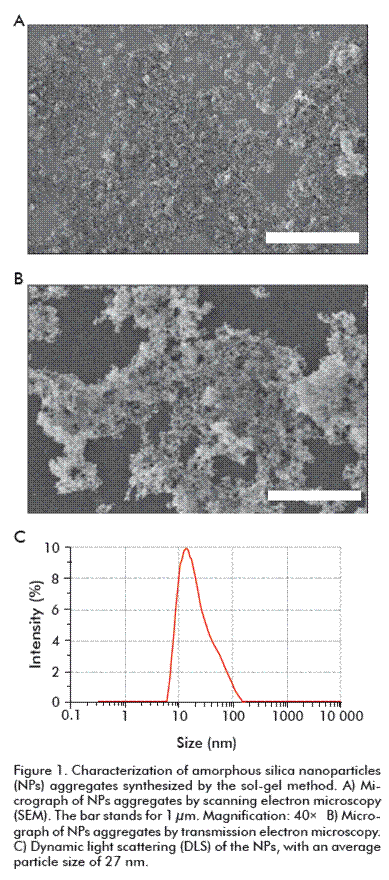
<body><![CDATA[<P   > </P >       <P   ><font size="2" face="Verdana, Arial, Helvetica, sans-serif">The statistical analysis      is based on the comparison of the averages of the treatments in relation to      the negative control, with the viability percentage obtained as a response      variable. </font></P >       <P   ><font size="2" face="Verdana, Arial, Helvetica, sans-serif"><B>Comet assay genotoxicity      test </b></font></P >       <P   ><font size="2" face="Verdana, Arial, Helvetica, sans-serif">The assessment for      genotoxicity of the NPs aggregates was made through a contract with the Genetic,      Regeneration and Cancer Group of the School of Exact and Natural Sciences,      University of Antioquia. This assessment was made through the alkaline electrophoresis      of individual cells assay, also called Comet Test or Assay, according to the      laboratory protocols. The assay was made in primary human lymphocyte cultures      and in the CHO-K1 cell line, treated for 24 h with aggregate concentrations:      12.5, 6.25, 3.125 and 1.5625 &micro;g/mL. </font></P >       <P   ><font size="2" face="Verdana, Arial, Helvetica, sans-serif"><B>Statistical analysis      </b></font></P >       <P   ><font size="2" face="Verdana, Arial, Helvetica, sans-serif">The results were      processed with the IBM SPSS program (IBM SPSS Statistics for Windows, Version      20.0; IBM Corp.). Data were expressed as median, following the Central Theorem      of Limit. For the bivariate analysis, the Kruskal-Wallis test was carried      out and the Mann Whitney U test was made with Bonferroni&rsquo;s corrections      as post-hoc analyses for comparisons between groups. In all cases, statistical      significance was considered for p &lt; 0.05. </font></P >       <P   >&nbsp;</P >       <P   ><font size="2" face="Verdana, Arial, Helvetica, sans-serif"><B><font size="3">RESULTS      </font></b></font></P >   <FONT size="+1"><B>        <P   ><font size="2" face="Verdana, Arial, Helvetica, sans-serif">Nanoparticle synthesis      </font></P >   </B>        <P   ><font size="2" face="Verdana, Arial, Helvetica, sans-serif"><FONT color="#EB008A"><FONT color="#000000">As      shown in SEM and TEM micrographs, NPs were effectively synthesized through      the sol-gel method and assisted by reverse micelle micro-emulsion, taking      into account the synthesis parameters affecting the size and morphology of      the particles (<a href="#fig1">Figure 1A and 1B</a>). NPs were aggregated,      which is explained by the interaction forces between the particles that naturally      tend to cluster together due to their small size. NPs aggregates were approximately      1 &micro;m in size, being formed by an important number of NPs with sizes      ranging from 6 nm to approximately 200 nm (Figure 1C). Distribution behavior      was monomodal, with a maximum peak at approximately 27 nm, the average size      of the particles obtained. </font></font></font></P >       ]]></body>
<body><![CDATA[<P align="center"   ><img src="/img/revistas/bta/v32n1/f0103115.gif" width="387" height="878"><a name="fig1"></a></P >   <FONT size="+1"><FONT color="#EB008A"><FONT color="#000000">        
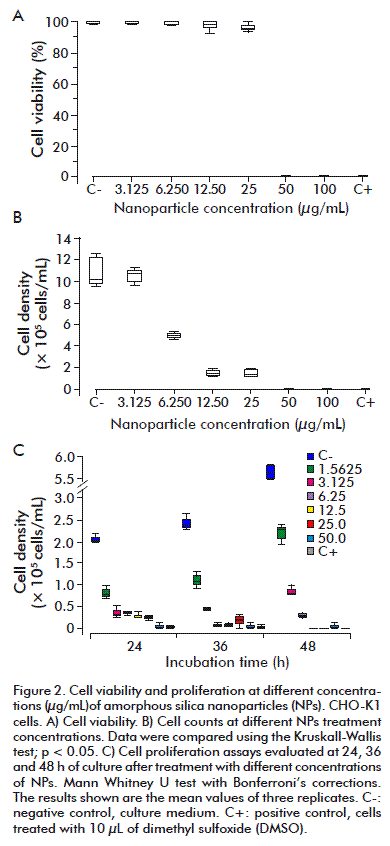
<P   ><font size="2" face="Verdana, Arial, Helvetica, sans-serif"><B>Cytotoxicity assessment      </b></font></P >   <B>        <P   ><font size="2" face="Verdana, Arial, Helvetica, sans-serif"><I>Viability and      cellular density </I></font></P >   </B>        <P   ><font size="2" face="Verdana, Arial, Helvetica, sans-serif">After the treatment      with the aggregated NPs for 24 h, cell viability was observed to be over 90      % in the CHO K-1 line for concentrations ranging from 3.125 to 25 &micro;g/mL.      No effect on cell viability was observed in the wells with the treatments      of 3.125 and 6.25 &micro;g/mL on comparing them to the negative control (p      &ge; 0.05). Furthermore, density was found to be equally affected by 12.5      &micro;g/mL and 25 &micro;g/mL or by 50 and 100 &micro;g/mL of aggregates,      where the latter concentrations had the same behavior as the positive control      with a cellular viability of zero (p &ge; 0.1) (<a href="#fig2">Figure 2A</a>).      In spite of the high percentage of viability at lower concentrations, on counting      the cells it was interesting to </font><font size="2" face="Verdana, Arial, Helvetica, sans-serif">see      that cell number was less than those initially grown in the wells with the      treatments starting with 12.5 &micro;g/mL NPs and above, and that the cells      treated with 6.25 &micro;g/mL had a lower count than the negative control,      indicating that cell density is affected by the NP aggregates. This was confirmed      with the cell density test, where the number of cells decreased in more than      50 %, starting from the 6.25 &micro;g/mL treatment, on comparing them with      the negative control and with the well of 3.125 &micro;g/mL. It was observed      that this decrease was dose dependent, where the concentrations of 12.5 &micro;g/mL      or higher, affected cell density more strongly. It is relevant to point out      that differences between the concentrations of 12.5 and 25 &micro;g/mL, and      50, 100 &micro;g/mL and the positive control were statistically non-significant      (p = 0.0590 and p &ge; 0.01, respectively) (<a href="#fig2">Figure 2B</a>).      </font></P >       <P align="center"   ><img src="/img/revistas/bta/v32n1/f0203115.gif" width="388" height="844"><a name="fig2"></a></P >       
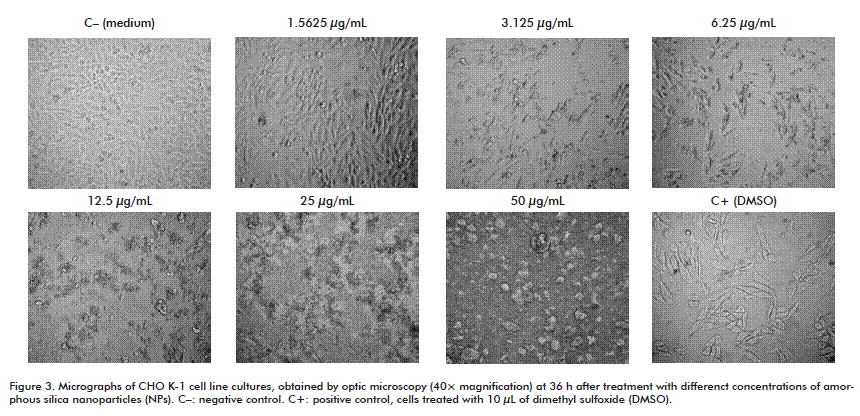
<P   ><font size="2" face="Verdana, Arial, Helvetica, sans-serif">A large number of      NPs aggregates were observed at the concentration of 100 &micro;g/mL, which      was so high that the cells could not be seen. In view of this, and the previous      results of viability and density, we decided to eliminate that concentration      and include a dilution that would be inferior to the lowest one previously      used (1.5625 &micro;g/mL) to carry out the subsequent experiments. </font></P >       <P   ><font size="2" face="Verdana, Arial, Helvetica, sans-serif"><B><I>Cell proliferation</I><FONT color="#0092D2"><I>      </I></font></b></font></P >       <P   ><font color="#0092D2" size="2" face="Verdana, Arial, Helvetica, sans-serif"><FONT color="#000000">According      to the cell density observed, it was essential to know if the aggregated NPs      affect cell proliferation; for this the cultures with the treatments at the      described concentrations were followed for 24, 36 and 48 h of growth. The      number of cells was doubled after 24 h in the negative control, where we observed      this trend up to 48 h, as was expected in a culture that is in an exponential      phase. The proliferation of cells treated with the NPs was, however, affected      at all concentrations. In the highest concentrations the behavior was the      same as in the positive control, while in the lowest concentrations there      was a decrease in proliferation when compared to the negative control (<a href="#fig2">Figure      2C</a>). No statistically significant differences were observed between the      negative control and the treated cells in regard to time periods. When the      cultures were observed at the different time points, they showed variations      in the number of cells, their morphology and the NPs aggregates, between the      wells with different concentrations. It was found that at higher NPs concentrations      there are more NPs aggregates and less cell density, even at 50 &micro;g/mL      the NPs aggregates made it impossible to observe the cells. <a href="/img/revistas/bta/v32n1/f0303115.gif">Figure      3</a> shows images of the cultures taken at 36 h. </font></font></P >   <FONT color="#0092D2"><FONT color="#000000"><FONT color="#FFF000">        
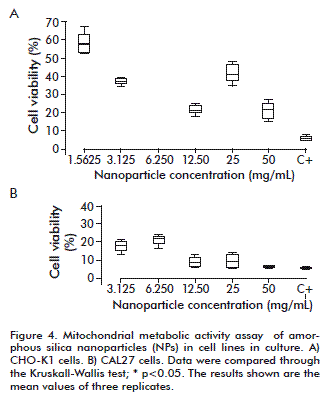
<P   ><font color="#000000" size="2" face="Verdana, Arial, Helvetica, sans-serif"><B>Mitochondrial      metabolic activity by MTT </b></font></P >   <FONT color="#000000">        <P   ><font size="2" face="Verdana, Arial, Helvetica, sans-serif">On assessing the      mitochondrial activity in cells exposed to NPs, it was observed that in the      CAL27 cell line, cellular viability was lower than 50 % at all NPs concentrations,      compared to the negative control. Meanwhile, the viability of the CHO K1 line      was of about 60 % when treated with 1.5625 &micro;g/mL of NP and lower than      50 % for the rest of the concentrations (<a href="#fig4">Figure 4</a>). In      the CHO-K1 line, statistically significant differences were found between      all NPs concentrations (p &le; 0.05) with the exception of 3.125 and 25 &micro;g/mL,      with a similar behavior at 50 &micro;g/mL. Treatments with 1.5625, 3.125 and      6.25 &micro;g/mL were statistically different among them and also from the      positive control (p = 0.0006). Overall, the dependence of mitochondrial metabolic      activity was demonstrated to be a function of the NPs concentration. </font></P >       ]]></body>
<body><![CDATA[<P align="center"   ><img src="/img/revistas/bta/v32n1/f0403115.gif" width="327" height="400"><a name="fig4"></a></P >       
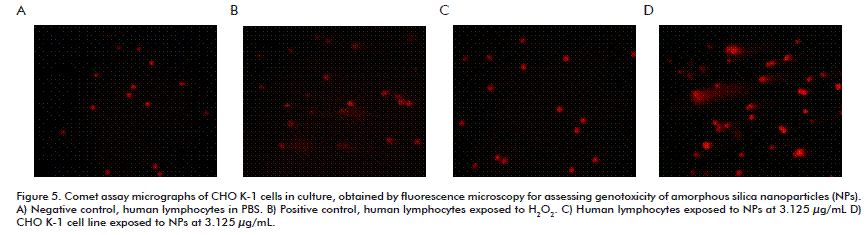
<P   ><font size="2" face="Verdana, Arial, Helvetica, sans-serif">The best cell viability      was above 50 %, being obtained at 1.5625 &micro;g/mL, Although all NPs concentrations      decreased cell viability in 40 % or more, they were all less cytotoxic than      the positive control treatment (10 &micro;L DMSO, p = 0.0006). In the CAL27cell      line, all NPs concentrations had a marked cytotoxic effect, with a decrease      in cell viability that was greater than 60 % in all cases. On analyzing the      differences between the concentrations studied, however, a dose dependent      effect of viability was observed (p &le; 0.05). There were differences between      all concentrations with the exception of 12.5 and 25, which were the same      (p = 0.0958). </font></P >       <P   ><font size="2" face="Verdana, Arial, Helvetica, sans-serif"><B>Genotoxicity assessment      by the Comet assay </b></font></P >       <P   ><font size="2" face="Verdana, Arial, Helvetica, sans-serif">Considering the results      obtained in the cytotoxicity tests, we decided to assess the genotoxic effect      of the NP only at lower concentrations and in two different cellular model      systems: the CHO-K1 line and primary cultures of human lymphocytes. A different      behavior was found on comparing the genotoxicity of NPs in both models, their      genotoxicity being higher for the CHO-K1 cells than for the human lymphocytes.      In the CHO-K1 cell line, all concentrations assessed showed greater genotoxicity      than the negative control (p &le; 0.05), while in the primary cultures of      human lymphocytes there were no significant differences between the negative      control and the treated cells. Micrographs of the Comet assay tests are shown      in <a href="/img/revistas/bta/v32n1/f0503115.gif">figure 5</a>. </font></P >       
<P   >&nbsp;</P >       <P   ><font size="2" face="Verdana, Arial, Helvetica, sans-serif"><B><font size="3">DISCUSSION      </font></b></font></P >   <FONT size="+1">        <P   ><font size="2" face="Verdana, Arial, Helvetica, sans-serif">The amorphous silica      NPs analyzed in this study remained as aggregates in the culture media in      spite of the application of a dispersion protocol. This has been reported      by different groups, demonstrating that NPs form aggregates when they are      in contact with physiological solutions (culture media, sera and buffer solutions,      among others) [12-14]. This may affect the toxicity produced, as demonstrated      by Mu <I>et al.</I> [12]. It is possible that under our conditions the formation      of aggregates may have affected cytotoxicity, in spite of having carried out      the dispersion protocols of the NPs before their inclusion in the culture      medium. This may be assumed when considering that both the formation of the      aggregates and cytotoxicity depend on NPs concentrations. </font></P >   <FONT size="+1">        <P   ><font size="2" face="Verdana, Arial, Helvetica, sans-serif">The viability and      cell density results may be explained by the lysis produced by the interaction      between the NP and the cells. Mu <I>et al.</I> observed the detritus of the      A549 cells (human lung epithelial cells) accompanied by the NP through transmission      electron microscopy, when they were incubated with 100 &micro;g/mL of amorphous      silica NPs for 24 h [12]. These results may be compared with our own findings      in the wells of 50 and 100 &micro;g/mL, but they contrast with the wells treated      with 3.125 &micro;g/mL that behaved like the negative control, indicating      that the cytotoxicity of the NPs was concentration-dependent. Nevertheless,      comparisons must be cautiously considered between experimental settings, particularly      the differences in cell line lineage and culture conditions. Although it has      generally been considered that the silica NPs are non-toxic [15], various      <I>in vitro</I> studies using the MTT technique have demonstrated </font><font size="2" face="Verdana, Arial, Helvetica, sans-serif">that      cytotoxicity induced by NPs depends on the NPs concentration, as we have detected      in our experimental setting. For example, Yang <I>et al</I>. [16] found that      silica NPs of 15 and 30 nm were able to induce cytotoxicity and apoptosis      in a dose-dependent manner in HaCaT cells (human keratinocytes), using concentrations      in the range 2.5-80 &micro;g/mL [16]. At the same time, a direct dependence      was found between NPs concentration and cytotoxicity induced by both ROS and      the depletion of anti-oxidant mechanisms in liver HepG2 cells, at 1-200 &micro;g/mL      NPs concentrations [17]. </font></P >       <P   ><font size="2" face="Verdana, Arial, Helvetica, sans-serif">Once analyzing the      cellular proliferation results, a decrease in treated cells as a function      of the NPs concentrations was also detected, but not depending on the exposure      time. Notably, the time of exposure dependence of NPs cytotoxicity have been      previously reported in several works. For instance, Ye <I>et al.</I> found      a time-dependent reduction of cellular viability in human liver cells (L-02)      exposed to silica NPs of 21 nm [18]. Viability of the A549 cells was demonstrated      to progressively decrease over time (24 h, 48 h, 72 h) in the presence of      silica NPs of 15 and 46 nm [9]. Nevertheless, in our study, no dependence      of cytotoxicity was found on the exposure time, with a decrease in cellular      viability compared to the start at all the time points tested (24, 36 and      48 h). </font></P >       <P   ><font size="2" face="Verdana, Arial, Helvetica, sans-serif">It has been demonstrated      through <I>in vitro</I> and <I>in vivo</I> studies with silica NPs that they      can produce cytotoxicity either directly or indirectly; for example this may      be derived from its internalization by cells and the effector responses against      them, triggering cellular stress mechanisms such as ROS production [6, 7,      12, 17] and attacking the DNA structure with single or double strands breaks      among other damages, which may be detected using the Comet assay [19]. Our      results differ from previous studies, since we observe genotoxicity in the      CHO K-1 cell line and according to findings in human lymphocytes, there does      not seem to be an increase in basal DNA damage levels produced by the exposure      to NPs. In other words, they do not produce an increase in the simple or double      stranded DNA breaks as expressed in the tail of the comet assay. </font></P >       ]]></body>
<body><![CDATA[<P   ><font size="2" face="Verdana, Arial, Helvetica, sans-serif">In our study we have      observed that the toxic effects induced by the NPs not only depend on the      concentration, but also on the cell model used, since both cytotoxicity and      genotoxicity results showed differences between cell types; this is in agreement      with previous reports in the literature [15, 20, 21]. As mentioned above,      these toxic effects have been explained by different mechanisms derived from      the interaction between the NPs and the cells. These may include the damage      to the cell membrane, inflammatory reactions, mitochondrial damage, the production      of ROS and NOS, apoptosis and necrosis, among others [12, 17, 21-24], which      could mediate some of the effects seen in our study. Nevertheless, our experimental      setting does not supports further explanation of the cytotoxicity and genotoxicity      results based on such mechanisms. </font></P >       <P   ><font size="2" face="Verdana, Arial, Helvetica, sans-serif">Hence, these results      should be interpreted cautiously, since the demonstrated toxicity the variability      found in relation to the NPs concentration and cell type does not necessarily      indicate that the amorphous silica NPs should not be used, but that the toxic      effects can be controlled or avoided. For instance, when it is used at non-toxic      concentrations or when these NPs work are functionalized with specific chemical      groups, the deleterious damages in cells may be decreased as previously demonstrated      [10, 25]. Such strategies, together with the exclusive chemical and physical      properties of the amorphous silica NPs, could make such particles a feasible      option for its use as vehicles for drug delivery or in other biomedical applications.      </font></P >       <P   >&nbsp;</P >       <P   ><font size="2" face="Verdana, Arial, Helvetica, sans-serif"><B><font size="3">CONCLUSIONS      </font></b></font></P >   <FONT size="+1">        <P   ><font size="2" face="Verdana, Arial, Helvetica, sans-serif">Variable <I>in vitro</I>      effects of cytotoxicity and genotoxicity of amorphous silica NPs aggregates      on cell lines and primary human lymphocyte cultures were found in this study.      Nevertheless, the variability seen on its effects as a function of the concentration      and cell line, in a time-independent behavior, are indicators of the possible      use of these NPs at nontoxic concentrations or with chemical modifications      that could decrease their toxicity. This could result in successful applications      in biomedicine, taking advantage of their particular chemical and physical      properties. </font></P >       <P   >&nbsp;</P >   <FONT size="+1"><FONT color="#0092D2">        <P   ><font size="2" color="#000000" face="Verdana, Arial, Helvetica, sans-serif"><B><font size="3">ACKNOWLEDGEMENTS      </font> </b></font></P >   <FONT size="+1" color="#000000">        <P   ><font color="#0092D2" size="2" face="Verdana, Arial, Helvetica, sans-serif"><FONT color="#000000">The      authors thank to the National University of Colombia and the Cooperative University      of Colombia at Medellin, for the funds to carry out this study, and to Dr.      Claudia Patricia Garc&iacute;a for providing the nanoparticles, the invitation      to carry out this study and her advisory. Thanks also to the Cellular and      Molecular Physiology group of the School of Medicine of the National University      of Colombia at Bogota, and to Victor Alonso Solarte David for the technical      advice in the MTT technique. The authors are also grateful to Jaiberth Antonio      Cardona Arias, Juan Carlos Hern&aacute;ndez L&oacute;pez and Wildeman Zapata      Builes, for their constant technical advice in carrying out the assays and      for manuscript review. </font></font></P >       <P   >&nbsp;</P >   <FONT color="#0092D2"><FONT size="+1" color="#000000">        <P   > </P >       ]]></body>
<body><![CDATA[<P   ><font size="3" face="Verdana, Arial, Helvetica, sans-serif"><B>REFERENCES </b></font></P >   </font></font></font></font></font></font></font></font></font></font></font></font></font></font></font></font></font></font></font></font></font></font></font></font></font></font></font></font></font></font></font></font></font></font></font></font></font></font></font></font></font></font></font></font></font></font></font></font></font></font></font></font></font></font></font></font></font></font></font></font></font></font></font></font></font></font></font></font></DIV >     <DIV class="Part"   >       <!-- ref --><p><FONT size="+1" color="#000000"><FONT size="+1"><FONT size="+1"><FONT size="+1"><FONT size="+1"><FONT size="+1"><FONT size="+1"><FONT size="+1"><FONT size="+1"><FONT size="+1"><FONT size="+1"><FONT size="+1"><FONT color="#23408E"><FONT color="#000000"><FONT size="+1"><FONT size="+1"><FONT color="#FFF000"><FONT color="#000000"><FONT size="+1"><FONT size="+1"><FONT color="#EB008A"><FONT color="#000000"><FONT size="+1"><FONT size="+1"><FONT size="+1"><FONT size="+1"><FONT size="+1"><FONT size="+1"><FONT size="+1"><FONT size="+1"><FONT size="+1"><FONT size="+1"><FONT color="#0092D2"><FONT color="#000000"><FONT color="#0092D2"><FONT color="#000000"><FONT size="+1"><FONT size="+1"><FONT size="+1"><FONT size="+1"><FONT size="+1"><FONT size="+1"><FONT color="#0092D2"><FONT color="#000000"><FONT size="+1"><FONT size="+1"><FONT size="+1"><FONT size="+1"><FONT size="+1"><FONT size="+1"><FONT size="+1"><FONT size="+1"><FONT size="+1"><FONT size="+1"><FONT color="#EB008A"><FONT color="#000000"><FONT color="#0092D2"><FONT color="#000000"><FONT color="#FFF000"><FONT color="#000000"><FONT size="+1"><FONT size="+1"><FONT size="+1"><FONT size="+1"><FONT color="#0092D2"><FONT size="+1" color="#000000"><FONT color="#0092D2"><FONT size="+1" color="#000000"><font size="2" face="Verdana, Arial, Helvetica, sans-serif">1.      Manish G, Vimukta S. Targeted drug delivery systems: A Review. Res J Chem      Sci. 2011;1(2):135-8.    </font></font></font></font></font></font></font></font></font></font></font></font></font></font></font></font></font></font></font></font></font></font></font></font></font></font></font></font></font></font></font></font></font></font></font></font></font></font></font></font></font></font></font></font></font></font></font></font></font></font></font></font></font></font></font></font></font></font></font></font></font></font></font></font></font></font></font></font></font></p>       <!-- ref --><p><FONT size="+1" color="#000000"><FONT size="+1"><FONT size="+1"><FONT size="+1"><FONT size="+1"><FONT size="+1"><FONT size="+1"><FONT size="+1"><FONT size="+1"><FONT size="+1"><FONT size="+1"><FONT size="+1"><FONT color="#23408E"><FONT color="#000000"><FONT size="+1"><FONT size="+1"><FONT color="#FFF000"><FONT color="#000000"><FONT size="+1"><FONT size="+1"><FONT color="#EB008A"><FONT color="#000000"><FONT size="+1"><FONT size="+1"><FONT size="+1"><FONT size="+1"><FONT size="+1"><FONT size="+1"><FONT size="+1"><FONT size="+1"><FONT size="+1"><FONT size="+1"><FONT color="#0092D2"><FONT color="#000000"><FONT color="#0092D2"><FONT color="#000000"><FONT size="+1"><FONT size="+1"><FONT size="+1"><FONT size="+1"><FONT size="+1"><FONT size="+1"><FONT color="#0092D2"><FONT color="#000000"><FONT size="+1"><FONT size="+1"><FONT size="+1"><FONT size="+1"><FONT size="+1"><FONT size="+1"><FONT size="+1"><FONT size="+1"><FONT size="+1"><FONT size="+1"><FONT color="#EB008A"><FONT color="#000000"><FONT color="#0092D2"><FONT color="#000000"><FONT color="#FFF000"><FONT color="#000000"><FONT size="+1"><FONT size="+1"><FONT size="+1"><FONT size="+1"><FONT color="#0092D2"><FONT size="+1" color="#000000"><FONT color="#0092D2"><FONT size="+1" color="#000000"><FONT size="+1"><font size="2" face="Verdana, Arial, Helvetica, sans-serif">2.      Moghimi SM, Hunter AC, Murray JC. Nanomedicine: current status and future      prospects. FASEB J. 2005;19(3):311-30.     </font></font></font></font></font></font></font></font></font></font></font></font></font></font></font></font></font></font></font></font></font></font></font></font></font></font></font></font></font></font></font></font></font></font></font></font></font></font></font></font></font></font></font></font></font></font></font></font></font></font></font></font></font></font></font></font></font></font></font></font></font></font></font></font></font></font></font></font></font></font></p> </DIV >     <DIV class="Part"   >       <!-- ref --><p><FONT size="+1" color="#000000"><FONT size="+1"><FONT size="+1"><FONT size="+1"><FONT size="+1"><FONT size="+1"><FONT size="+1"><FONT size="+1"><FONT size="+1"><FONT size="+1"><FONT size="+1"><FONT size="+1"><FONT color="#23408E"><FONT color="#000000"><FONT size="+1"><FONT size="+1"><FONT color="#FFF000"><FONT color="#000000"><FONT size="+1"><FONT size="+1"><FONT color="#EB008A"><FONT color="#000000"><FONT size="+1"><FONT size="+1"><FONT size="+1"><FONT size="+1"><FONT size="+1"><FONT size="+1"><FONT size="+1"><FONT size="+1"><FONT size="+1"><FONT size="+1"><FONT color="#0092D2"><FONT color="#000000"><FONT color="#0092D2"><FONT color="#000000"><FONT size="+1"><FONT size="+1"><FONT size="+1"><FONT size="+1"><FONT size="+1"><FONT size="+1"><FONT color="#0092D2"><FONT color="#000000"><FONT size="+1"><FONT size="+1"><FONT size="+1"><FONT size="+1"><FONT size="+1"><FONT size="+1"><FONT size="+1"><FONT size="+1"><FONT size="+1"><FONT size="+1"><FONT color="#EB008A"><FONT color="#000000"><FONT color="#0092D2"><FONT color="#000000"><FONT color="#FFF000"><FONT color="#000000"><FONT size="+1"><FONT size="+1"><FONT size="+1"><FONT size="+1"><FONT color="#0092D2"><FONT size="+1" color="#000000"><FONT color="#0092D2"><FONT size="+1" color="#000000"><FONT size="+1"><font size="2" face="Verdana, Arial, Helvetica, sans-serif">3.      Hirsch LR, Stafford RJ, Bankson JA, Sershen SR, Rivera B, Price RE, <I>et      al</I>. Nanoshell-mediated near-infrared thermal therapy of tumors under magnetic      resonance guidance. Proc Natl Acad Sci USA. 2003;100(23):13549-54.    </font></font></font></font></font></font></font></font></font></font></font></font></font></font></font></font></font></font></font></font></font></font></font></font></font></font></font></font></font></font></font></font></font></font></font></font></font></font></font></font></font></font></font></font></font></font></font></font></font></font></font></font></font></font></font></font></font></font></font></font></font></font></font></font></font></font></font></font></font></font></p>       <!-- ref --><p><FONT size="+1" color="#000000"><FONT size="+1"><FONT size="+1"><FONT size="+1"><FONT size="+1"><FONT size="+1"><FONT size="+1"><FONT size="+1"><FONT size="+1"><FONT size="+1"><FONT size="+1"><FONT size="+1"><FONT color="#23408E"><FONT color="#000000"><FONT size="+1"><FONT size="+1"><FONT color="#FFF000"><FONT color="#000000"><FONT size="+1"><FONT size="+1"><FONT color="#EB008A"><FONT color="#000000"><FONT size="+1"><FONT size="+1"><FONT size="+1"><FONT size="+1"><FONT size="+1"><FONT size="+1"><FONT size="+1"><FONT size="+1"><FONT size="+1"><FONT size="+1"><FONT color="#0092D2"><FONT color="#000000"><FONT color="#0092D2"><FONT color="#000000"><FONT size="+1"><FONT size="+1"><FONT size="+1"><FONT size="+1"><FONT size="+1"><FONT size="+1"><FONT color="#0092D2"><FONT color="#000000"><FONT size="+1"><FONT size="+1"><FONT size="+1"><FONT size="+1"><FONT size="+1"><FONT size="+1"><FONT size="+1"><FONT size="+1"><FONT size="+1"><FONT size="+1"><FONT color="#EB008A"><FONT color="#000000"><FONT color="#0092D2"><FONT color="#000000"><FONT color="#FFF000"><FONT color="#000000"><FONT size="+1"><FONT size="+1"><FONT size="+1"><FONT size="+1"><FONT color="#0092D2"><FONT size="+1" color="#000000"><FONT color="#0092D2"><FONT size="+1" color="#000000"><FONT size="+1"><font size="2" face="Verdana, Arial, Helvetica, sans-serif">4.      Rahimi M, Wadajkar A, Subramanian K, Yousef M, Cui W, Hsieh JT, <I>et al</I>.      In vitro evaluation of novel polymer-coated magnetic nanoparticles for controlled      drug delivery. Nanomedicine. 2010;6(5):672-80.     </font></font></font></font></font></font></font></font></font></font></font></font></font></font></font></font></font></font></font></font></font></font></font></font></font></font></font></font></font></font></font></font></font></font></font></font></font></font></font></font></font></font></font></font></font></font></font></font></font></font></font></font></font></font></font></font></font></font></font></font></font></font></font></font></font></font></font></font></font></font></p> </DIV >     <DIV class="Part"   >       <!-- ref --><p><FONT size="+1" color="#000000"><FONT size="+1"><FONT size="+1"><FONT size="+1"><FONT size="+1"><FONT size="+1"><FONT size="+1"><FONT size="+1"><FONT size="+1"><FONT size="+1"><FONT size="+1"><FONT size="+1"><FONT color="#23408E"><FONT color="#000000"><FONT size="+1"><FONT size="+1"><FONT color="#FFF000"><FONT color="#000000"><FONT size="+1"><FONT size="+1"><FONT color="#EB008A"><FONT color="#000000"><FONT size="+1"><FONT size="+1"><FONT size="+1"><FONT size="+1"><FONT size="+1"><FONT size="+1"><FONT size="+1"><FONT size="+1"><FONT size="+1"><FONT size="+1"><FONT color="#0092D2"><FONT color="#000000"><FONT color="#0092D2"><FONT color="#000000"><FONT size="+1"><FONT size="+1"><FONT size="+1"><FONT size="+1"><FONT size="+1"><FONT size="+1"><FONT color="#0092D2"><FONT color="#000000"><FONT size="+1"><FONT size="+1"><FONT size="+1"><FONT size="+1"><FONT size="+1"><FONT size="+1"><FONT size="+1"><FONT size="+1"><FONT size="+1"><FONT size="+1"><FONT color="#EB008A"><FONT color="#000000"><FONT color="#0092D2"><FONT color="#000000"><FONT color="#FFF000"><FONT color="#000000"><FONT size="+1"><FONT size="+1"><FONT size="+1"><FONT size="+1"><FONT color="#0092D2"><FONT size="+1" color="#000000"><FONT color="#0092D2"><FONT size="+1" color="#000000"><FONT size="+1"><font size="2" face="Verdana, Arial, Helvetica, sans-serif">5.      He Q, Gao Y, Zhang L, Zhang Z, Gao F, Ji X, <i>et al.</i> A pH-responsive      mesoporous silica nanoparticles-based multi-drug delivery system for overcoming      multi-drug resistance. Biomaterials. 2011;32(30):7711-20.    </font></font></font></font></font></font></font></font></font></font></font></font></font></font></font></font></font></font></font></font></font></font></font></font></font></font></font></font></font></font></font></font></font></font></font></font></font></font></font></font></font></font></font></font></font></font></font></font></font></font></font></font></font></font></font></font></font></font></font></font></font></font></font></font></font></font></font></font></font></font></p>       <!-- ref --><p><FONT size="+1" color="#000000"><FONT size="+1"><FONT size="+1"><FONT size="+1"><FONT size="+1"><FONT size="+1"><FONT size="+1"><FONT size="+1"><FONT size="+1"><FONT size="+1"><FONT size="+1"><FONT size="+1"><FONT color="#23408E"><FONT color="#000000"><FONT size="+1"><FONT size="+1"><FONT color="#FFF000"><FONT color="#000000"><FONT size="+1"><FONT size="+1"><FONT color="#EB008A"><FONT color="#000000"><FONT size="+1"><FONT size="+1"><FONT size="+1"><FONT size="+1"><FONT size="+1"><FONT size="+1"><FONT size="+1"><FONT size="+1"><FONT size="+1"><FONT size="+1"><FONT color="#0092D2"><FONT color="#000000"><FONT color="#0092D2"><FONT color="#000000"><FONT size="+1"><FONT size="+1"><FONT size="+1"><FONT size="+1"><FONT size="+1"><FONT size="+1"><FONT color="#0092D2"><FONT color="#000000"><FONT size="+1"><FONT size="+1"><FONT size="+1"><FONT size="+1"><FONT size="+1"><FONT size="+1"><FONT size="+1"><FONT size="+1"><FONT size="+1"><FONT size="+1"><FONT color="#EB008A"><FONT color="#000000"><FONT color="#0092D2"><FONT color="#000000"><FONT color="#FFF000"><FONT color="#000000"><FONT size="+1"><FONT size="+1"><FONT size="+1"><FONT size="+1"><FONT color="#0092D2"><FONT size="+1" color="#000000"><FONT color="#0092D2"><FONT size="+1" color="#000000"><FONT size="+1"><font size="2" face="Verdana, Arial, Helvetica, sans-serif">6.      Gary-Bobo M, Hocine O, Brevet D, Maynadier M, Raehm L, Richeter S, <i>et al.</i>      Cancer therapy improvement with mesoporous silica nanoparticles combining      targeting, drug delivery and PDT. Int J Pharm. 2012;423(2):509-15.     </font></font></font></font></font></font></font></font></font></font></font></font></font></font></font></font></font></font></font></font></font></font></font></font></font></font></font></font></font></font></font></font></font></font></font></font></font></font></font></font></font></font></font></font></font></font></font></font></font></font></font></font></font></font></font></font></font></font></font></font></font></font></font></font></font></font></font></font></font></font></p> </DIV >     <DIV class="Part"   >       <!-- ref --><p><FONT size="+1" color="#000000"><FONT size="+1"><FONT size="+1"><FONT size="+1"><FONT size="+1"><FONT size="+1"><FONT size="+1"><FONT size="+1"><FONT size="+1"><FONT size="+1"><FONT size="+1"><FONT size="+1"><FONT color="#23408E"><FONT color="#000000"><FONT size="+1"><FONT size="+1"><FONT color="#FFF000"><FONT color="#000000"><FONT size="+1"><FONT size="+1"><FONT color="#EB008A"><FONT color="#000000"><FONT size="+1"><FONT size="+1"><FONT size="+1"><FONT size="+1"><FONT size="+1"><FONT size="+1"><FONT size="+1"><FONT size="+1"><FONT size="+1"><FONT size="+1"><FONT color="#0092D2"><FONT color="#000000"><FONT color="#0092D2"><FONT color="#000000"><FONT size="+1"><FONT size="+1"><FONT size="+1"><FONT size="+1"><FONT size="+1"><FONT size="+1"><FONT color="#0092D2"><FONT color="#000000"><FONT size="+1"><FONT size="+1"><FONT size="+1"><FONT size="+1"><FONT size="+1"><FONT size="+1"><FONT size="+1"><FONT size="+1"><FONT size="+1"><FONT size="+1"><FONT color="#EB008A"><FONT color="#000000"><FONT color="#0092D2"><FONT color="#000000"><FONT color="#FFF000"><FONT color="#000000"><FONT size="+1"><FONT size="+1"><FONT size="+1"><FONT size="+1"><FONT color="#0092D2"><FONT size="+1" color="#000000"><FONT color="#0092D2"><FONT size="+1" color="#000000"><FONT size="+1"><font size="2" face="Verdana, Arial, Helvetica, sans-serif">7.      Costa CAR, Leite CAP, Galembeck F. Size Dependence of St&ouml;ber silica nanoparticle      microchemistry. J Phys Chem B. 2003;107(20):4747-55.    </font></font></font></font></font></font></font></font></font></font></font></font></font></font></font></font></font></font></font></font></font></font></font></font></font></font></font></font></font></font></font></font></font></font></font></font></font></font></font></font></font></font></font></font></font></font></font></font></font></font></font></font></font></font></font></font></font></font></font></font></font></font></font></font></font></font></font></font></font></font></p>       <!-- ref --><p><FONT size="+1" color="#000000"><FONT size="+1"><FONT size="+1"><FONT size="+1"><FONT size="+1"><FONT size="+1"><FONT size="+1"><FONT size="+1"><FONT size="+1"><FONT size="+1"><FONT size="+1"><FONT size="+1"><FONT color="#23408E"><FONT color="#000000"><FONT size="+1"><FONT size="+1"><FONT color="#FFF000"><FONT color="#000000"><FONT size="+1"><FONT size="+1"><FONT color="#EB008A"><FONT color="#000000"><FONT size="+1"><FONT size="+1"><FONT size="+1"><FONT size="+1"><FONT size="+1"><FONT size="+1"><FONT size="+1"><FONT size="+1"><FONT size="+1"><FONT size="+1"><FONT color="#0092D2"><FONT color="#000000"><FONT color="#0092D2"><FONT color="#000000"><FONT size="+1"><FONT size="+1"><FONT size="+1"><FONT size="+1"><FONT size="+1"><FONT size="+1"><FONT color="#0092D2"><FONT color="#000000"><FONT size="+1"><FONT size="+1"><FONT size="+1"><FONT size="+1"><FONT size="+1"><FONT size="+1"><FONT size="+1"><FONT size="+1"><FONT size="+1"><FONT size="+1"><FONT color="#EB008A"><FONT color="#000000"><FONT color="#0092D2"><FONT color="#000000"><FONT color="#FFF000"><FONT color="#000000"><FONT size="+1"><FONT size="+1"><FONT size="+1"><FONT size="+1"><FONT color="#0092D2"><FONT size="+1" color="#000000"><FONT color="#0092D2"><FONT size="+1" color="#000000"><FONT size="+1"><font size="2" face="Verdana, Arial, Helvetica, sans-serif">8.      Jin Y, Kannan S, Wu M, Zhao JX. Toxicity of luminescent silica nanoparticles      to living cells. Chem Res Toxicol. 2007;20(8):1126-33.     </font></font></font></font></font></font></font></font></font></font></font></font></font></font></font></font></font></font></font></font></font></font></font></font></font></font></font></font></font></font></font></font></font></font></font></font></font></font></font></font></font></font></font></font></font></font></font></font></font></font></font></font></font></font></font></font></font></font></font></font></font></font></font></font></font></font></font></font></font></font></p> </DIV >     <DIV class="Part"   >       <!-- ref --><p><FONT size="+1" color="#000000"><FONT size="+1"><FONT size="+1"><FONT size="+1"><FONT size="+1"><FONT size="+1"><FONT size="+1"><FONT size="+1"><FONT size="+1"><FONT size="+1"><FONT size="+1"><FONT size="+1"><FONT color="#23408E"><FONT color="#000000"><FONT size="+1"><FONT size="+1"><FONT color="#FFF000"><FONT color="#000000"><FONT size="+1"><FONT size="+1"><FONT color="#EB008A"><FONT color="#000000"><FONT size="+1"><FONT size="+1"><FONT size="+1"><FONT size="+1"><FONT size="+1"><FONT size="+1"><FONT size="+1"><FONT size="+1"><FONT size="+1"><FONT size="+1"><FONT color="#0092D2"><FONT color="#000000"><FONT color="#0092D2"><FONT color="#000000"><FONT size="+1"><FONT size="+1"><FONT size="+1"><FONT size="+1"><FONT size="+1"><FONT size="+1"><FONT color="#0092D2"><FONT color="#000000"><FONT size="+1"><FONT size="+1"><FONT size="+1"><FONT size="+1"><FONT size="+1"><FONT size="+1"><FONT size="+1"><FONT size="+1"><FONT size="+1"><FONT size="+1"><FONT color="#EB008A"><FONT color="#000000"><FONT color="#0092D2"><FONT color="#000000"><FONT color="#FFF000"><FONT color="#000000"><FONT size="+1"><FONT size="+1"><FONT size="+1"><FONT size="+1"><FONT color="#0092D2"><FONT size="+1" color="#000000"><FONT color="#0092D2"><FONT size="+1" color="#000000"><FONT size="+1"><font size="2" face="Verdana, Arial, Helvetica, sans-serif">9.      Lin W, Huang YW, Zhou XD, Ma Y. In vitro toxicity of silica nanoparticles      in human lung cancer cells. Toxicol Appl Pharmacol. 2006;217(3):252-9.    </font></font></font></font></font></font></font></font></font></font></font></font></font></font></font></font></font></font></font></font></font></font></font></font></font></font></font></font></font></font></font></font></font></font></font></font></font></font></font></font></font></font></font></font></font></font></font></font></font></font></font></font></font></font></font></font></font></font></font></font></font></font></font></font></font></font></font></font></font></font></p>       <!-- ref --><p><FONT size="+1" color="#000000"><FONT size="+1"><FONT size="+1"><FONT size="+1"><FONT size="+1"><FONT size="+1"><FONT size="+1"><FONT size="+1"><FONT size="+1"><FONT size="+1"><FONT size="+1"><FONT size="+1"><FONT color="#23408E"><FONT color="#000000"><FONT size="+1"><FONT size="+1"><FONT color="#FFF000"><FONT color="#000000"><FONT size="+1"><FONT size="+1"><FONT color="#EB008A"><FONT color="#000000"><FONT size="+1"><FONT size="+1"><FONT size="+1"><FONT size="+1"><FONT size="+1"><FONT size="+1"><FONT size="+1"><FONT size="+1"><FONT size="+1"><FONT size="+1"><FONT color="#0092D2"><FONT color="#000000"><FONT color="#0092D2"><FONT color="#000000"><FONT size="+1"><FONT size="+1"><FONT size="+1"><FONT size="+1"><FONT size="+1"><FONT size="+1"><FONT color="#0092D2"><FONT color="#000000"><FONT size="+1"><FONT size="+1"><FONT size="+1"><FONT size="+1"><FONT size="+1"><FONT size="+1"><FONT size="+1"><FONT size="+1"><FONT size="+1"><FONT size="+1"><FONT color="#EB008A"><FONT color="#000000"><FONT color="#0092D2"><FONT color="#000000"><FONT color="#FFF000"><FONT color="#000000"><FONT size="+1"><FONT size="+1"><FONT size="+1"><FONT size="+1"><FONT color="#0092D2"><FONT size="+1" color="#000000"><FONT color="#0092D2"><FONT size="+1" color="#000000"><FONT size="+1"><font size="2" face="Verdana, Arial, Helvetica, sans-serif">10.      Slowing, II, Vivero-Escoto JL, Wu CW, Lin VS. Mesoporous silica nanoparticles      as controlled release drug delivery and gene transfection carriers. Adv Drug      Deliv Rev. 2008;60(11):1278-88.     </font></font></font></font></font></font></font></font></font></font></font></font></font></font></font></font></font></font></font></font></font></font></font></font></font></font></font></font></font></font></font></font></font></font></font></font></font></font></font></font></font></font></font></font></font></font></font></font></font></font></font></font></font></font></font></font></font></font></font></font></font></font></font></font></font></font></font></font></font></font></p> </DIV >     <DIV class="Part"   >       <!-- ref --><p><FONT size="+1" color="#000000"><FONT size="+1"><FONT size="+1"><FONT size="+1"><FONT size="+1"><FONT size="+1"><FONT size="+1"><FONT size="+1"><FONT size="+1"><FONT size="+1"><FONT size="+1"><FONT size="+1"><FONT color="#23408E"><FONT color="#000000"><FONT size="+1"><FONT size="+1"><FONT color="#FFF000"><FONT color="#000000"><FONT size="+1"><FONT size="+1"><FONT color="#EB008A"><FONT color="#000000"><FONT size="+1"><FONT size="+1"><FONT size="+1"><FONT size="+1"><FONT size="+1"><FONT size="+1"><FONT size="+1"><FONT size="+1"><FONT size="+1"><FONT size="+1"><FONT color="#0092D2"><FONT color="#000000"><FONT color="#0092D2"><FONT color="#000000"><FONT size="+1"><FONT size="+1"><FONT size="+1"><FONT size="+1"><FONT size="+1"><FONT size="+1"><FONT color="#0092D2"><FONT color="#000000"><FONT size="+1"><FONT size="+1"><FONT size="+1"><FONT size="+1"><FONT size="+1"><FONT size="+1"><FONT size="+1"><FONT size="+1"><FONT size="+1"><FONT size="+1"><FONT color="#EB008A"><FONT color="#000000"><FONT color="#0092D2"><FONT color="#000000"><FONT color="#FFF000"><FONT color="#000000"><FONT size="+1"><FONT size="+1"><FONT size="+1"><FONT size="+1"><FONT color="#0092D2"><FONT size="+1" color="#000000"><FONT color="#0092D2"><FONT size="+1" color="#000000"><FONT size="+1"><font size="2" face="Verdana, Arial, Helvetica, sans-serif">11.      Huang X, Teng X, Chen D, Tang F, He J. The effect of the shape of mesoporous      silica nanoparticles on cellular uptake and cell function. Biomaterials. 2010;31(3):438-48</font></font></font></font></font></font></font></font></font></font></font></font></font></font></font></font></font></font></font></font></font></font></font></font></font></font></font></font></font></font></font></font></font></font></font></font></font></font></font></font></font></font></font></font></font></font></font></font></font></font></font></font></font></font></font></font></font></font></font></font></font></font></font></font></font></font></font></font></font></font><!-- ref --><p><FONT size="+1" color="#000000"><FONT size="+1"><FONT size="+1"><FONT size="+1"><FONT size="+1"><FONT size="+1"><FONT size="+1"><FONT size="+1"><FONT size="+1"><FONT size="+1"><FONT size="+1"><FONT size="+1"><FONT color="#23408E"><FONT color="#000000"><FONT size="+1"><FONT size="+1"><FONT color="#FFF000"><FONT color="#000000"><FONT size="+1"><FONT size="+1"><FONT color="#EB008A"><FONT color="#000000"><FONT size="+1"><FONT size="+1"><FONT size="+1"><FONT size="+1"><FONT size="+1"><FONT size="+1"><FONT size="+1"><FONT size="+1"><FONT size="+1"><FONT size="+1"><FONT color="#0092D2"><FONT color="#000000"><FONT color="#0092D2"><FONT color="#000000"><FONT size="+1"><FONT size="+1"><FONT size="+1"><FONT size="+1"><FONT size="+1"><FONT size="+1"><FONT color="#0092D2"><FONT color="#000000"><FONT size="+1"><FONT size="+1"><FONT size="+1"><FONT size="+1"><FONT size="+1"><FONT size="+1"><FONT size="+1"><FONT size="+1"><FONT size="+1"><FONT size="+1"><FONT color="#EB008A"><FONT color="#000000"><FONT color="#0092D2"><FONT color="#000000"><FONT color="#FFF000"><FONT color="#000000"><FONT size="+1"><FONT size="+1"><FONT size="+1"><FONT size="+1"><FONT color="#0092D2"><FONT size="+1" color="#000000"><FONT color="#0092D2"><FONT size="+1" color="#000000"><FONT size="+1"><font size="2" face="Verdana, Arial, Helvetica, sans-serif">12.      Mu Q, Hondow NS, Krzeminski L, Brown AP, Jeuken LJ, Routledge MN. Mechanism      of cellular uptake of genotoxic silica nanoparticles. Part Fibre Toxicol.      2012;9:29.     </font></font></font></font></font></font></font></font></font></font></font></font></font></font></font></font></font></font></font></font></font></font></font></font></font></font></font></font></font></font></font></font></font></font></font></font></font></font></font></font></font></font></font></font></font></font></font></font></font></font></font></font></font></font></font></font></font></font></font></font></font></font></font></font></font></font></font></font></font></font></p> </DIV >     ]]></body>
<body><![CDATA[<DIV class="Part"   >       <!-- ref --><p><FONT size="+1" color="#000000"><FONT size="+1"><FONT size="+1"><FONT size="+1"><FONT size="+1"><FONT size="+1"><FONT size="+1"><FONT size="+1"><FONT size="+1"><FONT size="+1"><FONT size="+1"><FONT size="+1"><FONT color="#23408E"><FONT color="#000000"><FONT size="+1"><FONT size="+1"><FONT color="#FFF000"><FONT color="#000000"><FONT size="+1"><FONT size="+1"><FONT color="#EB008A"><FONT color="#000000"><FONT size="+1"><FONT size="+1"><FONT size="+1"><FONT size="+1"><FONT size="+1"><FONT size="+1"><FONT size="+1"><FONT size="+1"><FONT size="+1"><FONT size="+1"><FONT color="#0092D2"><FONT color="#000000"><FONT color="#0092D2"><FONT color="#000000"><FONT size="+1"><FONT size="+1"><FONT size="+1"><FONT size="+1"><FONT size="+1"><FONT size="+1"><FONT color="#0092D2"><FONT color="#000000"><FONT size="+1"><FONT size="+1"><FONT size="+1"><FONT size="+1"><FONT size="+1"><FONT size="+1"><FONT size="+1"><FONT size="+1"><FONT size="+1"><FONT size="+1"><FONT color="#EB008A"><FONT color="#000000"><FONT color="#0092D2"><FONT color="#000000"><FONT color="#FFF000"><FONT color="#000000"><FONT size="+1"><FONT size="+1"><FONT size="+1"><FONT size="+1"><FONT color="#0092D2"><FONT size="+1" color="#000000"><FONT color="#0092D2"><FONT size="+1" color="#000000"><FONT size="+1"><font size="2" face="Verdana, Arial, Helvetica, sans-serif">13.      Orts-Gil G, Natte K, Drescher D, Bresch H, Mantion A, Kneipp J, <I>et al</I>.      Characterisation of silica nanoparticles prior to in vitro studies: from primary      particles to agglomerates. J Nanopart Res. 2011;13:1593-604.    </font></font></font></font></font></font></font></font></font></font></font></font></font></font></font></font></font></font></font></font></font></font></font></font></font></font></font></font></font></font></font></font></font></font></font></font></font></font></font></font></font></font></font></font></font></font></font></font></font></font></font></font></font></font></font></font></font></font></font></font></font></font></font></font></font></font></font></font></font></font></p>       <!-- ref --><p><FONT size="+1" color="#000000"><FONT size="+1"><FONT size="+1"><FONT size="+1"><FONT size="+1"><FONT size="+1"><FONT size="+1"><FONT size="+1"><FONT size="+1"><FONT size="+1"><FONT size="+1"><FONT size="+1"><FONT color="#23408E"><FONT color="#000000"><FONT size="+1"><FONT size="+1"><FONT color="#FFF000"><FONT color="#000000"><FONT size="+1"><FONT size="+1"><FONT color="#EB008A"><FONT color="#000000"><FONT size="+1"><FONT size="+1"><FONT size="+1"><FONT size="+1"><FONT size="+1"><FONT size="+1"><FONT size="+1"><FONT size="+1"><FONT size="+1"><FONT size="+1"><FONT color="#0092D2"><FONT color="#000000"><FONT color="#0092D2"><FONT color="#000000"><FONT size="+1"><FONT size="+1"><FONT size="+1"><FONT size="+1"><FONT size="+1"><FONT size="+1"><FONT color="#0092D2"><FONT color="#000000"><FONT size="+1"><FONT size="+1"><FONT size="+1"><FONT size="+1"><FONT size="+1"><FONT size="+1"><FONT size="+1"><FONT size="+1"><FONT size="+1"><FONT size="+1"><FONT color="#EB008A"><FONT color="#000000"><FONT color="#0092D2"><FONT color="#000000"><FONT color="#FFF000"><FONT color="#000000"><FONT size="+1"><FONT size="+1"><FONT size="+1"><FONT size="+1"><FONT color="#0092D2"><FONT size="+1" color="#000000"><FONT color="#0092D2"><FONT size="+1" color="#000000"><FONT size="+1"><font size="2" face="Verdana, Arial, Helvetica, sans-serif">14.      Chen M, von Mikecz A. Formation of nucleoplasmic protein aggregates impairs      nuclear function in response to SiO2 nanoparticles. Exp Cell Res. 2005;305(1):51-62.          </font></font></font></font></font></font></font></font></font></font></font></font></font></font></font></font></font></font></font></font></font></font></font></font></font></font></font></font></font></font></font></font></font></font></font></font></font></font></font></font></font></font></font></font></font></font></font></font></font></font></font></font></font></font></font></font></font></font></font></font></font></font></font></font></font></font></font></font></font></font></p> </DIV >     <DIV class="Part"   >       <!-- ref --><p><FONT size="+1" color="#000000"><FONT size="+1"><FONT size="+1"><FONT size="+1"><FONT size="+1"><FONT size="+1"><FONT size="+1"><FONT size="+1"><FONT size="+1"><FONT size="+1"><FONT size="+1"><FONT size="+1"><FONT color="#23408E"><FONT color="#000000"><FONT size="+1"><FONT size="+1"><FONT color="#FFF000"><FONT color="#000000"><FONT size="+1"><FONT size="+1"><FONT color="#EB008A"><FONT color="#000000"><FONT size="+1"><FONT size="+1"><FONT size="+1"><FONT size="+1"><FONT size="+1"><FONT size="+1"><FONT size="+1"><FONT size="+1"><FONT size="+1"><FONT size="+1"><FONT color="#0092D2"><FONT color="#000000"><FONT color="#0092D2"><FONT color="#000000"><FONT size="+1"><FONT size="+1"><FONT size="+1"><FONT size="+1"><FONT size="+1"><FONT size="+1"><FONT color="#0092D2"><FONT color="#000000"><FONT size="+1"><FONT size="+1"><FONT size="+1"><FONT size="+1"><FONT size="+1"><FONT size="+1"><FONT size="+1"><FONT size="+1"><FONT size="+1"><FONT size="+1"><FONT color="#EB008A"><FONT color="#000000"><FONT color="#0092D2"><FONT color="#000000"><FONT color="#FFF000"><FONT color="#000000"><FONT size="+1"><FONT size="+1"><FONT size="+1"><FONT size="+1"><FONT color="#0092D2"><FONT size="+1" color="#000000"><FONT color="#0092D2"><FONT size="+1" color="#000000"><FONT size="+1"><font size="2" face="Verdana, Arial, Helvetica, sans-serif">15.      Uboldi C, Giudetti G, Broggi F, Gilliland D, Ponti J, Rossi F. Amorphous silica      nanoparticles do not induce cytotoxicity, cell transformation or genotoxicity      in Balb/3T3 mouse fibroblasts. Mutat Res. 2012;745(1-2):11-20.    </font></font></font></font></font></font></font></font></font></font></font></font></font></font></font></font></font></font></font></font></font></font></font></font></font></font></font></font></font></font></font></font></font></font></font></font></font></font></font></font></font></font></font></font></font></font></font></font></font></font></font></font></font></font></font></font></font></font></font></font></font></font></font></font></font></font></font></font></font></font></p>       <!-- ref --><p><FONT size="+1" color="#000000"><FONT size="+1"><FONT size="+1"><FONT size="+1"><FONT size="+1"><FONT size="+1"><FONT size="+1"><FONT size="+1"><FONT size="+1"><FONT size="+1"><FONT size="+1"><FONT size="+1"><FONT color="#23408E"><FONT color="#000000"><FONT size="+1"><FONT size="+1"><FONT color="#FFF000"><FONT color="#000000"><FONT size="+1"><FONT size="+1"><FONT color="#EB008A"><FONT color="#000000"><FONT size="+1"><FONT size="+1"><FONT size="+1"><FONT size="+1"><FONT size="+1"><FONT size="+1"><FONT size="+1"><FONT size="+1"><FONT size="+1"><FONT size="+1"><FONT color="#0092D2"><FONT color="#000000"><FONT color="#0092D2"><FONT color="#000000"><FONT size="+1"><FONT size="+1"><FONT size="+1"><FONT size="+1"><FONT size="+1"><FONT size="+1"><FONT color="#0092D2"><FONT color="#000000"><FONT size="+1"><FONT size="+1"><FONT size="+1"><FONT size="+1"><FONT size="+1"><FONT size="+1"><FONT size="+1"><FONT size="+1"><FONT size="+1"><FONT size="+1"><FONT color="#EB008A"><FONT color="#000000"><FONT color="#0092D2"><FONT color="#000000"><FONT color="#FFF000"><FONT color="#000000"><FONT size="+1"><FONT size="+1"><FONT size="+1"><FONT size="+1"><FONT color="#0092D2"><FONT size="+1" color="#000000"><FONT color="#0092D2"><FONT size="+1" color="#000000"><FONT size="+1"><font size="2" face="Verdana, Arial, Helvetica, sans-serif">16.      Yang X, Liu J, He H, Zhou L, Gong C, Wang X, <I>et al</I>. SiO2 nanoparticles      induce cytotoxicity and protein expression alteration in HaCaT cells. Part      Fibre Toxicol. 2010;7:1-12.     </font></font></font></font></font></font></font></font></font></font></font></font></font></font></font></font></font></font></font></font></font></font></font></font></font></font></font></font></font></font></font></font></font></font></font></font></font></font></font></font></font></font></font></font></font></font></font></font></font></font></font></font></font></font></font></font></font></font></font></font></font></font></font></font></font></font></font></font></font></font></p> </DIV >     ]]></body>
<body><![CDATA[<DIV class="Part"   >       <!-- ref --><p><FONT size="+1" color="#000000"><FONT size="+1"><FONT size="+1"><FONT size="+1"><FONT size="+1"><FONT size="+1"><FONT size="+1"><FONT size="+1"><FONT size="+1"><FONT size="+1"><FONT size="+1"><FONT size="+1"><FONT color="#23408E"><FONT color="#000000"><FONT size="+1"><FONT size="+1"><FONT color="#FFF000"><FONT color="#000000"><FONT size="+1"><FONT size="+1"><FONT color="#EB008A"><FONT color="#000000"><FONT size="+1"><FONT size="+1"><FONT size="+1"><FONT size="+1"><FONT size="+1"><FONT size="+1"><FONT size="+1"><FONT size="+1"><FONT size="+1"><FONT size="+1"><FONT color="#0092D2"><FONT color="#000000"><FONT color="#0092D2"><FONT color="#000000"><FONT size="+1"><FONT size="+1"><FONT size="+1"><FONT size="+1"><FONT size="+1"><FONT size="+1"><FONT color="#0092D2"><FONT color="#000000"><FONT size="+1"><FONT size="+1"><FONT size="+1"><FONT size="+1"><FONT size="+1"><FONT size="+1"><FONT size="+1"><FONT size="+1"><FONT size="+1"><FONT size="+1"><FONT color="#EB008A"><FONT color="#000000"><FONT color="#0092D2"><FONT color="#000000"><FONT color="#FFF000"><FONT color="#000000"><FONT size="+1"><FONT size="+1"><FONT size="+1"><FONT size="+1"><FONT color="#0092D2"><FONT size="+1" color="#000000"><FONT color="#0092D2"><FONT size="+1" color="#000000"><FONT size="+1"><font size="2" face="Verdana, Arial, Helvetica, sans-serif">17.      Ahmad J, Ahamed M, Akhtar MJ, Alrokayan SA, Siddiqui MA, Musarrat J, <I>et      al</I>. Apoptosis induction by silica nanoparticles mediated through reactive      oxygen species in human liver cell line HepG2. Toxicol Appl Pharmacol. 2012;259(2):160-8.    </font></font></font></font></font></font></font></font></font></font></font></font></font></font></font></font></font></font></font></font></font></font></font></font></font></font></font></font></font></font></font></font></font></font></font></font></font></font></font></font></font></font></font></font></font></font></font></font></font></font></font></font></font></font></font></font></font></font></font></font></font></font></font></font></font></font></font></font></font></font></p>       <!-- ref --><p><FONT size="+1" color="#000000"><FONT size="+1"><FONT size="+1"><FONT size="+1"><FONT size="+1"><FONT size="+1"><FONT size="+1"><FONT size="+1"><FONT size="+1"><FONT size="+1"><FONT size="+1"><FONT size="+1"><FONT color="#23408E"><FONT color="#000000"><FONT size="+1"><FONT size="+1"><FONT color="#FFF000"><FONT color="#000000"><FONT size="+1"><FONT size="+1"><FONT color="#EB008A"><FONT color="#000000"><FONT size="+1"><FONT size="+1"><FONT size="+1"><FONT size="+1"><FONT size="+1"><FONT size="+1"><FONT size="+1"><FONT size="+1"><FONT size="+1"><FONT size="+1"><FONT color="#0092D2"><FONT color="#000000"><FONT color="#0092D2"><FONT color="#000000"><FONT size="+1"><FONT size="+1"><FONT size="+1"><FONT size="+1"><FONT size="+1"><FONT size="+1"><FONT color="#0092D2"><FONT color="#000000"><FONT size="+1"><FONT size="+1"><FONT size="+1"><FONT size="+1"><FONT size="+1"><FONT size="+1"><FONT size="+1"><FONT size="+1"><FONT size="+1"><FONT size="+1"><FONT color="#EB008A"><FONT color="#000000"><FONT color="#0092D2"><FONT color="#000000"><FONT color="#FFF000"><FONT color="#000000"><FONT size="+1"><FONT size="+1"><FONT size="+1"><FONT size="+1"><FONT color="#0092D2"><FONT size="+1" color="#000000"><FONT color="#0092D2"><FONT size="+1" color="#000000"><FONT size="+1"><font size="2" face="Verdana, Arial, Helvetica, sans-serif">18.      Ye Y, Liu J, Xu J, Sun L, Chen M, Lan M. Nano-SiO2 induces apoptosis via activation      of p53 and Bax mediated by oxidative stress in human hepatic cell line. Toxicol      In Vitro. 2010;24(3):751-8.     </font></font></font></font></font></font></font></font></font></font></font></font></font></font></font></font></font></font></font></font></font></font></font></font></font></font></font></font></font></font></font></font></font></font></font></font></font></font></font></font></font></font></font></font></font></font></font></font></font></font></font></font></font></font></font></font></font></font></font></font></font></font></font></font></font></font></font></font></font></font></p> </DIV >     <DIV class="Part"   >       <!-- ref --><p><FONT size="+1" color="#000000"><FONT size="+1"><FONT size="+1"><FONT size="+1"><FONT size="+1"><FONT size="+1"><FONT size="+1"><FONT size="+1"><FONT size="+1"><FONT size="+1"><FONT size="+1"><FONT size="+1"><FONT color="#23408E"><FONT color="#000000"><FONT size="+1"><FONT size="+1"><FONT color="#FFF000"><FONT color="#000000"><FONT size="+1"><FONT size="+1"><FONT color="#EB008A"><FONT color="#000000"><FONT size="+1"><FONT size="+1"><FONT size="+1"><FONT size="+1"><FONT size="+1"><FONT size="+1"><FONT size="+1"><FONT size="+1"><FONT size="+1"><FONT size="+1"><FONT color="#0092D2"><FONT color="#000000"><FONT color="#0092D2"><FONT color="#000000"><FONT size="+1"><FONT size="+1"><FONT size="+1"><FONT size="+1"><FONT size="+1"><FONT size="+1"><FONT color="#0092D2"><FONT color="#000000"><FONT size="+1"><FONT size="+1"><FONT size="+1"><FONT size="+1"><FONT size="+1"><FONT size="+1"><FONT size="+1"><FONT size="+1"><FONT size="+1"><FONT size="+1"><FONT color="#EB008A"><FONT color="#000000"><FONT color="#0092D2"><FONT color="#000000"><FONT color="#FFF000"><FONT color="#000000"><FONT size="+1"><FONT size="+1"><FONT size="+1"><FONT size="+1"><FONT color="#0092D2"><FONT size="+1" color="#000000"><FONT color="#0092D2"><FONT size="+1" color="#000000"><FONT size="+1"><font size="2" face="Verdana, Arial, Helvetica, sans-serif">19.      Petersen EJ, Nelson BC. Mechanisms and measurements of nanomaterial-induced      oxidative damage to DNA. Anal Bioanal Chem. 2010;398(2):613-50.    </font></font></font></font></font></font></font></font></font></font></font></font></font></font></font></font></font></font></font></font></font></font></font></font></font></font></font></font></font></font></font></font></font></font></font></font></font></font></font></font></font></font></font></font></font></font></font></font></font></font></font></font></font></font></font></font></font></font></font></font></font></font></font></font></font></font></font></font></font></font></p>       <!-- ref --><p><FONT size="+1" color="#000000"><FONT size="+1"><FONT size="+1"><FONT size="+1"><FONT size="+1"><FONT size="+1"><FONT size="+1"><FONT size="+1"><FONT size="+1"><FONT size="+1"><FONT size="+1"><FONT size="+1"><FONT color="#23408E"><FONT color="#000000"><FONT size="+1"><FONT size="+1"><FONT color="#FFF000"><FONT color="#000000"><FONT size="+1"><FONT size="+1"><FONT color="#EB008A"><FONT color="#000000"><FONT size="+1"><FONT size="+1"><FONT size="+1"><FONT size="+1"><FONT size="+1"><FONT size="+1"><FONT size="+1"><FONT size="+1"><FONT size="+1"><FONT size="+1"><FONT color="#0092D2"><FONT color="#000000"><FONT color="#0092D2"><FONT color="#000000"><FONT size="+1"><FONT size="+1"><FONT size="+1"><FONT size="+1"><FONT size="+1"><FONT size="+1"><FONT color="#0092D2"><FONT color="#000000"><FONT size="+1"><FONT size="+1"><FONT size="+1"><FONT size="+1"><FONT size="+1"><FONT size="+1"><FONT size="+1"><FONT size="+1"><FONT size="+1"><FONT size="+1"><FONT color="#EB008A"><FONT color="#000000"><FONT color="#0092D2"><FONT color="#000000"><FONT color="#FFF000"><FONT color="#000000"><FONT size="+1"><FONT size="+1"><FONT size="+1"><FONT size="+1"><FONT color="#0092D2"><FONT size="+1" color="#000000"><FONT color="#0092D2"><FONT size="+1" color="#000000"><FONT size="+1"><font size="2" face="Verdana, Arial, Helvetica, sans-serif">20.      Rabolli V, Thomassen LC, Princen C, Napierska D, Gonzalez L, Kirsch-Volders      M, <i>et al.</i> Influence of size, surface area and microporosity on the      in vitro cytotoxic activity of amorphous silica nanoparticles in different      cell types. Nanotoxicology. 2010;4(3):307-18.     </font></font></font></font></font></font></font></font></font></font></font></font></font></font></font></font></font></font></font></font></font></font></font></font></font></font></font></font></font></font></font></font></font></font></font></font></font></font></font></font></font></font></font></font></font></font></font></font></font></font></font></font></font></font></font></font></font></font></font></font></font></font></font></font></font></font></font></font></font></font></p> </DIV >     ]]></body>
<body><![CDATA[<DIV class="Part"   >       <p><FONT size="+1" color="#000000"><FONT size="+1"><FONT size="+1"><FONT size="+1"><FONT size="+1"><FONT size="+1"><FONT size="+1"><FONT size="+1"><FONT size="+1"><FONT size="+1"><FONT size="+1"><FONT size="+1"><FONT color="#23408E"><FONT color="#000000"><FONT size="+1"><FONT size="+1"><FONT color="#FFF000"><FONT color="#000000"><FONT size="+1"><FONT size="+1"><FONT color="#EB008A"><FONT color="#000000"><FONT size="+1"><FONT size="+1"><FONT size="+1"><FONT size="+1"><FONT size="+1"><FONT size="+1"><FONT size="+1"><FONT size="+1"><FONT size="+1"><FONT size="+1"><FONT color="#0092D2"><FONT color="#000000"><FONT color="#0092D2"><FONT color="#000000"><FONT size="+1"><FONT size="+1"><FONT size="+1"><FONT size="+1"><FONT size="+1"><FONT size="+1"><FONT color="#0092D2"><FONT color="#000000"><FONT size="+1"><FONT size="+1"><FONT size="+1"><FONT size="+1"><FONT size="+1"><FONT size="+1"><FONT size="+1"><FONT size="+1"><FONT size="+1"><FONT size="+1"><FONT color="#EB008A"><FONT color="#000000"><FONT color="#0092D2"><FONT color="#000000"><FONT color="#FFF000"><FONT color="#000000"><FONT size="+1"><FONT size="+1"><FONT size="+1"><FONT size="+1"><FONT color="#0092D2"><FONT size="+1" color="#000000"><FONT color="#0092D2"><FONT size="+1" color="#000000"><FONT size="+1"><font size="2" face="Verdana, Arial, Helvetica, sans-serif">21.      Julien DC, Richardson CC, Beaux MF, 2nd, McIlroy DN, Hill RA. In vitro proliferating      cell models to study cytotoxicity of silica nanowires. Nanomedicine. 2010;6(1):84-92.</font></font></font></font></font></font></font></font></font></font></font></font></font></font></font></font></font></font></font></font></font></font></font></font></font></font></font></font></font></font></font></font></font></font></font></font></font></font></font></font></font></font></font></font></font></font></font></font></font></font></font></font></font></font></font></font></font></font></font></font></font></font></font></font></font></font></font></font></font></font></p>       <!-- ref --><p><FONT size="+1" color="#000000"><FONT size="+1"><FONT size="+1"><FONT size="+1"><FONT size="+1"><FONT size="+1"><FONT size="+1"><FONT size="+1"><FONT size="+1"><FONT size="+1"><FONT size="+1"><FONT size="+1"><FONT color="#23408E"><FONT color="#000000"><FONT size="+1"><FONT size="+1"><FONT color="#FFF000"><FONT color="#000000"><FONT size="+1"><FONT size="+1"><FONT color="#EB008A"><FONT color="#000000"><FONT size="+1"><FONT size="+1"><FONT size="+1"><FONT size="+1"><FONT size="+1"><FONT size="+1"><FONT size="+1"><FONT size="+1"><FONT size="+1"><FONT size="+1"><FONT color="#0092D2"><FONT color="#000000"><FONT color="#0092D2"><FONT color="#000000"><FONT size="+1"><FONT size="+1"><FONT size="+1"><FONT size="+1"><FONT size="+1"><FONT size="+1"><FONT color="#0092D2"><FONT color="#000000"><FONT size="+1"><FONT size="+1"><FONT size="+1"><FONT size="+1"><FONT size="+1"><FONT size="+1"><FONT size="+1"><FONT size="+1"><FONT size="+1"><FONT size="+1"><FONT color="#EB008A"><FONT color="#000000"><FONT color="#0092D2"><FONT color="#000000"><FONT color="#FFF000"><FONT color="#000000"><FONT size="+1"><FONT size="+1"><FONT size="+1"><FONT size="+1"><FONT color="#0092D2"><FONT size="+1" color="#000000"><FONT color="#0092D2"><FONT size="+1" color="#000000"><FONT size="+1"><font size="2" face="Verdana, Arial, Helvetica, sans-serif">22.      Corbalan JJ, Medina C, Jacoby A, Malinski T, Radomski MW. Amorphous silica      nanoparticles trigger nitric oxide/peroxynitrite imbalance in human endothelial      cells: inflammatory and cytotoxic effects. Int J Nanomedicine. 2011;6:2821-35.          </font></font></font></font></font></font></font></font></font></font></font></font></font></font></font></font></font></font></font></font></font></font></font></font></font></font></font></font></font></font></font></font></font></font></font></font></font></font></font></font></font></font></font></font></font></font></font></font></font></font></font></font></font></font></font></font></font></font></font></font></font></font></font></font></font></font></font></font></font></font></p> </DIV >     <DIV class="Part"   >       <!-- ref --><p><FONT size="+1" color="#000000"><FONT size="+1"><FONT size="+1"><FONT size="+1"><FONT size="+1"><FONT size="+1"><FONT size="+1"><FONT size="+1"><FONT size="+1"><FONT size="+1"><FONT size="+1"><FONT size="+1"><FONT color="#23408E"><FONT color="#000000"><FONT size="+1"><FONT size="+1"><FONT color="#FFF000"><FONT color="#000000"><FONT size="+1"><FONT size="+1"><FONT color="#EB008A"><FONT color="#000000"><FONT size="+1"><FONT size="+1"><FONT size="+1"><FONT size="+1"><FONT size="+1"><FONT size="+1"><FONT size="+1"><FONT size="+1"><FONT size="+1"><FONT size="+1"><FONT color="#0092D2"><FONT color="#000000"><FONT color="#0092D2"><FONT color="#000000"><FONT size="+1"><FONT size="+1"><FONT size="+1"><FONT size="+1"><FONT size="+1"><FONT size="+1"><FONT color="#0092D2"><FONT color="#000000"><FONT size="+1"><FONT size="+1"><FONT size="+1"><FONT size="+1"><FONT size="+1"><FONT size="+1"><FONT size="+1"><FONT size="+1"><FONT size="+1"><FONT size="+1"><FONT color="#EB008A"><FONT color="#000000"><FONT color="#0092D2"><FONT color="#000000"><FONT color="#FFF000"><FONT color="#000000"><FONT size="+1"><FONT size="+1"><FONT size="+1"><FONT size="+1"><FONT color="#0092D2"><FONT size="+1" color="#000000"><FONT color="#0092D2"><FONT size="+1" color="#000000"><FONT size="+1"><font size="2" face="Verdana, Arial, Helvetica, sans-serif">23.      Chang JS, Chang KL, Hwang DF, Kong ZL. In vitro cytotoxicitiy of silica nanoparticles      at high concentrations strongly depends on the metabolic activity type of      the cell line. Environ Sci Technol. 2007;41(6):2064-8</font></font></font></font></font></font></font></font></font></font></font></font></font></font></font></font></font></font></font></font></font></font></font></font></font></font></font></font></font></font></font></font></font></font></font></font></font></font></font></font></font></font></font></font></font></font></font></font></font></font></font></font></font></font></font></font></font></font></font></font></font></font></font></font></font></font></font></font></font></font><!-- ref --><p><FONT size="+1" color="#000000"><FONT size="+1"><FONT size="+1"><FONT size="+1"><FONT size="+1"><FONT size="+1"><FONT size="+1"><FONT size="+1"><FONT size="+1"><FONT size="+1"><FONT size="+1"><FONT size="+1"><FONT color="#23408E"><FONT color="#000000"><FONT size="+1"><FONT size="+1"><FONT color="#FFF000"><FONT color="#000000"><FONT size="+1"><FONT size="+1"><FONT color="#EB008A"><FONT color="#000000"><FONT size="+1"><FONT size="+1"><FONT size="+1"><FONT size="+1"><FONT size="+1"><FONT size="+1"><FONT size="+1"><FONT size="+1"><FONT size="+1"><FONT size="+1"><FONT color="#0092D2"><FONT color="#000000"><FONT color="#0092D2"><FONT color="#000000"><FONT size="+1"><FONT size="+1"><FONT size="+1"><FONT size="+1"><FONT size="+1"><FONT size="+1"><FONT color="#0092D2"><FONT color="#000000"><FONT size="+1"><FONT size="+1"><FONT size="+1"><FONT size="+1"><FONT size="+1"><FONT size="+1"><FONT size="+1"><FONT size="+1"><FONT size="+1"><FONT size="+1"><FONT color="#EB008A"><FONT color="#000000"><FONT color="#0092D2"><FONT color="#000000"><FONT color="#FFF000"><FONT color="#000000"><FONT size="+1"><FONT size="+1"><FONT size="+1"><FONT size="+1"><FONT color="#0092D2"><FONT size="+1" color="#000000"><FONT color="#0092D2"><FONT size="+1" color="#000000"><FONT size="+1"><font size="2" face="Verdana, Arial, Helvetica, sans-serif">24.      Zhang XQ, Yin LH, Tang M, Pu YP. ZnO, TiO(2), SiO(2,) and Al(2)O(3) nanoparticles-induced      toxic effects on human fetal lung fibroblasts. Biomed Environ Sci. 2011;24(6):661-9.          </font></font></font></font></font></font></font></font></font></font></font></font></font></font></font></font></font></font></font></font></font></font></font></font></font></font></font></font></font></font></font></font></font></font></font></font></font></font></font></font></font></font></font></font></font></font></font></font></font></font></font></font></font></font></font></font></font></font></font></font></font></font></font></font></font></font></font></font></font></font></p> </DIV >     <DIV class="Part"   >       <!-- ref --><p><FONT size="+1" color="#000000"><FONT size="+1"><FONT size="+1"><FONT size="+1"><FONT size="+1"><FONT size="+1"><FONT size="+1"><FONT size="+1"><FONT size="+1"><FONT size="+1"><FONT size="+1"><FONT size="+1"><FONT color="#23408E"><FONT color="#000000"><FONT size="+1"><FONT size="+1"><FONT color="#FFF000"><FONT color="#000000"><FONT size="+1"><FONT size="+1"><FONT color="#EB008A"><FONT color="#000000"><FONT size="+1"><FONT size="+1"><FONT size="+1"><FONT size="+1"><FONT size="+1"><FONT size="+1"><FONT size="+1"><FONT size="+1"><FONT size="+1"><FONT size="+1"><FONT color="#0092D2"><FONT color="#000000"><FONT color="#0092D2"><FONT color="#000000"><FONT size="+1"><FONT size="+1"><FONT size="+1"><FONT size="+1"><FONT size="+1"><FONT size="+1"><FONT color="#0092D2"><FONT color="#000000"><FONT size="+1"><FONT size="+1"><FONT size="+1"><FONT size="+1"><FONT size="+1"><FONT size="+1"><FONT size="+1"><FONT size="+1"><FONT size="+1"><FONT size="+1"><FONT color="#EB008A"><FONT color="#000000"><FONT color="#0092D2"><FONT color="#000000"><FONT color="#FFF000"><FONT color="#000000"><FONT size="+1"><FONT size="+1"><FONT size="+1"><FONT size="+1"><FONT color="#0092D2"><FONT size="+1" color="#000000"><FONT color="#0092D2"><FONT size="+1" color="#000000"><FONT size="+1"><font size="2" face="Verdana, Arial, Helvetica, sans-serif">25.      Liu Y, Zhang Z, Zhang Q, Baker GL, Worden RM. Biomembrane disruption by silica-core      nanoparticles: effect of surface functional group measured using a tethered      bilayer lipid membrane. Biochim Biophys Acta. 2014;1838(1 Pt B):429-37.     </font></font></font></font></font></font></font></font></font></font></font></font></font></font></font></font></font></font></font></font></font></font></font></font></font></font></font></font></font></font></font></font></font></font></font></font></font></font></font></font></font></font></font></font></font></font></font></font></font></font></font></font></font></font></font></font></font></font></font></font></font></font></font></font></font></font></font></font></font></font></p>       <p>&nbsp;</p>       <p>&nbsp;</p> </DIV >     <DIV class="Part"   ><FONT size="+1" color="#000000"><FONT size="+1"><FONT size="+1"><FONT size="+1"><FONT size="+1"><FONT size="+1"><FONT size="+1"><FONT size="+1"><FONT size="+1"><FONT size="+1"><FONT size="+1"><FONT size="+1"><FONT color="#23408E"><FONT color="#000000"><FONT size="+1"><FONT size="+1"><FONT color="#FFF000"><FONT color="#000000"><FONT size="+1"><FONT size="+1"><FONT color="#EB008A"><FONT color="#000000"><FONT size="+1"><FONT size="+1"><FONT size="+1"><FONT size="+1"><FONT size="+1"><FONT size="+1"><FONT size="+1"><FONT size="+1"><FONT size="+1"><FONT size="+1"><FONT color="#0092D2"><FONT color="#000000"><FONT color="#0092D2"><FONT color="#000000"><FONT size="+1"><FONT size="+1"><FONT size="+1"><FONT size="+1"><FONT size="+1"><FONT size="+1"><FONT color="#0092D2"><FONT color="#000000"><FONT size="+1"><FONT size="+1"><FONT size="+1"><FONT size="+1"><FONT size="+1"><FONT size="+1"><FONT size="+1"><FONT size="+1"><FONT size="+1"><FONT size="+1"><FONT color="#EB008A"><FONT color="#000000"><FONT color="#0092D2"><FONT color="#000000"><FONT color="#FFF000"><FONT color="#000000"><FONT size="+1"><FONT size="+1"><FONT size="+1"><FONT size="+1"><FONT color="#0092D2"><FONT size="+1" color="#000000"><FONT color="#0092D2"><FONT size="+1" color="#000000"><FONT size="+1"><FONT size="+1">        <P   > </P >       <P   ><font size="2" face="Verdana, Arial, Helvetica, sans-serif">Received in July,      2014.     <br>     </font><font size="2" face="Verdana, Arial, Helvetica, sans-serif">Accepted      in January, 2015. </font></P >       <P   >&nbsp;</P >       <P   >&nbsp;</P >       <P   > </P >       ]]></body>
<body><![CDATA[<P   ><i><font size="2" face="Verdana, Arial, Helvetica, sans-serif">Diana M G&oacute;mez-Gallego</font></i><font size="2" face="Verdana, Arial, Helvetica, sans-serif">.      Grupo de investigaci&oacute;n Infettare. Universidad Cooperativa de Colombia,      Sede Medell&iacute;n. Calle 48 # 28-00, Medell&iacute;n, Antioquia, Colombia.      E-mail: <a href="mailto:diana.gomezga@campusucc.edu.co">diana.gomezga@campusucc.edu.co</a>      </font></P >   </font></font></font></font></font></font></font></font></font></font></font></font></font></font></font></font></font></font></font></font></font></font></font></font></font></font></font></font></font></font></font></font></font></font></font></font></font></font></font></font></font></font></font></font></font></font></font></font></font></font></font></font></font></font></font></font></font></font></font></font></font></font></font></font></font></font></font></font></font></font></DIV >      ]]></body><back>
<ref-list>
<ref id="B1">
<label>1</label><nlm-citation citation-type="journal">
<person-group person-group-type="author">
<name>
<surname><![CDATA[Manish]]></surname>
<given-names><![CDATA[G]]></given-names>
</name>
<name>
<surname><![CDATA[Vimukta]]></surname>
<given-names><![CDATA[S]]></given-names>
</name>
</person-group>
<article-title xml:lang="en"><![CDATA[Targeted drug delivery systems: A Review]]></article-title>
<source><![CDATA[Res J Chem Sci]]></source>
<year>2011</year>
<volume>1</volume>
<numero>2</numero>
<issue>2</issue>
<page-range>135-8</page-range></nlm-citation>
</ref>
<ref id="B2">
<label>2</label><nlm-citation citation-type="journal">
<person-group person-group-type="author">
<name>
<surname><![CDATA[Moghimi]]></surname>
<given-names><![CDATA[SM]]></given-names>
</name>
<name>
<surname><![CDATA[Hunter]]></surname>
<given-names><![CDATA[AC]]></given-names>
</name>
<name>
<surname><![CDATA[Murray]]></surname>
<given-names><![CDATA[JC]]></given-names>
</name>
</person-group>
<article-title xml:lang="en"><![CDATA[Nanomedicine: current status and future prospects]]></article-title>
<source><![CDATA[FASEB J]]></source>
<year>2005</year>
<volume>19</volume>
<numero>3</numero>
<issue>3</issue>
<page-range>311-30</page-range></nlm-citation>
</ref>
<ref id="B3">
<label>3</label><nlm-citation citation-type="journal">
<person-group person-group-type="author">
<name>
<surname><![CDATA[Hirsch]]></surname>
<given-names><![CDATA[LR]]></given-names>
</name>
<name>
<surname><![CDATA[Stafford]]></surname>
<given-names><![CDATA[RJ]]></given-names>
</name>
<name>
<surname><![CDATA[Bankson]]></surname>
<given-names><![CDATA[JA]]></given-names>
</name>
<name>
<surname><![CDATA[Sershen]]></surname>
<given-names><![CDATA[SR]]></given-names>
</name>
<name>
<surname><![CDATA[Rivera]]></surname>
<given-names><![CDATA[B]]></given-names>
</name>
<name>
<surname><![CDATA[Price]]></surname>
<given-names><![CDATA[RE]]></given-names>
</name>
</person-group>
<article-title xml:lang="en"><![CDATA[Nanoshell-mediated near-infrared thermal therapy of tumors under magnetic resonance guidance]]></article-title>
<source><![CDATA[Proc Natl Acad Sci USA]]></source>
<year>2003</year>
<volume>100</volume>
<numero>23</numero>
<issue>23</issue>
<page-range>13549-54</page-range></nlm-citation>
</ref>
<ref id="B4">
<label>4</label><nlm-citation citation-type="journal">
<person-group person-group-type="author">
<name>
<surname><![CDATA[Rahimi]]></surname>
<given-names><![CDATA[M]]></given-names>
</name>
<name>
<surname><![CDATA[Wadajkar]]></surname>
<given-names><![CDATA[A]]></given-names>
</name>
<name>
<surname><![CDATA[Subramanian]]></surname>
<given-names><![CDATA[K]]></given-names>
</name>
<name>
<surname><![CDATA[Yousef]]></surname>
<given-names><![CDATA[M]]></given-names>
</name>
<name>
<surname><![CDATA[Cui]]></surname>
<given-names><![CDATA[W]]></given-names>
</name>
<name>
<surname><![CDATA[Hsieh]]></surname>
<given-names><![CDATA[JT]]></given-names>
</name>
</person-group>
<article-title xml:lang="en"><![CDATA[In vitro evaluation of novel polymer-coated magnetic nanoparticles for controlled drug delivery]]></article-title>
<source><![CDATA[Nanomedicine]]></source>
<year>2010</year>
<volume>6</volume>
<numero>5</numero>
<issue>5</issue>
<page-range>672-80</page-range></nlm-citation>
</ref>
<ref id="B5">
<label>5</label><nlm-citation citation-type="journal">
<person-group person-group-type="author">
<name>
<surname><![CDATA[He]]></surname>
<given-names><![CDATA[Q]]></given-names>
</name>
<name>
<surname><![CDATA[Gao]]></surname>
<given-names><![CDATA[Y]]></given-names>
</name>
<name>
<surname><![CDATA[Zhang]]></surname>
<given-names><![CDATA[L]]></given-names>
</name>
<name>
<surname><![CDATA[Zhang]]></surname>
<given-names><![CDATA[Z]]></given-names>
</name>
<name>
<surname><![CDATA[Gao]]></surname>
<given-names><![CDATA[F]]></given-names>
</name>
<name>
<surname><![CDATA[Ji]]></surname>
<given-names><![CDATA[X]]></given-names>
</name>
</person-group>
<article-title xml:lang="en"><![CDATA[A pH-responsive mesoporous silica nanoparticles-based multi-drug delivery system for overcoming multi-drug resistance]]></article-title>
<source><![CDATA[Biomaterials]]></source>
<year>2011</year>
<volume>32</volume>
<numero>30</numero>
<issue>30</issue>
<page-range>7711-20</page-range></nlm-citation>
</ref>
<ref id="B6">
<label>6</label><nlm-citation citation-type="journal">
<person-group person-group-type="author">
<name>
<surname><![CDATA[Gary-Bobo]]></surname>
<given-names><![CDATA[M]]></given-names>
</name>
<name>
<surname><![CDATA[Hocine]]></surname>
<given-names><![CDATA[O]]></given-names>
</name>
<name>
<surname><![CDATA[Brevet]]></surname>
<given-names><![CDATA[D]]></given-names>
</name>
<name>
<surname><![CDATA[Maynadier]]></surname>
<given-names><![CDATA[M]]></given-names>
</name>
<name>
<surname><![CDATA[Raehm]]></surname>
<given-names><![CDATA[L]]></given-names>
</name>
<name>
<surname><![CDATA[Richeter]]></surname>
<given-names><![CDATA[S]]></given-names>
</name>
</person-group>
<article-title xml:lang="en"><![CDATA[Cancer therapy improvement with mesoporous silica nanoparticles combining targeting, drug delivery and PDT]]></article-title>
<source><![CDATA[Int J Pharm]]></source>
<year>2012</year>
<volume>423</volume>
<numero>2</numero>
<issue>2</issue>
<page-range>509-15</page-range></nlm-citation>
</ref>
<ref id="B7">
<label>7</label><nlm-citation citation-type="journal">
<person-group person-group-type="author">
<name>
<surname><![CDATA[Costa]]></surname>
<given-names><![CDATA[CAR]]></given-names>
</name>
<name>
<surname><![CDATA[Leite]]></surname>
<given-names><![CDATA[CAP]]></given-names>
</name>
<name>
<surname><![CDATA[Galembeck]]></surname>
<given-names><![CDATA[F]]></given-names>
</name>
</person-group>
<article-title xml:lang="en"><![CDATA[Size Dependence of Stöber silica nanoparticle microchemistry]]></article-title>
<source><![CDATA[J Phys Chem B]]></source>
<year>2003</year>
<volume>107</volume>
<numero>20</numero>
<issue>20</issue>
<page-range>4747-55</page-range></nlm-citation>
</ref>
<ref id="B8">
<label>8</label><nlm-citation citation-type="journal">
<person-group person-group-type="author">
<name>
<surname><![CDATA[Jin]]></surname>
<given-names><![CDATA[Y]]></given-names>
</name>
<name>
<surname><![CDATA[Kannan]]></surname>
<given-names><![CDATA[S]]></given-names>
</name>
<name>
<surname><![CDATA[Wu]]></surname>
<given-names><![CDATA[M]]></given-names>
</name>
<name>
<surname><![CDATA[Zhao]]></surname>
<given-names><![CDATA[JX]]></given-names>
</name>
</person-group>
<article-title xml:lang="en"><![CDATA[Toxicity of luminescent silica nanoparticles to living cells]]></article-title>
<source><![CDATA[Chem Res Toxicol]]></source>
<year>2007</year>
<volume>20</volume>
<numero>8</numero>
<issue>8</issue>
<page-range>1126-33</page-range></nlm-citation>
</ref>
<ref id="B9">
<label>9</label><nlm-citation citation-type="journal">
<person-group person-group-type="author">
<name>
<surname><![CDATA[Lin]]></surname>
<given-names><![CDATA[W]]></given-names>
</name>
<name>
<surname><![CDATA[Huang]]></surname>
<given-names><![CDATA[YW]]></given-names>
</name>
<name>
<surname><![CDATA[Zhou]]></surname>
<given-names><![CDATA[XD]]></given-names>
</name>
<name>
<surname><![CDATA[Ma]]></surname>
<given-names><![CDATA[Y]]></given-names>
</name>
</person-group>
<article-title xml:lang="en"><![CDATA[In vitro toxicity of silica nanoparticles in human lung cancer cells]]></article-title>
<source><![CDATA[Toxicol Appl Pharmacol]]></source>
<year>2006</year>
<volume>217</volume>
<numero>3</numero>
<issue>3</issue>
<page-range>252-9</page-range></nlm-citation>
</ref>
<ref id="B10">
<label>10</label><nlm-citation citation-type="journal">
<person-group person-group-type="author">
<name>
<surname><![CDATA[Slowing]]></surname>
<given-names><![CDATA[II]]></given-names>
</name>
<name>
<surname><![CDATA[Vivero-Escoto]]></surname>
<given-names><![CDATA[JL]]></given-names>
</name>
<name>
<surname><![CDATA[Wu]]></surname>
<given-names><![CDATA[CW]]></given-names>
</name>
<name>
<surname><![CDATA[Lin]]></surname>
<given-names><![CDATA[VS]]></given-names>
</name>
</person-group>
<article-title xml:lang="en"><![CDATA[Mesoporous silica nanoparticles as controlled release drug delivery and gene transfection carriers]]></article-title>
<source><![CDATA[Adv Drug Deliv Rev]]></source>
<year>2008</year>
<volume>60</volume>
<numero>11</numero>
<issue>11</issue>
<page-range>1278-88</page-range></nlm-citation>
</ref>
<ref id="B11">
<label>11</label><nlm-citation citation-type="journal">
<person-group person-group-type="author">
<name>
<surname><![CDATA[Huang]]></surname>
<given-names><![CDATA[X]]></given-names>
</name>
<name>
<surname><![CDATA[Teng]]></surname>
<given-names><![CDATA[X]]></given-names>
</name>
<name>
<surname><![CDATA[Chen]]></surname>
<given-names><![CDATA[D]]></given-names>
</name>
<name>
<surname><![CDATA[Tang]]></surname>
<given-names><![CDATA[F]]></given-names>
</name>
<name>
<surname><![CDATA[He]]></surname>
<given-names><![CDATA[J]]></given-names>
</name>
</person-group>
<article-title xml:lang="en"><![CDATA[The effect of the shape of mesoporous silica nanoparticles on cellular uptake and cell function]]></article-title>
<source><![CDATA[Biomaterials]]></source>
<year>2010</year>
<volume>31</volume>
<numero>3</numero>
<issue>3</issue>
<page-range>438-48</page-range></nlm-citation>
</ref>
<ref id="B12">
<label>12</label><nlm-citation citation-type="journal">
<person-group person-group-type="author">
<name>
<surname><![CDATA[Mu]]></surname>
<given-names><![CDATA[Q]]></given-names>
</name>
<name>
<surname><![CDATA[Hondow]]></surname>
<given-names><![CDATA[NS]]></given-names>
</name>
<name>
<surname><![CDATA[Krzeminski]]></surname>
<given-names><![CDATA[L]]></given-names>
</name>
<name>
<surname><![CDATA[Brown]]></surname>
<given-names><![CDATA[AP]]></given-names>
</name>
<name>
<surname><![CDATA[Jeuken]]></surname>
<given-names><![CDATA[LJ]]></given-names>
</name>
<name>
<surname><![CDATA[Routledge]]></surname>
<given-names><![CDATA[MN]]></given-names>
</name>
</person-group>
<article-title xml:lang="en"><![CDATA[Mechanism of cellular uptake of genotoxic silica nanoparticles]]></article-title>
<source><![CDATA[Part Fibre Toxicol]]></source>
<year>2012</year>
<volume>9</volume>
<page-range>29</page-range></nlm-citation>
</ref>
<ref id="B13">
<label>13</label><nlm-citation citation-type="journal">
<person-group person-group-type="author">
<name>
<surname><![CDATA[Orts-Gil]]></surname>
<given-names><![CDATA[G]]></given-names>
</name>
<name>
<surname><![CDATA[Natte]]></surname>
<given-names><![CDATA[K]]></given-names>
</name>
<name>
<surname><![CDATA[Drescher]]></surname>
<given-names><![CDATA[D]]></given-names>
</name>
<name>
<surname><![CDATA[Bresch]]></surname>
<given-names><![CDATA[H]]></given-names>
</name>
<name>
<surname><![CDATA[Mantion]]></surname>
<given-names><![CDATA[A]]></given-names>
</name>
<name>
<surname><![CDATA[Kneipp]]></surname>
<given-names><![CDATA[J]]></given-names>
</name>
</person-group>
<article-title xml:lang="en"><![CDATA[Characterisation of silica nanoparticles prior to in vitro studies: from primary particles to agglomerates]]></article-title>
<source><![CDATA[J Nanopart Res]]></source>
<year>2011</year>
<volume>13</volume>
<page-range>1593-604</page-range></nlm-citation>
</ref>
<ref id="B14">
<label>14</label><nlm-citation citation-type="journal">
<person-group person-group-type="author">
<name>
<surname><![CDATA[Chen]]></surname>
<given-names><![CDATA[M]]></given-names>
</name>
<name>
<surname><![CDATA[von Mikecz]]></surname>
<given-names><![CDATA[A]]></given-names>
</name>
</person-group>
<article-title xml:lang="en"><![CDATA[Formation of nucleoplasmic protein aggregates impairs nuclear function in response to SiO2 nanoparticles]]></article-title>
<source><![CDATA[Exp Cell Res]]></source>
<year>2005</year>
<volume>305</volume>
<numero>1</numero>
<issue>1</issue>
<page-range>51-62</page-range></nlm-citation>
</ref>
<ref id="B15">
<label>15</label><nlm-citation citation-type="journal">
<person-group person-group-type="author">
<name>
<surname><![CDATA[Uboldi]]></surname>
<given-names><![CDATA[C]]></given-names>
</name>
<name>
<surname><![CDATA[Giudetti]]></surname>
<given-names><![CDATA[G]]></given-names>
</name>
<name>
<surname><![CDATA[Broggi]]></surname>
<given-names><![CDATA[F]]></given-names>
</name>
<name>
<surname><![CDATA[Gilliland]]></surname>
<given-names><![CDATA[D]]></given-names>
</name>
<name>
<surname><![CDATA[Ponti]]></surname>
<given-names><![CDATA[J]]></given-names>
</name>
<name>
<surname><![CDATA[Rossi]]></surname>
<given-names><![CDATA[F]]></given-names>
</name>
</person-group>
<article-title xml:lang="en"><![CDATA[Amorphous silica nanoparticles do not induce cytotoxicity, cell transformation or genotoxicity in Balb/3T3 mouse fibroblasts]]></article-title>
<source><![CDATA[Mutat Res]]></source>
<year>2012</year>
<volume>745</volume>
<numero>1-2</numero>
<issue>1-2</issue>
<page-range>11-20</page-range></nlm-citation>
</ref>
<ref id="B16">
<label>16</label><nlm-citation citation-type="journal">
<person-group person-group-type="author">
<name>
<surname><![CDATA[Yang]]></surname>
<given-names><![CDATA[X]]></given-names>
</name>
<name>
<surname><![CDATA[Liu]]></surname>
<given-names><![CDATA[J]]></given-names>
</name>
<name>
<surname><![CDATA[He]]></surname>
<given-names><![CDATA[H]]></given-names>
</name>
<name>
<surname><![CDATA[Zhou]]></surname>
<given-names><![CDATA[L]]></given-names>
</name>
<name>
<surname><![CDATA[Gong]]></surname>
<given-names><![CDATA[C]]></given-names>
</name>
<name>
<surname><![CDATA[Wang]]></surname>
<given-names><![CDATA[X]]></given-names>
</name>
</person-group>
<article-title xml:lang="en"><![CDATA[SiO2 nanoparticles induce cytotoxicity and protein expression alteration in HaCaT cells]]></article-title>
<source><![CDATA[Part Fibre Toxicol]]></source>
<year>2010</year>
<volume>7</volume>
<page-range>1-12</page-range></nlm-citation>
</ref>
<ref id="B17">
<label>17</label><nlm-citation citation-type="journal">
<person-group person-group-type="author">
<name>
<surname><![CDATA[Ahmad]]></surname>
<given-names><![CDATA[J]]></given-names>
</name>
<name>
<surname><![CDATA[Ahamed]]></surname>
<given-names><![CDATA[M]]></given-names>
</name>
<name>
<surname><![CDATA[Akhtar]]></surname>
<given-names><![CDATA[MJ]]></given-names>
</name>
<name>
<surname><![CDATA[Alrokayan]]></surname>
<given-names><![CDATA[SA]]></given-names>
</name>
<name>
<surname><![CDATA[Siddiqui]]></surname>
<given-names><![CDATA[MA]]></given-names>
</name>
<name>
<surname><![CDATA[Musarrat]]></surname>
<given-names><![CDATA[J]]></given-names>
</name>
</person-group>
<article-title xml:lang="en"><![CDATA[Apoptosis induction by silica nanoparticles mediated through reactive oxygen species in human liver cell line HepG2]]></article-title>
<source><![CDATA[Toxicol Appl Pharmacol]]></source>
<year>2012</year>
<volume>259</volume>
<numero>2</numero>
<issue>2</issue>
<page-range>160-8</page-range></nlm-citation>
</ref>
<ref id="B18">
<label>18</label><nlm-citation citation-type="journal">
<person-group person-group-type="author">
<name>
<surname><![CDATA[Ye]]></surname>
<given-names><![CDATA[Y]]></given-names>
</name>
<name>
<surname><![CDATA[Liu]]></surname>
<given-names><![CDATA[J]]></given-names>
</name>
<name>
<surname><![CDATA[Xu]]></surname>
<given-names><![CDATA[J]]></given-names>
</name>
<name>
<surname><![CDATA[Sun]]></surname>
<given-names><![CDATA[L]]></given-names>
</name>
<name>
<surname><![CDATA[Chen]]></surname>
<given-names><![CDATA[M]]></given-names>
</name>
<name>
<surname><![CDATA[Lan]]></surname>
<given-names><![CDATA[M]]></given-names>
</name>
</person-group>
<article-title xml:lang="en"><![CDATA[Nano-SiO2 induces apoptosis via activation of p53 and Bax mediated by oxidative stress in human hepatic cell line]]></article-title>
<source><![CDATA[Toxicol In Vitro]]></source>
<year>2010</year>
<volume>24</volume>
<numero>3</numero>
<issue>3</issue>
<page-range>751-8</page-range></nlm-citation>
</ref>
<ref id="B19">
<label>19</label><nlm-citation citation-type="journal">
<person-group person-group-type="author">
<name>
<surname><![CDATA[Petersen]]></surname>
<given-names><![CDATA[EJ]]></given-names>
</name>
<name>
<surname><![CDATA[Nelson]]></surname>
<given-names><![CDATA[BC]]></given-names>
</name>
</person-group>
<article-title xml:lang="en"><![CDATA[Mechanisms and measurements of nanomaterial-induced oxidative damage to DNA]]></article-title>
<source><![CDATA[Anal Bioanal Chem]]></source>
<year>2010</year>
<volume>398</volume>
<numero>2</numero>
<issue>2</issue>
<page-range>613-50</page-range></nlm-citation>
</ref>
<ref id="B20">
<label>20</label><nlm-citation citation-type="journal">
<person-group person-group-type="author">
<name>
<surname><![CDATA[Rabolli]]></surname>
<given-names><![CDATA[V]]></given-names>
</name>
<name>
<surname><![CDATA[Thomassen]]></surname>
<given-names><![CDATA[LC]]></given-names>
</name>
<name>
<surname><![CDATA[Princen]]></surname>
<given-names><![CDATA[C]]></given-names>
</name>
<name>
<surname><![CDATA[Napierska]]></surname>
<given-names><![CDATA[D]]></given-names>
</name>
<name>
<surname><![CDATA[Gonzalez]]></surname>
<given-names><![CDATA[L]]></given-names>
</name>
<name>
<surname><![CDATA[Kirsch-Volders]]></surname>
<given-names><![CDATA[M]]></given-names>
</name>
</person-group>
<article-title xml:lang="en"><![CDATA[Influence of size, surface area and microporosity on the in vitro cytotoxic activity of amorphous silica nanoparticles in different cell types]]></article-title>
<source><![CDATA[Nanotoxicology]]></source>
<year>2010</year>
<volume>4</volume>
<numero>3</numero>
<issue>3</issue>
<page-range>307-18</page-range></nlm-citation>
</ref>
<ref id="B21">
<label>21</label><nlm-citation citation-type="journal">
<person-group person-group-type="author">
<name>
<surname><![CDATA[Julien]]></surname>
<given-names><![CDATA[DC]]></given-names>
</name>
<name>
<surname><![CDATA[Richardson]]></surname>
<given-names><![CDATA[CC]]></given-names>
</name>
<name>
<surname><![CDATA[Beaux]]></surname>
<given-names><![CDATA[MF]]></given-names>
</name>
<name>
<surname><![CDATA[McIlroy]]></surname>
<given-names><![CDATA[DN]]></given-names>
</name>
<name>
<surname><![CDATA[Hill]]></surname>
<given-names><![CDATA[RA]]></given-names>
</name>
</person-group>
<article-title xml:lang="en"><![CDATA[In vitro proliferating cell models to study cytotoxicity of silica nanowires]]></article-title>
<source><![CDATA[Nanomedicine]]></source>
<year>2010</year>
<volume>6</volume>
<numero>1</numero>
<issue>1</issue>
<page-range>84-92</page-range></nlm-citation>
</ref>
<ref id="B22">
<label>22</label><nlm-citation citation-type="journal">
<person-group person-group-type="author">
<name>
<surname><![CDATA[Corbalan]]></surname>
<given-names><![CDATA[JJ]]></given-names>
</name>
<name>
<surname><![CDATA[Medina]]></surname>
<given-names><![CDATA[C]]></given-names>
</name>
<name>
<surname><![CDATA[Jacoby]]></surname>
<given-names><![CDATA[A]]></given-names>
</name>
<name>
<surname><![CDATA[Malinski]]></surname>
<given-names><![CDATA[T]]></given-names>
</name>
<name>
<surname><![CDATA[Radomski]]></surname>
<given-names><![CDATA[MW]]></given-names>
</name>
</person-group>
<article-title xml:lang="en"><![CDATA[Amorphous silica nanoparticles trigger nitric oxide/peroxynitrite imbalance in human endothelial cells: inflammatory and cytotoxic effects]]></article-title>
<source><![CDATA[Int J Nanomedicine]]></source>
<year>2011</year>
<volume>6</volume>
<page-range>2821-35</page-range></nlm-citation>
</ref>
<ref id="B23">
<label>23</label><nlm-citation citation-type="journal">
<person-group person-group-type="author">
<name>
<surname><![CDATA[Chang]]></surname>
<given-names><![CDATA[JS]]></given-names>
</name>
<name>
<surname><![CDATA[Chang]]></surname>
<given-names><![CDATA[KL]]></given-names>
</name>
<name>
<surname><![CDATA[Hwang]]></surname>
<given-names><![CDATA[DF]]></given-names>
</name>
<name>
<surname><![CDATA[Kong]]></surname>
<given-names><![CDATA[ZL]]></given-names>
</name>
</person-group>
<article-title xml:lang="en"><![CDATA[In vitro cytotoxicitiy of silica nanoparticles at high concentrations strongly depends on the metabolic activity type of the cell line]]></article-title>
<source><![CDATA[Environ Sci Technol]]></source>
<year>2007</year>
<volume>41</volume>
<numero>6</numero>
<issue>6</issue>
<page-range>2064-8</page-range></nlm-citation>
</ref>
<ref id="B24">
<label>24</label><nlm-citation citation-type="journal">
<person-group person-group-type="author">
<name>
<surname><![CDATA[Zhang]]></surname>
<given-names><![CDATA[XQ]]></given-names>
</name>
<name>
<surname><![CDATA[Yin]]></surname>
<given-names><![CDATA[LH]]></given-names>
</name>
<name>
<surname><![CDATA[Tang]]></surname>
<given-names><![CDATA[M]]></given-names>
</name>
<name>
<surname><![CDATA[Pu]]></surname>
<given-names><![CDATA[YP]]></given-names>
</name>
</person-group>
<article-title xml:lang="en"><![CDATA[ZnO, TiO(2), SiO(2,) and Al(2)O(3) nanoparticles-induced toxic effects on human fetal lung fibroblasts]]></article-title>
<source><![CDATA[Biomed Environ Sci]]></source>
<year>2011</year>
<volume>24</volume>
<numero>6</numero>
<issue>6</issue>
<page-range>661-9</page-range></nlm-citation>
</ref>
<ref id="B25">
<label>25</label><nlm-citation citation-type="journal">
<person-group person-group-type="author">
<name>
<surname><![CDATA[Liu]]></surname>
<given-names><![CDATA[Y]]></given-names>
</name>
<name>
<surname><![CDATA[Zhang]]></surname>
<given-names><![CDATA[Z]]></given-names>
</name>
<name>
<surname><![CDATA[Zhang]]></surname>
<given-names><![CDATA[Q]]></given-names>
</name>
<name>
<surname><![CDATA[Baker]]></surname>
<given-names><![CDATA[GL]]></given-names>
</name>
<name>
<surname><![CDATA[Worden]]></surname>
<given-names><![CDATA[RM]]></given-names>
</name>
</person-group>
<article-title xml:lang="en"><![CDATA[Biomembrane disruption by silica-core nanoparticles: effect of surface functional group measured using a tethered bilayer lipid membrane]]></article-title>
<source><![CDATA[Biochim Biophys Acta]]></source>
<year>2014</year>
<volume>1838</volume>
<numero>1 Pt B</numero>
<issue>1 Pt B</issue>
<page-range>429-37</page-range></nlm-citation>
</ref>
</ref-list>
</back>
</article>