<?xml version="1.0" encoding="ISO-8859-1"?><article xmlns:mml="http://www.w3.org/1998/Math/MathML" xmlns:xlink="http://www.w3.org/1999/xlink" xmlns:xsi="http://www.w3.org/2001/XMLSchema-instance">
<front>
<journal-meta>
<journal-id>1027-2852</journal-id>
<journal-title><![CDATA[Biotecnología Aplicada]]></journal-title>
<abbrev-journal-title><![CDATA[Biotecnol Apl]]></abbrev-journal-title>
<issn>1027-2852</issn>
<publisher>
<publisher-name><![CDATA[Editorial Elfos Scientiae]]></publisher-name>
</publisher>
</journal-meta>
<article-meta>
<article-id>S1027-28522015000200006</article-id>
<title-group>
<article-title xml:lang="en"><![CDATA[Parenteral delivery of the vaccine candidate TERAVAC-HIV-1 bypasses pre-existing immune response to the hepatitis B virus antigens in mice]]></article-title>
<article-title xml:lang="es"><![CDATA[La administración parenteral del candidato vacunal TERAVAC-HIV-1 no es interferida por la respuesta inmune previa contra antígenos del virus de la hepatitis B en ratones]]></article-title>
</title-group>
<contrib-group>
<contrib contrib-type="author">
<name>
<surname><![CDATA[Iglesias]]></surname>
<given-names><![CDATA[Enrique]]></given-names>
</name>
<xref ref-type="aff" rid="A01"/>
</contrib>
<contrib contrib-type="author">
<name>
<surname><![CDATA[García]]></surname>
<given-names><![CDATA[Daymir]]></given-names>
</name>
<xref ref-type="aff" rid="A01"/>
</contrib>
<contrib contrib-type="author">
<name>
<surname><![CDATA[Aguilar]]></surname>
<given-names><![CDATA[Julio C]]></given-names>
</name>
<xref ref-type="aff" rid="A01"/>
</contrib>
</contrib-group>
<aff id="A01">
<institution><![CDATA[,Centro de Ingeniería Genética y Biotecnología Dirección de Investigaciones Biomédicas Departamento de Vacunas]]></institution>
<addr-line><![CDATA[La Habana ]]></addr-line>
<country>Cuba</country>
</aff>
<pub-date pub-type="pub">
<day>00</day>
<month>06</month>
<year>2015</year>
</pub-date>
<pub-date pub-type="epub">
<day>00</day>
<month>06</month>
<year>2015</year>
</pub-date>
<volume>32</volume>
<numero>2</numero>
<fpage>2241</fpage>
<lpage>2244</lpage>
<copyright-statement/>
<copyright-year/>
<self-uri xlink:href="http://scielo.sld.cu/scielo.php?script=sci_arttext&amp;pid=S1027-28522015000200006&amp;lng=en&amp;nrm=iso"></self-uri><self-uri xlink:href="http://scielo.sld.cu/scielo.php?script=sci_abstract&amp;pid=S1027-28522015000200006&amp;lng=en&amp;nrm=iso"></self-uri><self-uri xlink:href="http://scielo.sld.cu/scielo.php?script=sci_pdf&amp;pid=S1027-28522015000200006&amp;lng=en&amp;nrm=iso"></self-uri><kwd-group>
<kwd lng="en"><![CDATA[HIV vaccines]]></kwd>
<kwd lng="en"><![CDATA[cellular immune response]]></kwd>
<kwd lng="en"><![CDATA[hepatitis B antibodies]]></kwd>
<kwd lng="en"><![CDATA[hepatitis B core antigens]]></kwd>
<kwd lng="en"><![CDATA[hepatitis B surface antigen]]></kwd>
<kwd lng="es"><![CDATA[vacunas contra VIH]]></kwd>
<kwd lng="es"><![CDATA[respuesta inmune celular]]></kwd>
<kwd lng="es"><![CDATA[anticuerpos contra hepatitis B]]></kwd>
<kwd lng="es"><![CDATA[antígeno de la cápsida de la hepatitis B]]></kwd>
<kwd lng="es"><![CDATA[antígeno de superficie de la hepatitis B]]></kwd>
</kwd-group>
</article-meta>
</front><body><![CDATA[ <DIV class="Part"   >        <P align="right"   ><font size="2" face="Verdana, Arial, Helvetica, sans-serif"><b>RESEARCH</b></font></P >       <P align="right"   >&nbsp;</P >       <P   ><font size="2" color="#211E1F" face="Verdana, Arial, Helvetica, sans-serif"><B><font size="4">Parenteral      delivery of the vaccine candidate TERAVAC-HIV-1 bypasses pre-existing immune      response to the hepatitis B virus antigens in mice </font></b></font></P >       <P   >&nbsp;</P >   <FONT size="+1" color="#211E1F"><B>        <P   ></P >   </B> <FONT size="+1" color="#000000">       <P   ><font size="3" color="#211E1F" face="Verdana, Arial, Helvetica, sans-serif"><B>La      administraci&oacute;n parenteral del candidato vacunal TERAVAC-HIV-1 no es      interferida por la respuesta inmune previa contra ant&iacute;genos del virus      de la hepatitis B en ratones </b></font></P >       <P   >&nbsp;</P >       <P   >&nbsp;</P >   <FONT size="+1" color="#211E1F">       <P   ></P >   <FONT size="+1" color="#000000">       ]]></body>
<body><![CDATA[<P   ><b><font size="2" color="#211E1F" face="Verdana, Arial, Helvetica, sans-serif">Enrique      Iglesias, Daymir Garc&iacute;a, Julio C Aguilar </font></b><font size="2" color="#211E1F" face="Verdana, Arial, Helvetica, sans-serif"></font></P >   <FONT size="+1" color="#211E1F">        <P   > </P >   <FONT size="+1" color="#000000">        <P   ><font size="2" color="#211E1F" face="Verdana, Arial, Helvetica, sans-serif">Departamento      de Vacunas, Direcci&oacute;n de Investigaciones Biom&eacute;dicas, Centro      de Ingenier&iacute;a Gen&eacute;tica y Biotecnolog&iacute;a. Ave. 31 e/158      y 190, Cubanac&aacute;n, Playa, CP 11600, La Habana, Cuba. </font></P >       <P   >&nbsp;</P >       <P   >&nbsp;</P >   </font></font></font></font></font></font>   <hr>   <FONT size="+1" color="#211E1F"><FONT size="+1" color="#000000"><FONT size="+1" color="#211E1F"><FONT size="+1" color="#000000"><FONT size="+1" color="#211E1F"><FONT size="+1" color="#000000"><FONT size="+1" color="#211E1F">        <P   > </P >       <P   ><b><font size="2" color="#000000" face="Verdana, Arial, Helvetica, sans-serif">ABSTRACT      </font></b></P >   <FONT size="+1" color="#000000">        <P   ><font size="2" color="#211E1F" face="Verdana, Arial, Helvetica, sans-serif">The      recombinant hepatitis B virus surface (HBsAg) and core (HBcAg) virus like      particles (VLPs) have the ability to serve as carriers of foreign B cell and      CTL epitopes. Different approaches have been used to couple the target epitopes,      like the insertion into the primary sequence of the VLP, covalent and noncovalent      linkage. Particularly, the non-covalent linkage was used to develop the vaccine      formulation Teravac against the human immunodeficiency virus type 1 (HIV-1).      Teravac is an aggregate of the recombinant protein CR3 of HIV-1 and both HBV      VLPs. Previous studies have shown that immunization of Teravac in mice induced      a Th1 response with CD8+ T cells. However, because millions of people are      infected with the HBV and millions of doses of the HBV vaccine have been administered      worldwide, the pre-existing immune response to the HBcAg and/or HBsAg is a      rather frequent event. This opens de question about the impact of the anti-HBc      and/or anti-HBs antibody response on the CR3(HIV)-specific cellular response      elicited with Teravac. To answer this question, the effect of the pre-existing      anti-HBc and the combined anti-HBc/anti-HBs antibodies was studied in mice.      Our findings suggest that the induction of CR3(HIV)-specific cellular responses      of CD4+ and CD8+ cells are not impaired by pre-existing high IgG titers in      either situation. </font></P >   <FONT size="+1" color="#211E1F">        <P   ><font size="2" face="Verdana, Arial, Helvetica, sans-serif"><I><b>Keywords</b></I><b>:</b>      HIV vaccines, cellular immune response, hepatitis B antibodies, hepatitis      B core antigens, hepatitis B surface antigen. </font></P >   </font></font></font></font></font></font></font></font></font>    <hr>   <FONT size="+1" color="#211E1F"><FONT size="+1" color="#000000"><FONT size="+1" color="#211E1F"><FONT size="+1" color="#000000"><FONT size="+1" color="#211E1F"><FONT size="+1" color="#000000"><FONT size="+1" color="#211E1F"><FONT size="+1" color="#000000"><FONT size="+1" color="#211E1F">       <P   ><font size="2" face="Verdana, Arial, Helvetica, sans-serif"><b>RESUMEN </b></font></P >       ]]></body>
<body><![CDATA[<P   > </P >   <FONT size="+1" color="#000000">        <P   ><font size="2" face="Verdana, Arial, Helvetica, sans-serif"> <FONT color="#211E1F">Los      ant&iacute;genos recombinantes de superficie y de la c&aacute;psida del virus      de la hepatitis B (HBsAg y HBcAg, respectivamente) estructurados como part&iacute;culas      similares a virus (VLP) sirven como portadores de epitopos de c&eacute;lulas      B y linfocitos T citot&oacute;xicos heter&oacute;logos. Tales epitopos se      acoplan mediante estrategias como la inserci&oacute;n en la secuencia primaria      de las VLP, o mediante uni&oacute;n covalente o no covalente. Esta &uacute;ltima      se us&oacute; para desarrollar la formulaci&oacute;n vacunal Teravac contra      el virus de la inmunodeficiencia humana tipo 1 (VIH-1). Teravac es un agregado      entre la prote&iacute;na CR3 derivada del VIH-1 y las VLP de ambos ant&iacute;genos      del HBV. Estudios previos mostraron que la inmunizaci&oacute;n con Teravac      en ratones indujo una respuesta de c&eacute;lulas T CD8+ de tipo Th1. Sin      embargo, millones de personas son infectadas con el HBV y se han administrado      millones de dosis vacunales contra este virus, con la frecuente inducci&oacute;n      de respuesta inmune contra el HBcAg, el HBsAg o ambos. Con vistas a indagar      sobre el posible impacto de la respuesta de anticuerpos anti-HBc, anti-HBs      o ambas sobre la respuesta celular espec&iacute;fica generada contra el ant&iacute;geno      CR3 al inmunizar con Teravac, se estudi&oacute; el efecto de la respuesta      pre-existente de anticuerpos anti-HBc y de su combinaci&oacute;n con anticuerpos      anti-HBs sobre la respuesta de linfocitos CD4+ y CD8+ en ratones. Nuestros      resultados sugieren que la inducci&oacute;n de dicha respuesta celular contra      el ant&iacute;geno CR3 del VIH-1 no es interferida por los altos t&iacute;tulos      de anticuerpos de subclase IgG generados con cualquiera de las variantes de      VLP ensayadas. </font></font></P >   <FONT size="+1"><FONT size="+1" color="#211E1F">        <P   ><font size="2" face="Verdana, Arial, Helvetica, sans-serif"><I><b>Palabras clave</b></I><b>:</b>      vacunas contra VIH, respuesta inmune celular, anticuerpos contra hepatitis      B, ant&iacute;geno de la c&aacute;psida de la hepatitis B, ant&iacute;geno      de superficie de la hepatitis B. </font></P >   </font></font></font></font></font></font></font></font></font></font></font></font>    <hr>   <FONT size="+1" color="#211E1F"><FONT size="+1" color="#000000"><FONT size="+1" color="#211E1F"><FONT size="+1" color="#000000"><FONT size="+1" color="#211E1F"><FONT size="+1" color="#000000"><FONT size="+1" color="#211E1F"><FONT size="+1" color="#000000"><FONT size="+1" color="#211E1F"><FONT size="+1" color="#000000"><FONT size="+1"><FONT size="+1" color="#211E1F">       <P   >&nbsp;</P >       <P   >&nbsp;</P >       <P   ><font size="2" face="Verdana, Arial, Helvetica, sans-serif"><b><font size="3">INTRODUCTION      </font></b></font></P >       <P   ><font size="2" face="Verdana, Arial, Helvetica, sans-serif">Success in controlling      the viral load, and an impressive improvement in the quality of life and life      expectancy, have been achieved with antiretroviral therapies in HIV+ patients      [1]. But, in spite of the hypothetical impact on the prevention of transmission      expected with the 90-90-90 strategy proposed by UNAIDS [2] and the prospect      of success with the PreP, a huge number of limitations in the field have to      be surmounted. Regarding to this, it is known that low and lower middle-income      countries lack financial support and sanitary infrastructure to achieve long-term      implementation of these programs [3]. That is why many scientists still consider      vaccination as the best measure to control the pandemic [4, 5]. </font></P >       <P   ><font size="2" face="Verdana, Arial, Helvetica, sans-serif">In line with the      vaccination strategy, a multiantigenic vaccine candidate named Teravac was      developed, to induce essentially an anti-HIV-1 cellular immune response. This      formulation contains aggregates of the recombinant protein CR3 with the surface      (HBsAg, S) and core (HBcAg, C) virus-like particles (VLPs) of the hepatitis      B virus (HBV)[6, 7]. The CR3 protein is a subunit antigen comprising several      T helper (Th) and cytotoxic T lymphocyte (CTL) rich regions of HIV-1 proteins.      The HBV antigens allow an effective adjuvant effect through nasal and subcutaneous      immunizations, Th1 bias of the CR3(HIV-1)- specific immune response, and the      induction of CD8+ T cells in the spleen and IFN-g-secreting cells in mesenteric      lymph nodes [6, 8]. </font></P >       <P   ><font size="2" face="Verdana, Arial, Helvetica, sans-serif">In the past, a pre-existing      immune response to the carrier protein or immunity to the viral vector hindered      vaccine candidates from eliciting effective immune responses [9, 10]. In the      case of Teravac, it is important to consider that an effective vaccine against      the HBV (based on the HBsAg) has been in place for more than 20 years and      vaccination has integrated into the infant vaccination programs in several      countries [11]. Moreover, HBV vaccination is recommended for HIV infected      patients. Hence, a pre-existing immune response to the HBsAg becomes a highly      probable scenario when administering a vaccine against HIV-1. Similarly, the      presence of HBcAg-specific antibodies (anti-HBc) is a hallmark of chronic      hepatitis B and its persistent carrier state. It has been estimated that approximately      248 million people were chronically infected with HBV worldwide in 2010 [12].      Thus, pre-existing anti-HBc IgG antibodies is also a common scenario. Additionally,      around 88-95 % of adults spontaneously recover from HBV infection and develop      anti-HBs (HBsAg-specific) and anti-HBc IgG antibodies [13]. </font></P >       <P   ><font size="2" face="Verdana, Arial, Helvetica, sans-serif">One possible drawback      of using HBV VLPs (HBcAg and HBsAg) in Teravac would be the suppression of      their adjuvant effect on the CR3(HIV)-specific immune response by pre-existing      VLP-specific antibodies. Fortunately, previous studies have evidenced that      pre-existing anti-HBc antibodies have a marginal effect on the cellular and      humoral response against heterologous fused antigens [14- 16]. Other authors      have published similar results for the HBsAg [17]. Previously, we reported      a significant Th1 adjuvant effect of both HBV VLPs on the CR3(HIV-1)-specific      immune response as part of the multiantigenic formulation Teravac after subcutaneous      immunization [6]. However, the effect of the HBcAg and HBsAg-specific pre-existing      immune response was not studied. In the present study, the capacity of Teravac      to stimulate the proliferation of CR3(HIV)-specific CD4+ and CD8+ T cells      in the presence of an ongoing anti-HBc and anti-HBc/anti- HBs immune responses      was explored. </font></P >       ]]></body>
<body><![CDATA[<P   >&nbsp;</P >       <P   ><font size="3" face="Verdana, Arial, Helvetica, sans-serif"><b>MATERIALS AND      METHODS </b> </font></P >       <P   ><font size="2" face="Verdana, Arial, Helvetica, sans-serif"><b>Antigens </b></font></P >       <P   ><font size="2" face="Verdana, Arial, Helvetica, sans-serif">The entire recombinant      (r)HBcAg particle of 183 amino acids was expressed in <I>Escherichia coli      </I>and the rHBsAg subtype adw2 in the yeast <I>Pichia pastoris</I>. The purification      processes for both antigens were published [18, 19]. </font></P >       <P   ><font size="2" face="Verdana, Arial, Helvetica, sans-serif">The HIV-1 antigen      CR3 is composed of cytotoxic T lymphocyte (CTL) and helper T cell (Th) epitope-rich      regions comprising T1 (Env<sub>421-440</sub>, protein location in HXB2 isolate),      T2 (Env<sub>105-117</sub>) and the V3 loop (Env<sub>305- 318</sub>) from gp120,      an epitope from gp41 (Env<sub>584-594</sub>), another from Vpr (Vpr<sub>66-80</sub>),      a fragment of the p66/p51 (reverse transcriptase; RT) protein (Pol<sub>191-347</sub>),      a part of Nef (Nef<sub>43-150</sub>), and a part of p24 Gag (Gag<sub>219-307</sub>).      It was purified from <I>E. coli </I>BL21-CodonPlus(DE3)-RIL (Stratagene, La      Jolla, CA) and the purification process was as described previously [6]. </font></P >   <FONT size="+1"><FONT size="+1"><FONT size="+1"><FONT size="+1"><FONT size="+1"><FONT size="+1"><FONT size="+1"><FONT size="+1"><FONT size="+1"><FONT size="+1"><FONT size="+1"><FONT size="+1"><FONT size="+1"><FONT size="+1"><FONT size="+1"><FONT size="+1">        <P   ><font size="2" face="Verdana, Arial, Helvetica, sans-serif">All antigens were      pyrogen-free products with more than 95% purity [6, 18, 19]. </font></P >       <P   ><font size="2" face="Verdana, Arial, Helvetica, sans-serif"><b>Immunizations      </b></font></P >       <P   ><font size="2" face="Verdana, Arial, Helvetica, sans-serif">Four groups of 6-8-weeks-old      female Balb/c mice, purchased from CENPALAB (Havana, Cuba), were immunized      in two rounds as shown in <a href="/img/revistas/bta/v32n2/f0106215.gif">figure 1</a>. Preimmune sera      were obtained two days ahead of the immunizations. In the first phase, 12      animals per group were inoculated twice on days 0 and 13 with: groups 1 and      2, phosphate-buffered saline (PBS; placebo); 3, HBcAg (C) and 4, mixture of      HBcAg and HBsAg (C+S). In the second phase, the animals received three additional      inoculations on days 35, 56, 77 with: group 1, Teravac (positive control);      2, C+S (negative control); 3 and 4, Teravac (experimental groups). In all      cases immunogens were prepared a day before and stored at 4&deg;C until inoculation.      They were administered subcutaneously in a 100 &mu;L volume, adjuvanted in      1 mg/mL aluminum hydroxide (AlOOH; Superfos Biosector A/S, Vedbaek, Denmark).      The dose for all antigens was 5 mg/mouse. The experiment and care of animals      was conducted in accordance with institutional guidelines to avoid unnecessary      suffering. </font></P >       
<P   ><font size="2" face="Verdana, Arial, Helvetica, sans-serif"><b>Serology </b></font></P >       <P   ><font size="2" face="Verdana, Arial, Helvetica, sans-serif">To assess the induction      of anti-HBc and anti-HBs IgG-specific antibodies at the end of the phase 1,      on day 34 animals&rsquo; sera were tested by an indirect EIA as reported [8].      Briefly, high binding capacity 96-well plates (Corning Life Sciences, Acton,      MA) were coated with the antigen at 5 &mu;g/mL. Plates were blocked with 2      % skim milk in PBS for 1 h at 37 &deg;C. Subsequently, they were incubated      with serum samples diluted in 1 % skim milk, and 1 % Tween 20 in PBS for 2      h at 37 &deg;C. Rabbit anti-mouse total IgG peroxidase conjugate (MP Biomedicals,      Aurora, OH) was incubated for 1 h at 37 &deg;C. The reactions were then developed      with substrate solution (52 mM Na<sub>2</sub>HPO<sub>4</sub>, 25 mM sodium      citrate, 1 mg/mL o-phenylenediamine, and 0.1 % H<sub>2</sub>O<sub>2</sub>)      for 10 min at room temperature (21 &deg;C). The reaction was stopped with      3 M H<sub>2</sub>SO<sub>4</sub>. Last, absorbance was measured at 492 nm (A<sub>492nm</sub>)      in a microplate reader (MultiskanFC, Finland). Five washes with 0.05 % Tween      20 in distilled water were carried out between each step. </font></P >   <FONT size="+1"><FONT size="+1"><FONT size="+1"><FONT size="+1"><FONT size="+1"><FONT size="+1"><FONT size="+1"><FONT size="+1"><FONT size="+1"><FONT size="+1"><FONT size="+1"><FONT size="+1"><FONT size="+1"><FONT size="+1">        ]]></body>
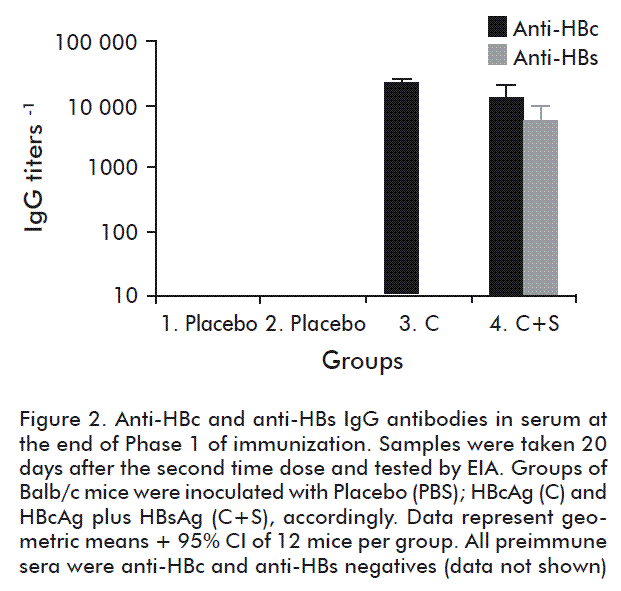
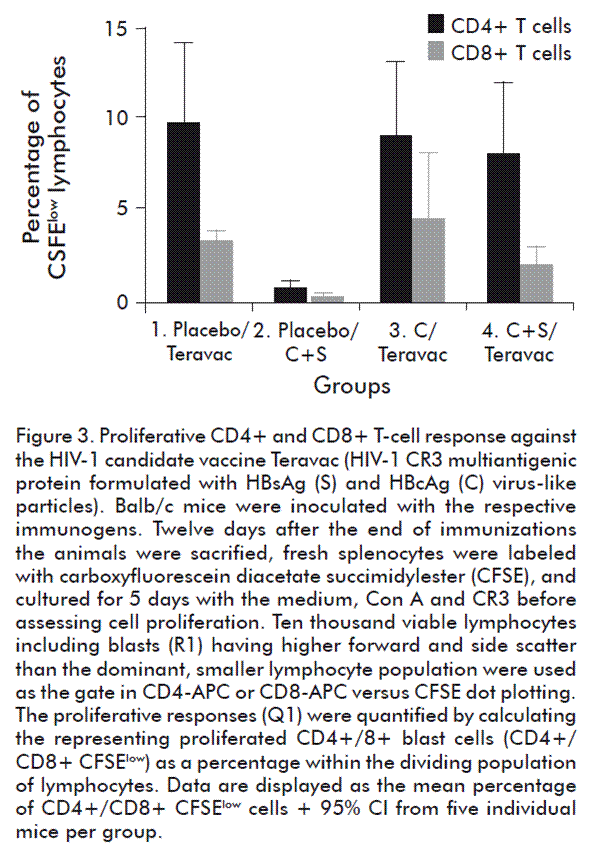
<body><![CDATA[<P   ><font size="2" face="Verdana, Arial, Helvetica, sans-serif">Sera titers were      calculated as the antilog of the resulting value after interpolation of the      decimal logarithm of the absorbance values at a fixed serum dilution into      a log-log linear regression analysis plotting dilution versus A492nm of the      standard curve of a known titer serum. The titer of the standard curve was      defined as the highest dilution that gave more than twice the absorbance of      the negative control serum diluted 1:100. Total IgG titers were expressed      in Standard Units (STD Units) and reported as the geometric mean plus 95 %      confidence interval (CI) of the individual sera. </font></P >   <FONT size="+1"><FONT size="+1">        <P   ><font size="2" face="Verdana, Arial, Helvetica, sans-serif"><b>Proliferation      of CD4+ and CD8+ cells </b></font></P >       <P   ><font size="2" face="Verdana, Arial, Helvetica, sans-serif">The proliferation      of CD4+ and CD8+ cells from splenocytes of five randomly selected mice per      group was assessed using CFSE staining and ex vivo stimulation with the CR3      antigen as reported [8]. Then, 1&times;10<sup>6</sup> cells were selectively      stained with 0.2 mg of anti-CD4-APC (clone L3T4) or anti-CD8a-APC (clone Ly-2)      (Biosciences, San Diego, CA, USA), respectively. They were washed and analyzed      for the expression of the surface marker. Samples were acquired using a PAS      III flow cytometer (Partec GmbH, M&uuml;nster, Germany) and the analysis was      performed with Flomax v2.4f software (Partec GmbH). Ten thousand viable lymphocytes      including blasts (gate R1) were gated for the analysis. The frequency of CR3-specific      CD4+ and CD8+ T cells that divided after <i>ex vivo</i> stimulation was determined      by subtracting the percentage of CFSE<sup>low</sup> cells from unstimulated      cultures from the percentage of CFSE<sup>low</sup> splenocytes stimulated      with the Ag. Data from proliferation studies were displayed as the mean percentage      of CD4+/8+ CFSE<sup>low</sup> cells plus 95 % CI from five individual mice      per group. </font></P >   <FONT size="+1"><FONT size="+1"><FONT size="+1"><FONT size="+1"><FONT size="+1"><FONT size="+1"><FONT size="+1"><FONT size="+1">        <P   ><font size="2" face="Verdana, Arial, Helvetica, sans-serif"><b>Statistical analyses      </b> </font></P >       <P   ><font size="2" face="Verdana, Arial, Helvetica, sans-serif">Statistical analysis      was carried out using GraphPad Prism version 5 Software (GraphPad Software,      San Diego, CA, USA). Unpaired Student&rsquo;s t test with Welch&rsquo;s correction      and Kruskal-Wallis with Dunn&rsquo;s multiple comparisons test vs control      group were employed to assess significant differences. A <I>p </I>value lower      than 0.05 was considered statistically significant. </font></P >       <P   >&nbsp;</P >       <P   ><font size="3" face="Verdana, Arial, Helvetica, sans-serif"><b>RESULTS AND DISCUSSION      </b> </font></P >       <P   ><font size="2" face="Verdana, Arial, Helvetica, sans-serif">In this study, we      were interested in to evaluate the impact of the pre-existing immune response      to the surface and core antigens of HBV on the cellular immune response elicited      after parenteral inoculation of Teravac. Two different scenarios were evaluated.      First, Balb/c mice were inoculated with the HBcAg in alum to simulate the      condition of chronic carriers of the HBV who are characterized by the presence      of HBcAg-specific IgG antibodies. Second, animals were inoculated with a mixture      of HBcAg and HBsAg to elicit antibodies against both antigens. This has been      observed in persons with natural immunity to the HBV or those with previous      exposure and recovery from the infection with loss of detectable anti-HBs      that develop detectable anti-HBs after vaccination [13]. The pre-existing      of anti-HBc and anti-HBs antibodies represents the worst case scenario. </font></P >       <P   ><font size="2" face="Verdana, Arial, Helvetica, sans-serif">At the end of the      first phase of immunization, all the animals in groups 3 (HBcAg (C)) and 4      (HBcAg and HBsAg) seroconverted to HBcAg and HBsAg. As shown in <a href="/img/revistas/bta/v32n2/f0206215.gif">figure      2</a>, it resulted in the generation of similar high levels of anti-HBc IgG      antibodies in both groups (<I>p </I>&gt; 0.05, unpaired Student&rsquo;s t      test with Welch&rsquo;s correction). Also, an important level of anti-HBs      IgG antibodies was elicited in the group 4. In consequence, a pre-existing      antibody response was generated in the animals. Then, in the second phase      of immunization animals were further inoculated three times with Teravac,      except the group 2 that was inoculated with the mixture of HBcAg and HBsAg      as a negative control. Twelve days later, the proliferation of CR3(HIV)-specific      CD4+ and CD8+ cells was assessed by flow cytometry. As shown in <a href="/img/revistas/bta/v32n2/f0306215.gif">figure      3</a>, proliferation of CD4+ cells was not abrogated by the presence of high      anti-HBcAg IgG titers (see group 3) or the combination of anti-HBcAg and anti-HBsAg      IgG antibodies (group 4). In fact, similar levels of proliferation was verified      in both experimental groups when compared with the positive control group      1 (<I>p </I>&gt; 0.05; Kruskal-Wallis and Dunn&rsquo;s multiple comparisons      test vs control group). When analyzing the proliferation of CD8+ cells, we      noted a slightly lower average response only in group 4 in which a pre-existing      anti-HBc and anti-HBs immune responses were elicited. Nevertheless, no statistically      significant differences in these values could be documented when compared      with the positive control group 1 (<I>p </I>&gt; 0.05; Kruskal-Wallis and      Dunn&rsquo;s multiple comparisons test vs control group). </font></P >       
<P   ><font size="2" face="Verdana, Arial, Helvetica, sans-serif">Our findings suggest      that the CR3(HIV)-specific cellular responses of CD4+ and CD8+ cells induced      by subcutaneous immunization with Teravac are not impaired by the pre-existing      immune response to a single or both major structural HBV antigens. To our      knowledge, this is the first report evaluating the effect of the pre-existing      immune response for both VLPs of HBV on the immune response against a co-administered      antigen. We did not test the effect of a pre-existing immune response to the      HBsAg alone to assess the situation of vaccinated people without previous      exposure to HBV. But, considering our findings together with those of Netter      <I>et al</I>. [17], it suggests that such pre-existing response will not interfere      in the effect attained by immunizing with Teravac. </font></P >       ]]></body>
<body><![CDATA[<P   ><font size="2" face="Verdana, Arial, Helvetica, sans-serif">Nevertheless, the      current experimental setting has several limitations. First, the pre-existing      immunity for HBV was simulated by vaccination with antigens since the mouse      model does not become infected by HBV. Second, we inoculated recombinant antigens      in adjuvant instead of using natural antigens recovered from patients or a      whole virus lysate. Third, the pre-existing immunity was simulated for only      two antigens of the HBV, not ruling out the influence of some immunopathological      events due to other HBV antigens in humans. Fourth, we did not simulate the      influence of immunopathological events associated with the HBV/ HIV-1 coinfection      to address the condition of HBV+/ HIV-1+ patients. Hence, the experimental      conditions did not reproduce neither the immunopathological events during      chronic HBV infection in humans nor the condition of HBV/HIV-1-coinfected      patients. </font></P >       <P   ><font size="2" face="Verdana, Arial, Helvetica, sans-serif">But, it is known      that the immune response to the HBsAg and HBcAg in mice resembles the human      response [20]. In fact, the HBsAg is the active pharmaceutical ingredient      of prophylactic vaccines currently in use against HBV, and the in vivo potency      test for the release of vaccine batches is assessed in mice because the HBsAg-specific      IgG antibody response elicited in this species correlates well with the protective      response in humans [21]. Therefore, despite the fact that the model used in      this research did not rule out the influence of immunopathological events      related to the HBV infection, it was still relevant to assess the impact of      the anti-HBc and anti-HBs/anti-HBc IgG response on the CR3(HIV-1)-specific      T cell response. Moreover, it could be also relevant in the case of HBV+/HIV-1+      patients. In these patients, when the nadir of CD4+ T cell counts is higher      than 350 cells/ &mu;L and the HIV viral load is undetectable or very low (as      under antiretroviral treatment), functional immunocompetence is preserved      [22]. Thus, the findings in the mouse model are still useful to predict possible      outcomes in humans vaccinated with Teravac. </font></P >       <P   ><font size="2" face="Verdana, Arial, Helvetica, sans-serif">The possibility to      induce an anti-HIV-1 cellular response after immunization with Teravac in      the presence of pre-existing immune responses to the HBV could be considered      an advantage of this vaccine candidate in the therapeutic setting. In fact,      there has been estimated that around 2-4 millions of HIV-infected individuals      worldwide are also co-infected with HBV [23]. Moreover, it is important to      consider that it is in the Subsaharan Africa where the prevalence of HBV is      the highest [12] as well as for HIV-1 [23]. Taking into account the high prevalence      of HBV-infected and HIV-1/HBV-coinfected patients in some geographical areas,      it is important to notice that a new vaccine formulation called Nasvac is      under development by our group for the treatment of chronic HBV infection,      which successfully combines both the HBsAg and HBcAg antigens [24, 25]. Because      the vaccine candidate Teravac comprises the same previous two antigens of      the HBV plus CR3 from HIV-1, we speculate that HBV-infected and HIV-1/HBV-coinfected      patients might also benefit from Teravac vaccination to achieve some control      over the HBV viral load. That is important since HIV-1/HBV-coinfection is      associated with lower T CD4+ counts [26]. </font></P >       <P   ><font size="2" face="Verdana, Arial, Helvetica, sans-serif">The potential negative      impact of the pre-existing anti-HBs, anti-HBc or the combined anti-HBcAg/      anti-HBs IgG response on the HIV-1-specific cellular immune response elicited      after inoculation with the vaccine candidate Teravac should be investigated      in humans. This is paramount for HIV&ndash; individuals (prophylactic scenario)      and HIV+ patients (therapeutic scenario) vaccinated against the HBV, chronically      infected, convalescents or recovered from HBV infection. </font></P >       <P   >&nbsp;</P >       <P   ><font size="2" face="Verdana, Arial, Helvetica, sans-serif"><b><font size="3">CONCLUSIONS      </font></b></font></P >       <P   ><font size="2" face="Verdana, Arial, Helvetica, sans-serif">The findings described      in this study revealed no evidence that induction of CR3(HIV)-specific cellular      responses of CD4+ and CD8+ cells after immunization with Teravac are impaired      by pre-existing immune response to a single or both major structural antigens      of HBV in mice. </font></P >       <P   >&nbsp;</P >       <P   ><font size="3" face="Verdana, Arial, Helvetica, sans-serif"><b>ACKNOWLEDGEMENTS      </b> </font></P >       <P   ><font size="2" face="Verdana, Arial, Helvetica, sans-serif">This work was supported      by the Center for Genetic Engineering and Biotechnology, Havana, Cuba. There      are no competing financial interests. We thank Ismariley Rev&eacute;, Sara      Clark and Lariza Gorobaya for their technical assistance. </font></P >       ]]></body>
<body><![CDATA[<P   >&nbsp;</P >       <P   > </P >       <P   ><b><font size="3" face="Verdana, Arial, Helvetica, sans-serif">REFERENCES </font></b></P >       <P   ><font size="2" face="Verdana, Arial, Helvetica, sans-serif">1. Samji H, Cescon      A, Hogg RS, Modur SP, Althoff KN, Buchacz K, et al. Closing the gap: increases      in life expectancy among treated HIV-positive individuals in the United States      and Canada. PLoS One. 2013;8(12):e81355. </font></P >   <FONT size="+1">        <P   ><font size="2" face="Verdana, Arial, Helvetica, sans-serif">2. UNAIDS. Fast track      ending the AIDS epidemic by 2030. Geneva: UNAIDS; 2014 [cited 2015 Nov 14].      Available from: <a href="www.unaids.org/sites/default/files/media_asset/JC2686_WAD2014report_en.pdf%20" target="_blank">www.unaids.org/sites/default/files/media_asset/JC2686_WAD2014report_en.pdf      </a></font></P >       <P   ><font size="2" face="Verdana, Arial, Helvetica, sans-serif">3. Grimsrud A, Balkan      S, Casas EC, Lujan J, Van Cutsem G, Poulet E, et al. Outcomes of antiretroviral      therapy over a 10-year period of expansion: a multicohort analysis of African      and Asian HIV programs. J Acquir Immune Defic Syndr. 2014;67(2):e55-66. </font></P >       <!-- ref --><P   ><font size="2" face="Verdana, Arial, Helvetica, sans-serif">4. Chawla S, Sahoo      SS, Jain R, Khanna P, Mehta B, Singh I. HIV: is a vaccine the answer? Hum      Vaccin Immunother. 2014;10(1):238-40.     </font></P >       <!-- ref --><P   ><font size="2" face="Verdana, Arial, Helvetica, sans-serif">5. Fauci AS, Marston      HD. Ending AIDS--is an HIV vaccine necessary? N Engl J Med. 2014;370(6):495-8.          </font></P >       ]]></body>
<body><![CDATA[<!-- ref --><P   ><font size="2" face="Verdana, Arial, Helvetica, sans-serif">6. Iglesias E, Thompson      R, Carrazana Y, Lobaina Y, Garcia D, Sanchez J, et al. Coinoculation with      hepatitis B surface and core antigen promotes a Th1 immune response to a multiepitopic      protein of HIV- 1. Immunol Cell Biol. 2006;84(2):174-83.     </font></P >       <!-- ref --><P   ><font size="2" face="Verdana, Arial, Helvetica, sans-serif">7. Guillen G, Aguilar      JC, Due&ntilde;as S, Hermida L, Iglesias E, Penton E, et al. Virus-like particles      as nanovaccine candidates. Adv Nat Sci Nanosci Nanotechnol. 2013;4(1):015005.          </font></P >       <!-- ref --><P   ><font size="2" face="Verdana, Arial, Helvetica, sans-serif">8. Iglesias E, Garcia      D, Carrazana Y, Aguilar JC, Sanchez A, Gorobaya L, et al. Anti-HIV-1 and anti-HBV      immune responses in mice after parenteral and nasal co-administration of a      multiantigenic formulation. Curr HIV Res. 2008;6(5):452-60.     </font></P >       <!-- ref --><P   ><font size="2" face="Verdana, Arial, Helvetica, sans-serif">9. Schutze MP, Leclerc      C, Jolivet M, Audibert F, Chedid L. Carrier-induced epitopic suppression,      a major issue for future synthetic vaccines. J Immunol. 1985;135(4):2319-22.          </font></P >       <P   ><font size="2" face="Verdana, Arial, Helvetica, sans-serif">10. Fausther-Bovendo      H, Kobinger GP. Pre-existing immunity against Ad vectors: humoral, cellular,      and innate response, what&rsquo;s important? Hum Vaccin Immunother. 2014;10(10):2875-84.      </font></P >       <!-- ref --><P   ><font size="2" face="Verdana, Arial, Helvetica, sans-serif">11. Meireles LC,      Marinho RT, Van Damme P. Three decades of hepatitis B control with vaccination.      World J Hepatol. 2015;7(18):2127-32.     </font></P >       <!-- ref --><P   ><font size="2" face="Verdana, Arial, Helvetica, sans-serif">12. Schweitzer A,      Horn J, Mikolajczyk RT, Krause G, Ott JJ. Estimations of worldwide prevalence      of chronic hepatitis B virus infection: a systematic review of data published      between 1965 and 2013. Lancet. 2015;386(10003):1546-55.     </font></P >       <P   ><font size="2" face="Verdana, Arial, Helvetica, sans-serif">13. WHO. Hepatitis      B: WHO/CDS/CSR/LYO/2002.2. Department of Communicable Diseases Surveillance      and Response. 2002 [cited 2015 Nov 11]. Available from: <a href="http://www.who.int/emc" target="_blank">http://www.who.int/emc</a>.      </font></P >       <!-- ref --><P   ><font size="2" face="Verdana, Arial, Helvetica, sans-serif">14. Schwarz K, Meijerink      E, Speiser DE, Tissot AC, Cielens I, Renhof R, et al. Efficient homologous      prime-boost strategies for T cell vaccination based on virus-like particles.      Eur J Immunol. 2005;35(3):816-21.     </font></P >       <!-- ref --><P   ><font size="2" face="Verdana, Arial, Helvetica, sans-serif">15. Ruedl C, Schwarz      K, Jegerlehner A, Storni T, Manolova V, Bachmann MF. Virus-like particles      as carriers for T-cell epitopes: limited inhibition of T-cell priming by carrier-specific      antibodies. J Virol. 2005;79(2):717-24.     </font></P >       <!-- ref --><P   ><font size="2" face="Verdana, Arial, Helvetica, sans-serif">16. Schodel F, Peterson      D, Milich D. Hepatitis B virus core and e antigen: immune recognition and      use as a vaccine carrier moiety. Intervirology. 1996;39(1-2):104-10.     </font></P >       ]]></body>
<body><![CDATA[<!-- ref --><P   ><font size="2" face="Verdana, Arial, Helvetica, sans-serif">17. Netter HJ, Woo      WP, Tindle R, Macfarlan RI, Gowans EJ. Immunogenicity of recombinant HBsAg/HCV      particles in mice pre-immunised with hepatitis B virus-specific vaccine. Vaccine.      2003;21(21-22):2692-7.     </font></P >       <!-- ref --><P   ><font size="2" face="Verdana, Arial, Helvetica, sans-serif">18. Hardy E, Martinez      E, Diago D, Diaz R, Gonzalez D, Herrera L. Large-scale production of recombinant      hepatitis B surface antigen from Pichia pastoris. J Biotechnol. 2000;77(2-3):157-67.          </font></P >       <!-- ref --><P   ><font size="2" face="Verdana, Arial, Helvetica, sans-serif">19. Lobaina Y, Garcia      D, Abreu N, Muzio V, Aguilar JC. Mucosal immunogenicity of the hepatitis B      core antigen. Biochem Biophys Res Commun. 2003;300(3):745-50.     </font></P >       <!-- ref --><P   ><font size="2" face="Verdana, Arial, Helvetica, sans-serif">20. Milich DR. Immune      response to hepatitis B virus proteins: relevance of the murine model. Semin      Liver Dis. 1991;11(2):93-112.     </font></P >       <!-- ref --><P   ><font size="2" face="Verdana, Arial, Helvetica, sans-serif">21. WHO. Expert Committee      on Biological Standardization, sixty-first report. Annex 4. Geneva: WHO; 2013.          </font></P >       ]]></body>
<body><![CDATA[<!-- ref --><P   ><font size="2" face="Verdana, Arial, Helvetica, sans-serif">22. Lange CG, Lederman      MM, Medvik K, Asaad R, Wild M, Kalayjian R, et al. Nadir CD4+ T-cell count      and numbers of CD28+ CD4+ T-cells predict functional responses to immunizations      in chronic HIV-1 infection. AIDS. 2003;17(14):2015-23.     </font></P >       <!-- ref --><P   ><font size="2" face="Verdana, Arial, Helvetica, sans-serif">23. UNAIDS. Gap report.      Geneva: UNAIDS; 2014.     </font></P >       <!-- ref --><P   ><font size="2" face="Verdana, Arial, Helvetica, sans-serif">24. Al-Mahtab M,      Akbar SM, Aguilar JC, Uddin MH, Khan MS, Rahman S. Therapeutic potential of      a combined hepatitis B virus surface and core antigen vaccine in patients      with chronic hepatitis B. Hepatol Int. 2013;7(4):981-9.     </font></P >       <!-- ref --><P   ><font size="2" face="Verdana, Arial, Helvetica, sans-serif">25. Aguilar JC, Lobaina      Y, Muzio V, Garcia D, Penton E, Iglesias E, et al. Development of a nasal      vaccine for chronic hepatitis B infection that uses the ability of hepatitis      B core antigen to stimulate a strong Th1 response against hepatitis B surface      antigen. Immunol Cell Biol. 2004;82(5):539-46.     </font></P >       <!-- ref --><P   ><font size="2" face="Verdana, Arial, Helvetica, sans-serif">26. Thio CL, Smeaton      L, Saulynas M, Hwang H, Saravanan S, Kulkarni S, et al. Characterization of      HIV-HBV coinfection in a multinational HIV-infected cohort. AIDS. 2013;27(2):191-201.          </font></P >       ]]></body>
<body><![CDATA[<P   >&nbsp;</P >       <P   >&nbsp;</P >   <FONT size="+1">        <P   ><font size="2" face="Verdana, Arial, Helvetica, sans-serif">Received in October,      2015.     <br>     </font><font size="2" face="Verdana, Arial, Helvetica, sans-serif">Accepted      in December, 2015.</font></P >       <P   >&nbsp;</P >       <P   >&nbsp;</P >   <FONT size="+1"><FONT size="+1">        <P   > </P >       <P   ><i><font size="2" face="Verdana, Arial, Helvetica, sans-serif">Enrique Iglesias</font></i><font size="2" face="Verdana, Arial, Helvetica, sans-serif">.      Departamento de Vacunas, Direcci&oacute;n de Investigaciones Biom&eacute;dicas,      Centro de Ingenier&iacute;a Gen&eacute;tica y Biotecnolog&iacute;a. Ave. 31      e/158 y 190, Cubanac&aacute;n, Playa, CP 11600, La Habana, Cuba. </font></P >   <FONT size="+1"><FONT size="+1">        <P   > </P >       <P   > </P >   </font></font></font></font></font></font></font></font></font></font></font></font></font></font></font></font></font></font></font></font></font></font></font></font></font></font></font></font></font></font></font></font></font></font></font></font></font></font></font></font></font></font></font></font></font></font></font></font></font></font></font></font></font></font></font></font></font></font></DIV >     ]]></body>
<body><![CDATA[ ]]></body><back>
<ref-list>
<ref id="B1">
<label>1</label><nlm-citation citation-type="journal">
<person-group person-group-type="author">
<name>
<surname><![CDATA[Samji]]></surname>
<given-names><![CDATA[H]]></given-names>
</name>
<name>
<surname><![CDATA[Cescon]]></surname>
<given-names><![CDATA[A]]></given-names>
</name>
<name>
<surname><![CDATA[Hogg]]></surname>
<given-names><![CDATA[RS]]></given-names>
</name>
<name>
<surname><![CDATA[Modur]]></surname>
<given-names><![CDATA[SP]]></given-names>
</name>
<name>
<surname><![CDATA[Althoff]]></surname>
<given-names><![CDATA[KN]]></given-names>
</name>
<name>
<surname><![CDATA[Buchacz]]></surname>
<given-names><![CDATA[K]]></given-names>
</name>
</person-group>
<article-title xml:lang="en"><![CDATA[Closing the gap: increases in life expectancy among treated HIV-positive individuals in the United States and Canada]]></article-title>
<source><![CDATA[PLoS One]]></source>
<year>2013</year>
<volume>8</volume>
<numero>12</numero>
<issue>12</issue>
<page-range>81355</page-range></nlm-citation>
</ref>
<ref id="B2">
<label>2</label><nlm-citation citation-type="book">
<collab>UNAIDS</collab>
<source><![CDATA[Fast track ending the AIDS epidemic by 2030]]></source>
<year>2014</year>
<publisher-loc><![CDATA[Geneva ]]></publisher-loc>
<publisher-name><![CDATA[UNAIDS]]></publisher-name>
</nlm-citation>
</ref>
<ref id="B3">
<label>3</label><nlm-citation citation-type="journal">
<person-group person-group-type="author">
<name>
<surname><![CDATA[Grimsrud]]></surname>
<given-names><![CDATA[A]]></given-names>
</name>
<name>
<surname><![CDATA[Balkan]]></surname>
<given-names><![CDATA[S]]></given-names>
</name>
<name>
<surname><![CDATA[Casas]]></surname>
<given-names><![CDATA[EC]]></given-names>
</name>
<name>
<surname><![CDATA[Lujan]]></surname>
<given-names><![CDATA[J]]></given-names>
</name>
<name>
<surname><![CDATA[Van Cutsem]]></surname>
<given-names><![CDATA[G]]></given-names>
</name>
<name>
<surname><![CDATA[Poulet]]></surname>
<given-names><![CDATA[E]]></given-names>
</name>
</person-group>
<article-title xml:lang="en"><![CDATA[Outcomes of antiretroviral therapy over a 10-year period of expansion: a multicohort analysis of African and Asian HIV programs]]></article-title>
<source><![CDATA[J Acquir Immune Defic Syndr]]></source>
<year>2014</year>
<volume>67</volume>
<numero>2</numero>
<issue>2</issue>
<page-range>55-66</page-range></nlm-citation>
</ref>
<ref id="B4">
<label>4</label><nlm-citation citation-type="journal">
<person-group person-group-type="author">
<name>
<surname><![CDATA[Chawla]]></surname>
<given-names><![CDATA[S]]></given-names>
</name>
<name>
<surname><![CDATA[Sahoo]]></surname>
<given-names><![CDATA[SS]]></given-names>
</name>
<name>
<surname><![CDATA[Jain]]></surname>
<given-names><![CDATA[R]]></given-names>
</name>
<name>
<surname><![CDATA[Khanna]]></surname>
<given-names><![CDATA[P]]></given-names>
</name>
<name>
<surname><![CDATA[Mehta]]></surname>
<given-names><![CDATA[B]]></given-names>
</name>
<name>
<surname><![CDATA[Singh]]></surname>
<given-names><![CDATA[I]]></given-names>
</name>
</person-group>
<article-title xml:lang="en"><![CDATA[HIV: is a vaccine the answer?]]></article-title>
<source><![CDATA[Hum Vaccin Immunother]]></source>
<year>2014</year>
<volume>10</volume>
<numero>1</numero>
<issue>1</issue>
<page-range>238-40</page-range></nlm-citation>
</ref>
<ref id="B5">
<label>5</label><nlm-citation citation-type="journal">
<person-group person-group-type="author">
<name>
<surname><![CDATA[Fauci]]></surname>
<given-names><![CDATA[AS]]></given-names>
</name>
<name>
<surname><![CDATA[Marston]]></surname>
<given-names><![CDATA[HD]]></given-names>
</name>
</person-group>
<article-title xml:lang="en"><![CDATA[Ending AIDS--is an HIV vaccine necessary?]]></article-title>
<source><![CDATA[N Engl J Med]]></source>
<year>2014</year>
<volume>370</volume>
<numero>6</numero>
<issue>6</issue>
<page-range>495-8</page-range></nlm-citation>
</ref>
<ref id="B6">
<label>6</label><nlm-citation citation-type="journal">
<person-group person-group-type="author">
<name>
<surname><![CDATA[Iglesias]]></surname>
<given-names><![CDATA[E]]></given-names>
</name>
<name>
<surname><![CDATA[Thompson]]></surname>
<given-names><![CDATA[R]]></given-names>
</name>
<name>
<surname><![CDATA[Carrazana]]></surname>
<given-names><![CDATA[Y]]></given-names>
</name>
<name>
<surname><![CDATA[Lobaina]]></surname>
<given-names><![CDATA[Y]]></given-names>
</name>
<name>
<surname><![CDATA[Garcia]]></surname>
<given-names><![CDATA[D]]></given-names>
</name>
<name>
<surname><![CDATA[Sanchez]]></surname>
<given-names><![CDATA[J]]></given-names>
</name>
</person-group>
<article-title xml:lang="en"><![CDATA[Coinoculation with hepatitis B surface and core antigen promotes a Th1 immune response to a multiepitopic protein of HIV- 1]]></article-title>
<source><![CDATA[Immunol Cell Biol]]></source>
<year>2006</year>
<volume>84</volume>
<numero>2</numero>
<issue>2</issue>
<page-range>174-83</page-range></nlm-citation>
</ref>
<ref id="B7">
<label>7</label><nlm-citation citation-type="journal">
<person-group person-group-type="author">
<name>
<surname><![CDATA[Guillen]]></surname>
<given-names><![CDATA[G]]></given-names>
</name>
<name>
<surname><![CDATA[Aguilar]]></surname>
<given-names><![CDATA[JC]]></given-names>
</name>
<name>
<surname><![CDATA[Dueñas]]></surname>
<given-names><![CDATA[S]]></given-names>
</name>
<name>
<surname><![CDATA[Hermida]]></surname>
<given-names><![CDATA[L]]></given-names>
</name>
<name>
<surname><![CDATA[Iglesias]]></surname>
<given-names><![CDATA[E]]></given-names>
</name>
<name>
<surname><![CDATA[Penton]]></surname>
<given-names><![CDATA[E]]></given-names>
</name>
</person-group>
<article-title xml:lang="en"><![CDATA[Virus-like particles as nanovaccine candidates]]></article-title>
<source><![CDATA[Adv Nat Sci Nanosci Nanotechnol]]></source>
<year>2013</year>
<volume>4</volume>
<numero>1</numero>
<issue>1</issue>
<page-range>015005</page-range></nlm-citation>
</ref>
<ref id="B8">
<label>8</label><nlm-citation citation-type="journal">
<person-group person-group-type="author">
<name>
<surname><![CDATA[Iglesias]]></surname>
<given-names><![CDATA[E]]></given-names>
</name>
<name>
<surname><![CDATA[Garcia]]></surname>
<given-names><![CDATA[D]]></given-names>
</name>
<name>
<surname><![CDATA[Carrazana]]></surname>
<given-names><![CDATA[Y]]></given-names>
</name>
<name>
<surname><![CDATA[Aguilar]]></surname>
<given-names><![CDATA[JC]]></given-names>
</name>
<name>
<surname><![CDATA[Sanchez]]></surname>
<given-names><![CDATA[A]]></given-names>
</name>
<name>
<surname><![CDATA[Gorobaya]]></surname>
<given-names><![CDATA[L]]></given-names>
</name>
</person-group>
<article-title xml:lang="en"><![CDATA[Anti-HIV-1 and anti-HBV immune responses in mice after parenteral and nasal co-administration of a multiantigenic formulation]]></article-title>
<source><![CDATA[Curr HIV Res]]></source>
<year>2008</year>
<volume>6</volume>
<numero>5</numero>
<issue>5</issue>
<page-range>452-60</page-range></nlm-citation>
</ref>
<ref id="B9">
<label>9</label><nlm-citation citation-type="journal">
<person-group person-group-type="author">
<name>
<surname><![CDATA[Schutze]]></surname>
<given-names><![CDATA[MP]]></given-names>
</name>
<name>
<surname><![CDATA[Leclerc]]></surname>
<given-names><![CDATA[C]]></given-names>
</name>
<name>
<surname><![CDATA[Jolivet]]></surname>
<given-names><![CDATA[M]]></given-names>
</name>
<name>
<surname><![CDATA[Audibert]]></surname>
<given-names><![CDATA[F]]></given-names>
</name>
<name>
<surname><![CDATA[Chedid]]></surname>
<given-names><![CDATA[L]]></given-names>
</name>
</person-group>
<article-title xml:lang="en"><![CDATA[Carrier-induced epitopic suppression, a major issue for future synthetic vaccines]]></article-title>
<source><![CDATA[J Immunol]]></source>
<year>1985</year>
<volume>135</volume>
<numero>4</numero>
<issue>4</issue>
<page-range>2319-22</page-range></nlm-citation>
</ref>
<ref id="B10">
<label>10</label><nlm-citation citation-type="journal">
<person-group person-group-type="author">
<name>
<surname><![CDATA[Fausther-Bovendo]]></surname>
<given-names><![CDATA[H]]></given-names>
</name>
<name>
<surname><![CDATA[Kobinger]]></surname>
<given-names><![CDATA[GP]]></given-names>
</name>
</person-group>
<article-title xml:lang="en"><![CDATA[Pre-existing immunity against Ad vectors: humoral, cellular, and innate response, what's important?]]></article-title>
<source><![CDATA[Hum Vaccin Immunother]]></source>
<year>2014</year>
<volume>10</volume>
<numero>10</numero>
<issue>10</issue>
<page-range>2875-84</page-range></nlm-citation>
</ref>
<ref id="B11">
<label>11</label><nlm-citation citation-type="journal">
<person-group person-group-type="author">
<name>
<surname><![CDATA[Meireles]]></surname>
<given-names><![CDATA[LC]]></given-names>
</name>
<name>
<surname><![CDATA[Marinho]]></surname>
<given-names><![CDATA[RT]]></given-names>
</name>
<name>
<surname><![CDATA[Van Damme]]></surname>
<given-names><![CDATA[P]]></given-names>
</name>
</person-group>
<article-title xml:lang="en"><![CDATA[Three decades of hepatitis B control with vaccination]]></article-title>
<source><![CDATA[World J Hepatol]]></source>
<year>2015</year>
<volume>7</volume>
<numero>18</numero>
<issue>18</issue>
<page-range>2127-32</page-range></nlm-citation>
</ref>
<ref id="B12">
<label>12</label><nlm-citation citation-type="journal">
<person-group person-group-type="author">
<name>
<surname><![CDATA[Schweitzer]]></surname>
<given-names><![CDATA[A]]></given-names>
</name>
<name>
<surname><![CDATA[Horn]]></surname>
<given-names><![CDATA[J]]></given-names>
</name>
<name>
<surname><![CDATA[Mikolajczyk]]></surname>
<given-names><![CDATA[RT]]></given-names>
</name>
<name>
<surname><![CDATA[Krause]]></surname>
<given-names><![CDATA[G]]></given-names>
</name>
<name>
<surname><![CDATA[Ott]]></surname>
<given-names><![CDATA[JJ]]></given-names>
</name>
</person-group>
<article-title xml:lang="en"><![CDATA[Estimations of worldwide prevalence of chronic hepatitis B virus infection: a systematic review of data published between 1965 and 2013]]></article-title>
<source><![CDATA[Lancet]]></source>
<year>2015</year>
<volume>386</volume>
<numero>10003</numero>
<issue>10003</issue>
<page-range>1546-55</page-range></nlm-citation>
</ref>
<ref id="B13">
<label>13</label><nlm-citation citation-type="">
<collab>WHO</collab>
<source><![CDATA[Hepatitis B: WHO/CDS/CSR/ LYO/2002.2. Department of Communicable Diseases Surveillance and Response]]></source>
<year>2002</year>
</nlm-citation>
</ref>
<ref id="B14">
<label>14</label><nlm-citation citation-type="journal">
<person-group person-group-type="author">
<name>
<surname><![CDATA[Schwarz]]></surname>
<given-names><![CDATA[K]]></given-names>
</name>
<name>
<surname><![CDATA[Meijerink]]></surname>
<given-names><![CDATA[E]]></given-names>
</name>
<name>
<surname><![CDATA[Speiser]]></surname>
<given-names><![CDATA[DE]]></given-names>
</name>
<name>
<surname><![CDATA[Tissot]]></surname>
<given-names><![CDATA[AC]]></given-names>
</name>
<name>
<surname><![CDATA[Cielens]]></surname>
<given-names><![CDATA[I]]></given-names>
</name>
<name>
<surname><![CDATA[Renhof]]></surname>
<given-names><![CDATA[R]]></given-names>
</name>
</person-group>
<article-title xml:lang="en"><![CDATA[Efficient homologous prime-boost strategies for T cell vaccination based on virus-like particles]]></article-title>
<source><![CDATA[Eur J Immunol]]></source>
<year>2005</year>
<volume>35</volume>
<numero>3</numero>
<issue>3</issue>
<page-range>816-21</page-range></nlm-citation>
</ref>
<ref id="B15">
<label>15</label><nlm-citation citation-type="journal">
<person-group person-group-type="author">
<name>
<surname><![CDATA[Ruedl]]></surname>
<given-names><![CDATA[C]]></given-names>
</name>
<name>
<surname><![CDATA[Schwarz]]></surname>
<given-names><![CDATA[K]]></given-names>
</name>
<name>
<surname><![CDATA[Jegerlehner]]></surname>
<given-names><![CDATA[A]]></given-names>
</name>
<name>
<surname><![CDATA[Storni]]></surname>
<given-names><![CDATA[T]]></given-names>
</name>
<name>
<surname><![CDATA[Manolova]]></surname>
<given-names><![CDATA[V]]></given-names>
</name>
<name>
<surname><![CDATA[Bachmann]]></surname>
<given-names><![CDATA[MF]]></given-names>
</name>
</person-group>
<article-title xml:lang="en"><![CDATA[Virus-like particles as carriers for T-cell epitopes: limited inhibition of T-cell priming by carrier-specific antibodies]]></article-title>
<source><![CDATA[J Virol]]></source>
<year>2005</year>
<volume>79</volume>
<numero>2</numero>
<issue>2</issue>
<page-range>717-24</page-range></nlm-citation>
</ref>
<ref id="B16">
<label>16</label><nlm-citation citation-type="journal">
<person-group person-group-type="author">
<name>
<surname><![CDATA[Schodel]]></surname>
<given-names><![CDATA[F]]></given-names>
</name>
<name>
<surname><![CDATA[Peterson]]></surname>
<given-names><![CDATA[D]]></given-names>
</name>
<name>
<surname><![CDATA[Milich]]></surname>
<given-names><![CDATA[D]]></given-names>
</name>
</person-group>
<article-title xml:lang="en"><![CDATA[Hepatitis B virus core and e antigen: immune recognition and use as a vaccine carrier moiety]]></article-title>
<source><![CDATA[Intervirology]]></source>
<year>1996</year>
<volume>39</volume>
<numero>1-2</numero>
<issue>1-2</issue>
<page-range>104-10</page-range></nlm-citation>
</ref>
<ref id="B17">
<label>17</label><nlm-citation citation-type="journal">
<person-group person-group-type="author">
<name>
<surname><![CDATA[Netter]]></surname>
<given-names><![CDATA[HJ]]></given-names>
</name>
<name>
<surname><![CDATA[Woo]]></surname>
<given-names><![CDATA[WP]]></given-names>
</name>
<name>
<surname><![CDATA[Tindle]]></surname>
<given-names><![CDATA[R]]></given-names>
</name>
<name>
<surname><![CDATA[Macfarlan]]></surname>
<given-names><![CDATA[RI]]></given-names>
</name>
<name>
<surname><![CDATA[Gowans]]></surname>
<given-names><![CDATA[EJ]]></given-names>
</name>
</person-group>
<article-title xml:lang="en"><![CDATA[Immunogenicity of recombinant HBsAg/HCV particles in mice pre-immunised with hepatitis B virus-specific vaccine]]></article-title>
<source><![CDATA[Vaccine]]></source>
<year>2003</year>
<volume>21</volume>
<numero>21-22</numero>
<issue>21-22</issue>
<page-range>2692-7</page-range></nlm-citation>
</ref>
<ref id="B18">
<label>18</label><nlm-citation citation-type="journal">
<person-group person-group-type="author">
<name>
<surname><![CDATA[Hardy]]></surname>
<given-names><![CDATA[E]]></given-names>
</name>
<name>
<surname><![CDATA[Martinez]]></surname>
<given-names><![CDATA[E]]></given-names>
</name>
<name>
<surname><![CDATA[Diago]]></surname>
<given-names><![CDATA[D]]></given-names>
</name>
<name>
<surname><![CDATA[Diaz]]></surname>
<given-names><![CDATA[R]]></given-names>
</name>
<name>
<surname><![CDATA[Gonzalez]]></surname>
<given-names><![CDATA[D]]></given-names>
</name>
<name>
<surname><![CDATA[Herrera]]></surname>
<given-names><![CDATA[L]]></given-names>
</name>
</person-group>
<article-title xml:lang="en"><![CDATA[Large-scale production of recombinant hepatitis B surface antigen from Pichia pastoris]]></article-title>
<source><![CDATA[J Biotechnol]]></source>
<year>2000</year>
<volume>77</volume>
<numero>2-3</numero>
<issue>2-3</issue>
<page-range>157-67</page-range></nlm-citation>
</ref>
<ref id="B19">
<label>19</label><nlm-citation citation-type="journal">
<person-group person-group-type="author">
<name>
<surname><![CDATA[Lobaina]]></surname>
<given-names><![CDATA[Y]]></given-names>
</name>
<name>
<surname><![CDATA[Garcia]]></surname>
<given-names><![CDATA[D]]></given-names>
</name>
<name>
<surname><![CDATA[Abreu]]></surname>
<given-names><![CDATA[N]]></given-names>
</name>
<name>
<surname><![CDATA[Muzio]]></surname>
<given-names><![CDATA[V]]></given-names>
</name>
<name>
<surname><![CDATA[Aguilar]]></surname>
<given-names><![CDATA[JC]]></given-names>
</name>
</person-group>
<article-title xml:lang="en"><![CDATA[Mucosal immunogenicity of the hepatitis B core antigen]]></article-title>
<source><![CDATA[Biochem Biophys Res Commun]]></source>
<year>2003</year>
<volume>300</volume>
<numero>3</numero>
<issue>3</issue>
<page-range>745-50</page-range></nlm-citation>
</ref>
<ref id="B20">
<label>20</label><nlm-citation citation-type="journal">
<person-group person-group-type="author">
<name>
<surname><![CDATA[Milich]]></surname>
<given-names><![CDATA[DR]]></given-names>
</name>
</person-group>
<article-title xml:lang="en"><![CDATA[Immune response to hepatitis B virus proteins: relevance of the murine model]]></article-title>
<source><![CDATA[Semin Liver Dis]]></source>
<year>1991</year>
<volume>11</volume>
<numero>2</numero>
<issue>2</issue>
<page-range>93-112</page-range></nlm-citation>
</ref>
<ref id="B21">
<label>21</label><nlm-citation citation-type="book">
<collab>WHO</collab>
<source><![CDATA[Expert Committee on Biological Standardization, sixty-first report. Annex 4]]></source>
<year>2013</year>
<publisher-loc><![CDATA[Geneva ]]></publisher-loc>
<publisher-name><![CDATA[WHO]]></publisher-name>
</nlm-citation>
</ref>
<ref id="B22">
<label>22</label><nlm-citation citation-type="journal">
<person-group person-group-type="author">
<name>
<surname><![CDATA[Lange]]></surname>
<given-names><![CDATA[CG]]></given-names>
</name>
<name>
<surname><![CDATA[Lederman]]></surname>
<given-names><![CDATA[MM]]></given-names>
</name>
<name>
<surname><![CDATA[Medvik]]></surname>
<given-names><![CDATA[K]]></given-names>
</name>
<name>
<surname><![CDATA[Asaad]]></surname>
<given-names><![CDATA[R]]></given-names>
</name>
<name>
<surname><![CDATA[Wild]]></surname>
<given-names><![CDATA[M]]></given-names>
</name>
<name>
<surname><![CDATA[Kalayjian]]></surname>
<given-names><![CDATA[R]]></given-names>
</name>
</person-group>
<article-title xml:lang="en"><![CDATA[Nadir CD4+ T-cell count and numbers of CD28+ CD4+ T-cells predict functional responses to immunizations in chronic HIV-1 infection]]></article-title>
<source><![CDATA[AIDS]]></source>
<year>2003</year>
<volume>17</volume>
<numero>14</numero>
<issue>14</issue>
<page-range>2015-23</page-range></nlm-citation>
</ref>
<ref id="B23">
<label>23</label><nlm-citation citation-type="book">
<collab>UNAIDS</collab>
<source><![CDATA[Gap report]]></source>
<year>2014</year>
<publisher-loc><![CDATA[Geneva ]]></publisher-loc>
<publisher-name><![CDATA[UNAIDS]]></publisher-name>
</nlm-citation>
</ref>
<ref id="B24">
<label>24</label><nlm-citation citation-type="journal">
<person-group person-group-type="author">
<name>
<surname><![CDATA[Al-Mahtab]]></surname>
<given-names><![CDATA[M]]></given-names>
</name>
<name>
<surname><![CDATA[Akbar]]></surname>
<given-names><![CDATA[SM]]></given-names>
</name>
<name>
<surname><![CDATA[Aguilar]]></surname>
<given-names><![CDATA[JC]]></given-names>
</name>
<name>
<surname><![CDATA[Uddin]]></surname>
<given-names><![CDATA[MH]]></given-names>
</name>
<name>
<surname><![CDATA[Khan]]></surname>
<given-names><![CDATA[MS]]></given-names>
</name>
<name>
<surname><![CDATA[Rahman]]></surname>
<given-names><![CDATA[S]]></given-names>
</name>
</person-group>
<article-title xml:lang="en"><![CDATA[Therapeutic potential of a combined hepatitis B virus surface and core antigen vaccine in patients with chronic hepatitis B]]></article-title>
<source><![CDATA[Hepatol Int]]></source>
<year>2013</year>
<volume>7</volume>
<numero>4</numero>
<issue>4</issue>
<page-range>981-9</page-range></nlm-citation>
</ref>
<ref id="B25">
<label>25</label><nlm-citation citation-type="journal">
<person-group person-group-type="author">
<name>
<surname><![CDATA[Aguilar]]></surname>
<given-names><![CDATA[JC]]></given-names>
</name>
<name>
<surname><![CDATA[Lobaina]]></surname>
<given-names><![CDATA[Y]]></given-names>
</name>
<name>
<surname><![CDATA[Muzio]]></surname>
<given-names><![CDATA[V]]></given-names>
</name>
<name>
<surname><![CDATA[Garcia]]></surname>
<given-names><![CDATA[D]]></given-names>
</name>
<name>
<surname><![CDATA[Penton]]></surname>
<given-names><![CDATA[E]]></given-names>
</name>
<name>
<surname><![CDATA[Iglesias]]></surname>
<given-names><![CDATA[E]]></given-names>
</name>
</person-group>
<article-title xml:lang="en"><![CDATA[Development of a nasal vaccine for chronic hepatitis B infection that uses the ability of hepatitis B core antigen to stimulate a strong Th1 response against hepatitis B surface antigen]]></article-title>
<source><![CDATA[Immunol Cell Biol]]></source>
<year>2004</year>
<volume>82</volume>
<numero>5</numero>
<issue>5</issue>
<page-range>539-46</page-range></nlm-citation>
</ref>
<ref id="B26">
<label>26</label><nlm-citation citation-type="journal">
<person-group person-group-type="author">
<name>
<surname><![CDATA[Thio]]></surname>
<given-names><![CDATA[CL]]></given-names>
</name>
<name>
<surname><![CDATA[Smeaton]]></surname>
<given-names><![CDATA[L]]></given-names>
</name>
<name>
<surname><![CDATA[Saulynas]]></surname>
<given-names><![CDATA[M]]></given-names>
</name>
<name>
<surname><![CDATA[Hwang]]></surname>
<given-names><![CDATA[H]]></given-names>
</name>
<name>
<surname><![CDATA[Saravanan]]></surname>
<given-names><![CDATA[S]]></given-names>
</name>
<name>
<surname><![CDATA[Kulkarni]]></surname>
<given-names><![CDATA[S]]></given-names>
</name>
</person-group>
<article-title xml:lang="en"><![CDATA[Characterization of HIV-HBV coinfection in a multinational HIV-infected cohort]]></article-title>
<source><![CDATA[AIDS]]></source>
<year>2013</year>
<volume>27</volume>
<numero>2</numero>
<issue>2</issue>
<page-range>191-201</page-range></nlm-citation>
</ref>
</ref-list>
</back>
</article>