<?xml version="1.0" encoding="ISO-8859-1"?><article xmlns:mml="http://www.w3.org/1998/Math/MathML" xmlns:xlink="http://www.w3.org/1999/xlink" xmlns:xsi="http://www.w3.org/2001/XMLSchema-instance">
<front>
<journal-meta>
<journal-id>1027-2852</journal-id>
<journal-title><![CDATA[Biotecnología Aplicada]]></journal-title>
<abbrev-journal-title><![CDATA[Biotecnol Apl]]></abbrev-journal-title>
<issn>1027-2852</issn>
<publisher>
<publisher-name><![CDATA[Editorial Elfos Scientiae]]></publisher-name>
</publisher>
</journal-meta>
<article-meta>
<article-id>S1027-28522016000200006</article-id>
<title-group>
<article-title xml:lang="en"><![CDATA[The International Liver Congress, April 13-17th, 2016, Barcelona, Spain]]></article-title>
<article-title xml:lang="es"><![CDATA[Congreso Internacional del Hígado 2016, abril 13-17, 2016, Barcelona, España]]></article-title>
</title-group>
<contrib-group>
<contrib contrib-type="author">
<name>
<surname><![CDATA[Aguilar Rubido]]></surname>
<given-names><![CDATA[Julio C]]></given-names>
</name>
<xref ref-type="aff" rid="A01"/>
</contrib>
</contrib-group>
<aff id="A01">
<institution><![CDATA[,Center for Genetic Engineering and Biotechnology, CIGB Direction of Biomedical Research Vaccine Department]]></institution>
<addr-line><![CDATA[La Habana ]]></addr-line>
<country>Cuba</country>
</aff>
<pub-date pub-type="pub">
<day>00</day>
<month>06</month>
<year>2016</year>
</pub-date>
<pub-date pub-type="epub">
<day>00</day>
<month>06</month>
<year>2016</year>
</pub-date>
<volume>33</volume>
<numero>2</numero>
<fpage>2501</fpage>
<lpage>2505</lpage>
<copyright-statement/>
<copyright-year/>
<self-uri xlink:href="http://scielo.sld.cu/scielo.php?script=sci_arttext&amp;pid=S1027-28522016000200006&amp;lng=en&amp;nrm=iso"></self-uri><self-uri xlink:href="http://scielo.sld.cu/scielo.php?script=sci_abstract&amp;pid=S1027-28522016000200006&amp;lng=en&amp;nrm=iso"></self-uri><self-uri xlink:href="http://scielo.sld.cu/scielo.php?script=sci_pdf&amp;pid=S1027-28522016000200006&amp;lng=en&amp;nrm=iso"></self-uri><kwd-group>
<kwd lng="en"><![CDATA[International Liver Congress 2016]]></kwd>
<kwd lng="en"><![CDATA[EASL]]></kwd>
<kwd lng="en"><![CDATA[chronic hepatitis B]]></kwd>
<kwd lng="en"><![CDATA[hepatitis therapy]]></kwd>
<kwd lng="en"><![CDATA[therapeutic safety]]></kwd>
<kwd lng="es"><![CDATA[Congreso Internacional del Hígado 2012]]></kwd>
<kwd lng="es"><![CDATA[EASL, hepatitis B crónica]]></kwd>
<kwd lng="es"><![CDATA[terapia contra la hepatitis]]></kwd>
<kwd lng="es"><![CDATA[seguridad de la terapia]]></kwd>
</kwd-group>
</article-meta>
</front><body><![CDATA[ <DIV class="Part"   >        <P align="right"   ><font size="2" color="#000000" face="Verdana, Arial, Helvetica, sans-serif"><b>REPORT      </b> </font></P >       <P   >&nbsp;</P >   <FONT size="+1" color="#000000">        <P   > </P >   <FONT size="+1">       <P   ><font size="4" color="#211E1F" face="Verdana, Arial, Helvetica, sans-serif"><B>The      International Liver Congress, April 13-17th, 2016, Barcelona, Spain </b></font></P >       <P   >&nbsp;</P >   <FONT size="+1" color="#211E1F"><B>        <P   ><font size="3" face="Verdana, Arial, Helvetica, sans-serif">Congreso Internacional      del H&iacute;gado 2016, abril 13-17, 2016, Barcelona, Espa&ntilde;a </font></P >       <P   >&nbsp;</P >       <P   >&nbsp;</P >   </B><FONT size="+1">       <P   ></P >   </font><FONT size="+1">       ]]></body>
<body><![CDATA[<P   ><b><font size="2" color="#211E1F" face="Verdana, Arial, Helvetica, sans-serif">Julio      C Aguilar Rubido </font></b><font size="2" color="#211E1F" face="Verdana, Arial, Helvetica, sans-serif"></font></P >   <FONT size="+1" color="#211E1F">        <P   ><font size="2" face="Verdana, Arial, Helvetica, sans-serif">Vaccine Department,      Direction of Biomedical Research, Center for Genetic Engineering and Biotechnology,      CIGBAve. 31 e/ 158 y 190, Cubanac&aacute;n, Playa, CP 11600, La Habana, Cuba.</font></P >       <P   >&nbsp;</P >       <P   >&nbsp;</P >   <FONT size="+1"> </font></font></font></font></font></font>   <hr>   <FONT size="+1" color="#000000"><FONT size="+1"><FONT size="+1" color="#211E1F"><FONT size="+1"><FONT size="+1" color="#211E1F"><FONT size="+1">       <P   ><font size="2" face="Verdana, Arial, Helvetica, sans-serif"><b>ABSTRACT </b></font></P >       <P   ><font size="2" face="Verdana, Arial, Helvetica, sans-serif">This report highlights      the recent discoveries presented at the 2016 Annual Meeting of the European      Association for the Study of the Liver (EASL), called the International Liver      Congress (ILC), which was held in Barcelona, Spain, from April 13th to 17th.      Major topics were: viral hepatitis; cirrhosis; immunology &amp; inflammation;      transplantation; tumours; fatty liver disease; drug induced diseases; diagnostics;      molecular and cellular biology; paediatric liver diseases; clinical trials;      autoimmune diseases; fibrosis markers and public health. The most relevant      findings regarding the new products for the treatment of chronic hepatitis      B, and also new developments in hepatitis C and D are discussed. </font></P >       <P   ><font size="2" face="Verdana, Arial, Helvetica, sans-serif"><i><b>Keywords</b></i><b>:</b>      International Liver Congress 2016, EASL, chronic hepatitis B, hepatitis therapy,      therapeutic safety. </font></P >   </font></font></font></font></font></font>    <hr>   <FONT size="+1" color="#000000"><FONT size="+1"><FONT size="+1" color="#211E1F"><FONT size="+1"><FONT size="+1" color="#211E1F"><FONT size="+1">       <P   > </P >       <P   ><b><font size="2" face="Verdana, Arial, Helvetica, sans-serif">RESUMEN </font></b></P >       <P   ><font size="2" face="Verdana, Arial, Helvetica, sans-serif">En este reporte se      destacan los m&aacute;s recientes descubrimientos presentados en la Reuni&oacute;n      Anual de la Asociaci&oacute;n Europea para el Estudio del H&iacute;gado (EASL),      llamada Congreso Internacional del H&iacute;gado (ILC), celebrado en Barcelona,      Espa&ntilde;a, del 13 al 17 de abril. Sus temas principales fueron: hepatitis      viral; cirrosis; inmunolog&iacute;a e inflamaci&oacute;n; trasplante; tumores;      h&iacute;gado graso; enfermedad inducida por f&aacute;rmacos; diagn&oacute;stico;      biolog&iacute;a molecular y celular; enfermedad hep&aacute;tica pedi&aacute;trica;      ensayos cl&iacute;nicos; enfermedades autoinmunes; marcadores de fibrosis      y salud p&uacute;blica. Se discuten los hallazgos m&aacute;s relevantes acerca      de los nuevos productos para el tratamiento de la hepatitis B cr&oacute;nica,      y los desarrollos mostrados sobre las hepatitis C y D. </font></P >       ]]></body>
<body><![CDATA[<P   ><font size="2" face="Verdana, Arial, Helvetica, sans-serif"><i><b>Palabras clave</b></i><b>:</b>      Congreso Internacional del H&iacute;gado 2012, EASL, hepatitis B cr&oacute;nica,      terapia contra la hepatitis, seguridad de la terapia.</font></P >   </font></font></font></font></font></font>    <hr>   <FONT size="+1" color="#000000"><FONT size="+1"><FONT size="+1" color="#211E1F"><FONT size="+1"><FONT size="+1" color="#211E1F"><FONT size="+1">        <P   >&nbsp;</P >       <P   >&nbsp;</P >       <P   ><font size="2" face="Verdana, Arial, Helvetica, sans-serif"><b><font size="3">INTRODUCTION      </font></b></font></P >       <P   ><font size="2" face="Verdana, Arial, Helvetica, sans-serif">The 2016 version      of the Annual Meeting of the European Association for the Study of the Liver      (EASL) called the International Liver Congress (ILC), took place in Barcelona,      from April 13th to 17th. Among the biggest meetings in the World, the ILC      gathered thousands of participants: hepatologists, gastroenterologists, scientists,      technicians, nurses, exposi-tors and company employees. More than 2000 oral      presentations and posters on liver topics were presented. The main themes      included: viral hepatitis; cirrhosis; immunology &amp; inflammation; transplantation;      tumours; fatty liver disease; drug induced diseases; diagnostics; molecular      and cellular biology; paediatric liver diseases; clinical trials; autoimmune      diseases; fibrosis markers and public health. </font></P >       <P   ><font size="2" face="Verdana, Arial, Helvetica, sans-serif">It is not possible      to cover in one report all subjects; thus, our summary will focus on new developments      in viral hepatitis. Therefore, new discoveries and developments in Hepatitis      B, C and D are summarized. The most important clinical trials on new drugs      are highlighted in the following, as well as the new products for the treatment      of chronic hepatitis B (CHB) in preclinical development and initial clinical      trials. </font></P >       <P   >&nbsp;</P >       <P   ><font size="2" face="Verdana, Arial, Helvetica, sans-serif"><b><font size="3">HEPATITIS      B: SAFETY ISSUES SURROUNDING NUCLEOS(T)IDE ANALOGUE THERAPIES AND NEW DEVELOPMENTS      </font></b></font></P >       <P   > </P >       <P   ><font size="2" face="Verdana, Arial, Helvetica, sans-serif">The occurrence of      malignancies in patients with chronic hepatitis B receiving long term oral      nucleos(t)ide analogue (NA) treatment was addressed in a presentation at ILC,      raising substantial controversy [1]. The study involved more than 45 000 subjects      and indicated that NA treatment does not increase the overall incidence of      all malignancies. But significantly higher incidence rates of colorectal cancer      and cervical cancer were found in NA-treated CHB patients. </font></P >       ]]></body>
<body><![CDATA[<P   ><font size="2" face="Verdana, Arial, Helvetica, sans-serif">The specialized scientific      website Sciencedaily [2] published the comments of Professor Grace Wong, Department      of Medicine &amp; Therapeutics Academic, University of Hong Kong and lead      study author. &ldquo;In light of these findings we strongly urge regular screening      of these cancers to help prevent them from developing in patients taking nucleos(t)ide      analogue treatment.&rdquo; [2]. In addition, Professor Tom Hemming Karlsen,      EASL Vice-Secretary declared: &ldquo;This large-scale study determines an      important link between nucleos(t)ide analogue treatment and cervical and colorectal      cancer [&hellip;]. The results are important and could change cancer surveillance      and management of patients treated for Hepatitis B.&rdquo; [2]. </font></P >       <P   ><font size="2" face="Verdana, Arial, Helvetica, sans-serif">A Medscape specialized      reporter affirmed that after the presentation, the authors revised the statistical      management of the data [3], finding non-statistical signification and tuning      down the final conclusions to the fact that more data is needed. However,      a PLoS ONE 2016 article reported that Entecavir has a clear genotoxic effect      inducing DNA damage at nanomolar concentrations in DT40 cells, a DNA repair      deficient cells [4]. So they propose to monitor the genotoxicity of NAs, especially      Entecavir, and to restrict treatment period due to potential risks [4]. </font></P >       <P   ><font size="2" face="Verdana, Arial, Helvetica, sans-serif">Also, the product&rsquo;s      inserts of Entecavir and Tenofovir specify carcinogenic effects [5, 6]. Thus,      this study need to be followed, taking into account that there is no time      limitation to the use of NA in most CHB patients under treatment and that      product discontinuation could also be associated to disease exacerbations.      </font></P >       <P   ><font size="2" face="Verdana, Arial, Helvetica, sans-serif">Additionally, results      of two works on Phase III clinical evaluations of Tenofovir Alafenamide (TAF),      a novel compound for chronic hepatitis B treatment, were presented, one in      HBeAg negative patients and the other in HBeAg positive ones. TAF is a prodrug      of Tenofovir Disoproxil Fumarate (TFV) that resulted more stable in plasma      and delivering TFV into lymphoid cells and hepatocytes while lowering circulating      levels of TFV by approximately 90 % as compared to TDF. In patients with HIV,      a TAF-containing regime demonstrated a similar efficacy to that of TDF, with      significantly reduced bone and renal effects [7]. </font></P >       <P   ><font size="2" face="Verdana, Arial, Helvetica, sans-serif">The study in HBeAg      negative patients was designed as placebo controlled, non-inferiority trial      and it was conducted in 425 patients, treated at 105 sites from 17 countries,      72 % of them from Asian ethnicity and predominant genotypes C, D and B. Efficacy      results evidenced that TAF was non-inferior to TDF in HBeAg negative patients      [7]. In addition, patients on TAF experienced significantly less decline in      hip and spine bone marrow density (BMD) than TDF, and the glomerular filtration      rates and the renal tubular markers also changed less than TAF [8]. </font></P >       <P   ><font size="2" face="Verdana, Arial, Helvetica, sans-serif">In HBeAg positive      CHB patients, the Phase III study of TAF compared with TDF [9] was also designed      as placebo controlled, non-inferiority trial and it was conducted in 873 patients,      treated at 164 sites from 19 countries, 82 % of them from Asian ethnicity      and predominant genotypes C, D and B, in this order. A similar efficacy in      term of antiviral effect and superiority in ALT normalization was also found      in the subset of HBeAg positive patients. HBeAg-positive patients on TAF experienced      significantly less declines in hip and spine BMD than TDF and a significantly      lower increase in serum creatinine. The glomerular filtration rates and the      renal tubular markers also changed less than TAF. It is important to highlight      the disappointing levels of HBeAg seroconversion found in the 873 patients      of this trial, only 10 % in TAF and 8 % in TDF [9]. </font></P >       <P   ><font size="2" face="Verdana, Arial, Helvetica, sans-serif">The NA therapy is      currently not recommended to immune tolerant patients. A presentation from      the Seoul National University Hospital explored the impact of the antiviral      treatment for immune tolerant phase CHB patients. The study was planned as      a single center, retrospective study involving 644 patients in this phase      of the disease. A total of 54 patients were included in the treatment group.      By log-rank test there was no difference between groups in terms of appearance      of hepatocellular carcinoma (HCC), liver cirrhosis (LC) or overall survival      (OS). However, a multivariate Cox analysis, showed significantly lower risk      of HCC and LC in the treatment group. The treatment group showed longer overall      survival when baseline characteristics in both groups were balanced [10].      In our opinion, the reduced number of treated patients and the statistical      contradictions will not create a strong recommendation for treating these      patients; however, all companies producing CHB therapies are developing clinical      trials to cover this scenario in the future, ac-cording to the indexed clinical      trials at NIH database. </font></P >       <P   ><font size="2" face="Verdana, Arial, Helvetica, sans-serif">Novira Therapeutics,      a company developing the first-in-class HBV core inhibitor NVR 3-778, reported      its use alone and in combination with Peg-Interferon (PegIFN), in treatment-na&iuml;ve      HBeAg-positive patients [11]. This Phase 1b trial enrolled 64 patients in      NVR 3-778 treatment cohorts or placebo: 6 groups with dose escalating levels      of the product and 2 additional groups receiving placebo. The study lasted      28 days. The doses tested were 100, 200 and 400 </font><font size="2" face="Verdana, Arial, Helvetica, sans-serif">mg      daily and 600 mg twice daily in the first 4 groups, the other two groups received      combined 600 mg/PegIFN and placebo/PegIFN. The assayed product was well tolerated,      with no appreciable dose-related adverse events. Dose-related HBV DNA and      early HBeAg reductions were observed and increased in the PegIFN combined      group. A phase II study was designed to evaluate whether longer duration of      NVR 3-778 with and without Peg-IFN achieves sustained and improved rate of      HBeAg seroconversion that are durable post-treatment [11]. </font></P >       <P   >&nbsp;</P >       <P   ><font size="3" face="Verdana, Arial, Helvetica, sans-serif"><b>THE CONSOLIDATION      OF THE DIRECT ACTING ANTIVIRALS REVOLUTION</b></font><font size="2" face="Verdana, Arial, Helvetica, sans-serif">      </font></P >       ]]></body>
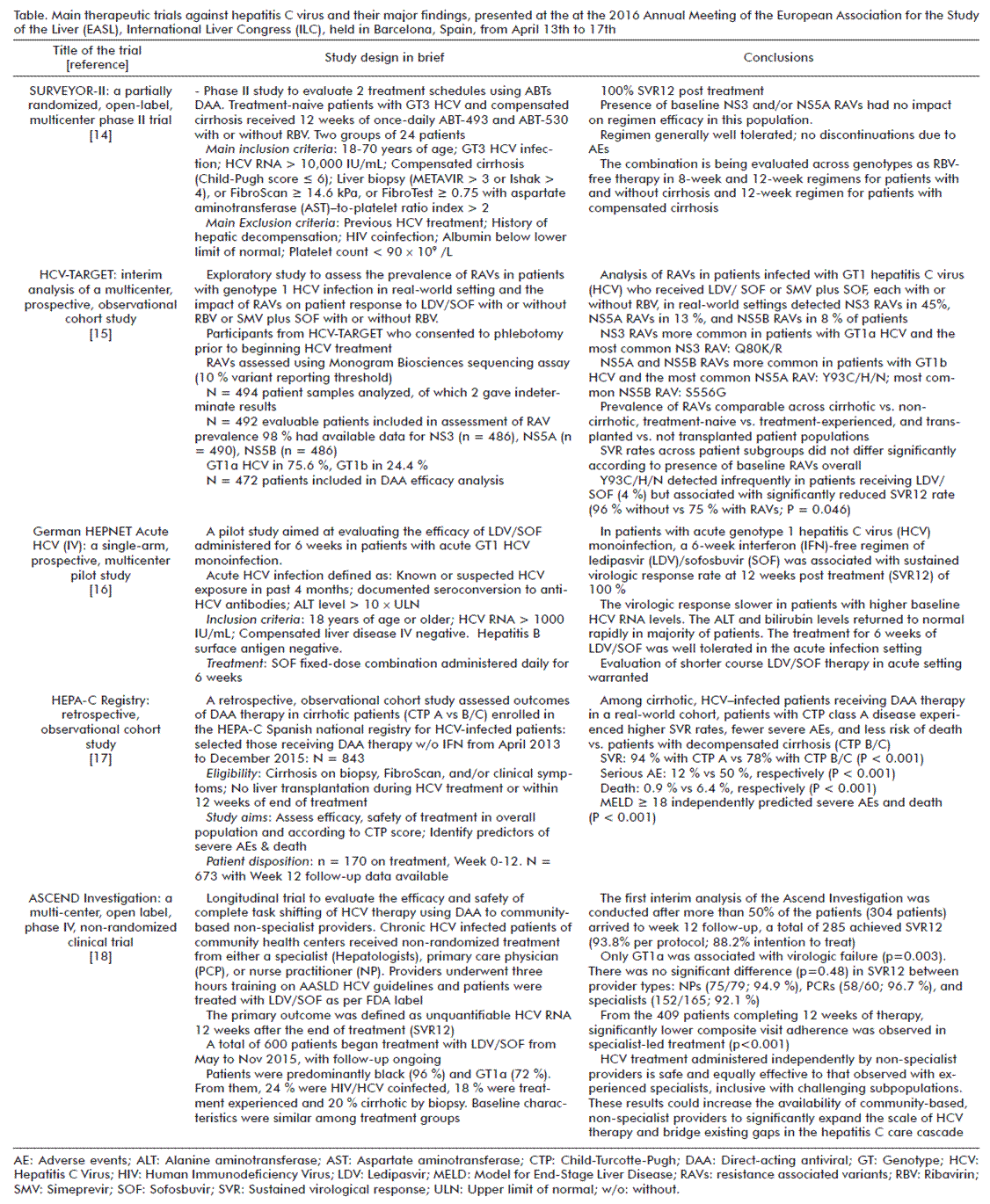
<body><![CDATA[<P   ><font size="2" face="Verdana, Arial, Helvetica, sans-serif">The infection with      the genotype 3 (GT3) of the HCV accounts for the 30 % of all HCV infections      at the global scale [12]. The GT3 is also associated with a higher risk of      liver steatosis, hepatocellular carcinoma and fibrosis progression than other      genotypes. It is more difficult to cure than other genotypes, especially in      patients with cirrhosis. Currently approved guidelines for patients with GT3      HCV infection and cirrhosis results in sustained virological response at week      12 post treatment (SVR12) rates of 79 to 88 %. The next-generation direct-acting      antivirals (DDAs) in development: ABT-493, a pangenotypic NS3/4A protease      inhibitor and the ABT-530, a pangenotypic NS5A inhibitor, have several advantages:      are synergistic therapeutics with elevated barrier to resistance, antiviral      activity against typical NS3 and NS5A resistance associated variants (RAVs),      minimal metabolism and primarily biliary excretion and feasible once-daily      oral dosing. </font></P >       <P   ><font size="2" face="Verdana, Arial, Helvetica, sans-serif">After a 100 % SVR12      after 8 or 12 weeks of ABT- 493 plus ABT-530 in treatment naive patients with      GT3 HCV infection without cirrhosis, the intent-to-treat analysis was modified      to evaluate the efficacy, safety of ABT-493 plus ABT-530 with or without ribavirin      in treatment-naive patients with GT3 HCV infection and compensated cirrhosis      as a phase II trial in 48 patients. The results of the SURVEYOR-II (after      intent-to-treat modification to include in the study compensated cirrhosis      patients)[13] are described in the <a href="/img/revistas/bta/v33n2/t0106216.gif">table</a>.      Treatment-naive patients with genotype 3 hepatitis C virus (HCV) infection      and compensated cirrhosis, 12 weeks of once-daily ABT- 493 and ABT-530 with      or without ribavirin resulted in 100 % SVR12. The regimen was generally well      tolerated, with no discontinuations due to adverse events [13]. </font></P >       
<P   ><font size="2" face="Verdana, Arial, Helvetica, sans-serif">Regarding the data      describing prevalence of baseline resistance associated variants (RAVs) in      diverse HCV-infected populations, it is limited and the effect of RAVs on      response to HCV treatment in real-world settings has not been well established.      The objective of the HCV-TARGET study [14] was to explore the prevalence of      RAVs in patients with genotype 1 HCV infection in real-world setting and assess      impact of RAVs on patient response to Ledipasvir (LDV)/So-fosbuvir (SOF) with      or without ribavirin (RBV) or simeprevir (SMV) plus SOF with or without RBV.      The analysis of RAVs detected NS3 RAVs in 45 %, NS5A RAVs in 13 %, and NS5B      RAVs in 8 % of patients. The NS3 RAVs were found more common in patients with      genotype 1a HCV and the most common NS3 RAV: Q80K/R. The most common NS5A      and NS5B RAVs (Y93C/H/N and S556G, respectively) were the most common in patients      with genotype 1b HCV. The prevalence of RAVs was comparable across cirrhotic      vs. non-cirrhotic, treatment-naive vs. treatment-experienced, and transplanted      vs. not transplanted patient populations [14]. </font></P >       <P   ><font size="2" face="Verdana, Arial, Helvetica, sans-serif">The young adults      who inject drugs are at high risk of HCV infection. Half of acutely infected      HCV patients clear infection spontaneously. The early intervention with interferon      (IFN)-based treatment during the acute infection is highly effective for preventing      the chronic infection. The german acute HCV studies I-III demonstrated efficacy      of various IFN-based regimens in patients with acute HCV infection [15]. The      efficacy and safety of IFN-free DAA-based regimens have not been well studied      in patients with acute HCV monoinfection. A single-arm, prospective, multicenter      pilot study (HepNet Acute HCV (IV) study) was aimed at evaluating the efficacy      of LDV/SOF administered for 6 weeks in patients with acute genotype 1 HCV      monoinfection [15]. </font></P >       <P   ><font size="2" face="Verdana, Arial, Helvetica, sans-serif">In patients with      acute genotype 1 HCV monoinfection, a 6-week IFN-free regimen of LDV/SOF was      associated with SVR12 of 100 %. The virologic response was slower in patients      with higher baseline HCV RNA levels. The ALT and bilirubin levels returned      to normal rapidly in majority of patients. The treatment for 6 weeks of LDV/SOF      was well toler-ated in the acute infection setting. The authors consider that      the findings must be confirmed in other HCV genotypes and with other regimens,      but IFN-free DAA regimen may be considered for treating patients with HCV      acute hepatitis. These results open the window to future assessments of a      shorter course of LDV/SOF therapy in acute setting [15]. </font></P >       <P   ><font size="2" face="Verdana, Arial, Helvetica, sans-serif">Another key trial      presented was the HEPA C Registry, a retrospective, observational cohort study,      which assessed the outcomes of DAA therapy in cirrhotic patients (Child-Turcotte-Pugh      score (CTP) A vs. B/C) enrolled in the HEPA-C Spanish national registry for      HCV-infected patients. It assessed the efficacy, safety of treatment in the      overall population and according to CTP score, and identified predictors of      severe adverse events and death. Patients receiving DAA therapy without PegIFN      treatment from April 2013 to December 2015 (n = 843) were selected for the      study, if they present cirrhosis on biopsy, FibroScan evaluation and/or clinical      symptoms. Liver transplantation during HCV treatment or 12 weeks follow-up      were exclusion criteria [16]. The patients with CTP class A disease experienced      higher SVR rates, fewer severe adverse events, and less risk of death, compared      to the patients with decompensated cirrhosis (CTP B/C). The sustained virological      response was 94 % with CTP A and 78 % with CTP B/C, for a highly significant      difference (p &lt; 0.001). The serious adverse events were also different:      12 vs. 50 %, respectively (p &lt; .001), and the appearance of death also      rose significantly with the CTP level: 0.9 vs. 6.4 %, respectively (p &lt;      0.001) [16]. </font></P >       <P   ><font size="2" face="Verdana, Arial, Helvetica, sans-serif">One of the studies      presented at the ILC that better represent the consolidation of the DAA revolution      in the treatment of the chronic hepatitis C is the Ascend Investigation [17].      This is a longitudinal trial to evaluate the efficacy and safety of complete      task shifting of HCV therapy using DAA to community-based non-specialist providers.      Planned as a multi-center, open label, phase IV clinical trial, chronic HCV      infected patients of community health centers received non-randomized treatment      from either a specialist (Hepatologist), primary care physician (PCP), or      nurse practitioner (NP). Providers underwent three hours training on the American      Association for the Study of Liver Diseases (AASLD) HCV guidelines and patients      were treated with LDV/SOF as per the Food and Drugs Administration (FDA) label.      The primary outcome was defined as unquantifiable HCV RNA 12 weeks after the      end of treatment (SVR12). A total of 600 patients began treatment with LDV/SOF      from May to Nov 2015, with follow-up ongoing. Patients were predominantly      black (96 %) and GT1a (72 %). From them, 24 % were HIV/HCV coinfected, 18      % were treatment experienced and 20 % cirrhotic by biopsy. Baseline characteristics      were similar among treatment groups. </font></P >       <P   ><font size="2" face="Verdana, Arial, Helvetica, sans-serif">The first interim      analysis of the Ascend Investigation was conducted after more than 50 % of      the patients (304 patients) arrived to week 12 follow-up, a total of 285 achieved      SVR12 (93.8 % per protocol; 88.2 % intention to treat). Only GT1a was associated      with virologic failure (p = 0.003). There was no significant difference in      SVR12 between provider types: NPs, PCRs, and specialists. From the 409 patients      completing 12 weeks of therapy, significantly lower composite visit adherence      was observed in specialist-led treatment (p &lt; 0.001). In conclusion, this      study demonstrated that the HCV treatment administered independently by non-specialist      providers is safe and equally effective to that observed with experienced      specialists, inclusive in difficult-to-treat subpopulations. These results      could increase the availability of non-specialist providers based at the community      to expand HCV treatments, bridging existing gaps in the hepatitis C care cascade      [17]. </font></P >       <P   >&nbsp;</P >       <P   ><font size="2" face="Verdana, Arial, Helvetica, sans-serif"><b><font size="3">DOES      ANTIVIRAL TREATMENT AFFECT OUTCOME OF HEPATITIS DELTA? </font></b></font></P >       ]]></body>
<body><![CDATA[<P   ><font size="2" face="Verdana, Arial, Helvetica, sans-serif">Hepatitis Delta,      the most severe form of viral hepatitis, and its therapy are still a matter      of research. A very enlightening retrospective study developed by the Medical      School of Hannover was aimed at exploring the long term benefit of interferon      based treatments, NA treatment or non-treating the delta patients. </font></P >       <P   ><font size="2" face="Verdana, Arial, Helvetica, sans-serif">From more than 350      anti HDV-positive patients treated at the Hannover Medical Hospital between      1987 and 2012, 136 individuals followed for at least 6 months were selected      for the study. The median time follow-up was 5.2 years, mean age 38 years      and 67 % were male. Cirrhosis was found in 62 patients as first presentation.      Clinical endpoints defined as hepatic decompensation (ascites, encephalopathy,      variceal bleeding), hepatocellular carcinoma, orthotopic liver transplantation      or death occurred in 55 patients (40 %). During follow-up, 29 % of patients      did not receive any antiviral treatment, 38 % were treated with IFN a-based      therapies and 33 % received HBV polymerase inhibitors (recycling nucleos(t)ides;      NUCs) only [16]. </font></P >       <P   ><font size="2" face="Verdana, Arial, Helvetica, sans-serif">The results of this      study demonstrated that patients who received IFN</font><font size="+1" color="#000000"><font size="+1"><font size="+1" color="#211E1F"><font size="+1"><font size="+1" color="#211E1F"><font size="+1"><font size="2" face="Verdana, Arial, Helvetica, sans-serif">&alpha;</font></font></font></font></font></font></font><font size="2" face="Verdana, Arial, Helvetica, sans-serif">-based      therapies developed less frequently clinical endpoints than patients treated      with NUCs (p &lt; 0.01) or untreated patients (p &lt; 0.01) in </font><font size="+1" color="#000000"><font size="+1"><font size="+1" color="#211E1F"><font size="+1"><font size="+1" color="#211E1F"><font size="+1"><font size="2" face="Verdana, Arial, Helvetica, sans-serif">&chi;</font></font></font></font></font></font></font><font size="2" face="Verdana, Arial, Helvetica, sans-serif">-square      analysis. IFN</font><font size="+1" color="#000000"><font size="+1"><font size="+1" color="#211E1F"><font size="+1"><font size="+1" color="#211E1F"><font size="+1" color="#000000"><font size="+1"><font size="+1" color="#211E1F"><font size="+1"><font size="+1" color="#211E1F"><font size="+1"><font size="+1" color="#000000"><font size="+1"><font size="+1" color="#211E1F"><font size="+1"><font size="+1" color="#211E1F"><font size="+1"><font size="2" face="Verdana, Arial, Helvetica, sans-serif">&alpha;</font></font></font></font></font></font></font></font></font></font></font></font></font><font size="+1"></font></font></font></font></font></font><font size="2" face="Verdana, Arial, Helvetica, sans-serif">-based      therapies was also associated with a more benign outcome compared to untreated      (p = 0.05) and NUC-treated patients (p = 0.02) in time-dependent Kaplan Meier      analysis. Previous IFN</font><font size="+1" color="#000000"><font size="+1"><font size="+1" color="#211E1F"><font size="+1"><font size="+1" color="#211E1F"><font size="+1"><font size="2" face="Verdana, Arial, Helvetica, sans-serif">&alpha;</font></font></font></font></font></font></font><font size="2" face="Verdana, Arial, Helvetica, sans-serif">      therapy (p = 0.03) and presence of cirrhosis (p = 0.05) were independently      associated with the clinical long-term outcome in multivariate analysis [18].      </font></P >       <P   ><font size="2" face="Verdana, Arial, Helvetica, sans-serif">Hepatitis delta infections      can only occur in those who are infected with Hepatitis B. According to the      EASL guidelines, pegylated interferon is the only treatment effective against      Hepatitis delta. As declared by Anika Wranke, leading reasercher of the study      and Fellow of Hannover Medical School, Germany, at the venue [19]: &ldquo;There      has been significant debate over whether there are long-term benefits to patients      with Hepatitis delta receiving antiviral treatment&hellip; Our study demonstrates      that the long-term outcomes for patients with severe Hepatitis delta, who      have limited treatment options, could be improved with a widely available      medication.&rdquo;. </font></P >       <P   ><font size="2" face="Verdana, Arial, Helvetica, sans-serif">In our opinion, this      study is a fundamental knowledge for countries were delta virus may be in      high prevalence because it is demonstrating that the use of antivirals does      not modify the appearance of the specified clinical endpoints compared to      no treatment, in contrast to PegIFN therapy. In countries with a relevant      percentage of CHB could be infected with the delta virus, the serological      evaluation of delta may be useful to correctly define the treatment option.      The reason, in few words: the study demonstrated that 35 % of patients with      Hepatitis delta who responded to IFN</font><font size="+1" color="#000000"><font size="+1"><font size="+1" color="#211E1F"><font size="+1"><font size="+1" color="#211E1F"><font size="+1"><font size="+1" color="#000000"><font size="+1"><font size="+1" color="#211E1F"><font size="+1"><font size="+1" color="#211E1F"><font size="+1" color="#000000"><font size="+1"><font size="+1" color="#211E1F"><font size="+1"><font size="+1" color="#211E1F"><font size="+1"><font size="+1" color="#000000"><font size="+1"><font size="+1" color="#211E1F"><font size="+1"><font size="+1" color="#211E1F"><font size="+1"><font size="2" face="Verdana, Arial, Helvetica, sans-serif">&alpha;</font></font></font></font></font></font></font></font></font></font></font></font></font></font></font></font></font></font></font></font></font></font></font></font><font size="2" face="Verdana, Arial, Helvetica, sans-serif">      based therapies achieved sustained suppression of the virus and had favourable      outcomes compared to those untreated or treated with nucleos(t)ide analogues.      This work is a remarkable contribution in the definition of treatment options      against delta virus. </font></P >       <P   >&nbsp;</P >       <P   ><font size="2" face="Verdana, Arial, Helvetica, sans-serif"><b><font size="3">ILC:      A CONFERENCE SURROUNDED BY DEMONSTRATORS </font></b></font></P >       <P   ><font size="2" face="Verdana, Arial, Helvetica, sans-serif">The present edition      of the ILC was surrounded by important demonstrations from patients, families      and activists from the civil society coming from different cities of Spain.      Government and companies were demanded for reductions in the cost of drugs,      special prominence received the abusive cost of the novel DAAs used for chronic      hepatitis C (CHC) treatment, and the narrow policies for patients&rsquo; treatment      coverage reaching only advanced cases of liver damage. Demonstrators referred      to the press and scientists at the convention center that their relatives      died waiting for treatment approval or because of the late start of their      therapies. </font></P >       <P   >&nbsp;</P >       <P   ><font size="3" face="Verdana, Arial, Helvetica, sans-serif"><b>ACKNOWLEDGEMENTS      </b> </font></P >       ]]></body>
<body><![CDATA[<P   ><font size="2" face="Verdana, Arial, Helvetica, sans-serif">Many thanks to Professor      Christian Trepo, from the Service of Hepatogastroenterology, CHU de Lyon HCL      - GH Nord-H&ocirc;pital de la Croix Rousse,Lyon, France, for his kindful review      and insightful comments on the manuscript. </font></P >       <P   >&nbsp;</P >       <P   ><font size="3" face="Verdana, Arial, Helvetica, sans-serif"><b>REFERENCES </b></font></P >       <P   ><font size="2" color="#000000" face="Verdana, Arial, Helvetica, sans-serif">1.      Wong GLH, Tse YK, Wong V, Yip T, Chan H. Incidences of all malignancies in      patients with chronic hepatitis B receiving long-term oral nucleos(t)ide analogue      treatment &ndash; a study of 45&rsquo;299 subjects. Section: Viral Hepatitis;      Sub-section: Hepatitis B &amp; D -clinical (therapy, new compounds, resistance).      Program and abstracts of the 51st Annual Meeting of the European Association      for the Study of the Liver; April 13-17, 2016; Barcelona, Spain. Abstract      PS052. </font></P >   <FONT size="+1" color="#000000">        <!-- ref --><P   ><font size="2" face="Verdana, Arial, Helvetica, sans-serif">2. European Association      for the Study of the Liver. Treatment for chronic hepatitis B linked to increased      rates of colorectal and cervical cancer. ScienceDaily. 2016 Apr 15 [cited      2016 May 30]. Available from: <a href="https://www.sciencedaily.com/releases/2016/04/160415081420.htm" target="_blank">www.sciencedaily.com/releases/2016/04/160415081420.htm</a></font></P >       <!-- ref --><P   ><font size="2" face="Verdana, Arial, Helvetica, sans-serif">3. Johnson K. Release      raises false alarm over Hep B meds and cancer risk. Medscape. 2016 Apr 22      [cited 2016 May 30]. Available from: <a href="http://www.medscape.com/viewarticle/862371" target="_blank">http://www.medscape.com/viewarticle/862371</a>      </font></P >       <P   ><font size="2" face="Verdana, Arial, Helvetica, sans-serif">4. Jiang L, Wu X,      He F, Liu Y, Hu X, Takeda S, <i>et al</i>. Genetic Evidence for Genotoxic      Effect of Entecavir, an Anti-Hepatitis B Virus Nucleotide Analog. PLoS One.      2016;11(1):e0147440. </font></P >       <!-- ref --><P   ><font size="2" face="Verdana, Arial, Helvetica, sans-serif">5. Food and Drug      Administration. Baraclude Product Insert NDA 21-797-S-001. 2007 [cited 2016      May 22]. Available from: <a href="http://www.accessdata.fda.gov/drugsatfda_docs/label/2007/021797s001,021798s001lbl.pdf" target="_blank">http://www.accessdata.fda.gov/drugsatfda_docs/label/2007/021797s001,021798s001lbl.pdf</a>      </font></P >       <P   ><font size="2" face="Verdana, Arial, Helvetica, sans-serif">6. Food and Drug      Administration. Viread Product Insert. 2012 [cited 2016 May 22]. Available      from: <a href="http://www.accessdata.fda.gov/drugsatfda_docs/label/2012/022577lbl.pdf" target="_blank">http://www.accessdata.fda.gov/drugsatfda_docs/label/2012/022577lbl.pdf</a></font></P >       <!-- ref --><P   ><font size="2" face="Verdana, Arial, Helvetica, sans-serif">7. Sax PE, Wohl D,      Yin MT, Post F, DeJesus E, Saag M, et al. Tenofovir alafenamide versus tenofovir      disoproxil fumarate, coformulated with elvitegravir, cobicistat, and emtricitabine,      for initial treatment of HIV-1 infection: two randomised, double-blind, phase      3, non-inferiority trials. Lancet. 2015;385(9987):2606-15.     </font></P >       <P   ><font size="2" face="Verdana, Arial, Helvetica, sans-serif">8. Buti M, Gane E,      Seto WK, Chan HLY, Chuang WL, Stepanova T, <i>et al</i>. A phase III study      of Tenofovir Alafenamide compared with Tenofovir Disoproxil Fumarate in patients      with HBeAg-negative, chronic hepatitis B: Week 48 efficacy and safety results.      </font><font size="2" face="Verdana, Arial, Helvetica, sans-serif">Program      and abstracts of the 51st Annual Meeting of the European Association for the      Study of the Liver; April 13-17, 2016; Barcelona, Spain. Abstract GS06. </font></P >       <P   ><font size="2" face="Verdana, Arial, Helvetica, sans-serif">9. Chan HLY, Fung      S, Seto WK, Chuang WL, Chen CY, Kim HJ, et al. A phase III study of Tenofovir      Alafenamide compared with Tenofovir Disoproxil Fumarate in patients with HBeAg-positive,      chronic hepatitis B: Week 48 efficacy and safety results. Program and abstracts      of the 51st Annual Meeting of the European Association for the Study of the      Liver; April 13-17, 2016; Barcelona, Spain. Abstract GS12. </font></P >       <P   ><font size="2" face="Verdana, Arial, Helvetica, sans-serif">10. Chang Y, Lee      JH, Nam JY, Ahn H, Cho H, Cho Y, <i>et al</i>. Nucleos(t)ide analogue treatment      for immune tolerant phase of Chronic Hepatitis B patients prolongs overall      survival and reduces the risk of hepatocellular carcinoma and cirrhosis: a      real-life study. Program and abstracts of the 51st Annual Meeting of the European      Association for the Study of the Liver; April 13-17, 2016; Barcelona, Spain.      Abstract PS049. </font></P >       <P   ><font size="2" face="Verdana, Arial, Helvetica, sans-serif">11. Yuen MF, Kim      DJ, Weilert F, Chan HLY, Lalezari JP, Hwang SG, et al. NVR 3-778, A first      in class HBV core inhibitor, alone and in combination with Peg-Interferon      (PegIFN), in treatment-na&iuml;ve HBeAg-positive patients: Early reductions      in HBV DNA and HBeAg. Program and abstracts of the 51st Annual Meeting of      the European Association for the Study of the Liver; April 13-17, 2016; Barcelona,      Spain. Abstract, Late Breaker. </font></P >       <!-- ref --><P   ><font size="2" face="Verdana, Arial, Helvetica, sans-serif">12. Messina JP, Humphreys      I, Flaxman A, Brown A, Cooke GS, Pybus OG, <i>et al</i>. Global distribution      and prevalence of hepatitis C virus genotypes. Hepatology. 2015;61(1):77-87.          </font></P >       <P   ><font size="2" face="Verdana, Arial, Helvetica, sans-serif">13. Kwo PY, Wyles      DL, Wang S, Poordad F, Gane E, Maliakkal B, <i>et al</i>. SURVEYOR-II: 100%      SVR12 with ABT-493 and ABT-530 with or without ribavirin in treatment-naive      HCV genotype 3-infected patients with cirrhosis. Program and abstracts of      the 51st Annual Meeting of the European Association for the Study of the Liver;      April 13-17, 2016; Barcelona, Spain. Abstract LBO1. </font></P >       <P   ><font size="2" face="Verdana, Arial, Helvetica, sans-serif">14. Wang GP, Reeves      JD, Terrault N, Lim JK, Morelli G, Kuo A, <i>et al</i>. Prevalence and impact      of baseline resistance-associated variants on the efficacy of ledipasvir/sofosbuvir      or simeprevir/sofosbuvir against GT1 HCV infection: HCV-TARGET interim analysis.      Program and abstracts of the 51st Annual Meeting of the European Association      for the Study of the Liver; April 13-17, 2016; Barcelona, Spain. Abstract      PS102. </font></P >       <P   ><font size="2" face="Verdana, Arial, Helvetica, sans-serif">15. Deterding K,      Spinner C, Schott E, Welzel T, Gerken G, Klinker H, et al. Six weeks of sofosbuvir/ledipasvir      (SOF/ LDV) are sufficient to treat acute hepatitis C virus genotype 1 monoinfection:      the HEPNET Acute HCV IV Study. Program and abstracts of the 51st Annual Meeting      of the European Association for the Study of the Liver; April 13-17, 2016;      Barcelona, Spain. Abstract LBO8. </font></P >       ]]></body>
<body><![CDATA[<P   ><font size="2" face="Verdana, Arial, Helvetica, sans-serif">16. Fern&aacute;ndez-Carrillo      C, Lens S, Llop E, Pascasio JM, Fernandez I, Baliellas C, <i>et al</i>. Treatment      of hepatitis C virus in patients with advanced cirrhosis: always justified?      Analysis of the HEPA-C registry. Program and abstracts of the 51st Annual      Meeting of the European Association for the Study of the Liver; April 13-17,      2016; Barcelona, Spain. Abstract GS01. </font></P >       <P   ><font size="2" face="Verdana, Arial, Helvetica, sans-serif">17. Kattakushy S,      Gross C, Teferi G, Jenkins V, Silk R, Akoth E, <i>et al</i>. A novel task      shifting model to expand the HCV care continuum: the ascend investigation.      Program and abstracts of the 51st Annual Meeting of the European Association      for the Study of the Liver; April 13-17, 2016; Barcelona, Spain. Abstract      LBP524. </font></P >       <P   ><font size="2" face="Verdana, Arial, Helvetica, sans-serif">18. Wrankle A, Serrano      BC, Heidrich B, Kirschner J, Bremer B, Hardtke S, <i>et al</i>. Does antiviral      treatment affect the clinical long-term outcome of Hepatitis Delta? Section:      Viral Hepatitis; Sub-section: Hepatitis B &amp; D &ndash;clinical (therapy,      new compounds, resistance). Program and abstracts of the 51st Annual Meeting      of the European </font><font size="2" face="Verdana, Arial, Helvetica, sans-serif">Association      for the Study of the Liver; April 13-17, 2016; Barcelona, Spain. Abstract      GS053. </font></P >       <!-- ref --><P   ><font size="2" face="Verdana, Arial, Helvetica, sans-serif">19. European Association      for the Study of the Liver. Study demonstrates benefits of existing treatment      for hepatitis D patients. ScienceDaily. 2016 Apr 15 [cited 2016 May 30]. Available      from: <a href="https://www.sciencedaily.com/releases/2016/04/160415081411.htm" target="_blank">https://www.sciencedaily.com/releases/2016/04/160415081411.htm</a>      </font></P >       <P   >&nbsp;</P >       <P   >&nbsp;</P >       <P   > </P >   <FONT size="+1" color="#211E1F">        <P   ><i><font size="2" face="Verdana, Arial, Helvetica, sans-serif">Julio C Aguilar      Rubido</font></i><font size="2" face="Verdana, Arial, Helvetica, sans-serif">.      Vaccine Department, Direction of Biomedical Research, Center for Genetic Engineering      and Biotechnology, CIGBAve. 31 e/ 158 y 190, Cubanac&aacute;n, Playa, CP 11600,      La Habana, Cuba. E-mail: <A href="mailto:julio.aguilar@cigb.edu.cu"> <FONT color="#0000FF">julio.aguilar@cigb.edu.cu</font></A>      </font></P >   </font></font></font></font></font></font></font></font></DIV >      ]]></body><back>
<ref-list>
<ref id="B1">
<label>1</label><nlm-citation citation-type="book">
<person-group person-group-type="author">
<name>
<surname><![CDATA[Wong]]></surname>
<given-names><![CDATA[GLH]]></given-names>
</name>
<name>
<surname><![CDATA[Tse]]></surname>
<given-names><![CDATA[YK]]></given-names>
</name>
<name>
<surname><![CDATA[Wong]]></surname>
<given-names><![CDATA[V]]></given-names>
</name>
<name>
<surname><![CDATA[Yip]]></surname>
<given-names><![CDATA[T]]></given-names>
</name>
<name>
<surname><![CDATA[Chan]]></surname>
<given-names><![CDATA[H]]></given-names>
</name>
</person-group>
<source><![CDATA[Incidences of all malignancies in patients with chronic hepatitis B receiving long-term oral nucleos(t)ide analogue treatment - a study of 45'299 subjects]]></source>
<year>2016</year>
<publisher-loc><![CDATA[Barcelona ]]></publisher-loc>
<publisher-name><![CDATA[Program and abstracts of the 51st Annual Meeting of the European Association for the Study of the Liver]]></publisher-name>
</nlm-citation>
</ref>
<ref id="B2">
<label>2</label><nlm-citation citation-type="journal">
<collab>European Association for the Study of the Liver</collab>
<article-title xml:lang="en"><![CDATA[Treatment for chronic hepatitis B linked to increased rates of colorectal and cervical cancer]]></article-title>
<source><![CDATA[ScienceDaily]]></source>
<year>2016</year>
<month> A</month>
<day>pr</day>
</nlm-citation>
</ref>
<ref id="B3">
<label>3</label><nlm-citation citation-type="journal">
<person-group person-group-type="author">
<name>
<surname><![CDATA[Johnson]]></surname>
<given-names><![CDATA[K]]></given-names>
</name>
</person-group>
<article-title xml:lang="en"><![CDATA[Release raises false alarm over Hep B meds and cancer risk]]></article-title>
<source><![CDATA[Medscape]]></source>
<year>2016</year>
<month> A</month>
<day>pr</day>
</nlm-citation>
</ref>
<ref id="B4">
<label>4</label><nlm-citation citation-type="journal">
<person-group person-group-type="author">
<name>
<surname><![CDATA[Jiang]]></surname>
<given-names><![CDATA[L]]></given-names>
</name>
<name>
<surname><![CDATA[Wu]]></surname>
<given-names><![CDATA[X]]></given-names>
</name>
<name>
<surname><![CDATA[He]]></surname>
<given-names><![CDATA[F]]></given-names>
</name>
<name>
<surname><![CDATA[Liu]]></surname>
<given-names><![CDATA[Y]]></given-names>
</name>
<name>
<surname><![CDATA[Hu]]></surname>
<given-names><![CDATA[X]]></given-names>
</name>
<name>
<surname><![CDATA[Takeda]]></surname>
<given-names><![CDATA[S]]></given-names>
</name>
</person-group>
<article-title xml:lang="en"><![CDATA[Genetic Evidence for Genotoxic Effect of Entecavir, an Anti-Hepatitis B Virus Nucleotide Analog]]></article-title>
<source><![CDATA[PLoS One]]></source>
<year>2016</year>
<volume>11</volume>
<numero>1</numero>
<issue>1</issue>
<page-range>0147440</page-range></nlm-citation>
</ref>
<ref id="B5">
<label>5</label><nlm-citation citation-type="">
<collab>Food and Drug Administration</collab>
<source><![CDATA[Baraclude Product Insert NDA 21-797-S-001]]></source>
<year>2007</year>
</nlm-citation>
</ref>
<ref id="B6">
<label>6</label><nlm-citation citation-type="">
<collab>Food and Drug Administration</collab>
<source><![CDATA[Viread Product Insert]]></source>
<year>2012</year>
</nlm-citation>
</ref>
<ref id="B7">
<label>7</label><nlm-citation citation-type="journal">
<person-group person-group-type="author">
<name>
<surname><![CDATA[Sax]]></surname>
<given-names><![CDATA[PE]]></given-names>
</name>
<name>
<surname><![CDATA[Wohl]]></surname>
<given-names><![CDATA[D]]></given-names>
</name>
<name>
<surname><![CDATA[Yin]]></surname>
<given-names><![CDATA[MT]]></given-names>
</name>
<name>
<surname><![CDATA[Post]]></surname>
<given-names><![CDATA[F]]></given-names>
</name>
<name>
<surname><![CDATA[DeJesus]]></surname>
<given-names><![CDATA[E]]></given-names>
</name>
<name>
<surname><![CDATA[Saag]]></surname>
<given-names><![CDATA[M]]></given-names>
</name>
</person-group>
<article-title xml:lang="en"><![CDATA[Tenofovir alafenamide versus tenofovir disoproxil fumarate, coformulated with elvitegravir, cobicistat, and emtricitabine, for initial treatment of HIV-1 infection: two randomised, double-blind, phase 3, non-inferiority trials]]></article-title>
<source><![CDATA[Lancet]]></source>
<year>2015</year>
<volume>385</volume>
<numero>9987</numero>
<issue>9987</issue>
<page-range>2606-15</page-range></nlm-citation>
</ref>
<ref id="B8">
<label>8</label><nlm-citation citation-type="book">
<person-group person-group-type="author">
<name>
<surname><![CDATA[Buti]]></surname>
<given-names><![CDATA[M]]></given-names>
</name>
<name>
<surname><![CDATA[Gane]]></surname>
<given-names><![CDATA[E]]></given-names>
</name>
<name>
<surname><![CDATA[Seto]]></surname>
<given-names><![CDATA[WK]]></given-names>
</name>
<name>
<surname><![CDATA[Chan]]></surname>
<given-names><![CDATA[HLY]]></given-names>
</name>
<name>
<surname><![CDATA[Chuang]]></surname>
<given-names><![CDATA[WL]]></given-names>
</name>
<name>
<surname><![CDATA[Stepanova]]></surname>
<given-names><![CDATA[T]]></given-names>
</name>
</person-group>
<source><![CDATA[A phase III study of Tenofovir Alafenamide compared with Tenofovir Disoproxil Fumarate in patients with HBeAg-negative, chronic hepatitis B: Week 48 efficacy and safety results]]></source>
<year>2016</year>
<publisher-loc><![CDATA[Barcelona ]]></publisher-loc>
<publisher-name><![CDATA[Program and abstracts of the 51st Annual Meeting of the European Association for the Study of the Liver]]></publisher-name>
</nlm-citation>
</ref>
<ref id="B9">
<label>9</label><nlm-citation citation-type="book">
<person-group person-group-type="author">
<name>
<surname><![CDATA[Chan]]></surname>
<given-names><![CDATA[HLY]]></given-names>
</name>
<name>
<surname><![CDATA[Fung]]></surname>
<given-names><![CDATA[S]]></given-names>
</name>
<name>
<surname><![CDATA[Seto]]></surname>
<given-names><![CDATA[WK]]></given-names>
</name>
<name>
<surname><![CDATA[Chuang]]></surname>
<given-names><![CDATA[WL]]></given-names>
</name>
<name>
<surname><![CDATA[Chen]]></surname>
<given-names><![CDATA[CY]]></given-names>
</name>
<name>
<surname><![CDATA[Kim]]></surname>
<given-names><![CDATA[HJ]]></given-names>
</name>
</person-group>
<source><![CDATA[A phase III study of Tenofovir Alafenamide compared with Tenofovir Disoproxil Fumarate in patients with HBeAg-positive, chronic hepatitis B: Week 48 efficacy and safety results]]></source>
<year>2016</year>
<publisher-loc><![CDATA[Barcelona ]]></publisher-loc>
<publisher-name><![CDATA[Program and abstracts of the 51st Annual Meeting of the European Association for the Study of the Liver]]></publisher-name>
</nlm-citation>
</ref>
<ref id="B10">
<label>10</label><nlm-citation citation-type="">
<person-group person-group-type="author">
<name>
<surname><![CDATA[Chang]]></surname>
<given-names><![CDATA[Y]]></given-names>
</name>
<name>
<surname><![CDATA[Lee]]></surname>
<given-names><![CDATA[JH]]></given-names>
</name>
<name>
<surname><![CDATA[Nam]]></surname>
<given-names><![CDATA[JY]]></given-names>
</name>
<name>
<surname><![CDATA[Ahn]]></surname>
<given-names><![CDATA[H]]></given-names>
</name>
<name>
<surname><![CDATA[Cho]]></surname>
<given-names><![CDATA[H]]></given-names>
</name>
<name>
<surname><![CDATA[Cho]]></surname>
<given-names><![CDATA[Y]]></given-names>
</name>
</person-group>
<source><![CDATA[Nucleos(t)ide analogue treatment for immune tolerant phase of Chronic Hepatitis B patients prolongs overall survival and reduces the risk of hepatocellular carcinoma and cirrhosis: a real-life study]]></source>
<year>2016</year>
<publisher-loc><![CDATA[Barcelona ]]></publisher-loc>
</nlm-citation>
</ref>
<ref id="B11">
<label>11</label><nlm-citation citation-type="book">
<person-group person-group-type="author">
<name>
<surname><![CDATA[Yuen]]></surname>
<given-names><![CDATA[MF]]></given-names>
</name>
<name>
<surname><![CDATA[Kim]]></surname>
<given-names><![CDATA[DJ]]></given-names>
</name>
<name>
<surname><![CDATA[Weilert]]></surname>
<given-names><![CDATA[F]]></given-names>
</name>
<name>
<surname><![CDATA[Chan]]></surname>
<given-names><![CDATA[HLY]]></given-names>
</name>
<name>
<surname><![CDATA[Lalezari]]></surname>
<given-names><![CDATA[JP]]></given-names>
</name>
<name>
<surname><![CDATA[Hwang]]></surname>
<given-names><![CDATA[SG]]></given-names>
</name>
</person-group>
<source><![CDATA[NVR 3-778, A first in class HBV core inhibitor, alone and in combination with Peg-Interferon (PegIFN), in treatment-naïve HBeAg-positive patients: Early reductions in HBV DNA and HBeAg]]></source>
<year>2016</year>
<publisher-loc><![CDATA[Barcelona ]]></publisher-loc>
<publisher-name><![CDATA[Program and abstracts of the 51st Annual Meeting of the European Association for the Study of the Liver]]></publisher-name>
</nlm-citation>
</ref>
<ref id="B12">
<label>12</label><nlm-citation citation-type="journal">
<person-group person-group-type="author">
<name>
<surname><![CDATA[Messina]]></surname>
<given-names><![CDATA[JP]]></given-names>
</name>
<name>
<surname><![CDATA[Humphreys]]></surname>
<given-names><![CDATA[I]]></given-names>
</name>
<name>
<surname><![CDATA[Flaxman]]></surname>
<given-names><![CDATA[A]]></given-names>
</name>
<name>
<surname><![CDATA[Brown]]></surname>
<given-names><![CDATA[A]]></given-names>
</name>
<name>
<surname><![CDATA[Cooke]]></surname>
<given-names><![CDATA[GS]]></given-names>
</name>
<name>
<surname><![CDATA[Pybus]]></surname>
<given-names><![CDATA[OG]]></given-names>
</name>
</person-group>
<article-title xml:lang="en"><![CDATA[Global distribution and prevalence of hepatitis C virus genotypes]]></article-title>
<source><![CDATA[Hepatology]]></source>
<year>2015</year>
<volume>61</volume>
<numero>1</numero>
<issue>1</issue>
<page-range>77-87</page-range></nlm-citation>
</ref>
<ref id="B13">
<label>13</label><nlm-citation citation-type="book">
<person-group person-group-type="author">
<name>
<surname><![CDATA[Kwo]]></surname>
<given-names><![CDATA[PY]]></given-names>
</name>
<name>
<surname><![CDATA[Wyles]]></surname>
<given-names><![CDATA[DL]]></given-names>
</name>
<name>
<surname><![CDATA[Wang]]></surname>
<given-names><![CDATA[S]]></given-names>
</name>
<name>
<surname><![CDATA[Poordad]]></surname>
<given-names><![CDATA[F]]></given-names>
</name>
<name>
<surname><![CDATA[Gane]]></surname>
<given-names><![CDATA[E]]></given-names>
</name>
<name>
<surname><![CDATA[Maliakkal]]></surname>
<given-names><![CDATA[B]]></given-names>
</name>
</person-group>
<source><![CDATA[SURVEYOR-II: 100% SVR12 with ABT-493 and ABT-530 with or without ribavirin in treatment-naive HCV genotype 3-infected patients with cirrhosis]]></source>
<year>2016</year>
<publisher-loc><![CDATA[Barcelona ]]></publisher-loc>
<publisher-name><![CDATA[Program and abstracts of the 51st Annual Meeting of the European Association for the Study of the Liver]]></publisher-name>
</nlm-citation>
</ref>
<ref id="B14">
<label>14</label><nlm-citation citation-type="book">
<person-group person-group-type="author">
<name>
<surname><![CDATA[Wang]]></surname>
<given-names><![CDATA[GP]]></given-names>
</name>
<name>
<surname><![CDATA[Reeves]]></surname>
<given-names><![CDATA[JD]]></given-names>
</name>
<name>
<surname><![CDATA[Terrault]]></surname>
<given-names><![CDATA[N]]></given-names>
</name>
<name>
<surname><![CDATA[Lim]]></surname>
<given-names><![CDATA[JK]]></given-names>
</name>
<name>
<surname><![CDATA[Morelli]]></surname>
<given-names><![CDATA[G]]></given-names>
</name>
<name>
<surname><![CDATA[Kuo]]></surname>
<given-names><![CDATA[A]]></given-names>
</name>
</person-group>
<source><![CDATA[Prevalence and impact of baseline resistance-associated variants on the efficacy of ledipasvir/sofosbuvir or simeprevir/sofosbuvir against GT1 HCV infection: HCV-TARGET interim analysis]]></source>
<year>2016</year>
<publisher-loc><![CDATA[Barcelona ]]></publisher-loc>
<publisher-name><![CDATA[Program and abstracts of the 51st Annual Meeting of the European Association for the Study of the Liver]]></publisher-name>
</nlm-citation>
</ref>
<ref id="B15">
<label>15</label><nlm-citation citation-type="book">
<person-group person-group-type="author">
<name>
<surname><![CDATA[Deterding]]></surname>
<given-names><![CDATA[K]]></given-names>
</name>
<name>
<surname><![CDATA[Spinner]]></surname>
<given-names><![CDATA[C]]></given-names>
</name>
<name>
<surname><![CDATA[Schott]]></surname>
<given-names><![CDATA[E]]></given-names>
</name>
<name>
<surname><![CDATA[Welzel]]></surname>
<given-names><![CDATA[T]]></given-names>
</name>
<name>
<surname><![CDATA[Gerken]]></surname>
<given-names><![CDATA[G]]></given-names>
</name>
<name>
<surname><![CDATA[Klinker]]></surname>
<given-names><![CDATA[H]]></given-names>
</name>
</person-group>
<source><![CDATA[Six weeks of sofosbuvir/ledipasvir (SOF/ LDV) are sufficient to treat acute hepatitis C virus genotype 1 monoinfection: the HEPNET Acute HCV IV Study]]></source>
<year>2016</year>
<publisher-loc><![CDATA[Barcelona ]]></publisher-loc>
<publisher-name><![CDATA[Program and abstracts of the 51st Annual Meeting of the European Association for the Study of the Liver]]></publisher-name>
</nlm-citation>
</ref>
<ref id="B16">
<label>16</label><nlm-citation citation-type="book">
<person-group person-group-type="author">
<name>
<surname><![CDATA[Fernández-Carrillo]]></surname>
<given-names><![CDATA[C]]></given-names>
</name>
<name>
<surname><![CDATA[Lens]]></surname>
<given-names><![CDATA[S]]></given-names>
</name>
<name>
<surname><![CDATA[Llop]]></surname>
<given-names><![CDATA[E]]></given-names>
</name>
<name>
<surname><![CDATA[Pascasio]]></surname>
<given-names><![CDATA[JM]]></given-names>
</name>
<name>
<surname><![CDATA[Fernandez]]></surname>
<given-names><![CDATA[I]]></given-names>
</name>
<name>
<surname><![CDATA[Baliellas]]></surname>
<given-names><![CDATA[C]]></given-names>
</name>
</person-group>
<source><![CDATA[Treatment of hepatitis C virus in patients with advanced cirrhosis: always justified? Analysis of the HEPA-C registry]]></source>
<year>2016</year>
<publisher-loc><![CDATA[Barcelona ]]></publisher-loc>
<publisher-name><![CDATA[Program and abstracts of the 51st Annual Meeting of the European Association for the Study of the Liver]]></publisher-name>
</nlm-citation>
</ref>
<ref id="B17">
<label>17</label><nlm-citation citation-type="book">
<person-group person-group-type="author">
<name>
<surname><![CDATA[Kattakushy]]></surname>
<given-names><![CDATA[S]]></given-names>
</name>
<name>
<surname><![CDATA[Gross]]></surname>
<given-names><![CDATA[C]]></given-names>
</name>
<name>
<surname><![CDATA[Teferi]]></surname>
<given-names><![CDATA[G]]></given-names>
</name>
<name>
<surname><![CDATA[Jenkins]]></surname>
<given-names><![CDATA[V]]></given-names>
</name>
<name>
<surname><![CDATA[Silk]]></surname>
<given-names><![CDATA[R]]></given-names>
</name>
<name>
<surname><![CDATA[Akoth]]></surname>
<given-names><![CDATA[E]]></given-names>
</name>
</person-group>
<source><![CDATA[A novel task shifting model to expand the HCV care continuum: the ascend investigation]]></source>
<year>2016</year>
<publisher-loc><![CDATA[Barcelona ]]></publisher-loc>
<publisher-name><![CDATA[Program and abstracts of the 51st Annual Meeting of the European Association for the Study of the Liver]]></publisher-name>
</nlm-citation>
</ref>
<ref id="B18">
<label>18</label><nlm-citation citation-type="book">
<person-group person-group-type="author">
<name>
<surname><![CDATA[Wrankle]]></surname>
<given-names><![CDATA[A]]></given-names>
</name>
<name>
<surname><![CDATA[Serrano]]></surname>
<given-names><![CDATA[BC]]></given-names>
</name>
<name>
<surname><![CDATA[Heidrich]]></surname>
<given-names><![CDATA[B]]></given-names>
</name>
<name>
<surname><![CDATA[Kirschner]]></surname>
<given-names><![CDATA[J]]></given-names>
</name>
<name>
<surname><![CDATA[Bremer]]></surname>
<given-names><![CDATA[B]]></given-names>
</name>
<name>
<surname><![CDATA[Hardtke]]></surname>
<given-names><![CDATA[S]]></given-names>
</name>
</person-group>
<source><![CDATA[Does antiviral treatment affect the clinical long-term outcome of Hepatitis Delta?]]></source>
<year>2016</year>
<publisher-loc><![CDATA[Barcelona ]]></publisher-loc>
<publisher-name><![CDATA[Program and abstracts of the 51st Annual Meeting of the European Association for the Study of the Liver]]></publisher-name>
</nlm-citation>
</ref>
<ref id="B19">
<label>19</label><nlm-citation citation-type="journal">
<collab>European Association for the Study of the Liver</collab>
<article-title xml:lang="en"><![CDATA[Study demonstrates benefits of existing treatment for hepatitis D patients]]></article-title>
<source><![CDATA[ScienceDaily]]></source>
<year>2016</year>
<month> A</month>
<day>pr</day>
</nlm-citation>
</ref>
</ref-list>
</back>
</article>