<?xml version="1.0" encoding="ISO-8859-1"?><article xmlns:mml="http://www.w3.org/1998/Math/MathML" xmlns:xlink="http://www.w3.org/1999/xlink" xmlns:xsi="http://www.w3.org/2001/XMLSchema-instance">
<front>
<journal-meta>
<journal-id>0034-7493</journal-id>
<journal-title><![CDATA[Revista Cubana de Cirugía]]></journal-title>
<abbrev-journal-title><![CDATA[Rev Cubana Cir]]></abbrev-journal-title>
<issn>0034-7493</issn>
<publisher>
<publisher-name><![CDATA[Editorial Ciencias Médicas]]></publisher-name>
</publisher>
</journal-meta>
<article-meta>
<article-id>S0034-74931997000300004</article-id>
<title-group>
<article-title xml:lang="es"><![CDATA[Hidroxiapatita en la estabilización y fusión intervertebral cervical baja]]></article-title>
</title-group>
<contrib-group>
<contrib contrib-type="author">
<name>
<surname><![CDATA[Pereira Riverón]]></surname>
<given-names><![CDATA[Ramiro]]></given-names>
</name>
<xref ref-type="aff" rid="A01"/>
</contrib>
<contrib contrib-type="author">
<name>
<surname><![CDATA[de Jongh Cobo]]></surname>
<given-names><![CDATA[Enrique]]></given-names>
</name>
<xref ref-type="aff" rid="A01"/>
</contrib>
<contrib contrib-type="author">
<name>
<surname><![CDATA[Bermejo Sánchez]]></surname>
<given-names><![CDATA[Juan Carlos]]></given-names>
</name>
<xref ref-type="aff" rid="A01"/>
</contrib>
<contrib contrib-type="author">
<name>
<surname><![CDATA[Fernández Benítez]]></surname>
<given-names><![CDATA[Susana A]]></given-names>
</name>
</contrib>
</contrib-group>
<aff id="A01">
<institution><![CDATA[,Hospital Universitario General Calixto García  ]]></institution>
<addr-line><![CDATA[Ciudad de La Habana ]]></addr-line>
<country>Cuba</country>
</aff>
<pub-date pub-type="pub">
<day>00</day>
<month>12</month>
<year>1997</year>
</pub-date>
<pub-date pub-type="epub">
<day>00</day>
<month>12</month>
<year>1997</year>
</pub-date>
<volume>36</volume>
<numero>3</numero>
<fpage>165</fpage>
<lpage>171</lpage>
<copyright-statement/>
<copyright-year/>
<self-uri xlink:href="http://scielo.sld.cu/scielo.php?script=sci_arttext&amp;pid=S0034-74931997000300004&amp;lng=en&amp;nrm=iso"></self-uri><self-uri xlink:href="http://scielo.sld.cu/scielo.php?script=sci_abstract&amp;pid=S0034-74931997000300004&amp;lng=en&amp;nrm=iso"></self-uri><self-uri xlink:href="http://scielo.sld.cu/scielo.php?script=sci_pdf&amp;pid=S0034-74931997000300004&amp;lng=en&amp;nrm=iso"></self-uri><abstract abstract-type="short" xml:lang="es"><p><![CDATA[Se realizó ensayo clínico el cual incluyó a 10 pacientes con lesiones cervicales bajas (C3/7), traumáticas o degenerativas y que requirieron implantes para sustituir discos intervertebrales, y en los que se utilizaron láminas de hidroxiapatita de 3 y 6 mm de espesor y porosidad de 50 %, de fabricación nacional. En 9 casos se obtuvo estabilidad y osteoconducción adecuadas, evaluadas por medio de controles clínicos y radiológicos. Se verificó en nuestro medio, la eficacia de la hidroxiapatita como implante para lograr la fusión intersomática vertebral, como sustituta eficiente de los injertos óseos autógenos, al evitar sus complicaciones habituales. Se recomienda su empleo y la fabricación de implantes de hidroxiapatita de configuración y dimensiones más específicas]]></p></abstract>
<abstract abstract-type="short" xml:lang="en"><p><![CDATA[It was conducted a clinical assay of 10 patients with cervical low (C3/7), traumatic or degenerative injuries that required implants to substitute intervertebral disks. Hydroxyapatite laminae 3-6 mm thick with a porosity of 50% made in Cuba were used. Adequate stability and osteoconduction were attained in 9 cases that were evaluated by clinical and radiological controls. The efficiency of hydroxyapatite as an implant to achieve the intersomatic vertebral fusion, and as an efficient substitute of the autogenous bone grafts, was verified in our environment, on preventing its habitual complications. It is recommended its use and the making of hydroxyapatite implants of more specific configuration and dimensions]]></p></abstract>
<kwd-group>
<kwd lng="es"><![CDATA[IMPLANTE ENDOOSEO]]></kwd>
<kwd lng="es"><![CDATA[HIDROXIAPATITAS]]></kwd>
<kwd lng="es"><![CDATA[VERTEBRAS CERVICALES]]></kwd>
<kwd lng="es"><![CDATA[DISCO INTERVERTEBRAL]]></kwd>
<kwd lng="en"><![CDATA[DENTAL IMPLANTATION, ENDOSSEOUS]]></kwd>
<kwd lng="en"><![CDATA[HYDROXYAPATITES]]></kwd>
<kwd lng="en"><![CDATA[CERVICAL VERTEBRAE]]></kwd>
<kwd lng="en"><![CDATA[INTERVERTEBRAL DISK]]></kwd>
</kwd-group>
</article-meta>
</front><body><![CDATA[   Hospital Universitario "General Calixto Garc&iacute;a", Ciudad de La Habana <H2>Hidroxiapatita en la estabilizaci&oacute;n y fusi&oacute;n intervertebral cervical baja</H2> <I>Dr. Ramiro Pereira River&oacute;n, Dr. Enrique de Jongh Cobo, Dr. Juan Carlos Bermejo S&aacute;nchez<SUP>2</SUP> y Dra. Susana A. Fern&aacute;ndez Ben&iacute;tez</I>      <P><SUP>1</SUP> Doctor en Ciencias M&eacute;dicas. Especialista de II Grado en Neurocirug&iacute;a.     <BR><SUP>2</SUP> Especialista de I Grado en Neurocirug&iacute;a.     <BR><SUP>3</SUP> Especialista de I Grado en Neurolog&iacute;a. <H4> RESUMEN</H4> Se realiz&oacute; ensayo cl&iacute;nico el cual incluy&oacute; a 10 pacientes con lesiones cervicales bajas (C3/7), traum&aacute;ticas o degenerativas y que requirieron implantes para sustituir discos intervertebrales, y en los que se utilizaron l&aacute;minas de hidroxiapatita de 3 y 6 mm de espesor y porosidad de 50 %, de fabricaci&oacute;n nacional. En 9 casos se obtuvo estabilidad y osteoconducci&oacute;n adecuadas, evaluadas por medio de controles cl&iacute;nicos y radiol&oacute;gicos. Se verific&oacute; en nuestro medio, la eficacia de la hidroxiapatita como implante para lograr la fusi&oacute;n intersom&aacute;tica vertebral, como sustituta eficiente de los injertos &oacute;seos aut&oacute;genos, al evitar sus complicaciones habituales. Se recomienda su empleo y la fabricaci&oacute;n de implantes de hidroxiapatita de configuraci&oacute;n y dimensiones m&aacute;s espec&iacute;ficas.      <P><I>Descriptores DeCS:</I> IMPLANTE ENDOOSEO/m&eacute;todos; HIDROXIAPATITAS/uso terap&eacute;utico; VERTEBRAS CERVICALES/cirug&iacute;a; DISCO INTERVERTEBRAL/trasplante.      <P>En las intervenciones sobre la columna cervical, tanto por lesiones traum&aacute;ticas como no traum&aacute;ticas, es frecuente la necesidad de emplear injertos, para sustituir cuerpos vertebrales o discos incompetentes. Los de mayor uso son los que se obtienen de fragmentos de hueso aut&oacute;geno, de cresta il&iacute;aca, b&oacute;veda craneal o costillas.      <P>Hay varios problemas con estos injertos &oacute;seos: requieren una operaci&oacute;n adicional sobre el paciente, con mayor p&eacute;rdida de sangre; hay m&aacute;s posibilidades de sepsis y dolor. En el posoperatorio pueden aparecer inestabilidad p&eacute;lvica, fractura por fatiga, hernia del m&uacute;sculo il&iacute;aco, f&iacute;stulas y lesi&oacute;n ureteral, complicaciones que pueden provocar un retraso en la rehabilitaci&oacute;n del paciente.<SUP>1-5</SUP>      <P>Es por todo ello que se ha experimentado con el uso de materiales biocompatibles y biointegrales que sean sustituidos por hueso end&oacute;geno y entre ellos, ocupan un lugar muy importante las cer&aacute;micas de fosfatos de calcio.      <P>La hidroxiapatita (HA) ha sido empleada con &eacute;xito como implante en operaciones de la columna, en los &uacute;ltimos 10 a&ntilde;os,<SUP>6-9</SUP> pero, en Cuba, no hay experiencia documentada sobre su empleo en este tipo de operaciones.      <P>Motivados por los buenos resultados de su empleo en cirug&iacute;a maxilofacial en nuestros hospitales, decidimos en 1990 obtener bloques de HA para emplearlos como implantes, en sustituci&oacute;n de cuerpos vertebrales o discos incompetentes; verificar su resistencia y capacidad para orientar y facilitar que el hueso nuevo llegue hacia la regi&oacute;n afectada, es decir, sus posibilidades osteoconductoras.      ]]></body>
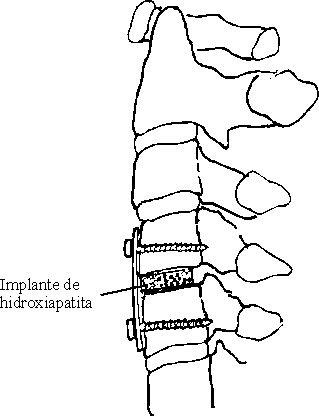
<body><![CDATA[<P>Su aplicaci&oacute;n pr&aacute;ctica s&oacute;lo se pudo comenzar en 1993, al obtener l&aacute;minas de HA fabricadas por el Centro de Biomateriales de la Universidad de La Habana.      <P>En este trabajo se informan las primeras experiencias de su empleo en un ensayo cl&iacute;nico, para verificar si las l&aacute;minas de HA de 3 y 6 mm de espesor y porosidad del 50 % tienen la resistencia necesaria para ser empleadas como implantes en la columna cervical baja (C3 a C7), para sustituir discos intervertebrales incompetentes. <H4> M&Eacute;TODOS</H4> Ensayo cl&iacute;nico prospectivo que incluy&oacute; a todos los pacientes atendidos en el Servicio de Neurocirug&iacute;a del Hospital Universitario "General Calixto Garc&iacute;a", por el grupo de trabajo integrado por los autores; con lesiones cervicales de C3 a C7 que requirieron sustituci&oacute;n quir&uacute;rgica de discos intervertebrales para lograr fusi&oacute;n som&aacute;tica y, en algunos casos, estabilizaci&oacute;n con fijaci&oacute;n interna, por lesiones traum&aacute;ticas o no traum&aacute;ticas (mielopat&iacute;a espondil&oacute;tica o hernias discales cervicales), en pacientes operados durante 1994 y 1995.      <P>Los implantes utilizados en nuestra serie, fueron fabricados a partir de bloques de HA sint&eacute;tica denominada POROSIT, que se produce en el Centro de Biomateriales de la Universidad de La Habana. Este material ha pasado satisfactoriamente una serie de ensayos "in vitro" e "in vivo" que demostraron su carencia de citotoxicidad<SUP>10</SUP> y de actividad hemol&iacute;tica, as&iacute; como su biocompatibilidad.<SUP>11</SUP>      <P>Para la obtenci&oacute;n de &eacute;stos se emplearon como materias primas el hidr&oacute;xido de calcio, y el &aacute;cido ortofosf&oacute;rico, los que se hicieron reaccionar en condiciones controladas de acuerdo con la siguiente ecuaci&oacute;n qu&iacute;mica:      <P>10Ca (OH)<SUB>2(n)</SUB> + 6H<SUB>3</SUB>PO<SUB>4</SUB> <SUB>(an)</SUB> -Ca <SUB>10</SUB> (PO<SUB>4</SUB>)<SUB>6</SUB> (OH) <SUB>2(n)</SUB> + 10 H<SUB>2</SUB>0      <P>y se obtuvo un polvo que posteriormente fue modelado en l&aacute;minas, con una porosidad del 50 % y las siguientes medidas: largo 22 mm; ancho 9 mm y espesor 3 mm, y bloques de 22 x 9 x x 6 mm.      <P>DESCRIPCI&Oacute;N DE LA T&Eacute;CNICA QUIR&Uacute;RGICA      <P>Se realiz&oacute; abordaje anterolateral a la regi&oacute;n cervical. Despu&eacute;s de exponer la cara anterior de los cuerpos vertebrales y de haber identificado el interespacio lesionado, se realiz&oacute; discectom&iacute;a y descompresi&oacute;n, en dependencia del caso y se colocaron las l&aacute;minas de HA (figura), despu&eacute;s de modelarlas y se      <P>ajustaron a la profundidad del espacio, en sustituci&oacute;n del disco intervertebral. S&oacute;lo se emple&oacute; la t&eacute;cnica de instrumentaci&oacute;n con osteos&iacute;ntesis, en pacientes con inestabilidad de columna cervical. En estos casos se utilizaron l&aacute;minas met&aacute;licas tipo A-O "Senegas" y tornillos que incluyeron las corticales anteriores y posteriores de los cuerpos vertebrales adyacentes.     <CENTER>     <A HREF="/img/revistas/cir/v36n3/f14397.gif"><IMG SRC="/img/revistas/cir/v36n3/f14397.gif" ALT="Figura" VSPACE=10 BORDER=0 HEIGHT=252 WIDTH=194></A>    </CENTER> FIGURA. <I>Esquema del m&eacute;todo de colocaci&oacute;n del implante de hidroxiapatita y de la l&aacute;mina y los tornillos para osteos&iacute;ntesis.</I> <H4> DESCRIPCI&Oacute;N DE LOS CONTROLES</H4> Control cl&iacute;nico bimensual para detectar deformidades y/o posturas anormales cervicales y posibles reacciones indeseables: irritaci&oacute;n local, infecciones o evidencias de compresi&oacute;n neural por incompetencia del implante.      
]]></body>
<body><![CDATA[<P>Control radiol&oacute;gico: radiograf&iacute;as simples en igual tiempo que el control      <P>cl&iacute;nico, para detectar signos de resorci&oacute;n u osteomielitis, desplazamientos y/o aplastamientos del implante, luxaci&oacute;n vertebral, cifosis u otras alteraciones atribuibles al implante, as&iacute; como "osteo-conducci&oacute;n aparente", y se acept&oacute; como tal, la desaparici&oacute;n imagenol&oacute;gica de la interfase hueso-implante y desaparici&oacute;n o disminuci&oacute;n de la porosidad de la HA. <H4> ESCALA DE RESULTADOS</H4> <I>Excelentes</I>: Estabilidad y osteoconducci&oacute;n aparente adecuada.     <BR><I>Buenos:</I> Se logr&oacute; estabilidad pero la osteoconducci&oacute;n fue parcial.     <BR><I>Regulares</I>: Se logr&oacute; estabilidad u osteoconducci&oacute;n aparente.     <BR><I>Malos:</I> No se obtuvo ninguna de las 2 anteriores o el cuadro cl&iacute;nico del paciente empeor&oacute; por causa atribuible a incompetencia del implante. <H4> RESULTADOS</H4> En esta serie se incluyeron 10 pacientes. El promedio de edad fue de 39 a&ntilde;os: el menor con 21 y el mayor con 53 a&ntilde;os. Predomin&oacute; el sexo masculino, con 8 pacientes. El tipo de lesi&oacute;n mayoritaria en esta serie fue traum&aacute;tica, con 7 pacientes y, en 3, fue no traum&aacute;tica.      <P>El injerto fue colocado en el espacio C3/4 en 2 pacientes, C4/5 en 3 casos, C5/6 en 3 y C6/7 en 4 pacientes (tabla 1).     <CENTER></CENTER>      <CENTER>TABLA 1. <I>Pacientes y tipo de lesi&oacute;n</I></CENTER>      <CENTER><TABLE BORDER CELLPADDING=5 > <TR> <TD VALIGN=TOP WIDTH="17%">No</TD>  <TD VALIGN=TOP COLSPAN="5" WIDTH="83%">     <CENTER>Tipo de lesi&oacute;n</CENTER> </TD> </TR>  <TR> <TD VALIGN=TOP WIDTH="17%">Trauma Paciente&nbsp;</TD>  <TD VALIGN=TOP WIDTH="17%">     ]]></body>
<body><![CDATA[<CENTER>HC</CENTER> </TD>  <TD VALIGN=TOP WIDTH="17%">     <CENTER>Edad</CENTER> </TD>  <TD VALIGN=TOP WIDTH="17%">     <CENTER>Sexo</CENTER> </TD>  <TD VALIGN=TOP WIDTH="17%">     <CENTER>Nivel</CENTER> </TD>  <TD VALIGN=TOP WIDTH="17%">     <CENTER>Trauma</CENTER> </TD> </TR>  <TR> <TD VALIGN=TOP WIDTH="17%">1. AAG</TD>  <TD VALIGN=TOP WIDTH="17%">     <CENTER>766137</CENTER> </TD>  <TD VALIGN=TOP WIDTH="17%">     <CENTER>52</CENTER> </TD>  <TD VALIGN=TOP WIDTH="17%">     <CENTER>M</CENTER> </TD>  <TD VALIGN=TOP WIDTH="17%">     <CENTER>C3/4</CENTER> </TD>  <TD VALIGN=TOP WIDTH="17%">     <CENTER>X</CENTER> </TD> </TR>  <TR> <TD VALIGN=TOP WIDTH="17%">2. JRP</TD>  <TD VALIGN=TOP WIDTH="17%">     ]]></body>
<body><![CDATA[<CENTER>767207</CENTER> </TD>  <TD VALIGN=TOP WIDTH="17%">     <CENTER>23</CENTER> </TD>  <TD VALIGN=TOP WIDTH="17%">     <CENTER>M</CENTER> </TD>  <TD VALIGN=TOP WIDTH="17%">     <CENTER>C6/7</CENTER> </TD>  <TD VALIGN=TOP WIDTH="17%">     <CENTER>X</CENTER> </TD> </TR>  <TR> <TD VALIGN=TOP WIDTH="17%">3. IGM</TD>  <TD VALIGN=TOP WIDTH="17%">     <CENTER>768234</CENTER> </TD>  <TD VALIGN=TOP WIDTH="17%">     <CENTER>21</CENTER> </TD>  <TD VALIGN=TOP WIDTH="17%">     <CENTER>F</CENTER> </TD>  <TD VALIGN=TOP WIDTH="17%">     <CENTER>C5/6</CENTER> </TD>  <TD VALIGN=TOP WIDTH="17%">     <CENTER>X</CENTER> </TD> </TR>  <TR> <TD VALIGN=TOP WIDTH="17%">4. RMG</TD>  <TD VALIGN=TOP WIDTH="17%">     ]]></body>
<body><![CDATA[<CENTER>768691</CENTER> </TD>  <TD VALIGN=TOP WIDTH="17%">     <CENTER>34</CENTER> </TD>  <TD VALIGN=TOP WIDTH="17%">     <CENTER>M</CENTER> </TD>  <TD VALIGN=TOP WIDTH="17%">     <CENTER>C3/4/5</CENTER> </TD>  <TD VALIGN=TOP WIDTH="17%">     <CENTER>X</CENTER> </TD> </TR>  <TR> <TD VALIGN=TOP WIDTH="17%">5. AHD</TD>  <TD VALIGN=TOP WIDTH="17%">     <CENTER>770541</CENTER> </TD>  <TD VALIGN=TOP WIDTH="17%">     <CENTER>48</CENTER> </TD>  <TD VALIGN=TOP WIDTH="17%">     <CENTER>M</CENTER> </TD>  <TD VALIGN=TOP WIDTH="17%">     <CENTER>C4/5</CENTER> </TD>  <TD VALIGN=TOP WIDTH="17%">     <CENTER>X</CENTER> </TD> </TR>  <TR> <TD VALIGN=TOP WIDTH="17%">6. GLT</TD>  <TD VALIGN=TOP WIDTH="17%">     ]]></body>
<body><![CDATA[<CENTER>777973</CENTER> </TD>  <TD VALIGN=TOP WIDTH="17%">     <CENTER>29&nbsp;</CENTER> </TD>  <TD VALIGN=TOP WIDTH="17%">     <CENTER>M</CENTER> </TD>  <TD VALIGN=TOP WIDTH="17%">     <CENTER>C6/7</CENTER> </TD>  <TD VALIGN=TOP WIDTH="17%">     <CENTER>X</CENTER> </TD> </TR>  <TR> <TD VALIGN=TOP WIDTH="17%">7. MMD</TD>  <TD VALIGN=TOP WIDTH="17%">     <CENTER>779320</CENTER> </TD>  <TD VALIGN=TOP WIDTH="17%">     <CENTER>51</CENTER> </TD>  <TD VALIGN=TOP WIDTH="17%">     <CENTER>F</CENTER> </TD>  <TD VALIGN=TOP WIDTH="17%">     <CENTER>C5/6</CENTER> </TD>  <TD VALIGN=TOP WIDTH="17%">     <CENTER>X</CENTER> </TD> </TR>  <TR> <TD VALIGN=TOP WIDTH="17%">8. APA</TD>  <TD VALIGN=TOP WIDTH="17%">     ]]></body>
<body><![CDATA[<CENTER>778146</CENTER> </TD>  <TD VALIGN=TOP WIDTH="17%">     <CENTER>53</CENTER> </TD>  <TD VALIGN=TOP WIDTH="17%">     <CENTER>M</CENTER> </TD>  <TD VALIGN=TOP WIDTH="17%">     <CENTER>C4/5/6</CENTER> </TD>  <TD VALIGN=TOP WIDTH="17%">     <CENTER>X</CENTER> </TD> </TR>  <TR> <TD VALIGN=TOP WIDTH="17%">9. REG</TD>  <TD VALIGN=TOP WIDTH="17%">     <CENTER>781632</CENTER> </TD>  <TD VALIGN=TOP WIDTH="17%">     <CENTER>47</CENTER> </TD>  <TD VALIGN=TOP WIDTH="17%">     <CENTER>M</CENTER> </TD>  <TD VALIGN=TOP WIDTH="17%">     <CENTER>C6/7</CENTER> </TD>  <TD VALIGN=TOP WIDTH="17%">     <CENTER>X</CENTER> </TD> </TR>  <TR> <TD VALIGN=TOP WIDTH="17%">10. JGR</TD>  <TD VALIGN=TOP WIDTH="17%">     ]]></body>
<body><![CDATA[<CENTER>784595</CENTER> </TD>  <TD VALIGN=TOP WIDTH="17%">     <CENTER>30</CENTER> </TD>  <TD VALIGN=TOP WIDTH="17%">     <CENTER>M</CENTER> </TD>  <TD VALIGN=TOP WIDTH="17%">     <CENTER>C6/7</CENTER> </TD>  <TD VALIGN=TOP WIDTH="17%">     <CENTER>X</CENTER> </TD> </TR> </TABLE></CENTER> Trauma: lesi&oacute;n del disco por traumatismo raquimedular.     <BR>No trauma: lesi&oacute;n degenerativa del disco.     <BR>En 2 pacientes (4 y 8), se coloc&oacute; implante en 2 espacios contig&uuml;os.      <P>La tabla n&uacute;mero 2, muestra las complicaciones detectadas en los controles cl&iacute;nicos y radiol&oacute;gicos.      <P>En la tabla n&uacute;mero 3, se presenta la evaluaci&oacute;n de la estabilidad y osteoconducci&oacute;n aparente, realizada en los controles cl&iacute;nicos y radiol&oacute;gicos.      <P>En la tabla n&uacute;mero 4, se relacionan los resultados obtenidos en el conjunto de la serie: <I>excelentes</I> en 9 pacientes y buenos en 1.     ]]></body>
<body><![CDATA[<CENTER></CENTER>      <CENTER>TABLA 4. <I>Resultados</I></CENTER>      <CENTER><TABLE BORDER CELLPADDING=5 > <TR> <TD VALIGN=TOP WIDTH="33%">Evaluaci&oacute;n&nbsp;</TD>  <TD VALIGN=TOP WIDTH="33%">     <CENTER>N&uacute;mero de pacientes</CENTER> </TD>  <TD VALIGN=TOP WIDTH="33%">     <CENTER>%</CENTER> </TD> </TR>  <TR> <TD VALIGN=TOP WIDTH="33%">Excelentes</TD>  <TD VALIGN=TOP WIDTH="33%">     <CENTER>9</CENTER> </TD>  <TD VALIGN=TOP WIDTH="33%">     <CENTER>90</CENTER> </TD> </TR>  <TR> <TD VALIGN=TOP WIDTH="33%">Buenos</TD>  <TD VALIGN=TOP WIDTH="33%">     <CENTER>1</CENTER> </TD>  <TD VALIGN=TOP WIDTH="33%">     <CENTER>10</CENTER> </TD> </TR>  <TR> <TD VALIGN=TOP WIDTH="33%">Regulares</TD>  <TD VALIGN=TOP WIDTH="33%">     <CENTER>?</CENTER> </TD>  <TD VALIGN=TOP WIDTH="33%">     ]]></body>
<body><![CDATA[<CENTER>?</CENTER> </TD> </TR>  <TR> <TD VALIGN=TOP WIDTH="33%">Malos&nbsp;</TD>  <TD VALIGN=TOP WIDTH="33%">     <CENTER>?</CENTER> </TD>  <TD VALIGN=TOP WIDTH="33%">     <CENTER>?</CENTER> </TD> </TR>  <TR> <TD VALIGN=TOP WIDTH="33%">Total</TD>  <TD VALIGN=TOP WIDTH="33%">     <CENTER>10</CENTER> </TD>  <TD VALIGN=TOP WIDTH="33%">     <CENTER>100</CENTER> </TD> </TR> </TABLE></CENTER>  <H4> DISCUSI&Oacute;N</H4> En la neurocirug&iacute;a la HA se ha utilizado en reparaci&oacute;n del cr&aacute;neo, operaciones craneofaciales y en las fusiones espinales. <I>Cook</I> et al.<SUP>13</SUP> en 1986 usando la HA porosa en operaciones de la columna cervical en perros, llegaron a la conclusi&oacute;n de que aunque se hab&iacute;a producido infiltraci&oacute;n vascular y neoformaci&oacute;n &oacute;sea, su uso no era prudente en las operaciones de columna cervical, por el alto porcentaje de desplazamientos y compresiones que se observaron en su trabajo.<SUP>12</SUP>      <P><I>Koyama y Handa</I>,<SUP>7,8</SUP> sin embargo, utilizaron la HA porosa para laminoplastia en 60 pacientes con estenosis del canal, sin complicaciones con los implantes.      <P>Recientemente <I>Senter</I> et al.<SUP>9</SUP> investigaron el uso de la HA densa en forma de bloques en disectom&iacute;a cervical anterior y fusi&oacute;n; compararon los resultados en 75 pacientes con injertos de hueso il&iacute;aco, con los obtenidos en 84 casos con injertos de HA densa; encontraron que en el primer grupo hab&iacute;a 2 pacientes con desplazamientos o compresi&oacute;n de los fragmentos &oacute;seos, mientras que en el segundo grupo exist&iacute;an 5 casos. No obstante, observaron que en los pacientes en los que se emple&oacute; hueso como injerto, ocurrieron numerosas complicaciones asociadas con la zona de donde se extrajo el injerto como: infecciones, parestesia dolorosa y dolores cr&oacute;nicos. Los autores concluyeron en que el empleo de HA densa en forma de bloques, puede ser superior al uso de hueso aut&oacute;geno en las fusiones cervicales anteriores.      <P>Entre 1981 y 1986 <I>Heise </I>et al.<SUP>13</SUP> usaron HA porosa (con poros entre 200 y 600?m) para la fusi&oacute;n espinal en 18 pacientes, y concluyeron en que su uso era de utilidad.      <P>La HA por s&iacute; misma no es osteog&eacute;nica, pues no induce la formaci&oacute;n de hueso en sitios ect&oacute;picos, ni estimula un crecimiento &oacute;seo m&aacute;s r&aacute;pido en los sitios de implante.<SUP>14</SUP> Pero constituye una matriz f&iacute;sica, en la que se deposita hueso nuevo y tiene propiedades de orientaci&oacute;n que hacen posible que el hueso llegue a sitios que, de otro modo, no hubiese alcanzado. Por eso se usa el t&eacute;rmino de osteoconducci&oacute;n.      <P>La acumulaci&oacute;n de iones de f&oacute;sforo y calcio en la superficie de los implantes ocurre por la libre difusi&oacute;n con el hueso adyacente, por ser id&eacute;nticos al del hueso natural.      ]]></body>
<body><![CDATA[<P>Este proceso toma parte en la formaci&oacute;n de hueso nuevo entre la superficie del implante y el tejido &oacute;seo adyacente.      <P>Un factor importante que se tendr&aacute; en cuenta en la formaci&oacute;n &oacute;sea es el grado de porosidad del implante. A medida que el implante es m&aacute;s poroso presenta m&aacute;s posibilidades de formaci&oacute;n de tejido fibrovascular que posteriormente se osifica, pero tambi&eacute;n es menos resistente a la compresi&oacute;n y viceversa.<SUP>15</SUP> En el caso de la utilizaci&oacute;n de implantes artificiales en la columna vertebral, donde existen grandes fuerzas de compresi&oacute;n, es necesario lograr un implante que sea lo suficientemente resistente para soportar la compresi&oacute;n y lo suficientemente poroso para permitir una buena restauraci&oacute;n &oacute;sea. Es por eso que en este estudio utilizamos l&aacute;minas de HA con una porosidad del 50 %.      <P>Lo limitado de nuestra serie, de s&oacute;lo 10 pacientes, impide realizar un an&aacute;lisis porcentual significativo. Sin embargo, la obtenci&oacute;n de excelentes resultados en 9 de ellos y bueno en 1, es un indicador muy interesante.      <P>Cinco de nuestros pacientes ten&iacute;an una evoluci&oacute;n posoperatoria entre 12 y 15 meses al realizar este informe. De los 5 restantes uno tiene 8 meses de evoluci&oacute;n, 3 tienen 6 meses y uno, s&oacute;lo 3.      <P>Tres de nuestros pacientes presentaron complicaciones. En los &uacute;ltimos controles radiol&oacute;gicos del pacientes n&uacute;mero 4, se observ&oacute; el aflojamiento de uno de los 5 tornillos, pero esto no tiene relaci&oacute;n con el implante, ni produjo cambios en su estabilidad y osteoconducci&oacute;n, que fueron excelentes.      <P>El paciente n&uacute;mero 8, en el que se emplearon implantes en 2 interespacios (C4/5/6), mostr&oacute; fragmentaci&oacute;n y migraci&oacute;n parcial lateral de la l&aacute;mina de      <P>HA del interespacio superior; complicaci&oacute;n informada tambi&eacute;n por otros autores.<SUP>6,12</SUP> En este caso no hubo repercusi&oacute;n cl&iacute;nica y se mantuvo la estabilidad, pero la osteoconducci&oacute;n fue considerada parcial, en el momento del &uacute;ltimo control, porque se produjo s&oacute;lo a partir de los fragmentos no migrados (tablas 2 y 3).     <CENTER></CENTER>      <CENTER>TABLA 2. <I>Complicaciones detectadas cl&iacute;nica o radiol&oacute;gicamente</I></CENTER>      <CENTER><TABLE BORDER CELLPADDING=5 > <TR> <TD VALIGN=TOP WIDTH="17%">Paciente&nbsp;</TD>  <TD VALIGN=TOP WIDTH="17%">     ]]></body>
<body><![CDATA[<CENTER>HC</CENTER> </TD>  <TD VALIGN=TOP WIDTH="17%">     <CENTER>Edad</CENTER> </TD>  <TD VALIGN=TOP WIDTH="17%">     <CENTER>Sexo</CENTER> </TD>  <TD VALIGN=TOP WIDTH="17%">     <CENTER>Nivel</CENTER> </TD>  <TD VALIGN=TOP WIDTH="17%">Complicaci&oacute;n</TD> </TR>  <TR> <TD VALIGN=TOP WIDTH="17%">1. AAG</TD>  <TD VALIGN=TOP WIDTH="17%">     <CENTER>766137</CENTER> </TD>  <TD VALIGN=TOP WIDTH="17%">     <CENTER>52</CENTER> </TD>  <TD VALIGN=TOP WIDTH="17%">     <CENTER>M</CENTER> </TD>  <TD VALIGN=TOP WIDTH="17%">     <CENTER>C3/4</CENTER> </TD>  <TD VALIGN=TOP WIDTH="17%">&nbsp;</TD> </TR>  <TR> <TD VALIGN=TOP WIDTH="17%">2. JRP&nbsp;</TD>  <TD VALIGN=TOP WIDTH="17%">     <CENTER>767207</CENTER> </TD>  <TD VALIGN=TOP WIDTH="17%">     <CENTER>23</CENTER> </TD>  <TD VALIGN=TOP WIDTH="17%">     ]]></body>
<body><![CDATA[<CENTER>M</CENTER> </TD>  <TD VALIGN=TOP WIDTH="17%">     <CENTER>C6/7</CENTER> </TD>  <TD VALIGN=TOP WIDTH="17%">&nbsp;</TD> </TR>  <TR> <TD VALIGN=TOP WIDTH="17%">3. IGM&nbsp;</TD>  <TD VALIGN=TOP WIDTH="17%">     <CENTER>768234</CENTER> </TD>  <TD VALIGN=TOP WIDTH="17%">     <CENTER>21</CENTER> </TD>  <TD VALIGN=TOP WIDTH="17%">     <CENTER>F</CENTER> </TD>  <TD VALIGN=TOP WIDTH="17%">     <CENTER>C5/6</CENTER> </TD>  <TD VALIGN=TOP WIDTH="17%">&nbsp;</TD> </TR>  <TR> <TD VALIGN=TOP WIDTH="17%">4. RMG&nbsp;</TD>  <TD VALIGN=TOP WIDTH="17%">     <CENTER>768691</CENTER> </TD>  <TD VALIGN=TOP WIDTH="17%">     <CENTER>34</CENTER> </TD>  <TD VALIGN=TOP WIDTH="17%">     <CENTER>M</CENTER> </TD>  <TD VALIGN=TOP WIDTH="17%">     <CENTER>C3/4/5</CENTER> </TD>  <TD VALIGN=TOP WIDTH="17%">Aflojamiento de un tornillo</TD> </TR>  <TR> <TD VALIGN=TOP WIDTH="17%">5. AHD&nbsp;</TD>  <TD VALIGN=TOP WIDTH="17%">     ]]></body>
<body><![CDATA[<CENTER>770541</CENTER> </TD>  <TD VALIGN=TOP WIDTH="17%">     <CENTER>48</CENTER> </TD>  <TD VALIGN=TOP WIDTH="17%">     <CENTER>M</CENTER> </TD>  <TD VALIGN=TOP WIDTH="17%">     <CENTER>C4/5</CENTER> </TD>  <TD VALIGN=TOP WIDTH="17%">&nbsp;</TD> </TR>  <TR> <TD VALIGN=TOP WIDTH="17%">6. GLT&nbsp;</TD>  <TD VALIGN=TOP WIDTH="17%">     <CENTER>777973</CENTER> </TD>  <TD VALIGN=TOP WIDTH="17%">     <CENTER>29</CENTER> </TD>  <TD VALIGN=TOP WIDTH="17%">     <CENTER>M</CENTER> </TD>  <TD VALIGN=TOP WIDTH="17%">     <CENTER>C6/7</CENTER> </TD>  <TD VALIGN=TOP WIDTH="17%">&nbsp;</TD> </TR>  <TR> <TD VALIGN=TOP WIDTH="17%">7. MMD&nbsp;</TD>  <TD VALIGN=TOP WIDTH="17%">     <CENTER>779320</CENTER> </TD>  <TD VALIGN=TOP WIDTH="17%">     <CENTER>51</CENTER> </TD>  <TD VALIGN=TOP WIDTH="17%">     ]]></body>
<body><![CDATA[<CENTER>F</CENTER> </TD>  <TD VALIGN=TOP WIDTH="17%">     <CENTER>C5/6</CENTER> </TD>  <TD VALIGN=TOP WIDTH="17%">Par&aacute;lisis N. Recurrente</TD> </TR>  <TR> <TD VALIGN=TOP WIDTH="17%">8. APA&nbsp;</TD>  <TD VALIGN=TOP WIDTH="17%">     <CENTER>778146</CENTER> </TD>  <TD VALIGN=TOP WIDTH="17%">     <CENTER>53</CENTER> </TD>  <TD VALIGN=TOP WIDTH="17%">     <CENTER>M</CENTER> </TD>  <TD VALIGN=TOP WIDTH="17%">     <CENTER>C4/5/6</CENTER> </TD>  <TD VALIGN=TOP WIDTH="17%">Fragmentaci&oacute;n y migraci&oacute;n parcial de l&aacute;mina C4/5</TD> </TR>  <TR> <TD VALIGN=TOP WIDTH="17%">9. REG&nbsp;</TD>  <TD VALIGN=TOP WIDTH="17%">     <CENTER>781632</CENTER> </TD>  <TD VALIGN=TOP WIDTH="17%">     <CENTER>47</CENTER> </TD>  <TD VALIGN=TOP WIDTH="17%">     <CENTER>M</CENTER> </TD>  <TD VALIGN=TOP WIDTH="17%">     <CENTER>C6/7</CENTER> </TD>  <TD VALIGN=TOP WIDTH="17%">&nbsp;</TD> </TR>  <TR> <TD VALIGN=TOP WIDTH="17%">10. JGR&nbsp;</TD>  <TD VALIGN=TOP WIDTH="17%">     ]]></body>
<body><![CDATA[<CENTER>784595</CENTER> </TD>  <TD VALIGN=TOP WIDTH="17%">     <CENTER>30</CENTER> </TD>  <TD VALIGN=TOP WIDTH="17%">     <CENTER>M</CENTER> </TD>  <TD VALIGN=TOP WIDTH="17%">     <CENTER>C6/7</CENTER> </TD>  <TD VALIGN=TOP WIDTH="17%">&nbsp;</TD> </TR> </TABLE></CENTER>      <CENTER>TABLA 3. <I>Estabilidad y/o osteoconducci&oacute;n</I></CENTER>      <CENTER><TABLE BORDER CELLPADDING=5 > <TR> <TD VALIGN=TOP WIDTH="14%">Paciente</TD>  <TD VALIGN=TOP WIDTH="14%">     <CENTER>HC</CENTER> </TD>  <TD VALIGN=TOP WIDTH="14%">     <CENTER>Edad</CENTER> </TD>  <TD VALIGN=TOP WIDTH="14%">     <CENTER>Sexo</CENTER> </TD>  <TD VALIGN=TOP WIDTH="14%">     <CENTER>N&iacute;vel</CENTER> </TD>  <TD VALIGN=TOP WIDTH="14%">     ]]></body>
<body><![CDATA[<CENTER>E O</CENTER> </TD>  <TD VALIGN=TOP WIDTH="14%">     <CENTER>Op</CENTER> </TD> </TR>  <TR> <TD VALIGN=TOP WIDTH="14%">1. AAG&nbsp;</TD>  <TD VALIGN=TOP WIDTH="14%">     <CENTER>766137</CENTER> </TD>  <TD VALIGN=TOP WIDTH="14%">     <CENTER>52</CENTER> </TD>  <TD VALIGN=TOP WIDTH="14%">     <CENTER>M</CENTER> </TD>  <TD VALIGN=TOP WIDTH="14%">     <CENTER>C3/4</CENTER> </TD>  <TD VALIGN=TOP WIDTH="14%">     <CENTER>X</CENTER> </TD>  <TD VALIGN=TOP WIDTH="14%">     <CENTER>X</CENTER> </TD> </TR>  <TR> <TD VALIGN=TOP WIDTH="14%">2. JRP</TD>  <TD VALIGN=TOP WIDTH="14%">     <CENTER>767207</CENTER> </TD>  <TD VALIGN=TOP WIDTH="14%">     <CENTER>23</CENTER> </TD>  <TD VALIGN=TOP WIDTH="14%">     ]]></body>
<body><![CDATA[<CENTER>M</CENTER> </TD>  <TD VALIGN=TOP WIDTH="14%">     <CENTER>C6/7</CENTER> </TD>  <TD VALIGN=TOP WIDTH="14%">     <CENTER>X</CENTER> </TD>  <TD VALIGN=TOP WIDTH="14%">     <CENTER>X</CENTER> </TD> </TR>  <TR> <TD VALIGN=TOP WIDTH="14%">3. IGM</TD>  <TD VALIGN=TOP WIDTH="14%">     <CENTER>768234</CENTER> </TD>  <TD VALIGN=TOP WIDTH="14%">     <CENTER>21</CENTER> </TD>  <TD VALIGN=TOP WIDTH="14%">     <CENTER>F</CENTER> </TD>  <TD VALIGN=TOP WIDTH="14%">     <CENTER>C5/6</CENTER> </TD>  <TD VALIGN=TOP WIDTH="14%">     <CENTER>X</CENTER> </TD>  <TD VALIGN=TOP WIDTH="14%">     <CENTER>X</CENTER> </TD> </TR>  <TR> <TD VALIGN=TOP WIDTH="14%">4. RMG</TD>  <TD VALIGN=TOP WIDTH="14%">     ]]></body>
<body><![CDATA[<CENTER>768691</CENTER> </TD>  <TD VALIGN=TOP WIDTH="14%">     <CENTER>34</CENTER> </TD>  <TD VALIGN=TOP WIDTH="14%">     <CENTER>M</CENTER> </TD>  <TD VALIGN=TOP WIDTH="14%">     <CENTER>C3/4/5&nbsp;</CENTER> </TD>  <TD VALIGN=TOP WIDTH="14%">     <CENTER>X</CENTER> </TD>  <TD VALIGN=TOP WIDTH="14%">     <CENTER>X</CENTER> </TD> </TR>  <TR> <TD VALIGN=TOP WIDTH="14%">5. AHD</TD>  <TD VALIGN=TOP WIDTH="14%">     <CENTER>770541</CENTER> </TD>  <TD VALIGN=TOP WIDTH="14%">     <CENTER>48</CENTER> </TD>  <TD VALIGN=TOP WIDTH="14%">     <CENTER>M</CENTER> </TD>  <TD VALIGN=TOP WIDTH="14%">     <CENTER>C4/5</CENTER> </TD>  <TD VALIGN=TOP WIDTH="14%">     ]]></body>
<body><![CDATA[<CENTER>X</CENTER> </TD>  <TD VALIGN=TOP WIDTH="14%">     <CENTER>X</CENTER> </TD> </TR>  <TR> <TD VALIGN=TOP WIDTH="14%">6. GLT</TD>  <TD VALIGN=TOP WIDTH="14%">     <CENTER>777973</CENTER> </TD>  <TD VALIGN=TOP WIDTH="14%">     <CENTER>29</CENTER> </TD>  <TD VALIGN=TOP WIDTH="14%">     <CENTER>M</CENTER> </TD>  <TD VALIGN=TOP WIDTH="14%">     <CENTER>C6/7</CENTER> </TD>  <TD VALIGN=TOP WIDTH="14%">     <CENTER>X</CENTER> </TD>  <TD VALIGN=TOP WIDTH="14%">     <CENTER>X</CENTER> </TD> </TR>  <TR> <TD VALIGN=TOP WIDTH="14%">7. MMD</TD>  <TD VALIGN=TOP WIDTH="14%">     <CENTER>779320</CENTER> </TD>  <TD VALIGN=TOP WIDTH="14%">     <CENTER>51</CENTER> </TD>  <TD VALIGN=TOP WIDTH="14%">     ]]></body>
<body><![CDATA[<CENTER>F</CENTER> </TD>  <TD VALIGN=TOP WIDTH="14%">     <CENTER>C5/6</CENTER> </TD>  <TD VALIGN=TOP WIDTH="14%">     <CENTER>X</CENTER> </TD>  <TD VALIGN=TOP WIDTH="14%">     <CENTER>X</CENTER> </TD> </TR>  <TR> <TD VALIGN=TOP WIDTH="14%">8. APA</TD>  <TD VALIGN=TOP WIDTH="14%">     <CENTER>778146</CENTER> </TD>  <TD VALIGN=TOP WIDTH="14%">     <CENTER>53</CENTER> </TD>  <TD VALIGN=TOP WIDTH="14%">     <CENTER>M</CENTER> </TD>  <TD VALIGN=TOP WIDTH="14%">     <CENTER>C4/5/6&nbsp;</CENTER> </TD>  <TD VALIGN=TOP WIDTH="14%">     <CENTER>X</CENTER> </TD>  <TD VALIGN=TOP WIDTH="14%">     <CENTER>X</CENTER> </TD> </TR>  <TR> <TD VALIGN=TOP WIDTH="14%">9. REG</TD>  <TD VALIGN=TOP WIDTH="14%">     ]]></body>
<body><![CDATA[<CENTER>781632</CENTER> </TD>  <TD VALIGN=TOP WIDTH="14%">     <CENTER>47</CENTER> </TD>  <TD VALIGN=TOP WIDTH="14%">     <CENTER>M</CENTER> </TD>  <TD VALIGN=TOP WIDTH="14%">     <CENTER>C6/7</CENTER> </TD>  <TD VALIGN=TOP WIDTH="14%">     <CENTER>X</CENTER> </TD>  <TD VALIGN=TOP WIDTH="14%">     <CENTER>X</CENTER> </TD> </TR>  <TR> <TD VALIGN=TOP WIDTH="14%">10. JGR</TD>  <TD VALIGN=TOP WIDTH="14%">     <CENTER>784595</CENTER> </TD>  <TD VALIGN=TOP WIDTH="14%">     <CENTER>30</CENTER> </TD>  <TD VALIGN=TOP WIDTH="14%">     <CENTER>M</CENTER> </TD>  <TD VALIGN=TOP WIDTH="14%">     <CENTER>C6/7</CENTER> </TD>  <TD VALIGN=TOP WIDTH="14%">     ]]></body>
<body><![CDATA[<CENTER>X</CENTER> </TD>  <TD VALIGN=TOP WIDTH="14%">     <CENTER>X</CENTER> </TD> </TR> </TABLE></CENTER> E: Hay estabilidad.     <BR>O: Osteoconducci&oacute;n aparente.     <BR>Op: Osteoconducci&oacute;n parcial.      <P>En un futuro pr&oacute;ximo, esperamos obtener implantes con la configuraci&oacute;n y dimensiones espec&iacute;ficas, que permitan una correlaci&oacute;n m&aacute;s exacta entre las interfases injerto-hueso y una distribuci&oacute;n vectorial m&aacute;s uniforme de las fuerzas din&aacute;micas en el interespacio.      <P>En conclusi&oacute;n podemos decir, que logramos utilizar HA sint&eacute;tica en forma de l&aacute;minas y bloques de configuraci&oacute;n y dimensiones no espec&iacute;ficas que fueron adaptados, transoperatoriamente, para sustituir discos intervertebrales incompetentes en la columna cervical baja; verificamos que las l&aacute;minas de HA de 3 y 6 mm de espesor, 9 mm de ancho y 50 % de porosidad, tienen la resistencia necesaria para ser empleadas como implantes en la columna cervical baja (C3-7) y es recomendable la fabricaci&oacute;n de l&aacute;minas y bloques de HA de configuraci&oacute;n y dimensiones espec&iacute;ficas para la sustituci&oacute;n de discos intervertebrales incompetentes.<B></B> <H4> SUMMARY</H4> It was conducted a clinical assay of 10 patients with cervical low (C3/7), traumatic or degenerative injuries that required implants to substitute intervertebral disks. Hydroxyapatite laminae 3-6 mm thick with a porosity of 50% made in Cuba were used. Adequate stability and osteoconduction were attained in 9 cases that were evaluated by clinical and radiological controls. The efficiency of hydroxyapatite as an implant to achieve the intersomatic vertebral fusion, and as an efficient substitute of the autogenous bone grafts, was verified in our environment, on preventing its habitual complications. It is recommended its use and the making of hydroxyapatite implants of more specific configuration and dimensions.      <P><I>Subject headings:</I> DENTAL IMPLANTATION, ENDOSSEOUS/methods; HYDROXYAPATITES/therapeutic use; CERVICAL VERTEBRAE/surgery; INTERVERTEBRAL DISK/ transplantation. <H4> REFERENCIAS BIBLIOGR&Aacute;FICAS</H4>  <OL>     <!-- ref --><LI> <FONT SIZE=-1>Blakemore ME. Fractures at cancellous bone graft donor sites. Injury 1983;14:519-30.</FONT></LI>    <!-- ref --><LI> <FONT SIZE=-1>Fiedlander GE. Current concepts review: bone banking. J Bone Joint Surg 1982;64A:307-11.</FONT></LI>    <!-- ref --><LI> <FONT SIZE=-1>Coley SP, Anderson LD. Hernias through donor sites for iliac-bone grafts. J Bone Joint Surg 1983;65A:1023-5.</FONT></LI>    <!-- ref --><LI> <FONT SIZE=-1>Challis JH, Lyttle JA, Stuart AE. Strangulated lumbar hernia and volvulus following removal of iliac crest bone graft. Acta Orthop Scand 1975;46:230-3.</FONT></LI>    <!-- ref --><LI> <FONT SIZE=-1>Escalas F, DeWald RL. Combined traumatic arteriovenous fistula and ureteral injury: a complication of iliac bone-grafting. J Bone Joint Surg 1977;59A:270-1.</FONT></LI>    <!-- ref --><LI> <FONT SIZE=-1>Boker DK. Anterior cervical discectomy and vertebral interbody fusion with hydroxyapatite ceramics. Preliminary results. Acta Neurochir (Wien) 1993;121:3-4.</FONT></LI>    <!-- ref --><LI> <FONT SIZE=-1>Koyama T, Handa J. Cervical laminoplasty using apatite beads as implants: experiences in 131 patients with compressive myelopathy due to developmental canal. Surg Neurol 1985;24:663-7.</FONT></LI>    <!-- ref --><LI> <FONT SIZE=-1>Koyama T. Porous hydroxyapatite ceramics for use in neurosurgical practice. Surg Neurol 1986;25:71-3.</FONT></LI>    <!-- ref --><LI> <FONT SIZE=-1>Senter HJ, Kortyna R, Kemp WR. Anterior cervical discectomy with hydroxyapatite fusion. Neorosur- gery 1989;25:39-43.</FONT></LI>    <!-- ref --><LI> <FONT SIZE=-1>R&iacute;os M. Evaluaci&oacute;n de la actividad citot&oacute;xica del APAFIL Departamento. de Bioqu&iacute;mica, Instituto Nacional de Oncolog&iacute;a y Radiobiolog&iacute;a;1971.</FONT></LI>    <!-- ref --><LI> <FONT SIZE=-1>.Evaluaci&oacute;n de la actividad hemol&iacute;tica de productos dentales. Departamento de Bioqu&iacute;mica, Instituto Nacional de Oncolog&iacute;a y Radiobiolog&iacute;a;1971.</FONT></LI>    <!-- ref --><LI> <FONT SIZE=-1>Cook SD, Reynolds MC, Whitecloud TS, Routman AS, Harding AF, Kay JF, et al. Evaluation of hydroxyapatite graft materials in canine cervical spine fusions. Spine 1986;11:305-9.</FONT></LI>    <!-- ref --><LI> <FONT SIZE=-1>Heise U, Osborn JF, Duwe F. Hydroxyapatite ceramic as a bone substitute. Int Orthop 1990;14:329-38.</FONT></LI>    <!-- ref --><LI> <FONT SIZE=-1>Herskovits J, Malagrino S. Calcium phosphate materials. Rev Asoc Odontol Argent 1991;36-40</FONT></LI>    <LI> <FONT SIZE=-1>Groot K de. Effect of porosity and physicochemical properties on the stability, resortion, and strength of calcium phosphate ceramics. Ann NY Acad Sci 1988;523:227-33.</FONT></LI>     </OL> Recibido: 24 de diciembre de 1996. Aprobado: 5 de febrero de 1997.      <P><I>Dr. Ramiro Pereira River&oacute;n.</I> Hospital Universitario "General Calixto Garc&iacute;a". Calle 29 esquina a J, municipio Plaza de la Revoluci&oacute;n. Ciudad de La Habana, Cuba.        ]]></body><back>
<ref-list>
<ref id="B1">
<nlm-citation citation-type="journal">
<person-group person-group-type="author">
<name>
<surname><![CDATA[Blakemore]]></surname>
<given-names><![CDATA[ME]]></given-names>
</name>
</person-group>
<article-title xml:lang="en"><![CDATA[Fractures at cancellous bone graft donor sites]]></article-title>
<source><![CDATA[Injury]]></source>
<year>1983</year>
<volume>14</volume>
<page-range>519-30</page-range></nlm-citation>
</ref>
<ref id="B2">
<nlm-citation citation-type="journal">
<person-group person-group-type="author">
<name>
<surname><![CDATA[Fiedlander]]></surname>
<given-names><![CDATA[GE]]></given-names>
</name>
</person-group>
<article-title xml:lang="en"><![CDATA[Current concepts review: bone banking]]></article-title>
<source><![CDATA[J Bone Joint Surg]]></source>
<year>1982</year>
<volume>64A</volume>
<page-range>307-11</page-range></nlm-citation>
</ref>
<ref id="B3">
<nlm-citation citation-type="journal">
<person-group person-group-type="author">
<name>
<surname><![CDATA[Coley]]></surname>
<given-names><![CDATA[SP]]></given-names>
</name>
<name>
<surname><![CDATA[Anderson]]></surname>
<given-names><![CDATA[LD]]></given-names>
</name>
</person-group>
<article-title xml:lang="en"><![CDATA[Hernias through donor sites for iliac-bone grafts]]></article-title>
<source><![CDATA[J Bone Joint Surg]]></source>
<year>1983</year>
<volume>65A</volume>
<page-range>1023-5</page-range></nlm-citation>
</ref>
<ref id="B4">
<nlm-citation citation-type="journal">
<person-group person-group-type="author">
<name>
<surname><![CDATA[Challis]]></surname>
<given-names><![CDATA[JH]]></given-names>
</name>
<name>
<surname><![CDATA[Lyttle]]></surname>
<given-names><![CDATA[JA]]></given-names>
</name>
<name>
<surname><![CDATA[Stuart]]></surname>
<given-names><![CDATA[AE]]></given-names>
</name>
</person-group>
<article-title xml:lang="en"><![CDATA[Strangulated lumbar hernia and volvulus following removal of iliac crest bone graft]]></article-title>
<source><![CDATA[Acta Orthop Scand]]></source>
<year>1975</year>
<volume>46</volume>
<page-range>230-3</page-range></nlm-citation>
</ref>
<ref id="B5">
<nlm-citation citation-type="journal">
<person-group person-group-type="author">
<name>
<surname><![CDATA[Escalas]]></surname>
<given-names><![CDATA[F]]></given-names>
</name>
<name>
<surname><![CDATA[DeWald]]></surname>
<given-names><![CDATA[RL]]></given-names>
</name>
</person-group>
<article-title xml:lang="en"><![CDATA[Combined traumatic arteriovenous fistula and ureteral injury: a complication of iliac bone-grafting]]></article-title>
<source><![CDATA[J Bone Joint Surg]]></source>
<year>1977</year>
<volume>59A</volume>
<page-range>270-1</page-range></nlm-citation>
</ref>
<ref id="B6">
<nlm-citation citation-type="journal">
<person-group person-group-type="author">
<name>
<surname><![CDATA[Boker]]></surname>
<given-names><![CDATA[DK]]></given-names>
</name>
</person-group>
<article-title xml:lang="en"><![CDATA[Anterior cervical discectomy and vertebral interbody fusion with hydroxyapatite ceramics]]></article-title>
<source><![CDATA[Preliminary results. Acta Neurochir (Wien)]]></source>
<year>1993</year>
<volume>121</volume>
<page-range>3-4</page-range></nlm-citation>
</ref>
<ref id="B7">
<nlm-citation citation-type="journal">
<person-group person-group-type="author">
<name>
<surname><![CDATA[Koyama]]></surname>
<given-names><![CDATA[T]]></given-names>
</name>
<name>
<surname><![CDATA[Handa]]></surname>
<given-names><![CDATA[J]]></given-names>
</name>
</person-group>
<article-title xml:lang="en"><![CDATA[Cervical laminoplasty using apatite beads as implants: experiences in 131 patients with compressive myelopathy due to developmental canal]]></article-title>
<source><![CDATA[Surg Neurol]]></source>
<year>1985</year>
<volume>24</volume>
<page-range>663-7</page-range></nlm-citation>
</ref>
<ref id="B8">
<nlm-citation citation-type="journal">
<person-group person-group-type="author">
<name>
<surname><![CDATA[Koyama]]></surname>
<given-names><![CDATA[T]]></given-names>
</name>
</person-group>
<article-title xml:lang="en"><![CDATA[Porous hydroxyapatite ceramics for use in neurosurgical practice]]></article-title>
<source><![CDATA[Surg Neurol]]></source>
<year>1986</year>
<volume>25</volume>
<page-range>71-3</page-range></nlm-citation>
</ref>
<ref id="B9">
<nlm-citation citation-type="journal">
<person-group person-group-type="author">
<name>
<surname><![CDATA[Senter]]></surname>
<given-names><![CDATA[HJ]]></given-names>
</name>
<name>
<surname><![CDATA[Kortyna]]></surname>
<given-names><![CDATA[R]]></given-names>
</name>
<name>
<surname><![CDATA[Kemp]]></surname>
<given-names><![CDATA[WR]]></given-names>
</name>
</person-group>
<article-title xml:lang="en"><![CDATA[Anterior cervical discectomy with hydroxyapatite fusion]]></article-title>
<source><![CDATA[Neorosurgery]]></source>
<year>1989</year>
<volume>25</volume>
<page-range>39-43</page-range></nlm-citation>
</ref>
<ref id="B10">
<nlm-citation citation-type="book">
<person-group person-group-type="author">
<name>
<surname><![CDATA[Ríos]]></surname>
<given-names><![CDATA[M]]></given-names>
</name>
</person-group>
<source><![CDATA[Evaluación de la actividad citotóxica del APAFIL]]></source>
<year>1971</year>
<publisher-name><![CDATA[Instituto Nacional de Oncología y Radiobiología]]></publisher-name>
</nlm-citation>
</ref>
<ref id="B11">
<nlm-citation citation-type="book">
<source><![CDATA[Evaluación de la actividad hemolítica de productos dentales]]></source>
<year>1971</year>
<publisher-name><![CDATA[Instituto Nacional de Oncología y Radiobiología]]></publisher-name>
</nlm-citation>
</ref>
<ref id="B12">
<nlm-citation citation-type="journal">
<person-group person-group-type="author">
<name>
<surname><![CDATA[Cook]]></surname>
<given-names><![CDATA[SD]]></given-names>
</name>
<name>
<surname><![CDATA[Reynolds]]></surname>
<given-names><![CDATA[MC]]></given-names>
</name>
<name>
<surname><![CDATA[Whitecloud]]></surname>
<given-names><![CDATA[TS]]></given-names>
</name>
<name>
<surname><![CDATA[Routman]]></surname>
<given-names><![CDATA[AS]]></given-names>
</name>
<name>
<surname><![CDATA[Harding]]></surname>
<given-names><![CDATA[AF]]></given-names>
</name>
<name>
<surname><![CDATA[Kay]]></surname>
<given-names><![CDATA[JF]]></given-names>
</name>
</person-group>
<article-title xml:lang="en"><![CDATA[Evaluation of hydroxyapatite graft materials in canine cervical spine fusions]]></article-title>
<source><![CDATA[Spine]]></source>
<year>1986</year>
<volume>11</volume>
<page-range>305-9</page-range></nlm-citation>
</ref>
<ref id="B13">
<nlm-citation citation-type="journal">
<person-group person-group-type="author">
<name>
<surname><![CDATA[Heise]]></surname>
<given-names><![CDATA[U]]></given-names>
</name>
<name>
<surname><![CDATA[Osborn]]></surname>
<given-names><![CDATA[JF]]></given-names>
</name>
<name>
<surname><![CDATA[Duwe]]></surname>
<given-names><![CDATA[F]]></given-names>
</name>
</person-group>
<article-title xml:lang="en"><![CDATA[Hydroxyapatite ceramic as a bone substitute]]></article-title>
<source><![CDATA[Int Orthop]]></source>
<year>1990</year>
<volume>14</volume>
<page-range>329-38</page-range></nlm-citation>
</ref>
<ref id="B14">
<nlm-citation citation-type="journal">
<person-group person-group-type="author">
<name>
<surname><![CDATA[Herskovits]]></surname>
<given-names><![CDATA[J]]></given-names>
</name>
<name>
<surname><![CDATA[Malagrino]]></surname>
<given-names><![CDATA[S]]></given-names>
</name>
</person-group>
<article-title xml:lang="en"><![CDATA[Calcium phosphate materials]]></article-title>
<source><![CDATA[Rev Asoc Odontol Argent]]></source>
<year>1991</year>
<page-range>36-40</page-range></nlm-citation>
</ref>
<ref id="B15">
<nlm-citation citation-type="journal">
<person-group person-group-type="author">
<name>
<surname><![CDATA[Groot]]></surname>
<given-names><![CDATA[K]]></given-names>
</name>
</person-group>
<article-title xml:lang="en"><![CDATA[Effect of porosity and physicochemical properties on the stability, resortion, and strength of calcium phosphate ceramics]]></article-title>
<source><![CDATA[Ann NY Acad Sci]]></source>
<year>1988</year>
<volume>523</volume>
<page-range>227-33</page-range></nlm-citation>
</ref>
</ref-list>
</back>
</article>
