<?xml version="1.0" encoding="ISO-8859-1"?><article xmlns:mml="http://www.w3.org/1998/Math/MathML" xmlns:xlink="http://www.w3.org/1999/xlink" xmlns:xsi="http://www.w3.org/2001/XMLSchema-instance">
<front>
<journal-meta>
<journal-id>0034-7523</journal-id>
<journal-title><![CDATA[Revista Cubana de Medicina]]></journal-title>
<abbrev-journal-title><![CDATA[Rev cubana med]]></abbrev-journal-title>
<issn>0034-7523</issn>
<publisher>
<publisher-name><![CDATA[Centro Nacional de Información de Ciencias MédicasEditorial Ciencias Médicas]]></publisher-name>
</publisher>
</journal-meta>
<article-meta>
<article-id>S0034-75232008000200007</article-id>
<title-group>
<article-title xml:lang="es"><![CDATA[Expresión de la neumopatía intersticial en pacientes cubanos con esclerosis sistémica]]></article-title>
<article-title xml:lang="en"><![CDATA[Expression of interstitial pneumopathy in Cuban patients with systemic sclerosis]]></article-title>
</title-group>
<contrib-group>
<contrib contrib-type="author">
<name>
<surname><![CDATA[Pérez Campos]]></surname>
<given-names><![CDATA[Dionisio]]></given-names>
</name>
<xref ref-type="aff" rid="A01"/>
</contrib>
<contrib contrib-type="author">
<name>
<surname><![CDATA[Acosta Hernández]]></surname>
<given-names><![CDATA[Reinaldo R.]]></given-names>
</name>
<xref ref-type="aff" rid="A01"/>
</contrib>
<contrib contrib-type="author">
<name>
<surname><![CDATA[Pino Alfonso]]></surname>
<given-names><![CDATA[Pedro Pablo]]></given-names>
</name>
<xref ref-type="aff" rid="A01"/>
</contrib>
<contrib contrib-type="author">
<name>
<surname><![CDATA[Peña Casanovas]]></surname>
<given-names><![CDATA[Aisa]]></given-names>
</name>
<xref ref-type="aff" rid="A01"/>
</contrib>
<contrib contrib-type="author">
<name>
<surname><![CDATA[Carballo Treto]]></surname>
<given-names><![CDATA[Tania]]></given-names>
</name>
<xref ref-type="aff" rid="A01"/>
</contrib>
<contrib contrib-type="author">
<name>
<surname><![CDATA[Casas Figueredo]]></surname>
<given-names><![CDATA[Nelsa]]></given-names>
</name>
<xref ref-type="aff" rid="A01"/>
</contrib>
</contrib-group>
<aff id="A01">
<institution><![CDATA[,Hospital Clinicoquirúrgico Hermanos Ameijeiras Servicio de Reumatología. ]]></institution>
<addr-line><![CDATA[Ciudad de La Habana ]]></addr-line>
<country>Cuba</country>
</aff>
<pub-date pub-type="pub">
<day>00</day>
<month>06</month>
<year>2008</year>
</pub-date>
<pub-date pub-type="epub">
<day>00</day>
<month>06</month>
<year>2008</year>
</pub-date>
<volume>47</volume>
<numero>2</numero>
<fpage>0</fpage>
<lpage>0</lpage>
<copyright-statement/>
<copyright-year/>
<self-uri xlink:href="http://scielo.sld.cu/scielo.php?script=sci_arttext&amp;pid=S0034-75232008000200007&amp;lng=en&amp;nrm=iso"></self-uri><self-uri xlink:href="http://scielo.sld.cu/scielo.php?script=sci_abstract&amp;pid=S0034-75232008000200007&amp;lng=en&amp;nrm=iso"></self-uri><self-uri xlink:href="http://scielo.sld.cu/scielo.php?script=sci_pdf&amp;pid=S0034-75232008000200007&amp;lng=en&amp;nrm=iso"></self-uri><abstract abstract-type="short" xml:lang="es"><p><![CDATA[La neumopatía intersticial (NI) se presenta frecuentemente en pacientes con esclerosis sistémica (ES) y ocasiona morbilidad y mortalidad significativas. Se realizó un estudio descriptivo, prospectivo con 46 pacientes, que cumplieron criterios del Colegio Americano de Reumatología, para identificar las formas de expresión y detección de la NI. Se estimó porcentajes, análisis univariable para medidas de centralización, dispersión y pruebas de significación estadística chi cuadrado (X²). Se halló una edad media de 50,4 años, predominio femenino (88 %), color de piel blanco (66 %), tuvieron neumopatía intersticial 20 pacientes (43,4%); disnea de esfuerzo, el 100 % de los casos, lo cual fue estadísticamente significativo (p=0,02). La función respiratoria estuvo afectada en el 75 % de los enfermos. Según tomografía computadorizada de alta resolución (TC) de pulmón, 50 % tuvo patrón en vidrio esmerilado y 50 %, patrón en panal de abejas, 66 % de los pacientes con NI tuvieron lavado broncoalveolar activo y de ellos, 88 % correspondió a los que tenían patrón en vidrio esmerilado. Se concluyó que la neumopatía intersticial se expresó en un alto porcentaje de pacientes, la disnea de esfuerzo fue el síntoma más frecuente, predominó el patrón restrictivo. La TC y el estudio citológico del lavado broncoalveolar constituyeron herramientas clave para el diagnóstico precoz de NI.]]></p></abstract>
<abstract abstract-type="short" xml:lang="en"><p><![CDATA[Interstitial pneumopathy (IP) usually appears in patients with systemic sclerosis (SS) and causes significant morbidity and mortality. A descriptive and prospective study was conducted among 46 patients that fulfilled the criteria of the American Rheumatology College to identify the forms of expression and detection of IP. Percentages were estimated, and the univariable analysis for centralization and dispersion measurements and the chi square tests (X2) of statistical significance were used. A mean age of 50.4 years old was found. A prevalence of females (88 %) and of white individuals (66 %) was observed. 20 patients (43.4%) had interstitial pneumopathy, whereas 100 % of the cases presented effort dyspnea, which was statistically significant (p=0.02). The respiratory function was affected in 75 % of the sick. According to high resolution computerized tomography of the lung, 50 % had ground glass pattern and 50 % honeycomb pattern, 66 % of the patients with IP had active bronchoalveolar lavage and of them, 88 % corresponded to those with ground glass pattern. It was concluded that interstitial pneumopathy was expressed in a high percentage of patients. Effort dyspnea was the most frequent symptom and the restrictive pattern predominated. CAT and the cytological study of bronchoalveolar lavage were key tools for the early diagnosis of IP.]]></p></abstract>
<kwd-group>
<kwd lng="es"><![CDATA[Esclerosis sistémica]]></kwd>
<kwd lng="es"><![CDATA[diagnóstico precoz]]></kwd>
<kwd lng="es"><![CDATA[neumopatía intersticial]]></kwd>
<kwd lng="es"><![CDATA[lavado broncoalveolar]]></kwd>
<kwd lng="es"><![CDATA[TC]]></kwd>
<kwd lng="en"><![CDATA[Systemic sclerosis]]></kwd>
<kwd lng="en"><![CDATA[early diagnosis]]></kwd>
<kwd lng="en"><![CDATA[interstitial pneumopathy]]></kwd>
<kwd lng="en"><![CDATA[bronchoalveolar lavage]]></kwd>
<kwd lng="en"><![CDATA[CT]]></kwd>
</kwd-group>
</article-meta>
</front><body><![CDATA[ <div align="right">     <p><FONT FACE="Verdana" SIZE="2"> <B>TRABAJOS ORIGINALES</B></FONT></p>    <p>&nbsp;</p></div> <B>      <P>      <P><FONT FACE="Verdana" SIZE="4">Expresi&oacute;n de la neumopat&iacute;a intersticial    en pacientes cubanos con esclerosis sist&eacute;mica</FONT>      <P>&nbsp;      <P><font face="Verdana" size="3">Expression of interstitial pneumopathy in Cuban    patients with systemic sclerosis</font> </B>      <p></p> <B>     <P>&nbsp;      <P>&nbsp;      ]]></body>
<body><![CDATA[<P><FONT FACE="Verdana" SIZE="2">Dionisio P&eacute;rez Campos<SUP>I</SUP>; Reinaldo    R. Acosta Hern&aacute;ndez<SUP>II</SUP>; Pedro Pablo Pino Alfonso<SUP>III</SUP>;    Aisa Pe&ntilde;a Casanovas<SUP>IV</SUP>; Tania Carballo Treto<SUP>V</SUP>; Nelsa    Casas Figueredo<SUP>VI</SUP></FONT>  </B>        <P> <FONT FACE="Verdana" SIZE="2"><SUP>I</SUP>&nbsp; Especialista de II Grado en Reumatolog&iacute;a.  Hospital Clinicoquir&uacute;rgico &quot;Hermanos Ameijeiras&quot;. Servicio de  Reumatolog&iacute;a. La Habana, Cuba. <FONT FACE="Verdana" SIZE="2"><SUP>II</SUP>&nbsp;Especialista  de I Grado en Reumatolog&iacute;a. Hospital Clinicoquir&uacute;rgico &quot;Hermanos  Ameijeiras&quot;. Servicio de Reumatolog&iacute;a. La Habana, Cuba.     <br> <SUP>III</SUP>&nbsp;Especialista de II Grado en Neumolog&iacute;a. Profesor Auxiliar.  Hospital Clinicoquir&uacute;rgico &quot;Hermanos Ameijeiras&quot;. La Habana,  Cuba.     <br> <SUP>IV&nbsp;</SUP>Especialista de I Grado en Radiolog&iacute;a. Profesora Asistente.  Hospital Clinicoquir&uacute;rgico &quot;Hermanos Ameijeiras&quot;. Servicio de  Reumatolog&iacute;a. La Habana, Cuba.     <br> <SUP>V</SUP>&nbsp;Especialista de II Grado en Laboratorio Cl&iacute;nico. Profesora  Asistente. Hospital Clinicoquir&uacute;rgico &quot;Hermanos Ameijeiras&quot;.  La Habana, Cuba.    <br> <SUP>VI</SUP>&nbsp;Especialista de II Grado en Reumatolog&iacute;a. Profesora  Asistente. Hospital Clinicoquir&uacute;rgico &quot;Hermanos Ameijeiras&quot;.  Servicio de Reumatolog&iacute;a. La Habana, Cuba. </FONT>      <P>&nbsp;      <P>&nbsp;  <hr size="1" noshade>     <P><FONT FACE="Verdana" SIZE="2"><B>RESUMEN</B> </FONT>      <P><FONT FACE="Verdana" SIZE="2">La neumopat&iacute;a intersticial (NI) se presenta    frecuentemente en pacientes con esclerosis sist&eacute;mica (ES) y ocasiona    morbilidad y mortalidad significativas. Se realiz&oacute; un estudio descriptivo,    prospectivo con 46 pacientes, que cumplieron criterios del Colegio Americano    de Reumatolog&iacute;a, para identificar las formas de expresi&oacute;n y detecci&oacute;n    de la NI. Se estim&oacute; porcentajes, an&aacute;lisis univariable para medidas    de centralizaci&oacute;n, dispersi&oacute;n y pruebas de significaci&oacute;n    estad&iacute;stica chi cuadrado (X<SUP>2</SUP>). Se hall&oacute; una edad media    de 50,4 a&ntilde;os, predominio femenino (88 %), color de piel blanco (66 %),    tuvieron neumopat&iacute;a intersticial 20 pacientes (43,4%); disnea de esfuerzo,    el 100 % de los casos, lo cual fue estad&iacute;sticamente significativo (p=0,02).    La funci&oacute;n respiratoria estuvo afectada en el 75 % de los enfermos. Seg&uacute;n    tomograf&iacute;a computadorizada de alta resoluci&oacute;n (TC) de pulm&oacute;n,    50 % tuvo patr&oacute;n en vidrio esmerilado y 50 %, patr&oacute;n en panal    de abejas, 66 % de los pacientes con NI tuvieron lavado broncoalveolar activo    y de ellos, 88 % correspondi&oacute; a los que ten&iacute;an patr&oacute;n en    vidrio esmerilado. Se concluy&oacute; que la neumopat&iacute;a intersticial    se expres&oacute; en un alto porcentaje de pacientes, la disnea de esfuerzo    fue el s&iacute;ntoma m&aacute;s frecuente, predomin&oacute; el patr&oacute;n    restrictivo. La TC y el estudio citol&oacute;gico del lavado broncoalveolar    constituyeron herramientas clave para el diagn&oacute;stico precoz de NI. </FONT>      ]]></body>
<body><![CDATA[<P>      <P><FONT FACE="Verdana" SIZE="2"><B>Palabras clave</B>. Esclerosis sist&eacute;mica,    diagn&oacute;stico precoz, neumopat&iacute;a intersticial, lavado broncoalveolar,    TC. </FONT> <FONT FACE="Verdana">    <br>       <br>   </FONT>  <hr size="1" noshade>     <p><font face="Verdana" size="2"><b>ABSTRACT</b></font></p>     <p><font face="Verdana" size="2">Interstitial pneumopathy (IP) usually appears    in patients with systemic sclerosis (SS) and causes significant morbidity and    mortality. A descriptive and prospective study was conducted among 46 patients    that fulfilled the criteria of the American Rheumatology College to identify    the forms of expression and detection of IP. Percentages were estimated, and    the univariable analysis for centralization and dispersion measurements and    the chi square tests (X2) of statistical significance were used. A mean age    of 50.4 years old was found. A prevalence of females (88 %) and of white individuals    (66 %) was observed. 20 patients (43.4%) had interstitial pneumopathy, whereas    100 % of the cases presented effort dyspnea, which was statistically significant    (p=0.02). The respiratory function was affected in 75 % of the sick. According    to high resolution computerized tomography of the lung, 50 % had ground glass    pattern and 50 % honeycomb pattern, 66 % of the patients with IP had active    bronchoalveolar lavage and of them, 88 % corresponded to those with ground glass    pattern. It was concluded that interstitial pneumopathy was expressed in a high    percentage of patients. Effort dyspnea was the most frequent symptom and the    restrictive pattern predominated. CAT and the cytological study of bronchoalveolar    lavage were key tools for the early diagnosis of IP.     <br>       <br>   <b>Key words:</b> Systemic sclerosis, early diagnosis, interstitial pneumopathy,    bronchoalveolar lavage, CT.</font></p> <hr size="1" noshade>     <p>&nbsp;</p>     <p>&nbsp;</p>     ]]></body>
<body><![CDATA[<p><FONT FACE="Verdana" SIZE="2"><B><font size="3">INTRODUCCI&Oacute;N</font></B>    </FONT></p>     <P>      <P><FONT FACE="Verdana" SIZE="2">La esclerosis sist&eacute;mica (ES) es una enfermedad    del tejido conectivo de origen desconocido, caracterizada por cambios inflamatorios,    vasculares y fibr&oacute;ticos que afectan la piel y los &oacute;rganos internos,    sobre todo pulmones, ri&ntilde;ones, coraz&oacute;n y aparato gastrointestinal.<SUP>1,2</SUP>    Aunque pueden afectarse las v&iacute;as respiratorias y la pleura, predomina    la afectaci&oacute;n del intersticio pulmonar.<SUP>2,3</SUP> </FONT>      <P><FONT FACE="Verdana" SIZE="2">La neumopat&iacute;a intersticial (NI) es la    mas com&uacute;n de las manifestaciones pulmonares, sin correlaci&oacute;n con    el grado ni la gravedad de la afectaci&oacute;n cut&aacute;nea, se observa mas    frecuentemente en los pacientes con forma difusa y asociados a anticuerpos SCL-70,    pero aparece alveolitis en los pacientes con forma limitada de la enfermedad.<SUP>4,5</SUP>    </FONT>      <P><FONT FACE="Verdana" SIZE="2">Aproximadamente, el 40 % de los pacientes desarrollan    una neumopat&iacute;a restrictiva de moderada a severa donde la mayor declinaci&oacute;n    de la funci&oacute;n pulmonar ocurre en los primeros 4 a&ntilde;os de iniciados    los s&iacute;ntomas.<SUP>3,6</SUP> En la actualidad constituye la causa principal    de morbilidad y mortalidad en los pacientes con esclerosis sist&eacute;mica.<SUP>3,7</SUP>    </FONT>      <P><FONT FACE="Verdana" SIZE="2"> La neumopat&iacute;a puede ser asintom&aacute;tica    inicialmente cuando es potencialmente reversible y ocasiona s&iacute;ntomas    cuando el proceso est&aacute; muy avanzado,<SUP>3,5 </SUP>teniendo en cuenta    la morbilidad y la mortalidad, la variabilidad de su expresi&oacute;n y la importancia    de su diagn&oacute;stico precoz, nos trazamos, como objetivos de la investigaci&oacute;n,    identificar las formas de expresi&oacute;n y detecci&oacute;n de la neumopat&iacute;a    intersticial en nuestros pacientes con esclerosis sist&eacute;mica. </FONT>      <P>&nbsp;      <P>      <P>      <P><FONT FACE="Verdana" SIZE="3"><B>M&Eacute;TODOS</B> </FONT>      ]]></body>
<body><![CDATA[<P>      <P><FONT FACE="Verdana" SIZE="2">Se realiz&oacute; un estudio prospectivo y observacional    en el Servicio de Reumatolog&iacute;a del Hospital &quot;Hermanos Ameijeiras&quot;,    en el per&iacute;odo comprendido entre junio 2005 y agosto 2007. El universo    estuvo constituido por todos los pacientes con ES susceptibles de ser seleccionados    (n&uacute;mero no conocido) y la muestra la constituyeron 51 pacientes de los    cuales 46 fueron estudiados seg&uacute;n protocolo de actuaci&oacute;n (44 mujeres    y 2 hombres), la clasificaci&oacute;n de la enfermedad de estos se correspondi&oacute;    con esclerosis sist&eacute;mica difusa o limitada.<SUP>8</SUP> </FONT>      <BLOCKQUOTE>        <P><FONT FACE="Verdana" SIZE="2"> - Afectaci&oacute;n d&eacute;rmica difusa:      la afectaci&oacute;n cut&aacute;nea es proximal a codos y rodillas, frecuente      afectaci&oacute;n del tronco y la cara.    <br>     </FONT></P>       <P><FONT FACE="Verdana" SIZE="2"> - Afectaci&oacute;n d&eacute;rmica limitada:      la afectaci&oacute;n cut&aacute;nea es distal a los codos y rodillas, puede      afectarse la cara. </FONT></P> </BLOCKQUOTE>     <P><FONT FACE="Verdana" SIZE="2">    <br>   <B>Criterios de inclusi&oacute;n</B> </FONT></P> </font>      <blockquote>        <p><FONT FACE="Verdana" SIZE="2"><FONT FACE="Verdana" SIZE="2">- Pacientes que      cumplieron los Criterios de Clasificaci&oacute;n (A.C.R.1980)<SUP>9</SUP></FONT></font></p> </blockquote>     ]]></body>
<body><![CDATA[<p><FONT FACE="Verdana" SIZE="2"><FONT FACE="Verdana" SIZE="2">    <br>   <B>Criterios de clasificaci&oacute;n</B><I> (A.C.R.1980) </I> </FONT> </font></p> <FONT FACE="Verdana" SIZE="2">      <P><FONT FACE="Verdana" SIZE="2">Criterio mayor </FONT></P> </font>     <blockquote>       <p><FONT FACE="Verdana" SIZE="2"><FONT FACE="Verdana" SIZE="2">- Esclerodermia      proximal. </FONT> </font></p> </blockquote> <FONT FACE="Verdana" SIZE="2">     <P><FONT FACE="Verdana" SIZE="2">Criterios menores </FONT></P> </font>      <blockquote>       <p><FONT FACE="Verdana" SIZE="2"><FONT FACE="Verdana" SIZE="2">- Esclerodact&iacute;lia.</FONT></font></p>       <p><FONT FACE="Verdana" SIZE="2"><FONT FACE="Verdana" SIZE="2">- Microinfartos      o &uacute;lceras digitales.</FONT></font></p>       <p><FONT FACE="Verdana" SIZE="2"><FONT FACE="Verdana" SIZE="2">- Fibrosis pulmonar      basal bilateral.     ]]></body>
<body><![CDATA[<br>         <br>         <br>     <B>Diagn&oacute;stico</B> </FONT> </font></p> </blockquote> <FONT FACE="Verdana" SIZE="2">      <P><FONT FACE="Verdana" SIZE="2"> Se precisa 1 criterio mayor o 2 criterios menores.        <br>       <br>       <br>   <B>Criterios de exclusi&oacute;n</B> </FONT>      <BLOCKQUOTE>        <P><FONT FACE="Verdana" SIZE="2"> Pacientes con enfermedad pulmonar obstructiva      seg&uacute;n VEF1/CVF &gt;70 % de lo pronosticado.    <br>     </FONT></P>       ]]></body>
<body><![CDATA[<P><FONT FACE="Verdana" SIZE="2"> Pacientes con historia de exposici&oacute;n      ocupacional (s&iacute;lice, asbesto).     <br>     </FONT></P>       <P><FONT FACE="Verdana" SIZE="2"> Pacientes con trastornos que afectan la funci&oacute;n      pulmonar como: infarto agudo del miocardio, fallo card&iacute;aco congestivo,      enfermedad valvular severa, enfisema, hipertensi&oacute;n pulmonar.     <br>     </FONT></P>       <P><FONT FACE="Verdana" SIZE="2"> Pacientes que no concluyeron las investigaciones.      </FONT></P> </BLOCKQUOTE>     <p><FONT FACE="Verdana" SIZE="2">    <br>   <B>Neumopat&iacute;a intersticial</B> </FONT> </p>     <P><FONT FACE="Verdana" SIZE="2"> Se consider&oacute; en pacientes con esclerosis    sist&eacute;mica que tienen expresi&oacute;n cl&iacute;nica o no (disnea de    esfuerzo, tos, auscultaci&oacute;n de estertores crepitantes bibasales) con    la presencia por tomograf&iacute;a computadorizada de alta resoluci&oacute;n    (TC) de un patr&oacute;n de afectaci&oacute;n pulmonar en vidrio esmerilado    o panal de abejas y/o la presencia de una alveolitis activa en estudio citol&oacute;gico    del lavado broncoalveolar. </FONT>      <P><FONT FACE="Verdana" SIZE="2">Los par&aacute;metros cl&iacute;nicos se evaluaron    mediante interrogatorio y examen f&iacute;sico completo (especial &eacute;nfasis    en el aparato respiratorio y la piel). </FONT>      <P><FONT FACE="Verdana" SIZE="2">El engrosamiento d&eacute;rmico se evalu&oacute;    por m&eacute;todo de Rodnan modificado<SUP>10</SUP> </FONT>      ]]></body>
<body><![CDATA[<P><FONT FACE="Verdana" SIZE="2">Escala de engrosamiento (4 grados) </FONT>  </font>     <blockquote>       <p><FONT FACE="Verdana" SIZE="2"><FONT FACE="Verdana" SIZE="2">Grado 0: piel      normal. </FONT> </font></p>       <p><FONT FACE="Verdana" SIZE="2"><FONT FACE="Verdana" SIZE="2">Grado 1: piel      engrosada. </FONT> </font></p>       <p><FONT FACE="Verdana" SIZE="2"><FONT FACE="Verdana" SIZE="2">Grado 2: engrosamiento      de la piel que no permite <font face="Verdana" size="2">&quot;</font>pinchar      o pellizcar<font face="Verdana" size="2">&quot;</font>. </FONT> </font></p>       <p><FONT FACE="Verdana" SIZE="2"><FONT FACE="Verdana" SIZE="2">Grado 3: engrosamiento      de la piel que no permite moverla. </FONT> </font></p> </blockquote> <FONT FACE="Verdana" SIZE="2">      <P><FONT FACE="Verdana">    <br>   <font size="2">17 &aacute;reas anat&oacute;micas: </font></FONT>  </font>     <blockquote>       <p><FONT FACE="Verdana" SIZE="2"><FONT FACE="Verdana" SIZE="2">Zonas centrales:      cara, superficie anterior del t&oacute;rax y el abdomen. </FONT> </font></p>       ]]></body>
<body><![CDATA[<p><FONT FACE="Verdana" SIZE="2"><FONT FACE="Verdana" SIZE="2">Zonas bilaterales:      dedos, dorso de las manos, antebrazos, brazos, muslos, piernas, dorso de los      pies. </FONT> </font></p> </blockquote> <FONT FACE="Verdana" SIZE="2">      <P><FONT FACE="Verdana" SIZE="2">La disnea se evalu&oacute; seg&uacute;n el &iacute;ndice    de disnea basal de Mahler.<SUP>11</SUP> </FONT>      <P><FONT FACE="Verdana">    <br>   <font size="2">Disnea seg&uacute;n esquema: </font></FONT>  </font>     <blockquote>       <p><FONT FACE="Verdana" SIZE="2"><FONT FACE="Verdana" SIZE="2">0 Ninguna      </FONT> </font></p>       <p><FONT FACE="Verdana" SIZE="2"><FONT FACE="Verdana" SIZE="2">1 Disnea      de esfuerzo despu&eacute;s de 2 tramos de escaleras. </FONT> </font></p>       <p><FONT FACE="Verdana" SIZE="2"><FONT FACE="Verdana" SIZE="2">2 Disnea      de esfuerzo despu&eacute;s de 1 tramo de escaleras. </FONT> </font></p>       <p><FONT FACE="Verdana" SIZE="2"><FONT FACE="Verdana" SIZE="2">3 Disnea      de esfuerzo en menos de 1 tramo de escalera o en el llano a su propio paso.      </FONT> </font></p>       <p><FONT FACE="Verdana" SIZE="2"><FONT FACE="Verdana" SIZE="2">4 Disnea      de reposo.    ]]></body>
<body><![CDATA[<br>         <br>         <br>     </FONT> </font></p> </blockquote> <FONT FACE="Verdana" SIZE="2">     <P>      <P><FONT FACE="Verdana" SIZE="2">La prueba funcional respiratoria se realiz&oacute;    con un espir&oacute;metro (Ergocid-plus), se indic&oacute; una espirometr&iacute;a    con inspiraci&oacute;n y espiraci&oacute;n forzada que permiti&oacute; medir    el volumen inspiratorio y espiratorio.<SUP>12 </SUP>Se tom&oacute;, como patr&oacute;n    restrictivo, la ca&iacute;da de la capacidad vital forzada (FVC) por debajo    del 80 % pronosticado. </FONT>      <P>      <P><FONT FACE="Verdana" SIZE="2">La intensidad se estableci&oacute; en: </FONT>  </font>      <blockquote>       <p><FONT FACE="Verdana" SIZE="2"><FONT FACE="Verdana" SIZE="2"> Ligera: 79 -      65 %.     <br>     </FONT></font></p>       ]]></body>
<body><![CDATA[<p><FONT FACE="Verdana" SIZE="2"><FONT FACE="Verdana" SIZE="2"> Moderada: 64      - 49 %.     <br>     </FONT></font></p>       <p><FONT FACE="Verdana" SIZE="2"><FONT FACE="Verdana" SIZE="2"> Severa: 48 -      35 %.     <br>     </FONT></font></p>       <p><FONT FACE="Verdana" SIZE="2"><FONT FACE="Verdana" SIZE="2"> Muy severa:      menos del 34 %. </FONT> </font></p> </blockquote> <FONT FACE="Verdana" SIZE="2">      <P>      <P><FONT FACE="Verdana" SIZE="2">    <br>   La tomograf&iacute;a computadorizada fue realizada en el tom&oacute;grafo multicortes    de 40 canales con reconstrucci&oacute;n multiplanal (MPR) y con cortes finos    de 0,1 mm, encontramos la presencia de 2 patrones de aspecto anormal y el patr&oacute;n    normal.<SUP>13</SUP> </FONT>  </font>     <p><FONT FACE="Verdana" SIZE="2"><FONT FACE="Verdana" SIZE="2">Vidrio esmerilado:    definido por densidad confusa aumentada del par&eacute;nquima pulmonar, se trata    de un patr&oacute;n reticular fino de opacidades curvil&iacute;neas que determinan    espacios radiotransparentes entre 1 y 2 mm de di&aacute;metro.     <br>   </FONT></font></p>     ]]></body>
<body><![CDATA[<p><FONT FACE="Verdana" SIZE="2"><FONT FACE="Verdana" SIZE="2">Panal de abejas:    definido como un patr&oacute;n reticular mediano con l&iacute;neas subpleurales    parenquimatosas, los espacios a&eacute;reos tienen un di&aacute;metro entre    3 y 10 mm.     <br>   </FONT></font></p>     <p><FONT FACE="Verdana" SIZE="2"><FONT FACE="Verdana" SIZE="2">Patr&oacute;n    normal: muestra el par&eacute;nquima pulmonar sin afectaci&oacute;n. </FONT>    </font></p> <FONT FACE="Verdana" SIZE="2">      <P>      <P><FONT FACE="Verdana" SIZE="2">    <br>   La localizaci&oacute;n de ambos patrones patol&oacute;gicos fue encontrada fundamentalmente    hacia las bases y con alguna proyecci&oacute;n hacia tercio medio y periferia.    La presencia de los 2 patrones patol&oacute;gicos se define por el patr&oacute;n    en panal de abejas. Las im&aacute;genes pulmonares fueron valoradas por un mismo    especialista en imagenolog&iacute;a. </FONT>      <P><FONT FACE="Verdana" SIZE="2">El lavado broncoalveolar se realiz&oacute; en    el sal&oacute;n de broncoscopia del Servicio de Neumolog&iacute;a, por un &uacute;nico    especialista que no conoc&iacute;a la gravedad de la afecci&oacute;n sist&eacute;mica    de ninguno de los pacientes. </FONT>      <P><FONT FACE="Verdana" SIZE="2">El paciente fue colocado en dec&uacute;bito supino,    previa anestesia (xilocaina al 10 %) en ambas fosas nasales, orofaringe, vest&iacute;bulo    laringe, se introdujo un broncofibroscopio Pentax (Modelo FB -18V) concentrado    bajo una fuente de luz, se franque&oacute; la nasofaringe, cuerdas vocales,    traquea y se exploraron ambos &aacute;rboles bronqueales, se lavaron los l&oacute;bulos    medios e inferiores bilaterales con una jeringuilla de 20 cc, un tramo de venoclisis    y un adaptador en la punta, se tomaron 20 cc de soluci&oacute;n salina al 0,9    % y se realizaron 5 perfusiones seriadas, con posterior aspiraci&oacute;n de    60 a 80 mL, la muestra se recolect&oacute; en un frasco est&eacute;ril, que    fue llevado al departamento del laboratorio cl&iacute;nico donde se centrifug&oacute;    durante 10 min, el sedimento montado en l&aacute;minas y coloreado con tinci&oacute;n    de May-Gronwald-Giensa. El conteo celular se realiz&oacute; a trav&eacute;s    de un microscopio Olympus y se obtuvieron los porcentajes promedio de macr&oacute;fagos    alveolares, polimorfonucleares neutr&oacute;filos, eosin&oacute;filos y linfocitos    de seg&uacute;n las normas del laboratorio y en correspondencia con lo establecido    por la <I>American Thoracic Society.</I><SUP>14</SUP> </FONT>      <P><FONT FACE="Verdana" SIZE="2">Los porcentajes de leucocitos polimorfonucleares    neutrofilos = 5 % y de eosin&oacute;filos = 3 %, son considerados patol&oacute;gicos    y por consiguiente un lavado broncoalveolar activo.     <br>       ]]></body>
<body><![CDATA[<br>       <br>   <B>An&aacute;lisis</B> <B>estad&iacute;stico</B> </FONT>      <P>      <P><FONT FACE="Verdana" SIZE="2">Se estimaron porcentajes, an&aacute;lisis univariable    para medidas de centralizaci&oacute;n y de dispersi&oacute;n y pruebas de significaci&oacute;n    estad&iacute;stica chi cuadrado (X<SUP>2</SUP>), con un grado de significaci&oacute;n    p &lt; 0,05. </FONT>      <P>&nbsp;      <P>      <P>      <P><FONT FACE="Verdana" SIZE="3"><B>RESULTADOS</B> </FONT>      <P>      <P><FONT FACE="Verdana" SIZE="2">Los datos demogr&aacute;ficos de los 46 pacientes    estudiados se presentan en la <U><a href="/img/revistas/med/v47n2/t0107208.gif">tabla    1</a></U>, de ellos 39 (84,7 %) con forma cut&aacute;nea difusa y 7 (15,2%)    con forma cut&aacute;nea limitada, reflejan una edad media de 50,4 a&ntilde;os    con predominio del sexo femenino (88 %) y de la raza blanca (66 %), se encontr&oacute;    neumopat&iacute;a intersticial en 20 de ellos (43,4 %). </FONT>      
]]></body>
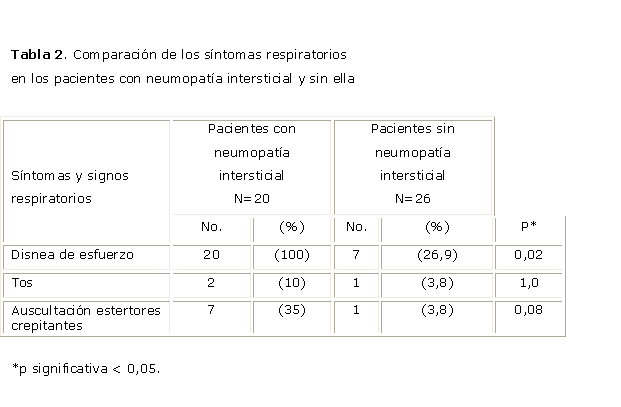
<body><![CDATA[<P>      <P><FONT FACE="Verdana" SIZE="2">De los s&iacute;ntomas cl&iacute;nicos estudiados    (<U><a href="/img/revistas/med/v47n2/t0207208.gif">tabla 2</a></U>), predomin&oacute;    la disnea de esfuerzo, la cual se present&oacute; en el 100 % de los pacientes    con neumopat&iacute;a intersticial, este hallazgo fue estad&iacute;sticamente    significativo (p = 0,02). </FONT>      
<P>      <P><FONT FACE="Verdana" SIZE="2">La funci&oacute;n respiratoria estuvo afectada    en el 75 % de los pacientes con neumopat&iacute;a intersticial y con un patr&oacute;n    restrictivo (<U><a href="/img/revistas/med/v47n2/t0307208.gif">tabla 3</a></U>).    </FONT>      
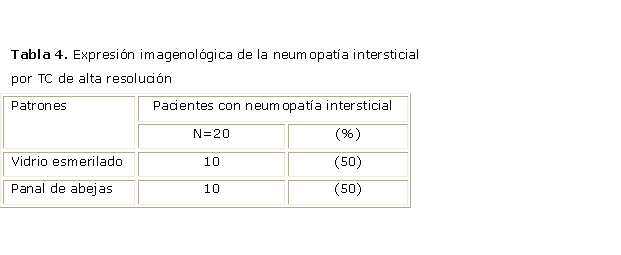
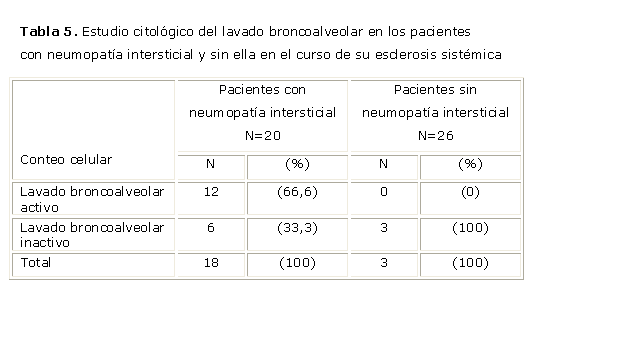
<P>      <P><FONT FACE="Verdana" SIZE="2">De los 20 pacientes en los que la TAC de pulm&oacute;n    fue positiva, el 50 % tuvo un patr&oacute;n en vidrio esmerilado y el 50 % restante    un patr&oacute;n en panal de abejas. </FONT>      <P>      <P><FONT FACE="Verdana" SIZE="2">En la <U><a href="/img/revistas/med/v47n2/t0407208.gif">tabla    4</a>,</U> se observa que el 66,6 % de los pacientes con neumopat&iacute;a intersticial    por TAC (patr&oacute;n en vidrio esmerilado y patr&oacute;n en panal de abejas),    tuvieron un lavado broncoalveolar activo. </FONT>      
<P>      <P><FONT FACE="Verdana" SIZE="2">El 88,8 % de los pacientes con patr&oacute;n    en vidrio esmerilado tuvieron un lavado broncoalveolar activo (<U><a href="/img/revistas/med/v47n2/t0507208.gif">tabla    5</a>)</U>.</FONT>      
]]></body>
<body><![CDATA[<P>&nbsp;      <P>      <P>      <P><FONT FACE="Verdana" SIZE="3"><B>DISCUSI&Oacute;N</B> </FONT>      <P>      <P><FONT FACE="Verdana" SIZE="2">Los datos demogr&aacute;ficos reflejan el predominio    del sexo femenino, a edades medias de la vida, sin distinci&oacute;n de raza,    como est&aacute; descrito que se comporta la esclerosis sist&eacute;mica en    otras latitudes.<SUP>15,16</SUP> </FONT>      <P>      <P><FONT FACE="Verdana" SIZE="2">La neumopat&iacute;a intersticial estuvo presente    en un porcentaje similar a lo reportado por otros estudios que plantean que    aproximadamente el 40 % de los pacientes con esclerosis sist&eacute;mica tienen    neumopat&iacute;a intersticial y constituye la causa principal de morbilidad    y mortalidad.<SUP>7,17,18</SUP> La TC de alta resoluci&oacute;n es la t&eacute;cnica    est&aacute;ndar, apropiada, no invasiva establecida para el diagn&oacute;stico;    sus patrones son medios pron&oacute;sticos del aspecto histol&oacute;gico, progresi&oacute;n    y respuesta al tratamiento.<SUP>13,19, 20</SUP> </FONT>      <P>      <P><FONT FACE="Verdana" SIZE="2">La disnea de esfuerzo estuvo presente en todos    los pacientes con neumopat&iacute;a intersticial, importante a tener en cuenta    si valoramos lo referido por investigadores que plantean que los pacientes con    esclerosis sist&eacute;mica y disnea, aunque tengan una corta duraci&oacute;n,    enfermedad cut&aacute;nea limitada y negatividad del anticuerpo anti SCL-70    pueden tener una alveolitis.<SUP>21, 22 </SUP>La presencia en nuestro estudio    de 2 pacientes con forma limitada (s&iacute;ndrome de CREST) y alveolito reafirma    lo antes mencionado. </FONT>      ]]></body>
<body><![CDATA[<P>      <P><FONT FACE="Verdana" SIZE="2">La presencia de un alto n&uacute;mero de pacientes    con neumopat&iacute;a intersticial y funci&oacute;n pulmonar anormal (patr&oacute;n    restrictivo) es de mucho valor teniendo en cuenta que en los pacientes sin neumopat&iacute;a    predomina una funci&oacute;n pulmonar normal. La presencia de una funci&oacute;n    pulmonar anormal es reportada entre el 45 -100 % y un patr&oacute;n restrictivo    severo se asocia a disnea, anticuerpo anti SCL-70 y desarrollo de fibrosis pulmonar.<SUP>23-25</SUP>    </FONT>      <P>      <P><FONT FACE="Verdana" SIZE="2">Del total de pacientes con diagn&oacute;stico    de neumopat&iacute;a intersticial, a 18 se le realiz&oacute; broncoscopia y    estudio citol&oacute;gico del lavado broncoalveolar y se obtuvo un porcentaje    de lavado activo muy cercano a lo descrito por otros autores que enuncian que    el lavado broncoalveolar identifica una alveolitis activa por definici&oacute;n    en el 70 % de los pacientes.<SUP>18,26,27</SUP> Se realiz&oacute; adem&aacute;s    broncoscopia y lavado broncoalveolar a 3 pacientes con TAC negativa y el resultado    fue un lavado inactivo. </FONT>      <P>      <P><FONT FACE="Verdana" SIZE="2">El presente estudio muestra una alta concordancia    entre la TC y el estudio citol&oacute;gico del lavado broncoalveolar, hecho    de inestimable valor, teniendo en cuenta lo descrito por otros autores que plantean    que la alveolitis es el momento clave para el diagn&oacute;stico y tratamiento    de la neumopat&iacute;a intersticial, esta se refleja por un aumento en la celularidad    del lavado broncoalveolar (lavado activo) y la presencia de un patr&oacute;n    en vidrio esmerilado en la TC de alta resoluci&oacute;n.<SUP>26-28</SUP> En    el estudio se encontr&oacute;, adem&aacute;s, que en un grupo de pacientes con    patr&oacute;n en panal de abejas tienen un lavado broncoalveolar activo, lo    cual es de importancia en el momento de decidir conducta terap&eacute;utica,    porque si es cierto que el patr&oacute;n en panal de abejas se corresponde con    la fibrosis pulmonar establecida, este resultado evidencia que existe actividad    inflamatoria a&uacute;n y, por tanto, la conducta terap&eacute;utica es distinta.    Estos resultados del trabajo se corresponden con lo descrito por algunos investigadores    de que la TAC de alta resoluci&oacute;n es sensible en la detecci&oacute;n de    neumopat&iacute;a intersticial pero no puede sustituir al lavado broncoalveolar    en la valoraci&oacute;n completa de la actividad inflamatoria.<SUP>20,29</SUP><B><I>    </I></B>Una limitaci&oacute;n del estudio constituye no haber podido realizar    broncoscopia y estudio citol&oacute;gico del lavado broncoalveolar a todos los    pacientes. </FONT>      <P>      <P><FONT FACE="Verdana" SIZE="2">En conclusi&oacute;n, la neumopat&iacute;a intersticial    se expres&oacute; en un alto porcentaje de nuestros pacientes, la disnea de    esfuerzo fue el s&iacute;ntoma m&aacute;s frecuente, predomin&oacute; el patr&oacute;n    restrictivo de afectaci&oacute;n funcional pulmonar, la TC y el estudio citol&oacute;gico    del lavado broncoalveolar constituyeron herramientas clave para el diagn&oacute;stico    precoz de neumopat&iacute;a intersticial en la esclerosis sist&eacute;mica.    </FONT>      <P>&nbsp;      <P>      ]]></body>
<body><![CDATA[<P>      <P>      <P><FONT FACE="Verdana" SIZE="3"><B>REFERENCIAS BIBLIOGR&Aacute;FICAS</B> </FONT>      <P>      <!-- ref --><P><FONT FACE="Verdana" SIZE="2">1. Steen VD, Medsger TA. Severe organ involvement    in systemic sclerosis with diffuse scleroderma. Arthritis Rheum. 2000;43:1074-84.    </FONT>      <!-- ref --><P><FONT FACE="Verdana" SIZE="2">2. Silver RM. Scleroderma clinical problems the    lungs. Rheum Dis Clin North Am. 1996;22:825-40. </FONT>      <!-- ref --><P><FONT FACE="Verdana" SIZE="2">3. Steen V. The lung in Systemic sclerosis. J    Clin Rheumatol. 2005;11(1):40-6. </FONT>      <!-- ref --><P><FONT FACE="Verdana" SIZE="2">4. Morelli S, Barbieri C, Segrecia A. Relationship    between cutaneous and pulmonary involvement in systemic sclerosis. J Rheumatol.    1997;24:81-5. </FONT>      <!-- ref --><P><FONT FACE="Verdana" SIZE="2">5. Clements PJ, Roth MD, Elashoff R, Tashkin    DP, Goldin J, Silver RM. Scleroderma Lung Study (SLS): Differences in the presentation    and course of patients with limited versus diffuse systemic sclerosis. Ann Rheum    Dis. 2007;66(12):1641-7. </FONT>      <!-- ref --><P><FONT FACE="Verdana" SIZE="2">6. Steen VD, Conte C, Owens GR, Medsger TA Jr.    Severe restrictive lung disease in systemic sclerosis. Arthritis Rheum. 1994;37:1283-9.    </FONT>      <!-- ref --><P><FONT FACE="Verdana" SIZE="2">7. Kristin BH, Richard M, Silver MD. Clinical    aspects of lung involvements: Lessons from idiopathic pulmonary fibrosis and    scleroderma lung study. Curr Rheumatol Reports. 2005;7:135-41. </FONT>      <!-- ref --><P><FONT FACE="Verdana" SIZE="2">8. LeRoy EC, Black CM, Fleischmajer R. Scleroderma    (systemic sclerosis): classification, subsets and pathogenesis. J Rheumatol.    1988;15:202-5. </FONT>      <!-- ref --><P><FONT FACE="Verdana" SIZE="2">9. Subcommittee for Scleroderma Criteria of the    American Rheumatism Association Diagnostic and Therapeutic Criteria Commetec.    Preliminary criteria for the classification of systemic sclerosis (scleroderma).    Arthritis Rheum. 1980;23:581-90. </FONT>      <!-- ref --><P><FONT FACE="Verdana" SIZE="2">10. Brennan P, Silman A, Black C. Reliability    of skin involvement measures in scleroderma. Br J Rheumatol. 1992;31:457-60.    </FONT>      <!-- ref --><P><FONT FACE="Verdana" SIZE="2">11. Mahler DA, Weinberg DH, Wells CK, Feistein    AR. The measurement of dyspnea, contents: interobserver agreement and physiologic    correlates of two new clinical indixes. Chest. 1984;85:751-8. </FONT>      <!-- ref --><P><FONT FACE="Verdana" SIZE="2">12. Grapo RO, Morris AH, Gardner RM. Reference    sprometric values using techniques and equipment that meet ATS recommendations.    Am Rev Respir Dis. 1981;123:659-64. </FONT>      <!-- ref --><P><FONT FACE="Verdana" SIZE="2">13. Warrick I, Silver Rm. Hight resolution computed    tomography in early scleroderma lung disease. J Rheumatol. 1991;18:1520-28.    </FONT>      <!-- ref --><P><FONT FACE="Verdana" SIZE="2">14. American Thoracic Society: Idiopathic pulmonary    fibrosis: diagnosis and treatment international consensus statement, American    Thoracic Society (ATS) and the European Respiratory Society (ERS). Am J Respir    Crit Care Med. 2000;161:646-64. </FONT>      <!-- ref --><P><FONT FACE="Verdana" SIZE="2">15. Mayes MD. Scleroderma epidemiology. Rheum    Dis Clin North Am. 2003;29:239-54. </FONT>      <!-- ref --><P><FONT FACE="Verdana" SIZE="2">16. Rojas-Serrano J. Epidemiologia. Diferencias    etnicas en la esclerosis sist&eacute;mica. Reumatol Clin. 2006;2 Supl3:s16-9.    </FONT>      <!-- ref --><P><FONT FACE="Verdana" SIZE="2">17. White B. Interstitial lung disease in scleroderma.    Rheum Dis Clin North Am. 2003;29(2):371-90. </FONT>      <!-- ref --><P><FONT FACE="Verdana" SIZE="2">18. Disai SR, Veerragharan S. CT features of    lung disease in patients with systemic sclerosis: comparison with Idiopatic    pulmonary fibrosis and nonspecific interstitial pneumonia. Radiology. 2004;    Aug;232(2):560-7. </FONT>      <!-- ref --><P><FONT FACE="Verdana" SIZE="2">19. Ool Gc, Mok MY, Tsang KW. Interstitial lung    disease in systemic sclerosis. Acta Radiolog. 2003;44:258-64. </FONT>      <!-- ref --><P><FONT FACE="Verdana" SIZE="2">20. Clements PJ. Regional differences in bronchoalveolar    lavage in toraxic hight resolution computed tomography result in dyspneic patients    with systems sclerosis. Arthrits Rheum. 2004;50:1909-17. </FONT>      <!-- ref --><P><FONT FACE="Verdana" SIZE="2">21. Tashkin DP, Clements P, Goldin J. The scleroderma    lung study (SLS): baseline features and dyspnea_lung function correlations.    J Respir Crit Care Med. 2004;169:A225. </FONT>      <!-- ref --><P><FONT FACE="Verdana" SIZE="2">22. Furst DE, Clement PJ, Tashkin D, Elashoff    R. Among a group of patients with dyspnea and alveolitis entering the scleroderma    lung study (SLS), a surprising proportion have limited SSc (LSSc). Arthritis    Rheum. 2005;52(2):592-600. </FONT>      <!-- ref --><P><FONT FACE="Verdana" SIZE="2">23. Jacobson S. A longitudinal of pulmonary function    in Danish patients with systemic sclerosis. Clin Rheumatol. 1997;16:384-90.    </FONT>      <!-- ref --><P><FONT FACE="Verdana" SIZE="2">24. White B, Moore WC, Wigley FM, Xiao HQ, Wise    RA. Cyclophosphamide is associated with pulmonary function and survival benefit    in patients with scleroderma and alveolitos. Ann Intern Med. Jun 2000;132(12):947-54.    </FONT>      <!-- ref --><P><FONT FACE="Verdana" SIZE="2">25. Khana D, Clements Pj, Furst DE. Correlation    of the degree of dyspnea with health-related quality of life, funtional abilities,    and diffusing capacity for carbon monoxide in patients with systemic sclerosis    and active alveolitis: results from the scleroderma lung study. Arthritis Rheum.    2005;52:592-600. </FONT>      <!-- ref --><P><FONT FACE="Verdana" SIZE="2">26. Silver R, Goldin JG, Strange C. Alveolitis    determination in scleroderma lung disease: CT or bronchoalveolar lavage (BAL).    Am. J Resp Crit Care Med. 2004;169:A227. </FONT>      <!-- ref --><P><FONT FACE="Verdana" SIZE="2">27. Strange C, Bolster MB, Roth MD, Silver RM,    Theodore A, Goldin J. The scleroderma lung study research group bronchoalveolar    lavage and response to cyclophosphamide in scleroderma interstitial lung disease.    Am J Respir Crit Care Med. Jan 2008;177(1):91-8. </FONT>      <!-- ref --><P><FONT FACE="Verdana" SIZE="2">28. Shah RM, Jimenez S, Wechsler R. Significance    of ground-glass opacity on HRCT in long-term follow-up of patients with systemic    sclerosis. J Thorac Imaging. May 2007;22(2):120-4. </FONT>      <!-- ref --><P><FONT FACE="Verdana" SIZE="2">29. Latsy PJ, Wells AU. Evaluation and management    of alveolits and interstitial lung desease in scleroderma. Curr Opin Rheumatol.    2003;15:748-55. </FONT>      <P>&nbsp;      <P>&nbsp;      <P>      <P>      <P><FONT FACE="Verdana" SIZE="2">Recibido: 27 de marzo de 2008.     <br>   Aprobado: 29 de mayo de 2008. </FONT>      <P>&nbsp;      ]]></body>
<body><![CDATA[<P>&nbsp;      <P>      <P>      <P><FONT FACE="Verdana" SIZE="2"><I>Dr. Dionisio P&eacute;rez Campos. </I>Hospital    Clinicoquir&uacute;rgico &quot;Hermanos Ameijeiras&quot; San L&aacute;zaro No.    701 entre Belascoa&iacute;n y Marqu&eacute;s Gonz&aacute;lez, Centro Habana,    Ciudad de La Habana, Cuba. CP 10300. Correo electr&oacute;nico <a href="mailto:dionisio.perez@infomed.sld.cu%20">dionisio.perez@infomed.sld.cu    </a></FONT>  </font>       ]]></body><back>
<ref-list>
<ref id="B1">
<label>1</label><nlm-citation citation-type="journal">
<person-group person-group-type="author">
<name>
<surname><![CDATA[Steen]]></surname>
<given-names><![CDATA[VD]]></given-names>
</name>
<name>
<surname><![CDATA[Medsger]]></surname>
<given-names><![CDATA[TA]]></given-names>
</name>
</person-group>
<article-title xml:lang="en"><![CDATA[Severe organ involvement in systemic sclerosis with diffuse scleroderma]]></article-title>
<source><![CDATA[Arthritis Rheum]]></source>
<year>2000</year>
<volume>43</volume>
<page-range>1074-84</page-range></nlm-citation>
</ref>
<ref id="B2">
<label>2</label><nlm-citation citation-type="journal">
<person-group person-group-type="author">
<name>
<surname><![CDATA[Silver]]></surname>
<given-names><![CDATA[RM]]></given-names>
</name>
</person-group>
<article-title xml:lang="en"><![CDATA[Scleroderma clinical problems the lungs]]></article-title>
<source><![CDATA[Rheum Dis Clin North Am]]></source>
<year>1996</year>
<volume>22</volume>
<page-range>825-40</page-range></nlm-citation>
</ref>
<ref id="B3">
<label>3</label><nlm-citation citation-type="journal">
<person-group person-group-type="author">
<name>
<surname><![CDATA[Steen]]></surname>
<given-names><![CDATA[V]]></given-names>
</name>
</person-group>
<article-title xml:lang="en"><![CDATA[The lung in Systemic sclerosis]]></article-title>
<source><![CDATA[J Clin Rheumatol]]></source>
<year>2005</year>
<volume>11</volume>
<numero>1</numero>
<issue>1</issue>
<page-range>40-6</page-range></nlm-citation>
</ref>
<ref id="B4">
<label>4</label><nlm-citation citation-type="journal">
<person-group person-group-type="author">
<name>
<surname><![CDATA[Morelli]]></surname>
<given-names><![CDATA[S]]></given-names>
</name>
<name>
<surname><![CDATA[Barbieri]]></surname>
<given-names><![CDATA[C]]></given-names>
</name>
<name>
<surname><![CDATA[Segrecia]]></surname>
<given-names><![CDATA[A]]></given-names>
</name>
</person-group>
<article-title xml:lang="en"><![CDATA[Relationship between cutaneous and pulmonary involvement in systemic sclerosis]]></article-title>
<source><![CDATA[J Rheumatol]]></source>
<year>1997</year>
<volume>24</volume>
<page-range>81-5</page-range></nlm-citation>
</ref>
<ref id="B5">
<label>5</label><nlm-citation citation-type="journal">
<person-group person-group-type="author">
<name>
<surname><![CDATA[Clements]]></surname>
<given-names><![CDATA[PJ]]></given-names>
</name>
<name>
<surname><![CDATA[Roth]]></surname>
<given-names><![CDATA[MD]]></given-names>
</name>
<name>
<surname><![CDATA[Elashoff]]></surname>
<given-names><![CDATA[R]]></given-names>
</name>
<name>
<surname><![CDATA[Tashkin]]></surname>
<given-names><![CDATA[DP]]></given-names>
</name>
<name>
<surname><![CDATA[Goldin]]></surname>
<given-names><![CDATA[J]]></given-names>
</name>
<name>
<surname><![CDATA[Silver]]></surname>
<given-names><![CDATA[RM]]></given-names>
</name>
</person-group>
<article-title xml:lang="en"><![CDATA[Scleroderma Lung Study (SLS): Differences in the presentation and course of patients with limited versus diffuse systemic sclerosis]]></article-title>
<source><![CDATA[Ann Rheum Dis]]></source>
<year>2007</year>
<volume>66</volume>
<numero>12</numero>
<issue>12</issue>
<page-range>1641-7</page-range></nlm-citation>
</ref>
<ref id="B6">
<label>6</label><nlm-citation citation-type="journal">
<person-group person-group-type="author">
<name>
<surname><![CDATA[Steen]]></surname>
<given-names><![CDATA[VD]]></given-names>
</name>
<name>
<surname><![CDATA[Conte]]></surname>
<given-names><![CDATA[C]]></given-names>
</name>
<name>
<surname><![CDATA[Owens]]></surname>
<given-names><![CDATA[GR]]></given-names>
</name>
<name>
<surname><![CDATA[Medsger]]></surname>
<given-names><![CDATA[TAJr]]></given-names>
</name>
</person-group>
<article-title xml:lang="en"><![CDATA[Severe restrictive lung disease in systemic sclerosis]]></article-title>
<source><![CDATA[Arthritis Rheum]]></source>
<year>1994</year>
<volume>37</volume>
<page-range>1283-9</page-range></nlm-citation>
</ref>
<ref id="B7">
<label>7</label><nlm-citation citation-type="journal">
<person-group person-group-type="author">
<name>
<surname><![CDATA[Kristin]]></surname>
<given-names><![CDATA[BH]]></given-names>
</name>
<name>
<surname><![CDATA[Richard]]></surname>
<given-names><![CDATA[M]]></given-names>
</name>
<name>
<surname><![CDATA[Silver]]></surname>
<given-names><![CDATA[MD]]></given-names>
</name>
</person-group>
<article-title xml:lang="en"><![CDATA[Clinical aspects of lung involvements: Lessons from idiopathic pulmonary fibrosis and scleroderma lung study]]></article-title>
<source><![CDATA[Curr Rheumatol Reports]]></source>
<year>2005</year>
<volume>7</volume>
<page-range>135-41</page-range></nlm-citation>
</ref>
<ref id="B8">
<label>8</label><nlm-citation citation-type="journal">
<person-group person-group-type="author">
<name>
<surname><![CDATA[LeRoy]]></surname>
<given-names><![CDATA[EC]]></given-names>
</name>
<name>
<surname><![CDATA[Black]]></surname>
<given-names><![CDATA[CM]]></given-names>
</name>
<name>
<surname><![CDATA[Fleischmajer]]></surname>
<given-names><![CDATA[R]]></given-names>
</name>
</person-group>
<article-title xml:lang="en"><![CDATA[Scleroderma (systemic sclerosis): classification, subsets and pathogenesis]]></article-title>
<source><![CDATA[J Rheumatol]]></source>
<year>1988</year>
<volume>15</volume>
<page-range>202-5</page-range></nlm-citation>
</ref>
<ref id="B9">
<label>9</label><nlm-citation citation-type="journal">
<collab>Subcommittee for Scleroderma Criteria of the American Rheumatism Association Diagnostic and Therapeutic Criteria Commetec</collab>
<article-title xml:lang="en"><![CDATA[Preliminary criteria for the classification of systemic sclerosis (scleroderma)]]></article-title>
<source><![CDATA[Arthritis Rheum]]></source>
<year>1980</year>
<volume>23</volume>
<page-range>581-90</page-range></nlm-citation>
</ref>
<ref id="B10">
<label>10</label><nlm-citation citation-type="journal">
<person-group person-group-type="author">
<name>
<surname><![CDATA[Brennan]]></surname>
<given-names><![CDATA[P]]></given-names>
</name>
<name>
<surname><![CDATA[Silman]]></surname>
<given-names><![CDATA[A]]></given-names>
</name>
<name>
<surname><![CDATA[Black]]></surname>
<given-names><![CDATA[C]]></given-names>
</name>
</person-group>
<article-title xml:lang="en"><![CDATA[Reliability of skin involvement measures in scleroderma]]></article-title>
<source><![CDATA[Br J Rheumatol]]></source>
<year>1992</year>
<volume>31</volume>
<page-range>457-60</page-range></nlm-citation>
</ref>
<ref id="B11">
<label>11</label><nlm-citation citation-type="journal">
<person-group person-group-type="author">
<name>
<surname><![CDATA[Mahler]]></surname>
<given-names><![CDATA[DA]]></given-names>
</name>
<name>
<surname><![CDATA[Weinberg]]></surname>
<given-names><![CDATA[DH]]></given-names>
</name>
<name>
<surname><![CDATA[Wells]]></surname>
<given-names><![CDATA[CK]]></given-names>
</name>
<name>
<surname><![CDATA[Feistein]]></surname>
<given-names><![CDATA[AR]]></given-names>
</name>
</person-group>
<article-title xml:lang="en"><![CDATA[The measurement of dyspnea, contents: interobserver agreement and physiologic correlates of two new clinical indixes]]></article-title>
<source><![CDATA[Chest]]></source>
<year>1984</year>
<volume>85</volume>
<page-range>751-8</page-range></nlm-citation>
</ref>
<ref id="B12">
<label>12</label><nlm-citation citation-type="journal">
<person-group person-group-type="author">
<name>
<surname><![CDATA[Grapo]]></surname>
<given-names><![CDATA[RO]]></given-names>
</name>
<name>
<surname><![CDATA[Morris]]></surname>
<given-names><![CDATA[AH]]></given-names>
</name>
<name>
<surname><![CDATA[Gardner]]></surname>
<given-names><![CDATA[RM]]></given-names>
</name>
</person-group>
<article-title xml:lang="en"><![CDATA[Reference sprometric values using techniques and equipment that meet ATS recommendations]]></article-title>
<source><![CDATA[Am Rev Respir Dis]]></source>
<year>1981</year>
<volume>123</volume>
<page-range>659-64</page-range></nlm-citation>
</ref>
<ref id="B13">
<label>13</label><nlm-citation citation-type="journal">
<person-group person-group-type="author">
<name>
<surname><![CDATA[Warrick]]></surname>
<given-names><![CDATA[I]]></given-names>
</name>
<name>
<surname><![CDATA[Silver]]></surname>
<given-names><![CDATA[Rm]]></given-names>
</name>
</person-group>
<article-title xml:lang="en"><![CDATA[Hight resolution computed tomography in early scleroderma lung disease]]></article-title>
<source><![CDATA[J Rheumatol]]></source>
<year>1991</year>
<volume>18</volume>
<page-range>1520-28</page-range></nlm-citation>
</ref>
<ref id="B14">
<label>14</label><nlm-citation citation-type="journal">
<collab>American Thoracic Society</collab>
<article-title xml:lang="en"><![CDATA[Idiopathic pulmonary fibrosis: diagnosis and treatment international consensus statement, American Thoracic Society (ATS) and the European Respiratory Society (ERS)]]></article-title>
<source><![CDATA[Am J Respir Crit Care Med]]></source>
<year>2000</year>
<volume>161</volume>
<page-range>646-64</page-range></nlm-citation>
</ref>
<ref id="B15">
<label>15</label><nlm-citation citation-type="journal">
<person-group person-group-type="author">
<name>
<surname><![CDATA[Mayes]]></surname>
<given-names><![CDATA[MD]]></given-names>
</name>
</person-group>
<article-title xml:lang="en"><![CDATA[Scleroderma epidemiology]]></article-title>
<source><![CDATA[Rheum Dis Clin North Am]]></source>
<year>2003</year>
<volume>29</volume>
<page-range>239-54</page-range></nlm-citation>
</ref>
<ref id="B16">
<label>16</label><nlm-citation citation-type="journal">
<person-group person-group-type="author">
<name>
<surname><![CDATA[Rojas-Serrano]]></surname>
<given-names><![CDATA[J]]></given-names>
</name>
</person-group>
<article-title xml:lang="es"><![CDATA[Epidemiologia: Diferencias etnicas en la esclerosis sistémica]]></article-title>
<source><![CDATA[Reumatol Clin]]></source>
<year>2006</year>
<volume>2</volume>
<numero>^s3</numero>
<issue>^s3</issue>
<supplement>3</supplement>
<page-range>s16-9</page-range></nlm-citation>
</ref>
<ref id="B17">
<label>17</label><nlm-citation citation-type="journal">
<person-group person-group-type="author">
<name>
<surname><![CDATA[White]]></surname>
<given-names><![CDATA[B]]></given-names>
</name>
</person-group>
<article-title xml:lang="en"><![CDATA[Interstitial lung disease in scleroderma]]></article-title>
<source><![CDATA[Rheum Dis Clin North Am]]></source>
<year>2003</year>
<volume>29</volume>
<numero>2</numero>
<issue>2</issue>
<page-range>371-90</page-range></nlm-citation>
</ref>
<ref id="B18">
<label>18</label><nlm-citation citation-type="journal">
<person-group person-group-type="author">
<name>
<surname><![CDATA[Disai]]></surname>
<given-names><![CDATA[SR]]></given-names>
</name>
<name>
<surname><![CDATA[Veerragharan]]></surname>
<given-names><![CDATA[S]]></given-names>
</name>
</person-group>
<article-title xml:lang="en"><![CDATA[CT features of lung disease in patients with systemic sclerosis: comparison with Idiopatic pulmonary fibrosis and nonspecific interstitial pneumonia]]></article-title>
<source><![CDATA[Radiology]]></source>
<year>2004</year>
<volume>232</volume>
<numero>2</numero>
<issue>2</issue>
<page-range>560-7</page-range></nlm-citation>
</ref>
<ref id="B19">
<label>19</label><nlm-citation citation-type="journal">
<person-group person-group-type="author">
<name>
<surname><![CDATA[Ool]]></surname>
<given-names><![CDATA[Gc]]></given-names>
</name>
<name>
<surname><![CDATA[Mok]]></surname>
<given-names><![CDATA[MY]]></given-names>
</name>
<name>
<surname><![CDATA[Tsang]]></surname>
<given-names><![CDATA[KW]]></given-names>
</name>
</person-group>
<article-title xml:lang="en"><![CDATA[Interstitial lung disease in systemic sclerosis]]></article-title>
<source><![CDATA[Acta Radiolog]]></source>
<year>2003</year>
<volume>44</volume>
<page-range>258-64</page-range></nlm-citation>
</ref>
<ref id="B20">
<label>20</label><nlm-citation citation-type="journal">
<person-group person-group-type="author">
<name>
<surname><![CDATA[Clements]]></surname>
<given-names><![CDATA[PJ]]></given-names>
</name>
</person-group>
<article-title xml:lang="en"><![CDATA[Regional differences in bronchoalveolar lavage in toraxic hight resolution computed tomography result in dyspneic patients with systems sclerosis]]></article-title>
<source><![CDATA[Arthrits Rheum]]></source>
<year>2004</year>
<volume>50</volume>
<page-range>1909-17</page-range></nlm-citation>
</ref>
<ref id="B21">
<label>21</label><nlm-citation citation-type="journal">
<person-group person-group-type="author">
<name>
<surname><![CDATA[Tashkin]]></surname>
<given-names><![CDATA[DP]]></given-names>
</name>
<name>
<surname><![CDATA[Clements]]></surname>
<given-names><![CDATA[P]]></given-names>
</name>
<name>
<surname><![CDATA[Goldin]]></surname>
<given-names><![CDATA[J]]></given-names>
</name>
</person-group>
<article-title xml:lang="en"><![CDATA[The scleroderma lung study (SLS): baseline features and dyspnea_lung function correlations]]></article-title>
<source><![CDATA[J Respir Crit Care Med]]></source>
<year>2004</year>
<volume>169</volume>
<page-range>A225</page-range></nlm-citation>
</ref>
<ref id="B22">
<label>22</label><nlm-citation citation-type="journal">
<person-group person-group-type="author">
<name>
<surname><![CDATA[Furst]]></surname>
<given-names><![CDATA[DE]]></given-names>
</name>
<name>
<surname><![CDATA[Clement]]></surname>
<given-names><![CDATA[PJ]]></given-names>
</name>
<name>
<surname><![CDATA[Tashkin]]></surname>
<given-names><![CDATA[D]]></given-names>
</name>
<name>
<surname><![CDATA[Elashoff]]></surname>
<given-names><![CDATA[R]]></given-names>
</name>
</person-group>
<article-title xml:lang="en"><![CDATA[Among a group of patients with dyspnea and alveolitis entering the scleroderma lung study (SLS), a surprising proportion have limited SSc (LSSc)]]></article-title>
<source><![CDATA[Arthritis Rheum]]></source>
<year>2005</year>
<volume>52</volume>
<numero>2</numero>
<issue>2</issue>
<page-range>592-600</page-range></nlm-citation>
</ref>
<ref id="B23">
<label>23</label><nlm-citation citation-type="journal">
<person-group person-group-type="author">
<name>
<surname><![CDATA[Jacobson]]></surname>
<given-names><![CDATA[S]]></given-names>
</name>
</person-group>
<article-title xml:lang="en"><![CDATA[A longitudinal of pulmonary function in Danish patients with systemic sclerosis]]></article-title>
<source><![CDATA[Clin Rheumatol]]></source>
<year>1997</year>
<volume>16</volume>
<page-range>384-90</page-range></nlm-citation>
</ref>
<ref id="B24">
<label>24</label><nlm-citation citation-type="journal">
<person-group person-group-type="author">
<name>
<surname><![CDATA[White]]></surname>
<given-names><![CDATA[B]]></given-names>
</name>
<name>
<surname><![CDATA[Moore]]></surname>
<given-names><![CDATA[WC]]></given-names>
</name>
<name>
<surname><![CDATA[Wigley]]></surname>
<given-names><![CDATA[FM]]></given-names>
</name>
<name>
<surname><![CDATA[Xiao]]></surname>
<given-names><![CDATA[HQ]]></given-names>
</name>
<name>
<surname><![CDATA[Wise]]></surname>
<given-names><![CDATA[RA]]></given-names>
</name>
</person-group>
<article-title xml:lang="en"><![CDATA[Cyclophosphamide is associated with pulmonary function and survival benefit in patients with scleroderma and alveolitos]]></article-title>
<source><![CDATA[Ann Intern Med]]></source>
<year>2000</year>
<volume>132</volume>
<numero>12</numero>
<issue>12</issue>
<page-range>947-54</page-range></nlm-citation>
</ref>
<ref id="B25">
<label>25</label><nlm-citation citation-type="journal">
<person-group person-group-type="author">
<name>
<surname><![CDATA[Khana]]></surname>
<given-names><![CDATA[D]]></given-names>
</name>
<name>
<surname><![CDATA[Clements]]></surname>
<given-names><![CDATA[Pj]]></given-names>
</name>
<name>
<surname><![CDATA[Furst]]></surname>
<given-names><![CDATA[DE]]></given-names>
</name>
</person-group>
<article-title xml:lang="en"><![CDATA[Correlation of the degree of dyspnea with health-related quality of life, funtional abilities, and diffusing capacity for carbon monoxide in patients with systemic sclerosis and active alveolitis: results from the scleroderma lung study]]></article-title>
<source><![CDATA[Arthritis Rheum]]></source>
<year>2005</year>
<volume>52</volume>
<page-range>592-600</page-range></nlm-citation>
</ref>
<ref id="B26">
<label>26</label><nlm-citation citation-type="journal">
<person-group person-group-type="author">
<name>
<surname><![CDATA[Silver]]></surname>
<given-names><![CDATA[R]]></given-names>
</name>
<name>
<surname><![CDATA[Goldin]]></surname>
<given-names><![CDATA[JG]]></given-names>
</name>
<name>
<surname><![CDATA[Strange]]></surname>
<given-names><![CDATA[C]]></given-names>
</name>
</person-group>
<article-title xml:lang="en"><![CDATA[Alveolitis determination in scleroderma lung disease: CT or bronchoalveolar lavage (BAL)]]></article-title>
<source><![CDATA[Am. J Resp Crit Care Med]]></source>
<year>2004</year>
<volume>169</volume>
<page-range>A227</page-range></nlm-citation>
</ref>
<ref id="B27">
<label>27</label><nlm-citation citation-type="journal">
<person-group person-group-type="author">
<name>
<surname><![CDATA[Strange]]></surname>
<given-names><![CDATA[C]]></given-names>
</name>
<name>
<surname><![CDATA[Bolster]]></surname>
<given-names><![CDATA[MB]]></given-names>
</name>
<name>
<surname><![CDATA[Roth]]></surname>
<given-names><![CDATA[MD]]></given-names>
</name>
<name>
<surname><![CDATA[Silver]]></surname>
<given-names><![CDATA[RM]]></given-names>
</name>
<name>
<surname><![CDATA[Theodore]]></surname>
<given-names><![CDATA[A]]></given-names>
</name>
<name>
<surname><![CDATA[Goldin]]></surname>
<given-names><![CDATA[J]]></given-names>
</name>
</person-group>
<article-title xml:lang="en"><![CDATA[The scleroderma lung study research group bronchoalveolar lavage and response to cyclophosphamide in scleroderma interstitial lung disease]]></article-title>
<source><![CDATA[Am J Respir Crit Care Med]]></source>
<year>2008</year>
<volume>177</volume>
<numero>1</numero>
<issue>1</issue>
<page-range>91-8</page-range></nlm-citation>
</ref>
<ref id="B28">
<label>28</label><nlm-citation citation-type="journal">
<person-group person-group-type="author">
<name>
<surname><![CDATA[Shah]]></surname>
<given-names><![CDATA[RM]]></given-names>
</name>
<name>
<surname><![CDATA[Jimenez]]></surname>
<given-names><![CDATA[S]]></given-names>
</name>
<name>
<surname><![CDATA[Wechsler]]></surname>
<given-names><![CDATA[R]]></given-names>
</name>
</person-group>
<article-title xml:lang="en"><![CDATA[Significance of ground-glass opacity on HRCT in long-term follow-up of patients with systemic sclerosis]]></article-title>
<source><![CDATA[J Thorac Imaging]]></source>
<year>2007</year>
<volume>22</volume>
<numero>2</numero>
<issue>2</issue>
<page-range>120-4</page-range></nlm-citation>
</ref>
<ref id="B29">
<label>29</label><nlm-citation citation-type="journal">
<person-group person-group-type="author">
<name>
<surname><![CDATA[Latsy]]></surname>
<given-names><![CDATA[PJ]]></given-names>
</name>
<name>
<surname><![CDATA[Wells]]></surname>
<given-names><![CDATA[AU]]></given-names>
</name>
</person-group>
<article-title xml:lang="en"><![CDATA[Evaluation and management of alveolits and interstitial lung desease in scleroderma]]></article-title>
<source><![CDATA[Curr Opin Rheumatol]]></source>
<year>2003</year>
<volume>15</volume>
<page-range>748-55</page-range></nlm-citation>
</ref>
</ref-list>
</back>
</article>