<?xml version="1.0" encoding="ISO-8859-1"?><article xmlns:mml="http://www.w3.org/1998/Math/MathML" xmlns:xlink="http://www.w3.org/1999/xlink" xmlns:xsi="http://www.w3.org/2001/XMLSchema-instance">
<front>
<journal-meta>
<journal-id>0034-7531</journal-id>
<journal-title><![CDATA[Revista Cubana de Pediatría]]></journal-title>
<abbrev-journal-title><![CDATA[Rev Cubana Pediatr]]></abbrev-journal-title>
<issn>0034-7531</issn>
<publisher>
<publisher-name><![CDATA[Centro Nacional de Información de Ciencias MédicasEditorial Ciencias Médicas]]></publisher-name>
</publisher>
</journal-meta>
<article-meta>
<article-id>S0034-75311999000400002</article-id>
<title-group>
<article-title xml:lang="es"><![CDATA[Validación de nuevos parámetros predictivos de infecciones bacterianas severas en niños febriles menores de 36 meses de edad]]></article-title>
</title-group>
<contrib-group>
<contrib contrib-type="author">
<name>
<surname><![CDATA[Álvarez Rodríguez]]></surname>
<given-names><![CDATA[Alicia]]></given-names>
</name>
<xref ref-type="aff" rid="A01"/>
</contrib>
<contrib contrib-type="author">
<name>
<surname><![CDATA[Ortiz Silva]]></surname>
<given-names><![CDATA[Orlando]]></given-names>
</name>
<xref ref-type="aff" rid="A01"/>
</contrib>
<contrib contrib-type="author">
<name>
<surname><![CDATA[Hernández Martínez]]></surname>
<given-names><![CDATA[Noelvis]]></given-names>
</name>
<xref ref-type="aff" rid="A01"/>
</contrib>
</contrib-group>
<aff id="A01">
<institution><![CDATA[,Hospital General Docente Aleida Fernandez Chardiet  ]]></institution>
<addr-line><![CDATA[Habana ]]></addr-line>
<country>Cuba</country>
</aff>
<pub-date pub-type="pub">
<day>00</day>
<month>12</month>
<year>1999</year>
</pub-date>
<pub-date pub-type="epub">
<day>00</day>
<month>12</month>
<year>1999</year>
</pub-date>
<volume>71</volume>
<numero>4</numero>
<fpage>197</fpage>
<lpage>204</lpage>
<copyright-statement/>
<copyright-year/>
<self-uri xlink:href="http://scielo.sld.cu/scielo.php?script=sci_arttext&amp;pid=S0034-75311999000400002&amp;lng=en&amp;nrm=iso"></self-uri><self-uri xlink:href="http://scielo.sld.cu/scielo.php?script=sci_abstract&amp;pid=S0034-75311999000400002&amp;lng=en&amp;nrm=iso"></self-uri><self-uri xlink:href="http://scielo.sld.cu/scielo.php?script=sci_pdf&amp;pid=S0034-75311999000400002&amp;lng=en&amp;nrm=iso"></self-uri><abstract abstract-type="short" xml:lang="es"><p><![CDATA[Se realizó una investigación descriptiva-prospectiva con el objetivo de validar nuestros criterios de riesgos en la identificación de la infección bacteriana severa (IBS) en niños febriles, para lo cual se establecieron las categorías de riesgos y se aplicaron en 215 niños febriles que habían ingresado por esta causa en un período de 12 meses. Se obtuvo que el 54,9 % de los niños se clasificaron como bajo riesgo y el 71,6 % sin IBS. No obstante, la frecuencia de dicha afección resultó elevada, 28,4 %, con predominio de las infecciones urinarias. Se triplicó el riesgo de padecer IBS en los niños con aspecto tóxico, temperatura mayor o igual a 39<FONT FACE=Symbol>&deg;</FONT>C, test clínico de Bonadio mayor que 8, cituria mayor o igual a 10 000 células/mm³, con diferencias significativas entre las categorías de riesgo y la IBS, y fue mayor la frecuencia en los niños tóxicos y de riesgos, 92,8 y 54,3 %, respectivamente. Uno de cada 4 niños febriles presentó IBS. Se introdujo la categoría "Riesgo" y se recomienda un flujograma de evaluación.]]></p></abstract>
<abstract abstract-type="short" xml:lang="en"><p><![CDATA[A descriptive-prospective research study was carried out to validate our risk criteria in the identification of severe bacterial infection in febrile young children. For this purpose, risk categories were set and applied in 215 febrile children who had been admitted in a period of 12 months. 54.9 % of febrile children were at low risk for serious bacterial infections whereas 71.6 % presented no risk at all. Nevertheless, the frequency of this affection was high, accounting for 28.4 % with predominance of urinary infections. The risk of getting SBI trippled in children who shared toxic look, temperature greater than or equal to 39 <FONT FACE=Symbol>&deg;</FONT>C, Bonadium clinical test higher than 8, cyturia values over or equal to 10 000 cell/mm³, significant differences between risk and SBI categories and the highest frequency of such affection found in toxic children and in children at low risk (92.8 vs 54.3 %). One in every four febrile children had SBI. The Risk category was introduced and an evaluating flow chart is recommended.]]></p></abstract>
<kwd-group>
<kwd lng="es"><![CDATA[FIEBRE DE ORIGEN DESCONOCIDO]]></kwd>
<kwd lng="es"><![CDATA[INFECCIONES BACTERIANAS]]></kwd>
<kwd lng="en"><![CDATA[FEVER OF UNKNOWN ORIGIN]]></kwd>
<kwd lng="en"><![CDATA[BACTERIAL INFECTIONS]]></kwd>
</kwd-group>
</article-meta>
</front><body><![CDATA[ <p>Hospital General Docente "Aleida Fern&aacute;ndez Chardiet", G&uuml;ines,  la Habana  <h2>  Validaci&oacute;n de nuevos par&aacute;metros predictivos de infecciones  bacterianas severas en ni&ntilde;os febriles menores de 36 meses de edad</h2>  <i><a href="#*">Dra. Alicia &Aacute;lvarez Rodr&iacute;guez,<sup>1</sup>  Dr. Orlando Ortiz Silva<sup>2</sup> y Dr. Noelvis Hern&aacute;ndez Mart&iacute;nez<sup>3</sup></a></i>  <h4>  RESUMEN</h4>  Se realiz&oacute; una investigaci&oacute;n descriptiva-prospectiva con  el objetivo de validar nuestros criterios de riesgos en la identificaci&oacute;n  de la infecci&oacute;n bacteriana severa (IBS) en ni&ntilde;os febriles,  para lo cual se establecieron las categor&iacute;as de riesgos y se aplicaron  en 215 ni&ntilde;os febriles que hab&iacute;an ingresado por esta causa  en un per&iacute;odo de 12 meses. Se obtuvo que el 54,9 % de los ni&ntilde;os  se clasificaron como bajo riesgo y el 71,6 % sin IBS. No obstante, la frecuencia  de dicha afecci&oacute;n result&oacute; elevada, 28,4 %, con predominio  de las infecciones urinarias. Se triplic&oacute; el riesgo de padecer IBS  en los ni&ntilde;os con aspecto t&oacute;xico, temperatura mayor o igual  a 39<font face="Symbol"> &deg;</font>C, <i>test</i> cl&iacute;nico de Bonadio  mayor que 8, cituria mayor o igual a 10 000 c&eacute;lulas/mm<sup>3</sup>,  con diferencias significativas entre las categor&iacute;as de riesgo y  la IBS, y fue mayor la frecuencia en los ni&ntilde;os t&oacute;xicos y  de riesgos, 92,8 y 54,3 %, respectivamente. Uno de cada 4 ni&ntilde;os  febriles present&oacute; IBS. Se introdujo la categor&iacute;a "Riesgo"  y se recomienda un flujograma de evaluaci&oacute;n.      <p><i>Descriptores DeCS: </i>FIEBRE DE ORIGEN DESCONOCIDO/etiolog&iacute;a;  INFECCIONES BACTERIANAS/diagn&oacute;stico.      <p>El objetivo fundamental de la evaluaci&oacute;n del ni&ntilde;o con  fiebre sin causa aparente, est&aacute; en la posibilidad de determinar  el riesgo que tienen de padecer de infecciones bacterianas severas (IBS).<sup>1,2</sup>      <p>Numerosos son los investigadores que han estudiado al infante febril,  sobre todo en la d&eacute;cada del 80 al 90 para coincidir en general que  aunque no existen <i>test</i>, escalas o par&aacute;metros infalibles,  la mejor opci&oacute;n para la identificaci&oacute;n de las IBS est&aacute;  en la combinaci&oacute;n de par&aacute;metros cl&iacute;nicos que tienen  una alta sensibilidad, como predictores con complementarios de laboratorios.<sup>2-12</sup>      <p>Se calcula que aproximadamente la mitad de las consultas de urgencia  pedi&aacute;tricas corresponde a ni&ntilde;os menores de 36 meses de edad,  de los cuales alrededor del 15 al 25 % consultan por fiebre, y se estima  que entre el 3 al 7 % de ellos pueden presentar bacteriemia oculta y del  5 al 15 % de &eacute;stos pueden desarrollar IBS;<sup>1,2,8</sup> desafortunadamente  es dif&iacute;cil predecir cu&aacute;l ser&aacute; la evoluci&oacute;n  de un ni&ntilde;o febril;<sup>2,9,10</sup> de ah&iacute;, el valor pr&aacute;ctico  que tiene la determinaci&oacute;n del riesgo en cada ni&ntilde;o, lo que  nos motiv&oacute; a validar nuestros propios criterios de riesgo en la  b&uacute;squeda de disminuir la morbilidad y mortalidad por IBS en el ni&ntilde;o  de 29 d&iacute;as a 36 meses de edad.  <h4>  M&Eacute;TODOS</h4>  Se realiz&oacute; una investigaci&oacute;n de tipo descriptiva-prospectiva  en un universo de 215 ni&ntilde;os febriles de 29 d&iacute;as a 36 meses,  los cuales ingresaron desde el 1ro. de septiembre de 1996 hasta el 31 de  agosto de 1997 y cuyo motivo fue fiebre sin causa determinada en el momento  de su visita al Cuerpo de Guardia. Se defini&oacute; la fiebre como la  elevaci&oacute;n de la temperatura axilar de 37,5 <font face="Symbol">&deg;</font>C  o m&aacute;s, referida o constatada.      <p>Los ni&ntilde;os febriles se valoraron por el especialista de pediatr&iacute;a  de mayor jerarqu&iacute;a en el Cuerpo de Guardia, quien realiz&oacute;  una evaluaci&oacute;n cl&iacute;nica minuciosa a cada paciente, que incluy&oacute;  anamnesis, examen f&iacute;sico, aplicaci&oacute;n del <i>test</i> cl&iacute;nico  de Bonadio (anexo) y complementarios de laboratorios, tales como: leucograma  y cituria en los ni&ntilde;os de 29 d&iacute;as a 11 meses y leucograma  en los mayores de 12 meses si presentaban temperaturas iguales o mayores  de 39 <font face="Symbol">&deg;</font>C. Posteriormente los especialistas  de pediatr&iacute;a identificaron el riesgo de cada ni&ntilde;o y consideraron  3 grupos: bajo riesgo, riesgo, t&oacute;xico; y tomaron conductas acordes  con la categor&iacute;a de riesgo identificadas.      <p>A) Ni&ntilde;os de 29 d&iacute;as a 11 meses:  <ul>      <li>  Bajo riesgo: 1. Temperatura de menos de 39 <font face="Symbol">&deg;</font>C.  2. Buen aspecto cl&iacute;nico. 3. Buen estado de salud previo. 4. Leucograma  normal: 5-15x10<sup>9</sup> c&eacute;lulas/litros (c/L). 5. Cituria negativa  <font face="Symbol">&pound;</font>  10 000 c&eacute;lulas/mm<sup>3 </sup>(c/mm<sup>3</sup>). 6. <i>Test </i>cl&iacute;nico  de Bonadio. 7. Buen estado nutricional.</li>      </ul>    <dir>  <dir>&nbsp;</dir>  </dir>  Se consider&oacute; con buen aspecto al ni&ntilde;o con buena coloraci&oacute;n,  activo, alerta, y adecuada respuesta a los est&iacute;mulos. El estado  de salud previo se evalu&oacute; de bueno cuando el ni&ntilde;o cumpli&oacute;  los siguientes par&aacute;metros: 1. En los ni&ntilde;os menores de 3 meses  (peso al nacer 2 500 g o m&aacute;s, nacido a t&eacute;rmino (37 a 42 semanas)  y no presentar enfermedades graves. 2. No padecer de enfermedades cr&oacute;nicas.  3. No uso de antibi&oacute;tico 72 horas antes o ingreso en los 7 d&iacute;as  previos. 4. Buen estado nutricional.      <p>El <i>test </i>cl&iacute;nico de Bonadio permiti&oacute; diferenciar  los ni&ntilde;os con aspecto t&oacute;xico de aqu&eacute;llos con buen  aspecto (anexo).<sup>13</sup> Su uso es controversial. Se us&oacute; como  un par&aacute;metro m&aacute;s.      ]]></body>
<body><![CDATA[<br>&nbsp;  <ul>      <li>  <i>Riesgo</i>: Correspondieron con aquellos ni&ntilde;os que sin tener  un aspecto t&oacute;xico no cumplieron alguno de los par&aacute;metros  anteriores y/o o <i>test </i>cl&iacute;nico de Bonadio entre 8 y 10.</li>        <li>  <i>T&oacute;xicos:</i> Se incluyeron los ni&ntilde;os con taquicardia para  su edad, polipnea, pobre perfusi&oacute;n, letargia. Seg&uacute;n <i>Bone</i>  presentan sepsis en cualquiera de sus etapas cl&iacute;nicas<sup>14-16  </sup>y/o  <i>test</i>  cl&iacute;nico de Bonadio > 10.</li>      </ul>        <p>    <br>B) Ni&ntilde;os de 12 a 36 meses:      <br>&nbsp;  <ul>      <li>  <i>Bajo riesgo</i>: 1. Buen aspecto cl&iacute;nico. 2. Temperatura &lt;  39 <font face="Symbol">&deg;</font>C. 3. <i>Test</i> cl&iacute;nico de  Bonadio: 7. 4. Buen estado nutricional.</li>        <li>  <i>Riesgo: </i>Se incluyeron los ni&ntilde;os que a&uacute;n teniendo un  buen aspecto presentaron: 1. Temperatura <font face="Symbol">&sup3;</font>39  <font face="Symbol">&deg;</font>C.  2. <i>Test</i> cl&iacute;nico de Bonadio entre 8 y 10. 3. Leucograma >  15 x 10<sup>9</sup> c/L o &lt; 5 x 10<sup>9</sup> c/L. 4. Deficiente estado  nutricional. Basta con estar presente uno de ellos.</li>        <li>  <i>T&oacute;xicos:</i> Se corresponde con lo descrito anteriormente.</li>        ]]></body>
<body><![CDATA[<br>&nbsp;    </ul>  De acuerdo con el riesgo de IBS el pediatra tom&oacute; diferentes conductas:      <p>A)<i> Bajo riesgo:</i> (ambos grupos de edades), opci&oacute;n 1: seguimiento  ambulatorio; opci&oacute;n 2: seguimiento hospitalario.      <p>Se ingresaron cuando: 1. Viv&iacute;an lejos. 2. No pod&iacute;an ser  seguidos ambulatoria-mente, padres no confiables, ausencia de m&eacute;dico  de la familia y no ten&iacute;an term&oacute;metro. Se observaron, y a  los menores de 1 a&ntilde;o se les indic&oacute; urocultivos.      <p>B)<i> Riesgo:</i> (ambos grupos de edades), ingreso en sala, perfil  de sepsis y antibioticoterapia a criterio m&eacute;dico de acuerdo con  el riesgo identificado. Si la temperatura era <font face="Symbol">&sup3;</font>  39 <font face="Symbol">&deg;</font>C se les tomaba hemocultivos a todos.      <p>C)<i> T&oacute;xicos: </i>Se consider&oacute; grave con ingreso en terapia  intensiva con perfil de sepsis y antibi&oacute;ticos, preferentemente cefalosporinas  de 3ra. generaci&oacute;n. El pediatra llev&oacute; esta informaci&oacute;n  a la planilla recolectora de datos y se revisaron las historias cl&iacute;nicas  para obtener el diagn&oacute;stico al egreso de IBS o no, basado en la  positividad de los cultivos; as&iacute; se constituyeron 2 grupos de estudio  con IBS y sin &eacute;sta.      <p>Posteriormente se compararon las categor&iacute;as de riesgo con el  diagn&oacute;stico de IBS, para lo cual se utiliz&oacute; el paquete estad&iacute;stico  microstat y epinfo 6-02; se aplic&oacute; la prueba de Bartholomew con  un nivel de significaci&oacute;n p = 0,05, y se obtuvo el radio (r) de  la sensibilidad y la especificidad de los par&aacute;metros, lo cual permiti&oacute;  identificar el riesgo de padecer la enfermedad.<sup>17</sup>  <h4>  RESULTADOS</h4>  De los 215 ni&ntilde;os febriles, 61 presentaron IBS (28,4 %) con predominio  de la infecci&oacute;n del <i>tractus </i>urinario (ITU) con un porcentaje  de 19,1 %, seguido por bacteriemia 2,8 %, menin-goencefalitis bacteriana  (MEB) 2,3 %, neumon&iacute;a, celulitis y disenter&iacute;a 1,4 % cada  uno (tabla 1).      <p>      <center>TABLA 1.<i> Tipo de IBS</i></center>        <center><table CELLPADDING=5 >  <tr>  <td VALIGN=TOP WIDTH="33%">Tipo de IBS&nbsp;</td>    <td VALIGN=TOP WIDTH="33%">      ]]></body>
<body><![CDATA[<center>No. de pacientes</center>  </td>    <td VALIGN=TOP WIDTH="33%">      <center>%</center>  </td>  </tr>    <tr>  <td VALIGN=TOP WIDTH="33%">ITV</td>    <td VALIGN=TOP WIDTH="33%">      <center>41</center>  </td>    <td VALIGN=TOP WIDTH="33%">      <center>19,1</center>  </td>  </tr>    <tr>  <td VALIGN=TOP WIDTH="33%">Bacteriana</td>    <td VALIGN=TOP WIDTH="33%">      <center>6</center>  </td>    <td VALIGN=TOP WIDTH="33%">      <center>2,8</center>  </td>  </tr>    <tr>  <td VALIGN=TOP WIDTH="33%">MEB</td>    <td VALIGN=TOP WIDTH="33%">      <center>5</center>  </td>    <td VALIGN=TOP WIDTH="33%">      <center>2,3</center>  </td>  </tr>    <tr>  <td VALIGN=TOP WIDTH="33%">Neumon&iacute;a</td>    <td VALIGN=TOP WIDTH="33%">      <center>3</center>  </td>    <td VALIGN=TOP WIDTH="33%">      <center>1,4</center>  </td>  </tr>    <tr>  <td VALIGN=TOP WIDTH="33%">Celulitis</td>    <td VALIGN=TOP WIDTH="33%">      ]]></body>
<body><![CDATA[<center>3</center>  </td>    <td VALIGN=TOP WIDTH="33%">      <center>1,4</center>  </td>  </tr>    <tr>  <td VALIGN=TOP WIDTH="33%">Disenter&iacute;a</td>    <td VALIGN=TOP WIDTH="33%">      <center>3</center>  </td>    <td VALIGN=TOP WIDTH="33%">      <center>1,4</center>  </td>  </tr>    <tr>  <td VALIGN=TOP WIDTH="33%">Total</td>    <td VALIGN=TOP WIDTH="33%">      <center>61</center>  </td>    <td VALIGN=TOP WIDTH="33%">      <center>28,4</center>  </td>  </tr>  </table></center>        <center>Nota: El 100 % corresponde con 215 ni&ntilde;os febriles.      <br>Fuente: Planilla recopiladora de datos</center>        <p>La sensibilidad de los par&aacute;metros usados en t&eacute;rminos generales  fue baja, pero no as&iacute; la especificidad que mostr&oacute; valores  mayores, sobre todo el aspecto t&oacute;xico (99,3 %). Al analizar el radio  o riesgo (R) que tienen los ni&ntilde;os de padecer IBS si presentan el  par&aacute;metro, vemos que tienen 3,8 veces m&aacute;s posibilidades los  ni&ntilde;os con aspecto t&oacute;xico y temperatura de 39 <font face="Symbol">&deg;</font>C  o m&aacute;s, 3,3 veces m&aacute;s o 3 con<i> test </i>cl&iacute;nico de  Bonadio de 8 o m&aacute;s, 3,4 veces los que tienen cituria de m&aacute;s  de 10 000 c/mm<sup>3</sup>, 2,6 veces m&aacute;s con leucograma alterado  y 1,2 veces con antecedentes patol&oacute;gicos positivos (tabla 2).      <p>      ]]></body>
<body><![CDATA[<center>TABLA 2. <i>Sensibilidad, especificidad y R (radio)</i></center>        <center><table CELLPADDING=5 >  <tr>  <td VALIGN=TOP WIDTH="17%">Par&aacute;metros&nbsp;</td>    <td VALIGN=TOP WIDTH="17%">      <center>No.</center>  </td>    <td VALIGN=TOP WIDTH="17%">      <center>%</center>  </td>    <td VALIGN=TOP WIDTH="17%">      <center>Se</center>  </td>    <td VALIGN=TOP WIDTH="17%">      <center>Sp</center>  </td>    <td VALIGN=TOP WIDTH="17%">      <center>K</center>  </td>  </tr>    <tr>  <td VALIGN=TOP WIDTH="17%">Aspecto t&oacute;xico</td>    <td VALIGN=TOP WIDTH="17%">      <center>14</center>  </td>    <td VALIGN=TOP WIDTH="17%">      <center>6,5</center>  </td>    <td VALIGN=TOP WIDTH="17%">      <center>21,3</center>  </td>    <td VALIGN=TOP WIDTH="17%">      ]]></body>
<body><![CDATA[<center>99,3</center>  </td>    <td VALIGN=TOP WIDTH="17%">      <center>3,8</center>  </td>  </tr>    <tr>  <td VALIGN=TOP WIDTH="17%">Antecedentes de salud previa</td>    <td VALIGN=TOP WIDTH="17%">      <center>77</center>  </td>    <td VALIGN=TOP WIDTH="17%">      <center>35,8</center>  </td>    <td VALIGN=TOP WIDTH="17%">      <center>40,9</center>  </td>    <td VALIGN=TOP WIDTH="17%">      <center>66,2</center>  </td>    <td VALIGN=TOP WIDTH="17%">      <center>1,2</center>  </td>  </tr>    <tr>  <td VALIGN=TOP WIDTH="17%">Temperatura >39 <font face="Symbol">&deg;</font>C</td>    <td VALIGN=TOP WIDTH="17%">      <center>45</center>  </td>    <td VALIGN=TOP WIDTH="17%">      <center>20,9</center>  </td>    <td VALIGN=TOP WIDTH="17%">      <center>39,3</center>  </td>    <td VALIGN=TOP WIDTH="17%">      ]]></body>
<body><![CDATA[<center>86,3</center>  </td>    <td VALIGN=TOP WIDTH="17%">      <center>3,8</center>  </td>  </tr>    <tr>  <td VALIGN=TOP WIDTH="17%"><i>Test</i> cl&iacute;nico de Bonadio: 8-10</td>    <td VALIGN=TOP WIDTH="17%">      <center>12</center>  </td>    <td VALIGN=TOP WIDTH="17%">      <center>5,6</center>  </td>    <td VALIGN=TOP WIDTH="17%">      <center>13,6</center>  </td>    <td VALIGN=TOP WIDTH="17%">      <center>98,7</center>  </td>    <td VALIGN=TOP WIDTH="17%">      <center>3,3</center>  </td>  </tr>    <tr>  <td VALIGN=TOP WIDTH="17%">>10</td>    <td VALIGN=TOP WIDTH="17%">      <center>10</center>  </td>    <td VALIGN=TOP WIDTH="17%">      <center>4,6</center>  </td>    <td VALIGN=TOP WIDTH="17%">      <center>13,1</center>  </td>    <td VALIGN=TOP WIDTH="17%">      ]]></body>
<body><![CDATA[<center>98,7</center>  </td>    <td VALIGN=TOP WIDTH="17%">      <center>3</center>  </td>  </tr>    <tr>  <td VALIGN=TOP WIDTH="17%">Leucograma &lt;5 >15x10 c/L</td>    <td VALIGN=TOP WIDTH="17%">      <center>42</center>  </td>    <td VALIGN=TOP WIDTH="17%">      <center>19,5</center>  </td>    <td VALIGN=TOP WIDTH="17%">      <center>39,3</center>  </td>    <td VALIGN=TOP WIDTH="17%">      <center>88,3</center>  </td>    <td VALIGN=TOP WIDTH="17%">      <center>2,6</center>  </td>  </tr>    <tr>  <td VALIGN=TOP WIDTH="17%">Cituria > 10 000 c/mm<sup>3&nbsp;</sup></td>    <td VALIGN=TOP WIDTH="17%">      <center>20</center>  </td>    <td VALIGN=TOP WIDTH="17%">      <center>9,3</center>  </td>    <td VALIGN=TOP WIDTH="17%">      <center>26,2</center>  </td>    <td VALIGN=TOP WIDTH="17%">      ]]></body>
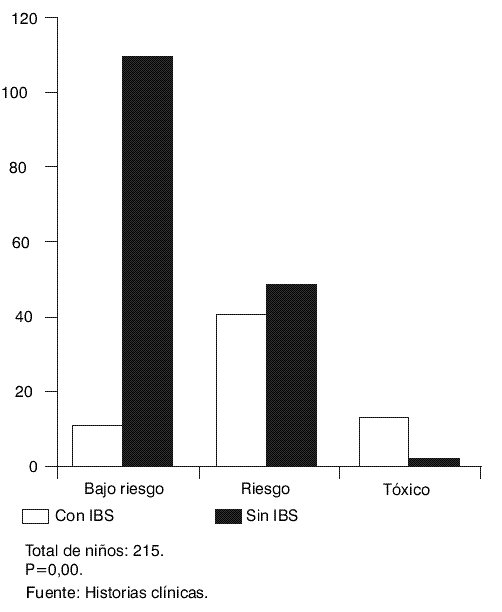
<body><![CDATA[<center>97,4</center>  </td>    <td VALIGN=TOP WIDTH="17%">      <center>3,4</center>  </td>  </tr>  </table></center>        <center>Fuente: Planilla recopiladora de datos.</center>        <p>Casi la totalidad de los ni&ntilde;os febriles de bajo riesgo no presentaron  IBS (118 ni&ntilde;os), m&aacute;s de la mitad de los riesgos mostraron  IBS (38 ni&ntilde;os), as&iacute; como casi la totalidad de los t&oacute;xicos  (13 ni&ntilde;os), y fue significativa la diferencia estad&iacute;stica  entre los ni&ntilde;os con IBS y sin ellas para las diferentes categor&iacute;as  de riesgo (fig. 1).      <center>        <p><a href="/img/revistas/ped/v71n4/f0102499.gif"><img SRC="/img/revistas/ped/v71n4/f0102499.gif" ALT="Figura1" BORDER=1 height=187 width=154></a>          
<br>     FIG. 1.<i> Infecci&oacute;n bacteriana severa (IBS). Nuevos par&aacute;metros  predictivos. Catego-r&iacute;as de riesgo e IBS.</i></center>    <h4>  DISCUSI&Oacute;N</h4>  En la literatura m&eacute;dica revisada los porcentajes de IBS en los ni&ntilde;os  febriles var&iacute;an considerablemente de un trabajo a otro, as&iacute;  por ejemplo, en un trabajo realizado por<i> Bonadio </i>en ni&ntilde;os  menores de 2 meses &eacute;ste obtuvo un porcentaje de 8,5 %,<sup>1</sup><i>Bask&iacute;n</i>  report&oacute; un promedio de IBS en ni&ntilde;os febriles entre 5 y 15  %<sup>10</sup> y <i>D&iacute;az &Aacute;lvarez </i>del Hospital Pedi&aacute;trico  Docente "Juan Manuel M&aacute;rquez" hall&oacute; una incidencia de IBS  en reci&eacute;n nacidos de 17,5 %.<sup>18 </sup>En un trabajo previo obtuvimos  un porcentaje de 39 %.<sup>19</sup> En cuanto al tipo de IBS algunas investigaciones  reportan la ITU como la m&aacute;s frecuente y otros la neumon&iacute;a;<sup>20</sup>  un grupo de autores plantean la incidencia de bacteriemia alrededor del  9,6 %,<sup>10,14,21,22</sup> cifras superiores que la reportada en este  trabajo (2,8 %) y otras similares como <i>Baker</i><u> </u>y otros (2,5  %).<sup>23</sup>      <p>El trabajo realizado por <i>D&iacute;az &Aacute;lvarez</i> y otros en  el Hospital Pedi&aacute;trico Docente "Juan Manuel M&aacute;rquez" de Ciudad  de La Habana, mostr&oacute; resultados similares en relaci&oacute;n con  los &iacute;ndices informacionales con una baja sensibilidad y alta especificidad.<sup>15</sup>  En el trabajo previo efectuado se encontr&oacute; que el aspecto t&oacute;xico,  fiebre de 39 <font face="Symbol">&deg;</font>C o m&aacute;s y leucograma  igual o mayor de 15 x 10<sup>9</sup> c/L presentaron los valores mayores  de estos &iacute;ndices (datos no mostrados),<sup>19</sup> <i>Broner</i>  y otros reportaron que el aspecto t&oacute;xico, leucograma y eritrosedimentaci&oacute;n  fueron significativamente m&aacute;s espec&iacute;ficos que otros par&aacute;metros.<sup>24</sup>  Entre los trabajos de la literatura m&eacute;dica sobre categor&iacute;as  de riesgo e IBS se hallan los de <i>Jaskiewicz</i> y otros,<sup>12</sup><i>Cynthia</i>  y otros estudios<sup>14,15,20,24 </sup>que coinciden con este trabajo en  el alto porcentaje de IBS en los ni&ntilde;os t&oacute;xicos. Estos autores  no introducen la categor&iacute;a de "riesgo", s&oacute;lo consideran al  bajo riesgo y t&oacute;xicos; no obstante, tiene gran valor, pues algunos  febriles no pueden ser considerados en otra categor&iacute;a y presentaron  IBS.      <p>Concluimos que la frecuencia de IBS fue elevada en relaci&oacute;n con  lo reportado en la literatura m&eacute;dica, pues aproximadamente 1 ni&ntilde;o  de cada 4 febriles sin causa aparente mostraron alg&uacute;n tipo de IBS.  El riesgo de los ni&ntilde;os con aspecto t&oacute;xico, temperatura de  39 <font face="Symbol">&deg;</font>C o m&aacute;s, <i>test</i> cl&iacute;nico  de Bonadio de 8 o m&aacute;s, cituria y leucograma alterados fue mayor;  agrupar los ni&ntilde;os febriles en categor&iacute;as de riesgo result&oacute;  muy &uacute;til en la pr&aacute;ctica y sobre todo introducir la categor&iacute;a  de "riesgo", algo novedoso en el diagn&oacute;stico precoz de estas entidades.      <p>Finalmente dejamos como recomendaci&oacute;n el flujograma o algoritmo  (fig. 2) basado en los criterios que validamos, con el &aacute;nimo de  que pueda ser aplicado en la atenci&oacute;n y manejo del ni&ntilde;o febril  mayor de 29 d&iacute;as.      ]]></body>
<body><![CDATA[<br>&nbsp;      <br>&nbsp;      <br>      <br>      <center>        <p><a href="/img/revistas/ped/v71n4/f0202499.gif"><img SRC="/img/revistas/ped/v71n4/f0202499.gif" ALT="Fugura2" BORDER=1 height=342 width=142></a>          
<br>     FIG. 2. <i>Flujograma.</i></center>        <p align="center"><a href="/img/revistas/ped/v71n4/f0302499.gif"><img SRC="/img/revistas/ped/v71n4/f0302499.gif" ALT="Anexo" BORDER=1 height=616 width=492></a>        
<br>   &nbsp;     <br>   &nbsp;  <h4>  SUMMARY</h4>  A descriptive-prospective research study was carried out to validate our  risk criteria in the identification of severe bacterial infection in febrile  young children. For this purpose, risk categories were set and applied  in 215 febrile children who had been admitted in a period of 12 months.  54.9 % of febrile children were at low risk for serious bacterial infections  whereas 71.6 % presented no risk at all. Nevertheless, the frequency of  this affection was high, accounting for 28.4 % with predominance of urinary  infections. The risk of getting SBI trippled in children who shared toxic  look, temperature greater than or equal to 39 <font face="Symbol">&deg;</font>C,  Bonadium clinical test higher than 8, cyturia values over or equal to 10  000 cell/mm<sup>3</sup>, significant differences between risk and SBI categories  and the highest frequency of such affection found in toxic children and  in children at low risk (92.8 vs 54.3 %). One in every four febrile children  had SBI. The Risk category was introduced and an evaluating flow chart  is recommended.      ]]></body>
<body><![CDATA[<p><i>Subject headings:</i> FEVER OF UNKNOWN ORIGIN/ethiology; BACTERIAL  INFECTIONS/diagnosis.  <h4>  REFERENCIAS BIBLIOGR&Aacute;FICAS</h4>    <ol>      <li>  Bonadio WA. Evaluation and management of serious bacterial infections in  the febrile young infant. Pediatr Infect Dis J 1990;9(2):905-12.</li>        <li>  Jaskiewics JA, McCarthy CA. Evaluation and management of the febrile infant  60 days of age or younger. Pediatr Ann 1993;22(8):477-83.</li>        <li>  Marvin A. Enfermedades Infecciosas. <i>En</i>: Nelson WE. Tratado de Pediatr&iacute;a.  15 ed. Barcelona: Mc Graw Hill Interamericana. 1997;vol. 1:867-81.</li>        <li>  Jaskiewics JA, McCarthy CA, Richarson AC, White KC, Fischer DJ, Dagan R,  et al. Febrile infants at low risk for serious bacterial infection: an  appraisal of the Rochester Criteria and implications for management. Pediatric  1994;94(3):390-6.</li>        <li>  L&oacute;pez Espinosa JA. La fiebre de causa desconocida en los ni&ntilde;os  de corta edad. Rev Cubana Med Gen Integral 1994;10(2):154.</li>        <li>  Edelson PJ, Noel GJ. Fever of unknown origin. <i>En</i>: Edelson PJ, Noel  GJ. Handbook of pediatric infections diseases. London: Little, Brown and  Company, 1992:10-5.</li>        <li>  Petersdorf RG, Root RK. Trastornos de la regulaci&oacute;n del calor. <i>En:</i>  Braunwald E, Isselbacher KJ, Petersdorf RG, Wilson JD, Mart&iacute;n JB,  Fauce AS. Harrison: Principios de Medicina Interna. 7ed. Mexico: Interamericana,  1989;vol. 1:52-70.</li>        <!-- ref --><li>  Young PC. Making the "Rochester" criteria look good. Pediatrics 1994;94(3):619.</li>    <li>  Harper MB, Fleisher GR. Occult bacteremia in the 3-month-old to 3-year  old age group. Pediatr Ann 1993;22(8):484-93.</li>        ]]></body>
<body><![CDATA[<li>  Baskin MN. The prevalence of serious bacterial infections by age in febrile  during the first 3 months of life. Pediatr Ann 1933;22(8):462-6.</li>        <li>  Harper MB. Pediatric infectious disease emergencies. Curr Opin Pediatr  1995;7:302-8.</li>        <li>  McCarthy P, Jekel JF, Dolan TF. Temperature greater than or equal to 40<font face="WP MathA">?</font>  in children less than 24 months of age: a prospective study. Pediatrics  1997;59(5):663.</li>        <li>  Bonadio WA, Hennes H, Smith D. Reliability of observation variables in  distinguishing infectious outcome of febrile young. Pediatric Infect Dis  J 1993;12:111-7.</li>        <li>  Baraff LF, Bass JW, Fleischer GR, Klein JO, McCracken GH, Pawel KR, et  al. Practice guideline for the management of infants and children up to  36 months of age with fever without source. Ann Emerg Med 1993;22(7):1198-1210.</li>        <li>  D&iacute;az &Aacute;lvarez M, Moreno V&aacute;quez O, Fern&aacute;ndez  de la Paz MT, Mart&iacute;nez Canalejo H. Nuevos criterios de bajo riesgo  de infecci&oacute;n bacteriana severa en reci&eacute;n nacidos febriles.  Rev Cubana Pediatr 1996;68(2):77-84.</li>        <li>  Bone RC. Sepsis and multiorgan failure: new concept and treatments. Resid  staff Physician 1993;39(7):21-30.</li>        <li>  Lesquene M. Informational indices. Validation of criteria and test. Scand  J Rheumatol [suppl] 1989;80:17-27.</li>        <li>  D&iacute;az &Aacute;lvarez M, Fern&aacute;ndez de la Paz MT, Moreno V&aacute;zquez  O, Piloto Serdin R, Arango MI, D&iacute;az &Aacute;lvarez J. Infecci&oacute;n  bacteriana severa en reci&eacute;n nacidos febriles sin signos de focalizaci&oacute;n.  Rev Cubana Pediatr 1995;67(2):79-87.</li>        <li>  &Aacute;lvarez Rodr&iacute;guez A, Aguilar Hern&aacute;ndez I, Capote Rodr&iacute;guez  A, Ortiz Silva O, Barrios Rodr&iacute;guez JC. Infecci&oacute;n bacteriana  severa en ni&ntilde;os febriles. Rev Cubana Pediatr 1997;69(3-4):1179-86.</li>        ]]></body>
<body><![CDATA[<li>  McCarthy PL, Lembo RM, Fink HD, Baron MA, Cicchetti DV. Observation history  and physical examination in diagnosis of serious illneses in febrile children  <font face="WP MathA">?</font>  24 months. J Pediatr 1987;110(1):26-30.</li>        <li>  Harper MB, Bachur R, Fleisher GR. Effect of antibiotic therapy on the outcome  of outpatients with unsuspected bacteremia. Pediatr Infect Dis 1995;14(9):760-7.</li>        <!-- ref --><li>  Sectish TC. Management of the febrile infant. Pediatr Ann 1996;25(11):608-13.</li>    <li>  Backer MD, Bell LM, Arner JR. Outpatient management without antibiotics  of fever in selected infants. Engl J Med 1993;329(20):1437-41.</li>        <li>  Broner CW, Polk SA, Sheman JM. febrile infants less than eight weeks old.  Predictors of infections. Clin Pediatr 1990;29(8):438-43.</li>      </ol>    <dir>&nbsp;     <br>   Recibido: 13 de julio de 1998. Aprobado: 11 de octubre de 1998.     <br>   Dra. <i>Alicia &Aacute;lvarez Rodr&iacute;guez</i>. Calle 44, No. 9707, entre    97 y 99, G&uuml;ines, Habana, Cuba.     <br>   &nbsp;     <br>   &nbsp;        ]]></body>
<body><![CDATA[<p><a NAME="*"></a><sup>1</sup> Especialista de II Grado en Pediatr&iacute;a.      Profesora Auxiliar de Pediatr&iacute;a de la Filial de la Habana, G&uuml;ines.          <br>     <sup>2</sup> Especialista de I Grado en Pediatr&iacute;a. Asistente de Pediatr&iacute;a      de la Filial de la Habana, G&uuml;ines.     <br>     <sup>3</sup> Especialista de I Grado en Pediatr&iacute;a.     <br>     &nbsp;     &nbsp;        <p>&nbsp;     <br>     &nbsp;     <br>     &nbsp;     <br>     &nbsp;     <br>     &nbsp; </dir>         ]]></body><back>
<ref-list>
<ref id="B1">
<nlm-citation citation-type="journal">
<person-group person-group-type="author">
<name>
<surname><![CDATA[Bonadio]]></surname>
<given-names><![CDATA[WA]]></given-names>
</name>
</person-group>
<article-title xml:lang="en"><![CDATA[Evaluation and management of serious bacterial infections in the febrile young infant]]></article-title>
<source><![CDATA[Pediatr Infect Dis J]]></source>
<year>1990</year>
<volume>9</volume>
<numero>2</numero>
<issue>2</issue>
<page-range>905-12</page-range></nlm-citation>
</ref>
<ref id="B2">
<nlm-citation citation-type="journal">
<person-group person-group-type="author">
<name>
<surname><![CDATA[Jaskiewics]]></surname>
<given-names><![CDATA[JA]]></given-names>
</name>
<name>
<surname><![CDATA[McCarthy]]></surname>
<given-names><![CDATA[CA]]></given-names>
</name>
</person-group>
<article-title xml:lang="en"><![CDATA[Evaluation and management of the febrile infant 60 days of age or younger]]></article-title>
<source><![CDATA[Pediatr Ann]]></source>
<year>1993</year>
<volume>22</volume>
<numero>8</numero>
<issue>8</issue>
<page-range>477-83</page-range></nlm-citation>
</ref>
<ref id="B3">
<nlm-citation citation-type="book">
<person-group person-group-type="author">
<name>
<surname><![CDATA[Marvin]]></surname>
<given-names><![CDATA[A]]></given-names>
</name>
</person-group>
<article-title xml:lang="es"><![CDATA[Enfermedades Infecciosas]]></article-title>
<source><![CDATA[Nelson WE. Tratado de Pediatría]]></source>
<year>1997</year>
<edition>15</edition>
<page-range>867-81</page-range><publisher-loc><![CDATA[Barcelona ]]></publisher-loc>
<publisher-name><![CDATA[Mc Graw Hill Interamericana]]></publisher-name>
</nlm-citation>
</ref>
<ref id="B4">
<nlm-citation citation-type="journal">
<person-group person-group-type="author">
<name>
<surname><![CDATA[Jaskiewics]]></surname>
<given-names><![CDATA[JA]]></given-names>
</name>
<name>
<surname><![CDATA[McCarthy]]></surname>
<given-names><![CDATA[CA]]></given-names>
</name>
<name>
<surname><![CDATA[Richarson]]></surname>
<given-names><![CDATA[AC]]></given-names>
</name>
<name>
<surname><![CDATA[White]]></surname>
<given-names><![CDATA[KC]]></given-names>
</name>
<name>
<surname><![CDATA[Fischer]]></surname>
<given-names><![CDATA[DJ]]></given-names>
</name>
<name>
<surname><![CDATA[Dagan]]></surname>
<given-names><![CDATA[R]]></given-names>
</name>
</person-group>
<article-title xml:lang="en"><![CDATA[Febrile infants at low risk for serious bacterial infection: an appraisal of the Rochester Criteria and implications for management]]></article-title>
<source><![CDATA[Pediatric]]></source>
<year>1994</year>
<volume>94</volume>
<numero>3</numero>
<issue>3</issue>
<page-range>390-6</page-range></nlm-citation>
</ref>
<ref id="B5">
<nlm-citation citation-type="journal">
<person-group person-group-type="author">
<name>
<surname><![CDATA[López Espinosa]]></surname>
<given-names><![CDATA[JA]]></given-names>
</name>
</person-group>
<article-title xml:lang="es"><![CDATA[La fiebre de causa desconocida en los niños de corta edad]]></article-title>
<source><![CDATA[Rev Cubana Med Gen Integral]]></source>
<year>1994</year>
<volume>10</volume>
<numero>2</numero>
<issue>2</issue>
<page-range>154</page-range></nlm-citation>
</ref>
<ref id="B6">
<nlm-citation citation-type="book">
<person-group person-group-type="author">
<name>
<surname><![CDATA[Edelson]]></surname>
<given-names><![CDATA[PJ]]></given-names>
</name>
<name>
<surname><![CDATA[Noel]]></surname>
<given-names><![CDATA[GJ]]></given-names>
</name>
</person-group>
<article-title xml:lang="en"><![CDATA[Fever of unknown origin]]></article-title>
<person-group person-group-type="editor">
<name>
<surname><![CDATA[Edelson]]></surname>
<given-names><![CDATA[PJ]]></given-names>
</name>
<name>
<surname><![CDATA[Noel]]></surname>
<given-names><![CDATA[GJ]]></given-names>
</name>
</person-group>
<source><![CDATA[Handbook of pediatric infections diseases]]></source>
<year>1992</year>
<page-range>10-5</page-range><publisher-loc><![CDATA[London ]]></publisher-loc>
<publisher-name><![CDATA[Little, Brown and Company]]></publisher-name>
</nlm-citation>
</ref>
<ref id="B7">
<nlm-citation citation-type="book">
<person-group person-group-type="author">
<name>
<surname><![CDATA[Petersdorf]]></surname>
<given-names><![CDATA[RG]]></given-names>
</name>
<name>
<surname><![CDATA[Root]]></surname>
<given-names><![CDATA[RK]]></given-names>
</name>
</person-group>
<article-title xml:lang="es"><![CDATA[Trastornos de la regulación del calor]]></article-title>
<person-group person-group-type="editor">
<name>
<surname><![CDATA[Braunwald]]></surname>
<given-names><![CDATA[E]]></given-names>
</name>
<name>
<surname><![CDATA[Isselbacher]]></surname>
<given-names><![CDATA[KJ]]></given-names>
</name>
<name>
<surname><![CDATA[Petersdorf]]></surname>
<given-names><![CDATA[RG]]></given-names>
</name>
<name>
<surname><![CDATA[Wilson]]></surname>
<given-names><![CDATA[JD]]></given-names>
</name>
<name>
<surname><![CDATA[Martín]]></surname>
<given-names><![CDATA[JB]]></given-names>
</name>
<name>
<surname><![CDATA[Fauce]]></surname>
<given-names><![CDATA[AS]]></given-names>
</name>
</person-group>
<source><![CDATA[Harrison: Principios de Medicina Interna]]></source>
<year>1989</year>
<edition>7</edition>
<page-range>52-70</page-range><publisher-loc><![CDATA[Mexico ]]></publisher-loc>
<publisher-name><![CDATA[Interamericana]]></publisher-name>
</nlm-citation>
</ref>
<ref id="B8">
<nlm-citation citation-type="journal">
<person-group person-group-type="author">
<name>
<surname><![CDATA[Young]]></surname>
<given-names><![CDATA[PC]]></given-names>
</name>
</person-group>
<article-title xml:lang="en"><![CDATA[Making the "Rochester" criteria look good]]></article-title>
<source><![CDATA[Pediatrics]]></source>
<year>1994</year>
<volume>94</volume>
<numero>3</numero>
<issue>3</issue>
<page-range>619</page-range></nlm-citation>
</ref>
<ref id="B9">
<nlm-citation citation-type="journal">
<person-group person-group-type="author">
<name>
<surname><![CDATA[Harper]]></surname>
<given-names><![CDATA[MB]]></given-names>
</name>
<name>
<surname><![CDATA[Fleisher]]></surname>
<given-names><![CDATA[GR]]></given-names>
</name>
</person-group>
<article-title xml:lang="en"><![CDATA[Occult bacteremia in the 3-month-old to 3-year old age group]]></article-title>
<source><![CDATA[Pediatr Ann]]></source>
<year>1993</year>
<volume>22</volume>
<numero>8</numero>
<issue>8</issue>
<page-range>484-93</page-range></nlm-citation>
</ref>
<ref id="B10">
<nlm-citation citation-type="journal">
<person-group person-group-type="author">
<name>
<surname><![CDATA[Baskin]]></surname>
<given-names><![CDATA[MN]]></given-names>
</name>
</person-group>
<article-title xml:lang="en"><![CDATA[The prevalence of serious bacterial infections by age in febrile during the first 3 months of life]]></article-title>
<source><![CDATA[Pediatr Ann]]></source>
<year>1933</year>
<volume>22</volume>
<numero>8</numero>
<issue>8</issue>
<page-range>462-6</page-range></nlm-citation>
</ref>
<ref id="B11">
<nlm-citation citation-type="journal">
<person-group person-group-type="author">
<name>
<surname><![CDATA[Harper]]></surname>
<given-names><![CDATA[MB]]></given-names>
</name>
</person-group>
<article-title xml:lang="en"><![CDATA[Pediatric infectious disease emergencies]]></article-title>
<source><![CDATA[Curr Opin Pediatr]]></source>
<year>1995</year>
<volume>7</volume>
<page-range>302-8</page-range></nlm-citation>
</ref>
<ref id="B12">
<nlm-citation citation-type="journal">
<person-group person-group-type="author">
<name>
<surname><![CDATA[McCarthy]]></surname>
<given-names><![CDATA[P]]></given-names>
</name>
<name>
<surname><![CDATA[Jekel]]></surname>
<given-names><![CDATA[JF]]></given-names>
</name>
<name>
<surname><![CDATA[Dolan]]></surname>
<given-names><![CDATA[TF]]></given-names>
</name>
</person-group>
<article-title xml:lang="en"><![CDATA[Temperature greater than or equal to 40? in children less than 24 months of age: a prospective study]]></article-title>
<source><![CDATA[Pediatrics]]></source>
<year>1997</year>
<volume>59</volume>
<numero>5</numero>
<issue>5</issue>
<page-range>663</page-range></nlm-citation>
</ref>
<ref id="B13">
<nlm-citation citation-type="journal">
<person-group person-group-type="author">
<name>
<surname><![CDATA[Bonadio]]></surname>
<given-names><![CDATA[WA]]></given-names>
</name>
<name>
<surname><![CDATA[Hennes]]></surname>
<given-names><![CDATA[H]]></given-names>
</name>
<name>
<surname><![CDATA[Smith]]></surname>
<given-names><![CDATA[D]]></given-names>
</name>
</person-group>
<article-title xml:lang="en"><![CDATA[Reliability of observation variables in distinguishing infectious outcome of febrile young]]></article-title>
<source><![CDATA[Pediatric Infect Dis J]]></source>
<year>1993</year>
<volume>12</volume>
<page-range>111-7</page-range></nlm-citation>
</ref>
<ref id="B14">
<nlm-citation citation-type="journal">
<person-group person-group-type="author">
<name>
<surname><![CDATA[Baraff]]></surname>
<given-names><![CDATA[LF]]></given-names>
</name>
<name>
<surname><![CDATA[Bass]]></surname>
<given-names><![CDATA[JW]]></given-names>
</name>
<name>
<surname><![CDATA[Fleischer]]></surname>
<given-names><![CDATA[GR]]></given-names>
</name>
<name>
<surname><![CDATA[Klein]]></surname>
<given-names><![CDATA[JO]]></given-names>
</name>
<name>
<surname><![CDATA[McCracken]]></surname>
<given-names><![CDATA[GH]]></given-names>
</name>
<name>
<surname><![CDATA[Pawel]]></surname>
<given-names><![CDATA[KR]]></given-names>
</name>
</person-group>
<article-title xml:lang="en"><![CDATA[Practice guideline for the management of infants and children up to 36 months of age with fever without source]]></article-title>
<source><![CDATA[Ann Emerg Med]]></source>
<year>1993</year>
<volume>22</volume>
<numero>7</numero>
<issue>7</issue>
<page-range>1198-1210</page-range></nlm-citation>
</ref>
<ref id="B15">
<nlm-citation citation-type="journal">
<person-group person-group-type="author">
<name>
<surname><![CDATA[Díaz Álvarez]]></surname>
<given-names><![CDATA[M]]></given-names>
</name>
<name>
<surname><![CDATA[Moreno Váquez]]></surname>
<given-names><![CDATA[O]]></given-names>
</name>
<name>
<surname><![CDATA[Fernández de la Paz]]></surname>
<given-names><![CDATA[MT]]></given-names>
</name>
<name>
<surname><![CDATA[Martínez Canalejo]]></surname>
<given-names><![CDATA[H]]></given-names>
</name>
</person-group>
<article-title xml:lang="es"><![CDATA[Nuevos criterios de bajo riesgo de infección bacteriana severa en recién nacidos febriles]]></article-title>
<source><![CDATA[Rev Cubana Pediatr]]></source>
<year>1996</year>
<volume>68</volume>
<numero>2</numero>
<issue>2</issue>
<page-range>77-84</page-range></nlm-citation>
</ref>
<ref id="B16">
<nlm-citation citation-type="journal">
<person-group person-group-type="author">
<name>
<surname><![CDATA[Bone]]></surname>
<given-names><![CDATA[RC]]></given-names>
</name>
</person-group>
<article-title xml:lang="en"><![CDATA[Sepsis and multiorgan failure: new concept and treatments]]></article-title>
<source><![CDATA[Resid staff Physician]]></source>
<year>1993</year>
<volume>39</volume>
<numero>7</numero>
<issue>7</issue>
<page-range>21-30</page-range></nlm-citation>
</ref>
<ref id="B17">
<nlm-citation citation-type="journal">
<person-group person-group-type="author">
<name>
<surname><![CDATA[Lesquene]]></surname>
<given-names><![CDATA[M]]></given-names>
</name>
</person-group>
<article-title xml:lang="en"><![CDATA[Informational indices: Validation of criteria and test]]></article-title>
<source><![CDATA[Scand J Rheumatol]]></source>
<year>1989</year>
<volume>80</volume>
<page-range>17-27</page-range></nlm-citation>
</ref>
<ref id="B18">
<nlm-citation citation-type="journal">
<person-group person-group-type="author">
<name>
<surname><![CDATA[Díaz Álvarez]]></surname>
<given-names><![CDATA[M]]></given-names>
</name>
<name>
<surname><![CDATA[Fernández de la Paz]]></surname>
<given-names><![CDATA[MT]]></given-names>
</name>
<name>
<surname><![CDATA[Moreno Vázquez]]></surname>
<given-names><![CDATA[O]]></given-names>
</name>
<name>
<surname><![CDATA[Piloto Serdin]]></surname>
<given-names><![CDATA[R]]></given-names>
</name>
<name>
<surname><![CDATA[Arango]]></surname>
<given-names><![CDATA[MI]]></given-names>
</name>
<name>
<surname><![CDATA[Díaz Álvarez]]></surname>
<given-names><![CDATA[J]]></given-names>
</name>
</person-group>
<article-title xml:lang="es"><![CDATA[Infección bacteriana severa en recién nacidos febriles sin signos de focalización]]></article-title>
<source><![CDATA[Rev Cubana Pediatr]]></source>
<year>1995</year>
<volume>67</volume>
<numero>2</numero>
<issue>2</issue>
<page-range>79-87</page-range></nlm-citation>
</ref>
<ref id="B19">
<nlm-citation citation-type="journal">
<person-group person-group-type="author">
<name>
<surname><![CDATA[Álvarez Rodríguez]]></surname>
<given-names><![CDATA[A]]></given-names>
</name>
<name>
<surname><![CDATA[Aguilar Hernández]]></surname>
<given-names><![CDATA[I]]></given-names>
</name>
<name>
<surname><![CDATA[Capote Rodríguez]]></surname>
<given-names><![CDATA[A]]></given-names>
</name>
<name>
<surname><![CDATA[Ortiz Silva]]></surname>
<given-names><![CDATA[O]]></given-names>
</name>
<name>
<surname><![CDATA[Barrios Rodríguez]]></surname>
<given-names><![CDATA[JC]]></given-names>
</name>
</person-group>
<article-title xml:lang="es"><![CDATA[Infección bacteriana severa en niños febriles]]></article-title>
<source><![CDATA[Rev Cubana Pediatr]]></source>
<year>1997</year>
<volume>69</volume>
<numero>3-4</numero>
<issue>3-4</issue>
<page-range>1179-86</page-range></nlm-citation>
</ref>
<ref id="B20">
<nlm-citation citation-type="journal">
<person-group person-group-type="author">
<name>
<surname><![CDATA[McCarthy]]></surname>
<given-names><![CDATA[PL]]></given-names>
</name>
<name>
<surname><![CDATA[Lembo]]></surname>
<given-names><![CDATA[RM]]></given-names>
</name>
<name>
<surname><![CDATA[Fink]]></surname>
<given-names><![CDATA[HD]]></given-names>
</name>
<name>
<surname><![CDATA[Baron]]></surname>
<given-names><![CDATA[MA]]></given-names>
</name>
<name>
<surname><![CDATA[Cicchetti]]></surname>
<given-names><![CDATA[DV]]></given-names>
</name>
</person-group>
<article-title xml:lang="en"><![CDATA[Observation history and physical examination in diagnosis of serious illneses in febrile children ? 24 months]]></article-title>
<source><![CDATA[J Pediatr]]></source>
<year>1987</year>
<volume>110</volume>
<numero>1</numero>
<issue>1</issue>
<page-range>26-30</page-range></nlm-citation>
</ref>
<ref id="B21">
<nlm-citation citation-type="journal">
<person-group person-group-type="author">
<name>
<surname><![CDATA[Harper]]></surname>
<given-names><![CDATA[MB]]></given-names>
</name>
<name>
<surname><![CDATA[Bachur]]></surname>
<given-names><![CDATA[R]]></given-names>
</name>
<name>
<surname><![CDATA[Fleisher]]></surname>
<given-names><![CDATA[GR]]></given-names>
</name>
</person-group>
<article-title xml:lang="en"><![CDATA[Effect of antibiotic therapy on the outcome of outpatients with unsuspected bacteremia]]></article-title>
<source><![CDATA[Pediatr Infect Dis]]></source>
<year>1995</year>
<volume>14</volume>
<numero>9</numero>
<issue>9</issue>
<page-range>760-7</page-range></nlm-citation>
</ref>
<ref id="B22">
<nlm-citation citation-type="journal">
<person-group person-group-type="author">
<name>
<surname><![CDATA[Sectish]]></surname>
<given-names><![CDATA[TC]]></given-names>
</name>
</person-group>
<article-title xml:lang="en"><![CDATA[Management of the febrile infant]]></article-title>
<source><![CDATA[Pediatr Ann]]></source>
<year>1996</year>
<volume>25</volume>
<numero>11</numero>
<issue>11</issue>
<page-range>608-13</page-range></nlm-citation>
</ref>
<ref id="B23">
<nlm-citation citation-type="journal">
<person-group person-group-type="author">
<name>
<surname><![CDATA[Backer]]></surname>
<given-names><![CDATA[MD]]></given-names>
</name>
<name>
<surname><![CDATA[Bell]]></surname>
<given-names><![CDATA[LM]]></given-names>
</name>
<name>
<surname><![CDATA[Arner]]></surname>
<given-names><![CDATA[JR]]></given-names>
</name>
</person-group>
<article-title xml:lang="en"><![CDATA[Outpatient management without antibiotics of fever in selected infants]]></article-title>
<source><![CDATA[Engl J Med]]></source>
<year>1993</year>
<volume>329</volume>
<numero>20</numero>
<issue>20</issue>
<page-range>1437-41</page-range></nlm-citation>
</ref>
<ref id="B24">
<nlm-citation citation-type="journal">
<person-group person-group-type="author">
<name>
<surname><![CDATA[Broner]]></surname>
<given-names><![CDATA[CW]]></given-names>
</name>
<name>
<surname><![CDATA[Polk]]></surname>
<given-names><![CDATA[SA]]></given-names>
</name>
<name>
<surname><![CDATA[Sheman]]></surname>
<given-names><![CDATA[JM]]></given-names>
</name>
</person-group>
<article-title xml:lang="en"><![CDATA[febrile infants less than eight weeks old: Predictors of infections]]></article-title>
<source><![CDATA[Clin Pediatr]]></source>
<year>1990</year>
<volume>29</volume>
<numero>8</numero>
<issue>8</issue>
<page-range>438-43</page-range></nlm-citation>
</ref>
</ref-list>
</back>
</article>