<?xml version="1.0" encoding="ISO-8859-1"?><article xmlns:mml="http://www.w3.org/1998/Math/MathML" xmlns:xlink="http://www.w3.org/1999/xlink" xmlns:xsi="http://www.w3.org/2001/XMLSchema-instance">
<front>
<journal-meta>
<journal-id>0138-600X</journal-id>
<journal-title><![CDATA[Revista Cubana de Obstetricia y Ginecología]]></journal-title>
<abbrev-journal-title><![CDATA[Rev Cubana Obstet Ginecol]]></abbrev-journal-title>
<issn>0138-600X</issn>
<publisher>
<publisher-name><![CDATA[Editorial Ciencias Médicas]]></publisher-name>
</publisher>
</journal-meta>
<article-meta>
<article-id>S0138-600X1998000300004</article-id>
<title-group>
<article-title xml:lang="es"><![CDATA[Terapia con indometacina en el tratamiento del polihidramnios]]></article-title>
<article-title xml:lang="en"><![CDATA[Indomethacin therapy in the treatment of hydramnios]]></article-title>
</title-group>
<contrib-group>
<contrib contrib-type="author">
<name>
<surname><![CDATA[Martínez González]]></surname>
<given-names><![CDATA[Luis Raúl]]></given-names>
</name>
<xref ref-type="aff" rid="A01"/>
</contrib>
<contrib contrib-type="author">
<name>
<surname><![CDATA[Valladares Hernández]]></surname>
<given-names><![CDATA[Marta]]></given-names>
</name>
</contrib>
<contrib contrib-type="author">
<name>
<surname><![CDATA[Pérez Martínez]]></surname>
<given-names><![CDATA[Caridad]]></given-names>
</name>
</contrib>
</contrib-group>
<aff id="A01">
<institution><![CDATA[,Hospital Docente Ginecoobstétrico Justo Legón Padilla.  ]]></institution>
<addr-line><![CDATA[Pinar del Río ]]></addr-line>
<country>Cuba</country>
</aff>
<pub-date pub-type="pub">
<day>00</day>
<month>12</month>
<year>1998</year>
</pub-date>
<pub-date pub-type="epub">
<day>00</day>
<month>12</month>
<year>1998</year>
</pub-date>
<volume>24</volume>
<numero>3</numero>
<fpage>133</fpage>
<lpage>136</lpage>
<copyright-statement/>
<copyright-year/>
<self-uri xlink:href="http://scielo.sld.cu/scielo.php?script=sci_arttext&amp;pid=S0138-600X1998000300004&amp;lng=en&amp;nrm=iso"></self-uri><self-uri xlink:href="http://scielo.sld.cu/scielo.php?script=sci_abstract&amp;pid=S0138-600X1998000300004&amp;lng=en&amp;nrm=iso"></self-uri><self-uri xlink:href="http://scielo.sld.cu/scielo.php?script=sci_pdf&amp;pid=S0138-600X1998000300004&amp;lng=en&amp;nrm=iso"></self-uri><abstract abstract-type="short" xml:lang="es"><p><![CDATA[: Se estudiaron 8 embarazadas con polihidramnios, 4 de ellas con síntomas de amenaza de parto pretérmino o disnea ligera que fueron tratadas con indometacina oral (100 mg/ diarios por 7 d en 3 ciclos). El tiempo del diagnóstico y comienzo de la terapia fue de 27 ± 3 semanas. Se realizó biometría fetal semanalmente, así como ecocardiografía para valorar constricción del ductus, no se demostró que ocurriera en los casos tratados. Se encontró en los 8 casos que el 62,5 % nació después de las 37 semanas, con 3 bajo peso (37,5 %) y 1 de ellos presentaba crecimiento intrauterino retardado. El índice de bolsones se normalizó entre el 50 y 95 percentil en 6 de los casos después del tercer ciclo de tratamiento. Se realizó el estudio seriado de vejiga fetal por ecografía antes y después de la terapia con indometacina observándose una declinación significativa de la diuresis fetal. En 3 de los 8 casos se pudo determinar la causa del hidramnios. Hubo una muerte anteparto en un gemelar y otra neonatal. Se recomienda esta terapia con indometacina en los hidramnios con un seguimiento estricto de los parámetros expuestos para la evolución.]]></p></abstract>
<abstract abstract-type="short" xml:lang="en"><p><![CDATA[An study was made on 8 pregnant women having hydramnios, four of them having symptoms of risk for pre-term delivery, or light dyspnea, who were treated with oral indomethacin (100 mg/d) for 7 days in three cycles). The interval between the diagnosis and the beginning of therapy was 27 ± 3 weeks. Fetal biometry was made weekly, as well as echocardiography, to analyze the ductus constriction, and there was no evidence that this happened in those cases under treatment. The 8 cases showed that 62.5 % was born after 37 weeks of pregnancy, with low weight (37.5 %) and 1 of them had retarded intrauterine growth. The index was normalized between 50 and 95 percentage in 6 of the cases after the third cycle of treatment. A series-study of fetal bladder was carried out by echographia before and after indomethacin therapy, showing a significant decline of fetal diuresis. In 3 of 8 cases, the cause of hydramnios was detected. It occured a gemellary´s death and a neonatal death too. It is recommended to use this indomethacin therapy for hydramnios, following up strictly the parameters involved in the evolution.]]></p></abstract>
<kwd-group>
<kwd lng="es"><![CDATA[POLIHIDRAMNIOS]]></kwd>
<kwd lng="es"><![CDATA[INDOMETACINA]]></kwd>
<kwd lng="en"><![CDATA[POLYHYDRAMNIOS]]></kwd>
<kwd lng="en"><![CDATA[INDOMETHACIN]]></kwd>
</kwd-group>
</article-meta>
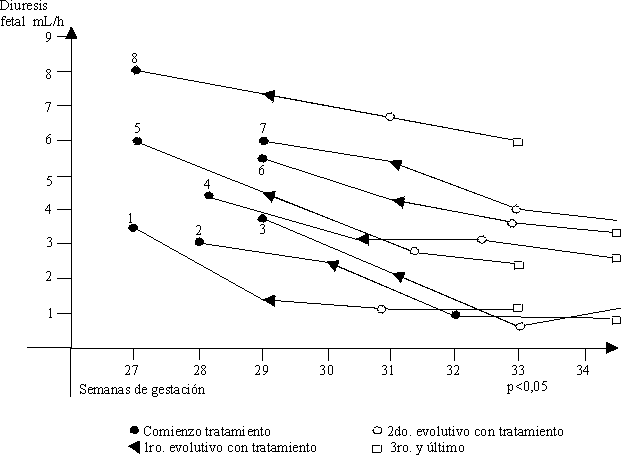
</front><body><![CDATA[ <p>Hospital Docente Ginecoobst&eacute;trico "Justo Leg&oacute;n Padilla". Pinar  del R&iacute;o </p><H2> Terapia con indometacina en el tratamiento del polihidramnios</H2><I><A HREF="#autores">Dr.  Luis Ra&uacute;l Mart&iacute;nez Gonz&aacute;lez,<SUP>1</SUP> Dra. Marta Valladares  Hern&aacute;ndez<SUP>2</SUP> y Dra. Caridad P&eacute;rez Mart&iacute;nez<SUP>2</SUP></A></I>      <P><B>RESUMEN:</B> Se estudiaron 8 embarazadas con polihidramnios, 4 de ellas  con s&iacute;ntomas de amenaza de parto pret&eacute;rmino o disnea ligera que  fueron tratadas con indometacina oral (100 mg/ diarios por 7 d en 3 ciclos). El  tiempo del diagn&oacute;stico y comienzo de la terapia fue de 27 <FONT FACE=Symbol>&plusmn;</FONT>  3 semanas. Se realiz&oacute; biometr&iacute;a fetal semanalmente, as&iacute; como  ecocardiograf&iacute;a para valorar constricci&oacute;n del <I>ductus</I>, no  se demostr&oacute; que ocurriera en los casos tratados. Se encontr&oacute; en  los 8 casos que el 62,5 % naci&oacute; despu&eacute;s de las 37 semanas, con 3  bajo peso (37,5 %) y 1 de ellos presentaba crecimiento intrauterino retardado.  El &iacute;ndice de bolsones se normaliz&oacute; entre el 50 y 95 percentil en  6 de los casos despu&eacute;s del tercer ciclo de tratamiento. Se realiz&oacute;  el estudio seriado de vejiga fetal por ecograf&iacute;a antes y despu&eacute;s  de la terapia con indometacina observ&aacute;ndose una declinaci&oacute;n significativa  de la diuresis fetal. En 3 de los 8 casos se pudo determinar la causa del hidramnios.  Hubo una muerte anteparto en un gemelar y otra neonatal. Se recomienda esta terapia  con indometacina en los hidramnios con un seguimiento estricto de los par&aacute;metros  expuestos para la evoluci&oacute;n.     <P>Descriptores DeCS: POLIHIDRAMNIOS/ quimioterapia;  INDOMETACINA/ administraci&oacute;n &amp; dosificaci&oacute;n; INDOMETACINA/ uso  terap&eacute;utico.     <P>El embarazo con polihidramnios, por sus m&uacute;ltiples  causas, ha sido considerado como un riesgo, donde poco podemos hacer los obstetras  como no sea tener una conducta expectante y una vigilia del embarazo, cuya evoluci&oacute;n  en muchos casos no es favorable por el riesgo que existe de parto pret&eacute;rmino,  crecimiento intrauterino retardado, rotura de las membranas ovulares y otras.      <P>La regulaci&oacute;n del fluido de l&iacute;quido amni&oacute;tico ha sido  poco conocida, demostr&aacute;ndose un papel importante de la orina fetal, evidenci&aacute;ndose  que una anuria resulta en oligohidramnios.<SUP>1-4</SUP>     <P>Ha sido en los &uacute;ltimos  tiempos discutido el tratamiento con indometacina en estos casos de hidramnios  en per&iacute;odos tempranos como factor que causa disminuci&oacute;n de la orina  fetal. <I>Kirshan</I> y otros han encontrado relaci&oacute;n entre la poliuria  y el hidramnios,<SUP>2,5,6</SUP> no as&iacute; en casos con diuresis normal con  tratamiento de indometacina, posiblemente por un aumento de la hormona antidiur&eacute;tica  (ADH) fetal aunque est&aacute; por comprobarse el efecto que sobre la reabsorci&oacute;n  del l&iacute;quido amni&oacute;tico por parte del lecho alveolar ejerce la indometacina.  <I>Pritchard</I> sostiene que podr&iacute;a aumentar la reabsorci&oacute;n, mientras  que <I>Ketterman</I> y <I>Liggens</I> argumentan un incremento de la frecuencia  respiratoria.<SUP>7-12</SUP>     <P>Nosotros hemos querido realizar este estudio preliminar  en 8 pacientes con polihidramnios diagnosticado cl&iacute;nica y ecogr&aacute;ficamente,  algunos de los cuales ya presentaban sintomatolog&iacute;a discreta cuantific&aacute;ndose  algunas variables de inter&eacute;s.     <CENTER><A HREF="/img/revistas/gin/v24n3/f0104398.gif"><IMG SRC="/img/revistas/gin/v24n3/f0104398.gif" ALT="Figura 1" VSPACE=10 BORDER=1 HEIGHT=133 WIDTH=186></A></CENTER>    
<CENTER>Fig.  Diuresis fetal despu&eacute;s del tratamiento con indometacina.</CENTER><H4> M&eacute;todos</H4>Se  estudiaron 8 pacientes diagnosticadas con hidramnios tanto cl&iacute;nica como  ultrasonogr&aacute;ficamente (seg&uacute;n el &iacute;ndice de bolsones de Manning)  entre las 27 <FONT FACE=Symbol>&plusmn;</FONT> 3 semanas de gestaci&oacute;n,  algunas de las cuales presentaban s&iacute;ntomas de amenaza de parto pret&eacute;rmino  o disnea ligera.     <P>Se le realiz&oacute; a estas pacientes un ultrasonido antes  de comenzar el tratamiento y descartar alg&uacute;n tipo de malformaci&oacute;n  fetal.     ]]></body>
<body><![CDATA[<P>Se comenz&oacute; posteriormente el tratamiento con indometacina oral  25 mg cada 6 h es decir 100 mg diarios durante 7 d; se descansa una semana sin  administrar el medicamento y se realiza una biometr&iacute;a fetal y una ecocardiograf&iacute;a.  De no existir constricci&oacute;n del <I>ductus</I> se contin&uacute;a la terapia  durante 7 d m&aacute;s hasta realizar 3 ciclos con tratamiento.     <P>En cada examen  ecogr&aacute;fico evolutivo se determin&oacute; el di&aacute;metro biparietal,  la longitud del f&eacute;mur, las circunferencias cef&aacute;lica y abdominal,  el &iacute;ndice de los bolsones de l&iacute;quido amni&oacute;tico, el peso fetal  y el volumen de la vejiga fetal en 2 tomas con diferencia de 1 h para determinar  la diuresis fetal.     <P>Se busc&oacute; adem&aacute;s la v&iacute;a del nacimiento,  el peso al nacer y el sexo, as&iacute; como la evoluci&oacute;n del reci&eacute;n  nacido. Todos los resultados fueron tabulados y se evalu&oacute; estad&iacute;sticamente  por prueba de Student para significaci&oacute;n de p &lt; 0,05.     <P>Como conclusi&oacute;n  tenemos que la diuresis fetal disminuy&oacute; en los casos tratados con indometacina,  siendo estad&iacute;sticamente significativa. El &iacute;ndice de los bolsones  de l&iacute;quido amni&oacute;tico disminuy&oacute; despu&eacute;s de la terapia  en el 75 % de los casos. En el 62,5 % de las pacientes se produjo el nacimiento  despu&eacute;s de las 37 semanas y hubo 3 reci&eacute;n nacidos con bajo peso.      <CENTER></CENTER>    <CENTER>TABLA 1. Diuresis fetal en el tratamiento con indometacina.</CENTER>    <CENTER>&nbsp;</CENTER>    <CENTER><TABLE CELLPADDING=4 >  <TR> <TD VALIGN=TOP WIDTH="20%">&nbsp;</TD><TD VALIGN=TOP COLSPAN="4" WIDTH="80%">     <CENTER>Tiempo  de gestaci&oacute;n en semanas</CENTER></TD></TR> <TR> <TD VALIGN=TOP WIDTH="20%">No.  de casos</TD><TD VALIGN=TOP WIDTH="20%">     <CENTER>27</CENTER></TD><TD VALIGN=TOP WIDTH="20%">      ]]></body>
<body><![CDATA[<CENTER>29</CENTER></TD><TD VALIGN=TOP WIDTH="20%">     <CENTER>31</CENTER></TD><TD VALIGN=TOP WIDTH="20%">      <CENTER>33</CENTER></TD></TR> <TR> <TD VALIGN=TOP WIDTH="20%">     <DIV ALIGN=right>Diuresis&nbsp;</DIV></TD><TD VALIGN=TOP WIDTH="20%">      <CENTER>ml/h</CENTER></TD><TD VALIGN=TOP WIDTH="20%">     <CENTER>ml/h</CENTER></TD><TD VALIGN=TOP WIDTH="20%">      <CENTER>ml/h</CENTER></TD><TD VALIGN=TOP WIDTH="20%">     <CENTER>ml/h</CENTER></TD></TR>  <TR> <TD VALIGN=TOP WIDTH="20%">1</TD><TD VALIGN=TOP WIDTH="20%">     <CENTER>3,8</CENTER></TD><TD VALIGN=TOP WIDTH="20%">      <CENTER>2,9</CENTER></TD><TD VALIGN=TOP WIDTH="20%">     ]]></body>
<body><![CDATA[<CENTER>1,5</CENTER></TD><TD VALIGN=TOP WIDTH="20%">      <CENTER>1,5</CENTER></TD></TR> <TR> <TD VALIGN=TOP WIDTH="20%">2</TD><TD VALIGN=TOP WIDTH="20%">      <CENTER>3,5</CENTER></TD><TD VALIGN=TOP WIDTH="20%">     <CENTER>2,5</CENTER></TD><TD VALIGN=TOP WIDTH="20%">      <CENTER>1,0</CENTER></TD><TD VALIGN=TOP WIDTH="20%">     <CENTER>1,0</CENTER></TD></TR>  <TR> <TD VALIGN=TOP WIDTH="20%">3</TD><TD VALIGN=TOP WIDTH="20%">     <CENTER>4,0</CENTER></TD><TD VALIGN=TOP WIDTH="20%">      <CENTER>2,5</CENTER></TD><TD VALIGN=TOP WIDTH="20%">     <CENTER>1,0</CENTER></TD><TD VALIGN=TOP WIDTH="20%">      <CENTER>1,0</CENTER></TD></TR> <TR> <TD VALIGN=TOP WIDTH="20%">4</TD><TD VALIGN=TOP WIDTH="20%">      ]]></body>
<body><![CDATA[<CENTER>4,5</CENTER></TD><TD VALIGN=TOP WIDTH="20%">     <CENTER>3,8</CENTER></TD><TD VALIGN=TOP WIDTH="20%">      <CENTER>3,8</CENTER></TD><TD VALIGN=TOP WIDTH="20%">     <CENTER>3,0</CENTER></TD></TR>  <TR> <TD VALIGN=TOP WIDTH="20%">5</TD><TD VALIGN=TOP WIDTH="20%">     <CENTER>6,0</CENTER></TD><TD VALIGN=TOP WIDTH="20%">      <CENTER>4,8</CENTER></TD><TD VALIGN=TOP WIDTH="20%">     <CENTER>3,5</CENTER></TD><TD VALIGN=TOP WIDTH="20%">      <CENTER>3,0</CENTER></TD></TR> <TR> <TD VALIGN=TOP WIDTH="20%">6</TD><TD VALIGN=TOP WIDTH="20%">      <CENTER>5,0</CENTER></TD><TD VALIGN=TOP WIDTH="20%">     <CENTER>4,8</CENTER></TD><TD VALIGN=TOP WIDTH="20%">      ]]></body>
<body><![CDATA[<CENTER>4,5</CENTER></TD><TD VALIGN=TOP WIDTH="20%">     <CENTER>4,0</CENTER></TD></TR>  <TR> <TD VALIGN=TOP WIDTH="20%">7</TD><TD VALIGN=TOP WIDTH="20%">     <CENTER>6,2</CENTER></TD><TD VALIGN=TOP WIDTH="20%">      <CENTER>5,6</CENTER></TD><TD VALIGN=TOP WIDTH="20%">     <CENTER>4,8</CENTER></TD><TD VALIGN=TOP WIDTH="20%">      <CENTER>4,2</CENTER></TD></TR> <TR> <TD VALIGN=TOP WIDTH="20%">8</TD><TD VALIGN=TOP WIDTH="20%">      <CENTER>8,0</CENTER></TD><TD VALIGN=TOP WIDTH="20%">     <CENTER>7,5</CENTER></TD><TD VALIGN=TOP WIDTH="20%">      <CENTER>7,0</CENTER></TD><TD VALIGN=TOP WIDTH="20%">     <CENTER>6,2</CENTER></TD></TR>  <TR> <TD VALIGN=TOP WIDTH="20%">X</TD><TD VALIGN=TOP WIDTH="20%">     ]]></body>
<body><![CDATA[<CENTER>5,0</CENTER></TD><TD VALIGN=TOP WIDTH="20%">      <CENTER>4,5</CENTER></TD><TD VALIGN=TOP WIDTH="20%">     <CENTER>3,9</CENTER></TD><TD VALIGN=TOP WIDTH="20%">      <CENTER>3,4</CENTER></TD></TR> </TABLE></CENTER>    <CENTER>Fuente: Examen ecogr&aacute;fico.  p &lt; 0,05</CENTER>    <CENTER></CENTER>    <CENTER>TABLA 2. Modo de nacimiento y referencias  de los neonatos.</CENTER>    <CENTER>&nbsp;</CENTER>    <CENTER><TABLE CELLPADDING=4 >  <TR> <TD VALIGN=BOTTOM WIDTH="11%">Paciente</TD><TD VALIGN=BOTTOM WIDTH="11%">      <CENTER>TG comienzo tratamiento</CENTER></TD><TD VALIGN=BOTTOM WIDTH="11%">     ]]></body>
<body><![CDATA[<CENTER>TG  t&eacute;rmino tratamiento</CENTER></TD><TD VALIGN=BOTTOM WIDTH="11%">     <CENTER>TG  al parto</CENTER></TD><TD VALIGN=BOTTOM WIDTH="11%">     <CENTER>Modo de nacimiento</CENTER></TD><TD VALIGN=BOTTOM WIDTH="11%">      <CENTER>Peso en g</CENTER></TD><TD VALIGN=BOTTOM WIDTH="11%">     <CENTER>Apgar1/5  min</CENTER></TD><TD VALIGN=BOTTOM WIDTH="11%">     <CENTER>Etiolog&iacute;a del polihidramnios</CENTER></TD><TD VALIGN=BOTTOM WIDTH="11%">      <CENTER>Evoluci&oacute;n del RN</CENTER></TD></TR> <TR> <TD VALIGN=TOP WIDTH="11%">&nbsp;</TD><TD VALIGN=TOP WIDTH="11%">&nbsp;</TD><TD VALIGN=TOP WIDTH="11%">&nbsp;</TD><TD VALIGN=TOP WIDTH="11%">&nbsp;</TD><TD VALIGN=TOP WIDTH="11%">      <CENTER>Parto</CENTER></TD><TD VALIGN=TOP WIDTH="11%">&nbsp;</TD><TD VALIGN=TOP WIDTH="11%">&nbsp;</TD><TD VALIGN=TOP WIDTH="11%">      <CENTER>Diabetes</CENTER></TD><TD VALIGN=TOP WIDTH="11%">&nbsp;</TD></TR> <TR> <TD VALIGN=TOP WIDTH="11%">      <CENTER>1</CENTER></TD><TD VALIGN=TOP WIDTH="11%">     ]]></body>
<body><![CDATA[<CENTER>27</CENTER></TD><TD VALIGN=TOP WIDTH="11%">      <CENTER>33</CENTER></TD><TD VALIGN=TOP WIDTH="11%">     <CENTER>37</CENTER></TD><TD VALIGN=TOP WIDTH="11%">      <CENTER>vaginal</CENTER></TD><TD VALIGN=TOP WIDTH="11%">     <CENTER>3 900</CENTER></TD><TD VALIGN=TOP WIDTH="11%">      <CENTER>8/9</CENTER></TD><TD VALIGN=TOP WIDTH="11%">     <CENTER>mellitus</CENTER></TD><TD VALIGN=TOP WIDTH="11%">      <CENTER>Buena</CENTER></TD></TR> <TR> <TD VALIGN=TOP WIDTH="11%">     <CENTER>2</CENTER></TD><TD VALIGN=TOP WIDTH="11%">      <CENTER>28</CENTER></TD><TD VALIGN=TOP WIDTH="11%">     ]]></body>
<body><![CDATA[<CENTER>33<SUP>5</SUP> 38<SUP>1</SUP></CENTER></TD><TD VALIGN=TOP WIDTH="11%">      <CENTER>Parto</CENTER></TD><TD VALIGN=TOP WIDTH="11%">     <CENTER>2 800</CENTER></TD><TD VALIGN=TOP WIDTH="11%">      <CENTER>9/9</CENTER></TD><TD VALIGN=TOP WIDTH="11%">     <CENTER>Idiop&aacute;tico</CENTER></TD><TD VALIGN=TOP WIDTH="11%">      <CENTER>Buena</CENTER></TD><TD VALIGN=TOP WIDTH="11%">&nbsp;</TD></TR> <TR> <TD VALIGN=TOP WIDTH="11%">&nbsp;</TD><TD VALIGN=TOP WIDTH="11%">&nbsp;</TD><TD VALIGN=TOP WIDTH="11%">&nbsp;</TD><TD VALIGN=TOP WIDTH="11%">&nbsp;</TD><TD VALIGN=TOP WIDTH="11%">      <CENTER>vaginal</CENTER></TD><TD VALIGN=TOP WIDTH="11%">&nbsp;</TD><TD VALIGN=TOP WIDTH="11%">&nbsp;</TD><TD VALIGN=TOP WIDTH="11%">&nbsp;</TD><TD VALIGN=TOP WIDTH="11%">&nbsp;</TD></TR>  <TR> <TD VALIGN=TOP WIDTH="11%">     <CENTER>3</CENTER></TD><TD VALIGN=TOP WIDTH="11%">      <CENTER>29</CENTER></TD><TD VALIGN=TOP WIDTH="11%">     <CENTER>34</CENTER></TD><TD VALIGN=TOP WIDTH="11%">      ]]></body>
<body><![CDATA[<CENTER>36</CENTER></TD><TD VALIGN=TOP WIDTH="11%">     <CENTER>Ces&aacute;rea</CENTER></TD><TD VALIGN=TOP WIDTH="11%">      <CENTER>1 900</CENTER></TD><TD VALIGN=TOP WIDTH="11%">     <CENTER>5/8</CENTER></TD><TD VALIGN=TOP WIDTH="11%">      <CENTER>Gemelar</CENTER></TD><TD VALIGN=TOP WIDTH="11%">     <CENTER>Displasia</CENTER></TD></TR>  <TR> <TD VALIGN=TOP WIDTH="11%">&nbsp;</TD><TD VALIGN=TOP WIDTH="11%">&nbsp;</TD><TD VALIGN=TOP WIDTH="11%">&nbsp;</TD><TD VALIGN=TOP WIDTH="11%">&nbsp;</TD><TD VALIGN=TOP WIDTH="11%">&nbsp;</TD><TD VALIGN=TOP WIDTH="11%">      <CENTER>1 100</CENTER></TD><TD VALIGN=TOP WIDTH="11%">     <CENTER>0/0</CENTER></TD><TD VALIGN=TOP WIDTH="11%">&nbsp;</TD><TD VALIGN=TOP WIDTH="11%">      <CENTER>B. pulmonar</CENTER></TD></TR> <TR> <TD VALIGN=TOP WIDTH="11%">     <CENTER>4</CENTER></TD><TD VALIGN=TOP WIDTH="11%">      ]]></body>
<body><![CDATA[<CENTER>28<SUP>4</SUP></CENTER></TD><TD VALIGN=TOP WIDTH="11%">     <CENTER>33<SUP>5</SUP></CENTER></TD><TD VALIGN=TOP WIDTH="11%">      <CENTER>38</CENTER></TD><TD VALIGN=TOP WIDTH="11%">     <CENTER>Parto</CENTER></TD><TD VALIGN=TOP WIDTH="11%">      <CENTER>2 980</CENTER></TD><TD VALIGN=TOP WIDTH="11%">     <CENTER>9/9</CENTER></TD><TD VALIGN=TOP WIDTH="11%">      <CENTER>Idiop&aacute;tico</CENTER></TD><TD VALIGN=TOP WIDTH="11%">     <CENTER>Buena</CENTER></TD></TR>  <TR> <TD VALIGN=TOP WIDTH="11%">     <CENTER>5</CENTER></TD><TD VALIGN=TOP WIDTH="11%">      <CENTER>27</CENTER></TD><TD VALIGN=TOP WIDTH="11%">     ]]></body>
<body><![CDATA[<CENTER>33</CENTER></TD><TD VALIGN=TOP WIDTH="11%">      <CENTER>39</CENTER></TD><TD VALIGN=TOP WIDTH="11%">     <CENTER>Parto</CENTER></TD><TD VALIGN=TOP WIDTH="11%">      <CENTER>2 900</CENTER></TD><TD VALIGN=TOP WIDTH="11%">     <CENTER>8/9</CENTER></TD><TD VALIGN=TOP WIDTH="11%">      <CENTER>Idiop&aacute;tico</CENTER></TD><TD VALIGN=TOP WIDTH="11%">     <CENTER>Buena</CENTER></TD></TR>  <TR> <TD VALIGN=TOP WIDTH="11%">     <CENTER>6</CENTER></TD><TD VALIGN=TOP WIDTH="11%">      <CENTER>28<SUP>5</SUP></CENTER></TD><TD VALIGN=TOP WIDTH="11%">     <CENTER>34 35<SUP>*</SUP></CENTER></TD><TD VALIGN=TOP WIDTH="11%">      ]]></body>
<body><![CDATA[<CENTER>Ces&aacute;rea</CENTER></TD><TD VALIGN=TOP WIDTH="11%">     <CENTER>2 000</CENTER></TD><TD VALIGN=TOP WIDTH="11%">      <CENTER>6/9</CENTER></TD><TD VALIGN=TOP WIDTH="11%">     <CENTER>Idiop&aacute;tico</CENTER></TD><TD VALIGN=TOP WIDTH="11%">      <CENTER>Buena</CENTER></TD><TD VALIGN=TOP WIDTH="11%">&nbsp;</TD></TR> <TR> <TD VALIGN=TOP WIDTH="11%">      <CENTER>7</CENTER></TD><TD VALIGN=TOP WIDTH="11%">     <CENTER>29</CENTER></TD><TD VALIGN=TOP WIDTH="11%">      <CENTER>34</CENTER></TD><TD VALIGN=TOP WIDTH="11%">     <CENTER>35<SUP>4*</SUP></CENTER></TD><TD VALIGN=TOP WIDTH="11%">      <CENTER>Parto</CENTER></TD><TD VALIGN=TOP WIDTH="11%">     ]]></body>
<body><![CDATA[<CENTER>2 570</CENTER></TD><TD VALIGN=TOP WIDTH="11%">      <CENTER>7/9</CENTER></TD><TD VALIGN=TOP WIDTH="11%">     <CENTER>Idiop&aacute;tico</CENTER></TD><TD VALIGN=TOP WIDTH="11%">      <CENTER>Buena</CENTER></TD></TR> <TR> <TD VALIGN=TOP WIDTH="11%">&nbsp;</TD><TD VALIGN=TOP WIDTH="11%">&nbsp;</TD><TD VALIGN=TOP WIDTH="11%">&nbsp;</TD><TD VALIGN=TOP WIDTH="11%">&nbsp;</TD><TD VALIGN=TOP WIDTH="11%">&nbsp;</TD><TD VALIGN=TOP WIDTH="11%">&nbsp;</TD><TD VALIGN=TOP WIDTH="11%">&nbsp;</TD><TD VALIGN=TOP WIDTH="11%">      <CENTER>Nudo real</CENTER></TD><TD VALIGN=TOP WIDTH="11%">     <CENTER>Falleci&oacute;  a</CENTER></TD></TR> <TR> <TD VALIGN=TOP WIDTH="11%">     <CENTER>8</CENTER></TD><TD VALIGN=TOP WIDTH="11%">      <CENTER>27</CENTER></TD><TD VALIGN=TOP WIDTH="11%">     <CENTER>33</CENTER></TD><TD VALIGN=TOP WIDTH="11%">      <CENTER>37<SUP>2</SUP></CENTER></TD><TD VALIGN=TOP WIDTH="11%">     ]]></body>
<body><![CDATA[<CENTER>Ces&aacute;rea</CENTER></TD><TD VALIGN=TOP WIDTH="11%">      <CENTER>1 800</CENTER></TD><TD VALIGN=TOP WIDTH="11%">     <CENTER>5/8</CENTER></TD><TD VALIGN=TOP WIDTH="11%">      <CENTER>cord&oacute;n</CENTER></TD><TD VALIGN=TOP WIDTH="11%">     <CENTER>los 20  d&iacute;as</CENTER></TD></TR> </TABLE></CENTER><B>&nbsp;</B>     <BR><B>SUMMARY:</B>  An study was made on 8 pregnant women having hydramnios, four of them having symptoms  of risk for pre-term delivery, or light dyspnea, who were treated with oral indomethacin  (100 mg/d) for 7 days in three cycles). The interval between the diagnosis and  the beginning of therapy was 27 <FONT FACE=Symbol>&plusmn;</FONT> 3 weeks. Fetal  biometry was made weekly, as well as echocardiography, to analyze the ductus constriction,  and there was no evidence that this happened in those cases under treatment. The  8 cases showed that 62.5 % was born after 37 weeks of pregnancy, with low weight  (37.5 %) and 1 of them had retarded intrauterine growth. The index was normalized  between 50 and 95 percentage in 6 of the cases after the third cycle of treatment.  A series-study of fetal bladder was carried out by echographia before and after  indomethacin therapy, showing a significant decline of fetal diuresis. In 3 of  8 cases, the cause of hydramnios was detected. It occured a gemellary&acute;s  death and a neonatal death too. It is recommended to use this indomethacin therapy  for hydramnios, following up strictly the parameters involved in the evolution.      <P>Subject headings: POLYHYDRAMNIOS/drug therapy; INDOMETHACIN/administration  &amp; dosage; INDOMETHACIN/therapeutic use. <H4> Referencias bibliogr&aacute;ficas</H4>    <!-- ref --><P>  1. Lind T, Kendale A, Ilytten FE. The role of the fetus in the formation of amniotic  fluid. Br J Obstet Gyneacol 1972;289-98.<!-- ref --><P> 2. Campbell L, Wladimiroff IW.  The antenatal measurement of fetal urinary production. Obstet Gyneacol Br Commow  1973;80:680-6.<!-- ref --><P> 3. Cantor B, Tyler T, Nelson RM. Oligohydramnios and transient  neonatal anuria. A possible association with the maternal use of prostaglandin  synthetase inhibitors. J Reprod Med 1988;24:220-3.<!-- ref --><P> 4. Quenam JT, Thompson  W, Whilfield CR. Amniotic fluid volumen in normal pregnancy. Am J Obstet Gynecol  1972;114:34-8.<!-- ref --><P> 5. Kirshan B. Fetal urine output in hydramnios. Obstet Gynecol  1989;73:240-2.<!-- ref --><P> 6. Cabrol D, Landesman R, Muller J. Treatment of polyhydramnios  with prostaglandin synthetase inhibidor. Am J Obstet Gynecol 1987;157:422-6.<!-- ref --><P>  7. Anderson R, Beil T, Mc Donald D. Prostaglandins: effects and blood pressure  renal blood flow, sodium and water excretion. Kidney Int 1976;10:205-15.<!-- ref --><P>  8. Leyberth HW, Rasche W, Hackenthal R. Effect of prolonged indomethacin therapy  on renal funtion and selected vasoactive hormone in very low weight infants. J  Pediatr 1983;103:979-84.<!-- ref --><P> 9. Kirshon B, Mari G, Moise K. Indomethacin therapy  in the treatment of symptomatic polyhydramnios. Obstet Gynecol 1992;75: 202-5.<!-- ref --><P>  10. Sosa A. Patolog&iacute;a del l&iacute;quido amni&oacute;tico. En: Ultrasonograf&iacute;a  y cl&iacute;nica embrio-fetal. Editorial Tatum, 1993; t18:277-86.<!-- ref --><P> 11. Moise  KJ, Kirshon B, Cano LE. Placental transfer of indomethacin in human pregnancy.  Am J Obstet Gynecol 1990;162:549-60.<!-- ref --><P> 12. Philan UP, Park VW. Polyhydramnios  and perinatal outcome. J Perinatal 1992; 10:347-50.Recibido: 4 de junio de  1998. Aprobado: 30 de septiembre de 1998.     ]]></body>
<body><![CDATA[<P>Dr.<I> Luis Ra&uacute;l Mart&iacute;nez  Gonz&aacute;lez. </I>Hospital Docente Ginecoobst&eacute;trico "Justo Leg&oacute;n  Padilla". Pinar del R&iacute;o, Cuba.     <P><SUP>1</SUP>&nbsp;<A NAME="autores"></A>Especialista  de II Grado en Ginecoobstetricia y Ultrasonograf&iacute;a.     <BR><SUP>2</SUP> Especialista  de I Grado en Ginecoobstetricia.       ]]></body><back>
<ref-list>
<ref id="B1">
<nlm-citation citation-type="journal">
<person-group person-group-type="author">
<name>
<surname><![CDATA[Lind]]></surname>
<given-names><![CDATA[T]]></given-names>
</name>
<name>
<surname><![CDATA[Kendale]]></surname>
<given-names><![CDATA[A]]></given-names>
</name>
<name>
<surname><![CDATA[Ilytten]]></surname>
<given-names><![CDATA[FE]]></given-names>
</name>
</person-group>
<article-title xml:lang="en"><![CDATA[The role of the fetus in the formation of amniotic fluid]]></article-title>
<source><![CDATA[Br J Obstet Gyneacol]]></source>
<year>1972</year>
<page-range>289-98</page-range></nlm-citation>
</ref>
<ref id="B2">
<nlm-citation citation-type="journal">
<person-group person-group-type="author">
<name>
<surname><![CDATA[Campbell]]></surname>
<given-names><![CDATA[L]]></given-names>
</name>
<name>
<surname><![CDATA[Wladimiroff]]></surname>
<given-names><![CDATA[IW]]></given-names>
</name>
</person-group>
<article-title xml:lang="en"><![CDATA[The antenatal measurement of fetal urinary production]]></article-title>
<source><![CDATA[Obstet Gyneacol Br Commow]]></source>
<year>1973</year>
<volume>80</volume>
<page-range>680-6</page-range></nlm-citation>
</ref>
<ref id="B3">
<nlm-citation citation-type="journal">
<person-group person-group-type="author">
<name>
<surname><![CDATA[Cantor]]></surname>
<given-names><![CDATA[B]]></given-names>
</name>
<name>
<surname><![CDATA[Tyler]]></surname>
<given-names><![CDATA[T]]></given-names>
</name>
<name>
<surname><![CDATA[Nelson]]></surname>
<given-names><![CDATA[RM]]></given-names>
</name>
</person-group>
<article-title xml:lang="en"><![CDATA[Oligohydramnios and transient neonatal anuria: A possible association with the maternal use of prostaglandin synthetase inhibitors]]></article-title>
<source><![CDATA[J Reprod Med]]></source>
<year>1988</year>
<volume>24</volume>
<page-range>220-3</page-range></nlm-citation>
</ref>
<ref id="B4">
<nlm-citation citation-type="journal">
<person-group person-group-type="author">
<name>
<surname><![CDATA[Quenam]]></surname>
<given-names><![CDATA[JT]]></given-names>
</name>
<name>
<surname><![CDATA[Thompson]]></surname>
<given-names><![CDATA[W]]></given-names>
</name>
<name>
<surname><![CDATA[Whilfield]]></surname>
<given-names><![CDATA[CR]]></given-names>
</name>
</person-group>
<article-title xml:lang="en"><![CDATA[Amniotic fluid volumen in normal pregnancy]]></article-title>
<source><![CDATA[Am J Obstet Gynecol]]></source>
<year>1972</year>
<volume>114</volume>
<page-range>34-8</page-range></nlm-citation>
</ref>
<ref id="B5">
<nlm-citation citation-type="journal">
<person-group person-group-type="author">
<name>
<surname><![CDATA[Kirshan]]></surname>
<given-names><![CDATA[B]]></given-names>
</name>
</person-group>
<article-title xml:lang="en"><![CDATA[Fetal urine output in hydramnios]]></article-title>
<source><![CDATA[Obstet Gynecol]]></source>
<year>1989</year>
<volume>73</volume>
<page-range>240-2</page-range></nlm-citation>
</ref>
<ref id="B6">
<nlm-citation citation-type="journal">
<person-group person-group-type="author">
<name>
<surname><![CDATA[Cabrol]]></surname>
<given-names><![CDATA[D]]></given-names>
</name>
<name>
<surname><![CDATA[Landesman]]></surname>
<given-names><![CDATA[R]]></given-names>
</name>
<name>
<surname><![CDATA[Muller]]></surname>
<given-names><![CDATA[J]]></given-names>
</name>
</person-group>
<article-title xml:lang="en"><![CDATA[Treatment of polyhydramnios with prostaglandin synthetase inhibidor]]></article-title>
<source><![CDATA[Am J Obstet Gynecol]]></source>
<year>1987</year>
<volume>157</volume>
<page-range>422-6</page-range></nlm-citation>
</ref>
<ref id="B7">
<nlm-citation citation-type="journal">
<person-group person-group-type="author">
<name>
<surname><![CDATA[Anderson]]></surname>
<given-names><![CDATA[R]]></given-names>
</name>
<name>
<surname><![CDATA[Beil]]></surname>
<given-names><![CDATA[T]]></given-names>
</name>
<name>
<surname><![CDATA[Mc Donald]]></surname>
<given-names><![CDATA[D]]></given-names>
</name>
</person-group>
<article-title xml:lang="en"><![CDATA[Prostaglandins: effects and blood pressure renal blood flow, sodium and water excretion]]></article-title>
<source><![CDATA[Kidney Int]]></source>
<year>1976</year>
<volume>10</volume>
<page-range>205-15</page-range></nlm-citation>
</ref>
<ref id="B8">
<nlm-citation citation-type="journal">
<person-group person-group-type="author">
<name>
<surname><![CDATA[Leyberth]]></surname>
<given-names><![CDATA[HW]]></given-names>
</name>
<name>
<surname><![CDATA[Rasche]]></surname>
<given-names><![CDATA[W]]></given-names>
</name>
<name>
<surname><![CDATA[Hackenthal]]></surname>
<given-names><![CDATA[R]]></given-names>
</name>
</person-group>
<article-title xml:lang="en"><![CDATA[Effect of prolonged indomethacin therapy on renal funtion and selected vasoactive hormone in very low weight infants]]></article-title>
<source><![CDATA[J Pediatr]]></source>
<year>1983</year>
<volume>103</volume>
<page-range>979-84</page-range></nlm-citation>
</ref>
<ref id="B9">
<nlm-citation citation-type="journal">
<person-group person-group-type="author">
<name>
<surname><![CDATA[Kirshon]]></surname>
<given-names><![CDATA[B]]></given-names>
</name>
<name>
<surname><![CDATA[Mari]]></surname>
<given-names><![CDATA[G]]></given-names>
</name>
<name>
<surname><![CDATA[Moise]]></surname>
<given-names><![CDATA[K]]></given-names>
</name>
</person-group>
<article-title xml:lang="en"><![CDATA[Indomethacin therapy in the treatment of symptomatic polyhydramnios]]></article-title>
<source><![CDATA[Obstet Gynecol]]></source>
<year>1992</year>
<volume>75</volume>
<page-range>202-5</page-range></nlm-citation>
</ref>
<ref id="B10">
<nlm-citation citation-type="book">
<person-group person-group-type="author">
<name>
<surname><![CDATA[Sosa]]></surname>
<given-names><![CDATA[A]]></given-names>
</name>
</person-group>
<article-title xml:lang="es"><![CDATA[Patología del líquido amniótico]]></article-title>
<source><![CDATA[Ultrasonografía y clínica embrio-fetal]]></source>
<year>1993</year>
<page-range>277-86</page-range><publisher-name><![CDATA[Editorial Tatum]]></publisher-name>
</nlm-citation>
</ref>
<ref id="B11">
<nlm-citation citation-type="journal">
<person-group person-group-type="author">
<name>
<surname><![CDATA[Moise]]></surname>
<given-names><![CDATA[KJ]]></given-names>
</name>
<name>
<surname><![CDATA[Kirshon]]></surname>
<given-names><![CDATA[B]]></given-names>
</name>
<name>
<surname><![CDATA[Cano]]></surname>
<given-names><![CDATA[LE]]></given-names>
</name>
</person-group>
<article-title xml:lang="en"><![CDATA[Placental transfer of indomethacin in human pregnancy]]></article-title>
<source><![CDATA[Am J Obstet Gynecol]]></source>
<year>1990</year>
<volume>162</volume>
<page-range>549-60</page-range></nlm-citation>
</ref>
<ref id="B12">
<nlm-citation citation-type="journal">
<person-group person-group-type="author">
<name>
<surname><![CDATA[Philan]]></surname>
<given-names><![CDATA[UP]]></given-names>
</name>
<name>
<surname><![CDATA[Park]]></surname>
<given-names><![CDATA[VW]]></given-names>
</name>
</person-group>
<article-title xml:lang="en"><![CDATA[Polyhydramnios and perinatal outcome]]></article-title>
<source><![CDATA[J Perinatal]]></source>
<year>1992</year>
<volume>10</volume>
<page-range>347-50</page-range></nlm-citation>
</ref>
</ref-list>
</back>
</article>
