<?xml version="1.0" encoding="ISO-8859-1"?><article xmlns:mml="http://www.w3.org/1998/Math/MathML" xmlns:xlink="http://www.w3.org/1999/xlink" xmlns:xsi="http://www.w3.org/2001/XMLSchema-instance">
<front>
<journal-meta>
<journal-id>0253-570X</journal-id>
<journal-title><![CDATA[Revista de Salud Animal]]></journal-title>
<abbrev-journal-title><![CDATA[Rev Salud Anim.]]></abbrev-journal-title>
<issn>0253-570X</issn>
<publisher>
<publisher-name><![CDATA[Centro Nacional de Sanidad Agropecuaria]]></publisher-name>
</publisher>
</journal-meta>
<article-meta>
<article-id>S0253-570X2010000300002</article-id>
<title-group>
<article-title xml:lang="en"><![CDATA[LACTOPEROXIDASE SYSTEM UNDER TROPICAL CONDITIONS: USE, ADVANTAGES AND LIMITATIONS IN CONSERVATION OF RAW MILK AND POTENTIAL APPLICATIONS]]></article-title>
<article-title xml:lang="es"><![CDATA[EL USO DEL SISTEMA LACTOPEROXIDASA BAJO CONDICIONES TROPICALES: VENTAJAS Y LIMITACIONES EN LA CONSERVACION DE LECHE CRUDA Y APLICACIONES POTENCIALES]]></article-title>
</title-group>
<contrib-group>
<contrib contrib-type="author">
<name>
<surname><![CDATA[Ponce]]></surname>
<given-names><![CDATA[P]]></given-names>
</name>
<xref ref-type="aff" rid="A01"/>
</contrib>
</contrib-group>
<aff id="A01">
<institution><![CDATA[,National Center of Animal and Plant Health (CENSA) Assay Center for Quality Control of Milk and Dairy Productos (CENLAC) ]]></institution>
<addr-line><![CDATA[La Habana ]]></addr-line>
<country>Cuba</country>
</aff>
<pub-date pub-type="pub">
<day>00</day>
<month>12</month>
<year>2010</year>
</pub-date>
<pub-date pub-type="epub">
<day>00</day>
<month>12</month>
<year>2010</year>
</pub-date>
<volume>32</volume>
<numero>3</numero>
<fpage>146</fpage>
<lpage>154</lpage>
<copyright-statement/>
<copyright-year/>
<self-uri xlink:href="http://scielo.sld.cu/scielo.php?script=sci_arttext&amp;pid=S0253-570X2010000300002&amp;lng=en&amp;nrm=iso"></self-uri><self-uri xlink:href="http://scielo.sld.cu/scielo.php?script=sci_abstract&amp;pid=S0253-570X2010000300002&amp;lng=en&amp;nrm=iso"></self-uri><self-uri xlink:href="http://scielo.sld.cu/scielo.php?script=sci_pdf&amp;pid=S0253-570X2010000300002&amp;lng=en&amp;nrm=iso"></self-uri><abstract abstract-type="short" xml:lang="en"><p><![CDATA[The existent knowledge about the use of the Lactoperoxidase system (LPs) on the preservation of raw milk confirms its innocuity to human health, which allowed the lifting of the restriction for system to be used for milk products for international dairy market. Under tropic conditions, thiocyanate concentration needed for activating LPs can be reduced to about half of the established in the Codex Alimentarius guidelines, increasing its use security. When the antimicrobial effect of the LPs disappeared, exacerbation of the pathogen microorganisms was not observed, neither an inhibitory effect on the lactofermentant bacteria, in every case in wich milk was previously pasteurized to 850C during 20 minutes. This method maintains the initial quality of raw milk, classified as excellent, during 8 hours without refrigeration and its use should not be associated to poor hygiene quality conditions; although it is preferable to insert it inside an Integral Milk Quality Control Program. The activation of the LPs before pasteurization increases the efficiency of the thermal treatment, eliminating the contamination with coliforms and thermo-resistant bacteria after treatment. The contínuos use in more than 1 200 millions of milk liters, during 15 years confirms the practical utility under Cubans conditions. The knowledge bases and the practical needs exist for an accelerate use of the LPs in the milk preservation and other food products even drugs in the next years.]]></p></abstract>
<abstract abstract-type="short" xml:lang="es"><p><![CDATA[Los conocimientos existentes sobre el uso del sistema lactoperoxidasa en la conservación de la leche cruda confirman su inocuidad para la salud humana, lo que trajo consigo la eliminación de la cláusula que restringía el uso del sistema para la leche destinada al mercado internacional de productos lácteos. En las condiciones del trópico, la concentración de tiocianato necesaria para activar el sistema LP (sLP) puede reducirse a la mitad del nivel establecido en las directrices del Codex Alimentarius, incrementado la seguridad de uso. No se observó exacerbación de los microorganismos patógenos, una vez que desaparece el efecto antimicrobiano del sistema LP y tampoco se observó efecto inhibidor sobre las bacterias lactofermentadores, siempre que la leche se pasteurice previamente. Dicho método mantiene la calidad inicial de la leche cruda clasificada como excelente, durante 8 horas sin refrigeración, y su uso no debe asociarse a condiciones de pobre calidad higiénica, aunque es preferible su inserción dentro de un programa integral de mejora de la calidad. La activación del sistema LP previo a la pasteurización, incrementa la eficiencia del tratamiento térmico, eliminando la contaminación con bacterias coliformes y termoresistentes post tratamiento. Existen las bases del conocimiento y la necesidad práctica para un acelerado uso de la activación del sistema LP en la conservación de la leche y en otros productos alimentarios e incluso medicamentos en los próximos años.]]></p></abstract>
<kwd-group>
<kwd lng="en"><![CDATA[Lactoperoxidase system]]></kwd>
<kwd lng="en"><![CDATA[raw milk]]></kwd>
<kwd lng="en"><![CDATA[tropical conditions]]></kwd>
<kwd lng="es"><![CDATA[sistema Lactoperoxidasa]]></kwd>
<kwd lng="es"><![CDATA[leche cruda]]></kwd>
<kwd lng="es"><![CDATA[condiciones tropicales]]></kwd>
</kwd-group>
</article-meta>
</front><body><![CDATA[ <p align="right"><font face="Verdana, Arial, Helvetica, sans-serif" size="2"><B>Review    article</B></font></p>     <p>&nbsp;</p>     <p>&nbsp;</p>     <p><font face="Verdana, Arial, Helvetica, sans-serif" size="2"><B><font size="4">LACTOPEROXIDASE    SYSTEM UNDER TROPICAL CONDITIONS: USE, ADVANTAGES AND LIMITATIONS IN CONSERVATION    OF RAW MILK AND POTENTIAL APPLICATIONS</font></B></font></p>     <p>&nbsp;</p>     <p><font face="Verdana, Arial, Helvetica, sans-serif" size="2"><b><font size="3">EL    USO DEL SISTEMA LACTOPEROXIDASA BAJO CONDICIONES TROPICALES: VENTAJAS Y LIMITACIONES    EN LA CONSERVACION DE LECHE CRUDA Y APLICACIONES POTENCIALES</font></b></font></p>     <p>&nbsp;</p>     <p>&nbsp;</p>     <P><font face="Verdana, Arial, Helvetica, sans-serif" size="2"><B>P. Ponce</B>    </font>     <P> <font face="Verdana, Arial, Helvetica, sans-serif" size="2"><I>Assay Center    for Quality Control of Milk and Dairy Productos (CENLAC). National Center of    Animal and Plant Health (CENSA), Apdo. 10, San Jos&eacute; de las Lajas, La    Habana, Cuba. E-mail: <a href="mailto:pastor@censa.edu.cu">pastor@censa.edu.cu</a>    and <a href="mailto:pponce@infomed.sld.cu">pponce@infomed.sld.cu</a></I></font>      ]]></body>
<body><![CDATA[<P>     <P> <hr noshade size="1">     <P><font face="Verdana, Arial, Helvetica, sans-serif" size="2"><B>ABSTRACT</B></font>     <P><font face="Verdana, Arial, Helvetica, sans-serif" size="2">The existent knowledge    about the use of the Lactoperoxidase system (LPs) on the preservation of raw    milk confirms its innocuity to human health, which allowed the lifting of the    restriction for system to be used for milk products for international dairy    market. Under tropic conditions, thiocyanate concentration needed for activating    LPs can be reduced to about half of the established in the <I>Codex Alimentarius</I>    guidelines, increasing its use security. When the antimicrobial effect of the    LPs disappeared, exacerbation of the pathogen microorganisms was not observed,    neither an inhibitory effect on the lactofermentant bacteria, in every case    in wich milk was previously pasteurized to 85<SUP>0</SUP>C during 20 minutes.    This method maintains the initial quality of raw milk, classified as excellent,    during 8 hours without refrigeration and its use should not be associated to    poor hygiene quality conditions; although it is preferable to insert it inside    an Integral Milk Quality Control Program. The activation of the LPs before pasteurization    increases the efficiency of the thermal treatment, eliminating the contamination    with coliforms and thermo-resistant bacteria after treatment. The cont&iacute;nuos    use in more than 1 200 millions of milk liters, during 15 years confirms the    practical utility under Cubans conditions. The knowledge bases and the practical    needs exist for an accelerate use of the LPs in the milk preservation and other    food products even drugs in the next years. </font>      <P><font face="Verdana, Arial, Helvetica, sans-serif" size="2"><b>Key words:</b>    Lactoperoxidase system; raw milk; tropical conditions</font> <hr noshade size="1">     <P><font face="Verdana, Arial, Helvetica, sans-serif" size="2"><b>RESUMEN</b></font>     <P><font face="Verdana, Arial, Helvetica, sans-serif" size="2">Los conocimientos    existentes sobre el uso del sistema lactoperoxidasa en la conservaci&oacute;n    de la leche cruda confirman su inocuidad para la salud humana, lo que trajo    consigo la eliminaci&oacute;n de la cl&aacute;usula que restring&iacute;a el    uso del sistema para la leche destinada al mercado internacional de productos    l&aacute;cteos. En las condiciones del tr&oacute;pico, la concentraci&oacute;n    de tiocianato necesaria para activar el sistema LP (sLP) puede reducirse a la    mitad del nivel establecido en las directrices del Codex Alimentarius, incrementado    la seguridad de uso. No se observ&oacute; exacerbaci&oacute;n de los microorganismos    pat&oacute;genos, una vez que desaparece el efecto antimicrobiano del sistema    LP y tampoco se observ&oacute; efecto inhibidor sobre las bacterias lactofermentadores,    siempre que la leche se pasteurice previamente. Dicho m&eacute;todo mantiene    la calidad inicial de la leche cruda clasificada como excelente, durante 8 horas    sin refrigeraci&oacute;n, y su uso no debe asociarse a condiciones de pobre    calidad higi&eacute;nica, aunque es preferible su inserci&oacute;n dentro de    un programa integral de mejora de la calidad. La activaci&oacute;n del sistema    LP previo a la pasteurizaci&oacute;n, incrementa la eficiencia del tratamiento    t&eacute;rmico, eliminando la contaminaci&oacute;n con bacterias coliformes    y termoresistentes post tratamiento. Existen las bases del conocimiento y la    necesidad pr&aacute;ctica para un acelerado uso de la activaci&oacute;n del    sistema LP en la conservaci&oacute;n de la leche y en otros productos alimentarios    e incluso medicamentos en los pr&oacute;ximos a&ntilde;os.</font>      <P><font face="Verdana, Arial, Helvetica, sans-serif" size="2"><b>Palabras clave:</b>    sistema Lactoperoxidasa; leche cruda; condiciones tropicales</font> <hr noshade size="1">     <p>&nbsp;</p>     <p>&nbsp;</p>     ]]></body>
<body><![CDATA[<p><font face="Verdana, Arial, Helvetica, sans-serif" size="2"><B><font size="3">INTRODUCTION</font></B>    </font> </p>     <P><font face="Verdana, Arial, Helvetica, sans-serif" size="2"> The practical    and scientific knowledge obtained on the use of the Lactoperoxidase system (LPs)    confirms its innocuity to human health (1), which allowed the lifting of the    restriction that the system could not be used for milk products intended for    international dairy market, in the Thirty-Second Session of the <I>Commission    Codex Alimentarius </I>(2). The simple name of LPs generates confusion due to    the association to hydrogen peroxide or oxygenated water, adding withou scientifically    sustained criteria on the microbiological, toxicological and technological hazards.    </font>     <P><font face="Verdana, Arial, Helvetica, sans-serif" size="2">Contrarily, there    is a clear tendency about the use of the system for preserving meats, fruits    and vegetables, substituting active chloride or other hazardous substances (3,4,5).    </font>      <P><font face="Verdana, Arial, Helvetica, sans-serif" size="2">The most discussed    aspects are: </font>     <P><font face="Verdana, Arial, Helvetica, sans-serif" size="2">&#149; Toxic potential    of sodium thiocyanate salt used on the exogenous activation of the system due    to the possible interference on the iodine metabolism (6, 7). </font>     <P><font face="Verdana, Arial, Helvetica, sans-serif" size="2">&#149; Possible    risks of pathogen microorganisms exacerbation, once the systems is inactivated    (1, 8, 9). </font>      <P><font face="Verdana, Arial, Helvetica, sans-serif" size="2">&#149; Possible    increase of the microorganisms resistance to the method (9). </font>     <P><font face="Verdana, Arial, Helvetica, sans-serif" size="2">&#149; Loss of    interest of dairy producers on hygiene practices (1). </font>     <P><font face="Verdana, Arial, Helvetica, sans-serif" size="2">A review on the    scientific information available done by a Technical Committee from FAO/WHO    (1), recommends that its use, in correspondence to the guidelines (10), is a    way to stimulate the dairy development in areas in which the adequate infrastructure    to apply refrigeration system does not exist. This work integrates several studies    carried out in the last 20 years under Cuban and other tropical countries conditions    and establishes a current and perspective approach to the subject. </font>     <P><font face="Verdana, Arial, Helvetica, sans-serif" size="2"><B>I. Mehodologic    aspects</B> </font>     ]]></body>
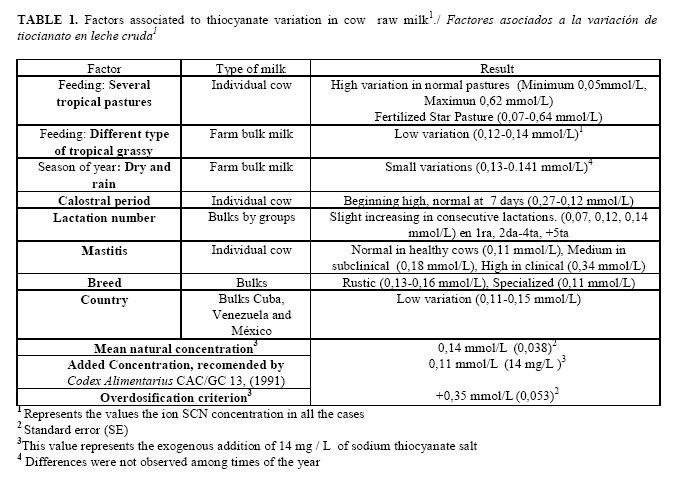
<body><![CDATA[<P><font face="Verdana, Arial, Helvetica, sans-serif" size="2">The analysis of    thiocyanate ion (SCN<SUP>-</SUP>) content in cow bulk and individual raw milk    was done in 1995 samples (895 and 1100 samples respectively), representing a    total volume of 4 millions liters, using the method described in the guidelines    of the <I>Codex Alimentarius</I> CAC/GC 13, (10) . The study on bulk milk included    herds from Cuba, Mexico and Venezuela. </font>     <P><font face="Verdana, Arial, Helvetica, sans-serif" size="2">The effect of activation    upon the contaminant flora of raw milk included cows, goats, buffaloes and sheep.    Twenty three assays were carried out, including the determination of different    groups of microorganisms:     <BR>   aerobic viables mesophiles, coliforms, psychrotrophics, thermoresistants and    proteolytics, with emphasis in the first two ones, at different activation times:    0, 2, 4, 8 and 12 hours at fluctuating room temperature, between 22-36 &#186;C,    according to the guildelines (<I>10</I>). The description of the microbiological    methods used corresponds with the international norms (11). For the exacerbation    studies, raw milk experimentally contaminated with <I>Salmonella typhimurium    </I>ATCC 14028,<I> Staphylococcus aureus ATCC 25923, Escherichia coli enterohemorr&aacute;gica    O157:H7, Listeria monocytogenes ATCC 43256 and Bacillus cereus sp </I>was used    during the times previously pointed out. For the exacerbation criterion, it    was considered that the amounts of pathogen microorganisms maintain the same    counting (no significant differences), or when a reduction in time occurred,    comparing the control milk with the LPs activated sample. An LPs activator product    was used (11), containing the quantities of sodium thiocyanate and percarbonate    salts established in the guidelines (Codex Alimentarius, 1991). Activation was    done on 2 L milk aliquots (laboratory assays) milk jars of 40-50 L (dairy farm    assays) and in 500-5000 L tanks (collecting assays). In all cases, homogenous    mixtures were used to obtain the control and treated samples. </font>     <P><font face="Verdana, Arial, Helvetica, sans-serif" size="2">The measure of    the activation effect upon the milk components and products includes protein,    fat and lactose determination by infrared method in hot raw milk and the final    contamination in pasteurized milk. Assays on the final quality of yogurt and    maturated cheeses were also included. In all cases, the evolution of the quality    indicators in activated and not activated milk was studied. </font>     <P><font face="Verdana, Arial, Helvetica, sans-serif" size="2">To evaluate the    use of the LPs activation within an Integral Program for Milk Quality Improvement,    the activation was carried out in 40 L jars or during the collecting process    of 500-5000 L, from 700 herds, with a total of 36 000 cows, during seven years.    </font>     <P><font face="Verdana, Arial, Helvetica, sans-serif" size="2"><B>II. Thiocyanate    Content in Raw Milk</B> </font>     <P><font face="Verdana, Arial, Helvetica, sans-serif" size="2">The variation of    thiocyanate ion concentrations in milk from individual cows was very wide, with    values from 0,05 mmol.L<SUP>-1</SUP> to 0,62 mmol.L<SUP>-1</SUP>, but concentration    in bulk milk was much lesser variable, with values maintained in a close range    between 0,11-0,18 mmol.L<SUP>-1</SUP>, with an average of 0,14 mmol.L<SUP>-1</SUP>,    repeated in the major part of observations (<a href="/img/revistas/rsa/v32n3/f0102310.gif">Table    1</a>). Milk from cows consuming star pasture (<I>Cynodon nlenfluensis</I>)    fertilized with nitrogen (experimental conditions), had the highest values,    the concentrations in bulk milk of cows fed in dairy farms using different types    of pasture, including star pasture, were lesser; and the average concentrations    observed in the different countries were equally similar. The highest concentrations    were found in<B> </B>cows with subclinical and clinical mastitis and in animals    with more than five lactations. </font>      
<P><font face="Verdana, Arial, Helvetica, sans-serif" size="2">A tendency to show    higher concentrations was also observed in animals from rustic breedings such    as Zebu and crossbreedings with Holstein and Brown Swiss. From these results,    the general average concentration was established in 0,14 mmol.L<SUP>-1</SUP>    and the concentration needed for activation under the American tropic conditions    in 0,11 mmol/L. To account its values, the concentration over 0,35 mmol.L<SUP>-1</SUP>,    can be considered as thiocyanate overdose. </font>     <P><font face="Verdana, Arial, Helvetica, sans-serif" size="2">The results significantly    contribute to a higher security and innocuity in the use of the LPs, since a    lesser thiocyanate concentration than that indicated by the Codex Alimentarius    Guidelines is used, due to the activation range is much lesser than the maximal    natural concentration found in the milk of an individual animal. The obtainment    of a limit value to consider an inadequate use of the LPs is also a criteria    allowing its control of use. </font>     <P><font face="Verdana, Arial, Helvetica, sans-serif" size="2"><B>III. Activation    of the Lactoperoxidase System</B> </font>     ]]></body>
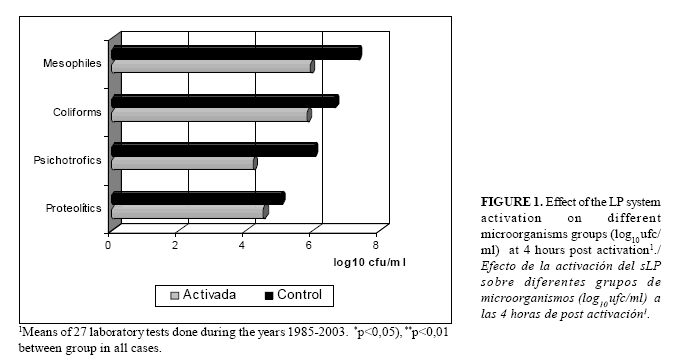
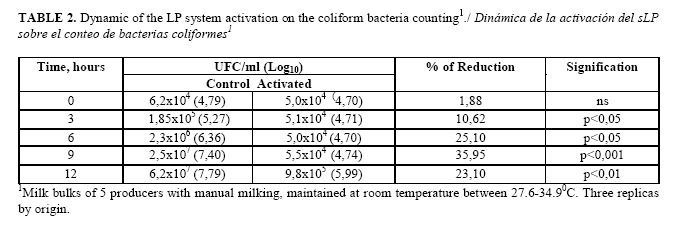
<body><![CDATA[<P><font face="Verdana, Arial, Helvetica, sans-serif" size="2">The essentially    bacteriostatic nature of the LPS, avoids the quick multiplication of the milk    contaminant saprophytic flora, lowering the deterioration of the initial quality    and the losses due to acidification (1, 12, 13 ), demonstrated in all mammalian    species of economical importance. </font>     <P><font face="Verdana, Arial, Helvetica, sans-serif" size="2">Changes in the    mean values of cfu/mL in log<SUB>10</SUB>, the main groups of milk contaminant    bacteria, measured at 4 hours post activation (<a href="/img/revistas/rsa/v32n3/f0202310.gif">Fig.    1</a>), indicate a decrease of the total amount in the order of one log or higher,    independently of the microorganism group, the initial contamination and milk    temperature. The dynamics of the bactericidal effect in coliforms group (<a href="/img/revistas/rsa/v32n3/f0302310.gif">Table    2</a>), shows that such effect is minimal in the first two hours, increases    until 8-9 hours and decreases from the 12 hours, occurring concomitant with    the bacteriostatic activity , which is the main action of the system (14, 15,16,    ). </font>      
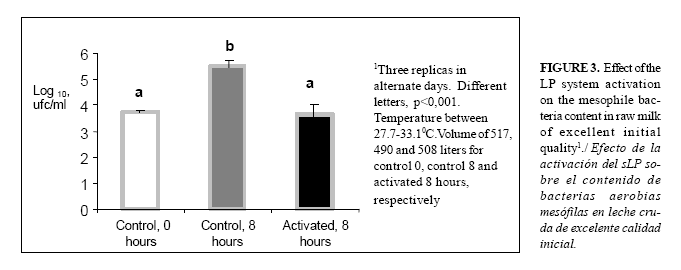
<P><font face="Verdana, Arial, Helvetica, sans-serif" size="2">This effect has    its expression in decreasing the lactic acid production capacity by lactofermentant    bacteria, </font><font face="Verdana, Arial, Helvetica, sans-serif" size="2">being    the most visible practical base of the activation in hot milk in the tropic,    since it avoids the acidification and curdled, either in cow, buffalo, goat    and sheep (<a href="/img/revistas/rsa/v32n3/f0401310.gif">Fig. 2</a>).    The use of LPs in hot milk with excellent initial quality (less than 10 000    cfu/mL), indicates that such quality can be maintained stable for at least 8    hours at room temperature between 28-34<SUP>o</SUP>C, (<a href="/img/revistas/rsa/v32n3/f0502310.gif">Fig.    3</a>), which supposes that the method does not have to be only directed to    the conservation of raw milk with high contamination. </font>      
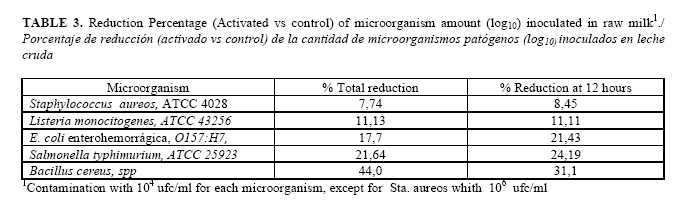
<P><font face="Verdana, Arial, Helvetica, sans-serif" size="2">The LPs activation    method is used in Cuba during the last 15 years in more than 1 200 millions    of milk liters. Include cow, buffalo and goat milk in different production and    collection conditions (Ponce, 2007). Also include experiences of use in 23 Latin    American and Caribbean countries (1, 11). </font>     <P><font face="Verdana, Arial, Helvetica, sans-serif" size="2"><B>IV. Exacerbation    of the Food Borne Microorganisms</B> </font>     <P><font face="Verdana, Arial, Helvetica, sans-serif" size="2">The results obtained    from the experimental contamination of raw milk with strains pathogen microorganisms    (<a href="/img/revistas/rsa/v32n3/f0602310.gif">Table 3</a>), show that    no significant differences were observed in any case between the activated and    control milk, although the absolute concentration values were always lower in    treated milk, at least in one reduction log. More that one reduction log was    obtained at 8 hours with <I>Listeria monocytogenes </I>and at 8 and 12 hours    with <I>Escherichia coli.</I>The reduction percent measured at 12 hours post    activation was 8,45% in the case of<I> Staphylococcus aureus </I>and the highest    of 24,19% in <I>Salmonella typhimurium</I>. The results are coincident with    those obtained in similar conditions in the Zoo-Prophylactic Venice Institute    and others (1, 8, 17). </font>      
<P><font face="Verdana, Arial, Helvetica, sans-serif" size="2">The growth inhibition    effect of pathogen bacteria and the less reduction of bacteria pathogens can    be associated to the damage provoked by the action of the Lactoperoxidase system    final products on the bacteria structure and/or function, which restrains its    restitution even after the effect has disappeared, and then the exacerbation    effect is discarded. </font>      <P><font face="Verdana, Arial, Helvetica, sans-serif" size="2"><B>V. Effect on    Milk Composition and Dairy Products</B> </font>     <P><font face="Verdana, Arial, Helvetica, sans-serif" size="2">The protein and    fat concentrations were stable<STRIKE>s</STRIKE> until 12 hours post activation    and until 8 hours in the case of lactose, while activation in highly contaminated    milk before the pasteurization process, totally eliminated the presence of coliforms    group and thermo resistant bacteria, and did not altered the quality indicators    of yogurt, neither the matured cheeses obtained from milk previously activated    and pasteurized (<a href="/img/revistas/rsa/v32n3/f0702310.gif">Table 4</a>),    demonstrating that the method does not change the dairy products quality, including    those using lactofermentant bacteria, after an adequate pasteurization of the    milk at 85<SUP>0</SUP>C during 20 minutes. </font>      
<P><font face="Verdana, Arial, Helvetica, sans-serif" size="2">From the practical    point of view, the observed increase on the efficacy of pasteurization is very    important in those cases in which the processing milk contains a high bacterial    amount, and when failures in the itself process exist, since the total elimination    of microorganisms is assured with emphasis in the coliform and pathogen groups.    The reduction or elimination of the thermoresistant bacteria vegetative forms    and potentially of the spores, is an aspect for further research, but it can    be a highly promissory field for long live products and high temperature thermal    processes of dairy industry. </font>      ]]></body>
<body><![CDATA[<P><font face="Verdana, Arial, Helvetica, sans-serif" size="2">The results agree    with other reports (17, 18) referring an increase on the efficacy of the thermal    process in previously activated milk and the inactivation of the components    post activation. The non alteration of cheese and yogurt quality, where live    microorganisms are used after the activation and thermal treatment of milk,    demonstrates that the LPS is deactivated by the thermal treatment (12, 18, 19).    The majority of reports indicating any inhibitor effect on lactofermentant microorganisms    have been obtained in none thermally treated milk or with temperatures lower    than those established for such processes (85<SUP>o</SUP>C during 20 minutes    or more).    <BR>       <BR>   </font>     <P><font face="Verdana, Arial, Helvetica, sans-serif" size="2"><B>VI. The Use    of the LPs as part of the Integral </B></font><font face="Verdana, Arial, Helvetica, sans-serif" size="2"><B>Programme    for Increasing Milk Quality</B> </font>      <P><font face="Verdana, Arial, Helvetica, sans-serif" size="2">The inclusion of    the Lactoperoxidase system as a method for maintaining the initial quality of    raw milk without refrigeration into a program for improving milk quality, included    actions related to the milking hygiene and management, mastitis reduction, improvement    of the milk solid content, registers and laboratory technical support (11).    The integration of a hygienic milking and clean packages is aimed to obtain    a good initial quality, meanwhile the use of the LPS activator joined with adequate    milk manipulation practices, guarantee the non deterioration in time and the    arrival to optimal quality to industry. A reduction of 90 percent of acid milk    arriving to industry and recollection points was obtained and also a decrease    in 2 log<SUB>10</SUB> of milk contamination. </font>     <P><font face="Verdana, Arial, Helvetica, sans-serif" size="2">The use of the    method as part of an integral program for increasing the milk quality and not    as an independent measure, assures that the dairy producers use the good practices    of milking hygiene and milk manipulation as an essential element of the improvement    and the LPs activation as an auxiliary measure to maintain its initial quality    (11). On the other hand, though the method improves the pasteurized milk quality    indicators, it does not exclude the need of its thermal treatment . </font>     <P><font face="Verdana, Arial, Helvetica, sans-serif" size="2"><B>VII. New Goals    of the Potential Use the Lactoperoxidase System</B> </font>      <P><font face="Verdana, Arial, Helvetica, sans-serif" size="2">The LP system activation    effects on the saprophytic flora and some pathogen bacteria have been used for    other goals besides the milk preservation. It includes the following potential    uses. </font>     <P><font face="Verdana, Arial, Helvetica, sans-serif" size="2">&#149; Oxidative    stress in relation to intestinal inflammation (20,21) </font>     <P><font face="Verdana, Arial, Helvetica, sans-serif" size="2">&#149; Treatment    without helicobacter pylori (22, 23, 24) </font>     ]]></body>
<body><![CDATA[<P><font face="Verdana, Arial, Helvetica, sans-serif" size="2">&#149; Treatment    respiratory diseases (25, 26) </font>     <P><font face="Verdana, Arial, Helvetica, sans-serif" size="2">&#149; Cosmetics    (27) </font>     <P><font face="Verdana, Arial, Helvetica, sans-serif" size="2">&#149; Conservation    of fish, meats and other foods (4,28,29) </font>     <P><font face="Verdana, Arial, Helvetica, sans-serif" size="2">&#149; Conservation    of fruits and fruit juices(11, 30, 31) </font>     <P><font face="Verdana, Arial, Helvetica, sans-serif" size="2">&#149; Conservation    of vegetables from group IV. Substitution of active chloride as disinfectant.    (3, 30) </font>     <P><font face="Verdana, Arial, Helvetica, sans-serif" size="2">&#149; Use in the    development of drugs and dental pastes (23, 32, 33) </font>     <P><font face="Verdana, Arial, Helvetica, sans-serif" size="2">&#149; Diagnostic    of mastitis in goats (16) </font>     <P><font face="Verdana, Arial, Helvetica, sans-serif" size="2">The development    of some researches in that field, only used before on milk conservation, shows    the high potential of the new uses of the LPs. </font>     <P>     <P><font face="Verdana, Arial, Helvetica, sans-serif" size="2"><B><font size="3">CONCLUSIONS</font></B>    </font>      ]]></body>
<body><![CDATA[<P><font face="Verdana, Arial, Helvetica, sans-serif" size="2">Concerning the    use of the LP system in Cuba and in other tropical countries from America, the    determination of normal thiocyanate ion concentrations and overdossages, together    with the confirmation that there is not exacerbation of pathogen bacterias reinforce    the criterion of security and innocuity when using the LP system. The calculation    of the kinetic of activation as for the combined bacteriostatic and bactericide    effects, clarifies the evolution of the activity in time and their scope. The    improvement of the efficiency of pasteurization process in milk with high bacterial    counting and the experience of activation in milk from four mammal species of    economical interest, reinforce the criterion of its use in practice. </font>     <P><font face="Verdana, Arial, Helvetica, sans-serif" size="2">There is a coincidence    with the conclusions of FAO/OMS Technical Committee (1), that there are no scientific    or practical reasons to maintain the clause that restricts the use of the method    in the international milk products market of milk products, which allowed the    lifting of the restriction that the system could not be used for intended for    international dairy market. The evidences point out to a quick use of the LP    system activation for the conservation of raw milk, for other foods and in the    development of products for human health. </font>     <P>     <P><font face="Verdana, Arial, Helvetica, sans-serif" size="2"><B><font size="3">REFERENCES</font></B>    </font>      <!-- ref --><P><font face="Verdana, Arial, Helvetica, sans-serif" size="2">1. FAO/OMS. Benefits    and potential risks of the Lps of raw milk preservation. Inform of the technical    meeting FAO/OMS. (Monograph Series FAO, 56 pages, 2006 and on the Internet.).    Available from: <a href="http://www.fao.org/ag/dairy.html">http://www.fao.org/ag/dairy.html</a>.    </font>    <!-- ref --><P><font face="Verdana, Arial, Helvetica, sans-serif" size="2">2.<I> </I>Codex    Alimentarius. Thirty-Second Session of the Codex Alimentarius Commission. Alinorm    09/32/REP, (2009), Rome, Italy. </font>    <!-- ref --><P><font face="Verdana, Arial, Helvetica, sans-serif" size="2">3. AFSSA. Agencia    Francesa de Seguridad de Alimentos. Avis de l&#180;Agence francaise de securit&eacute;    sanitaire des aliments relatif a l&#180;autorisation d&#168;un systeme lactoperoxidase    comme auxilliare technoloque pour traitement des salades Iveme gamme. Saisine    Nro 2003-SA-0015. </font>    <!-- ref --><P><font face="Verdana, Arial, Helvetica, sans-serif" size="2">4. AESA. Agencia    Espa&ntilde;ola de Seguridad Alimentaria. Informe del Comit&eacute; Cient&iacute;fico    de AESA sobre la utilizaci&oacute;n del sistema CATALLIC basado en la activaci&oacute;n    del sistema LP, para el tratamiento de frutas y hortalizas. Nro de Referencia    AESA 2005-012, (2005). Espa&ntilde;a. </font>    <!-- ref --><P><font face="Verdana, Arial, Helvetica, sans-serif" size="2">5. Uguz MT, Ozdemir    H. Purification of bovine milk Lactoperoxidase and investigation of antibacterial    properties at different thiocyanate mediated. Appl Bioch Microb. 2005;41:349-53.    </font>    <!-- ref --><P><font face="Verdana, Arial, Helvetica, sans-serif" size="2">6. Kishore B, Banerjee    K, Marimuthu P, Bhattacharyya P, Chatterjee M. Effect of thiocyanate through    milk on thyroid hormone homeostasis in women. Brit J Nutrit. 1997;78: 679-81.    </font>    <!-- ref --><P><font face="Verdana, Arial, Helvetica, sans-serif" size="2">7. Fern&aacute;ndez    O, Marrero E, Capdevila JZ. Safety considerations on lactoperoxidase system    use for milk preservation. Rev Salud Anim. 2005;27:205-209. </font>    <!-- ref --><P><font face="Verdana, Arial, Helvetica, sans-serif" size="2">8. Armenteros M,    Dalvit V, Leyva P, Ponce P, Alfonso P. Risk analysis of the exacerbation of    foodborne pathogens in raw milk activated with Lactoperoxidase system. Rev Salud    Anim. 2006;29:176-81. </font>    <!-- ref --><P><font face="Verdana, Arial, Helvetica, sans-serif" size="2">9. Codex Alimentarius.    Request for additional information regardin the potential risk in respect of    the lactoperoxidase system. Information from Cuba, Canada, The United States    and Canada. CX/FH 07/39/2 Add. 1, October 2007. India. </font>    <!-- ref --><P><font face="Verdana, Arial, Helvetica, sans-serif" size="2">10.Codex Alimentarius.    Guidelines for the preservation of raw milk by use of the Lactoperoxidase system.    CAC/GL 13-1991 (1991). </font>    <!-- ref --><P><font face="Verdana, Arial, Helvetica, sans-serif" size="2">11.Ponce P. Activaci&oacute;n    del sistema lactoperoxidasa: un nuevo enfoque para la conservaci&oacute;n de    leche cruda en el tr&oacute;pico americano. Tesis de Doctor en Ciencias. Centro    Nacional de Sanidad Agropecuaria; 2007. </font>    <!-- ref --><P><font face="Verdana, Arial, Helvetica, sans-serif" size="2">12.Ponce P, Capdevila    JZ, Armenteros M. Aspectos pr&aacute;cticos y consideraciones sobre peligros    microbiol&oacute;gicos y qu&iacute;micos en el uso sistema lactoperoxidasa en    el tr&oacute;pico americano. Rev Salud Anim. 2004;25:163-72. </font>    <!-- ref --><P><font face="Verdana, Arial, Helvetica, sans-serif" size="2">13.Seifu E, Buys    EM, Donki EF. Significance of the lactoperoxidase system in the dairy industry    and its potential applications: A Review. Food Sci Techn. 2005;16:137-54. </font>    <!-- ref --><P><font face="Verdana, Arial, Helvetica, sans-serif" size="2">14.Jacob BM, Essy    A, Sreekumar B, Haridas M. Thiocyanate: mediated antifungal and antibacterial    property of goat milk lactoperoxidase. Life Sci. 2000;66:2433-39. </font>    <!-- ref --><P><font face="Verdana, Arial, Helvetica, sans-serif" size="2">15.Revol-Jenelles    AM, Milliere JB. The Lactoperoxidase system on milk preservation: Its use, antimicrobial    activity and effects on milk products. Global Lactoperoxidase Programme (2005).    (GLP)/ FAO, Rome. </font>    <!-- ref --><P><font face="Verdana, Arial, Helvetica, sans-serif" size="2">16.Seifu E, Donkin    EF, Buys ME. Potential of lactoperoxidase to diagnose subclinical mastitis in    goats. Small Rum Res. 2007;69:154-58. </font>    <!-- ref --><P><font face="Verdana, Arial, Helvetica, sans-serif" size="2">17.Kamau DN, Doores    S, Pruitt K. Enhanced thermal destruction of <I>Listeria monocitogenes </I>and    <I>Staphylococcus aureus </I>by the lactoperoxidase system. Appl Env Microb.    Sep. 1990; 2711-16. </font>    <!-- ref --><P><font face="Verdana, Arial, Helvetica, sans-serif" size="2">18.Barret NE, Grandison    AS, Lewis J. Contribution of the Lactoperoxidase to the keeping quality pasteurized    milk. J Dairy Res. 1999;66:73-80. </font>    <!-- ref --><P><font face="Verdana, Arial, Helvetica, sans-serif" size="2">19.Trujillo AJ,    Pozo PI, Guamis B. Effect of heat treatment on Lactoperoxidase activity in caprine    milk. Small Rum Res. 2007;67:243-246. </font>    <!-- ref --><P><font face="Verdana, Arial, Helvetica, sans-serif" size="2">20.Davies MJ, Hawkins    CL, Pattison DI, Res MD. Mammalian home peroxidase: from molecular mechanisms    to health implications. Antioxid Redox Signal. 2008;10:1199-234. </font>    <P><font face="Verdana, Arial, Helvetica, sans-serif" size="2">21.Matsushita A,    Son DO, Satsu H, H. Takano, Kawakami H, H Totsuda et al . Inhibitory effect    of lactoperoxidase on the secretion of proinflammatory cytokine interleukin-8    in human epithelial Caco-2 cells. Int Dairy J. 2008;18:923-938. </font>     <!-- ref --><P><font face="Verdana, Arial, Helvetica, sans-serif" size="2">22.    Patent Nro US    6149908. 2000. Use of lactoperoxidase, a peroxide donor and thiocyanate for    the manufacture of a medicament for treating <I>Helicobacter pylori</I> infection.    Nov 21/ 2000. </font>     <!-- ref --><P><font face="Verdana, Arial, Helvetica, sans-serif" size="2">23.Haukioja A,    Ihalin R, Loimaranta V, Lenander M, Tenuevo J. Sensitivity of <I>Helicobacter    pylori </I>toa n innate defense mechanism, the Lactoperoxidase system, in buffer    and human whole saliva. J Med Microbiol. 2004;53:855-60. </font>    <!-- ref --><P><font face="Verdana, Arial, Helvetica, sans-serif" size="2">24.Zimecki M, Kruzel    ML. Milk-derived proteins and peptides of potential therapeutic and nutritive    value. J. Exp. Ther. Oncol. 2007; 6: 89-106. </font>    <!-- ref --><P><font face="Verdana, Arial, Helvetica, sans-serif" size="2">25.Boots JW, Floris    R. Lactoperoxidase: From catalytic mechanism to practical applications. A Review.    Int. Dairy J. 2006;16:1271-1276. </font>    <!-- ref --><P><font face="Verdana, Arial, Helvetica, sans-serif" size="2">26.Conner GE, Wijkstrom-Frei    C, Randell SH, Fernandez VE, Salathe M. The Lactoperoxidase system links anion    transport to host defence in cystic fibrosis. FEBS Lett 2007; 581: 271-278.    </font>    <P><font face="Verdana, Arial, Helvetica, sans-serif" size="2">27.Glanbia Nutririonals.    Lactoperoxidase: Antimicrobials cosmetics. Available at <a href="http://www.glambianutritionals.com">http://www.glambianutritionals.    com</a>. 2007. </font>      <!-- ref --><P><font face="Verdana, Arial, Helvetica, sans-serif" size="2">28.    Patent Nro US    6 447 811 B1. 2002. Pesticide against plan-pathogenic microorganisms. Sep 10,    2002. </font>     <!-- ref --><P><font face="Verdana, Arial, Helvetica, sans-serif" size="2">29.Elliot RM, Mclay    JC, Kennedy MJ, Simmonds RS. Inhibition of foodborne bacteria by the lactoperoxidase    system in a beef cube system. Int J Food Microb. 2005;91:73-81. </font>    <!-- ref --><P><font face="Verdana, Arial, Helvetica, sans-serif" size="2">30.Touch V, Hayakawa    S, Yamada S, Kaneko S. Effects of a lactoperoxidase-thiocyanate-hydrogen peroxide    system on <I>Salmonella enteritidis</I> in animal or vegetable foods. Int J    Food Microb. 2004; 93: 175-183. </font>    <!-- ref --><P><font face="Verdana, Arial, Helvetica, sans-serif" size="2">31.Le Nguyen DD,    Ducamp MN, Dornier M, Montet D, Loiseau G. Effect of the lactoperoxidase system    against three mayor causal agents of disease in mangoes. J Food Prot. 2005;68:1497-1500.    </font>    <!-- ref --><P><font face="Verdana, Arial, Helvetica, sans-serif" size="2">32.Shin K, Yamauchi    K, Teraguchi S, Hayasawa H, Imoto I. Susceptibility of <I>Helicobacter pylori    </I>and its urease activity to the peroxidase-hydrogen peroxide-thiocyanate    system. J Med Microb. 2002; 51: 231-237. </font>    <!-- ref --><P><font face="Verdana, Arial, Helvetica, sans-serif" size="2">33.Korhonen H,    Pihlanto A. Technological options for the production of health-promoting proteins    and peptides derived from milk and calostrum. Curr Pharm Des. 2007;13:829-843.    </font>    <P>      ]]></body>
<body><![CDATA[<P>      <P>      <P>     <P>     <P><font face="Verdana, Arial, Helvetica, sans-serif" size="2"><B>(Recibido 20-4-2010;    Aceptado 24-9-2010)</B></font>      ]]></body><back>
<ref-list>
<ref id="B1">
<label>1</label><nlm-citation citation-type="">
<collab>FAO/OMS</collab>
<article-title xml:lang="en"><![CDATA[Benefits and potential risks of the Lps of raw milk preservation: Inform of the technical meeting FAO/OMS]]></article-title>
<source><![CDATA[]]></source>
<year>2006</year>
</nlm-citation>
</ref>
<ref id="B2">
<label>2</label><nlm-citation citation-type="confpro">
<source><![CDATA[]]></source>
<year></year>
<conf-name><![CDATA[ Thirty-Second Session of the Codex Alimentarius Commission]]></conf-name>
<conf-date>2009</conf-date>
<conf-loc>Rome </conf-loc>
</nlm-citation>
</ref>
<ref id="B3">
<label>3</label><nlm-citation citation-type="confpro">
<source><![CDATA[]]></source>
<year></year>
<conf-name><![CDATA[ Agencia Francesa de Seguridad de Alimentos. Avis de l´Agence francaise de securité sanitaire des aliments relatif a l´autorisation d¨un systeme lactoperoxidase comme auxilliare technoloque pour traitement des salades Iveme gamme]]></conf-name>
<conf-loc> </conf-loc>
</nlm-citation>
</ref>
<ref id="B4">
<label>4</label><nlm-citation citation-type="confpro">
<collab>Agencia Española de Seguridad Alimentaria</collab>
<source><![CDATA[]]></source>
<year></year>
<conf-name><![CDATA[ Informe del Comité Científico de AESA sobre la utilización del sistema CATALLIC basado en la activación del sistema LP, para el tratamiento de frutas y hortalizas]]></conf-name>
<conf-date>2005</conf-date>
<conf-loc> </conf-loc>
</nlm-citation>
</ref>
<ref id="B5">
<label>5</label><nlm-citation citation-type="journal">
<person-group person-group-type="author">
<name>
<surname><![CDATA[Uguz]]></surname>
<given-names><![CDATA[MT]]></given-names>
</name>
<name>
<surname><![CDATA[Ozdemir]]></surname>
<given-names><![CDATA[H]]></given-names>
</name>
</person-group>
<article-title xml:lang="en"><![CDATA[Purification of bovine milk Lactoperoxidase and investigation of antibacterial properties at different thiocyanate mediated]]></article-title>
<source><![CDATA[Appl Bioch Microb]]></source>
<year>2005</year>
<volume>41</volume>
<page-range>349-53</page-range></nlm-citation>
</ref>
<ref id="B6">
<label>6</label><nlm-citation citation-type="journal">
<person-group person-group-type="author">
<name>
<surname><![CDATA[Kishore]]></surname>
<given-names><![CDATA[B]]></given-names>
</name>
<name>
<surname><![CDATA[Banerjee]]></surname>
<given-names><![CDATA[K]]></given-names>
</name>
<name>
<surname><![CDATA[Marimuthu]]></surname>
<given-names><![CDATA[P]]></given-names>
</name>
<name>
<surname><![CDATA[Bhattacharyya]]></surname>
<given-names><![CDATA[P]]></given-names>
</name>
<name>
<surname><![CDATA[Chatterjee]]></surname>
<given-names><![CDATA[M]]></given-names>
</name>
</person-group>
<article-title xml:lang="en"><![CDATA[Effect of thiocyanate through milk on thyroid hormone homeostasis in women]]></article-title>
<source><![CDATA[Brit J Nutrit]]></source>
<year>1997</year>
<volume>78</volume>
<page-range>679-81</page-range></nlm-citation>
</ref>
<ref id="B7">
<label>7</label><nlm-citation citation-type="journal">
<person-group person-group-type="author">
<name>
<surname><![CDATA[Fernández]]></surname>
<given-names><![CDATA[O]]></given-names>
</name>
<name>
<surname><![CDATA[Marrero]]></surname>
<given-names><![CDATA[E]]></given-names>
</name>
<name>
<surname><![CDATA[Capdevila]]></surname>
<given-names><![CDATA[JZ]]></given-names>
</name>
</person-group>
<article-title xml:lang="en"><![CDATA[Safety considerations on lactoperoxidase system use for milk preservation]]></article-title>
<source><![CDATA[Rev Salud Anim]]></source>
<year>2005</year>
<volume>27</volume>
<page-range>205-209</page-range></nlm-citation>
</ref>
<ref id="B8">
<label>8</label><nlm-citation citation-type="journal">
<person-group person-group-type="author">
<name>
<surname><![CDATA[Armenteros]]></surname>
<given-names><![CDATA[M]]></given-names>
</name>
<name>
<surname><![CDATA[Dalvit]]></surname>
<given-names><![CDATA[V]]></given-names>
</name>
<name>
<surname><![CDATA[Leyva]]></surname>
<given-names><![CDATA[P]]></given-names>
</name>
<name>
<surname><![CDATA[Ponce]]></surname>
<given-names><![CDATA[P]]></given-names>
</name>
<name>
<surname><![CDATA[Alfonso]]></surname>
<given-names><![CDATA[P]]></given-names>
</name>
</person-group>
<article-title xml:lang="en"><![CDATA[Risk analysis of the exacerbation of foodborne pathogens in raw milk activated with Lactoperoxidase system]]></article-title>
<source><![CDATA[Rev Salud Anim]]></source>
<year>2006</year>
<volume>29</volume>
<page-range>176-81</page-range></nlm-citation>
</ref>
<ref id="B9">
<label>9</label><nlm-citation citation-type="confpro">
<source><![CDATA[]]></source>
<year></year>
<conf-name><![CDATA[ Request for additional information regardin the potential risk in respect of the lactoperoxidase system. Information from Cuba, Canada, The United States and Canada]]></conf-name>
<conf-date>1, October 2007</conf-date>
<conf-loc> </conf-loc>
</nlm-citation>
</ref>
<ref id="B10">
<label>10</label><nlm-citation citation-type="confpro">
<source><![CDATA[]]></source>
<year></year>
<conf-name><![CDATA[ Guidelines for the preservation of raw milk by use of the Lactoperoxidase system]]></conf-name>
<conf-date>1991</conf-date>
<conf-loc> </conf-loc>
</nlm-citation>
</ref>
<ref id="B11">
<label>11</label><nlm-citation citation-type="">
<person-group person-group-type="author">
<name>
<surname><![CDATA[Ponce]]></surname>
<given-names><![CDATA[P]]></given-names>
</name>
</person-group>
<article-title xml:lang="es"><![CDATA[Activación del sistema lactoperoxidasa: un nuevo enfoque para la conservación de leche cruda en el trópico americano]]></article-title>
<source><![CDATA[]]></source>
<year></year>
</nlm-citation>
</ref>
<ref id="B12">
<label>12</label><nlm-citation citation-type="journal">
<person-group person-group-type="author">
<name>
<surname><![CDATA[Ponce]]></surname>
<given-names><![CDATA[P]]></given-names>
</name>
<name>
<surname><![CDATA[Capdevila]]></surname>
<given-names><![CDATA[JZ]]></given-names>
</name>
<name>
<surname><![CDATA[Armenteros]]></surname>
<given-names><![CDATA[M]]></given-names>
</name>
</person-group>
<article-title xml:lang="es"><![CDATA[Aspectos prácticos y consideraciones sobre peligros microbiológicos y químicos en el uso sistema lactoperoxidasa en el trópico americano]]></article-title>
<source><![CDATA[Rev Salud Anim]]></source>
<year>2004</year>
<volume>25</volume>
<page-range>163-72</page-range></nlm-citation>
</ref>
<ref id="B13">
<label>13</label><nlm-citation citation-type="journal">
<person-group person-group-type="author">
<name>
<surname><![CDATA[Seifu]]></surname>
<given-names><![CDATA[E]]></given-names>
</name>
<name>
<surname><![CDATA[Buys]]></surname>
<given-names><![CDATA[EM]]></given-names>
</name>
<name>
<surname><![CDATA[Donki]]></surname>
<given-names><![CDATA[EF]]></given-names>
</name>
</person-group>
<article-title xml:lang="en"><![CDATA[Significance of the lactoperoxidase system in the dairy industry and its potential applications: A Review]]></article-title>
<source><![CDATA[Food Sci Techn]]></source>
<year>2005</year>
<volume>16</volume>
<page-range>137-54</page-range></nlm-citation>
</ref>
<ref id="B14">
<label>14</label><nlm-citation citation-type="journal">
<person-group person-group-type="author">
<name>
<surname><![CDATA[Jacob]]></surname>
<given-names><![CDATA[BM]]></given-names>
</name>
<name>
<surname><![CDATA[Essy]]></surname>
<given-names><![CDATA[A]]></given-names>
</name>
<name>
<surname><![CDATA[Sreekumar]]></surname>
<given-names><![CDATA[B]]></given-names>
</name>
<name>
<surname><![CDATA[Haridas]]></surname>
<given-names><![CDATA[M]]></given-names>
</name>
</person-group>
<article-title xml:lang="en"><![CDATA[Thiocyanate: mediated antifungal and antibacterial property of goat milk lactoperoxidase]]></article-title>
<source><![CDATA[Life Sci]]></source>
<year>2000</year>
<volume>66</volume>
<page-range>2433-39</page-range></nlm-citation>
</ref>
<ref id="B15">
<label>15</label><nlm-citation citation-type="confpro">
<person-group person-group-type="author">
<name>
<surname><![CDATA[Revol-Jenelles]]></surname>
<given-names><![CDATA[AM]]></given-names>
</name>
<name>
<surname><![CDATA[Milliere]]></surname>
<given-names><![CDATA[JB]]></given-names>
</name>
</person-group>
<source><![CDATA[The Lactoperoxidase system on milk preservation: Its use, antimicrobial activity and effects on milk products]]></source>
<year></year>
<conf-name><![CDATA[ Global Lactoperoxidase Programme]]></conf-name>
<conf-date>2005</conf-date>
<conf-loc>Rome </conf-loc>
</nlm-citation>
</ref>
<ref id="B16">
<label>16</label><nlm-citation citation-type="journal">
<person-group person-group-type="author">
<name>
<surname><![CDATA[Seifu]]></surname>
<given-names><![CDATA[E]]></given-names>
</name>
<name>
<surname><![CDATA[Donkin]]></surname>
<given-names><![CDATA[EF]]></given-names>
</name>
<name>
<surname><![CDATA[Buys]]></surname>
<given-names><![CDATA[ME]]></given-names>
</name>
</person-group>
<article-title xml:lang="en"><![CDATA[Potential of lactoperoxidase to diagnose subclinical mastitis in goats]]></article-title>
<source><![CDATA[Small Rum Res]]></source>
<year>2007</year>
<volume>69</volume>
<page-range>154-58</page-range></nlm-citation>
</ref>
<ref id="B17">
<label>17</label><nlm-citation citation-type="journal">
<person-group person-group-type="author">
<name>
<surname><![CDATA[Kamau]]></surname>
<given-names><![CDATA[DN]]></given-names>
</name>
<name>
<surname><![CDATA[Doores]]></surname>
<given-names><![CDATA[S]]></given-names>
</name>
<name>
<surname><![CDATA[Pruitt]]></surname>
<given-names><![CDATA[K]]></given-names>
</name>
</person-group>
<article-title xml:lang="en"><![CDATA[Enhanced thermal destruction of Listeria monocitogenes and Staphylococcus aureus by the lactoperoxidase system]]></article-title>
<source><![CDATA[Appl Env Microb]]></source>
<year>1990</year>
<page-range>2711-16</page-range></nlm-citation>
</ref>
<ref id="B18">
<label>18</label><nlm-citation citation-type="journal">
<person-group person-group-type="author">
<name>
<surname><![CDATA[Barret]]></surname>
<given-names><![CDATA[NE]]></given-names>
</name>
<name>
<surname><![CDATA[Grandison]]></surname>
<given-names><![CDATA[AS]]></given-names>
</name>
<name>
<surname><![CDATA[Lewis]]></surname>
<given-names><![CDATA[J]]></given-names>
</name>
</person-group>
<article-title xml:lang="en"><![CDATA[Contribution of the Lactoperoxidase to the keeping quality pasteurized milk]]></article-title>
<source><![CDATA[J Dairy Res]]></source>
<year>1999</year>
<volume>66</volume>
<page-range>73-80</page-range></nlm-citation>
</ref>
<ref id="B19">
<label>19</label><nlm-citation citation-type="journal">
<person-group person-group-type="author">
<name>
<surname><![CDATA[Trujillo]]></surname>
<given-names><![CDATA[AJ]]></given-names>
</name>
<name>
<surname><![CDATA[Pozo]]></surname>
<given-names><![CDATA[PI]]></given-names>
</name>
<name>
<surname><![CDATA[Guamis]]></surname>
<given-names><![CDATA[B]]></given-names>
</name>
</person-group>
<article-title xml:lang="en"><![CDATA[Effect of heat treatment on Lactoperoxidase activity in caprine milk]]></article-title>
<source><![CDATA[Small Rum Res]]></source>
<year>2007</year>
<volume>67</volume>
<page-range>243-246</page-range></nlm-citation>
</ref>
<ref id="B20">
<label>20</label><nlm-citation citation-type="journal">
<person-group person-group-type="author">
<name>
<surname><![CDATA[Davies]]></surname>
<given-names><![CDATA[MJ]]></given-names>
</name>
<name>
<surname><![CDATA[Hawkins]]></surname>
<given-names><![CDATA[CL]]></given-names>
</name>
<name>
<surname><![CDATA[Pattison]]></surname>
<given-names><![CDATA[DI]]></given-names>
</name>
<name>
<surname><![CDATA[Res]]></surname>
<given-names><![CDATA[MD]]></given-names>
</name>
</person-group>
<article-title xml:lang="en"><![CDATA[Mammalian home peroxidase: from molecular mechanisms to health implications]]></article-title>
<source><![CDATA[Antioxid Redox Signal]]></source>
<year>2008</year>
<volume>10</volume>
<page-range>1199-234</page-range></nlm-citation>
</ref>
<ref id="B21">
<label>21</label><nlm-citation citation-type="journal">
<person-group person-group-type="author">
<name>
<surname><![CDATA[Matsushita]]></surname>
<given-names><![CDATA[A]]></given-names>
</name>
<name>
<surname><![CDATA[Son]]></surname>
<given-names><![CDATA[DO]]></given-names>
</name>
<name>
<surname><![CDATA[Satsu]]></surname>
<given-names><![CDATA[H]]></given-names>
</name>
<name>
<surname><![CDATA[Takano]]></surname>
<given-names><![CDATA[H]]></given-names>
</name>
<name>
<surname><![CDATA[Kawakami]]></surname>
<given-names><![CDATA[H]]></given-names>
</name>
<name>
<surname><![CDATA[Totsuda]]></surname>
<given-names><![CDATA[H]]></given-names>
</name>
</person-group>
<article-title xml:lang="en"><![CDATA[Inhibitory effect of lactoperoxidase on the secretion of proinflammatory cytokine interleukin-8 in human epithelial Caco-2 cells]]></article-title>
<source><![CDATA[Int Dairy J]]></source>
<year>2008</year>
<volume>18</volume>
<page-range>923-938</page-range></nlm-citation>
</ref>
<ref id="B22">
<label>22</label><nlm-citation citation-type="">
<source><![CDATA[]]></source>
<year></year>
</nlm-citation>
</ref>
<ref id="B23">
<label>23</label><nlm-citation citation-type="journal">
<person-group person-group-type="author">
<name>
<surname><![CDATA[Haukioja]]></surname>
<given-names><![CDATA[A]]></given-names>
</name>
<name>
<surname><![CDATA[Ihalin]]></surname>
<given-names><![CDATA[R]]></given-names>
</name>
<name>
<surname><![CDATA[Loimaranta]]></surname>
<given-names><![CDATA[V]]></given-names>
</name>
<name>
<surname><![CDATA[Lenander]]></surname>
<given-names><![CDATA[M]]></given-names>
</name>
<name>
<surname><![CDATA[Tenuevo]]></surname>
<given-names><![CDATA[J]]></given-names>
</name>
</person-group>
<article-title xml:lang="en"><![CDATA[Sensitivity of Helicobacter pylori toa n innate defense mechanism, the Lactoperoxidase system, in buffer and human whole saliva]]></article-title>
<source><![CDATA[J Med Microbiol]]></source>
<year>2004</year>
<volume>53</volume>
<page-range>855-60</page-range></nlm-citation>
</ref>
<ref id="B24">
<label>24</label><nlm-citation citation-type="journal">
<person-group person-group-type="author">
<name>
<surname><![CDATA[Zimecki]]></surname>
<given-names><![CDATA[M]]></given-names>
</name>
<name>
<surname><![CDATA[Kruzel]]></surname>
<given-names><![CDATA[ML]]></given-names>
</name>
</person-group>
<article-title xml:lang="en"><![CDATA[Milk-derived proteins and peptides of potential therapeutic and nutritive value]]></article-title>
<source><![CDATA[J Exp Ther Oncol]]></source>
<year>2007</year>
<volume>6</volume>
<page-range>89-106</page-range></nlm-citation>
</ref>
<ref id="B25">
<label>25</label><nlm-citation citation-type="journal">
<person-group person-group-type="author">
<name>
<surname><![CDATA[Boots]]></surname>
<given-names><![CDATA[JW]]></given-names>
</name>
<name>
<surname><![CDATA[Floris]]></surname>
<given-names><![CDATA[R]]></given-names>
</name>
</person-group>
<article-title xml:lang="en"><![CDATA[Lactoperoxidase: From catalytic mechanism to practical applications]]></article-title>
<source><![CDATA[A Review Int Dairy J.]]></source>
<year>2006</year>
<volume>16</volume>
<page-range>1271-1276</page-range></nlm-citation>
</ref>
<ref id="B26">
<label>26</label><nlm-citation citation-type="journal">
<person-group person-group-type="author">
<name>
<surname><![CDATA[Conner]]></surname>
<given-names><![CDATA[GE]]></given-names>
</name>
<name>
<surname><![CDATA[Wijkstrom-Frei]]></surname>
<given-names><![CDATA[C]]></given-names>
</name>
<name>
<surname><![CDATA[Randell]]></surname>
<given-names><![CDATA[SH]]></given-names>
</name>
<name>
<surname><![CDATA[Fernandez]]></surname>
<given-names><![CDATA[VE]]></given-names>
</name>
<name>
<surname><![CDATA[Salathe]]></surname>
<given-names><![CDATA[M]]></given-names>
</name>
</person-group>
<article-title xml:lang="en"><![CDATA[The Lactoperoxidase system links anion transport to host defence in cystic fibrosis]]></article-title>
<source><![CDATA[FEBS Lett]]></source>
<year>2007</year>
<volume>581</volume>
<page-range>271-278</page-range></nlm-citation>
</ref>
<ref id="B27">
<label>27</label><nlm-citation citation-type="">
<source><![CDATA[Lactoperoxidase: Antimicrobials cosmetics]]></source>
<year>2007</year>
</nlm-citation>
</ref>
<ref id="B28">
<label>28</label><nlm-citation citation-type="">
<source><![CDATA[]]></source>
<year></year>
</nlm-citation>
</ref>
<ref id="B29">
<label>29</label><nlm-citation citation-type="journal">
<person-group person-group-type="author">
<name>
<surname><![CDATA[Elliot]]></surname>
<given-names><![CDATA[RM]]></given-names>
</name>
<name>
<surname><![CDATA[Mclay]]></surname>
<given-names><![CDATA[JC]]></given-names>
</name>
<name>
<surname><![CDATA[Kennedy]]></surname>
<given-names><![CDATA[MJ]]></given-names>
</name>
<name>
<surname><![CDATA[Simmonds]]></surname>
<given-names><![CDATA[RS]]></given-names>
</name>
</person-group>
<article-title xml:lang="en"><![CDATA[Inhibition of foodborne bacteria by the lactoperoxidase system in a beef cube system]]></article-title>
<source><![CDATA[Int J Food Microb]]></source>
<year>2005</year>
<volume>91</volume>
<page-range>73-81</page-range></nlm-citation>
</ref>
<ref id="B30">
<label>30</label><nlm-citation citation-type="journal">
<person-group person-group-type="author">
<name>
<surname><![CDATA[Touch]]></surname>
<given-names><![CDATA[V]]></given-names>
</name>
<name>
<surname><![CDATA[Hayakawa]]></surname>
<given-names><![CDATA[S]]></given-names>
</name>
<name>
<surname><![CDATA[Yamada]]></surname>
<given-names><![CDATA[S]]></given-names>
</name>
<name>
<surname><![CDATA[Kaneko]]></surname>
<given-names><![CDATA[S]]></given-names>
</name>
</person-group>
<article-title xml:lang="en"><![CDATA[Effects of a lactoperoxidase-thiocyanate-hydrogen peroxide system on Salmonella enteritidis in animal or vegetable foods]]></article-title>
<source><![CDATA[Int J Food Microb]]></source>
<year>2004</year>
<volume>93</volume>
<page-range>175-183</page-range></nlm-citation>
</ref>
<ref id="B31">
<label>31</label><nlm-citation citation-type="journal">
<person-group person-group-type="author">
<name>
<surname><![CDATA[Le Nguyen]]></surname>
<given-names><![CDATA[DD]]></given-names>
</name>
<name>
<surname><![CDATA[Ducamp]]></surname>
<given-names><![CDATA[MN]]></given-names>
</name>
<name>
<surname><![CDATA[Dornier]]></surname>
<given-names><![CDATA[M]]></given-names>
</name>
<name>
<surname><![CDATA[Montet]]></surname>
<given-names><![CDATA[D]]></given-names>
</name>
<name>
<surname><![CDATA[Loiseau]]></surname>
<given-names><![CDATA[G]]></given-names>
</name>
</person-group>
<article-title xml:lang="en"><![CDATA[Effect of the lactoperoxidase system against three mayor causal agents of disease in mangoes]]></article-title>
<source><![CDATA[J Food Prot]]></source>
<year>2005</year>
<volume>68</volume>
<page-range>1497-1500</page-range></nlm-citation>
</ref>
<ref id="B32">
<label>32</label><nlm-citation citation-type="journal">
<person-group person-group-type="author">
<name>
<surname><![CDATA[Shin]]></surname>
<given-names><![CDATA[K]]></given-names>
</name>
<name>
<surname><![CDATA[Yamauchi]]></surname>
<given-names><![CDATA[K]]></given-names>
</name>
<name>
<surname><![CDATA[Teraguchi]]></surname>
<given-names><![CDATA[S]]></given-names>
</name>
<name>
<surname><![CDATA[Hayasawa]]></surname>
<given-names><![CDATA[H]]></given-names>
</name>
<name>
<surname><![CDATA[Imoto]]></surname>
<given-names><![CDATA[I]]></given-names>
</name>
</person-group>
<article-title xml:lang="en"><![CDATA[Susceptibility of Helicobacter pylori and its urease activity to the peroxidase-hydrogen peroxide-thiocyanate system]]></article-title>
<source><![CDATA[J Med Microb]]></source>
<year>2002</year>
<volume>51</volume>
<page-range>231-237</page-range></nlm-citation>
</ref>
<ref id="B33">
<label>33</label><nlm-citation citation-type="journal">
<person-group person-group-type="author">
<name>
<surname><![CDATA[Korhonen]]></surname>
<given-names><![CDATA[H]]></given-names>
</name>
<name>
<surname><![CDATA[Pihlanto]]></surname>
<given-names><![CDATA[A]]></given-names>
</name>
</person-group>
<article-title xml:lang="en"><![CDATA[Technological options for the production of health-promoting proteins and peptides derived from milk and calostrum]]></article-title>
<source><![CDATA[Curr Pharm Des]]></source>
<year>2007</year>
<volume>13</volume>
<page-range>829-843</page-range></nlm-citation>
</ref>
</ref-list>
</back>
</article>