<?xml version="1.0" encoding="ISO-8859-1"?><article xmlns:mml="http://www.w3.org/1998/Math/MathML" xmlns:xlink="http://www.w3.org/1999/xlink" xmlns:xsi="http://www.w3.org/2001/XMLSchema-instance">
<front>
<journal-meta>
<journal-id>0253-570X</journal-id>
<journal-title><![CDATA[Revista de Salud Animal]]></journal-title>
<abbrev-journal-title><![CDATA[Rev Salud Anim.]]></abbrev-journal-title>
<issn>0253-570X</issn>
<publisher>
<publisher-name><![CDATA[Centro Nacional de Sanidad Agropecuaria]]></publisher-name>
</publisher>
</journal-meta>
<article-meta>
<article-id>S0253-570X2015000100004</article-id>
<title-group>
<article-title xml:lang="en"><![CDATA[Molecular cloning and expression of a computationally predicted surface antigen of Mycoplasma gallisepticum]]></article-title>
<article-title xml:lang="es"><![CDATA[Clonaje molecular y expresión de un antígeno de superficie de Mycoplasma gallisepticum, predicho computacionalmente]]></article-title>
</title-group>
<contrib-group>
<contrib contrib-type="author">
<name>
<surname><![CDATA[Agüero]]></surname>
<given-names><![CDATA[José Antonio]]></given-names>
</name>
<xref ref-type="aff" rid="A01"/>
</contrib>
<contrib contrib-type="author">
<name>
<surname><![CDATA[Aguilar-Bultet]]></surname>
<given-names><![CDATA[Lisandra]]></given-names>
</name>
<xref ref-type="aff" rid="A01"/>
</contrib>
<contrib contrib-type="author">
<name>
<surname><![CDATA[Rodríguez]]></surname>
<given-names><![CDATA[Ariadna]]></given-names>
</name>
<xref ref-type="aff" rid="A01"/>
</contrib>
</contrib-group>
<aff id="A01">
<institution><![CDATA[,National Centre for Animal and Plant Health (CENSA) Microbial Genomics and Bioinformatics Laboratory ]]></institution>
<addr-line><![CDATA[San José de las Lajas Mayabeque]]></addr-line>
<country>Cuba</country>
</aff>
<pub-date pub-type="pub">
<day>00</day>
<month>04</month>
<year>2015</year>
</pub-date>
<pub-date pub-type="epub">
<day>00</day>
<month>04</month>
<year>2015</year>
</pub-date>
<volume>37</volume>
<numero>1</numero>
<fpage>21</fpage>
<lpage>26</lpage>
<copyright-statement/>
<copyright-year/>
<self-uri xlink:href="http://scielo.sld.cu/scielo.php?script=sci_arttext&amp;pid=S0253-570X2015000100004&amp;lng=en&amp;nrm=iso"></self-uri><self-uri xlink:href="http://scielo.sld.cu/scielo.php?script=sci_abstract&amp;pid=S0253-570X2015000100004&amp;lng=en&amp;nrm=iso"></self-uri><self-uri xlink:href="http://scielo.sld.cu/scielo.php?script=sci_pdf&amp;pid=S0253-570X2015000100004&amp;lng=en&amp;nrm=iso"></self-uri><abstract abstract-type="short" xml:lang="en"><p><![CDATA[Mycoplasmas, the simplest self-replicating organisms known, are distinguished phenotypically from other bacteria by their minute size and total lack of cell wall. The poultry industry is affected by several species of mycoplasmas, but Mycoplasma gallisepticum (MG) is the most economically significant one. The attachment of mycoplasmas to host respiratory epithelial cells constitutes a critical step in the pathway leading to infection and disease and is achieved by lipoproteins localized on the bacterial surface. In a recent in silico study, it was predicted a set of MG putative surface proteins with potential antigenic properties that could be used as candidates for exploring new vaccines, and for diagnostic tests as well. One of those potential candidates was the OppA. In this work we described the molecular cloning of the DNA segment that encodes a fragment of OppA, a polypeptide of 233 aa and about 30 kDa, as well as its expression, purification and immunogenic response induced by the product obtained.]]></p></abstract>
<abstract abstract-type="short" xml:lang="es"><p><![CDATA[Los micoplasmas son los organismos autoreplicativos más simples que se conocen, y que se distinguen de otras bacterias por su pequeña talla y la total carencia de pared celular. La industria avícola está afectada por varias especies de micoplasmas, pero Mycoplasma gallisepticum (MG) es el más significativo económicamente. La adherencia de los micoplasmas a las células epiteliales respiratorias del huésped, constituye un paso crítico en el camino que lleva a la infección y a la enfermedad, y se realiza mediante lipoproteínas localizadas en la superficie de la bacteria. En un estudio reciente in silico, se predijo la existencia de un grupo de posibles proteínas de superficie con potenciales propiedades antigénicas que podrían ser usadas como candidatas para explorar nuevas vacunas, así como pruebas diagnósticas. Uno de estos candidatos fue OppA. En este trabajo se describe el clonaje molecular de un segmento que codifica para un fragmento de OppA, un polipéptido de 233 aa y aproximadamente 30kDa, así como su expresión, purificación y la respuesta inmunogénica inducida por el producto obtenido.]]></p></abstract>
<kwd-group>
<kwd lng="en"><![CDATA[Mycoplasma gallisepticum]]></kwd>
<kwd lng="en"><![CDATA[surface protein]]></kwd>
<kwd lng="en"><![CDATA[recombinant protein]]></kwd>
<kwd lng="en"><![CDATA[IMAC purification]]></kwd>
<kwd lng="es"><![CDATA[Mycoplasma gallisepticum]]></kwd>
<kwd lng="es"><![CDATA[proteína de superficie]]></kwd>
<kwd lng="es"><![CDATA[proteína recombinante]]></kwd>
<kwd lng="es"><![CDATA[purificación por IMAC]]></kwd>
</kwd-group>
</article-meta>
</front><body><![CDATA[ <p align="right"><font face="Verdana, Arial, Helvetica, sans-serif" size="2"><B>ORIGINAL    ARTICLE</B> </font></p>     <p align="left">&nbsp;</p> <h1> <font face="Verdana, Arial, Helvetica, sans-serif" size="2"><b><font size="4">Molecular    cloning and expression of a computationally predicted surface antigen of<i>    Mycoplasma gallisepticum</i> </font></b></font></h1>     <p align="left">&nbsp;</p> <h1> <font face="Verdana, Arial, Helvetica, sans-serif" size="2"><b><font size="3">Clonaje    molecular y expresi&oacute;n de un ant&iacute;geno de superficie de <i>Mycoplasma    gallisepticum</i>, predicho computacionalmente </font></b></font></h1>     <p align="left">&nbsp;</p>     <p align="left">&nbsp;</p> <H1><font face="Verdana, Arial, Helvetica, sans-serif" size="2">Jos&eacute; Antonio    Ag&uuml;ero<a href="#autor">*</a><a name="pie"></a>, Lisandra Aguilar-Bultet,    Ariadna Rodr&iacute;guez</font> <B></B> </H1>     <P><font face="Verdana, Arial, Helvetica, sans-serif" size="2">Microbial Genomics    and Bioinformatics Laboratory. National Centre for Animal and Plant Health (CENSA),    Apartado 10, San Jos&eacute; de las Lajas, Mayabeque, CP 32700. Cuba.</font>     <P>&nbsp;     <P>&nbsp; <hr noshade size="1">     <P><font face="Verdana, Arial, Helvetica, sans-serif" size="2"><B>ABSTRACT</B></font>     <P><font face="Verdana, Arial, Helvetica, sans-serif" size="2">Mycoplasmas, the    simplest self-replicating organisms known, are distinguished phenotypically    from other bacteria by their minute size and total lack of cell wall. The poultry    industry is affected by several species of mycoplasmas, but <I>Mycoplasma gallisepticum</I>    (MG) is the most economically significant one. The attachment of mycoplasmas    to host respiratory epithelial cells constitutes a critical step in the pathway    leading to infection and disease and is achieved by lipoproteins localized on    the bacterial surface. In a recent <I>in silico</I> study, it was predicted    a set of MG putative surface proteins with potential antigenic properties that    could be used as candidates for exploring new vaccines, and for diagnostic tests    as well. One of those potential candidates was the OppA. In this work we described    the molecular cloning of the DNA segment that encodes a fragment of OppA, a    polypeptide of 233 aa and about 30 kDa, as well as its expression, purification    and immunogenic response induced by the product obtained. </font>     ]]></body>
<body><![CDATA[<P><font face="Verdana, Arial, Helvetica, sans-serif" size="2"><B>Key words:</B>    <I>Mycoplasma gallisepticum</I>, surface protein, recombinant protein, IMAC    purification.</font> <hr noshade size="1">     <p><font face="Verdana, Arial, Helvetica, sans-serif" size="2"><B>RESUMEN</b></font></p>     <p><font face="Verdana, Arial, Helvetica, sans-serif" size="2">Los micoplasmas    son los organismos autoreplicativos m&aacute;s simples que se conocen, y que    se distinguen de otras bacterias por su peque&ntilde;a talla y la total carencia    de pared celular. La industria av&iacute;cola est&aacute; afectada por varias    especies de micoplasmas, pero <I>Mycoplasma gallisepticum</I> (MG) es el m&aacute;s    significativo econ&oacute;micamente. La adherencia de los micoplasmas a las    c&eacute;lulas epiteliales respiratorias del hu&eacute;sped, constituye un paso    cr&iacute;tico en el camino que lleva a la infecci&oacute;n y a la enfermedad,    y se realiza mediante lipoprote&iacute;nas localizadas en la superficie de la    bacteria. En un estudio reciente <I>in silico,</I> se predijo la existencia    de un grupo de posibles prote&iacute;nas de superficie con potenciales propiedades    antig&eacute;nicas que podr&iacute;an ser usadas como candidatas para explorar    nuevas vacunas, as&iacute; como pruebas diagn&oacute;sticas. Uno de estos candidatos    fue OppA. En este trabajo se describe el clonaje molecular de un segmento que    codifica para un fragmento de OppA, un polip&eacute;ptido de 233 aa y aproximadamente    30kDa, as&iacute; como su expresi&oacute;n, purificaci&oacute;n y la respuesta    inmunog&eacute;nica inducida por el producto obtenido. </font> </p>     <P><font face="Verdana, Arial, Helvetica, sans-serif" size="2"><B>Palabras clave:</B>    <I>Mycoplasma gallisepticum</I>, prote&iacute;na de superficie, prote&iacute;na    recombinante, purificaci&oacute;n por IMAC.</font> <hr noshade size="1">     <P>&nbsp;     <P>&nbsp;     <P><font face="Verdana, Arial, Helvetica, sans-serif" size="2"><B><font size="3">INTRODUCTION    </font> </B> </font>     <P><font face="Verdana, Arial, Helvetica, sans-serif" size="2">Mycoplasmas, the    simplest self-replicating organisms known, are distinguished phenotypically    from other bacteria by their minute size and total lack of cell wall, characteristics    derived from the degenerative (reductive) evolution from their gram-positive    bacterial ancestors (1). </font>     <P><font face="Verdana, Arial, Helvetica, sans-serif" size="2">Despite their genetic    simplicity, mycoplasmas are considered to be major animal and plant pathogens    worldwide. The poultry industry is affected by several species of mycoplasmas.    Of these, <I>Mycoplasma gallisepticum</I> (MG) is the most economically significant.    The chronic respiratory disease caused by this infection represents serious    problems. Although this disease does not necessarily account for high mortality,    morbidity is high, and the consequent damaging effects of the disease are due    to lowered egg production, retarded growth, poor carcass quality and predisposition    to secondary viral and bacterial infections (2). Valuable breeding flocks that    become infected may well be slaughtered or may lose the export market for their    progeny (3). </font>     <P><font face="Verdana, Arial, Helvetica, sans-serif" size="2">The attachment    of mycoplasmas to host respiratory epithelial cells constitutes a critical step    in the pathway leading to infection and disease (4), and is achieved by lipoproteins    localized on their surface. Due to the lack of cell wall and surface appendages    common to other eubacteria, the mycoplasma membrane proteins are directly involved    in mycoplasma-host interaction and play a crucial role in mycoplasma pathogenesis.    The critical role of citadherence in virulence is reflected by the inability    of noncytadhering MG strains to cause disease in experimentally infected animals    (5). Although the adhesins play the major role in cytadhesion, the process also    involves accessory membrane proteins. Data emerging from recent studies indicate    that, although some putative cytadhesins like VlhA family (6), GapA (7), PvpA    (8) or cytadhesin-related molecules like CrmA (9) from MG have been reported,    several of them have yet to be identified, defined and characterized, a step    which is crucial to understand the exact contribution of each of these proteins    in promoting and maintaining a successful infection in the avian host. </font>     ]]></body>
<body><![CDATA[<P><font face="Verdana, Arial, Helvetica, sans-serif" size="2">Recently, in a    bioinformatic study carried out in our laboratory, a fragment of OppA protein    (locus_tag=&quot;MGA_0237&quot;) that encodes a polypeptide of 233 aa of about    30 kDa, was predicted as MG putative surface polypeptide with potential antigenic    properties. Since they are in direct contact with the environment and, specifically,    with the host immune system, surface localized virulence factors such as adhesins,    serve as excellent immunogenic candidates (10). In this regard, this protein    could be used as a candidate for exploring new vaccines and diagnostic systems.    </font>     <P><font face="Verdana, Arial, Helvetica, sans-serif" size="2">In this work, we    describe the molecular cloning of the DNA segment that codifies for this fragment,    as well as its expression, purification and immunogenic capacity of the product    obtained. </font>      <P>&nbsp;     <P><font face="Verdana, Arial, Helvetica, sans-serif" size="2"><B><font size="3">MATERIALS    AND METHODS </font></B> </font>     <P><font face="Verdana, Arial, Helvetica, sans-serif" size="2"><B>Vectors, bacterial    strains and growth conditions</B> </font>     <P><font face="Verdana, Arial, Helvetica, sans-serif" size="2">The Top 10 F' and    BL21-CodonPlus(DE3)-RIL cells were obtained from the strain bank of the Centre    for Genetic Engineering and Biotechnology (CIGB) (La Habana, Cuba). The MG strain    R was donated by Dr. Konrad Sachse (Friedrich-Loeffler-Institut, Fed. Res. Ctr.    for Animal Health, Jena, Germany). Top 10 F' competent cells were transformed    with pQE30 plasmid and grown O/N at 37&#176;C in Luria-Bertani (LB) medium supplemented    with 100mg of ampicillin/ml (Promega). </font>     <P><font face="Verdana, Arial, Helvetica, sans-serif" size="2"><B>Vector Preparation</B>    </font>     <P><font face="Verdana, Arial, Helvetica, sans-serif" size="2">The pQE30 plasmid    (QIAGEN) was purified using the AccuPrepTM Plasmid Extraction Kit, spin column    (Hylabs). Five micrograms of the vector were digested with 50U each of <I>Sac    </I>I and <I>Kpn </I>I (all the reagents from Promega) in 100ml of total volume    and in presence of 0.1mg/ml BSA and 10ml of MULTI-CORE<SUP>TM </SUP>buffer;    the digestion was carried out for 3 hours at 37&#176;C. The digested product    was applied on a 0.8% (w/v) low- melting point agarose gel, from where, after    electrophoresis, a 3455bp band corresponding to the digested pQE30 plasmid was    isolated. This band was purified using the AccuPrep&#174; Gel Purification Kit    (Hylabs). </font>     <P><font face="Verdana, Arial, Helvetica, sans-serif" size="2">When kits were    used all the procedures were carried out according to the manufacturer's instructions.    </font>     <P><font face="Verdana, Arial, Helvetica, sans-serif" size="2"><B>Obtainment and    preparation of PCR products</B> </font>     ]]></body>
<body><![CDATA[<P><font face="Verdana, Arial, Helvetica, sans-serif" size="2">The gene fragment    was obtained by PCR using MG strain R chromosomal DNA as template and <I>Pwo</I>    polymerase (CIGB) in a total volume of 50&#181;l reaction. All the PCR conditions    were adjusted according to the primer melting temperatures and PCR fragment    length. The primers were designed in such a way that <I>Sac </I>I and <I>Kpn    </I>I restriction sites were additionally introduced in the extremes 5&#180;and    3&#180; of the PCR product for its subsequent, in frame, cloning in the expression    vector pQE30. The final PCR product was purified by AccuPrep&#174; PCR Purification    Kit, spin column (Hylabs). </font>     <P><font face="Verdana, Arial, Helvetica, sans-serif" size="2">Five micrograms    of the PCR product were digested with 50U each of <I>Sac </I>I and <I>Kpn </I>I    (Promega) in 100ml of total volume and in presence of 0.1mg/ml BSA and 10ml    of MULTI-CORE<SUP>TM </SUP>buffer; the digestion was carried out for 3 hours    at 37&#176;C. The digested product was purified by AccuPrep&#174; PCR Purification    Kit, spin column (Hylabs). </font>     <P><font face="Verdana, Arial, Helvetica, sans-serif" size="2"><B>Recombinant    plasmid generation</B> </font>     <P><font face="Verdana, Arial, Helvetica, sans-serif" size="2">To obtain the recombinant    construction, the previously digested gene fragment and pQE30 (Qiagen) vector    were ligated; 4U of T4 DNA Ligase (Promega), 2ml T4 DNA Ligase buffer 10x (Promega)    were used in a total 20ml volume and the reaction was carried out at 22&#176;C    for 5h. </font>     <P><font face="Verdana, Arial, Helvetica, sans-serif" size="2">For transformation,    Ca<SUP>2+ </SUP>competent cells from Top 10 F' of <I>E. coli </I>(CIGB) were    used. They were transformed as follows: 10ml of the ligation product were added    to 150ml of competent cells, the mix was incubated in ice for 20 min, then,    45 sec at 42&#176;C and, to finish, again in ice for 5 min; 1ml of LB medium    was added to the mix and this was incubated for 1h at 37&#176;C at 50rpm. LB    plates supplemented with 100mg of ampicillin/ml were inoculated with this culture    and incubated O/N at 37&#176;C. </font>     <P><font face="Verdana, Arial, Helvetica, sans-serif" size="2">The screening of    recombinant clones was done by PCR with the same primers used for obtaining    the fragment. </font>     <P><font face="Verdana, Arial, Helvetica, sans-serif" size="2">BL21-CodonPlus(DE3)-RIL    competent cells (CIGB) were transformed with the recombinant plasmid following    the same protocol used for transforming the Ca<SUP>2+ </SUP>competent cells    from Top 10 F'. </font>     <P><font face="Verdana, Arial, Helvetica, sans-serif" size="2"><B>Expression of    recombinant fragments</B> </font>     <P><font face="Verdana, Arial, Helvetica, sans-serif" size="2">For expression    experiments, the method of autoinduction developed by Studier (13) with some    modifications was used. <I>E. coli </I>BL21-CodonPlus (DE3)-RIL cells (CIGB)    harboring the expression constructs were cultured O/N at 37&#176;C in a Luria-Bertani    broth supplemented with 50mg of kanamycin/ml. Next day, 100ml (in a 1l erlenmeyer)    of auto-induction media (1% Tryptone; 0.5% Yeast extract; 25mM Na<SUB>2</SUB>HPO<SUB>4</SUB>;    25mM KH<SUB>2</SUB>PO<SUB>4</SUB>; 50mM NH<SUB>4</SUB>Cl; 5mM Na<SUB>2</SUB>SO<SUB>4</SUB>;    0.5% glycerol; 0.05% glucose; 0.2% alfa-lactose monohydrate; 2mM MgSO<SUB>4    </SUB>heptahydrate; 0.05mM FeCl<SUB>3</SUB>) supplemented with 100mg of ampicillin/ml    (Sigma) were inoculated with 10ml of the O/N inoculum and grown for 16 hours    with shaking of 310rpm. The cells were harvested by centrifugation at 5,000    x <I>g </I>for 10 min and conserved at -20&#176;C. </font>     <P><font face="Verdana, Arial, Helvetica, sans-serif" size="2"><B>Recombinant    protein isolation</B> </font>     ]]></body>
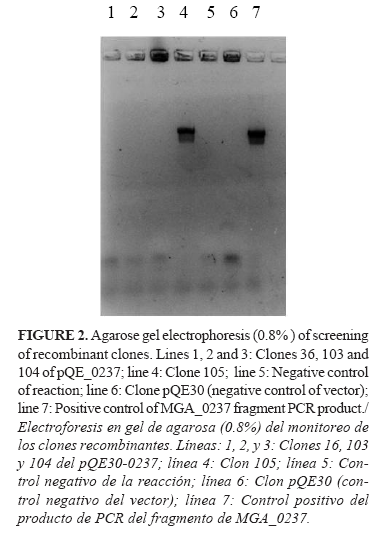
<body><![CDATA[<P><font face="Verdana, Arial, Helvetica, sans-serif" size="2">Cell pellets were    resuspended in PBS and lysis carried out in a French press. The lysates were    centrifuged at 5,000 x <I>g </I>for 10 min and the pellet treated with 8M urea    for 3 hours at room temperature for protein solubilisation. The isolated soluble    proteins were obtained by centrifugation at 10,000 x <I>g </I>for 30 min. </font>     <P><font face="Verdana, Arial, Helvetica, sans-serif" size="2"><B>Polyclonal antibody    production in rabbits</B> </font>     <P><font face="Verdana, Arial, Helvetica, sans-serif" size="2">Two rabbits were    immunized according to the following schema: immunization with 200mg subcutaneous    in Complete Freund's Adjuvant (CFA) (Sigma); day 14, 100mg intradermal in Incomplete    Freund's Adjuvant (IFA) (Sigma); day 28, 100mg subcutaneous with IFA; day 56,    50mg subcutaneous in IFA. </font>     <P><font face="Verdana, Arial, Helvetica, sans-serif" size="2"><B>Rabbit polyclonal    sera evaluation against recombinant proteins</B> </font>     <P><font face="Verdana, Arial, Helvetica, sans-serif" size="2">Both rabbit polyclonal    preimmune and postimmune sera, were evaluated by indirect ELISA; 1 &#181;g of    recombinant protein was immobilized in plates (MaxiSorp, NUNC) for 3h at 37&#186;C.    Plates were blocked with BSA (SIGMA) 1% for 1h at 37&#186;C. Antibodies were    diluted 1:1000, antirabbit-HRP (Sigma) conjugate 1:5000 and both assayed for    1h at 37&#186;C. </font>     <P><font face="Verdana, Arial, Helvetica, sans-serif" size="2"><B>SDS-PAGE and    Western blot</B> </font>     <P><font face="Verdana, Arial, Helvetica, sans-serif" size="2">Briefly, SDS-PAGE    was performed at constant current of 30mA on a 15% acrylamide gels. The proteins    were analyzed either through staining with Coomassie Blue or by using Western    blotting. For Western blots, the proteins were transferred to nitrocellulose    membranes using a semi-dry transfer equipment. The membranes were blocked with    1% PBS-BSA for 1 hour. The blots were probed for 2 hours at 37&#176;C, with    rabbit recombinant protein antisera from experimentally infected rabbits. Bound    antibodies were detected by using horseradish peroxidase (HRP)-conjugated anti-rabbit    IgG antibodies (Sigma) and 4-chloro-1- naphthol-H<SUB>2</SUB>O<SUB>2</SUB> substrate    Kit (Bio-Rad), according to the manufacturer's instructions. </font> <H1> <font face="Verdana, Arial, Helvetica, sans-serif" size="2"><B>RESULTS AND    DISCUSSION</B> </font></H1>     <P><font face="Verdana, Arial, Helvetica, sans-serif" size="2">The goal of this    study was to obtain a recombinant fragment of the OppA, previously predicted    in our laboratory, as a putative surface protein and to evaluate its immunogenic    properties. Interestingly, an homologous of this protein in <I>Mycoplasma hominis</I>,    has shown to play an important role in the pathogenesis of this bacterium (11,    12). </font>     <P><font face="Verdana, Arial, Helvetica, sans-serif" size="2">The 859 bp band    corresponding to the <I>oppA</I> gene fragment was successfully obtained from    MG strain R chromosomal DNA by PCR (<a href="#f1">Figure 1</a>).</font>      <P align="center"><img src="/img/revistas/rsa/v37n1/f0104115.gif" width="386" height="414">    <a name="f1"></a>      
]]></body>
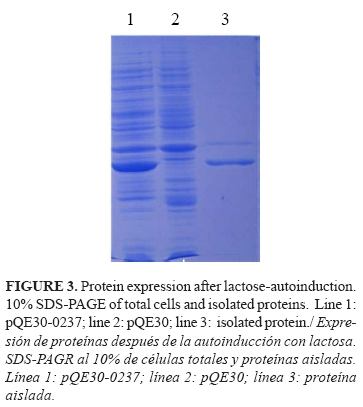
<body><![CDATA[<P><font face="Verdana, Arial, Helvetica, sans-serif" size="2">The <I>oppA</I>    gene fragment was isolated from the PCR mixture and cloned into pQE30 vector    using the <I>Kpn </I>I and <I>Sac </I>I restriction sites introduced into the    amplified gene. One positive recombinant clone was detected by PCR analysis    (<a href="#f2">Figure 2</a>).The initial transformation was done in Top10-F'    cells of <I>E. coli</I> because this strain facilitated the propagation and    subsequent purification of plasmids, but for the expression, it was necessary    to transform BL21(DE3) cells of <I>E. coli</I> with the recombinant plasmids    in order to guarantee a greater control of the gene expression and a high level    of it. In pQE plasmids, the gene expression is under the control of the T7 RNA    polymerase. This enzyme is so specific, active, and processive that the amount    of target RNA produced can be comparable to the amount of ribosomal RNA in a    cell. A problem in using inducible T7 expression systems is that T7 RNA polymerase    is so active that a small basal level can lead to a substantial expression of    the target protein even in the absence of an inducer.</font>      <P align="center"><img src="/img/revistas/rsa/v37n1/f0204115.gif" width="387" height="534">    <a name="f2"></a>     
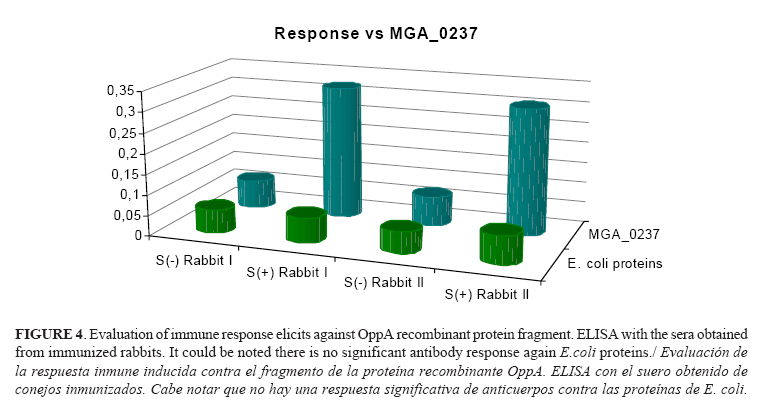
<P><font face="Verdana, Arial, Helvetica, sans-serif" size="2">If the target protein    is sufficiently toxic to the host cell, establishment of the target plasmid    in the expression host may be difficult or impossible, or the expression strain    may be unstable or accumulate mutations. In the BL21(DE3)-pQE system this problem    is overcome, the <I>lac</I> operator sequence (the binding site for <I>lac</I>    repressor) is placed in both, the start site of a T7 promoter (of the pET plasmid)    and in the <I>lac</I> promoter, under the control of which is the T7 RNA polymerase    in the genome of cells. In this way, the basal level of the target protein in    uninduced cells is substantially reduced, but induction leads to the typical    high levels of expression. </font>     <P><font face="Verdana, Arial, Helvetica, sans-serif" size="2">The obtained BL21(DE3)    clones from the original recombinant plasmids were thus designated pQE30-oppA.    This clone was then used for the expression of the recombinant fragment of the    OppA protein by using the auto-induction method described by Studier (13). Auto-induction    allows efficient screening of many clones in parallel for expression and solubility    as cultures have only to be inoculated and grown to saturation, and yields of    target protein are typically several folds higher than those obtained by conventional    IPTG induction. In addition, IPTG, a very expensive reagent, is substituted    by the cheaper a-lactose. In this system, lactose is used as inductor, and the    unintended level of expression of the target protein in the initial moments    of the culture is abolish by the addition of glucose to the media. Glucose prevents    induction by lactose by well-studied mechanisms. In the original protocol, expression    strains are grown O/N to saturation in non-inducing media, which is then inoculated    into the autoinduction media (13). We substituted this non-inducing media by    the normal LB because in our hands the yields were similar and the LB media    was easier to prepare (14). </font>     <P><font face="Verdana, Arial, Helvetica, sans-serif" size="2">The SDS-PAGE analysis    showed the expression of a 30kDa protein fragment. The same expression level    was obtained for all the clones tested. From this point, we decided to continue    working only with one of the clones, and for further analyses we named it pQE30-0237.    </font>     <P><font face="Verdana, Arial, Helvetica, sans-serif" size="2">The expression    of the OppA fragment for further purification steps was also done by the autoinduction    method. The isolation of the OppA protein fragment was a simple process, facilitated    by the expression in an insoluble form. The pellets were dissolved in 8M urea    and, in these conditions, the solubilisation of the protein was achieved and    it was obtained with a high level of purity (<a href="#f3">Fig. 3</a>). </font>      <P align="center"><img src="/img/revistas/rsa/v37n1/f0304115.jpg" width="363" height="407">    <a name="f3"></a>     
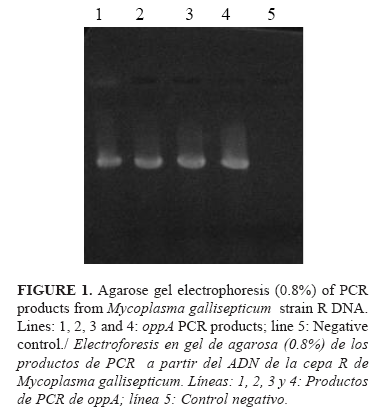
<P><font face="Verdana, Arial, Helvetica, sans-serif" size="2">For the evaluation    of the immunogenic properties of the OppA fragment protein, two female rabbits    were immunized. Both animals developed specific immune response against OppA    fragment protein (<a href="/img/revistas/rsa/v37n1/f0404115.jpg">Fig. 4</a>)    as shown by the ELISA analysis. No antibodies were detected in the sera of the    animal before immunizations [S(-)] and either was detected any recognition signal    of <I>E. coli</I> proteins by sera of immunized rabbits [S(+)].</font>      
<P>&nbsp;     <P><font face="Verdana, Arial, Helvetica, sans-serif" size="2"><B><font size="3">CONCLUSIONS</font></B>    </font>     ]]></body>
<body><![CDATA[<P><font face="Verdana, Arial, Helvetica, sans-serif" size="2">As conclusions    of this work, we can say that the <I>in silico</I> predicted MG<I> </I>polypeptide    OppA is immunogenic in rabbits. </font>     <P><font face="Verdana, Arial, Helvetica, sans-serif" size="2">The described methodology    will permit us to count with large quantities of OppA antigen fragment, which    could facilitate the further studies of the subcellular location of this protein    and evaluate its role on MG pathogenesis mechanisms. </font>     <P><font face="Verdana, Arial, Helvetica, sans-serif" size="2">The potential surface    localization of this protein, its already proved immunogenicity, and the involvement    of its homolog from <I>Mycoplasma hominis</I> in virulence mechanisms of this    mycoplasma, make it a good candidate to be tested in studies for vaccine development    or diagnostic systems.</font>     <P>&nbsp;     <P><font face="Verdana, Arial, Helvetica, sans-serif" size="2"><B><font size="3">REFERENCES</font></B>    </font>         <!-- ref --><P><font face="Verdana, Arial, Helvetica, sans-serif" size="2">1. Razin S, Yogev      D, Naot Y. Molecular biology and pathogenicity of mycoplasmas. Microbiol Mol      Biol Rev. 1998;62(4):1094-1156.     </font>        <!-- ref --><P><font face="Verdana, Arial, Helvetica, sans-serif" size="2">2. Kleven SH.      Mycoplasmas in the etiology of multifactorial respiratory disease. Poult Sci.      1998;77(8):1146-1149.     </font>        <!-- ref --><P><font face="Verdana, Arial, Helvetica, sans-serif" size="2">3. Bradbury JM.      Gordon Memorial Lecture. Poultry mycoplasmas: sophisticated pathogens in simple      guise. Br Poult Sci. 2005;46(2):125-136.     </font>        <!-- ref --><P><font face="Verdana, Arial, Helvetica, sans-serif" size="2">4. Levisohn S.      Early stages in the interaction between <I>Mycoplasma gallisepticum</I> and      the chick trachea, as related to pathogenicity and immunogenicity. Isr J Med      Sci. 1984;20(10):982-984.     </font>         <!-- ref --><P><font face="Verdana, Arial, Helvetica, sans-serif" size="2">5. Papazisi L,    Frasca S, Gladd M, Liao X, Yogev D, Geary SJ. GapA and CrmA coexpression is    essential for <I>Mycoplasma gallisepticum</I> cytadherence and virulence. Infect    Immun. 2002;70(12):6839-6845.     </font>      <!-- ref --><P><font face="Verdana, Arial, Helvetica, sans-serif" size="2">6. Markham PF,      Glew MD, Sykes JE, Bowden TR, Pollocks TD, Browning GF, et al. The organisation      of the multigene family which encodes the major cell surface protein, pMGA,      of <I>Mycoplasma gallisepticum</I>. FEBS Lett. 1994;352(3):347-352.     </font>        <!-- ref --><P><font face="Verdana, Arial, Helvetica, sans-serif" size="2">7. Goh MS, Gorton      TS, Forsyth MH, Troy KE, Geary SJ. Molecular and biochemical analysis of a      105 kDa <I>Mycoplasma gallisepticum</I> cytadhesin (GapA). Microbiol. 1998;144(Pt      11):2971-2978.     </font>        <!-- ref --><P><font face="Verdana, Arial, Helvetica, sans-serif" size="2">8. Boguslavsky      S, Menaker D, Lysnyansky I, Liu T, Levisohn S, Rosengarten R, et al. Molecular      characterization of the <I>Mycoplasma gallisepticum</I> pvpA gene which encodes      a putative variable cytadhesin protein. Infect Immun. 2000;68(7):3956-3964.          </font>        <!-- ref --><P><font face="Verdana, Arial, Helvetica, sans-serif" size="2">9. Papazisi L,      Troy KE, Gorton TS, Liao X, Geary SJ. Analysis of cytadherence-deficient,      GapA-negative <I>Mycoplasma gallisepticum</I> strain R. Infect Immun. 2000;68(12):6643-6649.          </font>        <!-- ref --><P><font face="Verdana, Arial, Helvetica, sans-serif" size="2">10.Chaudhuri      R, Ramachandran S. Prediction of virulence factors using bioinformatics approaches.      Methods Mol Biol. 2014;1184:389-400.     </font>        <!-- ref --><P><font face="Verdana, Arial, Helvetica, sans-serif" size="2">11.Hopfe M, Henrich      B. OppA, the ecto-ATPase of <I>Mycoplasma hominis</I> induces ATP release      and cell death in HeLa cells. BMC Microbiol. 2008;8:55.     </font>        <!-- ref --><P><font face="Verdana, Arial, Helvetica, sans-serif" size="2">12.Hopfe M, Dahlmanns      T, Henrich B. In <I>Mycoplasma hominis</I> the OppA-mediated cytoadhesion      depends on its ATPase activity. BMC Microbiol. 2011;11(1):185.     </font>        <!-- ref --><P><font face="Verdana, Arial, Helvetica, sans-serif" size="2">13.Studier FW.      Protein production by auto-induction in high density shaking cultures. Protein      Expr Purif. 2005;41(1):207-34.     </font>         <!-- ref --><P><font face="Verdana, Arial, Helvetica, sans-serif" size="2">14.Ag&uuml;ero    JA, S&aacute;nchez O, Barrera M, Toledo JR. Molecular cloning and expression    of a fragment of the gene codifying for the protein Erns of the Classical Swine    Fever Virus. Rev Salud Anim. 2008;30(2):85-92.     </font>      <P>&nbsp;     <P>&nbsp;     <P><font face="Verdana, Arial, Helvetica, sans-serif" size="2">Recibido: 21-1-2015.    <br>   </font><font face="Verdana, Arial, Helvetica, sans-serif" size="2">Aceptado:    5-3-2015. </font>     <P>&nbsp;     <P>&nbsp;     <P><font face="Verdana, Arial, Helvetica, sans-serif" size="2"><B><a href="#pie">*</a><a name="autor"></a></B>Corresponding    author: <I>Jos&eacute; Antonio Ag&uuml;ero.</I><B> </B>E-mail:<B> </B><U><a href="mailto:jaaguero@censa.edu.cu">jaaguero@censa.edu.cu</a></U>.    </font>      ]]></body>
<body><![CDATA[<P>&nbsp;      ]]></body><back>
<ref-list>
<ref id="B1">
<label>1</label><nlm-citation citation-type="journal">
<person-group person-group-type="author">
<name>
<surname><![CDATA[Razin]]></surname>
<given-names><![CDATA[S]]></given-names>
</name>
<name>
<surname><![CDATA[Yogev]]></surname>
<given-names><![CDATA[D]]></given-names>
</name>
<name>
<surname><![CDATA[Naot]]></surname>
<given-names><![CDATA[Y]]></given-names>
</name>
</person-group>
<article-title xml:lang="en"><![CDATA[Molecular biology and pathogenicity of mycoplasmas]]></article-title>
<source><![CDATA[Microbiol Mol Biol Rev]]></source>
<year>1998</year>
<volume>62</volume>
<numero>4</numero>
<issue>4</issue>
<page-range>1094-1156</page-range></nlm-citation>
</ref>
<ref id="B2">
<label>2</label><nlm-citation citation-type="journal">
<person-group person-group-type="author">
<name>
<surname><![CDATA[Kleven]]></surname>
<given-names><![CDATA[SH]]></given-names>
</name>
</person-group>
<article-title xml:lang="en"><![CDATA[Mycoplasmas in the etiology of multifactorial respiratory disease]]></article-title>
<source><![CDATA[Poult Sci]]></source>
<year>1998</year>
<volume>77</volume>
<numero>8</numero>
<issue>8</issue>
<page-range>1146-1149</page-range></nlm-citation>
</ref>
<ref id="B3">
<label>3</label><nlm-citation citation-type="journal">
<person-group person-group-type="author">
<name>
<surname><![CDATA[Bradbury]]></surname>
<given-names><![CDATA[JM]]></given-names>
</name>
</person-group>
<collab>Gordon Memorial Lecture</collab>
<article-title xml:lang="en"><![CDATA[Poultry mycoplasmas: sophisticated pathogens in simple guise]]></article-title>
<source><![CDATA[Br Poult Sci]]></source>
<year>2005</year>
<volume>46</volume>
<numero>2</numero>
<issue>2</issue>
<page-range>125-136</page-range></nlm-citation>
</ref>
<ref id="B4">
<label>4</label><nlm-citation citation-type="journal">
<person-group person-group-type="author">
<name>
<surname><![CDATA[Levisohn]]></surname>
<given-names><![CDATA[S]]></given-names>
</name>
</person-group>
<article-title xml:lang="en"><![CDATA[Early stages in the interaction between Mycoplasma gallisepticum and the chick trachea, as related to pathogenicity and immunogenicity]]></article-title>
<source><![CDATA[Isr J Med Sci]]></source>
<year>1984</year>
<volume>20</volume>
<numero>10</numero>
<issue>10</issue>
<page-range>982-984</page-range></nlm-citation>
</ref>
<ref id="B5">
<label>5</label><nlm-citation citation-type="journal">
<person-group person-group-type="author">
<name>
<surname><![CDATA[Papazisi]]></surname>
<given-names><![CDATA[L]]></given-names>
</name>
<name>
<surname><![CDATA[Frasca]]></surname>
<given-names><![CDATA[S]]></given-names>
</name>
<name>
<surname><![CDATA[Gladd]]></surname>
<given-names><![CDATA[M]]></given-names>
</name>
<name>
<surname><![CDATA[Liao]]></surname>
<given-names><![CDATA[X]]></given-names>
</name>
<name>
<surname><![CDATA[Yogev]]></surname>
<given-names><![CDATA[D]]></given-names>
</name>
<name>
<surname><![CDATA[Geary]]></surname>
<given-names><![CDATA[SJ]]></given-names>
</name>
</person-group>
<article-title xml:lang="en"><![CDATA[GapA and CrmA coexpression is essential for Mycoplasma gallisepticum cytadherence and virulence]]></article-title>
<source><![CDATA[Infect Immun]]></source>
<year>2002</year>
<volume>70</volume>
<numero>12</numero>
<issue>12</issue>
<page-range>6839-6845</page-range></nlm-citation>
</ref>
<ref id="B6">
<label>6</label><nlm-citation citation-type="journal">
<person-group person-group-type="author">
<name>
<surname><![CDATA[Markham]]></surname>
<given-names><![CDATA[PF]]></given-names>
</name>
<name>
<surname><![CDATA[Glew]]></surname>
<given-names><![CDATA[MD]]></given-names>
</name>
<name>
<surname><![CDATA[Sykes]]></surname>
<given-names><![CDATA[JE]]></given-names>
</name>
<name>
<surname><![CDATA[Bowden]]></surname>
<given-names><![CDATA[TR]]></given-names>
</name>
<name>
<surname><![CDATA[Pollocks]]></surname>
<given-names><![CDATA[TD]]></given-names>
</name>
<name>
<surname><![CDATA[Browning]]></surname>
<given-names><![CDATA[GF]]></given-names>
</name>
</person-group>
<article-title xml:lang="en"><![CDATA[The organisation of the multigene family which encodes the major cell surface protein, pMGA, of Mycoplasma gallisepticum]]></article-title>
<source><![CDATA[FEBS Lett]]></source>
<year>1994</year>
<volume>352</volume>
<numero>3</numero>
<issue>3</issue>
<page-range>347-352</page-range></nlm-citation>
</ref>
<ref id="B7">
<label>7</label><nlm-citation citation-type="journal">
<person-group person-group-type="author">
<name>
<surname><![CDATA[Goh]]></surname>
<given-names><![CDATA[MS]]></given-names>
</name>
<name>
<surname><![CDATA[Gorton]]></surname>
<given-names><![CDATA[TS]]></given-names>
</name>
<name>
<surname><![CDATA[Forsyth]]></surname>
<given-names><![CDATA[MH]]></given-names>
</name>
<name>
<surname><![CDATA[Troy]]></surname>
<given-names><![CDATA[KE]]></given-names>
</name>
<name>
<surname><![CDATA[Geary]]></surname>
<given-names><![CDATA[SJ]]></given-names>
</name>
</person-group>
<article-title xml:lang="en"><![CDATA[Molecular and biochemical analysis of a 105 kDa Mycoplasma gallisepticum cytadhesin (GapA)]]></article-title>
<source><![CDATA[Microbiol]]></source>
<year>1998</year>
<volume>144</volume>
<page-range>2971-2978</page-range></nlm-citation>
</ref>
<ref id="B8">
<label>8</label><nlm-citation citation-type="journal">
<person-group person-group-type="author">
<name>
<surname><![CDATA[Boguslavsky]]></surname>
<given-names><![CDATA[S]]></given-names>
</name>
<name>
<surname><![CDATA[Menaker]]></surname>
<given-names><![CDATA[D]]></given-names>
</name>
<name>
<surname><![CDATA[Lysnyansky]]></surname>
<given-names><![CDATA[I]]></given-names>
</name>
<name>
<surname><![CDATA[Liu]]></surname>
<given-names><![CDATA[T]]></given-names>
</name>
<name>
<surname><![CDATA[Levisohn]]></surname>
<given-names><![CDATA[S]]></given-names>
</name>
<name>
<surname><![CDATA[Rosengarten]]></surname>
<given-names><![CDATA[R]]></given-names>
</name>
</person-group>
<article-title xml:lang="en"><![CDATA[Molecular characterization of the Mycoplasma gallisepticum pvpA gene which encodes a putative variable cytadhesin protein]]></article-title>
<source><![CDATA[Infect Immun]]></source>
<year>2000</year>
<volume>68</volume>
<numero>7</numero>
<issue>7</issue>
<page-range>3956-3964</page-range></nlm-citation>
</ref>
<ref id="B9">
<label>9</label><nlm-citation citation-type="journal">
<person-group person-group-type="author">
<name>
<surname><![CDATA[Papazisi]]></surname>
<given-names><![CDATA[L]]></given-names>
</name>
<name>
<surname><![CDATA[Troy]]></surname>
<given-names><![CDATA[KE]]></given-names>
</name>
<name>
<surname><![CDATA[Gorton]]></surname>
<given-names><![CDATA[TS]]></given-names>
</name>
<name>
<surname><![CDATA[Liao]]></surname>
<given-names><![CDATA[X]]></given-names>
</name>
<name>
<surname><![CDATA[Geary]]></surname>
<given-names><![CDATA[SJ]]></given-names>
</name>
</person-group>
<article-title xml:lang="en"><![CDATA[Analysis of cytadherence-deficient, GapA-negative Mycoplasma gallisepticum strain R]]></article-title>
<source><![CDATA[Infect Immun]]></source>
<year>2000</year>
<volume>68</volume>
<numero>12</numero>
<issue>12</issue>
<page-range>6643-6649</page-range></nlm-citation>
</ref>
<ref id="B10">
<label>10</label><nlm-citation citation-type="journal">
<person-group person-group-type="author">
<name>
<surname><![CDATA[Chaudhuri]]></surname>
<given-names><![CDATA[R]]></given-names>
</name>
<name>
<surname><![CDATA[Ramachandran]]></surname>
<given-names><![CDATA[S]]></given-names>
</name>
</person-group>
<article-title xml:lang="en"><![CDATA[Prediction of virulence factors using bioinformatics approaches]]></article-title>
<source><![CDATA[Methods Mol Biol]]></source>
<year>2014</year>
<volume>1184</volume>
<page-range>389-400</page-range></nlm-citation>
</ref>
<ref id="B11">
<label>11</label><nlm-citation citation-type="journal">
<person-group person-group-type="author">
<name>
<surname><![CDATA[Hopfe]]></surname>
<given-names><![CDATA[M]]></given-names>
</name>
<name>
<surname><![CDATA[Henrich]]></surname>
<given-names><![CDATA[B]]></given-names>
</name>
</person-group>
<article-title xml:lang="en"><![CDATA[OppA, the ecto-ATPase of Mycoplasma hominis induces ATP release and cell death in HeLa cells]]></article-title>
<source><![CDATA[BMC Microbiol]]></source>
<year>2008</year>
<volume>8</volume>
<page-range>55</page-range></nlm-citation>
</ref>
<ref id="B12">
<label>12</label><nlm-citation citation-type="journal">
<person-group person-group-type="author">
<name>
<surname><![CDATA[Hopfe]]></surname>
<given-names><![CDATA[M]]></given-names>
</name>
<name>
<surname><![CDATA[Dahlmanns]]></surname>
<given-names><![CDATA[T]]></given-names>
</name>
<name>
<surname><![CDATA[Henrich]]></surname>
<given-names><![CDATA[B]]></given-names>
</name>
</person-group>
<article-title xml:lang="en"><![CDATA[In Mycoplasma hominis the OppA-mediated cytoadhesion depends on its ATPase activity]]></article-title>
<source><![CDATA[BMC Microbiol]]></source>
<year>2011</year>
<volume>11</volume>
<numero>1</numero>
<issue>1</issue>
<page-range>185</page-range></nlm-citation>
</ref>
<ref id="B13">
<label>13</label><nlm-citation citation-type="journal">
<person-group person-group-type="author">
<name>
<surname><![CDATA[Studier]]></surname>
<given-names><![CDATA[FW]]></given-names>
</name>
</person-group>
<article-title xml:lang="en"><![CDATA[Protein production by auto-induction in high density shaking cultures]]></article-title>
<source><![CDATA[Protein Expr Purif]]></source>
<year>2005</year>
<volume>41</volume>
<numero>1</numero>
<issue>1</issue>
<page-range>207-34</page-range></nlm-citation>
</ref>
<ref id="B14">
<label>14</label><nlm-citation citation-type="journal">
<person-group person-group-type="author">
<name>
<surname><![CDATA[Agüero]]></surname>
<given-names><![CDATA[JA]]></given-names>
</name>
<name>
<surname><![CDATA[Sánchez]]></surname>
<given-names><![CDATA[O]]></given-names>
</name>
<name>
<surname><![CDATA[Barrera]]></surname>
<given-names><![CDATA[M]]></given-names>
</name>
<name>
<surname><![CDATA[Toledo]]></surname>
<given-names><![CDATA[JR]]></given-names>
</name>
</person-group>
<article-title xml:lang="en"><![CDATA[Molecular cloning and expression of a fragment of the gene codifying for the protein Erns of the Classical Swine Fever Virus]]></article-title>
<source><![CDATA[Rev Salud Anim]]></source>
<year>2008</year>
<volume>30</volume>
<numero>2</numero>
<issue>2</issue>
<page-range>85-92</page-range></nlm-citation>
</ref>
</ref-list>
</back>
</article>