<?xml version="1.0" encoding="ISO-8859-1"?><article xmlns:mml="http://www.w3.org/1998/Math/MathML" xmlns:xlink="http://www.w3.org/1999/xlink" xmlns:xsi="http://www.w3.org/2001/XMLSchema-instance">
<front>
<journal-meta>
<journal-id>0375-0760</journal-id>
<journal-title><![CDATA[Revista Cubana de Medicina Tropical]]></journal-title>
<abbrev-journal-title><![CDATA[Rev Cubana Med Trop]]></abbrev-journal-title>
<issn>0375-0760</issn>
<publisher>
<publisher-name><![CDATA[Centro Nacional de Información de Ciencias Médicas]]></publisher-name>
</publisher>
</journal-meta>
<article-meta>
<article-id>S0375-07601996000300002</article-id>
<title-group>
<article-title xml:lang="es"><![CDATA[Caracterización de los virus de influenza por el método de la inmunoperoxidasa utilizando anticuerpos monoclonales: Montaje y validación]]></article-title>
</title-group>
<contrib-group>
<contrib contrib-type="author">
<name>
<surname><![CDATA[OROPESA FERNÁNDEZ]]></surname>
<given-names><![CDATA[SUSET]]></given-names>
</name>
<xref ref-type="aff" rid="A01"/>
</contrib>
<contrib contrib-type="author">
<name>
<surname><![CDATA[MORIER DÍAZ]]></surname>
<given-names><![CDATA[LUIS]]></given-names>
</name>
</contrib>
<contrib contrib-type="author">
<name>
<surname><![CDATA[VÁZQUEZ RAMUDO]]></surname>
<given-names><![CDATA[SUSANA]]></given-names>
</name>
</contrib>
<contrib contrib-type="author">
<name>
<surname><![CDATA[GOYENECHEA HERNÁNDEZ]]></surname>
<given-names><![CDATA[ANGEL]]></given-names>
</name>
</contrib>
<contrib contrib-type="author">
<name>
<surname><![CDATA[VALDIVIA ROMERO]]></surname>
<given-names><![CDATA[ANGEL]]></given-names>
</name>
</contrib>
<contrib contrib-type="author">
<name>
<surname><![CDATA[HERNÁNDEZ ESPINOSA]]></surname>
<given-names><![CDATA[BÁRBARA]]></given-names>
</name>
</contrib>
<contrib contrib-type="author">
<name>
<surname><![CDATA[GARCÍA INFANTE]]></surname>
<given-names><![CDATA[SERAFINA]]></given-names>
</name>
</contrib>
</contrib-group>
<aff id="A01">
<institution><![CDATA[,Instituto de Medicina Tropical Pedro Kourí  ]]></institution>
<addr-line><![CDATA[Ciudad de La Habana ]]></addr-line>
<country>Cuba</country>
</aff>
<pub-date pub-type="pub">
<day>00</day>
<month>12</month>
<year>1996</year>
</pub-date>
<pub-date pub-type="epub">
<day>00</day>
<month>12</month>
<year>1996</year>
</pub-date>
<volume>48</volume>
<numero>3</numero>
<fpage>149</fpage>
<lpage>154</lpage>
<copyright-statement/>
<copyright-year/>
<self-uri xlink:href="http://scielo.sld.cu/scielo.php?script=sci_arttext&amp;pid=S0375-07601996000300002&amp;lng=en&amp;nrm=iso"></self-uri><self-uri xlink:href="http://scielo.sld.cu/scielo.php?script=sci_abstract&amp;pid=S0375-07601996000300002&amp;lng=en&amp;nrm=iso"></self-uri><self-uri xlink:href="http://scielo.sld.cu/scielo.php?script=sci_pdf&amp;pid=S0375-07601996000300002&amp;lng=en&amp;nrm=iso"></self-uri><abstract abstract-type="short" xml:lang="es"><p><![CDATA[Se aplicó y validó por primera vez en Cuba el método de inmunoperoxidasa para la clasificación rápida en tipo y subtipo de los virus de influenza. El método está basado en un cultivo rápido en células MDCK-L y el empleo de anticuerpos monoclonales para la clasificación en tipo y subtipo. Se utiliza un pool de anticuerpos contra influenza A y otro contra la influenza B y los anticuerpos monoclonales HA1 - 71 y HA2 - 76 para el subtipaje en H1 y H3. La validación se realizó aplicándolo a 21 cepas de referencia internacional y 23 cepas de virus de influenza humana, aisladas y clasificadas previamente por inhibición de la hemaglutinación. Todas las cepas reaccionaron frente a los anticuerpos monoclonales en correspondencia con su tipo y subtipo de hemaglutinina. Fueron caracterizadas 6 cepas de referencia y 9 aislamientos dentro del subtipo H1N1; 9 cepas de referencia y 10 aislamientos en el subtipo H3N2 y 6 cepas de referencias y 4 aislamientos dentro del tipo B.No hubo reacciones inespecíficas ni cruzadas en los controles establecidos. La sensibilidad, especificidad y coincidencia fue del 100 %. La técnica resultó rápida y conveniente para la caracterización en tipo y subtipo de las cepas de virus de Influenza aisladas. Puede sustituir al método clásico de inhibición de la hemaglutinación cuando se requiere la caracterización rápida de brotes o epidemias de infecciones respiratorias agudas, lo que es de extrema importancia por ser éstas causantes de una alta morbilidad, fundamentalmente en grupos de riesgo, y por su repercusión económica.]]></p></abstract>
<abstract abstract-type="short" xml:lang="en"><p><![CDATA[The immunoperoxidase method for the rapid classification of influenza viruses in type and subtype was applied and validated for the first time in Cuba. The method is based on a rapid culture in MDCK-L cells and on the use of monoclonal antibodies for the classification in type and subtype. A pool of antibodies against influenza A and another against influenza B and HA1-71 and HA2-76 monoclonal antibodies are used for the subtyping in H1 and H3. The validation was carried out by applying this method to 21 international reference strains and to 23 human influenza virus strains that were isolated and previously classified by hemagglutination inhibition. All the strains reacted to the monoclonal antibodies according to their hemagglutinin type and subtype. 6 reference strains and 9 isolations were characterized within the H1N1 subtype: 9 reference strains and 10 isolations in the H3N2 subtype; and 6 reference strains and 4 isolations in type B. There were neither unspecific nor crossed reactions among the controls established. There was 100 % of sensitivity, specificity and coincidence. The technique used proved to be fast and convenient for the characterization in type and subtype of the isolated influenza virus strains. It may substitute the classic hemagglutination inhibition method when it is required the rapid characterization of outbreaks or epidemics of acute respiratory infections, which is very important due to the high morbidity they cause mainly in risk groups and to their economic repercussion.]]></p></abstract>
<kwd-group>
<kwd lng="es"><![CDATA[TÉCNICAS PARA INMUNOENZIMAS]]></kwd>
<kwd lng="es"><![CDATA[ANTICUERPOS MONOCLONALES]]></kwd>
<kwd lng="es"><![CDATA[CULTIVO DE VIRUS]]></kwd>
<kwd lng="es"><![CDATA[PEROXIDASA]]></kwd>
<kwd lng="es"><![CDATA[CUBA]]></kwd>
<kwd lng="es"><![CDATA[ORTHOMYXOVIRUS HUMANO TIPO A]]></kwd>
<kwd lng="es"><![CDATA[ORTHOMYXOVIRUS TIPO B]]></kwd>
<kwd lng="en"><![CDATA[IMMUNOENZYME TECHNIQUES]]></kwd>
<kwd lng="en"><![CDATA[ANTIBODIES, MONOCLONAL]]></kwd>
<kwd lng="en"><![CDATA[VIRUS CULTIVATION]]></kwd>
<kwd lng="en"><![CDATA[PEROXIDASE]]></kwd>
<kwd lng="en"><![CDATA[CUBA]]></kwd>
<kwd lng="en"><![CDATA[ORTHOMYXOVIRUS TYPE A, HUMAN]]></kwd>
<kwd lng="en"><![CDATA[ORTHOMYXOVIRUSES TYPE B]]></kwd>
</kwd-group>
</article-meta>
</front><body><![CDATA[ <H3>Art&iacute;culos Originales</H3>     <P>Instituto de Medicina Tropical "Pedro Kour&iacute;" </P> <H2>Caracterizaci&oacute;n de los virus de influenza por el m&eacute;todo de la inmunoperoxidasa utilizando anticuerpos monoclonales. Montaje y validaci&oacute;n</H2>     <P><A HREF="#autores"><I>Dra. SUSET OROPESA FERN&Aacute;NDEZ,<SUP>1</SUP> Lic. LUIS MORIER D&Iacute;AZ,<SUP>2</SUP> Lic. SUSANA V&Aacute;ZQUEZ RAMUDO,<SUP>3 </SUP>Dr. ANGEL GOYENECHEA HERN&Aacute;NDEZ,<SUP>4</SUP> Dr. ANGEL VALDIVIA ROMERO,<SUP>5</SUP> T&eacute;c. B&Aacute;RBARA HERN&Aacute;NDEZ ESPINOSA<SUP>6</SUP> y T&eacute;c. SERAFINA GARC&Iacute;A INFANTE<SUP>6</sup></I></A> </P> <H4>RESUMEN</H4>     <P>Se aplic&oacute; y valid&oacute; por primera vez en Cuba el m&eacute;todo de inmunoperoxidasa para la clasificaci&oacute;n r&aacute;pida en tipo y subtipo de los virus de influenza. El m&eacute;todo est&aacute; basado en un cultivo r&aacute;pido en c&eacute;lulas MDCK-L y el empleo de anticuerpos monoclonales para la clasificaci&oacute;n en tipo y subtipo. Se utiliza un pool de anticuerpos contra influenza A y otro contra la influenza B y los anticuerpos monoclonales HA1 - 71 y HA2 - 76 para el subtipaje en H1 y H3. La validaci&oacute;n se realiz&oacute; aplic&aacute;ndolo a 21 cepas de referencia internacional y 23 cepas de virus de influenza humana, aisladas y clasificadas previamente por inhibici&oacute;n de la hemaglutinaci&oacute;n. Todas las cepas reaccionaron frente a los anticuerpos monoclonales en correspondencia con su tipo y subtipo de hemaglutinina. Fueron caracterizadas 6 cepas de referencia y 9 aislamientos dentro del subtipo H1N1; 9 cepas de referencia y 10 aislamientos en el subtipo H3N2 y 6 cepas de referencias y 4 aislamientos dentro del tipo B.No hubo reacciones inespec&iacute;ficas ni cruzadas en los controles establecidos. La sensibilidad, especificidad y coincidencia fue del 100 %. La t&eacute;cnica result&oacute; r&aacute;pida y conveniente para la caracterizaci&oacute;n en tipo y subtipo de las cepas de virus de Influenza aisladas. Puede sustituir al m&eacute;todo cl&aacute;sico de inhibici&oacute;n de la hemaglutinaci&oacute;n cuando se requiere la caracterizaci&oacute;n r&aacute;pida de brotes o epidemias de infecciones respiratorias agudas, lo que es de extrema importancia por ser &eacute;stas causantes de una alta morbilidad, fundamentalmente en grupos de riesgo, y por su repercusi&oacute;n econ&oacute;mica. </P>     <P>Palabras clave: T&Eacute;CNICAS PARA INMUNOENZIMAS; ANTICUERPOS MONOCLONALES; CULTIVO DE VIRUS/m&eacute;todos;PEROXIDASA; CUBA; ORTHOMYXOVIRUS HUMANO TIPO A/clasificaci&oacute;n; ORTHOMYXOVIRUS TIPO B/clasificaci&oacute;n. </P> <H4>INTRODUCCI&Oacute;N</H4>     <P>El primer paso para la caracterizaci&oacute;n de los virus de influenza es la diferenciaci&oacute;n en los tipos A y B y la determinaci&oacute;n de los subtipos en el grupo A. </P>     <P>Este an&aacute;lisis se hace tradicionalmente por la t&eacute;cnica de inhibici&oacute;n de la hemaglutinaci&oacute;n (IH), con antisueros espec&iacute;ficos elaborados en diferentes animales.<SUP>1-3</SUP> Despu&eacute;s del aislamiento, generalmente son necesarios 1 o m&aacute;s pases del virus en huevos embrionados o en cultivos celulares<SUP>4,5</SUP> para obtener t&iacute;tulos suficientemente altos, que permitan realizar la IH. Como este m&eacute;todo es laborioso y consume bastante tiempo, muchos laboratorios posponen el subtipaje hasta despu&eacute;s de la temporada de influenza, lo que causa una considerable demora en el reporte exacto y puntual de los datos epidemiol&oacute;gicos de cepas en circulaci&oacute;n o el reconocimiento de cepas emergentes que puedan provocar nuevas epidemias.<SUP>6</SUP> </P>     <P>Para facilitar y perfeccionar el an&aacute;lisis de las cepas de influenza, los laboratorios necesitan m&eacute;todos m&aacute;s r&aacute;pidos y menos engorrosos en la identificaci&oacute;n en tipo y subtipo de estos virus, aislados de muestras cl&iacute;nicas o despu&eacute;s de un pase por alg&uacute;n sistema, de los anteriormente mencionados. </P>     <P>El m&eacute;todo validado cumple los requisitos se&ntilde;alados. Se basa en la detecci&oacute;n de ant&iacute;genos virales en un cultivo celular r&aacute;pido (24 horas) de MDCK-L infectados con virus de influenza tipo A (subtipos H1 y H3) y tipo B, por la t&eacute;cnica de la inmunoperoxidasa utilizando anticuerpos monoclonales. Se introduce por primera vez en nuestro pa&iacute;s siguiendo las recomendaciones del CDC de Atlanta (Centro Colaborador de la OMS). </P>     <P>Los resultados obtenidos fueron satisfactorios y pueden servir de base para su empleo habitual, dada la importancia de identificar r&aacute;pidamente los nuevos aislamientos o detectar cepas emergentes con caracter&iacute;sticas pand&eacute;micas.<SUP>7,8</SUP> </P> <H4>M&Eacute;TODOS</H4>     ]]></body>
<body><![CDATA[<P><I>C&eacute;lulas</i>. Se utilizaron c&eacute;lulas MDCK-L<SUP>5</SUP> con una concentraci&oacute;n de 100 000 c&eacute;lulas/mL multiplicadas en medio Dulbecco&amp;acute;s modificado (DMEM), suplementado con 0,2 % de alb&uacute;mina bovina, 5 % de suero bovino fetal (SBF), 25 mM Hepes y antibi&oacute;ticos (penicilina y estreptomicina). </P>     <P>Se prepararon placas de 96 pozos (Costar, Cambridge, Mass.) con 100 <FONT FACE=Symbol>m</FONT>g de la suspensi&oacute;n celular (10 000 c&eacute;lulas/pozo). </P>     <P><I>Virus (muestras)</i>. Cepas de referencia (tabla 1) que incluyen los tipos A y B y los subtipos H1 y H3 y 23 aislamientos previamente identificados por IH (tabla 2). </P>     <P>TABLA 1. Reacci&oacute;n de cepas patrones de influenza con diferentes tipos de hemaglutinina frente a los AcM espec&iacute;ficos por la t&eacute;cnica de inmunoperoxidasa     <BR> &nbsp; </P>     <P ALIGN="CENTER">    <CENTER><TABLE CELLSPACING=0 BORDER=0 CELLPADDING=4 WIDTH=624> <TR><TD WIDTH="25%" VALIGN="BOTTOM">     <P ALIGN="CENTER">AcM</TD> <TD WIDTH="25%" VALIGN="BOTTOM">     <P ALIGN="CENTER">A(H1N1)</P>     <P ALIGN="CENTER">Respuesta</TD> <TD WIDTH="25%" VALIGN="BOTTOM">     ]]></body>
<body><![CDATA[<P ALIGN="CENTER">A(H3N2)</P>     <P ALIGN="CENTER">Respuesta</TD> <TD WIDTH="25%" VALIGN="BOTTOM">     <P ALIGN="CENTER">Tipo B</P>     <P ALIGN="CENTER">Respuesta</TD> </TR> <TR><TD WIDTH="25%" VALIGN="TOP">     <P><I>Pool </i>A</TD> <TD WIDTH="25%" VALIGN="TOP">     <P ALIGN="CENTER">+</TD> <TD WIDTH="25%" VALIGN="TOP">     <P ALIGN="CENTER">+</TD> <TD WIDTH="25%" VALIGN="TOP">     <P ALIGN="CENTER">-</TD> </TR> <TR><TD WIDTH="25%" VALIGN="TOP">     <P>HA2-75</TD> <TD WIDTH="25%" VALIGN="TOP">     <P ALIGN="CENTER">+</TD> <TD WIDTH="25%" VALIGN="TOP">     ]]></body>
<body><![CDATA[<P ALIGN="CENTER">+</TD> <TD WIDTH="25%" VALIGN="TOP">     <P ALIGN="CENTER">-</TD> </TR> <TR><TD WIDTH="25%" VALIGN="TOP">     <P>HA1-71</TD> <TD WIDTH="25%" VALIGN="TOP">     <P ALIGN="CENTER">-</TD> <TD WIDTH="25%" VALIGN="TOP">     <P ALIGN="CENTER">+</TD> <TD WIDTH="25%" VALIGN="TOP">     <P ALIGN="CENTER">-</TD> </TR> <TR><TD WIDTH="25%" VALIGN="TOP">     <P><I>Pool </i>B</TD> <TD WIDTH="25%" VALIGN="TOP">     <P ALIGN="CENTER">-</TD> <TD WIDTH="25%" VALIGN="TOP">     <P ALIGN="CENTER">-</TD> <TD WIDTH="25%" VALIGN="TOP">     <P ALIGN="CENTER">+</TD> </TR> <TR><TD WIDTH="25%" VALIGN="TOP">     ]]></body>
<body><![CDATA[<P>&nbsp;</TD> <TD WIDTH="25%" VALIGN="TOP">     <P ALIGN="CENTER">A/Chile/l/83</TD> <TD WIDTH="25%" VALIGN="TOP">     <P ALIGN="CENTER">A/Aichit/2/86&nbsp;</TD> <TD WIDTH="25%" VALIGN="TOP">     <P ALIGN="CENTER">B/Ann Arbor/l/86&nbsp;</TD> </TR> <TR><TD WIDTH="25%" VALIGN="TOP">     <P>&nbsp;</TD> <TD WIDTH="25%" VALIGN="TOP">     <P ALIGN="CENTER">A/Singapur/6/86&nbsp;</TD> <TD WIDTH="25%" VALIGN="TOP">     <P ALIGN="CENTER">A/Port Chalmor/1/73&nbsp;</TD> <TD WIDTH="25%" VALIGN="TOP">     <P ALIGN="CENTER">B/URSS/2/87&nbsp;</TD> </TR> <TR><TD WIDTH="25%" VALIGN="TOP">     <P>&nbsp;</TD> <TD WIDTH="25%" VALIGN="TOP">     <P ALIGN="CENTER">A/Texas/l/86&nbsp;</TD> <TD WIDTH="25%" VALIGN="TOP">     ]]></body>
<body><![CDATA[<P ALIGN="CENTER">A/Texas/1/77&nbsp;</TD> <TD WIDTH="25%" VALIGN="TOP">     <P ALIGN="CENTER">B/Yamagata/16/88&nbsp;</TD> </TR> <TR><TD WIDTH="25%" VALIGN="TOP">     <P>&nbsp;</TD> <TD WIDTH="25%" VALIGN="TOP">     <P ALIGN="CENTER">A/Taiwan/1/86&nbsp;</TD> <TD WIDTH="25%" VALIGN="TOP">     <P ALIGN="CENTER">A/Banghok/1/79&nbsp;</TD> <TD WIDTH="25%" VALIGN="TOP">     <P ALIGN="CENTER">B/Panarni/45/90&nbsp;</TD> </TR> <TR><TD WIDTH="25%" VALIGN="TOP">     <P>&nbsp;</TD> <TD WIDTH="25%" VALIGN="TOP">     <P ALIGN="CENTER">A/Sinchuan/4/88&nbsp;</TD> <TD WIDTH="25%" VALIGN="TOP">     <P ALIGN="CENTER">A/Missisippi/1/85</TD> <TD WIDTH="25%" VALIGN="TOP">     <P ALIGN="CENTER">A/Guangdong/5/94&nbsp;</TD> </TR> <TR><TD WIDTH="25%" VALIGN="TOP">     ]]></body>
<body><![CDATA[<P>&nbsp;</TD> <TD WIDTH="25%" VALIGN="TOP">     <P ALIGN="CENTER">A/Texas/36/91</TD> <TD WIDTH="25%" VALIGN="TOP">     <P ALIGN="CENTER">A/Filipinas/2/86&nbsp;</TD> <TD WIDTH="25%" VALIGN="TOP">     <P ALIGN="CENTER">B/Harbin/7/94</TD> </TR> <TR><TD WIDTH="25%" VALIGN="TOP">     <P>&nbsp;</TD> <TD WIDTH="25%" VALIGN="TOP">     <P>&nbsp;</TD> <TD WIDTH="25%" VALIGN="TOP">     <P ALIGN="CENTER">A/Sichunn/2/87&nbsp;</TD> <TD WIDTH="25%" VALIGN="TOP">     <P>&nbsp;</TD> </TR> <TR><TD WIDTH="25%" VALIGN="TOP">     <P>&nbsp;</TD> <TD WIDTH="25%" VALIGN="TOP">     <P>&nbsp;</TD> <TD WIDTH="25%" VALIGN="TOP">     ]]></body>
<body><![CDATA[<P ALIGN="CENTER">AABoijin/352/89</TD> <TD WIDTH="25%" VALIGN="TOP">     <P>&nbsp;</TD> </TR> <TR><TD WIDTH="25%" VALIGN="TOP">     <P>&nbsp;</TD> <TD WIDTH="25%" VALIGN="TOP">     <P>&nbsp;</TD> <TD WIDTH="25%" VALIGN="TOP">     <P ALIGN="CENTER">A/Shangdong/9/93</TD> <TD WIDTH="25%" VALIGN="TOP">     <P>&nbsp;</TD> </TR> </TABLE> </CENTER>    <p></P>      <P ALIGN="CENTER">&nbsp; </P>     <P>TABLA 2. Tipificaci&oacute;n de cepas aisladas mediante la t&eacute;cnica de inmunoperoxidasa e inhibici&oacute;n de la hemaglutinaci&oacute;n     <BR> &nbsp; </P>     ]]></body>
<body><![CDATA[<P ALIGN="CENTER">    <CENTER><TABLE CELLSPACING=0 BORDER=0 CELLPADDING=4 WIDTH=636> <TR><TD WIDTH="11%" VALIGN="BOTTOM" ROWSPAN=2>     <P>Cepas aisladas caracterizadas por IH</TD> <TD WIDTH="63%" VALIGN="BOTTOM" COLSPAN=9>     <P ALIGN="CENTER">&nbsp;Sueros hiperinmunes</TD> <TD WIDTH="28%" VALIGN="TOP" COLSPAN=4>     <P ALIGN="CENTER">&nbsp;Caracterizadas por inmunoperoxidasa</TD> </TR> <TR><TD WIDTH="7%" VALIGN="TOP">     <P ALIGN="CENTER">1</TD> <TD WIDTH="7%" VALIGN="TOP">     <P ALIGN="CENTER">2</TD> <TD WIDTH="7%" VALIGN="TOP">     <P ALIGN="CENTER">3</TD> <TD WIDTH="7%" VALIGN="TOP">     <P ALIGN="CENTER">4</TD> <TD WIDTH="7%" VALIGN="TOP">     <P ALIGN="CENTER">5</TD> <TD WIDTH="7%" VALIGN="TOP">     ]]></body>
<body><![CDATA[<P ALIGN="CENTER">6</TD> <TD WIDTH="7%" VALIGN="TOP">     <P ALIGN="CENTER">7</TD> <TD WIDTH="7%" VALIGN="TOP">     <P ALIGN="CENTER">8</TD> <TD WIDTH="7%" VALIGN="TOP">     <P ALIGN="CENTER">9</TD> <TD WIDTH="7%" VALIGN="TOP">     <P ALIGN="CENTER">Pool    <BR> A</TD> <TD WIDTH="7%" VALIGN="TOP">     <P ALIGN="CENTER">HA2    <BR> -76</TD> <TD WIDTH="7%" VALIGN="TOP">     <P ALIGN="CENTER">HA1    <BR> -71</TD> <TD WIDTH="7%" VALIGN="TOP">     ]]></body>
<body><![CDATA[<P ALIGN="CENTER">Pool    <BR> B</TD> </TR> <TR><TD WIDTH="11%" VALIGN="TOP">     <P>A/Habana/821/92&nbsp;</TD> <TD WIDTH="7%" VALIGN="TOP">     <P>&nbsp;</TD> <TD WIDTH="7%" VALIGN="TOP">     <P>&nbsp;</TD> <TD WIDTH="7%" VALIGN="TOP">     <P>&nbsp;</TD> <TD WIDTH="7%" VALIGN="TOP">     <P>&nbsp;</TD> <TD WIDTH="7%" VALIGN="TOP">     <P ALIGN="CENTER">80</TD> <TD WIDTH="7%" VALIGN="TOP">     <P ALIGN="CENTER">320</TD> <TD WIDTH="7%" VALIGN="TOP">     <P>&nbsp;</TD> <TD WIDTH="7%" VALIGN="TOP">     ]]></body>
<body><![CDATA[<P>&nbsp;</TD> <TD WIDTH="7%" VALIGN="TOP">     <P>&nbsp;</TD> <TD WIDTH="7%" VALIGN="TOP">     <P ALIGN="CENTER">+</TD> <TD WIDTH="7%" VALIGN="TOP">     <P ALIGN="CENTER">+</TD> <TD WIDTH="7%" VALIGN="TOP">     <P ALIGN="CENTER">-</TD> <TD WIDTH="7%" VALIGN="TOP">     <P ALIGN="CENTER">-</TD> </TR> <TR><TD WIDTH="11%" VALIGN="TOP">     <P>A/Habana/822/92</TD> <TD WIDTH="7%" VALIGN="TOP">     <P>&nbsp;</TD> <TD WIDTH="7%" VALIGN="TOP">     <P>&nbsp;</TD> <TD WIDTH="7%" VALIGN="TOP">     <P>&nbsp;</TD> <TD WIDTH="7%" VALIGN="TOP">     ]]></body>
<body><![CDATA[<P>&nbsp;</TD> <TD WIDTH="7%" VALIGN="TOP">     <P ALIGN="CENTER">40</TD> <TD WIDTH="7%" VALIGN="TOP">     <P ALIGN="CENTER">40</TD> <TD WIDTH="7%" VALIGN="TOP">     <P>&nbsp;</TD> <TD WIDTH="7%" VALIGN="TOP">     <P>&nbsp;</TD> <TD WIDTH="7%" VALIGN="TOP">     <P>&nbsp;</TD> <TD WIDTH="7%" VALIGN="TOP">     <P ALIGN="CENTER">+</TD> <TD WIDTH="7%" VALIGN="TOP">     <P ALIGN="CENTER">+</TD> <TD WIDTH="7%" VALIGN="TOP">     <P ALIGN="CENTER">-</TD> <TD WIDTH="7%" VALIGN="TOP">     <P ALIGN="CENTER">-</TD> </TR> <TR><TD WIDTH="11%" VALIGN="TOP">     ]]></body>
<body><![CDATA[<P>A/Habana/823/92</TD> <TD WIDTH="7%" VALIGN="TOP">     <P>&nbsp;</TD> <TD WIDTH="7%" VALIGN="TOP">     <P>&nbsp;</TD> <TD WIDTH="7%" VALIGN="TOP">     <P>&nbsp;</TD> <TD WIDTH="7%" VALIGN="TOP">     <P>&nbsp;</TD> <TD WIDTH="7%" VALIGN="TOP">     <P>&nbsp;</TD> <TD WIDTH="7%" VALIGN="TOP">     <P ALIGN="CENTER">80</TD> <TD WIDTH="7%" VALIGN="TOP">     <P>&nbsp;</TD> <TD WIDTH="7%" VALIGN="TOP">     <P>&nbsp;</TD> <TD WIDTH="7%" VALIGN="TOP">     <P>&nbsp;</TD> <TD WIDTH="7%" VALIGN="TOP">     ]]></body>
<body><![CDATA[<P ALIGN="CENTER">+</TD> <TD WIDTH="7%" VALIGN="TOP">     <P ALIGN="CENTER">+</TD> <TD WIDTH="7%" VALIGN="TOP">     <P ALIGN="CENTER">-</TD> <TD WIDTH="7%" VALIGN="TOP">     <P ALIGN="CENTER">-</TD> </TR> <TR><TD WIDTH="11%" VALIGN="TOP">     <P>A/Habana/824/92</TD> <TD WIDTH="7%" VALIGN="TOP">     <P>&nbsp;</TD> <TD WIDTH="7%" VALIGN="TOP">     <P>&nbsp;</TD> <TD WIDTH="7%" VALIGN="TOP">     <P>&nbsp;</TD> <TD WIDTH="7%" VALIGN="TOP">     <P>&nbsp;</TD> <TD WIDTH="7%" VALIGN="TOP">     <P>&nbsp;</TD> <TD WIDTH="7%" VALIGN="TOP">     ]]></body>
<body><![CDATA[<P ALIGN="CENTER">80</TD> <TD WIDTH="7%" VALIGN="TOP">     <P>&nbsp;</TD> <TD WIDTH="7%" VALIGN="TOP">     <P>&nbsp;</TD> <TD WIDTH="7%" VALIGN="TOP">     <P>&nbsp;</TD> <TD WIDTH="7%" VALIGN="TOP">     <P ALIGN="CENTER">+</TD> <TD WIDTH="7%" VALIGN="TOP">     <P ALIGN="CENTER">+</TD> <TD WIDTH="7%" VALIGN="TOP">     <P ALIGN="CENTER">-</TD> <TD WIDTH="7%" VALIGN="TOP">     <P ALIGN="CENTER">-</TD> </TR> <TR><TD WIDTH="11%" VALIGN="TOP">     <P>A/Habana/867/92</TD> <TD WIDTH="7%" VALIGN="TOP">     <P>&nbsp;</TD> <TD WIDTH="7%" VALIGN="TOP">     ]]></body>
<body><![CDATA[<P>&nbsp;</TD> <TD WIDTH="7%" VALIGN="TOP">     <P>&nbsp;</TD> <TD WIDTH="7%" VALIGN="TOP">     <P>&nbsp;</TD> <TD WIDTH="7%" VALIGN="TOP">     <P ALIGN="CENTER">160</TD> <TD WIDTH="7%" VALIGN="TOP">     <P ALIGN="CENTER">80</TD> <TD WIDTH="7%" VALIGN="TOP">     <P>&nbsp;</TD> <TD WIDTH="7%" VALIGN="TOP">     <P>&nbsp;</TD> <TD WIDTH="7%" VALIGN="TOP">     <P>&nbsp;</TD> <TD WIDTH="7%" VALIGN="TOP">     <P ALIGN="CENTER">+</TD> <TD WIDTH="7%" VALIGN="TOP">     <P ALIGN="CENTER">+</TD> <TD WIDTH="7%" VALIGN="TOP">     ]]></body>
<body><![CDATA[<P ALIGN="CENTER">-</TD> <TD WIDTH="7%" VALIGN="TOP">     <P ALIGN="CENTER">-</TD> </TR> <TR><TD WIDTH="11%" VALIGN="TOP">     <P>A/Habans/868/92</TD> <TD WIDTH="7%" VALIGN="TOP">     <P>&nbsp;</TD> <TD WIDTH="7%" VALIGN="TOP">     <P>&nbsp;</TD> <TD WIDTH="7%" VALIGN="TOP">     <P>&nbsp;</TD> <TD WIDTH="7%" VALIGN="TOP">     <P>&nbsp;</TD> <TD WIDTH="7%" VALIGN="TOP">     <P>&nbsp;</TD> <TD WIDTH="7%" VALIGN="TOP">     <P ALIGN="CENTER">80</TD> <TD WIDTH="7%" VALIGN="TOP">     <P>&nbsp;</TD> <TD WIDTH="7%" VALIGN="TOP">     ]]></body>
<body><![CDATA[<P>&nbsp;</TD> <TD WIDTH="7%" VALIGN="TOP">     <P>&nbsp;</TD> <TD WIDTH="7%" VALIGN="TOP">     <P ALIGN="CENTER">+</TD> <TD WIDTH="7%" VALIGN="TOP">     <P ALIGN="CENTER">+</TD> <TD WIDTH="7%" VALIGN="TOP">     <P ALIGN="CENTER">-</TD> <TD WIDTH="7%" VALIGN="TOP">     <P ALIGN="CENTER">-</TD> </TR> <TR><TD WIDTH="11%" VALIGN="TOP">     <P>A/Habana/869/92</TD> <TD WIDTH="7%" VALIGN="TOP">     <P>&nbsp;</TD> <TD WIDTH="7%" VALIGN="TOP">     <P>&nbsp;</TD> <TD WIDTH="7%" VALIGN="TOP">     <P>&nbsp;</TD> <TD WIDTH="7%" VALIGN="TOP">     ]]></body>
<body><![CDATA[<P>&nbsp;</TD> <TD WIDTH="7%" VALIGN="TOP">     <P ALIGN="CENTER">160</TD> <TD WIDTH="7%" VALIGN="TOP">     <P ALIGN="CENTER">80</TD> <TD WIDTH="7%" VALIGN="TOP">     <P>&nbsp;</TD> <TD WIDTH="7%" VALIGN="TOP">     <P>&nbsp;</TD> <TD WIDTH="7%" VALIGN="TOP">     <P>&nbsp;</TD> <TD WIDTH="7%" VALIGN="TOP">     <P ALIGN="CENTER">+</TD> <TD WIDTH="7%" VALIGN="TOP">     <P ALIGN="CENTER">+</TD> <TD WIDTH="7%" VALIGN="TOP">     <P ALIGN="CENTER">-</TD> <TD WIDTH="7%" VALIGN="TOP">     <P ALIGN="CENTER">-</TD> </TR> <TR><TD WIDTH="11%" VALIGN="TOP">     ]]></body>
<body><![CDATA[<P>A/Habana/870/92</TD> <TD WIDTH="7%" VALIGN="TOP">     <P>&nbsp;</TD> <TD WIDTH="7%" VALIGN="TOP">     <P>&nbsp;</TD> <TD WIDTH="7%" VALIGN="TOP">     <P>&nbsp;</TD> <TD WIDTH="7%" VALIGN="TOP">     <P>&nbsp;</TD> <TD WIDTH="7%" VALIGN="TOP">     <P>&nbsp;</TD> <TD WIDTH="7%" VALIGN="TOP">     <P ALIGN="CENTER">80</TD> <TD WIDTH="7%" VALIGN="TOP">     <P>&nbsp;</TD> <TD WIDTH="7%" VALIGN="TOP">     <P>&nbsp;</TD> <TD WIDTH="7%" VALIGN="TOP">     <P>&nbsp;</TD> <TD WIDTH="7%" VALIGN="TOP">     ]]></body>
<body><![CDATA[<P ALIGN="CENTER">+</TD> <TD WIDTH="7%" VALIGN="TOP">     <P ALIGN="CENTER">+</TD> <TD WIDTH="7%" VALIGN="TOP">     <P ALIGN="CENTER">-</TD> <TD WIDTH="7%" VALIGN="TOP">     <P ALIGN="CENTER">-</TD> </TR> <TR><TD WIDTH="11%" VALIGN="TOP">     <P>A/Habana/1057/92</TD> <TD WIDTH="7%" VALIGN="TOP">     <P>&nbsp;</TD> <TD WIDTH="7%" VALIGN="TOP">     <P>&nbsp;</TD> <TD WIDTH="7%" VALIGN="TOP">     <P>&nbsp;</TD> <TD WIDTH="7%" VALIGN="TOP">     <P>&nbsp;</TD> <TD WIDTH="7%" VALIGN="TOP">     <P ALIGN="CENTER">160</TD> <TD WIDTH="7%" VALIGN="TOP">     ]]></body>
<body><![CDATA[<P ALIGN="CENTER">80</TD> <TD WIDTH="7%" VALIGN="TOP">     <P>&nbsp;</TD> <TD WIDTH="7%" VALIGN="TOP">     <P>&nbsp;</TD> <TD WIDTH="7%" VALIGN="TOP">     <P>&nbsp;</TD> <TD WIDTH="7%" VALIGN="TOP">     <P ALIGN="CENTER">+</TD> <TD WIDTH="7%" VALIGN="TOP">     <P ALIGN="CENTER">+</TD> <TD WIDTH="7%" VALIGN="TOP">     <P ALIGN="CENTER">-</TD> <TD WIDTH="7%" VALIGN="TOP">     <P ALIGN="CENTER">-</TD> </TR> <TR><TD WIDTH="11%" VALIGN="TOP">     <P>A/Habana/987/92</TD> <TD WIDTH="7%" VALIGN="TOP">     <P ALIGN="CENTER">80</TD> <TD WIDTH="7%" VALIGN="TOP">     ]]></body>
<body><![CDATA[<P ALIGN="CENTER">160</TD> <TD WIDTH="7%" VALIGN="TOP">     <P ALIGN="CENTER">160</TD> <TD WIDTH="7%" VALIGN="TOP">     <P>&nbsp;</TD> <TD WIDTH="7%" VALIGN="TOP">     <P>&nbsp;</TD> <TD WIDTH="7%" VALIGN="TOP">     <P>&nbsp;</TD> <TD WIDTH="7%" VALIGN="TOP">     <P>&nbsp;</TD> <TD WIDTH="7%" VALIGN="TOP">     <P>&nbsp;</TD> <TD WIDTH="7%" VALIGN="TOP">     <P>&nbsp;</TD> <TD WIDTH="7%" VALIGN="TOP">     <P ALIGN="CENTER">+</TD> <TD WIDTH="7%" VALIGN="TOP">     <P ALIGN="CENTER">+</TD> <TD WIDTH="7%" VALIGN="TOP">     ]]></body>
<body><![CDATA[<P ALIGN="CENTER">+</TD> <TD WIDTH="7%" VALIGN="TOP">     <P ALIGN="CENTER">-</TD> </TR> <TR><TD WIDTH="11%" VALIGN="TOP">     <P>A/Habana/988/92</TD> <TD WIDTH="7%" VALIGN="TOP">     <P ALIGN="CENTER">40</TD> <TD WIDTH="7%" VALIGN="TOP">     <P ALIGN="CENTER">160</TD> <TD WIDTH="7%" VALIGN="TOP">     <P ALIGN="CENTER">380</TD> <TD WIDTH="7%" VALIGN="TOP">     <P>&nbsp;</TD> <TD WIDTH="7%" VALIGN="TOP">     <P>&nbsp;</TD> <TD WIDTH="7%" VALIGN="TOP">     <P>&nbsp;</TD> <TD WIDTH="7%" VALIGN="TOP">     <P>&nbsp;</TD> <TD WIDTH="7%" VALIGN="TOP">     ]]></body>
<body><![CDATA[<P>&nbsp;</TD> <TD WIDTH="7%" VALIGN="TOP">     <P>&nbsp;</TD> <TD WIDTH="7%" VALIGN="TOP">     <P ALIGN="CENTER">+</TD> <TD WIDTH="7%" VALIGN="TOP">     <P ALIGN="CENTER">+</TD> <TD WIDTH="7%" VALIGN="TOP">     <P ALIGN="CENTER">+</TD> <TD WIDTH="7%" VALIGN="TOP">     <P ALIGN="CENTER">-</TD> </TR> <TR><TD WIDTH="11%" VALIGN="TOP">     <P>A/Habana/989/92</TD> <TD WIDTH="7%" VALIGN="TOP">     <P ALIGN="CENTER">40</TD> <TD WIDTH="7%" VALIGN="TOP">     <P ALIGN="CENTER">80</TD> <TD WIDTH="7%" VALIGN="TOP">     <P ALIGN="CENTER">80</TD> <TD WIDTH="7%" VALIGN="TOP">     ]]></body>
<body><![CDATA[<P ALIGN="CENTER">80</TD> <TD WIDTH="7%" VALIGN="TOP">     <P>&nbsp;</TD> <TD WIDTH="7%" VALIGN="TOP">     <P>&nbsp;</TD> <TD WIDTH="7%" VALIGN="TOP">     <P>&nbsp;</TD> <TD WIDTH="7%" VALIGN="TOP">     <P>&nbsp;</TD> <TD WIDTH="7%" VALIGN="TOP">     <P>&nbsp;</TD> <TD WIDTH="7%" VALIGN="TOP">     <P ALIGN="CENTER">+</TD> <TD WIDTH="7%" VALIGN="TOP">     <P ALIGN="CENTER">+</TD> <TD WIDTH="7%" VALIGN="TOP">     <P ALIGN="CENTER">+</TD> <TD WIDTH="7%" VALIGN="TOP">     <P ALIGN="CENTER">-</TD> </TR> <TR><TD WIDTH="11%" VALIGN="TOP">     ]]></body>
<body><![CDATA[<P>A/Habana/1056/92</TD> <TD WIDTH="7%" VALIGN="TOP">     <P>&nbsp;</TD> <TD WIDTH="7%" VALIGN="TOP">     <P ALIGN="CENTER">80</TD> <TD WIDTH="7%" VALIGN="TOP">     <P>&nbsp;</TD> <TD WIDTH="7%" VALIGN="TOP">     <P ALIGN="CENTER">160</TD> <TD WIDTH="7%" VALIGN="TOP">     <P>&nbsp;</TD> <TD WIDTH="7%" VALIGN="TOP">     <P>&nbsp;</TD> <TD WIDTH="7%" VALIGN="TOP">     <P>&nbsp;</TD> <TD WIDTH="7%" VALIGN="TOP">     <P>&nbsp;</TD> <TD WIDTH="7%" VALIGN="TOP">     <P>&nbsp;</TD> <TD WIDTH="7%" VALIGN="TOP">     ]]></body>
<body><![CDATA[<P ALIGN="CENTER">+</TD> <TD WIDTH="7%" VALIGN="TOP">     <P ALIGN="CENTER">+</TD> <TD WIDTH="7%" VALIGN="TOP">     <P ALIGN="CENTER">+</TD> <TD WIDTH="7%" VALIGN="TOP">     <P ALIGN="CENTER">-</TD> </TR> <TR><TD WIDTH="11%" VALIGN="TOP">     <P>A/Habana/1058/92</TD> <TD WIDTH="7%" VALIGN="TOP">     <P ALIGN="CENTER">80</TD> <TD WIDTH="7%" VALIGN="TOP">     <P ALIGN="CENTER">320</TD> <TD WIDTH="7%" VALIGN="TOP">     <P ALIGN="CENTER">320</TD> <TD WIDTH="7%" VALIGN="TOP">     <P>&nbsp;</TD> <TD WIDTH="7%" VALIGN="TOP">     <P>&nbsp;</TD> <TD WIDTH="7%" VALIGN="TOP">     ]]></body>
<body><![CDATA[<P>&nbsp;</TD> <TD WIDTH="7%" VALIGN="TOP">     <P>&nbsp;</TD> <TD WIDTH="7%" VALIGN="TOP">     <P>&nbsp;</TD> <TD WIDTH="7%" VALIGN="TOP">     <P>&nbsp;</TD> <TD WIDTH="7%" VALIGN="TOP">     <P ALIGN="CENTER">+</TD> <TD WIDTH="7%" VALIGN="TOP">     <P ALIGN="CENTER">+</TD> <TD WIDTH="7%" VALIGN="TOP">     <P ALIGN="CENTER">+</TD> <TD WIDTH="7%" VALIGN="TOP">     <P ALIGN="CENTER">-</TD> </TR> <TR><TD WIDTH="11%" VALIGN="TOP">     <P>A/Habana/1059/92</TD> <TD WIDTH="7%" VALIGN="TOP">     <P ALIGN="CENTER">40</TD> <TD WIDTH="7%" VALIGN="TOP">     ]]></body>
<body><![CDATA[<P ALIGN="CENTER">160</TD> <TD WIDTH="7%" VALIGN="TOP">     <P ALIGN="CENTER">80</TD> <TD WIDTH="7%" VALIGN="TOP">     <P ALIGN="CENTER">160</TD> <TD WIDTH="7%" VALIGN="TOP">     <P>&nbsp;</TD> <TD WIDTH="7%" VALIGN="TOP">     <P>&nbsp;</TD> <TD WIDTH="7%" VALIGN="TOP">     <P>&nbsp;</TD> <TD WIDTH="7%" VALIGN="TOP">     <P>&nbsp;</TD> <TD WIDTH="7%" VALIGN="TOP">     <P>&nbsp;</TD> <TD WIDTH="7%" VALIGN="TOP">     <P ALIGN="CENTER">+</TD> <TD WIDTH="7%" VALIGN="TOP">     <P ALIGN="CENTER">+</TD> <TD WIDTH="7%" VALIGN="TOP">     ]]></body>
<body><![CDATA[<P ALIGN="CENTER">+</TD> <TD WIDTH="7%" VALIGN="TOP">     <P ALIGN="CENTER">-</TD> </TR> <TR><TD WIDTH="11%" VALIGN="TOP">     <P>A/Habana/1060/92</TD> <TD WIDTH="7%" VALIGN="TOP">     <P ALIGN="CENTER">80</TD> <TD WIDTH="7%" VALIGN="TOP">     <P ALIGN="CENTER">320</TD> <TD WIDTH="7%" VALIGN="TOP">     <P ALIGN="CENTER">160</TD> <TD WIDTH="7%" VALIGN="TOP">     <P ALIGN="CENTER">80</TD> <TD WIDTH="7%" VALIGN="TOP">     <P>&nbsp;</TD> <TD WIDTH="7%" VALIGN="TOP">     <P>&nbsp;</TD> <TD WIDTH="7%" VALIGN="TOP">     <P>&nbsp;</TD> <TD WIDTH="7%" VALIGN="TOP">     ]]></body>
<body><![CDATA[<P>&nbsp;</TD> <TD WIDTH="7%" VALIGN="TOP">     <P>&nbsp;</TD> <TD WIDTH="7%" VALIGN="TOP">     <P ALIGN="CENTER">+</TD> <TD WIDTH="7%" VALIGN="TOP">     <P ALIGN="CENTER">+</TD> <TD WIDTH="7%" VALIGN="TOP">     <P ALIGN="CENTER">+</TD> <TD WIDTH="7%" VALIGN="TOP">     <P ALIGN="CENTER">-</TD> </TR> <TR><TD WIDTH="11%" VALIGN="TOP">     <P>A/HabanA/1061/92</TD> <TD WIDTH="7%" VALIGN="TOP">     <P ALIGN="CENTER">40</TD> <TD WIDTH="7%" VALIGN="TOP">     <P ALIGN="CENTER">160</TD> <TD WIDTH="7%" VALIGN="TOP">     <P ALIGN="CENTER">80</TD> <TD WIDTH="7%" VALIGN="TOP">     ]]></body>
<body><![CDATA[<P ALIGN="CENTER">160</TD> <TD WIDTH="7%" VALIGN="TOP">     <P>&nbsp;</TD> <TD WIDTH="7%" VALIGN="TOP">     <P>&nbsp;</TD> <TD WIDTH="7%" VALIGN="TOP">     <P>&nbsp;</TD> <TD WIDTH="7%" VALIGN="TOP">     <P>&nbsp;</TD> <TD WIDTH="7%" VALIGN="TOP">     <P>&nbsp;</TD> <TD WIDTH="7%" VALIGN="TOP">     <P ALIGN="CENTER">+</TD> <TD WIDTH="7%" VALIGN="TOP">     <P ALIGN="CENTER">+</TD> <TD WIDTH="7%" VALIGN="TOP">     <P ALIGN="CENTER">+</TD> <TD WIDTH="7%" VALIGN="TOP">     <P ALIGN="CENTER">-</TD> </TR> <TR><TD WIDTH="11%" VALIGN="TOP">     ]]></body>
<body><![CDATA[<P>A/Habana/1081/92</TD> <TD WIDTH="7%" VALIGN="TOP">     <P ALIGN="CENTER">80</TD> <TD WIDTH="7%" VALIGN="TOP">     <P ALIGN="CENTER">320</TD> <TD WIDTH="7%" VALIGN="TOP">     <P ALIGN="CENTER">160</TD> <TD WIDTH="7%" VALIGN="TOP">     <P ALIGN="CENTER">160</TD> <TD WIDTH="7%" VALIGN="TOP">     <P>&nbsp;</TD> <TD WIDTH="7%" VALIGN="TOP">     <P>&nbsp;</TD> <TD WIDTH="7%" VALIGN="TOP">     <P>&nbsp;</TD> <TD WIDTH="7%" VALIGN="TOP">     <P>&nbsp;</TD> <TD WIDTH="7%" VALIGN="TOP">     <P>&nbsp;</TD> <TD WIDTH="7%" VALIGN="TOP">     ]]></body>
<body><![CDATA[<P ALIGN="CENTER">+</TD> <TD WIDTH="7%" VALIGN="TOP">     <P ALIGN="CENTER">+</TD> <TD WIDTH="7%" VALIGN="TOP">     <P ALIGN="CENTER">+</TD> <TD WIDTH="7%" VALIGN="TOP">     <P ALIGN="CENTER">-</TD> </TR> <TR><TD WIDTH="11%" VALIGN="TOP">     <P>A/Habana/1082/92</TD> <TD WIDTH="7%" VALIGN="TOP">     <P ALIGN="CENTER">20</TD> <TD WIDTH="7%" VALIGN="TOP">     <P ALIGN="CENTER">80</TD> <TD WIDTH="7%" VALIGN="TOP">     <P ALIGN="CENTER">40</TD> <TD WIDTH="7%" VALIGN="TOP">     <P ALIGN="CENTER">80</TD> <TD WIDTH="7%" VALIGN="TOP">     <P>&nbsp;</TD> <TD WIDTH="7%" VALIGN="TOP">     ]]></body>
<body><![CDATA[<P>&nbsp;</TD> <TD WIDTH="7%" VALIGN="TOP">     <P>&nbsp;</TD> <TD WIDTH="7%" VALIGN="TOP">     <P>&nbsp;</TD> <TD WIDTH="7%" VALIGN="TOP">     <P>&nbsp;</TD> <TD WIDTH="7%" VALIGN="TOP">     <P ALIGN="CENTER">+</TD> <TD WIDTH="7%" VALIGN="TOP">     <P ALIGN="CENTER">+</TD> <TD WIDTH="7%" VALIGN="TOP">     <P ALIGN="CENTER">+</TD> <TD WIDTH="7%" VALIGN="TOP">     <P ALIGN="CENTER">-</TD> </TR> <TR><TD WIDTH="11%" VALIGN="TOP">     <P>B/Habana/12/94</TD> <TD WIDTH="7%" VALIGN="TOP">     <P>&nbsp;</TD> <TD WIDTH="7%" VALIGN="TOP">     ]]></body>
<body><![CDATA[<P>&nbsp;</TD> <TD WIDTH="7%" VALIGN="TOP">     <P>&nbsp;</TD> <TD WIDTH="7%" VALIGN="TOP">     <P>&nbsp;</TD> <TD WIDTH="7%" VALIGN="TOP">     <P>&nbsp;</TD> <TD WIDTH="7%" VALIGN="TOP">     <P>&nbsp;</TD> <TD WIDTH="7%" VALIGN="TOP">     <P ALIGN="CENTER">640</TD> <TD WIDTH="7%" VALIGN="TOP">     <P ALIGN="CENTER">40</TD> <TD WIDTH="7%" VALIGN="TOP">     <P ALIGN="CENTER">20</TD> <TD WIDTH="7%" VALIGN="TOP">     <P ALIGN="CENTER">-</TD> <TD WIDTH="7%" VALIGN="TOP">     <P ALIGN="CENTER">-</TD> <TD WIDTH="7%" VALIGN="TOP">     ]]></body>
<body><![CDATA[<P ALIGN="CENTER">-</TD> <TD WIDTH="7%" VALIGN="TOP">     <P ALIGN="CENTER">+</TD> </TR> <TR><TD WIDTH="11%" VALIGN="TOP">     <P>B/Habana/14/94</TD> <TD WIDTH="7%" VALIGN="TOP">     <P>&nbsp;</TD> <TD WIDTH="7%" VALIGN="TOP">     <P>&nbsp;</TD> <TD WIDTH="7%" VALIGN="TOP">     <P>&nbsp;</TD> <TD WIDTH="7%" VALIGN="TOP">     <P>&nbsp;</TD> <TD WIDTH="7%" VALIGN="TOP">     <P>&nbsp;</TD> <TD WIDTH="7%" VALIGN="TOP">     <P>&nbsp;</TD> <TD WIDTH="7%" VALIGN="TOP">     <P ALIGN="CENTER">320</TD> <TD WIDTH="7%" VALIGN="TOP">     ]]></body>
<body><![CDATA[<P ALIGN="CENTER">40</TD> <TD WIDTH="7%" VALIGN="TOP">     <P ALIGN="CENTER">80</TD> <TD WIDTH="7%" VALIGN="TOP">     <P ALIGN="CENTER">-</TD> <TD WIDTH="7%" VALIGN="TOP">     <P ALIGN="CENTER">-</TD> <TD WIDTH="7%" VALIGN="TOP">     <P ALIGN="CENTER">-</TD> <TD WIDTH="7%" VALIGN="TOP">     <P ALIGN="CENTER">+</TD> </TR> <TR><TD WIDTH="11%" VALIGN="TOP">     <P>B/Habana/40/94</TD> <TD WIDTH="7%" VALIGN="TOP">     <P>&nbsp;</TD> <TD WIDTH="7%" VALIGN="TOP">     <P>&nbsp;</TD> <TD WIDTH="7%" VALIGN="TOP">     <P>&nbsp;</TD> <TD WIDTH="7%" VALIGN="TOP">     ]]></body>
<body><![CDATA[<P>&nbsp;</TD> <TD WIDTH="7%" VALIGN="TOP">     <P>&nbsp;</TD> <TD WIDTH="7%" VALIGN="TOP">     <P>&nbsp;</TD> <TD WIDTH="7%" VALIGN="TOP">     <P ALIGN="CENTER">640</TD> <TD WIDTH="7%" VALIGN="TOP">     <P ALIGN="CENTER">40</TD> <TD WIDTH="7%" VALIGN="TOP">     <P ALIGN="CENTER">40</TD> <TD WIDTH="7%" VALIGN="TOP">     <P ALIGN="CENTER">-</TD> <TD WIDTH="7%" VALIGN="TOP">     <P ALIGN="CENTER">-</TD> <TD WIDTH="7%" VALIGN="TOP">     <P ALIGN="CENTER">-</TD> <TD WIDTH="7%" VALIGN="TOP">     <P ALIGN="CENTER">+</TD> </TR> <TR><TD WIDTH="11%" VALIGN="TOP">     ]]></body>
<body><![CDATA[<P>B/Habana/41/94</TD> <TD WIDTH="7%" VALIGN="TOP">     <P>&nbsp;</TD> <TD WIDTH="7%" VALIGN="TOP">     <P>&nbsp;</TD> <TD WIDTH="7%" VALIGN="TOP">     <P>&nbsp;</TD> <TD WIDTH="7%" VALIGN="TOP">     <P>&nbsp;</TD> <TD WIDTH="7%" VALIGN="TOP">     <P>&nbsp;</TD> <TD WIDTH="7%" VALIGN="TOP">     <P>&nbsp;</TD> <TD WIDTH="7%" VALIGN="TOP">     <P ALIGN="CENTER">640</TD> <TD WIDTH="7%" VALIGN="TOP">     <P ALIGN="CENTER">40</TD> <TD WIDTH="7%" VALIGN="TOP">     <P ALIGN="CENTER">20</TD> <TD WIDTH="7%" VALIGN="TOP">     ]]></body>
<body><![CDATA[<P ALIGN="CENTER">-</TD> <TD WIDTH="7%" VALIGN="TOP">     <P ALIGN="CENTER">-</TD> <TD WIDTH="7%" VALIGN="TOP">     <P ALIGN="CENTER">-</TD> <TD WIDTH="7%" VALIGN="TOP">     <P ALIGN="CENTER">+</TD> </TR> </TABLE> </CENTER>    <p></P>      <P ALIGN="CENTER">Sueros hiperinmunes utilizados: I. A/H3. 2. A/Habana/299/88 (H3N2). 3. A/Sichuan/2/88 (H3N2). 4. A/Beijing/353/89 (H3N2). 5. A/H1. 6. A/Taiwan/6/86 (HlNl). 7. B/Panam&aacute;/45/90. 8. B/Ann Arbor/l/86. 9. B/Victoria/2/88. </P>     <P>Se inocularon 4 pozuelos de cada muestra, con 20 <FONT FACE=Symbol>m</FONT>L cada uno y se reservaron 4 pozuelos no infectados como control negativo. Estas placas se incubaron a 37 <SUP>o</SUP>C en una atm&oacute;sfera de CO<SUB>2</SUB> al 5 %, toda la noche. </P>     <P>Al d&iacute;a siguiente se fijaron las c&eacute;lulas aspirando el medio y lav&aacute;ndolas 2 veces con PBS (200 <FONT FACE=Symbol>m</FONT>L/pozo). Consecutivamente se a&ntilde;adi&oacute; en cada pozuelo 50 <FONT FACE=Symbol>m</FONT>L de PBS, 50 <FONT FACE=Symbol>m</FONT>L de metanol absoluto y 100 <FONT FACE=Symbol>m</FONT>L m&aacute;s de metanol absoluto. Una vez que se haya realizado la dosificaci&oacute;n anterior en todos los pozuelos la mezcla se aspir&oacute; y se volvi&oacute; a a&ntilde;adir 100 <FONT FACE=Symbol>m</FONT>L de metanol a cada pozo y se incub&oacute; la placa a temperatura ambiente durante 10 min. A continuaci&oacute;n se lavaron las c&eacute;lulas 2 veces con PBS (200 <FONT FACE=Symbol>m</FONT>L/pozo). </P>     <P ALIGN="CENTER"><A HREF="/img/revistas/mtr/v48n3/f0102396.gif"><IMG SRC="/img/revistas/mtr/v48n3/f0102396.gif" BORDER=0 ALT="Figura 1"></A></P>     
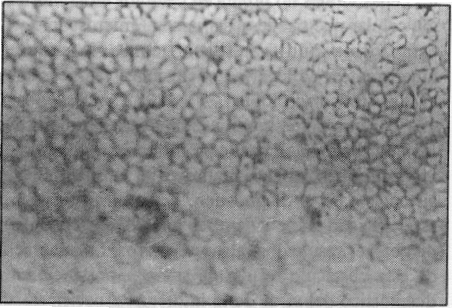
<P><I>Control negativo</i>. Cuatro pozuelos por placa no fueron infectados con virus de influenza (figura 1).     ]]></body>
<body><![CDATA[<BR> FIGURA 1. Control negativo: no se observa ninguna reacci&oacute;n de coloraci&oacute;n en las c&eacute;lulas no infectadas. </P>     <P ALIGN="CENTER"><A HREF="/img/revistas/mtr/v48n3/f0202396.gif"><IMG SRC="/img/revistas/mtr/v48n3/f0202396.gif" BORDER=0 ALT="Figura 2"></A></P>     
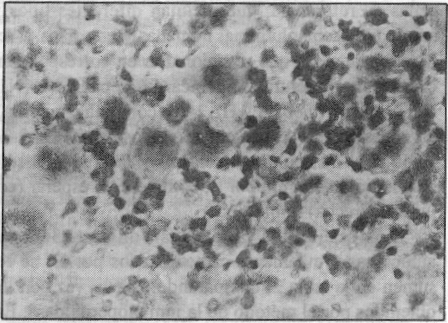
<P><I>Controles positivos</i>. Se utilizaron las cepas A/Texas/36/91 (H1N1), A/Beijin/352/89 (H3N2) y B/Panam&aacute;/45/90 (figura 2).     <BR> FIGURA 2. Control positivo (cepas de referencia y aut&oacute;ctonas previamente caracterizadas por IH): coloraci&oacute;n roja intracitoplasm&aacute;tica en las c&eacute;lulas infectadas con virus de influenza. </P>     <P><I>Anticuerpos monoclonales (Acs M)</i>. Para la tipificaci&oacute;n se utiliz&oacute; un <I>pool</I> de anticuerpos contra influenza A en la diluci&oacute;n de 1:1 000 y otro para el B diluido 1:500. La tipificaci&oacute;n de los subtipos H3 y H1, se realiz&oacute; con los Acs M HA1-71 y HA2-76 diluidos 1:400.<SUP>9,10</SUP> </P>     <P>Las diluciones de trabajo se prepararon con una soluci&oacute;n de leche en polvo descremada al 5 % en PBS.<SUP>11,12</SUP> Estos anticuerpos fueron cedidos por el Laboratorio de Diagn&oacute;stico de Influenza del CDC de Atlanta y obtenidos por inmunizaci&oacute;n de ratones contra la nucleoprote&iacute;na de virus de influenza tipo A (<I>pool</I> A), contra la nucleoprote&iacute;na y hemaglutinina de virus del tipo B (<I>pool</I> B) y contra fragmentos desnaturalizados de la HA1 y HA2 del tipo A (Acs M HA1-71 y HA2-76). </P>     <P>Las diluciones de los Acs M se a&ntilde;adieron a raz&oacute;n de 75 <FONT FACE=Symbol>m</FONT>L/pozo a los pozuelos de cada muestra en el orden siguiente: <I>pool</I> A en el primer pozuelo, </P>     <P>HA1-71 en el segundo, HA2-76 en tercero y <I>pool</I> B en el cuarto. Igual tratamiento se le dio a los 4 pozuelos no inoculados (control negativo). </P>     <P>Las placas se incubaron a 37 <SUP>o</SUP>C en CO<SUB>2</SUB> (5 %), durante 60 min. Las diluciones fueron aspiradas totalmente y se lavaron las placas 4 veces con PBS (200 <FONT FACE=Symbol>m</FONT>L/pozo), se incubaron con un anticuerpo antirrat&oacute;n conjugado con peroxidasa por 60 min en CO<SUB>2</SUB> (5 %) y en una diluci&oacute;n de 1: 1 000 (75 <FONT FACE=Symbol>m</FONT>L/pozo). </P>     <P>El conjugado se elimin&oacute; totalmente, se lavaron las placas nuevamente con PBS (4 veces) y se a&ntilde;adi&oacute; (60 <FONT FACE=Symbol>m</FONT>L/pozo) de una soluci&oacute;n de sustrato preparado con 20 <FONT FACE=Symbol>m</FONT>g de 3-amino-9-ethylcarbazole (Sigma) en 5 mL de dimethylformamide y diluido en una concentraci&oacute;n de 200 <FONT FACE=Symbol>m</FONT>g/mL en buffer de acetato de sodio, pH 5, la cual se conserv&oacute; filtrada a -20 <SUP>o</SUP>C. Antes de su empleo se le adicion&oacute; 1 <FONT FACE=Symbol>m</FONT>L/mL de per&oacute;xido de hidr&oacute;geno (30 %). Una vez a&ntilde;adido el sustrato, se incubaron a temperatura ambiente por 30 a 60 min, tiempo en que se desarrolla el color de la reacci&oacute;n. </P>     ]]></body>
<body><![CDATA[<P>El sustrato fue eliminado totalmente y se lavaron 4 veces con PBS (200 <FONT FACE=Symbol>m</FONT>L/pozo), finalmente se a&ntilde;adieron 100 &igrave;L de PBS en cada pozo y se observ&oacute; al microscopio de luz invertida la coloraci&oacute;n roja de las c&eacute;lulas donde se multiplic&oacute; el virus de influenza. </P>     <P>La coloraci&oacute;n roja intracelular en los pozuelos inoculados con los aislamientos se interpreta como un resultado positivo de infecci&oacute;n y su ausencia como negativo. </P> <H4>RESULTADOS</H4>     <P>Se observ&oacute; una intensa coloraci&oacute;n citoplasm&aacute;tica en las c&eacute;lulas infectadas con influenza A y B frente al pool A y B, respectivamente, lo que indica la especificidad del m&eacute;todo. </P>     <P>Los Acs M HA1-71 y HA2-76 toman una coloraci&oacute;n menos intensa pero se mantiene como una clara coloraci&oacute;n citoplasm&aacute;tica, vi&eacute;ndose a menudo una coloraci&oacute;n perinuclear acumulada. </P>     <P>Los virus de influenza A que reaccionan colore&aacute;ndose de forma similar frente a los Acs M HA1-71 y HA2-76, clasifican en el subtipo H3 y los que reaccionan solamente frente al HA2-76 en el subtipo H1. </P>     <P>El ensayo fue evaluado solamente con cepas de referencia de influenza humana. En la tabla 1 aparece la interpretaci&oacute;n de los resultados obtenidos con las cepas de referencia, que inclu&iacute;an diferentes tipos y subtipos de hemaglutininas humanas, frente a los 4 Acs M utilizados, las que reaccionaron en correspondencia con su estructura antig&eacute;nica: las cepas A (H1N1) con los Acs M <I>pool</I> A y HA2-76 (columna izquierda); las cepas A (H3N2) con el <I>pool</I> A; los Acs M HA2-76 y los HA1-71 (columna central) y las cepas B s&oacute;lo respondieron con el <I>pool</I> B, como era de esperar (columna derecha) (tabla 1). </P>     <P>Los resultados obtenidos con las 23 cepas aut&oacute;ctonas previamente caracterizados por IH se resumen en la tabla 2, compar&aacute;ndolos a su vez con los obtenidos por el m&eacute;todo de la inmunoperoxidasa. Estas cepas fueron tipificadas por IH frente a 9 sueros hiperinmunes. De las cepas del a&ntilde;o 1992, 9 correspondieron al subtipo H1N1 con t&iacute;tulos que oscilaron entre 1/40 y 1/320, y 10 como subtipo H3N2 con t&iacute;tulos similares a las anteriores. Los 4 aislamientos restantes eran del a&ntilde;o 1994, caracterizados del tipo B con t&iacute;tulos entre 1/20 y 1/640. </P>     <P>La caracterizaci&oacute;n por el m&eacute;todo de la inmunoperoxidasa se corresponde con la clasificaci&oacute;n anteriormente se&ntilde;alada, como puede observarse. Desde la cepa A/Habana/821/92 hasta la A/Habana/870/92, clasificadas anteriormente como A(H1N1) reaccionaron con los Acs M del <I>pool</I> A y HA2-76, al igual que la cepa A/Habana/1057/92, aislada posteriormente. Las clasificadas como A(H3N2) -desde la A/Habana/1058/92 hasta la A/Habana/1082/92- reaccionaron con los Acs M del <I>pool</I> A, HA2-76 y HA1-71 y las cepas del tipo B -aisladas en 1994 - reaccionaron solamente con el <I>pool</I> B utilizado en este trabajo. </P>     <P>Se obtuvo un 100 % de especificidad, sensibilidad y coincidencia, tanto con las cepas de referencia como con los aislamientos analizados. </P>     <P>No se detect&oacute; ninguna reacci&oacute;n de coloraci&oacute;n en los cultivos no infectados (control negativo) (figura 1). </P>     ]]></body>
<body><![CDATA[<P>Los controles positivos y negativos establecidos en las placas funcionaron correctamente con sus correspondientes Acs M. </P>     <P>Todos los pozuelos fueron examinados microsc&oacute;picamente. Sin embargo, la coloraci&oacute;n con el <I>pool</I> A y el <I>pool</I> B fue tan intensa que m&aacute;s del 50 % pod&iacute;a ser identificado como positivo con la luz natural, sin necesidad del microscopio. </P> <H4>DISCUSI&Oacute;N</H4>     <P>Una de las ventajas que aporta la utilizaci&oacute;n de las t&eacute;cnicas inmunoenzim&aacute;ticas e inmunoqu&iacute;micas es la posibilidad de lograr el diagn&oacute;stico causal de la entidad viral mediante la detecci&oacute;n e identificaci&oacute;n de ant&iacute;genos virales directamente en cultivos de tejidos<SUP>12,13</SUP> independientemente de la aparici&oacute;n o no del efecto citopatog&eacute;nico (ECP). Se ha observado repetidamente que en muchas circunstancias los virus pueden ser detectados primeramente dada esta capacidad de desarrollar ECP,<SUP>14</SUP> pero en otras ocasiones diferentes cepas virales no producen cambios en la morfolog&iacute;a celular que puede observarse al microscopio y de esta forma pudieran pasar como infecciones "inaparentes" y llegar a conclusiones err&oacute;neas sobre el diagn&oacute;stico virol&oacute;gico. </P>     <P>Por otra parte, la utilizaci&oacute;n de Acs M debe evaluarse cabalmente cuando se introducen por primera vez como herramienta fundamental en determinados sistemas para el diagn&oacute;stico. Dado el alto grado de especificidad que ellos presentan existe la posibilidad de obtener resultados falsos negativos. La superaci&oacute;n de este obst&aacute;culo resulta de suma importancia en el diagn&oacute;stico del virus de la influenza espec&iacute;ficamente por el surgimiento de nuevas variantes antig&eacute;nicas con comportamiento epid&eacute;mico de estos virus.<SUP>15,16</SUP> </P>     <P>Teniendo en cuenta estos antecedentes, en este trabajo los ACS M utilizados fueron sometidos a un estudio detallado al ser enfrentados contra un n&uacute;mero sustancial de diferentes cepas del virus de influenza humana pertenecientes a los subtipos A H1N1 A H3N2 y tipo B, de amplia circulaci&oacute;n mundial. </P>     <P>De esta forma se comprob&oacute; que la especificidad de dichos Acs M fue v&aacute;lida para su utilizaci&oacute;n como reactivo biol&oacute;gico en el desarrollo de la t&eacute;cnica de la immunoperoxidasa con el objetivo de detectar estos virus, ya que se observ&oacute; la reacci&oacute;n de las cepas patrones con los Acs M HA1-71 y HA2-76, logr&aacute;ndose la identificaci&oacute;n de todas las cepas de origen humano pertenecientes a los subtipos H1 y H3, y qued&oacute; demostrado que estos anticuerpos son capaces de reconocer los ep&iacute;topes bien conservados de la hemaglutinina de los virus de influenza A y B.<SUP>17</SUP> </P>     <P>Los resultados obtenidos en el presente estudio, al ser comparada la t&eacute;cnica de inmuno-peroxidasa con la t&eacute;cnica cl&aacute;sica de IH,<SUP>18-21</SUP> tuvieron un comportamiento coincidente tanto para las cepas de referencia como para los aislamientos obtenidos durante el per&iacute;odo de 1992 a 1994. La coincidencia fue v&aacute;lida con respecto a la sensibilidad as&iacute; como para la especificidad, con la obtenci&oacute;n de valores del 100 % entre ambas t&eacute;cnicas. </P>     <P>Existen diferentes referencias sobre la utilizaci&oacute;n de la t&eacute;cnica de inmunoperoxidasa para el diagn&oacute;stico de los myxovirus y paramyxovirus en cultivos de tejidos reportados por <I>Dobardzic</I> y otros, en 1973;<SUP>22</SUP> posteriormente fue referida por <I>Benjamin</I> y otros, en 1976.<SUP>14</SUP> </P>     <P><I>Ziegler</i> y otros,<SUP>23</SUP> realizaron un extenso estudio utilizando la inmunoperoxidasa para el diagn&oacute;stico del virus de influenza en el cual incluyeron cepas de referencia aviares y porcinas adem&aacute;s de las humanas, evaluadas todas ellas previamente por IH, se obtuvo entre ambas t&eacute;cnicas una coincidencia en la sensibilidad y especificidad con valores tambi&eacute;n del 100 %. Sin embargo, de las 263 muestras cl&iacute;nicas estudiadas por ellos, 154 conten&iacute;an virus de influenza A, 84 virus de influenza B y 25 muestras fueron negativas (9,5 %), lo que atribuyeron a causas tales como: almacenamiento de las muestras por m&aacute;s de 5 a&ntilde;os, se observ&oacute; que a medida que los espec&iacute;menes eran m&aacute;s recientes, la negatividad disminu&iacute;a. En las muestras pertenecientes a los a&ntilde;os 1988-1989, 12 resultaron negativas y en las correspondientes a 1992 s&oacute;lo 1 fue negativa. Tambi&eacute;n plantearon como posibles causas de disminuci&oacute;n en la sensibilidad el poco volumen inoculado de cada muestra, un per&iacute;odo corto de incubaci&oacute;n y mala homogenizaci&oacute;n. </P>     <P>Investigadores como <I>Espy</I> y otros,<SUP>24</SUP> <I>Mills</I> y otros<SUP>25</SUP> y <I>Wood</I> y otros,<SUP>26</SUP> empleando iguales Acs M (<I>pool</I> A y B) en cultivos celulares r&aacute;pidos alcanzaron resultados que oscilaron entre 56 y 100 % de sensibilidad. </P>     ]]></body>
<body><![CDATA[<P>Adem&aacute;s de su alta especificidad, la t&eacute;cnica no requiere del aislamiento viral para la caracterizaci&oacute;n y por ello reduce las m&uacute;ltiples operaciones asociadas a las t&eacute;cnicas cl&aacute;sicas y el gasto en recursos que &eacute;stas demandan. Es m&aacute;s f&aacute;cil de aplicar y de interpretar dado el color rojo adquirido por las c&eacute;lulas infestadas. A estas ventajas se une la rapidez en el diagn&oacute;stico cuyo tiempo se disminuye a 24 horas, lo que no admite comparaci&oacute;n respecto a las otras t&eacute;cnicas. </P>     <P>Las caracter&iacute;sticas se&ntilde;aladas satisfacen los requerimientos de los laboratorios de diagn&oacute;stico de los virus de influenza y elevan el control epidemiol&oacute;gico al permitir la caracterizaci&oacute;n inmediata durante los brotes, lo que es especialmente valioso para diferenciar los causados por cepas en circulaci&oacute;n de los originados por cepas emergentes que puedan provocar nuevas epidemias. </P>     <P>Este trabajo abre la perspectiva de utilizar la t&eacute;cnica de inmunoperoxidasa como una herramienta importante y nueva en el Laboratorio de Referencia Nacional para el Diagn&oacute;stico de Influenza del Instituto de Medicina Tropical "Pedro Kour&iacute;" (IPK) y reforzar la capacidad de lucha contra esta enfermedad, que provoca una alta morbilidad-mortalidad, especialmente entre los grupos de riesgo, y tiene efectos econ&oacute;micos y sociales negativos de alta incidencia. </P> <H4>AGRADECIMIENTO</H4>     <P>Los autores reconocen a la doctora <I>Helen Regnery</I> del CDC de Atlanta, EE.UU., el suministro de los reactivos empleados y el entrenamiento inicial para su realizaci&oacute;n. Al Laboratorio de Fotograf&iacute;a del IPK por la ayuda aportada. </P> <H4>SUMMARY</H4>     <P>The immunoperoxidase method for the rapid classification of influenza viruses in type and subtype was applied and validated for the first time in Cuba. The method is based on a rapid culture in MDCK-L cells and on the use of monoclonal antibodies for the classification in type and subtype. A pool of antibodies against influenza A and another against influenza B and HA1-71 and HA2-76 monoclonal antibodies are used for the subtyping in H1 and H3. The validation was carried out by applying this method to 21 international reference strains and to 23 human influenza virus strains that were isolated and previously classified by hemagglutination inhibition. All the strains reacted to the monoclonal antibodies according to their hemagglutinin type and subtype. 6 reference strains and 9 isolations were characterized within the H1N1 subtype: 9 reference strains and 10 isolations in the H3N2 subtype; and 6 reference strains and 4 isolations in type B. There were neither unspecific nor crossed reactions among the controls established. There was 100 % of sensitivity, specificity and coincidence. The technique used proved to be fast and convenient for the characterization in type and subtype of the isolated influenza virus strains. It may substitute the classic hemagglutination inhibition method when it is required the rapid characterization of outbreaks or epidemics of acute respiratory infections, which is very important due to the high morbidity they cause mainly in risk groups and to their economic repercussion. </P>     <P>Key words: IMMUNOENZYME TECHNIQUES; ANTIBODIES, MONOCLONAL; VIRUS CULTIVATION/methods; PEROXIDASE; CUBA; ORTHOMYXOVIRUS TYPE A, HUMAN/classification; ORTHOMYXOVIRUSES TYPE B/classification. </P> <H4>REFERENCIAS BIBLIOGR&Aacute;FICAS</H4> <OL>      <!-- ref --><LI>Hierholzer JC, Suggs MT. Standaridized viral hemagglutination and hemagglutination-inhibition test: 1: standardization of erythrocyte suspension. Apppl Microbiol 1989;18:816-23.</LI>    <!-- ref --><LI>Palmer DF. Dowdle WR. Coleman MT, Schild GC. Advanced laboratory techniques for influenza diagnosis. Atlanta: Center for Disease Control, 1975:25-62.</LI>    <!-- ref --><LI>Swenson PD. Hemagglutination inhibition test for the identification of influenza viruses. En: Isenberg, HD ed. Clinical microbiology procedures handbook. Washington, Americam Society of Microbiology, DC:1992:8,11,12.</LI>    <P>&nbsp;</P>     ]]></body>
<body><![CDATA[<!-- ref --><LI>Tobita K, Sugiura A, Enomoto C, Furuyama M. Plaque assay and primary isolation of influenza A viruses in a established line of canine kidney cells (MDCK) in the presence of trypsin. Med Microbiol Immunol 1975;162:9-14.</LI>    <!-- ref --><LI>Meguro H, Bryant JD, Torrence AE, Wright PF. Canine kidney cell line for isolation of respiratory viruses. J Clin Microbiol 1979;9:175-9.</LI>    <!-- ref --><LI>Webster RG, Laver WG. Studies on the origin of pandemic influenza: 1: antigenic analysis of A2 influenza virus isolated before and after the appearance of Hong Kong influenza using antisera to the isolated hemagglutinin subunits. Virology 1972;48:433-44.</LI>    <!-- ref --><LI>Walls HH, Hamon MW, Slagle JJ, Stocdsdale C, Kendal AP. Characterization and evaluation of monoclonal antibodies developed for typing influenza A and influenza B viruses. J Clin Microbiol 1986;23:240-45.</LI>    <!-- ref --><LI>Van Wyke KL, Yewdell JW, Reck LJ; Murphy BR. Antigenic characterization of influenza A virus matrix protein with monoclonal antibodies. J Virol 1984;49:248-52.</LI>    <!-- ref --><LI>St. Groth E, Scheideggers D. Production of monoclonal antibodies: strategy and tactics. J Immunol Meth 1980;35:1-21.</LI>    <!-- ref --><LI>Shalit I, Mac Kee PA. Beancharmp H, Wanes JL. Comparison of polyclonal antiserum versus monoclonal antibodies for rapid diagnosis of influenza A virus infections by immunofluorescence in clinical specimens. J Clin Microbiol 1985;22:877-79.</LI>    <!-- ref --><LI>Mills RD, Cain KJ, Woods GL. Detection of influenza virus by centrifugal inoculation of M D C K cellls and staining with monoclonal antibodies. J Clin Microbiol 1989;27:2503-8.</LI>    <!-- ref --><LI>Bosman FT, Nie wenhuifzen AC. Clinical application of the enzyme labeled antibody methods: immunoperoxidase methods in diagnostic histopathology. J Histochem Cytochem 1979;27:1140.</LI>    <!-- ref --><LI>Fink B, Loepfe E, Wyler R. Demonstration of viral antigen in cryostat sections by a new immunoperoxidase procedure eliminating endogenous peroxidase activity. J Histochem Cytochem 1979;27:686.</LI>    <!-- ref --><LI>Benjamin DR, Ray CG. Use of inmunoperoxidase for the rapid identification of human myxovirus and paramyxovirus in tissue culture. Appl Microbiol 1976;4:322-25.</LI>    <!-- ref --><LI>World Health Organization. Use of monoclonal antibodies for rapid diagnosis of respiratory viruses: memorandum from a WHO meeting. Bull WHO 1992;70:699-703.</LI>    <!-- ref --><LI>Ritz J, Pesando JM, Notis Mc, Conarty J, Clavell LA, Sallan SE et al. Use of monoclonal antibodies as diagnostic and therapeutic reagents in acute lymphoblastic leukemia. Cancer Res 1981;41:4771.</LI>    <!-- ref --><LI>S&aacute;nchez-Fauquier A, Guillen M, Mart&iacute;n J, Kendal AP, Melero JA. Conservation of epitopes recognized by monoclonal antibodies against the separated subunits of influenza hemagglutinin among type A viruses of the same and different subtypes. Arch Virol 1991;116:285-93.</LI>    <!-- ref --><LI>Waner JL, Tood SJ, Shalaby H, Murphy P, Wall L. Comparison of Directigen Flu-A with viral isolation and direct immunofluorescence for the rapid detection and identification of influenza A virus. J Clin Microbiol 1991;29:479-82.</LI>    <!-- ref --><LI>Spada B, Biehler K, Chegas P, Kaye J, Riepenhoff-Talty M. Comparison of rapid immunofluorescence assay to cell culture isolation for the detection of influenza A and B viruses in nasopharyngeal secretions from infants and children. J Virol Methods 1991;33:305-10.</LI>    <!-- ref --><LI>Buffington J, Chapman LE, Schmeltz LM, Kendal AP. Do family physicians make food sentinels for influenza. Arch Fam Med 1993;2:859-65.</LI>    <!-- ref --><LI>Webster RG, Kendal AP, Gerhard W. Analysis of antigenic drift in recently isolated influenza A (H1N1) viruses with monoclonal antibody preparations. Virology 1979;96:258-64.</LI>    <LI>Dobardzic R, Boudreault A, Papilonis VL. Identification du virus de l&amp;acute;Influenza &agrave; l&amp;acute;aide de l&amp;acute;immunoperoxydase. Can J Microbiol 1973;19:146-9.</LI>     <!-- ref --><LI>Ziegler T, Hall H, S&aacute;nchez-Fauquier A, Gamble WC, Cox, NJ. Type and subtype-specific detection of influenza viruses in clinical specimens by rapid culture assay. J Clin Microbiol 1995;33(2):318-21.</LI>    <!-- ref --><LI>Espy MJ, Smith TE, Harmon M, Kendal AP. Rapid detection of influenza virus by shell vial assay with monoclonal antibodies. J Clin Microbiol 1986;24:677-9.</LI>    <!-- ref --><LI>Mills RD, Chain KJ Woods GL. Detection of influenza virus by centrifugal inoculation of M D C K cells and staining with monoclonal antibodies. J Clin Microbiol 1989;27:2505-8.</LI>    <!-- ref --><LI>Woods GL, Johnson AM. Rapid 24 wells plate centrifugation assay for detection of influenza A virus in clinical specimens. J Virol Methods 1989;24:35-42.</LI>    </OL>      <P>Recibido: 8 de febrero de 1996. Aprobado: 11 de junio de 1996. </P>     <P>Dra. <I>Suset Oropesa Fern&aacute;ndez</I>. Instituto de Medicina Tropical "Pedro Kour&iacute;". Apartado 601, Marianao 13, Ciudad de La Habana, Cuba. </P>     <P><SUP>1</sup>&nbsp;<A NAME="autores"></A>Especialista de II Grado en Microbiolog&iacute;a. Investigadora Agregada.     <BR> <SUP>2 </SUP>Licenciado en Bioqu&iacute;mica. Investigador Auxiliar.     <BR> <SUP>3 </SUP>Licenciada en Biolog&iacute;a. Investigadora Auxiliar.     <BR> <SUP>4 </SUP>Especialista de II Grado. Investigador Titular. Responsable del Laboratorio de Virus Respiratorios.     ]]></body>
<body><![CDATA[<BR> <SUP>5 </SUP>Especialista de I Grado. Investigador Agregado.     <BR> <SUP>6 </SUP>T&eacute;cnica. </P>     ]]></body><back>
<ref-list>
<ref id="B1">
<nlm-citation citation-type="journal">
<person-group person-group-type="author">
<name>
<surname><![CDATA[Hierholzer]]></surname>
<given-names><![CDATA[JC]]></given-names>
</name>
<name>
<surname><![CDATA[Suggs]]></surname>
<given-names><![CDATA[MT]]></given-names>
</name>
</person-group>
<article-title xml:lang="en"><![CDATA[Standaridized viral hemagglutination and hemagglutination-inhibition test: 1: standardization of erythrocyte suspension.]]></article-title>
<source><![CDATA[Apppl Microbiol]]></source>
<year>1989</year>
<volume>18</volume>
<page-range>816-23</page-range></nlm-citation>
</ref>
<ref id="B2">
<nlm-citation citation-type="book">
<person-group person-group-type="author">
<name>
<surname><![CDATA[Palmer]]></surname>
<given-names><![CDATA[DF]]></given-names>
</name>
<name>
<surname><![CDATA[Dowdle]]></surname>
<given-names><![CDATA[WR]]></given-names>
</name>
<name>
<surname><![CDATA[Coleman]]></surname>
<given-names><![CDATA[MT]]></given-names>
</name>
<name>
<surname><![CDATA[Schild]]></surname>
<given-names><![CDATA[GC]]></given-names>
</name>
</person-group>
<source><![CDATA[Advanced laboratory techniques for influenza diagnosis.]]></source>
<year>1975</year>
<page-range>25-62</page-range><publisher-loc><![CDATA[Atlanta ]]></publisher-loc>
<publisher-name><![CDATA[Center for Disease Control]]></publisher-name>
</nlm-citation>
</ref>
<ref id="B3">
<nlm-citation citation-type="book">
<person-group person-group-type="author">
<name>
<surname><![CDATA[Swenson]]></surname>
<given-names><![CDATA[PD]]></given-names>
</name>
</person-group>
<article-title xml:lang="en"><![CDATA[Hemagglutination inhibition test for the identification of influenza viruses.]]></article-title>
<person-group person-group-type="editor">
<name>
<surname><![CDATA[Isenberg]]></surname>
<given-names><![CDATA[HD]]></given-names>
</name>
</person-group>
<source><![CDATA[Clinical microbiology procedures handbook]]></source>
<year>1992</year>
<publisher-loc><![CDATA[Washington ]]></publisher-loc>
<publisher-name><![CDATA[Americam Society of Microbiology, DC]]></publisher-name>
</nlm-citation>
</ref>
<ref id="B4">
<nlm-citation citation-type="journal">
<person-group person-group-type="author">
<name>
<surname><![CDATA[Tobita]]></surname>
<given-names><![CDATA[K]]></given-names>
</name>
<name>
<surname><![CDATA[Sugiura]]></surname>
<given-names><![CDATA[A]]></given-names>
</name>
<name>
<surname><![CDATA[Enomoto]]></surname>
<given-names><![CDATA[C]]></given-names>
</name>
<name>
<surname><![CDATA[Furuyama]]></surname>
<given-names><![CDATA[M]]></given-names>
</name>
</person-group>
<article-title xml:lang="en"><![CDATA[Plaque assay and primary isolation of influenza A viruses in a established line of canine kidney cells (MDCK) in the presence of trypsin]]></article-title>
<source><![CDATA[Med Microbiol Immunol]]></source>
<year>1975</year>
<volume>162</volume>
<page-range>9-14</page-range></nlm-citation>
</ref>
<ref id="B5">
<nlm-citation citation-type="journal">
<person-group person-group-type="author">
<name>
<surname><![CDATA[Meguro]]></surname>
<given-names><![CDATA[H]]></given-names>
</name>
<name>
<surname><![CDATA[Bryant]]></surname>
<given-names><![CDATA[JD]]></given-names>
</name>
<name>
<surname><![CDATA[Torrence]]></surname>
<given-names><![CDATA[AE]]></given-names>
</name>
<name>
<surname><![CDATA[Wright]]></surname>
<given-names><![CDATA[PF]]></given-names>
</name>
</person-group>
<article-title xml:lang="en"><![CDATA[Canine kidney cell line for isolation of respiratory viruses]]></article-title>
<source><![CDATA[J Clin Microbiol]]></source>
<year>1979</year>
<volume>9</volume>
<page-range>175-9</page-range></nlm-citation>
</ref>
<ref id="B6">
<nlm-citation citation-type="journal">
<person-group person-group-type="author">
<name>
<surname><![CDATA[Webster]]></surname>
<given-names><![CDATA[RG]]></given-names>
</name>
<name>
<surname><![CDATA[Laver]]></surname>
<given-names><![CDATA[WG]]></given-names>
</name>
</person-group>
<article-title xml:lang="en"><![CDATA[Studies on the origin of pandemic influenza: 1: antigenic analysis of A2 influenza virus isolated before and after the appearance of Hong Kong influenza using antisera to the isolated hemagglutinin subunits.]]></article-title>
<source><![CDATA[Virology]]></source>
<year>1972</year>
<volume>48</volume>
<page-range>433-44</page-range></nlm-citation>
</ref>
<ref id="B7">
<nlm-citation citation-type="journal">
<person-group person-group-type="author">
<name>
<surname><![CDATA[Walls]]></surname>
<given-names><![CDATA[HH]]></given-names>
</name>
<name>
<surname><![CDATA[Hamon]]></surname>
<given-names><![CDATA[MW]]></given-names>
</name>
<name>
<surname><![CDATA[Slagle]]></surname>
<given-names><![CDATA[JJ]]></given-names>
</name>
<name>
<surname><![CDATA[Stocdsdale]]></surname>
<given-names><![CDATA[C]]></given-names>
</name>
<name>
<surname><![CDATA[Kendal]]></surname>
<given-names><![CDATA[AP]]></given-names>
</name>
</person-group>
<article-title xml:lang="en"><![CDATA[Characterization and evaluation of monoclonal antibodies developed for typing influenza A and influenza B viruses]]></article-title>
<source><![CDATA[J Clin Microbiol]]></source>
<year>1986</year>
<volume>23</volume>
<page-range>240-45</page-range></nlm-citation>
</ref>
<ref id="B8">
<nlm-citation citation-type="journal">
<person-group person-group-type="author">
<name>
<surname><![CDATA[Van Wyke]]></surname>
<given-names><![CDATA[KL]]></given-names>
</name>
<name>
<surname><![CDATA[Yewdell]]></surname>
<given-names><![CDATA[JW]]></given-names>
</name>
<name>
<surname><![CDATA[Reck]]></surname>
<given-names><![CDATA[LJ]]></given-names>
</name>
<name>
<surname><![CDATA[Murphy]]></surname>
<given-names><![CDATA[BR]]></given-names>
</name>
</person-group>
<article-title xml:lang="en"><![CDATA[Antigenic characterization of influenza A virus matrix protein with monoclonal antibodies]]></article-title>
<source><![CDATA[J Virol]]></source>
<year>1984</year>
<volume>49</volume>
<page-range>248-52</page-range></nlm-citation>
</ref>
<ref id="B9">
<label>St</label><nlm-citation citation-type="journal">
<person-group person-group-type="author">
<name>
<surname><![CDATA[Groth]]></surname>
<given-names><![CDATA[E]]></given-names>
</name>
<name>
<surname><![CDATA[Scheideggers]]></surname>
<given-names><![CDATA[D]]></given-names>
</name>
</person-group>
<article-title xml:lang="en"><![CDATA[Production of monoclonal antibodies: strategy and tactics]]></article-title>
<source><![CDATA[J Immunol Meth]]></source>
<year>1980</year>
<volume>35</volume>
<page-range>1-21</page-range></nlm-citation>
</ref>
<ref id="B10">
<nlm-citation citation-type="journal">
<person-group person-group-type="author">
<name>
<surname><![CDATA[Shalit]]></surname>
<given-names><![CDATA[I]]></given-names>
</name>
<name>
<surname><![CDATA[Mac Kee]]></surname>
<given-names><![CDATA[PA]]></given-names>
</name>
</person-group>
<article-title xml:lang="en"><![CDATA[Beancharmp H, Wanes JL: Comparison of polyclonal antiserum versus monoclonal antibodies for rapid diagnosis of influenza A virus infections by immunofluorescence in clinical specimens]]></article-title>
<source><![CDATA[J Clin Microbiol]]></source>
<year>1985</year>
<volume>22</volume>
<page-range>877-79</page-range></nlm-citation>
</ref>
<ref id="B11">
<nlm-citation citation-type="journal">
<person-group person-group-type="author">
<name>
<surname><![CDATA[Mills]]></surname>
<given-names><![CDATA[RD]]></given-names>
</name>
<name>
<surname><![CDATA[Cain]]></surname>
<given-names><![CDATA[KJ]]></given-names>
</name>
<name>
<surname><![CDATA[Woods]]></surname>
<given-names><![CDATA[GL]]></given-names>
</name>
</person-group>
<article-title xml:lang="en"><![CDATA[Detection of influenza virus by centrifugal inoculation of M D C K cellls and staining with monoclonal antibodies]]></article-title>
<source><![CDATA[J Clin Microbiol]]></source>
<year>1989</year>
<volume>27</volume>
<page-range>2503-8</page-range></nlm-citation>
</ref>
<ref id="B12">
<nlm-citation citation-type="journal">
<person-group person-group-type="author">
<name>
<surname><![CDATA[Bosman]]></surname>
<given-names><![CDATA[FT]]></given-names>
</name>
<name>
<surname><![CDATA[Nie wenhuifzen]]></surname>
<given-names><![CDATA[AC]]></given-names>
</name>
</person-group>
<article-title xml:lang="en"><![CDATA[Clinical application of the enzyme labeled antibody methods: immunoperoxidase methods in diagnostic histopathology]]></article-title>
<source><![CDATA[J Histochem Cytochem]]></source>
<year>1979</year>
<volume>27</volume>
<page-range>1140</page-range></nlm-citation>
</ref>
<ref id="B13">
<nlm-citation citation-type="journal">
<person-group person-group-type="author">
<name>
<surname><![CDATA[Fink]]></surname>
<given-names><![CDATA[B]]></given-names>
</name>
<name>
<surname><![CDATA[Loepfe]]></surname>
<given-names><![CDATA[E]]></given-names>
</name>
<name>
<surname><![CDATA[Wyler]]></surname>
<given-names><![CDATA[R]]></given-names>
</name>
</person-group>
<article-title xml:lang="en"><![CDATA[Demonstration of viral antigen in cryostat sections by a new immunoperoxidase procedure eliminating endogenous peroxidase activity]]></article-title>
<source><![CDATA[J Histochem Cytochem]]></source>
<year>1979</year>
<volume>27</volume>
<page-range>686</page-range></nlm-citation>
</ref>
<ref id="B14">
<nlm-citation citation-type="journal">
<person-group person-group-type="author">
<name>
<surname><![CDATA[Benjamin]]></surname>
<given-names><![CDATA[DR]]></given-names>
</name>
<name>
<surname><![CDATA[Ray]]></surname>
<given-names><![CDATA[CG]]></given-names>
</name>
</person-group>
<article-title xml:lang="en"><![CDATA[Use of inmunoperoxidase for the rapid identification of human myxovirus and paramyxovirus in tissue culture]]></article-title>
<source><![CDATA[Appl Microbiol]]></source>
<year>1976</year>
<volume>4</volume>
<page-range>322-25</page-range></nlm-citation>
</ref>
<ref id="B15">
<nlm-citation citation-type="journal">
<collab>World Health Organization</collab>
<article-title xml:lang="en"><![CDATA[Use of monoclonal antibodies for rapid diagnosis of respiratory viruses: memorandum from a WHO meeting.]]></article-title>
<source><![CDATA[Bull WHO]]></source>
<year>1992</year>
<volume>70</volume>
<page-range>699-703.</page-range></nlm-citation>
</ref>
<ref id="B16">
<nlm-citation citation-type="journal">
<person-group person-group-type="author">
<name>
<surname><![CDATA[Ritz]]></surname>
<given-names><![CDATA[J]]></given-names>
</name>
<name>
<surname><![CDATA[Pesando]]></surname>
<given-names><![CDATA[JM]]></given-names>
</name>
<name>
<surname><![CDATA[Notis]]></surname>
<given-names><![CDATA[Mc]]></given-names>
</name>
<name>
<surname><![CDATA[Conarty]]></surname>
<given-names><![CDATA[J]]></given-names>
</name>
<name>
<surname><![CDATA[Clavell]]></surname>
<given-names><![CDATA[LA]]></given-names>
</name>
</person-group>
<article-title xml:lang="en"><![CDATA[Use of monoclonal antibodies as diagnostic and therapeutic reagents in acute lymphoblastic leukemia]]></article-title>
<source><![CDATA[Cancer Res]]></source>
<year>1981</year>
<volume>41</volume>
<page-range>4771</page-range></nlm-citation>
</ref>
<ref id="B17">
<nlm-citation citation-type="journal">
<person-group person-group-type="author">
<name>
<surname><![CDATA[Sánchez-Fauquier]]></surname>
<given-names><![CDATA[A]]></given-names>
</name>
<name>
<surname><![CDATA[Guillen]]></surname>
<given-names><![CDATA[M]]></given-names>
</name>
<name>
<surname><![CDATA[Martín]]></surname>
<given-names><![CDATA[J]]></given-names>
</name>
<name>
<surname><![CDATA[Kendal]]></surname>
<given-names><![CDATA[AP]]></given-names>
</name>
<name>
<surname><![CDATA[Melero]]></surname>
<given-names><![CDATA[JA]]></given-names>
</name>
</person-group>
<article-title xml:lang="en"><![CDATA[Conservation of epitopes recognized by monoclonal antibodies against the separated subunits of influenza hemagglutinin among type A viruses of the same and different subtypes]]></article-title>
<source><![CDATA[Arch Virol]]></source>
<year>1991</year>
<volume>116</volume>
<page-range>285-93</page-range></nlm-citation>
</ref>
<ref id="B18">
<nlm-citation citation-type="journal">
<person-group person-group-type="author">
<name>
<surname><![CDATA[Waner]]></surname>
<given-names><![CDATA[JL]]></given-names>
</name>
<name>
<surname><![CDATA[Tood]]></surname>
<given-names><![CDATA[SJ]]></given-names>
</name>
<name>
<surname><![CDATA[Shalaby]]></surname>
<given-names><![CDATA[H]]></given-names>
</name>
<name>
<surname><![CDATA[Murphy]]></surname>
<given-names><![CDATA[P]]></given-names>
</name>
<name>
<surname><![CDATA[Wall]]></surname>
<given-names><![CDATA[L]]></given-names>
</name>
</person-group>
<article-title xml:lang="en"><![CDATA[Comparison of Directigen Flu-A with viral isolation and direct immunofluorescence for the rapid detection and identification of influenza A virus]]></article-title>
<source><![CDATA[J Clin Microbiol]]></source>
<year>1991</year>
<volume>29</volume>
<page-range>479-82</page-range></nlm-citation>
</ref>
<ref id="B19">
<nlm-citation citation-type="journal">
<person-group person-group-type="author">
<name>
<surname><![CDATA[Spada]]></surname>
<given-names><![CDATA[B]]></given-names>
</name>
<name>
<surname><![CDATA[Biehler]]></surname>
<given-names><![CDATA[K]]></given-names>
</name>
<name>
<surname><![CDATA[Chegas]]></surname>
<given-names><![CDATA[P]]></given-names>
</name>
<name>
<surname><![CDATA[Kaye]]></surname>
<given-names><![CDATA[J]]></given-names>
</name>
<name>
<surname><![CDATA[Riepenhoff-Talty]]></surname>
<given-names><![CDATA[M]]></given-names>
</name>
</person-group>
<article-title xml:lang="en"><![CDATA[Comparison of rapid immunofluorescence assay to cell culture isolation for the detection of influenza A and B viruses in nasopharyngeal secretions from infants and children]]></article-title>
<source><![CDATA[J Virol Methods]]></source>
<year>1991</year>
<volume>33</volume>
<page-range>305-10</page-range></nlm-citation>
</ref>
<ref id="B20">
<nlm-citation citation-type="journal">
<person-group person-group-type="author">
<name>
<surname><![CDATA[Buffington]]></surname>
<given-names><![CDATA[J]]></given-names>
</name>
<name>
<surname><![CDATA[Chapman]]></surname>
<given-names><![CDATA[LE]]></given-names>
</name>
<name>
<surname><![CDATA[Schmeltz]]></surname>
<given-names><![CDATA[LM]]></given-names>
</name>
<name>
<surname><![CDATA[Kendal]]></surname>
<given-names><![CDATA[AP]]></given-names>
</name>
</person-group>
<article-title xml:lang="en"><![CDATA[Do family physicians make food sentinels for influenza]]></article-title>
<source><![CDATA[Arch Fam Med]]></source>
<year>1993</year>
<volume>2</volume>
<page-range>859-65</page-range></nlm-citation>
</ref>
<ref id="B21">
<nlm-citation citation-type="journal">
<person-group person-group-type="author">
<name>
<surname><![CDATA[Webster]]></surname>
<given-names><![CDATA[RG]]></given-names>
</name>
<name>
<surname><![CDATA[Kendal]]></surname>
<given-names><![CDATA[AP]]></given-names>
</name>
<name>
<surname><![CDATA[Gerhard]]></surname>
<given-names><![CDATA[W]]></given-names>
</name>
</person-group>
<article-title xml:lang="en"><![CDATA[Analysis of antigenic drift in recently isolated influenza A (H1N1) viruses with monoclonal antibody preparations]]></article-title>
<source><![CDATA[Virology]]></source>
<year>1979</year>
<volume>96</volume>
<page-range>258-64</page-range></nlm-citation>
</ref>
<ref id="B22">
<nlm-citation citation-type="journal">
<person-group person-group-type="author">
<name>
<surname><![CDATA[Dobardzic]]></surname>
<given-names><![CDATA[R]]></given-names>
</name>
<name>
<surname><![CDATA[Boudreault]]></surname>
<given-names><![CDATA[A]]></given-names>
</name>
<name>
<surname><![CDATA[Papilonis]]></surname>
<given-names><![CDATA[VL]]></given-names>
</name>
</person-group>
<article-title xml:lang="en"><![CDATA[Identification du virus de l&acute;Influenza à l&acute;aide de l&acute;immunoperoxydase]]></article-title>
<source><![CDATA[Can J Microbiol]]></source>
<year>1973</year>
<volume>19</volume>
<page-range>146-9</page-range></nlm-citation>
</ref>
<ref id="B23">
<nlm-citation citation-type="journal">
<person-group person-group-type="author">
<name>
<surname><![CDATA[Ziegler]]></surname>
<given-names><![CDATA[T]]></given-names>
</name>
<name>
<surname><![CDATA[Hall]]></surname>
<given-names><![CDATA[H]]></given-names>
</name>
<name>
<surname><![CDATA[Sánchez-Fauquier]]></surname>
<given-names><![CDATA[A]]></given-names>
</name>
<name>
<surname><![CDATA[Gamble]]></surname>
<given-names><![CDATA[WC]]></given-names>
</name>
<name>
<surname><![CDATA[Cox]]></surname>
<given-names><![CDATA[NJ]]></given-names>
</name>
</person-group>
<article-title xml:lang="en"><![CDATA[Type and subtype-specific detection of influenza viruses in clinical specimens by rapid culture assay]]></article-title>
<source><![CDATA[J Clin Microbiol]]></source>
<year>1995</year>
<volume>33</volume>
<numero>( 2)</numero>
<issue>( 2)</issue>
<page-range>318-21</page-range></nlm-citation>
</ref>
<ref id="B24">
<nlm-citation citation-type="journal">
<person-group person-group-type="author">
<name>
<surname><![CDATA[Espy]]></surname>
<given-names><![CDATA[MJ]]></given-names>
</name>
<name>
<surname><![CDATA[Smith]]></surname>
<given-names><![CDATA[TE]]></given-names>
</name>
<name>
<surname><![CDATA[Harmon]]></surname>
<given-names><![CDATA[M]]></given-names>
</name>
<name>
<surname><![CDATA[Kendal]]></surname>
<given-names><![CDATA[AP]]></given-names>
</name>
</person-group>
<article-title xml:lang="en"><![CDATA[Rapid detection of influenza virus by shell vial assay with monoclonal antibodies]]></article-title>
<source><![CDATA[J Clin Microbiol]]></source>
<year>1986</year>
<volume>24</volume>
<page-range>677-9</page-range></nlm-citation>
</ref>
<ref id="B25">
<nlm-citation citation-type="journal">
<person-group person-group-type="author">
<name>
<surname><![CDATA[Mills]]></surname>
<given-names><![CDATA[RD]]></given-names>
</name>
<name>
<surname><![CDATA[Chain]]></surname>
<given-names><![CDATA[KJ]]></given-names>
</name>
<name>
<surname><![CDATA[Woods]]></surname>
<given-names><![CDATA[GL]]></given-names>
</name>
</person-group>
<article-title xml:lang="en"><![CDATA[Detection of influenza virus by centrifugal inoculation of M D C K cells and staining with monoclonal antibodies]]></article-title>
<source><![CDATA[J Clin Microbiol]]></source>
<year>1989</year>
<volume>27</volume>
<page-range>2505-8</page-range></nlm-citation>
</ref>
<ref id="B26">
<nlm-citation citation-type="journal">
<person-group person-group-type="author">
<name>
<surname><![CDATA[Woods]]></surname>
<given-names><![CDATA[GL]]></given-names>
</name>
<name>
<surname><![CDATA[Johnson]]></surname>
<given-names><![CDATA[AM]]></given-names>
</name>
</person-group>
<article-title xml:lang="en"><![CDATA[Rapid 24 wells plate centrifugation assay for detection of influenza A virus in clinical specimens]]></article-title>
<source><![CDATA[J Virol Methods]]></source>
<year>1989</year>
<volume>24</volume>
<page-range>35-42</page-range></nlm-citation>
</ref>
</ref-list>
</back>
</article>