<?xml version="1.0" encoding="ISO-8859-1"?><article xmlns:mml="http://www.w3.org/1998/Math/MathML" xmlns:xlink="http://www.w3.org/1999/xlink" xmlns:xsi="http://www.w3.org/2001/XMLSchema-instance">
<front>
<journal-meta>
<journal-id>0375-0760</journal-id>
<journal-title><![CDATA[Revista Cubana de Medicina Tropical]]></journal-title>
<abbrev-journal-title><![CDATA[Rev Cubana Med Trop]]></abbrev-journal-title>
<issn>0375-0760</issn>
<publisher>
<publisher-name><![CDATA[Centro Nacional de Información de Ciencias Médicas]]></publisher-name>
</publisher>
</journal-meta>
<article-meta>
<article-id>S0375-07601998000200004</article-id>
<title-group>
<article-title xml:lang="es"><![CDATA[Caracterización intratípica de Poliovirus por la técnica de reacción en cadena de la polimerasa]]></article-title>
</title-group>
<contrib-group>
<contrib contrib-type="author">
<name>
<surname><![CDATA[Ávalos Redón]]></surname>
<given-names><![CDATA[Ivonne]]></given-names>
</name>
<xref ref-type="aff" rid="A01"/>
</contrib>
<contrib contrib-type="author">
<name>
<surname><![CDATA[Más Lago]]></surname>
<given-names><![CDATA[Pedro José]]></given-names>
</name>
<xref ref-type="aff" rid="A01"/>
</contrib>
<contrib contrib-type="author">
<name>
<surname><![CDATA[Sarmiento Pérez]]></surname>
<given-names><![CDATA[Luis Raymond]]></given-names>
</name>
<xref ref-type="aff" rid="A01"/>
</contrib>
<contrib contrib-type="author">
<name>
<surname><![CDATA[Palomera Puente]]></surname>
<given-names><![CDATA[Rosa]]></given-names>
</name>
<xref ref-type="aff" rid="A01"/>
</contrib>
<contrib contrib-type="author">
<name>
<surname><![CDATA[Muné Jiménez]]></surname>
<given-names><![CDATA[Mayra]]></given-names>
</name>
<xref ref-type="aff" rid="A01"/>
</contrib>
<contrib contrib-type="author">
<name>
<surname><![CDATA[Bello Corredor]]></surname>
<given-names><![CDATA[Marité]]></given-names>
</name>
<xref ref-type="aff" rid="A01"/>
</contrib>
<contrib contrib-type="author">
<name>
<surname><![CDATA[Pérez Santos]]></surname>
<given-names><![CDATA[Lissette]]></given-names>
</name>
<xref ref-type="aff" rid="A01"/>
</contrib>
</contrib-group>
<aff id="A01">
<institution><![CDATA[,Instituto de Medicina Tropical Pedro Kourí  ]]></institution>
<addr-line><![CDATA[Ciudad de La Habana ]]></addr-line>
<country>Cuba</country>
</aff>
<pub-date pub-type="pub">
<day>00</day>
<month>08</month>
<year>1998</year>
</pub-date>
<pub-date pub-type="epub">
<day>00</day>
<month>08</month>
<year>1998</year>
</pub-date>
<volume>50</volume>
<numero>2</numero>
<fpage>100</fpage>
<lpage>104</lpage>
<copyright-statement/>
<copyright-year/>
<self-uri xlink:href="http://scielo.sld.cu/scielo.php?script=sci_arttext&amp;pid=S0375-07601998000200004&amp;lng=en&amp;nrm=iso"></self-uri><self-uri xlink:href="http://scielo.sld.cu/scielo.php?script=sci_abstract&amp;pid=S0375-07601998000200004&amp;lng=en&amp;nrm=iso"></self-uri><self-uri xlink:href="http://scielo.sld.cu/scielo.php?script=sci_pdf&amp;pid=S0375-07601998000200004&amp;lng=en&amp;nrm=iso"></self-uri><abstract abstract-type="short" xml:lang="es"><p><![CDATA[Se introdujo la técnica de la reacción en cadena de la polimerasa para la caracterización intratípica de Poliovirus. Se usaron cebadores que sólo promueven la ampliación de las cepas vacunales de Sabin, comprobada por corrida electroforética de los productos de ADN amplificados (Sabin 1-97 pb, Sabin 2-71 pb, Sabin 3-44 pb) y cuya especificidad se verificó satisfactoriamente. Se estudiaron por esta técnica 23 cepas cubanas de Poliovirus aisladas e identificadas en el Laboratorio de Enterovirus del Instituto de Medicina Tropical "Pedro Kourí" de 1993 a 1994, y todas resultaron ser del tipo vacunal. Se observó cómo el Poliovirus vacunal de Sabin puede ser causa de meningoencefalitis viral como complicación neurológica más leve. Este estudio aportó una evidencia más a favor de la no circulación del Poliovirus salvaje en Cuba.]]></p></abstract>
<abstract abstract-type="short" xml:lang="en"><p><![CDATA[The polimerase chain reaction techniques was introduced for the intratypic characterization of Poliovirus. Primers were used only to promote the amplification of the Sabin vaccine strains proved by electrophoretic run of the amplified DNA products (Sabin 1 - 97 pb, Sabin 2 - 71 pb, Sabin 3 - 44 pb) and whose specificity was satisfactorily verified. 23 Cuban poliovirus strains isolated and identified at the Laboratory of Enterovirus of the "Pedro Kourí" Tropical Medicine Institute from 1993 to 1994 were studied by this technique. All of them were of the vaccine type. It was observed how the Sabin vaccine poliovirus may be the cause of viral meningoencephalitis as a milder neurological complication. Tghis study provided one more evidence about the non circulation of the wild poliovirus in Cuba.]]></p></abstract>
<kwd-group>
<kwd lng="es"><![CDATA[POLIOVIRUS]]></kwd>
<kwd lng="es"><![CDATA[REACCION EN CADENA POR POLIMERASA]]></kwd>
<kwd lng="es"><![CDATA[ARN VIRAL]]></kwd>
<kwd lng="en"><![CDATA[POLIOVIRUSES]]></kwd>
<kwd lng="en"><![CDATA[POLYMERASE CHAIN REACTION]]></kwd>
<kwd lng="en"><![CDATA[RNA, VIRAL]]></kwd>
</kwd-group>
</article-meta>
</front><body><![CDATA[ <P>Instituto de Medicina Tropical "Pedro Kour&iacute;" </P> <H2>Caracterizaci&oacute;n intrat&iacute;pica de Poliovirus por la t&eacute;cnica de reacci&oacute;n en cadena de la polimerasa</H2>     <P><A HREF="#autores"><I>Dra. Ivonne &Aacute;valos Red&oacute;n,<SUP>1</SUP> Dr. Pedro Jos&eacute; M&aacute;s Lago,<SUP>2</SUP> Lic. Luis Raymond Sarmiento P&eacute;rez,<SUP>3</SUP> T&eacute;c. Rosa Palomera Puente,<SUP>4</SUP> Lic. Mayra Mun&eacute; Jim&eacute;nez,<SUP>5</SUP> Lic. Marit&eacute; Bello Corredor<SUP>8</SUP> y Lissette P&eacute;rez Santos<SUP>7</sup></I></A></P> <H4>Resumen</H4><DIR>      <P>Se introdujo la t&eacute;cnica de la reacci&oacute;n en cadena de la polimerasa para la caracterizaci&oacute;n intrat&iacute;pica de Poliovirus. Se usaron cebadores que s&oacute;lo promueven la ampliaci&oacute;n de las cepas vacunales de Sabin, comprobada por corrida electrofor&eacute;tica de los productos de ADN amplificados (Sabin 1-97 pb, Sabin 2-71 pb, Sabin 3-44 pb) y cuya especificidad se verific&oacute; satisfactoriamente. Se estudiaron por esta t&eacute;cnica 23 cepas cubanas de Poliovirus aisladas e identificadas en el Laboratorio de Enterovirus del Instituto de Medicina Tropical "Pedro Kour&iacute;" de 1993 a 1994, y todas resultaron ser del tipo vacunal. Se observ&oacute; c&oacute;mo el Poliovirus vacunal de Sabin puede ser causa de meningoencefalitis viral como complicaci&oacute;n neurol&oacute;gica m&aacute;s leve. Este estudio aport&oacute; una evidencia m&aacute;s a favor de la no circulaci&oacute;n del Poliovirus salvaje en Cuba. </P>     <P>Descriptores DeCS: POLIOVIRUS/aislamiento &amp; purificaci&oacute;n; POLIOVIRUS/gen&eacute;tica; REACCION EN CADENA POR POLIMERASA/m&eacute;todos; ARN VIRAL/aislamiento &amp; purificaci&oacute;n.</P></DIR>      <P>Con la era de la vacunaci&oacute;n antipoliomiel&iacute;tica, la incidencia de par&aacute;lisis fl&aacute;ccida aguda (PFA) declin&oacute; de forma dr&aacute;stica en todo el mundo. Hoy en muchos pa&iacute;ses, el Poliovirus salvaje ha sido remplazado por las cepas vacunales atenuadas, pero sigue siendo causa de par&aacute;lisis en 1 de cada 1 000 ni&ntilde;os nacidos en algunos pa&iacute;ses subdesarrollados. Las Organizaciones Mundial y Panamericana de la Salud (OMS/OPS) se han propuesto para el a&ntilde;o 2000 la total erradicaci&oacute;n del Poliovirus salvaje en el mundo,1 y junto a la labor preventiva de la vacunaci&oacute;n y la vigilancia epidemiol&oacute;gica, se suma la investigaci&oacute;n virol&oacute;gica con el fin de definir la naturaleza salvaje o vacunal del agente causal. </P>     <P>El diagn&oacute;stico tradicional del Poliovirus es el aislamiento en cultivos celulares; luego, la identificaci&oacute;n y diferenciaci&oacute;n intrat&iacute;pica por t&eacute;cnicas serol&oacute;gicas, f&iacute;sico-qu&iacute;micas y de inmunoensayo han sido poco definitorias y engorrosas ya que algunos Poliovirus salvajes poseen propiedades similares a los virus vacunales.2 El avance de la biolog&iacute;a molecular ha permitido la introducci&oacute;n de varios m&eacute;todos diferenciales para la investigaci&oacute;n b&aacute;sica y el diagn&oacute;stico r&aacute;pido certero. &Eacute;ste es el caso de la t&eacute;cnica de reacci&oacute;n en cadena de la polimerasa (RCP) que en la actualidad desempe&ntilde;a una importante funci&oacute;n por sus reconocidas sensibilidad, especificidad y simplicidad.3 </P>     <P>En 1994, la OMS otorg&oacute; a Cuba el Certificado de Erradicaci&oacute;n de la Poliomielitis, pero desafortu-nadamente el Poliovirus salvaje est&aacute; presente en otras &aacute;reas del mundo, y las importaciones representan un riesgo de introducir al agente en la comunidad. </P>     <P>En el presente estudio nos propusimos contribuir a la vigilancia virol&oacute;gica del Poliovirus salvaje al introducir la t&eacute;cnica de RCP en la caracterizaci&oacute;n de los Poliovirus y aplicarla en la diferenciaci&oacute;n intrat&iacute;pica de 23 cepas aisladas de 1993 a 1994, para corroborar la no circulaci&oacute;n en Cuba de la forma salvaje. </P> <H4>M&eacute;todos</H4>     <P><I>Muestras y controles</i>. La muestra comprendi&oacute; 23 cepas de Poliovirus aisladas de 1993 a 1994 a partir de muestras cl&iacute;nicas de pacientes con PFA y sus contactos asintom&aacute;ticos, as&iacute; como de otros casos con enfermedades neurol&oacute;gicas (s&iacute;ndrome de Guillain-Barr&eacute;-meningoencefalitis viral y neuropat&iacute;a epid&eacute;mica) e identificadas por neutralizaci&oacute;n (Nt) mediante el esquema de Lim-Benyesh-Melnick (LBM),4 as&iacute; como con monosueros antipoliovirus y sus combinaciones, producidos en el Laboratorio de Enterovirus del Instituto de Medicina Tropical "Pedro Kour&iacute;" (Lab EV-IPK) (tabla). </P>     <P ALIGN="CENTER">TABLA. Cepas de Poliovirus aisladas sujetas a caracterizaci&oacute;n intrat&iacute;pica por reacci&oacute;n en cadena de la polimerasa</P>     ]]></body>
<body><![CDATA[<P ALIGN="CENTER">    <CENTER><TABLE CELLSPACING=0 BORDER=0 CELLPADDING=4 WIDTH=648> <TR><TD WIDTH="13%" VALIGN="TOP">     <P>&nbsp;</TD> <TD WIDTH="13%" VALIGN="TOP">     <P>&nbsp;</TD> <TD WIDTH="13%" VALIGN="TOP">     <P>&nbsp;</TD> <TD WIDTH="13%" VALIGN="TOP">     <P>&nbsp;</TD> <TD WIDTH="13%" VALIGN="TOP">     <P>&nbsp;</TD> <TD WIDTH="39%" VALIGN="TOP" COLSPAN=3>     <P ALIGN="CENTER">Producto de amplificaci&oacute;n</TD> </TR> <TR><TD WIDTH="13%" VALIGN="TOP">     <P ALIGN="CENTER">Cepa&nbsp;</TD> <TD WIDTH="13%" VALIGN="TOP">     <P ALIGN="CENTER">A&ntilde;o</TD> <TD WIDTH="13%" VALIGN="TOP">     ]]></body>
<body><![CDATA[<P ALIGN="CENTER">Muestra</TD> <TD WIDTH="13%" VALIGN="TOP">     <P>Clasificaci&oacute;n cl&iacute;nica</TD> <TD WIDTH="13%" VALIGN="TOP">     <P ALIGN="CENTER">Serotipo LBM y monosuero</TD> <TD WIDTH="13%" VALIGN="TOP">     <P ALIGN="CENTER">Sabin 1&nbsp;</P>     <P ALIGN="CENTER">97 pb</TD> <TD WIDTH="13%" VALIGN="TOP">     <P ALIGN="CENTER">Sabin 2&nbsp;</P>     <P ALIGN="CENTER">71 pb</TD> <TD WIDTH="13%" VALIGN="TOP">     <P ALIGN="CENTER">Sabin 3&nbsp;</P>     <P ALIGN="CENTER">44 pb</TD> </TR> <TR><TD WIDTH="13%" VALIGN="TOP">     <P ALIGN="CENTER">87</TD> <TD WIDTH="13%" VALIGN="TOP">     ]]></body>
<body><![CDATA[<P ALIGN="CENTER">1993</TD> <TD WIDTH="13%" VALIGN="TOP">     <P ALIGN="CENTER">HF</TD> <TD WIDTH="13%" VALIGN="TOP">     <P>PFA</TD> <TD WIDTH="13%" VALIGN="TOP">     <P ALIGN="CENTER">P1</TD> <TD WIDTH="13%" VALIGN="TOP">     <P ALIGN="CENTER">+</TD> <TD WIDTH="13%" VALIGN="TOP">     <P ALIGN="CENTER">-</TD> <TD WIDTH="13%" VALIGN="TOP">     <P ALIGN="CENTER">-</TD> </TR> <TR><TD WIDTH="13%" VALIGN="TOP">     <P ALIGN="CENTER">610</TD> <TD WIDTH="13%" VALIGN="TOP">     <P ALIGN="CENTER">1993</TD> <TD WIDTH="13%" VALIGN="TOP">     <P ALIGN="CENTER">HF</TD> <TD WIDTH="13%" VALIGN="TOP">     ]]></body>
<body><![CDATA[<P>PNPE</TD> <TD WIDTH="13%" VALIGN="TOP">     <P ALIGN="CENTER">P3</TD> <TD WIDTH="13%" VALIGN="TOP">     <P ALIGN="CENTER">-</TD> <TD WIDTH="13%" VALIGN="TOP">     <P ALIGN="CENTER">-</TD> <TD WIDTH="13%" VALIGN="TOP">     <P ALIGN="CENTER">+</TD> </TR> <TR><TD WIDTH="13%" VALIGN="TOP">     <P ALIGN="CENTER">81</TD> <TD WIDTH="13%" VALIGN="TOP">     <P ALIGN="CENTER">1994</TD> <TD WIDTH="13%" VALIGN="TOP">     <P ALIGN="CENTER">HF</TD> <TD WIDTH="13%" VALIGN="TOP">     <P>Contacto de PFA</TD> <TD WIDTH="13%" VALIGN="TOP">     <P ALIGN="CENTER">P2</TD> <TD WIDTH="13%" VALIGN="TOP">     ]]></body>
<body><![CDATA[<P ALIGN="CENTER">-</TD> <TD WIDTH="13%" VALIGN="TOP">     <P ALIGN="CENTER">+</TD> <TD WIDTH="13%" VALIGN="TOP">     <P ALIGN="CENTER">-</TD> </TR> <TR><TD WIDTH="13%" VALIGN="TOP">     <P ALIGN="CENTER">89</TD> <TD WIDTH="13%" VALIGN="TOP">     <P ALIGN="CENTER">1994</TD> <TD WIDTH="13%" VALIGN="TOP">     <P ALIGN="CENTER">HF</TD> <TD WIDTH="13%" VALIGN="TOP">     <P>PNPE</TD> <TD WIDTH="13%" VALIGN="TOP">     <P ALIGN="CENTER">P2</TD> <TD WIDTH="13%" VALIGN="TOP">     <P ALIGN="CENTER">-</TD> <TD WIDTH="13%" VALIGN="TOP">     <P ALIGN="CENTER">+</TD> <TD WIDTH="13%" VALIGN="TOP">     ]]></body>
<body><![CDATA[<P ALIGN="CENTER">-</TD> </TR> <TR><TD WIDTH="13%" VALIGN="TOP">     <P ALIGN="CENTER">94</TD> <TD WIDTH="13%" VALIGN="TOP">     <P ALIGN="CENTER">1994</TD> <TD WIDTH="13%" VALIGN="TOP">     <P ALIGN="CENTER">HF</TD> <TD WIDTH="13%" VALIGN="TOP">     <P>PNPE</TD> <TD WIDTH="13%" VALIGN="TOP">     <P ALIGN="CENTER">P2</TD> <TD WIDTH="13%" VALIGN="TOP">     <P ALIGN="CENTER">-</TD> <TD WIDTH="13%" VALIGN="TOP">     <P ALIGN="CENTER">+</TD> <TD WIDTH="13%" VALIGN="TOP">     <P ALIGN="CENTER">-</TD> </TR> <TR><TD WIDTH="13%" VALIGN="TOP">     <P ALIGN="CENTER">103</TD> <TD WIDTH="13%" VALIGN="TOP">     ]]></body>
<body><![CDATA[<P ALIGN="CENTER">1994</TD> <TD WIDTH="13%" VALIGN="TOP">     <P ALIGN="CENTER">HF</TD> <TD WIDTH="13%" VALIGN="TOP">     <P>S&iacute;nd. G. Barr&eacute;</TD> <TD WIDTH="13%" VALIGN="TOP">     <P ALIGN="CENTER">P2</TD> <TD WIDTH="13%" VALIGN="TOP">     <P ALIGN="CENTER">-</TD> <TD WIDTH="13%" VALIGN="TOP">     <P ALIGN="CENTER">+</TD> <TD WIDTH="13%" VALIGN="TOP">     <P ALIGN="CENTER">-</TD> </TR> <TR><TD WIDTH="13%" VALIGN="TOP">     <P ALIGN="CENTER">106</TD> <TD WIDTH="13%" VALIGN="TOP">     <P ALIGN="CENTER">1994</TD> <TD WIDTH="13%" VALIGN="TOP">     <P ALIGN="CENTER">HF</TD> <TD WIDTH="13%" VALIGN="TOP">     ]]></body>
<body><![CDATA[<P>Contacto de PFA</TD> <TD WIDTH="13%" VALIGN="TOP">     <P ALIGN="CENTER">P1</TD> <TD WIDTH="13%" VALIGN="TOP">     <P ALIGN="CENTER">+</TD> <TD WIDTH="13%" VALIGN="TOP">     <P ALIGN="CENTER">-</TD> <TD WIDTH="13%" VALIGN="TOP">     <P ALIGN="CENTER">-</TD> </TR> <TR><TD WIDTH="13%" VALIGN="TOP">     <P ALIGN="CENTER">114</TD> <TD WIDTH="13%" VALIGN="TOP">     <P ALIGN="CENTER">1994</TD> <TD WIDTH="13%" VALIGN="TOP">     <P ALIGN="CENTER">HF</TD> <TD WIDTH="13%" VALIGN="TOP">     <P>Contacto de PFA</TD> <TD WIDTH="13%" VALIGN="TOP">     <P ALIGN="CENTER">P2</TD> <TD WIDTH="13%" VALIGN="TOP">     ]]></body>
<body><![CDATA[<P ALIGN="CENTER">-</TD> <TD WIDTH="13%" VALIGN="TOP">     <P ALIGN="CENTER">+</TD> <TD WIDTH="13%" VALIGN="TOP">     <P ALIGN="CENTER">-</TD> </TR> <TR><TD WIDTH="13%" VALIGN="TOP">     <P ALIGN="CENTER">120</TD> <TD WIDTH="13%" VALIGN="TOP">     <P ALIGN="CENTER">1994</TD> <TD WIDTH="13%" VALIGN="TOP">     <P ALIGN="CENTER">HF</TD> <TD WIDTH="13%" VALIGN="TOP">     <P>Contacto de PFA</TD> <TD WIDTH="13%" VALIGN="TOP">     <P ALIGN="CENTER">P1</TD> <TD WIDTH="13%" VALIGN="TOP">     <P ALIGN="CENTER">+</TD> <TD WIDTH="13%" VALIGN="TOP">     <P ALIGN="CENTER">-</TD> <TD WIDTH="13%" VALIGN="TOP">     ]]></body>
<body><![CDATA[<P ALIGN="CENTER">-</TD> </TR> <TR><TD WIDTH="13%" VALIGN="TOP">     <P ALIGN="CENTER">122</TD> <TD WIDTH="13%" VALIGN="TOP">     <P ALIGN="CENTER">1994</TD> <TD WIDTH="13%" VALIGN="TOP">     <P ALIGN="CENTER">HF</TD> <TD WIDTH="13%" VALIGN="TOP">     <P>Contacto de PFA</TD> <TD WIDTH="13%" VALIGN="TOP">     <P ALIGN="CENTER">P1</TD> <TD WIDTH="13%" VALIGN="TOP">     <P ALIGN="CENTER">+</TD> <TD WIDTH="13%" VALIGN="TOP">     <P ALIGN="CENTER">-</TD> <TD WIDTH="13%" VALIGN="TOP">     <P ALIGN="CENTER">-</TD> </TR> <TR><TD WIDTH="13%" VALIGN="TOP">     <P ALIGN="CENTER">130</TD> <TD WIDTH="13%" VALIGN="TOP">     ]]></body>
<body><![CDATA[<P ALIGN="CENTER">1994</TD> <TD WIDTH="13%" VALIGN="TOP">     <P ALIGN="CENTER">HF</TD> <TD WIDTH="13%" VALIGN="TOP">     <P>MEV</TD> <TD WIDTH="13%" VALIGN="TOP">     <P ALIGN="CENTER">P1</TD> <TD WIDTH="13%" VALIGN="TOP">     <P ALIGN="CENTER">+</TD> <TD WIDTH="13%" VALIGN="TOP">     <P ALIGN="CENTER">-</TD> <TD WIDTH="13%" VALIGN="TOP">     <P ALIGN="CENTER">-</TD> </TR> <TR><TD WIDTH="13%" VALIGN="TOP">     <P ALIGN="CENTER">168</TD> <TD WIDTH="13%" VALIGN="TOP">     <P ALIGN="CENTER">1994</TD> <TD WIDTH="13%" VALIGN="TOP">     <P ALIGN="CENTER">HF</TD> <TD WIDTH="13%" VALIGN="TOP">     ]]></body>
<body><![CDATA[<P>Contacto de PFA</TD> <TD WIDTH="13%" VALIGN="TOP">     <P ALIGN="CENTER">P3</TD> <TD WIDTH="13%" VALIGN="TOP">     <P ALIGN="CENTER">-</TD> <TD WIDTH="13%" VALIGN="TOP">     <P ALIGN="CENTER">-</TD> <TD WIDTH="13%" VALIGN="TOP">     <P ALIGN="CENTER">+</TD> </TR> <TR><TD WIDTH="13%" VALIGN="TOP">     <P ALIGN="CENTER">195</TD> <TD WIDTH="13%" VALIGN="TOP">     <P ALIGN="CENTER">1994</TD> <TD WIDTH="13%" VALIGN="TOP">     <P ALIGN="CENTER">HF</TD> <TD WIDTH="13%" VALIGN="TOP">     <P>Contacto de PFA</TD> <TD WIDTH="13%" VALIGN="TOP">     <P ALIGN="CENTER">P1</TD> <TD WIDTH="13%" VALIGN="TOP">     ]]></body>
<body><![CDATA[<P ALIGN="CENTER">+</TD> <TD WIDTH="13%" VALIGN="TOP">     <P ALIGN="CENTER">-</TD> <TD WIDTH="13%" VALIGN="TOP">     <P ALIGN="CENTER">-</TD> </TR> <TR><TD WIDTH="13%" VALIGN="TOP">     <P ALIGN="CENTER">199</TD> <TD WIDTH="13%" VALIGN="TOP">     <P ALIGN="CENTER">1994</TD> <TD WIDTH="13%" VALIGN="TOP">     <P ALIGN="CENTER">HF</TD> <TD WIDTH="13%" VALIGN="TOP">     <P>Contacto de PFA</TD> <TD WIDTH="13%" VALIGN="TOP">     <P ALIGN="CENTER">P2</TD> <TD WIDTH="13%" VALIGN="TOP">     <P ALIGN="CENTER">-</TD> <TD WIDTH="13%" VALIGN="TOP">     <P ALIGN="CENTER">+</TD> <TD WIDTH="13%" VALIGN="TOP">     ]]></body>
<body><![CDATA[<P ALIGN="CENTER">-</TD> </TR> <TR><TD WIDTH="13%" VALIGN="TOP">     <P ALIGN="CENTER">200</TD> <TD WIDTH="13%" VALIGN="TOP">     <P ALIGN="CENTER">1994</TD> <TD WIDTH="13%" VALIGN="TOP">     <P ALIGN="CENTER">HF</TD> <TD WIDTH="13%" VALIGN="TOP">     <P>Contacto de PFA</TD> <TD WIDTH="13%" VALIGN="TOP">     <P ALIGN="CENTER">P3</TD> <TD WIDTH="13%" VALIGN="TOP">     <P ALIGN="CENTER">-</TD> <TD WIDTH="13%" VALIGN="TOP">     <P ALIGN="CENTER">-</TD> <TD WIDTH="13%" VALIGN="TOP">     <P ALIGN="CENTER">+</TD> </TR> <TR><TD WIDTH="13%" VALIGN="TOP">     <P ALIGN="CENTER">211</TD> <TD WIDTH="13%" VALIGN="TOP">     ]]></body>
<body><![CDATA[<P ALIGN="CENTER">1994</TD> <TD WIDTH="13%" VALIGN="TOP">     <P ALIGN="CENTER">HF</TD> <TD WIDTH="13%" VALIGN="TOP">     <P>Contacto de PFA</TD> <TD WIDTH="13%" VALIGN="TOP">     <P ALIGN="CENTER">P1</TD> <TD WIDTH="13%" VALIGN="TOP">     <P ALIGN="CENTER">+</TD> <TD WIDTH="13%" VALIGN="TOP">     <P ALIGN="CENTER">-</TD> <TD WIDTH="13%" VALIGN="TOP">     <P ALIGN="CENTER">-</TD> </TR> <TR><TD WIDTH="13%" VALIGN="TOP">     <P ALIGN="CENTER">214</TD> <TD WIDTH="13%" VALIGN="TOP">     <P ALIGN="CENTER">1994</TD> <TD WIDTH="13%" VALIGN="TOP">     <P ALIGN="CENTER">HF</TD> <TD WIDTH="13%" VALIGN="TOP">     ]]></body>
<body><![CDATA[<P>Contacto de PFA</TD> <TD WIDTH="13%" VALIGN="TOP">     <P ALIGN="CENTER">P3</TD> <TD WIDTH="13%" VALIGN="TOP">     <P ALIGN="CENTER">-</TD> <TD WIDTH="13%" VALIGN="TOP">     <P ALIGN="CENTER">-</TD> <TD WIDTH="13%" VALIGN="TOP">     <P ALIGN="CENTER">+</TD> </TR> <TR><TD WIDTH="13%" VALIGN="TOP">     <P ALIGN="CENTER">233</TD> <TD WIDTH="13%" VALIGN="TOP">     <P ALIGN="CENTER">1994</TD> <TD WIDTH="13%" VALIGN="TOP">     <P ALIGN="CENTER">HF</TD> <TD WIDTH="13%" VALIGN="TOP">     <P>Contacto de PFA</TD> <TD WIDTH="13%" VALIGN="TOP">     <P ALIGN="CENTER">P3</TD> <TD WIDTH="13%" VALIGN="TOP">     ]]></body>
<body><![CDATA[<P ALIGN="CENTER">-</TD> <TD WIDTH="13%" VALIGN="TOP">     <P ALIGN="CENTER">-</TD> <TD WIDTH="13%" VALIGN="TOP">     <P ALIGN="CENTER">+</TD> </TR> <TR><TD WIDTH="13%" VALIGN="TOP">     <P ALIGN="CENTER">237</TD> <TD WIDTH="13%" VALIGN="TOP">     <P ALIGN="CENTER">1994</TD> <TD WIDTH="13%" VALIGN="TOP">     <P ALIGN="CENTER">hf</TD> <TD WIDTH="13%" VALIGN="TOP">     <P>Contacto de PFA</TD> <TD WIDTH="13%" VALIGN="TOP">     <P ALIGN="CENTER">P2</TD> <TD WIDTH="13%" VALIGN="TOP">     <P ALIGN="CENTER">-</TD> <TD WIDTH="13%" VALIGN="TOP">     <P ALIGN="CENTER">+</TD> <TD WIDTH="13%" VALIGN="TOP">     ]]></body>
<body><![CDATA[<P ALIGN="CENTER">-</TD> </TR> <TR><TD WIDTH="13%" VALIGN="TOP">     <P ALIGN="CENTER">241</TD> <TD WIDTH="13%" VALIGN="TOP">     <P ALIGN="CENTER">1994</TD> <TD WIDTH="13%" VALIGN="TOP">     <P ALIGN="CENTER">HF</TD> <TD WIDTH="13%" VALIGN="TOP">     <P>Contacto de PFA</TD> <TD WIDTH="13%" VALIGN="TOP">     <P ALIGN="CENTER">P3</TD> <TD WIDTH="13%" VALIGN="TOP">     <P ALIGN="CENTER">-</TD> <TD WIDTH="13%" VALIGN="TOP">     <P ALIGN="CENTER">-</TD> <TD WIDTH="13%" VALIGN="TOP">     <P ALIGN="CENTER">+</TD> </TR> <TR><TD WIDTH="13%" VALIGN="TOP">     <P ALIGN="CENTER">255</TD> <TD WIDTH="13%" VALIGN="TOP">     ]]></body>
<body><![CDATA[<P ALIGN="CENTER">1994</TD> <TD WIDTH="13%" VALIGN="TOP">     <P ALIGN="CENTER">HF</TD> <TD WIDTH="13%" VALIGN="TOP">     <P>MEV</TD> <TD WIDTH="13%" VALIGN="TOP">     <P ALIGN="CENTER">P1</TD> <TD WIDTH="13%" VALIGN="TOP">     <P ALIGN="CENTER">+</TD> <TD WIDTH="13%" VALIGN="TOP">     <P ALIGN="CENTER">-</TD> <TD WIDTH="13%" VALIGN="TOP">     <P ALIGN="CENTER">-</TD> </TR> <TR><TD WIDTH="13%" VALIGN="TOP">     <P ALIGN="CENTER">257</TD> <TD WIDTH="13%" VALIGN="TOP">     <P ALIGN="CENTER">1994</TD> <TD WIDTH="13%" VALIGN="TOP">     <P ALIGN="CENTER">HF</TD> <TD WIDTH="13%" VALIGN="TOP">     ]]></body>
<body><![CDATA[<P>MEV</TD> <TD WIDTH="13%" VALIGN="TOP">     <P ALIGN="CENTER">P1</TD> <TD WIDTH="13%" VALIGN="TOP">     <P ALIGN="CENTER">+</TD> <TD WIDTH="13%" VALIGN="TOP">     <P ALIGN="CENTER">-</TD> <TD WIDTH="13%" VALIGN="TOP">     <P ALIGN="CENTER">-</TD> </TR> <TR><TD WIDTH="13%" VALIGN="TOP">     <P ALIGN="CENTER">282</TD> <TD WIDTH="13%" VALIGN="TOP">     <P ALIGN="CENTER">1994</TD> <TD WIDTH="13%" VALIGN="TOP">     <P ALIGN="CENTER">HF</TD> <TD WIDTH="13%" VALIGN="TOP">     <P>MEV</TD> <TD WIDTH="13%" VALIGN="TOP">     <P ALIGN="CENTER">P1</TD> <TD WIDTH="13%" VALIGN="TOP">     ]]></body>
<body><![CDATA[<P ALIGN="CENTER">+</TD> <TD WIDTH="13%" VALIGN="TOP">     <P ALIGN="CENTER">-</TD> <TD WIDTH="13%" VALIGN="TOP">     <P ALIGN="CENTER">-</TD> </TR> </TABLE> </CENTER>    <p></P>      <P ALIGN="CENTER">Fuente: Laboratorio de Enterovirus del Instituto de Medicina Tropical "Pedro Kour&iacute;" de 1993 a 1994.</P>     <P>HF: Muestra de heces fecales. PFA: Paciente con par&aacute;lisis fl&aacute;ccida aguda. PNPE: Paciente con polineuropat&iacute;a epid&eacute;mica. S&iacute;nd. G. Barr&eacute;: Paciente con diagn&oacute;stico de S&iacute;ndrome de Guillain-Barr&eacute;. MEV: Paciente con meningoencefalitis viral. Serotipo LBM y monosueros: Serotipo viral seg&uacute;n esquema de Lim-Benyesh-Melnick, as&iacute; como monosueros antipoliovirus y sus combinaciones </P>     <P>Se tomaron como controles positivos: 1) cepas de referencia de Poliovirus vacunales Sabin tipos 1, 2 y 3 recibidas del National Institute for Biological Standard and Control, de Inglaterra, 2) 1 cepa de referencia de Poliovirus salvaje tipo 1: cepa PV-1/Mahoney/USA 42, cuya zona a amplificar es id&eacute;ntica a la hom&oacute;loga vacunal, donada gentilmente por el Instituto de Poliomielitis y Virus de Encefalitis de Mosc&uacute;. Los controles negativos fueron: 1) 1 cepa de Coxsackievirus B-4(#488 de 1994) aislada en el Lab EV-IPK a partir de las heces fecales de un caso de PFA e identificada por Nt mediante el esquema de LBM, 2) 2 cepas de referencia de Polivirus tipo 2 salvajes: cepa PV-2/MEF-1 Mosc&uacute; y cepa PV-2/MEF-1 Brasil, donadas por el Instituto de Poliomielitis y Virus de Encefalitis de Mosc&uacute; y el Laboratorio de Enterovirus de FIOCRUZ, Brasil, de forma respectiva, 3) cultivo de c&eacute;lulas de l&iacute;nea de ri&ntilde;&oacute;n de mono verde africano <I>Cercopithecus aetiops</I> adulto normal (Vero), no infectadas. </P>     <P><I>Oligonucle&oacute;tidos sint&eacute;ticos</i>. Se usaron 3 pares de oligonucle&oacute;tidos, dise&ntilde;ados por <I>Yang </I>y otros en 19913 y sintetizados en el Centro de Ingenier&iacute;a Gen&eacute;tica y Biotecnolog&iacute;a de Cuba; &eacute;stos s&oacute;lo promueven la amplificaci&oacute;n de cepas Sabin y sus progenitores, se excluye la amplificaci&oacute;n cruzada con genotipos de Poliovirus salvajes. El producto de la RCP tiene una talla de 97, 71 y 44 pb para los Poliovirus Sabin 1, 2 y 3, respectivamente. A continuaci&oacute;n presentamos sus secuencias nucleot&iacute;dicas: </P>     <P ALIGN="CENTER">    <CENTER><TABLE CELLSPACING=0 BORDER=0 CELLPADDING=4 WIDTH=617> <TR><TD WIDTH="33%" VALIGN="TOP">     ]]></body>
<body><![CDATA[<P ALIGN="CENTER">C&oacute;digo</TD> <TD WIDTH="33%" VALIGN="TOP">     <P ALIGN="CENTER">Posici&oacute;n</TD> <TD WIDTH="33%" VALIGN="TOP">     <P ALIGN="CENTER">Secuencia</TD> </TR> <TR><TD WIDTH="33%" VALIGN="TOP">     <P ALIGN="CENTER">Sabin 1/RCP-1</TD> <TD WIDTH="33%" VALIGN="TOP">     <P ALIGN="CENTER">(2584-2601)</TD> <TD WIDTH="33%" VALIGN="TOP">     <P>5’TCCACTGGCTTCAGTGTT 3’</TD> </TR> <TR><TD WIDTH="33%" VALIGN="TOP">     <P ALIGN="CENTER">Sabin 1/RCP-2</TD> <TD WIDTH="33%" VALIGN="TOP">     <P ALIGN="CENTER">(2505-2523)</TD> <TD WIDTH="33%" VALIGN="TOP">     <P>5’AGGTCAGATGCTTGAAAGC 3’</TD> </TR> <TR><TD WIDTH="33%" VALIGN="TOP">     <P ALIGN="CENTER">Sabin 2/RCP-1</TD> <TD WIDTH="33%" VALIGN="TOP">     ]]></body>
<body><![CDATA[<P ALIGN="CENTER">(2580-2595)</TD> <TD WIDTH="33%" VALIGN="TOP">     <P>5’CGGCTTGTGTCCAGGC 3’</TD> </TR> <TR><TD WIDTH="33%" VALIGN="TOP">     <P ALIGN="CENTER">Sabin 2/RCP-2</TD> <TD WIDTH="33%" VALIGN="TOP">     <P ALIGN="CENTER">(2525-2544)</TD> <TD WIDTH="33%" VALIGN="TOP">     <P>5’CCGTTGAAGGGATTACTAAA 3’</TD> </TR> <TR><TD WIDTH="33%" VALIGN="TOP">     <P ALIGN="CENTER">Sabin 3/RCP-1</TD> <TD WIDTH="33%" VALIGN="TOP">     <P ALIGN="CENTER">(2562-2580)</TD> <TD WIDTH="33%" VALIGN="TOP">     <P>5’TAAGCTATCCTGTTGCTTC 3’</TD> </TR> <TR><TD WIDTH="33%" VALIGN="TOP">     <P ALIGN="CENTER">Sabin 3/RCP-2</TD> <TD WIDTH="33%" VALIGN="TOP">     <P ALIGN="CENTER">(2537-2553)</TD> <TD WIDTH="33%" VALIGN="TOP">     ]]></body>
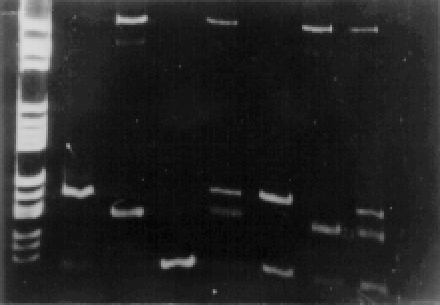
<body><![CDATA[<P>5’AGGGCGCCCTAACTTTG 3’</TD> </TR> </TABLE> </CENTER>    <p></P>      <P ALIGN="CENTER">&nbsp;</P>     <P>Los n&uacute;meros entre par&eacute;ntesis indican el intervalo de la regi&oacute;n del genoma que se va a amplificar, que codifica para parte de la prote&iacute;na VP1, siguiendo el consenso del sistema de numeraci&oacute;n de Toyoda y otros en 1984.5 </P>     <P><I>Preparaci&oacute;n del ARN viral</i>. Las cepas y controles se sometieron a 3 ciclos consecutivos de congelaci&oacute;n-descongelaci&oacute;n (de -70 <SUP>o</SUP>C a temperatura ambiente) para favorecer la lisis celular. La extracci&oacute;n de &aacute;cidos nucleicos se realiz&oacute; seg&uacute;n el protocolo descrito por <I>Abraham </I>y otros en 1993,6 luego el ARN precipitado se resuspendi&oacute; en 10 mL de agua libre de RNasas (tridestilada con dietilpirocarbonato al 0,01 %). La concentraci&oacute;n de &aacute;cidos nucleicos y de contaminantes (prote&iacute;nas, restos de fenol) se determin&oacute; mediante la lectura en un espectrofot&oacute;metro, seg&uacute;n el esquema de trabajo de Davis y otros en 1986.7 </P>     <P><I>Reacci&oacute;n de amplificaci&oacute;n</i>. La transcripci&oacute;n reversa (TR) y la RCP se llevaron a cabo en un solo paso. Se tomaron 10 m L del &aacute;cido ribonucleico (ARN) extra&iacute;do y se agregaron en 90 mL de una mezcla de reacci&oacute;n 10 x (Tris-HCl 10 mM pH8,9; MgCl2 15 mM; KCl 80 mM; alb&uacute;mina s&eacute;rica bovina a 0,5 mg/mL; colato de sodio al 0,1 % y Trit&oacute;n X-100 al 0,1 %) con 200mM de cada deoxinucle&oacute;tido trifosfatado (dATP, dGTP, dCTP, dGTP), dithiothreito l 0,01 M; MgCl2 0,25 mM; 50 pmol de cada cebador; 20 unidades de enzima transcriptasa reversa del virus de la mieloblastosis aviaria (Boehringer Mamheim) y 2,5 unidades de enzima TaqDNA polimerasa (Promega). La TR-RCP fue programada en un termociclador (PTC 100TM. MJ Research, Inc. Watertown Mass.) realiz&aacute;ndose la TR a 42 <SUP>o</SUP>C durante 30 min. Luego la mezcla se someti&oacute; a 95 <SUP>o</SUP>C por 5 min (inactivaci&oacute;n de la transcriptasa reversa y desnaturalizaci&oacute;n de ADN complementario) y 30 ciclos de 94 <SUP>o</SUP>C, 45 s (desnaturalizaci&oacute;n); 60 <SUP>o</SUP>C, 45 s (hibridaci&oacute;n) y 72 <SUP>o</SUP>C, 60 s (extensi&oacute;n). Despu&eacute;s del &uacute;ltimo ciclo, la reacci&oacute;n se mantuvo a 72 <SUP>o</SUP>C durante 5 min (&uacute;ltima extensi&oacute;n). Terminada la TR-RCP, el producto se conserv&oacute; a -20 <SUP>o</SUP>C hasta su an&aacute;lisis. </P>     <P><I>An&aacute;lisis del producto de la TR-RCP</i>. Se llev&oacute; a cabo seg&uacute;n el m&eacute;todo de Ausubel y otros en 1989.8 </P> <H4>Resultados</H4>     <P>La purificaci&oacute;n del ARN fue efectiva ya que su an&aacute;lisis demostr&oacute; la presencia de &aacute;cidos nucleicos con valores aproximados a los 30 ng/mL. Tambi&eacute;n se detectaron impurezas que aparentemente no interfirieron en los resultados de la RCP. </P>     <P>Al ARN aislado de cada una de las 3 cepas de referencia de los Poliovirus vacunales de Sabin tipos 1, 2 y 3 se le aplic&oacute; la TR-RCP con los 3 pares de cebadores. Se obtuvieron productos de ADN iguales a las tallas esperadas (97, 71 y 44 pb) para cada serotipo, de acuerdo con el patr&oacute;n de peso molecular. La especificidad tambi&eacute;n fue probada mezclando los ARN de cada serotipo en diferentes combinaciones (P1+P2; P1+P3; P2+P3; P1+P2+P3) y luego de la TR-RCP se observ&oacute; que, aun estando presentes los 3 pares de cebadores, s&oacute;lo se produjo amplificaci&oacute;n cuando el ARN de cada serotipo estuvo incluido en la mezcla de reacci&oacute;n (fig.). En algunas reacciones de amplificaci&oacute;n se generaron bandas de ADN inespec&iacute;ficas, quiz&aacute;s por el elevado n&uacute;mero de moldes de las cepas, &eacute;stas no influyeron en la correcta interpretaci&oacute;n de los resultados pues pose&iacute;an pesos moleculares superiores a los 587 pb. Por su parte, los controles se comportaron seg&uacute;n lo esperado: la cepa salvaje tipo 1, PV1 Mahoney/USA 42 mostr&oacute; una banda correspondiente a los 97 pb, ya que la zona a amplificar es id&eacute;ntica a su hom&oacute;loga vacunal.9 Las cepas salvajes tipo 2 no mostraron bandas ya que &eacute;stas tienen marcadas diferencias con los cebadores correspondientes (9 divergencias con Sabin 2/RCP-1 y 8 divergencias con Sabin 2/RCP-2) que impiden la hibridaci&oacute;n y por tanto la amplificaci&oacute;n.10 La TR-RCP aplicada a otros <I>Enterovirus </I>mostr&oacute; la especificidad de los cebadores al no producirse amplificaci&oacute;n con el Coxsackievirus B4, el cual es un productor de PFa, y tiene una homolog&iacute;a de 55 % (la mayor descrita) con los Poliovirus Sabin en la zona del genoma que codifica para la prote&iacute;na VP1. La TR-RCP del control celular y el agua tambi&eacute;n fueron negativas, por lo que se deduce que no hubo hibridaciones inespec&iacute;ficas ni contaminaciones, se excluye as&iacute; la posibilidad de resultados falsos positivos. En la tabla tambi&eacute;n se observan los resultados de la TR-RCP aplicada al estudio de cepas. Todas las muestras estudiadas fueron positivas a Poliovirus vacunal Sabin, existiendo correlaci&oacute;n con el serotipo definido previamente por pruebas de Nt. </P>     <P ALIGN="CENTER"><A HREF="/img/revistas/mtr/v50n2/f104298.jpg"><IMG SRC="/img/revistas/mtr/v50n2/f104298.jpg" BORDER=0 WIDTH=168 HEIGHT=116 ALT="Figura"></A></P>     
]]></body>
<body><![CDATA[<P>Fig. Especificidad de los cebadores. PM: marcador de peso molecular (pl&aacute;smido pBR-322 digerido con la enzima Hae III, Boehringer Mamheim). P1, P2, P3, P12, P13, P23, P123: productos de amplificaci&oacute;n de las cepas Sabin y sus combinaciones. N: control negativo del agua destilada. </P> <H4>Discusi&oacute;n</H4>     <P>La selecci&oacute;n de un adecuado juego de cebadores que permita la amplificaci&oacute;n espec&iacute;fica de secuencias de cepas Sabin, y que excluya la amplificaci&oacute;n cruzada con genotipos de Poliovirus salvajes, requiere la cuidadosa consideraci&oacute;n de la frecuencia y de los mecanismos de evoluci&oacute;n de diferentes regiones gen&oacute;micas. Los sitios seleccionados deben mantener de forma sustancial su secuencia, a pesar de los cambios evolutivos, los cuales deben obedecer a impulsos gen&eacute;ticos, m&aacute;s que en respuesta a presiones selectivas. Para la diferenciaci&oacute;n intrat&iacute;pica de Poliovirus, los intervalos gen&oacute;micos con secuencias genotipo-espec&iacute;ficas son: 1) codones de sitios antig&eacute;nicos de neutralizaci&oacute;n,11,12 2) residuos 640-740 de la regi&oacute;n 5’NTR,13-15 3) codones 2-32 (serotipos 1 y 2) y 2-30 (serotipo 3) del dominio aminoterminal de VP1.5 Decidimos seleccionar estos &uacute;ltimos, ya que su secuencia nucleot&iacute;dica y aminoac&iacute;dica var&iacute;a ampliamente entre los diferentes genotipos; este intervalo es flanqueado por secuencias de VP2, VP3 y VP1 que codifican para sitios antig&eacute;nicos tipoespec&iacute;ficos, por lo que la identificaci&oacute;n basada en la TR-RCP se correlaciona con el serotipo. Adem&aacute;s, el dominio VP1 aminoterminal se pliega en el interior del viri&oacute;n, no forma parte de sus ant&iacute;genos inductores de anticuerpos neutralizantes y por tanto, es poco influenciado por la fuerte presi&oacute;n selectiva que &eacute;stos ejercen.16 Desde el punto de vista t&eacute;cnico, la selecci&oacute;n de intervalos gen&oacute;micos cortos contribuye a la sensibilidad anal&iacute;tica del sistema, ya que &eacute;stos son transcritos con m&aacute;s eficiencia en los pasos iniciales de la reacci&oacute;n en cadena.17 </P>     <P>Con los resultados obtenidos en los ensayos de especificidad aplicados a las cepas controles se podr&iacute;a pensar que los genotipos de Poliovirus salvajes podr&iacute;an hibridar con estos cebadores (como ocurri&oacute; con la cepa Mahoney) y llevar a resultados equ&iacute;vocos. A pesar de que se reconoce que en la naturaleza circulan numerosos virus salvajes con divergencias de hasta un 23 % en la regi&oacute;n de la c&aacute;pside, <I>Yang </I>y otros con los mismos cebadores estudiaron 30 aislamientos salvajes de Am&eacute;rica, Asia y &Aacute;frica, observaron que, a pesar de las diferencias, no se obten&iacute;a amplificaci&oacute;n y que los &uacute;nicos Poliovirus "salvajes" cuya secuencia fue amplificada constituyeron cepas de referencia relacionadas de forma gen&eacute;tica con las cepas vacunales inactivadas de Salk y atenuadas de Sabin.16 De esta forma se puede concluir que los aislamientos de Poliovirus "no Sabin" pueden ser discriminados por exclusi&oacute;n. Por otra parte, los aislamientos asociados con la vacunaci&oacute;n pueden diferir de forma marcada de la cepa parental, ya que el paso y multiplicaci&oacute;n en el intestino puede provocar frecuentes cambios gen&eacute;ticos y antig&eacute;nicos.18 No obstante, los resultados obtenidos con las 23 cepas cubanas, las cuales proceden directamente del tracto digestivo, sugieren que los cambios que surjan no interfieren con la adecuada identificaci&oacute;n con estos cebadores, debido a la internalizaci&oacute;n de la zona escogida. Por tanto reafirmamos la validez de la identificaci&oacute;n y diferenciaci&oacute;n intrat&iacute;pica por TR-RCP con los iniciadores de <I>Yang</I>. </P>     <P>Damos especial valor al resultado obtenido con la cepa 87/1993, la cual es hasta hoy la &uacute;nica del serotipo 1 aislada en Cuba a partir de un caso de PFA; esto se debe a que la reversi&oacute;n a la neurovirulencia requiere la acumulaci&oacute;n de varias mutaciones nucleot&iacute;dicas en zonas muy espec&iacute;ficas del genoma. Todo esto hace que el Poliovirus vacunal de Sabin tipo 1 acapare s&oacute;lo el 10 % de los casos de poliomielitis asociada con la vacunaci&oacute;n.19,20 Otro dato de inter&eacute;s es observar que el Poliovirus vacunal es causa de casos espor&aacute;dicos de meningoencefalitis viral como complicaci&oacute;n neurol&oacute;gica m&aacute;s leve, debido a la amplia circulaci&oacute;n del agente durante el per&iacute;odo de campa&ntilde;a de vacunaci&oacute;n antipoliomiel&iacute;tica con la vacuna oral, lo cual no ha sido reportado por otros autores. Es de destacar que con nuestro estudio aportamos un argumento m&aacute;s a favor de la no circulaci&oacute;n de la forma salvaje en Cuba. </P> <H4>SUMMARY</H4>     <P>The polimerase chain reaction techniques was introduced for the intratypic characterization of Poliovirus. Primers were used only to promote the amplification of the Sabin vaccine strains proved by electrophoretic run of the amplified DNA products (Sabin 1 - 97 pb, Sabin 2 - 71 pb, Sabin 3 - 44 pb) and whose specificity was satisfactorily verified. 23 Cuban poliovirus strains isolated and identified at the Laboratory of Enterovirus of the "Pedro Kour&iacute;" Tropical Medicine Institute from 1993 to 1994 were studied by this technique. All of them were of the vaccine type. It was observed how the Sabin vaccine poliovirus may be the cause of viral meningoencephalitis as a milder neurological complication. Tghis study provided one more evidence about the non circulation of the wild poliovirus in Cuba. </P>     <P>Subject headings: POLIOVIRUSES/isolation &amp; purification; POLIOVIRUSES/genetics; POLYMERASE CHAIN REACTION/methods; RNA, VIRAL/isolation &amp; purification. </P> <H4>REFERENCIAS BIBLIOGR&Aacute;FICAS</H4> <OL>      <!-- ref --><LI>Pan American Health Organization. Director announces. Campaign to erradicate poliomyelitis from the Americas by 1990. Bull Pan Am Health Organ 1985;19:213-5.</LI>    <!-- ref --><LI>Ciarnic R, Couillin P, Blonddel B, Cabu N, Boue A, Horodniceanu F. Natural variation of poliovirus neutralization epitopes. Infect Inmunol 1983;41:1217-25.</LI>    <!-- ref --><LI>Chen Fu Yang, Lina De, Holloway BP, Pallansch MA, Kew OM. Detection and identification of vaccine related poliovirus by the polimerase chain reaction. Virus Res 1991;20:159-79.</LI>    <!-- ref --><LI>Melnick JL, Wimber IL. Lyophilized combination of the enterovirus equine antisera. New LBM pools prepared from reserves of antisera stored frozen for two decades. Bull World Health Organ 1984;63:543-50.</LI>    <!-- ref --><LI>Toyoda H, Kohara M, Katoaka Y, Saganuma T, Omala T, Imura N, et al. Complete nucleotide sequence of all three poliovirus serotipe genomes: implication for genetic relationship, gene function and antigenic determinants. J Mol Biol 1984;174:561-85.</LI>    <!-- ref --><LI>Abrahan R, Chonmaitree T, Mc Combs J, Prabhakar B, Lo Verde PT, Ogra PL. Rapid detection of Poliovirus by reverse transcription and polimerase chain amplification: application for differenciation between Poliovirus and nonpoliovirus enteroviruses. J Clin Mic 1993;31(2):395-9.</LI>    <!-- ref --><LI>Davis LG, Dibner MD, Battey JF. Optical density. Analytical measurements. En: Basic methods in molecular biology. New York: Elsevier Science, 1986;327-8.</LI>    <!-- ref --><LI>Ausubel FM, Brent R, Kingston RE, Moore DD, Seidman JG, Smith JA, et al. Preparation and analysis of DNA. En: Current protocols in molecular biology. New York: John Wiley, 1989; vol 1.</LI>    <!-- ref --><LI>Nomoto A, Omata T, Toyoda H, Kuge S, Horie H, Kataoka Y, et al. Complete nucleotide sequence of the attenuated poliovirus Sabin 1 strain genoma. Proc Natl Acad Sci USA 1982;79:5793-7.</LI>    <!-- ref --><LI>Kew OM, Nottay BK, Rico-Hesse RR, Pallansch MA. Molecular epidemiology of wild Poliovirus transmission. En: Kurstak E, Marusyk RG, Murphy FA, Van Regenmortel MHV, eds. Applied virology research. New York:Plenum, 1990; vol2:199-221.</LI>    <!-- ref --><LI>Minor PD, Ferguson M, Icenogle JP. Antigenic and molecular evolution of the vaccine strain of type 3 poliovirus during the period of excretion by a primary vaccine. J Gen Virol 1986;67:693-706.</LI>    <!-- ref --><LI>Page GS, Mosser AG, Hogle JM, Filman DJ, Rueckert RR, Chow M. Three-dimensional structure of Poliovirus serotype 1 neutralizing determinants. J Virol 1988;62:1781-94.</LI>    <!-- ref --><LI>Monica N la, Meriam C, Racaniello VR. Mapping of sequences required for mouse neurovirulence of Poliovirus type 2 Lansing. J Virol 1986;57:515-25.</LI>    <!-- ref --><LI>Hughes PJ, Evans DMA, Minor PD, Schild GC, Almond JW, Stanway G. The nucleotide sequence of type 3 Poliovirus isoleted during a recent outbreak of poliomielitis in Finland. J Gen Virol 1986;67:2093-2102.</LI>    <!-- ref --><LI>P&ouml;yry T, Kinnunen L, Kew O, Hovi T. Type 3 poliovirus/Finland 1904 is genetically related to common Mediterranean strains. J Gen Virol 1990;71:2535-41.</LI>    <!-- ref --><LI>Chen Fu Yang, Lina De, Holloway BP, Pallansch MA, Kew OM. Detection and identification of vaccine related poliovirus by the polimerase chain reaction. Virus Res 1991;20:159-79.</LI>    <!-- ref --><LI>Berger CR, Wallace DM, Puskas RS, Eschenfeldt WH. Reverse transcriptase and its associated ribonuclease H. Interplay of two enzime activities controls the yield singled-stranded complementary deoxyribonucleid acid. Biochemistry 1983;22:2365-72.</LI>    <!-- ref --><LI>Contreras G, Dimok K, Furesz J, Gardell C, Hazlett D, Karpinski K, et al. Genetic characterization of Sabin types 1 and 3 poliovaccine virus following serial passage in the human intestinal tract. Biologicals 1992;20:15-26.</LI>    <!-- ref --><LI>Hellen CUT, Wimmer E. Enterovirus genetics. En: Rotbart HA, ed. Human enterovirus infections. Washington D.C: American Society for Microbiology 1995;25-53.</LI>    <!-- ref --><LI>Bouchard MJ, Lam DH, Racaniello VR. Determinants of attenuation and temperature sensitivity in the type 1 Poliovirus Sabin vaccine. J Virol 1995;69(8):4972-8.</LI>    </OL>      <P>Recibido: 29 de enero de 1997. Aprobado: 1 de diciembre de 1997. </P>     <P>Dra. <I>Ivonne &Aacute;valos Red&oacute;n</I>. Instituto de Medicina Tropical "Pedro Kour&iacute;". Apartado 601, Marianao 13, Ciudad de La Habana, Cuba. </P> <OL>      <LI><A NAME="autores"></A>Especialista de I Grado en Microbiolog&iacute;a.</LI>     ]]></body>
<body><![CDATA[<LI>Doctor en Ciencias M&eacute;dicas. Especialista de II Grado en Microbiolog&iacute;a. Investigador Titular.</LI>     <LI>Master en Virolog&iacute;a. Licenciado en Microbiolog&iacute;a.</LI>     <LI>T&eacute;cnica Sanitaria "A".</LI>     <LI>Master en Virolog&iacute;a. Licenciada en Microbiolog&iacute;a. Investigadora Agregada.</LI>     <LI>Master en Virolog&iacute;a. Licenciada en Microbiolog&iacute;a. Investigadora Auxiliar.</LI>     <LI>Licenciada en Microbiolog&iacute;a.</LI>    </OL>      ]]></body><back>
<ref-list>
<ref id="B1">
<nlm-citation citation-type="journal">
<collab>Pan American Health Organization</collab>
<article-title xml:lang="en"><![CDATA[Director announces: Campaign to erradicate poliomyelitis from the Americas by 1990]]></article-title>
<source><![CDATA[Bull Pan Am Health Organ]]></source>
<year>1985</year>
<volume>19</volume>
<page-range>213-5</page-range></nlm-citation>
</ref>
<ref id="B2">
<nlm-citation citation-type="journal">
<person-group person-group-type="author">
<name>
<surname><![CDATA[Ciarnic]]></surname>
<given-names><![CDATA[R]]></given-names>
</name>
<name>
<surname><![CDATA[Couillin]]></surname>
<given-names><![CDATA[P]]></given-names>
</name>
<name>
<surname><![CDATA[Blonddel]]></surname>
<given-names><![CDATA[B]]></given-names>
</name>
<name>
<surname><![CDATA[Cabu]]></surname>
<given-names><![CDATA[N]]></given-names>
</name>
<name>
<surname><![CDATA[Boue]]></surname>
<given-names><![CDATA[A]]></given-names>
</name>
<name>
<surname><![CDATA[Horodniceanu]]></surname>
<given-names><![CDATA[F]]></given-names>
</name>
</person-group>
<article-title xml:lang="en"><![CDATA[Natural variation of poliovirus neutralization epitopes]]></article-title>
<source><![CDATA[Infect Inmunol]]></source>
<year>1983</year>
<volume>41</volume>
<page-range>1217-25</page-range></nlm-citation>
</ref>
<ref id="B3">
<nlm-citation citation-type="journal">
<person-group person-group-type="author">
<name>
<surname><![CDATA[Chen Fu]]></surname>
<given-names><![CDATA[Yang]]></given-names>
</name>
<name>
<surname><![CDATA[Lina]]></surname>
<given-names><![CDATA[De]]></given-names>
</name>
<name>
<surname><![CDATA[Holloway]]></surname>
<given-names><![CDATA[BP]]></given-names>
</name>
<name>
<surname><![CDATA[Pallansch]]></surname>
<given-names><![CDATA[MA]]></given-names>
</name>
<name>
<surname><![CDATA[Kew]]></surname>
<given-names><![CDATA[OM]]></given-names>
</name>
</person-group>
<article-title xml:lang="en"><![CDATA[Detection and identification of vaccine related poliovirus by the polimerase chain reaction]]></article-title>
<source><![CDATA[Virus Res]]></source>
<year>1991</year>
<volume>20</volume>
<page-range>159-79</page-range></nlm-citation>
</ref>
<ref id="B4">
<nlm-citation citation-type="journal">
<person-group person-group-type="author">
<name>
<surname><![CDATA[Melnick]]></surname>
<given-names><![CDATA[JL]]></given-names>
</name>
<name>
<surname><![CDATA[Wimber]]></surname>
<given-names><![CDATA[IL]]></given-names>
</name>
</person-group>
<article-title xml:lang="en"><![CDATA[Lyophilized combination of the enterovirus equine antisera: New LBM pools prepared from reserves of antisera stored frozen for two decades]]></article-title>
<source><![CDATA[Bull World Health Organ]]></source>
<year>1984</year>
<volume>63</volume>
<page-range>543-50</page-range></nlm-citation>
</ref>
<ref id="B5">
<nlm-citation citation-type="journal">
<person-group person-group-type="author">
<name>
<surname><![CDATA[Toyoda]]></surname>
<given-names><![CDATA[H]]></given-names>
</name>
<name>
<surname><![CDATA[Kohara]]></surname>
<given-names><![CDATA[M]]></given-names>
</name>
<name>
<surname><![CDATA[Katoaka]]></surname>
<given-names><![CDATA[Y]]></given-names>
</name>
<name>
<surname><![CDATA[Saganuma]]></surname>
<given-names><![CDATA[T]]></given-names>
</name>
<name>
<surname><![CDATA[Omala]]></surname>
<given-names><![CDATA[T]]></given-names>
</name>
<name>
<surname><![CDATA[Imura]]></surname>
<given-names><![CDATA[N]]></given-names>
</name>
<name>
<surname><![CDATA[et]]></surname>
<given-names><![CDATA[al]]></given-names>
</name>
</person-group>
<article-title xml:lang="en"><![CDATA[Complete nucleotide sequence of all three poliovirus serotipe genomes: implication for genetic relationship, gene function and antigenic determinants]]></article-title>
<source><![CDATA[J Mol Biol]]></source>
<year>1984</year>
<volume>174</volume>
<page-range>561-85</page-range></nlm-citation>
</ref>
<ref id="B6">
<nlm-citation citation-type="journal">
<person-group person-group-type="author">
<name>
<surname><![CDATA[Abrahan]]></surname>
<given-names><![CDATA[R]]></given-names>
</name>
<name>
<surname><![CDATA[Chonmaitree]]></surname>
<given-names><![CDATA[T]]></given-names>
</name>
<name>
<surname><![CDATA[Mc Combs]]></surname>
<given-names><![CDATA[J]]></given-names>
</name>
<name>
<surname><![CDATA[Prabhakar]]></surname>
<given-names><![CDATA[B]]></given-names>
</name>
<name>
<surname><![CDATA[Lo Verde]]></surname>
<given-names><![CDATA[PT]]></given-names>
</name>
<name>
<surname><![CDATA[Ogra]]></surname>
<given-names><![CDATA[PL]]></given-names>
</name>
</person-group>
<article-title xml:lang="en"><![CDATA[Rapid detection of Poliovirus by reverse transcription and polimerase chain amplification: application for differenciation between Poliovirus and nonpoliovirus enteroviruses]]></article-title>
<source><![CDATA[J Clin Mic]]></source>
<year>1993</year>
<volume>31</volume>
<numero>2</numero>
<issue>2</issue>
<page-range>395-9</page-range></nlm-citation>
</ref>
<ref id="B7">
<nlm-citation citation-type="book">
<person-group person-group-type="author">
<name>
<surname><![CDATA[Davis]]></surname>
<given-names><![CDATA[LG]]></given-names>
</name>
<name>
<surname><![CDATA[Dibner]]></surname>
<given-names><![CDATA[MD]]></given-names>
</name>
<name>
<surname><![CDATA[Battey]]></surname>
<given-names><![CDATA[JF]]></given-names>
</name>
</person-group>
<article-title xml:lang="en"><![CDATA[Optical density: Analytical measurements]]></article-title>
<source><![CDATA[Basic methods in molecular biology]]></source>
<year>1986</year>
<page-range>327-8</page-range><publisher-loc><![CDATA[New York ]]></publisher-loc>
<publisher-name><![CDATA[Elsevier Science]]></publisher-name>
</nlm-citation>
</ref>
<ref id="B8">
<nlm-citation citation-type="book">
<person-group person-group-type="author">
<name>
<surname><![CDATA[Ausubel]]></surname>
<given-names><![CDATA[FM]]></given-names>
</name>
<name>
<surname><![CDATA[Brent]]></surname>
<given-names><![CDATA[R]]></given-names>
</name>
<name>
<surname><![CDATA[Kingston]]></surname>
<given-names><![CDATA[RE]]></given-names>
</name>
<name>
<surname><![CDATA[Moore]]></surname>
<given-names><![CDATA[DD]]></given-names>
</name>
<name>
<surname><![CDATA[Seidman]]></surname>
<given-names><![CDATA[JG]]></given-names>
</name>
<name>
<surname><![CDATA[Smith]]></surname>
<given-names><![CDATA[JA]]></given-names>
</name>
</person-group>
<article-title xml:lang="en"><![CDATA[Preparation and analysis of DNA]]></article-title>
<source><![CDATA[Current protocols in molecular biology]]></source>
<year>1989</year>
<publisher-loc><![CDATA[New York ]]></publisher-loc>
<publisher-name><![CDATA[John Wiley]]></publisher-name>
</nlm-citation>
</ref>
<ref id="B9">
<nlm-citation citation-type="journal">
<person-group person-group-type="author">
<name>
<surname><![CDATA[Nomoto]]></surname>
<given-names><![CDATA[A]]></given-names>
</name>
<name>
<surname><![CDATA[Omata]]></surname>
<given-names><![CDATA[T]]></given-names>
</name>
<name>
<surname><![CDATA[Toyoda]]></surname>
<given-names><![CDATA[H]]></given-names>
</name>
<name>
<surname><![CDATA[Kuge]]></surname>
<given-names><![CDATA[S]]></given-names>
</name>
<name>
<surname><![CDATA[Horie]]></surname>
<given-names><![CDATA[H]]></given-names>
</name>
<name>
<surname><![CDATA[Kataoka]]></surname>
<given-names><![CDATA[Y]]></given-names>
</name>
<name>
<surname><![CDATA[et]]></surname>
<given-names><![CDATA[al]]></given-names>
</name>
</person-group>
<article-title xml:lang="en"><![CDATA[Complete nucleotide sequence of the attenuated poliovirus Sabin 1 strain genoma]]></article-title>
<source><![CDATA[Proc Natl Acad Sci USA]]></source>
<year>1982</year>
<volume>79</volume>
<page-range>5793-7</page-range></nlm-citation>
</ref>
<ref id="B10">
<nlm-citation citation-type="book">
<person-group person-group-type="author">
<name>
<surname><![CDATA[Kew]]></surname>
<given-names><![CDATA[OM]]></given-names>
</name>
<name>
<surname><![CDATA[Nottay]]></surname>
<given-names><![CDATA[BK]]></given-names>
</name>
<name>
<surname><![CDATA[Rico-Hesse]]></surname>
<given-names><![CDATA[RR]]></given-names>
</name>
<name>
<surname><![CDATA[Pallansch]]></surname>
<given-names><![CDATA[MA]]></given-names>
</name>
</person-group>
<article-title xml:lang="en"><![CDATA[Molecular epidemiology of wild Poliovirus transmission.]]></article-title>
<person-group person-group-type="editor">
<name>
<surname><![CDATA[Kurstak]]></surname>
<given-names><![CDATA[E]]></given-names>
</name>
<name>
<surname><![CDATA[Marusyk]]></surname>
<given-names><![CDATA[RG]]></given-names>
</name>
<name>
<surname><![CDATA[Murphy]]></surname>
<given-names><![CDATA[FA]]></given-names>
</name>
<name>
<surname><![CDATA[Van Regenmortel]]></surname>
<given-names><![CDATA[MHV]]></given-names>
</name>
</person-group>
<source><![CDATA[Applied virology research]]></source>
<year>1990</year>
<page-range>199-221</page-range><publisher-loc><![CDATA[New York ]]></publisher-loc>
<publisher-name><![CDATA[Plenum]]></publisher-name>
</nlm-citation>
</ref>
<ref id="B11">
<nlm-citation citation-type="journal">
<person-group person-group-type="author">
<name>
<surname><![CDATA[Minor]]></surname>
<given-names><![CDATA[PD]]></given-names>
</name>
<name>
<surname><![CDATA[Ferguson]]></surname>
<given-names><![CDATA[M]]></given-names>
</name>
<name>
<surname><![CDATA[Icenogle]]></surname>
<given-names><![CDATA[JP]]></given-names>
</name>
</person-group>
<article-title xml:lang="en"><![CDATA[Antigenic and molecular evolution of the vaccine strain of type 3 poliovirus during the period of excretion by a primary vaccine]]></article-title>
<source><![CDATA[J Gen Virol]]></source>
<year>1986</year>
<volume>67</volume>
<page-range>693-706</page-range></nlm-citation>
</ref>
<ref id="B12">
<nlm-citation citation-type="journal">
<person-group person-group-type="author">
<name>
<surname><![CDATA[Page]]></surname>
<given-names><![CDATA[GS]]></given-names>
</name>
<name>
<surname><![CDATA[Mosser]]></surname>
<given-names><![CDATA[AG]]></given-names>
</name>
<name>
<surname><![CDATA[Hogle]]></surname>
<given-names><![CDATA[JM]]></given-names>
</name>
<name>
<surname><![CDATA[Filman]]></surname>
<given-names><![CDATA[DJ]]></given-names>
</name>
<name>
<surname><![CDATA[Rueckert]]></surname>
<given-names><![CDATA[RR]]></given-names>
</name>
<name>
<surname><![CDATA[Chow]]></surname>
<given-names><![CDATA[M]]></given-names>
</name>
</person-group>
<article-title xml:lang="en"><![CDATA[Three-dimensional structure of Poliovirus serotype 1 neutralizing determinants]]></article-title>
<source><![CDATA[J Virol]]></source>
<year>1988</year>
<volume>62</volume>
<page-range>1781-94</page-range></nlm-citation>
</ref>
<ref id="B13">
<nlm-citation citation-type="journal">
<person-group person-group-type="author">
<name>
<surname><![CDATA[Monica N]]></surname>
<given-names><![CDATA[la]]></given-names>
</name>
<name>
<surname><![CDATA[Meriam]]></surname>
<given-names><![CDATA[C]]></given-names>
</name>
<name>
<surname><![CDATA[Racaniello]]></surname>
<given-names><![CDATA[VR]]></given-names>
</name>
</person-group>
<article-title xml:lang="en"><![CDATA[Mapping of sequences required for mouse neurovirulence of Poliovirus type 2 Lansing]]></article-title>
<source><![CDATA[J Virol]]></source>
<year>1986</year>
<volume>57</volume>
<page-range>515-25</page-range></nlm-citation>
</ref>
<ref id="B14">
<nlm-citation citation-type="journal">
<person-group person-group-type="author">
<name>
<surname><![CDATA[Hughes]]></surname>
<given-names><![CDATA[PJ]]></given-names>
</name>
<name>
<surname><![CDATA[Evans]]></surname>
<given-names><![CDATA[DMA]]></given-names>
</name>
<name>
<surname><![CDATA[Minor]]></surname>
<given-names><![CDATA[PD]]></given-names>
</name>
<name>
<surname><![CDATA[Schild]]></surname>
<given-names><![CDATA[GC]]></given-names>
</name>
<name>
<surname><![CDATA[Almond]]></surname>
<given-names><![CDATA[JW]]></given-names>
</name>
<name>
<surname><![CDATA[Stanway]]></surname>
<given-names><![CDATA[G]]></given-names>
</name>
</person-group>
<article-title xml:lang="en"><![CDATA[The nucleotide sequence of type 3 Poliovirus isoleted during a recent outbreak of poliomielitis in Finland]]></article-title>
<source><![CDATA[J Gen Virol]]></source>
<year>1986</year>
<volume>67</volume>
<page-range>2093-2102</page-range></nlm-citation>
</ref>
<ref id="B15">
<nlm-citation citation-type="journal">
<person-group person-group-type="author">
<name>
<surname><![CDATA[Pöyry]]></surname>
<given-names><![CDATA[T]]></given-names>
</name>
<name>
<surname><![CDATA[Kinnunen]]></surname>
<given-names><![CDATA[L]]></given-names>
</name>
<name>
<surname><![CDATA[Kew]]></surname>
<given-names><![CDATA[O]]></given-names>
</name>
<name>
<surname><![CDATA[Hovi]]></surname>
<given-names><![CDATA[T]]></given-names>
</name>
</person-group>
<article-title xml:lang="en"><![CDATA[Type 3 poliovirus/Finland 1904 is genetically related to common Mediterranean strains]]></article-title>
<source><![CDATA[J Gen Virol]]></source>
<year>1990</year>
<volume>71</volume>
<page-range>2535-41</page-range></nlm-citation>
</ref>
<ref id="B16">
<nlm-citation citation-type="journal">
<person-group person-group-type="author">
<name>
<surname><![CDATA[Chen Fu]]></surname>
<given-names><![CDATA[Yang]]></given-names>
</name>
<name>
<surname><![CDATA[Lina]]></surname>
<given-names><![CDATA[De]]></given-names>
</name>
<name>
<surname><![CDATA[Holloway]]></surname>
<given-names><![CDATA[BP]]></given-names>
</name>
<name>
<surname><![CDATA[Pallansch]]></surname>
<given-names><![CDATA[MA]]></given-names>
</name>
<name>
<surname><![CDATA[Kew]]></surname>
<given-names><![CDATA[OM]]></given-names>
</name>
</person-group>
<article-title xml:lang="en"><![CDATA[Detection and identification of vaccine related poliovirus by the polimerase chain reaction]]></article-title>
<source><![CDATA[Virus Res]]></source>
<year>1991</year>
<volume>20</volume>
<page-range>159-79</page-range></nlm-citation>
</ref>
<ref id="B17">
<nlm-citation citation-type="journal">
<person-group person-group-type="author">
<name>
<surname><![CDATA[Berger]]></surname>
<given-names><![CDATA[CR]]></given-names>
</name>
<name>
<surname><![CDATA[Wallace]]></surname>
<given-names><![CDATA[DM]]></given-names>
</name>
<name>
<surname><![CDATA[Puskas]]></surname>
<given-names><![CDATA[RS]]></given-names>
</name>
<name>
<surname><![CDATA[Eschenfeldt]]></surname>
<given-names><![CDATA[WH]]></given-names>
</name>
</person-group>
<article-title xml:lang="en"><![CDATA[Reverse transcriptase and its associated ribonuclease H: Interplay of two enzime activities controls the yield singled-stranded complementary deoxyribonucleid acid]]></article-title>
<source><![CDATA[Biochemistry]]></source>
<year>1983</year>
<volume>22</volume>
<page-range>2365-72</page-range></nlm-citation>
</ref>
<ref id="B18">
<nlm-citation citation-type="journal">
<person-group person-group-type="author">
<name>
<surname><![CDATA[Contreras]]></surname>
<given-names><![CDATA[G]]></given-names>
</name>
<name>
<surname><![CDATA[Dimok]]></surname>
<given-names><![CDATA[K]]></given-names>
</name>
<name>
<surname><![CDATA[Furesz]]></surname>
<given-names><![CDATA[J]]></given-names>
</name>
<name>
<surname><![CDATA[Gardell]]></surname>
<given-names><![CDATA[C]]></given-names>
</name>
<name>
<surname><![CDATA[Hazlett]]></surname>
<given-names><![CDATA[D]]></given-names>
</name>
<name>
<surname><![CDATA[Karpinski]]></surname>
<given-names><![CDATA[K]]></given-names>
</name>
<name>
<surname><![CDATA[et]]></surname>
<given-names><![CDATA[al]]></given-names>
</name>
</person-group>
<article-title xml:lang="en"><![CDATA[Genetic characterization of Sabin types 1 and 3 poliovaccine virus following serial passage in the human intestinal tract]]></article-title>
<source><![CDATA[Biologicals]]></source>
<year>1992</year>
<volume>20</volume>
<page-range>15-26</page-range></nlm-citation>
</ref>
<ref id="B19">
<nlm-citation citation-type="book">
<person-group person-group-type="author">
<name>
<surname><![CDATA[Hellen]]></surname>
<given-names><![CDATA[CUT]]></given-names>
</name>
<name>
<surname><![CDATA[Wimmer]]></surname>
<given-names><![CDATA[E]]></given-names>
</name>
</person-group>
<article-title xml:lang="en"><![CDATA[Enterovirus genetics]]></article-title>
<person-group person-group-type="editor">
<name>
<surname><![CDATA[Rotbart]]></surname>
<given-names><![CDATA[HA]]></given-names>
</name>
</person-group>
<source><![CDATA[Human enterovirus infections.]]></source>
<year>1995</year>
<page-range>25-53</page-range><publisher-loc><![CDATA[Washington D.C ]]></publisher-loc>
<publisher-name><![CDATA[American Society for Microbiology]]></publisher-name>
</nlm-citation>
</ref>
<ref id="B20">
<nlm-citation citation-type="journal">
<person-group person-group-type="author">
<name>
<surname><![CDATA[Bouchard]]></surname>
<given-names><![CDATA[MJ]]></given-names>
</name>
<name>
<surname><![CDATA[Lam]]></surname>
<given-names><![CDATA[DH]]></given-names>
</name>
<name>
<surname><![CDATA[Racaniello]]></surname>
<given-names><![CDATA[VR]]></given-names>
</name>
</person-group>
<article-title xml:lang="en"><![CDATA[Determinants of attenuation and temperature sensitivity in the type 1 Poliovirus Sabin vaccine]]></article-title>
<source><![CDATA[J Virol]]></source>
<year>1995</year>
<volume>69</volume>
<numero>8</numero>
<issue>8</issue>
<page-range>4972-8</page-range></nlm-citation>
</ref>
</ref-list>
</back>
</article>
