<?xml version="1.0" encoding="ISO-8859-1"?><article xmlns:mml="http://www.w3.org/1998/Math/MathML" xmlns:xlink="http://www.w3.org/1999/xlink" xmlns:xsi="http://www.w3.org/2001/XMLSchema-instance">
<front>
<journal-meta>
<journal-id>0375-0760</journal-id>
<journal-title><![CDATA[Revista Cubana de Medicina Tropical]]></journal-title>
<abbrev-journal-title><![CDATA[Rev Cubana Med Trop]]></abbrev-journal-title>
<issn>0375-0760</issn>
<publisher>
<publisher-name><![CDATA[Centro Nacional de Información de Ciencias Médicas]]></publisher-name>
</publisher>
</journal-meta>
<article-meta>
<article-id>S0375-07601998000200013</article-id>
<title-group>
<article-title xml:lang="es"><![CDATA[Efecto de 2 dietas sobre aspectos biológicos de Blattella germanica (Dictyoptera: Blattellidae) en condiciones de laboratorio]]></article-title>
</title-group>
<contrib-group>
<contrib contrib-type="author">
<name>
<surname><![CDATA[Aguilera]]></surname>
<given-names><![CDATA[Lucita]]></given-names>
</name>
<xref ref-type="aff" rid="A01"/>
</contrib>
<contrib contrib-type="author">
<name>
<surname><![CDATA[Marquetti]]></surname>
<given-names><![CDATA[María del Carmen]]></given-names>
</name>
<xref ref-type="aff" rid="A01"/>
</contrib>
<contrib contrib-type="author">
<name>
<surname><![CDATA[Fuentes]]></surname>
<given-names><![CDATA[Omar]]></given-names>
</name>
<xref ref-type="aff" rid="A01"/>
</contrib>
<contrib contrib-type="author">
<name>
<surname><![CDATA[Navarro]]></surname>
<given-names><![CDATA[Agustín]]></given-names>
</name>
<xref ref-type="aff" rid="A02"/>
</contrib>
</contrib-group>
<aff id="A01">
<institution><![CDATA[,Instituto de Medicina Tropical Pedro Kourí  ]]></institution>
<addr-line><![CDATA[Ciudad de La Habana ]]></addr-line>
<country>Cuba</country>
</aff>
<aff id="A02">
<institution><![CDATA[,Departamento Nacional de Control de Vectores. Ministerio de Salud Pública  ]]></institution>
<addr-line><![CDATA[ ]]></addr-line>
</aff>
<pub-date pub-type="pub">
<day>00</day>
<month>08</month>
<year>1998</year>
</pub-date>
<pub-date pub-type="epub">
<day>00</day>
<month>08</month>
<year>1998</year>
</pub-date>
<volume>50</volume>
<numero>2</numero>
<fpage>143</fpage>
<lpage>149</lpage>
<copyright-statement/>
<copyright-year/>
<self-uri xlink:href="http://scielo.sld.cu/scielo.php?script=sci_arttext&amp;pid=S0375-07601998000200013&amp;lng=en&amp;nrm=iso"></self-uri><self-uri xlink:href="http://scielo.sld.cu/scielo.php?script=sci_abstract&amp;pid=S0375-07601998000200013&amp;lng=en&amp;nrm=iso"></self-uri><self-uri xlink:href="http://scielo.sld.cu/scielo.php?script=sci_pdf&amp;pid=S0375-07601998000200013&amp;lng=en&amp;nrm=iso"></self-uri><abstract abstract-type="short" xml:lang="es"><p><![CDATA[Se realizó un estudio con 2 colonias de Blattella germanica (Dictyoptera:Blattellidae), mantenidas desde 1994 en el laboratorio a 29± 1ºC, 70-75 % de humedad relativa y con alimentos diferentes: una con una dieta carente de proteínas, consistente en porciones de papa (Solanum tuberosum, L.), plátano maduro (Musa paradisiaca, L.) y solución azucarada al 10 %, y la otra con un contenido preoteico de 20,45 % que consistió en alimento de laboratorio para rata, pulverizado y seco, y una fuente de agua. Se encontraron 6 estadios ninfales con ambos tipos de alimentos y se determinaron, en cada caso, los tiempos intermudas y el tiempo de desarrollo ninfal, éstos resultaron mucho más cortos en las ninfas alimentadas con proteínas. La longevidad de cada sexo no mostró diferencias significativas en relación con el tipo de alimento utilizado. Se determinaron los tiempos en que aparecen y eclosionan las ootecas de cada ciclo ootecal con ambos alimentos. Se encontró que las hembras depositaron hasta 5 ootecas durante su vida con los 2 tipos de dietas, el promedio de ninfas por ooteca en las hembras alimentadas con proteínas fue mucho mayor (t=5,33; p<=0,001). Los resultados de este estudio demuestran que cuando el alimento de B. germanica contiene proteínas, su desarrollo ninfal es más rápido y aumenta su capacidad reproductiva, lo que lo hace un nutriente necesario en la dieta de esta especie.]]></p></abstract>
<abstract abstract-type="short" xml:lang="en"><p><![CDATA[It was conducted a study of 2 colonies of Blattella germanica (Dictyoptera: Blattellidae) kept since 1994 in he laboratory at 29 ± 1º C, 70-75 % of relative humidity and with different foods: one on a diet without proteins, consisitging in portions of potatoes (Solanum tuberosum, L.), ripe banana (Musa paradisiaca, L.) and a sugary solution 10 %, and the other with a protein content of 20.45 % composed of pulverized and dry laboratory food for rats and a source of water. 6 nymphal stages were found with both types of food. There were determined the times of interchanges and the time of nymphal development, which were much shorter among the nymphs feeded with proteins. The longevity of each sex showed no significant differences in connection with the type of food used. The times of appearance and eclosion of the oothecae of each oothecal cycle were determined with both foods. It was found that the females deposited up to 5 oothecae during their lives with the 2 types of diet. The average of nymphs per ootheca among the females feeded with proteins was much greater (t= 5,33; p < 0,001). The results of this study show that when the food for B. germanica contains proteins, its nymphal development is faster and its reproductive capacity increases, which means that protein is a necessary nutrient for the diet of this species.]]></p></abstract>
<kwd-group>
<kwd lng="es"><![CDATA[ORTOPTEROS]]></kwd>
<kwd lng="es"><![CDATA[LONGEVIDAD]]></kwd>
<kwd lng="es"><![CDATA[REPRODUCCION]]></kwd>
<kwd lng="es"><![CDATA[ALIMENTOS]]></kwd>
<kwd lng="es"><![CDATA[PROTEINAS EN LA DIETA]]></kwd>
<kwd lng="es"><![CDATA[LABORATORIOS]]></kwd>
<kwd lng="en"><![CDATA[ORTHOPTERA]]></kwd>
<kwd lng="en"><![CDATA[LONGEVITY]]></kwd>
<kwd lng="en"><![CDATA[REPRODUCTION]]></kwd>
<kwd lng="en"><![CDATA[FOOD]]></kwd>
<kwd lng="en"><![CDATA[DIETARY PROTEINS]]></kwd>
<kwd lng="en"><![CDATA[LABORATORIES]]></kwd>
</kwd-group>
</article-meta>
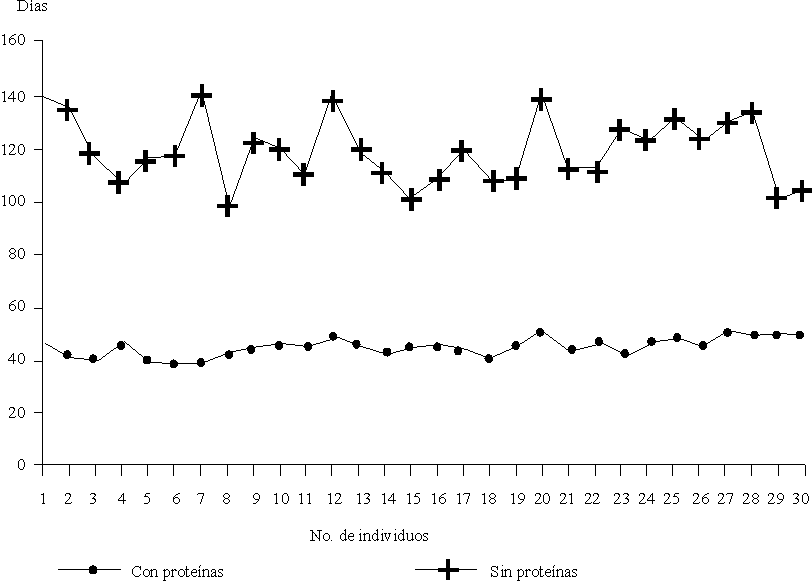
</front><body><![CDATA[ Instituto de Medicina Tropical "Pedro Kour&iacute;"  <H2> Efecto de 2 dietas sobre aspectos biol&oacute;gicos de <I>Blattella germanica </I>(Dictyoptera: Blattellidae) en condiciones de laboratorio</H2> <I><A HREF="#autores">Lic. Lucita Aguilera,<SUP>1</SUP>Lic. Mar&iacute;a del Carmen Marquetti,<SUP>1</SUP>Lic. Omar Fuentes<SUP>1</SUP> y Lic. Agust&iacute;n Navarro<SUP>2</SUP></A></I> <H4> RESUMEN</H4>  <DIR>Se realiz&oacute; un estudio con 2 colonias de <I>Blattella germanica</I> (Dictyoptera:Blattellidae), mantenidas desde 1994 en el laboratorio a 29&plusmn; 1<SUP>o</SUP>C, 70-75 % de humedad relativa y con alimentos diferentes: una con una dieta carente de prote&iacute;nas, consistente en porciones de papa (<I>Solanum tuberosum</I>, L.), pl&aacute;tano maduro (<I>Musa paradisiaca</I>, L.) y soluci&oacute;n azucarada al 10 %, y la otra con un contenido preoteico de 20,45 % que consisti&oacute; en alimento de laboratorio para rata, pulverizado y seco, y una fuente de agua. Se encontraron 6 estadios ninfales con ambos tipos de alimentos y se determinaron, en cada caso, los tiempos intermudas y el tiempo de desarrollo ninfal, &eacute;stos resultaron mucho m&aacute;s cortos en las ninfas alimentadas con prote&iacute;nas. La longevidad de cada sexo no mostr&oacute; diferencias significativas en relaci&oacute;n con el tipo de alimento utilizado. Se determinaron los tiempos en que aparecen y eclosionan las ootecas de cada ciclo ootecal con ambos alimentos. Se encontr&oacute; que las hembras depositaron hasta 5 ootecas durante su vida con los 2 tipos de dietas, el promedio de ninfas por ooteca en las hembras alimentadas con prote&iacute;nas fue mucho mayor (t=5,33; p<FONT FACE=Symbol>&pound;</FONT>0,001). Los resultados de este estudio demuestran que cuando el alimento de <I>B. germanica</I> contiene prote&iacute;nas, su desarrollo ninfal es m&aacute;s r&aacute;pido y aumenta su capacidad reproductiva, lo que lo hace un nutriente necesario en la dieta de esta especie.      <P>Descriptores DeCS: ORTOPTEROS/crecimiento &amp; desarrollo; LONGEVIDAD; REPRODUCCION; ALIMENTOS; PROTEINAS EN LA DIETA; LABORATORIOS.</DIR> En todos los seres vivos el proceso de nutrici&oacute;n se caracteriza por el consumo de determinadas sustancias nutritivas, ya sean org&aacute;nicas o inorg&aacute;nicas, que poseen una importancia ecol&oacute;gica decisiva debido a la influencia que ejercen sobre el crecimiento, la reproducci&oacute;n y la distribuci&oacute;n de &eacute;stos. Se ha demostrado que para lograr la perpetuaci&oacute;n de una poblaci&oacute;n existen 4 conductas claves esenciales: la supervivencia, el movimiento, la reproducci&oacute;n y la alimentaci&oacute;n, esta &uacute;ltima es la conducta central que facilita todas las dem&aacute;s.1      <P><I>Engelmann</I>2 demostr&oacute; que algunos insectos pueden resistir cortos per&iacute;odos de hambre o limitaci&oacute;n de nutrientes, pero la mayor&iacute;a exhibe tasas alteradas de desarrollo y de reproducci&oacute;n bajo tales condiciones. Los efectos a corto y largo plazos que pueden ejercer los factores nutricionales sobre el desarrollo y la reproducci&oacute;n de los insectos han sido estudiados por varios autores, como <I>Bernay</I>3, <I>Dadd</I>4, <I>Hamilton</I> y otros,5,6 y <I>Cooper</I> &amp; <I>Schal,</I>7 entre otros.      <P>Los estudios realizados sobre los requerimientos nutricionales necesarios en la alimentaci&oacute;n de las cucarachas indican que la variaci&oacute;n de la dieta en cuanto a proporci&oacute;n y tipo de nutrientes dan como resultado diferencias en su crecimiento, desarrollo y reproducci&oacute;n.3-10      <P>La cucaracha alemana, <I>Blatella germanica</I> (L.), es altamente sensible a la privaci&oacute;n de alimentos y a la limitaci&oacute;n de nutrientes espec&iacute;ficos, en particular de las prote&iacute;nas.11-14 Entre las dietas m&aacute;s utilizadas de forma rutinaria en muchos laboratorios de investigaci&oacute;n para mantener colonias de esta especie, est&aacute;n el alimento para perro, para conejo y para rata, muchos autores recomiendan este &uacute;ltimo como el m&aacute;s apropiado para <I>B. germanica.</I>7,15      <P>Este estudio est&aacute; dirigido a conocer el efecto que ejercen 2 dietas con diferente contenido proteico sobre el desarrollo ninfal, la longevidad y la reproducci&oacute;n de <I>B. germanica.</I> <H4> M&eacute;todos</H4> Se utilizaron 2 colonias de <I>Blatella germanica</I> provenientes de la cepa "Ameijeiras", cultivadas en el laboratorio desde 1994 y mantenidas a 29&plusmn; 1 <SUP>o</SUP>C y 70-75 % de humedad relativa. Una de las colonias fue alimentada con porciones de papa (<I>Solanum tuberosum,</I> Lin.), pl&aacute;tano maduro (<I>Musa paradisiaca</I>, Lin.) y soluci&oacute;n azucarada al 10 %, y la otra fue mantenida con alimento de laboratorio para ratas pulverizado y seco (20,45 % de prote&iacute;nas) y una fuente de agua.      <P>De cada colonia se escogieron 30 ninfas reci&eacute;n eclosionadas y se colocaron separadas en frascos de boca ancha de 400 mL, con las mismas condiciones de temperatura, humedad y alimento en que fueron cultivadas, para determinar la influencia que ejerce cada dieta en el tiempo promedio de desarrollo ninfal y en particular, el que transcurre entre cada una de las mudas hasta llegar al adulto.      <P>De forma paralela, se ubicaron individualmente en frascos de boca ancha de 400 mL, 32 parejas de adultos reci&eacute;n emergidos procedentes de cada colonia, con vistas a determinar si el alimento utilizado en cada caso provoc&oacute; diferencias significativas en cuanto a la longevidad promedio por sexo, as&iacute; como en la cantidad de ootecas que pueden producir las hembras durante toda su vida, el tiempo promedio que transcurre entre cada ciclo ootecal, el tiempo medio de eclosi&oacute;n de cada ooteca y el promedio de descendientes por ooteca.      <P>Los resultados del tiempo intermudas y del tiempo de desarrollo ninfal fueron analizados mediante el ANOVA bifactorial, la prueba DUNCAN y la prueba t de Student. Esta &uacute;ltima tambi&eacute;n se utiliz&oacute; para comparar las medias de la longevidad por sexo y por tipo de alimento, y se realiz&oacute; el ANOVA bifactorial y una prueba de diferencia de proporciones para el an&aacute;lisis de los resultados referentes a la reproducci&oacute;n. En todas las pruebas se consider&oacute; un nivel de significaci&oacute;n de a=0,05. <H4> Resultados</H4> Las ninfas de <I>Blatella germanica</I> mantenidas con el alimento que conten&iacute;a 20,45 % de prote&iacute;nas (alimento para rata), alcanzaron la adultez en un tiempo menor que las cultivadas con alimento sin prote&iacute;nas, lo que significa que tuvieron un per&iacute;odo ninfal mucho m&aacute;s corto, esta diferencia es muy significativa (t= 31,63; p<FONT FACE=Symbol>&pound;</FONT> 0,001) (fig.1). Con ambos tipos de alimentos se obtuvieron 6 estadios ninfales. El tiempo que transcurri&oacute; entre cada estado ninfal y el siguiente fue mucho menor en las ninfas que se alimentaron con prote&iacute;nas (F= 61,12; p <FONT FACE=Symbol>&pound;</FONT> 0,01) (tabla 1).     <CENTER></CENTER>      ]]></body>
<body><![CDATA[<CENTER><A HREF="/img/revistas/mtr/v50n2/f113298.gif"><IMG SRC="/img/revistas/mtr/v50n2/f113298.gif" ALT="Figura 1" BORDER=0 HEIGHT=149 WIDTH=208></A></CENTER>      
<CENTER></CENTER>      <CENTER>Fig.1. Tiempo de desarrollo ninfal de <I>Blatella germanica</I> con cada tipo de alimento.</CENTER>      <CENTER></CENTER>      <CENTER>Tabla 1. Valores promedios (en d&iacute;as) del tiempo intermudas para cada tipo de alimento (sin y con prote&iacute;nas)</CENTER>      <CENTER><TABLE BORDER=0 CELLPADDING=4 WIDTH="624" > <TR> <TD VALIGN=TOP WIDTH="20%">&nbsp;</TD>  <TD VALIGN=TOP COLSPAN="2" WIDTH="40%">     <CENTER>Alimento sin prote&iacute;nas</CENTER> </TD>  <TD VALIGN=TOP COLSPAN="2" WIDTH="40%">     <CENTER>Alimento con prote&iacute;nas</CENTER> </TD> </TR>  <TR> <TD VALIGN=TOP WIDTH="20%">Mudas</TD>  <TD VALIGN=TOP WIDTH="20%">     <CENTER>x</CENTER> </TD>  <TD VALIGN=TOP WIDTH="20%">     <CENTER>DE</CENTER> </TD>  <TD VALIGN=TOP WIDTH="20%">     ]]></body>
<body><![CDATA[<CENTER>x</CENTER> </TD>  <TD VALIGN=TOP WIDTH="20%">     <CENTER>DE</CENTER> </TD> </TR>  <TR> <TD VALIGN=TOP WIDTH="20%">1ra.</TD>  <TD VALIGN=TOP WIDTH="20%">     <CENTER>10,97</CENTER> </TD>  <TD VALIGN=TOP WIDTH="20%">     <CENTER>1,27</CENTER> </TD>  <TD VALIGN=TOP WIDTH="20%">     <CENTER>5,33</CENTER> </TD>  <TD VALIGN=TOP WIDTH="20%">     <CENTER>1,06</CENTER> </TD> </TR>  <TR> <TD VALIGN=TOP WIDTH="20%">2da.</TD>  <TD VALIGN=TOP WIDTH="20%">     <CENTER>14,40</CENTER> </TD>  <TD VALIGN=TOP WIDTH="20%">     <CENTER>2,52</CENTER> </TD>  <TD VALIGN=TOP WIDTH="20%">     <CENTER>5,80</CENTER> </TD>  <TD VALIGN=TOP WIDTH="20%">     <CENTER>1,16</CENTER> </TD> </TR>  <TR> <TD VALIGN=TOP WIDTH="20%">3ra.</TD>  <TD VALIGN=TOP WIDTH="20%">     ]]></body>
<body><![CDATA[<CENTER>11,53</CENTER> </TD>  <TD VALIGN=TOP WIDTH="20%">     <CENTER>2,57</CENTER> </TD>  <TD VALIGN=TOP WIDTH="20%">     <CENTER>6,90</CENTER> </TD>  <TD VALIGN=TOP WIDTH="20%">     <CENTER>0,92</CENTER> </TD> </TR>  <TR> <TD VALIGN=TOP WIDTH="20%">4ta.</TD>  <TD VALIGN=TOP WIDTH="20%">     <CENTER>13,83</CENTER> </TD>  <TD VALIGN=TOP WIDTH="20%">     <CENTER>4,14</CENTER> </TD>  <TD VALIGN=TOP WIDTH="20%">     <CENTER>6,97</CENTER> </TD>  <TD VALIGN=TOP WIDTH="20%">     <CENTER>0,93</CENTER> </TD> </TR>  <TR> <TD VALIGN=TOP WIDTH="20%">5ta.</TD>  <TD VALIGN=TOP WIDTH="20%">     <CENTER>27,10</CENTER> </TD>  <TD VALIGN=TOP WIDTH="20%">     <CENTER>7,84</CENTER> </TD>  <TD VALIGN=TOP WIDTH="20%">     ]]></body>
<body><![CDATA[<CENTER>7,33</CENTER> </TD>  <TD VALIGN=TOP WIDTH="20%">     <CENTER>0,84</CENTER> </TD> </TR>  <TR> <TD VALIGN=TOP WIDTH="20%">6ta.</TD>  <TD VALIGN=TOP WIDTH="20%">     <CENTER>39,47</CENTER> </TD>  <TD VALIGN=TOP WIDTH="20%">     <CENTER>11,32</CENTER> </TD>  <TD VALIGN=TOP WIDTH="20%">     <CENTER>7,67</CENTER> </TD>  <TD VALIGN=TOP WIDTH="20%">     <CENTER>1,40</CENTER> </TD> </TR>  <TR> <TD VALIGN=TOP WIDTH="20%">Total</TD>  <TD VALIGN=TOP WIDTH="20%">     <CENTER>117,3</CENTER> </TD>  <TD VALIGN=TOP WIDTH="20%">&nbsp;</TD>  <TD VALIGN=TOP WIDTH="20%">     <CENTER>40,0</CENTER> </TD>  <TD VALIGN=TOP WIDTH="20%">&nbsp;</TD> </TR> </TABLE></CENTER>      <CENTER>N=30 (tama&ntilde;o de la muestra).</CENTER>      <CENTER></CENTER>      ]]></body>
<body><![CDATA[<CENTER>DE: Desviaci&oacute;n est&aacute;ndar.</CENTER>       <P>Las figuras 2 y 3 muestran, respectivamente, la longevidad de las hembras y de los machos de <I>B. germanica</I> con los 2 alimentos utilizados. Dentro de cada sexo no se detectaron diferencias significativas en relaci&oacute;n con el tipo de alimento, sin embargo, la longevidad entre los 2 sexos s&iacute; mostr&oacute; diferencias significativas entre los alimentados sin prote&iacute;nas (t= 2,58; p<FONT FACE=Symbol>&pound;</FONT>0,005) y muy significativa entre los alimentados con prote&iacute;nas (t= 2,87; p <FONT FACE=Symbol>&pound;</FONT> 0,001), en ambos casos, el tiempo de vida de las hembras fue mucho mayor que el de los machos.     <CENTER></CENTER>      <CENTER><A HREF="/img/revistas/mtr/v50n2/f213298.gif"><IMG SRC="/img/revistas/mtr/v50n2/f213298.gif" ALT="Figura 2" BORDER=0 HEIGHT=116 WIDTH=168></A></CENTER>      
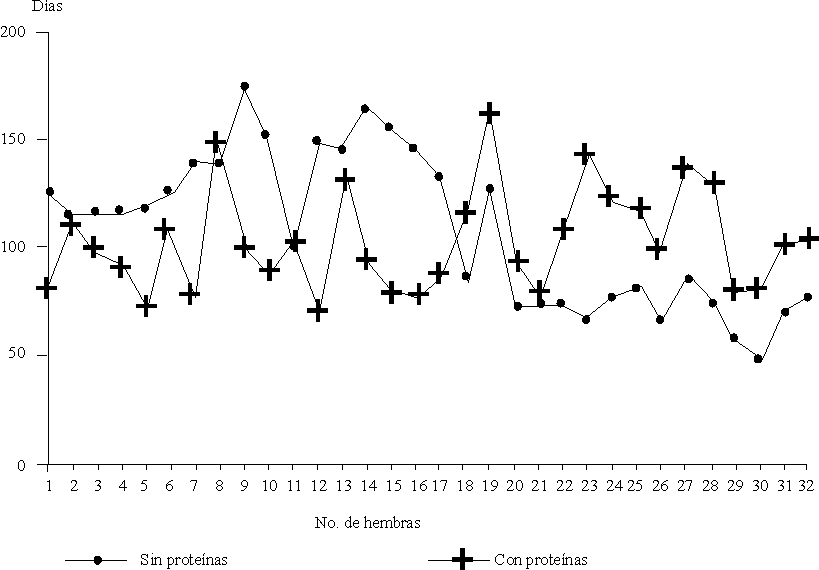
<CENTER></CENTER>      <CENTER>Fig.2. Longevidad (en d&iacute;as) de hembras de<I> Blatella germanica</I> para cada tipo de alimento.</CENTER>      <CENTER></CENTER>      <CENTER><A HREF="/img/revistas/mtr/v50n2/f313298.gif"><IMG SRC="/img/revistas/mtr/v50n2/f313298.gif" ALT="Figura 3" BORDER=0 HEIGHT=134 WIDTH=206></A></CENTER>      
<CENTER></CENTER>      <CENTER>Fig.3. Longevidad (en d&iacute;as) de machos de<I> Blatella germanica </I>para cada tipo de alimento.</CENTER>       ]]></body>
<body><![CDATA[<P>En la tabla 2 se muestran los valores promedios del tiempo en que aparecen y eclosionan las ootecas de cada ciclo ootecal de <I>B. germanica,</I> seg&uacute;n el tipo de alimento usado en la dieta. Se aprecia un total de 5 ciclos ootecales con ambos alimentos y en cada uno de &eacute;stos, la aparici&oacute;n de las ootecas demor&oacute; mucho m&aacute;s tiempo en las hembras alimentadas sin prote&iacute;nas (F= 8,56; p<FONT FACE=Symbol>&pound;</FONT> 0,001); pero estos valores no mostraron diferencias dentro de cada tipo de alimento. En esta tabla tambi&eacute;n se observa que el tiempo promedio de eclosi&oacute;n de cada ooteca sucesiva, desde la primera hasta la quinta, fue similar entre ambos alimentos y dentro de cada uno, excepto a partir del tercer ciclo ootecal, donde se va haciendo cada vez m&aacute;s largo en las hembras alimentadas con prote&iacute;nas y m&aacute;s corto en las alimentadas sin prote&iacute;nas, con una diferencia muy significativa (F= 17,26; p <FONT FACE=Symbol>&pound;</FONT> 0,001).      <P>Tabla 2. Valores promedios (en d&iacute;as) del tiempo de aparici&oacute;n y de eclosi&oacute;n de cada ciclo ootecal de acuerdo con el tipo de alimento (sin y con prote&iacute;nas)     <CENTER><TABLE BORDER=0 CELLPADDING=4 WIDTH="623" > <TR> <TD VALIGN=TOP WIDTH="14%">Ciclo</TD>  <TD VALIGN=TOP COLSPAN="6" WIDTH="86%">     <CENTER>Alimento sin prote&iacute;nas</CENTER> </TD> </TR>  <TR> <TD VALIGN=TOP WIDTH="14%">ootecal</TD>  <TD VALIGN=TOP WIDTH="14%">     <CENTER>N</CENTER> </TD>  <TD VALIGN=TOP WIDTH="14%">     <CENTER>x de aparici&oacute;n&nbsp;</CENTER> </TD>  <TD VALIGN=TOP WIDTH="14%">     <CENTER>DE&nbsp;</CENTER> </TD>  <TD VALIGN=TOP WIDTH="14%">     <CENTER>N</CENTER> </TD>  <TD VALIGN=TOP WIDTH="14%">     <CENTER>x de eclosi&oacute;n</CENTER> </TD>  <TD VALIGN=TOP WIDTH="14%">     <CENTER>DE</CENTER> </TD> </TR>  <TR> <TD VALIGN=TOP WIDTH="14%">1ro.</TD>  <TD VALIGN=TOP WIDTH="14%">     ]]></body>
<body><![CDATA[<CENTER>32</CENTER> </TD>  <TD VALIGN=TOP WIDTH="14%">     <CENTER>12,16</CENTER> </TD>  <TD VALIGN=TOP WIDTH="14%">     <CENTER>3,09</CENTER> </TD>  <TD VALIGN=TOP WIDTH="14%">     <CENTER>32</CENTER> </TD>  <TD VALIGN=TOP WIDTH="14%">     <CENTER>17,16</CENTER> </TD>  <TD VALIGN=TOP WIDTH="14%">     <CENTER>3,07</CENTER> </TD> </TR>  <TR> <TD VALIGN=TOP WIDTH="14%">2do.</TD>  <TD VALIGN=TOP WIDTH="14%">     <CENTER>32</CENTER> </TD>  <TD VALIGN=TOP WIDTH="14%">     <CENTER>11,47</CENTER> </TD>  <TD VALIGN=TOP WIDTH="14%">     <CENTER>4,48</CENTER> </TD>  <TD VALIGN=TOP WIDTH="14%">     <CENTER>31</CENTER> </TD>  <TD VALIGN=TOP WIDTH="14%">     ]]></body>
<body><![CDATA[<CENTER>16,26</CENTER> </TD>  <TD VALIGN=TOP WIDTH="14%">     <CENTER>2,54</CENTER> </TD> </TR>  <TR> <TD VALIGN=TOP WIDTH="14%">3ro.</TD>  <TD VALIGN=TOP WIDTH="14%">     <CENTER>26</CENTER> </TD>  <TD VALIGN=TOP WIDTH="14%">     <CENTER>13,31</CENTER> </TD>  <TD VALIGN=TOP WIDTH="14%">     <CENTER>4,71</CENTER> </TD>  <TD VALIGN=TOP WIDTH="14%">     <CENTER>26</CENTER> </TD>  <TD VALIGN=TOP WIDTH="14%">     <CENTER>15,88</CENTER> </TD>  <TD VALIGN=TOP WIDTH="14%">     <CENTER>1,56</CENTER> </TD> </TR>  <TR> <TD VALIGN=TOP WIDTH="14%">4to.</TD>  <TD VALIGN=TOP WIDTH="14%">     <CENTER>20</CENTER> </TD>  <TD VALIGN=TOP WIDTH="14%">     <CENTER>18,85</CENTER> </TD>  <TD VALIGN=TOP WIDTH="14%">     ]]></body>
<body><![CDATA[<CENTER>8,60</CENTER> </TD>  <TD VALIGN=TOP WIDTH="14%">     <CENTER>15</CENTER> </TD>  <TD VALIGN=TOP WIDTH="14%">     <CENTER>14,93</CENTER> </TD>  <TD VALIGN=TOP WIDTH="14%">     <CENTER>1,94</CENTER> </TD> </TR>  <TR> <TD VALIGN=TOP WIDTH="14%">5to.</TD>  <TD VALIGN=TOP WIDTH="14%">     <CENTER>3</CENTER> </TD>  <TD VALIGN=TOP WIDTH="14%">     <CENTER>14,67</CENTER> </TD>  <TD VALIGN=TOP WIDTH="14%">     <CENTER>3,22</CENTER> </TD>  <TD VALIGN=TOP WIDTH="14%">     <CENTER>3</CENTER> </TD>  <TD VALIGN=TOP WIDTH="14%">     <CENTER>12,67</CENTER> </TD>  <TD VALIGN=TOP WIDTH="14%">     <CENTER>6,11</CENTER> </TD> </TR>  <TR> <TD VALIGN=TOP COLSPAN="5" WIDTH="71%">Alimento con prote&iacute;nas</TD>  <TD VALIGN=TOP WIDTH="14%">&nbsp;</TD>  <TD VALIGN=TOP WIDTH="14%">&nbsp;</TD> </TR>  <TR> <TD VALIGN=TOP WIDTH="14%">1ro.</TD>  <TD VALIGN=TOP WIDTH="14%">     ]]></body>
<body><![CDATA[<CENTER>32</CENTER> </TD>  <TD VALIGN=TOP WIDTH="14%">     <CENTER>8,78</CENTER> </TD>  <TD VALIGN=TOP WIDTH="14%">     <CENTER>1,45</CENTER> </TD>  <TD VALIGN=TOP WIDTH="14%">     <CENTER>32</CENTER> </TD>  <TD VALIGN=TOP WIDTH="14%">     <CENTER>16,56</CENTER> </TD>  <TD VALIGN=TOP WIDTH="14%">     <CENTER>0,95</CENTER> </TD> </TR>  <TR> <TD VALIGN=TOP WIDTH="14%">2do.</TD>  <TD VALIGN=TOP WIDTH="14%">     <CENTER>32</CENTER> </TD>  <TD VALIGN=TOP WIDTH="14%">     <CENTER>5,31</CENTER> </TD>  <TD VALIGN=TOP WIDTH="14%">     <CENTER>0,99</CENTER> </TD>  <TD VALIGN=TOP WIDTH="14%">     <CENTER>32</CENTER> </TD>  <TD VALIGN=TOP WIDTH="14%">     ]]></body>
<body><![CDATA[<CENTER>16,34</CENTER> </TD>  <TD VALIGN=TOP WIDTH="14%">     <CENTER>1,43</CENTER> </TD> </TR>  <TR> <TD VALIGN=TOP WIDTH="14%">3ro.</TD>  <TD VALIGN=TOP WIDTH="14%">     <CENTER>30</CENTER> </TD>  <TD VALIGN=TOP WIDTH="14%">     <CENTER>6,90</CENTER> </TD>  <TD VALIGN=TOP WIDTH="14%">     <CENTER>1,19</CENTER> </TD>  <TD VALIGN=TOP WIDTH="14%">     <CENTER>30</CENTER> </TD>  <TD VALIGN=TOP WIDTH="14%">     <CENTER>17,80</CENTER> </TD>  <TD VALIGN=TOP WIDTH="14%">     <CENTER>1,75</CENTER> </TD> </TR>  <TR> <TD VALIGN=TOP WIDTH="14%">4to.</TD>  <TD VALIGN=TOP WIDTH="14%">     <CENTER>24</CENTER> </TD>  <TD VALIGN=TOP WIDTH="14%">     <CENTER>7,08</CENTER> </TD>  <TD VALIGN=TOP WIDTH="14%">     ]]></body>
<body><![CDATA[<CENTER>1,28</CENTER> </TD>  <TD VALIGN=TOP WIDTH="14%">     <CENTER>23</CENTER> </TD>  <TD VALIGN=TOP WIDTH="14%">     <CENTER>18,17</CENTER> </TD>  <TD VALIGN=TOP WIDTH="14%">     <CENTER>1,37</CENTER> </TD> </TR>  <TR> <TD VALIGN=TOP WIDTH="14%">5to.</TD>  <TD VALIGN=TOP WIDTH="14%">     <CENTER>9</CENTER> </TD>  <TD VALIGN=TOP WIDTH="14%">     <CENTER>6,78</CENTER> </TD>  <TD VALIGN=TOP WIDTH="14%">     <CENTER>2,49</CENTER> </TD>  <TD VALIGN=TOP WIDTH="14%">     <CENTER>6</CENTER> </TD>  <TD VALIGN=TOP WIDTH="14%">     <CENTER>23,17</CENTER> </TD>  <TD VALIGN=TOP WIDTH="14%">     <CENTER>2,23</CENTER> </TD> </TR> </TABLE></CENTER>      ]]></body>
<body><![CDATA[<CENTER>N: N&uacute;mero de hembras.</CENTER>      <CENTER></CENTER>      <CENTER>DE: Desviaci&oacute;n est&aacute;ndar.</CENTER>       <P>En cuanto a la cantidad de hembras capaces de ovipositar hasta 5 ootecas durante su vida con ambos alimentos, se encontr&oacute; que la mayor&iacute;a correspondi&oacute; al grupo de las alimentadas con prote&iacute;nas, lo que evidenci&oacute; un potencial reproductivo mayor, en el cuarto ciclo ootecal se encontraron diferencias significativas (Z= 2,03; p <FONT FACE=Symbol>&pound;</FONT> 0,05).      <P>El n&uacute;mero de ninfas nacidas de cada ooteca sucesiva, desde el primero hasta el quinto ciclo ootecal, oscil&oacute; entre 29,88 y 9,67 en las hembras que se alimentaron sin prote&iacute;nas, y entre 36,69 y 15,83 en las alimentadas con prote&iacute;nas (tabla 3). Esto demuestra que el promedio de ninfas por ooteca, en general, fue mucho mayor en las hembras cuyo alimento conten&iacute;a prote&iacute;nas en este caso la diferencia es muy significativa (t= 5,33; p <FONT FACE=Symbol>&pound;</FONT> 0,001).     <CENTER></CENTER>      <CENTER>Tabla 3. Promedio de descendientes por cada ciclo ootecal de acuerdo con el tipo de alimento (sin y con prote&iacute;nas)</CENTER>      <CENTER><TABLE BORDER=0 CELLPADDING=4 WIDTH="623" > <TR> <TD VALIGN=TOP WIDTH="14%">Ciclo</TD>  <TD VALIGN=TOP COLSPAN="3" WIDTH="43%">     <CENTER>Alimento sin prote&iacute;nas</CENTER> </TD>  <TD VALIGN=TOP COLSPAN="3" WIDTH="43%">     <CENTER>Alimento con prote&iacute;nas</CENTER> </TD> </TR>  <TR> <TD VALIGN=TOP WIDTH="14%">ootecal</TD>  <TD VALIGN=TOP WIDTH="14%">     ]]></body>
<body><![CDATA[<CENTER>N</CENTER> </TD>  <TD VALIGN=TOP WIDTH="14%">     <CENTER>x</CENTER> </TD>  <TD VALIGN=TOP WIDTH="14%">     <CENTER>DE</CENTER> </TD>  <TD VALIGN=TOP WIDTH="14%">     <CENTER>N</CENTER> </TD>  <TD VALIGN=TOP WIDTH="14%">     <CENTER>x</CENTER> </TD>  <TD VALIGN=TOP WIDTH="14%">     <CENTER>DE</CENTER> </TD> </TR>  <TR> <TD VALIGN=TOP WIDTH="14%">1ro.</TD>  <TD VALIGN=TOP WIDTH="14%">     <CENTER>32</CENTER> </TD>  <TD VALIGN=TOP WIDTH="14%">     <CENTER>29,88</CENTER> </TD>  <TD VALIGN=TOP WIDTH="14%">     <CENTER>4,53</CENTER> </TD>  <TD VALIGN=TOP WIDTH="14%">     <CENTER>32</CENTER> </TD>  <TD VALIGN=TOP WIDTH="14%">     ]]></body>
<body><![CDATA[<CENTER>36,69</CENTER> </TD>  <TD VALIGN=TOP WIDTH="14%">     <CENTER>4,31</CENTER> </TD> </TR>  <TR> <TD VALIGN=TOP WIDTH="14%">2do.</TD>  <TD VALIGN=TOP WIDTH="14%">     <CENTER>31</CENTER> </TD>  <TD VALIGN=TOP WIDTH="14%">     <CENTER>26,03</CENTER> </TD>  <TD VALIGN=TOP WIDTH="14%">     <CENTER>4,61</CENTER> </TD>  <TD VALIGN=TOP WIDTH="14%">     <CENTER>32</CENTER> </TD>  <TD VALIGN=TOP WIDTH="14%">     <CENTER>30,88</CENTER> </TD>  <TD VALIGN=TOP WIDTH="14%">     <CENTER>3,06</CENTER> </TD> </TR>  <TR> <TD VALIGN=TOP WIDTH="14%">3ro.</TD>  <TD VALIGN=TOP WIDTH="14%">     <CENTER>26</CENTER> </TD>  <TD VALIGN=TOP WIDTH="14%">     <CENTER>21,69</CENTER> </TD>  <TD VALIGN=TOP WIDTH="14%">     ]]></body>
<body><![CDATA[<CENTER>3,91</CENTER> </TD>  <TD VALIGN=TOP WIDTH="14%">     <CENTER>29</CENTER> </TD>  <TD VALIGN=TOP WIDTH="14%">     <CENTER>26,93</CENTER> </TD>  <TD VALIGN=TOP WIDTH="14%">     <CENTER>4,64</CENTER> </TD> </TR>  <TR> <TD VALIGN=TOP WIDTH="14%">4to.</TD>  <TD VALIGN=TOP WIDTH="14%">     <CENTER>15</CENTER> </TD>  <TD VALIGN=TOP WIDTH="14%">     <CENTER>17,27</CENTER> </TD>  <TD VALIGN=TOP WIDTH="14%">     <CENTER>2,63</CENTER> </TD>  <TD VALIGN=TOP WIDTH="14%">     <CENTER>23</CENTER> </TD>  <TD VALIGN=TOP WIDTH="14%">     <CENTER>22,87</CENTER> </TD>  <TD VALIGN=TOP WIDTH="14%">     <CENTER>3,98</CENTER> </TD> </TR>  <TR> <TD VALIGN=TOP WIDTH="14%">5to.</TD>  <TD VALIGN=TOP WIDTH="14%">     ]]></body>
<body><![CDATA[<CENTER>3</CENTER> </TD>  <TD VALIGN=TOP WIDTH="14%">     <CENTER>9,67</CENTER> </TD>  <TD VALIGN=TOP WIDTH="14%">     <CENTER>3,22</CENTER> </TD>  <TD VALIGN=TOP WIDTH="14%">     <CENTER>6</CENTER> </TD>  <TD VALIGN=TOP WIDTH="14%">     <CENTER>15,83</CENTER> </TD>  <TD VALIGN=TOP WIDTH="14%">     <CENTER>4,22</CENTER> </TD> </TR> </TABLE></CENTER>      <CENTER>N: N&uacute;mero de ootecas.</CENTER>      <CENTER></CENTER>      <CENTER>DE: Desviaci&oacute;n est&aacute;ndar.</CENTER>  <H4> Discusi&oacute;n</H4> <I>Willis </I>y otros16 destacaron que las ninfas de <I>B. germanica</I> sufr&iacute;an de 5 a 7 mudas en un per&iacute;odo de 30 a 60 d, en dependencia de la temperatura y de las disponibilidades de alimento, que era de 46,2 d a 30 <SUP>o</SUP>C, mientras que en condiciones adversas esta etapa puede durar 125 d o m&aacute;s. Por otra parte <I>Ebeling17</I> demostr&oacute; que esta especie pod&iacute;a tener de 6 a 7 estadios ninfales, mientras que <I>Koehler &amp; Castner15</I> encontraron s&oacute;lo 6 en un per&iacute;odo de alrededor de 3 meses (92 d, aproximadamente).      <P>Seg&uacute;n <I>Haydak</I>12 el desarrollo ninfal de <I>B. germanica</I> fue menor cuando la dieta conten&iacute;a de 22 a 24 % de prote&iacute;nas; <I>Cooper &amp; Schal</I>2 valoraron el desarrollo ninfal de esta especie al ser alimentada con 3 dietas comerciales diferentes (alimento para rata y 2 tipos de alimento para perro) y demostraron que las ninfas se desarrollaron significativamente m&aacute;s r&aacute;pido con el alimento para rata que con los alimentos para perro, por lo que concluyeron que el alimento para rata era el apropiado para <I>B. germanica</I>.      ]]></body>
<body><![CDATA[<P>Los resultados obtenidos concuerdan con los de estos autores, tanto en el n&uacute;mero de estadios ninfales encontrados con ambos alimentos como en el tiempo de desarrollo ninfal, ya que con el alimento que conten&iacute;a prote&iacute;nas este per&iacute;odo fue mucho m&aacute;s corto, esto nos sugiere que cuando la dieta de estos insectos no contiene este tipo de nutriente, las condiciones de alimentaci&oacute;n les resultan desfavorables y por lo tanto, su per&iacute;odo ninfal se alarga de forma considerable.      <P>En relaci&oacute;n con la longevidad de los 2 sexos de <I>B. germanica</I> nuestros resultados coinciden con <I>Willis </I>y otros<I>,</I>16 quienes plantearon que el tiempo de vida adulta de las hembras de esta especie es mayor que el de los machos (153 &plusmn; 9 d y de 128 &plusmn; 8 d, respectivamente). En la cucaracha asi&aacute;tica <I>Blatella asahinai,</I> la m&aacute;s cercana a <I>B. germanica</I> seg&uacute;n <I>Roth</I>,18 tambi&eacute;n se encontraron resultados similares.10      <P>Seg&uacute;n <I>McCay,</I>19 el alimento para <I>B. germanica</I> debe tener de 20 a 24 % de prote&iacute;nas y <I>Haydak12</I> demostr&oacute; que cuando se aumenta el nivel de prote&iacute;nas en su dieta, por encima de 22 a 24 %, disminuye la longevidad.      <P>Nuestros resultados demuestran que en la dieta de esta especie, el contenido de prote&iacute;nas entre 0 y 20,45 % no provoc&oacute; diferencias significativas en el tiempo de vida de los adultos en los 2 sexos.      <P>Pensamos que las diferencias encontradas a partir del tercer ciclo ootecal en el tiempo promedio de eclosi&oacute;n de cada ooteca sucesiva con los 2 alimentos probados, pudieron deberse a que las hembras cuyo alimento no conten&iacute;a dicho nutriente, al desarrollarse en condiciones menos favorables, trataron de asegurar la mayor cantidad de descendencia posible al hacer m&aacute;s corto el per&iacute;odo de incubaci&oacute;n de los huevos, lo que muestra un comportamiento natural de conservaci&oacute;n de las especies.      <P>En cuanto al menor potencial reproductivo encontrado en las hembras alimentadas con prote&iacute;nas, se acerca a lo encontrado por <I>Koehler </I>y otros<I>20</I> en hembras de <I>Supella longipalpa</I> alimentadas con bajo contenido de prote&iacute;nas (5 %), las que redujeron su reproducci&oacute;n despu&eacute;s de producir la tercera ooteca, y con lo encontrado por <I>Aguilera </I>y otros21 en hembras de <I>B. germanica</I> alimentadas sin prote&iacute;nas, donde un n&uacute;mero muy peque&ntilde;o logr&oacute; depositar la quinta ooteca.      <P>Las hembras de esta especie pueden desarrollar de 4 a 8 ootecas durante su vida22 y de 5 a 8 seg&uacute;n <I>Koehler</I> &amp; <I>Castner</I>.15      <P><I>Willis </I>y otros<I>16</I> plantean que en <I>B. germanica</I>, la ooteca aparece en una hembra fecundada al cabo de pocos d&iacute;as en dependencia de la temperatura, y que a 30 <SUP>o</SUP>C aparece a los 7,8 ? 0,2 d, mientras que el tiempo de incubaci&oacute;n de los huevos es de 17,2? 0,1 d. Seg&uacute;n <I>Roth &amp; Willis23,24 </I>y<I> Cochran</I>25 la cucaracha alemana tiene un per&iacute;odo de incubaci&oacute;n de los huevos de 20 a 26 d, mientras que <I>Atkinson </I>y otros10 reportaron un per&iacute;odo de preoviposici&oacute;n de 13 d y de incubaci&oacute;n de 19 d. Por otra parte, <I>Koehler </I>y otros<I>20</I> plantearon que la ooteca aparece entre los 11 &oacute; 12 d de vida del adulto y eclosiona 3 semanas despu&eacute;s (22 d). En nuestras condiciones, las hembras alimentadas sin prote&iacute;nas requirieron m&aacute;s tiempo para formar cada ooteca que las alimentadas con prote&iacute;nas, coincidiendo con lo reportado por <I>Hamilton </I>y otros<I>6</I> de que hembras de <I>B. germanica</I> alimentadas con bajo contenido de prote&iacute;nas (5 %) demoraron m&aacute;s tiempo para formar las ootecas que las que se alimentaron con 25 % de prote&iacute;nas.      <P>En relaci&oacute;n con el n&uacute;mero de ninfas nacidas de cada ooteca sucesiva, <I>Willis </I>y otros<I>6</I> reportaron un promedio de 35 ninfas eclosionadas de la primera ooteca en <I>B. germanica</I>, el cual se redujo con las siguientes puestas, y fue entre 10 y 15 para la sexta y la octava; esto est&aacute; de acuerdo con el planteamiento de <I>Cochran,</I>22 de que las ootecas de esta especie tienden a ser m&aacute;s peque&ntilde;as despu&eacute;s de cada oviposici&oacute;n. Estos reportes coinciden con los resultados obtenidos con ambos alimentos utilizados.      <P>Seg&uacute;n <I>Ross </I>y otros26 la ooteca normal de <I>B. germanica</I> var&iacute;a en n&uacute;mero de descendientes de 37 a 44. Por otra parte, <I>Atkinson </I>y otros<I>10</I> indicaron un promedio de 33 ninfas por ooteca para esta especie, mientras que <I>Koehler &amp; Castner</I>15 reportaron que de cada ooteca de <I>B. germanica</I> emergen de 30 a 40 ninfas de primer estadio.      ]]></body>
<body><![CDATA[<P>En nuestros resultados, las hembras alimentadas con prote&iacute;nas tuvieron promedios de ninfas por ooteca semejantes a los reportados por estos autores, no ocurri&oacute; as&iacute; en las que fueron alimentadas sin prote&iacute;nas, donde estos valores fueron menores y coincidieron con los promedios reportados por <I>Aguilera </I>y otros21 para <I>B. germanica</I> en ausencia de prote&iacute;nas en su dieta.      <P>Los resultados ofrecidos en este estudio demuestran que las prote&iacute;nas constituyen un nutriente necesario y fundamental en la alimentaci&oacute;n de <I>B. germanica</I> ya que su presencia o ausencia, determina cambios conductuales importantes, tanto en su crecimiento y desarrollo como en su capacidad reproductiva, por lo que es de vital importancia tener en cuenta este factor para interpretar cualquier resultado que se obtenga en estudios que se realicen con esta especie. <H4> AGRADECIMIENTOS</H4> Agradecemos la colaboraci&oacute;n del licenciado <I>Alfredo Guti&eacute;rrez</I> (Laboratorio de Malacolog&iacute;a del Instituto de Medicina Tropical "Pedro Kour&iacute;" [IPK]) por la ayuda brindada en el procesamiento estad&iacute;stico de los datos y a la doctora <I>Gladys Ramos</I> (Laboratorio de Atenci&oacute;n de Animales, IPK) por el suministro del alimento para ratas. <H4> SUMMARY</H4> It was conducted a study of 2 colonies of <I>Blattella germanica</I> (Dictyoptera: Blattellidae) kept since 1994 in he laboratory at 29 &plusmn; 1<SUP>o</SUP> C, 70-75 % of relative humidity and with different foods: one on a diet without proteins, consisitging in portions of potatoes (<I>Solanum tuberosum</I>, L.), ripe banana <I>(Musa paradisiaca,</I> L.) and a sugary solution 10 %, and the other with a protein content of 20.45 % composed of pulverized and dry laboratory food for rats and a source of water. 6 nymphal stages were found with both types of food. There were determined the times of interchanges and the time of nymphal development, which were much shorter among the nymphs feeded with proteins. The longevity of each sex showed no significant differences in connection with the type of food used. The times of appearance and eclosion of the oothecae of each oothecal cycle were determined with both foods. It was found that the females deposited up to 5 oothecae during their lives with the 2 types of diet. The average of nymphs per ootheca among the females feeded with proteins was much greater (t= 5,33; p &lt; 0,001). The results of this study show that when the food for<I> B. germanica </I>contains proteins, its nymphal development is faster and its reproductive capacity increases, which means that protein is a necessary nutrient for the diet of this species.      <P>Subject headings: ORTHOPTERA/growth &amp; development; LONGEVITY; REPRODUCTION; FOOD; DIETARY PROTEINS; LABORATORIES. <H4> REFERENCIAS BIBLIOGR&Aacute;FICAS</H4>  <OL>     <!-- ref --><LI> Slansky F. Insect nutrition: an adaptionist’s perspective. Fla Entomol 1982;65:45-67.</LI>    <!-- ref --><LI> Engelmann F. The physiology of insect reproduction. Oxford: Pergamon, 1970:120-38.</LI>    <!-- ref --><LI> Bernays EA. Regulation of feeding behaviour. En: Kerkut GA, Gilbert LL, eds. Comprehensive insect physiology, biochemistry and pharmacology, Oxford: Pergamon,1985;t4:1-32.</LI>    <!-- ref --><LI> Dadd RH. Nutrition: organisms. En: Kerkut GA, Gilbert LI, eds. Comprehensive insect physiology, biochemistry and pharmacology, Oxford: Pergamon, 1985;t4:313-90.</LI>    <!-- ref --><LI> Hamilton RL, Schal C. Effects of dietary protein levels on reproduction and food consumption in the German cockroach (Dictyoptera: Blattellidae). Anm Entomol Soc Am 1988;81(6):969-76.</LI>    <!-- ref --><LI> Hamilton RL, Cooper RA, Schal C. The influence of nymphal and adult dietary protein on food intake and reproduction in female brown-banded cockroaches. Entomol Exp Appl 1990;55(1):23-31.</LI>    <!-- ref --><LI> Cooper RA, Schal C. Differential development and reproduction of the German cockroach (Dictyoptera: Blattellidae) on three laboratory diets. J Econ Entomol 1992;85(2):838-44.</LI>    <!-- ref --><LI> Kramer RD, Koehler PG, Patterson RS, Slansky F. Nutritional status and insecticide tolerance in German cockroaches (Orthoptera: Blattellidae). J Econ Entomol 1990;83(5):1912-7.</LI>    <!-- ref --><LI> Short JE, Edwards JP. Reproductive and developmental biology of the oriental cockroach Blatta orientalis (Dictyoptera: Blattellidae). Med Vet Entomol 1991;5(4):385-94.</LI>    <!-- ref --><LI> Atkinson TH, Koehler PG, Patterson RS. Reproduction and development of Blatella asahinai (Dictyoptera: Blatellidae). J Econ Entomol 1991;84(4):1251-6.</LI>    <!-- ref --><LI> Noland JL, Baumann CA. Protein requirements of the cockroach Blattella germanica (L.). Ann Entomol Soc Am 1951;44:184-8.</LI>    <!-- ref --><LI> Haydak MH. Influence of the protein level of the diet on the longevity of cockroaches. Ann Entomol Soc Am 1953;46:547-60.</LI>    <!-- ref --><LI> Roth LM, Stay B. Oocyte development in Blattella germanica and Blattella vaga (Blattaria). Ann Entomol Soc Am 1962;55:633-42.</LI>    <!-- ref --><LI> Kunkel JG. A minimal model of metamorphosis: fat body competence to respond to juvenile hormone. En: Ghovindan B, Friedman S, Rodr&iacute;guez JG, eds. Current topics in insect endocrinology and nutrition. New York:Plenum, 1981:107-29.</LI>    <!-- ref --><LI> Koehler PG, Castner JL. The German cockroach. Institute of Food and Agricultural Sciences. Acts of Congress. 1994, May. 8-Jun. 30. Grainesville, Florida. Florida: Publications Distribution Center, University of Florida, 1994;147.</LI>    <!-- ref --><LI> Willis ER, Riser GR, Roth LM. Observations on repro-duction and development in cockroaches. Ann Entomol Soc Am 1958;51:53-69.</LI>    <!-- ref --><LI> Ebeling W. Urban entomology. Los Angeles: University of California, 1975:1-42.</LI>    <!-- ref --><LI> Roth LM. A taxonomic revision of the genus Blattella Caudell (Dictyoptera: Blattaria: Blattellidae). Entomol Scand Suppl 1985;22:1-221.</LI>    <!-- ref --><LI> McCay CM. The nutritional requeriments of Blattella germanica. Physiol Zool 1938;11:89-103.</LI>    <!-- ref --><LI> Koehler PG, Strong CA, Patterson RS. Rearing improvements for the German cockroach (Dictyoptera: Blattellidae). J Med Entomol 1994;31(5):704-10.</LI>    <!-- ref --><LI> Aguilera L, Marquetti MC, Fuentes O, Navarro A. Observaciones sobre aspectos biol&oacute;gicos de Blattella germanica (Dictyoptera: Blattellidae) en condiciones de laboratorio. Rev Cubana Med Trop 1996;48(1):12-14.</LI>    <!-- ref --><LI> Cochran DG. Cockroaches. Biology and Control. WHO/VBC/82.856. Ginebra.</LI>    <!-- ref --><LI> Roth LM, Willis ER. A study of cockroach behaviour. Am Midl Nat 1952;47:65-129.</LI>    <!-- ref --><LI> Roth LM, Willis ER. The reproduction of cockroaches. Smithson Misc Coll 1954;122:1-49.</LI>    <!-- ref --><LI> Cochran DG. Food and water consumption during the reproductive cycle of female German cockroaches. Entomol Exp Appl 1983;34:51-7.</LI>    <!-- ref --><LI> Ross MH, Cochran DG. Genetic variability in the German cockroach. J Hered 1970;61:123-8.</LI>    </OL> Recibido: 17 de abril de 1997. Aprobado: 12 de diciembre de 1997.      ]]></body>
<body><![CDATA[<P>Lic. <I>Lucita Aguilera.</I> Instituto de Medicina Tropical "Pedro Kour&iacute;". Apartado 601, Marianao 13, Ciudad de La Habana, Cuba. <OL>     <LI> <A NAME="autores"></A>Licenciado en Biolog&iacute;a. Instituto de Medicina Tropical "Pedro Kour&iacute;".</LI>      <LI> Licenciado en Biolog&iacute;a. Departamento Nacional de Control de Vectores. Ministerio de Salud P&uacute;blica.</LI>     </OL>       ]]></body><back>
<ref-list>
<ref id="B1">
<nlm-citation citation-type="journal">
<person-group person-group-type="author">
<name>
<surname><![CDATA[Slansky]]></surname>
<given-names><![CDATA[F]]></given-names>
</name>
</person-group>
<article-title xml:lang="en"><![CDATA[Insect nutrition: an adaptionist’s perspective]]></article-title>
<source><![CDATA[Fla Entomol]]></source>
<year>1982</year>
<volume>65</volume>
<page-range>45-67</page-range></nlm-citation>
</ref>
<ref id="B2">
<nlm-citation citation-type="book">
<person-group person-group-type="author">
<name>
<surname><![CDATA[Engelmann]]></surname>
<given-names><![CDATA[F]]></given-names>
</name>
</person-group>
<source><![CDATA[The physiology of insect reproduction]]></source>
<year>1970</year>
<page-range>120-38</page-range><publisher-loc><![CDATA[Oxford ]]></publisher-loc>
<publisher-name><![CDATA[Pergamon]]></publisher-name>
</nlm-citation>
</ref>
<ref id="B3">
<nlm-citation citation-type="book">
<person-group person-group-type="author">
<name>
<surname><![CDATA[Bernays]]></surname>
<given-names><![CDATA[EA]]></given-names>
</name>
</person-group>
<article-title xml:lang="en"><![CDATA[Regulation of feeding behaviour]]></article-title>
<person-group person-group-type="editor">
<name>
<surname><![CDATA[Kerkut]]></surname>
<given-names><![CDATA[GA]]></given-names>
</name>
<name>
<surname><![CDATA[Gilbert]]></surname>
<given-names><![CDATA[LL]]></given-names>
</name>
</person-group>
<source><![CDATA[Comprehensive insect physiology, biochemistry and pharmacology]]></source>
<year>1985</year>
<page-range>1-32</page-range><publisher-loc><![CDATA[Oxford ]]></publisher-loc>
<publisher-name><![CDATA[Pergamon]]></publisher-name>
</nlm-citation>
</ref>
<ref id="B4">
<nlm-citation citation-type="book">
<person-group person-group-type="author">
<name>
<surname><![CDATA[Dadd]]></surname>
<given-names><![CDATA[RH]]></given-names>
</name>
</person-group>
<article-title xml:lang="en"><![CDATA[Nutrition: organisms]]></article-title>
<person-group person-group-type="editor">
<name>
<surname><![CDATA[Kerkut]]></surname>
<given-names><![CDATA[GA]]></given-names>
</name>
<name>
<surname><![CDATA[Gilbert]]></surname>
<given-names><![CDATA[LI]]></given-names>
</name>
</person-group>
<source><![CDATA[Comprehensive insect physiology, biochemistry and pharmacology]]></source>
<year>1985</year>
<page-range>313-90</page-range><publisher-loc><![CDATA[Oxford ]]></publisher-loc>
<publisher-name><![CDATA[Pergamon]]></publisher-name>
</nlm-citation>
</ref>
<ref id="B5">
<nlm-citation citation-type="journal">
<person-group person-group-type="author">
<name>
<surname><![CDATA[Hamilton]]></surname>
<given-names><![CDATA[RL]]></given-names>
</name>
<name>
<surname><![CDATA[Schal]]></surname>
<given-names><![CDATA[C]]></given-names>
</name>
</person-group>
<article-title xml:lang="en"><![CDATA[Effects of dietary protein levels on reproduction and food consumption in the German cockroach (Dictyoptera: Blattellidae)]]></article-title>
<source><![CDATA[Anm Entomol Soc Am]]></source>
<year>1988</year>
<volume>81</volume>
<numero>6</numero>
<issue>6</issue>
<page-range>969-76</page-range></nlm-citation>
</ref>
<ref id="B6">
<nlm-citation citation-type="journal">
<person-group person-group-type="author">
<name>
<surname><![CDATA[Hamilton]]></surname>
<given-names><![CDATA[RL]]></given-names>
</name>
<name>
<surname><![CDATA[Cooper]]></surname>
<given-names><![CDATA[RA]]></given-names>
</name>
<name>
<surname><![CDATA[Schal]]></surname>
<given-names><![CDATA[C]]></given-names>
</name>
</person-group>
<article-title xml:lang="en"><![CDATA[The influence of nymphal and adult dietary protein on food intake and reproduction in female brown-banded cockroaches]]></article-title>
<source><![CDATA[Entomol Exp Appl]]></source>
<year>1990</year>
<volume>55</volume>
<numero>1</numero>
<issue>1</issue>
<page-range>23-31</page-range></nlm-citation>
</ref>
<ref id="B7">
<nlm-citation citation-type="journal">
<person-group person-group-type="author">
<name>
<surname><![CDATA[Cooper]]></surname>
<given-names><![CDATA[RA]]></given-names>
</name>
<name>
<surname><![CDATA[Schal]]></surname>
<given-names><![CDATA[C]]></given-names>
</name>
</person-group>
<article-title xml:lang="en"><![CDATA[Differential development and reproduction of the German cockroach (Dictyoptera: Blattellidae) on three laboratory diets]]></article-title>
<source><![CDATA[J Econ Entomol]]></source>
<year>1992</year>
<volume>85</volume>
<numero>2</numero>
<issue>2</issue>
<page-range>838-44</page-range></nlm-citation>
</ref>
<ref id="B8">
<nlm-citation citation-type="journal">
<person-group person-group-type="author">
<name>
<surname><![CDATA[Kramer]]></surname>
<given-names><![CDATA[RD]]></given-names>
</name>
<name>
<surname><![CDATA[Koehler]]></surname>
<given-names><![CDATA[PG]]></given-names>
</name>
<name>
<surname><![CDATA[Patterson]]></surname>
<given-names><![CDATA[RS]]></given-names>
</name>
<name>
<surname><![CDATA[Slansky]]></surname>
<given-names><![CDATA[F]]></given-names>
</name>
</person-group>
<article-title xml:lang="en"><![CDATA[Nutritional status and insecticide tolerance in German cockroaches (Orthoptera: Blattellidae)]]></article-title>
<source><![CDATA[J Econ Entomol]]></source>
<year>1990</year>
<volume>83</volume>
<numero>5</numero>
<issue>5</issue>
<page-range>1912-7</page-range></nlm-citation>
</ref>
<ref id="B9">
<nlm-citation citation-type="journal">
<person-group person-group-type="author">
<name>
<surname><![CDATA[Short]]></surname>
<given-names><![CDATA[JE]]></given-names>
</name>
<name>
<surname><![CDATA[Edwards]]></surname>
<given-names><![CDATA[JP]]></given-names>
</name>
</person-group>
<article-title xml:lang="en"><![CDATA[Reproductive and developmental biology of the oriental cockroach Blatta orientalis (Dictyoptera: Blattellidae)]]></article-title>
<source><![CDATA[Med Vet Entomol]]></source>
<year>1991</year>
<volume>5</volume>
<numero>4</numero>
<issue>4</issue>
<page-range>385-94</page-range></nlm-citation>
</ref>
<ref id="B10">
<nlm-citation citation-type="journal">
<person-group person-group-type="author">
<name>
<surname><![CDATA[Atkinson]]></surname>
<given-names><![CDATA[TH]]></given-names>
</name>
<name>
<surname><![CDATA[Koehler]]></surname>
<given-names><![CDATA[PG]]></given-names>
</name>
<name>
<surname><![CDATA[Patterson]]></surname>
<given-names><![CDATA[RS]]></given-names>
</name>
</person-group>
<article-title xml:lang="en"><![CDATA[Reproduction and development of Blatella asahinai (Dictyoptera: Blatellidae)]]></article-title>
<source><![CDATA[J Econ Entomol]]></source>
<year>1991</year>
<volume>84</volume>
<numero>4</numero>
<issue>4</issue>
<page-range>1251-6</page-range></nlm-citation>
</ref>
<ref id="B11">
<nlm-citation citation-type="journal">
<person-group person-group-type="author">
<name>
<surname><![CDATA[Noland]]></surname>
<given-names><![CDATA[JL]]></given-names>
</name>
<name>
<surname><![CDATA[Baumann]]></surname>
<given-names><![CDATA[CA]]></given-names>
</name>
</person-group>
<article-title xml:lang="en"><![CDATA[Protein requirements of the cockroach Blattella germanica (L]]></article-title>
<source><![CDATA[). Ann Entomol Soc Am]]></source>
<year>1951</year>
<volume>44</volume>
<page-range>184-8</page-range></nlm-citation>
</ref>
<ref id="B12">
<nlm-citation citation-type="journal">
<person-group person-group-type="author">
<name>
<surname><![CDATA[Haydak]]></surname>
<given-names><![CDATA[MH]]></given-names>
</name>
</person-group>
<article-title xml:lang="en"><![CDATA[Influence of the protein level of the diet on the longevity of cockroaches]]></article-title>
<source><![CDATA[Ann Entomol Soc Am]]></source>
<year>1953</year>
<volume>46</volume>
<page-range>547-60</page-range></nlm-citation>
</ref>
<ref id="B13">
<nlm-citation citation-type="journal">
<person-group person-group-type="author">
<name>
<surname><![CDATA[Roth]]></surname>
<given-names><![CDATA[LM]]></given-names>
</name>
<name>
<surname><![CDATA[Stay]]></surname>
<given-names><![CDATA[B]]></given-names>
</name>
</person-group>
<article-title xml:lang="en"><![CDATA[Oocyte development in Blattella germanica and Blattella vaga (Blattaria)]]></article-title>
<source><![CDATA[Ann Entomol Soc Am]]></source>
<year>1962</year>
<volume>55</volume>
<page-range>633-42</page-range></nlm-citation>
</ref>
<ref id="B14">
<nlm-citation citation-type="book">
<person-group person-group-type="author">
<name>
<surname><![CDATA[Kunkel]]></surname>
<given-names><![CDATA[JG]]></given-names>
</name>
</person-group>
<article-title xml:lang="en"><![CDATA[A minimal model of metamorphosis: fat body competence to respond to juvenile hormone]]></article-title>
<person-group person-group-type="editor">
<name>
<surname><![CDATA[Ghovindan]]></surname>
<given-names><![CDATA[B]]></given-names>
</name>
<name>
<surname><![CDATA[Friedman]]></surname>
<given-names><![CDATA[S]]></given-names>
</name>
<name>
<surname><![CDATA[Rodríguez]]></surname>
<given-names><![CDATA[JG]]></given-names>
</name>
</person-group>
<source><![CDATA[Current topics in insect endocrinology and nutrition]]></source>
<year>1981</year>
<page-range>107-29</page-range><publisher-loc><![CDATA[New York ]]></publisher-loc>
<publisher-name><![CDATA[Plenum]]></publisher-name>
</nlm-citation>
</ref>
<ref id="B15">
<nlm-citation citation-type="book">
<person-group person-group-type="author">
<name>
<surname><![CDATA[Koehler]]></surname>
<given-names><![CDATA[PG]]></given-names>
</name>
<name>
<surname><![CDATA[Castner]]></surname>
<given-names><![CDATA[JL]]></given-names>
</name>
</person-group>
<source><![CDATA[The German cockroach. Institute of Food and Agricultural Sciences: Acts of Congress. 1994, May. 8-Jun. 30]]></source>
<year>1994</year>
<page-range>147</page-range><publisher-loc><![CDATA[Grainesville, Florida. Florida ]]></publisher-loc>
<publisher-name><![CDATA[Publications Distribution Center, University of Florida]]></publisher-name>
</nlm-citation>
</ref>
<ref id="B16">
<nlm-citation citation-type="journal">
<person-group person-group-type="author">
<name>
<surname><![CDATA[Willis]]></surname>
<given-names><![CDATA[ER]]></given-names>
</name>
<name>
<surname><![CDATA[Riser]]></surname>
<given-names><![CDATA[GR]]></given-names>
</name>
<name>
<surname><![CDATA[Roth]]></surname>
<given-names><![CDATA[LM]]></given-names>
</name>
</person-group>
<article-title xml:lang="en"><![CDATA[Observations on repro-duction and development in cockroaches]]></article-title>
<source><![CDATA[Ann Entomol Soc Am]]></source>
<year>1958</year>
<volume>51</volume>
<page-range>53-69</page-range></nlm-citation>
</ref>
<ref id="B17">
<nlm-citation citation-type="book">
<person-group person-group-type="author">
<name>
<surname><![CDATA[Ebeling]]></surname>
<given-names><![CDATA[W]]></given-names>
</name>
</person-group>
<source><![CDATA[Urban entomology]]></source>
<year>1975</year>
<page-range>1-42</page-range><publisher-loc><![CDATA[Los Angeles ]]></publisher-loc>
<publisher-name><![CDATA[University of California]]></publisher-name>
</nlm-citation>
</ref>
<ref id="B18">
<nlm-citation citation-type="journal">
<person-group person-group-type="author">
<name>
<surname><![CDATA[Roth]]></surname>
<given-names><![CDATA[LM]]></given-names>
</name>
</person-group>
<article-title xml:lang="en"><![CDATA[A taxonomic revision of the genus Blattella Caudell (Dictyoptera: Blattaria: Blattellidae)]]></article-title>
<source><![CDATA[Entomol Scand Suppl]]></source>
<year>1985</year>
<volume>22</volume>
<page-range>1-221</page-range></nlm-citation>
</ref>
<ref id="B19">
<nlm-citation citation-type="journal">
<person-group person-group-type="author">
<name>
<surname><![CDATA[McCay]]></surname>
<given-names><![CDATA[CM]]></given-names>
</name>
</person-group>
<article-title xml:lang="en"><![CDATA[The nutritional requeriments of Blattella germanica]]></article-title>
<source><![CDATA[Physiol Zool]]></source>
<year>1938</year>
<volume>11</volume>
<page-range>89-103</page-range></nlm-citation>
</ref>
<ref id="B20">
<nlm-citation citation-type="journal">
<person-group person-group-type="author">
<name>
<surname><![CDATA[Koehler]]></surname>
<given-names><![CDATA[PG]]></given-names>
</name>
<name>
<surname><![CDATA[Strong]]></surname>
<given-names><![CDATA[CA]]></given-names>
</name>
<name>
<surname><![CDATA[Patterson]]></surname>
<given-names><![CDATA[RS]]></given-names>
</name>
</person-group>
<article-title xml:lang="en"><![CDATA[Rearing improvements for the German cockroach (Dictyoptera: Blattellidae)]]></article-title>
<source><![CDATA[J Med Entomol]]></source>
<year>1994</year>
<volume>31</volume>
<numero>5</numero>
<issue>5</issue>
<page-range>704-10</page-range></nlm-citation>
</ref>
<ref id="B21">
<nlm-citation citation-type="journal">
<person-group person-group-type="author">
<name>
<surname><![CDATA[Aguilera]]></surname>
<given-names><![CDATA[L]]></given-names>
</name>
<name>
<surname><![CDATA[Marquetti]]></surname>
<given-names><![CDATA[MC]]></given-names>
</name>
<name>
<surname><![CDATA[Fuentes]]></surname>
<given-names><![CDATA[O]]></given-names>
</name>
<name>
<surname><![CDATA[Navarro]]></surname>
<given-names><![CDATA[A]]></given-names>
</name>
</person-group>
<article-title xml:lang="en"><![CDATA[Observaciones sobre aspectos biológicos de Blattella germanica (Dictyoptera: Blattellidae) en condiciones de laboratorio]]></article-title>
<source><![CDATA[Rev Cubana Med Trop]]></source>
<year>1996</year>
<volume>48</volume>
<numero>1</numero>
<issue>1</issue>
<page-range>12-14</page-range></nlm-citation>
</ref>
<ref id="B22">
<nlm-citation citation-type="book">
<person-group person-group-type="author">
<name>
<surname><![CDATA[Cochran]]></surname>
<given-names><![CDATA[DG]]></given-names>
</name>
</person-group>
<source><![CDATA[Cockroaches: Biology and Control]]></source>
<year></year>
<publisher-loc><![CDATA[Ginebra ]]></publisher-loc>
<publisher-name><![CDATA[WHO/VBC/82.856]]></publisher-name>
</nlm-citation>
</ref>
<ref id="B23">
<nlm-citation citation-type="journal">
<person-group person-group-type="author">
<name>
<surname><![CDATA[Roth]]></surname>
<given-names><![CDATA[LM]]></given-names>
</name>
<name>
<surname><![CDATA[Willis]]></surname>
<given-names><![CDATA[ER]]></given-names>
</name>
</person-group>
<article-title xml:lang="en"><![CDATA[A study of cockroach behaviour]]></article-title>
<source><![CDATA[Am Midl Nat]]></source>
<year>1952</year>
<volume>47</volume>
<page-range>65-129</page-range></nlm-citation>
</ref>
<ref id="B24">
<nlm-citation citation-type="journal">
<person-group person-group-type="author">
<name>
<surname><![CDATA[Roth]]></surname>
<given-names><![CDATA[LM]]></given-names>
</name>
<name>
<surname><![CDATA[Willis]]></surname>
<given-names><![CDATA[ER]]></given-names>
</name>
</person-group>
<article-title xml:lang="en"><![CDATA[The reproduction of cockroaches]]></article-title>
<source><![CDATA[Smithson Misc Coll]]></source>
<year>1954</year>
<volume>122</volume>
<page-range>1-49</page-range></nlm-citation>
</ref>
<ref id="B25">
<nlm-citation citation-type="journal">
<person-group person-group-type="author">
<name>
<surname><![CDATA[Cochran]]></surname>
<given-names><![CDATA[DG]]></given-names>
</name>
</person-group>
<article-title xml:lang="en"><![CDATA[Food and water consumption during the reproductive cycle of female German cockroaches]]></article-title>
<source><![CDATA[Entomol Exp Appl]]></source>
<year>1983</year>
<volume>34</volume>
<page-range>51-7</page-range></nlm-citation>
</ref>
<ref id="B26">
<nlm-citation citation-type="journal">
<person-group person-group-type="author">
<name>
<surname><![CDATA[Ross]]></surname>
<given-names><![CDATA[MH]]></given-names>
</name>
<name>
<surname><![CDATA[Cochran]]></surname>
<given-names><![CDATA[DG]]></given-names>
</name>
</person-group>
<article-title xml:lang="en"><![CDATA[Genetic variability in the German cockroach]]></article-title>
<source><![CDATA[J Hered]]></source>
<year>1970</year>
<volume>61</volume>
<page-range>123-8</page-range></nlm-citation>
</ref>
</ref-list>
</back>
</article>
