<?xml version="1.0" encoding="ISO-8859-1"?><article xmlns:mml="http://www.w3.org/1998/Math/MathML" xmlns:xlink="http://www.w3.org/1999/xlink" xmlns:xsi="http://www.w3.org/2001/XMLSchema-instance">
<front>
<journal-meta>
<journal-id>0375-0760</journal-id>
<journal-title><![CDATA[Revista Cubana de Medicina Tropical]]></journal-title>
<abbrev-journal-title><![CDATA[Rev Cubana Med Trop]]></abbrev-journal-title>
<issn>0375-0760</issn>
<publisher>
<publisher-name><![CDATA[Centro Nacional de Información de Ciencias Médicas]]></publisher-name>
</publisher>
</journal-meta>
<article-meta>
<article-id>S0375-07601998000300006</article-id>
<title-group>
<article-title xml:lang="es"><![CDATA[Susceptibilidad antimicrobiana y aislamiento de plásmidos en Plesiomonas shigelloides]]></article-title>
</title-group>
<contrib-group>
<contrib contrib-type="author">
<name>
<surname><![CDATA[Bravo Fariñas]]></surname>
<given-names><![CDATA[Laura]]></given-names>
</name>
<xref ref-type="aff" rid="A01"/>
</contrib>
<contrib contrib-type="author">
<name>
<surname><![CDATA[De Paula Almeida]]></surname>
<given-names><![CDATA[Olga Susana]]></given-names>
</name>
<xref ref-type="aff" rid="A02"/>
</contrib>
<contrib contrib-type="author">
<name>
<surname><![CDATA[Maestre Mesa]]></surname>
<given-names><![CDATA[Jorge]]></given-names>
</name>
<xref ref-type="aff" rid="A01"/>
</contrib>
<contrib contrib-type="author">
<name>
<surname><![CDATA[Ramírez Álvarez]]></surname>
<given-names><![CDATA[Margarita]]></given-names>
</name>
<xref ref-type="aff" rid="A01"/>
</contrib>
<contrib contrib-type="author">
<name>
<surname><![CDATA[García Rodríguez]]></surname>
<given-names><![CDATA[Belkys]]></given-names>
</name>
<xref ref-type="aff" rid="A01"/>
</contrib>
</contrib-group>
<aff id="A01">
<institution><![CDATA[,Instituto de Medicina Tropical Pedro Kourí  ]]></institution>
<addr-line><![CDATA[Ciudad de La Habana ]]></addr-line>
<country>Cuba</country>
</aff>
<aff id="A02">
<institution><![CDATA[,Universidad de La Habana  ]]></institution>
<addr-line><![CDATA[ ]]></addr-line>
</aff>
<pub-date pub-type="pub">
<day>00</day>
<month>12</month>
<year>1998</year>
</pub-date>
<pub-date pub-type="epub">
<day>00</day>
<month>12</month>
<year>1998</year>
</pub-date>
<volume>50</volume>
<numero>3</numero>
<fpage>203</fpage>
<lpage>206</lpage>
<copyright-statement/>
<copyright-year/>
<self-uri xlink:href="http://scielo.sld.cu/scielo.php?script=sci_arttext&amp;pid=S0375-07601998000300006&amp;lng=en&amp;nrm=iso"></self-uri><self-uri xlink:href="http://scielo.sld.cu/scielo.php?script=sci_abstract&amp;pid=S0375-07601998000300006&amp;lng=en&amp;nrm=iso"></self-uri><self-uri xlink:href="http://scielo.sld.cu/scielo.php?script=sci_pdf&amp;pid=S0375-07601998000300006&amp;lng=en&amp;nrm=iso"></self-uri><abstract abstract-type="short" xml:lang="es"><p><![CDATA[Se estudiaron 30 cepas de Plesiomonas shigelloides aisladas de pacientes con enfermedad diarreica aguda y procedentes de los diferentes centros de salud del país. Se caracterizaron fenotípicamente mediante pruebas bioquímicas convencionales y se les determinó la susceptibilidad antimicrobiana por el método de Kirby Bauer, frente a 11 drogas. Se halló que las cepas de Plesiomonas shigelloides fueron sensibles a 7 y resistentes a 6 de las drogas investigadas. Se determinó la presencia de plásmidos en 12 de 29 cepas analizadas y se evidenció la diversidad en sus patrones plasmídicos.]]></p></abstract>
<abstract abstract-type="short" xml:lang="en"><p><![CDATA[30 strains of Plesiomonas shigelloides isolated from patients with acute diarrheal disease at different health centers of the country were studied. The were phenotypically characterized by conventional biochemical tests and the antimicrobial susceptibility to 11 drugs was determined by the Kirby Bauer’s method. It was found that the strains of Plesiomonas shigelloides were sensitive to 7 and resistant to 6 of the investigated drugs. The presence of plasmids in 12 of the 29 analyzed strains was determined and the diversity in their plasmidic patterns was proved.]]></p></abstract>
<kwd-group>
<kwd lng="es"><![CDATA[PLASMIDOS]]></kwd>
<kwd lng="es"><![CDATA[PLESIOMONAS]]></kwd>
<kwd lng="es"><![CDATA[RESISTENCIA MICROBIANA A LAS DROGAS]]></kwd>
<kwd lng="es"><![CDATA[DIARREA]]></kwd>
<kwd lng="en"><![CDATA[PLASMIDS]]></kwd>
<kwd lng="en"><![CDATA[PLESIOMONAS]]></kwd>
<kwd lng="en"><![CDATA[DRUG RESISTANCE, MICROBIAL]]></kwd>
<kwd lng="en"><![CDATA[DIARRHEA]]></kwd>
</kwd-group>
</article-meta>
</front><body><![CDATA[ <P>Instituto de Medicina Tropical "Pedro Kour&iacute;" </P> <H2>Susceptibilidad antimicrobiana y aislamiento de pl&aacute;smidos en <I>Plesiomonas shigelloides</i></H2>     <P><A HREF="#autores"><I>Lic. Laura Bravo Fari&ntilde;as,<SUP>1</SUP> Lic. Olga Susana De Paula Almeida,<SUP>2</SUP> Dr. Jorge Maestre Mesa,<SUP>3</SUP> Dra. Margarita Ram&iacute;rez &Aacute;lvarez,<SUP>4</SUP> y T&eacute;c. Belkys Garc&iacute;a Rodr&iacute;guez<SUP>5</sup></I></A></P> <H4>Resumen</H4>     <P>Se estudiaron 30 cepas de <I>Plesiomonas shigelloides</I> aisladas de pacientes con enfermedad diarreica aguda y procedentes de los diferentes centros de salud del pa&iacute;s. Se caracterizaron fenot&iacute;picamente mediante pruebas bioqu&iacute;micas convencionales y se les determin&oacute; la susceptibilidad antimicrobiana por el m&eacute;todo de Kirby Bauer, frente a 11 drogas. Se hall&oacute; que las cepas de <I>Plesiomonas shigelloides f</I>ueron sensibles a 7 y resistentes a 6 de las drogas investigadas. Se determin&oacute; la presencia de pl&aacute;smidos en 12 de 29 cepas analizadas y se evidenci&oacute; la diversidad en sus patrones plasm&iacute;dicos. </P>     <P>Descriptores DeCS: PLASMIDOS/aislamiento &amp; purificaci&oacute;n; PLESIOMONAS/aislamiento &amp; purificaci&oacute;n; RESISTENCIA MICROBIANA A LAS DROGAS; DIARREA/microbiolog&iacute;a. </P>     <P>Los microorganismos pertenecientes al g&eacute;nero <I>Plesiomonas, </I>son bacilos curvos gramnegativos anaerobios facultativos oxidasa positivos, ubicados taxon&oacute;micamente en la familia Vibrionaceae.<SUP>1</SUP> </P>     <P>A pesar de que las evidencias epidemiol&oacute;gicas indican que <I>Plesiomonas shigelloides</I> es un pat&oacute;geno ent&eacute;rico y de los enormes esfuerzos por definir los factores de virulencia asociados con la enteropatogenicidad, a&uacute;n no se ha definido al nivel internacional el car&aacute;cter enteropat&oacute;geno de este agente.<SUP>2</SUP> </P>     <P>Este microorganismo ha sido asociado con casos espor&aacute;dicos y brotes de diarreas en diferentes partes del mundo, as&iacute; como con la diarrea del viajero. Asimismo se han publicado en la literatura mundial numerosos estudios en los cuales se ha identificado este microorganismo como agente causal de infecciones extraintestinales (colecistitis aguda, septicemia y otras).<SUP>3</SUP> </P>     <P>La terapia antimicrobiana parece ser esencial en el tratamiento de las diarreas prolongadas o severas, fundamentalmente en pacientes inmunocomprometidos y est&aacute; bien definido en las infecciones extraintestinales.<SUP>4</SUP> </P>     <P>El desconocerse en Cuba la susceptibilidad antimicrobiana de estos agentes y el estar sus porcentajes de aislamiento en ni&ntilde;os con enfermedad diarreica aguda, en cifras similares a las reportadas en otras &aacute;reas geogr&aacute;ficas, nos motiv&oacute; a la realizaci&oacute;n de este trabajo. </P> <H4>M&eacute;todos</H4>     <P>Se estudiaron 30 cepas de <I>Plesiomonas shigelloides</I>, aisladas de las heces de personas con enfermedad diarreica aguda. Las cepas fueron remitidas al Laboratorio Nacional de Referencia de Agentes Enteropat&oacute;genos del Instituto de Medicina Tropical "Pedro Kour&iacute;" (IPK), entre los meses de enero de 1992 y enero de 1993, procedentes de diferentes centros de salud del pa&iacute;s. </P>     ]]></body>
<body><![CDATA[<P>Las cepas se inocularon en caldo triptona soya y se incubaron durante 24 h a 37 <sup>o</sup>C en condiciones de aereaci&oacute;n, al cabo de ese tiempo se inocularon por agotamiento en placas de agar cerebro coraz&oacute;n, se seleccionaron al menos 3 colonias por placas, las cuales fueron inoculadas por punci&oacute;n y estr&iacute;a en los medios de agar hierro y 2 az&uacute;cares de kligler, y agar hierro y lisina. M&aacute;s tarde se incubaron por 24 h a 37 <sup>o</sup>C en las condiciones antes mencionadas<SUP>5,6</SUP> y se escogieron las im&aacute;genes compatibles a la de los microorganismos del g&eacute;nero <I>Plesiomonas shigelloides.</I><SUP>5,6</SUP> </P>     <P>Las cepas que resultaron ser bacilos gramnegativos anaerobios facultativos, oxidasa positivos, fueron ubicadas en la familia Vibrionaceae, y se realiz&oacute; el estudio fenot&iacute;pico de 14 pruebas bioqu&iacute;micas convencionales para ubicarlas taxon&oacute;micamente en g&eacute;nero y especie.<SUP>7</SUP> </P>     <P>La susceptibilidad antimicrobiana de las 30 cepas frente a 11 drogas antimicrobianas (tetraciclina, kanamicina, colimicina, penicilina, eritromicina, polimix&iacute;n B, cloranfenicol, estreptomicina, novobiocina, cefaloridina y amikacina), fue determinada mediante el m&eacute;todo de Bauer - Kirby.<SUP>8</SUP> </P>     <P>El aislamiento de pl&aacute;smidos fue determinado en 29 cepas, las cuales se sometieron a un proceso de extracci&oacute;n de ADN plasm&iacute;dico. Primero el ADN plasm&iacute;dico se extrajo mediante la t&eacute;cnica de minialcalino y las que presentaron pl&aacute;smidos se sometieron posteriormente a una extracci&oacute;n de pl&aacute;smido alcalino masivo.<SUP>9</SUP> </P> <H4>Resultados</H4>     <P>Las 30 cepas estudiadas pose&iacute;an la enzima citocromo oxidasa, lo que permiti&oacute; ubicar a estos bacilos gramnegativos, anaerobios facultativos en la familia Vibrionaceae. El estudio bioqu&iacute;mico complementario realizado demostr&oacute; que el 100 % de las cepas pertenec&iacute;a al g&eacute;nero <I>Plesiomonas</I> y a la especie <I>shigelloides.</I><SUP>10</SUP> </P>     <P>La susceptibilidad antimicrobiana de las 30 cepas de <I>Plesiomonas shigelloides</I> mostr&oacute; que todas fueron sensibles a 4 drogas: cloranfenicol, tetraciclina, polimix&iacute;n B y colimicina. En cuanto a la resistencia tenemos que las cepas fueron resistentes con diferentes porcentajes a 6 agentes: penicilina (100 %), novobiocina (93,3 %), cefaloridina (86,6 %), estreptomicina (83,3 %), eritromicina (43,3 %) y kanamicina (20 %) (tabla). </P>     <P ALIGN="CENTER">Tabla. Susceptibilidad de las cepas de <I>Plesiomonas shigelloides</I> frente a 11 drogas antimicrobianas</P>     <P ALIGN="CENTER">&nbsp;</P>     <P ALIGN="CENTER">    <CENTER><TABLE CELLSPACING=1 BORDER=0 CELLPADDING=4 WIDTH=623> <TR><TD WIDTH="14%" VALIGN="TOP">     ]]></body>
<body><![CDATA[<P>&nbsp;</TD> <TD WIDTH="86%" VALIGN="TOP" COLSPAN=6>     <P ALIGN="CENTER">Susceptibilidad</TD> </TR> <TR><TD WIDTH="14%" VALIGN="TOP">     <P>&nbsp;</TD> <TD WIDTH="29%" VALIGN="TOP" COLSPAN=2>     <P ALIGN="CENTER">Sensible</TD> <TD WIDTH="29%" VALIGN="TOP" COLSPAN=2>     <P ALIGN="CENTER">Intermedia</TD> <TD WIDTH="29%" VALIGN="TOP" COLSPAN=2>     <P ALIGN="CENTER">Resistente</TD> </TR> <TR><TD WIDTH="14%" VALIGN="TOP">     <P>Droga&nbsp;</TD> <TD WIDTH="14%" VALIGN="TOP">     <P ALIGN="CENTER">No. de cepas</TD> <TD WIDTH="14%" VALIGN="TOP">     <P ALIGN="CENTER">%</TD> <TD WIDTH="14%" VALIGN="TOP">     <P ALIGN="CENTER">No. de cepas</TD> <TD WIDTH="14%" VALIGN="TOP">     ]]></body>
<body><![CDATA[<P ALIGN="CENTER">%</TD> <TD WIDTH="14%" VALIGN="TOP">     <P ALIGN="CENTER">No. de cepas</TD> <TD WIDTH="14%" VALIGN="TOP">     <P ALIGN="CENTER">%</TD> </TR> <TR><TD WIDTH="14%" VALIGN="TOP">     <P>Penicilina</TD> <TD WIDTH="14%" VALIGN="TOP">     <P ALIGN="CENTER">0</TD> <TD WIDTH="14%" VALIGN="TOP">     <P ALIGN="CENTER">0</TD> <TD WIDTH="14%" VALIGN="TOP">     <P ALIGN="CENTER">0</TD> <TD WIDTH="14%" VALIGN="TOP">     <P ALIGN="CENTER">0</TD> <TD WIDTH="14%" VALIGN="TOP">     <P ALIGN="CENTER">30</TD> <TD WIDTH="14%" VALIGN="TOP">     <P ALIGN="CENTER">100</TD> </TR> <TR><TD WIDTH="14%" VALIGN="TOP">     ]]></body>
<body><![CDATA[<P>Novobiocina</TD> <TD WIDTH="14%" VALIGN="TOP">     <P ALIGN="CENTER">0</TD> <TD WIDTH="14%" VALIGN="TOP">     <P ALIGN="CENTER">0</TD> <TD WIDTH="14%" VALIGN="TOP">     <P ALIGN="CENTER">2</TD> <TD WIDTH="14%" VALIGN="TOP">     <P ALIGN="CENTER">6,6</TD> <TD WIDTH="14%" VALIGN="TOP">     <P ALIGN="CENTER">28</TD> <TD WIDTH="14%" VALIGN="TOP">     <P ALIGN="CENTER">93,3</TD> </TR> <TR><TD WIDTH="14%" VALIGN="TOP">     <P>Cefaloridina</TD> <TD WIDTH="14%" VALIGN="TOP">     <P ALIGN="CENTER">0</TD> <TD WIDTH="14%" VALIGN="TOP">     <P ALIGN="CENTER">0</TD> <TD WIDTH="14%" VALIGN="TOP">     ]]></body>
<body><![CDATA[<P ALIGN="CENTER">4</TD> <TD WIDTH="14%" VALIGN="TOP">     <P ALIGN="CENTER">13,3</TD> <TD WIDTH="14%" VALIGN="TOP">     <P ALIGN="CENTER">26</TD> <TD WIDTH="14%" VALIGN="TOP">     <P ALIGN="CENTER">86,6</TD> </TR> <TR><TD WIDTH="14%" VALIGN="TOP">     <P>Estreptomicina</TD> <TD WIDTH="14%" VALIGN="TOP">     <P ALIGN="CENTER">0</TD> <TD WIDTH="14%" VALIGN="TOP">     <P ALIGN="CENTER">0</TD> <TD WIDTH="14%" VALIGN="TOP">     <P ALIGN="CENTER">5</TD> <TD WIDTH="14%" VALIGN="TOP">     <P ALIGN="CENTER">16,6</TD> <TD WIDTH="14%" VALIGN="TOP">     <P ALIGN="CENTER">25</TD> <TD WIDTH="14%" VALIGN="TOP">     ]]></body>
<body><![CDATA[<P ALIGN="CENTER">83,3</TD> </TR> <TR><TD WIDTH="14%" VALIGN="TOP">     <P>Kanamicina</TD> <TD WIDTH="14%" VALIGN="TOP">     <P ALIGN="CENTER">5</TD> <TD WIDTH="14%" VALIGN="TOP">     <P ALIGN="CENTER">16,6</TD> <TD WIDTH="14%" VALIGN="TOP">     <P ALIGN="CENTER">19</TD> <TD WIDTH="14%" VALIGN="TOP">     <P ALIGN="CENTER">63,3</TD> <TD WIDTH="14%" VALIGN="TOP">     <P ALIGN="CENTER">6</TD> <TD WIDTH="14%" VALIGN="TOP">     <P ALIGN="CENTER">20</TD> </TR> <TR><TD WIDTH="14%" VALIGN="TOP">     <P>Eritromicina</TD> <TD WIDTH="14%" VALIGN="TOP">     <P ALIGN="CENTER">8</TD> <TD WIDTH="14%" VALIGN="TOP">     ]]></body>
<body><![CDATA[<P ALIGN="CENTER">26,6</TD> <TD WIDTH="14%" VALIGN="TOP">     <P ALIGN="CENTER">10</TD> <TD WIDTH="14%" VALIGN="TOP">     <P ALIGN="CENTER">33,3</TD> <TD WIDTH="14%" VALIGN="TOP">     <P ALIGN="CENTER">13</TD> <TD WIDTH="14%" VALIGN="TOP">     <P ALIGN="CENTER">43,3</TD> </TR> <TR><TD WIDTH="14%" VALIGN="TOP">     <P>Amikacina</TD> <TD WIDTH="14%" VALIGN="TOP">     <P ALIGN="CENTER">26</TD> <TD WIDTH="14%" VALIGN="TOP">     <P ALIGN="CENTER">86,6</TD> <TD WIDTH="14%" VALIGN="TOP">     <P ALIGN="CENTER">4</TD> <TD WIDTH="14%" VALIGN="TOP">     <P ALIGN="CENTER">13,3</TD> <TD WIDTH="14%" VALIGN="TOP">     ]]></body>
<body><![CDATA[<P ALIGN="CENTER">0</TD> <TD WIDTH="14%" VALIGN="TOP">     <P ALIGN="CENTER">0</TD> </TR> <TR><TD WIDTH="14%" VALIGN="TOP">     <P>Polimix&iacute;n B</TD> <TD WIDTH="14%" VALIGN="TOP">     <P ALIGN="CENTER">30</TD> <TD WIDTH="14%" VALIGN="TOP">     <P ALIGN="CENTER">100</TD> <TD WIDTH="14%" VALIGN="TOP">     <P ALIGN="CENTER">0</TD> <TD WIDTH="14%" VALIGN="TOP">     <P ALIGN="CENTER">0</TD> <TD WIDTH="14%" VALIGN="TOP">     <P ALIGN="CENTER">0</TD> <TD WIDTH="14%" VALIGN="TOP">     <P ALIGN="CENTER">0</TD> </TR> <TR><TD WIDTH="14%" VALIGN="TOP">     <P>Colimicina</TD> <TD WIDTH="14%" VALIGN="TOP">     ]]></body>
<body><![CDATA[<P ALIGN="CENTER">30</TD> <TD WIDTH="14%" VALIGN="TOP">     <P ALIGN="CENTER">100</TD> <TD WIDTH="14%" VALIGN="TOP">     <P ALIGN="CENTER">0</TD> <TD WIDTH="14%" VALIGN="TOP">     <P ALIGN="CENTER">0</TD> <TD WIDTH="14%" VALIGN="TOP">     <P ALIGN="CENTER">0</TD> <TD WIDTH="14%" VALIGN="TOP">     <P ALIGN="CENTER">0</TD> </TR> <TR><TD WIDTH="14%" VALIGN="TOP">     <P>Tetraciclina</TD> <TD WIDTH="14%" VALIGN="TOP">     <P ALIGN="CENTER">30</TD> <TD WIDTH="14%" VALIGN="TOP">     <P ALIGN="CENTER">100</TD> <TD WIDTH="14%" VALIGN="TOP">     <P ALIGN="CENTER">0</TD> <TD WIDTH="14%" VALIGN="TOP">     ]]></body>
<body><![CDATA[<P ALIGN="CENTER">0</TD> <TD WIDTH="14%" VALIGN="TOP">     <P ALIGN="CENTER">0</TD> <TD WIDTH="14%" VALIGN="TOP">     <P ALIGN="CENTER">0</TD> </TR> <TR><TD WIDTH="14%" VALIGN="TOP">     <P>Cloranfenicol</TD> <TD WIDTH="14%" VALIGN="TOP">     <P ALIGN="CENTER">30</TD> <TD WIDTH="14%" VALIGN="TOP">     <P ALIGN="CENTER">100</TD> <TD WIDTH="14%" VALIGN="TOP">     <P ALIGN="CENTER">0</TD> <TD WIDTH="14%" VALIGN="TOP">     <P ALIGN="CENTER">0</TD> <TD WIDTH="14%" VALIGN="TOP">     <P ALIGN="CENTER">0</TD> <TD WIDTH="14%" VALIGN="TOP">     <P ALIGN="CENTER">0</TD> </TR> </TABLE> </CENTER>    ]]></body>
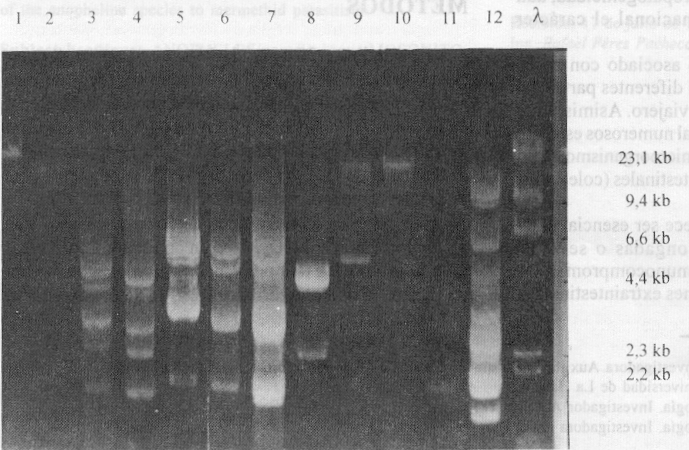
<body><![CDATA[<p></P>      <P ALIGN="CENTER">De las 29 cepas sometidas al proceso de purificaci&oacute;n de ADN plasm&iacute;dico, 12 pose&iacute;an pl&aacute;smidos, lo que representa 41,3 %, se identificaron 21 bandas distintas entre las 12 cepas y en cada cepa hubo entre 1 y 11 bandas. De las 21 hubo 6 que no fueron compartidas por 2 cepas o m&aacute;s. Se encontraron 2 cepas con patrones plasm&iacute;dicos id&eacute;nticos y un gran n&uacute;mero de cepas con patrones similares. </P>     <P>En cuanto a las tallas de las bandas, 2 tuvieron aproximadamente 23,1 kb (una estuvo presente en 2 cepas y la otra en 3). Tambi&eacute;n en la cepa 21 se observ&oacute; una banda de alrededor de 23,1 kb. Hay otras 3 bandas cercanas a 9,4 kb que estuvieron en 2 cepas) 2 en una misma cepa) y la otra en s&oacute;lo 1 cepa. La mayor&iacute;a de las bandas estuvieron entre 6,6 y 2,2 kb, s&oacute;lo 4 bandas estuvieron por debajo de 2,2 kb (fig.). </P>     <P ALIGN="CENTER"><A HREF="/img/revistas/mtr/v50n3/f0106398.gif"><IMG SRC="/img/revistas/mtr/v50n3/f0106398.gif" BORDER=0 WIDTH=278 HEIGHT=180 ALT="Fgura 1"></A></P>     
<P>Fig. Resultados del an&aacute;lisis plasm&iacute;dico. Cepas 1 y 10: provincia de Pinar del R&iacute;o. Cepas 2 y 5: provincia de Guant&aacute;namo. Cepas 4, 6, 7, 8, 9, 11 y 12: provincia de Camag&uuml;ey. Cepa 3: provincia de Holgu&iacute;n. :<FONT FACE=Symbol> l</FONT> Marcador de peso molecular fago Lambda digerido con enzima Hind III. </P> <H4>Discusi&oacute;n</H4>     <P>Teniendo en cuenta la caracterizaci&oacute;n fenot&iacute;pica de <I>Plesiomonas shigelloides</I> realizada por <I>Kain</I> y <I>Kelly</I> en 1991, pudimos comprobar que el perfil bioqu&iacute;mico de nuestras cepas se correspond&iacute;a con los publicados por los autores antes mencionados, pero difer&iacute;an en cuanto al crecimiento en diferentes concentraciones de sodio. Se plantea que esta bacteria crece en un rango entre 0 y 5 % de cloruro de sodio, y en nuestro trabajo obtuvimos que 12 cepas crecieron a la concentraci&oacute;n de 6 %.<SUP>11-13</SUP> </P>     <P>A pesar de que las infecciones gastrointestinales por <I>Plesiomonas shigelloides</I> son moderadas y autolimitadas, creemos necesario determinar la susceptibilidad antimicrobiana de estas cepas a diversos agentes antimicrobianos, por 2 causas fundamentales: </P>  <UL>     <LI>Por no contar con estudios previos en el pa&iacute;s y de hecho no conocer los patrones de susceptibilidad a las drogas de elecci&oacute;n. </LI>     <LI>Por ser la terapia antimicrobiana esencial en una infecci&oacute;n gastrointestinal prolongada o cuando se trate de un paciente inmunocomprometido o con una enfermedad subyacente.14 </LI>    </UL>      ]]></body>
<body><![CDATA[<P>En relaci&oacute;n con los patrones de sensibilidad de las cepas estudiadas, podemos decir que nuestros resultados est&aacute;n acordes con los publicados por otros investigadores en diferentes &aacute;reas geogr&aacute;ficas, los cuales han hallado que en la mayor&iacute;a de los casos el 100 % de las cepas estudiadas es sensible al cloranfenicol, al polimix&iacute;n B y a la tetraciclina, aunque para este &uacute;ltimo agente se han reportado cepas resistentes.<SUP>15</SUP> </P>     <P>Comparando nuestros resultados respecto a la kanamicina, eritromicina y amikacina con los obtenidos por otros investigadores, vemos que la susceptibilidad de nuestras cepas se comport&oacute; de manera similar a la reportada por <I>Billiet</I> y otros, donde se report&oacute; sus-ceptibilidad intermedia a la kanamicina y a la eritromicina.<SUP>16</SUP> </P>     <P>En 1990, <I>Olsnik</I> public&oacute; un estudio de susceptibilidad antimicrobiana en cepas de <I>Plesimonas shigelloides</I> aisladas de ni&ntilde;os peruanos con enfermedad diarreica aguda, y demostr&oacute; m&uacute;ltiple resistencia a la ampicilina y a la estreptomicina. Nuestros resultados coinciden con los antes mencionados en relaci&oacute;n con la alta resistencia notada a la penicilina y la estreptomicina.<SUP>17</SUP> </P>     <P>Varios investigadores han informado aislamientos de pl&aacute;smidos en cepas de <I>Plesiomonas shigelloides</I>, &eacute;stos han tratado de relacionar la presencia de ellos con caracter&iacute;sticas bioqu&iacute;micas, resistencia antimicrobiana y con un posible factor de virulencia en relaci&oacute;n con los pl&aacute;smidos de 140 MDa.<SUP>18</SUP> </P>     <P>En nuestro estudio encontramos que los patrones plasm&iacute;dicos de cepas de una misma regi&oacute;n del pa&iacute;s eran muy parecidos, las cuales presentaron tambi&eacute;n patrones de resistencia iguales; es de resaltar el hecho de que 2 cepas en una misma localidad presentaron patrones plasm&iacute;dicos iguales y a su vez bastante diferentes de los patrones de cepas de otras regiones del pa&iacute;s. </P>     <P>Nuestros resultados est&aacute;n acordes con los de <I>Kain y Kelly, </I>quienes en un estudio de 72 aislamientos fecales hallaron que 29 cepas pose&iacute;an pl&aacute;smidos, identificaron en esas cepas 15 bandas distintas, en cada cepa hubo entre 1 y 7 bandas, pero no encontraron 2 cepas con patrones plasm&iacute;dicos iguales.<SUP>18</SUP> </P>     <P>El an&aacute;lisis de los patrones plasm&iacute;dicos podr&iacute;a constituir en el futuro un instrumento epidemiol&oacute;gico en las investigaciones de los brotes de infecciones asociadas con esta bacteria, teniendo en cuenta la cantidad de cepas que presentan pl&aacute;smidos y el hecho de que en aislamientos de personas se han hallado patrones plasm&iacute;dicos id&eacute;nticos.<SUP>18</SUP> </P> <H4>Summary</H4>     <P>30 strains of <I>Plesiomonas shigelloides</I> isolated from patients with acute diarrheal disease at different health centers of the country were studied. The were phenotypically characterized by conventional biochemical tests and the antimicrobial susceptibility to 11 drugs was determined by the Kirby Bauer’s method. It was found that the strains of <I>Plesiomonas shigelloides</I> were sensitive to 7 and resistant to 6 of the investigated drugs. The presence of plasmids in 12 of the 29 analyzed strains was determined and the diversity in their plasmidic patterns was proved. </P>     <P>Subject headings: PLASMIDS/isolation &amp; purification; PLESIOMONAS/isolation &amp; purification; DRUG RESISTANCE, MICROBIAL; DIARRHEA/microbiology. </P> <H4>Referencias Bibliogr&aacute;ficas</H4> <OL>      <LI>Schubert RHW. Genus IV. Plesiomonas Habos and Schubert 1962. En: Kridg NR, Holt JG, eds. Bergey’s manual of sistematic bacteriology. Baltimore: Williams and Willkins, 1984; vol 1:548-50.</LI>     ]]></body>
<body><![CDATA[<!-- ref --><LI>Shimada T, Arakawa E, Itoh K, Kosako Y, Inoue K, Zhengshi Y et al. New O and H antigens of Plesiomonas shigelloides and their O antigenic relationships to Shigella boydii. Curr Microbiol 1994;28:351-54.</LI>    <LI>Abbott SH, Kokka RP, Janda JM. Laboratory investigations on the law pathogenic potential of Plesiomonas shigelloides. J Clin Microbiol 199;29:148-53.</LI>     <!-- ref --><LI>Brenden RA, Miller AM, Janda JM. Clinical disease spectrum and pathogenic factors associated with Plesiomonas shigelloides. Infections in humans. Rev Infect Dis 1988; 10:303-15.</LI>    <!-- ref --><LI>Aldov&aacute; E. Plesiomonas shigelloides in the Czch and Slovak Republics. Alpe Adria Microbiol J 1995;2:95-104.</LI>    <!-- ref --><LI>Ewing E. Identification of Enterobacteriaceae. La Habana: Instituto Cubano del Libro, 1971:25-115. (Edici&oacute;n Revo-lucionaria).</LI>    <!-- ref --><LI>Graevenitz A von. Aeromonas and Plesiomonas agents of diarrhea. En: Ellner PD, ed. Infections diarrhea disease. New York: Marcel Dekker, 1984:75.</LI>    <!-- ref --><LI>Bauer AW, Kirby WMM, Sherris JC, Turk M. Antibiotic susceptibility testing by a standardized single disk method. Am J Clin Pathol 1966;45:493-6.</LI>    <!-- ref --><LI>Sayeed S, Saek DA, Qadri F. Ocurrence of a large plasmid in a strain of Plesiomonas shigelloides with cross reactivity against Shigella sonnei. J Med Rev 1992;95:21-2.</LI>    <!-- ref --><LI>Lee JV. Vibrio, Aeromonas and Plesiomonas. En: Parker MT, Duerden BI, eds. Topley and Wilson’s principles of bacteriology, virology ad immunity. 8 ed. London: Edward Arnold, 1990;vol 2:526.</LI>    <!-- ref --><LI>Brenden RA, Miller MA, Janda JM. Clinical disease spectrum and pathogenic factors associated with Plesiomonas shigelloides in humans. Rev Infect Dis 1998;10:303-16.</LI>    <!-- ref --><LI>Ljungh A, Wadstrom T. Aeromonas and Plesiomonas as possible cause of diarrhea. Infection 1985;13:169-73.</LI>    <!-- ref --><LI>Holmberg SD. Plesiomonas enteric infections in the United States. Ann Intern Med 1986;105:690-4.</LI>    <!-- ref --><LI>Clark RB, Westby GR, Spector H, Soricelli RR, Young CL. Fatal Plesiomonas shigelloides septicemia in a splenectomised patient. J Infect 1991;23:89-92.</LI>    <!-- ref --><LI>Ingram CW, Morrison AJ, Levitz RE. Gastroenteritis, sepsis and ostiomyelitis caused by Plesiomonas shigelloides in an immunocompetent host: case report and review of the literature. J Clin Microbiol 1987;25:1791-3.</LI>    <!-- ref --><LI>Billiet J, Kuypers J, Livede S van, Vergaegen J. Plesiomonas shigelloides meningitis and septicemia in a neonate: report of a case and review of the literature. J Infect 1989;19:267-71.</LI>    <!-- ref --><LI>Osnick O. Laboratory observations on Plesiomonas shigelloides strains isolated from children with diarrhea in Per&uacute;. J Clin Microbiol 1990;28:886-9.</LI>    <!-- ref --><LI>Kelly MT, Kain KC. Biochemical characteristic and envi-romental Plesiomonas shigelloides. Experientia 1991;47:439-41.</LI>    </OL>      <P>Recibido: 28 de diciembre de 1996. Aprobado: 26 de noviembre de 1997.     <BR> Lic. <I>Laura Bravo Fari&ntilde;as.</I> Instituto de Medicina Tropical "Pedro Kour&iacute;". Apartado 601, Marianao 13, Ciudad de La Habana, Cuba. </P> <OL>      ]]></body>
<body><![CDATA[<LI><A NAME="autores"></A>Licenciada en Ciencias Biol&oacute;gicas. Investigadora Auxiliar. Instituto de Medicina Tropical "Pedro Kour&iacute;" (IPK).</LI>     <LI>Licenciada en Ciencias Biol&oacute;gicas. Universidad de La Habana.</LI>     <LI>Especialista de I Grado en Microbiolog&iacute;a. Investigador Auxiliar. IPK.</LI>     <LI>Especialista de I Grado en Microbiolog&iacute;a. Investigadora Agregada. IPK.</LI>     <LI>T&eacute;cnica en Procesos Biol&oacute;gicos. IPK.</LI>    </OL>  <H5></H5>     ]]></body><back>
<ref-list>
<ref id="B1">
<nlm-citation citation-type="journal">
<person-group person-group-type="author">
<name>
<surname><![CDATA[Shimada]]></surname>
<given-names><![CDATA[T]]></given-names>
</name>
<name>
<surname><![CDATA[Arakawa]]></surname>
<given-names><![CDATA[E]]></given-names>
</name>
<name>
<surname><![CDATA[Itoh]]></surname>
<given-names><![CDATA[K]]></given-names>
</name>
<name>
<surname><![CDATA[Kosako]]></surname>
<given-names><![CDATA[Y]]></given-names>
</name>
<name>
<surname><![CDATA[Inoue]]></surname>
<given-names><![CDATA[K]]></given-names>
</name>
<name>
<surname><![CDATA[Zhengshi]]></surname>
<given-names><![CDATA[Y]]></given-names>
</name>
</person-group>
<article-title xml:lang="en"><![CDATA[New O and H antigens of Plesiomonas shigelloides and their O antigenic relationships to Shigella boydii]]></article-title>
<source><![CDATA[Curr Microbiol]]></source>
<year>1994</year>
<volume>28</volume>
<page-range>351-54</page-range></nlm-citation>
</ref>
<ref id="B2">
<nlm-citation citation-type="journal">
<person-group person-group-type="author">
<name>
<surname><![CDATA[Brenden]]></surname>
<given-names><![CDATA[RA]]></given-names>
</name>
<name>
<surname><![CDATA[Miller]]></surname>
<given-names><![CDATA[AM]]></given-names>
</name>
<name>
<surname><![CDATA[Janda]]></surname>
<given-names><![CDATA[JM]]></given-names>
</name>
</person-group>
<article-title xml:lang="en"><![CDATA[Clinical disease spectrum and pathogenic factors associated with Plesiomonas shigelloides.: Infections in humans]]></article-title>
<source><![CDATA[Rev Infect Dis]]></source>
<year>1988</year>
<volume>10</volume>
<page-range>303-15</page-range></nlm-citation>
</ref>
<ref id="B3">
<nlm-citation citation-type="journal">
<person-group person-group-type="author">
<name>
<surname><![CDATA[Aldová]]></surname>
<given-names><![CDATA[E]]></given-names>
</name>
</person-group>
<article-title xml:lang="en"><![CDATA[Plesiomonas shigelloides in the Czch and Slovak Republics]]></article-title>
<source><![CDATA[Alpe Adria Microbiol J]]></source>
<year>1995</year>
<volume>2</volume>
<page-range>95-104</page-range></nlm-citation>
</ref>
<ref id="B4">
<nlm-citation citation-type="book">
<person-group person-group-type="author">
<name>
<surname><![CDATA[Ewing]]></surname>
<given-names><![CDATA[E]]></given-names>
</name>
</person-group>
<source><![CDATA[Identification of Enterobacteriaceae.]]></source>
<year>1971</year>
<page-range>25-115</page-range><publisher-loc><![CDATA[La Habana ]]></publisher-loc>
<publisher-name><![CDATA[Instituto Cubano del Libro]]></publisher-name>
</nlm-citation>
</ref>
<ref id="B5">
<nlm-citation citation-type="book">
<person-group person-group-type="author">
<name>
<surname><![CDATA[Graevenitz]]></surname>
<given-names><![CDATA[A von]]></given-names>
</name>
</person-group>
<article-title xml:lang="en"><![CDATA[Aeromonas and Plesiomonas agents of diarrhea]]></article-title>
<person-group person-group-type="editor">
<name>
<surname><![CDATA[Ellner]]></surname>
<given-names><![CDATA[PD]]></given-names>
</name>
</person-group>
<source><![CDATA[Infections diarrhea disease]]></source>
<year>1984</year>
<page-range>75</page-range><publisher-loc><![CDATA[New York ]]></publisher-loc>
<publisher-name><![CDATA[Marcel Dekker]]></publisher-name>
</nlm-citation>
</ref>
<ref id="B6">
<nlm-citation citation-type="journal">
<person-group person-group-type="author">
<name>
<surname><![CDATA[Bauer]]></surname>
<given-names><![CDATA[AW]]></given-names>
</name>
<name>
<surname><![CDATA[Kirby]]></surname>
<given-names><![CDATA[WMM]]></given-names>
</name>
<name>
<surname><![CDATA[Sherris]]></surname>
<given-names><![CDATA[JC]]></given-names>
</name>
<name>
<surname><![CDATA[Turk]]></surname>
<given-names><![CDATA[M]]></given-names>
</name>
</person-group>
<article-title xml:lang="en"><![CDATA[Antibiotic susceptibility testing by a standardized single disk method]]></article-title>
<source><![CDATA[Am J Clin Pathol]]></source>
<year>1966</year>
<volume>45</volume>
<page-range>493-6</page-range></nlm-citation>
</ref>
<ref id="B7">
<nlm-citation citation-type="journal">
<person-group person-group-type="author">
<name>
<surname><![CDATA[Sayeed]]></surname>
<given-names><![CDATA[S]]></given-names>
</name>
<name>
<surname><![CDATA[Saek]]></surname>
<given-names><![CDATA[DA]]></given-names>
</name>
<name>
<surname><![CDATA[Qadri]]></surname>
<given-names><![CDATA[F]]></given-names>
</name>
</person-group>
<article-title xml:lang="en"><![CDATA[Ocurrence of a large plasmid in a strain of Plesiomonas shigelloides with cross reactivity against Shigella sonnei]]></article-title>
<source><![CDATA[J Med Rev]]></source>
<year>1992</year>
<volume>95</volume>
<page-range>21-2</page-range></nlm-citation>
</ref>
<ref id="B8">
<nlm-citation citation-type="book">
<person-group person-group-type="author">
<name>
<surname><![CDATA[Lee]]></surname>
<given-names><![CDATA[JV]]></given-names>
</name>
</person-group>
<article-title xml:lang="en"><![CDATA[Vibrio, Aeromonas and Plesiomonas]]></article-title>
<person-group person-group-type="editor">
<name>
<surname><![CDATA[Parker]]></surname>
<given-names><![CDATA[MT]]></given-names>
</name>
<name>
<surname><![CDATA[Duerden]]></surname>
<given-names><![CDATA[BI]]></given-names>
</name>
</person-group>
<source><![CDATA[Topley and Wilson’s principles of bacteriology, virology ad immunity]]></source>
<year>1990</year>
<edition>8 ed</edition>
<page-range>526</page-range><publisher-loc><![CDATA[London ]]></publisher-loc>
<publisher-name><![CDATA[Edward Arnold]]></publisher-name>
</nlm-citation>
</ref>
<ref id="B9">
<nlm-citation citation-type="journal">
<person-group person-group-type="author">
<name>
<surname><![CDATA[Brenden]]></surname>
<given-names><![CDATA[RA]]></given-names>
</name>
<name>
<surname><![CDATA[Miller]]></surname>
<given-names><![CDATA[MA]]></given-names>
</name>
<name>
<surname><![CDATA[Janda]]></surname>
<given-names><![CDATA[JM]]></given-names>
</name>
</person-group>
<article-title xml:lang="en"><![CDATA[Clinical disease spectrum and pathogenic factors associated with Plesiomonas shigelloides in humans]]></article-title>
<source><![CDATA[Rev Infect Dis]]></source>
<year>1998</year>
<volume>10</volume>
<page-range>303-16</page-range></nlm-citation>
</ref>
<ref id="B10">
<nlm-citation citation-type="journal">
<person-group person-group-type="author">
<name>
<surname><![CDATA[Ljungh]]></surname>
<given-names><![CDATA[A]]></given-names>
</name>
<name>
<surname><![CDATA[Wadstrom]]></surname>
<given-names><![CDATA[T]]></given-names>
</name>
</person-group>
<article-title xml:lang="en"><![CDATA[Aeromonas and Plesiomonas as possible cause of diarrhea]]></article-title>
<source><![CDATA[Infection]]></source>
<year>1985</year>
<volume>13</volume>
<page-range>169-73</page-range></nlm-citation>
</ref>
<ref id="B11">
<nlm-citation citation-type="journal">
<person-group person-group-type="author">
<name>
<surname><![CDATA[Holmberg]]></surname>
<given-names><![CDATA[SD]]></given-names>
</name>
</person-group>
<article-title xml:lang="en"><![CDATA[Plesiomonas enteric infections in the United States]]></article-title>
<source><![CDATA[Ann Intern Med]]></source>
<year>1986</year>
<volume>105</volume>
<page-range>690-4</page-range></nlm-citation>
</ref>
<ref id="B12">
<nlm-citation citation-type="journal">
<person-group person-group-type="author">
<name>
<surname><![CDATA[Clark]]></surname>
<given-names><![CDATA[RB]]></given-names>
</name>
<name>
<surname><![CDATA[Westby]]></surname>
<given-names><![CDATA[GR]]></given-names>
</name>
<name>
<surname><![CDATA[Spector]]></surname>
<given-names><![CDATA[H]]></given-names>
</name>
<name>
<surname><![CDATA[Soricelli]]></surname>
<given-names><![CDATA[RR]]></given-names>
</name>
<name>
<surname><![CDATA[Young]]></surname>
<given-names><![CDATA[CL]]></given-names>
</name>
</person-group>
<article-title xml:lang="en"><![CDATA[Fatal Plesiomonas shigelloides septicemia in a splenectomised patient]]></article-title>
<source><![CDATA[J Infect]]></source>
<year>1991</year>
<volume>23</volume>
<page-range>89-92</page-range></nlm-citation>
</ref>
<ref id="B13">
<nlm-citation citation-type="journal">
<person-group person-group-type="author">
<name>
<surname><![CDATA[Ingram]]></surname>
<given-names><![CDATA[CW]]></given-names>
</name>
<name>
<surname><![CDATA[Morrison]]></surname>
<given-names><![CDATA[AJ]]></given-names>
</name>
<name>
<surname><![CDATA[Levitz]]></surname>
<given-names><![CDATA[RE]]></given-names>
</name>
</person-group>
<article-title xml:lang="en"><![CDATA[Gastroenteritis, sepsis and ostiomyelitis caused by Plesiomonas shigelloides in an immunocompetent host: case report and review of the literature]]></article-title>
<source><![CDATA[J Clin Microbiol]]></source>
<year>1987</year>
<volume>25</volume>
<page-range>1791-3</page-range></nlm-citation>
</ref>
<ref id="B14">
<nlm-citation citation-type="journal">
<person-group person-group-type="author">
<name>
<surname><![CDATA[Billiet]]></surname>
<given-names><![CDATA[J]]></given-names>
</name>
<name>
<surname><![CDATA[Kuypers]]></surname>
<given-names><![CDATA[J]]></given-names>
</name>
<name>
<surname><![CDATA[Livede S]]></surname>
<given-names><![CDATA[van]]></given-names>
</name>
<name>
<surname><![CDATA[Vergaegen]]></surname>
<given-names><![CDATA[J]]></given-names>
</name>
</person-group>
<article-title xml:lang="en"><![CDATA[Plesiomonas shigelloides meningitis and septicemia in a neonate: report of a case and review of the literature]]></article-title>
<source><![CDATA[J Infect]]></source>
<year>1989</year>
<volume>19</volume>
<page-range>267-71</page-range></nlm-citation>
</ref>
<ref id="B15">
<nlm-citation citation-type="journal">
<person-group person-group-type="author">
<name>
<surname><![CDATA[Osnick]]></surname>
<given-names><![CDATA[O]]></given-names>
</name>
</person-group>
<article-title xml:lang="en"><![CDATA[Laboratory observations on Plesiomonas shigelloides strains isolated from children with diarrhea in Perú]]></article-title>
<source><![CDATA[J Clin Microbiol]]></source>
<year>1990</year>
<volume>28</volume>
<page-range>886-9</page-range></nlm-citation>
</ref>
<ref id="B16">
<nlm-citation citation-type="journal">
<person-group person-group-type="author">
<name>
<surname><![CDATA[Kelly]]></surname>
<given-names><![CDATA[MT]]></given-names>
</name>
<name>
<surname><![CDATA[Kain]]></surname>
<given-names><![CDATA[KC]]></given-names>
</name>
</person-group>
<article-title xml:lang="en"><![CDATA[Biochemical characteristic and envi-romental Plesiomonas shigelloides]]></article-title>
<source><![CDATA[Experientia]]></source>
<year>1991</year>
<volume>47</volume>
<page-range>439-41</page-range></nlm-citation>
</ref>
</ref-list>
</back>
</article>
