<?xml version="1.0" encoding="ISO-8859-1"?><article xmlns:mml="http://www.w3.org/1998/Math/MathML" xmlns:xlink="http://www.w3.org/1999/xlink" xmlns:xsi="http://www.w3.org/2001/XMLSchema-instance">
<front>
<journal-meta>
<journal-id>0375-0760</journal-id>
<journal-title><![CDATA[Revista Cubana de Medicina Tropical]]></journal-title>
<abbrev-journal-title><![CDATA[Rev Cubana Med Trop]]></abbrev-journal-title>
<issn>0375-0760</issn>
<publisher>
<publisher-name><![CDATA[Centro Nacional de Información de Ciencias Médicas]]></publisher-name>
</publisher>
</journal-meta>
<article-meta>
<article-id>S0375-07601999000200002</article-id>
<title-group>
<article-title xml:lang="es"><![CDATA[Análisis de la actividad hematofágica y de la influencia ambiental sobre el principal vector de la malaria en Cuba: Anopheles albimanus]]></article-title>
</title-group>
<contrib-group>
<contrib contrib-type="author">
<name>
<surname><![CDATA[Rodríguez]]></surname>
<given-names><![CDATA[Ricardo]]></given-names>
</name>
<xref ref-type="aff" rid="A01"/>
</contrib>
<contrib contrib-type="author">
<name>
<surname><![CDATA[Diéguez]]></surname>
<given-names><![CDATA[Lorenzo]]></given-names>
</name>
<xref ref-type="aff" rid="A02"/>
</contrib>
<contrib contrib-type="author">
<name>
<surname><![CDATA[Roqueiro]]></surname>
<given-names><![CDATA[Lisset]]></given-names>
</name>
<xref ref-type="aff" rid="A01"/>
</contrib>
<contrib contrib-type="author">
<name>
<surname><![CDATA[Fernández]]></surname>
<given-names><![CDATA[Mayelín]]></given-names>
</name>
<xref ref-type="aff" rid="A01"/>
</contrib>
<contrib contrib-type="author">
<name>
<surname><![CDATA[Navarro]]></surname>
<given-names><![CDATA[Agustín]]></given-names>
</name>
<xref ref-type="aff" rid="A03"/>
</contrib>
</contrib-group>
<aff id="A01">
<institution><![CDATA[,Departamento de Biología. Instituto Superior Pedagógico José Martí  ]]></institution>
<addr-line><![CDATA[Camagüey ]]></addr-line>
<country>Cuba</country>
</aff>
<aff id="A02">
<institution><![CDATA[,Centro Provincial de Higiene y Epidemiología de Camagüey. Unidad Provincial de Vigilancia y Lucha Antivectorial  ]]></institution>
<addr-line><![CDATA[ ]]></addr-line>
</aff>
<aff id="A03">
<institution><![CDATA[,Unidad Nacional de Vigilancia y Lucha Antivectorial. Ministerio de Salud Pública  ]]></institution>
<addr-line><![CDATA[ ]]></addr-line>
</aff>
<pub-date pub-type="pub">
<day>00</day>
<month>08</month>
<year>1999</year>
</pub-date>
<pub-date pub-type="epub">
<day>00</day>
<month>08</month>
<year>1999</year>
</pub-date>
<volume>51</volume>
<numero>2</numero>
<fpage>72</fpage>
<lpage>78</lpage>
<copyright-statement/>
<copyright-year/>
<self-uri xlink:href="http://scielo.sld.cu/scielo.php?script=sci_arttext&amp;pid=S0375-07601999000200002&amp;lng=en&amp;nrm=iso"></self-uri><self-uri xlink:href="http://scielo.sld.cu/scielo.php?script=sci_abstract&amp;pid=S0375-07601999000200002&amp;lng=en&amp;nrm=iso"></self-uri><self-uri xlink:href="http://scielo.sld.cu/scielo.php?script=sci_pdf&amp;pid=S0375-07601999000200002&amp;lng=en&amp;nrm=iso"></self-uri><abstract abstract-type="short" xml:lang="es"><p><![CDATA[Se realizó un estudio ecológico en una población suburbana de Anopheles (N) albimanus de la provincia de Camagüey, mediante el cebo humano en 2 estaciones de captura (interior y exterior). Se apreció una mayor cantidad de hembras en la estación lluviosa, así como una marcada tendencia exofágica, con picos de actividad hacia las primeras horas de la noche en el exterior y hacia las últimas en el interior. Se demuestra la influencia abiótica sobre la fluctuación poblacional de anófeles en ambos puntos de captura.]]></p></abstract>
<abstract abstract-type="short" xml:lang="en"><p><![CDATA[An ecological study of Anopheles (N) albimanus in a suburban population of Camagüey province was carried out using a human bait in two trap points (indoor and outdoor). A higher quantity of females in the rainy season was observed together with a marked exophagic trend with peak activity in the early hours of the evening outdoor and in the early hours of the morning indoor. The abiotic influence on the fluctuation of the anophele population in both trap station was proved.]]></p></abstract>
<kwd-group>
<kwd lng="es"><![CDATA[ANOPHELES]]></kwd>
<kwd lng="es"><![CDATA[FACTORES ABIOTICOS]]></kwd>
<kwd lng="es"><![CDATA[VECTORES DE ENFERMEDADES]]></kwd>
<kwd lng="es"><![CDATA[PALUDISMO]]></kwd>
<kwd lng="es"><![CDATA[ECOLOGIA DE VECTORES]]></kwd>
<kwd lng="en"><![CDATA[ANOPHELES]]></kwd>
<kwd lng="en"><![CDATA[ABIOTIC FACTORS]]></kwd>
<kwd lng="en"><![CDATA[DISEASE VECTORS]]></kwd>
<kwd lng="en"><![CDATA[MALARIA]]></kwd>
<kwd lng="en"><![CDATA[ECOLOGY, VECTORS]]></kwd>
</kwd-group>
</article-meta>
</front><body><![CDATA[ <P>CENTRO PROVINCIAL DE HIGIENE Y EPIDEMIOLOG&Iacute;A DE CAMAG&Uuml;EY. UNIDAD PROVINCIAL DE VIGILANCIA DE LUCHA ANTIVECTORIAL </P> <H2>An&aacute;lisis de la actividad hematof&aacute;gica y de la influencia ambiental sobre el principal vector de la malaria en Cuba: <I>Anopheles albimanus</i></H2>     <P><A HREF="#autor"><I>Lic. Ricardo Rodr&iacute;guez,<SUP>1</SUP> M.Sc. Lorenzo Di&eacute;guez,<SUP>2</SUP> Lic. Lisset Roqueiro,<SUP>1</SUP> Lic. Mayel&iacute;n Fern&aacute;ndez<SUP>1</SUP> y Lic. Agust&iacute;n Navarro<SUP>3</sup></I></A><A HREF="#autor">autor</A> </P> <H4>RESUMEN</H4><DIR> <DIR>      <P>Se realiz&oacute; un estudio ecol&oacute;gico en una poblaci&oacute;n suburbana de <I>Anopheles (N) albimanus</I> de la provincia de Camag&uuml;ey, mediante el cebo humano en 2 estaciones de captura (interior y exterior). Se apreci&oacute; una mayor cantidad de hembras en la estaci&oacute;n lluviosa, as&iacute; como una marcada tendencia exof&aacute;gica, con picos de actividad hacia las primeras horas de la noche en el exterior y hacia las &uacute;ltimas en el interior. Se demuestra la influencia abi&oacute;tica sobre la fluctuaci&oacute;n poblacional de an&oacute;feles en ambos puntos de captura. </P>     <P><B>Descriptores DeCS</b>: ANOPHELES; FACTORES ABIOTICOS; VECTORES DE ENFERMEDADES; PALUDISMO; ECOLOGIA DE VECTORES.</P></DIR> </DIR>      <P>Caracterizar la din&aacute;mica de una poblaci&oacute;n vectorial y su relaci&oacute;n con el entorno posibilita el establecimiento de m&eacute;todos eficaces en el control de enfermedades de gran incidencia sobre la salud humana,<SUP>1</SUP> lo que seg&uacute;n la Organizaci&oacute;n Mundial de la Salud,<SUP>2</SUP> es muy importante al elegir las medidas apropiadas de lucha qu&iacute;mica, captura de ejemplares para el an&aacute;lisis de la sangre ingerida, determinaci&oacute;n de las tasas de infecci&oacute;n y la clasificaci&oacute;n de la poblaci&oacute;n por edades, entre otros. </P>     <P>Desde que los mosquitos anofelinos fueron implicados en la transmisi&oacute;n de la malaria, han sido varias las barreras mec&aacute;nicas ensayadas para proteger al hombre,<SUP>3</SUP> sin embargo, la efectividad de &eacute;stos es discutible,<SUP>4</SUP> ya que los gastos han sido mayores en comparaci&oacute;n con el moderado decrecimiento del n&uacute;mero de casos pal&uacute;dicos que se reportan.<SUP>3</SUP> Por estas razones es que en la actualidad los estudios destinados a caracterizar ecol&oacute;gicamente los vectores de la malaria tienen una gran relevancia en la eficacia de los programas de control en diversas regiones del planeta. </P>     <P>Aunque la erradicaci&oacute;n de esta enfermedad en el territorio nacional se logr&oacute; despu&eacute;s de una intensa campa&ntilde;a, que culmin&oacute; con la detecci&oacute;n y tratamiento del &uacute;ltimo caso,<SUP>5</SUP> no estamos exentos de una reinfecci&oacute;n, debido a la presencia en el pa&iacute;s del vector y a la afluencia de personas que provienen de &aacute;reas end&eacute;micas.<SUP>6-9</SUP> </P>     <P>En Cuba, se han ejecutado algunos trabajos destinados a evaluar m&eacute;todos de captura de an&oacute;feles,<SUP>10</SUP> lo que demanda una acumulaci&oacute;n de conocimientos que s&oacute;lo es posible mediante los estudios ecol&oacute;gicos. </P>     <P>Por lo anteriormente expuesto los autores se propusieron estudiar la variaci&oacute;n de la abundancia de<I> Anopheles (N) albimanus) </I>(Wiedemann, 1821), principal vector de la malaria en Cuba, basados en su actividad hematof&aacute;gica y poder determinar la influencia abi&oacute;tica sobre dichos valores. Estos datos contribuir&aacute;n a un mejor conocimiento del contacto hombre-vector, uno de los elementos fundamentales que se debe considerar en la implementaci&oacute;n de medidas de lucha antivectorial. </P> <H4>M&Eacute;TODOS</H4>     <P><I>Caracter&iacute;sticas de la zona de estudio.</i> La presente investigaci&oacute;n se realiz&oacute; en el Reparto "Julio A. Mella", de la capital provincial de Camag&uuml;ey, durante el per&iacute;odo comprendido entre febrero de 1995 y enero de 1996. En esta comunidad suburbana la topograf&iacute;a se ha visto seriamente da&ntilde;ada por las numerosas construcciones que se han realizado y que no han concluido a&uacute;n. El personal encargado de la vigilancia y lucha antivectorial tiene reportada la existencia de 12 criaderos potenciales y habituales de <I>Anopheles (N) albimanus</I> (Wiedemann, 1821), los que constituyen las principales fuentes de cr&iacute;a de estos insectos. </P>     ]]></body>
<body><![CDATA[<P><I>T&eacute;cnica de muestreo.</i> Los muestreos se efectuaron con una frecuencia quincenal mediante la t&eacute;cnica de cebo humano,<SUP>11</SUP> para lo cual se ubicaron 2 puntos fijos de captura, uno intradomiciliario y otro peridomiciliario, en cada uno de los cuales trabaj&oacute; una persona con sus piernas descubiertas, que realizaba la doble funci&oacute;n cebo-capturador. </P>     <P>El horario escogido fue desde las 18:00 hasta las 22:30 h con 30 min de captura y 30 de descanso intercolecta, el personal se alternaba en d&iacute;as y horarios para no afectar sensiblemente el factor atracci&oacute;n por cebo. </P>     <P>La colecta se realiz&oacute; utilizando tubos de ensayo de vidrio transparente con un di&aacute;metro de 2,5 cm por 15,5 cm de longitud, a los cuales previamente se les coloc&oacute; algod&oacute;n con cloroformo. Se emplearon adem&aacute;s linternas de 2 bater&iacute;as de forma intermitente. </P>     <P><I>Clasificaci&oacute;n de las muestras</i>. El material biol&oacute;gico colectado se separ&oacute; por puntos de captura y horarios de encuesta, y se clasific&oacute; siempre al finalizar cada horario, mediante un microscopio estereosc&oacute;pico con un aumento de 56X, seg&uacute;n la clave de P&eacute;rez Vigueras.<SUP>12</SUP> </P>     <P><I>Abundancia.</i> En nuestro estudio se consider&oacute; el n&uacute;mero absoluto de mosquitos capturados. </P>     <P><I>Factores abi&oacute;ticos.</i> Se midi&oacute; la temperatura, la humedad relativa, la nubosidad, el fotoper&iacute;odo, la presi&oacute;n atmosf&eacute;rica y la precipitaci&oacute;n acumulada (7, 10, 15, 21 y 30 d) previos a las colectas, y la velocidad del viento. En el caso de la nubosidad y la iluminaci&oacute;n s&oacute;lo se consideraron para los 2 primeros horarios de captura. </P>     <P>En el presente estudio se tuvo en cuenta adem&aacute;s, las 2 estaciones clim&aacute;ticas descritas para Cuba por <I>Samek y Travieso,</I><SUP>13</SUP> donde el per&iacute;odo lluvioso abarca los meses de mayo a octubre y el per&iacute;odo seco desde noviembre hasta abril. </P>     <P><I>An&aacute;lisis de los resultados.</i> Se verific&oacute; la normalidad de la distribuci&oacute;n de todos los datos mediante la prueba Kolmogorov- Smirnov, as&iacute; como la homogeneidad de la varianza con la prueba de Bartle,<SUP>14</SUP> en los casos en que no se cumplieron dichas condiciones los datos fueron transformados de acuerdo con el criterio de Boesch.<SUP>15</SUP> </P>     <P>Para analizar si exit&iacute;an diferencias entre las abundancias reportadas por horarios y mensualmente en cada estaci&oacute;n se utiliz&oacute; un an&aacute;lisis de varianza de clasificaci&oacute;n doble. </P>     <P>Al demostrar si exist&iacute;an diferencias por horarios y total general entre estaciones clim&aacute;ticas se aplic&oacute; la prueba Z (Microstat), este tratamiento tambi&eacute;n se extendi&oacute; en la detecci&oacute;n de diferencias significativas en la abundancia entre los sitios de muestreos. </P>     ]]></body>
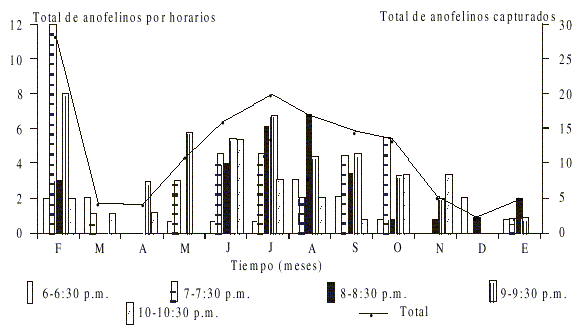
<body><![CDATA[<P>Cuando se asociaron los valores de abundancia con los diferentes factores abi&oacute;ticos medidos, se us&oacute; una matriz de correlaci&oacute;n lineal y parcial tom&aacute;ndose un nivel de significaci&oacute;n de p=0,05. </P> <H4>RESULTADOS</H4>     <P>En el punto de captura exterior se observ&oacute; que las 2 alzas poblacionales m&aacute;s importantes de <I>Anopheles (N) albimanus </I>(Wiedemann, 1821), se produjeron en el per&iacute;odo de lluvia, la primera en el mes de junio, caracterizada por el segundo horario de captura (7:00 - 7:30), desplaz&aacute;ndose la segunda hacia los meses de septiembre y octubre, donde se destacaron los horarios quinto y cuarto (9:00-9:30 y 10:00-10:30, respectivamente) (fig. 1). </P>     <P ALIGN="CENTER"><A HREF="/img/revistas/mtr/v51n2/f0102299.gif"><IMG SRC="/img/revistas/mtr/v51n2/f0102299.gif" BORDER=0 WIDTH=286 HEIGHT=166 ALT="Figura 1"></A></P>     
<P ALIGN="CENTER">Fig. 1. Comportamiento en el punto de captura exterior de la abundancia total y por horarios de <I>Anopheles albimanus.</i></P>     <P>En el punto de captura interior los picos de abundancia se reportaron en febrero (per&iacute;odo de seca) y en los meses de junio y agosto (per&iacute;odo de lluvia). En el caso de febrero el segundo horario (7:00-7:30) tuvo un importante aporte seg&uacute;n se puede apreciar en la figura 2, mientras que en el segundo brote poblacional el tercer horario (8:00-8:30), as&iacute; como el cuarto (9:00-9:30), fueron los m&aacute;s significativos. </P>     <P ALIGN="CENTER"><A HREF="/img/revistas/mtr/v51n2/f0202299.gif"><IMG SRC="/img/revistas/mtr/v51n2/f0202299.gif" BORDER=0 WIDTH=270 HEIGHT=156 ALT="Figura 2"></A></P>     
<P ALIGN="CENTER">Fig. 2. Comportamiento en el pnto de captura interior de la abundancia total y por horarios de<I> Anopheles albimanus.</i></P>     <P>En ambos casos seg&uacute;n el anova de clasificaci&oacute;n doble, no hubo diferencias respecto a las abundancias reportadas por horarios y meses trabajados (p 0,05), debido a lo cual dicho par&aacute;metro tuvo un comportamiento bastante homog&eacute;neo durante el per&iacute;odo de estudio. </P>     <P>En la tabla 1 se observa que el total de mosquitos capturados fue de 328, de los cuales 205 correspondieron al per&iacute;odo de lluvia y 123 al llamado per&iacute;odo de seca, se encontraron diferencias significativas entre ambos (Z = 5,099; p &lt; 0,0001). El promedio general de mosquitos/colecta fue de 14, con un valor de 8 mosquitos/colecta en lluvia y 6 mosquitos/colecta en seca, no existieron diferencias entre ambas cifras (p 0,05). En esta propia tabla apreciamos los totales de ejemplares capturados por estaciones clim&aacute;ticas en cada punto de encuesta, donde se observan diferencias en el punto peridomiciliario en el tercer horario (Z=2,291; p &lt; 0,05), cuarto horario (Z=2,200; p &lt; 0,05), quinto horario (Z=1,861; p &lt; 0,05) y total general (Z=2,776; p &lt; 0,001), mientras que en el punto intradomiciliario estas diferencias se reportaron para el tercer horario (Z = 2,885; p &lt; 0,01), cuarto horario (Z = 2,441; p &lt; 0,01) y total general (Z = 3,965; p &lt; 0,001). Es decir, que las colectas en el per&iacute;odo de lluvia fueron superiores en ambos puntos de captura con respecto al per&iacute;odo seco. </P>     <P><B>TABLA 1</b>. Valores de abundancia en relaci&oacute;n con el porcentaje de <I>Anopheles albimanu</I>s en los puntos de captura exterior e interior, de acuerdo con los per&iacute;odos de lluvia y seca </P>     ]]></body>
<body><![CDATA[<P ALIGN="CENTER">    <CENTER><TABLE CELLSPACING=0 BORDER=0 WIDTH=648> <TR><TD WIDTH="8%" VALIGN="TOP">     <P>&nbsp;</TD> <TD WIDTH="92%" VALIGN="TOP" COLSPAN=12>     <P ALIGN="CENTER">Estaci&oacute;n clim&aacute;tica</TD> </TR> <TR><TD WIDTH="8%" VALIGN="TOP">     <P>&nbsp;</TD> <TD WIDTH="38%" VALIGN="TOP" COLSPAN=5>     <P ALIGN="CENTER">Lluvia (No. de hembras)</TD> <TD WIDTH="54%" VALIGN="TOP" COLSPAN=7>     <P ALIGN="CENTER">Seca (No. de hembras)</TD> </TR> <TR><TD WIDTH="8%" VALIGN="TOP">     <P>Horarios</TD> <TD WIDTH="8%" VALIGN="TOP">     <P ALIGN="CENTER">Ext.</TD> <TD WIDTH="8%" VALIGN="TOP">     <P ALIGN="CENTER">%</TD> <TD WIDTH="8%" VALIGN="TOP">     ]]></body>
<body><![CDATA[<P ALIGN="CENTER">Int.</TD> <TD WIDTH="8%" VALIGN="TOP">     <P ALIGN="CENTER">%</TD> <TD WIDTH="8%" VALIGN="TOP">     <P ALIGN="CENTER">Nivel de significaci&oacute;n</TD> <TD WIDTH="8%" VALIGN="TOP">     <P ALIGN="CENTER">Ext.</TD> <TD WIDTH="8%" VALIGN="TOP">     <P ALIGN="CENTER">%</TD> <TD WIDTH="8%" VALIGN="TOP">     <P ALIGN="CENTER">Int.</TD> <TD WIDTH="8%" VALIGN="TOP">     <P ALIGN="CENTER">%</TD> <TD WIDTH="8%" VALIGN="TOP">     <P ALIGN="CENTER">Nivel de significaci&oacute;n</TD> <TD WIDTH="8%" VALIGN="TOP">     <P ALIGN="CENTER">Total</TD> <TD WIDTH="8%" VALIGN="TOP">     <P ALIGN="CENTER">%</TD> </TR> <TR><TD WIDTH="8%" VALIGN="TOP">     ]]></body>
<body><![CDATA[<P>6:00 - 6:30</TD> <TD WIDTH="8%" VALIGN="TOP">     <P ALIGN="CENTER">10</TD> <TD WIDTH="8%" VALIGN="TOP">     <P ALIGN="CENTER">9,01</TD> <TD WIDTH="8%" VALIGN="TOP">     <P ALIGN="CENTER">9</TD> <TD WIDTH="8%" VALIGN="TOP">     <P ALIGN="CENTER">9,57</TD> <TD WIDTH="8%" VALIGN="TOP">     <P ALIGN="CENTER">n.s.</TD> <TD WIDTH="8%" VALIGN="TOP">     <P ALIGN="CENTER">15</TD> <TD WIDTH="8%" VALIGN="TOP">     <P ALIGN="CENTER">20,3</TD> <TD WIDTH="8%" VALIGN="TOP">     <P ALIGN="CENTER">7</TD> <TD WIDTH="8%" VALIGN="TOP">     <P ALIGN="CENTER">14,3</TD> <TD WIDTH="8%" VALIGN="TOP">     ]]></body>
<body><![CDATA[<P ALIGN="CENTER">Z = 2,528; p &lt; 0,01</TD> <TD WIDTH="8%" VALIGN="TOP">     <P ALIGN="CENTER">41</TD> <TD WIDTH="8%" VALIGN="TOP">     <P ALIGN="CENTER">12,5</TD> </TR> <TR><TD WIDTH="8%" VALIGN="TOP">     <P>7:00 - 7:30</TD> <TD WIDTH="8%" VALIGN="TOP">     <P ALIGN="CENTER">29</TD> <TD WIDTH="8%" VALIGN="TOP">     <P ALIGN="CENTER">26,1</TD> <TD WIDTH="8%" VALIGN="TOP">     <P ALIGN="CENTER">22</TD> <TD WIDTH="8%" VALIGN="TOP">     <P ALIGN="CENTER">23,4</TD> <TD WIDTH="8%" VALIGN="TOP">     <P ALIGN="CENTER">n.s.</TD> <TD WIDTH="8%" VALIGN="TOP">     <P ALIGN="CENTER">23</TD> <TD WIDTH="8%" VALIGN="TOP">     ]]></body>
<body><![CDATA[<P ALIGN="CENTER">31,1</TD> <TD WIDTH="8%" VALIGN="TOP">     <P ALIGN="CENTER">14</TD> <TD WIDTH="8%" VALIGN="TOP">     <P ALIGN="CENTER">28,6</TD> <TD WIDTH="8%" VALIGN="TOP">     <P ALIGN="CENTER">Z = 2,937; p &lt; 0,01</TD> <TD WIDTH="8%" VALIGN="TOP">     <P ALIGN="CENTER">88</TD> <TD WIDTH="8%" VALIGN="TOP">     <P ALIGN="CENTER">26,8</TD> </TR> <TR><TD WIDTH="8%" VALIGN="TOP">     <P>8:00 - 8:30</TD> <TD WIDTH="8%" VALIGN="TOP">     <P ALIGN="CENTER">28</TD> <TD WIDTH="8%" VALIGN="TOP">     <P ALIGN="CENTER">25,2</TD> <TD WIDTH="8%" VALIGN="TOP">     <P ALIGN="CENTER">20</TD> <TD WIDTH="8%" VALIGN="TOP">     ]]></body>
<body><![CDATA[<P ALIGN="CENTER">21,3</TD> <TD WIDTH="8%" VALIGN="TOP">     <P ALIGN="CENTER">n.s.</TD> <TD WIDTH="8%" VALIGN="TOP">     <P ALIGN="CENTER">14</TD> <TD WIDTH="8%" VALIGN="TOP">     <P ALIGN="CENTER">18,9</TD> <TD WIDTH="8%" VALIGN="TOP">     <P ALIGN="CENTER">7</TD> <TD WIDTH="8%" VALIGN="TOP">     <P ALIGN="CENTER">14,3</TD> <TD WIDTH="8%" VALIGN="TOP">     <P ALIGN="CENTER">Z = 4,711; p &lt; 0(001</TD> <TD WIDTH="8%" VALIGN="TOP">     <P ALIGN="CENTER">69</TD> <TD WIDTH="8%" VALIGN="TOP">     <P ALIGN="CENTER">21,0</TD> </TR> <TR><TD WIDTH="8%" VALIGN="TOP">     <P>9:00 - 9:30</TD> <TD WIDTH="8%" VALIGN="TOP">     ]]></body>
<body><![CDATA[<P ALIGN="CENTER">23</TD> <TD WIDTH="8%" VALIGN="TOP">     <P ALIGN="CENTER">20,7</TD> <TD WIDTH="8%" VALIGN="TOP">     <P ALIGN="CENTER">29</TD> <TD WIDTH="8%" VALIGN="TOP">     <P ALIGN="CENTER">30,9</TD> <TD WIDTH="8%" VALIGN="TOP">     <P ALIGN="CENTER">n.s.</TD> <TD WIDTH="8%" VALIGN="TOP">     <P ALIGN="CENTER">11</TD> <TD WIDTH="8%" VALIGN="TOP">     <P ALIGN="CENTER">14,7</TD> <TD WIDTH="8%" VALIGN="TOP">     <P ALIGN="CENTER">17</TD> <TD WIDTH="8%" VALIGN="TOP">     <P ALIGN="CENTER">28,6</TD> <TD WIDTH="8%" VALIGN="TOP">     <P ALIGN="CENTER">n.s.</TD> <TD WIDTH="8%" VALIGN="TOP">     ]]></body>
<body><![CDATA[<P ALIGN="CENTER">77</TD> <TD WIDTH="8%" VALIGN="TOP">     <P ALIGN="CENTER">23,5</TD> </TR> <TR><TD WIDTH="8%" VALIGN="TOP">     <P>10:00 - 10:30</TD> <TD WIDTH="8%" VALIGN="TOP">     <P ALIGN="CENTER">21</TD> <TD WIDTH="8%" VALIGN="TOP">     <P ALIGN="CENTER">18,9</TD> <TD WIDTH="8%" VALIGN="TOP">     <P ALIGN="CENTER">14</TD> <TD WIDTH="8%" VALIGN="TOP">     <P ALIGN="CENTER">14,9</TD> <TD WIDTH="8%" VALIGN="TOP">     <P ALIGN="CENTER">Z = 2,374; p &lt; 0,01</TD> <TD WIDTH="8%" VALIGN="TOP">     <P ALIGN="CENTER">11</TD> <TD WIDTH="8%" VALIGN="TOP">     <P ALIGN="CENTER">14,9</TD> <TD WIDTH="8%" VALIGN="TOP">     ]]></body>
<body><![CDATA[<P ALIGN="CENTER">7</TD> <TD WIDTH="8%" VALIGN="TOP">     <P ALIGN="CENTER">14,3</TD> <TD WIDTH="8%" VALIGN="TOP">     <P ALIGN="CENTER">n.s.</TD> <TD WIDTH="8%" VALIGN="TOP">     <P ALIGN="CENTER">53</TD> <TD WIDTH="8%" VALIGN="TOP">     <P ALIGN="CENTER">16,2</TD> </TR> <TR><TD WIDTH="8%" VALIGN="TOP">     <P>Total</TD> <TD WIDTH="8%" VALIGN="TOP">     <P ALIGN="CENTER">111</TD> <TD WIDTH="8%" VALIGN="TOP">     <P ALIGN="CENTER">100</TD> <TD WIDTH="8%" VALIGN="TOP">     <P ALIGN="CENTER">94</TD> <TD WIDTH="8%" VALIGN="TOP">     <P ALIGN="CENTER">100</TD> <TD WIDTH="8%" VALIGN="TOP">     ]]></body>
<body><![CDATA[<P ALIGN="CENTER">n.s.</TD> <TD WIDTH="8%" VALIGN="TOP">     <P ALIGN="CENTER">74</TD> <TD WIDTH="8%" VALIGN="TOP">     <P ALIGN="CENTER">100</TD> <TD WIDTH="8%" VALIGN="TOP">     <P ALIGN="CENTER">49</TD> <TD WIDTH="8%" VALIGN="TOP">     <P ALIGN="CENTER">100</TD> <TD WIDTH="8%" VALIGN="TOP">     <P ALIGN="CENTER">Z = 8,038; p &lt; 0,001</TD> <TD WIDTH="8%" VALIGN="TOP">     <P ALIGN="CENTER">328</TD> <TD WIDTH="8%" VALIGN="TOP">     <P ALIGN="CENTER">100</TD> </TR> </TABLE> </CENTER>    <p></P>      <P ALIGN="CENTER">Ext.: Exterior. Int.: Interior.</P>     ]]></body>
<body><![CDATA[<P>La comparaci&oacute;n de los totales de mosquitos capturados en ambos puntos de captura se plasman en la tabla 2, en ella se aprecian diferencias a favor del n&uacute;mero de mosquitos capturados en la estaci&oacute;n exterior en el segundo horario (Z = 1,735; p &lt; 0,05), tercer horario (Z = 1,85; p &lt; 0,05) y total general (Z = 2,338; p &lt; 0,05), lo que evidencia una mayor actividad exof&aacute;gica por parte del vector estudiado. </P>     <P><B>TABLA 2.</b> Diferencias entre los totales de <I>Anopheles albimanus</I> capturados en los puntos de cebo humano exterior e interior </P>     <P ALIGN="CENTER">    <CENTER><TABLE CELLSPACING=0 BORDER=0 WIDTH=624> <TR><TD WIDTH="25%" VALIGN="TOP">     <P>&nbsp;</TD> <TD WIDTH="75%" VALIGN="TOP" COLSPAN=3>     <P ALIGN="CENTER">N&uacute;mero de hembras</TD> </TR> <TR><TD WIDTH="25%" VALIGN="TOP">     <P>Horarios&nbsp;</TD> <TD WIDTH="25%" VALIGN="TOP">     <P ALIGN="CENTER">Punto exterior</TD> <TD WIDTH="25%" VALIGN="TOP">     <P ALIGN="CENTER">Punto interior</TD> <TD WIDTH="25%" VALIGN="TOP">     <P ALIGN="CENTER">Nivel de significaci&oacute;n</TD> </TR> <TR><TD WIDTH="25%" VALIGN="TOP">     ]]></body>
<body><![CDATA[<P>6:00 - 6:30</TD> <TD WIDTH="25%" VALIGN="TOP">     <P ALIGN="CENTER">25</TD> <TD WIDTH="25%" VALIGN="TOP">     <P ALIGN="CENTER">16</TD> <TD WIDTH="25%" VALIGN="TOP">     <P ALIGN="CENTER">n.s.</TD> </TR> <TR><TD WIDTH="25%" VALIGN="TOP">     <P>7:00 - 7:30</TD> <TD WIDTH="25%" VALIGN="TOP">     <P ALIGN="CENTER">52</TD> <TD WIDTH="25%" VALIGN="TOP">     <P ALIGN="CENTER">36</TD> <TD WIDTH="25%" VALIGN="TOP">     <P ALIGN="CENTER">Z = 1,735; p &lt; 0,05</TD> </TR> <TR><TD WIDTH="25%" VALIGN="TOP">     <P>8:00 - 8:30</TD> <TD WIDTH="25%" VALIGN="TOP">     <P ALIGN="CENTER">42</TD> <TD WIDTH="25%" VALIGN="TOP">     ]]></body>
<body><![CDATA[<P ALIGN="CENTER">27</TD> <TD WIDTH="25%" VALIGN="TOP">     <P ALIGN="CENTER">Z = 1,85; p &lt; 0,05</TD> </TR> <TR><TD WIDTH="25%" VALIGN="TOP">     <P>9:00 - 9:30</TD> <TD WIDTH="25%" VALIGN="TOP">     <P ALIGN="CENTER">34</TD> <TD WIDTH="25%" VALIGN="TOP">     <P ALIGN="CENTER">43</TD> <TD WIDTH="25%" VALIGN="TOP">     <P ALIGN="CENTER">n.s.</TD> </TR> <TR><TD WIDTH="25%" VALIGN="TOP">     <P>10:00 - 10:30</TD> <TD WIDTH="25%" VALIGN="TOP">     <P ALIGN="CENTER">32</TD> <TD WIDTH="25%" VALIGN="TOP">     <P ALIGN="CENTER">21</TD> <TD WIDTH="25%" VALIGN="TOP">     <P ALIGN="CENTER">n.s.</TD> </TR> <TR><TD WIDTH="25%" VALIGN="TOP">     ]]></body>
<body><![CDATA[<P>Totales</TD> <TD WIDTH="25%" VALIGN="TOP">     <P ALIGN="CENTER">185</TD> <TD WIDTH="25%" VALIGN="TOP">     <P ALIGN="CENTER">143</TD> <TD WIDTH="25%" VALIGN="TOP">     <P ALIGN="CENTER">Z = 2,338; p &lt; 0,05</TD> </TR> </TABLE> </CENTER>    <p></P>      <P ALIGN="CENTER">Los valores de asociaci&oacute;n que se obtuvieron entre los factores clim&aacute;ticos y la abundancia de<I> An. albimanus </I>se plasman en las tablas 3 y 4. En el punto exterior encontramos asociaciones entre la variaci&oacute;n del n&uacute;mero poblacional y la temperatura en el tercer horario (r = 0,63; p &lt; 0,05), as&iacute; como las precipitaciones acumuladas a los 7 d (r = 0,63; p &lt; 0,05) y 15 d (r = 0,62; p &lt; 0,05), previos a las colectas; mientras que el total general se correlacion&oacute; con las precipitaciones acumuladas a los 10 d (r = 0,59; p &lt; 0,05), 15 d (r = 0,72; p &lt; 0,01) y 30 d (r = 0,58; p &lt; 0,05), previos a las colectas (tabla 3). </P>     <P><B>TABLA 3.</b> Coeficientes de correlaci&oacute;n entre los factores abi&oacute;ticos y la abundancia de <I>Anopheles albimanus</I> en la estaci&oacute;n exterior </P>     <P ALIGN="CENTER">    <CENTER><TABLE CELLSPACING=0 BORDER=0 WIDTH=623> <TR><TD WIDTH="8%" VALIGN="TOP">     <P>&nbsp;</TD> <TD WIDTH="92%" VALIGN="TOP" COLSPAN=11>     ]]></body>
<body><![CDATA[<P ALIGN="CENTER">Factores abi&oacute;ticos</TD> </TR> <TR><TD WIDTH="8%" VALIGN="TOP">     <P>Horarios&nbsp;</TD> <TD WIDTH="8%" VALIGN="TOP">     <P ALIGN="CENTER">T</TD> <TD WIDTH="8%" VALIGN="TOP">     <P ALIGN="CENTER">HR</TD> <TD WIDTH="8%" VALIGN="TOP">     <P ALIGN="CENTER">VV</TD> <TD WIDTH="8%" VALIGN="TOP">     <P ALIGN="CENTER">FOT.</TD> <TD WIDTH="8%" VALIGN="TOP">     <P ALIGN="CENTER">NUB.</TD> <TD WIDTH="8%" VALIGN="TOP">     <P ALIGN="CENTER">PAT</TD> <TD WIDTH="8%" VALIGN="TOP">     <P ALIGN="CENTER">P7</TD> <TD WIDTH="8%" VALIGN="TOP">     <P ALIGN="CENTER">P10</TD> <TD WIDTH="8%" VALIGN="TOP">     ]]></body>
<body><![CDATA[<P ALIGN="CENTER">P15</TD> <TD WIDTH="8%" VALIGN="TOP">     <P ALIGN="CENTER">P21</TD> <TD WIDTH="8%" VALIGN="TOP">     <P ALIGN="CENTER">P30</TD> </TR> <TR><TD WIDTH="8%" VALIGN="TOP">     <P>6:00 - 6:30</TD> <TD WIDTH="8%" VALIGN="TOP">     <P ALIGN="CENTER">-0,27</TD> <TD WIDTH="8%" VALIGN="TOP">     <P ALIGN="CENTER">-0,24</TD> <TD WIDTH="8%" VALIGN="TOP">     <P ALIGN="CENTER">-0,23</TD> <TD WIDTH="8%" VALIGN="TOP">     <P ALIGN="CENTER">-0,05</TD> <TD WIDTH="8%" VALIGN="TOP">     <P ALIGN="CENTER">0,29</TD> <TD WIDTH="8%" VALIGN="TOP">     <P ALIGN="CENTER">-0,01</TD> <TD WIDTH="8%" VALIGN="TOP">     ]]></body>
<body><![CDATA[<P ALIGN="CENTER">0,08</TD> <TD WIDTH="8%" VALIGN="TOP">     <P ALIGN="CENTER">0,52</TD> <TD WIDTH="8%" VALIGN="TOP">     <P ALIGN="CENTER">0,15</TD> <TD WIDTH="8%" VALIGN="TOP">     <P ALIGN="CENTER">0,1</TD> <TD WIDTH="8%" VALIGN="TOP">     <P ALIGN="CENTER">0,44</TD> </TR> <TR><TD WIDTH="8%" VALIGN="TOP">     <P>7:00 - 7:30</TD> <TD WIDTH="8%" VALIGN="TOP">     <P ALIGN="CENTER">0,15</TD> <TD WIDTH="8%" VALIGN="TOP">     <P ALIGN="CENTER">0,54</TD> <TD WIDTH="8%" VALIGN="TOP">     <P ALIGN="CENTER">-0,41</TD> <TD WIDTH="8%" VALIGN="TOP">     <P ALIGN="CENTER">-0,4</TD> <TD WIDTH="8%" VALIGN="TOP">     ]]></body>
<body><![CDATA[<P ALIGN="CENTER">0,18</TD> <TD WIDTH="8%" VALIGN="TOP">     <P ALIGN="CENTER">-0,17</TD> <TD WIDTH="8%" VALIGN="TOP">     <P ALIGN="CENTER">0,02</TD> <TD WIDTH="8%" VALIGN="TOP">     <P ALIGN="CENTER">0,15</TD> <TD WIDTH="8%" VALIGN="TOP">     <P ALIGN="CENTER">0,26</TD> <TD WIDTH="8%" VALIGN="TOP">     <P ALIGN="CENTER">0,13</TD> <TD WIDTH="8%" VALIGN="TOP">     <P ALIGN="CENTER">0,19</TD> </TR> <TR><TD WIDTH="8%" VALIGN="TOP">     <P>8:00 - 8:30</TD> <TD WIDTH="8%" VALIGN="TOP">     <P ALIGN="CENTER">0,63</TD> <TD WIDTH="8%" VALIGN="TOP">     <P ALIGN="CENTER">-0,44</TD> <TD WIDTH="8%" VALIGN="TOP">     ]]></body>
<body><![CDATA[<P ALIGN="CENTER">-0,07</TD> <TD WIDTH="8%" VALIGN="TOP">     <P ALIGN="CENTER">-</TD> <TD WIDTH="8%" VALIGN="TOP">     <P ALIGN="CENTER">-</TD> <TD WIDTH="8%" VALIGN="TOP">     <P ALIGN="CENTER">0,14</TD> <TD WIDTH="8%" VALIGN="TOP">     <P ALIGN="CENTER">0,63</TD> <TD WIDTH="8%" VALIGN="TOP">     <P ALIGN="CENTER">0,4</TD> <TD WIDTH="8%" VALIGN="TOP">     <P ALIGN="CENTER">0,62</TD> <TD WIDTH="8%" VALIGN="TOP">     <P ALIGN="CENTER">0,48</TD> <TD WIDTH="8%" VALIGN="TOP">     <P ALIGN="CENTER">0,33</TD> </TR> <TR><TD WIDTH="8%" VALIGN="TOP">     <P>&nbsp;</TD> <TD WIDTH="8%" VALIGN="TOP">     ]]></body>
<body><![CDATA[<P ALIGN="CENTER">(p &lt; 0,05)</TD> <TD WIDTH="8%" VALIGN="TOP">     <P>&nbsp;</TD> <TD WIDTH="8%" VALIGN="TOP">     <P>&nbsp;</TD> <TD WIDTH="8%" VALIGN="TOP">     <P>&nbsp;</TD> <TD WIDTH="8%" VALIGN="TOP">     <P>&nbsp;</TD> <TD WIDTH="8%" VALIGN="TOP">     <P>&nbsp;</TD> <TD WIDTH="8%" VALIGN="TOP">     <P ALIGN="CENTER">(p &lt; 0,05)</TD> <TD WIDTH="8%" VALIGN="TOP">     <P>&nbsp;</TD> <TD WIDTH="8%" VALIGN="TOP">     <P ALIGN="CENTER">(p &lt; 0,05)</TD> <TD WIDTH="8%" VALIGN="TOP">     <P>&nbsp;</TD> <TD WIDTH="8%" VALIGN="TOP">     ]]></body>
<body><![CDATA[<P>&nbsp;</TD> </TR> <TR><TD WIDTH="8%" VALIGN="TOP">     <P>9:00 - 9:30</TD> <TD WIDTH="8%" VALIGN="TOP">     <P ALIGN="CENTER">0,22</TD> <TD WIDTH="8%" VALIGN="TOP">     <P ALIGN="CENTER">0,25</TD> <TD WIDTH="8%" VALIGN="TOP">     <P ALIGN="CENTER">-0,39</TD> <TD WIDTH="8%" VALIGN="TOP">     <P ALIGN="CENTER">-</TD> <TD WIDTH="8%" VALIGN="TOP">     <P ALIGN="CENTER">-</TD> <TD WIDTH="8%" VALIGN="TOP">     <P ALIGN="CENTER">0,44</TD> <TD WIDTH="8%" VALIGN="TOP">     <P ALIGN="CENTER">0,09</TD> <TD WIDTH="8%" VALIGN="TOP">     <P ALIGN="CENTER">0,42</TD> <TD WIDTH="8%" VALIGN="TOP">     ]]></body>
<body><![CDATA[<P ALIGN="CENTER">0,45</TD> <TD WIDTH="8%" VALIGN="TOP">     <P ALIGN="CENTER">0,36</TD> <TD WIDTH="8%" VALIGN="TOP">     <P ALIGN="CENTER">0,35</TD> </TR> <TR><TD WIDTH="8%" VALIGN="TOP">     <P>10:00 - 10:30</TD> <TD WIDTH="8%" VALIGN="TOP">     <P ALIGN="CENTER">0,15</TD> <TD WIDTH="8%" VALIGN="TOP">     <P ALIGN="CENTER">0,1</TD> <TD WIDTH="8%" VALIGN="TOP">     <P ALIGN="CENTER">-0,28</TD> <TD WIDTH="8%" VALIGN="TOP">     <P ALIGN="CENTER">-</TD> <TD WIDTH="8%" VALIGN="TOP">     <P ALIGN="CENTER">-</TD> <TD WIDTH="8%" VALIGN="TOP">     <P ALIGN="CENTER">0,42</TD> <TD WIDTH="8%" VALIGN="TOP">     ]]></body>
<body><![CDATA[<P ALIGN="CENTER">0,36</TD> <TD WIDTH="8%" VALIGN="TOP">     <P ALIGN="CENTER">0,22</TD> <TD WIDTH="8%" VALIGN="TOP">     <P ALIGN="CENTER">0,25</TD> <TD WIDTH="8%" VALIGN="TOP">     <P ALIGN="CENTER">0,13</TD> <TD WIDTH="8%" VALIGN="TOP">     <P ALIGN="CENTER">0,08</TD> </TR> <TR><TD WIDTH="8%" VALIGN="TOP">     <P>Totales</TD> <TD WIDTH="8%" VALIGN="TOP">     <P ALIGN="CENTER">0,21</TD> <TD WIDTH="8%" VALIGN="TOP">     <P ALIGN="CENTER">0,26</TD> <TD WIDTH="8%" VALIGN="TOP">     <P ALIGN="CENTER">0,4</TD> <TD WIDTH="8%" VALIGN="TOP">     <P ALIGN="CENTER">-</TD> <TD WIDTH="8%" VALIGN="TOP">     ]]></body>
<body><![CDATA[<P ALIGN="CENTER">-</TD> <TD WIDTH="8%" VALIGN="TOP">     <P ALIGN="CENTER">0,25</TD> <TD WIDTH="8%" VALIGN="TOP">     <P ALIGN="CENTER">0,46</TD> <TD WIDTH="8%" VALIGN="TOP">     <P ALIGN="CENTER">0,59</TD> <TD WIDTH="8%" VALIGN="TOP">     <P ALIGN="CENTER">0,72</TD> <TD WIDTH="8%" VALIGN="TOP">     <P ALIGN="CENTER">0,3</TD> <TD WIDTH="8%" VALIGN="TOP">     <P ALIGN="CENTER">0,58</TD> </TR> <TR><TD WIDTH="8%" VALIGN="TOP">     <P>&nbsp;</TD> <TD WIDTH="8%" VALIGN="TOP">     <P>&nbsp;</TD> <TD WIDTH="8%" VALIGN="TOP">     <P>&nbsp;</TD> <TD WIDTH="8%" VALIGN="TOP">     ]]></body>
<body><![CDATA[<P>&nbsp;</TD> <TD WIDTH="8%" VALIGN="TOP">     <P>&nbsp;</TD> <TD WIDTH="8%" VALIGN="TOP">     <P>&nbsp;</TD> <TD WIDTH="8%" VALIGN="TOP">     <P>&nbsp;</TD> <TD WIDTH="8%" VALIGN="TOP">     <P>&nbsp;</TD> <TD WIDTH="8%" VALIGN="TOP">     <P ALIGN="CENTER">(p &lt; 0,05)</TD> <TD WIDTH="8%" VALIGN="TOP">     <P ALIGN="CENTER">(p &lt; 0,01)</TD> <TD WIDTH="8%" VALIGN="TOP">     <P>&nbsp;</TD> <TD WIDTH="8%" VALIGN="TOP">     <P ALIGN="CENTER">(p &lt; 0,05)</TD> </TR> </TABLE> </CENTER>    <p></P>      ]]></body>
<body><![CDATA[<P ALIGN="CENTER">T = temperatura (<FONT FACE="Symbol,Times New Roman">&amp;deg;</FONT> C), HR = humedad relativa (%), VV = velocidad del viento (m/seg), FOT. = fotoper&iacute;odo (horas), NUB. = nubosidad (%), PAT = presi&oacute;n atmosf&eacute;rica (hpa), P7, P10, P15, P21 y P30 = precipitaci&oacute;n acumulada durante los 7, 10, 15, 21 y 30 d previos a las colectas (mm). </P>     <P>En el punto interior se report&oacute; asociaci&oacute;n con la precipitaci&oacute;n acumulada 21 d previos a la colecta con el segundo horario (7:00 - 7:30) (r = 0,9; p &lt; 0,001), cuarto (9:00 - 9:30) (r = 0,72; p&lt; 0,01), y total general (r = 0,87; p &lt; 0,001), as&iacute; como entre la presi&oacute;n atmosf&eacute;rica y la abundancia reportada en el tercer horario de captura (8:00 - 8:30) (r = 0,58; p &lt; 0,05). Para el resto de las variables y horarios en ambos puntos de encuestas, los valores de asociaci&oacute;n fueron muy bajos (tabla 4). </P>     <P><B>TABLA 4</b>. Coeficientes de correlaci&oacute;n entre los factores abi&oacute;ticos y la abundancia de<I> Anopheles albimanus</I> en la estaci&oacute;n interior </P>     <P ALIGN="CENTER">    <CENTER><TABLE CELLSPACING=0 BORDER=0 WIDTH=623> <TR><TD WIDTH="9%" VALIGN="TOP">     <P>&nbsp;</TD> <TD WIDTH="91%" VALIGN="TOP" COLSPAN=10>     <P ALIGN="CENTER">Factores abi&oacute;ticos</TD> </TR> <TR><TD WIDTH="9%" VALIGN="TOP">     <P>Horarios&nbsp;</TD> <TD WIDTH="9%" VALIGN="TOP">     <P ALIGN="CENTER">T</TD> <TD WIDTH="9%" VALIGN="TOP">     <P ALIGN="CENTER">HR</TD> <TD WIDTH="9%" VALIGN="TOP">     ]]></body>
<body><![CDATA[<P ALIGN="CENTER">FOT.</TD> <TD WIDTH="9%" VALIGN="TOP">     <P ALIGN="CENTER">NUB.</TD> <TD WIDTH="9%" VALIGN="TOP">     <P ALIGN="CENTER">PAT</TD> <TD WIDTH="9%" VALIGN="TOP">     <P ALIGN="CENTER">P7</TD> <TD WIDTH="9%" VALIGN="TOP">     <P ALIGN="CENTER">P10</TD> <TD WIDTH="9%" VALIGN="TOP">     <P ALIGN="CENTER">P15</TD> <TD WIDTH="9%" VALIGN="TOP">     <P ALIGN="CENTER">P21</TD> <TD WIDTH="9%" VALIGN="TOP">     <P ALIGN="CENTER">P30</TD> </TR> <TR><TD WIDTH="9%" VALIGN="TOP">     <P>6:00 - 6:30</TD> <TD WIDTH="9%" VALIGN="TOP">     <P ALIGN="CENTER">0,16</TD> <TD WIDTH="9%" VALIGN="TOP">     ]]></body>
<body><![CDATA[<P ALIGN="CENTER">-0,13</TD> <TD WIDTH="9%" VALIGN="TOP">     <P ALIGN="CENTER">-0,08</TD> <TD WIDTH="9%" VALIGN="TOP">     <P ALIGN="CENTER">0,21</TD> <TD WIDTH="9%" VALIGN="TOP">     <P ALIGN="CENTER">0,39</TD> <TD WIDTH="9%" VALIGN="TOP">     <P ALIGN="CENTER">0,22</TD> <TD WIDTH="9%" VALIGN="TOP">     <P ALIGN="CENTER">0,27</TD> <TD WIDTH="9%" VALIGN="TOP">     <P ALIGN="CENTER">0,18</TD> <TD WIDTH="9%" VALIGN="TOP">     <P ALIGN="CENTER">0,4</TD> <TD WIDTH="9%" VALIGN="TOP">     <P ALIGN="CENTER">-0,08</TD> </TR> <TR><TD WIDTH="9%" VALIGN="TOP">     <P>7:00 - 7:30</TD> <TD WIDTH="9%" VALIGN="TOP">     ]]></body>
<body><![CDATA[<P ALIGN="CENTER">0,5</TD> <TD WIDTH="9%" VALIGN="TOP">     <P ALIGN="CENTER">-0,13</TD> <TD WIDTH="9%" VALIGN="TOP">     <P ALIGN="CENTER">-0,32</TD> <TD WIDTH="9%" VALIGN="TOP">     <P ALIGN="CENTER">0,03</TD> <TD WIDTH="9%" VALIGN="TOP">     <P ALIGN="CENTER">0,45</TD> <TD WIDTH="9%" VALIGN="TOP">     <P ALIGN="CENTER">0,25</TD> <TD WIDTH="9%" VALIGN="TOP">     <P ALIGN="CENTER">0,51</TD> <TD WIDTH="9%" VALIGN="TOP">     <P ALIGN="CENTER">0,55</TD> <TD WIDTH="9%" VALIGN="TOP">     <P ALIGN="CENTER">0,9</TD> <TD WIDTH="9%" VALIGN="TOP">     <P ALIGN="CENTER">-0,32</TD> </TR> <TR><TD WIDTH="9%" VALIGN="TOP">     ]]></body>
<body><![CDATA[<P>&nbsp;</TD> <TD WIDTH="9%" VALIGN="TOP">     <P>&nbsp;</TD> <TD WIDTH="9%" VALIGN="TOP">     <P>&nbsp;</TD> <TD WIDTH="9%" VALIGN="TOP">     <P>&nbsp;</TD> <TD WIDTH="9%" VALIGN="TOP">     <P>&nbsp;</TD> <TD WIDTH="9%" VALIGN="TOP">     <P>&nbsp;</TD> <TD WIDTH="9%" VALIGN="TOP">     <P>&nbsp;</TD> <TD WIDTH="9%" VALIGN="TOP">     <P>&nbsp;</TD> <TD WIDTH="9%" VALIGN="TOP">     <P>&nbsp;</TD> <TD WIDTH="9%" VALIGN="TOP">     <P ALIGN="CENTER">(p &lt; 0,001)</TD> <TD WIDTH="9%" VALIGN="TOP">     ]]></body>
<body><![CDATA[<P>&nbsp;</TD> </TR> <TR><TD WIDTH="9%" VALIGN="TOP">     <P>8:00 - 8:30</TD> <TD WIDTH="9%" VALIGN="TOP">     <P ALIGN="CENTER">0,23</TD> <TD WIDTH="9%" VALIGN="TOP">     <P ALIGN="CENTER">0,17</TD> <TD WIDTH="9%" VALIGN="TOP">     <P ALIGN="CENTER">-</TD> <TD WIDTH="9%" VALIGN="TOP">     <P ALIGN="CENTER">-</TD> <TD WIDTH="9%" VALIGN="TOP">     <P ALIGN="CENTER">0,58</TD> <TD WIDTH="9%" VALIGN="TOP">     <P ALIGN="CENTER">0,05</TD> <TD WIDTH="9%" VALIGN="TOP">     <P ALIGN="CENTER">0,01</TD> <TD WIDTH="9%" VALIGN="TOP">     <P ALIGN="CENTER">0,36</TD> <TD WIDTH="9%" VALIGN="TOP">     ]]></body>
<body><![CDATA[<P ALIGN="CENTER">0,41</TD> <TD WIDTH="9%" VALIGN="TOP">     <P ALIGN="CENTER">0,07</TD> </TR> <TR><TD WIDTH="9%" VALIGN="TOP">     <P>&nbsp;</TD> <TD WIDTH="9%" VALIGN="TOP">     <P>&nbsp;</TD> <TD WIDTH="9%" VALIGN="TOP">     <P>&nbsp;</TD> <TD WIDTH="9%" VALIGN="TOP">     <P>&nbsp;</TD> <TD WIDTH="9%" VALIGN="TOP">     <P>&nbsp;</TD> <TD WIDTH="9%" VALIGN="TOP">     <P ALIGN="CENTER">(p &lt; 0,05)</TD> <TD WIDTH="9%" VALIGN="TOP">     <P>&nbsp;</TD> <TD WIDTH="9%" VALIGN="TOP">     <P>&nbsp;</TD> <TD WIDTH="9%" VALIGN="TOP">     ]]></body>
<body><![CDATA[<P>&nbsp;</TD> <TD WIDTH="9%" VALIGN="TOP">     <P>&nbsp;</TD> <TD WIDTH="9%" VALIGN="TOP">     <P>&nbsp;</TD> </TR> <TR><TD WIDTH="9%" VALIGN="TOP">     <P>9:00 - 9:30</TD> <TD WIDTH="9%" VALIGN="TOP">     <P ALIGN="CENTER">0,41</TD> <TD WIDTH="9%" VALIGN="TOP">     <P ALIGN="CENTER">-0,05</TD> <TD WIDTH="9%" VALIGN="TOP">     <P ALIGN="CENTER">-</TD> <TD WIDTH="9%" VALIGN="TOP">     <P ALIGN="CENTER">-</TD> <TD WIDTH="9%" VALIGN="TOP">     <P ALIGN="CENTER">0,42</TD> <TD WIDTH="9%" VALIGN="TOP">     <P ALIGN="CENTER">0,22</TD> <TD WIDTH="9%" VALIGN="TOP">     ]]></body>
<body><![CDATA[<P ALIGN="CENTER">0,21</TD> <TD WIDTH="9%" VALIGN="TOP">     <P ALIGN="CENTER">0,45</TD> <TD WIDTH="9%" VALIGN="TOP">     <P ALIGN="CENTER">0,72</TD> <TD WIDTH="9%" VALIGN="TOP">     <P ALIGN="CENTER">-0,32</TD> </TR> <TR><TD WIDTH="9%" VALIGN="TOP">     <P>&nbsp;</TD> <TD WIDTH="9%" VALIGN="TOP">     <P>&nbsp;</TD> <TD WIDTH="9%" VALIGN="TOP">     <P>&nbsp;</TD> <TD WIDTH="9%" VALIGN="TOP">     <P>&nbsp;</TD> <TD WIDTH="9%" VALIGN="TOP">     <P>&nbsp;</TD> <TD WIDTH="9%" VALIGN="TOP">     <P>&nbsp;</TD> <TD WIDTH="9%" VALIGN="TOP">     ]]></body>
<body><![CDATA[<P>&nbsp;</TD> <TD WIDTH="9%" VALIGN="TOP">     <P>&nbsp;</TD> <TD WIDTH="9%" VALIGN="TOP">     <P>&nbsp;</TD> <TD WIDTH="9%" VALIGN="TOP">     <P ALIGN="CENTER">(p &lt; 0,01)</TD> <TD WIDTH="9%" VALIGN="TOP">     <P>&nbsp;</TD> </TR> <TR><TD WIDTH="9%" VALIGN="TOP">     <P>10:00 - 10:30</TD> <TD WIDTH="9%" VALIGN="TOP">     <P ALIGN="CENTER">0,51</TD> <TD WIDTH="9%" VALIGN="TOP">     <P ALIGN="CENTER">0,43</TD> <TD WIDTH="9%" VALIGN="TOP">     <P ALIGN="CENTER">-</TD> <TD WIDTH="9%" VALIGN="TOP">     <P ALIGN="CENTER">-</TD> <TD WIDTH="9%" VALIGN="TOP">     ]]></body>
<body><![CDATA[<P ALIGN="CENTER">0,31</TD> <TD WIDTH="9%" VALIGN="TOP">     <P ALIGN="CENTER">0,15</TD> <TD WIDTH="9%" VALIGN="TOP">     <P ALIGN="CENTER">0,26</TD> <TD WIDTH="9%" VALIGN="TOP">     <P ALIGN="CENTER">0,54</TD> <TD WIDTH="9%" VALIGN="TOP">     <P ALIGN="CENTER">0,44</TD> <TD WIDTH="9%" VALIGN="TOP">     <P ALIGN="CENTER">-0,01</TD> </TR> <TR><TD WIDTH="9%" VALIGN="TOP">     <P>Totales</TD> <TD WIDTH="9%" VALIGN="TOP">     <P ALIGN="CENTER">0,28</TD> <TD WIDTH="9%" VALIGN="TOP">     <P ALIGN="CENTER">-0,14</TD> <TD WIDTH="9%" VALIGN="TOP">     <P ALIGN="CENTER">-</TD> <TD WIDTH="9%" VALIGN="TOP">     ]]></body>
<body><![CDATA[<P ALIGN="CENTER">-</TD> <TD WIDTH="9%" VALIGN="TOP">     <P ALIGN="CENTER">0,56</TD> <TD WIDTH="9%" VALIGN="TOP">     <P ALIGN="CENTER">0,18</TD> <TD WIDTH="9%" VALIGN="TOP">     <P ALIGN="CENTER">0,32</TD> <TD WIDTH="9%" VALIGN="TOP">     <P ALIGN="CENTER">0,05</TD> <TD WIDTH="9%" VALIGN="TOP">     <P ALIGN="CENTER">0,87</TD> <TD WIDTH="9%" VALIGN="TOP">     <P ALIGN="CENTER">-0,25</TD> </TR> <TR><TD WIDTH="9%" VALIGN="TOP">     <P>&nbsp;</TD> <TD WIDTH="9%" VALIGN="TOP">     <P>&nbsp;</TD> <TD WIDTH="9%" VALIGN="TOP">     <P>&nbsp;</TD> <TD WIDTH="9%" VALIGN="TOP">     ]]></body>
<body><![CDATA[<P>&nbsp;</TD> <TD WIDTH="9%" VALIGN="TOP">     <P>&nbsp;</TD> <TD WIDTH="9%" VALIGN="TOP">     <P>&nbsp;</TD> <TD WIDTH="9%" VALIGN="TOP">     <P>&nbsp;</TD> <TD WIDTH="9%" VALIGN="TOP">     <P>&nbsp;</TD> <TD WIDTH="9%" VALIGN="TOP">     <P>&nbsp;</TD> <TD WIDTH="9%" VALIGN="TOP">     <P ALIGN="CENTER">(p &lt; 0,001)</TD> <TD WIDTH="9%" VALIGN="TOP">     <P>&nbsp;</TD> </TR> </TABLE> </CENTER>    <p></P>      <P ALIGN="CENTER">T = temperatura (<FONT FACE="Symbol,Times New Roman">&amp;deg;</FONT> C), HR = humedad relativa (%), FOT. = fotoper&iacute;odo (horas), NUB. = nubosidad (%), PAT = presi&oacute;n atmosf&eacute;rica (hpa), P7, P10, P15, P21 y P30 = precipitaci&oacute;n acumulada durante los 7, 10, 15, 21 y 30 d previos a las colectas (mm). </P> <H4>DISCUSI&Oacute;N</H4>     ]]></body>
<body><![CDATA[<P>Los estudios entomol&oacute;gicos son decisivos para conducir una lucha antimal&aacute;rica exitosa,<SUP>2</SUP> debido a lo cual se ha podido indicar que el principal vector de la malaria en la cuenca del Caribe y Centroam&eacute;rica es <I>Anopheles (N) albimanus</I> (Wiedemann, 1821).<SUP>12,16-18</SUP> </P>     <P>Los valores de abundancia de <I>An. albimanus</I> reportados en nuestro estudio son m&aacute;s bajos en comparaci&oacute;n con los de otros autores, presumiblemente, debido a las diferencias ecol&oacute;gicas a las que se vio sometido el vector, lo que seg&uacute;n <I>Service &amp; Boorman,</I><SUP>19</SUP> permite explicar las diferencias que existen entre poblaciones de la misma especie en diferentes localidades. </P>     <P>Las capturas de mosquitos durante toda la noche son necesarias para los estudios epidemiol&oacute;gicos, ya que &eacute;stos requieren determinar &iacute;ndices de picadura nocturna muy bien definidos; sin embargo, se ha indicado que un muestreo en el horario comprendido entre las 6:00 p.m. y las 11:00 p.m. sirve para dar una idea bastante cercana de la din&aacute;mica hematof&aacute;gica de cualquier poblaci&oacute;n de anofelinos.<SUP>20</SUP> Como resultado del estudio ejecutado en dicho per&iacute;odo se puede se&ntilde;alar que se apreci&oacute; una mayor tendencia a la exofagia por parte del vector, lo que concuerda, con anteriores reportes; <SUP>2, 5, 16, 17, 20</SUP> sin embargo, esto no implica que exista una mayor tasa de transmisi&oacute;n de la malaria en el exterior de las viviendas, ya que se ha observado la existencia de diferencias conductuales entre algunas cepas de anofelinos, pues unas entran con m&aacute;s facilidad que otras en el interior de las habitaciones.<SUP>20</SUP> </P>     <P>En Cuba,<I> Bisset </I>y otros<SUP>6</SUP> y <I>Navarro</I> y otros<SUP>21</SUP> observaron diferentes picos de actividad hematof&aacute;gica de<I> An. albimanus</I>, los que difieren algo con lo reportado por <I>Breeland</I><SUP>17</SUP> y <I>Elliot</I>.<SUP>22</SUP> En el presente estudio se apreci&oacute; que en el punto exterior dichos picos fueron en los horarios intermedios, mientras que en el interior se desplazaron hacia el pen&uacute;ltimo, lo que es una consideraci&oacute;n muy importante debido a que es &eacute;ste el horario de mayor contacto hombre-vector, atendiendo a los h&aacute;bitos de nuestra poblaci&oacute;n, de permanecer en el interior de las viviendas en dichas horas ejecutando diferentes actividades dom&eacute;sticas. </P>     <P>A partir de la informaci&oacute;n de que disponemos en Cuba, podemos decir que la estaci&oacute;n lluviosa aporta los mayores n&uacute;meros poblacionales de an&oacute;feles, ello queda corroborado en los trabajos de <I>Navarro</I> y otros,<SUP>21</SUP> <I>Marquetti </I>y otros<SUP>23</SUP> y por &eacute;ste. </P>     <P>Han sido varios los autores que han demostrado que en las fluctuaciones num&eacute;ricas poblacionales de los mosquitos, est&aacute;n implicadas variables climatol&oacute;gicas como factores limitantes en cualquier &eacute;poca del a&ntilde;o.<SUP>9,20</SUP> </P>     <P>Seg&uacute;n <I>Marquetti </I>y otros<SUP>24</SUP> las temperaturas debido a su poca variabilidad, no deben influir directamente sobre la conducta de<I> Culex quinquefasciatus </I>de Cuba; en el presente trabajo se pudo apreciar que dicho par&aacute;metro abi&oacute;tico, al igual que la humedad relativa, nubosidad, fotoper&iacute;odo y presi&oacute;n atm&oacute;sferica tampoco ejercieron una marcada acci&oacute;n sobre los valores de abundancia de <I>An. albimanus</I> que se obtuvieron. </P>     <P>La mayor&iacute;a de los peque&ntilde;os brotes de malaria en Cuba, han ocurrido en el llamado per&iacute;odo seco,<SUP>23</SUP> pero algunos datos ecol&oacute;gicos permiten llegar a la conclusi&oacute;n de que <I>An. albimanus</I> es m&aacute;s abundante en el per&iacute;odo de lluvia.<SUP>21</SUP> </P>     <P><I>Navarro</i> y otros<SUP>21</SUP> encontraron una fuerte correlaci&oacute;n entre los totales de anofelinos capturados y las precipitaciones acumuladas, hecho que tambi&eacute;n apreciamos en nuestra investigaci&oacute;n, pues la pluviosidad present&oacute; los mayores valores de asociaci&oacute;n con la abundancia, tanto por horarios como en el total general en ambos puntos de captura, lo que permite inferir que dicha variable climatol&oacute;gica posibilita un acercamiento m&aacute;s estrecho con las diferentes generaciones de mosquitos, ya que se pudo constatar que en correspondencia con el aumento de las precipitaciones, se increment&oacute; el n&uacute;mero de anofeles capturados, situaci&oacute;n que ya hab&iacute;a sido observada tambi&eacute;n por <I>Elliot</I>,<SUP>22</SUP> <I>Marquetti </I>y otros<SUP>23</SUP> y <I>Boyd</I>.<SUP>25</SUP> </P>     <P>En conclusi&oacute;n, del an&aacute;lisis de los resultados se apreci&oacute; una mayor captura de hembras anofel&iacute;nicas en la &eacute;poca de lluvia, as&iacute; como una marcada tendencia exof&aacute;gica, con picos de actividad hematof&aacute;gica en las primeras horas de la noche en el exterior y luego hacia las &uacute;ltimas horas en el interior. </P>     ]]></body>
<body><![CDATA[<P>Ello permite enfatizar uno de los principales problemas a los que tiene que enfrentarse el entom&oacute;logo antes de emprender una campa&ntilde;a antivectorial, pues tiene que considerar el lugar y horas apropiados para controlar a los adultos, por lo que s&oacute;lo mediante estos estudios, se podr&aacute; disponer de datos concretos, como los anteriormente se&ntilde;alados, que garantizar&aacute;n en la localidad estudiada una campa&ntilde;a de control exitosa. </P> <H4>SUMMARY</H4>     <P>An ecological study of <I>Anopheles</I> (N) <I>albimanus</I> in a suburban population of Camag&uuml;ey province was carried out using a human bait in two trap points (indoor and outdoor). A higher quantity of females in the rainy season was observed together with a marked exophagic trend with peak activity in the early hours of the evening outdoor and in the early hours of the morning indoor. The abiotic influence on the fluctuation of the anophele population in both trap station was proved. </P>     <P><B>Subject headings</b>: ANOPHELES; ABIOTIC FACTORS; DISEASE VECTORS; MALARIA: ECOLOGY; VECTORS. </P> <H4>REFERENCIAS BIBLIOGR&Aacute;FICAS</H4> <OL>      <!-- ref --><LI>McDonald WW, Sebastian A, Maung T. A mark-release-recapture experiment with <I>Culex pipiens fatigans</I> in the Village of O Kpo Burma. Ann Trop Med Parasitol 1968;62:200-9.</LI>    <LI>WHO. Ecolog&iacute;a de los vectores. Ginebra, 1972:40. (Serie de informaci&oacute;n cient&iacute;fica; 50).</LI>     <!-- ref --><LI>Brinkmann U, Brinkmann A. Economic aspects of the use of impregnated mosquito nets for malarial control. Bull World Health Organ 1995;73(5):651-8.</LI>    <!-- ref --><LI>Snow RW, Rowan KM, Lindsag SW, Greenwood BM, et al. A trial of bed-nets (mosquito nets) as a malaria control strategy in a rural area of The Gambia, West Africa. Trans. Roy Soc Trop Med Hyg 1988;82:212-5.</LI>    <!-- ref --><LI>OPS, OMS. Informe para la certificaci&oacute;n y registro de la erradicaci&oacute;n de la malaria en Cuba. La Habana. 1972;114-16.</LI>    <!-- ref --><LI>Bisset JA, Navarro A, Marquetti MC. Estudio entomol&oacute;gico de un brote pal&uacute;dico en Guanam&oacute;n de Armenteros. Rev Cubana Med Trop 1984;36:385-91.</LI>    <!-- ref --><LI>Fuentes O, Mendoza JL, Castex M, Miqueli E. Estudio entomol&oacute;gico de un brote de paludismo. Rev Cubana Med Trop 1984;36:282-7.</LI>    <!-- ref --><LI>Di&eacute;guez L, Atienzar E, Mentor V, Capote M, V&aacute;zquez A. Influencia de los factores abi&oacute;ticos sobre la conducta de Anopheles (N) albimanus (Wiedemann, 1821) (Diptera: Culicidae). En: Res&uacute;menes. IV Congreso Cubano de Microbiolog&iacute;a y Parasitolog&iacute;a. I Congreso de Medicina Tropical. 27-29 de octubre. La Habana, 1993:198.</LI>    <!-- ref --><LI>Di&eacute;guez L, Atienzar E, Manso O, Basulto P, G&oacute;ngora N. Observaciones entomol&oacute;gicas de un brote de paludismo durante la etapa de vigilancia intensiva en Albaisa, Camag&uuml;ey, Cuba. Rev Cubana Med Trop 1996 (en prensa).</LI>    <!-- ref --><LI>Marquetti MC, Navarro A, Bisset JA, Garc&iacute;a FA. Comparison of three catching methods for collecting anopheline mosquitoes. Mem Inst Oswaldo Cruz 1992;87(3):457-8.</LI>    <!-- ref --><LI>WHO. Manual on practical entomology in Malaria. Geneva, 1975; part h:191.</LI>    <!-- ref --><LI>P&eacute;rez Vigueras I. 1956. Los ix&oacute;didos y cul&iacute;cidos de Cuba. Su historia natural y m&eacute;dica. La Habana: Universidad de La Habana. 1956;177-218.</LI>    <!-- ref --><LI>Samek A, Travieso A. Climas y regiones de Cuba. Rev Agric Cuba 1968;3:1.</LI>    <!-- ref --><LI>Ostle B. Estad&iacute;stica aplicada. La Habana: Editorial Cient&iacute;fico-T&eacute;cnica, 1974:629.</LI>    <!-- ref --><LI>Boesch DF. Application of numerical classification in ecological investigation of water pollution. Ecol Res Ser EDA-600/3-77-033. 1977;1-115.</LI>    <!-- ref --><LI>Duret JP. Estudio sobre el comportamiento de los anopheles del R&iacute;o Changres, Panam&aacute;. Bol of Sanit Panam 1961;51(4):285-302.</LI>    <!-- ref --><LI>Breeland SG. Studies on the ecology of <I>Anopheles albimanus</I>. Am J Trop Med Hyg 1972;21(5):751-5.</LI>    <!-- ref --><LI>Garc&iacute;a &Aacute;vila I. Fauna cubana de mosquitos y sus criaderos t&iacute;picos. La Habana: Academia de Ciencias de Cuba, 1977: 84 p.</LI>    <!-- ref --><LI>Service MW, Booman JPT. An appraisal of adult mosquito trappping tecniques used in Nigeria, West Africa. S&egrave;r Ent M&eacute;d Parasit Cahiers ORSTOM. 1965;3-4:27-33.</LI>    <!-- ref --><LI>Fleming G. Biolog&iacute;a y ecolog&iacute;a de los vectores de la malaria en las Am&eacute;ricas Washington, DC: OPS, 1986;54.</LI>    <!-- ref --><LI>Navarro A, Bisset JA, Marquetti MC. Estudio de la actividad hematof&aacute;gica de <I>Anopheles (N) albimanus</I> Wiedemann, 1821 (Diptera: Culicidae) y de su grado de endofagia. Rev Cubana Med Trop 1986;38(2):159-65.</LI>    <!-- ref --><LI>Elliot R. The influence of vector behaviour on malaria transmission. Am J Trop Med Hyg 1972;21(5):755-63.</LI>    <!-- ref --><LI>Marquetti MC, Navarro A, Bisset JA, Garc&iacute;a FA. Estudio de la edad fisiol&oacute;gica de 2 poblaciones de <I>Anopheles (N) albimanus</I> Wied. 1821 (Diptera: culicidae) y su importancia en la transmisi&oacute;n del paludismo. Rev Cubana Med Trop 1991;43(3):174-7.</LI>    <!-- ref --><LI>Marquetti MC, Navarro A, Bisset JA. Estudio de la actividad hematof&aacute;gica de <I>Culex (C) quinquefasciatus </I>Say, 1823 (Diptera: Culicidae). Rev Cubana Med Trop 1986;38(2):171-8.</LI>    <!-- ref --><LI>Boyd MF. Encuestas sobre anofelinos. Tijeretazos sobre malaria. 1942;5(2):22.</LI>    </OL>      <P>Recibido: 25 de marzo de 1997. Aprobado: 22 de noviembre de 1998. </P>     ]]></body>
<body><![CDATA[<P>Lic. <I>Ricardo Rodr&iacute;guez de la Vega</I>. Departamento de Biolog&iacute;a. Instituto Superior Pedag&oacute;gico "Jos&eacute; Mart&iacute;". Carretera Circunvalaci&oacute;n Norte Km 5 1/2, Camag&uuml;ey. Cuba. CP 74670. </P><DIR>      <P><SUP>1</sup>&nbsp;<A NAME="autor"></A>Licenciado en Biolog&iacute;a. Departamento de Biolog&iacute;a. Facultad de Ciencias. Instituto Superior Pedag&oacute;gico <SUP>"</SUP>Jos&eacute; Mart&iacute;<SUP>"</SUP>. Camag&uuml;ey. </P>     <P><SUP>2</sup> M&aacute;ster en Entomolog&iacute;a M&eacute;dica y Control de Vectores. Centro Provincial de Higiene y Epidemiolog&iacute;a de Camag&uuml;ey. Unidad Provincial de Vigilancia y Lucha Antivectorial. </P>     <P><SUP>3</sup> Licenciado en Biolog&iacute;a. Unidad Nacional de Vigilancia y Lucha Antivectorial. Ministerio de Salud P&uacute;blica.</P> <H5></H5></DIR>      ]]></body><back>
<ref-list>
<ref id="B1">
<nlm-citation citation-type="journal">
<person-group person-group-type="author">
<name>
<surname><![CDATA[McDonald]]></surname>
<given-names><![CDATA[WW]]></given-names>
</name>
<name>
<surname><![CDATA[Sebastian]]></surname>
<given-names><![CDATA[A]]></given-names>
</name>
<name>
<surname><![CDATA[Maung]]></surname>
<given-names><![CDATA[T]]></given-names>
</name>
</person-group>
<article-title xml:lang="en"><![CDATA[A mark-release-recapture experiment with Culex pipiens fatigans in the Village of O Kpo Burma]]></article-title>
<source><![CDATA[Ann Trop Med Parasitol]]></source>
<year>1968</year>
<volume>62</volume>
<page-range>200-9</page-range></nlm-citation>
</ref>
<ref id="B2">
<nlm-citation citation-type="">
<collab>WHO</collab>
<source><![CDATA[Ecología de los vectores: Serie de información científica; 50]]></source>
<year>1972</year>
<page-range>40</page-range><publisher-loc><![CDATA[Ginebra ]]></publisher-loc>
</nlm-citation>
</ref>
<ref id="B3">
<nlm-citation citation-type="journal">
<person-group person-group-type="author">
<name>
<surname><![CDATA[Brinkmann]]></surname>
<given-names><![CDATA[U]]></given-names>
</name>
<name>
<surname><![CDATA[Brinkmann]]></surname>
<given-names><![CDATA[A]]></given-names>
</name>
</person-group>
<article-title xml:lang="en"><![CDATA[Economic aspects of the use of impregnated mosquito nets for malarial control]]></article-title>
<source><![CDATA[Bull World Health Organ]]></source>
<year>1995</year>
<volume>73</volume>
<numero>5</numero>
<issue>5</issue>
<page-range>651-8</page-range></nlm-citation>
</ref>
<ref id="B4">
<nlm-citation citation-type="journal">
<person-group person-group-type="author">
<name>
<surname><![CDATA[Snow]]></surname>
<given-names><![CDATA[RW]]></given-names>
</name>
<name>
<surname><![CDATA[Rowan]]></surname>
<given-names><![CDATA[KM]]></given-names>
</name>
<name>
<surname><![CDATA[Lindsag]]></surname>
<given-names><![CDATA[SW]]></given-names>
</name>
<name>
<surname><![CDATA[Greenwood]]></surname>
<given-names><![CDATA[BM]]></given-names>
</name>
</person-group>
<article-title xml:lang="en"><![CDATA[A trial of bed-nets (mosquito nets) as a malaria control strategy in a rural area of The Gambia, West Africa]]></article-title>
<source><![CDATA[Trans. Roy Soc Trop Med Hyg]]></source>
<year>1988</year>
<volume>82</volume>
<page-range>212-5</page-range></nlm-citation>
</ref>
<ref id="B5">
<nlm-citation citation-type="">
<collab>OMS^dOPS</collab>
<source><![CDATA[Informe para la certificación y registro de la erradicación de la malaria en Cuba]]></source>
<year>1972</year>
<page-range>114-16</page-range><publisher-loc><![CDATA[La Habana ]]></publisher-loc>
</nlm-citation>
</ref>
<ref id="B6">
<nlm-citation citation-type="journal">
<person-group person-group-type="author">
<name>
<surname><![CDATA[Bisset]]></surname>
<given-names><![CDATA[JA]]></given-names>
</name>
<name>
<surname><![CDATA[Navarro]]></surname>
<given-names><![CDATA[A]]></given-names>
</name>
<name>
<surname><![CDATA[Marquetti]]></surname>
<given-names><![CDATA[MC]]></given-names>
</name>
</person-group>
<article-title xml:lang="es"><![CDATA[Estudio entomológico de un brote palúdico en Guanamón de Armenteros]]></article-title>
<source><![CDATA[Rev Cubana Med Trop]]></source>
<year>1984</year>
<volume>36</volume>
<page-range>385-91</page-range></nlm-citation>
</ref>
<ref id="B7">
<nlm-citation citation-type="journal">
<person-group person-group-type="author">
<name>
<surname><![CDATA[Fuentes]]></surname>
<given-names><![CDATA[O]]></given-names>
</name>
<name>
<surname><![CDATA[Mendoza]]></surname>
<given-names><![CDATA[JL]]></given-names>
</name>
<name>
<surname><![CDATA[Castex]]></surname>
<given-names><![CDATA[M]]></given-names>
</name>
<name>
<surname><![CDATA[Miqueli]]></surname>
<given-names><![CDATA[E]]></given-names>
</name>
</person-group>
<article-title xml:lang="es"><![CDATA[Estudio entomológico de un brote de paludismo]]></article-title>
<source><![CDATA[Rev Cubana Med Trop]]></source>
<year>1984</year>
<volume>36</volume>
<page-range>282-7</page-range></nlm-citation>
</ref>
<ref id="B8">
<nlm-citation citation-type="">
<person-group person-group-type="author">
<name>
<surname><![CDATA[Diéguez]]></surname>
<given-names><![CDATA[L]]></given-names>
</name>
<name>
<surname><![CDATA[Atienzar]]></surname>
<given-names><![CDATA[E]]></given-names>
</name>
<name>
<surname><![CDATA[Mentor]]></surname>
<given-names><![CDATA[V]]></given-names>
</name>
<name>
<surname><![CDATA[Capote]]></surname>
<given-names><![CDATA[M]]></given-names>
</name>
<name>
<surname><![CDATA[Vázquez]]></surname>
<given-names><![CDATA[A]]></given-names>
</name>
</person-group>
<article-title xml:lang="es"><![CDATA[Influencia de los factores abióticos sobre la conducta de Anopheles (N) albimanus (Wiedemann, 1821) (Diptera: Culicidae)]]></article-title>
<source><![CDATA[Resúmenes. IV Congreso Cubano de Microbiología y Parasitología. I Congreso de Medicina Tropical]]></source>
<year>27-2</year>
<month>9 </month>
<day>de</day>
<page-range>198</page-range><publisher-loc><![CDATA[La Habana ]]></publisher-loc>
</nlm-citation>
</ref>
<ref id="B9">
<nlm-citation citation-type="journal">
<person-group person-group-type="author">
<name>
<surname><![CDATA[Diéguez]]></surname>
<given-names><![CDATA[L]]></given-names>
</name>
<name>
<surname><![CDATA[Atienzar]]></surname>
<given-names><![CDATA[E]]></given-names>
</name>
<name>
<surname><![CDATA[Manso]]></surname>
<given-names><![CDATA[O]]></given-names>
</name>
<name>
<surname><![CDATA[Basulto]]></surname>
<given-names><![CDATA[P]]></given-names>
</name>
<name>
<surname><![CDATA[Góngora]]></surname>
<given-names><![CDATA[N]]></given-names>
</name>
</person-group>
<article-title xml:lang="es"><![CDATA[Observaciones entomológicas de un brote de paludismo durante la etapa de vigilancia intensiva en Albaisa, Camagüey, Cuba]]></article-title>
<source><![CDATA[Rev Cubana Med Trop]]></source>
<year>1996</year>
</nlm-citation>
</ref>
<ref id="B10">
<nlm-citation citation-type="journal">
<person-group person-group-type="author">
<name>
<surname><![CDATA[Marquetti]]></surname>
<given-names><![CDATA[MC]]></given-names>
</name>
<name>
<surname><![CDATA[Navarro]]></surname>
<given-names><![CDATA[A]]></given-names>
</name>
<name>
<surname><![CDATA[Bisset]]></surname>
<given-names><![CDATA[JA]]></given-names>
</name>
<name>
<surname><![CDATA[García]]></surname>
<given-names><![CDATA[FA]]></given-names>
</name>
</person-group>
<article-title xml:lang="en"><![CDATA[Comparison of three catching methods for collecting anopheline mosquitoes]]></article-title>
<source><![CDATA[Mem Inst Oswaldo Cruz]]></source>
<year>1992</year>
<volume>87</volume>
<numero>3</numero>
<issue>3</issue>
<page-range>457-8</page-range></nlm-citation>
</ref>
<ref id="B11">
<nlm-citation citation-type="">
<collab>WHO</collab>
<source><![CDATA[Manual on practical entomology in Malaria]]></source>
<year>1975</year>
<page-range>191</page-range><publisher-loc><![CDATA[Geneva ]]></publisher-loc>
</nlm-citation>
</ref>
<ref id="B12">
<nlm-citation citation-type="book">
<person-group person-group-type="author">
<name>
<surname><![CDATA[Pérez Vigueras]]></surname>
<given-names><![CDATA[I]]></given-names>
</name>
</person-group>
<source><![CDATA[Los ixódidos y culícidos de Cuba. Su historia natural y médica]]></source>
<year>1956</year>
<page-range>177-218</page-range><publisher-loc><![CDATA[La Habana ]]></publisher-loc>
<publisher-name><![CDATA[Universidad de La Habana]]></publisher-name>
</nlm-citation>
</ref>
<ref id="B13">
<nlm-citation citation-type="journal">
<person-group person-group-type="author">
<name>
<surname><![CDATA[Samek]]></surname>
<given-names><![CDATA[A]]></given-names>
</name>
<name>
<surname><![CDATA[Travieso]]></surname>
<given-names><![CDATA[A]]></given-names>
</name>
</person-group>
<article-title xml:lang="es"><![CDATA[Climas y regiones de Cuba]]></article-title>
<source><![CDATA[Rev Agric Cuba]]></source>
<year>1968</year>
<volume>3</volume>
<page-range>1</page-range></nlm-citation>
</ref>
<ref id="B14">
<nlm-citation citation-type="book">
<person-group person-group-type="author">
<name>
<surname><![CDATA[Ostle]]></surname>
<given-names><![CDATA[B]]></given-names>
</name>
</person-group>
<source><![CDATA[Estadística aplicada]]></source>
<year>1974</year>
<page-range>629</page-range><publisher-loc><![CDATA[La Habana ]]></publisher-loc>
<publisher-name><![CDATA[Editorial Científico-Técnica]]></publisher-name>
</nlm-citation>
</ref>
<ref id="B15">
<nlm-citation citation-type="journal">
<person-group person-group-type="author">
<name>
<surname><![CDATA[Boesch]]></surname>
<given-names><![CDATA[DF]]></given-names>
</name>
</person-group>
<article-title xml:lang="en"><![CDATA[Application of numerical classification in ecological investigation of water pollution]]></article-title>
<source><![CDATA[Ecol Res Ser EDA-600/3-77-033]]></source>
<year>1977</year>
<page-range>1-115</page-range></nlm-citation>
</ref>
<ref id="B16">
<nlm-citation citation-type="journal">
<person-group person-group-type="author">
<name>
<surname><![CDATA[Duret]]></surname>
<given-names><![CDATA[JP]]></given-names>
</name>
</person-group>
<article-title xml:lang="es"><![CDATA[Estudio sobre el comportamiento de los anopheles del Río Changres, Panamá]]></article-title>
<source><![CDATA[Bol of Sanit Panam]]></source>
<year>1961</year>
<volume>51</volume>
<numero>4</numero>
<issue>4</issue>
<page-range>285-302</page-range></nlm-citation>
</ref>
<ref id="B17">
<nlm-citation citation-type="journal">
<person-group person-group-type="author">
<name>
<surname><![CDATA[Breeland]]></surname>
<given-names><![CDATA[SG]]></given-names>
</name>
</person-group>
<article-title xml:lang="en"><![CDATA[Studies on the ecology of Anopheles albimanus.]]></article-title>
<source><![CDATA[Am J Trop Med Hyg]]></source>
<year>1972</year>
<volume>21</volume>
<numero>5</numero>
<issue>5</issue>
<page-range>751-5</page-range></nlm-citation>
</ref>
<ref id="B18">
<nlm-citation citation-type="book">
<person-group person-group-type="author">
<name>
<surname><![CDATA[García Ávila]]></surname>
<given-names><![CDATA[I]]></given-names>
</name>
</person-group>
<source><![CDATA[Fauna cubana de mosquitos y sus criaderos típicos]]></source>
<year>1977</year>
<page-range>84</page-range><publisher-loc><![CDATA[La Habana ]]></publisher-loc>
<publisher-name><![CDATA[Academia de Ciencias de Cuba]]></publisher-name>
</nlm-citation>
</ref>
<ref id="B19">
<nlm-citation citation-type="journal">
<person-group person-group-type="author">
<name>
<surname><![CDATA[Service]]></surname>
<given-names><![CDATA[MW]]></given-names>
</name>
<name>
<surname><![CDATA[Booman]]></surname>
<given-names><![CDATA[JPT]]></given-names>
</name>
</person-group>
<article-title xml:lang="en"><![CDATA[An appraisal of adult mosquito trappping tecniques used in Nigeria, West Africa]]></article-title>
<source><![CDATA[Sèr Ent Méd Parasit Cahiers ORSTOM]]></source>
<year>1965</year>
<volume>3-4</volume>
<page-range>27-33</page-range></nlm-citation>
</ref>
<ref id="B20">
<nlm-citation citation-type="book">
<person-group person-group-type="author">
<name>
<surname><![CDATA[Fleming]]></surname>
<given-names><![CDATA[G]]></given-names>
</name>
</person-group>
<source><![CDATA[Biología y ecología de los vectores de la malaria en las Américas]]></source>
<year>1986</year>
<page-range>54</page-range><publisher-loc><![CDATA[Washington, DC ]]></publisher-loc>
<publisher-name><![CDATA[OPS]]></publisher-name>
</nlm-citation>
</ref>
<ref id="B21">
<nlm-citation citation-type="journal">
<person-group person-group-type="author">
<name>
<surname><![CDATA[Navarro]]></surname>
<given-names><![CDATA[A]]></given-names>
</name>
<name>
<surname><![CDATA[Bisset]]></surname>
<given-names><![CDATA[JA]]></given-names>
</name>
<name>
<surname><![CDATA[Marquetti]]></surname>
<given-names><![CDATA[MC]]></given-names>
</name>
</person-group>
<article-title xml:lang="es"><![CDATA[Estudio de la actividad hematofágica de Anopheles (N) albimanus Wiedemann, 1821 (Diptera: Culicidae) y de su grado de endofagia]]></article-title>
<source><![CDATA[Rev Cubana Med Trop]]></source>
<year>1986</year>
<volume>38</volume>
<numero>2</numero>
<issue>2</issue>
<page-range>159-65</page-range></nlm-citation>
</ref>
<ref id="B22">
<nlm-citation citation-type="journal">
<person-group person-group-type="author">
<name>
<surname><![CDATA[Elliot]]></surname>
<given-names><![CDATA[R]]></given-names>
</name>
</person-group>
<article-title xml:lang="en"><![CDATA[The influence of vector behaviour on malaria transmission]]></article-title>
<source><![CDATA[Am J Trop Med Hyg]]></source>
<year>1972</year>
<volume>21</volume>
<numero>5</numero>
<issue>5</issue>
<page-range>755-63</page-range></nlm-citation>
</ref>
<ref id="B23">
<nlm-citation citation-type="journal">
<person-group person-group-type="author">
<name>
<surname><![CDATA[Marquetti]]></surname>
<given-names><![CDATA[MC]]></given-names>
</name>
<name>
<surname><![CDATA[Navarro]]></surname>
<given-names><![CDATA[A]]></given-names>
</name>
<name>
<surname><![CDATA[Bisset]]></surname>
<given-names><![CDATA[JA]]></given-names>
</name>
<name>
<surname><![CDATA[García]]></surname>
<given-names><![CDATA[FA]]></given-names>
</name>
</person-group>
<article-title xml:lang="es"><![CDATA[Estudio de la edad fisiológica de 2 poblaciones de Anopheles (N) albimanus Wied. 1821 (Diptera: culicidae) y su importancia en la transmisión del paludismo]]></article-title>
<source><![CDATA[Rev Cubana Med Trop]]></source>
<year>1991</year>
<volume>43</volume>
<numero>3</numero>
<issue>3</issue>
<page-range>174-7</page-range></nlm-citation>
</ref>
<ref id="B24">
<nlm-citation citation-type="journal">
<person-group person-group-type="author">
<name>
<surname><![CDATA[Marquetti]]></surname>
<given-names><![CDATA[MC]]></given-names>
</name>
<name>
<surname><![CDATA[Navarro]]></surname>
<given-names><![CDATA[A]]></given-names>
</name>
<name>
<surname><![CDATA[Bisset]]></surname>
<given-names><![CDATA[JA]]></given-names>
</name>
</person-group>
<article-title xml:lang="es"><![CDATA[Estudio de la actividad hematofágica de Culex (C) quinquefasciatus Say, 1823 (Diptera: Culicidae)]]></article-title>
<source><![CDATA[Rev Cubana Med Trop]]></source>
<year>1986</year>
<volume>38</volume>
<numero>2</numero>
<issue>2</issue>
<page-range>171-8</page-range></nlm-citation>
</ref>
<ref id="B25">
<nlm-citation citation-type="journal">
<person-group person-group-type="author">
<name>
<surname><![CDATA[Boyd]]></surname>
<given-names><![CDATA[MF]]></given-names>
</name>
</person-group>
<article-title xml:lang="es"><![CDATA[Encuestas sobre anofelinos]]></article-title>
<source><![CDATA[Tijeretazos sobre malaria]]></source>
<year>1942</year>
<volume>5</volume>
<numero>2</numero>
<issue>2</issue>
<page-range>22</page-range></nlm-citation>
</ref>
</ref-list>
</back>
</article>