<?xml version="1.0" encoding="ISO-8859-1"?><article xmlns:mml="http://www.w3.org/1998/Math/MathML" xmlns:xlink="http://www.w3.org/1999/xlink" xmlns:xsi="http://www.w3.org/2001/XMLSchema-instance">
<front>
<journal-meta>
<journal-id>0375-0760</journal-id>
<journal-title><![CDATA[Revista Cubana de Medicina Tropical]]></journal-title>
<abbrev-journal-title><![CDATA[Rev Cubana Med Trop]]></abbrev-journal-title>
<issn>0375-0760</issn>
<publisher>
<publisher-name><![CDATA[Centro Nacional de Información de Ciencias Médicas]]></publisher-name>
</publisher>
</journal-meta>
<article-meta>
<article-id>S0375-07601999000200008</article-id>
<title-group>
<article-title xml:lang="es"><![CDATA[Análisis de ácidos grasos de cepas de Mycobacterium habana y Mycobacterium simiae]]></article-title>
</title-group>
<contrib-group>
<contrib contrib-type="author">
<name>
<surname><![CDATA[Mederos Cuervo]]></surname>
<given-names><![CDATA[Lilian M.]]></given-names>
</name>
<xref ref-type="aff" rid="A01"/>
</contrib>
<contrib contrib-type="author">
<name>
<surname><![CDATA[Álvarez]]></surname>
<given-names><![CDATA[Efraín]]></given-names>
</name>
<xref ref-type="aff" rid="A01"/>
</contrib>
<contrib contrib-type="author">
<name>
<surname><![CDATA[Rosado]]></surname>
<given-names><![CDATA[Arístides]]></given-names>
</name>
<xref ref-type="aff" rid="A02"/>
</contrib>
<contrib contrib-type="author">
<name>
<surname><![CDATA[Correa]]></surname>
<given-names><![CDATA[Margarita T.]]></given-names>
</name>
<xref ref-type="aff" rid="A01"/>
</contrib>
<contrib contrib-type="author">
<name>
<surname><![CDATA[Reyes]]></surname>
<given-names><![CDATA[Miguel]]></given-names>
</name>
<xref ref-type="aff" rid="A02"/>
</contrib>
<contrib contrib-type="author">
<name>
<surname><![CDATA[Valdivia]]></surname>
<given-names><![CDATA[José A.]]></given-names>
</name>
<xref ref-type="aff" rid="A01"/>
</contrib>
</contrib-group>
<aff id="A01">
<institution><![CDATA[,Intituto de Medicina Tropical Pedro Kourí  ]]></institution>
<addr-line><![CDATA[Ciudad de La Habana ]]></addr-line>
<country>Cuba</country>
</aff>
<aff id="A02">
<institution><![CDATA[,Centro Nacional de Investigaciones Científicas  ]]></institution>
<addr-line><![CDATA[Ciudad de La Habana ]]></addr-line>
<country>Cuba</country>
</aff>
<pub-date pub-type="pub">
<day>00</day>
<month>08</month>
<year>1999</year>
</pub-date>
<pub-date pub-type="epub">
<day>00</day>
<month>08</month>
<year>1999</year>
</pub-date>
<volume>51</volume>
<numero>2</numero>
<fpage>106</fpage>
<lpage>115</lpage>
<copyright-statement/>
<copyright-year/>
<self-uri xlink:href="http://scielo.sld.cu/scielo.php?script=sci_arttext&amp;pid=S0375-07601999000200008&amp;lng=en&amp;nrm=iso"></self-uri><self-uri xlink:href="http://scielo.sld.cu/scielo.php?script=sci_abstract&amp;pid=S0375-07601999000200008&amp;lng=en&amp;nrm=iso"></self-uri><self-uri xlink:href="http://scielo.sld.cu/scielo.php?script=sci_pdf&amp;pid=S0375-07601999000200008&amp;lng=en&amp;nrm=iso"></self-uri><abstract abstract-type="short" xml:lang="es"><p><![CDATA[Se analizan comparativamente las fracciones de ácidos grasos micobacterianos de cepas pertenecientes a las especies Mycobacterium habana y Mycobacterium simiae.En este estudio se emplea la técnica de cromatografía gas-líquido acoplada a espectrometría de masas. Se exponen y comparan los perfiles cromatográficos obtenidos por esta técnica, se demuestra su valor como elemento alternativo en la caracterización micobacteriana, con ella se analizan las posibles diferencias que puedan existir entre especies micobacterianas y llegar a identificar las fracciones de ácidos grasos presentes. Los resultados demuestran que las cepas en estudio presentan cantidades cuantificables de ácidos grasos con cadenas de más de 20 átomos de carbono. Entre las cepas existen pequeñas diferencias con respecto a estos componentes orgánicos, queda demostrado que cada una describe un patrón cromatográfico característico, aunque la composición de los ácidos grasos presentes es muy parecida en las 2 especies en estudio.]]></p></abstract>
<abstract abstract-type="short" xml:lang="en"><p><![CDATA[A comparative analysis of mycobacterial fatty acid fractions of Mycobacteriun habana and Mycobacterium sineae strains was made. This study used the gas-liquid chromatography coupled with mass spectrometry. Chromatographic profiles obtained from this technique were exposed and compared. This technique proves to be valuable as an alternative element in mycobacterial characterization and makes it possible to analyze the possible differences that may exist among mycobacterial species and to identify the present fatty acid fractions. The outcome proved that the studied strains had quantifiable quantities of over 20 C atom chain fatty acids. There are small differences among the strains in terms of these organic components. It was confirmed that each of then describes a characteristic chromatographic pattern although the composition of present fatty acids is very similar in both studied species.]]></p></abstract>
<kwd-group>
<kwd lng="es"><![CDATA[ACIDOS GRASOS]]></kwd>
<kwd lng="es"><![CDATA[CROMATOGRAFIA EN CEPA DELGADA]]></kwd>
<kwd lng="es"><![CDATA[MYCOBACTERIUM]]></kwd>
<kwd lng="es"><![CDATA[MYCOBACTERIUM LEPRAE]]></kwd>
<kwd lng="es"><![CDATA[MYCOBACTERIUM TUBERCULOSIS]]></kwd>
<kwd lng="en"><![CDATA[FATTY ACIDS]]></kwd>
<kwd lng="en"><![CDATA[CHROMATOGRAPHY]]></kwd>
<kwd lng="en"><![CDATA[THIN LAYER]]></kwd>
<kwd lng="en"><![CDATA[MYCOBACTERIUM TUBERCULOSIS]]></kwd>
</kwd-group>
</article-meta>
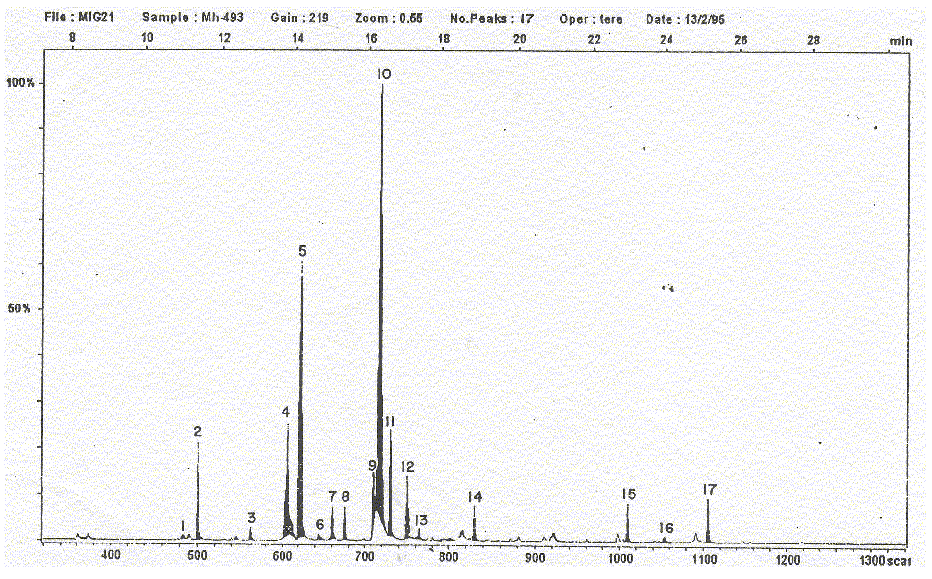
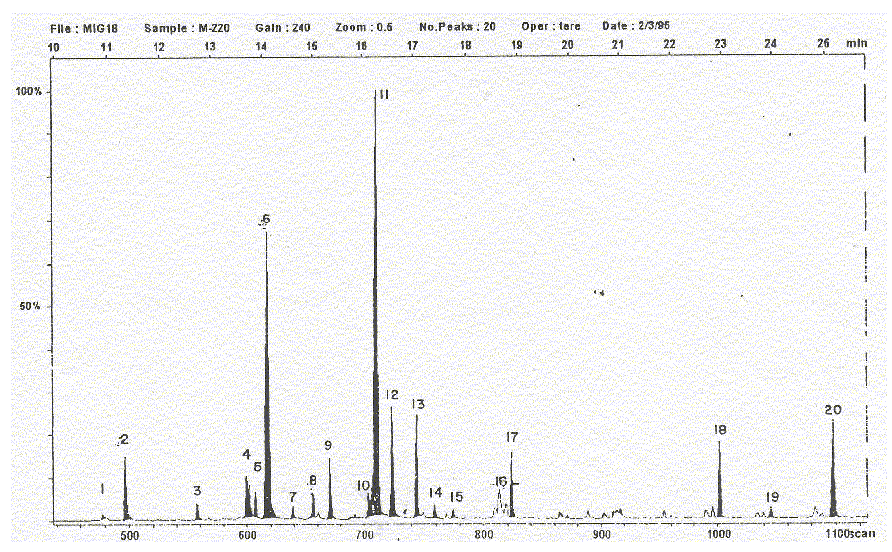
</front><body><![CDATA[ <P>INSTITUTO DE MEDICINA TROPICAL "PEDRO KOUR&Iacute;" </P> <H2>An&aacute;lisis de &aacute;cidos grasos de cepas de <I>Mycobacterium habana </I>y<I> Mycobacterium simiae</i></H2>     <P><A HREF="#autores"><I>Lic. Lilian M. Mederos Cuervo,<SUP>1</SUP> Lic. Efra&iacute;n &Aacute;lvarez,<SUP>2</SUP> Dr. Ar&iacute;stides Rosado,<SUP>3</SUP> Lic. Margarita T. Correa,<SUP>4</SUP> T&eacute;c. Miguel Reyes<SUP>5</SUP> y Dr. Jos&eacute; A. Valdivia<SUP>6</sup></I></A> </P> <H4>RESUMEN</H4><DIR>      <BLOCKQUOTE>Se analizan comparativamente las fracciones de &aacute;cidos grasos micobacterianos de cepas pertenecientes a las especies<I> Mycobacterium habana y Mycobacterium simiae.</I>En este estudio se emplea la t&eacute;cnica de cromatograf&iacute;a gas-l&iacute;quido acoplada a espectrometr&iacute;a de masas. Se exponen y comparan los perfiles cromatogr&aacute;ficos obtenidos por esta t&eacute;cnica, se demuestra su valor como elemento alternativo en la caracterizaci&oacute;n micobacteriana, con ella se analizan las posibles diferencias que puedan existir entre especies micobacterianas y llegar a identificar las fracciones de &aacute;cidos grasos presentes. Los resultados demuestran que las cepas en estudio presentan cantidades cuantificables de &aacute;cidos grasos con cadenas de m&aacute;s de 20 &aacute;tomos de carbono. Entre las cepas existen peque&ntilde;as diferencias con respecto a estos componentes org&aacute;nicos, queda demostrado que cada una describe un patr&oacute;n cromatogr&aacute;fico caracter&iacute;stico, aunque la composici&oacute;n de los &aacute;cidos grasos presentes es muy parecida en las 2 especies en estudio.</BLOCKQUOTE><DIR>      <P><B>Descriptores DeCS:</b><I> </I>ACIDOS GRASOS; CROMATOGRAFIA EN CEPA DELGADA; MYCOBACTERIUM; MYCOBACTERIUM LEPRAE/ef drogas; MYCOBACTERIUM TUBERCULOSIS/ef drogas.</P></DIR> </DIR>      <P>En la d&eacute;cada de los 60, la cromatograf&iacute;a en capa fina ayud&oacute; a definir e identificar especies de micobacterias, a la vez que mostr&oacute; la complejidad de los diferentes tipos de l&iacute;pidos micobacterianos mediante el an&aacute;lisis de &eacute;stos en diferentes mezclas de solventes org&aacute;nicos. Esta t&eacute;cnica sigue us&aacute;ndose en la actualidad con los mismos fines.<SUP>1</SUP> </P>     <P>La aplicaci&oacute;n de la cromatograf&iacute;a de gases en la identificaci&oacute;n de micobacterias se desarroll&oacute; en forma paralela a la de la cromatograf&iacute;a en capa fina, al inicio combinada con pir&oacute;lisis y posteriormente sola, como t&eacute;cnica anal&iacute;tica de &aacute;cidos grasos.<SUP>2-5</SUP> Esta t&eacute;cnica se expandi&oacute; con rapidez en las d&eacute;cadas de los 70 y 80, m&aacute;s tarde se incorpor&oacute; a ella la espectrometr&iacute;a de masas, con el fin de conseguir una mayor resoluci&oacute;n e informaci&oacute;n "cualitativa" de los perfiles cromatogr&aacute;ficos. Esta combinaci&oacute;n de t&eacute;cnicas se propone como m&eacute;todo de detecci&oacute;n r&aacute;pida de algunos componentes celulares de micobacterias.<SUP>6-8</SUP> </P>     <P>Las especies <I>Mycobacterium habana</I> y <I>Mycobacterium simiae</I> han sido objeto de estudio de muchos investigadores pues presentan una taxonom&iacute;a semejante, por su implicaci&oacute;n patog&eacute;nica se ha profundizado en el estudio de sus fracciones de l&iacute;pidos. En el <I>Mycobacterium habana </I>se han encontrado 3 fracciones de ant&iacute;genos proteicos que han reaccionado frente a sueros de pacientes enfermos de lepra y tuberculosis, lo que ha hecho que se piense en esta especie micobacteriana como posible candidato a vacuna contra estas enfermedades.<SUP>9</SUP> </P>     <P>En este trabajo se utilizan t&eacute;cnicas cromatogr&aacute;ficas para el an&aacute;lisis de las fracciones de &aacute;cidos grasos de un grupo de cepas de <I>Mycobacterium habana</I> de la colecci&oacute;n de laboratorio de los autores, las que hab&iacute;an sido caracterizadas por t&eacute;cnicas convencionales por <I>Valdivia</I> y otros en 1971,<SUP>10</SUP> los perfiles cromatogr&aacute;ficos de &eacute;stas son analizados comparativamente con los 2 serotipos del <I>Mycobacterium simiae,</I> especie descrita por <I>Karasova</I> y otros en 1965;<SUP>11</SUP> en este caso las t&eacute;cnicas seleccionadas fueron cromatograf&iacute;a de gases acoplada a espectrometr&iacute;a de masas, con el objetivo de encontrar semejanzas o diferencias entre estas especies micobacterianas con respecto a estos componentes org&aacute;nicos, que tienen importantes funciones en este g&eacute;nero microbiano. </P> <H4>M&Eacute;TODOS</H4>     <P>Se analizaron 3 cepas pertenecientes a la especie <I>M. habana</I> aisladas de pacientes sintom&aacute;ticos respiratorios (SR+14 d) &eacute;stas son las cepas 337, 220 y 493, adem&aacute;s los 2 serotipos (I y II) de <I>M. simiae,</I> todas pertenecientes a la colecci&oacute;n de cepas del Laboratorio Nacional de Referencias de Micobacterias y Tuberculosis del Instituto de Medicina Tropical "Pedro Kour&iacute;" (IPK). Las cepas fueron cultivadas en el medio de cultivo UIT-L durante un per&iacute;odo de 3-4 semanas a 37 <FONT FACE="Symbol,Times New Roman">&amp;deg;</FONT> C.<SUP>12,13</SUP> </P>     <P>Para la t&eacute;cnica de cromatograf&iacute;a gas-l&iacute;quido se utiliz&oacute;: equipo JOEL, modelo JMS DX-300, columna capilar SRB-1 SUPELCO (30 m de largo, 0,32 mm d.), la temperatura de corrida fue de 80-280 <FONT FACE="Symbol,Times New Roman">&amp;deg;</FONT>C, la temperatura del inyector de 280 <FONT FACE="Symbol,Times New Roman">&amp;deg;</FONT>C. </P>     ]]></body>
<body><![CDATA[<P>Las condiciones de extracci&oacute;n y de trabajo empleadas fueron las referidas por <I>Khoo </I>y otros.<SUP>9</SUP> </P> <H4>RESULTADOS</H4>     <P>Los resultados obtenidos por la t&eacute;cnica de cromatograf&iacute;a de gases acoplada a espectrometr&iacute;a de masas representados en las figuras 1, 2, 3, 4 y 5, son evaluados de forma cualitativa, de esta forma se compararon los perfiles cromatogr&aacute;ficos de los &aacute;cidos grasos presentes en cada una de las cepas en estudio. En los anexos se muestran los &aacute;cidos grasos encontrados en cada cepa analizada. </P>     <P ALIGN="CENTER"><A HREF="/img/revistas/mtr/v51n2/f0108299.gif"><IMG SRC="/img/revistas/mtr/v51n2/f0108299.gif" BORDER=0 WIDTH=213 HEIGHT=131 ALT="Figura 1"></A></P>     
<P><B>Fig. 1.</b> <I>Mycobacterium habana </I>220. Cromatograma obtenido al aplicar la t&eacute;cnica de cromatograf&iacute;a de gases acoplada a espectrometr&iacute;a de masas (GC-EM). </P>     <P>Para el an&aacute;lisis se tom&oacute; el criterio utilizado en la literatura de fragmentar los cromatogramas en 3 zonas. Una zona que incluye los &aacute;cidos grasos C14-17, otra el "<I>pool </I>de &aacute;cidos" C18 y una &uacute;ltima zona que comprende los &aacute;cidos C24-26.<SUP>14,15</SUP> </P>     <P>Desde el punto de vista cualitativo los perfiles cromatogr&aacute;ficos son muy similares, aunque se ponen de manifiesto diferencias puntuales entre el orden o presencia de determinados &aacute;cidos grasos micobacterianos. </P>     <P>Al observar en todas las figuras la primera zona a analizar (C14-17), &eacute;sta es bastante conservada en todas las cepas estudiadas; esta zona es la menos discutida por otros autores debido a que no muestra diferencias significativas,<SUP>14</SUP> no obstante, llama la atenci&oacute;n que en la cepa <I>M. habana</I> 337 (fig. 2) y <I>M. simiae</I> serotipo II (fig. 5) no presentan en esta zona el &aacute;cido miristoleico (C14:1), esto pudiera ser el primer criterio de diferenciaci&oacute;n entre estas cepas. </P>     <P ALIGN="CENTER"><A HREF="/img/revistas/mtr/v51n2/f0208299.gif"><IMG SRC="/img/revistas/mtr/v51n2/f0208299.gif" BORDER=0 WIDTH=264 HEIGHT=167 ALT="Figura 2"></A></P>     
<P><B>Fig. 2. </b><I>Mycobacterium habana</I> 337. Cromatograma obtenido al aplicar la t&eacute;cnica de cromatograf&iacute;a de gases acoplada a espectrometr&iacute;a de masas (GC-EM). </P>     <P>Al observar la zona del "<I>pool </I>de &aacute;cidos C18" se observa una notable diferencia respecto al contenido del &aacute;cido araqu&iacute;dico (C20) s&oacute;lo presente en 2 de las 5 cepas,<I> M. habana</I> 220 (fig.1) y <I>M. habana</I> 493 (fig. 3). Adem&aacute;s, analizando de forma relativa las variaciones cuantitativas en esta zona, se pueden plantear ciertas relaciones de variaci&oacute;n entre el contenido de diferentes &aacute;cidos grasos celulares de esta zona espec&iacute;fica. </P>     ]]></body>
<body><![CDATA[<P ALIGN="CENTER"><A HREF="/img/revistas/mtr/v51n2/f0308299.gif"><IMG SRC="/img/revistas/mtr/v51n2/f0308299.gif" BORDER=0 WIDTH=254 HEIGHT=156 ALT="Figura 3"></A></P>     
<P><B>Fig. 3</b>. <I>Mycobacterium habana</I> 493. Cromatograma obtenido al aplicar la t&eacute;cnica de cromatograf&iacute;a de gases acoplada a espectrometr&iacute;a de masas (GC-EM). </P>     <P>Por ejemplo, al analizar el coeficiente de &aacute;cido tuberculoeste&aacute;rico/este&aacute;rico presente en la zona del "<I>pool</I> de &aacute;cidos" de C18, se llega a conclusiones importantes, pues el comportamiento m&aacute;s general es que el &aacute;cido este&aacute;rico sea un componente mayoritario con respecto al &aacute;cido tuberculo-este&aacute;rico,<SUP>16</SUP> pero se hace significativa la inversi&oacute;n del cociente en las cepas<I> M. habana </I>337 (cocien-te = 2,73) (fig. 2) y <I>M. simiae I</I> (cociente = 1,19) (fig. 4). </P>     <P ALIGN="CENTER"><A HREF="/img/revistas/mtr/v51n2/f0408299.gif"><IMG SRC="/img/revistas/mtr/v51n2/f0408299.gif" BORDER=0 WIDTH=299 HEIGHT=185 ALT="Figura 4"></A></P>     
<P><B>Fig. 4</b>. <I>Mycobacterium simiae</I> (serotipo I). Cromatograma obtenido al aplicar la t&eacute;cnica de cromatograf&iacute;a de gases acoplada a espectrometr&iacute;a de masas (GC-EM). </P>     <P>La regi&oacute;n m&aacute;s discutida en la literatura es la que comprende a los &aacute;cidos C24-26. Aunque en las cepas estudiadas el patr&oacute;n general fue una mayor concentraci&oacute;n de C26:0 con respecto a C24:0, estos perfiles pueden presentar variaciones en dependencia de la temperatura del inyector, que a su vez provocan una pir&oacute;lisis de envergadura en los &aacute;cidos mic&oacute;licos originando diferentes patrones en los perfiles cromatogr&aacute;ficos respectivos, coincidimos con la literatura cuando describe esta zona importante para el establecimiento de un futuro diagn&oacute;stico.<SUP>14,16</SUP> </P>     <P>Por &uacute;ltimo otro detalle a destacar fue que la concentraci&oacute;n de los &aacute;cidos palm&iacute;tico (C26:0) y oleico (C18:1), sobresale del resto de las cepas estudiadas. </P>     <P>Mediante la cromatograf&iacute;a gaseosa es posible observar c&oacute;mo, a excepci&oacute;n del Complejo <I>Mycobacterium avium-Intracellulare</I>, que no se diferencian entre s&iacute;, las dem&aacute;s micobacterias estudiadas muestran diferencias en su contenido de &aacute;cidos grasos de cadenas C12-C26.<SUP>17</SUP> </P>     <P>Por lo general, los cromatogramas o perfiles cromatogr&aacute;ficos describen un patr&oacute;n caracter&iacute;stico para las cepas estudiadas, la composici&oacute;n de &aacute;cidos grasos es bastante parecida para todas ellas. En todas es caracter&iacute;stico el alto contenido de &aacute;cidos palm&iacute;tico y oleico, aunque pueden mencionarse algunas diferencias con respecto a otras especies de &aacute;cidos grasos: el &aacute;cido miristoleico (C14:1) no fue detectado en la cepa <I>M. habana</I> 337 (fig.2) y <I>M. simiae II</I> (fig.5), hecho que no permite afirmar su ausencia, por lo que trabajos futuros reafirmar&aacute;n esta evidencia experimental. Adem&aacute;s la inversi&oacute;n en el mayor contenido de &aacute;cido tuberculoeste&aacute;rico que de este&aacute;rico encontrada en las cepas <I>M.habana </I>337 (fig. 2) y <I>M. simiae I</I> (fig. 4), debe ser una caracter&iacute;stica a observar en todos los posibles trabajos encaminados a la obtenci&oacute;n de una mejor clasificaci&oacute;n taxon&oacute;mica. </P>     <P ALIGN="CENTER"><A HREF="/img/revistas/mtr/v51n2/f0508299.gif"><IMG SRC="/img/revistas/mtr/v51n2/f0508299.gif" BORDER=0 WIDTH=271 HEIGHT=174 ALT="Figura 5"></A></P>     
]]></body>
<body><![CDATA[<P><B>Fig. 5</b>.<I> Mycobacterium simiae </I>(serotipo II). Cromatograma obtenido al aplicar la t&eacute;cnica de cromatograf&iacute;a de gases acoplada a espectrometr&iacute;a de masas (GC-EM). </P>     <P>Las cepas <I>M. habana </I>220 y 493 (figs. 1 y 3, respectivamente) tienen diferencias respecto al &aacute;cido araqu&iacute;dico (C20:0) como especie particular de ambas cepas, adem&aacute;s del &aacute;cido pentacosanoico (C25:0). </P> <H4>DISCUSI&Oacute;N</H4>     <P>Seg&uacute;n <I>Casal,</I><SUP>17</SUP><I> Mycobacterium tuberculosis</I> especie t&iacute;pica de ese g&eacute;nero, presenta s&oacute;lo trazas de &aacute;cidos grasos de cadena C11 y no m&aacute;s largas que C20. Es caracter&iacute;stico un bajo contenido en mir&iacute;stico (C14:0) y una cantidad relativamente escasa de palmitoleico (C16:1) siendo mayor el contenido en este&aacute;rico (C18:0), tuberculoeste&aacute;rico (C19:0) y oleico (C18:1), que dan un aspecto tric&uacute;spide al cromatograma en esta zona, con predominio del tuberculoeste&aacute;rico.<SUP>17</SUP> </P>     <P>De acuerdo con estos resultados, se puede plantear que las cepas estudiadas s&iacute; presentan cantidades cuantificables de &aacute;cidos grasos con cadenas de m&aacute;s de 20 &aacute;tomos de carbono, en particular C24:0 y C26:0; tambi&eacute;n el contenido del &aacute;cido mir&iacute;stico es semejante y oscila entre valores de 2,49 hasta 7,91 %, o sea, ni muy bajo pero tampoco muy alto. Con respecto al &aacute;cido palmitoleico (C16:1) se detectaron 2 is&oacute;meros cuyas relaciones cuantificables se comportaron con regularidad, mayor porcentaje del primero que del segundo; en la cepa<I> M. habana</I> 493 (fig.3), no fue posible la diferenciaci&oacute;n de ambos is&oacute;meros y es el &uacute;nico caso donde se ve un aumento del porcentaje de &aacute;rea, es probable que sea debido a la columna que no es suficientemente espec&iacute;fica para la separaci&oacute;n de &aacute;cidos grasos. </P>     <P>La zona que comprende los &aacute;cidos C17 es extremadamente compleja en este g&eacute;nero.<SUP>16</SUP> Para estas cepas siempre fueron identificados 3 tipos de &aacute;cidos grasos, que en algunas se logr&oacute; cuantificar y en otras s&oacute;lo detectar; &eacute;stas fueron &aacute;cido metil-palm&iacute;tico (C17:0), &aacute;cido heptadecenoico (C17:1) y &aacute;cido marg&aacute;rico (C17:0). </P>     <P>Se debe concluir que a pesar de que se ha planteado la similitud entre las especies <I>M. habana</I> y <I>M. similae </I>, en el estudio realizado se encuentran ciertas diferencias, no s&oacute;lo entre estas 2 especies micobacterianas, sino tambi&eacute;n intraespecie. </P>     <P><I>Larson</i> y otros, en 1985,<SUP>14</SUP> plantearon la posibilidad de ejecutar en un grado razonable la reproductibilidad interlaboratorio de los perfiles de &aacute;cidos grasos, junto a la obtenci&oacute;n de un banco de base de datos de cromatogramas de referencias con recomendaciones concernientes al cultivo, preparaci&oacute;n de las muestras, condiciones anal&iacute;ticas, etc&eacute;tera, que sin duda afectan la composici&oacute;n de &aacute;cidos grasos. Sin esto ser&iacute;a imposible aplicar la cromatograf&iacute;a gaseosa en el diagn&oacute;stico.<I> Yassin</I> y otros <SUP>18,19</SUP> emplearon la misma metodolog&iacute;a para diferenciar especies dentro de este g&eacute;nero. Se coincide con estos autores cuando recomiendan la utilizaci&oacute;n de la cromatograf&iacute;a de gases acoplada a espectrometr&iacute;a de masas para el an&aacute;lisis entre especies micobacterianas, tanto con fines taxon&oacute;micos o con diagn&oacute;sticos. </P>     <P ALIGN="CENTER"><B>ANEXO 1.</b> Resultados obtenidos por la t&eacute;cnica de GLC para cada cepa utilizada</P>     <P ALIGN="CENTER">    <CENTER><TABLE CELLSPACING=0 BORDER=0 CELLPADDING=4> <TR><TD VALIGN="TOP" COLSPAN=4>     ]]></body>
<body><![CDATA[<P ALIGN="CENTER">CEPA <I>Mycobacterium habana </I>220</TD> </TR> <TR><TD WIDTH=156 VALIGN="TOP">     <P>Pico</TD> <TD WIDTH=156 VALIGN="TOP">     <P>Nombre qu&iacute;mico o trivial</TD> <TD WIDTH=156 VALIGN="TOP">     <P ALIGN="CENTER">&Aacute;tomos de carbono</TD> <TD WIDTH=156 VALIGN="TOP">     <P ALIGN="CENTER">&Aacute;rea/total</P>     <P ALIGN="CENTER">(%)</TD> </TR> <TR><TD WIDTH=156 VALIGN="TOP">     <P>1</TD> <TD WIDTH=156 VALIGN="TOP">     <P>&Aacute;cido miristoleico</TD> <TD WIDTH=156 VALIGN="TOP">     <P ALIGN="CENTER">14:1</TD> <TD WIDTH=156 VALIGN="TOP">     <P ALIGN="CENTER">0,22</TD> </TR> <TR><TD WIDTH=156 VALIGN="TOP">     ]]></body>
<body><![CDATA[<P>2</TD> <TD WIDTH=156 VALIGN="TOP">     <P>&Aacute;cido mir&iacute;stico</TD> <TD WIDTH=156 VALIGN="TOP">     <P ALIGN="CENTER">14:0</TD> <TD WIDTH=156 VALIGN="TOP">     <P ALIGN="CENTER">3,45</TD> </TR> <TR><TD WIDTH=156 VALIGN="TOP">     <P>3</TD> <TD WIDTH=156 VALIGN="TOP">     <P>&Aacute;cido pentadecanoico</TD> <TD WIDTH=156 VALIGN="TOP">     <P ALIGN="CENTER">15:0</TD> <TD WIDTH=156 VALIGN="TOP">     <P ALIGN="CENTER">0,99</TD> </TR> <TR><TD WIDTH=156 VALIGN="TOP">     <P>4</TD> <TD WIDTH=156 VALIGN="TOP">     <P>&Aacute;cido palmitoleico</TD> <TD WIDTH=156 VALIGN="TOP">     ]]></body>
<body><![CDATA[<P ALIGN="CENTER">16:1</TD> <TD WIDTH=156 VALIGN="TOP">     <P ALIGN="CENTER">3,77</TD> </TR> <TR><TD WIDTH=156 VALIGN="TOP">     <P>5</TD> <TD WIDTH=156 VALIGN="TOP">     <P>&Aacute;cido palmitoleico</TD> <TD WIDTH=156 VALIGN="TOP">     <P>&nbsp;</TD> <TD WIDTH=156 VALIGN="TOP">     <P>&nbsp;</TD> </TR> <TR><TD WIDTH=156 VALIGN="TOP">     <P>&nbsp;</TD> <TD WIDTH=156 VALIGN="TOP">     <P>(is&oacute;mero)</TD> <TD WIDTH=156 VALIGN="TOP">     <P ALIGN="CENTER">16:1</TD> <TD WIDTH=156 VALIGN="TOP">     <P ALIGN="CENTER">1,07</TD> </TR> <TR><TD WIDTH=156 VALIGN="TOP">     ]]></body>
<body><![CDATA[<P>6</TD> <TD WIDTH=156 VALIGN="TOP">     <P>&Aacute;cido palm&iacute;tico</TD> <TD WIDTH=156 VALIGN="TOP">     <P ALIGN="CENTER">16:0</TD> <TD WIDTH=156 VALIGN="TOP">     <P ALIGN="CENTER">24,71</TD> </TR> <TR><TD WIDTH=156 VALIGN="TOP">     <P>7</TD> <TD WIDTH=156 VALIGN="TOP">     <P>&Aacute;cido metil-palm&iacute;tico</TD> <TD WIDTH=156 VALIGN="TOP">     <P>&nbsp;</TD> <TD WIDTH=156 VALIGN="TOP">     <P>&nbsp;</TD> </TR> <TR><TD WIDTH=156 VALIGN="TOP">     <P>&nbsp;</TD> <TD WIDTH=156 VALIGN="TOP">     <P>(is&oacute;mero)</TD> <TD WIDTH=156 VALIGN="TOP">     ]]></body>
<body><![CDATA[<P>&nbsp;</TD> <TD WIDTH=156 VALIGN="TOP">     <P>&nbsp;</TD> </TR> <TR><TD WIDTH=156 VALIGN="TOP">     <P>&nbsp;</TD> <TD WIDTH=156 VALIGN="TOP">     <P>(Probablemente 10-metil)</TD> <TD WIDTH=156 VALIGN="TOP">     <P ALIGN="CENTER">17:0</TD> <TD WIDTH=156 VALIGN="TOP">     <P ALIGN="CENTER">0,56</TD> </TR> <TR><TD WIDTH=156 VALIGN="TOP">     <P>8</TD> <TD WIDTH=156 VALIGN="TOP">     <P>&Aacute;cido heptadecenoico</TD> <TD WIDTH=156 VALIGN="TOP">     <P ALIGN="CENTER">17:1</TD> <TD WIDTH=156 VALIGN="TOP">     <P ALIGN="CENTER">1,30</TD> </TR> <TR><TD WIDTH=156 VALIGN="TOP">     ]]></body>
<body><![CDATA[<P>9</TD> <TD WIDTH=156 VALIGN="TOP">     <P>&Aacute;cido marg&aacute;rico</TD> <TD WIDTH=156 VALIGN="TOP">     <P ALIGN="CENTER">17:0</TD> <TD WIDTH=156 VALIGN="TOP">     <P ALIGN="CENTER">2,69</TD> </TR> <TR><TD WIDTH=156 VALIGN="TOP">     <P>10</TD> <TD WIDTH=156 VALIGN="TOP">     <P>&Aacute;cido linoleico</TD> <TD WIDTH=156 VALIGN="TOP">     <P ALIGN="CENTER">18:2</TD> <TD WIDTH=156 VALIGN="TOP">     <P ALIGN="CENTER">0,46</TD> </TR> <TR><TD WIDTH=156 VALIGN="TOP">     <P>11</TD> <TD WIDTH=156 VALIGN="TOP">     <P>&Aacute;cido oleico</TD> <TD WIDTH=156 VALIGN="TOP">     ]]></body>
<body><![CDATA[<P ALIGN="CENTER">18:1</TD> <TD WIDTH=156 VALIGN="TOP">     <P ALIGN="CENTER">37,04</TD> </TR> <TR><TD WIDTH=156 VALIGN="TOP">     <P>12</TD> <TD WIDTH=156 VALIGN="TOP">     <P>&Aacute;cido este&aacute;rico</TD> <TD WIDTH=156 VALIGN="TOP">     <P ALIGN="CENTER">18:0</TD> <TD WIDTH=156 VALIGN="TOP">     <P ALIGN="CENTER">5,73</TD> </TR> <TR><TD WIDTH=156 VALIGN="TOP">     <P>13</TD> <TD WIDTH=156 VALIGN="TOP">     <P>&Aacute;cido tubercoeste&aacute;rico</TD> <TD WIDTH=156 VALIGN="TOP">     <P>&nbsp;</TD> <TD WIDTH=156 VALIGN="TOP">     <P>&nbsp;</TD> </TR> <TR><TD WIDTH=156 VALIGN="TOP">     ]]></body>
<body><![CDATA[<P>&nbsp;</TD> <TD WIDTH=156 VALIGN="TOP">     <P>(&aacute;cido 10-metil-este&aacute;rico)</TD> <TD WIDTH=156 VALIGN="TOP">     <P ALIGN="CENTER">19:0</TD> <TD WIDTH=156 VALIGN="TOP">     <P ALIGN="CENTER">4,58</TD> </TR> <TR><TD WIDTH=156 VALIGN="TOP">     <P>14</TD> <TD WIDTH=156 VALIGN="TOP">     <P>&Aacute;cido nonadecenoico</TD> <TD WIDTH=156 VALIGN="TOP">     <P>&nbsp;</TD> <TD WIDTH=156 VALIGN="TOP">     <P>&nbsp;</TD> </TR> <TR><TD WIDTH=156 VALIGN="TOP">     <P>&nbsp;</TD> <TD WIDTH=156 VALIGN="TOP">     <P>(is&oacute;mero)</TD> <TD WIDTH=156 VALIGN="TOP">     ]]></body>
<body><![CDATA[<P ALIGN="CENTER">19:1</TD> <TD WIDTH=156 VALIGN="TOP">     <P ALIGN="CENTER">0,67</TD> </TR> <TR><TD WIDTH=156 VALIGN="TOP">     <P>15</TD> <TD WIDTH=156 VALIGN="TOP">     <P>&Aacute;cido metil-este&aacute;rico</TD> <TD WIDTH=156 VALIGN="TOP">     <P>&nbsp;</TD> <TD WIDTH=156 VALIGN="TOP">     <P>&nbsp;</TD> </TR> <TR><TD WIDTH=156 VALIGN="TOP">     <P>&nbsp;</TD> <TD WIDTH=156 VALIGN="TOP">     <P>(is&oacute;mero)</TD> <TD WIDTH=156 VALIGN="TOP">     <P ALIGN="CENTER">19:0</TD> <TD WIDTH=156 VALIGN="TOP">     <P ALIGN="CENTER">0,42</TD> </TR> <TR><TD WIDTH=156 VALIGN="TOP">     ]]></body>
<body><![CDATA[<P>16</TD> <TD WIDTH=156 VALIGN="TOP">     <P>No identificado (ND)</TD> <TD WIDTH=156 VALIGN="TOP">     <P ALIGN="CENTER">-</TD> <TD WIDTH=156 VALIGN="TOP">     <P ALIGN="CENTER">-</TD> </TR> <TR><TD WIDTH=156 VALIGN="TOP">     <P>17</TD> <TD WIDTH=156 VALIGN="TOP">     <P>&Aacute;cido araqu&iacute;dico</TD> <TD WIDTH=156 VALIGN="TOP">     <P ALIGN="CENTER">20:0</TD> <TD WIDTH=156 VALIGN="TOP">     <P ALIGN="CENTER">2,92</TD> </TR> <TR><TD WIDTH=156 VALIGN="TOP">     <P>18</TD> <TD WIDTH=156 VALIGN="TOP">     <P>&Aacute;cido lignoc&eacute;rico</TD> <TD WIDTH=156 VALIGN="TOP">     ]]></body>
<body><![CDATA[<P ALIGN="CENTER">24:0</TD> <TD WIDTH=156 VALIGN="TOP">     <P ALIGN="CENTER">3,13</TD> </TR> <TR><TD WIDTH=156 VALIGN="TOP">     <P>19</TD> <TD WIDTH=156 VALIGN="TOP">     <P>&Aacute;cido pentacosanoico</TD> <TD WIDTH=156 VALIGN="TOP">     <P ALIGN="CENTER">25:0</TD> <TD WIDTH=156 VALIGN="TOP">     <P ALIGN="CENTER">0,56</TD> </TR> <TR><TD WIDTH=156 VALIGN="TOP">     <P>20</TD> <TD WIDTH=156 VALIGN="TOP">     <P>&Aacute;cido cerot&iacute;nico</TD> <TD WIDTH=156 VALIGN="TOP">     <P ALIGN="CENTER">26:0</TD> <TD WIDTH=156 VALIGN="TOP">     <P ALIGN="CENTER">5,58</TD> </TR> </TABLE> </CENTER>    ]]></body>
<body><![CDATA[<p></P>      <P ALIGN="CENTER"><B>ANEXO 2</b>. &Aacute;cidos grasos obtenidos en cada cepa estudiada</P>     <P ALIGN="CENTER">    <CENTER><TABLE CELLSPACING=0 BORDER=0 CELLPADDING=4> <TR><TD VALIGN="TOP" COLSPAN=4>     <P ALIGN="CENTER">Cepa <I>Mycobacterium habana</I> 337</TD> </TR> <TR><TD WIDTH=156 VALIGN="TOP">     <P>Pico</TD> <TD WIDTH=156 VALIGN="TOP">     <P>Nombre qu&iacute;mico o trivial</TD> <TD WIDTH=156 VALIGN="TOP">     <P ALIGN="CENTER">&Aacute;tomos de carbono</TD> <TD WIDTH=156 VALIGN="TOP">     <P ALIGN="CENTER">&Aacute;rea/total</P>     <P ALIGN="CENTER">(%)</TD> </TR> <TR><TD WIDTH=156 VALIGN="TOP">     ]]></body>
<body><![CDATA[<P>1</TD> <TD WIDTH=156 VALIGN="TOP">     <P>&Aacute;cido mir&iacute;stico</TD> <TD WIDTH=156 VALIGN="TOP">     <P ALIGN="CENTER">14:0</TD> <TD WIDTH=156 VALIGN="TOP">     <P ALIGN="CENTER">7,91</TD> </TR> <TR><TD WIDTH=156 VALIGN="TOP">     <P>2</TD> <TD WIDTH=156 VALIGN="TOP">     <P>&Aacute;cido pentadecanoico</TD> <TD WIDTH=156 VALIGN="TOP">     <P ALIGN="CENTER">15:0</TD> <TD WIDTH=156 VALIGN="TOP">     <P ALIGN="CENTER">0,56</TD> </TR> <TR><TD WIDTH=156 VALIGN="TOP">     <P>3</TD> <TD WIDTH=156 VALIGN="TOP">     <P>Acido palmitoleico</TD> <TD WIDTH=156 VALIGN="TOP">     ]]></body>
<body><![CDATA[<P>&nbsp;</TD> <TD WIDTH=156 VALIGN="TOP">     <P>&nbsp;</TD> </TR> <TR><TD WIDTH=156 VALIGN="TOP">     <P>&nbsp;</TD> <TD WIDTH=156 VALIGN="TOP">     <P>(is&oacute;mero)</TD> <TD WIDTH=156 VALIGN="TOP">     <P ALIGN="CENTER">16:1</TD> <TD WIDTH=156 VALIGN="TOP">     <P ALIGN="CENTER">4,66</TD> </TR> <TR><TD WIDTH=156 VALIGN="TOP">     <P>4</TD> <TD WIDTH=156 VALIGN="TOP">     <P>&Aacute;cido palmitoleico</TD> <TD WIDTH=156 VALIGN="TOP">     <P>&nbsp;</TD> <TD WIDTH=156 VALIGN="TOP">     <P>&nbsp;</TD> </TR> <TR><TD WIDTH=156 VALIGN="TOP">     ]]></body>
<body><![CDATA[<P>&nbsp;</TD> <TD WIDTH=156 VALIGN="TOP">     <P>(is&oacute;mero)</TD> <TD WIDTH=156 VALIGN="TOP">     <P ALIGN="CENTER">16:1</TD> <TD WIDTH=156 VALIGN="TOP">     <P ALIGN="CENTER">2,04</TD> </TR> <TR><TD WIDTH=156 VALIGN="TOP">     <P>5</TD> <TD WIDTH=156 VALIGN="TOP">     <P>&Aacute;cido palm&iacute;tico</TD> <TD WIDTH=156 VALIGN="TOP">     <P ALIGN="CENTER">16:0</TD> <TD WIDTH=156 VALIGN="TOP">     <P ALIGN="CENTER">26,06</TD> </TR> <TR><TD WIDTH=156 VALIGN="TOP">     <P>6</TD> <TD WIDTH=156 VALIGN="TOP">     <P>&Aacute;cido metil-palm&iacute;tico</TD> <TD WIDTH=156 VALIGN="TOP">     ]]></body>
<body><![CDATA[<P>&nbsp;</TD> <TD WIDTH=156 VALIGN="TOP">     <P>&nbsp;</TD> </TR> <TR><TD WIDTH=156 VALIGN="TOP">     <P>&nbsp;</TD> <TD WIDTH=156 VALIGN="TOP">     <P>(is&oacute;mero)</TD> <TD WIDTH=156 VALIGN="TOP">     <P>&nbsp;</TD> <TD WIDTH=156 VALIGN="TOP">     <P>&nbsp;</TD> </TR> <TR><TD WIDTH=156 VALIGN="TOP">     <P>&nbsp;</TD> <TD WIDTH=156 VALIGN="TOP">     <P>(probablemente 10-metil)</TD> <TD WIDTH=156 VALIGN="TOP">     <P ALIGN="CENTER">17:0</TD> <TD WIDTH=156 VALIGN="TOP">     <P ALIGN="CENTER">-</TD> </TR> <TR><TD WIDTH=156 VALIGN="TOP">     ]]></body>
<body><![CDATA[<P>7</TD> <TD WIDTH=156 VALIGN="TOP">     <P>&Aacute;cido heptadecenoico</TD> <TD WIDTH=156 VALIGN="TOP">     <P>&nbsp;</TD> <TD WIDTH=156 VALIGN="TOP">     <P>&nbsp;</TD> </TR> <TR><TD WIDTH=156 VALIGN="TOP">     <P>&nbsp;</TD> <TD WIDTH=156 VALIGN="TOP">     <P>(is&oacute;mero)</TD> <TD WIDTH=156 VALIGN="TOP">     <P ALIGN="CENTER">17:1</TD> <TD WIDTH=156 VALIGN="TOP">     <P ALIGN="CENTER">-</TD> </TR> <TR><TD WIDTH=156 VALIGN="TOP">     <P>8</TD> <TD WIDTH=156 VALIGN="TOP">     <P>&Aacute;cido marg&aacute;rico</TD> <TD WIDTH=156 VALIGN="TOP">     ]]></body>
<body><![CDATA[<P ALIGN="CENTER">17:0</TD> <TD WIDTH=156 VALIGN="TOP">     <P ALIGN="CENTER">0,88</TD> </TR> <TR><TD WIDTH=156 VALIGN="TOP">     <P>9</TD> <TD WIDTH=156 VALIGN="TOP">     <P>&Aacute;cido linoleico</TD> <TD WIDTH=156 VALIGN="TOP">     <P ALIGN="CENTER">18:2</TD> <TD WIDTH=156 VALIGN="TOP">     <P ALIGN="CENTER">2,53</TD> </TR> <TR><TD WIDTH=156 VALIGN="TOP">     <P>10</TD> <TD WIDTH=156 VALIGN="TOP">     <P>&Aacute;cido oleico</TD> <TD WIDTH=156 VALIGN="TOP">     <P ALIGN="CENTER">18:1</TD> <TD WIDTH=156 VALIGN="TOP">     <P ALIGN="CENTER">35,59</TD> </TR> <TR><TD WIDTH=156 VALIGN="TOP">     ]]></body>
<body><![CDATA[<P>11</TD> <TD WIDTH=156 VALIGN="TOP">     <P>&Aacute;cido este&aacute;rico</TD> <TD WIDTH=156 VALIGN="TOP">     <P ALIGN="CENTER">18:0</TD> <TD WIDTH=156 VALIGN="TOP">     <P ALIGN="CENTER">4,13</TD> </TR> <TR><TD WIDTH=156 VALIGN="TOP">     <P>12</TD> <TD WIDTH=156 VALIGN="TOP">     <P>&Aacute;cido tuberculoeste&aacute;rico</TD> <TD WIDTH=156 VALIGN="TOP">     <P>&nbsp;</TD> <TD WIDTH=156 VALIGN="TOP">     <P>&nbsp;</TD> </TR> <TR><TD WIDTH=156 VALIGN="TOP">     <P>&nbsp;</TD> <TD WIDTH=156 VALIGN="TOP">     <P>(&aacute;cido 10-metil-este&aacute;rico)</TD> <TD WIDTH=156 VALIGN="TOP">     ]]></body>
<body><![CDATA[<P ALIGN="CENTER">19:0</TD> <TD WIDTH=156 VALIGN="TOP">     <P ALIGN="CENTER">11,30</TD> </TR> <TR><TD WIDTH=156 VALIGN="TOP">     <P>13</TD> <TD WIDTH=156 VALIGN="TOP">     <P>&Aacute;cido lignoc&eacute;rico</TD> <TD WIDTH=156 VALIGN="TOP">     <P ALIGN="CENTER">24:0</TD> <TD WIDTH=156 VALIGN="TOP">     <P ALIGN="CENTER">-</TD> </TR> <TR><TD WIDTH=156 VALIGN="TOP">     <P>14.&nbsp;</TD> <TD WIDTH=156 VALIGN="TOP">     <P>&Aacute;cido cerot&iacute;nico</TD> <TD WIDTH=156 VALIGN="TOP">     <P ALIGN="CENTER">26:0</TD> <TD WIDTH=156 VALIGN="TOP">     <P ALIGN="CENTER">0,76</TD> </TR> </TABLE> </CENTER>    ]]></body>
<body><![CDATA[<p></P>      <P ALIGN="CENTER"><B>ANEXO 3. </b>CEPA<I> Mycobacterium habana</I> 493</P>     <P ALIGN="CENTER">    <CENTER><TABLE CELLSPACING=0 BORDER=0 CELLPADDING=4 WIDTH=624> <TR><TD WIDTH="25%" VALIGN="TOP">     <P>Pico</TD> <TD WIDTH="25%" VALIGN="TOP">     <P>Nombre qu&iacute;mico o trivial</TD> <TD WIDTH="25%" VALIGN="TOP">     <P ALIGN="CENTER">&Aacute;tomos de carbono</TD> <TD WIDTH="25%" VALIGN="TOP">     <P ALIGN="CENTER">&Aacute;rea/total&nbsp;</P>     <P ALIGN="CENTER">(%)</TD> </TR> <TR><TD WIDTH="25%" VALIGN="TOP">     <P>1</TD> <TD WIDTH="25%" VALIGN="TOP">     ]]></body>
<body><![CDATA[<P>&Aacute;cido miristoleico</TD> <TD WIDTH="25%" VALIGN="TOP">     <P ALIGN="CENTER">14:1</TD> <TD WIDTH="25%" VALIGN="TOP">     <P ALIGN="CENTER">0,11</TD> </TR> <TR><TD WIDTH="25%" VALIGN="TOP">     <P>2</TD> <TD WIDTH="25%" VALIGN="TOP">     <P>&Aacute;cido mir&iacute;stico</TD> <TD WIDTH="25%" VALIGN="TOP">     <P ALIGN="CENTER">14:0</TD> <TD WIDTH="25%" VALIGN="TOP">     <P ALIGN="CENTER">4,40</TD> </TR> <TR><TD WIDTH="25%" VALIGN="TOP">     <P>3</TD> <TD WIDTH="25%" VALIGN="TOP">     <P>&Aacute;cido pentadecanoico</TD> <TD WIDTH="25%" VALIGN="TOP">     <P ALIGN="CENTER">15:0</TD> <TD WIDTH="25%" VALIGN="TOP">     ]]></body>
<body><![CDATA[<P ALIGN="CENTER">0,63</TD> </TR> <TR><TD WIDTH="25%" VALIGN="TOP">     <P>4</TD> <TD WIDTH="25%" VALIGN="TOP">     <P>&Aacute;cido palmitoleico</TD> <TD WIDTH="25%" VALIGN="TOP">     <P>&nbsp;</TD> <TD WIDTH="25%" VALIGN="TOP">     <P>&nbsp;</TD> </TR> <TR><TD WIDTH="25%" VALIGN="TOP">     <P>&nbsp;</TD> <TD WIDTH="25%" VALIGN="TOP">     <P>(is&oacute;mero)</TD> <TD WIDTH="25%" VALIGN="TOP">     <P ALIGN="CENTER">16:1</TD> <TD WIDTH="25%" VALIGN="TOP">     <P ALIGN="CENTER">7,31</TD> </TR> <TR><TD WIDTH="25%" VALIGN="TOP">     <P>5</TD> <TD WIDTH="25%" VALIGN="TOP">     ]]></body>
<body><![CDATA[<P>&Aacute;cido palm&iacute;tico</TD> <TD WIDTH="25%" VALIGN="TOP">     <P ALIGN="CENTER">16:0</TD> <TD WIDTH="25%" VALIGN="TOP">     <P ALIGN="CENTER">23,02</TD> </TR> <TR><TD WIDTH="25%" VALIGN="TOP">     <P>6</TD> <TD WIDTH="25%" VALIGN="TOP">     <P>&Aacute;cido metil-palm&iacute;tico</TD> <TD WIDTH="25%" VALIGN="TOP">     <P>&nbsp;</TD> <TD WIDTH="25%" VALIGN="TOP">     <P>&nbsp;</TD> </TR> <TR><TD WIDTH="25%" VALIGN="TOP">     <P>&nbsp;</TD> <TD WIDTH="25%" VALIGN="TOP">     <P>(is&oacute;mero)</TD> <TD WIDTH="25%" VALIGN="TOP">     <P>&nbsp;</TD> <TD WIDTH="25%" VALIGN="TOP">     ]]></body>
<body><![CDATA[<P>&nbsp;</TD> </TR> <TR><TD WIDTH="25%" VALIGN="TOP">     <P>&nbsp;</TD> <TD WIDTH="25%" VALIGN="TOP">     <P>(probablemente 10-metil)</TD> <TD WIDTH="25%" VALIGN="TOP">     <P ALIGN="CENTER">17:0</TD> <TD WIDTH="25%" VALIGN="TOP">     <P ALIGN="CENTER">0,21</TD> </TR> <TR><TD WIDTH="25%" VALIGN="TOP">     <P>7</TD> <TD WIDTH="25%" VALIGN="TOP">     <P>&Aacute;cido heptadecenoico</TD> <TD WIDTH="25%" VALIGN="TOP">     <P>&nbsp;</TD> <TD WIDTH="25%" VALIGN="TOP">     <P>&nbsp;</TD> </TR> <TR><TD WIDTH="25%" VALIGN="TOP">     <P>&nbsp;</TD> <TD WIDTH="25%" VALIGN="TOP">     ]]></body>
<body><![CDATA[<P>(is&oacute;mero)</TD> <TD WIDTH="25%" VALIGN="TOP">     <P ALIGN="CENTER">17:1</TD> <TD WIDTH="25%" VALIGN="TOP">     <P ALIGN="CENTER">1,46</TD> </TR> <TR><TD WIDTH="25%" VALIGN="TOP">     <P>8</TD> <TD WIDTH="25%" VALIGN="TOP">     <P>&Aacute;cido marg&aacute;rico</TD> <TD WIDTH="25%" VALIGN="TOP">     <P ALIGN="CENTER">17:0</TD> <TD WIDTH="25%" VALIGN="TOP">     <P ALIGN="CENTER">1,22</TD> </TR> <TR><TD WIDTH="25%" VALIGN="TOP">     <P>9</TD> <TD WIDTH="25%" VALIGN="TOP">     <P>&Aacute;cido linoleico</TD> <TD WIDTH="25%" VALIGN="TOP">     <P ALIGN="CENTER">18:2</TD> <TD WIDTH="25%" VALIGN="TOP">     ]]></body>
<body><![CDATA[<P ALIGN="CENTER">2,56</TD> </TR> <TR><TD WIDTH="25%" VALIGN="TOP">     <P>10</TD> <TD WIDTH="25%" VALIGN="TOP">     <P>&Aacute;cido oleico</TD> <TD WIDTH="25%" VALIGN="TOP">     <P ALIGN="CENTER">18:1</TD> <TD WIDTH="25%" VALIGN="TOP">     <P ALIGN="CENTER">44,32</TD> </TR> <TR><TD WIDTH="25%" VALIGN="TOP">     <P>11</TD> <TD WIDTH="25%" VALIGN="TOP">     <P>&Aacute;cido este&aacute;rico</TD> <TD WIDTH="25%" VALIGN="TOP">     <P ALIGN="CENTER">18:0</TD> <TD WIDTH="25%" VALIGN="TOP">     <P ALIGN="CENTER">4,97</TD> </TR> <TR><TD WIDTH="25%" VALIGN="TOP">     <P>12</TD> <TD WIDTH="25%" VALIGN="TOP">     ]]></body>
<body><![CDATA[<P>&Aacute;cido tuberculoeste&aacute;rico</TD> <TD WIDTH="25%" VALIGN="TOP">     <P>&nbsp;</TD> <TD WIDTH="25%" VALIGN="TOP">     <P>&nbsp;</TD> </TR> <TR><TD WIDTH="25%" VALIGN="TOP">     <P>&nbsp;</TD> <TD WIDTH="25%" VALIGN="TOP">     <P>(&aacute;cido 10-metil-este&aacute;rico)</TD> <TD WIDTH="25%" VALIGN="TOP">     <P ALIGN="CENTER">19:0</TD> <TD WIDTH="25%" VALIGN="TOP">     <P ALIGN="CENTER">2,91</TD> </TR> <TR><TD WIDTH="25%" VALIGN="TOP">     <P>13</TD> <TD WIDTH="25%" VALIGN="TOP">     <P>&Aacute;cido nonadecenoico</TD> <TD WIDTH="25%" VALIGN="TOP">     <P>&nbsp;</TD> <TD WIDTH="25%" VALIGN="TOP">     ]]></body>
<body><![CDATA[<P>&nbsp;</TD> </TR> <TR><TD WIDTH="25%" VALIGN="TOP">     <P>&nbsp;</TD> <TD WIDTH="25%" VALIGN="TOP">     <P>(is&oacute;mero)</TD> <TD WIDTH="25%" VALIGN="TOP">     <P ALIGN="CENTER">19:1</TD> <TD WIDTH="25%" VALIGN="TOP">     <P ALIGN="CENTER">0,53</TD> </TR> <TR><TD WIDTH="25%" VALIGN="TOP">     <P>14</TD> <TD WIDTH="25%" VALIGN="TOP">     <P>&Aacute;cido araqu&iacute;dico</TD> <TD WIDTH="25%" VALIGN="TOP">     <P ALIGN="CENTER">20:0</TD> <TD WIDTH="25%" VALIGN="TOP">     <P ALIGN="CENTER">1,33</TD> </TR> <TR><TD WIDTH="25%" VALIGN="TOP">     <P>15</TD> <TD WIDTH="25%" VALIGN="TOP">     ]]></body>
<body><![CDATA[<P>&Aacute;cido lignoc&eacute;rico</TD> <TD WIDTH="25%" VALIGN="TOP">     <P ALIGN="CENTER">24:0</TD> <TD WIDTH="25%" VALIGN="TOP">     <P ALIGN="CENTER">1,46</TD> </TR> <TR><TD WIDTH="25%" VALIGN="TOP">     <P>16</TD> <TD WIDTH="25%" VALIGN="TOP">     <P>&Aacute;cido pentacosanoico</TD> <TD WIDTH="25%" VALIGN="TOP">     <P ALIGN="CENTER">25:0</TD> <TD WIDTH="25%" VALIGN="TOP">     <P ALIGN="CENTER">-</TD> </TR> <TR><TD WIDTH="25%" VALIGN="TOP">     <P>17</TD> <TD WIDTH="25%" VALIGN="TOP">     <P>&Aacute;cido cerot&iacute;nico</TD> <TD WIDTH="25%" VALIGN="TOP">     <P ALIGN="CENTER">26:0</TD> <TD WIDTH="25%" VALIGN="TOP">     ]]></body>
<body><![CDATA[<P ALIGN="CENTER">2,16</TD> </TR> </TABLE> </CENTER>    <p></P>      <P ALIGN="CENTER"><B>ANEXO 4.</b> CEPA<I> Mycobacterium simiae-I</i></P>     <P ALIGN="CENTER">    <CENTER><TABLE CELLSPACING=0 BORDER=0 CELLPADDING=4 WIDTH=624> <TR><TD WIDTH="25%" VALIGN="TOP">     <P>Pico</TD> <TD WIDTH="25%" VALIGN="TOP">     <P>Nombre qu&iacute;mico o trivial</TD> <TD WIDTH="25%" VALIGN="TOP">     <P ALIGN="CENTER">&Aacute;tomos de carbono</TD> <TD WIDTH="25%" VALIGN="TOP">     <P ALIGN="CENTER">&Aacute;rea/total&nbsp;</P>     <P ALIGN="CENTER">(%)</TD> </TR> <TR><TD WIDTH="25%" VALIGN="TOP">     ]]></body>
<body><![CDATA[<P>1</TD> <TD WIDTH="25%" VALIGN="TOP">     <P>&Aacute;cido miristoleico</TD> <TD WIDTH="25%" VALIGN="TOP">     <P ALIGN="CENTER">14:1</TD> <TD WIDTH="25%" VALIGN="TOP">     <P ALIGN="CENTER">0,15</TD> </TR> <TR><TD WIDTH="25%" VALIGN="TOP">     <P>2</TD> <TD WIDTH="25%" VALIGN="TOP">     <P>&Aacute;cido miristico</TD> <TD WIDTH="25%" VALIGN="TOP">     <P ALIGN="CENTER">14:0</TD> <TD WIDTH="25%" VALIGN="TOP">     <P ALIGN="CENTER">3,60</TD> </TR> <TR><TD WIDTH="25%" VALIGN="TOP">     <P>3</TD> <TD WIDTH="25%" VALIGN="TOP">     <P>&Aacute;cido pentadecanoico</TD> <TD WIDTH="25%" VALIGN="TOP">     ]]></body>
<body><![CDATA[<P ALIGN="CENTER">15:0</TD> <TD WIDTH="25%" VALIGN="TOP">     <P ALIGN="CENTER">0,45</TD> </TR> <TR><TD WIDTH="25%" VALIGN="TOP">     <P>4</TD> <TD WIDTH="25%" VALIGN="TOP">     <P>&Aacute;cido palmitoleico</TD> <TD WIDTH="25%" VALIGN="TOP">     <P>&nbsp;</TD> <TD WIDTH="25%" VALIGN="TOP">     <P>&nbsp;</TD> </TR> <TR><TD WIDTH="25%" VALIGN="TOP">     <P>&nbsp;</TD> <TD WIDTH="25%" VALIGN="TOP">     <P>(is&oacute;mero)</TD> <TD WIDTH="25%" VALIGN="TOP">     <P ALIGN="CENTER">16:1</TD> <TD WIDTH="25%" VALIGN="TOP">     <P ALIGN="CENTER">6,60</TD> </TR> <TR><TD WIDTH="25%" VALIGN="TOP">     ]]></body>
<body><![CDATA[<P>5</TD> <TD WIDTH="25%" VALIGN="TOP">     <P>&Aacute;cido palmitoleico</TD> <TD WIDTH="25%" VALIGN="TOP">     <P>&nbsp;</TD> <TD WIDTH="25%" VALIGN="TOP">     <P>&nbsp;</TD> </TR> <TR><TD WIDTH="25%" VALIGN="TOP">     <P>&nbsp;</TD> <TD WIDTH="25%" VALIGN="TOP">     <P>(is&oacute;mero)</TD> <TD WIDTH="25%" VALIGN="TOP">     <P ALIGN="CENTER">16:1</TD> <TD WIDTH="25%" VALIGN="TOP">     <P ALIGN="CENTER">3,35</TD> </TR> <TR><TD WIDTH="25%" VALIGN="TOP">     <P>6</TD> <TD WIDTH="25%" VALIGN="TOP">     <P>&Aacute;cido palm&iacute;tico</TD> <TD WIDTH="25%" VALIGN="TOP">     ]]></body>
<body><![CDATA[<P ALIGN="CENTER">16:0</TD> <TD WIDTH="25%" VALIGN="TOP">     <P ALIGN="CENTER">25,59</TD> </TR> <TR><TD WIDTH="25%" VALIGN="TOP">     <P>7</TD> <TD WIDTH="25%" VALIGN="TOP">     <P>&Aacute;cido metil-palm&iacute;tico</TD> <TD WIDTH="25%" VALIGN="TOP">     <P>&nbsp;</TD> <TD WIDTH="25%" VALIGN="TOP">     <P>&nbsp;</TD> </TR> <TR><TD WIDTH="25%" VALIGN="TOP">     <P>&nbsp;</TD> <TD WIDTH="25%" VALIGN="TOP">     <P>(isomero)</TD> <TD WIDTH="25%" VALIGN="TOP">     <P>&nbsp;</TD> <TD WIDTH="25%" VALIGN="TOP">     <P>&nbsp;</TD> </TR> <TR><TD WIDTH="25%" VALIGN="TOP">     ]]></body>
<body><![CDATA[<P>&nbsp;</TD> <TD WIDTH="25%" VALIGN="TOP">     <P>(probablemente 10-metil)</TD> <TD WIDTH="25%" VALIGN="TOP">     <P ALIGN="CENTER">17:0</TD> <TD WIDTH="25%" VALIGN="TOP">     <P ALIGN="CENTER">0,21</TD> </TR> <TR><TD WIDTH="25%" VALIGN="TOP">     <P>8</TD> <TD WIDTH="25%" VALIGN="TOP">     <P>&Aacute;cido heptadecenoico</TD> <TD WIDTH="25%" VALIGN="TOP">     <P>&nbsp;</TD> <TD WIDTH="25%" VALIGN="TOP">     <P>&nbsp;</TD> </TR> <TR><TD WIDTH="25%" VALIGN="TOP">     <P>&nbsp;</TD> <TD WIDTH="25%" VALIGN="TOP">     <P>(isomero)</TD> <TD WIDTH="25%" VALIGN="TOP">     ]]></body>
<body><![CDATA[<P ALIGN="CENTER">17:1</TD> <TD WIDTH="25%" VALIGN="TOP">     <P ALIGN="CENTER">1,00</TD> </TR> <TR><TD WIDTH="25%" VALIGN="TOP">     <P>9</TD> <TD WIDTH="25%" VALIGN="TOP">     <P>&Aacute;cido marg&aacute;rico</TD> <TD WIDTH="25%" VALIGN="TOP">     <P ALIGN="CENTER">17:0</TD> <TD WIDTH="25%" VALIGN="TOP">     <P ALIGN="CENTER">1,39</TD> </TR> <TR><TD WIDTH="25%" VALIGN="TOP">     <P>10</TD> <TD WIDTH="25%" VALIGN="TOP">     <P>&Aacute;cido linoleico</TD> <TD WIDTH="25%" VALIGN="TOP">     <P ALIGN="CENTER">18:2</TD> <TD WIDTH="25%" VALIGN="TOP">     <P ALIGN="CENTER">1,15</TD> </TR> <TR><TD WIDTH="25%" VALIGN="TOP">     ]]></body>
<body><![CDATA[<P>11</TD> <TD WIDTH="25%" VALIGN="TOP">     <P>&Aacute;cido oleico</TD> <TD WIDTH="25%" VALIGN="TOP">     <P ALIGN="CENTER">18:1</TD> <TD WIDTH="25%" VALIGN="TOP">     <P ALIGN="CENTER">39,17</TD> </TR> <TR><TD WIDTH="25%" VALIGN="TOP">     <P>12</TD> <TD WIDTH="25%" VALIGN="TOP">     <P>&Aacute;cido este&aacute;rico</TD> <TD WIDTH="25%" VALIGN="TOP">     <P ALIGN="CENTER">18:0</TD> <TD WIDTH="25%" VALIGN="TOP">     <P ALIGN="CENTER">5,99</TD> </TR> <TR><TD WIDTH="25%" VALIGN="TOP">     <P>13</TD> <TD WIDTH="25%" VALIGN="TOP">     <P>&Aacute;cido tuberculoeste&aacute;rico</TD> <TD WIDTH="25%" VALIGN="TOP">     ]]></body>
<body><![CDATA[<P>&nbsp;</TD> <TD WIDTH="25%" VALIGN="TOP">     <P>&nbsp;</TD> </TR> <TR><TD WIDTH="25%" VALIGN="TOP">     <P>&nbsp;</TD> <TD WIDTH="25%" VALIGN="TOP">     <P>(&aacute;cido 10-metil-este&aacute;rico)</TD> <TD WIDTH="25%" VALIGN="TOP">     <P ALIGN="CENTER">19:0</TD> <TD WIDTH="25%" VALIGN="TOP">     <P ALIGN="CENTER">7,15</TD> </TR> <TR><TD WIDTH="25%" VALIGN="TOP">     <P>14</TD> <TD WIDTH="25%" VALIGN="TOP">     <P>No identificado (ND)</TD> <TD WIDTH="25%" VALIGN="TOP">     <P ALIGN="CENTER">-</TD> <TD WIDTH="25%" VALIGN="TOP">     <P ALIGN="CENTER">-</TD> </TR> <TR><TD WIDTH="25%" VALIGN="TOP">     ]]></body>
<body><![CDATA[<P>15</TD> <TD WIDTH="25%" VALIGN="TOP">     <P>&Aacute;cido nonadecenoico</TD> <TD WIDTH="25%" VALIGN="TOP">     <P>&nbsp;</TD> <TD WIDTH="25%" VALIGN="TOP">     <P>&nbsp;</TD> </TR> <TR><TD WIDTH="25%" VALIGN="TOP">     <P>&nbsp;</TD> <TD WIDTH="25%" VALIGN="TOP">     <P>(is&oacute;mero)</TD> <TD WIDTH="25%" VALIGN="TOP">     <P ALIGN="CENTER">19:1</TD> <TD WIDTH="25%" VALIGN="TOP">     <P ALIGN="CENTER">0,36</TD> </TR> <TR><TD WIDTH="25%" VALIGN="TOP">     <P>16</TD> <TD WIDTH="25%" VALIGN="TOP">     <P>&Aacute;cido lignoc&eacute;rico</TD> <TD WIDTH="25%" VALIGN="TOP">     ]]></body>
<body><![CDATA[<P ALIGN="CENTER">24:0</TD> <TD WIDTH="25%" VALIGN="TOP">     <P ALIGN="CENTER">0,92</TD> </TR> <TR><TD WIDTH="25%" VALIGN="TOP">     <P>17</TD> <TD WIDTH="25%" VALIGN="TOP">     <P>&Aacute;cido cerot&iacute;nico</TD> <TD WIDTH="25%" VALIGN="TOP">     <P ALIGN="CENTER">26:0</TD> <TD WIDTH="25%" VALIGN="TOP">     <P ALIGN="CENTER">1,40</TD> </TR> </TABLE> </CENTER>    <p></P>      <P ALIGN="CENTER"><B>ANEXO 5</b>. CEPA<I> Mycobacterium simiae II</i></P>     <P ALIGN="CENTER">    <CENTER><TABLE CELLSPACING=0 BORDER=0 CELLPADDING=4 WIDTH=624> <TR><TD WIDTH="25%" VALIGN="TOP">     ]]></body>
<body><![CDATA[<P>Pico</TD> <TD WIDTH="25%" VALIGN="TOP">     <P>Nombre qu&iacute;mico o trivial&nbsp;</TD> <TD WIDTH="25%" VALIGN="TOP">     <P ALIGN="CENTER">&Aacute;tomos de carbono</TD> <TD WIDTH="25%" VALIGN="TOP">     <P ALIGN="CENTER">&Aacute;rea/total&nbsp;</P>     <P ALIGN="CENTER">(%)</TD> </TR> <TR><TD WIDTH="25%" VALIGN="TOP">     <P>1</TD> <TD WIDTH="25%" VALIGN="TOP">     <P>&Aacute;cido mir&iacute;stico</TD> <TD WIDTH="25%" VALIGN="TOP">     <P ALIGN="CENTER">14:0</TD> <TD WIDTH="25%" VALIGN="TOP">     <P ALIGN="CENTER">2,49</TD> </TR> <TR><TD WIDTH="25%" VALIGN="TOP">     <P>2</TD> <TD WIDTH="25%" VALIGN="TOP">     ]]></body>
<body><![CDATA[<P>&Aacute;cido pentadecanoico</TD> <TD WIDTH="25%" VALIGN="TOP">     <P ALIGN="CENTER">15:0</TD> <TD WIDTH="25%" VALIGN="TOP">     <P ALIGN="CENTER">0,41</TD> </TR> <TR><TD WIDTH="25%" VALIGN="TOP">     <P>3</TD> <TD WIDTH="25%" VALIGN="TOP">     <P>&Aacute;cido palmitoleico</TD> <TD WIDTH="25%" VALIGN="TOP">     <P>&nbsp;</TD> <TD WIDTH="25%" VALIGN="TOP">     <P>&nbsp;</TD> </TR> <TR><TD WIDTH="25%" VALIGN="TOP">     <P>&nbsp;</TD> <TD WIDTH="25%" VALIGN="TOP">     <P>(is&oacute;mero)</TD> <TD WIDTH="25%" VALIGN="TOP">     <P ALIGN="CENTER">16:1</TD> <TD WIDTH="25%" VALIGN="TOP">     ]]></body>
<body><![CDATA[<P ALIGN="CENTER">5,23</TD> </TR> <TR><TD WIDTH="25%" VALIGN="TOP">     <P>4</TD> <TD WIDTH="25%" VALIGN="TOP">     <P>&Aacute;cido palmitoleico</TD> <TD WIDTH="25%" VALIGN="TOP">     <P>&nbsp;</TD> <TD WIDTH="25%" VALIGN="TOP">     <P>&nbsp;</TD> </TR> <TR><TD WIDTH="25%" VALIGN="TOP">     <P>&nbsp;</TD> <TD WIDTH="25%" VALIGN="TOP">     <P>(is&oacute;mero)</TD> <TD WIDTH="25%" VALIGN="TOP">     <P ALIGN="CENTER">16:1</TD> <TD WIDTH="25%" VALIGN="TOP">     <P ALIGN="CENTER">2,34</TD> </TR> <TR><TD WIDTH="25%" VALIGN="TOP">     <P>5</TD> <TD WIDTH="25%" VALIGN="TOP">     ]]></body>
<body><![CDATA[<P>&Aacute;cido palm&iacute;tico</TD> <TD WIDTH="25%" VALIGN="TOP">     <P ALIGN="CENTER">16:0</TD> <TD WIDTH="25%" VALIGN="TOP">     <P ALIGN="CENTER">29,57</TD> </TR> <TR><TD WIDTH="25%" VALIGN="TOP">     <P>6</TD> <TD WIDTH="25%" VALIGN="TOP">     <P>&Aacute;cido metil-palm&iacute;tico</TD> <TD WIDTH="25%" VALIGN="TOP">     <P>&nbsp;</TD> <TD WIDTH="25%" VALIGN="TOP">     <P>&nbsp;</TD> </TR> <TR><TD WIDTH="25%" VALIGN="TOP">     <P>&nbsp;</TD> <TD WIDTH="25%" VALIGN="TOP">     <P>(is&oacute;mero)</TD> <TD WIDTH="25%" VALIGN="TOP">     <P>&nbsp;</TD> <TD WIDTH="25%" VALIGN="TOP">     ]]></body>
<body><![CDATA[<P>&nbsp;</TD> </TR> <TR><TD WIDTH="25%" VALIGN="TOP">     <P>&nbsp;</TD> <TD WIDTH="25%" VALIGN="TOP">     <P>(probablemente 10-metil)</TD> <TD WIDTH="25%" VALIGN="TOP">     <P ALIGN="CENTER">17:0</TD> <TD WIDTH="25%" VALIGN="TOP">     <P ALIGN="CENTER">-</TD> </TR> <TR><TD WIDTH="25%" VALIGN="TOP">     <P>7</TD> <TD WIDTH="25%" VALIGN="TOP">     <P>&Aacute;cido heptadecenoico</TD> <TD WIDTH="25%" VALIGN="TOP">     <P>&nbsp;</TD> <TD WIDTH="25%" VALIGN="TOP">     <P>&nbsp;</TD> </TR> <TR><TD WIDTH="25%" VALIGN="TOP">     <P>&nbsp;</TD> <TD WIDTH="25%" VALIGN="TOP">     ]]></body>
<body><![CDATA[<P>(is&oacute;mero)</TD> <TD WIDTH="25%" VALIGN="TOP">     <P ALIGN="CENTER">17:1</TD> <TD WIDTH="25%" VALIGN="TOP">     <P ALIGN="CENTER">0,82</TD> </TR> <TR><TD WIDTH="25%" VALIGN="TOP">     <P>8</TD> <TD WIDTH="25%" VALIGN="TOP">     <P>&Aacute;cido marg&aacute;rico</TD> <TD WIDTH="25%" VALIGN="TOP">     <P ALIGN="CENTER">17:0</TD> <TD WIDTH="25%" VALIGN="TOP">     <P ALIGN="CENTER">1,06</TD> </TR> <TR><TD WIDTH="25%" VALIGN="TOP">     <P>9</TD> <TD WIDTH="25%" VALIGN="TOP">     <P>&Aacute;cido linoleico</TD> <TD WIDTH="25%" VALIGN="TOP">     <P ALIGN="CENTER">18:2</TD> <TD WIDTH="25%" VALIGN="TOP">     ]]></body>
<body><![CDATA[<P ALIGN="CENTER">2,41</TD> </TR> <TR><TD WIDTH="25%" VALIGN="TOP">     <P>10</TD> <TD WIDTH="25%" VALIGN="TOP">     <P>&Aacute;cido oleico</TD> <TD WIDTH="25%" VALIGN="TOP">     <P ALIGN="CENTER">18:1</TD> <TD WIDTH="25%" VALIGN="TOP">     <P ALIGN="CENTER">43,76</TD> </TR> <TR><TD WIDTH="25%" VALIGN="TOP">     <P>11</TD> <TD WIDTH="25%" VALIGN="TOP">     <P>&Aacute;cido este&aacute;rico</TD> <TD WIDTH="25%" VALIGN="TOP">     <P ALIGN="CENTER">18:0</TD> <TD WIDTH="25%" VALIGN="TOP">     <P ALIGN="CENTER">4,85</TD> </TR> <TR><TD WIDTH="25%" VALIGN="TOP">     <P>12</TD> <TD WIDTH="25%" VALIGN="TOP">     ]]></body>
<body><![CDATA[<P>&Aacute;cido tuberculoeste&aacute;rico</TD> <TD WIDTH="25%" VALIGN="TOP">     <P>&nbsp;</TD> <TD WIDTH="25%" VALIGN="TOP">     <P>&nbsp;</TD> </TR> <TR><TD WIDTH="25%" VALIGN="TOP">     <P>&nbsp;</TD> <TD WIDTH="25%" VALIGN="TOP">     <P>(&aacute;cido 10-metil-estearico)</TD> <TD WIDTH="25%" VALIGN="TOP">     <P ALIGN="CENTER">19:0</TD> <TD WIDTH="25%" VALIGN="TOP">     <P ALIGN="CENTER">4,01</TD> </TR> <TR><TD WIDTH="25%" VALIGN="TOP">     <P>13</TD> <TD WIDTH="25%" VALIGN="TOP">     <P>&Aacute;cido lignoc&eacute;rico</TD> <TD WIDTH="25%" VALIGN="TOP">     <P ALIGN="CENTER">24:0</TD> <TD WIDTH="25%" VALIGN="TOP">     ]]></body>
<body><![CDATA[<P ALIGN="CENTER">0,87</TD> </TR> <TR><TD WIDTH="25%" VALIGN="TOP">     <P>14</TD> <TD WIDTH="25%" VALIGN="TOP">     <P>&Aacute;cido cerot&iacute;nico</TD> <TD WIDTH="25%" VALIGN="TOP">     <P ALIGN="CENTER">26:0</TD> <TD WIDTH="25%" VALIGN="TOP">     <P ALIGN="CENTER">1,46</TD> </TR> </TABLE> </CENTER>    <p></P>  <H4 ALIGN="CENTER">SUMMARY</H4>     <P>A comparative analysis of mycobacterial fatty acid fractions of <I>Mycobacteriun habana</I> and <I>Mycobacterium sineae</I> strains was made. This study used the gas-liquid chromatography coupled with mass spectrometry. Chromatographic profiles obtained from this technique were exposed and compared. This technique proves to be valuable as an alternative element in mycobacterial characterization and makes it possible to analyze the possible differences that may exist among mycobacterial species and to identify the present fatty acid fractions. The outcome proved that the studied strains had quantifiable quantities of over 20 C atom chain fatty acids. There are small differences among the strains in terms of these organic components. It was confirmed that each of then describes a characteristic chromatographic pattern although the composition of present fatty acids is very similar in both studied species. </P>     <P><B>Subject headings</b>: FATTY ACIDS; CHROMATOGRAPHY; THIN LAYER; MYCOBACTERIUM TUBERCULOSIS/of drugs. </P> <H4>REFERENCIAS BIBLIOGR&Aacute;FICAS</H4> <OL>      <!-- ref --><LI>Brennan PJ, Shourhada M, Ullom B, McClatchy JK Gore MB Identification of atypical mycobacteria by thin-layer chromatography of their surface antigens. J Clin Microbiol 1978;8:374-9.</LI>    <!-- ref --><LI>Reiner E, Beam RE, Kubica P. Pyrolisis-gas liquid chromatography studies for the classification of mycobacteria. Am Rev Respir Dis 1969;99:750-9.</LI>    <!-- ref --><LI>Reiner E, Hicks JJ, Beam RE, Davis HL. Recent studies in mycobacterial differentiation by means of pyrolisis-gas-liquid-chromatography. Am Rev Respir Dis 1971;104:656-60.</LI>    <!-- ref --><LI>Thoen CO, Karlson AG, Ellefson RD, David HL. Fatty acids of Mycobacterium kansasii. Appl Microbiol 1971;21:628-32.</LI>    <!-- ref --><LI>Thoen CO, Karlson AG, Ellefson RD. Diferentiation between Mycobacterium kansasii and Mycobacterium marinum by gas-liquid chromatography analysis of cellular fatty acids. Appl Microbiol 1972;24:1009-10.</LI>    <!-- ref --><LI>Anderson O, Jantzen E, Closs O, Harbor M, Saxegaard F, Fosfadt F. Fatty acid and polar lipid analysis as tools in the identification of Mycobacterium leprae and some slow growing mycobacterial species. Ann Microbiol Inst Pasteur 1982;133B:29-37.</LI>    <!-- ref --><LI>Valero-Guill&eacute;n PL. A thin-Layer chromatograpic method for separating methyl esters of mycobacteria mycolic acid. Acta Path Microbiol Immunol Scand Sect B, 1986;94:373-6.</LI>    <!-- ref --><LI>Valero-Guill&eacute;n PL, Mart&iacute;n-Luengo F. Cromatograf&iacute;a de capa fina y cromatograf&iacute;a de gases en la identificaci&oacute;n de micobacterias de inter&eacute;s cl&iacute;nico. Enf Infec Microbiol Clin 1987;5:361-6.</LI>    <!-- ref --><LI>Kay-Hooi K, Chatterjer D, Dell A, Morris HR, Brennan PJ, Draper P. Novel O-methyllated terminal glucuronic acid characterizes the polar glycopeptidolipids of Mycobacterium habana strain TMC 5135. J Biol Chem 1996; 271(21)12333-42.</LI>    <!-- ref --><LI>Valdivia JA, Su&aacute;rez-M&eacute;ndez R, Echemend&iacute;a M. "Mycobacterium habana" probable nueva especie dentro de las especies no clasificadas. Bol Hig Epidm 1971;9:65-73.</LI>    <!-- ref --><LI>Karasova V, Weissfeiler JG, Krasnay J. Occurrence of atypical mycobacterial in Macaccus rhesus. Acta Microbiol Acad Sci Hung 1965;12:275-82.</LI>    <!-- ref --><LI>Mederos LM, Guti&eacute;rrez AM, Valdivia JA. Utilization of a new culture medium in biochemical <I>tests </I>for the mycobacterial classification. Mem Inst Oswaldo Cruz, R&iacute;o de Janeiro 1990;87(3):441.</LI>    <!-- ref --><LI>Mederos LM, Ferr&aacute; C, Jim&eacute;nez CA, Valdivia JA. Estudio de susceptibilidad en cepas de Mycobacterium intracellulare empleando el m&eacute;todo de macrodiluci&oacute;n en caldo. Rev Cubana Med Trop 1995;47(1):54-8.</LI>    <!-- ref --><LI>Larsson L, Jantzen E, Johnsson J. Gas chromatographic fatty acid profiles for characterization of Mycobacteria: an interlaboratory methodological evaluation. Eur J Clin Microbiol 1985;4(5):483-7.</LI>    <!-- ref --><LI>Valero-Guill&eacute;n PL, Mart&iacute;n-Luengo F, Larsson L, Jim&eacute;nez J, Juhlin Y, Portales F. Fatty acids mycolic acids of Mycobacterium malmoense. J Clin Microbiol 1988;26(1):153-4.</LI>    <!-- ref --><LI>Knisley CV. Rapid and sensitive identification of Mycobacterium tuberculosis. J Clin Microbiol 1985:22(5):761-7.</LI>    <!-- ref --><LI>Casal M. Microbiolog&iacute;a cl&iacute;nica de las enfermedades por micobacterias. C&oacute;rdoba: Facultad de Medicina, Ed. Universidad de Cordoba, 1990.</LI>    <!-- ref --><LI>Yassin AF, Binder C, Schaal KP. Identification of mycobacterial isolates by thin-layer and capillary gas-liquid chromatography under diagnostic routine conditions. Int J Med Microbiol Virol Parasitol Infec Dis 1993;279(1):34-48.</LI>    <!-- ref --><LI>Yassin AF, Binder C. Cellular fatty acid methyl ester profiles as a tool in the differentiation of members of the genus Mycobacterium. Int J Med Microbiol Virol Parasitol Infect Dis 1993;279(3):316-29.</LI>    </OL>      <P>Recibido: 7 de diciembre de 1999. Aprobado: 11 de mayo de 1999. </P>     <P>Lic. <I>Lilian M. Mederos Cuervo.</I> Intituto de Medicina Tropical "Pedro Kour&iacute;". Apartado 601, Marianao 13, Ciudad de La Habana, Cuba. </P>     ]]></body>
<body><![CDATA[<P>&nbsp; </P><DIR>      <P><SUP>1</sup>&nbsp;<A NAME="autores"></A>Licenciada en Microbiolog&iacute;a. Investigadora Auxiliar. Instituto de Medicina Tropical "Pedro Kour&iacute;" (IPK).     <BR> <SUP>2</SUP> Licenciado en Bioqu&iacute;mica. IPK.     <BR> <SUP>3</SUP> Doctor en Ciencias Qu&iacute;micas. Investigador Titular. Centro Nacional de Investigaciones Cient&iacute;ficas (CNIC).     <BR> <SUP>4</SUP> Licenciada en Qu&iacute;mica. Investigador Auxiliar.     <BR> <SUP>5</SUP> T&eacute;cnico Qu&iacute;mico. CNIC.     <BR> <SUP>6</SUP> Especialista de II Grado en Microbiolog&iacute;a. IPK.</P> <H5></H5></DIR>      ]]></body><back>
<ref-list>
<ref id="B1">
<nlm-citation citation-type="journal">
<person-group person-group-type="author">
<name>
<surname><![CDATA[Brennan]]></surname>
<given-names><![CDATA[PJ]]></given-names>
</name>
<name>
<surname><![CDATA[Shourhada]]></surname>
<given-names><![CDATA[M]]></given-names>
</name>
<name>
<surname><![CDATA[Ullom]]></surname>
<given-names><![CDATA[B]]></given-names>
</name>
<name>
<surname><![CDATA[McClatchy]]></surname>
<given-names><![CDATA[JK]]></given-names>
</name>
<name>
<surname><![CDATA[Gore]]></surname>
<given-names><![CDATA[MB]]></given-names>
</name>
</person-group>
<article-title xml:lang="en"><![CDATA[Identification of atypical mycobacteria by thin-layer chromatography of their surface antigens]]></article-title>
<source><![CDATA[J Clin Microbiol]]></source>
<year>1978</year>
<volume>8</volume>
<page-range>374-9</page-range></nlm-citation>
</ref>
<ref id="B2">
<nlm-citation citation-type="journal">
<person-group person-group-type="author">
<name>
<surname><![CDATA[Reiner]]></surname>
<given-names><![CDATA[E]]></given-names>
</name>
<name>
<surname><![CDATA[Beam]]></surname>
<given-names><![CDATA[RE]]></given-names>
</name>
<name>
<surname><![CDATA[Kubica]]></surname>
<given-names><![CDATA[P]]></given-names>
</name>
</person-group>
<article-title xml:lang="en"><![CDATA[Pyrolisis-gas liquid chromatography studies for the classification of mycobacteria]]></article-title>
<source><![CDATA[Am Rev Respir Dis]]></source>
<year>1969</year>
<volume>99</volume>
<page-range>750-9</page-range></nlm-citation>
</ref>
<ref id="B3">
<nlm-citation citation-type="journal">
<person-group person-group-type="author">
<name>
<surname><![CDATA[Reiner]]></surname>
<given-names><![CDATA[E]]></given-names>
</name>
<name>
<surname><![CDATA[Hicks]]></surname>
<given-names><![CDATA[JJ]]></given-names>
</name>
<name>
<surname><![CDATA[Beam]]></surname>
<given-names><![CDATA[RE]]></given-names>
</name>
<name>
<surname><![CDATA[Davis]]></surname>
<given-names><![CDATA[HL]]></given-names>
</name>
</person-group>
<article-title xml:lang="en"><![CDATA[Recent studies in mycobacterial differentiation by means of pyrolisis-gas-liquid-chromatography]]></article-title>
<source><![CDATA[Am Rev Respir Dis]]></source>
<year>1971</year>
<volume>104</volume>
<page-range>656-60</page-range></nlm-citation>
</ref>
<ref id="B4">
<nlm-citation citation-type="journal">
<person-group person-group-type="author">
<name>
<surname><![CDATA[Thoen]]></surname>
<given-names><![CDATA[CO]]></given-names>
</name>
<name>
<surname><![CDATA[Karlson]]></surname>
<given-names><![CDATA[AG]]></given-names>
</name>
<name>
<surname><![CDATA[Ellefson]]></surname>
<given-names><![CDATA[RD]]></given-names>
</name>
<name>
<surname><![CDATA[David]]></surname>
<given-names><![CDATA[HL]]></given-names>
</name>
</person-group>
<article-title xml:lang="en"><![CDATA[Fatty acids of Mycobacterium kansasii]]></article-title>
<source><![CDATA[Appl Microbiol]]></source>
<year>1971</year>
<volume>21</volume>
<page-range>628-32</page-range></nlm-citation>
</ref>
<ref id="B5">
<nlm-citation citation-type="journal">
<person-group person-group-type="author">
<name>
<surname><![CDATA[Thoen]]></surname>
<given-names><![CDATA[CO]]></given-names>
</name>
<name>
<surname><![CDATA[Karlson]]></surname>
<given-names><![CDATA[AG]]></given-names>
</name>
<name>
<surname><![CDATA[Ellefson]]></surname>
<given-names><![CDATA[RD]]></given-names>
</name>
</person-group>
<article-title xml:lang="en"><![CDATA[Diferentiation between Mycobacterium kansasii and Mycobacterium marinum by gas-liquid chromatography analysis of cellular fatty acids]]></article-title>
<source><![CDATA[Appl Microbiol]]></source>
<year>1972</year>
<volume>24</volume>
<page-range>1009-10</page-range></nlm-citation>
</ref>
<ref id="B6">
<nlm-citation citation-type="journal">
<person-group person-group-type="author">
<name>
<surname><![CDATA[Anderson]]></surname>
<given-names><![CDATA[O]]></given-names>
</name>
<name>
<surname><![CDATA[Jantzen]]></surname>
<given-names><![CDATA[E]]></given-names>
</name>
<name>
<surname><![CDATA[Closs]]></surname>
<given-names><![CDATA[O]]></given-names>
</name>
<name>
<surname><![CDATA[Harbor]]></surname>
<given-names><![CDATA[M]]></given-names>
</name>
<name>
<surname><![CDATA[Saxegaard]]></surname>
<given-names><![CDATA[F]]></given-names>
</name>
<name>
<surname><![CDATA[Fosfadt]]></surname>
<given-names><![CDATA[F]]></given-names>
</name>
</person-group>
<article-title xml:lang="en"><![CDATA[Fatty acid and polar lipid analysis as tools in the identification of Mycobacterium leprae and some slow growing mycobacterial species]]></article-title>
<source><![CDATA[Ann Microbiol Inst Pasteur]]></source>
<year>1982</year>
<volume>133B</volume>
<page-range>29-37</page-range></nlm-citation>
</ref>
<ref id="B7">
<nlm-citation citation-type="journal">
<person-group person-group-type="author">
<name>
<surname><![CDATA[Valero-Guillén]]></surname>
<given-names><![CDATA[PL]]></given-names>
</name>
</person-group>
<article-title xml:lang="en"><![CDATA[A thin-Layer chromatograpic method for separating methyl esters of mycobacteria mycolic acid]]></article-title>
<source><![CDATA[Acta Path Microbiol Immunol Scand Sect B]]></source>
<year>1986</year>
<volume>94</volume>
<page-range>373-6</page-range></nlm-citation>
</ref>
<ref id="B8">
<nlm-citation citation-type="journal">
<person-group person-group-type="author">
<name>
<surname><![CDATA[Valero-Guillén]]></surname>
<given-names><![CDATA[PL]]></given-names>
</name>
<name>
<surname><![CDATA[Martín-Luengo]]></surname>
<given-names><![CDATA[F]]></given-names>
</name>
</person-group>
<article-title xml:lang="en"><![CDATA[Cromatografía de capa fina y cromatografía de gases en la identificación de micobacterias de interés clínico]]></article-title>
<source><![CDATA[Enf Infec Microbiol Clin]]></source>
<year>1987</year>
<volume>5</volume>
<page-range>361-6</page-range></nlm-citation>
</ref>
<ref id="B9">
<nlm-citation citation-type="journal">
<person-group person-group-type="author">
<name>
<surname><![CDATA[Kay-Hooi]]></surname>
<given-names><![CDATA[K]]></given-names>
</name>
<name>
<surname><![CDATA[Chatterjer]]></surname>
<given-names><![CDATA[D]]></given-names>
</name>
<name>
<surname><![CDATA[Dell]]></surname>
<given-names><![CDATA[A]]></given-names>
</name>
<name>
<surname><![CDATA[Morris]]></surname>
<given-names><![CDATA[HR]]></given-names>
</name>
<name>
<surname><![CDATA[Brennan]]></surname>
<given-names><![CDATA[PJ]]></given-names>
</name>
<name>
<surname><![CDATA[Draper]]></surname>
<given-names><![CDATA[P]]></given-names>
</name>
</person-group>
<article-title xml:lang="en"><![CDATA[Novel O-methyllated terminal glucuronic acid characterizes the polar glycopeptidolipids of Mycobacterium habana strain TMC 5135]]></article-title>
<source><![CDATA[J Biol Chem]]></source>
<year>1996</year>
<volume>271</volume>
<numero>21</numero>
<issue>21</issue>
<page-range>12333-42</page-range></nlm-citation>
</ref>
<ref id="B10">
<nlm-citation citation-type="journal">
<person-group person-group-type="author">
<name>
<surname><![CDATA[Valdivia]]></surname>
<given-names><![CDATA[JA]]></given-names>
</name>
<name>
<surname><![CDATA[Suárez-Méndez]]></surname>
<given-names><![CDATA[R]]></given-names>
</name>
<name>
<surname><![CDATA[Echemendía]]></surname>
<given-names><![CDATA[M]]></given-names>
</name>
</person-group>
<article-title xml:lang="es"><![CDATA["Mycobacterium habana" probable nueva especie dentro de las especies no clasificadas]]></article-title>
<source><![CDATA[Bol Hig Epidm]]></source>
<year>1971</year>
<volume>9</volume>
<page-range>65-73</page-range></nlm-citation>
</ref>
<ref id="B11">
<nlm-citation citation-type="journal">
<person-group person-group-type="author">
<name>
<surname><![CDATA[Karasova]]></surname>
<given-names><![CDATA[V]]></given-names>
</name>
<name>
<surname><![CDATA[Weissfeiler]]></surname>
<given-names><![CDATA[JG]]></given-names>
</name>
<name>
<surname><![CDATA[Krasnay]]></surname>
<given-names><![CDATA[J]]></given-names>
</name>
</person-group>
<article-title xml:lang="en"><![CDATA[Occurrence of atypical mycobacterial in Macaccus rhesus]]></article-title>
<source><![CDATA[Acta Microbiol Acad Sci Hung]]></source>
<year>1965</year>
<volume>12</volume>
<page-range>275-82</page-range></nlm-citation>
</ref>
<ref id="B12">
<nlm-citation citation-type="journal">
<person-group person-group-type="author">
<name>
<surname><![CDATA[Mederos]]></surname>
<given-names><![CDATA[LM]]></given-names>
</name>
<name>
<surname><![CDATA[Gutiérrez]]></surname>
<given-names><![CDATA[AM]]></given-names>
</name>
<name>
<surname><![CDATA[Valdivia]]></surname>
<given-names><![CDATA[JA]]></given-names>
</name>
</person-group>
<article-title xml:lang="en"><![CDATA[Utilization of a new culture medium in biochemical tests for the mycobacterial classification]]></article-title>
<source><![CDATA[Mem Inst Oswaldo Cruz, Río de Janeiro]]></source>
<year>1990</year>
<volume>87</volume>
<numero>3</numero>
<issue>3</issue>
<page-range>441</page-range></nlm-citation>
</ref>
<ref id="B13">
<nlm-citation citation-type="journal">
<person-group person-group-type="author">
<name>
<surname><![CDATA[Mederos]]></surname>
<given-names><![CDATA[LM]]></given-names>
</name>
<name>
<surname><![CDATA[Ferrá]]></surname>
<given-names><![CDATA[C]]></given-names>
</name>
<name>
<surname><![CDATA[Jiménez]]></surname>
<given-names><![CDATA[CA]]></given-names>
</name>
<name>
<surname><![CDATA[Valdivia]]></surname>
<given-names><![CDATA[JA]]></given-names>
</name>
</person-group>
<article-title xml:lang="es"><![CDATA[Estudio de susceptibilidad en cepas de Mycobacterium intracellulare empleando el método de macrodilución en caldo]]></article-title>
<source><![CDATA[Rev Cubana Med Trop]]></source>
<year>1995</year>
<volume>47</volume>
<numero>1</numero>
<issue>1</issue>
<page-range>54-8</page-range></nlm-citation>
</ref>
<ref id="B14">
<nlm-citation citation-type="journal">
<person-group person-group-type="author">
<name>
<surname><![CDATA[Larsson]]></surname>
<given-names><![CDATA[L]]></given-names>
</name>
<name>
<surname><![CDATA[Jantzen]]></surname>
<given-names><![CDATA[E]]></given-names>
</name>
<name>
<surname><![CDATA[Johnsson]]></surname>
<given-names><![CDATA[J]]></given-names>
</name>
</person-group>
<article-title xml:lang="en"><![CDATA[Gas chromatographic fatty acid profiles for characterization of Mycobacteria: an interlaboratory methodological evaluation]]></article-title>
<source><![CDATA[Eur J Clin Microbiol]]></source>
<year>1985</year>
<volume>4</volume>
<numero>5</numero>
<issue>5</issue>
<page-range>483-7</page-range></nlm-citation>
</ref>
<ref id="B15">
<nlm-citation citation-type="journal">
<person-group person-group-type="author">
<name>
<surname><![CDATA[Valero-Guillén]]></surname>
<given-names><![CDATA[PL]]></given-names>
</name>
<name>
<surname><![CDATA[Martín-Luengo]]></surname>
<given-names><![CDATA[F]]></given-names>
</name>
<name>
<surname><![CDATA[Larsson]]></surname>
<given-names><![CDATA[L]]></given-names>
</name>
<name>
<surname><![CDATA[Jiménez]]></surname>
<given-names><![CDATA[J]]></given-names>
</name>
<name>
<surname><![CDATA[Juhlin]]></surname>
<given-names><![CDATA[Y]]></given-names>
</name>
<name>
<surname><![CDATA[Portales]]></surname>
<given-names><![CDATA[F]]></given-names>
</name>
</person-group>
<article-title xml:lang="en"><![CDATA[Fatty acids mycolic acids of Mycobacterium malmoense]]></article-title>
<source><![CDATA[J Clin Microbiol]]></source>
<year>1988</year>
<volume>26</volume>
<numero>1</numero>
<issue>1</issue>
<page-range>153-4</page-range></nlm-citation>
</ref>
<ref id="B16">
<nlm-citation citation-type="journal">
<person-group person-group-type="author">
<name>
<surname><![CDATA[Knisley]]></surname>
<given-names><![CDATA[CV]]></given-names>
</name>
</person-group>
<article-title xml:lang="en"><![CDATA[Rapid and sensitive identification of Mycobacterium tuberculosis]]></article-title>
<source><![CDATA[J Clin Microbiol]]></source>
<year>1985</year>
<volume>22</volume>
<numero>5</numero>
<issue>5</issue>
<page-range>761-7</page-range></nlm-citation>
</ref>
<ref id="B17">
<nlm-citation citation-type="book">
<person-group person-group-type="author">
<name>
<surname><![CDATA[Casal]]></surname>
<given-names><![CDATA[M]]></given-names>
</name>
</person-group>
<source><![CDATA[Microbiología clínica de las enfermedades por micobacterias]]></source>
<year>1990</year>
<publisher-loc><![CDATA[Córdoba ]]></publisher-loc>
<publisher-name><![CDATA[Facultad de Medicina, Ed. Universidad de Cordoba]]></publisher-name>
</nlm-citation>
</ref>
<ref id="B18">
<nlm-citation citation-type="journal">
<person-group person-group-type="author">
<name>
<surname><![CDATA[Yassin]]></surname>
<given-names><![CDATA[AF]]></given-names>
</name>
<name>
<surname><![CDATA[Binder]]></surname>
<given-names><![CDATA[C]]></given-names>
</name>
<name>
<surname><![CDATA[Schaal]]></surname>
<given-names><![CDATA[KP]]></given-names>
</name>
</person-group>
<article-title xml:lang="en"><![CDATA[Identification of mycobacterial isolates by thin-layer and capillary gas-liquid chromatography under diagnostic routine conditions]]></article-title>
<source><![CDATA[Int J Med Microbiol Virol Parasitol Infec Dis]]></source>
<year>1993</year>
<volume>279</volume>
<numero>1</numero>
<issue>1</issue>
<page-range>34-48</page-range></nlm-citation>
</ref>
<ref id="B19">
<nlm-citation citation-type="journal">
<person-group person-group-type="author">
<name>
<surname><![CDATA[Yassin]]></surname>
<given-names><![CDATA[AF]]></given-names>
</name>
<name>
<surname><![CDATA[Binder]]></surname>
<given-names><![CDATA[C]]></given-names>
</name>
</person-group>
<article-title xml:lang="en"><![CDATA[Cellular fatty acid methyl ester profiles as a tool in the differentiation of members of the genus Mycobacterium]]></article-title>
<source><![CDATA[Int J Med Microbiol Virol Parasitol Infect Dis]]></source>
<year>1993</year>
<volume>279</volume>
<numero>3</numero>
<issue>3</issue>
<page-range>316-29</page-range></nlm-citation>
</ref>
</ref-list>
</back>
</article>