<?xml version="1.0" encoding="ISO-8859-1"?><article xmlns:mml="http://www.w3.org/1998/Math/MathML" xmlns:xlink="http://www.w3.org/1999/xlink" xmlns:xsi="http://www.w3.org/2001/XMLSchema-instance">
<front>
<journal-meta>
<journal-id>0864-2125</journal-id>
<journal-title><![CDATA[Revista Cubana de Medicina General Integral]]></journal-title>
<abbrev-journal-title><![CDATA[Rev Cubana Med Gen Integr]]></abbrev-journal-title>
<issn>0864-2125</issn>
<publisher>
<publisher-name><![CDATA[ECIMED]]></publisher-name>
</publisher>
</journal-meta>
<article-meta>
<article-id>S0864-21251997000600010</article-id>
<title-group>
<article-title xml:lang="es"><![CDATA[Mujer diabética en edad fértil y contracepción]]></article-title>
</title-group>
<contrib-group>
<contrib contrib-type="author">
<name>
<surname><![CDATA[Lang Prieto]]></surname>
<given-names><![CDATA[Jacinto]]></given-names>
</name>
<xref ref-type="aff" rid="A01"/>
</contrib>
<contrib contrib-type="author">
<name>
<surname><![CDATA[Castelo Elías-Calle]]></surname>
<given-names><![CDATA[Lizet]]></given-names>
</name>
<xref ref-type="aff" rid="A02"/>
</contrib>
<contrib contrib-type="author">
<name>
<surname><![CDATA[Márquez Guillén]]></surname>
<given-names><![CDATA[Antonio]]></given-names>
</name>
<xref ref-type="aff" rid="A01"/>
</contrib>
<contrib contrib-type="author">
<name>
<surname><![CDATA[Pérez Piñero]]></surname>
<given-names><![CDATA[Julia]]></given-names>
</name>
<xref ref-type="aff" rid="A03"/>
</contrib>
<contrib contrib-type="author">
<name>
<surname><![CDATA[Mesa Pérez]]></surname>
<given-names><![CDATA[José A]]></given-names>
</name>
<xref ref-type="aff" rid="A04"/>
</contrib>
<contrib contrib-type="author">
<name>
<surname><![CDATA[Rodríguez Anzardo]]></surname>
<given-names><![CDATA[Bertha R]]></given-names>
</name>
<xref ref-type="aff" rid="A01"/>
</contrib>
</contrib-group>
<aff id="A01">
<institution><![CDATA[,Instituto Nacional de Endocrinología  ]]></institution>
<addr-line><![CDATA[Ciudad de La Habana ]]></addr-line>
<country>Cuba</country>
</aff>
<aff id="A02">
<institution><![CDATA[,Hospital Clinicoquirúrgico Comandante Manuel Fajardo  ]]></institution>
<addr-line><![CDATA[Ciudad de La Habana ]]></addr-line>
</aff>
<aff id="A03">
<institution><![CDATA[,Hospital Ginecoobstétrico Docente Ramón González Coro  ]]></institution>
<addr-line><![CDATA[Ciudad de La Habana ]]></addr-line>
</aff>
<aff id="A04">
<institution><![CDATA[,Dirección Municipal de Salud, Plaza  ]]></institution>
<addr-line><![CDATA[Ciudad de La Habana ]]></addr-line>
</aff>
<pub-date pub-type="pub">
<day>00</day>
<month>12</month>
<year>1997</year>
</pub-date>
<pub-date pub-type="epub">
<day>00</day>
<month>12</month>
<year>1997</year>
</pub-date>
<volume>13</volume>
<numero>6</numero>
<fpage>577</fpage>
<lpage>582</lpage>
<copyright-statement/>
<copyright-year/>
<self-uri xlink:href="http://scielo.sld.cu/scielo.php?script=sci_arttext&amp;pid=S0864-21251997000600010&amp;lng=en&amp;nrm=iso"></self-uri><self-uri xlink:href="http://scielo.sld.cu/scielo.php?script=sci_abstract&amp;pid=S0864-21251997000600010&amp;lng=en&amp;nrm=iso"></self-uri><self-uri xlink:href="http://scielo.sld.cu/scielo.php?script=sci_pdf&amp;pid=S0864-21251997000600010&amp;lng=en&amp;nrm=iso"></self-uri><abstract abstract-type="short" xml:lang="es"><p><![CDATA[Se realiza una encuesta a todas las mujeres diabéticas en edad fértil (de 15 a 45 años) dispensarizadas en 2 áreas de salud de Ciudad de La Habana. Se les interroga acerca de si tenían o no vida sexual activa, uso actual y/o previo de contraceptivos (incluso esterilización) y su deseo actual o no de embarazarse. El grupo de estudio se distribuyó de acuerdo con la vida sexual, esterilización y deseo de embarazo para aplicar medidas en cada grupo como parte de un programa de planificación familiar de la mujer diabética. Los métodos contraceptivos más utilizados fueron la esterilización y los dispositivos intrauterinos, casi un tercio del grupo no utilizaba ningún método contraceptivo en el momento del estudio. Se plantea la necesidad de fomentar el uso de los métodos de barrera en diabéticas nulíparas, y se recomienda el uso de dispositivos intrauterinos en mujeres diabéticas con 1 o más hijos.]]></p></abstract>
<abstract abstract-type="short" xml:lang="en"><p><![CDATA[All diabetic women at fertile age (from 15 to 45 years) classified in two health areas of Havana City were surveyed. They were asked about their active sexual life, the present or previous use of contraceptives (including sterilization), and about their current wish to get pregnant. The case-base study was distributed according to the above mentioned elements so as to apply measures in each group as part of a family planning program for diabetic women. Sterilization and intrauterine devices were the most used contraceptive methods. Almost a third of the group did not use any of these methods at the time of the study. It is expressed the need to promote the use of barrier methods in diabetic nulliparas, and it is recommended the use of intrauterine devices among diabetic women with one or more children.]]></p></abstract>
<kwd-group>
<kwd lng="en"><![CDATA[DIABETES MELLITUS INSULINO-DEPENDIENTE]]></kwd>
<kwd lng="en"><![CDATA[DIABETES MELLITUS NO INSULINO-DEPENDIENTE]]></kwd>
<kwd lng="en"><![CDATA[FECUNDIDAD]]></kwd>
<kwd lng="en"><![CDATA[ANTICONCEPCION]]></kwd>
<kwd lng="en"><![CDATA[DIABETES MELLITUS]]></kwd>
<kwd lng="en"><![CDATA[INSULIN-DEPENDENT]]></kwd>
<kwd lng="en"><![CDATA[DIABETES MELLITUS]]></kwd>
<kwd lng="en"><![CDATA[NON-INSULIN-DEPENDENT]]></kwd>
<kwd lng="en"><![CDATA[FERTILITY]]></kwd>
<kwd lng="en"><![CDATA[CONTRACEPTION]]></kwd>
</kwd-group>
</article-meta>
</front><body><![CDATA[ <H5>&nbsp;</H5>     <P></P> <H2>Mujer diab&eacute;tica en edad f&eacute;rtil y contracepci&oacute;n</H2>     <P><A HREF="#cita"><I>Jacinto Lang Prieto,<SUP>1</SUP> Lizet Castelo El&iacute;as-Calle,<SUP>2</SUP> Antonio M&aacute;rquez Guill&eacute;n,<SUP>1</SUP> Julia P&eacute;rez Pi&ntilde;ero,<SUP>3</SUP> Jos&eacute; A. Mesa P&eacute;rez<SUP>4 y</SUP> Bertha R. Rodr&iacute;guez Anzardo<SUP>1</sup></I></A> </P>     <P>RESUMEN: Se realiza una encuesta a todas las mujeres diab&eacute;ticas en edad f&eacute;rtil (de 15 a 45 a&ntilde;os) dispensarizadas en 2 &aacute;reas de salud de Ciudad de La Habana. Se les interroga acerca de si ten&iacute;an o no vida sexual activa, uso actual y/o previo de contraceptivos (incluso esterilizaci&oacute;n) y su deseo actual o no de embarazarse. El grupo de estudio se distribuy&oacute; de acuerdo con la vida sexual, esterilizaci&oacute;n y deseo de embarazo para aplicar medidas en cada grupo como parte de un programa de planificaci&oacute;n familiar de la mujer diab&eacute;tica. Los m&eacute;todos contraceptivos m&aacute;s utilizados fueron la esterilizaci&oacute;n y los dispositivos intrauterinos, casi un tercio del grupo no utilizaba ning&uacute;n m&eacute;todo contraceptivo en el momento del estudio. Se plantea la necesidad de fomentar el uso de los m&eacute;todos de barrera en diab&eacute;ticas nul&iacute;paras, y se recomienda el uso de dispositivos intrauterinos en mujeres diab&eacute;ticas con 1 o m&aacute;s hijos. </P>     <P>Descriptores DeCS: DIABETES MELLITUS INSULINO-DEPENDIENTE; DIABETES MELLITUS NO INSULINO-DEPENDIENTE; FECUNDIDAD; ANTICONCEPCION/m&eacute;todos. </P>     <P>Desde el establecimiento en 1976, por <I>Steel</I> y otros,<SUP>1</SUP> de una cl&iacute;nica de control preconcepcional para la mujer diab&eacute;tica en el Royal Infirmary de Edinburgo, otros grupos de trabajo han buscado un estricto control metab&oacute;lico en el momento de la concepci&oacute;n, y han logrado reducir las frecuencias de malformaciones cong&eacute;nitas en sus series.<SUP>2-4</SUP> </P>     <P>Tanto la espera de estas condiciones metab&oacute;licas favorables, como la presencia de complicaciones que desaconsejan un embarazo, temporal o definitivamente, requieren del uso de m&eacute;todos contraceptivos adecuados y de una colaboraci&oacute;n estrecha de la paciente diab&eacute;tica y su entorno familiar, para garantizar una correcta educaci&oacute;n diabetol&oacute;gica y sexual. </P>     <P>Con el objetivo, a largo plazo, de mejorar la calidad de la atenci&oacute;n a la mujer diab&eacute;tica en edad f&eacute;rtil y la reducci&oacute;n de embarazos no planificados en ellas, decidimos conocer aspectos de su vida sexual tales como el deseo de embarazo y el uso actual y/o previo de m&eacute;todos contraceptivos. </P> <H4>M&eacute;todos</H4>     <P>El universo de estudio correspondi&oacute; a todas las mujeres diab&eacute;ticas en edad reproductiva (de 15 a 45 a&ntilde;os), residentes en las &aacute;reas de salud de los policl&iacute;nicos "H&eacute;roes de Gir&oacute;n" y "Rampa" de los municipios Cerro y Plaza, respectivamente. De las 65 mujeres diab&eacute;ticas dispensarizadas, 19 padec&iacute;an diabetes mellitus insulinodependiente (DMID) y 46, diabetes mellitus no insulinodependiente (DMNID). </P>     <P>A todas se les interrog&oacute; acerca de si ten&iacute;an vida sexual activa o no, uso actual y/o previo de contraceptivos (tambi&eacute;n la esterilizaci&oacute;n) y su deseo actual o no de embarazo. </P>     ]]></body>
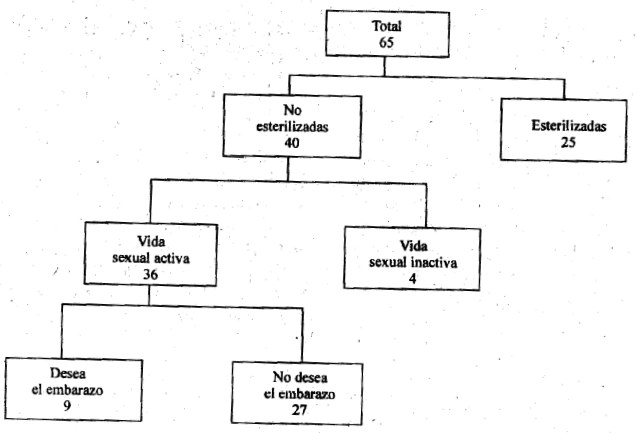
<body><![CDATA[<P>Toda la informaci&oacute;n recogida fue procesada en una microcomputadora IBM mediante el sistema de datos FOXBASE y el paquete estad&iacute;stico MICROSTAT. </P> <H4>Resultados</H4>     <P>En la figura se muestra la distribuci&oacute;n de las pacientes diab&eacute;ticas encuestadas con respecto a si est&aacute;n o no esterilizadas, su vida sexual y el deseo actual de embarazo. Las pacientes esterilizadas fueron 23; de las 42 mujeres diab&eacute;ticas restantes, 4 refer&iacute;an no tener vida sexual activa. Entre las 38 mujeres diab&eacute;ticas con vida sexual activa, no esterilizadas, s&oacute;lo 9 refirieron deseo actual de embarazo. </P>     <P ALIGN="CENTER"><A HREF="/img/revistas/mgi/v13n6/f110697.gif"><IMG SRC="/img/revistas/mgi/v13n6/f110697.gif" BORDER=0 ALT="Figura"></A></P>     
<P ALIGN="CENTER">FIGURA. Distribuci&oacute;n de las diab&eacute;ticas seg&uacute;n esterilizaci&oacute;n, vida sexual y deseo de embarazo. </P>     <P>En la tabla 1 se muestra el uso actual de contraceptivos, y no existen diferencias significativas entre ambos grupos de diab&eacute;ticas. Adem&aacute;s de las 23 pacientes esterilizadas (38,5 %), vemos que 14 ten&iacute;an colocados dispositivos intrauterinos (DIU) para el 21,5 %, y s&oacute;lo 3 (4,6 %) y 2 (3,1 %) utilizaban preservativos (condones) y abstinencia peri&oacute;dica, respectivamente, mientras 21 mujeres (32,3 %) no utilizaban ninguna protecci&oacute;n contra embarazos. </P>     <P ALIGN="CENTER">TABLA 1. Uso actual de contraceptivos en las diab&eacute;ticas seg&uacute;n el tipo de diabetes </P>     <P ALIGN="CENTER">    <CENTER><TABLE CELLSPACING=0 BORDER=0 CELLPADDING=4 WIDTH=499> <TR><TD WIDTH="17%" VALIGN="TOP">     <P>&nbsp;</TD> <TD WIDTH="24%" VALIGN="TOP" COLSPAN=2>     <P ALIGN="CENTER">DMID&nbsp; </P>     ]]></body>
<body><![CDATA[<P ALIGN="CENTER">(n=19) </TD> <TD WIDTH="24%" VALIGN="TOP" COLSPAN=2>     <P ALIGN="CENTER">DMNID&nbsp; </P>     <P ALIGN="CENTER">(n=46) </TD> <TD WIDTH="24%" VALIGN="TOP" COLSPAN=2>     <P ALIGN="CENTER">Total&nbsp; </P>     <P ALIGN="CENTER">(n=65) </TD> <TD WIDTH="12%" VALIGN="TOP">     <P>&nbsp;</TD> </TR> <TR><TD WIDTH="17%" VALIGN="TOP">     <P>Contraceptivo&nbsp;</TD> <TD WIDTH="12%" VALIGN="TOP">     <P ALIGN="CENTER">No. </TD> <TD WIDTH="12%" VALIGN="TOP">     <P ALIGN="CENTER">% </TD> <TD WIDTH="12%" VALIGN="TOP">     <P ALIGN="CENTER">No. </TD> <TD WIDTH="12%" VALIGN="TOP">     ]]></body>
<body><![CDATA[<P ALIGN="CENTER">% </TD> <TD WIDTH="12%" VALIGN="TOP">     <P ALIGN="CENTER">No. </TD> <TD WIDTH="12%" VALIGN="TOP">     <P ALIGN="CENTER">% </TD> <TD WIDTH="12%" VALIGN="TOP">     <P ALIGN="CENTER">p </TD> </TR> <TR><TD WIDTH="17%" VALIGN="TOP">     <P>Ninguno</TD> <TD WIDTH="12%" VALIGN="TOP">     <P ALIGN="CENTER">4 </TD> <TD WIDTH="12%" VALIGN="TOP">     <P ALIGN="CENTER">21,0 </TD> <TD WIDTH="12%" VALIGN="TOP">     <P ALIGN="CENTER">17 </TD> <TD WIDTH="12%" VALIGN="TOP">     <P ALIGN="CENTER">36,9 </TD> <TD WIDTH="12%" VALIGN="TOP">     <P ALIGN="CENTER">21 </TD> <TD WIDTH="12%" VALIGN="TOP">     ]]></body>
<body><![CDATA[<P ALIGN="CENTER">32,3 </TD> <TD WIDTH="12%" VALIGN="TOP">     <P ALIGN="CENTER">0,1062 </TD> </TR> <TR><TD WIDTH="17%" VALIGN="TOP">     <P>Abstinencia peri&oacute;dica</TD> <TD WIDTH="12%" VALIGN="TOP">     <P ALIGN="CENTER">0 </TD> <TD WIDTH="12%" VALIGN="TOP">     <P ALIGN="CENTER">0,0 </TD> <TD WIDTH="12%" VALIGN="TOP">     <P ALIGN="CENTER">2 </TD> <TD WIDTH="12%" VALIGN="TOP">     <P ALIGN="CENTER">4,3 </TD> <TD WIDTH="12%" VALIGN="TOP">     <P ALIGN="CENTER">2 </TD> <TD WIDTH="12%" VALIGN="TOP">     <P ALIGN="CENTER">3,1 </TD> <TD WIDTH="12%" VALIGN="TOP">     <P ALIGN="CENTER">0,1779 </TD> </TR> <TR><TD WIDTH="17%" VALIGN="TOP">     ]]></body>
<body><![CDATA[<P>Preservativo</TD> <TD WIDTH="12%" VALIGN="TOP">     <P ALIGN="CENTER">2 </TD> <TD WIDTH="12%" VALIGN="TOP">     <P ALIGN="CENTER">10,5 </TD> <TD WIDTH="12%" VALIGN="TOP">     <P ALIGN="CENTER">1 </TD> <TD WIDTH="12%" VALIGN="TOP">     <P ALIGN="CENTER">2,2 </TD> <TD WIDTH="12%" VALIGN="TOP">     <P ALIGN="CENTER">3 </TD> <TD WIDTH="12%" VALIGN="TOP">     <P ALIGN="CENTER">4,6 </TD> <TD WIDTH="12%" VALIGN="TOP">     <P ALIGN="CENTER">0,0722 </TD> </TR> <TR><TD WIDTH="17%" VALIGN="TOP">     <P>DIU</TD> <TD WIDTH="12%" VALIGN="TOP">     <P ALIGN="CENTER">5 </TD> <TD WIDTH="12%" VALIGN="TOP">     ]]></body>
<body><![CDATA[<P ALIGN="CENTER">26,3 </TD> <TD WIDTH="12%" VALIGN="TOP">     <P ALIGN="CENTER">9 </TD> <TD WIDTH="12%" VALIGN="TOP">     <P ALIGN="CENTER">19,6 </TD> <TD WIDTH="12%" VALIGN="TOP">     <P ALIGN="CENTER">14 </TD> <TD WIDTH="12%" VALIGN="TOP">     <P ALIGN="CENTER">21,5 </TD> <TD WIDTH="12%" VALIGN="TOP">     <P ALIGN="CENTER">0,2735 </TD> </TR> <TR><TD WIDTH="17%" VALIGN="TOP">     <P>Esterilizaci&oacute;n</TD> <TD WIDTH="12%" VALIGN="TOP">     <P ALIGN="CENTER">8 </TD> <TD WIDTH="12%" VALIGN="TOP">     <P ALIGN="CENTER">42,1 </TD> <TD WIDTH="12%" VALIGN="TOP">     <P ALIGN="CENTER">17 </TD> <TD WIDTH="12%" VALIGN="TOP">     ]]></body>
<body><![CDATA[<P ALIGN="CENTER">36,9 </TD> <TD WIDTH="12%" VALIGN="TOP">     <P ALIGN="CENTER">23 </TD> <TD WIDTH="12%" VALIGN="TOP">     <P ALIGN="CENTER">38,5 </TD> <TD WIDTH="12%" VALIGN="TOP">     <P ALIGN="CENTER">0,3490 </TD> </TR> </TABLE> </CENTER>    <p></P>      <P ALIGN="CENTER">&nbsp;     <BR> En el uso previo de m&eacute;todos contraceptivos (tabla 2), tampoco hubo diferencias significativas entre las diab&eacute;ticas tipos I y II. En orden de frecuencia, los anticonceptivos m&aacute;s utilizados fueron los DIU (49,2 %), las tabletas (15,4 %), la abstinencia peri&oacute;dica (13,8 %) y los m&eacute;todos de barrera (3 con preservativos y 1 con diafragma) para el 6,1 %; el <I>coitus interruptus</I> y las inyecciones s&oacute;lo fueron utilizadas por 1 paciente en cada caso. </P>     <P ALIGN="CENTER">TABLA 2. Uso previo de contraceptivos en las diab&eacute;ticas seg&uacute;n tipo de diabetes </P>     <P ALIGN="CENTER">    <CENTER><TABLE CELLSPACING=0 BORDER=0 CELLPADDING=4 WIDTH=80> <TR><TD WIDTH="17%" VALIGN="TOP">     ]]></body>
<body><![CDATA[<P>&nbsp;</TD> <TD WIDTH="24%" VALIGN="TOP" COLSPAN=2>     <P ALIGN="CENTER">DMID&nbsp; </P>     <P ALIGN="CENTER">(n=19) </TD> <TD WIDTH="24%" VALIGN="TOP" COLSPAN=2>     <P ALIGN="CENTER">DMNID&nbsp; </P>     <P ALIGN="CENTER">(n=46) </TD> <TD WIDTH="24%" VALIGN="TOP" COLSPAN=2>     <P ALIGN="CENTER">Total&nbsp; </P>     <P ALIGN="CENTER">(n=65) </TD> <TD WIDTH="12%" VALIGN="TOP">     <P>&nbsp;</TD> </TR> <TR><TD WIDTH="17%" VALIGN="TOP">     <P>Contraceptivo&nbsp;</TD> <TD WIDTH="12%" VALIGN="TOP">     <P ALIGN="CENTER">No. </TD> <TD WIDTH="12%" VALIGN="TOP">     ]]></body>
<body><![CDATA[<P ALIGN="CENTER">% </TD> <TD WIDTH="12%" VALIGN="TOP">     <P ALIGN="CENTER">No. </TD> <TD WIDTH="12%" VALIGN="TOP">     <P ALIGN="CENTER">% </TD> <TD WIDTH="12%" VALIGN="TOP">     <P ALIGN="CENTER">No. </TD> <TD WIDTH="12%" VALIGN="TOP">     <P ALIGN="CENTER">% </TD> <TD WIDTH="12%" VALIGN="TOP">     <P ALIGN="CENTER">p </TD> </TR> <TR><TD WIDTH="17%" VALIGN="TOP">     <P>Ninguno</TD> <TD WIDTH="12%" VALIGN="TOP">     <P ALIGN="CENTER">8 </TD> <TD WIDTH="12%" VALIGN="TOP">     <P ALIGN="CENTER">42,1 </TD> <TD WIDTH="12%" VALIGN="TOP">     <P ALIGN="CENTER">14 </TD> <TD WIDTH="12%" VALIGN="TOP">     ]]></body>
<body><![CDATA[<P ALIGN="CENTER">30,4 </TD> <TD WIDTH="12%" VALIGN="TOP">     <P ALIGN="CENTER">22 </TD> <TD WIDTH="12%" VALIGN="TOP">     <P ALIGN="CENTER">33,8 </TD> <TD WIDTH="12%" VALIGN="TOP">     <P ALIGN="CENTER">0,1829 </TD> </TR> <TR><TD WIDTH="17%" VALIGN="TOP">     <P>Abstinencia peri&oacute;dica</TD> <TD WIDTH="12%" VALIGN="TOP">     <P ALIGN="CENTER">3 </TD> <TD WIDTH="12%" VALIGN="TOP">     <P ALIGN="CENTER">15,8 </TD> <TD WIDTH="12%" VALIGN="TOP">     <P ALIGN="CENTER">6 </TD> <TD WIDTH="12%" VALIGN="TOP">     <P ALIGN="CENTER">13,0 </TD> <TD WIDTH="12%" VALIGN="TOP">     <P ALIGN="CENTER">9 </TD> <TD WIDTH="12%" VALIGN="TOP">     ]]></body>
<body><![CDATA[<P ALIGN="CENTER">13,8 </TD> <TD WIDTH="12%" VALIGN="TOP">     <P ALIGN="CENTER">0,3853 </TD> </TR> <TR><TD WIDTH="17%" VALIGN="TOP">     <P>Coito interrupto</TD> <TD WIDTH="12%" VALIGN="TOP">     <P ALIGN="CENTER">0 </TD> <TD WIDTH="12%" VALIGN="TOP">     <P ALIGN="CENTER">0,0 </TD> <TD WIDTH="12%" VALIGN="TOP">     <P ALIGN="CENTER">1 </TD> <TD WIDTH="12%" VALIGN="TOP">     <P ALIGN="CENTER">2,2 </TD> <TD WIDTH="12%" VALIGN="TOP">     <P ALIGN="CENTER">1 </TD> <TD WIDTH="12%" VALIGN="TOP">     <P ALIGN="CENTER">1,5 </TD> <TD WIDTH="12%" VALIGN="TOP">     <P ALIGN="CENTER">0,2586 </TD> </TR> <TR><TD WIDTH="17%" VALIGN="TOP">     ]]></body>
<body><![CDATA[<P>Preservativo</TD> <TD WIDTH="12%" VALIGN="TOP">     <P ALIGN="CENTER">2 </TD> <TD WIDTH="12%" VALIGN="TOP">     <P ALIGN="CENTER">10,5 </TD> <TD WIDTH="12%" VALIGN="TOP">     <P ALIGN="CENTER">1 </TD> <TD WIDTH="12%" VALIGN="TOP">     <P ALIGN="CENTER">2,2 </TD> <TD WIDTH="12%" VALIGN="TOP">     <P ALIGN="CENTER">3 </TD> <TD WIDTH="12%" VALIGN="TOP">     <P ALIGN="CENTER">4,6 </TD> <TD WIDTH="12%" VALIGN="TOP">     <P ALIGN="CENTER">0,0722 </TD> </TR> <TR><TD WIDTH="17%" VALIGN="TOP">     <P>Diafragma</TD> <TD WIDTH="12%" VALIGN="TOP">     <P ALIGN="CENTER">1 </TD> <TD WIDTH="12%" VALIGN="TOP">     ]]></body>
<body><![CDATA[<P ALIGN="CENTER">5,3 </TD> <TD WIDTH="12%" VALIGN="TOP">     <P ALIGN="CENTER">0 </TD> <TD WIDTH="12%" VALIGN="TOP">     <P ALIGN="CENTER">0,0 </TD> <TD WIDTH="12%" VALIGN="TOP">     <P ALIGN="CENTER">1 </TD> <TD WIDTH="12%" VALIGN="TOP">     <P ALIGN="CENTER">1,5 </TD> <TD WIDTH="12%" VALIGN="TOP">     <P ALIGN="CENTER">0,0584 </TD> </TR> <TR><TD WIDTH="17%" VALIGN="TOP">     <P>DIU</TD> <TD WIDTH="12%" VALIGN="TOP">     <P ALIGN="CENTER">9 </TD> <TD WIDTH="12%" VALIGN="TOP">     <P ALIGN="CENTER">47,4 </TD> <TD WIDTH="12%" VALIGN="TOP">     <P ALIGN="CENTER">23 </TD> <TD WIDTH="12%" VALIGN="TOP">     ]]></body>
<body><![CDATA[<P ALIGN="CENTER">50,0 </TD> <TD WIDTH="12%" VALIGN="TOP">     <P ALIGN="CENTER">32 </TD> <TD WIDTH="12%" VALIGN="TOP">     <P ALIGN="CENTER">49,2 </TD> <TD WIDTH="12%" VALIGN="TOP">     <P ALIGN="CENTER">0,4235 </TD> </TR> <TR><TD WIDTH="17%" VALIGN="TOP">     <P>Tabletas</TD> <TD WIDTH="12%" VALIGN="TOP">     <P ALIGN="CENTER">3 </TD> <TD WIDTH="12%" VALIGN="TOP">     <P ALIGN="CENTER">15,8 </TD> <TD WIDTH="12%" VALIGN="TOP">     <P ALIGN="CENTER">7 </TD> <TD WIDTH="12%" VALIGN="TOP">     <P ALIGN="CENTER">15,2 </TD> <TD WIDTH="12%" VALIGN="TOP">     <P ALIGN="CENTER">10 </TD> <TD WIDTH="12%" VALIGN="TOP">     ]]></body>
<body><![CDATA[<P ALIGN="CENTER">15,4 </TD> <TD WIDTH="12%" VALIGN="TOP">     <P ALIGN="CENTER">0,4768 </TD> </TR> <TR><TD WIDTH="17%" VALIGN="TOP">     <P>Inyecci&oacute;n</TD> <TD WIDTH="12%" VALIGN="TOP">     <P ALIGN="CENTER">1 </TD> <TD WIDTH="12%" VALIGN="TOP">     <P ALIGN="CENTER">5,3 </TD> <TD WIDTH="12%" VALIGN="TOP">     <P ALIGN="CENTER">0 </TD> <TD WIDTH="12%" VALIGN="TOP">     <P ALIGN="CENTER">0,0 </TD> <TD WIDTH="12%" VALIGN="TOP">     <P ALIGN="CENTER">1 </TD> <TD WIDTH="12%" VALIGN="TOP">     <P ALIGN="CENTER">1,5 </TD> <TD WIDTH="12%" VALIGN="TOP">     <P ALIGN="CENTER">0,0584 </TD> </TR> </TABLE> </CENTER>    ]]></body>
<body><![CDATA[<p></P>  <H4 ALIGN="CENTER">Discusi&oacute;n</H4>     <P>La distribuci&oacute;n de las mujeres diab&eacute;ticas en edad f&eacute;rtil en grupos seg&uacute;n su vida sexual, antecedente o no de esterilizaci&oacute;n y deseo actual de embarazo, es importante para la aplicaci&oacute;n del programa de control preconcepcional, pues de la pertenencia a cada grupo depender&aacute; la conducta que va a seguir el equipo de salud. </P>     <P>Las pacientes esterilizadas quedan excluidas de la atenci&oacute;n preconcepcional, en tanto aqu&eacute;llas sin vida sexual activa reciben educaci&oacute;n y consejos sobre aspectos de su enfermedad, las particularidades del embarazo en la diab&eacute;tica y el uso adecuado de m&eacute;todos contraceptivos. Las mujeres diab&eacute;ticas no esterilizadas, con vida sexual activa y deseo actual de embarazo son enviadas a la Consulta de Control Preconcepcional (CCP) del Centro de Atenci&oacute;n al Diab&eacute;tico (CAD) del Instituto Nacional de Endocrinolog&iacute;a, para, adem&aacute;s de realizar el pesquisaje de las complicaciones que desaconsejan embarazos, buscar el control metab&oacute;lico &oacute;ptimo para planificar su gestaci&oacute;n. Las pacientes con vida sexual activa que no desean embarazos son aconsejadas sobre el m&eacute;todo contraceptivo adecuado para evitarlos. Si tenemos en cuenta que la elecci&oacute;n de un m&eacute;todo contraceptivo en la mujer diab&eacute;tica depende de diferentes condiciones, tales como la edad, el grado y la estabilidad del control metab&oacute;lico, el n&uacute;mero de hijos, la presencia de complicaciones, el grado de cooperaci&oacute;n, la aceptabilidad y la comprensi&oacute;n del m&eacute;todo aconsejado y la disponibilidad de &eacute;ste, comprenderemos la importancia de remitir a dichas pacientes a la CCP para dicha selecci&oacute;n. </P>     <P>Al analizar la conducta contraceptiva de las diab&eacute;ticas encuestadas, llama la atenci&oacute;n, en primer lugar, el alto &iacute;ndice del no uso de anticonceptivos; esto demuestra serias deficiencias en la prevenci&oacute;n primaria de complicaciones maternas y perinatales. </P>     <P>El m&eacute;todo m&aacute;s utilizado fue la esterilizaci&oacute;n (38,5 %); estudios anteriores de <I>Lang y otros</I><SUP>5</SUP> y <I>Bustillo</I> (Tesis de Grado, Instituto Nacional de Endocrinolog&iacute;a, La Habana, 1989) encontraron frecuencias similares (34,7 y 35, 0 %, respectivamente). Creemos que esta alta frecuencia de esterilizaci&oacute;n se deba a la prevenci&oacute;n de complicaciones en la mujer diab&eacute;tica, tales como enfermedad cardiovascular severa, insuficiencia renal cr&oacute;nica y retinopat&iacute;a proliferativa, adem&aacute;s de la pol&iacute;tica de limitar el n&uacute;mero de hijos en este grupo de riesgo a no m&aacute;s de 2. Sin embargo, debemos alertar contra el uso indiscriminado de la ligadura de trompas en mujeres diab&eacute;ticas nul&iacute;paras, a&uacute;n sin complicaciones severas, como ocurre lamentablemente en ocasiones. </P>     <P>En segundo lugar aparecen los DIU como m&eacute;todo contraceptivo utilizado en la actualidad (21,5 %) y previamente (49,2 %). En los estudios ya mencionados de <I>Lang y otros</I><SUP>5</SUP> y <I>Bustillo</I>, la frecuencia de DIU colocados en mujeres diab&eacute;ticas y no diab&eacute;ticas fue similar (25,5 y 29,3 %, respectivamente). Aunque este es el m&eacute;todo de elecci&oacute;n del Grupo Nacional de Trabajo de Diabetes y Embarazo en la diab&eacute;tica con 1 o m&aacute;s hijos (II Taller Nacional, Pinar del R&iacute;o, 1987), su uso en la mujer nul&iacute;para, sobre todo diab&eacute;tica, no resulta inocuo, y en muchas ocasiones provoca sangramientos, irritaci&oacute;n, infecciones del aparato genital, e incluso esterilidad permanente. </P>     <P>Por otra parte, la eficacia del DIU en la mujer diab&eacute;tica ha sido cuestionada por algunos autores<SUP>6,7</SUP> y afirmada por otros.<SUP>8,9</SUP> Aunque pequemos de reiterativos, debemos se&ntilde;alar que los DIU son m&eacute;todos eficaces y seguros en la mujer diab&eacute;tica con 1 o m&aacute;s hijos, y s&oacute;lo los utilizaremos en nul&iacute;paras con graves riesgos sociales y/o culturales, cuando otros m&eacute;todos han demostrado su ineficacia. </P>     <P>Es lamentable comprobar que s&oacute;lo 3 mujeres (4,6 %) utilizan m&eacute;todos de barrera, en todos los casos preservativo o cond&oacute;n, a los que puede a&ntilde;adirse una paciente que previamente hab&iacute;a utilizado diafragma. Resultados desalentadores tambi&eacute;n encontraron <I>Lang y otros</I><SUP>5</SUP> y <I>Bustillo</I> con 2,7 y 8,7 %, respectivamente. En el extranjero, en estudios con diab&eacute;ticas, <I>Wiese y Osler</I><SUP>10</SUP> reportaron una frecuencia de uso del 25 %, <I>Fontbonne</I>, del 17 %<SUP>11</SUP> y <I>Kjaer y otros</I> del 20 %.<SUP>12</SUP> </P>     <P>En un mundo donde el fantasma del SIDA ha aumentado la frecuencia del uso del preservativo, cerca de 30 millones de parejas utilizan el cond&oacute;n como m&eacute;todo para evitar embarazos, para impedir que los espermatozoides invadan el canal cervical. Sabemos que existen h&aacute;bitos culturales en nuestra poblaci&oacute;n, sobre todo masculina, que conspiran contra su aceptaci&oacute;n. Se ha llegado incluso a considerar la palabra cond&oacute;n como de mal gusto, y se ha asociado con amor il&iacute;cito. Sin embargo, podemos se&ntilde;alar algunas ventajas de &eacute;ste: es el m&aacute;s inocuo y bastante efectivo, sobre todo cuando se combina con cremas espermicidas o abstinencia peri&oacute;dica; es barato, ligero, compacto y f&aacute;cil de transportar. </P><DIR>      <P><B>SUMMARY:</b> <B>All diabetic women at fertile age (from 15 to 45 years) classified in two health areas of Havana City were surveyed. They were asked about their active sexual life, the present or previous use of contraceptives (including sterilization), and about their current wish to get pregnant. The case-base study was distributed according to the above mentioned elements so as to apply measures in each group as part of a family planning program for diabetic women. Sterilization and intrauterine devices were the most used contraceptive methods. Almost a third of the group did not use any of these methods at the time of the study. It is expressed the need to promote the use of barrier methods in diabetic nulliparas, and it is recommended the use of intrauterine devices among diabetic women with one or more children.</B> </P>     ]]></body>
<body><![CDATA[<P>Subject headings<B>: DIABETES MELLITUS; INSULIN-DEPENDENT; DIABETES MELLITUS; NON-INSULIN-DEPENDENT; FERTILITY; CONTRACEPTION/methods.</B> </P></DIR>  <H4>Referencias bibliogr&aacute;ficas</H4> <OL>      <!-- ref --><LI>Steel JM, Johnstone FA, Smith AF, Duncan LNP. Five years experience on "prepregnancy" clinic for insulin-dependent diabetics. Br Med J 1983;285:353-6.</LI>    <!-- ref --><LI>F&uuml;hrmann K, Reiner H, Semmler K, Fisher F, Fisher M, Gl&ouml;ckner E. Prevention of congenital malformations in infants of insulin-dependent diabetic mothers. Diabetes Care 1983;6:219-3.</LI>    <LI>Willhoite MB, Bennert HW, Palomaki GE, Zaremba MM, Herman WH, Williams JR, et</LI>     <LI>al. The impact of preconception counseling on pregnancy outcomes: the experience of the Maine Diabetes in Pregnancy Program. Diabetes Care 1993;16 :450-5.</LI>     <!-- ref --><LI>Leuzzi RA, Scoles JS. Preconception counseling for the primary care physician. Med Clin North Am 1996;80:337-74    .</LI>     <!-- ref --><LI>Lang J, M&aacute;rquez A, Vald&eacute;s L, Rodr&iacute;guez BR, Santana O, P&eacute;rez J et al. Conocimientos sobre diabetes y embarazo en mujeres diab&eacute;ticas en edad f&eacute;rtil en un &aacute;rea de salud de Ciudad de La Habana. Avan Diabetol 1992;5:207-14.</LI>    <!-- ref --><LI>Steel JM, Duncan LJP. Serious complications of oral contraceptives in insulin-dependent diabetics. Contraception 1978;17:291-5.</LI>    <!-- ref --><LI>Golden C. Intrauterine contraceptive devices in diabetic women. Lancet 1982;1:530-5.</LI>    <!-- ref --><LI>Sk&ouml;uby SO, M&ouml;lsted-Pedersen L, Kosonen A. Consequences of intrauterine contraception in diabetic women. Fertil Steril 1984;42: 568-73.</LI>    <!-- ref --><LI>Sk&ouml;uby SO, M&ouml;lsted-Pedersen L, Kuhl C. Contraception in diabetic women. Acta Endocrinol 1986;227 (Suppl):125-9.</LI>    <!-- ref --><LI>Wiese J, Osler M. Contraception in diabetic patients. Acta Endocrinol 1974;74(Suppl 182): 87-94.</LI>    <!-- ref --><LI>Fontbonne A, Basdevant A, Fager B, Thomassin M, Buchsenschutz D. Contraceptive practice in 209 diabetic women regularly attending a specialized diabetic clinic. Diabetes Metabol 1987;13:411-6.</LI>    <!-- ref --><LI>Kjaer K, Hagen C, Sando SH, Eshoj O. Contraception in women with IDDM. An epidemiological study. Diabetes Care 1992;15:1585-90.</LI>    <!-- ref --><LI>Mestman JH, Schmidt-Sarosi C. Diabetes mellitus and fertility control: contraception management issues. Am J Obstet Gynecol 1993; 168:2012-20.</LI>    <!-- ref --><LI>Petersen KR, Skouby SO, Vedel P, Haaber AB. Hormonal contraception in women with IDDM: influence on glycometabolic control and lipoprotein metabolism. Diabetes Care 1995;18: 800-6.</LI>    <!-- ref --><LI>American Diabetes Association. Contraception. En: Medical management of pregnancy complicated by diabetes 2ed. Alexandria: ADA 1995:13-8.</LI>    <!-- ref --><LI>Garc&iacute;a R, Su&aacute;rez R. La educaci&oacute;n al diab&eacute;tico en el nivel primario de salud. Rev Cubana Med Gen Integr 1989;5: 396-401.</LI>    <!-- ref --><LI>Spirito A, Ruggiero L, Bond A, Rotondo L, Coustan AR. Screening measures to assess knowledge of diabetes in pregnancy. Diabetes Care 1990;13:712-6.</LI>    <!-- ref --><LI>AADE Task Force on Diabetes and Pregnancy. Educational guidelines for pre-existing diabetes complicated by pregnancy. Diabetes Educ 1993;19:15-7.</LI>    <!-- ref --><LI>Kjaer K, Hagen C, Sandd SH, Eshoj O. Infertility and pregnancy outcome in an unselected group of women with insulin-dependent diabetes mellitus. Am J Obstet Gynecol 1992;166:1412-8.</LI>    </OL>      <P>Recibido: 19 de mayo de 1997. Aprobado: 19 de octubre de 1997.     <BR> Dr. <I>Jacinto Lang Prieto.</I> Instituto Nacional de Endocrinolog&iacute;a. Zapata y D, El Vedado, Ciudad de La Habana, Cuba.     <BR> <A NAME="cita"></A></P>     <P><HR ALIGN="LEFT" WIDTH="30%">    <p></P> <OL>      <LI>Investigador Agregado. Especialista de II Grado en Endocrinolog&iacute;a. Instituto Nacional de Endocrinolog&iacute;a. Ciudad de La Habana.</LI>     <LI>Especialista de I Grado en Endocrinolog&iacute;a. Hospital Clinicoquir&uacute;rgico "Comandante Manuel Fajardo". Ciudad de La Habana.</LI>     ]]></body>
<body><![CDATA[<LI>Especialista de I Grado en Bioestad&iacute;stica. Hospital Ginecoobst&eacute;trico Docente "Ram&oacute;n Gonz&aacute;lez Coro" Ciudad de La Habana.</LI>     <LI>Especialista de I Grado en Endocrinolog&iacute;a. Direcci&oacute;n Municipal de Salud, Plaza, Ciudad de La Habana.</LI>    </OL>      ]]></body><back>
<ref-list>
<ref id="B1">
<nlm-citation citation-type="journal">
<person-group person-group-type="author">
<name>
<surname><![CDATA[Steel]]></surname>
<given-names><![CDATA[JM]]></given-names>
</name>
<name>
<surname><![CDATA[Johnstone]]></surname>
<given-names><![CDATA[FA]]></given-names>
</name>
<name>
<surname><![CDATA[Smith]]></surname>
<given-names><![CDATA[AF]]></given-names>
</name>
<name>
<surname><![CDATA[Duncan]]></surname>
<given-names><![CDATA[LNP]]></given-names>
</name>
</person-group>
<article-title xml:lang="en"><![CDATA[Five years experience on "prepregnancy" clinic for insulin-dependent diabetics]]></article-title>
<source><![CDATA[Br Med J]]></source>
<year>1983</year>
<volume>285</volume>
<page-range>353-6</page-range></nlm-citation>
</ref>
<ref id="B2">
<nlm-citation citation-type="journal">
<person-group person-group-type="author">
<name>
<surname><![CDATA[Führmann]]></surname>
<given-names><![CDATA[K]]></given-names>
</name>
<name>
<surname><![CDATA[Reiner]]></surname>
<given-names><![CDATA[H]]></given-names>
</name>
<name>
<surname><![CDATA[Semmler]]></surname>
<given-names><![CDATA[K]]></given-names>
</name>
<name>
<surname><![CDATA[Fisher]]></surname>
<given-names><![CDATA[F]]></given-names>
</name>
<name>
<surname><![CDATA[Fisher]]></surname>
<given-names><![CDATA[M]]></given-names>
</name>
<name>
<surname><![CDATA[Glöckner]]></surname>
<given-names><![CDATA[E]]></given-names>
</name>
</person-group>
<article-title xml:lang="en"><![CDATA[Prevention of congenital malformations in infants of insulin-dependent diabetic mothers]]></article-title>
<source><![CDATA[Diabetes Care]]></source>
<year>1983</year>
<volume>6</volume>
<page-range>219-3</page-range></nlm-citation>
</ref>
<ref id="B3">
<nlm-citation citation-type="journal">
<person-group person-group-type="author">
<name>
<surname><![CDATA[Willhoite]]></surname>
<given-names><![CDATA[MB]]></given-names>
</name>
<name>
<surname><![CDATA[Bennert]]></surname>
<given-names><![CDATA[HW]]></given-names>
</name>
<name>
<surname><![CDATA[Palomaki]]></surname>
<given-names><![CDATA[GE]]></given-names>
</name>
<name>
<surname><![CDATA[Zaremba]]></surname>
<given-names><![CDATA[MM]]></given-names>
</name>
<name>
<surname><![CDATA[Herman]]></surname>
<given-names><![CDATA[WH]]></given-names>
</name>
<name>
<surname><![CDATA[Williams]]></surname>
<given-names><![CDATA[JR]]></given-names>
</name>
<name>
<surname><![CDATA[et]]></surname>
<given-names><![CDATA[al]]></given-names>
</name>
</person-group>
<article-title xml:lang="en"><![CDATA[The impact of preconception counseling on pregnancy outcomes: the experience of the Maine Diabetes in Pregnancy Program]]></article-title>
<source><![CDATA[Diabetes Care]]></source>
<year>1993</year>
<volume>16</volume>
<page-range>450-5</page-range></nlm-citation>
</ref>
<ref id="B4">
<nlm-citation citation-type="journal">
<person-group person-group-type="author">
<name>
<surname><![CDATA[Leuzzi]]></surname>
<given-names><![CDATA[RA]]></given-names>
</name>
<name>
<surname><![CDATA[Scoles]]></surname>
<given-names><![CDATA[JS]]></given-names>
</name>
</person-group>
<article-title xml:lang="en"><![CDATA[Preconception counseling for the primary care physician]]></article-title>
<source><![CDATA[Med Clin North Am]]></source>
<year>1996</year>
</nlm-citation>
</ref>
<ref id="B5">
<nlm-citation citation-type="journal">
<person-group person-group-type="author">
<name>
<surname><![CDATA[Lang]]></surname>
<given-names><![CDATA[J]]></given-names>
</name>
<name>
<surname><![CDATA[Márquez]]></surname>
<given-names><![CDATA[A]]></given-names>
</name>
<name>
<surname><![CDATA[Valdés]]></surname>
<given-names><![CDATA[L]]></given-names>
</name>
<name>
<surname><![CDATA[Rodríguez]]></surname>
<given-names><![CDATA[BR]]></given-names>
</name>
<name>
<surname><![CDATA[Santana]]></surname>
<given-names><![CDATA[O]]></given-names>
</name>
</person-group>
<article-title xml:lang="es"><![CDATA[Conocimientos sobre diabetes y embarazo en mujeres diabéticas en edad fértil en un área de salud de Ciudad de La Habana]]></article-title>
<source><![CDATA[Avan Diabetol]]></source>
<year>1992</year>
<volume>5</volume>
<page-range>207-14</page-range></nlm-citation>
</ref>
<ref id="B6">
<nlm-citation citation-type="journal">
<person-group person-group-type="author">
<name>
<surname><![CDATA[Steel]]></surname>
<given-names><![CDATA[JM]]></given-names>
</name>
<name>
<surname><![CDATA[Duncan]]></surname>
<given-names><![CDATA[LJP]]></given-names>
</name>
</person-group>
<article-title xml:lang="en"><![CDATA[Serious complications of oral contraceptives in insulin-dependent diabetics]]></article-title>
<source><![CDATA[Contraception]]></source>
<year>1978</year>
<volume>17</volume>
<page-range>291-5</page-range></nlm-citation>
</ref>
<ref id="B7">
<nlm-citation citation-type="journal">
<person-group person-group-type="author">
<name>
<surname><![CDATA[Golden]]></surname>
<given-names><![CDATA[C]]></given-names>
</name>
</person-group>
<article-title xml:lang="en"><![CDATA[Intrauterine contraceptive devices in diabetic women]]></article-title>
<source><![CDATA[Lancet]]></source>
<year>1982</year>
<volume>1</volume>
<page-range>530-5</page-range></nlm-citation>
</ref>
<ref id="B8">
<nlm-citation citation-type="journal">
<person-group person-group-type="author">
<name>
<surname><![CDATA[Sköuby]]></surname>
<given-names><![CDATA[SO]]></given-names>
</name>
<name>
<surname><![CDATA[Mölsted-Pedersen]]></surname>
<given-names><![CDATA[L]]></given-names>
</name>
<name>
<surname><![CDATA[Kosonen]]></surname>
<given-names><![CDATA[A]]></given-names>
</name>
</person-group>
<article-title xml:lang="en"><![CDATA[Consequences of intrauterine contraception in diabetic women]]></article-title>
<source><![CDATA[Fertil Steril]]></source>
<year>1984</year>
<volume>42</volume>
<page-range>568-73</page-range></nlm-citation>
</ref>
<ref id="B9">
<nlm-citation citation-type="journal">
<person-group person-group-type="author">
<name>
<surname><![CDATA[Sköuby]]></surname>
<given-names><![CDATA[SO]]></given-names>
</name>
<name>
<surname><![CDATA[Mölsted-Pedersen]]></surname>
<given-names><![CDATA[L]]></given-names>
</name>
</person-group>
<source><![CDATA[Acta Endocrinol]]></source>
<year>1986</year>
<volume>227</volume>
<page-range>125-9</page-range></nlm-citation>
</ref>
<ref id="B10">
<nlm-citation citation-type="journal">
<person-group person-group-type="author">
<name>
<surname><![CDATA[Wiese]]></surname>
<given-names><![CDATA[J]]></given-names>
</name>
<name>
<surname><![CDATA[Osler]]></surname>
<given-names><![CDATA[M]]></given-names>
</name>
</person-group>
<article-title xml:lang="en"><![CDATA[Contraception in diabetic patients]]></article-title>
<source><![CDATA[Acta Endocrinol]]></source>
<year>1974</year>
<volume>74</volume>
<numero>^sSuppl 182</numero>
<issue>^sSuppl 182</issue>
<supplement>Suppl 182</supplement>
<page-range>87-94</page-range></nlm-citation>
</ref>
<ref id="B11">
<nlm-citation citation-type="journal">
<person-group person-group-type="author">
<name>
<surname><![CDATA[Fontbonne]]></surname>
<given-names><![CDATA[A]]></given-names>
</name>
<name>
<surname><![CDATA[Basdevant]]></surname>
<given-names><![CDATA[A]]></given-names>
</name>
<name>
<surname><![CDATA[Fager]]></surname>
<given-names><![CDATA[B]]></given-names>
</name>
<name>
<surname><![CDATA[Thomassin]]></surname>
<given-names><![CDATA[M]]></given-names>
</name>
<name>
<surname><![CDATA[Buchsenschutz]]></surname>
<given-names><![CDATA[D]]></given-names>
</name>
</person-group>
<article-title xml:lang="en"><![CDATA[Contraceptive practice in 209 diabetic women regularly attending a specialized diabetic clinic]]></article-title>
<source><![CDATA[Diabetes Metabol]]></source>
<year>1987</year>
<volume>13</volume>
<page-range>411-6</page-range></nlm-citation>
</ref>
<ref id="B12">
<nlm-citation citation-type="journal">
<person-group person-group-type="author">
<name>
<surname><![CDATA[Kjaer]]></surname>
<given-names><![CDATA[K]]></given-names>
</name>
<name>
<surname><![CDATA[Hagen]]></surname>
<given-names><![CDATA[C]]></given-names>
</name>
<name>
<surname><![CDATA[Sando]]></surname>
<given-names><![CDATA[SH]]></given-names>
</name>
<name>
<surname><![CDATA[Eshoj]]></surname>
<given-names><![CDATA[O]]></given-names>
</name>
</person-group>
<article-title xml:lang="en"><![CDATA[Contraception in women with IDDM]]></article-title>
<source><![CDATA[An epidemiological study. Diabetes Care]]></source>
<year>1992</year>
<volume>15</volume>
<page-range>1585-90</page-range></nlm-citation>
</ref>
<ref id="B13">
<nlm-citation citation-type="journal">
<person-group person-group-type="author">
<name>
<surname><![CDATA[Mestman]]></surname>
<given-names><![CDATA[JH]]></given-names>
</name>
<name>
<surname><![CDATA[Schmidt-Sarosi]]></surname>
<given-names><![CDATA[C]]></given-names>
</name>
</person-group>
<article-title xml:lang="en"><![CDATA[Diabetes mellitus and fertility control: contraception management issues]]></article-title>
<source><![CDATA[Am J Obstet Gynecol]]></source>
<year>1993</year>
<volume>168</volume>
<page-range>2012-20</page-range></nlm-citation>
</ref>
<ref id="B14">
<nlm-citation citation-type="journal">
<person-group person-group-type="author">
<name>
<surname><![CDATA[Petersen]]></surname>
<given-names><![CDATA[KR]]></given-names>
</name>
<name>
<surname><![CDATA[Skouby]]></surname>
<given-names><![CDATA[SO]]></given-names>
</name>
<name>
<surname><![CDATA[Vedel]]></surname>
<given-names><![CDATA[P]]></given-names>
</name>
<name>
<surname><![CDATA[Haaber]]></surname>
<given-names><![CDATA[AB]]></given-names>
</name>
</person-group>
<article-title xml:lang="en"><![CDATA[Hormonal contraception in women with IDDM: influence on glycometabolic control and lipoprotein metabolism]]></article-title>
<source><![CDATA[Diabetes Care]]></source>
<year>1995</year>
<volume>18</volume>
<page-range>800-6</page-range></nlm-citation>
</ref>
<ref id="B15">
<nlm-citation citation-type="">
<collab>American Diabetes Association</collab>
<article-title xml:lang="en"><![CDATA[Contraception]]></article-title>
<source><![CDATA[Medical management of pregnancy complicated by diabetes]]></source>
<year>1995</year>
<page-range>13-8</page-range></nlm-citation>
</ref>
<ref id="B16">
<nlm-citation citation-type="journal">
<person-group person-group-type="author">
<name>
<surname><![CDATA[García]]></surname>
<given-names><![CDATA[R]]></given-names>
</name>
<name>
<surname><![CDATA[Suárez]]></surname>
<given-names><![CDATA[R]]></given-names>
</name>
</person-group>
<article-title xml:lang="es"><![CDATA[La educación al diabético en el nivel primario de salud]]></article-title>
<source><![CDATA[Rev Cubana Med Gen Integr]]></source>
<year>1989</year>
<volume>5</volume>
<page-range>396-401</page-range></nlm-citation>
</ref>
<ref id="B17">
<nlm-citation citation-type="journal">
<person-group person-group-type="author">
<name>
<surname><![CDATA[Spirito]]></surname>
<given-names><![CDATA[A]]></given-names>
</name>
<name>
<surname><![CDATA[Ruggiero]]></surname>
<given-names><![CDATA[L]]></given-names>
</name>
<name>
<surname><![CDATA[Bond]]></surname>
<given-names><![CDATA[A]]></given-names>
</name>
<name>
<surname><![CDATA[Rotondo]]></surname>
<given-names><![CDATA[L]]></given-names>
</name>
<name>
<surname><![CDATA[Coustan]]></surname>
<given-names><![CDATA[AR]]></given-names>
</name>
</person-group>
<article-title xml:lang="en"><![CDATA[Screening measures to assess knowledge of diabetes in pregnancy]]></article-title>
<source><![CDATA[Diabetes Care]]></source>
<year>1990</year>
<volume>13</volume>
<page-range>712-6</page-range></nlm-citation>
</ref>
<ref id="B18">
<nlm-citation citation-type="journal">
<collab>AADE</collab>
<article-title xml:lang="en"><![CDATA[Task Force on Diabetes and Pregnancy: Educational guidelines for pre-existing diabetes complicated by pregnancy]]></article-title>
<source><![CDATA[Diabetes Educ]]></source>
<year>1993</year>
<volume>19</volume>
<page-range>15-7</page-range></nlm-citation>
</ref>
<ref id="B19">
<nlm-citation citation-type="journal">
<person-group person-group-type="author">
<name>
<surname><![CDATA[Kjaer]]></surname>
<given-names><![CDATA[K]]></given-names>
</name>
<name>
<surname><![CDATA[Hagen]]></surname>
<given-names><![CDATA[C]]></given-names>
</name>
<name>
<surname><![CDATA[Sandd]]></surname>
<given-names><![CDATA[SH]]></given-names>
</name>
<name>
<surname><![CDATA[Eshoj]]></surname>
<given-names><![CDATA[O]]></given-names>
</name>
</person-group>
<article-title xml:lang="en"><![CDATA[Infertility and pregnancy outcome in an unselected group of women with insulin-dependent diabetes mellitus]]></article-title>
<source><![CDATA[Am J Obstet Gynecol]]></source>
<year>1992</year>
<volume>166</volume>
<page-range>1412-8</page-range></nlm-citation>
</ref>
</ref-list>
</back>
</article>
