<?xml version="1.0" encoding="ISO-8859-1"?><article xmlns:mml="http://www.w3.org/1998/Math/MathML" xmlns:xlink="http://www.w3.org/1999/xlink" xmlns:xsi="http://www.w3.org/2001/XMLSchema-instance">
<front>
<journal-meta>
<journal-id>0864-2125</journal-id>
<journal-title><![CDATA[Revista Cubana de Medicina General Integral]]></journal-title>
<abbrev-journal-title><![CDATA[Rev Cubana Med Gen Integr]]></abbrev-journal-title>
<issn>0864-2125</issn>
<publisher>
<publisher-name><![CDATA[ECIMED]]></publisher-name>
</publisher>
</journal-meta>
<article-meta>
<article-id>S0864-21251999000300015</article-id>
<title-group>
<article-title xml:lang="es"><![CDATA[Biotipo y climaterio femenino]]></article-title>
</title-group>
<contrib-group>
<contrib contrib-type="author">
<name>
<surname><![CDATA[Díaz Sánchez]]></surname>
<given-names><![CDATA[María Elena]]></given-names>
</name>
<xref ref-type="aff" rid="A01"/>
</contrib>
</contrib-group>
<aff id="A01">
<institution><![CDATA[,MINSAP  ]]></institution>
<addr-line><![CDATA[Ciudad de La Habana ]]></addr-line>
<country>Cuba</country>
</aff>
<pub-date pub-type="pub">
<day>01</day>
<month>06</month>
<year>1999</year>
</pub-date>
<pub-date pub-type="epub">
<day>01</day>
<month>06</month>
<year>1999</year>
</pub-date>
<volume>15</volume>
<numero>3</numero>
<fpage>310</fpage>
<lpage>317</lpage>
<copyright-statement/>
<copyright-year/>
<self-uri xlink:href="http://scielo.sld.cu/scielo.php?script=sci_arttext&amp;pid=S0864-21251999000300015&amp;lng=en&amp;nrm=iso"></self-uri><self-uri xlink:href="http://scielo.sld.cu/scielo.php?script=sci_abstract&amp;pid=S0864-21251999000300015&amp;lng=en&amp;nrm=iso"></self-uri><self-uri xlink:href="http://scielo.sld.cu/scielo.php?script=sci_pdf&amp;pid=S0864-21251999000300015&amp;lng=en&amp;nrm=iso"></self-uri><abstract abstract-type="short" xml:lang="es"><p><![CDATA[Se revisan algunos tópicos sobre el biotipo femenino y su modificación con el proceso de declinación de la función ovárica para alcanzar el climaterio. Se analiza la vinculación de estos aspectos con el arte y la evolución conceptual a través del tiempo. Se discuten las relaciones entre el perfil morfológico, la menopausia, los factores de riesgo para el desarrollo de enfermedades crónicas y el estilo de vida, en que se evidencia la asociación existente entre ellos para evaluar la calidad de vida y el bienestar de la mujer durante esta etapa.]]></p></abstract>
<abstract abstract-type="short" xml:lang="en"><p><![CDATA[Some topics on the female biotype and its modification with the process of declination of the ovarian function to reach the climateric are reviewed. The connection of these aspects with art and the conceptual evolution through time are analized. The relations existing among the morphological profile, menopause, the risk factors for the development of chronic diseases, and the life style, are discussed and demonstrated to evaluate the quality of life and the wellbeing of women during this stage.]]></p></abstract>
<kwd-group>
<kwd lng="es"><![CDATA[COMPOSICION CORPORAL]]></kwd>
<kwd lng="es"><![CDATA[TEJIDO ADIPOSO]]></kwd>
<kwd lng="es"><![CDATA[MANOPAUSIA]]></kwd>
<kwd lng="es"><![CDATA[CLIMATERIO]]></kwd>
<kwd lng="es"><![CDATA[ESTILO DE VIDA]]></kwd>
<kwd lng="en"><![CDATA[BODY COMPOSITION]]></kwd>
<kwd lng="en"><![CDATA[ADIPOSE TISSUE]]></kwd>
<kwd lng="en"><![CDATA[MENOPAUSE]]></kwd>
<kwd lng="en"><![CDATA[CLIMATERIC]]></kwd>
<kwd lng="en"><![CDATA[LIFE STYLE]]></kwd>
</kwd-group>
</article-meta>
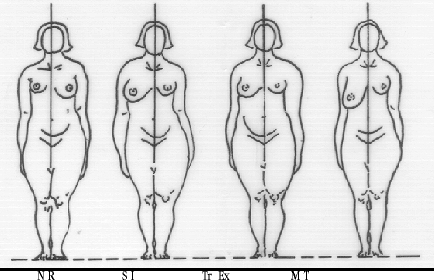
</front><body><![CDATA[ <H5>&nbsp;</H5> <H3>TRABAJOS DE REVISI&Oacute;N</H3> <H2>Biotipo y climaterio femenino</H2>     <P><A HREF="#autores"><I>Mar&iacute;a Elena D&iacute;az S&aacute;nchez <SUP>1</sup></I></A> </P>     <P><B>Resumen:</b> Se revisan algunos t&oacute;picos sobre el biotipo femenino y su modificaci&oacute;n con el proceso de declinaci&oacute;n de la funci&oacute;n ov&aacute;rica para alcanzar el climaterio. Se analiza la vinculaci&oacute;n de estos aspectos con el arte y la evoluci&oacute;n conceptual a trav&eacute;s del tiempo. Se discuten las relaciones entre el perfil morfol&oacute;gico, la menopausia, los factores de riesgo para el desarrollo de enfermedades cr&oacute;nicas y el estilo de vida, en que se evidencia la asociaci&oacute;n existente entre ellos para evaluar la calidad de vida y el bienestar de la mujer durante esta etapa. </P>     <P><I>Descriptores DeCS</i>: COMPOSICION CORPORAL/ fisiolog&iacute;a; TEJIDO ADIPOSO/ fisiolog&iacute;a; MANOPAUSIA/ fisiolog&iacute;a; CLIMATERIO/ fisiolog&iacute;a; ESTILO DE VIDA. </P>     <P>El estudio del f&iacute;sico humano es un tema abordado por artistas, cient&iacute;ficos y profanos. Existe una especial vinculaci&oacute;n entre estos puntos de vista, por la interrelaci&oacute;n que presenta el desarrollo del tejido adiposo con su expresi&oacute;n corporal en la figura femenina. </P>     <P>Desde los tiempos prehist&oacute;ricos la mujer es representada con una diferenciaci&oacute;n de proporciones. Analicemos la estatua correspondiente a la <I>Venus de Willendorf</I>, un reconocido modelo de la belleza paleol&iacute;tica del per&iacute;odo Aurignaciense realizado en piedra caliza, que se encuentra en el Museo de Historia Natural de Viena, la misma presenta un cuerpo con un exceso de grasa corporal en su parte superior, representada con un gran desarrollo mamario y un vientre prominente interpretados como una situaci&oacute;n t&iacute;pica de embarazo, y por eso estas y otras esculturas pertenecientes a esa &eacute;poca se les ha relacionado con el culto a la fertilidad.<SUP>1</SUP> </P>     <P>En muchas obras pict&oacute;ricas tambi&eacute;n se ha representado a la mujer de diferentes edades de acuerdo con el predominio del tejido adiposo, pudiendo revelar modificaciones del biotipo caracter&iacute;stico de determinados momentos de su ciclo de vida, interpretadas por los artistas. Las pinturas de <I>Modigliani</I> por ejemplo, representan a la mujer joven, con un exceso de grasa localizada en las zonas de los muslos y caderas. Es conocido el ideal de la belleza femenina de<I> Rubens</I>, que se puede interpretar en t&eacute;rminos antropol&oacute;gicos o anat&oacute;micos como una obesidad establecida, con una disposici&oacute;n generalizada del tejido adiposo. Las figuras de <I>Renoir </I>pudieran ser clasificadas como una obesidad ginoide y el exceso de grasa abdominal es expuesta en obras de otros pintores, como <I>Guercino.</I> </P>     <P><I>Jean Vague</i> en sus trabajos sobre la regionalizaci&oacute;n de la grasa corporal<SUP>2</SUP> refiere la existencia de datos sobre obesidad androide en la mujer ya por el siglo XVIII y 106 a&ntilde;os despu&eacute;s, observaciones a este respecto fueron realizadas por un magistrado, gastr&oacute;nomo y m&uacute;sico franc&eacute;s. Estas consideraciones se refer&iacute;an probablemente a una silueta de mediana edad; pero posteriormente, con el desarrollo de las distintas Escuelas de Biotipolog&iacute;a (francesa, italiana, norteamericana, etc.) en la primera mitad de este siglo, se efectu&oacute; un estudio m&aacute;s detallado del cuerpo humano, consider&aacute;ndose el individuo como una unidad morfol&oacute;gica, fisiol&oacute;gica y psicol&oacute;gica.<SUP>3</SUP> Durante esta etapa se ofreci&oacute; una buena caracterizaci&oacute;n de la obesidad en la mujer y el hombre de mediana edad. </P>     <P>Una forma din&aacute;mica de evaluar los cambios en forma y constituci&oacute;n en el cuerpo femenino en varias edades fue resumida en un trabajo realizado en los a&ntilde;os 50;<SUP>4</SUP> se propone una clasificaci&oacute;n en un sistema de vectores por tipos no est&aacute;ticos, atendiendo al desarrollo de tejidos suaves y distribuci&oacute;n de grasa, con referencia a los cambios producidos en mujeres j&oacute;venes, premenop&aacute;usicas tard&iacute;as y posmenop&aacute;usicas (figura 1). El primer vector es considerado como una variaci&oacute;n continua de un polo magro (L) con una deficiencia arm&oacute;nica de grasa a un estado normal (N), o una distribuci&oacute;n moderada hacia una abundante y tambi&eacute;n arm&oacute;nica obesidad; este exceso de tejido adiposo recuerda a las pinturas de <I>Rubens</I> y por eso se le llam&oacute; tipo R. Los otros vectores divergen de lo normal hacia una distribuci&oacute;n localizada del pan&iacute;culo adiposo. El segundo vector var&iacute;a de un extremo superior (S) con la adiposidad concentrada sobre la cintura, a otro inferior (I) sobre las caderas y extremidades. El tercer vector contrasta la distribuci&oacute;n central con la perif&eacute;rica; la primera se localiza sobre el tronco (Tr), se&ntilde;al&aacute;ndose como com&uacute;n en la mujer de edad mediana, mientras que el patr&oacute;n perif&eacute;rico se encuentra sobre las extremidades (Ex). Otros vectores adicionales se mencionan para distinguir los grandes dep&oacute;sitos de grasa en la regi&oacute;n mamaria (M), en contraste con una adiposidad muy incrementada en la zona de los troc&aacute;nteres (T) y en los gl&uacute;teos; este &uacute;ltimo descrito como una condici&oacute;n pseudoesteatopigica (Pst). </P>     <P ALIGN="CENTER"><A HREF="/img/revistas/mgi/v15n3/f0115399.gif"><IMG SRC="/img/revistas/mgi/v15n3/f0115399.gif" BORDER=0 ALT="Figura 1"></A></P>     
]]></body>
<body><![CDATA[<P>FIG 1. Clasificaci&oacute;n de los tipos corporales femeninos por el sistema de vectores de odiposidad. (Skerlj, Brosek y Hunt,1953). </P>     <P>Con una incursi&oacute;n en los escasos estudios de la &eacute;poca, sobre gravedad espec&iacute;fica, en el trabajo anterior se determina que la adiposidad total del cuerpo aumenta con la edad en la mujer, y que en la madurez, en su etapa m&aacute;s tard&iacute;a, se va incrementando a expensas de la grasa interna, lo cual es un componente importante en el complejo fen&oacute;meno del envejecimiento. Otros autores de este per&iacute;odo<SUP>5</SUP> refieren concretamente que un dep&oacute;sito substancial de tejido adiposo por encima de la cintura contribuye en un 55 % a la grasa total en mujeres nul&iacute;paras, 57 % en mult&iacute;paras y el 67 % en menop&aacute;usicas con el avance de la edad. </P>     <P>Los estudios de composici&oacute;n corporal constituidos como una verdadera disciplina, a partir de la d&eacute;cada del 60 por <I>Brozek</I><SUP>6</SUP> permiten profundizar en el conocimiento de las diferencias del f&iacute;sico debidas a la edad y al sexo durante el desarrollo y la madurez. </P>     <P>Los componentes de la composici&oacute;n corporal se relacionan en funci&oacute;n del efecto combinado de los factores gen&eacute;ticos y ambientales; como resultado aparecen distintos fenotipos, que se ven influidos por la edad, sexo, raza, condici&oacute;n socioecon&oacute;mica, actividad f&iacute;sica, enfermedades y el estado de nutrici&oacute;n. Ambos componentes se incrementan durante el crecimiento, con un predominio de la adiposidad en todas las edades en el sexo femenino y del tejido magro en los varones. Al llegar a la madurez, la mujer sigue depositando mayor cantidad de grasa corporal que el hombre, en iguales condiciones, mientras que &eacute;ste la supera en masa magra. Aparejadamente el componente magro sufre modificaciones, comenz&aacute;ndose a producir en un determinado momento de la vida una notable reducci&oacute;n en agua, masa &oacute;sea y otras microfracciones; indic&aacute;ndose as&iacute; las manifestaciones del proceso normal del envejecimiento, que coincide con un aumento multicausal de la morbilidad. </P>     <P>Los conceptos de distribuci&oacute;n anat&oacute;mica de la grasa, retomados en la literatura actual por su demostrada importancia en el riesgo de enfermedades cr&oacute;nicas no transmisibles, esclarecen las modificaciones ya notadas anteriormente. La sustentaci&oacute;n biol&oacute;gica del patr&oacute;n de grasa se basa tambi&eacute;n en la interrelaci&oacute;n herencia-ambiente<SUP>7</SUP> y como tal se ve expresada en el fenotipo, mediante una diferenciaci&oacute;n de la silueta. </P>     <P>Durante la adultez existe una centralizaci&oacute;n paulatina del tejido adiposo, t&iacute;pica en el sexo masculino y que se acrecienta hacia la mediana edad; en la mujer, el exceso de grasa central es realmente evidente en esta etapa y usualmente coexiste con un aumento de su condici&oacute;n m&oacute;rbida. </P>     <P>La mujer con funci&oacute;n ov&aacute;rica normal tiende a acumular m&aacute;s grasa alrededor de las caderas y los gl&uacute;teos que en la regi&oacute;n abdominal, aunque algunas exhiben un patr&oacute;n superior ya desde la premenopausia. La diferenciaci&oacute;n masculina de la adiposidad determina el predominio de la grasa en la zona superior del cuerpo, tales como el tronco y &aacute;reas superiores y profundas del abdomen, todo este proceso se acent&uacute;a con el envejecimiento.<SUP>2</SUP> Con el advenimiento del climaterio femenino este morfotipo es m&aacute;s evidente, y se asocia a la declinaci&oacute;n de la producci&oacute;n de estr&oacute;genos.<SUP>8</SUP> </P>     <P>La distribuci&oacute;n masculina de la grasa se ha considerado como un predictor de enfermedades.<SUP>2,7,9</SUP> La androgenia en asociaci&oacute;n con la obesidad, aumenta el riesgo por diabetes, hipertensi&oacute;n, dislipidemias, aterosclerosis, enfermedades cardiovasculares, colelitiasis, artrosis, artritis, carcinomas femeninos y otras patolog&iacute;as de la edad mediana.<SUP>9-12</SUP> </P>     <P>Con el d&eacute;ficit de la producci&oacute;n estrog&eacute;nica asociada a la disminuci&oacute;n de la funci&oacute;n ov&aacute;rica, que ocurre en la biolog&iacute;a femenina en la etapa del climaterio, se producen una serie de alteraciones que provocan modificaciones, tanto fisiol&oacute;gicas como morfol&oacute;gicas. Con la edad la mujer cambia su composici&oacute;n corporal: hay p&eacute;rdidas de la masa &oacute;sea y fracciones minerales en el hueso, la grasa total, visceral y el fluido extracelular se incrementan. Todas estas manifestaciones se aceleran con la menopausia.<SUP>13,14</SUP> En esta etapa, la silueta puede estar asociada con la evidencia de un perfil hormonal relativamente m&aacute;s androg&eacute;nico, en estrecha relaci&oacute;n con la grasa acumulada en la regi&oacute;n del abdomen.<SUP>15</SUP> La acumulaci&oacute;n y movilizaci&oacute;n de la grasa en la mujer est&aacute; asociada con la variaci&oacute;n en los niveles de las hormonas sexuales, lo cual implica la consideraci&oacute;n de la edad a la que se alcanza la menopausia. </P>     <P>La caracterizaci&oacute;n del morfotipo femenino durante el climaterio casi siempre se encuentra asociada a la evaluaci&oacute;n del entorno ecol&oacute;gico y el riesgo de morbilidad. </P>     ]]></body>
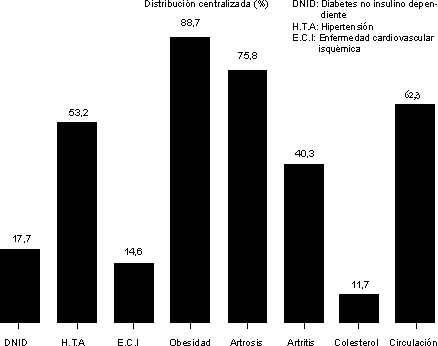
<body><![CDATA[<P>Diferentes estudios demuestran una relaci&oacute;n eficiente entre la grasa corporal total y su distribuci&oacute;n regional con la aparici&oacute;n de enfermedades cr&oacute;nicas durante la etapa de la menopausia;<SUP>11,12,16</SUP> mientras que otros no consideran el aumento de la condici&oacute;n m&oacute;rbida a excepci&oacute;n de la osteoporosis,<SUP>17</SUP> lo cual indicar&iacute;a la existencia de un efecto de confusi&oacute;n de la influencia de las caracter&iacute;sticas f&iacute;sicas y algunos factores ambientales incidentes en la mediana edad. </P>     <P>Datos sobre el patr&oacute;n de morbilidad por enfermedades cr&oacute;nicas asociadas al estado de nutrici&oacute;n en mujeres cubanas con menopausia natural afirman la relaci&oacute;n.<SUP>18</SUP> El tipo corporal de la mujer durante el climaterio, caracterizado en este caso por una obesidad centralizada tiene como otras complicaciones la presencia de diabetes, hipertensi&oacute;n, enfermedad cardiovascular isqu&eacute;mica, artrosis, artritis, hipercolesterolemia y trastornos circulatorios, fundamentalmente (figura 2). El an&aacute;lisis de componentes principales comprueba que la edad, el estado menop&aacute;usico, el exceso de peso medido con el &iacute;ndice de masa corporal y la distribuci&oacute;n central o superior de la adiposidad (expresada con el &iacute;ndice cintura/cadera), se asocian con el riesgo de aparici&oacute;n de las enfermedades cr&oacute;nicas no transmisibles (tabla 1). </P>     <P ALIGN="CENTER"><A HREF="/img/revistas/mgi/v15n3/f0215399.gif"><IMG SRC="/img/revistas/mgi/v15n3/f0215399.gif" BORDER=0 WIDTH=130 HEIGHT=104 ALT="Figura 2"></A></P>     
<P>FIG. 2. Distribuci&oacute;n de grasa corporal como fator de riesgo de morbilidad en mujeres menop&aacute;usicas. </P>     <P>TABLA 1. An&aacute;lisis de componentes principales figura corporal y riesgo de morbilidad mujer menop&aacute;usica </P>     <P ALIGN="CENTER">    <CENTER><TABLE CELLSPACING=0 BORDER=0 CELLPADDING=4 WIDTH=780> <TR><TD WIDTH="20%" VALIGN="TOP">     <P></TD> <TD WIDTH="80%" VALIGN="TOP" COLSPAN=4>     <P ALIGN="CENTER">Componentes principales</TD> </TR> <TR><TD WIDTH="20%" VALIGN="TOP">     <P>Autovectores&nbsp;</TD> <TD WIDTH="20%" VALIGN="TOP">     ]]></body>
<body><![CDATA[<P ALIGN="CENTER">F1</TD> <TD WIDTH="20%" VALIGN="TOP">     <P ALIGN="CENTER">F2</TD> <TD WIDTH="20%" VALIGN="TOP">     <P ALIGN="CENTER">F3</TD> <TD WIDTH="20%" VALIGN="TOP">     <P ALIGN="CENTER">F4</TD> </TR> <TR><TD WIDTH="20%" VALIGN="TOP">     <P>Edad</TD> <TD WIDTH="20%" VALIGN="TOP">     <P ALIGN="CENTER">61</TD> <TD WIDTH="20%" VALIGN="TOP">     <P ALIGN="CENTER">4</TD> <TD WIDTH="20%" VALIGN="TOP">     <P ALIGN="CENTER">37</TD> <TD WIDTH="20%" VALIGN="TOP">     <P ALIGN="CENTER">2</TD> </TR> <TR><TD WIDTH="20%" VALIGN="TOP">     <P>Menopausia</TD> <TD WIDTH="20%" VALIGN="TOP">     ]]></body>
<body><![CDATA[<P ALIGN="CENTER">29</TD> <TD WIDTH="20%" VALIGN="TOP">     <P ALIGN="CENTER">2</TD> <TD WIDTH="20%" VALIGN="TOP">     <P ALIGN="CENTER">76</TD> <TD WIDTH="20%" VALIGN="TOP">     <P ALIGN="CENTER">-.01</TD> </TR> <TR><TD WIDTH="20%" VALIGN="TOP">     <P>IMC</TD> <TD WIDTH="20%" VALIGN="TOP">     <P ALIGN="CENTER">49</TD> <TD WIDTH="20%" VALIGN="TOP">     <P ALIGN="CENTER">-50</TD> <TD WIDTH="20%" VALIGN="TOP">     <P ALIGN="CENTER">-5</TD> <TD WIDTH="20%" VALIGN="TOP">     <P ALIGN="CENTER">-35</TD> </TR> <TR><TD WIDTH="20%" VALIGN="TOP">     <P>CIN/CAD</TD> <TD WIDTH="20%" VALIGN="TOP">     ]]></body>
<body><![CDATA[<P ALIGN="CENTER">51</TD> <TD WIDTH="20%" VALIGN="TOP">     <P ALIGN="CENTER">-39</TD> <TD WIDTH="20%" VALIGN="TOP">     <P ALIGN="CENTER">-13</TD> <TD WIDTH="20%" VALIGN="TOP">     <P ALIGN="CENTER">-.01</TD> </TR> <TR><TD WIDTH="20%" VALIGN="TOP">     <P>DNID</TD> <TD WIDTH="20%" VALIGN="TOP">     <P ALIGN="CENTER">33</TD> <TD WIDTH="20%" VALIGN="TOP">     <P ALIGN="CENTER">-61</TD> <TD WIDTH="20%" VALIGN="TOP">     <P ALIGN="CENTER">2</TD> <TD WIDTH="20%" VALIGN="TOP">     <P ALIGN="CENTER">-.01</TD> </TR> <TR><TD WIDTH="20%" VALIGN="TOP">     <P>HTA</TD> <TD WIDTH="20%" VALIGN="TOP">     ]]></body>
<body><![CDATA[<P ALIGN="CENTER">54</TD> <TD WIDTH="20%" VALIGN="TOP">     <P ALIGN="CENTER">-8</TD> <TD WIDTH="20%" VALIGN="TOP">     <P ALIGN="CENTER">-64</TD> <TD WIDTH="20%" VALIGN="TOP">     <P ALIGN="CENTER">6</TD> </TR> <TR><TD WIDTH="20%" VALIGN="TOP">     <P>ECI</TD> <TD WIDTH="20%" VALIGN="TOP">     <P ALIGN="CENTER">35</TD> <TD WIDTH="20%" VALIGN="TOP">     <P ALIGN="CENTER">50</TD> <TD WIDTH="20%" VALIGN="TOP">     <P ALIGN="CENTER">-36</TD> <TD WIDTH="20%" VALIGN="TOP">     <P ALIGN="CENTER">20</TD> </TR> <TR><TD WIDTH="20%" VALIGN="TOP">     <P>Circulatorio</TD> <TD WIDTH="20%" VALIGN="TOP">     ]]></body>
<body><![CDATA[<P ALIGN="CENTER">21</TD> <TD WIDTH="20%" VALIGN="TOP">     <P ALIGN="CENTER">-11</TD> <TD WIDTH="20%" VALIGN="TOP">     <P ALIGN="CENTER">4</TD> <TD WIDTH="20%" VALIGN="TOP">     <P ALIGN="CENTER">75</TD> </TR> <TR><TD WIDTH="20%" VALIGN="TOP">     <P>Artritis</TD> <TD WIDTH="20%" VALIGN="TOP">     <P ALIGN="CENTER">46</TD> <TD WIDTH="20%" VALIGN="TOP">     <P ALIGN="CENTER">37</TD> <TD WIDTH="20%" VALIGN="TOP">     <P ALIGN="CENTER">17</TD> <TD WIDTH="20%" VALIGN="TOP">     <P ALIGN="CENTER">-43</TD> </TR> <TR><TD WIDTH="20%" VALIGN="TOP">     <P>Artrosis</TD> <TD WIDTH="20%" VALIGN="TOP">     ]]></body>
<body><![CDATA[<P ALIGN="CENTER">51</TD> <TD WIDTH="20%" VALIGN="TOP">     <P ALIGN="CENTER">27</TD> <TD WIDTH="20%" VALIGN="TOP">     <P ALIGN="CENTER">4</TD> <TD WIDTH="20%" VALIGN="TOP">     <P ALIGN="CENTER">42</TD> </TR> <TR><TD WIDTH="20%" VALIGN="TOP">     <P>Colest</TD> <TD WIDTH="20%" VALIGN="TOP">     <P ALIGN="CENTER">39</TD> <TD WIDTH="20%" VALIGN="TOP">     <P ALIGN="CENTER">50</TD> <TD WIDTH="20%" VALIGN="TOP">     <P ALIGN="CENTER">-4</TD> <TD WIDTH="20%" VALIGN="TOP">     <P ALIGN="CENTER">28</TD> </TR> <TR><TD WIDTH="20%" VALIGN="TOP">     <P>Autovalor</TD> <TD WIDTH="20%" VALIGN="TOP">     ]]></body>
<body><![CDATA[<P ALIGN="CENTER">2,2</TD> <TD WIDTH="20%" VALIGN="TOP">     <P ALIGN="CENTER">1,5</TD> <TD WIDTH="20%" VALIGN="TOP">     <P ALIGN="CENTER">1,3</TD> <TD WIDTH="20%" VALIGN="TOP">     <P ALIGN="CENTER">1,2</TD> </TR> <TR><TD WIDTH="20%" VALIGN="TOP">     <P>% Varianza explicada</TD> <TD WIDTH="20%" VALIGN="TOP">     <P ALIGN="CENTER">19,6</TD> <TD WIDTH="20%" VALIGN="TOP">     <P ALIGN="CENTER">13,7</TD> <TD WIDTH="20%" VALIGN="TOP">     <P ALIGN="CENTER">11,8</TD> <TD WIDTH="20%" VALIGN="TOP">     <P ALIGN="CENTER">10,7</TD> </TR> </TABLE> </CENTER>    <p></P>      ]]></body>
<body><![CDATA[<P ALIGN="CENTER">IMC: &Iacute;ndice de masa corporal: CIN/CAD: &Iacute;ndice cintura/cadera     <BR> DNID: Diabetes no insulino dependiente; HTA: Hipertensi&oacute;n     <BR> ECI: Enfermedad cardiovascular isqu&eacute;mica     <BR> COLEST: Hipercolesterolemia </P>     <P>Un perfil morfol&oacute;gico con una estructura corporal androide, dada por la relaci&oacute;n entre el desarrollo &oacute;seo de los hombros y las caderas, asociado a una obesidad de tipo abdominal (figura 3) fue encontrado en mujeres cubanas con condici&oacute;n de premenopausia tard&iacute;a y en los primeros a&ntilde;os de la posmenopausia,<SUP>19</SUP> acentu&aacute;ndose la conformaci&oacute;n de esta figura, seg&uacute;n se alcanzaba el climaterio. El biotipo de ambos grupos presenta asociaciones con las enfermedades cr&oacute;nicas y otros factores, aumentando el riesgo con el fin del per&iacute;odo reproductivo. (tabla 2). A mayor edad se incrementa el exceso de grasa en el cuerpo y se acent&uacute;a la aparici&oacute;n de las diferentes patolog&iacute;as. </P>     <P ALIGN="CENTER"><A HREF="/img/revistas/mgi/v15n3/f0315399.gif"><IMG SRC="/img/revistas/mgi/v15n3/f0315399.gif" BORDER=0 WIDTH=95 HEIGHT=79 ALT="Figura 3"></A></P>     
<P ALIGN="CENTER">FIG. 3. Perfil morfol&oacute;gico de mujeres pre y posmenop&aacute;usicas.</P>     <P>TABLA 2. An&aacute;lisis de componentes principales biotipo, morbilidad y h&aacute;bitos t&oacute;xicos mujeres pre y posmenop&aacute;usicas </P>     <P ALIGN="CENTER">    <CENTER><TABLE CELLSPACING=0 BORDER=0 CELLPADDING=4 WIDTH=779> <TR><TD WIDTH="14%" VALIGN="TOP">     ]]></body>
<body><![CDATA[<P>&nbsp;</TD> <TD WIDTH="86%" VALIGN="TOP" COLSPAN=6>     <P ALIGN="CENTER">Componentes principales</TD> </TR> <TR><TD WIDTH="14%" VALIGN="TOP">     <P>Autovector&nbsp;</TD> <TD WIDTH="14%" VALIGN="TOP">     <P ALIGN="CENTER">F1</TD> <TD WIDTH="14%" VALIGN="TOP">     <P ALIGN="CENTER">F2</TD> <TD WIDTH="14%" VALIGN="TOP">     <P ALIGN="CENTER">F3</TD> <TD WIDTH="14%" VALIGN="TOP">     <P ALIGN="CENTER">F4</TD> <TD WIDTH="14%" VALIGN="TOP">     <P ALIGN="CENTER">F5</TD> <TD WIDTH="14%" VALIGN="TOP">     <P ALIGN="CENTER">F6</TD> </TR> <TR><TD WIDTH="14%" VALIGN="TOP">     <P>Edad</TD> <TD WIDTH="14%" VALIGN="TOP">     ]]></body>
<body><![CDATA[<P ALIGN="CENTER">60</TD> <TD WIDTH="14%" VALIGN="TOP">     <P ALIGN="CENTER">35</TD> <TD WIDTH="14%" VALIGN="TOP">     <P ALIGN="CENTER">-5</TD> <TD WIDTH="14%" VALIGN="TOP">     <P ALIGN="CENTER">-13</TD> <TD WIDTH="14%" VALIGN="TOP">     <P ALIGN="CENTER">5</TD> <TD WIDTH="14%" VALIGN="TOP">     <P ALIGN="CENTER">-12</TD> </TR> <TR><TD WIDTH="14%" VALIGN="TOP">     <P>H&aacute;bito fumar</TD> <TD WIDTH="14%" VALIGN="TOP">     <P ALIGN="CENTER">-39</TD> <TD WIDTH="14%" VALIGN="TOP">     <P ALIGN="CENTER">15</TD> <TD WIDTH="14%" VALIGN="TOP">     <P ALIGN="CENTER">34</TD> <TD WIDTH="14%" VALIGN="TOP">     ]]></body>
<body><![CDATA[<P ALIGN="CENTER">19</TD> <TD WIDTH="14%" VALIGN="TOP">     <P ALIGN="CENTER">28</TD> <TD WIDTH="14%" VALIGN="TOP">     <P ALIGN="CENTER">33</TD> </TR> <TR><TD WIDTH="14%" VALIGN="TOP">     <P>Caf&eacute;</TD> <TD WIDTH="14%" VALIGN="TOP">     <P ALIGN="CENTER">-6</TD> <TD WIDTH="14%" VALIGN="TOP">     <P ALIGN="CENTER">19</TD> <TD WIDTH="14%" VALIGN="TOP">     <P ALIGN="CENTER">6</TD> <TD WIDTH="14%" VALIGN="TOP">     <P ALIGN="CENTER">18</TD> <TD WIDTH="14%" VALIGN="TOP">     <P ALIGN="CENTER">30</TD> <TD WIDTH="14%" VALIGN="TOP">     <P ALIGN="CENTER">38</TD> </TR> <TR><TD WIDTH="14%" VALIGN="TOP">     ]]></body>
<body><![CDATA[<P>Alcohol</TD> <TD WIDTH="14%" VALIGN="TOP">     <P ALIGN="CENTER">-29</TD> <TD WIDTH="14%" VALIGN="TOP">     <P ALIGN="CENTER">-18</TD> <TD WIDTH="14%" VALIGN="TOP">     <P ALIGN="CENTER">53</TD> <TD WIDTH="14%" VALIGN="TOP">     <P ALIGN="CENTER">-1</TD> <TD WIDTH="14%" VALIGN="TOP">     <P ALIGN="CENTER">27</TD> <TD WIDTH="14%" VALIGN="TOP">     <P ALIGN="CENTER">-13</TD> </TR> <TR><TD WIDTH="14%" VALIGN="TOP">     <P>DNID</TD> <TD WIDTH="14%" VALIGN="TOP">     <P ALIGN="CENTER">30</TD> <TD WIDTH="14%" VALIGN="TOP">     <P ALIGN="CENTER">-27</TD> <TD WIDTH="14%" VALIGN="TOP">     ]]></body>
<body><![CDATA[<P ALIGN="CENTER">31</TD> <TD WIDTH="14%" VALIGN="TOP">     <P ALIGN="CENTER">4</TD> <TD WIDTH="14%" VALIGN="TOP">     <P ALIGN="CENTER">-9</TD> <TD WIDTH="14%" VALIGN="TOP">     <P ALIGN="CENTER">48</TD> </TR> <TR><TD WIDTH="14%" VALIGN="TOP">     <P>HTA</TD> <TD WIDTH="14%" VALIGN="TOP">     <P ALIGN="CENTER">57</TD> <TD WIDTH="14%" VALIGN="TOP">     <P ALIGN="CENTER">4</TD> <TD WIDTH="14%" VALIGN="TOP">     <P ALIGN="CENTER">7</TD> <TD WIDTH="14%" VALIGN="TOP">     <P ALIGN="CENTER">53</TD> <TD WIDTH="14%" VALIGN="TOP">     <P ALIGN="CENTER">2</TD> <TD WIDTH="14%" VALIGN="TOP">     ]]></body>
<body><![CDATA[<P ALIGN="CENTER">2</TD> </TR> <TR><TD WIDTH="14%" VALIGN="TOP">     <P>ECI</TD> <TD WIDTH="14%" VALIGN="TOP">     <P ALIGN="CENTER">34</TD> <TD WIDTH="14%" VALIGN="TOP">     <P ALIGN="CENTER">19</TD> <TD WIDTH="14%" VALIGN="TOP">     <P ALIGN="CENTER">-15</TD> <TD WIDTH="14%" VALIGN="TOP">     <P ALIGN="CENTER">70</TD> <TD WIDTH="14%" VALIGN="TOP">     <P ALIGN="CENTER">21</TD> <TD WIDTH="14%" VALIGN="TOP">     <P ALIGN="CENTER">-29</TD> </TR> <TR><TD WIDTH="14%" VALIGN="TOP">     <P>Lit. vesicular</TD> <TD WIDTH="14%" VALIGN="TOP">     <P ALIGN="CENTER">6</TD> <TD WIDTH="14%" VALIGN="TOP">     ]]></body>
<body><![CDATA[<P ALIGN="CENTER">20</TD> <TD WIDTH="14%" VALIGN="TOP">     <P ALIGN="CENTER">-50</TD> <TD WIDTH="14%" VALIGN="TOP">     <P ALIGN="CENTER">10</TD> <TD WIDTH="14%" VALIGN="TOP">     <P ALIGN="CENTER">-1</TD> <TD WIDTH="14%" VALIGN="TOP">     <P ALIGN="CENTER">50</TD> </TR> <TR><TD WIDTH="14%" VALIGN="TOP">     <P>Circulatorio</TD> <TD WIDTH="14%" VALIGN="TOP">     <P ALIGN="CENTER">16</TD> <TD WIDTH="14%" VALIGN="TOP">     <P ALIGN="CENTER">29</TD> <TD WIDTH="14%" VALIGN="TOP">     <P ALIGN="CENTER">66</TD> <TD WIDTH="14%" VALIGN="TOP">     <P ALIGN="CENTER">4</TD> <TD WIDTH="14%" VALIGN="TOP">     ]]></body>
<body><![CDATA[<P ALIGN="CENTER">-8</TD> <TD WIDTH="14%" VALIGN="TOP">     <P ALIGN="CENTER">-9</TD> </TR> <TR><TD WIDTH="14%" VALIGN="TOP">     <P>Artritis</TD> <TD WIDTH="14%" VALIGN="TOP">     <P ALIGN="CENTER">36</TD> <TD WIDTH="14%" VALIGN="TOP">     <P ALIGN="CENTER">44</TD> <TD WIDTH="14%" VALIGN="TOP">     <P ALIGN="CENTER">-25</TD> <TD WIDTH="14%" VALIGN="TOP">     <P ALIGN="CENTER">-28</TD> <TD WIDTH="14%" VALIGN="TOP">     <P ALIGN="CENTER">34</TD> <TD WIDTH="14%" VALIGN="TOP">     <P ALIGN="CENTER">-17</TD> </TR> <TR><TD WIDTH="14%" VALIGN="TOP">     <P>Artrosis</TD> <TD WIDTH="14%" VALIGN="TOP">     ]]></body>
<body><![CDATA[<P ALIGN="CENTER">38</TD> <TD WIDTH="14%" VALIGN="TOP">     <P ALIGN="CENTER">45</TD> <TD WIDTH="14%" VALIGN="TOP">     <P ALIGN="CENTER">21</TD> <TD WIDTH="14%" VALIGN="TOP">     <P ALIGN="CENTER">-39</TD> <TD WIDTH="14%" VALIGN="TOP">     <P ALIGN="CENTER">34</TD> <TD WIDTH="14%" VALIGN="TOP">     <P ALIGN="CENTER">13</TD> </TR> <TR><TD WIDTH="14%" VALIGN="TOP">     <P>Neoplasias</TD> <TD WIDTH="14%" VALIGN="TOP">     <P ALIGN="CENTER">1</TD> <TD WIDTH="14%" VALIGN="TOP">     <P ALIGN="CENTER">-45</TD> <TD WIDTH="14%" VALIGN="TOP">     <P ALIGN="CENTER">2</TD> <TD WIDTH="14%" VALIGN="TOP">     ]]></body>
<body><![CDATA[<P ALIGN="CENTER">1</TD> <TD WIDTH="14%" VALIGN="TOP">     <P ALIGN="CENTER">53</TD> <TD WIDTH="14%" VALIGN="TOP">     <P ALIGN="CENTER">-26</TD> </TR> <TR><TD WIDTH="14%" VALIGN="TOP">     <P>Genital y mama</TD> <TD WIDTH="14%" VALIGN="TOP">     <P ALIGN="CENTER">15</TD> <TD WIDTH="14%" VALIGN="TOP">     <P ALIGN="CENTER">52</TD> <TD WIDTH="14%" VALIGN="TOP">     <P ALIGN="CENTER">31</TD> <TD WIDTH="14%" VALIGN="TOP">     <P ALIGN="CENTER">8</TD> <TD WIDTH="14%" VALIGN="TOP">     <P ALIGN="CENTER">-48</TD> <TD WIDTH="14%" VALIGN="TOP">     <P ALIGN="CENTER">-12</TD> </TR> <TR><TD WIDTH="14%" VALIGN="TOP">     ]]></body>
<body><![CDATA[<P>CINCAD</TD> <TD WIDTH="14%" VALIGN="TOP">     <P ALIGN="CENTER">58</TD> <TD WIDTH="14%" VALIGN="TOP">     <P ALIGN="CENTER">-9</TD> <TD WIDTH="14%" VALIGN="TOP">     <P ALIGN="CENTER">6</TD> <TD WIDTH="14%" VALIGN="TOP">     <P ALIGN="CENTER">-6</TD> <TD WIDTH="14%" VALIGN="TOP">     <P ALIGN="CENTER">18</TD> <TD WIDTH="14%" VALIGN="TOP">     <P ALIGN="CENTER">21</TD> </TR> <TR><TD WIDTH="14%" VALIGN="TOP">     <P>IMC</TD> <TD WIDTH="14%" VALIGN="TOP">     <P ALIGN="CENTER">68</TD> <TD WIDTH="14%" VALIGN="TOP">     <P ALIGN="CENTER">-48</TD> <TD WIDTH="14%" VALIGN="TOP">     ]]></body>
<body><![CDATA[<P ALIGN="CENTER">10</TD> <TD WIDTH="14%" VALIGN="TOP">     <P ALIGN="CENTER">-4</TD> <TD WIDTH="14%" VALIGN="TOP">     <P ALIGN="CENTER">-12</TD> <TD WIDTH="14%" VALIGN="TOP">     <P ALIGN="CENTER">2</TD> </TR> <TR><TD WIDTH="14%" VALIGN="TOP">     <P>% G.</TD> <TD WIDTH="14%" VALIGN="TOP">     <P ALIGN="CENTER">80</TD> <TD WIDTH="14%" VALIGN="TOP">     <P ALIGN="CENTER">-35</TD> <TD WIDTH="14%" VALIGN="TOP">     <P ALIGN="CENTER">3</TD> <TD WIDTH="14%" VALIGN="TOP">     <P ALIGN="CENTER">-13</TD> <TD WIDTH="14%" VALIGN="TOP">     <P ALIGN="CENTER">-9</TD> <TD WIDTH="14%" VALIGN="TOP">     ]]></body>
<body><![CDATA[<P ALIGN="CENTER">1</TD> </TR> <TR><TD WIDTH="14%" VALIGN="TOP">     <P>Autovalor</TD> <TD WIDTH="14%" VALIGN="TOP">     <P ALIGN="CENTER">2,89</TD> <TD WIDTH="14%" VALIGN="TOP">     <P ALIGN="CENTER">1,68</TD> <TD WIDTH="14%" VALIGN="TOP">     <P ALIGN="CENTER">1,44</TD> <TD WIDTH="14%" VALIGN="TOP">     <P ALIGN="CENTER">1,13</TD> <TD WIDTH="14%" VALIGN="TOP">     <P ALIGN="CENTER">1,09</TD> <TD WIDTH="14%" VALIGN="TOP">     <P ALIGN="CENTER">1,03</TD> </TR> <TR><TD WIDTH="14%" VALIGN="TOP">     <P>% Var. Expl.</TD> <TD WIDTH="14%" VALIGN="TOP">     <P ALIGN="CENTER">18,1</TD> <TD WIDTH="14%" VALIGN="TOP">     ]]></body>
<body><![CDATA[<P ALIGN="CENTER">10,5</TD> <TD WIDTH="14%" VALIGN="TOP">     <P ALIGN="CENTER">9,0</TD> <TD WIDTH="14%" VALIGN="TOP">     <P ALIGN="CENTER">7,1</TD> <TD WIDTH="14%" VALIGN="TOP">     <P ALIGN="CENTER">6,8</TD> <TD WIDTH="14%" VALIGN="TOP">     <P ALIGN="CENTER">6,5</TD> </TR> </TABLE> </CENTER>    <p></P>      <P ALIGN="CENTER">DNID: Diabetes no insulino dependiente; HTA: Hipertensi&oacute;n;     <BR> ECI: Enfermedad cardiovascular isqu&eacute;mica; Lit: Litiasis     <BR> IMC: &Iacute;ndice de masa corporal; CINCAD: &Iacute;ndice cintura/cadera     <BR> % G: Porcentaje de grasa corporal </P>     ]]></body>
<body><![CDATA[<P>Factores del estilo de vida que intervienen directamente en el entorno de la mujer menop&aacute;usica guardan relaci&oacute;n con sus caracter&iacute;sticas f&iacute;sicas. La distribuci&oacute;n de la adiposidad se asocia a un bajo nivel de actividad f&iacute;sica y educacional, poco consumo de alcohol, h&aacute;bito de fumar, historia de infertilidad, entre otras caracter&iacute;sticas.<SUP>20</SUP> En mujeres cubanas, en el an&aacute;lisis de algunos elementos que caracterizan su ambiente, no se encuentra ninguna relaci&oacute;n de las sobrepeso y obesas con distribuci&oacute;n superior de la adiposidad, con los h&aacute;bitos de alcohol, caf&eacute; y tabaquismo.<SUP>19</SUP> La paridad, el tama&ntilde;o de la familia, el perc&aacute;pita, la ocupaci&oacute;n y la educaci&oacute;n, que forman parte las condiciones de vida, se relacionan, aunque de diferente forma con el biotipo encontrado en mujeres cubanas (tabla 3). El fraccionamiento de la varianza del an&aacute;lisis de componentes principales sugiere la conformaci&oacute;n de diferentes grupos de mujeres; las mayores asociaciones se describen en menop&aacute;usicas con obesidad central, que proceden de familias numerosas con peque&ntilde;o perc&aacute;pita, bajo nivel de escolaridad y ocupadas en las labores de la casa. </P>     <P>TABLA 3. An&aacute;lisis de componentes principales biotipo y estilo de vida mujeres pre y posmenop&aacute;usicas </P>     <P ALIGN="CENTER">    <CENTER><TABLE CELLSPACING=0 BORDER=0 CELLPADDING=4 WIDTH=795> <TR><TD WIDTH="17%" VALIGN="TOP">     <P>&nbsp;</TD> <TD WIDTH="85%" VALIGN="TOP" COLSPAN=5>     <P ALIGN="CENTER">Componentes principales</TD> </TR> <TR><TD WIDTH="17%" VALIGN="TOP">     <P>Autovector&nbsp;</TD> <TD WIDTH="17%" VALIGN="TOP">     <P ALIGN="CENTER">F1</TD> <TD WIDTH="17%" VALIGN="TOP">     <P ALIGN="CENTER">F2</TD> <TD WIDTH="17%" VALIGN="TOP">     <P ALIGN="CENTER">F3</TD> <TD WIDTH="17%" VALIGN="TOP">     ]]></body>
<body><![CDATA[<P ALIGN="CENTER">F4</TD> <TD WIDTH="17%" VALIGN="TOP">     <P ALIGN="CENTER">F5</TD> </TR> <TR><TD WIDTH="17%" VALIGN="TOP">     <P>IMC</TD> <TD WIDTH="17%" VALIGN="TOP">     <P ALIGN="CENTER">22</TD> <TD WIDTH="17%" VALIGN="TOP">     <P ALIGN="CENTER">45</TD> <TD WIDTH="17%" VALIGN="TOP">     <P ALIGN="CENTER">66</TD> <TD WIDTH="17%" VALIGN="TOP">     <P ALIGN="CENTER">2</TD> <TD WIDTH="17%" VALIGN="TOP">     <P ALIGN="CENTER">15</TD> </TR> <TR><TD WIDTH="17%" VALIGN="TOP">     <P>CINCAD</TD> <TD WIDTH="17%" VALIGN="TOP">     <P ALIGN="CENTER">40</TD> <TD WIDTH="17%" VALIGN="TOP">     ]]></body>
<body><![CDATA[<P ALIGN="CENTER">45</TD> <TD WIDTH="17%" VALIGN="TOP">     <P ALIGN="CENTER">55</TD> <TD WIDTH="17%" VALIGN="TOP">     <P ALIGN="CENTER">-10</TD> <TD WIDTH="17%" VALIGN="TOP">     <P ALIGN="CENTER">-8</TD> </TR> <TR><TD WIDTH="17%" VALIGN="TOP">     <P>Climaterio</TD> <TD WIDTH="17%" VALIGN="TOP">     <P ALIGN="CENTER">50</TD> <TD WIDTH="17%" VALIGN="TOP">     <P ALIGN="CENTER">46</TD> <TD WIDTH="17%" VALIGN="TOP">     <P ALIGN="CENTER">-34</TD> <TD WIDTH="17%" VALIGN="TOP">     <P ALIGN="CENTER">-9</TD> <TD WIDTH="17%" VALIGN="TOP">     <P ALIGN="CENTER">2</TD> </TR> <TR><TD WIDTH="17%" VALIGN="TOP">     ]]></body>
<body><![CDATA[<P>Tam familia</TD> <TD WIDTH="17%" VALIGN="TOP">     <P ALIGN="CENTER">40</TD> <TD WIDTH="17%" VALIGN="TOP">     <P ALIGN="CENTER">-66</TD> <TD WIDTH="17%" VALIGN="TOP">     <P ALIGN="CENTER">36</TD> <TD WIDTH="17%" VALIGN="TOP">     <P ALIGN="CENTER">-9</TD> <TD WIDTH="17%" VALIGN="TOP">     <P ALIGN="CENTER">-11</TD> </TR> <TR><TD WIDTH="17%" VALIGN="TOP">     <P>Perc&aacute;pita</TD> <TD WIDTH="17%" VALIGN="TOP">     <P ALIGN="CENTER">-61</TD> <TD WIDTH="17%" VALIGN="TOP">     <P ALIGN="CENTER">37</TD> <TD WIDTH="17%" VALIGN="TOP">     <P ALIGN="CENTER">-8</TD> <TD WIDTH="17%" VALIGN="TOP">     ]]></body>
<body><![CDATA[<P ALIGN="CENTER">30</TD> <TD WIDTH="17%" VALIGN="TOP">     <P ALIGN="CENTER">-32</TD> </TR> <TR><TD WIDTH="17%" VALIGN="TOP">     <P>Estado civil</TD> <TD WIDTH="17%" VALIGN="TOP">     <P ALIGN="CENTER">7</TD> <TD WIDTH="17%" VALIGN="TOP">     <P ALIGN="CENTER">-7</TD> <TD WIDTH="17%" VALIGN="TOP">     <P ALIGN="CENTER">17</TD> <TD WIDTH="17%" VALIGN="TOP">     <P ALIGN="CENTER">92</TD> <TD WIDTH="17%" VALIGN="TOP">     <P ALIGN="CENTER">-15</TD> </TR> <TR><TD WIDTH="17%" VALIGN="TOP">     <P>Ocupaci&oacute;n</TD> <TD WIDTH="17%" VALIGN="TOP">     <P ALIGN="CENTER">-63</TD> <TD WIDTH="17%" VALIGN="TOP">     ]]></body>
<body><![CDATA[<P ALIGN="CENTER">-18</TD> <TD WIDTH="17%" VALIGN="TOP">     <P ALIGN="CENTER">46</TD> <TD WIDTH="17%" VALIGN="TOP">     <P ALIGN="CENTER">-14</TD> <TD WIDTH="17%" VALIGN="TOP">     <P ALIGN="CENTER">7</TD> </TR> <TR><TD WIDTH="17%" VALIGN="TOP">     <P>Act. f&iacute;sic</TD> <TD WIDTH="17%" VALIGN="TOP">     <P ALIGN="CENTER">-14</TD> <TD WIDTH="17%" VALIGN="TOP">     <P ALIGN="CENTER">-8</TD> <TD WIDTH="17%" VALIGN="TOP">     <P ALIGN="CENTER">-1</TD> <TD WIDTH="17%" VALIGN="TOP">     <P ALIGN="CENTER">26</TD> <TD WIDTH="17%" VALIGN="TOP">     <P ALIGN="CENTER">9</TD> </TR> <TR><TD WIDTH="17%" VALIGN="TOP">     ]]></body>
<body><![CDATA[<P>Escolaridad</TD> <TD WIDTH="17%" VALIGN="TOP">     <P ALIGN="CENTER">-76</TD> <TD WIDTH="17%" VALIGN="TOP">     <P ALIGN="CENTER">-9</TD> <TD WIDTH="17%" VALIGN="TOP">     <P ALIGN="CENTER">18</TD> <TD WIDTH="17%" VALIGN="TOP">     <P ALIGN="CENTER">-13</TD> <TD WIDTH="17%" VALIGN="TOP">     <P ALIGN="CENTER">-18</TD> </TR> <TR><TD WIDTH="17%" VALIGN="TOP">     <P>Paridad</TD> <TD WIDTH="17%" VALIGN="TOP">     <P ALIGN="CENTER">64</TD> <TD WIDTH="17%" VALIGN="TOP">     <P ALIGN="CENTER">-32</TD> <TD WIDTH="17%" VALIGN="TOP">     <P ALIGN="CENTER">3</TD> <TD WIDTH="17%" VALIGN="TOP">     ]]></body>
<body><![CDATA[<P ALIGN="CENTER">14</TD> <TD WIDTH="17%" VALIGN="TOP">     <P ALIGN="CENTER">-19</TD> </TR> <TR><TD WIDTH="17%" VALIGN="TOP">     <P>Autovalor</TD> <TD WIDTH="17%" VALIGN="TOP">     <P ALIGN="CENTER">2,40</TD> <TD WIDTH="17%" VALIGN="TOP">     <P ALIGN="CENTER">1,35</TD> <TD WIDTH="17%" VALIGN="TOP">     <P ALIGN="CENTER">1,25</TD> <TD WIDTH="17%" VALIGN="TOP">     <P ALIGN="CENTER">1,09</TD> <TD WIDTH="17%" VALIGN="TOP">     <P ALIGN="CENTER">1,05</TD> </TR> <TR><TD WIDTH="17%" VALIGN="TOP">     <P>% Var.expl.</TD> <TD WIDTH="17%" VALIGN="TOP">     <P ALIGN="CENTER">27,00</TD> <TD WIDTH="17%" VALIGN="TOP">     ]]></body>
<body><![CDATA[<P ALIGN="CENTER">13,50</TD> <TD WIDTH="17%" VALIGN="TOP">     <P ALIGN="CENTER">12,90</TD> <TD WIDTH="17%" VALIGN="TOP">     <P ALIGN="CENTER">10,90</TD> <TD WIDTH="17%" VALIGN="TOP">     <P ALIGN="CENTER">10,50</TD> </TR> </TABLE> </CENTER>    <p></P>      <P ALIGN="CENTER">IMC: &Iacute;ndice de masa corporal     <BR> CINCAD: &Iacute;ndice cintura/cadera     <BR> TAM FAMILIA: Tama&ntilde;o de la familia     <BR> ACT. FISICA: Actividad f&iacute;sica </P>     <P>Entre otros aspectos, se ha sugerido en la literatura, que mujeres tratadas con estr&oacute;genos por causa del s&iacute;ndrome menop&aacute;usico pueden presentar menores valores del &iacute;ndice que determina el patr&oacute;n regional de grasa, comparadas con aquellas que no han recibido terapia de reemplazo,<SUP>21</SUP> lo que significar&iacute;a la movilizaci&oacute;n de los dep&oacute;sitos grasos abdominales; sin embargo, otros autores no consideran esos hallazgos consistentes.<SUP>22</SUP> </P>     ]]></body>
<body><![CDATA[<P>Se puede concluir que durante el ciclo de la vida la figura corporal de la mujer se modifica paulatinamente, pero al llegar a la edad mediana, a consecuencia de la p&eacute;rdida folicular de la funci&oacute;n ov&aacute;rica entre otros factores, se acent&uacute;an los cambios f&iacute;sicos que pueden aumentar el riesgo para la salud y bienestar general. </P>     <P><B>Summary:</b> Some topics on the female biotype and its modification with the process of declination of the ovarian function to reach the climateric are reviewed. The connection of these aspects with art and the conceptual evolution through time are analized. The relations existing among the morphological profile, menopause, the risk factors for the development of chronic diseases, and the life style, are discussed and demonstrated to evaluate the quality of life and the wellbeing of women during this stage. </P>     <P><I>Subject headings:</i> BODY COMPOSITION/ physiology; ADIPOSE TISSUE/ physiology; MENOPAUSE/ physiology; CLIMATERIC/ physiology; LIFE STYLE. </P> <H4>Referencias Bibliogr&aacute;ficas</H4> <OL>      <!-- ref --><LI>G&oacute;mez Cueva R. La obesidad en el arte. Prog Cienc Med 1992;6:40-9.</LI>    <!-- ref --><LI>Vague J, Vague P, Jubelin J, Barr&eacute; A. Fat distribution, obesities and health: evolution of concepts. En: Bouchard C, Johnston FE, eds. Fat distributi&oacute;n during growth and later outcomes. New York: Alan R. Liss, 1988:9-41.</LI>    <!-- ref --><LI>Comas J. Manual de antropolog&iacute;a f&iacute;sica. M&eacute;xico, DF: Fondo de Cultura Econ&oacute;mica. 1957:698.</LI>    <!-- ref --><LI>Skerlj B, Brozek J, Hunt EE. Subcutaneous fat and age changes in body built and body form in women. Am J Phys Anthropol 1953;11:577-600.</LI>    <!-- ref --><LI>Edward DAW. Differences in the distribution of subcutaneous fat with sex and maturity. Clin Sci 1951;10:305-15.</LI>    <!-- ref --><LI>Brozek J. The measurement of body composition historical perspective. En: Montagu MFA, ed. An Introduction to physical anthropology. 3 ed. 1960:637-79.</LI>    <!-- ref --><LI>Mueller WH. The biology of human fat patterning. En: Norgan NG, ed. Human body composition and fat distribution. London: Euro-Nut, 1985:160-74.</LI>    <!-- ref --><LI>Svendsen OL, Hassager C, Christiansen C. Age-and menopause associated variations in body composition and fat distribution in healthy women as measured by dual-energy X-ray adsorptiometry. Metabolism 1995;44:369-73.</LI>    <!-- ref --><LI>Vague J. The degree of masculine differentiation of obesities: a factor determining predisposition to diabetes, atherosclerosis, gout and uric calculus disease. Am J Clin Nutr 1956;4:20-34.</LI>    <!-- ref --><LI>Seidel JC, Bakx JC, De Boer E, Deurenberg P, Haufvast JGAJ. Fat distribution of overweight persons in relation to morbility and subjective health. Int J Obes 1985;9:363-74.</LI>    <!-- ref --><LI>Lapidus L Hegelsson O, Merck C, Bj&ouml;rntorp P. Adipose tissue distribution and female carcinoma: a 12-year follow-up of participants in the population study of women in Gothenburg, Sweden. Int J Obes 1988;12:361-8.</LI>    <!-- ref --><LI>Hauner H. Abdominal obesity and coronary heart disease. Herz 1995;20:47-51.</LI>    <!-- ref --><LI>Heymsfield SB, Gallagher O, Poehlman ET, Wolperwr C, Nonas K, Nelson O, et al. Menopausal changes in body composition and energy expenditure. Exp Gerontol 1994;29:277-89.</LI>    <!-- ref --><LI>Aloia JF, Vaswani A, Russo L, Sheehan M, Flaster E. The influence of menopause and hormonal replacement therapy on body cell mass and body fat mass. Am J Obst Gynecol 1995;172:896-900.</LI>    <!-- ref --><LI>Kaye SA, Folsom AR, Soler JT, Prineas RJ, Potter JD. Association of body mass and fat distribution with sex hormone concentrations in postmenopausal women. Int J Epidemiol 1991;20:1512-16.</LI>    <!-- ref --><LI>Hartz AJ, Rupley DC, Rimm A. The association of girth measurements with disease in 32,856 women. Am J Epidemiol 1984;119:71-80.</LI>    <!-- ref --><LI>Sower MP, La Piedra MT. Menopause: its epidemiology and potential association with chronic disease. Epidemiol Rev 1995;17:287-302.</LI>    <!-- ref --><LI>D&iacute;as ME, Fresneda D, Carmenate MM. Toledo EM, Wong IL, Moreno RR, et al. Caracter&iacute;sticas f&iacute;sicas y morbilidad asociada al estado de nutrici&oacute;n en mujeres posmenop&aacute;usicas. An Venez Nutr 1994;6:5-10.</LI>    <!-- ref --><LI>D&iacute;az ME, Carmenate MM, Toledo EM, Fresneda D, Wong I, Moreno R, et al. Influencia de la figura femenina sobre el riesgo de morbilidad por enfermedades cr&oacute;nicas. En: Biolog&iacute;a de las poblaciones humanas: problemas metodol&oacute;gicos e interpretaci&oacute;n ecol&oacute;gica. Madrid: UAM, 1994:796-806.</LI>    <!-- ref --><LI>Kaye SA, Folsom AR, Prineas RJ, Potter JD, Gapstur M. The association of body fat distribution with lifestyle and reproductive factors in a population study of postmenopausal women. Int J Obes 1990;14:583-91.</LI>    <!-- ref --><LI>Tonkelaar I, Seidell JC, Noord PA, Baanders van Halewijn EA, Ouwehand IJ. Fat distribution in relation to age, degree of obesity, smoking habits, parity and estrogen use: a cross-sectional strudy in 11 825 women participating in the Dom-Project. Int J Obes 1990;14:753-61.</LI>    <!-- ref --><LI>Campbell L. The effect of HRT on body fat. Int Mon 1996;5:10.</LI>    </OL>      <P>Recibido: 20 de abril de 1998. Aprobado: 3 de junio de 1998. </P>     <P>Dra. <I>Mar&iacute;a Elena D&iacute;az S&aacute;nchez. </I>Instituto de Nutrici&oacute;n e Higiene de los Alimentos. Infanta # 1158, Centro Habana, Ciudad de La Habana, Cuba.     <BR> &nbsp;     <BR> <A NAME="autores"></A>    ]]></body>
<body><![CDATA[<BR> <SUP>1</SUP> Antrop&oacute;loga. Investigadora Titular. </P>     ]]></body><back>
<ref-list>
<ref id="B1">
<nlm-citation citation-type="journal">
<person-group person-group-type="author">
<name>
<surname><![CDATA[Gómez Cueva]]></surname>
<given-names><![CDATA[R]]></given-names>
</name>
</person-group>
<article-title xml:lang="es"><![CDATA[La obesidad en el arte]]></article-title>
<source><![CDATA[Prog Cienc Med]]></source>
<year>1992</year>
<volume>6</volume>
<page-range>40-9</page-range></nlm-citation>
</ref>
<ref id="B2">
<nlm-citation citation-type="book">
<person-group person-group-type="author">
<name>
<surname><![CDATA[Vague]]></surname>
<given-names><![CDATA[J]]></given-names>
</name>
<name>
<surname><![CDATA[Vague]]></surname>
<given-names><![CDATA[P]]></given-names>
</name>
<name>
<surname><![CDATA[Jubelin]]></surname>
<given-names><![CDATA[J]]></given-names>
</name>
<name>
<surname><![CDATA[Barré]]></surname>
<given-names><![CDATA[A]]></given-names>
</name>
</person-group>
<article-title xml:lang="es"><![CDATA[Fat distribution, obesities and health: evolution of concepts]]></article-title>
<person-group person-group-type="editor">
<name>
<surname><![CDATA[Bouchard]]></surname>
<given-names><![CDATA[C]]></given-names>
</name>
<name>
<surname><![CDATA[Johnston]]></surname>
<given-names><![CDATA[FE]]></given-names>
</name>
</person-group>
<source><![CDATA[Fat distributión during growth and later outcomes]]></source>
<year>1988</year>
<page-range>9-41</page-range><publisher-loc><![CDATA[New York ]]></publisher-loc>
<publisher-name><![CDATA[Alan R. Liss]]></publisher-name>
</nlm-citation>
</ref>
<ref id="B3">
<nlm-citation citation-type="book">
<person-group person-group-type="author">
<name>
<surname><![CDATA[Comas]]></surname>
<given-names><![CDATA[J]]></given-names>
</name>
</person-group>
<source><![CDATA[Manual de antropología física]]></source>
<year>1957</year>
<page-range>698</page-range><publisher-loc><![CDATA[México, DF ]]></publisher-loc>
<publisher-name><![CDATA[Fondo de Cultura Económica]]></publisher-name>
</nlm-citation>
</ref>
<ref id="B4">
<nlm-citation citation-type="journal">
<person-group person-group-type="author">
<name>
<surname><![CDATA[Skerlj]]></surname>
<given-names><![CDATA[B]]></given-names>
</name>
<name>
<surname><![CDATA[Brozek]]></surname>
<given-names><![CDATA[J]]></given-names>
</name>
<name>
<surname><![CDATA[Hunt]]></surname>
<given-names><![CDATA[EE]]></given-names>
</name>
</person-group>
<article-title xml:lang="en"><![CDATA[Subcutaneous fat and age changes in body built and body form in women]]></article-title>
<source><![CDATA[Am J Phys Anthropol]]></source>
<year>1953</year>
<volume>11</volume>
<page-range>577-600</page-range></nlm-citation>
</ref>
<ref id="B5">
<nlm-citation citation-type="journal">
<person-group person-group-type="author">
<name>
<surname><![CDATA[Edward]]></surname>
<given-names><![CDATA[DAW]]></given-names>
</name>
</person-group>
<article-title xml:lang="en"><![CDATA[Differences in the distribution of subcutaneous fat with sex and maturity]]></article-title>
<source><![CDATA[Clin Sci]]></source>
<year>1951</year>
<volume>10</volume>
<page-range>305-15</page-range></nlm-citation>
</ref>
<ref id="B6">
<nlm-citation citation-type="">
<person-group person-group-type="author">
<name>
<surname><![CDATA[Brozek]]></surname>
<given-names><![CDATA[J]]></given-names>
</name>
</person-group>
<article-title xml:lang="en"><![CDATA[The measurement of body composition historical perspective]]></article-title>
<person-group person-group-type="editor">
<name>
<surname><![CDATA[Montagu]]></surname>
<given-names><![CDATA[MFA]]></given-names>
</name>
</person-group>
<source><![CDATA[An Introduction to physical anthropology]]></source>
<year>1960</year>
<edition>3</edition>
<page-range>637-79</page-range></nlm-citation>
</ref>
<ref id="B7">
<nlm-citation citation-type="book">
<person-group person-group-type="author">
<name>
<surname><![CDATA[Mueller]]></surname>
<given-names><![CDATA[WH]]></given-names>
</name>
</person-group>
<article-title xml:lang="en"><![CDATA[The biology of human fat patterning]]></article-title>
<person-group person-group-type="editor">
<name>
<surname><![CDATA[Norgan]]></surname>
<given-names><![CDATA[NG]]></given-names>
</name>
</person-group>
<source><![CDATA[Human body composition and fat distribution]]></source>
<year>1985</year>
<page-range>160-74</page-range><publisher-loc><![CDATA[London ]]></publisher-loc>
<publisher-name><![CDATA[Euro-Nut]]></publisher-name>
</nlm-citation>
</ref>
<ref id="B8">
<nlm-citation citation-type="journal">
<person-group person-group-type="author">
<name>
<surname><![CDATA[Svendsen]]></surname>
<given-names><![CDATA[OL]]></given-names>
</name>
<name>
<surname><![CDATA[Hassager]]></surname>
<given-names><![CDATA[C]]></given-names>
</name>
<name>
<surname><![CDATA[Christiansen]]></surname>
<given-names><![CDATA[C]]></given-names>
</name>
</person-group>
<article-title xml:lang="en"><![CDATA[Age-and menopause associated variations in body composition and fat distribution in healthy women as measured by dual-energy X-ray adsorptiometry]]></article-title>
<source><![CDATA[Metabolism]]></source>
<year>1995</year>
<volume>44</volume>
<page-range>369-7</page-range></nlm-citation>
</ref>
<ref id="B9">
<nlm-citation citation-type="journal">
<person-group person-group-type="author">
<name>
<surname><![CDATA[Vague]]></surname>
<given-names><![CDATA[J]]></given-names>
</name>
</person-group>
<article-title xml:lang="en"><![CDATA[The degree of masculine differentiation of obesities: a factor determining predisposition to diabetes, atherosclerosis, gout and uric calculus disease]]></article-title>
<source><![CDATA[Am J Clin Nutr]]></source>
<year>1956</year>
<volume>4</volume>
<page-range>20-34</page-range></nlm-citation>
</ref>
<ref id="B10">
<nlm-citation citation-type="journal">
<person-group person-group-type="author">
<name>
<surname><![CDATA[Seidel]]></surname>
<given-names><![CDATA[JC]]></given-names>
</name>
<name>
<surname><![CDATA[Bakx]]></surname>
<given-names><![CDATA[JC]]></given-names>
</name>
<name>
<surname><![CDATA[De Boer]]></surname>
<given-names><![CDATA[E]]></given-names>
</name>
<name>
<surname><![CDATA[Deurenberg]]></surname>
<given-names><![CDATA[P]]></given-names>
</name>
<name>
<surname><![CDATA[Haufvast]]></surname>
<given-names><![CDATA[JGAJ]]></given-names>
</name>
</person-group>
<article-title xml:lang="en"><![CDATA[Fat distribution of overweight persons in relation to morbility and subjective health]]></article-title>
<source><![CDATA[Int J Obes]]></source>
<year>1985</year>
<volume>9</volume>
<page-range>363-74</page-range></nlm-citation>
</ref>
<ref id="B11">
<nlm-citation citation-type="journal">
<person-group person-group-type="author">
<name>
<surname><![CDATA[Lapidus]]></surname>
<given-names><![CDATA[L]]></given-names>
</name>
<name>
<surname><![CDATA[Hegelsson]]></surname>
<given-names><![CDATA[O]]></given-names>
</name>
<name>
<surname><![CDATA[Merck]]></surname>
<given-names><![CDATA[C]]></given-names>
</name>
<name>
<surname><![CDATA[Björntorp]]></surname>
<given-names><![CDATA[P]]></given-names>
</name>
</person-group>
<article-title xml:lang="en"><![CDATA[Adipose tissue distribution and female carcinoma: a 12-year follow-up of participants in the population study of women in Gothenburg, Sweden]]></article-title>
<source><![CDATA[Int J Obes]]></source>
<year>1988</year>
<volume>12</volume>
<page-range>361-8</page-range></nlm-citation>
</ref>
<ref id="B12">
<nlm-citation citation-type="journal">
<person-group person-group-type="author">
<name>
<surname><![CDATA[Hauner]]></surname>
<given-names><![CDATA[H]]></given-names>
</name>
</person-group>
<article-title xml:lang="en"><![CDATA[Abdominal obesity and coronary heart disease]]></article-title>
<source><![CDATA[Herz]]></source>
<year>1995</year>
<volume>20</volume>
<page-range>47-51</page-range></nlm-citation>
</ref>
<ref id="B13">
<nlm-citation citation-type="journal">
<person-group person-group-type="author">
<name>
<surname><![CDATA[Heymsfield]]></surname>
<given-names><![CDATA[SB]]></given-names>
</name>
<name>
<surname><![CDATA[Gallagher]]></surname>
<given-names><![CDATA[O]]></given-names>
</name>
<name>
<surname><![CDATA[Poehlman]]></surname>
<given-names><![CDATA[ET]]></given-names>
</name>
<name>
<surname><![CDATA[Wolperwr]]></surname>
<given-names><![CDATA[C]]></given-names>
</name>
<name>
<surname><![CDATA[Nonas]]></surname>
<given-names><![CDATA[K]]></given-names>
</name>
<name>
<surname><![CDATA[Nelson]]></surname>
<given-names><![CDATA[O]]></given-names>
</name>
</person-group>
<article-title xml:lang="en"><![CDATA[Menopausal changes in body composition and energy expenditure]]></article-title>
<source><![CDATA[Exp Gerontol]]></source>
<year>1994</year>
<volume>29</volume>
<page-range>277-89</page-range></nlm-citation>
</ref>
<ref id="B14">
<nlm-citation citation-type="journal">
<person-group person-group-type="author">
<name>
<surname><![CDATA[Aloia]]></surname>
<given-names><![CDATA[JF]]></given-names>
</name>
<name>
<surname><![CDATA[Vaswani]]></surname>
<given-names><![CDATA[A]]></given-names>
</name>
<name>
<surname><![CDATA[Russo]]></surname>
<given-names><![CDATA[L]]></given-names>
</name>
<name>
<surname><![CDATA[Sheehan]]></surname>
<given-names><![CDATA[M]]></given-names>
</name>
<name>
<surname><![CDATA[Flaster]]></surname>
<given-names><![CDATA[E]]></given-names>
</name>
</person-group>
<article-title xml:lang="en"><![CDATA[The influence of menopause and hormonal replacement therapy on body cell mass and body fat mass]]></article-title>
<source><![CDATA[Am J Obst Gynecol]]></source>
<year>1995</year>
<volume>172</volume>
<page-range>896-900</page-range></nlm-citation>
</ref>
<ref id="B15">
<nlm-citation citation-type="journal">
<person-group person-group-type="author">
<name>
<surname><![CDATA[Kaye]]></surname>
<given-names><![CDATA[SA]]></given-names>
</name>
<name>
<surname><![CDATA[Folsom]]></surname>
<given-names><![CDATA[AR]]></given-names>
</name>
<name>
<surname><![CDATA[Soler]]></surname>
<given-names><![CDATA[JT]]></given-names>
</name>
<name>
<surname><![CDATA[Prineas]]></surname>
<given-names><![CDATA[RJ]]></given-names>
</name>
<name>
<surname><![CDATA[Potter]]></surname>
<given-names><![CDATA[JD]]></given-names>
</name>
</person-group>
<article-title xml:lang="en"><![CDATA[Association of body mass and fat distribution with sex hormone concentrations in postmenopausal women]]></article-title>
<source><![CDATA[Int J Epidemiol]]></source>
<year>1991</year>
<volume>20</volume>
<page-range>1512-16</page-range></nlm-citation>
</ref>
<ref id="B16">
<nlm-citation citation-type="journal">
<person-group person-group-type="author">
<name>
<surname><![CDATA[Hartz]]></surname>
<given-names><![CDATA[AJ]]></given-names>
</name>
<name>
<surname><![CDATA[Rupley]]></surname>
<given-names><![CDATA[DC]]></given-names>
</name>
<name>
<surname><![CDATA[Rimm]]></surname>
<given-names><![CDATA[A]]></given-names>
</name>
</person-group>
<article-title xml:lang="en"><![CDATA[The association of girth measurements with disease in 32,856 women]]></article-title>
<source><![CDATA[Am J Epidemiol]]></source>
<year>1984</year>
<volume>119</volume>
<page-range>71-80</page-range></nlm-citation>
</ref>
<ref id="B17">
<nlm-citation citation-type="journal">
<person-group person-group-type="author">
<name>
<surname><![CDATA[Sower]]></surname>
<given-names><![CDATA[MP]]></given-names>
</name>
<name>
<surname><![CDATA[La Piedra]]></surname>
<given-names><![CDATA[MT]]></given-names>
</name>
</person-group>
<article-title xml:lang="en"><![CDATA[Menopause: its epidemiology and potential association with chronic disease]]></article-title>
<source><![CDATA[Epidemiol Rev]]></source>
<year>1995</year>
<volume>17</volume>
<page-range>287-302</page-range></nlm-citation>
</ref>
<ref id="B18">
<nlm-citation citation-type="journal">
<person-group person-group-type="author">
<name>
<surname><![CDATA[Días]]></surname>
<given-names><![CDATA[ME]]></given-names>
</name>
<name>
<surname><![CDATA[Fresneda]]></surname>
<given-names><![CDATA[D]]></given-names>
</name>
<name>
<surname><![CDATA[Carmenate]]></surname>
<given-names><![CDATA[MM]]></given-names>
</name>
<name>
<surname><![CDATA[Toledo]]></surname>
<given-names><![CDATA[EM]]></given-names>
</name>
<name>
<surname><![CDATA[Wong]]></surname>
<given-names><![CDATA[IL]]></given-names>
</name>
<name>
<surname><![CDATA[Moreno]]></surname>
<given-names><![CDATA[RR]]></given-names>
</name>
</person-group>
<article-title xml:lang="es"><![CDATA[Características físicas y morbilidad asociada al estado de nutrición en mujeres posmenopáusicas]]></article-title>
<source><![CDATA[An Venez Nutr]]></source>
<year>1994</year>
<volume>6</volume>
<page-range>5-10</page-range></nlm-citation>
</ref>
<ref id="B19">
<nlm-citation citation-type="book">
<person-group person-group-type="author">
<name>
<surname><![CDATA[Díaz]]></surname>
<given-names><![CDATA[ME]]></given-names>
</name>
<name>
<surname><![CDATA[Carmenate]]></surname>
<given-names><![CDATA[MM]]></given-names>
</name>
<name>
<surname><![CDATA[Toledo]]></surname>
<given-names><![CDATA[EM]]></given-names>
</name>
<name>
<surname><![CDATA[Fresneda]]></surname>
<given-names><![CDATA[D]]></given-names>
</name>
<name>
<surname><![CDATA[Wong]]></surname>
<given-names><![CDATA[I]]></given-names>
</name>
<name>
<surname><![CDATA[Moreno]]></surname>
<given-names><![CDATA[R]]></given-names>
</name>
</person-group>
<article-title xml:lang="es"><![CDATA[Influencia de la figura femenina sobre el riesgo de morbilidad por enfermedades crónicas]]></article-title>
<source><![CDATA[Biología de las poblaciones humanas: problemas metodológicos e interpretación ecológica]]></source>
<year>1994</year>
<page-range>796-806</page-range><publisher-loc><![CDATA[Madrid ]]></publisher-loc>
<publisher-name><![CDATA[UAM]]></publisher-name>
</nlm-citation>
</ref>
<ref id="B20">
<nlm-citation citation-type="journal">
<person-group person-group-type="author">
<name>
<surname><![CDATA[Kaye]]></surname>
<given-names><![CDATA[SA]]></given-names>
</name>
<name>
<surname><![CDATA[Folsom]]></surname>
<given-names><![CDATA[AR]]></given-names>
</name>
<name>
<surname><![CDATA[Prineas]]></surname>
<given-names><![CDATA[RJ]]></given-names>
</name>
<name>
<surname><![CDATA[Potter]]></surname>
<given-names><![CDATA[JD]]></given-names>
</name>
<name>
<surname><![CDATA[Gapstur]]></surname>
<given-names><![CDATA[M]]></given-names>
</name>
</person-group>
<article-title xml:lang="en"><![CDATA[The association of body fat distribution with lifestyle and reproductive factors in a population study of postmenopausal women]]></article-title>
<source><![CDATA[Int J Obes]]></source>
<year>1990</year>
<volume>14</volume>
<page-range>583-91</page-range></nlm-citation>
</ref>
<ref id="B21">
<nlm-citation citation-type="journal">
<person-group person-group-type="author">
<name>
<surname><![CDATA[Tonkelaar]]></surname>
<given-names><![CDATA[I]]></given-names>
</name>
<name>
<surname><![CDATA[Seidell]]></surname>
<given-names><![CDATA[JC]]></given-names>
</name>
<name>
<surname><![CDATA[Noord]]></surname>
<given-names><![CDATA[PA]]></given-names>
</name>
<name>
<surname><![CDATA[Baanders van Halewijn]]></surname>
<given-names><![CDATA[EA]]></given-names>
</name>
<name>
<surname><![CDATA[Ouwehand]]></surname>
<given-names><![CDATA[IJ]]></given-names>
</name>
</person-group>
<article-title xml:lang="en"><![CDATA[Fat distribution in relation to age, degree of obesity, smoking habits, parity and estrogen use: a cross-sectional strudy in 11 825 women participating in the Dom-Project]]></article-title>
<source><![CDATA[Int J Obes]]></source>
<year>1990</year>
<volume>14</volume>
<page-range>753-61</page-range></nlm-citation>
</ref>
<ref id="B22">
<nlm-citation citation-type="journal">
<person-group person-group-type="author">
<name>
<surname><![CDATA[Campbell]]></surname>
<given-names><![CDATA[L]]></given-names>
</name>
</person-group>
<article-title xml:lang="en"><![CDATA[The effect of HRT on body fat]]></article-title>
<source><![CDATA[Int Mon]]></source>
<year>1996</year>
<volume>5</volume>
<page-range>10</page-range></nlm-citation>
</ref>
</ref-list>
</back>
</article>