<?xml version="1.0" encoding="ISO-8859-1"?><article xmlns:mml="http://www.w3.org/1998/Math/MathML" xmlns:xlink="http://www.w3.org/1999/xlink" xmlns:xsi="http://www.w3.org/2001/XMLSchema-instance">
<front>
<journal-meta>
<journal-id>0864-2176</journal-id>
<journal-title><![CDATA[Revista Cubana de Oftalmología]]></journal-title>
<abbrev-journal-title><![CDATA[Rev Cubana Oftalmol]]></abbrev-journal-title>
<issn>0864-2176</issn>
<publisher>
<publisher-name><![CDATA[Editorial Ciencias Médicas]]></publisher-name>
</publisher>
</journal-meta>
<article-meta>
<article-id>S0864-21762015000100016</article-id>
<title-group>
<article-title xml:lang="es"><![CDATA[Enfermedad de Vogt-Koyanagi-Harada y rehabilitación visual]]></article-title>
<article-title xml:lang="en"><![CDATA[Vogt-Koyanagi-Harada disease and visual rehabilitation]]></article-title>
</title-group>
<contrib-group>
<contrib contrib-type="author">
<name>
<surname><![CDATA[Quintero Busutil]]></surname>
<given-names><![CDATA[Mayrelis]]></given-names>
</name>
<xref ref-type="aff" rid="A01"/>
</contrib>
<contrib contrib-type="author">
<name>
<surname><![CDATA[Vilches Lescalle]]></surname>
<given-names><![CDATA[Daysi Caridad]]></given-names>
</name>
<xref ref-type="aff" rid="A01"/>
</contrib>
<contrib contrib-type="author">
<name>
<surname><![CDATA[Bueno Arrieta]]></surname>
<given-names><![CDATA[Yurania]]></given-names>
</name>
<xref ref-type="aff" rid="A01"/>
</contrib>
<contrib contrib-type="author">
<name>
<surname><![CDATA[Rodríguez Masó]]></surname>
<given-names><![CDATA[Susana]]></given-names>
</name>
<xref ref-type="aff" rid="A01"/>
</contrib>
<contrib contrib-type="author">
<name>
<surname><![CDATA[Perea Ruíz]]></surname>
<given-names><![CDATA[Carlos Alberto]]></given-names>
</name>
<xref ref-type="aff" rid="A01"/>
</contrib>
<contrib contrib-type="author">
<name>
<surname><![CDATA[Paz Lorenzo]]></surname>
<given-names><![CDATA[Miladis]]></given-names>
</name>
<xref ref-type="aff" rid="A01"/>
</contrib>
</contrib-group>
<aff id="A01">
<institution><![CDATA[,Instituto Cubano de Oftalmología Ramón Pando Ferrer  ]]></institution>
<addr-line><![CDATA[La Habana ]]></addr-line>
<country>Cuba</country>
</aff>
<pub-date pub-type="pub">
<day>00</day>
<month>03</month>
<year>2015</year>
</pub-date>
<pub-date pub-type="epub">
<day>00</day>
<month>03</month>
<year>2015</year>
</pub-date>
<volume>28</volume>
<numero>1</numero>
<fpage>0</fpage>
<lpage>0</lpage>
<copyright-statement/>
<copyright-year/>
<self-uri xlink:href="http://scielo.sld.cu/scielo.php?script=sci_arttext&amp;pid=S0864-21762015000100016&amp;lng=en&amp;nrm=iso"></self-uri><self-uri xlink:href="http://scielo.sld.cu/scielo.php?script=sci_abstract&amp;pid=S0864-21762015000100016&amp;lng=en&amp;nrm=iso"></self-uri><self-uri xlink:href="http://scielo.sld.cu/scielo.php?script=sci_pdf&amp;pid=S0864-21762015000100016&amp;lng=en&amp;nrm=iso"></self-uri><abstract abstract-type="short" xml:lang="es"><p><![CDATA[La enfermedad de Vogt-Koyanagi-Harada es una entidad infrecuente, multisistémica, de etiología desconocida, presuntamente autoinmune, caracterizada por panuveítis granulomatosa crónica bilateral y difusa, acompañada de participación tegumentaria, neurológica y auditiva, que afecta con mayor frecuencia la raza no caucasiana y, por lo general, a mujeres. Se presenta generalmente entre los 20-50 años de edad. Su incidencia varía geográficamente. Se estima que el 25 % de los pacientes con esta enfermedad son ciegos legales; que el 25 % puede presentar baja visión y el 50 % agudeza visual mayor de 20/50. Se presenta una paciente de 50 años de edad con antecedentes de enfermedad de Vogt-Koyanagi-Harada, de 8 años de evolución, quien ha llevado tratamiento con antinflamatorios esteroideos sistémicos e inmunosupresores, así como terapia de apoyo con antinflamatorios esteroideos tópicos y ciclopléjicos. Acudió a la consulta de baja visión y se le realizó examen oftalmológico completo, estudios complementarios y se rehabilitó mediante el uso de ayudas ópticas y no ópticas para lograr el mayor aprovechamiento de su resto visual.]]></p></abstract>
<abstract abstract-type="short" xml:lang="en"><p><![CDATA[Vogt-Koyanagi-Harada (VKH) is a rare, multisystemic, allegedly autoimmune disease of unknown etiology. It is characterized by chronic bilateral granulomatous and diffuse panuveitis, accompanied by tegumentary, neurological and hearing impairments that often affect the non-Caucasians and usually women. It usually occurs in the 20-25 years age group and its incidence varies with the geographic location. It is estimated that 25% of the patients with this disease are legally blind, the other 25% may have low vision and 50% present with visual acuity over 20/50. There is a 50 years-old patient with a history of Vogt - Koyanagi - Harada disease for 8 years. He had been treated with systemic steroid anti-inflammatory drugs and immunosuppressive therapy as well as supporting therapy with topical and cycloplegic steroid anti-inflammatories. The patient had gone to the low vision service looking for rehabilitation. He was performed a complete eye examination, supplementary studies and he was finally rehabilitated through the use of optical and non-optical aids in order to maximize his remaining vision.]]></p></abstract>
<kwd-group>
<kwd lng="es"><![CDATA[enfermedad de Vogt-Koyanagi-Harada]]></kwd>
<kwd lng="es"><![CDATA[ayuda óptica]]></kwd>
<kwd lng="es"><![CDATA[ayuda no óptica]]></kwd>
<kwd lng="es"><![CDATA[baja visión]]></kwd>
<kwd lng="es"><![CDATA[ciego legal]]></kwd>
<kwd lng="es"><![CDATA[rehabilitación visual]]></kwd>
<kwd lng="en"><![CDATA[Vogt-Koyanagi-Harada disease]]></kwd>
<kwd lng="en"><![CDATA[optical aid]]></kwd>
<kwd lng="en"><![CDATA[non-optical aid]]></kwd>
<kwd lng="en"><![CDATA[low vision]]></kwd>
<kwd lng="en"><![CDATA[legally blind]]></kwd>
<kwd lng="en"><![CDATA[visual rehabilitation]]></kwd>
</kwd-group>
</article-meta>
</front><body><![CDATA[ <DIV class="Part"   >        <p align="right"   ><font size="2" color="#000000" face="Verdana, Arial, Helvetica, sans-serif"><B>PRESENTACI&Oacute;N      DE CASO </b></font></p >       <p>&nbsp;</p>   <FONT size="+1" color="#000000"><B>        <p   ><font face="Verdana, Arial, Helvetica, sans-serif" size="4">Enfermedad de Vogt-Koyanagi-Harada      y rehabilitaci&oacute;n visual</font></p >       <p   >&nbsp;</p >       <p   ><font face="Verdana, Arial, Helvetica, sans-serif" size="3">Vogt-Koyanagi-Harada      disease and visual rehabilitation</font></p >   </B>        <p   >&nbsp;</p >       <p   >&nbsp;</p >       <p   ><font face="Verdana, Arial, Helvetica, sans-serif" size="2"><b>MSc. Mayrelis      Quintero Busutil, MSc. Daysi Caridad Vilches Lescalle, MSc. Yurania Bueno      Arrieta, MSc. Susana Rodr&iacute;guez Mas&oacute;, MSc. Carlos Alberto Perea      Ru&iacute;z, Lic. Miladis Paz Lorenzo </b></font></p >       <p   ><font face="Verdana, Arial, Helvetica, sans-serif" size="2">Instituto Cubano      de Oftalmolog&iacute;a &quot;Ram&oacute;n Pando Ferrer&quot;. La Habana, Cuba.      </font></p >       ]]></body>
<body><![CDATA[<p   >&nbsp;</p >       <p   >&nbsp;</p >   </font>    <hr>   <FONT size="+1" color="#000000"> </font></DIV > <FONT size="+1" color="#000000">      <DIV class="Part"   >        <p   ><font face="Verdana, Arial, Helvetica, sans-serif" size="2"><B>RESUMEN </b></font></p >       <p   ><font face="Verdana, Arial, Helvetica, sans-serif" size="2">La enfermedad de      Vogt-Koyanagi-Harada es una entidad infrecuente, multisist&eacute;mica, de      etiolog&iacute;a desconocida, presuntamente autoinmune, caracterizada por      panuve&iacute;tis granulomatosa cr&oacute;nica bilateral y difusa, acompa&ntilde;ada      de participaci&oacute;n tegumentaria, neurol&oacute;gica y auditiva, que afecta      con mayor frecuencia la raza no caucasiana y, por lo general, a mujeres. Se      presenta generalmente entre los 20-50 a&ntilde;os de edad. Su incidencia var&iacute;a      geogr&aacute;ficamente. Se estima que el 25 % de los pacientes con esta enfermedad      son ciegos legales; que el 25 % puede presentar baja visi&oacute;n y el 50      % agudeza visual mayor de 20/50. Se presenta una paciente de 50 a&ntilde;os      de edad con antecedentes de enfermedad de Vogt-Koyanagi-Harada, de 8 a&ntilde;os      de evoluci&oacute;n, quien ha llevado tratamiento con antinflamatorios esteroideos      sist&eacute;micos e inmunosupresores, as&iacute; como terapia de apoyo con      antinflamatorios esteroideos t&oacute;picos y ciclopl&eacute;jicos. Acudi&oacute;      a la consulta de baja visi&oacute;n y se le realiz&oacute; examen oftalmol&oacute;gico      completo, estudios complementarios y se rehabilit&oacute; mediante el uso      de ayudas &oacute;pticas y no &oacute;pticas para lograr el mayor aprovechamiento      de su resto visual. </font></p >       <p   ><font face="Verdana, Arial, Helvetica, sans-serif" size="2"><B>Palabras clave:</B>      enfermedad de Vogt-Koyanagi-Harada, ayuda &oacute;ptica, ayuda no &oacute;ptica,      baja visi&oacute;n, ciego legal, rehabilitaci&oacute;n visual. </font></p >   <hr> </DIV >     <DIV class="Part"   >        <p   ><font face="Verdana, Arial, Helvetica, sans-serif" size="2"><B>ABSTRACT </b></font></p >       <p   ><font face="Verdana, Arial, Helvetica, sans-serif" size="2">Vogt-Koyanagi-Harada      (VKH) is a rare, multisystemic, allegedly autoimmune disease of unknown etiology.      It is characterized by chronic bilateral granulomatous and diffuse panuveitis,      accompanied by tegumentary, neurological and hearing impairments that often      affect the non-Caucasians and usually women. It usually occurs in the 20-25      years age group and its incidence varies with the geographic location. It      is estimated that 25% of the patients with this disease are legally blind,      the other 25% may have low vision and 50% present with visual acuity over      20/50. There is a 50 years-old patient with a history of Vogt - Koyanagi -      Harada disease for 8 years. He had been treated with systemic steroid anti-inflammatory      drugs and immunosuppressive therapy as well as supporting therapy with topical      and cycloplegic steroid anti-inflammatories. The patient had gone to the low      vision service looking for rehabilitation. He was performed a complete eye      examination, supplementary studies and he was finally rehabilitated through      the use of optical and non-optical aids in order to maximize his remaining      vision.</font></p >       <p><font face="Verdana, Arial, Helvetica, sans-serif" size="2"><b>Key words:      </b>Vogt-Koyanagi-Harada disease, optical aid, non-optical aid, low vision,      legally blind, visual rehabilitation.</font></p>       ]]></body>
<body><![CDATA[<p> </p>       <p></p>   <hr>       <p   >&nbsp;</p > </DIV >     <DIV class="Part"   >        <p   >&nbsp;</p >       <p   ><font face="Verdana, Arial, Helvetica, sans-serif" size="2"><B><font size="3">INTRODUCCI&Oacute;N      </font> </b></font></p >       <p   ><font face="Verdana, Arial, Helvetica, sans-serif" size="2">Se estima que la      uve&iacute;tis es causa del 10 % del d&eacute;ficit en el mundo occidental      y que alrededor del 35 % de los pacientes con uve&iacute;tis presentan baja      visi&oacute;n o ceguera legal.<Sup>1 </Sup></font><font size="2" face="Verdana, Arial, Helvetica, sans-serif">La      enfermedad de Vogt- Koyanagi-Harada (VKH) es una entidad infrecuente, multisist&eacute;mica,      de etiolog&iacute;a desconocida, presuntamente autoinmune, caracterizada por      una panuve&iacute;tis granulomatosa cr&oacute;nica, bilateral y difusa, acompa&ntilde;ada      de participaci&oacute;n tegumentaria, neurol&oacute;gica y auditiva.<Sup>1-3</Sup>      Afecta con m&aacute;s frecuencia a grupos &eacute;tnicos de piel oscura (asi&aacute;ticos,      hispanos, nativos americanos) y es menos com&uacute;n en caucasianos y africanos.<Sup>1,3<B>      </b></Sup>Las mujeres por lo general est&aacute;n m&aacute;s afectadas que      los hombres, excepto en Jap&oacute;n.<Sup>1</Sup> Su incidencia var&iacute;a      geogr&aacute;ficamente. En EE.UU. se estima que sea del 1-4 % de todas las      uve&iacute;tis que se remiten<Sup>1,3<B> </b></Sup>y en Jap&oacute;n entre      6,7 y 9,2 %.<Sup>2,4,5</Sup> Se presenta casi siempre entre los 20 y 50 a&ntilde;os.<Sup>3</Sup>      Se estima que el 25 % de los pacientes con esta enfermedad son ciegos legales;      que el 25 % puede presentar baja visi&oacute;n y el 50 % agudeza visual mayor      de 20/50.<Sup>1 </Sup></font></p >   <FONT size="+1"><FONT size="+1"><FONT size="+1"><FONT size="+1"><FONT size="+1"><FONT size="+1"><FONT size="+1"><FONT size="+1"><FONT size="+1"><FONT size="+1"><FONT size="+1"><FONT size="+1"><FONT size="+1"><FONT size="+1"><FONT size="+1">        <p   align="justify" ><font size="2" face="Verdana, Arial, Helvetica, sans-serif">La enfermedad presenta      4 formas cl&iacute;nicas:</font></p >   </font></font></font></font></font></font></font></font></font></font></font></font></font></font></font></DIV > </font>     <blockquote><FONT size="+1" color="#000000">       <DIV class="Part"   ><FONT size="+1"><FONT size="+1"><FONT size="+1"><FONT size="+1"><FONT size="+1"><FONT size="+1"><FONT size="+1"><FONT size="+1"><FONT size="+1"><FONT size="+1"><FONT size="+1"><FONT size="+1"><FONT size="+1"><FONT size="+1"><FONT size="+1"><font face="Verdana, Arial, Helvetica, sans-serif" size="2">1.      </font><font face="Verdana, Arial, Helvetica, sans-serif" size="2"><i>Prodr&oacute;mico</i>:      existe presencia de s&iacute;ntomas neurol&oacute;gicos. LCR + (&gt; 80 %      hasta 8 semanas). En el 75 % de los casos existen s&iacute;ntomas del VIII      par craneal. Tiene una duraci&oacute;n de 3 a 5 d&iacute;as.<Sup>1,2    ]]></body>
<body><![CDATA[<br>         <br>     </Sup></font></font></font></font></font></font></font></font></font></font></font></font></font></font></font></font></DIV >   </font><FONT size="+1" color="#000000">       <DIV class="Part"   >         <div class="Part"   >           <p><font size="+1" color="#000000"><font face="Verdana, Arial, Helvetica, sans-serif"><i><font size="2">2.          Uve&iacute;tico:</font></i><font size="2"> presencia de s&iacute;ntomas          oculares (visi&oacute;n borrosa 70 % casos), uve&iacute;tis anterior o          posterior, desprendimiento seroso, edema del nervio &oacute;ptico por          engrosamiento coroideo, que es el primer signo.<sup>1,2 </sup></font></font></font></p>     </div >   </DIV >   </font><FONT size="+1" color="#000000">       <DIV class="Part"   > </DIV >   </font></blockquote> <FONT size="+1" color="#000000">      <DIV class="Part"   >        <div class="Part"   ></div > </DIV > </font>      <blockquote><FONT size="+1" color="#000000">        <DIV class="Part"   ><font face="Verdana, Arial, Helvetica, sans-serif" size="2">3. <i>Cr&oacute;nico/convaleciente:</i>      es m&aacute;s frecuente en asi&aacute;ticos; el tiempo de evoluci&oacute;n      es entre 2-3 meses; el fondo de ojo en &quot;puesta de sol&quot;, presencia      de n&oacute;dulos de Dalen-Fuchs. El primer signo en instalarse es el signo      de Sugiura, y existen focos de hiperpigmentaci&oacute;n, zonas de atrofia      focal y epitelio pigmentario de la retina perif&eacute;ricas, as&iacute; como      instalaci&oacute;n de signos tegumentarios (menos frecuentes en hispanos).<Sup>1,2          ]]></body>
<body><![CDATA[<br>         <br>     </Sup></font></DIV >   </font><FONT size="+1" color="#000000">       <DIV class="Part"   ><font face="Verdana, Arial, Helvetica, sans-serif" size="2">4. <i>Recurrente:</i>      es la forma cl&iacute;nica m&aacute;s frecuente. Se presenta con una uve&iacute;tis      anterior granulomatosa refractaria a tratamiento antinflamatorio esteroideo.      Rara vez se presenta como una uve&iacute;tis posterior con la existencia de      n&oacute;dulos iridianos, atrofia iridiana, cataratas, glaucoma, alteraciones      del epitelio pigmentario de la retina y neovascularizaci&oacute;n coroidea.<Sup>1,2      </Sup></font><FONT size="+1"><FONT size="+1"><FONT size="+1"><FONT size="+1"><FONT size="+1"><FONT size="+1"><FONT size="+1"><FONT size="+1"><FONT size="+1"><FONT size="+1"><FONT size="+1"><FONT size="+1"><FONT size="+1"><FONT size="+1"><FONT size="+1"><FONT size="+1"><FONT size="+1"><FONT size="+1"><FONT size="+1"><FONT size="+1"><FONT size="+1"><FONT size="+1"><FONT size="+1"></font></font></font></font></font></font></font></font></font></font></font></font></font></font></font></font></font></font></font></font></font></font></font><FONT size="+1" color="#000000"></font></DIV >   </font></blockquote> <FONT size="+1" color="#000000">      <DIV class="Part"   ><FONT size="+1"><FONT size="+1"><FONT size="+1"><FONT size="+1"><FONT size="+1"><FONT size="+1"><FONT size="+1"><FONT size="+1"><FONT size="+1"><FONT size="+1"><FONT size="+1"><FONT size="+1"><FONT size="+1"><FONT size="+1"><FONT size="+1"><FONT size="+1">    <FONT size="+1"><FONT size="+1"><FONT size="+1"><FONT size="+1"><FONT size="+1"><FONT size="+1"><FONT size="+1">        <p   align="justify" ><font size="2" face="Verdana, Arial, Helvetica, sans-serif">El diagn&oacute;stico      de VKH es esencialmente cl&iacute;nico; pero en pacientes con presentaci&oacute;n      sin cambios extraoculares, la angiograf&iacute;a fluoresce&iacute;nica y con      indocianina, la tomograf&iacute;a de coherencia &oacute;ptica, la punci&oacute;n      lumbar y la ultrasonograf&iacute;a, pueden ser usados como pruebas confirmatorias.<Sup>1-6</Sup></font><font size="2" face="Verdana, Arial, Helvetica, sans-serif" color="#FF0000"><Sup>      </Sup></font></p >   <FONT size="+1"><FONT size="+1">        <p   align="justify" ><font face="Verdana, Arial, Helvetica, sans-serif" size="2">Los criterios diagn&oacute;sticos      de la enfermedad recientemente revisados,<Sup><Sup>7,8</Sup></Sup> basados      en las caracter&iacute;sticas cl&iacute;nicas, definen tres categor&iacute;as:      completo, incompleto y probable.<Sup>1,8,9</Sup> A pesar de la forma de la      enfermedad, las caracter&iacute;sticas o rasgos esenciales para el diagn&oacute;stico      incluyen los tres primeros criterios: 1) la ausencia de historia de trauma      ocular penetrante, 2) la no evidencia de otra enfermedad ocular </font><font face="Verdana, Arial, Helvetica, sans-serif" size="2">o      sist&eacute;mica y 3) la bilateralidad. Los criterios 4 y 5 son los hallazgos      neurol&oacute;gicos y auditivos y los tegumentarios. Los pacientes con VKH      completo presentan los cinco criterios. Los que tienen VKH incompleto tienen      los tres primeros y alguna manifestaci&oacute;n extraocular, ya sea neuroauditiva      o tegumentaria. Los que presentan VKH probable solo tienen los tres primeros      criterios.<Sup>1,8</Sup></font></p >   <FONT size="+1"><FONT size="+1"><FONT size="+1"><FONT size="+1"><FONT size="+1"><FONT size="+1">        <p   align="justify" ><font face="Verdana, Arial, Helvetica, sans-serif" size="2">El tratamiento debe      ser temprano y agresivo con esteroides sist&eacute;micos para as&iacute; disminuir      el riesgo de complicaciones oculares causantes de deterioro visual.<Sup>1,3</Sup>      Los inmunosupresores son drogas de segunda l&iacute;nea y son muy &uacute;tiles      en los pacientes que no toleran los esteroides o en los casos en que las m&uacute;ltiples      recurrencias hayan provocado resistencia a la terapia esteroidea.<Sup>1<B>      </b></Sup>La asociaci&oacute;n de ambos medicamentos es igual de efectiva.<Sup>10,11      </Sup></font></p >   <FONT size="+1"><FONT size="+1"><FONT size="+1"><FONT size="+1"><FONT size="+1"><FONT size="+1">        <p   align="justify" ><font face="Verdana, Arial, Helvetica, sans-serif" size="2">Los pacientes discapacitados      visuales por enfermedad de Vogt-Koyanagi-Harada presentan afectaci&oacute;n      de la visi&oacute;n perif&eacute;rica y la central con predominio de una u      otra, por lo que su rehabilitaci&oacute;n visual constituye un gran reto para      ense&ntilde;arles a aprovechar al m&aacute;ximo su remanente visual. </font></p >       <p   align="justify" >&nbsp;</p >   </font></font></font></font></font></font></font></font></font></font></font></font></font></font></font></font></font></font></font></font></font></font></font></font></font></font></font></font></font></font></font></font></font></font></font></font></font></DIV > <FONT size="+1"><FONT size="+1"><FONT size="+1"><FONT size="+1"><FONT size="+1"><FONT size="+1"><FONT size="+1"><FONT size="+1"><FONT size="+1"><FONT size="+1"><FONT size="+1"><FONT size="+1"><FONT size="+1"><FONT size="+1"><FONT size="+1"><FONT size="+1"><FONT size="+1"><FONT size="+1"><FONT size="+1"><FONT size="+1"><FONT size="+1"><FONT size="+1"><FONT size="+1"><FONT size="+1"><FONT size="+1"><FONT size="+1"><FONT size="+1"><FONT size="+1"><FONT size="+1"><FONT size="+1"><FONT size="+1"><FONT size="+1"><FONT size="+1"><FONT size="+1"><FONT size="+1"><FONT size="+1"><FONT size="+1"><FONT size="+1">      <DIV class="Part"   >        ]]></body>
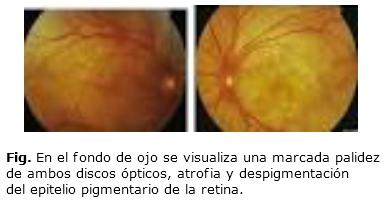
<body><![CDATA[<p   align="justify" ><font face="Verdana, Arial, Helvetica, sans-serif" size="2"><B><font size="3">PRESENTACI&Oacute;N      DEL CASO</font> </b></font></p >       <p   align="justify" ><font face="Verdana, Arial, Helvetica, sans-serif" size="2">Se presenta una paciente      </font><font size="+1" color="#000000"><font size="+1"><font size="+1"><font size="+1"><font size="+1"><font size="+1"><font size="+1"><font size="+1"><font size="+1"><font size="+1"><font size="+1"><font size="+1"><font size="+1"><font size="+1"><font size="+1"><font size="+1"><font size="+1"><font size="+1"><font size="+1"><font size="+1"><font size="+1"><font size="+1"><font size="+1"><font size="+1"><font size="+1"><font size="+1"><font size="+1"><font size="+1"><font size="+1"><font size="+1"><font size="+1"><font size="+1"><font size="+1"><font size="+1"><font size="+1"><font size="+1"><font size="+1"><font size="+1"><font size="+1"><font face="Verdana, Arial, Helvetica, sans-serif" size="2">femenina      de 50 a&ntilde;os de edad, mestiza, ama de casa, </font></font></font></font></font></font></font></font></font></font></font></font></font></font></font></font></font></font></font></font></font></font></font></font></font></font></font></font></font></font></font></font></font></font></font></font></font></font></font></font><font face="Verdana, Arial, Helvetica, sans-serif" size="2">con      antecedente de enfermedad de Vogt-Koyanagi-Harada </font><font size="+1" color="#000000"><font size="+1"><font size="+1"><font size="+1"><font size="+1"><font size="+1"><font size="+1"><font size="+1"><font size="+1"><font size="+1"><font size="+1"><font size="+1"><font size="+1"><font size="+1"><font size="+1"><font size="+1"><font size="+1"><font size="+1"><font size="+1"><font size="+1"><font size="+1"><font size="+1"><font size="+1"><font size="+1"><font size="+1"><font size="+1"><font size="+1"><font size="+1"><font size="+1"><font size="+1"><font size="+1"><font size="+1"><font size="+1"><font size="+1"><font size="+1"><font size="+1"><font size="+1"><font size="+1"><font size="+1"><font face="Verdana, Arial, Helvetica, sans-serif" size="2">de      8 a&ntilde;os de evoluci&oacute;n </font></font></font></font></font></font></font></font></font></font></font></font></font></font></font></font></font></font></font></font></font></font></font></font></font></font></font></font></font></font></font></font></font></font></font></font></font></font></font></font><font face="Verdana, Arial, Helvetica, sans-serif" size="2">y      baja visi&oacute;n, quien acudi&oacute; a la consulta para rehabilitaci&oacute;n      visual. La paciente ha llevado tratamiento con antinflamatorios esteroideos      sist&eacute;micos, inmunosupresores, terapia de apoyo con antinflamatorios      esteroideos t&oacute;picos y ciclopl&eacute;jicos. Fue atendida en el Servicio      de Baja Visi&oacute;n del </font><font size="+1" color="#000000"><font face="Verdana, Arial, Helvetica, sans-serif" size="2">Instituto      Cubano de Oftalmolog&iacute;a &quot;Ram&oacute;n Pando Ferrer&quot;</font></font><font face="Verdana, Arial, Helvetica, sans-serif" size="2">      en abril del a&ntilde;o 2013, por presentar disminuci&oacute;n de la visi&oacute;n      en ambos ojos y dificultad para orientarse. Muestra estudios que se&ntilde;alan      afectaci&oacute;n de sus nervios &oacute;pticos y en menor medida del &aacute;rea      macular <a href="#f1">(Fig.</a>). </font></p > </DIV > </font></font></font></font></font></font></font></font></font></font></font></font></font></font></font></font></font></font></font></font></font></font></font></font></font></font></font></font></font></font></font></font></font></font></font></font></font></font></font>     <blockquote><FONT size="+1" color="#000000"><FONT size="+1"><FONT size="+1"><FONT size="+1"><FONT size="+1"><FONT size="+1"><FONT size="+1"><FONT size="+1"><FONT size="+1"><FONT size="+1"><FONT size="+1"><FONT size="+1"><FONT size="+1"><FONT size="+1"><FONT size="+1"><FONT size="+1"><FONT size="+1"><FONT size="+1"><FONT size="+1"><FONT size="+1"><FONT size="+1"><FONT size="+1"><FONT size="+1"><FONT size="+1"><FONT size="+1"><FONT size="+1"><FONT size="+1"><FONT size="+1"><FONT size="+1"><FONT size="+1"><FONT size="+1"><FONT size="+1"><FONT size="+1"><FONT size="+1"><FONT size="+1"><FONT size="+1"><FONT size="+1"><FONT size="+1"><FONT size="+1">       <DIV class="Part"   >         <div align="center">            <p><font size="+1" color="#000000"><font size="+1"><font size="+1"><font size="+1"><font size="+1"><font size="+1"><font size="+1"><font size="+1"><font size="+1"><font size="+1"><font size="+1"><font size="+1"><font size="+1"><font size="+1"><font size="+1"><font size="+1"><font size="+1"><font size="+1"><font size="+1"><font size="+1"><font size="+1"><font size="+1"><font size="+1"><font size="+1"><font size="+1"><font size="+1"><font size="+1"><font size="+1"><font size="+1"><font size="+1"><font size="+1"><font size="+1"><font size="+1"><font size="+1"><font size="+1"><font size="+1"><font size="+1"><font size="+1"><font size="+1"><img src="/img/revistas/oft/v28n1/f0116115.jpg" width="387" height="204"><a name="f1"></a></font></font></font></font></font></font></font></font></font></font></font></font></font></font></font></font></font></font></font></font></font></font></font></font></font></font></font></font></font></font></font></font></font></font></font></font></font></font></font><font size="+1" color="#000000"><font size="+1"><font size="+1"><font size="+1"><font size="+1"><font size="+1"><font size="+1"><font size="+1"><font size="+1"><font size="+1"><font size="+1"><font size="+1"><font size="+1"><font size="+1"><font size="+1"><font size="+1"><font size="+1"><font size="+1"><font size="+1"><font size="+1"><font size="+1"><font size="+1"><font size="+1"><font size="+1"><font size="+1"><font size="+1"><font size="+1"><font size="+1"><font size="+1"><font size="+1"><font size="+1"><font size="+1"><font size="+1"><font size="+1"><font size="+1"><font size="+1"><font size="+1"><font size="+1"></font></font></font></font></font></font></font></font></font></font></font></font></font></font></font></font></font></font></font></font></font></font></font></font></font></font></font></font></font></font></font></font></font></font></font></font></font></font></p>     </div>   </DIV >   </font></font></font></font></font></font></font></font></font></font></font></font></font></font></font></font></font></font></font></font></font></font></font></font></font></font></font></font></font></font></font></font></font></font></font></font></font></font></font></blockquote> <FONT size="+1" color="#000000"><FONT size="+1"><FONT size="+1"><FONT size="+1"><FONT size="+1"><FONT size="+1"><FONT size="+1"><FONT size="+1"><FONT size="+1"><FONT size="+1"><FONT size="+1"><FONT size="+1"><FONT size="+1"><FONT size="+1"><FONT size="+1"><FONT size="+1"><FONT size="+1"><FONT size="+1"><FONT size="+1"><FONT size="+1"><FONT size="+1"><FONT size="+1"><FONT size="+1"><FONT size="+1"><FONT size="+1"><FONT size="+1"><FONT size="+1"><FONT size="+1"><FONT size="+1"><FONT size="+1"><FONT size="+1"><FONT size="+1"><FONT size="+1"><FONT size="+1"><FONT size="+1"><FONT size="+1"><FONT size="+1"><FONT size="+1"><FONT size="+1">     <DIV class="Part"   >       <p   align="justify" ><font face="Verdana, Arial, Helvetica, sans-serif" size="2">Su principal motivaci&oacute;n      es mejorar su orientaci&oacute;n y movilidad para realizar las tareas del      hogar y la lecto-escritura. Presenta en el ojo derecho (OD) una agudeza visual      sin correcci&oacute;n de 0,1 y en ojo izquierdo (OI) de 0,2 y refracci&oacute;n      din&aacute;mica OD-4,00; OI-4,00, con una agudeza visual mejor corregida de      0,3 en ambos ojos. Teniendo en cuenta sus principales motivaciones desde la      primera consulta, se indic&oacute; microscopio de +10,00 en ambos ojos que      le permit&iacute;a leer letras de tama&ntilde;o 0,4 a una distancia de 10      cm; se fatig&oacute; r&aacute;pidamente con una velocidad de lectura de 60      palabras por minutos, adem&aacute;s con lupa de apoyo de 3x, que le permiti&oacute;      leer letras tama&ntilde;o 0,6 a 13 cm. Se recomend&oacute; mantener los caminos      libres y evitar mover muebles en la casa. </font></p >       <p   align="justify" ><font face="Verdana, Arial, Helvetica, sans-serif" size="2">Se indicaron los      ejercicios de fijaci&oacute;n y localizaci&oacute;n. Luego de tres sesiones      de rehabilitaci&oacute;n, con la misma ayuda &oacute;ptica pero con iluminaci&oacute;n      y empleo del tiposcopio, se logr&oacute; una mayor velocidad de lectura (100      palabras por minuto), sin fatiga. Refiri&oacute; adem&aacute;s comodidad en      el desempe&ntilde;o de sus funciones de la vida diaria, y en el desarrollo      de habilidades en su orientaci&oacute;n y movilidad. </font></p >       <p   align="justify" >&nbsp;</p > </DIV >     ]]></body>
<body><![CDATA[<DIV class="Part"   >        <p   align="justify" ><font face="Verdana, Arial, Helvetica, sans-serif" size="2"><B><font size="3">DISCUSI&Oacute;N      </font> </b></font></p >       <p   align="justify" ><font face="Verdana, Arial, Helvetica, sans-serif" size="2">La enfermedad Vogt-Koyanagi-Harada      es poco frecuente en la pr&aacute;ctica m&eacute;dica diaria, pero ante la      sospecha se hace necesario confirmar el diagn&oacute;stico y distinguirla      de entidades cl&iacute;nicamente similares.<Sup>12 </Sup>El diagn&oacute;stico      temprano y el tratamiento con un r&eacute;gimen agresivo esteroideo, disminuyen      las manifestaciones sist&eacute;micas, las recurrencias y el riesgo de complicaciones.      Se logra un mejor pron&oacute;stico visual en los pacientes.<Sup>13</Sup>-15      Se plantea que alrededor del 60 % de los pacientes con enfermedad de Vogt-Koyanagi-Harada      quedan con agudeza visual de 0,5 o mejor si se realiza el diagn&oacute;stico      a tiempo y el tratamiento oportuno; pero en caso de que la agudeza visual      quedara comprometida, menor o igual de 0,3, a percepci&oacute;n de luz en      su mejor ojo con correcci&oacute;n &oacute;ptica, es un paciente con baja      visi&oacute;n y una opci&oacute;n de tratamiento ser&iacute;a la rehabilitaci&oacute;n      visual que no es m&aacute;s que el conjunto de procesos encaminados a obtener      el m&aacute;ximo aprovechamiento del resto visual con el fin de potencializar      el resto visual y alcanzar los objetivos establecidos por el paciente a trav&eacute;s      del entrenamiento con el uso de ayudas &oacute;pticas y no &oacute;pticas.<Sup>16,17      </Sup></font></p >       <p><font size="2" face="Verdana, Arial, Helvetica, sans-serif">En la literatura      revisada no se encontr&oacute; ning&uacute;n reporte acerca de la rehabilitaci&oacute;n      visual en pacientes con diagn&oacute;stico de enfermedad de Vogt-Koyanagi-Harada.      Es v&aacute;lido se&ntilde;alar que dentro de las enfermedades uveales y su      rehabilitaci&oacute;n visual pudimos solo consultar una presentaci&oacute;n      de caso sobre toxoplasmosis ocular, que reportaba resultados alentadores,<Sup>18      </Sup>dada la baja incidencia de esta enfermedad y teniendo en cuenta la importancia      en el manejo oportuno de esta para disminuir el n&uacute;mero de personas      con baja visi&oacute;n, y la orientaci&oacute;n a quienes la presentan para      ense&ntilde;arles a aprovechar al m&aacute;ximo su remanente visual. </font></p>       <p><font size="2" face="Verdana, Arial, Helvetica, sans-serif">Nos propusimos      presentar este caso para demostrar que con la rehabilitaci&oacute;n visual      mediante el empleo de ayudas &oacute;pticas y no &oacute;pticas se puede lograr      una adecuada velocidad de lectura y comodidad en el desempe&ntilde;o de las      funciones en las actividades de la vida diaria; insertarse a la sociedad como      un ser biopsicosocial con una mejor calidad de vida,<Sup>15,16</Sup> y apoyar      a todos los pacientes con baja visi&oacute;n. </font></p>       <br>       <p><font face="Verdana, Arial, Helvetica, sans-serif" size="2"><B><font size="3">REFERENCIAS      BIBLIOGR&Aacute;FICAS </font></b></font></p> </DIV > <FONT size="+1"><FONT size="+1"><FONT size="+1"><FONT size="+1"><FONT size="+1"><FONT size="+1"><FONT size="+1"><FONT size="+1"><FONT size="+1"><FONT size="+1"><FONT size="+1"><FONT size="+1">     <DIV class="Part"   >        <!-- ref --><p   align="justify" ><font face="Verdana, Arial, Helvetica, sans-serif" size="2">1. American Academy      of Ophthalmology. Intraocular inflammation and uveitis. EE.UU.: American Academy      of Ophthalmology; 2008.     </font></p >       ]]></body>
<body><![CDATA[<!-- ref --><p   align="justify" ><font face="Verdana, Arial, Helvetica, sans-serif" size="2"> 2. Onho-Matsui K,      Horie S, Mochizuki M. Primary Stromal Choroiditis. Vogt-Koyanagi-Harada (VKH)      Disease. En: Gupta A, Gupta V, Herbort CP, Khairallah M. Uveitis text and      imaging. </font><font size="+1" color="#000000"><font size="+1"><font size="+1"><font size="+1"><font size="+1"><font size="+1"><font size="+1"><font size="+1"><font size="+1"><font size="+1"><font size="+1"><font size="+1"><font size="+1"><font size="+1"><font size="+1"><font size="+1"><font size="+1"><font size="+1"><font size="+1"><font size="+1"><font size="+1"><font size="+1"><font size="+1"><font size="+1"><font size="+1"><font size="+1"><font size="+1"><font size="+1"><font size="+1"><font size="+1"><font size="+1"><font size="+1"><font size="+1"><font size="+1"><font size="+1"><font size="+1"><font size="+1"><font size="+1"><font size="+1"><font size="+1"><font size="+1"><font size="+1"><font size="+1"><font size="+1"><font size="+1"><font size="+1"><font size="+1"><font size="+1"><font size="+1"><font size="+1"><font size="+1"><font size="+1" color="#000000"><font size="+1"><font size="+1"><font size="+1"><font size="+1"><font size="+1"><font size="+1"><font size="+1"><font size="+1"><font size="+1"><font size="+1"><font size="+1"><font size="+1"><font size="+1"><font size="+1"><font size="+1"><font size="+1"><font size="+1"><font size="+1"><font size="+1"><font size="+1"><font size="+1"><font size="+1"><font size="+1"><font size="+1"><font size="+1"><font size="+1"><font size="+1"><font size="+1"><font size="+1"><font size="+1"><font size="+1"><font size="+1"><font size="+1"><font size="+1"><font size="+1"><font size="+1"><font size="+1"><font size="+1"><font size="+1"><font size="+1"><font size="+1"><font size="+1"><font size="+1"><font size="+1"><font size="+1"><font size="+1"><font size="+1"><font size="+1"><font size="+1"><font size="+1"><font size="+1" color="#000000"><font size="+1"><font size="+1"><font size="+1"><font size="+1"><font size="+1"><font size="+1"><font size="+1"><font size="+1"><font size="+1"><font size="+1"><font size="+1"><font size="+1"><font size="+1"><font size="+1"><font size="+1"><font size="+1"><font size="+1"><font size="+1"><font size="+1"><font size="+1"><font size="+1"><font size="+1"><font size="+1"><font size="+1"><font size="+1"><font size="+1"><font size="+1"><font size="+1"><font size="+1"><font size="+1"><font size="+1"><font size="+1"><font size="+1"><font size="+1"><font size="+1"><font size="+1"><font size="+1"><font size="+1"><font size="+1"><font size="+1"><font size="+1"><font size="+1"><font size="+1"><font size="+1"><font size="+1"><font size="+1"><font size="+1"><font size="+1"><font size="+1"><font size="+1"><font face="Verdana, Arial, Helvetica, sans-serif" size="2">New      Delhi</font></font></font></font></font></font></font></font></font></font></font></font></font></font></font></font></font></font></font></font></font></font></font></font></font></font></font></font></font></font></font></font></font></font></font></font></font></font></font></font></font></font></font></font></font></font></font></font></font></font></font></font><font face="Verdana, Arial, Helvetica, sans-serif" size="2">:</font></font></font></font></font></font></font></font></font></font></font></font></font></font></font></font></font></font></font></font></font></font></font></font></font></font></font></font></font></font></font></font></font></font></font></font></font></font></font></font></font></font></font></font></font></font></font></font></font></font></font></font><font face="Verdana, Arial, Helvetica, sans-serif" size="2">      Jaypee Brothers; </font></font></font></font></font></font></font></font></font></font></font></font></font></font></font></font></font></font></font></font></font></font></font></font></font></font></font></font></font></font></font></font></font></font></font></font></font></font></font></font></font></font></font></font></font></font></font></font></font></font></font></font><font face="Verdana, Arial, Helvetica, sans-serif" size="2">2009.      p. 529-39.     </font></p >       <!-- ref --><p   align="" ><font face="Verdana, Arial, Helvetica, sans-serif" size="2">3. Tesavibul N. Vogt-Koyanagi-Harada      Syndrome. En: Foster CS, Vitale AT. Diagnosis and treatment of uveitis. Philadelphia:      Saunders; 2001. p. 748-54.     </font></p >       <!-- ref --><p   align="" ><font face="Verdana, Arial, Helvetica, sans-serif" size="2">4. Sukavatcharin      S, Tsai JH, Rao NA. Vogt-Koyanagi-Harada disease in Hispanic patients. Int      Ophthalmol. 2007;27(2-3):143-8.    </font></p >       <!-- ref --><p   align="" ><font face="Verdana, Arial, Helvetica, sans-serif" size="2">5. Goto H, Mochizuki      M, Yamaki K, Kotake S, Usui M, Ohno S. Epidemiological survey of intraocular      inflammation in Japan. Jap J Ophthalmol. 2007;51(1):41-4.    <br>         <br>     6. Nussenblatt RB. Vogt-Koyanagi-Harada Syndrome. En: Nussenblatt RB, Whitcup      SM. Uveitis: fundamental and clinical practice. Philadelphia: Mosby; 2004.      </font><font face="Verdana, Arial, Helvetica, sans-serif" size="2">p. 324-36.      </font></p >       <p   align="justify" ><font face="Verdana, Arial, Helvetica, sans-serif" size="2">7</font><font face="Verdana, Arial, Helvetica, sans-serif" size="2">.      Kiyomoto C, Imaizumi M, Kimoto K, Abe H, Nakano S, Nakatsuka K. Vogt&ndash;      Koyanagi&ndash;Harada disease in elderly Japanese patients. Int Ophthalmol      2007; 27:149-53. </font></p >       ]]></body>
<body><![CDATA[<!-- ref --><p   align="justify" ><font face="Verdana, Arial, Helvetica, sans-serif" size="2">8</font><font face="Verdana, Arial, Helvetica, sans-serif" size="2">.      Perente I, Utine CA, Cakir H, Kaya V, Tutkun IT, Yilmaz OF . Management of      ocular complications of Vogt-Koyanagi-Harada syndrome. Int Ophthalmol. 2009;29(1):33-7.          </font></p >       <!-- ref --><p   align="justify" ><font face="Verdana, Arial, Helvetica, sans-serif" size="2">9. Fardeau C, Tran      TH, Gharbi B, Cassoux N, Bodaghi B, Le HP. Retinal fluorescein and indocyanine      green angiography and optical coherence tomography in successive stages of      Vogt-Koyanagi-Harada disease. Int Ophthalmol. 2007;27(2-3):163-72.     </font></p >       <!-- ref --><p   align="justify" ><font face="Verdana, Arial, Helvetica, sans-serif" size="2">10. Yamamura K, Mori      K, Hieda O, Kinoshita S. Anterior segment optical coherence tomography findings      of acute angle closure glaucoma in Vogt-Koyanagi-Harada disease. Jap J OphthalmoL.      2008;52(3):231-2.     </font></p >       <!-- ref --><p   align="justify" ><font face="Verdana, Arial, Helvetica, sans-serif" size="2">11. Tsai JH, Sukavatcharin      S, Rao NA. Utility of lumbar puncture in diagnosis of Vogt-Koyanagi-Harada      disease. Int Ophthalmol. 2007;27(2-3):189-94.     </font></p >       <!-- ref --><p   align="justify" ><font face="Verdana, Arial, Helvetica, sans-serif" size="2">12. Ya-Ling Guo YL,      Du Y, He JF. Correlation between sunset glow fundus and initial dosage of      corticosteroid in patients with Vogt-Koyanagi-Harada disease. Am J Ophthalmol.      2009;147(5):946.     </font></p >       ]]></body>
<body><![CDATA[<!-- ref --><p   align="justify" ><font face="Verdana, Arial, Helvetica, sans-serif" size="2">13. Liu X, Yang P,      Lin X, Ren X, Zhou H, Huang X, et al. Inhibitory effect of cyclosporin A and      corticosteroids on the production of IFN-y and IL-17 by T cells in Vogt-Koyanagi-Harada      syndrome. Clin Inmunol. 2009;131(2):333-42.     </font></p >       <!-- ref --><p   align="justify" ><font face="Verdana, Arial, Helvetica, sans-serif" size="2"> 14. da Silva FT<Sup>1</Sup>,      Damico FM, Marin ML, Goldberg AC, Hirata CE, Takiuti PH, et al. Revised diagnostic      criteria for Vogt-Koyanagi-Harada disease: considerations on the different      disease categories. Am J Ophthalmol. 2009;147(2):339-45.     </font></p >       <!-- ref --><p><font face="Verdana, Arial, Helvetica, sans-serif" size="2">15. Tugal-Tutkun      I, Ozyazgan Y, Akova YA, Sullu Y, Akyol N, Soylu M, et al. The spectrum of      Vogt-Koyanagi-Harada disease in Turkey. Int Ophthalmol. 2007;27(23):117-23.          </font></p>   <FONT size="+1"><FONT size="+1">        <!-- ref --><p   align="justify" ><font face="Verdana, Arial, Helvetica, sans-serif" size="2"> 16. Bara&ntilde;ano      Gl. Atenci&oacute;n en </font><font face="Verdana, Arial, Helvetica, sans-serif" size="2">baja      visi&oacute;n. Madrid: ONCE; 2008.     </font></p >       <!-- ref --><p   align="justify" ><font face="Verdana, Arial, Helvetica, sans-serif" size="2">17. OMS. Visi&oacute;n      2020. El derecho a la visi&oacute;n. Iniciativa mundial para la eliminaci&oacute;n      de la ceguera evitable. IAPB, 2006-2011; 2008.     </font></p >       ]]></body>
<body><![CDATA[<!-- ref --><p   align="justify" ><font face="Verdana, Arial, Helvetica, sans-serif" size="2">18. Ramos AE. Toxoplasmosis      ocular y rehabilitaci&oacute;n visual. Presentaci&oacute;n de un caso. Revista      Habanera de Ciencias M&eacute;dicas. 2013;12(1):48-56.     </font></p >       <p   >&nbsp;</p >       <p   ><font face="Verdana, Arial, Helvetica, sans-serif" size="2">Recibido: 2 de diciembre      de 2014.    <br>     Aprobado: 3 de enero de 2015.</font></p >       <p   >&nbsp;</p >       <p   ><font face="Verdana, Arial, Helvetica, sans-serif" size="2">Dra. <I>Mayrelis      Quintero Busutil</I>. Instituto Cubano de Oftalmolog&iacute;a &quot;Ram&oacute;n      Pando Ferrer&quot;. Ave. 76 No. 3104 entre 31 y 41 Marianao, La Habana, Cuba.      Correo electr&oacute;nico: <U><FONT color="#0000FF"><a href="mailto:mayrelisquintero@infomed.sld.cu">mayrelisquintero@infomed.sld.cu</a>      </font></U></font></p >   </font></font></DIV > </font></font></font></font></font></font></font></font></font></font></font></font></font></font></font></font></font></font></font></font></font></font></font></font></font></font></font></font></font></font></font></font></font></font></font></font></font></font></font></font></font></font></font></font></font></font></font></font></font></font></font>       ]]></body><back>
<ref-list>
<ref id="B1">
<label>1</label><nlm-citation citation-type="book">
<collab>American Academy of Ophthalmology</collab>
<source><![CDATA[Intraocular inflammation and uveitis]]></source>
<year>2008</year>
<publisher-name><![CDATA[American Academy of Ophthalmology]]></publisher-name>
</nlm-citation>
</ref>
<ref id="B2">
<label>2</label><nlm-citation citation-type="book">
<person-group person-group-type="author">
<name>
<surname><![CDATA[Onho-Matsui]]></surname>
<given-names><![CDATA[K]]></given-names>
</name>
<name>
<surname><![CDATA[Horie]]></surname>
<given-names><![CDATA[S]]></given-names>
</name>
<name>
<surname><![CDATA[Mochizuki]]></surname>
<given-names><![CDATA[M]]></given-names>
</name>
</person-group>
<article-title xml:lang="en"><![CDATA[Primary Stromal Choroiditis. Vogt-Koyanagi-Harada (VKH) Disease]]></article-title>
<person-group person-group-type="editor">
<name>
<surname><![CDATA[Gupta]]></surname>
<given-names><![CDATA[A]]></given-names>
</name>
<name>
<surname><![CDATA[Gupta]]></surname>
<given-names><![CDATA[V]]></given-names>
</name>
<name>
<surname><![CDATA[Herbort]]></surname>
<given-names><![CDATA[CP]]></given-names>
</name>
<name>
<surname><![CDATA[Khairallah]]></surname>
<given-names><![CDATA[M]]></given-names>
</name>
</person-group>
<source><![CDATA[Uveitis text and imaging]]></source>
<year>2009</year>
<page-range>529-39</page-range><publisher-loc><![CDATA[New Delhi ]]></publisher-loc>
<publisher-name><![CDATA[Jaypee Brothers]]></publisher-name>
</nlm-citation>
</ref>
<ref id="B3">
<label>3</label><nlm-citation citation-type="book">
<person-group person-group-type="author">
<name>
<surname><![CDATA[Tesavibul]]></surname>
<given-names><![CDATA[N]]></given-names>
</name>
</person-group>
<article-title xml:lang="en"><![CDATA[Vogt-Koyanagi-Harada Syndrome]]></article-title>
<person-group person-group-type="editor">
<name>
<surname><![CDATA[Foster]]></surname>
<given-names><![CDATA[CS]]></given-names>
</name>
<name>
<surname><![CDATA[Vitale]]></surname>
<given-names><![CDATA[AT]]></given-names>
</name>
</person-group>
<source><![CDATA[Diagnosis and treatment of uveitis]]></source>
<year>2001</year>
<page-range>748-54</page-range><publisher-loc><![CDATA[Philadelphia ]]></publisher-loc>
<publisher-name><![CDATA[Saunders]]></publisher-name>
</nlm-citation>
</ref>
<ref id="B4">
<label>4</label><nlm-citation citation-type="journal">
<person-group person-group-type="author">
<name>
<surname><![CDATA[Sukavatcharin]]></surname>
<given-names><![CDATA[S]]></given-names>
</name>
<name>
<surname><![CDATA[Tsai]]></surname>
<given-names><![CDATA[JH]]></given-names>
</name>
<name>
<surname><![CDATA[Rao]]></surname>
<given-names><![CDATA[NA]]></given-names>
</name>
</person-group>
<article-title xml:lang="en"><![CDATA[Vogt-Koyanagi-Harada disease in Hispanic patients]]></article-title>
<source><![CDATA[Int Ophthalmol]]></source>
<year>2007</year>
<volume>27</volume>
<numero>2-3</numero>
<issue>2-3</issue>
<page-range>143-8</page-range></nlm-citation>
</ref>
<ref id="B5">
<label>5</label><nlm-citation citation-type="journal">
<person-group person-group-type="author">
<name>
<surname><![CDATA[Goto]]></surname>
<given-names><![CDATA[H]]></given-names>
</name>
<name>
<surname><![CDATA[Mochizuki]]></surname>
<given-names><![CDATA[M]]></given-names>
</name>
<name>
<surname><![CDATA[Yamaki]]></surname>
<given-names><![CDATA[K]]></given-names>
</name>
<name>
<surname><![CDATA[Kotake]]></surname>
<given-names><![CDATA[S]]></given-names>
</name>
<name>
<surname><![CDATA[Usui]]></surname>
<given-names><![CDATA[M]]></given-names>
</name>
<name>
<surname><![CDATA[Ohno]]></surname>
<given-names><![CDATA[S]]></given-names>
</name>
</person-group>
<article-title xml:lang="en"><![CDATA[Epidemiological survey of intraocular inflammation in Japan]]></article-title>
<source><![CDATA[Jap J Ophthalmol]]></source>
<year>2007</year>
<volume>51</volume>
<numero>1</numero>
<issue>1</issue>
<page-range>41-4</page-range></nlm-citation>
</ref>
<ref id="B6">
<label>6</label><nlm-citation citation-type="book">
<person-group person-group-type="author">
<name>
<surname><![CDATA[Nussenblatt]]></surname>
<given-names><![CDATA[RB]]></given-names>
</name>
</person-group>
<article-title xml:lang="en"><![CDATA[Vogt-Koyanagi-Harada Syndrome]]></article-title>
<person-group person-group-type="editor">
<name>
<surname><![CDATA[Nussenblatt]]></surname>
<given-names><![CDATA[RB]]></given-names>
</name>
<name>
<surname><![CDATA[Whitcup]]></surname>
<given-names><![CDATA[SM]]></given-names>
</name>
</person-group>
<source><![CDATA[Uveitis: fundamental and clinical practice]]></source>
<year>2004</year>
<page-range>324-36</page-range><publisher-loc><![CDATA[Philadelphia ]]></publisher-loc>
<publisher-name><![CDATA[Mosby]]></publisher-name>
</nlm-citation>
</ref>
<ref id="B7">
<label>7</label><nlm-citation citation-type="journal">
<person-group person-group-type="author">
<name>
<surname><![CDATA[Kiyomoto]]></surname>
<given-names><![CDATA[C]]></given-names>
</name>
<name>
<surname><![CDATA[Imaizumi]]></surname>
<given-names><![CDATA[M]]></given-names>
</name>
<name>
<surname><![CDATA[Kimoto]]></surname>
<given-names><![CDATA[K]]></given-names>
</name>
<name>
<surname><![CDATA[Abe]]></surname>
<given-names><![CDATA[H]]></given-names>
</name>
<name>
<surname><![CDATA[Nakano]]></surname>
<given-names><![CDATA[S]]></given-names>
</name>
<name>
<surname><![CDATA[Nakatsuka]]></surname>
<given-names><![CDATA[K]]></given-names>
</name>
</person-group>
<article-title xml:lang="en"><![CDATA[Vogt- Koyanagi-Harada disease in elderly Japanese patients]]></article-title>
<source><![CDATA[Int Ophthalmol]]></source>
<year>2007</year>
<volume>27</volume>
<page-range>149-53</page-range></nlm-citation>
</ref>
<ref id="B8">
<label>8</label><nlm-citation citation-type="journal">
<person-group person-group-type="author">
<name>
<surname><![CDATA[Perente]]></surname>
<given-names><![CDATA[I]]></given-names>
</name>
<name>
<surname><![CDATA[Utine]]></surname>
<given-names><![CDATA[CA]]></given-names>
</name>
<name>
<surname><![CDATA[Cakir]]></surname>
<given-names><![CDATA[H]]></given-names>
</name>
<name>
<surname><![CDATA[Kaya]]></surname>
<given-names><![CDATA[V]]></given-names>
</name>
<name>
<surname><![CDATA[Tutkun]]></surname>
<given-names><![CDATA[IT]]></given-names>
</name>
<name>
<surname><![CDATA[Yilmaz]]></surname>
<given-names><![CDATA[OF]]></given-names>
</name>
</person-group>
<article-title xml:lang="en"><![CDATA[Management of ocular complications of Vogt-Koyanagi-Harada syndrome]]></article-title>
<source><![CDATA[Int Ophthalmol]]></source>
<year>2009</year>
<volume>29</volume>
<numero>1</numero>
<issue>1</issue>
<page-range>33-7</page-range></nlm-citation>
</ref>
<ref id="B9">
<label>9</label><nlm-citation citation-type="journal">
<person-group person-group-type="author">
<name>
<surname><![CDATA[Fardeau]]></surname>
<given-names><![CDATA[C]]></given-names>
</name>
<name>
<surname><![CDATA[Tran]]></surname>
<given-names><![CDATA[TH]]></given-names>
</name>
<name>
<surname><![CDATA[Gharbi]]></surname>
<given-names><![CDATA[B]]></given-names>
</name>
<name>
<surname><![CDATA[Cassoux]]></surname>
<given-names><![CDATA[N]]></given-names>
</name>
<name>
<surname><![CDATA[Bodaghi]]></surname>
<given-names><![CDATA[B]]></given-names>
</name>
<name>
<surname><![CDATA[Le]]></surname>
<given-names><![CDATA[HP]]></given-names>
</name>
</person-group>
<article-title xml:lang="en"><![CDATA[Retinal fluorescein and indocyanine green angiography and optical coherence tomography in successive stages of Vogt-Koyanagi-Harada disease]]></article-title>
<source><![CDATA[Int Ophthalmol]]></source>
<year>2007</year>
<volume>27</volume>
<numero>2-3</numero>
<issue>2-3</issue>
<page-range>163-72</page-range></nlm-citation>
</ref>
<ref id="B10">
<label>10</label><nlm-citation citation-type="journal">
<person-group person-group-type="author">
<name>
<surname><![CDATA[Yamamura]]></surname>
<given-names><![CDATA[K]]></given-names>
</name>
<name>
<surname><![CDATA[Mori]]></surname>
<given-names><![CDATA[K]]></given-names>
</name>
<name>
<surname><![CDATA[Hieda]]></surname>
<given-names><![CDATA[O]]></given-names>
</name>
<name>
<surname><![CDATA[Kinoshita]]></surname>
<given-names><![CDATA[S]]></given-names>
</name>
</person-group>
<article-title xml:lang="en"><![CDATA[Anterior segment optical coherence tomography findings of acute angle closure glaucoma in Vogt-Koyanagi-Harada disease]]></article-title>
<source><![CDATA[Jap J OphthalmoL]]></source>
<year>2008</year>
<volume>52</volume>
<numero>3</numero>
<issue>3</issue>
<page-range>231-2</page-range></nlm-citation>
</ref>
<ref id="B11">
<label>11</label><nlm-citation citation-type="journal">
<person-group person-group-type="author">
<name>
<surname><![CDATA[Tsai]]></surname>
<given-names><![CDATA[JH]]></given-names>
</name>
<name>
<surname><![CDATA[Sukavatcharin]]></surname>
<given-names><![CDATA[S]]></given-names>
</name>
<name>
<surname><![CDATA[Rao]]></surname>
<given-names><![CDATA[NA]]></given-names>
</name>
</person-group>
<article-title xml:lang="en"><![CDATA[Utility of lumbar puncture in diagnosis of Vogt-Koyanagi-Harada disease]]></article-title>
<source><![CDATA[Int Ophthalmol]]></source>
<year>2007</year>
<volume>27</volume>
<numero>2-3</numero>
<issue>2-3</issue>
<page-range>189-94</page-range></nlm-citation>
</ref>
<ref id="B12">
<label>12</label><nlm-citation citation-type="journal">
<person-group person-group-type="author">
<name>
<surname><![CDATA[Ya-Ling Guo]]></surname>
<given-names><![CDATA[YL]]></given-names>
</name>
<name>
<surname><![CDATA[Du]]></surname>
<given-names><![CDATA[Y]]></given-names>
</name>
<name>
<surname><![CDATA[He]]></surname>
<given-names><![CDATA[JF]]></given-names>
</name>
</person-group>
<article-title xml:lang="en"><![CDATA[Correlation between sunset glow fundus and initial dosage of corticosteroid in patients with Vogt-Koyanagi-Harada disease]]></article-title>
<source><![CDATA[Am J Ophthalmol]]></source>
<year>2009</year>
<volume>147</volume>
<numero>5</numero>
<issue>5</issue>
<page-range>946</page-range></nlm-citation>
</ref>
<ref id="B13">
<label>13</label><nlm-citation citation-type="journal">
<person-group person-group-type="author">
<name>
<surname><![CDATA[Liu]]></surname>
<given-names><![CDATA[X]]></given-names>
</name>
<name>
<surname><![CDATA[Yang]]></surname>
<given-names><![CDATA[P]]></given-names>
</name>
<name>
<surname><![CDATA[Lin]]></surname>
<given-names><![CDATA[X]]></given-names>
</name>
<name>
<surname><![CDATA[Ren]]></surname>
<given-names><![CDATA[X]]></given-names>
</name>
<name>
<surname><![CDATA[Zhou]]></surname>
<given-names><![CDATA[H]]></given-names>
</name>
<name>
<surname><![CDATA[Huang]]></surname>
<given-names><![CDATA[X]]></given-names>
</name>
</person-group>
<article-title xml:lang="en"><![CDATA[Inhibitory effect of cyclosporin A and corticosteroids on the production of IFN-y and IL-17 by T cells in Vogt-Koyanagi-Harada syndrome]]></article-title>
<source><![CDATA[Clin Inmunol]]></source>
<year>2009</year>
<volume>131</volume>
<numero>2</numero>
<issue>2</issue>
<page-range>333-42</page-range></nlm-citation>
</ref>
<ref id="B14">
<label>14</label><nlm-citation citation-type="journal">
<person-group person-group-type="author">
<name>
<surname><![CDATA[da Silva]]></surname>
<given-names><![CDATA[FT1]]></given-names>
</name>
<name>
<surname><![CDATA[Damico]]></surname>
<given-names><![CDATA[FM]]></given-names>
</name>
<name>
<surname><![CDATA[Marin]]></surname>
<given-names><![CDATA[ML]]></given-names>
</name>
<name>
<surname><![CDATA[Goldberg]]></surname>
<given-names><![CDATA[AC]]></given-names>
</name>
<name>
<surname><![CDATA[Hirata]]></surname>
<given-names><![CDATA[CE]]></given-names>
</name>
<name>
<surname><![CDATA[Takiuti]]></surname>
<given-names><![CDATA[PH]]></given-names>
</name>
</person-group>
<article-title xml:lang="en"><![CDATA[Revised diagnostic criteria for Vogt-Koyanagi-Harada disease: considerations on the different disease categories]]></article-title>
<source><![CDATA[Am J Ophthalmol]]></source>
<year>2009</year>
<volume>147</volume>
<numero>2</numero>
<issue>2</issue>
<page-range>339-45</page-range></nlm-citation>
</ref>
<ref id="B15">
<label>15</label><nlm-citation citation-type="journal">
<person-group person-group-type="author">
<name>
<surname><![CDATA[Tugal-Tutkun]]></surname>
<given-names><![CDATA[I]]></given-names>
</name>
<name>
<surname><![CDATA[Ozyazgan]]></surname>
<given-names><![CDATA[Y]]></given-names>
</name>
<name>
<surname><![CDATA[Akova]]></surname>
<given-names><![CDATA[YA]]></given-names>
</name>
<name>
<surname><![CDATA[Sullu]]></surname>
<given-names><![CDATA[Y]]></given-names>
</name>
<name>
<surname><![CDATA[Akyol]]></surname>
<given-names><![CDATA[N]]></given-names>
</name>
<name>
<surname><![CDATA[Soylu]]></surname>
<given-names><![CDATA[M]]></given-names>
</name>
</person-group>
<article-title xml:lang="en"><![CDATA[The spectrum of Vogt-Koyanagi-Harada disease in Turkey]]></article-title>
<source><![CDATA[Int Ophthalmol]]></source>
<year>2007</year>
<volume>27</volume>
<numero>23</numero>
<issue>23</issue>
<page-range>117-23</page-range></nlm-citation>
</ref>
<ref id="B16">
<label>16</label><nlm-citation citation-type="book">
<person-group person-group-type="author">
<name>
<surname><![CDATA[Barañano Gl]]></surname>
</name>
</person-group>
<source><![CDATA[Atención en baja visión]]></source>
<year>2008</year>
<publisher-loc><![CDATA[Madrid ]]></publisher-loc>
<publisher-name><![CDATA[ONCE]]></publisher-name>
</nlm-citation>
</ref>
<ref id="B17">
<label>17</label><nlm-citation citation-type="">
<collab>OMS</collab>
<source><![CDATA[Visión 2020. El derecho a la visión. Iniciativa mundial para la eliminación de la ceguera evitable IAPB, 2006-2011]]></source>
<year>2008</year>
</nlm-citation>
</ref>
<ref id="B18">
<label>18</label><nlm-citation citation-type="journal">
<person-group person-group-type="author">
<name>
<surname><![CDATA[Ramos]]></surname>
<given-names><![CDATA[AE]]></given-names>
</name>
</person-group>
<article-title xml:lang="es"><![CDATA[Toxoplasmosis ocular y rehabilitación visualPresentación de un caso]]></article-title>
<source><![CDATA[Revista Habanera de Ciencias Médicas]]></source>
<year>2013</year>
<volume>12</volume>
<numero>1</numero>
<issue>1</issue>
<page-range>48-56</page-range></nlm-citation>
</ref>
</ref-list>
</back>
</article>