<?xml version="1.0" encoding="ISO-8859-1"?><article xmlns:mml="http://www.w3.org/1998/Math/MathML" xmlns:xlink="http://www.w3.org/1999/xlink" xmlns:xsi="http://www.w3.org/2001/XMLSchema-instance">
<front>
<journal-meta>
<journal-id>1025-028X</journal-id>
<journal-title><![CDATA[Vaccimonitor]]></journal-title>
<abbrev-journal-title><![CDATA[Vaccimonitor]]></abbrev-journal-title>
<issn>1025-028X</issn>
<publisher>
<publisher-name><![CDATA[Finlay Ediciones]]></publisher-name>
</publisher>
</journal-meta>
<article-meta>
<article-id>S1025-028X2009000200005</article-id>
<title-group>
<article-title xml:lang="es"><![CDATA[Nueva generación de vacunas antimeningococica basadas en vesículas de membrana externa]]></article-title>
<article-title xml:lang="en"><![CDATA[New generation of outer-membrane vesicles-based meningococcal vaccines]]></article-title>
</title-group>
<contrib-group>
<contrib contrib-type="author">
<name>
<surname><![CDATA[Poolman]]></surname>
<given-names><![CDATA[Jan]]></given-names>
</name>
<xref ref-type="aff" rid="A01"/>
</contrib>
<contrib contrib-type="author">
<name>
<surname><![CDATA[Denoël]]></surname>
<given-names><![CDATA[Philippe]]></given-names>
</name>
<xref ref-type="aff" rid="A01"/>
</contrib>
<contrib contrib-type="author">
<name>
<surname><![CDATA[Devos]]></surname>
<given-names><![CDATA[Nathalie]]></given-names>
</name>
<xref ref-type="aff" rid="A01"/>
</contrib>
<contrib contrib-type="author">
<name>
<surname><![CDATA[Feron]]></surname>
<given-names><![CDATA[Christiane]]></given-names>
</name>
<xref ref-type="aff" rid="A01"/>
</contrib>
<contrib contrib-type="author">
<name>
<surname><![CDATA[Goraj]]></surname>
<given-names><![CDATA[Karine]]></given-names>
</name>
<xref ref-type="aff" rid="A01"/>
</contrib>
<contrib contrib-type="author">
<name>
<surname><![CDATA[Momin]]></surname>
<given-names><![CDATA[Patricia]]></given-names>
</name>
<xref ref-type="aff" rid="A01"/>
</contrib>
<contrib contrib-type="author">
<name>
<surname><![CDATA[Tans]]></surname>
<given-names><![CDATA[Christine]]></given-names>
</name>
<xref ref-type="aff" rid="A01"/>
</contrib>
<contrib contrib-type="author">
<name>
<surname><![CDATA[Weynants]]></surname>
<given-names><![CDATA[Vincent]]></given-names>
</name>
<xref ref-type="aff" rid="A01"/>
</contrib>
</contrib-group>
<aff id="A01">
<institution><![CDATA[,GlaxoSmithKline Biologicals  ]]></institution>
<addr-line><![CDATA[ ]]></addr-line>
<country>Belgium</country>
</aff>
<pub-date pub-type="pub">
<day>00</day>
<month>08</month>
<year>2009</year>
</pub-date>
<pub-date pub-type="epub">
<day>00</day>
<month>08</month>
<year>2009</year>
</pub-date>
<volume>18</volume>
<numero>2</numero>
<fpage>68</fpage>
<lpage>70</lpage>
<copyright-statement/>
<copyright-year/>
<self-uri xlink:href="http://scielo.sld.cu/scielo.php?script=sci_arttext&amp;pid=S1025-028X2009000200005&amp;lng=en&amp;nrm=iso"></self-uri><self-uri xlink:href="http://scielo.sld.cu/scielo.php?script=sci_abstract&amp;pid=S1025-028X2009000200005&amp;lng=en&amp;nrm=iso"></self-uri><self-uri xlink:href="http://scielo.sld.cu/scielo.php?script=sci_pdf&amp;pid=S1025-028X2009000200005&amp;lng=en&amp;nrm=iso"></self-uri><abstract abstract-type="short" xml:lang="en"><p><![CDATA[With the development of conjugate vaccines, Neisseria meningitidis serogroup B (MenB) will remain the major cause of meningitis, as it is not covered by vaccination. In order to develop a vaccine able to confer a broad cross-protection against invasive MenB strains, we have developed a new generation of outer-membrane vesicles (OMVs) based on the over-expression of well conserved minor outer membrane proteins (OMPs) and the presence of high percentage of detoxified LOS.]]></p></abstract>
<kwd-group>
<kwd lng="en"><![CDATA[Neisseria meningitidis]]></kwd>
<kwd lng="en"><![CDATA[OMV]]></kwd>
<kwd lng="en"><![CDATA[meningococcal vaccines]]></kwd>
</kwd-group>
</article-meta>
</front><body><![CDATA[ <p align="right"><font face="Verdana, Arial, Helvetica, sans-serif" size="2"><b>ARTICULOS    ORIGINALES</b></font></p>     <p>&nbsp;</p>     <p><font face="Verdana, Arial, Helvetica, sans-serif" size="2"><b><font size="4">Nueva    generaci&oacute;n de vacunas antimeningococica basadas en ves&iacute;culas de    membrana externa.</font></b></font></p>     <p><font face="Verdana, Arial, Helvetica, sans-serif" size="2"><b><font size="3">New    generation of outer-membrane vesicles-based meningococcal vaccines.</font></b></font></p>     <p><font face="Verdana, Arial, Helvetica, sans-serif" size="2"><b>    <br>   Jan Poolman, Philippe Deno&euml;l, Nathalie Devos, Christiane Feron, Karine    Goraj, Patricia Momin, Christine Tans, Vincent Weynants </b>    <br>       <br>   GlaxoSmithKline Biologicals, Rixensart, B-1330, Belgium. </font></p>     <p><font face="Verdana, Arial, Helvetica, sans-serif" size="2">email: <a href="emailto:gmoe@chori.org">gmoe@chori.org    </a>    <br>       ]]></body>
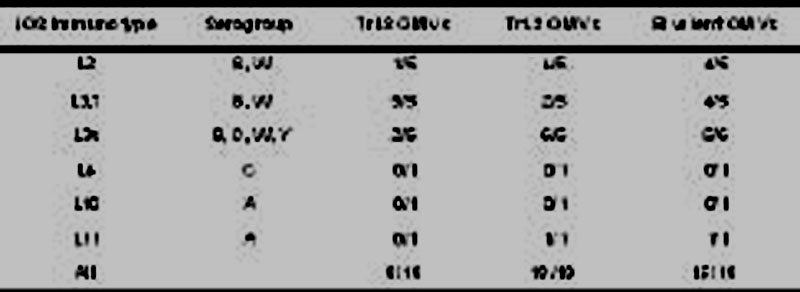
<body><![CDATA[<br> </font></p> <hr>     <p><font face="Verdana, Arial, Helvetica, sans-serif" size="2"> <font size="3"><b>Abstract</b></font></font></p>     <p><font face="Verdana, Arial, Helvetica, sans-serif" size="2">With the development    of conjugate vaccines, Neisseria meningitidis serogroup B (MenB) will remain    the major cause of meningitis, as it is not covered by vaccination. In order    to develop a vaccine able to confer a broad cross-protection against invasive    MenB strains, we have developed a new generation of outer-membrane vesicles    (OMVs) based on the over-expression of well conserved minor outer membrane proteins    (OMPs) and the presence of high percentage of detoxified LOS. </font></p>     <p><font face="Verdana, Arial, Helvetica, sans-serif" size="2"><b>Keywords</b>:    Neisseria meningitidis,OMV, meningococcal vaccines</font></p> <hr>     <p><font face="Verdana, Arial, Helvetica, sans-serif" size="3"><b>Introduction    </b></font></p>     <p><font face="Verdana, Arial, Helvetica, sans-serif" size="2">With the availability    of H. influenzae type B vaccine, meningococcal serogroup A, C, W-135 and Y vaccines,    and pneumococcal conjugate vaccine, serogroup B meningococci will remain the    major cause of bacterial meningitis. The use of serogroup B capsular polysaccharide    as vaccine antigen has been hampered by its poor immunogenicity and by potential    concern of inducing auto-antibodies. </font></p>     <p><font face="Verdana, Arial, Helvetica, sans-serif" size="2">Our strategy to    develop a safe, immunogenic and cross-protective MenB vaccine is based on the    selection of different surface antigens, well conserved, and involved in different    stages of the infection process. In order to present these vaccine antigens    in their natural environment, an alternative expression system was developed    in N. meningitidis, taking into account its capacity to produce large amounts    of outer-membrane vesicles (OMVs). The OMVs are enriched in vaccine antigens    because they are produced from strains genetically modified to over-express    the selected antigens by using either the gene delivery (GD) or promoter replacement    (PR) strategies (1). </font></p>     <p><font face="Verdana, Arial, Helvetica, sans-serif" size="2">After literature    survey and genome mining, approximately 50 potential antigens were selected    for subsequent evaluation. In addition to these proteins, the lipo-oligosaccharide    (LOS) of invasive MenB strains was also evaluated as vaccine antigen because    antibodies to LOS are known to be bactericidal. </font></p>     <p><font face="Verdana, Arial, Helvetica, sans-serif" size="2">In addition, due    to its adhesion and toxic properties, the LOS can be considered as a major virulence    factor. Although at least 11 different LOS immunotypes are described, L3,7 represents    up to 70% of disease cases while L2 appears to be the second most prevalent    immunotype (2). </font></p>     <p><font face="Verdana, Arial, Helvetica, sans-serif" size="2">By using a preclinical    mouse model that mimics the PorA-specific bactericidal response observed in    infants with wild-type OMVs, we have developed a new generation of OMV- based    meningococcal vaccines (3). Some key results are described to illustrate this    development. </font></p>     ]]></body>
<body><![CDATA[<p><font face="Verdana, Arial, Helvetica, sans-serif" size="2"><b>Synergy of antibodies    against minor MenB OMPs </b></font></p>     <p><font face="Verdana, Arial, Helvetica, sans-serif" size="2">Because of the    dominant immune response mediated by PorA, OMVs derived from MenB wild-type    strains induce only limited cross-protection against circulating heterologous    strains. This partial cross-protection appears to be induced by minor and well-conserved    outer-membrane proteins (OMPs) and LOS. We have genetically modified strain    H44/76 to prevent the expression of the major variable protein PorA and to up-regulate    the expression of some minor OMPs that have potential as vaccine antigens. These    over-expressions were done in a galE LOS background and OMVs were prepared by    detergent extraction using 0.5% Na deoxycholate (DOC). </font></p>     <p><font face="Verdana, Arial, Helvetica, sans-serif" size="2">The bactericidal    response measured in sera from mice immunized with OMVs over-expressing only    one minor OMP showed no or only limited increase in bactericidal antibodies    even though the induction of specific anti-OMP was demonstrated by ELISA. However,    by mixing the sera of animals immunized with OMVs over-expressing TbpA and OMVs    over-expressing Hsf, we observed a positive interaction between anti-TbpA and    anti-Hsf antibodies in the ability to induce complement-mediated killing of    bacterial strains. This finding was confirmed by the immunization of mice with    OMVs co-over-expressing both TbpA and Hsf (Figure 1). Comparable synergistic    effects were shown between other minor OMPs, such as Nspa and OMP85. </font></p>     <p><font face="Verdana, Arial, Helvetica, sans-serif" size="2"><b>Anti-LOS antibodies    for protection against N. meningitidis strains </b></font></p>     <p><font face="Verdana, Arial, Helvetica, sans-serif" size="2">Since LOS is the    main target of bactericidal antibodies in convalescent subjects (4), we have    evaluated the use of D porA OMVs as a vehicle to present LOS. In a first series    of preclinical experiments, OMVs expressing a full L3,7 LOS or a galE LOS were    tested for their potential to induce a bactericidal antibody response. The DOC    extraction process to prepare OMVs was evaluated by comparison of 0.1% DOC (leaving    high LOS levels within OMV) and 0.5% DOC (classical OMV process). It was observed    that only OMVs containing a high percentage of L3,7 LOS were able to mediate    a protective response against most of the invasive L3,7 MenB strains tested.    </font></p>     <p><font face="Verdana, Arial, Helvetica, sans-serif" size="2">Two genetic modifications    were used to alter LOS: one modification (lgtB mutation) removes the terminal    galactose of LOS (TrL3), the other modification leads to a penta-acylated, less    toxic lipidA (msbB mutation). The 0.1% DOC OMVs produced from this modified    H44/76 strain (TrL3 OMVs) were still able to induce cross-protective bactericidal    responses against L3,7 MenB strains and demonstrated a reduced and acceptable    reactogenicity profile in different LOS toxicity models (pyrogenicity in rabbit,    production of pro-inflammatory cytokines by human monocytic cells, degree of    inflammation at the injection site in mice and rabbits). However, 0.1% DOC OMVs    based on the L3,7 immunotype were not able to induce a bactericidal response    against strains expressing either the L2 immunotype or the recently described    L3v immunotype, both differing from L3,7 by the composition of the LOS inner    core. Therefore, a bivalent OMV vaccine based on detoxified L3,7 and L2 LOS    (lgtB and msbB mutations) was evaluated in mice. This bivalent vaccine induced    the production of bactericidal antibodies able to mediate complement killing    of most of the meningococcal strains tested, irrespective of the serogroup (Table    1). </font></p>     <p><font face="Verdana, Arial, Helvetica, sans-serif" size="2"><b><font size="3">Discussion</font></b>    </font></p>     <p><font face="Verdana, Arial, Helvetica, sans-serif" size="2">Over-expression    of minor OMPs in MenB vaccine strains followed by purification of OMVs resulted    in antigen preparations that have demonstrated their potential against Men B,    by raising specific anti-OMP serum antibodies in mice. This effect was due to    the correct presentation (native folding) of the proteins, as opposed to recombinant    integral OMPs that are known as weak inducers of specific bactericidal antibodies.    However, to efficiently kill wild-type bacteria, it was also observed that several    minor OMPs need to be targeted in order to reach the threshold level of bactericidal    antibodies for the activation of the classical complement pathway. We further    provided evidence for LOS being a potent vaccine antigen, and again, a threshold    level of LOS in OMVs had to be reached to induce anti-LOS antibodies in mice.</font></p>     <p><font face="Verdana, Arial, Helvetica, sans-serif" size="2"><a href="/img/revistas/vac/v18n2/f0105209AyB.jpg">Figura    1 </a>. Over-expression of Hsf and/or TbpA. (A) Impact on the protein content    in 0.5% DOC OMVs. (B) Impact on the induction of antibodies against minor OMPs    in mice immunized with purified proteins, and impact on the induction of complement-mediated    killing by bactericidal antibodies (adapted from [3]). </font></p>     
<p><font face="Verdana, Arial, Helvetica, sans-serif" size="2"><a href="/img/revistas/vac/v18n2/t0105209.jpg">Tabla    1</a>. Induction of bactericidal antibodies in mice immunized with either monovalent    or bivalent OMV vaccine. Serum antibodies were tested in rabbit SBA against    a panel of 19 N. meningitidis strains. Results are expressed as the number of    strains killed (titre &sup3; 1/128) per number of strains tested (adapted from    [5]). </font></p>     
]]></body>
<body><![CDATA[<p><font face="Verdana, Arial, Helvetica, sans-serif" size="2">Therefore, the    use of detoxified mutated LOS was needed to combine a high level of LOS and    an acceptable safety/toxicity profile. </font></p>     <p><font face="Verdana, Arial, Helvetica, sans-serif" size="3"><b>References </b></font></p>     <p><font face="Verdana, Arial, Helvetica, sans-serif" size="2">1. Poolman JT,    Feron C, Desquesne G, et al. Outer membrane vesicles and other options for a    meningococcal B vaccine. In: Ferreir&oacute;s C, Criado MT, V&aacute;zquez J,    editors. Emerging strategies in the fight against meningitis: molecular and    cellular aspects.Wymondham, Norfolk, UK, Horizon Scientific Press, 2002: p.    135-49. </font></p>     <!-- ref --><p><font face="Verdana, Arial, Helvetica, sans-serif" size="2">2. Scholten RJ,    Kuipers B, Valkenburg HA, Dankert J, Zollinger WD, Poolman JT. Lipo-oligosaccharide    immunotyping of Neisseria meningitidis by a whole-cell ELISA with monoclonal    antibodies. J Med Microbiol 1994;41:236-43.    <br>       <!-- ref --><br>   3. Weynants VE, Feron CM, Goraj KK, et al. Additive and synergistic bactericidal    activity of antibodies directed against minor outer membrane proteins of Neisseria    meningitidis. Infect Immun 2007;75:5434-42. </font><!-- ref --><p><font face="Verdana, Arial, Helvetica, sans-serif" size="2">4. Zollinger W,    Moran E, Schmiel D, Brandt B. Specificity of cross-reactive bactericidal antibodies    in normal and convalescent human sera (P8.3.19). 15th Int Pathogenic Neisseria    Conference, September 10-15, 2006, Cairns, Australia     2006. </font></p>     <!-- ref --><p><font face="Verdana, Arial, Helvetica, sans-serif" size="2">5. Weynants V,    Deno&euml;l P, Devos N, Janssens D, Feron C, Goraj K, Momin P, Monnom D, Tans    C, Vandercammen A, Wauters F, Poolman JT. Genetically modified L3,7 and L2 lipooligosaccharides    from Neisseria meningitidis serogroup B confer broad cross-bactericidal response.    Infect. Immun. 2009 (in press).    <br>       ]]></body>
<body><![CDATA[<br>       <br>       <br>       <br>       <br>       <br>       <br>       <br>   </font></p>      ]]></body><back>
<ref-list>
<ref id="B1">
<label>1</label><nlm-citation citation-type="book">
<person-group person-group-type="author">
<name>
<surname><![CDATA[Poolman]]></surname>
<given-names><![CDATA[JT]]></given-names>
</name>
<name>
<surname><![CDATA[Feron]]></surname>
<given-names><![CDATA[C]]></given-names>
</name>
<name>
<surname><![CDATA[Desquesne]]></surname>
<given-names><![CDATA[G]]></given-names>
</name>
</person-group>
<article-title xml:lang="en"><![CDATA[Outer membrane vesicles and other options for a meningococcal B vaccine]]></article-title>
<person-group person-group-type="editor">
<name>
<surname><![CDATA[Ferreiros]]></surname>
<given-names><![CDATA[C]]></given-names>
</name>
<name>
<surname><![CDATA[Criado]]></surname>
<given-names><![CDATA[MT]]></given-names>
</name>
<name>
<surname><![CDATA[Vázquez]]></surname>
<given-names><![CDATA[J]]></given-names>
</name>
</person-group>
<source><![CDATA[Emerging strategies in the fight against meningitis: molecular and cellular aspects]]></source>
<year>2002</year>
<page-range>135-49</page-range><publisher-loc><![CDATA[^eNorfolk Norfolk]]></publisher-loc>
<publisher-name><![CDATA[Horizon Scientific Press]]></publisher-name>
</nlm-citation>
</ref>
<ref id="B2">
<label>2</label><nlm-citation citation-type="journal">
<person-group person-group-type="author">
<name>
<surname><![CDATA[Scholten]]></surname>
<given-names><![CDATA[RJ]]></given-names>
</name>
<name>
<surname><![CDATA[Kuipers]]></surname>
<given-names><![CDATA[B]]></given-names>
</name>
<name>
<surname><![CDATA[Valkenburg]]></surname>
<given-names><![CDATA[HA]]></given-names>
</name>
<name>
<surname><![CDATA[Dankert]]></surname>
<given-names><![CDATA[J]]></given-names>
</name>
<name>
<surname><![CDATA[Zollinger]]></surname>
<given-names><![CDATA[WD]]></given-names>
</name>
<name>
<surname><![CDATA[Poolman]]></surname>
<given-names><![CDATA[JT]]></given-names>
</name>
</person-group>
<article-title xml:lang="en"><![CDATA[Lipo-oligosaccharide immunotyping of Neisseria meningitidis by a whole-cell ELISA with monoclonal antibodies]]></article-title>
<source><![CDATA[J Med Microbiol]]></source>
<year>1994</year>
<volume>41</volume>
<page-range>236-43</page-range></nlm-citation>
</ref>
<ref id="B3">
<label>3</label><nlm-citation citation-type="journal">
<person-group person-group-type="author">
<name>
<surname><![CDATA[Weynants]]></surname>
<given-names><![CDATA[VE]]></given-names>
</name>
<name>
<surname><![CDATA[Feron]]></surname>
<given-names><![CDATA[CM]]></given-names>
</name>
<name>
<surname><![CDATA[Goraj]]></surname>
<given-names><![CDATA[KK]]></given-names>
</name>
</person-group>
<article-title xml:lang="en"><![CDATA[Additive and synergistic bactericidal activity of antibodies directed against minor outer membrane proteins of Neisseria meningitidis]]></article-title>
<source><![CDATA[Infect Immun]]></source>
<year>2007</year>
<volume>75</volume>
<page-range>5434-42</page-range></nlm-citation>
</ref>
<ref id="B4">
<label>4</label><nlm-citation citation-type="confpro">
<person-group person-group-type="author">
<name>
<surname><![CDATA[Zollinger]]></surname>
<given-names><![CDATA[W]]></given-names>
</name>
<name>
<surname><![CDATA[Moran]]></surname>
<given-names><![CDATA[E]]></given-names>
</name>
<name>
<surname><![CDATA[Schmiel]]></surname>
<given-names><![CDATA[D]]></given-names>
</name>
<name>
<surname><![CDATA[Brandt]]></surname>
<given-names><![CDATA[B]]></given-names>
</name>
</person-group>
<source><![CDATA[Specificity of cross-reactive bactericidal antibodies in normal and convalescent human sera]]></source>
<year></year>
<conf-name><![CDATA[ 15th Int Pathogenic Neisseria Conference]]></conf-name>
<conf-date>September 10-15, 2006</conf-date>
<conf-loc> </conf-loc>
</nlm-citation>
</ref>
<ref id="B5">
<label>5</label><nlm-citation citation-type="">
<person-group person-group-type="author">
<name>
<surname><![CDATA[Weynants]]></surname>
<given-names><![CDATA[V]]></given-names>
</name>
<name>
<surname><![CDATA[Denoël]]></surname>
<given-names><![CDATA[P]]></given-names>
</name>
<name>
<surname><![CDATA[Devos]]></surname>
<given-names><![CDATA[N]]></given-names>
</name>
<name>
<surname><![CDATA[Janssens]]></surname>
<given-names><![CDATA[D]]></given-names>
</name>
<name>
<surname><![CDATA[Feron]]></surname>
<given-names><![CDATA[C]]></given-names>
</name>
<name>
<surname><![CDATA[Goraj]]></surname>
<given-names><![CDATA[K]]></given-names>
</name>
<name>
<surname><![CDATA[Momin]]></surname>
<given-names><![CDATA[P]]></given-names>
</name>
<name>
<surname><![CDATA[Monnom]]></surname>
<given-names><![CDATA[D]]></given-names>
</name>
<name>
<surname><![CDATA[Tans]]></surname>
<given-names><![CDATA[C]]></given-names>
</name>
<name>
<surname><![CDATA[Vandercammen]]></surname>
<given-names><![CDATA[A]]></given-names>
</name>
<name>
<surname><![CDATA[Wauters]]></surname>
<given-names><![CDATA[F]]></given-names>
</name>
<name>
<surname><![CDATA[Poolman]]></surname>
<given-names><![CDATA[JT]]></given-names>
</name>
</person-group>
<source><![CDATA[Genetically modified L3,7 and L2 lipooligosaccharides from Neisseria meningitidis serogroup B confer broad cross-bactericidal response]]></source>
<year></year>
</nlm-citation>
</ref>
</ref-list>
</back>
</article>