<?xml version="1.0" encoding="ISO-8859-1"?><article xmlns:mml="http://www.w3.org/1998/Math/MathML" xmlns:xlink="http://www.w3.org/1999/xlink" xmlns:xsi="http://www.w3.org/2001/XMLSchema-instance">
<front>
<journal-meta>
<journal-id>1027-2852</journal-id>
<journal-title><![CDATA[Biotecnología Aplicada]]></journal-title>
<abbrev-journal-title><![CDATA[Biotecnol Apl]]></abbrev-journal-title>
<issn>1027-2852</issn>
<publisher>
<publisher-name><![CDATA[Editorial Elfos Scientiae]]></publisher-name>
</publisher>
</journal-meta>
<article-meta>
<article-id>S1027-28522009000100010</article-id>
<title-group>
<article-title xml:lang="en"><![CDATA[Analysis of the genetic variability and immunological properties of the NlpB antigen, a novel protein identified in Neisseria meningitidis]]></article-title>
</title-group>
<contrib-group>
<contrib contrib-type="author">
<name>
<surname><![CDATA[Delgado]]></surname>
<given-names><![CDATA[Maité]]></given-names>
</name>
<xref ref-type="aff" rid="A01"/>
</contrib>
<contrib contrib-type="author">
<name>
<surname><![CDATA[Yero]]></surname>
<given-names><![CDATA[Daniel]]></given-names>
</name>
<xref ref-type="aff" rid="A01"/>
</contrib>
<contrib contrib-type="author">
<name>
<surname><![CDATA[Niebla]]></surname>
<given-names><![CDATA[Olivia]]></given-names>
</name>
<xref ref-type="aff" rid="A01"/>
</contrib>
<contrib contrib-type="author">
<name>
<surname><![CDATA[Sardiñas]]></surname>
<given-names><![CDATA[Gretel]]></given-names>
</name>
<xref ref-type="aff" rid="A01"/>
</contrib>
<contrib contrib-type="author">
<name>
<surname><![CDATA[González]]></surname>
<given-names><![CDATA[Sonia]]></given-names>
</name>
<xref ref-type="aff" rid="A01"/>
</contrib>
<contrib contrib-type="author">
<name>
<surname><![CDATA[Caballero]]></surname>
<given-names><![CDATA[Evelín]]></given-names>
</name>
<xref ref-type="aff" rid="A01"/>
</contrib>
<contrib contrib-type="author">
<name>
<surname><![CDATA[Climent]]></surname>
<given-names><![CDATA[Yanet]]></given-names>
</name>
<xref ref-type="aff" rid="A01"/>
</contrib>
<contrib contrib-type="author">
<name>
<surname><![CDATA[García]]></surname>
<given-names><![CDATA[Darién]]></given-names>
</name>
<xref ref-type="aff" rid="A01"/>
</contrib>
<contrib contrib-type="author">
<name>
<surname><![CDATA[Cobas]]></surname>
<given-names><![CDATA[Karem]]></given-names>
</name>
<xref ref-type="aff" rid="A01"/>
</contrib>
<contrib contrib-type="author">
<name>
<surname><![CDATA[Vivar]]></surname>
<given-names><![CDATA[Isbel]]></given-names>
</name>
<xref ref-type="aff" rid="A01"/>
</contrib>
<contrib contrib-type="author">
<name>
<surname><![CDATA[Pérez]]></surname>
<given-names><![CDATA[Yusleydis]]></given-names>
</name>
<xref ref-type="aff" rid="A01"/>
</contrib>
<contrib contrib-type="author">
<name>
<surname><![CDATA[Gorovaya]]></surname>
<given-names><![CDATA[Laritza]]></given-names>
</name>
<xref ref-type="aff" rid="A01"/>
</contrib>
<contrib contrib-type="author">
<name>
<surname><![CDATA[Betancourt]]></surname>
<given-names><![CDATA[Lázaro H]]></given-names>
</name>
<xref ref-type="aff" rid="A01"/>
</contrib>
<contrib contrib-type="author">
<name>
<surname><![CDATA[Perera]]></surname>
<given-names><![CDATA[Yasser]]></given-names>
</name>
<xref ref-type="aff" rid="A01"/>
</contrib>
<contrib contrib-type="author">
<name>
<surname><![CDATA[Castellanos]]></surname>
<given-names><![CDATA[Lila]]></given-names>
</name>
<xref ref-type="aff" rid="A01"/>
</contrib>
<contrib contrib-type="author">
<name>
<surname><![CDATA[Guillén]]></surname>
<given-names><![CDATA[Gerardo]]></given-names>
</name>
<xref ref-type="aff" rid="A01"/>
</contrib>
</contrib-group>
<aff id="A02">
<institution><![CDATA[,Finlay Institute  ]]></institution>
<addr-line><![CDATA[Havana ]]></addr-line>
<country>Cuba</country>
</aff>
<aff id="A01">
<institution><![CDATA[,Center for Genetic Engineering and Biotechnology  ]]></institution>
<addr-line><![CDATA[Havana ]]></addr-line>
<country>Cuba</country>
</aff>
<pub-date pub-type="pub">
<day>00</day>
<month>03</month>
<year>2009</year>
</pub-date>
<pub-date pub-type="epub">
<day>00</day>
<month>03</month>
<year>2009</year>
</pub-date>
<volume>26</volume>
<numero>1</numero>
<fpage>84</fpage>
<lpage>87</lpage>
<copyright-statement/>
<copyright-year/>
<self-uri xlink:href="http://scielo.sld.cu/scielo.php?script=sci_arttext&amp;pid=S1027-28522009000100010&amp;lng=en&amp;nrm=iso"></self-uri><self-uri xlink:href="http://scielo.sld.cu/scielo.php?script=sci_abstract&amp;pid=S1027-28522009000100010&amp;lng=en&amp;nrm=iso"></self-uri><self-uri xlink:href="http://scielo.sld.cu/scielo.php?script=sci_pdf&amp;pid=S1027-28522009000100010&amp;lng=en&amp;nrm=iso"></self-uri></article-meta>
</front><body><![CDATA[ <div class=Section1>      <div>      <p align=right style='text-align:right'><b><span lang=EN-US style='font-size: 10.0pt;font-family:"Verdana","sans-serif"'>REPORT </span></b></p>      <p align=right style='text-align:right'><span lang=EN-US>&nbsp;</span></p>      <p><b><span lang=EN-US style='font-size:13.5pt;font-family:"Verdana","sans-serif"; color:#211E1E'>Analysis of the genetic variability and immunological properties of the NlpB antigen, a novel protein identified in Neisseria meningitidis</span></b><span lang=EN-US style='font-size:10.0pt;font-family:"Verdana","sans-serif"; color:#211E1E'> </span><b><span style='font-size:13.5pt;font-family:"Verdana","sans-serif"; color:#211E1E'><a href="#award"><span lang=EN-US>*</span></a></span></b></p>      <p><span lang=EN-US style='font-size:13.5pt'>&nbsp;</span></p>      <p><b><span style='font-size:10.0pt;font-family:"Verdana","sans-serif"; color:#211E1E'>Maité Delgado<sup>1</sup>, Daniel Yero<sup>1,2</sup>, Olivia Niebla<sup>1</sup>, Gretel Sardiñas<sup>1</sup>, Sonia González<sup>1</sup>, Evelín Caballero<sup>1</sup>, Yanet Climent<sup>1,2</sup>, Darién García<sup>1</sup>, Karem Cobas<sup>1</sup>, Isbel Vivar<sup>1</sup>, Yusleydis Pérez<sup>1</sup>, Laritza Gorovaya<sup>1</sup>, Lázaro H Betancourt<sup>1</sup>, Yasser Perera<sup>1</sup>, Lila Castellanos<sup>1</sup>, Gerardo Guillén<sup>1</sup></span></b><span style='font-size:11.0pt;font-family: "Arial","sans-serif";color:red'> </span></p>      <p><sup><span lang=EN-US style='font-size:10.0pt;font-family:"Verdana","sans-serif"; color:#211E1E'>1</span></sup><span lang=EN-US style='font-size:10.0pt; font-family:"Verdana","sans-serif";color:#211E1E'>Center for Genetic Engineering and Biotechnology, CIGB POBox 6162, Havana 10600, Cuba <sup>    <br> 2</sup>Finlay Institute, Ave 27 No. 19805, La Lisa, Havana, AP 16017, POBox 11600, Cuba</span><span lang=EN-US style='font-size:11.0pt;font-family:"Arial","sans-serif"; color:#FF6600'> </span></p>      <p><span lang=EN-US style='font-size:13.5pt;color:#211E1E'>&nbsp;</span></p>      ]]></body>
<body><![CDATA[<p><span lang=EN-US style='font-size:13.5pt;color:#211E1E'>&nbsp;</span></p>      <div class=MsoNormal align=center style='text-align:center'>  <hr size=2 width="100%" align=center>  </div>      <p><span lang=EN-US style='font-size:13.5pt;color:#211E1E'>&nbsp;</span></p>      <p><span lang=EN-US style='font-size:13.5pt;color:#211E1E'>&nbsp;</span></p>      <p><b><span lang=EN-US style='font-family:"Verdana","sans-serif";color:#211E1E'>INTRODUCTION </span></b></p>      <p><span lang=EN-US style='font-size:10.0pt;font-family:"Verdana","sans-serif"'>Bacterial meningitis is still a pressing public health problem worldwide. Infections with <i>Neisseria meningitidis, </i>in particular, are a major contributor in the incidence of bacterial meningitis and septicemia, two devastating diseases that can claim the lives of children and young adults in a matter of hours. Both the developed and developing countries are equally affected by meningococcal infections, and examples of endemic or epidemic states can be found in both cases regardless of their geographical location (1). </span></p>      <p><span lang=EN-US style='font-size:10.0pt;font-family:"Verdana","sans-serif"'>Meningococcal disease, if left untreated, has a mortality rate of 60 to 80%. Although this figure can be reduced to 10% through the use of antibiotics, the antibiotic therapy does not eliminate or decrease the incidence of meningococcal colonization at the nasopharynx within the general population, while at the same time being expensive, and providing only short-term benefits; additionally, meningococcal disease often leaves permanent sequelae among survivors. The use of immunoprophylactic treatment is generally regarded, therefore, as the only effective means for the successful control of this infection (1). </span></p>      <p><span lang=EN-US style='font-size:10.0pt;font-family:"Verdana","sans-serif"'>Most cases of meningococcal disease are caused by serogroups A, B or C meningococci. Although efficacious polysaccharide-based vaccines have been available for a long time against serogroups such as A, C, W135 and Y (2), the capsular polysaccharide from serogroup B is poorly immunogenic due to its structural similarity with polysialic acid polymers present on the surface of human embryonic nervous tissue (3), and serogroup B vaccine research has therefore focused instead on subcapsular antigens such as the outer membrane proteins (OMP). Several different OMPs have been evaluated as vaccine candidates, either as individual subunits or as components of outer membrane vesicle (OMV) preparations. Although some of these formulations have shown promising results, their protective spectrum has so far been restricted to a relatively small number of antigenically related strains, and in general they fail to provide cross-protection against representative collections of epidemiologically relevant heterologous meningococcal strains. </span></p>      <p><span lang=EN-US style='font-size:10.0pt;font-family:"Verdana","sans-serif"'>The publication in the year 2000 of the genome sequence of a <i>N. meningitidis </i>serogroup B strain spurred a renewed interest in the search for new protein antigens that could induce protective immunity against this serogroup (4), using bioinformatic tools to process genomic and proteomic data. In this context, the present report summarizes the results obtained with these techniques at the Meningococcal Disease Department of the Center for Genetic Engineering and Biotechnology, which resulted in the identification of lipoprotein NlpB (annotated as NMB0928 in the genome sequence) as a component of the OMV from <i>N. meningitidis, </i>used as the active ingredient of the VAMENGOC- BC® vaccine. Additionally, this report presents our results in regard to obtaining and characterizing NlpB as a new vaccine candidate against meningococcal disease. </span></p>      <p><b><span lang=EN-US style='font-size:10.0pt;font-family:"Verdana","sans-serif"'>IDENTIFICATION OF NlpB AS A PUTATIVE EXPOSED OUTER MEMBRANE LIPOPROTEIN </span></b></p>      ]]></body>
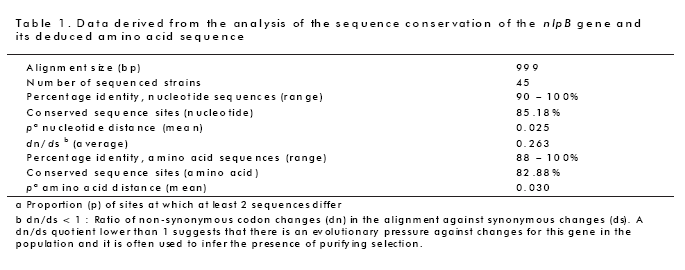
<body><![CDATA[<p><span lang=EN-US style='font-size:10.0pt;font-family:"Verdana","sans-serif"'>Protein NMB0928 from <i>N. meningitidis </i>was first identified through proteomic techniques in the OMV of strain CU385, which constitutes the active ingredient of the Cuban VA-MENGOC-BC® vaccine (5). NlpB was later shown to be present, at consistent expression levels, in OMV from other meningococcal strains (6-8). An analysis by our group of the previously reported sequence for the <i>nmb0928 </i>gene and its genomic context led to the re-annotation of this gene and the potential cellular localization of its putative product (9), which had escaped previous <i>in silico </i>screenings for vaccine candidates against the meningococcus by other groups (10) due to an error in the original annotation (11). The polypeptide sequence of NMB0928 shows a typical Gram-negative secreted lipoprotein signal peptide and Leu-X-X-Cys motif, and although its physiological role is not known, it shares sequence homology with a family of bacterial lipoproteins that includes NlpB from <i>Escherichia coli </i>(a member of an outer membrane protein complex involved in the sorting and assembly of other secreted proteins (12)). This meningococcal NlpB homologue was, therefore, considered an attractive vaccine candidate. </span></p>      <p><b><span lang=EN-US style='font-family:"Verdana","sans-serif"'>SEQUENCE CONSERVATION OF THE NLPB GENE AND ITS DEDUCED AMINO ACID SEQUENCE </span></b></p>          <p><span lang=EN-US style='font-size:10.0pt;font-family:"Verdana","sans-serif"'>In        order to study the degree of sequence conservation of this antigen, the        gene coding for the NMB0928 NlpB homolog was amplified by PCR from a collection        of 45 Cuban <i>N. meningitidis </i>strains isolated either from meningococcal        disease patients or asymptomatic carriers, spanning a diverse range of serotypes,        serogroups, serosubtypes and immunotypes that together represent all clonal        complexes detected in Cuba before and after the countrywide immunization        campaign against serogroups B and C, and including international reference        strains for each serogroup. The analysis of the sequences generated in this        study and the phenotypic characteristics of the source strains can be found        at GenBank under access numbers EF688409 to EF688427 and FJ824137 to FJ824162.        The coding sequence of <i>nlpB </i>was found in all strains analyzed, with        a degree of sequence identity ranging from 90 to 100%. There was also a        high degree of conservation for the amino acid sequence (</span><span style='font-size:10.0pt; font-family:"Verdana","sans-serif"'><a href="/img/revistas/bta/v26n1/t0114109.gif"><span lang=EN-US>Table        1</span></a></span><span lang=EN-US style='font-size:10.0pt;font-family:"Verdana","sans-serif"'>),        and although variable sites were detected at the N- and C-termini of the        protein (9), the proportion of synonymous and non-synonymous codon changes        in the gene (<i>d</i>n/<i>d</i>s) suggests that there is evolutionary pressure        for the conservation of its sequence (</span><span style='font-size:10.0pt; font-family:"Verdana","sans-serif"'><a href="/img/revistas/bta/v26n1/t0114109.gif"><span lang=EN-US>Table        1</span></a></span><span lang=EN-US style='font-size:10.0pt;font-family:"Verdana","sans-serif"'>).        </span></p>      
<p><b><span lang=EN-US style='font-family:"Verdana","sans-serif"'>CLONING AND EXPRESSION OF THE NlpB GENE IN A NOVEL EXPRESSION SYSTEM </span></b></p>          <p><span lang=EN-US style='font-size:10.0pt;font-family:"Verdana","sans-serif"'>Cloning        and expression of the neisserial <i>nlpB </i>in <i>E. coli </i>was facilitated        by the development, within our group, of a new expression system for this        host. This system was based on plasmid pM83 (CIGB, Cuba), designed for the        expression of heterologous proteins under the tryptophan promoter, which        was engineered to contain a system for the selection of recombinant clones        based on <i>lacZ </i>as a reporter gene within a bicistronic mRNA (</span><span style='font-size:10.0pt; font-family:"Verdana","sans-serif"'><a href="/img/revistas/bta/v26n1/f0114109.gif"><span lang=EN-US>Figure        1</span></a></span><span lang=EN-US style='font-size:10.0pt;font-family:"Verdana","sans-serif"'>),        an expanded multiple cloning site, and a sequence coding for a His(6) tag        that can be fused, if desired, to the C-terminus of the recombinant polypeptide        for easy downstream purification by immobilized-metal affinity chromatography        (IMAC). The final plasmid obtained after these manipulations was named pM238        (13) (Figure 1) and has been widely used for obtaining a number of recombinant        proteins in different departments and projects of CIGB. In our case, the        gene coding for the NlpB protein was amplified by PCR from the CU385 vaccine        strain (B:4:P1.19,15, ST=33) and inserted into pM238, thereby obtaining        plasmid pM238-MB0928. </span></p>      
<p><b><span lang=EN-US style='font-family:"Verdana","sans-serif"'>PURIFICATION OF RECOMBINANT NlpB </span></b></p>      <p><span lang=EN-US style='font-size:10.0pt;font-family:"Verdana","sans-serif"'>As mentioned above, plasmid pM238-NMB0928 codes for the synthesis of NlpB with an N-terminal tag consisting of the first 47 amino acids of the LpdA (P64k) protein from <i>N. meningitidis </i>and a C-terminal hexahistidine tag. After the transformation of <i>E. coli </i>W3110 with this plasmid, followed by experiments for the optimization of culture conditions, recombinant NlpB was obtained at expression levels of 30% of total protein contents. The relative mobility of the recombinant protein in denaturing SDS-polyacrylamide electrophoresis matches a molecular weight of 50 kDa, as expected for NlpB bearing the previously mentioned N- and C-terminal fusion tags. After the resuspension of the cell pellet on the TE buffer (10 mM Tris-Cl, 1 mM EDTA, pH 8) and a rupture by sonication (4 one-minute long cycles of sonication with two-minute intervals, on ice), recombinant NlpB was found to be associated to the insoluble fraction, probably as inclusion bodies. The protein was purified to 90% purity (as estimated by densitometry) by solubilization in a buffer containing 2 M urea, followed by denaturing chromatography on chelating Sepharose previously charged with copper sulfate and refolding by the dialysis of the purified fractions against carbonate-bicarbonate buffer pH 10, eliminating the chaotropic agent and the imidazole. </span></p>      <p><b><span lang=EN-US style='font-family:"Verdana","sans-serif"'>PREPARATION OF THE IMMUNOGENS AND IMMUNIZATION OF ANIMALS WITH RECOMBINANT NlpB </span></b></p>      <p><span lang=EN-US style='font-size:10.0pt;font-family:"Verdana","sans-serif"'>The immunological evaluation of recombinant NlpB was performed with 2 immunization schemes implemented in different animal models. The first scheme used outbred 7 day-old (neonate) OF1 mice of both sexes split into 4 groups of 8 animals each, maintained under controlled conditions throughout the experiment. The animals were inoculated intraperitoneally with 10 µg of the recombinant protein in a total volume of 50 µL/individual, withdrawing blood samples for evaluation 7 days after the last inoculation. In this case, groups 1 and 2 were immunized with NlpB adjuvanted either in aluminum hydroxide (1:40) or Freund’s complete/incomplete adjuvant (1:1) respectively at days 7 and 14 after birth; groups 3 and 4 were immunized similarly but received three doses at 7, 10 and 14 days after birth. </span></p>      <p><span lang=EN-US style='font-size:10.0pt;font-family:"Verdana","sans-serif"'>The second scheme used 40 female Balb/c (H-2<i>d</i>) mice 6 to 7 weeks old with a weight ranging from 18 to 20 g, supplied by CENBALAB, which were split into 4 groups of 10 animals each immunized subcutaneously. Group 1 received 20 µg of NlpB with Freund’s adjuvant, group 2 received 20 µg of NlpB adjuvanted with aluminum hydroxide, group 3 received 20 µg of NlpB inserted into multilamellar liposomes and adjuvanted into aluminum hydroxide, and group 4 received 20 µg of protein P6 from <i>Haemophilus influenzae </i>(unrelated control) in Freund’s adjuvant. </span></p>      ]]></body>
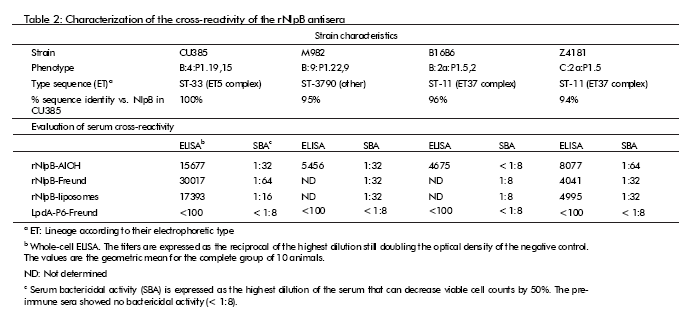
<body><![CDATA[<p><span lang=EN-US style='font-size:10.0pt;font-family:"Verdana","sans-serif"'>The design of the immunogen for group 3 is based on the fact that NlpB is a membrane protein, and therefore the insertion into multilamellar liposomes may promote the correct folding of this molecule by mimicking its native physical environment. The liposomes were obtained by the method of vesicle reconstitution by dehydration-hydration (14), incorporating the recombinant antigen as described previously (9). Briefly, the empty liposome suspension was mixed with 6 mg of recombinant protein and dehydrated by freezing 3 times. Finally, the vesicles were centrifuged at 100 000 x <i>g </i>for 2 h at 4ºC and the resulting pellet was resuspended into 1 mL of PBS. </span></p>      <p><b><span lang=EN-US style='font-family:"Verdana","sans-serif"'>CHARACTERIZATION OF THE IMMUNE RESPONSE IN DIFFERENT ANIMAL MODELS</span></b><b><span lang=EN-US style='font-size:10.0pt;font-family:"Verdana","sans-serif"'> </span></b></p>      <p><span lang=EN-US style='font-size:10.0pt;font-family:"Verdana","sans-serif"'>The analysis of the humoral immune response against the homologous antigen in the murine neonate model described above (which tries to simulate the immune status of newborns) showed an antibody titer larger than 1000 in all individuals, which did not increase after a third dose. These results suggest that the antigen is immunogenic even in infants, which constitute one of the age groups with the highest incidence of meningococcal disease. The protein was also immunogenic in the model of adult mice, with titers ranging from 170 000 to 400 000 depending on the specific adjuvant (9). An analysis by Western blot of the serum samples from immunized mice against cell extracts of <i>N. meningitidis </i>showed that the induced antibodies specifically recognize the natural protein, with a relative mobility corresponding to ~40 kDa. The sera also showed bactericidal activity against the homologous strain (CU385) with titers ranging from 1:16 to 1:32. The evidence suggests that bactericidal activity is a good correlate of protection in humans for OMV-based anti-meningococcal vaccines specific to serogroup B (15), and this criterion as been extended to the evaluation of new protein-based vaccine candidates in mice as well. </span></p>      <p><span lang=EN-US style='font-size:10.0pt;font-family:"Verdana","sans-serif"'>The sera were also assayed in a model of passive immunization and challenge in infant rats. In this experiment, newborn rats with an age of 5 to 6 days were intraperitoneally inoculated with a 1:10 dilution of sera from mice immunized with the recombinant protein, and were then challenged 1 hour later with approximately 10<sup>7</sup> colony-forming units (7 log<sub>10</sub> cfu) of the homologous strain (CU385) in the presence of an external iron source (iron-dextran). Four hours after the challenge, blood samples were withdrawn from each rat and bacteremia was measured by cfu counts in BHI-blood agar plates. The results of these analyses showed that the immunization of mice with recombinant NlpB inserted into liposomes induces a protective response, since the sera from these animals promoted a significant reduction in bacteremia for the challenged rats compared to a control serum obtained before the inoculation (5.26 ± 0.94 <i>vs. </i>6.16 ± 0.34 log<sub>10</sub> cfu/mL, <i>P </i>&lt; 0.05). The presentation of this antigen in liposomes, therefore, probably leads to the adoption of a native-like structure that exposes B-cell epitopes to the immune system, which are required for a protective humoral response (9). </span></p>      <p><b><span lang=EN-US style='font-family:"Verdana","sans-serif"'>CROSS-REACTIVITY OF THE ANTI-rNlpB SERA </span></b></p>          <p><span lang=EN-US style='font-size:10.0pt;font-family:"Verdana","sans-serif"'>The        cross-reactivity of the sera generated by immunizing mice with recombinant        NlpB was examined in whole-cell ELISA and bactericidal activity assays against        3 heterologous strains with differing serogroups, serotypes, serosubtypes        and genotypes and varying degrees of divergence in their <i>nlpB </i>gene        compared to the sequence found in strain CU385. The antisera were able to        recognize the natural protein exposed in intact cells from all three strains        in the ELISA assay, as well as to mediate complement-dependent bacterial        killing with bactericidal titers from 1:8 to 1:64 in all the strains examined        (</span><span style='font-size:10.0pt;font-family:"Verdana","sans-serif"'><a href="/img/revistas/bta/v26n1/t0214109.gif"><span lang=EN-US>Table 2</span></a></span><span lang=EN-US style='font-size:10.0pt;font-family:"Verdana","sans-serif"'>). The        control samples from animals immunized with an unrelated protein (antigen        P6 from <i>Haemophilus influenzae</i>) did not show any reactivity in these        assays. Additionally, we were able to demonstrate the presence of the NlpB        gene product in all strains by Western blot (data not shown) (9). </span></p>      
<p><b><span lang=EN-US style='font-family:"Verdana","sans-serif"'>CONCLUSIONS</span></b><b><span lang=EN-US style='font-size:10.0pt;font-family:"Verdana","sans-serif"'> </span></b></p>      <p><span lang=EN-US style='font-size:10.0pt;font-family:"Verdana","sans-serif"'>The findings here reported lead us to consider the inclusion of this antigen into a meningococcal vaccine preparation, given the degree of sequence conservation of NlpB in the collection of strains studied. The changes that were detected in the amino acid sequence do not eliminate the cross-recognition of intact cells from heterologous strains by the sera obtained by immunization with NlpB, and the antibodies also have bactericidal activity and protect against a meningococcal challenge in the infant rat model. To be considered a wide-spectrum vaccine candidate, however, the evaluation of NlpB-specific antisera should include a larger collection of meningococcal strains. Such an investigation is currently underway in our department not only for this antigen, but for other proteins that have also generated protective immunity in preclinical assays. </span></p>      <p><b><span lang=EN-US style='font-family:"Verdana","sans-serif"'>REFERENCES</span></b><b><span lang=EN-US style='font-size:10.0pt;font-family:"Verdana","sans-serif"'> </span></b></p>      <!-- ref --><p><span lang=EN-US style='font-size:10.0pt;font-family:"Verdana","sans-serif"'>1. Stephens DS. Conquering the meningococcus. FEMS Microbiol Rev</span><span lang=EN-US style='font-size:11.0pt;font-family:"Arial","sans-serif";color:red'> </span><span lang=EN-US style='font-size:10.0pt;font-family:"Verdana","sans-serif"'>2007;31</span><span lang=EN-US style='font-size:10.0pt;font-family:"Arial","sans-serif";color:black'>(</span><span lang=EN-US style='font-size:10.0pt;font-family:"Verdana","sans-serif"'>1):3-14.</span><!-- ref --><p><span lang=EN-US style='font-size:10.0pt;font-family:"Verdana","sans-serif"'>2. Pace D. Quadrivalent meningococcal ACYW-135 glycoconjugate vaccine for broader protection from infancy. Expert Rev Vaccines</span><span lang=EN-US style='font-size:11.0pt;font-family:"Arial","sans-serif";color:red'> </span><span lang=EN-US style='font-size:10.0pt;font-family:"Verdana","sans-serif"'>2009;8</span><span lang=EN-US style='font-size:10.0pt;font-family:"Arial","sans-serif";color:black'>(</span><span lang=EN-US style='font-size:10.0pt;font-family:"Verdana","sans-serif"'>5):529-42.</span><!-- ref --><p><span lang=EN-US style='font-size:10.0pt;font-family:"Verdana","sans-serif"'>3. Finne J, Bitter-Suermann D, Goridis C, Finne U. An IgG monoclonal antibody to group B meningococci cross-reacts with developmentally regulated polysialic acid units of glycoproteins in neural and extraneural tissues. </span><span style='font-size:10.0pt;font-family:"Verdana","sans-serif"'>J Immunol</span><span style='font-size:11.0pt;font-family:"Arial","sans-serif";color:red'> </span><span style='font-size:10.0pt;font-family:"Verdana","sans-serif"'>1987;138</span><span style='font-size:10.0pt;font-family:"Arial","sans-serif";color:black'>(</span><span style='font-size:10.0pt;font-family:"Verdana","sans-serif"'>12):4402-7.</span><!-- ref --><p><span style='font-size:10.0pt;font-family:"Verdana","sans-serif"'>4. Pizza M, Scarlato V, Masignani V, Giuliani MM, Arico B, Comanducci M, et al. </span><span lang=EN-US style='font-size:10.0pt;font-family:"Verdana","sans-serif"'>Identification of vaccine candidates against serogroup B meningococcus by whole-genome sequencing. </span><span style='font-size:10.0pt;font-family:"Verdana","sans-serif"'>Science</span><span style='font-size:11.0pt;font-family:"Arial","sans-serif";color:red'> </span><span style='font-size:10.0pt;font-family:"Verdana","sans-serif"'>2000;287</span><span style='font-size:10.0pt;font-family:"Arial","sans-serif";color:black'>(</span><span style='font-size:10.0pt;font-family:"Verdana","sans-serif"'>5459):1816-20.</span><!-- ref --><p><span style='font-size:10.0pt;font-family:"Verdana","sans-serif"'>5. Uli L, Castellanos-Serra L, Betancourt L, Domínguez F, Barbera R, Sotolongo F, et al. </span><span lang=EN-US style='font-size:10.0pt;font-family:"Verdana","sans-serif"'>Outer membrane vesicles of the VAMENGOC- BC® vaccine against serogroup B of <i>Neisseria meningitidis: </i>Analysis of protein components by twodimensional gel electrophoresis and mass spectrometry. Proteomics</span><span lang=EN-US style='font-size:11.0pt;font-family:"Arial","sans-serif";color:red'> </span><span lang=EN-US style='font-size:10.0pt;font-family:"Verdana","sans-serif"'>2006;6</span><span lang=EN-US style='font-size:10.0pt;font-family:"Arial","sans-serif";color:black'>(</span><span lang=EN-US style='font-size:10.0pt;font-family:"Verdana","sans-serif"'>11):3389-99.</span><!-- ref --><p><span lang=EN-US style='font-size:10.0pt;font-family:"Verdana","sans-serif"'>6. Vipond C, Suker J, Jones C, Tang C, Feavers IM, Wheeler JX. Proteomic analysis of a meningococcal outer membrane vesicle vaccine prepared from the group B strain NZ98/254. Proteomics</span><span lang=EN-US style='font-size:11.0pt; font-family:"Arial","sans-serif";color:red'> </span><span lang=EN-US style='font-size:10.0pt;font-family:"Verdana","sans-serif"'>2006;6</span><span lang=EN-US style='font-size:10.0pt;font-family:"Arial","sans-serif";color:black'>(</span><span lang=EN-US style='font-size:10.0pt;font-family:"Verdana","sans-serif"'>11):3400-13.</span><!-- ref --><p><span lang=EN-US style='font-size:10.0pt;font-family:"Verdana","sans-serif"'>7. Vaughan TE, Skipp PJ, O’Connor CD, Hudson MJ, Vipond R, Elmore MJ, et al. Proteomic analysis of <i>Neisseria lactamica </i>and <i>Neisseria meningitidis </i>outer membrane vesicle vaccine antigens. </span><span style='font-size:10.0pt; font-family:"Verdana","sans-serif"'>Vaccine</span><span style='font-size:11.0pt; font-family:"Arial","sans-serif";color:red'> </span><span style='font-size: 10.0pt;font-family:"Verdana","sans-serif"'>2006;24</span><span style='font-size:10.0pt;font-family:"Arial","sans-serif";color:black'>(</span><span style='font-size:10.0pt;font-family:"Verdana","sans-serif"'>25):5277-93.</span><!-- ref --><p><span style='font-size:10.0pt;font-family:"Verdana","sans-serif"'>8. Ferrari G, Garaguso I, Adu-Bobie J, Doro F, Taddei AR, Biolchi A, et al. </span><span lang=EN-US style='font-size:10.0pt;font-family:"Verdana","sans-serif"'>Outer membrane vesicles from group B <i>Neisseria meningitidis </i>delta gna33 mutant: proteomic and immunological comparison with detergent-derived outer membrane vesicles. </span><span style='font-size:10.0pt;font-family:"Verdana","sans-serif"'>Proteomics</span><span style='font-size:11.0pt;font-family:"Arial","sans-serif";color:red'> </span><span style='font-size:10.0pt;font-family:"Verdana","sans-serif"'>2006;6</span><span style='font-size:10.0pt;font-family:"Arial","sans-serif";color:black'>(</span><span style='font-size:10.0pt;font-family:"Verdana","sans-serif"'>6):1856-66.</span><!-- ref --><p><span style='font-size:10.0pt;font-family:"Verdana","sans-serif"'>9. Delgado M, Yero D, Niebla O, González S, Climent Y, Perez Y, et al. </span><span lang=EN-US style='font-size:10.0pt;font-family:"Verdana","sans-serif"'>Lipoprotein NMB0928 from <i>Neisseria meningitidis </i>serogroup B as a novel vaccine candidate. </span><span style='font-size:10.0pt;font-family:"Verdana","sans-serif"'>Vaccine</span><span style='font-size:11.0pt;font-family:"Arial","sans-serif";color:red'> </span><span style='font-size:10.0pt;font-family:"Verdana","sans-serif"'>2007;25</span><span style='font-size:10.0pt;font-family:"Arial","sans-serif";color:black'>(</span><span style='font-size:10.0pt;font-family:"Verdana","sans-serif"'>50):8420-31.</span><!-- ref --><p><span style='font-size:10.0pt;font-family:"Verdana","sans-serif"'>10. Pizza M, Scarlato V, Masignani V, Giuliani MM, Arico B, Comanducci M, et al. </span><span lang=EN-US style='font-size:10.0pt;font-family:"Verdana","sans-serif"'>Identification of vaccine candidates against serogroup B meningococcus by whole genome sequencing. Science</span><span lang=EN-US style='font-size:11.0pt;font-family: "Arial","sans-serif";color:red'> </span><span lang=EN-US style='font-size:10.0pt; font-family:"Verdana","sans-serif"'>2000;287</span><span lang=EN-US style='font-size:10.0pt;font-family:"Arial","sans-serif";color:black'>(</span><span lang=EN-US style='font-size:10.0pt;font-family:"Verdana","sans-serif"'>5459):1816-20.</span><!-- ref --><p><span lang=EN-US style='font-size:10.0pt;font-family:"Verdana","sans-serif"'>11. Tettelin H, Saunders NJ, Heidelberg J, Jeffries AC, Nelson KE, Eisen JA, et al. Complete genome sequence of <i>Neisseria meningitidis </i>serogroup B strain MC58. Science</span><span lang=EN-US style='font-size:11.0pt;font-family:"Arial","sans-serif"; color:red'> </span><span lang=EN-US style='font-size:10.0pt;font-family:"Verdana","sans-serif"'>2000;287</span><span lang=EN-US style='font-size:10.0pt;font-family:"Arial","sans-serif";color:black'>(</span><span lang=EN-US style='font-size:10.0pt;font-family:"Verdana","sans-serif"'>5459):1809-15.</span><!-- ref --><p><span lang=EN-US style='font-size:10.0pt;font-family:"Verdana","sans-serif"'>12. Misra R. First glimpse of the crystal structure of YaeT’s POTRA domains. ACS Chem Biol</span><span lang=EN-US style='font-size:11.0pt;font-family:"Arial","sans-serif"; color:red'> </span><span lang=EN-US style='font-size:10.0pt;font-family:"Verdana","sans-serif"'>2007;2</span><span lang=EN-US style='font-size:10.0pt;font-family:"Arial","sans-serif";color:black'>(</span><span lang=EN-US style='font-size:10.0pt;font-family:"Verdana","sans-serif"'>10):649-51.</span><!-- ref --><p><span style='font-size:10.0pt;font-family:"Verdana","sans-serif"'>13. Yero D, Pajon R, Niebla O, Sardinas G, Vivar I, Perera Y, et al. </span><span lang=EN-US style='font-size:10.0pt;font-family:"Verdana","sans-serif"'>Bicistronic expression plasmid for the rapid production of recombinant fused proteins in <i>Escherichia coli</i>.Biotechnol Apply Biochem</span><span lang=EN-US style='font-size:11.0pt; font-family:"Arial","sans-serif";color:red'> </span><span lang=EN-US style='font-size:10.0pt;font-family:"Verdana","sans-serif"'>2006;44</span><span lang=EN-US style='font-size:10.0pt;font-family:"Arial","sans-serif";color:black'>(</span><span lang=EN-US style='font-size:10.0pt;font-family:"Verdana","sans-serif"'>Pt (1)):27-34.</span><!-- ref --><p><span lang=EN-US style='font-size:10.0pt;font-family:"Verdana","sans-serif"'>14. Kirby CJ, Gregoriadis G. Preparation of liposomes containing factor VIII for oral treatment of haemophilia.J Microencapsul</span><span lang=EN-US style='font-size:11.0pt;font-family:"Arial","sans-serif";color:red'> </span><span lang=EN-US style='font-size:10.0pt;font-family:"Verdana","sans-serif"'>1984;1</span><span lang=EN-US style='font-size:10.0pt;font-family:"Arial","sans-serif";color:black'>(</span><span lang=EN-US style='font-size:10.0pt;font-family:"Verdana","sans-serif"'>1):33-45.</span><!-- ref --><p><span lang=EN-US style='font-size:10.0pt;font-family:"Verdana","sans-serif"'>15. Borrow R, Balmer P, Miller E. Meningococcal surrogates of protection—serum bactericidal antibody activity. Vaccine</span><span lang=EN-US style='font-size:11.0pt;font-family:"Arial","sans-serif";color:red'> </span><span lang=EN-US style='font-size:10.0pt;font-family:"Verdana","sans-serif"'>2005;23</span><span lang=EN-US style='font-size:10.0pt;font-family:"Arial","sans-serif";color:black'>(</span><span lang=EN-US style='font-size:10.0pt;font-family:"Verdana","sans-serif"'>17-18):2222-7.</span><span lang=EN-US style='font-size:11.0pt;font-family:"Arial","sans-serif";color:green'> </span><p><span lang=EN-US style='font-size:13.5pt'>&nbsp;</span></p>      <p><a name=award></a><b><i><span lang=EN-US style='font-size:10.0pt;font-family: "Verdana","sans-serif"'>*This work received the Award of the National Academy of Sciences of Cuba for the year 2008.</span></i></b></p>      <p><span lang=EN-US style='font-size:13.5pt'>&nbsp;</span></p>      <p><span lang=EN-US style='font-size:10.0pt;font-family:"Verdana","sans-serif"; color:#211E1E'>Maité Delgado. Center for Genetic Engineering and Biotechnology, CIGB. </span><span style='font-size:10.0pt;font-family:"Verdana","sans-serif"; color:#211E1E'>POBox 6162, Havana 10600, Havana, Cuba. E-mail: <a href="mailto:maite.delgado@cigb.edu.cu">maite.delgado@cigb.edu.cu</a></span><span style='font-size:11.0pt;font-family:"Arial","sans-serif";color:#FF6600'> </span></p>  </div>  </div>       ]]></body><back>
<ref-list>
<ref id="B1">
<label>1</label><nlm-citation citation-type="journal">
<person-group person-group-type="author">
<name>
<surname><![CDATA[Stephens]]></surname>
<given-names><![CDATA[DS]]></given-names>
</name>
</person-group>
<article-title xml:lang="en"><![CDATA[Conquering the meningococcus]]></article-title>
<source><![CDATA[FEMS Microbiol Rev]]></source>
<year>2007</year>
<volume>31</volume>
<numero>1</numero>
<issue>1</issue>
<page-range>3-14</page-range></nlm-citation>
</ref>
<ref id="B2">
<label>2</label><nlm-citation citation-type="journal">
<person-group person-group-type="author">
<name>
<surname><![CDATA[Pace]]></surname>
<given-names><![CDATA[D]]></given-names>
</name>
</person-group>
<article-title xml:lang="en"><![CDATA[Quadrivalent meningococcal ACYW-135 glycoconjugate vaccine for broader protection from infancy]]></article-title>
<source><![CDATA[Expert Rev Vaccines]]></source>
<year>2009</year>
<volume>8</volume>
<numero>5</numero>
<issue>5</issue>
<page-range>529-42</page-range></nlm-citation>
</ref>
<ref id="B3">
<label>3</label><nlm-citation citation-type="journal">
<person-group person-group-type="author">
<name>
<surname><![CDATA[Finne]]></surname>
<given-names><![CDATA[J]]></given-names>
</name>
<name>
<surname><![CDATA[Bitter-Suermann]]></surname>
<given-names><![CDATA[D]]></given-names>
</name>
<name>
<surname><![CDATA[Goridis]]></surname>
<given-names><![CDATA[C]]></given-names>
</name>
<name>
<surname><![CDATA[Finne]]></surname>
<given-names><![CDATA[U]]></given-names>
</name>
</person-group>
<article-title xml:lang="en"><![CDATA[An IgG monoclonal antibody to group B meningococci cross-reacts with developmentally regulated polysialic acid units of glycoproteins in neural and extraneural tissues]]></article-title>
<source><![CDATA[J Immunol]]></source>
<year>1987</year>
<volume>138</volume>
<numero>12</numero>
<issue>12</issue>
<page-range>4402-7</page-range></nlm-citation>
</ref>
<ref id="B4">
<label>4</label><nlm-citation citation-type="journal">
<person-group person-group-type="author">
<name>
<surname><![CDATA[Pizza]]></surname>
<given-names><![CDATA[M]]></given-names>
</name>
<name>
<surname><![CDATA[Scarlato]]></surname>
<given-names><![CDATA[V]]></given-names>
</name>
<name>
<surname><![CDATA[Masignani]]></surname>
<given-names><![CDATA[V]]></given-names>
</name>
<name>
<surname><![CDATA[Giuliani]]></surname>
<given-names><![CDATA[MM]]></given-names>
</name>
<name>
<surname><![CDATA[Arico]]></surname>
<given-names><![CDATA[B]]></given-names>
</name>
<name>
<surname><![CDATA[Comanducci]]></surname>
<given-names><![CDATA[M]]></given-names>
</name>
</person-group>
<article-title xml:lang="en"><![CDATA[Identification of vaccine candidates against serogroup B meningococcus by whole-genome sequencing]]></article-title>
<source><![CDATA[Science]]></source>
<year>2000</year>
<volume>287</volume>
<numero>5459</numero>
<issue>5459</issue>
<page-range>1816-20</page-range></nlm-citation>
</ref>
<ref id="B5">
<label>5</label><nlm-citation citation-type="journal">
<person-group person-group-type="author">
<name>
<surname><![CDATA[Uli]]></surname>
<given-names><![CDATA[L]]></given-names>
</name>
<name>
<surname><![CDATA[Castellanos-Serra]]></surname>
<given-names><![CDATA[L]]></given-names>
</name>
<name>
<surname><![CDATA[Betancourt]]></surname>
<given-names><![CDATA[L]]></given-names>
</name>
<name>
<surname><![CDATA[Domínguez]]></surname>
<given-names><![CDATA[F]]></given-names>
</name>
<name>
<surname><![CDATA[Barbera]]></surname>
<given-names><![CDATA[R]]></given-names>
</name>
<name>
<surname><![CDATA[Sotolongo]]></surname>
<given-names><![CDATA[F]]></given-names>
</name>
</person-group>
<article-title xml:lang="en"><![CDATA[Outer membrane vesicles of the VAMENGOC- BC® vaccine against serogroup B of Neisseria meningitidis: Analysis of protein components by twodimensional gel electrophoresis and mass spectrometry]]></article-title>
<source><![CDATA[Proteomics]]></source>
<year>2006</year>
<volume>6</volume>
<numero>11</numero>
<issue>11</issue>
<page-range>3389-99</page-range></nlm-citation>
</ref>
<ref id="B6">
<label>6</label><nlm-citation citation-type="journal">
<person-group person-group-type="author">
<name>
<surname><![CDATA[Vipond]]></surname>
<given-names><![CDATA[C]]></given-names>
</name>
<name>
<surname><![CDATA[Suker]]></surname>
<given-names><![CDATA[J]]></given-names>
</name>
<name>
<surname><![CDATA[Jones]]></surname>
<given-names><![CDATA[C]]></given-names>
</name>
<name>
<surname><![CDATA[Tang]]></surname>
<given-names><![CDATA[C]]></given-names>
</name>
<name>
<surname><![CDATA[Feavers]]></surname>
<given-names><![CDATA[IM]]></given-names>
</name>
<name>
<surname><![CDATA[Wheeler]]></surname>
<given-names><![CDATA[JX]]></given-names>
</name>
</person-group>
<article-title xml:lang="en"><![CDATA[Proteomic analysis of a meningococcal outer membrane vesicle vaccine prepared from the group B strain NZ98/254]]></article-title>
<source><![CDATA[Proteomics]]></source>
<year>2006</year>
<volume>6</volume>
<numero>11</numero>
<issue>11</issue>
<page-range>3400-13</page-range></nlm-citation>
</ref>
<ref id="B7">
<label>7</label><nlm-citation citation-type="journal">
<person-group person-group-type="author">
<name>
<surname><![CDATA[Vaughan]]></surname>
<given-names><![CDATA[TE]]></given-names>
</name>
<name>
<surname><![CDATA[Skipp]]></surname>
<given-names><![CDATA[PJ]]></given-names>
</name>
<name>
<surname><![CDATA[O’Connor]]></surname>
<given-names><![CDATA[CD]]></given-names>
</name>
<name>
<surname><![CDATA[Hudson]]></surname>
<given-names><![CDATA[MJ]]></given-names>
</name>
<name>
<surname><![CDATA[Vipond]]></surname>
<given-names><![CDATA[R]]></given-names>
</name>
<name>
<surname><![CDATA[Elmore]]></surname>
<given-names><![CDATA[MJ]]></given-names>
</name>
</person-group>
<article-title xml:lang="en"><![CDATA[Proteomic analysis of Neisseria lactamica and Neisseria meningitidis outer membrane vesicle vaccine antigens]]></article-title>
<source><![CDATA[Vaccine]]></source>
<year>2006</year>
<volume>24</volume>
<numero>25</numero>
<issue>25</issue>
<page-range>5277-93</page-range></nlm-citation>
</ref>
<ref id="B8">
<label>8</label><nlm-citation citation-type="journal">
<person-group person-group-type="author">
<name>
<surname><![CDATA[Ferrari]]></surname>
<given-names><![CDATA[G]]></given-names>
</name>
<name>
<surname><![CDATA[Garaguso]]></surname>
<given-names><![CDATA[I]]></given-names>
</name>
<name>
<surname><![CDATA[Adu-Bobie]]></surname>
<given-names><![CDATA[J]]></given-names>
</name>
<name>
<surname><![CDATA[Doro]]></surname>
<given-names><![CDATA[F]]></given-names>
</name>
<name>
<surname><![CDATA[Taddei]]></surname>
<given-names><![CDATA[AR]]></given-names>
</name>
<name>
<surname><![CDATA[Biolchi]]></surname>
<given-names><![CDATA[A]]></given-names>
</name>
</person-group>
<article-title xml:lang="en"><![CDATA[Outer membrane vesicles from group B Neisseria meningitidis delta gna33 mutant: proteomic and immunological comparison with detergent-derived outer membrane vesicles]]></article-title>
<source><![CDATA[Proteomics]]></source>
<year>2006</year>
<volume>6</volume>
<numero>6</numero>
<issue>6</issue>
<page-range>1856-66</page-range></nlm-citation>
</ref>
<ref id="B9">
<label>9</label><nlm-citation citation-type="journal">
<person-group person-group-type="author">
<name>
<surname><![CDATA[Delgado]]></surname>
<given-names><![CDATA[M]]></given-names>
</name>
<name>
<surname><![CDATA[Yero]]></surname>
<given-names><![CDATA[D]]></given-names>
</name>
<name>
<surname><![CDATA[Niebla]]></surname>
<given-names><![CDATA[O]]></given-names>
</name>
<name>
<surname><![CDATA[González]]></surname>
<given-names><![CDATA[S]]></given-names>
</name>
<name>
<surname><![CDATA[Climent]]></surname>
<given-names><![CDATA[Y]]></given-names>
</name>
<name>
<surname><![CDATA[Perez]]></surname>
<given-names><![CDATA[Y]]></given-names>
</name>
</person-group>
<article-title xml:lang="en"><![CDATA[Lipoprotein NMB0928 from Neisseria meningitidis serogroup B as a novel vaccine candidate]]></article-title>
<source><![CDATA[Vaccine]]></source>
<year>2007</year>
<volume>25</volume>
<numero>50</numero>
<issue>50</issue>
<page-range>8420-31</page-range></nlm-citation>
</ref>
<ref id="B10">
<label>10</label><nlm-citation citation-type="journal">
<person-group person-group-type="author">
<name>
<surname><![CDATA[Pizza]]></surname>
<given-names><![CDATA[M]]></given-names>
</name>
<name>
<surname><![CDATA[Scarlato]]></surname>
<given-names><![CDATA[V]]></given-names>
</name>
<name>
<surname><![CDATA[Masignani]]></surname>
<given-names><![CDATA[V]]></given-names>
</name>
<name>
<surname><![CDATA[Giuliani]]></surname>
<given-names><![CDATA[MM]]></given-names>
</name>
<name>
<surname><![CDATA[Arico]]></surname>
<given-names><![CDATA[B]]></given-names>
</name>
<name>
<surname><![CDATA[Comanducci]]></surname>
<given-names><![CDATA[M]]></given-names>
</name>
</person-group>
<article-title xml:lang="en"><![CDATA[Identification of vaccine candidates against serogroup B meningococcus by whole genome sequencing]]></article-title>
<source><![CDATA[Science]]></source>
<year>2000</year>
<volume>287</volume>
<numero>5459</numero>
<issue>5459</issue>
<page-range>1816-20</page-range></nlm-citation>
</ref>
<ref id="B11">
<label>11</label><nlm-citation citation-type="journal">
<person-group person-group-type="author">
<name>
<surname><![CDATA[Tettelin]]></surname>
<given-names><![CDATA[H]]></given-names>
</name>
<name>
<surname><![CDATA[Saunders]]></surname>
<given-names><![CDATA[NJ]]></given-names>
</name>
<name>
<surname><![CDATA[Heidelberg]]></surname>
<given-names><![CDATA[J]]></given-names>
</name>
<name>
<surname><![CDATA[Jeffries]]></surname>
<given-names><![CDATA[AC]]></given-names>
</name>
<name>
<surname><![CDATA[Nelson]]></surname>
<given-names><![CDATA[KE]]></given-names>
</name>
<name>
<surname><![CDATA[Eisen]]></surname>
<given-names><![CDATA[JA]]></given-names>
</name>
</person-group>
<article-title xml:lang="en"><![CDATA[Complete genome sequence of Neisseria meningitidis serogroup B strain MC58]]></article-title>
<source><![CDATA[Science]]></source>
<year>2000</year>
<volume>287</volume>
<numero>5459</numero>
<issue>5459</issue>
<page-range>1809-15</page-range></nlm-citation>
</ref>
<ref id="B12">
<label>12</label><nlm-citation citation-type="journal">
<person-group person-group-type="author">
<name>
<surname><![CDATA[Misra]]></surname>
<given-names><![CDATA[R]]></given-names>
</name>
</person-group>
<article-title xml:lang="en"><![CDATA[First glimpse of the crystal structure of YaeT’s POTRA domains]]></article-title>
<source><![CDATA[ACS Chem Biol]]></source>
<year>2007</year>
<volume>2</volume>
<numero>10</numero>
<issue>10</issue>
<page-range>649-51</page-range></nlm-citation>
</ref>
<ref id="B13">
<label>13</label><nlm-citation citation-type="">
<person-group person-group-type="author">
<name>
<surname><![CDATA[Yero]]></surname>
<given-names><![CDATA[D]]></given-names>
</name>
<name>
<surname><![CDATA[Pajon]]></surname>
<given-names><![CDATA[R]]></given-names>
</name>
<name>
<surname><![CDATA[Niebla]]></surname>
<given-names><![CDATA[O]]></given-names>
</name>
<name>
<surname><![CDATA[Sardinas]]></surname>
<given-names><![CDATA[G]]></given-names>
</name>
<name>
<surname><![CDATA[Vivar]]></surname>
<given-names><![CDATA[I]]></given-names>
</name>
<name>
<surname><![CDATA[Perera]]></surname>
<given-names><![CDATA[Y]]></given-names>
</name>
</person-group>
<article-title xml:lang="en"><![CDATA[en]]></article-title>
<source><![CDATA[]]></source>
<year></year>
</nlm-citation>
</ref>
<ref id="B14">
<label>14</label><nlm-citation citation-type="">
<person-group person-group-type="author">
<name>
<surname><![CDATA[Kirby]]></surname>
<given-names><![CDATA[CJ]]></given-names>
</name>
<name>
<surname><![CDATA[Gregoriadis]]></surname>
<given-names><![CDATA[G]]></given-names>
</name>
</person-group>
<article-title xml:lang="en"><![CDATA[en]]></article-title>
<source><![CDATA[]]></source>
<year></year>
</nlm-citation>
</ref>
<ref id="B15">
<label>15</label><nlm-citation citation-type="journal">
<person-group person-group-type="author">
<name>
<surname><![CDATA[Borrow]]></surname>
<given-names><![CDATA[R]]></given-names>
</name>
<name>
<surname><![CDATA[Balmer]]></surname>
<given-names><![CDATA[P]]></given-names>
</name>
<name>
<surname><![CDATA[Miller]]></surname>
<given-names><![CDATA[E]]></given-names>
</name>
</person-group>
<article-title xml:lang="en"><![CDATA[Meningococcal surrogates of protection—serum bactericidal antibody activity]]></article-title>
<source><![CDATA[Vaccine]]></source>
<year>2005</year>
<volume>23</volume>
<numero>17-18</numero>
<issue>17-18</issue>
<page-range>2222-7</page-range></nlm-citation>
</ref>
</ref-list>
</back>
</article>