<?xml version="1.0" encoding="ISO-8859-1"?><article xmlns:mml="http://www.w3.org/1998/Math/MathML" xmlns:xlink="http://www.w3.org/1999/xlink" xmlns:xsi="http://www.w3.org/2001/XMLSchema-instance">
<front>
<journal-meta>
<journal-id>1027-2852</journal-id>
<journal-title><![CDATA[Biotecnología Aplicada]]></journal-title>
<abbrev-journal-title><![CDATA[Biotecnol Apl]]></abbrev-journal-title>
<issn>1027-2852</issn>
<publisher>
<publisher-name><![CDATA[Editorial Elfos Scientiae]]></publisher-name>
</publisher>
</journal-meta>
<article-meta>
<article-id>S1027-28522009000400001</article-id>
<title-group>
<article-title xml:lang="en"><![CDATA[Human neutrophil elastase and lung surfactant in acute respiratory distress syndrome]]></article-title>
<article-title xml:lang="es"><![CDATA[Elastasa de neutrófilos humana y surfactante pulmonar en el síndrome de distrés respiratorio agudo]]></article-title>
</title-group>
<contrib-group>
<contrib contrib-type="author">
<name>
<surname><![CDATA[Blanco]]></surname>
<given-names><![CDATA[Odalys]]></given-names>
</name>
<xref ref-type="aff" rid="A01"/>
</contrib>
<contrib contrib-type="author">
<name>
<surname><![CDATA[Lugones]]></surname>
<given-names><![CDATA[Yuliannis]]></given-names>
</name>
<xref ref-type="aff" rid="A01"/>
</contrib>
<contrib contrib-type="author">
<name>
<surname><![CDATA[Gil]]></surname>
<given-names><![CDATA[Dayrom F]]></given-names>
</name>
<xref ref-type="aff" rid="A02"/>
</contrib>
<contrib contrib-type="author">
<name>
<surname><![CDATA[Faure]]></surname>
<given-names><![CDATA[Roberto]]></given-names>
</name>
<xref ref-type="aff" rid="A01"/>
</contrib>
<contrib contrib-type="author">
<name>
<surname><![CDATA[González]]></surname>
<given-names><![CDATA[Yamilé]]></given-names>
</name>
<xref ref-type="aff" rid="A02"/>
</contrib>
</contrib-group>
<aff id="A02">
<institution><![CDATA[,Universidad de La Habana Facultad de Biología Centro de Estudio de Proteínas]]></institution>
<addr-line><![CDATA[ ]]></addr-line>
</aff>
<aff id="A01">
<institution><![CDATA[,Centro Nacional de Sanidad Agropecuaria Grupo de Química-Farmacología-Toxicología ]]></institution>
<addr-line><![CDATA[La Habana ]]></addr-line>
<country>Cuba</country>
</aff>
<pub-date pub-type="pub">
<day>00</day>
<month>12</month>
<year>2009</year>
</pub-date>
<pub-date pub-type="epub">
<day>00</day>
<month>12</month>
<year>2009</year>
</pub-date>
<volume>26</volume>
<numero>4</numero>
<fpage>287</fpage>
<lpage>292</lpage>
<copyright-statement/>
<copyright-year/>
<self-uri xlink:href="http://scielo.sld.cu/scielo.php?script=sci_arttext&amp;pid=S1027-28522009000400001&amp;lng=en&amp;nrm=iso"></self-uri><self-uri xlink:href="http://scielo.sld.cu/scielo.php?script=sci_abstract&amp;pid=S1027-28522009000400001&amp;lng=en&amp;nrm=iso"></self-uri><self-uri xlink:href="http://scielo.sld.cu/scielo.php?script=sci_pdf&amp;pid=S1027-28522009000400001&amp;lng=en&amp;nrm=iso"></self-uri><abstract abstract-type="short" xml:lang="en"><p><![CDATA[Human Neutrophil Elastase (HNE) is one of the main proteases secreted into the alveolar space by infiltrated neutrophils during several inflammatory lung diseases such as cystic fibrosis, acute lung injury (ALI) and acute respiratory distress syndrome (ARDS). Consequently, a number of therapeutic approaches based on the specific inhibition of HNE are currently under investigation. The present work reviews the physiopathological role of HNE in ALI/ARDS and its relationship to the pulmonary surfactant system, as well as the clinical potential of protease inhibitors in this setting. In spite of the complex physiopathology of these diseases, the available evidence points to a direct link between HNE and ALI/ARDS, with increased local concentrations of this protease in animal models of ALI as well as in patients. Furthermore, the unbalanced ratio of protease/endogenous inhibitors characteristic of these disorders has led to the pharmacological and clinical evaluation of HNE inhibitors, examining their addition to currently available exogenous surfactant with promising results.]]></p></abstract>
<abstract abstract-type="short" xml:lang="es"><p><![CDATA[En el desarrollo de algunas enfermedades inflamatorias pulmonares, tales como la fibrosis cística, el daño agudo del pulmón (ALI, del inglés Acute Lung Injury) y el síndrome de distrés respiratorio agudo (SDRA), se liberan numerosas proteasas a partir de neutrófilos infiltrados en el espacio alveolar; entre ellas se distingue la elastasa de neutrófilos humana (ENH). Con el objetivo de inhibir la actividad elastolítica, se han desarrollado estrategias terapéuticas. Este artículo revisa algunas de las funciones fisiopatológicas de la ENH en el ALI/SDRA, y su relación con el sistema surfactante pulmonar, así como el potencial terapéutico de los inhibidores de proteasas. Los resultados postulan que, aunque la fisiopatología de estas enfermedades es compleja, muchos ensayos demuestran una relación directa entre la ENH y el ALI/SDRA: se ha observado un incremento de la concentración de esta proteasa en modelos animales con ALI, así como en pacientes. Al mismo tiempo, debido al desequilibrio proteasa/inhibidores endógenos, se ha efectuado la evaluación farmacológica y se investiga la aplicación clínica de inhibidores de la ENH, así como su posible asociación con las preparaciones de surfactante pulmonar exógeno, y se tienen resultados prometedores.]]></p></abstract>
<kwd-group>
<kwd lng="en"><![CDATA[human neutrophil elastase]]></kwd>
<kwd lng="en"><![CDATA[acute lung injury]]></kwd>
<kwd lng="en"><![CDATA[lung surfactant]]></kwd>
<kwd lng="en"><![CDATA[inhibitors]]></kwd>
<kwd lng="en"><![CDATA[ARDS]]></kwd>
<kwd lng="es"><![CDATA[elastasa de neutrófilos humana]]></kwd>
<kwd lng="es"><![CDATA[daño agudo del pulmón]]></kwd>
<kwd lng="es"><![CDATA[surfactante pulmonar]]></kwd>
<kwd lng="es"><![CDATA[inhibidores]]></kwd>
<kwd lng="es"><![CDATA[SDRA]]></kwd>
</kwd-group>
</article-meta>
</front><body><![CDATA[ <DIV class="Sect"   >        <P   align="right" ><font size="2" color="#1F1C1D" face="Verdana, Arial, Helvetica, sans-serif"><b>REVIEW</b>      </font></P >   <FONT size="+1" color="#1F1C1D">    </font>    <P   align="right" >&nbsp;</P >       <P   align="right" >&nbsp;</P >       <P   align="left" ><font color="#1F1C1D" size="+1"><b><font face="Verdana, Arial, Helvetica, sans-serif">Human neutrophil      elastase and lung surfactant in acute respiratory distress syndrome </font></b></font></P >   <FONT size="+1" color="#1F1C1D">    <P   > </P >       <P   ><font face="Verdana, Arial, Helvetica, sans-serif" size="3">Elastasa de neutr&oacute;filos      humana y surfactante pulmonar en el s&iacute;ndrome de distr&eacute;s respiratorio      agudo</font></P >       <P   >&nbsp;</P >       <P   >&nbsp;</P >       <P   > </P >       ]]></body>
<body><![CDATA[<P   > </P >       <P   > </P >       <P   ><b><font face="Verdana, Arial, Helvetica, sans-serif" size="2">Odalys Blanco<Sup>1</Sup>,      Yuliannis Lugones<Sup>1</Sup>, Dayrom F Gil<Sup>2</Sup>, Roberto Faure<Sup>1</Sup>,      Yamil&eacute; Gonz&aacute;lez<Sup><Sup>2 </Sup></Sup></font></b></P >   <FONT size="+1"><FONT size="+1"><FONT size="+1"><FONT size="+1"><FONT size="+1"><FONT size="+1"><FONT size="+1"><FONT size="+1"><FONT size="+1"><FONT size="+1">        <P   ><font face="Verdana, Arial, Helvetica, sans-serif" size="2"><Sup>1</Sup>Grupo      de Qu&iacute;mica-Farmacolog&iacute;a-Toxicolog&iacute;a, Centro Nacional      de Sanidad Agropecuaria, CENSA San Jos&eacute; de Las Lajas, CP 32700, La      Habana, Cuba</font><FONT size="+1"><FONT size="+1"></font></font>    <br>     <font face="Verdana, Arial, Helvetica, sans-serif" size="2"><Sup>2</Sup>Centro      de Estudio de Prote&iacute;nas, Facultad de Biolog&iacute;a, Universidad de      La Habana, UH. Calle 25 No. 455, Vedado, CP 10400, Ciudad de La Habana, Cuba.</font></P >       <P   >&nbsp;</P >       <P   >&nbsp;</P >   </font></font></font></font></font></font></font></font></font></font></font>   <hr>   <FONT size="+1" color="#1F1C1D"><FONT size="+1"><FONT size="+1"><FONT size="+1"><FONT size="+1"><FONT size="+1"><FONT size="+1"><FONT size="+1"><FONT size="+1"><FONT size="+1"><FONT size="+1">        <P   ><b><font color="#1F1C1D" face="Verdana, Arial, Helvetica, sans-serif" size="2">ABSTRACT      </font></b></P >   <FONT size="+1"><FONT size="+1"><FONT size="+1"><FONT size="+1"><FONT color="#000000"><FONT color="#1F1C1D">        <P   ><font face="Verdana, Arial, Helvetica, sans-serif" size="2">Human Neutrophil      Elastase (HNE) is one of the main proteases secreted into the alveolar space      by infiltrated neutrophils during several inflammatory lung diseases such      as cystic fibrosis, acute lung injury (ALI) and acute respiratory distress      syndrome (ARDS). Consequently, a number of therapeutic approaches based on      the specific inhibition of HNE are currently under investigation. The present      work reviews the physiopathological role of HNE in ALI/ARDS and its relationship      to the pulmonary surfactant system, as well as the clinical potential of protease      inhibitors in this setting. In spite of the complex physiopathology of these      diseases, the available evidence points to a direct link between HNE and ALI/ARDS,      with increased local concentrations of this protease in animal models of ALI      as well as in patients. Furthermore, the unbalanced ratio of protease/endogenous      inhibitors characteristic of these disorders has led to the pharmacological      and clinical evaluation of HNE inhibitors, examining their addition to currently      available exogenous surfactant with promising results. </font></P >       <P   ><font face="Verdana, Arial, Helvetica, sans-serif" size="2"><b>Keywords: </b>human      neutrophil elastase, acute lung injury, lung surfactant, inhibitors, ARDS      </font></P >   </font></font></font></font></font></font></font></font></font></font></font></font></font></font></font></font></font>   <hr>       ]]></body>
<body><![CDATA[<p><b><font face="Verdana, Arial, Helvetica, sans-serif" size="2">RESUMEN</font></b></p>       <p><font face="Verdana, Arial, Helvetica, sans-serif" size="2">En el desarrollo      de algunas enfermedades inflamatorias pulmonares, tales como la fibrosis c&iacute;stica,      el da&ntilde;o agudo del pulm&oacute;n (ALI, del ingl&eacute;s Acute Lung      Injury) y el s&iacute;ndrome de distr&eacute;s respiratorio agudo (SDRA),      se liberan numerosas proteasas a partir de neutr&oacute;filos infiltrados      en el espacio alveolar; entre ellas se distingue la elastasa de neutr&oacute;filos      humana (ENH). Con el objetivo de inhibir la actividad elastol&iacute;tica,      se han desarrollado estrategias terap&eacute;uticas. Este art&iacute;culo      revisa algunas de las funciones fisiopatol&oacute;gicas de la ENH en el ALI/SDRA,      y su relaci&oacute;n con el sistema surfactante pulmonar, as&iacute; como      el potencial terap&eacute;utico de los inhibidores de proteasas. Los resultados      postulan que, aunque la fisiopatolog&iacute;a de estas enfermedades es compleja,      muchos ensayos demuestran una relaci&oacute;n directa entre la ENH y el ALI/SDRA:      se ha observado un incremento de la concentraci&oacute;n de esta proteasa      en modelos animales con ALI, as&iacute; como en pacientes. Al mismo tiempo,      debido al desequilibrio proteasa/inhibidores end&oacute;genos, se ha efectuado      la evaluaci&oacute;n farmacol&oacute;gica y se investiga la aplicaci&oacute;n      cl&iacute;nica de inhibidores de la ENH, as&iacute; como su posible asociaci&oacute;n      con las preparaciones de surfactante pulmonar ex&oacute;geno, y se tienen      resultados prometedores. </font></p>   <FONT size="+1" color="#1F1C1D"><FONT size="+1"><FONT size="+1"><FONT size="+1"><FONT size="+1"><FONT size="+1"><FONT size="+1"><FONT size="+1"><FONT size="+1"><FONT size="+1"><FONT size="+1"><FONT size="+1"><FONT size="+1"><FONT size="+1"><FONT size="+1"><FONT color="#000000"><FONT color="#1F1C1D">        <P   ><font face="Verdana, Arial, Helvetica, sans-serif" size="2"><b>Palabras clave:</b>      elastasa de neutr&oacute;filos humana, da&ntilde;o agudo del pulm&oacute;n,      surfactante pulmonar, inhibidores, SDRA </font></P >   </font></font></font></font></font></font></font></font></font></font></font></font></font></font></font></font></font>   <hr>   <FONT size="+1" color="#1F1C1D"><FONT size="+1"><FONT size="+1"><FONT size="+1"><FONT size="+1"><FONT size="+1"><FONT size="+1"><FONT size="+1"><FONT size="+1"><FONT size="+1"><FONT size="+1"><FONT size="+1"><FONT size="+1"><FONT size="+1"><FONT size="+1"><FONT color="#000000"><FONT color="#1F1C1D">        <P   >&nbsp;</P >       <P   ><font face="Verdana, Arial, Helvetica, sans-serif" size="3"><b>INTRODUCTION</b></font></P >   <FONT color="#000000"><FONT color="#1F1C1D">        <P   align="justify" ><font face="Verdana, Arial, Helvetica, sans-serif" size="2">Acute Lung Injury      (ALI) and its more severe manifestation, Acute Respiratory distress syndrome      (ARDS), are characterized by injuries to the lung parenchyma that compromise      the respiratory function of the affected patients. Both are life-threatening      diseases with a complex etiology involving inflammatory, infectious and oxidative      processes, with no satisfactory therapy and a mortality rate of 40% even in      highly developed countries (1). </font></P >       <P   align="justify" ><font face="Verdana, Arial, Helvetica, sans-serif" size="2">One of the features      of these syndromes is the development of biophysical and biochemical changes      in the pulmonary surfactant that compromises the defensive mechanisms of the      lung (2, 3). These changes are caused by the release into the alveolar space      of pro-inflammatory mediators, plasmatic proteins and proteases associated      to the ongoing edema, as well as oxidative products that ultimately result      into a severe inhibition of the surfactant system. </font></P >       <P   align="justify" ><font face="Verdana, Arial, Helvetica, sans-serif" size="2">A major role in this      process is played by neutrophils infiltrated into the alveolar space. These      cells secrete a number of serine proteases such as cathepsin G, proteinase      3 and, specially, human neutrophil elastase (HNE), known for its highly destructive      effects in the surrounding tissue. </font></P >       <P   align="justify" ><font face="Verdana, Arial, Helvetica, sans-serif" size="2">This work reviews      some of the physiopathological roles of HNE in the context of ARDS and its      effect on the pulmonary surfactant system, as well as the therapeutic potential      of protease inhibitors <I>per se </I>or in combination with preparations of      exogenous pulmonary surfactant. </font></P >       <P   align="justify" ><font size="3" face="Verdana, Arial, Helvetica, sans-serif"><b>PULMONARY SURFACTANT      AND ACUTE RESPIRATORY DISTRESS SYNDROME</b></font></P >       ]]></body>
<body><![CDATA[<P   align="justify" ><font face="Verdana, Arial, Helvetica, sans-serif" size="2">Lung surfactant is      composed mainly of lipids (90%) and proteins (about 10%), although by mass      only 6-8% of the latter are specifically associated to the surfactant. Approximately      80 to 85% of the lipid weight fraction is formed by phospholipids, which can      be further decomposed into 75% phosphatidylcholine, 10% phosphatidylglycerol,      5% phosphatidylserine plus phosphatidyl inositol, and less than 5% sphingomyelin.      Dipalmitoylphosphatidylcholine(DPPC) representing nearly half of the phosphatidyl      choline content, thus constituting the main component of pulmonary surfactant.      The major neutral lipid of this fluid is cholesterol, at proportions ranging      from 5 to 10% of total lipids. In addition to these components, the surfactant      has an array of minor components such as other phospholipids, glycerides,      free fatty acids, lysophospholipids and glycolipids (4). There are 4 major      molecules in the protein fraction, denominated (in chronological order following      their discovery dates) SP-A, SP-B, SP-C and SP-D (5). SP-A and SP-D are water      soluble, and the remaining two (SP-B and SP-C) are hydrophobic. </font></P >       <P   align="justify" ><font face="Verdana, Arial, Helvetica, sans-serif" size="2">The main role of      the pulmonary surfactant is to reduce work respiratory by decreasing surface      tension at the air-liquid interface of the alveolus, in addition to other      functions such as stabilizing the respiratory tract, enhancing mucociliary      transport, preventing the appearance of edema, and contributing to the defense      against pathogens (6, 7). </font></P >       <P   align="justify" ><font face="Verdana, Arial, Helvetica, sans-serif" size="2">The hydrophilic proteins      of the pulmonary surfactant (SP-A and SP-D) belong to the family of collectins,      which includes molecules with a mannose-binding C type lectin domain associated      to a collagen portion. The members of this family are major modulators of      the innate immune system and, not surprisingly, SP-A and SP-D play a major      role in pulmonary defense, functioning as opsonins by binding a number of      microorganisms or pathogen-derived components and subsequently mediating microbial      agglutination. The lung collectins, additionally, are inhibitory <I>per se      </I>for bacterial growth (8). </font></P >       <P   align="justify" ><font face="Verdana, Arial, Helvetica, sans-serif" size="2">ARDS was first described      by Ashbaugh (1967) in twelve adult patients deceased from respiratory failure      (9). A large number of studies followed this initial report, detailing the      epidemiology, physiopathology and therapy of this disorder. The European-American      Consensus Conference on ARDS (1994), which updated and normalized a number      of studies on this syndrome, defined an acute respiratory failure due to injuries      to the pulmonary parenchyma as the manifestation of a number of disorders,      such as acute respiratory failure (ARF), ALI and ARDS (10). Although ARDS-related      deaths have decreased, it still remains a significant health problem with      a 40% mortality rate (1). </font></P >       <P   align="justify" ><font face="Verdana, Arial, Helvetica, sans-serif" size="2">ALI/ARDS can be caused      by different affections; the most common causes are infections due to a primary      pulmonary injury, such as pneumonia, or through a systemic route, due to <I>e.g.      </I>a sepsis. ALI-ARDS can also be caused by massive trauma, multiple blood      transfusions and pancreatitis, in addition to direct lung injuries such as      those resulting from gastric inhalation or from breathing toxic gases (8).      Several studies have shown an increase in pro- and anti-inflammatory mediators      in the broncho-alveolar lavage of these patients. Although the release of      these mediators may be part of a protective response during the early stages      of the disorder, such a disequilibrium, if maintained in time, often leads      to progressive lung dysfunction and eventually, to multi-organ failure and      death (11). Some of the changes resulting from this clinical inflammation      are hypoxemia, infiltrates, and reductions in pulmonary flexibility. </font></P >       <P   align="justify" ><font face="Verdana, Arial, Helvetica, sans-serif" size="2">ARDS is associated      with biochemical and biophysical alterations of the pulmonary surfactant system      (12), such as increased protein contents in broncho-alveolar lavage, altered      phospholipid and fatty acids profiles (13, 14), lower SP-A and SP-B concentrations      (15) and low levels of large aggregates, which constitute the biophysically      active form of the surfactant. These changes lead to a marked reduction of      the surface activity of the surfactant at the air-liquid interface of the      alveolus, compounded by the degradation of essential components of the surfactant      by inflammatory mediators (such as phospholipases and proteases, including      HNE) and the inhibition of surfactant function by plasma proteins; these factors      ultimately lead to the loss of alveolar stability and a concomitant, severe      reduction in gas exchange. Consequently, the administration of surfactant      preparations to ALI/ARDS patients has been proposed as a potential therapeutic      alternative for this disorder. </font></P >       <P   align="justify" ><font face="Verdana, Arial, Helvetica, sans-serif" size="2">The presence of pulmonary      surfactant is absolutely essential for life, and its absence, deficiency or      inactivation is associated with severe pulmonary disease as evidenced by disorders      such as neonatal respiratory distress syndrome (NRDS), ALI and ARDS (2). A      major turning point in the therapy of this patient group was the development      and application, by ABBOTT Laboratories (USA), of a natural bovine-derived      pulmonary surfactant preparation trademarked under the name SURVANTA<Sup>&reg;</Sup>      at the beginning of the eighties (16). This innovation was soon imitated by      a number of pharmaceutical companies that developed and marketed their own      exogenous natural surfactants, such as SURFACTEN<Sup>&reg;</Sup> (Tokoyo Tanabe,      Japan), ALVEOFACT<Sup>&reg;</Sup> (Boehringer Ingelheim, Germany), CUROSURF<Sup>&reg;</Sup>      (Chiesi Pharmaceuticals, Italia), INFASURF<Sup>&reg;</Sup> (Forest Laboratories,      USA) and BLES<Sup>&reg;</Sup> (BLES Biochem, Canada). &ldquo;Besides these      products, Cuba has developed a therapeutic preparation trade name, Surfacen<Sup>&reg;</Sup>&rdquo;,      is another recent example of such product (17). In general, these natural      surfactants have a biochemical composition characterized by a high phospholipid      content (particularly phosphatidyl choline and its palmitic acid-saturated      product, DPPC) and a relatively large proportion of anionic phospholipids      (phosphatidyl glycerol and phosphatidyl inositol) in comparison to other phospholipid      species, as well as by the presence of the hydrophobic proteins SP-B and SP-C      (4) to the detriment of SP-A and SP-D, which are lost during the manufacturing      process. </font></P >   <FONT size="+1"><FONT size="+1"><FONT size="+1"><FONT size="+1"><FONT size="+1"><FONT size="+1"><FONT size="+1"><FONT size="+1"><FONT size="+1"><FONT size="+1"><FONT size="+1"><FONT size="+1"><FONT size="+1"><FONT size="+1">        <P   align="justify" ><font face="Verdana, Arial, Helvetica, sans-serif" size="2">The use of exogenous      pulmonary surfactant preparations has become established practice during the      treatment of NRDS patients (7, 18). In ARDS, however, the insufficiency in      endogenous surfactant is not a primary deficiency due to an immature neonate      lung, but a secondary pulmonary dysfunction arising from the inactivation      of the surfactant by a clinical inflammatory process with a very complex etiology      (19). Therefore, the use of exogenous surfactant for the therapy of ARDS remains      controversial, and still awaits the development of new clinical surfactants      able to withstand the challenges posed by the damaged and inflamed lungs of      adult patients. It should be noticed, however, that the current natural exogenous      surfactant preparations leave ample room for ARDS-directed optimizations.      One of these optimizations -the inclusion of additional active principles,      such as HNE inhibitors- is discussed below. </font></P >       <P   align="justify" ><font face="Verdana, Arial, Helvetica, sans-serif" size="3"><b>EFFECT OF THE      CURRENT EXOGENOUS PULMONARY SURFACTANT PREPARATIONS ON HNE ACTIVITY</b></font></P >       <P   align="justify" ><font face="Verdana, Arial, Helvetica, sans-serif" size="2">The effect of different      preparations of exogenous pulmonary surfactant on the <I>in vitro </I>modulation      of activated neutrophils has been previously studied with varying results.      For example, EXOSURF<Sup>&reg;</Sup> (a synthetic preparation composed of      DPPC, cetyl alcohol and tyloxapol) induced elastase release from polymorphonuclear      cells challenged with three elastase inductors. However, two other natural      preparations (CUROSURF<Sup>&reg;</Sup> and SURVANTA<Sup>&reg;</Sup>) caused      the opposite effect, <I>i.e. </I>a dose-dependant inhibition of HNE release,      and the behavior of another clinical surfactant (Alveofact<Sup>&reg;</Sup>)      depended on both dose and the specific stimulus, increasing HNE release at      low concentrations but inhibiting it at higher dosages (although this inhibitory      effect was considerably weaker than that of CUROSURF<Sup>&reg;</Sup> and SURVANTA<Sup>&reg;</Sup>)      (20). The results imply that the specific biochemical composition of these      preparations can have a large impact on their pharmacological effect (21).      </font></P >   <FONT size="+1"><FONT size="+1"><FONT size="+1"><FONT size="+1"><FONT size="+1"><FONT size="+1"><FONT size="+1"><FONT size="+1"><FONT size="+1"><FONT size="+1"><FONT size="+1"><FONT size="+1">        ]]></body>
<body><![CDATA[<P   align="justify" > </P >       <P   align="justify" ><font size="3" face="Verdana, Arial, Helvetica, sans-serif"><b>BIOLOGICAL ROLE      OF HNE AND ENDOGENOUS INHIBITORS</b></font></P >       <P   align="justify" ><font face="Verdana, Arial, Helvetica, sans-serif" size="2">HNE is an important      player in the innate immune response, where it hydrolyzes the peptidoglycan      cell wall of Gram-negative bacteria and participates in the degradation of      immune complexes phagocyted by polymorphonuclear leukocytes (22). Additionally,      this enzyme has probably a role in leukocyte migration from the circulatory      system to the surrounding tissues (23). </font></P >       <P   align="justify" ><font face="Verdana, Arial, Helvetica, sans-serif" size="2">The proteolytic activity      of HNE is controlled, however, by multiple endogenous inhibitory proteins      (<a href="/img/revistas/bta/v26n4/t0102409.jpg">Table 1</a>). These      inhibitors are found in the circulation or localized to specific cells or      tissues at high concentrations, and fulfill an important function by protecting      them against uncontrolled degradation by highly active proteases. In order      of importance following their abundance and specific characteristics, some      of these inhibitors are: </font><font size="+1" color="#1F1C1D"><font size="+1"><font size="+1"><font size="+1"><font size="+1"><font size="+1"><font size="+1"><font size="+1"><font size="+1"><font size="+1"><font size="+1"><font size="+1"><font size="+1"><font size="+1"><font size="+1"><font color="#000000"><font color="#1F1C1D"><font color="#000000"><font color="#1F1C1D"><font size="+1"><font size="+1"><font size="+1"><font size="+1"><font size="+1"><font size="+1"><font size="+1"><font size="+1"><font size="+1"><font size="+1"><font size="+1"><font size="+1"><font size="+1"><font size="+1"><font size="+1"><font size="+1"><font size="+1"><font size="+1"><font size="+1"><font size="+1"><font size="+1"><font size="+1"><font size="+1"><font size="+1"><font size="+1"><font size="+1"><font face="Verdana, Arial, Helvetica, sans-serif" size="2"><font face="Times New Roman, Times, serif">&alpha;</font></font></font></font></font></font></font></font></font></font></font></font></font></font></font></font></font></font></font></font></font></font></font></font></font></font></font></font></font></font></font></font></font></font></font></font></font></font></font></font></font></font></font></font></font></font></font><font face="Verdana, Arial, Helvetica, sans-serif" size="2">1-antitrypsin      (</font><font size="+1" color="#1F1C1D"><font size="+1"><font size="+1"><font size="+1"><font size="+1"><font size="+1"><font size="+1"><font size="+1"><font size="+1"><font size="+1"><font size="+1"><font size="+1"><font size="+1"><font size="+1"><font size="+1"><font color="#000000"><font color="#1F1C1D"><font color="#000000"><font color="#1F1C1D"><font size="+1"><font size="+1"><font size="+1"><font size="+1"><font size="+1"><font size="+1"><font size="+1"><font size="+1"><font size="+1"><font size="+1"><font size="+1"><font size="+1"><font size="+1"><font size="+1"><font size="+1"><font size="+1"><font size="+1"><font size="+1"><font size="+1"><font size="+1"><font size="+1"><font size="+1"><font size="+1"><font size="+1"><font size="+1"><font size="+1"><font face="Verdana, Arial, Helvetica, sans-serif" size="2"><font face="Times New Roman, Times, serif">&alpha;</font></font></font></font></font></font></font></font></font></font></font></font></font></font></font></font></font></font></font></font></font></font></font></font></font></font></font></font></font></font></font></font></font></font></font></font></font></font></font></font></font></font></font></font></font></font></font><font face="Verdana, Arial, Helvetica, sans-serif" size="2">1-AT)      or </font><font size="+1" color="#1F1C1D"><font size="+1"><font size="+1"><font size="+1"><font size="+1"><font size="+1"><font size="+1"><font size="+1"><font size="+1"><font size="+1"><font size="+1"><font size="+1"><font size="+1"><font size="+1"><font size="+1"><font color="#000000"><font color="#1F1C1D"><font color="#000000"><font color="#1F1C1D"><font size="+1"><font size="+1"><font size="+1"><font size="+1"><font size="+1"><font size="+1"><font size="+1"><font size="+1"><font size="+1"><font size="+1"><font size="+1"><font size="+1"><font size="+1"><font size="+1"><font size="+1"><font size="+1"><font size="+1"><font size="+1"><font size="+1"><font size="+1"><font size="+1"><font size="+1"><font size="+1"><font size="+1"><font size="+1"><font size="+1"><font face="Verdana, Arial, Helvetica, sans-serif" size="2"><font face="Times New Roman, Times, serif">&alpha;</font></font></font></font></font></font></font></font></font></font></font></font></font></font></font></font></font></font></font></font></font></font></font></font></font></font></font></font></font></font></font></font></font></font></font></font></font></font></font></font></font></font></font></font></font></font></font><font face="Verdana, Arial, Helvetica, sans-serif" size="2">1      protease inhibitor; </font><font size="+1" color="#1F1C1D"><font size="+1"><font size="+1"><font size="+1"><font size="+1"><font size="+1"><font size="+1"><font size="+1"><font size="+1"><font size="+1"><font size="+1"><font size="+1"><font size="+1"><font size="+1"><font size="+1"><font color="#000000"><font color="#1F1C1D"><font color="#000000"><font color="#1F1C1D"><font size="+1"><font size="+1"><font size="+1"><font size="+1"><font size="+1"><font size="+1"><font size="+1"><font size="+1"><font size="+1"><font size="+1"><font size="+1"><font size="+1"><font size="+1"><font size="+1"><font size="+1"><font size="+1"><font size="+1"><font size="+1"><font size="+1"><font size="+1"><font size="+1"><font size="+1"><font size="+1"><font size="+1"><font size="+1"><font size="+1"><font face="Verdana, Arial, Helvetica, sans-serif" size="2"><font face="Times New Roman, Times, serif">&alpha;</font></font></font></font></font></font></font></font></font></font></font></font></font></font></font></font></font></font></font></font></font></font></font></font></font></font></font></font></font></font></font></font></font></font></font></font></font></font></font></font></font></font></font></font></font></font></font><font face="Verdana, Arial, Helvetica, sans-serif" size="2">2-macroglobulin;      secretory leukocyte peptidase inhibitor (SLPI), pre-elafin and elafin; monocyte/neutrophil      elastase inhibitor (M/NEI) and PI9 (Protease inhibitor 9)(24, 25). </font></P >       
<P       align="justify"     ><font face="Verdana, Arial, Helvetica, sans-serif" size="2">The </font><font size="+1" color="#1F1C1D"><font size="+1"><font size="+1"><font size="+1"><font size="+1"><font size="+1"><font size="+1"><font size="+1"><font size="+1"><font size="+1"><font size="+1"><font size="+1"><font size="+1"><font size="+1"><font size="+1"><font color="#000000"><font color="#1F1C1D"><font color="#000000"><font color="#1F1C1D"><font size="+1"><font size="+1"><font size="+1"><font size="+1"><font size="+1"><font size="+1"><font size="+1"><font size="+1"><font size="+1"><font size="+1"><font size="+1"><font size="+1"><font size="+1"><font size="+1"><font size="+1"><font size="+1"><font size="+1"><font size="+1"><font size="+1"><font size="+1"><font size="+1"><font size="+1"><font size="+1"><font size="+1"><font size="+1"><font size="+1"><font face="Verdana, Arial, Helvetica, sans-serif" size="2"><font face="Times New Roman, Times, serif">&alpha;</font></font></font></font></font></font></font></font></font></font></font></font></font></font></font></font></font></font></font></font></font></font></font></font></font></font></font></font></font></font></font></font></font></font></font></font></font></font></font></font></font></font></font></font></font></font></font><font face="Verdana, Arial, Helvetica, sans-serif" size="2">1-AT          molecule has a molecular weight of 55 kDa, and constitutes the most important          irre-versible HNE inhibitor due to both its concentration (54 &mu;mol/L in          plasma) and fast kinetics of action (k<Sub>on</Sub> 6 x10<Sup>7</Sup> mol<Sup>-1</Sup>Ls<Sup>-1</Sup>).      ]]></body>
<body><![CDATA[    It is an inhibitor from the serpin family, along with M/NEI and PI9 (25-27).          </font><font size="+1" color="#1F1C1D"><font size="+1"><font size="+1"><font size="+1"><font size="+1"><font size="+1"><font size="+1"><font size="+1"><font size="+1"><font size="+1"><font size="+1"><font size="+1"><font size="+1"><font size="+1"><font size="+1"><font color="#000000"><font color="#1F1C1D"><font color="#000000"><font color="#1F1C1D"><font size="+1"><font size="+1"><font size="+1"><font size="+1"><font size="+1"><font size="+1"><font size="+1"><font size="+1"><font size="+1"><font size="+1"><font size="+1"><font size="+1"><font size="+1"><font size="+1"><font size="+1"><font size="+1"><font size="+1"><font size="+1"><font size="+1"><font size="+1"><font size="+1"><font size="+1"><font size="+1"><font size="+1"><font size="+1"><font size="+1"><font face="Verdana, Arial, Helvetica, sans-serif" size="2"><font face="Times New Roman, Times, serif">&alpha;</font></font></font></font></font></font></font></font></font></font></font></font></font></font></font></font></font></font></font></font></font></font></font></font></font></font></font></font></font></font></font></font></font></font></font></font></font></font></font></font></font></font></font></font></font></font></font><font face="Verdana, Arial, Helvetica, sans-serif" size="2">1-AT          is responsible for 92% of the HNE inhibitory activity in plasma, with the          remaining portion being attributed to </font><font size="+1" color="#1F1C1D"><font size="+1"><font size="+1"><font size="+1"><font size="+1"><font size="+1"><font size="+1"><font size="+1"><font size="+1"><font size="+1"><font size="+1"><font size="+1"><font size="+1"><font size="+1"><font size="+1"><font color="#000000"><font color="#1F1C1D"><font color="#000000"><font color="#1F1C1D"><font size="+1"><font size="+1"><font size="+1"><font size="+1"><font size="+1"><font size="+1"><font size="+1"><font size="+1"><font size="+1"><font size="+1"><font size="+1"><font size="+1"><font size="+1"><font size="+1"><font size="+1"><font size="+1"><font size="+1"><font size="+1"><font size="+1"><font size="+1"><font size="+1"><font size="+1"><font size="+1"><font size="+1"><font size="+1"><font size="+1"><font face="Verdana, Arial, Helvetica, sans-serif" size="2"><font face="Times New Roman, Times, serif">&alpha;</font></font></font></font></font></font></font></font></font></font></font></font></font></font></font></font></font></font></font></font></font></font></font></font></font></font></font></font></font></font></font></font></font></font></font></font></font></font></font></font></font></font></font></font></font></font></font><font face="Verdana, Arial, Helvetica, sans-serif" size="2">2-macroglobulin.          These two major inhibitors have, however, very different mechanisms of action:          </font><font size="+1" color="#1F1C1D"><font size="+1"><font size="+1"><font size="+1"><font size="+1"><font size="+1"><font size="+1"><font size="+1"><font size="+1"><font size="+1"><font size="+1"><font size="+1"><font size="+1"><font size="+1"><font size="+1"><font color="#000000"><font color="#1F1C1D"><font color="#000000"><font color="#1F1C1D"><font size="+1"><font size="+1"><font size="+1"><font size="+1"><font size="+1"><font size="+1"><font size="+1"><font size="+1"><font size="+1"><font size="+1"><font size="+1"><font size="+1"><font size="+1"><font size="+1"><font size="+1"><font size="+1"><font size="+1"><font size="+1"><font size="+1"><font size="+1"><font size="+1"><font size="+1"><font size="+1"><font size="+1"><font size="+1"><font size="+1"><font size="+1" color="#1F1C1D"><font size="+1"><font size="+1"><font size="+1"><font size="+1"><font size="+1"><font size="+1"><font size="+1"><font size="+1"><font size="+1"><font size="+1"><font size="+1"><font size="+1"><font size="+1"><font size="+1"><font color="#000000"><font color="#1F1C1D"><font color="#000000"><font color="#1F1C1D"><font size="+1"><font size="+1"><font size="+1"><font size="+1"><font size="+1"><font size="+1"><font size="+1"><font size="+1"><font size="+1"><font size="+1"><font size="+1"><font size="+1"><font size="+1"><font size="+1"><font size="+1"><font size="+1"><font size="+1"><font size="+1"><font size="+1"><font size="+1"><font size="+1"><font size="+1"><font size="+1"><font size="+1"><font size="+1"><font size="+1"><font face="Verdana, Arial, Helvetica, sans-serif" size="2"><font face="Times New Roman, Times, serif">&alpha;</font></font></font></font></font></font></font></font></font></font></font></font></font></font></font></font></font></font></font></font></font></font></font></font></font></font></font></font></font></font></font></font></font></font></font></font></font></font></font></font></font></font></font></font></font></font></font><font face="Verdana, Arial, Helvetica, sans-serif" size="2"></font></font></font></font></font></font></font></font></font></font></font></font></font></font></font></font></font></font></font></font></font></font></font></font></font></font></font></font></font></font></font></font></font></font></font></font></font></font></font></font></font></font></font></font></font></font><font face="Verdana, Arial, Helvetica, sans-serif" size="2">1-AT          inhibits HNE irreversibly by forming a stable acyl-enzyme complex at the catalytic          site, whereas </font><font size="+1" color="#1F1C1D"><font size="+1"><font size="+1"><font size="+1"><font size="+1"><font size="+1"><font size="+1"><font size="+1"><font size="+1"><font size="+1"><font size="+1"><font size="+1"><font size="+1"><font size="+1"><font size="+1"><font color="#000000"><font color="#1F1C1D"><font color="#000000"><font color="#1F1C1D"><font size="+1"><font size="+1"><font size="+1"><font size="+1"><font size="+1"><font size="+1"><font size="+1"><font size="+1"><font size="+1"><font size="+1"><font size="+1"><font size="+1"><font size="+1"><font size="+1"><font size="+1"><font size="+1"><font size="+1"><font size="+1"><font size="+1"><font size="+1"><font size="+1"><font size="+1"><font size="+1"><font size="+1"><font size="+1"><font size="+1"><font face="Verdana, Arial, Helvetica, sans-serif" size="2"><font face="Times New Roman, Times, serif">&alpha;</font></font></font></font></font></font></font></font></font></font></font></font></font></font></font></font></font></font></font></font></font></font></font></font></font></font></font></font></font></font></font></font></font></font></font></font></font></font></font></font></font></font></font></font></font></font></font><font face="Verdana, Arial, Helvetica, sans-serif" size="2">2-macroglobulin          forms a molecular cage that isolates the protease, excluding almost all substrates          except some native proteins and substrates small enough to reach through the      ]]></body>
<body><![CDATA[    active site (28). The physiological relevance of the remaining proteolytic          activity of HNE entrapped into </font><font size="+1" color="#1F1C1D"><font size="+1"><font size="+1"><font size="+1"><font size="+1"><font size="+1"><font size="+1"><font size="+1"><font size="+1"><font size="+1"><font size="+1"><font size="+1"><font size="+1"><font size="+1"><font size="+1"><font color="#000000"><font color="#1F1C1D"><font color="#000000"><font color="#1F1C1D"><font size="+1"><font size="+1"><font size="+1"><font size="+1"><font size="+1"><font size="+1"><font size="+1"><font size="+1"><font size="+1"><font size="+1"><font size="+1"><font size="+1"><font size="+1"><font size="+1"><font size="+1"><font size="+1"><font size="+1"><font size="+1"><font size="+1"><font size="+1"><font size="+1"><font size="+1"><font size="+1"><font size="+1"><font size="+1"><font size="+1"><font face="Verdana, Arial, Helvetica, sans-serif" size="2"><font face="Times New Roman, Times, serif">&alpha;</font></font></font></font></font></font></font></font></font></font></font></font></font></font></font></font></font></font></font></font></font></font></font></font></font></font></font></font></font></font></font></font></font></font></font></font></font></font></font></font></font></font></font></font></font></font></font><font face="Verdana, Arial, Helvetica, sans-serif" size="2">2-macroglobulin          complexes, if any, has not been elucidated; however, some evidences suggest          that it is partially responsible for the tissue degradation observed in pulmonary          emphysema (27). </font></P     >       <FONT size="+1"><FONT size="+1"><FONT size="+1"><FONT size="+1"><FONT size="+1"><FONT size="+1"><FONT size="+1"><FONT size="+1">      <P   align="justify" ><font face="Verdana, Arial, Helvetica, sans-serif" size="2">SLPI is a much smaller      (11.7 kDa) protein that constitutes the most important HNE inhibitor of the      upper respiratory tract; it is synthesized and secreted by a wide array of      cell types such as epithelial and bronchial gland cells (33, 34). HNE is the      target protease of SLPI, which inhibits the former reversibly with a K<Sub>i</Sub>      of 4 x 10<Sup>-11</Sup> mol/L (35). SLPI and elafin belong to the chelonianin      family, containing canonical serine protease inhibitors (36). There are two      domains in SLPI; the inhibitory activity is localized in the carboxyl domain,      whereas the amino-terminal domain has antibacterial activity against both      Gram-negative and positive microorganism (34). Compared to </font><font size="+1" color="#1F1C1D"><font size="+1"><font size="+1"><font size="+1"><font size="+1"><font size="+1"><font size="+1"><font size="+1"><font size="+1"><font size="+1"><font size="+1"><font size="+1"><font size="+1"><font size="+1"><font size="+1"><font color="#000000"><font color="#1F1C1D"><font color="#000000"><font color="#1F1C1D"><font size="+1"><font size="+1"><font size="+1"><font size="+1"><font size="+1"><font size="+1"><font size="+1"><font size="+1"><font size="+1"><font size="+1"><font size="+1"><font size="+1"><font size="+1"><font size="+1"><font size="+1"><font size="+1"><font size="+1"><font size="+1"><font size="+1"><font size="+1"><font size="+1"><font size="+1"><font size="+1"><font size="+1"><font size="+1"><font size="+1"><font size="+1" color="#1F1C1D"><font size="+1"><font size="+1"><font size="+1"><font size="+1"><font size="+1"><font size="+1"><font size="+1"><font size="+1"><font size="+1"><font size="+1"><font size="+1"><font size="+1"><font size="+1"><font size="+1"><font color="#000000"><font color="#1F1C1D"><font color="#000000"><font color="#1F1C1D"><font size="+1"><font size="+1"><font size="+1"><font size="+1"><font size="+1"><font size="+1"><font size="+1"><font size="+1"><font size="+1"><font size="+1"><font size="+1"><font size="+1"><font size="+1"><font size="+1"><font size="+1"><font size="+1"><font size="+1"><font size="+1"><font size="+1"><font size="+1"><font size="+1"><font size="+1"><font size="+1"><font size="+1"><font size="+1"><font size="+1"><font face="Verdana, Arial, Helvetica, sans-serif" size="2"><font face="Times New Roman, Times, serif">&alpha;</font></font></font></font></font></font></font></font></font></font></font></font></font></font></font></font></font></font></font></font></font></font></font></font></font></font></font></font></font></font></font></font></font></font></font></font></font></font></font></font></font></font></font></font></font></font></font><font face="Verdana, Arial, Helvetica, sans-serif" size="2"></font></font></font></font></font></font></font></font></font></font></font></font></font></font></font></font></font></font></font></font></font></font></font></font></font></font></font></font></font></font></font></font></font></font></font></font></font></font></font></font></font></font></font></font></font></font><font face="Verdana, Arial, Helvetica, sans-serif" size="2">1-AT      and </font><font size="+1" color="#1F1C1D"><font size="+1"><font size="+1"><font size="+1"><font size="+1"><font size="+1"><font size="+1"><font size="+1"><font size="+1"><font size="+1"><font size="+1"><font size="+1"><font size="+1"><font size="+1"><font size="+1"><font color="#000000"><font color="#1F1C1D"><font color="#000000"><font color="#1F1C1D"><font size="+1"><font size="+1"><font size="+1"><font size="+1"><font size="+1"><font size="+1"><font size="+1"><font size="+1"><font size="+1"><font size="+1"><font size="+1"><font size="+1"><font size="+1"><font size="+1"><font size="+1"><font size="+1"><font size="+1"><font size="+1"><font size="+1"><font size="+1"><font size="+1"><font size="+1"><font size="+1"><font size="+1"><font size="+1"><font size="+1"><font face="Verdana, Arial, Helvetica, sans-serif" size="2"><font face="Times New Roman, Times, serif">&alpha;</font></font></font></font></font></font></font></font></font></font></font></font></font></font></font></font></font></font></font></font></font></font></font></font></font></font></font></font></font></font></font></font></font></font></font></font></font></font></font></font></font></font></font></font></font></font></font><font face="Verdana, Arial, Helvetica, sans-serif" size="2">2-macroglobulin,      SLPI has easier access to ste-rically restricted locations, conferring this      molecule an important role in the protection against tissue damage mediated      by HNE (37). </font></P >   <FONT size="+1"><FONT size="+1"><FONT size="+1"><FONT size="+1">        <P   align="justify" ><font face="Verdana, Arial, Helvetica, sans-serif" size="2">Elafin, a 6.0 kDa      protein isolated from lung secretions (20, 38) or human epithelium (39), is      proteolytically released from a larger trappin-2 or pre-elafin precursor.      Its amino-terminal region is characterized by the presence of a repetitive      aminoacid motif, which apparently mediates binding of elafin to proteinaceous      components of the lung in order to restrict its diffusion to the target site.      Elafin is a reversible inhibitor for HNE (K<Sub>i</Sub> 2 x 10<Sup>-10</Sup>      mol/L) (40) as well as for proteinase 3 (another serine protease secreted      by neutrophils) (40). In a hamster model of ALI, the intratracheal administration      of recombinant human pre-elafin inhibits lung hemorrhages; synthetic elafin,      however, was not effective in this model (41). </font></P >   <FONT size="+1"><FONT size="+1"><FONT size="+1"><FONT size="+1">        <P   align="justify" ><font face="Verdana, Arial, Helvetica, sans-serif" size="2">M/NEI, also known      as SERPINB1, is a member of the serpin family and one of the most efficient      inhibitors of HNE, cathepsin G and protease-3. SERPINB1 is extensively expressed      at high concentration in the cytoplasm of neutrophils. A role in the preservation      of the cellular and molecular components responsible for the defense against      <I>Pseudomonas aeruginosa </I>was recently shown for SERPINB1, evidenced by      the inability of mice devoid of this inhibitor to clear this bacterium from      the lung and avoid the subsequent systemic infection. The immune system defect      in <I>serpinb1</I>-negative mice leads to an increased necrosis rate in neutrophils,      a reduction in the number of phagocytes, and an increased activity of serine      proteases from neutrophils in the lung, resulting in the proteolysis of SP-D      (42). The most recent studies suggest that M/NEI can protect the airways by      regulating the excess proteolytic activity associated with pulmonary inflammatory      disorders, and in general the serpin family inhibitors have potentially promising      therapeutic applications (43). </font></P >       ]]></body>
<body><![CDATA[<P       align="justify"     ><font face="Verdana, Arial, Helvetica, sans-serif" size="2">The physiological          role of endogenous HNE inhibitors is to provide an anti-elastase activity          that counteracts the potentially damaging effect of this enzyme in the surrounding          tissues. However, in spite of the presence of large amounts of </font><font size="+1" color="#1F1C1D"><font size="+1"><font size="+1"><font size="+1"><font size="+1"><font size="+1"><font size="+1"><font size="+1"><font size="+1"><font size="+1"><font size="+1"><font size="+1"><font size="+1"><font size="+1"><font size="+1"><font color="#000000"><font color="#1F1C1D"><font color="#000000"><font color="#1F1C1D"><font size="+1"><font size="+1"><font size="+1"><font size="+1"><font size="+1"><font size="+1"><font size="+1"><font size="+1"><font size="+1"><font size="+1"><font size="+1"><font size="+1"><font size="+1"><font size="+1"><font size="+1"><font size="+1"><font size="+1"><font size="+1"><font size="+1"><font size="+1"><font size="+1"><font size="+1"><font size="+1"><font size="+1"><font size="+1"><font size="+1"><font face="Verdana, Arial, Helvetica, sans-serif" size="2"><font face="Times New Roman, Times, serif">&alpha;</font></font></font></font></font></font></font></font></font></font></font></font></font></font></font></font></font></font></font></font></font></font></font></font></font></font></font></font></font></font></font></font></font></font></font></font></font></font></font></font></font></font></font></font></font></font></font><font face="Verdana, Arial, Helvetica, sans-serif" size="2">1-AT,          HNE in purulent fluids is known to degrade a large number of native proteins          (27). HNE escapes regulation by endogenous inhibitors due to a number of causes,          including the large sizes of </font><font size="+1" color="#1F1C1D"><font size="+1"><font size="+1"><font size="+1"><font size="+1"><font size="+1"><font size="+1"><font size="+1"><font size="+1"><font size="+1"><font size="+1"><font size="+1"><font size="+1"><font size="+1"><font size="+1"><font color="#000000"><font color="#1F1C1D"><font color="#000000"><font color="#1F1C1D"><font size="+1"><font size="+1"><font size="+1"><font size="+1"><font size="+1"><font size="+1"><font size="+1"><font size="+1"><font size="+1"><font size="+1"><font size="+1"><font size="+1"><font size="+1"><font size="+1"><font size="+1"><font size="+1"><font size="+1"><font size="+1"><font size="+1"><font size="+1"><font size="+1"><font size="+1"><font size="+1"><font size="+1"><font size="+1"><font size="+1"><font face="Verdana, Arial, Helvetica, sans-serif" size="2"><font face="Times New Roman, Times, serif">&alpha;</font></font></font></font></font></font></font></font></font></font></font></font></font></font></font></font></font></font></font></font></font></font></font></font></font></font></font></font></font></font></font></font></font></font></font></font></font></font></font></font></font></font></font></font></font></font></font><font face="Verdana, Arial, Helvetica, sans-serif" size="2">1-AT          and </font><font size="+1" color="#1F1C1D"><font size="+1"><font size="+1"><font size="+1"><font size="+1"><font size="+1"><font size="+1"><font size="+1"><font size="+1"><font size="+1"><font size="+1"><font size="+1"><font size="+1"><font size="+1"><font size="+1"><font color="#000000"><font color="#1F1C1D"><font color="#000000"><font color="#1F1C1D"><font size="+1"><font size="+1"><font size="+1"><font size="+1"><font size="+1"><font size="+1"><font size="+1"><font size="+1"><font size="+1"><font size="+1"><font size="+1"><font size="+1"><font size="+1"><font size="+1"><font size="+1"><font size="+1"><font size="+1"><font size="+1"><font size="+1"><font size="+1"><font size="+1"><font size="+1"><font size="+1"><font size="+1"><font size="+1"><font size="+1"><font face="Verdana, Arial, Helvetica, sans-serif" size="2"><font face="Times New Roman, Times, serif">&alpha;</font></font></font></font></font></font></font></font></font></font></font></font></font></font></font></font></font></font></font></font></font></font></font></font></font></font></font></font></font></font></font></font></font></font></font></font></font></font></font></font></font></font></font></font></font></font></font><font face="Verdana, Arial, Helvetica, sans-serif" size="2">2-macroglobulin,      ]]></body>
<body><![CDATA[    which hinder their full access to some sites of the neutrophil-tissue microenvironment          as a result of stereochemical considerations. In such sites, the burden of          proteolytic inhibition is shifted towards SLPI and elafin instead (27). A          second mechanism is the inactivation of </font><font size="+1" color="#1F1C1D"><font size="+1"><font size="+1"><font size="+1"><font size="+1"><font size="+1"><font size="+1"><font size="+1"><font size="+1"><font size="+1"><font size="+1"><font size="+1"><font size="+1"><font size="+1"><font size="+1"><font color="#000000"><font color="#1F1C1D"><font color="#000000"><font color="#1F1C1D"><font size="+1"><font size="+1"><font size="+1"><font size="+1"><font size="+1"><font size="+1"><font size="+1"><font size="+1"><font size="+1"><font size="+1"><font size="+1"><font size="+1"><font size="+1"><font size="+1"><font size="+1"><font size="+1"><font size="+1"><font size="+1"><font size="+1"><font size="+1"><font size="+1"><font size="+1"><font size="+1"><font size="+1"><font size="+1"><font size="+1"><font face="Verdana, Arial, Helvetica, sans-serif" size="2"><font face="Times New Roman, Times, serif">&alpha;</font></font></font></font></font></font></font></font></font></font></font></font></font></font></font></font></font></font></font></font></font></font></font></font></font></font></font></font></font></font></font></font></font></font></font></font></font></font></font></font></font></font></font></font></font></font></font><font face="Verdana, Arial, Helvetica, sans-serif" size="2">1-AT          through myeloperoxidation, a process that also inactivates </font><font size="+1" color="#1F1C1D"><font size="+1"><font size="+1"><font size="+1"><font size="+1"><font size="+1"><font size="+1"><font size="+1"><font size="+1"><font size="+1"><font size="+1"><font size="+1"><font size="+1"><font size="+1"><font size="+1"><font color="#000000"><font color="#1F1C1D"><font color="#000000"><font color="#1F1C1D"><font size="+1"><font size="+1"><font size="+1"><font size="+1"><font size="+1"><font size="+1"><font size="+1"><font size="+1"><font size="+1"><font size="+1"><font size="+1"><font size="+1"><font size="+1"><font size="+1"><font size="+1"><font size="+1"><font size="+1"><font size="+1"><font size="+1"><font size="+1"><font size="+1"><font size="+1"><font size="+1"><font size="+1"><font size="+1"><font size="+1"><font face="Verdana, Arial, Helvetica, sans-serif" size="2"><font face="Times New Roman, Times, serif">&alpha;</font></font></font></font></font></font></font></font></font></font></font></font></font></font></font></font></font></font></font></font></font></font></font></font></font></font></font></font></font></font></font></font></font></font></font></font></font></font></font></font></font></font></font></font></font></font></font><font face="Verdana, Arial, Helvetica, sans-serif" size="2">2-macroglobulin          and SLPI (27) where Met358 (at the reactive site of </font><font size="+1" color="#1F1C1D"><font size="+1"><font size="+1"><font size="+1"><font size="+1"><font size="+1"><font size="+1"><font size="+1"><font size="+1"><font size="+1"><font size="+1"><font size="+1"><font size="+1"><font size="+1"><font size="+1"><font color="#000000"><font color="#1F1C1D"><font color="#000000"><font color="#1F1C1D"><font size="+1"><font size="+1"><font size="+1"><font size="+1"><font size="+1"><font size="+1"><font size="+1"><font size="+1"><font size="+1"><font size="+1"><font size="+1"><font size="+1"><font size="+1"><font size="+1"><font size="+1"><font size="+1"><font size="+1"><font size="+1"><font size="+1"><font size="+1"><font size="+1"><font size="+1"><font size="+1"><font size="+1"><font size="+1"><font size="+1"><font face="Verdana, Arial, Helvetica, sans-serif" size="2"><font face="Times New Roman, Times, serif">&alpha;</font></font></font></font></font></font></font></font></font></font></font></font></font></font></font></font></font></font></font></font></font></font></font></font></font></font></font></font></font></font></font></font></font></font></font></font></font></font></font></font></font></font></font></font></font></font></font><font face="Verdana, Arial, Helvetica, sans-serif" size="2">1-AT)          oxidizes to sulphoxide due to reactive oxygen species produced by activated          neutrophils; and yet a third cause is the poor activity of these inhibitors          towards surface-bound HNE on neutrophils and lung tissues, contrasting with          their inhibitory activity on the free protease (37, 44). Additionally, it      ]]></body>
<body><![CDATA[    is argued that the large accumulation of granules from human neutrophils provides          a large amount of HNE, breaks the homeostatic elastase-inhibitor equilibrium          and leads to acute tissue damage, as shown in patients suffering from </font><font size="+1" color="#1F1C1D"><font size="+1"><font size="+1"><font size="+1"><font size="+1"><font size="+1"><font size="+1"><font size="+1"><font size="+1"><font size="+1"><font size="+1"><font size="+1"><font size="+1"><font size="+1"><font size="+1"><font color="#000000"><font color="#1F1C1D"><font color="#000000"><font color="#1F1C1D"><font size="+1"><font size="+1"><font size="+1"><font size="+1"><font size="+1"><font size="+1"><font size="+1"><font size="+1"><font size="+1"><font size="+1"><font size="+1"><font size="+1"><font size="+1"><font size="+1"><font size="+1"><font size="+1"><font size="+1"><font size="+1"><font size="+1"><font size="+1"><font size="+1"><font size="+1"><font size="+1"><font size="+1"><font size="+1"><font size="+1"><font face="Verdana, Arial, Helvetica, sans-serif" size="2"><font face="Times New Roman, Times, serif">&alpha;</font></font></font></font></font></font></font></font></font></font></font></font></font></font></font></font></font></font></font></font></font></font></font></font></font></font></font></font></font></font></font></font></font></font></font></font></font></font></font></font></font></font></font></font></font></font></font><font face="Verdana, Arial, Helvetica, sans-serif" size="2">1-AT          deficiency (46). </font></P     >     <P   align="justify" ><font face="Verdana, Arial, Helvetica, sans-serif" size="3"><b>EFFECT OF HNE      ON ALI/ARDS: THERAPEUTIC POTENTIAL OF HNE INHIBITORS</b></font></P >       <P   align="justify" ><font face="Verdana, Arial, Helvetica, sans-serif" size="2">In the context of      a number of respiratory diseases, HNE escapes its endogenous regulation mechanisms,      altering pulmonary permeability and inducing the release of pro-inflammatory      cytokines. An increase in HNE levels in both animal models of ALI and in clinical      settings produces typical ALI symptoms, and the topical or systemic administration      of exogenous HNE reproduces these symptoms <I>in vivo </I>and for <I>in vitro      </I>markers. Additionally, inhibiting the increased HNE activity reduces ALI      symptoms in animal models (27, 46). </font></P >       <P   align="justify" ><font face="Verdana, Arial, Helvetica, sans-serif" size="2">The HNE-mediated      damage occurs through the action of the enzyme on several potential targets      at the lung. For instance, it has been shown that HNE inactivates or degrades      antimicrobial factors of the liquid surface of the airways. Another target      is the constituting proteins of the pulmonary surfactant: the adsorption of      the surfactant to the air-liquid interfa-ce decreases in the presence of HNE,      altering the surfactant role of this fluid <I>in vivo. </I>This effect has      been proven to depend on HNE-mediated proteolytic degradation of SP-A, SP-B      and SP-C (47), and was recently confirmed on cystic fibrosis patients where      HNE and cathepsin G were detected in broncho-alveolar lavage. The incubation      of purified SP-A with these lavage caused its degradation, and the addition      of exogenous cathepsin G or HNE to broncho-alveolar lavage from normal persons      resulted in the dose-dependent degradation of endogenous SP-A. This degradation      was abolished by the addition of two inhibitors: M/NEI and diisopropyl fluorophosphate      (48). </font></P >       <P   align="justify" ><font face="Verdana, Arial, Helvetica, sans-serif" size="2"><I>In vitro </I>assays      have also shown that SP-D degrades upon incubation with the neutrophil proteases      NHE, protease 3 and cathepsin G through the specific hydrolysis of a conserved      region in the carbohydrate-binding domain of this protein. These results were      con-firmed in an experimental mouse model of bacterial pneumonia (49). Based      on these evidences, it is safe to conclude that the serine proteases of neutrophils,      especially NHE and cathepsin G, play a significant role in the proteolytic      degradation of the pulmonary surfactant, and therefore are detrimental for      the innate antimicrobial defense of the lungs. </font></P >       <P   align="justify" ><font face="Verdana, Arial, Helvetica, sans-serif" size="2">Part of the complex      lifecycle of the pulmonary surfactant is its conversion from large aggregates      of active surface (responsible for the excellent biophysical properties of      this fluid) into smaller inactive aggregates (50). This process, which is      part of the normal extracellular metabolism of the surfactant, is probably      regulated by a serine protease known as the surfactant convertase which is      produced by alveolar macrophages and type II lung cells (51), and depends      on the expansion-compression process at the air-liquid interface (52). Although      the surfactant convertase is not the only enzyme involved in this process,      the available evidence suggests that its activity is highly specific for the      conversion of surfactant types. The aminoa-cid sequence of the convertase      has been determined, and shows that it is a serine carboxylesterase (53).      Additionally, the surfactant convertase is sensitive to </font><font size="+1" color="#1F1C1D"><font size="+1"><font size="+1"><font size="+1"><font size="+1"><font size="+1"><font size="+1"><font size="+1"><font size="+1"><font size="+1"><font size="+1"><font size="+1"><font size="+1"><font size="+1"><font size="+1"><font color="#000000"><font color="#1F1C1D"><font color="#000000"><font color="#1F1C1D"><font size="+1"><font size="+1"><font size="+1"><font size="+1"><font size="+1"><font size="+1"><font size="+1"><font size="+1"><font size="+1"><font size="+1"><font size="+1"><font size="+1"><font size="+1"><font size="+1"><font size="+1"><font size="+1"><font size="+1"><font size="+1"><font size="+1"><font size="+1"><font size="+1"><font size="+1"><font size="+1"><font size="+1"><font size="+1"><font size="+1"><font face="Verdana, Arial, Helvetica, sans-serif" size="2"><font face="Times New Roman, Times, serif">&alpha;</font></font></font></font></font></font></font></font></font></font></font></font></font></font></font></font></font></font></font></font></font></font></font></font></font></font></font></font></font></font></font></font></font></font></font></font></font></font></font></font></font></font></font></font></font></font></font><font face="Verdana, Arial, Helvetica, sans-serif" size="2">1-AT-mediated      inhibition, according to the data from <I>in vitro </I>and <I>in vivo </I>studies.      </font></P >       ]]></body>
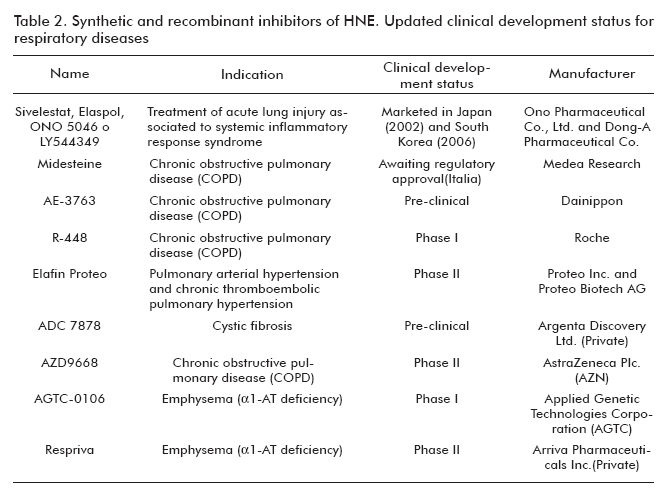
<body><![CDATA[<P   align="justify" ><font face="Verdana, Arial, Helvetica, sans-serif" size="2">The effect of SURVANTA<Sup>&reg;</Sup>      (a commercial preparation of exogenous surfactant) as well as phospholipid      and/or synthetic protein mixtures representing the main components of the      pulmonary surfactant together with </font><font size="+1" color="#1F1C1D"><font size="+1"><font size="+1"><font size="+1"><font size="+1"><font size="+1"><font size="+1"><font size="+1"><font size="+1"><font size="+1"><font size="+1"><font size="+1"><font size="+1"><font size="+1"><font size="+1"><font color="#000000"><font color="#1F1C1D"><font color="#000000"><font color="#1F1C1D"><font size="+1"><font size="+1"><font size="+1"><font size="+1"><font size="+1"><font size="+1"><font size="+1"><font size="+1"><font size="+1"><font size="+1"><font size="+1"><font size="+1"><font size="+1"><font size="+1"><font size="+1"><font size="+1"><font size="+1"><font size="+1"><font size="+1"><font size="+1"><font size="+1"><font size="+1"><font size="+1"><font size="+1"><font size="+1"><font size="+1"><font face="Verdana, Arial, Helvetica, sans-serif" size="2"><font face="Times New Roman, Times, serif">&alpha;</font></font></font></font></font></font></font></font></font></font></font></font></font></font></font></font></font></font></font></font></font></font></font></font></font></font></font></font></font></font></font></font></font></font></font></font></font></font></font></font></font></font></font></font></font></font></font><font face="Verdana, Arial, Helvetica, sans-serif" size="2">1-AT      have been evaluated in a surfactant-deficient rat model. The results showed      a significantly improved rate of oxygenation, associated with increased numbers      of large surfactant aggregates possibly caused by an inhibition of surfactant      convertase (54); suggesting a positive role for </font><font size="+1" color="#1F1C1D"><font size="+1"><font size="+1"><font size="+1"><font size="+1"><font size="+1"><font size="+1"><font size="+1"><font size="+1"><font size="+1"><font size="+1"><font size="+1"><font size="+1"><font size="+1"><font size="+1"><font color="#000000"><font color="#1F1C1D"><font color="#000000"><font color="#1F1C1D"><font size="+1"><font size="+1"><font size="+1"><font size="+1"><font size="+1"><font size="+1"><font size="+1"><font size="+1"><font size="+1"><font size="+1"><font size="+1"><font size="+1"><font size="+1"><font size="+1"><font size="+1"><font size="+1"><font size="+1"><font size="+1"><font size="+1"><font size="+1"><font size="+1"><font size="+1"><font size="+1"><font size="+1"><font size="+1"><font size="+1"><font face="Verdana, Arial, Helvetica, sans-serif" size="2"><font face="Times New Roman, Times, serif">&alpha;</font></font></font></font></font></font></font></font></font></font></font></font></font></font></font></font></font></font></font></font></font></font></font></font></font></font></font></font></font></font></font></font></font></font></font></font></font></font></font></font></font></font></font></font></font></font></font><font face="Verdana, Arial, Helvetica, sans-serif" size="2">1-AT      in the prevention of surfactant degradation in the lung. Other inhibitors      have also been shown to modulate the process of surfactant aggregate conversion      (55), and given the potential pharmacological activity of HNE inhibitors as      additives for clinical surfactant preparations, such a course of action should      be considered for clinical evaluation during the therapy of ALI/ARDS. </font></P >   <FONT size="+1"><FONT size="+1">        <P   align="justify" ><font face="Verdana, Arial, Helvetica, sans-serif" size="2">The importance of      inflammatory process in the etiology of lung diseases and the widespread involvement      of HNE in their genesis has steered the development of candidate drugs for      these disorders towards the search for specific HNE inhibitors (56). <a href="/img/revistas/bta/v26n4/t0202409.jpg">Table      2</a> illustrates the main synthetic and recombinant HNE inhibitors developed      to date which have reached some state of clinical evaluation. One of the most      successful cases is represented by Sivelestat, a synthetic, highly specific      HNE inhibitor. The intravenous infusion of this inhibitor in a hamster model      of severe ALI induced by instillation of hydrochloric acid and by <I>Streptococcus      pneumoniae </I>results in a significant improvement of injury markers in broncho-alveolar      lavage and in pO<Sub>2</Sub>, associated with a successful inhibition of HNE      activity and a decrease in mortality (57, 58). This same group used a model      of phorbol myristate acetate-induced acute lung injury in conscious rabbits      to show that the application of Sivelestat inhibited HNE activity by 60 to      90% while at the same time attenuating hemorrhage and decreasing protein con-tents      at the lung (59). Sivelestat has also been shown to effectively decrease the      values of inflammation parameters, pulmonary edema and acute damage in multiple      animal models (60). </font></P >   <FONT size="+1"><FONT size="+1">        
<P   align="justify" ><font face="Verdana, Arial, Helvetica, sans-serif" size="2">Clinical trials have      demonstrated that the therapeutic use of Sivelestat results in a significant      improvement of oxygenation, reducing the time during which patients remain      connected to a ventilator in intensive care units. Sivelestat therapy, however,      did not provide a significant decrease in mortality for patients with respiratory      distress syndrome associated to the systemic inflammatory response syndrome      (61, 62). The small molecular weight of Sivelestat when compared to the endogenous      protease inhibitors mean that its delivery to the inflammation site is easier      and more effective, relieving the clinical symptoms of ALI (57, 63). </font></P >       <P   align="justify" ><font face="Verdana, Arial, Helvetica, sans-serif" size="2">Still, a research      is needed to solve the enigma in pulmonary surfactant and in the optimization      of synthetic or recombinant HNE inhibitors for their use in the complex scenario      of respiratory diseases. The combination of both preparations may represent      an interesting alternative with a large therapeutic potential in the treatment      of ALI and ARDS. </font></P >       <P   align="justify" > </P >       <P   align="justify" ><font face="Verdana, Arial, Helvetica, sans-serif" size="3"><b>CONCLUSION</b></font></P >       <P   align="justify" ><font face="Verdana, Arial, Helvetica, sans-serif" size="2">Proteases are obvious      targets for inhibitor-based therapies. They are involved in the physiopathology      of infectious inflammatory diseases such as ALI and ARDS, although a large      number of questions regarding their specific role remain unanswered. The main      obstacles of the clinical application of inhibitors in this setting are the      difficulties inherent to the obtention of drugs that eliminate or neutralize      the pathogenic effects of HNE without interfering with its normal physiological      role or eliciting unwanted side effects. The number of studies examining the      combination of exogenous pulmonary surfactant preparations with protease inhibitors      is still small, and therefore this alternative remains a potentially rewarding      research avenue for the development of therapies against these life-threatening      lung disorders. </font></P >       <P   align="justify" > </P >       <P   align="justify" ><font face="Verdana, Arial, Helvetica, sans-serif" size="3"><b>REFERENCES</b></font></P >       <!-- ref --><P   align="justify" ><font face="Verdana, Arial, Helvetica, sans-serif" size="2">1. Mackay A, Al-Haddad      M. Acute lung injury and acute respiratory distress syndrome. Cont Edu Anaesth      Crit Care Pain 2009;9:152-6.     </font></P >   </font></font></font></font></font></font></font></font></font></font></font></font></font></font></font></font></font></font></font></font></font></font></font></font></font></font></font></font></font></font></font></font></font></font></font></font></font></font></font></font></font></font></font></font></font></font></font></font></font></font></font></font></font></font></font></font></font></font></font></font></font></font></font></font></font>        <!-- ref --><p><font face="Verdana, Arial, Helvetica, sans-serif" size="2">2. Griese M.      Pulmonary surfactant in health and human lung diseases: state of the art.      Eur Respir J 1999;13:1455-76.     </font></p>       <!-- ref --><p><font face="Verdana, Arial, Helvetica, sans-serif" size="2">3. Gunther A,      Ruppert C, Schmidt R, Markart P, Grimminger F, Walmrath D, et al. Surfactant      alteration and replacement in acute respiratory distress syndrome. Respir      Res 2001;2:353-64.     </font></p>       <!-- ref --><p><font face="Verdana, Arial, Helvetica, sans-serif" size="2">4. Creuwels LA,      Van Golde LM, Haagsman HP. The pulmonary surfactant system: biochemical and      clinical aspects. Lung 1997;175:1-39.     </font></p>       <!-- ref --><p><font face="Verdana, Arial, Helvetica, sans-serif" size="2">5. Possmayer      F. A proposed nomenclature for pulmonary surfactant associated proteins. Am      Rev Respir Dis 1988;138:990-8.     </font></p>       <!-- ref --><p><font face="Verdana, Arial, Helvetica, sans-serif" size="2">6. Wright JR.      Immunomodulatory functions of surfactant. Physiol Rev 1997;77:931-62.     </font></p>       <!-- ref --><p><font face="Verdana, Arial, Helvetica, sans-serif" size="2">7. Wright JR.      Immunorregulatory functions of surfactant proteins. Nat Rev Immunol 2005;5:58-68.          </font></p>       <!-- ref --><p><font face="Verdana, Arial, Helvetica, sans-serif" size="2">8. Sano H, Kuroki      Y. The lung collectins, SP-A and SP-D, modulate pulmonary innate immunity.      Mol Immunol 2005;42:279-87.     </font></p>       <!-- ref --><p><font face="Verdana, Arial, Helvetica, sans-serif" size="2">9. Ashbaugh DG,      Bigelow DB, Petty TL, Levine BE. Acute respiratory distress in adults. Lancet      1967;2:319-23.     </font></p>       <!-- ref --><p><font face="Verdana, Arial, Helvetica, sans-serif" size="2">10. Bernard GR,      Artigas A, Brigham KL, Carlet J, Falke K, Hudson L, et al. The American-European      Consensus Conference on ARDS: Definitions, mechanisms, relevant outcomes and      clinical trial coordination. Am J Respir Crit Care Med 1994;149:818-24.     </font></p>       <!-- ref --><p><font face="Verdana, Arial, Helvetica, sans-serif" size="2">11. Dietch EA.      Multiple organ failure. Pathophysiology and potencial future therapy. Ann      Surg 1992;216:117-34.     </font></p>       <!-- ref --><p><font face="Verdana, Arial, Helvetica, sans-serif" size="2">12. Hallman M,      Spragg R, Harell JH, Moser KM, Gluck L. Evidence of lung surfactant abnormality      in respiratory failure. J Clin Invest 1982;70:673-83.     </font></p>       <!-- ref --><p><font face="Verdana, Arial, Helvetica, sans-serif" size="2">13. Schmidt R,      Meier U, Yabut-Perez M, Walmrath D, Grimminger F, Seeger W, et al. Alteration      of fatty acid profiles in different pulmonary surfactant phospholipids in      acute respiratory distress syndrome and pneumonia. Am J Respir Crit Care Med      2001;163:95-100.     </font></p>       <!-- ref --><p><font face="Verdana, Arial, Helvetica, sans-serif" size="2">14. Schmidt R,      Markart P, Ruppert C, Wygrecka M, Kuchenbuch T, Walmrath D, et al. Time-dependent      changes in pulmonary surfactant function and composition in acute respiratory      distress syndrome due to pneumonia or aspiration. Respir Res 2007;8:55-60.          </font></p>       <!-- ref --><p><font face="Verdana, Arial, Helvetica, sans-serif" size="2">15. Gunther A,      Siebert C, Schmidt R, Ziegler S, Grimminger F, Yabut M, et al. Surfactant      alterations in severe pneumonia, acute respiratory distress syndrome and cardiogenic      lung edema. Am J Respir Crit Care 1996;153:176-84.     </font></p>       <!-- ref --><p><font face="Verdana, Arial, Helvetica, sans-serif" size="2">16. Fujiwara      T, Maeta H, Chida S, Morita T, Watabe Y, Abe T. Artificial surfactant therapy      in hyaline membrane disease. Lancet 1980;1:55-9.     </font></p>       <p><font face="Verdana, Arial, Helvetica, sans-serif" size="2">17. Manzanares      D, D&iacute;az E, Alfonso W, Escobar A, Colom&eacute; H, Mu&ntilde;oz MC,      et al. Surfactante pulmonar porcino. 1995. Rep&uacute;blica de Cuba, A 61      K 35-42. </font></p>       <!-- ref --><p><font face="Verdana, Arial, Helvetica, sans-serif" size="2">18. Zhang JP,      Wang YL, Wang YH, Zhang R, Chen H, Su HB. Prophylaxis of neonatal respiratory      distress syndrome by intra-amniotic administration of pulmonary surfactant.      Chin Med J (Engl)2004;117:120-4.     </font></p>       <!-- ref --><p><font face="Verdana, Arial, Helvetica, sans-serif" size="2">19. Lewis JF,      Veldhuizen R. The role of exogenous surfactant in the treatment of acute lung      injury. Annu Rev Physiol 2003;65:613-42.     </font></p>       <p><font face="Verdana, Arial, Helvetica, sans-serif" size="2">20. Tremblay      GM, Sallenave JM, Israel-Assayag E, Cormier Y, Gauldie J. Elafin/elastase-specific      inhibitor in bronchoalveolar lavage of normal subjects and farmer&amp;rsquo;s      lung. Am J Respir Crit Care Med 1996;154:1092-8. </font></p>       <!-- ref --><p><font face="Verdana, Arial, Helvetica, sans-serif" size="2">21. Blanco O,      P&eacute;rez-Gil J. Biochemical and pharmacological differences between preparations      of exogenous natural surfactant used to treat Respiratory Distress Syndrome:      Role of the different components in an efficient pulmonary surfactant. Eur      J Pharmacol 2007;568:1-15.     </font></p>       <!-- ref --><p><font face="Verdana, Arial, Helvetica, sans-serif" size="2">22. Lee WL, Downey      GP. Leukocyte elastase. Physiological functions and role in acute lung injury.      Am J Respir Crit Care Med 2001;164:896-904.     </font></p>       <p><font face="Verdana, Arial, Helvetica, sans-serif" size="2">23. Murphy G,      Reynolds JJ. Extracellular matrix degradation. En: Connective Tissue and its      Heritable Disorders. (Royce PM, Steinmann B, eds.). New York Wiley-Liss, 1993,p.      287-316. </font></p>       <!-- ref --><p><font face="Verdana, Arial, Helvetica, sans-serif" size="2">24. Travis J,      Salvesen GS. Human plasma proteinase inhibitors. Ann Rev Biochem 1983;52:655-709.          </font></p>       <!-- ref --><p><font face="Verdana, Arial, Helvetica, sans-serif" size="2">25. Renesto P,      Balloy V, Kamimura T, Masuda K, Imaizumi A, Chignard M. Inhibition by recombinant      SLPI and half-SLPI (Asn55-Ala107) of elastase and cathepsin G activities:      consequence for neutrophil-platelet cooperation. Br J Pharmacol 1993;108:1100-6.          </font></p>       <!-- ref --><p><font face="Verdana, Arial, Helvetica, sans-serif" size="2">26. Wiedow O,      Luademann J, Utecht B. Elafin is a potent inhibitor of proteinase 3. Biochem      Biophys Res Commun 1991;174:6-10.     </font></p>       <!-- ref --><p><font face="Verdana, Arial, Helvetica, sans-serif" size="2">27. Zani ML,      Nobar SM, Lacour SA, Lemoine S, Boudier C, Bieth JG, et al. Kinetics of the      inhibition of neutrophil proteinases by recombinant elafin and pre-elafin      (trappin-2) expressed in Pichia pastoris. Eur J Biochem 2004;271:2370-8.     </font></p>       ]]></body>
<body><![CDATA[<p><font face="Verdana, Arial, Helvetica, sans-serif" size="2">28. Remold-O&amp;rsquo;Donnell      E, Chin J, Alberts M. Sequence and molecular characterization of human monocyte/neutrophil      elastase inhibitor. Proc Natl Acad Sci USA 1992;89:5635-9. </font></p>       <!-- ref --><p><font face="Verdana, Arial, Helvetica, sans-serif" size="2">29. Dahlen Jr,      Foster DC, Kisiel W. Human proteinase inhibitor 9 (PI9) is a potent inhibitor      of subtilisin A. Biochem Biophys Res Commun 1997;238:329-33.     </font></p>       <!-- ref --><p><font face="Verdana, Arial, Helvetica, sans-serif" size="2">30. Bieth JG.      In vivo significance of kinetic constants of macromolecular proteinase inhibitors.      Adv Exp Med Biol 1984;167:97-109.     </font></p>       <!-- ref --><p><font face="Verdana, Arial, Helvetica, sans-serif" size="2">31. Korkmaz B,      Moreau T, Gauthier F. Neutrophil elastase, proteinase 3 and cathepsin G: Physicochemical      properties, activity and physiopathological functions. Biochimie 2008;90:227-42.          </font></p>       <!-- ref --><p><font face="Verdana, Arial, Helvetica, sans-serif" size="2">32. Kawabata      K, Hagio T, Matsuoka S. The role of neutrophil elastase in acute lung injury.      Eur J Pharm 2002;451:1-10.     </font></p>       <!-- ref --><p><font face="Verdana, Arial, Helvetica, sans-serif" size="2">33. Vogelmeier      C, Gillissen A, Buhl R. Use of secretory leukoprotease inhibitor to augment      lung antineutrophil elastase activity. Chest 1998;110:261-66.     </font></p>       <!-- ref --><p><font face="Verdana, Arial, Helvetica, sans-serif" size="2">34. Hiemstra      PS. Novel roles of protease inhibitors in infection and inflammation. Biochem      Soc Trans 2002;30:116-20.     </font></p>       <!-- ref --><p><font face="Verdana, Arial, Helvetica, sans-serif" size="2">35. Faller B,      Mely Y, Gerard D, Bieth JG. Heparin-induced conformational change and activation      of mucus proteinase inhibitor. Biochemistry 1992;31:8285-90.     </font></p>       <!-- ref --><p><font face="Verdana, Arial, Helvetica, sans-serif" size="2">36. Rawlings      ND, Tolle DP, Barret AJ. Evolutionary families of peptidase inhibitors. Biochem      J 2004;378:705-16.     </font></p>       <!-- ref --><p><font face="Verdana, Arial, Helvetica, sans-serif" size="2">37. Owen CA,      Campbell MA, Sannes PL, Boukedes SS, Campbell EJ. Cell surface-bound elastase      and cathepsin G on human neutrophils a novel, non-oxidative mechanism by which      neutrophils focus and preserve catalytic activity of serine proteinases. J      Cell Biol 1995;131:775-89.     </font></p>       <!-- ref --><p><font face="Verdana, Arial, Helvetica, sans-serif" size="2">38. Sallenave      JM, Silva A. Characterization and gene sequence of the precursor of elafin,      an elastase-specific inhibitor in bronchial secretions. Am J Respir Cell Mol      Biol 1993;8:439-45.     </font></p>       <!-- ref --><p><font face="Verdana, Arial, Helvetica, sans-serif" size="2">39. Pfundt R,      Van Ruissen F, Van Vlijmen-Willems IM, Alkemade HA, Zeeuwen PL, Jap PH, et      al. Constitutive and inducible expression of SKALP/elafin provides anti-elastase      defense in human epithelia. J Clin Invest 1996;98:1389-99.     </font></p>       <!-- ref --><p><font face="Verdana, Arial, Helvetica, sans-serif" size="2">40. Ying QL,      Simon SR. Kinetics of the inhibition of human leukocyte elastase by elafin,      a 6-kilodalton elastase-specific inhibitor from human skin. Biochemistry 1993;32:1866-74.          </font></p>       <!-- ref --><p><font face="Verdana, Arial, Helvetica, sans-serif" size="2">41. Tremblay      GM, Vachon E, Larouche Ch, Bourbonnais Y. Inhibition of human neutrophil elastase-induced      acute lung injury in hamsters by recombinant human pre-elafin (trappin-2).      CHEST 2002;121:582-8.     </font></p>       <!-- ref --><p><font face="Verdana, Arial, Helvetica, sans-serif" size="2">42. Benarafa      C, Priebe GP, Remold-ODonnell E. The neutrophil serine pro-tease inhibitor      serpinb1 preserves lung defense functions in Pseudomonas aeruginosa infection.      J Exp Med 2007;204:1901-9.     </font></p>       <!-- ref --><p><font face="Verdana, Arial, Helvetica, sans-serif" size="2">43. Askew DJ,      Silverman GA. Intracellular and extracellular serpins modulate lung disease.      J Perinatol 2008;28:S127-S35.     </font></p>       <!-- ref --><p><font face="Verdana, Arial, Helvetica, sans-serif" size="2">44. Kawabata      K, Moore AR, Willoughby DA. Impaired activity of protease inhibitors towards      neutrophil elastase bound to human articular cartilage. Ann Rheum Dis 1996;55:248-52.          </font></p>       <!-- ref --><p><font face="Verdana, Arial, Helvetica, sans-serif" size="2">45. Campbell      EJ, Campbell MA, Boukedes SS, Owen CA. Quantum proteolysis by neutrophils      implications for pulmonary emphysema in alpha 1-antitrypsin deficiency. J      Clin Invest 1999;104:337-44.     </font></p>       <!-- ref --><p><font face="Verdana, Arial, Helvetica, sans-serif" size="2">46. Kawabata      K, Hagio T, Matsumoto S, Nakao S, Orita S, Aze Y, et al. Delayed neutrophil      elastase inhibition prevents subsequent progression of acute lung injury induced      by endotoxin inhalation in hamsters. Am J Respir Crit Care Med 2000;161:2013-18.          </font></p>       <!-- ref --><p><font face="Verdana, Arial, Helvetica, sans-serif" size="2">47. Pison U,      Tam EK, Caughey GH, Hawgood S. Proteolytic inactivation of dog lung surfac-tant-associated      proteins by neutrophil elastasa. Biochim Biophys Acta 1989;992:251-7.     </font></p>       <p><font face="Verdana, Arial, Helvetica, sans-serif" size="2">48. Rubio F,      Cooley J, Accurso FJ, Remold-O&amp;rsquo;Donnell E. Linkage of neutrophil      serine proteases and decreased surfactant protein-A (SP-A) levels in inflammatory      lung disease. Thorax 2004;59:318-23. </font></p>       ]]></body>
<body><![CDATA[<!-- ref --><p><font face="Verdana, Arial, Helvetica, sans-serif" size="2">49. Hirche TO,      Crouch EC, Espinola M, Brokelman TJ, Mecham RP, DeSilva N, et al. Neutrophil      serine proteinases inactivate surfactant protein D by cleaving within a conserved      subregion of the carbohydrate recognition domain. J Biol Chem 2004;279:27688-98.          </font></p>       <!-- ref --><p><font face="Verdana, Arial, Helvetica, sans-serif" size="2">50. Jobe AH,      Ikegami M. Surfactant metabo-lism. Clin Perinatol 1993;20:683-96.     </font></p>       <!-- ref --><p><font face="Verdana, Arial, Helvetica, sans-serif" size="2">51. Barr F, Clark      H, Hawgood S. Identification of a putative surfactant convertase in rat lung      as a secreted serine carboxylesterase. Am J Physiol 1998;274:L404-10.     </font></p>       <!-- ref --><p><font face="Verdana, Arial, Helvetica, sans-serif" size="2">52. Gross NJ,      Schultz RM. Requirements for extracellular metabolism of pulmonary surfactant:      tentative identification of serine protease. Am J Physiol 1992;262:L446-53.          </font></p>       <p><font face="Verdana, Arial, Helvetica, sans-serif" size="2">53. Krishnasamy      S, Gross NJ, Teng AL, Schultz RM, Dhand R. Lung &amp;ldquo;surfactant convertase&amp;rdquo;      is a member of the carboxylesterase family. Biochem Biophys Res Commun 1997;235:180-4.      </font></p>       <!-- ref --><p><font face="Verdana, Arial, Helvetica, sans-serif" size="2">54. Belai Y,      Hern&aacute;ndez-Juviel JM, Bruni R, Waring AJ, Walther FJ. Addition of a      1-Antitrypsin to Surfactant Improves Oxygenation in Surfactant-deficient Rats      Am. J Respir Crit Care Med 1999;159:917-23.     </font></p>       <!-- ref --><p><font face="Verdana, Arial, Helvetica, sans-serif" size="2">55. Ruppert C,      Pucker C, Markart P, Schmidt R, Grimminger F, Seeger W, et al. Selective inhibition      of large-to-small surfactant aggregate conversion by serine protease inhibitors      of the bis-benzamidine type. Am J Respir Cell Mol Biol 2003;28:95-102.     </font></p>       <!-- ref --><p><font face="Verdana, Arial, Helvetica, sans-serif" size="2">56. Tremblay      GM, Janelle MF, Bourbonnais Y. Anti-inflammatory activity of neutrophil elastase      inhibitors. Drugs 2003;4:556-65.     </font></p>       <!-- ref --><p><font face="Verdana, Arial, Helvetica, sans-serif" size="2">57. Hagio T,      Matsumoto S; Nakao S, Abiru T, Ohno H, Kawabata K. Elastase inhibition reduced      death associated with acid aspiration-induced lung injury in hamsters. Eur      J Pharmacol 2004;488:173-80.     </font></p>       <!-- ref --><p><font face="Verdana, Arial, Helvetica, sans-serif" size="2">58. Hagio T,      Kishikawa K, Kawata K, Tasaka S, Hashimoto S, Hasegawa N, et al. Inhibition      of neutrophil elastase reduces lung injury and bacterial count in hamsters.      Pulm Pharmacol Ther 2008;21(6):884-9.     </font></p>       <!-- ref --><p><font face="Verdana, Arial, Helvetica, sans-serif" size="2">59. Hagio T,      Matsumoto S, Nakao S, Matsuoka S, Kawabata K. Sivelestat, a specific neutrophil      elastase inhibitor, prevented phorbol myristate acetate-induced acute lung      injury in conscious rabbits. Pulm Pharmacol Ther 2005;18:285-90.     </font></p>       <!-- ref --><p><font face="Verdana, Arial, Helvetica, sans-serif" size="2">60. Hagiwara      S, Iwasaka H, Togo K, Noguchi T. A Neutrophil Elastase Inhibitor, Sivelestat      Reduces Lung Injury Following Endotoxin-Induced Shock in Rats by Inhibiting      HMGB1. Inflammation 2008;4:227-34.     </font></p>       <!-- ref --><p><font face="Verdana, Arial, Helvetica, sans-serif" size="2">61. Zeiher BG,      Matsuoka S, Kawabata K, Repine JE. Neutrophil elastase and acute lung injury:      prospects for sivelestat and other neutrophil elastase inhibitors as therapeutics.      Crit Care Med 2002;30:S281-7.     </font></p>       <!-- ref --><p><font face="Verdana, Arial, Helvetica, sans-serif" size="2">62. Okayama N,      Kakihana Y, Setoguchi D, Imabayashi T, Omae T, Matsunaga A, et al. Clinical      effects of a neutrophil elastase inhibitor, sivelestat, in patients with acute      respiratory distress syndrome. J Anesthesia 2006;20:6-10.     </font></p>       <!-- ref --><p><font face="Verdana, Arial, Helvetica, sans-serif" size="2">63. Kawabata      K, Hagio T, Matsuoka S. Pharmacological profile of a specific neutrophil elastase      inhibitor, Sivelestat sodium hydrate. Folia Pharmacologica Japonica 2003;122:151-60.    </font>    <br>   </p>   <FONT size="+1" color="#1F1C1D"><FONT size="+1"><FONT size="+1"><FONT size="+1"><FONT size="+1"><FONT size="+1"><FONT size="+1"><FONT size="+1"><FONT size="+1"><FONT size="+1"><FONT size="+1"><FONT size="+1"><FONT size="+1"><FONT size="+1"><FONT size="+1"><FONT color="#000000"><FONT color="#1F1C1D"><FONT color="#000000"><FONT color="#1F1C1D"><FONT size="+1"><FONT size="+1"><FONT size="+1"><FONT size="+1"><FONT size="+1"><FONT size="+1"><FONT size="+1"><FONT size="+1"><FONT size="+1"><FONT size="+1"><FONT size="+1"><FONT size="+1"><FONT size="+1"><FONT size="+1"><FONT size="+1"><FONT size="+1"><FONT size="+1"><FONT size="+1"><FONT size="+1"><FONT size="+1"><FONT size="+1"><FONT size="+1"><FONT size="+1"><FONT size="+1"><FONT size="+1"><FONT size="+1"><FONT size="+1"><FONT size="+1"><FONT size="+1"><FONT size="+1"><FONT size="+1"><FONT size="+1"><FONT size="+1"><FONT size="+1"><FONT size="+1"><FONT size="+1"><FONT size="+1"><FONT size="+1"><FONT size="+1"><FONT size="+1"><FONT size="+1"><FONT size="+1"><FONT size="+1"><FONT size="+1"><FONT size="+1"><FONT size="+1">       ]]></body>
<body><![CDATA[<P   > </P >   <FONT color="#000000">        <P   ><font color="#1F1C1D" face="Verdana, Arial, Helvetica, sans-serif" size="2">Received      in July, 2009. </font><FONT color="#1F1C1D"></font>    <br>     <font face="Verdana, Arial, Helvetica, sans-serif" size="2">Accepted for publication      in December, 2009.<I> </I></font></P >   <FONT color="#1F1C1D">        <P   > </P >       <P   ><font face="Verdana, Arial, Helvetica, sans-serif" size="2">Odalys Blanco. Grupo      de Qu&iacute;mica-Farmacolog&iacute;a-Toxicolog&iacute;a, Centro Nacional      de Sanidad Agropecuaria, CENSA San Jos&eacute; de Las Lajas, CP 32700, La      Habana, Cuba. E-mail: <A href="mailto:oblanco@censa.edu.cu"> <U><U><FONT color="#0000FF">oblanco@censa.edu.cu</font></U></U></A><FONT color="#0000FF">      <FONT color="#1F1C1D"> ; <A href="mailto:odalysbh@infomed.sld.cu"> <U><U><FONT color="#0000FF">odalysbh@infomed.sld.cu</font></U></U></A>      </font></font></font></P >   <FONT color="#0000FF"><FONT color="#1F1C1D"><FONT color="#0000FF"><FONT color="#1F1C1D">        <P   > </P >       <P   > </P >       <P   > </P >   </font></font></font></font></font></font></font></font></font></font></font></font></font></font></font></font></font></font></font></font></font></font></font></font></font></font></font></font></font></font></font></font></font></font></font></font></font></font></font></font></font></font></font></font></font></font></font></font></font></font></font></font></font></font></font></font></font></font></font></font></font></font></font></font></font></font></font></font></font></font></font></DIV >      ]]></body><back>
<ref-list>
<ref id="B1">
<label>1</label><nlm-citation citation-type="journal">
<person-group person-group-type="author">
<name>
<surname><![CDATA[Mackay]]></surname>
<given-names><![CDATA[A]]></given-names>
</name>
<name>
<surname><![CDATA[Al-Haddad]]></surname>
<given-names><![CDATA[M]]></given-names>
</name>
</person-group>
<article-title xml:lang="en"><![CDATA[Acute lung injury and acute respiratory distress syndrome]]></article-title>
<source><![CDATA[Cont Edu Anaesth Crit Care Pain]]></source>
<year>2009</year>
<volume>9</volume>
<page-range>152-6</page-range></nlm-citation>
</ref>
<ref id="B2">
<label>2</label><nlm-citation citation-type="journal">
<person-group person-group-type="author">
<name>
<surname><![CDATA[Griese]]></surname>
<given-names><![CDATA[M]]></given-names>
</name>
</person-group>
<article-title xml:lang="en"><![CDATA[Pulmonary surfactant in health and human lung diseases: state of the art]]></article-title>
<source><![CDATA[Eur Respir J]]></source>
<year>1999</year>
<volume>13</volume>
<page-range>1455-76</page-range></nlm-citation>
</ref>
<ref id="B3">
<label>3</label><nlm-citation citation-type="journal">
<person-group person-group-type="author">
<name>
<surname><![CDATA[Gunther]]></surname>
<given-names><![CDATA[A]]></given-names>
</name>
<name>
<surname><![CDATA[Ruppert]]></surname>
<given-names><![CDATA[C]]></given-names>
</name>
<name>
<surname><![CDATA[Schmidt]]></surname>
<given-names><![CDATA[R]]></given-names>
</name>
<name>
<surname><![CDATA[Markart]]></surname>
<given-names><![CDATA[P]]></given-names>
</name>
<name>
<surname><![CDATA[Grimminger]]></surname>
<given-names><![CDATA[F]]></given-names>
</name>
<name>
<surname><![CDATA[Walmrath]]></surname>
<given-names><![CDATA[D]]></given-names>
</name>
</person-group>
<article-title xml:lang="en"><![CDATA[Surfactant alteration and replacement in acute respiratory distress syndrome]]></article-title>
<source><![CDATA[Respir Res]]></source>
<year>2001</year>
<volume>2</volume>
<page-range>353-64</page-range></nlm-citation>
</ref>
<ref id="B4">
<label>4</label><nlm-citation citation-type="journal">
<person-group person-group-type="author">
<name>
<surname><![CDATA[Creuwels]]></surname>
<given-names><![CDATA[LA]]></given-names>
</name>
<name>
<surname><![CDATA[Van Golde]]></surname>
<given-names><![CDATA[LM]]></given-names>
</name>
<name>
<surname><![CDATA[Haagsman]]></surname>
<given-names><![CDATA[HP]]></given-names>
</name>
</person-group>
<article-title xml:lang="en"><![CDATA[The pulmonary surfactant system: biochemical and clinical aspects]]></article-title>
<source><![CDATA[Lung]]></source>
<year>1997</year>
<volume>175</volume>
<page-range>1-39</page-range></nlm-citation>
</ref>
<ref id="B5">
<label>5</label><nlm-citation citation-type="journal">
<person-group person-group-type="author">
<name>
<surname><![CDATA[Possmayer]]></surname>
<given-names><![CDATA[F]]></given-names>
</name>
</person-group>
<article-title xml:lang="en"><![CDATA[A proposed nomenclature for pulmonary surfactant associated proteins]]></article-title>
<source><![CDATA[Am Rev Respir Dis]]></source>
<year>1988</year>
<volume>138</volume>
<page-range>990-8</page-range></nlm-citation>
</ref>
<ref id="B6">
<label>6</label><nlm-citation citation-type="journal">
<person-group person-group-type="author">
<name>
<surname><![CDATA[Wright]]></surname>
<given-names><![CDATA[JR]]></given-names>
</name>
</person-group>
<article-title xml:lang="en"><![CDATA[Immunomodulatory functions of surfactant]]></article-title>
<source><![CDATA[Physiol Rev]]></source>
<year>1997</year>
<volume>77</volume>
<page-range>931-62</page-range></nlm-citation>
</ref>
<ref id="B7">
<label>7</label><nlm-citation citation-type="journal">
<person-group person-group-type="author">
<name>
<surname><![CDATA[Wright]]></surname>
<given-names><![CDATA[JR]]></given-names>
</name>
</person-group>
<article-title xml:lang="en"><![CDATA[Immunorregulatory functions of surfactant proteins]]></article-title>
<source><![CDATA[Nat Rev Immunol]]></source>
<year>2005</year>
<volume>5</volume>
<page-range>58-68</page-range></nlm-citation>
</ref>
<ref id="B8">
<label>8</label><nlm-citation citation-type="journal">
<person-group person-group-type="author">
<name>
<surname><![CDATA[Sano]]></surname>
<given-names><![CDATA[H]]></given-names>
</name>
<name>
<surname><![CDATA[Kuroki]]></surname>
<given-names><![CDATA[Y]]></given-names>
</name>
</person-group>
<article-title xml:lang="en"><![CDATA[The lung collectins, SP-A and SP-D, modulate pulmonary innate immunity]]></article-title>
<source><![CDATA[Mol Immunol]]></source>
<year>2005</year>
<volume>42</volume>
<page-range>279-87</page-range></nlm-citation>
</ref>
<ref id="B9">
<label>9</label><nlm-citation citation-type="journal">
<person-group person-group-type="author">
<name>
<surname><![CDATA[Ashbaugh]]></surname>
<given-names><![CDATA[DG]]></given-names>
</name>
<name>
<surname><![CDATA[Bigelow]]></surname>
<given-names><![CDATA[DB]]></given-names>
</name>
<name>
<surname><![CDATA[Petty]]></surname>
<given-names><![CDATA[TL]]></given-names>
</name>
<name>
<surname><![CDATA[Levine]]></surname>
<given-names><![CDATA[BE]]></given-names>
</name>
</person-group>
<article-title xml:lang="en"><![CDATA[Acute respiratory distress in adults]]></article-title>
<source><![CDATA[Lancet]]></source>
<year>1967</year>
<volume>2</volume>
<page-range>319-23</page-range></nlm-citation>
</ref>
<ref id="B10">
<label>10</label><nlm-citation citation-type="journal">
<person-group person-group-type="author">
<name>
<surname><![CDATA[Bernard]]></surname>
<given-names><![CDATA[GR]]></given-names>
</name>
<name>
<surname><![CDATA[Artigas]]></surname>
<given-names><![CDATA[A]]></given-names>
</name>
<name>
<surname><![CDATA[Brigham]]></surname>
<given-names><![CDATA[KL]]></given-names>
</name>
<name>
<surname><![CDATA[Carlet]]></surname>
<given-names><![CDATA[J]]></given-names>
</name>
<name>
<surname><![CDATA[Falke]]></surname>
<given-names><![CDATA[K]]></given-names>
</name>
<name>
<surname><![CDATA[Hudson]]></surname>
<given-names><![CDATA[L]]></given-names>
</name>
</person-group>
<article-title xml:lang="en"><![CDATA[The American-European Consensus Conference on ARDS: Definitions, mechanisms, relevant outcomes and clinical trial coordination]]></article-title>
<source><![CDATA[Am J Respir Crit Care Med]]></source>
<year>1994</year>
<volume>149</volume>
<page-range>818-24</page-range></nlm-citation>
</ref>
<ref id="B11">
<label>11</label><nlm-citation citation-type="journal">
<person-group person-group-type="author">
<name>
<surname><![CDATA[Dietch]]></surname>
<given-names><![CDATA[EA]]></given-names>
</name>
</person-group>
<article-title xml:lang="en"><![CDATA[Multiple organ failure: Pathophysiology and potencial future therapy]]></article-title>
<source><![CDATA[Ann Surg]]></source>
<year>1992</year>
<volume>216</volume>
<page-range>117-34</page-range></nlm-citation>
</ref>
<ref id="B12">
<label>12</label><nlm-citation citation-type="journal">
<person-group person-group-type="author">
<name>
<surname><![CDATA[Hallman]]></surname>
<given-names><![CDATA[M]]></given-names>
</name>
<name>
<surname><![CDATA[Spragg]]></surname>
<given-names><![CDATA[R]]></given-names>
</name>
<name>
<surname><![CDATA[Harell]]></surname>
<given-names><![CDATA[JH]]></given-names>
</name>
<name>
<surname><![CDATA[Moser]]></surname>
<given-names><![CDATA[KM]]></given-names>
</name>
<name>
<surname><![CDATA[Gluck]]></surname>
<given-names><![CDATA[L]]></given-names>
</name>
</person-group>
<article-title xml:lang="en"><![CDATA[Evidence of lung surfactant abnormality in respiratory failure]]></article-title>
<source><![CDATA[J Clin Invest]]></source>
<year>1982</year>
<volume>70</volume>
<page-range>673-83</page-range></nlm-citation>
</ref>
<ref id="B13">
<label>13</label><nlm-citation citation-type="journal">
<person-group person-group-type="author">
<name>
<surname><![CDATA[Schmidt]]></surname>
<given-names><![CDATA[R]]></given-names>
</name>
<name>
<surname><![CDATA[Meier]]></surname>
<given-names><![CDATA[U]]></given-names>
</name>
<name>
<surname><![CDATA[Yabut-Perez]]></surname>
<given-names><![CDATA[M]]></given-names>
</name>
<name>
<surname><![CDATA[Walmrath]]></surname>
<given-names><![CDATA[D]]></given-names>
</name>
<name>
<surname><![CDATA[Grimminger]]></surname>
<given-names><![CDATA[F]]></given-names>
</name>
<name>
<surname><![CDATA[Seeger]]></surname>
<given-names><![CDATA[W]]></given-names>
</name>
</person-group>
<article-title xml:lang="en"><![CDATA[Alteration of fatty acid profiles in different pulmonary surfactant phospholipids in acute respiratory distress syndrome and pneumonia]]></article-title>
<source><![CDATA[Am J Respir Crit Care Med]]></source>
<year>2001</year>
<volume>163</volume>
<page-range>95-100</page-range></nlm-citation>
</ref>
<ref id="B14">
<label>14</label><nlm-citation citation-type="journal">
<person-group person-group-type="author">
<name>
<surname><![CDATA[Schmidt]]></surname>
<given-names><![CDATA[R]]></given-names>
</name>
<name>
<surname><![CDATA[Markart]]></surname>
<given-names><![CDATA[P]]></given-names>
</name>
<name>
<surname><![CDATA[Ruppert]]></surname>
<given-names><![CDATA[C]]></given-names>
</name>
<name>
<surname><![CDATA[Wygrecka]]></surname>
<given-names><![CDATA[M]]></given-names>
</name>
<name>
<surname><![CDATA[Kuchenbuch]]></surname>
<given-names><![CDATA[T]]></given-names>
</name>
<name>
<surname><![CDATA[Walmrath]]></surname>
<given-names><![CDATA[D]]></given-names>
</name>
</person-group>
<article-title xml:lang="en"><![CDATA[Time-dependent changes in pulmonary surfactant function and composition in acute respiratory distress syndrome due to pneumonia or aspiration]]></article-title>
<source><![CDATA[Respir Res]]></source>
<year>2007</year>
<volume>8</volume>
<page-range>55-60</page-range></nlm-citation>
</ref>
<ref id="B15">
<label>15</label><nlm-citation citation-type="journal">
<person-group person-group-type="author">
<name>
<surname><![CDATA[Gunther]]></surname>
<given-names><![CDATA[A]]></given-names>
</name>
<name>
<surname><![CDATA[Siebert]]></surname>
<given-names><![CDATA[C]]></given-names>
</name>
<name>
<surname><![CDATA[Schmidt]]></surname>
<given-names><![CDATA[R]]></given-names>
</name>
<name>
<surname><![CDATA[Ziegler]]></surname>
<given-names><![CDATA[S]]></given-names>
</name>
<name>
<surname><![CDATA[Grimminger]]></surname>
<given-names><![CDATA[F]]></given-names>
</name>
<name>
<surname><![CDATA[Yabut]]></surname>
<given-names><![CDATA[M]]></given-names>
</name>
</person-group>
<article-title xml:lang="en"><![CDATA[Surfactant alterations in severe pneumonia, acute respiratory distress syndrome and cardiogenic lung edema]]></article-title>
<source><![CDATA[Am J Respir Crit Care]]></source>
<year>1996</year>
<volume>153</volume>
<page-range>176-84</page-range></nlm-citation>
</ref>
<ref id="B16">
<label>16</label><nlm-citation citation-type="journal">
<person-group person-group-type="author">
<name>
<surname><![CDATA[Fujiwara]]></surname>
<given-names><![CDATA[T]]></given-names>
</name>
<name>
<surname><![CDATA[Maeta]]></surname>
<given-names><![CDATA[H]]></given-names>
</name>
<name>
<surname><![CDATA[Chida]]></surname>
<given-names><![CDATA[S]]></given-names>
</name>
<name>
<surname><![CDATA[Morita]]></surname>
<given-names><![CDATA[T]]></given-names>
</name>
<name>
<surname><![CDATA[Watabe]]></surname>
<given-names><![CDATA[Y]]></given-names>
</name>
<name>
<surname><![CDATA[Abe]]></surname>
<given-names><![CDATA[T]]></given-names>
</name>
</person-group>
<article-title xml:lang="en"><![CDATA[Artificial surfactant therapy in hyaline membrane disease]]></article-title>
<source><![CDATA[Lancet]]></source>
<year>1980</year>
<volume>1</volume>
<page-range>55-9</page-range></nlm-citation>
</ref>
<ref id="B17">
<label>18</label><nlm-citation citation-type="journal">
<person-group person-group-type="author">
<name>
<surname><![CDATA[Zhang]]></surname>
<given-names><![CDATA[JP]]></given-names>
</name>
<name>
<surname><![CDATA[Wang]]></surname>
<given-names><![CDATA[YL]]></given-names>
</name>
<name>
<surname><![CDATA[Wang]]></surname>
<given-names><![CDATA[YH]]></given-names>
</name>
<name>
<surname><![CDATA[Zhang]]></surname>
<given-names><![CDATA[R]]></given-names>
</name>
<name>
<surname><![CDATA[Chen]]></surname>
<given-names><![CDATA[H]]></given-names>
</name>
<name>
<surname><![CDATA[Su]]></surname>
<given-names><![CDATA[HB]]></given-names>
</name>
</person-group>
<article-title xml:lang="en"><![CDATA[Prophylaxis of neonatal respiratory distress syndrome by intra-amniotic administration of pulmonary surfactant]]></article-title>
<source><![CDATA[Chin Med J (Engl)]]></source>
<year>2004</year>
<volume>117</volume>
<page-range>120-4</page-range></nlm-citation>
</ref>
<ref id="B18">
<label>19</label><nlm-citation citation-type="journal">
<person-group person-group-type="author">
<name>
<surname><![CDATA[Lewis]]></surname>
<given-names><![CDATA[JF]]></given-names>
</name>
<name>
<surname><![CDATA[Veldhuizen]]></surname>
<given-names><![CDATA[R]]></given-names>
</name>
</person-group>
<article-title xml:lang="en"><![CDATA[The role of exogenous surfactant in the treatment of acute lung injury]]></article-title>
<source><![CDATA[Annu Rev Physiol]]></source>
<year>2003</year>
<volume>65</volume>
<page-range>613-42</page-range></nlm-citation>
</ref>
<ref id="B19">
<label>20</label><nlm-citation citation-type="journal">
<person-group person-group-type="author">
<name>
<surname><![CDATA[Tremblay]]></surname>
<given-names><![CDATA[GM]]></given-names>
</name>
<name>
<surname><![CDATA[Sallenave]]></surname>
<given-names><![CDATA[JM]]></given-names>
</name>
<name>
<surname><![CDATA[Israel-Assayag]]></surname>
<given-names><![CDATA[E]]></given-names>
</name>
<name>
<surname><![CDATA[Cormier]]></surname>
<given-names><![CDATA[Y]]></given-names>
</name>
<name>
<surname><![CDATA[Gauldie]]></surname>
<given-names><![CDATA[J]]></given-names>
</name>
</person-group>
<article-title xml:lang="en"><![CDATA[Elafin/elastase-specific inhibitor in bronchoalveolar lavage of normal subjects and farmer&#8217;s lung]]></article-title>
<source><![CDATA[Am J Respir Crit Care Med]]></source>
<year>1996</year>
<volume>154</volume>
<page-range>1092-8</page-range></nlm-citation>
</ref>
<ref id="B20">
<label>21</label><nlm-citation citation-type="journal">
<person-group person-group-type="author">
<name>
<surname><![CDATA[Blanco]]></surname>
<given-names><![CDATA[O]]></given-names>
</name>
<name>
<surname><![CDATA[Pérez-Gil]]></surname>
<given-names><![CDATA[J]]></given-names>
</name>
</person-group>
<article-title xml:lang="en"><![CDATA[Biochemical and pharmacological differences between preparations of exogenous natural surfactant used to treat Respiratory Distress Syndrome: Role of the different components in an efficient pulmonary surfactant]]></article-title>
<source><![CDATA[Eur J Pharmacol]]></source>
<year>2007</year>
<volume>568</volume>
<page-range>1-15</page-range></nlm-citation>
</ref>
<ref id="B21">
<label>22</label><nlm-citation citation-type="journal">
<person-group person-group-type="author">
<name>
<surname><![CDATA[Lee]]></surname>
<given-names><![CDATA[WL]]></given-names>
</name>
<name>
<surname><![CDATA[Downey]]></surname>
<given-names><![CDATA[GP]]></given-names>
</name>
</person-group>
<article-title xml:lang="en"><![CDATA[Leukocyte elastase: Physiological functions and role in acute lung injury]]></article-title>
<source><![CDATA[Am J Respir Crit Care Med]]></source>
<year>2001</year>
<volume>164</volume>
<page-range>896-904</page-range></nlm-citation>
</ref>
<ref id="B22">
<label>23</label><nlm-citation citation-type="book">
<person-group person-group-type="author">
<name>
<surname><![CDATA[Murphy]]></surname>
<given-names><![CDATA[G]]></given-names>
</name>
<name>
<surname><![CDATA[Reynolds]]></surname>
<given-names><![CDATA[JJ]]></given-names>
</name>
</person-group>
<article-title xml:lang="en"><![CDATA[Extracellular matrix degradation]]></article-title>
<person-group person-group-type="editor">
<name>
<surname><![CDATA[Royce]]></surname>
<given-names><![CDATA[PM]]></given-names>
</name>
<name>
<surname><![CDATA[Steinmann]]></surname>
<given-names><![CDATA[B]]></given-names>
</name>
</person-group>
<source><![CDATA[Connective Tissue and its Heritable Disorders]]></source>
<year>1993</year>
<page-range>287-316</page-range><publisher-loc><![CDATA[New York ]]></publisher-loc>
<publisher-name><![CDATA[Wiley-Liss]]></publisher-name>
</nlm-citation>
</ref>
<ref id="B23">
<label>24</label><nlm-citation citation-type="journal">
<person-group person-group-type="author">
<name>
<surname><![CDATA[Travis]]></surname>
<given-names><![CDATA[J]]></given-names>
</name>
<name>
<surname><![CDATA[Salvesen]]></surname>
<given-names><![CDATA[GS]]></given-names>
</name>
</person-group>
<article-title xml:lang="en"><![CDATA[Human plasma proteinase inhibitors]]></article-title>
<source><![CDATA[Ann Rev Biochem]]></source>
<year>1983</year>
<volume>52</volume>
<page-range>655-709</page-range></nlm-citation>
</ref>
<ref id="B24">
<label>25</label><nlm-citation citation-type="journal">
<person-group person-group-type="author">
<name>
<surname><![CDATA[Renesto]]></surname>
<given-names><![CDATA[P]]></given-names>
</name>
<name>
<surname><![CDATA[Balloy]]></surname>
<given-names><![CDATA[V]]></given-names>
</name>
<name>
<surname><![CDATA[Kamimura]]></surname>
<given-names><![CDATA[T]]></given-names>
</name>
<name>
<surname><![CDATA[Masuda]]></surname>
<given-names><![CDATA[K]]></given-names>
</name>
<name>
<surname><![CDATA[Imaizumi]]></surname>
<given-names><![CDATA[A]]></given-names>
</name>
<name>
<surname><![CDATA[Chignard]]></surname>
<given-names><![CDATA[M]]></given-names>
</name>
</person-group>
<article-title xml:lang="en"><![CDATA[Inhibition by recombinant SLPI and half-SLPI (Asn55-Ala107) of elastase and cathepsin G activities: consequence for neutrophil-platelet cooperation]]></article-title>
<source><![CDATA[Br J Pharmacol]]></source>
<year>1993</year>
<volume>108</volume>
<page-range>1100-6</page-range></nlm-citation>
</ref>
<ref id="B25">
<label>26</label><nlm-citation citation-type="journal">
<person-group person-group-type="author">
<name>
<surname><![CDATA[Wiedow]]></surname>
<given-names><![CDATA[O]]></given-names>
</name>
<name>
<surname><![CDATA[Luademann]]></surname>
<given-names><![CDATA[J]]></given-names>
</name>
<name>
<surname><![CDATA[Utecht]]></surname>
<given-names><![CDATA[B]]></given-names>
</name>
</person-group>
<article-title xml:lang="en"><![CDATA[Elafin is a potent inhibitor of proteinase 3]]></article-title>
<source><![CDATA[Biochem Biophys Res Commun]]></source>
<year>1991</year>
<volume>174</volume>
<page-range>6-10</page-range></nlm-citation>
</ref>
<ref id="B26">
<label>27</label><nlm-citation citation-type="journal">
<person-group person-group-type="author">
<name>
<surname><![CDATA[Zani]]></surname>
<given-names><![CDATA[ML]]></given-names>
</name>
<name>
<surname><![CDATA[Nobar]]></surname>
<given-names><![CDATA[SM]]></given-names>
</name>
<name>
<surname><![CDATA[Lacour]]></surname>
<given-names><![CDATA[SA]]></given-names>
</name>
<name>
<surname><![CDATA[Lemoine]]></surname>
<given-names><![CDATA[S]]></given-names>
</name>
<name>
<surname><![CDATA[Boudier]]></surname>
<given-names><![CDATA[C]]></given-names>
</name>
<name>
<surname><![CDATA[Bieth]]></surname>
<given-names><![CDATA[JG]]></given-names>
</name>
</person-group>
<article-title xml:lang="en"><![CDATA[Kinetics of the inhibition of neutrophil proteinases by recombinant elafin and pre-elafin (trappin-2) expressed in Pichia pastoris]]></article-title>
<source><![CDATA[Eur J Biochem]]></source>
<year>2004</year>
<volume>271</volume>
<page-range>2370-8</page-range></nlm-citation>
</ref>
<ref id="B27">
<label>28</label><nlm-citation citation-type="journal">
<person-group person-group-type="author">
<name>
<surname><![CDATA[Remold-O&#8217;Donnell]]></surname>
<given-names><![CDATA[E]]></given-names>
</name>
<name>
<surname><![CDATA[Chin]]></surname>
<given-names><![CDATA[J]]></given-names>
</name>
<name>
<surname><![CDATA[Alberts]]></surname>
<given-names><![CDATA[M]]></given-names>
</name>
</person-group>
<article-title xml:lang="en"><![CDATA[Sequence and molecular characterization of human monocyte/neutrophil elastase inhibitor]]></article-title>
<source><![CDATA[Proc Natl Acad Sci USA]]></source>
<year>1992</year>
<volume>89</volume>
<page-range>5635-9</page-range></nlm-citation>
</ref>
<ref id="B28">
<label>29</label><nlm-citation citation-type="journal">
<person-group person-group-type="author">
<name>
<surname><![CDATA[Dahlen]]></surname>
<given-names><![CDATA[JR]]></given-names>
</name>
<name>
<surname><![CDATA[Foster]]></surname>
<given-names><![CDATA[DC]]></given-names>
</name>
<name>
<surname><![CDATA[Kisiel]]></surname>
<given-names><![CDATA[W]]></given-names>
</name>
</person-group>
<article-title xml:lang="en"><![CDATA[Human proteinase inhibitor 9 (PI9) is a potent inhibitor of subtilisin A]]></article-title>
<source><![CDATA[Biochem Biophys Res Commun]]></source>
<year>1997</year>
<volume>238</volume>
<page-range>329-33</page-range></nlm-citation>
</ref>
<ref id="B29">
<label>30</label><nlm-citation citation-type="journal">
<person-group person-group-type="author">
<name>
<surname><![CDATA[Bieth]]></surname>
<given-names><![CDATA[JG]]></given-names>
</name>
</person-group>
<article-title xml:lang="en"><![CDATA[In vivo significance of kinetic constants of macromolecular proteinase inhibitors]]></article-title>
<source><![CDATA[Adv Exp Med Biol]]></source>
<year>1984</year>
<volume>167</volume>
<page-range>97-109</page-range></nlm-citation>
</ref>
<ref id="B30">
<label>31</label><nlm-citation citation-type="journal">
<person-group person-group-type="author">
<name>
<surname><![CDATA[Korkmaz]]></surname>
<given-names><![CDATA[B]]></given-names>
</name>
<name>
<surname><![CDATA[Moreau]]></surname>
<given-names><![CDATA[T]]></given-names>
</name>
<name>
<surname><![CDATA[Gauthier]]></surname>
<given-names><![CDATA[F]]></given-names>
</name>
</person-group>
<article-title xml:lang="en"><![CDATA[Neutrophil elastase, proteinase 3 and cathepsin G: Physicochemical properties, activity and physiopathological functions]]></article-title>
<source><![CDATA[Biochimie]]></source>
<year>2008</year>
<volume>90</volume>
<page-range>227-42</page-range></nlm-citation>
</ref>
<ref id="B31">
<label>32</label><nlm-citation citation-type="journal">
<person-group person-group-type="author">
<name>
<surname><![CDATA[Kawabata]]></surname>
<given-names><![CDATA[K]]></given-names>
</name>
<name>
<surname><![CDATA[Hagio]]></surname>
<given-names><![CDATA[T]]></given-names>
</name>
<name>
<surname><![CDATA[Matsuoka]]></surname>
<given-names><![CDATA[S]]></given-names>
</name>
</person-group>
<article-title xml:lang="en"><![CDATA[The role of neutrophil elastase in acute lung injury]]></article-title>
<source><![CDATA[Eur J Pharm]]></source>
<year>2002</year>
<volume>451</volume>
<page-range>1-10</page-range></nlm-citation>
</ref>
<ref id="B32">
<label>33</label><nlm-citation citation-type="journal">
<person-group person-group-type="author">
<name>
<surname><![CDATA[Vogelmeier]]></surname>
<given-names><![CDATA[C]]></given-names>
</name>
<name>
<surname><![CDATA[Gillissen]]></surname>
<given-names><![CDATA[A]]></given-names>
</name>
<name>
<surname><![CDATA[Buhl]]></surname>
<given-names><![CDATA[R]]></given-names>
</name>
</person-group>
<article-title xml:lang="en"><![CDATA[Use of secretory leukoprotease inhibitor to augment lung antineutrophil elastase activity]]></article-title>
<source><![CDATA[Chest]]></source>
<year>1998</year>
<volume>110</volume>
<page-range>261-66</page-range></nlm-citation>
</ref>
<ref id="B33">
<label>34</label><nlm-citation citation-type="journal">
<person-group person-group-type="author">
<name>
<surname><![CDATA[Hiemstra]]></surname>
<given-names><![CDATA[PS]]></given-names>
</name>
</person-group>
<article-title xml:lang="en"><![CDATA[Novel roles of protease inhibitors in infection and inflammation]]></article-title>
<source><![CDATA[Biochem Soc Trans]]></source>
<year>2002</year>
<volume>30</volume>
<page-range>116-20</page-range></nlm-citation>
</ref>
<ref id="B34">
<label>35</label><nlm-citation citation-type="journal">
<person-group person-group-type="author">
<name>
<surname><![CDATA[Faller]]></surname>
<given-names><![CDATA[B]]></given-names>
</name>
<name>
<surname><![CDATA[Mely]]></surname>
<given-names><![CDATA[Y]]></given-names>
</name>
<name>
<surname><![CDATA[Gerard]]></surname>
<given-names><![CDATA[D]]></given-names>
</name>
<name>
<surname><![CDATA[Bieth]]></surname>
<given-names><![CDATA[JG]]></given-names>
</name>
</person-group>
<article-title xml:lang="en"><![CDATA[Heparin-induced conformational change and activation of mucus proteinase inhibitor]]></article-title>
<source><![CDATA[Biochemistry]]></source>
<year>1992</year>
<volume>31</volume>
<page-range>8285-90</page-range></nlm-citation>
</ref>
<ref id="B35">
<label>36</label><nlm-citation citation-type="journal">
<person-group person-group-type="author">
<name>
<surname><![CDATA[Rawlings]]></surname>
<given-names><![CDATA[ND]]></given-names>
</name>
<name>
<surname><![CDATA[Tolle]]></surname>
<given-names><![CDATA[DP]]></given-names>
</name>
<name>
<surname><![CDATA[Barret]]></surname>
<given-names><![CDATA[AJ]]></given-names>
</name>
</person-group>
<article-title xml:lang="en"><![CDATA[Evolutionary families of peptidase inhibitors]]></article-title>
<source><![CDATA[Biochem J]]></source>
<year>2004</year>
<volume>378</volume>
<page-range>705-16</page-range></nlm-citation>
</ref>
<ref id="B36">
<label>37</label><nlm-citation citation-type="journal">
<person-group person-group-type="author">
<name>
<surname><![CDATA[Owen]]></surname>
<given-names><![CDATA[CA]]></given-names>
</name>
<name>
<surname><![CDATA[Campbell]]></surname>
<given-names><![CDATA[MA]]></given-names>
</name>
<name>
<surname><![CDATA[Sannes]]></surname>
<given-names><![CDATA[PL]]></given-names>
</name>
<name>
<surname><![CDATA[Boukedes]]></surname>
<given-names><![CDATA[SS]]></given-names>
</name>
<name>
<surname><![CDATA[Campbell]]></surname>
<given-names><![CDATA[EJ]]></given-names>
</name>
</person-group>
<article-title xml:lang="en"><![CDATA[Cell surface-bound elastase and cathepsin G on human neutrophils a novel, non-oxidative mechanism by which neutrophils focus and preserve catalytic activity of serine proteinases]]></article-title>
<source><![CDATA[J Cell Biol]]></source>
<year>1995</year>
<volume>131</volume>
<page-range>775-89</page-range></nlm-citation>
</ref>
<ref id="B37">
<label>38</label><nlm-citation citation-type="journal">
<person-group person-group-type="author">
<name>
<surname><![CDATA[Sallenave]]></surname>
<given-names><![CDATA[JM]]></given-names>
</name>
<name>
<surname><![CDATA[Silva]]></surname>
<given-names><![CDATA[A]]></given-names>
</name>
</person-group>
<article-title xml:lang="en"><![CDATA[Characterization and gene sequence of the precursor of elafin, an elastase-specific inhibitor in bronchial secretions]]></article-title>
<source><![CDATA[Am J Respir Cell Mol Biol]]></source>
<year>1993</year>
<volume>8</volume>
<page-range>439-45</page-range></nlm-citation>
</ref>
<ref id="B38">
<label>39</label><nlm-citation citation-type="journal">
<person-group person-group-type="author">
<name>
<surname><![CDATA[Pfundt]]></surname>
<given-names><![CDATA[R]]></given-names>
</name>
<name>
<surname><![CDATA[Van Ruissen]]></surname>
<given-names><![CDATA[F]]></given-names>
</name>
<name>
<surname><![CDATA[Van Vlijmen-Willems]]></surname>
<given-names><![CDATA[IM]]></given-names>
</name>
<name>
<surname><![CDATA[Alkemade]]></surname>
<given-names><![CDATA[HA]]></given-names>
</name>
<name>
<surname><![CDATA[Zeeuwen]]></surname>
<given-names><![CDATA[PL]]></given-names>
</name>
<name>
<surname><![CDATA[Jap]]></surname>
<given-names><![CDATA[PH]]></given-names>
</name>
</person-group>
<article-title xml:lang="en"><![CDATA[Constitutive and inducible expression of SKALP/elafin provides anti-elastase defense in human epithelia]]></article-title>
<source><![CDATA[J Clin Invest]]></source>
<year>1996</year>
<volume>98</volume>
<page-range>1389-99</page-range></nlm-citation>
</ref>
<ref id="B39">
<label>40</label><nlm-citation citation-type="journal">
<person-group person-group-type="author">
<name>
<surname><![CDATA[Ying]]></surname>
<given-names><![CDATA[QL]]></given-names>
</name>
<name>
<surname><![CDATA[Simon]]></surname>
<given-names><![CDATA[SR]]></given-names>
</name>
</person-group>
<article-title xml:lang="en"><![CDATA[Kinetics of the inhibition of human leukocyte elastase by elafin, a 6-kilodalton elastase-specific inhibitor from human skin]]></article-title>
<source><![CDATA[Biochemistry]]></source>
<year>1993</year>
<volume>32</volume>
<page-range>1866-74</page-range></nlm-citation>
</ref>
<ref id="B40">
<label>41</label><nlm-citation citation-type="journal">
<person-group person-group-type="author">
<name>
<surname><![CDATA[Tremblay]]></surname>
<given-names><![CDATA[GM]]></given-names>
</name>
<name>
<surname><![CDATA[Vachon]]></surname>
<given-names><![CDATA[E]]></given-names>
</name>
<name>
<surname><![CDATA[Larouche]]></surname>
<given-names><![CDATA[Ch]]></given-names>
</name>
<name>
<surname><![CDATA[Bourbonnais]]></surname>
<given-names><![CDATA[Y]]></given-names>
</name>
</person-group>
<article-title xml:lang="en"><![CDATA[Inhibition of human neutrophil elastase-induced acute lung injury in hamsters by recombinant human pre-elafin (trappin-2)]]></article-title>
<source><![CDATA[CHEST]]></source>
<year>2002</year>
<volume>121</volume>
<page-range>582-8</page-range></nlm-citation>
</ref>
<ref id="B41">
<label>42</label><nlm-citation citation-type="journal">
<person-group person-group-type="author">
<name>
<surname><![CDATA[Benarafa]]></surname>
<given-names><![CDATA[C]]></given-names>
</name>
<name>
<surname><![CDATA[Priebe]]></surname>
<given-names><![CDATA[GP]]></given-names>
</name>
<name>
<surname><![CDATA[Remold-ODonnell]]></surname>
<given-names><![CDATA[E]]></given-names>
</name>
</person-group>
<article-title xml:lang="en"><![CDATA[The neutrophil serine pro-tease inhibitor serpinb1 preserves lung defense functions in Pseudomonas aeruginosa infection]]></article-title>
<source><![CDATA[J Exp Med]]></source>
<year>2007</year>
<volume>204</volume>
<page-range>1901-9</page-range></nlm-citation>
</ref>
<ref id="B42">
<label>43</label><nlm-citation citation-type="journal">
<person-group person-group-type="author">
<name>
<surname><![CDATA[Askew]]></surname>
<given-names><![CDATA[DJ]]></given-names>
</name>
<name>
<surname><![CDATA[Silverman]]></surname>
<given-names><![CDATA[GA]]></given-names>
</name>
</person-group>
<article-title xml:lang="en"><![CDATA[Intracellular and extracellular serpins modulate lung disease]]></article-title>
<source><![CDATA[J Perinatol]]></source>
<year>2008</year>
<volume>28</volume>
<page-range>S127-S35</page-range></nlm-citation>
</ref>
<ref id="B43">
<label>44</label><nlm-citation citation-type="journal">
<person-group person-group-type="author">
<name>
<surname><![CDATA[Kawabata]]></surname>
<given-names><![CDATA[K]]></given-names>
</name>
<name>
<surname><![CDATA[Moore]]></surname>
<given-names><![CDATA[AR]]></given-names>
</name>
<name>
<surname><![CDATA[Willoughby]]></surname>
<given-names><![CDATA[DA]]></given-names>
</name>
</person-group>
<article-title xml:lang="en"><![CDATA[Impaired activity of protease inhibitors towards neutrophil elastase bound to human articular cartilage]]></article-title>
<source><![CDATA[Ann Rheum Dis]]></source>
<year>1996</year>
<volume>55</volume>
<page-range>248-52</page-range></nlm-citation>
</ref>
<ref id="B44">
<label>45</label><nlm-citation citation-type="journal">
<person-group person-group-type="author">
<name>
<surname><![CDATA[Campbell]]></surname>
<given-names><![CDATA[EJ]]></given-names>
</name>
<name>
<surname><![CDATA[Campbell]]></surname>
<given-names><![CDATA[MA]]></given-names>
</name>
<name>
<surname><![CDATA[Boukedes]]></surname>
<given-names><![CDATA[SS]]></given-names>
</name>
<name>
<surname><![CDATA[Owen]]></surname>
<given-names><![CDATA[CA]]></given-names>
</name>
</person-group>
<article-title xml:lang="en"><![CDATA[Quantum proteolysis by neutrophils implications for pulmonary emphysema in alpha 1-antitrypsin deficiency]]></article-title>
<source><![CDATA[J Clin Invest]]></source>
<year>1999</year>
<volume>104</volume>
<page-range>337-44</page-range></nlm-citation>
</ref>
<ref id="B45">
<label>46</label><nlm-citation citation-type="journal">
<person-group person-group-type="author">
<name>
<surname><![CDATA[Kawabata]]></surname>
<given-names><![CDATA[K]]></given-names>
</name>
<name>
<surname><![CDATA[Hagio]]></surname>
<given-names><![CDATA[T]]></given-names>
</name>
<name>
<surname><![CDATA[Matsumoto]]></surname>
<given-names><![CDATA[S]]></given-names>
</name>
<name>
<surname><![CDATA[Nakao]]></surname>
<given-names><![CDATA[S]]></given-names>
</name>
<name>
<surname><![CDATA[Orita]]></surname>
<given-names><![CDATA[S]]></given-names>
</name>
<name>
<surname><![CDATA[Aze]]></surname>
<given-names><![CDATA[Y]]></given-names>
</name>
</person-group>
<article-title xml:lang="en"><![CDATA[Delayed neutrophil elastase inhibition prevents subsequent progression of acute lung injury induced by endotoxin inhalation in hamsters]]></article-title>
<source><![CDATA[Am J Respir Crit Care Med]]></source>
<year>2000</year>
<volume>161</volume>
<page-range>2013-18</page-range></nlm-citation>
</ref>
<ref id="B46">
<label>47</label><nlm-citation citation-type="journal">
<person-group person-group-type="author">
<name>
<surname><![CDATA[Pison]]></surname>
<given-names><![CDATA[U]]></given-names>
</name>
<name>
<surname><![CDATA[Tam]]></surname>
<given-names><![CDATA[EK]]></given-names>
</name>
<name>
<surname><![CDATA[Caughey]]></surname>
<given-names><![CDATA[GH]]></given-names>
</name>
<name>
<surname><![CDATA[Hawgood]]></surname>
<given-names><![CDATA[S]]></given-names>
</name>
</person-group>
<article-title xml:lang="en"><![CDATA[Proteolytic inactivation of dog lung surfactant-associated proteins by neutrophil elastasa]]></article-title>
<source><![CDATA[Biochim Biophys Acta]]></source>
<year>1989</year>
<volume>992</volume>
<page-range>251-7</page-range></nlm-citation>
</ref>
<ref id="B47">
<label>48</label><nlm-citation citation-type="journal">
<person-group person-group-type="author">
<name>
<surname><![CDATA[Rubio]]></surname>
<given-names><![CDATA[F]]></given-names>
</name>
<name>
<surname><![CDATA[Cooley]]></surname>
<given-names><![CDATA[J]]></given-names>
</name>
<name>
<surname><![CDATA[Accurso]]></surname>
<given-names><![CDATA[FJ]]></given-names>
</name>
<name>
<surname><![CDATA[Remold-O&#8217;Donnell]]></surname>
<given-names><![CDATA[E]]></given-names>
</name>
</person-group>
<article-title xml:lang="en"><![CDATA[Linkage of neutrophil serine proteases and decreased surfactant protein-A (SP-A) levels in inflammatory lung disease]]></article-title>
<source><![CDATA[Thorax]]></source>
<year>2004</year>
<volume>59</volume>
<page-range>318-23</page-range></nlm-citation>
</ref>
<ref id="B48">
<label>49</label><nlm-citation citation-type="journal">
<person-group person-group-type="author">
<name>
<surname><![CDATA[Hirche]]></surname>
<given-names><![CDATA[TO]]></given-names>
</name>
<name>
<surname><![CDATA[Crouch]]></surname>
<given-names><![CDATA[EC]]></given-names>
</name>
<name>
<surname><![CDATA[Espinola]]></surname>
<given-names><![CDATA[M]]></given-names>
</name>
<name>
<surname><![CDATA[Brokelman]]></surname>
<given-names><![CDATA[TJ]]></given-names>
</name>
<name>
<surname><![CDATA[Mecham]]></surname>
<given-names><![CDATA[RP]]></given-names>
</name>
<name>
<surname><![CDATA[DeSilva]]></surname>
<given-names><![CDATA[N]]></given-names>
</name>
</person-group>
<article-title xml:lang="en"><![CDATA[Neutrophil serine proteinases inactivate surfactant protein D by cleaving within a conserved subregion of the carbohydrate recognition domain]]></article-title>
<source><![CDATA[J Biol Chem]]></source>
<year>2004</year>
<volume>279</volume>
<page-range>27688-98</page-range></nlm-citation>
</ref>
<ref id="B49">
<label>50</label><nlm-citation citation-type="journal">
<person-group person-group-type="author">
<name>
<surname><![CDATA[Jobe]]></surname>
<given-names><![CDATA[AH]]></given-names>
</name>
<name>
<surname><![CDATA[Ikegami]]></surname>
<given-names><![CDATA[M]]></given-names>
</name>
</person-group>
<article-title xml:lang="en"><![CDATA[Surfactant metabolism]]></article-title>
<source><![CDATA[Clin Perinatol]]></source>
<year>1993</year>
<volume>20</volume>
<page-range>683-96</page-range></nlm-citation>
</ref>
<ref id="B50">
<label>51</label><nlm-citation citation-type="journal">
<person-group person-group-type="author">
<name>
<surname><![CDATA[Barr]]></surname>
<given-names><![CDATA[F]]></given-names>
</name>
<name>
<surname><![CDATA[Clark]]></surname>
<given-names><![CDATA[H]]></given-names>
</name>
<name>
<surname><![CDATA[Hawgood]]></surname>
<given-names><![CDATA[S]]></given-names>
</name>
</person-group>
<article-title xml:lang="en"><![CDATA[Identification of a putative surfactant convertase in rat lung as a secreted serine carboxylesterase]]></article-title>
<source><![CDATA[Am J Physiol]]></source>
<year>1998</year>
<volume>274</volume>
<page-range>L404-10</page-range></nlm-citation>
</ref>
<ref id="B51">
<label>52</label><nlm-citation citation-type="journal">
<person-group person-group-type="author">
<name>
<surname><![CDATA[Gross]]></surname>
<given-names><![CDATA[NJ]]></given-names>
</name>
<name>
<surname><![CDATA[Schultz]]></surname>
<given-names><![CDATA[RM]]></given-names>
</name>
</person-group>
<article-title xml:lang="en"><![CDATA[Requirements for extracellular metabolism of pulmonary surfactant: tentative identification of serine protease]]></article-title>
<source><![CDATA[Am J Physiol]]></source>
<year>1992</year>
<volume>262</volume>
<page-range>L446-53</page-range></nlm-citation>
</ref>
<ref id="B52">
<label>53</label><nlm-citation citation-type="journal">
<person-group person-group-type="author">
<name>
<surname><![CDATA[Krishnasamy]]></surname>
<given-names><![CDATA[S]]></given-names>
</name>
<name>
<surname><![CDATA[Gross]]></surname>
<given-names><![CDATA[NJ]]></given-names>
</name>
<name>
<surname><![CDATA[Teng]]></surname>
<given-names><![CDATA[AL]]></given-names>
</name>
<name>
<surname><![CDATA[Schultz]]></surname>
<given-names><![CDATA[RM]]></given-names>
</name>
<name>
<surname><![CDATA[Dhand]]></surname>
<given-names><![CDATA[R]]></given-names>
</name>
</person-group>
<article-title xml:lang="en"><![CDATA[Lung &#8220;surfactant convertase&#8221; is a member of the carboxylesterase family]]></article-title>
<source><![CDATA[Biochem Biophys Res Commun]]></source>
<year>1997</year>
<volume>235</volume>
<page-range>180-4</page-range></nlm-citation>
</ref>
<ref id="B53">
<label>54</label><nlm-citation citation-type="journal">
<person-group person-group-type="author">
<name>
<surname><![CDATA[Belai]]></surname>
<given-names><![CDATA[Y]]></given-names>
</name>
<name>
<surname><![CDATA[Hernández-Juviel]]></surname>
<given-names><![CDATA[JM]]></given-names>
</name>
<name>
<surname><![CDATA[Bruni]]></surname>
<given-names><![CDATA[R]]></given-names>
</name>
<name>
<surname><![CDATA[Waring]]></surname>
<given-names><![CDATA[AJ]]></given-names>
</name>
<name>
<surname><![CDATA[Walther]]></surname>
<given-names><![CDATA[FJ]]></given-names>
</name>
</person-group>
<article-title xml:lang="en"><![CDATA[Addition of a 1-Antitrypsin to Surfactant Improves Oxygenation in Surfactant-deficient Rats Am]]></article-title>
<source><![CDATA[J Respir Crit Care Med]]></source>
<year>1999</year>
<volume>159</volume>
<page-range>917-23</page-range></nlm-citation>
</ref>
<ref id="B54">
<label>55</label><nlm-citation citation-type="journal">
<person-group person-group-type="author">
<name>
<surname><![CDATA[Ruppert]]></surname>
<given-names><![CDATA[C]]></given-names>
</name>
<name>
<surname><![CDATA[Pucker]]></surname>
<given-names><![CDATA[C]]></given-names>
</name>
<name>
<surname><![CDATA[Markart]]></surname>
<given-names><![CDATA[P]]></given-names>
</name>
<name>
<surname><![CDATA[Schmidt]]></surname>
<given-names><![CDATA[R]]></given-names>
</name>
<name>
<surname><![CDATA[Grimminger]]></surname>
<given-names><![CDATA[F]]></given-names>
</name>
<name>
<surname><![CDATA[Seeger]]></surname>
<given-names><![CDATA[W]]></given-names>
</name>
</person-group>
<article-title xml:lang="en"><![CDATA[Selective inhibition of large-to-small surfactant aggregate conversion by serine protease inhibitors of the bis-benzamidine type]]></article-title>
<source><![CDATA[Am J Respir Cell Mol Biol]]></source>
<year>2003</year>
<volume>28</volume>
<page-range>95-102</page-range></nlm-citation>
</ref>
<ref id="B55">
<label>56</label><nlm-citation citation-type="journal">
<person-group person-group-type="author">
<name>
<surname><![CDATA[Tremblay]]></surname>
<given-names><![CDATA[GM]]></given-names>
</name>
<name>
<surname><![CDATA[Janelle]]></surname>
<given-names><![CDATA[MF]]></given-names>
</name>
<name>
<surname><![CDATA[Bourbonnais]]></surname>
<given-names><![CDATA[Y]]></given-names>
</name>
</person-group>
<article-title xml:lang="en"><![CDATA[Anti-inflammatory activity of neutrophil elastase inhibitors]]></article-title>
<source><![CDATA[Drugs]]></source>
<year>2003</year>
<volume>4</volume>
<page-range>556-65</page-range></nlm-citation>
</ref>
<ref id="B56">
<label>57</label><nlm-citation citation-type="journal">
<person-group person-group-type="author">
<name>
<surname><![CDATA[Hagio]]></surname>
<given-names><![CDATA[T]]></given-names>
</name>
<name>
<surname><![CDATA[Matsumoto]]></surname>
<given-names><![CDATA[S]]></given-names>
</name>
<name>
<surname><![CDATA[Nakao]]></surname>
<given-names><![CDATA[S]]></given-names>
</name>
<name>
<surname><![CDATA[Abiru]]></surname>
<given-names><![CDATA[T]]></given-names>
</name>
<name>
<surname><![CDATA[Ohno]]></surname>
<given-names><![CDATA[H]]></given-names>
</name>
<name>
<surname><![CDATA[Kawabata]]></surname>
<given-names><![CDATA[K]]></given-names>
</name>
</person-group>
<article-title xml:lang="en"><![CDATA[Elastase inhibition reduced death associated with acid aspiration-induced lung injury in hamsters]]></article-title>
<source><![CDATA[Eur J Pharmacol]]></source>
<year>2004</year>
<volume>488</volume>
<page-range>173-80</page-range></nlm-citation>
</ref>
<ref id="B57">
<label>58</label><nlm-citation citation-type="journal">
<person-group person-group-type="author">
<name>
<surname><![CDATA[Hagio]]></surname>
<given-names><![CDATA[T]]></given-names>
</name>
<name>
<surname><![CDATA[Kishikawa]]></surname>
<given-names><![CDATA[K]]></given-names>
</name>
<name>
<surname><![CDATA[Kawata]]></surname>
<given-names><![CDATA[K]]></given-names>
</name>
<name>
<surname><![CDATA[Tasaka]]></surname>
<given-names><![CDATA[S]]></given-names>
</name>
<name>
<surname><![CDATA[Hashimoto]]></surname>
<given-names><![CDATA[S]]></given-names>
</name>
<name>
<surname><![CDATA[Hasegawa]]></surname>
<given-names><![CDATA[N]]></given-names>
</name>
</person-group>
<article-title xml:lang="en"><![CDATA[Inhibition of neutrophil elastase reduces lung injury and bacterial count in hamsters]]></article-title>
<source><![CDATA[Pulm Pharmacol Ther]]></source>
<year>2008</year>
<volume>21</volume>
<numero>6</numero>
<issue>6</issue>
<page-range>884-9</page-range></nlm-citation>
</ref>
<ref id="B58">
<label>59</label><nlm-citation citation-type="journal">
<person-group person-group-type="author">
<name>
<surname><![CDATA[Hagio]]></surname>
<given-names><![CDATA[T]]></given-names>
</name>
<name>
<surname><![CDATA[Matsumoto]]></surname>
<given-names><![CDATA[S]]></given-names>
</name>
<name>
<surname><![CDATA[Nakao]]></surname>
<given-names><![CDATA[S]]></given-names>
</name>
<name>
<surname><![CDATA[Matsuoka]]></surname>
<given-names><![CDATA[S]]></given-names>
</name>
<name>
<surname><![CDATA[Kawabata]]></surname>
<given-names><![CDATA[K]]></given-names>
</name>
</person-group>
<article-title xml:lang="en"><![CDATA[Sivelestat, a specific neutrophil elastase inhibitor, prevented phorbol myristate acetate-induced acute lung injury in conscious rabbits]]></article-title>
<source><![CDATA[Pulm Pharmacol Ther]]></source>
<year>2005</year>
<volume>18</volume>
<page-range>285-90</page-range></nlm-citation>
</ref>
<ref id="B59">
<label>60</label><nlm-citation citation-type="journal">
<person-group person-group-type="author">
<name>
<surname><![CDATA[Hagiwara]]></surname>
<given-names><![CDATA[S]]></given-names>
</name>
<name>
<surname><![CDATA[Iwasaka]]></surname>
<given-names><![CDATA[H]]></given-names>
</name>
<name>
<surname><![CDATA[Togo]]></surname>
<given-names><![CDATA[K]]></given-names>
</name>
<name>
<surname><![CDATA[Noguchi]]></surname>
<given-names><![CDATA[T]]></given-names>
</name>
</person-group>
<article-title xml:lang="en"><![CDATA[A Neutrophil Elastase Inhibitor, Sivelestat Reduces Lung Injury Following Endotoxin-Induced Shock in Rats by Inhibiting HMGB1]]></article-title>
<source><![CDATA[Inflammation]]></source>
<year>2008</year>
<volume>4</volume>
<page-range>227-34</page-range></nlm-citation>
</ref>
<ref id="B60">
<label>61</label><nlm-citation citation-type="journal">
<person-group person-group-type="author">
<name>
<surname><![CDATA[Zeiher]]></surname>
<given-names><![CDATA[BG]]></given-names>
</name>
<name>
<surname><![CDATA[Matsuoka]]></surname>
<given-names><![CDATA[S]]></given-names>
</name>
<name>
<surname><![CDATA[Kawabata]]></surname>
<given-names><![CDATA[K]]></given-names>
</name>
<name>
<surname><![CDATA[Repine]]></surname>
<given-names><![CDATA[JE]]></given-names>
</name>
</person-group>
<article-title xml:lang="en"><![CDATA[Neutrophil elastase and acute lung injury: prospects for sivelestat and other neutrophil elastase inhibitors as therapeutics]]></article-title>
<source><![CDATA[Crit Care Med]]></source>
<year>2002</year>
<volume>30</volume>
<page-range>S281-7</page-range></nlm-citation>
</ref>
<ref id="B61">
<label>62</label><nlm-citation citation-type="journal">
<person-group person-group-type="author">
<name>
<surname><![CDATA[Okayama]]></surname>
<given-names><![CDATA[N]]></given-names>
</name>
<name>
<surname><![CDATA[Kakihana]]></surname>
<given-names><![CDATA[Y]]></given-names>
</name>
<name>
<surname><![CDATA[Setoguchi]]></surname>
<given-names><![CDATA[D]]></given-names>
</name>
<name>
<surname><![CDATA[Imabayashi]]></surname>
<given-names><![CDATA[T]]></given-names>
</name>
<name>
<surname><![CDATA[Omae]]></surname>
<given-names><![CDATA[T]]></given-names>
</name>
<name>
<surname><![CDATA[Matsunaga]]></surname>
<given-names><![CDATA[A]]></given-names>
</name>
</person-group>
<article-title xml:lang="en"><![CDATA[Clinical effects of a neutrophil elastase inhibitor, sivelestat, in patients with acute respiratory distress syndrome]]></article-title>
<source><![CDATA[J Anesthesia]]></source>
<year>2006</year>
<volume>20</volume>
<page-range>6-10</page-range></nlm-citation>
</ref>
<ref id="B62">
<label>63</label><nlm-citation citation-type="journal">
<person-group person-group-type="author">
<name>
<surname><![CDATA[Kawabata]]></surname>
<given-names><![CDATA[K]]></given-names>
</name>
<name>
<surname><![CDATA[Hagio]]></surname>
<given-names><![CDATA[T]]></given-names>
</name>
<name>
<surname><![CDATA[Matsuoka]]></surname>
<given-names><![CDATA[S]]></given-names>
</name>
</person-group>
<article-title xml:lang="en"><![CDATA[Pharmacological profile of a specific neutrophil elastase inhibitor, Sivelestat sodium hydrate]]></article-title>
<source><![CDATA[Folia Pharmacologica Japonica]]></source>
<year>2003</year>
<volume>122</volume>
<page-range>151-60</page-range></nlm-citation>
</ref>
</ref-list>
</back>
</article>