<?xml version="1.0" encoding="ISO-8859-1"?><article xmlns:mml="http://www.w3.org/1998/Math/MathML" xmlns:xlink="http://www.w3.org/1999/xlink" xmlns:xsi="http://www.w3.org/2001/XMLSchema-instance">
<front>
<journal-meta>
<journal-id>1027-2852</journal-id>
<journal-title><![CDATA[Biotecnología Aplicada]]></journal-title>
<abbrev-journal-title><![CDATA[Biotecnol Apl]]></abbrev-journal-title>
<issn>1027-2852</issn>
<publisher>
<publisher-name><![CDATA[Editorial Elfos Scientiae]]></publisher-name>
</publisher>
</journal-meta>
<article-meta>
<article-id>S1027-28522010000300006</article-id>
<title-group>
<article-title xml:lang="en"><![CDATA[Serological study of agents associated to chronic respiratory syndrome in laying hens]]></article-title>
<article-title xml:lang="es"><![CDATA[Estudio serológico de agentes asociados con el síndrome respiratorio crónico en gallinas ponedoras]]></article-title>
</title-group>
<contrib-group>
<contrib contrib-type="author">
<name>
<surname><![CDATA[Colas]]></surname>
<given-names><![CDATA[Manuel]]></given-names>
</name>
<xref ref-type="aff" rid="A01"/>
</contrib>
<contrib contrib-type="author">
<name>
<surname><![CDATA[Merino]]></surname>
<given-names><![CDATA[Alejandro]]></given-names>
</name>
<xref ref-type="aff" rid="A01"/>
</contrib>
<contrib contrib-type="author">
<name>
<surname><![CDATA[Santana]]></surname>
<given-names><![CDATA[Yanina]]></given-names>
</name>
<xref ref-type="aff" rid="A01"/>
</contrib>
<contrib contrib-type="author">
<name>
<surname><![CDATA[Miranda]]></surname>
<given-names><![CDATA[Yahíma]]></given-names>
</name>
<xref ref-type="aff" rid="A01"/>
</contrib>
<contrib contrib-type="author">
<name>
<surname><![CDATA[Bacallao]]></surname>
<given-names><![CDATA[Natividad]]></given-names>
</name>
<xref ref-type="aff" rid="A01"/>
</contrib>
<contrib contrib-type="author">
<name>
<surname><![CDATA[Lobo]]></surname>
<given-names><![CDATA[Evelyn]]></given-names>
</name>
<xref ref-type="aff" rid="A02"/>
</contrib>
<contrib contrib-type="author">
<name>
<surname><![CDATA[Vega]]></surname>
<given-names><![CDATA[Armando]]></given-names>
</name>
<xref ref-type="aff" rid="A02"/>
</contrib>
</contrib-group>
<aff id="A02">
<institution><![CDATA[,Centro Nacional de Sanidad Agropecuaria, CENSA Subdirección de Microbiología Animal ]]></institution>
<addr-line><![CDATA[La Habana ]]></addr-line>
<country>Cuba</country>
</aff>
<aff id="A01">
<institution><![CDATA[,Laboratorio de Investigación y Diagnóstico Aviar, LIDA  ]]></institution>
<addr-line><![CDATA[Ciudad de La Habana ]]></addr-line>
<country>Cuba</country>
</aff>
<pub-date pub-type="pub">
<day>00</day>
<month>09</month>
<year>2010</year>
</pub-date>
<pub-date pub-type="epub">
<day>00</day>
<month>09</month>
<year>2010</year>
</pub-date>
<volume>27</volume>
<numero>3</numero>
<fpage>232</fpage>
<lpage>236</lpage>
<copyright-statement/>
<copyright-year/>
<self-uri xlink:href="http://scielo.sld.cu/scielo.php?script=sci_arttext&amp;pid=S1027-28522010000300006&amp;lng=en&amp;nrm=iso"></self-uri><self-uri xlink:href="http://scielo.sld.cu/scielo.php?script=sci_abstract&amp;pid=S1027-28522010000300006&amp;lng=en&amp;nrm=iso"></self-uri><self-uri xlink:href="http://scielo.sld.cu/scielo.php?script=sci_pdf&amp;pid=S1027-28522010000300006&amp;lng=en&amp;nrm=iso"></self-uri><abstract abstract-type="short" xml:lang="en"><p><![CDATA[In order to evaluate the serological response to agents associated to chronic respiratory syndrome in poultry, 120 White Leghorn replacement layers, having received all the vaccines of the immunization program currently applied in Cuba, were selected and sampled monthly from the 12th to the 50th week of age. The samples were assayed for antibodies against Mycoplasma gallisepticum (by fast serum plate agglutination), Ornithobacterium rhinotracheale and Avian Infectious Bronchitis Virus (by ELISA), and Newcastle Disease Virus (by hemagglutination inhibition assay, HIA); comparing the proportion of birds positive to Mycoplasma gallisepticum, Ornithobacterium rhinotracheale, or with HIA titers higher than 1/8, and performing an analysis of variance for the geometric means of the antibody titers against the Avian Infectious Bronchitis Virus at p < 0.05 for statistical significance, as implemented in the Comprop-1 and Statgraphics Plus 5.1 statistical software packages. The results corroborated the presence of M. gallisepticum and provided the first evidence of positive reactions to O. rhinotracheale in laying hens with chronic respiratory syndrome. The serological kinetics of the bird population vaccinated against avian infectious bronchitis evidenced a second seroconversion event, probably due to the circulation of this infectious agent. No serological responses against Newcastle Disease Virus were detected. Further studies for the isolation and characterization of different O. rhinotracheale serovars from laying hens with chronic respiratory syndrome are required.]]></p></abstract>
<abstract abstract-type="short" xml:lang="es"><p><![CDATA[Para evaluar la respuesta serológica de agentes asociados al síndrome respiratorio crónico de las aves, se seleccionaron 120 pollonas de reemplazo de ponedoras, de la raza White Leghorn, que habían recibido todas las vacunas de acuerdo con el programa de inmunización vigente en Cuba. Desde las 12 hasta las 50 semanas de edad, mensualmente se muestrearon estas aves. Las muestras se evaluaron para la detección de anticuerpos contra Mycoplasma gallisepticum (mediante seroaglutinación rápida en placa) y Ornithobacterium rhinotracheale, contra el virus de la bronquitis infecciosa aviar (mediante ELISA) y el virus de la enfermedad de Newcastle (mediante la inhibición de la hemoaglutinación IHA). Se compararon proporciones de aves positivas a Mycoplasma gallisepticum, a Ornithobacterium rhinotracheale, y aves reactoras con títulos de la IHA superiores a 1/8, y se hizo un análisis de varianza simple para las medias geométricas de los títulos de anticuerpos contra bronquitis infecciosa aviar. Los niveles de significación en ambos análisis fueron de p < 0.05, apoyados en los paquetes estadísticos Comprop-1 y Statgraphics Plus 5.1. Los resultados corroboraron la presencia de Mycoplasma gallisepticum, observándose reacciones positivas a O. rhinotracheale por primera vez en gallinas ponedoras afectadas por el síndrome respiratorio crónico. La cinética serológica en la población de aves vacunadas contra la bronquitis infecciosa aviar mostró una segunda seroconversión, posiblemente relacionada con la circulación del agente. No se evidenció respuesta serológica a la infección con la enfermedad de Newcastle. Se debe continuar el estudio de aislamiento y caracterización de los diferentes serovares de O. rhinotracheale en gallinas ponedoras afectadas por el síndrome respiratorio crónico.]]></p></abstract>
<kwd-group>
<kwd lng="en"><![CDATA[antibody kinetics]]></kwd>
<kwd lng="en"><![CDATA[Mycoplasma gallisepticum]]></kwd>
<kwd lng="en"><![CDATA[Ornithobacterium rhinotracheale]]></kwd>
<kwd lng="en"><![CDATA[Newcastle disease]]></kwd>
<kwd lng="en"><![CDATA[avian infectious bronchitis]]></kwd>
<kwd lng="en"><![CDATA[chronic respiratory syndrome]]></kwd>
<kwd lng="es"><![CDATA[cinética de anticuerpos]]></kwd>
<kwd lng="es"><![CDATA[Mycoplasma gallisepticum]]></kwd>
<kwd lng="es"><![CDATA[Ornithobacterium rhinotracheale]]></kwd>
<kwd lng="es"><![CDATA[enfermedad de Newcastle]]></kwd>
<kwd lng="es"><![CDATA[bronquitis infecciosa aviar]]></kwd>
<kwd lng="es"><![CDATA[síndrome respiratorio crónico]]></kwd>
</kwd-group>
</article-meta>
</front><body><![CDATA[ <DIV class="Sect"   >        <P   align="right" ><font size="2" color="#000000" face="Verdana, Arial, Helvetica, sans-serif"><b>RESEARCH</b>      </font></P >   <FONT size="+1" color="#000000">        <P   align="left" >&nbsp;</P >       <P   align="left" ><font size="2" face="Verdana, Arial, Helvetica, sans-serif"><B><font size="4">Serological      study of agents associated to chronic respiratory syndrome in laying hens</font><I>      </I></b></font></P >   <FONT size="+1"><B>        <P   align="left" >&nbsp;</P >       <P   align="left" ><font size="3" face="Verdana, Arial, Helvetica, sans-serif">Estudio serol&oacute;gico      de agentes asociados con el s&iacute;ndrome respiratorio cr&oacute;nico en      gallinas ponedoras</font></P >   </B>        <P   align="left" >&nbsp;</P >       <P   align="left" >&nbsp;</P >       <P   align="left" ><font size="2" face="Verdana, Arial, Helvetica, sans-serif"><b>Manuel Colas<sup>1</sup>,      Alejandro Merino<sup>1</sup>, Yanina Santana<sup>1</sup>, Yah&iacute;ma Miranda<sup>1</sup>,      Natividad Bacallao<sup>1</sup>, Evelyn Lobo<sup>2</sup>, Armando Vega<sup>2</sup></b>      </font></P >   <FONT size="+1"><FONT size="+1"><FONT size="+1"><FONT size="+1"><FONT size="+1"><FONT size="+1"><FONT size="+1"><FONT size="+1"><FONT size="+1"><FONT size="+1"><FONT size="+1"><FONT size="+1"><FONT size="+1"><FONT size="+1"><FONT size="+1">        <P   align="left" ><font size="2" face="Verdana, Arial, Helvetica, sans-serif">1 Laboratorio de      Investigaci&oacute;n y Diagn&oacute;stico Aviar, LIDA Ave. 361, No. 16 632      e/ 166&ordf; y 184, Reparto Mulgoba, Boyeros, CP 19 290, Ciudad de La Habana,      Cuba </font>    ]]></body>
<body><![CDATA[<br>     <font size="2" face="Verdana, Arial, Helvetica, sans-serif">2 Subdirecci&oacute;n      de Microbiolog&iacute;a Animal del Centro Nacional de Sanidad Agropecuaria,      CENSA Ap 10, San Jos&eacute; de las Lajas, La Habana, Cuba <A href="mailto:genetica.avicolas@sih.cu"><FONT color="#0000FF"><FONT color="#000000">      </font></font></A></font></P >       <P   align="left" >&nbsp;</P >   </font></font></font></font></font></font></font></font></font></font></font></font></font></font></font></font></font>   <hr>   <FONT size="+1" color="#000000"><FONT size="+1"><FONT size="+1"><FONT size="+1"><FONT size="+1"><FONT size="+1"><FONT size="+1"><FONT size="+1"><FONT size="+1"><FONT size="+1"><FONT size="+1"><FONT size="+1"><FONT size="+1"><FONT size="+1"><FONT size="+1"><FONT size="+1"><FONT size="+1">        <P   align="left" ><font size="2" face="Verdana, Arial, Helvetica, sans-serif"> </font><font face="Verdana, Arial, Helvetica, sans-serif" size="2"><B>ABSTRACT<I>      </I></b></font></P >   <FONT size="+1"><FONT size="+1"><FONT size="+1"><FONT size="+1"><FONT color="#0000FF"><FONT color="#000000">        <P   align="left" ><font face="Verdana, Arial, Helvetica, sans-serif" size="2">In order to evaluate      the serological response to agents associated to chronic respiratory syndrome      in poultry, 120 White Leghorn replacement layers, having received all the      vaccines of the immunization program currently applied in Cuba, were selected      and sampled monthly from the 12th to the 50th week of age. The samples were      assayed for antibodies against <I>Mycoplasma gallisepticum </I>(by fast serum      plate agglutination), <I>Ornithobacterium rhinotracheale </I>and Avian Infectious      Bronchitis Virus (by ELISA), and Newcastle Disease Virus (by hemagglutination      inhibition assay, HIA); comparing the proportion of birds positive to <I>Mycoplasma      gallisepticum</I>, <I>Ornithobacterium rhinotracheale</I>, or with HIA titers      higher than 1/8, and performing an analysis of variance for the geometric      means of the antibody titers against the Avian Infectious Bronchitis Virus      at p &lt; 0.05 for statistical significance, as implemented in the Comprop-1      and Statgraphics Plus 5.1 statistical software packages. The results corroborated      the presence of <I>M. gallisepticum </I>and provided the first evidence of      positive reactions to <I>O. rhinotracheale </I>in laying hens with chronic      respiratory syndrome. The serological kinetics of the bird population vaccinated      against avian infectious bronchitis evidenced a second seroconversion event,      probably due to the circulation of this infectious agent. No serological responses      against Newcastle Disease Virus were detected. Further studies for the isolation      and characterization of different <I>O. rhinotracheale </I>serovars from laying      hens with chronic respiratory syndrome are required.<I> </I></font></P >   <FONT size="+1"><FONT size="+1"><FONT size="+1"><FONT size="+1">        <P   align="left" ><font face="Verdana, Arial, Helvetica, sans-serif" size="2"><b>Keywords</b><I>:      </I>antibody kinetics, <I>Mycoplasma gallisepticum</I>, <I>Ornithobacterium      rhinotracheale</I>, Newcastle disease, avian infectious bronchitis, chronic      respiratory syndrome </font></P >   </font></font></font></font></font></font></font></font></font></font></font></font></font></font></font></font></font></font></font></font></font></font></font></font></font></font></font>   <hr>   <FONT size="+1" color="#000000"><FONT size="+1"><FONT size="+1"><FONT size="+1"><FONT size="+1"><FONT size="+1"><FONT size="+1"><FONT size="+1"><FONT size="+1"><FONT size="+1"><FONT size="+1"><FONT size="+1"><FONT size="+1"><FONT size="+1"><FONT size="+1"><FONT size="+1"><FONT size="+1"><FONT size="+1"><FONT size="+1"><FONT size="+1"><FONT size="+1"><FONT color="#0000FF"><FONT color="#000000"><FONT size="+1"><FONT size="+1"><FONT size="+1"><FONT size="+1">        <P   align="left" ><font face="Verdana, Arial, Helvetica, sans-serif" size="2"><B>RESUMEN<I> </I></b></font></P >       <P   align="left" ><font face="Verdana, Arial, Helvetica, sans-serif" size="2">Para evaluar la respuesta      serol&oacute;gica de agentes asociados al s&iacute;ndrome respiratorio cr&oacute;nico      de las aves, se seleccionaron 120 pollonas de reemplazo de ponedoras, de la      raza White Leghorn, que hab&iacute;an recibido todas las vacunas de acuerdo      con el programa de inmunizaci&oacute;n vigente en Cuba. Desde las 12 hasta      las 50 semanas de edad, mensualmente se muestrearon estas aves. Las muestras      se evaluaron para la detecci&oacute;n de anticuerpos contra <I>Mycoplasma      gallisepticum </I>(mediante seroaglutinaci&oacute;n r&aacute;pida en placa)      y <I>Ornithobacterium rhinotracheale</I>, contra el virus de la bronquitis      infecciosa aviar (mediante ELISA) y el virus de la enfermedad de Newcastle      (mediante la inhibici&oacute;n de la hemoaglutinaci&oacute;n IHA). Se compararon      proporciones de aves positivas a <I>Mycoplasma gallisepticum</I>, a <I>Ornithobacterium      rhinotracheale</I>, y aves reactoras con t&iacute;tulos de la IHA superiores      a 1/8, y se hizo un an&aacute;lisis de varianza simple para las medias geom&eacute;tricas      de los t&iacute;tulos de anticuerpos contra bronquitis infecciosa aviar. Los      niveles de significaci&oacute;n en ambos an&aacute;lisis fueron de p &lt;      0.05, apoyados en los paquetes estad&iacute;sticos Comprop-1 y Statgraphics      Plus 5.1. Los resultados corroboraron la presencia de <I>Mycoplasma gallisepticum</I>,      observ&aacute;ndose reacciones positivas a <I>O. rhinotracheale </I>por primera      vez en gallinas ponedoras afectadas por el s&iacute;ndrome respiratorio cr&oacute;nico.      La cin&eacute;tica serol&oacute;gica en la poblaci&oacute;n de aves vacunadas      contra la bronquitis infecciosa aviar mostr&oacute; una segunda seroconversi&oacute;n,      posiblemente relacionada con la circulaci&oacute;n del agente. No se evidenci&oacute;      respuesta serol&oacute;gica a la infecci&oacute;n con la enfermedad de Newcastle.      Se debe continuar el estudio de aislamiento y caracterizaci&oacute;n de los      diferentes serovares de <I>O. rhinotracheale </I>en gallinas ponedoras afectadas      por el s&iacute;ndrome respiratorio cr&oacute;nico. </font></P >       <P   align="left" ><font face="Verdana, Arial, Helvetica, sans-serif" size="2"><b>Palabras clave</b>:      cin&eacute;tica de anticuerpos, <I>Mycoplasma gallisepticum</I>, <I>Ornithobacterium      rhinotracheale</I>, enfermedad de Newcastle, bronquitis infecciosa aviar,      s&iacute;ndrome respiratorio cr&oacute;nico</font></P >   </font></font></font></font></font></font></font></font></font></font></font></font></font></font></font></font></font></font></font></font></font></font></font></font></font></font></font>   <hr>   <FONT size="+1" color="#000000"><FONT size="+1"><FONT size="+1"><FONT size="+1"><FONT size="+1"><FONT size="+1"><FONT size="+1"><FONT size="+1"><FONT size="+1"><FONT size="+1"><FONT size="+1"><FONT size="+1"><FONT size="+1"><FONT size="+1"><FONT size="+1"><FONT size="+1"><FONT size="+1"><FONT size="+1"><FONT size="+1"><FONT size="+1"><FONT size="+1"><FONT color="#0000FF"><FONT color="#000000"><FONT size="+1"><FONT size="+1"><FONT size="+1"><FONT size="+1">        <P   align="left" ><font face="Verdana, Arial, Helvetica, sans-serif" size="2"> </font></P >       <P   align="left" >&nbsp;</P >       ]]></body>
<body><![CDATA[<P   align="left" ><font size="3" face="Verdana, Arial, Helvetica, sans-serif"><b>INTRODUCTION</b></font><font size="2" face="Verdana, Arial, Helvetica, sans-serif">      </font></P >   <FONT size="+1">        <P   align="left" ><font size="2" face="Verdana, Arial, Helvetica, sans-serif">Chronic respiratory      syndrome (CRS) is an infectious disease complex of chicken with a large economic      impact on the poultry farming industry worldwide (1, 2). Recent work has shown      that CRS alone is responsible for 20% of the incidence of infectious disease      among laying hens in Cuba (3); additionally, CRS ranks second among the causes      of death in this group, according to the epidemiological data provided by      the Enterprise Group of the National Poultry Industry Conglomerate (UECAN,      from its Spanish acronym) (4). The symptoms and severity of this affection      is influenced by a number of factors, ranging from environmental aspects and      farming management practices to the specific nature of the causative bacterial      and/or viral agents (5). </font></P >   <FONT size="+1">        <P   align="left" ><font face="Verdana, Arial, Helvetica, sans-serif" size="2">Several bacterial      species, such as <I>Avibacterium paragallinarum</I>, <I>Pasteurella multocida</I>,      <I>Mannheimia haemolytica</I>, <I>Ornithobacterium rhinotracheale</I>, <I>Staphylococcus      spp. </I>and <I>Escherichia coli </I>have been involved in the pathogenesis      of CRS<I>, </I>although <I>Myco- plasma gallisepticum </I>has been singled      out as its most important etiological agent (6, 7). However, recent reports      have also demonstrated the participation of highly pathogenic strains of <I>Mycoplasma      synoviae </I>that cause typical CRS lesions (8). </font></P >       <P   align="left" ><font face="Verdana, Arial, Helvetica, sans-serif" size="2">In addition, there      are viral entities associated with CRS, including Newcastle Disease Virus      (NDV), the viruses for avian influenza, avian Infectious Bronchitis Virus      (IBV), avian metapneumovirus (aMPV) and avian Infectious Laryngotracheitis      Virus (ILTV) which, when combined with a bacterial agent, result in a more      severe clinical condition (9). </font></P >       <P   align="left" ><font face="Verdana, Arial, Helvetica, sans-serif" size="2">The incidence of      pneumotropic viruses is often controlled through the implementation of biosafety      management practices and the application of live or inactivated vaccines that      elicit a specific immune response (10-16). Cuba has implemented immunization      programs against IBV and NDV, administering live or inactivated vaccines to      the breeding or laying hen stocks, respectively (17). Also, there are commercially      available inactivated vaccines for the control of pathogenic mycoplasma species      that have been tested under natural and experimental conditions (18, 19),      and the poultry farming industry has procured vaccine preparations for the      control of the main bacterial serovars associated to CRS, such as <I>P. multocida      </I>(20), <I>A. paragallinarum </I>(21) and <I>O. rhinotracheale </I>(22).      However, the control of CRS-associated bacterial agents is currently implemented      in Cuba through the application of biosafety management practices, which have      the added advantage of being applicable not only to endemic, but to exotic      infectious diseases as well (23). </font></P >       <P   align="left" ><font face="Verdana, Arial, Helvetica, sans-serif" size="2">A number of diverse      methodologies are currently employed for the diagnosis of the main viral and      bacterial agents associated to CRS, ranging from the conceptually simple methods      such as the isolation of the microorganism itself, to the technically complex      methods such as molecular assays. However, serological monitoring is still      the method of choice, based on assays such as fast serum plate agglutination      (fSPA), the hemagglutination inhibition assay (HIA) and ELISA (24, 25). </font></P >       <P   align="left" ><font face="Verdana, Arial, Helvetica, sans-serif" size="2">Cuba, where the poultry      stock undergo extensive immunization following the established mass-scale      vaccination programs and where biosafety procedures and practices are enforced,      still experiences outbreaks of respiratory disease with high morbidity and      low mortality in laying hens. These outbreaks not only affect their genetic,      productive and breeding potential, but result in significant economic losses      due to decreases in egg and meat production and increases in medication expenses.      This paper is therefore aimed at the evaluation of serological response to      microbiological agents commonly associated with chronic respiratory syndrome      in laying hens. </font></P >       <P   align="left" ><font size="2" face="Verdana, Arial, Helvetica, sans-serif"><b><font size="3">MATERIALS      AND METHODS</font></b> </font></P >   <FONT size="+1">        <P   align="left" ><font size="2" face="Verdana, Arial, Helvetica, sans-serif"><B>Specimen selection      </b></font></P >   <FONT size="+1">        <P   align="left" ><font face="Verdana, Arial, Helvetica, sans-serif" size="2">A total of 120 White      Leghorn replacement layer pullets, of 12 weeks of age, were selected for this      study. They were obtained from a Poultry Production Unit of the province of      Havana, and identified by wing bands. After reaching 16 weeks, they were transferred      to a Commercial Layers Unit, under a productive system of mixed ages, with      a history of outbreaks of respiratory processes. They received a well balanced      diet, as indicated by trained technicians or following technical regulations      for rearing used in Cuba. </font></P >       ]]></body>
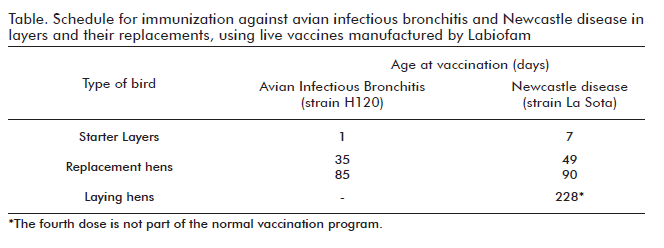
<body><![CDATA[<P   align="left" ><font face="Verdana, Arial, Helvetica, sans-serif" size="2"><B>Immunization schedule      </b></font></P >       <P   align="left" ><font face="Verdana, Arial, Helvetica, sans-serif" size="2">The birds were vaccinated      according to the Cuban immunization program (Technical Instruction, 2007)      (<a href="/img/revistas/bta/v27n3/t0106310.gif">Table</a>). In addition,      a fourth dose of the NDV vaccine was applied, due to the low proportion of      responding individuals (according to the HIA titers) after the third dose.      </font></P >       
<P   align="left" ><font face="Verdana, Arial, Helvetica, sans-serif" size="2"><B>Sampling </b></font></P >       <P   align="left" ><font face="Verdana, Arial, Helvetica, sans-serif" size="2">Blood samples were      taken monthly from week 12 and up to week 50, by puncturing the marginal vein      of the wing. The samples were drawn into sterile tubes without anti-coagulant      and remained at room temperature for clotting, after which they were left      overnight at 4 &ordm;C. The following day, the serum was obtained by centrifugation      of the samples at 3000 rpm for 20 min, and split into 2 fractions of 500 &micro;L      that were stored at -20 &ordm;C until further evaluation, according to the      methodology described by the Food and Drug Administration (FDA) of the United      States (2004) (26). </font></P >       <P   align="left" ><font face="Verdana, Arial, Helvetica, sans-serif" size="2"><B>Serology </b></font></P >       <P   align="left" ><font face="Verdana, Arial, Helvetica, sans-serif" size="2">The serological study      for the indirect demonstration of the presence of birds reactive to <I>M.      gallisepticum </I>and <I>O</I>. <I>rhinotracheale </I>was extended until week      38. In the case of NDV and aIBV, it was extended instead until week 50. </font></P >       <P   align="left" ><font face="Verdana, Arial, Helvetica, sans-serif" size="2"><B><I>Fast serum      plate agglutination (fSPA) </I></b></font></P >       <P   align="left" ><font face="Verdana, Arial, Helvetica, sans-serif" size="2">The technique used      the colored <I>M. gallisepticum </I>antigen, available from Intervet Laboratories,      and followed the instructions of the manufacturer. Twohundred microliters      of the testing serum were mixed with an identical volume of the specific antigen      on a glass plate, which was rotated for 2-3 minutes. The reaction was scored      as positive if it yielded visible, defined clumps within that time (23). </font></P >       <P   align="left" ><font face="Verdana, Arial, Helvetica, sans-serif" size="2"><B><I>Hemagglutination      Inhibition Assay (HIA) </I></b></font></P >       <P   align="left" ><font face="Verdana, Arial, Helvetica, sans-serif" size="2">The measurement of      antibodies against NDV was performed on U-bottomed microplates with the beta      method, using a volume of 50 &micro;L for each reagent. The sera underwent      serial two-fold dilutions in PBS at pH 7.2-7.4, to which 4 hemagglutination      units (HAU) were added, followed by incubation at room temperature (RT) for      30 minutes. Afterwards, 1% chicken erythrocytes were added and the plates      were further incubated at RT for another 30 minutes. All plates contained      control wells of 4 HAU and erythrocytes. </font></P >       ]]></body>
<body><![CDATA[<P   align="left" ><font face="Verdana, Arial, Helvetica, sans-serif" size="2"><B>ELISA for the      detection of antibodies against aIBV and <I>O. rhinotracheale </I></b></font></P >       <P   align="left" ><font face="Verdana, Arial, Helvetica, sans-serif" size="2">The assays for the      detection of antibodies against aIBV and <I>O. rhinotracheale </I>employed      commercial kits purchased from Flock Chek, handled according to the instruction      of the manufacturer. The 96-well plates were coated with the antigen, followed      by the addition of the test serum samples diluted 1/500 as well as positive      and negative control sera. This step was followed by the inclusion of an anti-chicken      IgG peroxidase conjugate, and the entire reaction was developed for 15 minutes      at RT with tetramethylbenzidine as the substrate; the results were read after      the addition of a stopping solution on a SUMA PR-521 plate reader at 650 nm.      The volume employed for all reactants was 100 &micro;L, each step took 30      minutes, and 5 washes with distilled water were performed between each step.      The results were interpreted as instructed by the manufacturer, considering      a sample as positive for antibodies against aIBV if the serum titer was higher      than 396, and positive to <I>O. rhinotracheale </I>if the positive sample      coefficient (PSC) was equal to or higher than 0.4, as determined from the      absorbance values read from the plate and the <a href="#frac1">formula</a>:<FONT color="#00FF00">      </font></font></P >   </font><font size="+1" color="#000000"><font size="+1"><font size="+1"><font size="+1"><font size="+1"><font size="+1"><font size="+1"><font size="+1"><font size="+1"><font size="+1"><font size="+1"><font size="+1"><font size="+1"><font size="+1"><font size="+1"><font size="+1"><font size="+1"><font size="+1"><font size="+1"><font size="+1"><font size="+1"><font color="#0000FF"><font color="#000000"><font size="+1"><font size="+1"><font size="+1"><font size="+1"><font size="+1"><font size="+1"><font size="+1"><font size="+1"><a name="frac1"></a></font></font></font></font></font></font></font></font></font></font></font></font></font></font></font></font></font></font></font></font></font></font></font></font></font></font></font></font></font></font></font><FONT size="+1">       <P   align="center" ><img src="/img/revistas/bta/v27n3/fr0106310.gif"></P >   <FONT color="#00FF00">        
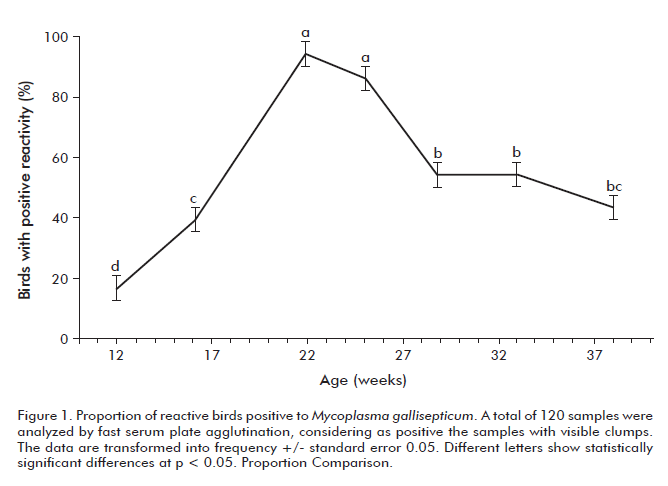
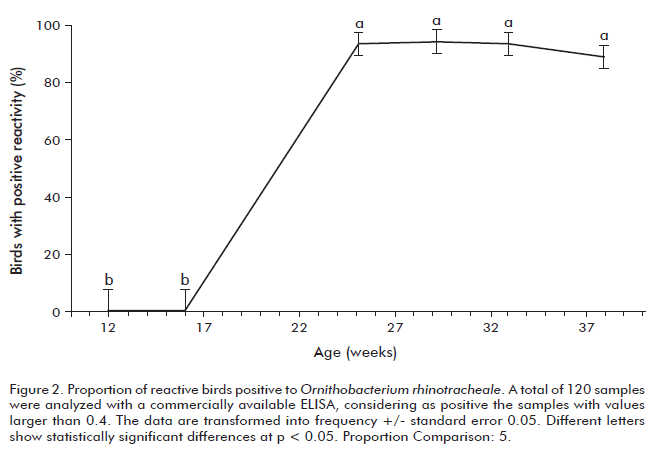
<P   align="left" ><font color="#000000" face="Verdana, Arial, Helvetica, sans-serif" size="2"><B>Statistical      analysis </b></font></P >   <FONT color="#000000">        <P   align="left" ><font face="Verdana, Arial, Helvetica, sans-serif" size="2">The proportion of      individuals positive to <I>M. gallisepticum </I>and <I>O. rhinotracheale </I>were      compared, as well as the proportion of reactive birds with HIA titers higher      than 1/8 against NDV. An analysis of variance (Anova) was performed for the      geometric means of the titer of anti-aIBV antibodies, using the statistical      software packages Comprop-1 and Statgraphics Plus 5.1. </font></P >       <P   align="left" ><font size="3" face="Verdana, Arial, Helvetica, sans-serif"><b>RESULTS AND DISCUSSION</b></font><font size="2" face="Verdana, Arial, Helvetica, sans-serif">      </font></P >   <FONT size="+1">        <P   align="left" ><font size="2" face="Verdana, Arial, Helvetica, sans-serif">The examination of      the incidence of respiratory processes along the productive chain that goes      from replacement layer pullets to laying hens in Cuban poultry farms reveals      that these processes are more frequent in the latter; that is, after the 16th      week of age (27). Serological studies by different researchers have revealed      the presence of <I>M. gallisepticum</I>, as well as pneumotropic aIBV and      NDV in samples from birds having complicated respiratory illnesses (28-34).      </font></P >   <FONT size="+1"><FONT size="+1"><FONT size="+1">        <P   align="left" ><font face="Verdana, Arial, Helvetica, sans-serif" size="2">The present study      has detected birds reactive to <I>M. gallisepticum </I>and <I>O</I>. <I>rhinotracheale      </I>(Figures<a href="/img/revistas/bta/v27n3/f0106310.gif"> 1</a> and      <a href="/img/revistas/bta/v27n3/f0206310.gif">2</a><FONT color="#008000"><FONT color="#000000">),      which suggests the presence of a co-infection with both microorganisms due      to the absence of vaccination programs specifically addressing these pathogens.      </font></font></font></P >   <FONT color="#008000"><FONT color="#000000">        
<P   align="left" ><font face="Verdana, Arial, Helvetica, sans-serif" size="2">When studying the      proportion of birds reactive to <I>M. gallisepticum </I>(<a href="/img/revistas/bta/v27n3/f0106310.gif">Figure      1</a><FONT color="#008000"><FONT color="#000000">) from the 16<sup>th</sup>      to the 25<sup>th</sup> we<FONT color="#0000FF"><FONT color="#000000"><FONT color="#0000FF"><FONT color="#000000">ek      of age, there is a significant increase of this parameter with time<I>. </I>Similar      findings were reported by Rosado in 2001 (25) using ELISA, who demonstrated      high levels of circulation of <I>M. gallisepticum </I>nationwide, in laying      hens with CRS, which seems to have been an important factor in the egg production      decrease reported for that year. However, for an infection with <I>M. gallisepticum      </I>to result in the clinical-pathological process of CRS the presence of      other factors are required -such as inappropriate or insufficient diet, inadequate      transportation of the birds in the multiple lots, and poor management- which      decrease the resistance of the flock and affect the birds at the most critical      time of sexual maturity, when egg-laying productivity peaks (35-37). Additionally,      Valencia in 2007 (38) highlighted other factors that could have played a role      in the increase in the proportion of <I>M. allisepticum</I>-reactive birds,      also revealed in this study, such as high concentrations of dust and ammonia      in the sheds<I>, </I>which affect the upper respiratory system and cause ciliostasis      and an increase in mucus secretion, the end result being that a larger number      of bacteria manage to adhere to the respiratory epithelium and, therefore,      a bacterial septicemic process (usually involving <I>E. coli, </I>the most      prevalent species in the sheds) is started. </font></font></font></font></font></font></font></P >   <FONT color="#008000"><FONT color="#000000"><FONT color="#0000FF"><FONT size="+1" color="#000000"><FONT size="+1"><FONT color="#0000FF"><FONT size="+1" color="#000000"><FONT size="+1">        
<P   align="left" ><font face="Verdana, Arial, Helvetica, sans-serif" size="2">Cerd&aacute; <I>et      al. </I>(39) have pointed out that <I>O</I>. <I>rhinotracheale </I>is a Gram-negative      pleomorphic bacterium, associated with respiratory diseases in turkey, broilers,      breeders and laying hens. Its isolation and identification as a pathogenic      agent in commercial poultry farming occurred at the beginning of the nineteen      nineties by Vandamme <I>et al. </I>(40). However, no studies have evidenced      the presence of this microorganism in Cuban poultry farms. </font></P >       ]]></body>
<body><![CDATA[<P   align="left" ><font face="Verdana, Arial, Helvetica, sans-serif" size="2">This study evaluated      the positivity for <I>O</I>. <I>rhinotracheale </I>among the serum samples      using a commercial ELISA test (<FONT color="#003100"><font color="#000000"><a href="/img/revistas/bta/v27n3/f0206310.gif">Figure      2</a>). No positive results for this microorganism were detected during the      two first sampling rounds at weeks 12 and 16. However, a significant, persistent      increase in positivity for <I>O</I>. <I>rhinotracheale </I>was found from      week 25 to 38, which is very similar to that obtained by Cerd&aacute; <I>et      al</I>. (39) during epidemiological studies of <I>O</I>. <I>rhinotracheale</I>positive      birds with an ELISA assay in countries with a highly developed poultry industry.      Their results revealed that 95% and 96.6% of the laying hens examined from      the United States and Germany, respectively, were positive for this pathogen      between weeks 14 to 36 of age. </font></font></font></P >   <FONT color="#003100"><FONT color="#000000">        
<P   align="left" ><font face="Verdana, Arial, Helvetica, sans-serif" size="2">Asymptomatic positive      birds kept in a laying hen flock may, however, suffer from a slightly increased      mortality rate, a decrease in egg-laying productivity and the deterioration      of shell quality (6, 41). This is also suggested by our data, which revealed      a high proportion of asymptomatic laying hens after the 25<sup>th</sup> w<FONT color="#0000FF"><FONT color="#000000">eek      of age. </font></font></font></P >   <FONT color="#0000FF"><FONT size="+1" color="#000000"><FONT size="+1">        <P   align="left" ><font face="Verdana, Arial, Helvetica, sans-serif" size="2">Several authors have      reported that the association of <I>M. gallisepticum </I>with <I>O</I>. <I>rhinotracheale</I>,      when combined with deficient management, can aggravate the presentation of      CRS (9, 22, 40). The large number of individuals reactive to these microorganisms      could be related to the eventual appearance, at the 21<sup>st</sup> w<FONT color="#0000FF"><FONT color="#000000">eek      of age, of clinical signs and lesions typical of an acute respiratory process      affecting the upper airways, characterized by sero-catarrhal rhinitis, blepharitis,      conjunctivitis, facial edema and genital hypoplasia. This process followed      a chronic course, affecting the lower airways and resulting in facial tumefaction      with a hard consistency leading to loss of vision, muco-fibrinous rhinitis,      cachexia, serosal atrophy of subcutaneous fat and the coronary ridge, focal      pneumonia of the anteroventral unilateral lobule and diarrhea. These results      match those of other authors (42, 43) describing a similar clinical-pathological      picture in birds with CRS. </font></font></font></P >   <FONT color="#0000FF"><FONT size="+1" color="#000000"><FONT size="+1">        <P   align="left" ><font face="Verdana, Arial, Helvetica, sans-serif" size="2">Another important      microorganism associated to CRS is the causative coronavirus of infectious      bronchitis (IB), which has a special tropism for the respiratory, reproductive      and renal tracts. It affects poultry at any age, but its expressions are more      severe in young individuals under intensive production systems, causing problems      for the adequate application of biosafety management procedures (38). The      control of BI in Cuban flocks in intensive production systems is implemented      through the immunization of replacement layer pullets and the evaluation of      the serological response of layers, which enables the examination of the level      of protection or the detection of viral infections if antibody levels are      monitored at different time points after vaccination (33, 34). </font></P >       <P   align="left" ><font face="Verdana, Arial, Helvetica, sans-serif" size="2">The analysis of the      geometric means of the titers of antibodies against aIBV (<a href="/img/revistas/bta/v27n3/f0306310.gif">Figure      3</a>) revealed an increase in this parameter starting at week 16 and peaking      at week 22. This result coincides with that of Cavanagh in 2003 (44), which      suggest that several doses of the aIBV vaccine provide greater protection;      and those of Acevedo in 2010 (45), showing that antibody titers can be maintained      for a longer period, but start to decline 3 months after vaccination. </font></P >       
<P   align="left" ><font face="Verdana, Arial, Helvetica, sans-serif" size="2">However, another      significant increase in Ab titers against aIBV is detected at week 33 among      otherwise asymptomatic individuals. This may start through an infection with      another viral strain rather than from the persistence of the vaccine strain      since, coincidentally, a similar complicated respiratory process appeared      one week earlier among a different hen batch that had been laying for 9 to      10 months. Using clinical samples from these birds, which had high antibody      titers against aIBV, Acevedo <I>et al</I>. in 2010 (45) isolated chick embryos      and identified through reverse transcriptionpolymerase chain reaction (RT-PCR)      an aIBV strain that may differ from the vaccine strain. Valencia, in 2007      (38), pointed out that different variants of aIBV continue to appear, and      many of them are found circulating among otherwise healthy chickens. </font></P >       <P   align="left" ><font face="Verdana, Arial, Helvetica, sans-serif" size="2">Shane (46), on the      other hand, suggests viral persistence as one of the factors contributing      to the appearance of variant aIBV strains, since some recent studies prove      that the dissemination of the virus from the trachea and cloaca continues      for up to 70 days post-immunization. In addition, it is possible to isolate      viable IB virus from lungs and kidneys of previously vaccinated birds for      a period of up to 170 days, regardless of their isolation status. </font></P >       <P   align="left" ><font face="Verdana, Arial, Helvetica, sans-serif" size="2">In our study the      proportion of reactive birds with HIA titers for NDV higher than 1/8 evidenced      that this reactivity is not caused by an ongoing infection with this virus      (<a href="/img/revistas/bta/v27n3/f0406310.gif">Figure 4</a><FONT color="#008000"><FONT color="#000000">).      The relevance of the post-vaccination response was shown by the fact that      100% of the positive, reactive individuals were protected after the fourth      immunization. This confirms the efficacy of the vaccine, as underscored by      Viamontes <I>et al</I>. in 1991 (47), when pointing out that the vaccine inhibits      or reduces the excretion or multiplication of the virus, thereby decreasing      mortality rate and improving productive parameters. In the light of this result,      we concluded that no association of NDV with CRS could be detected in the      population analyzed. </font></font></font></P >   <FONT color="#008000"><FONT color="#000000">        
<P   align="left" ><font face="Verdana, Arial, Helvetica, sans-serif" size="2">The present study      confirmed the presence of <I>M. gallisepticum </I>and demonstrated, for the      first time, the presence of reactive birds positive to <I>O. rhinotracheale      </I>among layers with chronic respiratory syndrome. The serological study      performed in birds vaccinated against aIBV revealed a pattern of seroconversion      that suggests that this infectious agent is circulating among the sample population,      a finding with potentially detrimental implications if not addressed promptly.      The HIA titers measured when evaluating the birds for NDV do not suggest an      ongoing infection, but rather demonstrate the efficacy of the vaccine. As      a whole, these results help to better characterize the Cuban epidemiological      situation and can be used to defi ne the sanitary procedures required for      the control of these diseases. We consider that further studies on the different      serovars of <I>O. rhinotracheale </I>in particular, and on chronic respiratory      syndrome in birds, in general, are warranted. </font></P >       <P   align="left" ><font size="3" face="Verdana, Arial, Helvetica, sans-serif"><b>ACKNOWLEDGEMENTS</b></font><font size="2" face="Verdana, Arial, Helvetica, sans-serif">      </font></P >   <FONT size="+1">        ]]></body>
<body><![CDATA[<P   align="left" ><font size="2" face="Verdana, Arial, Helvetica, sans-serif">We would like to      thank the laboratory technicians from the Anatomical Pathology section of      the Poultry Diagnostic and Research Laboratory: Elsa Bacallao, Arisel Correa      and Kirenia Mojena, as well as Dayam&iacute; Millo, regional technical director      of the UECAN of San Antonio de los Ba&ntilde;os, for their support during      sample collection on the field and later processing. Similarly, we would like      to extend our appreciation to Drs. Sandra Cuello and Julia Noda, from the      National Center for Agricultural Health, for their cooperation in the interpretation      of the serological results. </font></P >   <FONT size="+1">        <P   align="left" > </P >       <P   align="left" ><font face="Verdana, Arial, Helvetica, sans-serif" size="2"> <b><font size="3">REFERENCES</font></b></font></P >       <!-- ref --><P   align="left" ><font size="2" face="Verdana, Arial, Helvetica, sans-serif">1. Rosado I, Ruedas      D, S&aacute;nchez L, Acosta I, V&eacute;liz T, Lobo E, <I>et al</I>. Evaluaci&oacute;n      de la eficacia en condiciones controladas de una bacteria oleosa contra <I>Mycoplasma      gallisepticum</I>, obtenida en fermentadores de 7L. Rev Cubana Cienc Vet 2003;      28(1):43-5. </font></P >   <FONT size="+1">        <!-- ref --><P   align="left" ><font face="Verdana, Arial, Helvetica, sans-serif" size="2">2. Burch D. Revisi&oacute;n      de la actividad del tiamulin contra el Mycoplasma spp. y su uso en la prevenci&oacute;n      de la transmisi&oacute;n vertical en reproductoras ponedoras. En: Memoria      del XXI Congreso Latinoamericano de Avicultura, 6-10 oct.; Ciudad de La Habana,      Cuba; 2009, p. 394-8. </font></P >       <!-- ref --><P   align="left" ><font face="Verdana, Arial, Helvetica, sans-serif" size="2">3. Colas M, Santana      Y, Merino A, Mojena K, Correa A. Frecuencia de presentaci&oacute;n de las      principales enfermedades en ponedoras White Leghorn. Rev Cubana Cienc Av&iacute;c      2006;30(2):103-6. </font></P >       <P   align="left" ><font face="Verdana, Arial, Helvetica, sans-serif" size="2">4. Informe de balance      del Instituto de Investigaciones Av&iacute;colas; 2007. Comportamiento de      las enfermedades infectocontagiosas en el per&iacute;odo 2000-2007, p. 2.      </font></P >       <!-- ref --><P   align="left" ><font face="Verdana, Arial, Helvetica, sans-serif" size="2">5. Guadalupe A. Implementaci&oacute;n      del diagnostico de Mycoplasma gallisepticum y Mycoplasma synoviae mediante      PCR-RFLP en aves de producci&oacute;n. Tesis en opci&oacute;n al grado de      M&aacute;ster en Ciencias Veterinarias con especialidad en Salud Animal. Universidad      Aut&oacute;noma de Nuevo Le&oacute;n; 2005. </font></P >       <!-- ref --><P   align="left" ><font face="Verdana, Arial, Helvetica, sans-serif" size="2">6. Kleven SH. Micoplasmosis.      En: Primer seminario de actualizaci&oacute;n en patolog&iacute;a aviar. Merial-Cerval,      Georgia, Estados Unidos; 2000. </font></P >       <P   align="left" ><font face="Verdana, Arial, Helvetica, sans-serif" size="2">7. Ricci, M. Prevenci&oacute;n      y control de los miscoplasmas aviares. Avicultura Profesional 2007;25(2):16-8.      </font></P >       ]]></body>
<body><![CDATA[<!-- ref --><P   align="left" ><font face="Verdana, Arial, Helvetica, sans-serif" size="2">8. Cerd&aacute; R.      Interpretaci&oacute;n de los resultados del diagn&oacute;stico de micoplasmas      aviares. En: Memoria del XXI Congreso Latinoamericano de Avicultura; 6-10      oct.; Ciudad de La Habana, Cuba; 2009. p. 353-7. </font></P >       <!-- ref --><P   align="left" ><font face="Verdana, Arial, Helvetica, sans-serif" size="2">9. Icochea E. Diagn&oacute;stico      diferencial de enfermedades respiratorias en aves bajo condiciones de campo      y de laboratorio. En: Memoria del XXI Congreso Latinoamericano de Avicultura;      6-10 oct.; Ciudad de La Habana, Cuba; 2009. p. 413-20. </font></P >       <!-- ref --><P   align="left" ><font face="Verdana, Arial, Helvetica, sans-serif" size="2">10. Dave C. Severe      acute respiratory syndrome vaccine development: experiences of vaccination      against avian infectious bronchitis coronavirus. Avian Pathol 2003; 32(6):      567-82. </font></P >       <!-- ref --><P   align="left" ><font face="Verdana, Arial, Helvetica, sans-serif" size="2">11. Osman E. Evaluation      of three different vaccination regimes against Newcastle disease in central      Anatolia Turk. J Vet Anim Sci 2003; 27:1065-9. </font></P >       <!-- ref --><P   align="left" ><font face="Verdana, Arial, Helvetica, sans-serif" size="2">12. Hidalgo H. Influenza      aviar: experiencia en el control y erradicaci&oacute;n. Avicult Profes 2006;24(1):10-2.      </font></P >       <!-- ref --><P   align="left" ><font face="Verdana, Arial, Helvetica, sans-serif" size="2">13. Lozano B, Castro      F, Su&aacute;rez A, Gual F, Safati D, Soto E. Presente y futuro de las vacunas      aviares de nueva tecnolog&iacute;a. Avicult Profes 2006;24(3):14-6. </font></P >       <!-- ref --><P   align="left" ><font face="Verdana, Arial, Helvetica, sans-serif" size="2">14. Kannan G. Avian      Metpneumovirus: Diagnosis and Prevention. World Poult 2007;23(5):35-7. </font></P >       <!-- ref --><P   align="left" ><font face="Verdana, Arial, Helvetica, sans-serif" size="2">15. Alzamora L, Andina      I. Prevalencia de la enfermedad de Newcastle en Am&eacute;rica Latina. Avicult      Profes 2008;26(5): 10-3. </font></P >       <!-- ref --><P   align="left" ><font face="Verdana, Arial, Helvetica, sans-serif" size="2">16. Aziz T. Laringotraqueitis      infecciosa. World Poultry 2009;25(6):28-30. </font></P >       <!-- ref --><P   align="left" ><font face="Verdana, Arial, Helvetica, sans-serif" size="2">17. Viamontes O.      Impacto econ&oacute;mico de una adecuada estrategia de inmunizaci&oacute;n      contra la enfermedad de Newcastle. Memorias del V Congreso de avicultura;      2006. p. 474. </font></P >       <!-- ref --><P   align="left" ><font face="Verdana, Arial, Helvetica, sans-serif" size="2">18. Whithear KG.      Control de las micoplasmosis aviares mediante vacunaci&oacute;n. Rev Sci Tech      Off Int. Epiz 2002; 15(4):1527-54. (En l&iacute;nea.) Consultado: 16 de octubre      de 2008. Disponible en: <A href="http://www.oie.int/"> <FONT color="#0000FF">http://www.oie.int<FONT color="#3851A4">      </font></font></A> </font></P >   <FONT color="#0000FF"><FONT color="#3851A4">        <P   align="left" ><font color="#000000" face="Verdana, Arial, Helvetica, sans-serif" size="2">19.      Malo A. Vacunaci&oacute;n efectiva en reproductoras. (En l&iacute;nea.) Consultado:      2 de abril de 2008. Disponible en: <FONT color="#3851A4"><a href="http://www.intervet.com.ve/binaries/84_82149.doc">http://www.</a></font></font><font face="Verdana, Arial, Helvetica, sans-serif" size="2"><a href="http://www.intervet.com.ve/binaries/84_82149.doc">intervet.com.ve/binaries/84_82149.doc</a>      </font></P >   <FONT color="#000000"><FONT color="#3851A4">        <!-- ref --><P   align="left" ><font color="#000000" face="Verdana, Arial, Helvetica, sans-serif" size="2">20.      Leotta GA, Vigo GB, Chinen I, Prieto M, Callejo R, Rivas M. Identificaci&oacute;n,      biotipificaci&oacute;n y caracterizaci&oacute;n de cepas de Pasteurella multocida      aisladas en la Argentina. Rev Argent Microbiol 2006; 38(3):125-9. </font></P >   <FONT color="#000000">        <!-- ref --><P   align="left" ><font face="Verdana, Arial, Helvetica, sans-serif" size="2">21. Terzolo HR. Revisi&oacute;n      de coriza infecciosa. Propuesta de Investigaci&oacute;n 2005. (En l&iacute;nea.)      Consultado: 1 marzo 2008 Disponible en: <A href="http://www.produccion-animal.com.ar/">      <FONT color="#0000FF">www.produccion-animal.com.ar<FONT color="#3851A4"> </font></font></A>      </font></P >   <FONT color="#0000FF"><FONT color="#3851A4">        <!-- ref --><P   align="left" ><font color="#000000" face="Verdana, Arial, Helvetica, sans-serif" size="2">22.      Chung-Hsi CA, Shin-Ying LA, Chiou- Lin CB, Hsiang-Jung, T. Use of Random Amplified      Polymorphic DNA Analysis and Single-Enzyme Amplified Fragment Length Polymorphism      in Molecular Typing of Ornithobacterium rhinotracheale Strains. Avian Dis      2009;53:108-14. </font></P >   <FONT color="#000000">        <!-- ref --><P   align="left" ><font face="Verdana, Arial, Helvetica, sans-serif" size="2">23. Merino LA. Conferencias      de bioseguridad. Curso de patolog&iacute;a y epizootiolog&iacute;a aviar.      Folletos 2009. p. 1-30. </font></P >       <P   align="left" ><font face="Verdana, Arial, Helvetica, sans-serif" size="2">24. Crespo del Pilar      M. El diagn&oacute;stico viral por el laboratorio. Rev Colombia M&eacute;dica      2000;31:135-50. </font></P >       <!-- ref --><P   align="left" ><font face="Verdana, Arial, Helvetica, sans-serif" size="2">25. Rosado I. Obtenci&oacute;n      y evaluaci&oacute;n de un candidato vacunal contra la infecci&oacute;n por      Mycoplasma gallisepticum. Tesis en opci&oacute;n al grado cient&iacute;fico      de Doctor en Ciencias; Universidad Agraria de La Habana. Centro Nacional de      Sanidad Agropecuaria; 2001. </font></P >       <!-- ref --><P   align="left" ><font face="Verdana, Arial, Helvetica, sans-serif" size="2">26. FAO. Chapter      3. Vaccination. A Technology Review: Newcastle Disease. 2004. p. 21-7. </font></P >       <!-- ref --><P   align="left" ><font face="Verdana, Arial, Helvetica, sans-serif" size="2">27. Boado E, Laurent      R, Herrera C, Quintero D, C&aacute;novas A. Prevalencia de las principales      enfermedades en las diferentes categor&iacute;as de aves durante las &eacute;pocas      del a&ntilde;o. Rev Cubana Cienc Av&iacute;c 1991;18(3): 257-62. </font></P >       <!-- ref --><P   align="left" ><font face="Verdana, Arial, Helvetica, sans-serif" size="2">28. Guilarte O, Viamontes      O, C&aacute;novas A, Acosta I, Gonz&aacute;lez R, Trujillo A, N&uacute;&ntilde;ez      L. Identificaci&oacute;n de los niveles de anticuerpos contra el virus de      la bronquitis infecciosa y el virus de Newcastle en aves afectadas con la      enfermedad respiratoria cr&oacute;nica. Rev Cubana Cienc Av&iacute;c 1985;12(1):15-22.      </font></P >       <!-- ref --><P   align="left" ><font face="Verdana, Arial, Helvetica, sans-serif" size="2">29. Gonz&aacute;lez      R, Viamontes O, Fonseca C. An&aacute;lisis de los resultados serol&oacute;gicos      de la prueba de HI en ponedoras vacunadas por aspersi&oacute;n con la cepa      La Sota del virus de la enfermedad de Newcastle. Rev Cubana Cienc Av&iacute;c      1986;13(2):129-36. </font></P >       <!-- ref --><P   align="left" ><font face="Verdana, Arial, Helvetica, sans-serif" size="2">30. Quintero D. Las      pruebas de la hemoaglutinaci&oacute;n e inhibici&oacute;n de la hemoaglutinaci&oacute;n      en la serolog&iacute;a de la enfermedad de Newcastle. I. Rev Cubana Cienc      Av&iacute;c 1989;16(1):81-9. </font></P >       <!-- ref --><P   align="left" ><font face="Verdana, Arial, Helvetica, sans-serif" size="2">31. Masdeu V, Acosta      I, Rejo T, Espinosa V, Herrera C, Hernat R, D&iacute;az G. Caracter&iacute;sticas      de los procesos respiratorios mediante el diagn&oacute;stico serol&oacute;gico      y el cuadro cl&iacute;nico lesional. Rev Cubana Cienc Av&iacute;c 1997;21(1):11-6.      </font></P >       <!-- ref --><P   align="left" ><font face="Verdana, Arial, Helvetica, sans-serif" size="2">32. Cuello S, Noda      J, Perera CL, Alfonso P. Diagn&oacute;stico de bronquitis infecciosa aviar      por diferentes t&eacute;cnicas serol&oacute;gicas. Revista Cubana Cienc Av&iacute;c      2000; 24(2):104-9. </font></P >       <!-- ref --><P   align="left" ><font face="Verdana, Arial, Helvetica, sans-serif" size="2">33. Cuello S, Noda      J, Alfonso P, Perera CL. bronquitis infecciosa aviar. Cin&eacute;tica de anticuerpos      posvacunales en reproductoras y su transferencia a la progenie. Rev Salud      Anim 2004;26(1):42-7. </font></P >       <!-- ref --><P   align="left" ><font face="Verdana, Arial, Helvetica, sans-serif" size="2">34. Noda J, Cuello      S, Alfonso P, Casa&ntilde;as J. Bronquitis infecciosa aviar: obtenci&oacute;n      de ant&iacute;geno y detecci&oacute;n de anticuerpos por inhibici&oacute;n      de la hemoaglutinaci&oacute;n. Rev Cubana Cienc Av&iacute;c 2002;26(2):89-95.      </font></P >       <!-- ref --><P   align="left" ><font face="Verdana, Arial, Helvetica, sans-serif" size="2">35. Parra T. La calidad      de la materia prima y el alimento terminado. Rev Acont Av&iacute;c 1999;7(50):26-8.      </font></P >       <!-- ref --><P   align="left" ><font face="Verdana, Arial, Helvetica, sans-serif" size="2">36. Idoate A. Micoplasmosis.      Enfermedad respiratoria cr&oacute;nica. Julio 2000 (En l&iacute;nea.) Consultado:      5 de abril de 2009. Disponible en: <FONT color="#3851A4"><a href="http://www.oie.int/esp/publicat/rt/e_rt15_4.htm">http://www.oie.int/esp/publicat/rt/e_rt15_4.htm</a> </font></font></P >   <FONT color="#3851A4">        <!-- ref --><P   align="left" ><font color="#000000" face="Verdana, Arial, Helvetica, sans-serif" size="2">37.      S&aacute;nchez A, Luzbel Y, Lamazares MC, L&oacute;pez W, Soca M, P&eacute;rez      E. Uso del programa computarizado EPIZOOIND en el an&aacute;lisis de un brote      de coriza infecciosa. En: Memorias del Congreso de Veterinaria. Universidad      Agraria de La Habana, Facultad de Medicina Veterinaria. 2007. p. 27-32. </font></P >   <FONT color="#000000">        <!-- ref --><P   align="left" ><font face="Verdana, Arial, Helvetica, sans-serif" size="2">38. Valencia B. Bronquitis      infecciosa: Soluciones pr&aacute;cticas. En: Memorias del Congreso Nacional      de Avicultura 2007. (En l&iacute;nea.) Consultado: 6 de febrero de 2010. Disponible      en: <FONT color="#3851A4"><a href="http://www.amevea-ecuador.org/memorias.htm">http://www.amevea-ecuador.org/memorias.htm</a> </font></font></P >   <FONT color="#3851A4">        <!-- ref --><P   align="left" ><font color="#000000" face="Verdana, Arial, Helvetica, sans-serif" size="2">39.      Cerd&aacute; R, Uriarte J, Origlia J, Petruccelli M. Ornithobacterium rhinotracheale:      Su importancia como pat&oacute;geno respiratorio en pollos y su asociaci&oacute;n      con Mycoplasma synoviae. (En l&iacute;nea.) Consultado: 16 de febrero de 2010.      Disponible en: <FONT color="#3851A4"><a href="http://www.vetanco.com.ar/pdf/ornithobacterium_rhinotracheale_%20capia.pdf">http://www.vetanco.com.ar/pdf/ornithobacterium_rhinotracheale_      capia.pdf</a> </font></font></P >   <FONT color="#000000"><FONT color="#3851A4">        <!-- ref --><P   align="left" ><font color="#000000" face="Verdana, Arial, Helvetica, sans-serif" size="2">40.      Vandamme P, Sergers M, Vancaneyt K, Van Hover R, Mutters J. Description of      Ornithobacterium rhinotracheale gen. nov. isolated from the avian respiratory      tract. Int J Syst Bacteriol 1994;44:24-37. </font></P >   <FONT color="#000000">        <!-- ref --><P   align="left" ><font face="Verdana, Arial, Helvetica, sans-serif" size="2">41. Van Veen L. Conoce      usted el real impacto de la infecci&oacute;n por Ornithobacterium rhinotracheale      en las aves. Infovet. 2003. Mayo-junio:1-5. </font></P >       <!-- ref --><P   align="left" ><font face="Verdana, Arial, Helvetica, sans-serif" size="2">42. Fern&aacute;ndez      A. La bioseguridad y su importancia econ&oacute;mica en los pa&iacute;ses      de Am&eacute;rica Latina. Ediciones Midia S.A. de C.V. M&eacute;xico. 1997;      p. 63-9. </font></P >       <!-- ref --><P   align="left" ><font face="Verdana, Arial, Helvetica, sans-serif" size="2">43. Kleven SH. Complejo      respiratorio de las aves. </font><font size="+1" color="#000000"><font size="+1"><font size="+1"><font size="+1"><font size="+1"><font size="+1"><font size="+1"><font size="+1"><font size="+1"><font size="+1"><font size="+1"><font size="+1"><font size="+1"><font size="+1"><font size="+1"><font size="+1"><font size="+1"><font size="+1"><font size="+1"><font size="+1"><font size="+1"><font color="#0000FF"><font color="#000000"><font size="+1"><font size="+1"><font size="+1"><font size="+1"><font size="+1"><font size="+1"><font size="+1"><font size="+1"><font color="#00FF00"><font color="#000000"><font size="+1"><font size="+1"><font size="+1"><font size="+1"><font color="#008000"><font color="#000000"><font color="#008000"><font color="#000000"><font color="#0000FF"><font size="+1" color="#000000"><font size="+1"><font color="#0000FF"><font size="+1" color="#000000"><font size="+1"><font color="#003100"><font color="#000000"><font color="#0000FF"><font size="+1" color="#000000"><font size="+1"><font color="#0000FF"><font size="+1" color="#000000"><font size="+1"><font color="#008000"><font color="#000000"><font size="+1"><font size="+1"><font size="+1"><font color="#0000FF"><font color="#3851A4"><font color="#000000"><font color="#3851A4"><font color="#000000"><font color="#0000FF"><font color="#3851A4"><font color="#000000"><font color="#3851A4"><font color="#000000"><font color="#3851A4"><font color="#000000"><font color="#3851A4"><font color="#000000"><font face="Verdana, Arial, Helvetica, sans-serif" size="2">Department      of avian medicine, Universidad de Georgia,</font></font></font></font></font></font></font></font></font></font></font></font></font></font></font></font></font></font></font></font></font></font></font></font></font></font></font></font></font></font></font></font></font></font></font></font></font></font></font></font></font></font></font></font></font></font></font></font></font></font></font></font></font></font></font></font></font></font></font></font></font></font></font></font></font></font></font></font></font></font></font></font></font></font></font>      <font face="Verdana, Arial, Helvetica, sans-serif" size="2">Cuarto curso de      actualizaci&oacute;n AVIMEX. Atenas, Estados Unidos; 1999. </font></P >       <!-- ref --><P   align="left" ><font face="Verdana, Arial, Helvetica, sans-serif" size="2">44. Cavanagh D. Survey      acute respiratory syndrome vaccine development: Experience of vaccination.      Avian Pathol 2003;32(6):567-82. </font></P >       <!-- ref --><P   align="left" ><font face="Verdana, Arial, Helvetica, sans-serif" size="2">45. Acevedo AM, Burgher      Y, Colas M, Relova D, Correa A, Bacallao E, <I>et al</I>. Detecci&oacute;n      en muestra cl&iacute;nica e identificaci&oacute;n de aislados del virus de      la bronquitis infecciosa aviar por un ensayo de reverso transcripci&oacute;n      acoplado a reacci&oacute;n en cadena de la polimerasa. Rev Salud Anim. </font><font size="+1" color="#000000"><font size="+1"><font size="+1"><font size="+1"><font size="+1"><font size="+1"><font size="+1"><font size="+1"><font size="+1"><font size="+1"><font size="+1"><font size="+1"><font size="+1"><font size="+1"><font size="+1"><font size="+1"><font size="+1"><font size="+1"><font size="+1"><font size="+1"><font size="+1"><font color="#0000FF"><font color="#000000"><font size="+1"><font size="+1"><font size="+1"><font size="+1"><font size="+1"><font size="+1"><font size="+1"><font size="+1"><font color="#00FF00"><font color="#000000"><font size="+1"><font size="+1"><font size="+1"><font size="+1"><font color="#008000"><font color="#000000"><font color="#008000"><font color="#000000"><font color="#0000FF"><font size="+1" color="#000000"><font size="+1"><font color="#0000FF"><font size="+1" color="#000000"><font size="+1"><font color="#003100"><font color="#000000"><font color="#0000FF"><font size="+1" color="#000000"><font size="+1"><font color="#0000FF"><font size="+1" color="#000000"><font size="+1"><font color="#008000"><font color="#000000"><font size="+1"><font size="+1"><font size="+1"><font color="#0000FF"><font color="#3851A4"><font color="#000000"><font color="#3851A4"><font color="#000000"><font color="#0000FF"><font color="#3851A4"><font color="#000000"><font color="#3851A4"><font color="#000000"><font color="#3851A4"><font color="#000000"><font color="#3851A4"><font color="#000000"><font face="Verdana, Arial, Helvetica, sans-serif" size="2">2010</font></font></font></font></font></font></font></font></font></font></font></font></font></font></font></font></font></font></font></font></font></font></font></font></font></font></font></font></font></font></font></font></font></font></font></font></font></font></font></font></font></font></font></font></font></font></font></font></font></font></font></font></font></font></font></font></font></font></font></font></font></font></font></font></font></font></font></font></font></font></font></font></font></font></font>      <font face="Verdana, Arial, Helvetica, sans-serif" size="2">(In press) </font></P >       <!-- ref --><P   align="left" ><font face="Verdana, Arial, Helvetica, sans-serif" size="2">46. Shane M. Las      enfermedades respiratorias: retos actuales en el mundo. 2005. (En l&iacute;nea.).      Consultado: 16 de febrero de 2010. Disponible en: <FONT color="#3851A4"><a href="http://labs.intelart.com.mx/mj/avimex/cursos/x1-10.doc">http://labs.intelart.com.mx/mj/avimex/cursos/x1-10.doc</a> </font></font></P >   <FONT color="#3851A4">        <!-- ref --><P   align="left" ><font color="#000000" face="Verdana, Arial, Helvetica, sans-serif" size="2">47.      Viamontes O, C&aacute;novas A, Guilarte O, Acosta I. Evaluaci&oacute;n serol&oacute;gica      de reemplazos de aves de reproductores que recibieron la vacuna tetravalente      oleosa contra las enfermedades Newcastle, bronquitis y Gumboro. Rev Cubana      Cienc Av&iacute;c 1991;3:228-31. </font></P >   <FONT color="#000000">        <P   align="left" > </P >   <FONT size="+1">        <P   align="left" ><font face="Verdana, Arial, Helvetica, sans-serif" size="2">Received in March,      2010.    <br>     Accepted for publication in July, 2010. </font></P >       <P   align="left" ><font face="Verdana, Arial, Helvetica, sans-serif" size="2">Manuel Colas, Laboratorio      de Investigaci&oacute;n y Diagn&oacute;stico Aviar, LIDA Ave. 361, No. 16      632 e/ 166&ordf; y 184, Reparto Mulgoba, Boyeros, CP 19 290, Ciudad de La      Habana, Cuba. E-mail: <a href="mailto:lidaiia@ceniai.inf.cu">lidaiia@ceniai.inf.cu</a>;      <a href="mailto:genetica.avicolas@sih.cu">genetica.avicolas@sih.cu</a></font></P >   </font></font></font></font></font></font></font></font></font></font></font></font></font></font></font></font></font></font></font></font></font></font></font></font></font></font></font></font></font></font></font></font></font></font></font></font></font></font></font></font></font></font></font></font></font></font></font></font></font></font></font></font></font></font></font></font></font></font></font></font></font></font></font></font></font></font></font></font></font></font></font></font></font></font></font></font></font></DIV >      ]]></body><back>
<ref-list>
<ref id="B1">
<label>1</label><nlm-citation citation-type="journal">
<person-group person-group-type="author">
<name>
<surname><![CDATA[Rosado]]></surname>
<given-names><![CDATA[I]]></given-names>
</name>
<name>
<surname><![CDATA[Ruedas]]></surname>
<given-names><![CDATA[D]]></given-names>
</name>
<name>
<surname><![CDATA[Sánchez]]></surname>
<given-names><![CDATA[L]]></given-names>
</name>
<name>
<surname><![CDATA[Acosta]]></surname>
<given-names><![CDATA[I]]></given-names>
</name>
<name>
<surname><![CDATA[Véliz]]></surname>
<given-names><![CDATA[T]]></given-names>
</name>
<name>
<surname><![CDATA[Lobo]]></surname>
<given-names><![CDATA[E]]></given-names>
</name>
</person-group>
<article-title xml:lang="es"><![CDATA[Evaluación de la eficacia en condiciones controladas de una bacteria oleosa contra Mycoplasma gallisepticum, obtenida en fermentadores de 7L]]></article-title>
<source><![CDATA[Rev Cubana Cienc Vet]]></source>
<year>2003</year>
<volume>28</volume>
<numero>1</numero>
<issue>1</issue>
<page-range>43-5</page-range></nlm-citation>
</ref>
<ref id="B2">
<label>2</label><nlm-citation citation-type="">
<person-group person-group-type="author">
<name>
<surname><![CDATA[Burch]]></surname>
<given-names><![CDATA[D]]></given-names>
</name>
</person-group>
<article-title xml:lang="es"><![CDATA[Revisión de la actividad del tiamulin contra el Mycoplasma spp. y su uso en la prevención de la transmisión vertical en reproductoras ponedoras]]></article-title>
<source><![CDATA[Memoria del XXI Congreso Latinoamericano de Avicultura]]></source>
<year>2009</year>
<page-range>394-8</page-range></nlm-citation>
</ref>
<ref id="B3">
<label>3</label><nlm-citation citation-type="journal">
<person-group person-group-type="author">
<name>
<surname><![CDATA[Colas]]></surname>
<given-names><![CDATA[M]]></given-names>
</name>
<name>
<surname><![CDATA[Santana]]></surname>
<given-names><![CDATA[Y]]></given-names>
</name>
<name>
<surname><![CDATA[Merino]]></surname>
<given-names><![CDATA[A]]></given-names>
</name>
<name>
<surname><![CDATA[Mojena]]></surname>
<given-names><![CDATA[K]]></given-names>
</name>
<name>
<surname><![CDATA[Correa]]></surname>
<given-names><![CDATA[A]]></given-names>
</name>
</person-group>
<article-title xml:lang="es"><![CDATA[Frecuencia de presentación de las principales enfermedades en ponedoras White Leghorn]]></article-title>
<source><![CDATA[Rev Cubana Cienc Avíc]]></source>
<year>2006</year>
<volume>30</volume>
<numero>2</numero>
<issue>2</issue>
<page-range>103-6</page-range></nlm-citation>
</ref>
<ref id="B4">
<label>4</label><nlm-citation citation-type="">
<source><![CDATA[Informe de balance del Instituto de Investigaciones Avícolas 2007: Comportamiento de las enfermedades infectocontagiosas en el período 2000-2007]]></source>
<year>2007</year>
<page-range>2</page-range></nlm-citation>
</ref>
<ref id="B5">
<label>5</label><nlm-citation citation-type="">
<person-group person-group-type="author">
<name>
<surname><![CDATA[Guadalupe]]></surname>
<given-names><![CDATA[A]]></given-names>
</name>
</person-group>
<source><![CDATA[Implementación del diagnostico de Mycoplasma gallisepticum y Mycoplasma synoviae mediante PCR-RFLP en aves de producción]]></source>
<year></year>
</nlm-citation>
</ref>
<ref id="B6">
<label>6</label><nlm-citation citation-type="book">
<person-group person-group-type="author">
<name>
<surname><![CDATA[Kleven]]></surname>
<given-names><![CDATA[SH]]></given-names>
</name>
</person-group>
<article-title xml:lang="es"><![CDATA[Micoplasmosis]]></article-title>
<source><![CDATA[Primer seminario de actualización en patología aviar]]></source>
<year>2000</year>
<publisher-loc><![CDATA[Georgia ]]></publisher-loc>
<publisher-name><![CDATA[Merial-Cerval]]></publisher-name>
</nlm-citation>
</ref>
<ref id="B7">
<label>7</label><nlm-citation citation-type="journal">
<person-group person-group-type="author">
<name>
<surname><![CDATA[Ricci]]></surname>
<given-names><![CDATA[M]]></given-names>
</name>
</person-group>
<article-title xml:lang="es"><![CDATA[Prevención y control de los micoplasmas aviares]]></article-title>
<source><![CDATA[Avicultura Profesional]]></source>
<year>2007</year>
<volume>25</volume>
<numero>2</numero>
<issue>2</issue>
<page-range>16-8</page-range></nlm-citation>
</ref>
<ref id="B8">
<label>8</label><nlm-citation citation-type="">
<person-group person-group-type="author">
<name>
<surname><![CDATA[Cerdá]]></surname>
<given-names><![CDATA[R]]></given-names>
</name>
</person-group>
<article-title xml:lang="es"><![CDATA[Interpretación de los resultados del diagnóstico de micoplasmas aviares]]></article-title>
<source><![CDATA[Memoria del XXI Congreso Latinoamericano de Avicultura; 6-10 oct.]]></source>
<year>2009</year>
<page-range>353-7</page-range><publisher-loc><![CDATA[Ciudad de La Habana ]]></publisher-loc>
</nlm-citation>
</ref>
<ref id="B9">
<label>9</label><nlm-citation citation-type="">
<person-group person-group-type="author">
<name>
<surname><![CDATA[Icochea]]></surname>
<given-names><![CDATA[E]]></given-names>
</name>
</person-group>
<article-title xml:lang="es"><![CDATA[Diagnóstico diferencial de enfermedades respiratorias en aves bajo condiciones de campo y de laboratorio]]></article-title>
<source><![CDATA[Memoria del XXI Congreso Latinoamericano de Avicultura; 6-10 oct.]]></source>
<year>2009</year>
<page-range>413-20</page-range><publisher-loc><![CDATA[Ciudad de La Habana ]]></publisher-loc>
</nlm-citation>
</ref>
<ref id="B10">
<label>10</label><nlm-citation citation-type="journal">
<person-group person-group-type="author">
<name>
<surname><![CDATA[Dave]]></surname>
<given-names><![CDATA[C]]></given-names>
</name>
</person-group>
<article-title xml:lang="en"><![CDATA[Severe acute respiratory syndrome vaccine development: experiences of vaccination against avian infectious bronchitis coronavirus]]></article-title>
<source><![CDATA[Avian Pathol]]></source>
<year>2003</year>
<volume>32</volume>
<numero>6</numero>
<issue>6</issue>
<page-range>567-82</page-range></nlm-citation>
</ref>
<ref id="B11">
<label>11</label><nlm-citation citation-type="journal">
<person-group person-group-type="author">
<name>
<surname><![CDATA[Osman]]></surname>
<given-names><![CDATA[E]]></given-names>
</name>
</person-group>
<article-title xml:lang="en"><![CDATA[Evaluation of three different vaccination regimes against Newcastle disease in central Anatolia Turk]]></article-title>
<source><![CDATA[J Vet Anim Sci]]></source>
<year>2003</year>
<volume>27</volume>
<page-range>1065-9</page-range></nlm-citation>
</ref>
<ref id="B12">
<label>12</label><nlm-citation citation-type="journal">
<person-group person-group-type="author">
<name>
<surname><![CDATA[Hidalgo]]></surname>
<given-names><![CDATA[H]]></given-names>
</name>
</person-group>
<article-title xml:lang="es"><![CDATA[Influenza aviar: experiencia en el control y erradicación]]></article-title>
<source><![CDATA[Avicult Profes]]></source>
<year>2006</year>
<volume>24</volume>
<numero>1</numero>
<issue>1</issue>
<page-range>10-2</page-range></nlm-citation>
</ref>
<ref id="B13">
<label>13</label><nlm-citation citation-type="journal">
<person-group person-group-type="author">
<name>
<surname><![CDATA[Lozano]]></surname>
<given-names><![CDATA[B]]></given-names>
</name>
<name>
<surname><![CDATA[Castro]]></surname>
<given-names><![CDATA[F]]></given-names>
</name>
<name>
<surname><![CDATA[Suárez]]></surname>
<given-names><![CDATA[A]]></given-names>
</name>
<name>
<surname><![CDATA[Gual]]></surname>
<given-names><![CDATA[F]]></given-names>
</name>
<name>
<surname><![CDATA[Safati]]></surname>
<given-names><![CDATA[D]]></given-names>
</name>
<name>
<surname><![CDATA[Soto]]></surname>
<given-names><![CDATA[E]]></given-names>
</name>
</person-group>
<article-title xml:lang="es"><![CDATA[Presente y futuro de las vacunas aviares de nueva tecnología]]></article-title>
<source><![CDATA[Avicult Profes]]></source>
<year>2006</year>
<volume>24</volume>
<numero>3</numero>
<issue>3</issue>
<page-range>14-6</page-range></nlm-citation>
</ref>
<ref id="B14">
<label>14</label><nlm-citation citation-type="journal">
<person-group person-group-type="author">
<name>
<surname><![CDATA[Kannan]]></surname>
<given-names><![CDATA[G]]></given-names>
</name>
</person-group>
<article-title xml:lang="en"><![CDATA[Avian Metpneumovirus: Diagnosis and Prevention]]></article-title>
<source><![CDATA[World Poult]]></source>
<year>2007</year>
<volume>23</volume>
<numero>5</numero>
<issue>5</issue>
<page-range>35-7</page-range></nlm-citation>
</ref>
<ref id="B15">
<label>15</label><nlm-citation citation-type="journal">
<person-group person-group-type="author">
<name>
<surname><![CDATA[Alzamora]]></surname>
<given-names><![CDATA[L]]></given-names>
</name>
<name>
<surname><![CDATA[Andina]]></surname>
<given-names><![CDATA[I]]></given-names>
</name>
</person-group>
<article-title xml:lang="es"><![CDATA[Prevalencia de la enfermedad de Newcastle en América Latina]]></article-title>
<source><![CDATA[Avicult Profes]]></source>
<year>2008</year>
<volume>26</volume>
<numero>5</numero>
<issue>5</issue>
<page-range>10-3</page-range></nlm-citation>
</ref>
<ref id="B16">
<label>16</label><nlm-citation citation-type="journal">
<person-group person-group-type="author">
<name>
<surname><![CDATA[Aziz]]></surname>
<given-names><![CDATA[T]]></given-names>
</name>
</person-group>
<article-title xml:lang="en"><![CDATA[Laringotraqueitis infecciosa]]></article-title>
<source><![CDATA[World Poultry]]></source>
<year>2009</year>
<volume>25</volume>
<numero>6</numero>
<issue>6</issue>
<page-range>28-30</page-range></nlm-citation>
</ref>
<ref id="B17">
<label>17</label><nlm-citation citation-type="">
<person-group person-group-type="author">
<name>
<surname><![CDATA[Viamontes]]></surname>
<given-names><![CDATA[O]]></given-names>
</name>
</person-group>
<article-title xml:lang="es"><![CDATA[Impacto económico de una adecuada estrategia de inmunización contra la enfermedad de Newcastle]]></article-title>
<source><![CDATA[Memorias del V Congreso de avicultura]]></source>
<year>2006</year>
<page-range>474</page-range></nlm-citation>
</ref>
<ref id="B18">
<label>18</label><nlm-citation citation-type="journal">
<person-group person-group-type="author">
<name>
<surname><![CDATA[Whithear]]></surname>
<given-names><![CDATA[KG]]></given-names>
</name>
</person-group>
<article-title xml:lang="es"><![CDATA[Control de las micoplasmosis aviares mediante vacunación]]></article-title>
<source><![CDATA[Rev Sci Tech Off Int Epiz]]></source>
<year>2002</year>
<volume>15</volume>
<numero>4</numero>
<issue>4</issue>
<page-range>1527-54</page-range></nlm-citation>
</ref>
<ref id="B19">
<label>19</label><nlm-citation citation-type="">
<person-group person-group-type="author">
<name>
<surname><![CDATA[Malo]]></surname>
<given-names><![CDATA[A]]></given-names>
</name>
</person-group>
<source><![CDATA[Vacunación efectiva en reproductoras]]></source>
<year></year>
</nlm-citation>
</ref>
<ref id="B20">
<label>20</label><nlm-citation citation-type="journal">
<person-group person-group-type="author">
<name>
<surname><![CDATA[Leotta]]></surname>
<given-names><![CDATA[GA]]></given-names>
</name>
<name>
<surname><![CDATA[Vigo]]></surname>
<given-names><![CDATA[GB]]></given-names>
</name>
<name>
<surname><![CDATA[Chinen]]></surname>
<given-names><![CDATA[I]]></given-names>
</name>
<name>
<surname><![CDATA[Prieto]]></surname>
<given-names><![CDATA[M]]></given-names>
</name>
<name>
<surname><![CDATA[Callejo]]></surname>
<given-names><![CDATA[R]]></given-names>
</name>
<name>
<surname><![CDATA[Rivas]]></surname>
<given-names><![CDATA[M]]></given-names>
</name>
</person-group>
<article-title xml:lang="es"><![CDATA[Identificación, biotipificación y caracterización de cepas de Pasteurella multocida aisladas en la Argentina]]></article-title>
<source><![CDATA[Rev Argent Microbiol]]></source>
<year>2006</year>
<volume>38</volume>
<numero>3</numero>
<issue>3</issue>
<page-range>125-9</page-range></nlm-citation>
</ref>
<ref id="B21">
<label>21</label><nlm-citation citation-type="">
<person-group person-group-type="author">
<name>
<surname><![CDATA[Terzolo]]></surname>
<given-names><![CDATA[HR]]></given-names>
</name>
</person-group>
<source><![CDATA[Revisión de coriza infecciosa: Propuesta de Investigación]]></source>
<year>2005</year>
</nlm-citation>
</ref>
<ref id="B22">
<label>22</label><nlm-citation citation-type="journal">
<person-group person-group-type="author">
<name>
<surname><![CDATA[Chung-Hsi]]></surname>
<given-names><![CDATA[CA]]></given-names>
</name>
<name>
<surname><![CDATA[Shin-Ying]]></surname>
<given-names><![CDATA[LA]]></given-names>
</name>
<name>
<surname><![CDATA[Chiou- Lin]]></surname>
<given-names><![CDATA[CB]]></given-names>
</name>
<name>
<surname><![CDATA[Hsiang-Jung]]></surname>
<given-names><![CDATA[T]]></given-names>
</name>
</person-group>
<article-title xml:lang="en"><![CDATA[Use of Random Amplified Polymorphic DNA Analysis and Single-Enzyme Amplified Fragment Length Polymorphism in Molecular Typing of Ornithobacterium rhinotracheale Strains]]></article-title>
<source><![CDATA[Avian Dis]]></source>
<year>2009</year>
<volume>53</volume>
<page-range>108-14</page-range></nlm-citation>
</ref>
<ref id="B23">
<label>23</label><nlm-citation citation-type="">
<person-group person-group-type="author">
<name>
<surname><![CDATA[Merino]]></surname>
<given-names><![CDATA[LA]]></given-names>
</name>
</person-group>
<source><![CDATA[Conferencias de bioseguridad: Curso de patología y epizootiología aviar. Folletos]]></source>
<year>2009</year>
<page-range>1-30</page-range></nlm-citation>
</ref>
<ref id="B24">
<label>24</label><nlm-citation citation-type="journal">
<person-group person-group-type="author">
<name>
<surname><![CDATA[Crespo del Pilar]]></surname>
<given-names><![CDATA[M]]></given-names>
</name>
</person-group>
<article-title xml:lang="es"><![CDATA[El diagnóstico viral por el laboratorio]]></article-title>
<source><![CDATA[Rev Colombia Méd]]></source>
<year>2000</year>
<volume>31</volume>
<page-range>135-50</page-range></nlm-citation>
</ref>
<ref id="B25">
<label>25</label><nlm-citation citation-type="">
<person-group person-group-type="author">
<name>
<surname><![CDATA[Rosado]]></surname>
<given-names><![CDATA[I]]></given-names>
</name>
</person-group>
<source><![CDATA[Obtención y evaluación de un candidato vacunal contra la infección por Mycoplasma gallisepticum]]></source>
<year></year>
</nlm-citation>
</ref>
<ref id="B26">
<label>26</label><nlm-citation citation-type="">
<collab>FAO</collab>
<source><![CDATA[Vaccination: A Technology Review: Newcastle Disease]]></source>
<year>2004</year>
<page-range>. 21-7</page-range></nlm-citation>
</ref>
<ref id="B27">
<label>27</label><nlm-citation citation-type="journal">
<person-group person-group-type="author">
<name>
<surname><![CDATA[Boado]]></surname>
<given-names><![CDATA[E]]></given-names>
</name>
<name>
<surname><![CDATA[Laurent]]></surname>
<given-names><![CDATA[R]]></given-names>
</name>
<name>
<surname><![CDATA[Herrera]]></surname>
<given-names><![CDATA[C]]></given-names>
</name>
<name>
<surname><![CDATA[Quintero]]></surname>
<given-names><![CDATA[D]]></given-names>
</name>
<name>
<surname><![CDATA[Cánovas]]></surname>
<given-names><![CDATA[A]]></given-names>
</name>
</person-group>
<article-title xml:lang="es"><![CDATA[Prevalencia de las principales enfermedades en las diferentes categorías de aves durante las épocas del año]]></article-title>
<source><![CDATA[Rev Cubana Cienc Avíc]]></source>
<year>1991</year>
<volume>18</volume>
<numero>3</numero>
<issue>3</issue>
<page-range>257-62</page-range></nlm-citation>
</ref>
<ref id="B28">
<label>28</label><nlm-citation citation-type="journal">
<person-group person-group-type="author">
<name>
<surname><![CDATA[Guilarte]]></surname>
<given-names><![CDATA[O]]></given-names>
</name>
<name>
<surname><![CDATA[Viamontes]]></surname>
<given-names><![CDATA[O]]></given-names>
</name>
<name>
<surname><![CDATA[Cánovas]]></surname>
<given-names><![CDATA[A]]></given-names>
</name>
<name>
<surname><![CDATA[Acosta]]></surname>
<given-names><![CDATA[I]]></given-names>
</name>
<name>
<surname><![CDATA[González]]></surname>
<given-names><![CDATA[R]]></given-names>
</name>
<name>
<surname><![CDATA[Trujillo]]></surname>
<given-names><![CDATA[A]]></given-names>
</name>
<name>
<surname><![CDATA[Núñez]]></surname>
<given-names><![CDATA[L]]></given-names>
</name>
</person-group>
<article-title xml:lang="es"><![CDATA[Identificación de los niveles de anticuerpos contra el virus de la bronquitis infecciosa y el virus de Newcastle en aves afectadas con la enfermedad respiratoria crónica]]></article-title>
<source><![CDATA[Rev Cubana Cienc Avíc]]></source>
<year>1985</year>
<volume>12</volume>
<numero>1</numero>
<issue>1</issue>
<page-range>15-22</page-range></nlm-citation>
</ref>
<ref id="B29">
<label>29</label><nlm-citation citation-type="journal">
<person-group person-group-type="author">
<name>
<surname><![CDATA[González]]></surname>
<given-names><![CDATA[R]]></given-names>
</name>
<name>
<surname><![CDATA[Viamontes]]></surname>
<given-names><![CDATA[O]]></given-names>
</name>
<name>
<surname><![CDATA[Fonseca]]></surname>
<given-names><![CDATA[C]]></given-names>
</name>
</person-group>
<article-title xml:lang="es"><![CDATA[Análisis de los resultados serológicos de la prueba de HI en ponedoras vacunadas por aspersión con la cepa La Sota del virus de la enfermedad de Newcastle]]></article-title>
<source><![CDATA[Rev Cubana Cienc Avíc]]></source>
<year>1986</year>
<volume>13</volume>
<numero>2</numero>
<issue>2</issue>
<page-range>129-36</page-range></nlm-citation>
</ref>
<ref id="B30">
<label>30</label><nlm-citation citation-type="journal">
<person-group person-group-type="author">
<name>
<surname><![CDATA[Quintero]]></surname>
<given-names><![CDATA[D]]></given-names>
</name>
</person-group>
<article-title xml:lang="es"><![CDATA[Las pruebas de la hemoaglutinación e inhibición de la hemoaglutinación en la serología de la enfermedad de Newcastle I]]></article-title>
<source><![CDATA[Rev Cubana Cienc Avíc]]></source>
<year>1989</year>
<volume>16</volume>
<numero>1</numero>
<issue>1</issue>
<page-range>81-9</page-range></nlm-citation>
</ref>
<ref id="B31">
<label>31</label><nlm-citation citation-type="journal">
<person-group person-group-type="author">
<name>
<surname><![CDATA[Masdeu]]></surname>
<given-names><![CDATA[V]]></given-names>
</name>
<name>
<surname><![CDATA[Acosta]]></surname>
<given-names><![CDATA[I]]></given-names>
</name>
<name>
<surname><![CDATA[Rejo]]></surname>
<given-names><![CDATA[T]]></given-names>
</name>
<name>
<surname><![CDATA[Espinosa]]></surname>
<given-names><![CDATA[V]]></given-names>
</name>
<name>
<surname><![CDATA[Herrera]]></surname>
<given-names><![CDATA[C]]></given-names>
</name>
<name>
<surname><![CDATA[Hernat]]></surname>
<given-names><![CDATA[R]]></given-names>
</name>
<name>
<surname><![CDATA[Díaz]]></surname>
<given-names><![CDATA[G]]></given-names>
</name>
</person-group>
<article-title xml:lang="es"><![CDATA[Características de los procesos respiratorios mediante el diagnóstico serológico y el cuadro clínico lesional]]></article-title>
<source><![CDATA[Rev Cubana Cienc Avíc]]></source>
<year>1997</year>
<volume>21</volume>
<numero>1</numero>
<issue>1</issue>
<page-range>11-6</page-range></nlm-citation>
</ref>
<ref id="B32">
<label>32</label><nlm-citation citation-type="journal">
<person-group person-group-type="author">
<name>
<surname><![CDATA[Cuello]]></surname>
<given-names><![CDATA[S]]></given-names>
</name>
<name>
<surname><![CDATA[Noda]]></surname>
<given-names><![CDATA[J]]></given-names>
</name>
<name>
<surname><![CDATA[Perera]]></surname>
<given-names><![CDATA[CL]]></given-names>
</name>
<name>
<surname><![CDATA[Alfonso]]></surname>
<given-names><![CDATA[P]]></given-names>
</name>
</person-group>
<article-title xml:lang="es"><![CDATA[Diagnóstico de bronquitis infecciosa aviar por diferentes técnicas serológicas]]></article-title>
<source><![CDATA[Revista Cubana Cienc Avíc]]></source>
<year>2000</year>
<volume>24</volume>
<numero>2</numero>
<issue>2</issue>
<page-range>104-9</page-range></nlm-citation>
</ref>
<ref id="B33">
<label>33</label><nlm-citation citation-type="journal">
<person-group person-group-type="author">
<name>
<surname><![CDATA[Cuello]]></surname>
<given-names><![CDATA[S]]></given-names>
</name>
<name>
<surname><![CDATA[Noda]]></surname>
<given-names><![CDATA[J]]></given-names>
</name>
<name>
<surname><![CDATA[Alfonso]]></surname>
<given-names><![CDATA[P]]></given-names>
</name>
<name>
<surname><![CDATA[Perera]]></surname>
<given-names><![CDATA[CL]]></given-names>
</name>
</person-group>
<article-title xml:lang="es"><![CDATA[Bronquitis infecciosa aviar: Cinética de anticuerpos posvacunales en reproductoras y su transferencia a la progenie]]></article-title>
<source><![CDATA[Rev Salud Anim]]></source>
<year>2004</year>
<volume>26</volume>
<numero>1</numero>
<issue>1</issue>
<page-range>42-7</page-range></nlm-citation>
</ref>
<ref id="B34">
<label>34</label><nlm-citation citation-type="journal">
<person-group person-group-type="author">
<name>
<surname><![CDATA[Noda]]></surname>
<given-names><![CDATA[J]]></given-names>
</name>
<name>
<surname><![CDATA[Cuello]]></surname>
<given-names><![CDATA[S]]></given-names>
</name>
<name>
<surname><![CDATA[Alfonso]]></surname>
<given-names><![CDATA[P]]></given-names>
</name>
<name>
<surname><![CDATA[Casañas]]></surname>
<given-names><![CDATA[J]]></given-names>
</name>
</person-group>
<article-title xml:lang="es"><![CDATA[Bronquitis infecciosa aviar: obtención de antígeno y detección de anticuerpos por inhibición de la hemoaglutinación]]></article-title>
<source><![CDATA[Rev Cubana Cienc Avíc]]></source>
<year>2002</year>
<volume>26</volume>
<numero>2</numero>
<issue>2</issue>
<page-range>89-95</page-range></nlm-citation>
</ref>
<ref id="B35">
<label>35</label><nlm-citation citation-type="journal">
<person-group person-group-type="author">
<name>
<surname><![CDATA[Parra]]></surname>
<given-names><![CDATA[T]]></given-names>
</name>
</person-group>
<article-title xml:lang="es"><![CDATA[La calidad de la materia prima y el alimento terminado]]></article-title>
<source><![CDATA[Rev Acont Avíc]]></source>
<year>1999</year>
<volume>7</volume>
<numero>50</numero>
<issue>50</issue>
<page-range>26-8</page-range></nlm-citation>
</ref>
<ref id="B36">
<label>36</label><nlm-citation citation-type="">
<person-group person-group-type="author">
<name>
<surname><![CDATA[Idoate]]></surname>
<given-names><![CDATA[A]]></given-names>
</name>
</person-group>
<source><![CDATA[Micoplasmosis: Enfermedad respiratoria crónica]]></source>
<year>Juli</year>
<month>o </month>
<day>20</day>
</nlm-citation>
</ref>
<ref id="B37">
<label>37</label><nlm-citation citation-type="">
<person-group person-group-type="author">
<name>
<surname><![CDATA[Sánchez]]></surname>
<given-names><![CDATA[A]]></given-names>
</name>
<name>
<surname><![CDATA[Luzbel]]></surname>
<given-names><![CDATA[Y]]></given-names>
</name>
<name>
<surname><![CDATA[Lamazares]]></surname>
<given-names><![CDATA[MC]]></given-names>
</name>
<name>
<surname><![CDATA[López]]></surname>
<given-names><![CDATA[W]]></given-names>
</name>
<name>
<surname><![CDATA[Soca]]></surname>
<given-names><![CDATA[M]]></given-names>
</name>
<name>
<surname><![CDATA[Pérez]]></surname>
<given-names><![CDATA[E]]></given-names>
</name>
</person-group>
<article-title xml:lang="es"><![CDATA[Uso del programa computarizado EPIZOOIND en el análisis de un brote de coriza infecciosa]]></article-title>
<source><![CDATA[Memorias del Congreso de Veterinaria]]></source>
<year></year>
<page-range>27-32</page-range></nlm-citation>
</ref>
<ref id="B38">
<label>38</label><nlm-citation citation-type="">
<person-group person-group-type="author">
<name>
<surname><![CDATA[Valencia]]></surname>
<given-names><![CDATA[B]]></given-names>
</name>
</person-group>
<article-title xml:lang="es"><![CDATA[Bronquitis infecciosa: Soluciones prácticas]]></article-title>
<source><![CDATA[Memorias del Congreso Nacional de Avicultura]]></source>
<year>2007</year>
</nlm-citation>
</ref>
<ref id="B39">
<label>39</label><nlm-citation citation-type="">
<person-group person-group-type="author">
<name>
<surname><![CDATA[Cerdá]]></surname>
<given-names><![CDATA[R]]></given-names>
</name>
<name>
<surname><![CDATA[Uriarte]]></surname>
<given-names><![CDATA[J]]></given-names>
</name>
<name>
<surname><![CDATA[Origlia]]></surname>
<given-names><![CDATA[J]]></given-names>
</name>
<name>
<surname><![CDATA[Petruccelli]]></surname>
<given-names><![CDATA[M]]></given-names>
</name>
</person-group>
<source><![CDATA[Ornithobacterium rhinotracheale: Su importancia como patógeno respiratorio en pollos y su asociación con Mycoplasma synoviae]]></source>
<year></year>
</nlm-citation>
</ref>
<ref id="B40">
<label>40</label><nlm-citation citation-type="journal">
<person-group person-group-type="author">
<name>
<surname><![CDATA[Vandamme]]></surname>
<given-names><![CDATA[P]]></given-names>
</name>
<name>
<surname><![CDATA[Sergers]]></surname>
<given-names><![CDATA[M]]></given-names>
</name>
<name>
<surname><![CDATA[Vancaneyt]]></surname>
<given-names><![CDATA[K]]></given-names>
</name>
<name>
<surname><![CDATA[Van Hover]]></surname>
<given-names><![CDATA[R]]></given-names>
</name>
<name>
<surname><![CDATA[Mutters]]></surname>
<given-names><![CDATA[J]]></given-names>
</name>
</person-group>
<article-title xml:lang="en"><![CDATA[Description of Ornithobacterium rhinotracheale gen. nov. isolated from the avian respiratory tract]]></article-title>
<source><![CDATA[Int J Syst Bacteriol]]></source>
<year>1994</year>
<volume>44</volume>
<page-range>24-37</page-range></nlm-citation>
</ref>
<ref id="B41">
<label>41</label><nlm-citation citation-type="journal">
<person-group person-group-type="author">
<name>
<surname><![CDATA[Van Veen]]></surname>
<given-names><![CDATA[L]]></given-names>
</name>
</person-group>
<article-title xml:lang="es"><![CDATA[Conoce usted el real impacto de la infección por Ornithobacterium rhinotracheale en las aves]]></article-title>
<source><![CDATA[Infovet]]></source>
<year>2003</year>
<numero>Mayo-junio</numero>
<issue>Mayo-junio</issue>
<page-range>1-5</page-range></nlm-citation>
</ref>
<ref id="B42">
<label>42</label><nlm-citation citation-type="book">
<person-group person-group-type="author">
<name>
<surname><![CDATA[Fernández]]></surname>
<given-names><![CDATA[A]]></given-names>
</name>
</person-group>
<source><![CDATA[La bioseguridad y su importancia económica en los países de América Latina]]></source>
<year>1997</year>
<page-range>63-9</page-range><publisher-name><![CDATA[Ediciones Midia S.A. de C.V.]]></publisher-name>
</nlm-citation>
</ref>
<ref id="B43">
<label>43</label><nlm-citation citation-type="confpro">
<person-group person-group-type="author">
<name>
<surname><![CDATA[Kleven]]></surname>
<given-names><![CDATA[SH]]></given-names>
</name>
</person-group>
<source><![CDATA[Complejo respiratorio de las aves]]></source>
<year>1999</year>
<conf-name><![CDATA[ Cuarto curso de actualización AVIMEX]]></conf-name>
<conf-loc> </conf-loc>
</nlm-citation>
</ref>
<ref id="B44">
<label>44</label><nlm-citation citation-type="journal">
<person-group person-group-type="author">
<name>
<surname><![CDATA[Cavanagh]]></surname>
<given-names><![CDATA[D]]></given-names>
</name>
</person-group>
<article-title xml:lang="en"><![CDATA[Survey acute respiratory syndrome vaccine development: Experience of vaccination]]></article-title>
<source><![CDATA[Avian Pathol]]></source>
<year>2003</year>
<volume>32</volume>
<numero>6</numero>
<issue>6</issue>
<page-range>567-82</page-range></nlm-citation>
</ref>
<ref id="B45">
<label>45</label><nlm-citation citation-type="journal">
<person-group person-group-type="author">
<name>
<surname><![CDATA[Acevedo]]></surname>
<given-names><![CDATA[AM]]></given-names>
</name>
<name>
<surname><![CDATA[Burgher]]></surname>
<given-names><![CDATA[Y]]></given-names>
</name>
<name>
<surname><![CDATA[Colas]]></surname>
<given-names><![CDATA[M]]></given-names>
</name>
<name>
<surname><![CDATA[Relova]]></surname>
<given-names><![CDATA[D]]></given-names>
</name>
<name>
<surname><![CDATA[Correa]]></surname>
<given-names><![CDATA[A]]></given-names>
</name>
<name>
<surname><![CDATA[Bacallao]]></surname>
<given-names><![CDATA[E]]></given-names>
</name>
</person-group>
<article-title xml:lang="es"><![CDATA[Detección en muestra clínica e identificación de aislados del virus de la bronquitis infecciosa aviar por un ensayo de reverso transcripción acoplado a reacción en cadena de la polimerasa]]></article-title>
<source><![CDATA[Rev Salud Anim]]></source>
<year>2010</year>
</nlm-citation>
</ref>
<ref id="B46">
<label>46</label><nlm-citation citation-type="">
<person-group person-group-type="author">
<name>
<surname><![CDATA[Shane]]></surname>
<given-names><![CDATA[M]]></given-names>
</name>
</person-group>
<source><![CDATA[Las enfermedades respiratorias: retos actuales en el mundo]]></source>
<year>2005</year>
</nlm-citation>
</ref>
<ref id="B47">
<label>47</label><nlm-citation citation-type="journal">
<person-group person-group-type="author">
<name>
<surname><![CDATA[Viamontes]]></surname>
<given-names><![CDATA[O]]></given-names>
</name>
<name>
<surname><![CDATA[Cánovas]]></surname>
<given-names><![CDATA[A]]></given-names>
</name>
<name>
<surname><![CDATA[Guilarte]]></surname>
<given-names><![CDATA[O]]></given-names>
</name>
<name>
<surname><![CDATA[Acosta]]></surname>
<given-names><![CDATA[I]]></given-names>
</name>
</person-group>
<article-title xml:lang="es"><![CDATA[Evaluación serológica de reemplazos de aves de reproductores que recibieron la vacuna tetravalente oleosa contra las enfermedades Newcastle, bronquitis y Gumboro]]></article-title>
<source><![CDATA[Rev Cubana Cienc Avíc]]></source>
<year>1991</year>
<volume>3</volume>
<page-range>228-31</page-range></nlm-citation>
</ref>
</ref-list>
</back>
</article>