<?xml version="1.0" encoding="ISO-8859-1"?><article xmlns:mml="http://www.w3.org/1998/Math/MathML" xmlns:xlink="http://www.w3.org/1999/xlink" xmlns:xsi="http://www.w3.org/2001/XMLSchema-instance">
<front>
<journal-meta>
<journal-id>1027-2852</journal-id>
<journal-title><![CDATA[Biotecnología Aplicada]]></journal-title>
<abbrev-journal-title><![CDATA[Biotecnol Apl]]></abbrev-journal-title>
<issn>1027-2852</issn>
<publisher>
<publisher-name><![CDATA[Editorial Elfos Scientiae]]></publisher-name>
</publisher>
</journal-meta>
<article-meta>
<article-id>S1027-28522010000400004</article-id>
<title-group>
<article-title xml:lang="en"><![CDATA[Varying expression of neurotrophic factors in rat bone marrow stromal cells according to number of culture passages]]></article-title>
<article-title xml:lang="es"><![CDATA[Variación de la expresión de factores neurotroficos en células del estroma de medula ósea en ratas según el numero de paso del cultivo]]></article-title>
</title-group>
<contrib-group>
<contrib contrib-type="author">
<name>
<surname><![CDATA[García]]></surname>
<given-names><![CDATA[Rocío]]></given-names>
</name>
<xref ref-type="aff" rid="A01"/>
</contrib>
<contrib contrib-type="author">
<name>
<surname><![CDATA[Pavón]]></surname>
<given-names><![CDATA[Nancy]]></given-names>
</name>
<xref ref-type="aff" rid="A02"/>
</contrib>
<contrib contrib-type="author">
<name>
<surname><![CDATA[Vergara]]></surname>
<given-names><![CDATA[Paula]]></given-names>
</name>
<xref ref-type="aff" rid="A03"/>
</contrib>
<contrib contrib-type="author">
<name>
<surname><![CDATA[Segovia]]></surname>
<given-names><![CDATA[José]]></given-names>
</name>
<xref ref-type="aff" rid="A03"/>
</contrib>
<contrib contrib-type="author">
<name>
<surname><![CDATA[Alberti]]></surname>
<given-names><![CDATA[Esteban]]></given-names>
</name>
<xref ref-type="aff" rid="A01"/>
</contrib>
</contrib-group>
<aff id="A02">
<institution><![CDATA[,Centro Internacional de Restauración Neurológica, CIREN Departamento de Neuroinmunoquímica ]]></institution>
<addr-line><![CDATA[Ciudad de La Habana ]]></addr-line>
<country>Cuba</country>
</aff>
<aff id="A03">
<institution><![CDATA[,Instituto Politécnico Nacional Centro de Investigación y de Estudios Avanzados ]]></institution>
<addr-line><![CDATA[San Pedro Zacatenco ]]></addr-line>
<country>México</country>
</aff>
<aff id="A01">
<institution><![CDATA[,Centro Internacional de Restauración Neurológica, CIREN Departamento de Neurobiología ]]></institution>
<addr-line><![CDATA[Ciudad de La Habana ]]></addr-line>
<country>Cuba</country>
</aff>
<pub-date pub-type="pub">
<day>00</day>
<month>12</month>
<year>2010</year>
</pub-date>
<pub-date pub-type="epub">
<day>00</day>
<month>12</month>
<year>2010</year>
</pub-date>
<volume>27</volume>
<numero>4</numero>
<fpage>281</fpage>
<lpage>285</lpage>
<copyright-statement/>
<copyright-year/>
<self-uri xlink:href="http://scielo.sld.cu/scielo.php?script=sci_arttext&amp;pid=S1027-28522010000400004&amp;lng=en&amp;nrm=iso"></self-uri><self-uri xlink:href="http://scielo.sld.cu/scielo.php?script=sci_abstract&amp;pid=S1027-28522010000400004&amp;lng=en&amp;nrm=iso"></self-uri><self-uri xlink:href="http://scielo.sld.cu/scielo.php?script=sci_pdf&amp;pid=S1027-28522010000400004&amp;lng=en&amp;nrm=iso"></self-uri><abstract abstract-type="short" xml:lang="en"><p><![CDATA[Bone marrow stromal cells (BMSC) are multipotent stem cells and are considered good candidates for cell restoration in injured brain tissue. The aim of this study is to learn if rat BMSC express brain-derived neurotrophic factor (BDNF) and glia-derived nerve factor (GDNF) and determine if this expression varies according to the number of culture passages. The presence of BDNF and GDNF mRNA was determined by RT-PCR and protein expression was evaluated by Western Blot. GDNF production in individual cells in the culture was analyzed by Immunocytochemistry. Our results indicated that rat BMSC produce BDNF, at least until passage number 12. Nevertheless, GDNF production only takes place at passages 7 and 12; In conclusion, the expression of BDNF and GDNF by BMSC varies according to their mature state; both neurotrophic factors only are present after passage 7 which should be taken into account for their utilization as a therapeutic option of neurodegenerative diseases.]]></p></abstract>
<abstract abstract-type="short" xml:lang="es"><p><![CDATA[Las células estromales de la medula ósea (CEMO) son células madre multipotentes y se consideran un buen candidato para la restauración celular del tejido cerebral dañado. El objetivo de este trabajo consistió en demostrar si las CEMO expresan los factores neurotróficos derivados de cerebro y de línea de células gliales (BDNF y GDNF, respectivamente) y determinar si esta expresión varía en relación con el número de pases en cultivo. La presencia del ARNm para BDNF y GDNF se determinó mediante RT-PCR y la expresión de la proteína se evaluó por Western Blot. La producción de GDNF por las células individuales en cultivo se analizó mediante Inmunocitoquímica. Nuestros resultados demostraron que las CEMO de rata producen BDNF, al menos hasta el pase 12. Sin embargo, la producción de GDNF solo tuvo lugar en los pases 7 y 12. En conclusión, la expresión de BDNF y GDNF por las CEMO varía en relación con su estado de maduración; sólo a partir del pase 7 están presentes ambos factores lo que debe tenerse en cuenta para la utilización de estas como opción terapéutica en enfermedades neurodegenerativas.]]></p></abstract>
<kwd-group>
<kwd lng="en"><![CDATA[bone marrow stromal cells]]></kwd>
<kwd lng="en"><![CDATA[immunocytochemistry]]></kwd>
<kwd lng="en"><![CDATA[neurotrophic factors]]></kwd>
<kwd lng="en"><![CDATA[RT-PCR]]></kwd>
<kwd lng="en"><![CDATA[western blot]]></kwd>
<kwd lng="es"><![CDATA[celulas del estroma de medula ósea]]></kwd>
<kwd lng="es"><![CDATA[inmunocitoquímica]]></kwd>
<kwd lng="es"><![CDATA[factores neurotroficos]]></kwd>
<kwd lng="es"><![CDATA[RT-PCR]]></kwd>
<kwd lng="es"><![CDATA[western blot]]></kwd>
</kwd-group>
</article-meta>
</front><body><![CDATA[ <DIV class="Sect"   >        <P   align="right" ><font size="2" color="#000000" face="Verdana, Arial, Helvetica, sans-serif"><b>RESEARCH</b>      </font></P >   <FONT size="+1" color="#000000">        <P   align="left" >&nbsp;</P >       <P   align="left" ><font size="2" face="Verdana, Arial, Helvetica, sans-serif" color="#000000"><B><font size="4">Varying      expression of neurotrophic factors in rat bone marrow stromal cells according      to number of culture passages</font></b></font></P >       <P   align="left" ><font face="Verdana, Arial, Helvetica, sans-serif" size="3"><b>Variaci&oacute;n      de la expresi&oacute;n de factores neurotroficos en celulas del estroma de      medula &oacute;sea en ratas seg&uacute;n el numero de paso del cultivo</b></font></P >   <FONT size="+1">        <P   align="left" >&nbsp;</P >       <P   align="left" >&nbsp;</P >       <P   align="left" ><font face="Verdana, Arial, Helvetica, sans-serif" color="#000000" size="2"><b>Roc&iacute;o      Garc&iacute;a<sup>1</sup>, Nancy Pav&oacute;n<sup>2</sup>, Paula Vergara<sup>3</sup>,      Jos&eacute; Segovia<sup>3</sup>, Esteban Alberti<sup>1</sup></b><sup> </sup></font></P >   <FONT size="+1"><FONT size="+1"><FONT size="+1"><FONT size="+1"><FONT size="+1"><FONT size="+1"><FONT size="+1"><FONT size="+1"><FONT size="+1"><FONT size="+1">        <P   align="left" ><font size="2" face="Verdana, Arial, Helvetica, sans-serif" color="#000000">1      Departamento de Neurobiolog&iacute;a </font><font color="#000000" size="2">    <br>     <font face="Verdana, Arial, Helvetica, sans-serif">2 Departamento de Neuroinmunoqu&iacute;mica      Centro Internacional de Restauraci&oacute;n Neurol&oacute;gica, CIREN Ave.      25 # 15805, entre 158 y 160, Cubanac&aacute;n, Playa, CP 11 300, Ciudad de      La Habana, Cuba </font>    ]]></body>
<body><![CDATA[<br>     <font face="Verdana, Arial, Helvetica, sans-serif">3 Centro de Investigaci&oacute;n      y de Estudios Avanzados del Instituto Polit&eacute;cnico Nacional Ave. Instituto      Polit&eacute;cnico Nacional 2508 Col. San Pedro Zacatenco, CP 07360, M&eacute;xico,      DF</font></font></P >   </font></font></font></font></font></font></font></font></font></font></font></font>        <p>&nbsp;</p><hr>   <FONT size="+1" color="#000000"><FONT size="+1"><FONT size="+1"><FONT size="+1"><FONT size="+1"><FONT size="+1"><FONT size="+1"><FONT size="+1"><FONT size="+1"><FONT size="+1"><FONT size="+1"><FONT size="+1">        <P   align="left" ><font color="#000000" size="2"><font face="Verdana, Arial, Helvetica, sans-serif">      </font></font><font face="Verdana, Arial, Helvetica, sans-serif" color="#000000" size="2"><B>ABSTRACT<I>      </I></b></font></P >   <FONT size="+1"><FONT size="+1"><FONT size="+1"><FONT size="+1"><FONT size="+1"><FONT size="+1"><FONT color="#0000FF"><FONT color="#000000">        <P   align="left" ><font face="Verdana, Arial, Helvetica, sans-serif" color="#000000" size="2">Bone      marrow stromal cells (BMSC) are multipotent stem cells and are considered      good candidates for cell restoration in injured brain tissue. The aim of this      study is to learn if rat BMSC express brain-derived neurotrophic factor (BDNF)      and glia-derived nerve factor (GDNF) and determine if this expression varies      according to the number of culture passages. The presence of BDNF and GDNF      mRNA was determined by RT-PCR and protein expression was evaluated by Western      Blot. GDNF production in individual cells in the culture was analyzed by Immunocytochemistry.      Our results indicated that rat BMSC produce BDNF, at least until passage number      12. Nevertheless, GDNF production only takes place at passages 7 and 12; In      conclusion, the expression of BDNF and GDNF by BMSC varies according to their      mature state; both neurotrophic factors only are present after passage 7 which      should be taken into account for their utilization as a therapeutic option      of neurodegenerative diseases. </font></P >       <P   align="left" ><font face="Verdana, Arial, Helvetica, sans-serif" color="#000000" size="2"><b>Keywords</b>:      bone marrow stromal cells, immunocytochemistry, neurotrophic factors, RT-PCR,      western blot. </font></P >   </font></font></font></font></font></font></font></font></font></font></font></font></font></font></font></font></font></font></font></font>   <hr>   <FONT size="+1" color="#000000"><FONT size="+1"><FONT size="+1"><FONT size="+1"><FONT size="+1"><FONT size="+1"><FONT size="+1"><FONT size="+1"><FONT size="+1"><FONT size="+1"><FONT size="+1"><FONT size="+1"><FONT size="+1"><FONT size="+1"><FONT size="+1"><FONT size="+1"><FONT size="+1"><FONT size="+1"><FONT color="#0000FF"><FONT color="#000000">        <P   align="left" ><font face="Verdana, Arial, Helvetica, sans-serif" color="#000000" size="2"><B>RESUMEN<I>      </I></b></font></P >       <P   align="left" ><font face="Verdana, Arial, Helvetica, sans-serif" color="#000000" size="2">Las      c&eacute;lulas estromales de la medula &oacute;sea (CEMO) son c&eacute;lulas      madre multipotentes y se consideran un buen candidato para la restauraci&oacute;n      celular del tejido cerebral da&ntilde;ado. El objetivo de este trabajo consisti&oacute;      en demostrar si las CEMO expresan los factores neurotr&oacute;ficos derivados      de cerebro y de l&iacute;nea de c&eacute;lulas gliales (BDNF y GDNF, respectivamente)      y determinar si esta expresi&oacute;n var&iacute;a en relaci&oacute;n con      el n&uacute;mero de pases en cultivo. La presencia del ARNm para BDNF y GDNF      se determin&oacute; mediante RT-PCR y la expresi&oacute;n de la prote&iacute;na      se evalu&oacute; por Western Blot. La producci&oacute;n de GDNF por las c&eacute;lulas      individuales en cultivo se analiz&oacute; mediante Inmunocitoqu&iacute;mica.      Nuestros resultados demostraron que las CEMO de rata producen BDNF, al menos      hasta el pase 12. Sin embargo, la producci&oacute;n de GDNF solo tuvo lugar      en los pases 7 y 12. En conclusi&oacute;n, la expresi&oacute;n de BDNF y GDNF      por las CEMO var&iacute;a en relaci&oacute;n con su estado de maduraci&oacute;n;      s&oacute;lo a partir del pase 7 est&aacute;n presentes ambos factores lo que      debe tenerse en cuenta para la utilizaci&oacute;n de estas como opci&oacute;n      terap&eacute;utica en enfermedades neurodegenerativas. </font></P >       <P   align="left" ><font face="Verdana, Arial, Helvetica, sans-serif" color="#000000" size="2"><b>Palabras      clave</b>:<i> </i>celulas del estroma de medula &oacute;sea, inmunocitoqu&iacute;mica,      factores neurotroficos, RT-PCR, western blot.</font></P >   </font></font></font></font></font></font></font></font></font></font></font></font></font></font></font></font></font></font></font></font>    <hr>   <FONT size="+1" color="#000000"><FONT size="+1"><FONT size="+1"><FONT size="+1"><FONT size="+1"><FONT size="+1"><FONT size="+1"><FONT size="+1"><FONT size="+1"><FONT size="+1"><FONT size="+1"><FONT size="+1"><FONT size="+1"><FONT size="+1"><FONT size="+1"><FONT size="+1"><FONT size="+1"><FONT size="+1"><FONT color="#0000FF"><FONT color="#000000">        <P   align="left" > </P >   <FONT size="+1">        <P   align="left" >&nbsp;</P >       ]]></body>
<body><![CDATA[<P   align="left" >&nbsp;</P >       <P   align="left" ><font face="Verdana, Arial, Helvetica, sans-serif" color="#000000" size="3"><b>INTRODUCTION</b></font><font face="Verdana, Arial, Helvetica, sans-serif" color="#000000" size="2">      </font></P >       <P   align="left" ><font size="2" face="Verdana, Arial, Helvetica, sans-serif" color="#000000">Bone      marrow stromal cells (BMSC) are adult stem cells with characteristics that      make them an attractive candidate in cellular therapy for neurological diseases      (1). The therapeutic potential of BMSC for the treatment of cerebral ischemia      (2, 3), traumatic brain injury (4), and Parkinson&acute;s disease (5) has      been evaluated. These studies demonstrated that implanting BMSC into the injured      brain induced a therapeutic improvement in animal models. The authors have      suggested that the benefits observed in grafted animals are associated with      the capacity of BMSC to produce neurotrophic factors. </font></P >   <FONT size="+1">        <P   align="left" ><font face="Verdana, Arial, Helvetica, sans-serif" color="#000000" size="2">Neurotrophic      factors promote neuronal survival and stimulate axonal growth (6). In the      adult brain, the lack of these proteins can induce apoptotic neuronal death      (7, 8). It has been described that the brainderived neurotrophic factor (BDNF)      regulates neurotransmitter release and dendritic and axonal growth. Moreover,      BDNF rescues injured GABAergic neurons in animal models of Huntington&acute;s      disease (9). On the other hand, the glial cell line-derived neurotrophic factor      (GDNF) has the strongest trophic effect on dopaminergic neurons (10). Studies      of Parkinson&acute;s disease in animal models, have shown the ability of GDNF      to rescue damaged dopaminergic neurons after a lesion with neurotoxins (11,      12). </font></P >       <P   align="left" ><font face="Verdana, Arial, Helvetica, sans-serif" color="#000000" size="2">The      expression pattern of these proteins in BMSC has not been well characterized.      Reports in the literature, regarding the expression of BDNF and GDNF in BMSC,      are limited and contradictory. Yang <I>et al</I>. did not detect these proteins      in the supernatant of BMSC cultures (13), while other studies have demonstrated      the expression of BDNF (14, 15) and GDNF (16). This may be associated to the      differential expression of these neurotrophic factors depending on culture      passage. </font></P >       <P   align="left" ><font face="Verdana, Arial, Helvetica, sans-serif" color="#000000" size="2">Considering      that the production of neurotrophic factors in BMSC, implanted in the brain,      may play an important role in the restoration of damaged tissue, the evaluation      of the capacity of these cells to express BDNF and GDNF at different growth      stages is relevant. This information could be useful for selecting the best      number of passages at which BMSC should be implanted in animal models for      neurological diseases. </font></P >       <P   align="left" ><font size="3" face="Verdana, Arial, Helvetica, sans-serif" color="#000000"><b>MATERIALS      AND METHODS</b></font><font size="2" face="Verdana, Arial, Helvetica, sans-serif" color="#000000">      </font></P >   <FONT size="+1">        <P   align="left" ><font size="2" face="Verdana, Arial, Helvetica, sans-serif" color="#000000"><B>Isolation,      culture and expansion of rat bone marrow stromal cells </b></font></P >   <FONT size="+1">        <P   align="left" ><font face="Verdana, Arial, Helvetica, sans-serif" color="#000000" size="2">Samples      of BMSC were isolated from adult Wistar male rats. Whole bone marrow was extruded      from femurs using <font face="Symbol">a</font>-MEM culture medium (Gibco).      Clumps of bone marrow were centrifuged and the supernatant was discarded to      remove debris. Pelleted cells were resuspended in <font face="Symbol">a</font>-MEM      containing 10% fetal bovine serum (FBS) (Hyclone), 2mM L-glutamine (Gibco)      and 100U/mL of penicillin-100 <font face="Symbol">m</font>g/mL of streptomycin      (Gibco) and seeded in 25-cm<sup>2</sup> culture flasks. After 48 h, non-adherent      cells were removed by replacing the medium. Culture medium was changed every      4 days. When the culture monolayer reached a confluence of about 90%, cells      were detached with 0.25% trypsin and replated. </font></P >   <FONT color="#FF00FF"><FONT color="#000000"><FONT color="#FF00FF"><FONT color="#000000"><FONT color="#FF00FF"><FONT color="#000000"><FONT color="#0000FF"><FONT size="+1" color="#000000"><FONT size="+1">        <P   align="left" ><font face="Verdana, Arial, Helvetica, sans-serif" color="#000000" size="2"><B>Total      RNA and protein isolation </b></font></P >       ]]></body>
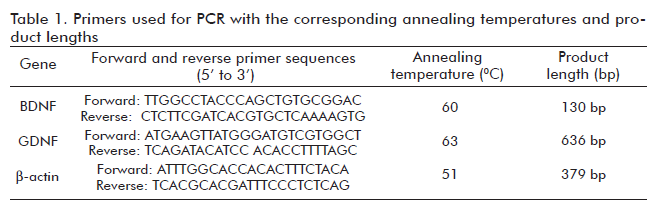
<body><![CDATA[<P   align="left" ><font face="Verdana, Arial, Helvetica, sans-serif" color="#000000" size="2">Once      BMSC at passages 2, 7, and 12 had reached a confluence of approximately 90%,      cell culture media was suctioned off and the surface was washed twice with      phosphate buffer (NaCl 8 g/L; KCl 0.2 g/L; Na<sub>2</sub>- HPO<sub>4</sub>      1.09 g/L; KH<sub>2</sub>PO<sub>4</sub> 0.26 g/L, pH 7.2). Total RNA and proteins      from cellular homogenates were extracted using Trizol (Roche Diagnostics).      Protein concentration was quantified by Bicinchoninic Acid method. </font></P >   <FONT color="#FF0000"><FONT color="#000000"><FONT color="#FF0000"><FONT color="#000000"><FONT color="#FF0000"><FONT color="#000000"><FONT color="#FF0000"><FONT size="+1" color="#000000"><FONT size="+1">        <P   align="left" ><font face="Verdana, Arial, Helvetica, sans-serif" color="#000000" size="2"><B>Reverse      Transcriptase-Polymerase Chain Reaction Analysis </b></font></P >       <P   align="left" ><font face="Verdana, Arial, Helvetica, sans-serif" color="#000000" size="2">Complementary      DNA (cDNA) from each sample was synthesized from 5 <font face="Symbol">m</font>g      of total RNA primed with 0.5 <font face="Symbol">m</font>g oligo(dT)<sub>15</sub>      (Invitrogen). The mixture was heated to 70 &deg;C for 10 min. First-strand      buffer, 0.1 M DTT, and 25 mM dNTPs were added and the mixed contents were      incubated at 42 &deg;C for 2 min. One microliter of M-MLV reverse transcriptase      (Invitrogen) was added and the mixture was incubated at 42 &deg;C for 50 min.      The reaction was inactivated by heating at 75 &deg;C for 15 min. </font></P >   <FONT color="#FF00FF"><FONT color="#000000"><FONT color="#FF00FF"><FONT color="#000000"><FONT color="#FF0000"><FONT size="+1" color="#000000"><FONT size="+1"><FONT color="#FF00FF"><FONT color="#000000"><FONT color="#FF00FF"><FONT color="#000000"><FONT color="#FF00FF"><FONT color="#000000"><FONT color="#FF00FF"><FONT color="#000000">        <P   align="left" ><font face="Verdana, Arial, Helvetica, sans-serif" color="#000000" size="2">PCR      reactions were carried out using 2 <font face="Symbol">m</font>L of cDNA mixed      with 25 mM dNTPs, 50 pmoles of each specific primer, 5 <font face="Symbol">m</font>L      of DMSO, and 1U Taq DNA polymerase (Invitrogen). Cycling conditions were:      94 &deg;C for 3 min; 40 cycles of 94 &deg;C for 1 min, annealing temperature      for 1 min, 72 &deg;C for 1 min; and 72 &deg;C for 5 min. The sequence of each      primer, the annealing temperatures, and the length of the amplified products      are given in <a href="/img/revistas/bta/v27n4/t0104410.gif">table 1</a>.      Water was used as the negative control instead of cDNA. <font face="Symbol">b</font>-actin      was used as an endogenous control. A 1 kb DNA ladder nucleic acid marker (Invitrogen)      was used. Electrophoresis of DNA products was carried out on agarose gels      at 100 mV and visualized with ethidium bromide (<a href="/img/revistas/bta/v27n4/t0104410.gif">Table      1</a>). </font></P >   <FONT color="#FF00FF"><FONT color="#000000"><FONT color="#FF00FF"><FONT color="#000000"><FONT color="#FF00FF"><FONT color="#000000"><FONT color="#FF00FF"><FONT color="#000000"><FONT color="#FF00FF"><FONT color="#000000"><FONT color="#FF00FF"><FONT color="#000000"><FONT color="#FF00FF"><FONT color="#000000"><FONT color="#FF00FF"><FONT color="#000000"><FONT color="#FF00FF"><FONT color="#000000">        
<P   align="left" ><font face="Verdana, Arial, Helvetica, sans-serif" color="#000000" size="2"><B>Analysis      of BDNF and GDNF expression by Western Blot in cellular homogenates </b></font></P >       <P   align="left" ><font face="Verdana, Arial, Helvetica, sans-serif" color="#000000" size="2">Aliquots      corresponding to 50 <font face="Symbol">m</font>g of total proteins of each      sample were placed on electrophoresis on 12% denaturing polyacrylamide gels      and transferred onto PVDF membranes (Bio-Rad Laboratories). The nonspecific      binding of antibodies was blocked with 5% non-fat dried milk. Immunoblotting      was carried out with rabbit polyclonal antibodies to BDNF or GDNF (1:200)      (Santa Cruz Biotechnology), followed by HRP-labeled goat anti-rabbit IgG (1:2000)      (Zymed). Immunoreactions were visualized using the chemilluminescence detection      kit (ECL; Perkin Elmer, LAS, Inc). Membranes were stripped and incubated with      monoclonal mouse antibody against <font face="Symbol">b</font>-actin (1:300)      (17) and HRP-labeled goat anti-mouse IgG (1:7000) (Zymed). </font></P >   <FONT color="#FF00FF"><FONT color="#000000">        <P   align="left" ><font face="Verdana, Arial, Helvetica, sans-serif" color="#000000" size="2"><B>Evaluation      of GDNF expression by Immunocytochemistry </b></font></P >       <P   align="left" ><font face="Verdana, Arial, Helvetica, sans-serif" color="#000000" size="2">BMSC      were grown on glass coverslips, fixed with 4% paraformaldehyde and treated      with 0.2% triton X-100. Non-specific binding was blocked with 0.5% IgG-free      bovine serum albumin (BSA). Coverslips were incubated with rabbit polyclonal      antibody against GDNF (1:100) (Santa Cruz Biotechnology), followed by incubation      with biotinylated goat antirabbit IgG (Vector Laboratories), and developed      with Fluorescein-Streptavidin (Vector Laboratories). Cells incubated with      0.2% triton X-100 instead of the primary antibody served as negative controls.      Coverslips were mounted on clean glass slides using Vectashield. Immunoreactive      cells were visualized on an Olympus BX51 fluorescence microscope, and images      captured using the Image Pro Acquisition and Analysis software (UVP). Cells      were counterstained with DAPI (4&acute;, 6-diamino-2-phenilindol, Vector Laboratories)      to reveal the nuclei. </font></P >       <P   align="left" ><font size="3" face="Verdana, Arial, Helvetica, sans-serif" color="#000000"><b>RESULTS      AND DISCUSSION</b></font><font size="2" face="Verdana, Arial, Helvetica, sans-serif" color="#000000">      </font></P >   <FONT size="+1">        <P   align="left" ><font size="2" face="Verdana, Arial, Helvetica, sans-serif" color="#000000"><B>Isolation,      culture and expansion of rat BMSCs </b></font></P >   <FONT size="+1">        ]]></body>
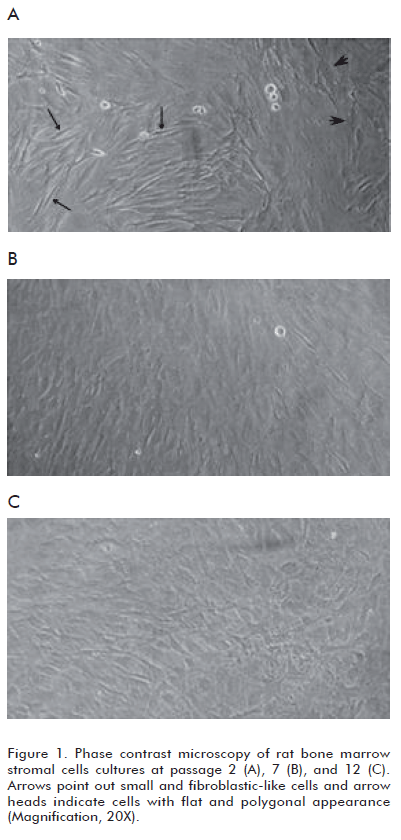
<body><![CDATA[<P   align="left" ><font face="Verdana, Arial, Helvetica, sans-serif" color="#000000" size="2">We      have observed that BMSC cultures are mainly composed of two morphologically      distinct cellular populations and the prevalence of these populations differs      among early and later passages. Cultures at passage 2 contained: a) cells      with flat and polygonal appearance, and b) predominant small and fibroblastlike      cells (<a href="#fig1">Figure 1A</a>). In contrast, BMSC cultures at passage      7 and 12 were more homogeneous, with a preponderance of fl at cells (<a href="#fig1">Figures      1B and C</a>). These results are in agreement with previous data obtained      by other research groups (18-20).</font></P >       <P   align="center" ><font size="2"><img src="/img/revistas/bta/v27n4/f0104410.gif"><a name="fig1"></a></font></P >   <FONT color="#FF00FF"><FONT color="#000000"><FONT color="#FF00FF"><FONT color="#000000">        
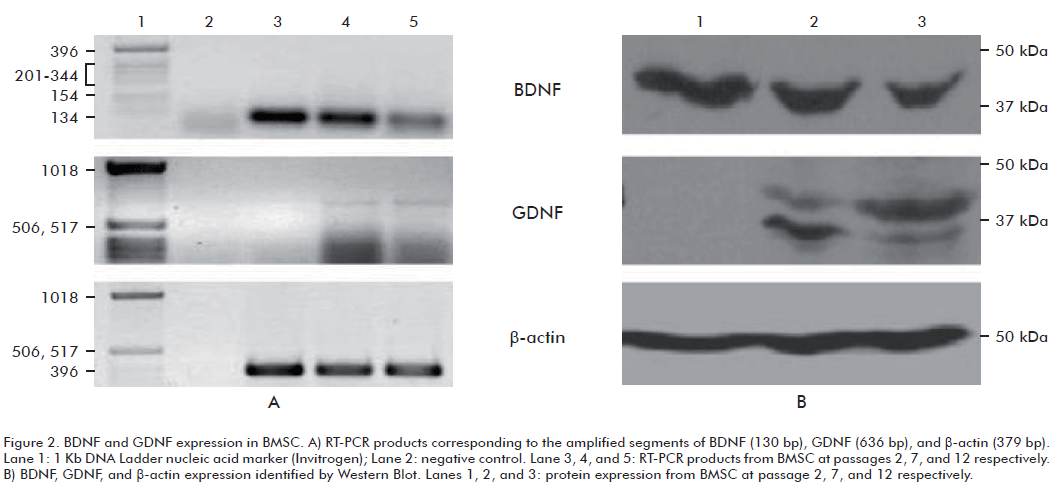
<P   align="left" ><font face="Verdana, Arial, Helvetica, sans-serif" color="#000000" size="2">Observation      of human BMSC cultures employing phase contrast microscopy has shown changes      in the morphology of cells as a function of time in the culture and with the      number of passages (18). Thus, fibroblast-like cells became fl at and polygonal,      relatively mature, which predominate in cultures approaching senescence (19-21)      (<a href="#fig1">Figure 1</a>). </font></P >   <FONT color="#FF00FF"><FONT color="#000000">        <P   align="left" ><font face="Verdana, Arial, Helvetica, sans-serif" color="#000000" size="2"><B>Expression      of BDNF in bone marrow stromal cells </b></font></P >       <P   align="left" ><font face="Verdana, Arial, Helvetica, sans-serif" color="#000000" size="2">Rat      bone marrow stromal cells expressed BDNF as determined by RT-PCR (<a href="/img/revistas/bta/v27n4/f0204410.gif">Figure      2A</a>, upper panel) and Western blot (<a href="/img/revistas/bta/v27n4/f0204410.gif">Figure      2B</a>, upper panel), as early as passage 2. Moreover, these cells maintain      the ability to produce this neurotrophic factor during the three culture passages      evaluated. </font></P >   <FONT color="#FF00FF"><FONT color="#000000"><FONT color="#FF00FF"><FONT color="#000000">        
<P   align="left" ><font face="Verdana, Arial, Helvetica, sans-serif" color="#000000" size="2">Studies      regarding the ability of BMSCs to synthesize neurotrophic factors show contradictory      results. Nerve growth factor (NGF), BDNF, and GDNF production in mice BMSCs      have been evaluated in fresh culture media by ELISA. This study revealed that      murine BMSCs produce NGF but not BDNF or GDNF (13). Nevertheless, it has been      shown by RT-PCR that BMSCs from mice, after passage 3, are able to express      NGF and BDNF (14). In a similar study performed in human stromal cells the      existence of BDNF mRNA was confirmed (15). Comparable results have been obtained      in rat BMSC cultures at passage 5, where the presence of NGF and BDNF mRNA      has been documented (22). </font></P >   <FONT size="+1">        <P   align="left" ><font size="2" face="Verdana, Arial, Helvetica, sans-serif" color="#000000">Here      we demonstrated the expression of BDNF in rat BMSC and this result agrees      with several reports (14, 15, 22). We also confirmed the expression at the      three passages evaluated, which had not been reported previously. </font></P >   <FONT size="+1">        <P   align="left" ><font face="Verdana, Arial, Helvetica, sans-serif" color="#000000" size="2">Our      results contrast with those reported by Yang <I>et al</I>. (13). These authors      did not detect BDNF in the culture media from fresh murine BMSC (13). This      disagreement could be due to two factors: first, the sample used; and second,      the species analyzed. Yang <I>et al</I>. assessed the presence of BDNF in      the culture supernatant from fresh BMSC at early passages; where protein concentration,      if present, may be very low. In contrast, we evaluated the presence of the      protein in cellular homogenates where there should be a higher quantity of      BDNF. On the other hand, comparisons of BMSC from different strains of mice      demonstrated that certain properties are strain specific (23). These features      include doubling time, differentiation potential, optimal growth media requirements,      propagation rates, and the presence of surface epitopes. Hence, there may      be differences in the expression patterns of neurotrophic factors between      rat and mouse BMSC. </font></P >       <P   align="left" ><font face="Verdana, Arial, Helvetica, sans-serif" color="#000000" size="2">We      observed less BDNF mRNA and protein as the number of passages in the culture      increased (<a href="/img/revistas/bta/v27n4/f0204410.gif">Figure 2A and      2B</a>, upper panels). It has been documented that changes in cellular morphology      are associated with changes in patterns of gene expression (20, 24). Hence,      cultures enriched for fibroblastic-like cells at early passages could have      a greater potential to produce BDNF than cultures with a preponderance of      large and mature cells. </font></P >   <FONT color="#FF00FF"><FONT color="#000000">        
<P   align="left" ><font face="Verdana, Arial, Helvetica, sans-serif" color="#000000" size="2">BDNF      is initially synthesized as a preproprotein. The pre-domain is cleaved off,      yielding proproteins which can undergo further post-translational modifications      (25). The proBDNF may be cleaved intracellulary to release mature BDNF, but      when BDNF is over-expressed, the proform is modified extracellulary (26).      PreproBDNF, proBDNF, and mature BDNF are detectable by Western Blot as bands      averaging 42, 32, and 14 kDa respectively (27, 28). </font></P >       ]]></body>
<body><![CDATA[<P   align="left" ><font face="Verdana, Arial, Helvetica, sans-serif" color="#000000" size="2">In      our study, only the fragment corresponding to the preproprotein was labeled      in all BMSC passages evaluated. The lack of proprotein and mature BDNF recognition      in this study could due to the possible release of these molecules into the      extracellular space and only the preproprotein is present in cellular homogenates      (<a href="/img/revistas/bta/v27n4/f0204410.gif">Figure 2</a>). </font></P >   <FONT color="#FF00FF"><FONT color="#000000">        
<P   align="left" ><font face="Verdana, Arial, Helvetica, sans-serif" color="#000000" size="2"><B>Expression      of GDNF in bone marrow stromal cells </b></font></P >       <P   align="left" ><font face="Verdana, Arial, Helvetica, sans-serif" color="#000000" size="2">Rat      bone marrow stromal cells failed to express GDNF at passage 2, as assessed      by RT-PCR. Amplification products of this transcript were only detected at      passage 7 and 12 (<a href="/img/revistas/bta/v27n4/f0204410.gif">Figure      2A</a>, middle panel). Protein expression by Western Blot confirmed these      results, the fragment corresponding to GDNF was not detected in any cell culture      at passage 2 (<a href="/img/revistas/bta/v27n4/f0204410.gif">Figure 2B</a>,      middle panel). </font></P >   <FONT color="#FF00FF"><FONT color="#000000"><FONT color="#FF00FF"><FONT color="#000000">        
<P   align="left" ><font face="Verdana, Arial, Helvetica, sans-serif" color="#000000" size="2">Taking      into account that RT-PCR allows the detection of very low levels of mRNA;      our data indicates that cultures of BMSC at passage 2 do not express GDNF.      However, the presence of GDNF mRNA was detected in BMSC cultures at passages      7 and 12. Our group was the first to report GDNF expression by BMSC, and only      a few studies have been published since then (16). </font></P >       <P   align="left" ><font face="Verdana, Arial, Helvetica, sans-serif" color="#000000" size="2">GDNF      expression in genetically unmodified BMSC has been evaluated in two studies.      Yang <I>et al</I>. found that fresh murine BMSC did not secrete GDNF (13).      More recently, Ye <I>et al</I>. assessed the production of GDNF in rat BMSC      at passage 2; after 3, 7, and 10 days in the culture (29). This study revealed      that BMSC were able to secrete GDNF and that the production of this neurotrophic      factor gradually increased with time in the culture, with a maximum at 10      days. These authors considered that this increase was associated to a larger      number of cells and greater growth rate (29). </font></P >       <P   align="left" ><font face="Verdana, Arial, Helvetica, sans-serif" color="#000000" size="2">Our      results are consistent with those of Yang <I>et al</I>. (13), but they differ      from the results of Ye <I>et al</I>. (29). This difference could be due to      the cell culture medium used in both experiments. Ye <I>et al</I>. cultured      cells in DMEM containing 20% FBS whereas we used <font face="Symbol">a</font>-MEM      supplemented with 10% of FBS. Studies show that BMSC are very sensitive to      soluble factors from the culture medium (30). Hence, discrepancies between      these results and ours might be due to culture conditions. </font></P >   <FONT color="#FF00FF"><FONT color="#000000">        <P   align="left" ><font face="Verdana, Arial, Helvetica, sans-serif" color="#000000" size="2">Western      Blot using an antibody against GDNF revealed the presence of two bands. The      mature form of this protein has a molecular weight of 16 kDa and the glycosylated      form of the mature GDNF has molecular masses of 20 or 23 kDa (31). However,      GDNF preferentially exists as homodimer (8) which forms a complex with several      molecules of heparin. This glycosylated homodimer has molecular weights ranging      from 33 to 45 kDa (32). These immunoreactive bands, which were detected in      this study, were broad and this is characteristic of glycosylated GDNF (31).      </font></P >       <P   align="left" ><font face="Verdana, Arial, Helvetica, sans-serif" color="#000000" size="2">Relative      intensity of bands corresponding to these molecular species varies when increasing      the number passages. We assume that this is because BMSC cultures are formed      by a diverse repertoire of distinct subpopulations, with different degrees      of maturity, and therefore different patterns of gene expression. </font></P >       <P   align="left" ><font face="Verdana, Arial, Helvetica, sans-serif" color="#000000" size="2">To      evaluate if BMSC at passage 2 did indeed secrete GDNF but at very low levels,      an immunocytochemistry study was performed. This approach is very sensitive      and makes it possible to study protein expression of different cellular populations      in the same culture. Results agreed with those mentioned above. The production      of GDNF in BMSC at passage 2 was not detected, whereas cells in passage 7      and 12 expressed this neurotrophic factor (<a href="/img/revistas/bta/v27n4/f0304410.gif">Figure      3</a>). It is possible that BMSC at different stages of growth, undergo molecular      reorganization processes in which they acquire the ability to produce GDNF      (<a href="/img/revistas/bta/v27n4/f0304410.gif">Figure 3</a>). </font></P >   <FONT color="#FF00FF"><FONT color="#000000"><FONT color="#FF00FF"><FONT color="#000000">        
<P   align="left" ><font face="Verdana, Arial, Helvetica, sans-serif" color="#000000" size="2">Stem      cells could be an important source for cellular restoration in degenerative      and traumatic neuronal diseases. Neuronal survival and functioning depend      on the availability of sufficient amounts of growth factors (33). For this      reason, the ability of BMSC to produce BDNF and GDNF supports the use of these      cells as biological therapeutic vehicles for the treatment of neurological      disorders. BDNF and GDNF production in BMSC can facilitate their differentiation      into neural phenotypes (22). Moreover, these characteristics may help restore      neural circuits, either through the differentiation of these cells into neurons      <I>per se </I>or by trophic support. Taking into consideration that BMSC at      passage 7 have the ability to produce BDNF and GNDF, both known to be relevant      to therapy in a variety of neurodegenerative diseases, we consider that stromal      cells should be collected at this passage for implanting in animal models      of these disorders. </font></P >       ]]></body>
<body><![CDATA[<P   align="left" ><font size="3" face="Verdana, Arial, Helvetica, sans-serif" color="#000000"><b>ACKNOWLEDGMENTS</b></font><font size="2" face="Verdana, Arial, Helvetica, sans-serif" color="#000000">      </font></P >   <FONT size="+1">        <P   align="left" ><font size="2" face="Verdana, Arial, Helvetica, sans-serif" color="#000000">Part      of this study was supported by a United Nations University-BIOLAC fellowship.      </font></P >   <FONT size="+1">        <P   align="left" > </P >       <P   align="left" ><font face="Verdana, Arial, Helvetica, sans-serif" color="#000000" size="3"><b>REFERENCES</b></font><font face="Verdana, Arial, Helvetica, sans-serif" color="#000000" size="2">      </font></P >       <!-- ref --><P   align="left" ><font face="Verdana, Arial, Helvetica, sans-serif" size="2">1. Mezey E. Bone      marrow-derived stem cells in neurological diseases: stones or masons? Regen      Med 2007;2:37-49.</font></P >   <FONT size="+1">       <!-- ref --><P   align="left" ><font face="Verdana, Arial, Helvetica, sans-serif" size="2">2. Zhang C, Li Y,      Chen J, Gao Q, Zacharek A, Kapke A, <i>et al</i>. Bone marrow stromal cells      upregulate expression of bone morphogenetic proteins 2 and 4, gap junction      protein connexin-43 and synaptophysin after stroke in rats. Neuroscience 2006;      141:687-95.</font></P >       <!-- ref --><P   align="left" ><font face="Verdana, Arial, Helvetica, sans-serif" color="#000000" size="2">3.      Kurozumi K, Nakamura K, Tamiya T, Kawano Y, Ishii K, Kobune M, <I>et al</I>.      Mesenchymal stem cells that produce neurotrophic factors reduce ischemic damage      in the rat middle cerebral artery occlusion model. Mol Ther 2005;11:96-104.      </font></P >       <!-- ref --><P   align="left" ><font face="Verdana, Arial, Helvetica, sans-serif" color="#000000" size="2">4.      Brodhun M, Bauer R, Patt S. Potential stem cell therapy and application in      neurotrauma. Exp Toxicol Pathol 2004;56:103-12. </font></P >       <!-- ref --><P   align="left" ><font face="Verdana, Arial, Helvetica, sans-serif" color="#000000" size="2">5.      Pav&oacute;n N, Blanco L, Mart&iacute;nez L, Castillo L, Cu&eacute;tara K,      Garc&iacute;a R, <I>et al</I>. Trasplante de c&eacute;lulas estromales en      el modelo de lesi&oacute;n por 6-OHDA. Rev Neurol 2004;39:326- 34. </font></P >       <!-- ref --><P   align="left" ><font face="Verdana, Arial, Helvetica, sans-serif" size="2">6. Calissano P, Matrone      C, Amadoro G. Nerve Growth Factor as a paradigm of neurotrophins related to      Alzheimer&#146; s Disease. Dev Neurobiol 2010;70:372-83.</font></P >       <!-- ref --><P   align="left" ><font face="Verdana, Arial, Helvetica, sans-serif" color="#000000" size="2">7.      M&iacute;nguez A, Escamilla F. Terapia celular y otras estrategias neurorregenerativas      en la enfermedad de Parkinson (II). Rev Neurol 2005;41:684-93. </font></P >       <!-- ref --><P   align="left" ><font face="Verdana, Arial, Helvetica, sans-serif" size="2">8. Landreth GE. Growth      Factors. In: Siegel GJ, Albers RW, Brady ST, Price DL, editors. Basic neurochemistry.      Molecular, cellular and medical aspects. 7th ed. Boston, Mass: Elsevier Academic      Press: 2006, p. 471-84. </font></P >   </font></font></font></font></font></font></font></font></font></font></font></font></font></font></font></font></font></font></font></font></font></font></font></font></font></font></font></font></font></font></font></font></font></font></font></font></font></font></font></font></font></font></font></font></font></font></font></font></font></font></font></font></font></font></font></font></font></font></font></font></font></font></font></font></font></font></font></font></font></font></font></font></font></font></font></font></font></font></font></font></font></font></font></font></font></font></font></font></font></font></font></font></font></font></font></font></font></font></font></font></font></font></font></font></font></font></font></font>        <!-- ref --><p><font face="Verdana, Arial, Helvetica, sans-serif" size="2">9. Yoshii A,      Constantine-Paton M. Postsynaptic BDNF-TrkB signaling in synapse maturation,      plasticity, and disease. Dev Neurobiol 2010; 70:304-22.</font><!-- ref --><P   align="left" ><font face="Verdana, Arial, Helvetica, sans-serif" color="#000000" size="2">10.      Barroso-Chinea P, Cruz-Muros I, Aymerich M, Rodr&iacute;guez-D&iacute;az M,      Afonso- Oramas D, Lanciego J, <I>et al</I>. Striatal expression of GDNF and      differential vulnerability of midbrain dopaminergic cells. Eur J Neurosci      2005;21:1815-27. </font></P >       <!-- ref --><P   align="left" ><font face="Verdana, Arial, Helvetica, sans-serif" color="#000000" size="2">11.      Hurelbrink C, Barker R. The potential of GDNF as a treatment for Parkinson&acute;s      disease. Exp Neurol 2004;185:1-6. </font></P >       <!-- ref --><P   align="left" ><font face="Verdana, Arial, Helvetica, sans-serif" size="2">12. Kordower J. <i>In      vivo</i> gene delivery of glial cell line&#150;derived neurotrophic factor      for Parkinson&#146; s disease. Ann Neurol 2003;53:S120-34.</font></P >       <!-- ref --><P   align="left" ><font face="Verdana, Arial, Helvetica, sans-serif" color="#000000" size="2">13.      Yang K, Yuan X, Sun J, Long Y, Lai EC. Bone marrow stromal cell as potential      cellular therapy for treatment of Parkinson&acute;s disease. Mov Disord 2002;17      Suppl. 5:18. </font></P >       <!-- ref --><P   align="left" ><font face="Verdana, Arial, Helvetica, sans-serif" color="#000000" size="2">14.      Yamaguchi S, Kuroda S, Kobayashi H, Shichinohe H, Yano S, Hida K, <I>et al.      </I>The effects of neuronal induction on gene expression profile in bone marrow      stromal cells (BMSC)-a preliminary study using microarray analysis. Brain      Res 2006;1087:15-27. </font></P >       <!-- ref --><P   align="left" ><font face="Verdana, Arial, Helvetica, sans-serif" color="#000000" size="2">15.      Zhang J, Li Y, Chen J, Cui Y, Lu M, Elias SB, <I>et al</I>. Human bone marrow      stromal cell treatment improves neurological functional recovery in EAE mice.      Exp Neurol 2005;195:16-26. </font></P >       <!-- ref --><P   align="left" ><font face="Verdana, Arial, Helvetica, sans-serif" color="#000000" size="2">16.      Garc&iacute;a R, Aguiar J, Alberti E, Cu&eacute;tara K, Pav&oacute;n N. Bone      marrow stromal cells produce nerve growth factor and glial cell line-derived      neurotrophic factors. Biochem Biophys Res Commun 2004;316:753-4. </font></P >       <!-- ref --><P   align="left" ><font face="Verdana, Arial, Helvetica, sans-serif" color="#000000" size="2">17.      Garcia-Tovar CG, Perez A, Luna J. Biochemical and histochemical analysis of      71 kDa dystrophin isoform (Dp71f) in rat brain. Acta Histochem 2001;103:209-24.      </font></P >       <!-- ref --><P   align="left" ><font face="Verdana, Arial, Helvetica, sans-serif" color="#000000" size="2">18.      Sekiya I, Larson B, Smith JR, Pochampally R, Cui JG, Prockop DJ. Expansion      of human adult stem cells from bone marrow stroma: conditions that maximize      the yields of early progenitors and evaluate their quality. Stem Cells 2002;20:530-41.      </font></P >       <!-- ref --><P   align="left" ><font face="Verdana, Arial, Helvetica, sans-serif" color="#000000" size="2">19.      Prockop DJ, Sekiya I, Colter DC. Isolation and characterization of rapidly      self-renewing stem cells from cultures of human marrow stromal cells. Cytotherapy      2001;3:393-6. </font></P >       <!-- ref --><P   align="left" ><font face="Verdana, Arial, Helvetica, sans-serif" color="#000000" size="2">20.      Colter D, Class R, DiGirolamo C, Prockop DJ. Rapid expansion of recycling      stem cells in cultures of plastic-adherent cells from human bone marrow. Proc      Natl Acad Sci USA 2000;97:3213-8. </font></P >       <!-- ref --><P   align="left" ><font face="Verdana, Arial, Helvetica, sans-serif" color="#000000" size="2">21.      Gregory C, Prockop D, Spees J. Nonhematopoietic bone marrow stem cells: Molecular      control of expansion and differentiation. Exp Cell Res 2005;306(2):330-5.      </font></P >       <!-- ref --><P   align="left" ><font face="Verdana, Arial, Helvetica, sans-serif" color="#000000" size="2">22.      Yaghoobi MMY, Mowla SJ. Differential gene expression pattern of neurotrophins      and their receptors during neuronal differentiation of rat bone marrow stromal      cells. Neurosci Lett 2006;397:149-54. </font></P >       <!-- ref --><P   align="left" ><font face="Verdana, Arial, Helvetica, sans-serif" color="#000000" size="2">23.      Peister A, Mellad JA, Larson BL, Hall BM, Gibson LF, Prockop DJ. Adult stem      cells from bone marrow (MSCs) isolated from different strains of inbred mice      vary in surface epitopes, rates of proliferation, and differentiation potential.      Blood 2004;103:1662-8. </font></P >       <!-- ref --><P   align="left" ><font face="Verdana, Arial, Helvetica, sans-serif" color="#000000" size="2">24.      Ylostalo J, Bazhanov N, Prockop D. Reversible commitment to differentiation      by human multipotent stromal cells (MSCs) in single-cell derived colonies.      Exp Hematol 2008;36:1390-402. </font></P >       <!-- ref --><P   align="left" ><font face="Verdana, Arial, Helvetica, sans-serif" color="#000000" size="2">25.      Le&szlig;mann V, Brigadski T. Mechanisms, locations, and kinetics of synaptic      BDNF secretion: An update. Neurosci Res 2009;65:11-22. </font></P >       <!-- ref --><P   align="left" ><font face="Verdana, Arial, Helvetica, sans-serif" color="#000000" size="2">26.      Barker PA. Whither proBDNF? Nat Neurosci 2009;12:105-6. </font></P >       <!-- ref --><P   align="left" ><font face="Verdana, Arial, Helvetica, sans-serif" size="2">27. Spires TL, Grote      HE, Varshney NK, Cordery PM, van Dellen A, Blakemore C, et al. Environmental      enrichment rescues protein deficits in a mouse model of Huntington&#146; s      Disease, indicating a possible disease mechanism. J Neurosci 2004; 24:2270-6.      </font></P >   </font></font></font></font></font></font></font></font></font></font></font></font></font></font></font></font></font></font></font></font></font></font></font></font></font></font></font></font></font></font></font></font></font></font></font></font></font></font></font></font></font></font></font></font></font></font></font></font></font></font></font></font></font></font></font></font></font></font></font></font></font></font></font></font></font></font></font></font></font></font></font></font></font></font></font></font></font></font></font></font></font></font></font></font></font></font></font></font></font></font></font></font></font></font></font></font></font></font></font></font></font></font></font></font></font></font></font></font>        <!-- ref --><p><font face="Verdana, Arial, Helvetica, sans-serif" size="2">28. Yang J, Siao      C- J, Nagappan G, Marinic T, Jing D, McGrath K, <i>et al</i>. Neuronal release      of proBDNF. Nat Neurosci 2009;12:113-5. </font><!-- ref --><p><font face="Verdana, Arial, Helvetica, sans-serif" size="2">29. Ye M, Chen      S, Wang X, Qi C, Lu G, Liang L, <i>et al</i>. Glial cell line-derived neurotrophic      factor in bone marrow stromal cells of rat. Neuroreport 2005;16:581-4. </font><!-- ref --><p><font face="Verdana, Arial, Helvetica, sans-serif" size="2">30. Gregory C,      Ylostalo J, Prockop DJ. Adult bone marrow stem/progenitor cells (MSCs) are      preconditioned by micro- environmental niches in culture: a two- stage hypothesis      for regulation of MSC fate. Sci STKE 2005;2005(294):pe37.</font><!-- ref --><P   align="left" ><font face="Verdana, Arial, Helvetica, sans-serif" color="#000000" size="2">31.      Katoh-Semba R, Tsuzuki M, Yoshida A, Nakajima H, Kitajima C, Matsuda M. Distribution      and immunohistochemical localization of GDNF protein in selected neural and      non-neural tissues of rats during development and changes in unilateral 6-hydroxydopamine      lesions. Neurosci Res 2009;59:277-87. </font></P >       <!-- ref --><P   align="left" ><font face="Verdana, Arial, Helvetica, sans-serif" size="2">32. Moretto G, Walker      DG, Lanteri P, Taioli F, Zaffagnini S, Xu RY, <i>et al</i>. Expression and      regulation of glial-cell-line-derived neurotrophic factor (GDNF) mRNA in human      astrocytes <i>in vitro</i>. Cell Tissue Res 1996;286:257-62. </font></P >   </font></font></font></font></font></font></font></font></font></font></font></font></font></font></font></font></font></font></font></font></font></font></font></font></font></font></font></font></font></font></font></font></font></font></font></font></font></font></font></font></font></font></font></font></font></font></font></font></font></font></font></font></font></font></font></font></font></font></font></font></font></font></font></font></font></font></font></font></font></font></font></font></font></font></font></font></font></font></font></font></font></font></font></font></font></font></font></font></font></font></font></font></font></font></font></font></font></font></font></font></font></font></font></font></font></font></font></font>        <!-- ref --><p><font face="Verdana, Arial, Helvetica, sans-serif" size="2">33. Mor&iacute;s      G, Vega J. Factores neurotr&oacute;ficos: Fundamentos para su aplicaci&oacute;n      cl&iacute;nica. Neurolog&iacute;a 2003;18(1):18-28.</font>    <br>   </p>   <FONT size="+1" color="#000000"><FONT size="+1"><FONT size="+1"><FONT size="+1"><FONT size="+1"><FONT size="+1"><FONT size="+1"><FONT size="+1"><FONT size="+1"><FONT size="+1"><FONT size="+1"><FONT size="+1"><FONT size="+1"><FONT size="+1"><FONT size="+1"><FONT size="+1"><FONT size="+1"><FONT size="+1"><FONT color="#0000FF"><FONT color="#000000"><FONT size="+1"><FONT size="+1"><FONT size="+1"><FONT size="+1"><FONT color="#FF00FF"><FONT color="#000000"><FONT color="#FF00FF"><FONT color="#000000"><FONT color="#FF00FF"><FONT color="#000000"><FONT color="#0000FF"><FONT size="+1" color="#000000"><FONT size="+1"><FONT color="#FF0000"><FONT color="#000000"><FONT color="#FF0000"><FONT color="#000000"><FONT color="#FF0000"><FONT color="#000000"><FONT color="#FF0000"><FONT size="+1" color="#000000"><FONT size="+1"><FONT color="#FF00FF"><FONT color="#000000"><FONT color="#FF00FF"><FONT color="#000000"><FONT color="#FF0000"><FONT size="+1" color="#000000"><FONT size="+1"><FONT color="#FF00FF"><FONT color="#000000"><FONT color="#FF00FF"><FONT color="#000000"><FONT color="#FF00FF"><FONT color="#000000"><FONT color="#FF00FF"><FONT color="#000000"><FONT color="#FF00FF"><FONT color="#000000"><FONT color="#FF00FF"><FONT color="#000000"><FONT color="#FF00FF"><FONT color="#000000"><FONT color="#FF00FF"><FONT color="#000000"><FONT color="#FF00FF"><FONT color="#000000"><FONT color="#FF00FF"><FONT color="#000000"><FONT color="#FF00FF"><FONT color="#000000"><FONT color="#FF00FF"><FONT color="#000000"><FONT color="#FF00FF"><FONT color="#000000"><FONT color="#FF00FF"><FONT color="#000000"><FONT size="+1"><FONT size="+1"><FONT color="#FF00FF"><FONT color="#000000"><FONT color="#FF00FF"><FONT color="#000000"><FONT color="#FF00FF"><FONT color="#000000"><FONT color="#FF00FF"><FONT color="#000000"><FONT color="#FF00FF"><FONT color="#000000"><FONT size="+1"><FONT size="+1"><FONT color="#FF00FF"><FONT color="#000000"><FONT color="#FF00FF"><FONT color="#000000"><FONT color="#FF00FF"><FONT color="#000000"><FONT color="#FF00FF"><FONT color="#000000"><FONT color="#FF00FF"><FONT color="#000000"><FONT color="#FF00FF"><FONT color="#000000"><FONT color="#FF00FF"><FONT color="#000000"><FONT size="+1"><FONT size="+1"><FONT size="+1">       <P   align="left" > </P >   <FONT size="+1">        <P   align="left" ><font face="Verdana, Arial, Helvetica, sans-serif" color="#000000" size="2">Received      in October, 2009.    ]]></body>
<body><![CDATA[<br>     Accepted for publication in August, 2010. </font></P >       <P   align="left" ><font face="Verdana, Arial, Helvetica, sans-serif" color="#000000" size="2">Roc&iacute;o      Garc&iacute;a, Departamento de Neurobiolog&iacute;a Centro Internacional de      Restauraci&oacute;n Neurol&oacute;gica, CIREN Ave. 25 # 15805, entre 158 y      160, Cubanac&aacute;n, Playa, CP 11 300, Ciudad de La Habana, Cuba. E-mail:      <a href="mailto:rociogminiet@infomed.sld.cu">rociogminiet@infomed.sld.cu</a></font></P >   </font></font></font></font></font></font></font></font></font></font></font></font></font></font></font></font></font></font></font></font></font></font></font></font></font></font></font></font></font></font></font></font></font></font></font></font></font></font></font></font></font></font></font></font></font></font></font></font></font></font></font></font></font></font></font></font></font></font></font></font></font></font></font></font></font></font></font></font></font></font></font></font></font></font></font></font></font></font></font></font></font></font></font></font></font></font></font></font></font></font></font></font></font></font></font></font></font></font></font></font></font></font></font></font></font></font></font></font></font></DIV >      ]]></body><back>
<ref-list>
<ref id="B1">
<label>1</label><nlm-citation citation-type="journal">
<person-group person-group-type="author">
<name>
<surname><![CDATA[Mezey]]></surname>
<given-names><![CDATA[E]]></given-names>
</name>
</person-group>
<article-title xml:lang="en"><![CDATA[Bone marrow-derived stem cells in neurological diseases: stones or masons?]]></article-title>
<source><![CDATA[Regen Med]]></source>
<year>2007</year>
<volume>2</volume>
<page-range>37-49</page-range></nlm-citation>
</ref>
<ref id="B2">
<label>2</label><nlm-citation citation-type="journal">
<person-group person-group-type="author">
<name>
<surname><![CDATA[Zhang]]></surname>
<given-names><![CDATA[C]]></given-names>
</name>
<name>
<surname><![CDATA[Li]]></surname>
<given-names><![CDATA[Y]]></given-names>
</name>
<name>
<surname><![CDATA[Chen]]></surname>
<given-names><![CDATA[J]]></given-names>
</name>
<name>
<surname><![CDATA[Gao]]></surname>
<given-names><![CDATA[Q]]></given-names>
</name>
<name>
<surname><![CDATA[Zacharek]]></surname>
<given-names><![CDATA[A]]></given-names>
</name>
<name>
<surname><![CDATA[Kapke]]></surname>
<given-names><![CDATA[A]]></given-names>
</name>
</person-group>
<article-title xml:lang="en"><![CDATA[Bone marrow stromal cells upregulate expression of bone morphogenetic proteins 2 and 4, gap junction protein connexin-43 and synaptophysin after stroke in rats]]></article-title>
<source><![CDATA[Neuroscience]]></source>
<year>2006</year>
<volume>141</volume>
<page-range>687-95</page-range></nlm-citation>
</ref>
<ref id="B3">
<label>3</label><nlm-citation citation-type="journal">
<person-group person-group-type="author">
<name>
<surname><![CDATA[Kurozumi]]></surname>
<given-names><![CDATA[K]]></given-names>
</name>
<name>
<surname><![CDATA[Nakamura]]></surname>
<given-names><![CDATA[K]]></given-names>
</name>
<name>
<surname><![CDATA[Tamiya]]></surname>
<given-names><![CDATA[T]]></given-names>
</name>
<name>
<surname><![CDATA[Kawano]]></surname>
<given-names><![CDATA[Y]]></given-names>
</name>
<name>
<surname><![CDATA[Ishii]]></surname>
<given-names><![CDATA[K]]></given-names>
</name>
<name>
<surname><![CDATA[Kobune]]></surname>
<given-names><![CDATA[M]]></given-names>
</name>
</person-group>
<article-title xml:lang="en"><![CDATA[Mesenchymal stem cells that produce neurotrophic factors reduce ischemic damage in the rat middle cerebral artery occlusion model]]></article-title>
<source><![CDATA[Mol Ther]]></source>
<year>2005</year>
<volume>11</volume>
<page-range>96-104</page-range></nlm-citation>
</ref>
<ref id="B4">
<label>4</label><nlm-citation citation-type="journal">
<person-group person-group-type="author">
<name>
<surname><![CDATA[Brodhun]]></surname>
<given-names><![CDATA[M]]></given-names>
</name>
<name>
<surname><![CDATA[Bauer]]></surname>
<given-names><![CDATA[R]]></given-names>
</name>
<name>
<surname><![CDATA[Patt]]></surname>
<given-names><![CDATA[S]]></given-names>
</name>
</person-group>
<article-title xml:lang="en"><![CDATA[Potential stem cell therapy and application in neurotrauma]]></article-title>
<source><![CDATA[Exp Toxicol Pathol]]></source>
<year>2004</year>
<volume>56</volume>
<page-range>103-12</page-range></nlm-citation>
</ref>
<ref id="B5">
<label>5</label><nlm-citation citation-type="journal">
<person-group person-group-type="author">
<name>
<surname><![CDATA[Pavón]]></surname>
<given-names><![CDATA[N]]></given-names>
</name>
<name>
<surname><![CDATA[Blanco]]></surname>
<given-names><![CDATA[L]]></given-names>
</name>
<name>
<surname><![CDATA[Martínez]]></surname>
<given-names><![CDATA[L]]></given-names>
</name>
<name>
<surname><![CDATA[Castillo]]></surname>
<given-names><![CDATA[L]]></given-names>
</name>
<name>
<surname><![CDATA[Cuétara]]></surname>
<given-names><![CDATA[K]]></given-names>
</name>
<name>
<surname><![CDATA[García]]></surname>
<given-names><![CDATA[R]]></given-names>
</name>
</person-group>
<article-title xml:lang="en"><![CDATA[Trasplante de células estromales en el modelo de lesión por 6-OHDA]]></article-title>
<source><![CDATA[Rev Neurol]]></source>
<year>2004</year>
<volume>39</volume>
<page-range>326- 34</page-range></nlm-citation>
</ref>
<ref id="B6">
<label>6</label><nlm-citation citation-type="journal">
<person-group person-group-type="author">
<name>
<surname><![CDATA[Calissano]]></surname>
<given-names><![CDATA[P]]></given-names>
</name>
<name>
<surname><![CDATA[Matrone]]></surname>
<given-names><![CDATA[C]]></given-names>
</name>
<name>
<surname><![CDATA[Amadoro]]></surname>
<given-names><![CDATA[G]]></given-names>
</name>
</person-group>
<article-title xml:lang="en"><![CDATA[Nerve Growth Factor as a paradigm of neurotrophins related to Alzheimer’s Disease]]></article-title>
<source><![CDATA[Dev Neurobiol]]></source>
<year>2010</year>
<volume>70</volume>
<page-range>372-83</page-range></nlm-citation>
</ref>
<ref id="B7">
<label>7</label><nlm-citation citation-type="journal">
<person-group person-group-type="author">
<name>
<surname><![CDATA[Mínguez]]></surname>
<given-names><![CDATA[A]]></given-names>
</name>
<name>
<surname><![CDATA[Escamilla]]></surname>
<given-names><![CDATA[F]]></given-names>
</name>
</person-group>
<article-title xml:lang="es"><![CDATA[Terapia celular y otras estrategias neurorregenerativas en la enfermedad de Parkinson (II)]]></article-title>
<source><![CDATA[Rev Neurol]]></source>
<year>2005</year>
<volume>41</volume>
<page-range>684-93</page-range></nlm-citation>
</ref>
<ref id="B8">
<label>8</label><nlm-citation citation-type="book">
<person-group person-group-type="author">
<name>
<surname><![CDATA[Landreth]]></surname>
<given-names><![CDATA[GE]]></given-names>
</name>
</person-group>
<article-title xml:lang="en"><![CDATA[Growth Factors]]></article-title>
<person-group person-group-type="editor">
<name>
<surname><![CDATA[Siegel]]></surname>
<given-names><![CDATA[GJ]]></given-names>
</name>
<name>
<surname><![CDATA[Albers]]></surname>
<given-names><![CDATA[RW]]></given-names>
</name>
<name>
<surname><![CDATA[Brady]]></surname>
<given-names><![CDATA[ST]]></given-names>
</name>
<name>
<surname><![CDATA[Price]]></surname>
<given-names><![CDATA[DL]]></given-names>
</name>
</person-group>
<source><![CDATA[Basic neurochemistry: Molecular, cellular and medical aspects]]></source>
<year>2006</year>
<edition>7</edition>
<page-range>471-84</page-range><publisher-loc><![CDATA[Boston ]]></publisher-loc>
<publisher-name><![CDATA[Elsevier Academic Press]]></publisher-name>
</nlm-citation>
</ref>
<ref id="B9">
<label>9</label><nlm-citation citation-type="journal">
<person-group person-group-type="author">
<name>
<surname><![CDATA[Yoshii]]></surname>
<given-names><![CDATA[A]]></given-names>
</name>
<name>
<surname><![CDATA[Constantine-Paton]]></surname>
<given-names><![CDATA[M]]></given-names>
</name>
</person-group>
<article-title xml:lang="en"><![CDATA[Postsynaptic BDNF-TrkB signaling in synapse maturation, plasticity, and disease]]></article-title>
<source><![CDATA[Dev Neurobiol]]></source>
<year>2010</year>
<volume>70</volume>
<page-range>304-22</page-range></nlm-citation>
</ref>
<ref id="B10">
<label>10</label><nlm-citation citation-type="journal">
<person-group person-group-type="author">
<name>
<surname><![CDATA[Barroso-Chinea]]></surname>
<given-names><![CDATA[P]]></given-names>
</name>
<name>
<surname><![CDATA[Cruz-Muros]]></surname>
<given-names><![CDATA[I]]></given-names>
</name>
<name>
<surname><![CDATA[Aymerich]]></surname>
<given-names><![CDATA[M]]></given-names>
</name>
<name>
<surname><![CDATA[Rodríguez-Díaz]]></surname>
<given-names><![CDATA[M]]></given-names>
</name>
<name>
<surname><![CDATA[Afonso- Oramas]]></surname>
<given-names><![CDATA[D]]></given-names>
</name>
<name>
<surname><![CDATA[Lanciego]]></surname>
<given-names><![CDATA[J]]></given-names>
</name>
</person-group>
<article-title xml:lang="en"><![CDATA[Striatal expression of GDNF and differential vulnerability of midbrain dopaminergic cells]]></article-title>
<source><![CDATA[Eur J Neurosci]]></source>
<year>2005</year>
<volume>21</volume>
<page-range>1815-27</page-range></nlm-citation>
</ref>
<ref id="B11">
<label>11</label><nlm-citation citation-type="journal">
<person-group person-group-type="author">
<name>
<surname><![CDATA[Hurelbrink]]></surname>
<given-names><![CDATA[C]]></given-names>
</name>
<name>
<surname><![CDATA[Barker]]></surname>
<given-names><![CDATA[R]]></given-names>
</name>
</person-group>
<article-title xml:lang="en"><![CDATA[The potential of GDNF as a treatment for Parkinson’s disease]]></article-title>
<source><![CDATA[Exp Neurol]]></source>
<year>2004</year>
<volume>185</volume>
<page-range>1-6</page-range></nlm-citation>
</ref>
<ref id="B12">
<label>12</label><nlm-citation citation-type="journal">
<person-group person-group-type="author">
<name>
<surname><![CDATA[Kordower]]></surname>
<given-names><![CDATA[J]]></given-names>
</name>
</person-group>
<article-title xml:lang="en"><![CDATA[In vivo gene delivery of glial cell line-derived neurotrophic factor for Parkinson’s disease]]></article-title>
<source><![CDATA[Ann Neurol]]></source>
<year>2003</year>
<volume>53</volume>
<page-range>S120-34</page-range></nlm-citation>
</ref>
<ref id="B13">
<label>13</label><nlm-citation citation-type="journal">
<person-group person-group-type="author">
<name>
<surname><![CDATA[Yang]]></surname>
<given-names><![CDATA[K]]></given-names>
</name>
<name>
<surname><![CDATA[Yuan]]></surname>
<given-names><![CDATA[X]]></given-names>
</name>
<name>
<surname><![CDATA[Sun]]></surname>
<given-names><![CDATA[J]]></given-names>
</name>
<name>
<surname><![CDATA[Long]]></surname>
<given-names><![CDATA[Y]]></given-names>
</name>
<name>
<surname><![CDATA[Lai]]></surname>
<given-names><![CDATA[EC]]></given-names>
</name>
</person-group>
<article-title xml:lang="en"><![CDATA[Bone marrow stromal cell as potential cellular therapy for treatment of Parkinson’s disease]]></article-title>
<source><![CDATA[Mov Disord]]></source>
<year>2002</year>
<volume>17</volume>
<numero>^s5</numero>
<issue>^s5</issue>
<supplement>5</supplement>
<page-range>18</page-range></nlm-citation>
</ref>
<ref id="B14">
<label>14</label><nlm-citation citation-type="journal">
<person-group person-group-type="author">
<name>
<surname><![CDATA[Yamaguchi]]></surname>
<given-names><![CDATA[S]]></given-names>
</name>
<name>
<surname><![CDATA[Kuroda]]></surname>
<given-names><![CDATA[S]]></given-names>
</name>
<name>
<surname><![CDATA[Kobayashi]]></surname>
<given-names><![CDATA[H]]></given-names>
</name>
<name>
<surname><![CDATA[Shichinohe]]></surname>
<given-names><![CDATA[H]]></given-names>
</name>
<name>
<surname><![CDATA[Yano]]></surname>
<given-names><![CDATA[S]]></given-names>
</name>
<name>
<surname><![CDATA[Hida]]></surname>
<given-names><![CDATA[K]]></given-names>
</name>
</person-group>
<article-title xml:lang="en"><![CDATA[The effects of neuronal induction on gene expression profile in bone marrow stromal cells (BMSC)-a preliminary study using microarray analysis]]></article-title>
<source><![CDATA[Brain Res]]></source>
<year>2006</year>
<volume>1087</volume>
<page-range>15-27</page-range></nlm-citation>
</ref>
<ref id="B15">
<label>15</label><nlm-citation citation-type="journal">
<person-group person-group-type="author">
<name>
<surname><![CDATA[Zhang]]></surname>
<given-names><![CDATA[J]]></given-names>
</name>
<name>
<surname><![CDATA[Li]]></surname>
<given-names><![CDATA[Y]]></given-names>
</name>
<name>
<surname><![CDATA[Chen]]></surname>
<given-names><![CDATA[J]]></given-names>
</name>
<name>
<surname><![CDATA[Cui]]></surname>
<given-names><![CDATA[Y]]></given-names>
</name>
<name>
<surname><![CDATA[Lu]]></surname>
<given-names><![CDATA[M]]></given-names>
</name>
<name>
<surname><![CDATA[Elias]]></surname>
<given-names><![CDATA[SB]]></given-names>
</name>
</person-group>
<article-title xml:lang="en"><![CDATA[Human bone marrow stromal cell treatment improves neurological functional recovery in EAE mice]]></article-title>
<source><![CDATA[Exp Neurol]]></source>
<year>2005</year>
<volume>195</volume>
<page-range>16-26</page-range></nlm-citation>
</ref>
<ref id="B16">
<label>16</label><nlm-citation citation-type="journal">
<person-group person-group-type="author">
<name>
<surname><![CDATA[García]]></surname>
<given-names><![CDATA[R]]></given-names>
</name>
<name>
<surname><![CDATA[Aguiar]]></surname>
<given-names><![CDATA[J]]></given-names>
</name>
<name>
<surname><![CDATA[Alberti]]></surname>
<given-names><![CDATA[E]]></given-names>
</name>
<name>
<surname><![CDATA[Cuétara]]></surname>
<given-names><![CDATA[K]]></given-names>
</name>
<name>
<surname><![CDATA[Pavón]]></surname>
<given-names><![CDATA[N]]></given-names>
</name>
</person-group>
<article-title xml:lang="en"><![CDATA[Bone marrow stromal cells produce nerve growth factor and glial cell line-derived neurotrophic factors]]></article-title>
<source><![CDATA[Biochem Biophys Res Commun]]></source>
<year>2004</year>
<volume>316</volume>
<page-range>753-4</page-range></nlm-citation>
</ref>
<ref id="B17">
<label>17</label><nlm-citation citation-type="journal">
<person-group person-group-type="author">
<name>
<surname><![CDATA[Garcia-Tovar]]></surname>
<given-names><![CDATA[CG]]></given-names>
</name>
<name>
<surname><![CDATA[Perez]]></surname>
<given-names><![CDATA[A]]></given-names>
</name>
<name>
<surname><![CDATA[Luna]]></surname>
<given-names><![CDATA[J]]></given-names>
</name>
</person-group>
<article-title xml:lang="en"><![CDATA[Biochemical and histochemical analysis of 71 kDa dystrophin isoform (Dp71f) in rat brain]]></article-title>
<source><![CDATA[Acta Histochem]]></source>
<year>2001</year>
<volume>103</volume>
<page-range>209-24</page-range></nlm-citation>
</ref>
<ref id="B18">
<label>18</label><nlm-citation citation-type="journal">
<person-group person-group-type="author">
<name>
<surname><![CDATA[Sekiya]]></surname>
<given-names><![CDATA[I]]></given-names>
</name>
<name>
<surname><![CDATA[Larson]]></surname>
<given-names><![CDATA[B]]></given-names>
</name>
<name>
<surname><![CDATA[Smith]]></surname>
<given-names><![CDATA[JR]]></given-names>
</name>
<name>
<surname><![CDATA[Pochampally]]></surname>
<given-names><![CDATA[R]]></given-names>
</name>
<name>
<surname><![CDATA[Cui]]></surname>
<given-names><![CDATA[JG]]></given-names>
</name>
<name>
<surname><![CDATA[Prockop]]></surname>
<given-names><![CDATA[DJ]]></given-names>
</name>
</person-group>
<article-title xml:lang="en"><![CDATA[Expansion of human adult stem cells from bone marrow stroma: conditions that maximize the yields of early progenitors and evaluate their quality]]></article-title>
<source><![CDATA[Stem Cells]]></source>
<year>2002</year>
<volume>20</volume>
<page-range>530-41</page-range></nlm-citation>
</ref>
<ref id="B19">
<label>19</label><nlm-citation citation-type="journal">
<person-group person-group-type="author">
<name>
<surname><![CDATA[Prockop]]></surname>
<given-names><![CDATA[DJ]]></given-names>
</name>
<name>
<surname><![CDATA[Sekiya]]></surname>
<given-names><![CDATA[I]]></given-names>
</name>
<name>
<surname><![CDATA[Colter]]></surname>
<given-names><![CDATA[DC]]></given-names>
</name>
</person-group>
<article-title xml:lang="en"><![CDATA[Isolation and characterization of rapidly self-renewing stem cells from cultures of human marrow stromal cells]]></article-title>
<source><![CDATA[Cytotherapy]]></source>
<year>2001</year>
<volume>3</volume>
<page-range>393-6</page-range></nlm-citation>
</ref>
<ref id="B20">
<label>20</label><nlm-citation citation-type="journal">
<person-group person-group-type="author">
<name>
<surname><![CDATA[Colter]]></surname>
<given-names><![CDATA[D]]></given-names>
</name>
<name>
<surname><![CDATA[Class]]></surname>
<given-names><![CDATA[R]]></given-names>
</name>
<name>
<surname><![CDATA[DiGirolamo]]></surname>
<given-names><![CDATA[C]]></given-names>
</name>
<name>
<surname><![CDATA[Prockop]]></surname>
<given-names><![CDATA[DJ]]></given-names>
</name>
</person-group>
<article-title xml:lang="en"><![CDATA[Rapid expansion of recycling stem cells in cultures of plastic-adherent cells from human bone marrow]]></article-title>
<source><![CDATA[Proc Natl Acad Sci USA]]></source>
<year>2000</year>
<volume>97</volume>
<page-range>3213-8</page-range></nlm-citation>
</ref>
<ref id="B21">
<label>21</label><nlm-citation citation-type="journal">
<person-group person-group-type="author">
<name>
<surname><![CDATA[Gregory]]></surname>
<given-names><![CDATA[C]]></given-names>
</name>
<name>
<surname><![CDATA[Prockop]]></surname>
<given-names><![CDATA[D]]></given-names>
</name>
<name>
<surname><![CDATA[Spees]]></surname>
<given-names><![CDATA[J]]></given-names>
</name>
</person-group>
<article-title xml:lang="en"><![CDATA[Nonhematopoietic bone marrow stem cells: Molecular control of expansion and differentiation]]></article-title>
<source><![CDATA[Exp Cell Res]]></source>
<year>2005</year>
<volume>306</volume>
<numero>2</numero>
<issue>2</issue>
<page-range>330-5</page-range></nlm-citation>
</ref>
<ref id="B22">
<label>22</label><nlm-citation citation-type="journal">
<person-group person-group-type="author">
<name>
<surname><![CDATA[Yaghoobi]]></surname>
<given-names><![CDATA[MMY]]></given-names>
</name>
<name>
<surname><![CDATA[Mowla]]></surname>
<given-names><![CDATA[SJ]]></given-names>
</name>
</person-group>
<article-title xml:lang="en"><![CDATA[Differential gene expression pattern of neurotrophins and their receptors during neuronal differentiation of rat bone marrow stromal cells]]></article-title>
<source><![CDATA[Neurosci Lett]]></source>
<year>2006</year>
<volume>397</volume>
<page-range>149-54</page-range></nlm-citation>
</ref>
<ref id="B23">
<label>23</label><nlm-citation citation-type="journal">
<person-group person-group-type="author">
<name>
<surname><![CDATA[Peister]]></surname>
<given-names><![CDATA[A]]></given-names>
</name>
<name>
<surname><![CDATA[Mellad]]></surname>
<given-names><![CDATA[JA]]></given-names>
</name>
<name>
<surname><![CDATA[Larson]]></surname>
<given-names><![CDATA[BL]]></given-names>
</name>
<name>
<surname><![CDATA[Hall]]></surname>
<given-names><![CDATA[BM]]></given-names>
</name>
<name>
<surname><![CDATA[Gibson]]></surname>
<given-names><![CDATA[LF]]></given-names>
</name>
<name>
<surname><![CDATA[Prockop]]></surname>
<given-names><![CDATA[DJ]]></given-names>
</name>
</person-group>
<article-title xml:lang="en"><![CDATA[Adult stem cells from bone marrow (MSCs) isolated from different strains of inbred mice vary in surface epitopes, rates of proliferation, and differentiation potential]]></article-title>
<source><![CDATA[Blood]]></source>
<year>2004</year>
<volume>103</volume>
<page-range>1662-8</page-range></nlm-citation>
</ref>
<ref id="B24">
<label>24</label><nlm-citation citation-type="journal">
<person-group person-group-type="author">
<name>
<surname><![CDATA[Ylostalo]]></surname>
<given-names><![CDATA[J]]></given-names>
</name>
<name>
<surname><![CDATA[Bazhanov]]></surname>
<given-names><![CDATA[N]]></given-names>
</name>
<name>
<surname><![CDATA[Prockop]]></surname>
<given-names><![CDATA[D]]></given-names>
</name>
</person-group>
<article-title xml:lang="en"><![CDATA[Reversible commitment to differentiation by human multipotent stromal cells (MSCs) in single-cell derived colonies]]></article-title>
<source><![CDATA[Exp Hematol]]></source>
<year>2008</year>
<volume>36</volume>
<page-range>1390-402</page-range></nlm-citation>
</ref>
<ref id="B25">
<label>25</label><nlm-citation citation-type="journal">
<person-group person-group-type="author">
<name>
<surname><![CDATA[Leßmann]]></surname>
<given-names><![CDATA[V]]></given-names>
</name>
<name>
<surname><![CDATA[Brigadski]]></surname>
<given-names><![CDATA[T]]></given-names>
</name>
</person-group>
<article-title xml:lang="en"><![CDATA[Mechanisms, locations, and kinetics of synaptic BDNF secretion: An update]]></article-title>
<source><![CDATA[Neurosci Res]]></source>
<year>2009</year>
<volume>65</volume>
<page-range>11-22</page-range></nlm-citation>
</ref>
<ref id="B26">
<label>26</label><nlm-citation citation-type="journal">
<person-group person-group-type="author">
<name>
<surname><![CDATA[Barker]]></surname>
<given-names><![CDATA[PA]]></given-names>
</name>
</person-group>
<article-title xml:lang="en"><![CDATA[Whither proBDNF?]]></article-title>
<source><![CDATA[Nat Neurosci]]></source>
<year>2009</year>
<volume>12</volume>
<page-range>105-6</page-range></nlm-citation>
</ref>
<ref id="B27">
<label>27</label><nlm-citation citation-type="journal">
<person-group person-group-type="author">
<name>
<surname><![CDATA[Spires]]></surname>
<given-names><![CDATA[TL]]></given-names>
</name>
<name>
<surname><![CDATA[Grote]]></surname>
<given-names><![CDATA[HE]]></given-names>
</name>
<name>
<surname><![CDATA[Varshney]]></surname>
<given-names><![CDATA[NK]]></given-names>
</name>
<name>
<surname><![CDATA[Cordery]]></surname>
<given-names><![CDATA[PM]]></given-names>
</name>
<name>
<surname><![CDATA[van Dellen]]></surname>
<given-names><![CDATA[A]]></given-names>
</name>
<name>
<surname><![CDATA[Blakemore]]></surname>
<given-names><![CDATA[C]]></given-names>
</name>
</person-group>
<article-title xml:lang="en"><![CDATA[Environmental enrichment rescues protein deficits in a mouse model of Huntington’s Disease, indicating a possible disease mechanism]]></article-title>
<source><![CDATA[J Neurosci]]></source>
<year>2004</year>
<volume>24</volume>
<page-range>2270-6</page-range></nlm-citation>
</ref>
<ref id="B28">
<label>28</label><nlm-citation citation-type="journal">
<person-group person-group-type="author">
<name>
<surname><![CDATA[Yang]]></surname>
<given-names><![CDATA[J]]></given-names>
</name>
<name>
<surname><![CDATA[Siao C-]]></surname>
<given-names><![CDATA[J]]></given-names>
</name>
<name>
<surname><![CDATA[Nagappan]]></surname>
<given-names><![CDATA[G]]></given-names>
</name>
<name>
<surname><![CDATA[Marinic]]></surname>
<given-names><![CDATA[T]]></given-names>
</name>
<name>
<surname><![CDATA[Jing]]></surname>
<given-names><![CDATA[D]]></given-names>
</name>
<name>
<surname><![CDATA[McGrath]]></surname>
<given-names><![CDATA[K]]></given-names>
</name>
</person-group>
<article-title xml:lang="en"><![CDATA[Neuronal release of proBDNF]]></article-title>
<source><![CDATA[Nat Neurosci]]></source>
<year>2009</year>
<volume>12</volume>
<page-range>113-5</page-range></nlm-citation>
</ref>
<ref id="B29">
<label>29</label><nlm-citation citation-type="journal">
<person-group person-group-type="author">
<name>
<surname><![CDATA[Ye]]></surname>
<given-names><![CDATA[M]]></given-names>
</name>
<name>
<surname><![CDATA[Chen]]></surname>
<given-names><![CDATA[S]]></given-names>
</name>
<name>
<surname><![CDATA[Wang]]></surname>
<given-names><![CDATA[X]]></given-names>
</name>
<name>
<surname><![CDATA[Qi]]></surname>
<given-names><![CDATA[C]]></given-names>
</name>
<name>
<surname><![CDATA[Lu]]></surname>
<given-names><![CDATA[G]]></given-names>
</name>
<name>
<surname><![CDATA[Liang]]></surname>
<given-names><![CDATA[L]]></given-names>
</name>
</person-group>
<article-title xml:lang="en"><![CDATA[Glial cell line-derived neurotrophic factor in bone marrow stromal cells of rat]]></article-title>
<source><![CDATA[Neuroreport]]></source>
<year>2005</year>
<volume>16</volume>
<page-range>581-4</page-range></nlm-citation>
</ref>
<ref id="B30">
<label>30</label><nlm-citation citation-type="journal">
<person-group person-group-type="author">
<name>
<surname><![CDATA[Gregory]]></surname>
<given-names><![CDATA[C]]></given-names>
</name>
<name>
<surname><![CDATA[Ylostalo]]></surname>
<given-names><![CDATA[J]]></given-names>
</name>
<name>
<surname><![CDATA[Prockop]]></surname>
<given-names><![CDATA[DJ]]></given-names>
</name>
</person-group>
<article-title xml:lang="en"><![CDATA[Adult bone marrow stem/progenitor cells (MSCs) are preconditioned by micro- environmental niches in culture: a two- stage hypothesis for regulation of MSC fate]]></article-title>
<source><![CDATA[Sci STKE]]></source>
<year>2005</year>
<volume>2005</volume>
<numero>294</numero>
<issue>294</issue>
<page-range>pe37</page-range></nlm-citation>
</ref>
<ref id="B31">
<label>31</label><nlm-citation citation-type="journal">
<person-group person-group-type="author">
<name>
<surname><![CDATA[Katoh-Semba]]></surname>
<given-names><![CDATA[R]]></given-names>
</name>
<name>
<surname><![CDATA[Tsuzuki]]></surname>
<given-names><![CDATA[M]]></given-names>
</name>
<name>
<surname><![CDATA[Yoshida]]></surname>
<given-names><![CDATA[A]]></given-names>
</name>
<name>
<surname><![CDATA[Nakajima]]></surname>
<given-names><![CDATA[H]]></given-names>
</name>
<name>
<surname><![CDATA[Kitajima]]></surname>
<given-names><![CDATA[C]]></given-names>
</name>
<name>
<surname><![CDATA[Matsuda]]></surname>
<given-names><![CDATA[M]]></given-names>
</name>
</person-group>
<article-title xml:lang="en"><![CDATA[Distribution and immunohistochemical localization of GDNF protein in selected neural and non-neural tissues of rats during development and changes in unilateral 6-hydroxydopamine lesions]]></article-title>
<source><![CDATA[Neurosci Res]]></source>
<year>2009</year>
<volume>59</volume>
<page-range>277-87</page-range></nlm-citation>
</ref>
<ref id="B32">
<label>32</label><nlm-citation citation-type="journal">
<person-group person-group-type="author">
<name>
<surname><![CDATA[Moretto]]></surname>
<given-names><![CDATA[G]]></given-names>
</name>
<name>
<surname><![CDATA[Walker]]></surname>
<given-names><![CDATA[DG]]></given-names>
</name>
<name>
<surname><![CDATA[Lanteri]]></surname>
<given-names><![CDATA[P]]></given-names>
</name>
<name>
<surname><![CDATA[Taioli]]></surname>
<given-names><![CDATA[F]]></given-names>
</name>
<name>
<surname><![CDATA[Zaffagnini]]></surname>
<given-names><![CDATA[S]]></given-names>
</name>
<name>
<surname><![CDATA[Xu]]></surname>
<given-names><![CDATA[RY]]></given-names>
</name>
</person-group>
<article-title xml:lang="en"><![CDATA[Expression and regulation of glial-cell-line-derived neurotrophic factor (GDNF) mRNA in human astrocytes in vitro]]></article-title>
<source><![CDATA[Cell Tissue Res]]></source>
<year>1996</year>
<volume>286</volume>
<page-range>257-62</page-range></nlm-citation>
</ref>
<ref id="B33">
<label>33</label><nlm-citation citation-type="journal">
<person-group person-group-type="author">
<name>
<surname><![CDATA[Morís]]></surname>
<given-names><![CDATA[G]]></given-names>
</name>
<name>
<surname><![CDATA[Vega]]></surname>
<given-names><![CDATA[J]]></given-names>
</name>
</person-group>
<article-title xml:lang="es"><![CDATA[Factores neurotróficos: Fundamentos para su aplicación clínica]]></article-title>
<source><![CDATA[Neurología]]></source>
<year>2003</year>
<volume>18</volume>
<numero>1</numero>
<issue>1</issue>
<page-range>18-28</page-range></nlm-citation>
</ref>
</ref-list>
</back>
</article>