<?xml version="1.0" encoding="ISO-8859-1"?><article xmlns:mml="http://www.w3.org/1998/Math/MathML" xmlns:xlink="http://www.w3.org/1999/xlink" xmlns:xsi="http://www.w3.org/2001/XMLSchema-instance">
<front>
<journal-meta>
<journal-id>1027-2852</journal-id>
<journal-title><![CDATA[Biotecnología Aplicada]]></journal-title>
<abbrev-journal-title><![CDATA[Biotecnol Apl]]></abbrev-journal-title>
<issn>1027-2852</issn>
<publisher>
<publisher-name><![CDATA[Editorial Elfos Scientiae]]></publisher-name>
</publisher>
</journal-meta>
<article-meta>
<article-id>S1027-28522012000100005</article-id>
<title-group>
<article-title xml:lang="en"><![CDATA[Stabilization of glucose oxidase with cyclodextrin-branched carboxymethylcellulose]]></article-title>
<article-title xml:lang="es"><![CDATA[Estabilización de la glucosa oxidasa con carboximetilcelulosa ramificado con ciclodextrina]]></article-title>
</title-group>
<contrib-group>
<contrib contrib-type="author">
<name>
<surname><![CDATA[Matos]]></surname>
<given-names><![CDATA[Madyu]]></given-names>
</name>
<xref ref-type="aff" rid="A01"/>
</contrib>
<contrib contrib-type="author">
<name>
<surname><![CDATA[Simpson]]></surname>
<given-names><![CDATA[Benjamin K]]></given-names>
</name>
<xref ref-type="aff" rid="A02"/>
</contrib>
<contrib contrib-type="author">
<name>
<surname><![CDATA[Ramírez]]></surname>
<given-names><![CDATA[Héctor L]]></given-names>
</name>
<xref ref-type="aff" rid="A01"/>
</contrib>
<contrib contrib-type="author">
<name>
<surname><![CDATA[Cao]]></surname>
<given-names><![CDATA[Roberto]]></given-names>
</name>
<xref ref-type="aff" rid="A03"/>
</contrib>
<contrib contrib-type="author">
<name>
<surname><![CDATA[Torres-Labandeira]]></surname>
<given-names><![CDATA[Juan J]]></given-names>
</name>
<xref ref-type="aff" rid="A04"/>
</contrib>
<contrib contrib-type="author">
<name>
<surname><![CDATA[Hernández]]></surname>
<given-names><![CDATA[Karel]]></given-names>
</name>
<xref ref-type="aff" rid="A01"/>
</contrib>
</contrib-group>
<aff id="A02">
<institution><![CDATA[,McGill University Food Science and Agricultural Chemistry Department ]]></institution>
<addr-line><![CDATA[Québec ]]></addr-line>
<country>Canada</country>
</aff>
<aff id="A03">
<institution><![CDATA[,University of Havana Faculty of Chemistry Laboratory of Bioinorganic Chemistry]]></institution>
<addr-line><![CDATA[Havana ]]></addr-line>
<country>Cuba</country>
</aff>
<aff id="A04">
<institution><![CDATA[,Santiago de Compostela University Faculty of Pharmacy Pharmaceutical Technology Department]]></institution>
<addr-line><![CDATA[Santiago de Compostela ]]></addr-line>
<country>Spain</country>
</aff>
<aff id="A01">
<institution><![CDATA[,Universidad Camilo Cienfuegos Center for Enzyme Technology ]]></institution>
<addr-line><![CDATA[Matanzas ]]></addr-line>
<country>Cuba</country>
</aff>
<pub-date pub-type="pub">
<day>00</day>
<month>03</month>
<year>2012</year>
</pub-date>
<pub-date pub-type="epub">
<day>00</day>
<month>03</month>
<year>2012</year>
</pub-date>
<volume>29</volume>
<numero>1</numero>
<fpage>29</fpage>
<lpage>34</lpage>
<copyright-statement/>
<copyright-year/>
<self-uri xlink:href="http://scielo.sld.cu/scielo.php?script=sci_arttext&amp;pid=S1027-28522012000100005&amp;lng=en&amp;nrm=iso"></self-uri><self-uri xlink:href="http://scielo.sld.cu/scielo.php?script=sci_abstract&amp;pid=S1027-28522012000100005&amp;lng=en&amp;nrm=iso"></self-uri><self-uri xlink:href="http://scielo.sld.cu/scielo.php?script=sci_pdf&amp;pid=S1027-28522012000100005&amp;lng=en&amp;nrm=iso"></self-uri><abstract abstract-type="short" xml:lang="en"><p><![CDATA[We present a methodology for improving some enzymatic characteristics of glucose oxidase (GOx) (EC 1.1.3.4). The enzyme was chemically modified with a ß-cyclodextrin-branched carboxymethylcellulose polymer (CMC-CD), using carbodiimide as coupling agent. The obtained neoglycoenzyme had 0.78 mol of polysaccharide per mol of GOx and retained 67% of its initial activity. Comparison of some characteristics of the modified and free enzymes showed a higher Km for derivatized GOx and better thermostability, which increased from 45 °C to 51 °C. In addition, derivatization of GOx with CMC-CD increased its resistance to inactivation at 45 °C by 2.2-fold, protected the molecule against inactivation with the anionic surfactant sodium dodecylsulphate to the point that it retained 75% of its activity after an incubation of 3 h, and extended its pH tolerance toward alkaline pH (7.5). Covalent glycosidation of glucose oxidase with CD-branched carboxymethylcellulose polymer constitutes therefore an effective strategy for enhancing the stability of this enzyme.]]></p></abstract>
<abstract abstract-type="short" xml:lang="es"><p><![CDATA[La glucosa oxidasa (GOx; EC 1.1.3.4) se modificó químicamente con el polímero carboximetilcelulosa ramificado con unidades de ß ciclodextrina (CMC-CD) utilizando una carbodiimida como agente acoplante. La neoglicoenzima contenía 0.78 mol de polisacáridos por mol de GOx y retuvo, después de la transformación, el 67% de su actividad inicial. Se compararon algunas características de la enzima modificada y la nativa. La enzima modificada mostró valores de Km superiores a la enzima libre. La termoestabilidad de la glucosa oxidasa modificada con el polímero CMC-CD se incrementó de 45 ºC hasta 51 ºC. A través de esta metodología, se logró una mayor estabilidad de la enzima modificada con CMC-CD, la cual mostró 2.2 veces más resistencia a la inactivación térmica a 45 ºC. Por otra parte, este derivado retuvo el 75% de su actividad inicial después de tres horas de incubación lo cual demuestra una remarcada estabilidad en presencia del surfactante aniónico duodecilsulfato de sodio y reveló una máxima actividad a valores de pH alcalinos (7.5). La glicosilación covalente de la glucosa oxidasa con el polímero CMC-CD puede ser utilizada efectivamente para el mejoramiento de la estabilidad de esta enzima.]]></p></abstract>
<kwd-group>
<kwd lng="en"><![CDATA[Carboxymethylcellulose]]></kwd>
<kwd lng="en"><![CDATA[cyclodextrin]]></kwd>
<kwd lng="en"><![CDATA[enzyme stability]]></kwd>
<kwd lng="en"><![CDATA[glucose oxidase]]></kwd>
<kwd lng="es"><![CDATA[Carboximetilcelulosa]]></kwd>
<kwd lng="es"><![CDATA[ciclodextrina]]></kwd>
<kwd lng="es"><![CDATA[estabilidad de enzimas]]></kwd>
<kwd lng="es"><![CDATA[glucosa oxidasa]]></kwd>
</kwd-group>
</article-meta>
</front><body><![CDATA[ <DIV class="Sect"   >        <P   align="right" ><font size="2" color="#000000" face="Verdana, Arial, Helvetica, sans-serif"><b>RESEARCH</b></font></P >       <P   align="right" >&nbsp;</P >   <FONT size="+1" color="#000000">        <P   > </P >       <P   ><b><font face="Verdana, Arial, Helvetica, sans-serif" size="4">Stabilization      of glucose oxidase with cyclodextrin-branched carboxymethylcellulose </font></b></P >       <P   >&nbsp;</P >       <P   > </P >       <P   ><b><font face="Verdana, Arial, Helvetica, sans-serif" size="3">Estabilizaci&oacute;n      de la glucosa oxidasa con carboximetilcelulosa ramificado con ciclodextrina      </font></b></P >       <P   >&nbsp;</P >       <P   >&nbsp;</P >       ]]></body>
<body><![CDATA[<P   > </P >       <P   > </P >       <P   ><b><font face="Verdana, Arial, Helvetica, sans-serif" size="2">Madyu Matos<Sup>1</Sup>,      Benjamin K Simpson<Sup>2</Sup>, H&eacute;ctor L Ram&iacute;rez<Sup>1</Sup>,      Roberto Cao<Sup>3</Sup>, Juan J Torres-Labandeira<Sup>4</Sup>, Karel Hern&aacute;ndez<Sup>1</Sup></font></b></P >   <FONT size="+1"><FONT size="+1"><FONT size="+1"><FONT size="+1"><FONT size="+1"><FONT size="+1"><FONT size="+1"><FONT size="+1"><FONT size="+1"><FONT size="+1"><FONT size="+1"><FONT size="+1">        <P   ><font face="Verdana, Arial, Helvetica, sans-serif" size="2"><Sup>1</Sup>Center      for Enzyme Technology, Universidad Camilo Cienfuegos. Autopista a Varadero      Km 3&frac12;, CP 44 740, Matanzas, Cuba. <Sup>    <br>     2</Sup>Food Science and Agricultural Chemistry Department, McGill University      (Macdonald Campus). 21 111 Lakeshore Road, Ste Anne de Bellevue, Qu&eacute;bec,      Canada H9X 3V9. <Sup>    <br>     3</Sup>Laboratory of Bioinorganic Chemistry, Faculty of Chemistry, University      of Havana, UH, PO Box 10 400, Havana, Cuba. <Sup>    <br>     4</Sup>Pharmaceutical Technology Department, Faculty of Pharmacy, Santiago      de Compostela University Campus Vida, PO Box 15 782, Santiago de Compostela,      Spain. </font></P >       <P   >&nbsp;</P >   </font></font></font></font></font></font></font></font></font></font></font></font></font>    <hr>   <FONT size="+1" color="#000000"><FONT size="+1"><FONT size="+1"><FONT size="+1"><FONT size="+1"><FONT size="+1"><FONT size="+1"><FONT size="+1"><FONT size="+1"><FONT size="+1"><FONT size="+1"><FONT size="+1"><FONT size="+1">       <P   ><FONT size="+1"><FONT size="+1"><FONT size="+1"><FONT size="+1"><FONT size="+1"><FONT size="+1"><FONT size="+1"><FONT size="+1"></font></font></font></font></font></font></font></font><FONT size="+1"><FONT size="+1"><FONT size="+1"><FONT size="+1"><FONT size="+1"><FONT size="+1"><FONT size="+1"><FONT size="+1"></font></font></font></font></font></font></font></font><b><font size="2" face="Verdana, Arial, Helvetica, sans-serif">ABSTRACT      </font></b></P >   <FONT size="+1"><FONT size="+1"><FONT size="+1"><FONT size="+1"><FONT size="+1"><FONT size="+1"><FONT size="+1"><FONT size="+1"><FONT size="+1">        <P   ><font face="Verdana, Arial, Helvetica, sans-serif" size="2">We present a methodology      for improving some enzymatic characteristics of glucose oxidase (GOx) (EC      1.1.3.4). The enzyme was chemically modified with a &beta;-cyclodextrin-branched      carboxymethylcellulose polymer (CMC-CD), using carbodiimide as coupling agent.      The obtained neoglycoenzyme had 0.78 mol of polysaccharide per mol of GOx      and retained 67% of its initial activity. Comparison of some characteristics      of the modified and free enzymes showed a higher Km for derivatized GOx and      better thermostability, which increased from 45 &deg;C to 51 &deg;C. In addition,      derivatization of GOx with CMC-CD increased its resistance to inactivation      at 45 &deg;C by 2.2-fold, protected the molecule against inactivation with      the anionic surfactant sodium dodecylsulphate to the point that it retained      75% of its activity after an incubation of 3 h, and extended its pH tolerance      toward alkaline pH (7.5). Covalent glycosidation of glucose oxidase with CD-branched      carboxymethylcellulose polymer constitutes therefore an effective strategy      for enhancing the stability of this enzyme. </font></P >       ]]></body>
<body><![CDATA[<P   ><font face="Verdana, Arial, Helvetica, sans-serif" size="2"><b>Keywords:</b>      Carboxymethylcellulose, cyclodextrin, enzyme stability, glucose oxidase. </font></P >   </font></font></font></font></font></font></font></font></font></font></font></font></font></font></font></font></font></font></font></font></font></font>    <hr>   <FONT size="+1" color="#000000"><FONT size="+1"><FONT size="+1"><FONT size="+1"><FONT size="+1"><FONT size="+1"><FONT size="+1"><FONT size="+1"><FONT size="+1"><FONT size="+1"><FONT size="+1"><FONT size="+1"><FONT size="+1"><FONT size="+1"><FONT size="+1"><FONT size="+1"><FONT size="+1"><FONT size="+1"><FONT size="+1"><FONT size="+1"><FONT size="+1"><FONT size="+1">       <P   > </P >       <P   ><b><font face="Verdana, Arial, Helvetica, sans-serif" size="2">RESUMEN </font></b></P >       <P   ><font face="Verdana, Arial, Helvetica, sans-serif" size="2">La glucosa oxidasa      (GOx; EC 1.1.3.4) se modific&oacute; qu&iacute;micamente con el pol&iacute;mero      carboximetilcelulosa ramificado con unidades de &beta; ciclodextrina (CMC-CD)      utilizando una carbodiimida como agente acoplante. La neoglicoenzima conten&iacute;a      0.78 mol de polisac&aacute;ridos por mol de GOx y retuvo, despu&eacute;s de      la transformaci&oacute;n, el 67% de su actividad inicial. Se compararon algunas      caracter&iacute;sticas de la enzima modificada y la nativa. La enzima modificada      mostr&oacute; valores de Km superiores a la enzima libre. La termoestabilidad      de la glucosa oxidasa modificada con el pol&iacute;mero CMC-CD se increment&oacute;      de 45 &ordm;C hasta 51 &ordm;C. A trav&eacute;s de esta metodolog&iacute;a,      se logr&oacute; una mayor estabilidad de la enzima modificada con CMC-CD,      la cual mostr&oacute; 2.2 veces m&aacute;s resistencia a la inactivaci&oacute;n      t&eacute;rmica a 45 &ordm;C. Por otra parte, este derivado retuvo el 75% de      su actividad inicial despu&eacute;s de tres horas de incubaci&oacute;n lo      cual demuestra una remarcada estabilidad en presencia del surfactante ani&oacute;nico      duodecilsulfato de sodio y revel&oacute; una m&aacute;xima actividad a valores      de pH alcalinos (7.5). La glicosilaci&oacute;n covalente de la glucosa oxidasa      con el pol&iacute;mero CMC-CD puede ser utilizada efectivamente para el mejoramiento      de la estabilidad de esta enzima. </font></P >       <P   ><font face="Verdana, Arial, Helvetica, sans-serif" size="2"><b>Palabras clave:</b>      Carboximetilcelulosa, ciclodextrina, estabilidad de enzimas, glucosa oxidasa.</font></P >   </font></font></font></font></font></font></font></font></font></font></font></font></font></font></font></font></font></font></font></font></font></font>    <hr>   <FONT size="+1" color="#000000"><FONT size="+1"><FONT size="+1"><FONT size="+1"><FONT size="+1"><FONT size="+1"><FONT size="+1"><FONT size="+1"><FONT size="+1"><FONT size="+1"><FONT size="+1"><FONT size="+1"><FONT size="+1"><FONT size="+1"><FONT size="+1"><FONT size="+1"><FONT size="+1"><FONT size="+1"><FONT size="+1"><FONT size="+1"><FONT size="+1"><FONT size="+1">        <P   >&nbsp;</P >       <P   >&nbsp;</P >       <P   > </P >       <P   > </P >       <P   ><b><font face="Verdana, Arial, Helvetica, sans-serif" size="3">INTRODUCTION </font></b></P >       ]]></body>
<body><![CDATA[<P   ><font face="Verdana, Arial, Helvetica, sans-serif" size="2">Enzymes are useful      tools for designing new and more efficient industrial processes. However,      practical use of enzymes is often limited by their rapid inactivation by extreme      temperature, pH or the presence of surfactants upon exposure to elevated temperatures      [1]. </font></P >       <P   ><font face="Verdana, Arial, Helvetica, sans-serif" size="2">Various approaches      have been described for improving the stability of enzymes in aqueous media;      chemical modification using water-soluble molecules constitutes one of the      most promising [1]. In particular, the covalent derivatization of enzymes      with carbohydrate moieties has received considerable attention in the field      of enzyme technology [2]. This strategy has been based on the structural and      functional stability that oligosaccharide chains confer to natural occurring      glycoenzymes [3]. The structural and functional properties of carbohydrates,      such as water solubility, biocompatibility and non-toxicity, have favored      the use of these compounds for preparing artificially modifi ed enzymes, called      &lsquo;neoglycoenzymes&rsquo; [4]. </font></P >       <P   ><font face="Verdana, Arial, Helvetica, sans-serif" size="2">Glucose oxidase (&beta;-D-glucose:oxygen-oxidoreductase,      EC 1.1.3.4, GOx) is a flavoprotein that catalyzes the oxidation of &beta;-D-glucose      to D-glucono-&beta;-lactone and hydrogen peroxide, using molecular oxygen      as electron acceptor [5, 6]. This redox enzyme is a dimeric glycoprotein of      two identical subunits, having a molecular weight of 160 kDa [6]. Under denaturing      conditions, the enzyme dissociates into its constituent subunits, releasing      the catalytic flavin adenine dinucleotide (FAD) cofactor [7, 8]. </font></P >       <P   ><font face="Verdana, Arial, Helvetica, sans-serif" size="2">Microbial GOx is      currently receiving much attention due to its varied applications in chemical,      pharmaceutical, food, beverage, clinical chemistry, biotechnological and other      industries [9]. Novel applications of GOx in biosensors have increased demand      for this molecule in recent years [10-12]. In general, highly robust GOx forms      are desirable for these applications, which justify the development of strategies      for increasing the stability of this redox enzyme. Several methods have been      reported for stabilizing GOx, including the use of additives [13], immobilization      in different supports [14], and engineering of recombinant GOXs through site-directed      or random mutagenesis, coupled to expression in heterologous hosts [11]. </font></P >       <P   ><font face="Verdana, Arial, Helvetica, sans-serif" size="2">Due to their exceptional      properties as supramolecular host compounds, cyclodextrins have often been      used to stabilize catalytically active enzyme conformations by covalent modification      [15]. In fact, cyclodextrins are capable of forming stable inclusion complexes      with hydrophobic guest compounds [16, 17], such as the amino acid side chains      of surface-exposed residues in different enzymes, enhancing their stability      and bioavailability [18-23]. </font></P >       <P   ><font face="Verdana, Arial, Helvetica, sans-serif" size="2">The conjugation of      carboxymethylcellulose (CMC) to <I>&beta;</I>-Cyclodextrin (CD) moieties yields      a water-soluble CMC-CD macromolecular structure. This polysaccharide can be      easily linked to the &epsilon;-amino groups of protein lysine residues through      a carbodiimide-catalyzed reaction [18]. This approach was employed for preparing      neoglycoforms of trypsin [18] and &alpha;-amylase [19] in previous reports,      and has also been shown to improve the pharmacological and pharmacokinetic      characteristics of antioxidant enzymes [20, 21]. The remarkable stabilization      conferred to these biocatalysts after glycosidation with CMC-CD has been attributed      to the cooperative contribution of several factors, including covalent, ionic      and supramolecular interactions between the protein backbone and polymer chains      [19]. </font></P >       <P   ><font face="Verdana, Arial, Helvetica, sans-serif" size="2">In this manuscript      we report the covalent glycosidation of GOx with CD-branched CMC polymers,      and the effects of this transformation on the catalytic properties and stability      of this redox enzyme. </font></P >       <P   >&nbsp;</P >       <P   ><font face="Verdana, Arial, Helvetica, sans-serif" size="2"><B><font size="3">MATERIALS      AND METHODS</font> </b></font></P >       <P   ><font face="Verdana, Arial, Helvetica, sans-serif" size="2"><b>Materials </b></font></P >       ]]></body>
<body><![CDATA[<P   ><font face="Verdana, Arial, Helvetica, sans-serif" size="2">GOx (E.C. 1.1.3.4)      from <I>Aspergillus niger, </I>horseradish peroxidase (HRP, E.C. 1.11.1.7),      and 2,2-azinobis(3-ethylbenzathiazoline-6-sulfonic acid) (ABTS) were from      Sigma Chemical Co. (USA). Fractogel EMD BioSEC (S) and 1-ethyl-3-(3-dimethylaminopropyl)      carbodiimide (EDAC) were purchased from Merck (Germany). Low-viscosity CMC,      sodium salt (MW = 3 &times; 104, substitution degree = 0.7) was obtained from      BDH (UK). CM-Sephadex C-25 was provided by Pharmacia Biotech (Sweden). CD      was purchased from Amaizo (USA). All other chemicals were of analytical-grade      quality. </font></P >   <FONT size="+1"><FONT size="+1">        <P   ><font face="Verdana, Arial, Helvetica, sans-serif" size="2"><b>Preparation of      GOx-CMC-CD conjugate </b></font></P >       <P   ><font face="Verdana, Arial, Helvetica, sans-serif" size="2">CMC-CD was prepared      by the reductive alkylation of peryodate-oxidized CMC with the mono-6-butylenediamine-6-deoxy-<I>&beta;</I>-cyclodextrin      derivative, as previously described [18, 19]. Coupling of the CD-branched      polysaccharide to GOx was achieved by dissolving 10 mg of polymer in 5 mL      of 20 mmol/L sodium phosphate buffer, pH 7 containing 10 mg of enzyme. The      solution was stirred at 4 &ordm;C during 1 h, and then 10 mg of 1-ethyl-3-(3-dimethylaminopropyl)      carbodiimide were added. The reaction mixture was stirred for 1 h at 25 &deg;C      and then for 16 h at 4 &ordm;C. Afterwards, the solution was exhaustively      dialyzed against 20 mmol/L sodium phosphate buffer, pH 7 and loaded on a Fractogel      EMD BioSEC (S) (2<I>.</I>6 &times;60 cm) gel filtration column equilibrated      in the same buffer plus 100 mmol/L NaCl. The fractions containing the polymer-enzyme      complex were pooled and stored at 4 &deg;C. </font></P >       <P   ><font face="Verdana, Arial, Helvetica, sans-serif" size="2"><b>Assays </b></font></P >       <P   ><font face="Verdana, Arial, Helvetica, sans-serif" size="2">GOx was determined      spectrophotometrically by recording absorbance at 405 nm during the oxidation      of ABTS by a coupled peroxidase-catalyzed reaction [24]. The reaction mixture      consisted of 0.5 mL of 1 mol/L D-glucose in 100 mmol/L sodium phosphate buffer      pH 6.0, 0.5 mL of ABTS (1 mg/mL) in distilled water, and 0.1 mL of HRP solution      (2 mg/mL) in 100 mmol/L sodium phosphate buffer, pH 6.0. One unit of GOx was      defined as the amount of enzyme that causes the oxidation of 1 &mu;mol of      ABTS per minute at 25 &ordm;C under the described conditions. </font></P >       <P   ><font face="Verdana, Arial, Helvetica, sans-serif" size="2">Protein concentration      was estimated by the Lowry method [25], using bovine serum albumin as standard.      Total carbohydrate was determined by the phenol/sulfuric acid method, using      D-glucose as standard [26]. The percentage of modifi ed amino groups was determined      by using <I>o</I>-phtalaldehyde to determine free amino groups in native and      CMC-CD modified protein, with glycine as standard [27]. </font></P >       <P   ><font face="Verdana, Arial, Helvetica, sans-serif" size="2"><b>Determination      of kinetics parameters </b></font></P >       <P   ><font face="Verdana, Arial, Helvetica, sans-serif" size="2">Apparent Michaelis-Menten      kinetic constants for free and modified GOx were determined by measuring enzyme      reaction rates at substrate concentrations ranging from 0.004 to 20 &mu;mol/L,      at pH 6.0. The Michaelis constants were calculated by processing the data      in Prism (GraphPad Software, USA), a software application designed for the      analysis of enzyme kinetics. </font></P >       <P   ><font face="Verdana, Arial, Helvetica, sans-serif" size="2"><b>Thermostability      </b></font></P >       <P   ><font face="Verdana, Arial, Helvetica, sans-serif" size="2">Solutions of native      and modifi ed GOx preparations (50 &mu;g/mL of protein) were incubated at      temperatures ranging from 25 &ordm;C to 65 &ordm;C in 100 mmol/L sodium phosphate      buffer, pH 6.0. Aliquots were removed after 10 min of incubation, chilled      quickly and assayed for enzyme activity. The values of T50 for each enzyme      form, where T50 is defined as the temperature at which 50% of the initial      activity remains, were determined from plots of residual activity (%) <I>vs      </I>temperature. </font></P >   <FONT size="+1"><FONT size="+1"><FONT size="+1"><FONT size="+1">        ]]></body>
<body><![CDATA[<P   ><font face="Verdana, Arial, Helvetica, sans-serif" size="2"><b>Kinetics of thermal      inactivation </b></font></P >       <P   ><font face="Verdana, Arial, Helvetica, sans-serif" size="2">Native and modified      GOx preparations (50 &mu;g/mL of protein) were incubated in 100 mmol/L sodium      phosphate buffer pH 6.0 at temperatures ranging from 40 &ordm;C to 55 &ordm;C      during 1 h. Aliquots were removed at different time points, chilled quickly      and assayed for enzyme activity. </font></P >       <P   ><font face="Verdana, Arial, Helvetica, sans-serif" size="2"><b>Stability in the      presence of sodium dodecyl sulphate </b></font></P >       <P   ><font face="Verdana, Arial, Helvetica, sans-serif" size="2">Native and modified      enzyme preparations (50 &mu;g/mL of protein) were incubated at 30 &ordm;C      with 0.3% (w/v) sodium dodecyl sulphate (SDS) in 100 mmol/L sodium phosphate      buffer, pH 6.0. Aliquots were removed at different time points, diluted 10-fold      in 100 mmol/L sodium phosphate buffer, pH 6.0 and assayed for enzyme activity.      </font></P >       <P   ><font face="Verdana, Arial, Helvetica, sans-serif" size="2"><b>pH stability </b></font></P >       <P   ><font face="Verdana, Arial, Helvetica, sans-serif" size="2">Native and modifi      ed enzyme forms (50 &mu;g/mL protein) were incubated at 30 &ordm;C in the      following buffers: 50 mmol/L sodium acetate, pH 2.0-6.0; 50 mmol/L sodium      phosphate, pH 7.0-7.5; and 50 mmol/L glycine-HCl, pH 8.0-11.0. Aliquots were      removed after 30 min of incubation, diluted 10-fold in 100 mmol/L sodium phosphate      buffer pH 6.0, and assayed for GOx activity. </font></P >       <P   ><font face="Verdana, Arial, Helvetica, sans-serif" size="2"><b>Statistical analysis      </b> </font></P >       <P   ><font face="Verdana, Arial, Helvetica, sans-serif" size="2">All experiments were      carried out in triplicate under identical conditions, using at least three      replicate samples for each analytical determination. Mean values and standard      deviations, and statistical charts, were calculated using Microsoft&reg; Excel.      </font></P >       <P   >&nbsp;</P >   <FONT size="+1"><FONT size="+1">        <P   ><font face="Verdana, Arial, Helvetica, sans-serif" size="2"><B><font size="3">RESULTS      AND DISCUSSION </font> </b></font></P >       ]]></body>
<body><![CDATA[<P   ><font face="Verdana, Arial, Helvetica, sans-serif" size="2">The polysaccharide      used as modifying agent for GOx was prepared by oxidizing CMC with sodium      metaperiodate, followed by conjugation to mono-6-hexylenediamino-6-deoxy-&beta;      cyclodextrin in the presence of NaBH4. The conjugation of CMC (molecular weight      = 3.0 x 10⁴, degree of carboxymethylation of 70%) with CD moieties yielded      a water-soluble macromolecular structure with a 28:1 CD-polymer ratio, as      reported by Ram&iacute;rez [20]. This polysaccharide was covalently linked      to free amino groups located at the surface of GOx using a water-soluble carbodiimide      as coupling agent (<a href="/img/revistas/bta/v29n1/f0105112.gif">Figure 1</a>). </font></P >   <FONT size="+1"><FONT size="+1"><FONT size="+1"><FONT size="+1">        
<P   ><font face="Verdana, Arial, Helvetica, sans-serif" size="2">The carbohydrate      content of the modified enzyme was estimated to be 244 mol (as D-glucose)      per mol of protein. According to the chemical structure of CMC-CD [18, 19]      and the sugar content of the native enzyme, this result represents an average      of 0.78 mol of polysaccharide attached to each mol of GOx. The enzyme retained      67% of its specific activity after conjugation with CMC-CD. Loss of specific      activity is probably associated to poorer accessibility of the active site      due to steric hindrance from the attached polyanionic macromolecules. Chemical      treatment <I>per se </I>may also play a role in this loss, as previously described      [20]. </font></P >       <P   ><font face="Verdana, Arial, Helvetica, sans-serif" size="2">The approach employed      here was used previously to obtain a neoglycoform of <I>Bacillus subtilis      </I>&alpha;-amylase that contained an average of 0.9 mol of polysaccharide      per mol of protein and retained about 90% of the initial amylolytic activity      [19]. Similar results were reported for trypsin [18]. </font></P >       <P   ><font face="Verdana, Arial, Helvetica, sans-serif" size="2">The literature contains      a number of different GOx stabilization strategies. Immobilization in glyoxylagarose,      glutaraldehyde-agarose, MANAE-agarose and epoxide sephabeads resulted in activities      ranging from 45 to 85% of initial values [14]. GOx has also been stabilized      with LiCl as additive monovalent cation, producing relative enzyme activities      of 78%. In this case, the GOx derivative was found to have a more compact      dimeric structure, but lower enzyme activity than the native form [28]. </font></P >       <P   ><font face="Verdana, Arial, Helvetica, sans-serif" size="2">An average of 21      mol of amino groups was found for the GOx-CMC-CD conjugate, as estimated with      the o-phtaldehyde method [27]. In this complex, 27 mol of amino groups per      mol of protein were modified by the same polysaccharide molecule, implying      that the conjugate has a high degree of intramolecular crosslinking. </font></P >       <P   ><font face="Verdana, Arial, Helvetica, sans-serif" size="2">Native and modifi      ed forms yielded Km values of 0.06 &mu;mol/L and 1.09 &mu;mol/L, respectively      (<a href="/img/revistas/bta/v29n1/f0205112.gif">Figure 2</a>). Glycosidation decreased the affi nity      of GOx for D-glucose by 18-fold. Values of kcat/Km for the native and modified      enzymes were 11.33 &mu;mol/L&bull;s and 1.31 &mu;mol/L&bull;s respectively.      As mentioned above, poorer catalytic performance of the modifi ed enzyme may      be caused by steric hindrance from the attached polymer chains, resulting      in lower accessibility of the active site for the substrate. In addition,      the localized electrostatic gradient may affect Km by facilitating or obstructing      interactions between charged groups in the enzyme or enzyme-substrate complex      during binding and catalysis. A large number of small energetic gains and      losses may complicate the analysis of such overall effects [29]. Similar effects      on catalytic activity have been previously described for other enzyme-polysaccharide      conjugates [23, 30] and for GOx entrapped in liposomes [31]. </font></P >       
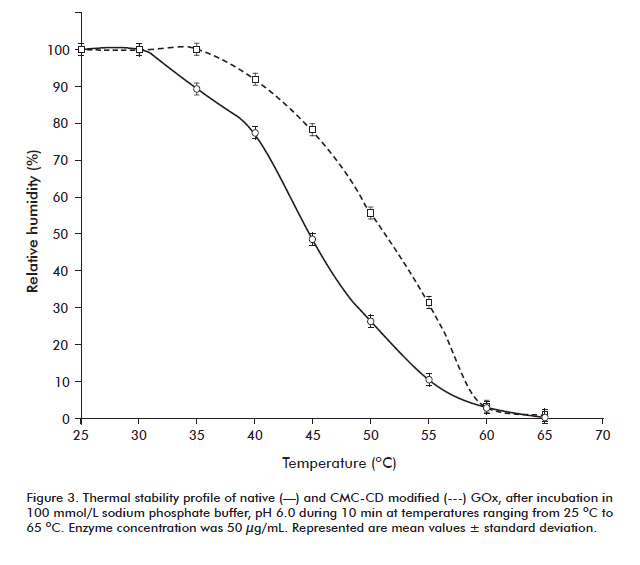
<P   ><font face="Verdana, Arial, Helvetica, sans-serif" size="2">Importantly, hydrophobic      interactions between CD and hydrophobic amino acid residues may reduce the      dielectric constant of the enzymatic environment. Such a phenomenon would      modify the dissociation constants of acid and basic groups in enzyme, substrate      and buffer. Partition could cause changes in local concentrations of these      molecules, affecting in turn the apparent kinetic parameters of the enzyme      [29]. </font></P >       <P   ><font face="Verdana, Arial, Helvetica, sans-serif" size="2">Studies on the reduced      and oxidized holoenzyme as well as the apoenzyme revealed that in the native      conformation of GOx, FAD is in close proximity to seven tryptophan residues.      FAD plays an important role in the activity and structure of this enzyme [13].      Taking into account all of these factors, the existence of host-guest interactions      between attached CD moieties and hydrophobic amino acid residues may affect      the kinetics parameters of the GOx derivative. </font></P >       <P   ><font face="Verdana, Arial, Helvetica, sans-serif" size="2">The thermal stability      of the modified enzyme was investigated by heating the samples for 10 min      at temperatures ranging from 25 &ordm;C to 65 &ordm;C and measuring their      activity. Modified GOx was more resistant to temperatures above 30 &ordm;C      (<a href="/img/revistas/bta/v29n1/f0305112.gif">Figure 3</a>) than the native enzyme, as T50 increased      from 45 &ordm;C before glycosidation to 51 &ordm;C afterwards. Similar results      have been reported for GOx stabilized through the addition of KCl [28] and      for different GOx immobilization variants [32-34]. </font></P >   <FONT size="+1"><FONT size="+1">        
<P   ><font face="Verdana, Arial, Helvetica, sans-serif" size="2">The improved resistance      of derivatized GOx against heat-induced denaturation is due, to a significant      extent, to the multipoint nature of the enzyme-polymer linkage. Surface complementarity      between enzyme and modifying agent has also been found to be crucial for the      stabilization of GOx [32]. Previous studies have pointed at aggregation as      the main cause of inactivation of GOx [13], which can be prevented by modifying      the microenvironment of the enzyme. The multipoint interactions present in      multimeric enzymes may prevent subunit dissociation by intersubunit cross-linking      while simultaneously reducing conformational inactivation [33]. </font></P >       ]]></body>
<body><![CDATA[<P   ><font face="Verdana, Arial, Helvetica, sans-serif" size="2">In a different set      of experiments, the time course of the inactivation of free and modifi ed      GOx was examined by incubation at temperatures ranging from 40 &ordm;C to      55 &ordm;C during 1 h. Compared to native GOx, the CMC-CD modified enzyme      exhibited longer halflives (t<Sub>1/2</Sub>) at these temperatures (<a href="/img/revistas/bta/v29n1/f0405112.gif">Figure      4</a>). Maximum stabilization was achieved at 40 &ordm;C, where t<Sub>1/2</Sub>      of CMC-CD-modified GOx was 5-fold higher than that of its native counterpart.      Stability increases of 7.7- fold have been reported for GOx immobilized with      lysozyme in the presence of additives and salts [34]. Considering the advantages      associated with the use of enzymes at high temperatures, the higher thermal      stability of GOx after glycosidation with CMC-CD is an important result. </font></P >   <FONT size="+1"><FONT size="+1"><FONT size="+1"><FONT size="+1">        
<P   ><font face="Verdana, Arial, Helvetica, sans-serif" size="2">Thermal denaturation      of GOx proceeds mainly through the destabilization of ionic and hydrophobic      interactions and the breakage of hydrogen bonds and van der Waals forces,      leading to conformational changes in tertiary structure that inactivate the      enzyme [5, 13]. The conformational stability observed for GOx modified with      CD polymers results from the cooperative contribution of several factors,      including the covalent cross-linking to macromolecular structures and the      formation of new hydrogen bonds and electrostatic interactions at its surface.      However, it can support the results due to the occurrence of host-guest interactions      between the attached CD moieties and the amino acid residues at the surface      of the modified proteins are also associated with the thermal stabilization      [19, 23]. Similar results were obtained for CD-branched CMC derivatives of      &alpha;-amylase [19], &alpha;-chymotrypsin [22], trypsin [18] and superoxide      dismutase [20, 21]. </font></P >       <P   ><font face="Verdana, Arial, Helvetica, sans-serif" size="2">GOx activity is markedly      reduced in the presence of surfactants such as SDS, due to the rupture of      non-polar interactions essential for maintaining the active conformation [7].      However, CMC-CD-modified GOx was remarkably more stable in the presence of      SDS (<a href="/img/revistas/bta/v29n1/f0505112.gif">Figure 5</a>), retaining about 75% of its initial      activity after incubation for 3 h. Improvement stabilization was found for      CMC-CD modified GOx in the presence of SDS. </font></P >       
<P   ><font face="Verdana, Arial, Helvetica, sans-serif" size="2">Similarly, the modified      enzyme was more stable after incubation in solutions at different pH values      (<a href="/img/revistas/bta/v29n1/f0605112.gif">Figure 6</a>). Optimum pH was 6.0 for both native      and CMC-modified GOx, as reported earlier [28]. However, CMC-CD-modified GOx      retained 70% of its activity at pH 7.5, compared with 20% for the native enzyme.      The fact that the polymer-enzyme complex was more stable at this pH than its      native counterpart suggests that the attached polymer chain protects the active      enzyme conformation at alkaline pH and avoids protein unfolding. CMC-CD derivatization      would thus represent an effective tool for improving enzyme stability at non-optimal      pH. </font></P >       
<P   ><font face="Verdana, Arial, Helvetica, sans-serif" size="2">Our results on the      use of CD-branched CMC polymers as modifying agents for GOx suggest that they      stabilize significantly the active conformation of the enzyme, preserving      enzyme activity upon exposure to different inactivating/denaturing agents.      This conformational stabilization may have its basis on the high degree of      intramolecular cross-linking of the conjugate, caused by covalent multipoint      attachment of the polymer chains to the enzyme protein structure, as mentioned      above. Additional stabilization may be provided by multipoint anionic and      supramolecular interactions between the enzyme and the CD-branched polymer      CMC-CD polymer, as previously reported for similar neoglycoconjugates [18,      19]. This strategy may be advantageous for a number of GOx applications, considering      the advantages of this enzyme and its use in different industries. </font></P >       <P   >&nbsp;</P >       <P   ><font face="Verdana, Arial, Helvetica, sans-serif" size="2"><B><font size="3">CONCLUSIONS      </font></b></font></P >       <P   ><font face="Verdana, Arial, Helvetica, sans-serif" size="2">The present paper      reports the covalent derivatization of GOx with CD-CMC. Our results demonstrate      the feasibility of this strategy for improving the stability of GOx in a number      of denaturing conditions. We suggest that covalent glycosidation of redox      enzymes with CD-branched CMC polymers might be a useful alternative for conferring      functional resistance to these biocatalysts. </font></P >       <P   >&nbsp;</P >       <P   ><font face="Verdana, Arial, Helvetica, sans-serif" size="2"><B><font size="3">ACKNOWLEDGMENTS      </font> </b></font></P >       ]]></body>
<body><![CDATA[<P   ><font face="Verdana, Arial, Helvetica, sans-serif" size="2">The author appreciates      the valuable technical assistance of Dr Reynaldo Villalonga Santana. </font></P >       <P   >&nbsp;</P >       <P   ><font face="Verdana, Arial, Helvetica, sans-serif" size="2"><B><font size="3">REFERENCES      </font></b></font></P >       <P   align="justify" ><font face="Verdana, Arial, Helvetica, sans-serif" size="2">1. Iyer PV, Ananthanarayan      L. Enzyme stability and stabilization&mdash;Aqueous and non-aqueous environment.      Process Biochem. 2008;43(10):1019-32. </font></P >   <FONT size="+1">        <!-- ref --><P   align="justify" ><font face="Verdana, Arial, Helvetica, sans-serif" size="2">2. Villalonga ML,      Reyes G, Villalonga R. Metal-induced stabilization of trypsin modified with      alpha-oxoglutaric acid. Biotechnol Lett. 2004;26(3):209-12.     </font></P >       <!-- ref --><P   align="justify" ><font face="Verdana, Arial, Helvetica, sans-serif" size="2">3. Wang C, Eufemi      M, Turano C, Giartosio A. Influence of the carbohydrate moiety on the stability      of glycoproteins. Biochemistry. 1996;35(23):7299-307.     </font></P >       <!-- ref --><P   align="justify" ><font face="Verdana, Arial, Helvetica, sans-serif" size="2">4. Mislovicova D,      Masarova J, Svitel J, Mendichi R, Soltes L, Gemeiner P, et al. Neoglycoconjugates      of mannan with bovine serum albumin and their interaction with lectin concanavalin      A. Bioconjug Chem. 2002;13(1):136-42.     </font></P >       ]]></body>
<body><![CDATA[<!-- ref --><P   align="justify" ><font face="Verdana, Arial, Helvetica, sans-serif" size="2">5. Zoldak G, Zubrik      A, Musatov A, Stupak M, Sedlak E. Irreversible thermal denaturation of glucose      oxidase from Aspergillus niger is the transition to the denatured state with      residual structure. J Biol Chem. 2004;279(46):47601-9.     </font></P >       <!-- ref --><P   align="justify" ><font face="Verdana, Arial, Helvetica, sans-serif" size="2">6. Tsuge H, Natsuaki      O, Ohashi K. Purification, properties, and molecular features of glucose oxidase      from Aspergillus niger. J Biochem. 1975;78(4):835-43.     </font></P >       <!-- ref --><P   align="justify" ><font face="Verdana, Arial, Helvetica, sans-serif" size="2">7. Jones MN, Manley      P, Wilkinson A. The dissociation of glucose oxidase by sodium n-dodecyl sulphate.      Biochem J. 1982;203(1):285-91.     </font></P >       <!-- ref --><P   align="justify" ><font face="Verdana, Arial, Helvetica, sans-serif" size="2">8. Caves MS, Derham      BK, Jezek J, Freedman RB. The mechanism of inactivation of glucose oxidase      from Penicillium amagasakiense under ambient storage conditions. Enzyme Microb      Technol. 2011;49(1):79-87.     </font></P >       <!-- ref --><P   align="justify" ><font face="Verdana, Arial, Helvetica, sans-serif" size="2">9. Bankar SB, Bule      MV, Singhal RS, Ananthanarayan L. Glucose oxidase--an overview. Biotechnol      Adv. 2009;27(4):489-501.     </font></P >       ]]></body>
<body><![CDATA[<!-- ref --><P   align="justify" ><font face="Verdana, Arial, Helvetica, sans-serif" size="2">10. Du Y, Luo XL,      Xu JJ, Chen HY. A simple method to fabricate a chitosan-gold nanoparticles      film and its application in glucose biosensor. Bioelectrochemistry. 2007;70(2):342-7.          </font></P >       <!-- ref --><P   align="justify" ><font face="Verdana, Arial, Helvetica, sans-serif" size="2">11. Courjean O, Mano      N. Recombinant glucose oxidase from Penicillium amagasakiense for efficient      bioelectrochemical applications in physiological conditions. J Biotechnol.      2011;151(1):122-9.     </font></P >       <!-- ref --><P   align="justify" ><font face="Verdana, Arial, Helvetica, sans-serif" size="2">12. Oztekin Y, Ramanaviciene      A, Yazicigil Z, Solak AO, Ramanavicius A. Direct electron transfer from glucose      oxidase immobilized on polyphenanthroline-modified glassy carbon electrode.      Biosens Bioelectron. 2011;26(5):2541-6.     </font></P >       <!-- ref --><P   align="justify" ><font face="Verdana, Arial, Helvetica, sans-serif" size="2">13. Gouda MD, Singh      SA, Rao AG, Thakur MS, Karanth NG. Thermal inactivation of glucose oxidase.      Mechanism and stabilization using additives. J Biol Chem. 2003;278(27):24324-33.          </font></P >       <!-- ref --><P   align="justify" ><font face="Verdana, Arial, Helvetica, sans-serif" size="2">14. Betancor L, Lopez-Gallego      F, Hidalgo A, Alonso-Morales N, Dellamora-Ortiz G, Guisan JM, et al. Preparation      of a very stable immobilized biocatalyst of glucose oxidase from Aspergillus      niger. J Biotechnol. 2006;121(2):284-9.     </font></P >       ]]></body>
<body><![CDATA[<!-- ref --><P   align="justify" ><font face="Verdana, Arial, Helvetica, sans-serif" size="2">15. Wenz G. Cyclodextrins      as building-blocks for supramolecular structures and functional units. Angew      Chem Int Ed Engl. 1994;33(8):803-22.     </font></P >       <!-- ref --><P   align="justify" ><font face="Verdana, Arial, Helvetica, sans-serif" size="2">16. Atwood JL, Davies      JED, MacNicol DD, V&ouml;gtle F, Lehn J-M, editors. Comprehensive supramolecular      chemistry. Oxford: Pergamon; 1996. p. 451-82.     </font></P >       <!-- ref --><P   align="justify" ><font face="Verdana, Arial, Helvetica, sans-serif" size="2">17. Fulton DA, Fraser      Stoddart J. Neoglycoconjugates based on cyclodextrins and calixarenes. Bioconjugate      Chem. 2001;12(5):655-72.     </font></P >       <!-- ref --><P   align="justify" ><font face="Verdana, Arial, Helvetica, sans-serif" size="2">18. Villalonga ML,      Fernandez M, Fragoso A, Cao R, Villalonga R. Functional stabilization of trypsin      by conjugation with beta-cyclodextrin-modified carboxymethylcellulose. Prep      Biochem Biotechnol. 2003;33(1):53-66.     </font></P >       <P   align="justify" ><font face="Verdana, Arial, Helvetica, sans-serif" size="2">19. Darias R, Herrera      I, Fragoso A, Cao R, Villalonga R. Supramolecular interactions mediated thermal      stabilization for &alpha;-amylase modified with a &beta;-cyclodextrin-carboxymethylcellulose      polymer. Biotechnol Lett. 2002;24(20):1665-8. </font></P >       <!-- ref --><P   align="justify" ><font face="Verdana, Arial, Helvetica, sans-serif" size="2">20. Ramirez HL. Cyclodextrin-grafted      polysaccharides as carrier systems for naproxen [dissertation]. Havana City:      Havana University; 2008.     </font></P >       <!-- ref --><P   align="justify" ><font face="Verdana, Arial, Helvetica, sans-serif" size="2">21. Valdivia A, P&eacute;rez      Y, Cao R, Ba&ntilde;os M, Garc&iacute;a A, Villalonga R. Bienzymatic supramolecular      complex of catalase and superoxide dismutase: Stability and anti-Inflammatory      properties. Macromol Biosci. 2007;7(1):70-5.     </font></P >       <P   align="justify" ><font face="Verdana, Arial, Helvetica, sans-serif" size="2">22. Fern&aacute;ndez      M, Villalonga ML, Fragoso A, Cao R, Ba&ntilde;os M, Villalonga R. &#61537;-Chymotrypsin      stabilization by chemical conjugation with O-carboxymethyl-poly-&beta;-cyclodextrin.      Process Biochem. 2004;39(5):535-9. </font></P >       <P   align="justify" ><font face="Verdana, Arial, Helvetica, sans-serif" size="2">23. Villalonga R,      Tachibana S, Cao R, Matos M, Asano Y. Glycosidation of L-phenylalanine dehydrogenase      with O-carboxymethyl-poly-&beta;-cyclodextrin. Enzyme Microb Technol. 2007;40(3):      471-5. </font></P >       <!-- ref --><P   align="justify" ><font face="Verdana, Arial, Helvetica, sans-serif" size="2">24. Betancor L, Fuentes      M, Dellamora-Ortiz G, L&oacute;pez-Gallego F, Hidalgo A, Alonso-Morales N,      et al. Dextran aldehyde coating of glucose oxidase immobilized on magnetic      nanoparticles prevents its inactivation by gas bubbles. J Mol Catal B Enzym.      2005;32(3):97-101.     </font></P >       <!-- ref --><P   align="justify" ><font face="Verdana, Arial, Helvetica, sans-serif" size="2">25. Lowry OH, Rosebrough      NJ, Farr AL, Randall RJ. Protein measurement with the Folin phenol reagent.      J Biol Chem. 1951;193(1):265-75.     </font></P >       <!-- ref --><P   align="justify" ><font face="Verdana, Arial, Helvetica, sans-serif" size="2">26. Dubois M, Gilles      KA, Hamilton JK, Rebers PA, Smith F. Colorimetric method for determination      of sugars and related substances. Anal Chem. 1956;28(3):350-6.     </font></P >       <!-- ref --><P   align="justify" ><font face="Verdana, Arial, Helvetica, sans-serif" size="2">27. Bruneel D, Schacht      E. End group modification of pullulan. Polymer. 1995;36:169-72.     </font></P >       <!-- ref --><P   align="justify" ><font face="Verdana, Arial, Helvetica, sans-serif" size="2">28. Ahmad A, Akhtar      MS, Bhakuni V. Monovalent cation-induced conformational change in glucose      oxidase leading to stabilization of the enzyme. Biochemistry. 2001;40(7):1945-55.          </font></P >       <!-- ref --><P   align="justify" ><font face="Verdana, Arial, Helvetica, sans-serif" size="2">29. Chaplin MF. The      preparation and kinetics of immobilized enzymes [Internet]. In: Chaplin M,      Becke C, editors. Enzyme Tecnhology. Cambridge: Cambridge University Press;      1990 [cited 2011 Aug 27]. p. 80-89. Available from: <a href="http://www.lsbu.ac.uk/biology/enztech" target="_blank">      <U><U><FONT color="#0000FF">http://www.lsbu.ac.uk/biology/enztech</font></U></U></A><FONT color="#0000FF"><FONT color="#000000">.          </font></font></font></P >   <FONT color="#0000FF"><FONT color="#000000">        <P   align="justify" ><font face="Verdana, Arial, Helvetica, sans-serif" size="2">30. G&oacute;mez      L, Ram&iacute;rez HL, Villalonga R. Chemical modification of &alpha;-amylase      by sodium alginate. Acta Biotechnol 2001;21(3):265-73. </font></P >       <!-- ref --><P   align="justify" ><font face="Verdana, Arial, Helvetica, sans-serif" size="2">31. Rodriguez-Nogales      JM. Kinetic behaviour and stability of glucose oxidase entrapped in liposomes.      J Chem Technol Biotechnol. 2004;79(1):72-8.     </font></P >       ]]></body>
<body><![CDATA[<!-- ref --><P   align="justify" ><font face="Verdana, Arial, Helvetica, sans-serif" size="2">32. Rauf S, Ihsan      A, Akhtar K, Ghauri MA, Rahman M, Anwar MA, et al. Glucose oxidase immobilization      on a novel cellulose acetate-polymethylmethacrylate membrane. J Biotechnol.      2006;121(3):351-60.     </font></P >       <!-- ref --><P   align="justify" ><font face="Verdana, Arial, Helvetica, sans-serif" size="2">33. Fernandez-Lafuente      R, Rodr&iacute;guez V, Mateo C, Penzol G, Hernandez-Justiz O, Irazoqui G,      et al. Stabilization of multimeric enzymes via immobilization and post-immobilization      techniques. J Mol Catal B Enzymatic. 1999;7:181-90.     </font></P >       <!-- ref --><P   align="justify" ><font face="Verdana, Arial, Helvetica, sans-serif" size="2">34. Gulla KC, Gouda      MD, Thakur MS, Karanth NG. Enhancement of stability of immobilized glucose      oxidase by modification of free thiols generated by reducing disulfide bonds      and using additives. Biosens Bioelectron. 2004;19(6):621-5.    </font></P >       <P   align="justify" >&nbsp;</P >       <P   > </P >   <FONT size="+1">        <P   ><font size="2" face="Verdana, Arial, Helvetica, sans-serif">Received in September,      2011.     <br>     Accepted for publication in January, 2012.</font></P >       ]]></body>
<body><![CDATA[<P   >&nbsp;</P >   <FONT size="+1">        <P   > </P >       <P   ><font face="Verdana, Arial, Helvetica, sans-serif" size="2">Madyu Matos. Center      for Enzyme Technology, Universidad Camilo Cienfuegos. Autopista a Varadero      Km 3&frac12;, CP 44 740, Matanzas, Cuba. E-mail: <a href="mailto:madyu.matos@umcc.cu">      <U><U><FONT color="#0000FF">madyu.matos@umcc.cu</font></U></U></A><FONT color="#0000FF"><FONT color="#000000">.      </font></font></font></P >   </font></font></font></font></font></font></font></font></font></font></font></font></font></font></font></font></font></font></font></font></font></font></font></font></font></font></font></font></font></font></font></font></font></font></font></font></font></font></font></font></font></font></font></font></font></DIV >      ]]></body><back>
<ref-list>
<ref id="B1">
<label>1</label><nlm-citation citation-type="journal">
<person-group person-group-type="author">
<name>
<surname><![CDATA[Iyer]]></surname>
<given-names><![CDATA[PV]]></given-names>
</name>
<name>
<surname><![CDATA[Ananthanarayan]]></surname>
<given-names><![CDATA[L]]></given-names>
</name>
</person-group>
<article-title xml:lang="en"><![CDATA[Enzyme stability and stabilization: Aqueous and nonaqueous environment]]></article-title>
<source><![CDATA[Process Biochem]]></source>
<year>2008</year>
<volume>43</volume>
<numero>10</numero>
<issue>10</issue>
<page-range>1019-32</page-range></nlm-citation>
</ref>
<ref id="B2">
<label>2</label><nlm-citation citation-type="journal">
<person-group person-group-type="author">
<name>
<surname><![CDATA[Villalonga]]></surname>
<given-names><![CDATA[ML]]></given-names>
</name>
<name>
<surname><![CDATA[Reyes]]></surname>
<given-names><![CDATA[G]]></given-names>
</name>
<name>
<surname><![CDATA[Villalonga]]></surname>
<given-names><![CDATA[R]]></given-names>
</name>
</person-group>
<article-title xml:lang="en"><![CDATA[Metal-induced stabilization of trypsin modified with alpha-oxoglutaric acid]]></article-title>
<source><![CDATA[Biotechnol Lett]]></source>
<year>2004</year>
<volume>26</volume>
<numero>3</numero>
<issue>3</issue>
<page-range>209-12</page-range></nlm-citation>
</ref>
<ref id="B3">
<label>3</label><nlm-citation citation-type="journal">
<person-group person-group-type="author">
<name>
<surname><![CDATA[Wang]]></surname>
<given-names><![CDATA[C]]></given-names>
</name>
<name>
<surname><![CDATA[Eufemi]]></surname>
<given-names><![CDATA[M]]></given-names>
</name>
<name>
<surname><![CDATA[Turano]]></surname>
<given-names><![CDATA[C]]></given-names>
</name>
<name>
<surname><![CDATA[Giartosio]]></surname>
<given-names><![CDATA[A]]></given-names>
</name>
</person-group>
<article-title xml:lang="en"><![CDATA[Influence of the carbohydrate moiety on the stability of glycoproteins]]></article-title>
<source><![CDATA[Biochemistry]]></source>
<year>1996</year>
<volume>35</volume>
<numero>23</numero>
<issue>23</issue>
<page-range>7299-307</page-range></nlm-citation>
</ref>
<ref id="B4">
<label>4</label><nlm-citation citation-type="journal">
<person-group person-group-type="author">
<name>
<surname><![CDATA[Mislovicova]]></surname>
<given-names><![CDATA[D]]></given-names>
</name>
<name>
<surname><![CDATA[Masarova]]></surname>
<given-names><![CDATA[J]]></given-names>
</name>
<name>
<surname><![CDATA[Svitel]]></surname>
<given-names><![CDATA[J]]></given-names>
</name>
<name>
<surname><![CDATA[Mendichi]]></surname>
<given-names><![CDATA[R]]></given-names>
</name>
<name>
<surname><![CDATA[Soltes]]></surname>
<given-names><![CDATA[L]]></given-names>
</name>
<name>
<surname><![CDATA[Gemeiner]]></surname>
<given-names><![CDATA[P]]></given-names>
</name>
</person-group>
<article-title xml:lang="en"><![CDATA[Neoglycoconjugates of mannan with bovine serum albumin and their interaction with lectin concanavalin A]]></article-title>
<source><![CDATA[Bioconjug Chem]]></source>
<year>2002</year>
<volume>13</volume>
<numero>1</numero>
<issue>1</issue>
<page-range>136-42</page-range></nlm-citation>
</ref>
<ref id="B5">
<label>5</label><nlm-citation citation-type="journal">
<person-group person-group-type="author">
<name>
<surname><![CDATA[Zoldak]]></surname>
<given-names><![CDATA[G]]></given-names>
</name>
<name>
<surname><![CDATA[Zubrik]]></surname>
<given-names><![CDATA[A]]></given-names>
</name>
<name>
<surname><![CDATA[Musatov]]></surname>
<given-names><![CDATA[A]]></given-names>
</name>
<name>
<surname><![CDATA[Stupak]]></surname>
<given-names><![CDATA[M]]></given-names>
</name>
<name>
<surname><![CDATA[Sedlak]]></surname>
<given-names><![CDATA[E]]></given-names>
</name>
</person-group>
<article-title xml:lang="en"><![CDATA[Irreversible thermal denaturation of glucose oxidase from Aspergillus niger is the transition to the denatured state with residual structure]]></article-title>
<source><![CDATA[J Biol Chem]]></source>
<year>2004</year>
<volume>279</volume>
<numero>46</numero>
<issue>46</issue>
<page-range>47601-9</page-range></nlm-citation>
</ref>
<ref id="B6">
<label>6</label><nlm-citation citation-type="journal">
<person-group person-group-type="author">
<name>
<surname><![CDATA[Tsuge]]></surname>
<given-names><![CDATA[H]]></given-names>
</name>
<name>
<surname><![CDATA[Natsuaki]]></surname>
<given-names><![CDATA[O]]></given-names>
</name>
<name>
<surname><![CDATA[Ohashi]]></surname>
<given-names><![CDATA[K]]></given-names>
</name>
</person-group>
<article-title xml:lang="en"><![CDATA[Purification, properties, and molecular features of glucose oxidase from Aspergillus niger]]></article-title>
<source><![CDATA[J Biochem]]></source>
<year>1975</year>
<volume>78</volume>
<numero>4</numero>
<issue>4</issue>
<page-range>835-43</page-range></nlm-citation>
</ref>
<ref id="B7">
<label>7</label><nlm-citation citation-type="journal">
<person-group person-group-type="author">
<name>
<surname><![CDATA[Jones]]></surname>
<given-names><![CDATA[MN]]></given-names>
</name>
<name>
<surname><![CDATA[Manley]]></surname>
<given-names><![CDATA[P]]></given-names>
</name>
<name>
<surname><![CDATA[Wilkinson]]></surname>
<given-names><![CDATA[A]]></given-names>
</name>
</person-group>
<article-title xml:lang="en"><![CDATA[The dissociation of glucose oxidase by sodium n-dodecyl sulphate]]></article-title>
<source><![CDATA[Biochem J]]></source>
<year>1982</year>
<volume>203</volume>
<numero>1</numero>
<issue>1</issue>
<page-range>285-91</page-range></nlm-citation>
</ref>
<ref id="B8">
<label>8</label><nlm-citation citation-type="journal">
<person-group person-group-type="author">
<name>
<surname><![CDATA[Caves]]></surname>
<given-names><![CDATA[MS]]></given-names>
</name>
<name>
<surname><![CDATA[Derham]]></surname>
<given-names><![CDATA[BK]]></given-names>
</name>
<name>
<surname><![CDATA[Jezek]]></surname>
<given-names><![CDATA[J]]></given-names>
</name>
<name>
<surname><![CDATA[Freedman]]></surname>
<given-names><![CDATA[RB]]></given-names>
</name>
</person-group>
<article-title xml:lang="en"><![CDATA[The mechanism of inactivation of glucose oxidase from Penicillium amagasakiense under ambient storage conditions]]></article-title>
<source><![CDATA[Enzyme Microb Technol]]></source>
<year>2011</year>
<volume>49</volume>
<numero>1</numero>
<issue>1</issue>
<page-range>79-87</page-range></nlm-citation>
</ref>
<ref id="B9">
<label>9</label><nlm-citation citation-type="journal">
<person-group person-group-type="author">
<name>
<surname><![CDATA[Bankar]]></surname>
<given-names><![CDATA[SB]]></given-names>
</name>
<name>
<surname><![CDATA[Bule]]></surname>
<given-names><![CDATA[MV]]></given-names>
</name>
<name>
<surname><![CDATA[Singhal]]></surname>
<given-names><![CDATA[RS]]></given-names>
</name>
<name>
<surname><![CDATA[Ananthanarayan]]></surname>
<given-names><![CDATA[L]]></given-names>
</name>
</person-group>
<article-title xml:lang="en"><![CDATA[Glucose oxidase an overview]]></article-title>
<source><![CDATA[Biotechnol Adv]]></source>
<year>2009</year>
<volume>27</volume>
<numero>4</numero>
<issue>4</issue>
<page-range>489-501</page-range></nlm-citation>
</ref>
<ref id="B10">
<label>10</label><nlm-citation citation-type="journal">
<person-group person-group-type="author">
<name>
<surname><![CDATA[Du]]></surname>
<given-names><![CDATA[Y]]></given-names>
</name>
<name>
<surname><![CDATA[Luo]]></surname>
<given-names><![CDATA[XL]]></given-names>
</name>
<name>
<surname><![CDATA[Xu]]></surname>
<given-names><![CDATA[JJ]]></given-names>
</name>
<name>
<surname><![CDATA[Chen]]></surname>
<given-names><![CDATA[HY]]></given-names>
</name>
</person-group>
<article-title xml:lang="en"><![CDATA[A simple method to fabricate a chitosan-gold nanoparticles film and its application in glucose biosensor]]></article-title>
<source><![CDATA[Bioelectrochemistry]]></source>
<year>2007</year>
<volume>70</volume>
<numero>2</numero>
<issue>2</issue>
<page-range>342-7</page-range></nlm-citation>
</ref>
<ref id="B11">
<label>11</label><nlm-citation citation-type="journal">
<person-group person-group-type="author">
<name>
<surname><![CDATA[Courjean]]></surname>
<given-names><![CDATA[O]]></given-names>
</name>
<name>
<surname><![CDATA[Mano]]></surname>
<given-names><![CDATA[N]]></given-names>
</name>
</person-group>
<article-title xml:lang="en"><![CDATA[Recombinant glucose oxidase from Penicillium amagasakiense for efficient bioelectrochemical applications in physiological conditions]]></article-title>
<source><![CDATA[J Biotechnol]]></source>
<year>2011</year>
<volume>151</volume>
<numero>1</numero>
<issue>1</issue>
<page-range>122-9</page-range></nlm-citation>
</ref>
<ref id="B12">
<label>12</label><nlm-citation citation-type="journal">
<person-group person-group-type="author">
<name>
<surname><![CDATA[Oztekin]]></surname>
<given-names><![CDATA[Y]]></given-names>
</name>
<name>
<surname><![CDATA[Ramanaviciene]]></surname>
<given-names><![CDATA[A]]></given-names>
</name>
<name>
<surname><![CDATA[Yazicigil]]></surname>
<given-names><![CDATA[Z]]></given-names>
</name>
<name>
<surname><![CDATA[Solak]]></surname>
<given-names><![CDATA[AO]]></given-names>
</name>
<name>
<surname><![CDATA[Ramanavicius]]></surname>
<given-names><![CDATA[A]]></given-names>
</name>
</person-group>
<article-title xml:lang="en"><![CDATA[Direct electron transfer from glucose oxidase immobilized on polyphenanthroline-modified glassy carbon electrode]]></article-title>
<source><![CDATA[Biosens Bioelectron]]></source>
<year>2011</year>
<volume>26</volume>
<numero>5</numero>
<issue>5</issue>
<page-range>2541-6</page-range></nlm-citation>
</ref>
<ref id="B13">
<label>13</label><nlm-citation citation-type="journal">
<person-group person-group-type="author">
<name>
<surname><![CDATA[Gouda]]></surname>
<given-names><![CDATA[MD]]></given-names>
</name>
<name>
<surname><![CDATA[Singh]]></surname>
<given-names><![CDATA[SA]]></given-names>
</name>
<name>
<surname><![CDATA[Rao]]></surname>
<given-names><![CDATA[AG]]></given-names>
</name>
<name>
<surname><![CDATA[Thakur]]></surname>
<given-names><![CDATA[MS]]></given-names>
</name>
<name>
<surname><![CDATA[Karanth]]></surname>
<given-names><![CDATA[NG]]></given-names>
</name>
</person-group>
<article-title xml:lang="en"><![CDATA[Thermal inactivation of glucose oxidase: Mechanism and stabilization using additives]]></article-title>
<source><![CDATA[J Biol Chem]]></source>
<year>2003</year>
<volume>278</volume>
<numero>27</numero>
<issue>27</issue>
<page-range>24324-33</page-range></nlm-citation>
</ref>
<ref id="B14">
<label>14</label><nlm-citation citation-type="journal">
<person-group person-group-type="author">
<name>
<surname><![CDATA[Betancor]]></surname>
<given-names><![CDATA[L]]></given-names>
</name>
<name>
<surname><![CDATA[Lopez-Gallego]]></surname>
<given-names><![CDATA[F]]></given-names>
</name>
<name>
<surname><![CDATA[Hidalgo]]></surname>
<given-names><![CDATA[A]]></given-names>
</name>
<name>
<surname><![CDATA[Alonso-Morales]]></surname>
<given-names><![CDATA[N]]></given-names>
</name>
<name>
<surname><![CDATA[Dellamora-Ortiz]]></surname>
<given-names><![CDATA[G]]></given-names>
</name>
<name>
<surname><![CDATA[Guisan]]></surname>
<given-names><![CDATA[JM]]></given-names>
</name>
</person-group>
<article-title xml:lang="en"><![CDATA[Preparation of a very stable immobilized biocatalyst of glucose oxidase from Aspergillus niger]]></article-title>
<source><![CDATA[J Biotechnol]]></source>
<year>2006</year>
<volume>121</volume>
<numero>2</numero>
<issue>2</issue>
<page-range>284-9</page-range></nlm-citation>
</ref>
<ref id="B15">
<label>15</label><nlm-citation citation-type="journal">
<person-group person-group-type="author">
<name>
<surname><![CDATA[Wenz]]></surname>
<given-names><![CDATA[G]]></given-names>
</name>
</person-group>
<article-title xml:lang="en"><![CDATA[Cyclodextrins as building blocks for supramolecular structures and functional units]]></article-title>
<source><![CDATA[Angew Chem Int Ed Engl]]></source>
<year>1994</year>
<volume>33</volume>
<numero>8</numero>
<issue>8</issue>
<page-range>803-22</page-range></nlm-citation>
</ref>
<ref id="B16">
<label>16</label><nlm-citation citation-type="book">
<person-group person-group-type="author">
<name>
<surname><![CDATA[Atwood]]></surname>
<given-names><![CDATA[JL]]></given-names>
</name>
<name>
<surname><![CDATA[Davies]]></surname>
<given-names><![CDATA[JED]]></given-names>
</name>
<name>
<surname><![CDATA[MacNicol]]></surname>
<given-names><![CDATA[DD]]></given-names>
</name>
<name>
<surname><![CDATA[Vögtle]]></surname>
<given-names><![CDATA[F]]></given-names>
</name>
<name>
<surname><![CDATA[Lehn]]></surname>
<given-names><![CDATA[J-M]]></given-names>
</name>
</person-group>
<source><![CDATA[Comprehensive supramolecular chemistry]]></source>
<year>1996</year>
<page-range>451-82</page-range><publisher-loc><![CDATA[Oxford ]]></publisher-loc>
<publisher-name><![CDATA[Pergamon]]></publisher-name>
</nlm-citation>
</ref>
<ref id="B17">
<label>17</label><nlm-citation citation-type="journal">
<person-group person-group-type="author">
<name>
<surname><![CDATA[Fulton]]></surname>
<given-names><![CDATA[DA]]></given-names>
</name>
<name>
<surname><![CDATA[Fraser Stoddart]]></surname>
<given-names><![CDATA[J]]></given-names>
</name>
</person-group>
<article-title xml:lang="en"><![CDATA[Neoglycoconjugates based on cyclodextrins and calixarenes]]></article-title>
<source><![CDATA[Bioconjugate Chem]]></source>
<year>2001</year>
<volume>12</volume>
<numero>5</numero>
<issue>5</issue>
<page-range>655-72</page-range></nlm-citation>
</ref>
<ref id="B18">
<label>18</label><nlm-citation citation-type="journal">
<person-group person-group-type="author">
<name>
<surname><![CDATA[Villalonga]]></surname>
<given-names><![CDATA[ML]]></given-names>
</name>
<name>
<surname><![CDATA[Fernandez]]></surname>
<given-names><![CDATA[M]]></given-names>
</name>
<name>
<surname><![CDATA[Fragoso]]></surname>
<given-names><![CDATA[A]]></given-names>
</name>
<name>
<surname><![CDATA[Cao]]></surname>
<given-names><![CDATA[R]]></given-names>
</name>
<name>
<surname><![CDATA[Villalonga]]></surname>
<given-names><![CDATA[R]]></given-names>
</name>
</person-group>
<article-title xml:lang="en"><![CDATA[Functional stabilization of trypsin by conjugation with beta-cyclodextrin-modified carboxymethylcellulose]]></article-title>
<source><![CDATA[Prep Biochem Biotechnol]]></source>
<year>2003</year>
<volume>33</volume>
<numero>1</numero>
<issue>1</issue>
<page-range>53-66</page-range></nlm-citation>
</ref>
<ref id="B19">
<label>19</label><nlm-citation citation-type="journal">
<person-group person-group-type="author">
<name>
<surname><![CDATA[Darias]]></surname>
<given-names><![CDATA[R]]></given-names>
</name>
<name>
<surname><![CDATA[Herrera]]></surname>
<given-names><![CDATA[I]]></given-names>
</name>
<name>
<surname><![CDATA[Fragoso]]></surname>
<given-names><![CDATA[A]]></given-names>
</name>
<name>
<surname><![CDATA[Cao]]></surname>
<given-names><![CDATA[R]]></given-names>
</name>
<name>
<surname><![CDATA[Villalonga]]></surname>
<given-names><![CDATA[R]]></given-names>
</name>
</person-group>
<article-title xml:lang="en"><![CDATA[Supramolecular interactions mediated thermal stabilization for a-amylase modified with a ß-cyclodextrin-carboxymethylcellulose polymer]]></article-title>
<source><![CDATA[Biotechnol Lett]]></source>
<year>2002</year>
<volume>24</volume>
<numero>20</numero>
<issue>20</issue>
<page-range>1665-8</page-range></nlm-citation>
</ref>
<ref id="B20">
<label>20</label><nlm-citation citation-type="book">
<person-group person-group-type="author">
<name>
<surname><![CDATA[Ramirez]]></surname>
<given-names><![CDATA[HL]]></given-names>
</name>
</person-group>
<source><![CDATA[Cyclodextrin-grafted polysaccharides as carrier systems for naproxen]]></source>
<year>2008</year>
<publisher-loc><![CDATA[Havana City ]]></publisher-loc>
<publisher-name><![CDATA[Havana University]]></publisher-name>
</nlm-citation>
</ref>
<ref id="B21">
<label>21</label><nlm-citation citation-type="journal">
<person-group person-group-type="author">
<name>
<surname><![CDATA[Valdivia]]></surname>
<given-names><![CDATA[A]]></given-names>
</name>
<name>
<surname><![CDATA[Pérez]]></surname>
<given-names><![CDATA[Y]]></given-names>
</name>
<name>
<surname><![CDATA[Cao]]></surname>
<given-names><![CDATA[R]]></given-names>
</name>
<name>
<surname><![CDATA[Baños]]></surname>
<given-names><![CDATA[M]]></given-names>
</name>
<name>
<surname><![CDATA[García]]></surname>
<given-names><![CDATA[A]]></given-names>
</name>
<name>
<surname><![CDATA[Villalonga]]></surname>
<given-names><![CDATA[R]]></given-names>
</name>
</person-group>
<article-title xml:lang="en"><![CDATA[Bienzymatic supramolecular complex of catalase and superoxide dismutase: Stability and anti-Inflammatory properties]]></article-title>
<source><![CDATA[Macromol Biosci]]></source>
<year>2007</year>
<volume>7</volume>
<numero>1</numero>
<issue>1</issue>
<page-range>70-5</page-range></nlm-citation>
</ref>
<ref id="B22">
<label>22</label><nlm-citation citation-type="journal">
<person-group person-group-type="author">
<name>
<surname><![CDATA[Fernández]]></surname>
<given-names><![CDATA[M]]></given-names>
</name>
<name>
<surname><![CDATA[Villalonga]]></surname>
<given-names><![CDATA[ML]]></given-names>
</name>
<name>
<surname><![CDATA[Fragoso]]></surname>
<given-names><![CDATA[A]]></given-names>
</name>
<name>
<surname><![CDATA[Cao]]></surname>
<given-names><![CDATA[R]]></given-names>
</name>
<name>
<surname><![CDATA[Baños]]></surname>
<given-names><![CDATA[M]]></given-names>
</name>
<name>
<surname><![CDATA[Villalonga]]></surname>
<given-names><![CDATA[R]]></given-names>
</name>
</person-group>
<article-title xml:lang="en"><![CDATA[a-Chymotrypsin stabilization by chemical conjugation with O-carboxymethylpoly-ß-cyclodextrin]]></article-title>
<source><![CDATA[Process Biochem]]></source>
<year>2004</year>
<volume>39</volume>
<numero>5</numero>
<issue>5</issue>
<page-range>535-9</page-range></nlm-citation>
</ref>
<ref id="B23">
<label>23</label><nlm-citation citation-type="journal">
<person-group person-group-type="author">
<name>
<surname><![CDATA[Villalonga]]></surname>
<given-names><![CDATA[R]]></given-names>
</name>
<name>
<surname><![CDATA[Tachibana]]></surname>
<given-names><![CDATA[S]]></given-names>
</name>
<name>
<surname><![CDATA[Cao]]></surname>
<given-names><![CDATA[R]]></given-names>
</name>
<name>
<surname><![CDATA[Matos]]></surname>
<given-names><![CDATA[M]]></given-names>
</name>
<name>
<surname><![CDATA[Asano]]></surname>
<given-names><![CDATA[Y]]></given-names>
</name>
</person-group>
<article-title xml:lang="en"><![CDATA[Glycosidation of L-phenylalanine dehydrogenase with O-carboxymethyl-poly-ß-cyclodextrin]]></article-title>
<source><![CDATA[Enzyme Microb Technol]]></source>
<year>2007</year>
<volume>40</volume>
<numero>3</numero>
<issue>3</issue>
<page-range>471-5</page-range></nlm-citation>
</ref>
<ref id="B24">
<label>24</label><nlm-citation citation-type="journal">
<person-group person-group-type="author">
<name>
<surname><![CDATA[Betancor]]></surname>
<given-names><![CDATA[L]]></given-names>
</name>
<name>
<surname><![CDATA[Fuentes]]></surname>
<given-names><![CDATA[M]]></given-names>
</name>
<name>
<surname><![CDATA[Dellamora-Ortiz]]></surname>
<given-names><![CDATA[G]]></given-names>
</name>
<name>
<surname><![CDATA[López-Gallego]]></surname>
<given-names><![CDATA[F]]></given-names>
</name>
<name>
<surname><![CDATA[Hidalgo]]></surname>
<given-names><![CDATA[A]]></given-names>
</name>
<name>
<surname><![CDATA[Alonso-Morales]]></surname>
<given-names><![CDATA[N]]></given-names>
</name>
</person-group>
<article-title xml:lang="en"><![CDATA[Dextran aldehyde coating of glucose oxidase immobilized on magnetic nanoparticles prevents its inactivation by gas bubbles]]></article-title>
<source><![CDATA[J Mol Catal B Enzym]]></source>
<year>2005</year>
<volume>32</volume>
<numero>3</numero>
<issue>3</issue>
<page-range>97-101</page-range></nlm-citation>
</ref>
<ref id="B25">
<label>25</label><nlm-citation citation-type="journal">
<person-group person-group-type="author">
<name>
<surname><![CDATA[Lowry]]></surname>
<given-names><![CDATA[OH]]></given-names>
</name>
<name>
<surname><![CDATA[Rosebrough]]></surname>
<given-names><![CDATA[NJ]]></given-names>
</name>
<name>
<surname><![CDATA[Farr]]></surname>
<given-names><![CDATA[AL]]></given-names>
</name>
<name>
<surname><![CDATA[Randall]]></surname>
<given-names><![CDATA[RJ]]></given-names>
</name>
</person-group>
<article-title xml:lang="en"><![CDATA[Protein measurement with the Folin phenol reagent]]></article-title>
<source><![CDATA[J Biol Chem]]></source>
<year>1951</year>
<volume>193</volume>
<numero>1</numero>
<issue>1</issue>
<page-range>265-75</page-range></nlm-citation>
</ref>
<ref id="B26">
<label>26</label><nlm-citation citation-type="journal">
<person-group person-group-type="author">
<name>
<surname><![CDATA[Dubois]]></surname>
<given-names><![CDATA[M]]></given-names>
</name>
<name>
<surname><![CDATA[Gilles]]></surname>
<given-names><![CDATA[KA]]></given-names>
</name>
<name>
<surname><![CDATA[Hamilton]]></surname>
<given-names><![CDATA[JK]]></given-names>
</name>
<name>
<surname><![CDATA[Rebers]]></surname>
<given-names><![CDATA[PA]]></given-names>
</name>
<name>
<surname><![CDATA[Smith]]></surname>
<given-names><![CDATA[F]]></given-names>
</name>
</person-group>
<article-title xml:lang="en"><![CDATA[Colorimetric method for determination of sugars and related substances]]></article-title>
<source><![CDATA[Anal Chem]]></source>
<year>1956</year>
<volume>28</volume>
<numero>3</numero>
<issue>3</issue>
<page-range>350-6</page-range></nlm-citation>
</ref>
<ref id="B27">
<label>27</label><nlm-citation citation-type="journal">
<person-group person-group-type="author">
<name>
<surname><![CDATA[Bruneel]]></surname>
<given-names><![CDATA[D]]></given-names>
</name>
<name>
<surname><![CDATA[Schacht]]></surname>
<given-names><![CDATA[E]]></given-names>
</name>
</person-group>
<article-title xml:lang="en"><![CDATA[End group modification of pullulan]]></article-title>
<source><![CDATA[Polymer]]></source>
<year>1995</year>
<volume>36</volume>
<page-range>169-72</page-range></nlm-citation>
</ref>
<ref id="B28">
<label>28</label><nlm-citation citation-type="journal">
<person-group person-group-type="author">
<name>
<surname><![CDATA[Ahmad]]></surname>
<given-names><![CDATA[A]]></given-names>
</name>
<name>
<surname><![CDATA[Akhtar]]></surname>
<given-names><![CDATA[MS]]></given-names>
</name>
<name>
<surname><![CDATA[Bhakuni]]></surname>
<given-names><![CDATA[V]]></given-names>
</name>
</person-group>
<article-title xml:lang="en"><![CDATA[Monovalent cation-induced conformational change in glucose oxidase leading to stabilization of the enzyme]]></article-title>
<source><![CDATA[Biochemistry]]></source>
<year>2001</year>
<volume>40</volume>
<numero>7</numero>
<issue>7</issue>
<page-range>1945-55</page-range></nlm-citation>
</ref>
<ref id="B29">
<label>29</label><nlm-citation citation-type="book">
<person-group person-group-type="author">
<name>
<surname><![CDATA[Chaplin]]></surname>
<given-names><![CDATA[MF]]></given-names>
</name>
</person-group>
<article-title xml:lang="en"><![CDATA[The preparation and kinetics of immobilized enzymes]]></article-title>
<person-group person-group-type="editor">
<name>
<surname><![CDATA[Chaplin]]></surname>
<given-names><![CDATA[M]]></given-names>
</name>
<name>
<surname><![CDATA[Becke]]></surname>
<given-names><![CDATA[C]]></given-names>
</name>
</person-group>
<source><![CDATA[Enzyme Tecnhology]]></source>
<year>1990</year>
<page-range>80-89</page-range><publisher-loc><![CDATA[Cambridge ]]></publisher-loc>
<publisher-name><![CDATA[Cambridge University Press]]></publisher-name>
</nlm-citation>
</ref>
<ref id="B30">
<label>30</label><nlm-citation citation-type="journal">
<person-group person-group-type="author">
<name>
<surname><![CDATA[Gómez]]></surname>
<given-names><![CDATA[L]]></given-names>
</name>
<name>
<surname><![CDATA[Ramírez]]></surname>
<given-names><![CDATA[HL]]></given-names>
</name>
<name>
<surname><![CDATA[Villalonga]]></surname>
<given-names><![CDATA[R]]></given-names>
</name>
</person-group>
<article-title xml:lang="en"><![CDATA[Chemical modification of a-amylase by sodium alginate]]></article-title>
<source><![CDATA[Acta Biotechnol]]></source>
<year>2001</year>
<volume>21</volume>
<numero>3</numero>
<issue>3</issue>
<page-range>265-73</page-range></nlm-citation>
</ref>
<ref id="B31">
<label>31</label><nlm-citation citation-type="journal">
<person-group person-group-type="author">
<name>
<surname><![CDATA[Rodriguez-Nogales]]></surname>
<given-names><![CDATA[JM]]></given-names>
</name>
</person-group>
<article-title xml:lang="en"><![CDATA[Kinetic behaviour and stability of glucose oxidase entrapped in liposomes]]></article-title>
<source><![CDATA[J Chem Technol Biotechnol]]></source>
<year>2004</year>
<volume>79</volume>
<numero>1</numero>
<issue>1</issue>
<page-range>72-8</page-range></nlm-citation>
</ref>
<ref id="B32">
<label>32</label><nlm-citation citation-type="journal">
<person-group person-group-type="author">
<name>
<surname><![CDATA[Rauf]]></surname>
<given-names><![CDATA[S]]></given-names>
</name>
<name>
<surname><![CDATA[Ihsan]]></surname>
<given-names><![CDATA[A]]></given-names>
</name>
<name>
<surname><![CDATA[Akhtar]]></surname>
<given-names><![CDATA[K]]></given-names>
</name>
<name>
<surname><![CDATA[Ghauri]]></surname>
<given-names><![CDATA[MA]]></given-names>
</name>
<name>
<surname><![CDATA[Rahman]]></surname>
<given-names><![CDATA[M]]></given-names>
</name>
<name>
<surname><![CDATA[Anwar]]></surname>
<given-names><![CDATA[MA]]></given-names>
</name>
</person-group>
<article-title xml:lang="en"><![CDATA[Glucose oxidase immobilization on a novel cellulose acetatepolymethylmethacrylate membrane]]></article-title>
<source><![CDATA[J Biotechnol]]></source>
<year>2006</year>
<volume>121</volume>
<numero>3</numero>
<issue>3</issue>
<page-range>351-60</page-range></nlm-citation>
</ref>
<ref id="B33">
<label>33</label><nlm-citation citation-type="journal">
<person-group person-group-type="author">
<name>
<surname><![CDATA[Fernandez-Lafuente]]></surname>
<given-names><![CDATA[R]]></given-names>
</name>
<name>
<surname><![CDATA[Rodríguez]]></surname>
<given-names><![CDATA[V]]></given-names>
</name>
<name>
<surname><![CDATA[Mateo]]></surname>
<given-names><![CDATA[C]]></given-names>
</name>
<name>
<surname><![CDATA[Penzol]]></surname>
<given-names><![CDATA[G]]></given-names>
</name>
<name>
<surname><![CDATA[Hernandez-Justiz]]></surname>
<given-names><![CDATA[O]]></given-names>
</name>
<name>
<surname><![CDATA[Irazoqui]]></surname>
<given-names><![CDATA[G]]></given-names>
</name>
</person-group>
<article-title xml:lang="en"><![CDATA[Stabilization of multimeric enzymes via immobilization and post-immobilization techniques]]></article-title>
<source><![CDATA[J Mol Catal B Enzymatic]]></source>
<year>1999</year>
<volume>7</volume>
<page-range>181-90</page-range></nlm-citation>
</ref>
<ref id="B34">
<label>34</label><nlm-citation citation-type="journal">
<person-group person-group-type="author">
<name>
<surname><![CDATA[Gulla]]></surname>
<given-names><![CDATA[KC]]></given-names>
</name>
<name>
<surname><![CDATA[Gouda]]></surname>
<given-names><![CDATA[MD]]></given-names>
</name>
<name>
<surname><![CDATA[Thakur]]></surname>
<given-names><![CDATA[MS]]></given-names>
</name>
<name>
<surname><![CDATA[Karanth]]></surname>
<given-names><![CDATA[NG]]></given-names>
</name>
</person-group>
<article-title xml:lang="en"><![CDATA[Enhancement of stability of immobilized glucose oxidase by modification of free thiols generated by reducing disulfide bonds and using additives]]></article-title>
<source><![CDATA[Biosens Bioelectron]]></source>
<year>2004</year>
<volume>19</volume>
<numero>6</numero>
<issue>6</issue>
<page-range>621-5</page-range></nlm-citation>
</ref>
</ref-list>
</back>
</article>