<?xml version="1.0" encoding="ISO-8859-1"?><article xmlns:mml="http://www.w3.org/1998/Math/MathML" xmlns:xlink="http://www.w3.org/1999/xlink" xmlns:xsi="http://www.w3.org/2001/XMLSchema-instance">
<front>
<journal-meta>
<journal-id>1027-2852</journal-id>
<journal-title><![CDATA[Biotecnología Aplicada]]></journal-title>
<abbrev-journal-title><![CDATA[Biotecnol Apl]]></abbrev-journal-title>
<issn>1027-2852</issn>
<publisher>
<publisher-name><![CDATA[Editorial Elfos Scientiae]]></publisher-name>
</publisher>
</journal-meta>
<article-meta>
<article-id>S1027-28522012000200004</article-id>
<title-group>
<article-title xml:lang="en"><![CDATA[On the isolation of immunostimulatory active acemannan from Aloe barbadensis]]></article-title>
<article-title xml:lang="es"><![CDATA[Aislamiento de acemannano immunoestimulador activo de Aloe barbadensis]]></article-title>
</title-group>
<contrib-group>
<contrib contrib-type="author">
<name>
<surname><![CDATA[Alonso]]></surname>
<given-names><![CDATA[Mabel]]></given-names>
</name>
<xref ref-type="aff" rid="A01"/>
</contrib>
<contrib contrib-type="author">
<name>
<surname><![CDATA[Támbara]]></surname>
<given-names><![CDATA[Yanet]]></given-names>
</name>
<xref ref-type="aff" rid="A02"/>
</contrib>
<contrib contrib-type="author">
<name>
<surname><![CDATA[López]]></surname>
<given-names><![CDATA[Matilde]]></given-names>
</name>
<xref ref-type="aff" rid="A01"/>
</contrib>
<contrib contrib-type="author">
<name>
<surname><![CDATA[Aguilar]]></surname>
<given-names><![CDATA[Julio C]]></given-names>
</name>
<xref ref-type="aff" rid="A03"/>
</contrib>
<contrib contrib-type="author">
<name>
<surname><![CDATA[Mayo]]></surname>
<given-names><![CDATA[Orestes]]></given-names>
</name>
<xref ref-type="aff" rid="A04"/>
</contrib>
<contrib contrib-type="author">
<name>
<surname><![CDATA[Prieto]]></surname>
<given-names><![CDATA[Enrique]]></given-names>
</name>
<xref ref-type="aff" rid="A05"/>
</contrib>
<contrib contrib-type="author">
<name>
<surname><![CDATA[Cremata]]></surname>
<given-names><![CDATA[José]]></given-names>
</name>
<xref ref-type="aff" rid="A02"/>
</contrib>
<contrib contrib-type="author">
<name>
<surname><![CDATA[Gerwig]]></surname>
<given-names><![CDATA[Gerrit]]></given-names>
</name>
<xref ref-type="aff" rid="A06"/>
</contrib>
<contrib contrib-type="author">
<name>
<surname><![CDATA[Kamerling]]></surname>
<given-names><![CDATA[Hans]]></given-names>
</name>
<xref ref-type="aff" rid="A06"/>
</contrib>
<contrib contrib-type="author">
<name>
<surname><![CDATA[Hardy]]></surname>
<given-names><![CDATA[Eugenio]]></given-names>
</name>
<xref ref-type="aff" rid="A02"/>
</contrib>
</contrib-group>
<aff id="A01">
<institution><![CDATA[,Center for Genetic Engineering and Biotechnology Formulation Development Department ]]></institution>
<addr-line><![CDATA[Havana ]]></addr-line>
<country>Cuba</country>
</aff>
<aff id="A02">
<institution><![CDATA[,Center for Genetic Engineering and Biotechnology Physical Chemistry Department ]]></institution>
<addr-line><![CDATA[Havana ]]></addr-line>
<country>Cuba</country>
</aff>
<aff id="A03">
<institution><![CDATA[,Center for Genetic Engineering and Biotechnology Vaccine Department ]]></institution>
<addr-line><![CDATA[Havana ]]></addr-line>
<country>Cuba</country>
</aff>
<aff id="A04">
<institution><![CDATA[,National Center for Biopreparations, BioCen  ]]></institution>
<addr-line><![CDATA[Bejucal ]]></addr-line>
<country>Cuba</country>
</aff>
<aff id="A05">
<institution><![CDATA[,Center for Applied Studies on the Development of Nuclear Energy  ]]></institution>
<addr-line><![CDATA[Havana ]]></addr-line>
<country>Cuba</country>
</aff>
<aff id="A06">
<institution><![CDATA[,Utrecht University Department of Bio-Organic Chemistry Bijvoet Center for Biomolecular Research]]></institution>
<addr-line><![CDATA[ ]]></addr-line>
<country>Netherlands</country>
</aff>
<aff id="A07">
<institution><![CDATA[,Havana University Institute for Science and Technology of Materials Nanomat Division]]></institution>
<addr-line><![CDATA[ ]]></addr-line>
<country>Cuba</country>
</aff>
<pub-date pub-type="pub">
<day>00</day>
<month>06</month>
<year>2012</year>
</pub-date>
<pub-date pub-type="epub">
<day>00</day>
<month>06</month>
<year>2012</year>
</pub-date>
<volume>29</volume>
<numero>2</numero>
<fpage>87</fpage>
<lpage>101</lpage>
<copyright-statement/>
<copyright-year/>
<self-uri xlink:href="http://scielo.sld.cu/scielo.php?script=sci_arttext&amp;pid=S1027-28522012000200004&amp;lng=en&amp;nrm=iso"></self-uri><self-uri xlink:href="http://scielo.sld.cu/scielo.php?script=sci_abstract&amp;pid=S1027-28522012000200004&amp;lng=en&amp;nrm=iso"></self-uri><self-uri xlink:href="http://scielo.sld.cu/scielo.php?script=sci_pdf&amp;pid=S1027-28522012000200004&amp;lng=en&amp;nrm=iso"></self-uri><abstract abstract-type="short" xml:lang="en"><p><![CDATA[Acemannan from Aloe barbadensis was obtained with four processes: 1) size exclusion chromatography (SEC) using Sepharose CL-4B matrix followed by ethanolic precipitation; 2) SEC, ultrafiltration using hollow-fiber cartridges (30 kDa or 0.1 µm) and ethanolic precipitation; 3) SEC, precipitation with cetyltrimethylammonium bromide (CTAB) and ethanolic precipitation; and 4) direct precipitation with CTAB and ethanolic precipitation. The detergent CTAB was effective to concentrate chromatographic eluates (process 3) and allowed the direct isolation and purification of acemannan from crude ethanolic extracts (process 4), without recurring to SEC. Process 4 also decreases operation time (9 days vs. 15 days in process 3), and costs regarding raw materials. Both processes generate materials devoid of detectable levels of anthraquinones and contaminating DNA, and proteins below 5% of dry weight. This material was essentially made of mannose; 97% obtained in processes 1-3 and 75% in process 4, with a molecular mass ranging from 2000 to 5000 Mr according to G5000 PW SEC. Acemannan in dry form was sterilized at the optimal 10 kGy ?-radiation dose, and retained both its physical-chemical properties and adjuvanticity for HBsAg co-delivered by the nasal route in mice. The mixture of acemannan-1% benzyl alcohol (w/v) does not affect the adjuvanticity. The total carbohydrates content, SEC-HPLC, pH, microbial limit and organoleptic characteristics of the irradiated polysaccharide suspended in phosphate buffer remained stable at -20 ºC for at least 6 months of storage. These results may be useful for designing processes for producing pharmaceutical quality acemannan to be used in vaccine clinical studies.]]></p></abstract>
<abstract abstract-type="short" xml:lang="es"><p><![CDATA[Se obtuvo el acemanano de Aloe barbadensis mediante cuatro procesos: 1) cromatografía de exclusión molecular (SEC) en matriz de sefarosa CL-4B, seguida de precipitación etanólica; 2) SEC, ultrafiltración en cartuchos de fibra hueca (30 kDa o 0.1 µm) y precipitación etanólica; 3) SEC, precipitación con bromuro de cetil trimetil amonio (CTAB) y precipitación etanólica; y 4) precipitación directa con CTAB, seguida de precipitación etanólica. El CTAB fue efectivo para concentrar los eluatos cromatográficos (proceso 3) y permitió el aislamiento directo y la purificación del acemanano a partir de extractos etanólicos crudos (proceso 4), sin recurrir a SEC. En el proceso 4 disminuyeron los tiempos de operación del proceso (a 9 de 15 días del proceso 3), y los costos por materias primas. Ambos procesos generaron acemanano libre de niveles detectables de antraquinonas y ADN contaminante, con niveles de proteína inferiores al 5% del peso seco. El preparado estuvo compuesto fundamentalmente de manosa, 97% en los procesos 1 al 3, y 75% en el proceso 4, con masas moleculares en el rango de 2000-5000 Mr, según SEC en G5000 PW. El acemanano en su formulación seca se esterilizó mediante radiación gamma a la dosis óptima de 10 kGy y retuvo sus propiedades físico-químicas y su capacidad adyuvante, demostrada esta última mediante coadministración con el HBsAg por vía nasal en ratones. La mezcla acemanano-benzil alcohol 1% (p/v) no afectó la capacidad adyuvante. El contenido de carbohidratos totales, las propiedades organolépticas y el perfil SEC-HPLC, el pH y el límite microbiano se mantuvieron estables por al menos 6 meses de almacenamiento a -20 °C. Estos resultados pueden ser útiles para el diseño de procesos de producción de acemanano con calidad farmacéutica para estudios clínicos.]]></p></abstract>
<kwd-group>
<kwd lng="en"><![CDATA[Acemannan]]></kwd>
<kwd lng="en"><![CDATA[cetyltrimethylammonium bromide]]></kwd>
<kwd lng="en"><![CDATA[Aloe vera]]></kwd>
<kwd lng="en"><![CDATA[HBsAg]]></kwd>
<kwd lng="en"><![CDATA[purification]]></kwd>
<kwd lng="es"><![CDATA[Acemanano]]></kwd>
<kwd lng="es"><![CDATA[bromuro de cetil trimetil amonio]]></kwd>
<kwd lng="es"><![CDATA[Aloe vera]]></kwd>
<kwd lng="es"><![CDATA[HBsAg]]></kwd>
<kwd lng="es"><![CDATA[purificación]]></kwd>
</kwd-group>
</article-meta>
</front><body><![CDATA[ <DIV class="Sect"   >        <P align="right"   ><font size="2" color="#000000" face="Verdana, Arial, Helvetica, sans-serif"><b>RESEARCH</b>      </font></P >       <P align="right"   >&nbsp;</P >   <FONT size="+1" color="#000000">        <P   > </P >       <P   ><font size="4"><b><font face="Verdana, Arial, Helvetica, sans-serif">On the isolation      of immunostimulatory active acemannan from <I>Aloe barbadensis</I></font></b></font></P >       <P   >&nbsp;</P >       <P   ><font size="2" face="Verdana, Arial, Helvetica, sans-serif"><b><font size="3">Aislamiento      de acemannano immunoestimulador activo de <i>Aloe barbadensis</i></font></b></font></P >       <P   >&nbsp;</P >       <P   >&nbsp;</P >       <P   > </P >       ]]></body>
<body><![CDATA[<P   ><font size="2" face="Verdana, Arial, Helvetica, sans-serif"><b>Mabel Alonso<Sup>1</Sup>,      Yanet T&aacute;mbara<Sup>2</Sup>, Matilde L&oacute;pez<Sup>1</Sup>, Julio      C Aguilar<Sup>3</Sup>, Orestes Mayo<Sup>4</Sup>, Enrique Prieto<Sup>5</Sup>,      Jos&eacute; Cremata<Sup>2&dagger;</Sup>, Gerrit Gerwig<Sup>6</Sup>, Hans Kamerling<Sup>6</Sup>,      Eugenio Hardy<Sup>7 </Sup></b></font></P >   <FONT size="+1"><FONT size="+1"><FONT size="+1"><FONT size="+1"><FONT size="+1"><FONT size="+1"><FONT size="+1"><FONT size="+1"><FONT size="+1"><FONT size="+1"><FONT size="+1"><FONT size="+1"><FONT size="+1"><FONT size="+1"><FONT size="+1"><FONT size="+1"><FONT size="+1"><FONT size="+1"><FONT size="+1"><FONT size="+1">        <P   > </P >       <P   ><font size="2" face="Verdana, Arial, Helvetica, sans-serif"><Sup>1</Sup> Formulation      Development Department     <br>     <Sup>2</Sup> Physical Chemistry Department     <br>     <Sup>3</Sup> Vaccine Department. Center for Genetic Engineering and Biotechnology,      CIGB. PO Box 6162, Cubanac&aacute;n, Playa, CP 10600, Havana, Cuba.     <br>     <Sup>4</Sup> National Center for Biopreparations, BioCen. Beltr&aacute;n Drive      1&frac12;, Bejucal 6048, Havana Province, Cuba.     <br>     <Sup>5</Sup> Center for Applied Studies on the Development of Nuclear Energy,      Havana, Cuba.     <br>     <Sup>6</Sup> Bijvoet Center for Biomolecular Research, Department of Bio-Organic      Chemistry, Utrecht University.     <br>     <Sup>7</Sup> Nanomat Division, Institute for Science and Technology of Materials,      Havana University, Cuba.</font></P >       <P   >&nbsp;</P >       ]]></body>
<body><![CDATA[<P   >&nbsp;</P >   </font></font></font></font></font></font></font></font></font></font></font></font></font></font></font></font></font></font></font></font></font>   <hr>   <FONT size="+1" color="#000000"><FONT size="+1"><FONT size="+1"><FONT size="+1"><FONT size="+1"><FONT size="+1"><FONT size="+1"><FONT size="+1"><FONT size="+1"><FONT size="+1"><FONT size="+1"><FONT size="+1"><FONT size="+1"><FONT size="+1"><FONT size="+1"><FONT size="+1"><FONT size="+1"><FONT size="+1"><FONT size="+1"><FONT size="+1"><FONT size="+1">        <P   ><b><font size="2" face="Verdana, Arial, Helvetica, sans-serif">ABSTRACT </font></b></P >   <FONT size="+1"><FONT size="+1"><FONT size="+1"><FONT size="+1"><FONT size="+1"><FONT size="+1"><FONT size="+1"><FONT size="+1"><FONT size="+1"><FONT size="+1"><FONT size="+1"><FONT size="+1"><FONT size="+1"><FONT size="+1">        <P   ><font size="2" face="Verdana, Arial, Helvetica, sans-serif">Acemannan from <I>Aloe      barbadensis</I> was obtained with four processes: 1) size exclusion chromatography      (SEC) using Sepharose CL-4B matrix followed by ethanolic precipitation; 2)      SEC, ultrafiltration using hollow-fiber cartridges (30 kDa or 0.1 &micro;m)      and ethanolic precipitation; 3) SEC, precipitation with cetyltrimethylammonium      bromide (CTAB) and ethanolic precipitation; and 4) direct precipitation with      CTAB and ethanolic precipitation. The detergent CTAB was effective to concentrate      chromatographic eluates (process 3) and allowed the direct isolation and purification      of acemannan from crude ethanolic extracts (process 4), without recurring      to SEC. Process 4 also decreases operation time (9 days <I>vs</I>. 15 days      in process 3), and costs regarding raw materials. Both processes generate      materials devoid of detectable levels of anthraquinones and contaminating      DNA, and proteins below 5% of dry weight. This material was essentially made      of mannose; 97% obtained in processes 1-3 and 75% in process 4, with a molecular      mass ranging from 2000 to 5000 Mr according to G5000 PW SEC. Acemannan in      dry form was sterilized at the optimal 10 kGy &gamma;-radiation dose, and      retained both its physical-chemical properties and adjuvanticity for HBsAg      co-delivered by the nasal route in mice. The mixture of acemannan-1% benzyl      alcohol (w/v) does not affect the adjuvanticity. The total carbohydrates content,      SEC-HPLC, pH, microbial limit and organoleptic characteristics of the irradiated      polysaccharide suspended in phosphate buffer remained stable at -20 &ordm;C      for at least 6 months of storage. These results may be useful for designing      processes for producing pharmaceutical quality acemannan to be used in vaccine      clinical studies. </font></P >       <P   ><font size="2" face="Verdana, Arial, Helvetica, sans-serif"><b>Keywords:</b>      acemannan, cetyltrimethylammonium bromide, Aloe vera, HBsAg, purification.      </font></P >   </font></font></font></font></font></font></font></font></font></font></font></font></font></font></font></font></font></font></font></font></font></font></font></font></font></font></font></font></font></font></font></font></font></font></font>   <hr>   <FONT size="+1" color="#000000"><FONT size="+1"><FONT size="+1"><FONT size="+1"><FONT size="+1"><FONT size="+1"><FONT size="+1"><FONT size="+1"><FONT size="+1"><FONT size="+1"><FONT size="+1"><FONT size="+1"><FONT size="+1"><FONT size="+1"><FONT size="+1"><FONT size="+1"><FONT size="+1"><FONT size="+1"><FONT size="+1"><FONT size="+1"><FONT size="+1"><FONT size="+1"><FONT size="+1"><FONT size="+1"><FONT size="+1"><FONT size="+1"><FONT size="+1"><FONT size="+1"><FONT size="+1"><FONT size="+1"><FONT size="+1"><FONT size="+1"><FONT size="+1"><FONT size="+1"><FONT size="+1">        <P   ><b><font size="2" face="Verdana, Arial, Helvetica, sans-serif">RESUMEN </font></b></P >       <P   ><font size="2" face="Verdana, Arial, Helvetica, sans-serif">Se obtuvo el acemanano      de <I>Aloe barbadensis</I> mediante cuatro procesos: 1) cromatograf&iacute;a      de exclusi&oacute;n molecular (SEC) en matriz de sefarosa CL-4B, seguida de      precipitaci&oacute;n etan&oacute;lica; 2) SEC, ultrafiltraci&oacute;n en cartuchos      de fibra hueca (30 kDa o 0.1 &micro;m) y precipitaci&oacute;n etan&oacute;lica;      3) SEC, precipitaci&oacute;n con bromuro de cetil trimetil amonio (CTAB) y      precipitaci&oacute;n etan&oacute;lica; y 4) precipitaci&oacute;n directa con      CTAB, seguida de precipitaci&oacute;n etan&oacute;lica. El CTAB fue efectivo      para concentrar los eluatos cromatogr&aacute;ficos (proceso 3) y permiti&oacute;      el aislamiento directo y la purificaci&oacute;n del acemanano a partir de      extractos etan&oacute;licos crudos (proceso 4), sin recurrir a SEC. En el      proceso 4 disminuyeron los tiempos de operaci&oacute;n del proceso (a 9 de      15 d&iacute;as del proceso 3), y los costos por materias primas. Ambos procesos      generaron acemanano libre de niveles detectables de antraquinonas y ADN contaminante,      con niveles de prote&iacute;na inferiores al 5% del peso seco. El preparado      estuvo compuesto fundamentalmente de manosa, 97% en los procesos 1 al 3, y      75% en el proceso 4, con masas moleculares en el rango de 2000-5000 Mr, seg&uacute;n      SEC en G5000 PW. El acemanano en su formulaci&oacute;n seca se esteriliz&oacute;      mediante radiaci&oacute;n gamma a la dosis &oacute;ptima de 10 kGy y retuvo      sus propiedades f&iacute;sico-qu&iacute;micas y su capacidad adyuvante, demostrada      esta &uacute;ltima mediante coadministraci&oacute;n con el HBsAg por v&iacute;a      nasal en ratones. La mezcla acemanano-benzil alcohol 1% (p/v) no afect&oacute;      la capacidad adyuvante. El contenido de carbohidratos totales, las propiedades      organol&eacute;pticas y el perfil SEC-HPLC, el pH y el l&iacute;mite microbiano      se mantuvieron estables por al menos 6 meses de almacenamiento a -20 &deg;C.      Estos resultados pueden ser &uacute;tiles para el dise&ntilde;o de procesos      de producci&oacute;n de acemanano con calidad farmac&eacute;utica para estudios      cl&iacute;nicos.</font></P >       <P   ><font size="2" face="Verdana, Arial, Helvetica, sans-serif"><b>Palabras clave:</b>      acemanano, bromuro de cetil trimetil amonio, Aloe vera, HBsAg, purificaci&oacute;n.</font></P >   </font></font></font></font></font></font></font></font></font></font></font></font></font></font></font></font></font></font></font></font></font></font></font></font></font></font></font></font></font></font></font></font></font></font></font>   <hr>   <FONT size="+1" color="#000000"><FONT size="+1"><FONT size="+1"><FONT size="+1"><FONT size="+1"><FONT size="+1"><FONT size="+1"><FONT size="+1"><FONT size="+1"><FONT size="+1"><FONT size="+1"><FONT size="+1"><FONT size="+1"><FONT size="+1"><FONT size="+1"><FONT size="+1"><FONT size="+1"><FONT size="+1"><FONT size="+1"><FONT size="+1"><FONT size="+1"><FONT size="+1"><FONT size="+1"><FONT size="+1"><FONT size="+1"><FONT size="+1"><FONT size="+1"><FONT size="+1"><FONT size="+1"><FONT size="+1"><FONT size="+1"><FONT size="+1"><FONT size="+1"><FONT size="+1"><FONT size="+1">        <P   >&nbsp;</P >       <P   >&nbsp;</P >       <P   > </P >       ]]></body>
<body><![CDATA[<P   ><b><font size="2" face="Verdana, Arial, Helvetica, sans-serif">INTRODUCTION </font></b></P >       <P   align="justify" ><font size="2" face="Verdana, Arial, Helvetica, sans-serif">The <I>Aloe barbadensis</I>      plant has a long history of acceptance from the remote civilizations until      the present time, as a carrier of several curative properties. The major component      of the gel or mucilaginous substance contained in the leaves from <I>A. barbadensis      </I>is the polysaccharide acemannan. This polysaccharide is a long chain polymer      made of acetylated mannose units, which are held together by &beta;(1&rarr;4)      linkages [1]. Among the potential therapeutic properties of acemannan are:      the acceleration of the scaring of wounds and burns [2], the inhibition of      cellular proliferation with autonomous character (antitumoral and anticancerous      action) [3] and the antiviral action against a variety of viruses (<I>e.g.</I>,      herpes simplex, newcastle, measles, and HIV) [4]. Owing to both its stimulative      and immunomodulatory direct effect on the immune system, the acemannan polymer      has been intended for the treatment of cancer, viral diseases, breathing illnesses,      as well as for inflammations and infections [5]. In a wide range of conditions      where the final stage of resolution requires the immune system response, the      acemannan has been proposed as an adjuvant of other medications [6]. Its use      has also been recommended in combination with anti-infective, antitumour,      anti-inflammatory and antidepressive substances, without showing toxic effects      and with a wide synergic spectrum [7]. </font></P >   <FONT size="+1">        <P   align="justify" ><font size="2" face="Verdana, Arial, Helvetica, sans-serif">One of the more recent      suggestions for the application of acemannan is to use this polysaccharide      as an adjuvant of antigens administered by means of the oral and parenteral      routes [8, 9]. In our laboratories, it was designed for the first time a formulation      for vaccine administration via the nasopharyngeal route whose main components      are the surface antigen from the hepatitis B virus (HBsAg) and the acemannan      polymer [10]. This novel formulation shows, in animal models, mucosal responses      that are comparable to that of the anti-hepatitis B vaccine administered through      the parenteral way. It has been evidenced, also, that the polysaccharide acemannan      can act as an adjuvant for the nasal administration of other soluble antigens      of different nature [11]. </font></P >       <P   align="justify" ><font size="2" face="Verdana, Arial, Helvetica, sans-serif">Given the variety      of possible uses and applications of this polysaccharide, it remains necessary      that isolation/separation studies are carried out to allow designing operationally      viable and scalable productive processes for development laboratories to obtain      acemannan for clinical trials. Consequently, it was studied here, at bench      scale, the application of four processes for the obtainment of acemannan:      a) size exclusion chromatography (SEC) using Sepharose CL-4B matrix followed      by ethanolic precipitation, b) SEC, ultrafiltration using hollow-fiber cartridges      (30 kDa or 0.1 &micro;m) and ethanolic precipitation, c) SEC, precipitation      with cetyltrimethylammonium bromide (CTAB) and ethanolic precipitation, and      d) direct precipitation with CTAB and ethanolic precipitation; optimal conditions      for CTAB-induced acemannan precipitation are described. These proposed processes      were analyzed on the basis of several parameters: recovery, operation time      for each step, physical-chemical characteristics and purity of the obtained      material as well as acemannan-displayed immunopotentiating properties in the      model assay of HBsAg antigen administered throughout the nasal route. Also,      electromagnetic &gamma;-irradiation for sterility and storage stability testing      of the purified acemannan were evaluated. </font></P >       <P   >&nbsp;</P >       <P   ><font size="2" face="Verdana, Arial, Helvetica, sans-serif"><b><font size="3">MATERIALS      AND METHODS </font></b> </font></P >   <FONT size="+1">        <P   ><font size="2" face="Verdana, Arial, Helvetica, sans-serif"><B>Materials </b></font></P >   <FONT size="+1"><B>        <P   ><font size="2" face="Verdana, Arial, Helvetica, sans-serif"><I>Biological materials      </I></font></P >   </B>        <P   align="justify" ><font size="2" face="Verdana, Arial, Helvetica, sans-serif">The Hepatitis B surface      antigen (HBsAg), in sodium phosphate-buffered saline solution (PBS 1x) at      a purity greater than 95%, was supplied by the Center for Genetic Engineering      and Biotechnology (CIGB, Havana, Cuba). Leaves from the <I>A. barbadensis</I>      Miller plant were collected in the experimental station for medicinal plants      Dr. Juan Tom&aacute;s Roig (G&uuml;ira de Melena, Artemisa, Cuba). The collected      leaves, which were from plants of 3, 6 or 12 years of age, were classified      on the basis of their position in the plant. The leaf that was located in      close proximity to the floor was named external, while the one more distant      from the floor was called internal leaf. Between both types of leaves was      the half level leaf or so-called intermediate. </font></P >       <P   ><font size="2" face="Verdana, Arial, Helvetica, sans-serif"><B><I>Chemical reagents      </I></b></font></P >       ]]></body>
<body><![CDATA[<P   align="justify" ><font size="2" face="Verdana, Arial, Helvetica, sans-serif">They were of analytical      or technical grade, acquired from different commercial suppliers (<I>e.g.</I>,      Merck, Darmstadt, Germany). </font></P >       <P   ><font size="2" face="Verdana, Arial, Helvetica, sans-serif"><B>Methods </b></font></P >   <B>        <P   ><font size="2" face="Verdana, Arial, Helvetica, sans-serif"><I>Extraction of      the active chemical substance from the </I>A. barbadensis<I> plant </I></font></P >   </B>        <P   align="justify" ><font size="2" face="Verdana, Arial, Helvetica, sans-serif">A collection of 100      plant leaves of more than 3 years of age was defined as a batch of leaves.      Each batch was washed with abundant water to eliminate earth residues, and      then left for 5 days at 4&deg;C in a dark place. Next, the leaves were decontaminated      using 3% (w/v) hypochlorite and the tips, borders and bark of the leaves were      eliminated. The resulting gel or mucilaginous substance was homogenized in      a domestic blender (Hamilton Beach, USA) and then filtered, under gravity,      by using 6-7 sterile gauze layers. To the obtained filtrate, ethanol (95%)      was added slowly until reaching an ethanol:gel volume relationship of 4:1.      This suspension was left over at 4 &deg;C under slow agitation for 24 h, to      be then centrifuged at 6700 x <I>g</I> for 20 min; the resultant supernantant      was discarded. </font></P >       <P   align="justify" ><font size="2" face="Verdana, Arial, Helvetica, sans-serif">The ethanolic precipitate      was resuspended at 6 g/L in a sterile solution of 0.2 M NaCl, using a rotor-stator      agitator (IKA-Merck, Germany) that operated at 500 rpm for intervals of 2      min. Next, this was centrifuged at 10 000 x <I>g</I> at 4 &deg;C for 5 min.      The resulting supernatant was filtered under vacuum through a Whatman 3MM      membrane (Whatman, UK). The concentration of total hexoses for this material      was determined by an adaptation of the below-described Anthrone method. The      obtained material was divided in 200 mL aliquots that were stored at -20 &deg;C      until use. </font></P >       <P   ><font size="2" face="Verdana, Arial, Helvetica, sans-serif"><I><b>Purification      of acemannan by means of SEC and ethanolic precipitation (process 1) </b></I></font></P >       <P   align="justify" ><font size="2" face="Verdana, Arial, Helvetica, sans-serif">Aliquots with 200      mL of filtered supernatant were defrosted in a bathroom (IKA-Werk, Germany)      at 37 &ordm;C and then they were applied in a column packed with 300 mL of      Sepharose&reg; CL-4B gel (Pharmacia, Sweden). The running buffer solution      was 0.2 M NaCl, pH 7; the flow used was 30 mL/min. The chromatographic separation      process was monitored at 206 nm. For each chromatographic run, fractions coming      from the first peak (corresponding to acemannan) were collected in volumes      from 1 to 1.5 L. </font></P >       <P   align="justify" ><font size="2" face="Verdana, Arial, Helvetica, sans-serif">To the collected      eluates, 95% (v/v) ethanol was added, at an ethanol:eluate proportion of 4:1      and then the mixture was kept at -20 &deg;C for 6 h. The precipitate obtained      was separated by centrifugation at 6700 x <I>g</I> for 20 min. The sediment      was washed twice with 70% (v/v) ethanol, and vacuum dried. The dry material      was stored at -20 &deg;C in 50 mL Corning tubes until further resuspension.      </font></P >       <P   align="justify" ><font size="2" face="Verdana, Arial, Helvetica, sans-serif">The resuspension      was carried out in phosphate buffer solution (1.25 mg/mL NaH<Sub>2</Sub>PO<Sub>4</Sub>      &middot; 2H<Sub>2</Sub>O and 1.4 mg/mL Na<Sub>2</Sub>HPO<Sub>4</Sub> &middot;      2H<Sub>2</Sub>O, pH 7.0) by means of agitation with a rotor-stator (IKA, Germany),      until the polysaccharide was resuspended totally. Finally, this material was      filtered with Minisart filters (Sartorius, Goetingen, Germany) of 5 &micro;m      (pore average) size, to eliminate non-resuspended particles, and in this way      to get a homogeneous solution. </font></P >   <FONT size="+1"><FONT size="+1"><FONT size="+1"><FONT size="+1"><FONT size="+1"><FONT size="+1"><FONT size="+1"><FONT size="+1"><FONT size="+1"><FONT size="+1"><FONT size="+1"><FONT size="+1">        <P   ><font size="2" face="Verdana, Arial, Helvetica, sans-serif"><I><b>Purification      of acemannan by using SEC, ultrafiltration and ethanolic precipitation (process      2) </b></I></font></P >       ]]></body>
<body><![CDATA[<P   align="justify" ><font size="2" face="Verdana, Arial, Helvetica, sans-serif">A volume of 3.5 L      of collected eluates from the SEC run in the Process 1 was processed in a      diafiltration system (model DC-2) from Amicon (Millipore, Billerica, MA, USA),      equipped with hollow fiber cartridges of 30 kDa pore size operated at an entrance      pressure of 0.7-1 bar. When the final volume of the material in the concentrator      glass was of 1 L, the polysaccharide was then precipitated with ethanol as      described above. </font></P >       <P   ><font size="2" face="Verdana, Arial, Helvetica, sans-serif"><I><b>Purification      of acemannan by SEC, precipitation with CTAB and ethanolic precipitation (process      3) </b></I></font></P >       <P   align="justify" ><font size="2" face="Verdana, Arial, Helvetica, sans-serif">To 3.5 L of chromatographic      eluates from the Process 1, 0.2 M sodium tetraborate salt (borax) was added      until achieving a final concentration of 0.01 M. The solution was maintained      under agitation, at 24 &ordm;C for 20 min. Subsequently, 10% (v/v) CTAB was      added, until an appropriate concentration for the precipitation was reached.      The resulting solution was retained under slow agitation at 4 &deg;C for an      hour. The precipitate obtained from the solution was separated by centrifugation      at 8000 x <I>g</I> for 20 min. After that, 150 mL of 0.9 M CaCl<Sub>2 </Sub>solution      was added and the mixture was homogenized with a rotor-stator (IKA, Germany).      The final separation of the polysaccharide precipitated was carried out by      adding 4 volumes of ethanol, at -20 &deg;C for 6 h; this was collected by      centrifugation at 8000 x <I>g </I>for 30 min. </font></P >   <FONT size="+1"><FONT size="+1">        <P   ><font size="2" face="Verdana, Arial, Helvetica, sans-serif"><I><b>Isolation and      purification of acemannan through direct precipitation with CTAB followed      by ethanolic precipitation (process 4) </b></I></font></P >       <P   align="justify" ><font size="2" face="Verdana, Arial, Helvetica, sans-serif">The crude ethanolic      material obtained, as described above, was weighed in the range from 3 to      30 g and resuspended in sodium tretaborate solution (0.01-0.1 M). The resulting      solution was kept at 24 &ordm;C under slow agitation for 20 min. Afterwards,      a 10% CTAB solution was added and the mixture remained at 4 &ordm;C under      slow agitation for 1h. The precipitate attained was collected by centrifugation      at 8000 x <I>g</I> for 20 min. To the resultant precipitate, 150 mL of 0.9      M CaCl<Sub>2 </Sub>was added, and the mixture homogenized with a polytron      (IKA, Germany). To the obtained total volume, 4 volumes of 95% ethanol were      added, and the mixture was kept at -20 &deg;C for 6 h. The polysaccharide      precipitate was separated by centrifugation at 8000 x <I>g</I> for 20 min.      Next, two washes with 70% (v/v) ethanol were carried out, and the final material      was dried off under vacuum. </font></P >   <FONT size="+1"><FONT size="+1">        <P   ><font size="2" face="Verdana, Arial, Helvetica, sans-serif"><I><b>Optimization      using a response-surface methodology </b></I></font></P >       <P   align="justify" ><font size="2" face="Verdana, Arial, Helvetica, sans-serif">A response-surface      experimental design, which utilizes a quadratic model, was created with the      use of the Box-Behnken design, and was run using the statistical program Desing-Expert      5 (Stat-Ease, Inc., Minneapolis, MN, USA). Three factors were investigated:      the concentration of borax (0.01-0.1 M), the concentration of crude ethanolic      material (2-10 g/L) and the concentration of CTAB (0.05-0.2% v/v). Each factor      had three levels. The design output was: 17 experimental runs, 11 unique combinations      and 6 replicates in the central point (6 g/L, 0.06 M, and 0.12% v/v). The      response studied was the precipitation yield, and a polynomial model was defined      for the response: </font></P >   </font></font></font></font></font></font></font></font></font></font></font></font></font></font></font></font></font></font></font></font></font></font></font></font></font></font></font></font></font></font></font></font></font></font></font></font></font></font></font></font></font></font></font></font></font></font></font></font></font></font></font></font></font></font>       <P   align="center" > </P >       <P   align="center" ><font size="+1" face="Verdana, Arial, Helvetica, sans-serif" color="#000000"><img src="/img/revistas/bta/v29n2/fr0104212.gif" width="429" height="87">      </font></P >   <FONT size="+1" color="#000000"><FONT size="+1"><FONT size="+1"><FONT size="+1"><FONT size="+1"><FONT size="+1"><FONT size="+1"><FONT size="+1"><FONT size="+1"><FONT size="+1"><FONT size="+1"><FONT size="+1"><FONT size="+1"><FONT size="+1"><FONT size="+1"><FONT size="+1"><FONT size="+1"><FONT size="+1"><FONT size="+1"><FONT size="+1"><FONT size="+1"><FONT size="+1"><FONT size="+1"><FONT size="+1"><FONT size="+1"><FONT size="+1"><FONT size="+1"><FONT size="+1"><FONT size="+1"><FONT size="+1"><FONT size="+1"><FONT size="+1"><FONT size="+1"><FONT size="+1"><FONT size="+1"><FONT size="+1"><FONT size="+1"><FONT size="+1"><FONT size="+1"><FONT size="+1"><FONT size="+1"><FONT size="+1"><FONT size="+1"><FONT size="+1"><FONT size="+1"><FONT size="+1"><FONT size="+1"><FONT size="+1"><FONT size="+1"><FONT size="+1"><FONT size="+1"><FONT size="+1"><FONT size="+1"><FONT size="+1">        
<P   align="justify" > </P >       ]]></body>
<body><![CDATA[<P   align="justify" ><font size="2" face="Verdana, Arial, Helvetica, sans-serif">where Y is the response,      &beta;<Sub>0 </Sub>is a constant coefficient, X<Sub>i</Sub> are the non coded      variables, &beta;<Sub>i</Sub> are the linear coefficients, &beta;<Sub>ij</Sub>      are the interaction coefficients of second order and &beta;<Sub>ii</Sub> are      the quadratic coefficients. </font></P >   <FONT size="+1"><FONT size="+1"><FONT size="+1"><FONT size="+1"><FONT size="+1"><FONT size="+1"><FONT size="+1"><FONT size="+1">        <P   align="justify" ><font size="2" face="Verdana, Arial, Helvetica, sans-serif">The data for the      response were incorporated in the program Design-Expert 5 for analysis. The      ANOVA test of simple factor was used to determine the significance of the      results as well as the adjustment of the model. The response surface was built      by means of the proposed quadratic model, and an optimum value was found for      a maximum of the response. </font></P >       <P   ><font size="2" face="Verdana, Arial, Helvetica, sans-serif"><I><b>Sterilization      by gamma irradiation of the purified acemannan </b></I></font></P >       <P   align="justify" ><font size="2" face="Verdana, Arial, Helvetica, sans-serif">This was carried      out, in the Center for Application and Development of the Nuclear Energy (CEADEN,      Havana, Cuba), by irradiating the product at 25 &deg;C in a PX-gamma 30-type      irradiator, with <Sup>60</Sup>Co source at a dose rate of 2.86 kGy/h. </font></P >   <FONT size="+1"><FONT size="+1">        <P   ><font size="2" face="Verdana, Arial, Helvetica, sans-serif"><I><b>Radiostability      of the purified acemannan </b></I></font></P >       <P   align="justify" ><font size="2" face="Verdana, Arial, Helvetica, sans-serif">Acemannan samples      at 1 mg/mL were filled in 2R glass bulbs (hydrolytic quality of class I) from      Nuova OMPI, Piombino Dese, Italy, and then they were sealed with chlorobutyl      stoppers and flip-off aluminum seals (Helvoet-Pharma, Alken, Belgium). In      parallel, other acemannan samples were dried off under vacuum and dispensed      in Corning tubes of 15 mL. They were then sealed tightly in nylon bags. Both      the bulbs and Corning tubes were divided into 5 groups of 10 units each one.      Each group was irradiated at different radiation levels (1, 5, 10, 20 and      30 kGy), after which the samples were analyzed by using: a sterility assay,      SEC-HPLC and immunogenicity against HBsAg after antigen delivery through the      nasal route. </font></P >       <P   ><font size="2" face="Verdana, Arial, Helvetica, sans-serif"><I><b>Stability of      irradiated acemannan </b></I></font></P >       <P   align="justify" ><font size="2" face="Verdana, Arial, Helvetica, sans-serif">The material in dry      form, obtained from the Process 1, was resuspended at a concentration range      from 0.5 to 1.2 mg/mL in phosphate-buffered solution at pH 7. Next, the suspension      was filled in glass bulbs (0.6 mL/bulb); the bulbs were stored under controlled      temperature at -20 &ordm;C. Bulbs in representative amounts were removed for      analysis at the initial time and at the 20, 30 and 60 days of storage. The      samples were analyzed by: microbial limit assay, organoleptic characteristics,      pH, determination of total hexoses and molecular homogeneity according to      SEC-HPLC. </font></P >       <P   ><font size="2" face="Verdana, Arial, Helvetica, sans-serif"><b>Analytical methods      </b></font></P >       <P   ><b><font size="2" face="Verdana, Arial, Helvetica, sans-serif"><I>Immunopotentiative      capacity of acemannan </I></font></b></P >       ]]></body>
<body><![CDATA[<P   align="justify" ><font size="2" face="Verdana, Arial, Helvetica, sans-serif">To evaluate the immunopotentiative      capacity of the purified acemannan, 3 immunization schemes that used female      Balb/c mice (of around 12 weeks of age and with approximately 20 g of weight)      were carried out. The intramuscular route was used as the parenteral route      and the nasal via as the mucosal route. The total inoculum volume for the      systemic route was of 250 &micro;L and for the intranasal route of 50 &micro;L.      For the intranasal delivery, the mice were anesthetized by using an intraperitoneal      injection containing 40 &micro;L of ketamine at 10 mg/mL. </font></P >       <P   align="justify" ><font size="2" face="Verdana, Arial, Helvetica, sans-serif">Seven groups were      used with 10 mice each. To the mice from the groups 1 to 5, two doses with      5 &micro;g of HBsAg and the adjuvant irradiated (0.3 mg/mL acemannan) were      given. The irradiation level of the acemannan in each group from 1 to 5 was:      1, 5, 10, 20, and 30 kGy, respectively. The sixtieth group of mice received      the same mixture of antigen and adjuvant, with the exception that the acemannan      polysaccharide was not irradiated. Another control was based on the inoculation      of acemannan-free HBsAg in PBS 1x. All the inoculations were done the days      0 and 14; blood extractions using the retro-orbital via were done on days      -2 (preimmune) and 21. </font></P >       <P   align="justify" ><font size="2" face="Verdana, Arial, Helvetica, sans-serif">Seven groups, with      8 mice each, were used. The groups 1-4 received two doses of 5 &micro;g HBsAg      plus acemannan adjuvant at 0.3 mg/mL. The fiftieth group received the same      mixture of antigen-adjuvant, except that the acemannan (control) was not irradiated.      In this scheme, the two control groups were based upon: i) HBsAg alone delivered      throughout the nasal route in PBS 1X, and ii) HBsAg adjuvanted with alumina      (0.5 mg/mL) and delivered subcutaneously. Only the groups 1 and 2 had the      acemannan irradiated (at 10 kGy) and the groups 1 and 3 contained 1% (v/v)      benzyl alcohol (preserving agent). The days 0 and 14 were set for the inoculations,      while days -2 (preimmune) and 21 were programmed for blood extractions using      the retro-orbital via. </font></P >       <P   align="justify" ><font size="2" face="Verdana, Arial, Helvetica, sans-serif">Five groups of 10      Balb/c mice each were used. The first three groups were inoculated, days 0,      14, and 21, with three doses of 5 &micro;g of HBsAg and acemannan (0.3 mg/mL).      The acemannan used in the groups was: group 1, acemannan from the process      1; group 2, acemannan from the process 3; group 3, acemannan from the process      4; group 4, acemannan from the process 4, after being irradiated. The group      5 was inoculated with HBsAg in PBS 1X. Blood extractions by retro-orbital      punction were done at days -2 (preimmune), 26 and 54. After extraction, the      blood was incubated first at 37 &deg;C for 30 min and soon after at 4 &deg;C      for 30 min. Next, this was centrifuged at 3000 x <I>g</I> for 10 min; the      serum was extracted and then stored at -20 &deg;C until use. The immunogenicity      results were evaluated by ELISA, as described below. </font></P >       <P   ><font size="2" face="Verdana, Arial, Helvetica, sans-serif"><I><b>ELISA anti-HBsAg      </b> </I></font></P >       <P   align="justify" ><font size="2" face="Verdana, Arial, Helvetica, sans-serif">The levels of specific      immunoglobulins against the HBsAg were determined by ELISA. Plates (MaxiSorp,Nunc,      Belgium) of 96 wells were coated with HBsAg at a final concentration of 10      &micro;g/mL in 50 mM carbonate-bicarbonate buffer solution, pH 9.6, at 37      &deg;C for 3 h or 4 &deg;C overnight. After washing three times with PBS/Tween-20      (0.05% v/v), the plates were incubated at 37 &deg;C for an hour, or overnight      at 4 &deg;C, with 2% (w/v) blockade solution (skim milk in PBS). The plates      were washed again and incubated with the samples at 37 &deg;C for 2 h. Polyclonal      serums that recognize the HBsAg were used as positive controls, while preimmune      serums were used as negative controls. Also, serums from mice inoculated with      the adjuvants used in each scheme (placebos) were included. All the serums      had replicas and adequate dilutions in a solution of 1% (v/v) PBS/Tween-20      with 1% (w/v) skim milk. The plates were washed several times and then incubated      with antibodies (dilution 1:3000) specific against the fraction of mouse immunoglobulin      conjugated to peroxidase (Amersham, UK), at 37 &deg;C for 1 h. After the last      washing, the plates were incubated with 0.1 M citrate buffer solution, pH      5, containing 0.015% (v/v) H<Sub>2</Sub>O<Sub>2</Sub> and 0.1% (w/v) <I>o-</I>phenylenediamine.      Fifteen minutes later, the reaction was stopped using 50 &micro;L of 2.5 N      H<Sub>2</Sub>SO<Sub>4 </Sub>and the optical density at 492 nm was measured      with a conventional plate reader. Two-fold the average value of the placebos-generated      optical density was used as the criterion for seroconversion. </font></P >   <FONT size="+1"><FONT size="+1"><FONT size="+1"><FONT size="+1"><FONT size="+1"><FONT size="+1"><FONT size="+1"><FONT size="+1">        <P   ><font size="2" face="Verdana, Arial, Helvetica, sans-serif"><I><b>SEC-HPLC </b></I></font></P >       <P   align="justify" ><font size="2" face="Verdana, Arial, Helvetica, sans-serif">The high-resolution      liquid chromatography system (HPLC) used included a 2250 pump (LKB-Pharmacia,Uppsala,      Sweden) and a refraction index-based detec-tor (Knauer, Berlin, Germany).      The acemannan samples (1 mL) were applied into a SEC column G5000 PW from      TosoHaas (Stuttgart, Germany). PBS 1x containing 0.25 M NaCl was used as the      running buffer solution; the system was operated at a working flow of 0.2      mL/min. Acquisition and data processing were carried out using a home-made      software (BioCrom, version 2.3). The processing report included the chromatogram      shape, retention time for each of the detected peaks, as well as the peak      area and its relative percent with respect to the total area from all the      detected peaks. This technique was used to control the molecular homogeneity      of the acemannan polysaccharide, on the basis of the molecular mass: retention      time correlation. </font></P >       <P   ><font size="2" face="Verdana, Arial, Helvetica, sans-serif"><I><b>Determination      of the concentration of total hexoses </b></I></font></P >       <P   align="justify" ><font size="2" face="Verdana, Arial, Helvetica, sans-serif">The identification      and quantification of the polysaccharide acemannan was carried out with the      Anthrone colorimetric method [12]. This is based on the spectrophotometric      determination of total carbohydrate concentration, after the hydrolysis and      acid degradation of sugars-containing carbohydrates, leading to furfural formation,      5-hydroxymethylfurfural and other derivative products formed in the reaction      (in a strongly acid medium) with the Anthrone reagent. Glucose at 2 mg/mL      was used as a reference pattern; the glucose calibration curve used included      concentrations at 20, 40, 60, 80 and 100 &micro;g/mL. The concentration of      the sample to be analyzed was determined by linear regression; determinations      were done in duplicate. </font></P >       ]]></body>
<body><![CDATA[<P   ><font size="2" face="Verdana, Arial, Helvetica, sans-serif"><I><b>Determination      of dry weight </b></I></font></P >       <P   align="justify" ><font size="2" face="Verdana, Arial, Helvetica, sans-serif">This was determined      to the pure polysaccharides at a hexose concentration of 0.3 mg/mL, in a humidity      analyzer MA-30 from Sartorius (G&ouml;ttingen, Germany); the samples (1 mL)      were heated at a constant temperature of 110 &deg;C. </font></P >       <P   ><font size="2" face="Verdana, Arial, Helvetica, sans-serif"><I><b>Determination      of the concentration of proteins </b></I></font></P >       <P   align="justify" ><font size="2" face="Verdana, Arial, Helvetica, sans-serif">This was done using      a variant of the Bradford method [13]. For this, a patron curve with well-known      concentrations (from 0.2 to 1.1 mg/mL) of HBsAg was used; the respective dilutions      were carried out in a solution of 10 mM Na<Sub>2</Sub>HPO<Sub>4</Sub>, 1 mM      KH<Sub>2</Sub>PO<Sub>4</Sub>, 0.1 M NaCl, 2 mM KCl, pH 7.2. Reading of the      samples (&lambda; = 620 nm) was carried out in an ELISA plate with the use      of a SensIdent Scanner (Merck, Darmstadt, Germany). </font></P >   <FONT size="+1"><FONT size="+1"><FONT size="+1"><FONT size="+1"><FONT size="+1"><FONT size="+1"><FONT size="+1"><FONT size="+1">        <P   ><font size="2" face="Verdana, Arial, Helvetica, sans-serif"><I><b>Anthracene      derivatives </b></I></font></P >       <P   align="justify" ><font size="2" face="Verdana, Arial, Helvetica, sans-serif">This was kindly carried      out by the Center for Research and Development of Medications (Havana, Cuba),      by means of a colorimetric procedure for the aqueous extract of <I>A. barbadensis</I>.      The colorimetric procedure was based on the reaction of Borntrager. In this      reaction, the phenolic groups from the anthracene derivatives in an alkaline      solution form colored phenolates, after which the absorbance of the samples      was read at 525 nm [14]. </font></P >       <P   ><font size="2" face="Verdana, Arial, Helvetica, sans-serif"><I><b>Determination      of nucleic acids </b></I></font></P >       <P   align="justify" ><font size="2" face="Verdana, Arial, Helvetica, sans-serif">Samples were analyzed      by the drop method, which consisted of applying in an agarose plate 3 &micro;L      of a patron curve of DNA and 3 &micro;L of the samples to be analyzed. The      samples were dried off for 2 min, after which the agarose gel was observed      under ultraviolet light. This is a semiquantitative method that allows checking      that the level of contaminants is below a threshold value by visual inspection.      </font></P >       <P   ><font size="2" face="Verdana, Arial, Helvetica, sans-serif"><b>Chemical analysis      </b></font></P >       <P   ><b><font size="2" face="Verdana, Arial, Helvetica, sans-serif"><I>Determination      of the constituent monosaccharides </I></font></b></P >       ]]></body>
<body><![CDATA[<P   align="justify" ><font size="2" face="Verdana, Arial, Helvetica, sans-serif">The identification      of the constituent monosaccharides, the molar ratio between them and the total      carbohydrates content of acemannan samples was determined by using Gas Chromatography      (GC) coupled to a flame ionization-based detector (FID; model ChrompackCP      9008 gas chromatograph), as well as by using a Fisons Instruments GC 8060/MD      800 system (Interscience). </font></P >       <P   align="justify" ><font size="2" face="Verdana, Arial, Helvetica, sans-serif">The samples were      subjected to methanolysis in 1 M HCl/methanol at 85 &deg;C for 18-24 h. A      standard mixture of monosaccharides (Arabinose, Fucose, Xylose, Mannose, Galactose,      Glucose, N-acetylgalactosamine, N-acetylglucosamine and N-acetylneuraminic      acid) with 50 nmol of internal standard was treated in the same way that the      analyzed polysaccharides. After cooling at 24 &ordm;C, the solution was neutralized      by adding 10 mg of solid Ag<Sub>2</Sub>CO<Sub>3</Sub>. To the neutralized      solution, two drops of anhydrous acetic acid were added. After blended, the      resulting suspension was kept in the darkness, at 24 &ordm;C for 24 h, with      the aim of achieving the re-N-acetylation of the mixture of methyl glycosides.      Later on, the silver salts were removed by centrifugation and the samples      were then trimethylsilylated (hexamethyldisilazane: trimethylchlorosilane:      pyridine, 1:1:5). Quantitative analysis was carried out by injecting 2-5 &mu;L      of clear solution on an EC-1 column (30 m x 0.32 mm i.d., Alltech) mounted      in a ChrompackCP 9008 gas-liquid chromatograph coupled with FID (GLC-FID).      The temperature was programmed from 140-240 &ordm;C at 4 &ordm;C/min. Semi-quantitative      and confirmative identification of the trimethylsilylated-(NAc) methyl glycosides      was carried out by injecting 0.2 &mu;L of the clear solution on an AT-1 column      (30 m x 0.25 mm i.d., Alltech) using a Fisons Instruments GC 8060/MD 800 system      (Interscience) and a 140-240 &ordm;C (at 4 &ordm;C /min) temperature program      (GC-MS). </font></P >   <FONT size="+1"><FONT size="+1"><FONT size="+1"><FONT size="+1">        <P   ><font size="2" face="Verdana, Arial, Helvetica, sans-serif"><Sup><I><b>1</b></I></Sup><b><I>H-NMR      spectroscopy </I></b></font></P >   <FONT size="+1"><FONT size="+1">        <P   align="justify" ><font size="2" face="Verdana, Arial, Helvetica, sans-serif">Prior to nuclear      magnetic resonance (NMR)-spectroscopic analysis, samples were exchanged twice      in 99.9 atom % D<Sub>2</Sub>O (Cambridge Isotope Laboratories, Inc), lyophilized      and then dissolved in 99.96 atom% D<Sub>2</Sub>O. NMR spectra were recorded      on a Bruker AMX-500 spectrometer (Bijvoet Center, Department of NMR Spectroscopy)      at a probe temperature of 300 K. The hydrogen-oxygen-deuterium signal was      suppressed by applying a water eliminated transformed fourier pulse sequence      in 1D <Sup>1</Sup>H-NMR experiments. When necessary, the remaining hydrogen-oxygen-deuterium      signal was eliminated by convolution of low frequency contributions in the      free induction decay by a first order phase correction. Chemical shifts were      referenced to internal acetone (d 2.225). Spectra were recorded using a spectral      width of 4032 Hz for <Sup>1</Sup>H. All NMR data were processed using TRITON      software (Bijvoet Center, Department of NMR Spectroscopy) software. </font></P >   <FONT size="+1"><FONT size="+1"><FONT size="+1"><FONT size="+1"><FONT size="+1"><FONT size="+1"><FONT size="+1"><FONT size="+1">        <P   ><font size="2" face="Verdana, Arial, Helvetica, sans-serif"><I><b>Methylation      analysis </b> </I></font></P >       <P   align="justify" ><font size="2" face="Verdana, Arial, Helvetica, sans-serif">Desalted samples      were subsequently permethylated (DMSO, NaOH, 20 &ordm;C, MeI), hydrolyzed      (2 M Trifluoroacetic acid, 120 &ordm;C, 2 h), reduced (NaBD<Sub>4</Sub>, 2      h at 24 &ordm;C) and acetylated (pyridine, Ac<Sub>2</Sub>O, 30 min at 120      &ordm;C). The obtained partially methylated alditol acetates were identified      by GLC-MS; 0.2 mL of the clear solution were injected into an AT-1 column      (30 m x 0.25 mm i.d., Alltech) mounted in the Fisons Instruments GC 8060/MD      800 system (Interscience). </font></P >   <FONT size="+1"><FONT size="+1"><FONT size="+1"><FONT size="+1">        <P   ><font size="2" face="Verdana, Arial, Helvetica, sans-serif"><b>Microbial limit      assay </b> </font></P >       <P   align="justify" ><font size="2" face="Verdana, Arial, Helvetica, sans-serif">This assay was aimed      to determine the total count of aerobic mesophile microorganisms, mushrooms      and yeasts, and the presence of <I>Pseudomona aeruginosa</I> and <I>Staphylococcus      aureus</I>. For this, the samples were diluted in peptone saline solution,      and spilled in plates containing tryptone soy agar, to be incubated at 37      &ordm;C for 72 h. Finally, the forming colony units presented in each plate      were counted. Also, the determination and identification of <I>P. aeruginosa</I>,      <I>S. aureus</I>, <I>Escherichia coli</I> and <I>Salmonella </I>sp. was carried      out. </font></P >       <P   ><font size="2" face="Verdana, Arial, Helvetica, sans-serif"><b>Determination      of organoleptic characteristics </b></font></P >       <P   align="justify" ><font size="2" face="Verdana, Arial, Helvetica, sans-serif">Sampling of 20 bulbs      was carried out at random. The product was observed in a revision cabinet      against white and black backgrounds, while illuminating with 20 W fluorescent      lamps. The organoleptic characteristics (<I>e.g.</I>, color, absence of precipitate)      were carefully monitored to know if any change happened in the samples stored      under the conditions established for each study. </font></P >       ]]></body>
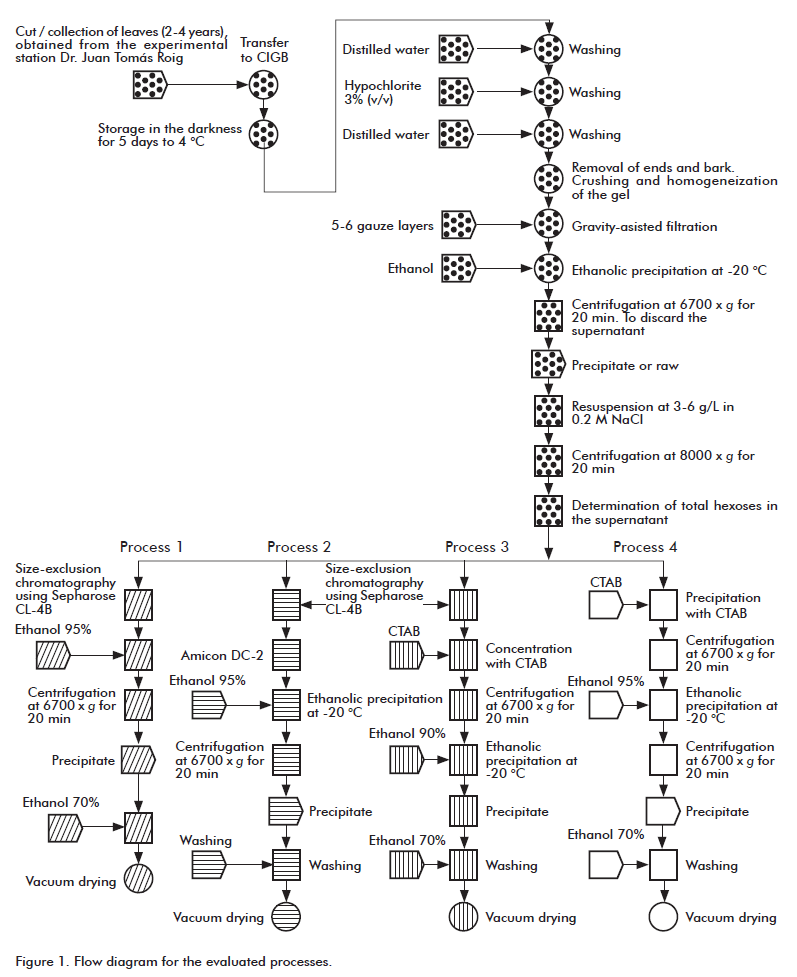
<body><![CDATA[<P   ><font size="2" face="Verdana, Arial, Helvetica, sans-serif"><b>pH determination      </b> </font></P >       <P   align="justify" ><font size="2" face="Verdana, Arial, Helvetica, sans-serif">This determination      was carried out according to the requirements of the USP 29, 2006 [15]. The      measurement was carried out twice and the final value from both measurements      was average. </font></P >       <P   ><font size="2" face="Verdana, Arial, Helvetica, sans-serif"><b>Statistical processing      </b> </font></P >       <P   align="justify" ><font size="2" face="Verdana, Arial, Helvetica, sans-serif">The statistical analysis      of the results was carried out using the Fisher&rsquo;s F (for the determination      of variance homogeneity) and Student&rsquo;s t (for the comparison of means)      tests. In both cases, that significant differences existed was considered      when <I>p</I> was smaller than 0.05. </font></P >       <P   >&nbsp;</P >       <P   ><font size="2" face="Verdana, Arial, Helvetica, sans-serif"><b><font size="3">RESULTS      AND DISCUSSION </font> </b> </font></P >   <FONT size="+1">        <P   ><font size="2" face="Verdana, Arial, Helvetica, sans-serif"><b>Acemannan purification      by means of SEC and ethanolic precipitation (process 1) </b></font></P >   <FONT size="+1">        <P   align="justify" ><font size="2" face="Verdana, Arial, Helvetica, sans-serif"><a href="/img/revistas/bta/v29n2/f0104212.gif">Figure      1</a> illustrates a flow diagram representing the studied isolation/purification      processes for the polysaccharide acemannan (processes 1-4). In general, these      processes began with a treatment of the leaves from <I>A. barbadensis</I>      and continued with extraction of the active chemical substance by ethanolic      precipitation [16]. The resulting material, which was of gray color and fibrous      appearance, was resuspended and conserved at -20 &deg;C until further processing.      </font></P >       
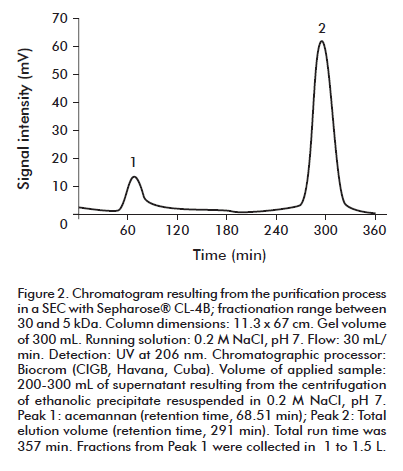
<P   align="justify" ><font size="2" face="Verdana, Arial, Helvetica, sans-serif">The purification      process 1 is based on the use of SEC, with Sepharose&reg; CL-4B gel, that      is appropriate for the expected high molecular mass of the polysaccharide.      The collected eluates are precipitated with 95% (v/v) ethanol, and the acemannan      was separated in sediment form by centrifugation. <a href="#fig2">Figure 2</a>      shows a typical SEC-based profile; peak 1 belongs to acemannan, whereas peak      2 corresponds to the total elution volume. Because the polysaccharide absorbs      poorly at 206 nm, the size (<I>e.g</I>., area, height) of peak 1 does not      correlate with the actual total mass of acemannan. The molecular mass of acemannan      seems to be between 2000 and 5000 <I>M</I>r, because its retention time was      smaller than that of blue dextrane, a compound with a molecular mass of 2000      <I>M</I>r (data not shown).</font></P >       <P   align="center" ><img src="/img/revistas/bta/v29n2/f0204212.gif" width="403" height="471"><a name="fig2"></a></P >       
]]></body>
<body><![CDATA[<P   align="justify" ><font size="2" face="Verdana, Arial, Helvetica, sans-serif"><a href="#tab1">Table      1</a> summarizes some available average data (operation time and recovery)      for the obtainment of an acemannan batch using process 1. Ten chromatographic      runs, which correspond to the obtainment of approximately 150 mg of material,      were used to constitute an acemannan batch.</font></P >       <P   align="center" ><img src="/img/revistas/bta/v29n2/t0104212.gif" width="397" height="235"><a name="tab1"></a></P >       
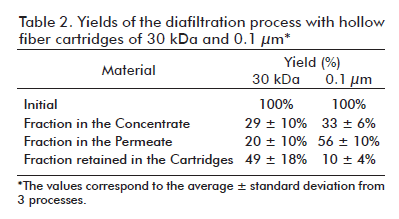
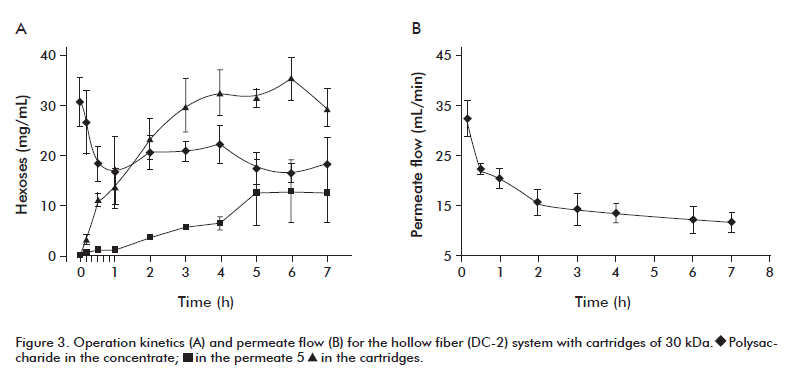
<P   align="justify" ><font size="2" face="Verdana, Arial, Helvetica, sans-serif">Although this process      worked well for previous preclinical studies [10, 11], we envisaged that this      might be problematic to be scaled-up with the objective of obtaining batches      for later stability testing and clinical trials. The chromatographic run of      concentrated juice solutions, as starting material from <I>A. barbadensis</I>,      is not possible owing to their high viscosity. In fact, two effects associated      to the use of very concentrated <I>A. barbadensis</I> juices are: the compression      of the chromatographic gel and the unacceptable decrease of the operation      flows. Largely diluting the starting material to be chromatographed might      solve this problem, but this may imply the processing of bigger material volumes      during the ethanolic precipitation step, since an eluate:ethanol relationship      of 1:4 is used. These material volumes would become even bigger during the      centrifugation stage, significantly lengthening the operation times. All this      would rebound adversely in the speed, efficiency and cost of acemannan obtainment      if the process were operated at either pilot or production scales. </font></P >       <P   align="justify" ><font size="2" face="Verdana, Arial, Helvetica, sans-serif">Consequently, in      an attempt to solve these potential problems, it was decided first to evaluate,      at a small scale, the introduction of two concentration methods: tangential      ultrafiltration and precipitation with the cationic detergent cetyltrimethylammonium      bromide. The purpose was to find a procedure that allows concentrating the      eluates coming from the SEC step, thus avoiding the processing of big volumes      during the ulterior ethanolic and precipitation steps. </font></P >       <P   ><font size="2" face="Verdana, Arial, Helvetica, sans-serif"><b>Concentration      of SEC-eluted acemannan by ultrafiltration (process 2) </b></font></P >       <P   align="justify" ><font size="2" face="Verdana, Arial, Helvetica, sans-serif">An Amicon ultrafiltration      system (DC-2) was evaluated, which was assembled with hollow fiber cartridges      of 30 kDa or 0.1 &micro;m pore size. A volume of 3.5 L of acemannan eluate,      which resulted from the blending of 3 chromatographic runs, was used as the      starting material. The kinetic behavior of the concentration system was evaluated      by determining the acemannan quantities escaped in the permeate volume, lost      in the cartridges and recovered in the concentration volume. The permeate      flow was measured at defined time intervals during the operation. The acemannan      yield was determined on the basis of the concentration of total hexoses, at      both the beginning and the end of the process. </font></P >       <P   align="justify" ><font size="2" face="Verdana, Arial, Helvetica, sans-serif"><a href="/img/revistas/bta/v29n2/f0304212.gif">Figure      3</a> shows the kinetic behavior of the system during 7 h of operation. With      the cartridges of 30 kDa, the yield obtained in the concentrate was about      29%, with 20% losses in the permeate volume. These losses were not associated      to the physical integrity of the cartridges, since a control ultrafiltration      process with 3.5 L of blue-dextrane (2000 <I>M</I>r) solution prepared at      a concentration similar to that of the chromatographic eluates (0.01 mg/mL),      generated a transparent colorless permeate volume, even when the concentrate      volume reached 500 mL. Neither the presence of hexoses was detected, either      for the 30 kDa or 0.1 &micro;m cartridges. Consequently, the low yields in      the glass concentrator were most likely due to the retention of the polysaccharide      in the cartridges, with about 49% of mass loss. </font></P >       
<P   align="justify" ><font size="2" face="Verdana, Arial, Helvetica, sans-serif">This polysaccharide      retention in the cartridges could be associated to &lsquo;polarization effects&rsquo;      due to the different speeds of solute transport, which produces a concentration      gradient in the vicinity of the membrane, and an increase of the resistance      for interaction of the solute with the membrane causing incrustations [17,      18]. As a consequence, a decrease of the solvent flow per area unit takes      place (<a href="/img/revistas/bta/v29n2/f0304212.gif">Figure 3B</a>)      and a considerable increase of the operation time and therefore a decrease      of the system operability. </font></P >       
<P   align="justify" ><font size="2" face="Verdana, Arial, Helvetica, sans-serif">With the cartridges      of 0.1 &micro;m the acemannan recovery was around 33% after 7 h of operation,      and the quantity of polysaccharide retained in the cartridges diminished considerably      (<a href="#tab2">Table 2</a>, column 3). However, this happened to expense      of considerable losses in the permeate (<a href="#tab2">Table 2</a>). This      could be related with the own linear structure of the acemannan that could      favor its escape through the cartridges.</font></P >       <P   align="center" ><img src="/img/revistas/bta/v29n2/t0204212.gif" width="399" height="219"><a name="tab2"></a></P >       
]]></body>
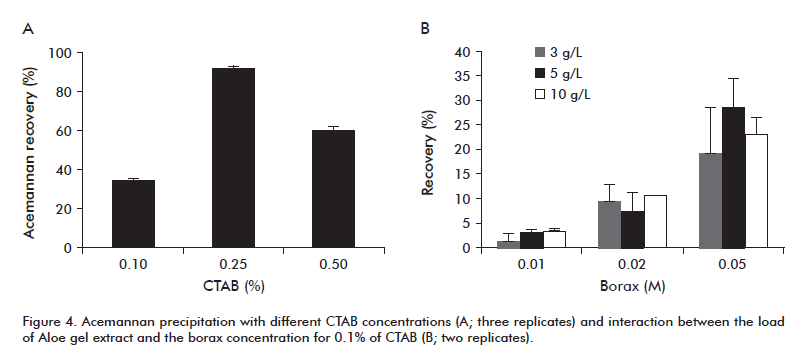
<body><![CDATA[<P   align="justify" ><font size="2" face="Verdana, Arial, Helvetica, sans-serif">From these results,      it is possible to conclude that the SEC-eluted acemannan polysaccharide can      be concentrated using ultrafiltration systems based on hollow fiber cartridges      of polysulfones. Nevertheless, under the evaluated experimental conditions      the use of cartridges with a cut off size of molecular weight smaller or similar      to 30 kDa is not viable. The use of the cartridges with 0.1 &micro;m pore      diameter is not advisable either, in our opinion. </font></P >       <P   ><font size="2" face="Verdana, Arial, Helvetica, sans-serif"><b>Concentration      of SEC-eluted acemannan by precipitation with CTAB (process 3) </b></font></P >       <P   align="justify" ><font size="2" face="Verdana, Arial, Helvetica, sans-serif">CTAB is a cationic      detergent, with chemical formula C<Sub>19</Sub>H<Sub>42</Sub>NBr, which possesses      bactericidal properties. In multiple researches, its use has been described      for the isolation of capsular or negatively charged polysaccharides derived      from different sources [19, 20] for the isolation of mannans [21, 22], as      well as for the analytical or preparative isolation of DNA [23]. The polysaccharides      in contact with CTAB form an insoluble complex that can be separated by centrifugation.      </font></P >   <FONT size="+1"><FONT size="+1"><FONT size="+1"><FONT size="+1">        <P   align="justify" ><font size="2" face="Verdana, Arial, Helvetica, sans-serif">Here, we thought      of the possibility of using CTAB as a precipitating agent for acemannan. Nevertheless,      this polysaccharide is constituted by mannose units that confer acemannan      the property of being a neutral polysaccharide. For this reason, the acemannan      would not be able to interact with the cationic CTAB. This situation would      be reversed if negative charges were conferred to the mannose units that form      the polysaccharide, and so the acemannan acquired the capacity to form insoluble      complexes with CTAB. Guided by this idea, the agent used was borax, with chemical      formula Na<Sub>2</Sub>B<Sub>4</Sub>O<Sub>7</Sub>. The function of this chemical      reagent would be the formation of a complex for interaction of the borax with      the OH<Sup>-</Sup> groups in position cis from mannose, thus conferring negative      charge to the mannose groups of acemannan. </font></P >   <FONT size="+1"><FONT size="+1"><FONT size="+1"><FONT size="+1"><FONT size="+1"><FONT size="+1"><FONT size="+1"><FONT size="+1">        <P   align="justify" ><font size="2" face="Verdana, Arial, Helvetica, sans-serif">In a first experiment,      a concentrated solution of 0.25 M borax was added to 1 L of SEC-eluted acemannan,      to a final concentration of 0.01 M, and 10% CTAB (w/v) until getting a concentration      of 0.1% (w/v). The recovery of acemannan obtained under these conditions was      relatively low (23%), which could be associated to a deficit of appropriate      CTAB proportions for the formation of precipitates in the chromatographic      eluates. Therefore, different CTAB concentrations were evaluated (0.1, 0.25      and 0.5% w/v), at a constant borax concentration of 0.01 M. After acemannan      precipitation, the complex CTAB-borate was separated using a solution of 0.9      M CaCl<Sub>2</Sub>. <a href="/img/revistas/bta/v29n2/f0404212.gif">Figure      4A</a> shows that with a CTAB concentration of 0.25% (w/v) the biggest precipitation      yield was obtained, which reached a value of approximately 90.3% in terms      of total hexoses. </font></P >   <FONT size="+1"><FONT size="+1">        
<P   align="justify" ><font size="2" face="Verdana, Arial, Helvetica, sans-serif">Regardless of the      concentration of CTAB used, the recovery of acemannan in the posterior ethanolic      precipitation step was constant (data not shown). It should also be noted      that the complex CTAB-borate may be disrupted by precipitation with ethanol.      This is associated to the high solubility of the detergent in polar solvents      [24]. This precipitation-based concentration method for SEC-eluted acemannan      would decrease the operation volumes, thus facilitating operational conditions      in planned pilot or larger processes. </font></P >       <P   ><font size="2" face="Verdana, Arial, Helvetica, sans-serif"><I><b>Replacement      of SEC by CTAB-induced precipitation (process 4) </b></I></font></P >       <P   align="justify" ><font size="2" face="Verdana, Arial, Helvetica, sans-serif">Keeping in mind the      potentialities of CTAB and borax in selectively forming complexes with mannose      units and the previous results, it was considered the possibility of carrying      out the isolation and direct purification of the acemannan polysaccharide      in a single precipitation step, starting from the <I>A. barbadensis</I> extract      and substituting the SEC step. In this way, we sought to decrease the long      operation times of this step and simplify the production process in terms      of decreasing the number of steps and unitary cost. The experiments related      with this idea are shown here. </font></P >       <P   align="justify" ><font size="2" face="Verdana, Arial, Helvetica, sans-serif">The starting material      used in the first experiments was the raw gel material from Aloe (15 or 30      g/L), 0.1% CTAB and 0.01 M of borax salt. Acemannan yields (%) were very low      in 3 processes of starting concentrations of 30 g/L (11.3 &plusmn; 0.43%)      and 15 g/L (13.7 &plusmn; 3.25%). When adding the borax in the mixture solution      an increase was observed in the consistency of the gel, with the form of a      lattice. This provoked diffusional difficulties of the reactant substances      and could disable the formation of a precipitate when adding the CTAB solution.      Given this, small-scale experiments were carried out in which the concentration      of starting Aloe gel material (3, 5, 10 g/L) and borax (0.01, 0.02 and 0.05      M) was varied, at a constant (0.1% w/v) CTAB concentration. As shown in <a href="/img/revistas/bta/v29n2/f0404212.gif">Figure      4B</a>, at the concentration of 5 g/L raw material and 0.05 M borax the best      recovery results were obtained. </font></P >       
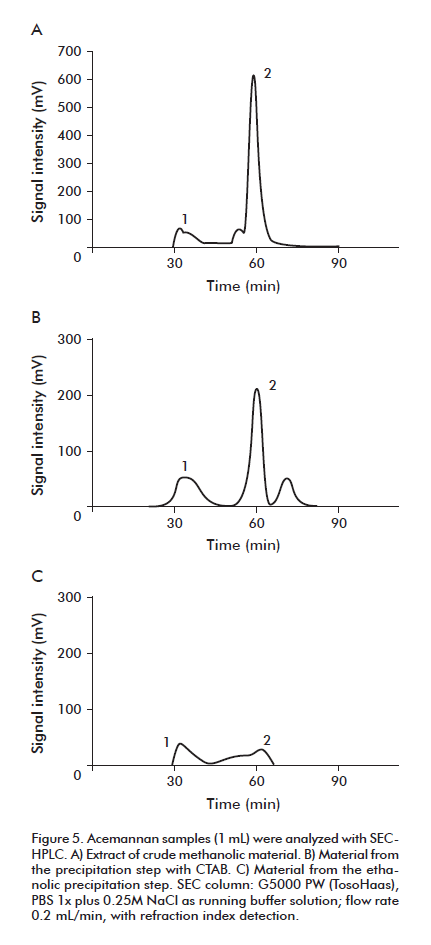
<P   align="justify" ><font size="2" face="Verdana, Arial, Helvetica, sans-serif">In <a href="#fig5">Figure      5</a>, the process of isolation of the acemannan with CTAB is analyzed using      SEC-HPLC. After precipitation with CTAB (<a href="#fig5">Figure 5B</a>), a      decrease of the fraction (peak 2) of contaminants was observed. The precipitation      with ethanol (<a href="#fig5">Figure 5C</a>), diminished much more the presence      of the contaminants in peak 2, increasing the molecular homogeneity about      50%.</font></P >       ]]></body>
<body><![CDATA[<P   align="center" ><img src="/img/revistas/bta/v29n2/f0504212.gif" width="431" height="945"><a name="fig5"></a></P >       
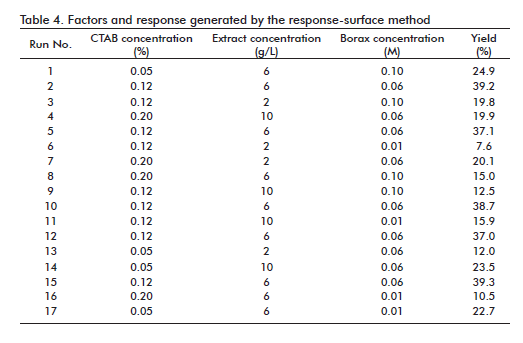
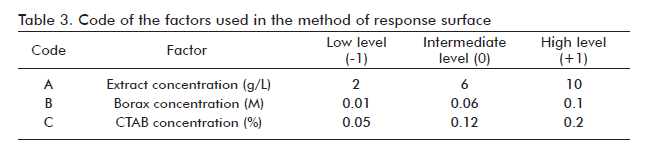
<P   align="justify" ><font size="2" face="Verdana, Arial, Helvetica, sans-serif">These results suggest      that the precipitation procedure with CTAB can be an alternative to the SEC      step, to simplify the production process and diminish the costs in terms of      gel and chromatographic equipment, as well as the operation time. </font></P >       <P   ><font size="2" face="Verdana, Arial, Helvetica, sans-serif"><b>Optimization of      the conditions for CTAB-induced acemannan precipitation </b></font></P >       <P   align="justify" ><font size="2" face="Verdana, Arial, Helvetica, sans-serif">The variables used      for finding the optimum yield of acemannan precipitate were: the borax concentration,      raw material load and CTAB concentration. The optimization work was assisted      by both the Box-Behnken de sign and a response surface methodology. The latter      is a mathematical technique that is used to obtain a designand optimization      equation between the measured parameter (response) and a defined quantity      of variables (factors) that affect the response. The selected design (Box-Behnken)      is quadratic, independent and does not include a fractional or factorial design.      For this design, the treatment of the combinations lays in both the midpoints      of edges of the process space and at the center. This design is rotatable,      requires three levels for each factor and does not have axial points; therefore,      all the points fall inside the area for operation. Also, the design allows      the work with few points and each factor only requires three levels, instead      of the five required for the central composition design. Experimentally for      the same number of factors, this design is more convenient and less expensive,      in terms of the number of runs, than the central composition design. </font></P >       <P   ><font size="2" face="Verdana, Arial, Helvetica, sans-serif"><I><b>Analysis of      response-surface regression </b></I></font></P >       <P   align="justify" ><font size="2" face="Verdana, Arial, Helvetica, sans-serif">The selected parameter      of more important response was the precipitation yield, determined by the      relationship between the quantity of total hexoses at the end and the beginning      of the precipitation process. In <a href="/img/revistas/bta/v29n2/t0304212.gif">table      3</a>, the factors used in the response-surface study are shown, as well as      the code that represents each factor. The selected design proposed 17 experimental      runs, of them 6 replicas in the central point and 11 in the rest of the points.      <a href="#tab4">Table 4</a> shows the experimental conditions for each run      and the yield obtained in the precipitation. </font></P >       
<P   align="center" ><img src="/img/revistas/bta/v29n2/t0404212.gif" width="523" height="343"><a name="tab4"></a></P >       
<P   align="justify" ><font size="2" face="Verdana, Arial, Helvetica, sans-serif">Notice that the response      range was from 39.3% in the run 15 (maximum) to 7.6% in the run 6 (minimum).      The dependent and independent variables were related by means of a polynomial      equation obtained with the Design Expertthe experimental conditions for each      run and the yield obtained in the precipitation. Notice that the response      range was from 39.3% in the run 15 (maximum) to 7.6% in the run 6 (minimum).      The dependent and independent variables were related by means of a polynomial      equation obtained with the Design Expertthe experimental conditions for each      run and the yield obtained in the precipitation. Notice that the response      range was from 39.3% in the run 15 (maximum) to 7.6% in the run 6 (minimum).      The dependent and independent variables were related by means of a polynomial      equation obtained with the Design Expert </font><font size="+1" color="#000000"><font size="+1"><font size="+1"><font size="+1"><font size="+1"><font size="+1"><font size="+1"><font size="+1"><font face="Verdana, Arial, Helvetica, sans-serif" size="2">&reg;</font></font></font></font></font></font></font></font></font>      <font size="2" face="Verdana, Arial, Helvetica, sans-serif">statistical program      (Stat-Ease, Inc. (Minneapolis, USA)):</font></P >   </font></font></font></font></font></font></font></font></font></font></font></font></font></font></font></font></font></font></font></font></font></font></font></font></font></font></font></font></font></font></font></font></font></font></font></font></font></font></font></font></font></font></font></font></font></font></font></font></font></font></font></font></font></font></font></font></font></font></font></font></font></font></font></font></font></font></font></font></font></font></font></font></font></font></font></font></font></font></font></font></font></font></font></font></font></font></font></font></font></font></font></font></font></font></font></font></font></font></font></font></font></font></font></font></font></font></font></font></font></font></font></font></font></font>        <P   align="center" > </P >       <P   align="center" ><font size="+1" face="Verdana, Arial, Helvetica, sans-serif" color="#000000"><img src="/img/revistas/bta/v29n2/fr0204212.gif" width="423" height="54"></font></P >   <FONT size="+1" color="#000000"><FONT size="+1"><FONT size="+1"><FONT size="+1"><FONT size="+1"><FONT size="+1"><FONT size="+1"><FONT size="+1"><FONT size="+1"><FONT size="+1"><FONT size="+1"><FONT size="+1"><FONT size="+1"><FONT size="+1"><FONT size="+1"><FONT size="+1"><FONT size="+1"><FONT size="+1"><FONT size="+1"><FONT size="+1"><FONT size="+1"><FONT size="+1"><FONT size="+1"><FONT size="+1"><FONT size="+1"><FONT size="+1"><FONT size="+1"><FONT size="+1"><FONT size="+1"><FONT size="+1"><FONT size="+1"><FONT size="+1"><FONT size="+1"><FONT size="+1"><FONT size="+1"><FONT size="+1"><FONT size="+1"><FONT size="+1"><FONT size="+1"><FONT size="+1"><FONT size="+1"><FONT size="+1"><FONT size="+1"><FONT size="+1"><FONT size="+1"><FONT size="+1"><FONT size="+1"><FONT size="+1"><FONT size="+1"><FONT size="+1"><FONT size="+1"><FONT size="+1"><FONT size="+1"><FONT size="+1"><FONT size="+1"><FONT size="+1"><FONT size="+1"><FONT size="+1"><FONT size="+1"><FONT size="+1"><FONT size="+1"><FONT size="+1"><FONT size="+1"><FONT size="+1"><FONT size="+1"><FONT size="+1"><FONT size="+1"><FONT size="+1"><FONT size="+1"><FONT size="+1"><FONT size="+1"><FONT size="+1"><FONT size="+1"><FONT size="+1"><FONT size="+1"><FONT size="+1"><FONT size="+1"><FONT size="+1"><FONT size="+1"><FONT size="+1"><FONT size="+1"><FONT size="+1"><FONT size="+1"><FONT size="+1"><FONT size="+1"><FONT size="+1"><FONT size="+1"><FONT size="+1"><FONT size="+1"><FONT size="+1"><FONT size="+1"><FONT size="+1"><FONT size="+1"><FONT size="+1"><FONT size="+1"><FONT size="+1"><FONT size="+1"><FONT size="+1"><FONT size="+1"><FONT size="+1"><FONT size="+1"><FONT size="+1"><FONT size="+1"><FONT size="+1"><FONT size="+1"><FONT size="+1"><FONT size="+1"><FONT size="+1"><FONT size="+1"><FONT size="+1"><FONT size="+1"><FONT size="+1"><FONT size="+1"><FONT size="+1">        
]]></body>
<body><![CDATA[<P   align="justify" > </P >       <P   align="justify" ><font size="2" face="Verdana, Arial, Helvetica, sans-serif">This proposed quadratic      model was adjusted to the experimental data, since (<I>p</I> &gt; F) &lt;      0.05, implying that the quadratic term is significant. The adjustment occurred      for an appropriate regression value (r = 0.9446). Nonetheless, the test of      adjustment that compared the &ldquo;residual error&rdquo; and &ldquo;the pure      error&rdquo; for the points of the design that were replied was significant      (data not shown). This indicated that the model should be used with caution      when predictions should be carried out. </font></P >       <P   align="justify" ><font size="2" face="Verdana, Arial, Helvetica, sans-serif">The next step was      to carry out the analysis of surface regression for each factor, according      to the use of the code of units. This was based on both the values calculated      for the coefficients and the <I>p</I> values (notice that <I>p</I> represents      the null hypothesis probability). It was considered that a factor affected      the response for a 5% significance level when the coefficient differs significantly      from zero and the <I>p</I> value was less than 0.05. The analysis revealed      that the precipitation yield was affected more significantly by the quadratic      term expressed in the interactions of the CTAB concentrations (<I>p</I> =      0.0057), concentrations of raw material (<I>p</I> = 0.0004) and Borax concentrations      (<I>p</I> = 0.0003). From these results, the elimination of the terms with      probability values greater than 0.1 could be considered. Under this situation,      only the quadratic terms and the interaction BC (borax and CTAB concentrations;      0.0873) were smaller than 0.1. Another important aspect was the low values      obtained for the residuals (prediction error), which favors the prediction      by the model (data not shown). </font></P >       <P   ><font size="2" face="Verdana, Arial, Helvetica, sans-serif"><I><b>Validation      of the model </b></I></font></P >       <P   align="justify" ><font size="2" face="Verdana, Arial, Helvetica, sans-serif">The most important      diagnosis for the validation of the model, as well as the confirmation that      the suppositions carried out in the variance analysis are appropriate is the      analysis of the residuals. For this, two tests are fundamental: the probability      adjustment for the residuals and the behavior of the adjustment for the studentized      residuals against the predictive response. To sum up, using these tests it      was observed (data not shown) that the probability of the residuals is adjustable      to a straight line, which indicated that the error is normally distributed,      a necessary condition for the variance analysis. In addition, the error terms      were independent of the magnitude of the data, indicating that the residuals      should be possibly distributed around the line zero with little difference      in the width of the treatments. </font></P >       <P   ><font size="2" face="Verdana, Arial, Helvetica, sans-serif"><I><b>Analysis of      the optimization </b></I></font></P >       <P   align="justify" ><font size="2" face="Verdana, Arial, Helvetica, sans-serif">With the viewpoint      that the proposed model has more than two factors, the factor concentration      of CTAB kept constant in the three-dimensional response-surface plot from      <a href="#fig6">figure 6</a>. The presence of an optimum and a much defined      curvature can be observed, which is characteristic of the quadratic terms      from the model. In total, three plots can be produced, if each factor is kept      constant. The criterion followed for the optimization was to obtain a maximum      of yield for the objective function as response variable. From the proposed      model, we found an optimization solution for the maximum yield (0.11% CTAB,      6.30 g/L extract concentration, 0.06 M Borax), accounting for a 38.53% of      acemannan recovery and 0.976 desirability.</font></P >       <P   align="center" ><img src="/img/revistas/bta/v29n2/f0604212.gif" width="391" height="405"><a name="fig6"></a></P >       
<P   ><font size="2" face="Verdana, Arial, Helvetica, sans-serif"><b>Characterization      of the purified acemannan </b></font></P >       <P   align="justify" ><font size="2" face="Verdana, Arial, Helvetica, sans-serif">The product obtained      was characterized, in terms of the elimination of major contaminants, and      the preservation of both physical-chemical characteristics and immunostimulatory      properties of the acemannan. </font></P >       ]]></body>
<body><![CDATA[<P   ><font size="2" face="Verdana, Arial, Helvetica, sans-serif"><b>Elimination of      major contaminants </b></font></P >       <P   align="justify" ><font size="2" face="Verdana, Arial, Helvetica, sans-serif">In the process of      juice extraction from <I>A. barbadensis</I>, any fibrous material (e.g., cellulose)      contained in the juice is also precipitated by ethanol. This happens during      an early stage of the precipitation, where the fibrous material, being less      dense than the polysaccharide of interest, flocculates in the solvent surface      and is eliminated easily [16]. Also, the <I>A. barbadensis</I> juice possesses      large quantities of anthracene derivatives (<I>e.g</I>., anthraquinones),      organic acids, oligosaccharides, monosaccharides and inorganic salts that      can be eliminated in the extraction process, due to the high solubility of      these compounds in ethanol [16]. </font></P >       <P   ><font size="2" face="Verdana, Arial, Helvetica, sans-serif"><I><b>Elimination      of anthraquinones and protein contaminants </b></I></font></P >       <P   align="justify" ><font size="2" face="Verdana, Arial, Helvetica, sans-serif">For this study, polysaccharides      derived from batches coming from leaves of plants of 4 to 6 years of age were      selected, either for the process 1 [11] or for process 4 based on precipitation      with CTAB. Also, leaves from plants of 3, 6 and 12 years of age were collected      and classified by their position in the plant, as shown in <a href="/img/revistas/bta/v29n2/t0504212.gif">table      5</a>. The polysaccharide coming from these leaves was obtained by means of      the process 1. </font></P >       
<P   align="justify" ><font size="2" face="Verdana, Arial, Helvetica, sans-serif">The anthraquinones      determination was carried out with a validated technique that detects a minimum      concentration of 0.9 ppm anthracene derivatives. Regardless of the age and      zone of the leaves, all the analyzed samples were below this concentration;      consequently, the presence of this contaminant was also below 9&middot;10<Sup>-5      </Sup>% of the total dry weight. The data referred to the concentration of      this substance in the crude ethanolic materials show that concentrations equivalent      to 0.042% (respect to the dry mass of the substance) were present. This indicated      that by means of the purification process 4 the anthracene derivatives diminished      approximately 500 times. Thus, the acemannan preparations were liberated from      most of the contaminants of this nature. The same result was observed when      the polysaccharide acemannan coming from different parts of the leaf (internal,      in-between and external) was isolated and purified with the process 1. </font></P >   <FONT size="+1"><FONT size="+1">        <P   align="justify" ><font size="2" face="Verdana, Arial, Helvetica, sans-serif">The results of protein      concentrations per dry weight of purified acemannan samples are shown in <a href="/img/revistas/bta/v29n2/t0504212.gif">table      5</a> and <a href="/img/revistas/bta/v29n2/t0604212.gif">table 6</a>, for the proposed processes.      The greater concentration of proteins was found in the process 1 (purification      using SEC and ethanolic precipitation). Notice that these procedures for isolation      and purification of acemannan were not able to eliminate totally the content      of proteinaceous contaminants. Nevertheless, the content of proteins was smaller      than 5% per dry weight, according to that described for the use of polysaccharides      obtained from different sources [25]. Moreover, it is to be considered that      the application of the polysaccharide in this case is for nasopharyngeal use      and therefore this quantity of protein should not affect the security of the      product. </font></P >       
<P   ><font size="2" face="Verdana, Arial, Helvetica, sans-serif"><I><b>Elimination      of nucleic acid contaminants </b></I></font></P >       <P   align="justify" ><font size="2" face="Verdana, Arial, Helvetica, sans-serif">All the samples were      below 7.5 ng of nucleic acids, representing less than 0.25% of the dry weight.      It is inferred, consequently, that all the processes applied for the obtainment      of acemannan eliminate nucleic acids efficiently. </font></P >       <P   ><font size="2" face="Verdana, Arial, Helvetica, sans-serif"><I><b>Determination      of hexoses content </b></I></font></P >       <P   align="justify" ><font size="2" face="Verdana, Arial, Helvetica, sans-serif">The percent of hexoses      with regard to the total weight of purified acemannan oscillated between 31      and 35% (<a href="/img/revistas/bta/v29n2/t0604212.gif">Table 6</a>). This reaffirmed that the major      component from the SEC-eluted peak 1 as well as that obtained by the process      4 was of polysaccharidic nature. </font></P >       
]]></body>
<body><![CDATA[<P   ><font size="2" face="Verdana, Arial, Helvetica, sans-serif"><I><b>Determination      of constituent monosaccharides </b></I></font></P >       <P   align="justify" ><font size="2" face="Verdana, Arial, Helvetica, sans-serif">By means of methods      based on the use of GC-FID and GC-MS techniques and other chemical procedures      (<I>e.g.</I>, methanolysis, re-<I>N</I>-acetylation, trimethylsilylation),      the composition (monosaccharides) of purified polysaccharide samples was determined      for two of the studied processes. As shown in <a href="/img/revistas/bta/v29n2/f0704212.gif">figure      7</a> and <a href="/img/revistas/bta/v29n2/t0604212.gif">table 6</a>, process 1 separates the acemannan      in a more selective way in terms of mannose (97%). Process 4 produced a mannose      composition of 75%, <I>N</I>-acetyl mannosamine (ManNAc) was absent and the      composition of other produced sugars does not differ from that described in      literature [16]. </font></P >       
<P   align="justify" ><font size="2" face="Verdana, Arial, Helvetica, sans-serif">More importantly,      the main constituent in both cases was mannose, as expected. Furthermore,      some heterogeneous <I>O</I>-acetyl groups but not <I>N</I>-acetyl groups were      detected in both polysaccharide preparations, in 1D 500 MHz <Sup>1</Sup>H-NMR      spectra (data not shown); to obtain quantitative information (<I>i.e.</I>,      to know how many <I>O</I>-acetyl groups are present per unit of monosaccharide)      is out of the scope of this work. About 95% of this mannose was substituted      at position 4, confirming [&rarr;4)Man(1&rarr;], as determined from the methylation      analysis (<a href="/img/revistas/bta/v29n2/f0804212.gif">Figure 8</a>). Despite this showed total      coincidence with the backbone previously described [26], improved conditions      for the partial chemical hydrolysis of these polysaccharide preparations into      oligosaccharides of 4 or 5 units followed by repeated NMR analysis of purified      oligosaccharides will be required to get clearer information about the configuration      of the acemannan linkages. </font></P >   <FONT size="+1"><FONT size="+1">        
<P   ><font size="2" face="Verdana, Arial, Helvetica, sans-serif"><b>Evaluation of      &gamma; radiation-based sterilization of the purified acemannan </b></font></P >       <P   align="justify" ><font size="2" face="Verdana, Arial, Helvetica, sans-serif">It was observed that      when filtering acemannan polysaccharide samples either through membrane systems      or through cartridges of 0.2 &micro;m<B> </B>cut-off size, the pressure of      the filtration systems increased drastically. It is most likely that substantial      adsorption and appreciable loss of polysaccharide on the membrane from the      filters, even using highly diluted solutions occurred. This effect could be      related with the own linear structure that presents the polysaccharide, that      can compete with the structure of the membranes, impeding its passage through      the filters. This phenomenon precluded the sterilization of acemannan by means      of the filtration membranes that are otherwise commonly used for the sterilization      of protein solutions. </font></P >       <P   align="justify" ><font size="2" face="Verdana, Arial, Helvetica, sans-serif">Then, the use of      gamma irradiation for sterilizing the purified acemannan was discussed. In      fact, this is one of the most effective and frequently used procedures for      the sterilization of raw materials and final products. The emission of gamma      rays comes from a nuclear source (<Sup>60</Sup>Co or <Sup>137</Sup>Ce); this      type of electromagnetic radiation is characterized by a high penetration in      the material. In the pharmaceutical field, one of the applications of the      ionizing radiation has been the final sterilization of biodegradable poly(lactide-co-glycolide)      microspheres intended for parenteral use [27]. Thus, a radiostability study      for the polysaccharide obtained in solution and in dry form at different irradiation      levels (1, 5, 10, 20 and 30 kGy) was carried out. </font></P >   <FONT size="+1"><FONT size="+1"><FONT size="+1"><FONT size="+1">        <P   ><font size="2" face="Verdana, Arial, Helvetica, sans-serif"><I><b>Organoleptic      characteristics of the irradiated polysaccharide </b></I></font></P >       <P   align="justify" ><font size="2" face="Verdana, Arial, Helvetica, sans-serif">The organoleptic      characteristics of the polysaccharide irradiated in solution always changed      with every radiation dose used. A dark coloration was observed on the glass      vials and the solution turned yellow in color. Also, important changes were      observed in the chromatographic profile for SEC-HPLC separated acemannan (data      not shown), as well as an appreciable increase of the peak retention time,      which was proportional to the increase of the radiation dose. On the other      hand, the polysaccharide irradiated in dry form showed a grey appearance very      similar to the non-irradiated dry polysaccharide, but with a much more rigid      consistency.<I> </I></font></P >       <P   ><font size="2" face="Verdana, Arial, Helvetica, sans-serif"><I><b>Immunopotentiation      of the irradiated polysaccharide </b></I></font></P >       <P   align="justify" ><font size="2" face="Verdana, Arial, Helvetica, sans-serif">The immunopotentiating      activity of the acemannan, before and after the treatment with &gamma; radiation,      was evaluated by using the nasal route for the delivery of HBsAg. <a href="#fig9">Figure      9A</a> shows that for all the mice inoculated with the polysaccharide irradiated      in solution there was seroconversion. However, it was observed a significant      decrease (<I>p</I> &lt; 0.05) of the geometric mean of the titles corresponding      to the polysaccharides irradiated at different doses, in comparison to the      control of non-irradiated polysaccharide (Group 6). This is related directly      to the decrease of the immunopotentiating power of the acemannan on the HBsAg      (<a href="#fig9">Figure 9B</a>), which is expressed as the relationship of      antibody titles induced by the formulations that contain HBsAg and acemannan,      in comparison to a control formulation that does not contain acemannan. </font></P >       ]]></body>
<body><![CDATA[<P   align="center" ><img src="/img/revistas/bta/v29n2/f0904212.gif" width="483" height="918"><a name="fig9"></a></P >       
<P   align="justify" ><font size="2" face="Verdana, Arial, Helvetica, sans-serif">However, the acemannan      groups irradiated in dry form did not have significant differences (<I>p</I>      &lt; 0.05) among them in terms of their immunopotentiating capacity, for the      response of HBsAg with respect to non-irradiated acemannan under the same      conditions (<a href="#fig10">Figure 10</a>). On the other hand, it was observed      that starting from the 20 kGy, meant a significant increase in the retention      time of the acemannan peak (<I>p </I>&lt; 0.05), indicating a decrease in      the acemannan size (<a href="#fig11">Figure 11</a>). From these results, the      dose of 10 kGy was selected to sterilize acemannan polysaccharide materials      in dry form. Under these conditions, the evaluated physical characteristics      of acemannan and its immunopotentiating capacity on nasally-delivered HBsAg      were not affected. Also, the study demonstrated that at this radiation dose      the samples passed the sterility test. Nevertheless, due to the complicated      manipulation needed for resuspending the polysaccharide, it was decided in      a first work stage to evaluate the acemannan formulations using the microbial      limit technique, referred in the Materials and methods section, for microbiological      characterization. The parameters followed were: count &lt; 100 c.f.u./mL and      total absence of pathogenic bacteria (<I>P. aeruginosa and S. aureus</I>),      according to the specifications described in the USP 29 for nasal products.      </font></P >       <P   align="center" ><img src="/img/revistas/bta/v29n2/f1004212.gif" width="492" height="858"><a name="fig10"></a></P >       
<P   align="center" ><img src="/img/revistas/bta/v29n2/f1104212.gif" width="483" height="417"><a name="fig11"></a></P >       
<P   ><font size="2" face="Verdana, Arial, Helvetica, sans-serif"><I><b>Immunopotentiation      ability of the mixture of irradiated acemannan and benzyl alcohol </b></I></font></P >       <P   align="justify" ><font size="2" face="Verdana, Arial, Helvetica, sans-serif">With the objective      of evaluating the immunopotentiating effect of the acemannan under conditions      similar to those that exist in the formulation that would be evaluated in      human clinical trials, we projected to evaluate the behavior of the HBsAg      immunogenicity response in the presence of both the polysaccharide sterilized      by using gamma radiation and 1% (w/v) benzyl alcohol. This preservative agent      is commonly used in the preparation of nasal products [28]. </font></P >       <P   align="justify" ><font size="2" face="Verdana, Arial, Helvetica, sans-serif">The obtained results      are shown in <a href="#fig12">figure 12A</a>. After the first extraction,      one week after the second inoculation dose, it was observed that in none of      the assayed formulations that contained the irradiated acemannan (groups 1      y 2) there was loss of the polysaccharide-induced immunopotentiating effect.      These groups did not present significant differences with the analyzed control      groups (groups 3 and 4). It was proven again that the &gamma;-irradiation      is a viable method for the sterilization of the polysaccharide, since this      does not affect the acemannan immunopotentiating activity on the HBsAg. Also,      it was observed that the polysaccharide is not affected, in terms of its activity,      by the presence of the preservative (benzyl alcohol at 1% w/v), which supports      its use in the vaccine formulation. No significant differences among the groups      with preservative (groups 1 and 3) and the groups without preservative (groups      2 and 4) were noticed. </font></P >       <P   align="center" ><img src="/img/revistas/bta/v29n2/f1204212.gif" width="486" height="1029"><a name="fig12"></a></P >       
<P   ><font size="2" face="Verdana, Arial, Helvetica, sans-serif"><I><b>Immunopotentiation      of the irradiated polysaccharide obtained by different processes </b></I></font></P >       <P   align="justify" ><font size="2" face="Verdana, Arial, Helvetica, sans-serif">Aimed to study the      immunopotentiating activity of the acemannan purified by the different four      processes, we carried out a scheme of nasal immunization in mice, and continued      using HBsAg as a model antigen. After the first extraction (one week after      the third dose), it was observed that significant differences did not exist      in the response of the different acemannan-containing formulations (groups      1, 2 and 3, from <a href="#fig12">Figure 12B</a>). No significant difference      was either observed in the immunopotentiating activity of the irradiated acemannan      obtained by Process 4 (precipitation with CTAB). </font></P >       ]]></body>
<body><![CDATA[<P   align="justify" ><font size="2" face="Verdana, Arial, Helvetica, sans-serif">Although the acemannan      produced by these processes differed in its monosaccharidic composition (<a href="/img/revistas/bta/v29n2/t0604212.gif">Table      6</a>), the immunopotentiating activity of the result-ing products was very      similar in value, which matched with the fact that the main composition of      constituent monosaccharides was mannose for all the cases. </font></P >       
<P   ><font size="2" face="Verdana, Arial, Helvetica, sans-serif"><b>Stability study      for the acemannan polysaccharide after irradiation </b></font></P >       <P   align="justify" ><font size="2" face="Verdana, Arial, Helvetica, sans-serif">For this study, three      batches produced by using the purification process 1 (SEC and ethanolic precipitation)      were used. The batches obtained in dry form were irradiated with the dose      of 10 kGy. After being resuspended, the batches were evaluated systematically      on release, and after 3 and 6 months of storage at -20 &ordm;C, according      to the preliminary specifications of organoleptic characteristics, pH and      microbial limit established for the acemannan material (<a href="/img/revistas/bta/v29n2/t0704212.GIF">Table      7</a>). </font></P >       
<P   align="justify" ><font size="2" face="Verdana, Arial, Helvetica, sans-serif">The retention time      of the major peak corresponding to the polysaccharide remained constant. There      was total absence of <I>P. aeruginosa and S. aureus. </I>From the organoleptic      point of view, the solution showed to be an opalescent liquid of viscous appearance,      without presence of precipitates or particles in suspension that indicate      degradation or decomposition of the product. The pH values remained near neutrality,      by which the presence of any degradation product from the polysaccharide that      could modify the pH of the solution was discarded. Thus, these parameters      remained stable and were within the same limits for the acemannan polysaccharide      at the release time. </font></P >       <P   ><font size="2" face="Verdana, Arial, Helvetica, sans-serif"><b>Further considerations      on the processes proposed for the isolation and purification of the acemannan      polysaccharide </b></font></P >       <P   align="justify" ><font size="2" face="Verdana, Arial, Helvetica, sans-serif"><a href="/img/revistas/bta/v29n2/t0804212.GIF">Table      8</a> shows the operation time and the yield for each stage from all the processes      described (<a href="/img/revistas/bta/v29n2/f0104212.gif">Figure 1</a>). In processes 2 and 3, where      concentration steps were introduced, an increase of the global yield of the      process took place. However, the operation time is still high and similar      to that of process 1. In process 4, there was a decrease in the number of      steps, and consequently, there was an important simplification of the process      complexity for acemannan obtainment, accompanied by a decrease in 40% of the      operation time. In this process, the smallest values of protein contaminants      were attained. The material obtained in process 4 presented a monosaccharidic      composition more heterogeneous than that in processes 1, 2 and 3 that used      the SEC separation method. Nonetheless, the immunopotentiating activity of      the acemannan did not differ from that of the polysaccharide obtained with      the other processes (1-3), indicating that acemannan preparations with a mannose      composition similar or superior to 75% conserve its immunopotentiating activity,      at least with HBsAg. </font></P >       
<P   >&nbsp;</P >       <P   ><font size="3" face="Verdana, Arial, Helvetica, sans-serif"><b>CONCLUDING REMARKS      </b></font><font size="2" face="Verdana, Arial, Helvetica, sans-serif"> </font></P >   <FONT size="+1">        <P   align="justify" ><font size="2" face="Verdana, Arial, Helvetica, sans-serif">The Amicon ultrafiltration      system with cartridges of 30 kDa or 0.1 &micro;m, to concentrate SEC-eluted      acemannan polysaccharide (process 2), is not viable due to the high losses      that are generated (&gt; 40%). However, the SEC-purified acemannan can be      concentrated by means of precipitation with CTAB (0.25% v/v) and borax salt      (0.01 M) (process 3). Even more, the acemannan polysaccharide can be isolated      and purified directly with CTAB and borax salt, from the crude ethanolic extract      of leaves from the A. barbadensis plant (process 4). The experimental data      on the isolation and purification of the acemannan with CTAB can be adjusted      to a quadratic model, according to the design of Box-Behnken. The optimum      precipitation conditions were: 0.12% (v/v) of CTAB, 6 g/L of raw material      and 0.06 M of borax salt. The polysaccharide, obtained by means of the four      studied processes, does not contain detectable levels of anthraquinones and      contaminating DNA. The major component of these materials was mannose and      the composition was 97% mannose and 3% glucose for the process 1 (SEC and      ethanolic precipitation). Process 4 (precipitation with CTAB) originated 75%      of mannose, 49% of glucose, 13.7% of galactose and 6.3% of arabinose. A sterilization      method based on the use of the gamma radiation can be used for the acemannan      polysaccharide. The polysaccharide irradiated at the dose of 10 kGy does not      lose its adjuvant activity for HBsAg, neither in the presence or absence of      benzyl alcohol at 1%. The sterilized material showed a long-term stability      (at least 6 months at 4 &ordm;C), according to various tests (carbohydrate      content, SEC-HPLC, pH, microbial limit, organoleptic characteristics).</font></P >       <P   align="justify" >&nbsp;</P >   <FONT size="+1">        ]]></body>
<body><![CDATA[<P   align="justify" ></P >       <P   align="justify" > </P >       <P   align="justify" ><font size="3"><b><font face="Verdana, Arial, Helvetica, sans-serif">REFERENCES      </font></b></font></P >       <P   align="justify" > </P >       <!-- ref --><P   align="justify" ><font size="2" face="Verdana, Arial, Helvetica, sans-serif">1. Manna S, McAnalley      BH. Determination of the position of the O-acetyl group in a beta-(1--&gt;4)-mannan      (acemannan) from Aloe barbardensis Miller. Carbohydr Res. 1993;241:317-9.          </font></P >   <FONT size="+1">        <!-- ref --><P   align="justify" ><font size="2" face="Verdana, Arial, Helvetica, sans-serif">2. Kaufman T, Newman      AR, Wexler MR. Aloe vera and burn wound healing. Plast Reconstr Surg. 1989;83(6):1075-6.          </font></P >       <!-- ref --><P   align="justify" ><font size="2" face="Verdana, Arial, Helvetica, sans-serif">3. Lee JK, Lee MK,      Yun YP, Kim Y, Kim JS, Kim YS, et al. Acemannan purified from Aloe vera induces      phenotypic and functional maturation of immature dendritic cells. Int Immunopharmacol.      2001;1(7):1275-84.     </font></P >       ]]></body>
<body><![CDATA[<!-- ref --><P   align="justify" ><font size="2" face="Verdana, Arial, Helvetica, sans-serif">4. Yates KM, Rosenberg      LJ, Harris CK, Bronstad DC, King GK, Biehle GA, et al. Pilot study of the      effect of acemannan in cats infected with feline immunodeficiency virus. Vet      Immunol Immunopathol. 1992;35(1-2):177-89.     </font></P >       <!-- ref --><P   align="justify" ><font size="2" face="Verdana, Arial, Helvetica, sans-serif">5. Zhang L, Tizard      IR. Activation of a mouse macrophage cell line by acemannan: the major carbohydrate      fraction from Aloe vera gel. Immunopharmacology. 1996;35(2):119-28.     </font></P >       <!-- ref --><P   align="justify" ><font size="2" face="Verdana, Arial, Helvetica, sans-serif">6. Kemper KJ, Chiou      V. Aloe vera: The Longwood Herbal Task Force and The Center for Holistic Pediatric      Education and Research; 1999.     </font></P >       <!-- ref --><P   align="justify" ><font size="2" face="Verdana, Arial, Helvetica, sans-serif">7. Kahlon JB, Kemp      MC, Yawei N, Carpenter RH, Shannon WM, McAnalley BH. In vitro evaluation of      the synergistic antiviral effects of acemannan in combination with azidothymidine      and acyclovir. Mol Biother. 1991;3(4):214-23.     </font></P >       <P   align="justify" ><font size="2" face="Verdana, Arial, Helvetica, sans-serif">8. McAnalley BH,      inventor; Carrington Lab Inc., assignee. Use of acemannan. EP 0619117A2. 1989      Aug 3. </font></P >       <P   align="justify" ><font size="2" face="Verdana, Arial, Helvetica, sans-serif">9. Nordgrem RM, inventor;      Solvay Animal Health, Inc., assignee. Vaccine containing acemannan as an adjuvant.      International patent WO/1993/014195. 1993 Jul 22. </font></P >       ]]></body>
<body><![CDATA[<!-- ref --><P   align="justify" ><font size="2" face="Verdana, Arial, Helvetica, sans-serif">10. Petrovsky N,      Aguilar JC. Vaccine adjuvants: current state and future trends. Immunol Cell      Biol. 2004;82(5):488-96.     </font></P >       <P   align="justify" ><font size="2" face="Verdana, Arial, Helvetica, sans-serif">11. Aguilar JC, Muzio      VL, Leal MJ, Guill&eacute;n GE, Pent&oacute;n E, V&eacute;liz G, et al., inventors;      Centro de Ingenier&iacute;a Gen&eacute;tica y Biotecnolog&iacute;a, assignee.      Immunopotentiating formulations for vaccinal use. International Patent WO      09839032. 1998 Mar 5. </font></P >       <!-- ref --><P   align="justify" ><font size="2" face="Verdana, Arial, Helvetica, sans-serif">12. Daniels L, Hanson      RS, Phillips JA. Chemical analysis. In: Gerhardt P, Murray RGE, Wood WA, Krieg      NR, editors. Methods for General and Molecular Bacteriology. Washington DC:      American Society for Microbiology; 1994. p. 518.     </font></P >       <!-- ref --><P   align="justify" ><font size="2" face="Verdana, Arial, Helvetica, sans-serif">13. Bradford MM.      A rapid and sensitive method for the quantitation of microgram quantities      of protein utilizing the principle of protein-dye binding. Anal Biochem. 1976;72:248-54.          </font></P >       <!-- ref --><P   align="justify" ><font size="2" face="Verdana, Arial, Helvetica, sans-serif">14. Auterhoff H,      Schroppel F. Borntrager-reaction with unsymmetrically substituted hydroxyanthraquinones.      Arch Pharm Ber Dtsch Pharm Ges. 1969;302(12):937-40.     </font></P >       <!-- ref --><P   align="justify" ><font size="2" face="Verdana, Arial, Helvetica, sans-serif">15. The United States      Pharmacopeia. 29th ed. Rockville: United States Pharmacopeial Convention;      2006.     </font></P >       <P   align="justify" ><font size="2" face="Verdana, Arial, Helvetica, sans-serif">16. MacAnalley BH,      inventor; Carrington Lab Inc., assignee. Process for preparation of aloe products.      United States patent US4957907. 1989 Jan 25. </font></P >       <!-- ref --><P   align="justify" ><font size="2" face="Verdana, Arial, Helvetica, sans-serif">17. Martinache L,      Henon MP. Concentration and desalting by ultrafiltration. In: Curling JM,      editor. Methods of Plasma Protein Fractionation. London: Academic Press; 1980.      p. 223-38 </font></P >       <P   align="justify" ><font size="2" face="Verdana, Arial, Helvetica, sans-serif">18. Genovesi CS.      Validation of unique filtration processes. In: Carleton JF, Agalloco JP, eds.      Validation of aseptic pharmaceutical processes. New York: Marcel Dekker, 1986:476-506.      </font></P >       <!-- ref --><P   align="justify" ><font size="2" face="Verdana, Arial, Helvetica, sans-serif">19. Inzana TJ, Mathison      B. Serotype specificity and immunogenicity of the capsular polymer of Haemophilus      pleuropneumoniae serotype 5. Infect Immun.1987;55(7): 1580-7.     </font></P >       <!-- ref --><P   align="justify" ><font size="2" face="Verdana, Arial, Helvetica, sans-serif">20. Kogan G, Jann      B, Jann K. Structure of the Escherichia coli 0104 polysaccharide and its identity      with the capsular K9 polysaccharide. FEMS Microbiol Lett. 1992; 70(2):135-40.          </font></P >       <!-- ref --><P   align="justify" ><font size="2" face="Verdana, Arial, Helvetica, sans-serif">21. Shibata N, Ichikawa      T, Tojo M, Takahashi M, Ito N, Okubo Y, et al. Immunochemical study on the      mannans of Candida albicans NIH A-207, NIH B-792, and J-1012 strains prepared      by fractional precipitation with cetyltrimethylammonium bromide. Arch Biochem      Biophys. 1985;243(2):338-48.     </font></P >       ]]></body>
<body><![CDATA[<!-- ref --><P   align="justify" ><font size="2" face="Verdana, Arial, Helvetica, sans-serif">22. Teixeira AZ,      Iacomini M, Gorin PA. An unusual glucomannan from Tornabenia intricata. Phytochemistry.      1992;31(10):</font><font size="2" face="Verdana, Arial, Helvetica, sans-serif">3467-70.          </font></P >       <!-- ref --><P   align="justify" ><font size="2" face="Verdana, Arial, Helvetica, sans-serif">23. Lander RJ, Winters      MA, Meacle FJ, Buckland BC, Lee AL. Fractional precipitation of plasmid DNA      from lysate by CTAB. Biotechnol Bioeng. 2002;79(7):776-84.     </font></P >       <!-- ref --><P   align="justify" ><font size="2" face="Verdana, Arial, Helvetica, sans-serif">24. Aspinall GO,      editor. The Polysaccharides. Vol 1. New York: Academic Press. 1982.     </font></P >       <!-- ref --><P   align="justify" ><font size="2" face="Verdana, Arial, Helvetica, sans-serif">25. Yu X, Sun Y,      Frasch C, Concepcion N, Nahm MH. Pneumococcal capsular polysaccharide preparations      may contain non-C-polysaccharide contaminants that are immunogenic. Clin Diagn      Lab Immunol. 1999;6(4):519-24.     </font></P >       <!-- ref --><P   align="justify" ><font size="2" face="Verdana, Arial, Helvetica, sans-serif">26. Tai-Nin Chow      J, Williamson DA, Yates KM, Goux WJ. Chemical characterization of the immunomodulating      polysaccharide of Aloe vera L. Carbohydr Res. 2005;340(6):1131-42.     </font></P >       ]]></body>
<body><![CDATA[<!-- ref --><P   align="justify" ><font size="2" face="Verdana, Arial, Helvetica, sans-serif">27. Bushell JA, Claybourn      M, Williams HE, Murphy DM. An EPR and ENDOR study of gamma- and beta-radiation      sterilization in poly (lactide-co-glycolide) polymers and microspheres. J      Control Release. 2005;110(1):49-57 </font></P >       <P   align="justify" ><font size="2" face="Verdana, Arial, Helvetica, sans-serif">28. Joseph A, Rencher      W, inventors; Schering-Plough Healthcare Products, Inc., assignee. Nasal spray      compositions. United States patent US5854269. 1998 Dec 29.</font></P >       <P   align="justify" >&nbsp;</P >       <P   align="justify" ></P >       <P   align="justify" ></P >   <FONT size="+1">        <P   ><font size="2" face="Verdana, Arial, Helvetica, sans-serif">Received in December,      2010.    <br>     Accepted for publication in March, 2012.</font></P >       <P   >&nbsp;</P >       <P   align="justify" > </P >       <P   ><i><font size="2" face="Verdana, Arial, Helvetica, sans-serif">Eugenio Hardy</font></i><font size="2" face="Verdana, Arial, Helvetica, sans-serif">.      Nanomat Division, Institute for Science and Technology of Materials, Havana      University, Cuba. E-mail: <A href="mailto:ehardy@imre.oc.uh.cu"> <U><U><FONT color="#0000FF">ehardy@imre.oc.uh.cu</font></U></U></A></font></P >   </font></font></font></font></font></font></font></font></font></font></font></font></font></font></font></font></font></font></font></font></font></font></font></font></font></font></font></font></font></font></font></font></font></font></font></font></font></font></font></font></font></font></font></font></font></font></font></font></font></font></font></font></font></font></font></font></font></font></font></font></font></font></font></font></font></font></font></font></font></font></font></font></font></font></font></font></font></font></font></font></font></font></font></font></font></font></font></font></font></font></font></font></font></font></font></font></font></font></font></font></font></font></font></font></font></font></font></font></font></font></font></font></font></font></font></font></font></font></font></font></font></font></font></font></font></font></DIV >     ]]></body>
<body><![CDATA[ ]]></body><back>
<ref-list>
<ref id="B1">
<label>1</label><nlm-citation citation-type="journal">
<person-group person-group-type="author">
<name>
<surname><![CDATA[Manna]]></surname>
<given-names><![CDATA[S]]></given-names>
</name>
<name>
<surname><![CDATA[McAnalley]]></surname>
<given-names><![CDATA[BH]]></given-names>
</name>
</person-group>
<article-title xml:lang="en"><![CDATA[Determination of the position of the O-acetyl group in a beta-(1-->4)-mannan (acemannan) from Aloe barbardensis Miller]]></article-title>
<source><![CDATA[Carbohydr Res]]></source>
<year>1993</year>
<volume>241</volume>
<page-range>317-9</page-range></nlm-citation>
</ref>
<ref id="B2">
<label>2</label><nlm-citation citation-type="journal">
<person-group person-group-type="author">
<name>
<surname><![CDATA[Kaufman]]></surname>
<given-names><![CDATA[T]]></given-names>
</name>
<name>
<surname><![CDATA[Newman]]></surname>
<given-names><![CDATA[AR]]></given-names>
</name>
<name>
<surname><![CDATA[Wexler]]></surname>
<given-names><![CDATA[MR]]></given-names>
</name>
</person-group>
<article-title xml:lang="en"><![CDATA[Aloe vera and burn wound healing]]></article-title>
<source><![CDATA[Plast Reconstr Surg]]></source>
<year>1989</year>
<volume>83</volume>
<numero>6</numero>
<issue>6</issue>
<page-range>1075-6</page-range></nlm-citation>
</ref>
<ref id="B3">
<label>3</label><nlm-citation citation-type="journal">
<person-group person-group-type="author">
<name>
<surname><![CDATA[Lee]]></surname>
<given-names><![CDATA[JK]]></given-names>
</name>
<name>
<surname><![CDATA[Lee]]></surname>
<given-names><![CDATA[MK]]></given-names>
</name>
<name>
<surname><![CDATA[Yun]]></surname>
<given-names><![CDATA[YP]]></given-names>
</name>
<name>
<surname><![CDATA[Kim]]></surname>
<given-names><![CDATA[Y]]></given-names>
</name>
<name>
<surname><![CDATA[Kim]]></surname>
<given-names><![CDATA[JS]]></given-names>
</name>
<name>
<surname><![CDATA[Kim]]></surname>
<given-names><![CDATA[YS]]></given-names>
</name>
</person-group>
<article-title xml:lang="en"><![CDATA[Acemannan purified from Aloe vera induces phenotypic and functional maturation of immature dendritic cells]]></article-title>
<source><![CDATA[Int Immunopharmacol]]></source>
<year>2001</year>
<volume>1</volume>
<numero>7</numero>
<issue>7</issue>
<page-range>1275-84</page-range></nlm-citation>
</ref>
<ref id="B4">
<label>4</label><nlm-citation citation-type="journal">
<person-group person-group-type="author">
<name>
<surname><![CDATA[Yates]]></surname>
<given-names><![CDATA[KM]]></given-names>
</name>
<name>
<surname><![CDATA[Rosenberg]]></surname>
<given-names><![CDATA[LJ]]></given-names>
</name>
<name>
<surname><![CDATA[Harris]]></surname>
<given-names><![CDATA[CK]]></given-names>
</name>
<name>
<surname><![CDATA[Bronstad]]></surname>
<given-names><![CDATA[DC]]></given-names>
</name>
<name>
<surname><![CDATA[King]]></surname>
<given-names><![CDATA[GK]]></given-names>
</name>
<name>
<surname><![CDATA[Biehle]]></surname>
<given-names><![CDATA[GA]]></given-names>
</name>
</person-group>
<article-title xml:lang="en"><![CDATA[Pilot study of the effect of acemannan in cats infected with feline immunodeficiency virus]]></article-title>
<source><![CDATA[Vet Immunol Immunopathol]]></source>
<year>1992</year>
<volume>35</volume>
<numero>1-2</numero>
<issue>1-2</issue>
<page-range>177-89</page-range></nlm-citation>
</ref>
<ref id="B5">
<label>5</label><nlm-citation citation-type="journal">
<person-group person-group-type="author">
<name>
<surname><![CDATA[Zhang]]></surname>
<given-names><![CDATA[L]]></given-names>
</name>
<name>
<surname><![CDATA[Tizard]]></surname>
<given-names><![CDATA[IR]]></given-names>
</name>
</person-group>
<article-title xml:lang="en"><![CDATA[Activation of a mouse macrophage cell line by acemannan: the major carbohydrate fraction from Aloe vera gel]]></article-title>
<source><![CDATA[Immunopharmacology]]></source>
<year>1996</year>
<volume>35</volume>
<numero>2</numero>
<issue>2</issue>
<page-range>119-28</page-range></nlm-citation>
</ref>
<ref id="B6">
<label>6</label><nlm-citation citation-type="">
<person-group person-group-type="author">
<name>
<surname><![CDATA[Kemper]]></surname>
<given-names><![CDATA[KJ]]></given-names>
</name>
<name>
<surname><![CDATA[Chiou]]></surname>
<given-names><![CDATA[V]]></given-names>
</name>
</person-group>
<source><![CDATA[Aloe vera: The Longwood Herbal Task Force and The Center for Holistic Pediatric Education and Research]]></source>
<year>1999</year>
</nlm-citation>
</ref>
<ref id="B7">
<label>7</label><nlm-citation citation-type="journal">
<person-group person-group-type="author">
<name>
<surname><![CDATA[Kahlon]]></surname>
<given-names><![CDATA[JB]]></given-names>
</name>
<name>
<surname><![CDATA[Kemp]]></surname>
<given-names><![CDATA[MC]]></given-names>
</name>
<name>
<surname><![CDATA[Yawei]]></surname>
<given-names><![CDATA[N]]></given-names>
</name>
<name>
<surname><![CDATA[Carpenter]]></surname>
<given-names><![CDATA[RH]]></given-names>
</name>
<name>
<surname><![CDATA[Shannon]]></surname>
<given-names><![CDATA[WM]]></given-names>
</name>
<name>
<surname><![CDATA[McAnalley]]></surname>
<given-names><![CDATA[BH]]></given-names>
</name>
</person-group>
<article-title xml:lang="en"><![CDATA[In vitro evaluation of the synergistic antiviral effects of acemannan in combination with azidothymidine and acyclovir]]></article-title>
<source><![CDATA[Mol Biother]]></source>
<year>1991</year>
<volume>3</volume>
<numero>4</numero>
<issue>4</issue>
<page-range>214-23</page-range></nlm-citation>
</ref>
<ref id="B8">
<label>8</label><nlm-citation citation-type="">
<person-group person-group-type="author">
<name>
<surname><![CDATA[McAnalley]]></surname>
<given-names><![CDATA[BH]]></given-names>
</name>
</person-group>
<source><![CDATA[Use of acemannan]]></source>
<year></year>
</nlm-citation>
</ref>
<ref id="B9">
<label>9</label><nlm-citation citation-type="">
<person-group person-group-type="author">
<name>
<surname><![CDATA[Nordgrem]]></surname>
<given-names><![CDATA[RM]]></given-names>
</name>
</person-group>
<source><![CDATA[Vaccine containing acemannan as an adjuvant]]></source>
<year></year>
</nlm-citation>
</ref>
<ref id="B10">
<label>10</label><nlm-citation citation-type="journal">
<person-group person-group-type="author">
<name>
<surname><![CDATA[Petrovsky]]></surname>
<given-names><![CDATA[N]]></given-names>
</name>
<name>
<surname><![CDATA[Aguilar]]></surname>
<given-names><![CDATA[JC]]></given-names>
</name>
</person-group>
<article-title xml:lang="en"><![CDATA[Vaccine adjuvants: current state and future trends]]></article-title>
<source><![CDATA[Immunol Cell Biol]]></source>
<year>2004</year>
<volume>82</volume>
<numero>5</numero>
<issue>5</issue>
<page-range>488-96</page-range></nlm-citation>
</ref>
<ref id="B11">
<label>11</label><nlm-citation citation-type="">
<person-group person-group-type="author">
<name>
<surname><![CDATA[Aguilar]]></surname>
<given-names><![CDATA[JC]]></given-names>
</name>
<name>
<surname><![CDATA[Muzio]]></surname>
<given-names><![CDATA[VL]]></given-names>
</name>
<name>
<surname><![CDATA[Leal]]></surname>
<given-names><![CDATA[MJ]]></given-names>
</name>
<name>
<surname><![CDATA[Guillén]]></surname>
<given-names><![CDATA[GE]]></given-names>
</name>
<name>
<surname><![CDATA[Pentón]]></surname>
<given-names><![CDATA[E]]></given-names>
</name>
<name>
<surname><![CDATA[Véliz]]></surname>
<given-names><![CDATA[G]]></given-names>
</name>
</person-group>
<source><![CDATA[Immunopotentiating formulations for vaccinal use]]></source>
<year></year>
</nlm-citation>
</ref>
<ref id="B12">
<label>12</label><nlm-citation citation-type="book">
<person-group person-group-type="author">
<name>
<surname><![CDATA[Daniels]]></surname>
<given-names><![CDATA[L]]></given-names>
</name>
<name>
<surname><![CDATA[Hanson]]></surname>
<given-names><![CDATA[RS]]></given-names>
</name>
<name>
<surname><![CDATA[Phillips]]></surname>
<given-names><![CDATA[JA]]></given-names>
</name>
</person-group>
<article-title xml:lang="en"><![CDATA[Chemical analysis]]></article-title>
<person-group person-group-type="editor">
<name>
<surname><![CDATA[Gerhardt]]></surname>
<given-names><![CDATA[P]]></given-names>
</name>
<name>
<surname><![CDATA[Murray]]></surname>
<given-names><![CDATA[RGE]]></given-names>
</name>
<name>
<surname><![CDATA[Wood]]></surname>
<given-names><![CDATA[WA]]></given-names>
</name>
<name>
<surname><![CDATA[Krieg]]></surname>
<given-names><![CDATA[NR]]></given-names>
</name>
</person-group>
<source><![CDATA[Methods for General and Molecular Bacteriology]]></source>
<year>1994</year>
<page-range>518</page-range><publisher-loc><![CDATA[Washington DC ]]></publisher-loc>
<publisher-name><![CDATA[American Society for Microbiology]]></publisher-name>
</nlm-citation>
</ref>
<ref id="B13">
<label>13</label><nlm-citation citation-type="journal">
<person-group person-group-type="author">
<name>
<surname><![CDATA[Bradford]]></surname>
<given-names><![CDATA[MM]]></given-names>
</name>
</person-group>
<article-title xml:lang="en"><![CDATA[A rapid and sensitive method for the quantitation of microgram quantities of protein utilizing the principle of protein-dye binding]]></article-title>
<source><![CDATA[Anal Biochem]]></source>
<year>1976</year>
<volume>72</volume>
<page-range>248-54</page-range></nlm-citation>
</ref>
<ref id="B14">
<label>14</label><nlm-citation citation-type="journal">
<person-group person-group-type="author">
<name>
<surname><![CDATA[Auterhoff]]></surname>
<given-names><![CDATA[H]]></given-names>
</name>
<name>
<surname><![CDATA[Schroppel]]></surname>
<given-names><![CDATA[F]]></given-names>
</name>
</person-group>
<article-title xml:lang="en"><![CDATA[Borntrager-reaction with unsymmetrically substituted hydroxyanthraquinones]]></article-title>
<source><![CDATA[Arch Pharm Ber Dtsch Pharm Ges]]></source>
<year>1969</year>
<volume>302</volume>
<numero>12</numero>
<issue>12</issue>
<page-range>937-40</page-range></nlm-citation>
</ref>
<ref id="B15">
<label>15</label><nlm-citation citation-type="book">
<source><![CDATA[The United States Pharmacopeia]]></source>
<year>2006</year>
<edition>29</edition>
<publisher-loc><![CDATA[Rockville ]]></publisher-loc>
<publisher-name><![CDATA[United States Pharmacopeial Convention]]></publisher-name>
</nlm-citation>
</ref>
<ref id="B16">
<label>16</label><nlm-citation citation-type="">
<person-group person-group-type="author">
<name>
<surname><![CDATA[MacAnalley]]></surname>
<given-names><![CDATA[BH]]></given-names>
</name>
</person-group>
<source><![CDATA[Process for preparation of aloe products]]></source>
<year></year>
</nlm-citation>
</ref>
<ref id="B17">
<label>17</label><nlm-citation citation-type="book">
<person-group person-group-type="author">
<name>
<surname><![CDATA[Martinache]]></surname>
<given-names><![CDATA[L]]></given-names>
</name>
<name>
<surname><![CDATA[Henon]]></surname>
<given-names><![CDATA[MP]]></given-names>
</name>
</person-group>
<article-title xml:lang="en"><![CDATA[Concentration and desalting by ultrafiltration]]></article-title>
<person-group person-group-type="editor">
<name>
<surname><![CDATA[Curling]]></surname>
<given-names><![CDATA[JM]]></given-names>
</name>
</person-group>
<source><![CDATA[Methods of Plasma Protein Fractionation]]></source>
<year>1980</year>
<page-range>223-38</page-range><publisher-loc><![CDATA[London ]]></publisher-loc>
<publisher-name><![CDATA[Academic Press]]></publisher-name>
</nlm-citation>
</ref>
<ref id="B18">
<label>18</label><nlm-citation citation-type="book">
<person-group person-group-type="author">
<name>
<surname><![CDATA[Genovesi]]></surname>
<given-names><![CDATA[CS]]></given-names>
</name>
</person-group>
<article-title xml:lang="en"><![CDATA[Validation of unique filtration processes]]></article-title>
<person-group person-group-type="editor">
<name>
<surname><![CDATA[Carleton]]></surname>
<given-names><![CDATA[JF]]></given-names>
</name>
<name>
<surname><![CDATA[Agalloco]]></surname>
<given-names><![CDATA[JP]]></given-names>
</name>
</person-group>
<source><![CDATA[Validation of aseptic pharmaceutical processes]]></source>
<year>1986</year>
<page-range>476-506</page-range><publisher-loc><![CDATA[New York ]]></publisher-loc>
<publisher-name><![CDATA[Marcel Dekker]]></publisher-name>
</nlm-citation>
</ref>
<ref id="B19">
<label>19</label><nlm-citation citation-type="journal">
<person-group person-group-type="author">
<name>
<surname><![CDATA[Inzana]]></surname>
<given-names><![CDATA[TJ]]></given-names>
</name>
<name>
<surname><![CDATA[Mathison]]></surname>
<given-names><![CDATA[B]]></given-names>
</name>
</person-group>
<article-title xml:lang="en"><![CDATA[Serotype specificity and immunogenicity of the capsular polymer of Haemophilus pleuropneumoniae serotype 5]]></article-title>
<source><![CDATA[Infect Immun]]></source>
<year>1987</year>
<volume>55</volume>
<numero>7</numero>
<issue>7</issue>
<page-range>1580-7</page-range></nlm-citation>
</ref>
<ref id="B20">
<label>20</label><nlm-citation citation-type="journal">
<person-group person-group-type="author">
<name>
<surname><![CDATA[Kogan]]></surname>
<given-names><![CDATA[G]]></given-names>
</name>
<name>
<surname><![CDATA[Jann]]></surname>
<given-names><![CDATA[B]]></given-names>
</name>
<name>
<surname><![CDATA[Jann]]></surname>
<given-names><![CDATA[K]]></given-names>
</name>
</person-group>
<article-title xml:lang="en"><![CDATA[Structure of the Escherichia coli 0104 polysaccharide and its identity with the capsular K9 polysaccharide]]></article-title>
<source><![CDATA[FEMS Microbiol Lett]]></source>
<year>1992</year>
<volume>70</volume>
<numero>2</numero>
<issue>2</issue>
<page-range>135-40</page-range></nlm-citation>
</ref>
<ref id="B21">
<label>21</label><nlm-citation citation-type="journal">
<person-group person-group-type="author">
<name>
<surname><![CDATA[Shibata]]></surname>
<given-names><![CDATA[N]]></given-names>
</name>
<name>
<surname><![CDATA[Ichikawa]]></surname>
<given-names><![CDATA[T]]></given-names>
</name>
<name>
<surname><![CDATA[Tojo]]></surname>
<given-names><![CDATA[M]]></given-names>
</name>
<name>
<surname><![CDATA[Takahashi]]></surname>
<given-names><![CDATA[M]]></given-names>
</name>
<name>
<surname><![CDATA[Ito]]></surname>
<given-names><![CDATA[N]]></given-names>
</name>
<name>
<surname><![CDATA[Okubo]]></surname>
<given-names><![CDATA[Y]]></given-names>
</name>
</person-group>
<article-title xml:lang="en"><![CDATA[Immunochemical study on the mannans of Candida albicans NIH A-207, NIH B-792, and J-1012 strains prepared by fractional precipitation with cetyltrimethylammonium bromide]]></article-title>
<source><![CDATA[Arch Biochem Biophys]]></source>
<year>1985</year>
<volume>243</volume>
<numero>2</numero>
<issue>2</issue>
<page-range>338-48</page-range></nlm-citation>
</ref>
<ref id="B22">
<label>22</label><nlm-citation citation-type="journal">
<person-group person-group-type="author">
<name>
<surname><![CDATA[Teixeira]]></surname>
<given-names><![CDATA[AZ]]></given-names>
</name>
<name>
<surname><![CDATA[Iacomini]]></surname>
<given-names><![CDATA[M]]></given-names>
</name>
<name>
<surname><![CDATA[Gorin]]></surname>
<given-names><![CDATA[PA]]></given-names>
</name>
</person-group>
<article-title xml:lang="en"><![CDATA[An unusual glucomannan from Tornabenia intricata]]></article-title>
<source><![CDATA[Phytochemistry]]></source>
<year>1992</year>
<volume>31</volume>
<numero>10</numero>
<issue>10</issue>
<page-range>3467-70</page-range></nlm-citation>
</ref>
<ref id="B23">
<label>23</label><nlm-citation citation-type="journal">
<person-group person-group-type="author">
<name>
<surname><![CDATA[Lander]]></surname>
<given-names><![CDATA[RJ]]></given-names>
</name>
<name>
<surname><![CDATA[Winters]]></surname>
<given-names><![CDATA[MA]]></given-names>
</name>
<name>
<surname><![CDATA[Meacle]]></surname>
<given-names><![CDATA[FJ]]></given-names>
</name>
<name>
<surname><![CDATA[Buckland]]></surname>
<given-names><![CDATA[BC]]></given-names>
</name>
<name>
<surname><![CDATA[Lee]]></surname>
<given-names><![CDATA[AL]]></given-names>
</name>
</person-group>
<article-title xml:lang="en"><![CDATA[Fractional precipitation of plasmid DNA from lysate by CTAB]]></article-title>
<source><![CDATA[Biotechnol Bioeng]]></source>
<year>2002</year>
<volume>79</volume>
<numero>7</numero>
<issue>7</issue>
<page-range>776-84</page-range></nlm-citation>
</ref>
<ref id="B24">
<label>24</label><nlm-citation citation-type="book">
<person-group person-group-type="author">
<name>
<surname><![CDATA[Aspinall]]></surname>
<given-names><![CDATA[GO]]></given-names>
</name>
</person-group>
<source><![CDATA[The Polysaccharides]]></source>
<year>1982</year>
<publisher-loc><![CDATA[New York ]]></publisher-loc>
<publisher-name><![CDATA[Academic Press]]></publisher-name>
</nlm-citation>
</ref>
<ref id="B25">
<label>25</label><nlm-citation citation-type="journal">
<person-group person-group-type="author">
<name>
<surname><![CDATA[Yu]]></surname>
<given-names><![CDATA[X]]></given-names>
</name>
<name>
<surname><![CDATA[Sun]]></surname>
<given-names><![CDATA[Y]]></given-names>
</name>
<name>
<surname><![CDATA[Frasch]]></surname>
<given-names><![CDATA[C]]></given-names>
</name>
<name>
<surname><![CDATA[Concepcion]]></surname>
<given-names><![CDATA[N]]></given-names>
</name>
<name>
<surname><![CDATA[Nahm]]></surname>
<given-names><![CDATA[MH]]></given-names>
</name>
</person-group>
<article-title xml:lang="en"><![CDATA[Pneumococcal capsular polysaccharide preparations may contain non-C-polysaccharide contaminants that are immunogenic]]></article-title>
<source><![CDATA[Clin Diagn Lab Immunol]]></source>
<year>1999</year>
<volume>6</volume>
<numero>4</numero>
<issue>4</issue>
<page-range>519-24</page-range></nlm-citation>
</ref>
<ref id="B26">
<label>26</label><nlm-citation citation-type="journal">
<person-group person-group-type="author">
<name>
<surname><![CDATA[Tai-Nin Chow]]></surname>
<given-names><![CDATA[J]]></given-names>
</name>
<name>
<surname><![CDATA[Williamson]]></surname>
<given-names><![CDATA[DA]]></given-names>
</name>
<name>
<surname><![CDATA[Yates]]></surname>
<given-names><![CDATA[KM]]></given-names>
</name>
<name>
<surname><![CDATA[Goux]]></surname>
<given-names><![CDATA[WJ]]></given-names>
</name>
</person-group>
<article-title xml:lang="en"><![CDATA[Chemical characterization of the immunomodulating polysaccharide of Aloe vera L. Carbohydr Res]]></article-title>
<source><![CDATA[2]]></source>
<year>005</year>
<volume>340</volume>
<numero>6</numero>
<issue>6</issue>
<page-range>1131-42</page-range></nlm-citation>
</ref>
<ref id="B27">
<label>27</label><nlm-citation citation-type="journal">
<person-group person-group-type="author">
<name>
<surname><![CDATA[Bushell]]></surname>
<given-names><![CDATA[JA]]></given-names>
</name>
<name>
<surname><![CDATA[Claybourn]]></surname>
<given-names><![CDATA[M]]></given-names>
</name>
<name>
<surname><![CDATA[Williams]]></surname>
<given-names><![CDATA[HE]]></given-names>
</name>
<name>
<surname><![CDATA[Murphy]]></surname>
<given-names><![CDATA[DM]]></given-names>
</name>
</person-group>
<article-title xml:lang="en"><![CDATA[An EPR and ENDOR study of gamma- and beta-radiation sterilization in poly (lactide-co-glycolide) polymers and microspheres]]></article-title>
<source><![CDATA[J Control Release]]></source>
<year>2005</year>
<volume>110</volume>
<numero>1</numero>
<issue>1</issue>
<page-range>49-57</page-range></nlm-citation>
</ref>
<ref id="B28">
<label>28</label><nlm-citation citation-type="">
<person-group person-group-type="author">
<name>
<surname><![CDATA[Joseph]]></surname>
<given-names><![CDATA[A]]></given-names>
</name>
<name>
<surname><![CDATA[Rencher]]></surname>
<given-names><![CDATA[W]]></given-names>
</name>
</person-group>
<source><![CDATA[Nasal spray compositions]]></source>
<year></year>
</nlm-citation>
</ref>
</ref-list>
</back>
</article>