<?xml version="1.0" encoding="ISO-8859-1"?><article xmlns:mml="http://www.w3.org/1998/Math/MathML" xmlns:xlink="http://www.w3.org/1999/xlink" xmlns:xsi="http://www.w3.org/2001/XMLSchema-instance">
<front>
<journal-meta>
<journal-id>1027-2852</journal-id>
<journal-title><![CDATA[Biotecnología Aplicada]]></journal-title>
<abbrev-journal-title><![CDATA[Biotecnol Apl]]></abbrev-journal-title>
<issn>1027-2852</issn>
<publisher>
<publisher-name><![CDATA[Editorial Elfos Scientiae]]></publisher-name>
</publisher>
</journal-meta>
<article-meta>
<article-id>S1027-28522012000300003</article-id>
<title-group>
<article-title xml:lang="en"><![CDATA[Generation of a murine model of chronic progressive Experimental Autoimmune Encephalomyelitis for molecular pharmacology studies in Multiple Sclerosis]]></article-title>
<article-title xml:lang="es"><![CDATA[Generación de un modelo murino de encefalomielitis autoinmune experimental crónico progresivo para estudios de farmacología molecular en esclerosis múltiple]]></article-title>
</title-group>
<contrib-group>
<contrib contrib-type="author">
<name>
<surname><![CDATA[Macías-Cosme]]></surname>
<given-names><![CDATA[Karelia]]></given-names>
</name>
<xref ref-type="aff" rid="A01"/>
</contrib>
<contrib contrib-type="author">
<name>
<surname><![CDATA[Cervantes-Llanos]]></surname>
<given-names><![CDATA[Majel]]></given-names>
</name>
<xref ref-type="aff" rid="A01"/>
</contrib>
<contrib contrib-type="author">
<name>
<surname><![CDATA[Marín-Prida]]></surname>
<given-names><![CDATA[Javier]]></given-names>
</name>
<xref ref-type="aff" rid="A02"/>
</contrib>
<contrib contrib-type="author">
<name>
<surname><![CDATA[Falcón-Cama]]></surname>
<given-names><![CDATA[Viviana]]></given-names>
</name>
<xref ref-type="aff" rid="A01"/>
</contrib>
<contrib contrib-type="author">
<name>
<surname><![CDATA[Pentón-Arias]]></surname>
<given-names><![CDATA[Eduardo]]></given-names>
</name>
<xref ref-type="aff" rid="A01"/>
</contrib>
<contrib contrib-type="author">
<name>
<surname><![CDATA[Pentón-Rol]]></surname>
<given-names><![CDATA[Giselle]]></given-names>
</name>
<xref ref-type="aff" rid="A01"/>
</contrib>
</contrib-group>
<aff id="A02">
<institution><![CDATA[,Universidad de La Habana Instituto de Farmacia y Alimentos Centro de Estudios para las Investigaciones y Evaluaciones Biológicas]]></institution>
<addr-line><![CDATA[La Habana ]]></addr-line>
<country>Cuba</country>
</aff>
<aff id="A01">
<institution><![CDATA[,Centro de Ingeniería Genética y Biotecnología  ]]></institution>
<addr-line><![CDATA[La Habana ]]></addr-line>
<country>Cuba</country>
</aff>
<pub-date pub-type="pub">
<day>00</day>
<month>09</month>
<year>2012</year>
</pub-date>
<pub-date pub-type="epub">
<day>00</day>
<month>09</month>
<year>2012</year>
</pub-date>
<volume>29</volume>
<numero>3</numero>
<fpage>169</fpage>
<lpage>174</lpage>
<copyright-statement/>
<copyright-year/>
<self-uri xlink:href="http://scielo.sld.cu/scielo.php?script=sci_arttext&amp;pid=S1027-28522012000300003&amp;lng=en&amp;nrm=iso"></self-uri><self-uri xlink:href="http://scielo.sld.cu/scielo.php?script=sci_abstract&amp;pid=S1027-28522012000300003&amp;lng=en&amp;nrm=iso"></self-uri><self-uri xlink:href="http://scielo.sld.cu/scielo.php?script=sci_pdf&amp;pid=S1027-28522012000300003&amp;lng=en&amp;nrm=iso"></self-uri><abstract abstract-type="short" xml:lang="en"><p><![CDATA[Experimental autoimmune encephalomyelitis (EAE), when induced in syngenic C57BL/6 mice by using myelin oligodendrocyte glycoprotein (MOG), usually exhibits a chronic progressive pattern. This model mimics many of the symptoms and clinical signs typical of multiple sclerosis (MS) in humans. The present work describes specific adjustments to the experimental parameters described in the literature that were necessary when implementing this model under our conditions, demonstrating the presence of EAE in experimental animals by means of clinical evaluations, molecular assays and ultrastructural studies. The disorder was induced by active immunization with peptide MOG35-55 emulsified in Freund's Incomplete Adjuvant supplemented with Mycobacterium tuberculosis, together with two additional administrations of Pertussis toxin. All immunized animals exhibited the typical clinical signs of EAE, with a severity that increased progressively from day 8 post-induction to the end of the evaluation, at day 28 post-induction. The maximum clinical score was 3.5, and the disorder was not reversible. Body weight loss was associated with clinical deterioration at the initial stages of the experiment. From a molecular perspective, it was shown that effector cytokines (mainly IL-17) were positively regulated in the brain of diseased animals. The characteristic ultrastructural changes of MS were also detected; namely, demyelination and axonal damage. The methodology described here enabled the implementation of an animal model that reproduces fundamental aspects of the pathogenesis of MS and is, therefore, highly useful for the study of physiopathological mechanisms, the identification of new pharmacological targets and the evaluation of specific biomolecules with therapeutic purposes.]]></p></abstract>
<abstract abstract-type="short" xml:lang="es"><p><![CDATA[La inducción de la encefalomielitis autoinmune experimental (EAE) mediante la glicoproteína de la mielina del oligodendrocito (MOG) en ratones C57BL/6 isogénicos y homocigóticos, se caracteriza por un patrón crónico progresivo. Este modelo remeda un amplio espectro de síntomas y signos clínicos típicos de la esclerosis múltiple (EM) en humanos. Se describe el ajuste de las condiciones experimentales con respecto a las referidas en la literatura, y se demuestra la generación del modelo mediante evaluaciones clínicas, moleculares y ultraestructurales. La enfermedad se indujo por inmunización activa con el encefalitógeno constituido por el péptido MOG35-55 emulsificado en adyuvante incompleto de Freund, suplementado con Mycobacterium tuberculosis y dos administraciones adicionales de toxina pertussis. Los animales inmunizados mostraron signos clínicos de EAE, cuya severidad aumentó en forma progresiva y ascendente a partir del día 8 después de la inducción, con un puntaje clínico máximo de 3.5, sin reversión hasta el día 28, en que finalizó el periodo de evaluación. La disminución del peso corporal estuvo asociada con el inicio del deterioro clínico. Desde el punto de vista molecular, se identificó una regulación positiva de citocinas efectoras en el cerebro de los animales enfermos, principalmente de la IL-17. Se observaron daños ultraestructurales característicos de la EM en la mielina y el axón. La metodología permitió la generación de un modelo animal con elementos esenciales de la patogénesis de la EM y, por tanto, útil para el estudio de mecanismos fisiopatológicos, la identificación de nuevos blancos farmacológicos y la evaluación de biomoléculas con fines terapéuticos.]]></p></abstract>
<kwd-group>
<kwd lng="en"><![CDATA[experimental autoimmune encephalomyelitis]]></kwd>
<kwd lng="en"><![CDATA[myelin oligodendrocyte glycoprotein]]></kwd>
<kwd lng="en"><![CDATA[demyelination]]></kwd>
<kwd lng="en"><![CDATA[multiple sclerosis]]></kwd>
<kwd lng="en"><![CDATA[C57BL/6]]></kwd>
<kwd lng="es"><![CDATA[encefalomielitis autoinmune experimental]]></kwd>
<kwd lng="es"><![CDATA[glicoproteína de la mielina del oligodendrocito]]></kwd>
<kwd lng="es"><![CDATA[desmielinización]]></kwd>
<kwd lng="es"><![CDATA[esclerosis múltiple]]></kwd>
<kwd lng="es"><![CDATA[C57BL/6]]></kwd>
</kwd-group>
</article-meta>
</front><body><![CDATA[ <p align="right"><font face="Verdana, Arial, Helvetica, sans-serif" size="2"><b>RESEARCH</b></font></p>     <p align="right">&nbsp;</p>     <p><font size="4" color="#000000" face="Verdana, Arial, Helvetica, sans-serif"><b>Generation    of a murine model of chronic progressive experimental autoimmune encephalomyelitis    for molecular pharmacology studies in Multiple Sclerosis </b></font> </p>     <DIV class="Sect"   ><FONT size="+1" color="#000000">        <P   >&nbsp;</P >       <P   ><font face="Verdana, Arial, Helvetica, sans-serif" size="3"><b>Generaci&oacute;n      de un modelo murino de encefalomielitis autoinmune experimental cr&oacute;nico      progresivo para estudios de farmacolog&iacute;a molecular en esclerosis m&uacute;ltiple      </b></font><font face="Verdana, Arial, Helvetica, sans-serif" size="2"> </font></P >       <P   align="justify" >&nbsp;</P >       <P   align="justify" >&nbsp;</P >       <P   align="justify" ><font face="Verdana, Arial, Helvetica, sans-serif" size="2"><b>Karelia Mac&iacute;as-Cosme<Sup>1</Sup>,      Majel Cervantes-Llanos<Sup>1</Sup>, Javier Mar&iacute;n-Prida<Sup>2</Sup>,      Viviana Falc&oacute;n-Cama<Sup>1</Sup>, Eduardo Pent&oacute;n-Arias<Sup>1</Sup>,      Giselle Pent&oacute;n-Rol<Sup>1</Sup></b></font></P >   <FONT size="+1"><FONT size="+1"><FONT size="+1"><FONT size="+1"><FONT size="+1"><FONT size="+1"><FONT size="+1"><FONT size="+1"><FONT size="+1"><FONT size="+1"><FONT size="+1"><FONT size="+1">        <P   align="justify" ><font face="Verdana, Arial, Helvetica, sans-serif" size="2"><Sup>1 </Sup>Centro      de Ingenier&iacute;a Gen&eacute;tica y Biotecnolog&iacute;a, CIGB. Ave. 31      e/ 158 y 190, Cubanac&aacute;n, Playa, CP 11600, La Habana, Cuba.    ]]></body>
<body><![CDATA[<br>     </font><font face="Verdana, Arial, Helvetica, sans-serif" size="2"><Sup>2</Sup><B>      </B>Centro de Estudios para las Investigaciones y Evaluaciones Biol&oacute;gicas,      CEIEB, Instituto de Farmacia y Alimentos, Universidad de La Habana. Ave. 23,      e/ 222 y 214, La Coronela, La Lisa, La Habana, Cuba. </font></P >       <P   align="justify" >&nbsp;</P >       <P   align="justify" >&nbsp;</P >   </font></font></font></font></font></font></font></font></font></font></font></font></font>   <hr>   <FONT size="+1" color="#000000"><FONT size="+1"><FONT size="+1"><FONT size="+1"><FONT size="+1"><FONT size="+1"><FONT size="+1"><FONT size="+1"><FONT size="+1"><FONT size="+1"><FONT size="+1"><FONT size="+1"><FONT size="+1">        <P   align="justify" ><font face="Verdana, Arial, Helvetica, sans-serif" size="2"><B>ABSTRACT</b></font></P >   <FONT size="+1"><FONT size="+1"><FONT size="+1"><FONT size="+1">        <P   align="justify" ><font face="Verdana, Arial, Helvetica, sans-serif" size="2">Experimental autoimmune      encephalomyelitis (EAE), when induced in syngenic C57BL/6 mice by using myelin      oligodendrocyte glycoprotein (MOG), usually exhibits a chronic progressive      pattern. This model mimics many of the symptoms and clinical signs typical      of multiple sclerosis (MS) in humans. The present work describes specific      adjustments to the experimental parameters described in the literature that      were necessary when implementing this model under our conditions, demonstrating      the presence of EAE in experimental animals by means of clinical evaluations,      molecular assays and ultrastructural studies. The disorder was induced by      active immunization with peptide MOG<Sub>35-55</Sub> emulsified in Freund&rsquo;s      Incomplete Adjuvant supplemented with <I>Mycobacterium tuberculosis, </I>together      with two additional administrations of <I>Pertussis </I>toxin. All immunized      animals exhibited the typical clinical signs of EAE, with a severity that      increased progressively from day 8 post-induction to the end of the evaluation,      at day 28 post-induction. The maximum clinical score was 3.5, and the disorder      was not reversible. Body weight loss was associated with clinical deterioration      at the initial stages of the experiment. From a molecular perspective, it      was shown that effector cytokines (mainly IL-17) were positively regulated      in the brain of diseased animals. The characteristic ultrastructural changes      of MS were also detected; namely, demyelination and axonal damage. The methodology      described here enabled the implementation of an animal model that reproduces      fundamental aspects of the pathogenesis of MS and is, therefore, highly useful      for the study of physiopathological mechanisms, the identification of new      pharmacological targets and the evaluation of specific biomolecules with therapeutic      purposes. </font></P >   <FONT size="+1"><FONT size="+1">        <P   align="justify" ><font face="Verdana, Arial, Helvetica, sans-serif" size="2"><B>Keywords:</B>      experimental autoimmune encephalomyelitis, myelin oligodendrocyte glycoprotein,      demyelination, multiple sclerosis, C57BL/6. </font></P >   </font></font></font></font></font></font></font></font></font></font></font></font></font></font></font></font></font></font></font>   <hr>   <FONT size="+1" color="#000000"><FONT size="+1"><FONT size="+1"><FONT size="+1"><FONT size="+1"><FONT size="+1"><FONT size="+1"><FONT size="+1"><FONT size="+1"><FONT size="+1"><FONT size="+1"><FONT size="+1"><FONT size="+1"><FONT size="+1"><FONT size="+1"><FONT size="+1"><FONT size="+1"><FONT size="+1"><FONT size="+1">        <P   align="justify" ><b><font face="Verdana, Arial, Helvetica, sans-serif" size="2">RESUMEN</font></b></P >   <B></B>        <P   align="justify" ><font face="Verdana, Arial, Helvetica, sans-serif" size="2">La inducci&oacute;n      de la encefalomielitis autoinmune experimental (EAE) mediante la glicoprote&iacute;na      de la mielina del oligodendrocito (MOG) en ratones C57BL/6 isog&eacute;nicos      y homocig&oacute;ticos, se caracteriza por un patr&oacute;n cr&oacute;nico      progresivo. Este modelo remeda un amplio espectro de s&iacute;ntomas y signos      cl&iacute;nicos t&iacute;picos de la esclerosis m&uacute;ltiple (EM) en humanos.      Se describe el ajuste de las condiciones experimentales con respecto a las      referidas en la literatura, y se demuestra la generaci&oacute;n del modelo      mediante evaluaciones cl&iacute;nicas, moleculares y ultraestructurales. La      enfermedad se indujo por inmunizaci&oacute;n activa con el encefalit&oacute;geno      constituido por el p&eacute;ptido MOG<Sub>35-55</Sub> emulsificado en adyuvante      incompleto de Freund, suplementado con <I>Mycobacterium tuberculosis</I> y      dos administraciones adicionales de toxina <I>pertussis</I>. Los animales      inmunizados mostraron signos cl&iacute;nicos de EAE, cuya severidad aument&oacute;      en forma progresiva y ascendente a partir del d&iacute;a 8 despu&eacute;s      de la inducci&oacute;n, con un puntaje cl&iacute;nico m&aacute;ximo de 3.5,      sin reversi&oacute;n hasta el d&iacute;a 28, en que finaliz&oacute; el periodo      de evaluaci&oacute;n. La disminuci&oacute;n del peso corporal estuvo asociada      con el inicio del deterioro cl&iacute;nico. Desde el punto de vista molecular,      se identific&oacute; una regulaci&oacute;n positiva de citocinas efectoras      en el cerebro de los animales enfermos, principalmente de la IL-17. Se observaron      da&ntilde;os ultraestructurales caracter&iacute;sticos de la EM en la mielina      y el ax&oacute;n. La metodolog&iacute;a permiti&oacute; la generaci&oacute;n      de un modelo animal con elementos esenciales de la patog&eacute;nesis de la      EM y, por tanto, &uacute;til para el estudio de mecanismos fisiopatol&oacute;gicos,      la identificaci&oacute;n de nuevos blancos farmacol&oacute;gicos y la evaluaci&oacute;n      de biomol&eacute;culas con fines terap&eacute;uticos. </font></P >   <FONT size="+1"><FONT size="+1">        <P   align="justify" ><font face="Verdana, Arial, Helvetica, sans-serif" size="2"><B>Palabras clave:</b>      encefalomielitis autoinmune experimental, glicoprote&iacute;na de la mielina      del oligodendrocito, desmielinizaci&oacute;n, esclerosis m&uacute;ltiple,      C57BL/6. </font></P >   </font></font></font></font></font></font></font></font></font></font></font></font></font></font></font></font></font></font></font></font></font>   <hr>   <FONT size="+1" color="#000000"><FONT size="+1"><FONT size="+1"><FONT size="+1"><FONT size="+1"><FONT size="+1"><FONT size="+1"><FONT size="+1"><FONT size="+1"><FONT size="+1"><FONT size="+1"><FONT size="+1"><FONT size="+1"><FONT size="+1"><FONT size="+1"><FONT size="+1"><FONT size="+1"><FONT size="+1"><FONT size="+1"><FONT size="+1"><FONT size="+1">        <P   align="justify" > </P >       ]]></body>
<body><![CDATA[<P   align="justify" >&nbsp;</P >       <P   align="justify" >&nbsp;</P >       <P   align="justify" ><font face="Verdana, Arial, Helvetica, sans-serif" size="2"><B><font size="3">INTRODUCTION<I>      </I></font></b></font></P >       <P   align="justify" ID="LinkTarget_332" ><font face="Verdana, Arial, Helvetica, sans-serif" size="2">Multiple Sclerosis      (MS), a chronic demyelinating and neurodegenerative inflammatory disorder      affecting close to 2.5 million persons, constitutes the most important cause      of neurological disabilities in young adults [1], especially in developed      countries of the northern hemisphere. During the intervening period between      successive crises, the disorder is usually managed with interferon beta (IFN-&beta;),      Copaxone, Natalizumab or Fingolimod (Gilenya<Sup>&reg;</Sup>), a recently      approved oral therapy [2]. These drugs, however, are expensive (in the order      of $ 20 000 to $ 60 000 dollars per patient per year) [3] and their therapeutic      effect is relatively modest, so that finding better alternatives for this      disorder has remained a highly competitive research field. </font></P >   <FONT size="+1"><FONT size="+1">        <P   align="justify" ><font face="Verdana, Arial, Helvetica, sans-serif" size="2">Procuring preclinical      efficacy data is a fundamental step in the development of new drugs. For every      existing therapy against MS, this stage has been completed with the help of      animal models of experimental autoimmune encephalitis (EAE) [4]. In addition,      EAE models have been essential for research on the modulation of immunoregulatory      circuits, a field that has provided important results for our understanding      of the pathogenesis of MS. </font></P >       <P   align="justify" ><font face="Verdana, Arial, Helvetica, sans-serif" size="2">From a molecular      perspective, EAE is a disorder mediated mainly by CD4+ T cells [5]. Although      CD4+ Th1 cells were considered during a long time as the sole players in this      stage, it is now acknowledged that interleukin 17 (IL-17) and 22 (IL-22)-secreting      Th17 cells [6] also have a fundamental role in the inflammatory process and      other molecular events characteristic of the pathogenesis of EAE [7, 8]. The      entry of autoreactive T cells into the central nervous system, together with      other inflammatory mediators, is facilitated by an increase in vascular permeability      at the blood-brain barrier, contributing to the demyelination and axonal loss      typical of EAE and MS [5]. </font></P >   <FONT size="+1">        <P   align="justify" ><font size="2" face="Verdana, Arial, Helvetica, sans-serif">EAE is usually induced      in susceptible animal species by immunization with myelin sheath antigens.      This procedure is not equally successful with every animal species, however      &ndash;especially when using myelin oligodendrocyte glycoprotein (MOG) for      this purpose&ndash; due to variations in genetic background and allele polymorphisms      of class II histocompatibility complex molecules and T-cell receptors [9].      In addition, environmental factors can be determinant in the development of      EAE. Instances have been described, to cite one example, where experimental      animals have become completely impervious to the induction of EAE depending,      solely, on the particular facilities or animal handling procedures employed      during the experiment [10]. Many hypotheses have been put forward to explain      this behavior, including, among others, the presence or intestinal parasites      (the so-called &lsquo;hygiene hypothesis&rsquo;) [11]. </font></P >   <FONT size="+1">        <P   align="justify" ><font face="Verdana, Arial, Helvetica, sans-serif" size="2">Based on these precedents,      we decided to carefully document the experimental conditions used for obtaining      a model of chronic progressive EAE in C57BL/6 mice, given that its implementation      depends on very precise adjustments to these values. This paper therefore      describes all adjustments and procedures necessary to guarantee the reproducibility      and trouble-free implementation of this model by other researchers of the      field. A number of clinical and molecular variables, together with ultrastructural      analyses, were used to demonstrate the implementation of the model. Our EAE      model is robust and provides an adequate predictive value for developing new      drugs against MS. </font></P >       <P   align="justify" >&nbsp;</P >       <P   align="justify" > </P >       ]]></body>
<body><![CDATA[<P   align="justify" > </P >   <B>        <P   align="justify" ID="LinkTarget_309" ><font face="Verdana, Arial, Helvetica, sans-serif" size="3">MATERIALS AND METHODS</font></P >   </B>        <P   align="justify" ><font face="Verdana, Arial, Helvetica, sans-serif" size="2"><b>Animals </b></font></P >       <P   align="justify" ><font face="Verdana, Arial, Helvetica, sans-serif" size="2">This work employed      a total of 30 female mice of the C57BL/6 line (National Center for the Production      of Laboratory Animals, CENPALAB, Cuba) 5 to 6 weeks old, with a body weight      of 16 to 18 g at the moment of immunization. They were used after a laboratory      adaptation period of one week. The animals were kept under conditions of controlled      temperature (19 &plusmn; 2 &deg;C) and relative humidity (55-65%), using a      light-darkness period of 12 h. They were fed sterile concentrated rodent chow      (5 g/animal) and water <I>ad libitum</I>. </font></P >       <P   align="justify" ><font face="Verdana, Arial, Helvetica, sans-serif" size="2">The animals were      distributed randomly into three groups of 10 individuals each: a negative      control group (mice receiving neither immunizations nor pharmacological treatment);      a placebo-treated EAE group (immunized animals treated only with daily subcutaneous      (s.c.) injections of sterile phosphate buffer) and a hydrocortisone-treated      EAE group (immunized animals treated with daily s.c. injections of 1 mg/kg      hydrocortisone dissolved in sterile phosphate buffer, PBS). The daily s.c.      injections of hydrocortisone or placebo were administered from the starting      date of the experiment until day 12 after induction. The experimental protocol      was submitted for review to the institutional reviewing committee for the      use and handling of laboratory animals of the Center for Genetic Engineering      and Biotechnology (CIGB, Cuba), according to current international standards      [12]. </font></P >       <P   align="justify" ><font face="Verdana, Arial, Helvetica, sans-serif" size="2"><b>Induction of experimental      autoimmune encephalomyelitis </b></font><b><font size="+1" color="#000000"><font size="+1"><font size="+1"><font size="+1"><font size="+1"><font size="+1"><font size="+1"><font size="+1"><font size="+1"><font size="+1"><font size="+1"><font size="+1"><font size="+1"><font size="+1"><font size="+1"><font size="+1"><font size="+1"><font size="+1"><font size="+1"><font size="+1"><font size="+1"><font size="+1"><font size="+1"><font size="+1"><font size="+1"><font face="Verdana, Arial, Helvetica, sans-serif" size="2"></font></font></font></font></font></font></font></font></font></font></font></font></font></font></font></font></font></font></font></font></font></font></font></font></font></font></b></P >       <P   align="justify" ><font face="Verdana, Arial, Helvetica, sans-serif" size="2">We used essentially      the method described by Pluchino et al. [13] with some modifications. The      mice were immunized using alternating subcutaneous inoculations into the left      or right flank of the animals at the thoracic level, in days 0 and 7. Each      inoculation delivered 200 &micro;g of the inductor antigen (a peptide corresponding      to residues 35-55 of the MOG antigen; MOG<sub>35-55</sub>: MEVGWYRSPFSRVVHLYRNGK)      with a purity higher than 98% (CIGB, Cuba). The MOG<sub>35-55</sub> peptide      was emulsified in 200 </font><font size="+1" color="#000000"><font size="+1"><font size="+1"><font size="+1"><font size="+1"><font size="+1"><font size="+1"><font size="+1"><font size="+1"><font size="+1"><font size="+1"><font size="+1"><font size="+1"><font size="+1"><font size="+1"><font size="+1"><font size="+1"><font size="+1"><font size="+1"><font size="+1"><font size="+1"><font size="+1"><font size="+1"><font size="+1"><font size="+1"><font size="+1"><font size="+1"><font size="+1"><font size="+1"><font face="Verdana, Arial, Helvetica, sans-serif" size="2">&micro;</font></font></font></font></font></font></font></font></font></font></font></font></font></font></font></font></font></font></font></font></font></font></font></font></font></font></font></font></font></font><font face="Verdana, Arial, Helvetica, sans-serif" size="2">L      of Freund's Incomplete Adjuvant (FIA; Sigma, USA), supplemented with Mycobacterium      tuberculosis (MT, strain H37Ra; Difco, USA) at a final concentration of 8      mg/mL. The mice were also inoculated intravenously with a solution of pertussis      toxin (PT; 200 ng in 100 </font><font size="+1" color="#000000"><font size="+1"><font size="+1"><font size="+1"><font size="+1"><font size="+1"><font size="+1"><font size="+1"><font size="+1"><font size="+1"><font size="+1"><font size="+1"><font size="+1"><font size="+1"><font size="+1"><font size="+1"><font size="+1"><font size="+1"><font size="+1"><font size="+1"><font size="+1"><font size="+1"><font size="+1"><font size="+1"><font size="+1"><font size="+1"><font size="+1"><font size="+1"><font size="+1"><font face="Verdana, Arial, Helvetica, sans-serif" size="2">&micro;</font></font></font></font></font></font></font></font></font></font></font></font></font></font></font></font></font></font></font></font></font></font></font></font></font></font></font></font></font></font><font face="Verdana, Arial, Helvetica, sans-serif" size="2">L      of PBS) through the tail vein, immediately after administering the inductor      encephalitogen, at day 0 and then at day 2.</font>    <br>   </P >   <FONT size="+1"><FONT size="+1">        <P   align="justify" ><font face="Verdana, Arial, Helvetica, sans-serif" size="2"><b>Preparation of      the antigen for inducing EAE </b></font></P >       <P   align="justify" ><font face="Verdana, Arial, Helvetica, sans-serif" size="2"><I><b>FIA plus MT      </b></I></font></P >       ]]></body>
<body><![CDATA[<P   align="justify" ><font face="Verdana, Arial, Helvetica, sans-serif" size="2">The contents of one      ampoule of MT (100 mg) were transferred into a small mortar and the yellowish      bacterial aggregates were ground into a whitish fine powder and then mixed      under continuous agitation with 12.5 mL of FIA. The mixture was transferred      to a 50 mL tube that was stored under slow, constant stirring at 4 &deg;C.      This mixture can be preserved stable for a maximum of 2 months at 2-8 &ordm;C      before use. </font></P >       <P   align="justify" ><font face="Verdana, Arial, Helvetica, sans-serif" size="2"><I><b>MOG</b></I><b><Sub><I>35-55</I></Sub><I>      peptide </I></b></font></P >   <FONT size="+1"><FONT size="+1">        <P   align="justify" ><font face="Verdana, Arial, Helvetica, sans-serif" size="2">The MOG peptide was      dissolved at 2 mg/mL (200 &micro;g/100 &micro;L) in sterile PBS, pH 7.4, and      then sterilized by filtration through a 0.2 &micro;m pore size membrane (Corning,      Germany). </font></P >       <P   align="justify" > <font face="Verdana, Arial, Helvetica, sans-serif" size="2"><I><b>MOG: FIA +      MT emulsion </b></I></font></P >       <P   align="justify" ><font face="Verdana, Arial, Helvetica, sans-serif" size="2">A volume of MOG peptide      was gradually added to a volume of FIA + MT (v/v) at room temperature, and      kept under constant medium-speed mechanical stirring for 5 to 10 min, in order      to obtain a water/oil emulsion that would increase the immunogenicity of the      preparation. The mixture was then transferred to a pair of 5 mL glass syringes      connected to each other through a 16 G metal capillary, carefully avoiding      the inclusion or formation of air bubbles inside the emulsion. After transferring      the mixture from one syringe to the other for 5 to 8 cycles, the capillary      was replaced by an 18 G metal capillary and the process was repeated. Proper      formation of the emulsion was verified by placing one drop onto a Petri dish      containing PBS. Once the emulsion was obtained, the syringes were wrapped      in aluminum foil and stored at 4 &deg;C overnight. It is recommended to prepare      the emulsion at most 12 hours before use, in order to minimize the possibility      of phase separation. </font></P >       <P   align="justify" ><font face="Verdana, Arial, Helvetica, sans-serif" size="2">One-milliliter plastic      syringes were used for the immunizations, loaded directly from the glass syringe      by means of the metal capillary. Two-hundred microliters were injected into      each animal. </font></P >       <P   align="justify" ><font face="Verdana, Arial, Helvetica, sans-serif" size="2"><I><b>Preparation      of PT </b></I></font></P >       <P   align="justify" ><font face="Verdana, Arial, Helvetica, sans-serif" size="2">PT (isolated from      <I>Bordetella pertussis</I>, Sigma, USA) was prepared 24 h before the immunizations.      Two-hundred nanograms of PT were dissolved in 100 &micro;L of sterile PBS,      pH 7.4, and stored at 4 &deg;C until used. This storage period was necessary      in order to prevent the death of the animals associated with the use of freshly      prepared PT. Each inoculation delivered a total of 200 ng of PT per animal.      </font></P >       <P   align="justify" ><font face="Verdana, Arial, Helvetica, sans-serif" size="2"><b>Model evaluation      </b></font></P >       <P   align="justify" ><b><font face="Verdana, Arial, Helvetica, sans-serif" size="2"><I>Clinical monitoring      of EAE </I></font></b></P >       ]]></body>
<body><![CDATA[<P   align="justify" ><font face="Verdana, Arial, Helvetica, sans-serif" size="2">The clinical severity      of the disorder in all three experimental groups was monitored by daily double-blind      observations, performed always at the same hour, by a trained observer, starting      from day 0 and until day 28 after induction. Care was taken to avoid stressing      the animals during handling as much as possible, minimizing environmental      factors such as noise, pain and heat. The following evaluation scale was used,      prepared from previous results of other authors in this model [14, 15]: 0,      No apparent clinical signs; 0.5, crooked stance or mildly irregular walking      motions; 1, Mild loss of tail tone or mild paraparesis (weakness) of one posterior      limb; 1.5, Partial loss of tone of the tail and mild paraparesis (weakness)      of both posterior limbs; 2, Complete tail paralysis; 2.5, Complete tail paralysis      with marked weakness of both hind limbs and occasional failure of hindquarters;      3, Partial paralysis (hemiparalysis) of hind limbs, the animal is forced to      crawl; 3.5, Full paralysis of hind limbs without residual limb movement; 4,      Full paralysis of hind limbs with weakness of anterior limbs; 4.5, Moribund      and 5, Dead. An average clinical index was calculated for each group based      on the individual scores, and the maximum clinical index for each animal during      the study was also determined. </font></P >       <P   align="justify" ><font face="Verdana, Arial, Helvetica, sans-serif" size="2"><I><b>Measurement      of body weight </b></I></font></P >       <P   align="justify" ><font face="Verdana, Arial, Helvetica, sans-serif" size="2">Body weight for animals      from the negative control group and the placebo-treated EAE group was evaluated      daily, at the same hour every day, starting from day 7 and until day 28 after      induction, using an analytical balance (Denver Instrument XP-3000, USA). The      difference between the observed body weight and that measured at day 0 of      the study was determined daily, calculating group means to follow the behavior      of this variable. </font></P >       <P   align="justify" ><font face="Verdana, Arial, Helvetica, sans-serif" size="2"><I><b>Evaluation      of effector and regulatory cytokines </b></I></font></P >       <P   align="justify" ><font face="Verdana, Arial, Helvetica, sans-serif" size="2">At day 18 after induction,      real time quantitative Polymerase Chain Reaction (qPCR) assays were run in      two animals each from the negative control group and the placebo-treated EAE      group, using three replicates per cytokine gene and &beta;-actin as endogenous      expression control. Messenger RNA was extracted from brain tissue as described      by Lech <I>et al</I>. [16]. The reactions used SYBR Green Dye as detection      system, and were run in a Light Cycler 480 (Roche, Mannheim, Germany) real      time PCR cycler. All technical stages complied with the Minimal Information      for Publication of qPCR Experiments (MIQE) guidelines [17]. Relative quantification      was performed using the following formula [18]: </font></P >       <P   align="center" ><img src="/img/revistas/bta/v29n3/fr0103312.gif" width="559" height="69"></P >   <FONT size="+1"><FONT size="+1"><FONT size="+1"><FONT size="+1">        

<P   align="justify" ><font face="Verdana, Arial, Helvetica, sans-serif" size="2">Where: C<Sub>T</Sub>      represents the fractional cycle number at which the concentration of the target      amplicon reaches a predetermined threshold; &#8710;C<Sub>T</Sub> represents      the difference between the C<Sub>T</Sub> of target and reference genes (see      [18] for more details). </font></P >   <FONT size="+1"><FONT size="+1"><FONT size="+1"><FONT size="+1"><FONT size="+1"><FONT size="+1">        <P   align="justify" ><font face="Verdana, Arial, Helvetica, sans-serif" size="2">Non-specific amplification      was controlled by evaluating the target genes in comparison to the reference      gene (&beta;-actin). Specific oligonucleotide primers were employed at 300      nM (Metabion, Martinsried, Germany; see <a href="/img/revistas/bta/v29n3/t0103312.gif">Table</a>).      Their design employed a step of <I>in silico </I>specificity screening with      the BLAST search and alignment algorithm [19]. </font></P >       
<P   align="justify" ><font face="Verdana, Arial, Helvetica, sans-serif" size="2"><I><b>Ultrastructural      study by transmission electron microscopy </b></I></font></P >       <P   align="justify" ><font face="Verdana, Arial, Helvetica, sans-serif" size="2">At the end of the      study period, three animals each were randomly selected from the negative      control and placebo-treated EAE groups and sacrificed by cervical dislocation.      The euthanized animals were dissected to take spinal cord samples that were      fixed in glutaraldehyde or paraformaldehyde (1 and 4%, respectively, from      Polysciences, USA) for 1 h at 4 &deg;C, washed then in 0.1 M sodium cacodylate,      pH 7.4 (BDH Chemicals, UK), and fixed in 1% osmium tetroxide (Agar Scientific,      USA) for 1 h at 4 &deg;C. The samples were then dehydrated by treatment with      increasing concentrations (30, 50, 70 and 100%, 10 min at 4 &deg;C for each)      of ethanol (BDH Chemicals, UK) and included according to Spurr [20]. Ultrathin      sections (40 to 50 nm) obtained with an ultramicrotome (NOVA, LKB, Germany)      were placed on 400-mesh nickel grids (Agar Scientific, USA), stained with      saturated uranyl acetate (Polysciences, USA) and lead citrate (Agar Scientific,      USA) and examined in a transmission electron microscope (JEOL/JEM 2000 EX,      Japan). A total of 100 microphotographies were analyzed in this study. </font></P >       ]]></body>
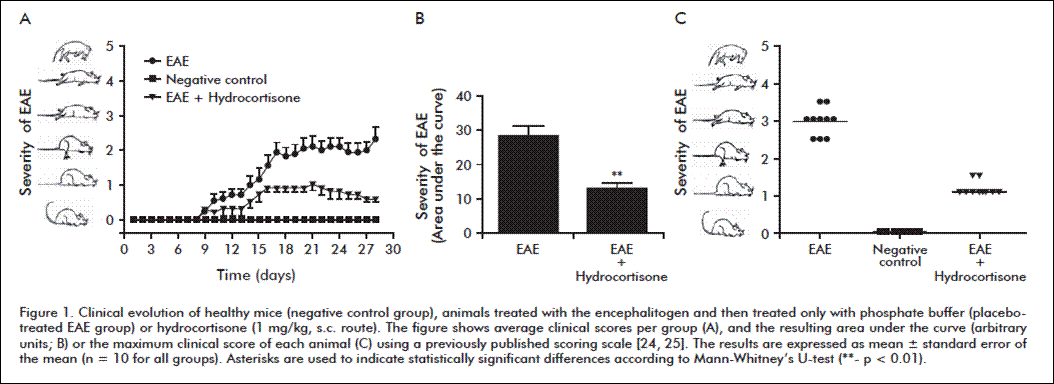
<body><![CDATA[<P   align="justify" ><font face="Verdana, Arial, Helvetica, sans-serif" size="2"><b>Statistical analysis      </b> </font></P >       <P   align="justify" ><font face="Verdana, Arial, Helvetica, sans-serif" size="2">Statistical analyses      were performed using the Prism 5.0 statistical software package (GraphPad      Prism Inc., USA). The data were expressed as mean &plusmn; standard error      of the mean (SEM), excepting for the variation of body weight, expressed as      group means. Statistical comparisons between experimental groups were performed      with Mann-Whitney&rsquo;s non-parametric U-test. All tests used 0.05 as threshold      for statistical significance (p &lt; 0.05) and 95% confidence intervals. </font></P >       <P   align="justify" >&nbsp;</P >       <P   align="justify" > </P >   <B>        <P   align="justify" ID="LinkTarget_223" ><font face="Verdana, Arial, Helvetica, sans-serif" size="3">RESULTS AND DISCUSSION      </font></P >   </B>        <P   align="justify" ><font face="Verdana, Arial, Helvetica, sans-serif" size="2">The evaluation of      clinical signs has been used as main response variable during the development      of the present EAE model, which will be used to identify potential therapeutic      candidates [21]. It is critical, therefore, to guarantee that the researcher      is well trained in the proper procedure for clinical exploration of the animal,      according to the selected scale.<FONT color="#FF0000"> <FONT color="#000000">Weakness      in the distal segment of the tail and motor irregularities during walking      are the first symptoms of damage to the central nervous system. In order to      detect motor irregularities while walking, the mice must be placed onto a      flat surface. During normal walking the abdomen of the animals must remain      parallel to the surface. Affected animals, however, tend to adopt a crooked      stance, and their walking motions are irregular, especially in the hind limbs.      Another possibility is to hang the mice from the tail during the clinical      evaluation (extension reflex). Retraction of any of the hind limbs to the      abdominal region while hanging in this position constitutes one of the initial      signs of the disease, and is associated with pathological processes in the      spinal motor nerves, including axonal degeneration [22, 23]. Damage to this      reflex was used to define the day from which clinical signs of the disease      started to appear and to be analyzed using the qualitative scale described      in previous sections. </font></font></font></P >   <FONT color="#FF0000"><FONT color="#000000">        <P   align="justify" ><font face="Verdana, Arial, Helvetica, sans-serif" size="2">Another useful test      is the observation of postural reflexes, performed by turning the animal on      its back. Healthy animals turn around onto their feet faster than diseased      animals, which may even lose this reflex totally as EAE progresses. </font></P >       <P   align="justify" ><font face="Verdana, Arial, Helvetica, sans-serif" size="2"><a href="/img/revistas/bta/v29n3/f0103312.gif">Figure      1A</a> shows average clinical indexes for each experimental group, per day.      In diseased animals, clinical signs started to appear by day 8 post-induction.      This is a relatively early onset within the range of 7-14 days post-induction      described by other authors [26, 27]. The clinical index reached a maximum      value of 3.5, evidencing that the experimental procedure successfully induced      the disorder. Symptoms of the disorder persisted until the end of the study,      coinciding with the chronic progressive form of EAE described by Amor <I>et      al</I>. [28]. </font></P >       
<P   align="justify" ><font face="Verdana, Arial, Helvetica, sans-serif" size="2">According to criteria      from Vogel <I>et al</I>. [29], a necessary part of the development of an experimental      model for a specific disease is the evaluation of the effect exhibited by      drugs routinely used in clinical practice against the modeled disease, characterizing      the subjacent molecular mechanisms to find out whether they mimic the physiopathological      processes taking place in actual patients. Hydrocortisone is one of the steroids      that have been used during the last 50 years to treat relapses in MS patients,      defined as mild to incapacitating neurological dysfunctions lasting more than      24 hours [30]. The positive effect of hydrocortisone on the clinical symptoms      of EAE-affected animals (<a href="/img/revistas/bta/v29n3/f0103312.gif">Figure 1A</a>) was corroborated      with statistical comparisons (<a href="/img/revistas/bta/v29n3/f0103312.gif">Figure 1B</a>). <a href="/img/revistas/bta/v29n3/f0103312.gif">Figure      1C</a><B> </B>shows the maximum indexes reached by each animal on the clinical      scale. Animals of the placebo-treated EAE group exhibited high clinical scores      evidencing the appearance and progression of the disorder, whereas the animals      treated with hydrocortisone improved significantly when compared to the diseased      individuals. The results indicate that the model has clinical value, and can      be used to establish an adequate correlation for preclinical studies of new      drugs against MS. </font></P >       
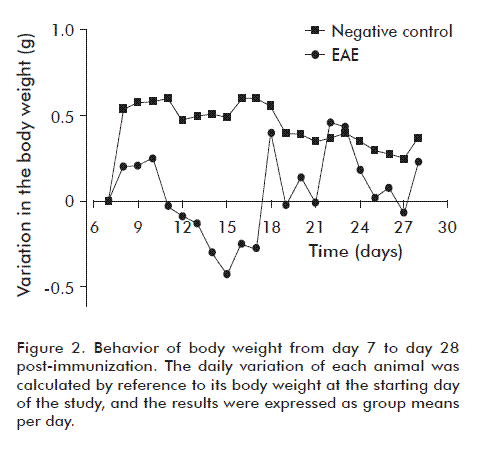
<P   align="justify" ><font face="Verdana, Arial, Helvetica, sans-serif" size="2">Body weight is an      important variable that provides information related to the degree of neurological      deterioration in affected animals. <a href="#fig2">Figure 2</a> shows how      body weight decreases in animals of the placebo-treated EAE group from day      11 of the study. A critical variation takes place between days 12 to 17 post-induction,      in close correspondence with the evolution of the symptoms of the disorder.      Body weight starts to rebound from day 17 onwards, probably due to compensatory      physiopathological mechanisms that exemplify the complexity of this disorder.      During some stages, clinical evaluation may not follow or mimic the behavior      of molecular parameters, and body weight was therefore explored solely in      a descriptive manner. We suggest that body weight constitutes a significant      clinical correlate only during the initial period of the disease, when the      first clinical signs appear and this variable follows a downward trend. Once      the disorder reaches chronicity, the correlation between body weight and clinical      signs disappears, and the former follows an unsteady, but decidedly upwards      trend. In the negative control group, body weight increased steadily throughout      the study, at a rate above that of diseased animals. </font></P >       ]]></body>
<body><![CDATA[<P   align="center" ><img src="/img/revistas/bta/v29n3/f0203312.gif" width="478" height="467"><a name="fig2"></a></P >       
<P   align="justify" ><font face="Verdana, Arial, Helvetica, sans-serif" size="2">The drop in body      weight detected in the placebo-treated EAE group may have a number of causes.      One of them is motor deterioration, which may compromise access of the affected      individuals to the food placed in their boxes. In this case, this variable      would constitute a correlate of disease severity. Another possibility is a      decrease in appetite, which has been associated to the effects of leptin in      this animal model [31]. Leptin is a hormonal peptide produced by adipocytes      that participates in the regulation of energy balance and food intake in the      organism [32]. Among its multiple effects, leptin has been shown to inhibit      the sensation of hunger when acting upon the hypothalamus, consequently decreasing      the ingestion of food, and to stimulate the sympathetic nervous system, thereby      increasing metabolic activity and the consumption of energy [32]. It has been      shown that blood leptin concentrations increase after the induction of EAE,      correlating with the decrease in body weight that takes place during part      of the autoimmune process [33]. </font></P >       <P   align="justify" ><font face="Verdana, Arial, Helvetica, sans-serif" size="2">The evaluation by      qPCR of the changes in cytokine profile produced after the induction of EAE,      as well as the histological findings of the transmission electron microscopy      study, confirmed that the EAE model had indeed been implemented. </font></P >       <P   align="justify" ><font face="Verdana, Arial, Helvetica, sans-serif" size="2">According to the      results, the diseased animals exhibited increased levels of IL-17 mRNA, in      agreement with the data published by other authors working on this model [34].      It was the studies of Langrish comparing IL-12p35<Sup>-/-</Sup> and IL-23p19<Sup>-/-</Sup>      mice that first demonstrated that Th17 cells were responsible for this disorder      [35]. Additional evidence concerning the role of Th17 cells on the physiopathology      of EAE was obtained in mice lacking the T-bet<Sup>-/-</Sup> and STAT6<Sup>-/-</Sup>      transcriptional factors, which are unable to produce Th1 and Th2 cells, respectively      [24]. There is data pointing to Th17 cells as effectors in this disorder [25].      </font></P >   <FONT size="+1"><FONT size="+1"><FONT size="+1"><FONT size="+1"><FONT size="+1"><FONT size="+1"><FONT size="+1"><FONT size="+1">        <P   align="justify" ><font face="Verdana, Arial, Helvetica, sans-serif" size="2">Other effector cytokines      (tumoral necrosis factor alfa (TNF-&alpha;), IL-1&beta;, IL-6, IFN-&gamma;),      as well as markers for natural (Foxp3) and adaptive (transforming growth factor      beta, TGF-&beta;) Treg cells showed that EAE-affected animals positively modulated      the synthesis of pro-inflammatory effector cytokines, resulting in an increased      regulatory response as homeostatic mechanism to restore the effector-regulatory      balance of the immune response (<a href="/img/revistas/bta/v29n3/f0303312.gif">Figure 3</a>). </font></P >       
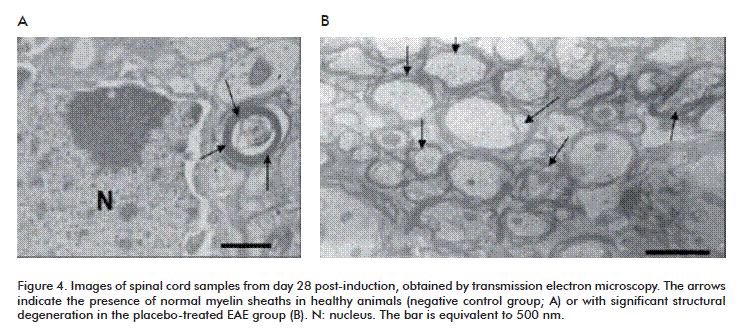
<P   align="justify" ><font face="Verdana, Arial, Helvetica, sans-serif" size="2">When spinal cord      samples were analyzed by transmission electron microscopy, the individuals      from the negative control group exhibited compact, dense myelin sheaths and      no signs of axonal damage (<a href="/img/revistas/bta/v29n3/f0403312.gif">Figure 4A</a>). In contrast,      most axons in animals of the placebo-treated EAE group (<a href="/img/revistas/bta/v29n3/f0403312.gif">Figure      4B</a>) presented interruptions of the continuity of myelin layers. Taking      into account that demyelination is one of the physiopathological characteristics      of MS [36] and one of its most important pharmacological targets [37], our      results confirm that the experimental model we have implemented is a robust      tool for mechanistic and preclinical evaluation studies in this field. </font></P >       
<P   align="justify" >&nbsp;</P >       <P   align="justify" ><font face="Verdana, Arial, Helvetica, sans-serif" size="2"><B><font size="3">CONCLUSIONS      </font></b></font></P >       <P   align="justify" ><font face="Verdana, Arial, Helvetica, sans-serif" size="2">We have implemented      a model of chronic, progressive EAE in C57BL6 mice where the first clinical      signs appear by day 8 and progressively increase until day 28 post-immunization.      The maximum clinical score of the diseased animals reached high values during      the development of EAE, and there was correspondence between clinical signs,      the results of molecular assays and the observed ultrastructural modifications,      which consisted mainly of demyelination and axonal damage at the spinal cord.      </font></P >       <P   align="justify" > </P >       ]]></body>
<body><![CDATA[<P   align="justify" >&nbsp;</P >       <P   align="justify" ><font face="Verdana, Arial, Helvetica, sans-serif" size="3"><b>REFERENCES </b></font></P >       <!-- ref --><P   align="justify" ><font face="Verdana, Arial, Helvetica, sans-serif" size="2">1. Holmoy T, Vartdal      F. The immunological basis for treatment of multiple sclerosis. Scand J Immunol.      2007;66(4):374-82.     </font></P >       <!-- ref --><P   align="justify" ><font face="Verdana, Arial, Helvetica, sans-serif" size="2">2. Huynh T. The multiple      sclerosis market. Nat Rev Drug Discov. 2010;9(10):759-60.     </font></P >       <!-- ref --><P   align="justify" ><font face="Verdana, Arial, Helvetica, sans-serif" size="2">3. Thomson Healthcare.      Red Book: Pharmacy's Fundamental Reference. 112 ed. Montvale, NJ: Thomson      Healthcare; 2008.     </font></P >       <!-- ref --><P   align="justify" ><font face="Verdana, Arial, Helvetica, sans-serif" size="2">4. Hohlfeld R, Wekerle      H. Immunological update on multiple sclerosis. Curr Opin Neurol. 2001;14(3):299-304.          </font></P >       ]]></body>
<body><![CDATA[<!-- ref --><P   align="justify" ><font face="Verdana, Arial, Helvetica, sans-serif" size="2">5. Cassan C, Liblau      RS. Immune tolerance and control of CNS autoimmunity: from animal models to      MS patients. J Neurochem. 2007;100(4):883-92.     </font></P >       <!-- ref --><P   align="justify" ><font face="Verdana, Arial, Helvetica, sans-serif" size="2">6. Dong C. TH17 cells      in development: an updated view of their molecular identity and genetic programming.      Nat Rev Immunol. 2008;8(5):337-48.     </font></P >       <!-- ref --><P   align="justify" ><font face="Verdana, Arial, Helvetica, sans-serif" size="2">7. Steinman L. A      brief history of T(H)17, the first major revision in the T(H)1/T(H)2 hypothesis      of T cell-mediated tissue damage. Nat Med. 2007;13(2):139-45.     </font></P >       <!-- ref --><P   align="justify" ><font face="Verdana, Arial, Helvetica, sans-serif" size="2">8. McFarland HF,      Martin R. Multiple sclerosis: a complicated picture of autoimmunity. Nat Immunol.      2007;8(9):913-9.     </font></P >       <!-- ref --><P   align="justify" ><font face="Verdana, Arial, Helvetica, sans-serif" size="2">9. Zamvil SS, Steinman      L. The T lymphocyte in experimental allergic encephalomyelitis. Annu Rev Immunol.      1990;8:579-621.     </font></P >       ]]></body>
<body><![CDATA[<!-- ref --><P   align="justify" ><font face="Verdana, Arial, Helvetica, sans-serif" size="2">10. Zorzella SF,      Seger J, Martins DR, Pelizon AC, Sartori A. Resistance to experimental autoimmune      encephalomyelitis development in Lewis rats from a conventional animal facility.      Mem Inst Oswaldo Cruz. 2007;102(8):931-6.     </font></P >       <!-- ref --><P   align="justify" ><font face="Verdana, Arial, Helvetica, sans-serif" size="2">11. Sewell DL, Reinke      EK, Hogan LH, Sandor M, Fabry Z. Immunoregulation of CNS autoimmunity by helminth      and mycobacterial infections. Immunol Lett. 2002;82(1-2):101-10.     </font></P >       <P   align="justify" ><font face="Verdana, Arial, Helvetica, sans-serif" size="2">12. Olfert ED, Cross      BM, McWilliam A. Manual sobre el cuidado y uso de los animales de experimentaci&oacute;n      [Internet]. Estol L, Dugas R, Secretaria Ejecutiva del Consejo Canadiense      de Protecci&oacute;n de los Animales, editors. Ottawa: Consejo Canadiense      de Protecci&oacute;n de los Animales [cited 2011 Dec 5]. Available from: <a href="http://www.ccac.ca/en_/standards/guidelines/additional/spanish-guide-vol1" target="_blank">http://www.ccac.ca/en_/standards/guidelines/additional/spanish-guide-vol1</a>.      </font></P >       <!-- ref --><P   align="justify" ><font face="Verdana, Arial, Helvetica, sans-serif" size="2">13. Pluchino S, Quattrini      A, Brambilla E, Gritti A, Salani G, Dina G, et al. Injection of adult neurospheres      induces recovery in a chronic model of multiple sclerosis. Nature. 2003;422(6933):688-94.          </font></P >       <!-- ref --><P   align="justify" ><font face="Verdana, Arial, Helvetica, sans-serif" size="2">14. Esposito M, Ruffini      F, Bellone M, Gagliani N, Battaglia M, Martino G, et al. Rapamycin inhibits      relapsing experimental autoimmune encephalomyelitis by both effector and regulatory      T cells modulation. J Neuroimmunol. 2010;220(1-2):52-63.     </font></P >       <!-- ref --><P   align="justify" ><font face="Verdana, Arial, Helvetica, sans-serif" size="2">15. Peiris M, Monteith      GR, Roberts-Thomson SJ, Cabot PJ. A model of experimental autoimmune encephalomyelitis      (EAE) in C57BL/6 mice for the characterisation of intervention therapies.      J Neurosci Methods. 2007;163(2):245-54.     </font></P >       <!-- ref --><P   align="justify" ><font face="Verdana, Arial, Helvetica, sans-serif" size="2">16. Lech M, Avila-Ferrufino      A, Skuginna V, Susanti HE, Anders HJ. Quantitative expression of RIG-like      helicase, NOD-like receptor and inflammasome-related mRNAs in humans and mice.      Int Immunol. 2010;22(9):717-28.     </font></P >       <!-- ref --><P   align="justify" ><font face="Verdana, Arial, Helvetica, sans-serif" size="2">17. Bustin SA, Benes      V, Garson JA, Hellemans J, Huggett J, Kubista M, et al. The MIQE guidelines:      minimum information for publication of quantitative real-time PCR experiments.      Clin Chem. 2009;55(4):611-22.     </font></P >       <!-- ref --><P   align="justify" ><font face="Verdana, Arial, Helvetica, sans-serif" size="2">18. Livak KJ, Schmittgen      TD. Analysis of relative gene expression data using real-time quantitative      PCR and the 2(-Delta Delta C(T)) method. Methods. 2001;25(4):402-8.     </font></P >       <!-- ref --><P   align="justify" ><font face="Verdana, Arial, Helvetica, sans-serif" size="2">19. Altschul SF,      Gish W, Miller W, Myers EW, Lipman DJ. Basic local alignment search tool.      J Mol Biol. 1990;215(3):403-10.     </font></P >       <!-- ref --><P   align="justify" ><font face="Verdana, Arial, Helvetica, sans-serif" size="2">20. Spurr AR. A low-viscosity      epoxy resin embedding medium for electron microscopy. J Ultrastruct Res. 1969;26(1):31-43.          </font></P >       <!-- ref --><P   align="justify" ><font face="Verdana, Arial, Helvetica, sans-serif" size="2">21. Racke MK. Experimental      autoimmune encephalomyelitis (EAE). Curr Protoc Neurosci. 2001;Chapter 9:Unit9      7.     </font></P >       <!-- ref --><P   align="justify" ><font face="Verdana, Arial, Helvetica, sans-serif" size="2">22. Lo AC, Saab CY,      Black JA, Waxman SG. Phenytoin protects spinal cord axons and preserves axonal      conduction and neurological function in a model of neuroinflammation in vivo.      J Neurophysiol. 2003;90(5):3566-71.     </font></P >       <!-- ref --><P   align="justify" ><font face="Verdana, Arial, Helvetica, sans-serif" size="2">23. White SR, Barnes      CD. Spinal and spino-bulbo-spinal reflexes in rats with experimental allergic      encephalomyelitis. Brain Res. 1975;84(1):123-8.     </font></P >       <!-- ref --><P   align="justify" ><font face="Verdana, Arial, Helvetica, sans-serif" size="2">24. Das J, Ren G,      Zhang L, Roberts AI, Zhao X, Bothwell AL, et al. Transforming growth factor      beta is dispensable for the molecular orchestration of Th17 cell differentiation.      J Exp Med. 2009;206(11):2407-16.     </font></P >       <!-- ref --><P   align="justify" ><font face="Verdana, Arial, Helvetica, sans-serif" size="2">25. Onishi RM, Gaffen      SL. Interleukin-17 and its target genes: mechanisms of interleukin-17 function      in disease. Immunology. 2010;129(3):311-21.     </font></P >       <!-- ref --><P   align="justify" ><font face="Verdana, Arial, Helvetica, sans-serif" size="2">26. Hemmer B, Hartung      HP. Toward the development of rational therapies in multiple sclerosis: what      is on the horizon? Ann Neurol. 2007;62(4):314-26.     </font></P >       <!-- ref --><P   align="justify" ><font face="Verdana, Arial, Helvetica, sans-serif" size="2">27. Montero E, Nussbaum      G, Kaye JF, Perez R, Lage A, Ben-Nun A, et al. Regulation of experimental      autoimmune encephalomyelitis by CD4+, CD25+ and CD8+ T cells: analysis using      depleting antibodies. J Autoimmun. 2004;23(1):1-7.     </font></P >       <!-- ref --><P   align="justify" ><font face="Verdana, Arial, Helvetica, sans-serif" size="2">28. Amor S, Groome      N, Linington C, Morris MM, Dornmair K, Gardinier MV, et al. Identification      of epitopes of myelin oligodendrocyte glycoprotein for the induction of experimental      allergic encephalomyelitis in SJL and Biozzi AB/H mice. J Immunol. 1994;153(10):4349-56.          </font></P >       <!-- ref --><P   align="justify" ><font face="Verdana, Arial, Helvetica, sans-serif" size="2">29. Vogel HG, Vogel      WH, Sch&ouml;lkens BA, Sandow J, M&uuml;ller G, Vogel WF, editors. Drug discovery      and evaluation. Pharmacological assays. 2nd ed. New York: Springer-Verlag;      2002.     </font></P >       <!-- ref --><P   align="justify" ><font face="Verdana, Arial, Helvetica, sans-serif" size="2">30. Burton JM, O'Connor      PW, Hohol M, Beyene J. Oral versus intravenous steroids for treatment of relapses      in multiple sclerosis. Cochrane Database Syst Rev. 2009(3):CD006921.     </font></P >       <!-- ref --><P   align="justify" ><font face="Verdana, Arial, Helvetica, sans-serif" size="2">31. De Rosa V, Procaccini      C, La Cava A, Chieffi P, Nicoletti GF, Fontana S, et al. Leptin neutralization      interferes with pathogenic T cell autoreactivity in autoimmune encephalomyelitis.      J Clin Invest. 2006;116(2):447-55.     </font></P >       <P   align="justify" ><font face="Verdana, Arial, Helvetica, sans-serif" size="2">32. Guyton AC y Hall      JE. Dietary Balances; Regulation of Feeding; Obesity and Starvation; Vitamins      and Minerals. In: Textbook of Medical Physiology. 11th. ed. Pennsylvania:      Elsevier-Saunders; 2006. p. 865-80. </font></P >       <!-- ref --><P   align="justify" ><font face="Verdana, Arial, Helvetica, sans-serif" size="2">33. Sanna V, Di Giacomo      A, La Cava A, Lechler RI, Fontana S, Zappacosta S, et al. Leptin surge precedes      onset of autoimmune encephalomyelitis and correlates with development of pathogenic      T cell responses. J Clin Invest. 2003;111(2):241-50.     </font></P >       <!-- ref --><P   align="justify" ><font face="Verdana, Arial, Helvetica, sans-serif" size="2">34. Komiyama Y, Nakae      S, Matsuki T, Nambu A, Ishigame H, Kakuta S, et al. IL-17 plays an important      role in the development of experimental autoimmune encephalomyelitis. J Immunol.      2006;177(1):566-73.     </font></P >       <!-- ref --><P   align="justify" ><font face="Verdana, Arial, Helvetica, sans-serif" size="2">35. Langrish CL,      Chen Y, Blumenschein WM, Mattson J, Basham B, Sedgwick JD, et al. IL-23 drives      a pathogenic T cell population that induces autoimmune inflammation. J Exp      Med. 2005;201(2):233-40.     </font></P >       ]]></body>
<body><![CDATA[<!-- ref --><P   align="justify" ><font face="Verdana, Arial, Helvetica, sans-serif" size="2">36. Pittock SJ, Lucchinetti      CF. The pathology of MS: new insights and potential clinical applications.      Neurologist. 2007;13(2):45-56.     </font></P >       <!-- ref --><P   align="justify" ><font face="Verdana, Arial, Helvetica, sans-serif" size="2">37. Mullard A. Success      of immunomodulators in MS shifts discovery focus to neuroprotection. Nat Rev      Drug Discov. 2011;10(12):885-7.     </font></P >       <P   align="justify" > </P >       <P   >&nbsp;</P >       <P   >&nbsp;</P >       <P   ><font face="Verdana, Arial, Helvetica, sans-serif" size="2">Received in November,      2011.    <br>     Accepted in April, 2012. </font></P >       <P   >&nbsp;</P >   <FONT size="+1"><FONT size="+1">        ]]></body>
<body><![CDATA[<P   ></P >       <P   > </P >   <FONT size="+1">        <P   >&nbsp;</P >       <P   ><font face="Verdana, Arial, Helvetica, sans-serif" size="2"><I>Giselle Pent&oacute;n-Rol.</I>      Centro de Ingenier&iacute;a Gen&eacute;tica y Biotecnolog&iacute;a (CIGB).      Ave. 31 e/ 158 y 190, Cubanac&aacute;n, Playa, CP 11600, La Habana, Cuba.      E-mail:<A href="mailto:giselle.penton@cigb.edu.cu"> giselle.penton@cigb.edu.cu</A>.      </font></P >   </font></font></font></font></font></font></font></font></font></font></font></font></font></font></font></font></font></font></font></font></font></font></font></font></font></font></font></font></font></font></font></font></font></font></font></font></font></font></font></font></font></font></font></font></font></font></font></font></font></font></font></font></DIV >      ]]></body><back>
<ref-list>
<ref id="B1">
<label>1</label><nlm-citation citation-type="journal">
<person-group person-group-type="author">
<name>
<surname><![CDATA[Holmoy]]></surname>
<given-names><![CDATA[T]]></given-names>
</name>
<name>
<surname><![CDATA[Vartdal]]></surname>
<given-names><![CDATA[F]]></given-names>
</name>
</person-group>
<article-title xml:lang="en"><![CDATA[The immunological basis for treatment of multiple sclerosis]]></article-title>
<source><![CDATA[Scand J Immunol]]></source>
<year>2007</year>
<volume>66</volume>
<numero>4</numero>
<issue>4</issue>
<page-range>374-82</page-range></nlm-citation>
</ref>
<ref id="B2">
<label>2</label><nlm-citation citation-type="journal">
<person-group person-group-type="author">
<name>
<surname><![CDATA[Huynh]]></surname>
<given-names><![CDATA[T]]></given-names>
</name>
</person-group>
<article-title xml:lang="en"><![CDATA[The multiple sclerosis market]]></article-title>
<source><![CDATA[Nat Rev Drug Discov]]></source>
<year>2010</year>
<volume>9</volume>
<numero>10</numero>
<issue>10</issue>
<page-range>759-60</page-range></nlm-citation>
</ref>
<ref id="B3">
<label>3</label><nlm-citation citation-type="book">
<collab>Thomson Healthcare</collab>
<source><![CDATA[Red Book: Pharmacy's Fundamental Reference]]></source>
<year>2008</year>
<edition>112</edition>
<publisher-loc><![CDATA[Montvale, NJ ]]></publisher-loc>
<publisher-name><![CDATA[Thomson Healthcare]]></publisher-name>
</nlm-citation>
</ref>
<ref id="B4">
<label>4</label><nlm-citation citation-type="journal">
<person-group person-group-type="author">
<name>
<surname><![CDATA[Hohlfeld]]></surname>
<given-names><![CDATA[R]]></given-names>
</name>
<name>
<surname><![CDATA[Wekerle]]></surname>
<given-names><![CDATA[H]]></given-names>
</name>
</person-group>
<article-title xml:lang="en"><![CDATA[Immunological update on multiple sclerosis]]></article-title>
<source><![CDATA[Curr Opin Neurol]]></source>
<year>2001</year>
<volume>14</volume>
<numero>3</numero>
<issue>3</issue>
<page-range>299-304</page-range></nlm-citation>
</ref>
<ref id="B5">
<label>5</label><nlm-citation citation-type="journal">
<person-group person-group-type="author">
<name>
<surname><![CDATA[Cassan]]></surname>
<given-names><![CDATA[C]]></given-names>
</name>
<name>
<surname><![CDATA[Liblau]]></surname>
<given-names><![CDATA[RS]]></given-names>
</name>
</person-group>
<article-title xml:lang="en"><![CDATA[Immune tolerance and control of CNS autoimmunity: from animal models to MS patients]]></article-title>
<source><![CDATA[J Neurochem]]></source>
<year>2007</year>
<volume>100</volume>
<numero>4</numero>
<issue>4</issue>
<page-range>883-92</page-range></nlm-citation>
</ref>
<ref id="B6">
<label>6</label><nlm-citation citation-type="journal">
<person-group person-group-type="author">
<name>
<surname><![CDATA[Dong]]></surname>
<given-names><![CDATA[C]]></given-names>
</name>
</person-group>
<article-title xml:lang="en"><![CDATA[TH17 cells in development: an updated view of their molecular identity and genetic programming]]></article-title>
<source><![CDATA[Nat Rev Immunol]]></source>
<year>2008</year>
<volume>8</volume>
<numero>5</numero>
<issue>5</issue>
<page-range>337-48</page-range></nlm-citation>
</ref>
<ref id="B7">
<label>7</label><nlm-citation citation-type="journal">
<person-group person-group-type="author">
<name>
<surname><![CDATA[Steinman]]></surname>
<given-names><![CDATA[L]]></given-names>
</name>
</person-group>
<article-title xml:lang="en"><![CDATA[A brief history of T(H)17, the first major revision in the T(H)1/T(H)2 hypothesis of T cell-mediated tissue damage]]></article-title>
<source><![CDATA[Nat Med]]></source>
<year>2007</year>
<volume>13</volume>
<numero>2</numero>
<issue>2</issue>
<page-range>139-45</page-range></nlm-citation>
</ref>
<ref id="B8">
<label>8</label><nlm-citation citation-type="journal">
<person-group person-group-type="author">
<name>
<surname><![CDATA[McFarland]]></surname>
<given-names><![CDATA[HF]]></given-names>
</name>
<name>
<surname><![CDATA[Martin]]></surname>
<given-names><![CDATA[R]]></given-names>
</name>
</person-group>
<article-title xml:lang="en"><![CDATA[Multiple sclerosis: a complicated picture of autoimmunity]]></article-title>
<source><![CDATA[Nat Immunol]]></source>
<year>2007</year>
<volume>8</volume>
<numero>9</numero>
<issue>9</issue>
<page-range>913-9</page-range></nlm-citation>
</ref>
<ref id="B9">
<label>9</label><nlm-citation citation-type="journal">
<person-group person-group-type="author">
<name>
<surname><![CDATA[Zamvil]]></surname>
<given-names><![CDATA[SS]]></given-names>
</name>
<name>
<surname><![CDATA[Steinman]]></surname>
<given-names><![CDATA[L]]></given-names>
</name>
</person-group>
<article-title xml:lang="en"><![CDATA[The T lymphocyte in experimental allergic encephalomyelitis]]></article-title>
<source><![CDATA[Annu Rev Immunol]]></source>
<year>1990</year>
<volume>8</volume>
<page-range>579-621</page-range></nlm-citation>
</ref>
<ref id="B10">
<label>10</label><nlm-citation citation-type="journal">
<person-group person-group-type="author">
<name>
<surname><![CDATA[Zorzella]]></surname>
<given-names><![CDATA[SF]]></given-names>
</name>
<name>
<surname><![CDATA[Seger]]></surname>
<given-names><![CDATA[J]]></given-names>
</name>
<name>
<surname><![CDATA[Martins]]></surname>
<given-names><![CDATA[DR]]></given-names>
</name>
<name>
<surname><![CDATA[Pelizon]]></surname>
<given-names><![CDATA[AC]]></given-names>
</name>
<name>
<surname><![CDATA[Sartori]]></surname>
<given-names><![CDATA[A]]></given-names>
</name>
</person-group>
<article-title xml:lang="en"><![CDATA[Resistance to experimental autoimmune encephalomyelitis development in Lewis rats from a conventional animal facility]]></article-title>
<source><![CDATA[Mem Inst Oswaldo Cruz]]></source>
<year>2007</year>
<volume>102</volume>
<numero>8</numero>
<issue>8</issue>
<page-range>931-6</page-range></nlm-citation>
</ref>
<ref id="B11">
<label>11</label><nlm-citation citation-type="journal">
<person-group person-group-type="author">
<name>
<surname><![CDATA[Sewell]]></surname>
<given-names><![CDATA[DL]]></given-names>
</name>
<name>
<surname><![CDATA[Reinke]]></surname>
<given-names><![CDATA[EK]]></given-names>
</name>
<name>
<surname><![CDATA[Hogan]]></surname>
<given-names><![CDATA[LH]]></given-names>
</name>
<name>
<surname><![CDATA[Sandor]]></surname>
<given-names><![CDATA[M]]></given-names>
</name>
<name>
<surname><![CDATA[Fabry]]></surname>
<given-names><![CDATA[Z]]></given-names>
</name>
</person-group>
<article-title xml:lang="en"><![CDATA[Immunoregulation of CNS autoimmunity by helminth and mycobacterial infections]]></article-title>
<source><![CDATA[Immunol Lett]]></source>
<year>2002</year>
<volume>82</volume>
<numero>1-2</numero>
<issue>1-2</issue>
<page-range>101-10</page-range></nlm-citation>
</ref>
<ref id="B12">
<label>12</label><nlm-citation citation-type="book">
<person-group person-group-type="author">
<name>
<surname><![CDATA[Olfert]]></surname>
<given-names><![CDATA[ED]]></given-names>
</name>
<name>
<surname><![CDATA[Cross]]></surname>
<given-names><![CDATA[BM]]></given-names>
</name>
<name>
<surname><![CDATA[McWilliam]]></surname>
<given-names><![CDATA[A]]></given-names>
</name>
</person-group>
<source><![CDATA[Manual sobre el cuidado y uso de los animales de experimentación]]></source>
<year>1998</year>
<publisher-loc><![CDATA[Ottawa ]]></publisher-loc>
<publisher-name><![CDATA[Consejo Canadiense de Protección de los Animales]]></publisher-name>
</nlm-citation>
</ref>
<ref id="B13">
<label>13</label><nlm-citation citation-type="journal">
<person-group person-group-type="author">
<name>
<surname><![CDATA[Pluchino]]></surname>
<given-names><![CDATA[S]]></given-names>
</name>
<name>
<surname><![CDATA[Quattrini]]></surname>
<given-names><![CDATA[A]]></given-names>
</name>
<name>
<surname><![CDATA[Brambilla]]></surname>
<given-names><![CDATA[E]]></given-names>
</name>
<name>
<surname><![CDATA[Gritti]]></surname>
<given-names><![CDATA[A]]></given-names>
</name>
<name>
<surname><![CDATA[Salani]]></surname>
<given-names><![CDATA[G]]></given-names>
</name>
<name>
<surname><![CDATA[Dina]]></surname>
<given-names><![CDATA[G]]></given-names>
</name>
</person-group>
<article-title xml:lang="en"><![CDATA[Injection of adult neurospheres induces recovery in a chronic model of multiple sclerosis]]></article-title>
<source><![CDATA[Nature]]></source>
<year>2003</year>
<volume>422</volume>
<numero>6933</numero>
<issue>6933</issue>
<page-range>688-94</page-range></nlm-citation>
</ref>
<ref id="B14">
<label>14</label><nlm-citation citation-type="journal">
<person-group person-group-type="author">
<name>
<surname><![CDATA[Esposito]]></surname>
<given-names><![CDATA[M]]></given-names>
</name>
<name>
<surname><![CDATA[Ruffini]]></surname>
<given-names><![CDATA[F]]></given-names>
</name>
<name>
<surname><![CDATA[Bellone]]></surname>
<given-names><![CDATA[M]]></given-names>
</name>
<name>
<surname><![CDATA[Gagliani]]></surname>
<given-names><![CDATA[N]]></given-names>
</name>
<name>
<surname><![CDATA[Battaglia]]></surname>
<given-names><![CDATA[M]]></given-names>
</name>
<name>
<surname><![CDATA[Martino]]></surname>
<given-names><![CDATA[G]]></given-names>
</name>
</person-group>
<article-title xml:lang="en"><![CDATA[Rapamycin inhibits relapsing experimental autoimmune encephalomyelitis by both effector and regulatory T cells modulation]]></article-title>
<source><![CDATA[J Neuroimmunol]]></source>
<year>2010</year>
<volume>220</volume>
<numero>1-2</numero>
<issue>1-2</issue>
<page-range>52-63</page-range></nlm-citation>
</ref>
<ref id="B15">
<label>15</label><nlm-citation citation-type="journal">
<person-group person-group-type="author">
<name>
<surname><![CDATA[Peiris]]></surname>
<given-names><![CDATA[M]]></given-names>
</name>
<name>
<surname><![CDATA[Monteith]]></surname>
<given-names><![CDATA[GR]]></given-names>
</name>
<name>
<surname><![CDATA[Roberts-Thomson]]></surname>
<given-names><![CDATA[SJ]]></given-names>
</name>
<name>
<surname><![CDATA[Cabot]]></surname>
<given-names><![CDATA[PJ]]></given-names>
</name>
</person-group>
<article-title xml:lang="en"><![CDATA[A model of experimental autoimmune encephalomyelitis (EAE) in C57BL/6 mice for the characterisation of intervention therapies]]></article-title>
<source><![CDATA[J Neurosci Methods]]></source>
<year>2007</year>
<volume>163</volume>
<numero>2</numero>
<issue>2</issue>
<page-range>245-54</page-range></nlm-citation>
</ref>
<ref id="B16">
<label>16</label><nlm-citation citation-type="journal">
<person-group person-group-type="author">
<name>
<surname><![CDATA[Lech]]></surname>
<given-names><![CDATA[M]]></given-names>
</name>
<name>
<surname><![CDATA[Avila-Ferrufino]]></surname>
<given-names><![CDATA[A]]></given-names>
</name>
<name>
<surname><![CDATA[Skuginna]]></surname>
<given-names><![CDATA[V]]></given-names>
</name>
<name>
<surname><![CDATA[Susanti]]></surname>
<given-names><![CDATA[HE]]></given-names>
</name>
<name>
<surname><![CDATA[Anders]]></surname>
<given-names><![CDATA[HJ]]></given-names>
</name>
</person-group>
<article-title xml:lang="en"><![CDATA[Quantitative expression of RIG-like helicase, NOD-like receptor and inflammasome-related mRNAs in humans and mice]]></article-title>
<source><![CDATA[Int Immunol]]></source>
<year>2010</year>
<volume>22</volume>
<numero>9</numero>
<issue>9</issue>
<page-range>717-28</page-range></nlm-citation>
</ref>
<ref id="B17">
<label>17</label><nlm-citation citation-type="journal">
<person-group person-group-type="author">
<name>
<surname><![CDATA[Bustin]]></surname>
<given-names><![CDATA[SA]]></given-names>
</name>
<name>
<surname><![CDATA[Benes]]></surname>
<given-names><![CDATA[V]]></given-names>
</name>
<name>
<surname><![CDATA[Garson]]></surname>
<given-names><![CDATA[JA]]></given-names>
</name>
<name>
<surname><![CDATA[Hellemans]]></surname>
<given-names><![CDATA[J]]></given-names>
</name>
<name>
<surname><![CDATA[Huggett]]></surname>
<given-names><![CDATA[J]]></given-names>
</name>
<name>
<surname><![CDATA[Kubista]]></surname>
<given-names><![CDATA[M]]></given-names>
</name>
</person-group>
<article-title xml:lang="en"><![CDATA[The MIQE guidelines: minimum information for publication of quantitative real-time PCR experiments]]></article-title>
<source><![CDATA[Clin Chem]]></source>
<year>2009</year>
<volume>55</volume>
<numero>4</numero>
<issue>4</issue>
<page-range>611-22</page-range></nlm-citation>
</ref>
<ref id="B18">
<label>18</label><nlm-citation citation-type="journal">
<person-group person-group-type="author">
<name>
<surname><![CDATA[Livak]]></surname>
<given-names><![CDATA[KJ]]></given-names>
</name>
<name>
<surname><![CDATA[Schmittgen]]></surname>
<given-names><![CDATA[TD]]></given-names>
</name>
</person-group>
<article-title xml:lang="en"><![CDATA[Analysis of relative gene expression data using real-time quantitative PCR and the 2(-Delta Delta C(T)) method]]></article-title>
<source><![CDATA[Methods]]></source>
<year>2001</year>
<volume>25</volume>
<numero>4</numero>
<issue>4</issue>
<page-range>402-8</page-range></nlm-citation>
</ref>
<ref id="B19">
<label>19</label><nlm-citation citation-type="journal">
<person-group person-group-type="author">
<name>
<surname><![CDATA[Altschul]]></surname>
<given-names><![CDATA[SF]]></given-names>
</name>
<name>
<surname><![CDATA[Gish]]></surname>
<given-names><![CDATA[W]]></given-names>
</name>
<name>
<surname><![CDATA[Miller]]></surname>
<given-names><![CDATA[W]]></given-names>
</name>
<name>
<surname><![CDATA[Myers]]></surname>
<given-names><![CDATA[EW]]></given-names>
</name>
<name>
<surname><![CDATA[Lipman]]></surname>
<given-names><![CDATA[DJ]]></given-names>
</name>
</person-group>
<article-title xml:lang="en"><![CDATA[Basic local alignment search tool]]></article-title>
<source><![CDATA[J Mol Biol]]></source>
<year>1990</year>
<volume>215</volume>
<numero>3</numero>
<issue>3</issue>
<page-range>403-10</page-range></nlm-citation>
</ref>
<ref id="B20">
<label>20</label><nlm-citation citation-type="journal">
<person-group person-group-type="author">
<name>
<surname><![CDATA[Spurr]]></surname>
<given-names><![CDATA[AR]]></given-names>
</name>
</person-group>
<article-title xml:lang="en"><![CDATA[A low-viscosity epoxy resin embedding medium for electron microscopy]]></article-title>
<source><![CDATA[J Ultrastruct Res]]></source>
<year>1969</year>
<volume>26</volume>
<numero>1</numero>
<issue>1</issue>
<page-range>31-43</page-range></nlm-citation>
</ref>
<ref id="B21">
<label>21</label><nlm-citation citation-type="journal">
<person-group person-group-type="author">
<name>
<surname><![CDATA[Racke]]></surname>
<given-names><![CDATA[MK]]></given-names>
</name>
</person-group>
<article-title xml:lang="en"><![CDATA[Experimental autoimmune encephalomyelitis (EAE)]]></article-title>
<source><![CDATA[Curr Protoc Neurosci]]></source>
<year>2001</year>
<page-range>Chapter9. Unit9.7</page-range></nlm-citation>
</ref>
<ref id="B22">
<label>22</label><nlm-citation citation-type="journal">
<person-group person-group-type="author">
<name>
<surname><![CDATA[Lo]]></surname>
<given-names><![CDATA[AC]]></given-names>
</name>
<name>
<surname><![CDATA[Saab]]></surname>
<given-names><![CDATA[CY]]></given-names>
</name>
<name>
<surname><![CDATA[Black]]></surname>
<given-names><![CDATA[JA]]></given-names>
</name>
<name>
<surname><![CDATA[Waxman]]></surname>
<given-names><![CDATA[SG]]></given-names>
</name>
</person-group>
<article-title xml:lang="en"><![CDATA[Phenytoin protects spinal cord axons and preserves axonal conduction and neurological function in a model of neuroinflammation in vivo]]></article-title>
<source><![CDATA[J Neurophysiol]]></source>
<year>2003</year>
<volume>90</volume>
<numero>5</numero>
<issue>5</issue>
<page-range>3566-71</page-range></nlm-citation>
</ref>
<ref id="B23">
<label>23</label><nlm-citation citation-type="journal">
<person-group person-group-type="author">
<name>
<surname><![CDATA[White]]></surname>
<given-names><![CDATA[SR]]></given-names>
</name>
<name>
<surname><![CDATA[Barnes]]></surname>
<given-names><![CDATA[CD]]></given-names>
</name>
</person-group>
<article-title xml:lang="en"><![CDATA[Spinal and spino-bulbo-spinal reflexes in rats with experimental allergic encephalomyelitis]]></article-title>
<source><![CDATA[Brain Res]]></source>
<year>1975</year>
<volume>84</volume>
<numero>1</numero>
<issue>1</issue>
<page-range>123-8</page-range></nlm-citation>
</ref>
<ref id="B24">
<label>24</label><nlm-citation citation-type="journal">
<person-group person-group-type="author">
<name>
<surname><![CDATA[Das]]></surname>
<given-names><![CDATA[J]]></given-names>
</name>
<name>
<surname><![CDATA[Ren]]></surname>
<given-names><![CDATA[G]]></given-names>
</name>
<name>
<surname><![CDATA[Zhang]]></surname>
<given-names><![CDATA[L]]></given-names>
</name>
<name>
<surname><![CDATA[Roberts]]></surname>
<given-names><![CDATA[AI]]></given-names>
</name>
<name>
<surname><![CDATA[Zhao]]></surname>
<given-names><![CDATA[X]]></given-names>
</name>
<name>
<surname><![CDATA[Bothwell]]></surname>
<given-names><![CDATA[AL]]></given-names>
</name>
</person-group>
<article-title xml:lang="en"><![CDATA[Transforming growth factor beta is dispensable for the molecular orchestration of Th17 cell differentiation]]></article-title>
<source><![CDATA[J Exp Med]]></source>
<year>2009</year>
<volume>206</volume>
<numero>11</numero>
<issue>11</issue>
<page-range>2407-16</page-range></nlm-citation>
</ref>
<ref id="B25">
<label>25</label><nlm-citation citation-type="journal">
<person-group person-group-type="author">
<name>
<surname><![CDATA[Onishi]]></surname>
<given-names><![CDATA[RM]]></given-names>
</name>
<name>
<surname><![CDATA[Gaffen]]></surname>
<given-names><![CDATA[SL]]></given-names>
</name>
</person-group>
<article-title xml:lang="en"><![CDATA[Interleukin-17 and its target genes: mechanisms of interleukin-17 function in disease]]></article-title>
<source><![CDATA[Immunology]]></source>
<year>2010</year>
<volume>129</volume>
<numero>3</numero>
<issue>3</issue>
<page-range>311-21</page-range></nlm-citation>
</ref>
<ref id="B26">
<label>26</label><nlm-citation citation-type="journal">
<person-group person-group-type="author">
<name>
<surname><![CDATA[Hemmer]]></surname>
<given-names><![CDATA[B]]></given-names>
</name>
<name>
<surname><![CDATA[Hartung]]></surname>
<given-names><![CDATA[HP]]></given-names>
</name>
</person-group>
<article-title xml:lang="en"><![CDATA[Toward the development of rational therapies in multiple sclerosis: what is on the horizon?]]></article-title>
<source><![CDATA[Ann Neurol]]></source>
<year>2007</year>
<volume>62</volume>
<numero>4</numero>
<issue>4</issue>
<page-range>314-26</page-range></nlm-citation>
</ref>
<ref id="B27">
<label>27</label><nlm-citation citation-type="journal">
<person-group person-group-type="author">
<name>
<surname><![CDATA[Montero]]></surname>
<given-names><![CDATA[E]]></given-names>
</name>
<name>
<surname><![CDATA[Nussbaum]]></surname>
<given-names><![CDATA[G]]></given-names>
</name>
<name>
<surname><![CDATA[Kaye]]></surname>
<given-names><![CDATA[JF]]></given-names>
</name>
<name>
<surname><![CDATA[Perez]]></surname>
<given-names><![CDATA[R]]></given-names>
</name>
<name>
<surname><![CDATA[Lage]]></surname>
<given-names><![CDATA[A]]></given-names>
</name>
<name>
<surname><![CDATA[Ben-Nun]]></surname>
<given-names><![CDATA[A]]></given-names>
</name>
</person-group>
<article-title xml:lang="en"><![CDATA[Regulation of experimental autoimmune encephalomyelitis by CD4+, CD25+ and CD8+ T cells: analysis using depleting antibodies]]></article-title>
<source><![CDATA[J Autoimmun]]></source>
<year>2004</year>
<volume>23</volume>
<numero>1</numero>
<issue>1</issue>
<page-range>1-7</page-range></nlm-citation>
</ref>
<ref id="B28">
<label>28</label><nlm-citation citation-type="journal">
<person-group person-group-type="author">
<name>
<surname><![CDATA[Amor]]></surname>
<given-names><![CDATA[S]]></given-names>
</name>
<name>
<surname><![CDATA[Groome]]></surname>
<given-names><![CDATA[N]]></given-names>
</name>
<name>
<surname><![CDATA[Linington]]></surname>
<given-names><![CDATA[C]]></given-names>
</name>
<name>
<surname><![CDATA[Morris]]></surname>
<given-names><![CDATA[MM]]></given-names>
</name>
<name>
<surname><![CDATA[Dornmair]]></surname>
<given-names><![CDATA[K]]></given-names>
</name>
<name>
<surname><![CDATA[Gardinier]]></surname>
<given-names><![CDATA[MV]]></given-names>
</name>
</person-group>
<article-title xml:lang="en"><![CDATA[Identification of epitopes of myelin oligodendrocyte glycoprotein for the induction of experimental allergic encephalomyelitis in SJL and Biozzi AB/H mice]]></article-title>
<source><![CDATA[J Immunol]]></source>
<year>1994</year>
<volume>153</volume>
<numero>10</numero>
<issue>10</issue>
<page-range>4349-56</page-range></nlm-citation>
</ref>
<ref id="B29">
<label>29</label><nlm-citation citation-type="book">
<person-group person-group-type="author">
<name>
<surname><![CDATA[Vogel]]></surname>
<given-names><![CDATA[HG]]></given-names>
</name>
<name>
<surname><![CDATA[Vogel]]></surname>
<given-names><![CDATA[WH]]></given-names>
</name>
<name>
<surname><![CDATA[Schölkens]]></surname>
<given-names><![CDATA[BA]]></given-names>
</name>
<name>
<surname><![CDATA[Sandow]]></surname>
<given-names><![CDATA[J]]></given-names>
</name>
<name>
<surname><![CDATA[Müller]]></surname>
<given-names><![CDATA[G]]></given-names>
</name>
<name>
<surname><![CDATA[Vogel]]></surname>
<given-names><![CDATA[WF]]></given-names>
</name>
</person-group>
<source><![CDATA[Drug discovery and evaluation: Pharmacological assays]]></source>
<year>2002</year>
<edition>2</edition>
<publisher-loc><![CDATA[New York ]]></publisher-loc>
<publisher-name><![CDATA[Springer-Verlag]]></publisher-name>
</nlm-citation>
</ref>
<ref id="B30">
<label>30</label><nlm-citation citation-type="journal">
<person-group person-group-type="author">
<name>
<surname><![CDATA[Burton]]></surname>
<given-names><![CDATA[JM]]></given-names>
</name>
<name>
<surname><![CDATA[O'Connor]]></surname>
<given-names><![CDATA[PW]]></given-names>
</name>
<name>
<surname><![CDATA[Hohol]]></surname>
<given-names><![CDATA[M]]></given-names>
</name>
<name>
<surname><![CDATA[Beyene]]></surname>
<given-names><![CDATA[J]]></given-names>
</name>
</person-group>
<article-title xml:lang="en"><![CDATA[Oral versus intravenous steroids for treatment of relapses in multiple sclerosis]]></article-title>
<source><![CDATA[Cochrane Database Syst Rev]]></source>
<year>2009</year>
<numero>3</numero>
<issue>3</issue>
<page-range>CD006921</page-range></nlm-citation>
</ref>
<ref id="B31">
<label>31</label><nlm-citation citation-type="journal">
<person-group person-group-type="author">
<name>
<surname><![CDATA[De Rosa]]></surname>
<given-names><![CDATA[V]]></given-names>
</name>
<name>
<surname><![CDATA[Procaccini]]></surname>
<given-names><![CDATA[C]]></given-names>
</name>
<name>
<surname><![CDATA[La Cava]]></surname>
<given-names><![CDATA[A]]></given-names>
</name>
<name>
<surname><![CDATA[Chieffi]]></surname>
<given-names><![CDATA[P]]></given-names>
</name>
<name>
<surname><![CDATA[Nicoletti]]></surname>
<given-names><![CDATA[GF]]></given-names>
</name>
<name>
<surname><![CDATA[Fontana]]></surname>
<given-names><![CDATA[S]]></given-names>
</name>
</person-group>
<article-title xml:lang="en"><![CDATA[Leptin neutralization interferes with pathogenic T cell autoreactivity in autoimmune encephalomyelitis]]></article-title>
<source><![CDATA[J Clin Invest]]></source>
<year>2006</year>
<volume>116</volume>
<numero>2</numero>
<issue>2</issue>
<page-range>447-55</page-range></nlm-citation>
</ref>
<ref id="B32">
<label>32</label><nlm-citation citation-type="book">
<person-group person-group-type="author">
<name>
<surname><![CDATA[Guyton]]></surname>
<given-names><![CDATA[AC]]></given-names>
</name>
<name>
<surname><![CDATA[Hall]]></surname>
<given-names><![CDATA[JE]]></given-names>
</name>
</person-group>
<article-title xml:lang="en"><![CDATA[Dietary Balances; Regulation of Feeding; Obesity and Starvation; Vitamins and Minerals]]></article-title>
<person-group person-group-type="editor">
<name>
<surname><![CDATA[Guyton]]></surname>
<given-names><![CDATA[AC]]></given-names>
</name>
<name>
<surname><![CDATA[Hall]]></surname>
<given-names><![CDATA[JE]]></given-names>
</name>
</person-group>
<source><![CDATA[Textbook of Medical Physiology]]></source>
<year>2006</year>
<edition>11</edition>
<page-range>865-80</page-range><publisher-loc><![CDATA[Pennsylvania ]]></publisher-loc>
<publisher-name><![CDATA[Elsevier-Saunders]]></publisher-name>
</nlm-citation>
</ref>
<ref id="B33">
<label>33</label><nlm-citation citation-type="journal">
<person-group person-group-type="author">
<name>
<surname><![CDATA[Sanna]]></surname>
<given-names><![CDATA[V]]></given-names>
</name>
<name>
<surname><![CDATA[Di Giacomo]]></surname>
<given-names><![CDATA[A]]></given-names>
</name>
<name>
<surname><![CDATA[La Cava]]></surname>
<given-names><![CDATA[A]]></given-names>
</name>
<name>
<surname><![CDATA[Lechler]]></surname>
<given-names><![CDATA[RI]]></given-names>
</name>
<name>
<surname><![CDATA[Fontana]]></surname>
<given-names><![CDATA[S]]></given-names>
</name>
<name>
<surname><![CDATA[Zappacosta]]></surname>
<given-names><![CDATA[S]]></given-names>
</name>
</person-group>
<article-title xml:lang="en"><![CDATA[Leptin surge precedes onset of autoimmune encephalomyelitis and correlates with development of pathogenic T cell responses]]></article-title>
<source><![CDATA[J Clin Invest]]></source>
<year>2003</year>
<volume>111</volume>
<numero>2</numero>
<issue>2</issue>
<page-range>241-50</page-range></nlm-citation>
</ref>
<ref id="B34">
<label>34</label><nlm-citation citation-type="journal">
<person-group person-group-type="author">
<name>
<surname><![CDATA[Komiyama]]></surname>
<given-names><![CDATA[Y]]></given-names>
</name>
<name>
<surname><![CDATA[Nakae]]></surname>
<given-names><![CDATA[S]]></given-names>
</name>
<name>
<surname><![CDATA[Matsuki]]></surname>
<given-names><![CDATA[T]]></given-names>
</name>
<name>
<surname><![CDATA[Nambu]]></surname>
<given-names><![CDATA[A]]></given-names>
</name>
<name>
<surname><![CDATA[Ishigame]]></surname>
<given-names><![CDATA[H]]></given-names>
</name>
<name>
<surname><![CDATA[Kakuta]]></surname>
<given-names><![CDATA[S]]></given-names>
</name>
</person-group>
<article-title xml:lang="en"><![CDATA[IL-17 plays an important role in the development of experimental autoimmune encephalomyelitis]]></article-title>
<source><![CDATA[J Immunol]]></source>
<year>2006</year>
<volume>177</volume>
<numero>1</numero>
<issue>1</issue>
<page-range>566-73</page-range></nlm-citation>
</ref>
<ref id="B35">
<label>35</label><nlm-citation citation-type="journal">
<person-group person-group-type="author">
<name>
<surname><![CDATA[Langrish]]></surname>
<given-names><![CDATA[CL]]></given-names>
</name>
<name>
<surname><![CDATA[Chen]]></surname>
<given-names><![CDATA[Y]]></given-names>
</name>
<name>
<surname><![CDATA[Blumenschein]]></surname>
<given-names><![CDATA[WM]]></given-names>
</name>
<name>
<surname><![CDATA[Mattson]]></surname>
<given-names><![CDATA[J]]></given-names>
</name>
<name>
<surname><![CDATA[Basham]]></surname>
<given-names><![CDATA[B]]></given-names>
</name>
<name>
<surname><![CDATA[Sedgwick]]></surname>
<given-names><![CDATA[JD]]></given-names>
</name>
</person-group>
<article-title xml:lang="en"><![CDATA[IL-23 drives a pathogenic T cell population that induces autoimmune inflammation]]></article-title>
<source><![CDATA[J Exp Med]]></source>
<year>2005</year>
<volume>201</volume>
<numero>2</numero>
<issue>2</issue>
<page-range>233-40</page-range></nlm-citation>
</ref>
<ref id="B36">
<label>36</label><nlm-citation citation-type="journal">
<person-group person-group-type="author">
<name>
<surname><![CDATA[Pittock]]></surname>
<given-names><![CDATA[SJ]]></given-names>
</name>
<name>
<surname><![CDATA[Lucchinetti]]></surname>
<given-names><![CDATA[CF]]></given-names>
</name>
</person-group>
<article-title xml:lang="en"><![CDATA[The pathology of MS: new insights and potential clinical applications]]></article-title>
<source><![CDATA[Neurologist]]></source>
<year>2007</year>
<volume>13</volume>
<numero>2</numero>
<issue>2</issue>
<page-range>45-56</page-range></nlm-citation>
</ref>
<ref id="B37">
<label>37</label><nlm-citation citation-type="journal">
<person-group person-group-type="author">
<name>
<surname><![CDATA[Mullard]]></surname>
<given-names><![CDATA[A]]></given-names>
</name>
</person-group>
<article-title xml:lang="en"><![CDATA[Success of immunomodulators in MS shifts discovery focus to neuroprotection]]></article-title>
<source><![CDATA[Nat Rev Drug Discov]]></source>
<year>2011</year>
<volume>10</volume>
<numero>12</numero>
<issue>12</issue>
<page-range>885-7</page-range></nlm-citation>
</ref>
</ref-list>
</back>
</article>