<?xml version="1.0" encoding="ISO-8859-1"?><article xmlns:mml="http://www.w3.org/1998/Math/MathML" xmlns:xlink="http://www.w3.org/1999/xlink" xmlns:xsi="http://www.w3.org/2001/XMLSchema-instance">
<front>
<journal-meta>
<journal-id>1027-2852</journal-id>
<journal-title><![CDATA[Biotecnología Aplicada]]></journal-title>
<abbrev-journal-title><![CDATA[Biotecnol Apl]]></abbrev-journal-title>
<issn>1027-2852</issn>
<publisher>
<publisher-name><![CDATA[Editorial Elfos Scientiae]]></publisher-name>
</publisher>
</journal-meta>
<article-meta>
<article-id>S1027-28522013000200012</article-id>
<title-group>
<article-title xml:lang="en"><![CDATA[Transgenic plants of Nicotiana tabacum L. express aglycosylated monoclonal antibody with antitumor activity]]></article-title>
<article-title xml:lang="es"><![CDATA[Plantas transgénicas de Nicotiana tabacum L. expresan anticuerpo monoclonal aglicosilado con actividad antitumoral]]></article-title>
</title-group>
<contrib-group>
<contrib contrib-type="author">
<name>
<surname><![CDATA[Rodríguez]]></surname>
<given-names><![CDATA[Meilyn]]></given-names>
</name>
<xref ref-type="aff" rid="A01"/>
</contrib>
<contrib contrib-type="author">
<name>
<surname><![CDATA[Pujol]]></surname>
<given-names><![CDATA[Merardo]]></given-names>
</name>
<xref ref-type="aff" rid="A01"/>
</contrib>
<contrib contrib-type="author">
<name>
<surname><![CDATA[Pérez]]></surname>
<given-names><![CDATA[Lincidio]]></given-names>
</name>
<xref ref-type="aff" rid="A01"/>
</contrib>
<contrib contrib-type="author">
<name>
<surname><![CDATA[Gavilondo]]></surname>
<given-names><![CDATA[Jorge V]]></given-names>
</name>
<xref ref-type="aff" rid="A01"/>
</contrib>
<contrib contrib-type="author">
<name>
<surname><![CDATA[Garrido]]></surname>
<given-names><![CDATA[Greta]]></given-names>
</name>
<xref ref-type="aff" rid="A02"/>
</contrib>
<contrib contrib-type="author">
<name>
<surname><![CDATA[Ayala]]></surname>
<given-names><![CDATA[Marta]]></given-names>
</name>
<xref ref-type="aff" rid="A01"/>
</contrib>
<contrib contrib-type="author">
<name>
<surname><![CDATA[Pérez]]></surname>
<given-names><![CDATA[Marlene]]></given-names>
</name>
<xref ref-type="aff" rid="A01"/>
</contrib>
<contrib contrib-type="author">
<name>
<surname><![CDATA[Bequet-Romero]]></surname>
<given-names><![CDATA[Mónica]]></given-names>
</name>
<xref ref-type="aff" rid="A01"/>
</contrib>
<contrib contrib-type="author">
<name>
<surname><![CDATA[Cabrera]]></surname>
<given-names><![CDATA[Gleysin]]></given-names>
</name>
<xref ref-type="aff" rid="A01"/>
</contrib>
<contrib contrib-type="author">
<name>
<surname><![CDATA[Ramos]]></surname>
<given-names><![CDATA[Osmani]]></given-names>
</name>
<xref ref-type="aff" rid="A01"/>
</contrib>
<contrib contrib-type="author">
<name>
<surname><![CDATA[Hernández]]></surname>
<given-names><![CDATA[Ignacio]]></given-names>
</name>
<xref ref-type="aff" rid="A03"/>
</contrib>
<contrib contrib-type="author">
<name>
<surname><![CDATA[González]]></surname>
<given-names><![CDATA[Ernesto M]]></given-names>
</name>
<xref ref-type="aff" rid="A01"/>
</contrib>
<contrib contrib-type="author">
<name>
<surname><![CDATA[Huerta]]></surname>
<given-names><![CDATA[Vivian]]></given-names>
</name>
<xref ref-type="aff" rid="A01"/>
</contrib>
<contrib contrib-type="author">
<name>
<surname><![CDATA[Sánchez]]></surname>
<given-names><![CDATA[Belinda]]></given-names>
</name>
<xref ref-type="aff" rid="A02"/>
</contrib>
<contrib contrib-type="author">
<name>
<surname><![CDATA[Mateo]]></surname>
<given-names><![CDATA[Cristina]]></given-names>
</name>
<xref ref-type="aff" rid="A02"/>
</contrib>
<contrib contrib-type="author">
<name>
<surname><![CDATA[Triguero]]></surname>
<given-names><![CDATA[Ada]]></given-names>
</name>
<xref ref-type="aff" rid="A01"/>
</contrib>
<contrib contrib-type="author">
<name>
<surname><![CDATA[Mendoza]]></surname>
<given-names><![CDATA[Osmani]]></given-names>
</name>
<xref ref-type="aff" rid="A01"/>
</contrib>
<contrib contrib-type="author">
<name>
<surname><![CDATA[Freyre]]></surname>
<given-names><![CDATA[Freya]]></given-names>
</name>
<xref ref-type="aff" rid="A01"/>
</contrib>
<contrib contrib-type="author">
<name>
<surname><![CDATA[Borroto]]></surname>
<given-names><![CDATA[Carlos]]></given-names>
</name>
<xref ref-type="aff" rid="A01"/>
</contrib>
</contrib-group>
<aff id="A02">
<institution><![CDATA[,Centro de Inmunología Molecular, CIM  ]]></institution>
<addr-line><![CDATA[La Habana ]]></addr-line>
<country>Cuba</country>
</aff>
<aff id="A03">
<institution><![CDATA[,Centro de Isótopos, CENTIS  ]]></institution>
<addr-line><![CDATA[La Habana ]]></addr-line>
<country>Cuba</country>
</aff>
<aff id="A01">
<institution><![CDATA[,Centro de Ingeniería Genética y Biotecnología, CIGB  ]]></institution>
<addr-line><![CDATA[La Habana ]]></addr-line>
<country>Cuba</country>
</aff>
<pub-date pub-type="pub">
<day>00</day>
<month>06</month>
<year>2013</year>
</pub-date>
<pub-date pub-type="epub">
<day>00</day>
<month>06</month>
<year>2013</year>
</pub-date>
<volume>30</volume>
<numero>2</numero>
<fpage>157</fpage>
<lpage>161</lpage>
<copyright-statement/>
<copyright-year/>
<self-uri xlink:href="http://scielo.sld.cu/scielo.php?script=sci_arttext&amp;pid=S1027-28522013000200012&amp;lng=en&amp;nrm=iso"></self-uri><self-uri xlink:href="http://scielo.sld.cu/scielo.php?script=sci_abstract&amp;pid=S1027-28522013000200012&amp;lng=en&amp;nrm=iso"></self-uri><self-uri xlink:href="http://scielo.sld.cu/scielo.php?script=sci_pdf&amp;pid=S1027-28522013000200012&amp;lng=en&amp;nrm=iso"></self-uri><abstract abstract-type="short" xml:lang="en"><p><![CDATA[The expression and production of pharmaceutical, industrial and veterinary proteins in plants is an attractive approach. These expression hosts bear an enormous production potential in terms of volume, easy processing of the starting material, and safety of the final product due to the lack of pathogens able to infect animal and human cells. Antibodies are among the most frequently proteins expressed in plants, subsequently called plantibodies. However, plantibodies are differently glycosylated in plant cells, with oligosaccharide residues being added which may them immunogenic in the final organism. For that reason, several strategies have been developed to genetically modify host plants to mimic the N-glycosylation patterns typical in animal cells. This work was aimed at developing a strategy to obtain a aglycosylated plantibody version of nimotuzumab, the first antibody registered as a product in Cuba for cancer immunotherapy. The strategy comprised the genetic modification of the heavy chain glycosylation site of nimotuzumab, and its expression as an aglycosylated protein in tobacco leaves, by means of developing a transient expression system using Agrobacterium infiltration into tobacco leaves for the initial characterization of the plantibody. It was demonstrated that transgenic plants were capable of producing a plant-derived nimotuzumab antibody which retained the antitumor activity in vitro and in vivo, compared to its glycosylated counterpart produced in mammalian cells. This work demonstrates the potential of transgenic plants to produce aglycosylated therapeutic antibodies for cancer treatment, and won the National Award of the Academy of Sciences of Cuba in 2012.]]></p></abstract>
<abstract abstract-type="short" xml:lang="es"><p><![CDATA[El empleo de plantas transgénicas para producir proteínas con fines farmacéuticos, industriales y ve-terinarios es una estrategia promisoria. Este sistema hospedero tiene un gran potencial productivo, en términos de volumen, fácil procesamiento y seguridad del producto final, por la ausencia de patógenos que infecten las células animales y humanas. Los anticuerpos están entre las proteínas más frecuentemente expresadas en las plantas, denominados planticuerpos. Sin embargo, los planticuerpos se glicosilan diferencialmente en las plantas pues se les adicionan residuos de oligosacáridos que pudieran hacerlos inmunogénicos en el organismo de destino. Con estos fines se han implementado estrategias para modificar genéticamente las plantas de forma que reproduzcan los patrones de N-glicosilación típicos de células animales. El propósito de este trabajo fue desarrollar una estrategia para obtener una versión aglicosilada del anticuerpo nimotuzumab, el primero registrado en Cuba como producto para la inmunoterapia del cáncer. Comprendió la modificación genética del sitio de N-glicosilación en la cadena pesada del anticuerpo y su expresión como proteína aglicosilada en hojas de tabaco. Para la caracterización inicial del planticuerpo se desarrolló un sistema de expresión transitoria por infiltración de Agrobacterium en hojas de tabaco. Las plantas transgénicas expresaron el planticuerpo PhR3 con similar actividad antitumoral que la mostrada por el nimotuzumab producido en células de mamíferos. Este trabajo demuestra la potencialidad del sistema de plantas transgénicas para producir anticuerpos terapéuticos aglicosilados para el tratamiento del cáncer, y mereció el Premio Nacional de la Academia de Ciencias de Cuba en 2012.]]></p></abstract>
<kwd-group>
<kwd lng="en"><![CDATA[molecular farming]]></kwd>
<kwd lng="en"><![CDATA[plantibody]]></kwd>
<kwd lng="en"><![CDATA[aglycosylation]]></kwd>
<kwd lng="en"><![CDATA[epidermal growth factor receptor]]></kwd>
<kwd lng="en"><![CDATA[nimotuzumab]]></kwd>
<kwd lng="es"><![CDATA[agricultura molecular]]></kwd>
<kwd lng="es"><![CDATA[planticuerpo]]></kwd>
<kwd lng="es"><![CDATA[aglicosilación]]></kwd>
<kwd lng="es"><![CDATA[receptor de factor de crecimiento epidérmico]]></kwd>
<kwd lng="es"><![CDATA[nimotuzumab]]></kwd>
</kwd-group>
</article-meta>
</front><body><![CDATA[ <DIV class="Sect"   >        <P   align="right" ><font size="2" color="#000000" face="Verdana, Arial, Helvetica, sans-serif"><b>REPORT</b>      </font></P >       <P   align="right" >&nbsp;</P >   <FONT size="+1" color="#000000">       <P   > </P >       <P   ><font size="4"><b><font face="Verdana, Arial, Helvetica, sans-serif">Transgenic      plants of <I>Nicotiana tabacum</I> L. express aglycosylated monoclonal antibody      with antitumor activity </font></b></font></P >       <P   > </P >       <P   >&nbsp;</P >       <P   ><font size="2" face="Verdana, Arial, Helvetica, sans-serif"><b><font size="3">Plantas      transg&eacute;nicas de <I>Nicotiana tabacum</I> L. expresan anticuerpo monoclonal      aglicosilado con actividad antitumoral </font></b></font></P >       <P   >&nbsp;</P >       <P   >&nbsp;</P >       ]]></body>
<body><![CDATA[<P   > </P >       <P   > </P >       <P   ><b><font size="2" face="Verdana, Arial, Helvetica, sans-serif">Meilyn Rodr&iacute;guez<Sup>1</Sup>,      Merardo Pujol<Sup>1</Sup>, Lincidio P&eacute;rez<Sup>1</Sup>, Jorge V Gavilondo<Sup>1</Sup>,      Greta Garrido<Sup>2</Sup>, Marta Ayala<Sup>1</Sup>, Marlene P&eacute;rez<Sup>1</Sup>,      M&oacute;nica Bequet-Romero<Sup>1</Sup>, Gleysin Cabrera<Sup>1</Sup>, Osmani      Ramos<Sup>1</Sup>, Ignacio Hern&aacute;ndez<Sup>3</Sup>, Ernesto M Gonz&aacute;lez<Sup>1</Sup>,      Vivian Huerta<Sup>1</Sup>, Belinda S&aacute;nchez<Sup>2</Sup>, Cristina Mateo<Sup>2</Sup>,      Ada Triguero<Sup>1</Sup>, Osmani Mendoza<Sup>1</Sup>, Freya Freyre<Sup>1</Sup>,      Carlos Borroto<Sup>1</Sup></font></b></P >   <FONT size="+1"><FONT size="+1"><FONT size="+1"><FONT size="+1"><FONT size="+1"><FONT size="+1"><FONT size="+1"><FONT size="+1"><FONT size="+1"><FONT size="+1"><FONT size="+1"><FONT size="+1"><FONT size="+1"><FONT size="+1"><FONT size="+1"><FONT size="+1"><FONT size="+1"><FONT size="+1"><FONT size="+1"><FONT size="+1"><FONT size="+1"><FONT size="+1"><FONT size="+1"><FONT size="+1"><FONT size="+1"><FONT size="+1"><FONT size="+1"><FONT size="+1"><FONT size="+1"><FONT size="+1"><FONT size="+1"><FONT size="+1"><FONT size="+1"><FONT size="+1"><FONT size="+1"><FONT size="+1"><FONT size="+1"><FONT size="+1"><FONT size="+1">        <P   ><font size="2" face="Verdana, Arial, Helvetica, sans-serif"><Sup>1</Sup> Centro      de Ingenier&iacute;a Gen&eacute;tica y Biotecnolog&iacute;a, CIGB. Ave. 31      e/ 158 y 190, Cubanac&aacute;n, Playa, CP 11600, La Habana, Cuba. </font><FONT size="+1"><FONT size="+1"></font></font>    <br>     <font size="2" face="Verdana, Arial, Helvetica, sans-serif"><Sup>2</Sup> Centro      de Inmunolog&iacute;a Molecular, CIM. AP 16040, CP 11300, Playa, La Habana,      Cuba. </font><FONT size="+1"><FONT size="+1"><FONT size="+1"><FONT size="+1"></font></font></font></font>    <br>     <font size="2" face="Verdana, Arial, Helvetica, sans-serif"><Sup>3 </Sup>Centro      de Is&oacute;topos, CENTIS. Ave. Monumental y Carretera &ldquo;La Rada&rdquo;,      Km 3<Sup>1</Sup>/<Sub>2</Sub>, Guanabacoa, La Habana, Cuba. </font></P >       <P   >&nbsp;</P >       <P   >&nbsp;</P >   <FONT size="+1"><FONT size="+1"><FONT size="+1"><FONT size="+1"></font></font></font></font></font></font></font></font></font></font></font></font></font></font></font></font></font></font></font></font></font></font></font></font></font></font></font></font></font></font></font></font></font></font></font></font></font></font></font></font></font></font></font></font>    <hr>   <FONT size="+1" color="#000000"><FONT size="+1"><FONT size="+1"><FONT size="+1"><FONT size="+1"><FONT size="+1"><FONT size="+1"><FONT size="+1"><FONT size="+1"><FONT size="+1"><FONT size="+1"><FONT size="+1"><FONT size="+1"><FONT size="+1"><FONT size="+1"><FONT size="+1"><FONT size="+1"><FONT size="+1"><FONT size="+1"><FONT size="+1"><FONT size="+1"><FONT size="+1"><FONT size="+1"><FONT size="+1"><FONT size="+1"><FONT size="+1"><FONT size="+1"><FONT size="+1"><FONT size="+1"><FONT size="+1"><FONT size="+1"><FONT size="+1"><FONT size="+1"><FONT size="+1"><FONT size="+1"><FONT size="+1"><FONT size="+1"><FONT size="+1"><FONT size="+1"><FONT size="+1"><FONT size="+1"><FONT size="+1"><FONT size="+1"><FONT size="+1">        <P   ><FONT size="+1"><FONT size="+1"><FONT size="+1"><FONT size="+1"><FONT size="+1"><FONT size="+1"></font></font></font></font></font></font><b><font size="2" face="Verdana, Arial, Helvetica, sans-serif">ABSTRACT      </font></b></P >   <FONT size="+1"><FONT size="+1"><FONT size="+1"><FONT size="+1"><FONT size="+1"><FONT size="+1">        <P   align="justify" ><font size="2" face="Verdana, Arial, Helvetica, sans-serif">The expression and      production of pharmaceutical, industrial and veterinary proteins in plants      is an attractive approach. These expression hosts bear an enormous production      potential in terms of volume, easy processing of the starting material, and      safety of the final product due to the lack of pathogens able to infect animal      and human cells. Antibodies are among the most frequently proteins expressed      in plants, subsequently called plantibodies. However, plantibodies are differently      glycosylated in plant cells, with oligosaccharide residues being added which      may them immunogenic in the final organism. For that reason, several strategies      have been developed to genetically modify host plants to mimic the N-glycosylation      patterns typical in animal cells. This work was aimed at developing a strategy      to obtain a aglycosylated plantibody version of nimotuzumab, the first antibody      registered as a product in Cuba for cancer immunotherapy. The strategy comprised      the genetic modification of the heavy chain glycosylation site of nimotuzumab,      and its expression as an aglycosylated protein in tobacco leaves, by means      of developing a transient expression system using <I>Agrobacterium</I> infiltration      into tobacco leaves for the initial characterization of the plantibody. It      was demonstrated that transgenic plants were capable of producing a plant-derived      nimotuzumab antibody which retained the antitumor activity in vitro and in      vivo, compared to its glycosylated counterpart produced in mammalian cells.      This work demonstrates the potential of transgenic plants to produce aglycosylated      therapeutic antibodies for cancer treatment, and won the National Award of      the Academy of Sciences of Cuba in 2012. </font></P >       ]]></body>
<body><![CDATA[<P   align="justify" ><font size="2" face="Verdana, Arial, Helvetica, sans-serif"><b>Keywords:</b>      molecular farming, plantibody, aglycosylation, epidermal growth factor receptor,      nimotuzumab. </font></P >   </font></font></font></font></font></font></font></font></font></font></font></font></font></font></font></font></font></font></font></font></font></font></font></font></font></font></font></font></font></font></font></font></font></font></font></font></font></font></font></font></font></font></font></font></font></font></font></font></font></font>   <hr>   <FONT size="+1" color="#000000"><FONT size="+1"><FONT size="+1"><FONT size="+1"><FONT size="+1"><FONT size="+1"><FONT size="+1"><FONT size="+1"><FONT size="+1"><FONT size="+1"><FONT size="+1"><FONT size="+1"><FONT size="+1"><FONT size="+1"><FONT size="+1"><FONT size="+1"><FONT size="+1"><FONT size="+1"><FONT size="+1"><FONT size="+1"><FONT size="+1"><FONT size="+1"><FONT size="+1"><FONT size="+1"><FONT size="+1"><FONT size="+1"><FONT size="+1"><FONT size="+1"><FONT size="+1"><FONT size="+1"><FONT size="+1"><FONT size="+1"><FONT size="+1"><FONT size="+1"><FONT size="+1"><FONT size="+1"><FONT size="+1"><FONT size="+1"><FONT size="+1"><FONT size="+1"><FONT size="+1"><FONT size="+1"><FONT size="+1"><FONT size="+1"><FONT size="+1"><FONT size="+1"><FONT size="+1"><FONT size="+1"><FONT size="+1"><FONT size="+1">       <P   align="justify" ><b><font size="2" face="Verdana, Arial, Helvetica, sans-serif">RESUMEN </font></b></P >       <P   align="justify" ><font size="2" face="Verdana, Arial, Helvetica, sans-serif">El empleo de plantas      transg&eacute;nicas para producir prote&iacute;nas con fines farmac&eacute;uticos,      industriales y ve-terinarios es una estrategia promisoria. Este sistema hospedero      tiene un gran potencial productivo, en t&eacute;rminos de volumen, f&aacute;cil      procesamiento y seguridad del producto final, por la ausencia de pat&oacute;genos      que infecten las c&eacute;lulas animales y humanas. Los anticuerpos est&aacute;n      entre las prote&iacute;nas m&aacute;s frecuentemente expresadas en las plantas,      denominados planticuerpos. Sin embargo, los planticuerpos se glicosilan diferencialmente      en las plantas pues se les adicionan residuos de oligosac&aacute;ridos que      pudieran hacerlos inmunog&eacute;nicos en el organismo de destino. Con estos      fines se han implementado estrategias para modificar gen&eacute;ticamente      las plantas de forma que reproduzcan los patrones de <I>N</I>-glicosilaci&oacute;n      t&iacute;picos de c&eacute;lulas animales. El prop&oacute;sito de este trabajo      fue desarrollar una estrategia para obtener una versi&oacute;n aglicosilada      del anticuerpo nimotuzumab, el primero registrado en Cuba como producto para      la inmunoterapia del c&aacute;ncer. Comprendi&oacute; la modificaci&oacute;n      gen&eacute;tica del sitio de <I>N</I>-glicosilaci&oacute;n en la cadena pesada      del anticuerpo y su expresi&oacute;n como prote&iacute;na aglicosilada en      hojas de tabaco. Para la caracterizaci&oacute;n inicial del planticuerpo se      desarroll&oacute; un sistema de expresi&oacute;n transitoria por infiltraci&oacute;n      de <I>Agrobacterium</I> en hojas de tabaco. Las plantas transg&eacute;nicas      expresaron el planticuerpo PhR3 con similar actividad antitumoral que la mostrada      por el nimotuzumab producido en c&eacute;lulas de mam&iacute;feros. Este trabajo      demuestra la potencialidad del sistema de plantas transg&eacute;nicas para      producir anticuerpos terap&eacute;uticos aglicosilados para el tratamiento      del c&aacute;ncer, y mereci&oacute; el Premio Nacional de la Academia de Ciencias      de Cuba en 2012. </font></P >       <P   ><font size="2" face="Verdana, Arial, Helvetica, sans-serif"><b>Palabras clave:</b><B>      </B>agricultura molecular, planticuerpo, aglicosilaci&oacute;n, receptor de      factor de crecimiento epid&eacute;rmico, nimotuzumab. </font></P >   </font></font></font></font></font></font></font></font></font></font></font></font></font></font></font></font></font></font></font></font></font></font></font></font></font></font></font></font></font></font></font></font></font></font></font></font></font></font></font></font></font></font></font></font></font></font></font></font></font></font>    <hr>   <FONT size="+1" color="#000000"><FONT size="+1"><FONT size="+1"><FONT size="+1"><FONT size="+1"><FONT size="+1"><FONT size="+1"><FONT size="+1"><FONT size="+1"><FONT size="+1"><FONT size="+1"><FONT size="+1"><FONT size="+1"><FONT size="+1"><FONT size="+1"><FONT size="+1"><FONT size="+1"><FONT size="+1"><FONT size="+1"><FONT size="+1"><FONT size="+1"><FONT size="+1"><FONT size="+1"><FONT size="+1"><FONT size="+1"><FONT size="+1"><FONT size="+1"><FONT size="+1"><FONT size="+1"><FONT size="+1"><FONT size="+1"><FONT size="+1"><FONT size="+1"><FONT size="+1"><FONT size="+1"><FONT size="+1"><FONT size="+1"><FONT size="+1"><FONT size="+1"><FONT size="+1"><FONT size="+1"><FONT size="+1"><FONT size="+1"><FONT size="+1"><FONT size="+1"><FONT size="+1"><FONT size="+1"><FONT size="+1"><FONT size="+1"><FONT size="+1"><FONT size="+1"><FONT size="+1">        <P   > </P >       <P   >&nbsp;</P >       <P   >&nbsp;</P >       <P   ><font size="2" face="Verdana, Arial, Helvetica, sans-serif"><B><font size="3">INTRODUCTION      </font></b></font></P >   <FONT size="+1">        <P   align="justify" ><font size="2" face="Verdana, Arial, Helvetica, sans-serif">The use of plants      as bioreactors, or molecular farming, is a technology comprising both, the      expression and characterization of recombinant proteins in plant hosts and      its high scale production (host plant cultivation, harvesting and biomass      storage, processing and purification of the protein of interest, and its related      quality control processes and regulatory issues). The use of plants as bioreactors      is a relatively new approach for biopharmaceutical production. </font></P >   <FONT size="+1">        <P   align="justify" ><font size="2" face="Verdana, Arial, Helvetica, sans-serif">A comparison of plant      expression systems to those based on other cell types shows that they have      the same ability to do most of the posttranslational modifications required      for the proper conformation of complex therapeutic proteins. Significantly,      they can be scaled up to biomass production volumes unreachable for any other      expression systems, and has the advantage of being generally-regarded-as-safe      hosts, unable to bear pathogens capable of infecting animal and human cells.      Noteworthy, it is possible to directly administer biopharmaceuticals by oral      route as fruits, tubers, and others for therapy and vaccination [1]. Plants      as expression systems are highly versatile, since they comprise various production      platforms: whole plants, seeds, cells in suspension, roots, moss, algae and      water duckweed. Furthermore, the expression can be targeted to different subcellular      compartments or organs, by using specific molecular signals which facilitate      better protection against posttranslational modifications, including proteolysis      [1]. Among the most frequent plant species can be found: tobacco, tomato,      banana, rice, corn, wheat, carrot, soybean, potato, lettuce and alfalfa [1].      Tobacco<I> </I>(<I>Nicotiana tabacum</I> L.) is the model by excellence because      of its easy manipulation and genetic transformation, and its character of      non-food crop which minimizes the risk of contamination of the food chain      with recombinant proteins [2]. Particularly, tobacco leaves-based expression      provides additional benefits, such as, higher biomass yields and minimal leakage      of transformed genes into the environment due to the elimination of flowering;      that is a shortcoming caused by pollen or seed dispersal. </font></P >       ]]></body>
<body><![CDATA[<P   align="justify" ><font size="2" face="Verdana, Arial, Helvetica, sans-serif">Nevertheless, and      as for any other eukaryotic expression systems, plants are unable to exactly      reproduce human-type glycosylation patterns on biopharmaceuticals, taking      into account that plant-specific glycosylation is considered at this stage      as the major limitation for the use of plant-made pharmaceuticals in human      therapy. To circumvent this disadvantage, many groups have been working on      the humanization of protein N-glycosylation patterns by inactivating plant      endogenous and/or expressing heterologous glycosyltransferases [3]. Another      alternative comprises universal glycan structures obtained by targeting the      recombinant protein to plant cell organelles with the aid of several signals      (<I>i.e.</I>, the KDEL tetrapeptide, to direct the expressed protein to the      endoplasmic reticulum, ER) [4]. Instead of the proteins being mainly retained      in those compartments, they also transit to other subcellular organelles such      as Golgi cisterns [5], resulting in the addition of plant oligosaccharide      structures (sugar moieties such as &beta;-(1,2)-xylose and &alpha;-(1,3)-fucose).      These processes may also vary, depending on the given plant species. </font></P >       <P   align="justify" ><font size="2" face="Verdana, Arial, Helvetica, sans-serif">Antibodies are the      most common type of recombinant proteins expressed in plants (so-called plantibodies)      [4], intended for human therapeutic application in several human chronic diseases      such as cancer, autoimmunity and persistent infections [6] and with real market      perspectives. They are immunoglobulins which may require a very specific glycosylation      pattern for its therapeutic action, conditioning its proper folding at the      Fc region and for some subclasses of human IgG, particularly IgG1, the activation      of complement system and antibody-dependent cell-mediated cytotoxicity (ADCC)      [7]. At the same time, linked glycans may also affect the stability, immunogenicity      and pharmacokinetic properties of these molecules. There is still insufficient      information on whether glycosylated plantibodies can be effectively used for      immunotherapeutics as their counterparts expressed in mammalian cells, to      activate the complement system and promote ADCC. The same remains for the      possible glycosylation-associated immunogenicity of the plantibody in humans,      if it would be enough to interfere with the plantibody therapeutic action.      Aglycosylation has also been investigated. Aglycosylated plantibodies have      been obtained by mutating the N297 residue at the Fc region of the heavy chain,      a strategy successful for plantibodies whose native antibody biological activity      is independent of Fc region effector functions [8], incapable of interacting      with its molecular target. As examples can be mentioned neutralizing antibodies,      agonists or antagonists, or even when an active Fc fragment can produce unwanted      side effects [8]. </font></P >       <P   align="justify" ><font size="2" face="Verdana, Arial, Helvetica, sans-serif">Taking into account      all these aspects, a strategy was followed to obtain an aglycosylated plantibody      variant of the humanized monoclonal antibody nimotuzumab (also known as hR3      or TheraCIM<Sup>&reg;</Sup>), a genetically engineered product from the Center      of Molecular Immunology (CIM, Havana, Cuba). Nimotuzumab is an isotype IgG1      antibody which targets the extracellular domain of the human epidermal growth      factor receptor (EGFR) and disrupts the EGFR-associated signal transduction      cascade and mitogenic effects [9]. Some authors have reported certain relationship      between tumorigenicity and EGFR overproduction in a variety of human tumors,      including lung cancer, astrocytic, head and neck tumors, among others [10].      The chemical-pharmaceutical characterization of nimotuzumab, together with      preclinical information, production and testing in clinical trials in Cuba,      allowed the registration of this product by the Cuban Regulatory Agency and      the Center for State Control of the Quality of Medicines (Cecmed), as the      first therapeutic antibody for the treatment of advanced head and neck in      Cuba. It has also been used in several countries, in more than 10 therapeutic      indications against several types of tumors such as: colorectal, pancreatic,      prostate, esophageal and breast cancers [11]. </font></P >   <FONT size="+1"><FONT size="+1">        <P   align="justify" ><font size="2" face="Verdana, Arial, Helvetica, sans-serif">The plantibody was      obtained taking advantage of previous works from several groups at the Center      for Genetic Engineering and Biotechnology (CIGB, Havana, Cuba), that established      an efficient platform for the expression of heterologous proteins in plants      [12]. The plantibody was expressed in transgenic <I>Nicotiana tabacum</I>      L. as an aglycosylated variant, obtained by mutating the N-glycosylation site      on the nimotuzumab heavy chain. The results supports the further therapeutic      evaluation of the plantibody regardless the difference in glycosylation patterns      depending on the expression host. </font></P >       <P   align="justify" >&nbsp;</P >       <P   ><font size="2" face="Verdana, Arial, Helvetica, sans-serif"><B><font size="3">RESULTS      AND DISCUSSION </font> </b></font></P >   <FONT size="+1">        <P   ><font size="2" face="Verdana, Arial, Helvetica, sans-serif"><b>Genetic construct      for the expression in plants of an aglycosylated nimotuzumab antibody </b></font></P >   <FONT size="+1">        <P   align="justify" ><font size="2" face="Verdana, Arial, Helvetica, sans-serif">The heavy and light      chains of the humanized nimotuzumab antibody were amplified by polymerase      chain reaction from the complementary DNA extracted from a murine transfectoma      producing the antibody (donated by CIM). The design included suitable sites      for insertion of genes into the plant expression vector (pHES74), and the      plant endoplasmic reticulum sorting amino acid signal (KDEL) at the carboxyl      terminus of both chains. </font></P >       <P   align="justify" ><font size="2" face="Verdana, Arial, Helvetica, sans-serif">Additionally, the      N297 amino acid was mutated to Q in the antibody heavy chain, eliminating      the single glycosylation site of the immunoglobulin. Amplification products      were sequenced, showing 98.2 % homology with the starting genes of the heavy      and light chains of nimotuzumab. The pHES74-based constructs bearing each      antibody chain were sequentially introduced into the binary vector pDE1001,      resulting in the pD-EGFR plasmid carrying both transcriptional units in the      same orientation. The tandem array of both expression cassettes into a single      T-DNA would favor the coordinated expression of both genes. Thereafter, <I>Agrobacterium      tumefaciens</I> was transformed with the plasmid of interest, for transient      expression tests and stable transformation of plants. </font></P >       <P   ><font size="2" face="Verdana, Arial, Helvetica, sans-serif"><b>Expression of      the aglycosylated antibody in plant cells using a transient system </b></font></P >       ]]></body>
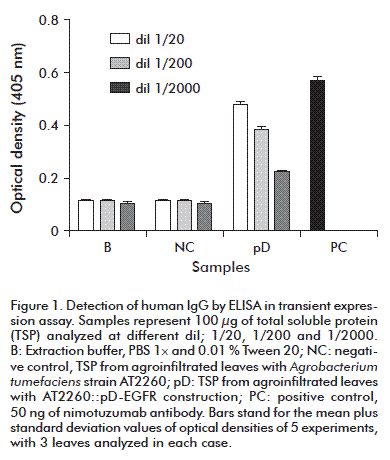
<body><![CDATA[<P   align="justify" ><font size="2" face="Verdana, Arial, Helvetica, sans-serif">Our group developed      a transient expression system based on vacuum infiltration of <I>A. tumefaciens</I>      into the leaves of <I>N. tabacum</I>. This is a simple method by which a bacterium      is deposited into the leaf tissues using a polycarbonate filter and, after      infection, the leaves are used to detect the expression of genes of interest      [13]. <I>N. tabacum </I>leaves<I> </I>infiltrated with <I>A. tumefaciens</I>      suspensions were harvested at different days, while extraction of the total      soluble proteins (TSP) was performed for evaluation. Plantibody expression      was assessed by an ELISA detecting the presence of human IgG, as shown in      <a href="#fig1">figure 1</a>, for leaves harvested on day 3 after infection.</font></P >       <P   align="center" ><img src="/img/revistas/bta/v30n2/f0112213.gif" width="388" height="458"><a name="fig1"></a></P >       
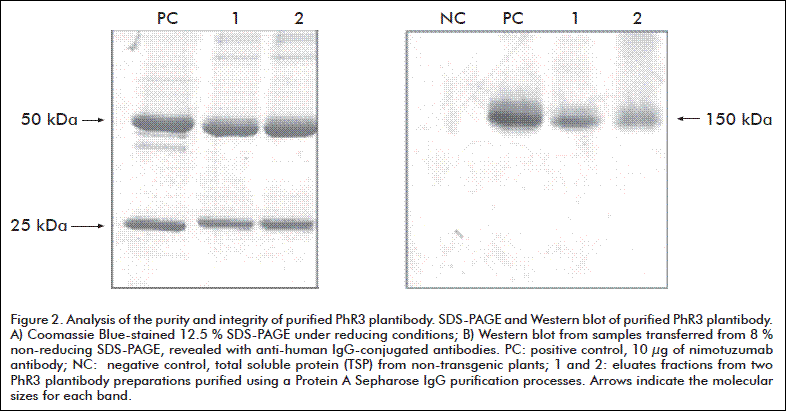
<P   align="justify" ><font size="2" face="Verdana, Arial, Helvetica, sans-serif">Absorbance values      obtained for the nimotuzumab antibody (positive control) are 5 times higher      than the values used for the negative control of phosphate buffer saline (B;      <a href="#fig1">Figure 1</a>). The values in the case of the TSP from leaves      agroinfiltrated with the <I>A. tumefaciens</I> strain AT2260 (NC) were similar      to those of B. These results indicated that the analytical system was specific      for the detection of human IgG and did not react with other plant proteins.      The optical density values of the TSP from leaves infiltrated with AT2260::pD-EGFR      (pD) were approximately 4-fold those of the negative controls (<a href="#fig1">Figure      1</a>). These results indicated that the testing system detects the antibody      produced in plant cells, and demonstrated the functionality of the pD-EGFR      construct to express the aglycosylated variant of nimotuzumab. </font></P >       <P   align="justify" ><font size="2" face="Verdana, Arial, Helvetica, sans-serif">The greater accumulation      of the antibody detected on day 5 after infection could be due to the stability      of the antibody within plant cells based on targeting to the ER, and also      to the conditions and functionality of the tissue after agroinfection by the      method developed in this study. This system enabled us to produce 1.2 &micro;g      of recombinant protein per gram of tissue, thereby facilitating downstream      purification of the antibody by protein A affinity chromatography. The purified      product was analyzed by SDS-PAGE and Western blot, demonstrating the absence      of plants glycans. The biological activity was confirmed by an indirect immunofluorescence      assay using the human tumor cell line A431 which over-expresses EGFR [13].      </font></P >       <P   align="justify" ><font size="2" face="Verdana, Arial, Helvetica, sans-serif">The implementation      of agroinfection has advantages over other microbial systems for plant transformation,      because of allowing the proper expression and postranslational processing      of large heterologous complex proteins. Another advantage comprised the lack      of sophisticated equipment and the low cost as compared to other transient      systems such as microinjection, microprojectile bombardment or electroporation.      </font></P >       <P   ><font size="2" face="Verdana, Arial, Helvetica, sans-serif"><b>Production of      aglycosylated plantibody from transgenic <I>Nicotiana tabacum</I> L. plants<I>      </I></b></font></P >       <P   align="justify" ><font size="2" face="Verdana, Arial, Helvetica, sans-serif">Once the structural      functionality and stability of the plantibody were corroborated by the transient      expression system, transgenic plants were obtained as stable expression system      able to generate progeny for production purposes, either by sexual (seeds)      or asexual reproduction (by cuttings or micropropagation) [5]. </font></P >       <P   align="justify" ><font size="2" face="Verdana, Arial, Helvetica, sans-serif">Ninety-six transgenic      plants were obtained by genetic transformation of <I>N. tabacum</I> variety      Havana 2.1.1 leaves with recombinant<I> A. tumefaciens </I>AT2260::pD-EGFR.      The presence of the antibody was demonstrated in 90 % of the clones, with      clone 86 showing the highest accumulation of the plantibody (30 &micro;g/g      of fresh tissue). This plant line was propagated <I>in vitro</I> and subsequently      grown under greenhouse conditions to obtain a homozygous line. </font></P >       <P   align="justify" ><font size="2" face="Verdana, Arial, Helvetica, sans-serif">Leaves from 6-to-8-weeks      old clone 86 transgenic plants were harvested and used as starting material      to develop a protein A affinity chromatography purification process. A 50      % recovery was obtained at 5 kg scale, the plantibody preparation yielding      96 % purity as estimated by SDS-PAGE and gel densitometry. The product was      named PhR3 and subjected to further analysis (<a href="/img/revistas/bta/v30n2/f0212213.gif">Figure      2</a>). Two bands of 25 and 50 kDa corresponding to the expected light and      heavy chains of PhR3 were observed in lanes of the eluates processed under      reducing conditions (<a href="/img/revistas/bta/v30n2/f0212213.gif">Figure 2A</a>). In the Western      blot assay under non-reducing conditions, PhR3 plantibody appeared as a single      band of high molecular weight (approximately 150 kDa), comparable to that      of nimotuzumab (<a href="/img/revistas/bta/v30n2/f0212213.gif">Figure 2B</a>). The absence of oligosaccharides      residues in the plantibody heavy chain was corroborated by enzymatic digestion      with PNGase A followed by HPLC analysis [14]. </font></P >       
<P   ><font size="2" face="Verdana, Arial, Helvetica, sans-serif"><b>Characterization      of the immunochemical properties, biological and antitumor activity of the      aglycosylated antibody </b></font></P >       ]]></body>
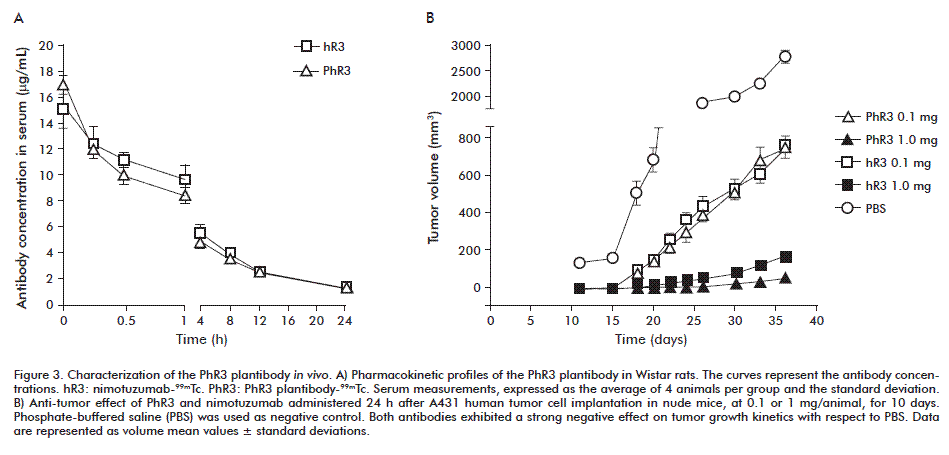
<body><![CDATA[<P   align="justify" ><font size="2" face="Verdana, Arial, Helvetica, sans-serif">Purified PhR3 was      characterized <I>in vitro</I> by using different techniques [14]. Its comparison      to nimotuzumab showed that despite slight differences, the aglycosylation      had no significant changes in the recognition of EGFR by ELISA, in living      cells (flow cytometry assay), nor on the ability of plantibody to inhibit      the phosphorylation and EGFR signaling. PhR3 was able to effectively displace      radiolabeled EGF in a competition binding assay for EGFR in the microsomal      fraction of human placenta. Also, the Fab fragment of PhR3 had a 6.1 &times;      10<Sup>-8 </Sup>M dissociation constant, an affinity parameter similar to      that of nimotuzumab. In addition, PhR3 was also able to block cell cycle progression      in human tumor cells in culture [14]. </font></P >   <FONT size="+1"><FONT size="+1">        <P   align="justify" ><font size="2" face="Verdana, Arial, Helvetica, sans-serif">Moreover, similar      results were found in the behavior of both molecules when looking at possible      influences of aglycosylation in pharmacokinetics and biodistribution of PhR3,      and its anti-tumor effect <I>in vivo </I>(<a href="/img/revistas/bta/v30n2/f0312213.gif">Figure 3</a>).      Both<I> </I>molecules had similar pharmacokinetic profiles, characterized      by a biphasic curve that could beadjusted to a two compartment model (<a href="/img/revistas/bta/v30n2/f0312213.gif">Figure      3A</a>). There was a statistically significant difference between both antibodies      with respect to the distribution phase half-life (T&frac12;-&alpha;), indicating      a larger and faster transfer to the peripheral compartment for the PhR3 plantibody.      Noteworthy, no statistically significant differences were observed in the      mean blood residence time (MRT) between both antibodies. </font></P >       
<P   align="justify" ><font size="2" face="Verdana, Arial, Helvetica, sans-serif"><a href="/img/revistas/bta/v30n2/f0312213.gif">Figure      3B</a> shows the results of an assay performed with different doses of both      antibodies on nude mice bearing human tumor xenografts. No significant differences      were found between groups of equal doses and treatments neither with PhR3      nor nimotuzumab. </font></P >       
<P   align="justify" >&nbsp;</P >       <P   ><font size="2" face="Verdana, Arial, Helvetica, sans-serif"><B><font size="3">CONCLUSIONS      </font></b></font></P >   <FONT size="+1">        <P   align="justify" ><font size="2" face="Verdana, Arial, Helvetica, sans-serif">In summary, this      work demonstrates that transgenic plants can be successfully used to produce      aglycosylated versions of immunoglobulins intended for therapeutic blocking      of cell surface receptors or to prevent its interaction with the soluble ligands.      Aglycosylated plantibody variants can be equally active as their mammalian      counterparts, showing similar pharmacokinetics and biodistribution and at      the same time exempt of plant-derived sugar moieties. Considering that nimotuzumab      has received several approvals as therapeutic antibody for various specific      types of cancer, the plant-derived nimotuzumab antibody could be a potential      candidate for future cancer immunotherapy clinical developments. </font></P >       <P   align="justify" >&nbsp;</P >   <FONT size="+1">        <P   ><font size="2" face="Verdana, Arial, Helvetica, sans-serif"><B><font size="3">RELEVANCE      OF THE STUDY </font></b></font></P >   <FONT size="+1">        <P   align="justify" ><font size="2" face="Verdana, Arial, Helvetica, sans-serif">The main contributions      of this work were: i) the implementation of a strategy to express aglycosylated      antibodies in transgenic leaves of tobacco plants, by using nimotuzumab as      a model antibody; ii) the plant-derived nimotuzumab antibody showed biological      properties similar to that of nimotuzumab, supporting its potential therapeutic      use [14]; and iii) the transgenic tobacco plants were able to produce aglycosylated      antibodies with the proper biological activity [14, 15]. Methodologically,      the study also provided a new transient expression system to evaluate complex      molecules in plants [13]. </font></P >       <P   align="justify" >&nbsp;</P >   <FONT size="+1">        ]]></body>
<body><![CDATA[<P   ><font size="2" face="Verdana, Arial, Helvetica, sans-serif"><B><font size="3">ACKNOWLEDGEMENTS      </font> </b></font></P >   <FONT size="+1">        <P   align="justify" ><font size="2" face="Verdana, Arial, Helvetica, sans-serif">The authors thank      the following collaborators for their contributions while conducting this      study: Abel Hern&aacute;ndez, Osvaldo Oliva, Pedro Luis Ramos, Jeny Soto,      Jos&eacute; Cremata<Sup>&dagger;</Sup> and Kenia Tiel from the CIGB; Rolando      P&eacute;rez and Agust&iacute;n Lage from CIM, and Mariela Le&oacute;n and      Ren&eacute; Leyva from CENTIS. </font></P >       <P   align="justify" >&nbsp;</P >   <FONT size="+1"><FONT size="+1"><FONT size="+1">        <P   align="justify" > </P >       <P   align="justify" ><font size="3" face="Verdana, Arial, Helvetica, sans-serif"><B>REFERENCES </b></font></P >       <!-- ref --><P   align="justify" ><font size="2" face="Verdana, Arial, Helvetica, sans-serif">1. Xu J, Dolan MC,      Medrano G, Cramer CL, Weathers PJ. Green factory: plants as bioproduction      platforms for recombinant proteins. Biotechnol Adv. 2012;30(5):1171-84.     </font></P >   <FONT size="+1">        <!-- ref --><P   align="justify" ><font size="2" face="Verdana, Arial, Helvetica, sans-serif">2. Morandini F, Avesani      L, Bortesi L, Van Droogenbroeck B, De Wilde K, Arcalis E, <I>et al</I>. Non-food/feed      seeds as biofactories for the high-yield production of recombinant pharmaceuticals.      Plant Biotechnol J. 2011;9(8):911-21.     </font></P >       <!-- ref --><P   align="justify" ><font size="2" face="Verdana, Arial, Helvetica, sans-serif">3. Borisjuk N, Komarnytsky      S. Plant-derived antibodies for academic, industrial, and therapeutic applications.      In: Pathak Y, Benita S, editors. Antibody-mediated drug delivery systems:      Concepts, technology, and applications. Hoboken: John Wiley and Sons, Inc..      2012. p. 365-82.     </font></P >       <!-- ref --><P   align="justify" ><font size="2" face="Verdana, Arial, Helvetica, sans-serif">4. De Muynck B, Navarre      C, Boutry M. Production of antibodies in plants: status after twenty years.      Plant Biotechnol J. 2010;8(5):529-63.     </font></P >       <!-- ref --><P   align="justify" ><font size="2" face="Verdana, Arial, Helvetica, sans-serif">5. Petruccelli S,      Otegui MS, Lareu F, Tran Dinh O, Fitchette AC, Circosta A, <I>et al</I>. A      KDEL-tagged monoclonal antibody is efficiently retained in the endoplasmic      reticulum in leaves, but is both partially secreted and sorted to protein      storage vacuoles in seeds. Plant Biotechnol J. 2006;4(5):511-27.     </font></P >       <!-- ref --><P   align="justify" ><font size="2" face="Verdana, Arial, Helvetica, sans-serif">6. Elvin JG, Couston      RG, van der Walle CF. Therapeutic antibodies: market considerations, disease      targets and bioprocessing. Int J Pharm. 2013;440(1):83-98.     </font></P >       <!-- ref --><P   align="justify" ><font size="2" face="Verdana, Arial, Helvetica, sans-serif">7. Jefferis R. Recombinant      antibody therapeutics: the impact of glycosylation on mechanisms of action.      Trends Pharmacol Sci. 2009;30(7):356-62.     </font></P >       <!-- ref --><P   align="justify" ><font size="2" face="Verdana, Arial, Helvetica, sans-serif">8. Hristodorov D,      Fischer R, Joerissen H, Muller-Tiemann B, Apeler H, Linden L. Generation and      comparative characterization of glycosylated and aglycosylated human IgG1      antibodies. Mol Biotechnol. 2013;53(3):326-35.     </font></P >       <!-- ref --><P   align="justify" ><font size="2" face="Verdana, Arial, Helvetica, sans-serif">9. Mateo C, Moreno      E, Amour K, Lombardero J, Harris W, Perez R. Humanization of a mouse monoclonal      antibody that blocks the epidermal growth factor receptor: recovery of antagonistic      activity. Immunotechnology. 1997;3(1):71-81.     </font></P >       <!-- ref --><P   align="justify" ><font size="2" face="Verdana, Arial, Helvetica, sans-serif">10. Klein S, Levitzki      A. Targeting the EGFR and the PKB pathway in cancer. Curr Opin Cell Biol.      2009;21(2):185-93.     </font></P >       <P   align="justify" ><font size="2" face="Verdana, Arial, Helvetica, sans-serif">11. Perez R, Moreno      E, Garrido G, Crombet T. EGFR-Targeting as a Biological Therapy: Understanding      Nimotuzumab&rsquo;s Clinical Effects. Cancers. 2011;3(2):2014-31. </font></P >       <!-- ref --><P   align="justify" ><font size="2" face="Verdana, Arial, Helvetica, sans-serif">12. Pujol M, Ramirez      NI, Ayala M, Gavilondo JV, Valdes R, Rodriguez M, <I>et al</I>. An integral      approach towards a practical application for a plant-made monoclonal antibody      in vaccine purification. Vaccine. 2005;23(15):1833-7.     </font></P >       <!-- ref --><P   align="justify" ><font size="2" face="Verdana, Arial, Helvetica, sans-serif">13. Rodriguez M,      Ramirez NI, Ayala M, Freyre F, Perez L, Triguero A, <I>et al</I>. Transient      expression in tobacco leaves of an aglycosylated recombinant antibody against      the epidermal growth factor receptor. Biotechnol Bioeng. 2005;89(2):188-94.          </font></P >       ]]></body>
<body><![CDATA[<!-- ref --><P   align="justify" ><font size="2" face="Verdana, Arial, Helvetica, sans-serif">14. Rodriguez M,      Perez L, Gavilondo JV, Garrido G, Bequet-Romero M, Hernandez I, <I>et al</I>.      Comparative <I>in vitro</I> and experimental <I>in vivo</I> studies of the      anti-epidermal growth factor receptor antibody nimotuzumab and its aglycosylated      form produced in transgenic tobacco plants. Plant Biotechnol. J. 2013;11(1):53-65.          </font></P >       <!-- ref --><P   align="justify" ><font size="2" face="Verdana, Arial, Helvetica, sans-serif">15. Pujol M, Gavilondo      J, Ayala M, Rodriguez M, Gonzalez EM, Perez L. Fighting cancer with plant-expressed      pharmaceuticals. Trends Biotechnol. 2007;25(10):455-9.     </font></P >       <P   align="justify" >&nbsp;</P >       <P   align="justify" >&nbsp;</P >       <P   align="justify" > </P >       <P   align="justify" > </P >       <P   align="justify" ><font size="2" face="Verdana, Arial, Helvetica, sans-serif"><I>Meilyn Rodr&iacute;guez</I>.      Centro de Ingenier&iacute;a Gen&eacute;tica y Biotecnolog&iacute;a, CIGB.      Ave. 31 e/ 158 y 190, Cubanac&aacute;n, Playa, CP 11600, La Habana, Cuba.      E-mail: <A href="mailto:meilyn.rodriguez@cigb.edu.cu"><U><U><FONT color="#0000FF">meilyn.rodriguez@cigb.edu.cu</font></U></U></A><FONT color="#0000FF"><FONT color="#000000">.      </font></font></font></P >   </font></font></font></font></font></font></font></font></font></font></font></font></font></font></font></font></font></font></font></font></font></font></font></font></font></font></font></font></font></font></font></font></font></font></font></font></font></font></font></font></font></font></font></font></font></font></font></font></font></font></font></font></font></font></font></font></font></font></font></font></font></font></font></font></font></font></font></font></font></DIV >      ]]></body><back>
<ref-list>
<ref id="B1">
<label>1</label><nlm-citation citation-type="journal">
<person-group person-group-type="author">
<name>
<surname><![CDATA[Xu]]></surname>
<given-names><![CDATA[J]]></given-names>
</name>
<name>
<surname><![CDATA[Dolan]]></surname>
<given-names><![CDATA[MC]]></given-names>
</name>
<name>
<surname><![CDATA[Medrano]]></surname>
<given-names><![CDATA[G]]></given-names>
</name>
<name>
<surname><![CDATA[Cramer]]></surname>
<given-names><![CDATA[CL]]></given-names>
</name>
<name>
<surname><![CDATA[Weathers]]></surname>
<given-names><![CDATA[PJ]]></given-names>
</name>
</person-group>
<article-title xml:lang="en"><![CDATA[Green factory: plants as bioproduction platforms for recombinant proteins]]></article-title>
<source><![CDATA[Biotechnol Adv]]></source>
<year>2012</year>
<volume>30</volume>
<numero>5</numero>
<issue>5</issue>
<page-range>1171-84</page-range></nlm-citation>
</ref>
<ref id="B2">
<label>2</label><nlm-citation citation-type="journal">
<person-group person-group-type="author">
<name>
<surname><![CDATA[Morandini]]></surname>
<given-names><![CDATA[F]]></given-names>
</name>
<name>
<surname><![CDATA[Avesani]]></surname>
<given-names><![CDATA[L]]></given-names>
</name>
<name>
<surname><![CDATA[Bortesi]]></surname>
<given-names><![CDATA[L]]></given-names>
</name>
<name>
<surname><![CDATA[Van Droogenbroeck]]></surname>
<given-names><![CDATA[B]]></given-names>
</name>
<name>
<surname><![CDATA[De Wilde]]></surname>
<given-names><![CDATA[K]]></given-names>
</name>
<name>
<surname><![CDATA[Arcalis]]></surname>
<given-names><![CDATA[E]]></given-names>
</name>
</person-group>
<article-title xml:lang="en"><![CDATA[Non-food/feed seeds as biofactories for the high-yield production of recombinant pharmaceuticals]]></article-title>
<source><![CDATA[Plant Biotechnol J]]></source>
<year>2011</year>
<volume>9</volume>
<numero>8</numero>
<issue>8</issue>
<page-range>911-21</page-range></nlm-citation>
</ref>
<ref id="B3">
<label>3</label><nlm-citation citation-type="book">
<person-group person-group-type="author">
<name>
<surname><![CDATA[Borisjuk]]></surname>
<given-names><![CDATA[N]]></given-names>
</name>
<name>
<surname><![CDATA[Komarnytsky]]></surname>
<given-names><![CDATA[S]]></given-names>
</name>
</person-group>
<article-title xml:lang="en"><![CDATA[Plant-derived antibodies for academic, industrial, and therapeutic applications]]></article-title>
<person-group person-group-type="editor">
<name>
<surname><![CDATA[Pathak]]></surname>
<given-names><![CDATA[Y]]></given-names>
</name>
<name>
<surname><![CDATA[Benita]]></surname>
<given-names><![CDATA[S]]></given-names>
</name>
</person-group>
<source><![CDATA[Antibody-mediated drug delivery systems: Concepts, technology, and applications]]></source>
<year>2012</year>
<page-range>365-82</page-range><publisher-loc><![CDATA[Hoboken ]]></publisher-loc>
<publisher-name><![CDATA[John Wiley and Sons, Inc.]]></publisher-name>
</nlm-citation>
</ref>
<ref id="B4">
<label>4</label><nlm-citation citation-type="journal">
<person-group person-group-type="author">
<name>
<surname><![CDATA[De Muynck]]></surname>
<given-names><![CDATA[B]]></given-names>
</name>
<name>
<surname><![CDATA[Navarre]]></surname>
<given-names><![CDATA[C]]></given-names>
</name>
<name>
<surname><![CDATA[Boutry]]></surname>
<given-names><![CDATA[M]]></given-names>
</name>
</person-group>
<article-title xml:lang="en"><![CDATA[Production of antibodies in plants: status after twenty years]]></article-title>
<source><![CDATA[Plant Biotechnol J]]></source>
<year>2010</year>
<volume>8</volume>
<numero>5</numero>
<issue>5</issue>
<page-range>529-63</page-range></nlm-citation>
</ref>
<ref id="B5">
<label>5</label><nlm-citation citation-type="journal">
<person-group person-group-type="author">
<name>
<surname><![CDATA[Petruccelli]]></surname>
<given-names><![CDATA[S]]></given-names>
</name>
<name>
<surname><![CDATA[Otegui]]></surname>
<given-names><![CDATA[MS]]></given-names>
</name>
<name>
<surname><![CDATA[Lareu]]></surname>
<given-names><![CDATA[F]]></given-names>
</name>
<name>
<surname><![CDATA[Tran Dinh]]></surname>
<given-names><![CDATA[O]]></given-names>
</name>
<name>
<surname><![CDATA[Fitchette]]></surname>
<given-names><![CDATA[AC]]></given-names>
</name>
<name>
<surname><![CDATA[Circosta]]></surname>
<given-names><![CDATA[A]]></given-names>
</name>
</person-group>
<article-title xml:lang="en"><![CDATA[A KDEL-tagged monoclonal antibody is efficiently retained in the endoplasmic reticulum in leaves, but is both partially secreted and sorted to protein storage vacuoles in seeds]]></article-title>
<source><![CDATA[Plant Biotechnol J]]></source>
<year>2006</year>
<volume>4</volume>
<numero>5</numero>
<issue>5</issue>
<page-range>511-27</page-range></nlm-citation>
</ref>
<ref id="B6">
<label>6</label><nlm-citation citation-type="journal">
<person-group person-group-type="author">
<name>
<surname><![CDATA[Elvin]]></surname>
<given-names><![CDATA[JG]]></given-names>
</name>
<name>
<surname><![CDATA[Couston]]></surname>
<given-names><![CDATA[RG]]></given-names>
</name>
<name>
<surname><![CDATA[van der Walle]]></surname>
<given-names><![CDATA[CF]]></given-names>
</name>
</person-group>
<article-title xml:lang="en"><![CDATA[Therapeutic antibodies: market considerations, disease targets and bioprocessing]]></article-title>
<source><![CDATA[Int J Pharm]]></source>
<year>2013</year>
<volume>440</volume>
<numero>1</numero>
<issue>1</issue>
<page-range>83-98</page-range></nlm-citation>
</ref>
<ref id="B7">
<label>7</label><nlm-citation citation-type="journal">
<person-group person-group-type="author">
<name>
<surname><![CDATA[Jefferis]]></surname>
<given-names><![CDATA[R]]></given-names>
</name>
</person-group>
<article-title xml:lang="en"><![CDATA[Recombinant antibody therapeutics: the impact of glycosylation on mechanisms of action]]></article-title>
<source><![CDATA[Trends Pharmacol Sci]]></source>
<year>2009</year>
<volume>30</volume>
<numero>7</numero>
<issue>7</issue>
<page-range>356-62</page-range></nlm-citation>
</ref>
<ref id="B8">
<label>8</label><nlm-citation citation-type="journal">
<person-group person-group-type="author">
<name>
<surname><![CDATA[Hristodorov]]></surname>
<given-names><![CDATA[D]]></given-names>
</name>
<name>
<surname><![CDATA[Fischer]]></surname>
<given-names><![CDATA[R]]></given-names>
</name>
<name>
<surname><![CDATA[Joerissen]]></surname>
<given-names><![CDATA[H]]></given-names>
</name>
<name>
<surname><![CDATA[Muller-Tiemann]]></surname>
<given-names><![CDATA[B]]></given-names>
</name>
<name>
<surname><![CDATA[Apeler]]></surname>
<given-names><![CDATA[H]]></given-names>
</name>
<name>
<surname><![CDATA[Linden]]></surname>
<given-names><![CDATA[L]]></given-names>
</name>
</person-group>
<article-title xml:lang="en"><![CDATA[Generation and comparative characterization of glycosylated and aglycosylated human IgG1 antibodies]]></article-title>
<source><![CDATA[Mol Biotechnol]]></source>
<year>2013</year>
<volume>53</volume>
<numero>3</numero>
<issue>3</issue>
<page-range>326-35</page-range></nlm-citation>
</ref>
<ref id="B9">
<label>9</label><nlm-citation citation-type="journal">
<person-group person-group-type="author">
<name>
<surname><![CDATA[Mateo]]></surname>
<given-names><![CDATA[C]]></given-names>
</name>
<name>
<surname><![CDATA[Moreno]]></surname>
<given-names><![CDATA[E]]></given-names>
</name>
<name>
<surname><![CDATA[Amour]]></surname>
<given-names><![CDATA[K]]></given-names>
</name>
<name>
<surname><![CDATA[Lombardero]]></surname>
<given-names><![CDATA[J]]></given-names>
</name>
<name>
<surname><![CDATA[Harris]]></surname>
<given-names><![CDATA[W]]></given-names>
</name>
<name>
<surname><![CDATA[Perez]]></surname>
<given-names><![CDATA[R]]></given-names>
</name>
</person-group>
<article-title xml:lang="en"><![CDATA[Humanization of a mouse monoclonal antibody that blocks the epidermal growth factor receptor: recovery of antagonistic activity]]></article-title>
<source><![CDATA[Immunotechnology]]></source>
<year>1997</year>
<volume>3</volume>
<numero>1</numero>
<issue>1</issue>
<page-range>71-81</page-range></nlm-citation>
</ref>
<ref id="B10">
<label>10</label><nlm-citation citation-type="journal">
<person-group person-group-type="author">
<name>
<surname><![CDATA[Klein]]></surname>
<given-names><![CDATA[S]]></given-names>
</name>
<name>
<surname><![CDATA[Levitzki]]></surname>
<given-names><![CDATA[A]]></given-names>
</name>
</person-group>
<article-title xml:lang="en"><![CDATA[Targeting the EGFR and the PKB pathway in cancer]]></article-title>
<source><![CDATA[Curr Opin Cell Biol]]></source>
<year>2009</year>
<volume>21</volume>
<numero>2</numero>
<issue>2</issue>
<page-range>185-93</page-range></nlm-citation>
</ref>
<ref id="B11">
<label>11</label><nlm-citation citation-type="journal">
<person-group person-group-type="author">
<name>
<surname><![CDATA[Perez]]></surname>
<given-names><![CDATA[R]]></given-names>
</name>
<name>
<surname><![CDATA[Moreno]]></surname>
<given-names><![CDATA[E]]></given-names>
</name>
<name>
<surname><![CDATA[Garrido]]></surname>
<given-names><![CDATA[G]]></given-names>
</name>
<name>
<surname><![CDATA[Crombet]]></surname>
<given-names><![CDATA[T]]></given-names>
</name>
</person-group>
<article-title xml:lang="en"><![CDATA[EGFR-Targeting as a Biological Therapy: Understanding Nimotuzumab's Clinical Effects]]></article-title>
<source><![CDATA[Cancers]]></source>
<year>2011</year>
<volume>3</volume>
<numero>2</numero>
<issue>2</issue>
<page-range>2014-31</page-range></nlm-citation>
</ref>
<ref id="B12">
<label>12</label><nlm-citation citation-type="journal">
<person-group person-group-type="author">
<name>
<surname><![CDATA[Pujol]]></surname>
<given-names><![CDATA[M]]></given-names>
</name>
<name>
<surname><![CDATA[Ramirez]]></surname>
<given-names><![CDATA[NI]]></given-names>
</name>
<name>
<surname><![CDATA[Ayala]]></surname>
<given-names><![CDATA[M]]></given-names>
</name>
<name>
<surname><![CDATA[Gavilondo]]></surname>
<given-names><![CDATA[JV]]></given-names>
</name>
<name>
<surname><![CDATA[Valdes]]></surname>
<given-names><![CDATA[R]]></given-names>
</name>
<name>
<surname><![CDATA[Rodriguez]]></surname>
<given-names><![CDATA[M]]></given-names>
</name>
</person-group>
<article-title xml:lang="en"><![CDATA[An integral approach towards a practical application for a plant-made monoclonal antibody in vaccine purification]]></article-title>
<source><![CDATA[Vaccine]]></source>
<year>2005</year>
<volume>23</volume>
<numero>15</numero>
<issue>15</issue>
<page-range>1833-7</page-range></nlm-citation>
</ref>
<ref id="B13">
<label>13</label><nlm-citation citation-type="journal">
<person-group person-group-type="author">
<name>
<surname><![CDATA[Rodriguez]]></surname>
<given-names><![CDATA[M]]></given-names>
</name>
<name>
<surname><![CDATA[Ramirez]]></surname>
<given-names><![CDATA[NI]]></given-names>
</name>
<name>
<surname><![CDATA[Ayala]]></surname>
<given-names><![CDATA[M]]></given-names>
</name>
<name>
<surname><![CDATA[Freyre]]></surname>
<given-names><![CDATA[F]]></given-names>
</name>
<name>
<surname><![CDATA[Perez]]></surname>
<given-names><![CDATA[L]]></given-names>
</name>
<name>
<surname><![CDATA[Triguero]]></surname>
<given-names><![CDATA[A]]></given-names>
</name>
</person-group>
<article-title xml:lang="en"><![CDATA[Transient expression in tobacco leaves of an aglycosylated recombinant antibody against the epidermal growth factor receptor]]></article-title>
<source><![CDATA[Biotechnol Bioeng]]></source>
<year>2005</year>
<volume>89</volume>
<numero>2</numero>
<issue>2</issue>
<page-range>188-94</page-range></nlm-citation>
</ref>
<ref id="B14">
<label>14</label><nlm-citation citation-type="journal">
<person-group person-group-type="author">
<name>
<surname><![CDATA[Rodriguez]]></surname>
<given-names><![CDATA[M]]></given-names>
</name>
<name>
<surname><![CDATA[Perez]]></surname>
<given-names><![CDATA[L]]></given-names>
</name>
<name>
<surname><![CDATA[Gavilondo]]></surname>
<given-names><![CDATA[JV]]></given-names>
</name>
<name>
<surname><![CDATA[Garrido]]></surname>
<given-names><![CDATA[G]]></given-names>
</name>
<name>
<surname><![CDATA[Bequet-Romero]]></surname>
<given-names><![CDATA[M]]></given-names>
</name>
<name>
<surname><![CDATA[Hernandez]]></surname>
<given-names><![CDATA[I]]></given-names>
</name>
</person-group>
<article-title xml:lang="en"><![CDATA[Comparative in vitro and experimental in vivo studies of the anti-epidermal growth factor receptor antibody nimotuzumab and its aglycosylated form produced in transgenic tobacco plants]]></article-title>
<source><![CDATA[Plant Biotechnol J]]></source>
<year>2013</year>
<volume>11</volume>
<numero>1</numero>
<issue>1</issue>
<page-range>53-65</page-range></nlm-citation>
</ref>
<ref id="B15">
<label>15</label><nlm-citation citation-type="journal">
<person-group person-group-type="author">
<name>
<surname><![CDATA[Pujol]]></surname>
<given-names><![CDATA[M]]></given-names>
</name>
<name>
<surname><![CDATA[Gavilondo]]></surname>
<given-names><![CDATA[J]]></given-names>
</name>
<name>
<surname><![CDATA[Ayala]]></surname>
<given-names><![CDATA[M]]></given-names>
</name>
<name>
<surname><![CDATA[Rodriguez]]></surname>
<given-names><![CDATA[M]]></given-names>
</name>
<name>
<surname><![CDATA[Gonzalez]]></surname>
<given-names><![CDATA[EM]]></given-names>
</name>
<name>
<surname><![CDATA[Perez]]></surname>
<given-names><![CDATA[L]]></given-names>
</name>
</person-group>
<article-title xml:lang="en"><![CDATA[Fighting cancer with plant-expressed pharmaceuticals]]></article-title>
<source><![CDATA[Trends Biotechnol]]></source>
<year>2007</year>
<volume>25</volume>
<numero>10</numero>
<issue>10</issue>
<page-range>455-9</page-range></nlm-citation>
</ref>
</ref-list>
</back>
</article>