<?xml version="1.0" encoding="ISO-8859-1"?><article xmlns:mml="http://www.w3.org/1998/Math/MathML" xmlns:xlink="http://www.w3.org/1999/xlink" xmlns:xsi="http://www.w3.org/2001/XMLSchema-instance">
<front>
<journal-meta>
<journal-id>1027-2852</journal-id>
<journal-title><![CDATA[Biotecnología Aplicada]]></journal-title>
<abbrev-journal-title><![CDATA[Biotecnol Apl]]></abbrev-journal-title>
<issn>1027-2852</issn>
<publisher>
<publisher-name><![CDATA[Editorial Elfos Scientiae]]></publisher-name>
</publisher>
</journal-meta>
<article-meta>
<article-id>S1027-28522013000300004</article-id>
<title-group>
<article-title xml:lang="en"><![CDATA[Expression and purification of a full-length recombinant NS1 protein from a dengue 2 serotype viral isolate]]></article-title>
<article-title xml:lang="es"><![CDATA[Expresión y purificación de la proteína completa NS1 del virus dengue serotipo 2 a partir de un aislamiento]]></article-title>
</title-group>
<contrib-group>
<contrib contrib-type="author">
<name>
<surname><![CDATA[Lemos]]></surname>
<given-names><![CDATA[Gilda]]></given-names>
</name>
<xref ref-type="aff" rid="A01"/>
</contrib>
<contrib contrib-type="author">
<name>
<surname><![CDATA[Guillén]]></surname>
<given-names><![CDATA[Isabel]]></given-names>
</name>
<xref ref-type="aff" rid="A01"/>
</contrib>
<contrib contrib-type="author">
<name>
<surname><![CDATA[Fernández]]></surname>
<given-names><![CDATA[Julio R]]></given-names>
</name>
<xref ref-type="aff" rid="A01"/>
</contrib>
<contrib contrib-type="author">
<name>
<surname><![CDATA[Díaz]]></surname>
<given-names><![CDATA[Tamara]]></given-names>
</name>
<xref ref-type="aff" rid="A01"/>
</contrib>
<contrib contrib-type="author">
<name>
<surname><![CDATA[Colarte]]></surname>
<given-names><![CDATA[Amanda B]]></given-names>
</name>
<xref ref-type="aff" rid="A01"/>
</contrib>
<contrib contrib-type="author">
<name>
<surname><![CDATA[Fernández de Cossío]]></surname>
<given-names><![CDATA[María E]]></given-names>
</name>
<xref ref-type="aff" rid="A01"/>
</contrib>
</contrib-group>
<aff id="A01">
<institution><![CDATA[,Centro de Ingeniería Genética y Biotecnología, CIGB  ]]></institution>
<addr-line><![CDATA[La Habana ]]></addr-line>
<country>Cuba</country>
</aff>
<pub-date pub-type="pub">
<day>00</day>
<month>09</month>
<year>2013</year>
</pub-date>
<pub-date pub-type="epub">
<day>00</day>
<month>09</month>
<year>2013</year>
</pub-date>
<volume>30</volume>
<numero>3</numero>
<fpage>187</fpage>
<lpage>193</lpage>
<copyright-statement/>
<copyright-year/>
<self-uri xlink:href="http://scielo.sld.cu/scielo.php?script=sci_arttext&amp;pid=S1027-28522013000300004&amp;lng=en&amp;nrm=iso"></self-uri><self-uri xlink:href="http://scielo.sld.cu/scielo.php?script=sci_abstract&amp;pid=S1027-28522013000300004&amp;lng=en&amp;nrm=iso"></self-uri><self-uri xlink:href="http://scielo.sld.cu/scielo.php?script=sci_pdf&amp;pid=S1027-28522013000300004&amp;lng=en&amp;nrm=iso"></self-uri><abstract abstract-type="short" xml:lang="en"><p><![CDATA[Dengue is an emerging disease that poses a threat to one-third of the global human population and produces over 50 million reported cases in tropical and sub-tropical regions every year. An accurate diagnosis of dengue infection is essential for timely management of the disease. NS1 is a 46- to 50-kilodalton highly conserved dengue virus glycoprotein that can be detected during the febrile phase of dengue virus (DENV) infection in both primary and secondary cases. This protein is a specific marker of DENV infection, and a sensitive test for NS1 would, if used together with IgM detection, provide an excellent diagnostic approach. Although the NS1 protein can be isolated from mammalian cell tissue cultures infected with DENV, this procedure is unsafe, laborious, and expensive and has very low yields, making it unsuitable for a large amount of antigen production. In this work, and with the objective of carrying out immunization experiments in mice, we cloned the full-length NS1 region from DENV serotype 2 (rNS1) in the vector pET28a with a 6xHis tag at the N-terminus. The protein was expressed in the Escherichia coli strain Rosetta as inclusion bodies, at the expected size of approximately 46 kDa, and further purified by metal-chelating affinity chromatography (IMAC) under denaturing conditions. Human sera from dengue positive cases showed reactivity to the recombinant NS1 protein by ELISA and Western blot. The unfolded rNS1 was directly used as immunogen. The polyclonal antibodies elicited in immunized mice with the recombinant antigen recognized the natural NS1 antigen from serotype 1 (sNS1).]]></p></abstract>
<abstract abstract-type="short" xml:lang="es"><p><![CDATA[El diagnóstico certero de la infección por el virus dengue (DENV) es esencial para su tratamiento oportuno. La proteína NS1 (46-50 kDa) es una glicoproteína del DENV de secuencia altamente conservada en los cuatro serotipos del virus, que se puede detectar durante la fase febril del dengue en pacientes infectados por primera o segunda vez, como marcador específico de la infección. Por ello, un test basado en la proteína NS1, pudiera facilitar su diagnóstico cuando se emplea junto con la detección de la inmunoglobulina M (IgM) contra el DENV. Entre las principales dificultades para su obtención está el aislamiento de la proteína NS1 de cultivos celulares de mamíferos, lo cual no es seguro, es laborioso y caro, y con bajos rendimientos que impiden su escalado. En este trabajo se clonó la secuencia completa de la proteína NS1 (rNS1) del DENV serotipo 2 en el vector pET28a, fusionado con una cola de histidina 6xHis en el extremo N-terminal. Esta proteína se obtuvo de forma recombinante en Escherichia coli, cepa Rosetta, como cuerpos de inclusión, con aproximadamente 46 kDa, y se purificó por cromatografía de afinidad de quelatos metálicos (IMAC) en condiciones desnaturalizantes. Sueros humanos de pacientes positivos al dengue mostraron reactividad contra la rNS1 en ensayos de ELISA y Western blot. La proteína rNS1 desnaturalizada se administró directamente como inmunógeno en ratones Balb/C, cuya respuesta de anticuerpos policlonales detectó a la proteína NS1 natural del DENV serotipo 1 en ensayos de inmunoblot.]]></p></abstract>
<kwd-group>
<kwd lng="en"><![CDATA[dengue virus]]></kwd>
<kwd lng="en"><![CDATA[NS1]]></kwd>
<kwd lng="en"><![CDATA[diagnosis]]></kwd>
<kwd lng="en"><![CDATA[recombinant protein]]></kwd>
<kwd lng="es"><![CDATA[virus dengue]]></kwd>
<kwd lng="es"><![CDATA[NS1]]></kwd>
<kwd lng="es"><![CDATA[diagnóstico]]></kwd>
<kwd lng="es"><![CDATA[proteína recombinante]]></kwd>
</kwd-group>
</article-meta>
</front><body><![CDATA[ <DIV class="Sect"   >     <P   align="right" ><font size="2" color="#000000" face="Verdana, Arial, Helvetica, sans-serif"><b>RESEARCH</b></font></P >    <P   align="right" >&nbsp;</P ><FONT size="+1" color="#000000">     <P   > </P >    <P   ><font size="4" face="Verdana, Arial, Helvetica, sans-serif"><b>Expression and  purification of a full-length recombinant NS1 protein from a dengue 2 serotype  viral isolate</b></font></P >    <P   >&nbsp;</P >    <P   ><font size="3" face="Verdana, Arial, Helvetica, sans-serif"><b>Expresi&oacute;n  y purificaci&oacute;n de la prote&iacute;na completa NS1 del virus dengue serotipo  2 a partir de un aislamiento</b></font></P >    <P   > </P >    <P   > </P >    <P   >&nbsp;</P >    ]]></body>
<body><![CDATA[<P   >&nbsp;</P >    <P   ><font size="2" face="Verdana, Arial, Helvetica, sans-serif"><b>Gilda Lemos, Isabel  Guill&eacute;n, Julio R Fern&aacute;ndez, Tamara D&iacute;az, Amanda B Colarte,  Mar&iacute;a E Fern&aacute;ndez de Coss&iacute;o</b></font></P ><FONT size="+1"><FONT size="+1"><FONT size="+1"><FONT size="+1"><FONT size="+1">      <P   ><font size="2" face="Verdana, Arial, Helvetica, sans-serif">Centro de Ingenier&iacute;a  Gen&eacute;tica y Biotecnolog&iacute;a, CIGB. Ave. 31 e/ 158 y 190, Cubanac&aacute;n,  Playa, CP 11600, La Habana, Cuba. </font></P >    <P   >&nbsp;</P >    <P   >&nbsp;</P ></font></font></font></font></font></font> <hr> <FONT size="+1" color="#000000"><FONT size="+1"><FONT size="+1"><FONT size="+1"><FONT size="+1"><FONT size="+1">      <P   ><font size="2" face="Verdana, Arial, Helvetica, sans-serif"><B>ABSTRACT</b></font></P >    <P   ><font size="2" face="Verdana, Arial, Helvetica, sans-serif">Dengue is an emerging  disease that poses a threat to one-third of the global human population and produces  over 50 million reported cases in tropical and sub-tropical regions every year.  An accurate diagnosis of dengue infection is essential for timely management of  the disease. NS1 is a 46- to 50-kilodalton highly conserved dengue virus glycoprotein  that can be detected during the febrile phase of dengue virus (DENV) infection  in both primary and secondary cases. This protein is a specific marker of DENV  infection, and a sensitive test for NS1 would, if used together with IgM detection,  provide an excellent diagnostic approach. Although the NS1 protein can be isolated  from mammalian cell tissue cultures infected with DENV, this procedure is unsafe,  laborious, and expensive and has very low yields, making it unsuitable for a large  amount of antigen production. In this work, and with the objective of carrying  out immunization experiments in mice, we cloned the full-length NS1 region from  DENV serotype 2 (rNS1) in the vector pET28a with a 6xHis tag at the N-terminus.  The protein was expressed in the <i>Escherichia coli</i> strain Rosetta as inclusion  bodies, at the expected size of approximately 46 kDa, and further purified by  metal-chelating affinity chromatography (IMAC) under denaturing conditions. Human  sera from dengue positive cases showed reactivity to the recombinant NS1 protein  by ELISA and Western blot. The unfolded rNS1 was directly used as immunogen. The  polyclonal antibodies elicited in immunized mice with the recombinant antigen  recognized the natural NS1 antigen from serotype 1 (sNS1). </font></P ><FONT size="+1"><FONT size="+1"><FONT size="+1"><FONT size="+1"><FONT size="+1">    <P   ><font size="2" face="Verdana, Arial, Helvetica, sans-serif"><B>Keywords:</B>  dengue virus, NS1, diagnosis, recombinant protein. </font></P ></font></font></font></font></font></font></font></font></font></font></font>  <hr> <FONT size="+1" color="#000000"><FONT size="+1"><FONT size="+1"><FONT size="+1"><FONT size="+1"><FONT size="+1"><FONT size="+1"><FONT size="+1"><FONT size="+1"><FONT size="+1"><FONT size="+1">      <P   ><font size="2" face="Verdana, Arial, Helvetica, sans-serif"><B>RESUMEN </b></font></P >    <P   ><font size="2" face="Verdana, Arial, Helvetica, sans-serif">El diagn&oacute;stico  certero de la infecci&oacute;n por el virus dengue (DENV) es esencial para su  tratamiento oportuno. La prote&iacute;na NS1 (46-50 kDa) es una glicoprote&iacute;na  del DENV de secuencia altamente conservada en los cuatro serotipos del virus,  que se puede detectar durante la fase febril del dengue en pacientes infectados  por primera o segunda vez, como marcador espec&iacute;fico de la infecci&oacute;n.  Por ello, un test basado en la prote&iacute;na NS1, pudiera facilitar su diagn&oacute;stico  cuando se emplea junto con la detecci&oacute;n de la inmunoglobulina M (IgM) contra  el DENV. Entre las principales dificultades para su obtenci&oacute;n est&aacute;  el aislamiento de la prote&iacute;na NS1 de cultivos celulares de mam&iacute;feros,  lo cual no es seguro, es laborioso y caro, y con bajos rendimientos que impiden  su escalado. En este trabajo se clon&oacute; la secuencia completa de la prote&iacute;na  NS1 (rNS1) del DENV serotipo 2 en el vector pET28a, fusionado con una cola de  histidina 6xHis en el extremo N-terminal. Esta prote&iacute;na se obtuvo de forma  recombinante en <i>Escherichia coli</i>, cepa Rosetta, como cuerpos de inclusi&oacute;n,  con aproximadamente 46 kDa, y se purific&oacute; por cromatograf&iacute;a de afinidad  de quelatos met&aacute;licos (IMAC) en condiciones desnaturalizantes. Sueros humanos  de pacientes positivos al dengue mostraron reactividad contra la rNS1 en ensayos  de ELISA y Western blot. La prote&iacute;na rNS1 desnaturalizada se administr&oacute;  directamente como inmun&oacute;geno en ratones Balb/C, cuya respuesta de anticuerpos  policlonales detect&oacute; a la prote&iacute;na NS1 natural del DENV serotipo  1 en ensayos de inmunoblot. </font></P >    ]]></body>
<body><![CDATA[<P   ><font size="2" face="Verdana, Arial, Helvetica, sans-serif"><B>Palabras clave:</B>  virus dengue, NS1, diagn&oacute;stico, prote&iacute;na recombinante. </font></P ></font></font></font></font></font></font></font></font></font></font></font>  <hr> <FONT size="+1" color="#000000"><FONT size="+1"><FONT size="+1"><FONT size="+1"><FONT size="+1"><FONT size="+1"><FONT size="+1"><FONT size="+1"><FONT size="+1"><FONT size="+1"><FONT size="+1">      <P   >&nbsp;</P >    <P   >&nbsp;</P >    <P   > </P >    <P   ><font size="3" face="Verdana, Arial, Helvetica, sans-serif"><B>INTRODUCTION </b></font></P ></font></font></font></font></font></font></font></font></font></font></font>      <p   ><font size="2" color="#000000" face="Verdana, Arial, Helvetica, sans-serif">Dengue  is an arthropod-borne viral disease and has been a major cause of morbidity and  mortality in recent decades. Dengue virus (DENV) is considered one of the most  important emerging viruses, posing a threat to one-third of the global human population,  with over 50 millions of cases reported in tropical and sub-tropical regions every  year [1]. Most infections are asymptomatic, and symptomatic cases exhibit a wide  range of clinical manifestations, being the most common outcome an acute febrile  illness similar to influenza (dengue fever, DF). However, in a minority of cases,  this progresses to spontaneous hemorrhaging (dengue hemorrhagic fever, DHF) and,  most seriously, to dengue shock syndrome (DSS), characterized by circulatory failure.  There are perhaps 500 000 cases of DHF/DSS each year, with case-fatality rates  as high as 5 % depending on the availability of treatment [2]. </font></p >    <p   ><font size="2" face="Verdana, Arial, Helvetica, sans-serif" color="#000000">Dengue  is caused by one to four dengue serotypes (DENV type 1 through 4), of the genus  flavivirus (family Flaviviridae).The viral agent is a single-stranded, positive-sense,  RNA virus with a genome of approximately 11 kb. </font></p >    <p   ><font size="2" face="Verdana, Arial, Helvetica, sans-serif" color="#000000">Co-  and post-translational processing gives rise to three structural and seven nonstructural  proteins: C, prM, E, NS1, NS2a, NS2b, NS3, NS4a, NS4b, and NS5. Antigenic diversity  of the DENV is important, since the lack of long-term cross-immunity among the  four virus types allows for multiple sequential infections [3]. </font></p >    <p   ><font size="2" face="Verdana, Arial, Helvetica, sans-serif" color="#000000">NS1  is a 46- to 50-kilodalton highly conserved glycoprotein that is expressed in both  membrane-associated (mNS1) and secreted (sNS1) forms [4, 5] and possesses both  group-specific and type-specific determinants [6, 7]. NS1 is an atypical viral  glycoprotein because it does not form part of the virion structure but is expressed  on the surface of infected cells. While the function of NS1 is yet to be fully  defined, preliminary evidence has shown it to be involved in viral RNA replication  [8, 9]. </font></p >    <p   ><font size="2" face="Verdana, Arial, Helvetica, sans-serif" color="#000000">More  effective and rapid diagnosis can contribute to the control of dengue and DHF  through more accurate public health notification. Many reports suggested the use  of NS1 detection for early diagnosis of dengue infection in primary and secondary  cases, period in which dengue antibodies are still undetectable [10-12], since  high concentrations of the NS1 protein varying from 0.04 to 2 &micro;g/mL in acute-phase  serum samples to only 0.04 &micro;g/mL or even less in convalescent phase serum  [10] were found in blood samples of patients obtained during the early acute phase  of both primary and secondary DENV infections and for up to 9 days after the onset  of symptoms. Levels of NS1 antigen remain detectable even in some cases when viral  RNA is negative by reverse transcriptase-PCR. </font></p >    ]]></body>
<body><![CDATA[<p   ><font size="2" face="Verdana, Arial, Helvetica, sans-serif" color="#000000">Early  detection of NS1 antigen during the febrile stage of the disease combined with  IgM detection should expand the time span during which a rapid test could detect  a dengue infection and make it a sensitive diagnostic approach. </font></p >    <p   ><font size="2" face="Verdana, Arial, Helvetica, sans-serif" color="#000000">Methods  for isolating the natural NS1 antigen from mammalian cells infected with DENV  yield only low amounts of protein, since secreted antigen concentration ranges  from 5 to 10 &micro;g/mL culture supernatant [13]. Therefore, using recombinant  NS1 protein for immunizing mice for hybridoma production, or as a diagnostic antigen  for dengue viral infection, is a more suitable approach. Several works have reported  the successful use of heterologous expression systems such as baculovirus [14]  and <i>Pichia pastoris</i> [15] for the expression of the NS1. The <i>Escherichia  coli</i> bacterial expression system has been also widely exploited for NS1 expression,  although it always involves refolding procedures, facilitating disulfide bond  formation and thus renaturation of the protein [8, 16-19]. </font></p >    <p   ><font size="2" face="Verdana, Arial, Helvetica, sans-serif" color="#000000">In  this work, we cloned and expressed the full length NS1 region from serotype 2  in <i>E. coli</i> and the denatured antigen was directly used as immunogen. The  antibodies obtained in immunized mice will recognize only linear epitopes in the  natural secreted antigen, but several reports have shown the immune-dominancy  and cross-reactivity of linear epitopes present in NS1 protein from all four DENV  serotypes [7, 13, 20, 21]. The polyclonal antiserum from animals immunized with  the denatured recombinant NS1 protein from serotype 2 (rNS1) was found to specifically  recognize the natural NS1 antigen from serotype 1, thus demonstrating the possibility  of generating antibodies that recognize epitopes in the native NS1 antigen from  a different serotype using the unfolded antigen. </font></p >    <p   >&nbsp;</p >    <p   > </p >    <p   ><font size="3" face="Verdana, Arial, Helvetica, sans-serif" color="#000000"><b>MATERIALS  AND METHODS</b></font><font size="2" face="Verdana, Arial, Helvetica, sans-serif" color="#000000"><b>  </b></font></p >    <p   ><font size="2"><b><font face="Verdana, Arial, Helvetica, sans-serif" color="#000000">Human  serum samples </font></b></font></p >    <p   ><font size="2" face="Verdana, Arial, Helvetica, sans-serif" color="#000000">A  panel of sera from 11 dengue patients (5 samples from the acute disease stage  and 6 samples from convalescent-phase of the disease) and 14 healthy human sera  were used in the study.<b> </b>Dengue positive serum samples used in this study  were confirmed from dengue infected patients collected during an epidemic DENV-4  outbreak in Havana city in 2006. DENV infections were defined as febrile illness  associated with the detection of virus specific IgM (UMELISA&reg; IgG and IgM  antibody detection kits, TecnoSuma&reg;, Havana, Cuba). Serum samples were collected  between days 3 and 30 after the onset of symptoms. Convalescent-phase sera refer  to specimens collected during days 7 to 30 days since onset of fever. Healthy  human sera sample refers to sera collected from healthy blood donors. </font></p >    <p   ><font size="2" face="Verdana, Arial, Helvetica, sans-serif" color="#000000"><b>Viral  RNA isolation and purification from Dengue Virus Mammalian Cell Culture </b></font></p >    <p   ><font size="2" face="Verdana, Arial, Helvetica, sans-serif" color="#000000">Supernatant  from Vero cells (10 mL) infected with 10<sup>6</sup> pfu/mL of SB8553 DENV-2 viral  strain (kindly provided by Dr MJ Cardosa, University Sarawak, Malaysia) was harvested  144 hh post-inoculation without media changing. Viral particles were concentrated  by centrifugation at 20 000 &times; <i>g</i> for 1 h at 4 &deg;C after clarification  using a solution of 4 % PEG8000 plus 0.5 M NaCl for 4 hours at 4 &deg;C<b>. </b>RNA  was purified from precipitated viral particles using the Ambion Tri-Reagent procedure  for suspension cells. Briefly, the pellet was resuspended in 5 mL of Tri-Reagent  (Sigma-Aldrich, St. Louis, USA) by vigorous vortex mixing and pipetting. After  5-min incubation at 20 &deg;C, each sample was transferred to a 15-mL polypropylene  centrifuge tube and 1.2 mL of chloroform was added. Samples were vigorously vortexed  for 30 s, incubated at room temperature for 5 min and centrifuged at 12 000 &times;  <i>g</i> for 5 min. The top aqueous layer, containing the RNA, was precipitated  by adding 0.5 volumes (approximately 2.5 mL) of isopropanol for 5 min at 20 &deg;C,  followed by centrifuging at 5000 &times; <i>g </i>for 5 min. The resulting white  pellets were washed with cold 75 % ethanol, and each pellet was then resuspended  in 300 &mu;L of RNase-free water. </font></p >    ]]></body>
<body><![CDATA[<p   ><font size="2" face="Verdana, Arial, Helvetica, sans-serif" color="#000000"><b>Cloning  of dengue NS1 full-length viral protein </b></font></p >    <p   ><font size="2" face="Verdana, Arial, Helvetica, sans-serif" color="#000000">cDNA  was obtained from 2 &micro;g of total RNA by using an RT-PCR Kit from Promega  M-MLV procedure (Part# 9PIM170, USA). For PCR procedure, the forward primer 5&acute;-GC<b>GGATCC</b>ATGAATTCAC  GCAGCACCTC-3&acute; and the reverse 5&acute;-GCCTC<b>GAGCT </b>G GCTGTGACCAAGGAGT-3&acute;,  with <i>Bam</i>H<i> </i>I and <i>Xho </i>I sites included (bold letters) were  used. The PCR-amplified region was inserted in the pGEM&reg;-T Easy Vector (Promega,  USA) and the <i>Bam</i>H<i> </i>I-<i>Xho </i>I-NS1 region was further inserted  in the pET28a (+) expression vector (Novagen, Darmstadt, Germany), generating  the recombinant plasmid pET28a-NS1, which was transformed subsequently in chemically  competent <i>E. coli</i> DH5&alpha; cells. Plasmid DNA samples from recombinant  bacterial colonies were analyzed by digestion with <i>Bam</i>H<i> </i>I and <i>Xho  </i>I, PCR and DNA sequencing (Macrogen, Korea) coupled to BLAST (Basic Local  Alignment Search Tool, NCBI), performed using the M13F-pUC/SP6 and T7 promoter/T7  terminator primers for vectors pGEM&reg;-T Easy Vector and pET28a (+), respectively.  The expressed protein was predicted to have an isotopically averaged molecular  weight of approximately 46.4 kDa, corresponding to 380 amino acids of the NS1  protein and 34 amino acids encoded by the expression vector, including the N-terminal  6xHis-tag. </font></p >    <p   ><font size="2" face="Verdana, Arial, Helvetica, sans-serif" color="#000000"><b>Expression  and purification of the rNS1 antigen </b></font></p >    <p   ><font size="2" face="Verdana, Arial, Helvetica, sans-serif" color="#000000">Expression  experiments of the recombinant protein were performed by the induction of the  pET System <i>E. coli</i> host Strains: BL21 (DE3), Tuner (DE3) and Rosetta (DE3),  cultured in 300 mL LB broth (containing 50 &micro;g/mL kanamycin) in a 1000 mL  conical flask and cultured at 37 &deg;C in a shaker set at 200 rpm and induced  by adding IPTG to a final concentration of 1 mM at 0.5-1.0 optical density (O.D.)  at 600 nm. Cultures were harvested 3-4 hours after induction and <i>E. coli</i>  cells were obtained by centrifugation at 3 000 &times; <i>g</i> for 30 min at  4 &deg;C. After discarding the supernatant, 1 g of wet bio-mass was resuspended  in 10 mL of TE 1&#61620; (10 mM Tris-HCl pH 8.0 and 5 mM EDTA) and disrupted by  three passes in French press at a pressure of 100 bars at 4 &deg;C. The obtained  lysate was centrifuged at 20 000 &times; <i>g</i> for 20 min at 4 &deg;C. Insoluble  proteins were solubilized in 10 mL of Buffer A: 10 mM Tris-HCl, 100 mM NaH<sub>2</sub>PO<sub>4</sub>,  10 mM &beta;-mercaptoethanol and 8 M urea, for 1 h at 4 &deg;C, obtaining the  soluble proteins fractions by centrifugation at 20 000 &times; <i>g</i> for 20  min at &deg;4 C and NS1 6xHis-tagged protein was further purified by affinity  chromatography using 3 mL of Ni<sup>2+</sup>-nitrilotriacetic acid (Ni-NTA) resin  (Qiagen, Germany). Washed and elution steps were performed using 10 and 250 mM  Imidazole in buffer A. Protein concentration was determined by the bicinchoninic  acid assay (BCA, Pierce/ThermoFisher, Rockford, USA) and the purified antigen  aliquots were stored at -20 &deg;C until use. Protein expression level and purity  were assessed by densitometric analysis of the sodium dodecyl sulphate-polyacrylamide  gel electrophoresis (SDS-PAGE). </font></p >    <p   ><font size="2" face="Verdana, Arial, Helvetica, sans-serif" color="#000000"><b>Purification  of monoclonal antibody 15F3-1 </b></font></p >    <p   ><font size="2" face="Verdana, Arial, Helvetica, sans-serif" color="#000000">Ascites  fluid containing 15F3-1, an anti-NS1 Mab (ATCC HB-47), was extracted from mice  and diluted 1:4 in phosphate buffer saline (PBS), purifying the antibody by chromatography  on a Protein A-Sepharose column. Purified 15F3-1 Mab was further coupled to CNBr-activated  Sepharose 4 Fast Flow (Amersham/GE Healthcare, USA), according to the manufacturer&rsquo;s  procedure. </font></p >    <p   ><font size="2" face="Verdana, Arial, Helvetica, sans-serif" color="#000000"><b>Purification  of NS1 natural antigen of dengue serotype 1 from Vero cell culture supernatant  </b></font></p >    <p   ><font size="2" face="Verdana, Arial, Helvetica, sans-serif" color="#000000">The  natural NS1 antigen from dengue serotype 1 was purified by affinity chromatography  on 15F3-1-Sepharose using a method described by Young <i>et al</i>. [10]. Briefly,  350 mL of supernatant from Vero cells infected previously with 10<sup>6</sup>  pfu/mL of DENV-1 West Pac 74 (NIBSC)<b> </b>and harvested after a period of 144  hours post-inoculation without changing the medium were clarified as described  above and passed through 15F3-1-Sepharose, equilibrated with TNE buffer (10 mM  Tris-HCl pH 7.4, 150 mM NaCl and 5 mM EDTA). After washing the column with TNE  buffer, sNS1 was eluted in TNE containing 40 mM diethylamine. Protein concentration  was determined by BCA (Pierce/ThermoFisher) and purified antigen aliquots were  stored at -20 &deg;C. </font></p >    <p   ><font size="2" face="Verdana, Arial, Helvetica, sans-serif" color="#000000"><b>Mouse  immunizations </b> </font></p >    <p   ><font size="2" face="Verdana, Arial, Helvetica, sans-serif" color="#000000">Balb/c  (Bc-H-2d) female mice (aged 6-8 weeks), 16-18 g of weight, purchased from Cenpalab  (Havana, Cuba) were inoculated using two different procedures. Group 1 (5 animals)  was inoculated subcutaneously using 100 &micro;L of the immunogenic preparation  (20 &micro;g of rNS1 per dose) using Freund&rsquo;s complete adjuvant (Sigma-Aldrich,  USA) in the first dose and incomplete adjuvant in subsequent doses. For Group  2 (5 animals), the first two doses were performed as for Group 1 but subsequently  the animals were administered intraperitoneally (i.p.) with 200 &micro;L of the  immunogen preparation in PBS. Both groups were immunized at 15-day intervals up  to a total of 5 immunizations. </font></p >    ]]></body>
<body><![CDATA[<p   ><font size="2" face="Verdana, Arial, Helvetica, sans-serif" color="#000000"><b>ELISA  procedures </b> </font></p >    <p   ><font size="2" face="Verdana, Arial, Helvetica, sans-serif" color="#000000">Costar  3591 plates were coated with 100 &micro;L of 0.25 &micro;g per well of rNS1 or  2 &micro;g per well of natural DENV-1 sNS1 antigen in Coating Buffer (0.1 M carbonate/bicarbonate  buffer pH 9.6). The plates were incubated for 1 hour at 37 &deg;C. After washing  three times with distilled water and 0.05 % Tween-20, the coated plates were blocked  with 200 &micro;L per well of blocking solution (PBS, 5 % skim milk powder, 0.05  % Tween-20) for one hour at 37 &deg;C. Blocking solution was discarded by tapping  the plate and 100 &micro;L of test sample, at desired dilution in PBS, 0.5 % skim  milk powder, 0.05 % Tween-20, were added per well and incubated for 1 hour at  37 &deg;C. Bound specific antiserum was detected using 100 &micro;L per well of  a secondary antibody (1/10000 dilution of mouse (Fc specific) goat peroxidase-conjugated  (Cat. # A2554, Sigma-Aldrich, USA, for mouse samples) and anti-human IgG goat  peroxidase-conjugate (Cat. # A0170, Sigma-Aldrich, USA) for human samples, diluted  in PBS-T solution (2.68 mM KCl, 1.47 mM KH<sub>2</sub>PO<sub>4</sub>, 136.89 mM  NaCl, 8.1 mM Na<sub>2</sub>HPO<sub>4</sub> and 0.05 % Tween-20). After washing,  the color reaction was developed using 5 mg of <i>o</i>-Phenylenediamine dihydrochloride  (OPD, Cat #P6912, Sigma-Aldrich, USA) as chromogen and 5 &micro;L of 30 </font><font size="2" face="Verdana, Arial, Helvetica, sans-serif" color="#000000">%  hydrogen peroxide as substrate (Caledon, Canada). The reaction was stopped with  a solution of 2 M H<sub>2</sub>SO<sub>4</sub>. Absorbance (O.D.) was read at 492  nm using a UMELISA&reg; reader (PR-521, Tecnosuma Internacional, Cuba). The cut-off  O.D. for testing the seropositivity of each sample was defined as an adjusted  O.D. 492 nm of the mean plus 2 standard deviations of the negative control sera.  For mouse serum samples, a non-immune mouse serum was used as a negative control  and a pool of sera from mice immunized with the recombinant antigen was used as  a positive control. For human ELISA assays, a serum pool from healthy individual  was used as a negative control and serum sample from a dengue convalescent confirmed  by serum IgM assay was used as a positive control. </font></p >    <p   ><font size="2" face="Verdana, Arial, Helvetica, sans-serif" color="#000000"><b>Immunoblot  analysis </b> </font></p >    <p   ><font size="2" face="Verdana, Arial, Helvetica, sans-serif" color="#000000">Purified  rNS1 expressed in <i>E. coli </i>was analyzed for its reactivity to DENV-specific  antibodies present in mouse and human sera by Western blot. Briefly, samples from  cell extracts and purified 6xHis-rNS1 were separated by 12.5 % SDS-PAGE [22],  and either stained with Coomassie brilliant blue R250 (Sigma-Aldrich) or electro-transferred  using a Trans-Blot&reg; SD Semi-Dry Electrophoretic Transfer Cell (BioRad, USA)  to a nitrocellulose membrane (Amersham/GE Healthcare, USA) for 30 min in transfer  buffer (48 mM Tris pH 9.0-9.4, 39 mM Glycine, 20 % methanol and 1.3 mM SDS). The  membrane was blocked for 1 hour at 37 &deg;C with blocking buffer (PBS-T and 5  % skim milk powder, BDH, UK). Human serum samples were diluted 1:20 with sample  buffer (PBS, 0.25 % non-fat skim milk powder and 0.05 % Tween-20) and incubated  with the nitrocellulose membranes for one hour at 37 oC. After incubation, the  membranes were washed three times, 5 min each, with PBS and 0.05 % Tween-20 solution.  After washing, the membrane was allowed to react with a 1:1000 dilution of an  anti-Human IgG (Fc specific)-peroxidase antibody produced in goat (Cat. # A0170,  Sigma-Aldrich, USA) for detecting human antibodies or an Anti-mouse (Fc specific)-peroxidase  antibody at the same dilution (Sigma-Aldrich, USA), for detecting mouse antibodies,  for 1 h at 37 &ordm;C. After a washing step, immunoreactivity was detected using  3, 3&rsquo;-Diaminobenzidine tetra hydrochloride hydrate (DAB, Cat. # D5637, Sigma-Aldrich,  USA) in 10 mL PBS and 0.05 % (v/v) H<sub>2</sub>O<sub>2</sub>. The reaction was  stopped by washing several times with distilled water. </font></p >    <p   ><font size="2" face="Verdana, Arial, Helvetica, sans-serif" color="#000000">Commercially  available recombinant protein NS1 from serotype 2 (N<sub>terminal</sub>-rNS1;  Cat #. 00342-V, Virogen, Boston, MA) was used as a control protein in immunoblotting  assays. </font></p >    <p   ><font size="2" face="Verdana, Arial, Helvetica, sans-serif" color="#000000"><b>Statistical  analysis </b></font></p >    <p   ><font size="2" face="Verdana, Arial, Helvetica, sans-serif" color="#000000">The  statistical significance of immunological differences among human serum samples  and the analysis of immunized mouse groups were performed by unpaired Student&rsquo;s  t-test. A P value of less than 0.05 was considered statistically significant.  </font></p >    <p   >&nbsp;</p >    <p   > </p >    <p   ><font size="3" face="Verdana, Arial, Helvetica, sans-serif" color="#000000"><b>RESULTS  </b></font></p >    ]]></body>
<body><![CDATA[<p   ><font size="2"><b><font face="Verdana, Arial, Helvetica, sans-serif" color="#000000">Cloning,  expression and purification of DENV-2 rNS1 protein </font></b></font></p >    <p   ><font size="2" face="Verdana, Arial, Helvetica, sans-serif" color="#000000">The  NS1 full-length gene was cloned with the 6xHis tag at the N-terminus in vector  pET28a (+). Blast analysis of the cloned fragment (1139 bp) showed that the sequence  matched to 99 % the sequence available for NS1 from a serotype 2 Malaysian isolate  at GenBank (GenBank accession number FN429892.1). </font></p >    <p   ><font size="2" face="Verdana, Arial, Helvetica, sans-serif" color="#000000">In  the expression experiments carried out with different <i>E. coli</i> strains,  the Tuner and the Rosetta strains exhibited the best results (<a href="/img/revistas/bta/v30n3/f0104313.gif">Figure  1</a>). The rNS1 protein was expressed at the expected size of approximately 46  kDa, co-migrating with an <i>E. coli</i> protein as visualized in SDS-PAGE. A  Western blot probed with mouse anti-NS1 polyclonal antibody showed some smaller  sized bands in both strains. Therefore, further expression experiments of the  rNS1 protein were carried out with the Rosetta strain. The best yields of wet  biomass and antigen expression were obtained inducing the culture with IPTG when  O.D. 600 nm was 1.0 and harvesting 4 hours after induction (results not shown).  The rNS1 expression level in Rosetta <i>E. coli</i> strain was approximately 5  % by densitometric analysis of the SDS-PAGE. </font></p >    
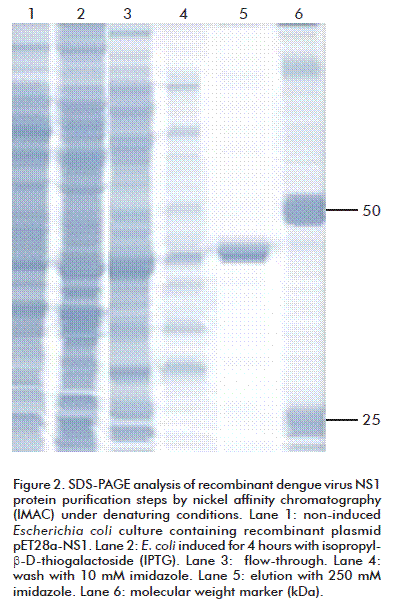
<p   ><font size="2" face="Verdana, Arial, Helvetica, sans-serif" color="#000000">The  rNS1 protein, predominantly expressed in <i>E. coli</i> as inclusion bodies, was  isolated from bacterial shake flask culture and purified by IMAC chromatography  under denaturing conditions (<a href="#fig2">Figure 2</a>). During the initial  purification process by Ni-NTA columns, more than 20 % of the NS1 protein eluted  during the 10 mM imidazole wash step. Then, for better protein recovery, 10 mM  beta-mercaptoethanol was added to solubilization and chromatography purification  buffers. IMAC purification under denaturing conditions yielded significant amount  of more than 87 % pure rNS1 protein, with a single band as judged by SDS-PAGE  (<a href="#fig2">Figure 2</a>). The rNS1 produced by <i>E. coli </i>Rosetta (DE3)  was 13.1 mg/L. Purification steps showed a typical yield of 60-70 % of starting  denatured inclusion bodies (<a href="/img/revistas/bta/v30n3/t0104313.gif">Table</a>).</font></p >    
<p align="center"   ><img src="/img/revistas/bta/v30n3/f0204313.gif" width="396" height="613"><a name="fig2"></a></p >    
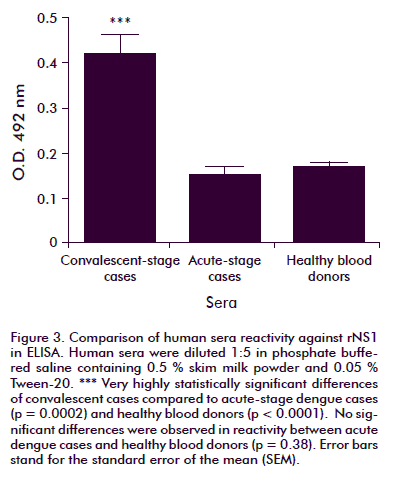
<p   ><font size="2" face="Verdana, Arial, Helvetica, sans-serif" color="#000000"><b>Purification  of DENV-1 sNS1 from Vero cell supernatant </b></font></p >    <p   ><font size="2" face="Verdana, Arial, Helvetica, sans-serif" color="#000000">Secreted  DENV-1 NS1 protein was successfully purified from dengue-infected Vero cells culture  supernatants by immunoaffinity chromatography, secreted NS1 usually reaches concentrations  ranging from 5 to 10 &micro;g/mL [23]. In this work, we obtained approximately  7 &micro;g of antigen per milliliter of culture medium supernatant harvested at  144 h post-inoculation. </font></p >    <p   ><font size="2" face="Verdana, Arial, Helvetica, sans-serif" color="#000000"><b>Immunological  characterization of DENV-2 rNS1 </b></font></p >    <p   ><font size="2" face="Verdana, Arial, Helvetica, sans-serif" color="#000000">The  reactivity of human sera against rNS1 was established by ELISA and Western blot.  The ELISA test results are shown in <a href="#fig3">figure 3</a>. From dengue-positive  samples, only the six convalescent-stage cases exhibited reactivity against the  antigen, a statistically significant difference compared to the reactivity exhibited  by samples from the acute stage of the disease (p = 0.0002) or from healthy donors  (p &lt; 0.0001). No significant difference in reactivity was observed between  acute cases and healthy blood donors (p = 0.38). </font></p >    <p align="center"   ><img src="/img/revistas/bta/v30n3/f0304313.gif" width="384" height="484"><a name="fig3"></a></p >    
]]></body>
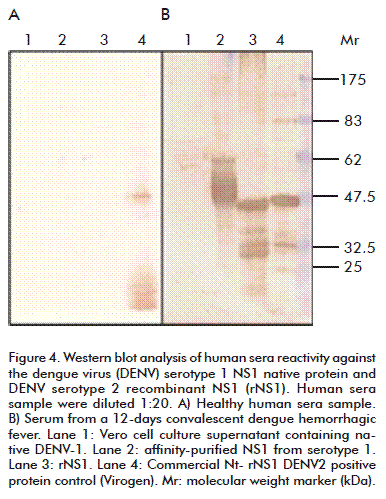
<body><![CDATA[<p   ><font size="2" face="Verdana, Arial, Helvetica, sans-serif" color="#000000">A  serum sample from a 12 days convalescent severe DHF female case showed the highest  reactivity. Western blot analysis of rNS1 (<a href="#fig4">Figure 4</a>) showed  that human dengue convalescent patient sera bound the obtained rNS1 at least as  well as it did with Virogen serotype 2 NS1, but in both cases, smaller sized bands  were also recognized by positive human sera. </font></p >    <p align="center"   ><img src="/img/revistas/bta/v30n3/f0404313.gif" width="384" height="497"><a name="fig4"></a></p >    
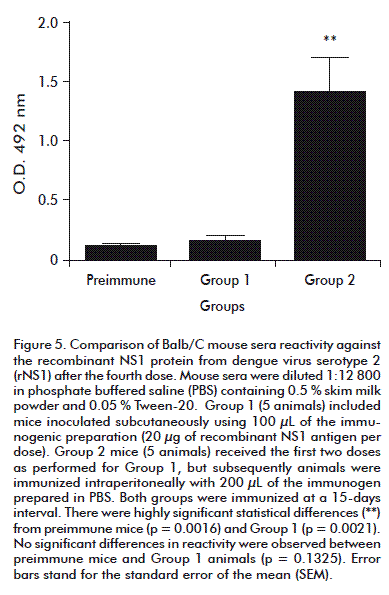
<p   ><font size="2" face="Verdana, Arial, Helvetica, sans-serif" color="#000000"><b>Mouse  immunization results </b></font></p >    <p   ><font size="2" face="Verdana, Arial, Helvetica, sans-serif" color="#000000">Mice  immunized with the recombinant antigen showed high reactivity against rNS1 in  ELISA, but reactivity depended on inoculation route. After the fourth dose (<a href="#fig5">Figure  5</a>) Group 2 (mice inoculated by i.p. route) exhibited significantly higher  levels of anti-rNS1 antibodies than mice immunized subcutaneously (p = 0.0009),  prompting a switch to i.p. administration for both groups. </font></p >    <p align="center"   ><img src="/img/revistas/bta/v30n3/f0504313.gif" width="387" height="593"><a name="fig5"></a></p >    
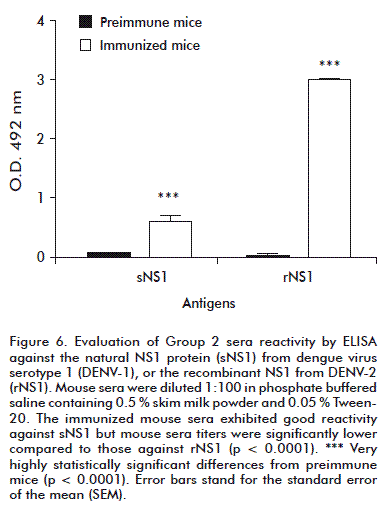
<p   ><font size="2" face="Verdana, Arial, Helvetica, sans-serif" color="#000000">After  the fifth and last dose, when comparing reactivity against the natural or recombinant  antigens in ELISA, the immunized mice sera from Group 2 exhibited good reactivity  against natural DENV-1 sNS1 (<a href="#fig6">Figure 6</a>), although their titers  were significantly lower compared with those against DENV-2 rNS1 (p &lt; 0.0001).  </font></p >    <p align="center"   ><img src="/img/revistas/bta/v30n3/f0604313.gif" width="384" height="514"><a name="fig6"></a></p >    
<p   >&nbsp;</p >    <p   > </p >    <p   ><font size="3" face="Verdana, Arial, Helvetica, sans-serif" color="#000000"><b>DISCUSSION  </b></font></p >    ]]></body>
<body><![CDATA[<p   ><font size="2" face="Verdana, Arial, Helvetica, sans-serif" color="#000000">Previous  reports have described different heterologous protein expression systems, such  as baculovirus, yeast expression systems and vaccinia virus, for producing secreted  and glycosylated recombinant DENV NS1 protein [24-29]. Several reports have also  proposed achieving NS1 expression using bacterial cells [11, 16-19] since prokaryotic  systems are easy to manipulate and express high levels of recombinant proteins.  The inconvenience of these methods is that the expressed antigen lacks posttranslational  modifications; therefore, refolding protocols must be used to produce rNS1 with  a native-like protein conformation, preserving important conformation and antigenic  determinants of the natural virus protein, not present in the denatured form of  the antigen [14, 18, 30, 31]. However, these protocols are time consuming and  sometimes very inefficient. </font></p >    <p   ><font size="2" face="Verdana, Arial, Helvetica, sans-serif" color="#000000">This  study was aimed at obtaining a serotype 2 NS1 recombinant antigen useful for mouse  immunizations with the objective of generating hyper-immune mouse sera against  the viral antigen. In our work, the strategy was to use the denatured rNS1 protein  as immunogen. Antibodies obtained with the denatured recombinant protein will  recognize only linear epitopes in the natural secreted antigen, but it has been  reported that linear epitopes, present in NS1 protein, are immune-dominant and  cross-reactive to all four DENV serotypes [7, 13, 20, 21]. </font></p >    <p   ><font size="2" face="Verdana, Arial, Helvetica, sans-serif" color="#000000">Expression  experiments showed similar results using Rosetta and Turner <i>E. coli</i> strains  (Figure 1) but additional smaller sized bands were observed in immunoblotting  experiments, perhaps due to truncated NS1 protein or degradation. Although a moderate  expression level (5 %) was obtained, we decided to continue using Rosetta strain,  mainly because of the high percentages of rare codons for this host such as AGA,  CCA and CAC in the cloned insert (11 %). This &lsquo;non-optimal gene&rsquo; could  reduce the efficiency of translation or even disengage the translational machinery.  The Rosetta strain enhances expression of proteins having codons rarely used in  <i>E. coli</i>; by supplying tRNAs for six rare codons: AUA, AGG, AGA, CUA, CCC,  and GGA. In the case that higher yield of the protein devoid of degradation products  or truncated protein is required, an additional purification step could be used,  to discriminate degradation products by molecular size (<i>e.g.</i>, size exclusion  chromatography), since the affinity process captures all the molecules bearing  the histidine tag, and particularly small fragments based on their lower steric  hindrance. Additionally, conditions more restrictive for degradation could be  also implemented during sample rupture. </font></p >    <p   ><font size="2" face="Verdana, Arial, Helvetica, sans-serif" color="#000000">For  better protein recovery during the purification process by Ni-NTA, 10 mM beta-mercaptoethanol  was added to the solubilization and chromatography purification buffers. The viral  protein sequence contains 12 cysteine residues and some folded structures could  therefore be present even when using denaturants such as 8 M urea, hindering proper  exposure of the 6xHis tag. </font></p >    <p   ><font size="2" face="Verdana, Arial, Helvetica, sans-serif" color="#000000">The  purified recombinant antigen was recognized in Western blot analysis using dengue  convalescent-phase sera, but results showed several smaller sized bands, as explained  above, perhaps due to incomplete protein expression, degradation or perhaps anomalous  electrophoretic behavior of the NS1 protein [30]. </font></p >    <p   ><font size="2" face="Verdana, Arial, Helvetica, sans-serif" color="#000000">In  the ELISA assay, 6 samples from convalescent-phase disease showed reactivity against  the denatured recombinant antigen. The highest O.D. was obtained with a 12 days  convalescent severe DHF female case. Some human dengue-infected patient samples  exhibited no or poor reactivity against the recombinant antigen, but all of them  were samples from the acute stage of the disease, in which antibody titers against  the viral antigen might be still low. </font></p >    <p   ><font size="2" face="Verdana, Arial, Helvetica, sans-serif" color="#000000">The  unfolded rNS1 antigen was used as immunogen and hyper-immune mice sera against  the viral NS1 antigen were obtained. In this paper, it is shown that the antibodies  elicited in immunized mice with the denatured DENV-2 rNS1 protein have good reactivity  against the secreted NS1 protein from DENV-1. This antigen therefore could be  useful for obtaining specific antibodies against the natural viral proteins; possibly  to conserved regions of the four serotypes, for example amino acids residues 154-161  which are highly conserved among different DENV serotypes [32]. </font></p >    <p   ><font size="2" face="Verdana, Arial, Helvetica, sans-serif" color="#000000">This  approach could be useful for obtaining monoclonal antibodies that could recognize  secreted NS1 present in the sera of infected dengue patients, enabling the development  of an NS1 antigen capture test for an early and accurate detection of acute infection  in suspected dengue cases</font><FONT size="+1" color="#000000"><FONT size="+1"><FONT size="+1"><FONT size="+1"><FONT size="+1"><FONT size="+1"><FONT size="+1"><FONT size="+1"><FONT size="+1"><FONT size="+1"><FONT size="+1"></font></font></font></font></font></font></font></font></font></font></font><font size="2" face="Verdana, Arial, Helvetica, sans-serif">.  </font></p ><FONT size="+1" color="#000000"><FONT size="+1"><FONT size="+1"><FONT size="+1"><FONT size="+1"><FONT size="+1"><FONT size="+1"><FONT size="+1"><FONT size="+1"><FONT size="+1"><FONT size="+1"><FONT size="+1"><FONT size="+1"><FONT size="+1"><FONT size="+1"><FONT size="+1"><FONT size="+1"><FONT size="+1"><FONT size="+1"><FONT size="+1"><FONT size="+1"><FONT size="+1"><FONT size="+1"><FONT size="+1"><FONT size="+1"><FONT size="+1"><FONT size="+1"><FONT size="+1"><FONT size="+1"><FONT size="+1">      <P   align="justify" >&nbsp;</P >    <P   align="justify" > </P >    ]]></body>
<body><![CDATA[<P   align="justify" ><font size="3" face="Verdana, Arial, Helvetica, sans-serif"><B>REFERENCES </b></font></P >    <!-- ref --><P   align="justify" ><font size="2" face="Verdana, Arial, Helvetica, sans-serif">1. Holmes EC, Twiddy  SS. The origin, emergence and evolutionary genetics of dengue virus. Infect Genet  Evol. 2003;3(1):19-28.    <br> </font></P >    <!-- ref --><P   align="justify" ><font size="2" face="Verdana, Arial, Helvetica, sans-serif">2. World Health Organization.  Strengthening implementation of the global strategy for Dengue Fever and Dengue  Haemorrhagic Fever, prevention and control. Report of the Informal Consultation,  Geneva: WHO HQ; 18-20 October 1999. Available from: <a href="http://apps.who.int/iris/handle/10665/66186" target="_blank">http://apps.who.int/iris/handle/10665/66186</a>.    <br> </font></P >    <!-- ref --><P   align="justify" ><font size="2" face="Verdana, Arial, Helvetica, sans-serif">3. Simmons CP, Farrar  JJ, Nguyen vV, Wills B. Dengue. N Engl J Med. 2012;366(15):1423-32.    <br> </font></P >    <!-- ref --><P   align="justify" ><font size="2" face="Verdana, Arial, Helvetica, sans-serif">4. Crooks AJ, Lee  JM, Easterbrook LM, Timofeev AV, Stephenson JR. The NS1 protein of tick-borne  encephalitis virus forms multimeric species upon secretion from the host cell.  J Gen Virol. 1994;75(Pt 12):3453-60.    <br> </font></P >    <!-- ref --><P   align="justify" ><font size="2" face="Verdana, Arial, Helvetica, sans-serif">5. Talarmin A, Labeau  B, Lelarge J, Sarthou JL. Immunoglobulin A-specific capture enzyme-linked immunosorbent  assay for diagnosis of dengue fever. J Clin Microbiol. 1998;36(5):1189-92.    <br>  </font></P >    <!-- ref --><P   align="justify" ><font size="2" face="Verdana, Arial, Helvetica, sans-serif">6. Kuno G, Vorndam  AV, Gubler DJ, Gomez I. Study of anti-dengue NS1 antibody by western blot. J Med  Virol. 1990;32(2):102-8.    <br> </font></P >    <!-- ref --><P   align="justify" ><font size="2" face="Verdana, Arial, Helvetica, sans-serif">7. Falconar AK, Young  PR, Miles MA. Precise location of sequential dengue virus sub complex and complex  B cell epitopes on the nonstructural-1 glycoprotein. Arch Virol. 1994;137(3-4):315-26.    <br>  </font></P >    <!-- ref --><P   align="justify" ><font size="2" face="Verdana, Arial, Helvetica, sans-serif">8. Mason PW. Maturation  of Japanese encephalitis virus glycoproteins produced by infected mammalian and  mosquito cells. Virology. 1989;169(2):354-64.    <br> </font></P >    <!-- ref --><P   align="justify" ><font size="2" face="Verdana, Arial, Helvetica, sans-serif">9. Markoff LJ, Innis  BL, Houghten R, Henchal LS. Development of cross-reactive antibodies to plasminogen  during the immune response to dengue virus infection. J Infect Dis. 1990;164(2):294-301.    <br>  </font></P >    <!-- ref --><P   align="justify" ><font size="2" face="Verdana, Arial, Helvetica, sans-serif">10. Young PR, Hilditch  PA, Bletchly C, Halloran W. An antigen capture enzyme-linked immunosorbent assay  reveals high levels of the dengue virus protein NS1 in the sera of infected patients.  J Clin Microbiol. 2000;38(3):1053-7.    <br> </font></P >    <!-- ref --><P   align="justify" ><font size="2" face="Verdana, Arial, Helvetica, sans-serif">11. Alcon S, Talarmin  A, Debruyne M, Falconar A, Deubel V, Flamand M. Enzyme-linked immunosorbent assay  specific to Dengue virus type 1 nonstructural protein NS1 reveals circulation  of the antigen in the blood during the acute phase of disease in patients experiencing  primary or secondary infections. J Clin Microbiol. 2002;40(2):376-81.    <br> </font></P >    <!-- ref --><P   align="justify" ><font size="2" face="Verdana, Arial, Helvetica, sans-serif">12. Shu PY, Chen  LK, Chang SF, Su CL, Chien LJ, Chin C, et al. Dengue virus serotyping based on  envelope and membrane and nonstructural protein NS1 serotype-specific capture  immunoglobulin M enzyme-linked immunosorbent assays. J Clin Microbiol. 2003;42(6):2489-94.    <br>  </font></P >    <!-- ref --><P   align="justify" ><font size="2" face="Verdana, Arial, Helvetica, sans-serif">13. Falconar AK,  Young PR. Immunoaffinity purification of native dimer forms of the flavivirus  non-structural glycoprotein NS1. J Virol Methods. 1990;30(3):323-32.    <br> </font></P >    <!-- ref --><P   align="justify" ><font size="2" face="Verdana, Arial, Helvetica, sans-serif">14. Qu X, Chen W,  Maguire T, Austin F. Immunoreactivity and protective effects in mice of a recombinant  dengue 2 Tonga virus NS1 protein produced in a baculovirus expression system.  J Gen Virol. 1993;74(Pt 1):89-97.    <br> </font></P >    <!-- ref --><P   align="justify" ><font size="2" face="Verdana, Arial, Helvetica, sans-serif">15. Zhou JM, Tang  YX, Fang DY, Zhou JJ, Liang Y, Guo HY, et al. Secreted expression and purification  of dengue 2 virus full-length nonstructural glycoprotein NS1 in Pichia pastoris.  Virus Genes. 2006;33(1):27-32.    <br> </font></P >    <!-- ref --><P   align="justify" ><font size="2" face="Verdana, Arial, Helvetica, sans-serif">16. Xu H, Di B, Pan  YX, Qiu LW, Wang YD, Hao W, et al. Serotype 1-specific monoclonal antibody-based  antigen capture immunoassay for detection of circulating nonstructural protein  NS1: implications for early diagnosis and serotyping of Dengue virus infections.  J Clin Microbiol. 2006;44(8):2872-8.    <br> </font></P >    <!-- ref --><P   align="justify" ><font size="2" face="Verdana, Arial, Helvetica, sans-serif">17. Qiu LW, Di B,  Wen K, Wang XS, Liang WH, Wang YD, et al. Development of an antigen capture immunoassay  based on monoclonal antibodies specific for Dengue virus serotype 2 nonstructural  protein 1 for early and rapid identification of Dengue virus serotype 2 infections.  Clin Vaccine Immunol. 2009;16(1):88-95.    <br> </font></P >    <!-- ref --><P   align="justify" ><font size="2" face="Verdana, Arial, Helvetica, sans-serif">18. Das D, Mongkolaungkoon  S, Suresh MR. Super induction of dengue virus NS1 protein in E. coli. Protein  Expr Purif. 2009;66(1):66-72.    <br> </font></P >    <!-- ref --><P   align="justify" ><font size="2" face="Verdana, Arial, Helvetica, sans-serif">19. Allonso D, da  Silva Rosa M, Coelho DR, da Costa SM, Nogueira RM, Bozza FA, et al. Polyclonal  antibodies against properly folded Dengue virus NS1 protein expressed in E. coli  enable sensitive and early dengue diagnosis. J Virol Methods. 2011;175:109-16.    <br>  </font></P >    <!-- ref --><P   align="justify" ><font size="2" face="Verdana, Arial, Helvetica, sans-serif">20. Huang JH, Wey  JJ, Sun YC, Chin C, Chien LJ, Wu YC. Antibody responses to an immunodominant nonstructural  1 synthetic peptide in patients with dengue fever and dengue hemorrhagic fever.  J Med Virol. 1999;57(1):1-8.    <br> </font></P >    <!-- ref --><P   align="justify" ><font size="2" face="Verdana, Arial, Helvetica, sans-serif">21. Chen Y, Pan Y,  Guo Y, Qiu L, Ding X, Che X. Comprehensive mapping of immunodominant and conserved  serotype- and group-specific B-cell epitopes of nonstructural protein 1 from dengue  virus type 1. Virology. 2010;398(2):290-8.    <br> </font></P >    <!-- ref --><P   align="justify" ><font size="2" face="Verdana, Arial, Helvetica, sans-serif">22. Laemmli UK. Cleavage  of structural proteins during the assembly of the head of bacteriophage T4. Nature.  1970;227(5259):680-5.    <br> </font></P >    <!-- ref --><P   align="justify" ><font size="2" face="Verdana, Arial, Helvetica, sans-serif">23. Flamand M, Megret  F, Mathieu M, Lepault J, Rey FA, Deubel V. Dengue virus type 1 nonstructural glycoprotein  NS1 is secreted from mammalian cells as a soluble hexamer in a glycosylation-dependent  fashion. J Virol. 1999;73(7):6104-10.    <br> </font></P >    <!-- ref --><P   align="justify" ><font size="2" face="Verdana, Arial, Helvetica, sans-serif">24. Falgout B, Chanock  R, Lai CJ. Proper processing of Dengue virus nonstructural glycoprotein NS1 requires  the N-terminal hydrophobic signal sequence and the downstream nonstructural protein  NS2a. J Virol. 1989;63(5):1852-60.    <br> </font></P >    <!-- ref --><P   align="justify" ><font size="2" face="Verdana, Arial, Helvetica, sans-serif">25. Pryor MJ, Wright  PJ. The effects of site-directed mutagenesis on the dimerization and secretion  of the NS1 protein specified by Dengue virus. Virology. 1993;194(2):769-80.    <br>  </font></P >    <!-- ref --><P   align="justify" ><font size="2" face="Verdana, Arial, Helvetica, sans-serif">26. Falgout B, Markoff  L. Evidence that flavivirus NS1-NS2A cleavage is mediated by a membrane-bound  host protease in the endoplasmic reticulum. J Virol. 1995;69(11):7232-43.    <br>  </font></P >    <!-- ref --><P   align="justify" ><font size="2" face="Verdana, Arial, Helvetica, sans-serif">27. Wu SF, Liao CL,  Lin YL, Yeh CT, Chen LK, Huang YF, et al. Evaluation of protective efficacy and  immune mechanisms of using a non-structural protein NS1 in DNA vaccine against  dengue 2 virus in mice. Vaccine. 2003;21(25-26):3919-29.    <br> </font></P >    <!-- ref --><P   align="justify" ><font size="2" face="Verdana, Arial, Helvetica, sans-serif">28. Wallis TP, Huang  CY, Nimkar SB, Young PR, Gorman JJ. Determination of the disulfide bond arrangement  of Dengue virus NS1 protein. J Biol Chem. 2004;279(20):20729-41.    <br> </font></P >    <!-- ref --><P   align="justify" ><font size="2" face="Verdana, Arial, Helvetica, sans-serif">29. Rozen-Gagnon  K, Moreland NJ, Ruedl C, Vasudevan SG. Expression and immunoaffinity purification  of recombinant dengue virus 2 NS1 protein as a cleavable SUMOstar fusion. Protein  Expr Purif. 2012;82(1):20-5.    <br> </font></P >    <!-- ref --><P   align="justify" ><font size="2" face="Verdana, Arial, Helvetica, sans-serif">30. Amorim JH, Porchia  BF, Balan A, Cavalcante RC, da Costa SM, de Barcelos Alves AM, et al. Refolded  dengue virus type 2 NS1 protein expressed in Escherichia coli preserves structural  and immunological properties of the native protein. J Virol Methods. 2010;167(2):186-92.    <br>  </font></P >    <!-- ref --><P   align="justify" ><font size="2" face="Verdana, Arial, Helvetica, sans-serif">31. Noisakran S,  Dechtawewat T, Rinkaewkan P, Puttikhunt C, Kanjanahaluethai A, Kasinrerk W, et  al. Characterization of dengue virus NS1 stably expressed in 293T cell lines.  J Virol Methods. 2007;142(1-2):67-80.    <br> </font></P >    <!-- ref --><P   align="justify" ><font size="2" face="Verdana, Arial, Helvetica, sans-serif">32. Masrinoul PP,  Diata MO, Pambudi S, Limkittikul K, Ikuta, K, Kurosu T. Highly conserved region  141?168 of the NS1 protein is a new common epitope region of dengue virus. Jpn  J Infect Dis. 2011;64(2):109-15.    </font></P ><FONT size="+1"><FONT color="#0000FF"><FONT color="#000000"><FONT color="#0000FF"><FONT color="#000000"><FONT color="#0000FF"><FONT color="#000000">      <P   align="justify" >&nbsp;</P >    <P   align="justify" >&nbsp;</P >    <P   align="justify" > </P >    <P   align="justify" ><font size="2" face="Verdana, Arial, Helvetica, sans-serif">Received in October,  2012.     <br> Accepted in April, 2013. </font></P >    ]]></body>
<body><![CDATA[<P   align="justify" >&nbsp;</P >    <P   align="justify" >&nbsp;</P >    <P   align="justify" > </P >    <P   align="justify" > </P >    <P   align="justify" ><font size="+1" color="#000000"><font size="2" face="Verdana, Arial, Helvetica, sans-serif"><i>Gilda  Lemos</i></font></font><font size="2" face="Verdana, Arial, Helvetica, sans-serif">.  </font><font size="+1" color="#000000"><font size="+1"><font size="+1"><font size="+1"><font size="+1"><font size="+1"><font size="2" face="Verdana, Arial, Helvetica, sans-serif">Centro  de Ingenier&iacute;a Gen&eacute;tica y Biotecnolog&iacute;a, CIGB. Ave. 31 e/  158 y 190, Cubanac&aacute;n, Playa, CP 11600, La Habana, Cuba</font></font></font></font></font></font></font><font size="2" face="Verdana, Arial, Helvetica, sans-serif">.  E-mail:<FONT color="#0000FF"><FONT color="#0017E4"> <a href="mailto:gilda.lemos@cigb.edu.cu">gilda.lemos@cigb.edu.cu</a>.  </font></font></font></P ></font></font></font></font></font></font></font></font></font></font></font></font></font></font></font></font></font></font></font></font></font></font></font></font></font></font></font></font></font></font></font></font></font></font></font></font></font></DIV >      ]]></body><back>
<ref-list>
<ref id="B1">
<label>1</label><nlm-citation citation-type="journal">
<person-group person-group-type="author">
<name>
<surname><![CDATA[Holmes]]></surname>
<given-names><![CDATA[EC]]></given-names>
</name>
<name>
<surname><![CDATA[Twiddy]]></surname>
<given-names><![CDATA[SS]]></given-names>
</name>
</person-group>
<article-title xml:lang="en"><![CDATA[The origin, emergence and evolutionary genetics of dengue virus]]></article-title>
<source><![CDATA[Infect Genet Evol]]></source>
<year>2003</year>
<volume>3</volume>
<numero>1</numero>
<issue>1</issue>
<page-range>19-28</page-range></nlm-citation>
</ref>
<ref id="B2">
<label>2</label><nlm-citation citation-type="book">
<collab>World Health Organization</collab>
<source><![CDATA[Strengthening implementation of the global strategy for Dengue Fever and Dengue Haemorrhagic Fever, prevention and control. Report of the Informal Consultation]]></source>
<year>18-2</year>
<month>0 </month>
<day>Oc</day>
<publisher-loc><![CDATA[Geneva ]]></publisher-loc>
<publisher-name><![CDATA[WHO HQ]]></publisher-name>
</nlm-citation>
</ref>
<ref id="B3">
<label>3</label><nlm-citation citation-type="journal">
<person-group person-group-type="author">
<name>
<surname><![CDATA[Simmons]]></surname>
<given-names><![CDATA[CP]]></given-names>
</name>
<name>
<surname><![CDATA[Farrar]]></surname>
<given-names><![CDATA[JJ]]></given-names>
</name>
<name>
<surname><![CDATA[Nguyen]]></surname>
<given-names><![CDATA[vV]]></given-names>
</name>
<name>
<surname><![CDATA[Wills]]></surname>
<given-names><![CDATA[B]]></given-names>
</name>
</person-group>
<article-title xml:lang="en"><![CDATA[Dengue]]></article-title>
<source><![CDATA[N Engl J Med]]></source>
<year>2012</year>
<volume>366</volume>
<numero>15</numero>
<issue>15</issue>
<page-range>1423-32</page-range></nlm-citation>
</ref>
<ref id="B4">
<label>4</label><nlm-citation citation-type="journal">
<person-group person-group-type="author">
<name>
<surname><![CDATA[Crooks]]></surname>
<given-names><![CDATA[AJ]]></given-names>
</name>
<name>
<surname><![CDATA[Lee]]></surname>
<given-names><![CDATA[JM]]></given-names>
</name>
<name>
<surname><![CDATA[Easterbrook]]></surname>
<given-names><![CDATA[LM]]></given-names>
</name>
<name>
<surname><![CDATA[Timofeev]]></surname>
<given-names><![CDATA[AV]]></given-names>
</name>
<name>
<surname><![CDATA[Stephenson]]></surname>
<given-names><![CDATA[JR]]></given-names>
</name>
</person-group>
<article-title xml:lang="en"><![CDATA[The NS1 protein of tick-borne encephalitis virus forms multimeric species upon secretion from the host cell]]></article-title>
<source><![CDATA[J Gen Virol]]></source>
<year>1994</year>
<volume>75</volume>
<numero>12</numero>
<issue>12</issue>
<page-range>3453-60</page-range></nlm-citation>
</ref>
<ref id="B5">
<label>5</label><nlm-citation citation-type="journal">
<person-group person-group-type="author">
<name>
<surname><![CDATA[Talarmin]]></surname>
<given-names><![CDATA[A]]></given-names>
</name>
<name>
<surname><![CDATA[Labeau]]></surname>
<given-names><![CDATA[B]]></given-names>
</name>
<name>
<surname><![CDATA[Lelarge]]></surname>
<given-names><![CDATA[J]]></given-names>
</name>
<name>
<surname><![CDATA[Sarthou]]></surname>
<given-names><![CDATA[JL]]></given-names>
</name>
</person-group>
<article-title xml:lang="en"><![CDATA[Immunoglobulin A-specific capture enzyme-linked immunosorbent assay for diagnosis of dengue fever]]></article-title>
<source><![CDATA[J Clin Microbiol]]></source>
<year>1998</year>
<volume>36</volume>
<numero>5</numero>
<issue>5</issue>
<page-range>1189-92</page-range></nlm-citation>
</ref>
<ref id="B6">
<label>6</label><nlm-citation citation-type="journal">
<person-group person-group-type="author">
<name>
<surname><![CDATA[Kuno]]></surname>
<given-names><![CDATA[G]]></given-names>
</name>
<name>
<surname><![CDATA[Vorndam]]></surname>
<given-names><![CDATA[AV]]></given-names>
</name>
<name>
<surname><![CDATA[Gubler]]></surname>
<given-names><![CDATA[DJ]]></given-names>
</name>
<name>
<surname><![CDATA[Gomez]]></surname>
<given-names><![CDATA[I]]></given-names>
</name>
</person-group>
<article-title xml:lang="en"><![CDATA[Study of anti-dengue NS1 antibody by western blot]]></article-title>
<source><![CDATA[J Med Virol]]></source>
<year>1990</year>
<volume>32</volume>
<numero>2</numero>
<issue>2</issue>
<page-range>102-8</page-range></nlm-citation>
</ref>
<ref id="B7">
<label>7</label><nlm-citation citation-type="journal">
<person-group person-group-type="author">
<name>
<surname><![CDATA[Falconar]]></surname>
<given-names><![CDATA[AK]]></given-names>
</name>
<name>
<surname><![CDATA[Young]]></surname>
<given-names><![CDATA[PR]]></given-names>
</name>
<name>
<surname><![CDATA[Miles]]></surname>
<given-names><![CDATA[MA]]></given-names>
</name>
</person-group>
<article-title xml:lang="en"><![CDATA[Precise location of sequential dengue virus sub complex and complex B cell epitopes on the nonstructural-1 glycoprotein]]></article-title>
<source><![CDATA[Arch Virol]]></source>
<year>1994</year>
<volume>137</volume>
<numero>3-4</numero>
<issue>3-4</issue>
<page-range>315-26</page-range></nlm-citation>
</ref>
<ref id="B8">
<label>8</label><nlm-citation citation-type="journal">
<person-group person-group-type="author">
<name>
<surname><![CDATA[Mason]]></surname>
<given-names><![CDATA[PW]]></given-names>
</name>
</person-group>
<article-title xml:lang="en"><![CDATA[Maturation of Japanese encephalitis virus glycoproteins produced by infected mammalian and mosquito cells]]></article-title>
<source><![CDATA[Virology]]></source>
<year>1989</year>
<volume>169</volume>
<numero>2</numero>
<issue>2</issue>
<page-range>354-64</page-range></nlm-citation>
</ref>
<ref id="B9">
<label>9</label><nlm-citation citation-type="journal">
<person-group person-group-type="author">
<name>
<surname><![CDATA[Markoff]]></surname>
<given-names><![CDATA[LJ]]></given-names>
</name>
<name>
<surname><![CDATA[Innis]]></surname>
<given-names><![CDATA[BL]]></given-names>
</name>
<name>
<surname><![CDATA[Houghten]]></surname>
<given-names><![CDATA[R]]></given-names>
</name>
<name>
<surname><![CDATA[Henchal]]></surname>
<given-names><![CDATA[LS]]></given-names>
</name>
</person-group>
<article-title xml:lang="en"><![CDATA[Development of cross-reactive antibodies to plasminogen during the immune response to dengue virus infection]]></article-title>
<source><![CDATA[J Infect Dis]]></source>
<year>1990</year>
<volume>164</volume>
<numero>2</numero>
<issue>2</issue>
<page-range>294-301</page-range></nlm-citation>
</ref>
<ref id="B10">
<label>10</label><nlm-citation citation-type="journal">
<person-group person-group-type="author">
<name>
<surname><![CDATA[Young]]></surname>
<given-names><![CDATA[PR]]></given-names>
</name>
<name>
<surname><![CDATA[Hilditch]]></surname>
<given-names><![CDATA[PA]]></given-names>
</name>
<name>
<surname><![CDATA[Bletchly]]></surname>
<given-names><![CDATA[C]]></given-names>
</name>
<name>
<surname><![CDATA[Halloran]]></surname>
<given-names><![CDATA[W]]></given-names>
</name>
</person-group>
<article-title xml:lang="en"><![CDATA[An antigen capture enzyme-linked immunosorbent assay reveals high levels of the dengue virus protein NS1 in the sera of infected patients]]></article-title>
<source><![CDATA[J Clin Microbiol]]></source>
<year>2000</year>
<volume>38</volume>
<numero>3</numero>
<issue>3</issue>
<page-range>1053-7</page-range></nlm-citation>
</ref>
<ref id="B11">
<label>11</label><nlm-citation citation-type="journal">
<person-group person-group-type="author">
<name>
<surname><![CDATA[Alcon]]></surname>
<given-names><![CDATA[S]]></given-names>
</name>
<name>
<surname><![CDATA[Talarmin]]></surname>
<given-names><![CDATA[A]]></given-names>
</name>
<name>
<surname><![CDATA[Debruyne]]></surname>
<given-names><![CDATA[M]]></given-names>
</name>
<name>
<surname><![CDATA[Falconar]]></surname>
<given-names><![CDATA[A]]></given-names>
</name>
<name>
<surname><![CDATA[Deubel]]></surname>
<given-names><![CDATA[V]]></given-names>
</name>
<name>
<surname><![CDATA[Flamand]]></surname>
<given-names><![CDATA[M]]></given-names>
</name>
</person-group>
<article-title xml:lang="en"><![CDATA[Enzyme-linked immunosorbent assay specific to Dengue virus type 1 nonstructural protein NS1 reveals circulation of the antigen in the blood during the acute phase of disease in patients experiencing primary or secondary infections]]></article-title>
<source><![CDATA[J Clin Microbiol]]></source>
<year>2002</year>
<volume>40</volume>
<numero>2</numero>
<issue>2</issue>
<page-range>376-81</page-range></nlm-citation>
</ref>
<ref id="B12">
<label>12</label><nlm-citation citation-type="journal">
<person-group person-group-type="author">
<name>
<surname><![CDATA[Shu]]></surname>
<given-names><![CDATA[PY]]></given-names>
</name>
<name>
<surname><![CDATA[Chen]]></surname>
<given-names><![CDATA[LK]]></given-names>
</name>
<name>
<surname><![CDATA[Chang]]></surname>
<given-names><![CDATA[SF]]></given-names>
</name>
<name>
<surname><![CDATA[Su]]></surname>
<given-names><![CDATA[CL]]></given-names>
</name>
<name>
<surname><![CDATA[Chien]]></surname>
<given-names><![CDATA[LJ]]></given-names>
</name>
<name>
<surname><![CDATA[Chin]]></surname>
<given-names><![CDATA[C]]></given-names>
</name>
</person-group>
<article-title xml:lang="en"><![CDATA[Dengue virus serotyping based on envelope and membrane and nonstructural protein NS1 serotype-specific capture immunoglobulin m enzyme-linked immunosorbent assays]]></article-title>
<source><![CDATA[J Clin Microbiol]]></source>
<year>2003</year>
<volume>42</volume>
<numero>6</numero>
<issue>6</issue>
<page-range>2489-94</page-range></nlm-citation>
</ref>
<ref id="B13">
<label>13</label><nlm-citation citation-type="journal">
<person-group person-group-type="author">
<name>
<surname><![CDATA[Falconar]]></surname>
<given-names><![CDATA[AK]]></given-names>
</name>
<name>
<surname><![CDATA[Young]]></surname>
<given-names><![CDATA[PR]]></given-names>
</name>
</person-group>
<article-title xml:lang="en"><![CDATA[Immunoaffinity purification of native dimer forms of the flavivirus non-structural glycoprotein NS1]]></article-title>
<source><![CDATA[J Virol Methods]]></source>
<year>1990</year>
<volume>30</volume>
<numero>3</numero>
<issue>3</issue>
<page-range>323-32</page-range></nlm-citation>
</ref>
<ref id="B14">
<label>14</label><nlm-citation citation-type="journal">
<person-group person-group-type="author">
<name>
<surname><![CDATA[Qu]]></surname>
<given-names><![CDATA[X]]></given-names>
</name>
<name>
<surname><![CDATA[Chen]]></surname>
<given-names><![CDATA[W]]></given-names>
</name>
<name>
<surname><![CDATA[Maguire]]></surname>
<given-names><![CDATA[T]]></given-names>
</name>
<name>
<surname><![CDATA[Austin]]></surname>
<given-names><![CDATA[F]]></given-names>
</name>
</person-group>
<article-title xml:lang="en"><![CDATA[Immunoreactivity and protective effects in mice of a recombinant dengue 2 Tonga virus NS1 protein produced in a baculovirus expression system]]></article-title>
<source><![CDATA[J Gen Virol]]></source>
<year>1993</year>
<volume>74</volume>
<numero>1</numero>
<issue>1</issue>
<page-range>89-97</page-range></nlm-citation>
</ref>
<ref id="B15">
<label>15</label><nlm-citation citation-type="journal">
<person-group person-group-type="author">
<name>
<surname><![CDATA[Zhou]]></surname>
<given-names><![CDATA[JM]]></given-names>
</name>
<name>
<surname><![CDATA[Tang]]></surname>
<given-names><![CDATA[YX]]></given-names>
</name>
<name>
<surname><![CDATA[Fang]]></surname>
<given-names><![CDATA[DY]]></given-names>
</name>
<name>
<surname><![CDATA[Zhou]]></surname>
<given-names><![CDATA[JJ]]></given-names>
</name>
<name>
<surname><![CDATA[Liang]]></surname>
<given-names><![CDATA[Y]]></given-names>
</name>
<name>
<surname><![CDATA[Guo]]></surname>
<given-names><![CDATA[HY]]></given-names>
</name>
</person-group>
<article-title xml:lang="en"><![CDATA[Secreted expression and purification of dengue 2 virus full-length nonstructural glycoprotein NS1 in Pichia pastoris]]></article-title>
<source><![CDATA[Virus Genes]]></source>
<year>2006</year>
<volume>33</volume>
<numero>1</numero>
<issue>1</issue>
<page-range>27-32</page-range></nlm-citation>
</ref>
<ref id="B16">
<label>16</label><nlm-citation citation-type="journal">
<person-group person-group-type="author">
<name>
<surname><![CDATA[Xu]]></surname>
<given-names><![CDATA[H]]></given-names>
</name>
<name>
<surname><![CDATA[Di]]></surname>
<given-names><![CDATA[B]]></given-names>
</name>
<name>
<surname><![CDATA[Pan]]></surname>
<given-names><![CDATA[YX]]></given-names>
</name>
<name>
<surname><![CDATA[Qiu]]></surname>
<given-names><![CDATA[LW]]></given-names>
</name>
<name>
<surname><![CDATA[Wang]]></surname>
<given-names><![CDATA[YD]]></given-names>
</name>
<name>
<surname><![CDATA[Hao]]></surname>
<given-names><![CDATA[W]]></given-names>
</name>
</person-group>
<article-title xml:lang="en"><![CDATA[Serotype 1-specific monoclonal antibody-based antigen capture immunoassay for detection of circulating nonstructural protein NS1: implications for early diagnosis and serotyping of Dengue virus infections]]></article-title>
<source><![CDATA[J Clin Microbiol]]></source>
<year>2006</year>
<volume>44</volume>
<numero>8</numero>
<issue>8</issue>
<page-range>2872-8</page-range></nlm-citation>
</ref>
<ref id="B17">
<label>17</label><nlm-citation citation-type="journal">
<person-group person-group-type="author">
<name>
<surname><![CDATA[Qiu]]></surname>
<given-names><![CDATA[LW]]></given-names>
</name>
<name>
<surname><![CDATA[Di]]></surname>
<given-names><![CDATA[B]]></given-names>
</name>
<name>
<surname><![CDATA[Wen]]></surname>
<given-names><![CDATA[K]]></given-names>
</name>
<name>
<surname><![CDATA[Wang]]></surname>
<given-names><![CDATA[XS]]></given-names>
</name>
<name>
<surname><![CDATA[Liang]]></surname>
<given-names><![CDATA[WH]]></given-names>
</name>
<name>
<surname><![CDATA[Wang]]></surname>
<given-names><![CDATA[YD]]></given-names>
</name>
</person-group>
<article-title xml:lang="en"><![CDATA[Development of an antigen capture immunoassay based on monoclonal antibodies specific for Dengue virus serotype 2 nonstructural protein 1 for early and rapid identification of Dengue virus serotype 2 infections]]></article-title>
<source><![CDATA[Clin Vaccine Immunol]]></source>
<year>2009</year>
<volume>16</volume>
<numero>1</numero>
<issue>1</issue>
<page-range>88-95</page-range></nlm-citation>
</ref>
<ref id="B18">
<label>18</label><nlm-citation citation-type="journal">
<person-group person-group-type="author">
<name>
<surname><![CDATA[Das]]></surname>
<given-names><![CDATA[D]]></given-names>
</name>
<name>
<surname><![CDATA[Mongkolaungkoon]]></surname>
<given-names><![CDATA[S]]></given-names>
</name>
<name>
<surname><![CDATA[Suresh]]></surname>
<given-names><![CDATA[MR]]></given-names>
</name>
</person-group>
<article-title xml:lang="en"><![CDATA[Super induction of dengue virus NS1 protein in E. coli]]></article-title>
<source><![CDATA[Protein Expr Purif]]></source>
<year>2009</year>
<volume>66</volume>
<numero>1</numero>
<issue>1</issue>
<page-range>66-72</page-range></nlm-citation>
</ref>
<ref id="B19">
<label>19</label><nlm-citation citation-type="journal">
<person-group person-group-type="author">
<name>
<surname><![CDATA[Allonso]]></surname>
<given-names><![CDATA[D]]></given-names>
</name>
<name>
<surname><![CDATA[da Silva Rosa]]></surname>
<given-names><![CDATA[M]]></given-names>
</name>
<name>
<surname><![CDATA[Coelho]]></surname>
<given-names><![CDATA[DR]]></given-names>
</name>
<name>
<surname><![CDATA[da Costa]]></surname>
<given-names><![CDATA[SM]]></given-names>
</name>
<name>
<surname><![CDATA[Nogueira]]></surname>
<given-names><![CDATA[RM]]></given-names>
</name>
<name>
<surname><![CDATA[Bozza]]></surname>
<given-names><![CDATA[FA]]></given-names>
</name>
</person-group>
<article-title xml:lang="en"><![CDATA[Polyclonal antibodies against properly folded Dengue virus NS1 protein expressed in E. coli enable sensitive and early dengue diagnosis]]></article-title>
<source><![CDATA[J Virol Methods]]></source>
<year>2011</year>
<volume>175</volume>
<page-range>109-16</page-range></nlm-citation>
</ref>
<ref id="B20">
<label>20</label><nlm-citation citation-type="journal">
<person-group person-group-type="author">
<name>
<surname><![CDATA[Huang]]></surname>
<given-names><![CDATA[JH]]></given-names>
</name>
<name>
<surname><![CDATA[Wey]]></surname>
<given-names><![CDATA[JJ]]></given-names>
</name>
<name>
<surname><![CDATA[Sun]]></surname>
<given-names><![CDATA[YC]]></given-names>
</name>
<name>
<surname><![CDATA[Chin]]></surname>
<given-names><![CDATA[C]]></given-names>
</name>
<name>
<surname><![CDATA[Chien]]></surname>
<given-names><![CDATA[LJ]]></given-names>
</name>
<name>
<surname><![CDATA[Wu]]></surname>
<given-names><![CDATA[YC]]></given-names>
</name>
</person-group>
<article-title xml:lang="en"><![CDATA[Antibody responses to an immunodominant nonstructural 1 synthetic peptide in patients with dengue fever and dengue hemorrhagic fever]]></article-title>
<source><![CDATA[J Med Virol]]></source>
<year>1999</year>
<volume>57</volume>
<numero>1</numero>
<issue>1</issue>
<page-range>1-8</page-range></nlm-citation>
</ref>
<ref id="B21">
<label>21</label><nlm-citation citation-type="journal">
<person-group person-group-type="author">
<name>
<surname><![CDATA[Chen]]></surname>
<given-names><![CDATA[Y]]></given-names>
</name>
<name>
<surname><![CDATA[Pan]]></surname>
<given-names><![CDATA[Y]]></given-names>
</name>
<name>
<surname><![CDATA[Guo]]></surname>
<given-names><![CDATA[Y]]></given-names>
</name>
<name>
<surname><![CDATA[Qiu]]></surname>
<given-names><![CDATA[L]]></given-names>
</name>
<name>
<surname><![CDATA[Ding]]></surname>
<given-names><![CDATA[X]]></given-names>
</name>
<name>
<surname><![CDATA[Che]]></surname>
<given-names><![CDATA[X]]></given-names>
</name>
</person-group>
<article-title xml:lang="en"><![CDATA[Comprehensive mapping of immunodominant and conserved serotype- and group-specific B-cell epitopes of nonstructural protein 1 from dengue virus type 1]]></article-title>
<source><![CDATA[Virology]]></source>
<year>2010</year>
<volume>398</volume>
<numero>2</numero>
<issue>2</issue>
<page-range>290-8</page-range></nlm-citation>
</ref>
<ref id="B22">
<label>22</label><nlm-citation citation-type="journal">
<person-group person-group-type="author">
<name>
<surname><![CDATA[Laemmli]]></surname>
<given-names><![CDATA[UK]]></given-names>
</name>
</person-group>
<article-title xml:lang="en"><![CDATA[Cleavage of structural proteins during the assembly of the head of bacteriophage T4]]></article-title>
<source><![CDATA[Nature]]></source>
<year>1970</year>
<volume>227</volume>
<numero>5259</numero>
<issue>5259</issue>
<page-range>680-5</page-range></nlm-citation>
</ref>
<ref id="B23">
<label>23</label><nlm-citation citation-type="journal">
<person-group person-group-type="author">
<name>
<surname><![CDATA[Flamand]]></surname>
<given-names><![CDATA[M]]></given-names>
</name>
<name>
<surname><![CDATA[Megret]]></surname>
<given-names><![CDATA[F]]></given-names>
</name>
<name>
<surname><![CDATA[Mathieu]]></surname>
<given-names><![CDATA[M]]></given-names>
</name>
<name>
<surname><![CDATA[Lepault]]></surname>
<given-names><![CDATA[J]]></given-names>
</name>
<name>
<surname><![CDATA[Rey]]></surname>
<given-names><![CDATA[FA]]></given-names>
</name>
<name>
<surname><![CDATA[Deubel]]></surname>
<given-names><![CDATA[V]]></given-names>
</name>
</person-group>
<article-title xml:lang="en"><![CDATA[Dengue virus type 1 nonstructural glycoprotein NS1 is secreted from mammalian cells as a soluble hexamer in a glycosylation-dependent fashion]]></article-title>
<source><![CDATA[J Virol]]></source>
<year>1999</year>
<volume>73</volume>
<numero>7</numero>
<issue>7</issue>
<page-range>6104-10</page-range></nlm-citation>
</ref>
<ref id="B24">
<label>24</label><nlm-citation citation-type="journal">
<person-group person-group-type="author">
<name>
<surname><![CDATA[Falgout]]></surname>
<given-names><![CDATA[B]]></given-names>
</name>
<name>
<surname><![CDATA[Chanock]]></surname>
<given-names><![CDATA[R]]></given-names>
</name>
<name>
<surname><![CDATA[Lai]]></surname>
<given-names><![CDATA[CJ]]></given-names>
</name>
</person-group>
<article-title xml:lang="en"><![CDATA[Proper processing of Dengue virus nonstructural glycoprotein NS1 requires the N-terminal hydrophobic signal sequence and the downstream nonstructural protein NS2a]]></article-title>
<source><![CDATA[J Virol]]></source>
<year>1989</year>
<volume>63</volume>
<numero>5</numero>
<issue>5</issue>
<page-range>1852-60</page-range></nlm-citation>
</ref>
<ref id="B25">
<label>25</label><nlm-citation citation-type="journal">
<person-group person-group-type="author">
<name>
<surname><![CDATA[Pryor]]></surname>
<given-names><![CDATA[MJ]]></given-names>
</name>
<name>
<surname><![CDATA[Wright]]></surname>
<given-names><![CDATA[PJ]]></given-names>
</name>
</person-group>
<article-title xml:lang="en"><![CDATA[The effects of site-directed mutagenesis on the dimerization and secretion of the NS1 protein specified by Dengue virus]]></article-title>
<source><![CDATA[Virology]]></source>
<year>1993</year>
<volume>194</volume>
<numero>2</numero>
<issue>2</issue>
<page-range>769-80</page-range></nlm-citation>
</ref>
<ref id="B26">
<label>26</label><nlm-citation citation-type="journal">
<person-group person-group-type="author">
<name>
<surname><![CDATA[Falgout]]></surname>
<given-names><![CDATA[B]]></given-names>
</name>
<name>
<surname><![CDATA[Markoff]]></surname>
<given-names><![CDATA[L]]></given-names>
</name>
</person-group>
<article-title xml:lang="en"><![CDATA[Evidence that flavivirus NS1-NS2A cleavage is mediated by a membrane-bound host protease in the endoplasmic reticulum]]></article-title>
<source><![CDATA[J Virol]]></source>
<year>1995</year>
<volume>69</volume>
<numero>11</numero>
<issue>11</issue>
<page-range>7232-43</page-range></nlm-citation>
</ref>
<ref id="B27">
<label>27</label><nlm-citation citation-type="journal">
<person-group person-group-type="author">
<name>
<surname><![CDATA[Wu]]></surname>
<given-names><![CDATA[SF]]></given-names>
</name>
<name>
<surname><![CDATA[Liao]]></surname>
<given-names><![CDATA[CL]]></given-names>
</name>
<name>
<surname><![CDATA[Lin]]></surname>
<given-names><![CDATA[YL]]></given-names>
</name>
<name>
<surname><![CDATA[Yeh]]></surname>
<given-names><![CDATA[CT]]></given-names>
</name>
<name>
<surname><![CDATA[Chen]]></surname>
<given-names><![CDATA[LK]]></given-names>
</name>
<name>
<surname><![CDATA[Huang]]></surname>
<given-names><![CDATA[YF]]></given-names>
</name>
</person-group>
<article-title xml:lang="en"><![CDATA[Evaluation of protective efficacy and immune mechanisms of using a non-structural protein NS1 in DNA vaccine against dengue 2 virus in mice]]></article-title>
<source><![CDATA[Vaccine]]></source>
<year>2003</year>
<volume>21</volume>
<numero>25-26</numero>
<issue>25-26</issue>
<page-range>3919-29</page-range></nlm-citation>
</ref>
<ref id="B28">
<label>28</label><nlm-citation citation-type="journal">
<person-group person-group-type="author">
<name>
<surname><![CDATA[Wallis]]></surname>
<given-names><![CDATA[TP]]></given-names>
</name>
<name>
<surname><![CDATA[Huang]]></surname>
<given-names><![CDATA[CY]]></given-names>
</name>
<name>
<surname><![CDATA[Nimkar]]></surname>
<given-names><![CDATA[SB]]></given-names>
</name>
<name>
<surname><![CDATA[Young]]></surname>
<given-names><![CDATA[PR]]></given-names>
</name>
<name>
<surname><![CDATA[Gorman]]></surname>
<given-names><![CDATA[JJ]]></given-names>
</name>
</person-group>
<article-title xml:lang="en"><![CDATA[Determination of the disulfide bond arrangement of Dengue virus NS1 protein]]></article-title>
<source><![CDATA[J Biol Chem]]></source>
<year>2004</year>
<volume>279</volume>
<numero>20</numero>
<issue>20</issue>
<page-range>20729-41</page-range></nlm-citation>
</ref>
<ref id="B29">
<label>29</label><nlm-citation citation-type="journal">
<person-group person-group-type="author">
<name>
<surname><![CDATA[Rozen-Gagnon]]></surname>
<given-names><![CDATA[K]]></given-names>
</name>
<name>
<surname><![CDATA[Moreland]]></surname>
<given-names><![CDATA[NJ]]></given-names>
</name>
<name>
<surname><![CDATA[Ruedl]]></surname>
<given-names><![CDATA[C]]></given-names>
</name>
<name>
<surname><![CDATA[Vasudevan]]></surname>
<given-names><![CDATA[SG]]></given-names>
</name>
</person-group>
<article-title xml:lang="en"><![CDATA[Expression and immunoaffinity purification of recombinant dengue virus 2 NS1 protein as a cleavable SUMOstar fusion]]></article-title>
<source><![CDATA[Protein Expr Purif]]></source>
<year>2012</year>
<volume>82</volume>
<numero>1</numero>
<issue>1</issue>
<page-range>20-5</page-range></nlm-citation>
</ref>
<ref id="B30">
<label>30</label><nlm-citation citation-type="journal">
<person-group person-group-type="author">
<name>
<surname><![CDATA[Amorim]]></surname>
<given-names><![CDATA[JH]]></given-names>
</name>
<name>
<surname><![CDATA[Porchia]]></surname>
<given-names><![CDATA[BF]]></given-names>
</name>
<name>
<surname><![CDATA[Balan]]></surname>
<given-names><![CDATA[A]]></given-names>
</name>
<name>
<surname><![CDATA[Cavalcante]]></surname>
<given-names><![CDATA[RC]]></given-names>
</name>
<name>
<surname><![CDATA[da Costa]]></surname>
<given-names><![CDATA[SM]]></given-names>
</name>
<name>
<surname><![CDATA[de Barcelos Alves]]></surname>
<given-names><![CDATA[AM]]></given-names>
</name>
</person-group>
<article-title xml:lang="en"><![CDATA[Refolded dengue virus type 2 NS1 protein expressed in Escherichia coli preserves structural and immunological properties of the native protein]]></article-title>
<source><![CDATA[J Virol Methods]]></source>
<year>2010</year>
<volume>167</volume>
<numero>2</numero>
<issue>2</issue>
<page-range>186-92</page-range></nlm-citation>
</ref>
<ref id="B31">
<label>31</label><nlm-citation citation-type="journal">
<person-group person-group-type="author">
<name>
<surname><![CDATA[Noisakran]]></surname>
<given-names><![CDATA[S]]></given-names>
</name>
<name>
<surname><![CDATA[Dechtawewat]]></surname>
<given-names><![CDATA[T]]></given-names>
</name>
<name>
<surname><![CDATA[Rinkaewkan]]></surname>
<given-names><![CDATA[P]]></given-names>
</name>
<name>
<surname><![CDATA[Puttikhunt]]></surname>
<given-names><![CDATA[C]]></given-names>
</name>
<name>
<surname><![CDATA[Kanjanahaluethai]]></surname>
<given-names><![CDATA[A]]></given-names>
</name>
<name>
<surname><![CDATA[Kasinrerk]]></surname>
<given-names><![CDATA[W]]></given-names>
</name>
</person-group>
<article-title xml:lang="en"><![CDATA[Characterization of dengue virus NS1 stably expressed in 293T cell lines]]></article-title>
<source><![CDATA[J Virol Methods]]></source>
<year>2007</year>
<volume>142</volume>
<numero>1-2</numero>
<issue>1-2</issue>
<page-range>67-80</page-range></nlm-citation>
</ref>
<ref id="B32">
<label>32</label><nlm-citation citation-type="journal">
<person-group person-group-type="author">
<name>
<surname><![CDATA[Masrinoul]]></surname>
<given-names><![CDATA[PP]]></given-names>
</name>
<name>
<surname><![CDATA[Diata]]></surname>
<given-names><![CDATA[MO]]></given-names>
</name>
<name>
<surname><![CDATA[Pambudi]]></surname>
<given-names><![CDATA[S]]></given-names>
</name>
<name>
<surname><![CDATA[Limkittikul]]></surname>
<given-names><![CDATA[K]]></given-names>
</name>
<name>
<surname><![CDATA[Ikuta]]></surname>
<given-names><![CDATA[K]]></given-names>
</name>
<name>
<surname><![CDATA[Kurosu]]></surname>
<given-names><![CDATA[T]]></given-names>
</name>
</person-group>
<article-title xml:lang="en"><![CDATA[Highly conserved region 141?168 of the NS1 protein is a new common epitope region of dengue virus]]></article-title>
<source><![CDATA[Jpn J Infect Dis]]></source>
<year>2011</year>
<volume>64</volume>
<numero>2</numero>
<issue>2</issue>
<page-range>109-15</page-range></nlm-citation>
</ref>
</ref-list>
</back>
</article>