<?xml version="1.0" encoding="ISO-8859-1"?><article xmlns:mml="http://www.w3.org/1998/Math/MathML" xmlns:xlink="http://www.w3.org/1999/xlink" xmlns:xsi="http://www.w3.org/2001/XMLSchema-instance">
<front>
<journal-meta>
<journal-id>1027-2852</journal-id>
<journal-title><![CDATA[Biotecnología Aplicada]]></journal-title>
<abbrev-journal-title><![CDATA[Biotecnol Apl]]></abbrev-journal-title>
<issn>1027-2852</issn>
<publisher>
<publisher-name><![CDATA[Editorial Elfos Scientiae]]></publisher-name>
</publisher>
</journal-meta>
<article-meta>
<article-id>S1027-28522013000300006</article-id>
<title-group>
<article-title xml:lang="en"><![CDATA[Procedure for the conjugation of the Streptococcus pneumoniae serotype 6B capsular polysaccharide to the tetanus toxoid]]></article-title>
<article-title xml:lang="es"><![CDATA[Procedimiento de conjugación del polisacárido capsular de Streptococcus pneumoniae serotipo 6B a toxoide tetánico]]></article-title>
</title-group>
<contrib-group>
<contrib contrib-type="author">
<name>
<surname><![CDATA[Soubal]]></surname>
<given-names><![CDATA[Jean P]]></given-names>
</name>
<xref ref-type="aff" rid="A01"/>
</contrib>
<contrib contrib-type="author">
<name>
<surname><![CDATA[Peña]]></surname>
<given-names><![CDATA[Luis]]></given-names>
</name>
<xref ref-type="aff" rid="A01"/>
</contrib>
<contrib contrib-type="author">
<name>
<surname><![CDATA[Santana]]></surname>
<given-names><![CDATA[Darielys]]></given-names>
</name>
<xref ref-type="aff" rid="A01"/>
</contrib>
<contrib contrib-type="author">
<name>
<surname><![CDATA[Valdés]]></surname>
<given-names><![CDATA[Yury]]></given-names>
</name>
<xref ref-type="aff" rid="A01"/>
</contrib>
<contrib contrib-type="author">
<name>
<surname><![CDATA[García]]></surname>
<given-names><![CDATA[Dagmar]]></given-names>
</name>
<xref ref-type="aff" rid="A02"/>
</contrib>
<contrib contrib-type="author">
<name>
<surname><![CDATA[Pedroso]]></surname>
<given-names><![CDATA[Jessy]]></given-names>
</name>
<xref ref-type="aff" rid="A03"/>
</contrib>
<contrib contrib-type="author">
<name>
<surname><![CDATA[Cardoso]]></surname>
<given-names><![CDATA[Félix]]></given-names>
</name>
<xref ref-type="aff" rid="A03"/>
</contrib>
<contrib contrib-type="author">
<name>
<surname><![CDATA[González]]></surname>
<given-names><![CDATA[Humberto]]></given-names>
</name>
<xref ref-type="aff" rid="A04"/>
</contrib>
<contrib contrib-type="author">
<name>
<surname><![CDATA[Fernández]]></surname>
<given-names><![CDATA[Violeta]]></given-names>
</name>
<xref ref-type="aff" rid="A05"/>
</contrib>
<contrib contrib-type="author">
<name>
<surname><![CDATA[Vérez]]></surname>
<given-names><![CDATA[Vicente]]></given-names>
</name>
<xref ref-type="aff" rid="A06"/>
</contrib>
</contrib-group>
<aff id="A02">
<institution><![CDATA[,Centro de Química Biomolecular, CQB Departamento de Inmunología ]]></institution>
<addr-line><![CDATA[La Habana ]]></addr-line>
<country>Cuba</country>
</aff>
<aff id="A03">
<institution><![CDATA[,Centro de Química Biomolecular, CQB Departamento de Análisis ]]></institution>
<addr-line><![CDATA[La Habana ]]></addr-line>
<country>Cuba</country>
</aff>
<aff id="A04">
<institution><![CDATA[,Instituto Finlay Departamento de Desarrollo y Escalado ]]></institution>
<addr-line><![CDATA[La Habana ]]></addr-line>
<country>Cuba</country>
</aff>
<aff id="A05">
<institution><![CDATA[,Centro de Química Biomolecular, CQB Dirección de Investigaciones ]]></institution>
<addr-line><![CDATA[La Habana ]]></addr-line>
<country>Cuba</country>
</aff>
<aff id="A06">
<institution><![CDATA[,Centro de Química Biomolecular, CQB Dirección General ]]></institution>
<addr-line><![CDATA[La Habana ]]></addr-line>
<country>Cuba</country>
</aff>
<aff id="A01">
<institution><![CDATA[,Centro de Química Biomolecular, CQB Departamento de Glicoconjugación ]]></institution>
<addr-line><![CDATA[La Habana ]]></addr-line>
<country>Cuba</country>
</aff>
<pub-date pub-type="pub">
<day>00</day>
<month>09</month>
<year>2013</year>
</pub-date>
<pub-date pub-type="epub">
<day>00</day>
<month>09</month>
<year>2013</year>
</pub-date>
<volume>30</volume>
<numero>3</numero>
<fpage>208</fpage>
<lpage>215</lpage>
<copyright-statement/>
<copyright-year/>
<self-uri xlink:href="http://scielo.sld.cu/scielo.php?script=sci_arttext&amp;pid=S1027-28522013000300006&amp;lng=en&amp;nrm=iso"></self-uri><self-uri xlink:href="http://scielo.sld.cu/scielo.php?script=sci_abstract&amp;pid=S1027-28522013000300006&amp;lng=en&amp;nrm=iso"></self-uri><self-uri xlink:href="http://scielo.sld.cu/scielo.php?script=sci_pdf&amp;pid=S1027-28522013000300006&amp;lng=en&amp;nrm=iso"></self-uri><abstract abstract-type="short" xml:lang="en"><p><![CDATA[Streptococcus pneumoniae causes annually 826 000 deaths in children under five years. The serotype 6B, one of higher incidence, is targeted by the Cuban research and development project to develop a conjugate vaccine. There is limited data on how modifications caused by conjugation affect the physicochemical and antigenic characteristics of polysaccharides, particularly for serotype 6B capsular polysaccharide (PS6B), despite being the least immunogenic among S. pneumoniae polysaccharides. In this work, a conjugation procedure was established for PS6B comprising: fragmentation by acid hydrolysis, activation by periodate oxidation, and conjugation to tetanus toxoid (TT) by reductive amination to increase its immunogenicity. Reaction conditions were set to obtain the polysaccharide in three molecular size ranges (1-10, 10-30, 30-100 kDa) and levels of oxidation. PS6B fragmentation below 10 kDa and oxidation above 24 % of the repetitive units implied the loss of antigenicity. Polysaccharide length but not oxidation level had an impact on the physicochemical characteristics of the conjugates in the tested conditions. Unlike the native polysaccharide, conjugated 10-30 kDa and 30-100 kDa PS6B were immunogenic in rabbits, with evidence of thymus-dependent response. The procedure described supports obtaining PS6B-TT conjugates reproducibly in the 30-100 kDa and 10-30 kDa molecular size ranges and with 8-18 % oxidized repeat units, which are immunogenic.]]></p></abstract>
<abstract abstract-type="short" xml:lang="es"><p><![CDATA[Anualmente Streptococcus pneumoniae provoca 826 mil muertes de niños menores de cinco años. El estudio del serotipo 6B, uno de los de mayor incidencia, es uno de los objetivos del proyecto de investigación-desarrollo para obtener una vacuna conjugada en Cuba. La estrategia de conjugación del polisacárido capsular del serotipo 6B (PS6B) fue fragmentarlo mediante hidrólisis ácida, activarlo mediante oxidación con peryodato y conjugarlo a toxoide tetánico (TT) mediante aminación-reductiva. Existe poca información sobre cómo estas modificaciones afectan las características físico-químicas y antigénicas del polisacárido, en particular para PS6B, a pesar de ser el menos inmunogénico de los polisacáridos de S. pneumoniae. En tal sentido, se estableció un procedimiento para obtener conjugados inmunogénicos de PS6B a TT. Se crearon condiciones de reacción para obtener el polisacárido en tres rangos de tallas y niveles de oxidación. Se determinó que la fragmentación del polisacárido por debajo de 10 kDa y la oxidación de más del 24 % de las unidades repetitivas implican pérdida de antigenicidad. La talla del polisacárido tuvo impacto en las características físico-químicas de los conjugados en las condiciones evaluadas; no así el nivel de oxidación. A diferencia del polisacárido nativo, conjugados de PS6B de 10 a 30 kDa y 30 a 100 kDa fueron inmunogénicos en conejos, con evidencias de respuesta timo-dependiente. Los procedimientos que incluyen la obtención del PS6B de 10 a 30 kDa y 30 a 100 kDa con niveles de oxidación entre 8 y 18 % de las unidades repetitivas oxidadas, permitieron obtener conjugados a TT reproducibles e inmunogénicos.]]></p></abstract>
<kwd-group>
<kwd lng="en"><![CDATA[polysaccharide]]></kwd>
<kwd lng="en"><![CDATA[conjugate]]></kwd>
<kwd lng="en"><![CDATA[Streptococcus pneumoniae]]></kwd>
<kwd lng="en"><![CDATA[6B serotype]]></kwd>
<kwd lng="es"><![CDATA[polisacárido]]></kwd>
<kwd lng="es"><![CDATA[conjugado]]></kwd>
<kwd lng="es"><![CDATA[Streptococcus pneumoniae]]></kwd>
<kwd lng="es"><![CDATA[serotipo 6B]]></kwd>
</kwd-group>
</article-meta>
</front><body><![CDATA[ <DIV class="Sect"   >     <P   align="right" ><font size="2" color="#000000" face="Verdana, Arial, Helvetica, sans-serif"><b>TECHNIQUE</b></font></P >    <P   align="right" >&nbsp;</P ><FONT size="+1" color="#000000">     <P   > </P >    <P   ><font size="4" face="Verdana, Arial, Helvetica, sans-serif"><b>Procedure for  the conjugation of the Streptococcus pneumoniae serotype 6B capsular polysaccharide  to the tetanus toxoid</b></font></P >    <P   >&nbsp;</P >    <P   ><font size="3" face="Verdana, Arial, Helvetica, sans-serif"><b>Procedimiento  de conjugaci&oacute;n del polisac&aacute;rido capsular de Streptococcus pneumoniae  serotipo 6B a toxoide tet&aacute;nico</b></font></P >    <P   > </P >    <P   > </P >    <P   >&nbsp;</P >    ]]></body>
<body><![CDATA[<P   >&nbsp;</P >    <P   ><font size="2" face="Verdana, Arial, Helvetica, sans-serif"><b>Jean P Soubal<sup>1</sup>,  Luis Pe&ntilde;a<sup>1</sup>, Darielys Santana<sup>1</sup>, Yury Vald&eacute;s<sup>1</sup>,  Dagmar Garc&iacute;a<sup>2</sup>, Jessy Pedroso<sup>3</sup>, F&eacute;lix Cardoso<sup>3</sup>,  Humberto Gonz&aacute;lez<sup>4</sup>, Violeta Fern&aacute;ndez<sup>5</sup><sup>&#134;</sup>,  Vicente V&eacute;rez<sup>6</sup></b></font></P ><FONT size="+1"><FONT size="+1"><FONT size="+1"><FONT size="+1"><FONT size="+1">      <P   ><font size="2" face="Verdana, Arial, Helvetica, sans-serif"><Sup>1</Sup> Departamento  de Glicoconjugaci&oacute;n. Centro de Qu&iacute;mica Biomolecular, CQB. Ave. 21  y Calle 200, Reparto Atabey, Apdo. 16042, Municipio Playa, CP 11600, La Habana,  Cuba.    <br> <Sup>2</Sup> </font><font size="2" color="#000000" face="Verdana, Arial, Helvetica, sans-serif">Departamento  de Inmunolog&iacute;a. Centro de Qu&iacute;mica Biomolecular, CQB. La Habana,  Cuba</font><font size="2" face="Verdana, Arial, Helvetica, sans-serif">.    <br> <Sup>3</Sup>  </font><font size="2" color="#000000" face="Verdana, Arial, Helvetica, sans-serif">Departamento  de An&aacute;lisis. Centro de Qu&iacute;mica Biomolecular, CQB</font><font size="+1" color="#000000"><font size="+1"><font size="+1"><font size="+1"><font size="+1"><font size="+1"><font size="2" color="#000000" face="Verdana, Arial, Helvetica, sans-serif">.  La Habana, Cuba</font></font></font></font></font></font></font><font size="2" face="Verdana, Arial, Helvetica, sans-serif">.    <br>  </font><font size="2" color="#000000" face="Verdana, Arial, Helvetica, sans-serif"><sup>4</sup>  </font><font size="+1" color="#000000"><font size="+1"><font size="+1"><font size="+1"><font size="+1"><font size="+1"><font size="2" color="#000000" face="Verdana, Arial, Helvetica, sans-serif">Departamento  de Desarrollo y Escalado, Instituto Finlay. Calle 27, No. 19805, La Lisa, AP 16017,  CP 11600, La Habana, Cuba</font></font></font></font></font></font></font><font size="2" color="#000000" face="Verdana, Arial, Helvetica, sans-serif">.    <br>  <sup>5</sup> </font><font size="+1" color="#000000"><font size="+1"><font size="+1"><font size="+1"><font size="+1"><font size="+1"><font size="2" color="#000000" face="Verdana, Arial, Helvetica, sans-serif">Direcci&oacute;n  de Investigaciones. Centro de Qu&iacute;mica Biomolecular, CQB</font></font></font></font></font></font></font><font size="+1" color="#000000"><font size="+1"><font size="+1"><font size="+1"><font size="+1"><font size="+1"><font size="2" color="#000000" face="Verdana, Arial, Helvetica, sans-serif">.  La Habana, Cuba</font></font></font></font></font></font></font><font size="2" color="#000000" face="Verdana, Arial, Helvetica, sans-serif">.    <br>  <sup>6</sup> </font><font size="+1" color="#000000"><font size="+1"><font size="+1"><font size="+1"><font size="+1"><font size="+1"><font size="2" color="#000000" face="Verdana, Arial, Helvetica, sans-serif">Direcci&oacute;n  General. Centro de Qu&iacute;mica Biomolecular, CQB</font><font size="+1" color="#000000"><font size="+1"><font size="+1"><font size="+1"><font size="+1"><font size="+1"><font size="2" color="#000000" face="Verdana, Arial, Helvetica, sans-serif">.  La Habana, Cuba</font></font></font></font></font></font></font></font></font></font></font></font></font><font face="Verdana, Arial, Helvetica, sans-serif" size="2">.  </font></P >    <P   >&nbsp;</P >    <P   >&nbsp;</P ></font></font></font></font></font></font> <hr> <FONT size="+1" color="#000000"><FONT size="+1"><FONT size="+1"><FONT size="+1"><FONT size="+1"><FONT size="+1">      ]]></body>
<body><![CDATA[<P   ><font size="2" face="Verdana, Arial, Helvetica, sans-serif"><B>ABSTRACT</b></font></P >    <P   ><font size="2" face="Verdana, Arial, Helvetica, sans-serif"><i>Streptococcus  pneumoniae</i> causes annually 826 000 deaths in children under five years. The  serotype 6B, one of higher incidence, is targeted by the Cuban research and development  project to develop a conjugate vaccine. There is limited data on how modifications  caused by conjugation affect the physicochemical and antigenic characteristics  of polysaccharides, particularly for serotype 6B capsular polysaccharide (PS6B),  despite being the least immunogenic among <i>S. pneumoniae</i> polysaccharides.  In this work, a conjugation procedure was established for PS6B comprising: fragmentation  by acid hydrolysis, activation by periodate oxidation, and conjugation to tetanus  toxoid (TT) by reductive amination to increase its immunogenicity. Reaction conditions  were set to obtain the polysaccharide in three molecular size ranges (1-10, 10-30,  30-100 kDa) and levels of oxidation. PS6B fragmentation below 10 kDa and oxidation  above 24 % of the repetitive units implied the loss of antigenicity. Polysaccharide  length but not oxidation level had an impact on the physicochemical characteristics  of the conjugates in the tested conditions. Unlike the native polysaccharide,  conjugated 10-30 kDa and 30-100 kDa PS6B were immunogenic in rabbits, with evidence  of thymus-dependent response. The procedure described supports obtaining PS6B-TT  conjugates reproducibly in the 30-100 kDa and 10-30 kDa molecular size ranges  and with 8-18 % oxidized repeat units, which are immunogenic. </font></P ><FONT size="+1"><FONT size="+1"><FONT size="+1"><FONT size="+1"><FONT size="+1">    <P   ><font size="2" face="Verdana, Arial, Helvetica, sans-serif"><B>Keywords:</B>  polysaccharide, conjugate, Streptococcus pneumoniae, 6B serotype. </font></P ></font></font></font></font></font></font></font></font></font></font></font>  <hr> <FONT size="+1" color="#000000"><FONT size="+1"><FONT size="+1"><FONT size="+1"><FONT size="+1"><FONT size="+1"><FONT size="+1"><FONT size="+1"><FONT size="+1"><FONT size="+1"><FONT size="+1">      <P   ><font size="2" face="Verdana, Arial, Helvetica, sans-serif"><B>RESUMEN </b></font></P >    <P   ><font size="2" face="Verdana, Arial, Helvetica, sans-serif">Anualmente <i>Streptococcus  pneumoniae</i> provoca 826 mil muertes de ni&ntilde;os menores de cinco a&ntilde;os.  El estudio del serotipo 6B, uno de los de mayor incidencia, es uno de los objetivos  del proyecto de investigaci&oacute;n-desarrollo para obtener una vacuna conjugada  en Cuba. La estrategia de conjugaci&oacute;n del polisac&aacute;rido capsular  del serotipo 6B (PS6B) fue fragmentarlo mediante hidr&oacute;lisis &aacute;cida,  activarlo mediante oxidaci&oacute;n con peryodato y conjugarlo a toxoide tet&aacute;nico  (TT) mediante aminaci&oacute;n-reductiva. Existe poca informaci&oacute;n sobre  c&oacute;mo estas modificaciones afectan las caracter&iacute;sticas f&iacute;sico-qu&iacute;micas  y antig&eacute;nicas del polisac&aacute;rido, en particular para PS6B, a pesar  de ser el menos inmunog&eacute;nico de los polisac&aacute;ridos de <i>S. pneumoniae</i>.  En tal sentido, se estableci&oacute; un procedimiento para obtener conjugados  inmunog&eacute;nicos de PS6B a TT. Se crearon condiciones de reacci&oacute;n para  obtener el polisac&aacute;rido en tres rangos de tallas y niveles de oxidaci&oacute;n.  Se determin&oacute; que la fragmentaci&oacute;n del polisac&aacute;rido por debajo  de 10 kDa y la oxidaci&oacute;n de m&aacute;s del 24 % de las unidades repetitivas  implican p&eacute;rdida de antigenicidad. La talla del polisac&aacute;rido tuvo  impacto en las caracter&iacute;sticas f&iacute;sico-qu&iacute;micas de los conjugados  en las condiciones evaluadas; no as&iacute; el nivel de oxidaci&oacute;n. A diferencia  del polisac&aacute;rido nativo, conjugados de PS6B de 10 a 30 kDa y 30 a 100 kDa  fueron inmunog&eacute;nicos en conejos, con evidencias de respuesta timo-dependiente.  Los procedimientos que incluyen la obtenci&oacute;n del PS6B de 10 a 30 kDa y  30 a 100 kDa con niveles de oxidaci&oacute;n entre 8 y 18 % de las unidades repetitivas  oxidadas, permitieron obtener conjugados a TT reproducibles e inmunog&eacute;nicos.  </font></P >    <P   ><font size="2" face="Verdana, Arial, Helvetica, sans-serif"><B>Palabras clave:</B>  polisac&aacute;rido, conjugado, Streptococcus pneumoniae, serotipo 6B. </font></P ></font></font></font></font></font></font></font></font></font></font></font>  <hr> <FONT size="+1" color="#000000"><FONT size="+1"><FONT size="+1"><FONT size="+1"><FONT size="+1"><FONT size="+1"><FONT size="+1"><FONT size="+1"><FONT size="+1"><FONT size="+1"><FONT size="+1">      <P   >&nbsp;</P >    <P   >&nbsp;</P >    <P   > </P >    <P   ><font size="3" face="Verdana, Arial, Helvetica, sans-serif"><B>INTRODUCTION </b></font></P ></font></font></font></font></font></font></font></font></font></font></font>      ]]></body>
<body><![CDATA[<div class="Sect"   >     <p   ><font size="2" color="#000000" face="Verdana, Arial, Helvetica, sans-serif">Yearly,<i>  Streptococcus pneumoniae</i> (pneumococcus) causes 14.5 millions of pneumonia,  bacteriemia and meningitis episodes worldwide, with 826 000 deaths among infants  younger than five years [1]. Vaccines against this bacterium have been available  for the last 30 years, mostly based on the envelope capsular polysaccharides (PS),  and from up to 23 different circulating serotypes. However, those vaccines are  not immunogenic in children younger than 2 years, the most susceptible population.  This happens because their immune system is unable to generate the adequate immune  response against T-independent antigens, as the bacterial polysaccharides [2].  This problem has been addressed by developing conjugate vaccines, capable of inducing  the required T-dependent immune responses against PS [3]. The first of these vaccines  was licensed in 2000 (Prevenar&reg;, against seven serotypes), and more recently  other two (Synflorix&reg; and Prevenar 13&reg;, against 10 and 13 serotypes, respectively),  but at very high prices in the market. In Cuba, there is a project currently at  the research-development phase to develop a pneumococcal conjugate vaccine covering  seven serotypes on its first stage: 1, 5, 6B, 14, 18C, 19F and 23F. </font></p >    <p   ><font size="2" face="Verdana, Arial, Helvetica, sans-serif" color="#000000">Among  them, serotype 6B is one of the most frequently causing invasive diseases in children  younger than five years in countries either developed or underdeveloped [4], like  in Cuba and its geographic area [5]. It is also one of the most common causes  of otitis media worldwide [6]. The three commercially available vaccine formulations  contain the serotype 6B PS (PS6B), a component of most of the vaccine candidates  assayed in clinical trials. Most of the studies describe the conjugate of this  serotype as the less immunogenic [7, 8]. Its repetitive unit (RU) comprises the  sequence &rarr;2)-&alpha;-D-Gal<i>p</i>-(1-3)-&alpha;-D-Glc<i>p</i>-(1-3)-&alpha;-L-Rha<i>p</i>-(1-4)-D-RibOH-(5-PO4&rarr;  [9]. This polymeric structure is linear, with phosphodiester bonds which confers  it a periodic negative charge. Its low immunogenicity results from its relatively  simple structure and its similarity to DNA [10]. </font></p >    <p   ><font size="2" face="Verdana, Arial, Helvetica, sans-serif" color="#000000">The  conjugation strategy proposed by our project comprises the fragmentation of PS  by acid hydrolysis, followed by PS activation by periodate oxidation and conjugation  to the tetanus toxoid (TT) by reductive amination. Although this conjugation method  is frequently used, there are few studies elucidating how such modifications affect  the physicochemical and antigenic properties of PS in general. Particularly for  PS6B, it has not been previously studied, in spite of its low immunogenicity.  PS modifications during the conjugation process could affect the natural epitope  conformation and promote the appearance of neoantigenic structures that subsequently  affect the specificity of the immune response attained [11]. Therefore, the present  study established a procedure to conjugate the PS6B to TT. It required to establish  reproducible reaction conditions on each step and to determine the size and activation  levels required for PS in order to preserve its epitopes and to efficiently generate  its immunogenic conjugates. </font></p >    <p   >&nbsp;</p >    <p   > </p >    <p   ><font size="3"><b><font face="Verdana, Arial, Helvetica, sans-serif" color="#000000">MATERIALS  AND METHODS </font></b></font></p >    <p   ><font size="2" face="Verdana, Arial, Helvetica, sans-serif" color="#000000">PS  from serotypes 6B (batch 806), 18C (batch 801) and 19F (batch 802), and TT protein  (batch 6017), were produced by the Development and Scale up department, and the  Production plant II, respectively of the Finlay Institute, Havana, Cuba. </font></p >    <p   ><font size="2" face="Verdana, Arial, Helvetica, sans-serif" color="#000000"><b>Fragmentation  of native PS6B </b></font></p >    <p   ><font size="2" face="Verdana, Arial, Helvetica, sans-serif" color="#000000">The  dissolution of 50 mg of PS6B was added with either a dissolution of acetic acid  (Merck) or trifluoroacetic acid (TFA; Merck, Germany) to a final concentration  of 0.25 M or 0.1 M, respectively. Each dissolution was further incubated at 70  &deg;C and aliquots were collected at different times (Table 1). Aliquots were  neutralized and molecular size fragmented by ultrafiltration (Amicon, Millipore  Corp., Bedford, MA), with distilled water using regenerated cellulose membranes  (Millipore, USA) with subsequent molecular cutoffs of 100, 30, 10 and 1 kDa. Each  fraction was denominated according to the interval of cutoff values of the membrane  retaining it and the one of the previous fragmentation step, and carbohydrate  content was determined. The condition providing the highest yield for each fraction  was reproduced, and the products obtained were analyzed attending to carbohydrate  content, by monodimensional proton nuclear magnetic resonance (NMR-<sup>1</sup>H),  size exclusion-high performance liquid chromatography (SE-HPLC) and in antigenicity  studies. Yields (Y) were determined according to the following formula: </font></p >    ]]></body>
<body><![CDATA[<p align="center"   ><img src="/img/revistas/bta/v30n3/fr0106313.gif" width="289" height="51"></p >    
<p   ><font size="2" face="Verdana, Arial, Helvetica, sans-serif" color="#000000"><b>Activation  of fragmented PS6B </b></font></p >    <p   ><font size="2" face="Verdana, Arial, Helvetica, sans-serif" color="#000000">A  dissolution of 20 mg of fragmented PS6B (fractions 10-30 kDa or 30-100 kDa) was  added with a sodium periodate dissolution (NaIO4; Riedel-de Haen) to final concentrations  of 2.5, 5 or 10 mM in PBS, pH 7.0, and were further incubated for 3 h in the darkness.  The reaction was stopped by adding 5 &micro;L of glycerol (Plusone). The reaction  mix was diafiltered against 5 volumes of distilled water, using a membrane with  cutoff values of 10 kDa for the 10-30 kDa fraction or 30 kDa for the 30-100 kDa  fraction. The products obtained were analyzed for carbohydrate and aldehyde groups  content, by NMR-<sup>1</sup>H, SE-HPLC and antigenicity. The activation level  was expressed as the percentage of oxidized repetitive units (ORU), calculated  by the following formula: </font></p >    <p align="center"   ><img src="/img/revistas/bta/v30n3/fr0206313.gif" width="326" height="54"></p >    
<p   ><font size="2" face="Verdana, Arial, Helvetica, sans-serif" color="#000000">where:  RU: repetitive units </font></p >    <p   > </p >    <p   ><font size="2" face="Verdana, Arial, Helvetica, sans-serif" color="#000000">Yield  was determined ad in the fragmentation study. </font></p >    <p   ><font size="2" face="Verdana, Arial, Helvetica, sans-serif" color="#000000"><b>Conjugation  of activated PS6B </b></font></p >    <p   ><font size="2" face="Verdana, Arial, Helvetica, sans-serif" color="#000000">Polysaccharides  from fractions 10-30 kDa and 30-100 kDa were used, with ORU percentage ranges  8-12 and 13-18%. PS (20 mg) were added with 1 mL of 10 mg/mL TT dissolution. Subsequently,  4 mg of sodium borohydride (Merck, Germany) were added and incubated for approximately  18 h at room temperature. Two milligrams of sodium borohydride were further added  and incubated for 2 h to eliminate the remaining aldehyde groups. The reaction  mix was diafiltered against 10 volumes of distilled water with a 100 kDa cutoff  membrane. The products obtained were analyzed for carbohydrate and protein content,  by NMR-<sup>1</sup>H, SE-HPLC and antigenicity. </font></p >    <p   ><font size="2" face="Verdana, Arial, Helvetica, sans-serif" color="#000000"><b>Analytical  methods </b></font></p >    ]]></body>
<body><![CDATA[<p   ><font size="2" face="Verdana, Arial, Helvetica, sans-serif" color="#000000">Carbohydrate  content was determined by the orcinol-sulfuric acid method [12] using a glucose  standard curve. Carbonyl group content was determined by the modified Park-Johnson&rsquo;s  method [13] against a glucose standard curve. Protein content of the conjugates  was assessed by the Lowry&rsquo;s method [14], with a bovine serum albumin (BSA)  standard curve. </font></p >    <p   ><font size="2" face="Verdana, Arial, Helvetica, sans-serif" color="#000000">RU  structure was followed by NMR-<sup>1</sup>H. The samples were prepared in D<sub>2</sub>O.  Spectra were obtained at 25 &deg;C using a 250 MHz equipment (Br&uuml;ker AC-250F).  Signals were initially assigned according to van Dam et al. [15]. Chromatography  analyses were done by SE-HPLC (Knauer Smartline, Germany) using a TSK 5000PW (TOSOH)  column with refractive index detector. The distribution constant (KD) was calculated  as follows: </font></p >    <p align="center"   ><img src="/img/revistas/bta/v30n3/fr0306313.gif" width="177" height="54"></p >    
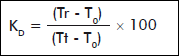
<p   ><font size="2" face="Verdana, Arial, Helvetica, sans-serif" color="#000000">where:  </font></p >    <p   ><font size="2" face="Verdana, Arial, Helvetica, sans-serif" color="#000000">Tr:  sample retention time; </font></p >    <p   ><font size="2" face="Verdana, Arial, Helvetica, sans-serif" color="#000000">T<sub>0</sub>:  retention time of a 2000 kDa dextran standard (Blue Dextran, Sigma); </font></p >    <p   ><font size="2" face="Verdana, Arial, Helvetica, sans-serif" color="#000000">Tt:  NaN<sub>3</sub> retention time. </font></p >    <p   ><font size="2" face="Verdana, Arial, Helvetica, sans-serif" color="#000000">The  relative molecular weight (MWr) was determined by using a calibration curve of  dextran standards (American Polymer Standard Corp.). The width at half peak height  was determined with the program ClarityChrom 2.4.4.80 (Knauer, Germany). </font></p >    <p   ><font size="2" face="Verdana, Arial, Helvetica, sans-serif" color="#000000">The  unbound protein content was estimated by the same SE-HPLC system using a Superose  12 column (Pharmacia, USA) with ultraviolet detector. The area under the curve  for each peak was integrated with the ClarityChrom 2.4.4.80 program. </font></p >    <p   ><font size="2" face="Verdana, Arial, Helvetica, sans-serif" color="#000000"><b>Antigenicity  determination </b></font></p >    ]]></body>
<body><![CDATA[<p   ><font size="2" face="Verdana, Arial, Helvetica, sans-serif" color="#000000">The  antigenicity of polysaccharide derivatives was determined by an inhibition immunoenzymatic  assay (ELISA). A standard serum against SP6B (factor 6c, Statem Serum Institute,  Copenhague, Denmark) diluted 1/3200 was used, followed by incubation with each  inhibitor at concentrations ranging 0.005-500 &micro;g/mL, overnight at 4 &deg;C.  The fragmented polysaccharides were used as inhibitors, either active or conjugated  accordingly. Additionally, serotypes 18C and 19F PS were included as negative  controls (non-related polysaccharides). For ELISA assays, polystyrene 96-well  microtiter plates (Maxisorp, Nunc, Denmark) were coated with 10 &micro;g/mL PS6B  in phosphate buffer saline (PBS), pH 7.2, and incubated overnight at 37 &deg;C.  Plates were subsequently blocked with 1 % BSA for 30 min at 37 &deg;C, and then,  the anti-SP6B standard serum preincubated with the different inhibitors was added.  Afterwards, the anti-rabbit IgG-horseradish peroxidase conjugate (HRP; Sigma,  Germany) was added at a 1:10 000 dilution (in PBS, 0.3 % Tween-20, 0.01 M EDTA,  1 % BSA) and further incubated for 90 min at room temperature. Microplates were  washed thrice after each step with washing solution (PBS, 0.05 % Tween-20). Finally,  the HRP substrate solution was added (0.5 mg/mL ortho-phenylenediamine and 0.1  % (v/v) H<sub>2</sub>O<sub>2</sub>) in citrate buffer solution, pH 5.6, and the  reaction was developed for 20 min in the darkness. The reaction was stopped by  adding 3 M HCl. Absorbance was determined at 492 nm and the percent inhibition  (PI) was calculated as follows: </font></p >    <p align="center"   ><img src="/img/revistas/bta/v30n3/fr0406313.gif" width="381" height="63"></p >    

<p   ><font size="2" face="Verdana, Arial, Helvetica, sans-serif" color="#000000"><b>Rabbit  immunization </b></font></p >    <p   ><font size="2" face="Verdana, Arial, Helvetica, sans-serif" color="#000000">Two  conjugates obtained from PS activated at ORU percentages ranging 13-18 % from  fractions 10-30 kDa (Cj10-30) and 30-100 kDa (Cj30-100) were administered. Three  groups of New Zealand White rabbits (Cenpalab, Havana, Cuba), five animals each,  were immunized with 4 &micro;g of conjugated PS, 25 &micro;g of non-conjugated  PS or placebo, in aluminum phosphate. Three doses of each immunogen were administered  on days 0 (start of the study), 14 and 28 respectively. Blood was extracted from  all the animals on days 7, 21 and 35. Sera were stored at -20 &deg;C until use.  The study was conducted in compliance with international guidelines for ethical  conduct in the care and use of laboratory animals for scientific purposes. The  Ethics Committee and the Quality Control Department of the Center of Biomolecular  Chemistry (CQB, Havana, Cuba) approved all the experimental procedures. </font></p >    <p   ><font size="2" face="Verdana, Arial, Helvetica, sans-serif" color="#000000"><b>Evaluation  of the immune response induced by the conjugates </b></font></p >    <p   ><font size="2" face="Verdana, Arial, Helvetica, sans-serif" color="#000000">The  IgG antibody response against PS was determined by an indirect ELISA, using the  native PS6B for coating [16]. The antibody titer was calculated by a regression  analysis between optical density (OD) values and the base ten log of the reciprocal  of the serum dilution. Antibody titer was considered as the reciprocal of the  serum dilution at which the absorbance reached twice the value of the 1/100 pre-immune  serum. Titers above 50 were regarded as positive. </font></p >    <p   ><font size="2" face="Verdana, Arial, Helvetica, sans-serif" color="#000000">The  IgG response against the TT carrier protein was determined as previously described  to assess the response against the polysaccharide. In this case, plates were coated  with 1 &micro;g/mL TT in PBS, pH 7.2. </font></p >    <p   ><font size="2" face="Verdana, Arial, Helvetica, sans-serif" color="#000000">IgG  antibody avidity against PS6B was determined by an ELISA similar to that used  for characterizing the response against the polysaccharide, with some modifications.  After serum incubation, a step of incubation with 0.5 M ammonium thiocyanate (NH<sub>4</sub>SCN,  Merck) for 15 min was applied to half of the replicates. The resulting two dilution  curves for each sample, with and without NH<sub>4</sub>SCN allowed the calculation  of the avidity index (AI) as follows [17]: </font></p >    <p align="center"   ><img src="/img/revistas/bta/v30n3/fr0506313.gif" width="267" height="54"></p >    
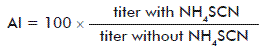
<p   ><font size="2" face="Verdana, Arial, Helvetica, sans-serif" color="#000000">The  serum dilution showing an absorbance value of half the value of the serum diluted  1/100 without NH<sub>4</sub>SCN was considered as titer. </font></p >    ]]></body>
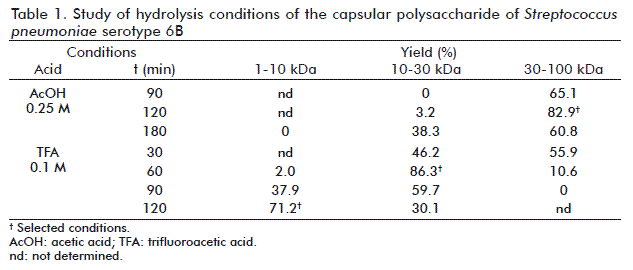
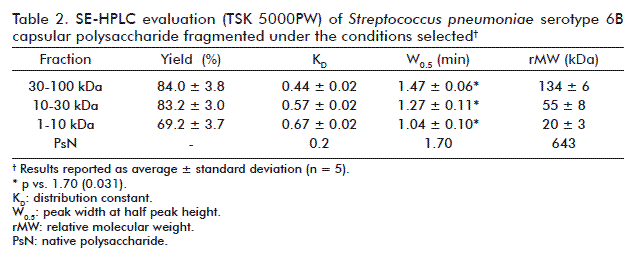
<body><![CDATA[<p   ><font size="2" face="Verdana, Arial, Helvetica, sans-serif" color="#000000"><b>Statistical  analyses </b></font></p >    <p   ><font size="2" face="Verdana, Arial, Helvetica, sans-serif" color="#000000">Results  of the physicochemical evaluations were expressed as arithmetic means &plusmn;  standard deviation of five independent experiments (three in the case of conjugates);  the variation coefficient was also calculated for fragmentation yields and PS  oxidation levels. Immunological evaluations were expressed as arithmetic means  &plusmn; standard deviation of five animals. The statistically significant differences  between groups were determined by the non-parametric Kruskal-Wallis test, and  when present, a Dunn&rsquo;s test was used <i>a posteriori</i>. Means were compared  against reference values by the Wilcoxon test. Probability values (p) lower than  0.05 were considered as statistically significant. All the analyses were done  with the Graph Pad Prism 4.03 program. </font></p >    <p   >&nbsp;</p >    <p   ><font size="2" face="Verdana, Arial, Helvetica, sans-serif" color="#000000"><b><font size="3">RESULTS</font></b>  </font></p >    <p   ><font size="2" face="Verdana, Arial, Helvetica, sans-serif" color="#000000"><b>Fragmentation  of the capsular PS6B </b></font></p >    <p   ><font size="2" face="Verdana, Arial, Helvetica, sans-serif" color="#000000">PS  was fragmented by acid hydrolysis. The study was carried out by two acids dissolutions,  assayed at different times. The conditions yielding the highest PS amounts were:  2 h in 0.25 M acetic acid for the fraction 30-100 kDa, 1 h in 0.1 M TFA for the  fraction 10-30 kDa, and 2 h in 0.1 M TFA for the fraction 1-10 kDa (<a href="/img/revistas/bta/v30n3/t0106313.gif">Table  1</a>). These conditions reproducibly yielded more than 50 % PS (<a href="/img/revistas/bta/v30n3/t0206313.gif">Table  2</a>). The three processes rendered variation coefficients (VC) below 6 %. </font></p >    
<p   ><font size="2" face="Verdana, Arial, Helvetica, sans-serif" color="#000000">NMR-<sup>1</sup>H  spectra recorded for the fragmented PS were very similar to that of the native  PS, indicating that the RU structure was preserved. Low intensity signals at 3.22  ppm and around 2.1 ppm in the native PS spectrum corresponded to polysaccharide  C [18]. This contaminant, common among pneumococcal PS, was found at very low  amounts in the starting material and decreased even more after fragmentation.  There were no signals of end-product monosacharides resulting from size reduction,  not even in the 1-10 kDa PS fraction (<a href="/img/revistas/bta/v30n3/f0106313.gif">Figure  1</a>). </font></p >    
<p   ><font size="2" face="Verdana, Arial, Helvetica, sans-serif" color="#000000">K<sub>D</sub>  increased conversely with size reduction. W<sub>0.5</sub> values for fragmented  PS were lower than those of the native PS, indicating a decrease in polydispersion.  The rMW for each fraction was higher than the cut-off values of the flat ultrafiltration  membranes used (<a href="/img/revistas/bta/v30n3/t0206313.gif">Table 2</a>).  </font></p >    
<p   ><font size="2" face="Verdana, Arial, Helvetica, sans-serif" color="#000000">Antigenicity,  evaluated by an inhibition ELISA and using a polyclonal serum specific for PS6B,  was only similar to that of the native PS for fragmented PS fractions 30-100 kDa  and 10-30 kDa. In fact, the concentrations of these two fractions required to  achieve 50 % inhibition were in the same order of that of the native PS, while  that of the PS fraction 1-10 kDa was two orders higher (<a href="/img/revistas/bta/v30n3/f0206313.gif">Figure  2</a>). For this reason, fractions 30-100 kDa and 10-30 kDa were selected for  further experimentation. </font></p >    
<p   ><font size="2" face="Verdana, Arial, Helvetica, sans-serif" color="#000000"><b>Activation  of fragmented PS6B </b></font></p >    ]]></body>
<body><![CDATA[<p   ><font size="2" face="Verdana, Arial, Helvetica, sans-serif" color="#000000">Fragmented  PS were activated by periodate oxidation. A study was conducted for this reaction  in fractions 10-30 kDa and 30-100 kDa, varying the NaIO<sub>4</sub>/PS ratio (<a href="/img/revistas/bta/v30n3/t0306313.gif">Table  3</a>). A linear relationship was achieved for the equivalent amounts of NaIO<sub>4</sub>  and the number of aldehyde groups generated (R<sup>2</sup> = 1.0 in the 10-30  kDa fraction and R<sup>2</sup> = 0.99 in the 30-100 kDa fraction). ORU VC obtained  at the different conditions ranged 11-20 %. There were no differences between  the results attained for both working fractions. More than 85 % of the starting  amount of PS was recovered in all the experiments, indicating that the oxidation  reaction conditions did not generate fragmentation. </font></p >    
<p   ><font size="2" face="Verdana, Arial, Helvetica, sans-serif" color="#000000">NMR-<sup>1</sup>H  spectra of activated PS showed the chemical shifts and relative intensities of  signals typical of the non-inactivated PS fragments (<a href="/img/revistas/bta/v30n3/f0306313.gif">Figure  3A</a>). There were no signals corresponding to the carbonyl proton at lower fields.  Noteworthy, two new signals appeared at 5.10 and 5.09 ppm following those of the  anomeric protons of ramnose and glucose superimposed at 5.15 ppm. The relative  intensities of those two new signals were higher for PS showing the highest oxidation  level (<a href="/img/revistas/bta/v30n3/f0306313.gif">Figure 3B</a>). These  correspond to the signal of the anomeric proton of ramnose produced by the shortage  in ORU of ribitol. </font></p >    
<p   ><font size="2" face="Verdana, Arial, Helvetica, sans-serif" color="#000000">K<sub>D</sub>  values were the same as for the inactivated PS for the given fractions (<a href="/img/revistas/bta/v30n3/t0206313.gif">Table  2</a> and <a href="/img/revistas/bta/v30n3/t0306313.gif">Table 3</a>). These  results confirmed that none of the oxidation conditions used seems to generate  PS fragmentation. </font></p >    
<p   ><font size="2" face="Verdana, Arial, Helvetica, sans-serif" color="#000000">While  evaluating antigenicity, PS with a similar activation level up to 17.2 % ORU behaved  similar to the fragmented PS of the same size. For these PS, concentrations required  for a 50 % inhibition of serum were 1 and 2 times that of the native PS, respectively.  On the contrary, the PS activated at 24.4 % ORU showed a drop in the inhibition  capacity depending on its concentration, requiring a concentration 25-fold than  that of the native PS to achieve a 50 % inhibition. Activation at 62.5 % ORU caused  a drastic decrease in the inhibition capacity (<a href="/img/revistas/bta/v30n3/f0306313.gif">Figure  3B</a>). These results indicate that the activated PS antigenicity becomes affected  when ORU is higher than 24.4 %. </font></p >    
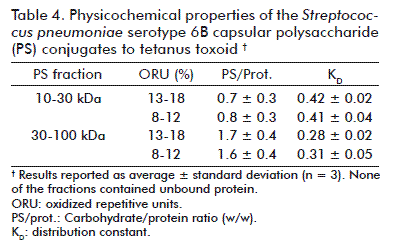
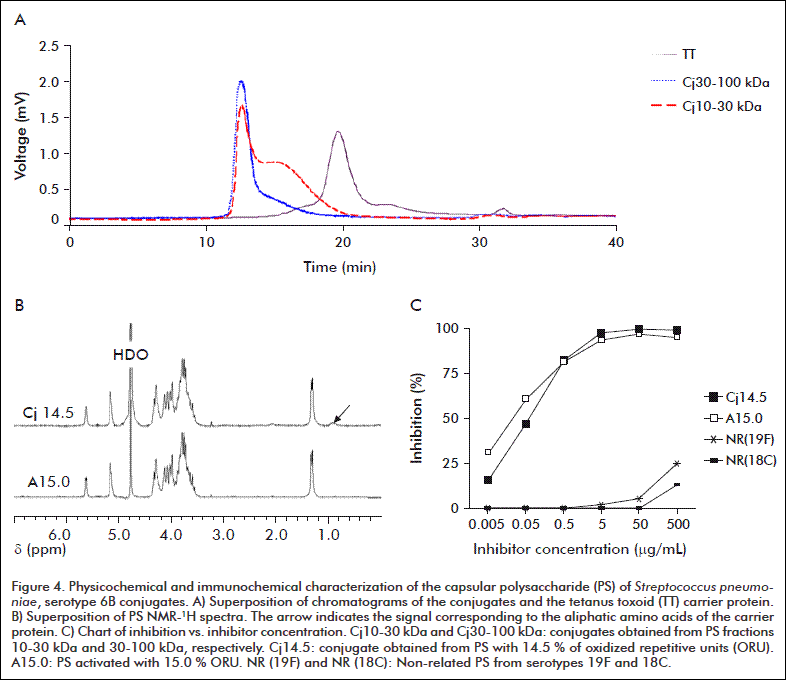
<p   ><font size="2" face="Verdana, Arial, Helvetica, sans-serif" color="#000000"><b>Conjugation  of activated PS6B </b></font></p >    <p   ><font size="2" face="Verdana, Arial, Helvetica, sans-serif" color="#000000">Activated  PS of the working fractions 10-30 kDa and 30-100 kDa were conjugated at two ranges  of activation levels to TT. There was no free protein detected in the conjugates  obtained. <a href="/img/revistas/bta/v30n3/f0406313.gif">Figure 4A</a> shows  the typical chromatograms. The differences detected in the PS activation levels  had no influence on the properties evaluated. Otherwise, PS from the 10-30 kDa  had higher K<sub>D</sub> and lower PS/protein ratio than that obtained from the  30-100 kDa (<a href="#tab4">Table 4</a>). </font></p >    
<p align="center"   ><img src="/img/revistas/bta/v30n3/t0406313.gif" width="393" height="249"><a name="tab4"></a></p >    
<p   ><font size="2" face="Verdana, Arial, Helvetica, sans-serif" color="#000000">NMR-<sup>1</sup>H  of PS conjugates retained the typical chemical shifts and relative intensities.  There were new signals of low intensities in the range 1.0-0.8 ppm, corresponding  to the aliphatic amino acids of the protein (<a href="/img/revistas/bta/v30n3/f0406313.gif">Figure  4B</a>). On the other hand, the capacity to inhibit the reference serum remained  almost the same. The concentration required to achieve 50 % inhibition were of  the same order of magnitude compared to that of the activated PS prior to conjugation  (<a href="/img/revistas/bta/v30n3/f0406313.gif">Figure 4C</a>). These results  indicated that conjugation did not significantly affect either the structure or  the exposure of PS. </font></p >    
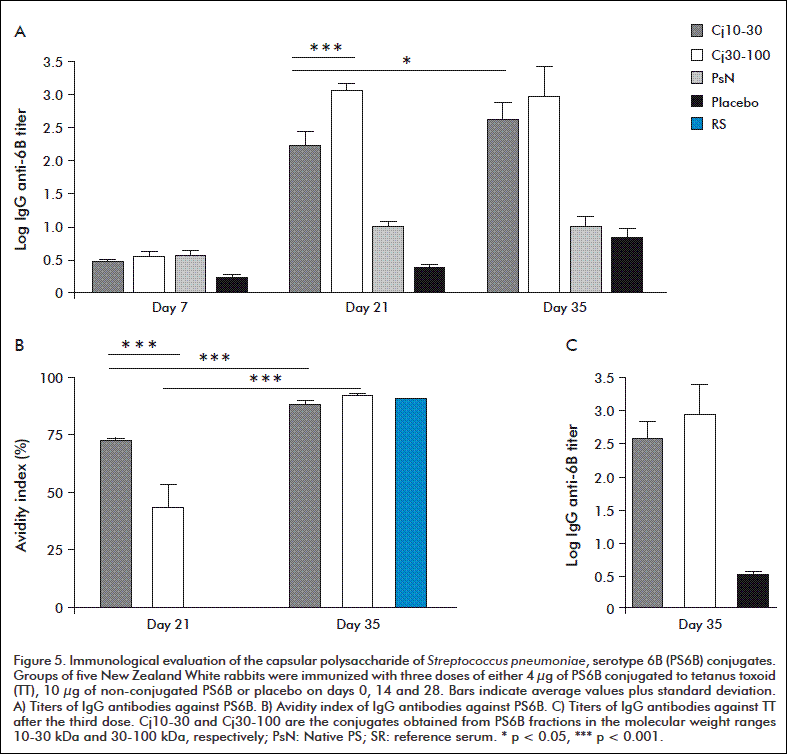
<p   ><font size="2" face="Verdana, Arial, Helvetica, sans-serif" color="#000000"><b>Evaluation  of the antibody immune response generated by the conjugates </b></font></p >    <p   ><font size="2" face="Verdana, Arial, Helvetica, sans-serif" color="#000000">The  conjugates obtained from the fractions 10-30 kDa (Cj10-30) and 30-100 kDa (Cj30-100)  were tested by subcutaneous immunization of New Zealand White rabbits in three  doses. The non-conjugated PS was administered as control and did not induce positive  anti-PS6B antibody titers at any of the time points evaluated, and the response  remained at baseline level as placebo (<a href="/img/revistas/bta/v30n3/f0506313.gif">Figure  5</a>). On the contrary, both conjugates generated IgG antibody titers against  PS, with logarithmic titers above 2 after the second dose. On day 21, the Cj30-100  conjugate antibody titer was very highly statistically significant compared to  that of the Cj10-30 (p &lt; 0.001). This difference did not remain after the third  immunization, due to an increase in the immune response generated by Cj10-30 (p  &lt; 0.001); but not by Cj30-100 (<a href="/img/revistas/bta/v30n3/f0506313.gif">Figure  5A</a>). </font></p >    
]]></body>
<body><![CDATA[<p   ><font size="2" face="Verdana, Arial, Helvetica, sans-serif" color="#000000">The  quality of the response was evaluated by determining the AI for antibodies against  PS on days 21 and 35. After the second dose, sera from the group receiving Cj10-30  overcame the 50 % of inhibitory activity (IA), in contrast to those of the group  immunized with Cj30-100, which were lower (p &lt; 0.001). Following the third  dose, IA increased in both groups (p &lt; 0.001) to near 90 %, reaching a level  similar to that of the reference serum (<a href="/img/revistas/bta/v30n3/f0506313.gif">Figure  5B</a>). </font></p >    
<p   ><font size="2" face="Verdana, Arial, Helvetica, sans-serif" color="#000000">Regarding  the response against the carrier protein, there were no differences after three  doses among the groups immunized with both conjugates (p<i> </i>&gt; 0.05) (<a href="/img/revistas/bta/v30n3/f0506313.gif">Figure  5C</a>); in spite of the TT dose being 70 % higher in the Cj10-30. </font></p >    
<p   >&nbsp;</p >    <p   ><font size="2" face="Verdana, Arial, Helvetica, sans-serif" color="#000000"><b><font size="3">DISCUSSION</font></b>  </font></p >    <p   ><font size="2" face="Verdana, Arial, Helvetica, sans-serif" color="#000000">The  methods available to obtain PS-protein conjugates are quite varied [19]; but few  are suitable for vaccine development. The controlled periodate oxidation of PS  was selected, followed by reductive amination of the produced aldehyde groups  by the amino groups of the protein. This is a simple and scalable method, applicable  to PS from pneumococcal serotypes included in the Cuban vaccine project. It is  also the method used to produce the Prevenar&reg; and Prevenar13&reg; vaccines  [20]. In contrast to procedures used to generate commercial vaccines against pneumococci,  PS was fragmented and the desired size range selected. By these means, a more  efficient and consistent process is guaranteed, also favoring the quality of the  immune response generated while administering the conjugate [21]. Moreover, the  difference in the rMW distribution of the conjugate supported the exclusion of  part of the free PS, as indicated by the change in the PS/protein ratio of the  final conjugates compared to the reaction mix. A significant amount of free PS  for this serotype could decrease the conjugate immunogenicity, more significantly  for PS at higher rMW [22]. Acid hydrolysis was selected among the PS fragmentation  methods available, due to its applicability to most PS molecules of the vaccine  candidate and the easiness for scale up. </font></p >    <p   ><font size="2" face="Verdana, Arial, Helvetica, sans-serif" color="#000000">A  methodology was followed considering all the factors needed, even those counteracting,  to find the most adequate reaction conditions. Particularly relevant were the  preservation of PS natural epitopes and the enhancement of the thymus-dependent  character of the antigen once conjugated, reaction times no longer than 3 h a  day, highly reproducible and potentially robust processes, rendering PS yields  above 50 %. </font></p >    <p   ><font size="2" face="Verdana, Arial, Helvetica, sans-serif" color="#000000">The  fragmentation study involved two acids of different strengths. Acetic acid supported  to obtain PS in the 30-100 kDa fraction and TFA in the fractions 10-30 kDa and  1-10 kDa. Yields were higher than predicted and the reproducibility was regarded  as adequate. These conditions would require further adjustment when working with  native PS batches of other rMW distributions. </font></p >    <p   ><font size="2" face="Verdana, Arial, Helvetica, sans-serif" color="#000000">The  fragments retained the RU chemical structure in the three fractions, as expected  regarding the absence of PS6B side chains susceptible to hydrolysis. Significantly,  antigenicity was preserved at the higher size PS fractions, but was affected in  the 1-10 kDa fraction. This evidenced the preservation of the conformational epitopes  essential for recognizing the native PS which are absent at lower sizes. Although  previous reports on this matter were not found in the literature for PS6B, there  were previous studies with other PS, such as those from <i>Streptococcus</i> B  type III [23, 24], <i>Neisseria meningitidis</i> serogroups Y and W<sub>135</sub>  [25] and <i>S. pneumoniae</i> serotype 14 [26, 27]. In this last PS, conformational  epitopes were also relevant for the generation of functional antibodies by the  conjugates [28]. </font></p >    <p   ><font size="2" face="Verdana, Arial, Helvetica, sans-serif" color="#000000">Reproducible  conditions for PS oxidation were established while studying the PS6B activation.  A linear relation was found between the equivalent amount of NaIO<sub>4</sub>  and the number of aldehyde groups generated, which supported the generation of  an activation level in a preselected narrow range. </font></p >    <p   ><font size="2" face="Verdana, Arial, Helvetica, sans-serif" color="#000000">The  periodate oxydation reaction occurs between adjacent hydroxyl groups followed  by the rupture of the bond between the involved carbons which become aldehydes.  The PS6B RU bears three of such sites: between positions C1-C2 and C2-C3 in ribitol  and C3-C4 in galactose. Following the reactivity order described by Kim <i>et  al</i>. [29], the oxidation of this PS must occur completely in ribitol since  it is a linear chain. In support of this affirmation, it is known that under oxidation  conditions of 0.87 moles of NaIO<sub>4</sub>/mol of UR, the <i>N. meningitidis</i>  serogroup W<sub>135</sub> oxidation proceeds in the side chain of syalic acid  at C7-C8 and C8-C9 positions, and not at the C2-C3 and C3-C4 of galactose [30].  </font></p >    ]]></body>
<body><![CDATA[<p   ><font size="2" face="Verdana, Arial, Helvetica, sans-serif" color="#000000">In  this work, the NMR-<sup>1</sup>H revealed signals congruent with the shielded  anomeric proton of ramnose, due to a shortage of the adjacent ribitol residue.  On the contrary, there was no signal for the unshielded anomeric proton of galactose,  present when it is oxidized. This implies that no monosaccharide ring was broken,  what should minimize any perturbation in the PS conformation. Nevertheless, there  was a decrease in antigenicity for RU above 24 % in spite of the fact that no  PS fragmentation was detected. This indicates that more than &frac34; of ribitol  residues </font><font size="2" face="Verdana, Arial, Helvetica, sans-serif" color="#000000">were  required intact for a proper antigenic recognition. Based on these results, the  0.71 moles of NaIO<sub>4</sub>/mol of RU oxidation conditions were avoided. </font></p >    <p   ><font size="2" face="Verdana, Arial, Helvetica, sans-serif" color="#000000">Conjugates  obtained from PS of 8-12 % and 13-18 % ORU, and activated with 0.18 and 0.35 moles  of NaIO<sub>4</sub>/mol of RU, respectively, showed no differences in any of the  physicochemical parameters evaluated. Conjugate immunogenicity is not expected  to vary when generated from PS of the same size without any other difference than  in the activation level. It has been observed that PS conjugates of group B <i>Streptococcus</i>  type III with higher 18-89 % ORU range, higher than the one evaluated by our group,  showed increased immunogenicity due to a rise in conjugate cross-linking [31].  Besides, this result was not further reproduced, due to a slight decrease in immunogenicity  at a higher ORU percentage [32]. </font></p >    <p   ><font size="2" face="Verdana, Arial, Helvetica, sans-serif" color="#000000">Otherwise,  the PS size did influence in the physicochemical properties of the conjugates,  the 30-100 kDa fraction generating the highest rMW and PS/protein ratio. The characterization  of conjugates generated from a similar size PS was highly reproducible. </font></p >    <p   ><font size="2" face="Verdana, Arial, Helvetica, sans-serif" color="#000000">The  immune response induced by the conjugates was quantitatively and qualitatively  higher than that obtained by the non-conjugated PS. The raise of IgG antibody  titers and avidity after each dose of conjugate indicated a thymus-dependent response,  involving affinity maturation [33]. The increase in antibody avidity tends to  correlate with the increase in protective capacity [34]. </font></p >    <p   ><font size="2" face="Verdana, Arial, Helvetica, sans-serif" color="#000000">The  Cj30-100 was more immunogenic than Cj10-30 although no statistically significant  after the third dose. This result coincides with that obtained by Daum <i>et al</i>.  [35] in children immunized with oligosaccharide or polysacharide conjugate vaccines.  These differences in the elicited immune responses could be influenced by the  PS length, but also by the conjugate size [36], the PS/protein ratio [37] or a  combination of both factors. In fact, several studies addressing the influence  of PS length on the immunogenicity of their respective conjugates achieved different  results [32, 38]. At the same time, the response induced by the Cj10-30 conjugate  seems to be more thymus-dependent, due to a faster increase in avidity. The native  structure of the polysaccharide determines its thymus-independent type 2 nature,  and part of this characteristic was preserved once conjugated to a protein [39];  while conjugates of lower rMW could favor better antigen recognition, a T-dependent  one, therefore maximizing the effect of the carrier protein [11]. Nevertheless,  those differences after three doses for both conjugates generated IgG antibody  responses similar in titers and avidity. </font></p >    <p   ><font size="2" face="Verdana, Arial, Helvetica, sans-serif" color="#000000">In  summary, the procedures described herein, which included the fragmentation of  PS6B at molecular size cut-offs of 10-30 and 30-100 kDa, respectively, and their  activation at levels from 8 to 18 % of oxidized repetitive units, allowed to obtain  reproducibly PS6B conjugates to TT which demonstrated to be immunogenic. The methodology  followed to find and establish each reaction conditions is also applicable for  establishing polysaccharide conjugation procedures for other pneumococcal serotypes  and bacteria. </font></p >    <p   >&nbsp;</p >    <p   ><font size="2" face="Verdana, Arial, Helvetica, sans-serif" color="#000000"><b><font size="3">ACKNOWLEDGEMENTS</font></b></font></p >    <p   ><font size="2" face="Verdana, Arial, Helvetica, sans-serif" color="#000000">The  authors thank to Dr. Cs. Lila Castellanos Serra for the assistance and advice  while preparing the manuscript.</font></p ></div ><FONT size="+1" color="#000000"><FONT size="+1"><FONT size="+1"><FONT size="+1"><FONT size="+1"><FONT size="+1"><FONT size="+1"><FONT size="+1"><FONT size="+1"><FONT size="+1"><FONT size="+1"><FONT size="+1"><FONT size="+1"><FONT size="+1"><FONT size="+1"><FONT size="+1"><FONT size="+1"><FONT size="+1"><FONT size="+1"><FONT size="+1"><FONT size="+1"><FONT size="+1"><FONT size="+1"><FONT size="+1"><FONT size="+1"><FONT size="+1"><FONT size="+1"><FONT size="+1"><FONT size="+1"><FONT size="+1">      <P   align="justify" >&nbsp;</P >    ]]></body>
<body><![CDATA[<P   align="justify" > </P >    <P   align="justify" ><font size="3" face="Verdana, Arial, Helvetica, sans-serif"><B>REFERENCES </b></font></P >    <!-- ref --><P   align="justify" ><font size="2" face="Verdana, Arial, Helvetica, sans-serif">1. O'Brien KL, Wolfson  LJ, Watt JP, Henkle E, Deloria-Knoll M, McCall N, et al. Burden of disease caused  by Streptococcus pneumoniae in children younger than 5 years: global estimates.  Lancet. 2009;374(9693):893-902.    <br> </font></P >    <!-- ref --><P   align="justify" ><font size="2" face="Verdana, Arial, Helvetica, sans-serif">2. Gonz&aacute;lez-Fern&aacute;ndez  A, Faro J, Fern&aacute;ndez C. Immune renponses to polysaccharides: Lessons from  humans and mice. Vaccine. 2008;26:292-300.    <br> </font></P >    <!-- ref --><P   align="justify" ><font size="2" face="Verdana, Arial, Helvetica, sans-serif">3. Lucas AH, Rittenhouse-Olson  K, Kronenberg M, Apicella MA, Wang D, Schreiber JR, et al. Carbohydrate moieties  as vaccine candidates: Meeting summary. Vaccine. 2010;28(4):1121-31.    <br> </font></P >    <!-- ref --><P   align="justify" ><font size="2" face="Verdana, Arial, Helvetica, sans-serif">4. Overturf GD. American  Academy of Pediatrics. Committee on Infectious Diseases. Technical report: prevention  of pneumococcal infections, including the use of pneumococcal conjugate and polysaccharide  vaccines and antibiotic prophylaxis. Pediatrics. 2000;106(2 Pt 1):367-76.    <br>  </font></P >    ]]></body>
<body><![CDATA[<!-- ref --><P   align="justify" ><font size="2" face="Verdana, Arial, Helvetica, sans-serif">5. Organizaci&oacute;n  Panamericana de la Salud. Informe Regional de SIREVA II: datos por pa&iacute;s  y por grupos de edad sobre las caracter&iacute;sticas de los aislamientos de Streptococcus  pneumoniae, Haemophilus influenzae y Neisseria meningitidis en procesos invasores,  2000-2005. Documentos T&eacute;cnicos. Tecnolog&iacute;as Esenciales de Salud.  THS/EV-2007/002.    <br> </font></P >    <!-- ref --><P   align="justify" ><font size="2" face="Verdana, Arial, Helvetica, sans-serif">6. Rodgers GL, Arguedas  A, Cohen R, Dagan R. Global serotype distribution among Streptococcus pneumoniae  isolates causing otitis media in children: Potential implications for pneumococcal  conjugate vaccines. Vaccine. 2009;27:3802-10.    <br> </font></P >    <!-- ref --><P   align="justify" ><font size="2" face="Verdana, Arial, Helvetica, sans-serif">7. Oosterhuis-Kafeja  F, Beutels P, Van Damme P. Immunogenicity, efficacy, safety and effectiveness  of pneumococcal conjugate vaccines (1998-2006). Vaccine. 2007;25(12):2194-212.    <br>  </font></P >    <!-- ref --><P   align="justify" ><font size="2" face="Verdana, Arial, Helvetica, sans-serif">8. R&uuml;ckinger  S, Dagan R, Albers L, Sch&ouml;nberger K, von Kries R. Immunogenicity of pneumococcal  conjugate vaccines in infants after two or three primary vaccinations: a systematic  review and meta-analysis. Vaccine. 2011;29(52):9600-6.    <br> </font></P >    <!-- ref --><P   align="justify" ><font size="2" face="Verdana, Arial, Helvetica, sans-serif">9. Kenne L, Lindberg  B, Madden J. Structural studies of the capsular antigen from Streptococcus pneumonia  Type 26. Carbohydr Res. 1979;73:175-82.    <br> </font></P >    ]]></body>
<body><![CDATA[<!-- ref --><P   align="justify" ><font size="2" face="Verdana, Arial, Helvetica, sans-serif">10. Sun Y, Park MK,  Diamond B, Solomon A, Nahm MH. Repertoire of human antibodies against the polysaccharide  capsule of Streptococcus pneumoniae serotype 6B. Infect Immun. 1999;67:1172-9.    <br>  </font></P >    <!-- ref --><P   align="justify" ><font size="2" face="Verdana, Arial, Helvetica, sans-serif">11. Peeters CC, Lagerman  PR, de Weers O, Oomen LA, Hoogerhout P, Beurret M, et al. Preparation of polysaccharide-conjugate  vaccines. Methods Mol Med. 2003;87:153-74.    <br> </font></P >    <!-- ref --><P   align="justify" ><font size="2" face="Verdana, Arial, Helvetica, sans-serif">12. Br&uuml;ckner  J. Estimation of monosaccharides by the orcinol-sulphuric acid reaction. Biochem  J. 1955;60(2):200-5.    <br> </font></P >    <!-- ref --><P   align="justify" ><font size="2" face="Verdana, Arial, Helvetica, sans-serif">13. Porro M, Viti  S, Antoni G, Neri P. Modifications of the Park-Johnson Ferricyanide submicromethod  for the assay of reducing groups in carbohydrates. Anal Biochem. 1981;118:301-6.    <br>  </font></P >    <!-- ref --><P   align="justify" ><font size="2" face="Verdana, Arial, Helvetica, sans-serif">14. Lowry OH, Rosebrough  NJ, Farr AL, Randall RJ. Protein measurement with the Folin phenol reagent. J  Biol Chem. 1951;193:265-75.    <br> </font></P >    ]]></body>
<body><![CDATA[<!-- ref --><P   align="justify" ><font size="2" face="Verdana, Arial, Helvetica, sans-serif">15. van Dam JE, Breg  J, Komen R, Kamerling JP, Vliegenthart JF. Isolation and structural studies of  phosphate-containing oligosaccharides from alkaline and acid hydrolysates of Streptococcus  pneumoniae type 6B capsular polysaccharide. Carbohydr Res. 1989;187(2):267-86.    <br>  </font></P >    <!-- ref --><P   align="justify" ><font size="2" face="Verdana, Arial, Helvetica, sans-serif">16. Chang J, Serrano  Y, Garrido R, Rodr&iacute;guez LM, Pedroso J, Cardoso F, et al. Relevance of O-acetyl  and phosphoglycerol groups for the antigenicity of Streptococcus pneumoniae serotype  18C capsular polysaccharide. Vaccine. 2012;30(49):7090-6.    <br> </font></P >    <!-- ref --><P   align="justify" ><font size="2" face="Verdana, Arial, Helvetica, sans-serif">17. Anttila M, Eskola  J, Ahman H, K&auml;yhty H. Avidity of IgG for Streptococcus pneumoniae type 6B  and 23F polysaccharides in infants primed with pneumococcal conjugates and boosted  with polysaccharide or conjugate vaccines. J Infect Dis. 1998;177(6):1614-21.    <br>  </font></P >    <!-- ref --><P   align="justify" ><font size="2" face="Verdana, Arial, Helvetica, sans-serif">18. Abeygunawardana  C, Williams TC, Summer JS, Hennessey JP. Development and validation of an NMR-based  identity assay for bacterial polysaccharides. Anal Biochem. 2000;279:226-40.    <br>  </font></P >    <!-- ref --><P   align="justify" ><font size="2" face="Verdana, Arial, Helvetica, sans-serif">19. Kamerling J.  Pneumococcal Polysaccharides: A Chemical View. In: Streptococcus pneumoniae. Molecular  biology &amp; mechanisms of disease. New York: Mary Ann Liebert, Inc.; 1999. p.  81-112.    <br> </font></P >    ]]></body>
<body><![CDATA[<P   align="justify" ><font size="2" face="Verdana, Arial, Helvetica, sans-serif">20. Hausdorff WP,  Siber JR, Paradiso PR, inventors; Wyeth Lederley, Inc., assignee. Multivalent  pneumococcal polysaccharide-protein conjugate composition. US patent US 0130137.  2009 May 21.    <br> </font></P >    <!-- ref --><P   align="justify" ><font size="2" face="Verdana, Arial, Helvetica, sans-serif">21. Br&ouml;ker M,  Dull PM, Rappuoli R, Costantino P. Chemistry of a new investigational quadrivalent  meningococcal conjugate vaccine that is immunogenic at all ages. Vaccine. 2009;27:5574-80.    <br>  </font></P >    <!-- ref --><P   align="justify" ><font size="2" face="Verdana, Arial, Helvetica, sans-serif">22. Rodr&iacute;guez  ME, van den Dobbelsteen GP, Oomen LA, de Weers O, van Buren L, Beurret M, et al.  Immunogenicity of Streptococcus pneumoniae type 6B and 14 polysaccharide-tetanus  toxoid conjugates and the effect of uncoupled polysaccharide on the antigen-specific  immune response. Vaccine. 1998;16(20):1941-9.    <br> </font></P >    <!-- ref --><P   align="justify" ><font size="2" face="Verdana, Arial, Helvetica, sans-serif">23. Wessels MR, Mu&ntilde;oz  A, Kasper DL. A model of high-affinity antibody binding to type III group B Streptococcus  capsular polysaccharide. Proc Natl Acad Sci USA. 1987;84(24):9170-4.    <br> </font></P >    <!-- ref --><P   align="justify" ><font size="2" face="Verdana, Arial, Helvetica, sans-serif">24. Zou W, Mackenzie  R, Th&eacute;rien L, Hirama T, Yang Q, Gidney MA, et al. Conformational epitope  of the type III group B Streptococcus capsular polysaccharide. J Immunol. 1999;163(2):820-5.    <br>  </font></P >    ]]></body>
<body><![CDATA[<!-- ref --><P   align="justify" ><font size="2" face="Verdana, Arial, Helvetica, sans-serif">25. Moore SL, Uitz  C, Ling CC, Bundle DR, Fusco PC, Michon F. Epitope specificities of the group  Y and W-135 polysaccharides of Neisseria meningitidis. Clin Vaccine Immunol. 2007;14(10):1311-7.    <br>  </font></P >    <!-- ref --><P   align="justify" ><font size="2" face="Verdana, Arial, Helvetica, sans-serif">26. Wessels MR, Kasper  DL. Antibody Recognition of the type 14 pneumococcal capsule. evidence of conformational  epitope in a neutral polysaccharide. J Exp Med. 1989;169(6):2121-31.    <br> </font></P >    <!-- ref --><P   align="justify" ><font size="2" face="Verdana, Arial, Helvetica, sans-serif">27. Mawas F, Niggemann  J, Jones C, Corbel MJ, Kamerling JP, Vliegenthart JF. Immunogenicity in a mouse  model of a conjugate vaccine made with a synthetic single repeating unit of type  14 pneumococcal polysaccharide coupled to CRM197. Infect Immun. 2002;70(9):5107-14.    <br>  </font></P >    <!-- ref --><P   align="justify" ><font size="2" face="Verdana, Arial, Helvetica, sans-serif">28. Laferriere CA,  Sood RK, de Muys JM, Michon F, Jennings HJ. Streptococcus pneumoniae type 14 polysaccharide-conjugate  vaccines: length stabilization of opsonophagocytic conformational polysaccharide  epitopes. Infect Immun. 1998;66(6):2441-6.    <br> </font></P >    <!-- ref --><P   align="justify" ><font size="2" face="Verdana, Arial, Helvetica, sans-serif">29. Kim JS, Laskowich  ER, Michon F, Kaiser RE, Arumugham RG. Monitoring activation sites on polysaccharides  by GC-MS. Anal Biochem. 2006;358(1):136-42.    <br> </font></P >    ]]></body>
<body><![CDATA[<!-- ref --><P   align="justify" ><font size="2" face="Verdana, Arial, Helvetica, sans-serif">30. Gudlavalleti  SK, Lee CH, Norris SE, Paul-Satyaseela S, Vann WF, Frasch CE. Comparison of Neisseria  meningitidis serogroup W135 polysaccharide-tetanus toxoid conjugate vaccines made  by periodate activation of O-acetylated, non-O-acetylated and chemically de-O-acetylated  polysaccharide. Vaccine. 2007;25(46):7972-80.    <br> </font></P >    <P   align="justify" ><font size="2" face="Verdana, Arial, Helvetica, sans-serif">31. Wessels MR, Paoletti  LC, Guttormsen HK, Michon F, D'Ambra AJ, Kasper DL. Structural properties of group  b streptococcal type III polysaccharide conjugate vaccines that influence immunogenicity  and efficacy. Infect Immun. 1998;66(5):2186-92.    <br> </font></P >    <!-- ref --><P   align="justify" ><font size="2" face="Verdana, Arial, Helvetica, sans-serif">32. Michon F, Uitz  C, Sarar A, D'Ambra AJ, Laude-Sharp M, Moore S, Fusco PC. Group B Streptococcal  Type II and III Conjugate Vaccines. Physicochemical Properties that Influence  Immunogenicity. Clin Vaccine Immunol. 2006;13(18):936-43.    <br> </font></P >    <!-- ref --><P   align="justify" ><font size="2" face="Verdana, Arial, Helvetica, sans-serif">33. Wuorimaa T, Dagan  R, V&auml;kev&auml;inen M, Bailleux F, Haikala R, Yaich M, et al. Avidity and  subclasses of IgG after immunization of infants with an 11-valent pneumococcal  conjugate vaccine with or without aluminum adjuvant. J Infect Dis. 2001;184(9):1211-5.    <br>  </font></P >    <!-- ref --><P   align="justify" ><font size="2" face="Verdana, Arial, Helvetica, sans-serif">34. Usinger WR, Lucas  AH. Avidity as a determinant of the protective efficacy of human antibodies to  pneumococcal capsular polysaccharides. Infect Immun. 1999;67:2366-70.    <br> </font></P >    ]]></body>
<body><![CDATA[<!-- ref --><P   align="justify" ><font size="2" face="Verdana, Arial, Helvetica, sans-serif">35. Daum RS, Hogerman  D, Rennels MB, Bewley K, Malinoski F, Rothstein E, et al. Infant immunization  with pneumococcal CRM197 vaccines: effect of saccharide size on immunogenicity  and interactions with simultaneously administered vaccines. J Infect Dis. 1997;176(2):445-55.    <br>  </font></P >    <!-- ref --><P   align="justify" ><font size="2" face="Verdana, Arial, Helvetica, sans-serif">36. An SJ, Yeon YK,  Kothari S, Kothari N, Kim JA, Lee E, et al. Physico-chemical properties of Salmonella  typhi Vi polysaccharide-diftheria toxoid conjugate vaccines affect immunogenicity.  Vaccine. 2011;29(44):7618-23.    <br> </font></P >    <!-- ref --><P   align="justify" ><font size="2" face="Verdana, Arial, Helvetica, sans-serif">37. Dick WE Jr, Beurret  M. Glycoconjugates of bacterial carbohydrate antigens. A survey and considerations  of design and preparation factors. Contrib Microbiol Immunol. 1989;10:48-114.    <br>  </font></P >    <!-- ref --><P   align="justify" ><font size="2" face="Verdana, Arial, Helvetica, sans-serif">38. Laferri&egrave;re  CA, Sood RK, de Muys JM, Michon F, Jennings HJ. The synthesis of Streptococcus  pneumoniae polysaccharide-tetanus toxoid conjugates and the effect of chain length  on immunogenicity. Vaccine. 1997;5(2):179-86.    <br> </font></P >    <!-- ref --><P   align="justify" ><font size="2" face="Verdana, Arial, Helvetica, sans-serif">39. M&auml;kel&auml;  O, P&eacute;terfy F, Outschoorn IG, Richter AW, Sepp&auml;l&auml; I. Immunogenic  properties of alpha (1--6) dextran, its protein conjugates, and conjugates of  its breakdown products in mice. Scand J Immunol. 1984;19(6):541-50.     </font></P ><FONT size="+1"><FONT color="#0000FF"><FONT color="#000000"><FONT color="#0000FF"><FONT color="#000000"><FONT color="#0000FF"><FONT color="#000000">      ]]></body>
<body><![CDATA[<P   align="justify" >&nbsp;</P >    <P   align="justify" >&nbsp;</P >    <P   align="justify" > </P >    <P   align="justify" ><font size="2" face="Verdana, Arial, Helvetica, sans-serif">Received in January,  2013.     <br> Accepted in April, 2013. </font></P >    <P   align="justify" >&nbsp;</P >    <P   align="justify" >&nbsp;</P >    <P   align="justify" > </P >    <P   align="justify" > </P >    <P   align="justify" ><font size="2" face="Verdana, Arial, Helvetica, sans-serif"><i>Jean P Soubal</i>.  </font><font size="+1" color="#000000"><font size="+1"><font size="+1"><font size="+1"><font size="+1"><font size="+1"><font size="2" face="Verdana, Arial, Helvetica, sans-serif">Departamento  de Glicoconjugaci&oacute;n. Centro de Qu&iacute;mica Biomolecular, CQB. Ave. 21  y Calle 200, Reparto Atabey, Apdo. 16042, Municipio Playa, CP 11600, La Habana,  Cuba</font></font></font></font></font></font></font><font size="2" face="Verdana, Arial, Helvetica, sans-serif">.  E-mail: <a href="mailto:jean.pierre@cqb.cu">jean.pierre@cqb.cu</a><FONT color="#0000FF"><FONT color="#0017E4">.  </font></font></font></P ></font></font></font></font></font></font></font></font></font></font></font></font></font></font></font></font></font></font></font></font></font></font></font></font></font></font></font></font></font></font></font></font></font></font></font></font></font></DIV >     ]]></body>
<body><![CDATA[ ]]></body><back>
<ref-list>
<ref id="B1">
<label>1</label><nlm-citation citation-type="journal">
<person-group person-group-type="author">
<name>
<surname><![CDATA[O'Brien]]></surname>
<given-names><![CDATA[KL]]></given-names>
</name>
<name>
<surname><![CDATA[Wolfson]]></surname>
<given-names><![CDATA[LJ]]></given-names>
</name>
<name>
<surname><![CDATA[Watt]]></surname>
<given-names><![CDATA[JP]]></given-names>
</name>
<name>
<surname><![CDATA[Henkle]]></surname>
<given-names><![CDATA[E]]></given-names>
</name>
<name>
<surname><![CDATA[Deloria-Knoll]]></surname>
<given-names><![CDATA[M]]></given-names>
</name>
<name>
<surname><![CDATA[McCall]]></surname>
<given-names><![CDATA[N]]></given-names>
</name>
</person-group>
<article-title xml:lang="en"><![CDATA[Burden of disease caused by Streptococcus pneumoniae in children younger than 5 years: global estimates]]></article-title>
<source><![CDATA[Lancet]]></source>
<year>2009</year>
<volume>374</volume>
<numero>9693</numero>
<issue>9693</issue>
<page-range>893-902</page-range></nlm-citation>
</ref>
<ref id="B2">
<label>2</label><nlm-citation citation-type="journal">
<person-group person-group-type="author">
<name>
<surname><![CDATA[González-Fernández]]></surname>
<given-names><![CDATA[A]]></given-names>
</name>
<name>
<surname><![CDATA[Faro]]></surname>
<given-names><![CDATA[J]]></given-names>
</name>
<name>
<surname><![CDATA[Fernández]]></surname>
<given-names><![CDATA[C]]></given-names>
</name>
</person-group>
<article-title xml:lang="en"><![CDATA[Immune renponses to polysaccharides: Lessons from humans and mice]]></article-title>
<source><![CDATA[Vaccine]]></source>
<year>2008</year>
<volume>26</volume>
<page-range>292-300</page-range></nlm-citation>
</ref>
<ref id="B3">
<label>3</label><nlm-citation citation-type="journal">
<person-group person-group-type="author">
<name>
<surname><![CDATA[Lucas]]></surname>
<given-names><![CDATA[AH]]></given-names>
</name>
<name>
<surname><![CDATA[Rittenhouse-Olson]]></surname>
<given-names><![CDATA[K]]></given-names>
</name>
<name>
<surname><![CDATA[Kronenberg]]></surname>
<given-names><![CDATA[M]]></given-names>
</name>
<name>
<surname><![CDATA[Apicella]]></surname>
<given-names><![CDATA[MA]]></given-names>
</name>
<name>
<surname><![CDATA[Wang]]></surname>
<given-names><![CDATA[D]]></given-names>
</name>
<name>
<surname><![CDATA[Schreiber]]></surname>
<given-names><![CDATA[JR]]></given-names>
</name>
</person-group>
<article-title xml:lang="en"><![CDATA[Carbohydrate moieties as vaccine candidates: Meeting summary]]></article-title>
<source><![CDATA[Vaccine]]></source>
<year>2010</year>
<volume>28</volume>
<numero>4</numero>
<issue>4</issue>
<page-range>1121-31</page-range></nlm-citation>
</ref>
<ref id="B4">
<label>4</label><nlm-citation citation-type="journal">
<person-group person-group-type="author">
<name>
<surname><![CDATA[Overturf]]></surname>
<given-names><![CDATA[GD]]></given-names>
</name>
</person-group>
<article-title xml:lang="en"><![CDATA[American Academy of Pediatrics. Committee on Infectious Diseases. Technical report: prevention of pneumococcal infections, including the use of pneumococcal conjugate and polysaccharide vaccines and antibiotic prophylaxis]]></article-title>
<source><![CDATA[Pediatrics]]></source>
<year>2000</year>
<volume>106</volume>
<numero>2 Pt 1</numero>
<issue>2 Pt 1</issue>
<page-range>367-76</page-range></nlm-citation>
</ref>
<ref id="B5">
<label>5</label><nlm-citation citation-type="">
<collab>Organización Panamericana de la Salud</collab>
<source><![CDATA[Informe Regional de SIREVA II: datos por país y por grupos de edad sobre las características de los aislamientos de Streptococcus pneumoniae, Haemophilus influenzae y Neisseria meningitidis en procesos invasores, 2000-2005. Documentos Técnicos. Tecnologías Esenciales de Salud]]></source>
<year>2007</year>
</nlm-citation>
</ref>
<ref id="B6">
<label>6</label><nlm-citation citation-type="journal">
<person-group person-group-type="author">
<name>
<surname><![CDATA[Rodgers]]></surname>
<given-names><![CDATA[GL]]></given-names>
</name>
<name>
<surname><![CDATA[Arguedas]]></surname>
<given-names><![CDATA[A]]></given-names>
</name>
<name>
<surname><![CDATA[Cohen]]></surname>
<given-names><![CDATA[R]]></given-names>
</name>
<name>
<surname><![CDATA[Dagan]]></surname>
<given-names><![CDATA[R]]></given-names>
</name>
</person-group>
<article-title xml:lang="en"><![CDATA[Global serotype distribution among Streptococcus pneumoniae isolates causing otitis media in children: Potential implications for pneumococcal conjugate vaccines]]></article-title>
<source><![CDATA[Vaccine]]></source>
<year>2009</year>
<volume>27</volume>
<page-range>3802-10</page-range></nlm-citation>
</ref>
<ref id="B7">
<label>7</label><nlm-citation citation-type="journal">
<person-group person-group-type="author">
<name>
<surname><![CDATA[Oosterhuis-Kafeja]]></surname>
<given-names><![CDATA[F]]></given-names>
</name>
<name>
<surname><![CDATA[Beutels]]></surname>
<given-names><![CDATA[P]]></given-names>
</name>
<name>
<surname><![CDATA[Van Damme]]></surname>
<given-names><![CDATA[P]]></given-names>
</name>
</person-group>
<article-title xml:lang="en"><![CDATA[Immunogenicity, efficacy, safety and effectiveness of pneumococcal conjugate vaccines (1998-2006)]]></article-title>
<source><![CDATA[Vaccine]]></source>
<year>2007</year>
<volume>25</volume>
<numero>12</numero>
<issue>12</issue>
<page-range>2194-212</page-range></nlm-citation>
</ref>
<ref id="B8">
<label>8</label><nlm-citation citation-type="journal">
<person-group person-group-type="author">
<name>
<surname><![CDATA[Rückinger]]></surname>
<given-names><![CDATA[S]]></given-names>
</name>
<name>
<surname><![CDATA[Dagan]]></surname>
<given-names><![CDATA[R]]></given-names>
</name>
<name>
<surname><![CDATA[Albers]]></surname>
<given-names><![CDATA[L]]></given-names>
</name>
<name>
<surname><![CDATA[Schönberger]]></surname>
<given-names><![CDATA[K]]></given-names>
</name>
<name>
<surname><![CDATA[von Kries]]></surname>
<given-names><![CDATA[R]]></given-names>
</name>
</person-group>
<article-title xml:lang="en"><![CDATA[Immunogenicity of pneumococcal conjugate vaccines in infants after two or three primary vaccinations: a systematic review and meta-analysis]]></article-title>
<source><![CDATA[Vaccine]]></source>
<year>2011</year>
<volume>29</volume>
<numero>52</numero>
<issue>52</issue>
<page-range>9600-6</page-range></nlm-citation>
</ref>
<ref id="B9">
<label>9</label><nlm-citation citation-type="journal">
<person-group person-group-type="author">
<name>
<surname><![CDATA[Kenne]]></surname>
<given-names><![CDATA[L]]></given-names>
</name>
<name>
<surname><![CDATA[Lindberg]]></surname>
<given-names><![CDATA[B]]></given-names>
</name>
<name>
<surname><![CDATA[Madden]]></surname>
<given-names><![CDATA[J]]></given-names>
</name>
</person-group>
<article-title xml:lang="en"><![CDATA[Structural studies of the capsular antigen from Streptococcus pneumonia Type 26]]></article-title>
<source><![CDATA[Carbohydr Res]]></source>
<year>1979</year>
<volume>73</volume>
<page-range>175-82</page-range></nlm-citation>
</ref>
<ref id="B10">
<label>10</label><nlm-citation citation-type="journal">
<person-group person-group-type="author">
<name>
<surname><![CDATA[Sun]]></surname>
<given-names><![CDATA[Y]]></given-names>
</name>
<name>
<surname><![CDATA[Park]]></surname>
<given-names><![CDATA[MK]]></given-names>
</name>
<name>
<surname><![CDATA[Diamond]]></surname>
<given-names><![CDATA[B]]></given-names>
</name>
<name>
<surname><![CDATA[Solomon]]></surname>
<given-names><![CDATA[A]]></given-names>
</name>
<name>
<surname><![CDATA[Nahm]]></surname>
<given-names><![CDATA[MH]]></given-names>
</name>
</person-group>
<article-title xml:lang="en"><![CDATA[Repertoire of human antibodies against the polysaccharide capsule of Streptococcus pneumoniae serotype 6B]]></article-title>
<source><![CDATA[Infect Immun]]></source>
<year>1999</year>
<volume>67</volume>
<page-range>1172-9</page-range></nlm-citation>
</ref>
<ref id="B11">
<label>11</label><nlm-citation citation-type="journal">
<person-group person-group-type="author">
<name>
<surname><![CDATA[Peeters]]></surname>
<given-names><![CDATA[CC]]></given-names>
</name>
<name>
<surname><![CDATA[Lagerman]]></surname>
<given-names><![CDATA[PR]]></given-names>
</name>
<name>
<surname><![CDATA[de Weers]]></surname>
<given-names><![CDATA[O]]></given-names>
</name>
<name>
<surname><![CDATA[Oomen]]></surname>
<given-names><![CDATA[LA]]></given-names>
</name>
<name>
<surname><![CDATA[Hoogerhout]]></surname>
<given-names><![CDATA[P]]></given-names>
</name>
<name>
<surname><![CDATA[Beurret]]></surname>
<given-names><![CDATA[M]]></given-names>
</name>
</person-group>
<article-title xml:lang="en"><![CDATA[Preparation of polysaccharide-conjugate vaccines]]></article-title>
<source><![CDATA[Methods Mol Med]]></source>
<year>2003</year>
<volume>87</volume>
<page-range>153-74</page-range></nlm-citation>
</ref>
<ref id="B12">
<label>12</label><nlm-citation citation-type="journal">
<person-group person-group-type="author">
<name>
<surname><![CDATA[Brückner]]></surname>
<given-names><![CDATA[J]]></given-names>
</name>
</person-group>
<article-title xml:lang="en"><![CDATA[Estimation of monosaccharides by the orcinol-sulphuric acid reaction]]></article-title>
<source><![CDATA[Biochem J]]></source>
<year>1955</year>
<volume>60</volume>
<numero>2</numero>
<issue>2</issue>
<page-range>200-5</page-range></nlm-citation>
</ref>
<ref id="B13">
<label>13</label><nlm-citation citation-type="journal">
<person-group person-group-type="author">
<name>
<surname><![CDATA[Porro]]></surname>
<given-names><![CDATA[M]]></given-names>
</name>
<name>
<surname><![CDATA[Viti]]></surname>
<given-names><![CDATA[S]]></given-names>
</name>
<name>
<surname><![CDATA[Antoni]]></surname>
<given-names><![CDATA[G]]></given-names>
</name>
<name>
<surname><![CDATA[Neri]]></surname>
<given-names><![CDATA[P]]></given-names>
</name>
</person-group>
<article-title xml:lang="en"><![CDATA[Modifications of the Park-Johnson Ferricyanide submicromethod for the assay of reducing groups in carbohydrates]]></article-title>
<source><![CDATA[Anal Biochem]]></source>
<year>1981</year>
<volume>118</volume>
<page-range>301-6</page-range></nlm-citation>
</ref>
<ref id="B14">
<label>14</label><nlm-citation citation-type="journal">
<person-group person-group-type="author">
<name>
<surname><![CDATA[Lowry]]></surname>
<given-names><![CDATA[OH]]></given-names>
</name>
<name>
<surname><![CDATA[Rosebrough]]></surname>
<given-names><![CDATA[NJ]]></given-names>
</name>
<name>
<surname><![CDATA[Farr]]></surname>
<given-names><![CDATA[AL]]></given-names>
</name>
<name>
<surname><![CDATA[Randall]]></surname>
<given-names><![CDATA[RJ]]></given-names>
</name>
</person-group>
<article-title xml:lang="en"><![CDATA[Protein measurement with the Folin phenol reagent]]></article-title>
<source><![CDATA[J Biol Chem]]></source>
<year>1951</year>
<volume>193</volume>
<page-range>265-75</page-range></nlm-citation>
</ref>
<ref id="B15">
<label>15</label><nlm-citation citation-type="journal">
<person-group person-group-type="author">
<name>
<surname><![CDATA[van Dam]]></surname>
<given-names><![CDATA[JE]]></given-names>
</name>
<name>
<surname><![CDATA[Breg]]></surname>
<given-names><![CDATA[J]]></given-names>
</name>
<name>
<surname><![CDATA[Komen]]></surname>
<given-names><![CDATA[R]]></given-names>
</name>
<name>
<surname><![CDATA[Kamerling]]></surname>
<given-names><![CDATA[JP]]></given-names>
</name>
<name>
<surname><![CDATA[Vliegenthart]]></surname>
<given-names><![CDATA[JF]]></given-names>
</name>
</person-group>
<article-title xml:lang="en"><![CDATA[Isolation and structural studies of phosphate-containing oligosaccharides from alkaline and acid hydrolysates of Streptococcus pneumoniae type 6B capsular polysaccharide]]></article-title>
<source><![CDATA[Carbohydr Res]]></source>
<year>1989</year>
<volume>187</volume>
<numero>2</numero>
<issue>2</issue>
<page-range>267-86</page-range></nlm-citation>
</ref>
<ref id="B16">
<label>16</label><nlm-citation citation-type="journal">
<person-group person-group-type="author">
<name>
<surname><![CDATA[Chang]]></surname>
<given-names><![CDATA[J]]></given-names>
</name>
<name>
<surname><![CDATA[Serrano]]></surname>
<given-names><![CDATA[Y]]></given-names>
</name>
<name>
<surname><![CDATA[Garrido]]></surname>
<given-names><![CDATA[R]]></given-names>
</name>
<name>
<surname><![CDATA[Rodríguez]]></surname>
<given-names><![CDATA[LM]]></given-names>
</name>
<name>
<surname><![CDATA[Pedroso]]></surname>
<given-names><![CDATA[J]]></given-names>
</name>
<name>
<surname><![CDATA[Cardoso]]></surname>
<given-names><![CDATA[F]]></given-names>
</name>
</person-group>
<article-title xml:lang="en"><![CDATA[Relevance of O-acetyl and phosphoglycerol groups for the antigenicity of Streptococcus pneumoniae serotype 18C capsular polysaccharide]]></article-title>
<source><![CDATA[Vaccine]]></source>
<year>2012</year>
<volume>30</volume>
<numero>49</numero>
<issue>49</issue>
<page-range>7090-6</page-range></nlm-citation>
</ref>
<ref id="B17">
<label>17</label><nlm-citation citation-type="journal">
<person-group person-group-type="author">
<name>
<surname><![CDATA[Anttila]]></surname>
<given-names><![CDATA[M]]></given-names>
</name>
<name>
<surname><![CDATA[Eskola]]></surname>
<given-names><![CDATA[J]]></given-names>
</name>
<name>
<surname><![CDATA[Ahman]]></surname>
<given-names><![CDATA[H]]></given-names>
</name>
<name>
<surname><![CDATA[Käyhty]]></surname>
<given-names><![CDATA[H]]></given-names>
</name>
</person-group>
<article-title xml:lang="en"><![CDATA[Avidity of IgG for Streptococcus pneumoniae type 6B and 23F polysaccharides in infants primed with pneumococcal conjugates and boosted with polysaccharide or conjugate vaccines]]></article-title>
<source><![CDATA[J Infect Dis]]></source>
<year>1998</year>
<volume>177</volume>
<numero>6</numero>
<issue>6</issue>
<page-range>1614-21</page-range></nlm-citation>
</ref>
<ref id="B18">
<label>18</label><nlm-citation citation-type="journal">
<person-group person-group-type="author">
<name>
<surname><![CDATA[Abeygunawardana]]></surname>
<given-names><![CDATA[C]]></given-names>
</name>
<name>
<surname><![CDATA[Williams]]></surname>
<given-names><![CDATA[TC]]></given-names>
</name>
<name>
<surname><![CDATA[Summer]]></surname>
<given-names><![CDATA[JS]]></given-names>
</name>
<name>
<surname><![CDATA[Hennessey]]></surname>
<given-names><![CDATA[JP]]></given-names>
</name>
</person-group>
<article-title xml:lang="en"><![CDATA[Development and validation of an NMR-based identity assay for bacterial polysaccharides]]></article-title>
<source><![CDATA[Anal Biochem]]></source>
<year>2000</year>
<volume>279</volume>
<page-range>226-40</page-range></nlm-citation>
</ref>
<ref id="B19">
<label>19</label><nlm-citation citation-type="book">
<person-group person-group-type="author">
<name>
<surname><![CDATA[Kamerling]]></surname>
<given-names><![CDATA[J]]></given-names>
</name>
</person-group>
<article-title xml:lang="en"><![CDATA[Pneumococcal Polysaccharides: A Chemical View]]></article-title>
<source><![CDATA[Streptococcus pneumoniae. Molecular biology & mechanisms of disease]]></source>
<year>1999</year>
<page-range>81-112</page-range><publisher-loc><![CDATA[New York ]]></publisher-loc>
<publisher-name><![CDATA[Mary Ann Liebert, Inc.]]></publisher-name>
</nlm-citation>
</ref>
<ref id="B20">
<label>20</label><nlm-citation citation-type="">
<person-group person-group-type="author">
<name>
<surname><![CDATA[Hausdorff]]></surname>
<given-names><![CDATA[WP]]></given-names>
</name>
<name>
<surname><![CDATA[Siber]]></surname>
<given-names><![CDATA[JR]]></given-names>
</name>
<name>
<surname><![CDATA[Paradiso]]></surname>
<given-names><![CDATA[PR]]></given-names>
</name>
</person-group>
<source><![CDATA[Multivalent pneumococcal polysaccharide-protein conjugate composition]]></source>
<year></year>
</nlm-citation>
</ref>
<ref id="B21">
<label>21</label><nlm-citation citation-type="journal">
<person-group person-group-type="author">
<name>
<surname><![CDATA[Bröker]]></surname>
<given-names><![CDATA[M]]></given-names>
</name>
<name>
<surname><![CDATA[Dull]]></surname>
<given-names><![CDATA[PM]]></given-names>
</name>
<name>
<surname><![CDATA[Rappuoli]]></surname>
<given-names><![CDATA[R]]></given-names>
</name>
<name>
<surname><![CDATA[Costantino]]></surname>
<given-names><![CDATA[P]]></given-names>
</name>
</person-group>
<article-title xml:lang="en"><![CDATA[Chemistry of a new investigational quadrivalent meningococcal conjugate vaccine that is immunogenic at all ages]]></article-title>
<source><![CDATA[Vaccine]]></source>
<year>2009</year>
<volume>27</volume>
<page-range>5574-80</page-range></nlm-citation>
</ref>
<ref id="B22">
<label>22</label><nlm-citation citation-type="journal">
<person-group person-group-type="author">
<name>
<surname><![CDATA[Rodríguez]]></surname>
<given-names><![CDATA[ME]]></given-names>
</name>
<name>
<surname><![CDATA[van den Dobbelsteen]]></surname>
<given-names><![CDATA[GP]]></given-names>
</name>
<name>
<surname><![CDATA[Oomen]]></surname>
<given-names><![CDATA[LA]]></given-names>
</name>
<name>
<surname><![CDATA[de Weers]]></surname>
<given-names><![CDATA[O]]></given-names>
</name>
<name>
<surname><![CDATA[van Buren]]></surname>
<given-names><![CDATA[L]]></given-names>
</name>
<name>
<surname><![CDATA[Beurret]]></surname>
<given-names><![CDATA[M]]></given-names>
</name>
</person-group>
<article-title xml:lang="en"><![CDATA[Immunogenicity of Streptococcus pneumoniae type 6B and 14 polysaccharide-tetanus toxoid conjugates and the effect of uncoupled polysaccharide on the antigen-specific immune response]]></article-title>
<source><![CDATA[Vaccine]]></source>
<year>1998</year>
<volume>16</volume>
<numero>20</numero>
<issue>20</issue>
<page-range>1941-9</page-range></nlm-citation>
</ref>
<ref id="B23">
<label>23</label><nlm-citation citation-type="journal">
<person-group person-group-type="author">
<name>
<surname><![CDATA[Wessels]]></surname>
<given-names><![CDATA[MR]]></given-names>
</name>
<name>
<surname><![CDATA[Muñoz]]></surname>
<given-names><![CDATA[A]]></given-names>
</name>
<name>
<surname><![CDATA[Kasper]]></surname>
<given-names><![CDATA[DL]]></given-names>
</name>
</person-group>
<article-title xml:lang="en"><![CDATA[A model of high-affinity antibody binding to type III group B Streptococcus capsular polysaccharide]]></article-title>
<source><![CDATA[Proc Natl Acad Sci USA]]></source>
<year>1987</year>
<volume>84</volume>
<numero>24</numero>
<issue>24</issue>
<page-range>9170-4</page-range></nlm-citation>
</ref>
<ref id="B24">
<label>24</label><nlm-citation citation-type="journal">
<person-group person-group-type="author">
<name>
<surname><![CDATA[Zou]]></surname>
<given-names><![CDATA[W]]></given-names>
</name>
<name>
<surname><![CDATA[Mackenzie]]></surname>
<given-names><![CDATA[R]]></given-names>
</name>
<name>
<surname><![CDATA[Thérien]]></surname>
<given-names><![CDATA[L]]></given-names>
</name>
<name>
<surname><![CDATA[Hirama]]></surname>
<given-names><![CDATA[T]]></given-names>
</name>
<name>
<surname><![CDATA[Yang]]></surname>
<given-names><![CDATA[Q]]></given-names>
</name>
<name>
<surname><![CDATA[Gidney]]></surname>
<given-names><![CDATA[MA]]></given-names>
</name>
</person-group>
<article-title xml:lang="en"><![CDATA[Conformational epitope of the type III group B Streptococcus capsular polysaccharide]]></article-title>
<source><![CDATA[J Immunol]]></source>
<year>1999</year>
<volume>163</volume>
<numero>2</numero>
<issue>2</issue>
<page-range>820-5</page-range></nlm-citation>
</ref>
<ref id="B25">
<label>25</label><nlm-citation citation-type="journal">
<person-group person-group-type="author">
<name>
<surname><![CDATA[Moore]]></surname>
<given-names><![CDATA[SL]]></given-names>
</name>
<name>
<surname><![CDATA[Uitz]]></surname>
<given-names><![CDATA[C]]></given-names>
</name>
<name>
<surname><![CDATA[Ling]]></surname>
<given-names><![CDATA[CC]]></given-names>
</name>
<name>
<surname><![CDATA[Bundle]]></surname>
<given-names><![CDATA[DR]]></given-names>
</name>
<name>
<surname><![CDATA[Fusco]]></surname>
<given-names><![CDATA[PC]]></given-names>
</name>
<name>
<surname><![CDATA[Michon]]></surname>
<given-names><![CDATA[F]]></given-names>
</name>
</person-group>
<article-title xml:lang="en"><![CDATA[Epitope specificities of the group Y and W-135 polysaccharides of Neisseria meningitidis]]></article-title>
<source><![CDATA[Clin Vaccine Immunol]]></source>
<year>2007</year>
<volume>14</volume>
<numero>10</numero>
<issue>10</issue>
<page-range>1311-7</page-range></nlm-citation>
</ref>
<ref id="B26">
<label>26</label><nlm-citation citation-type="journal">
<person-group person-group-type="author">
<name>
<surname><![CDATA[Wessels]]></surname>
<given-names><![CDATA[MR]]></given-names>
</name>
<name>
<surname><![CDATA[Kasper]]></surname>
<given-names><![CDATA[DL]]></given-names>
</name>
</person-group>
<article-title xml:lang="en"><![CDATA[Antibody Recognition of the type 14 pneumococcal capsule. evidence of conformational epitope in a neutral polysaccharide]]></article-title>
<source><![CDATA[J Exp Med]]></source>
<year>1989</year>
<volume>169</volume>
<numero>6</numero>
<issue>6</issue>
<page-range>2121-31</page-range></nlm-citation>
</ref>
<ref id="B27">
<label>27</label><nlm-citation citation-type="journal">
<person-group person-group-type="author">
<name>
<surname><![CDATA[Mawas]]></surname>
<given-names><![CDATA[F]]></given-names>
</name>
<name>
<surname><![CDATA[Niggemann]]></surname>
<given-names><![CDATA[J]]></given-names>
</name>
<name>
<surname><![CDATA[Jones]]></surname>
<given-names><![CDATA[C]]></given-names>
</name>
<name>
<surname><![CDATA[Corbel]]></surname>
<given-names><![CDATA[MJ]]></given-names>
</name>
<name>
<surname><![CDATA[Kamerling]]></surname>
<given-names><![CDATA[JP]]></given-names>
</name>
<name>
<surname><![CDATA[Vliegenthart]]></surname>
<given-names><![CDATA[JF]]></given-names>
</name>
</person-group>
<article-title xml:lang="en"><![CDATA[Immunogenicity in a mouse model of a conjugate vaccine made with a synthetic single repeating unit of type 14 pneumococcal polysaccharide coupled to CRM197]]></article-title>
<source><![CDATA[Infect Immun]]></source>
<year>2002</year>
<volume>70</volume>
<numero>9</numero>
<issue>9</issue>
<page-range>5107-14</page-range></nlm-citation>
</ref>
<ref id="B28">
<label>28</label><nlm-citation citation-type="journal">
<person-group person-group-type="author">
<name>
<surname><![CDATA[Laferriere]]></surname>
<given-names><![CDATA[CA]]></given-names>
</name>
<name>
<surname><![CDATA[Sood]]></surname>
<given-names><![CDATA[RK]]></given-names>
</name>
<name>
<surname><![CDATA[de Muys]]></surname>
<given-names><![CDATA[JM]]></given-names>
</name>
<name>
<surname><![CDATA[Michon]]></surname>
<given-names><![CDATA[F]]></given-names>
</name>
<name>
<surname><![CDATA[Jennings]]></surname>
<given-names><![CDATA[HJ]]></given-names>
</name>
</person-group>
<article-title xml:lang="en"><![CDATA[Streptococcus pneumoniae type 14 polysaccharide-conjugate vaccines: length stabilization of opsonophagocytic conformational polysaccharide epitopes]]></article-title>
<source><![CDATA[Infect Immun]]></source>
<year>1998</year>
<volume>66</volume>
<numero>6</numero>
<issue>6</issue>
<page-range>2441-6</page-range></nlm-citation>
</ref>
<ref id="B29">
<label>29</label><nlm-citation citation-type="journal">
<person-group person-group-type="author">
<name>
<surname><![CDATA[Kim]]></surname>
<given-names><![CDATA[JS]]></given-names>
</name>
<name>
<surname><![CDATA[Laskowich]]></surname>
<given-names><![CDATA[ER]]></given-names>
</name>
<name>
<surname><![CDATA[Michon]]></surname>
<given-names><![CDATA[F]]></given-names>
</name>
<name>
<surname><![CDATA[Kaiser]]></surname>
<given-names><![CDATA[RE]]></given-names>
</name>
<name>
<surname><![CDATA[Arumugham]]></surname>
<given-names><![CDATA[RG]]></given-names>
</name>
</person-group>
<article-title xml:lang="en"><![CDATA[Monitoring activation sites on polysaccharides by GC-MS]]></article-title>
<source><![CDATA[Anal Biochem]]></source>
<year>2006</year>
<volume>358</volume>
<numero>1</numero>
<issue>1</issue>
<page-range>136-42</page-range></nlm-citation>
</ref>
<ref id="B30">
<label>30</label><nlm-citation citation-type="journal">
<person-group person-group-type="author">
<name>
<surname><![CDATA[Gudlavalleti]]></surname>
<given-names><![CDATA[SK]]></given-names>
</name>
<name>
<surname><![CDATA[Lee]]></surname>
<given-names><![CDATA[CH]]></given-names>
</name>
<name>
<surname><![CDATA[Norris]]></surname>
<given-names><![CDATA[SE]]></given-names>
</name>
<name>
<surname><![CDATA[Paul-Satyaseela]]></surname>
<given-names><![CDATA[S]]></given-names>
</name>
<name>
<surname><![CDATA[Vann]]></surname>
<given-names><![CDATA[WF]]></given-names>
</name>
<name>
<surname><![CDATA[Frasch]]></surname>
<given-names><![CDATA[CE]]></given-names>
</name>
</person-group>
<article-title xml:lang="en"><![CDATA[Comparison of Neisseria meningitidis serogroup W135 polysaccharide-tetanus toxoid conjugate vaccines made by periodate activation of O-acetylated, non-O-acetylated and chemically de-O-acetylated polysaccharide]]></article-title>
<source><![CDATA[Vaccine]]></source>
<year>2007</year>
<volume>25</volume>
<numero>46</numero>
<issue>46</issue>
<page-range>7972-80</page-range></nlm-citation>
</ref>
<ref id="B31">
<label>31</label><nlm-citation citation-type="journal">
<person-group person-group-type="author">
<name>
<surname><![CDATA[Wessels]]></surname>
<given-names><![CDATA[MR]]></given-names>
</name>
<name>
<surname><![CDATA[Paoletti]]></surname>
<given-names><![CDATA[LC]]></given-names>
</name>
<name>
<surname><![CDATA[Guttormsen]]></surname>
<given-names><![CDATA[HK]]></given-names>
</name>
<name>
<surname><![CDATA[Michon]]></surname>
<given-names><![CDATA[F]]></given-names>
</name>
<name>
<surname><![CDATA[D'Ambra]]></surname>
<given-names><![CDATA[AJ]]></given-names>
</name>
<name>
<surname><![CDATA[Kasper]]></surname>
<given-names><![CDATA[DL]]></given-names>
</name>
</person-group>
<article-title xml:lang="en"><![CDATA[Structural properties of group b streptococcal type III polysaccharide conjugate vaccines that influence immunogenicity and efficacy]]></article-title>
<source><![CDATA[Infect Immun]]></source>
<year>1998</year>
<volume>66</volume>
<numero>5</numero>
<issue>5</issue>
<page-range>86-2192</page-range></nlm-citation>
</ref>
<ref id="B32">
<label>32</label><nlm-citation citation-type="journal">
<person-group person-group-type="author">
<name>
<surname><![CDATA[Michon]]></surname>
<given-names><![CDATA[F]]></given-names>
</name>
<name>
<surname><![CDATA[Uitz]]></surname>
<given-names><![CDATA[C]]></given-names>
</name>
<name>
<surname><![CDATA[Sarar]]></surname>
<given-names><![CDATA[A]]></given-names>
</name>
<name>
<surname><![CDATA[D'Ambra]]></surname>
<given-names><![CDATA[AJ]]></given-names>
</name>
<name>
<surname><![CDATA[Laude-Sharp]]></surname>
<given-names><![CDATA[M]]></given-names>
</name>
<name>
<surname><![CDATA[Moore]]></surname>
<given-names><![CDATA[S]]></given-names>
</name>
<name>
<surname><![CDATA[Fusco]]></surname>
<given-names><![CDATA[PC]]></given-names>
</name>
</person-group>
<article-title xml:lang="en"><![CDATA[Group B Streptococcal Type II and III Conjugate Vaccines. Physicochemical Properties that Influence Immunogenicity]]></article-title>
<source><![CDATA[Clin Vaccine Immunol]]></source>
<year>2006</year>
<volume>13</volume>
<numero>18</numero>
<issue>18</issue>
<page-range>936-43</page-range></nlm-citation>
</ref>
<ref id="B33">
<label>33</label><nlm-citation citation-type="journal">
<person-group person-group-type="author">
<name>
<surname><![CDATA[Wuorimaa]]></surname>
<given-names><![CDATA[T]]></given-names>
</name>
<name>
<surname><![CDATA[Dagan]]></surname>
<given-names><![CDATA[R]]></given-names>
</name>
<name>
<surname><![CDATA[Väkeväinen]]></surname>
<given-names><![CDATA[M]]></given-names>
</name>
<name>
<surname><![CDATA[Bailleux]]></surname>
<given-names><![CDATA[F]]></given-names>
</name>
<name>
<surname><![CDATA[Haikala]]></surname>
<given-names><![CDATA[R]]></given-names>
</name>
<name>
<surname><![CDATA[Yaich]]></surname>
<given-names><![CDATA[M]]></given-names>
</name>
</person-group>
<article-title xml:lang="en"><![CDATA[Avidity and subclasses of IgG after immunization of infants with an 11-valent pneumococcal conjugate vaccine with or without aluminum adjuvant]]></article-title>
<source><![CDATA[J Infect Dis]]></source>
<year>2001</year>
<volume>184</volume>
<numero>9</numero>
<issue>9</issue>
<page-range>1211-5</page-range></nlm-citation>
</ref>
<ref id="B34">
<label>34</label><nlm-citation citation-type="journal">
<person-group person-group-type="author">
<name>
<surname><![CDATA[Usinger]]></surname>
<given-names><![CDATA[WR]]></given-names>
</name>
<name>
<surname><![CDATA[Lucas]]></surname>
<given-names><![CDATA[AH]]></given-names>
</name>
</person-group>
<article-title xml:lang="en"><![CDATA[Avidity as a determinant of the protective efficacy of human antibodies to pneumococcal capsular polysaccharides]]></article-title>
<source><![CDATA[Infect Immun]]></source>
<year>1999</year>
<volume>67</volume>
<page-range>2366-70</page-range></nlm-citation>
</ref>
<ref id="B35">
<label>35</label><nlm-citation citation-type="journal">
<person-group person-group-type="author">
<name>
<surname><![CDATA[Daum]]></surname>
<given-names><![CDATA[RS]]></given-names>
</name>
<name>
<surname><![CDATA[Hogerman]]></surname>
<given-names><![CDATA[D]]></given-names>
</name>
<name>
<surname><![CDATA[Rennels]]></surname>
<given-names><![CDATA[MB]]></given-names>
</name>
<name>
<surname><![CDATA[Bewley]]></surname>
<given-names><![CDATA[K]]></given-names>
</name>
<name>
<surname><![CDATA[Malinoski]]></surname>
<given-names><![CDATA[F]]></given-names>
</name>
<name>
<surname><![CDATA[Rothstein]]></surname>
<given-names><![CDATA[E]]></given-names>
</name>
</person-group>
<article-title xml:lang="en"><![CDATA[Infant immunization with pneumococcal CRM197 vaccines: effect of saccharide size on immunogenicity and interactions with simultaneously administered vaccines]]></article-title>
<source><![CDATA[J Infect Dis]]></source>
<year>1997</year>
<volume>176</volume>
<numero>2</numero>
<issue>2</issue>
<page-range>445-55</page-range></nlm-citation>
</ref>
<ref id="B36">
<label>36</label><nlm-citation citation-type="journal">
<person-group person-group-type="author">
<name>
<surname><![CDATA[An]]></surname>
<given-names><![CDATA[SJ]]></given-names>
</name>
<name>
<surname><![CDATA[Yeon]]></surname>
<given-names><![CDATA[YK]]></given-names>
</name>
<name>
<surname><![CDATA[Kothari]]></surname>
<given-names><![CDATA[S]]></given-names>
</name>
<name>
<surname><![CDATA[Kothari]]></surname>
<given-names><![CDATA[N]]></given-names>
</name>
<name>
<surname><![CDATA[Kim]]></surname>
<given-names><![CDATA[JA]]></given-names>
</name>
<name>
<surname><![CDATA[Lee]]></surname>
<given-names><![CDATA[E]]></given-names>
</name>
</person-group>
<article-title xml:lang="en"><![CDATA[Physico-chemical properties of Salmonella typhi Vi polysaccharide-diftheria toxoid conjugate vaccines affect immunogenicity]]></article-title>
<source><![CDATA[Vaccine]]></source>
<year>2011</year>
<volume>29</volume>
<numero>44</numero>
<issue>44</issue>
<page-range>7618-23</page-range></nlm-citation>
</ref>
<ref id="B37">
<label>37</label><nlm-citation citation-type="journal">
<person-group person-group-type="author">
<name>
<surname><![CDATA[Dick]]></surname>
<given-names><![CDATA[WE Jr]]></given-names>
</name>
<name>
<surname><![CDATA[Beurret]]></surname>
<given-names><![CDATA[M]]></given-names>
</name>
</person-group>
<article-title xml:lang="en"><![CDATA[Glycoconjugates of bacterial carbohydrate antigens. A survey and considerations of design and preparation factors]]></article-title>
<source><![CDATA[Contrib Microbiol Immunol]]></source>
<year>1989</year>
<volume>10</volume>
<page-range>48-114</page-range></nlm-citation>
</ref>
<ref id="B38">
<label>38</label><nlm-citation citation-type="journal">
<person-group person-group-type="author">
<name>
<surname><![CDATA[Laferrière]]></surname>
<given-names><![CDATA[CA]]></given-names>
</name>
<name>
<surname><![CDATA[Sood]]></surname>
<given-names><![CDATA[RK]]></given-names>
</name>
<name>
<surname><![CDATA[de Muys]]></surname>
<given-names><![CDATA[JM]]></given-names>
</name>
<name>
<surname><![CDATA[Michon]]></surname>
<given-names><![CDATA[F]]></given-names>
</name>
<name>
<surname><![CDATA[Jennings]]></surname>
<given-names><![CDATA[HJ]]></given-names>
</name>
</person-group>
<article-title xml:lang="en"><![CDATA[The synthesis of Streptococcus pneumoniae polysaccharide-tetanus toxoid conjugates and the effect of chain length on immunogenicity]]></article-title>
<source><![CDATA[Vaccine]]></source>
<year>1997</year>
<volume>5</volume>
<numero>2</numero>
<issue>2</issue>
<page-range>179-86</page-range></nlm-citation>
</ref>
<ref id="B39">
<label>39</label><nlm-citation citation-type="journal">
<person-group person-group-type="author">
<name>
<surname><![CDATA[Mäkelä]]></surname>
<given-names><![CDATA[O]]></given-names>
</name>
<name>
<surname><![CDATA[Péterfy]]></surname>
<given-names><![CDATA[F]]></given-names>
</name>
<name>
<surname><![CDATA[Outschoorn]]></surname>
<given-names><![CDATA[IG]]></given-names>
</name>
<name>
<surname><![CDATA[Richter]]></surname>
<given-names><![CDATA[AW]]></given-names>
</name>
<name>
<surname><![CDATA[Seppälä]]></surname>
<given-names><![CDATA[I]]></given-names>
</name>
</person-group>
<article-title xml:lang="en"><![CDATA[Immunogenic properties of alpha (1?6) dextran, its protein conjugates, and conjugates of its breakdown products in mice]]></article-title>
<source><![CDATA[Scand J Immunol]]></source>
<year>1984</year>
<volume>19</volume>
<numero>6</numero>
<issue>6</issue>
<page-range>541-50</page-range></nlm-citation>
</ref>
</ref-list>
</back>
</article>