<?xml version="1.0" encoding="ISO-8859-1"?><article xmlns:mml="http://www.w3.org/1998/Math/MathML" xmlns:xlink="http://www.w3.org/1999/xlink" xmlns:xsi="http://www.w3.org/2001/XMLSchema-instance">
<front>
<journal-meta>
<journal-id>1027-2852</journal-id>
<journal-title><![CDATA[Biotecnología Aplicada]]></journal-title>
<abbrev-journal-title><![CDATA[Biotecnol Apl]]></abbrev-journal-title>
<issn>1027-2852</issn>
<publisher>
<publisher-name><![CDATA[Editorial Elfos Scientiae]]></publisher-name>
</publisher>
</journal-meta>
<article-meta>
<article-id>S1027-28522013000400005</article-id>
<title-group>
<article-title xml:lang="en"><![CDATA[Cardiotropic effect of GHRP-6: in vivo characterization by echocardiography]]></article-title>
<article-title xml:lang="es"><![CDATA[Efecto cardiotrópico del GHRP-6: caracterización mediante ecocardiografía in vivo]]></article-title>
</title-group>
<contrib-group>
<contrib contrib-type="author">
<name>
<surname><![CDATA[Valiente]]></surname>
<given-names><![CDATA[Juan]]></given-names>
</name>
<xref ref-type="aff" rid="A01"/>
</contrib>
<contrib contrib-type="author">
<name>
<surname><![CDATA[García del Barco]]></surname>
<given-names><![CDATA[Diana]]></given-names>
</name>
<xref ref-type="aff" rid="A02"/>
</contrib>
<contrib contrib-type="author">
<name>
<surname><![CDATA[Guillén]]></surname>
<given-names><![CDATA[Gerardo]]></given-names>
</name>
<xref ref-type="aff" rid="A02"/>
</contrib>
<contrib contrib-type="author">
<name>
<surname><![CDATA[Santana]]></surname>
<given-names><![CDATA[Héctor]]></given-names>
</name>
<xref ref-type="aff" rid="A02"/>
</contrib>
<contrib contrib-type="author">
<name>
<surname><![CDATA[Altruda]]></surname>
<given-names><![CDATA[Fiorella]]></given-names>
</name>
<xref ref-type="aff" rid="A03"/>
</contrib>
<contrib contrib-type="author">
<name>
<surname><![CDATA[Tarone]]></surname>
<given-names><![CDATA[Guido]]></given-names>
</name>
<xref ref-type="aff" rid="A03"/>
</contrib>
<contrib contrib-type="author">
<name>
<surname><![CDATA[Silengo]]></surname>
<given-names><![CDATA[Lorenzo]]></given-names>
</name>
<xref ref-type="aff" rid="A03"/>
</contrib>
<contrib contrib-type="author">
<name>
<surname><![CDATA[Berlanga]]></surname>
<given-names><![CDATA[Jorge]]></given-names>
</name>
<xref ref-type="aff" rid="A02"/>
</contrib>
</contrib-group>
<aff id="A02">
<institution><![CDATA[,Centro de Ingeniería Genética y Biotecnología, CIGB  ]]></institution>
<addr-line><![CDATA[La Habana ]]></addr-line>
<country>Cuba</country>
</aff>
<aff id="A03">
<institution><![CDATA[,Universidad de Torino Centro de Biotecnología Molecular ]]></institution>
<addr-line><![CDATA[ ]]></addr-line>
<country>Italia</country>
</aff>
<aff id="A01">
<institution><![CDATA[,Instituto de Cardiología y Cirugía Cardiovascular  ]]></institution>
<addr-line><![CDATA[La Habana ]]></addr-line>
<country>Cuba</country>
</aff>
<pub-date pub-type="pub">
<day>00</day>
<month>12</month>
<year>2013</year>
</pub-date>
<pub-date pub-type="epub">
<day>00</day>
<month>12</month>
<year>2013</year>
</pub-date>
<volume>30</volume>
<numero>4</numero>
<fpage>280</fpage>
<lpage>284</lpage>
<copyright-statement/>
<copyright-year/>
<self-uri xlink:href="http://scielo.sld.cu/scielo.php?script=sci_arttext&amp;pid=S1027-28522013000400005&amp;lng=en&amp;nrm=iso"></self-uri><self-uri xlink:href="http://scielo.sld.cu/scielo.php?script=sci_abstract&amp;pid=S1027-28522013000400005&amp;lng=en&amp;nrm=iso"></self-uri><self-uri xlink:href="http://scielo.sld.cu/scielo.php?script=sci_pdf&amp;pid=S1027-28522013000400005&amp;lng=en&amp;nrm=iso"></self-uri><abstract abstract-type="short" xml:lang="en"><p><![CDATA[A pharmacological therapy aimed at the multiple targets exposed by the complex pathophysiology of heart failure remains an unmet clinical need. One possible solution is the use of growth hormone secretagogue peptides, which have important cardiotropic properties. The aim of this work was to conduct an experimental evaluation of the effect of growth hormone releasing peptide six (GHRP-6) on heart function. Bi-dimensional experimental echocardiography was used to evaluate the cardiotropic effect of GHRP-6 when 400 µg/kg were administered to Balb/c mice, measuring the ventricular ejection fraction. Dose-dependency was studied with dosages of 100, 200 and 400 µg/kg, and the effect of concomitant beta-blocker usage on the effect of this peptide was assessed in animals chronically treated with metoprolol at 30 mg/kg. GHRP-6 increased the left ventricular ejection fraction without changes on heart rate. This inotropic effect was dose-dependent, and was sustained even in animals chronically treated with metoprolol.]]></p></abstract>
<abstract abstract-type="short" xml:lang="es"><p><![CDATA[Una terapia farmacológica que incida en múltiples blancos de la fisiopatología de la insuficiencia cardiaca es una necesidad clínica no satisfecha. Los péptidos secretagogos de la hormona de crecimiento se caracterizan por ejercer efectos cardiotrópicos relevantes. El objetivo de este trabajo fue evaluar, de manera experimental, el efecto del péptido 6 liberador de la hormona de crecimiento (GHRP-6) sobre la función cardiaca. Mediante la ecocardiografía bidimensional experimental, se evaluó el efecto cardiotrópico del GHRP-6 al administrar una dosis de 400 µg/kg en ratones Balb/c. Se estudió la respuesta en dependencia de la dosis: 100, 200 y 400 µg/kg, y el efecto sobre la función cardiaca en un grupo de animales que recibieron betabloqueo crónico con 30 mg/kg de metoprolol. El GHRP-6 incrementó la fracción de eyección ventricular izquierda, sin que aumentara la frecuencia cardiaca. El efecto inotrópico del GHRP-6 depende de la dosis y se mantiene, incluso, en los animales sometidos a betabloqueo crónico, sin que aumente la frecuencia cardiaca.]]></p></abstract>
<kwd-group>
<kwd lng="en"><![CDATA[GHRP-6]]></kwd>
<kwd lng="en"><![CDATA[inotropic effect]]></kwd>
<kwd lng="en"><![CDATA[experimental bidimensional echocardiography]]></kwd>
<kwd lng="en"><![CDATA[heart failure]]></kwd>
<kwd lng="en"><![CDATA[myocardial ischemia-reperfusion]]></kwd>
<kwd lng="en"><![CDATA[cardioprotection]]></kwd>
<kwd lng="es"><![CDATA[GHRP-6]]></kwd>
<kwd lng="es"><![CDATA[efecto inotrópico]]></kwd>
<kwd lng="es"><![CDATA[ecocardiografía bidimensional experimental]]></kwd>
<kwd lng="es"><![CDATA[insuficiencia cardiaca]]></kwd>
<kwd lng="es"><![CDATA[isquemia-reperfusión miocárdica]]></kwd>
<kwd lng="es"><![CDATA[cardioprotección]]></kwd>
</kwd-group>
</article-meta>
</front><body><![CDATA[ <DIV class="Sect"   >        <P   align="right" ><font size="2" color="#000000" face="Verdana, Arial, Helvetica, sans-serif"><B>RESEARCH</b></font></P >       <P   align="right" >&nbsp;</P >   <FONT size="+1" color="#000000">        <P   align="right" ></P >       <P   ><b><font size="4" face="Verdana, Arial, Helvetica, sans-serif">Cardiotropic effect      of GHRP-6: <I>in vivo</I> characterization by echocardiography </font></b><font size="4" face="Verdana, Arial, Helvetica, sans-serif"></font></P >       <P   > </P >       <P   >&nbsp;</P >       <P   ><font size="3" face="Verdana, Arial, Helvetica, sans-serif"><b>Efecto cardiotr&oacute;pico      del GHRP-6: caracterizaci&oacute;n mediante ecocardiograf&iacute;a <I>in vivo</I></b></font><font size="2" face="Verdana, Arial, Helvetica, sans-serif">      </font></P >       <P   > </P >       <P   > </P >       ]]></body>
<body><![CDATA[<P   >&nbsp;</P >       <P   >&nbsp;</P >       <P   ><font size="2" face="Verdana, Arial, Helvetica, sans-serif"><b>Juan Valiente<Sup>1</Sup>,      Diana Garc&iacute;a del Barco<Sup>2</Sup>, Gerardo Guill&eacute;n<Sup>2</Sup>,      H&eacute;ctor Santana<Sup>2</Sup>, Fiorella Altruda<Sup>3</Sup>,      Guido Tarone<Sup>3</Sup>, Lorenzo Silengo<Sup>3</Sup>, Jorge Berlanga<sup>2</sup></b></font></P >   <FONT size="+1"><FONT size="+1"><FONT size="+1"><FONT size="+1"><FONT size="+1"><FONT size="+1"><FONT size="+1"><FONT size="+1"><FONT size="+1"><FONT size="+1"><FONT size="+1"><FONT size="+1"><FONT size="+1"><FONT size="+1"><FONT size="+1"><FONT size="+1">        <P   > </P >       <P   ><font size="2" face="Verdana, Arial, Helvetica, sans-serif"><Sup>1</Sup> Instituto      de Cardiolog&iacute;a y Cirug&iacute;a Cardiovascular. Calle 17 e/ A y Paseo,      No. 702, Vedado, Plaza de La Revoluci&oacute;n, CP 10400, La Habana, Cuba.    <br>     </font><font size="2" face="Verdana, Arial, Helvetica, sans-serif"><Sup>2</Sup>      Centro de Ingenier&iacute;a Gen&eacute;tica y Biotecnolog&iacute;a, CIGB.      Ave. 31 e/ 158 y 190, Cubanac&aacute;n, Playa, CP 11600, La Habana, Cuba.</font>    <br>     <font size="2" face="Verdana, Arial, Helvetica, sans-serif"><Sup>3</Sup> Centro      de Biotecnolog&iacute;a Molecular, Universidad de Torino, Italia. </font></P >       <P   >&nbsp;</P >       <P   >&nbsp;</P >   </font></font></font></font></font></font></font></font></font></font></font></font></font></font></font></font></font>   <hr>   <FONT size="+1" color="#000000"><FONT size="+1"><FONT size="+1"><FONT size="+1"><FONT size="+1"><FONT size="+1"><FONT size="+1"><FONT size="+1"><FONT size="+1"><FONT size="+1"><FONT size="+1"><FONT size="+1"><FONT size="+1"><FONT size="+1"><FONT size="+1"><FONT size="+1"><FONT size="+1">        <P   ><font size="2" face="Verdana, Arial, Helvetica, sans-serif"><B>ABSTRACT </b></font></P >   <FONT size="+1"><FONT size="+1"><FONT size="+1"><FONT size="+1"><FONT size="+1"><FONT size="+1"><FONT size="+1">        ]]></body>
<body><![CDATA[<P   ><font size="2" face="Verdana, Arial, Helvetica, sans-serif">A pharmacological      therapy aimed at the multiple targets exposed by the complex pathophysiology      of heart failure remains an unmet clinical need. One possible solution is      the use of growth hormone secretagogue peptides, which have important cardiotropic      properties. The aim of this work was to conduct an experimental evaluation      of the effect of growth hormone releasing peptide six (GHRP-6) on heart function.      Bi-dimensional experimental echocardiography was used to evaluate the cardiotropic      effect of GHRP-6 when 400 &micro;g/kg were administered to Balb/c mice, measuring      the ventricular ejection fraction. Dose-dependency was studied with dosages      of 100, 200 and 400 &micro;g/kg, and the effect of concomitant beta-blocker      usage on the effect of this peptide was assessed in animals chronically treated      with metoprolol at 30 mg/kg. GHRP-6 increased the left ventricular ejection      fraction without changes on heart rate. This inotropic effect was dose-dependent,      and was sustained even in animals chronically treated with metoprolol. </font></P >       <P   ><font size="2" face="Verdana, Arial, Helvetica, sans-serif"><B>Keywords:</B>      GHRP-6, inotropic effect, experimental bidimensional echocardiography, heart      failure, myocardial ischemia-reperfusion, cardioprotection. </font></P >       <P   > </P >   </font></font></font></font></font></font></font></font></font></font></font></font></font></font></font></font></font></font></font></font></font></font></font></font>   <hr>   <FONT size="+1" color="#000000"><FONT size="+1"><FONT size="+1"><FONT size="+1"><FONT size="+1"><FONT size="+1"><FONT size="+1"><FONT size="+1"><FONT size="+1"><FONT size="+1"><FONT size="+1"><FONT size="+1"><FONT size="+1"><FONT size="+1"><FONT size="+1"><FONT size="+1"><FONT size="+1"><FONT size="+1"><FONT size="+1"><FONT size="+1"><FONT size="+1"><FONT size="+1"><FONT size="+1"><FONT size="+1">       <P   ><font size="2" face="Verdana, Arial, Helvetica, sans-serif"><B>RESUMEN </b></font></P >       <P   ><font size="2" face="Verdana, Arial, Helvetica, sans-serif">Una terapia farmacol&oacute;gica      que incida en m&uacute;ltiples blancos de la fisiopatolog&iacute;a de la insuficiencia      cardiaca es una necesidad cl&iacute;nica no satisfecha. Los p&eacute;ptidos      secretagogos de la hormona de crecimiento se caracterizan por ejercer efectos      cardiotr&oacute;picos relevantes. El objetivo de este trabajo fue evaluar,      de manera experimental, el efecto del p&eacute;ptido 6 liberador de la hormona      de crecimiento (GHRP-6) sobre la funci&oacute;n cardiaca. Mediante la ecocardiograf&iacute;a      bidimensional experimental, se evalu&oacute; el efecto cardiotr&oacute;pico      del GHRP-6 al administrar una dosis de 400 &micro;g/kg en ratones Balb/c.      Se estudi&oacute; la respuesta en dependencia de la dosis: 100, 200 y 400      &micro;g/kg, y el efecto sobre la funci&oacute;n cardiaca en un grupo de animales      que recibieron betabloqueo cr&oacute;nico con 30 mg/kg de metoprolol. El GHRP-6      increment&oacute; la fracci&oacute;n de eyecci&oacute;n ventricular izquierda,      sin que aumentara la frecuencia cardiaca. El efecto inotr&oacute;pico del      GHRP-6 depende de la dosis y se mantiene, incluso, en los animales sometidos      a betabloqueo cr&oacute;nico, sin que aumente la frecuencia cardiaca. </font></P >       <P   ><font size="2" face="Verdana, Arial, Helvetica, sans-serif"><B>Palabras clave:</B>      GHRP-6, efecto inotr&oacute;pico, ecocardiograf&iacute;a bidimensional experimental,      insuficiencia cardiaca, isquemia-reperfusi&oacute;n mioc&aacute;rdica, cardioprotecci&oacute;n.      </font></P >   </font></font></font></font></font></font></font></font></font></font></font></font></font></font></font></font></font></font></font></font></font></font></font></font>    <hr>   <FONT size="+1" color="#000000"><FONT size="+1"><FONT size="+1"><FONT size="+1"><FONT size="+1"><FONT size="+1"><FONT size="+1"><FONT size="+1"><FONT size="+1"><FONT size="+1"><FONT size="+1"><FONT size="+1"><FONT size="+1"><FONT size="+1"><FONT size="+1"><FONT size="+1"><FONT size="+1"><FONT size="+1"><FONT size="+1"><FONT size="+1"><FONT size="+1"><FONT size="+1"><FONT size="+1"><FONT size="+1">        <P   >&nbsp;</P >       <P   >&nbsp;</P >       <P   > </P >       <P   ><font size="3" face="Verdana, Arial, Helvetica, sans-serif"><B>INTRODUCTION </b></font></P >   <FONT size="+1">        ]]></body>
<body><![CDATA[<P   align="justify" ><font size="2" face="Verdana, Arial, Helvetica, sans-serif">Cardiovascular disease      remains the principal cause of mortality and morbidity in both developed countries      and Cuba, reaching a toll of over 17 million new cases per year [1, 2]. Its      most severe clinical manifestations, ischemic heart disease and myocardial      infarction, are incapacitating disorders with high mortality rates despite      the availability of therapeutic alternatives such as early reperfusion [3].      Even though mortality due to ischemic heart disease has diminished during      the last 20 years, the incidence and prevalence of heart failure arising from      this condition have grown dramatically, becoming the first cause of hospitalization      and death among persons older than 65 years [4]. Ventricular remodeling, an      adaptive repair process that attempts to correct myocardial damage, actually      increases mortality and morbidity after myocardial infarction in high-risk      populations [5]. </font></P >   <FONT size="+1">        <P   align="justify" ><font size="2" face="Verdana, Arial, Helvetica, sans-serif">The physiopathology      of ventricular remodeling involves an intricate network of variations in gene      expression together with molecular, cellular and interstitial modifications      [6, 7] that all these produce changes in the size, shape and functional parameters      of the damaged heart [5, 8]. Notwithstanding the complexity of this phenomenon,      the range of therapeutic alternatives currently available is rather limited,      essentially including the combination of pharmacological therapy (using beta-blockers,      <I>i.e. </I>inhibitors of the Angiotensin converting enzyme and aldosterone      blockers) [9-11], ventricular resynchronization therapy, regenerative therapy      and heart transplant. To make matters worse, some of these alternatives are      available only to a small group of patients. </font></P >   <FONT size="+1">        <P   align="justify" ><font size="2" face="Verdana, Arial, Helvetica, sans-serif">Understandably, cardiologists      have been looking for a single pharmacological therapy that can simultaneously      hit many of the druggable targets exposed by the complex physiopathology of      heart failure. From this point of view, natural or synthetic growth hormone      secretagogues represent a potentially rewarding avenue of research, taking      into account their beneficial effects on cardiovascular function. These include      vasodilation and reduction of peripheral vascular resistance, increased microvascular      flow, larger left ventricular ejection fraction, diminished diastolic dysfunction      and inverse ventricular remodeling [12-14]. One of its most conspicuous examples,      growth hormone releasing peptide 6 (GHRP-6), is a promising therapeutic candidate      for post-infarction heart failure. </font></P >   <FONT size="+1">        <P   align="justify" ><font size="2" face="Verdana, Arial, Helvetica, sans-serif">Previous results,      obtained by evaluating GHRP-6 in experimental models of ischemia-reperfusion      and dilated myocardiopathy [15, 16], confirmed many of these potential benefits.      The present work intends, therefore, to evaluate echocardiographically whether      the administration of GHRP-6 to experimental animals results in a positive      inotropic response, and to examine the effect of this peptide on cardiovascular      function when administered together with highly used cardiovascular drugs.      </font></P >       <P   align="justify" >&nbsp;</P >       <P   ><font size="2" face="Verdana, Arial, Helvetica, sans-serif"><B><font size="3">MATERIALS      AND METHODS </font></b></font></P >   <FONT size="+1">        <P   ><font size="2" face="Verdana, Arial, Helvetica, sans-serif"><b>Animals </b></font></P >   <FONT size="+1">        <P   align="justify" ><font size="2" face="Verdana, Arial, Helvetica, sans-serif">The study employed      male Balb/c mice weighing from 23 to 26 g, 8 to 10 weeks old (supplied by      the Italian branch office of Charles River Laboratories). The animals were      housed at a rodent room of the animal experimentation facility of the Center      for Molecular Biotechnology of the University of Torino, Italy. Animal experimentation      complied with all ethics and biosafety guidelines established by the institution.      The mice were kept under controlled temperature, humidity and illumination,      and received water and food <I>ad libitum</I>. </font></P >       <P   ><font size="2" face="Verdana, Arial, Helvetica, sans-serif"><b>Peptide </b></font></P >       <P   align="justify" ><font size="2" face="Verdana, Arial, Helvetica, sans-serif">Peptide GHRP-6 was      synthesized at BCN Peptides S.A. laboratories (Barcelona, Spain). This studied      employed its acetate salt, with batch number PC0601. The molecule was stored      protected from light at -20 &deg;C until diluted for administration to the      animals, using physiological saline solution as the solvent. The experimental      animals received a maximum dose of 400 &mu;g/kg body weight, administered      through the intraperitoneal route. </font></P >       ]]></body>
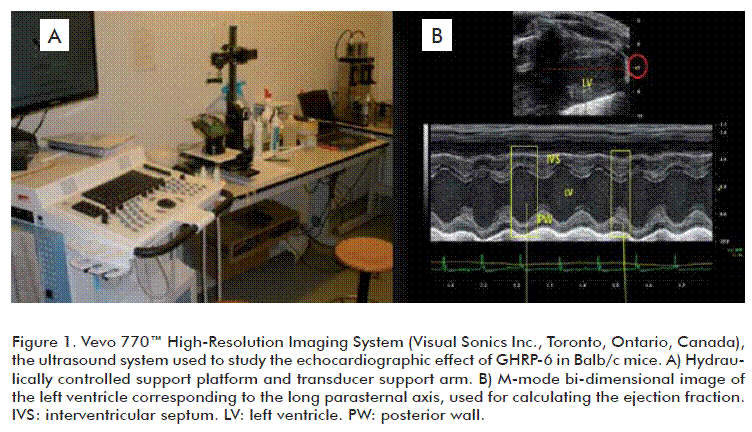
<body><![CDATA[<P   ><font size="2" face="Verdana, Arial, Helvetica, sans-serif"><b>Anesthesia </b></font></P >       <P   align="justify" ><font size="2" face="Verdana, Arial, Helvetica, sans-serif">The experiments were      conducted under controlled conditions of volatile anesthesia, consisting on      a mixture of isoflurane and medicinal oxygen delivered with a facial mask      for rodents. No muscle relaxants or pre-anesthetic drugs were used. Doses      used were 2.5 mL for anesthetic induction and 1.5 or 1 mL for maintaining      a superficial anesthetic effect. The animals were attached, on their backs,      to a platform whose position was controlled hydraulically, in order to guarantee      a stable body temperature during experimentation and to ensure adequate mobility      and proper placement of the transducer on the precordial zone. The transducer      was, likewise, attached to a hydraulically controlled mechanical support arm.      </font></P >       <P   align="justify" > </P >       <P   ><b><font size="2" face="Verdana, Arial, Helvetica, sans-serif">Echocardiography      </font></b></P >       <P   align="justify" ><font size="2" face="Verdana, Arial, Helvetica, sans-serif">Bi-dimensional M-mode      ultrasound images were obtained with a Vevo 770&trade; High-Resolution Imaging      System (Visual Sonics Inc., Toronto, Ontario, Canada) fitted with a 40 MHz      phased array linear transducer, acquiring data at frequencies up to 250 frames      per second with an axial resolution of up to 30 microns in three focal zones.      Data processing and analysis were performed with the Vevo 770 software application      (version 3.0.0, Visual Sonics Inc.), on a view of the long parasternal axis      at an angle of 45&deg; and the caudal angulation of the platform (<a href="/img/revistas/bta/v30n4/f0105413.gif">Figure      1</a>). </font></P >       
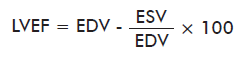
<P   ><font size="2" face="Verdana, Arial, Helvetica, sans-serif"><b>Analytical parameters      and methods </b></font></P >       <P   align="justify" ><font size="2" face="Verdana, Arial, Helvetica, sans-serif">Measured bidimensional      echocardiographic variables measured were: left ventricular end diastolic      dimension (LVEDD), left ventricular end systolic dimension (LVESD), interventricular      septal end diastolic dimension (IVSd), left ventricular end diastolic posterior      wall dimension (LVPWd), fractional shortening (FS) and left ventricular ejection      fraction (LVEF). This last parameter was calculated with Teichold&rsquo;s      equation: </font></P >   </font></font></font></font></font></font></font></font></font></font></font></font></font></font></font></font></font></font></font></font></font></font></font></font></font></font></font></font></font></font>       <P   align="center" ></P >       <P align="center"   ><font size="+1" face="Verdana, Arial, Helvetica, sans-serif" color="#000000"><img src="/img/revistas/bta/v30n4/fr0105413.gif" width="247" height="60">      </font></P >   <FONT size="+1" color="#000000"><FONT size="+1"><FONT size="+1"><FONT size="+1"><FONT size="+1"><FONT size="+1"><FONT size="+1"><FONT size="+1"><FONT size="+1"><FONT size="+1"><FONT size="+1"><FONT size="+1"><FONT size="+1"><FONT size="+1"><FONT size="+1"><FONT size="+1"><FONT size="+1"><FONT size="+1"><FONT size="+1"><FONT size="+1"><FONT size="+1"><FONT size="+1"><FONT size="+1"><FONT size="+1"><FONT size="+1"><FONT size="+1"><FONT size="+1"><FONT size="+1"><FONT size="+1"><FONT size="+1">        
<P   align="justify" ><font size="2" face="Verdana, Arial, Helvetica, sans-serif">where: EDV, end-diastolic      volume; ESV: end-systolic volume. </font></P >       ]]></body>
<body><![CDATA[<P   align="justify" > </P >       <P   align="justify" ><font size="2" face="Verdana, Arial, Helvetica, sans-serif">Measurements were      taken according to the specific echocardiogram: diastolic parameters were      measured at the peak of the R wave, and systolic parameters at the peak of      the T wave. They were performed across 3 to 5 consecutive cardiac cycles,      following the recommendations of the American Society of Echocardiography      [17]. The determinations were performed at 5 min intervals, starting from      minute zero before administering the peptide and then at 5, 10 and 15 min.      In the case of the effect of beta-blockers, measurements continued to be performed      up to 50 min post-administration.<B><I> </I></b></font></P >       <P   ><font size="2" face="Verdana, Arial, Helvetica, sans-serif"><b>Experimental design      </b> </font></P >       <P   align="justify" ><font size="2" face="Verdana, Arial, Helvetica, sans-serif">The inotropic effect      of GHRP-6 was evaluated in 18 mice, randomly assigned to either of two groups      of 9 individuals each, receiving GHRP-6 or excipient respectively. Body weight,      temperature and heart rate were measured, monitoring the echocardiogram during      the experiment. </font></P >       <P   align="justify" ><font size="2" face="Verdana, Arial, Helvetica, sans-serif">The dose-response      relationship of the inotropic effect of GHRP-6 was evaluated with four experimental      groups containing 8 individuals each. Group 1 was administered only the excipient,      group 2 received 100 &micro;g of GHRP-6 per kg of body weight, group 3 received      200 &micro;g/kg of GHRP-6 and group 4 was administered the maximal dose of      400 &micro;g/kg of GHRP-6. For every group, echocardiograms were obtained      for time 0 or basal, and every 5 min afterwards until 15 min, under identical      conditions of sedation, temperature and monitoring. </font></P >       <P   align="justify" ><font size="2" face="Verdana, Arial, Helvetica, sans-serif">The effect of co-administering      GHRP-6 and metoprolol (a beta-blocker) was determined using two groups of      8 mice, each receiving metoprolol-excipient or metoprolol-GHRP-6, respectively.      In both cases, metoprolol (Seloken&reg;, The Netherlands) [18] was first delivered      subcutaneously in two daily doses of 30 mg/kg for a period of two weeks. At      the end of this period, and coinciding with the last echocardiographic determinations,      both groups were administered the corresponding metoprolol dose, and 15 min      afterwards the metoprolol plus excipient group was administered the excipient      via the intraperitoneal group, and the metoprolol plus GHRP-6 group received,      in turn, 400 &micro;g/kg of GHRP-6 using the same route. Echocardiographic      determinations were performed before administering the last metoprolol dose,      and later, every 5 min for a total of 50 min. </font></P >       <P   ><font size="2" face="Verdana, Arial, Helvetica, sans-serif"><b>Statistical analysis      </b> </font></P >       <P   align="justify" ><font size="2" face="Verdana, Arial, Helvetica, sans-serif">The data were analyzed      using the statistical software package Prism (Graphpad Software Inc., San      Diego, CA, USA). Means, medians and standard deviations were calculated as      necessary. The dose-response effect was analyzed by linear regression. Differences      were considered to be statistically significant for p &lt; 0.05. </font></P >       <P   align="justify" >&nbsp;</P >       <P   align="justify" > </P >       ]]></body>
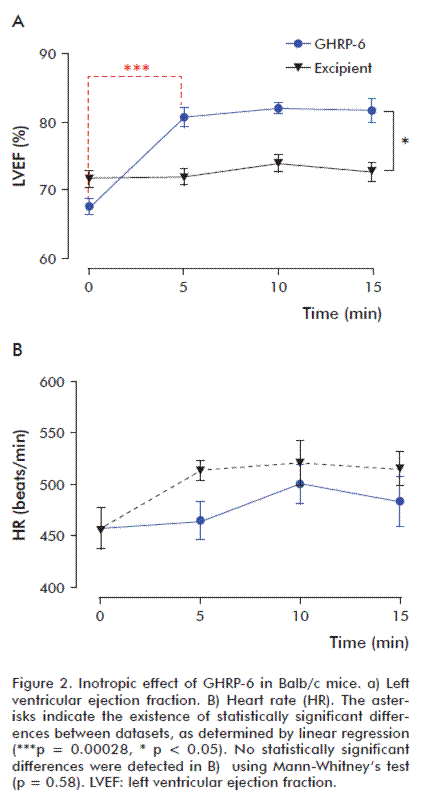
<body><![CDATA[<P   ><font size="3" face="Verdana, Arial, Helvetica, sans-serif"><B>RESULTS</b></font><font size="2" face="Verdana, Arial, Helvetica, sans-serif"><B>      </b></font></P >   <FONT size="+1">        <P   ><font size="2" face="Verdana, Arial, Helvetica, sans-serif"><b>GHRP-6 has a positive      inotropic effect but does not increase heart rate </b></font></P >   <FONT size="+1">        <P   align="justify" ><font size="2" face="Verdana, Arial, Helvetica, sans-serif">The systemic administration      of peptide GHRP-6 produced a significant increase in the left ventricular      ejection fraction (LVEF), which was not observed in the group treated with      excipient (<a href="#fig2">Figure 2A</a>). This increase was most significant      between 0 and 5 min (p = 0.0035), and remained statistically significant until      the end of the observation period. LVEF increased on average by 15 % on the      treated group. By contrast, in the control group treated only with excipient,      LVEF increased only slightly, always under 5 % (a magnitude within the range      of intra-assay variability). Heart rate remained 450 to 500 beats per min      in both experimental groups (<a href="#fig2">Figure 2B</a>). </font></P >       <P   align="center" ><img src="/img/revistas/bta/v30n4/f0205413.gif" width="420" height="804"><a name="fig2"></a></P >       
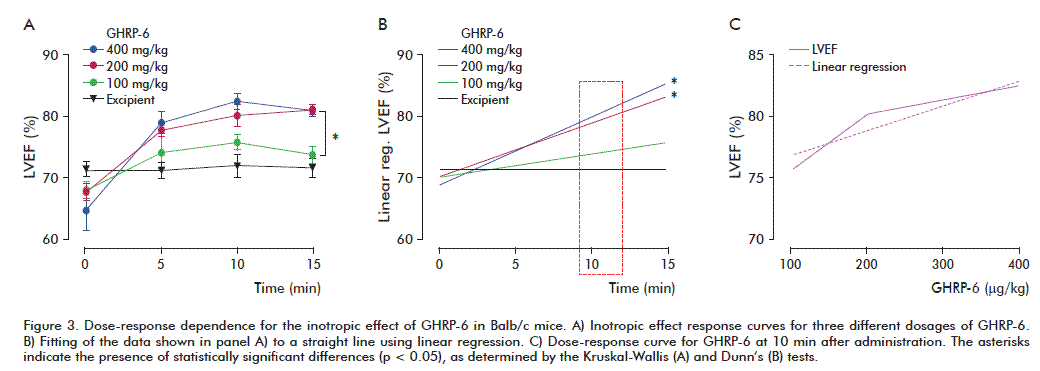
<P   ><font size="2" face="Verdana, Arial, Helvetica, sans-serif"><b>The inotropic      effect of GHRP-6 exhibits dose-dependency </b></font></P >       <P   align="justify" ><font size="2" face="Verdana, Arial, Helvetica, sans-serif">The administration      of increasing doses of GHRP-6 produced a sustained and statistically significant      increase of the left ventricular ejection fraction in the groups receiving      200 and 400 &mu;g/kg GHRP-6 when compared to the group receiving only the      excipient. The difference was not statistically significant in the case of      the group receiving a dose of 100 &mu;g/kg (<a href="/img/revistas/bta/v30n4/f0305413.gif">Figure      3A</a>). This result was confirmed by linear regression (<a href="/img/revistas/bta/v30n4/f0305413.gif">Figure      3B</a>). </font></P >       
<P   align="justify" ><font size="2" face="Verdana, Arial, Helvetica, sans-serif">During the first      10 min after the administration of different doses of GHRP-6, the positive      inotropic effect of this compound exhibits a clear dose-response behavior      (<a href="/img/revistas/bta/v30n4/f0305413.gif">Figure 3C</a>). </font></P >       
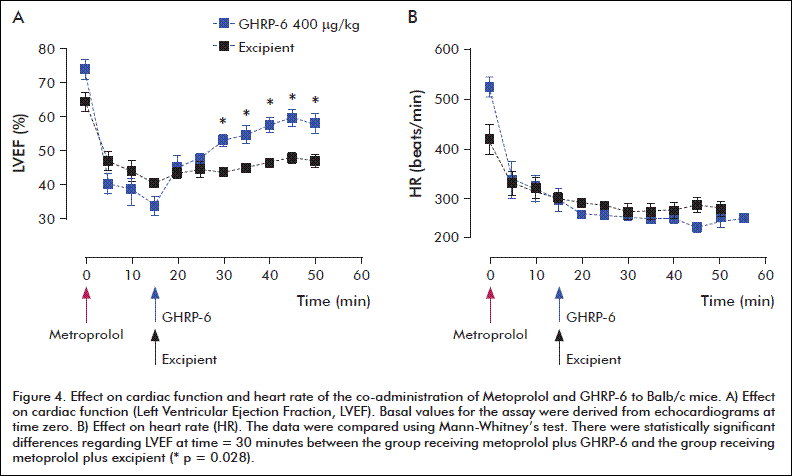
<P   ><font size="2" face="Verdana, Arial, Helvetica, sans-serif"><b>Inotropic effect      of GHRP-6 under chronic beta-blocker use </b></font></P >       <P   align="justify" ><font size="2" face="Verdana, Arial, Helvetica, sans-serif">The average basal      ejection fraction in the animals treated with metoprolol was similar to that      of animals in the untreated control group. After the administration of the      day and before the echocardiographic determinations, there was a significant,      30 % decrease in systolic function for the left ventricle, which was sustained      for the following 15 min. Heart rate also dipped below 300 beats/min. The      injection of GHRP-6 produced a statistically significant increase in the ventricular      ejection fraction at 5 min (p = 0.02), which progressed until LVEF returned      to normal values and remained so to the end of the observation period (approximately      40 min). This effect was not observed in the control group that was administered      only the excipient (<a href="/img/revistas/bta/v30n4/f0405413.gif">Figure      4A</a>). Heart rate remained well below the lower bound of the normal range      for this species (<a href="/img/revistas/bta/v30n4/f0405413.gif">Figure      4B</a>) [19]. </font></P >       
<P   align="justify" > </P >       ]]></body>
<body><![CDATA[<P   >&nbsp;</P >       <P   ><font size="2" face="Verdana, Arial, Helvetica, sans-serif"><B><font size="3">DISCUSSION      </font></b></font></P >   <FONT size="+1">        <P   align="justify" ><font size="2" face="Verdana, Arial, Helvetica, sans-serif">This is the first      experimental bi-dimensional echocardiographic study demonstrating that GHRP-6      has a positive inotropic effect, as evidenced by the fact that its administration      increases left ventricular ejection fraction. Bi-dimensional echocardiography      is well suited to study the effect of this peptide on heart function, as it      yields accurate, reproducible results with low intra-observer variability,      affording the possibility of evaluating the heart as a whole. </font></P >   <FONT size="+1">        <P   align="justify" ><font size="2" face="Verdana, Arial, Helvetica, sans-serif">It was demonstrated      that the acute administration of peptide GHRP-6 to adult mice produced an      early, significant increase in cardiac function (expressed as ejection fraction)      that was sustained in time, without a concomitant increase in heart rate.      The data also demonstrate that GHRP-6 can increase ventricular systolic function      even in animals subjected to chronic treatment with a beta-blocker. The latter      observation may hold significant value for the development of future therapeutic      approaches to heart failure and ischemic cardiopathy in clinical settings,      taking into account that a positive inotropic effect (<I>i.e.</I>, favoring      the contractility of heart muscle) and the absence of a chronotropic effect      (<I>i.e.</I>, no increase in heart rate) are desirable therapeutic outcomes.      In other words, being able to increase myocardial function without a significant      increase in oxygen consumption affords an important clinical advantage in      the treatment of heart failure. To put it into perspective, it must be noted      that all clinically available positive inotropes also increase heart rate      through the stimulation of adrenergic receptors [20, 21] that, in turn, increase      myocardial metabolic demand. </font></P >       <P   align="justify" ><font size="2" face="Verdana, Arial, Helvetica, sans-serif">In clinical practice,      it is possible to increase left ventricular function while simultaneously      reducing heart rate and achieving vasodilation in patients with heart failure      by using combinations of drugs such as amines, betablockers, inhibitors of      the angiotensin converting enzyme and aldosterone [9-11]. Nevertheless, the      finding that GHRP-6 is both a positive inotrope and a negative chronotrope      is no doubt highly beneficial for current cardiologic practice. </font></P >       <P   align="justify" ><font size="2" face="Verdana, Arial, Helvetica, sans-serif">The fact that GHRP-6      increases the ejection fraction in animals under chronic treatment with a      beta-blocker suggests that its cardiotropic effect does not depend on the      stimulation of cardiac beta-adrenergic receptors, unlike drugs such as sympathomimetic      amines. In addition, this also indicates that the positive inotropic effect      of GHRP-6 may not depend on the stimulation of this type of receptor; a novel      finding that strongly supports its potential application for the therapy of      systolic heart failure and its use as cardioprotector in myocardial ischemia-reperfusion      events. Such an inference is supported by previous experimental evidence indicating      that the cardiotropic effects of GHRP-6 are mediated by the stimulation of      two different receptors, namely GHS-R1a and CD36 [22], as well as by recent      data involving the latter, a multifunctional type B endocytic receptor, in      the cardiotropic action of GHRP-6 [23]. </font></P >       <P   align="justify" ><font size="2" face="Verdana, Arial, Helvetica, sans-serif">Heart function in      experimental models may also improve through a reduction of peripheral vascular      resistance [24]. Since the present study was not aimed at detecting vasodilation,      and taking into account that GHRP-6-like molecules have been previously shown      to induce vasomimetic effects [25], we believe that focusing future research      on evaluating whether GHRP-6 is in fact a vasodilator would be highly beneficial,      as such a demonstration would no doubt increase the potential benefits of      the application of this molecule to the therapy of heart failure. </font></P >       <P   align="justify" >&nbsp;</P >       <P   align="justify" > </P >       <P   ><font size="3" face="Verdana, Arial, Helvetica, sans-serif"><B>CONCLUSIONS </b></font></P >   <FONT size="+1">        ]]></body>
<body><![CDATA[<P   align="justify" ><font size="2" face="Verdana, Arial, Helvetica, sans-serif">It was demonstrated,      using bi-dimensional experimental echocardiography, that GHRP-6 has a positive      inotropic effect in mice. This effect is dose-dependent (100, 200 or 400 &micro;g/kg),      is detectable even under chronic beta-blocker usage, and is not associated      to a positive chronotropic effect. Therefore, GHRP-6 can be considered as      a potential therapeutic candidate for the treatment of severe heart failure      and as a cardioprotector for myocardial ischemia-reperfusion events. </font></P >       <P   align="justify" >&nbsp;</P >   <FONT size="+1">        <P   align="justify" > </P >       <P   > </P >   <FONT size="+1">        <P   ><b><font size="3" face="Verdana, Arial, Helvetica, sans-serif">REFERENCES </font></b></P >       <!-- ref --><P   align="justify" ><font size="2" face="Verdana, Arial, Helvetica, sans-serif">1. Ministerio de      Salud P&uacute;blica, Cuba. Anuario estad&iacute;stico de salud. La Habana:      Direcci&oacute;n Nacional de Registros y Estad&iacute;stica de Salud; 2010      </font><font size="+1" color="#000000"><font size="+1"><font size="+1"><font size="+1"><font size="+1"><font size="+1"><font size="+1"><font size="+1"><font size="+1"><font size="+1"><font size="+1"><font size="+1"><font size="+1"><font size="+1"><font size="+1"><font size="+1"><font size="+1"><font size="+1"><font size="+1"><font size="+1"><font size="+1"><font size="+1"><font size="+1"><font size="+1"><font size="+1"><font size="+1"><font size="+1"><font size="+1"><font size="+1"><font size="+1"><font size="+1"><font size="+1"><font size="+1"><font size="+1"><font size="+1"><font size="+1"><font size="+1"><font size="+1"><font size="+1"><font size="+1"><font size="+1"><font size="+1"><font size="+1"><font size="+1"><font size="+1"><font size="+1"><font size="+1"><font size="+1"><font size="+1"><font size="+1"><font size="+1"><font size="+1"><font size="+1"><font size="+1"><font size="+1"><font size="+1"><font size="+1"><font size="+1"><font size="+1"><font size="+1"><font size="+1"><font size="+1"><font size="+1"><font size="+1"><font size="+1"><font size="+1"><font size="+1"><font size="+1"><font size="+1"><font size="+1"><font size="+1"><font size="+1"><font size="+1"><font size="+1"><font size="+1"><font size="+1"><font size="+1"><font size="+1"><font size="+1"><font size="+1"><font size="+1"><font size="+1"><font size="+1"><font size="+1"><font size="+1"><font size="+1"><font size="+1"><font size="+1"><font size="+1"><font size="+1"><font size="+1"><font size="+1"><font size="+1"><font size="+1"><font size="+1"><font size="+1"><font size="+1"><font size="+1"><font size="+1"><font size="+1"><font size="+1"><font size="+1"><font size="+1"><font size="+1"><font size="+1"><font size="+1"><font size="+1"><font size="+1"><font size="+1"><font size="+1"><font color="#0000FF"><font color="#000000"><font size="+1"><font size="+1"><font size="+1"><font size="+1"><font color="#0000FF"><font color="#000000"><font size="2" face="Verdana, Arial, Helvetica, sans-serif">[cited      2013 Jul 7]</font></font></font></font></font></font></font></font></font></font></font></font></font></font></font></font></font></font></font></font></font></font></font></font></font></font></font></font></font></font></font></font></font></font></font></font></font></font></font></font></font></font></font></font></font></font></font></font></font></font></font></font></font></font></font></font></font></font></font></font></font></font></font></font></font></font></font></font></font></font></font></font></font></font></font></font></font></font></font></font></font></font></font></font></font></font></font></font></font></font></font></font></font></font></font></font></font></font></font></font></font></font></font></font></font></font></font></font></font></font></font></font></font></font></font></font></font></font></font><font size="2" face="Verdana, Arial, Helvetica, sans-serif">.      Available from: <FONT color="#0000FF"><a href="http://files.sld.cu/dne/files/2011/04/anuario-2010-e-sin-graficos1.pdf" target="_blank">http://files.sld.cu/dne/files/2011/04/anuario-2010-e-sin-graficos1.pdf</a>      </font></font></P >   <FONT size="+1"><FONT color="#0000FF"><FONT color="#000000">        <!-- ref --><P   align="justify" ><font size="2" face="Verdana, Arial, Helvetica, sans-serif">2. Roger VL, Go AS,      Lloyd-Jones DM, Benjamin EJ, Berry JD, Borden WB, <I>et al</I>. Heart disease      and stroke statistics-2012 update: a report from the American Heart Association.      Circulation. 2012;125(1):e2-e220.     </font></P >       <!-- ref --><P   align="justify" ><font size="2" face="Verdana, Arial, Helvetica, sans-serif">3. Piot C, Croisille      P, Staat P, Thibault H, Rioufol G, Mewton N, <I>et al</I>. Effect of cyclosporine      on reperfusion injury in acute myocardial infarction. N Engl J Med. 2008;359(5):473-81.          </font></P >       ]]></body>
<body><![CDATA[<!-- ref --><P   align="justify" ><font size="2" face="Verdana, Arial, Helvetica, sans-serif">4. Salazar HP, Talano      JV. Viable myocardium: how much is enough? Echocardiography. 2005;22(1):59-70.          </font></P >       <!-- ref --><P   align="justify" ><font size="2" face="Verdana, Arial, Helvetica, sans-serif">5. Verma A, Meris      A, Skali H, Ghali JK, Arnold JM, Bourgoun M, <I>et al</I>. Prognostic implications      of left ventricular mass and geometry following myocardial infarction: the      VALIANT (VALsartan In Acute myocardial iNfarcTion) Echocardiographic Study.      JACC Cardiovasc Imaging. 2008;1(5):582-91.     </font></P >       <!-- ref --><P   align="justify" ><font size="2" face="Verdana, Arial, Helvetica, sans-serif">6. Hwang JJ, Dzau      VJ, Liew CC. Genomics and the pathophysiology of heart failure. Curr Cardiol      Rep. 2001;3(3):198-207.     </font></P >       <!-- ref --><P   align="justify" ><font size="2" face="Verdana, Arial, Helvetica, sans-serif">7. Mirotsou M, Watanabe      CM, Schultz PG, Pratt RE, Dzau VJ. Elucidating the molecular mechanism of      cardiac remodeling using a comparative genomic approach. Physiol Genomics.      2003;15(2):115-26.     </font></P >       <!-- ref --><P   align="justify" ><font size="2" face="Verdana, Arial, Helvetica, sans-serif">8. Pfeffer MA, Braunwald      E. Ventricular enlargement following infarction is a modifiable process. Am      J Cardiol. 1991;68(14):127D-31D.     </font></P >       ]]></body>
<body><![CDATA[<!-- ref --><P   align="justify" ><font size="2" face="Verdana, Arial, Helvetica, sans-serif">9. Velazquez EJ,      Pfeffer MA, McMurray JV, Maggioni AP, Rouleau JL, Van de Werf F, <I>et al</I>.      VALsartan In Acute myocardial iNfarcTion (VALIANT) trial: baseline characteristics      in context. Eur J Heart Fail. 2003;5(4):537-44.     </font></P >       <!-- ref --><P   align="justify" ><font size="2" face="Verdana, Arial, Helvetica, sans-serif">10. Pfeffer MA, McMurray      JJ, Velazquez EJ, Rouleau JL, Kober L, Maggioni AP, <I>et al</I>. Valsartan,      captopril, or both in myocardial infarction complicated by heart failure,      left ventricular dysfunction, or both. N Engl J Med. 2003;349(20):1893-906.          </font></P >       <!-- ref --><P   align="justify" ><font size="2" face="Verdana, Arial, Helvetica, sans-serif">11. Flather MD, Yusuf      S, Kober L, Pfeffer M, Hall A, Murray G, <I>et al</I>. Long-term ACE-inhibitor      therapy in patients with heart failure or left-ventricular dysfunction: a      systematic overview of data from individual patients. ACE-Inhibitor Myocardial      Infarction Collaborative Group. Lancet. 2000;355(9215):1575-81.     </font></P >       <!-- ref --><P   align="justify" ><font size="2" face="Verdana, Arial, Helvetica, sans-serif">12. Benso A, Broglio      F, Marafetti L, Lucatello B, Seardo MA, Granata R, <I>et al</I>. Ghrelin and      synthetic growth hormone secretagogues are cardioactive molecules with identities      and differences. Semin Vasc Med. 2004;4(2):107-14.     </font></P >       <!-- ref --><P   align="justify" ><font size="2" face="Verdana, Arial, Helvetica, sans-serif">13. Cao JM, Ong H,      Chen C. Effects of ghrelin and synthetic GH secretagogues on the cardiovascular      system. Trends Endocrinol Metab. 2006;17(1):13-8.     </font></P >       ]]></body>
<body><![CDATA[<!-- ref --><P   align="justify" ><font size="2" face="Verdana, Arial, Helvetica, sans-serif">14. Xu XB, Pang JJ,      Cao JM, Ni C, Xu RK, Peng XZ, <I>et al</I>. GH-releasing peptides improve      cardiac dysfunction and cachexia and suppress stress-related hormones and      cardiomyocyte apoptosis in rats with heart failure. Am J Physiol Heart Circ      Physiol. 2005;289(4):H1643-51.     </font></P >       <!-- ref --><P   align="justify" ><font size="2" face="Verdana, Arial, Helvetica, sans-serif">15. Berlanga J, Cibrian      D, Guevara L, Dominguez H, Alba JS, Seralena A, <I>et al</I>. Growth-hormone-releasing      peptide 6 (GHRP-6) prevents oxidant cytotoxicity and reduces myocardial necrosis      in a model of acute myocardial infarction. Clin Sci (Lond). 2007;112(4):241-50.          </font></P >       <!-- ref --><P   align="justify" ><font size="2" face="Verdana, Arial, Helvetica, sans-serif">16. Cibrian D, Berlanga      J, Guevara L, Valiente J, Guillen GE, Garcia D, <I>et al</I>. Efecto citoprotector      cardiaco y extracardiaco del p&eacute;ptido GHRP-6. Biotecnol Apl. 2008;25(3):276-8.          </font></P >       <!-- ref --><P   align="justify" ><font size="2" face="Verdana, Arial, Helvetica, sans-serif">17. Lang RM, Bierig      M, Devereux RB, Flachskampf FA, Foster E, Pellikka PA, <I>et al.</I> Recommendations      for chamber quantification. Eur J Echocardiogr. 2006;7(2):79-108.     </font></P >       <!-- ref --><P   align="justify" ><font size="2" face="Verdana, Arial, Helvetica, sans-serif">18. Tominaga M, Matsumori      A, Okada I, Yamada T, Kawai C. Beta-blocker treatment of dilated cardiomyopathy.      Beneficial effect of carteolol in mice. Circulation. 1991;83(6):2021-8.     </font></P >       ]]></body>
<body><![CDATA[<!-- ref --><P   align="justify" ><font size="2" face="Verdana, Arial, Helvetica, sans-serif">19. Matsuki N, Sakuma      Y, Saito H. Pharmacological properties of blood pressure and heart rate control      in suncus. Jpn J Pharmacol. 1993;62(1):93-7.     </font></P >       <!-- ref --><P   align="justify" ><font size="2" face="Verdana, Arial, Helvetica, sans-serif">20. Tacon CL, McCaffrey      J, Delaney A. Dobutamine for patients with severe heart failure: a systematic      review and meta-analysis of randomised controlled trials. Intensive Care Med.      2012;38(3):359-67.     </font></P >       <!-- ref --><P   align="justify" ><font size="2" face="Verdana, Arial, Helvetica, sans-serif">21. Morici N, Sacco      A, Oliva F, Ferrari S, Paino R, Milazzo F, <I>et al</I>. Epinephrine for acute      decompensated heart failure and low output state: friend or foe? Int J Cardiol.      2011;149(3):384-5.     </font></P >       <!-- ref --><P   align="justify" ><font size="2" face="Verdana, Arial, Helvetica, sans-serif">22. Torsello A, Bresciani      E, Rossoni G, Avallone R, Tulipano G, Cocchi D, <I>et al</I>. Ghrelin plays      a minor role in the physiological control of cardiac function in the rat.      Endocrinology. 2003;144(5):1787-92.     </font></P >       <!-- ref --><P   align="justify" ><font size="2" face="Verdana, Arial, Helvetica, sans-serif">23. Sun Q, Zang WJ,      Chen C. Growth hormone secretagogues reduce transient outward K+ current via      phospholipase C/protein kinase C signaling pathway in rat ventricular myocytes.      Endocrinology. 2010;151(3):1228-35.     </font></P >       ]]></body>
<body><![CDATA[<!-- ref --><P   align="justify" ><font size="2" face="Verdana, Arial, Helvetica, sans-serif">24. Tivesten A, Bollano      E, Caidahl K, Kujacic V, Sun XY, Hedner T, <I>et al</I>. The growth hormone      secretagogue hexarelin improves cardiac function in rats after experimental      myocardial infarction. Endocrinology. 2000;141(1):60-6.     </font></P >       <!-- ref --><P   ><font size="2" face="Verdana, Arial, Helvetica, sans-serif">25. Isgaard J, Granata      R. Ghrelin in cardiovascular disease and atherogenesis. Mol Cell Endocrinol.      2011;340(1):59-64.     </font></P >       <P   >&nbsp;</P >       <P   >&nbsp;</P >   <FONT size="+1">        <P   > </P >       <P   > </P >       <P   ><font size="2" face="Verdana, Arial, Helvetica, sans-serif">Received in February,      2013.    <br>     Accepted in July, 2013. </font></P >       ]]></body>
<body><![CDATA[<P   >&nbsp;</P >       <P   >&nbsp;</P >       <P   > </P >       <P   > </P >       <P   ><i><font size="2" face="Verdana, Arial, Helvetica, sans-serif">Juan Valiente</font></i><font size="2" face="Verdana, Arial, Helvetica, sans-serif">.      Instituto de Cardiolog&iacute;a y Cirug&iacute;a Cardiovascular. Calle 17      e/ A y Paseo, No. 702, Vedado, Plaza de La Revoluci&oacute;n, CP 10400, La      Habana, Cuba. E-mail: <a href="mailto:jvalient@infomed.sld.cu">jvalient@infomed.sld.cu</a>.      </font></P >   </font></font></font></font></font></font></font></font></font></font></font></font></font></font></font></font></font></font></font></font></font></font></font></font></font></font></font></font></font></font></font></font></font></font></font></font></font></font></font></font></font></DIV >      ]]></body><back>
<ref-list>
<ref id="B1">
<label>1</label><nlm-citation citation-type="book">
<collab>Ministerio de Salud Pública, Cuba</collab>
<source><![CDATA[Anuario estadístico de salud]]></source>
<year>2010</year>
<publisher-loc><![CDATA[La Habana ]]></publisher-loc>
<publisher-name><![CDATA[Dirección Nacional de Registros y Estadística de Salud]]></publisher-name>
</nlm-citation>
</ref>
<ref id="B2">
<label>2</label><nlm-citation citation-type="journal">
<person-group person-group-type="author">
<name>
<surname><![CDATA[Roger]]></surname>
<given-names><![CDATA[VL]]></given-names>
</name>
<name>
<surname><![CDATA[Go]]></surname>
<given-names><![CDATA[AS]]></given-names>
</name>
<name>
<surname><![CDATA[Lloyd-Jones]]></surname>
<given-names><![CDATA[DM]]></given-names>
</name>
<name>
<surname><![CDATA[Benjamin]]></surname>
<given-names><![CDATA[EJ]]></given-names>
</name>
<name>
<surname><![CDATA[Berry]]></surname>
<given-names><![CDATA[JD]]></given-names>
</name>
<name>
<surname><![CDATA[Borden]]></surname>
<given-names><![CDATA[WB]]></given-names>
</name>
</person-group>
<article-title xml:lang="en"><![CDATA[Heart disease and stroke statistics-2012 update: a report from the American Heart Association]]></article-title>
<source><![CDATA[Circulation]]></source>
<year>2012</year>
<volume>125</volume>
<numero>1</numero>
<issue>1</issue>
<page-range>e2-e220</page-range></nlm-citation>
</ref>
<ref id="B3">
<label>3</label><nlm-citation citation-type="journal">
<person-group person-group-type="author">
<name>
<surname><![CDATA[Piot]]></surname>
<given-names><![CDATA[C]]></given-names>
</name>
<name>
<surname><![CDATA[Croisille]]></surname>
<given-names><![CDATA[P]]></given-names>
</name>
<name>
<surname><![CDATA[Staat]]></surname>
<given-names><![CDATA[P]]></given-names>
</name>
<name>
<surname><![CDATA[Thibault]]></surname>
<given-names><![CDATA[H]]></given-names>
</name>
<name>
<surname><![CDATA[Rioufol]]></surname>
<given-names><![CDATA[G]]></given-names>
</name>
<name>
<surname><![CDATA[Mewton]]></surname>
<given-names><![CDATA[N]]></given-names>
</name>
</person-group>
<article-title xml:lang="en"><![CDATA[Effect of cyclosporine on reperfusion injury in acute myocardial infarction]]></article-title>
<source><![CDATA[N Engl J Med]]></source>
<year>2008</year>
<volume>359</volume>
<numero>5</numero>
<issue>5</issue>
<page-range>473-81</page-range></nlm-citation>
</ref>
<ref id="B4">
<label>4</label><nlm-citation citation-type="journal">
<person-group person-group-type="author">
<name>
<surname><![CDATA[Salazar]]></surname>
<given-names><![CDATA[HP]]></given-names>
</name>
<name>
<surname><![CDATA[Talano]]></surname>
<given-names><![CDATA[JV]]></given-names>
</name>
</person-group>
<article-title xml:lang="en"><![CDATA[Viable myocardium: how much is enough?]]></article-title>
<source><![CDATA[Echocardiography]]></source>
<year>2005</year>
<volume>22</volume>
<numero>1</numero>
<issue>1</issue>
<page-range>59-70</page-range></nlm-citation>
</ref>
<ref id="B5">
<label>5</label><nlm-citation citation-type="journal">
<person-group person-group-type="author">
<name>
<surname><![CDATA[Verma]]></surname>
<given-names><![CDATA[A]]></given-names>
</name>
<name>
<surname><![CDATA[Meris]]></surname>
<given-names><![CDATA[A]]></given-names>
</name>
<name>
<surname><![CDATA[Skali]]></surname>
<given-names><![CDATA[H]]></given-names>
</name>
<name>
<surname><![CDATA[Ghali]]></surname>
<given-names><![CDATA[JK]]></given-names>
</name>
<name>
<surname><![CDATA[Arnold]]></surname>
<given-names><![CDATA[JM]]></given-names>
</name>
<name>
<surname><![CDATA[Bourgoun]]></surname>
<given-names><![CDATA[M]]></given-names>
</name>
</person-group>
<article-title xml:lang="en"><![CDATA[Prognostic implications of left ventricular mass and geometry following myocardial infarction: the VALIANT (VALsartan In Acute myocardial iNfarcTion) Echocardiographic Study]]></article-title>
<source><![CDATA[JACC Cardiovasc Imaging]]></source>
<year>2008</year>
<volume>1</volume>
<numero>5</numero>
<issue>5</issue>
<page-range>582-91</page-range></nlm-citation>
</ref>
<ref id="B6">
<label>6</label><nlm-citation citation-type="journal">
<person-group person-group-type="author">
<name>
<surname><![CDATA[Hwang]]></surname>
<given-names><![CDATA[JJ]]></given-names>
</name>
<name>
<surname><![CDATA[Dzau]]></surname>
<given-names><![CDATA[VJ]]></given-names>
</name>
<name>
<surname><![CDATA[Liew]]></surname>
<given-names><![CDATA[CC]]></given-names>
</name>
</person-group>
<article-title xml:lang="en"><![CDATA[Genomics and the pathophysiology of heart failure]]></article-title>
<source><![CDATA[Curr Cardiol Rep]]></source>
<year>2001</year>
<volume>3</volume>
<numero>3</numero>
<issue>3</issue>
<page-range>198-207</page-range></nlm-citation>
</ref>
<ref id="B7">
<label>7</label><nlm-citation citation-type="journal">
<person-group person-group-type="author">
<name>
<surname><![CDATA[Mirotsou]]></surname>
<given-names><![CDATA[M]]></given-names>
</name>
<name>
<surname><![CDATA[Watanabe]]></surname>
<given-names><![CDATA[CM]]></given-names>
</name>
<name>
<surname><![CDATA[Schultz]]></surname>
<given-names><![CDATA[PG]]></given-names>
</name>
<name>
<surname><![CDATA[Pratt]]></surname>
<given-names><![CDATA[RE]]></given-names>
</name>
<name>
<surname><![CDATA[Dzau]]></surname>
<given-names><![CDATA[VJ]]></given-names>
</name>
</person-group>
<article-title xml:lang="en"><![CDATA[Elucidating the molecular mechanism of cardiac remodeling using a comparative genomic approach]]></article-title>
<source><![CDATA[Physiol Genomics]]></source>
<year>2003</year>
<volume>15</volume>
<numero>2</numero>
<issue>2</issue>
<page-range>115-26</page-range></nlm-citation>
</ref>
<ref id="B8">
<label>8</label><nlm-citation citation-type="journal">
<person-group person-group-type="author">
<name>
<surname><![CDATA[Pfeffer]]></surname>
<given-names><![CDATA[MA]]></given-names>
</name>
<name>
<surname><![CDATA[Braunwald]]></surname>
<given-names><![CDATA[E]]></given-names>
</name>
</person-group>
<article-title xml:lang="en"><![CDATA[Ventricular enlargement following infarction is a modifiable process]]></article-title>
<source><![CDATA[Am J Cardiol]]></source>
<year>1991</year>
<volume>68</volume>
<numero>14</numero>
<issue>14</issue>
<page-range>127D-31D</page-range></nlm-citation>
</ref>
<ref id="B9">
<label>9</label><nlm-citation citation-type="journal">
<person-group person-group-type="author">
<name>
<surname><![CDATA[Velazquez]]></surname>
<given-names><![CDATA[EJ]]></given-names>
</name>
<name>
<surname><![CDATA[Pfeffer]]></surname>
<given-names><![CDATA[MA]]></given-names>
</name>
<name>
<surname><![CDATA[McMurray]]></surname>
<given-names><![CDATA[JV]]></given-names>
</name>
<name>
<surname><![CDATA[Maggioni]]></surname>
<given-names><![CDATA[AP]]></given-names>
</name>
<name>
<surname><![CDATA[Rouleau]]></surname>
<given-names><![CDATA[JL]]></given-names>
</name>
<name>
<surname><![CDATA[Van de Werf]]></surname>
<given-names><![CDATA[F]]></given-names>
</name>
</person-group>
<article-title xml:lang="en"><![CDATA[VALsartan In Acute myocardial iNfarcTion (VALIANT) trial: baseline characteristics in context]]></article-title>
<source><![CDATA[Eur J Heart Fail]]></source>
<year>2003</year>
<volume>5</volume>
<numero>4</numero>
<issue>4</issue>
<page-range>537-44</page-range></nlm-citation>
</ref>
<ref id="B10">
<label>10</label><nlm-citation citation-type="journal">
<person-group person-group-type="author">
<name>
<surname><![CDATA[Pfeffer]]></surname>
<given-names><![CDATA[MA]]></given-names>
</name>
<name>
<surname><![CDATA[McMurray]]></surname>
<given-names><![CDATA[JJ]]></given-names>
</name>
<name>
<surname><![CDATA[Velazquez]]></surname>
<given-names><![CDATA[EJ]]></given-names>
</name>
<name>
<surname><![CDATA[Rouleau]]></surname>
<given-names><![CDATA[JL]]></given-names>
</name>
<name>
<surname><![CDATA[Kober]]></surname>
<given-names><![CDATA[L]]></given-names>
</name>
<name>
<surname><![CDATA[Maggioni]]></surname>
<given-names><![CDATA[AP]]></given-names>
</name>
</person-group>
<article-title xml:lang="en"><![CDATA[Valsartan, captopril, or both in myocardial infarction complicated by heart failure, left ventricular dysfunction, or both]]></article-title>
<source><![CDATA[N Engl J Med]]></source>
<year>2003</year>
<volume>349</volume>
<numero>20</numero>
<issue>20</issue>
<page-range>1893-906</page-range></nlm-citation>
</ref>
<ref id="B11">
<label>11</label><nlm-citation citation-type="journal">
<person-group person-group-type="author">
<name>
<surname><![CDATA[Flather]]></surname>
<given-names><![CDATA[MD]]></given-names>
</name>
<name>
<surname><![CDATA[Yusuf]]></surname>
<given-names><![CDATA[S]]></given-names>
</name>
<name>
<surname><![CDATA[Kober]]></surname>
<given-names><![CDATA[L]]></given-names>
</name>
<name>
<surname><![CDATA[Pfeffer]]></surname>
<given-names><![CDATA[M]]></given-names>
</name>
<name>
<surname><![CDATA[Hall]]></surname>
<given-names><![CDATA[A]]></given-names>
</name>
<name>
<surname><![CDATA[Murray]]></surname>
<given-names><![CDATA[G]]></given-names>
</name>
</person-group>
<article-title xml:lang="en"><![CDATA[Long-term ACE-inhibitor therapy in patients with heart failure or left-ventricular dysfunction: a systematic overview of data from individual patients. ACE-Inhibitor Myocardial Infarction Collaborative Group]]></article-title>
<source><![CDATA[Lancet]]></source>
<year>2000</year>
<volume>355</volume>
<numero>9215</numero>
<issue>9215</issue>
<page-range>1575-81</page-range></nlm-citation>
</ref>
<ref id="B12">
<label>12</label><nlm-citation citation-type="journal">
<person-group person-group-type="author">
<name>
<surname><![CDATA[Benso]]></surname>
<given-names><![CDATA[A]]></given-names>
</name>
<name>
<surname><![CDATA[Broglio]]></surname>
<given-names><![CDATA[F]]></given-names>
</name>
<name>
<surname><![CDATA[Marafetti]]></surname>
<given-names><![CDATA[L]]></given-names>
</name>
<name>
<surname><![CDATA[Lucatello]]></surname>
<given-names><![CDATA[B]]></given-names>
</name>
<name>
<surname><![CDATA[Seardo]]></surname>
<given-names><![CDATA[MA]]></given-names>
</name>
<name>
<surname><![CDATA[Granata]]></surname>
<given-names><![CDATA[R]]></given-names>
</name>
</person-group>
<article-title xml:lang="en"><![CDATA[Ghrelin and synthetic growth hormone secretagogues are cardioactive molecules with identities and differences]]></article-title>
<source><![CDATA[Semin Vasc Med]]></source>
<year>2004</year>
<volume>4</volume>
<numero>2</numero>
<issue>2</issue>
<page-range>107-14</page-range></nlm-citation>
</ref>
<ref id="B13">
<label>13</label><nlm-citation citation-type="journal">
<person-group person-group-type="author">
<name>
<surname><![CDATA[Cao]]></surname>
<given-names><![CDATA[JM]]></given-names>
</name>
<name>
<surname><![CDATA[Ong]]></surname>
<given-names><![CDATA[H]]></given-names>
</name>
<name>
<surname><![CDATA[Chen]]></surname>
<given-names><![CDATA[C]]></given-names>
</name>
</person-group>
<article-title xml:lang="en"><![CDATA[Effects of ghrelin and synthetic GH secretagogues on the cardiovascular system]]></article-title>
<source><![CDATA[Trends Endocrinol Metab]]></source>
<year>2006</year>
<volume>17</volume>
<numero>1</numero>
<issue>1</issue>
<page-range>13-8</page-range></nlm-citation>
</ref>
<ref id="B14">
<label>14</label><nlm-citation citation-type="journal">
<person-group person-group-type="author">
<name>
<surname><![CDATA[Xu]]></surname>
<given-names><![CDATA[XB]]></given-names>
</name>
<name>
<surname><![CDATA[Pang]]></surname>
<given-names><![CDATA[JJ]]></given-names>
</name>
<name>
<surname><![CDATA[Cao]]></surname>
<given-names><![CDATA[JM]]></given-names>
</name>
<name>
<surname><![CDATA[Ni]]></surname>
<given-names><![CDATA[C]]></given-names>
</name>
<name>
<surname><![CDATA[Xu]]></surname>
<given-names><![CDATA[RK]]></given-names>
</name>
<name>
<surname><![CDATA[Peng]]></surname>
<given-names><![CDATA[XZ]]></given-names>
</name>
</person-group>
<article-title xml:lang="en"><![CDATA[GH-releasing peptides improve cardiac dysfunction and cachexia and suppress stress-related hormones and cardiomyocyte apoptosis in rats with heart failure]]></article-title>
<source><![CDATA[Am J Physiol Heart Circ Physiol]]></source>
<year>2005</year>
<volume>289</volume>
<numero>4</numero>
<issue>4</issue>
<page-range>H1643-51</page-range></nlm-citation>
</ref>
<ref id="B15">
<label>15</label><nlm-citation citation-type="journal">
<person-group person-group-type="author">
<name>
<surname><![CDATA[Berlanga]]></surname>
<given-names><![CDATA[J]]></given-names>
</name>
<name>
<surname><![CDATA[Cibrian]]></surname>
<given-names><![CDATA[D]]></given-names>
</name>
<name>
<surname><![CDATA[Guevara]]></surname>
<given-names><![CDATA[L]]></given-names>
</name>
<name>
<surname><![CDATA[Dominguez]]></surname>
<given-names><![CDATA[H]]></given-names>
</name>
<name>
<surname><![CDATA[Alba]]></surname>
<given-names><![CDATA[JS]]></given-names>
</name>
<name>
<surname><![CDATA[Seralena]]></surname>
<given-names><![CDATA[A]]></given-names>
</name>
</person-group>
<article-title xml:lang="en"><![CDATA[Growth-hormone-releasing peptide 6 (GHRP-6) prevents oxidant cytotoxicity and reduces myocardial necrosis in a model of acute myocardial infarction]]></article-title>
<source><![CDATA[Clin Sci (Lond)]]></source>
<year>2007</year>
<volume>112</volume>
<numero>4</numero>
<issue>4</issue>
<page-range>241-50</page-range></nlm-citation>
</ref>
<ref id="B16">
<label>16</label><nlm-citation citation-type="journal">
<person-group person-group-type="author">
<name>
<surname><![CDATA[Cibrian]]></surname>
<given-names><![CDATA[D]]></given-names>
</name>
<name>
<surname><![CDATA[Berlanga]]></surname>
<given-names><![CDATA[J]]></given-names>
</name>
<name>
<surname><![CDATA[Guevara]]></surname>
<given-names><![CDATA[L]]></given-names>
</name>
<name>
<surname><![CDATA[Valiente]]></surname>
<given-names><![CDATA[J]]></given-names>
</name>
<name>
<surname><![CDATA[Guillen]]></surname>
<given-names><![CDATA[GE]]></given-names>
</name>
<name>
<surname><![CDATA[Garcia]]></surname>
<given-names><![CDATA[D]]></given-names>
</name>
</person-group>
<article-title xml:lang="es"><![CDATA[Efecto citoprotector cardiaco y extracardiaco del péptido GHRP-6]]></article-title>
<source><![CDATA[Biotecnol Apl]]></source>
<year>2008</year>
<volume>25</volume>
<numero>3</numero>
<issue>3</issue>
<page-range>276-8</page-range></nlm-citation>
</ref>
<ref id="B17">
<label>17</label><nlm-citation citation-type="journal">
<person-group person-group-type="author">
<name>
<surname><![CDATA[Lang]]></surname>
<given-names><![CDATA[RM]]></given-names>
</name>
<name>
<surname><![CDATA[Bierig]]></surname>
<given-names><![CDATA[M]]></given-names>
</name>
<name>
<surname><![CDATA[Devereux]]></surname>
<given-names><![CDATA[RB]]></given-names>
</name>
<name>
<surname><![CDATA[Flachskampf]]></surname>
<given-names><![CDATA[FA]]></given-names>
</name>
<name>
<surname><![CDATA[Foster]]></surname>
<given-names><![CDATA[E]]></given-names>
</name>
<name>
<surname><![CDATA[Pellikka]]></surname>
<given-names><![CDATA[PA]]></given-names>
</name>
</person-group>
<article-title xml:lang="en"><![CDATA[Recommendations for chamber quantification]]></article-title>
<source><![CDATA[Eur J Echocardiogr]]></source>
<year>2006</year>
<volume>7</volume>
<numero>2</numero>
<issue>2</issue>
<page-range>79-108</page-range></nlm-citation>
</ref>
<ref id="B18">
<label>18</label><nlm-citation citation-type="journal">
<person-group person-group-type="author">
<name>
<surname><![CDATA[Tominaga]]></surname>
<given-names><![CDATA[M]]></given-names>
</name>
<name>
<surname><![CDATA[Matsumori]]></surname>
<given-names><![CDATA[A]]></given-names>
</name>
<name>
<surname><![CDATA[Okada]]></surname>
<given-names><![CDATA[I]]></given-names>
</name>
<name>
<surname><![CDATA[Yamada]]></surname>
<given-names><![CDATA[T]]></given-names>
</name>
<name>
<surname><![CDATA[Kawai]]></surname>
<given-names><![CDATA[C]]></given-names>
</name>
</person-group>
<article-title xml:lang="en"><![CDATA[Beta-blocker treatment of dilated cardiomyopathy. Beneficial effect of carteolol in mice]]></article-title>
<source><![CDATA[Circulation]]></source>
<year>1991</year>
<volume>83</volume>
<numero>6</numero>
<issue>6</issue>
<page-range>2021-8</page-range></nlm-citation>
</ref>
<ref id="B19">
<label>19</label><nlm-citation citation-type="journal">
<person-group person-group-type="author">
<name>
<surname><![CDATA[Matsuki]]></surname>
<given-names><![CDATA[N]]></given-names>
</name>
<name>
<surname><![CDATA[Sakuma]]></surname>
<given-names><![CDATA[Y]]></given-names>
</name>
<name>
<surname><![CDATA[Saito]]></surname>
<given-names><![CDATA[H]]></given-names>
</name>
</person-group>
<article-title xml:lang="en"><![CDATA[Pharmacological properties of blood pressure and heart rate control in suncus]]></article-title>
<source><![CDATA[Jpn J Pharmacol]]></source>
<year>1993</year>
<volume>62</volume>
<numero>1</numero>
<issue>1</issue>
<page-range>93-7</page-range></nlm-citation>
</ref>
<ref id="B20">
<label>20</label><nlm-citation citation-type="journal">
<person-group person-group-type="author">
<name>
<surname><![CDATA[Tacon]]></surname>
<given-names><![CDATA[CL]]></given-names>
</name>
<name>
<surname><![CDATA[McCaffrey]]></surname>
<given-names><![CDATA[J]]></given-names>
</name>
<name>
<surname><![CDATA[Delaney]]></surname>
<given-names><![CDATA[A]]></given-names>
</name>
</person-group>
<article-title xml:lang="en"><![CDATA[Dobutamine for patients with severe heart failure: a systematic review and meta-analysis of randomised controlled trials]]></article-title>
<source><![CDATA[Intensive Care Med]]></source>
<year>2012</year>
<volume>38</volume>
<numero>3</numero>
<issue>3</issue>
<page-range>359-67</page-range></nlm-citation>
</ref>
<ref id="B21">
<label>21</label><nlm-citation citation-type="journal">
<person-group person-group-type="author">
<name>
<surname><![CDATA[Morici]]></surname>
<given-names><![CDATA[N]]></given-names>
</name>
<name>
<surname><![CDATA[Sacco]]></surname>
<given-names><![CDATA[A]]></given-names>
</name>
<name>
<surname><![CDATA[Oliva]]></surname>
<given-names><![CDATA[F]]></given-names>
</name>
<name>
<surname><![CDATA[Ferrari]]></surname>
<given-names><![CDATA[S]]></given-names>
</name>
<name>
<surname><![CDATA[Paino]]></surname>
<given-names><![CDATA[R]]></given-names>
</name>
<name>
<surname><![CDATA[Milazzo]]></surname>
<given-names><![CDATA[F]]></given-names>
</name>
</person-group>
<article-title xml:lang="en"><![CDATA[Epinephrine for acute decompensated heart failure and low output state: friend or foe?]]></article-title>
<source><![CDATA[Int J Cardiol]]></source>
<year>2011</year>
<volume>149</volume>
<numero>3</numero>
<issue>3</issue>
<page-range>384-5</page-range></nlm-citation>
</ref>
<ref id="B22">
<label>22</label><nlm-citation citation-type="journal">
<person-group person-group-type="author">
<name>
<surname><![CDATA[Torsello]]></surname>
<given-names><![CDATA[A]]></given-names>
</name>
<name>
<surname><![CDATA[Bresciani]]></surname>
<given-names><![CDATA[E]]></given-names>
</name>
<name>
<surname><![CDATA[Rossoni]]></surname>
<given-names><![CDATA[G]]></given-names>
</name>
<name>
<surname><![CDATA[Avallone]]></surname>
<given-names><![CDATA[R]]></given-names>
</name>
<name>
<surname><![CDATA[Tulipano]]></surname>
<given-names><![CDATA[G]]></given-names>
</name>
<name>
<surname><![CDATA[Cocchi]]></surname>
<given-names><![CDATA[D]]></given-names>
</name>
</person-group>
<article-title xml:lang="en"><![CDATA[Ghrelin plays a minor role in the physiological control of cardiac function in the rat]]></article-title>
<source><![CDATA[Endocrinology]]></source>
<year>2003</year>
<volume>144</volume>
<numero>5</numero>
<issue>5</issue>
<page-range>1787-92</page-range></nlm-citation>
</ref>
<ref id="B23">
<label>23</label><nlm-citation citation-type="journal">
<person-group person-group-type="author">
<name>
<surname><![CDATA[Sun]]></surname>
<given-names><![CDATA[Q]]></given-names>
</name>
<name>
<surname><![CDATA[Zang]]></surname>
<given-names><![CDATA[WJ]]></given-names>
</name>
<name>
<surname><![CDATA[Chen]]></surname>
<given-names><![CDATA[C]]></given-names>
</name>
</person-group>
<article-title xml:lang="en"><![CDATA[Growth hormone secretagogues reduce transient outward K+ current via phospholipase C/protein kinase C signaling pathway in rat ventricular myocytes]]></article-title>
<source><![CDATA[Endocrinology]]></source>
<year>2010</year>
<volume>151</volume>
<numero>3</numero>
<issue>3</issue>
<page-range>1228-35</page-range></nlm-citation>
</ref>
<ref id="B24">
<label>24</label><nlm-citation citation-type="journal">
<person-group person-group-type="author">
<name>
<surname><![CDATA[Tivesten]]></surname>
<given-names><![CDATA[A]]></given-names>
</name>
<name>
<surname><![CDATA[Bollano]]></surname>
<given-names><![CDATA[E]]></given-names>
</name>
<name>
<surname><![CDATA[Caidahl]]></surname>
<given-names><![CDATA[K]]></given-names>
</name>
<name>
<surname><![CDATA[Kujacic]]></surname>
<given-names><![CDATA[V]]></given-names>
</name>
<name>
<surname><![CDATA[Sun]]></surname>
<given-names><![CDATA[XY]]></given-names>
</name>
<name>
<surname><![CDATA[Hedner]]></surname>
<given-names><![CDATA[T]]></given-names>
</name>
</person-group>
<article-title xml:lang="en"><![CDATA[The growth hormone secretagogue hexarelin improves cardiac function in rats after experimental myocardial infarction]]></article-title>
<source><![CDATA[Endocrinology]]></source>
<year>2000</year>
<volume>141</volume>
<numero>1</numero>
<issue>1</issue>
<page-range>60-6</page-range></nlm-citation>
</ref>
<ref id="B25">
<label>25</label><nlm-citation citation-type="journal">
<person-group person-group-type="author">
<name>
<surname><![CDATA[Isgaard]]></surname>
<given-names><![CDATA[J]]></given-names>
</name>
<name>
<surname><![CDATA[Granata]]></surname>
<given-names><![CDATA[R]]></given-names>
</name>
</person-group>
<article-title xml:lang="en"><![CDATA[Ghrelin in cardiovascular disease and atherogenesis]]></article-title>
<source><![CDATA[Mol Cell Endocrinol]]></source>
<year>2011</year>
<volume>340</volume>
<numero>1</numero>
<issue>1</issue>
<page-range>59-64</page-range></nlm-citation>
</ref>
</ref-list>
</back>
</article>