<?xml version="1.0" encoding="ISO-8859-1"?><article xmlns:mml="http://www.w3.org/1998/Math/MathML" xmlns:xlink="http://www.w3.org/1999/xlink" xmlns:xsi="http://www.w3.org/2001/XMLSchema-instance">
<front>
<journal-meta>
<journal-id>1027-2852</journal-id>
<journal-title><![CDATA[Biotecnología Aplicada]]></journal-title>
<abbrev-journal-title><![CDATA[Biotecnol Apl]]></abbrev-journal-title>
<issn>1027-2852</issn>
<publisher>
<publisher-name><![CDATA[Editorial Elfos Scientiae]]></publisher-name>
</publisher>
</journal-meta>
<article-meta>
<article-id>S1027-28522013000400007</article-id>
<title-group>
<article-title xml:lang="en"><![CDATA[Strategic actions for a sustained leadership of the Cuban biotechnology industry]]></article-title>
<article-title xml:lang="es"><![CDATA[Actuación estratégica para el sostenimiento del liderazgo de la industria biotecnológica de Cuba]]></article-title>
</title-group>
<contrib-group>
<contrib contrib-type="author">
<name>
<surname><![CDATA[Mauri]]></surname>
<given-names><![CDATA[Mayda]]></given-names>
</name>
<xref ref-type="aff" rid="A01"/>
</contrib>
<contrib contrib-type="author">
<name>
<surname><![CDATA[Romero]]></surname>
<given-names><![CDATA[Idalia]]></given-names>
</name>
<xref ref-type="aff" rid="A02"/>
</contrib>
</contrib-group>
<aff id="A02">
<institution><![CDATA[,Universidad de La Habana Facultad de Economía Departamento de Ciencias Empresariales]]></institution>
<addr-line><![CDATA[La Habana ]]></addr-line>
<country>Cuba</country>
</aff>
<aff id="A01">
<institution><![CDATA[,BioCubaFarma Dirección de Política Comercial, Negocios y Colaboración Internacional ]]></institution>
<addr-line><![CDATA[La Habana ]]></addr-line>
<country>Cuba</country>
</aff>
<pub-date pub-type="pub">
<day>00</day>
<month>12</month>
<year>2013</year>
</pub-date>
<pub-date pub-type="epub">
<day>00</day>
<month>12</month>
<year>2013</year>
</pub-date>
<volume>30</volume>
<numero>4</numero>
<fpage>305</fpage>
<lpage>310</lpage>
<copyright-statement/>
<copyright-year/>
<self-uri xlink:href="http://scielo.sld.cu/scielo.php?script=sci_arttext&amp;pid=S1027-28522013000400007&amp;lng=en&amp;nrm=iso"></self-uri><self-uri xlink:href="http://scielo.sld.cu/scielo.php?script=sci_abstract&amp;pid=S1027-28522013000400007&amp;lng=en&amp;nrm=iso"></self-uri><self-uri xlink:href="http://scielo.sld.cu/scielo.php?script=sci_pdf&amp;pid=S1027-28522013000400007&amp;lng=en&amp;nrm=iso"></self-uri><abstract abstract-type="short" xml:lang="en"><p><![CDATA[This paper offers a vision of the Cuban biotechnology industry (CBI) derived from the conception of its future, as a frame of reference for the transformations and actions of today. Based on prospective analysis, we have defined the fundamental variables having the largest impact on the sector, thus facilitating the identification of key objectives for future actions and decision-making, which will build the future image of Cuban biotechnology. The shared vision of all actors involved in the CBI, who will work together in devising it, is of utmost importance. Together with the State&#146;s strategic priority to the industry and to strengthening the industrial policy for early actions consistent with this vision, this paper devotes a special significance to the updating of the Cuban economic model in agreement with the needs of the CBI. This would facilitate the necessary adjustments of strategic actions when dealing with the challenges in this sector.]]></p></abstract>
<abstract abstract-type="short" xml:lang="es"><p><![CDATA[Actuación estratégica para el sostenimiento del liderazgo de la industria biotecnológica de Cuba. Se ofrece una visión de la industria biotecnológica de Cuba (IBC) derivada de la reflexión sobre el futuro, como referente de transformación y actuación en el presente. Respaldado en las herramientas de la prospectiva, este artículo aporta las variables que provocan los cambios en la IBC y facilita la identificación de las variables clave para la toma de decisiones y la actuación, que conducirían a la construcción de la imagen de futuro del sector. Se destaca la connotación de compartir la visión entre los actores que convergen en la IBC, con el fin de que se movilicen mancomunadamente en su construcción. Junto con la prioridad estratégica del Estado sobre la industria y el fortalecimiento de la política industrial para la actuación anticipada y coherente con la visión, el artículo otorga un significado especial a la actualización del modelo económico, en correspondencia con las necesidades de la IBC. Todo ello facilita el ajuste necesario de la actuación estratégica frente a los desafíos de este sector.]]></p></abstract>
<kwd-group>
<kwd lng="en"><![CDATA[biotechnology industry]]></kwd>
<kwd lng="en"><![CDATA[vision]]></kwd>
<kwd lng="en"><![CDATA[strategic prospective]]></kwd>
<kwd lng="en"><![CDATA[key variables]]></kwd>
<kwd lng="en"><![CDATA[strategic actions]]></kwd>
<kwd lng="es"><![CDATA[industria biotecnológica]]></kwd>
<kwd lng="es"><![CDATA[visión]]></kwd>
<kwd lng="es"><![CDATA[prospectiva estratégica]]></kwd>
<kwd lng="es"><![CDATA[variables clave]]></kwd>
<kwd lng="es"><![CDATA[actitud estratégica]]></kwd>
</kwd-group>
</article-meta>
</front><body><![CDATA[ <DIV class="Sect"   >        <P   align="right" ><font size="2" color="#000000" face="Verdana, Arial, Helvetica, sans-serif"><b>FOCUS</b>      </font></P >       <P   align="right" >&nbsp;</P >   <FONT size="+1" color="#000000">        <P   > </P >       <P   ><b><font size="4" face="Verdana, Arial, Helvetica, sans-serif">Strategic actions      for a sustained leadership of the Cuban biotechnology industry </font></b></P >       <P   > </P >       <P   >&nbsp;</P >       <P   ><font size="2" face="Verdana, Arial, Helvetica, sans-serif"><b><font size="3">Actuaci&oacute;n      estrat&eacute;gica para el sostenimiento del liderazgo de la industria biotecnol&oacute;gica      de Cuba</font></b></font></P >       <P   >&nbsp;</P >       <P   >&nbsp;</P >       ]]></body>
<body><![CDATA[<P   > </P >       <P   > </P >       <P   ><b><font size="2" face="Verdana, Arial, Helvetica, sans-serif">Mayda Mauri<Sup>1</Sup>,      Idalia Romero<Sup>2</Sup></font></b></P >   <FONT size="+1"><FONT size="+1"><FONT size="+1"><FONT size="+1">        <P   ><font size="2" face="Verdana, Arial, Helvetica, sans-serif"><Sup>1</Sup> Direcci&oacute;n      de Pol&iacute;tica Comercial, Negocios y Colaboraci&oacute;n Internacional,      BioCubaFarma. </font><font size="2" face="Verdana, Arial, Helvetica, sans-serif">La      Habana, Cuba.    <br>     </font><font size="2" face="Verdana, Arial, Helvetica, sans-serif"><Sup>2</Sup>      Departamento de Ciencias Empresariales, Facultad de Econom&iacute;a, Universidad      de La Habana. </font><font size="2" face="Verdana, Arial, Helvetica, sans-serif">Calle      L, No. 353 e/ L y M, La Habana, Cuba. </font></P >   <FONT size="+1"><FONT size="+1"><FONT size="+1"><FONT size="+1">        <P   >&nbsp;</P >       <P   >&nbsp;</P >   </font></font></font></font></font></font></font></font></font>    <hr>   <FONT size="+1" color="#000000"><FONT size="+1"><FONT size="+1"><FONT size="+1"><FONT size="+1"><FONT size="+1"><FONT size="+1"><FONT size="+1"><FONT size="+1">        <P   > </P >       <P   ><b><font size="2" face="Verdana, Arial, Helvetica, sans-serif">ABSTRACT </font></b></P >       <P   ><font size="2" face="Verdana, Arial, Helvetica, sans-serif">This paper offers      a vision of the Cuban biotechnology industry (CBI) derived from the conception      of its future, as a frame of reference for the transformations and actions      of today. Based on prospective analysis, we have defined the fundamental variables      having the largest impact on the sector, thus facilitating the identification      of key objectives for future actions and decision-making, which will build      the future image of Cuban biotechnology. The shared vision of all actors involved      in the CBI, who will work together in devising it, is of utmost importance.      Together with the State&rsquo;s strategic priority to the industry and to      strengthening the industrial policy for early actions consistent with this      vision, this paper devotes a special significance to the updating of the Cuban      economic model in agreement with the needs of the CBI. This would facilitate      the necessary adjustments of strategic actions when dealing with the challenges      in this sector. </font></P >       ]]></body>
<body><![CDATA[<P   ><font size="2" face="Verdana, Arial, Helvetica, sans-serif"><b>Keywords:</b>      biotechnology industry, vision, strategic prospective, key variables, strategic      actions. </font></P >   </font></font></font></font></font></font></font></font></font>    <hr>   <FONT size="+1" color="#000000"><FONT size="+1"><FONT size="+1"><FONT size="+1"><FONT size="+1"><FONT size="+1"><FONT size="+1"><FONT size="+1"><FONT size="+1">       <P   ><b><font size="2" face="Verdana, Arial, Helvetica, sans-serif">RESUMEN </font></b></P >       <P   ><font size="2" face="Verdana, Arial, Helvetica, sans-serif">Actuaci&oacute;n      estrat&eacute;gica para el sostenimiento del liderazgo de la industria biotecnol&oacute;gica      de Cuba. Se ofrece una visi&oacute;n de la industria biotecnol&oacute;gica      de Cuba (IBC) derivada de la reflexi&oacute;n sobre el futuro, como referente      de transformaci&oacute;n y actuaci&oacute;n en el presente. Respaldado en      las herramientas de la prospectiva, este art&iacute;culo aporta las variables      que provocan los cambios en la IBC y facilita la identificaci&oacute;n de      las variables clave para la toma de decisiones y la actuaci&oacute;n, que      conducir&iacute;an a la construcci&oacute;n de la imagen de futuro del sector.      Se destaca la connotaci&oacute;n de compartir la visi&oacute;n entre los actores      que convergen en la IBC, con el fin de que se movilicen mancomunadamente en      su construcci&oacute;n. Junto con la prioridad estrat&eacute;gica del Estado      sobre la industria y el fortalecimiento de la pol&iacute;tica industrial para      la actuaci&oacute;n anticipada y coherente con la visi&oacute;n, el art&iacute;culo      otorga un significado especial a la actualizaci&oacute;n del modelo econ&oacute;mico,      en correspondencia con las necesidades de la IBC. Todo ello facilita el ajuste      necesario de la actuaci&oacute;n estrat&eacute;gica frente a los desaf&iacute;os      de este sector. </font></P >       <P   ><font size="2" face="Verdana, Arial, Helvetica, sans-serif"><b>Palabras clave:</b>      industria biotecnol&oacute;gica, visi&oacute;n, prospectiva estrat&eacute;gica,      variables clave, actitud estrat&eacute;gica. </font></P >   </font></font></font></font></font></font></font></font></font>    <hr>   <FONT size="+1" color="#000000"><FONT size="+1"><FONT size="+1"><FONT size="+1"><FONT size="+1"><FONT size="+1"><FONT size="+1"><FONT size="+1"><FONT size="+1">       <P   >&nbsp;</P >       <P   >&nbsp;</P >       <P   > </P >       <P   ><font size="3" face="Verdana, Arial, Helvetica, sans-serif"><B>INTRODUCTION </b></font></P >       <P   align="justify" ><font size="2" face="Verdana, Arial, Helvetica, sans-serif">Biotechnology is      becoming more and more the center of attraction of experts in Cuban economy,      through the acknowledged progress of this activity in financial development.      On envisioning the biotechnology sector as a process with an &ldquo;interconnection      between science and economy&rdquo;, it is thus &ldquo;not spontaneous and      requires strategy and leadership&rdquo; [1]. This connection process marks      a successful experience and creates a relevant platform to consolidate a line      of thought of our own, which has led us to the current state of our industry      [2]. The State&rsquo;s expectations on the enhancement of the Cuban biotechnology      industry (CBI) and the speed of response are greater when faced with market      changes and demands. How can we ensure the sustainability of leadership to      meet the CBI&rsquo;s accountability to the State? This question requires deep      reflection for a consistent performance leading to the progress and competitive      consolidation of this industry, as a strategic sector of Cuban society and      economy. </font></P >   <FONT size="+1">        <P   align="justify" ><font size="2" face="Verdana, Arial, Helvetica, sans-serif">The design of a scientifically      validated proposal for strategic action is supported by strategic prospective,      enabling the anticipation and actions corresponding to the interests of the      industry. The purpose of this paper is to specify the main elements of the      strategic study in the CBI. It contains four parts: 1) Prospective as a methodological      tool for the strategic action of the CBI; 2) Continuity and rupture; 3) Vision      of the CBI; and 4) Building the desired stage and competitive sustainability      through the action of stakeholders participating in the industry. </font></P >       ]]></body>
<body><![CDATA[<P   align="justify" >&nbsp;</P >       <P   align="justify" > </P >       <P   ><font size="3" face="Verdana, Arial, Helvetica, sans-serif"><B>THE PROSPECTIVE      AS A TOOL FOR THE STRATEGIC ACTION OF THE CBI </b></font></P >   <FONT size="+1">        <P   align="justify" ><font size="2" face="Verdana, Arial, Helvetica, sans-serif">It is more difficult      to sustain leadership than to achieve it; and it requires the renewal of energy      to potentiate and motivate actions. More than just knowing how it is working      or how a certain state has been reached, the basic problem of leadership is      how to continue to find a new purpose. This is where the vision of the strategic      process lies. In the modern world leadership in the market is not maintained      without the systematic conception of the future. One must continuously understand      the desired configuration of the biotechnology sector in the next 5 to 10      years, and define what should be done to ensure its most advantageous evolution.      </font></P >   <FONT size="+1">        <P   align="justify" ><font size="2" face="Verdana, Arial, Helvetica, sans-serif">It is stated that      &ldquo;a large part of the future is invisible to all enterprises that will      not like to escape from the shortsightedness of the market which they now      serve and from the orthodoxy of current concepts of the bases of competitiveness      today&rdquo; [3]. </font></P >       <P   align="justify" ><font size="2" face="Verdana, Arial, Helvetica, sans-serif">&ldquo;The prospective      [&hellip;] is an anticipation (pre-active and proactive) that will illuminate      the current actions with the light of the possible and desirable future; preparing      ourselves for the foreseen changes will not prevent our reactions to provoke      the desired changes&rdquo; [4]. </font></P >       <P   align="justify" ><font size="2" face="Verdana, Arial, Helvetica, sans-serif">Strategic prospective,      as a way of acting within the contexts of uncertainty, is a tool in the theoretical      repertoire, which is useful when dealing with the complexity and versatility      of the conditions of the current scenario. It takes into account the diversity      of the elements affecting the heterogeneity and turbulence of the scenario,      where the responses need to be increasingly faster, and time for decision      making is shortened. </font></P >       <P   align="justify" ><font size="2" face="Verdana, Arial, Helvetica, sans-serif">The prospective helps      open the way for action. Creating a vision is a strategic undertaking that      goes beyond the imagery of an ideal. More than mentioning the type of industry      we hope to have, it clarifies the answers in the deployment of essential competencies      enabling the access to future spaces in the real context. </font></P >       <P   align="justify" ><font size="2" face="Verdana, Arial, Helvetica, sans-serif">The vision is a paradigm      or model that responds to the challenges of the industry and the changing      trends of the setting. It involves aspects on how to maintain continuity and      manage ruptures, combining them in an innovative form. It represents an image      of the desired stage, in which the industry is conceptualized in a positive      manner. And there is presumably a leadership that combines the ambitions of      the shared strategic purposes assumed. Reaching a vision entails a sense of      sacrifice, efforts and risks, which are only achieved with a committed leadership,      knowing what to do, willing to take the risks, and prepared to make the necessary      transformation to guarantee its materialization. </font></P >       <P   align="justify" ><font size="2" face="Verdana, Arial, Helvetica, sans-serif">The vision is the      <I>what</I>, the image of the future we pretend to create. &ldquo;It offers      a point of view of what the organization may be&rdquo; [5]; and it is a bridge      between the present and the future [6]<I>.</I> </font></P >       ]]></body>
<body><![CDATA[<P   align="justify" ><font size="2" face="Verdana, Arial, Helvetica, sans-serif">The origin of the      vision is less important than the process through which it is finally shared.      It is not a shared vision, unless it is connected to the personal visions      of the people of the organization. &ldquo;A shared vision, especially an intrinsic      vision, raises the aspirations of the people. Work is transformed into a part      of a major purpose embodied in the products or services of the organizations&rdquo;.      &ldquo;There is no intelligent organization without a shared vision&rdquo;      [5]. The shared vision encourages experimentation and the will to take risks.      </font></P >       <P   align="justify" ><font size="2" face="Verdana, Arial, Helvetica, sans-serif">The vision of an      industry such as that of biotechnology should reflect the deepest yearnings      and desires, not only of economic and social development but of its essence      as an industry. It is a declaration of the future that will be reached through      actions, decisions and work. It is dynamic and flexible, and it is modified      with time; in other words, whenever goals are met, there will be others that      will take their place progressively. </font></P >       <P   align="justify" ><font size="2" face="Verdana, Arial, Helvetica, sans-serif">The design of the      vision is a premise for the transformation of the sector. Devising it means      there is a commitment between the main participants, foreseeing the action      of competitors, the discontinuity to transform the frontiers of business and      create new spaces for its development. Reaching this goal, built by the main      actors, is a significant challenge; this undertaking starts by considering      the elements that characterize the industry, from the perspective of its transition      through stages of maturity until its current situation. </font></P >       <P   align="justify" ><font size="2" face="Verdana, Arial, Helvetica, sans-serif">The empirical research      process summarized the combination of several techniques, characteristic of      the prospect, strategic management and statistics. The stages were: </font></P >   </font></font></font></font></font></font></font></font></font></font></font></font></DIV >     <blockquote>       <DIV class="Sect"   >         <p><FONT size="+1" color="#000000"><FONT size="+1"><FONT size="+1"><FONT size="+1"><FONT size="+1"><FONT size="+1"><FONT size="+1"><FONT size="+1"><FONT size="+1"><FONT size="+1"><FONT size="+1"><FONT size="+1"><font size="2" face="Verdana, Arial, Helvetica, sans-serif">1.        Definition of the system that is the object of the study (CBI). </font></font></font></font></font></font></font></font></font></font></font></font></font></p>         <p><FONT size="+1" color="#000000"><FONT size="+1"><FONT size="+1"><FONT size="+1"><FONT size="+1"><FONT size="+1"><FONT size="+1"><FONT size="+1"><FONT size="+1"><FONT size="+1"><FONT size="+1"><FONT size="+1"><font size="2" face="Verdana, Arial, Helvetica, sans-serif">2.        Determination of internal and external variables. </font></font></font></font></font></font></font></font></font></font></font></font></font></p>   </DIV >       <DIV class="Sect"   >         <p><FONT size="+1" color="#000000"><FONT size="+1"><FONT size="+1"><FONT size="+1"><FONT size="+1"><FONT size="+1"><FONT size="+1"><FONT size="+1"><FONT size="+1"><FONT size="+1"><FONT size="+1"><FONT size="+1"><font size="2" face="Verdana, Arial, Helvetica, sans-serif">3.        Identification of the key variables. </font></font></font></font></font></font></font></font></font></font></font></font></font></p>         ]]></body>
<body><![CDATA[<p><FONT size="+1" color="#000000"><FONT size="+1"><FONT size="+1"><FONT size="+1"><FONT size="+1"><FONT size="+1"><FONT size="+1"><FONT size="+1"><FONT size="+1"><FONT size="+1"><FONT size="+1"><FONT size="+1"><font size="2" face="Verdana, Arial, Helvetica, sans-serif">4.        Devising the vision and the future desired state. </font></font></font></font></font></font></font></font></font></font></font></font></font></p>   </DIV >       <DIV class="Sect"   ><FONT size="+1" color="#000000"><FONT size="+1"><FONT size="+1"><FONT size="+1"><FONT size="+1"><FONT size="+1"><FONT size="+1"><FONT size="+1"><FONT size="+1"><FONT size="+1"><FONT size="+1"><FONT size="+1"><font size="2" face="Verdana, Arial, Helvetica, sans-serif">5.      Definition of the model for strategic action. </font></font></font></font></font></font></font></font></font></font></font></font></font></DIV > </blockquote>     <DIV class="Sect"   ><FONT size="+1" color="#000000"><FONT size="+1"><FONT size="+1"><FONT size="+1"><FONT size="+1"><FONT size="+1"><FONT size="+1"><FONT size="+1"><FONT size="+1"><FONT size="+1"><FONT size="+1"><FONT size="+1">       <P   align="justify" ><font size="2" face="Verdana, Arial, Helvetica, sans-serif">The methodology used      for this study covered: </font></P >       <P   align="justify" ><font size="2" face="Verdana, Arial, Helvetica, sans-serif">Expert&rsquo;s method:      individual and collective rounds, interviews and surveys on strategic attitude.      </font></P >       <P   align="justify" ><font size="2" face="Verdana, Arial, Helvetica, sans-serif">Strategic prospective:      structural analysis by the MICMAC method (matrix multiplication program applied      to the classification). </font></P >       <P   align="justify" ><font size="2" face="Verdana, Arial, Helvetica, sans-serif">Multivariate statistical      analysis: Cronbach alpha, experts&rsquo; agreements, main components and multi-dimensional      scaling. </font></P >       <P   align="justify" ><font size="2" face="Verdana, Arial, Helvetica, sans-serif">The participants      in the study were selected rigorously from a competence matrix (<a href="/img/revistas/bta/v30n4/t0107413.gif">Table      1</a>). The experts included in the working session and consulting rounds      met the established requirements. All data were processed with the Statistical      Package for Social Science (SPSS). </font></P >       
<P   align="justify" ><font size="2" face="Verdana, Arial, Helvetica, sans-serif">Within this context      Delphi is an effective method to integrate and achieve the consensus of the      opinions of experts in a multi-disciplinary field such as biotechnology. </font></P >       <P   align="justify" ><font size="2" face="Verdana, Arial, Helvetica, sans-serif">The results of the      survey on the strategic action of the CBI validated the measuring tool used      (<a href="/img/revistas/bta/v30n4/t0207413.gif">Table 2</a>). The agreement among experts was      moderate. </font></P >       
]]></body>
<body><![CDATA[<P   align="justify" >&nbsp;</P >       <P   align="justify" > </P >       <P   ><font size="3" face="Verdana, Arial, Helvetica, sans-serif"><B>CONTINUITY AND      RUPTURE: PREMISES FOR THE COMPETITIVE SUSTAINABILITY OF THE BIOTECHNOLOGY      INDUSTRY </b></font></P >   <FONT size="+1">        <P   align="justify" ><font size="2" face="Verdana, Arial, Helvetica, sans-serif">The competitive performance      of the CBI is not only dependent on itself, but also on factors associated      to its setting. The systemic approach of the industry implies its conceptualization      as interrelations of exogenous forces affecting it, and its internal capability      to deploy resources and capacities. Understanding the variables that mobilize      the system under analysis is essential to define the courses of actions and      how to conduct them. Eighteen variables were defined, of which 9 were internal      (Vi) and another 9 were external (Ve), and their interaction was analyzed      using a direct relations matrix where the relationship between them were assessed      using the following score: </font></P >   </font></font></font></font></font></font></font></font></font></font></font></font></font></DIV >     <blockquote>        <DIV class="Sect"   >          <p><FONT size="+1" color="#000000"><FONT size="+1"><FONT size="+1"><FONT size="+1"><FONT size="+1"><FONT size="+1"><FONT size="+1"><FONT size="+1"><FONT size="+1"><FONT size="+1"><FONT size="+1"><FONT size="+1"><FONT size="+1"><FONT size="+1"><font size="2" face="Verdana, Arial, Helvetica, sans-serif">0:        variable <I>i</I> has no direct influence on variable <I>j</I>. </font></font></font></font></font></font></font></font></font></font></font></font></font></font></font></p>         <p><FONT size="+1" color="#000000"><FONT size="+1"><FONT size="+1"><FONT size="+1"><FONT size="+1"><FONT size="+1"><FONT size="+1"><FONT size="+1"><FONT size="+1"><FONT size="+1"><FONT size="+1"><FONT size="+1"><FONT size="+1"><FONT size="+1"><font size="2" face="Verdana, Arial, Helvetica, sans-serif">1:        variable <I>i</I> has a weak direct influence on variable <I>j.</I> </font></font></font></font></font></font></font></font></font></font></font></font></font></font></font></p>   </DIV >       <DIV class="Sect"   >          <p><FONT size="+1" color="#000000"><FONT size="+1"><FONT size="+1"><FONT size="+1"><FONT size="+1"><FONT size="+1"><FONT size="+1"><FONT size="+1"><FONT size="+1"><FONT size="+1"><FONT size="+1"><FONT size="+1"><FONT size="+1"><FONT size="+1"><font size="2" face="Verdana, Arial, Helvetica, sans-serif">2:        variable<I> i </I>has a moderate direct influence on variable <I>j</I>.        </font></font></font></font></font></font></font></font></font></font></font></font></font></font></font></p>         ]]></body>
<body><![CDATA[<p><FONT size="+1" color="#000000"><FONT size="+1"><FONT size="+1"><FONT size="+1"><FONT size="+1"><FONT size="+1"><FONT size="+1"><FONT size="+1"><FONT size="+1"><FONT size="+1"><FONT size="+1"><FONT size="+1"><FONT size="+1"><FONT size="+1"><font size="2" face="Verdana, Arial, Helvetica, sans-serif">3:        variable <I>i</I> has a strong direct influence on variable <I>j. </I></font></font></font></font></font></font></font></font></font></font></font></font></font></font></font></p>   </DIV >       <DIV class="Sect"   ><FONT size="+1" color="#000000"><FONT size="+1"><FONT size="+1"><FONT size="+1"><FONT size="+1"><FONT size="+1"><FONT size="+1"><FONT size="+1"><FONT size="+1"><FONT size="+1"><FONT size="+1"><FONT size="+1"><FONT size="+1"><FONT size="+1"><font size="2" face="Verdana, Arial, Helvetica, sans-serif">4:      Potential relations between variables; <I>i.e</I>., they are not important      today, but they may exert influence within a different context. </font></font></font></font></font></font></font></font></font></font></font></font></font></font></font></DIV > </blockquote>     <DIV class="Sect"   ><FONT size="+1" color="#000000"><FONT size="+1"><FONT size="+1"><FONT size="+1"><FONT size="+1"><FONT size="+1"><FONT size="+1"><FONT size="+1"><FONT size="+1"><FONT size="+1"><FONT size="+1"><FONT size="+1"><FONT size="+1"><FONT size="+1">       <P   > </P >       <P   align="justify" ><font size="2" face="Verdana, Arial, Helvetica, sans-serif">The analyses with      the MICMAC program reached an order where new indirect relations did not arise,      denoting stability. The multiplication process stopped when the stability      of driving and dependency of the variables were detected, obtaining the multidimensional      distribution shown in <a href="/img/revistas/bta/v30n4/f0107413.gif">figure 1</a>. </font></P >       
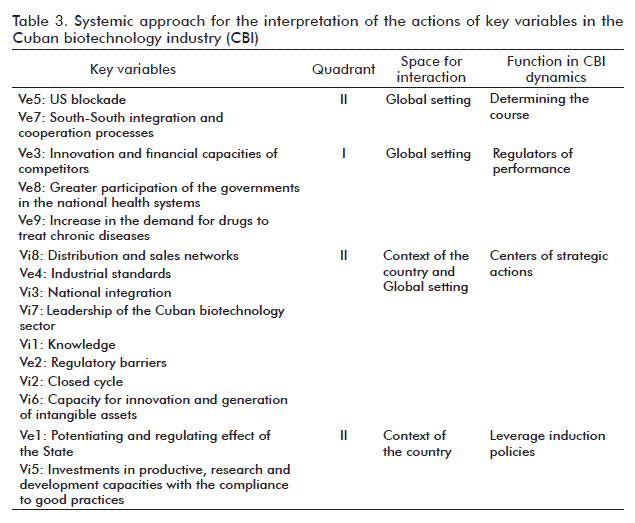
<P   align="justify" ><font size="2" face="Verdana, Arial, Helvetica, sans-serif">Of the 18 variables      analyzed, 12 are located in quadrant II (linkage variables, having high influence      and dependency), 3 are in I (driving variables, having high influence and      low dependency; all of which are external variables), 2 in III (results variables,      low influence and high dependency; both are internal variables) and an external      variable in IV. Internal variables were only found in quadrants II and III.      </font></P >       <P   align="justify" ><font size="2" face="Verdana, Arial, Helvetica, sans-serif">Using a structural      analysis with the MICMAC program we identified the key variables, corresponding      to those located in quadrants I and II: driving and linkage. Those classifying      as driving variables explain or determine the rest of the system. The linkage      variables are more relevant since any action upon them affects the rest, and      also affect themselves. <a href="/img/revistas/bta/v30n4/t0307413.gif">Table 3</a> groups the      functions of key variables in the setting, as a space for systemic interaction.      </font></P >       
<P   align="justify" ><font size="2" face="Verdana, Arial, Helvetica, sans-serif">The interpretation      of the indirect relationship matrix facilitates the specification of key variables      (driving and linkage), which explain the dynamics of the CBI (autonomous and      results variables are excluded). The definition of the function of each variable      offers consistency to the strategic performance of stakeholders participating      in the system. It also enables the explanation of the driving forces that      define the course and highlight the leverage induction policies, which act      as regulation centers that compel the competitiveness of the industry. </font></P >       <P   align="justify" >&nbsp;</P >       <P   ><font size="2" face="Verdana, Arial, Helvetica, sans-serif"><B><font size="3">VISION      OF THE CBI </font></b></font></P >   <FONT size="+1">        ]]></body>
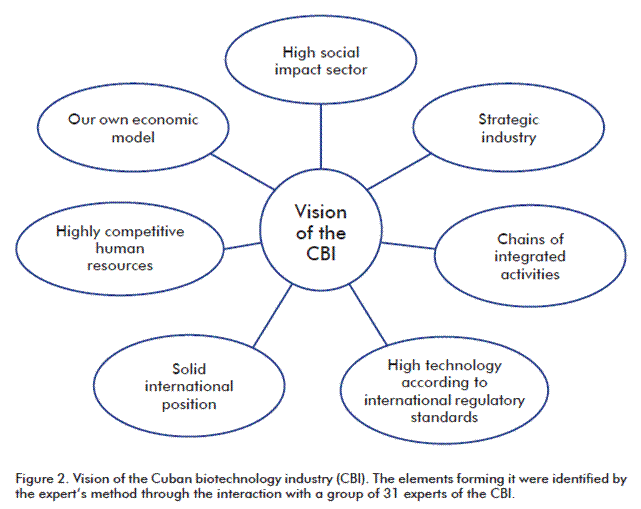
<body><![CDATA[<P   align="justify" ><font size="2" face="Verdana, Arial, Helvetica, sans-serif">The creation of an      image of the future considers the stages of key variables. The vision becomes      the compass for CBI progress; it not only shows the way, but also how far      or how close we are to the desired state, and on what competencies will the      transition to it depend. </font></P >   <FONT size="+1">        <P   align="justify" ><font size="2" face="Verdana, Arial, Helvetica, sans-serif">The exercise of the      vision generated many criteria regarding transformation that were validated      by the group of experts (<a href="/img/revistas/bta/v30n4/f0207413.gif">Figure 2</a>) and are      expressed below. </font></P >       
<P   ><font size="2" face="Verdana, Arial, Helvetica, sans-serif"><b>We are recognized      as a high social impact sector </b></font></P >       <P   align="justify" ><font size="2" face="Verdana, Arial, Helvetica, sans-serif">The products generated      have a high positive impact in health and the food supply of the Cuban population.      The first priority of the CBI is to meet the people&rsquo;s needs. </font></P >       <P   ><font size="2" face="Verdana, Arial, Helvetica, sans-serif"><b>We are recognized      as a strategic industry </b></font></P >       <P   align="justify" ><font size="2" face="Verdana, Arial, Helvetica, sans-serif">The State offers      a maximum priority to the development of the CBI, which has a center for the      sector&rsquo;s policy. The CBI is the first line of exportable goods in Cuba;      an expression of the strong connection between science and economy. Because      this industry is highly attractive for foreign capital, the strategic options      for partnerships are intensified; this has a growing impact in the technological      development of other domestic industries. </font></P >       <P   ><font size="2" face="Verdana, Arial, Helvetica, sans-serif"><b>We have chains      of integrated activities </b></font></P >       <P   align="justify" ><font size="2" face="Verdana, Arial, Helvetica, sans-serif">The high specialization      of the actors of the industry in the fields of their own activity prevents      internal competition and produces a synergy between the main activities and      participants in the chain of values, from the idea to the product. This leads      to a concentration in the key processes of the industry. The fusion of the      CBI with the domestic pharmaceutical industry generates new opportunities.      </font></P >       <P   ><font size="2" face="Verdana, Arial, Helvetica, sans-serif"><b>We are a high      technology industry that meets international regulatory standards </b></font></P >       <P   align="justify" ><font size="2" face="Verdana, Arial, Helvetica, sans-serif">The sector has a      balanced research-development portfolio that enables the diversification of      novel products. The self-sustainability of the industry makes it possible      to maintain the required levels of investment in key processes of research,      development, production and marketing, as a way of increasing its international      competitiveness. Its image is consolidated as &ldquo;the developing world&rsquo;s      most established biotechnology industry&rdquo; [7]. </font></P >       ]]></body>
<body><![CDATA[<P   ><font size="2" face="Verdana, Arial, Helvetica, sans-serif"><b>We have a solid      international position </b></font></P >       <P   align="justify" ><font size="2" face="Verdana, Arial, Helvetica, sans-serif">The integrated and      efficient output of marketing processes. The CBI increases its leadership      in Third World countries. Through its novel products and high standards, it      is present in First World markets and has strategic partnerships with partners      from industrialized countries and emerging economies, as those belonging to      the BRICS group (Brazil, Russia, India, China and South Africa). </font></P >       <P   ><font size="2" face="Verdana, Arial, Helvetica, sans-serif"><b>Our human resources      are highly competitive </b></font></P >       <P   align="justify" ><font size="2" face="Verdana, Arial, Helvetica, sans-serif">The highly specialized,      committed and motivated human resources have social acknowledgement for their      scientific work and impact in society. They find large possibilities for professional      development and promotion, through an academic training system according to      individual needs and those of the industry. Their income is directly related      to their results. </font></P >       <P   ><font size="2" face="Verdana, Arial, Helvetica, sans-serif"><b>We have our own      economic model </b></font></P >       <P   align="justify" ><font size="2" face="Verdana, Arial, Helvetica, sans-serif">The biotechnology      and pharmaceutical industry is a &ldquo;Higher Organization of Business Management&rdquo;      (OSDE, according to its Spanish acronym), working under the self-financing      principle. It is formed by enterprises having a high autonomy and responsibility.      The economic model of the OSDE makes it possible to join several management      forms (state, joint ventures between Cuba and other countries, enterprises      with 100 % Cuban capital abroad, and agreements with third countries in Cuba      and abroad) to achieve its strategic objectives. </font></P >       <P   align="justify" ><font size="2" face="Verdana, Arial, Helvetica, sans-serif">The evaluation of      the changes imposed by the vision built by the experts showed that aspirations      represent 59 % of the continuity of the success achieved; the rest is discontinuous.      According to the nature of the changes, 52 % is associated to modifications      of the economic model. The harmony and cohesion between the center of the      sectoral policy, the stakeholders of the industry and the State are necessary      for the sustainability of the sector. The importance of the changes is shown      in the leverage of the organizing resources found in 100 % of the transformations.      </font></P >       <P   align="justify" ><font size="2" face="Verdana, Arial, Helvetica, sans-serif">Nothing is spontaneous      in relation to uncertainty; and it is necessary, but not sufficient, to establish      the image with the purposes. The link between the future and the present time      demands the formulation of the main events defining the consistent strategic      performance [8]. The construction of the vision of the future as the desired      state is only possible when you have a draft of the architecture you desire,      in which the mutations or migration routes that will make the intentions possible,      are well designed. </font></P >       <P   align="justify" >&nbsp;</P >       <P   ><font size="2" face="Verdana, Arial, Helvetica, sans-serif"><B><font size="3">THE      ACTION TO BUILD THE DESIRED STATE AND THE COMPETITIVE SUSTAINABILITY OF THE      CBI </font></b></font></P >   <FONT size="+1">        ]]></body>
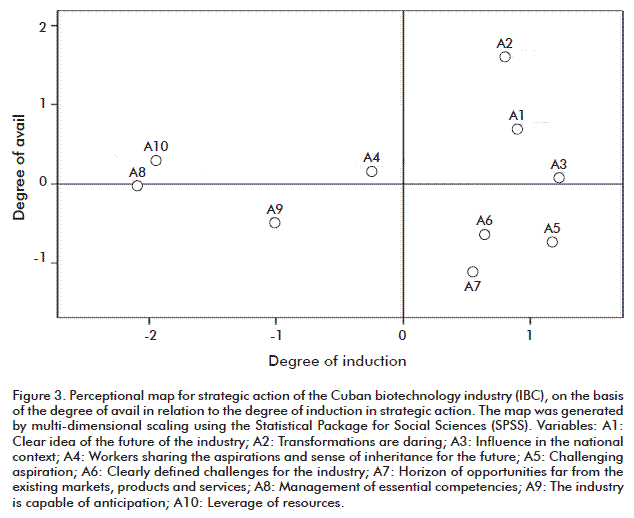
<body><![CDATA[<P   align="justify" ><font size="2" face="Verdana, Arial, Helvetica, sans-serif">A vision without      action is a dream. Only actions in the right direction for transforming purposes      can lead to the strategic management of the system. The strategic action of      the CBI, according to the perception of experts, reflects the high potential      for the consolidation of vital aspects that guarantee success for the future      (<a href="/img/revistas/bta/v30n4/f0307413.gif">Figure 3</a>). </font></P >   <FONT size="+1">        
<P   align="justify" ><font size="2" face="Verdana, Arial, Helvetica, sans-serif">To achieve strategic      action for the CBI it is indispensable to have workers and management involved      and with a sense of ownership of the most challenging aspiration. They must      have a clear sense of the heritage they are leaving to their successors, as      the sense of understanding the challenges for the anticipation and management      of the essential competencies, which will allow them to reach the desired      state (<a href="/img/revistas/bta/v30n4/t0407413.gif">Table 4</a>). </font></P >       
<P   align="justify" ><font size="2" face="Verdana, Arial, Helvetica, sans-serif">The construction      of the vision is not spontaneous. The conceptualization of the transformation      process from the present situation is necessary using a series of interrelated      actions. This makes it possible to drive the CBI towards the fulfillment of      strategic aspirations, which are specified in the action model. </font></P >       <P   align="justify" ><font size="2" face="Verdana, Arial, Helvetica, sans-serif">The first component      of the model must be highlighted: <I>Inductors of the deployment of the strategic      capacity.</I> This insists in the need of creating the action driven by the      workers forming part of the industry. Sharing the organizational vision is      a challenge for the strategic management of the CBI. The workers share the      strategic purposes; their personal and collective interests are correctly      represented; a dependency is created with the realization of the interests      of the working group that increases when performance is improved. </font></P >       <P   align="justify" ><font size="2" face="Verdana, Arial, Helvetica, sans-serif">We are dealing with      the design and management of a way to minimize the space between today and      to-morrow, so as to maximize the proportion of prospective benefits for the      future. For this, it is indispensible to have the strategic sustainability      of the priority of the State, the strengthening of industrial policy and updating      the appropriate economic model that corresponds to the needs of the CBI. </font></P >       <P   align="justify" ><font size="2" face="Verdana, Arial, Helvetica, sans-serif">Prahalad recognized      that the vision is a shared aspiration that enables the company to broaden      beyond the limits of the present resources, something providing a sense of      direction, of a common purpose, a sense of destiny, a unique and inspiring      challenge that demands respect and loyalty from each person of the organization      [9]. </font></P >       <P   align="justify" ><font size="2" face="Verdana, Arial, Helvetica, sans-serif">The vision built      and the components of the model correspond to the main transformation projected      for the adjustment of the Cuban economic model expressed in the Guidelines      of the Economic and Social Policy of the Party and the Revolution [10]. These      guidelines were approved during the VI Congress of the Cuban Communist Party      in order to update the Cuban economic model and they strengthen the autonomy      of enterprises and create the necessary bases for their operation. The initiatives      proposed for their implementation in the business sector of the CBI include:      </font></P >   </font></font></font></font></font></font></font></font></font></font></font></font></font></font></font></font></font></font></DIV >     <blockquote>        <DIV class="Sect"   >          <p><FONT size="+1" color="#000000"><FONT size="+1"><FONT size="+1"><FONT size="+1"><FONT size="+1"><FONT size="+1"><FONT size="+1"><FONT size="+1"><FONT size="+1"><FONT size="+1"><FONT size="+1"><FONT size="+1"><FONT size="+1"><FONT size="+1"><FONT size="+1"><FONT size="+1"><FONT size="+1"><FONT size="+1"><font size="2" face="Verdana, Arial, Helvetica, sans-serif">1.        Enterprises under the self-financing principle with the authority to import        and export. </font></font></font></font></font></font></font></font></font></font></font></font></font></font></font></font></font></font></font></p>         ]]></body>
<body><![CDATA[<p><FONT size="+1" color="#000000"><FONT size="+1"><FONT size="+1"><FONT size="+1"><FONT size="+1"><FONT size="+1"><FONT size="+1"><FONT size="+1"><FONT size="+1"><FONT size="+1"><FONT size="+1"><FONT size="+1"><FONT size="+1"><FONT size="+1"><FONT size="+1"><FONT size="+1"><FONT size="+1"><FONT size="+1"><font size="2" face="Verdana, Arial, Helvetica, sans-serif">2.        Enterprises with the possibility of investing 10 % of their gross sales        or net profits in research and development, as an essential form of ensuring        the sustainability of the industry. </font></font></font></font></font></font></font></font></font></font></font></font></font></font></font></font></font></font></font></p>         <p><FONT size="+1" color="#000000"><FONT size="+1"><FONT size="+1"><FONT size="+1"><FONT size="+1"><FONT size="+1"><FONT size="+1"><FONT size="+1"><FONT size="+1"><FONT size="+1"><FONT size="+1"><FONT size="+1"><FONT size="+1"><FONT size="+1"><FONT size="+1"><FONT size="+1"><FONT size="+1"><FONT size="+1"><font size="2" face="Verdana, Arial, Helvetica, sans-serif">3.        Pay the workers according to the economic results of the entity and create        stimulation funds that are awarded after complying with the State commitments        and meeting the established requirements. </font></font></font></font></font></font></font></font></font></font></font></font></font></font></font></font></font></font></font></p>   </DIV >       <DIV class="Sect"   >          <p><FONT size="+1" color="#000000"><FONT size="+1"><FONT size="+1"><FONT size="+1"><FONT size="+1"><FONT size="+1"><FONT size="+1"><FONT size="+1"><FONT size="+1"><FONT size="+1"><FONT size="+1"><FONT size="+1"><FONT size="+1"><FONT size="+1"><FONT size="+1"><FONT size="+1"><FONT size="+1"><FONT size="+1"><font size="2" face="Verdana, Arial, Helvetica, sans-serif">4.        Create a fund through profits (after paying taxes) that will be used in        minor investments related to re-equipping, modernizing and improving quality        standards. </font></font></font></font></font></font></font></font></font></font></font></font></font></font></font></font></font></font></font></p>         <p><FONT size="+1" color="#000000"><FONT size="+1"><FONT size="+1"><FONT size="+1"><FONT size="+1"><FONT size="+1"><FONT size="+1"><FONT size="+1"><FONT size="+1"><FONT size="+1"><FONT size="+1"><FONT size="+1"><FONT size="+1"><FONT size="+1"><FONT size="+1"><FONT size="+1"><FONT size="+1"><FONT size="+1"><font size="2" face="Verdana, Arial, Helvetica, sans-serif">        5. Create a salary fund through a percentage of the gross added value (GAV),        which is distributed according to a regulation designed and approved by        each entity. </font></font></font></font></font></font></font></font></font></font></font></font></font></font></font></font></font></font></font></p>   </DIV > </blockquote>     <DIV class="Sect"   ><FONT size="+1" color="#000000"><FONT size="+1"><FONT size="+1"><FONT size="+1"><FONT size="+1"><FONT size="+1"><FONT size="+1"><FONT size="+1"><FONT size="+1"><FONT size="+1"><FONT size="+1"><FONT size="+1"><FONT size="+1"><FONT size="+1"><FONT size="+1"><FONT size="+1"><FONT size="+1"><FONT size="+1">        <P   align="justify" ><font size="2" face="Verdana, Arial, Helvetica, sans-serif">Updating the Cuban      economic model is an important leverage that catalyzes the change of the industry      towards the sustainability of its leadership, by consolidating human capital      as the source of competitive advantage that is able to generate scientific      results and high incomes. It is a pivot for Cuban economic and social development,      leading to the implementation of the vision stated in this paper. </font></P >       <P   align="justify" >&nbsp;</P >       <P   ><font size="2" face="Verdana, Arial, Helvetica, sans-serif"><B><font size="3">CONCLUSIONS      </font></b></font></P >   <FONT size="+1">        <P   align="justify" ><font size="2" face="Verdana, Arial, Helvetica, sans-serif">The importance of      devising the strategic actions and particularly considering the strengthening      of leverage induction policies for competitiveness makes it possible for the      vision of the CBI, as an innovative aspiration, to modulate the behavior of      the interacting actors, and they are shared as personal and collective aspirations      that are fundamental for the compliance of the State&rsquo;s mandate. </font></P >   <FONT size="+1">        ]]></body>
<body><![CDATA[<P   align="justify" ><font size="2" face="Verdana, Arial, Helvetica, sans-serif">The vision serves      as a compass for strategic actions that will enable the creation, starting      today, of the essential competencies that will place the industry in its space      for the future. This is the only assurance for the construction of the desired      state in the advancement and sustainability of the positions reached, and      it clarifies the main strategic decisions that will facilitate its intentional      and conscientious construction. </font></P >       <P   align="justify" ><font size="2" face="Verdana, Arial, Helvetica, sans-serif">The prospective analysis      presented here was able to identify the vitalizing variables of the CBI as      a system and define the key aspects for strategic action. Updating the Cuban      economic model, strengthening the strategic priority of the State and consolidating      the center of the sectoral policy and leadership, are strategic pillars in      the reduction of risks and negative impacts for the future of the CBI. </font></P >       <P   align="justify" >&nbsp;</P >       <P   align="justify" > </P >       <P   align="justify" ><font size="3" face="Verdana, Arial, Helvetica, sans-serif"><B>REFERENCES </b></font></P >       <!-- ref --><P   align="justify" ><font size="2" face="Verdana, Arial, Helvetica, sans-serif">1. Lage A. La econom&iacute;a      del conocimiento y el socialismo: &iquest;Hay una oportunidad para el desarrollo?      Cuba Socialista. 2006 [cited 2013 Sept 12];41:25-43. Available from: <FONT color="#0000FF"><a href="http://www.cubasocialista.cu/index.php?q=la-economia-del-conocimiento-y-el%20socialismo&page=0,0" target="_blank">http://www.cubasocialista.cu/index.php?q=la-economia-del-conocimiento-y-el%20socialismo&amp;page=0,0</a>      </font></font></P >   <FONT size="+1"><FONT color="#0000FF"><FONT color="#000000">        <!-- ref --><P   align="justify" ><font size="2" face="Verdana, Arial, Helvetica, sans-serif">2. Romero I, Mauri      M, Mart&iacute;nez D, Gonz&aacute;lez B. Aportes de la biotecnolog&iacute;a      al pensamiento estrat&eacute;gico cubano. Econom&iacute;a y Desarrollo. 2012;147(1):107-23.          </font></P >       <!-- ref --><P   align="justify" ><font size="2" face="Verdana, Arial, Helvetica, sans-serif">3. Hamel G, Prahalad      CK. Compitiendo por el futuro. Estrategia crucial para crear los mercados      del ma&ntilde;ana. Barcelona: Ariel, Editorial S.A.; 1995.     </font></P >       ]]></body>
<body><![CDATA[<!-- ref --><P   align="justify" ><font size="2" face="Verdana, Arial, Helvetica, sans-serif">4. Godet M, Durance      P. Prospectiva Estrat&eacute;gica: problemas y m&eacute;todos. 2da. Ed. San      Sebasti&aacute;n: Prospektiker; 2007 [cited 2013 Jun 14]. Available from:      <FONT color="#0000FF"><a href="http://www.prospektiker.es/prospectiva/caja-herramientas-2007.pdf" target="_blank">http://www.prospektiker.es/prospectiva/caja-herramientas-2007.pdf</a>      </font></font></P >   <FONT color="#0000FF"><FONT color="#000000">        <!-- ref --><P   align="justify" ><font size="2" face="Verdana, Arial, Helvetica, sans-serif">5. Senge PM. La quinta      disciplina. El arte y la pr&aacute;ctica de la organizaci&oacute;n abierta      al aprendizaje. 3ra. Ed. Buenos Aires: Ediciones Granica S.A.; 1992.     </font></P >       <!-- ref --><P   align="justify" ><font size="2" face="Verdana, Arial, Helvetica, sans-serif">6. Grant R. The knowledge      based view of the firm. Oxford: Oxford University Press; 2002.     </font></P >       <P   align="justify" ><font size="2" face="Verdana, Arial, Helvetica, sans-serif">7. Cuba&rsquo;s biotech      boom [editorial]. Nature. 2009;457:130. </font></P >       <!-- ref --><P   align="justify" ><font size="2" face="Verdana, Arial, Helvetica, sans-serif">8. Mintzberg H, Quinn      J, Voyer J. El proceso estrat&eacute;gico. Conceptos, contextos y casos. M&eacute;xico,      D.F.: Prentice Hall; 1997.     </font></P >       <!-- ref --><P   align="justify" ><font size="2" face="Verdana, Arial, Helvetica, sans-serif">9. Prahalad CK, Hamel      G. Competing for the Future. Boston, Massachusetts: Harvard Business School      Press; 1994.     </font></P >       ]]></body>
<body><![CDATA[<!-- ref --><P   align="justify" ><font size="2" face="Verdana, Arial, Helvetica, sans-serif">10. Partido Comunista      de Cuba. Lineamientos de la pol&iacute;tica econ&oacute;mica y social del      Partido y la Revoluci&oacute;n. 2011 [cited 2013 Sep 12]. Available from:      <FONT color="#0000FF"><a href="http://granma.co.cu/secciones/6to-congreso-pcc/Folleto%20Lineamientos%20VI%20Cong.pdf" target="_blank">http://granma.co.cu/secciones/6to-congreso-pcc/Folleto%20Lineamientos%20VI%20Cong.pdf</a></font></font></P >       <P   align="justify" >&nbsp;</P >       <P   align="justify" >&nbsp;</P >   <FONT size="+1"><FONT color="#0000FF">        <P   align="justify" > </P >   <FONT color="#000000">        <P   align="justify" > </P >       <P   align="justify" ><font size="2" face="Verdana, Arial, Helvetica, sans-serif">Received in June,      2013.     <br>     </font><font size="2" face="Verdana, Arial, Helvetica, sans-serif">Accepted      in September, 2013. </font></P >       <P   align="justify" >&nbsp;</P >       <P   align="justify" >&nbsp;</P >       <P   > </P >       ]]></body>
<body><![CDATA[<P   > </P >       <P   ><font size="2" face="Verdana, Arial, Helvetica, sans-serif"><i>Mayda Mauri</i>.      Direcci&oacute;n de Pol&iacute;tica Comercial, Negocios y Colaboraci&oacute;n      Internacional, BioCubaFarma. La Habana, Cuba. E-mail: <a href="mailto:mayda.mauri@oc.biocubafarma.cu">mayda.mauri@oc.biocubafarma.cu</a>.      </font></P >   <FONT size="+1">        <P   > </P >   </font></font></font></font></font></font></font></font></font></font></font></font></font></font></font></font></font></font></font></font></font></font></font></font></font></font></font></font></font></DIV >      ]]></body><back>
<ref-list>
<ref id="B1">
<label>1</label><nlm-citation citation-type="journal">
<person-group person-group-type="author">
<name>
<surname><![CDATA[Lage]]></surname>
<given-names><![CDATA[A]]></given-names>
</name>
</person-group>
<article-title xml:lang="es"><![CDATA[La economía del conocimiento y el socialismo: ¿Hay una oportunidad para el desarrollo?]]></article-title>
<source><![CDATA[Cuba Socialista]]></source>
<year>2006</year>
<volume>41</volume>
<page-range>25-43</page-range></nlm-citation>
</ref>
<ref id="B2">
<label>2</label><nlm-citation citation-type="journal">
<person-group person-group-type="author">
<name>
<surname><![CDATA[Romero]]></surname>
<given-names><![CDATA[I]]></given-names>
</name>
<name>
<surname><![CDATA[Mauri]]></surname>
<given-names><![CDATA[M]]></given-names>
</name>
<name>
<surname><![CDATA[Martínez]]></surname>
<given-names><![CDATA[D]]></given-names>
</name>
<name>
<surname><![CDATA[González]]></surname>
<given-names><![CDATA[B]]></given-names>
</name>
</person-group>
<article-title xml:lang="es"><![CDATA[Aportes de la biotecnología al pensamiento estratégico cubano]]></article-title>
<source><![CDATA[Economía y Desarrollo]]></source>
<year>2012</year>
<volume>147</volume>
<numero>1</numero>
<issue>1</issue>
<page-range>107-23</page-range></nlm-citation>
</ref>
<ref id="B3">
<label>3</label><nlm-citation citation-type="book">
<person-group person-group-type="author">
<name>
<surname><![CDATA[Hamel]]></surname>
<given-names><![CDATA[G]]></given-names>
</name>
<name>
<surname><![CDATA[Prahalad]]></surname>
<given-names><![CDATA[CK]]></given-names>
</name>
</person-group>
<source><![CDATA[Compitiendo por el futuro. Estrategia crucial para crear los mercados del mañana]]></source>
<year>1995</year>
<publisher-loc><![CDATA[Barcelona ]]></publisher-loc>
<publisher-name><![CDATA[Ariel, Editorial S.A.]]></publisher-name>
</nlm-citation>
</ref>
<ref id="B4">
<label>4</label><nlm-citation citation-type="book">
<person-group person-group-type="author">
<name>
<surname><![CDATA[Godet]]></surname>
<given-names><![CDATA[M]]></given-names>
</name>
<name>
<surname><![CDATA[Durance]]></surname>
<given-names><![CDATA[P]]></given-names>
</name>
</person-group>
<source><![CDATA[Prospectiva Estratégica: problemas y métodos]]></source>
<year>2007</year>
<edition>2</edition>
<publisher-loc><![CDATA[San Sebastián ]]></publisher-loc>
<publisher-name><![CDATA[Prospektiker]]></publisher-name>
</nlm-citation>
</ref>
<ref id="B5">
<label>5</label><nlm-citation citation-type="book">
<person-group person-group-type="author">
<name>
<surname><![CDATA[Senge]]></surname>
<given-names><![CDATA[PM]]></given-names>
</name>
</person-group>
<source><![CDATA[La quinta disciplina. El arte y la práctica de la organización abierta al aprendizaje]]></source>
<year>1992</year>
<edition>3</edition>
<publisher-loc><![CDATA[Buenos Aires ]]></publisher-loc>
<publisher-name><![CDATA[Ediciones Granica S.A.]]></publisher-name>
</nlm-citation>
</ref>
<ref id="B6">
<label>6</label><nlm-citation citation-type="book">
<person-group person-group-type="author">
<name>
<surname><![CDATA[Grant]]></surname>
<given-names><![CDATA[R]]></given-names>
</name>
</person-group>
<source><![CDATA[The knowledge based view of the firm]]></source>
<year>2002</year>
<publisher-loc><![CDATA[Oxford ]]></publisher-loc>
<publisher-name><![CDATA[Oxford University Press]]></publisher-name>
</nlm-citation>
</ref>
<ref id="B7">
<label>7</label><nlm-citation citation-type="journal">
<article-title xml:lang="en"><![CDATA[Cuba&#146;s biotech boom]]></article-title>
<source><![CDATA[Nature]]></source>
<year>2009</year>
<volume>457</volume>
<page-range>130</page-range></nlm-citation>
</ref>
<ref id="B8">
<label>8</label><nlm-citation citation-type="book">
<person-group person-group-type="author">
<name>
<surname><![CDATA[Mintzberg]]></surname>
<given-names><![CDATA[H]]></given-names>
</name>
<name>
<surname><![CDATA[Quinn]]></surname>
<given-names><![CDATA[J]]></given-names>
</name>
<name>
<surname><![CDATA[Voyer]]></surname>
<given-names><![CDATA[J]]></given-names>
</name>
</person-group>
<source><![CDATA[El proceso estratégico. Conceptos, contextos y casos]]></source>
<year>1997</year>
<publisher-loc><![CDATA[México, D.F. ]]></publisher-loc>
<publisher-name><![CDATA[Prentice Hall]]></publisher-name>
</nlm-citation>
</ref>
<ref id="B9">
<label>9</label><nlm-citation citation-type="book">
<person-group person-group-type="author">
<name>
<surname><![CDATA[Prahalad]]></surname>
<given-names><![CDATA[CK]]></given-names>
</name>
<name>
<surname><![CDATA[Hamel]]></surname>
<given-names><![CDATA[G]]></given-names>
</name>
</person-group>
<source><![CDATA[Competing for the Future]]></source>
<year>1994</year>
<publisher-loc><![CDATA[Boston, Massachusetts ]]></publisher-loc>
<publisher-name><![CDATA[Harvard Business School Press]]></publisher-name>
</nlm-citation>
</ref>
<ref id="B10">
<label>10</label><nlm-citation citation-type="">
<collab>Partido Comunista de Cuba</collab>
<source><![CDATA[Lineamientos de la política económica y social del Partido y la Revolución]]></source>
<year>2011</year>
</nlm-citation>
</ref>
</ref-list>
</back>
</article>