<?xml version="1.0" encoding="ISO-8859-1"?><article xmlns:mml="http://www.w3.org/1998/Math/MathML" xmlns:xlink="http://www.w3.org/1999/xlink" xmlns:xsi="http://www.w3.org/2001/XMLSchema-instance">
<front>
<journal-meta>
<journal-id>1027-2852</journal-id>
<journal-title><![CDATA[Biotecnología Aplicada]]></journal-title>
<abbrev-journal-title><![CDATA[Biotecnol Apl]]></abbrev-journal-title>
<issn>1027-2852</issn>
<publisher>
<publisher-name><![CDATA[Editorial Elfos Scientiae]]></publisher-name>
</publisher>
</journal-meta>
<article-meta>
<article-id>S1027-28522016000100004</article-id>
<title-group>
<article-title xml:lang="en"><![CDATA[Validation of a sandwich ELISA for the quantification of the main toxin (Pt) of Bordetella pertussis]]></article-title>
<article-title xml:lang="es"><![CDATA[Validación de un ensayo de ELISA sandwich para la cuantificación de la toxina principal (Pt) de Bordetella pertussis]]></article-title>
</title-group>
<contrib-group>
<contrib contrib-type="author">
<name>
<surname><![CDATA[Lemos-Pérez]]></surname>
<given-names><![CDATA[Gilda]]></given-names>
</name>
<xref ref-type="aff" rid="A01"/>
</contrib>
<contrib contrib-type="author">
<name>
<surname><![CDATA[Delgado-Espina]]></surname>
<given-names><![CDATA[Maité]]></given-names>
</name>
<xref ref-type="aff" rid="A01"/>
</contrib>
<contrib contrib-type="author">
<name>
<surname><![CDATA[Quintana-Vazquez]]></surname>
<given-names><![CDATA[Diógenes]]></given-names>
</name>
<xref ref-type="aff" rid="A01"/>
</contrib>
<contrib contrib-type="author">
<name>
<surname><![CDATA[Alvarez-Acosta]]></surname>
<given-names><![CDATA[Anabel]]></given-names>
</name>
<xref ref-type="aff" rid="A01"/>
</contrib>
<contrib contrib-type="author">
<name>
<surname><![CDATA[Coizeau-Rodríguez]]></surname>
<given-names><![CDATA[Edelgis]]></given-names>
</name>
<xref ref-type="aff" rid="A01"/>
</contrib>
<contrib contrib-type="author">
<name>
<surname><![CDATA[Caballero-Menéndez]]></surname>
<given-names><![CDATA[Evelin]]></given-names>
</name>
<xref ref-type="aff" rid="A01"/>
</contrib>
</contrib-group>
<aff id="A01">
<institution><![CDATA[,Centro de Ingeniería Genética y Biotecnología, CIGB  ]]></institution>
<addr-line><![CDATA[La Habana ]]></addr-line>
<country>Cuba</country>
</aff>
<pub-date pub-type="pub">
<day>00</day>
<month>03</month>
<year>2016</year>
</pub-date>
<pub-date pub-type="epub">
<day>00</day>
<month>03</month>
<year>2016</year>
</pub-date>
<volume>33</volume>
<numero>1</numero>
<fpage>1301</fpage>
<lpage>1306</lpage>
<copyright-statement/>
<copyright-year/>
<self-uri xlink:href="http://scielo.sld.cu/scielo.php?script=sci_arttext&amp;pid=S1027-28522016000100004&amp;lng=en&amp;nrm=iso"></self-uri><self-uri xlink:href="http://scielo.sld.cu/scielo.php?script=sci_abstract&amp;pid=S1027-28522016000100004&amp;lng=en&amp;nrm=iso"></self-uri><self-uri xlink:href="http://scielo.sld.cu/scielo.php?script=sci_pdf&amp;pid=S1027-28522016000100004&amp;lng=en&amp;nrm=iso"></self-uri><kwd-group>
<kwd lng="en"><![CDATA[ELISA]]></kwd>
<kwd lng="en"><![CDATA[validation]]></kwd>
<kwd lng="en"><![CDATA[Pertussis]]></kwd>
<kwd lng="en"><![CDATA[Ptg]]></kwd>
<kwd lng="es"><![CDATA[ELISA]]></kwd>
<kwd lng="es"><![CDATA[validación]]></kwd>
<kwd lng="es"><![CDATA[Pertussis]]></kwd>
<kwd lng="es"><![CDATA[Ptg]]></kwd>
</kwd-group>
</article-meta>
</front><body><![CDATA[ <DIV class="Sect"   >        <P align="right"   ><font size="2" color="#000000" face="Verdana, Arial, Helvetica, sans-serif"><b>TECHNIQUE      </b></font></P >       <P align="right"   >&nbsp;</P >   <FONT size="+1" color="#000000">        <P   > </P >   <FONT size="+1">        <P   ><font size="4"><b><font color="#211E1F" face="Verdana, Arial, Helvetica, sans-serif">Validation      of a sandwich ELISA for the quantification of the main toxin (Pt) of <i>Bordetella      pertussis</i> </font></b></font></P >       <P   >&nbsp;</P >   <FONT size="+1" color="#211E1F">        <P   ><font size="2" face="Verdana, Arial, Helvetica, sans-serif"><B><font size="3">Validaci&oacute;n      de un ensayo de ELISA sandwich para la cuantificaci&oacute;n de la toxina      principal (Pt) de <I>Bordetella pertussis</I> </font></B></font></P >       <P   >&nbsp;</P >       <P   >&nbsp;</P >   <FONT size="+1">        <P   > </P >   <FONT size="+1" color="#000000">       ]]></body>
<body><![CDATA[<P   ><b><font size="2" color="#211E1F" face="Verdana, Arial, Helvetica, sans-serif">Gilda      Lemos-P&eacute;rez, Mait&eacute; Delgado-Espina, Di&oacute;genes Quintana-Vazquez,      Anabel Alvarez-Acosta, Edelgis Coizeau-Rodr&iacute;guez, Evelin Caballero-Men&eacute;ndez      </font></b></P >   <FONT size="+1" color="#211E1F">        <P   > </P >   <FONT size="+1" color="#000000">        <P   ><font size="2" color="#211E1F" face="Verdana, Arial, Helvetica, sans-serif">Centro      de Ingenier&iacute;a Gen&eacute;tica y Biotecnolog&iacute;a, CIGB. Ave. 31      e/ 158 y 190, Cubanac&aacute;n, Playa, CP 11600, La Habana, Cuba. </font></P >       <P   >&nbsp;</P >       <P   >&nbsp;</P >   <FONT size="+1" color="#211E1F">        <P   > </P >       <P   > </P >   <FONT size="+1" color="#000000"> </font></font></font></font></font></font></font></font></font>   <hr>   <FONT size="+1" color="#000000"><FONT size="+1"><FONT size="+1" color="#211E1F"><FONT size="+1"><FONT size="+1" color="#000000"><FONT size="+1" color="#211E1F"><FONT size="+1" color="#000000"><FONT size="+1" color="#211E1F"><FONT size="+1" color="#000000">        <P   ><font size="2" color="#211E1F" face="Verdana, Arial, Helvetica, sans-serif"><B>ABSTRACT      </b></font></P >   <FONT size="+1" color="#211E1F">        <P   ><font size="2" face="Verdana, Arial, Helvetica, sans-serif"><i>Bordetella pertussis</i>      bacterium causes a highly contagious respiratory disease named Pertussis or      whooping cough, which represents a major threat to public health. Pt is the      main toxin of <i>B. pertussis</i> and one of the most important virulence      factors. The inactivated toxin is considered the major protective antigen      in all the new acellular vaccines available today. In this work, a previously      established sandwich capture ELISA test for a genetically detoxified Pertussis      toxin (Ptg) was validated, with the aim of monitoring the expression of Ptg      in bacterial cell culture, and to quantify the antigen throughout the purification      process. The validation of this method is a requirement of the pharmaceutical      industry; therefore, extensive experiments were performed in order to employ      the assay as an analytical tool. The intra- and inter-assay precision was      tested and proved a robust starting platform for the assay. The repeatability      for the assay was determined using a calibration curve and spiked samples.      The assay had a coefficient of variation (CV) of less than 10 %. The inter-assay      precision (CV) was lower than 20 % for the calibration curve and lower than      10 % for control samples. Dilution linearity and parallelism were demonstrated.      Accuracy (spike recovery) for all concentrations was shown in the range 80-120      %. This assay is highly accurate and reproducible in determining the levels      of Ptg in spiked samples, fulfilling the most stringent acceptance criteria      and being adequate for the intended analytical purpose. It is currently being      applied as an analytical tool in production process development of pertussis      antigens for vaccine candidates.</font></P >       <P   ><font size="2" face="Verdana, Arial, Helvetica, sans-serif"><I><b>Keywords:</b>      </I>ELISA, validation, Pertussis, Ptg. </font></P >   </font></font></font></font></font></font></font></font></font></font>    <hr>   <FONT size="+1" color="#000000"><FONT size="+1"><FONT size="+1" color="#211E1F"><FONT size="+1"><FONT size="+1" color="#000000"><FONT size="+1" color="#211E1F"><FONT size="+1" color="#000000"><FONT size="+1" color="#211E1F"><FONT size="+1" color="#000000"><FONT size="+1" color="#211E1F">        ]]></body>
<body><![CDATA[<P   ><font size="2" face="Verdana, Arial, Helvetica, sans-serif"><B>RESUMEN </b></font></P >       <P   ><font size="2" face="Verdana, Arial, Helvetica, sans-serif">La bacteria <i>Bordetella      pertussis</i> causa una enfermedad respiratoria altamente contagiosa llamada      Pertusis o tos ferina, la cual es una gran amenaza para la salud p&uacute;blica.      Su principal toxina, la Pt, es uno de los factores virulentos m&aacute;s relevantes      de esta bacteria, e inactivada se considera como uno de los ant&iacute;genos      que confiere mayor protecci&oacute;n en las nuevas vacunas acelulares disponibles.      En este trabajo se valid&oacute; un ensayo previamente establecido de tipo      ELISA sandwich de captura para la cuantificaci&oacute;n de una variante de      Pt gen&eacute;ticamente detoxificada (Ptg), pues su disponibilidad como herramienta      anal&iacute;tica depende de su validaci&oacute;n para satisfacer los requerimientos      de la industria farmac&eacute;utica. La precisi&oacute;n intra- e inter-ensayo      fue evaluada y se demostr&oacute; la robustez de la prueba. La repetibilidad      del ensayo se determin&oacute; mediante una curva de calibraci&oacute;n y      las muestras dopadas, con un coeficiente de variaci&oacute;n (CV) menor del      10 %. La precisi&oacute;n inter-ensayo (CV) fue menor del 20 % para la curva      de calibraci&oacute;n y menor del 10 % para las muestras controles, y se demostr&oacute;      la linealidad y el paralelismo del ensayo. La exactitud se mantuvo en un intervalo      entre el 80 y el 120 % para todas las concentraciones evaluadas. Este ensayo      es altamente exacto y reproducible para la detecci&oacute;n de los niveles      de Ptg en muestras dopadas, y re&uacute;ne los criterios de aceptaci&oacute;n      m&aacute;s estrictos. Se emplea actualmente como una herramienta anal&iacute;tica      en el desarrollo del proceso productivo de los ant&iacute;genos de pertussis      para la obtenci&oacute;n de candidatos vacunales.</font></P >       <P   ><font size="2" face="Verdana, Arial, Helvetica, sans-serif"><I><b>Palabras clave:</b>      </I>ELISA, validaci&oacute;n, Pertussis, Ptg. </font></P >   </font></font></font></font></font></font></font></font></font></font>    <hr>   <FONT size="+1" color="#000000"><FONT size="+1"><FONT size="+1" color="#211E1F"><FONT size="+1"><FONT size="+1" color="#000000"><FONT size="+1" color="#211E1F"><FONT size="+1" color="#000000"><FONT size="+1" color="#211E1F"><FONT size="+1" color="#000000"><FONT size="+1" color="#211E1F">        <P   >&nbsp;</P >       <P   >&nbsp;</P >       <P   ><font size="3" face="Verdana, Arial, Helvetica, sans-serif"><b>INTRODUCTION </b></font></P >       <P   > </P >       <P   ><i><font size="2" face="Verdana, Arial, Helvetica, sans-serif">Bordetella pertussis</font></i><font size="2" face="Verdana, Arial, Helvetica, sans-serif">,      a Gram negative bacillus, was first described by Bordet and Gengou in 1906      [1]. The bacterium causes a highly contagious respiratory disease named pertussis      or whooping cough, which actually represents a major threat to public health.      In 2008, about 16 million cases of pertussis occurred worldwide and that about      195 000 children died from the disease, making pertussis the fourth largest      cause of vaccine-preventable death in children less than five years old [2].      The bacterium is transmitted directly from human to human, probably via aerosolized      respiratory droplets. Severe pertussis can cause apnea, pneumonia, pulmonary      hypertension, hypoxemic respiratory failure, and lead ultimately to death      [3]. </font></P >       <P   ><font size="2" face="Verdana, Arial, Helvetica, sans-serif">In the late 1990s,      concerns about whole-cell pertussis vaccine (wP) safety led to the development      of more purified (acellular) pertussis vaccines (aP), with successful clinical      trials and associated with a lower frequency of adverse reactions [4-7]. New      formulations of acellular <i>B. pertussis</i> vaccines containing protective      antigens in different combinations have been proved to be safer, less reactogenic      and more reliable to introduce in mass vaccination [8-11]. Moreover, replacing      the wP vaccine with the aP vaccines increased the pertussis vaccination coverage      among newborns and infants. Although vaccination is the most effective preventive      control measure, both natural and artificial immunity wane over time, and      thus the protection offered by current vaccines is not long-lasting. For that      reason, pertussis still remains a challenging public health problem and resurgence      has occurred in some countries, the highest frequency in developed countries,      with well-established vaccina-tion programs, particularly among adolescents      and young adults [12]. </font></P >       <P   ><font size="2" face="Verdana, Arial, Helvetica, sans-serif">The pertussis toxin      (Pt) is the main toxin of <i>B. pertussis</i> and one of the most important      virulence factors [13]. The protein is globular, with a molecular weight of      117 kDa. Pt has several biological activities and is composed of five subunits,      S1 to S5, which assemble into two functionally distinct moieties [13]. The      S1 subunit is responsible for the enzymatic activity, while subunits S2 to      S5 are involved in binding to the target cell [14]. Pt induces high antibody      levels after infection or vaccination with classical whole cell vaccines,      and the toxin provides full protection against challenge in mouse models.      For these reasons, inactivated Pt is considered the major protective antigen      in all the new acellular vaccines available today [15, 16]. </font></P >       ]]></body>
<body><![CDATA[<P   ><font size="2" face="Verdana, Arial, Helvetica, sans-serif">Recently, we started      the development of a process to obtain an acellular pertussis vaccine [17].      The new vaccine components are obtained from a <i>B. pertussis</i> strain      genetically modified to produce a genetically detoxified pertussis toxin (Ptg).      It was also engineered to express the Pertactin 2 protein (Prn2), a variant      most frequently found in clinical isolates [18]. </font></P >       <P   ><font size="2" face="Verdana, Arial, Helvetica, sans-serif">This work was aimed      to the validation of a pre-established Ptg-capture ELISA [17], which is intended      to be used to monitor the expression of Ptg during bacterial cell growth and      for antigen quantification throughout the isolation process. This assay is      a modification of a previously reported Fetuin-capture ELISA tests [19], developed      to determine antibodies against Pt. The validation of this method is a requirement      of the pharmaceutical industry to guarantee the results reliability [20, 21].      The sandwich ELISA was validated for the control process of the production      of Ptg, allowing the assessment of antigen recovery based on concentration      values, with precision and accuracy complying with current international regulations.      </font></P >       <P   >&nbsp;</P >       <P   ><font size="3" face="Verdana, Arial, Helvetica, sans-serif"><b>MATERIALS AND      METHODS </b> </font></P >       <P   ><font size="2" face="Verdana, Arial, Helvetica, sans-serif"><b>Bacterial culture      </b> </font></P >       <P   ><font size="2" face="Verdana, Arial, Helvetica, sans-serif"><i>B. pertussis</i>      strain BpCNIC0311 [18] was grown for 18 h in the defined THIJS medium described      by Thalen <i>et al</i>. [22], modified by the addition of amino acids and      2,6-di-o-dimethyl-beta-cyclodextrin. The cultures were maintained at pH 7.3,      35 &deg;C, under 20 &plusmn; 5 % oxygen atmosphere and agitation at 100-150      rpm. </font></P >       <P   ><font size="2" face="Verdana, Arial, Helvetica, sans-serif"><b>Biological reagents</b>      </font></P >       <P   ><font size="2" face="Verdana, Arial, Helvetica, sans-serif">The Reference Material      (RM) was composed of <i>B. pertussis</i> culture supernatant at 6 &mu;g/mL      concentration (code PER-01-1111), prepared and supplied by the Stability and      Reference Materials Group, Quality Control Department, Center for Genetic      Engineering and Biotechnology (CIGB, Havana, Cuba). The Ptg concentration      in the culture supernatant was previously verified against a NIBSC Pt reference      protein (JNIH 90/518) [17]. </font></P >       <P   ><font size="2" face="Verdana, Arial, Helvetica, sans-serif">The purified Ptg      protein was obtained using an experimental procedure based on the protocol      reported by &Ouml;zcengiz <i>et al</i>. [13]. The protein was isolated from      NaCl-washed <i>B. pertussis</i> cells and clarified culture supernatant. The      Ptg was further purified by sequential filtration and ion exchange chromatography      [18]. Samples of the active pharmaceutical ingredient (API) were used to prepare      Quality Control samples (QCs) used for test validation. </font></P >       <P   ><font size="2" face="Verdana, Arial, Helvetica, sans-serif">The horseradish peroxidase-MAb      conjugate against Ptg (2G3-peroxidase) was produced and supplied by the Center      for Genetic Engineering and Biotechnology of Sancti Sp&iacute;ritus (CIGBSS).      Fetuin (Cat. # F3004) was purchased from Sigma-Aldrich, USA. </font></P >       ]]></body>
<body><![CDATA[<P   ><font size="2" face="Verdana, Arial, Helvetica, sans-serif"><b>Sodium dodecyl      sulphate-polyacrylamide electrophoresis (SDS-PAGE) </b></font></P >       <P   ><font size="2" face="Verdana, Arial, Helvetica, sans-serif">Polyacrylamide gel      electrophoresis was performed as described by Laemmli [23] on a 15 % gel.      Culture supernatant samples were previously concentrated 10 to 18-fold by      using a Centricon YM-10 (Millipore, USA). Samples were boiled at 100 &deg;C      for 10 min in the sample buffer containing 2 % of 2-mercaptoethanol. The gel      was visualized by zinc-imidazole reverse staining technique [24]. Protein      expression levels were estimated by densitometric analysis of SDS-PAGE. SDS-PAGE      Molecular Weight Standards Broad Range (Cat # 161-0317, Biorad, USA) was used      for molecular weight estimation. </font></P >       <P   ><font size="2" face="Verdana, Arial, Helvetica, sans-serif"><b>Protein quantification      </b> </font></P >       <P   ><font size="2" face="Verdana, Arial, Helvetica, sans-serif">Total protein quantification      was determined with the BCA protein assay kit (Pierce/ThermoFisher, Rockford,      USA), using bovine serum albumin (BSA) as the calibrator. The linear regression      coefficient (r<sup>2</sup>) was above 0.99. The amounts of Ptg in bacterial      cell culture supernatants were estimated combining SDS-PAGE densitometric      analysis and total protein quantification by the BCA colorimetric method and      UV absorbance at 260 and 260 nm [26], by the formula: Protein (mg/mL) = 1.55      A<sub>280</sub> &ndash; 0.76 A<sub>260</sub>. </font></P >       <P   ><font size="2" face="Verdana, Arial, Helvetica, sans-serif"><b>Established Ptg-capture      ELISA procedure </b></font></P >       <P   ><font size="2" face="Verdana, Arial, Helvetica, sans-serif">Ptg-capture ELISA      is a modification of Fetuin-capture method first described by Wong and Skelton      in 1988 [19]. Costar 3590 plates were coated with 4 &mu;g of Fetuin per well      in coating buffer (0.1 M carbonate/ bicarbonate buffer; pH 9.6). The plates      were incubated at 37 &deg;C for 1 h. After washing three times with PBS (2.68      mM KCl, 1.47 mM KH<sub>2</sub>PO<sub>4</sub>, 136.89 mM NaCl, 8.1 mM Na<sub>2</sub>HPO<sub>4</sub>)      and 0.05 % Tween 20, the coated plates were blocked with 200 &mu;L per well      of blocking solution (PBS, 1 % BSA w/v, 0.1 % Tween 20) for 1 h at 37 &deg;C.      A calibration curve was prepared from a reference material (RM) at a certified      concentration, at concentrations of 60, 30, 15, 7.5, 3.75 and 1.875 ng/mL      in sample buffer (SB; PBS, 0.1 % w/v BSA, 0.1 % Tween 20), to cover established      working range, with duplicates of each concentration. Blocking solution was      discarded by tapping the plate and 100 &mu;L per well of the calibration curve,      controls and test samples at desired dilutions in SB, were added and further      incubated for 1 h at 37 &deg;C. Blanks contained only SB. After a washing      step, the bound antigen was detected by adding 100 &mu;L per well of 2G3-      peroxidase conjugate diluted in SB. After a final wash, 100 &mu;L per well      of substrate buffer (10 &mu;g/mL of 3,3&rsquo;,5,5&rsquo;-Tetramethylbenzidine,      Cat. # Sigma-Al-drich, USA) in phosphate-citrate buffer (0.2 M phosphate,      0.1 M citrate, pH 5.0) and 0.006 % hydrogen peroxide was added followed by      incubation at room temperature for 10 min. The reaction was stopped by adding      Stop solution (2 M H<sub>2</sub>SO<sub>4</sub>). Microtiter plates were read      at a wavelength of 450 nm. </font></P >       <P   ><font size="2" face="Verdana, Arial, Helvetica, sans-serif">Analytical results      were analyzed as follows. For antigen identification, it was considered present      if its absorbance was equal or higher than 2 standard deviations (SD) of the      average absorbance of the blanks, considered as the limit of detection (LD)      of the test. Calculations for antigen quantification were done using the Microsoft      Excel software. The mean for each duplicate point of the standard curve was      computed and the obtained values were fit to a straight line by means of linear      regression (r<sup>2</sup>). The concentration of the samples was calculated      by interpolation of the absorbance obtained for each sample, multiplied by      its dilution factor. </font></P >       <P   ><font size="2" face="Verdana, Arial, Helvetica, sans-serif">The test was considered      valid when the following conditions were sufficed: i) Background absorbance      less than 0.1; ii) Regression coefficient (r<sup>2</sup>) equal or above 0.98;      iii) Intra-assay variation coefficient less than 10 %; and iv) Positive control      value in the estimated range. </font></P >       <P   ><font size="2" face="Verdana, Arial, Helvetica, sans-serif"><b>Validation method      </b> </font></P >       <P   ><font size="2" face="Verdana, Arial, Helvetica, sans-serif">The ELISA was validated      according to the National Regulatory Agency, the Center for State Control      of Drugs, Equipment and Medical Devices (Cecmed), Regulation Nr. 41-2007 [20]      and ICH Q2/R1 [21] and evaluated parameters are included in &ldquo;Methods      of content or potency&rdquo;. </font></P >       ]]></body>
<body><![CDATA[<P   ><font size="2" face="Verdana, Arial, Helvetica, sans-serif"><b>Linearity and      working range </b></font></P >       <P   ><font size="2" face="Verdana, Arial, Helvetica, sans-serif">The RM concentration      was evaluated in a wide range (0.78 to 200 ng/mL). Statistical analysis was      made using a Microsoft Excel sheet and Parallelism calculations by ParLin      v4.2 software (Quality Control Department, CIGB). The linearity was obtained      using the Minimum Square Method employing the model equation: y = mx + b,      in which the relationship among the response (absorbance at 450 nm) and sample      concentration was evaluated. The best adjust-ment equation was determined      and r<sup>2</sup> should be equal or above 0.98 for a good fit of the linear      regression. The F-observed and parallelism values provided by the ParLin v4.2      software should be above 0.05. The slope and intercept of each calibration      curve were also analyzed. </font></P >       <P   ><font size="2" face="Verdana, Arial, Helvetica, sans-serif">To establish the      working range, a calibration curves were performed with the RM in the following      concentrations: 60, 30, 15, 7.5, 3.75, 1.875 and 0.9375 ng/mL, each point      with duplicates and 5 independent assays were performed, as minimum. The working      range was established between the upper and lower limits established for the      precision (coefficient of variation, CV, lower than 20 %) and accuracy (recovery      in the range 80-120 %) parameters. </font></P >       <P   ><font size="2" face="Verdana, Arial, Helvetica, sans-serif"><b>Specificity </b></font></P >       <P   ><font size="2" face="Verdana, Arial, Helvetica, sans-serif">The specificity of      the assay was determined by the analysis of the negative control of the test      (SB) and the following solutions used during the production process [18] such      as: elution buffer or EB (20 mM sodium phosphate, 20 mM NaCL, 2 M Urea; pH      7.5) and API conservation buffer (IB; 20 mM sodium phosphate, 300 mM NaCl;      pH 8). The experiment was performed using 6 duplicates of the working dilution      (1/100) of the SB reconstituted in the solution evaluated. For both solutions      the upper limit of the confidence intervals (CI) was analyzed and the acceptance      criteria was set that the calculated upper limit absorbance value of each      buffer were below the detection limit of the test absorbance. Absorbance results      were statistically analyzed by a paired Student&rsquo;s t-Test, the differences      considered as significant for p &lt; 0.05. </font></P >       <P   ><font size="2" face="Verdana, Arial, Helvetica, sans-serif"><b>Accuracy </b></font></P >       <P   ><font size="2" face="Verdana, Arial, Helvetica, sans-serif">The accuracy of the      test was assessed by the recovery (spiking) and parallelism methods. The first      method consisted in the addition of knows concentrations of Ptg representing      high, medium and low ranges (40, 20 and 8 ng/mL respectively), previously      determined by UV absorbance, to the matrixes employed through protein isolation      process [18]. The recovery percentages of triplicated spiked samples were      evaluated for each Ptg concentration for values in the range 80-120 %. The      Student&rsquo;s t Test (n-1 degrees of liberty) with a confidence level of      95 % and the CIs were determined for each sample. Parallelism was performed      by preparing calibration curves with the RM in EB and IB buffers (concentrations      from 60 to 0.9375 ng/mL) and compared to the calibration curve prepared in      SB. Samples were prepared in triplicates. Parallelism values were provided      by the ParLin v.42 software and significance values for linearity and parallelism      should be above 0.05. The slope and intercept of each calibration curve were      also analyzed. </font></P >       <P   ><font size="2" face="Verdana, Arial, Helvetica, sans-serif"><b>Intra- and inter-assay      precision </b></font></P >       <P   ><font size="2" face="Verdana, Arial, Helvetica, sans-serif">The precision of      the Ptg calibration curve and different QCs employed as positive controls      of the test were evaluated by repeatability (intra-assay precision) or intermediate      precision (inter-assay and inter-analyst precision). </font></P >       <P   ><font size="2" face="Verdana, Arial, Helvetica, sans-serif">The intra-assay precision      of the calibration curve was evaluated using the standard curves (n = 3) in      the same assay prepared by the independent-way. Inter-assay and inter-analyst      precision (3 runs each) were performed in different days, with one or two      different analysts respectively. </font></P >       ]]></body>
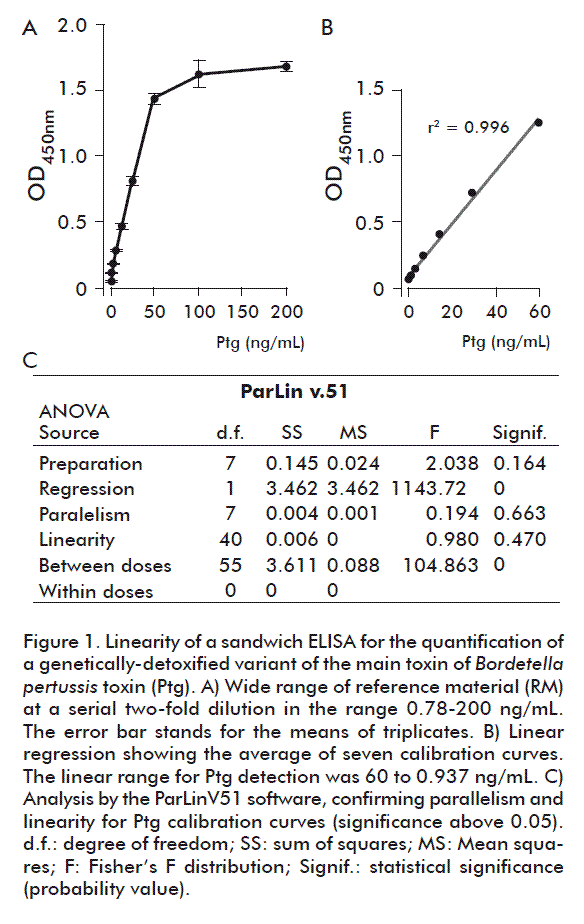
<body><![CDATA[<P   ><font size="2" face="Verdana, Arial, Helvetica, sans-serif">The repeatability      of the samples (n = 7) was assessed using QCs (high, medium and low range),      in the same plate by the same analyst. The inter-assay precision of the samples      was studied by one (5 runs) or two analysts (3 runs each) in different days.      </font></P >       <P   ><font size="2" face="Verdana, Arial, Helvetica, sans-serif">In all cases, the      average (arithmetic mean), SD and CV were determined. The coefficient of variation      was considered acceptable for values below 10 % for repeatability, except      at the lower limit of quantitation (LLOQ) where 20 % is acceptable and of      20 % for intermediate precision. </font></P >       <P   ><font size="2" face="Verdana, Arial, Helvetica, sans-serif"><b>Applicability      of Ptg-capture ELISA for monitoring Ptg expression and protein recovery during      the experimental production process </b></font></P >       <P   ><font size="2" face="Verdana, Arial, Helvetica, sans-serif">To assess the practical      functionality of validated Ptg-capture ELISA test, Ptg expression levels analysis      from 7 experimental cultures of <i>B. pertussis</i>, grown under similar conditions,      were performed. Samples from time points (0, 3, 6, 9, 12, 15 and 18 h) were      taken to evaluate the antigen expression. The protein recoveries (%) from      three experimental purification processes carried out up to the elution step      with similar procedures. Samples analyzed were: washed cells (WC), clarified      culture supernatant (CLS), concentrated culture supernatant (CS), concentrated      supernatant containing urea (CSU), concentrated supernatant containing urea      and pH adjusted to pH 6 (CSUpH), protein eluate (PE) and dialyzed protein      eluate or API. EB and IB matrixes corresponded to PE and API steps, respectively.      CSU and CSUpH steps matrixes [21] were not subjects of the validation study.</font></P >       <P   >&nbsp;</P >       <P   ><font size="3" face="Verdana, Arial, Helvetica, sans-serif"><b>RESULTS </b></font></P >       <P   ><font size="2" face="Verdana, Arial, Helvetica, sans-serif"><b>Linearity </b></font></P >       <P   ><font size="2" face="Verdana, Arial, Helvetica, sans-serif">A wide range of the      RM calibration curve (0. 78 to 200 ng/mL) was analyzed to determine the linearity      of the test (<a href="/img/revistas/bta/v33n1/f0104116.gif">Figure 1A</a>). The calibration curve      (<a href="/img/revistas/bta/v33n1/f0104116.gif">Figure 1B</a>) shows the average of seven calibration      curves to determine the linear range of the test (0.937, 1.875, 3.75, 7.5,      15, 30 and 60 ng/mL). The resulting linear equation was y = 0.01986 x + 0.08506,      with a coefficient of regression (r<sup>2</sup>) above 0.99. Linearity and      parallelism analysis by the ParLin v4.2 software showed significance values      of 0.47 and 0.663, respectively (<a href="/img/revistas/bta/v33n1/f0104116.gif">Figure 1C</a>), both      parameters evidenced for significances above 0.05. The test showed lower limit      of qualification (LLOQ) values of 3.75 ng/mL, with precision and accuracy      (CV 12.9 % and recovery 94.7 %) and lower limit of detection (LLOD) was 0.937      ng/mL. Background values were below 0.08. </font></P >       
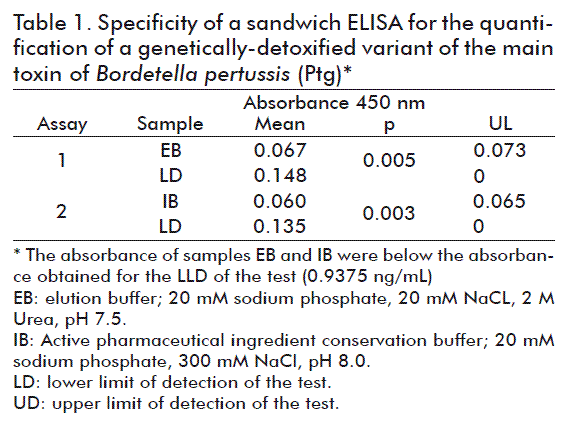
<P   ><font size="2" face="Verdana, Arial, Helvetica, sans-serif"><b>Specificity </b></font></P >       <P   ><font size="2" face="Verdana, Arial, Helvetica, sans-serif">The specificity of      the assay was determined by the analysis of the negative control of the test      (SB) and the solutions used during the production process. Since RM is composed      of <i>B. pertussis</i> culture supernatant, there was no need to study the      interference of the growth milieu. As shown in <a href="/img/revistas/bta/v33n1/t0104116.gif">Table      1</a>, the upper limits of the confidence intervals were analyzed and their      values were below the limit of detection (LD) of the test&rsquo;s absorbance;      hence, it can be concluded that the buffers studied did not interfere in the      ELISA test. </font></P >       
]]></body>
<body><![CDATA[<P   ><font size="2" face="Verdana, Arial, Helvetica, sans-serif"><b>Accuracy </b></font></P >       <P   ><font size="2" face="Verdana, Arial, Helvetica, sans-serif">In the accuracy study,      the recovery percentages obtained were in the range 80-120 % for the spiked      samples (<a href="/img/revistas/bta/v33n1/t0204116.gif">Table 2</a>) and the calculated Students&rsquo;      t-test value was below the tabulated value. </font></P >       
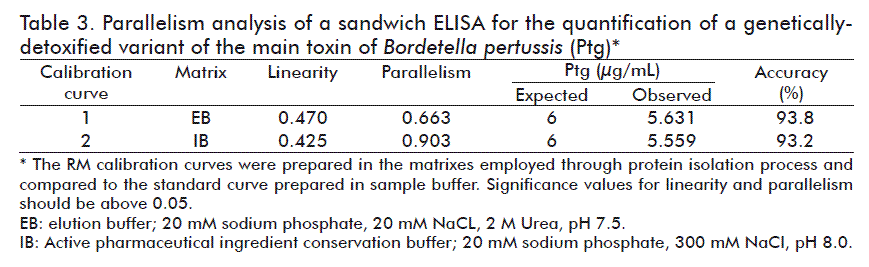
<P   ><font size="2" face="Verdana, Arial, Helvetica, sans-serif">Parallelism analysis      (<a href="/img/revistas/bta/v33n1/t0304116.gif">Table 3</a>) showed linearity and parallelism significance      values above 0.05 and quantification of the Ptg present in the RM calibration      curves prepared with the IB and EB buffers showed an accuracy value above      93 % for both buffers. </font></P >       
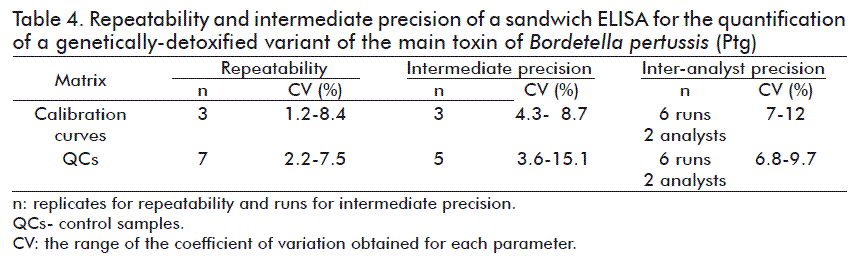
<P   ><font size="2" face="Verdana, Arial, Helvetica, sans-serif"><b>Intra- and inter-assay      precision </b></font></P >       <P   ><font size="2" face="Verdana, Arial, Helvetica, sans-serif">Precision data generated      from the validation experiments are summarized in <a href="/img/revistas/bta/v33n1/t0404116.gif">Table      4</a>. Precision over the dynamic range was found to have acceptable tolerances,      with intra-assay precision (CV) for calibration curves ranging 1.2-8.4 % (acceptance      lower than 10 %). </font></P >       
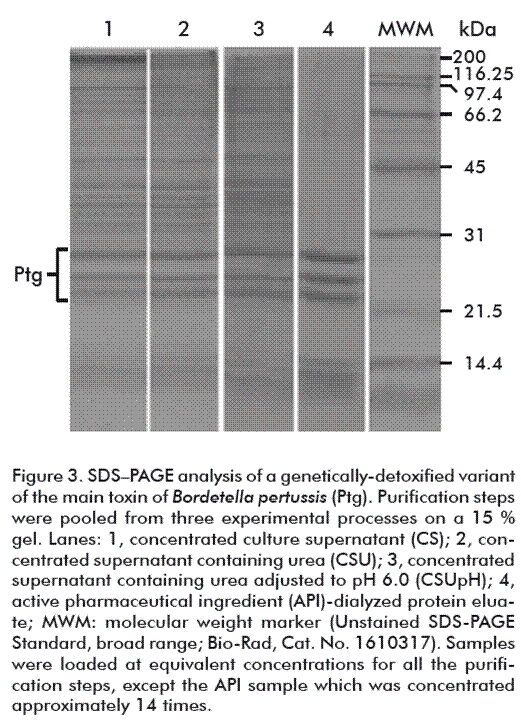
<P   ><font size="2" face="Verdana, Arial, Helvetica, sans-serif">Meanwhile, the intermediate      precision evaluated by either one or two analyst (CV acceptance lower than      20 %), was 4.3-8.7 % and 7 to 12 %, respectively. On the other hand, repeatability      for control samples value ranged 2.2-7.5 %, with intermediate precision evaluated      by one or two analyst of 3.6-15.1 % and 6.8- 9.7 % respectively. </font></P >       <P   ><font size="2" face="Verdana, Arial, Helvetica, sans-serif">Intermediate precision      results showed that the analyst factor did not contribute to assay variability,      as reported by Welfringer <i>et al</i>. [26], since CVs for this parameter      were below 12 % for calibration curves and less than 10 % (repeatability acceptance      criteria) for control samples. This confirmed the satisfactory performance      of the test related to variability. </font></P >       <P   ><font size="2" face="Verdana, Arial, Helvetica, sans-serif"><b>Monitoring Ptg      expression and protein recovery with the Ptg capture ELISA throughout the      production process </b></font></P >       <P   ><font size="2" face="Verdana, Arial, Helvetica, sans-serif">Preliminary results      of using the ELISA test to evaluate the Ptg isolation process are shown in      <a href="/img/revistas/bta/v33n1/f0204116.gif">Figure 2</a>, including the antigen expression kinetics      of seven experimental cultures of <i>B. pertussis</i>, grown under similar      conditions (<a href="/img/revistas/bta/v33n1/f0204116.gif">Figure 2A</a>). Pertussis antigen exhibited      similar expression kinetics among batches, and the ELISA test was capable      of detecting the Ptg expression from the starting fermentation time point.      At the end of fermentation, Ptg reached 8.5 mg/L concentra-tion in average.      Similar results were observed when comparing the protein recovery percentages      from three experimental purification processes (<a href="/img/revistas/bta/v33n1/f0204116.gif">Figure      2B</a>). All the ELISA values were accurate, with the exception of CSU and      CSUpH steps, in which there was an underestimation of Ptg amounts by ELISA      (approximately 90 % less of the expected value) as compared to previous CS      step, what was corroborated by SDS-PAGE (<a href="/img/revistas/bta/v33n1/f0304116.gif">Figure 3</a>)      and Ptg amount estimations (data not shown). PE and API values obtained by      ELISA were accurate, as ascertained by protein quantification, and the average      Ptg recovery as determined by ELISA was around 36 % at the end of the purification      processes, with more than 90 % pure Ptg antigen (<a href="/img/revistas/bta/v33n1/f0304116.gif">Figure      3</a>). </font></P >       
<P   >&nbsp;</P >       ]]></body>
<body><![CDATA[<P   ><font size="3" face="Verdana, Arial, Helvetica, sans-serif"><b>DISCUSSION </b></font></P >       <P   ><font size="2" face="Verdana, Arial, Helvetica, sans-serif">Bio-analytical validation      methods are essential for the performance and robustness of bioprocesses,      being addressed in scientific meetings and publications [27-30]. Therefore,      in our lab, a pre-established Ptg-capture ELISA test [17], which is a modification      of previously reported Fetuin-capture ELISA test [19] was validated according      to current regulations [20, 21]. </font></P >       <P   ><font size="2" face="Verdana, Arial, Helvetica, sans-serif">In fact, the benchmark      definition of a validation method has been presented by the International      Organization for Standardization as &lsquo;the confirmation by examination      and the provision of objective evidence that the particular requirements for      a specific intended use are fulfilled&rsquo; [21]. </font></P >       <P   ><font size="2" face="Verdana, Arial, Helvetica, sans-serif">Validation, as Cummings      refers [31], </font><font size="+1" color="#000000"><font size="+1"><font size="+1" color="#211E1F"><font size="+1"><font size="+1" color="#000000"><font size="+1" color="#211E1F"><font size="+1" color="#000000"><font size="+1" color="#211E1F"><font size="+1" color="#000000"><font size="+1" color="#211E1F"><font size="2" face="Verdana, Arial, Helvetica, sans-serif">&ldquo;</font></font></font></font></font></font></font></font></font></font></font><font size="2" face="Verdana, Arial, Helvetica, sans-serif">...validation      should progress down two parallel tracks which eventually converge: one experimental,      the other operational. The first is aimed to establish the purpose of the      method and agree upon outcomes, target values or acceptance limits, whereas      the second is to characterize the performance of the assay by experimentation&rdquo;;      hence, validation is a continuous process as long as the assay is in use.      </font></P >       <P   ><font size="2" face="Verdana, Arial, Helvetica, sans-serif">Therefore, our purpose      was to develop a specific, accurate and sensitive ELISA method, capable of      detecting and quantifying the smallest amount of <i>B. pertussis</i> antigen      present in bacterial culture and throughout the purification process of the      antigen. The results obtained by the ELISA test, strengthened by methods like      SDS-PAGE and total protein quantification, altogether, is a necessary and      powerful analytical tool required for vaccine production. </font></P >       <P   ><font size="2" face="Verdana, Arial, Helvetica, sans-serif">Additionally, the      selection of a standard or calibration model that accurately fits the concentration-response      relationship for standard samples should be determined prior to generating      results for independently prepared validation samples [27]. In our study,      a calibration curve was prepared from serial dilutions of Ptg and its linearity      ranged 0.937 to 60 ng/mL, with LLOQ and LLOD values of 3.75 and 0.937 ng/mL,      respectively. </font></P >       <P   ><font size="2" face="Verdana, Arial, Helvetica, sans-serif">Regarding the specificity      of the assay, non-interference in Ptg detection was observed using the studied      buffers during the process (<a href="/img/revistas/bta/v33n1/t0104116.gif">Table 1</a>). </font></P >       
<P   ><font size="2" face="Verdana, Arial, Helvetica, sans-serif">Regarding the precision      and accuracy of the method, these are performance characteristics describing      the magnitude of random errors (variation) and systematic error (mean bias)      associated with repeated measurements of the same homogeneous (spiked) sample      under specified conditions [32, 33]. Analytical accuracy is dependent on the      total error in the method and takes account of all relevant sources of variation:      for example, day, analyst, analytical platform or batch [32]. Moreover, parallelism      is the performance characteristic that is typically evaluated during in-study      validation. It is conceptually similar to dilution linearity except that it      is assessed with multiple dilutions of actual study samples or samples that      represent the combination of the same matrix and the analyte as those that      will be generated during a study [31]. </font></P >       <P   ><font size="2" face="Verdana, Arial, Helvetica, sans-serif">Since RM consisted      of bacterial culture supernatant, the accuracy of the method was determined      by analyzing two matrixes employed in the process, spiked with Ptg at three      concentration levels, covering high, medium and low ranges of the calibration      curve. The mean recoveries with 95 % CI given in <a href="/img/revistas/bta/v33n1/t0204116.gif">Table      2</a>, with values ranged between 94.4 to 107.2 %. As the theoretical value      of 100 % was included in the confidence interval, the test procedure could      be considered accurate in the range studied. </font></P >       
<P   ><font size="2" face="Verdana, Arial, Helvetica, sans-serif">The repeatability      and intermediate precision of this assay fell within the 20 % (less than 10      % for repeatability), in agreement with the acceptance criteria described      in current regulations [20, 21], also corroborating what is expected for macromolecule      analysis and ELISA. Values were even below the 25 % threshold, which was proposed      as acceptance limit for immunoassays [27], since they should be less precise      than chromatographic assays and, therefore, criteria for accuracy (mean bias)      and precision should be more permissive than for chromatographic assays [27,      32]. </font></P >       ]]></body>
<body><![CDATA[<P   ><font size="2" face="Verdana, Arial, Helvetica, sans-serif">A validated assay      needs constant monitoring and maintenance to retain that designation. Once      the assay is put into routine use, internal quality control is accomplished      by consistently monitoring the assay for assessment of repeatability and accuracy,      and fit for purpose they were designed for, all supported by statistical analysis      [34, 35]. </font></P >       <P   ><font size="2" face="Verdana, Arial, Helvetica, sans-serif">In our case, the      purification process to obtain the Ptg antigen is still under technological      development. Therefore, the validity of the assay was preliminary assessed      by performing experimental bacterial cultures and protein purifications. ELISA      results showed that Ptg exhibited similar expression kinetics among batches      and the test was capable to detect the expression of Ptg since the initial      fermentation points. After 18 h of culture, Ptg expression levels reached      an average of 8.5 mg per liter by ELISA. </font></P >       <P   ><font size="2" face="Verdana, Arial, Helvetica, sans-serif">Similar results were      obtained by comparing the protein recovery from the experimental purification      processes (<a href="/img/revistas/bta/v33n1/f0204116.gif">Figure 2B</a>).      All values given by ELISA were accurate, with the exception of CSU and CSUpH      steps, in which Ptg values showed substantial underestimation. This result      is probably due to a transient conformational change of the protein due to      the immediate addition of urea and pH adjustment to 6.0 by adding orthophosforic      acid, as a part of the purification process [18]. These may affect Mabs recognition      of the antigen. Nevertheless, protein eluate (same as CSU buffer composition,      but at pH 7.5) and API quantification values by ELISA were accurate. </font></P >       
<P   ><font size="2" face="Verdana, Arial, Helvetica, sans-serif">Altogether, our results      point out the consistency of <i>B. pertussis</i> fermentation and purifications      processes analysis performed by Ptg-capture ELISA so far, and the possibility      of accurately and precisely follow up Ptg through the entire pertussis antigen      obtaining process by the ELISA test, with the exception of above mentioned      steps. </font></P >       <P   ><font size="2" face="Verdana, Arial, Helvetica, sans-serif">In summary, we have      validated a Ptg-capture ELISA which is currently applied as analytical tool      for the development of pertussis antigens production, and as such has been      regarded as complying with the expected specifications. This sandwich ELISA      fulfills the most stringent acceptance criteria, supporting the assessment      of antigen recovery based on concentration values, with precision and accuracy      according to current international regulations for vaccine production. </font></P >       <P   >&nbsp;</P >       <P   ><font face="Verdana, Arial, Helvetica, sans-serif" size="3"><b>REFERENCES</b></font></P >       <!-- ref --><P   ><font size="2" color="#000000" face="Verdana, Arial, Helvetica, sans-serif">1.      Bordet J, Gengou D. Le microbe de la coqueluche. Ann Inst Pasteur. 1906;20:731.          </font></P >   </font></font></font></font></font></font></font></font></font></font>        <!-- ref --><p   ><font size="2" color="#000000" face="Verdana, Arial, Helvetica, sans-serif">2.      Black RE, Cousens S, Johnson HL, Lawn JE, Rudan I, Bassani DG, <i>et al.</i>      Global, regional, and national causes of child mortality in 2008: a systematic      analysis. Lancet. 2010;375:1969.     </font></p >       <p   ><font size="2" color="#000000" face="Verdana, Arial, Helvetica, sans-serif">3.      Mata AF, Sarnaik AA. Bronchoscopy with N-acetylcysteine lavage in severe respiratory      failure from pertussis infection. Pediatrics. 2013;132(5):e1418-23. </font></p >       <!-- ref --><p   ><font size="2" color="#000000" face="Verdana, Arial, Helvetica, sans-serif">4.      Greco D, Salmaso S, Mastrantonio P, Giuliano M, Tozzi AE, Anemona A, <i>et      al.</i> A controlled trial of two acellular vaccines and one whole-cell vaccine      against pertussis. Progetto Pertosse Working Group. N Engl J Med. 1996;334(6):341-8.          </font></p >       <!-- ref --><p   ><font size="2" color="#000000" face="Verdana, Arial, Helvetica, sans-serif">5.      Gustafsson L, Hallander HO, Olin P, Reizenstein E, Storsaeter J. A controlled      trial of a two-component acellular, a five-component acellular, and a whole-cell      pertussis vaccine. N Engl J Med. 1996;334(6):349-55.     </font></p >       <!-- ref --><p   ><font size="2" color="#000000" face="Verdana, Arial, Helvetica, sans-serif">6.      Simondon F, Preziosi MP, Yam A, Kane CT, Chabirand L, Iteman I, <i>et al.</i>      A randomized double-blind trial comparing a two-component acellular to a whole-cell      pertussis vaccine in Senegal. Vaccine. 1997;15(15):1606-12.     </font></p >       <!-- ref --><p   ><font size="2" color="#000000" face="Verdana, Arial, Helvetica, sans-serif">7.      Preston A, Maskell DJ. A new era of research into <i>Bordetella pertussis</i>      pathogenesis. J Infect. 2002;44(1):13-6.     </font></p >       ]]></body>
<body><![CDATA[<p   ><font size="2" color="#000000" face="Verdana, Arial, Helvetica, sans-serif">8.      Hewlett EL, Cherry JD. New and improved vaccines against pertussis. In: Myron      ML, Graeme CW, James BK, Gary SC, editors. New generation vaccines. 2nd Ed.      New York: Marcel Dekker; 1997. p. 387-416. </font></p >       <!-- ref --><p   ><font size="2" color="#000000" face="Verdana, Arial, Helvetica, sans-serif">9.      Juretzko P, von Kries R, Hermann M, Wirsing von Konig CH, Weil J, Giani G.      Effectiveness of acellular pertussis vaccine assessed by hospital-based active      surveillance in Germany. Clin Infect Dis. 2002;35(2):162-7.     </font></p >       <!-- ref --><p   ><font size="2" color="#000000" face="Verdana, Arial, Helvetica, sans-serif">10.      Zhang L, Prietsch SO, Axelsson I, Halperin SA. Acellular vaccines for preventing      whooping cough in children. Cochrane Database Syst Rev. 2011;(1):CD001478.          </font></p >       <p   ><font size="2" color="#000000" face="Verdana, Arial, Helvetica, sans-serif">11.      Farizo KM, Burns DL, Finn TM, Gruber MF, Pratt RD. Clinical evaluation of      pertussis vaccines: US Food and Drug Administration regulatory considerations.      J Infect Dis. 2014;209 Suppl 1:S28-31. </font></p >       <!-- ref --><p   ><font size="2" color="#000000" face="Verdana, Arial, Helvetica, sans-serif">12.      Moraga-Llop FA, Campins-Mart&iacute; M. Vacuna de la tos ferina. Reemergencia      de la enfermedad y nuevas estrategias de vacunaci&oacute;n. Enferm Infecc      Microbiol Clin. 2015;33(3):190-6.     </font></p >       <!-- ref --><p   ><font size="2" color="#000000" face="Verdana, Arial, Helvetica, sans-serif">13.      Ozcengiz E, Kilinc K, Buyuktanir O, Gunalp A. Rapid purification of pertussis      toxin (PT) and filamentous hemagglutinin (FHA) by cation-exchange chromatography.      Vaccine. 2004;22(11-12):1570-5.     </font></p >       ]]></body>
<body><![CDATA[<!-- ref --><p   ><font size="2" color="#000000" face="Verdana, Arial, Helvetica, sans-serif">14.      Tamura M, Nogimori K, Yajima M, Ase K, Ui M. A role of the B-oligomer moiety      of islet-activating protein, pertussis toxin, in development of the biological      effects on intact cells. J Biol Chem. 1983;258(11):6756-61.     </font></p >       <!-- ref --><p   ><font size="2" color="#000000" face="Verdana, Arial, Helvetica, sans-serif">15.      Locht C. Molecular aspects of <i>Bordetella pertussis</i> pathogenesis. Int      Microbiol. 1999;2(3):137-44.     </font></p >       <!-- ref --><p   ><font size="2" color="#000000" face="Verdana, Arial, Helvetica, sans-serif">16.      Robbins JB, Schneerson R, Kubler-Kielb J, Keith JM, Trollfors B, Vinogradov      E, <i>et al.</i> Toward a new vaccine for pertussis. Proc Natl Acad Sci USA.      2014;111(9):3213-6.     </font></p >       <!-- ref --><p   ><font size="2" color="#000000" face="Verdana, Arial, Helvetica, sans-serif">17.      Lemos G, Delgado M, Quintana-V&aacute;zquez D, Carpio-Mu&ntilde;oz E, Caballero      E, Alvarez Acosta A. Development of sandwich ELISA-based assays for screening      <i>Bordetella pertussis</i> antigens expressed in the bacterial cell culture.      Biotecnol Apl. 2015;32(3):3311-7.     </font></p >       <!-- ref --><p   ><font face="Verdana, Arial, Helvetica, sans-serif" size="2" color="#000000">18.      Quintana-V&aacute;zquez D, Delgado M, Lemos G, Coizeau E, Ramos Y, T&aacute;mbara      Y, <i>et al</i>. Assessment of the Bordetella pertussis BpCNIC0311 strain      as a producing strain of genetically detoxified Toxoid (PTg), filamentous      hemagglutinin (FHA) and type 2 Pertactin (Prn2). J Infect Dis Ther. 2015;3:8-20.          </font></p >       ]]></body>
<body><![CDATA[<!-- ref --><p   ><font size="2" color="#000000" face="Verdana, Arial, Helvetica, sans-serif">19.      Wong KH, Skelton SK. New, practical approach to detecting antibody to pertussis      toxin for public health and clinical laboratories. J Clin Microbiol. 1988;26(7):1316-20.          </font></p >       <!-- ref --><p   ><font size="2" color="#000000" face="Verdana, Arial, Helvetica, sans-serif">20</font><font size="2" color="#000000" face="Verdana, Arial, Helvetica, sans-serif">.      Centro para el Control Estatal de la Calidad de los Medicamentos (CECMED).      Regulaci&oacute;n No. 41-2007: Validaci&oacute;n de M&eacute;todos Anal&iacute;ticos.      &Aacute;mbito Regulador. 2007;(53):1-14.     </font></p >       <p   ><font size="2" color="#000000" face="Verdana, Arial, Helvetica, sans-serif">21.      ICH. International Conference on Harmonisation of Technical Requirements for      Registration of Pharmaceuticals for Human Use. Validation of Analytical Procedures:      Text and Methodology Q2 (R1). ICH; 2005 Nov. </font></p >       <!-- ref --><p   ><font size="2" color="#000000" face="Verdana, Arial, Helvetica, sans-serif">22.      Thalen M, van der Ark A, van den Ijssel J, van Straaten I, Jansen D, Beuvery      C, <i>et al.</i> Improving the cellular pertussis vaccine: increased potency      and consistency. Vaccine. 2008;26(5):653-63.     </font></p >       <!-- ref --><p   ><font size="2" color="#000000" face="Verdana, Arial, Helvetica, sans-serif">23.      Laemmli UK. Cleavage of structural proteins during the assembly of the head      of bacteriophage T4. Nature. 1970;227(5259):680-5.     </font></p >       <!-- ref --><p   ><font size="2" color="#000000" face="Verdana, Arial, Helvetica, sans-serif">24.      Fernandez-Patron C, Castellanos- Serra L, Rodriguez P. Reverse staining of      sodium dodecyl sulfate polyacrylamide gels by imidazole-zinc salts: sensitive      detection of unmodified proteins. Biotechniques. 1992;12(4):564-73.     </font></p >       <p   ><font size="2" color="#000000" face="Verdana, Arial, Helvetica, sans-serif">25.      Layne E. Spectrophotometric and turbidimetric methods for measuring proteins.      Methods Enzymol. 1957;3:447&ndash;54. </font></p >       <p   ><font size="2" color="#000000" face="Verdana, Arial, Helvetica, sans-serif">26.      Welfringer F, d&rsquo;Athis P, Scherrmann JM, Herve F. Development and validation      of an antigen-binding capture ELISA for native and putrescine-modified anti-tetanus      F(ab&rsquo;)2 fragments for the assessment of the cellular uptake and plasma      kinetics of the antibodies. J Immunol Methods. 2005;307(1-2):82-95. </font></p >       <!-- ref --><p   ><font size="2" color="#000000" face="Verdana, Arial, Helvetica, sans-serif">27.      Findlay JW, Smith WC, Lee JW, Nordblom GD, Das I, DeSilva BS, <i>et al.</i>      Validation of im-munoassays for bioanalysis: a pharmaceutical industry perspective.      J Pharm Biomed Anal. 2000;21(6):1249-73.     </font></p >       <!-- ref --><p   ><font size="2" color="#000000" face="Verdana, Arial, Helvetica, sans-serif">28.      Riley CM, Rosanke TW. Development of validation of analytical methods: progress      in pharmaceutical and biomedical analysis. vol 3. New York: Elsevier (Pergamon),      NY; 1996.     </font></p >       <!-- ref --><p   ><font size="2" color="#000000" face="Verdana, Arial, Helvetica, sans-serif">29.      Shah VP, Midha KK, Dighe S, McGilveray IJ, Skelly JP, Yacobi A, <i>et al.</i>      Analytical methods validation: bioavailability, bioequivalence and pharmacokinetic      studies. Conference report. Eur J Drug Metab Pharmacokinet. 1991;16(4):249-55.          </font></p >       <!-- ref --><p   ><font size="2" color="#000000" face="Verdana, Arial, Helvetica, sans-serif">30.      ICH. Guideline on validation of analytical procedures: definitions and terminology      Inter-national Conference of Harmonization (ICH) of Technical Requirements      for the Registration of Pharmaceuticals for Human Use. Geneva: ICH; 1996.          </font></p >       <!-- ref --><p   ><font size="2" color="#000000" face="Verdana, Arial, Helvetica, sans-serif">31.      Cummings J, Raynaud F, Jones L, Sugar R, Dive C. Fit-for-purpose biomarker      method validation for application in clinical trials of anticancer drugs.      Br J Cancer. 2010;103(9):1313-7.    </font></p >       <!-- ref --><p   ><font size="2" color="#000000" face="Verdana, Arial, Helvetica, sans-serif">32.      DeSilva B, Smith W, Weiner R, Kelley M, Smolec J, Lee B, <i>et al.</i> Recommendations      for the bioanalytical method validation of ligand-binding assays to support      pharmacokinetic assessments of macromolecules. Pharm Res. 2003;20(11):1885-900.          </font></p >       <!-- ref --><p   ><font size="2" color="#000000" face="Verdana, Arial, Helvetica, sans-serif">33.      Cummings J, Ward TH, Greystoke A, Ranson M, Dive C. Biomarker method validation      in anticancer drug development. Br J Pharmacol. 2008;153(4):646-56.     </font></p >       <p   ><font size="2" color="#000000" face="Verdana, Arial, Helvetica, sans-serif">34.      Cembrowski GS, Sullivan AM. Quality control and statistics. In: Bishop ML,      Duben- Engelkirk JL, Fody EP, editors. An Introduction to Clinical Chemistry,      Philadelphia, USA: Lippincott. p. 63-101. </font></p >       <!-- ref --><p   ><font size="2" color="#000000" face="Verdana, Arial, Helvetica, sans-serif">35.      Fuge J. FDA CONFERENCE Report: Validation considerations when preparing for      FDA inspections. J Validat Technol. 2005;11(3):253-6.    </font></p >   <FONT size="+1" color="#000000"><FONT size="+1"><FONT size="+1" color="#211E1F"><FONT size="+1"><FONT size="+1" color="#000000"><FONT size="+1" color="#211E1F"><FONT size="+1" color="#000000"><FONT size="+1" color="#211E1F"><FONT size="+1" color="#000000"><FONT size="+1" color="#211E1F">        ]]></body>
<body><![CDATA[<P   >&nbsp;</P >       <P   >&nbsp;</P >       <P   ><font face="Verdana, Arial, Helvetica, sans-serif" size="2">Received in November,      2015.    <br>     Accepted in March, 2016.</font></P >       <P   >&nbsp;</P >       <P   >&nbsp;</P >       <P   > </P >       <P   ><i><font size="2" face="Verdana, Arial, Helvetica, sans-serif">Gilda Lemos-P&eacute;rez</font></i><font size="2" face="Verdana, Arial, Helvetica, sans-serif">.      Centro de Ingenier&iacute;a Gen&eacute;tica y Biotecnolog&iacute;a, CIGB.      Ave. 31 e/ 158 y 190, Cubanac&aacute;n, Playa, CP 11600, La Habana, Cuba.      E-mail: <A href="mailto:gilda.lemos@cigb.edu.cu"> <FONT color="#0000FF">gilda.lemos@cigb.edu.cu</font></A>      </font></P >   <FONT size="+1"><FONT size="+1"><FONT color="#0000FF"><FONT color="#211E1F"><FONT size="+1" color="#000000">        <P   > </P >   </font></font></font></font></font></font></font></font></font></font></font></font></font></font></font></DIV >      ]]></body><back>
<ref-list>
<ref id="B1">
<label>1</label><nlm-citation citation-type="journal">
<person-group person-group-type="author">
<name>
<surname><![CDATA[Bordet]]></surname>
<given-names><![CDATA[J]]></given-names>
</name>
<name>
<surname><![CDATA[Gengou]]></surname>
<given-names><![CDATA[D]]></given-names>
</name>
</person-group>
<article-title xml:lang="fr"><![CDATA[Le microbe de la coqueluche]]></article-title>
<source><![CDATA[Ann Inst Pasteur]]></source>
<year>1906</year>
<volume>20</volume>
<page-range>731</page-range></nlm-citation>
</ref>
<ref id="B2">
<label>2</label><nlm-citation citation-type="journal">
<person-group person-group-type="author">
<name>
<surname><![CDATA[Black]]></surname>
<given-names><![CDATA[RE]]></given-names>
</name>
<name>
<surname><![CDATA[Cousens]]></surname>
<given-names><![CDATA[S]]></given-names>
</name>
<name>
<surname><![CDATA[Johnson]]></surname>
<given-names><![CDATA[HL]]></given-names>
</name>
<name>
<surname><![CDATA[Lawn]]></surname>
<given-names><![CDATA[JE]]></given-names>
</name>
<name>
<surname><![CDATA[Rudan]]></surname>
<given-names><![CDATA[I]]></given-names>
</name>
<name>
<surname><![CDATA[Bassani]]></surname>
<given-names><![CDATA[DG]]></given-names>
</name>
</person-group>
<article-title xml:lang="en"><![CDATA[Global, regional, and national causes of child mortality in 2008: a systematic analysis]]></article-title>
<source><![CDATA[Lancet]]></source>
<year>2010</year>
<volume>375</volume>
<page-range>1969</page-range></nlm-citation>
</ref>
<ref id="B3">
<label>3</label><nlm-citation citation-type="journal">
<person-group person-group-type="author">
<name>
<surname><![CDATA[Mata]]></surname>
<given-names><![CDATA[AF]]></given-names>
</name>
<name>
<surname><![CDATA[Sarnaik]]></surname>
<given-names><![CDATA[AA]]></given-names>
</name>
</person-group>
<article-title xml:lang="en"><![CDATA[Bronchoscopy with N-acetylcysteine lavage in severe respiratory failure from pertussis infection]]></article-title>
<source><![CDATA[Pediatrics]]></source>
<year>2013</year>
<volume>132</volume>
<numero>5</numero>
<issue>5</issue>
<page-range>1418-23</page-range></nlm-citation>
</ref>
<ref id="B4">
<label>4</label><nlm-citation citation-type="journal">
<person-group person-group-type="author">
<name>
<surname><![CDATA[Greco]]></surname>
<given-names><![CDATA[D]]></given-names>
</name>
<name>
<surname><![CDATA[Salmaso]]></surname>
<given-names><![CDATA[S]]></given-names>
</name>
<name>
<surname><![CDATA[Mastrantonio]]></surname>
<given-names><![CDATA[P]]></given-names>
</name>
<name>
<surname><![CDATA[Giuliano]]></surname>
<given-names><![CDATA[M]]></given-names>
</name>
<name>
<surname><![CDATA[Tozzi]]></surname>
<given-names><![CDATA[AE]]></given-names>
</name>
<name>
<surname><![CDATA[Anemona]]></surname>
<given-names><![CDATA[A]]></given-names>
</name>
</person-group>
<article-title xml:lang="en"><![CDATA[A controlled trial of two acellular vaccines and one whole-cell vaccine against pertussis. Progetto Pertosse Working Group]]></article-title>
<source><![CDATA[N Engl J Med]]></source>
<year>1996</year>
<volume>334</volume>
<numero>6</numero>
<issue>6</issue>
<page-range>341-8</page-range></nlm-citation>
</ref>
<ref id="B5">
<label>5</label><nlm-citation citation-type="journal">
<person-group person-group-type="author">
<name>
<surname><![CDATA[Gustafsson]]></surname>
<given-names><![CDATA[L]]></given-names>
</name>
<name>
<surname><![CDATA[Hallander]]></surname>
<given-names><![CDATA[HO]]></given-names>
</name>
<name>
<surname><![CDATA[Olin]]></surname>
<given-names><![CDATA[P]]></given-names>
</name>
<name>
<surname><![CDATA[Reizenstein]]></surname>
<given-names><![CDATA[E]]></given-names>
</name>
<name>
<surname><![CDATA[Storsaeter]]></surname>
<given-names><![CDATA[J]]></given-names>
</name>
</person-group>
<article-title xml:lang="en"><![CDATA[A controlled trial of a two-component acellular, a five-component acellular, and a whole-cell pertussis vaccine]]></article-title>
<source><![CDATA[N Engl J Med]]></source>
<year>1996</year>
<volume>334</volume>
<numero>6</numero>
<issue>6</issue>
<page-range>349-55</page-range></nlm-citation>
</ref>
<ref id="B6">
<label>6</label><nlm-citation citation-type="journal">
<person-group person-group-type="author">
<name>
<surname><![CDATA[Simondon]]></surname>
<given-names><![CDATA[F]]></given-names>
</name>
<name>
<surname><![CDATA[Preziosi]]></surname>
<given-names><![CDATA[MP]]></given-names>
</name>
<name>
<surname><![CDATA[Yam]]></surname>
<given-names><![CDATA[A]]></given-names>
</name>
<name>
<surname><![CDATA[Kane]]></surname>
<given-names><![CDATA[CT]]></given-names>
</name>
<name>
<surname><![CDATA[Chabirand]]></surname>
<given-names><![CDATA[L]]></given-names>
</name>
<name>
<surname><![CDATA[Iteman]]></surname>
<given-names><![CDATA[I]]></given-names>
</name>
</person-group>
<article-title xml:lang="en"><![CDATA[A randomized double-blind trial comparing a two-component acellular to a whole-cell pertussis vaccine in Senegal]]></article-title>
<source><![CDATA[Vaccine]]></source>
<year>1997</year>
<volume>15</volume>
<numero>15</numero>
<issue>15</issue>
<page-range>1606-12</page-range></nlm-citation>
</ref>
<ref id="B7">
<label>7</label><nlm-citation citation-type="journal">
<person-group person-group-type="author">
<name>
<surname><![CDATA[Preston]]></surname>
<given-names><![CDATA[A]]></given-names>
</name>
<name>
<surname><![CDATA[Maskell]]></surname>
<given-names><![CDATA[DJ]]></given-names>
</name>
</person-group>
<article-title xml:lang="en"><![CDATA[A new era of research into Bordetella pertussis pathogenesis]]></article-title>
<source><![CDATA[J Infect]]></source>
<year>2002</year>
<volume>44</volume>
<numero>1</numero>
<issue>1</issue>
<page-range>13-6</page-range></nlm-citation>
</ref>
<ref id="B8">
<label>8</label><nlm-citation citation-type="book">
<person-group person-group-type="author">
<name>
<surname><![CDATA[Hewlett]]></surname>
<given-names><![CDATA[EL]]></given-names>
</name>
<name>
<surname><![CDATA[Cherry]]></surname>
<given-names><![CDATA[JD]]></given-names>
</name>
</person-group>
<article-title xml:lang="en"><![CDATA[New and improved vaccines against pertussis]]></article-title>
<person-group person-group-type="editor">
<name>
<surname><![CDATA[Myron]]></surname>
<given-names><![CDATA[ML]]></given-names>
</name>
<name>
<surname><![CDATA[Graeme]]></surname>
<given-names><![CDATA[CW]]></given-names>
</name>
<name>
<surname><![CDATA[James]]></surname>
<given-names><![CDATA[BK]]></given-names>
</name>
<name>
<surname><![CDATA[Gary]]></surname>
<given-names><![CDATA[SC]]></given-names>
</name>
</person-group>
<source><![CDATA[New generation vaccines]]></source>
<year>1997</year>
<edition>2</edition>
<page-range>387-416</page-range><publisher-loc><![CDATA[New York ]]></publisher-loc>
<publisher-name><![CDATA[Marcel Dekker]]></publisher-name>
</nlm-citation>
</ref>
<ref id="B9">
<label>9</label><nlm-citation citation-type="journal">
<person-group person-group-type="author">
<name>
<surname><![CDATA[Juretzko]]></surname>
<given-names><![CDATA[P]]></given-names>
</name>
<name>
<surname><![CDATA[von Kries]]></surname>
<given-names><![CDATA[R]]></given-names>
</name>
<name>
<surname><![CDATA[Hermann]]></surname>
<given-names><![CDATA[M]]></given-names>
</name>
<name>
<surname><![CDATA[Wirsing von Konig]]></surname>
<given-names><![CDATA[CH]]></given-names>
</name>
<name>
<surname><![CDATA[Weil]]></surname>
<given-names><![CDATA[J]]></given-names>
</name>
<name>
<surname><![CDATA[Giani]]></surname>
<given-names><![CDATA[G]]></given-names>
</name>
</person-group>
<article-title xml:lang="en"><![CDATA[Effectiveness of acellular pertussis vaccine assessed by hospital-based active surveillance in Germany]]></article-title>
<source><![CDATA[Clin Infect Dis]]></source>
<year>2002</year>
<volume>35</volume>
<numero>2</numero>
<issue>2</issue>
<page-range>162-7</page-range></nlm-citation>
</ref>
<ref id="B10">
<label>10</label><nlm-citation citation-type="journal">
<person-group person-group-type="author">
<name>
<surname><![CDATA[Zhang]]></surname>
<given-names><![CDATA[L]]></given-names>
</name>
<name>
<surname><![CDATA[Prietsch]]></surname>
<given-names><![CDATA[SO]]></given-names>
</name>
<name>
<surname><![CDATA[Axelsson]]></surname>
<given-names><![CDATA[I]]></given-names>
</name>
<name>
<surname><![CDATA[Halperin]]></surname>
<given-names><![CDATA[SA]]></given-names>
</name>
</person-group>
<article-title xml:lang="en"><![CDATA[Acellular vaccines for preventing whooping cough in children]]></article-title>
<source><![CDATA[Cochrane Database Syst Rev]]></source>
<year>2011</year>
<numero>1</numero>
<issue>1</issue>
<page-range>CD001478</page-range></nlm-citation>
</ref>
<ref id="B11">
<label>11</label><nlm-citation citation-type="journal">
<person-group person-group-type="author">
<name>
<surname><![CDATA[Farizo]]></surname>
<given-names><![CDATA[KM]]></given-names>
</name>
<name>
<surname><![CDATA[Burns]]></surname>
<given-names><![CDATA[DL]]></given-names>
</name>
<name>
<surname><![CDATA[Finn]]></surname>
<given-names><![CDATA[TM]]></given-names>
</name>
<name>
<surname><![CDATA[Gruber]]></surname>
<given-names><![CDATA[MF]]></given-names>
</name>
<name>
<surname><![CDATA[Pratt]]></surname>
<given-names><![CDATA[RD]]></given-names>
</name>
</person-group>
<article-title xml:lang="en"><![CDATA[Clinical evaluation of pertussis vaccines: US Food and Drug Administration regulatory considerations]]></article-title>
<source><![CDATA[J Infect Dis]]></source>
<year>2014</year>
<volume>209</volume>
<numero>^s1</numero>
<issue>^s1</issue>
<supplement>1</supplement>
<page-range>28-31</page-range></nlm-citation>
</ref>
<ref id="B12">
<label>12</label><nlm-citation citation-type="journal">
<person-group person-group-type="author">
<name>
<surname><![CDATA[Moraga-Llop]]></surname>
<given-names><![CDATA[FA]]></given-names>
</name>
<name>
<surname><![CDATA[Campins-Martí]]></surname>
<given-names><![CDATA[M]]></given-names>
</name>
</person-group>
<article-title xml:lang="es"><![CDATA[Vacuna de la tos ferina. Reemergencia de la enfermedad y nuevas estrategias de vacunación]]></article-title>
<source><![CDATA[Enferm Infecc Microbiol Clin]]></source>
<year>2015</year>
<volume>33</volume>
<numero>3</numero>
<issue>3</issue>
<page-range>190-6</page-range></nlm-citation>
</ref>
<ref id="B13">
<label>13</label><nlm-citation citation-type="journal">
<person-group person-group-type="author">
<name>
<surname><![CDATA[Ozcengiz]]></surname>
<given-names><![CDATA[E]]></given-names>
</name>
<name>
<surname><![CDATA[Kilinc]]></surname>
<given-names><![CDATA[K]]></given-names>
</name>
<name>
<surname><![CDATA[Buyuktanir]]></surname>
<given-names><![CDATA[O]]></given-names>
</name>
<name>
<surname><![CDATA[Gunalp]]></surname>
<given-names><![CDATA[A]]></given-names>
</name>
</person-group>
<article-title xml:lang="en"><![CDATA[Rapid purification of pertussis toxin (PT) and filamentous hemagglutinin (FHA) by cation-exchange chromatography]]></article-title>
<source><![CDATA[Vaccine]]></source>
<year>2004</year>
<volume>22</volume>
<numero>11</numero>
<issue>11</issue>
<page-range>12):1570-5</page-range></nlm-citation>
</ref>
<ref id="B14">
<label>14</label><nlm-citation citation-type="journal">
<person-group person-group-type="author">
<name>
<surname><![CDATA[Tamura]]></surname>
<given-names><![CDATA[M]]></given-names>
</name>
<name>
<surname><![CDATA[Nogimori]]></surname>
<given-names><![CDATA[K]]></given-names>
</name>
<name>
<surname><![CDATA[Yajima]]></surname>
<given-names><![CDATA[M]]></given-names>
</name>
<name>
<surname><![CDATA[Ase]]></surname>
<given-names><![CDATA[K]]></given-names>
</name>
<name>
<surname><![CDATA[Ui]]></surname>
<given-names><![CDATA[M]]></given-names>
</name>
</person-group>
<article-title xml:lang="en"><![CDATA[A role of the B-oligomer moiety of islet-activating protein, pertussis toxin, in development of the biological effects on intact cells]]></article-title>
<source><![CDATA[J Biol Chem]]></source>
<year>1983</year>
<volume>258</volume>
<numero>11</numero>
<issue>11</issue>
<page-range>6756-61</page-range></nlm-citation>
</ref>
<ref id="B15">
<label>15</label><nlm-citation citation-type="journal">
<person-group person-group-type="author">
<name>
<surname><![CDATA[Locht]]></surname>
<given-names><![CDATA[C]]></given-names>
</name>
</person-group>
<article-title xml:lang="en"><![CDATA[Molecular aspects of Bordetella pertussis pathogenesis]]></article-title>
<source><![CDATA[Int Microbiol]]></source>
<year>1999</year>
<volume>2</volume>
<numero>3</numero>
<issue>3</issue>
<page-range>137-44</page-range></nlm-citation>
</ref>
<ref id="B16">
<label>16</label><nlm-citation citation-type="journal">
<person-group person-group-type="author">
<name>
<surname><![CDATA[Robbins]]></surname>
<given-names><![CDATA[JB]]></given-names>
</name>
<name>
<surname><![CDATA[Schneerson]]></surname>
<given-names><![CDATA[R]]></given-names>
</name>
<name>
<surname><![CDATA[Kubler-Kielb]]></surname>
<given-names><![CDATA[J]]></given-names>
</name>
<name>
<surname><![CDATA[Keith]]></surname>
<given-names><![CDATA[JM]]></given-names>
</name>
<name>
<surname><![CDATA[Trollfors]]></surname>
<given-names><![CDATA[B]]></given-names>
</name>
<name>
<surname><![CDATA[Vinogradov]]></surname>
<given-names><![CDATA[E]]></given-names>
</name>
</person-group>
<article-title xml:lang="en"><![CDATA[Toward a new vaccine for pertussis]]></article-title>
<source><![CDATA[Proc Natl Acad Sci USA]]></source>
<year>2014</year>
<volume>111</volume>
<numero>9</numero>
<issue>9</issue>
<page-range>3213-6</page-range></nlm-citation>
</ref>
<ref id="B17">
<label>17</label><nlm-citation citation-type="journal">
<person-group person-group-type="author">
<name>
<surname><![CDATA[Lemos]]></surname>
<given-names><![CDATA[G]]></given-names>
</name>
<name>
<surname><![CDATA[Delgado]]></surname>
<given-names><![CDATA[M]]></given-names>
</name>
<name>
<surname><![CDATA[Quintana- Vázquez]]></surname>
<given-names><![CDATA[D]]></given-names>
</name>
<name>
<surname><![CDATA[Carpio-Muñoz]]></surname>
<given-names><![CDATA[E]]></given-names>
</name>
<name>
<surname><![CDATA[Caballero]]></surname>
<given-names><![CDATA[E]]></given-names>
</name>
<name>
<surname><![CDATA[Alvarez Acosta]]></surname>
<given-names><![CDATA[A]]></given-names>
</name>
</person-group>
<article-title xml:lang="en"><![CDATA[Development of sandwich ELISA-based assays for screening Bordetella pertussis antigens expressed in the bacterial cell culture]]></article-title>
<source><![CDATA[Biotecnol Apl]]></source>
<year>2015</year>
<volume>32</volume>
<numero>3</numero>
<issue>3</issue>
<page-range>3311-7</page-range></nlm-citation>
</ref>
<ref id="B18">
<label>18</label><nlm-citation citation-type="journal">
<person-group person-group-type="author">
<name>
<surname><![CDATA[Quintana-Vázquez]]></surname>
<given-names><![CDATA[D]]></given-names>
</name>
<name>
<surname><![CDATA[Delgado]]></surname>
<given-names><![CDATA[M]]></given-names>
</name>
<name>
<surname><![CDATA[Lemos]]></surname>
<given-names><![CDATA[G]]></given-names>
</name>
<name>
<surname><![CDATA[Coizeau]]></surname>
<given-names><![CDATA[E]]></given-names>
</name>
<name>
<surname><![CDATA[Ramos]]></surname>
<given-names><![CDATA[Y]]></given-names>
</name>
<name>
<surname><![CDATA[Támbara]]></surname>
<given-names><![CDATA[Y]]></given-names>
</name>
</person-group>
<article-title xml:lang="en"><![CDATA[Assessment of the Bordetella pertussis BpCNIC0311 strain as a producing strain of genetically detoxified Toxoid (PTg), filamentous hemagglutinin (FHA) and type 2 Pertactin (Prn2)]]></article-title>
<source><![CDATA[J Infect Dis Ther]]></source>
<year>2015</year>
<volume>3</volume>
<page-range>8-20</page-range></nlm-citation>
</ref>
<ref id="B19">
<label>19</label><nlm-citation citation-type="journal">
<person-group person-group-type="author">
<name>
<surname><![CDATA[Wong]]></surname>
<given-names><![CDATA[KH]]></given-names>
</name>
<name>
<surname><![CDATA[Skelton]]></surname>
<given-names><![CDATA[SK]]></given-names>
</name>
</person-group>
<article-title xml:lang="en"><![CDATA[New, practical approach to detecting antibody to pertussis toxin for public health and clinical laboratories]]></article-title>
<source><![CDATA[J Clin Microbiol]]></source>
<year>1988</year>
<volume>26</volume>
<numero>7</numero>
<issue>7</issue>
<page-range>1316-20</page-range></nlm-citation>
</ref>
<ref id="B20">
<label>20</label><nlm-citation citation-type="journal">
<collab>Centro para el Control Estatal de la Calidad de los Medicamentos (CECMED)</collab>
<article-title xml:lang="es"><![CDATA[Regulación No. 41-2007: Validación de Métodos Analíticos]]></article-title>
<source><![CDATA[Ámbito Regulador]]></source>
<year>2007</year>
<numero>53</numero>
<issue>53</issue>
<page-range>1-14</page-range></nlm-citation>
</ref>
<ref id="B21">
<label>21</label><nlm-citation citation-type="book">
<collab>ICH</collab>
<source><![CDATA[International Conference on Harmonisation of Technical Requirements for Registration of Pharmaceuticals for Human Use. Validation of Analytical Procedures: Text and Methodology Q2 (R1)]]></source>
<year>2005</year>
<publisher-loc><![CDATA[Geneva ]]></publisher-loc>
<publisher-name><![CDATA[ICH]]></publisher-name>
</nlm-citation>
</ref>
<ref id="B22">
<label>22</label><nlm-citation citation-type="journal">
<person-group person-group-type="author">
<name>
<surname><![CDATA[Thalen]]></surname>
<given-names><![CDATA[M]]></given-names>
</name>
<name>
<surname><![CDATA[van der Ark]]></surname>
<given-names><![CDATA[A]]></given-names>
</name>
<name>
<surname><![CDATA[van den Ijssel]]></surname>
<given-names><![CDATA[J]]></given-names>
</name>
<name>
<surname><![CDATA[van Straaten]]></surname>
<given-names><![CDATA[I]]></given-names>
</name>
<name>
<surname><![CDATA[Jansen]]></surname>
<given-names><![CDATA[D]]></given-names>
</name>
<name>
<surname><![CDATA[Beuvery]]></surname>
<given-names><![CDATA[C]]></given-names>
</name>
</person-group>
<article-title xml:lang="en"><![CDATA[Improving the cellular pertussis vaccine: increased potency and consistency]]></article-title>
<source><![CDATA[Vaccine]]></source>
<year>2008</year>
<volume>26</volume>
<numero>5</numero>
<issue>5</issue>
<page-range>653-63</page-range></nlm-citation>
</ref>
<ref id="B23">
<label>23</label><nlm-citation citation-type="journal">
<person-group person-group-type="author">
<name>
<surname><![CDATA[Laemmli]]></surname>
<given-names><![CDATA[UK]]></given-names>
</name>
</person-group>
<article-title xml:lang="en"><![CDATA[Cleavage of structural proteins during the assembly of the head of bacteriophage T4]]></article-title>
<source><![CDATA[Nature]]></source>
<year>1970</year>
<volume>227</volume>
<numero>5259</numero>
<issue>5259</issue>
<page-range>680-5</page-range></nlm-citation>
</ref>
<ref id="B24">
<label>24</label><nlm-citation citation-type="journal">
<person-group person-group-type="author">
<name>
<surname><![CDATA[Fernandez-Patron]]></surname>
<given-names><![CDATA[C]]></given-names>
</name>
<name>
<surname><![CDATA[Castellanos- Serra]]></surname>
<given-names><![CDATA[L]]></given-names>
</name>
<name>
<surname><![CDATA[Rodriguez]]></surname>
<given-names><![CDATA[P]]></given-names>
</name>
</person-group>
<article-title xml:lang="en"><![CDATA[Reverse staining of sodium dodecyl sulfate polyacrylamide gels by imidazole-zinc salts: sensitive detection of unmodified proteins]]></article-title>
<source><![CDATA[Biotechniques]]></source>
<year>1992</year>
<volume>12</volume>
<numero>4</numero>
<issue>4</issue>
<page-range>564-73</page-range></nlm-citation>
</ref>
<ref id="B25">
<label>25</label><nlm-citation citation-type="journal">
<person-group person-group-type="author">
<name>
<surname><![CDATA[Layne]]></surname>
<given-names><![CDATA[E]]></given-names>
</name>
</person-group>
<article-title xml:lang="en"><![CDATA[Spectrophotometric and turbidimetric methods for measuring proteins]]></article-title>
<source><![CDATA[Methods Enzymol]]></source>
<year>1957</year>
<volume>3</volume>
<numero>^s1</numero>
<issue>^s1</issue>
<supplement>1</supplement>
<page-range>447-54</page-range></nlm-citation>
</ref>
<ref id="B26">
<label>26</label><nlm-citation citation-type="journal">
<person-group person-group-type="author">
<name>
<surname><![CDATA[Welfringer]]></surname>
<given-names><![CDATA[F]]></given-names>
</name>
<name>
<surname><![CDATA[d'Athis]]></surname>
<given-names><![CDATA[P]]></given-names>
</name>
<name>
<surname><![CDATA[Scherrmann]]></surname>
<given-names><![CDATA[JM]]></given-names>
</name>
<name>
<surname><![CDATA[Herve]]></surname>
<given-names><![CDATA[F]]></given-names>
</name>
</person-group>
<article-title xml:lang="en"><![CDATA[Development and validation of an antigen-binding capture ELISA for native and putrescine-modified anti-tetanus F(ab')2 fragments for the assessment of the cellular uptake and plasma kinetics of the antibodies]]></article-title>
<source><![CDATA[J Immunol Methods]]></source>
<year>2005</year>
<volume>307</volume>
<numero>1</numero>
<issue>1</issue>
<page-range>2):82-95</page-range></nlm-citation>
</ref>
<ref id="B27">
<label>27</label><nlm-citation citation-type="journal">
<person-group person-group-type="author">
<name>
<surname><![CDATA[Findlay]]></surname>
<given-names><![CDATA[JW]]></given-names>
</name>
<name>
<surname><![CDATA[Smith]]></surname>
<given-names><![CDATA[WC]]></given-names>
</name>
<name>
<surname><![CDATA[Lee]]></surname>
<given-names><![CDATA[JW]]></given-names>
</name>
<name>
<surname><![CDATA[Nordblom]]></surname>
<given-names><![CDATA[GD]]></given-names>
</name>
<name>
<surname><![CDATA[Das]]></surname>
<given-names><![CDATA[I]]></given-names>
</name>
<name>
<surname><![CDATA[DeSilva]]></surname>
<given-names><![CDATA[BS]]></given-names>
</name>
</person-group>
<article-title xml:lang="en"><![CDATA[Validation of immunoassays for bioanalysis: a pharmaceutical industry perspective]]></article-title>
<source><![CDATA[J Pharm Biomed Anal]]></source>
<year>2000</year>
<volume>21</volume>
<numero>6</numero>
<issue>6</issue>
<page-range>1249-73</page-range></nlm-citation>
</ref>
<ref id="B28">
<label>28</label><nlm-citation citation-type="book">
<person-group person-group-type="author">
<name>
<surname><![CDATA[Riley]]></surname>
<given-names><![CDATA[CM]]></given-names>
</name>
<name>
<surname><![CDATA[Rosanke]]></surname>
<given-names><![CDATA[TW]]></given-names>
</name>
</person-group>
<source><![CDATA[Development of validation of analytical methods: progress in pharmaceutical and biomedical analysis. vol 3]]></source>
<year>1996</year>
<publisher-loc><![CDATA[New York ]]></publisher-loc>
<publisher-name><![CDATA[Elsevier (Pergamon), NY]]></publisher-name>
</nlm-citation>
</ref>
<ref id="B29">
<label>29</label><nlm-citation citation-type="journal">
<person-group person-group-type="author">
<name>
<surname><![CDATA[Shah]]></surname>
<given-names><![CDATA[VP]]></given-names>
</name>
<name>
<surname><![CDATA[Midha]]></surname>
<given-names><![CDATA[KK]]></given-names>
</name>
<name>
<surname><![CDATA[Dighe]]></surname>
<given-names><![CDATA[S]]></given-names>
</name>
<name>
<surname><![CDATA[McGilveray]]></surname>
<given-names><![CDATA[IJ]]></given-names>
</name>
<name>
<surname><![CDATA[Skelly]]></surname>
<given-names><![CDATA[JP]]></given-names>
</name>
<name>
<surname><![CDATA[Yacobi]]></surname>
<given-names><![CDATA[A]]></given-names>
</name>
</person-group>
<article-title xml:lang="en"><![CDATA[Analytical methods validation: bioavailability, bioequivalence and pharmacokinetic studies. Conference report]]></article-title>
<source><![CDATA[Eur J Drug Metab Pharmacokinet]]></source>
<year>1991</year>
<volume>16</volume>
<numero>4</numero>
<issue>4</issue>
<page-range>249-55</page-range></nlm-citation>
</ref>
<ref id="B30">
<label>30</label><nlm-citation citation-type="book">
<collab>ICH</collab>
<source><![CDATA[Guideline on validation of analytical procedures: definitions and terminology Inter-national Conference of Harmonization (ICH) of Technical Requirements for the Registration of Pharmaceuticals for Human Use]]></source>
<year>1996</year>
<publisher-loc><![CDATA[Geneva ]]></publisher-loc>
<publisher-name><![CDATA[ICH]]></publisher-name>
</nlm-citation>
</ref>
<ref id="B31">
<label>31</label><nlm-citation citation-type="journal">
<person-group person-group-type="author">
<name>
<surname><![CDATA[Cummings]]></surname>
<given-names><![CDATA[J]]></given-names>
</name>
<name>
<surname><![CDATA[Raynaud]]></surname>
<given-names><![CDATA[F]]></given-names>
</name>
<name>
<surname><![CDATA[Jones]]></surname>
<given-names><![CDATA[L]]></given-names>
</name>
<name>
<surname><![CDATA[Sugar]]></surname>
<given-names><![CDATA[R]]></given-names>
</name>
<name>
<surname><![CDATA[Dive]]></surname>
<given-names><![CDATA[C]]></given-names>
</name>
</person-group>
<article-title xml:lang="en"><![CDATA[Fit-for-purpose biomarker method validation for application in clinical trials of anticancer drugs]]></article-title>
<source><![CDATA[Br J Cancer]]></source>
<year>2010</year>
<volume>103</volume>
<numero>9</numero>
<issue>9</issue>
<page-range>1313-7</page-range></nlm-citation>
</ref>
<ref id="B32">
<label>32</label><nlm-citation citation-type="journal">
<person-group person-group-type="author">
<name>
<surname><![CDATA[DeSilva]]></surname>
<given-names><![CDATA[B]]></given-names>
</name>
<name>
<surname><![CDATA[Smith]]></surname>
<given-names><![CDATA[W]]></given-names>
</name>
<name>
<surname><![CDATA[Weiner]]></surname>
<given-names><![CDATA[R]]></given-names>
</name>
<name>
<surname><![CDATA[Kelley]]></surname>
<given-names><![CDATA[M]]></given-names>
</name>
<name>
<surname><![CDATA[Smolec]]></surname>
<given-names><![CDATA[J]]></given-names>
</name>
<name>
<surname><![CDATA[Lee]]></surname>
<given-names><![CDATA[B]]></given-names>
</name>
</person-group>
<article-title xml:lang="en"><![CDATA[Recommendations for the bioanalytical method validation of ligand-binding assays to support pharmacokinetic assessments of macromolecules]]></article-title>
<source><![CDATA[Pharm Res]]></source>
<year>2003</year>
<volume>20</volume>
<numero>11</numero>
<issue>11</issue>
<page-range>1885-900</page-range></nlm-citation>
</ref>
<ref id="B33">
<label>33</label><nlm-citation citation-type="journal">
<person-group person-group-type="author">
<name>
<surname><![CDATA[Cummings]]></surname>
<given-names><![CDATA[J]]></given-names>
</name>
<name>
<surname><![CDATA[Ward]]></surname>
<given-names><![CDATA[TH]]></given-names>
</name>
<name>
<surname><![CDATA[Greystoke]]></surname>
<given-names><![CDATA[A]]></given-names>
</name>
<name>
<surname><![CDATA[Ranson]]></surname>
<given-names><![CDATA[M]]></given-names>
</name>
<name>
<surname><![CDATA[Dive]]></surname>
<given-names><![CDATA[C]]></given-names>
</name>
</person-group>
<article-title xml:lang="en"><![CDATA[Biomarker method validation in anticancer drug development]]></article-title>
<source><![CDATA[Br J Pharmacol]]></source>
<year>2008</year>
<volume>153</volume>
<numero>4</numero>
<issue>4</issue>
<page-range>646-56</page-range></nlm-citation>
</ref>
<ref id="B34">
<label>34</label><nlm-citation citation-type="book">
<person-group person-group-type="author">
<name>
<surname><![CDATA[Cembrowski]]></surname>
<given-names><![CDATA[GS]]></given-names>
</name>
<name>
<surname><![CDATA[Sullivan]]></surname>
<given-names><![CDATA[AM]]></given-names>
</name>
</person-group>
<article-title xml:lang="en"><![CDATA[Quality control and statistics]]></article-title>
<person-group person-group-type="editor">
<name>
<surname><![CDATA[Bishop]]></surname>
<given-names><![CDATA[ML]]></given-names>
</name>
<name>
<surname><![CDATA[Duben-Engelkirk]]></surname>
<given-names><![CDATA[JL]]></given-names>
</name>
<name>
<surname><![CDATA[Fody]]></surname>
<given-names><![CDATA[EP]]></given-names>
</name>
</person-group>
<source><![CDATA[An Introduction to Clinical Chemistry]]></source>
<year>2005</year>
<page-range>63-101</page-range><publisher-loc><![CDATA[Philadelphia, USA ]]></publisher-loc>
<publisher-name><![CDATA[Lippincott]]></publisher-name>
</nlm-citation>
</ref>
<ref id="B35">
<label>35</label><nlm-citation citation-type="journal">
<person-group person-group-type="author">
<name>
<surname><![CDATA[Fuge]]></surname>
<given-names><![CDATA[J]]></given-names>
</name>
</person-group>
<article-title xml:lang="en"><![CDATA[FDA CONFERENCE Report: Validation considerations when preparing for FDA inspections]]></article-title>
<source><![CDATA[J Validat Technol]]></source>
<year>2005</year>
<volume>11</volume>
<numero>3</numero>
<issue>3</issue>
<page-range>253-6</page-range></nlm-citation>
</ref>
</ref-list>
</back>
</article>