<?xml version="1.0" encoding="ISO-8859-1"?><article xmlns:mml="http://www.w3.org/1998/Math/MathML" xmlns:xlink="http://www.w3.org/1999/xlink" xmlns:xsi="http://www.w3.org/2001/XMLSchema-instance">
<front>
<journal-meta>
<journal-id>1027-2852</journal-id>
<journal-title><![CDATA[Biotecnología Aplicada]]></journal-title>
<abbrev-journal-title><![CDATA[Biotecnol Apl]]></abbrev-journal-title>
<issn>1027-2852</issn>
<publisher>
<publisher-name><![CDATA[Editorial Elfos Scientiae]]></publisher-name>
</publisher>
</journal-meta>
<article-meta>
<article-id>S1027-28522016000300006</article-id>
<title-group>
<article-title xml:lang="en"><![CDATA[Methodological procedure to obtain rice (Oryza sativa L.) cultivars resistant to Pyricularia grisea Sacc. with good agronomic performance]]></article-title>
<article-title xml:lang="es"><![CDATA[Procedimiento metodológico para la obtención de cultivares de arroz (Oryza sativa L.) resistentes a Pyricularia grisea Sacc. y con buen comportamiento agronómico]]></article-title>
</title-group>
<contrib-group>
<contrib contrib-type="author">
<name>
<surname><![CDATA[Pérez León]]></surname>
<given-names><![CDATA[Noraida de Jesús]]></given-names>
</name>
<xref ref-type="aff" rid="A01"/>
</contrib>
</contrib-group>
<aff id="A01">
<institution><![CDATA[,Instituto Nacional de Ciencias Agrícolas, INCA Unidad Científico Tecnológica de Base (UCTB) Los Palacios ]]></institution>
<addr-line><![CDATA[San José de las Lajas ]]></addr-line>
<country>Cuba</country>
</aff>
<pub-date pub-type="pub">
<day>00</day>
<month>09</month>
<year>2016</year>
</pub-date>
<pub-date pub-type="epub">
<day>00</day>
<month>09</month>
<year>2016</year>
</pub-date>
<volume>33</volume>
<numero>3</numero>
<fpage>3401</fpage>
<lpage>3405</lpage>
<copyright-statement/>
<copyright-year/>
<self-uri xlink:href="http://scielo.sld.cu/scielo.php?script=sci_arttext&amp;pid=S1027-28522016000300006&amp;lng=en&amp;nrm=iso"></self-uri><self-uri xlink:href="http://scielo.sld.cu/scielo.php?script=sci_abstract&amp;pid=S1027-28522016000300006&amp;lng=en&amp;nrm=iso"></self-uri><self-uri xlink:href="http://scielo.sld.cu/scielo.php?script=sci_pdf&amp;pid=S1027-28522016000300006&amp;lng=en&amp;nrm=iso"></self-uri><kwd-group>
<kwd lng="en"><![CDATA[rice improvement]]></kwd>
<kwd lng="en"><![CDATA[Pyricularia grisea]]></kwd>
<kwd lng="en"><![CDATA[Blast]]></kwd>
<kwd lng="en"><![CDATA[in vitro anther culture]]></kwd>
<kwd lng="en"><![CDATA[breeding program]]></kwd>
<kwd lng="en"><![CDATA[oligogalacturonides]]></kwd>
<kwd lng="es"><![CDATA[mejora del arroz]]></kwd>
<kwd lng="es"><![CDATA[Pyricularia grisea]]></kwd>
<kwd lng="es"><![CDATA[tizón del arroz]]></kwd>
<kwd lng="es"><![CDATA[cultivo in vitro de anteras]]></kwd>
<kwd lng="es"><![CDATA[cruzamirento genético]]></kwd>
</kwd-group>
</article-meta>
</front><body><![CDATA[ <DIV class="Part"   >        <P align="right"   ><font size="2" color="#211E1F" face="Verdana, Arial, Helvetica, sans-serif"><B>FOCUS      </b></font></P >   <FONT size="+1" color="#211E1F"><B>        <P   >&nbsp;</P >       <P   ><font size="4" face="Verdana, Arial, Helvetica, sans-serif">Methodological procedure      to obtain rice (<i>Oryza sativa</i> L.) cultivars resistant to<i> Pyricularia      grisea</i> Sacc. with good agronomic performance</font><font size="2" face="Verdana, Arial, Helvetica, sans-serif">      </font></P >       <P   >&nbsp;</P >       <P   ></P >   </B> <FONT size="+1" color="#000000">       <P   ><font size="3" color="#211E1F" face="Verdana, Arial, Helvetica, sans-serif"><B>Procedimiento      metodol&oacute;gico para la obtenci&oacute;n de cultivares de arroz (<I>Oryza      sativa </I>L.) resistentes a <I>Pyricularia grisea </I>Sacc. y con buen comportamiento      agron&oacute;mico </B></font></P >       <P   >&nbsp;</P >       <P   >&nbsp;</P >   <FONT size="+1" color="#211E1F">       <P   > </P >       ]]></body>
<body><![CDATA[<P   ></P >   <FONT size="+1" color="#000000">       <P   ><b><font size="2" color="#211E1F" face="Verdana, Arial, Helvetica, sans-serif">Noraida      de Jes&uacute;s P&eacute;rez Le&oacute;n </font></b><font size="2" color="#211E1F" face="Verdana, Arial, Helvetica, sans-serif"></font></P >   <FONT size="+1" color="#211E1F">        <P   ><font size="2" face="Verdana, Arial, Helvetica, sans-serif">Unidad Cient&iacute;fico      Tecnol&oacute;gica de Base (UCTB) Los Palacios, Instituto Nacional de Ciencias      Agr&iacute;colas, INCA. Carretera a Tapaste, Km. 3 1/2 San Jos&eacute; de      las Lajas, CP 32700, Mayabeque, Cuba. </font></P >       <P   >&nbsp;</P >       <P   >&nbsp;</P >   </font></font></font></font></font>   <hr>   <FONT size="+1" color="#211E1F"><FONT size="+1" color="#000000"><FONT size="+1" color="#211E1F"><FONT size="+1" color="#000000"><FONT size="+1" color="#211E1F"><FONT size="+1">        <P   > </P >       <P   ><b><font size="2" face="Verdana, Arial, Helvetica, sans-serif">ABSTRACT</font></b></P >       <P   ><font size="2" face="Verdana, Arial, Helvetica, sans-serif">Blast is caused by      the fungus <i>Pyricularia grisea</i>, and it is the main pathological problem      affecting rice cultivation yields in Cuba. Therefore, a methodological procedure      was established to select rice cultivars resistant to <i>P. grisea</i> and      showing good agronomic performance, through the use of <i>in vitro</i> anther      culture of F<sub>2</sub> plants. Blast-resistant progenitors were crossed      up and anthers of F<sub>2</sub> plants were cultured <i>in vitro</i> for callus      formation and subsequent plant regeneration. The first and second generations      of plants were evaluated for agronomic traits, and the second generation for      resistance to Blast. Selected lines were further challenged against aggressive      haplotypes isolated in Cuba under controlled conditions of natural infection      and high pressure of the pathogen at the &#145;Caribe&#146; hotspot, and the      resistant ones were characterized attending to 51 morphoagronomic descriptors.      Four resistant cultivars and other six of good agronomic performance were      selected as parents for the designed breeding program. Plant genotype and      NL culture medium were crucial for <i>in vitro</i> anther culture success,      with greater callus formation, and three combinations showed the best responses.      In the second generation, nine lines were identified combining resistance      and high yields by natural infection under field conditions. Of them, seven      were resistant to inoculation with pathogen haplotypes isolated in Cuba. Moreover,      three were resistant under field conditions against the <i>P. grisea</i> variability      at the &#145;Caribe&#146; hotspot. The methodological procedure reported shortens      the cultivar improvement cycle, creating variability faster and with adequate      fixation of relevant characters. One obtained line, the &#145;Anays LP-14&#146;,      was registered in the Commercial Register of Cuban varieties for commercial      exploitation.</font></P >       <P   ><font size="2" face="Verdana, Arial, Helvetica, sans-serif"><b><i>Keywords:</i></b>      rice improvement, Pyricularia grisea, Blast, <i>in vitro</i> anther culture,      breeding program.</font></P >   </font></font></font></font></font></font>    <hr>   <FONT size="+1" color="#211E1F"><FONT size="+1" color="#000000"><FONT size="+1" color="#211E1F"><FONT size="+1" color="#000000"><FONT size="+1" color="#211E1F"><FONT size="+1">        <P   ><b><font size="2" face="Verdana, Arial, Helvetica, sans-serif">RESUMEN</font></b></P >       ]]></body>
<body><![CDATA[<P   ><font size="2" face="Verdana, Arial, Helvetica, sans-serif">La enfermedad conocida      como el tiz&oacute;n del arroz (Blast) es causada por el hongo <i>Pyricularia      grisea</i>, que provoca la principal afectaci&oacute;n de ese cultivo en Cuba.      Se estableci&oacute; una metodolog&iacute;a para la selecci&oacute;n de cultivares      de arroz, resistentes a <i>P. grisea</i> y de buen comportamiento agron&oacute;mico,      obtenidos mediante el cruce de progenitores resistentes a Blast y el cultivo      <i>in vitro</i> de anteras de plantas F<SUB>2</sub>, con la posterior formaci&oacute;n      de callos y su regeneraci&oacute;n. La primera y segunda generaciones de plantas      fueron evaluadas seg&uacute;n 51 descriptores morfoagron&oacute;micos, adem&aacute;s      del comportamiento frente a Blast en la segunda. Se seleccionaron cuatro cultivares      resistentes a <i>P. grisea</i> y otros seis de buen comportamiento agron&oacute;mico      como progenitores, para el programa de mejora. El genotipo y el medio de cultivo      NL fueron determinantes para el &eacute;xito del cultivo <SUB><i>in vitro</i></sub>      de las anteras, con una mayor formaci&oacute;n de callos, y tres combinaciones      mostraron una respuesta superior. En la segunda generaci&oacute;n se identificaron      nueve l&iacute;neas bajo infecci&oacute;n natural de <i>P. grisea</i> en campo,      siete de ellas resistentes a aislamientos de haplotipos cubanos del pat&oacute;geno      y tres mostraron resistencia en campo frente a toda la variabilidad de <i>P.      grisea</i> existente en la localidad &#145;Caribe&#146;, con alta presi&oacute;n      del pat&oacute;geno. El procedimiento metodol&oacute;gico acort&oacute; el      ciclo de mejora, cre&oacute; variabilidad y logr&oacute; una r&aacute;pida      fijaci&oacute;n de los caracteres de las l&iacute;neas resistentes y altamente      productivas. Una de esas l&iacute;neas, la &#145;Anays LP-14&#146; fue inscrita      en el Registro Comercial de Variedades Cubanas.</font></P >       <P   ><font size="2" face="Verdana, Arial, Helvetica, sans-serif"><b><i>Palabras clave:</i></b>      mejora del arroz, Pyricularia grisea, tiz&oacute;n del arroz, cultivo <i>in      vitro</i> de anteras, cruzamirento gen&eacute;tico.</font></P >   </font></font></font></font></font></font>    <hr>   <FONT size="+1" color="#211E1F"><FONT size="+1" color="#000000"><FONT size="+1" color="#211E1F"><FONT size="+1" color="#000000"><FONT size="+1" color="#211E1F"><FONT size="+1">        <P   >&nbsp;</P >       <P   >&nbsp;</P >       <P   ><font size="3" face="Verdana, Arial, Helvetica, sans-serif"><b>INTRODUCTION </b></font></P >       <P   ><font size="+1" color="#000000"><font size="+1"><font size="+1" color="#211E1F"><font size="+1" color="#000000"><font size="+1" color="#211E1F"><font size="+1" color="#000000"><font size="+1" color="#211E1F"><font size="+1"><font size="+1"><font size="+1"><font size="+1"><font size="+1"><font size="+1"><font size="+1"><font size="+1"><font size="+1"><font size="+1"><font size="+1"><font size="+1" color="#000000"><font size="+1" color="#211E1F"><font size="+1"><font size="+1"><font size="+1"><font size="+1"><font size="+1"><font size="2" face="Verdana, Arial, Helvetica, sans-serif"></font></font></font></font></font></font></font></font></font></font></font></font></font></font></font></font></font></font></font></font></font></font></font></font></font></font><font size="2" face="Verdana, Arial, Helvetica, sans-serif">Rice      (<I>Oryza sativa </I>L.) is one of the most economically relevant grain crops      worldwide. Along with wheat, meat and fish, rice forms part of the basic human      diet, with 75 % of the world population having it in their daily diet and,      in some cases, overcoming the consumption of other cereals [1, 2].</font><font size="+1" color="#000000"><font size="+1"><font size="+1" color="#211E1F"><font size="+1" color="#000000"><font size="+1" color="#211E1F"><font size="+1" color="#000000"><font size="+1" color="#211E1F"><font size="+1"><font size="+1"><font size="+1"><font size="+1"><font size="+1"><font size="+1"><font size="+1"><font size="+1"><font size="+1"><font size="+1"><font size="+1"><font size="+1" color="#000000"><font size="+1" color="#211E1F"><font size="+1"><font size="+1"><font size="+1"><font size="+1"><font size="+1"><font size="2" face="Verdana, Arial, Helvetica, sans-serif"></font></font></font></font></font></font></font></font></font></font></font></font></font></font></font></font></font></font></font></font></font></font></font></font></font></font><font size="2" face="Verdana, Arial, Helvetica, sans-serif">      </font></P >       <P   ><font size="+1" color="#000000"><font size="+1"><font size="+1" color="#211E1F"><font size="+1" color="#000000"><font size="+1" color="#211E1F"><font size="+1" color="#000000"><font size="+1" color="#211E1F"><font size="+1"><font size="+1"><font size="+1"><font size="+1"><font size="+1"><font size="+1"><font size="+1"><font size="+1"><font size="+1"><font size="+1"><font size="+1"><font size="+1" color="#000000"><font size="+1" color="#211E1F"><font size="+1"><font size="+1"><font size="+1"><font size="+1"><font size="+1"><font size="2" face="Verdana, Arial, Helvetica, sans-serif"></font></font></font></font></font></font></font></font></font></font></font></font></font></font></font></font></font></font></font></font></font></font></font></font></font></font><font size="2" face="Verdana, Arial, Helvetica, sans-serif">In      Cuba, it is the main source of carbohydrates in the diet, with an estimated      consumption of 670 000 tons per year. So far, domestic production meets only      about 50 % of the needs, forcing to import the rest. The average agricultural      yield remains close to 3 t&middot;ha<sup>-1</sup>, below the world average,      which is motivated by different causes, among them: planting outside the optimal      season, deficient cultivation care, lack of irrigation, continuous soil salinization      and pest damages [3].</font><font size="+1" color="#211E1F"><font size="+1" color="#000000"><font size="+1" color="#211E1F"><font size="+1" color="#000000"><font size="+1" color="#211E1F"><font size="+1"><font size="+1" color="#000000"><font size="+1"><font size="+1" color="#211E1F"><font size="+1" color="#000000"><font size="+1" color="#211E1F"><font size="+1" color="#000000"><font size="+1" color="#211E1F"><font size="+1"><font size="+1"><font size="+1"><font size="+1"><font size="+1"><font size="+1"><font size="+1"><font size="+1"><font size="+1"><font size="+1"><font size="+1"><font size="+1" color="#000000"><font size="+1" color="#211E1F"><font size="+1"><font size="+1"><font size="+1"><font size="+1"><font size="+1"><font size="2" face="Verdana, Arial, Helvetica, sans-serif"></font></font></font></font></font></font></font></font></font></font></font></font></font></font></font></font></font></font></font></font></font></font></font></font></font></font></font></font></font></font></font></font><font size="2" face="Verdana, Arial, Helvetica, sans-serif">      </font></P >   <FONT size="+1"><FONT size="+1">        <P   ><font size="+1" color="#000000"><font size="+1"><font size="+1" color="#211E1F"><font size="+1" color="#000000"><font size="+1" color="#211E1F"><font size="+1" color="#000000"><font size="+1" color="#211E1F"><font size="+1"><font size="+1"><font size="+1"><font size="+1"><font size="+1"><font size="+1"><font size="+1"><font size="+1"><font size="+1"><font size="+1"><font size="+1"><font size="+1" color="#000000"><font size="+1" color="#211E1F"><font size="+1"><font size="+1"><font size="+1"><font size="+1"><font size="+1"><font size="2" face="Verdana, Arial, Helvetica, sans-serif"></font></font></font></font></font></font></font></font></font></font></font></font></font></font></font></font></font></font></font></font></font></font></font></font></font></font><font size="2" face="Verdana, Arial, Helvetica, sans-serif">Among      the most significant rice crop pests, we found the fungus <I>Magnaporthe grisea      </I>Barr (<I>Pyricularia grisea </I>Sacc), causing Blast, a disease considered      the most devastating worldwide and of a widespread distribution [4]. It affects      leaves, stems and knots of the plant and the different parts of the panicles      and grains, ultimately leading to a significant reduction of agricultural      yields [5] and sometimes to the complete loss of the harvest. Therefore, this      disease represents a serious limitation for rice production as the main rice      crop pest in Cuba [6].</font><font size="+1" color="#211E1F"><font size="+1" color="#000000"><font size="+1" color="#211E1F"><font size="+1" color="#000000"><font size="+1" color="#211E1F"><font size="+1"><font size="+1" color="#000000"><font size="+1"><font size="+1" color="#211E1F"><font size="+1" color="#000000"><font size="+1" color="#211E1F"><font size="+1" color="#000000"><font size="+1" color="#211E1F"><font size="+1"><font size="+1"><font size="+1"><font size="+1"><font size="+1"><font size="+1"><font size="+1"><font size="+1"><font size="+1"><font size="+1"><font size="+1"><font size="+1" color="#000000"><font size="+1" color="#211E1F"><font size="+1"><font size="+1"><font size="+1"><font size="+1"><font size="+1"><font size="2" face="Verdana, Arial, Helvetica, sans-serif"></font></font></font></font></font></font></font></font></font></font></font></font></font></font></font></font></font></font></font></font></font></font></font></font></font></font></font></font></font></font></font></font><font size="2" face="Verdana, Arial, Helvetica, sans-serif">      </font></P >       <P   ><font size="+1" color="#000000"><font size="+1"><font size="+1" color="#211E1F"><font size="+1" color="#000000"><font size="+1" color="#211E1F"><font size="+1" color="#000000"><font size="+1" color="#211E1F"><font size="+1"><font size="+1"><font size="+1"><font size="+1"><font size="+1"><font size="+1"><font size="+1"><font size="+1"><font size="+1"><font size="+1"><font size="+1"><font size="+1" color="#000000"><font size="+1" color="#211E1F"><font size="+1"><font size="+1"><font size="+1"><font size="+1"><font size="+1"><font size="2" face="Verdana, Arial, Helvetica, sans-serif"></font></font></font></font></font></font></font></font></font></font></font></font></font></font></font></font></font></font></font></font></font></font></font></font></font></font><font size="2" face="Verdana, Arial, Helvetica, sans-serif">Notably,      Cuban rice production was sustained for a long time by a single cultivar,      J-104, which was shown to be susceptible to Blast. This led to severely reduced      yields and made necessary to apply fungicide treatments to reduce the incidence      of the fungus, further raising the costs for crop production and contributing      to environmental pollution. Even the current strategy of planting from two-to-four      cultivars by rice-growing area does not guarantee the absence of infection,      since cultivars are not resistant to the disease. Therefore, the problem persists      and the development of resistant cultivars is still a relevant economic route      for disease control, of lower environmental impact [7].</font><font size="+1" color="#211E1F"><font size="+1" color="#000000"><font size="+1" color="#211E1F"><font size="+1" color="#000000"><font size="+1" color="#211E1F"><font size="+1"><font size="+1" color="#000000"><font size="+1"><font size="+1" color="#211E1F"><font size="+1" color="#000000"><font size="+1" color="#211E1F"><font size="+1" color="#000000"><font size="+1" color="#211E1F"><font size="+1"><font size="+1"><font size="+1"><font size="+1"><font size="+1"><font size="+1"><font size="+1"><font size="+1"><font size="+1"><font size="+1"><font size="+1"><font size="+1" color="#000000"><font size="+1" color="#211E1F"><font size="+1"><font size="+1"><font size="+1"><font size="+1"><font size="+1"><font size="2" face="Verdana, Arial, Helvetica, sans-serif"></font></font></font></font></font></font></font></font></font></font></font></font></font></font></font></font></font></font></font></font></font></font></font></font></font></font></font></font></font></font></font></font><font size="2" face="Verdana, Arial, Helvetica, sans-serif">      </font></P >       <P   ><font size="+1" color="#000000"><font size="+1"><font size="+1" color="#211E1F"><font size="+1" color="#000000"><font size="+1" color="#211E1F"><font size="+1" color="#000000"><font size="+1" color="#211E1F"><font size="+1"><font size="+1"><font size="+1"><font size="+1"><font size="+1"><font size="+1"><font size="+1"><font size="+1"><font size="+1"><font size="+1"><font size="+1"><font size="+1" color="#000000"><font size="+1" color="#211E1F"><font size="+1"><font size="+1"><font size="+1"><font size="+1"><font size="+1"><font size="2" face="Verdana, Arial, Helvetica, sans-serif"></font></font></font></font></font></font></font></font></font></font></font></font></font></font></font></font></font></font></font></font></font></font></font></font></font></font><font size="2" face="Verdana, Arial, Helvetica, sans-serif">On      the other hand, it is known that several genes are involved in the inheritance      of resistance to this disease and against the high variability displayed by      the pathogen, this last promoting the appearance of new haplotypes able to      overcome the resistance of cultivars [8]. This implies that, the adequate      site with high pressure and diversity of the pathogen diversity must be identified,      for the selection of plant parental and resistant lines, associated with favorable      environmental conditions for plant development, supporting the selection of      rice lines with a large array of genes as to enable resistance against the      pathogen both steadily and inheritably [7]. Moreover, in any breeding program      for pest resistance, a controlled genetic resistance source is required, to      establish suitable conditions for pathogen infection, in order to guarantee      an effective selection and to choose the appropriate breeding method.</font><font size="+1" color="#211E1F"><font size="+1" color="#000000"><font size="+1" color="#211E1F"><font size="+1" color="#000000"><font size="+1" color="#211E1F"><font size="+1"><font size="+1" color="#000000"><font size="+1"><font size="+1" color="#211E1F"><font size="+1" color="#000000"><font size="+1" color="#211E1F"><font size="+1" color="#000000"><font size="+1" color="#211E1F"><font size="+1"><font size="+1"><font size="+1"><font size="+1"><font size="+1"><font size="+1"><font size="+1"><font size="+1"><font size="+1"><font size="+1"><font size="+1"><font size="+1" color="#000000"><font size="+1" color="#211E1F"><font size="+1"><font size="+1"><font size="+1"><font size="+1"><font size="+1"><font size="2" face="Verdana, Arial, Helvetica, sans-serif"></font></font></font></font></font></font></font></font></font></font></font></font></font></font></font></font></font></font></font></font></font></font></font></font></font></font></font></font></font></font></font></font><font size="2" face="Verdana, Arial, Helvetica, sans-serif">      </font></P >       ]]></body>
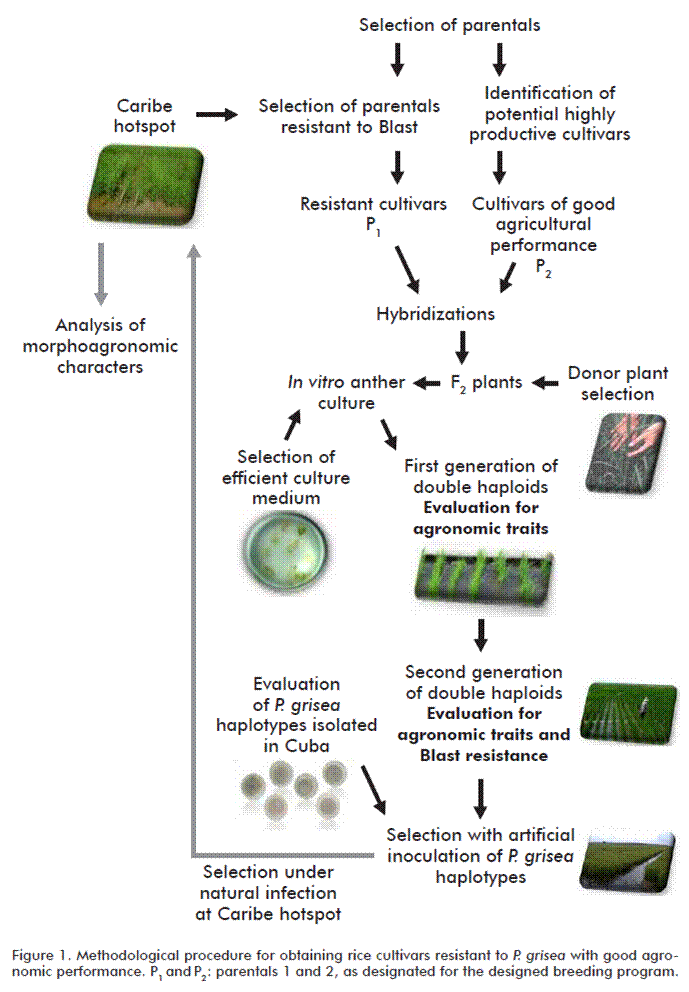
<body><![CDATA[<P   ><font size="+1" color="#000000"><font size="+1"><font size="+1" color="#211E1F"><font size="+1" color="#000000"><font size="+1" color="#211E1F"><font size="+1" color="#000000"><font size="+1" color="#211E1F"><font size="+1"><font size="+1"><font size="+1"><font size="+1"><font size="+1"><font size="+1"><font size="+1"><font size="+1"><font size="+1"><font size="+1"><font size="+1"><font size="+1" color="#000000"><font size="+1" color="#211E1F"><font size="+1"><font size="+1"><font size="+1"><font size="+1"><font size="+1"><font size="2" face="Verdana, Arial, Helvetica, sans-serif"></font></font></font></font></font></font></font></font></font></font></font></font></font></font></font></font></font></font></font></font></font></font></font></font></font></font><font size="2" face="Verdana, Arial, Helvetica, sans-serif">Among      them, the <I>in vitro </I>anther culture of F<sub>2</sub> plants offers many      advantages, since the population obtained from this combination of improvement      methods (hybridizations and <i>in vitro</i> culture) is representative of      the genetic variability of the F<sub>2</sub> population, and the plants obtained      <i>in vitro</i> are genetically homozygotic. This reduces the time for obtaining      new cultivars, saves financial and material resources, increases the efficiency      of selection and facilitates the identification of superior individuals [9-11].</font><font size="+1" color="#211E1F"><font size="+1" color="#000000"><font size="+1" color="#211E1F"><font size="+1" color="#000000"><font size="+1" color="#211E1F"><font size="+1"><font size="+1" color="#000000"><font size="+1"><font size="+1" color="#211E1F"><font size="+1" color="#000000"><font size="+1" color="#211E1F"><font size="+1" color="#000000"><font size="+1" color="#211E1F"><font size="+1"><font size="+1"><font size="+1"><font size="+1"><font size="+1"><font size="+1"><font size="+1"><font size="+1"><font size="+1"><font size="+1"><font size="+1"><font size="+1" color="#000000"><font size="+1" color="#211E1F"><font size="+1"><font size="+1"><font size="+1"><font size="+1"><font size="+1"><font size="2" face="Verdana, Arial, Helvetica, sans-serif"></font></font></font></font></font></font></font></font></font></font></font></font></font></font></font></font></font></font></font></font></font></font></font></font></font></font></font></font></font></font></font></font><font size="2" face="Verdana, Arial, Helvetica, sans-serif">      </font></P >   <FONT size="+1"><FONT size="+1"><FONT size="+1"><FONT size="+1">        <P   ><font size="+1" color="#000000"><font size="+1"><font size="+1" color="#211E1F"><font size="+1" color="#000000"><font size="+1" color="#211E1F"><font size="+1" color="#000000"><font size="+1" color="#211E1F"><font size="+1"><font size="+1"><font size="+1"><font size="+1"><font size="+1"><font size="+1"><font size="+1"><font size="+1"><font size="+1"><font size="+1"><font size="+1"><font size="+1" color="#000000"><font size="+1" color="#211E1F"><font size="+1"><font size="+1"><font size="+1"><font size="+1"><font size="+1"><font size="2" face="Verdana, Arial, Helvetica, sans-serif"></font></font></font></font></font></font></font></font></font></font></font></font></font></font></font></font></font></font></font></font></font></font></font></font></font></font><font size="2" face="Verdana, Arial, Helvetica, sans-serif">In      Cuba, breeding programs for waterlogging agro-ecosystems have been based mainly      on hybridizations, but unfortunately, the obtained cultivars were susceptible      to Blast, in spite of showing potentiality for high production yields [12-14].      Moreover, the &lsquo;Caribe&rsquo; site, belonging to the Agroindustrial Rice      Complex &lsquo;Los Palacios&rsquo; in the Pinar </font><font size="2" face="Verdana, Arial, Helvetica, sans-serif">del      R&iacute;o province, has historically demonstrated a high incidence of the      disease [3] and, therefore, it has been selected for crop breeding to develop      cultivars resistant to Blast. Given the issues raised, a methodological procedure      was developed, aimed to obtain rice cultivars resistant to <i>P. grisea</i>      infection and showing good agronomic performance through <i>in vitro</i> anther      culture of F2 plants, followed by successive selection steps of the lines      obtained.</font><font size="+1" color="#211E1F"><font size="+1" color="#000000"><font size="+1" color="#211E1F"><font size="+1" color="#000000"><font size="+1" color="#211E1F"><font size="+1"><font size="+1" color="#000000"><font size="+1"><font size="+1" color="#211E1F"><font size="+1" color="#000000"><font size="+1" color="#211E1F"><font size="+1" color="#000000"><font size="+1" color="#211E1F"><font size="+1"><font size="+1"><font size="+1"><font size="+1"><font size="+1"><font size="+1"><font size="+1"><font size="+1"><font size="+1"><font size="+1"><font size="+1"><font size="+1" color="#000000"><font size="+1" color="#211E1F"><font size="+1"><font size="+1"><font size="+1"><font size="+1"><font size="+1"><font size="2" face="Verdana, Arial, Helvetica, sans-serif"></font></font></font></font></font></font></font></font></font></font></font></font></font></font></font></font></font></font></font></font></font></font></font></font></font></font></font></font></font></font></font></font><font size="2" face="Verdana, Arial, Helvetica, sans-serif">      </font></P >       <P   >&nbsp;</P >   <FONT size="+1"><FONT size="+1">        <P   ><font size="3" face="Verdana, Arial, Helvetica, sans-serif"><b>METHODOLOGICAL      PROCEDURE </b> </font></P >       <P   ><font size="+1" color="#000000"><font size="+1"><font size="+1" color="#211E1F"><font size="+1" color="#000000"><font size="+1" color="#211E1F"><font size="+1" color="#000000"><font size="+1" color="#211E1F"><font size="+1"><font size="+1"><font size="+1"><font size="+1"><font size="+1"><font size="+1"><font size="+1"><font size="+1"><font size="+1"><font size="+1"><font size="+1"><font size="+1" color="#000000"><font size="+1" color="#211E1F"><font size="+1"><font size="+1"><font size="+1"><font size="+1"><font size="+1"><font size="2" face="Verdana, Arial, Helvetica, sans-serif"></font></font></font></font></font></font></font></font></font></font></font></font></font></font></font></font></font></font></font></font></font></font></font></font></font></font><font size="2" face="Verdana, Arial, Helvetica, sans-serif">The      methodological procedure developed (<a href="/img/revistas/bta/v33n3/f0106316.gif">Figure</a>) starts      with the selection of Blast resistant parentals [15]. They were established      by evaluating commercial and pre-commercial cultivars for performance when      subjected to the natural infection with the disease in the &lsquo;Caribe&rsquo;      hotspot and using the methodology validated in Cuba [16]. Cultivars showing      high production potentiality in different cultivation areas dedicated to rice      production were identified [17].</font><font size="+1" color="#211E1F"><font size="+1" color="#000000"><font size="+1" color="#211E1F"><font size="+1" color="#000000"><font size="+1" color="#211E1F"><font size="+1"><font size="+1" color="#000000"><font size="+1"><font size="+1" color="#211E1F"><font size="+1" color="#000000"><font size="+1" color="#211E1F"><font size="+1" color="#000000"><font size="+1" color="#211E1F"><font size="+1"><font size="+1"><font size="+1"><font size="+1"><font size="+1"><font size="+1"><font size="+1"><font size="+1"><font size="+1"><font size="+1"><font size="+1"><font size="+1" color="#000000"><font size="+1" color="#211E1F"><font size="+1"><font size="+1"><font size="+1"><font size="+1"><font size="+1"><font size="2" face="Verdana, Arial, Helvetica, sans-serif"></font></font></font></font></font></font></font></font></font></font></font></font></font></font></font></font></font></font></font></font></font></font></font></font></font></font></font></font></font></font></font></font><font size="2" face="Verdana, Arial, Helvetica, sans-serif">      </font></P >       
<P   ><font size="+1" color="#000000"><font size="+1"><font size="+1" color="#211E1F"><font size="+1" color="#000000"><font size="+1" color="#211E1F"><font size="+1" color="#000000"><font size="+1" color="#211E1F"><font size="+1"><font size="+1"><font size="+1"><font size="+1"><font size="+1"><font size="+1"><font size="+1"><font size="+1"><font size="+1"><font size="+1"><font size="+1"><font size="+1" color="#000000"><font size="+1" color="#211E1F"><font size="+1"><font size="+1"><font size="+1"><font size="+1"><font size="+1"><font size="2" face="Verdana, Arial, Helvetica, sans-serif"></font></font></font></font></font></font></font></font></font></font></font></font></font></font></font></font></font></font></font></font></font></font></font></font></font></font><font size="2" face="Verdana, Arial, Helvetica, sans-serif">Subsequently,      the resistant parentals of good agricultural performance were subjected to      a breeding program, by hybridization according to a statistical genetic design,      and the F<sub>1</sub> seeds obtained from the crossings were planted for reproduction.</font><font size="+1" color="#211E1F"><font size="+1" color="#000000"><font size="+1" color="#211E1F"><font size="+1" color="#000000"><font size="+1" color="#211E1F"><font size="+1"><font size="+1" color="#000000"><font size="+1"><font size="+1" color="#211E1F"><font size="+1" color="#000000"><font size="+1" color="#211E1F"><font size="+1" color="#000000"><font size="+1" color="#211E1F"><font size="+1"><font size="+1"><font size="+1"><font size="+1"><font size="+1"><font size="+1"><font size="+1"><font size="+1"><font size="+1"><font size="+1"><font size="+1"><font size="+1" color="#000000"><font size="+1" color="#211E1F"><font size="+1"><font size="+1"><font size="+1"><font size="+1"><font size="+1"><font size="2" face="Verdana, Arial, Helvetica, sans-serif"></font></font></font></font></font></font></font></font></font></font></font></font></font></font></font></font></font></font></font></font></font></font></font></font></font></font></font></font></font></font></font></font><font size="2" face="Verdana, Arial, Helvetica, sans-serif">      </font></P >   <FONT size="+1"><FONT size="+1">        <P   ><font size="+1" color="#000000"><font size="+1"><font size="+1" color="#211E1F"><font size="+1" color="#000000"><font size="+1" color="#211E1F"><font size="+1" color="#000000"><font size="+1" color="#211E1F"><font size="+1"><font size="+1"><font size="+1"><font size="+1"><font size="+1"><font size="+1"><font size="+1"><font size="+1"><font size="+1"><font size="+1"><font size="+1"><font size="+1" color="#000000"><font size="+1" color="#211E1F"><font size="+1"><font size="+1"><font size="+1"><font size="+1"><font size="+1"><font size="2" face="Verdana, Arial, Helvetica, sans-serif"></font></font></font></font></font></font></font></font></font></font></font></font></font></font></font></font></font></font></font></font></font></font></font></font></font></font><font size="2" face="Verdana, Arial, Helvetica, sans-serif"><I>In      vitro </I>anther culture of F<sub>2</sub> plants was applied as a second step,      selecting for donor plants which anthers were cultured, also including the      optimization of the culture medium for callus formation and the regeneration      of green plants [18]. </font></P >   <FONT size="+1"><FONT size="+1">        <P   ><font size="+1" color="#000000"><font size="+1"><font size="+1" color="#211E1F"><font size="+1" color="#000000"><font size="+1" color="#211E1F"><font size="+1" color="#000000"><font size="+1" color="#211E1F"><font size="+1"><font size="+1"><font size="+1"><font size="+1"><font size="+1"><font size="+1"><font size="+1"><font size="+1"><font size="+1"><font size="+1"><font size="+1"><font size="+1" color="#000000"><font size="+1" color="#211E1F"><font size="+1"><font size="+1"><font size="+1"><font size="+1"><font size="+1"><font size="2" face="Verdana, Arial, Helvetica, sans-serif"></font></font></font></font></font></font></font></font></font></font></font></font></font></font></font></font></font></font></font></font></font></font></font></font></font></font><font size="2" face="Verdana, Arial, Helvetica, sans-serif">Different      factors influence the double-haploid production, but the genotype is regarded      as the most influential one in callus formation, determining the ability of      calluses to differentiate into plants at the adequate green:albino plant ratio      and the ploidy of the regenerated explants. Moreover, the number of isogenic      lines to be produced is also influenced by the genetic background of the cultivar      itself, since a higher number of isogenic lines can be obtained from many      japonica rice cultivars as compared to the low production of calluses and      the low regeneration efficiency of green plants from most indica cultivars      [19]. In this regard, there is evidence that the response of cultivars to      callus induction and plant regeneration is inherited and controlled by nuclear      genes, which can be transferred to recalcitrant lines through genetic recombination      [20].</font><font size="+1" color="#211E1F"><font size="+1" color="#000000"><font size="+1" color="#211E1F"><font size="+1" color="#000000"><font size="+1" color="#211E1F"><font size="+1"><font size="+1" color="#000000"><font size="+1"><font size="+1" color="#211E1F"><font size="+1" color="#000000"><font size="+1" color="#211E1F"><font size="+1" color="#000000"><font size="+1" color="#211E1F"><font size="+1"><font size="+1"><font size="+1"><font size="+1"><font size="+1"><font size="+1"><font size="+1"><font size="+1"><font size="+1"><font size="+1"><font size="+1"><font size="+1" color="#000000"><font size="+1" color="#211E1F"><font size="+1"><font size="+1"><font size="+1"><font size="+1"><font size="+1"><font size="2" face="Verdana, Arial, Helvetica, sans-serif"></font></font></font></font></font></font></font></font></font></font></font></font></font></font></font></font></font></font></font></font></font></font></font></font></font></font></font></font></font></font></font></font><font size="2" face="Verdana, Arial, Helvetica, sans-serif">      </font></P >       <P   ><font size="+1" color="#000000"><font size="+1"><font size="+1" color="#211E1F"><font size="+1" color="#000000"><font size="+1" color="#211E1F"><font size="+1" color="#000000"><font size="+1" color="#211E1F"><font size="+1"><font size="+1"><font size="+1"><font size="+1"><font size="+1"><font size="+1"><font size="+1"><font size="+1"><font size="+1"><font size="+1"><font size="+1"><font size="+1" color="#000000"><font size="+1" color="#211E1F"><font size="+1"><font size="+1"><font size="+1"><font size="+1"><font size="+1"><font size="2" face="Verdana, Arial, Helvetica, sans-serif"></font></font></font></font></font></font></font></font></font></font></font></font></font></font></font></font></font></font></font></font></font></font></font></font></font></font><font size="2" face="Verdana, Arial, Helvetica, sans-serif">Although      initiation of microspores division may be independent of nutritional adjuncts,      these are required for subsequent divisions, which lead to callus formation      and differentiation of these cells in embryos and plants. Several laboratories      have tried to optimize the anther culture rice medium composition, but their      findings differ from each other due to the influence of genotype, the state      of pollen development and the temperature pretreatment of anthers. Significantly,      medium composition is still relevant, since its changes produce variations      in the frequency of induction for the same genotype [21].</font><font size="+1" color="#211E1F"><font size="+1" color="#000000"><font size="+1" color="#211E1F"><font size="+1" color="#000000"><font size="+1" color="#211E1F"><font size="+1"><font size="+1" color="#000000"><font size="+1"><font size="+1" color="#211E1F"><font size="+1" color="#000000"><font size="+1" color="#211E1F"><font size="+1" color="#000000"><font size="+1" color="#211E1F"><font size="+1"><font size="+1"><font size="+1"><font size="+1"><font size="+1"><font size="+1"><font size="+1"><font size="+1"><font size="+1"><font size="+1"><font size="+1"><font size="+1" color="#000000"><font size="+1" color="#211E1F"><font size="+1"><font size="+1"><font size="+1"><font size="+1"><font size="+1"><font size="2" face="Verdana, Arial, Helvetica, sans-serif"></font></font></font></font></font></font></font></font></font></font></font></font></font></font></font></font></font></font></font></font></font></font></font></font></font></font></font></font></font></font></font></font><font size="2" face="Verdana, Arial, Helvetica, sans-serif">      </font></P >       <P   ><font size="+1" color="#000000"><font size="+1"><font size="+1" color="#211E1F"><font size="+1" color="#000000"><font size="+1" color="#211E1F"><font size="+1" color="#000000"><font size="+1" color="#211E1F"><font size="+1"><font size="+1"><font size="+1"><font size="+1"><font size="+1"><font size="+1"><font size="+1"><font size="+1"><font size="+1"><font size="+1"><font size="+1"><font size="+1" color="#000000"><font size="+1" color="#211E1F"><font size="+1"><font size="+1"><font size="+1"><font size="+1"><font size="+1"><font size="2" face="Verdana, Arial, Helvetica, sans-serif"></font></font></font></font></font></font></font></font></font></font></font></font></font></font></font></font></font></font></font></font></font></font></font></font></font></font><font size="2" face="Verdana, Arial, Helvetica, sans-serif">Then,      several selection cycles were implemented, starting with the first generation      of plants obtained <i>in vitro</i>, which were evaluated for agronomic traits.      In the second generation, a simultaneous selection of two characters was made      with independent criteria: cultivars resistant to Blast, in leaf and panicle      neck, by natural field infection and productive potential [22].</font><font size="+1" color="#211E1F"><font size="+1" color="#000000"><font size="+1" color="#211E1F"><font size="+1" color="#000000"><font size="+1" color="#211E1F"><font size="+1"><font size="+1" color="#000000"><font size="+1"><font size="+1" color="#211E1F"><font size="+1" color="#000000"><font size="+1" color="#211E1F"><font size="+1" color="#000000"><font size="+1" color="#211E1F"><font size="+1"><font size="+1"><font size="+1"><font size="+1"><font size="+1"><font size="+1"><font size="+1"><font size="+1"><font size="+1"><font size="+1"><font size="+1"><font size="+1" color="#000000"><font size="+1" color="#211E1F"><font size="+1"><font size="+1"><font size="+1"><font size="+1"><font size="+1"><font size="2" face="Verdana, Arial, Helvetica, sans-serif"></font></font></font></font></font></font></font></font></font></font></font></font></font></font></font></font></font></font></font></font></font></font></font></font></font></font></font></font></font></font></font></font><font size="2" face="Verdana, Arial, Helvetica, sans-serif">      </font></P >       ]]></body>
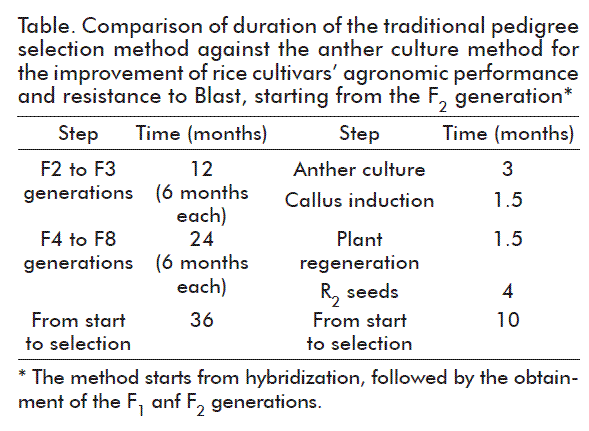
<body><![CDATA[<P   ><font size="+1" color="#000000"><font size="+1"><font size="+1" color="#211E1F"><font size="+1" color="#000000"><font size="+1" color="#211E1F"><font size="+1" color="#000000"><font size="+1" color="#211E1F"><font size="+1"><font size="+1"><font size="+1"><font size="+1"><font size="+1"><font size="+1"><font size="+1"><font size="+1"><font size="+1"><font size="+1"><font size="+1"><font size="+1" color="#000000"><font size="+1" color="#211E1F"><font size="+1"><font size="+1"><font size="+1"><font size="+1"><font size="+1"><font size="2" face="Verdana, Arial, Helvetica, sans-serif"></font></font></font></font></font></font></font></font></font></font></font></font></font></font></font></font></font></font></font></font></font></font></font></font></font></font><font size="2" face="Verdana, Arial, Helvetica, sans-serif">The      lines combining resistance to Blast and good agronomic performance were evaluated      under controlled conditions against <I>P. grisea </I>aggressive haplotypes      isolated in Cuba [23], and under natural infection at the &lsquo;Caribe&rsquo;      site, under high pathogen pressure. Finally, the lines displaying resistance      were further characterized for morphoagronomic characters [24].</font><font size="+1" color="#211E1F"><font size="+1" color="#000000"><font size="+1" color="#211E1F"><font size="+1" color="#000000"><font size="+1" color="#211E1F"><font size="+1"><font size="+1" color="#000000"><font size="+1"><font size="+1" color="#211E1F"><font size="+1" color="#000000"><font size="+1" color="#211E1F"><font size="+1" color="#000000"><font size="+1" color="#211E1F"><font size="+1"><font size="+1"><font size="+1"><font size="+1"><font size="+1"><font size="+1"><font size="+1"><font size="+1"><font size="+1"><font size="+1"><font size="+1"><font size="+1" color="#000000"><font size="+1" color="#211E1F"><font size="+1"><font size="+1"><font size="+1"><font size="+1"><font size="+1"><font size="2" face="Verdana, Arial, Helvetica, sans-serif"></font></font></font></font></font></font></font></font></font></font></font></font></font></font></font></font></font></font></font></font></font></font></font></font></font></font></font></font></font></font></font></font><font size="2" face="Verdana, Arial, Helvetica, sans-serif">      </font></P >       <P   ><font size="+1" color="#000000"><font size="+1"><font size="+1" color="#211E1F"><font size="+1" color="#000000"><font size="+1" color="#211E1F"><font size="+1" color="#000000"><font size="+1" color="#211E1F"><font size="+1"><font size="+1"><font size="+1"><font size="+1"><font size="+1"><font size="+1"><font size="+1"><font size="+1"><font size="+1"><font size="+1"><font size="+1"><font size="+1" color="#000000"><font size="+1" color="#211E1F"><font size="+1"><font size="+1"><font size="+1"><font size="+1"><font size="+1"><font size="2" face="Verdana, Arial, Helvetica, sans-serif"></font></font></font></font></font></font></font></font></font></font></font></font></font></font></font></font></font></font></font></font></font></font></font></font></font></font><font size="2" face="Verdana, Arial, Helvetica, sans-serif">Blast      is considered a complex disease due to the pathogenic variability and the      speed with which the fungus overcomes the resistance of the rice plant [25].      With the application of molecular techniques, the high diversity of population      pathotypes was grouped in a smaller group of lineages according to their genetic      similarity [26].</font><font size="+1" color="#211E1F"><font size="+1" color="#000000"><font size="+1" color="#211E1F"><font size="+1" color="#000000"><font size="+1" color="#211E1F"><font size="+1"><font size="+1" color="#000000"><font size="+1"><font size="+1" color="#211E1F"><font size="+1" color="#000000"><font size="+1" color="#211E1F"><font size="+1" color="#000000"><font size="+1" color="#211E1F"><font size="+1"><font size="+1"><font size="+1"><font size="+1"><font size="+1"><font size="+1"><font size="+1"><font size="+1"><font size="+1"><font size="+1"><font size="+1"><font size="+1" color="#000000"><font size="+1" color="#211E1F"><font size="+1"><font size="+1"><font size="+1"><font size="+1"><font size="+1"><font size="2" face="Verdana, Arial, Helvetica, sans-serif"></font></font></font></font></font></font></font></font></font></font></font></font></font></font></font></font></font></font></font></font></font></font></font></font></font></font></font></font></font></font></font></font><font size="2" face="Verdana, Arial, Helvetica, sans-serif">      </font></P >       <P   ><font size="+1" color="#000000"><font size="+1"><font size="+1" color="#211E1F"><font size="+1" color="#000000"><font size="+1" color="#211E1F"><font size="+1" color="#000000"><font size="+1" color="#211E1F"><font size="+1"><font size="+1"><font size="+1"><font size="+1"><font size="+1"><font size="+1"><font size="+1"><font size="+1"><font size="+1"><font size="+1"><font size="+1"><font size="+1" color="#000000"><font size="+1" color="#211E1F"><font size="+1"><font size="+1"><font size="+1"><font size="+1"><font size="+1"><font size="2" face="Verdana, Arial, Helvetica, sans-serif"></font></font></font></font></font></font></font></font></font></font></font></font></font></font></font></font></font></font></font></font></font></font></font></font></font></font><font size="2" face="Verdana, Arial, Helvetica, sans-serif">In      the Philippines, in studies conducted with pathogen populations, 71 haplotypes      from six genetic lineages were identified and a consistent incompatibility      was evidenced for most host-lineage combinations. This led to the assumption      that, although some resistance genes can be easily overcome by a given pathogen      lineage, these same resistance genes can be a good barrier to other lineages      of the population, and viceversa [8, 27].</font><font size="+1" color="#211E1F"><font size="+1" color="#000000"><font size="+1" color="#211E1F"><font size="+1" color="#000000"><font size="+1" color="#211E1F"><font size="+1"><font size="+1" color="#000000"><font size="+1"><font size="+1" color="#211E1F"><font size="+1" color="#000000"><font size="+1" color="#211E1F"><font size="+1" color="#000000"><font size="+1" color="#211E1F"><font size="+1"><font size="+1"><font size="+1"><font size="+1"><font size="+1"><font size="+1"><font size="+1"><font size="+1"><font size="+1"><font size="+1"><font size="+1"><font size="+1" color="#000000"><font size="+1" color="#211E1F"><font size="+1"><font size="+1"><font size="+1"><font size="+1"><font size="+1"><font size="2" face="Verdana, Arial, Helvetica, sans-serif"></font></font></font></font></font></font></font></font></font></font></font></font></font></font></font></font></font></font></font></font></font></font></font></font></font></font></font></font></font></font></font></font><font size="2" face="Verdana, Arial, Helvetica, sans-serif">      </font></P >       <P   ><font size="+1" color="#000000"><font size="+1"><font size="+1" color="#211E1F"><font size="+1" color="#000000"><font size="+1" color="#211E1F"><font size="+1" color="#000000"><font size="+1" color="#211E1F"><font size="+1"><font size="+1"><font size="+1"><font size="+1"><font size="+1"><font size="+1"><font size="+1"><font size="+1"><font size="+1"><font size="+1"><font size="+1"><font size="+1" color="#000000"><font size="+1" color="#211E1F"><font size="+1"><font size="+1"><font size="+1"><font size="+1"><font size="+1"><font size="2" face="Verdana, Arial, Helvetica, sans-serif"></font></font></font></font></font></font></font></font></font></font></font></font></font></font></font></font></font></font></font></font></font></font></font></font></font></font><font size="2" face="Verdana, Arial, Helvetica, sans-serif">In      Cuba, the first reports on the identification of circulating <I>P. grisea      </I>fungus isolates date back to 1984 [28]. Later on, works on the genetic      diversity of the fungus evaluated at two Cuban locations (&lsquo;Los Palacios&rsquo;      and &lsquo;Sur del J&iacute;baro&rsquo;) showed that the pathogen population      consisted of four closely-related lineages with a high number of haplotypes      (up to 134). The first location showed the highest genetic diversity and the      largest number of genetic lineages, in agreement with the highest incidence      reported for this region in Cuba [29].</font><font size="+1" color="#211E1F"><font size="+1" color="#000000"><font size="+1" color="#211E1F"><font size="+1" color="#000000"><font size="+1" color="#211E1F"><font size="+1"><font size="+1" color="#000000"><font size="+1"><font size="+1" color="#211E1F"><font size="+1" color="#000000"><font size="+1" color="#211E1F"><font size="+1" color="#000000"><font size="+1" color="#211E1F"><font size="+1"><font size="+1"><font size="+1"><font size="+1"><font size="+1"><font size="+1"><font size="+1"><font size="+1"><font size="+1"><font size="+1"><font size="+1"><font size="+1" color="#000000"><font size="+1" color="#211E1F"><font size="+1"><font size="+1"><font size="+1"><font size="+1"><font size="+1"><font size="2" face="Verdana, Arial, Helvetica, sans-serif"></font></font></font></font></font></font></font></font></font></font></font></font></font></font></font></font></font></font></font></font></font></font></font></font></font></font></font></font></font></font></font></font><font size="2" face="Verdana, Arial, Helvetica, sans-serif">      </font></P >       <P   ><font size="+1" color="#000000"><font size="+1"><font size="+1" color="#211E1F"><font size="+1" color="#000000"><font size="+1" color="#211E1F"><font size="+1" color="#000000"><font size="+1" color="#211E1F"><font size="+1"><font size="+1"><font size="+1"><font size="+1"><font size="+1"><font size="+1"><font size="+1"><font size="+1"><font size="+1"><font size="+1"><font size="+1"><font size="+1" color="#000000"><font size="+1" color="#211E1F"><font size="+1"><font size="+1"><font size="+1"><font size="+1"><font size="+1"><font size="2" face="Verdana, Arial, Helvetica, sans-serif"></font></font></font></font></font></font></font></font></font></font></font></font></font></font></font></font></font></font></font></font></font></font></font></font></font></font><font size="2" face="Verdana, Arial, Helvetica, sans-serif">Additionally,      the great pathogenic variability of <I>P. grisea </I>is one of the major constraints      in breeding. Thus, the characterization of lineages present in each country      contributes significantly to the establishment of breeding strategies, based      on the theory of exclusion lineages. Such strategies consider the coexistence      of different lineages groups in each rice growing region, with progenitors      needing to be selected to provide resistance genes to such groups [7].</font><font size="+1" color="#211E1F"><font size="+1" color="#000000"><font size="+1" color="#211E1F"><font size="+1" color="#000000"><font size="+1" color="#211E1F"><font size="+1"><font size="+1" color="#000000"><font size="+1"><font size="+1" color="#211E1F"><font size="+1" color="#000000"><font size="+1" color="#211E1F"><font size="+1" color="#000000"><font size="+1" color="#211E1F"><font size="+1"><font size="+1"><font size="+1"><font size="+1"><font size="+1"><font size="+1"><font size="+1"><font size="+1"><font size="+1"><font size="+1"><font size="+1"><font size="+1" color="#000000"><font size="+1" color="#211E1F"><font size="+1"><font size="+1"><font size="+1"><font size="+1"><font size="+1"><font size="2" face="Verdana, Arial, Helvetica, sans-serif"></font></font></font></font></font></font></font></font></font></font></font></font></font></font></font></font></font></font></font></font></font></font></font></font></font></font></font></font></font></font></font></font><font size="2" face="Verdana, Arial, Helvetica, sans-serif">      </font></P >       <P   ><font size="+1" color="#000000"><font size="+1"><font size="+1" color="#211E1F"><font size="+1" color="#000000"><font size="+1" color="#211E1F"><font size="+1" color="#000000"><font size="+1" color="#211E1F"><font size="+1"><font size="+1"><font size="+1"><font size="+1"><font size="+1"><font size="+1"><font size="+1"><font size="+1"><font size="+1"><font size="+1"><font size="+1"><font size="+1" color="#000000"><font size="+1" color="#211E1F"><font size="+1"><font size="+1"><font size="+1"><font size="+1"><font size="+1"><font size="2" face="Verdana, Arial, Helvetica, sans-serif"></font></font></font></font></font></font></font></font></font></font></font></font></font></font></font></font></font></font></font></font></font></font></font></font></font></font><font size="2" face="Verdana, Arial, Helvetica, sans-serif">After      the implementation of the methodology described here, homozygous Blast-resistant      lines were identified after sowing of the F<sub>2</sub> seed (<a href="/img/revistas/bta/v33n3/t0106316.gif">Table</a>),      with good agronomic performance in just 10 months. Therefore, the efficiency      of the breeding method was confirmed. This result was equivalent to that attained      with the selection method by pedigree, traditionally used in rice cultivation      in Cuba, further accounting for the same stability usually achieved only after      seven-to-eight generations of self-pollination with one or two annual crops      during three-to-six working years [30].</font><font size="+1" color="#211E1F"><font size="+1" color="#000000"><font size="+1" color="#211E1F"><font size="+1" color="#000000"><font size="+1" color="#211E1F"><font size="+1"><font size="+1" color="#000000"><font size="+1"><font size="+1" color="#211E1F"><font size="+1" color="#000000"><font size="+1" color="#211E1F"><font size="+1" color="#000000"><font size="+1" color="#211E1F"><font size="+1"><font size="+1"><font size="+1"><font size="+1"><font size="+1"><font size="+1"><font size="+1"><font size="+1"><font size="+1"><font size="+1"><font size="+1"><font size="+1" color="#000000"><font size="+1" color="#211E1F"><font size="+1"><font size="+1"><font size="+1"><font size="+1"><font size="+1"><font size="2" face="Verdana, Arial, Helvetica, sans-serif"></font></font></font></font></font></font></font></font></font></font></font></font></font></font></font></font></font></font></font></font></font></font></font></font></font></font></font></font></font></font></font></font><font size="2" face="Verdana, Arial, Helvetica, sans-serif">      </font></P >   <FONT size="+1"><FONT size="+1">        
<P   ><font size="+1" color="#000000"><font size="+1"><font size="+1" color="#211E1F"><font size="+1" color="#000000"><font size="+1" color="#211E1F"><font size="+1" color="#000000"><font size="+1" color="#211E1F"><font size="+1"><font size="+1"><font size="+1"><font size="+1"><font size="+1"><font size="+1"><font size="+1"><font size="+1"><font size="+1"><font size="+1"><font size="+1"><font size="+1" color="#000000"><font size="+1" color="#211E1F"><font size="+1"><font size="+1"><font size="+1"><font size="+1"><font size="+1"><font size="2" face="Verdana, Arial, Helvetica, sans-serif"></font></font></font></font></font></font></font></font></font></font></font></font></font></font></font></font></font></font></font></font></font></font></font></font></font></font><font size="2" face="Verdana, Arial, Helvetica, sans-serif">A      population of double haploids from anther culture of F<sub>2</sub> plants      accounted for the genetic variability of the entire F<sub>2</sub> population,      with the advantage that plants are genetically homozygotic. Consequently,      the time to obtain the cultivars is reduced, providing considerable financial      and material savings, not requiring large planting areas or any other production      costs. It also increases the efficiency for selection, both qualitatively      and quantitatively and facilitates the selection of superior cultivars [9-11,      31-33].</font><font size="+1" color="#211E1F"><font size="+1" color="#000000"><font size="+1" color="#211E1F"><font size="+1" color="#000000"><font size="+1" color="#211E1F"><font size="+1"><font size="+1" color="#000000"><font size="+1"><font size="+1" color="#211E1F"><font size="+1" color="#000000"><font size="+1" color="#211E1F"><font size="+1" color="#000000"><font size="+1" color="#211E1F"><font size="+1"><font size="+1"><font size="+1"><font size="+1"><font size="+1"><font size="+1"><font size="+1"><font size="+1"><font size="+1"><font size="+1"><font size="+1"><font size="+1" color="#000000"><font size="+1" color="#211E1F"><font size="+1"><font size="+1"><font size="+1"><font size="+1"><font size="+1"><font size="2" face="Verdana, Arial, Helvetica, sans-serif"></font></font></font></font></font></font></font></font></font></font></font></font></font></font></font></font></font></font></font></font></font></font></font></font></font></font></font></font></font></font></font></font><font size="2" face="Verdana, Arial, Helvetica, sans-serif">      </font></P >   <FONT size="+1"><FONT size="+1"><FONT size="+1"><FONT size="+1">        <P   ><font size="+1" color="#000000"><font size="+1"><font size="+1" color="#211E1F"><font size="+1" color="#000000"><font size="+1" color="#211E1F"><font size="+1" color="#000000"><font size="+1" color="#211E1F"><font size="+1"><font size="+1"><font size="+1"><font size="+1"><font size="+1"><font size="+1"><font size="+1"><font size="+1"><font size="+1"><font size="+1"><font size="+1"><font size="+1" color="#000000"><font size="+1" color="#211E1F"><font size="+1"><font size="+1"><font size="+1"><font size="+1"><font size="+1"><font size="2" face="Verdana, Arial, Helvetica, sans-serif"></font></font></font></font></font></font></font></font></font></font></font></font></font></font></font></font></font></font></font></font></font></font></font></font></font></font><font size="2" face="Verdana, Arial, Helvetica, sans-serif">The      introduction of <i>in vitro</i> anther culture has given varied results in      different countries. For instance, in Venezuela [34], cultivars adapted to      their cultivation conditions were obtained through anther culture, with immature      embryos reported. In Chile, the F<sub>1</sub> and F<sub>2</sub> generations      from triple crossings showed high sterility, whereas 941 R2 lines were obtained      by anther culture, and further evaluated and selected for cold tolerance,      better quality and early maturity. By these procedures, new lines of higher      yields were obtained in considerably shorter periods [35]. In Colombia [36],      fertile homozygotic lines were produced from interspecific <I>Oryza sativa      </I>L. &times; <I>Oryza barthii </I>Chev and <I>Oryza glaberrima </I>&times;      <I>Oryza rufipogon </I>Griff Steudt crossings, as new sources for pest resistance.</font><font size="+1" color="#211E1F"><font size="+1" color="#000000"><font size="+1" color="#211E1F"><font size="+1" color="#000000"><font size="+1" color="#211E1F"><font size="+1"><font size="+1" color="#000000"><font size="+1"><font size="+1" color="#211E1F"><font size="+1" color="#000000"><font size="+1" color="#211E1F"><font size="+1" color="#000000"><font size="+1" color="#211E1F"><font size="+1"><font size="+1"><font size="+1"><font size="+1"><font size="+1"><font size="+1"><font size="+1"><font size="+1"><font size="+1"><font size="+1"><font size="+1"><font size="+1" color="#000000"><font size="+1" color="#211E1F"><font size="+1"><font size="+1"><font size="+1"><font size="+1"><font size="+1"><font size="2" face="Verdana, Arial, Helvetica, sans-serif"></font></font></font></font></font></font></font></font></font></font></font></font></font></font></font></font></font></font></font></font></font></font></font></font></font></font></font></font></font></font></font></font><font size="2" face="Verdana, Arial, Helvetica, sans-serif">      </font></P >   <FONT size="+1"><FONT size="+1"><FONT size="+1"><FONT size="+1"><FONT size="+1"><FONT size="+1">        <P   ><font size="+1" color="#000000"><font size="+1"><font size="+1" color="#211E1F"><font size="+1" color="#000000"><font size="+1" color="#211E1F"><font size="+1" color="#000000"><font size="+1" color="#211E1F"><font size="+1"><font size="+1"><font size="+1"><font size="+1"><font size="+1"><font size="+1"><font size="+1"><font size="+1"><font size="+1"><font size="+1"><font size="+1"><font size="+1" color="#000000"><font size="+1" color="#211E1F"><font size="+1"><font size="+1"><font size="+1"><font size="+1"><font size="+1"><font size="2" face="Verdana, Arial, Helvetica, sans-serif"></font></font></font></font></font></font></font></font></font></font></font></font></font></font></font></font></font></font></font></font></font></font></font></font></font></font><font size="2" face="Verdana, Arial, Helvetica, sans-serif">Additionally,      durable Blast resistance requires: i) the characterization of: the genetic      structure of <I>P. grisea </I>populations; ii) the diversity and frequency      of avirulence/virulence pathogen genes and knowledge on its influence on resistance      genes; iii) the identification and incorporation of combinations of resistance      genes in rice germplasm and, once incorporated, the evaluation of the populations      by controlled inoculations under field conditions, followed up through the      use of molecular markers [37].</font><font size="+1" color="#211E1F"><font size="+1" color="#000000"><font size="+1" color="#211E1F"><font size="+1" color="#000000"><font size="+1" color="#211E1F"><font size="+1"><font size="+1" color="#000000"><font size="+1"><font size="+1" color="#211E1F"><font size="+1" color="#000000"><font size="+1" color="#211E1F"><font size="+1" color="#000000"><font size="+1" color="#211E1F"><font size="+1"><font size="+1"><font size="+1"><font size="+1"><font size="+1"><font size="+1"><font size="+1"><font size="+1"><font size="+1"><font size="+1"><font size="+1"><font size="+1" color="#000000"><font size="+1" color="#211E1F"><font size="+1"><font size="+1"><font size="+1"><font size="+1"><font size="+1"><font size="2" face="Verdana, Arial, Helvetica, sans-serif"></font></font></font></font></font></font></font></font></font></font></font></font></font></font></font></font></font></font></font></font></font></font></font></font></font></font></font></font></font></font></font></font><font size="2" face="Verdana, Arial, Helvetica, sans-serif">      </font></P >       <P   ><font size="+1" color="#000000"><font size="+1"><font size="+1" color="#211E1F"><font size="+1" color="#000000"><font size="+1" color="#211E1F"><font size="+1" color="#000000"><font size="+1" color="#211E1F"><font size="+1"><font size="+1"><font size="+1"><font size="+1"><font size="+1"><font size="+1"><font size="+1"><font size="+1"><font size="+1"><font size="+1"><font size="+1"><font size="+1" color="#000000"><font size="+1" color="#211E1F"><font size="+1"><font size="+1"><font size="+1"><font size="+1"><font size="+1"><font size="2" face="Verdana, Arial, Helvetica, sans-serif"></font></font></font></font></font></font></font></font></font></font></font></font></font></font></font></font></font></font></font></font></font></font></font></font></font></font><font size="2" face="Verdana, Arial, Helvetica, sans-serif">As      previously mentioned, the evaluation of cultivars under field conditions requires      identifying the hotspot site, characterized by a high pressure of the disease      and high pathogen diversity which is associated with favorable environmental      conditions for plant development. In that area, rice lines can be selected      that combine a large set of resistance genes, further increasing their chances      for inheritance and persistence. In Cuba, the &lsquo;Caribe&rsquo; site, belonging      to the Rice Agricultural Complex Los Palacios, is recommended for rice crop      genetic breeding procedures to develop cultivars with Blast resistance, given      its highest genetic diversity for two pathogen populations [29]. This region      has been historically reported of a high incidence of the disease [3].</font><font size="+1" color="#211E1F"><font size="+1" color="#000000"><font size="+1" color="#211E1F"><font size="+1" color="#000000"><font size="+1" color="#211E1F"><font size="+1"><font size="+1" color="#000000"><font size="+1"><font size="+1" color="#211E1F"><font size="+1" color="#000000"><font size="+1" color="#211E1F"><font size="+1" color="#000000"><font size="+1" color="#211E1F"><font size="+1"><font size="+1"><font size="+1"><font size="+1"><font size="+1"><font size="+1"><font size="+1"><font size="+1"><font size="+1"><font size="+1"><font size="+1"><font size="+1" color="#000000"><font size="+1" color="#211E1F"><font size="+1"><font size="+1"><font size="+1"><font size="+1"><font size="+1"><font size="2" face="Verdana, Arial, Helvetica, sans-serif"></font></font></font></font></font></font></font></font></font></font></font></font></font></font></font></font></font></font></font></font></font></font></font></font></font></font></font></font></font></font></font></font><font size="2" face="Verdana, Arial, Helvetica, sans-serif">      </font></P >       ]]></body>
<body><![CDATA[<P   ><font size="+1" color="#000000"><font size="+1"><font size="+1" color="#211E1F"><font size="+1" color="#000000"><font size="+1" color="#211E1F"><font size="+1" color="#000000"><font size="+1" color="#211E1F"><font size="+1"><font size="+1"><font size="+1"><font size="+1"><font size="+1"><font size="+1"><font size="+1"><font size="+1"><font size="+1"><font size="+1"><font size="+1"><font size="+1" color="#000000"><font size="+1" color="#211E1F"><font size="+1"><font size="+1"><font size="+1"><font size="+1"><font size="+1"><font size="2" face="Verdana, Arial, Helvetica, sans-serif"></font></font></font></font></font></font></font></font></font></font></font></font></font></font></font></font></font></font></font></font></font></font></font></font></font></font><font size="2" face="Verdana, Arial, Helvetica, sans-serif">In      order to improve the methods to obtain Blast resistant cultivars, other groups      compared the reactions to <I>P. grisea </I>on the leaf and neck panicle of      plant populations obtained by hybridizations and anther culture. They concluded      that the latter method increases the efficiency for selection, due to a higher      additive variation, the absence of dominance, an absence of intrafamiliar      variation and competition between plants. All these facilitate the identification      of superior cultivars attending to the selection in early generations of a      pedigree program, and heritability values suggested that genetic breakthrough      could be achieved in just a few generations [38].</font><font size="+1" color="#211E1F"><font size="+1" color="#000000"><font size="+1" color="#211E1F"><font size="+1" color="#000000"><font size="+1" color="#211E1F"><font size="+1"><font size="+1" color="#000000"><font size="+1"><font size="+1" color="#211E1F"><font size="+1" color="#000000"><font size="+1" color="#211E1F"><font size="+1" color="#000000"><font size="+1" color="#211E1F"><font size="+1"><font size="+1"><font size="+1"><font size="+1"><font size="+1"><font size="+1"><font size="+1"><font size="+1"><font size="+1"><font size="+1"><font size="+1"><font size="+1" color="#000000"><font size="+1" color="#211E1F"><font size="+1"><font size="+1"><font size="+1"><font size="+1"><font size="+1"><font size="2" face="Verdana, Arial, Helvetica, sans-serif"></font></font></font></font></font></font></font></font></font></font></font></font></font></font></font></font></font></font></font></font></font></font></font></font></font></font></font></font></font></font></font></font><font size="2" face="Verdana, Arial, Helvetica, sans-serif">      </font></P >       <P   ><font size="+1" color="#000000"><font size="+1"><font size="+1" color="#211E1F"><font size="+1" color="#000000"><font size="+1" color="#211E1F"><font size="+1" color="#000000"><font size="+1" color="#211E1F"><font size="+1"><font size="+1"><font size="+1"><font size="+1"><font size="+1"><font size="+1"><font size="+1"><font size="+1"><font size="+1"><font size="+1"><font size="+1"><font size="+1" color="#000000"><font size="+1" color="#211E1F"><font size="+1"><font size="+1"><font size="+1"><font size="+1"><font size="+1"><font size="2" face="Verdana, Arial, Helvetica, sans-serif"></font></font></font></font></font></font></font></font></font></font></font></font></font></font></font></font></font></font></font></font></font></font></font></font></font></font><font size="2" face="Verdana, Arial, Helvetica, sans-serif">Regarding      resistance genes, <I>P. grisea </I>resistant lines were selected from the      crossing progeny of two isogenic lines carrying the resistance genes Pi-1      and Pi-2, those lines shown to be incompatible with the fungus genetic lineages.      This suggested the possibility to obtain lines which could exclude the entire      pathogen population and displaying sustained resistance [39].</font><font size="+1" color="#211E1F"><font size="+1" color="#000000"><font size="+1" color="#211E1F"><font size="+1" color="#000000"><font size="+1" color="#211E1F"><font size="+1"><font size="+1" color="#000000"><font size="+1"><font size="+1" color="#211E1F"><font size="+1" color="#000000"><font size="+1" color="#211E1F"><font size="+1" color="#000000"><font size="+1" color="#211E1F"><font size="+1"><font size="+1"><font size="+1"><font size="+1"><font size="+1"><font size="+1"><font size="+1"><font size="+1"><font size="+1"><font size="+1"><font size="+1"><font size="+1" color="#000000"><font size="+1" color="#211E1F"><font size="+1"><font size="+1"><font size="+1"><font size="+1"><font size="+1"><font size="2" face="Verdana, Arial, Helvetica, sans-serif"></font></font></font></font></font></font></font></font></font></font></font></font></font></font></font></font></font></font></font></font></font></font></font></font></font></font></font></font></font></font></font></font><font size="2" face="Verdana, Arial, Helvetica, sans-serif">      </font></P >       <P   ><font size="+1" color="#000000"><font size="+1"><font size="+1" color="#211E1F"><font size="+1" color="#000000"><font size="+1" color="#211E1F"><font size="+1" color="#000000"><font size="+1" color="#211E1F"><font size="+1"><font size="+1"><font size="+1"><font size="+1"><font size="+1"><font size="+1"><font size="+1"><font size="+1"><font size="+1"><font size="+1"><font size="+1"><font size="+1" color="#000000"><font size="+1" color="#211E1F"><font size="+1"><font size="+1"><font size="+1"><font size="+1"><font size="+1"><font size="2" face="Verdana, Arial, Helvetica, sans-serif"></font></font></font></font></font></font></font></font></font></font></font></font></font></font></font></font></font></font></font></font></font></font></font></font></font></font><font size="2" face="Verdana, Arial, Helvetica, sans-serif">In      assessing the progeny of a crossing between a cultivar carrying the Pi-ta      gene with one that did, that gene was not found in susceptible individuals,      suggesting that it acts as a dominant gene [40]. In later works, the Pi-ta      gene was found in a group of American cultivars, as well as in the cultivar      &lsquo;Tetep&rsquo; of Vietnamese origin [41] which also carried the Pi-1      and Pi-kh genes [42]. Meanwhile, while growing African native &lsquo;Moroberekan&rsquo;      japonica type, the resistance found was attributed to the presence of a group      of major resistance genes [43, 44]. Resistant lines were obtained from crossings      with cultivar &lsquo;IR 759-54-2-2&rsquo; [45], but neither the genes responsible      for resistance nor the </font><font size="2" face="Verdana, Arial, Helvetica, sans-serif">underlying      mechanism acting could be identified. In fact, CIAT studies have shown that      the combination of resistance genes Pi-1 (chromosome 11), Pi-2 (chromosome      6), and Pi-33 gene (chromosome 8) confer resistance to many populations of      Latin America <I>P. grisea </I>[8, 46].</font><font size="+1" color="#211E1F"><font size="+1" color="#000000"><font size="+1" color="#211E1F"><font size="+1" color="#000000"><font size="+1" color="#211E1F"><font size="+1"><font size="+1" color="#000000"><font size="+1"><font size="+1" color="#211E1F"><font size="+1" color="#000000"><font size="+1" color="#211E1F"><font size="+1" color="#000000"><font size="+1" color="#211E1F"><font size="+1"><font size="+1"><font size="+1"><font size="+1"><font size="+1"><font size="+1"><font size="+1"><font size="+1"><font size="+1"><font size="+1"><font size="+1"><font size="+1" color="#000000"><font size="+1" color="#211E1F"><font size="+1"><font size="+1"><font size="+1"><font size="+1"><font size="+1"><font size="2" face="Verdana, Arial, Helvetica, sans-serif"></font></font></font></font></font></font></font></font></font></font></font></font></font></font></font></font></font></font></font></font></font></font></font></font></font></font></font></font></font></font></font></font><font size="2" face="Verdana, Arial, Helvetica, sans-serif">      </font></P >       <P   ><font size="+1" color="#000000"><font size="+1"><font size="+1" color="#211E1F"><font size="+1" color="#000000"><font size="+1" color="#211E1F"><font size="+1" color="#000000"><font size="+1" color="#211E1F"><font size="+1"><font size="+1"><font size="+1"><font size="+1"><font size="+1"><font size="+1"><font size="+1"><font size="+1"><font size="+1"><font size="+1"><font size="+1"><font size="+1" color="#000000"><font size="+1" color="#211E1F"><font size="+1"><font size="+1"><font size="+1"><font size="+1"><font size="+1"><font size="2" face="Verdana, Arial, Helvetica, sans-serif"></font></font></font></font></font></font></font></font></font></font></font></font></font></font></font></font></font></font></font></font></font></font></font></font></font></font><font size="2" face="Verdana, Arial, Helvetica, sans-serif">Notably,      the methodological procedure developed [18] rendered three recombinant lines,      regenerated from F<sub>2</sub> plants anther culture, which apparently inherited      the genes present in the resistant parental used (&lsquo;IR 759-54-2-2&rsquo;      &lsquo;Tetep&rsquo;, &lsquo;2077&rsquo; and &lsquo;Moroberekan&rsquo;). They      confered Blast resistance, as evaluated in leaf in the vegetative phase and      neck panicle at the flowering stage, supported for several years under a high      pressure disease and pathogen diversity under field conditions.</font><font size="+1" color="#211E1F"><font size="+1" color="#000000"><font size="+1" color="#211E1F"><font size="+1" color="#000000"><font size="+1" color="#211E1F"><font size="+1"><font size="+1" color="#000000"><font size="+1"><font size="+1" color="#211E1F"><font size="+1" color="#000000"><font size="+1" color="#211E1F"><font size="+1" color="#000000"><font size="+1" color="#211E1F"><font size="+1"><font size="+1"><font size="+1"><font size="+1"><font size="+1"><font size="+1"><font size="+1"><font size="+1"><font size="+1"><font size="+1"><font size="+1"><font size="+1" color="#000000"><font size="+1" color="#211E1F"><font size="+1"><font size="+1"><font size="+1"><font size="+1"><font size="+1"><font size="2" face="Verdana, Arial, Helvetica, sans-serif"></font></font></font></font></font></font></font></font></font></font></font></font></font></font></font></font></font></font></font></font></font></font></font></font></font></font></font></font></font></font></font></font><font size="2" face="Verdana, Arial, Helvetica, sans-serif">      </font></P >       <P   >&nbsp;</P >       <P   ><font size="3" face="Verdana, Arial, Helvetica, sans-serif"><b>CONCLUSIONS </b></font></P >       <P   ><font size="+1" color="#000000"><font size="+1"><font size="+1" color="#211E1F"><font size="+1" color="#000000"><font size="+1" color="#211E1F"><font size="+1" color="#000000"><font size="+1" color="#211E1F"><font size="+1"><font size="+1"><font size="+1"><font size="+1"><font size="+1"><font size="+1"><font size="+1"><font size="+1"><font size="+1"><font size="+1"><font size="+1"><font size="+1" color="#000000"><font size="+1" color="#211E1F"><font size="+1"><font size="+1"><font size="+1"><font size="+1"><font size="+1"><font size="2" face="Verdana, Arial, Helvetica, sans-serif"></font></font></font></font></font></font></font></font></font></font></font></font></font></font></font></font></font></font></font></font></font></font></font></font></font></font><font size="2" face="Verdana, Arial, Helvetica, sans-serif">Consistently,      rice parentals for a rice breeding program were identified. The genotype and      the culture medium used were crucial to the success of F2 plants <i>in vitro</i>      anther culture, with the NL medium aiding to induce an increased callus formation.</font><font size="+1" color="#211E1F"><font size="+1" color="#000000"><font size="+1" color="#211E1F"><font size="+1" color="#000000"><font size="+1" color="#211E1F"><font size="+1"><font size="+1" color="#000000"><font size="+1"><font size="+1" color="#211E1F"><font size="+1" color="#000000"><font size="+1" color="#211E1F"><font size="+1" color="#000000"><font size="+1" color="#211E1F"><font size="+1"><font size="+1"><font size="+1"><font size="+1"><font size="+1"><font size="+1"><font size="+1"><font size="+1"><font size="+1"><font size="+1"><font size="+1"><font size="+1" color="#000000"><font size="+1" color="#211E1F"><font size="+1"><font size="+1"><font size="+1"><font size="+1"><font size="+1"><font size="2" face="Verdana, Arial, Helvetica, sans-serif"></font></font></font></font></font></font></font></font></font></font></font></font></font></font></font></font></font></font></font></font></font></font></font></font></font></font></font></font></font></font></font></font><font size="2" face="Verdana, Arial, Helvetica, sans-serif">      </font></P >   <FONT size="+1"><FONT size="+1">        <P   ><font size="+1" color="#000000"><font size="+1"><font size="+1" color="#211E1F"><font size="+1" color="#000000"><font size="+1" color="#211E1F"><font size="+1" color="#000000"><font size="+1" color="#211E1F"><font size="+1"><font size="+1"><font size="+1"><font size="+1"><font size="+1"><font size="+1"><font size="+1"><font size="+1"><font size="+1"><font size="+1"><font size="+1"><font size="+1" color="#000000"><font size="+1" color="#211E1F"><font size="+1"><font size="+1"><font size="+1"><font size="+1"><font size="+1"><font size="2" face="Verdana, Arial, Helvetica, sans-serif"></font></font></font></font></font></font></font></font></font></font></font></font></font></font></font></font></font></font></font></font></font></font></font></font></font></font><font size="2" face="Verdana, Arial, Helvetica, sans-serif">Nine      lines were identified, which were simultaneously resistant to the pathogen      and produced high yields in the second generation obtained lines and after      their evaluation under natural infection <I>P. grisea </I>in field conditions.      Seven of those lines showed resistance when inoculated with isolates of Cuban      haplotypes of the pathogen. Moreover, three three of the lines showed resistance      under field conditions against all the existing variability of <I>P. grisea      </I>in the &lsquo;Caribe&rsquo; location, a site established as ideal for      Blast evaluation in Cuba.</font><font size="+1" color="#211E1F"><font size="+1" color="#000000"><font size="+1" color="#211E1F"><font size="+1" color="#000000"><font size="+1" color="#211E1F"><font size="+1"><font size="+1" color="#000000"><font size="+1"><font size="+1" color="#211E1F"><font size="+1" color="#000000"><font size="+1" color="#211E1F"><font size="+1" color="#000000"><font size="+1" color="#211E1F"><font size="+1"><font size="+1"><font size="+1"><font size="+1"><font size="+1"><font size="+1"><font size="+1"><font size="+1"><font size="+1"><font size="+1"><font size="+1"><font size="+1" color="#000000"><font size="+1" color="#211E1F"><font size="+1"><font size="+1"><font size="+1"><font size="+1"><font size="+1"><font size="2" face="Verdana, Arial, Helvetica, sans-serif"></font></font></font></font></font></font></font></font></font></font></font></font></font></font></font></font></font></font></font></font></font></font></font></font></font></font></font></font></font></font></font></font><font size="2" face="Verdana, Arial, Helvetica, sans-serif">      </font></P >       <P   ><font size="+1" color="#000000"><font size="+1"><font size="+1" color="#211E1F"><font size="+1" color="#000000"><font size="+1" color="#211E1F"><font size="+1" color="#000000"><font size="+1" color="#211E1F"><font size="+1"><font size="+1"><font size="+1"><font size="+1"><font size="+1"><font size="+1"><font size="+1"><font size="+1"><font size="+1"><font size="+1"><font size="+1"><font size="+1" color="#000000"><font size="+1" color="#211E1F"><font size="+1"><font size="+1"><font size="+1"><font size="+1"><font size="+1"><font size="2" face="Verdana, Arial, Helvetica, sans-serif"></font></font></font></font></font></font></font></font></font></font></font></font></font></font></font></font></font></font></font></font></font></font></font></font></font></font><font size="2" face="Verdana, Arial, Helvetica, sans-serif">In      summary, a methodological procedure was obtained and tested to shorten the      breeding cycle in relation to crossbreeding, which creates variability and      manages a quick fixation of the characters through the <i>in vitro</i> anther      culture of F2 plants. This procedure also supports the adequate selection      of lines for resistance to <I>P. grisea </I>and main agronomic characters,      one of such lines, the &lsquo;Anays LP-14&rsquo; which was obtained by this      procedure, been already registered in the Commercial Register of Cuban varieties      for crop improvement.</font><font size="+1" color="#211E1F"><font size="+1" color="#000000"><font size="+1" color="#211E1F"><font size="+1" color="#000000"><font size="+1" color="#211E1F"><font size="+1"><font size="+1" color="#000000"><font size="+1"><font size="+1" color="#211E1F"><font size="+1" color="#000000"><font size="+1" color="#211E1F"><font size="+1" color="#000000"><font size="+1" color="#211E1F"><font size="+1"><font size="+1"><font size="+1"><font size="+1"><font size="+1"><font size="+1"><font size="+1"><font size="+1"><font size="+1"><font size="+1"><font size="+1"><font size="+1" color="#000000"><font size="+1" color="#211E1F"><font size="+1"><font size="+1"><font size="+1"><font size="+1"><font size="+1"><font size="2" face="Verdana, Arial, Helvetica, sans-serif"></font></font></font></font></font></font></font></font></font></font></font></font></font></font></font></font></font></font></font></font></font></font></font></font></font></font></font></font></font></font></font></font><font size="2" face="Verdana, Arial, Helvetica, sans-serif">      </font></P >       <P   >&nbsp;</P >   <FONT size="+1"><FONT size="+1">        ]]></body>
<body><![CDATA[<P   ><font size="2" face="Verdana, Arial, Helvetica, sans-serif"><b><font size="3">REFERENCES      </font></b></font></P >       <!-- ref --><P   ><font size="2" face="Verdana, Arial, Helvetica, sans-serif">1. Alvarez RM, P&eacute;rez      M, Reyes E, Moreno OJ, Delgado N, Torrealba GT, <I>et al</I>. Evaluaci&oacute;n      comparativa de h&iacute;bridos y variedades de arroz en los llanos centroccidentales      de Venezuela. Agronom&iacute;a Trop. 2008;58(2):101-10.     </font></P >   <FONT size="+1">        <!-- ref --><P   ><font size="2" face="Verdana, Arial, Helvetica, sans-serif">2. M&eacute;ndez      P. Arroz: &iquest;estabilidad o nueva alza de los precios mundiales? Info@rroz.      2011 Feb;(84):1.     </font></P >       <!-- ref --><P   ><font size="2" face="Verdana, Arial, Helvetica, sans-serif">3. MINAG. Instructivos      T&eacute;cnicos para el cultivo del arroz. La Habana: Instituto de Investigaciones      del Arroz; 2013.     </font></P >       <!-- ref --><P   ><font size="2" face="Verdana, Arial, Helvetica, sans-serif">4. Castej&oacute;n-Mu&ntilde;oz      M. The effect of temperature and relative humidity on the airbone concentration      of <I>Pyricularia oryzae </I>spores and the development of rice blast in southern      Spain. Spanish J Agric Res. 2008;6(1):61-9.     </font></P >       <!-- ref --><P   ><font size="2" face="Verdana, Arial, Helvetica, sans-serif">5. Rodr&iacute;guez      AT, Ram&iacute;rez MA, C&aacute;rdenas RM, Rivero D, Cruz A, Bautista S. Actividad      antif&uacute;ngica <I>in vitro </I>e <I>in vivo </I>del extracto acuoso de      hojas de <I>Parthenium hysterophorus </I>L. sobre <I>Pyricularia grisea </I>Sacc.      Revista Cient&iacute;fica UDO Agr&iacute;cola. 2012;12(4):839-44.     </font></P >       <!-- ref --><P   ><font size="2" face="Verdana, Arial, Helvetica, sans-serif">6. C&aacute;rdenas      RM, Mesa S, Pol&oacute;n R, P&eacute;rez N, Cristo E, Fabr&eacute; L, <I>et      al</I>. Relaci&oacute;n entre la incidencia de la piriculariosis (<I>Pyricularia      grisea </I>Sacc.) del arroz (<I>Oryza sativa </I>Lin.) y diferentes variables      clim&aacute;ticas en el Complejo Agroindustrial Arrocero Los Palacios. Cult      Trop. 2010;31(1):14-8.     </font></P >       <!-- ref --><P   ><font size="2" face="Verdana, Arial, Helvetica, sans-serif">7. Zambrano AY, Vegas      A, Cardona R, Guti&eacute;rrez Z, Demey JR. Estructura gen&eacute;tica y diversidad      de linajes de <I>Pyricularia grisea </I>en la zona arrocera venezolana. Interciencia.      2006;31(1):62-6.     </font></P >       <P   ><font size="2" face="Verdana, Arial, Helvetica, sans-serif">8. Livore A. Desarrollo      de una estrategia para la obtenci&oacute;n de resistencia durable a <I>Pyricularia      grisea </I>en Arroz en el Cono Sur. Informe t&eacute;cnico final &ndash; Proyecto      FONTAGRO - convenio iica/bid ftg/rf-99-02-rg, INTA. San Isidro: Instituto      Interamericano de Cooperaci&oacute;n para la Agricultura (IICA); 2005 [cited      2016 Jun 15]. Available from: <A href="http://www.procisur.org.uy/online/DOCS/pyricularia22.pdf" target="_blank">      <FONT color="#0000FF">http://www.procisur.org.uy/online/DOCS/pyricularia22.pdf</font></A>.      </font></P >   <FONT color="#0000FF">        <!-- ref --><P   ><font color="#211E1F" size="2" face="Verdana, Arial, Helvetica, sans-serif">9.      Ramakrishnan SH, Saravanan S, Anandakumar CR, Kannanbapu JR. <I>In vitro </I>androg&eacute;nesis      in rice (<I>Oryza sativa </I>L.). Asian J Plant Sci. 2005;4(6):600-2.     </font></P >   <FONT color="#211E1F">        <!-- ref --><P   ><font size="2" face="Verdana, Arial, Helvetica, sans-serif">10. Chen C, Xiao      H, Zhang W, Wang A, Xia Z, Li X, <I>et al</I>. Adapting rice anther culture      to gene transformation and RNA interference. Sci China C Life Sci. 2006;49(5):414-28.          </font></P >       ]]></body>
<body><![CDATA[<!-- ref --><P   ><font size="2" face="Verdana, Arial, Helvetica, sans-serif">11. MINAG-Per&uacute;.      Arroz. Producci&oacute;n Mundial. Portal Agrario. Cultivos de importancia      nacional. 2016 [cited 2016 Jan 10]. Available from: <A href="http://www.minag.gob.pe/arroz/produccion.html" target="_blank">      <FONT color="#0000FF">http://www.minag.gob.pe/arroz/produccion.html</font></A>.          </font></P >   <FONT color="#0000FF">        <!-- ref --><P   ><font color="#211E1F" size="2" face="Verdana, Arial, Helvetica, sans-serif">12.      Su&aacute;rez E, P&eacute;rez R, Alfonso R, Mesa H, Deus JE, Cruz F, <I>et      al</I>. Nuevas variedades de ciclo corto en Cuba. Arroz en las Am&eacute;ricas.      1997;18(1):2.     </font></P >   <FONT color="#211E1F">        <!-- ref --><P   ><font size="2" face="Verdana, Arial, Helvetica, sans-serif">13. P&eacute;rez      N, Castro RI. A new short cycle rice variety: INCA LP-5. Cult Trop. 2000;21(4):55.          </font></P >       <!-- ref --><P   ><font size="2" face="Verdana, Arial, Helvetica, sans-serif">14. IIArroz. Pol&iacute;tica      varietal para el cultivo del arroz. Anexos al Instructivo T&eacute;cnico del      Arroz. La Habana: Instituto de Investigaciones del Arroz (IIA); 2001.     </font></P >       <!-- ref --><P   ><font size="2" face="Verdana, Arial, Helvetica, sans-serif">15. P&eacute;rez      N, Gonz&aacute;lez MC, C&aacute;rdenas RM, Castro RI. Selecci&oacute;n de      progenitores resistentes a la Piriculariosis para los programas de cruzamientos      en arroz. Cult Trop. 2009;30(3):47-9.     </font></P >       ]]></body>
<body><![CDATA[<!-- ref --><P   ><font size="2" face="Verdana, Arial, Helvetica, sans-serif">16. C&aacute;rdenas      RM, Cordero V, P&eacute;rez N, Cristo E, Gell I. Utilizaci&oacute;n de una      nueva metodolog&iacute;a para la evaluaci&oacute;n de arroz ante la infecci&oacute;n      producida por el hongo <I>Pyricularia grisea</I>. Cultivos Tropicales 2000;21(1):63-6.          </font></P >       <!-- ref --><P   ><font size="2" face="Verdana, Arial, Helvetica, sans-serif">17. P&eacute;rez      N, Gonz&aacute;lez MC, Castro RI, Aguilar M. Evaluaci&oacute;n de cultivares      de arroz en diferentes zonas de producci&oacute;n arrocera de &ldquo;Los Palacios&rdquo;,      Pinar del R&iacute;o, para su utilizaci&oacute;n en programas de mejoramiento.      Cult Trop. 2016;37(1):116-23.     </font></P >       <P   ><font size="2" face="Verdana, Arial, Helvetica, sans-serif">18. P&eacute;rez      N, Gonz&aacute;lez MC, Castro RI, Aguilar M. Nuevos genotipos de arroz resistentes      a la Piriculariosis obtenidos por cultivo de anteras. Rev Colomb Biotecnol.      2012;XIV(1): 256-70. </font></P >       <!-- ref --><P   ><font size="2" face="Verdana, Arial, Helvetica, sans-serif">19. Silva TD, Ratnayake      WJ. Anther culture potential of indica rice varieties, kurulu thuda and Bg      250. Trop Agric Res Ext. 2009;12(2):53-6.     </font></P >       <!-- ref --><P   ><font size="2" face="Verdana, Arial, Helvetica, sans-serif">20. Bagheri N, Jelodar      NB. Combining ability and heritability of callus induction and green plant      regeneration in rice anther culture. Biotechnology. 2008;7(2):287-92.     </font></P >       <!-- ref --><P   ><font size="2" face="Verdana, Arial, Helvetica, sans-serif">21. Herath HM, Bandara      DC, Samarajeewa PK. Effect of culture media for anther culture of indica rice      varieties and hybrids of indica and japonica. Trop Agric Res Ext. 2007;10:17-22.          </font></P >       <!-- ref --><P   ><font size="2" face="Verdana, Arial, Helvetica, sans-serif">22. P&eacute;rez      NJ, Gonz&aacute;lez MC, Alvarez M, Aguilar M, Castro RI. Estudios preliminares      referidos a la herencia de la resistencia a la Piriculariosis de l&iacute;neas      isog&eacute;nicas de arroz obtenidas por cultivo de anteras. Cultivos Tropicales      2013;34(1):60-5.     </font></P >       <!-- ref --><P   ><font size="2" face="Verdana, Arial, Helvetica, sans-serif">23. P&eacute;rez      N, Gonz&aacute;lez MC, Marquez R, Castro RI, Aguilar M. Utilizaci&oacute;n      de haplotipos de Pyricularia grisea Sacc. aislados en Cuba para la selecci&oacute;n      de cultivares de arroz resistentes a la Piriculariosis. Cult Trop. 2015;36(1):129-33.          </font></P >       <!-- ref --><P   ><font size="2" face="Verdana, Arial, Helvetica, sans-serif">24. P&eacute;rez      N, Gonz&aacute;lez MC, Castro RI, Aguilar M. Caracterizaci&oacute;n agron&oacute;mica      de tres cultivares de arroz (<I>Oryza sativa </I>L.) obtenidos mediante el      cultivo in vitro de anteras. Cult Trop. 2016;37(1):110-5.     </font></P >       <!-- ref --><P   ><font size="2" face="Verdana, Arial, Helvetica, sans-serif">25. Anjos LM, Santos      GR, Dias-Neto JJ, Oliveira WF, Castro Neto MD. Identification of physiological      races of <I>Magnaporthe grisea </I>in areas of rice irrigated in the State      of Tocantins. Trop Plant Pathol. 2009;34(3):80.     </font></P >       <!-- ref --><P   ><font size="2" face="Verdana, Arial, Helvetica, sans-serif">26. Levy M, Romao      J, Marchetti MA, Hamer JE. DNA Fingerprinting with a Dispersed Repeated Sequence      Resolves Pathotype Diversity in the Rice Blast Fungus. Plant Cell. 1991;3(1):95-102.          </font></P >       <!-- ref --><P   ><font size="2" face="Verdana, Arial, Helvetica, sans-serif">27. Zeigler RS, Cuoc      LX, Scott RP, Bernardo MA, Chen DH, Valent B, <I>et al</I>. The relationship      between lineage and virulence in <I>Pyricularia grisea </I>in the Philippines.      Phytopathology. 1995;85:443-51.     </font></P >       <!-- ref --><P   ><font size="2" face="Verdana, Arial, Helvetica, sans-serif">28. Fabregat M. Aspectos      bioecol&oacute;gicos y control de Pyricularia oryzae Cav. en el arroz. La      Habana: Instituto Superior de Ciencias Agropecuarias de la Habana, Facultad      de Agronomia; 1984.     </font></P >       <!-- ref --><P   ><font size="2" face="Verdana, Arial, Helvetica, sans-serif">29. Fuentes JL. Estructura      y diversidad gen&eacute;tica de poblaciones cubanas del hongo <I>Pyricularia      gr&iacute;sea </I>[Tesis de Maestr&iacute;a]. La Habana: Centro de Aplicaci&oacute;n      Tecnol&oacute;gica y Desarrollo Nuclear (Ceaden); 1998.     </font></P >       <!-- ref --><P   ><font size="2" face="Verdana, Arial, Helvetica, sans-serif">30. P&eacute;rez      N. Obtenci&oacute;n de cultivares de arroz (<I>Oryza sativa </I>L.) resistentes      a <I>Pyricularia grisea </I>Sacc. con buen comportamiento agron&oacute;mico.      [Tesis de Doctorado]. San Jos&eacute; de las Lajas: Instituto Nacional de      Ciencias Agr&iacute;colas; 2012.     </font></P >       <!-- ref --><P   ><font size="2" face="Verdana, Arial, Helvetica, sans-serif">31. Jiang J, Gibbons      JW, Moldenhauer KAK, Johnson VA, Lee FN. The use of anther culture for rice      variety development in Arkansas. AAES Research Series. 2004;(517):49-57.     </font></P >       <!-- ref --><P   ><font size="2" face="Verdana, Arial, Helvetica, sans-serif">32. P&eacute;rez-Almeida      I. Aplicaciones Biotecnol&oacute;gicas en el Mejoramiento del Arroz. Revista      Digital CENIAP HOY. 2004[cited 2014 Oct 31];(6). Disponible en: <A href="http://www.ceniap.gov.ve/ceniaphoy/articulos/n6/arti/perez_almeida_i/art/perez_almeida_i.htm" target="_blank">      <FONT color="#0000FF">http://www.ceniap.gov.ve/ceniaphoy/articulos/n6/arti/perez_almeida_i/art/perez_almeida_i.htm</font></A>.    </font></P >   <FONT color="#0000FF">        <!-- ref --><P   ><font color="#211E1F" size="2" face="Verdana, Arial, Helvetica, sans-serif">33.      Purwoko BS, Dewi IS, Khumaida N. Rice anther culture to obtain doubled-haploids      with multiple tolerances. Asia Pac J Mol Biol Biotechnol. 2010;18(1):55-7.          </font></P >   <FONT color="#211E1F">        <!-- ref --><P   ><font size="2" face="Verdana, Arial, Helvetica, sans-serif">34. Casale I. Laboratorio      de Mejoramiento de Plantas. Caracas: Instituto de Zoolog&iacute;a Tropical.      Facultad de Ciencias. 2006 [cited 2006 Jan 10]. Available from: <A href="http://www.ciens.ucv.ve/instzool/PropPlan.html" target="_blank">      <FONT color="#0000FF">http://www.ciens.ucv.ve/instzool/PropPlan.html</font></A><FONT color="#0000FF">.          </font></font></P >   <FONT color="#0000FF">        <!-- ref --><P   ><font color="#211E1F" size="2" face="Verdana, Arial, Helvetica, sans-serif">35.      Lentini Z, Mart&iacute;nez CP, Roca WM. Cultivo de anteras de arroz en el      desarrollo de germoplasma. Cali: Centro Internacional de Agricultura Tropical;      1997.     </font></P >   <FONT color="#211E1F">        <!-- ref --><P   ><font size="2" face="Verdana, Arial, Helvetica, sans-serif">36. Borrero J, Mart&iacute;nez      CP, Bruzzone C. Introgresi&oacute;n del Nuevo Tipo de Planta desarrollado      en el IRRI en los Acervos gen&eacute;ticos de Am&eacute;rica latina y el Caribe.      Culoz: CIAT; 2013.     </font></P >       <!-- ref --><P   ><font size="2" face="Verdana, Arial, Helvetica, sans-serif">37. Correa-Victoria      FJ, Prado G. Estrategias para el desarrollo de resistencia durable del a&ntilde;ublo.      Cali: Centro Internacional de Agricultura tropical (CIAT); 2004.     </font></P >       <!-- ref --><P   ><font size="2" face="Verdana, Arial, Helvetica, sans-serif">38. P&eacute;rez-Almeida      I, Lentini Z, Guimar&atilde;es EP. El cultivo de anteras en el desarrollo      de germoplasma resistente al a&ntilde;ublo del arroz (<I>Pyricularia grisea</I>).      [en l&iacute;nea]. Fitopatolog&iacute;a Venezolana. 1995;8(1):11-4.     </font></P >       <!-- ref --><P   ><font size="2" face="Verdana, Arial, Helvetica, sans-serif">39. Prado GA, Correa      FJ, Aricapa MG, Tulande E, Escobar F. Hip&oacute;tesis de la exclusi&oacute;n      de linajes: una alternativa para el desarrollo de cultivares de arroz con      resistencia durable a <I>Pyricularia grisea </I>Sacc en Colombia. Fitopatolog&iacute;a      Colombiana. 1999;23(2):54-8.     </font></P >       <!-- ref --><P   ><font size="2" face="Verdana, Arial, Helvetica, sans-serif">40. Jia Y, Wang Z,      Fjellstrom RG, Moldenhauer KA, Azam MA, Correll J, <I>et al</I>. Rice Pi-ta      gene Confers Resistance to the Major Pathotypes of the Rice Blast Fungus in      the United States. Phytopathology. 2004;94(3):296-301.     </font></P >       <!-- ref --><P   ><font size="2" face="Verdana, Arial, Helvetica, sans-serif">41. Jia Y. Artificial      introgression of a large chromosome fragment around the rice blast resistance      gene Pi-ta in backcross progeny and several elite rice cultivars. Heredity      (Edinb). 2009;103(4):333-9.     </font></P >       <!-- ref --><P   ><font size="2" face="Verdana, Arial, Helvetica, sans-serif">42. S&eacute;r&eacute;      Y, Onasanya A, Afolabi A, Mignouna HD, Akator K. Genetic diversity of the      blast fungus, <I>Magnaporthe grisea </I>(Hebert) Barr, in Burkina Faso. Afr      J Biotechnol. 2007;6(22):2568-77.     </font></P >       <!-- ref --><P   ><font size="2" face="Verdana, Arial, Helvetica, sans-serif">43. Infoagro. La      Piricularia del arroz. Corrientes: Universidad Nacional del Nordeste. 2015      [cited 2015 Jun 15]. Available from: <A href="http://www.infoagro.com/herbaceos/cereales/arroz.htm" target="_blank">      <FONT color="#0000FF">http://www.infoagro.com/herbaceos/cereales/arroz.htm</font></A><FONT color="#0000FF">.          </font></font></P >   <FONT color="#0000FF">        <!-- ref --><P   ><font color="#211E1F" size="2" face="Verdana, Arial, Helvetica, sans-serif">44.      McNally KL, Bruskiewich R, Mackill D, Buell CR, Leach JE, Leung H. Sequencing      multiple and diverse rice varieties. Connecting whole-genome variation with      phenotypes. Plant Physiol. 2006;141(1):26-31.     </font></P >   <FONT color="#211E1F">        <P   ><font size="2" face="Verdana, Arial, Helvetica, sans-serif">45. Hern&aacute;ndez      J. Mejoramiento para resistencia a plagas con &eacute;nfasis en <I>Tagosodes      orizicolus</I>, <I>Piricularia grisea </I>y <I>Steneotarsonemus spinki</I>.      Sancti Sp&iacute;ritus: Proyecto Regional FAO TCP/RLA 3102; 2006. </font></P >       <!-- ref --><P   ><font size="2" face="Verdana, Arial, Helvetica, sans-serif">46. Fuentes JL, Correa-Victoria      FJ, Escobar F, Prado G, Aricapa G, Duque MC, <I>et al</I>. Identification      of microsatellite markers linked to the blast resistance gene Pi-1(t) in rice.      Euphytica. 2008;160(3):29.     </font></P >       ]]></body>
<body><![CDATA[<P   > </P >       <P   >&nbsp;</P >       <P   >&nbsp;</P >       <P   ><font size="2" face="Verdana, Arial, Helvetica, sans-serif">Received in May,      2016.    <br>     </font><font size="2" face="Verdana, Arial, Helvetica, sans-serif">Accepted      in November, 2016. </font></P >   <FONT size="+1"><FONT size="+1">        <P   > </P >       <P   >&nbsp;</P >       <P   >&nbsp;</P >       <P   ><font size="2" face="Verdana, Arial, Helvetica, sans-serif"><i>Noraida de Jes&uacute;s      P&eacute;rez Le&oacute;n</i>. Unidad Cient&iacute;fico Tecnol&oacute;gica      de Base (UCTB) Los Palacios, Instituto Nacional de Ciencias Agr&iacute;colas,      INCA. Carretera a Tapaste, Km. 3 1/2 San Jos&eacute; de las Lajas, CP 32700,      Mayabeque, Cuba. E-mail: <A href="mailto:nory@inca.edu.cu"> <FONT color="#0000FF">nory@inca.edu.cu</font></A><FONT color="#0000FF"><FONT color="#211E1F">.</font></font></font></P >   </font></font></font></font></font></font></font></font></font></font></font></font></font></font></font></font></font></font></font></font></font></font></font></font></font></font></font></font></font></font></font></font></font></font></font></font></font></font></font></font></font></font></font></font></font></font></font></DIV >      ]]></body><back>
<ref-list>
<ref id="B1">
<label>1</label><nlm-citation citation-type="journal">
<person-group person-group-type="author">
<name>
<surname><![CDATA[Alvarez]]></surname>
<given-names><![CDATA[RM]]></given-names>
</name>
<name>
<surname><![CDATA[Pérez]]></surname>
<given-names><![CDATA[M]]></given-names>
</name>
<name>
<surname><![CDATA[Reyes]]></surname>
<given-names><![CDATA[E]]></given-names>
</name>
<name>
<surname><![CDATA[Moreno]]></surname>
<given-names><![CDATA[OJ]]></given-names>
</name>
<name>
<surname><![CDATA[Delgado]]></surname>
<given-names><![CDATA[N]]></given-names>
</name>
<name>
<surname><![CDATA[Torrealba]]></surname>
<given-names><![CDATA[GT]]></given-names>
</name>
</person-group>
<article-title xml:lang="es"><![CDATA[Evaluación comparativa de híbridos y variedades de arroz en los llanos centroccidentales de Venezuela]]></article-title>
<source><![CDATA[Agronomía Trop]]></source>
<year>2008</year>
<volume>58</volume>
<numero>2</numero>
<issue>2</issue>
<page-range>101-10</page-range></nlm-citation>
</ref>
<ref id="B2">
<label>2</label><nlm-citation citation-type="journal">
<person-group person-group-type="author">
<name>
<surname><![CDATA[Méndez]]></surname>
<given-names><![CDATA[P]]></given-names>
</name>
</person-group>
<article-title xml:lang="es"><![CDATA[Arroz: ¿estabilidad o nueva alza de los precios mundiales?]]></article-title>
<source><![CDATA[Info@rroz]]></source>
<year>2011</year>
<month> F</month>
<day>eb</day>
<numero>84</numero>
<issue>84</issue>
<page-range>1</page-range></nlm-citation>
</ref>
<ref id="B3">
<label>3</label><nlm-citation citation-type="book">
<collab>MINAG</collab>
<source><![CDATA[Instructivos Técnicos para el cultivo del arroz]]></source>
<year>2013</year>
<publisher-loc><![CDATA[La Habana ]]></publisher-loc>
<publisher-name><![CDATA[Instituto de Investigaciones del Arroz]]></publisher-name>
</nlm-citation>
</ref>
<ref id="B4">
<label>4</label><nlm-citation citation-type="journal">
<person-group person-group-type="author">
<name>
<surname><![CDATA[Castejón-Muñoz]]></surname>
<given-names><![CDATA[M]]></given-names>
</name>
</person-group>
<article-title xml:lang="en"><![CDATA[The effect of temperature and relative humidity on the airbone concentration of Pyricularia oryzae spores and the development of rice blast in southern Spain]]></article-title>
<source><![CDATA[Spanish J Agric Res]]></source>
<year>2008</year>
<volume>6</volume>
<numero>1</numero>
<issue>1</issue>
<page-range>61-9</page-range></nlm-citation>
</ref>
<ref id="B5">
<label>5</label><nlm-citation citation-type="journal">
<person-group person-group-type="author">
<name>
<surname><![CDATA[Rodríguez]]></surname>
<given-names><![CDATA[AT]]></given-names>
</name>
<name>
<surname><![CDATA[Ramírez]]></surname>
<given-names><![CDATA[MA]]></given-names>
</name>
<name>
<surname><![CDATA[Cárdenas]]></surname>
<given-names><![CDATA[RM]]></given-names>
</name>
<name>
<surname><![CDATA[Rivero]]></surname>
<given-names><![CDATA[D]]></given-names>
</name>
<name>
<surname><![CDATA[Cruz]]></surname>
<given-names><![CDATA[A]]></given-names>
</name>
<name>
<surname><![CDATA[Bautista]]></surname>
<given-names><![CDATA[S]]></given-names>
</name>
</person-group>
<article-title xml:lang="en"><![CDATA[Actividad antifúngica in vitro e in vivo del extracto acuoso de hojas de Parthenium hysterophorus L. sobre Pyricularia grisea Sacc]]></article-title>
<source><![CDATA[Revista Científica UDO Agrícola]]></source>
<year>2012</year>
<volume>12</volume>
<numero>4</numero>
<issue>4</issue>
<page-range>839-44</page-range></nlm-citation>
</ref>
<ref id="B6">
<label>6</label><nlm-citation citation-type="journal">
<person-group person-group-type="author">
<name>
<surname><![CDATA[Cárdenas]]></surname>
<given-names><![CDATA[RM]]></given-names>
</name>
<name>
<surname><![CDATA[Mesa]]></surname>
<given-names><![CDATA[S]]></given-names>
</name>
<name>
<surname><![CDATA[Polón]]></surname>
<given-names><![CDATA[R]]></given-names>
</name>
<name>
<surname><![CDATA[Pérez]]></surname>
<given-names><![CDATA[N]]></given-names>
</name>
<name>
<surname><![CDATA[Cristo]]></surname>
<given-names><![CDATA[E]]></given-names>
</name>
<name>
<surname><![CDATA[Fabré]]></surname>
<given-names><![CDATA[L]]></given-names>
</name>
</person-group>
<article-title xml:lang="es"><![CDATA[Relación entre la incidencia de la piriculariosis (Pyricularia grisea Sacc.) del arroz (Oryza sativa Lin.) y diferentes variables climáticas en el Complejo Agroindustrial Arrocero Los Palacios]]></article-title>
<source><![CDATA[Cult Trop]]></source>
<year>2010</year>
<volume>31</volume>
<numero>1</numero>
<issue>1</issue>
<page-range>14-8</page-range></nlm-citation>
</ref>
<ref id="B7">
<label>7</label><nlm-citation citation-type="journal">
<person-group person-group-type="author">
<name>
<surname><![CDATA[Zambrano]]></surname>
<given-names><![CDATA[AY]]></given-names>
</name>
<name>
<surname><![CDATA[Vegas]]></surname>
<given-names><![CDATA[A]]></given-names>
</name>
<name>
<surname><![CDATA[Cardona]]></surname>
<given-names><![CDATA[R]]></given-names>
</name>
<name>
<surname><![CDATA[Gutiérrez]]></surname>
<given-names><![CDATA[Z]]></given-names>
</name>
<name>
<surname><![CDATA[Demey]]></surname>
<given-names><![CDATA[JR]]></given-names>
</name>
</person-group>
<article-title xml:lang="es"><![CDATA[Estructura genética y diversidad de linajes de Pyricularia grisea en la zona arrocera venezolana]]></article-title>
<source><![CDATA[Interciencia]]></source>
<year>2006</year>
<volume>31</volume>
<numero>1</numero>
<issue>1</issue>
<page-range>62-6</page-range></nlm-citation>
</ref>
<ref id="B8">
<label>8</label><nlm-citation citation-type="book">
<person-group person-group-type="author">
<name>
<surname><![CDATA[Livore]]></surname>
<given-names><![CDATA[A]]></given-names>
</name>
</person-group>
<source><![CDATA[Desarrollo de una estrategia para la obtención de resistencia durable a Pyricularia grisea en Arroz en el Cono Sur. Informe técnico final &ndash; Proyecto FONTAGRO - convenio iica/bid ftg/rf-99-02-rg, INTA.]]></source>
<year>2005</year>
<publisher-loc><![CDATA[San Isidro ]]></publisher-loc>
<publisher-name><![CDATA[Instituto Interamericano de Cooperación para la Agricultura (IICA)]]></publisher-name>
</nlm-citation>
</ref>
<ref id="B9">
<label>9</label><nlm-citation citation-type="journal">
<person-group person-group-type="author">
<name>
<surname><![CDATA[Ramakrishnan]]></surname>
<given-names><![CDATA[SH]]></given-names>
</name>
<name>
<surname><![CDATA[Saravanan]]></surname>
<given-names><![CDATA[S]]></given-names>
</name>
<name>
<surname><![CDATA[Anandakumar]]></surname>
<given-names><![CDATA[CR]]></given-names>
</name>
<name>
<surname><![CDATA[Kannanbapu]]></surname>
<given-names><![CDATA[JR]]></given-names>
</name>
</person-group>
<article-title xml:lang="en"><![CDATA[In vitro androgénesis in rice (Oryza sativa L.)]]></article-title>
<source><![CDATA[Asian J Plant Sci]]></source>
<year>2005</year>
<volume>4</volume>
<numero>6</numero>
<issue>6</issue>
<page-range>600-2</page-range></nlm-citation>
</ref>
<ref id="B10">
<label>10</label><nlm-citation citation-type="journal">
<person-group person-group-type="author">
<name>
<surname><![CDATA[Chen]]></surname>
<given-names><![CDATA[C]]></given-names>
</name>
<name>
<surname><![CDATA[Xiao]]></surname>
<given-names><![CDATA[H]]></given-names>
</name>
<name>
<surname><![CDATA[Zhang]]></surname>
<given-names><![CDATA[W]]></given-names>
</name>
<name>
<surname><![CDATA[Wang]]></surname>
<given-names><![CDATA[A]]></given-names>
</name>
<name>
<surname><![CDATA[Xia]]></surname>
<given-names><![CDATA[Z]]></given-names>
</name>
<name>
<surname><![CDATA[Li]]></surname>
<given-names><![CDATA[X]]></given-names>
</name>
</person-group>
<article-title xml:lang="en"><![CDATA[Adapting rice anther culture to gene transformation and RNA interference]]></article-title>
<source><![CDATA[Sci China C Life Sci]]></source>
<year>2006</year>
<volume>49</volume>
<numero>5</numero>
<issue>5</issue>
<page-range>414-28</page-range></nlm-citation>
</ref>
<ref id="B11">
<label>11</label><nlm-citation citation-type="">
<collab>MINAG-Perú</collab>
<source><![CDATA[Arroz. Producción Mundial. Portal Agrario. Cultivos de importancia nacional]]></source>
<year>2016</year>
</nlm-citation>
</ref>
<ref id="B12">
<label>12</label><nlm-citation citation-type="journal">
<person-group person-group-type="author">
<name>
<surname><![CDATA[Suárez]]></surname>
<given-names><![CDATA[E]]></given-names>
</name>
<name>
<surname><![CDATA[Pérez]]></surname>
<given-names><![CDATA[R]]></given-names>
</name>
<name>
<surname><![CDATA[Alfonso]]></surname>
<given-names><![CDATA[R]]></given-names>
</name>
<name>
<surname><![CDATA[Mesa]]></surname>
<given-names><![CDATA[H]]></given-names>
</name>
<name>
<surname><![CDATA[Deus]]></surname>
<given-names><![CDATA[JE]]></given-names>
</name>
<name>
<surname><![CDATA[Cruz]]></surname>
<given-names><![CDATA[F]]></given-names>
</name>
</person-group>
<article-title xml:lang="es"><![CDATA[Nuevas variedades de ciclo corto en Cuba]]></article-title>
<source><![CDATA[Arroz en las Américas]]></source>
<year>1997</year>
<volume>18</volume>
<numero>1</numero>
<issue>1</issue>
<page-range>2</page-range></nlm-citation>
</ref>
<ref id="B13">
<label>13</label><nlm-citation citation-type="journal">
<person-group person-group-type="author">
<name>
<surname><![CDATA[Pérez]]></surname>
<given-names><![CDATA[N]]></given-names>
</name>
<name>
<surname><![CDATA[Castro]]></surname>
<given-names><![CDATA[RI]]></given-names>
</name>
</person-group>
<article-title xml:lang="en"><![CDATA[A new short cycle rice variety: INCA LP-5]]></article-title>
<source><![CDATA[Cult Trop]]></source>
<year>2000</year>
<volume>21</volume>
<numero>4</numero>
<issue>4</issue>
<page-range>55</page-range></nlm-citation>
</ref>
<ref id="B14">
<label>14</label><nlm-citation citation-type="book">
<collab>IIArroz</collab>
<source><![CDATA[Política varietal para el cultivo del arroz. Anexos al Instructivo Técnico del Arroz]]></source>
<year>2001</year>
<publisher-loc><![CDATA[La Habana ]]></publisher-loc>
<publisher-name><![CDATA[Instituto de Investigaciones del Arroz (IIA)]]></publisher-name>
</nlm-citation>
</ref>
<ref id="B15">
<label>15</label><nlm-citation citation-type="journal">
<person-group person-group-type="author">
<name>
<surname><![CDATA[Pérez]]></surname>
<given-names><![CDATA[N]]></given-names>
</name>
<name>
<surname><![CDATA[González]]></surname>
<given-names><![CDATA[MC]]></given-names>
</name>
<name>
<surname><![CDATA[Cárdenas]]></surname>
<given-names><![CDATA[RM]]></given-names>
</name>
<name>
<surname><![CDATA[Castro]]></surname>
<given-names><![CDATA[RI]]></given-names>
</name>
</person-group>
<article-title xml:lang="es"><![CDATA[Selección de progenitores resistentes a la Piriculariosis para los programas de cruzamientos en arroz]]></article-title>
<source><![CDATA[Cult Trop]]></source>
<year>2009</year>
<volume>30</volume>
<numero>3</numero>
<issue>3</issue>
<page-range>47-9</page-range></nlm-citation>
</ref>
<ref id="B16">
<label>16</label><nlm-citation citation-type="journal">
<person-group person-group-type="author">
<name>
<surname><![CDATA[Cárdenas]]></surname>
<given-names><![CDATA[RM]]></given-names>
</name>
<name>
<surname><![CDATA[Cordero]]></surname>
<given-names><![CDATA[V]]></given-names>
</name>
<name>
<surname><![CDATA[Pérez]]></surname>
<given-names><![CDATA[N]]></given-names>
</name>
<name>
<surname><![CDATA[Cristo]]></surname>
<given-names><![CDATA[E]]></given-names>
</name>
<name>
<surname><![CDATA[Gell]]></surname>
<given-names><![CDATA[I]]></given-names>
</name>
</person-group>
<article-title xml:lang="es"><![CDATA[Utilización de una nueva metodología para la evaluación de arroz ante la infección producida por el hongo Pyricularia grisea]]></article-title>
<source><![CDATA[Cultivos Tropicales]]></source>
<year>2000</year>
<volume>21</volume>
<numero>1</numero>
<issue>1</issue>
<page-range>63-6</page-range></nlm-citation>
</ref>
<ref id="B17">
<label>17</label><nlm-citation citation-type="journal">
<person-group person-group-type="author">
<name>
<surname><![CDATA[Pérez]]></surname>
<given-names><![CDATA[N]]></given-names>
</name>
<name>
<surname><![CDATA[González]]></surname>
<given-names><![CDATA[MC]]></given-names>
</name>
<name>
<surname><![CDATA[Castro]]></surname>
<given-names><![CDATA[RI]]></given-names>
</name>
<name>
<surname><![CDATA[Aguilar]]></surname>
<given-names><![CDATA[M]]></given-names>
</name>
</person-group>
<article-title xml:lang="es"><![CDATA[Evaluación de cultivares de arroz en diferentes zonas de producción arrocera de & ldquo;Los Palacios & rdquo;, Pinar del Río, para su utilización en programas de mejoramiento]]></article-title>
<source><![CDATA[Cult Trop]]></source>
<year>2016</year>
<volume>37</volume>
<numero>1</numero>
<issue>1</issue>
<page-range>116-23</page-range></nlm-citation>
</ref>
<ref id="B18">
<label>18</label><nlm-citation citation-type="journal">
<person-group person-group-type="author">
<name>
<surname><![CDATA[Pérez]]></surname>
<given-names><![CDATA[N]]></given-names>
</name>
<name>
<surname><![CDATA[González]]></surname>
<given-names><![CDATA[MC]]></given-names>
</name>
<name>
<surname><![CDATA[Castro]]></surname>
<given-names><![CDATA[RI]]></given-names>
</name>
<name>
<surname><![CDATA[Aguilar]]></surname>
<given-names><![CDATA[M]]></given-names>
</name>
</person-group>
<article-title xml:lang="es"><![CDATA[Nuevos genotipos de arroz resistentes a la Piriculariosis obtenidos por cultivo de anteras]]></article-title>
<source><![CDATA[Rev Colomb Biotecnol]]></source>
<year>2012</year>
<volume>14</volume>
<numero>1</numero>
<issue>1</issue>
<page-range>256-70</page-range></nlm-citation>
</ref>
<ref id="B19">
<label>19</label><nlm-citation citation-type="journal">
<person-group person-group-type="author">
<name>
<surname><![CDATA[Silva]]></surname>
<given-names><![CDATA[TD]]></given-names>
</name>
<name>
<surname><![CDATA[Ratnayake]]></surname>
<given-names><![CDATA[WJ]]></given-names>
</name>
</person-group>
<article-title xml:lang="en"><![CDATA[Anther culture potential of indica rice varieties, kurulu thuda and Bg 250]]></article-title>
<source><![CDATA[Trop Agric Res Ext]]></source>
<year>2009</year>
<volume>12</volume>
<numero>2</numero>
<issue>2</issue>
<page-range>53-6</page-range></nlm-citation>
</ref>
<ref id="B20">
<label>20</label><nlm-citation citation-type="journal">
<person-group person-group-type="author">
<name>
<surname><![CDATA[Bagheri]]></surname>
<given-names><![CDATA[N]]></given-names>
</name>
<name>
<surname><![CDATA[Jelodar]]></surname>
<given-names><![CDATA[NB]]></given-names>
</name>
</person-group>
<article-title xml:lang="en"><![CDATA[Combining ability and heritability of callus induction and green plant regeneration in rice anther culture]]></article-title>
<source><![CDATA[Biotechnology]]></source>
<year>2008</year>
<volume>7</volume>
<numero>2</numero>
<issue>2</issue>
<page-range>287-92</page-range></nlm-citation>
</ref>
<ref id="B21">
<label>21</label><nlm-citation citation-type="journal">
<person-group person-group-type="author">
<name>
<surname><![CDATA[Herath]]></surname>
<given-names><![CDATA[HM]]></given-names>
</name>
<name>
<surname><![CDATA[Bandara]]></surname>
<given-names><![CDATA[DC]]></given-names>
</name>
<name>
<surname><![CDATA[Samarajeewa]]></surname>
<given-names><![CDATA[PK]]></given-names>
</name>
</person-group>
<article-title xml:lang="en"><![CDATA[Effect of culture media for anther culture of indica rice varieties and hybrids of indica and japonica]]></article-title>
<source><![CDATA[Trop Agric Res Ext]]></source>
<year>2007</year>
<volume>10</volume>
<page-range>17-22</page-range></nlm-citation>
</ref>
<ref id="B22">
<label>22</label><nlm-citation citation-type="journal">
<person-group person-group-type="author">
<name>
<surname><![CDATA[Pérez]]></surname>
<given-names><![CDATA[NJ]]></given-names>
</name>
<name>
<surname><![CDATA[González]]></surname>
<given-names><![CDATA[MC]]></given-names>
</name>
<name>
<surname><![CDATA[Alvarez]]></surname>
<given-names><![CDATA[M]]></given-names>
</name>
<name>
<surname><![CDATA[Aguilar]]></surname>
<given-names><![CDATA[M]]></given-names>
</name>
<name>
<surname><![CDATA[Castro]]></surname>
<given-names><![CDATA[RI]]></given-names>
</name>
</person-group>
<article-title xml:lang="es"><![CDATA[Estudios preliminares referidos a la herencia de la resistencia a la Piriculariosis de líneas isogénicas de arroz obtenidas por cultivo de anteras]]></article-title>
<source><![CDATA[Cultivos Tropicales]]></source>
<year>2013</year>
<volume>34</volume>
<numero>1</numero>
<issue>1</issue>
<page-range>60-5</page-range></nlm-citation>
</ref>
<ref id="B23">
<label>23</label><nlm-citation citation-type="journal">
<person-group person-group-type="author">
<name>
<surname><![CDATA[Pérez]]></surname>
<given-names><![CDATA[N]]></given-names>
</name>
<name>
<surname><![CDATA[González]]></surname>
<given-names><![CDATA[MC]]></given-names>
</name>
<name>
<surname><![CDATA[Marquez]]></surname>
<given-names><![CDATA[R]]></given-names>
</name>
<name>
<surname><![CDATA[Castro]]></surname>
<given-names><![CDATA[RI]]></given-names>
</name>
<name>
<surname><![CDATA[Aguilar]]></surname>
<given-names><![CDATA[M]]></given-names>
</name>
</person-group>
<article-title xml:lang="es"><![CDATA[Utilización de haplotipos de Pyricularia grisea Sacc. aislados en Cuba para la selección de cultivares de arroz resistentes a la Piriculariosis]]></article-title>
<source><![CDATA[Cult Trop]]></source>
<year>2015</year>
<volume>36</volume>
<numero>1</numero>
<issue>1</issue>
<page-range>129-33</page-range></nlm-citation>
</ref>
<ref id="B24">
<label>24</label><nlm-citation citation-type="journal">
<person-group person-group-type="author">
<name>
<surname><![CDATA[Pérez]]></surname>
<given-names><![CDATA[N]]></given-names>
</name>
<name>
<surname><![CDATA[González]]></surname>
<given-names><![CDATA[MC]]></given-names>
</name>
<name>
<surname><![CDATA[Castro]]></surname>
<given-names><![CDATA[RI]]></given-names>
</name>
<name>
<surname><![CDATA[Aguilar]]></surname>
<given-names><![CDATA[M]]></given-names>
</name>
</person-group>
<article-title xml:lang="es"><![CDATA[Caracterización agronómica de tres cultivares de arroz (Oryza sativa L.) obtenidos mediante el cultivo in vitro de anteras]]></article-title>
<source><![CDATA[Cult Trop]]></source>
<year>2016</year>
<volume>37</volume>
<numero>1</numero>
<issue>1</issue>
<page-range>110-5</page-range></nlm-citation>
</ref>
<ref id="B25">
<label>25</label><nlm-citation citation-type="journal">
<person-group person-group-type="author">
<name>
<surname><![CDATA[Anjos]]></surname>
<given-names><![CDATA[LM]]></given-names>
</name>
<name>
<surname><![CDATA[Santos]]></surname>
<given-names><![CDATA[GR]]></given-names>
</name>
<name>
<surname><![CDATA[Dias-Neto]]></surname>
<given-names><![CDATA[JJ]]></given-names>
</name>
<name>
<surname><![CDATA[Oliveira]]></surname>
<given-names><![CDATA[WF]]></given-names>
</name>
<name>
<surname><![CDATA[Castro Neto]]></surname>
<given-names><![CDATA[MD]]></given-names>
</name>
</person-group>
<article-title xml:lang="en"><![CDATA[Identification of physiological races of Magnaporthe grisea in areas of rice irrigated in the State of Tocantins]]></article-title>
<source><![CDATA[Trop Plant Pathol]]></source>
<year>2009</year>
<volume>34</volume>
<numero>3</numero>
<issue>3</issue>
<page-range>80</page-range></nlm-citation>
</ref>
<ref id="B26">
<label>26</label><nlm-citation citation-type="journal">
<person-group person-group-type="author">
<name>
<surname><![CDATA[Levy]]></surname>
<given-names><![CDATA[M]]></given-names>
</name>
<name>
<surname><![CDATA[Romao]]></surname>
<given-names><![CDATA[J]]></given-names>
</name>
<name>
<surname><![CDATA[Marchetti]]></surname>
<given-names><![CDATA[MA]]></given-names>
</name>
<name>
<surname><![CDATA[Hamer]]></surname>
<given-names><![CDATA[JE]]></given-names>
</name>
</person-group>
<article-title xml:lang="en"><![CDATA[DNA Fingerprinting with a Dispersed Repeated Sequence Resolves Pathotype Diversity in the Rice Blast Fungus]]></article-title>
<source><![CDATA[Plant Cell]]></source>
<year>1991</year>
<volume>3</volume>
<numero>1</numero>
<issue>1</issue>
<page-range>95-102</page-range></nlm-citation>
</ref>
<ref id="B27">
<label>27</label><nlm-citation citation-type="journal">
<person-group person-group-type="author">
<name>
<surname><![CDATA[Zeigler]]></surname>
<given-names><![CDATA[RS]]></given-names>
</name>
<name>
<surname><![CDATA[Cuoc]]></surname>
<given-names><![CDATA[LX]]></given-names>
</name>
<name>
<surname><![CDATA[Scott]]></surname>
<given-names><![CDATA[RP]]></given-names>
</name>
<name>
<surname><![CDATA[Bernardo]]></surname>
<given-names><![CDATA[MA]]></given-names>
</name>
<name>
<surname><![CDATA[Chen]]></surname>
<given-names><![CDATA[DH]]></given-names>
</name>
<name>
<surname><![CDATA[Valent]]></surname>
<given-names><![CDATA[B]]></given-names>
</name>
</person-group>
<article-title xml:lang="en"><![CDATA[The relationship between lineage and virulence in Pyricularia grisea in the Philippines]]></article-title>
<source><![CDATA[Phytopathology]]></source>
<year>1995</year>
<volume>85</volume>
<page-range>443-51</page-range></nlm-citation>
</ref>
<ref id="B28">
<label>28</label><nlm-citation citation-type="book">
<person-group person-group-type="author">
<name>
<surname><![CDATA[Fabregat]]></surname>
<given-names><![CDATA[M]]></given-names>
</name>
</person-group>
<source><![CDATA[Aspectos bioecológicos y control de Pyricularia oryzae Cav. en el arroz]]></source>
<year>1984</year>
<publisher-loc><![CDATA[La Habana ]]></publisher-loc>
<publisher-name><![CDATA[Instituto Superior de Ciencias Agropecuarias de la Habana, Facultad de Agronomia]]></publisher-name>
</nlm-citation>
</ref>
<ref id="B29">
<label>29</label><nlm-citation citation-type="book">
<person-group person-group-type="author">
<name>
<surname><![CDATA[Fuentes]]></surname>
<given-names><![CDATA[JL]]></given-names>
</name>
</person-group>
<source><![CDATA[Estructura y diversidad genética de poblaciones cubanas del hongo Pyricularia grísea (Tesis de Maestría)]]></source>
<year>1998</year>
<publisher-loc><![CDATA[La Habana ]]></publisher-loc>
<publisher-name><![CDATA[Centro de Aplicación Tecnológica y Desarrollo Nuclear (Ceaden)]]></publisher-name>
</nlm-citation>
</ref>
<ref id="B30">
<label>30</label><nlm-citation citation-type="book">
<person-group person-group-type="author">
<name>
<surname><![CDATA[Pérez]]></surname>
<given-names><![CDATA[N]]></given-names>
</name>
</person-group>
<source><![CDATA[Obtención de cultivares de arroz (Oryza sativa L.) resistentes a Pyricularia grisea Sacc. con buen comportamiento agronómico. (Tesis de Doctorado)]]></source>
<year>2012</year>
<publisher-loc><![CDATA[San José de las Lajas ]]></publisher-loc>
<publisher-name><![CDATA[Instituto Nacional de Ciencias Agrícolas]]></publisher-name>
</nlm-citation>
</ref>
<ref id="B31">
<label>31</label><nlm-citation citation-type="journal">
<person-group person-group-type="author">
<name>
<surname><![CDATA[Jiang]]></surname>
<given-names><![CDATA[J]]></given-names>
</name>
<name>
<surname><![CDATA[Gibbons]]></surname>
<given-names><![CDATA[JW]]></given-names>
</name>
<name>
<surname><![CDATA[Moldenhauer]]></surname>
<given-names><![CDATA[KAK]]></given-names>
</name>
<name>
<surname><![CDATA[Johnson]]></surname>
<given-names><![CDATA[VA]]></given-names>
</name>
<name>
<surname><![CDATA[Lee]]></surname>
<given-names><![CDATA[FN]]></given-names>
</name>
</person-group>
<article-title xml:lang="en"><![CDATA[The use of anther culture for rice variety development in Arkansas]]></article-title>
<source><![CDATA[AAES Research Series]]></source>
<year>2004</year>
<numero>517</numero>
<issue>517</issue>
<page-range>49-57</page-range></nlm-citation>
</ref>
<ref id="B32">
<label>32</label><nlm-citation citation-type="journal">
<person-group person-group-type="author">
<name>
<surname><![CDATA[Pérez-Almeida]]></surname>
<given-names><![CDATA[I]]></given-names>
</name>
</person-group>
<article-title xml:lang="es"><![CDATA[Aplicaciones Biotecnológicas en el Mejoramiento del Arroz]]></article-title>
<source><![CDATA[Revista Digital CENIAP HOY]]></source>
<year>2004</year>
<numero>6</numero>
<issue>6</issue>
</nlm-citation>
</ref>
<ref id="B33">
<label>33</label><nlm-citation citation-type="journal">
<person-group person-group-type="author">
<name>
<surname><![CDATA[Purwoko]]></surname>
<given-names><![CDATA[BS]]></given-names>
</name>
<name>
<surname><![CDATA[Dewi]]></surname>
<given-names><![CDATA[IS]]></given-names>
</name>
<name>
<surname><![CDATA[Khumaida]]></surname>
<given-names><![CDATA[N]]></given-names>
</name>
</person-group>
<article-title xml:lang="en"><![CDATA[Rice anther culture to obtain doubled-haploids with multiple tolerances]]></article-title>
<source><![CDATA[Asia Pac J Mol Biol Biotechnol]]></source>
<year>2010</year>
<volume>18</volume>
<numero>1</numero>
<issue>1</issue>
<page-range>55-7</page-range></nlm-citation>
</ref>
<ref id="B34">
<label>34</label><nlm-citation citation-type="book">
<person-group person-group-type="author">
<name>
<surname><![CDATA[Casale]]></surname>
<given-names><![CDATA[I]]></given-names>
</name>
</person-group>
<source><![CDATA[Laboratorio de Mejoramiento de Plantas]]></source>
<year>2006</year>
<publisher-loc><![CDATA[Caracas ]]></publisher-loc>
<publisher-name><![CDATA[Instituto de Zoología Tropical. Facultad de Ciencias]]></publisher-name>
</nlm-citation>
</ref>
<ref id="B35">
<label>35</label><nlm-citation citation-type="book">
<person-group person-group-type="author">
<name>
<surname><![CDATA[Lentini]]></surname>
<given-names><![CDATA[Z]]></given-names>
</name>
<name>
<surname><![CDATA[Martínez]]></surname>
<given-names><![CDATA[CP]]></given-names>
</name>
<name>
<surname><![CDATA[Roca]]></surname>
<given-names><![CDATA[WM]]></given-names>
</name>
</person-group>
<source><![CDATA[Cultivo de anteras de arroz en el desarrollo de germoplasma]]></source>
<year>1997</year>
<publisher-loc><![CDATA[Cali ]]></publisher-loc>
<publisher-name><![CDATA[Centro Internacional de Agricultura Tropical]]></publisher-name>
</nlm-citation>
</ref>
<ref id="B36">
<label>36</label><nlm-citation citation-type="book">
<person-group person-group-type="author">
<name>
<surname><![CDATA[Borrero]]></surname>
<given-names><![CDATA[J]]></given-names>
</name>
<name>
<surname><![CDATA[Martínez]]></surname>
<given-names><![CDATA[CP]]></given-names>
</name>
<name>
<surname><![CDATA[Bruzzone]]></surname>
<given-names><![CDATA[C]]></given-names>
</name>
</person-group>
<source><![CDATA[Introgresión del Nuevo Tipo de Planta desarrollado en el IRRI en los Acervos genéticos de América latina y el Caribe]]></source>
<year>2013</year>
<publisher-loc><![CDATA[Culoz ]]></publisher-loc>
<publisher-name><![CDATA[CIAT]]></publisher-name>
</nlm-citation>
</ref>
<ref id="B37">
<label>37</label><nlm-citation citation-type="book">
<person-group person-group-type="author">
<name>
<surname><![CDATA[Correa-Victoria]]></surname>
<given-names><![CDATA[FJ]]></given-names>
</name>
<name>
<surname><![CDATA[Prado]]></surname>
<given-names><![CDATA[G]]></given-names>
</name>
</person-group>
<source><![CDATA[Estrategias para el desarrollo de resistencia durable del añublo]]></source>
<year>2004</year>
<publisher-loc><![CDATA[Cali ]]></publisher-loc>
<publisher-name><![CDATA[Centro Internacional de Agricultura tropical (CIAT)]]></publisher-name>
</nlm-citation>
</ref>
<ref id="B38">
<label>38</label><nlm-citation citation-type="journal">
<person-group person-group-type="author">
<name>
<surname><![CDATA[Pérez-Almeida]]></surname>
<given-names><![CDATA[I]]></given-names>
</name>
<name>
<surname><![CDATA[Lentini]]></surname>
<given-names><![CDATA[Z]]></given-names>
</name>
<name>
<surname><![CDATA[Guimarães]]></surname>
<given-names><![CDATA[EP]]></given-names>
</name>
</person-group>
<article-title xml:lang="es"><![CDATA[El cultivo de anteras en el desarrollo de germoplasma resistente al añublo del arroz (Pyricularia grisea). (en línea)]]></article-title>
<source><![CDATA[Fitopatología Venezolana]]></source>
<year>1995</year>
<volume>8</volume>
<numero>1</numero>
<issue>1</issue>
<page-range>11-4</page-range></nlm-citation>
</ref>
<ref id="B39">
<label>39</label><nlm-citation citation-type="journal">
<person-group person-group-type="author">
<name>
<surname><![CDATA[Prado]]></surname>
<given-names><![CDATA[GA]]></given-names>
</name>
<name>
<surname><![CDATA[Correa]]></surname>
<given-names><![CDATA[FJ]]></given-names>
</name>
<name>
<surname><![CDATA[Aricapa]]></surname>
<given-names><![CDATA[MG]]></given-names>
</name>
<name>
<surname><![CDATA[Tulande]]></surname>
<given-names><![CDATA[E]]></given-names>
</name>
<name>
<surname><![CDATA[Escobar]]></surname>
<given-names><![CDATA[F]]></given-names>
</name>
</person-group>
<article-title xml:lang="es"><![CDATA[Hipótesis de la exclusión de linajes: una alternativa para el desarrollo de cultivares de arroz con resistencia durable a Pyricularia grisea Sacc en Colombia]]></article-title>
<source><![CDATA[Fitopatología Colombiana]]></source>
<year>1999</year>
<volume>23</volume>
<numero>2</numero>
<issue>2</issue>
<page-range>54-8</page-range></nlm-citation>
</ref>
<ref id="B40">
<label>40</label><nlm-citation citation-type="journal">
<person-group person-group-type="author">
<name>
<surname><![CDATA[Jia]]></surname>
<given-names><![CDATA[Y]]></given-names>
</name>
<name>
<surname><![CDATA[Wang]]></surname>
<given-names><![CDATA[Z]]></given-names>
</name>
<name>
<surname><![CDATA[Fjellstrom]]></surname>
<given-names><![CDATA[RG]]></given-names>
</name>
<name>
<surname><![CDATA[Moldenhauer]]></surname>
<given-names><![CDATA[KA]]></given-names>
</name>
<name>
<surname><![CDATA[Azam]]></surname>
<given-names><![CDATA[MA]]></given-names>
</name>
<name>
<surname><![CDATA[Correll]]></surname>
<given-names><![CDATA[J]]></given-names>
</name>
</person-group>
<article-title xml:lang="en"><![CDATA[Rice Pi-ta gene Confers Resistance to the Major Pathotypes of the Rice Blast Fungus in the United States]]></article-title>
<source><![CDATA[Phytopathology]]></source>
<year>2004</year>
<volume>94</volume>
<numero>3</numero>
<issue>3</issue>
<page-range>296-301</page-range></nlm-citation>
</ref>
<ref id="B41">
<label>41</label><nlm-citation citation-type="journal">
<person-group person-group-type="author">
<name>
<surname><![CDATA[Jia]]></surname>
<given-names><![CDATA[Y]]></given-names>
</name>
</person-group>
<article-title xml:lang="en"><![CDATA[Artificial introgression of a large chromosome fragment around the rice blast resistance gene Pi-ta in backcross progeny and several elite rice cultivars]]></article-title>
<source><![CDATA[Heredity (Edinb)]]></source>
<year>2009</year>
<volume>103</volume>
<numero>4</numero>
<issue>4</issue>
<page-range>333-9</page-range></nlm-citation>
</ref>
<ref id="B42">
<label>42</label><nlm-citation citation-type="journal">
<person-group person-group-type="author">
<name>
<surname><![CDATA[Séré]]></surname>
<given-names><![CDATA[Y]]></given-names>
</name>
<name>
<surname><![CDATA[Onasanya]]></surname>
<given-names><![CDATA[A]]></given-names>
</name>
<name>
<surname><![CDATA[Afolabi]]></surname>
<given-names><![CDATA[A]]></given-names>
</name>
<name>
<surname><![CDATA[Mignouna]]></surname>
<given-names><![CDATA[HD]]></given-names>
</name>
<name>
<surname><![CDATA[Akator]]></surname>
<given-names><![CDATA[K]]></given-names>
</name>
</person-group>
<article-title xml:lang="en"><![CDATA[Genetic diversity of the blast fungus, Magnaporthe grisea (Hebert) Barr, in Burkina Faso]]></article-title>
<source><![CDATA[Afr J Biotechnol]]></source>
<year>2007</year>
<volume>6</volume>
<numero>22</numero>
<issue>22</issue>
<page-range>2568-77</page-range></nlm-citation>
</ref>
<ref id="B43">
<label>43</label><nlm-citation citation-type="book">
<collab>Infoagro</collab>
<source><![CDATA[La Piricularia del arroz]]></source>
<year>2015</year>
<publisher-loc><![CDATA[Corrientes ]]></publisher-loc>
<publisher-name><![CDATA[Universidad Nacional del Nordeste]]></publisher-name>
</nlm-citation>
</ref>
<ref id="B44">
<label>44</label><nlm-citation citation-type="journal">
<person-group person-group-type="author">
<name>
<surname><![CDATA[McNally]]></surname>
<given-names><![CDATA[KL]]></given-names>
</name>
<name>
<surname><![CDATA[Bruskiewich]]></surname>
<given-names><![CDATA[R]]></given-names>
</name>
<name>
<surname><![CDATA[Mackill]]></surname>
<given-names><![CDATA[D]]></given-names>
</name>
<name>
<surname><![CDATA[Buell]]></surname>
<given-names><![CDATA[CR]]></given-names>
</name>
<name>
<surname><![CDATA[Leach]]></surname>
<given-names><![CDATA[JE]]></given-names>
</name>
<name>
<surname><![CDATA[Leung]]></surname>
<given-names><![CDATA[H]]></given-names>
</name>
</person-group>
<article-title xml:lang="en"><![CDATA[Sequencing multiple and diverse rice varieties. Connecting whole-genome variation with phenotypes]]></article-title>
<source><![CDATA[Plant Physiol]]></source>
<year>2006</year>
<volume>141</volume>
<numero>1</numero>
<issue>1</issue>
<page-range>26-31</page-range></nlm-citation>
</ref>
<ref id="B45">
<label>45</label><nlm-citation citation-type="journal">
<person-group person-group-type="author">
<name>
<surname><![CDATA[Hernández]]></surname>
<given-names><![CDATA[J]]></given-names>
</name>
</person-group>
<article-title xml:lang="es"><![CDATA[Mejoramiento para resistencia a plagas con énfasis en Tagosodes orizicolus, Piricularia grisea y Steneotarsonemus spinki]]></article-title>
<source><![CDATA[Sancti Spíritus: Proyecto Regional FAO TCP/RLA]]></source>
<year>3102</year>
<volume>2006</volume>
<page-range>0</page-range></nlm-citation>
</ref>
<ref id="B46">
<label>46</label><nlm-citation citation-type="journal">
<person-group person-group-type="author">
<name>
<surname><![CDATA[Fuentes]]></surname>
<given-names><![CDATA[JL]]></given-names>
</name>
<name>
<surname><![CDATA[Correa-Victoria]]></surname>
<given-names><![CDATA[FJ]]></given-names>
</name>
<name>
<surname><![CDATA[Escobar]]></surname>
<given-names><![CDATA[F]]></given-names>
</name>
<name>
<surname><![CDATA[Prado]]></surname>
<given-names><![CDATA[G]]></given-names>
</name>
<name>
<surname><![CDATA[Aricapa]]></surname>
<given-names><![CDATA[G]]></given-names>
</name>
<name>
<surname><![CDATA[Duque]]></surname>
<given-names><![CDATA[MC]]></given-names>
</name>
</person-group>
<article-title xml:lang="en"><![CDATA[Identification of microsatellite markers linked to the blast resistance gene Pi-1(t) in rice]]></article-title>
<source><![CDATA[Euphytica]]></source>
<year>2008</year>
<volume>160</volume>
<numero>3</numero>
<issue>3</issue>
<page-range>29</page-range></nlm-citation>
</ref>
</ref-list>
</back>
</article>