<?xml version="1.0" encoding="ISO-8859-1"?><article xmlns:mml="http://www.w3.org/1998/Math/MathML" xmlns:xlink="http://www.w3.org/1999/xlink" xmlns:xsi="http://www.w3.org/2001/XMLSchema-instance">
<front>
<journal-meta>
<journal-id>1027-2852</journal-id>
<journal-title><![CDATA[Biotecnología Aplicada]]></journal-title>
<abbrev-journal-title><![CDATA[Biotecnol Apl]]></abbrev-journal-title>
<issn>1027-2852</issn>
<publisher>
<publisher-name><![CDATA[Editorial Elfos Scientiae]]></publisher-name>
</publisher>
</journal-meta>
<article-meta>
<article-id>S1027-28522016000300007</article-id>
<title-group>
<article-title xml:lang="en"><![CDATA[Functional identification of three new genes involved in resistance to Bacillus thuringiensis in Plutella xylostella]]></article-title>
<article-title xml:lang="es"><![CDATA[Identificación funcional de tres nuevos genes involucrados en la resistencia a Bacillus thuringiensis en Plutella xylostella]]></article-title>
</title-group>
<contrib-group>
<contrib contrib-type="author">
<name>
<surname><![CDATA[Rodríguez]]></surname>
<given-names><![CDATA[Lianet]]></given-names>
</name>
<xref ref-type="aff" rid="A01"/>
</contrib>
<contrib contrib-type="author">
<name>
<surname><![CDATA[Morán]]></surname>
<given-names><![CDATA[Ivis]]></given-names>
</name>
<xref ref-type="aff" rid="A01"/>
</contrib>
<contrib contrib-type="author">
<name>
<surname><![CDATA[Ayra]]></surname>
<given-names><![CDATA[Camilo]]></given-names>
</name>
<xref ref-type="aff" rid="A01"/>
</contrib>
<contrib contrib-type="author">
<name>
<surname><![CDATA[Téllez]]></surname>
<given-names><![CDATA[Pilar]]></given-names>
</name>
<xref ref-type="aff" rid="A01"/>
</contrib>
<contrib contrib-type="author">
<name>
<surname><![CDATA[Hernández]]></surname>
<given-names><![CDATA[Daily]]></given-names>
</name>
<xref ref-type="aff" rid="A01"/>
</contrib>
<contrib contrib-type="author">
<name>
<surname><![CDATA[Rodríguez]]></surname>
<given-names><![CDATA[Claudia]]></given-names>
</name>
<xref ref-type="aff" rid="A01"/>
</contrib>
<contrib contrib-type="author">
<name>
<surname><![CDATA[Ponce]]></surname>
<given-names><![CDATA[Milagros]]></given-names>
</name>
<xref ref-type="aff" rid="A01"/>
</contrib>
<contrib contrib-type="author">
<name>
<surname><![CDATA[Silva]]></surname>
<given-names><![CDATA[Jose A]]></given-names>
</name>
<xref ref-type="aff" rid="A02"/>
</contrib>
</contrib-group>
<aff id="A02">
<institution><![CDATA[,CIGB División de Química Físicas Grupo de Síntesis de Oligonucleótidos, División de Química Física]]></institution>
<addr-line><![CDATA[La Habana ]]></addr-line>
<country>Cuba</country>
</aff>
<aff id="A01">
<institution><![CDATA[,Centro de Ingeniería Genética y Biotecnología, CIGB Dirección de Investigaciones Agropecuarias Laboratorio de Biotecnología Ambiental, División de Plantas]]></institution>
<addr-line><![CDATA[La Habana ]]></addr-line>
</aff>
<pub-date pub-type="pub">
<day>00</day>
<month>09</month>
<year>2016</year>
</pub-date>
<pub-date pub-type="epub">
<day>00</day>
<month>09</month>
<year>2016</year>
</pub-date>
<volume>33</volume>
<numero>3</numero>
<fpage>3501</fpage>
<lpage>3503</lpage>
<copyright-statement/>
<copyright-year/>
<self-uri xlink:href="http://scielo.sld.cu/scielo.php?script=sci_arttext&amp;pid=S1027-28522016000300007&amp;lng=en&amp;nrm=iso"></self-uri><self-uri xlink:href="http://scielo.sld.cu/scielo.php?script=sci_abstract&amp;pid=S1027-28522016000300007&amp;lng=en&amp;nrm=iso"></self-uri><self-uri xlink:href="http://scielo.sld.cu/scielo.php?script=sci_pdf&amp;pid=S1027-28522016000300007&amp;lng=en&amp;nrm=iso"></self-uri><kwd-group>
<kwd lng="en"><![CDATA[Bacillus thuringiensis]]></kwd>
<kwd lng="en"><![CDATA[Plutella xylostella]]></kwd>
<kwd lng="en"><![CDATA[Bt-resistance]]></kwd>
<kwd lng="en"><![CDATA[ABCC2 gene]]></kwd>
<kwd lng="en"><![CDATA[differential expression]]></kwd>
<kwd lng="en"><![CDATA[RNAi]]></kwd>
<kwd lng="es"><![CDATA[Bacillus thuringiensis]]></kwd>
<kwd lng="es"><![CDATA[Plutella xylostella]]></kwd>
<kwd lng="es"><![CDATA[resistencia a Bt]]></kwd>
<kwd lng="es"><![CDATA[gen ABCC2]]></kwd>
<kwd lng="es"><![CDATA[expresión diferencial]]></kwd>
<kwd lng="es"><![CDATA[ARNi]]></kwd>
</kwd-group>
</article-meta>
</front><body><![CDATA[ <DIV class="Part"   >        <P align="right"   ><font size="2" color="#000000" face="Verdana, Arial, Helvetica, sans-serif"><b>REPORT      </b></font></P >       <P   >&nbsp;</P >   <FONT size="+1" color="#000000">       <P   > </P >   <FONT size="+1">       <P   ><font face="Verdana, Arial, Helvetica, sans-serif" size="2"><b><font color="#211E1F" size="4">Functional      identification of three new genes involved in resistance to <i>Bacillus thuringiensis</i>      in <i>Plutella xylostella</i></font><font color="#211E1F"> </font></b></font></P >       <P   >&nbsp;</P >   <FONT size="+1" color="#211E1F"><B>       <P   ></P >   </B> <FONT size="+1" color="#000000">       <P   ><font size="2" color="#211E1F" face="Verdana, Arial, Helvetica, sans-serif"><B><font size="3">Identificaci&oacute;n      funcional de tres nuevos genes involucrados en la resistencia a <I>Bacillus      thuringiensis </I>en <I>Plutella xylostella</I></font><I> </I></b></font></P >       <P   >&nbsp;</P >       <P   >&nbsp;</P >   <FONT size="+1" color="#211E1F">       ]]></body>
<body><![CDATA[<P   ><font size="2" face="Verdana, Arial, Helvetica, sans-serif"><b>Lianet Rodr&iacute;guez<sup>1</sup>,      Ivis Mor&aacute;n<sup>1</sup>, Camilo Ayra<sup>1</sup>, Pilar T&eacute;llez<sup>1</sup>,      Daily Hern&aacute;ndez<sup>1</sup>, Claudia Rodr&iacute;guez<sup>1</sup>,      Milagros Ponce<sup>1</sup>, Jose A Silva<sup>2</sup> </b></font></P >   <FONT size="+1"><FONT size="+1"><FONT size="+1"><FONT size="+1"><FONT size="+1"><FONT size="+1"><FONT size="+1"><FONT size="+1"><FONT size="+1"><FONT size="+1"><FONT size="+1"><FONT size="+1"><FONT size="+1"><FONT size="+1"><FONT size="+1"><FONT size="+1">       <P   ><font size="2" face="Verdana, Arial, Helvetica, sans-serif"><sup>1</sup> Laboratorio      de Biotecnolog&iacute;a Ambiental, Divisi&oacute;n de Plantas, Direcci&oacute;n      de Investigaciones Agropecuarias, Centro de Ingenier&iacute;a Gen&eacute;tica      y Biotecnolog&iacute;a, CIGB. Ave 31 e/ 158 y 190, CP 11600, Cubanac&aacute;n,      Playa, La Habana, Cuba.     <br>     <sup>2</sup> Grupo de S&iacute;ntesis de Oligonucle&oacute;tidos, Divisi&oacute;n      de Qu&iacute;mica F&iacute;sicas, Direcci&oacute;n de Investigaciones Biom&eacute;dicas,      CIGB. La Habana, Cuba. </font></P >       <P   >&nbsp;</P >       <P   >&nbsp;</P >   </font></font></font></font></font></font></font></font></font></font></font></font></font></font></font></font></font></font></font></font></font>    <hr>   <FONT size="+1" color="#000000"><FONT size="+1"><FONT size="+1" color="#211E1F"><FONT size="+1" color="#000000"><FONT size="+1" color="#211E1F"><FONT size="+1"><FONT size="+1"><FONT size="+1"><FONT size="+1"><FONT size="+1"><FONT size="+1"><FONT size="+1"><FONT size="+1"><FONT size="+1"><FONT size="+1"><FONT size="+1"><FONT size="+1"><FONT size="+1"><FONT size="+1"><FONT size="+1"><FONT size="+1"><FONT size="+1"><FONT size="+1">       <P   ><font face="Verdana, Arial, Helvetica, sans-serif" size="2"><b>ABSTRACT </b></font></P >   <FONT size="+1"><FONT size="+1">       <P   ><font size="2" face="Verdana, Arial, Helvetica, sans-serif">The widespread and      sustained exploitation of the entomopathogen <I>Bacillus thuringiensis </I>(Bt)      in the control of insects, pests and disease vectors is threatened by the      evolution of resistance. In the present work, the construction of subtractive      libraries and analysis of gene function by RNA interference-mediated gene      silencing (RNAi) were combined to determine the molecular basis of resistance      to DiPel&reg; bio-insecticide in the KarUK<sub>6</sub> population of the model      insect <I>Plutella xylostella</I>. DiPel&reg; is the commercial product of      its type most used for the control of different insect pests, based on a mixture      of spores and insecticidal toxins of Bt subspecies <I>kurstaki </I>HD1 strain      (Btk-HD1), with a broad action spectrum. A population susceptible to DiPel&reg;,      genetically similar to KarUK<sub>6</sub>, was used as a control. The ontological      analysis of the subtractive libraries showed a multitude of altered biological      processes in the resistant strain; and gene expression analysis in the presence      of DiPel&reg; evidenced the pre-induced nature of the transcriptional response      in the KarUK<sub>6</sub> strain. By their regulation, three genes stood out:      <I>SDF2L1</I>, <I>CDKAL1 </I>and <I>HEL-1</I>, the first two had never before      been described in invertebrates, whose vertebrate orthologues are critical      to regulate cellular homeostasis under different types of stress. Gene silencing      via RNAi of all three genes suppressed DiPel&reg; resistance in KarUK<sub>6</sub>      larvae, demonstrating that these genes or the cellular mechanisms in which      they par-ticipate are crucial for resistance, and their potential use as targets      to minimize the risk of resistance to Bt products and increase their effectiveness.      This research granted the 2015 Award of the Cuban National Academy of Sciences.      </font></P >   <FONT size="+1"><FONT size="+1"><FONT size="+1"><FONT size="+1"><FONT size="+1"><FONT size="+1"><FONT size="+1"><FONT size="+1">       <P   ><font size="2" face="Verdana, Arial, Helvetica, sans-serif"><I><b>Keywords: </b>Bacillus      thuringiensis</I>, <I>Plutella xylostella</I>, Bt-resistance, ABCC2 gene,      differential expression, RNAi.</font></P >   </font></font></font></font></font></font></font></font></font></font></font></font></font></font></font></font></font></font></font></font></font></font></font></font></font></font></font></font></font></font></font></font></font>    <hr>   <FONT size="+1" color="#000000"><FONT size="+1"><FONT size="+1" color="#211E1F"><FONT size="+1" color="#000000"><FONT size="+1" color="#211E1F"><FONT size="+1"><FONT size="+1"><FONT size="+1"><FONT size="+1"><FONT size="+1"><FONT size="+1"><FONT size="+1"><FONT size="+1"><FONT size="+1"><FONT size="+1"><FONT size="+1"><FONT size="+1"><FONT size="+1"><FONT size="+1"><FONT size="+1"><FONT size="+1"><FONT size="+1"><FONT size="+1"><FONT size="+1"><FONT size="+1"><FONT size="+1"><FONT size="+1"><FONT size="+1"><FONT size="+1"><FONT size="+1"><FONT size="+1"><FONT size="+1"><FONT size="+1">       <P   ><font size="2" face="Verdana, Arial, Helvetica, sans-serif"><b>RESUMEN </b></font></P >       <P   ><font size="2" face="Verdana, Arial, Helvetica, sans-serif">La explotaci&oacute;n      amplia y sostenida del entomopat&oacute;geno <I>Bacillus thuringiensis </I>(Bt)      en el control de insectos plagas y vectores de enfermedades est&aacute; amenazada      por la evoluci&oacute;n de la resistencia. En el presente trabajo, se combinaron      la construcci&oacute;n de genotecas substractivas y el an&aacute;lisis de      funci&oacute;n g&eacute;nica mediante ARN interferente (ARNi), para determinar      las bases moleculares de la resistencia al bio-insecticida DiPel&reg; en la      poblaci&oacute;n KarUK<sub>6</sub> del insecto modelo <I>Plutella xylostella</I>.      DiPel&reg; es el producto comercial de su tipo m&aacute;s empleado para el      control de diferentes insectos plagas, basado en una mezcla de esporas y toxinas      insecticidas de Bt subespecie <I>kurstaki </I>cepa HD1 (Btk-HD1), con amplio      espectro de acci&oacute;n. Como control se us&oacute; una poblaci&oacute;n      susceptible a DiPel&reg;, gen&eacute;ticamente similar a KarUK<sub>6</sub>.      El an&aacute;lisis ontol&oacute;gico de las genotecas substractivas mostr&oacute;      varios procesos biol&oacute;gicos alterados en la cepa resistente; y el an&aacute;lisis      de la expresi&oacute;n g&eacute;nica en presencia de DiPel&reg; evidenci&oacute;      una respuesta transcriptional pre-inducida en la cepa KarUK<sub>6</sub>. Por      su regulaci&oacute;n, se destacaron tres genes: SDF2L1, CDKAL1 y HEL-1, los      dos primeros nunca antes descritos en invertebrados, cuyos ort&oacute;logos      en vertebrados son claves para regular la homeostasis celular ante diferentes      tipos de estr&eacute;s. El silenciamiento g&eacute;nico v&iacute;a ARNi de      los tres genes suprimi&oacute; la resistencia a DiPel&reg; en las larvas de      KarUK<sub>6</sub>, demostrando que estos genes o los mecanismos celulares      en que participan, son cruciales para la resistencia, y con uso potencial      como blancos en estrategias para minimizar el riesgo de resistencia e incrementar      la efectividad de productos comerciales basados en Bt. Este trabajo mereci&oacute;      el Premio Anual de la Academia de Ciencias de Cuba para el a&ntilde;o 2015.      </font></P >   <FONT size="+1"><FONT size="+1"><FONT size="+1"><FONT size="+1"><FONT size="+1"><FONT size="+1"><FONT size="+1"><FONT size="+1">       ]]></body>
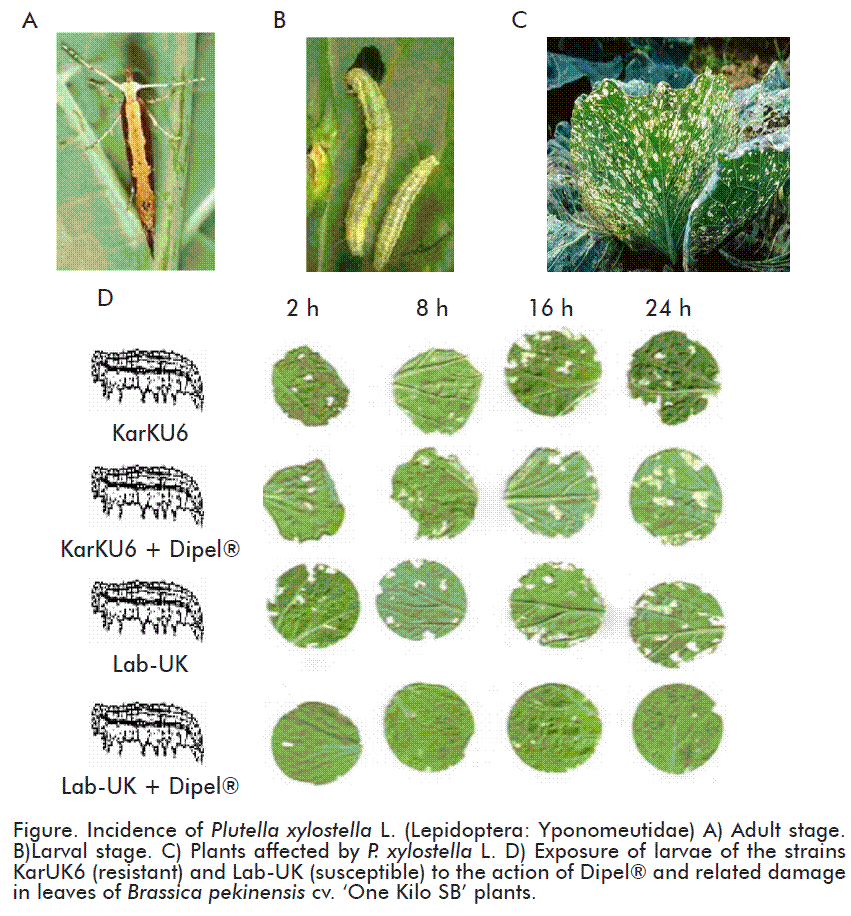
<body><![CDATA[<P   ><font size="2" face="Verdana, Arial, Helvetica, sans-serif"><I><b>Palabras clave:</b>      Bacillus thuringiensis</I>, <I>Plutella xylostella</I>, resistencia a Bt,      gen ABCC2, expresi&oacute;n diferencial, ARNi. </font></P >   </font></font></font></font></font></font></font></font></font></font></font></font></font></font></font></font></font></font></font></font></font></font></font></font></font></font></font></font></font></font></font></font></font></font></font></font></font></font></font></font></font>    <hr>   <FONT size="+1" color="#000000"><FONT size="+1"><FONT size="+1" color="#211E1F"><FONT size="+1" color="#000000"><FONT size="+1" color="#211E1F"><FONT size="+1"><FONT size="+1"><FONT size="+1"><FONT size="+1"><FONT size="+1"><FONT size="+1"><FONT size="+1"><FONT size="+1"><FONT size="+1"><FONT size="+1"><FONT size="+1"><FONT size="+1"><FONT size="+1"><FONT size="+1"><FONT size="+1"><FONT size="+1"><FONT size="+1"><FONT size="+1"><FONT size="+1"><FONT size="+1"><FONT size="+1"><FONT size="+1"><FONT size="+1"><FONT size="+1"><FONT size="+1"><FONT size="+1"><FONT size="+1"><FONT size="+1"><FONT size="+1"><FONT size="+1"><FONT size="+1"><FONT size="+1"><FONT size="+1"><FONT size="+1"><FONT size="+1"><FONT size="+1">        <P   > </P >       <P   >&nbsp;</P >       <P   >&nbsp;</P >       <P   ><font size="2" face="Verdana, Arial, Helvetica, sans-serif"><b><font size="3">INTRODUCTION</font>      </b></font></P >       <P   ><font size="+1" color="#211E1F"><font size="+1" color="#000000"><font size="+1" color="#211E1F"><font size="+1" color="#000000"><font size="+1" color="#211E1F"><font size="+1"><font size="+1" color="#000000"><font size="+1"><font size="+1" color="#211E1F"><font size="+1" color="#000000"><font size="+1" color="#211E1F"><font size="+1" color="#000000"><font size="+1" color="#211E1F"><font size="+1"><font size="+1"><font size="+1"><font size="+1"><font size="+1"><font size="+1"><font size="+1"><font size="+1"><font size="+1"><font size="+1"><font size="+1"><font size="+1" color="#000000"><font size="+1" color="#211E1F"><font size="+1"><font size="+1"><font size="+1"><font size="+1"><font size="+1"><font size="2" face="Verdana, Arial, Helvetica, sans-serif"></font></font></font></font></font></font></font></font></font></font></font></font></font></font></font></font></font></font></font></font></font></font></font></font></font></font></font></font></font></font></font></font><font size="2" face="Verdana, Arial, Helvetica, sans-serif">The      molecular basis of resistance to insecticides based on <I>B. thuringiensis      </I>has not been fully elucidated yet. The most widespread mechanism of resistance      is related to the loss of binding of Bt toxins to their receptors in the insect      gut. However, the various genetic factors responding to biotic stress identified      in cellular defense to Bt intoxication indicates the complexity of this host-pathogen      interaction. DiPel&reg; insecticide of Btk HD1 is the most successful and      widespread worldwide commercial product based on <I>B. thuringiensis </I>and      it is made up of a mixture of spores and insecticidal protein crystals, where      5 different types of toxins coexist with activity against lepidopterans pests:      Cry1Aa, Cry1Ab, Cry1Ac, Cry2A and Cry2B. Even so, there are reports in the      literature on the evolution of insect-resistance to DiPel&reg;. In the present      work we undertook the task of characterizing molecularly the resistance to      DiPel&reg; in a strain of the diamondback moth, <I>Plutella xylostella</I>,      a cosmopolitan pest and a model insect as well for the study of mechanisms      of resistance to insecticides due to its high adaptability to them.</font><font size="+1" color="#000000"><font size="+1"><font size="+1" color="#211E1F"><font size="+1" color="#000000"><font size="+1" color="#211E1F"><font size="+1"><font size="+1"><font size="+1"><font size="+1"><font size="+1"><font size="+1"><font size="+1"><font size="+1"><font size="+1"><font size="+1"><font size="+1"><font size="+1"><font size="+1"><font size="+1"><font size="+1"><font size="+1"><font size="+1"><font size="+1"><font size="+1"><font size="+1"><font size="+1"><font size="+1"><font size="+1"><font size="+1"><font size="+1"><font size="+1"><font size="+1"><font size="+1"><font size="+1"><font size="+1"><font size="+1"><font size="+1"><font size="+1"><font size="+1"><font size="+1"><font size="+1"><font size="+1"><font size="+1"><font size="+1"><font size="+1"><font size="+1"><font size="+1"><font size="+1"><font size="+1"><font size="+1"><font size="+1"><font size="+1"><font size="+1"><font size="+1"><font size="+1"><font color="#0000FF"><font color="#211E1F"><font size="+1"><font size="+1"><font size="+1"><font size="+1"><font size="+1"><font size="+1"><font size="+1"><font size="+1"><font size="+1"><font size="+1"><font size="+1"><font size="+1"><font size="2" face="Verdana, Arial, Helvetica, sans-serif"></font></font></font></font></font></font></font></font></font></font></font></font></font></font></font></font></font></font></font></font></font></font></font></font></font></font></font></font></font></font></font></font></font></font></font></font></font></font></font></font></font></font></font></font></font></font></font></font></font></font></font></font></font></font></font></font></font></font></font></font></font></font></font></font></font></font></font></font></font></font><font size="2" face="Verdana, Arial, Helvetica, sans-serif">      </font></P >       <P   >&nbsp;</P >       <P   ><font size="2" face="Verdana, Arial, Helvetica, sans-serif"><b><font size="3">RESULTS</font>      </b></font></P >       <P   ><font size="+1" color="#000000"><font size="+1"><font size="+1" color="#211E1F"><font size="+1" color="#000000"><font size="+1" color="#211E1F"><font size="+1"><font size="+1"><font size="+1"><font size="+1"><font size="+1"><font size="+1"><font size="+1"><font size="+1"><font size="+1"><font size="+1"><font size="+1"><font size="+1"><font size="+1"><font size="+1"><font size="+1"><font size="+1"><font size="+1"><font size="+1"><font size="+1"><font size="+1"><font size="+1"><font size="+1"><font size="+1"><font size="+1"><font size="+1"><font size="+1"><font size="+1"><font size="+1"><font size="+1"><font size="+1"><font size="+1"><font size="+1"><font size="+1"><font size="+1"><font size="+1"><font size="+1"><font size="+1" color="#211E1F"><font size="+1" color="#000000"><font size="+1" color="#211E1F"><font size="+1" color="#000000"><font size="+1" color="#211E1F"><font size="+1"><font size="+1" color="#000000"><font size="+1"><font size="+1" color="#211E1F"><font size="+1" color="#000000"><font size="+1" color="#211E1F"><font size="+1" color="#000000"><font size="+1" color="#211E1F"><font size="+1"><font size="+1"><font size="+1"><font size="+1"><font size="+1"><font size="+1"><font size="+1"><font size="+1"><font size="+1"><font size="+1"><font size="+1"><font size="+1" color="#000000"><font size="+1" color="#211E1F"><font size="+1"><font size="+1"><font size="+1"><font size="+1"><font size="+1"><font size="2" face="Verdana, Arial, Helvetica, sans-serif"></font></font></font></font></font></font></font></font></font></font></font></font></font></font></font></font></font></font></font></font></font></font></font></font></font></font></font></font></font></font></font></font></font></font></font></font></font></font></font></font></font></font></font></font></font></font></font></font></font></font></font></font></font></font></font></font></font></font></font></font></font></font></font></font></font></font></font></font></font></font></font></font></font><font size="2" face="Verdana, Arial, Helvetica, sans-serif">The      study used functional genomics methodologies such as Suppression Subtractive      Hybridization (SSH) and post-transcriptional silencing via interfering RNA      (RNAi). The kinetic analysis of gene expression was performed by real-time      PCR. In bioassays, the dose-response relationship was inferred with the PROBIT      statistical package. For the analysis of mortality in the RNAi experiments,      a generalized linear model and the logit link function were used [1].</font><font size="+1" color="#000000"><font size="+1"><font size="+1" color="#211E1F"><font size="+1" color="#000000"><font size="+1" color="#211E1F"><font size="+1"><font size="+1"><font size="+1"><font size="+1"><font size="+1"><font size="+1"><font size="+1"><font size="+1"><font size="+1"><font size="+1"><font size="+1"><font size="+1"><font size="+1"><font size="+1"><font size="+1"><font size="+1"><font size="+1"><font size="+1"><font size="+1"><font size="+1"><font size="+1"><font size="+1"><font size="+1"><font size="+1"><font size="+1"><font size="+1"><font size="+1"><font size="+1"><font size="+1"><font size="+1"><font size="+1"><font size="+1"><font size="+1"><font size="+1"><font size="+1"><font size="+1"><font size="+1"><font size="+1"><font size="+1"><font size="+1"><font size="+1"><font size="+1"><font size="+1"><font size="+1"><font size="+1"><font size="+1"><font size="+1"><font size="+1"><font size="+1"><font size="+1"><font color="#0000FF"><font color="#211E1F"><font size="+1"><font size="+1"><font size="+1"><font size="+1"><font size="+1"><font size="+1"><font size="+1"><font size="+1"><font size="+1"><font size="+1"><font size="+1"><font size="+1"><font size="2" face="Verdana, Arial, Helvetica, sans-serif"></font></font></font></font></font></font></font></font></font></font></font></font></font></font></font></font></font></font></font></font></font></font></font></font></font></font></font></font></font></font></font></font></font></font></font></font></font></font></font></font></font></font></font></font></font></font></font></font></font></font></font></font></font></font></font></font></font></font></font></font></font></font></font></font></font></font></font></font></font></font><font size="2" face="Verdana, Arial, Helvetica, sans-serif">      </font></P >       <P   ><font size="+1" color="#000000"><font size="+1"><font size="+1" color="#211E1F"><font size="+1" color="#000000"><font size="+1" color="#211E1F"><font size="+1"><font size="+1"><font size="+1"><font size="+1"><font size="+1"><font size="+1"><font size="+1"><font size="+1"><font size="+1"><font size="+1"><font size="+1"><font size="+1"><font size="+1"><font size="+1"><font size="+1"><font size="+1"><font size="+1"><font size="+1"><font size="+1"><font size="+1"><font size="+1"><font size="+1"><font size="+1"><font size="+1"><font size="+1"><font size="+1"><font size="+1"><font size="+1"><font size="+1"><font size="+1"><font size="+1"><font size="+1"><font size="+1"><font size="+1"><font size="+1"><font size="+1"><font size="+1" color="#211E1F"><font size="+1" color="#000000"><font size="+1" color="#211E1F"><font size="+1" color="#000000"><font size="+1" color="#211E1F"><font size="+1"><font size="+1" color="#000000"><font size="+1"><font size="+1" color="#211E1F"><font size="+1" color="#000000"><font size="+1" color="#211E1F"><font size="+1" color="#000000"><font size="+1" color="#211E1F"><font size="+1"><font size="+1"><font size="+1"><font size="+1"><font size="+1"><font size="+1"><font size="+1"><font size="+1"><font size="+1"><font size="+1"><font size="+1"><font size="+1" color="#000000"><font size="+1" color="#211E1F"><font size="+1"><font size="+1"><font size="+1"><font size="+1"><font size="+1"><font size="2" face="Verdana, Arial, Helvetica, sans-serif"></font></font></font></font></font></font></font></font></font></font></font></font></font></font></font></font></font></font></font></font></font></font></font></font></font></font></font></font></font></font></font></font></font></font></font></font></font></font></font></font></font></font></font></font></font></font></font></font></font></font></font></font></font></font></font></font></font></font></font></font></font></font></font></font></font></font></font></font></font></font></font></font></font><font size="2" face="Verdana, Arial, Helvetica, sans-serif">The      &lsquo;Karak&rsquo; strain of <I>P. xylostella</I>, which evolved towards      DiPel</font><font size="2" color="#000000" face="Verdana, Arial, Helvetica, sans-serif"><font color="#211E1F"><font color="#211E1F">&reg;</font></font></font><font size="2" face="Verdana, Arial, Helvetica, sans-serif">      resistance under field conditions after several years of exposure to the insecticide,      was crossed with the Lab-UK strain (susceptible to DiPel</font><font size="2" color="#000000" face="Verdana, Arial, Helvetica, sans-serif"><font color="#211E1F"><font color="#211E1F">&reg;</font></font></font><font size="2" face="Verdana, Arial, Helvetica, sans-serif">),      and the offspring was subjected to six backcrossing cycles with Lab-UK, selecting      each generation with DiPel</font><font size="2" color="#000000" face="Verdana, Arial, Helvetica, sans-serif"><font color="#211E1F"><font color="#211E1F">&reg;</font></font></font><font size="2" face="Verdana, Arial, Helvetica, sans-serif">.      By these means, the KarUK<sub>6</sub> strain was obtained, approximately 23      times more resistant to DiPel</font><font size="2" color="#000000" face="Verdana, Arial, Helvetica, sans-serif"><font color="#211E1F"><font color="#211E1F">&reg;</font></font></font><font size="2" face="Verdana, Arial, Helvetica, sans-serif">      than its genetic isolate Lab-UK (<a href="/img/revistas/bta/v33n3/f0107316.gif">Figure</a>). The de-termination      of the average lethal concentration (LC<sub>50</sub>) of DiPel</font><font size="2" color="#000000" face="Verdana, Arial, Helvetica, sans-serif"><font color="#211E1F"><font color="#211E1F">&reg;</font></font></font><font size="2" face="Verdana, Arial, Helvetica, sans-serif">      or concentration causing death in 50 % of the population, determined in bioassays      with larvae of both strains of <I>P. xylostella</I>, showed for KarUK<sub>6</sub>      an LC<sub>50</sub> 93.1 ppm and 95 % confidence limits of 60.3-144, compared      to Lab-UK with LC<sub>50</sub> 3.97 ppm and 95 % confidence limits of 1.10-14.3.</font><font size="+1" color="#000000"><font size="+1"><font size="+1" color="#211E1F"><font size="+1" color="#000000"><font size="+1" color="#211E1F"><font size="+1"><font size="+1"><font size="+1"><font size="+1"><font size="+1"><font size="+1"><font size="+1"><font size="+1"><font size="+1"><font size="+1"><font size="+1"><font size="+1"><font size="+1"><font size="+1"><font size="+1"><font size="+1"><font size="+1"><font size="+1"><font size="+1"><font size="+1"><font size="+1"><font size="+1"><font size="+1"><font size="+1"><font size="+1"><font size="+1"><font size="+1"><font size="+1"><font size="+1"><font size="+1"><font size="+1"><font size="+1"><font size="+1"><font size="+1"><font size="+1"><font size="+1"><font size="+1"><font size="+1"><font size="+1"><font size="+1"><font size="+1"><font size="+1"><font size="+1"><font size="+1"><font size="+1"><font size="+1"><font size="+1"><font size="+1"><font size="+1"><font size="+1"><font color="#0000FF"><font color="#211E1F"><font size="+1"><font size="+1"><font size="+1"><font size="+1"><font size="+1"><font size="+1"><font size="+1"><font size="+1"><font size="+1"><font size="+1"><font size="+1"><font size="+1"><font size="2" face="Verdana, Arial, Helvetica, sans-serif"></font></font></font></font></font></font></font></font></font></font></font></font></font></font></font></font></font></font></font></font></font></font></font></font></font></font></font></font></font></font></font></font></font></font></font></font></font></font></font></font></font></font></font></font></font></font></font></font></font></font></font></font></font></font></font></font></font></font></font></font></font></font></font></font></font></font></font></font></font></font><font size="2" face="Verdana, Arial, Helvetica, sans-serif">      </font></P >   <FONT size="+1"><FONT size="+1"><FONT size="+1"><FONT size="+1"><FONT size="+1"><FONT size="+1"><FONT size="+1"><FONT size="+1">        
]]></body>
<body><![CDATA[<P   ><font size="+1" color="#000000"><font size="+1"><font size="+1" color="#211E1F"><font size="+1" color="#000000"><font size="+1" color="#211E1F"><font size="+1"><font size="+1"><font size="+1"><font size="+1"><font size="+1"><font size="+1"><font size="+1"><font size="+1"><font size="+1"><font size="+1"><font size="+1"><font size="+1"><font size="+1"><font size="+1"><font size="+1"><font size="+1"><font size="+1"><font size="+1"><font size="+1"><font size="+1"><font size="+1"><font size="+1"><font size="+1"><font size="+1"><font size="+1"><font size="+1"><font size="+1"><font size="+1"><font size="+1"><font size="+1"><font size="+1"><font size="+1"><font size="+1"><font size="+1"><font size="+1"><font size="+1"><font size="+1" color="#211E1F"><font size="+1" color="#000000"><font size="+1" color="#211E1F"><font size="+1" color="#000000"><font size="+1" color="#211E1F"><font size="+1"><font size="+1" color="#000000"><font size="+1"><font size="+1" color="#211E1F"><font size="+1" color="#000000"><font size="+1" color="#211E1F"><font size="+1" color="#000000"><font size="+1" color="#211E1F"><font size="+1"><font size="+1"><font size="+1"><font size="+1"><font size="+1"><font size="+1"><font size="+1"><font size="+1"><font size="+1"><font size="+1"><font size="+1"><font size="+1" color="#000000"><font size="+1" color="#211E1F"><font size="+1"><font size="+1"><font size="+1"><font size="+1"><font size="+1"><font size="2" face="Verdana, Arial, Helvetica, sans-serif"></font></font></font></font></font></font></font></font></font></font></font></font></font></font></font></font></font></font></font></font></font></font></font></font></font></font></font></font></font></font></font></font></font></font></font></font></font></font></font></font></font></font></font></font></font></font></font></font></font></font></font></font></font></font></font></font></font></font></font></font></font></font></font></font></font></font></font></font></font></font></font></font></font><font size="2" face="Verdana, Arial, Helvetica, sans-serif">A      total of 134 complementary DNA fragments (cDNA) belonging to KarUK<sub>6</sub>      larval gut genes, differentially expressed in the presence of DiPel</font><font size="2" color="#000000" face="Verdana, Arial, Helvetica, sans-serif"><font color="#211E1F"><font color="#211E1F">&reg;</font></font></font><font size="2" face="Verdana, Arial, Helvetica, sans-serif">      as compared to Lab-UK, were cloned into the subtractive hybridizations. The      ontological analysis distributed the sequences among five different functional      categories. The genes involved in the synthesis and folding of proteins (18      %) and the response to oxidative stress (17 %) were the most represented in      the subtractive libraries, whereas the genes related to extracellular matrix      processes formed the smallest group (7 %). The abundance of gene sequences      involved in lipid metabolism (14 %) and transport/energy (11 %) was intermediate.      The remaining 33 % corresponded to sequences with unknown function. The sequences      were deposited in the GenBank&reg; database (Accession No. HO652045, HO652175      and HO663508) and correspond to the first report of gene sequence with differential      expression against DiPel&reg; insecticide in a resistant lepidopteran.</font><font size="+1" color="#000000"><font size="+1"><font size="+1" color="#211E1F"><font size="+1" color="#000000"><font size="+1" color="#211E1F"><font size="+1"><font size="+1"><font size="+1"><font size="+1"><font size="+1"><font size="+1"><font size="+1"><font size="+1"><font size="+1"><font size="+1"><font size="+1"><font size="+1"><font size="+1"><font size="+1"><font size="+1"><font size="+1"><font size="+1"><font size="+1"><font size="+1"><font size="+1"><font size="+1"><font size="+1"><font size="+1"><font size="+1"><font size="+1"><font size="+1"><font size="+1"><font size="+1"><font size="+1"><font size="+1"><font size="+1"><font size="+1"><font size="+1"><font size="+1"><font size="+1"><font size="+1"><font size="+1"><font size="+1"><font size="+1"><font size="+1"><font size="+1"><font size="+1"><font size="+1"><font size="+1"><font size="+1"><font size="+1"><font size="+1"><font size="+1"><font size="+1"><font size="+1"><font color="#0000FF"><font color="#211E1F"><font size="+1"><font size="+1"><font size="+1"><font size="+1"><font size="+1"><font size="+1"><font size="+1"><font size="+1"><font size="+1"><font size="+1"><font size="+1"><font size="+1"><font size="2" face="Verdana, Arial, Helvetica, sans-serif"></font></font></font></font></font></font></font></font></font></font></font></font></font></font></font></font></font></font></font></font></font></font></font></font></font></font></font></font></font></font></font></font></font></font></font></font></font></font></font></font></font></font></font></font></font></font></font></font></font></font></font></font></font></font></font></font></font></font></font></font></font></font></font></font></font></font></font></font></font></font><font size="2" face="Verdana, Arial, Helvetica, sans-serif">      </font></P >   <FONT size="+1"><FONT size="+1">        <P   ><font size="+1" color="#000000"><font size="+1"><font size="+1" color="#211E1F"><font size="+1" color="#000000"><font size="+1" color="#211E1F"><font size="+1"><font size="+1"><font size="+1"><font size="+1"><font size="+1"><font size="+1"><font size="+1"><font size="+1"><font size="+1"><font size="+1"><font size="+1"><font size="+1"><font size="+1"><font size="+1"><font size="+1"><font size="+1"><font size="+1"><font size="+1"><font size="+1"><font size="+1"><font size="+1"><font size="+1"><font size="+1"><font size="+1"><font size="+1"><font size="+1"><font size="+1"><font size="+1"><font size="+1"><font size="+1"><font size="+1"><font size="+1"><font size="+1"><font size="+1"><font size="+1"><font size="+1"><font size="+1" color="#211E1F"><font size="+1" color="#000000"><font size="+1" color="#211E1F"><font size="+1" color="#000000"><font size="+1" color="#211E1F"><font size="+1"><font size="+1" color="#000000"><font size="+1"><font size="+1" color="#211E1F"><font size="+1" color="#000000"><font size="+1" color="#211E1F"><font size="+1" color="#000000"><font size="+1" color="#211E1F"><font size="+1"><font size="+1"><font size="+1"><font size="+1"><font size="+1"><font size="+1"><font size="+1"><font size="+1"><font size="+1"><font size="+1"><font size="+1"><font size="+1" color="#000000"><font size="+1" color="#211E1F"><font size="+1"><font size="+1"><font size="+1"><font size="+1"><font size="+1"><font size="2" face="Verdana, Arial, Helvetica, sans-serif"></font></font></font></font></font></font></font></font></font></font></font></font></font></font></font></font></font></font></font></font></font></font></font></font></font></font></font></font></font></font></font></font></font></font></font></font></font></font></font></font></font></font></font></font></font></font></font></font></font></font></font></font></font></font></font></font></font></font></font></font></font></font></font></font></font></font></font></font></font></font></font></font></font><font size="2" face="Verdana, Arial, Helvetica, sans-serif">Twelve      sequences were selected from those showing a highly significant identity (E      value &lt; 10<sup>-4</sup>) representing each functional category for the      analysis of gene expression kinetics in the response to DiPel&reg;. In all      cases, except for a sequence with chaperonin homology, basal gene expression      was significantly higher in resistant larvae compared to susceptible ones      [1]. This shows that the molecular response to DiPel&reg; is preferably pre-induced      in the resistant strain of <I>P. xylostella</I>, an effect not reported before.      The expression kinetics of the 12 genes during the first 24 h of intoxication      showed three of them with attractive regulation by their early induction (<I>SDF2L1      </I>and <I>CDKAL1</I>) or by showing the greatest difference in expression      levels between KarUK<sub>6</sub> and Lab-UK (<I>HEL-1</I>) [1], which made      us consider the hypothesis of a possible role of these genes in resistance      to DiPel&reg; in <I>P. xylostella</I>. Then, the complete cDNA sequence of      each of these three <I>P. xylostella </I>genes was cloned by means of the      rapid amplification of cDNA ends procedure (RACE) and sent to GenBank. The      sequences showed sizes of 1707, 1111 and 983 bp for <I>PxCDKAL1 </I>(Accession      No. HQ199330), <I>PxSDF2L1 </I>(Accession No. HQ199329) and <I>PxHEL-1 </I>(Accession      No. HQ199327), respectively. Prediction function and structural domains using      the SMART program (<A href="http://smart.embl-heidelberg.de/" target="_blank"><FONT color="#0000FF">http://smart.embl-heidelberg.de/</font></A><FONT color="#0000FF"><FONT color="#211E1F">),      combined with the analysis of phylogenetic relationships, revealed important      features about the molecular function of each of these genes not previously      described in <I>P. xylostella </I>[1].</font><font size="+1" color="#000000"><font size="+1"><font size="+1" color="#211E1F"><font size="+1" color="#000000"><font size="+1" color="#211E1F"><font size="+1"><font size="+1"><font size="+1"><font size="+1"><font size="+1"><font size="+1"><font size="+1"><font size="+1"><font size="+1"><font size="+1"><font size="+1"><font size="+1"><font size="+1"><font size="+1"><font size="+1"><font size="+1"><font size="+1"><font size="+1"><font size="+1"><font size="+1"><font size="+1"><font size="+1"><font size="+1"><font size="+1"><font size="+1"><font size="+1"><font size="+1"><font size="+1"><font size="+1"><font size="+1"><font size="+1"><font size="+1"><font size="+1"><font size="+1"><font size="+1"><font size="+1"><font size="+1"><font size="+1"><font size="+1"><font size="+1"><font size="+1"><font size="+1"><font size="+1"><font size="+1"><font size="+1"><font size="+1"><font size="+1"><font size="+1"><font size="+1"><font size="+1"><font color="#0000FF"><font color="#211E1F"><font size="+1"><font size="+1"><font size="+1"><font size="+1"><font size="+1"><font size="+1"><font size="+1"><font size="+1"><font size="+1"><font size="+1"><font size="+1"><font size="+1"><font size="2" face="Verdana, Arial, Helvetica, sans-serif"></font></font></font></font></font></font></font></font></font></font></font></font></font></font></font></font></font></font></font></font></font></font></font></font></font></font></font></font></font></font></font></font></font></font></font></font></font></font></font></font></font></font></font></font></font></font></font></font></font></font></font></font></font></font></font></font></font></font></font></font></font></font></font></font></font></font></font></font></font></font><FONT color="#211E1F">      </font></font></font></P >   <FONT size="+1"><FONT size="+1"><FONT size="+1"><FONT size="+1"><FONT color="#0000FF"><FONT color="#211E1F">        <P   ><font size="+1" color="#000000"><font size="+1"><font size="+1" color="#211E1F"><font size="+1" color="#000000"><font size="+1" color="#211E1F"><font size="+1"><font size="+1"><font size="+1"><font size="+1"><font size="+1"><font size="+1"><font size="+1"><font size="+1"><font size="+1"><font size="+1"><font size="+1"><font size="+1"><font size="+1"><font size="+1"><font size="+1"><font size="+1"><font size="+1"><font size="+1"><font size="+1"><font size="+1"><font size="+1"><font size="+1"><font size="+1"><font size="+1"><font size="+1"><font size="+1"><font size="+1"><font size="+1"><font size="+1"><font size="+1"><font size="+1"><font size="+1"><font size="+1"><font size="+1"><font size="+1"><font size="+1"><font size="+1" color="#211E1F"><font size="+1" color="#000000"><font size="+1" color="#211E1F"><font size="+1" color="#000000"><font size="+1" color="#211E1F"><font size="+1"><font size="+1" color="#000000"><font size="+1"><font size="+1" color="#211E1F"><font size="+1" color="#000000"><font size="+1" color="#211E1F"><font size="+1" color="#000000"><font size="+1" color="#211E1F"><font size="+1"><font size="+1"><font size="+1"><font size="+1"><font size="+1"><font size="+1"><font size="+1"><font size="+1"><font size="+1"><font size="+1"><font size="+1"><font size="+1" color="#000000"><font size="+1" color="#211E1F"><font size="+1"><font size="+1"><font size="+1"><font size="+1"><font size="+1"><font size="2" face="Verdana, Arial, Helvetica, sans-serif"></font></font></font></font></font></font></font></font></font></font></font></font></font></font></font></font></font></font></font></font></font></font></font></font></font></font></font></font></font></font></font></font></font></font></font></font></font></font></font></font></font></font></font></font></font></font></font></font></font></font></font></font></font></font></font></font></font></font></font></font></font></font></font></font></font></font></font></font></font></font></font></font></font><font size="2" face="Verdana, Arial, Helvetica, sans-serif">Determination      of the role of the genes <I>PxCDKAL1</I>, <I>PxSDF2L1 </I>and <I>PxHEL-1 </I>in      the resistance of KarUK<sub>6</sub> to DiPel&reg; was carried out by combining      the post-transcriptional silencing of gene expression via RNAi with insect      bioassays, using different concentrations of the DiPel&reg; insecticide formulation.      To this end, fragments of double-stranded RNA (dsRNA) corresponding to each      gene were synthesized <I>in vitro </I>and were administered orally to third-stage      larvae. The effectiveness of RNAi was corroborated 24 h after dsRNA treatment      by qRT-PCR using total RNA from the larval gut. The specificity of the RNAi      for the target sequence was validated by the administration of non-specific      dsRNA from the gene of the enzyme &beta;-D-glucuronidase (Gus) of <I>Escherichia      coli</I>, which did not cause any alteration in the transcript levels of the      three genes selected [1].</font><font size="+1" color="#000000"><font size="+1"><font size="+1" color="#211E1F"><font size="+1" color="#000000"><font size="+1" color="#211E1F"><font size="+1"><font size="+1"><font size="+1"><font size="+1"><font size="+1"><font size="+1"><font size="+1"><font size="+1"><font size="+1"><font size="+1"><font size="+1"><font size="+1"><font size="+1"><font size="+1"><font size="+1"><font size="+1"><font size="+1"><font size="+1"><font size="+1"><font size="+1"><font size="+1"><font size="+1"><font size="+1"><font size="+1"><font size="+1"><font size="+1"><font size="+1"><font size="+1"><font size="+1"><font size="+1"><font size="+1"><font size="+1"><font size="+1"><font size="+1"><font size="+1"><font size="+1"><font size="+1"><font size="+1"><font size="+1"><font size="+1"><font size="+1"><font size="+1"><font size="+1"><font size="+1"><font size="+1"><font size="+1"><font size="+1"><font size="+1"><font size="+1"><font size="+1"><font color="#0000FF"><font color="#211E1F"><font size="+1"><font size="+1"><font size="+1"><font size="+1"><font size="+1"><font size="+1"><font size="+1"><font size="+1"><font size="+1"><font size="+1"><font size="+1"><font size="+1"><font size="2" face="Verdana, Arial, Helvetica, sans-serif"></font></font></font></font></font></font></font></font></font></font></font></font></font></font></font></font></font></font></font></font></font></font></font></font></font></font></font></font></font></font></font></font></font></font></font></font></font></font></font></font></font></font></font></font></font></font></font></font></font></font></font></font></font></font></font></font></font></font></font></font></font></font></font></font></font></font></font></font></font></font><font size="2" face="Verdana, Arial, Helvetica, sans-serif">      </font></P >   <FONT size="+1"><FONT size="+1">        <P   ><font size="+1" color="#000000"><font size="+1"><font size="+1" color="#211E1F"><font size="+1" color="#000000"><font size="+1" color="#211E1F"><font size="+1"><font size="+1"><font size="+1"><font size="+1"><font size="+1"><font size="+1"><font size="+1"><font size="+1"><font size="+1"><font size="+1"><font size="+1"><font size="+1"><font size="+1"><font size="+1"><font size="+1"><font size="+1"><font size="+1"><font size="+1"><font size="+1"><font size="+1"><font size="+1"><font size="+1"><font size="+1"><font size="+1"><font size="+1"><font size="+1"><font size="+1"><font size="+1"><font size="+1"><font size="+1"><font size="+1"><font size="+1"><font size="+1"><font size="+1"><font size="+1"><font size="+1"><font size="+1" color="#211E1F"><font size="+1" color="#000000"><font size="+1" color="#211E1F"><font size="+1" color="#000000"><font size="+1" color="#211E1F"><font size="+1"><font size="+1" color="#000000"><font size="+1"><font size="+1" color="#211E1F"><font size="+1" color="#000000"><font size="+1" color="#211E1F"><font size="+1" color="#000000"><font size="+1" color="#211E1F"><font size="+1"><font size="+1"><font size="+1"><font size="+1"><font size="+1"><font size="+1"><font size="+1"><font size="+1"><font size="+1"><font size="+1"><font size="+1"><font size="+1" color="#000000"><font size="+1" color="#211E1F"><font size="+1"><font size="+1"><font size="+1"><font size="+1"><font size="+1"><font size="2" face="Verdana, Arial, Helvetica, sans-serif"></font></font></font></font></font></font></font></font></font></font></font></font></font></font></font></font></font></font></font></font></font></font></font></font></font></font></font></font></font></font></font></font></font></font></font></font></font></font></font></font></font></font></font></font></font></font></font></font></font></font></font></font></font></font></font></font></font></font></font></font></font></font></font></font></font></font></font></font></font></font></font></font></font><font size="2" face="Verdana, Arial, Helvetica, sans-serif">Results      of bioassays of DiPel&reg;-exposed insects treated with RNAi of <I>PxSDF2L1</I>,      <I>PxCDKAL1 </I>and <I>PxHEL-1</I>, showed that the administration of control      dsRNA significantly increased the mortality of all insects, both resistant      and susceptible, as compared to those treated with specific RNAi, with engagement      in the expression of <I>PxSDF2L1 </I>and <I>PxCDKAL1</I>. In the case of <I>PxHEL-1</I>,      a significant increase in the mortality of larvae treated with RNAi was detected      exclusively for the KarUK<sub>6</sub> strain [1]. No differences in larval      mortality rates were observed between buffer-fed control groups or containing      nonspecific dsRNA-Gus (F<sub>4.21</sub> = 1.63, p = 0.20), which indicates      that interaction with dsRNA molecules per se does not affect response to DiPel&reg;.      Likewise, in the control groups it was verified that the RNAi treatment did      not affect the formation of pupae and rise of adults. These results are novel      since there were no reports on the participation of the genes <I>PxSDF2L1</I>,      <I>PxCDKAL1 </I>and <I>PxHEL-1 </I>in the resistance to the DiPel&reg; insecticide      in the KarUK<sub>6</sub> strain of <I>P. xylostella</I>.</font><font size="+1" color="#000000"><font size="+1"><font size="+1" color="#211E1F"><font size="+1" color="#000000"><font size="+1" color="#211E1F"><font size="+1"><font size="+1"><font size="+1"><font size="+1"><font size="+1"><font size="+1"><font size="+1"><font size="+1"><font size="+1"><font size="+1"><font size="+1"><font size="+1"><font size="+1"><font size="+1"><font size="+1"><font size="+1"><font size="+1"><font size="+1"><font size="+1"><font size="+1"><font size="+1"><font size="+1"><font size="+1"><font size="+1"><font size="+1"><font size="+1"><font size="+1"><font size="+1"><font size="+1"><font size="+1"><font size="+1"><font size="+1"><font size="+1"><font size="+1"><font size="+1"><font size="+1"><font size="+1"><font size="+1"><font size="+1"><font size="+1"><font size="+1"><font size="+1"><font size="+1"><font size="+1"><font size="+1"><font size="+1"><font size="+1"><font size="+1"><font size="+1"><font size="+1"><font color="#0000FF"><font color="#211E1F"><font size="+1"><font size="+1"><font size="+1"><font size="+1"><font size="+1"><font size="+1"><font size="+1"><font size="+1"><font size="+1"><font size="+1"><font size="+1"><font size="+1"><font size="2" face="Verdana, Arial, Helvetica, sans-serif"></font></font></font></font></font></font></font></font></font></font></font></font></font></font></font></font></font></font></font></font></font></font></font></font></font></font></font></font></font></font></font></font></font></font></font></font></font></font></font></font></font></font></font></font></font></font></font></font></font></font></font></font></font></font></font></font></font></font></font></font></font></font></font></font></font></font></font></font></font></font></P >       <P   >&nbsp;</P >   <FONT size="+1"><FONT size="+1"><FONT size="+1"><FONT size="+1"><FONT size="+1"><FONT size="+1">        <P   ><font size="2" face="Verdana, Arial, Helvetica, sans-serif"><b><font size="3">CONCLUSIONS      </font></b></font></P >       <P   ><font size="+1" color="#000000"><font size="+1"><font size="+1" color="#211E1F"><font size="+1" color="#000000"><font size="+1" color="#211E1F"><font size="+1"><font size="+1"><font size="+1"><font size="+1"><font size="+1"><font size="+1"><font size="+1"><font size="+1"><font size="+1"><font size="+1"><font size="+1"><font size="+1"><font size="+1"><font size="+1"><font size="+1"><font size="+1"><font size="+1"><font size="+1"><font size="+1"><font size="+1"><font size="+1"><font size="+1"><font size="+1"><font size="+1"><font size="+1"><font size="+1"><font size="+1"><font size="+1"><font size="+1"><font size="+1"><font size="+1"><font size="+1"><font size="+1"><font size="+1"><font size="+1"><font size="+1"><font size="+1" color="#211E1F"><font size="+1" color="#000000"><font size="+1" color="#211E1F"><font size="+1" color="#000000"><font size="+1" color="#211E1F"><font size="+1"><font size="+1" color="#000000"><font size="+1"><font size="+1" color="#211E1F"><font size="+1" color="#000000"><font size="+1" color="#211E1F"><font size="+1" color="#000000"><font size="+1" color="#211E1F"><font size="+1"><font size="+1"><font size="+1"><font size="+1"><font size="+1"><font size="+1"><font size="+1"><font size="+1"><font size="+1"><font size="+1"><font size="+1"><font size="+1" color="#000000"><font size="+1" color="#211E1F"><font size="+1"><font size="+1"><font size="+1"><font size="+1"><font size="+1"><font size="2" face="Verdana, Arial, Helvetica, sans-serif"></font></font></font></font></font></font></font></font></font></font></font></font></font></font></font></font></font></font></font></font></font></font></font></font></font></font></font></font></font></font></font></font></font></font></font></font></font></font></font></font></font></font></font></font></font></font></font></font></font></font></font></font></font></font></font></font></font></font></font></font></font></font></font></font></font></font></font></font></font></font></font></font></font><font size="2" face="Verdana, Arial, Helvetica, sans-serif">In      summary, our results show a connection between DiPel&reg; resistance and constitutive      over-expression in KarUK<sub>6</sub> of three new genes of <i>P. xylostella      </i>that code for homologues of CDKAL1 methyl-thiotransferase, SDF2L1 co-chaperone      and metalloproteinase HEL- 1, here designated PxCDKAL1, PxSDF2L1 and PxHEL-1,      respectively. The suppression of the expression of these genes in the intestine      of <I>P. xylostella </I>affected in all cases the ability of the larvae to      survive the ingestion of the pathogen. The diversity of genes with differential      expression in the KarUK<sub>6</sub> gut implies that a variety of cellular      processes are involved in resistance maintenance, although the genes selected      in this study for function analyses correspond to determinants of cellular      homeostasis in other pathologies. For example, CDKAL1 is important for assuring      the quality of proinsulin in &beta; cells from pancreas, while SDF2L1 is crucial      in the innate immunity response in <I>Arabidopsis thaliana </I>against bacterial      attack, by assisting in the correct folding of type &lsquo;LRR&rsquo; receptors-kinases      in the endoplasmic reticulum. HEL-1 metalloprotease belongs to the family      of astacins, which have been associated with the formation of extracellular      matrix and wound repair [1]. Therefore, the three new genes for <I>P. xylostella      </I>described in this study are linked to the multitude of factors whose expression      changes in resistant insects and are directly involved in determining host      susceptibility to <I>B. thuringiensis</I>.</font><font size="+1" color="#000000"><font size="+1"><font size="+1" color="#211E1F"><font size="+1" color="#000000"><font size="+1" color="#211E1F"><font size="+1"><font size="+1"><font size="+1"><font size="+1"><font size="+1"><font size="+1"><font size="+1"><font size="+1"><font size="+1"><font size="+1"><font size="+1"><font size="+1"><font size="+1"><font size="+1"><font size="+1"><font size="+1"><font size="+1"><font size="+1"><font size="+1"><font size="+1"><font size="+1"><font size="+1"><font size="+1"><font size="+1"><font size="+1"><font size="+1"><font size="+1"><font size="+1"><font size="+1"><font size="+1"><font size="+1"><font size="+1"><font size="+1"><font size="+1"><font size="+1"><font size="+1"><font size="+1"><font size="+1"><font size="+1"><font size="+1"><font size="+1"><font size="+1"><font size="+1"><font size="+1"><font size="+1"><font size="+1"><font size="+1"><font size="+1"><font size="+1"><font size="+1"><font color="#0000FF"><font color="#211E1F"><font size="+1"><font size="+1"><font size="+1"><font size="+1"><font size="+1"><font size="+1"><font size="+1"><font size="+1"><font size="+1"><font size="+1"><font size="+1"><font size="+1"><font size="2" face="Verdana, Arial, Helvetica, sans-serif"></font></font></font></font></font></font></font></font></font></font></font></font></font></font></font></font></font></font></font></font></font></font></font></font></font></font></font></font></font></font></font></font></font></font></font></font></font></font></font></font></font></font></font></font></font></font></font></font></font></font></font></font></font></font></font></font></font></font></font></font></font></font></font></font></font></font></font></font></font></font><font size="2" face="Verdana, Arial, Helvetica, sans-serif">      </font></P >       <P   >&nbsp;</P >   <FONT size="+1"><FONT size="+1"><FONT size="+1"><FONT size="+1">        <P   ><font size="2" face="Verdana, Arial, Helvetica, sans-serif"><b><font size="3">ACKNOWLEDGEMENTS      </font> </b> </font></P >       <P   ><font size="+1" color="#000000"><font size="+1"><font size="+1" color="#211E1F"><font size="+1" color="#000000"><font size="+1" color="#211E1F"><font size="+1"><font size="+1"><font size="+1"><font size="+1"><font size="+1"><font size="+1"><font size="+1"><font size="+1"><font size="+1"><font size="+1"><font size="+1"><font size="+1"><font size="+1"><font size="+1"><font size="+1"><font size="+1"><font size="+1"><font size="+1"><font size="+1"><font size="+1"><font size="+1"><font size="+1"><font size="+1"><font size="+1"><font size="+1"><font size="+1"><font size="+1"><font size="+1"><font size="+1"><font size="+1"><font size="+1"><font size="+1"><font size="+1"><font size="+1"><font size="+1"><font size="+1"><font size="+1" color="#211E1F"><font size="+1" color="#000000"><font size="+1" color="#211E1F"><font size="+1" color="#000000"><font size="+1" color="#211E1F"><font size="+1"><font size="+1" color="#000000"><font size="+1"><font size="+1" color="#211E1F"><font size="+1" color="#000000"><font size="+1" color="#211E1F"><font size="+1" color="#000000"><font size="+1" color="#211E1F"><font size="+1"><font size="+1"><font size="+1"><font size="+1"><font size="+1"><font size="+1"><font size="+1"><font size="+1"><font size="+1"><font size="+1"><font size="+1"><font size="+1" color="#000000"><font size="+1" color="#211E1F"><font size="+1"><font size="+1"><font size="+1"><font size="+1"><font size="+1"><font size="2" face="Verdana, Arial, Helvetica, sans-serif"></font></font></font></font></font></font></font></font></font></font></font></font></font></font></font></font></font></font></font></font></font></font></font></font></font></font></font></font></font></font></font></font></font></font></font></font></font></font></font></font></font></font></font></font></font></font></font></font></font></font></font></font></font></font></font></font></font></font></font></font></font></font></font></font></font></font></font></font></font></font></font></font></font><font size="2" face="Verdana, Arial, Helvetica, sans-serif">The      authors would like to acknowledge the contribution of Prof. Denis J. Wright,      Ben Raymond and Assim Gulzar, from the Division of Biology, Department of      Life Sciences, Faculty of Natural Sciences, Imperial College London, Silwood      Park Campus, Ascot, Berkshire, UK; Prof. Neil Crickmore from the School of      Life Sciences, University of Sussex, Brighton, UK. We also thank the collaboration      of Regla Estrada, Omar Gell, Aymee Orquin, Ivon Men&eacute;ndez, Ada Abad,      Ariel Cruz and Sergio Castillo, from the Center for Genetic Engineering and      Biotechnology. This work was partly supported by the Swedish International      Foundation for Sciences (grant C/3579-2), the BioCubaFarma organization (grant      3031-243), the UK Royal Society, the Biotechnology and Biological Sciences      Research Council and by a Natural Environment Research Council fellowship,      UK.</font></P >       ]]></body>
<body><![CDATA[<P   >&nbsp;</P >       <P   > </P >       <P   ><font size="3" face="Verdana, Arial, Helvetica, sans-serif"><b>REFERENCES</b></font></P >       <!-- ref --><P   ><font size="2" face="Verdana, Arial, Helvetica, sans-serif">1. Ayra-Pardo C,      Raymond B, Gulzar A, Rodr&iacute;guez-Cabrera L, Mor&aacute;n-Bertot I, Crickmore      N, <I>et al</I>. Novel genetic factors involved in resistance to <I>Bacillus      thuringiensis </I>in <I>Plutella xylostella</I>. Insect Mol Biol. 2015;24(6):589-600.          </font></P >       <P   >&nbsp;</P >       <P   >&nbsp;</P >   <FONT size="+1">        <P   > </P >   <FONT size="+1">        <P   ><font size="2" face="Verdana, Arial, Helvetica, sans-serif"><I>Lianet Rodr&iacute;guez</I>.      Laboratorio de Biotecnolog&iacute;a Ambiental, Divisi&oacute;n de Plantas,      Direcci&oacute;n de Investigaciones Agropecuarias, Centro de Ingenier&iacute;a      Gen&eacute;tica y Biotecnolog&iacute;a, CIGB. Ave 31 e/ 158 y 190, CP 11600,      Cubanac&aacute;n, Playa, La Habana, Cuba. E-mail: <A href="mailto:lianet.rodriguez@cigb.edu.cu">      <FONT color="#0000FF">lianet.rodriguez@cigb.edu.cu</font></A><FONT color="#0000FF"><FONT color="#211E1F">.</font></font></font></P >   </font></font></font></font></font></font></font></font></font></font></font></font></font></font></font></font></font></font></font></font></font></font></font></font></font></font></font></font></font></font></font></font></font></font></font></font></font></font></font></font></font></font></font></font></font></font></font></font></font></font></font></font></font></font></font></font></font></font></font></font></font></font></font></font></font></font></font></font></font></font></font></DIV >      ]]></body><back>
<ref-list>
<ref id="B1">
<label>1</label><nlm-citation citation-type="journal">
<person-group person-group-type="author">
<name>
<surname><![CDATA[Ayra-Pardo]]></surname>
<given-names><![CDATA[C]]></given-names>
</name>
<name>
<surname><![CDATA[Raymond]]></surname>
<given-names><![CDATA[B]]></given-names>
</name>
<name>
<surname><![CDATA[Gulzar]]></surname>
<given-names><![CDATA[A]]></given-names>
</name>
<name>
<surname><![CDATA[Rodríguez-Cabrera]]></surname>
<given-names><![CDATA[L]]></given-names>
</name>
<name>
<surname><![CDATA[Morán-Bertot]]></surname>
<given-names><![CDATA[I]]></given-names>
</name>
<name>
<surname><![CDATA[Crickmore]]></surname>
<given-names><![CDATA[N]]></given-names>
</name>
</person-group>
<article-title xml:lang="en"><![CDATA[Novel genetic factors involved in resistance to Bacillus thuringiensis in Plutella xylostella]]></article-title>
<source><![CDATA[Insect Mol Biol]]></source>
<year>2015</year>
<volume>24</volume>
<numero>6</numero>
<issue>6</issue>
<page-range>589-600</page-range></nlm-citation>
</ref>
</ref-list>
</back>
</article>