<?xml version="1.0" encoding="ISO-8859-1"?><article xmlns:mml="http://www.w3.org/1998/Math/MathML" xmlns:xlink="http://www.w3.org/1999/xlink" xmlns:xsi="http://www.w3.org/2001/XMLSchema-instance">
<front>
<journal-meta>
<journal-id>1027-2852</journal-id>
<journal-title><![CDATA[Biotecnología Aplicada]]></journal-title>
<abbrev-journal-title><![CDATA[Biotecnol Apl]]></abbrev-journal-title>
<issn>1027-2852</issn>
<publisher>
<publisher-name><![CDATA[Editorial Elfos Scientiae]]></publisher-name>
</publisher>
</journal-meta>
<article-meta>
<article-id>S1027-28522017000100007</article-id>
<title-group>
<article-title xml:lang="en"><![CDATA[The 26th Conference of the Asian Pacific Association for the Study of the Liver (APASL 2017)]]></article-title>
<article-title xml:lang="es"><![CDATA[26 Congreso de la Asociación Asiática del Pacífico para el Estudio del Hígado (APASL 2017)]]></article-title>
</title-group>
<contrib-group>
<contrib contrib-type="author">
<name>
<surname><![CDATA[Aguilar Rubido]]></surname>
<given-names><![CDATA[Julio Cesar]]></given-names>
</name>
<xref ref-type="aff" rid="A01"/>
</contrib>
<contrib contrib-type="author">
<name>
<surname><![CDATA[Boctor]]></surname>
<given-names><![CDATA[Kerstina H]]></given-names>
</name>
<xref ref-type="aff" rid="A02"/>
</contrib>
</contrib-group>
<aff id="A02">
<institution><![CDATA[,Toronto Liver Centre  ]]></institution>
<addr-line><![CDATA[ ]]></addr-line>
<country>Canada</country>
</aff>
<aff id="A03">
<institution><![CDATA[,Johns Hopkins Bloomberg School of Public Health  ]]></institution>
<addr-line><![CDATA[ ]]></addr-line>
<country>USA</country>
</aff>
<aff id="A01">
<institution><![CDATA[,Center for Genetic Engineering and Biotechnology Biomedical Research Direction Vaccine Division]]></institution>
<addr-line><![CDATA[La Habana ]]></addr-line>
<country>Cuba</country>
</aff>
<pub-date pub-type="pub">
<day>00</day>
<month>03</month>
<year>2017</year>
</pub-date>
<pub-date pub-type="epub">
<day>00</day>
<month>03</month>
<year>2017</year>
</pub-date>
<volume>34</volume>
<numero>1</numero>
<fpage>1511</fpage>
<lpage>1520</lpage>
<copyright-statement/>
<copyright-year/>
<self-uri xlink:href="http://scielo.sld.cu/scielo.php?script=sci_arttext&amp;pid=S1027-28522017000100007&amp;lng=en&amp;nrm=iso"></self-uri><self-uri xlink:href="http://scielo.sld.cu/scielo.php?script=sci_abstract&amp;pid=S1027-28522017000100007&amp;lng=en&amp;nrm=iso"></self-uri><self-uri xlink:href="http://scielo.sld.cu/scielo.php?script=sci_pdf&amp;pid=S1027-28522017000100007&amp;lng=en&amp;nrm=iso"></self-uri><kwd-group>
<kwd lng="en"><![CDATA[APASL 2017]]></kwd>
<kwd lng="en"><![CDATA[chronic hepatitis B]]></kwd>
<kwd lng="en"><![CDATA[hepatitis C]]></kwd>
<kwd lng="en"><![CDATA[therapy]]></kwd>
<kwd lng="en"><![CDATA[nucleot(s)ide analogues]]></kwd>
<kwd lng="en"><![CDATA[direct acting antivirals]]></kwd>
<kwd lng="es"><![CDATA[APASL 2017]]></kwd>
<kwd lng="es"><![CDATA[hepatitis B crónica]]></kwd>
<kwd lng="es"><![CDATA[hepatitis C]]></kwd>
<kwd lng="es"><![CDATA[terapia]]></kwd>
<kwd lng="es"><![CDATA[análogos de nucleót(s)idos]]></kwd>
<kwd lng="es"><![CDATA[antivirales de acción directa]]></kwd>
</kwd-group>
</article-meta>
</front><body><![CDATA[ <DIV class="Sect"   >        <P align="right"   ><font size="2" color="#000000" face="Verdana, Arial, Helvetica, sans-serif"><b>REPORT      </b> </font></P >   <FONT size="+1" color="#000000">        <P   >&nbsp;</P >   <FONT size="+1" color="#211E1F"><B>        <P   ><font size="4" face="Verdana, Arial, Helvetica, sans-serif">The 26th Conference      of the Asian Pacific Association for the Study of the Liver (APASL 2017)</font></P >   </B></font></font>        <p>&nbsp;</p>       <p><FONT size="+1" color="#000000"><FONT size="+1" color="#211E1F"><FONT size="+1" color="#000000">      </font></font></font></p>   <FONT size="+1" color="#000000"><FONT size="+1" color="#211E1F"><FONT size="+1" color="#000000">       <P   > </P >   <FONT size="+1">       <P   ><font size="3" color="#211E1F" face="Verdana, Arial, Helvetica, sans-serif"><B>26      Congreso de la Asociaci&oacute;n Asi&aacute;tica del Pac&iacute;fico para      el Estudio del H&iacute;gado (APASL 2017) </b></font></P >       <P   >&nbsp;</P >       <P   >&nbsp;</P >   <FONT size="+1" color="#211E1F">       ]]></body>
<body><![CDATA[<P   ></P >   <FONT size="+1" color="#000000">       <P   ><b><font size="2" color="#211E1F" face="Verdana, Arial, Helvetica, sans-serif">Julio      Cesar Aguilar Rubido<sup>1</sup>, Kerstina H Boctor<sup>2,3 </sup></font></b><font size="2" color="#211E1F" face="Verdana, Arial, Helvetica, sans-serif"></font></P >   <FONT size="+1" color="#211E1F"><FONT size="+1"><FONT size="+1"><FONT size="+1">        <P   > </P >   <FONT size="+1" color="#000000">        <P   ><font size="2" color="#211E1F" face="Verdana, Arial, Helvetica, sans-serif"><sup>1</sup>      Vaccine Division, Biomedical Research Direction, Center for Genetic Engineering      and Biotechnology, CIGB. Ave. 31 entre 158 y 190, Cubanac&aacute;n, Playa,      CP 11600, La Habana, Cuba. </font>    <br>     <font size="2" face="Verdana, Arial, Helvetica, sans-serif"><sup>2</sup> Toronto      Liver Centre, Toronto, Canada.     <br>     </font><font size="2" face="Verdana, Arial, Helvetica, sans-serif"><sup>3</sup>      Johns Hopkins Bloomberg School of Public Health, USA. </font></P >       <P   >&nbsp;</P >       <P   >&nbsp;</P >   <FONT size="+1" color="#211E1F"><FONT size="+1"><FONT size="+1"><FONT size="+1"></font></font></font></font></font></font></font></font></font></font></font></font></font></font></font>    <hr>   <FONT size="+1" color="#000000"><FONT size="+1" color="#211E1F"><FONT size="+1" color="#000000"><FONT size="+1"><FONT size="+1" color="#211E1F"><FONT size="+1" color="#000000"><FONT size="+1" color="#211E1F"><FONT size="+1"><FONT size="+1"><FONT size="+1"><FONT size="+1" color="#000000"><FONT size="+1" color="#211E1F"><FONT size="+1"><FONT size="+1"><FONT size="+1"><FONT size="+1"><FONT size="+1">        <P   ><font size="2" face="Verdana, Arial, Helvetica, sans-serif"><b>ABSTRACT </b></font></P >       <P   ><font size="2" face="Verdana, Arial, Helvetica, sans-serif">The 26th Conference      of the Asian Pacific Association for the Study of the Liver (APASL 2017) was      celebrated be-tween February 15 and 19, 2017 at the Shanghai International      Convention Center, Shanghai, China. The APASL 2017 Conference covered new      developments, research updates and technological advancements in the field      of liver diseases. Viral hepatitis treatment and epidemiology, as well as      various scientific and clinical aspects of NAFLD and NASH were among the most      relevant subjects of the meeting. In the case of viral hepatitis, the consolidation      of the hepatitis C treatment revolution has led to the approval of direct      acting antivirals (DAAs) in a large number of countries, the testing of new      DAAs combinations, confirmatory studies in Asia and the use of these products      in difficult to treat settings. In the field of Chronic Hepatitis B (CHB),      the impact of long term treatments on preventing cirrhosis, hepatocellular      carcinoma or other unfavorable events was one of the central areas. Nucleot(s)ide      analogues (NUCs), the most used CHB treatment evidenced a poor efficacy in      preventing disease progression compared to PegIFN in a large and long-lasting      study. The understanding of bone- and kidney-related adverse reactions and      the results of the study of irregular medication with NUCs as a detonator      of acute on chronic liver failure (ACLF) in an important proportion of cases      were important safety concerns discussed at APASL2017. </font></P >       ]]></body>
<body><![CDATA[<P   ><font size="2" face="Verdana, Arial, Helvetica, sans-serif"><b><i>Keywords:</i></b>      APASL 2017, chronic hepatitis B, hepatitis C, therapy, nucleot(s)ide analogues,      direct acting antivirals. </font></P >   </font></font></font></font></font></font></font></font></font></font></font></font></font></font></font></font></font>    <hr>   <FONT size="+1" color="#000000"><FONT size="+1" color="#211E1F"><FONT size="+1" color="#000000"><FONT size="+1"><FONT size="+1" color="#211E1F"><FONT size="+1" color="#000000"><FONT size="+1" color="#211E1F"><FONT size="+1"><FONT size="+1"><FONT size="+1"><FONT size="+1" color="#000000"><FONT size="+1" color="#211E1F"><FONT size="+1"><FONT size="+1"><FONT size="+1"><FONT size="+1"><FONT size="+1">       <P   > </P >       <P   ><b><font size="2" face="Verdana, Arial, Helvetica, sans-serif">RESUMEN </font></b></P >       <P   ><font size="2" face="Verdana, Arial, Helvetica, sans-serif">El 26 Congreso de      la Asociaci&oacute;n Asi&aacute;tica del Pac&iacute;fico para el Estudio del      H&iacute;gado (APASL 2017) se celebr&oacute; entre los d&iacute;as 15 y 19      de febrero de 2017, en el Centro Internacional de Convenciones de Shanghai,      China. El evento cubri&oacute; los nuevos desarrollos en el campo de las enfermedades      hep&aacute;ticas, el tratamiento y la epidemiolog&iacute;a de las hepatitis      virales, y los diversos aspectos cient&iacute;ficos y cl&iacute;nicos de la      enfermedad del h&iacute;gado graso no alcoh&oacute;lico (NAFLD) y la esteatohepatitis      no alcoh&oacute;lica (NASH), entre otros temas. La consolidaci&oacute;n de      la revoluci&oacute;n del tratamiento de la hepatitis C ha conducido a la aprobaci&oacute;n      de antivirales de acci&oacute;n directa (DAAs) en un gran n&uacute;mero de      pa&iacute;ses, la prueba de sus nuevas combinaciones, a estudios confirmatorios      en Asia y al uso de estos productos en casos de dif&iacute;cil tratamiento.      En la hepatitis B cr&oacute;nica (CHB), el impacto de los tratamientos a largo      plazo sobre la prevenci&oacute;n de la cirrosis, el carcinoma hepatocelular      u otros eventos adversos fueron temas centrales. Los tratamientos con an&aacute;logos      de nucle&oacute;t(s)idos (NUCs), el m&aacute;s utilizado para la CHB, evidenci&oacute;      una pobre eficacia para prevenir la progresi&oacute;n de la enfermedad en      comparaci&oacute;n con el interfer&oacute;n peguilado (PegIFN) en gran estudio      de larga duraci&oacute;n. Tambi&eacute;n se discuti&oacute; sobre la seguridad      de las terapias, en particular sobre la comprensi&oacute;n de las reacciones      adversas relacionadas &oacute;seas y renales, y los resultados del estudio      de la medicaci&oacute;n irregular con NUCs como detonante de la insuficiencia      hep&aacute;tica aguda cr&oacute;nica en una proporci&oacute;n importante de      casos. </font></P >       <P   ><font size="2" face="Verdana, Arial, Helvetica, sans-serif"><b><i>Palabras clave:</i></b>      APASL 2017, hepatitis B cr&oacute;nica, hepatitis C, terapia, an&aacute;logos      de nucle&oacute;t(s)idos, antivirales de acci&oacute;n directa. </font></P >   </font></font></font></font></font></font></font></font></font></font></font></font></font></font></font></font></font>    <hr>       <p>&nbsp;</p>       <p>&nbsp;</p>       <p><FONT size="+1" color="#000000"><FONT size="+1" color="#211E1F"><FONT size="+1" color="#000000"><FONT size="+1"><FONT size="+1" color="#211E1F"><FONT size="+1" color="#000000"><FONT size="+1" color="#211E1F"><FONT size="+1"><FONT size="+1"><FONT size="+1"><FONT size="+1" color="#000000"><FONT size="+1" color="#211E1F"><FONT size="+1"><FONT size="+1"><FONT size="+1"><FONT size="+1"><FONT size="+1">      </font></font></font></font></font></font></font></font></font></font></font></font></font></font></font></font></font></p>   <FONT size="+1" color="#000000"><FONT size="+1" color="#211E1F"><FONT size="+1" color="#000000"><FONT size="+1"><FONT size="+1" color="#211E1F"><FONT size="+1" color="#000000"><FONT size="+1" color="#211E1F"><FONT size="+1"><FONT size="+1"><FONT size="+1"><FONT size="+1" color="#000000"><FONT size="+1" color="#211E1F"><FONT size="+1"><FONT size="+1"><FONT size="+1"><FONT size="+1"><FONT size="+1">       <P   ></P >       <P   ></P >       ]]></body>
<body><![CDATA[<P   ></P >       <P   ></P >       <P   > </P >       <P   ><font size="3"><b><font face="Verdana, Arial, Helvetica, sans-serif">INTRODUCTION      </font></b></font></P >       <P   > </P >   <FONT size="+1" color="#000000">        <P   ><font size="2" color="#211E1F" face="Verdana, Arial, Helvetica, sans-serif">The      26th Conference of the Asian Pacific Association for the Study of the Liver      (APASL 2017) was celebrated between February 15 and 19, 2017 at the Shanghai      International Convention Center, Shanghai, China. This Conference brought      together physicians, clinicians, researchers, nurses, academics, residents      and allied health professionals in hepatology and related fields. </font></P >   <FONT size="+1" color="#211E1F">        <P   ><font size="2" face="Verdana, Arial, Helvetica, sans-serif">The 2017 Hepatitis      Report revealed that viral hepatitis is a major public health challenge, with      1.34 million deaths by 2015, comparable to tuberculosis, and higher than those      caused by the human immunodeficiency virus (HIV). While mortality from HIV,      tuberculosis, and malaria is now declining, mortality caused by viral hepatitis      is on the rise [1]. On the side of non-infectious liver diseases, the interest      in non-alcoholic fatty liver disease (NAFLD) and non-alcoholic steatohepatitis      (NASH) have peaked as these are the most common chronic liver diseases in      the West [2, 3]. </font></P >       <P   ><font size="2" face="Verdana, Arial, Helvetica, sans-serif">APASL 2017 covered      the new developments, research updates and technological advancements in the      study of liver, including the following topics: viral hepatitis, acute liver      failure, molecular and cellular biology, NAFLD, alcoholic liver disease, metabolic      and genetic diseases, autoimmune hepatitis and cholestatic liver disease,      hepatitis B drug induced liver disease (DILD), viral hepatitis, portal hypertension      and cirrhosis - pathophysiology and clinical studies, liver fibrosis, liver      cirrhosis (LC), hepatocellular carcinoma (HCC) and other liver cancers, liver      transplantation, biliary tract disease and imaging. </font></P >       <P   ><font size="2" face="Verdana, Arial, Helvetica, sans-serif">The present report      highlights the presentations related to the consolidation of the direct acting      antivirals (DAA) revolution for the treatment of hepatitis C virus (HCV) infection;      the chronic hepatitis B (CHB) approved therapies, the new serum markers under      validation in the field of CHB management, the new developments in the CHB      treatment, the relevant data on CHB epidemiology and the impact of irregular      medication with nucleot(s)ide analogues (NUCs) in acute-on-chronic liver failure      (ACLF) development. The present report will also summarize some of the pertinent      studies in epidemiology of NAFLD, NASH, and non-invasive interventional medicine      as well as currently accepted management recommendations. </font></P >       <P   >&nbsp;</P >       ]]></body>
<body><![CDATA[<P   ><font size="2" face="Verdana, Arial, Helvetica, sans-serif"><B><font size="3">CONSOLIDATION      OF THE DAA REVOLUTION IN HCV TREATMENT </font></b></font></P >   <FONT size="+1">        <P   ><font size="2" face="Verdana, Arial, Helvetica, sans-serif">The revolution of      chronic hepatitis C treatments is an unavoidable advance highlighted in the      meetings of major Societies for the Study of the Liver through the last five      years. At present, a large number of countries have adopted the use of DAAs      as part of their Clinical Treatment Guidelines and show solid results in terms      of safety and efficacy both in clinical trials and real life setting. New      antivirals, combination of the established, as well as several generics have      been evaluated in the last 2 years, especially in difficult to treat settings.      Studies consolidating and reproducing the previous safety and efficacy results      were also conducted in patients with Asian background. The first post marketing      study carried out in Japan was presented at APASL 2017 meeting. </font></P >   <FONT size="+1">        <P   ><font size="2" face="Verdana, Arial, Helvetica, sans-serif"><B>Efficacy of novel      chronic hepatitis C therapies in difficult to treat patients </b></font></P >       <P   ><font size="2" face="Verdana, Arial, Helvetica, sans-serif">Fiona McPhee, from      Bristol-Myers Squibb, presented the Impact of baseline NS5A polymorphisms      on sustained virological response rates to treatment with Daclatasvir (DCV)      plus Sofosbuvir (SOF) with or without Ribavirin (RBV) in patients infected      with HCV genotypes prevalent in Asia. Dr McPhee group carried out a retrospective      sub-analysis of resistance associated substitutions (RAS) observed at baseline      and virological failure time points in patients infected with GT-1b, 2, 3      and 6, who were treated with DCV + SOF &plusmn; RBV for 12, 16 or 24 weeks.      High sustained virological response (SVR) rates, near 90-100 %, were observed      after using DCV + SOF &plusmn; RBV in the difficult-to-treat patient populations      infected with HCV genotypes and frequently observed in Asia. SVR rates were      minimally impacted in the few patients with baseline RAS, irrespective of      genotype. Emergent NS5A RAS and no NS5B RAS were observed in patients not      achieving SVR. These results suggest that the combination of DCV+ SOF &plusmn;      RBV offers an effective treatment option in a wide range of patient populations      [4]. </font></P >       <P   ><font size="2" face="Verdana, Arial, Helvetica, sans-serif">The combination of      Elbasvir (EBR) and Grazoprevir (GZR) was also evaluated in patients with chronic      infection with HCV genotype GT-1b, the most common HCV genotype globally,      accounting for the largest proportion of infections in Europe, Latin America,      Russia, Turkey, and East Asia. The efficacy of 12 weeks of once-daily EBR      50 mg/GZR 100 mg (NS5A inhibitor/NS3/4 protease inhibitor) was high, comparable      across subgroups, including those with cirrhosis, high baseline viral load,      and prior treatment failures [5]. </font></P >       <P   ><font size="2" face="Verdana, Arial, Helvetica, sans-serif"><B>Safety and efficacy      data in different population backgrounds </b></font></P >       <P   ><font size="2" face="Verdana, Arial, Helvetica, sans-serif">New studies presented      in this meeting supported the safety of some combinations in Asian and non-Asian      patients. An integrated subgroup analysis of different clinical trials demonstrated      that the combination of Sofosbuvir and Velpatasvir (VEL) was highly effective      in Asian patients with an overall SVR12 rate of 99 %. None of the Asian patients      experienced virologic failure or premature discontinuation due to adverse      events (AEs) [6]. Patients with mild and moderate renal impairment at baseline      were also studied in a retrospective analysis, evidencing the safety profile      of SOF-based therapies in these groups. Mean renal function (measured as estimated      glomerular filtration rate) remained stable during and after treatment. Overall,      in patients who did not receive RBV, there were no kidney-specific adverse      events. The AE occurred more frequently in patients with mild or moderate      renal impairment as compared to those with normal renal function [7]. </font></P >       <P   ><font size="2" face="Verdana, Arial, Helvetica, sans-serif">The combination of      ombitasvir/paritaprevir/ritonavir (OBV/PTV/r) and dasabuvir (DSV) was evaluated      in terms of safety and efficacy in adults with chronic GT-1b HCV infection      from Mainland China, Taiwan, and South Korea. The SVR12 was achieved by 99.5      % of HCV GT1b-infected Asian patients (Mainland China, 99 %; South Korea,      100 %; Taiwan,100 %) treated with OBV/PTV/r + DSV for 12 weeks. The regimen      was well tolerated; mostly mild AEs were reported [8]. </font></P >       <P   ><font size="2" face="Verdana, Arial, Helvetica, sans-serif">Treatment with the      all-oral, fixed-dose combination of DCV 30 mg (pangenotypic NS5A inhibitor),      asunaprevir (ASV) 200 mg (NS3/4 protease inhibitor) and beclabuvir 75 mg (non-nucleoside      NS5B inhibitor) twice daily (DCV-TRIO) achieved a high rate of sustained virologic      response at follow-up week 12 (SVR12; 96 % in both the overall population      and patients with cirrhosis). Virologic clearance in patients infected with      HCV may be associated with improvement in hepatic fibrosis and decreased risk      of HCC. In this sense, the group of Akuta N., from Toranomon Hospital, Tokyo,      presented results demonstrating that the treatment with DCV-TRIO improved      measures of hepatic fibrosis, numerically greater in the presence of cirrhosis,      among Japanese patients. It is important to highlight that this work was conducted      using four different tests to assess the level of fibrosis: Fibrotest, Fibroscan,      Fib-4 and APRI [9]. </font></P >       <P   ><font size="2" face="Verdana, Arial, Helvetica, sans-serif"><B>Post marketing      study </b></font></P >       ]]></body>
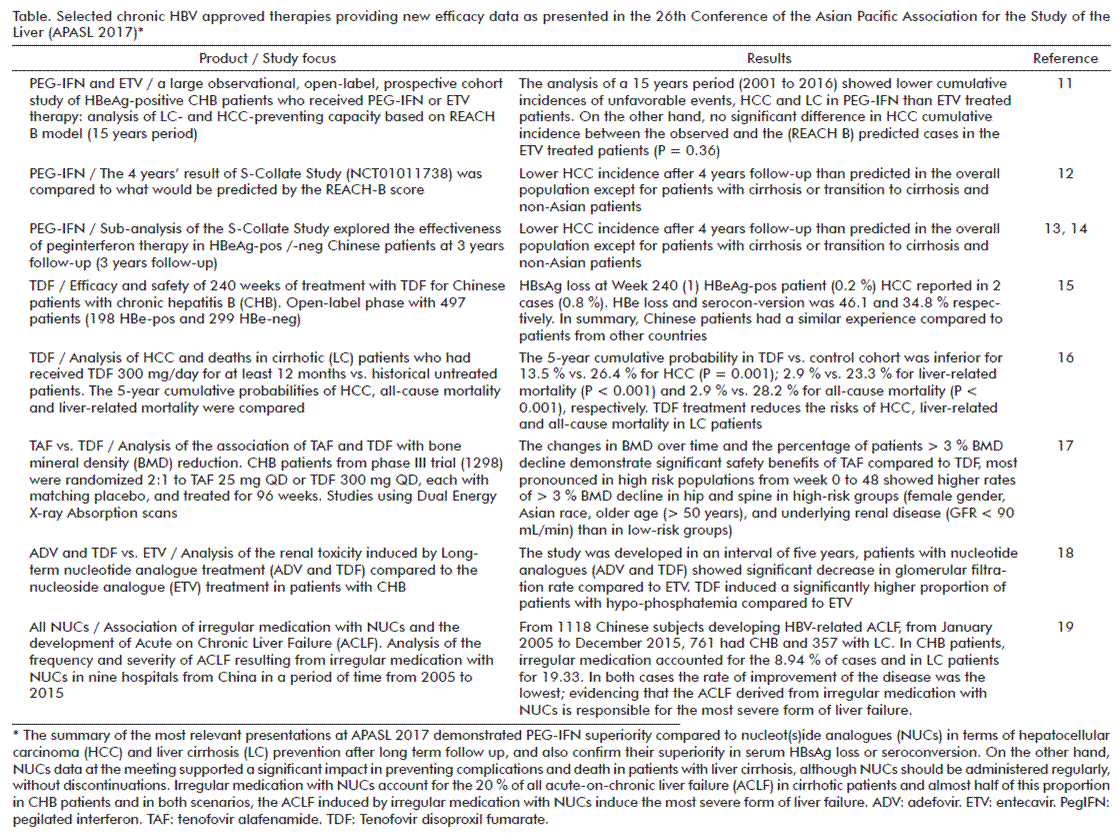
<body><![CDATA[<P   ><font size="2" face="Verdana, Arial, Helvetica, sans-serif">DCV combined with      ASV was the first all-oral treatment to be approved in Japan for chronic hepatitis      C virus (HCV) serogroup 1 infection in patients with/ without compensated      cirrhosis. The interim report of a post-marketing survey of DCV + ASV in Japanese      patients treated in the routine clinical setting was presented by a Japanese      group from the Toranomon Hospital in Tokyo and was focused on safety. The      survey aimed to register a total of 3000 HCV-infected patients, including      1000 patients with compensate cirrhosis, between September 2014 and August      2015. All patients received oral DCV 60 mg once daily + ASV 100 mg twice daily      for 24 weeks. Patient background, administration status, concomitant medication,      and measures of safety and efficacy were recorded [10]. </font></P >       <P   ><font size="2" face="Verdana, Arial, Helvetica, sans-serif">In the safety set,      a total of 538 patients (24.85 %) experienced a total of 811 adverse drug      reactions (ADRs). Hepatic function disorder occurred in 315 patients (14.55      %). Common ADRs were: abnormal hepatic function (n = 133; 6.14 %), increased      eosinophil count (n = 67; 3.09 %), increased alanine aminotransferase (n =      63; 2.91 %), increased aspartate aminotransferase (n = 61; 2.82 %), liver      disorder (n = 58; 2.68 %) and pyrexia (n = 53; 2.45 %). The rates of ADRs      in patients with/without compensated cirrhosis were generally comparable.      Serious ADRs were liver disorder (n = 5; 0.23 %), pyrexia (n = 4; 0.18 %);      abnormal hepatic function (n = 3; 0.14 %) hepatic encephalopathy (n = 2; 0.09      %) and jaundice (n = 2; 0.09 %). All serious ADRs resolved and all patients      have recovered. No deaths were reported. The preliminary results of safety      in this real-world study concluded that DCV + ASV therapy was generally well      tolerated [10]. </font></P >       <P   >&nbsp;</P >       <P   ><font color="#000000" size="3" face="Verdana, Arial, Helvetica, sans-serif"><b>S<FONT color="#211E1F">TUDIES      RELATED TO TREATMENT OF CHB WITH APPROVED THERAPIES </font></b></font></P >   <FONT color="#000000"><FONT color="#211E1F">        <P   ><font size="2" face="Verdana, Arial, Helvetica, sans-serif">Antiviral (NUCs)      and immunomodulatory (IFN-based) therapies have been the state of the art      for CHB treatment for several years. A large number of patients have been      treated and at present the most relevant researchers in the field of hepatology      are studying the impact of treatment in the incidence and risk prediction      of HCC and in general in the long term efficacy variables (<a href="/img/revistas/bta/v34n1/t0107117.gif">Table</a>).      </font></P >       
<P   ><font size="2" face="Verdana, Arial, Helvetica, sans-serif"><B>Pegylated interferon      (PegIFN) therapy leads to a better long term clinical outcomes compared to      entecavir (ETV) </b></font></P >       <P   ><font size="2" face="Verdana, Arial, Helvetica, sans-serif">A prospective cohort      study report on the clinical long-term outcomes of PegIFN vs. ETV therapy      in Chinese patients with HBeAg-positive CHB was presented by Shi-Ying Li and      colleagues from the Key Laboratory of Molecular Biology for Infectious Diseases,      Chongqing, China [11]. </font></P >       <P   ><font size="2" face="Verdana, Arial, Helvetica, sans-serif">PegIFN and ETV are      recommended products for first-line therapy of CHB infection by the EASL,      AASLD, and APASL guidelines. However, their long-term effect, such as preventing      LC and HCC, is controversial. The studies directly comparing the long-term      outcomes of these two drugs are absent. From September 2001 to February 2016,      a large, observational, open-label, prospective cohort study of HBeAg-positive      CHB patients who received PegIFN or ETV therapy was carried out at the Second      Affiliated Hospital of Chongqing Medical University. Cumulative incidences      of unfavorable events (comprising LC and HCC) were calculated with respect      to treatment type. Based on the REACH-B model, Chinese experts analyzed the      incidence in these two groups, and compared the observed incidence of LC and      HCC with the expected incidence in each group. </font></P >       <P   ><font size="2" face="Verdana, Arial, Helvetica, sans-serif">PegIFN treated patients      showed a lower cumulative incidences of unfavorable events and cirrhosis than      ETV treated ones. Univariate/multivariate exploration indicated that treatment      types and platelet count were independently associated with the occurrence      of unfavorable events in patients with CHB infection. Based on the REACH-B      model, a lower observed cumulative incidence of HCC was observed in PegIFN      treated patients than that of the predicted cases based on the REACH-B model.      On the other hand, there was no signi<FONT color="#000000">fi<FONT color="#211E1F">cant      difference of the cumulative HCC incidence between the observed and the predicted      cases in the ETV experienced patients (P = 0.36), demonstrating a comparatively      superior effect of PegIFN [11]. </font></font></font></P >   <FONT color="#000000"><FONT color="#211E1F">        <P   ><font size="2" face="Verdana, Arial, Helvetica, sans-serif">Concluding that treatment      with PegIFN led to a lower incidence of unfavorable events including cirrhosis      and HCC than ETV in patients with CHB is exceptionally relevant. The results      presented by Shi- Ying Li and colleagues [11] are based in a prospective study      during 15 years. The value of these results highlights the real contribution      of the immunomodulatory therapies to the control of CHB disease progression.      At the end of the day, limiting the evolution of the disease is the most sensitive      and expected consequence of CHB treatment. These results, linked to the recently      published data from Wranke and colleagues [20] showing the limited effect      of antivirals in patients coinfected with Hepatitis Delta in contrast to PegIFN      treatment may impact in the use of PegIFN as first line treatment for CHB      therapy in a larger proportion of patients. </font></P >       ]]></body>
<body><![CDATA[<P   ><font size="2" face="Verdana, Arial, Helvetica, sans-serif"><B>PegIFN impact      on liver disease progression and serology </b></font></P >       <P   ><font size="2" face="Verdana, Arial, Helvetica, sans-serif">The HCC risk was      assessed adapting the REACH-B score to the patients from the S-collate study.      This study was presented by Dr Papatheodoridis and colleagues from Germany,      Greece, China and Italy. The REACH-B score was developed in patients not receiving      antiviral treatment. It was compared the result in S-Collate study using PegIFN      Alfa-2a therapy with what would be predicted by the REACH-B score. The 4 years      follow-up rendered an HCC incidence lower than predicted in the overall population      except for patients with cirrhosis or transition to cirrhosis and non-Asian/Oriental      patients, though the differences were not signi<FONT color="#000000">fi<FONT color="#211E1F">cant.      A longer follow-up will confirm if these are robust trends [12], however the      results per se are in line with the results presented by Shi-Ying Li and colleagues      [11]. </font></font></font></P >   <FONT color="#000000"><FONT color="#211E1F">        <P   ><font size="2" face="Verdana, Arial, Helvetica, sans-serif">A sub-analysis of      the same S-collate study explored the effectiveness of PegIFN therapy in HBeAg      positive Chinese patients with CHB evaluated at 3 years post treatment [13].      The HBsAg clearance rate at 3 years post-treatment was 1 % in the ITT analysis      and 3 % in the analysis of the available data, evidencing the limited effect      of pegIFN on the HBsAg variable. HBeAg seroconversion (SC) rates were 26 %      at the end of treatment (EOT) and 42 % at 3 years post-treatment. The combination      of HBeAg SC and HBV DNA below 2000 IU/mL was achieved in 26 % (EOT) and 19      % at 3 years post-treatment. Only one HCC case was detected during the study      in 396 HBeAg-positive Chinese patients. There were no deaths and no reports      of decompensated liver disease, ascites, encephalopathy, or variceal bleeding      in HBeAg-positive Chinese patients [13]. </font></P >       <P   ><font size="2" face="Verdana, Arial, Helvetica, sans-serif">The effectiveness      of pegIFN alfa-2a (40 kDa) therapy in HBeAg-negative Chinese patients with      CHB at 3 years post-treatment as a sub-analysis of the S-collate study was      also presented [14]. HBeAg-negative CHB is less common in China than in Europe,      and few data are available on the outcome of treatment with PegIFN in the      Chinese population. However, in recent years HBeAg-negative disease has an      increased incidence in China. The objective of the observational S-collate      study (NCT01011738) was to assess HBsAg clearance and other outcomes up to      3 years after stopping PegIFN treatment in patients with CHB. Response rates      were calculated for the modified intention-to-treat (mITT) population (patients      who received 1 or more doses of PegIFN) and for patients with available data      at the time point of interest. </font></P >       <P   ><font size="2" face="Verdana, Arial, Helvetica, sans-serif">At 3 years post-treatment      HBsAg clearance was documented in 7 % in the mITT population, and 13 % (9/69)      in patients with data. The combination of HBV DNA &lt; 2000 IU/mL and ALT      normalization was achieved in 53 % (41/78) of patients at end of treatment      and 32 % (20/62) at 3 years post-treatment (patients with data). There were      no reports of decompensated liver disease, ascites, encephalopathy, or variceal      bleeding. One case of HCC was detected and died during the study, while no      other HBV-related deaths were reported. In summary, the results in Chinese      HBeAg-negative patients from S-Collate are consistent with the results of      large global phase 3 studies and </font><font size="2" face="Verdana, Arial, Helvetica, sans-serif">show      that HBsAg loss can be sustained for up to 3 years in some patients treated      with PegIFN [14], although the response of this variable remains poor. </font></P >       <P   >&nbsp;</P >       <P   ><font size="2" face="Verdana, Arial, Helvetica, sans-serif"><B><font size="3">EFFICACY      AND SAFETY OF ANTIVIRALS </font></b></font></P >   <FONT size="+1"><B><FONT size="+1">        <P   ><font size="2" face="Verdana, Arial, Helvetica, sans-serif">Tenofovir disoproxil      fumarate (TDF): 240 weeks on treatment follow-up in Chinese patients </font></P >   </font></B>        <P   ><font size="2" face="Verdana, Arial, Helvetica, sans-serif">The ef<FONT color="#000000">fi<FONT color="#211E1F">cacy      and safety of 240 weeks of treatment with TDF for Chinese patients with CHB      was presented by Jinlin Hou and colleagues [15]. This multicenter study involved      497/512 (97.0 %) subjects (198 HBeAg-positive and 299 HBeAg-negative). At      240 weeks, virologic suppression (HBV DNA &lt; 400 copies/mL; 69 IU/mL) was      achieved in the majority of subjects in HBeAg positive (&gt; 95 %) and HBeAg      negative (&gt; 99 %). One (0.2 %) HBeAg positive patient achieved HBsAg loss      at Week 240. A total of 19 out of 27 patients with paired biopsy (70.4 %)      had histological improvement. No resistance to TDF was detected through 240-week      treatment. In 2 cases (0.8 %) of HCC were reported at year 3 and 5. Creatinine      increase was only detected in one patient that later resolved, evidencing      that this was not a problem in this period of time for Chinese patients. Percentages      of HBe loss and seroconversion in patients that received TDF for the complete      240 weeks period was 46.1 and 34.8 % respectively. In summary, the experience      of TDF use in Chinese patients was similar to patients from other countries      [15]. </font></font></font></P >   <FONT size="+1"><FONT color="#000000"><FONT color="#211E1F">        <P   ><font size="2" face="Verdana, Arial, Helvetica, sans-serif"><B>TDF reduces HCC      and deaths in CHB patients with LC </b></font></P >       ]]></body>
<body><![CDATA[<P   ><font size="2" face="Verdana, Arial, Helvetica, sans-serif">Antiviral therapies,      such as lamivudine (LAM) and ETV, have shown to reduce HCC development and      mortality in CHB patients with cirrhosis. TDF is a potent antiviral agent      with no documented resistance to date, but its impact on clinical outcomes      is unclear. Ken Liu from the Chinese University of Hong Kong, presented the      results of TDF therapy on HCC and deaths [16]. </font></P >       <P   ><font size="2" face="Verdana, Arial, Helvetica, sans-serif">Two cohorts of CHB      cirrhotic patients were retrospectively studied. Cirrhosis was de<FONT color="#000000">fi<FONT color="#211E1F">ned      by liver histology, thrombocytopenia (&lt; 150 &times; 109/L) or features      of portal hypertension seen on imaging. TDF cohort included consecutive patients      from two Asian centers who had received TDF 300 mg/day for at least 12 months.      Control cohort included historical untreated patients who underwent routine      clinical care. The 5-year cumulative probabilities of HCC, all-cause mortality      and liver-related mortality were compared. </font></font></font></P >   <FONT color="#000000"><FONT color="#211E1F">        <P   ><font size="2" face="Verdana, Arial, Helvetica, sans-serif">At the 5-year follow-up      mark, there were 69 HCCs and 27 deaths of which 23 were liver-related. The      5-year cumulative probabilities in TDF vs. control cohort were inferior for      13.5 % vs. 26.4 % for HCC (P = 0.001); 2.9 % vs. 23.3 % for liver-related      mortality (P &lt; 0.001) and 2.9 % vs. 28.2 % for all-cause mortality (P &lt;      0.001), respectively. On multivariate Cox regression model, TDF-treated patients      had reduced risks of HCC, liver-related mortality and all-cause mortality      at 5 years after adjustment for age, sex, MELD score and prior antiviral treatment      experience. The authors concluded that TDF treatment reduced the risks of      HCC, liver-related and all-cause mortality in CHB patients with cirrhosis      in 5 years treatment period [16]. </font></P >       <P   ><font size="2" face="Verdana, Arial, Helvetica, sans-serif"><B>The effect of      tenofovir on bone mineral density </b></font></P >       <P   ><font size="2" face="Verdana, Arial, Helvetica, sans-serif">Some doubts remain      regarding the association of TDF with the appearance of osteoporosis. The      data presented in relation with two Phase III studies involving TDF and Tenofovir      Alafenamide (TAF), further clarified the effect of these antivirals on bone      mineral density. </font></P >       <P   ><font size="2" face="Verdana, Arial, Helvetica, sans-serif">Patients from two      phase III trial (1298) were randomized 2:1 to TAF 25 mg QD or TDF 300 mg QD,      each with matching placebo, and treated for 96 weeks. Dual energy X-ray absorptiometry      (DXA) scans were performed throughout the <FONT color="#000000">fi<FONT color="#211E1F">rst      48 weeks. Patients were evaluated for overall change from baseline and by      proportion of patients with &gt; 3 % decline in bone mineral density (BMD).      Changes in BMD were further assessed in patients at high risk for bone density      loss, including female gender, Asian race, older age (&gt; 50 years), and      underlying renal disease (GFR &lt; 90 mL/min). The mean (SD) % changes in      hip BMD from baseline at week 48 for the TAF arm was &ndash;0.16 (2.24 %)      and for the TDF arm was &ndash;1.86 % (2.45 %). For the spine, mean (SD) %      change at week 48 was &ndash;0.57 % (2.91 %) in the TAF arm and &ndash;2.37      % (3.20 %) in the TDF arm. Subjects with &gt; 3 % decline in hip and spine      BMD were signi<FONT color="#000000">fi<FONT color="#211E1F">cantly greater      in TDF treated patients (27 and 38 %) compared to TAF treated patients (8      and 20 %). The percentage of patients with &gt; 3 % decline in hip and spine      BMD was relatively consistent among TAF treated patients across baseline osteoporosis      risk categories including female gender (8.6, 19.3 %), Asian race (8.9, 19.5      %), older age (8.8, 24.5 %) and lower baseline creatinine clearance (8.6,      18.6 %). In contrast, patients treated with TDF showed higher rates of &gt;      3 % BMD decline in hip and spine in high-risk groups than in low-risk groups      [17]. </font></font></font></font></font></P >   <FONT color="#000000"><FONT color="#211E1F"><FONT color="#000000"><FONT color="#211E1F">        <P   ><font size="2" face="Verdana, Arial, Helvetica, sans-serif">The difference between      TAF and TDF were more pronounced in patients with multiple risk factors, with      TAF treated patients having 10 % of patients experiencing &gt; 3 % decline      in hip BMD regardless of number of risk factors. In contrast, 20 % of TDF      treated patients with 2 risk factors had a &gt; 3 % hip BMD decline while      patients with 3 or 4 risk factors had 41 and 58 % of patients with &gt; 3      % hip BMD decline at Week 48. A similar trend was seen with changes in spine      BMD decline. The only baseline predictor consistent for having a &lt; 3 %      hip and spine BMD decline at week 48 was treatment with TAF. The authors concluded      that the changes in BMD over time and in proportion of patients with &gt;      3 % BMD decline in hip and spine demonstrate signi<FONT color="#000000">fi<FONT color="#211E1F">cant      safety bene<FONT color="#000000">fi<FONT color="#211E1F">ts of TAF compared      to TDF. The safety bene<FONT color="#000000">fi<FONT color="#211E1F">ts of      TAF are most pronounced in high risk populations [17]. </font></font></font></font></font></font></font></P >   <FONT color="#000000"><FONT color="#211E1F"><FONT color="#000000"><FONT color="#211E1F"><FONT color="#000000"><FONT color="#211E1F">        <P   ><font size="2" face="Verdana, Arial, Helvetica, sans-serif"><B>On the renal toxicity      of nucleotide analogues </b></font></P >       <P   ><font size="2" face="Verdana, Arial, Helvetica, sans-serif">The long-term nucleotide      analogue treatment (adefovir (ADV) and TDF) increase renal toxicities compared      to the nucleoside analogue ETV treatment in patients with CHB, according to      the group of Young Youn Cho from the Department of Internal Medicine and Liver      Research Institute at the Seoul National University College of Medicine. CHB      patients treated with ADV based regimens are changing to TDF based treatments      in Korea due to national reimbursement policies. Long-term renal effects of      ADV experienced TDF treated patients was compared to ETV treated patients.      In this retrospective single center study, authors selected 87 patients who      were treated with ADV and subsequent TDF from June 2008 to Dec 2013. Patients      were matched by treatment duration: ADV plus TDF (ADV + TDF group) with ETV      treated patients, and treatment duration of TDF group with ETV treated patients.      Nucleotide analogues showed signi<FONT color="#000000">fi<FONT color="#211E1F">cant      decrease in GFR compared to ETV, and TDF showed significant hypophosphatemia      development compared to ETV. A long term study needs to be performed in this      population [18]. </font></font></font></P >   <FONT color="#000000"><FONT color="#211E1F">        <P   ><font size="2" face="Verdana, Arial, Helvetica, sans-serif"><B>Switch from antivirals      to immunomodulatory treatment </b></font></P >       ]]></body>
<body><![CDATA[<P   ><font size="2" face="Verdana, Arial, Helvetica, sans-serif">The NEW SWITCH study      (NCT01464281) was reported by Dr Peng Hu, and colleagues from 24 different      affiliations in China. This multi-center, randomized study was conducted in      HBeAg-positive CHB patients, who had received ADV, LAM or ETV for 1&ndash;3      years and achieved HBV DNA suppression ( &lt; 200 IU/ml) and HBeAg loss. Patients      were ran-domized 1:1 to receive PegIFN for 48 weeks (arm A) or 96 weeks (arm      B) with the <FONT color="#000000">fi<FONT color="#211E1F">rst 12 weeks overlapping      NUC therapy and followed-up for 48 weeks after treatment [21]. </font></font></font></P >   <FONT color="#000000"><FONT color="#211E1F">        <P   ><font size="2" face="Verdana, Arial, Helvetica, sans-serif">Among 153 patients      randomized to arm A, 22 (14.4 %) achieved HBsAg loss at EOT, compared to 31      out of 150 (20.7 %) in arm B (P = 0.1742). The 96 weeks PegIFN treatment arm      showed trends in better response in HBsAg loss at end of follow-up (EOF) and      HBsAg seroconversion, HBeAg seroconversion and HBV DNA continued suppression      at EOT and EOF. In patients treated with PegIFN alfa-2a for 96 weeks, HBsAg      loss rate at EOT was 40 % (28/70) in patients with lower HBsAg level at baseline      ( &lt; 1500 IU/mL) and 58.7 % (27/46) in patients with lower HBsAg level at      baseline and week 24 ( &lt; 200 IU/ml). Similar populations in patients treated      with PegIFN for 48 weeks (26.5 % (18/68) and 51.4 % (18/35)) were also found      [21]. </font></P >       <P   ><font size="2" face="Verdana, Arial, Helvetica, sans-serif">Patients involved      in the NEW SWITCH study are selected from those eliminating HBeAg after antiviral      treatment (10-20 % of those treated with antivirals), justifying the final      impact on HBsAg serology. </font></P >       <P   ><font size="2" face="Verdana, Arial, Helvetica, sans-serif"><B>New developments      in the field of treatment discontinuation for HBe-negative patients </b></font></P >       <P   ><font size="2" face="Verdana, Arial, Helvetica, sans-serif">In the novel topic      of treatment discontinuation, Dr. Papatheodoridis and colleagues [22] presented      the impact of different de<FONT color="#000000">fi<FONT color="#211E1F">nitions      of relapse on the off-therapy remission rates in HBeAg-negative CHB patients      who discontinue effective long-term treatment with NUCs. It is recognized      that virogical relapses are observed in the majority of chronic HBe-negative      patients who discontinue NUCs, but whether all of them need retreatment was      considered unclear. A total of 130 adult patients without cirrhosis before      NUC onset (age: 57 &plusmn; 13 years, males: 69 %) were included. All patients      had undetectable HBV DNA under NUCs for &gt; 24 months and follow-up &gt;      12 months after NUC cessation if they were not retreated. No patient had any      co-infection, HCC, liver transplantation. After NUC cessation, patients were      followed at least at months 1 and 3 and every 3 months thereafter. </font></font></font></P >   <FONT color="#000000"><FONT color="#211E1F">        <P   ><font size="2" face="Verdana, Arial, Helvetica, sans-serif">Before NUC onset,      median ALT was 105 IU/L and HBV DNA 498 000 IU/mL, while HBV genotype was      B, C and D in 33, 8.5 and 58.5 % of patients, respectively. At NUC cessation,      ETV was taken by 41 %, TDF by 39 % and other NUCs by 20 % of patients. Median      duration of therapy was 55 months, on-NAs virological remission (38 months)      and off-therapy follow-up until retreatment for retreated cases (15 months).      No patient experienced liver decompensation or died. Retreatment according      to treating physicians&rsquo; decisions has been given in 40/130 (31 %) patients      with a cumulative rate of 8, 16, 23, 31 and 38 % at 3, 6, 12, 18 and 24 months      after NUC discontinuation. In multivariate Cox regression models, age, sex,      genotype, pre-treatment ALT, HBV DNA levels were not associated </font><font size="2" face="Verdana, Arial, Helvetica, sans-serif">with      the probability of off-treatment relapse by any de<FONT color="#000000">fi<FONT color="#211E1F">nition      of retreatment, except for genotype D which was related with more frequent      development of HBV DNA levels &gt; 200 or &gt; 2000 IU/ mL (P &lt; 0.020).      </font></font></font></P >   <FONT color="#000000"><FONT color="#211E1F">        <P   ><font size="2" face="Verdana, Arial, Helvetica, sans-serif">The authors concluded      that the de<FONT color="#000000">fi<FONT color="#211E1F">nition of relapse      has a great impact on the rates of off-treatment remission and potentially      on the probability of retreatment in HBe-negative patients. The majority of      patients would have been retreated within 24 months if clinically signi<FONT color="#000000">fi<FONT color="#211E1F">cant      relapse was considered as HBV DNA &gt; 2000 IU/mL even with abnormal ALT,      while retreatment would have been initiated in a minority of patients if more      stringent criteria of relapse were adopted. Regardless of de<FONT color="#000000">fi<FONT color="#211E1F">nition,      off-treatment relapses cannot be easily predicted by patient characteristics      [22]. A recent review and metanalysis [23] that was part of the studies for      the change of recommendation on the issue of discontinuation in Europe summarized      the experiences from Hadziyannis [24], H&ouml;ner [25] and Berg [26] demonstrating      that discontinuation creates new immunological environment that may result      even in HBsAg-related serological responses in a significant amount of patients      (20 to 40 % depending on the study). On the other hand, the continuation under      NUC treatment, or a quick restart of treatment do not favor any HBs loss or      seroconversion after long term treatment as it has been well documented and      also proven in the controlled study of Dr. Berg [26]. </font></font></font></font></font></font></font></P >   <FONT color="#000000"><FONT color="#211E1F"><FONT color="#000000"><FONT color="#211E1F"><FONT color="#000000"><FONT color="#211E1F">        <P   ><font size="2" face="Verdana, Arial, Helvetica, sans-serif">The anti-inflammatory      effect of NUCs inhibit serological responses, and the discontinuation, if      well managed under careful follow-up may open the door to a new scenario,      in which the testing of therapeutic vaccines could have a new opportunity.      </font></P >       <P   >&nbsp;</P >       <P   ><font size="2" face="Verdana, Arial, Helvetica, sans-serif"><B><font size="3">NEW      SERUM MARKERS IN THE FIELD OF CHB MANAGEMENT </font></b></font></P >   <FONT size="+1">        ]]></body>
<body><![CDATA[<P   ><font size="2" face="Verdana, Arial, Helvetica, sans-serif"><b>The serum HBV      RNA </b> </font></P >   <FONT size="+1">        <P   ><font size="2" face="Verdana, Arial, Helvetica, sans-serif">The elimination of      covalently closed circular DNA (cccDNA) in hepatocytes remains a difficult      target in CHB therapy; in addition, it is important to develop suitable markers      that may predict the loss of cccDNA for the development of novel treatments      or the optimization of the current ones. It has been reported that serum hepatitis      B virus (HBV) RNA is encapsidated pregenomic RNA, directly transcribed from      covalently-closed circular DNA (cccDNA). A study presented by Jie Wang, from      China, assessed the relationship between serum HBV RNA and intrahepatic cccDNA      activity in HBV-infected patients. Serum HBV RNA correlated with intrahepatic      cccDNA in HBeAg-positive patients but not in HBeAg-negative patients. Serum      HBV DNA also re<FONT color="#000000">fl<FONT color="#211E1F">ected cccDNA      activity in HBeAg-positive patients, and HBV RNA plus DNA could re<FONT color="#000000">fl<FONT color="#211E1F">ect      cccDNA activity better than either serum HBV RNA or DNA alone. Besides, serum      HBV RNA could re<FONT color="#000000">fl<FONT color="#211E1F">ect the status      of intrahepatic cccDNA in CHB patients after receiving a long-term NUCs-therapy.      Therefore, the authors considered as reasonable to postulate that sustained      loss of serum HBV RNA implicates the elimination or transcriptional silence      of cccDNA [27]. </font></font></font></font></font></font></font></P >   <FONT color="#000000"><FONT color="#211E1F"><FONT color="#000000"><FONT color="#211E1F"><FONT color="#000000"><FONT color="#211E1F">        <P   ><font size="2" face="Verdana, Arial, Helvetica, sans-serif"><B>HBV core-related      antigen </b></font></P >       <P   ><font size="2" face="Verdana, Arial, Helvetica, sans-serif">Hepatitis B core-related      antigen (HBcrAg) has been reported as an additional marker of HBV infection.      HBcrAg assay was correlated with HBV DNA load in the sera and intrahepatic      HBV cccDNA in tissues from HBV-related liver disease patients. Studying a      group of CHB (n = 67), HBV-related HCC group (n = 160) and after hepatectomy      group (n = 14) it was found a strong correlation of HBcrAg levels with serum      HBV DNA both in the HBeAg-negative and HBeAg-positive groups respectively      [28]. HBcrAg was comparable with serum HBV DNA to reflect the virus replication      in CHB, HCC and after hepatectomy patients. The correlation between HBcrAg      and cccDNA was equivalent to the relationship of serum HBV DNA and cccDNA      in HCC patients. </font></P >       <P   >&nbsp;</P >       <P   ><font size="3" face="Verdana, Arial, Helvetica, sans-serif"><b>CHB TREATMENT:      NEW DEVELOPMENTS </b></font></P >   <FONT size="+1">        <P   ><font size="2" face="Verdana, Arial, Helvetica, sans-serif">Eclipsed by the spectacular      results in the field of treatments for chronic hepatitis C, a wave of novel      treatments approaches appear in the horizon of CHB therapy. </font></P >   <FONT size="+1">        <P   ><font size="2" face="Verdana, Arial, Helvetica, sans-serif"><B>HBV core assembly      modulator </b></font></P >       <P   ><font size="2" face="Verdana, Arial, Helvetica, sans-serif">Alios BioPharma,      Inc., a Janssen Pharmaceutical Company of Johnson &amp; Johnson presented      the data on safety, tolerability, pharmacokinetics and antiviral activity      of AL-3778, a <FONT color="#000000">fi<FONT color="#211E1F">rst-in-class,      and orally administered HBV core assembly modulator alone and in combination      with PegIFN. Safety and ef<FONT color="#000000">fi<FONT color="#211E1F">cacy      were assessed in HBeAg(+) non-cirrhotic CHB patients with HBV DNA &gt; 20      000 IU/mL and elevated ALT. Patients were treated for 28 days and followed      off-treatment for 28 days. Patients were randomized to receive AL-3778 or      matching placebo at doses of 100, 200, 400, 600 and 1000 mg and also to receive      separate treatment arms PegIFN in combination with AL- 3778 (600 mg) or PegIFN      plus placebo. Dose-related HBV DNA and HBV RNA reductions were observed but      no statistically signi<FONT color="#000000">fi<FONT color="#211E1F">cant changes      in HBV serology parameters were observed after 28 days of dosing. Changes      in HBsAg levels </font></font></font></font></font></font></font><font size="2" face="Verdana, Arial, Helvetica, sans-serif">were      negligible, as expected from the short treatment duration. The largest mean      HBV DNA reduction was observed with the 600 mg AL-3778/PegIFN combination      (1.97 log IU/mL) which was greater than AL 3778 alone (1.72 log10) or PegIFN      alone (1.06 log10). After 28 days&rsquo; treatment, mean HBV RNA (log10 copies/ml)      changes from baseline were 0.00 in untreated, &ndash;0.73 in PegIFN treated,      &ndash;0.82 in 600-mg BD AL-3778 treated and &ndash;1.5 in 600-mg BD AL-3778/PegIFN      combination treated patients [29]. </font></P >   <FONT color="#000000"><FONT color="#211E1F"><FONT color="#000000"><FONT color="#211E1F"><FONT color="#000000"><FONT color="#211E1F">        <P   ><font size="2" face="Verdana, Arial, Helvetica, sans-serif">In summary, AL-3778      was well tolerated with mainly Grade 1 and 2, transient AEs. There was a nonlife      threatening rash SAE related to the administration of the product. Dose-related      HBV DNA reductions and HBV RNA reductions were observed, with evidence of      additive antiviral effects in combination with PegIFN. Reduction of serum      HBV RNA is consistent with the novel mechanism of action of AL3778, to disrupt      ef<FONT color="#000000">fi<FONT color="#211E1F">cient HBV RNA encapsidation      [29]. </font></font></font></P >   <FONT color="#000000"><FONT color="#211E1F">        ]]></body>
<body><![CDATA[<P   ><font size="2" face="Verdana, Arial, Helvetica, sans-serif"><B>HBsAg secretion      inhibitors </b></font></P >       <P   ><font size="2" face="Verdana, Arial, Helvetica, sans-serif">The results of an      ongoing randomized and controlled trial assessing the effect of Replicor family      of nucleic acid polymers (NAP), specifically REP 2139-Mg or REP 2165-Mg in      combination with TDF and PegIFN in treatment na&#305;ve patients with chronic      HBeAg negative HBV infection was presented. Treatment was ongoing during APASL      meeting. Forty patients should receive 26 weeks of lead-in TDF (300 mg) followed      by randomization (1:1) into experimental and control groups. The experimental      group should receive 48 weeks of TDF (same dose), PegIFN and REP 2139-Mg or      REP 2165-Mg (1:1, 250 mg IV infusion weekly). Patients in the control group      should receive 48 weeks of TDF + PegIFN and should cross to 48 weeks of experimental      therapy in the absence of a 3 log drop in HBsAg after 24 weeks of PegIFN.      Results were presented after twenty-nine patients have received &gt; 12 weeks      of treatment [30]. </font></P >       <P   ><font size="2" face="Verdana, Arial, Helvetica, sans-serif">After TDF lead-in,      most patients had serum HBV DNA &lt; 10 IU/ml prior to PegIFN exposure. Triple      combination therapy was well tolerated in all patients. One patient receiving      REP 2165-Mg developed infusion reactions after the dose 20, otherwise no infusion      reactions have been observed with either NAP. Serum HBsAg reductions, increases      in serum anti-HBs or serum ALT/AST/GGT <FONT color="#000000">fl<FONT color="#211E1F">ares      were negligible or absent during the TDF lead-in and in all but 2 patients      in the control group to date. In patients having completed 12 weeks of NAP      exposure, 9/9 receiving REP 2139-Mg and 6/9 patients receiving REP 2165-Mg      have experienced &gt; 1 log reductions in serum HBsAg. HBsAg reductions are      &gt; 3 log in 7/9 REP 2139 patients and 4/9 REP 2165 patients. Increases in      serum anti-HBs are the most dramatic in these patients. NAP-mediated HBsAg      reductions are accompanied by otherwise asymptomatic ALT/AST/GGT <FONT color="#000000">fl<FONT color="#211E1F">ares      substantially greater than those in the control group. According to the authors,      these data con<FONT color="#000000">fi<FONT color="#211E1F">rmed the tolerability      and efficacy of REP 2139 and REP 2165 when used in combination with PegIFN      and TDF in patients with HBeAg negative chronic HBV infection. Early clearance      in serum HBsAg mediated by NAPs correlated with the onset of an intense transaminase      <FONT color="#000000">fl<FONT color="#211E1F">are and suggests NAP-mediated      HBsAg clearance improves the ef<FONT color="#000000">fi<FONT color="#211E1F">cacy      of PegIFN in this patient population [30]. Previous results with other variants      of the NAP family have produced encouraging results [31]. </font></font></font></font></font></font></font></font></font></font></font></P >   <FONT color="#000000"><FONT color="#211E1F"><FONT color="#000000"><FONT color="#211E1F"><FONT color="#000000"><FONT color="#211E1F"><FONT color="#000000"><FONT color="#211E1F"><FONT color="#000000"><FONT color="#211E1F">        <P   ><font size="2" face="Verdana, Arial, Helvetica, sans-serif"><B>Toll-like receptor      7 (TLR-7) agonist (RO6864018) in healthy subjects </b></font></P >       <P   ><font size="2" face="Verdana, Arial, Helvetica, sans-serif">A collaborative work      among Roche Innovation Center &amp; Pharma of Shanghai, and the General Hospital      of Changi (Singapore) presented the new development of RO6864018, an oral      double prodrug of the TLR-7-specific agonist, RO6871765, currently being evaluated      in Phase II development as an immune modulator to treat patients with chronic      HBV infection. A single ascending dose PK/PD ethnic bridging study generated      safety, tolerability and PK/PD data in Asian and Caucasian healthy subjects      [32]. No specific antiviral data was reported at the APASL meeting. </font></P >       <P   ><font size="2" face="Verdana, Arial, Helvetica, sans-serif"><B>Chemical compounds      that suppress the function of HBx </b></font></P >       <P   ><font size="2" face="Verdana, Arial, Helvetica, sans-serif">Multifunctional protein      HBx is associated with HBV replication and carcinogenesis. Chemical compounds      that suppress the function of HBx by binding to it could abrogate the mechanism      of HBx-dependent HBV replication and carcinogenesis. Sayuri Morimoto from      Tokyo University presented the compounds&rsquo; effects on HBV replication      as measured by the amount of HBV DNA in the culture medium using real-time      PCR. In this experiment, HepG2.2.15.7 cells having stable HBV expression were      used. Of the 1018 FDA-approved drugs in the library, 22 were found to bind      to HBx, and 6 of them could strongly bind to HBx compared to others. Two compounds      showed more than 50 % inhibition of the amount of HBV DNA. One of them showed      more than 90 % inhibition, almost as good as 95 % inhibition of nucleoside      analogue ETV. In conclusion, some FDA-approved drugs that bind to HBx were      found to inhibit HBV DNA replication. These compounds, working in a different      manner than ETV, could be an attractive option for the treatment of HBV-related      diseases [33]. </font></P >       <P   ><font size="2" face="Verdana, Arial, Helvetica, sans-serif"><B>Pharmacology of      HeberNasvac&reg;, a novel therapeutic vaccine against CHB </b></font></P >       <P   ><font size="2" face="Verdana, Arial, Helvetica, sans-serif">After almost 20 years      of research and development, Cuban National Regulatory Agency (CECMED) approved      the Sanitary Registration of HeberNasvac&reg;, a therapeutic vaccine to treat      CHB patients. This novel product is administered by nasal and subcutaneous      routes and encompasses the HBsAg and HBcAg purified as recombinant VLPs. The      APASL presentation by Aguilar JC and colleagues compiled the data of non-clinical      and clinical pharmacology of HeberNasvac&reg; [34]. </font></P >       <P   ><font size="2" face="Verdana, Arial, Helvetica, sans-serif">The studies in animal      models were developed in Cuba, and also in collaboration with Pasteur Institute,      Paris, France, and Ehime University in Matsuyama, Japan. Clinical trials were      conducted in Cuba and also in Bangladesh. The preclinical immunogenicity studies,      developed in normal Balb/c mice as well as in transfected and transgenic mice,      supported the selection of the optimal formulation, the antigen doses and      proportions, as well as the administration routes [35, 36]. HBsAg transgenic      and adeno-associated virus-HBV transfected mice, in the background of humanized      HLA, were used as models to evaluate the capacity of the nasal route of immunization      to generate systemic and especially liver immune responses. HeberNasvac generated      CD4(+) and CD8(+) T-cell responses and induced pro-in<FONT color="#000000">fl<FONT color="#211E1F">ammatory      cytokines involved in viral control and disease resolution [36, 37]. According      to the presenting author, the immunogenicity studies in the AAV model of CHB      infection demonstrated the effect of nasal immunization in the homing of virus      specific effector CD4 T cells to the liver in contrast to SC immunization.      </font></font></font></P >   <FONT color="#000000"><FONT color="#211E1F">        ]]></body>
<body><![CDATA[<P   ><font size="2" face="Verdana, Arial, Helvetica, sans-serif">Four clinical trials      evaluated the safety and efficacy of HeberNasvac&reg; as monotherapy, three      of them in CHB patients and one in healthy volunteers. In general, HeberNasvac&reg;      vaccination was safe and induced strong antiviral and serological responses      [38, 39]. The most important study of HeberNasvac&reg; as monotherapy was      the treatment controlled, and randomized phase III clinical trial conducted      with the objective of evaluating the efficacy and safety of this product in      CHB patients. </font></P >       <P   ><font size="2" face="Verdana, Arial, Helvetica, sans-serif">The phase III trial      was designed for 160 CHB patients randomized in two groups (1:1). Both, HBeAg      positive or negative patients with history of altered transaminases or moderate      fibrosis/histological activity index were enrolled. In the first cycle the      patients received five administrations of the formulation by IN route every      two weeks. A second cycle of five administrations started one month after      the first cycle. The second cycle encompassed 5 administrations of equal doses      by the IN route and 5 subcutaneous injection given simultaneously. A dose      of 100 &mu;g of each antigen (100 &mu;g of HBsAg and 100 &mu;g of HBcAg) was      used by each route [40]. </font></P >       <P   ><font size="2" face="Verdana, Arial, Helvetica, sans-serif">In terms of safety,      no serious or severe adverse events were detected after immunization by nasal      and/or subcutaneous routes. The more frequent reactions were similar in nature      for both products. The number of different AE, their frequency, intensity      and duration were much more reduced in the group treated with HeberNasvac&reg;      compared to the AE induced by PegIFN. </font></P >       <P   ><font size="2" face="Verdana, Arial, Helvetica, sans-serif">In terms of efficacy,      both the intention to treat and per protocol analysis showed a significantly      higher proportion of vaccinated patients with HBV DNA below 250 copies/ml      at the end of 24 weeks of treatment-free follow up compared to the proportion      of patients in the same conditions 24 weeks after the end of PegIFN treatment.      ALT values in HeberNasvac&reg; immunized patients were characterized by a      homogeneous, generalized and two to five times increase resembling immune      activation followed by a viral load reduction. Such ALT increases were not      clinically symptomatic and lead to a generalized normalization of ALT values      at the end of HeberNasvac&reg; treatment [40]. Serological evaluations evidenced      a higher proportion of HBeAg negativization and seroconversion for HeberNasvac&reg;-treated      HBeAg positive patients at the end of follow-up. </font></P >       <P   >&nbsp;</P >       <P   ><font size="2" face="Verdana, Arial, Helvetica, sans-serif"><B><font size="3">ACLF      AND IRREGULAR MEDICATION WITH NUCS </font></b></font></P >   <FONT size="+1">        <P   ><font size="2" face="Verdana, Arial, Helvetica, sans-serif">ACLF is one of the      most challenging health problems worldwide, characterized by its rapid progression      and dramatically high mortality. In most Asian countries, hepatitis B causes      70-80 % of all etiologies of ACLF, so HBV-related ACLF is a serious public      health. An important percentage and severity of HBV-related ACLF patients      result from irregular medication of NUCs; this was the conclusion of the work      presented by Ying Zheng and colleagues from different Chinese hospitals and      medical universities [19]. </font></P >   <FONT size="+1">        <P   ><font size="2" face="Verdana, Arial, Helvetica, sans-serif">The study focused      on patients with HBV-related ACLF. From a total of 1118 subjects admitted      to nine hospitals in Heilongjiang province from January 2005 to December 2015.      761 patients with CHB and 357 patients with HBV related LC were divided into      six groups by different predisposing factors: irregular medication of nucleos(t)ide      analogues (IMNA), HBV reactivation (HBVR), infection, drug, alcohol, others.      The percentage and improvement rate of HBV-related ACLF induced by different      predisposing factors were appraised by statistical analyses. In HBV-related      ACLF patients with CHB, the percentage of IMNA was 8.94 %, HBV reactivation      was 38.76 %, infection </font><font size="2" face="Verdana, Arial, Helvetica, sans-serif">9.33      %, drug 11.96 %, alcohol 8.54 and others 22.47 %. The improvement rate of      IMNA was only 50.00 %, HBVR 64.75 %, infection 57.75 %, drug 58.24 %, alcohol      56.92 % and others 65.50 %. Multiple-factor analysis shows IMNA, hepatic encephalopathy,      hepatorenal syndrome were independent risk factors. In HBV-related ACLF patients      with LC, the percentage of IMNA was 19.33 %, HBV reactivation 31.37 %, infection      5.32 %, drug 11.48 %, alcohol 7.00 % and others 25.49 %. The improvement rate      of IMNA was 37.68 %, but after HBV reactivation was 56.25 %, infection 63.16      %, drug 48.78 %, alcohol 48.00 % and others 52.75 %. Multiple-factor analysis      shows IMNA, infection, hepatic encephalopathy, hepatorenal syndrome are independent      risk factors [19]. </font></P >       <P   ><font size="2" face="Verdana, Arial, Helvetica, sans-serif">In summary, authors      concluded that the percentage of irregular medication of NUCs induced HBV-related      ACLF from nine hospitals was almost 20 % for LC patients and approximately      the half in CHB patients, and the severity of the liver failure was the worse      compared to other etiological factors. Authors recommend paying more attention      to the treatment with NUCs because it may exacerbate the disease and even      develop HBV-related ACLF in an important proportion of patients if it&rsquo;s      not correctly used [19]. </font></P >       <P   >&nbsp;</P >       ]]></body>
<body><![CDATA[<P   ><font size="2" face="Verdana, Arial, Helvetica, sans-serif"><b><font size="3">NAFLD      </font></b></font></P >   <FONT size="+1">        <P   ><font size="2" face="Verdana, Arial, Helvetica, sans-serif">The APASL meeting      hosted many presentations that covered various scientific and clinical aspects      of NAFLD. As usual to many disease management, outlining the underlying patient      demographic at risk becomes vital in screening, management and follow-up of      NAFLD with special consideration to the limited resources currently available      for care. </font></P >   <FONT size="+1">        <P   ><font size="2" face="Verdana, Arial, Helvetica, sans-serif">NAFLD is characterised      by excessive hepatic fat accumulation, correlated with insulin resistance      (IR), and defined by the presence of steatosis in &gt; 5 % of hepatocytes      per histological assessment [41]. The NAFLD spectrum varies from simple hepatic      steatosis (SHS) or NAFLD to SHS plus a characteristic pattern of steatohepatitis      (NASH), to steatosis or steatohepatitis associated with fibrosis, LC and HCC.      </font></P >       <P   ><font size="2" face="Verdana, Arial, Helvetica, sans-serif">Multiple studies      were presented during the 26th APASL meeting aimed at assessing the at-risk      population around the world and application of non-invasive interventional      diagnostic tools. Studies in Thailand, China, and Canada among many others      attempted to identify underlying population at risk as well as effect of co-morbid      liver diseases in disease progression, and severity. </font></P >       <P   ><font size="2" face="Verdana, Arial, Helvetica, sans-serif"><B>NAFLD prevalence      in asymptomatic population </b></font></P >       <P   ><font size="2" face="Verdana, Arial, Helvetica, sans-serif">Dr Teeratorn and      colleagues from Thailand presented a prospective study consisting of 871 patients      that aimed to assess NAFLD prevalence in an asymptomatic population with low      risk of alcoholic liver disease, CHB and CHC between Mar 2013 and Sep 2016.      With a mean age of 56 &plusmn; 10 years and 70 % female sex, the prevalence      of NAFLD was 61 % and severe steatosis was 17.2 %. Meanwhile, 41 % of the      participants with body mass index (BMI) of 23 kg/ m2 and normal waist circumference      had NAFLD. They reported 32 % control where the controlled attenuation parameter      (CAP) was 185 dB/m and mean liver stiffness was 4.1 kPa. They further went      on to explain that the degree of moderate-to-severe steatosis were significantly      associated with diabetes mellitus (Odd ratio, OR 1.2), dyslipidemia (OR 1.1)      and higher BMI (OR 1.06). The significant liver fibrosis, Liver stiffness      (LS) higher than 8.0 kPa was 9 % and it was independently associated with      higher BMI (OR 1.55). They concluded that in their patient population NAFLD      prevalence was 61 % with 9 % significant liver fibrosis [42]. </font></P >       <P   ><font size="2" face="Verdana, Arial, Helvetica, sans-serif"><B>Metabolic syndrome      in patients with CHB and co-morbid NAFLD </b></font></P >       <P   ><font size="2" face="Verdana, Arial, Helvetica, sans-serif">Another study originating      out of China and presented by Dr Jiangao Fan assessed prevalence of metabolic      syndrome in patients with CHB and co-morbid NAFLD [43]. The authors prospectively      followed 1326 patients who had biopsy-proven CHB (n = 721), NAFLD (n = 176),      CHB/NAFLD (n = 429) for a period of 1 to 15 years. They discovered that rate      of metabolic syndrome was significantly higher in CHB/NAFLD compared with      CHB alone. Furthermore, CHB Patients with comorbid NAFLD had higher risk of      progression to HCC and experiencing liver-related death than patients with      only CHB. In the NAFLD/CHB versus CHB group; respectively, prevalence of co-morbidities      was: hyper-tension (9.4 %, 3.2 %), obesity (9.3 %, 0.8 %), diabetes mellitus      (13.2 %, 4.2 %), and hyperlipidemia (12.4 %, 2.8 %). </font></P >       <P   ><font size="2" face="Verdana, Arial, Helvetica, sans-serif">Several presentations      studied disease etiology and patient demographics, all pointing to the importance      of screening high risk patients especially those with Diabetes Mellitus with      fasting or random blood glucose or a standard 75g OGTT irrespective to liver      enzymes. Data also suggests that all NAFLD patients had an increased risk      of HCC and thus should be closely monitored </font></P >       <P   ><font size="2" face="Verdana, Arial, Helvetica, sans-serif"><B>Transient Elastography      vs. Biopsy: is there a winner? </b></font></P >       ]]></body>
<body><![CDATA[<P   ><font size="2" face="Verdana, Arial, Helvetica, sans-serif">The questions of      liver biopsy accuracy rate as well as it&rsquo;s &ldquo;golden test&rdquo;      title was put to the test by Canadian authors Boctor K. <I>et al</I>. [44,      45] who assessed comparatively the use of transient elastography to traditional      liver biopsies in </font><font size="2" face="Verdana, Arial, Helvetica, sans-serif">patients      with biopsy proven NASH patients. In two separate studies the authors evaluated      patient demographics, fibrosis staging, and a breakdown of NAS score comparatively      to liver stiffness (LS) and CAP. </font></P >       <P   ><font size="2" face="Verdana, Arial, Helvetica, sans-serif">The first study consisted      of 76 Canadian patients with NAS of 2 or greater, and identified the main      reason for a speciality referral to be accidental finding of ALT elevation      of annual examination. Dr Boctor <i>et al.</i> reported a mean age of 48 and      52 for males and females; respectively. Their study population had average      LS of 14.6 kPa, and upon further break down, the NAFLD activity score was      found to correlate to LS with a p-value of 0.021; however, a major discrepancy      was visible when groups were broken down by transient elastography and liver      biopsy fibrosis staging. They concluded in their first study that the strong      correlation between NAS and LS proves the strength of transient elastography      as a monitoring tool for NASH [44]. </font></P >       <P   ><font size="2" face="Verdana, Arial, Helvetica, sans-serif">In the second study      the authors assessed similar demographics as in the first one, in a separate      cohort consisting of 75 NASH patients; however, they specifically focused      on the use of CAP and compared it to NAS score and its components (Steatosis,      Ballooning, and inflammation). They reported a mean age of 52.3, cohort LS      of 13.1 kPa and mean CAP of 328 dB/m. Their study findings suggested that      strongly correlated to fibrosis (P = 0.021) however poorly correlated to steatosis      (P = 0.20), ballooning, and inflammation on biopsy [45]. </font></P >       <P   ><font size="2" face="Verdana, Arial, Helvetica, sans-serif">Through their use      of evidence-based medicine, the most recent guidelines for NAFLD management      considers that the diagnosis of NAFLD requires the exclusion of both secondary      causes and of a daily alcohol consumption higher than 30 g for men and 20      g for women. Patients consuming moderate amounts of alcohol may be still predisposed      to NAFLD if they have metabolic risk factors. The definitive diagnosis of      NASH requires a liver biopsy (Figure). Patients with Type 2 Diabetes Mellitus      should be screened for NAFLD. The steatosis should always be documented whenever      NAFLD is suspected as it is also predictive of future development of type      2 Diabetes Mellitus, car-diovascular events and arterial hypertension. In      general these aspects were also confirmed at the APASL 2017 meeting. </font></P >       <P   >&nbsp;</P >       <P   ><font size="2" face="Verdana, Arial, Helvetica, sans-serif"><B><font size="3">CONCLUDING      REMARKS </font> </b></font></P >   <FONT size="+1">        <P   ><font size="2" face="Verdana, Arial, Helvetica, sans-serif">The APASL2017 conference      was a very well organized event with several novel presentations. As usual,      since the last five years, several presentations were focused in the successful      advances of HCV DAAs treatments. The evaluation of DAAs efficacy in patients      from difficult to treat settings, as well as the first results of DAAs post-marketing      studies in Japan, were the most attractive presentations in the HCV field.      </font></P >   <FONT size="+1">        <P   ><font size="2" face="Verdana, Arial, Helvetica, sans-serif">Regarding CHB therapies,      a large study, conducted through a long period of time (15 years) confirmed      the effect of PegIFN in preventing HCC and LC development, while a similar      effect was not demonstrated in the case of patients treated with NUCs (ETV).      Several studies also confirmed the capacity of PegIFN to induce a modest but      sustained serum HBsAg loss or seroconversion while NUC presented results confirmed      the lack of effect on these serological variables. In favor of NUCs, data      presented at APASL meeting supported their significant impact in preventing      complications and death in the set of patients with LC when compared to historical      control cohort. </font></P >       <P   ><font size="2" face="Verdana, Arial, Helvetica, sans-serif">Caution was requested      to patients and doctors participating in the APASL Conference to avoid the      irregular medication with antivirals, based in the fact that this misapplication      is responsible of approximately the 20 % of all ACLF in cirrhotic patients      and almost 10 % of CHB related ACLF. In both scenarios (LC and CHB patients),      the liver failure caused by irregular medication with NUCs induced the most      severe form of liver failure compared to other etiological causes, with the      lowest proportion of patients improving after this serious event. </font></P >       <P   ><font size="2" face="Verdana, Arial, Helvetica, sans-serif">In developing and      underveloped countries, where the CHB disease is more prevalent and governments      are unable to provide CHB treatments, informative campaigns should be reinforced      in support of regular medication with NUCs, otherwise the pharmacological      and epidemiological impact of these products may be lost due to product misuse.      The WHO target of controlling the increasing mortality of viral hepatitis      found in the last decade may be at risk. </font></P >       ]]></body>
<body><![CDATA[<P   ><font size="2" face="Verdana, Arial, Helvetica, sans-serif">The Sanitary Registration      granted to HeberNasvac&reg;, the first therapeutic vaccine approved for the      treatment of CHB (or any other chronic infectious disease), was announced      during the APASL Conference. HeberNasvac&reg; represents a finite, safe and      effective alternative for the treatment of CHB patients and it was registered      by the first time in its country of origin (Cuba) where it is being introduced      in a large number of HBsAg-positive patients. The registration was granted      based in the significant superiority of HeberNasvac&reg; monotherapy in terms      of safety and efficacy variables compared to PegIFN treatment. </font></P >       <P   ><font size="2" face="Verdana, Arial, Helvetica, sans-serif">The introduction      of HeberNasvac&reg; in CHB patients should be carefully followed, supported      and assessed by WHO. This product could represent a valuable tool to accomplish      WHO objective of eliminating viral hepatitis as a health problem by 2030,      as proposed in the Hepatitis Global Report 2017 [1]. Poor countries and developing      nations from BRICS cannot escape from the misuse of current antiviral treatments,      producing the most severe form of ACLF and </font><font size="2" face="Verdana, Arial, Helvetica, sans-serif">responsible      of the 10 and 20 % of such liver failures in CHB and cirrhotic patients, respectively.      In the countries where quasi-eternal therapies cannot be provided to patients      in order to ensure their regular medication with NUCs, the approval of a novel,      finite and effective treatment constitutes promising news. </font></P >       <P   >&nbsp;</P >       <P   ><font size="2" face="Verdana, Arial, Helvetica, sans-serif"><b><font size="3">ACKNOWLEDGEMENTS      </font> </b> </font></P >       <P   ><font size="2" face="Verdana, Arial, Helvetica, sans-serif">We appreciate the      critical review and useful discussions on the manuscript by Dr Eduardo Penton      Arias, from the Vaccine Division, Center for Genetic Engineering and Biotechnology,      Cuba. </font></P >       <P   >&nbsp;</P >       <P   ><font size="3" face="Verdana, Arial, Helvetica, sans-serif"><b>REFERENCES </b></font></P >       <P   > </P >   <FONT size="+1" color="#000000">        <!-- ref --><P   ><font size="2" color="#211E1F" face="Verdana, Arial, Helvetica, sans-serif">1.      WHO. Global Hepatitis Report 2017. Geneva: World Health Organization; 2017.          </font></P >   <FONT size="+1" color="#211E1F">        ]]></body>
<body><![CDATA[<!-- ref --><P   ><font size="2" face="Verdana, Arial, Helvetica, sans-serif">2. Tuyama AC, Chang      CY. Non-alcoholic fatty liver disease. J Diabetes. 2012;4:266-80.     </font></P >       <!-- ref --><P   ><font size="2" face="Verdana, Arial, Helvetica, sans-serif">3. Cusi K. Role of      obesity and lipotoxicity in the development of nonalcoholic steatohepatitis:      pathophysiology and clinical implications. Gastroenterology. 2012;142:711-25.          </font></P >       <P   ><font size="2" face="Verdana, Arial, Helvetica, sans-serif">4. McPhee F, Hernandez      D, Jimenez-Exposito MJ, Scott E, Zhou N. Impact of baseline NS5A polymorphisms      on sustained virologic response rates to treatment with daclatasvir plus Sofosbuvir      with or without ribavirin in patients infected with HCV genotypes prevalent      in Asia [Abstract]. Hepatol Int. 2017;11 (Suppl 1):S1. </font></P >       <P   ><font size="2" face="Verdana, Arial, Helvetica, sans-serif">5. George J, Zeuzem      S, Serfaty L, Vierling J, Cheng W, Sper J, <i>et al.</i> High efficacy in      patients with chronic hepatitis C virus (HCV) genotype (GT)1b infection treated      with elbasvir/grazoprevir (EBR/GZR) for 12 weeks: an integrated analysis[Abstract].      Hepatol Int. 2017;11 (Suppl 1):S3. </font></P >       <P   ><font size="2" face="Verdana, Arial, Helvetica, sans-serif">6. Chan HLY, Lai      CL, Feld J, Reau N, Han LL, McNabb BL, <i>et al.</i> Sofosbuvir/velpatasvir      for 12 weeks results in high SVR12 rates with a favorable safety profile in      asian patients: an integrated subgroup analysis of the ASTRAL-1, ASTRAL-2,      and ASTRAL-3 studies [Abstract]. Hepatol Int. 2017;11 (Suppl 1):S1. </font></P >       <P   ><font size="2" face="Verdana, Arial, Helvetica, sans-serif">7. Omata M, Durand      F, Ni L, De-Oertel S, Llewellyn J, Brainard D, <i>et al.</i> Safety of sofosbuvir-based      regimens for the treatment of chronic HCV infection in patients with mild      or moderate renal impairment. [Abstract]. Hepatol Int. 2017;11 (Suppl 1):S2.      </font></P >       <P   ><font size="2" face="Verdana, Arial, Helvetica, sans-serif">8. Wei L, Hou J,      Luo Y, Heo J, Chu CJ, Duan Z, <i>et al.</i> Pilot-matias T, Mobashery N, Chuang      WL. ONYX-I: safety and efficacy of ombitasvir/paritaprevir/ritonavir and dasabuvir      in Asian adults with genotype 1b chronic hepatitis C virus (HCV) infection:      a randomized, double-blind, placebo controlled study [Abstract]. Hepatol Int.      2017;11 (Suppl 1):S3. </font></P >       <P   ><font size="2" face="Verdana, Arial, Helvetica, sans-serif">9. Akuta N, Toyota      J, Karino Y, Ikeda F, Ido A, Tanaka K, <i>et al.</i> Improvement in fibrosis      parameters following treatment with fixed-dose Daclatasvir / Asunaprevir /      Bbeclabuvir in Japanese patients with chronic hepatitis C virus genotype 1      infection [Abstract]. Hepatol Int. 2017;11 (Suppl 1):S24. </font></P >       ]]></body>
<body><![CDATA[<P   ><font size="2" face="Verdana, Arial, Helvetica, sans-serif">10. Suzuki F, Hatanaka      N, Bando E, Komoto A. Post marketing surveillance of daclatasvir/asunaprevir      in Japanese patients with chronic hepatitis C: an interim report [Abstract].      Hepatol Int. 2017;11 (Suppl 1):S25. </font></P >       <P   ><font size="2" face="Verdana, Arial, Helvetica, sans-serif">11. Li S-Y, Li H,      Xiong Y-l, Liu F, Hu P, Ren H. Clinical long-term outcomes of pegylated interferon-a      versus entecavir therapy in Chinese patients with HBeAg-positive chronic hepatitis      B: a prospective cohort study [Abstract]. Hepatol Int. 2017;11 (Suppl 1):S81.      </font></P >       <P   ><font size="2" face="Verdana, Arial, Helvetica, sans-serif">12. Papatheodoridis      GV, Cornberg M, Xie Q, Lampertico P, Burghaus I, Bakalos G, <i>et al.</i>      Incidence and risk prediction of hepatocellular carcinoma: retrospective analysis      of the S-collate study [Abstract]. Hepatol Int. 2017;11 (Suppl 1):S4. </font></P >       <P   ><font size="2" face="Verdana, Arial, Helvetica, sans-serif">13. Xie Q, Xie Y,      Chen X, Chen X, Chen Y, Zhang J, <i>et al.</i> Effectiveness of peginterferon      Alfa-2a (40KD) therapy in HBeAg positive Chinese patients with chronic hepatitis      B at 3 years posttreatment: sub-analysis of the prospective, global, observational      S-collate study [Abstract]. Hepatol Int. 2017;11 (Suppl 1):S5. </font></P >       <P   ><font size="2" face="Verdana, Arial, Helvetica, sans-serif">14. Wei L, Xie Y,      Chen X, Li X, Chen Y, Zhang J, <i>et al.</i> Effectiveness of peginterferon      alfa-2a (40KD) therapy in HBeAg negative Chinese patients with chronic hepatitis      B at 3 years posttreatment: sub-analysis of the prospective, global, observational      S-collate study [Abstract]. Hepatol Int. 2017;11 (Suppl 1):S44. </font></P >       <P   ><font size="2" face="Verdana, Arial, Helvetica, sans-serif">15. Hou J, Gao Z,      Xie Q, Zhang J, Sheng J, Cheng J, <i>et al.</i> Efficacy and safety of 240      weeks of treatment with Tenofovir disoproxil fumarate for Chinese patients      with chronic hepatitis B [Abstract]. Hepatol Int. 2017;11 (Suppl 1):S43. </font></P >       <P   ><font size="2" face="Verdana, Arial, Helvetica, sans-serif">16. Liu K, Choi J,      Wong VWS, Lim Y-S, Wong GL-H. Tenofovir treatment reduces hepatocellular carcinoma      and deaths in chronic hepatitis B patients with liver cirrhosis [Abstract].      Hepatol Int. 2017;11 (Suppl 1):S84. </font></P >       <P   ><font size="2" face="Verdana, Arial, Helvetica, sans-serif">17. W-K Seto, Y Asahina,      C-Y Peng, C Stanciu, D Abdurakhmanov, J Flaherty, <i>et al.</i> Reduced changes      in bone mineral density in CHB patients receiving TAF compared with TDF [Abstract].      Hepatol Int. 2017;11 (Suppl 1):S75. </font></P >       <P   ><font size="2" face="Verdana, Arial, Helvetica, sans-serif">18. YY Cho, Y Chang,      JY Nam, H Cho, SH Kang, J-H Lee, <i>et al.</i> Long term nucleotide analogue      treatment has increase of renal toxicities compared to entecavir treatment      in patients with chronic hepatitis B [Abstract]. Hepatol Int. 2017;11 (Suppl      1):S46. </font></P >       <P   ><font size="2" face="Verdana, Arial, Helvetica, sans-serif">19. Y Zheng, S Chen,      S Li, Y Xu, X Li, H Zhao, Y Wang, <i>et al.</i> The percentage and severity      of HBV-related acute-on-chronic liver failure patients result from irregular      medication of nucleos(t)ide analogues [Abstract]. Hepatol Int. 2017;11 (Suppl      1):S97. </font></P >       ]]></body>
<body><![CDATA[<!-- ref --><P   ><font size="2" face="Verdana, Arial, Helvetica, sans-serif">20. Wranke A, Serrano      BC, Heidrich B, Kirschner J, Bremer B, Lehmann P, <i>et al.</i> Antiviral      treatment and liver-related complications in hepatitis delta. Hepatology.      2017;65(2):414-25.     </font></P >       <P   ><font size="2" face="Verdana, Arial, Helvetica, sans-serif">21. Hu P, Dou X,      Xie Q, Jiang J, Shang J, Zhang W, <i>et al.</i> High HBsAg loss rate in HBeAg      loss CHB patients SWITCH from NUC to Peg-IFN alfa-2a (NEW SWITCH study) [Abstract].      Hepatol Int. 2017;11 (Suppl 1):S46. </font></P >       <P   ><font size="2" face="Verdana, Arial, Helvetica, sans-serif">22. Papatheodoridis      G, Manolakopoulos S, Su T-H, Siakavellas S, Liu C-J, Kourikou A, <i>et al.</i>      Impact of different definitions of relapse on the off-therapy remission rates      in HBeAg-negative chronic hepatitis B (CHBe-) patients who discontinue effective      long-term treatment with nucleos(t) ide analogues (NAs) [Abstract]. Hepatol      Int. 2017;11 (Suppl 1):S46. </font></P >       <!-- ref --><P   ><font size="2" face="Verdana, Arial, Helvetica, sans-serif">23. Papatheodoridis      G, Vlachogiannakos I, Cholongitas E, Wursthorn K, Thomadakis C, Touloumi G,      Petersen J. Discontinuation of oral antivirals in chronic hepatitis B: A systematic      review. Hepatology. 2016;63(5):1481-92.     </font></P >       <P   ><font size="2" face="Verdana, Arial, Helvetica, sans-serif">24. Hadziyannis SJ,      Sevastianos V, Rapti I, Vassilopoulos D, Hadziyannis E. Sustained responses      and loss of HBsAg in HBeAg-negative patients with chronic hepatitis B who      stop long-term treatment with adefovir. Gastroenterology. 2012;143:629-36.      </font></P >       <!-- ref --><P   ><font size="2" face="Verdana, Arial, Helvetica, sans-serif">25. H&ouml;ner Zu      Siederdissen C, Rinker F, Maasoumy B, Wiegand SB, Filmann N, <i>et al.</i>      Viral and Host Responses After Stopping Long-term Nucleos(t)ide Analogue Therapy      in HBeAg-Negative Chronic Hepatitis B. J Infect Dis. 2016;214(10):1492-7.          </font></P >       <P   ><font size="2" face="Verdana, Arial, Helvetica, sans-serif">26. Berg T, Simon      KG, Mauss S, Schott E, Heyne R, Klass D, <i>et al.</i> Stopping tenofovir      disoproxil fumarate (TDF) treatment after long-term virologic suppression      in HBeAg-negative CHB: week 48 interim results from an ongoing randomized,      controlled trial (FINITE CHB). J Hepatol. 2015;62:S253. </font></P >       ]]></body>
<body><![CDATA[<P   ><font size="2" face="Verdana, Arial, Helvetica, sans-serif">27. Wang J, Niu J,      Jiang J, Lu F. Serum HBV RNA can reflect the activity of intrahepatic cccDNA.      [Abstract]. Hepatol Int. 2017;11 (Suppl 1):S6. </font></P >       <P   ><font size="2" face="Verdana, Arial, Helvetica, sans-serif">28. Chen S, Jia J,      Gao Y, Li H, Fang M, Gao C-f. Correlation between hepatitis B virus core-related      antigen and HBV DNA in a large cohort of CHB and HCC patients [Abstract].      Hepatol Int. 2017;11 (Suppl 1):S153. </font></P >       <P   ><font size="2" face="Verdana, Arial, Helvetica, sans-serif">29. Kennedy W, M-f      Yuen, DJ Kim, Weilert F, Chan HL, Lalezari J, <i>et al.</i> Safety, tolerability,      pharmacokinetics and antiviral activity of AL-3778, a first-in-class, HBV      core assembly modulator alone and in combination with peginterferon-alpha      2A, in treatment naive HBeAg-positive chronic hepatitis B patients [Abstract].      Hepatol Int. 2017;11 (Suppl 1):S7. </font></P >       <P   ><font size="2" face="Verdana, Arial, Helvetica, sans-serif">30. Bazinet M, Pantea      V, Placinta G, Moscalu I, Cebotarescu V, Cojuhari L, <i>et al.</i> Update      on safety and efficacy in the REP 401 protocol: REP 2139-Mg or REP 2165-Mg      used in combination with Tenofovir disoproxil fumarate and pegylated interferon      alpha 2A in treatment na&#305;ve caucasian patients with chronic HBeAg negative      HBV infection [Abstract]. Hepatol Int. 2017;11 (Suppl 1):S85. </font></P >       <P   ><font size="2" face="Verdana, Arial, Helvetica, sans-serif">31. Al-Mahtab M,      Bazinet M, Vaillant A. Safety and Efficacy of Nucleic Acid Polymers in Monotherapy      and Combined with Immunotherapy in Treatment-Na&iuml;ve Bangladeshi Patients      with HBeAg+ Chronic Hepatitis B Infection. PLoS One. 2016;11(6):e0156667.      </font></P >       <P   ><font size="2" face="Verdana, Arial, Helvetica, sans-serif">32. Jiang Q, Lee      L, Grippo JF, Shi J, Lyu L, Liu A, <i>et al.</i> A single ascending dose pharmacokinetic      (PK)/pharmacodynamics (PD) bridging study of toll-like receptor 7 (TLR 7)      agonist (RO6864018) in Asian and Caucasian Healthy Subjects [Abstract]. Hepatol      Int. 2017;11 (Suppl 1):S86. </font></P >       <P   ><font size="2" face="Verdana, Arial, Helvetica, sans-serif">33. Morimoto S, Muroyama      R, Tanaka Y, Ito S, Nakagawa R, Goto K, <i>et al.</i> Chemical compounds that      bind to HBx inhibit HBV DNA replication [Abstract]. Hepatol Int. 2017;11 (Suppl      1):S83. </font></P >       <P   ><font size="2" face="Verdana, Arial, Helvetica, sans-serif">34. G Guillen, Y      Lobaina, M Bourgine, ML Michel, F Freire, JC Aguilar. Pharmacological development      of HeberNasvac, a novel therapeutic vaccine against chronic hepatitis B [Abstract].      Hepatol Int. 2017;11 (Suppl 1):S149. </font></P >       <!-- ref --><P   ><font size="2" face="Verdana, Arial, Helvetica, sans-serif">35. Aguilar JC, Lobaina      Y, Muzio V, Garc&iacute;a D, Pent&oacute;n E, Iglesias E, <i>et al.</i> Development      of a nasal vaccine for chronic hepatitis B infection that uses the ability      of hepatitis B core antigen to stimulate a strong Th1 response against hepatitis      B surface antigen. Immunol Cell Biol. 2004;82(5):539-46.     </font></P >       ]]></body>
<body><![CDATA[<!-- ref --><P   ><font size="2" face="Verdana, Arial, Helvetica, sans-serif">36. Lobaina Y, Trujillo      H, Garc&iacute;a D, Gambe A, Chacon Y, Blanco A, Aguilar JC. The effect of      the parenteral route of administration on the immune response to simultaneous      nasal and parenteral immunizations using a new HBV therapeutic vaccine candidate.      Viral Immunol. 2010;23(5):521-9.     </font></P >       <!-- ref --><P   ><font size="2" face="Verdana, Arial, Helvetica, sans-serif">37. Bourgine M, Dion      S, Godon O, Guillen G, Michel ML, Aguilar JC. Optimization of immune responses      induced by therapeutic vaccination with cross-reactive antigens in a humanized      hepatitis B surface antigen transgenic mouse model. Virology. 2012;430(1):10-9.          </font></P >       <!-- ref --><P   ><font size="2" face="Verdana, Arial, Helvetica, sans-serif">38. Betancourt AA,      Delgado CA, Est&eacute;vez ZC, Mart&iacute;nez JC, R&iacute;os GV, Aureoles-Rosell&oacute;      SR, <i>et al.</i> Phase I clinical trial in healthy adults of a nasal vaccine      candidate containing recombinant hepatitis B surface and core antigens. Int      J Infect Dis. 2007;11(5):394-401.     </font></P >       <!-- ref --><P   ><font size="2" face="Verdana, Arial, Helvetica, sans-serif">39. Al-Mahtab M,      Akbar SM, Aguilar JC, Uddin MH, Khan MS, Rahman S. Therapeutic potential of      a combined hepatitis B virus surface and core antigen vaccine in patients      with chronic hepatitis B. Hepatol Int. 2013;7(4):981-9.     </font></P >       <P   ><font size="2" face="Verdana, Arial, Helvetica, sans-serif">40. Akbar SM, Al-      Mahtab M, Rahman S, Aguilar JC, Hiasa Y, Mishiro S. A phase III clinical trial      with a therapeutic vaccine containing both HBsAg and HBcAg administered via      both mucosal and parenteral routes in patients with chronic hepatitis B. Hepatology.      2013;58:4. </font></P >       <!-- ref --><P   ><font size="2" face="Verdana, Arial, Helvetica, sans-serif">41. EASL-EASD-EASO      Clinical Practice Guidelines for the management of non-alcoholic fatty liver      disease. J Hepatol. 2016,64:1388-402.     </font></P >       <P   ><font size="2" face="Verdana, Arial, Helvetica, sans-serif">42. Teeratorn N,      Thanapirom K, Chaiteerakij R, Komolmit P, Tangkijvanich P, Rerknimitr R, <i>et      al.</i> High prevalence of severe steatosis and significant liver fibrosis      in asymptomatic population with low risk of alcoholic liver disease and chronic      viral hepatitis B and hepatitis C: community based study [Abstract]. Hepatol      Int. 2017;11 (Suppl 1):S97. </font></P >       <P   ><font size="2" face="Verdana, Arial, Helvetica, sans-serif">43. J Fan, G Chen,      D Ji, D Ye, A Wong, Y Wang, <i>et al.</i> Prevalence of metabolic syndrome      and long-term disease progression in chronic hepatitis B patients with comorbid      nonalcoholic fatty liver disease [Abstract]. Hepatol Int. 2017;11 (Suppl 1):S11.      </font></P >       <P   ><font size="2" face="Verdana, Arial, Helvetica, sans-serif">44. Boctor KH, Magnes      M, Elkhashab M. A comparative analysis of controlled attenuation parameter      to liver biopsy variables in NASH patients [Abstract]. Hepatol Int. 2017;11      (Suppl 1):S114. </font></P >       <P   ><font size="2" face="Verdana, Arial, Helvetica, sans-serif">45. Boctor KH, Magnes      M, Elkhashab M. A descriptive study of nash patients in a Canadian urban center      [Abstract]. Hepatol Int. 2017;11 (Suppl 1):S114. </font></P >       <P   >&nbsp;</P >       <P   >&nbsp;</P >       <P   > </P >       <P   ><i><font size="2" face="Verdana, Arial, Helvetica, sans-serif">Julio Cesar Aguilar      Rubido</font></i><font size="2" face="Verdana, Arial, Helvetica, sans-serif">.      Vaccine Division, Biomedical Research Direction, Center for Genetic Engineering      and Biotechnology, CIGB. Ave. 31 entre 158 y 190, Cubanac&aacute;n, Playa,      CP 11600, La Habana, Cuba. E-mail: <A href="mailto:julio.aguilar@cigb.edu.cu">      <FONT color="#0000FF">julio.aguilar@cigb.edu.cu</font></A><FONT color="#0000FF"><FONT color="#000000">.</font></font></font></P >   </font></font></font></font></font></font></font></font></font></font></font></font></font></font></font></font></font></font></font></font></font></font></font></font></font></font></font></font></font></font></font></font></font></font></font></font></font></font></font></font></font></font></font></font></font></font></font></font></font></font></font></font></font></font></font></font></font></font></font></font></font></font></font></font></font></font></font></font></font></font></font></font></font></font></font></font></font></font></font></font></font></font></font></font></font></font></font></font></font></font></font></font></font></font></font></DIV >      ]]></body><back>
<ref-list>
<ref id="B1">
<label>1</label><nlm-citation citation-type="book">
<collab>WHO</collab>
<source><![CDATA[Global Hepatitis Report 2017]]></source>
<year>2017</year>
<publisher-loc><![CDATA[Geneva ]]></publisher-loc>
<publisher-name><![CDATA[World Health Organization]]></publisher-name>
</nlm-citation>
</ref>
<ref id="B2">
<label>2</label><nlm-citation citation-type="journal">
<person-group person-group-type="author">
<name>
<surname><![CDATA[Tuyama]]></surname>
<given-names><![CDATA[AC]]></given-names>
</name>
<name>
<surname><![CDATA[Chang]]></surname>
<given-names><![CDATA[CY]]></given-names>
</name>
</person-group>
<article-title xml:lang="en"><![CDATA[Non-alcoholic fatty liver disease]]></article-title>
<source><![CDATA[J Diabetes]]></source>
<year>2012</year>
<volume>4</volume>
<page-range>266-80</page-range></nlm-citation>
</ref>
<ref id="B3">
<label>3</label><nlm-citation citation-type="journal">
<person-group person-group-type="author">
<name>
<surname><![CDATA[Cusi]]></surname>
<given-names><![CDATA[K]]></given-names>
</name>
</person-group>
<article-title xml:lang="en"><![CDATA[Role of obesity and lipotoxicity in the development of nonalcoholic steatohepatitis: pathophysiology and clinical implications]]></article-title>
<source><![CDATA[Gastroenterology]]></source>
<year>2012</year>
<volume>142</volume>
<page-range>711-25</page-range></nlm-citation>
</ref>
<ref id="B4">
<label>4</label><nlm-citation citation-type="journal">
<person-group person-group-type="author">
<name>
<surname><![CDATA[McPhee]]></surname>
<given-names><![CDATA[F]]></given-names>
</name>
<name>
<surname><![CDATA[Hernandez]]></surname>
<given-names><![CDATA[D]]></given-names>
</name>
<name>
<surname><![CDATA[Jimenez-Exposito]]></surname>
<given-names><![CDATA[MJ]]></given-names>
</name>
<name>
<surname><![CDATA[Scott]]></surname>
<given-names><![CDATA[E]]></given-names>
</name>
<name>
<surname><![CDATA[Zhou]]></surname>
<given-names><![CDATA[N]]></given-names>
</name>
</person-group>
<article-title xml:lang="en"><![CDATA[Impact of baseline NS5A polymorphisms on sustained virologic response rates to treatment with daclatasvir plus Sofosbuvir with or without ribavirin in patients infected with HCV genotypes prevalent in Asia (Abstract)]]></article-title>
<source><![CDATA[Hepatol Int]]></source>
<year>2017</year>
<volume>11</volume>
<numero>1</numero>
<issue>1</issue>
<page-range>():S</page-range></nlm-citation>
</ref>
<ref id="B5">
<label>5</label><nlm-citation citation-type="journal">
<person-group person-group-type="author">
<name>
<surname><![CDATA[George]]></surname>
<given-names><![CDATA[J]]></given-names>
</name>
<name>
<surname><![CDATA[Zeuzem]]></surname>
<given-names><![CDATA[S]]></given-names>
</name>
<name>
<surname><![CDATA[Serfaty]]></surname>
<given-names><![CDATA[L]]></given-names>
</name>
<name>
<surname><![CDATA[Vierling]]></surname>
<given-names><![CDATA[J]]></given-names>
</name>
<name>
<surname><![CDATA[Cheng]]></surname>
<given-names><![CDATA[W]]></given-names>
</name>
<name>
<surname><![CDATA[Sper]]></surname>
<given-names><![CDATA[J]]></given-names>
</name>
</person-group>
<article-title xml:lang="en"><![CDATA[High efficacy in patients with chronic hepatitis C virus (HCV) genotype (GT)1b infection treated with elbasvir/grazoprevir (EBR/GZR) for 12 weeks: an integrated analysis(Abstract)]]></article-title>
<source><![CDATA[Hepatol Int]]></source>
<year>2017</year>
<volume>11</volume>
<numero>3</numero>
<issue>3</issue>
<page-range>():S</page-range></nlm-citation>
</ref>
<ref id="B6">
<label>6</label><nlm-citation citation-type="journal">
<person-group person-group-type="author">
<name>
<surname><![CDATA[Chan]]></surname>
<given-names><![CDATA[HLY]]></given-names>
</name>
<name>
<surname><![CDATA[Lai]]></surname>
<given-names><![CDATA[CL]]></given-names>
</name>
<name>
<surname><![CDATA[Feld]]></surname>
<given-names><![CDATA[J]]></given-names>
</name>
<name>
<surname><![CDATA[Reau]]></surname>
<given-names><![CDATA[N]]></given-names>
</name>
<name>
<surname><![CDATA[Han]]></surname>
<given-names><![CDATA[LL]]></given-names>
</name>
<name>
<surname><![CDATA[McNabb]]></surname>
<given-names><![CDATA[BL]]></given-names>
</name>
</person-group>
<article-title xml:lang="en"><![CDATA[Sofosbuvir/velpatasvir for 12 weeks results in high SVR12 rates with a favorable safety profile in asian patients: an integrated subgroup analysis of the ASTRAL-1, ASTRAL-2, and ASTRAL-3 studies (Abstract)]]></article-title>
<source><![CDATA[Hepatol Int]]></source>
<year>2017</year>
<volume>11</volume>
<numero>1</numero>
<issue>1</issue>
<page-range>():S</page-range></nlm-citation>
</ref>
<ref id="B7">
<label>7</label><nlm-citation citation-type="journal">
<person-group person-group-type="author">
<name>
<surname><![CDATA[Omata]]></surname>
<given-names><![CDATA[M]]></given-names>
</name>
<name>
<surname><![CDATA[Durand]]></surname>
<given-names><![CDATA[F]]></given-names>
</name>
<name>
<surname><![CDATA[Ni]]></surname>
<given-names><![CDATA[L]]></given-names>
</name>
<name>
<surname><![CDATA[De-Oertel]]></surname>
<given-names><![CDATA[S]]></given-names>
</name>
<name>
<surname><![CDATA[Llewellyn]]></surname>
<given-names><![CDATA[J]]></given-names>
</name>
<name>
<surname><![CDATA[Brainard]]></surname>
<given-names><![CDATA[D]]></given-names>
</name>
</person-group>
<article-title xml:lang="en"><![CDATA[Safety of sofosbuvir-based regimens for the treatment of chronic HCV infection in patients with mild or moderate renal impairment. (Abstract)]]></article-title>
<source><![CDATA[Hepatol Int]]></source>
<year>2017</year>
<volume>11</volume>
<numero>2</numero>
<issue>2</issue>
<page-range>():S</page-range></nlm-citation>
</ref>
<ref id="B8">
<label>8</label><nlm-citation citation-type="journal">
<person-group person-group-type="author">
<name>
<surname><![CDATA[Wei]]></surname>
<given-names><![CDATA[L]]></given-names>
</name>
<name>
<surname><![CDATA[Hou]]></surname>
<given-names><![CDATA[J]]></given-names>
</name>
<name>
<surname><![CDATA[Luo]]></surname>
<given-names><![CDATA[Y]]></given-names>
</name>
<name>
<surname><![CDATA[Heo]]></surname>
<given-names><![CDATA[J]]></given-names>
</name>
<name>
<surname><![CDATA[Chu]]></surname>
<given-names><![CDATA[CJ]]></given-names>
</name>
<name>
<surname><![CDATA[Duan]]></surname>
<given-names><![CDATA[Z]]></given-names>
</name>
</person-group>
<article-title xml:lang="en"><![CDATA[Pilot-matias T, Mobashery N, Chuang WL. ONYX-I: safety and efficacy of ombitasvir/paritaprevir/ritonavir and dasabuvir in Asian adults with genotype 1b chronic hepatitis C virus (HCV) infection: a randomized, double-blind, placebo controlled study (Abstract)]]></article-title>
<source><![CDATA[Hepatol Int]]></source>
<year>2017</year>
<volume>11</volume>
<numero>3</numero>
<issue>3</issue>
<page-range>():S</page-range></nlm-citation>
</ref>
<ref id="B9">
<label>9</label><nlm-citation citation-type="journal">
<person-group person-group-type="author">
<name>
<surname><![CDATA[Akuta]]></surname>
<given-names><![CDATA[N]]></given-names>
</name>
<name>
<surname><![CDATA[Toyota]]></surname>
<given-names><![CDATA[J]]></given-names>
</name>
<name>
<surname><![CDATA[Karino]]></surname>
<given-names><![CDATA[Y]]></given-names>
</name>
<name>
<surname><![CDATA[Ikeda]]></surname>
<given-names><![CDATA[F]]></given-names>
</name>
<name>
<surname><![CDATA[Ido]]></surname>
<given-names><![CDATA[A]]></given-names>
</name>
<name>
<surname><![CDATA[Tanaka]]></surname>
<given-names><![CDATA[K]]></given-names>
</name>
</person-group>
<article-title xml:lang="en"><![CDATA[Improvement in fibrosis parameters following treatment with fixed-dose Daclatasvir / Asunaprevir / Bbeclabuvir in Japanese patients with chronic hepatitis C virus genotype 1 infection (Abstract)]]></article-title>
<source><![CDATA[Hepatol Int]]></source>
<year>2017</year>
<volume>11</volume>
<numero>24</numero>
<issue>24</issue>
<page-range>():S</page-range></nlm-citation>
</ref>
<ref id="B10">
<label>10</label><nlm-citation citation-type="journal">
<person-group person-group-type="author">
<name>
<surname><![CDATA[Suzuki]]></surname>
<given-names><![CDATA[F]]></given-names>
</name>
<name>
<surname><![CDATA[Hatanaka]]></surname>
<given-names><![CDATA[N]]></given-names>
</name>
<name>
<surname><![CDATA[Bando]]></surname>
<given-names><![CDATA[E]]></given-names>
</name>
<name>
<surname><![CDATA[Komoto]]></surname>
<given-names><![CDATA[A]]></given-names>
</name>
</person-group>
<article-title xml:lang="en"><![CDATA[Post marketing surveillance of daclatasvir/asunaprevir in Japanese patients with chronic hepatitis C: an interim report (Abstract)]]></article-title>
<source><![CDATA[Hepatol Int]]></source>
<year>2017</year>
<volume>11</volume>
<numero>25</numero>
<issue>25</issue>
<page-range>():S</page-range></nlm-citation>
</ref>
<ref id="B11">
<label>11</label><nlm-citation citation-type="journal">
<person-group person-group-type="author">
<name>
<surname><![CDATA[Li]]></surname>
<given-names><![CDATA[S-Y]]></given-names>
</name>
<name>
<surname><![CDATA[Li]]></surname>
<given-names><![CDATA[H]]></given-names>
</name>
<name>
<surname><![CDATA[Xiong]]></surname>
<given-names><![CDATA[Y-l]]></given-names>
</name>
<name>
<surname><![CDATA[Liu]]></surname>
<given-names><![CDATA[F]]></given-names>
</name>
<name>
<surname><![CDATA[Hu]]></surname>
<given-names><![CDATA[P]]></given-names>
</name>
<name>
<surname><![CDATA[Ren]]></surname>
<given-names><![CDATA[H]]></given-names>
</name>
</person-group>
<article-title xml:lang="en"><![CDATA[Clinical long-term outcomes of pegylated interferon-a versus entecavir therapy in Chinese patients with HBeAg-positive chronic hepatitis B: a prospective cohort study (Abstract)]]></article-title>
<source><![CDATA[Hepatol Int]]></source>
<year>2017</year>
<volume>11</volume>
<numero>81</numero>
<issue>81</issue>
<page-range>():S</page-range></nlm-citation>
</ref>
<ref id="B12">
<label>12</label><nlm-citation citation-type="journal">
<person-group person-group-type="author">
<name>
<surname><![CDATA[Papatheodoridis]]></surname>
<given-names><![CDATA[GV]]></given-names>
</name>
<name>
<surname><![CDATA[Cornberg]]></surname>
<given-names><![CDATA[M]]></given-names>
</name>
<name>
<surname><![CDATA[Xie]]></surname>
<given-names><![CDATA[Q]]></given-names>
</name>
<name>
<surname><![CDATA[Lampertico]]></surname>
<given-names><![CDATA[P]]></given-names>
</name>
<name>
<surname><![CDATA[Burghaus]]></surname>
<given-names><![CDATA[I]]></given-names>
</name>
<name>
<surname><![CDATA[Bakalos]]></surname>
<given-names><![CDATA[G]]></given-names>
</name>
</person-group>
<article-title xml:lang="en"><![CDATA[Incidence and risk prediction of hepatocellular carcinoma: retrospective analysis of the S-collate study (Abstract)]]></article-title>
<source><![CDATA[Hepatol Int]]></source>
<year>2017</year>
<volume>11</volume>
<numero>4</numero>
<issue>4</issue>
<page-range>():S</page-range></nlm-citation>
</ref>
<ref id="B13">
<label>13</label><nlm-citation citation-type="journal">
<person-group person-group-type="author">
<name>
<surname><![CDATA[Xie]]></surname>
<given-names><![CDATA[Q]]></given-names>
</name>
<name>
<surname><![CDATA[Xie]]></surname>
<given-names><![CDATA[Y]]></given-names>
</name>
<name>
<surname><![CDATA[Chen]]></surname>
<given-names><![CDATA[X]]></given-names>
</name>
<name>
<surname><![CDATA[Chen]]></surname>
<given-names><![CDATA[X]]></given-names>
</name>
<name>
<surname><![CDATA[Chen]]></surname>
<given-names><![CDATA[Y]]></given-names>
</name>
<name>
<surname><![CDATA[Zhang]]></surname>
<given-names><![CDATA[J]]></given-names>
</name>
</person-group>
<article-title xml:lang="en"><![CDATA[Effectiveness of peginterferon Alfa-2a (40KD) therapy in HBeAg positive Chinese patients with chronic hepatitis B at 3 years posttreatment: sub-analysis of the prospective, global, observational S-collate study (Abstract)]]></article-title>
<source><![CDATA[Hepatol Int]]></source>
<year>2017</year>
<volume>11</volume>
<numero>5</numero>
<issue>5</issue>
<page-range>():S</page-range></nlm-citation>
</ref>
<ref id="B14">
<label>14</label><nlm-citation citation-type="journal">
<person-group person-group-type="author">
<name>
<surname><![CDATA[Wei]]></surname>
<given-names><![CDATA[L]]></given-names>
</name>
<name>
<surname><![CDATA[Xie]]></surname>
<given-names><![CDATA[Y]]></given-names>
</name>
<name>
<surname><![CDATA[Chen]]></surname>
<given-names><![CDATA[X]]></given-names>
</name>
<name>
<surname><![CDATA[Li]]></surname>
<given-names><![CDATA[X]]></given-names>
</name>
<name>
<surname><![CDATA[Chen]]></surname>
<given-names><![CDATA[Y]]></given-names>
</name>
<name>
<surname><![CDATA[Zhang]]></surname>
<given-names><![CDATA[J]]></given-names>
</name>
</person-group>
<article-title xml:lang="en"><![CDATA[Effectiveness of peginterferon alfa-2a (40KD) therapy in HBeAg negative Chinese patients with chronic hepatitis B at 3 years posttreatment: sub-analysis of the prospective, global, observational S-collate study (Abstract)]]></article-title>
<source><![CDATA[Hepatol Int]]></source>
<year>2017</year>
<volume>11</volume>
<numero>44</numero>
<issue>44</issue>
<page-range>():S</page-range></nlm-citation>
</ref>
<ref id="B15">
<label>15</label><nlm-citation citation-type="journal">
<person-group person-group-type="author">
<name>
<surname><![CDATA[Hou]]></surname>
<given-names><![CDATA[J]]></given-names>
</name>
<name>
<surname><![CDATA[Gao]]></surname>
<given-names><![CDATA[Z]]></given-names>
</name>
<name>
<surname><![CDATA[Xie]]></surname>
<given-names><![CDATA[Q]]></given-names>
</name>
<name>
<surname><![CDATA[Zhang]]></surname>
<given-names><![CDATA[J]]></given-names>
</name>
<name>
<surname><![CDATA[Sheng]]></surname>
<given-names><![CDATA[J]]></given-names>
</name>
<name>
<surname><![CDATA[Cheng]]></surname>
<given-names><![CDATA[J]]></given-names>
</name>
</person-group>
<article-title xml:lang="en"><![CDATA[Efficacy and safety of 240 weeks of treatment with Tenofovir disoproxil fumarate for Chinese patients with chronic hepatitis B (Abstract)]]></article-title>
<source><![CDATA[Hepatol Int]]></source>
<year>2017</year>
<volume>11</volume>
<numero>43</numero>
<issue>43</issue>
<page-range>():S</page-range></nlm-citation>
</ref>
<ref id="B16">
<label>16</label><nlm-citation citation-type="journal">
<person-group person-group-type="author">
<name>
<surname><![CDATA[Liu]]></surname>
<given-names><![CDATA[K]]></given-names>
</name>
<name>
<surname><![CDATA[Choi]]></surname>
<given-names><![CDATA[J]]></given-names>
</name>
<name>
<surname><![CDATA[Wong]]></surname>
<given-names><![CDATA[VWS]]></given-names>
</name>
<name>
<surname><![CDATA[Lim]]></surname>
<given-names><![CDATA[Y-S]]></given-names>
</name>
<name>
<surname><![CDATA[Wong]]></surname>
<given-names><![CDATA[GL-H]]></given-names>
</name>
</person-group>
<article-title xml:lang="en"><![CDATA[Tenofovir treatment reduces hepatocellular carcinoma and deaths in chronic hepatitis B patients with liver cirrhosis (Abstract)]]></article-title>
<source><![CDATA[Hepatol Int]]></source>
<year>2017</year>
<volume>11</volume>
<numero>84</numero>
<issue>84</issue>
<page-range>():S</page-range></nlm-citation>
</ref>
<ref id="B17">
<label>17</label><nlm-citation citation-type="journal">
<person-group person-group-type="author">
<name>
<surname><![CDATA[W-K]]></surname>
<given-names><![CDATA[Seto]]></given-names>
</name>
<name>
<surname><![CDATA[Y]]></surname>
<given-names><![CDATA[Asahina]]></given-names>
</name>
<name>
<surname><![CDATA[C-Y]]></surname>
<given-names><![CDATA[Peng]]></given-names>
</name>
<name>
<surname><![CDATA[C]]></surname>
<given-names><![CDATA[Stanciu]]></given-names>
</name>
<name>
<surname><![CDATA[D]]></surname>
<given-names><![CDATA[Abdurakhmanov]]></given-names>
</name>
<name>
<surname><![CDATA[J]]></surname>
<given-names><![CDATA[Flaherty]]></given-names>
</name>
</person-group>
<article-title xml:lang="en"><![CDATA[Reduced changes in bone mineral density in CHB patients receiving TAF compared with TDF (Abstract)]]></article-title>
<source><![CDATA[Hepatol Int]]></source>
<year>2017</year>
<volume>11</volume>
<numero>75</numero>
<issue>75</issue>
<page-range>():S</page-range></nlm-citation>
</ref>
<ref id="B18">
<label>18</label><nlm-citation citation-type="journal">
<person-group person-group-type="author">
<name>
<surname><![CDATA[YY]]></surname>
<given-names><![CDATA[Cho]]></given-names>
</name>
<name>
<surname><![CDATA[Y]]></surname>
<given-names><![CDATA[Chang]]></given-names>
</name>
<name>
<surname><![CDATA[JY]]></surname>
<given-names><![CDATA[Nam]]></given-names>
</name>
<name>
<surname><![CDATA[H]]></surname>
<given-names><![CDATA[Cho]]></given-names>
</name>
<name>
<surname><![CDATA[SH]]></surname>
<given-names><![CDATA[Kang]]></given-names>
</name>
<name>
<surname><![CDATA[J-H]]></surname>
<given-names><![CDATA[Lee]]></given-names>
</name>
</person-group>
<article-title xml:lang="en"><![CDATA[Long term nucleotide analogue treatment has increase of renal toxicities compared to entecavir treatment in patients with chronic hepatitis B (Abstract)]]></article-title>
<source><![CDATA[Hepatol Int]]></source>
<year>2017</year>
<volume>11</volume>
<numero>46</numero>
<issue>46</issue>
<page-range>():S</page-range></nlm-citation>
</ref>
<ref id="B19">
<label>19</label><nlm-citation citation-type="journal">
<person-group person-group-type="author">
<name>
<surname><![CDATA[Y]]></surname>
<given-names><![CDATA[Zheng]]></given-names>
</name>
<name>
<surname><![CDATA[S]]></surname>
<given-names><![CDATA[Chen]]></given-names>
</name>
<name>
<surname><![CDATA[S]]></surname>
<given-names><![CDATA[Li]]></given-names>
</name>
<name>
<surname><![CDATA[Y]]></surname>
<given-names><![CDATA[Xu]]></given-names>
</name>
<name>
<surname><![CDATA[X]]></surname>
<given-names><![CDATA[Li]]></given-names>
</name>
<name>
<surname><![CDATA[H]]></surname>
<given-names><![CDATA[Zhao]]></given-names>
</name>
<name>
<surname><![CDATA[Y]]></surname>
<given-names><![CDATA[Wang]]></given-names>
</name>
</person-group>
<article-title xml:lang="en"><![CDATA[The percentage and severity of HBV-related acute-on-chronic liver failure patients result from irregular medication of nucleos(t)ide analogues (Abstract)]]></article-title>
<source><![CDATA[Hepatol Int]]></source>
<year>2017</year>
<volume>11</volume>
<numero>97</numero>
<issue>97</issue>
<page-range>():S</page-range></nlm-citation>
</ref>
<ref id="B20">
<label>20</label><nlm-citation citation-type="journal">
<person-group person-group-type="author">
<name>
<surname><![CDATA[Wranke]]></surname>
<given-names><![CDATA[A]]></given-names>
</name>
<name>
<surname><![CDATA[Serrano]]></surname>
<given-names><![CDATA[BC]]></given-names>
</name>
<name>
<surname><![CDATA[Heidrich]]></surname>
<given-names><![CDATA[B]]></given-names>
</name>
<name>
<surname><![CDATA[Kirschner]]></surname>
<given-names><![CDATA[J]]></given-names>
</name>
<name>
<surname><![CDATA[Bremer]]></surname>
<given-names><![CDATA[B]]></given-names>
</name>
<name>
<surname><![CDATA[Lehmann]]></surname>
<given-names><![CDATA[P]]></given-names>
</name>
</person-group>
<article-title xml:lang="en"><![CDATA[Antiviral treatment and liver-related complications in hepatitis delta]]></article-title>
<source><![CDATA[Hepatology]]></source>
<year>2017</year>
<volume>65</volume>
<numero>2</numero>
<issue>2</issue>
<page-range>414-25</page-range></nlm-citation>
</ref>
<ref id="B21">
<label>21</label><nlm-citation citation-type="journal">
<person-group person-group-type="author">
<name>
<surname><![CDATA[Hu]]></surname>
<given-names><![CDATA[P]]></given-names>
</name>
<name>
<surname><![CDATA[Dou]]></surname>
<given-names><![CDATA[X]]></given-names>
</name>
<name>
<surname><![CDATA[Xie]]></surname>
<given-names><![CDATA[Q]]></given-names>
</name>
<name>
<surname><![CDATA[Jiang]]></surname>
<given-names><![CDATA[J]]></given-names>
</name>
<name>
<surname><![CDATA[Shang]]></surname>
<given-names><![CDATA[J]]></given-names>
</name>
<name>
<surname><![CDATA[Zhang]]></surname>
<given-names><![CDATA[W]]></given-names>
</name>
</person-group>
<article-title xml:lang="en"><![CDATA[High HBsAg loss rate in HBeAg loss CHB patients SWITCH from NUC to Peg-IFN alfa-2a (NEW SWITCH study) (Abstract)]]></article-title>
<source><![CDATA[Hepatol Int]]></source>
<year>2017</year>
<volume>11</volume>
<numero>46</numero>
<issue>46</issue>
<page-range>():S</page-range></nlm-citation>
</ref>
<ref id="B22">
<label>22</label><nlm-citation citation-type="journal">
<person-group person-group-type="author">
<name>
<surname><![CDATA[Papatheodoridis]]></surname>
<given-names><![CDATA[G]]></given-names>
</name>
<name>
<surname><![CDATA[Manolakopoulos]]></surname>
<given-names><![CDATA[S]]></given-names>
</name>
<name>
<surname><![CDATA[Su]]></surname>
<given-names><![CDATA[T-H]]></given-names>
</name>
<name>
<surname><![CDATA[Siakavellas]]></surname>
<given-names><![CDATA[S]]></given-names>
</name>
<name>
<surname><![CDATA[Liu]]></surname>
<given-names><![CDATA[C-J]]></given-names>
</name>
<name>
<surname><![CDATA[Kourikou]]></surname>
<given-names><![CDATA[A]]></given-names>
</name>
</person-group>
<article-title xml:lang="en"><![CDATA[Impact of different definitions of relapse on the off-therapy remission rates in HBeAg-negative chronic hepatitis B (CHBe-) patients who discontinue effective long-term treatment with nucleos(t) ide analogues (NAs) (Abstract)]]></article-title>
<source><![CDATA[Hepatol Int]]></source>
<year>2017</year>
<volume>11</volume>
<numero>46</numero>
<issue>46</issue>
<page-range>():S</page-range></nlm-citation>
</ref>
<ref id="B23">
<label>23</label><nlm-citation citation-type="journal">
<person-group person-group-type="author">
<name>
<surname><![CDATA[Papatheodoridis]]></surname>
<given-names><![CDATA[G]]></given-names>
</name>
<name>
<surname><![CDATA[Vlachogiannakos]]></surname>
<given-names><![CDATA[I]]></given-names>
</name>
<name>
<surname><![CDATA[Cholongitas]]></surname>
<given-names><![CDATA[E]]></given-names>
</name>
<name>
<surname><![CDATA[Wursthorn]]></surname>
<given-names><![CDATA[K]]></given-names>
</name>
<name>
<surname><![CDATA[Thomadakis]]></surname>
<given-names><![CDATA[C]]></given-names>
</name>
<name>
<surname><![CDATA[Touloumi]]></surname>
<given-names><![CDATA[G]]></given-names>
</name>
<name>
<surname><![CDATA[Petersen]]></surname>
<given-names><![CDATA[J]]></given-names>
</name>
</person-group>
<article-title xml:lang="en"><![CDATA[Discontinuation of oral antivirals in chronic hepatitis B: A systematic review]]></article-title>
<source><![CDATA[Hepatology]]></source>
<year>2016</year>
<volume>63</volume>
<numero>5</numero>
<issue>5</issue>
<page-range>1481-92</page-range></nlm-citation>
</ref>
<ref id="B24">
<label>24</label><nlm-citation citation-type="journal">
<person-group person-group-type="author">
<name>
<surname><![CDATA[Hadziyannis]]></surname>
<given-names><![CDATA[SJ]]></given-names>
</name>
<name>
<surname><![CDATA[Sevastianos]]></surname>
<given-names><![CDATA[V]]></given-names>
</name>
<name>
<surname><![CDATA[Rapti]]></surname>
<given-names><![CDATA[I]]></given-names>
</name>
<name>
<surname><![CDATA[Vassilopoulos]]></surname>
<given-names><![CDATA[D]]></given-names>
</name>
<name>
<surname><![CDATA[Hadziyannis]]></surname>
<given-names><![CDATA[E]]></given-names>
</name>
</person-group>
<article-title xml:lang="en"><![CDATA[Sustained responses and loss of HBsAg in HBeAg-negative patients with chronic hepatitis B who stop long-term treatment with adefovir]]></article-title>
<source><![CDATA[Gastroenterology]]></source>
<year>2012</year>
<volume>143</volume>
<numero>^s1</numero>
<issue>^s1</issue>
<supplement>1</supplement>
<page-range>629-36</page-range></nlm-citation>
</ref>
<ref id="B25">
<label>25</label><nlm-citation citation-type="journal">
<person-group person-group-type="author">
<name>
<surname><![CDATA[Höner Zu Siederdissen]]></surname>
<given-names><![CDATA[C]]></given-names>
</name>
<name>
<surname><![CDATA[Rinker]]></surname>
<given-names><![CDATA[F]]></given-names>
</name>
<name>
<surname><![CDATA[Maasoumy]]></surname>
<given-names><![CDATA[B]]></given-names>
</name>
<name>
<surname><![CDATA[Wiegand]]></surname>
<given-names><![CDATA[SB]]></given-names>
</name>
<name>
<surname><![CDATA[Filmann]]></surname>
<given-names><![CDATA[N]]></given-names>
</name>
</person-group>
<article-title xml:lang="en"><![CDATA[Viral and Host Responses After Stopping Long-term Nucleos(t)ide Analogue Therapy in HBeAg-Negative Chronic Hepatitis B]]></article-title>
<source><![CDATA[J Infect Dis]]></source>
<year>2016</year>
<volume>214</volume>
<numero>10</numero>
<issue>10</issue>
<page-range>1492-7</page-range></nlm-citation>
</ref>
<ref id="B26">
<label>26</label><nlm-citation citation-type="journal">
<person-group person-group-type="author">
<name>
<surname><![CDATA[Berg]]></surname>
<given-names><![CDATA[T]]></given-names>
</name>
<name>
<surname><![CDATA[Simon]]></surname>
<given-names><![CDATA[KG]]></given-names>
</name>
<name>
<surname><![CDATA[Mauss]]></surname>
<given-names><![CDATA[S]]></given-names>
</name>
<name>
<surname><![CDATA[Schott]]></surname>
<given-names><![CDATA[E]]></given-names>
</name>
<name>
<surname><![CDATA[Heyne]]></surname>
<given-names><![CDATA[R]]></given-names>
</name>
<name>
<surname><![CDATA[Klass]]></surname>
<given-names><![CDATA[D]]></given-names>
</name>
</person-group>
<article-title xml:lang="en"><![CDATA[Stopping tenofovir disoproxil fumarate (TDF) treatment after long-term virologic suppression in HBeAg-negative CHB: week 48 interim results from an ongoing randomized, controlled trial (FINITE CHB)]]></article-title>
<source><![CDATA[J Hepatol]]></source>
<year>2015</year>
<volume>62</volume>
<numero>^s1</numero>
<issue>^s1</issue>
<supplement>1</supplement>
<page-range>253</page-range></nlm-citation>
</ref>
<ref id="B27">
<label>27</label><nlm-citation citation-type="journal">
<person-group person-group-type="author">
<name>
<surname><![CDATA[Wang]]></surname>
<given-names><![CDATA[J]]></given-names>
</name>
<name>
<surname><![CDATA[Niu]]></surname>
<given-names><![CDATA[J]]></given-names>
</name>
<name>
<surname><![CDATA[Jiang]]></surname>
<given-names><![CDATA[J]]></given-names>
</name>
<name>
<surname><![CDATA[Lu]]></surname>
<given-names><![CDATA[F]]></given-names>
</name>
</person-group>
<article-title xml:lang="en"><![CDATA[Serum HBV RNA can reflect the activity of intrahepatic cccDNA. (Abstract)]]></article-title>
<source><![CDATA[Hepatol Int]]></source>
<year>2017</year>
<volume>11</volume>
<numero>6</numero>
<issue>6</issue>
<page-range>():S</page-range></nlm-citation>
</ref>
<ref id="B28">
<label>28</label><nlm-citation citation-type="journal">
<person-group person-group-type="author">
<name>
<surname><![CDATA[Chen]]></surname>
<given-names><![CDATA[S]]></given-names>
</name>
<name>
<surname><![CDATA[Jia]]></surname>
<given-names><![CDATA[J]]></given-names>
</name>
<name>
<surname><![CDATA[Gao]]></surname>
<given-names><![CDATA[Y]]></given-names>
</name>
<name>
<surname><![CDATA[Li]]></surname>
<given-names><![CDATA[H]]></given-names>
</name>
<name>
<surname><![CDATA[Fang]]></surname>
<given-names><![CDATA[M]]></given-names>
</name>
<name>
<surname><![CDATA[Gao]]></surname>
<given-names><![CDATA[C-f]]></given-names>
</name>
</person-group>
<article-title xml:lang="en"><![CDATA[Correlation between hepatitis B virus core-related antigen and HBV DNA in a large cohort of CHB and HCC patients (Abstract)]]></article-title>
<source><![CDATA[Hepatol Int]]></source>
<year>2017</year>
<volume>11</volume>
<numero>153</numero>
<issue>153</issue>
<page-range>():S</page-range></nlm-citation>
</ref>
<ref id="B29">
<label>29</label><nlm-citation citation-type="journal">
<person-group person-group-type="author">
<name>
<surname><![CDATA[Kennedy]]></surname>
<given-names><![CDATA[W]]></given-names>
</name>
<name>
<surname><![CDATA[M-f]]></surname>
<given-names><![CDATA[Yuen]]></given-names>
</name>
<name>
<surname><![CDATA[DJ]]></surname>
<given-names><![CDATA[Kim]]></given-names>
</name>
<name>
<surname><![CDATA[Weilert]]></surname>
<given-names><![CDATA[F]]></given-names>
</name>
<name>
<surname><![CDATA[Chan]]></surname>
<given-names><![CDATA[HL]]></given-names>
</name>
<name>
<surname><![CDATA[Lalezari]]></surname>
<given-names><![CDATA[J]]></given-names>
</name>
</person-group>
<article-title xml:lang="en"><![CDATA[Safety, tolerability, pharmacokinetics and antiviral activity of AL-3778, a first-in-class, HBV core assembly modulator alone and in combination with peginterferon-alpha 2A, in treatment naive HBeAg-positive chronic hepatitis B patients (Abstract)]]></article-title>
<source><![CDATA[Hepatol Int]]></source>
<year>2017</year>
<volume>11</volume>
<numero>7</numero>
<issue>7</issue>
<page-range>():S</page-range></nlm-citation>
</ref>
<ref id="B30">
<label>30</label><nlm-citation citation-type="journal">
<person-group person-group-type="author">
<name>
<surname><![CDATA[Bazinet]]></surname>
<given-names><![CDATA[M]]></given-names>
</name>
<name>
<surname><![CDATA[Pantea]]></surname>
<given-names><![CDATA[V]]></given-names>
</name>
<name>
<surname><![CDATA[Placinta]]></surname>
<given-names><![CDATA[G]]></given-names>
</name>
<name>
<surname><![CDATA[Moscalu]]></surname>
<given-names><![CDATA[I]]></given-names>
</name>
<name>
<surname><![CDATA[Cebotarescu]]></surname>
<given-names><![CDATA[V]]></given-names>
</name>
<name>
<surname><![CDATA[Cojuhari]]></surname>
<given-names><![CDATA[L]]></given-names>
</name>
</person-group>
<article-title xml:lang="en"><![CDATA[Update on safety and efficacy in the REP 401 protocol: REP 2139-Mg or REP 2165-Mg used in combination with Tenofovir disoproxil fumarate and pegylated interferon alpha 2A in treatment na·ve caucasian patients with chronic HBeAg negative HBV infection (Abstract)]]></article-title>
<source><![CDATA[Hepatol Int]]></source>
<year>2017</year>
<volume>11</volume>
<numero>85</numero>
<issue>85</issue>
<page-range>():S</page-range></nlm-citation>
</ref>
<ref id="B31">
<label>31</label><nlm-citation citation-type="journal">
<person-group person-group-type="author">
<name>
<surname><![CDATA[Al-Mahtab]]></surname>
<given-names><![CDATA[M]]></given-names>
</name>
<name>
<surname><![CDATA[Bazinet]]></surname>
<given-names><![CDATA[M]]></given-names>
</name>
<name>
<surname><![CDATA[Vaillant]]></surname>
<given-names><![CDATA[A]]></given-names>
</name>
</person-group>
<article-title xml:lang="en"><![CDATA[Safety and Efficacy of Nucleic Acid Polymers in Monotherapy and Combined with Immunotherapy in Treatment-Naïve Bangladeshi Patients with HBeAg+ Chronic Hepatitis B Infection]]></article-title>
<source><![CDATA[PLoS One]]></source>
<year>2016</year>
<volume>11</volume>
<numero>6</numero>
<issue>6</issue>
<page-range>0156667</page-range></nlm-citation>
</ref>
<ref id="B32">
<label>32</label><nlm-citation citation-type="journal">
<person-group person-group-type="author">
<name>
<surname><![CDATA[Jiang]]></surname>
<given-names><![CDATA[Q]]></given-names>
</name>
<name>
<surname><![CDATA[Lee]]></surname>
<given-names><![CDATA[L]]></given-names>
</name>
<name>
<surname><![CDATA[Grippo]]></surname>
<given-names><![CDATA[JF]]></given-names>
</name>
<name>
<surname><![CDATA[Shi]]></surname>
<given-names><![CDATA[J]]></given-names>
</name>
<name>
<surname><![CDATA[Lyu]]></surname>
<given-names><![CDATA[L]]></given-names>
</name>
<name>
<surname><![CDATA[Liu]]></surname>
<given-names><![CDATA[A]]></given-names>
</name>
</person-group>
<article-title xml:lang="en"><![CDATA[A single ascending dose pharmacokinetic (PK)/pharmacodynamics (PD) bridging study of toll-like receptor 7 (TLR 7) agonist (RO6864018) in Asian and Caucasian Healthy Subjects (Abstract)]]></article-title>
<source><![CDATA[Hepatol Int]]></source>
<year>2017</year>
<volume>11</volume>
<numero>86</numero>
<issue>86</issue>
<page-range>():S</page-range></nlm-citation>
</ref>
<ref id="B33">
<label>33</label><nlm-citation citation-type="journal">
<person-group person-group-type="author">
<name>
<surname><![CDATA[Morimoto]]></surname>
<given-names><![CDATA[S]]></given-names>
</name>
<name>
<surname><![CDATA[Muroyama]]></surname>
<given-names><![CDATA[R]]></given-names>
</name>
<name>
<surname><![CDATA[Tanaka]]></surname>
<given-names><![CDATA[Y]]></given-names>
</name>
<name>
<surname><![CDATA[Ito]]></surname>
<given-names><![CDATA[S]]></given-names>
</name>
<name>
<surname><![CDATA[Nakagawa]]></surname>
<given-names><![CDATA[R]]></given-names>
</name>
<name>
<surname><![CDATA[Goto]]></surname>
<given-names><![CDATA[K]]></given-names>
</name>
</person-group>
<article-title xml:lang="en"><![CDATA[Chemical compounds that bind to HBx inhibit HBV DNA replication (Abstract)]]></article-title>
<source><![CDATA[Hepatol Int]]></source>
<year>2017</year>
<volume>11</volume>
<numero>83</numero>
<issue>83</issue>
<page-range>():S</page-range></nlm-citation>
</ref>
<ref id="B34">
<label>34</label><nlm-citation citation-type="journal">
<person-group person-group-type="author">
<name>
<surname><![CDATA[G]]></surname>
<given-names><![CDATA[Guillen]]></given-names>
</name>
<name>
<surname><![CDATA[Y]]></surname>
<given-names><![CDATA[Lobaina]]></given-names>
</name>
<name>
<surname><![CDATA[M]]></surname>
<given-names><![CDATA[Bourgine]]></given-names>
</name>
<name>
<surname><![CDATA[ML]]></surname>
<given-names><![CDATA[Michel]]></given-names>
</name>
<name>
<surname><![CDATA[F]]></surname>
<given-names><![CDATA[Freire]]></given-names>
</name>
<name>
<surname><![CDATA[JC]]></surname>
<given-names><![CDATA[Aguilar]]></given-names>
</name>
</person-group>
<article-title xml:lang="en"><![CDATA[Pharmacological development of HeberNasvac, a novel therapeutic vaccine against chronic hepatitis B (Abstract)]]></article-title>
<source><![CDATA[Hepatol Int]]></source>
<year>2017</year>
<volume>11</volume>
<numero>149</numero>
<issue>149</issue>
<page-range>():S</page-range></nlm-citation>
</ref>
<ref id="B35">
<label>35</label><nlm-citation citation-type="journal">
<person-group person-group-type="author">
<name>
<surname><![CDATA[Aguilar]]></surname>
<given-names><![CDATA[JC]]></given-names>
</name>
<name>
<surname><![CDATA[Lobaina]]></surname>
<given-names><![CDATA[Y]]></given-names>
</name>
<name>
<surname><![CDATA[Muzio]]></surname>
<given-names><![CDATA[V]]></given-names>
</name>
<name>
<surname><![CDATA[García]]></surname>
<given-names><![CDATA[D]]></given-names>
</name>
<name>
<surname><![CDATA[Pentón]]></surname>
<given-names><![CDATA[E]]></given-names>
</name>
<name>
<surname><![CDATA[Iglesias]]></surname>
<given-names><![CDATA[E]]></given-names>
</name>
</person-group>
<article-title xml:lang="en"><![CDATA[Development of a nasal vaccine for chronic hepatitis B infection that uses the ability of hepatitis B core antigen to stimulate a strong Th1 response against hepatitis B surface antigen]]></article-title>
<source><![CDATA[Immunol Cell Biol]]></source>
<year>2004</year>
<volume>82</volume>
<numero>5</numero>
<issue>5</issue>
<page-range>539-46</page-range></nlm-citation>
</ref>
<ref id="B36">
<label>36</label><nlm-citation citation-type="journal">
<person-group person-group-type="author">
<name>
<surname><![CDATA[Lobaina]]></surname>
<given-names><![CDATA[Y]]></given-names>
</name>
<name>
<surname><![CDATA[Trujillo]]></surname>
<given-names><![CDATA[H]]></given-names>
</name>
<name>
<surname><![CDATA[García]]></surname>
<given-names><![CDATA[D]]></given-names>
</name>
<name>
<surname><![CDATA[Gambe]]></surname>
<given-names><![CDATA[A]]></given-names>
</name>
<name>
<surname><![CDATA[Chacon]]></surname>
<given-names><![CDATA[Y]]></given-names>
</name>
<name>
<surname><![CDATA[Blanco]]></surname>
<given-names><![CDATA[A]]></given-names>
</name>
<name>
<surname><![CDATA[Aguilar]]></surname>
<given-names><![CDATA[JC]]></given-names>
</name>
</person-group>
<article-title xml:lang="en"><![CDATA[The effect of the parenteral route of administration on the immune response to simultaneous nasal and parenteral immunizations using a new HBV therapeutic vaccine candidate]]></article-title>
<source><![CDATA[Viral Immunol]]></source>
<year>2010</year>
<volume>23</volume>
<numero>5</numero>
<issue>5</issue>
<page-range>521-9</page-range></nlm-citation>
</ref>
<ref id="B37">
<label>37</label><nlm-citation citation-type="journal">
<person-group person-group-type="author">
<name>
<surname><![CDATA[Bourgine]]></surname>
<given-names><![CDATA[M]]></given-names>
</name>
<name>
<surname><![CDATA[Dion]]></surname>
<given-names><![CDATA[S]]></given-names>
</name>
<name>
<surname><![CDATA[Godon]]></surname>
<given-names><![CDATA[O]]></given-names>
</name>
<name>
<surname><![CDATA[Guillen]]></surname>
<given-names><![CDATA[G]]></given-names>
</name>
<name>
<surname><![CDATA[Michel]]></surname>
<given-names><![CDATA[ML]]></given-names>
</name>
<name>
<surname><![CDATA[Aguilar]]></surname>
<given-names><![CDATA[JC]]></given-names>
</name>
</person-group>
<article-title xml:lang="en"><![CDATA[Optimization of immune responses induced by therapeutic vaccination with cross-reactive antigens in a humanized hepatitis B surface antigen transgenic mouse model]]></article-title>
<source><![CDATA[Virology]]></source>
<year>2012</year>
<volume>430</volume>
<numero>1</numero>
<issue>1</issue>
<page-range>10-9</page-range></nlm-citation>
</ref>
<ref id="B38">
<label>38</label><nlm-citation citation-type="journal">
<person-group person-group-type="author">
<name>
<surname><![CDATA[Betancourt]]></surname>
<given-names><![CDATA[AA]]></given-names>
</name>
<name>
<surname><![CDATA[Delgado]]></surname>
<given-names><![CDATA[CA]]></given-names>
</name>
<name>
<surname><![CDATA[Estévez]]></surname>
<given-names><![CDATA[ZC]]></given-names>
</name>
<name>
<surname><![CDATA[Martínez]]></surname>
<given-names><![CDATA[JC]]></given-names>
</name>
<name>
<surname><![CDATA[Ríos]]></surname>
<given-names><![CDATA[GV]]></given-names>
</name>
<name>
<surname><![CDATA[Aureoles-Roselló]]></surname>
<given-names><![CDATA[SR]]></given-names>
</name>
</person-group>
<article-title xml:lang="en"><![CDATA[Phase I clinical trial in healthy adults of a nasal vaccine candidate containing recombinant hepatitis B surface and core antigens]]></article-title>
<source><![CDATA[Int J Infect Dis]]></source>
<year>2007</year>
<volume>11</volume>
<numero>5</numero>
<issue>5</issue>
<page-range>394-401</page-range></nlm-citation>
</ref>
<ref id="B39">
<label>39</label><nlm-citation citation-type="journal">
<person-group person-group-type="author">
<name>
<surname><![CDATA[Al-Mahtab]]></surname>
<given-names><![CDATA[M]]></given-names>
</name>
<name>
<surname><![CDATA[Akbar]]></surname>
<given-names><![CDATA[SM]]></given-names>
</name>
<name>
<surname><![CDATA[Aguilar]]></surname>
<given-names><![CDATA[JC]]></given-names>
</name>
<name>
<surname><![CDATA[Uddin]]></surname>
<given-names><![CDATA[MH]]></given-names>
</name>
<name>
<surname><![CDATA[Khan]]></surname>
<given-names><![CDATA[MS]]></given-names>
</name>
<name>
<surname><![CDATA[Rahman]]></surname>
<given-names><![CDATA[S]]></given-names>
</name>
</person-group>
<article-title xml:lang="en"><![CDATA[Therapeutic potential of a combined hepatitis B virus surface and core antigen vaccine in patients with chronic hepatitis B]]></article-title>
<source><![CDATA[Hepatol Int]]></source>
<year>2013</year>
<volume>7</volume>
<numero>4</numero>
<issue>4</issue>
<page-range>981-9</page-range></nlm-citation>
</ref>
<ref id="B40">
<label>40</label><nlm-citation citation-type="journal">
<person-group person-group-type="author">
<name>
<surname><![CDATA[Akbar]]></surname>
<given-names><![CDATA[SM]]></given-names>
</name>
<name>
<surname><![CDATA[Al- Mahtab]]></surname>
<given-names><![CDATA[M]]></given-names>
</name>
<name>
<surname><![CDATA[Rahman]]></surname>
<given-names><![CDATA[S]]></given-names>
</name>
<name>
<surname><![CDATA[Aguilar]]></surname>
<given-names><![CDATA[JC]]></given-names>
</name>
<name>
<surname><![CDATA[Hiasa]]></surname>
<given-names><![CDATA[Y]]></given-names>
</name>
<name>
<surname><![CDATA[Mishiro]]></surname>
<given-names><![CDATA[S]]></given-names>
</name>
</person-group>
<article-title xml:lang="en"><![CDATA[A phase III clinical trial with a therapeutic vaccine containing both HBsAg and HBcAg administered via both mucosal and parenteral routes in patients with chronic hepatitis B]]></article-title>
<source><![CDATA[Hepatology]]></source>
<year>2013</year>
<volume>58</volume>
<numero>^s1</numero>
<issue>^s1</issue>
<supplement>1</supplement>
<page-range>4</page-range></nlm-citation>
</ref>
<ref id="B41">
<label>41</label><nlm-citation citation-type="journal">
<article-title xml:lang="en"><![CDATA[EASL-EASD-EASO Clinical Practice Guidelines for the management of non-alcoholic fatty liver disease]]></article-title>
<source><![CDATA[J Hepatol]]></source>
<year>2016</year>
<volume>64</volume>
<page-range>1388-402</page-range></nlm-citation>
</ref>
<ref id="B42">
<label>42</label><nlm-citation citation-type="journal">
<person-group person-group-type="author">
<name>
<surname><![CDATA[Teeratorn]]></surname>
<given-names><![CDATA[N]]></given-names>
</name>
<name>
<surname><![CDATA[Thanapirom]]></surname>
<given-names><![CDATA[K]]></given-names>
</name>
<name>
<surname><![CDATA[Chaiteerakij]]></surname>
<given-names><![CDATA[R]]></given-names>
</name>
<name>
<surname><![CDATA[Komolmit]]></surname>
<given-names><![CDATA[P]]></given-names>
</name>
<name>
<surname><![CDATA[Tangkijvanich]]></surname>
<given-names><![CDATA[P]]></given-names>
</name>
<name>
<surname><![CDATA[Rerknimitr]]></surname>
<given-names><![CDATA[R]]></given-names>
</name>
</person-group>
<article-title xml:lang="en"><![CDATA[High prevalence of severe steatosis and significant liver fibrosis in asymptomatic population with low risk of alcoholic liver disease and chronic viral hepatitis B and hepatitis C: community based study (Abstract)]]></article-title>
<source><![CDATA[Hepatol Int]]></source>
<year>2017</year>
<volume>11</volume>
<numero>97</numero>
<issue>97</issue>
<page-range>():S</page-range></nlm-citation>
</ref>
<ref id="B43">
<label>43</label><nlm-citation citation-type="journal">
<person-group person-group-type="author">
<name>
<surname><![CDATA[J]]></surname>
<given-names><![CDATA[Fan]]></given-names>
</name>
<name>
<surname><![CDATA[G]]></surname>
<given-names><![CDATA[Chen]]></given-names>
</name>
<name>
<surname><![CDATA[D]]></surname>
<given-names><![CDATA[Ji]]></given-names>
</name>
<name>
<surname><![CDATA[D]]></surname>
<given-names><![CDATA[Ye]]></given-names>
</name>
<name>
<surname><![CDATA[A]]></surname>
<given-names><![CDATA[Wong]]></given-names>
</name>
<name>
<surname><![CDATA[Y]]></surname>
<given-names><![CDATA[Wang]]></given-names>
</name>
</person-group>
<article-title xml:lang="en"><![CDATA[Prevalence of metabolic syndrome and long-term disease progression in chronic hepatitis B patients with comorbid nonalcoholic fatty liver disease (Abstract)]]></article-title>
<source><![CDATA[Hepatol Int]]></source>
<year>2017</year>
<volume>11</volume>
<numero>11</numero>
<issue>11</issue>
<page-range>():S</page-range></nlm-citation>
</ref>
<ref id="B44">
<label>44</label><nlm-citation citation-type="journal">
<person-group person-group-type="author">
<name>
<surname><![CDATA[Boctor]]></surname>
<given-names><![CDATA[KH]]></given-names>
</name>
<name>
<surname><![CDATA[Magnes]]></surname>
<given-names><![CDATA[M]]></given-names>
</name>
<name>
<surname><![CDATA[Elkhashab]]></surname>
<given-names><![CDATA[M]]></given-names>
</name>
</person-group>
<article-title xml:lang="en"><![CDATA[A comparative analysis of controlled attenuation parameter to liver biopsy variables in NASH patients (Abstract)]]></article-title>
<source><![CDATA[Hepatol Int]]></source>
<year>2017</year>
<volume>11</volume>
<numero>114</numero>
<issue>114</issue>
<page-range>():S</page-range></nlm-citation>
</ref>
<ref id="B45">
<label>45</label><nlm-citation citation-type="journal">
<person-group person-group-type="author">
<name>
<surname><![CDATA[Boctor]]></surname>
<given-names><![CDATA[KH]]></given-names>
</name>
<name>
<surname><![CDATA[Magnes]]></surname>
<given-names><![CDATA[M]]></given-names>
</name>
<name>
<surname><![CDATA[Elkhashab]]></surname>
<given-names><![CDATA[M]]></given-names>
</name>
</person-group>
<article-title xml:lang="en"><![CDATA[A descriptive study of nash patients in a Canadian urban center (Abstract)]]></article-title>
<source><![CDATA[Hepatol Int]]></source>
<year>2017</year>
<volume>11</volume>
<numero>114</numero>
<issue>114</issue>
<page-range>():S</page-range></nlm-citation>
</ref>
</ref-list>
</back>
</article>