<?xml version="1.0" encoding="ISO-8859-1"?><article xmlns:mml="http://www.w3.org/1998/Math/MathML" xmlns:xlink="http://www.w3.org/1999/xlink" xmlns:xsi="http://www.w3.org/2001/XMLSchema-instance">
<front>
<journal-meta>
<journal-id>1561-3003</journal-id>
<journal-title><![CDATA[Revista Cubana de Higiene y Epidemiología]]></journal-title>
<abbrev-journal-title><![CDATA[Rev Cubana Hig Epidemiol]]></abbrev-journal-title>
<issn>1561-3003</issn>
<publisher>
<publisher-name><![CDATA[Centro Nacional de Información de Ciencias MédicasEditorial Ciencias Médicas]]></publisher-name>
</publisher>
</journal-meta>
<article-meta>
<article-id>S1561-30031999000300004</article-id>
<title-group>
<article-title xml:lang="es"><![CDATA[Evaluación de la protección radiológica en un módulo de medicina nuclear de un hospital cubano]]></article-title>
</title-group>
<contrib-group>
<contrib contrib-type="author">
<name>
<surname><![CDATA[Tarasiuk]]></surname>
<given-names><![CDATA[Laritza]]></given-names>
</name>
<xref ref-type="aff" rid="A01"/>
</contrib>
<contrib contrib-type="author">
<name>
<surname><![CDATA[Pérez Díaz]]></surname>
<given-names><![CDATA[Marlén]]></given-names>
</name>
</contrib>
</contrib-group>
<aff id="A01">
<institution><![CDATA[,Universidad Central de Las Villas  ]]></institution>
<addr-line><![CDATA[Villa Clara ]]></addr-line>
<country>Cuba</country>
</aff>
<pub-date pub-type="pub">
<day>00</day>
<month>12</month>
<year>1999</year>
</pub-date>
<pub-date pub-type="epub">
<day>00</day>
<month>12</month>
<year>1999</year>
</pub-date>
<volume>37</volume>
<numero>3</numero>
<fpage>127</fpage>
<lpage>131</lpage>
<copyright-statement/>
<copyright-year/>
<self-uri xlink:href="http://scielo.sld.cu/scielo.php?script=sci_arttext&amp;pid=S1561-30031999000300004&amp;lng=en&amp;nrm=iso"></self-uri><self-uri xlink:href="http://scielo.sld.cu/scielo.php?script=sci_abstract&amp;pid=S1561-30031999000300004&amp;lng=en&amp;nrm=iso"></self-uri><self-uri xlink:href="http://scielo.sld.cu/scielo.php?script=sci_pdf&amp;pid=S1561-30031999000300004&amp;lng=en&amp;nrm=iso"></self-uri><abstract abstract-type="short" xml:lang="es"><p><![CDATA[Se aplicó una encuesta en el módulo de medicina nuclear de un hospital cubano, que abordaba la problemática de la protección radiológica en éste, como punto de partida para mejorarla. La encuesta se confeccionó con 10 temáticas referentes a los aspectos relacionados con la protección del paciente, el trabajador expuesto a las radiaciones ionizantes y el público. Se recogieron 203 respuestas entre el personal médico, trabajadores expuestos del departamento, responsable de protección radiológica y pacientes. El conjunto de respuestas no respondía a una ley de distribución por lo cual se escogió, para el procesamiento de la muestra seleccionada dentro de la población de respuestas, un método no paramétrico (método de Van Der Varden). Se obtuvo como resultado que no existía una diferencia significativa entre las respuestas afirmativas y negativas, de donde se deduce la necesidad de aplicación de un Programa de Mejoras a la Protección Radiológica en este módulo de medicina nuclear.]]></p></abstract>
<abstract abstract-type="short" xml:lang="en"><p><![CDATA[A survey on radiological protection was applied as a starting point to improve it in a department of nuclear medicine of a Cuban hospital. 10 topics referring to the aspects connected with the patient's protection, the worker exposed to ionizing radiations and the public were included in the survey. 203 answers were given by the medical personnel, the exposed workers from the department, the person responsible for radiological protection and the patients. The set of answers did not respond to a distribution law. That's why a mon-parametric method (method of Van Der Varden) was chosen for processing the selected sample within the population of answers. No significant differences were observed between the affirmative and the negative answers. The need to implement a Program for the Improvement of Radiological Protection in this department of nuclear medicine is deduced.]]></p></abstract>
<kwd-group>
<kwd lng="es"><![CDATA[PROTECCION RADIOLOGICA]]></kwd>
<kwd lng="es"><![CDATA[SERVICIO DE MEDICINA NUCLEAR EN HOSPITAL]]></kwd>
<kwd lng="en"><![CDATA[RADIATION PROTECTION]]></kwd>
<kwd lng="en"><![CDATA[NUCLEAR MEDICINE DEPARTMENT, HOSPITAL]]></kwd>
</kwd-group>
</article-meta>
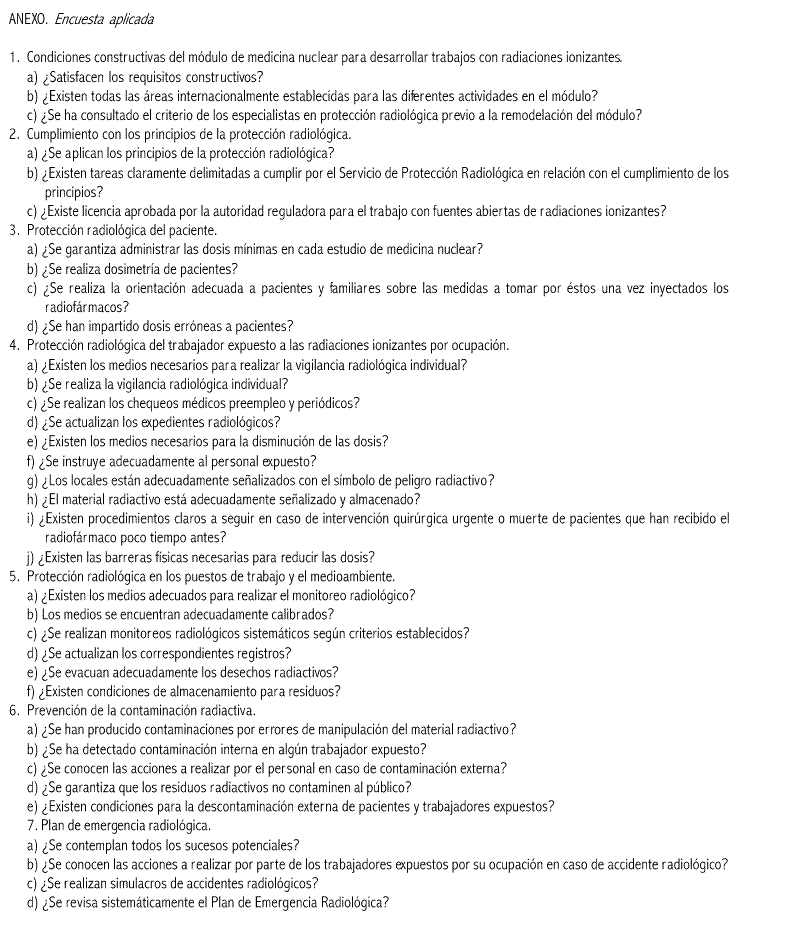
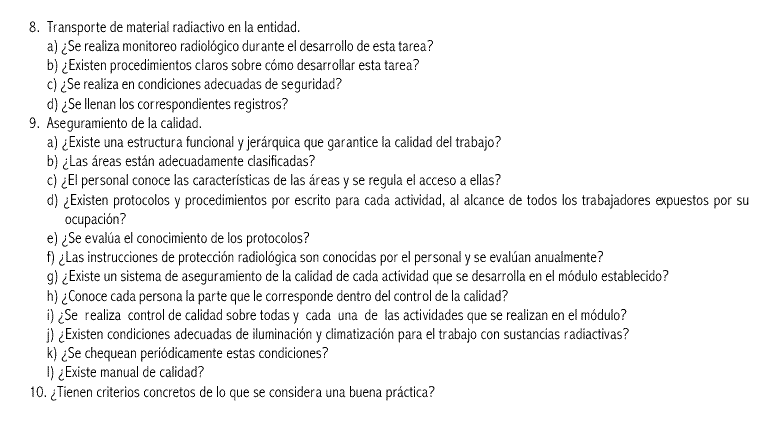
</front><body><![CDATA[ <P>Universidad Central de las Villas </P> <H2>Evaluaci&oacute;n de la protecci&oacute;n radiol&oacute;gica en un m&oacute;dulo de medicina nuclear de un hospital cubano</H2>     <P><A HREF="#*"><I>Ing. Laritza Tarasiuk<SUP>1</SUP> y MSc. Marl&eacute;n P&eacute;rez D&iacute;az<SUP>2</sup></I></A> </P> <H4>RESUMEN</H4>     <P>Se aplic&oacute; una encuesta en el m&oacute;dulo de medicina nuclear de un hospital cubano, que abordaba la problem&aacute;tica de la protecci&oacute;n radiol&oacute;gica en &eacute;ste, como punto de partida para mejorarla. La encuesta se confeccion&oacute; con 10 tem&aacute;ticas referentes a los aspectos relacionados con la protecci&oacute;n del paciente, el trabajador expuesto a las radiaciones ionizantes y el p&uacute;blico. Se recogieron 203 respuestas entre el personal m&eacute;dico, trabajadores expuestos del departamento, responsable de protecci&oacute;n radiol&oacute;gica y pacientes. El conjunto de respuestas no respond&iacute;a a una ley de distribuci&oacute;n por lo cual se escogi&oacute;, para el procesamiento de la muestra seleccionada dentro de la poblaci&oacute;n de respuestas, un m&eacute;todo no param&eacute;trico (m&eacute;todo de Van Der Varden). Se obtuvo como resultado que no exist&iacute;a una diferencia significativa entre las respuestas afirmativas y negativas, de donde se deduce la necesidad de aplicaci&oacute;n de un Programa de Mejoras a la Protecci&oacute;n Radiol&oacute;gica en este m&oacute;dulo de medicina nuclear. </P>     <P>Descriptores DeCS: PROTECCION RADIOLOGICA/m&eacute;todos; SERVICIO DE MEDICINA NUCLEAR EN HOSPITAL. </P>     <P>En el mundo actual, a partir de la publicaci&oacute;n 60 de la ICRP (Comisi&oacute;n Internacional de Protecci&oacute;n Radiol&oacute;gica),<SUP>1</SUP> se est&aacute; llevando a cabo un movimiento muy fuerte en favor de la protecci&oacute;n radiol&oacute;gica del p&uacute;blico, de los trabajadores expuestos a las radiaciones ionizantes por su ocupaci&oacute;n y del medio ambiente, a la luz de las nuevas recomendaciones, donde se trata de lograr exposiciones a &eacute;stas, tan bajas como razonablemente sea posible (Principio ALARA). Para lograr esto no basta con cumplir los l&iacute;mites de dosis y que las pr&aacute;cticas est&eacute;n justificadas, sino que se trata de optimizar la protecci&oacute;n radiol&oacute;gica a la vez que se implementan programas en esta disciplina, tanto para el trabajo en condiciones normales como de accidente.<SUP>2,3</SUP> </P>     <P>La utilizaci&oacute;n de las radiaciones ionizantes en la pr&aacute;ctica m&eacute;dica cubana cada vez se hace m&aacute;s cotidiana, de ah&iacute; que &eacute;sta no se encuentra exenta de cumplir con todos los requisitos recomendados en las normas cubanas<SUP>4,5</SUP> y las internacionales.<SUP>1-3</SUP> Pero la implementaci&oacute;n de tales programas no puede ser posible si no hay un convencimiento pleno del problema, de ah&iacute; que es necesario demostrar cient&iacute;ficamente la necesidad de introducir medidas correctoras que posibiliten trabajar cada vez en condiciones m&aacute;s seguras. </P>     <P>Este trabajo consisti&oacute; en confeccionar una encuesta en la tem&aacute;tica de la protecci&oacute;n radiol&oacute;gica para un m&oacute;dulo de medicina nuclear de un hospital cubano (anexo). Estas preguntas conten&iacute;an los elementos del Programa de Protecci&oacute;n Radiol&oacute;gica propuesto en las recomendaciones de la Comisi&oacute;n Internacional de Protecci&oacute;n Radiol&oacute;gica y Energ&iacute;a At&oacute;mica.<SUP>1,2</SUP> La encuesta fue aplicada a personas vinculadas al problema desde diferentes &aacute;ngulos, ya fueran pacientes o personal expuesto a las radiaciones ionizantes por su ocupaci&oacute;n. Se procesaron estad&iacute;sticamente los resultados con el empleo de un m&eacute;todo no param&eacute;trico y se demostr&oacute; la necesidad de aplicar un Programa de Mejoras a la Protecci&oacute;n Radiol&oacute;gica. </P> <H4>M&Eacute;TODOS</H4>     <P>La encuesta fue aplicada a pacientes, m&eacute;dicos y trabajadores expuestos, de ah&iacute; que no todos respond&iacute;an exactamente las mismas preguntas sino s&oacute;lo aqu&eacute;llas que se relacionaban con su posici&oacute;n. </P>     <P>Los temas incluidos en las preguntas fueron los elementos del Programa de Protecci&oacute;n Radiol&oacute;gica recomendados,<SUP>1-3</SUP> los cuales fueron:     <BR> &nbsp;     ]]></body>
<body><![CDATA[<BR> &nbsp; </P>  <UL>     <LI>Organizaci&oacute;n y direcci&oacute;n del trabajo (estructura, recursos, compromisos de todos los trabajadores con el ALARA). </LI>     <LI>Selecci&oacute;n y entrenamiento del personal. </LI>     <LI>Control ocupacional (dosis incorporada, normas y vigilancia). </LI>     <LI>Control del p&uacute;blico (identificaci&oacute;n de las fuentes potenciales de exposici&oacute;n y criterios documentados para limitar las dosis). </LI>     <LI>Aseguramiento de la calidad. </LI>     <LI>Evaluaci&oacute;n de las medidas para identificar, evitar y limitar accidentes (condiciones de emergencia radiol&oacute;gica y revisi&oacute;n peri&oacute;dica). </LI>    </UL>      <P>    <BR> Estos temas fueron divididos en 10 tem&aacute;ticas que contienen las preguntas formuladas, para facilitar la aplicaci&oacute;n de la encuesta. Las 203 respuestas se recogieron en forma de afirmaciones y negaciones aunque en muchos casos fueron ampliadas. </P>     ]]></body>
<body><![CDATA[<P>Para el procesamiento de los datos experimentales fue aplicado el m&eacute;todo estad&iacute;stico no param&eacute;trico de Van Der Varden,<SUP>6</SUP> que consiste en aplicar una hip&oacute;tesis no param&eacute;trica llamada nula que en nuestro caso es probar que no existe diferencia significativa entre las respuestas positivas y negativas, y cuyo criterio es: </P>     <P>X= <FONT FACE="Symbol,Times">&aring;Y</FONT> [r/(n1+n2+1)] (1) </P>     <P>n1 y n2 - n&uacute;meros de los extractos </P>     <P>r - orden (se designa previamente) </P>     <P>Si X < X<FONT FACE="Symbol,Times">a</FONT> la hip&oacute;tesis se cumple. </P>     <P>Si X <FONT FACE="Symbol,Times">³</FONT> X<FONT FACE="Symbol,Times">a</FONT> la hip&oacute;tesis no se cumple. </P>     <P>X<FONT FACE="Symbol,Times">a</FONT> - valor cr&iacute;tico tomado de la tabla de criterios de Van Der Varden para un nivel de confianza del 95 %. </P>     <P>X - criterio aplicado. </P>     <P><FONT FACE="Symbol,Times">Y </font>Se escogi&oacute; una muestra aleatoria de 55 respuestas entre una poblaci&oacute;n de 203 respuestas en total. La muestra se dividi&oacute; en 11 extractos. La frecuencia de encontrar S&iacute; o No en cada extracto y el ordenamiento de &eacute;stas aparecen en las tablas 1 y 2. </P>     <P ALIGN="CENTER">TABLA 1.<I> Frecuencia de aparici&oacute;n de respuestas afirmativas y negativas</i></P>     ]]></body>
<body><![CDATA[<P ALIGN="CENTER">    <CENTER><TABLE CELLSPACING=1 BORDER=0 CELLPADDING=5 WIDTH=623> <TR><TD WIDTH="7%" VALIGN="TOP">     <P>Respuestas&nbsp;</TD> <TD WIDTH="73%" VALIGN="TOP" COLSPAN=11>     <P ALIGN="CENTER">Frecuencia</TD> <TD WIDTH="19%" VALIGN="TOP" COLSPAN=3>     <P>Simbolog&iacute;a</TD> </TR> <TR><TD WIDTH="7%" VALIGN="TOP">     <P>No</TD> <TD WIDTH="7%" VALIGN="TOP">     <P ALIGN="CENTER">3</TD> <TD WIDTH="7%" VALIGN="TOP">     <P ALIGN="CENTER">3</TD> <TD WIDTH="7%" VALIGN="TOP">     <P ALIGN="CENTER">4</TD> <TD WIDTH="7%" VALIGN="TOP">     <P ALIGN="CENTER">2</TD> <TD WIDTH="7%" VALIGN="TOP">     ]]></body>
<body><![CDATA[<P ALIGN="CENTER">0</TD> <TD WIDTH="7%" VALIGN="TOP">     <P ALIGN="CENTER">0</TD> <TD WIDTH="7%" VALIGN="TOP">     <P ALIGN="CENTER">3</TD> <TD WIDTH="7%" VALIGN="TOP">     <P ALIGN="CENTER">1</TD> <TD WIDTH="7%" VALIGN="TOP">     <P ALIGN="CENTER">2</TD> <TD WIDTH="7%" VALIGN="TOP">     <P ALIGN="CENTER">1</TD> <TD WIDTH="7%" VALIGN="TOP" COLSPAN=2>     <P ALIGN="CENTER">3</TD> <TD WIDTH="11%" VALIGN="TOP">     <P ALIGN="CENTER">Xi</TD> <TD WIDTH="5%" VALIGN="TOP">     <P>&nbsp;</TD> </TR> <TR><TD WIDTH="7%" VALIGN="TOP">     <P>S&iacute;</TD> <TD WIDTH="7%" VALIGN="TOP">     ]]></body>
<body><![CDATA[<P ALIGN="CENTER">2</TD> <TD WIDTH="7%" VALIGN="TOP">     <P ALIGN="CENTER">2</TD> <TD WIDTH="7%" VALIGN="TOP">     <P ALIGN="CENTER">1</TD> <TD WIDTH="7%" VALIGN="TOP">     <P ALIGN="CENTER">3</TD> <TD WIDTH="7%" VALIGN="TOP">     <P ALIGN="CENTER">5</TD> <TD WIDTH="7%" VALIGN="TOP">     <P ALIGN="CENTER">5</TD> <TD WIDTH="7%" VALIGN="TOP">     <P ALIGN="CENTER">2</TD> <TD WIDTH="7%" VALIGN="TOP">     <P ALIGN="CENTER">4</TD> <TD WIDTH="7%" VALIGN="TOP">     <P ALIGN="CENTER">3</TD> <TD WIDTH="7%" VALIGN="TOP">     <P ALIGN="CENTER">4</TD> <TD WIDTH="7%" VALIGN="TOP" COLSPAN=2>     ]]></body>
<body><![CDATA[<P ALIGN="CENTER">2</TD> <TD WIDTH="11%" VALIGN="TOP">     <P ALIGN="CENTER">Yi</TD> <TD WIDTH="5%" VALIGN="TOP">     <P>&nbsp;</TD> </TR> </TABLE> </CENTER>    <p></P>      <P ALIGN="CENTER">    <BR> &nbsp; </P>     <P ALIGN="CENTER">TABLA 2. <I>Frecuencias ordenadas</i></P>     <P ALIGN="CENTER">    <CENTER><TABLE CELLSPACING=1 BORDER=0 CELLPADDING=5 WIDTH=617> <TR><TD WIDTH="33%" VALIGN="TOP">     <P>S&iacute;mbolo de frecuencia&nbsp;</TD> <TD WIDTH="33%" VALIGN="TOP">     ]]></body>
<body><![CDATA[<P ALIGN="CENTER">Frecuencia en orden</TD> <TD WIDTH="33%" VALIGN="TOP">     <P ALIGN="CENTER">Orden (r)</TD> </TR> <TR><TD WIDTH="33%" VALIGN="TOP">     <P>X5</TD> <TD WIDTH="33%" VALIGN="TOP">     <P ALIGN="CENTER">0</TD> <TD WIDTH="33%" VALIGN="TOP">     <P ALIGN="CENTER">1</TD> </TR> <TR><TD WIDTH="33%" VALIGN="TOP">     <P>X6</TD> <TD WIDTH="33%" VALIGN="TOP">     <P ALIGN="CENTER">0</TD> <TD WIDTH="33%" VALIGN="TOP">     <P ALIGN="CENTER">2</TD> </TR> <TR><TD WIDTH="33%" VALIGN="TOP">     <P>X8</TD> <TD WIDTH="33%" VALIGN="TOP">     <P ALIGN="CENTER">1</TD> <TD WIDTH="33%" VALIGN="TOP">     ]]></body>
<body><![CDATA[<P ALIGN="CENTER">3</TD> </TR> <TR><TD WIDTH="33%" VALIGN="TOP">     <P>X10</TD> <TD WIDTH="33%" VALIGN="TOP">     <P ALIGN="CENTER">1</TD> <TD WIDTH="33%" VALIGN="TOP">     <P ALIGN="CENTER">4</TD> </TR> <TR><TD WIDTH="33%" VALIGN="TOP">     <P>Y3</TD> <TD WIDTH="33%" VALIGN="TOP">     <P ALIGN="CENTER">1</TD> <TD WIDTH="33%" VALIGN="TOP">     <P ALIGN="CENTER">5</TD> </TR> <TR><TD WIDTH="33%" VALIGN="TOP">     <P>Y1</TD> <TD WIDTH="33%" VALIGN="TOP">     <P ALIGN="CENTER">2</TD> <TD WIDTH="33%" VALIGN="TOP">     <P ALIGN="CENTER">6</TD> </TR> <TR><TD WIDTH="33%" VALIGN="TOP">     ]]></body>
<body><![CDATA[<P>Y2</TD> <TD WIDTH="33%" VALIGN="TOP">     <P ALIGN="CENTER">2</TD> <TD WIDTH="33%" VALIGN="TOP">     <P ALIGN="CENTER">7</TD> </TR> <TR><TD WIDTH="33%" VALIGN="TOP">     <P>Y7</TD> <TD WIDTH="33%" VALIGN="TOP">     <P ALIGN="CENTER">2</TD> <TD WIDTH="33%" VALIGN="TOP">     <P ALIGN="CENTER">8</TD> </TR> <TR><TD WIDTH="33%" VALIGN="TOP">     <P>Y11</TD> <TD WIDTH="33%" VALIGN="TOP">     <P ALIGN="CENTER">2</TD> <TD WIDTH="33%" VALIGN="TOP">     <P ALIGN="CENTER">9</TD> </TR> <TR><TD WIDTH="33%" VALIGN="TOP">     <P>X4</TD> <TD WIDTH="33%" VALIGN="TOP">     ]]></body>
<body><![CDATA[<P ALIGN="CENTER">2</TD> <TD WIDTH="33%" VALIGN="TOP">     <P ALIGN="CENTER">10</TD> </TR> <TR><TD WIDTH="33%" VALIGN="TOP">     <P>X6</TD> <TD WIDTH="33%" VALIGN="TOP">     <P ALIGN="CENTER">2</TD> <TD WIDTH="33%" VALIGN="TOP">     <P ALIGN="CENTER">11</TD> </TR> <TR><TD WIDTH="33%" VALIGN="TOP">     <P>X1</TD> <TD WIDTH="33%" VALIGN="TOP">     <P ALIGN="CENTER">3</TD> <TD WIDTH="33%" VALIGN="TOP">     <P ALIGN="CENTER">12</TD> </TR> <TR><TD WIDTH="33%" VALIGN="TOP">     <P>X2</TD> <TD WIDTH="33%" VALIGN="TOP">     <P ALIGN="CENTER">3</TD> <TD WIDTH="33%" VALIGN="TOP">     ]]></body>
<body><![CDATA[<P ALIGN="CENTER">13</TD> </TR> <TR><TD WIDTH="33%" VALIGN="TOP">     <P>X7</TD> <TD WIDTH="33%" VALIGN="TOP">     <P ALIGN="CENTER">3</TD> <TD WIDTH="33%" VALIGN="TOP">     <P ALIGN="CENTER">14</TD> </TR> <TR><TD WIDTH="33%" VALIGN="TOP">     <P>X4</TD> <TD WIDTH="33%" VALIGN="TOP">     <P ALIGN="CENTER">3</TD> <TD WIDTH="33%" VALIGN="TOP">     <P ALIGN="CENTER">15</TD> </TR> <TR><TD WIDTH="33%" VALIGN="TOP">     <P>Y4</TD> <TD WIDTH="33%" VALIGN="TOP">     <P ALIGN="CENTER">3</TD> <TD WIDTH="33%" VALIGN="TOP">     <P ALIGN="CENTER">16</TD> </TR> <TR><TD WIDTH="33%" VALIGN="TOP">     ]]></body>
<body><![CDATA[<P>Y9</TD> <TD WIDTH="33%" VALIGN="TOP">     <P ALIGN="CENTER">3</TD> <TD WIDTH="33%" VALIGN="TOP">     <P ALIGN="CENTER">17</TD> </TR> <TR><TD WIDTH="33%" VALIGN="TOP">     <P>Y8</TD> <TD WIDTH="33%" VALIGN="TOP">     <P ALIGN="CENTER">4</TD> <TD WIDTH="33%" VALIGN="TOP">     <P ALIGN="CENTER">18</TD> </TR> <TR><TD WIDTH="33%" VALIGN="TOP">     <P>Y10</TD> <TD WIDTH="33%" VALIGN="TOP">     <P ALIGN="CENTER">4</TD> <TD WIDTH="33%" VALIGN="TOP">     <P ALIGN="CENTER">19</TD> </TR> <TR><TD WIDTH="33%" VALIGN="TOP">     <P>X3</TD> <TD WIDTH="33%" VALIGN="TOP">     ]]></body>
<body><![CDATA[<P ALIGN="CENTER">4</TD> <TD WIDTH="33%" VALIGN="TOP">     <P ALIGN="CENTER">20</TD> </TR> <TR><TD WIDTH="33%" VALIGN="TOP">     <P>Y5</TD> <TD WIDTH="33%" VALIGN="TOP">     <P ALIGN="CENTER">5</TD> <TD WIDTH="33%" VALIGN="TOP">     <P ALIGN="CENTER">21</TD> </TR> <TR><TD WIDTH="33%" VALIGN="TOP">     <P>Y6</TD> <TD WIDTH="33%" VALIGN="TOP">     <P ALIGN="CENTER">5</TD> <TD WIDTH="33%" VALIGN="TOP">     <P ALIGN="CENTER">22</TD> </TR> </TABLE> </CENTER>    <p></P>      <P ALIGN="CENTER">    ]]></body>
<body><![CDATA[<BR> &nbsp; </P>     <P>Se aplic&oacute; el criterio de Van Der Varden seg&uacute;n la expresi&oacute;n (1), donde: </P>     <P>n1 = n2 = 11. </P>     <P>Para comprobar el resultado de X se calcula la funci&oacute;n Y (que corresponde a la distribuci&oacute;n de la frecuencia Yi), para la cual se utiliza tambi&eacute;n la expresi&oacute;n (1), con la diferencia de que se utiliza el orden r correspondiente a las frecuencias Yi. Los resultados X y Y tienen que coincidir, si la funci&oacute;n X ha sido calculada de forma correcta. </P> <H4>RESULTADOS</H4>     <P>Con la utilizaci&oacute;n del m&eacute;todo de Van Der Varden para el procesamiento de los datos de la encuesta en el hospital, se comprob&oacute; que la diferencia entre las respuestas S&iacute; y No no es significativa, ya que el c&aacute;lculo de X, seg&uacute;n la expresi&oacute;n (1) arroj&oacute; los resultados que aparecen en la tabla 3. </P>     <P ALIGN="CENTER">TABLA 3<I>. Resultados del c&aacute;culo de la funci&oacute;n<FONT FACE="Symbol,Times"> Y</FONT> [r/(n1+n2+1)]</i></P>     <P ALIGN="CENTER">    <CENTER><TABLE CELLSPACING=1 BORDER=0 CELLPADDING=5 WIDTH=624> <TR><TD WIDTH="50%" VALIGN="TOP">     <P>&nbsp;</TD> <TD WIDTH="50%" VALIGN="TOP">     <P>Valor tabulado&nbsp;</TD> </TR> <TR><TD WIDTH="50%" VALIGN="TOP">     ]]></body>
<body><![CDATA[<P>&nbsp;</TD> <TD WIDTH="50%" VALIGN="TOP">     <P>(inverso de la&nbsp;</TD> </TR> <TR><TD WIDTH="50%" VALIGN="TOP">     <P><FONT FACE="Symbol,Times">Y</font> [r/(n1+n2+1)]&nbsp;</TD> <TD WIDTH="50%" VALIGN="TOP">     <P>distribuci&oacute;n normal)</TD> </TR> <TR><TD WIDTH="50%" VALIGN="TOP">     <P><FONT FACE="Symbol,Times">Y</font> (1/23)</TD> <TD WIDTH="50%" VALIGN="TOP">     <P ALIGN="CENTER">-1,71</TD> </TR> <TR><TD WIDTH="50%" VALIGN="TOP">     <P><FONT FACE="Symbol,Times">Y</font> (2/23)</TD> <TD WIDTH="50%" VALIGN="TOP">     <P ALIGN="CENTER">-1,36</TD> </TR> <TR><TD WIDTH="50%" VALIGN="TOP">     <P><FONT FACE="Symbol,Times">Y</font> (3/23)</TD> <TD WIDTH="50%" VALIGN="TOP">     <P ALIGN="CENTER">-1,12</TD> </TR> <TR><TD WIDTH="50%" VALIGN="TOP">     ]]></body>
<body><![CDATA[<P><FONT FACE="Symbol,Times">Y</font> (4/23)</TD> <TD WIDTH="50%" VALIGN="TOP">     <P ALIGN="CENTER">- 0,94</TD> </TR> <TR><TD WIDTH="50%" VALIGN="TOP">     <P><FONT FACE="Symbol,Times">Y </font>(10/23)</TD> <TD WIDTH="50%" VALIGN="TOP">     <P ALIGN="CENTER">- 0,16</TD> </TR> <TR><TD WIDTH="50%" VALIGN="TOP">     <P><FONT FACE="Symbol,Times">Y</font> (11/23)</TD> <TD WIDTH="50%" VALIGN="TOP">     <P ALIGN="CENTER">- 0,06</TD> </TR> <TR><TD WIDTH="50%" VALIGN="TOP">     <P><FONT FACE="Symbol,Times">Y</font> (12/23)</TD> <TD WIDTH="50%" VALIGN="TOP">     <P ALIGN="CENTER">0,06</TD> </TR> <TR><TD WIDTH="50%" VALIGN="TOP">     <P><FONT FACE="Symbol,Times">Y</font> (13/23)</TD> <TD WIDTH="50%" VALIGN="TOP">     <P ALIGN="CENTER">0,16</TD> </TR> <TR><TD WIDTH="50%" VALIGN="TOP">     ]]></body>
<body><![CDATA[<P><FONT FACE="Symbol,Times">Y</font> (14/23)</TD> <TD WIDTH="50%" VALIGN="TOP">     <P ALIGN="CENTER">0,27</TD> </TR> <TR><TD WIDTH="50%" VALIGN="TOP">     <P><FONT FACE="Symbol,Times">Y</font> (15/23)</TD> <TD WIDTH="50%" VALIGN="TOP">     <P ALIGN="CENTER">0,39</TD> </TR> <TR><TD WIDTH="50%" VALIGN="TOP">     <P><FONT FACE="Symbol,Times">Y</font> (20/23)</TD> <TD WIDTH="50%" VALIGN="TOP">     <P ALIGN="CENTER">1,12</TD> </TR> </TABLE> </CENTER>    <p></P>      <P ALIGN="CENTER">    <BR> &nbsp; </P>     <P>El valor calculado de X = -3,35 y el tabulado para nivel de confianza del 95 % fue Xa = 4,08.<SUP>6</SUP> El valor de Y es 33,351.<SUP>1</SUP> </P> <H4>DISCUSI&Oacute;N</H4>     ]]></body>
<body><![CDATA[<P>Como 4,08-3,35, por lo que X<FONT FACE="Symbol,Times">a</FONT> X la hip&oacute;tesis se cumple, y resulta evidente que no existe diferencia significativa entre las respuestas afirmativas y negativas de la encuesta en el hospital, lo cual implica que no siempre se cumplen rigurosamente las medidas de protecci&oacute;n radiol&oacute;gica, por lo cual es necesaria la aplicaci&oacute;n de un programa de mejoras a &eacute;sta en el departamento de medicina nuclear monitoreado, para lo cual se sugiere la aplicaci&oacute;n de las recomendaciones del organismo internacional. </P>     <P>Se comprueba que el c&aacute;lculo de la variable X es correcto al coincidir con &eacute;ste el valor de la variable Y. </P>     <P>Una vez finalizado el trabajo se puede concluir que como resultado de la aplicaci&oacute;n del m&eacute;todo Van Der Varden a la encuesta aplicada a un departamento de medicina nuclear en un hospital de nuestro pa&iacute;s, se demostr&oacute; que en &eacute;ste es necesaria la aplicaci&oacute;n de un programa de mejoras a la protecci&oacute;n radiol&oacute;gica. </P>     <P><A HREF="/img/revistas/hie/v37n3/f0104399.gif"><IMG SRC="/img/revistas/hie/v37n3/f0104399.gif" BORDER=0 WIDTH=315 HEIGHT=366 ALT="Figura1"></A>    
<BR> <A HREF="/img/revistas/hie/v37n3/f0204399.gif"><IMG SRC="/img/revistas/hie/v37n3/f0204399.gif" BORDER=0 WIDTH=313 HEIGHT=206 ALT="Figura2"></A>    
<BR> &nbsp; </P> <H4>SUMMARY</H4>     <P>A survey on radiological protection was applied as a starting point to improve it in a department of nuclear medicine of a Cuban hospital. 10 topics referring to the aspects connected with the patient's protection, the worker exposed to ionizing radiations and the public were included in the survey. 203 answers were given by the medical personnel, the exposed workers from the department, the person responsible for radiological protection and the patients. The set of answers did not respond to a distribution law. That's why a mon-parametric method (method of Van Der Varden) was chosen for processing the selected sample within the population of answers. No significant differences were observed between the affirmative and the negative answers. The need to implement a Program for the Improvement of Radiological Protection in this department of nuclear medicine is deduced. </P>     <P>Subject headings: RADIATION PROTECTION/methods; NUCLEAR MEDICINE DEPARTMENT, HOSPITAL. </P> <H4>REFERENCIAS BIBLIOGR&Aacute;FICAS</H4> <OL>      <!-- ref --><LI>Comit&eacute; Internacional de Protecci&oacute;n Radiol&oacute;gica. Publicaci&oacute;n 60. Viena, 1990.</LI>    <!-- ref --><LI>Organizaci&oacute;n Internacional de Energ&iacute;a At&oacute;mica. Colecci&oacute;n de Seguridad # 115. Viena, 1995.</LI>    <!-- ref --><LI>Organizaci&oacute;n Internacional de Energ&iacute;a At&oacute;mica. Colecci&oacute;n de Seguridad # 102. Viena, 1995.</LI>    <!-- ref --><LI>Cuba. Norma Cubana 69/01. Normas B&aacute;sicas de Seguridad. 1981.</LI>    <!-- ref --><LI>Decreto 142 del Consejo de Ministros. Gaceta Oficial de la Rep&uacute;blica de Cuba, 1988.</LI>    <!-- ref --><LI>Nosenko LL. Estad&iacute;stica. Mosc&uacute;, 1978:321-5.</LI>    </OL> <DIR>      <P>&nbsp;     <BR> Recibido: 13 de marzo de 1998. Aprobado: 28 de abril de 1999.     <BR> Ing. <I>Laritza Tarasiuk.</I> Universidad Central de Las Villas, Santa Clara, Villa Clara, Cuba.     <BR> &nbsp;     <BR> &nbsp; </P>     ]]></body>
<body><![CDATA[<P><SUP><A NAME="BM_"></A>1</sup> Profesora Asistente.     <BR> <SUP>2</SUP> Profesora Instructora.     <BR> &nbsp; </P> <H5>&nbsp;</H5>     <P>&nbsp; </P>     <P>&nbsp;     <BR> &nbsp;     <BR> &nbsp;</P></DIR>      ]]></body><back>
<ref-list>
<ref id="B1">
<nlm-citation citation-type="">
<collab>Comité Internacional de Protección Radiológica</collab>
<source><![CDATA[Publicación 60]]></source>
<year>1990</year>
<publisher-loc><![CDATA[Viena ]]></publisher-loc>
</nlm-citation>
</ref>
<ref id="B2">
<nlm-citation citation-type="">
<collab>Organización Internacional de Energía Atómica</collab>
<source><![CDATA[Colección de Seguridad # 115]]></source>
<year>1995</year>
<publisher-loc><![CDATA[Viena ]]></publisher-loc>
</nlm-citation>
</ref>
<ref id="B3">
<nlm-citation citation-type="">
<collab>Organización Internacional de Energía Atómica</collab>
<source><![CDATA[Colección de Seguridad # 102]]></source>
<year>1995</year>
<publisher-loc><![CDATA[Viena ]]></publisher-loc>
</nlm-citation>
</ref>
<ref id="B4">
<nlm-citation citation-type="">
<collab>Cuba</collab>
<source><![CDATA[Norma Cubana 69/01. Normas Básicas de Seguridad]]></source>
<year>1981</year>
</nlm-citation>
</ref>
<ref id="B5">
<nlm-citation citation-type="">
<source><![CDATA[Decreto 142 del Consejo de Ministros. Gaceta Oficial de la República de Cuba]]></source>
<year>1988</year>
</nlm-citation>
</ref>
<ref id="B6">
<nlm-citation citation-type="">
<person-group person-group-type="author">
<name>
<surname><![CDATA[Nosenko]]></surname>
<given-names><![CDATA[LL]]></given-names>
</name>
</person-group>
<source><![CDATA[Estadística]]></source>
<year>1978</year>
<page-range>321-5</page-range><publisher-loc><![CDATA[Moscú ]]></publisher-loc>
</nlm-citation>
</ref>
</ref-list>
</back>
</article>
