<?xml version="1.0" encoding="ISO-8859-1"?><article xmlns:mml="http://www.w3.org/1998/Math/MathML" xmlns:xlink="http://www.w3.org/1999/xlink" xmlns:xsi="http://www.w3.org/2001/XMLSchema-instance">
<front>
<journal-meta>
<journal-id>2227-1899</journal-id>
<journal-title><![CDATA[Revista Cubana de Ciencias Informáticas]]></journal-title>
<abbrev-journal-title><![CDATA[Rev cuba cienc informat]]></abbrev-journal-title>
<issn>2227-1899</issn>
<publisher>
<publisher-name><![CDATA[Editorial Ediciones Futuro]]></publisher-name>
</publisher>
</journal-meta>
<article-meta>
<article-id>S2227-18992016000600005</article-id>
<title-group>
<article-title xml:lang="en"><![CDATA[Calculation of priorities of test cases from the functional requirements]]></article-title>
<article-title xml:lang="es"><![CDATA[Cálculo de prioridades de casos de prueba a partir de los requisitos funcionales]]></article-title>
</title-group>
<contrib-group>
<contrib contrib-type="author">
<name>
<surname><![CDATA[Delgado Dapena]]></surname>
<given-names><![CDATA[Martha Dunia]]></given-names>
</name>
<xref ref-type="aff" rid="A01"/>
</contrib>
<contrib contrib-type="author">
<name>
<surname><![CDATA[Verona Marcos]]></surname>
<given-names><![CDATA[Sandra]]></given-names>
</name>
<xref ref-type="aff" rid="A01"/>
</contrib>
<contrib contrib-type="author">
<name>
<surname><![CDATA[Fernández Oliva]]></surname>
<given-names><![CDATA[Perla Beatriz]]></given-names>
</name>
<xref ref-type="aff" rid="A01"/>
</contrib>
<contrib contrib-type="author">
<name>
<surname><![CDATA[Larrosa Uribazo]]></surname>
<given-names><![CDATA[Danay]]></given-names>
</name>
<xref ref-type="aff" rid="A01"/>
</contrib>
</contrib-group>
<aff id="A01">
<institution><![CDATA[,Instituto Superior Politécnico José Antonio Echeverría Facultad de Ingeniería Informática ]]></institution>
<addr-line><![CDATA[ La Habana]]></addr-line>
<country>Cuba</country>
</aff>
<pub-date pub-type="pub">
<day>00</day>
<month>00</month>
<year>2016</year>
</pub-date>
<pub-date pub-type="epub">
<day>00</day>
<month>00</month>
<year>2016</year>
</pub-date>
<volume>10</volume>
<fpage>61</fpage>
<lpage>69</lpage>
<copyright-statement/>
<copyright-year/>
<self-uri xlink:href="http://scielo.sld.cu/scielo.php?script=sci_arttext&amp;pid=S2227-18992016000600005&amp;lng=en&amp;nrm=iso"></self-uri><self-uri xlink:href="http://scielo.sld.cu/scielo.php?script=sci_abstract&amp;pid=S2227-18992016000600005&amp;lng=en&amp;nrm=iso"></self-uri><self-uri xlink:href="http://scielo.sld.cu/scielo.php?script=sci_pdf&amp;pid=S2227-18992016000600005&amp;lng=en&amp;nrm=iso"></self-uri><abstract abstract-type="short" xml:lang="en"><p><![CDATA[ABSTRACT This paper presents a proposal for prioritizing test cases based on the functional specification of software requirements of the project. Function is proposed for calculating the priority of test cases for software projects. Defined function is based on seven indicators whose information can be obtained from the initial stages of the project. The same shall include the results of application of the priority function of two real projects.]]></p></abstract>
<abstract abstract-type="short" xml:lang="es"><p><![CDATA[RESUMEN Este trabajo presenta una propuesta de asignación de prioridades a casos de prueba funcionales partiendo de la especificación de requisitos del proyecto de software. Se propone una función para el cálculo de la prioridad de los casos de prueba de los proyectos de software. La función definida se basa en siete indicadores cuya información es posible obtener desde las etapas iniciales del proyecto. De igual forma se incluyen los resultados de aplicación de la función de prioridad en dos proyectos reales.]]></p></abstract>
<kwd-group>
<kwd lng="en"><![CDATA[Software Quality]]></kwd>
<kwd lng="en"><![CDATA[Functional Test]]></kwd>
<kwd lng="en"><![CDATA[Test Case]]></kwd>
<kwd lng="en"><![CDATA[Software Requirements]]></kwd>
<kwd lng="en"><![CDATA[Calculation of Priorities]]></kwd>
<kwd lng="es"><![CDATA[Calidad de Software]]></kwd>
<kwd lng="es"><![CDATA[Pruebas Funcionales]]></kwd>
<kwd lng="es"><![CDATA[Casos de Prueba]]></kwd>
<kwd lng="es"><![CDATA[Requisitos de Software]]></kwd>
<kwd lng="es"><![CDATA[Cálculo de Prioridades]]></kwd>
</kwd-group>
</article-meta>
</front><body><![CDATA[ <p align="right"><font face="Verdana, Arial, Helvetica, sans-serif" size="2"><B>ART&Iacute;CULO  ORIGINAL</B></font></p>     <p>&nbsp;</p>     <p><font size="4"><strong><font face="Verdana, Arial, Helvetica, sans-serif">Calculation  of priorities of test cases from the functional requirements</font></strong></font></p>     <p>&nbsp;</p>     <p><font size="3"><strong><font face="Verdana, Arial, Helvetica, sans-serif">C&aacute;lculo  de prioridades de casos de prueba a partir de los requisitos funcionales</font></strong></font></p>     <p>&nbsp;</p>     <p>&nbsp;</p>     <P><font size="2"><strong><font face="Verdana, Arial, Helvetica, sans-serif">Martha Dunia Delgado Dapena<strong><sup>1*</sup></strong>, Sandra Verona Marcos<strong><sup>1</sup></strong>, Perla Beatriz Fern&aacute;ndez Oliva</font></strong><font face="Verdana, Arial, Helvetica, sans-serif"><strong><sup>1</sup>, Danay Larrosa Uribazo<sup>1</sup></strong></font></font></p>     <p><font size="2" face="Verdana, Arial, Helvetica, sans-serif"><sup>1</sup>Facultad de Ingenier&iacute;a Inform&aacute;tica, Instituto Superior Polit&eacute;cnico Jos&eacute;  Antonio Echeverr&iacute;a, Cuba. 114, No. 11901 entre 119 and 127, Marianao, C&oacute;digo Postal: 19390, La  Habana, Cuba. {<a href="mailto:marta,%20sverona,%20perla,%20dlarrosau%7d@ceis.cujae.edu.cu">marta, sverona, perla, dlarrosau}@ceis.cujae.edu.cu</a>    <br> </font></p>     ]]></body>
<body><![CDATA[<P><font face="Verdana, Arial, Helvetica, sans-serif"><span class="class"><font size="2">*Autor para la correspondencia: </font></span></font><font size="2" face="Verdana, Arial, Helvetica, sans-serif"> <a href="mailto:marta@ceis.cujae.edu.cu">marta@ceis.cujae.edu.cu</a><a href="mailto:agarcia@uci.cu"></a><a href="mailto:jova@uci.cu"></a></font><font face="Verdana, Arial, Helvetica, sans-serif"><a href="mailto:losorio@ismm.edu.cu"></a> </font>     <p>&nbsp;</p>     <p>&nbsp;</p> <hr>     <P><font size="2" face="Verdana, Arial, Helvetica, sans-serif"><b>ABSTRACT</b> </font>     <p><font size="2" face="Verdana, Arial, Helvetica, sans-serif">This paper presents a proposal for prioritizing test cases based on the  functional specification of software requirements of the project. Function is  proposed for calculating the priority of test cases for software projects.  Defined function is based on seven indicators whose information can be obtained  from the initial stages of the project. The same shall include the results of  application of the priority function of two real projects.</font></p>     <p><font size="2" face="Verdana, Arial, Helvetica, sans-serif"><b>Key words<span lang=EN-GB>:</span></b></font> <font size="2" face="Verdana, Arial, Helvetica, sans-serif">Software Quality, Functional Test, Test Case, Software Requirements,  Calculation of Priorities</font></p> <hr>     <p><font size="2" face="Verdana, Arial, Helvetica, sans-serif"><b>RESUMEN</b></font></p>     <p><font size="2" face="Verdana, Arial, Helvetica, sans-serif">Este trabajo presenta una propuesta de asignaci&oacute;n de prioridades a casos  de prueba funcionales partiendo de la especificaci&oacute;n de requisitos del proyecto  de software. Se propone una funci&oacute;n para el c&aacute;lculo de la prioridad de los  casos de prueba de los proyectos de software. La funci&oacute;n definida se basa en  siete indicadores cuya informaci&oacute;n es posible obtener desde las etapas  iniciales del proyecto. De igual forma se incluyen los resultados de aplicaci&oacute;n  de la funci&oacute;n de prioridad en dos proyectos reales.</font></p>     <p><font size="2" face="Verdana, Arial, Helvetica, sans-serif"><b><span lang=EN-GB>Palabras clave: </span></b>Calidad de Software, Pruebas Funcionales, Casos de Prueba, Requisitos de  Software, C&aacute;lculo de Prioridades</font></p> <hr>     <p>&nbsp;</p>     ]]></body>
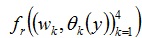
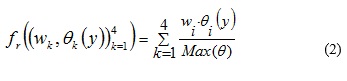
<body><![CDATA[<p>&nbsp;</p>     <p><font size="3" face="Verdana, Arial, Helvetica, sans-serif"><b>INTRODUCTION</b></font></p>     <p><font size="2" face="Verdana, Arial, Helvetica, sans-serif">Several  authors agree on the magnitude of testing in software quality (Frankl<em> et al.</em>, 1998; Ganesan<em> et al.</em>, 2000; Everett &amp; McLeod, 2007; Williams, 2010; Myers<em> et al.</em>, 2011) .&nbsp; Some studies refer to the importance of  estimating the effort associated with testing to decide manual or automated  execution in each case (Singh &amp; Misra, 2008),&nbsp; as well as test automation in specific  environments (Yuan &amp; Xie, 2006; Xie &amp; Memon, 2007; Bouquet<em> et al.</em>, 2008; Masood<em> et al.</em>, 2009; Galler<em> et al.</em>, 2010; Ko &amp; Myers, 2010) . </font></p>     <p><font size="2" face="Verdana, Arial, Helvetica, sans-serif">There  are a number of proposals that approach the subject of reducing test cases (Heimdahl &amp; George, 2004; Polo<em> et al.</em>, 2007). These use  algorithms where it is vital to have the time needed for testing stage, which  is difficult to estimate sometimes. New processes and methodologies have  emerged for designing testing and process control (Guti&eacute;rrez<em> et al.</em>,  2007; Dias &amp; Horta, 2008; Naslavsky<em> et al.</em>,  2008; Nguyen<em> et al.</em>, 2010; Myers<em> et al.</em>, 2011) .</font></p>     <p><font size="2" face="Verdana, Arial, Helvetica, sans-serif">As  a starting point of this process are defined Test Cases, and it is necessary to  determine in which order they will be executed. In this context it is essential  to address the topic of prioritization of test cases, with mechanisms to decide  what should be executed first.</font></p>     <p><font size="2" face="Verdana, Arial, Helvetica, sans-serif">There  is a set of proposals to prioritize test cases (Elbaum<em> et al.</em>, 2000; Kim &amp; Porter, 2002; Elbaum<em> et al.</em>, 2004; Jeffrey &amp; Gupta, 2006; Fraser &amp; Wotawa, 2007; Polo<em> et al.</em>, 2007) , these are  related mainly to the analysis of source statements, loops and other elements  of the application code, so it is necessary to have reached the stage of  implementation for these methods. On the other hand, functional test cases are  closely related with system requirements to be tested.</font></p>     <p><font size="2" face="Verdana, Arial, Helvetica, sans-serif">The  proposal presented in this paper is framed precisely in black box testing and  part of the definition of software project requirements. The main objective is  to propose a function to evaluate the priority of a test case with respect to  another, star-ting from the description of the requirements. The following  sections detail the indicators defined in the evaluation function, the  procedure for determining priorities and two case studies where the function is  applied.</font></p>     <p>&nbsp;</p>     <p><font face="Verdana, Arial, Helvetica, sans-serif"><strong><font size="3">METHODS </font></strong></font></p>     <p><font size="2" face="Verdana, Arial, Helvetica, sans-serif">A function is been defined to obtain a value associated with the  priority of each test case. Seven indicators are considered, li &nbsp;for a sub-domain 1&lt;=i&lt;=7, divided into two groups. The  first group includes a set of indicators related to project requirements.  Associated to the project requirements is the Test Case to be evaluated. </font></p>     ]]></body>
<body><![CDATA[<p><font size="2" face="Verdana, Arial, Helvetica, sans-serif">The indicators of the first group are: the risk of the requirement (I1), requirement stability (I2), riority requirement within the project I(3) and the relevance of the requirement for the client I(4). The second group includes a set of indicators that define the  characteristics of the test case, they are: the significance of the test  procedure (I5), the relevance of the input values (I6) and the relevance of the scenarios that cover the test case (I7) .</font></p>     <p><font size="2" face="Verdana, Arial, Helvetica, sans-serif">The evaluation function to obtain the priority of the test case value j is <img src="/img/revistas/rcci/v10s2/fo0105516.jpg" alt="fo01" width="71" height="19">. Its  first term includes the indicators of the first group and the other terms  include indicators of the second group.</font></p>     <p><img src="/img/revistas/rcci/v10s2/fo0205516.jpg" alt="fo02" width="529" height="68"></p>     <p><font size="2" face="Verdana, Arial, Helvetica, sans-serif">Where, w1, is a  value between 0 and 1 corresponding to the weight of the indicators related to  the associated requirement, meaning the indicators of the first group.</font></p>     <p><img src="/img/revistas/rcci/v10s2/fo0305516.jpg" alt="fo03" width="142" height="38"><font size="2" face="Verdana, Arial, Helvetica, sans-serif">, is the  function through which the indicators related to the requirement y associated  with the test case x are  evaluated.</font></p>     <p><font size="2" face="Verdana, Arial, Helvetica, sans-serif">wi, for 2&lt;=i&lt;=4, signifies  the weight associated with the indicators I5, I6 e I7 respectively. </font></p>     <p><font size="2" face="Verdana, Arial, Helvetica, sans-serif"><img src="/img/revistas/rcci/v10s2/fo0405516.jpg" alt="fo04" width="44" height="28">, is the  function to get the value of the indicator i for  the test case X. </font></p>     <p><font size="2" face="Verdana, Arial, Helvetica, sans-serif">The  indicators associated directly with the requirement are evaluated using <img src="/img/revistas/rcci/v10s2/fo0505516.jpg" alt="fo05" width="76" height="20"></font></p>     <p><img src="/img/revistas/rcci/v10s2/fo0605516.jpg" alt="fo06" width="347" height="81"></p>     <p><font size="2" face="Verdana, Arial, Helvetica, sans-serif">Where, wi, for 1&lt;=i&lt;=4, is a  value between 0 and 1 corresponding to the weight associated with the  indicators I1, I2, I3 e I4 respectively.</font></p>     ]]></body>
<body><![CDATA[<p><font size="2" face="Verdana, Arial, Helvetica, sans-serif"><img src="/img/revistas/rcci/v10s2/fo0705516.jpg" alt="fo07" width="37" height="22">, is the  function to get the value of the indicator i for  the requirement y &nbsp;associated  to the test case X.</font></p>     <p><font size="2" face="Verdana, Arial, Helvetica, sans-serif">In order to determine the priority of a test case this  function has to be inserted in a method for obtaining each of the values of the  indicators, analyzing the information stored in the project. </font></p>     <p>&nbsp;</p>     <p><font face="Verdana, Arial, Helvetica, sans-serif"><strong><font size="3">RESULTS AND DISCUSION </font></strong></font></p>     <p><font size="2" face="Verdana, Arial, Helvetica, sans-serif">The validation of the  function was implemented from two perspectives, the first in which a group of  experts was surveyed and a second where the function was applied to prioritize  the test cases into two concrete projects, as case studies.</font></p>     <p><font size="2" face="Verdana, Arial, Helvetica, sans-serif">For validation through  expert judgment nine specialists were selected, due to their expertise in these  areas of research. Two rounds of surveys were applied with the intention of  identify indicators and their significance in the process of prioritizing test  cases.</font></p>     <p><font size="2" face="Verdana, Arial, Helvetica, sans-serif">The first round of a  survey consisted of selecting from 10 factors found in the literature, those  which could have a major significance on the priority of the test cases  therefore, should be considered in the function for calculating priority. From  the results of this analysis, a group of indicators that had agreement among  experts were selected. The experts refined and added other indicators that were  not in the original proposal. The second round permitted for the validation of  the result. Seven indicators were included in the proposed function as a result  of the application of this method.</font></p>     <p><font size="2" face="Verdana, Arial, Helvetica, sans-serif">The application of the two  case studies involved the project team who executed the procedure shown in  <a href="/img/revistas/rcci/v10s2/f0105516.jpg" target="_blank">Figure 1</a>. Involved in this process are the test analyst and the tester. This  latter will obtain as a result the set of test cases, ordered by priority.  However to run these activities it was necessary to fulfill a prerequisites  group in each of the pilot projects, they are:</font></p> <ol>       <li>         <p><font size="2" face="Verdana, Arial, Helvetica, sans-serif">The designer of test cases  prepared and delivered a list of test cases and identified equivalence classes  for the attributes of the entities of the system.</font></p>   </li>       ]]></body>
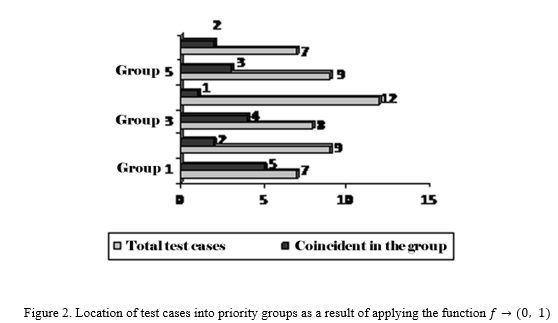
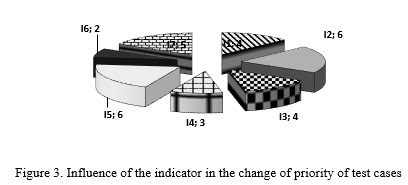
<body><![CDATA[<li>         <p><font size="2" face="Verdana, Arial, Helvetica, sans-serif">The project architect was  responsible to guarantee that project requirements were properly prioritized.  In the case of two pilot projects fuzzy values &#8203;&#8203;were used. To indicators I1, I2, I3 e I4 the  values &#8203;&#8203; assigned were &quot;High&quot;, &quot;Medium&quot; or  &quot;Low&quot;, which for priority calculation function represent 1, 0.5 y 0  respectively. On the other hand, to indicators I5, I6 e I7 numerical  values &#8203;&#8203;were assigned. </font></p>   </li>     </ol>     <p><font size="2" face="Verdana, Arial, Helvetica, sans-serif">The two pilot projects  have between 20 and 45 requirements. The first (P1) is a project that was in  development. As a result of the execution and enforcement of the priority  assignment function four blocks of ordered test cases were obtained.</font></p>     <p><font size="2" face="Verdana, Arial, Helvetica, sans-serif">The second project is a new  version of an application that is currently delivered to the users. The new  version consists of 16 modules or subsystems. The study was performed for one  of the modules of the previous version in order to compare the results obtained  by using the priority function and the prioritization process that was taken  before, during its development. </font></p>     <p><font size="2" face="Verdana, Arial, Helvetica, sans-serif">Fifty-two test cases were  obtained in the process of generating test cases. These test cases were sorted  into five groups. From detailed analysis of the test cases in the groups,  significant differences were detected with the priorities set out by the  project team without using priority function. The results are shown in<a href="#f02"> Figure 2</a>.</font></p>     <p align="center"><img src="/img/revistas/rcci/v10s2/f0205516.jpg" alt="f02" width="558" height="323"><a name="f02"></a></p>     <p><font size="2" face="Verdana, Arial, Helvetica, sans-serif">Based on these results a  survey was applied to the team to determine whether or not the differences  represented an improvement in the prioritization, and how these differences  were assessed. </font></p>     <p><font size="2" face="Verdana, Arial, Helvetica, sans-serif">Respondents agree that the  test cases that were prioritized by the function, in its initial estimation had  been relegated because the following priority criteria were not taken into  account: requirement stability, the relevance of the input values &#8203;&#8203;and the  relevance of the scenarios that cover the test case. <a href="#f03">Figure 3</a> shows the  distribution of the 28 test cases that are in a different group because  originally they were not considered indicators or assigned a different weight. </font></p>     <p align="center"><img src="/img/revistas/rcci/v10s2/f0305516.jpg" alt="f03" width="408" height="185"><a name="f03"></a></p>     ]]></body>
<body><![CDATA[<p>&nbsp;</p>     <p><font face="Verdana, Arial, Helvetica, sans-serif" size="3"><B>CONCLUSIONS</B></font></p>     <p><font size="2" face="Verdana, Arial, Helvetica, sans-serif">During the development of  this research a function for calculating priority of functional test cases of  software was defined. With the purpose of reach this achievement a set of  indicators that can be considered from the early stages of the project have  been identified.</font></p>     <p><font size="2" face="Verdana, Arial, Helvetica, sans-serif">The priority function is  defined in such a way that allows for the addition of new indicators. To add a  new indicator, a new term should be included and the weights for each member of  the function, adjusted.</font></p>     <p><font size="2" face="Verdana, Arial, Helvetica, sans-serif">The pilot test on two real  projects has provided an initial approach to the prioritization of test cases,  which can be enhanced through their application in other projects.</font></p>     <p>&nbsp;</p>     <p align="left"><font face="Verdana, Arial, Helvetica, sans-serif" size="3"><B>REFERENCES</B></font>     <!-- ref --><p><font size="2"><a><font face="Verdana, Arial, Helvetica, sans-serif">Bouquet, F.; C. Grandpierre<em>, et al. </em>2008 A Test Generation Solution  to Automate Software Testing. En: International workshop on Automation of  software test. AST '08 Proceedings of the 3rd international workshop on  Automation of software test. Leipzig, Germany, ACM. pp. 45-48.    </font></a></font></p>     <!-- ref --><p><font size="2" face="Verdana, Arial, Helvetica, sans-serif"><a>Dias, A. C. and G. Horta. 2008. Supporting  the Selection of Model-based Testing. Approaches for Software Projects. En:  International Workshop on Automation of Software Test. Proceedings of the 3rd  International Workshop on Automation of Software Test, AST 2008. Leipzig,  Germany, ACM, 2008. pp. 21-24.    </a></font></p>     <!-- ref --><p><font size="2" face="Verdana, Arial, Helvetica, sans-serif"><a>Elbaum, S.; A. G. Malishevsky<em>, et al.</em> 2000 Prioritizing Test Cases  for Regression Testing. En: International symposium on Software testing and  analysis. ISSTA '00 Proceedings of the 2000 ACM SIGSOFT international symposium  on Software testing and analysis Portland, Oregon, USA, ACM, 2000. pp. 102-112.    </a></font></p>     <p><font size="2" face="Verdana, Arial, Helvetica, sans-serif"><a>Elbaum, S.; G. Rothermel<em>, et al.</em> 2004 Selecting a Cost-Effective Test Case Prioritization  Technique. Software Quality Journal, 2004, 12(3): pp. 185-210. </a> </font></p>     <!-- ref --><p><font size="2" face="Verdana, Arial, Helvetica, sans-serif"><a>Everett, G. D. and R. McLeod. 2007 Software  Testing: Testing across the entire software development life cycle.&nbsp; New Jersey, USA, Wiley-IEEE Computer Society  Press, 2007. 280 p.    </a></font></p>     <p><font size="2" face="Verdana, Arial, Helvetica, sans-serif"><a>Frankl, P. G.; R. G. Hamlet<em>, et al. </em>1998 Evaluating Testing Methods by Delivered Reliability.  IEEE Transactions on Software Engineering, 1998, 24(8): pp. 586-601. </a> </font></p>     <!-- ref --><p><font size="2" face="Verdana, Arial, Helvetica, sans-serif">Fraser,  G. and F. Wotawa.  2007 Test-Case Prioritization with Model-Checkers. En: Conference on IASTED  International Multi-Conference: Software Engineering SE'07 Proceedings of the  25th conference on IASTED International Multi-Conference: Software Engineering  Innsbruck, Austria, ACM, 2007. pp. 267-272.     </font></p>     <!-- ref --><p><font size="2" face="Verdana, Arial, Helvetica, sans-serif">Galler,  S. J.; A. Maller<em>, et al.</em> 2010 Automatically Extracting  Mock Object Behavior from Design by Contract Specification for Test Data  Generation. En: Workshop on Automation of Software Test. AST '10 Proceedings of  the 5th Workshop on Automation of Software Test. Cape Town, South Africa, ACM,  2010. pp. 43-50.     </font></p>     <p><font size="2" face="Verdana, Arial, Helvetica, sans-serif">Ganesan, K.; T. Khoshgoftaar<em>, et al.</em> 2000,Case-Based Software  Quality Prediction. International Journal of Software Engineering and Knowledge  Engineering, 2000, 10(2): pp. 139-152.  </font></p>     <!-- ref --><p><font size="2" face="Verdana, Arial, Helvetica, sans-serif">Guti&eacute;rrez,  J. J.; M. J.  Escalona<em>, et al.</em> 2007 Generaci&oacute;n  autom&aacute;tica de objetivos de prueba a partir de casos de uso mediante partici&oacute;n  de categor&iacute;as y variables operacionales. En: Jornada de Ingenier&iacute;a del Software  y Bases de Datos. XII Jornadas de Ingenier&iacute;a del Software y Bases de Datos.  Zaragoza, Espa&ntilde;a, 2007. pp. 105-114.     </font></p>     <!-- ref --><p><font size="2" face="Verdana, Arial, Helvetica, sans-serif">Heimdahl,  M. P. E. and D.  George. 2004 Test-Suite Reduction for Model Based Tests: Effects on Test  Quality and Implications for Testing. En: IEEE international conference on  Automated software engineering ASE '04 Proceedings of the 19th IEEE  international conference on Automated software engineering Linz, Austria, ACM,  2004. pp. 176-185.     </font></p>     <!-- ref --><p><font size="2" face="Verdana, Arial, Helvetica, sans-serif"><a>Jeffrey, D. and N. Gupta. 2006 Test  Case Priorization Using Relevant Slices. En: International Computer Software  and Applications Conference. 30th Annual International Computer Software and  Applications Conference (COMPSAC'06) Chicago, USA, IEEE, 2006. pp. 411-420.    </a> </font></p>     <!-- ref --><p><font size="2" face="Verdana, Arial, Helvetica, sans-serif">Kim,  J.-M. and A. Porter.  2002 A History-Based Test Priorization Technique for Regression Testing in  Resource Constrained Enviroments. En: International Conference on Software  Engineering ICSE '02 Proceedings of the 24th International Conference on  Software Engineering Florida, USA, ACM, 2002. pp. 119-129.     </font></p>     ]]></body>
<body><![CDATA[<p><font size="2" face="Verdana, Arial, Helvetica, sans-serif">Ko, A. J. and B. A. 2010 Myers  Extracting and Answering Why and Why Not Questions about Java Program Output. ACM  Transactions on Software Engineering and Methodology, 2010, 20(2): pp. 1-36.  </font></p>     <p><font size="2" face="Verdana, Arial, Helvetica, sans-serif">Masood, A.; R. Bhatti<em>, et al.</em> 2009 Scalable and Effective  Test Generation for Role-Based Access Control Systems. IEEE Transactions on  Software Engineering, 2009, 35(5): pp. 654-668.  </font></p>     <!-- ref --><p><font size="2" face="Verdana, Arial, Helvetica, sans-serif">Myers,  G. J.; T. Badgett<em>, et al.</em> 2011 The art of software  testing. 3a. edici&oacute;n.&nbsp; New Jersey,  JohnWiley &amp; Sons, 2011. p.     </font></p>     <!-- ref --><p><font size="2" face="Verdana, Arial, Helvetica, sans-serif">Naslavsky,  L.; H. Ziv<em>, et al.</em> 2008 Using Model Transformation  to Support Model-Based Test Coverage Measurement. En: International workshop on  Automation of software test AST '08 Proceedings of the 3rd international  workshop on Automation of software test Leipzig, Germany, ACM, 2008. pp. 1-6.     </font></p>     <!-- ref --><p><font size="2" face="Verdana, Arial, Helvetica, sans-serif">Nguyen,  D. H.; P. Strooper<em>, et al.</em> 2010 Model-Based Testing of  Multiple GUI Variants Using the GUI Test Generator. En: Workshop on Automation  of Software Test AST '10 Proceedings of the 5th Workshop on Automation of  Software Test Cape Town, South Africa, ACM, 2010. pp. 24-30.     </font></p>     <!-- ref --><p><font size="2" face="Verdana, Arial, Helvetica, sans-serif">POLO, M.; I. GARC&Iacute;A<em>, et al.</em> Priorizaci&oacute;n de casos de prueba  mediante mutaci&oacute;n. Actas de Talleres de Ingenier&iacute;a del Software y Bases de  Datos, 2007, 1(4): pp. 11-16.     </font></p>     ]]></body>
<body><![CDATA[<p><font size="2" face="Verdana, Arial, Helvetica, sans-serif">SINGH, D. AND A. K. MISRA 2008 Software  Test Effort Estimation. ACM SIGSOFT Software Engineering Notes, 2008, 33(3):  pp. 80-85.  </font></p>     <!-- ref --><p><font size="2" face="Verdana, Arial, Helvetica, sans-serif">Williams,  N. Abstract Path Testing with PathCrawler. En: Workshop on  Automation of Software Test AST '10 Proceedings of the 5th Workshop on  Automation of Software Test Cape Town, South Africa, ACM, 2010. pp. 35-42.     </font></p>     <p><font size="2" face="Verdana, Arial, Helvetica, sans-serif">Xie, Q. and A. M. Memon 2007 Designing  and Comparing Automated Test Oracles for GUI-Based Software Applications. ACM  Transactions Software Engineering and Methodology, 2007, 16(1): pp. 41-77. </font></p>     <!-- ref --><p><font size="2" face="Verdana, Arial, Helvetica, sans-serif">Yuan, H. and T. Xie. 2006 Substra: A Framework for Automatic Generation  of Integration Tests. En: International workshop on Automation of software test  AST '06 Proceedings of the 2006 international workshop on Automation of  software test Shangai, China, ACM, 2006. pp. 64-70.    </font></p>     <p name="_ENREF_1">&nbsp;</p>     <p name="_ENREF_1">&nbsp;</p>     <p><font size="2" face="Verdana, Arial, Helvetica, sans-serif">Recibido: 15/04/2016    <br> Aceptado: 05/05/2016</font></p>     ]]></body>
<body><![CDATA[ ]]></body><back>
<ref-list>
<ref id="B1">
<nlm-citation citation-type="">
<person-group person-group-type="author">
<name>
<surname><![CDATA[Bouquet]]></surname>
<given-names><![CDATA[F]]></given-names>
</name>
<name>
<surname><![CDATA[Grandpierre]]></surname>
<given-names><![CDATA[C]]></given-names>
</name>
</person-group>
<source><![CDATA[A Test Generation Solution to Automate Software Testing.]]></source>
<year>2008</year>
<page-range>45-48</page-range><publisher-loc><![CDATA[^eLeipzig Leipzig]]></publisher-loc>
</nlm-citation>
</ref>
<ref id="B2">
<nlm-citation citation-type="book">
<person-group person-group-type="author">
<name>
<surname><![CDATA[Dias]]></surname>
<given-names><![CDATA[A. C]]></given-names>
</name>
<name>
<surname><![CDATA[Horta]]></surname>
<given-names><![CDATA[G]]></given-names>
</name>
</person-group>
<source><![CDATA[Supporting the Selection of Model-based Testing.]]></source>
<year>2008</year>
<page-range>21-24</page-range><publisher-loc><![CDATA[^eLeipzig Leipzig]]></publisher-loc>
<publisher-name><![CDATA[ACM]]></publisher-name>
</nlm-citation>
</ref>
<ref id="B3">
<nlm-citation citation-type="book">
<person-group person-group-type="author">
<name>
<surname><![CDATA[Elbaum]]></surname>
<given-names><![CDATA[S]]></given-names>
</name>
<name>
<surname><![CDATA[Malishevsky]]></surname>
<given-names><![CDATA[A. G]]></given-names>
</name>
</person-group>
<source><![CDATA[Prioritizing Test Cases for Regression Testing.]]></source>
<year>2000</year>
<page-range>102-112</page-range><publisher-loc><![CDATA[^eOregon Oregon]]></publisher-loc>
<publisher-name><![CDATA[ACM]]></publisher-name>
</nlm-citation>
</ref>
<ref id="B4">
<nlm-citation citation-type="">
<person-group person-group-type="author">
<name>
<surname><![CDATA[Elbaum]]></surname>
<given-names><![CDATA[S]]></given-names>
</name>
<name>
<surname><![CDATA[Rothermel]]></surname>
<given-names><![CDATA[G]]></given-names>
</name>
</person-group>
<article-title xml:lang="en"><![CDATA[Selecting a Cost-Effective Test Case Prioritization Technique.]]></article-title>
<source><![CDATA[]]></source>
<year>2004</year>
<volume>12</volume>
<numero>3</numero>
<issue>3</issue>
<page-range>185-210.</page-range></nlm-citation>
</ref>
<ref id="B5">
<nlm-citation citation-type="book">
<person-group person-group-type="author">
<name>
<surname><![CDATA[Everett]]></surname>
<given-names><![CDATA[G. D.]]></given-names>
</name>
<name>
<surname><![CDATA[McLeod]]></surname>
<given-names><![CDATA[R]]></given-names>
</name>
</person-group>
<source><![CDATA[Software Testing: Testing across the entire software development life cycle]]></source>
<year>2007</year>
<page-range>280</page-range><publisher-loc><![CDATA[^eNew Jersey New Jersey]]></publisher-loc>
<publisher-name><![CDATA[Wiley-IEEE Computer Society Press]]></publisher-name>
</nlm-citation>
</ref>
<ref id="B6">
<nlm-citation citation-type="">
<person-group person-group-type="author">
<name>
<surname><![CDATA[Frankl]]></surname>
<given-names><![CDATA[P. G]]></given-names>
</name>
<name>
<surname><![CDATA[Hamlet]]></surname>
<given-names><![CDATA[R. G]]></given-names>
</name>
</person-group>
<article-title xml:lang="en"><![CDATA[Evaluating Testing Methods by Delivered Reliability.]]></article-title>
<source><![CDATA[]]></source>
<year>1998</year>
<volume>24</volume>
<numero>8</numero>
<issue>8</issue>
<page-range>586-601</page-range></nlm-citation>
</ref>
<ref id="B7">
<nlm-citation citation-type="book">
<person-group person-group-type="author">
<name>
<surname><![CDATA[Fraser]]></surname>
<given-names><![CDATA[G]]></given-names>
</name>
<name>
<surname><![CDATA[Wotawa]]></surname>
<given-names><![CDATA[F]]></given-names>
</name>
</person-group>
<source><![CDATA[Test-Case Prioritization with Model-Checkers.]]></source>
<year>2007</year>
<page-range>267-272</page-range><publisher-name><![CDATA[ACM]]></publisher-name>
</nlm-citation>
</ref>
<ref id="B8">
<nlm-citation citation-type="book">
<person-group person-group-type="author">
<name>
<surname><![CDATA[Galler]]></surname>
<given-names><![CDATA[S. J]]></given-names>
</name>
<name>
<surname><![CDATA[Maller]]></surname>
<given-names><![CDATA[A]]></given-names>
</name>
</person-group>
<source><![CDATA[Automatically Extracting Mock Object Behavior from Design by Contract Specification for Test Data Generation.]]></source>
<year>2010</year>
<page-range>43-50</page-range><publisher-name><![CDATA[ACM]]></publisher-name>
</nlm-citation>
</ref>
<ref id="B9">
<nlm-citation citation-type="">
<person-group person-group-type="author">
<name>
<surname><![CDATA[Ganesan]]></surname>
<given-names><![CDATA[K]]></given-names>
</name>
<name>
<surname><![CDATA[Khoshgoftaar]]></surname>
<given-names><![CDATA[T]]></given-names>
</name>
</person-group>
<article-title xml:lang="en"><![CDATA[Case-Based Software Quality Prediction.]]></article-title>
<source><![CDATA[]]></source>
<year>2000</year>
<volume>10</volume>
<numero>2</numero>
<issue>2</issue>
<page-range>139-152</page-range></nlm-citation>
</ref>
<ref id="B10">
<nlm-citation citation-type="">
<person-group person-group-type="author">
<name>
<surname><![CDATA[Gutiérrez]]></surname>
<given-names><![CDATA[J. J]]></given-names>
</name>
<name>
<surname><![CDATA[Escalona]]></surname>
<given-names><![CDATA[M. J]]></given-names>
</name>
</person-group>
<source><![CDATA[Generación automática de objetivos de prueba a partir de casos de uso mediante partición de categorías y variables operacionales.]]></source>
<year>2007</year>
<page-range>105-114</page-range><publisher-loc><![CDATA[^eZaragoza Zaragoza]]></publisher-loc>
</nlm-citation>
</ref>
<ref id="B11">
<nlm-citation citation-type="book">
<person-group person-group-type="author">
<name>
<surname><![CDATA[Heimdahl]]></surname>
<given-names><![CDATA[M. P. E]]></given-names>
</name>
<name>
<surname><![CDATA[George]]></surname>
<given-names><![CDATA[D]]></given-names>
</name>
</person-group>
<source><![CDATA[Test-Suite Reduction for Model Based Tests: Effects on Test Quality and Implications for Testing]]></source>
<year>2004</year>
<page-range>176-185</page-range><publisher-name><![CDATA[ACM]]></publisher-name>
</nlm-citation>
</ref>
<ref id="B12">
<nlm-citation citation-type="book">
<person-group person-group-type="author">
<name>
<surname><![CDATA[Jeffrey]]></surname>
<given-names><![CDATA[D]]></given-names>
</name>
<name>
<surname><![CDATA[Gupta]]></surname>
<given-names><![CDATA[N]]></given-names>
</name>
</person-group>
<source><![CDATA[Test Case Priorization Using Relevant Slices.]]></source>
<year>2006</year>
<page-range>411-420</page-range><publisher-loc><![CDATA[^eChicago Chicago]]></publisher-loc>
<publisher-name><![CDATA[IEEE]]></publisher-name>
</nlm-citation>
</ref>
<ref id="B13">
<nlm-citation citation-type="book">
<person-group person-group-type="author">
<name>
<surname><![CDATA[Kim]]></surname>
<given-names><![CDATA[J.-M]]></given-names>
</name>
<name>
<surname><![CDATA[Porter]]></surname>
<given-names><![CDATA[A]]></given-names>
</name>
</person-group>
<source><![CDATA[A History-Based Test Priorization Technique for Regression Testing in Resource Constrained Enviroments.]]></source>
<year>2002</year>
<page-range>119-129</page-range><publisher-loc><![CDATA[^eFlorida Florida]]></publisher-loc>
<publisher-name><![CDATA[ACM]]></publisher-name>
</nlm-citation>
</ref>
<ref id="B14">
<nlm-citation citation-type="">
<person-group person-group-type="author">
<name>
<surname><![CDATA[Ko]]></surname>
<given-names><![CDATA[A. J]]></given-names>
</name>
<name>
<surname><![CDATA[B]]></surname>
<given-names><![CDATA[A]]></given-names>
</name>
</person-group>
<article-title xml:lang="en"><![CDATA[Myers Extracting and Answering Why and Why Not Questions about Java Program Output.]]></article-title>
<source><![CDATA[]]></source>
<year>2010</year>
<volume>20</volume>
<numero>2</numero>
<issue>2</issue>
<page-range>1-36.</page-range></nlm-citation>
</ref>
<ref id="B15">
<nlm-citation citation-type="">
<person-group person-group-type="author">
<name>
<surname><![CDATA[Masood]]></surname>
<given-names><![CDATA[A]]></given-names>
</name>
<name>
<surname><![CDATA[Bhatti]]></surname>
<given-names><![CDATA[R]]></given-names>
</name>
</person-group>
<article-title xml:lang="en"><![CDATA[Scalable and Effective Test Generation for Role-Based Access Control Systems.]]></article-title>
<source><![CDATA[]]></source>
<year>2009</year>
<volume>35</volume>
<numero>5</numero>
<issue>5</issue>
<page-range>654-668</page-range></nlm-citation>
</ref>
<ref id="B16">
<nlm-citation citation-type="book">
<person-group person-group-type="author">
<name>
<surname><![CDATA[Myers]]></surname>
<given-names><![CDATA[G. J]]></given-names>
</name>
<name>
<surname><![CDATA[Badgett]]></surname>
<given-names><![CDATA[T]]></given-names>
</name>
</person-group>
<source><![CDATA[The art of software testing.]]></source>
<year>2011</year>
<edition>3a. edición</edition>
<publisher-loc><![CDATA[^eNew Jersey New Jersey]]></publisher-loc>
<publisher-name><![CDATA[JohnWiley & Sons]]></publisher-name>
</nlm-citation>
</ref>
<ref id="B17">
<nlm-citation citation-type="book">
<person-group person-group-type="author">
<name>
<surname><![CDATA[Naslavsky]]></surname>
<given-names><![CDATA[L]]></given-names>
</name>
<name>
<surname><![CDATA[Ziv]]></surname>
<given-names><![CDATA[H]]></given-names>
</name>
</person-group>
<source><![CDATA[Using Model Transformation to Support Model-Based Test Coverage Measurement.]]></source>
<year>2008</year>
<page-range>1-6</page-range><publisher-loc><![CDATA[^eLeipzig Leipzig]]></publisher-loc>
<publisher-name><![CDATA[ACM]]></publisher-name>
</nlm-citation>
</ref>
<ref id="B18">
<nlm-citation citation-type="book">
<person-group person-group-type="author">
<name>
<surname><![CDATA[Nguyen]]></surname>
<given-names><![CDATA[D. H]]></given-names>
</name>
<name>
<surname><![CDATA[Strooper]]></surname>
<given-names><![CDATA[P]]></given-names>
</name>
</person-group>
<source><![CDATA[Model-Based Testing of Multiple GUI Variants Using the GUI Test Generator.]]></source>
<year>2010</year>
<page-range>24-30</page-range><publisher-name><![CDATA[ACM]]></publisher-name>
</nlm-citation>
</ref>
<ref id="B19">
<nlm-citation citation-type="">
<person-group person-group-type="author">
<name>
<surname><![CDATA[POLO]]></surname>
<given-names><![CDATA[M]]></given-names>
</name>
<name>
<surname><![CDATA[GARCÍA]]></surname>
<given-names><![CDATA[I]]></given-names>
</name>
</person-group>
<article-title xml:lang="es"><![CDATA[Priorización de casos de prueba mediante mutación]]></article-title>
<source><![CDATA[]]></source>
<year>2007</year>
<volume>1</volume>
<numero>4</numero>
<issue>4</issue>
<page-range>11-16</page-range></nlm-citation>
</ref>
<ref id="B20">
<nlm-citation citation-type="">
<person-group person-group-type="author">
<name>
<surname><![CDATA[SINGH]]></surname>
<given-names><![CDATA[D]]></given-names>
</name>
<name>
<surname><![CDATA[MISRA]]></surname>
<given-names><![CDATA[A. K]]></given-names>
</name>
</person-group>
<article-title xml:lang="en"><![CDATA[Software Test Effort Estimation]]></article-title>
<source><![CDATA[]]></source>
<year>2008</year>
<volume>33</volume>
<numero>3</numero>
<issue>3</issue>
<page-range>80-85</page-range></nlm-citation>
</ref>
<ref id="B21">
<nlm-citation citation-type="book">
<person-group person-group-type="author">
<name>
<surname><![CDATA[Williams]]></surname>
<given-names><![CDATA[N]]></given-names>
</name>
</person-group>
<source><![CDATA[Abstract Path Testing with PathCrawler.]]></source>
<year>2010</year>
<page-range>35-42</page-range><publisher-name><![CDATA[ACM]]></publisher-name>
</nlm-citation>
</ref>
<ref id="B22">
<nlm-citation citation-type="">
<person-group person-group-type="author">
<name>
<surname><![CDATA[Xie]]></surname>
<given-names><![CDATA[Q]]></given-names>
</name>
<name>
<surname><![CDATA[Memon]]></surname>
<given-names><![CDATA[A. M]]></given-names>
</name>
</person-group>
<article-title xml:lang="en"><![CDATA[Designing and Comparing Automated Test Oracles for GUI-Based Software Applications.]]></article-title>
<source><![CDATA[]]></source>
<year>2007</year>
<volume>16</volume>
<numero>1</numero>
<issue>1</issue>
<page-range>41-77</page-range></nlm-citation>
</ref>
<ref id="B23">
<nlm-citation citation-type="book">
<person-group person-group-type="author">
<name>
<surname><![CDATA[Yuan]]></surname>
<given-names><![CDATA[H]]></given-names>
</name>
<name>
<surname><![CDATA[Xie]]></surname>
<given-names><![CDATA[T]]></given-names>
</name>
</person-group>
<source><![CDATA[Substra: A Framework for Automatic Generation of Integration Tests.]]></source>
<year>2006</year>
<page-range>64-70</page-range><publisher-loc><![CDATA[^eShangai Shangai]]></publisher-loc>
<publisher-name><![CDATA[ACM]]></publisher-name>
</nlm-citation>
</ref>
</ref-list>
</back>
</article>