<?xml version="1.0" encoding="ISO-8859-1"?><article xmlns:mml="http://www.w3.org/1998/Math/MathML" xmlns:xlink="http://www.w3.org/1999/xlink" xmlns:xsi="http://www.w3.org/2001/XMLSchema-instance">
<front>
<journal-meta>
<journal-id>0375-0760</journal-id>
<journal-title><![CDATA[Revista Cubana de Medicina Tropical]]></journal-title>
<abbrev-journal-title><![CDATA[Rev Cubana Med Trop]]></abbrev-journal-title>
<issn>0375-0760</issn>
<publisher>
<publisher-name><![CDATA[Centro Nacional de Información de Ciencias Médicas]]></publisher-name>
</publisher>
</journal-meta>
<article-meta>
<article-id>S0375-07601997000200013</article-id>
<title-group>
<article-title xml:lang="es"><![CDATA[Nueva relación de insectos de importancia médica para la cayería noroccidental de Camagüey: Estudio preliminar]]></article-title>
</title-group>
<contrib-group>
<contrib contrib-type="author">
<name>
<surname><![CDATA[DIÉGUEZ FERNÁNDEZ]]></surname>
<given-names><![CDATA[LORENZO]]></given-names>
</name>
<xref ref-type="aff" rid="A01"/>
</contrib>
<contrib contrib-type="author">
<name>
<surname><![CDATA[RODRÍGUEZ GONZÁLEZ]]></surname>
<given-names><![CDATA[LIBRADO]]></given-names>
</name>
<xref ref-type="aff" rid="A01"/>
</contrib>
<contrib contrib-type="author">
<name>
<surname><![CDATA[SÁNCHEZ ALONSO]]></surname>
<given-names><![CDATA[CORALIA]]></given-names>
</name>
<xref ref-type="aff" rid="A02"/>
</contrib>
</contrib-group>
<aff id="A02">
<institution><![CDATA[,Instituto de Ecología y Sistemática  ]]></institution>
<addr-line><![CDATA[ ]]></addr-line>
</aff>
<aff id="A01">
<institution><![CDATA[,Centro Provincial de Higiene y Epidemiología. Unidad Provincial de Vigilancia y Lucha Antivectorial  ]]></institution>
<addr-line><![CDATA[ ]]></addr-line>
</aff>
<pub-date pub-type="pub">
<day>00</day>
<month>08</month>
<year>1997</year>
</pub-date>
<pub-date pub-type="epub">
<day>00</day>
<month>08</month>
<year>1997</year>
</pub-date>
<volume>49</volume>
<numero>2</numero>
<fpage>139</fpage>
<lpage>141</lpage>
<copyright-statement/>
<copyright-year/>
<self-uri xlink:href="http://scielo.sld.cu/scielo.php?script=sci_arttext&amp;pid=S0375-07601997000200013&amp;lng=en&amp;nrm=iso"></self-uri><self-uri xlink:href="http://scielo.sld.cu/scielo.php?script=sci_abstract&amp;pid=S0375-07601997000200013&amp;lng=en&amp;nrm=iso"></self-uri><self-uri xlink:href="http://scielo.sld.cu/scielo.php?script=sci_pdf&amp;pid=S0375-07601997000200013&amp;lng=en&amp;nrm=iso"></self-uri><abstract abstract-type="short" xml:lang="es"><p><![CDATA[Se reporta para la cayería noroccidental de Camagüey (cayos Mégano Grande, Cruz, Romano y Güajaba) un grupo de insectos de importancia médica perteneciente a las familias Culicidae, Blattidae, Muscidae, Tabanidae, Ceratopogonidae y Chloropidae. Cayo Romano exhibe al parecer las mejores condiciones ecológicas para el establecimiento de dichos vectores en atención al número de especies reportadas.]]></p></abstract>
<abstract abstract-type="short" xml:lang="en"><p><![CDATA[The existance of a group of insect of medical importance belonging to the families Culicidae, Blattide, Muscidae, Tabanidae, Ceratopogonidae and Chloropidae was reported in the northwestern keys of Camagüey (keys Mégano Grande, Cruz, Romano and Güajaba). Key Romano seems to have the best ecological conditions for the establishment of such vectors according to the number of species reported.]]></p></abstract>
<kwd-group>
<kwd lng="es"><![CDATA[VIAJES Y TURISMO]]></kwd>
<kwd lng="es"><![CDATA[CONTROL BIOLOGICO DE VECTORES]]></kwd>
<kwd lng="es"><![CDATA[CULICIDAE]]></kwd>
<kwd lng="es"><![CDATA[ENFERMEDADES TRANSMISIBLES]]></kwd>
<kwd lng="en"><![CDATA[TRAVELS AND TOURISM]]></kwd>
<kwd lng="en"><![CDATA[PEST CONTROL, BIOLOGICAL]]></kwd>
<kwd lng="en"><![CDATA[CULICIDAE]]></kwd>
<kwd lng="en"><![CDATA[COMMUNICABLE DISEASES]]></kwd>
</kwd-group>
</article-meta>
</front><body><![CDATA[ <P>Centro Provincial de Higiene y Epidemiolog&iacute;a de Camag&uuml;ey    <BR> Unidad Provincial de Vigilancia y Lucha Antivectorial </P> <H2>Nueva relaci&oacute;n de insectos de importancia m&eacute;dica para la cayer&iacute;a noroccidental de Camag&uuml;ey. Estudio preliminar</H2>     <P>M.Sc. LORENZO DI&Eacute;GUEZ FERN&Aacute;NDEZ,<SUP>1</SUP> T&eacute;c. LIBRADO RODR&Iacute;GUEZ GONZ&Aacute;LEZ<SUP>2</SUP> y Lic. CORALIA S&Aacute;NCHEZ ALONSO<SUP>3</SUP> </P>     <P><HR>    <p></P> <OL>      <LI>M&aacute;ster en Entomolog&iacute;a M&eacute;dica y Control de Vectores. Centro Provincial de Higiene y Epidemiolog&iacute;a de Camag&uuml;ey.</LI>     <LI>T&eacute;cnico en Higiene. Centro Provincial de Higiene y Epidemiolog&iacute;a de Camag&uuml;ey.</LI>     <LI>Licenciada en Biolog&iacute;a. Instituto de Ecolog&iacute;a y Sistem&aacute;tica.</LI>    </OL>      <P><HR>    ]]></body>
<body><![CDATA[<p></P> <H3>RESUMEN</H3>     <P>Se reporta para la cayer&iacute;a noroccidental de Camag&uuml;ey (cayos M&eacute;gano Grande, Cruz, Romano y G&uuml;ajaba) un grupo de insectos de importancia m&eacute;dica perteneciente a las familias Culicidae, Blattidae, Muscidae, Tabanidae, Ceratopogonidae y Chloropidae. Cayo Romano exhibe al parecer las mejores condiciones ecol&oacute;gicas para el establecimiento de dichos vectores en atenci&oacute;n al n&uacute;mero de especies reportadas. </P>     <P><B>Descriptores DeCS: </b>VIAJES Y TURISMO; CONTROL BIOLOGICO DE VECTORES; CULICIDAE; ENFERMEDADES TRANSMISIBLES. </P>     <P>En varias regiones del planeta los insectos de importancia m&eacute;dica han recibido atenci&oacute;n por parte de diversos investigadores.<SUP>1,2</SUP> En Cuba, por ejemplo, se han realizado notables estudios sobre estos insectos.<SUP>3-8</SUP> Sin embargo, la ejecuci&oacute;n de investigaciones en zonas litorales no es abundante. Camag&uuml;ey se inserta dentro de las regiones cubanas que han efectuado algunos estudios en la b&uacute;squeda de evidencias ecol&oacute;gicas con el fin de conocer los componentes naturales en dichos territorios. </P>     <P>La cayer&iacute;a noroccidental de Camag&uuml;ey, que ser&aacute; un importante enclave tur&iacute;stico, pertenece al subgrupo del archipi&eacute;lago Sabana-Camag&uuml;ey o de los Jardines del Rey. Como resultado de las visitas efectuadas en meses recientes a los cayos M&eacute;gano Grande (8 km<SUP>2</SUP>), Cruz (26 km<SUP>2</SUP>), Romano (777 km<SUP>2</SUP>) y G&uuml;ajaba (94 km<SUP>2</SUP>), en los que se realizaron muestreos de varios reservorios de aguas dulce (arroyos, lagunas y charcas) y salobre (marismas y peque&ntilde;as lagunas), as&iacute; como numerosas colectas de adultos, se report&oacute; un total de 27 especies de insectos de importancia m&eacute;dica pertenecientes a 6 familias (tabla 1), la familia Culicidae es la m&aacute;s representada, los dep&oacute;sitos de mayor positividad a este grupo se desglosan en la tabla 2. Se except&uacute;an <I>Aedes sollicitans</I>, <I>Aedes scapularis</I> y <I>Mansonia titillans</I> debido a que s&oacute;lo se capturaron en estado adulto. </P>     <P><B>TABLA 1. </b>Relaci&oacute;n de los insectos de importancia m&eacute;dica presentes en los cayos M&eacute;gano Grande, Cruz, Romano y G&uuml;ajaba de la cayer&iacute;a noroccidental de Camag&uuml;ey </P>     <P ALIGN="CENTER">    <CENTER><TABLE BORDER CELLSPACING=1 CELLPADDING=4 WIDTH=633> <TR><TD WIDTH="5%" VALIGN="TOP">     <P>&nbsp;</TD> <TD WIDTH="28%" VALIGN="TOP">     <P>&nbsp;</TD> <TD WIDTH="34%" VALIGN="TOP" COLSPAN=2>     ]]></body>
<body><![CDATA[<P ALIGN="CENTER">Cayos</TD> <TD WIDTH="17%" VALIGN="TOP">     <P>&nbsp;</TD> <TD WIDTH="17%" VALIGN="TOP">     <P>&nbsp;</TD> </TR> <TR><TD WIDTH="5%" VALIGN="TOP">     <P>&nbsp;</TD> <TD WIDTH="28%" VALIGN="TOP">     <P>&nbsp;</TD> <TD WIDTH="17%" VALIGN="TOP">     <P>&nbsp;</TD> <TD WIDTH="17%" VALIGN="TOP">     <P>&nbsp;</TD> <TD WIDTH="34%" VALIGN="TOP" COLSPAN=2>     <P ALIGN="CENTER">M&eacute;gano</TD> </TR> <TR><TD WIDTH="5%" VALIGN="TOP">     <P>No.&nbsp;</TD> <TD WIDTH="28%" VALIGN="TOP">     <P>Taxa</TD> <TD WIDTH="17%" VALIGN="TOP">     ]]></body>
<body><![CDATA[<P ALIGN="CENTER">Cruz</TD> <TD WIDTH="17%" VALIGN="TOP">     <P ALIGN="CENTER">Romano</TD> <TD WIDTH="17%" VALIGN="TOP">     <P ALIGN="CENTER">G&uuml;ajaba</TD> <TD WIDTH="17%" VALIGN="TOP">     <P ALIGN="CENTER">Grande</TD> </TR> <TR><TD WIDTH="5%" VALIGN="TOP">     <P>&nbsp;</TD> <TD WIDTH="28%" VALIGN="TOP">     <P>Familia Culicidae</TD> <TD WIDTH="17%" VALIGN="TOP">     <P>&nbsp;</TD> <TD WIDTH="17%" VALIGN="TOP">     <P>&nbsp;</TD> <TD WIDTH="17%" VALIGN="TOP">     <P>&nbsp;</TD> <TD WIDTH="17%" VALIGN="TOP">     <P>&nbsp;</TD> </TR> <TR><TD WIDTH="5%" VALIGN="TOP">     ]]></body>
<body><![CDATA[<P>1&nbsp;</TD> <TD WIDTH="28%" VALIGN="TOP"> <I>    <P>Aedes taeniorhynchus</I></TD> <TD WIDTH="17%" VALIGN="TOP">     <P ALIGN="CENTER">X</TD> <TD WIDTH="17%" VALIGN="TOP">     <P ALIGN="CENTER">X</TD> <TD WIDTH="17%" VALIGN="TOP">     <P ALIGN="CENTER">X</TD> <TD WIDTH="17%" VALIGN="TOP">     <P ALIGN="CENTER">X</TD> </TR> <TR><TD WIDTH="5%" VALIGN="TOP">     <P>2</TD> <TD WIDTH="28%" VALIGN="TOP"> <I>    <P>Aedes sollicitans</I></TD> <TD WIDTH="17%" VALIGN="TOP">     <P>&nbsp;</TD> <TD WIDTH="17%" VALIGN="TOP">     <P ALIGN="CENTER">X</TD> <TD WIDTH="17%" VALIGN="TOP">     ]]></body>
<body><![CDATA[<P ALIGN="CENTER">X</TD> <TD WIDTH="17%" VALIGN="TOP">     <P ALIGN="CENTER">X</TD> </TR> <TR><TD WIDTH="5%" VALIGN="TOP">     <P>3</TD> <TD WIDTH="28%" VALIGN="TOP"> <I>    <P>Aedes scapularis</I></TD> <TD WIDTH="17%" VALIGN="TOP">     <P>&nbsp;</TD> <TD WIDTH="17%" VALIGN="TOP">     <P ALIGN="CENTER">X</TD> <TD WIDTH="17%" VALIGN="TOP">     <P>&nbsp;</TD> <TD WIDTH="17%" VALIGN="TOP">     <P>&nbsp;</TD> </TR> <TR><TD WIDTH="5%" VALIGN="TOP">     <P>4</TD> <TD WIDTH="28%" VALIGN="TOP"> <I>    <P>Aedes mediovittatus</I></TD> <TD WIDTH="17%" VALIGN="TOP">     ]]></body>
<body><![CDATA[<P>&nbsp;</TD> <TD WIDTH="17%" VALIGN="TOP">     <P ALIGN="CENTER">X</TD> <TD WIDTH="17%" VALIGN="TOP">     <P ALIGN="CENTER">X</TD> <TD WIDTH="17%" VALIGN="TOP">     <P>&nbsp;</TD> </TR> <TR><TD WIDTH="5%" VALIGN="TOP">     <P>5</TD> <TD WIDTH="28%" VALIGN="TOP"> <I>    <P>Anopheles albimanus</I></TD> <TD WIDTH="17%" VALIGN="TOP">     <P>&nbsp;</TD> <TD WIDTH="17%" VALIGN="TOP">     <P ALIGN="CENTER">X</TD> <TD WIDTH="17%" VALIGN="TOP">     <P>&nbsp;</TD> <TD WIDTH="17%" VALIGN="TOP">     <P>&nbsp;</TD> </TR> <TR><TD WIDTH="5%" VALIGN="TOP">     ]]></body>
<body><![CDATA[<P>6</TD> <TD WIDTH="28%" VALIGN="TOP"> <I>    <P>Anopheles crucians</I></TD> <TD WIDTH="17%" VALIGN="TOP">     <P>&nbsp;</TD> <TD WIDTH="17%" VALIGN="TOP"> <I>    <P ALIGN="CENTER">X</I></TD> <TD WIDTH="17%" VALIGN="TOP">     <P>&nbsp;</TD> <TD WIDTH="17%" VALIGN="TOP">     <P>&nbsp;</TD> </TR> <TR><TD WIDTH="5%" VALIGN="TOP">     <P>7</TD> <TD WIDTH="28%" VALIGN="TOP"> <I>    <P>Culex quinquefasciatus</I></TD> <TD WIDTH="17%" VALIGN="TOP">     <P>&nbsp;</TD> <TD WIDTH="17%" VALIGN="TOP">     <P ALIGN="CENTER">X</TD> <TD WIDTH="17%" VALIGN="TOP">     ]]></body>
<body><![CDATA[<P>&nbsp;</TD> <TD WIDTH="17%" VALIGN="TOP">     <P ALIGN="CENTER">X</TD> </TR> <TR><TD WIDTH="5%" VALIGN="TOP">     <P>8</TD> <TD WIDTH="28%" VALIGN="TOP"> <I>    <P>Culex nigripalpus</I></TD> <TD WIDTH="17%" VALIGN="TOP">     <P>&nbsp;</TD> <TD WIDTH="17%" VALIGN="TOP">     <P ALIGN="CENTER">X</TD> <TD WIDTH="17%" VALIGN="TOP">     <P>&nbsp;</TD> <TD WIDTH="17%" VALIGN="TOP">     <P>&nbsp;</TD> </TR> <TR><TD WIDTH="5%" VALIGN="TOP">     <P>9</TD> <TD WIDTH="28%" VALIGN="TOP"> <I>    <P>Culex bahamensis</I></TD> <TD WIDTH="17%" VALIGN="TOP">     ]]></body>
<body><![CDATA[<P>&nbsp;</TD> <TD WIDTH="17%" VALIGN="TOP">     <P ALIGN="CENTER">X</TD> <TD WIDTH="17%" VALIGN="TOP">     <P ALIGN="CENTER">X</TD> <TD WIDTH="17%" VALIGN="TOP">     <P>&nbsp;</TD> </TR> <TR><TD WIDTH="5%" VALIGN="TOP">     <P>10</TD> <TD WIDTH="28%" VALIGN="TOP"> <I>    <P>Deinoceritis cancer</I></TD> <TD WIDTH="17%" VALIGN="TOP">     <P>&nbsp;</TD> <TD WIDTH="17%" VALIGN="TOP">     <P ALIGN="CENTER">X</TD> <TD WIDTH="17%" VALIGN="TOP">     <P ALIGN="CENTER">X</TD> <TD WIDTH="17%" VALIGN="TOP">     <P>&nbsp;</TD> </TR> <TR><TD WIDTH="5%" VALIGN="TOP">     ]]></body>
<body><![CDATA[<P>11</TD> <TD WIDTH="28%" VALIGN="TOP"> <I>    <P>Psorophora pigmaea</I></TD> <TD WIDTH="17%" VALIGN="TOP">     <P>&nbsp;</TD> <TD WIDTH="17%" VALIGN="TOP">     <P ALIGN="CENTER">X</TD> <TD WIDTH="17%" VALIGN="TOP">     <P>&nbsp;</TD> <TD WIDTH="17%" VALIGN="TOP">     <P>&nbsp;</TD> </TR> <TR><TD WIDTH="5%" VALIGN="TOP">     <P>12</TD> <TD WIDTH="28%" VALIGN="TOP"> <I>    <P>Mansonia titillans</I></TD> <TD WIDTH="17%" VALIGN="TOP">     <P>&nbsp;</TD> <TD WIDTH="17%" VALIGN="TOP">     <P ALIGN="CENTER">X</TD> <TD WIDTH="17%" VALIGN="TOP">     ]]></body>
<body><![CDATA[<P ALIGN="CENTER">X</TD> <TD WIDTH="17%" VALIGN="TOP">     <P>&nbsp;</TD> </TR> <TR><TD WIDTH="5%" VALIGN="TOP">     <P>&nbsp;</TD> <TD WIDTH="28%" VALIGN="TOP">     <P>Familia Blattidae</TD> <TD WIDTH="17%" VALIGN="TOP">     <P>&nbsp;</TD> <TD WIDTH="17%" VALIGN="TOP">     <P>&nbsp;</TD> <TD WIDTH="17%" VALIGN="TOP">     <P>&nbsp;</TD> <TD WIDTH="17%" VALIGN="TOP">     <P>&nbsp;</TD> </TR> <TR><TD WIDTH="5%" VALIGN="TOP">     <P>13</TD> <TD WIDTH="28%" VALIGN="TOP"> <I>    <P>Periplaneta americana</I></TD> <TD WIDTH="17%" VALIGN="TOP">     ]]></body>
<body><![CDATA[<P>&nbsp;</TD> <TD WIDTH="17%" VALIGN="TOP">     <P ALIGN="CENTER">X</TD> <TD WIDTH="17%" VALIGN="TOP">     <P ALIGN="CENTER">X</TD> <TD WIDTH="17%" VALIGN="TOP">     <P>&nbsp;</TD> </TR> <TR><TD WIDTH="5%" VALIGN="TOP">     <P>14</TD> <TD WIDTH="28%" VALIGN="TOP"> <I>    <P>Periplaneta brunnea</I></TD> <TD WIDTH="17%" VALIGN="TOP">     <P>&nbsp;</TD> <TD WIDTH="17%" VALIGN="TOP">     <P ALIGN="CENTER">X</TD> <TD WIDTH="17%" VALIGN="TOP">     <P ALIGN="CENTER">X</TD> <TD WIDTH="17%" VALIGN="TOP">     <P>&nbsp;</TD> </TR> <TR><TD WIDTH="5%" VALIGN="TOP">     ]]></body>
<body><![CDATA[<P>15</TD> <TD WIDTH="28%" VALIGN="TOP"> <I>    <P>Periplaneta australiasiae</I></TD> <TD WIDTH="17%" VALIGN="TOP">     <P>&nbsp;</TD> <TD WIDTH="17%" VALIGN="TOP">     <P ALIGN="CENTER">X</TD> <TD WIDTH="17%" VALIGN="TOP">     <P ALIGN="CENTER">X</TD> <TD WIDTH="17%" VALIGN="TOP">     <P>&nbsp;</TD> </TR> <TR><TD WIDTH="5%" VALIGN="TOP">     <P>&nbsp;</TD> <TD WIDTH="28%" VALIGN="TOP">     <P>Familia Muscidae</TD> <TD WIDTH="17%" VALIGN="TOP">     <P>&nbsp;</TD> <TD WIDTH="17%" VALIGN="TOP">     <P>&nbsp;</TD> <TD WIDTH="17%" VALIGN="TOP">     ]]></body>
<body><![CDATA[<P>&nbsp;</TD> <TD WIDTH="17%" VALIGN="TOP">     <P>&nbsp;</TD> </TR> <TR><TD WIDTH="5%" VALIGN="TOP">     <P>16</TD> <TD WIDTH="28%" VALIGN="TOP"> <I>    <P>Fannia sp.</I></TD> <TD WIDTH="17%" VALIGN="TOP">     <P>&nbsp;</TD> <TD WIDTH="17%" VALIGN="TOP">     <P>&nbsp;</TD> <TD WIDTH="17%" VALIGN="TOP">     <P ALIGN="CENTER">X</TD> <TD WIDTH="17%" VALIGN="TOP">     <P>&nbsp;</TD> </TR> <TR><TD WIDTH="5%" VALIGN="TOP">     <P>17</TD> <TD WIDTH="28%" VALIGN="TOP"> <I>    <P>Haematobia irritans</I></TD> <TD WIDTH="17%" VALIGN="TOP">     ]]></body>
<body><![CDATA[<P>&nbsp;</TD> <TD WIDTH="17%" VALIGN="TOP">     <P>&nbsp;</TD> <TD WIDTH="17%" VALIGN="TOP">     <P ALIGN="CENTER">X</TD> <TD WIDTH="17%" VALIGN="TOP">     <P>&nbsp;</TD> </TR> <TR><TD WIDTH="5%" VALIGN="TOP">     <P>18</TD> <TD WIDTH="28%" VALIGN="TOP"> <I>    <P>Musca domestica</I></TD> <TD WIDTH="17%" VALIGN="TOP">     <P ALIGN="CENTER">X</TD> <TD WIDTH="17%" VALIGN="TOP">     <P ALIGN="CENTER">X</TD> <TD WIDTH="17%" VALIGN="TOP">     <P ALIGN="CENTER">X</TD> <TD WIDTH="17%" VALIGN="TOP">     <P>&nbsp;</TD> </TR> <TR><TD WIDTH="5%" VALIGN="TOP">     ]]></body>
<body><![CDATA[<P>&nbsp;</TD> <TD WIDTH="28%" VALIGN="TOP">     <P>Familia Tabanidae</TD> <TD WIDTH="17%" VALIGN="TOP">     <P>&nbsp;</TD> <TD WIDTH="17%" VALIGN="TOP">     <P>&nbsp;</TD> <TD WIDTH="17%" VALIGN="TOP">     <P>&nbsp;</TD> <TD WIDTH="17%" VALIGN="TOP">     <P>&nbsp;</TD> </TR> <TR><TD WIDTH="5%" VALIGN="TOP">     <P>19</TD> <TD WIDTH="28%" VALIGN="TOP"> <I>    <P>Tabanus lineola</I></TD> <TD WIDTH="17%" VALIGN="TOP">     <P>&nbsp;</TD> <TD WIDTH="17%" VALIGN="TOP">     <P ALIGN="CENTER">X</TD> <TD WIDTH="17%" VALIGN="TOP">     ]]></body>
<body><![CDATA[<P>&nbsp;</TD> <TD WIDTH="17%" VALIGN="TOP">     <P>&nbsp;</TD> </TR> <TR><TD WIDTH="5%" VALIGN="TOP">     <P>20</TD> <TD WIDTH="28%" VALIGN="TOP"> <I>    <P>Tabanus biflocus</I></TD> <TD WIDTH="17%" VALIGN="TOP">     <P>&nbsp;</TD> <TD WIDTH="17%" VALIGN="TOP">     <P ALIGN="CENTER">X</TD> <TD WIDTH="17%" VALIGN="TOP">     <P>&nbsp;</TD> <TD WIDTH="17%" VALIGN="TOP">     <P>&nbsp;</TD> </TR> <TR><TD WIDTH="5%" VALIGN="TOP">     <P>21</TD> <TD WIDTH="28%" VALIGN="TOP"> <I>    <P>Tabanus claripennis</I></TD> <TD WIDTH="17%" VALIGN="TOP">     ]]></body>
<body><![CDATA[<P>&nbsp;</TD> <TD WIDTH="17%" VALIGN="TOP">     <P ALIGN="CENTER">X</TD> <TD WIDTH="17%" VALIGN="TOP">     <P>&nbsp;</TD> <TD WIDTH="17%" VALIGN="TOP">     <P>&nbsp;</TD> </TR> <TR><TD WIDTH="5%" VALIGN="TOP">     <P>22</TD> <TD WIDTH="28%" VALIGN="TOP"> <I>    <P>Chrysops flavida</I></TD> <TD WIDTH="17%" VALIGN="TOP">     <P>&nbsp;</TD> <TD WIDTH="17%" VALIGN="TOP">     <P>&nbsp;</TD> <TD WIDTH="17%" VALIGN="TOP">     <P ALIGN="CENTER">X</TD> <TD WIDTH="17%" VALIGN="TOP">     <P>&nbsp;</TD> </TR> <TR><TD WIDTH="5%" VALIGN="TOP">     ]]></body>
<body><![CDATA[<P>23</TD> <TD WIDTH="28%" VALIGN="TOP"> <I>    <P>Chrysops variegata</I></TD> <TD WIDTH="17%" VALIGN="TOP">     <P>&nbsp;</TD> <TD WIDTH="17%" VALIGN="TOP">     <P ALIGN="CENTER">X</TD> <TD WIDTH="17%" VALIGN="TOP">     <P>&nbsp;</TD> <TD WIDTH="17%" VALIGN="TOP">     <P>&nbsp;</TD> </TR> <TR><TD WIDTH="5%" VALIGN="TOP">     <P>24</TD> <TD WIDTH="28%" VALIGN="TOP"> <I>    <P>Stenotabanus caribaeorum</I></TD> <TD WIDTH="17%" VALIGN="TOP">     <P ALIGN="CENTER">X</TD> <TD WIDTH="17%" VALIGN="TOP">     <P>&nbsp;</TD> <TD WIDTH="17%" VALIGN="TOP">     ]]></body>
<body><![CDATA[<P>&nbsp;</TD> <TD WIDTH="17%" VALIGN="TOP">     <P>&nbsp;</TD> </TR> <TR><TD WIDTH="5%" VALIGN="TOP">     <P>&nbsp;</TD> <TD WIDTH="28%" VALIGN="TOP">     <P>Familia Ceratopogonoide</TD> <TD WIDTH="17%" VALIGN="TOP">     <P>&nbsp;</TD> <TD WIDTH="17%" VALIGN="TOP">     <P>&nbsp;</TD> <TD WIDTH="17%" VALIGN="TOP">     <P>&nbsp;</TD> <TD WIDTH="17%" VALIGN="TOP">     <P>&nbsp;</TD> </TR> <TR><TD WIDTH="5%" VALIGN="TOP">     <P>25</TD> <TD WIDTH="28%" VALIGN="TOP"> <I>    <P>Culicoides furens</I></TD> <TD WIDTH="17%" VALIGN="TOP">     ]]></body>
<body><![CDATA[<P>&nbsp;</TD> <TD WIDTH="17%" VALIGN="TOP">     <P ALIGN="CENTER">X</TD> <TD WIDTH="17%" VALIGN="TOP">     <P>&nbsp;</TD> <TD WIDTH="17%" VALIGN="TOP">     <P>&nbsp;</TD> </TR> <TR><TD WIDTH="5%" VALIGN="TOP">     <P>26</TD> <TD WIDTH="28%" VALIGN="TOP"> <I>    <P>Culicoides barbosai</I></TD> <TD WIDTH="17%" VALIGN="TOP">     <P>&nbsp;</TD> <TD WIDTH="17%" VALIGN="TOP">     <P>&nbsp;</TD> <TD WIDTH="17%" VALIGN="TOP">     <P ALIGN="CENTER">X</TD> <TD WIDTH="17%" VALIGN="TOP">     <P>&nbsp;</TD> </TR> <TR><TD WIDTH="5%" VALIGN="TOP">     ]]></body>
<body><![CDATA[<P>&nbsp;</TD> <TD WIDTH="28%" VALIGN="TOP">     <P>Familia Chloropidae</TD> <TD WIDTH="17%" VALIGN="TOP">     <P>&nbsp;</TD> <TD WIDTH="17%" VALIGN="TOP">     <P>&nbsp;</TD> <TD WIDTH="17%" VALIGN="TOP">     <P>&nbsp;</TD> <TD WIDTH="17%" VALIGN="TOP">     <P>&nbsp;</TD> </TR> <TR><TD WIDTH="5%" VALIGN="TOP">     <P>27</TD> <TD WIDTH="28%" VALIGN="TOP"> <I>    <P>Hippelates sp.</I></TD> <TD WIDTH="17%" VALIGN="TOP">     <P>&nbsp;</TD> <TD WIDTH="17%" VALIGN="TOP">     <P ALIGN="CENTER">X</TD> <TD WIDTH="17%" VALIGN="TOP">     ]]></body>
<body><![CDATA[<P ALIGN="CENTER">X</TD> <TD WIDTH="17%" VALIGN="TOP">     <P>&nbsp;</TD> </TR> <TR><TD WIDTH="5%" VALIGN="TOP">     <P>&nbsp;</TD> <TD WIDTH="28%" VALIGN="TOP">     <P>Total</TD> <TD WIDTH="17%" VALIGN="TOP">     <P ALIGN="CENTER">3</TD> <TD WIDTH="17%" VALIGN="TOP">     <P ALIGN="CENTER">22</TD> <TD WIDTH="17%" VALIGN="TOP">     <P ALIGN="CENTER">15</TD> <TD WIDTH="17%" VALIGN="TOP">     <P ALIGN="CENTER">3</TD> </TR> </TABLE> </CENTER>    <p></P>      <P ALIGN="CENTER"><B>TABLA 2.</b> Tipos de dep&oacute;sitos en los que cr&iacute;an las larvas de los cul&iacute;cidos de la cayer&iacute;a noroccidental de Camag&uuml;ey </P>     ]]></body>
<body><![CDATA[<P ALIGN="CENTER">    <CENTER><TABLE BORDER CELLSPACING=1 CELLPADDING=4 WIDTH=633> <TR><TD WIDTH="20%" VALIGN="TOP">     <P>&nbsp;</TD> <TD WIDTH="40%" VALIGN="TOP" COLSPAN=2>     <P ALIGN="CENTER">Cayos</TD> <TD WIDTH="20%" VALIGN="TOP">     <P>&nbsp;</TD> <TD WIDTH="20%" VALIGN="TOP">     <P>&nbsp;</TD> </TR> <TR><TD WIDTH="20%" VALIGN="TOP">     <P>&nbsp;</TD> <TD WIDTH="20%" VALIGN="TOP">     <P>&nbsp;</TD> <TD WIDTH="20%" VALIGN="TOP">     <P>&nbsp;</TD> <TD WIDTH="40%" VALIGN="TOP" COLSPAN=2>     <P ALIGN="CENTER">M&eacute;gano</TD> </TR> <TR><TD WIDTH="20%" VALIGN="TOP">     ]]></body>
<body><![CDATA[<P>Especie&nbsp;</TD> <TD WIDTH="20%" VALIGN="TOP">     <P ALIGN="CENTER">Cruz</TD> <TD WIDTH="20%" VALIGN="TOP">     <P ALIGN="CENTER">Romano</TD> <TD WIDTH="20%" VALIGN="TOP">     <P ALIGN="CENTER">G&uuml;ajaba</TD> <TD WIDTH="20%" VALIGN="TOP">     <P ALIGN="CENTER">Grande</TD> </TR> <TR><TD WIDTH="20%" VALIGN="TOP"> <I>    <P>Aedes taeniorhynchus</I></TD> <TD WIDTH="20%" VALIGN="TOP">     <P ALIGN="CENTER">C</TD> <TD WIDTH="20%" VALIGN="TOP">     <P ALIGN="CENTER">C</TD> <TD WIDTH="20%" VALIGN="TOP">     <P ALIGN="CENTER">C</TD> <TD WIDTH="20%" VALIGN="TOP">     <P ALIGN="CENTER">C</TD> </TR> <TR><TD WIDTH="20%" VALIGN="TOP"> <I>    ]]></body>
<body><![CDATA[<P>Aedes mediovittatus</I></TD> <TD WIDTH="20%" VALIGN="TOP">     <P>&nbsp;</TD> <TD WIDTH="20%" VALIGN="TOP">     <P>&nbsp;</TD> <TD WIDTH="20%" VALIGN="TOP">     <P ALIGN="CENTER">C</TD> <TD WIDTH="20%" VALIGN="TOP">     <P>&nbsp;</TD> </TR> <TR><TD WIDTH="20%" VALIGN="TOP"> <I>    <P>Anopheles albimanus</I></TD> <TD WIDTH="20%" VALIGN="TOP">     <P>&nbsp;</TD> <TD WIDTH="20%" VALIGN="TOP">     <P ALIGN="CENTER">P-Cc</TD> <TD WIDTH="20%" VALIGN="TOP">     <P>&nbsp;</TD> <TD WIDTH="20%" VALIGN="TOP">     <P>&nbsp;</TD> </TR> <TR><TD WIDTH="20%" VALIGN="TOP"> <I>    ]]></body>
<body><![CDATA[<P>Anopheles crucians</I></TD> <TD WIDTH="20%" VALIGN="TOP">     <P>&nbsp;</TD> <TD WIDTH="20%" VALIGN="TOP">     <P ALIGN="CENTER">Cc</TD> <TD WIDTH="20%" VALIGN="TOP">     <P>&nbsp;</TD> <TD WIDTH="20%" VALIGN="TOP">     <P>&nbsp;</TD> </TR> <TR><TD WIDTH="20%" VALIGN="TOP"> <I>    <P>Culex quinquefasciatus</I></TD> <TD WIDTH="20%" VALIGN="TOP">     <P>&nbsp;</TD> <TD WIDTH="20%" VALIGN="TOP">     <P ALIGN="CENTER">C</TD> <TD WIDTH="20%" VALIGN="TOP">     <P>&nbsp;</TD> <TD WIDTH="20%" VALIGN="TOP">     <P ALIGN="CENTER">C</TD> </TR> <TR><TD WIDTH="20%" VALIGN="TOP"> <I>    ]]></body>
<body><![CDATA[<P>Culex nigripalpus</I></TD> <TD WIDTH="20%" VALIGN="TOP">     <P>&nbsp;</TD> <TD WIDTH="20%" VALIGN="TOP">     <P ALIGN="CENTER">P-C-N</TD> <TD WIDTH="20%" VALIGN="TOP">     <P>&nbsp;</TD> <TD WIDTH="20%" VALIGN="TOP">     <P>&nbsp;</TD> </TR> <TR><TD WIDTH="20%" VALIGN="TOP"> <I>    <P>Culex bahamensis</I></TD> <TD WIDTH="20%" VALIGN="TOP">     <P>&nbsp;</TD> <TD WIDTH="20%" VALIGN="TOP">     <P ALIGN="CENTER">C</TD> <TD WIDTH="20%" VALIGN="TOP">     <P ALIGN="CENTER">Cc</TD> <TD WIDTH="20%" VALIGN="TOP">     <P>&nbsp;</TD> </TR> <TR><TD WIDTH="20%" VALIGN="TOP"> <I>    ]]></body>
<body><![CDATA[<P>Deinoceritis cancer</I></TD> <TD WIDTH="20%" VALIGN="TOP">     <P>&nbsp;</TD> <TD WIDTH="20%" VALIGN="TOP">     <P ALIGN="CENTER">C-Cc</TD> <TD WIDTH="20%" VALIGN="TOP">     <P ALIGN="CENTER">C</TD> <TD WIDTH="20%" VALIGN="TOP">     <P>&nbsp;</TD> </TR> <TR><TD WIDTH="20%" VALIGN="TOP"> <I>    <P>Psorophora pigmaea</I></TD> <TD WIDTH="20%" VALIGN="TOP">     <P>&nbsp;</TD> <TD WIDTH="20%" VALIGN="TOP">     <P ALIGN="CENTER">C</TD> <TD WIDTH="20%" VALIGN="TOP">     <P>&nbsp;</TD> <TD WIDTH="20%" VALIGN="TOP">     <P>&nbsp;</TD> </TR> </TABLE> </CENTER>    ]]></body>
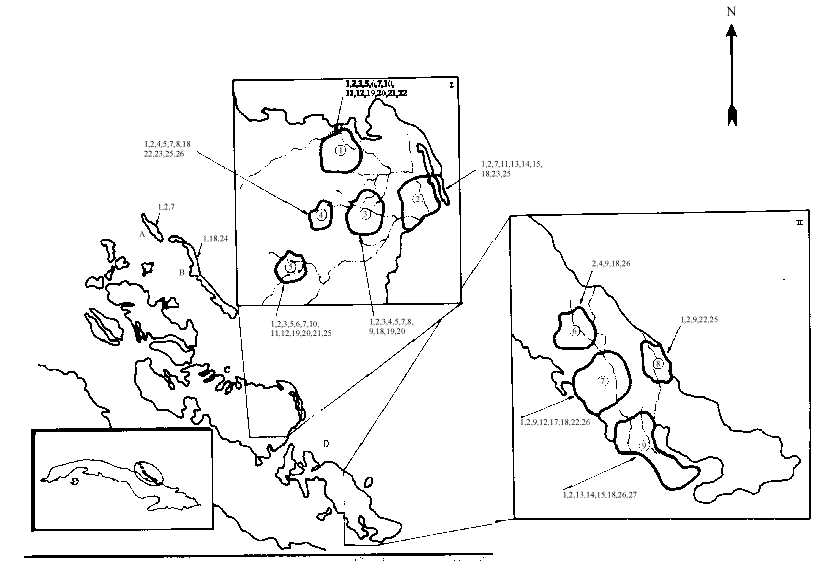
<body><![CDATA[<p></P>      <P ALIGN="CENTER">C= Casimba. Cc=Cueva de Cangrejo. P=Pozo. N=Neum&aacute;tico.</P>     <P>Durante las prospecciones entomol&oacute;gicas efectuadas en toda la extensi&oacute;n de los cayos M&eacute;gano Grande y Cruz, as&iacute; como en 5 localidades de cayo Romano y 4 de G&uuml;ajaba, respectivamente, se pudo apreciar que la distribuci&oacute;n de todas las especies no result&oacute; ser uniforme, el mayor n&uacute;mero se report&oacute; en cayo Romano, 22 en total (81,5 %) (figura y tabla 1). </P>     <P>Las especies colectadas intervienen en la transmisi&oacute;n de diversas enfermedades,<SUP>4,5</SUP>sin embargo, los agentes causales de &eacute;stas no circulan en el pa&iacute;s, pero, debido al empleo tur&iacute;stico que tendr&aacute; dicha zona, y que por tanto recepcionar&aacute; visitantes que procedan de &aacute;reas end&eacute;micas de algunas de estas enfermedades, es que necesitamos conocer los componentes faun&iacute;sticos de este territorio, para elaborar una correcta estrategia de control destinada a eliminar o disminuir las densidades poblacionales de dichas especies indeseables, con &eacute;nfasis en los m&eacute;todos biol&oacute;gicos, dentro de los cuales podemos mencionar a los insectos acu&aacute;ticos, de los que disponemos alguna informaci&oacute;n sobre su eficacia.<SUP>7</SUP> </P>     <P>Los factores que est&aacute;n determinando la presencia y distribuci&oacute;n de estos artr&oacute;podos en el enclave noroccidental de Camag&uuml;ey, ser&aacute;n objeto de an&aacute;lisis en futuras investigaciones. </P>     <P ALIGN="CENTER"><a href="/img/revistas/mtr/v49n2/f-15-297.gif"><IMG SRC="/img/revistas/mtr/v49n2/f-15-297.gif" WIDTH=287 HEIGHT=96 ALT="Figura" border="0"></a></P>     
<P><B>FIGURA.</b> Mapa de Cuba donde se muestra la ubicaci&oacute;n de la cayer&iacute;a noroccidental de la provincia de Camag&uuml;ey (encerrada en un c&iacute;rculo). A) cayo M&eacute;gano Grande, B) cayo Cruz, C) cayo Romano y D) cayo G&uuml;ajaba. I) Localidades muestreadas en cayo Romano:  Cayo Grillo, ‚ Versalles, ƒ El Molino, „ La Culebra y … El casimbal. II) Localidades muestreadas en cayo G&uuml;ajaba: † Casimba La G&uuml;ira, ‡ Loma Hato, ˆ El Playaso y ‰ Los Hornos. Los n&uacute;meros del 1 al 27 se&ntilde;alizan a las especies reportadas y coinciden con la numeraci&oacute;n que aparece en la tabla 1. </P> <H3>SUMMARY</H3>     <P>The existance of a group of insect of medical importance belonging to the families Culicidae, Blattide, Muscidae, Tabanidae, Ceratopogonidae and Chloropidae was reported in the northwestern keys of Camag&uuml;ey (keys M&eacute;gano Grande, Cruz, Romano and G&uuml;ajaba). Key Romano seems to have the best ecological conditions for the establishment of such vectors according to the number of species reported. </P>     <P><B>Subject headings:</b> TRAVELS AND TOURISM; PEST CONTROL, BIOLOGICAL; CULICIDAE; COMMUNICABLE DISEASES. </P> <H3>REFERENCIAS BIBLIOGR&Aacute;FICAS</H3> <OL>      <!-- ref --><LI>Jenkins DN. Pathogens, parasites and predators of medical important arthropods. Bull World Health Organization 1964;30:5-150.</LI>    <!-- ref --><LI>Service MW. Predation of inmature stages of <I>Aedes</I> (St). <I>vittatus</I> (Bigot) (Diptera Culicidae) in water-filled rock-pools in Northern Nigeria. WHO (EBL) 1965;33(65):1-19.</LI>    <!-- ref --><LI>Pazos JH. Contribuci&oacute;n al estudio de los mosquitos de Cuba. Bol Secretar&iacute;a Sanid Beneficiencia 1909;11(5):676-85.</LI>    <!-- ref --><LI>P&eacute;rez Vigueras I. Los ix&oacute;didos y cul&iacute;cidos de Cuba, su historia natural y m&eacute;dica. La Habana: Universidad de La Habana, 1956:579.</LI>    <LI>Garc&iacute;a &Aacute;vila I. Fauna cubana de mosquitos y sus criaderos t&iacute;picos. La Habana: Instituto de Zoolog&iacute;a, Direcci&oacute;n de Publicaciones de la Academia de Ciencias de Cuba, 1977:85.</LI>     <!-- ref --><LI>Miqueli E, Fuentes O. Nuevos r&eacute;cords de cul&iacute;cidos para la Isla de la Juventud (Diptera Culicidae). Rev Cubana Med Trop 1981;33(1):33-6.</LI>    <!-- ref --><LI>Santamarina MA. Artr&oacute;podos acu&aacute;ticos como biorreguladores de las fases larvales de los mosquitos. Bol Epidemiol INHEM 1982;4(5):1-5.</LI>    <!-- ref --><LI>Castex M, Fuentes O, Marquetti MC. Actividad hematof&aacute;gica de cul&iacute;cidos (Diptera: Culicidae) y sim&uacute;lidos (Diptera: Simulidae) en la Isla de la Juventud. Rev Cubana Med Trop 1987;38(3):69-77.</LI>    </OL>      <P>Recibido: 14 de octubre de 1996. Aprobado: 4 de abril de 1997. </P>     <P>M.Sc. <I>Lorenzo Di&eacute;guez Fern&aacute;ndez</I>. Centro Provincial de Higiene y Epidemiolog&iacute;a. Unidad Provincial de Vigilancia y Lucha Antivectorial. Apartado 5421, Camag&uuml;ey 3, CP 70300, Cuba. </P>    ]]></body>
<body><![CDATA[ ]]></body><back>
<ref-list>
<ref id="B1">
<nlm-citation citation-type="journal">
<person-group person-group-type="author">
<name>
<surname><![CDATA[Jenkins]]></surname>
<given-names><![CDATA[DN]]></given-names>
</name>
</person-group>
<article-title xml:lang="en"><![CDATA[Pathogens, parasites and predators of medical important arthropods]]></article-title>
<source><![CDATA[Bull World Health Organization]]></source>
<year>1964</year>
<volume>30</volume>
<page-range>5-150</page-range></nlm-citation>
</ref>
<ref id="B2">
<nlm-citation citation-type="journal">
<person-group person-group-type="author">
<name>
<surname><![CDATA[Service]]></surname>
<given-names><![CDATA[MW]]></given-names>
</name>
</person-group>
<article-title xml:lang="en"><![CDATA[Predation of inmature stages of Aedes (St): vittatus (Bigot) (Diptera Culicidae) in water-filled rock-pools in Northern Nigeria]]></article-title>
<source><![CDATA[WHO (EBL)]]></source>
<year>1965</year>
<volume>33</volume>
<numero>65</numero>
<issue>65</issue>
<page-range>1-19</page-range></nlm-citation>
</ref>
<ref id="B3">
<nlm-citation citation-type="journal">
<person-group person-group-type="author">
<name>
<surname><![CDATA[Pazos]]></surname>
<given-names><![CDATA[JH]]></given-names>
</name>
</person-group>
<article-title xml:lang="es"><![CDATA[Contribución al estudio de los mosquitos de Cuba]]></article-title>
<source><![CDATA[Bol Secretaría Sanid Beneficiencia]]></source>
<year>1909</year>
<volume>11</volume>
<numero>5</numero>
<issue>5</issue>
<page-range>676-85</page-range></nlm-citation>
</ref>
<ref id="B4">
<nlm-citation citation-type="book">
<person-group person-group-type="author">
<name>
<surname><![CDATA[Pérez Vigueras]]></surname>
<given-names><![CDATA[I]]></given-names>
</name>
</person-group>
<source><![CDATA[Los ixódidos y culícidos de Cuba, su historia natural y médica]]></source>
<year>1956</year>
<page-range>579</page-range><publisher-loc><![CDATA[La Habana ]]></publisher-loc>
<publisher-name><![CDATA[Universidad de La Habana]]></publisher-name>
</nlm-citation>
</ref>
<ref id="B5">
<nlm-citation citation-type="journal">
<person-group person-group-type="author">
<name>
<surname><![CDATA[Miqueli]]></surname>
<given-names><![CDATA[E]]></given-names>
</name>
<name>
<surname><![CDATA[Fuentes]]></surname>
<given-names><![CDATA[O]]></given-names>
</name>
</person-group>
<article-title xml:lang="es"><![CDATA[Nuevos récords de culícidos para la Isla de la Juventud (Diptera Culicidae)]]></article-title>
<source><![CDATA[Rev Cubana Med Trop]]></source>
<year>1981</year>
<volume>33</volume>
<numero>1</numero>
<issue>1</issue>
<page-range>33-6</page-range></nlm-citation>
</ref>
<ref id="B6">
<nlm-citation citation-type="journal">
<person-group person-group-type="author">
<name>
<surname><![CDATA[Santamarina]]></surname>
<given-names><![CDATA[MA]]></given-names>
</name>
</person-group>
<article-title xml:lang="es"><![CDATA[Artrópodos acuáticos como biorreguladores de las fases larvales de los mosquitos]]></article-title>
<source><![CDATA[Bol Epidemiol INHEM]]></source>
<year>1982</year>
<volume>4</volume>
<numero>5</numero>
<issue>5</issue>
<page-range>1-5</page-range></nlm-citation>
</ref>
<ref id="B7">
<nlm-citation citation-type="journal">
<person-group person-group-type="author">
<name>
<surname><![CDATA[Castex]]></surname>
<given-names><![CDATA[M]]></given-names>
</name>
<name>
<surname><![CDATA[Fuentes]]></surname>
<given-names><![CDATA[O]]></given-names>
</name>
<name>
<surname><![CDATA[Marquetti]]></surname>
<given-names><![CDATA[MC]]></given-names>
</name>
</person-group>
<article-title xml:lang="es"><![CDATA[Actividad hematofágica de culícidos (Diptera: Culicidae) y simúlidos (Diptera: Simulidae) en la Isla de la Juventud.]]></article-title>
<source><![CDATA[Rev Cubana Med Trop]]></source>
<year>1987</year>
<volume>38</volume>
<numero>(3)</numero>
<issue>(3)</issue>
<page-range>69-77</page-range></nlm-citation>
</ref>
</ref-list>
</back>
</article>
