<?xml version="1.0" encoding="ISO-8859-1"?><article xmlns:mml="http://www.w3.org/1998/Math/MathML" xmlns:xlink="http://www.w3.org/1999/xlink" xmlns:xsi="http://www.w3.org/2001/XMLSchema-instance">
<front>
<journal-meta>
<journal-id>0864-2125</journal-id>
<journal-title><![CDATA[Revista Cubana de Medicina General Integral]]></journal-title>
<abbrev-journal-title><![CDATA[Rev Cubana Med Gen Integr]]></abbrev-journal-title>
<issn>0864-2125</issn>
<publisher>
<publisher-name><![CDATA[ECIMED]]></publisher-name>
</publisher>
</journal-meta>
<article-meta>
<article-id>S0864-21252000000300001</article-id>
<title-group>
<article-title xml:lang="es"><![CDATA[Tabaquismo y sus características en trabajadores de la salud]]></article-title>
</title-group>
<contrib-group>
<contrib contrib-type="author">
<name>
<surname><![CDATA[Varona Pérez]]></surname>
<given-names><![CDATA[Patricia]]></given-names>
</name>
<xref ref-type="aff" rid="A01"/>
</contrib>
<contrib contrib-type="author">
<name>
<surname><![CDATA[Fernández Larrea]]></surname>
<given-names><![CDATA[Nyuris]]></given-names>
</name>
</contrib>
<contrib contrib-type="author">
<name>
<surname><![CDATA[Bonet Gorbea]]></surname>
<given-names><![CDATA[Mariano]]></given-names>
</name>
</contrib>
<contrib contrib-type="author">
<name>
<surname><![CDATA[García Roche]]></surname>
<given-names><![CDATA[René Guillermo]]></given-names>
</name>
</contrib>
<contrib contrib-type="author">
<name>
<surname><![CDATA[Ibarra Salas]]></surname>
<given-names><![CDATA[Ana María]]></given-names>
</name>
</contrib>
<contrib contrib-type="author">
<name>
<surname><![CDATA[Chang de la Rosa]]></surname>
<given-names><![CDATA[María]]></given-names>
</name>
</contrib>
</contrib-group>
<aff id="A01">
<institution><![CDATA[,Facultad Calixto García  ]]></institution>
<addr-line><![CDATA[Ciudad de La Habana ]]></addr-line>
<country>Cuba</country>
</aff>
<pub-date pub-type="pub">
<day>00</day>
<month>06</month>
<year>2000</year>
</pub-date>
<pub-date pub-type="epub">
<day>00</day>
<month>06</month>
<year>2000</year>
</pub-date>
<volume>16</volume>
<numero>3</numero>
<fpage>221</fpage>
<lpage>226</lpage>
<copyright-statement/>
<copyright-year/>
<self-uri xlink:href="http://scielo.sld.cu/scielo.php?script=sci_arttext&amp;pid=S0864-21252000000300001&amp;lng=en&amp;nrm=iso"></self-uri><self-uri xlink:href="http://scielo.sld.cu/scielo.php?script=sci_abstract&amp;pid=S0864-21252000000300001&amp;lng=en&amp;nrm=iso"></self-uri><self-uri xlink:href="http://scielo.sld.cu/scielo.php?script=sci_pdf&amp;pid=S0864-21252000000300001&amp;lng=en&amp;nrm=iso"></self-uri><abstract abstract-type="short" xml:lang="es"><p><![CDATA[Los médicos y otros profesionales de la salud constituyen importantes fuentes de influencia para lograr cambios positivos de los niveles de tabaquismo en la comunidad. Se presentan los resultados de un estudio transversal en 221 trabajadores de la salud, del municipio Centro Habana. Su objetivo determinar en ellos la prevalencia del tabaquismo y sus características, cómo percibían el riesgo de fumar, e identificar propuestas para reducir la frecuencia de fumadores y el consumo de cigarrillos. Se aplicaron técnicas cuantitativas y cualitativas de investigación (grupos focales). El cuestionario incluyó variables sociodemográficas, variables relacionadas con el consumo, y variables relacionadas con la percepción del riesgo de fumar. En lo cualitativo, se exploraron propuestas para reducir esta conducta. El 32 % de los médicos y el 46 % de las enfermeras fumaban en el momento de la encuesta. Los médicos aportaron más fumadores moderados y severos, y se sintieron menos limitados a fumar en sus centros de trabajo que las enfermeras. El 17 % de ellos y el 20 % de las enfermeras aceptó que fumar le representó más beneficios que daños. En ambos grupos se evidenció una percepción distorsionada del riesgo de fumar. Entre las propuestas hechas por los propios trabajadores, que deberán tenerse en cuenta al implementar proyectos de intervención, se encontraron: fortalecer en la atención primaria los servicios de cesación para fumadores, hacer cumplir en los centros de salud las regulaciones para fumar, aplicar sanciones a los violadores de lo reglamentado y divulgar de manera sistemática la importancia de la función modélica de los médicos y enfermeras, como importantes agentes de cambios en la sociedad]]></p></abstract>
<abstract abstract-type="short" xml:lang="en"><p><![CDATA[Physicians and other health professionals are important sources of influence to attain positive changes of the smoking levels. The results of a cross-sectional study of 221 health workers from the Centro Habana municipality are shown in this study that is aimed at determining among these individuals the prevalence of smoking and its characteristics, how they perceive the smoking risk, and at identifying proposals to reduce the frequency of smokers and the consumption of cigarettes. Quantitative and qualitative research techniques (focal groups) were applied. The questionnarie included sociodemographic variables, variables connected with the consumption and variables related to the perception of the smoking risk. As regards the qualitative aspect, proposals to reduce this conduct were explored. 32% of the physicians and 46% of the nurses smoked at the time the survey was done. Among the smokers there were more moderate and severe smokers and they felt less limited to smoke at their working centers that nurses. l7% of them and 20% of the nurses accepted that smoking represented more benefits than damages. In both groups it was observed a distorsioned perception of the smoking risk. Some of the proposals made by the own workers that should be taken into account on implementing intervention projects were the following: To strenghten at the primary care level the services of cessation for smokers, to fulfill the smoking regulations at the working centers, to apply sanctions to those who violate the rules and to spread systematically the important role played by physicians and nurses as agents of changes in society]]></p></abstract>
<kwd-group>
</kwd-group>
</article-meta>
</front><body><![CDATA[ <P>&nbsp;</P> <H3>Trabajos Originales</H3> <H2>Tabaquismo y sus caracter&iacute;sticas en trabajadores de la salud</H2>     <P><A HREF="#x"><I>Patricia Varona P&eacute;rez,<SUP>1</SUP> Nyuris Fern&aacute;ndez Larrea,<SUP>2 </SUP>Mariano Bonet Gorbea,<SUP>3</SUP> Ren&eacute; Guillermo Garc&iacute;a Roche,<SUP>4 </SUP>Ana Mar&iacute;a Ibarra Salas<SUP>5</SUP> y Mar&iacute;a Chang de la Rosa<SUP>6</sup></I></A> </P> <H4>RESUMEN</H4>     <P>Los m&eacute;dicos y otros profesionales de la salud constituyen importantes fuentes de influencia para lograr cambios positivos de los niveles de tabaquismo en la comunidad. Se presentan los resultados de un estudio transversal en 221 trabajadores de la salud, del municipio Centro Habana. Su objetivo determinar en ellos la prevalencia del tabaquismo y sus caracter&iacute;sticas, c&oacute;mo percib&iacute;an el riesgo de fumar, e identificar propuestas para reducir la frecuencia de fumadores y el consumo de cigarrillos. Se aplicaron t&eacute;cnicas cuantitativas y cualitativas de investigaci&oacute;n (grupos focales). El cuestionario incluy&oacute; variables sociodemogr&aacute;ficas, variables relacionadas con el consumo, y variables relacionadas con la percepci&oacute;n del riesgo de fumar. En lo cualitativo, se exploraron propuestas para reducir esta conducta. El 32 % de los m&eacute;dicos y el 46 % de las enfermeras fumaban en el momento de la encuesta. Los m&eacute;dicos aportaron m&aacute;s fumadores moderados y severos, y se sintieron menos limitados a fumar en sus centros de trabajo que las enfermeras. El 17 % de ellos y el 20 % de las enfermeras acept&oacute; que fumar le represent&oacute; m&aacute;s beneficios que da&ntilde;os. En ambos grupos se evidenci&oacute; una percepci&oacute;n distorsionada del riesgo de fumar. Entre las propuestas hechas por los propios trabajadores, que deber&aacute;n tenerse en cuenta al implementar proyectos de intervenci&oacute;n, se encontraron: fortalecer en la atenci&oacute;n primaria los servicios de cesaci&oacute;n para fumadores, hacer cumplir en los centros de salud las regulaciones para fumar, aplicar sanciones a los violadores de lo reglamentado y divulgar de manera sistem&aacute;tica la importancia de la funci&oacute;n mod&eacute;lica de los m&eacute;dicos y enfermeras, como importantes agentes de cambios en la sociedad. </P>     <P>Descriptores DeCS: <B>TABAQUISMO; PERSONAL DE SALUD.</B> </P>     <P>En las &uacute;ltimas d&eacute;cadas, m&uacute;ltiples investigaciones han probado fehacien-temente la asociaci&oacute;n entre tabaquismo y salud en sentido negativo. Se estima que 7 de cada 10 muertes prematuras ocurren directa o indirectamente por el consumo de productos del tabaco.<SUP>1-3</SUP> </P>     <P>La problem&aacute;tica de esta adicci&oacute;n en el personal que labora en el sector salud, ha sido objeto de an&aacute;lisis por la Organizaci&oacute;n Mundial de la Salud (OMS), teniendo en cuenta que los m&eacute;dicos y otros profesionales de la salud constituyen importantes fuentes de informaci&oacute;n e influencia, para lograr cambios favorables en los niveles de tabaquismo de la poblaci&oacute;n,<SUP>4</SUP> por lo que se hace necesaria su participaci&oacute;n en el empe&ntilde;o de transformar este comportamiento riesgoso en la comunidad, cuya prevalencia y consumo per c&aacute;pita de cigarrillos, ubic&oacute; a Cuba en los primeros lugares en la regi&oacute;n latinoamericana desde la d&eacute;cada del 80, tal como ha sido referido en el Programa de Prevenci&oacute;n y Control del Tabaquismo en Cuba, 1986. </P>     <P>En conocimiento de que la prevalencia de tabaquismo en los trabajadores de la salud, en especial en m&eacute;dicos y enfermeras, puede ser predictora de la prevalencia en la comunidad y motivados por modificar el comportamiento de esta drogadicci&oacute;n en el municipio Centro Habana, nos planteamos determinar el comportamiento del tabaquismo y algunos factores a &eacute;l asociados en estos trabajadores, c&oacute;mo percib&iacute;an el riesgo de fumar e identificar propuestas para reducir la prevalencia de fumadores y consumo del tabaco dentro del sector y en la poblaci&oacute;n general. </P> <H4>M&Eacute;TODOS</H4>     <P>Se realiz&oacute; un estudio transversal cuyo universo de estudio lo constituyeron los trabajadores que laboraban en las &aacute;reas de salud del municipio Centro Habana y el Hospital "Freyre Andrade". </P>     <P>El tama&ntilde;o muestral necesario se calcul&oacute; en 221 trabajadores de la salud, teniendo en cuenta que en el estudio piloto aproximadamente el 60 % de ellos hab&iacute;a fumado al menos una vez, el error que est&aacute;bamos dispuestos a aceptar no superar&iacute;a el 10 % de este par&aacute;metro y la ca&iacute;da de la muestra el 5 %. </P>     <P>Para garantizar la equiprobabilidad de la muestra, &eacute;sta se seleccion&oacute; mediante un muestreo aleatorio estratificado en el cual las &aacute;reas de salud y el hospital constituyeron los estratos y se hizo asignaci&oacute;n proporcional de la muestra al tama&ntilde;o de los estratos. </P>     ]]></body>
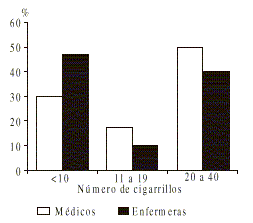
<body><![CDATA[<P>Previamente a la realizaci&oacute;n de la investigaci&oacute;n se hizo un estudio piloto en el municipio Cerro, espec&iacute;ficamente en el Policl&iacute;nico "H&eacute;roes de Gir&oacute;n", en el cual se prob&oacute; el instrumento al que posteriormente se le hicieron las adecuaciones necesarias. </P>     <P>En el estudio se usaron t&eacute;cnicas cuantitativas y cualitativas. En las primeras se aplic&oacute; un cuestionario autoadministrado, an&oacute;nimo, contentivo de variables socio-demogr&aacute;ficas (edad, sexo, &aacute;rea de salud donde trabajaba); relacionadas con las caracter&iacute;sticas del h&aacute;bito de fumar (intensidad, frecuencia y duraci&oacute;n) y con la percepci&oacute;n del riesgo de fumar. Para las t&eacute;cnicas cualitativas se conformaron 10 grupos focales homog&eacute;neos, con m&eacute;dicos, enfermeras y otros trabajadores, atendiendo a la tenencia o no del h&aacute;bito. Dichos grupos sesionaron siguiendo una gu&iacute;a orientada al alcance de los objetivos. La aplicaci&oacute;n de esta t&eacute;cnica permiti&oacute; recoger las propuestas sobre c&oacute;mo reducir el tabaquismo en el sector de la salud y en la poblaci&oacute;n general. </P>     <P>El error de tipo I fue fijado en 0,05. Se utilizaron para el an&aacute;lisis descriptores de frecuencia (n&uacute;meros absolutos, porcentajes, promedios). Adem&aacute;s se evaluaron los factores asociados a la condici&oacute;n de fumador a trav&eacute;s del <I>odds ratio</I> (OR) y su intervalo de confianza de 95 %. Se us&oacute; tambi&eacute;n como prueba de significaci&oacute;n estad&iacute;stica de la asociaci&oacute;n entre variables cualitativas la prueba de chi cuadrado. El procesamiento se hizo con el programa Epi-Info Versi&oacute;n 6. A la informaci&oacute;n obtenida por t&eacute;cnica cualitativa se le hizo "an&aacute;lisis de contenido". </P> <H4>RESULTADOS</H4>     <P>Del total de encuestados (221), fueron m&eacute;dicos el 56 % (124) y enfermeras el 44 % (97). Correspondi&oacute; al sexo masculino el 33 %. La media de edad entre los m&eacute;dicos fue de 33 a&ntilde;os y entre las enfermeras 35. </P>     <P>Refiri&oacute; haber fumado al menos alguna vez, el 48 % de los m&eacute;dicos y el 57 % de las enfermeras. Fumaba en el momento de la encuesta el 33 % de los m&eacute;dicos y el 47 % de las enfermeras. </P>     <P>La frecuencia de fumadores severos (m&aacute;s de 20 cigarrillos/d&iacute;a) y moderados (entre 11 y 19 cigarrillos/d&iacute;a) fue mayor en los m&eacute;dicos que en las enfermeras (fig.), quienes para fumar en su centro de trabajo, se sintieron limitadas con "mucha frecuencia" en mayor proporci&oacute;n que los m&eacute;dicos (51 % vs. 15 %); en tanto &eacute;stos refirieron sentirse "s&oacute;lo a veces" con restricciones en mayor frecuencia (55 % vs. 18 %). Declararon una actitud positiva hacia el abandono del h&aacute;bito, "de encontrar alguna ayuda para lograrlo", 8 de cada 10 m&eacute;dicos y 7 de cada 10 enfermeras. Expresaron control del mismo, similar proporci&oacute;n de ambos grupos, sin encontrarse diferencias marcadas, aunque entre los m&eacute;dicos fue mayor la proporci&oacute;n que entre las enfermeras (55 % vs. 51 %). Respondieron que fumar les "representaba m&aacute;s beneficios que da&ntilde;os" el 17 % de los m&eacute;dicos (7) y el 20 % de las enfermeras (9); sin embargo, la respuesta a la pregunta "si un fumador recibe m&aacute;s beneficios que da&ntilde;os cuando deja de fumar", fue positiva en el 100 % de los m&eacute;dicos fumadores (40) y en 88 % de las enfermeras fumadoras (40). </P>     <P ALIGN="CENTER"><A HREF="/img/revistas/mgi/v16n3/f0102300.gif"><IMG SRC="/img/revistas/mgi/v16n3/f0102300.gif" BORDER=0 ALT="Fig. Consumo de cigarrillos en médicos y enfermeras."></A>    
<BR> Fig. Consumo de cigarrillos en m&eacute;dicos y enfermeras.</P>     <P>La percepci&oacute;n del riesgo de fumar activamente fue similar en m&eacute;dicos y enfermeras, no as&iacute; la de ser fumador pasivo, que en las enfermeras se valor&oacute; como de mayor riesgo, aunque en ambos grupos fue baja (tabla 1); se evidenci&oacute; un aumento de la misma al personalizar el riesgo, as&iacute; como discrepancia entre conocimientos y conducta.     <BR> &nbsp; </P>     ]]></body>
<body><![CDATA[<P ALIGN="CENTER">Tabla 1.<B> Valoraci&oacute;n del riesgo de fumar en m&eacute;dicos y enfermeras</b></P>     <P ALIGN="CENTER">    <CENTER><TABLE CELLSPACING=0 BORDER=0 CELLPADDING=4 WIDTH=623> <TR><TD WIDTH="14%" VALIGN="BOTTOM" ROWSPAN=3>     <P>Variables&nbsp;</TD> <TD WIDTH="30%" VALIGN="TOP" COLSPAN=2>     <P ALIGN="CENTER">M&eacute;dicos</TD> <TD WIDTH="30%" VALIGN="TOP" COLSPAN=2>     <P ALIGN="CENTER">Enfermeras</TD> <TD WIDTH="14%" VALIGN="TOP">     <P ALIGN="CENTER">Chi</TD> <TD WIDTH="14%" VALIGN="TOP">     <P>&nbsp;</TD> </TR> <TR><TD WIDTH="15%" VALIGN="TOP">     <P ALIGN="CENTER">No.</TD> <TD WIDTH="15%" VALIGN="TOP">     <P ALIGN="CENTER">%</TD> <TD WIDTH="15%" VALIGN="TOP">     ]]></body>
<body><![CDATA[<P ALIGN="CENTER">No.</TD> <TD WIDTH="15%" VALIGN="TOP">     <P ALIGN="CENTER">%</TD> <TD WIDTH="14%" VALIGN="TOP">     <P ALIGN="CENTER">cuadrado</TD> <TD WIDTH="14%" VALIGN="TOP">     <P ALIGN="CENTER">Valor de p</TD> </TR> <TR><TD WIDTH="15%" VALIGN="TOP">     <P>&nbsp;</TD> <TD WIDTH="15%" VALIGN="TOP">     <P>&nbsp;</TD> <TD WIDTH="15%" VALIGN="TOP">     <P>&nbsp;</TD> <TD WIDTH="15%" VALIGN="TOP">     <P>&nbsp;</TD> <TD WIDTH="14%" VALIGN="TOP">     <P>&nbsp;</TD> <TD WIDTH="14%" VALIGN="TOP">     <P>&nbsp;</TD> </TR> <TR><TD WIDTH="14%" VALIGN="TOP">     ]]></body>
<body><![CDATA[<P>"muy riesgoso"</TD> <TD WIDTH="15%" VALIGN="TOP">     <P ALIGN="CENTER">95</TD> <TD WIDTH="15%" VALIGN="TOP">     <P ALIGN="CENTER">77</TD> <TD WIDTH="15%" VALIGN="TOP">     <P ALIGN="CENTER">73</TD> <TD WIDTH="15%" VALIGN="TOP">     <P ALIGN="CENTER">74</TD> <TD WIDTH="14%" VALIGN="TOP">     <P ALIGN="CENTER">0,23</TD> <TD WIDTH="14%" VALIGN="TOP">     <P ALIGN="CENTER">0,6</TD> </TR> <TR><TD WIDTH="14%" VALIGN="TOP">     <P>"riesgoso"</TD> <TD WIDTH="15%" VALIGN="TOP">     <P ALIGN="CENTER">29</TD> <TD WIDTH="15%" VALIGN="TOP">     <P ALIGN="CENTER">23</TD> <TD WIDTH="15%" VALIGN="TOP">     ]]></body>
<body><![CDATA[<P ALIGN="CENTER">24</TD> <TD WIDTH="15%" VALIGN="TOP">     <P ALIGN="CENTER">26</TD> <TD WIDTH="14%" VALIGN="TOP">     <P ALIGN="CENTER">0,00</TD> <TD WIDTH="14%" VALIGN="TOP">     <P ALIGN="CENTER">0,9</TD> </TR> <TR><TD WIDTH="14%" VALIGN="TOP">     <P>Fumar otros en locales</TD> <TD WIDTH="15%" VALIGN="TOP">     <P>&nbsp;</TD> <TD WIDTH="15%" VALIGN="TOP">     <P>&nbsp;</TD> <TD WIDTH="15%" VALIGN="TOP">     <P>&nbsp;</TD> <TD WIDTH="15%" VALIGN="TOP">     <P>&nbsp;</TD> <TD WIDTH="14%" VALIGN="TOP">     <P>&nbsp;</TD> <TD WIDTH="14%" VALIGN="TOP">     ]]></body>
<body><![CDATA[<P>&nbsp;</TD> </TR> <TR><TD WIDTH="14%" VALIGN="TOP">     <P>donde Ud. se encuentra</TD> <TD WIDTH="15%" VALIGN="TOP">     <P>&nbsp;</TD> <TD WIDTH="15%" VALIGN="TOP">     <P>&nbsp;</TD> <TD WIDTH="15%" VALIGN="TOP">     <P>&nbsp;</TD> <TD WIDTH="15%" VALIGN="TOP">     <P>&nbsp;</TD> <TD WIDTH="14%" VALIGN="TOP">     <P>&nbsp;</TD> <TD WIDTH="14%" VALIGN="TOP">     <P>&nbsp;</TD> </TR> <TR><TD WIDTH="14%" VALIGN="TOP">     <P>"muy riesgoso"</TD> <TD WIDTH="15%" VALIGN="TOP">     <P ALIGN="CENTER">42</TD> <TD WIDTH="15%" VALIGN="TOP">     ]]></body>
<body><![CDATA[<P ALIGN="CENTER">34</TD> <TD WIDTH="15%" VALIGN="TOP">     <P ALIGN="CENTER">46</TD> <TD WIDTH="15%" VALIGN="TOP">     <P ALIGN="CENTER">47</TD> <TD WIDTH="14%" VALIGN="TOP">     <P ALIGN="CENTER">1,9</TD> <TD WIDTH="14%" VALIGN="TOP">     <P ALIGN="CENTER">0,1</TD> </TR> <TR><TD WIDTH="14%" VALIGN="TOP">     <P>"riesgoso"</TD> <TD WIDTH="15%" VALIGN="TOP">     <P ALIGN="CENTER">82</TD> <TD WIDTH="15%" VALIGN="TOP">     <P ALIGN="CENTER">66</TD> <TD WIDTH="15%" VALIGN="TOP">     <P ALIGN="CENTER">51</TD> <TD WIDTH="15%" VALIGN="TOP">     <P ALIGN="CENTER">53</TD> <TD WIDTH="14%" VALIGN="TOP">     ]]></body>
<body><![CDATA[<P ALIGN="CENTER">2,2</TD> <TD WIDTH="14%" VALIGN="TOP">     <P ALIGN="CENTER">0,1</TD> </TR> <TR><TD WIDTH="14%" VALIGN="TOP">     <P>Fumar Ud. en locales</TD> <TD WIDTH="15%" VALIGN="TOP">     <P>&nbsp;</TD> <TD WIDTH="15%" VALIGN="TOP">     <P>&nbsp;</TD> <TD WIDTH="15%" VALIGN="TOP">     <P>&nbsp;</TD> <TD WIDTH="15%" VALIGN="TOP">     <P>&nbsp;</TD> <TD WIDTH="14%" VALIGN="TOP">     <P>&nbsp;</TD> <TD WIDTH="14%" VALIGN="TOP">     <P>&nbsp;</TD> </TR> <TR><TD WIDTH="14%" VALIGN="TOP">     <P>donde otros se&nbsp;</TD> <TD WIDTH="15%" VALIGN="TOP">     ]]></body>
<body><![CDATA[<P>&nbsp;</TD> <TD WIDTH="15%" VALIGN="TOP">     <P>&nbsp;</TD> <TD WIDTH="15%" VALIGN="TOP">     <P>&nbsp;</TD> <TD WIDTH="15%" VALIGN="TOP">     <P>&nbsp;</TD> <TD WIDTH="14%" VALIGN="TOP">     <P>&nbsp;</TD> <TD WIDTH="14%" VALIGN="TOP">     <P>&nbsp;</TD> </TR> <TR><TD WIDTH="14%" VALIGN="TOP">     <P>encuentran</TD> <TD WIDTH="15%" VALIGN="TOP">     <P>&nbsp;</TD> <TD WIDTH="15%" VALIGN="TOP">     <P>&nbsp;</TD> <TD WIDTH="15%" VALIGN="TOP">     <P>&nbsp;</TD> <TD WIDTH="15%" VALIGN="TOP">     ]]></body>
<body><![CDATA[<P>&nbsp;</TD> <TD WIDTH="14%" VALIGN="TOP">     <P>&nbsp;</TD> <TD WIDTH="14%" VALIGN="TOP">     <P>&nbsp;</TD> </TR> <TR><TD WIDTH="14%" VALIGN="TOP">     <P>"muy riesgoso"</TD> <TD WIDTH="15%" VALIGN="TOP">     <P ALIGN="CENTER">52</TD> <TD WIDTH="15%" VALIGN="TOP">     <P ALIGN="CENTER">42</TD> <TD WIDTH="15%" VALIGN="TOP">     <P ALIGN="CENTER">51</TD> <TD WIDTH="15%" VALIGN="TOP">     <P ALIGN="CENTER">53</TD> <TD WIDTH="14%" VALIGN="TOP">     <P ALIGN="CENTER">1,1</TD> <TD WIDTH="14%" VALIGN="TOP">     <P ALIGN="CENTER">0,2</TD> </TR> <TR><TD WIDTH="14%" VALIGN="TOP">     ]]></body>
<body><![CDATA[<P>"riesgoso"</TD> <TD WIDTH="15%" VALIGN="TOP">     <P ALIGN="CENTER">72</TD> <TD WIDTH="15%" VALIGN="TOP">     <P ALIGN="CENTER">58</TD> <TD WIDTH="15%" VALIGN="TOP">     <P ALIGN="CENTER">46</TD> <TD WIDTH="15%" VALIGN="TOP">     <P ALIGN="CENTER">47</TD> <TD WIDTH="14%" VALIGN="TOP">     <P ALIGN="CENTER">1,2</TD> <TD WIDTH="14%" VALIGN="TOP">     <P ALIGN="CENTER">0,2</TD> </TR> <TR><TD WIDTH="14%" VALIGN="TOP">     <P>Fumar m&aacute;s de 10</TD> <TD WIDTH="15%" VALIGN="TOP">     <P>&nbsp;</TD> <TD WIDTH="15%" VALIGN="TOP">     <P>&nbsp;</TD> <TD WIDTH="15%" VALIGN="TOP">     ]]></body>
<body><![CDATA[<P>&nbsp;</TD> <TD WIDTH="15%" VALIGN="TOP">     <P>&nbsp;</TD> <TD WIDTH="14%" VALIGN="TOP">     <P>&nbsp;</TD> <TD WIDTH="14%" VALIGN="TOP">     <P>&nbsp;</TD> </TR> <TR><TD WIDTH="14%" VALIGN="TOP">     <P>cigarrillos/d&iacute;a</TD> <TD WIDTH="15%" VALIGN="TOP">     <P>&nbsp;</TD> <TD WIDTH="15%" VALIGN="TOP">     <P>&nbsp;</TD> <TD WIDTH="15%" VALIGN="TOP">     <P>&nbsp;</TD> <TD WIDTH="15%" VALIGN="TOP">     <P>&nbsp;</TD> <TD WIDTH="14%" VALIGN="TOP">     <P>&nbsp;</TD> <TD WIDTH="14%" VALIGN="TOP">     ]]></body>
<body><![CDATA[<P>&nbsp;</TD> </TR> <TR><TD WIDTH="14%" VALIGN="TOP">     <P>"muy riesgoso"</TD> <TD WIDTH="15%" VALIGN="TOP">     <P ALIGN="CENTER">86</TD> <TD WIDTH="15%" VALIGN="TOP">     <P ALIGN="CENTER">69</TD> <TD WIDTH="15%" VALIGN="TOP">     <P ALIGN="CENTER">64</TD> <TD WIDTH="15%" VALIGN="TOP">     <P ALIGN="CENTER">66</TD> <TD WIDTH="14%" VALIGN="TOP">     <P ALIGN="CENTER">0,1</TD> <TD WIDTH="14%" VALIGN="TOP">     <P ALIGN="CENTER">0,7</TD> </TR> <TR><TD WIDTH="14%" VALIGN="TOP">     <P>"riesgoso"</TD> <TD WIDTH="15%" VALIGN="TOP">     <P ALIGN="CENTER">38</TD> <TD WIDTH="15%" VALIGN="TOP">     ]]></body>
<body><![CDATA[<P ALIGN="CENTER">31</TD> <TD WIDTH="15%" VALIGN="TOP">     <P ALIGN="CENTER">33</TD> <TD WIDTH="15%" VALIGN="TOP">     <P ALIGN="CENTER">34</TD> <TD WIDTH="14%" VALIGN="TOP">     <P ALIGN="CENTER">0,0</TD> <TD WIDTH="14%" VALIGN="TOP">     <P ALIGN="CENTER">0,8</TD> </TR> </TABLE> </CENTER>    <p></P>      <P ALIGN="CENTER">Aproximadamente 7 de cada 10 m&eacute;dicos que fuman, consideraron que se deben crear &aacute;reas para fumar; en tanto, 8 de cada 10 enfermeras. S&oacute;lo la mitad de los m&eacute;dicos fumadores (51 %) consider&oacute; el cigarro una droga, proporci&oacute;n menor a la observada en las enfermeras (57 %). Entre los no fumadores, las proporciones fueron mayores (69 % y 92 % respectivamente). </P>     <P>El an&aacute;lisis bivariado (tabla 2) permiti&oacute; identificar como variables protectoras para la condici&oacute;n de ser fumador en nuestra muestra: ser m&eacute;dico, considerar fumar y consumir m&aacute;s de 10 cigarrillos/d&iacute;a como algo "muy riesgoso", y adem&aacute;s de opinar que el cigarrillo es una droga. Que "Ud. fume en el local donde otras personas se encuentran" y "que otras personas fumen en el local donde Ud. se encuentra" resultaron ser tambi&eacute;n protectoras, en la medida en que la valoraci&oacute;n del riesgo por los encuestados aumentaba. </P>     <P ALIGN="CENTER">Tabla 2. <B>Variables asociadas a la condici&oacute;n de fumador en m&eacute;dicos y enfermeras</b></P>     <P ALIGN="CENTER">    ]]></body>
<body><![CDATA[<CENTER><TABLE CELLSPACING=0 BORDER=0 CELLPADDING=4 WIDTH=617> <TR><TD WIDTH="33%" VALIGN="TOP">     <P>Variables&nbsp;</TD> <TD WIDTH="33%" VALIGN="TOP">     <P ALIGN="CENTER">OR*</TD> <TD WIDTH="33%" VALIGN="TOP">     <P ALIGN="CENTER">IC 95 %</TD> </TR> <TR><TD WIDTH="33%" VALIGN="TOP">     <P>Sexo</TD> <TD WIDTH="33%" VALIGN="TOP">     <P>&nbsp;</TD> <TD WIDTH="33%" VALIGN="TOP">     <P>&nbsp;</TD> </TR> <TR><TD WIDTH="33%" VALIGN="TOP">     <P>masculino/femenino</TD> <TD WIDTH="33%" VALIGN="TOP">     <P ALIGN="CENTER">1,24</TD> <TD WIDTH="33%" VALIGN="TOP">     <P ALIGN="CENTER">0,66-2,33</TD> </TR> <TR><TD WIDTH="33%" VALIGN="TOP">     ]]></body>
<body><![CDATA[<P>Labor</TD> <TD WIDTH="33%" VALIGN="TOP">     <P ALIGN="CENTER">0,53</TD> <TD WIDTH="33%" VALIGN="TOP">     <P ALIGN="CENTER">0,29-0,96</TD> </TR> <TR><TD WIDTH="33%" VALIGN="TOP">     <P>m&eacute;dico/enfermera</TD> <TD WIDTH="33%" VALIGN="TOP">     <P>&nbsp;</TD> <TD WIDTH="33%" VALIGN="TOP">     <P>&nbsp;</TD> </TR> <TR><TD WIDTH="33%" VALIGN="TOP">     <P>Considerar el cigarrillo</TD> <TD WIDTH="33%" VALIGN="TOP">     <P>&nbsp;</TD> <TD WIDTH="33%" VALIGN="TOP">     <P>&nbsp;</TD> </TR> <TR><TD WIDTH="33%" VALIGN="TOP">     <P>como droga</TD> <TD WIDTH="33%" VALIGN="TOP">     ]]></body>
<body><![CDATA[<P ALIGN="CENTER">0,31</TD> <TD WIDTH="33%" VALIGN="TOP">     <P ALIGN="CENTER">0,15-0,62</TD> </TR> <TR><TD WIDTH="33%" VALIGN="TOP">     <P>Considerar ser fumador</TD> <TD WIDTH="33%" VALIGN="TOP">     <P>&nbsp;</TD> <TD WIDTH="33%" VALIGN="TOP">     <P>&nbsp;</TD> </TR> <TR><TD WIDTH="33%" VALIGN="TOP">     <P>(muy riesgoso/riesgoso)</TD> <TD WIDTH="33%" VALIGN="TOP">     <P ALIGN="CENTER">0,29</TD> <TD WIDTH="33%" VALIGN="TOP">     <P ALIGN="CENTER">0,14-0,60</TD> </TR> <TR><TD WIDTH="33%" VALIGN="TOP">     <P>Considerar que otros fumen en</TD> <TD WIDTH="33%" VALIGN="TOP">     <P>&nbsp;</TD> <TD WIDTH="33%" VALIGN="TOP">     ]]></body>
<body><![CDATA[<P>&nbsp;</TD> </TR> <TR><TD WIDTH="33%" VALIGN="TOP">     <P>el lugar que ud. se encuentra</TD> <TD WIDTH="33%" VALIGN="TOP">     <P>&nbsp;</TD> <TD WIDTH="33%" VALIGN="TOP">     <P>&nbsp;</TD> </TR> <TR><TD WIDTH="33%" VALIGN="TOP">     <P>* Algo riesgoso</TD> <TD WIDTH="33%" VALIGN="TOP">     <P ALIGN="CENTER">1</TD> <TD WIDTH="33%" VALIGN="TOP">     <P ALIGN="CENTER">0,1-0,81</TD> </TR> <TR><TD WIDTH="33%" VALIGN="TOP">     <P>* Riesgoso</TD> <TD WIDTH="33%" VALIGN="TOP">     <P ALIGN="CENTER">0,2</TD> <TD WIDTH="33%" VALIGN="TOP">     <P ALIGN="CENTER">0,05-0,7</TD> </TR> <TR><TD WIDTH="33%" VALIGN="TOP">     ]]></body>
<body><![CDATA[<P>* Muy riesgoso</TD> <TD WIDTH="33%" VALIGN="TOP">     <P ALIGN="CENTER">0,09</TD> <TD WIDTH="33%" VALIGN="TOP">     <P>&nbsp;</TD> </TR> <TR><TD WIDTH="33%" VALIGN="TOP">     <P>Considerar que ud. fume en el</TD> <TD WIDTH="33%" VALIGN="TOP">     <P>&nbsp;</TD> <TD WIDTH="33%" VALIGN="TOP">     <P>&nbsp;</TD> </TR> <TR><TD WIDTH="33%" VALIGN="TOP">     <P>local donde otras personas se</TD> <TD WIDTH="33%" VALIGN="TOP">     <P>&nbsp;</TD> <TD WIDTH="33%" VALIGN="TOP">     <P>&nbsp;</TD> </TR> <TR><TD WIDTH="33%" VALIGN="TOP">     <P>encuentran</TD> <TD WIDTH="33%" VALIGN="TOP">     ]]></body>
<body><![CDATA[<P>&nbsp;</TD> <TD WIDTH="33%" VALIGN="TOP">     <P>&nbsp;</TD> </TR> <TR><TD WIDTH="33%" VALIGN="TOP">     <P>&nbsp;</TD> <TD WIDTH="33%" VALIGN="TOP">     <P>&nbsp;</TD> <TD WIDTH="33%" VALIGN="TOP">     <P>&nbsp;</TD> </TR> <TR><TD WIDTH="33%" VALIGN="TOP">     <P>1</TD> <TD WIDTH="33%" VALIGN="TOP">     <P>&nbsp;</TD> <TD WIDTH="33%" VALIGN="TOP">     <P>&nbsp;</TD> </TR> <TR><TD WIDTH="33%" VALIGN="TOP">     <P>* Algo riesgoso</TD> <TD WIDTH="33%" VALIGN="TOP">     <P ALIGN="CENTER">0,37</TD> <TD WIDTH="33%" VALIGN="TOP">     ]]></body>
<body><![CDATA[<P ALIGN="CENTER">0,25-0,83</TD> </TR> <TR><TD WIDTH="33%" VALIGN="TOP">     <P>* Riesgoso</TD> <TD WIDTH="33%" VALIGN="TOP">     <P ALIGN="CENTER">0,11</TD> <TD WIDTH="33%" VALIGN="TOP">     <P ALIGN="CENTER">0,08-0,45</TD> </TR> <TR><TD WIDTH="33%" VALIGN="TOP">     <P>&nbsp;</TD> <TD WIDTH="33%" VALIGN="TOP">     <P>&nbsp;</TD> <TD WIDTH="33%" VALIGN="TOP">     <P>&nbsp;</TD> </TR> <TR><TD WIDTH="33%" VALIGN="TOP">     <P>* Muy riesgoso</TD> <TD WIDTH="33%" VALIGN="TOP">     <P>&nbsp;</TD> <TD WIDTH="33%" VALIGN="TOP">     <P>&nbsp;</TD> </TR> <TR><TD WIDTH="33%" VALIGN="TOP">     ]]></body>
<body><![CDATA[<P>Considerar fumar m&aacute;s de 10</TD> <TD WIDTH="33%" VALIGN="TOP">     <P>&nbsp;</TD> <TD WIDTH="33%" VALIGN="TOP">     <P>&nbsp;</TD> </TR> <TR><TD WIDTH="33%" VALIGN="TOP">     <P>cigarrillos/d&iacute;a (muy riesgoso/riesgoso)</TD> <TD WIDTH="33%" VALIGN="TOP">     <P ALIGN="CENTER">0,33</TD> <TD WIDTH="33%" VALIGN="TOP">     <P ALIGN="CENTER">0,17-0,63</TD> </TR> <TR><TD WIDTH="33%" VALIGN="TOP">     <P>Recibir m&aacute;s beneficios que da&ntilde;os</TD> <TD WIDTH="33%" VALIGN="TOP">     <P>&nbsp;</TD> <TD WIDTH="33%" VALIGN="TOP">     <P>&nbsp;</TD> </TR> <TR><TD WIDTH="33%" VALIGN="TOP">     <P>al dejar de fumar</TD> <TD WIDTH="33%" VALIGN="TOP">     ]]></body>
<body><![CDATA[<P ALIGN="CENTER">3,83</TD> <TD WIDTH="33%" VALIGN="TOP">     <P ALIGN="CENTER">0,76-26</TD> </TR> </TABLE> </CENTER>    <p></P>      <P ALIGN="CENTER">* odds ratio</P>     <P>De los grupos focales se obtuvieron importantes propuestas, seg&uacute;n lo integraran fumadores o no fumadores. De los primeros; ampliar y fortalecer la red de ayuda a los fumadores, a trav&eacute;s de servicios de cesaci&oacute;n en el nivel primario de atenci&oacute;n; crear &aacute;reas limitadas para fumar en las instituciones de salud, preferiblemente &aacute;reas no techadas; prohibir fumar en presencia de los pacientes; producir cigarrillos con bajos niveles de nicotina y alquitr&aacute;n, y no reducir la producci&oacute;n de cigarrillos. Los no fumadores, por su parte, propusieron aplicar sanciones a los que violen lo reglamentado; incluir las regulaciones para fumar en los centros en el Reglamento de los mismos; eliminar las ofertas gratuitas de cigarrillos a bajo costo; exigir que no se fume en locales cerrados; intensificar la propaganda sobre los beneficios de no fumar, a trav&eacute;s de programas sistem&aacute;ticos de comunicaci&oacute;n social; adem&aacute;s, inculcar desde la etapa de formaci&oacute;n de t&eacute;cnicos y profesionales de la salud, la importancia de su funci&oacute;n mod&eacute;lica como agentes de cambio en la sociedad. </P> <H4>DISCUSI&Oacute;N</H4>     <P>La prevalencia de fumadores entre m&eacute;dicos y enfermeras constituye en el municipio un elemento negativo de influencia sobre la poblaci&oacute;n general, que ha representado en las figuras de estos profesionales un patr&oacute;n de imitaci&oacute;n de conductas, relacionadas con la salud. Al comparar con estudios locales, como los realizados por el Centro Nacional de Promoci&oacute;n y Educaci&oacute;n para la Salud y el Instituto Nacional de Oncolog&iacute;a y Radiobiolog&iacute;a y la Facultad de Salud P&uacute;blica en 1990, se observaron resultados similares. La literatura internacional revisada,<SUP>5-7</SUP> aport&oacute; indistintamente informaci&oacute;n semejante y diferente a la nuestra. La proporci&oacute;n de trabajadores que deseaban dejar de fumar, como en otros estudios revisados,<SUP>6</SUP> ubica a este grupo en una posici&oacute;n favorable para la intervenci&oacute;n y el cambio. El aparente control del h&aacute;bito referido por m&eacute;dicos y enfermeras, se convierte en un elemento que afecta la percepci&oacute;n adecuada del riesgo,<SUP>8,9</SUP> y que ha de tenerse en cuenta al manejar la intervenci&oacute;n. Esto se relaciona con que la totalidad de los fumadores que expresaron no tener control del mismo, dejar&iacute;an de fumar si encontraran ayuda, en tanto, s&oacute;lo el 72 % de los que dicen controlar su h&aacute;bito est&aacute;n dispuestos a abandonarlo. </P>     <P>Aunque pocos trabajadores reconocieron m&aacute;s beneficios que da&ntilde;os, result&oacute; ser una declaraci&oacute;n en extremo contradictoria, atendiendo a que estas personas debieran estar bien informadas y preparadas para concientizar los riesgos de fumar. Se corrobor&oacute; que los aspectos cognoscitivos, son necesarios pero no suficientes, para que se desarrolle en el individuo una adecuada percepci&oacute;n, y que representan s&oacute;lo un eslab&oacute;n en el proceso de percepci&oacute;n del riesgo, y por consiguiente en el cambio de conducta.<SUP>8,9</SUP> Al evaluar beneficios y da&ntilde;os en un fumador, se observaron resultados contrastantes, lo que expresa que al despersonalizar el riesgo, &eacute;ste se percibi&oacute; con mayor intensidad.<SUP>9</SUP> </P>     <P>Luego del estudio realizado, podemos considerar que dada la alta prevalencia de tabaquismo y la percepci&oacute;n distorsionada del riesgo de fumar en los trabajadores de la salud del municipio, es necesario se implemente a corto plazo un Programa de Intervenci&oacute;n que permita convertir los centros de salud en lugares libres de tabaco y reducir este importante factor de riesgo en este sector. </P> <H4>RECOMENDACIONES</H4>     <P>Deben tenerse en cuenta las propuestas sugeridas por los propios trabajadores, al implementar los Programas de Intervenci&oacute;n, fortalecer en la atenci&oacute;n primaria los servicios de cesaci&oacute;n para fumadores, hacer cumplir en los centros de salud las regulaciones para fumar, aplicar sanciones a los violadores de lo reglamentado, y divulgar de manera sistem&aacute;tica la importancia de la funci&oacute;n mod&eacute;lica de los m&eacute;dicos y enfermeras, como importantes agentes de cambios en la sociedad. </P> <H4>&nbsp;SUMMARY</H4>     <P>Physicians and other health professionals are important sources of influence to attain positive changes of the smoking levels. The results of a cross-sectional study of 221 health workers from the Centro Habana municipality are shown in this study that is aimed at determining among these individuals the prevalence of smoking and its characteristics, how they perceive the smoking risk, and at identifying proposals to reduce the frequency of smokers and the consumption of cigarettes. Quantitative and qualitative research techniques (focal groups) were applied. The questionnarie included sociodemographic variables, variables connected with the consumption and variables related to the perception of the smoking risk. As regards the qualitative aspect, proposals to reduce this conduct were explored. 32% of the physicians and 46% of the nurses smoked at the time the survey was done. Among the smokers there were more moderate and severe smokers and they felt less limited to smoke at their working centers that nurses. l7% of them and 20% of the nurses accepted that smoking represented more benefits than damages. In both groups it was observed a distorsioned perception of the smoking risk. Some of the proposals made by the own workers that should be taken into account on implementing intervention projects were the following: To strenghten at the primary care level the services of cessation for smokers, to fulfill the smoking regulations at the working centers, to apply sanctions to those who violate the rules and to spread systematically the important role played by physicians and nurses as agents of changes in society. </P>     ]]></body>
<body><![CDATA[<P><B>Subject headings: </b>SMOKING; HEALTH PERSONNEL </P> <H4>REFERENCIAS BIBLIOGR&Aacute;FICAS</H4> <OL>      <!-- ref --><LI>Organizaci&oacute;n Panamericana de la Salud. Tabaquismo y Salud en las Am&eacute;ricas. Informe de la Cirujana General. Washington DC, 1992;25-26.</LI>    <!-- ref --><LI>Reducing the health consequences of smoking: 25 years of Progress. The Surgeon General. CDC. Center for Chronic Disease Prevention and Health Promotion. MMWR 1989;38(S-2).</LI>    <!-- ref --><LI>Doll R, Peto R. Mortality in relation to smoking: 40 years’ observations on male British doctors. Br Med J 1994;309:59-69.</LI>    <!-- ref --><LI>Ockene J, Lindsay E, Berger L, Hymowitz N. Health care providers as key change agents in the community intervention trial for smoking cessation (COMMIT). International Quarterly of Community Health Education, 1990-91;11(3):223--226.</LI>    <!-- ref --><LI>OMS. Los servicios de salud: ventana abierta a un mundo sin tabaco. Bol Inform 1993:1-3.</LI>    <!-- ref --><LI>Lara M, Balzaretti M. Opiniones, actitudes y consumo de tabaco en una instituci&oacute;n de salud p&uacute;blica. Salud P&uacute;blica Mex. 1984;26(2):122-9.</LI>    <!-- ref --><LI>Jim&eacute;nez CA. Tabaquismo. Manual SEPAR Tabaquismo. Vol 1. Madrid: Grupo Aula M&eacute;dica, 1995;(1):6-8.</LI>    <!-- ref --><LI>Flynn J, Slovic P, Mertz C. Gender race and perception on environmental health risk. Risk Anal. 1994;14(6):22-24.</LI>    <!-- ref --><LI>Donald M, Fleming R. Risk perception reporting. Risk Anal. 1996;16(6):58-62.</LI>    </OL>      <P>Recibido: 16 de septiembre de 1999. Aprobado: 30 de septiembre de 1999. </P>     <P><I>Dra. Patricia Varona P&eacute;rez.</i> Infanta # 1158 e/ Llin&aacute;s y Clavel, Centro Habana, Ciudad de La Habana, Cuba. </P>     <P>&nbsp;     <BR> &nbsp; </P>     <P><SUP><A NAME="x"></A>1</sup> Especialista de II Grado en Epidemiolog&iacute;a. Investigadora Agregada. Profesora Instructora Facultad <SUP>"</SUP>Calixto Garc&iacute;a<SUP>"</SUP>     <BR> <SUP>2</SUP> Licenciada en Psicolog&iacute;a. Aspirante a Investigador.     <BR> <SUP>3</SUP> Especialista de II Grado en Epidemiolog&iacute;a. Investigador Auxiliar.     <BR> <SUP>4</SUP> Especialista de I Grado en Bioestad&iacute;stica.     <BR> <SUP>5</SUP> Licenciada en Sociolog&iacute;a. M&aacute;ster en Salud P&uacute;blica.     ]]></body>
<body><![CDATA[<BR> <SUP>6</SUP> Licenciada en Sociolog&iacute;a. </P><DIR> <DIR>      <P>&nbsp;</P></DIR> </DIR>      ]]></body><back>
<ref-list>
<ref id="B1">
<nlm-citation citation-type="">
<collab>Organización Panamericana de la Salud</collab>
<source><![CDATA[Tabaquismo y Salud en las Américas: Informe de la Cirujana General.]]></source>
<year>1992</year>
<page-range>25-26</page-range><publisher-loc><![CDATA[Washington DC ]]></publisher-loc>
</nlm-citation>
</ref>
<ref id="B2">
<nlm-citation citation-type="journal">
<article-title xml:lang="en"><![CDATA[Reducing the health consequences of smoking: 25 years of Progress. The Surgeon General. CDC. Center for Chronic Disease Prevention and Health Promotion]]></article-title>
<source><![CDATA[MMWR]]></source>
<year>1989</year>
<volume>38</volume>
<numero>^sS-2</numero>
<issue>^sS-2</issue>
<supplement>S-2</supplement>
</nlm-citation>
</ref>
<ref id="B3">
<nlm-citation citation-type="journal">
<person-group person-group-type="author">
<name>
<surname><![CDATA[Doll]]></surname>
<given-names><![CDATA[R]]></given-names>
</name>
<name>
<surname><![CDATA[Peto]]></surname>
<given-names><![CDATA[R]]></given-names>
</name>
</person-group>
<article-title xml:lang="en"><![CDATA[Mortality in relation to smoking: 40 years’ observations on male British doctors]]></article-title>
<source><![CDATA[Br Med J]]></source>
<year>1994</year>
<volume>309</volume>
<page-range>59-69</page-range></nlm-citation>
</ref>
<ref id="B4">
<nlm-citation citation-type="journal">
<person-group person-group-type="author">
<name>
<surname><![CDATA[Ockene]]></surname>
<given-names><![CDATA[J]]></given-names>
</name>
<name>
<surname><![CDATA[Lindsay]]></surname>
<given-names><![CDATA[E]]></given-names>
</name>
<name>
<surname><![CDATA[Berger]]></surname>
<given-names><![CDATA[L]]></given-names>
</name>
<name>
<surname><![CDATA[Hymowitz]]></surname>
<given-names><![CDATA[N]]></given-names>
</name>
</person-group>
<article-title xml:lang="en"><![CDATA[Health care providers as key change agents in the community intervention trial for smoking cessation (COMMIT).]]></article-title>
<source><![CDATA[International Quarterly of Community Health Education,]]></source>
<year>1990</year>
<volume>11</volume>
<numero>3</numero>
<issue>3</issue>
<page-range>223--226</page-range></nlm-citation>
</ref>
<ref id="B5">
<nlm-citation citation-type="journal">
<collab>OMS</collab>
<article-title xml:lang="es"><![CDATA[Los servicios de salud:: ventana abierta a un mundo sin tabaco]]></article-title>
<source><![CDATA[Bol Inform]]></source>
<year>1993</year>
<page-range>1-3</page-range></nlm-citation>
</ref>
<ref id="B6">
<nlm-citation citation-type="journal">
<person-group person-group-type="author">
<name>
<surname><![CDATA[Lara]]></surname>
<given-names><![CDATA[M]]></given-names>
</name>
<name>
<surname><![CDATA[Balzaretti]]></surname>
<given-names><![CDATA[M]]></given-names>
</name>
</person-group>
<article-title xml:lang="es"><![CDATA[Opiniones, actitudes y consumo de tabaco en una institución de salud pública]]></article-title>
<source><![CDATA[Salud Pública Mex]]></source>
<year>1984</year>
<volume>26</volume>
<numero>2</numero>
<issue>2</issue>
<page-range>122-9</page-range></nlm-citation>
</ref>
<ref id="B7">
<nlm-citation citation-type="journal">
<person-group person-group-type="author">
<name>
<surname><![CDATA[Jiménez]]></surname>
<given-names><![CDATA[CA]]></given-names>
</name>
</person-group>
<source><![CDATA[Manual SEPAR Tabaquismo]]></source>
<year>1995</year>
<volume>1</volume>
<numero>1</numero>
<issue>1</issue>
<page-range>6-8</page-range></nlm-citation>
</ref>
<ref id="B8">
<nlm-citation citation-type="journal">
<person-group person-group-type="author">
<name>
<surname><![CDATA[Flynn]]></surname>
<given-names><![CDATA[J]]></given-names>
</name>
<name>
<surname><![CDATA[Slovic]]></surname>
<given-names><![CDATA[P]]></given-names>
</name>
<name>
<surname><![CDATA[Mertz]]></surname>
<given-names><![CDATA[C]]></given-names>
</name>
</person-group>
<article-title xml:lang="en"><![CDATA[Gender race and perception on environmental health risk]]></article-title>
<source><![CDATA[Risk Anal]]></source>
<year>1994</year>
<volume>14</volume>
<numero>6</numero>
<issue>6</issue>
<page-range>22-24</page-range></nlm-citation>
</ref>
<ref id="B9">
<nlm-citation citation-type="journal">
<person-group person-group-type="author">
<name>
<surname><![CDATA[Donald]]></surname>
<given-names><![CDATA[M]]></given-names>
</name>
<name>
<surname><![CDATA[Fleming]]></surname>
<given-names><![CDATA[R]]></given-names>
</name>
</person-group>
<article-title xml:lang="en"><![CDATA[Risk perception reporting]]></article-title>
<source><![CDATA[Risk Anal]]></source>
<year>1996</year>
<volume>16</volume>
<numero>6</numero>
<issue>6</issue>
<page-range>58-62</page-range></nlm-citation>
</ref>
</ref-list>
</back>
</article>
