<?xml version="1.0" encoding="ISO-8859-1"?><article xmlns:mml="http://www.w3.org/1998/Math/MathML" xmlns:xlink="http://www.w3.org/1999/xlink" xmlns:xsi="http://www.w3.org/2001/XMLSchema-instance">
<front>
<journal-meta>
<journal-id>1027-2852</journal-id>
<journal-title><![CDATA[Biotecnología Aplicada]]></journal-title>
<abbrev-journal-title><![CDATA[Biotecnol Apl]]></abbrev-journal-title>
<issn>1027-2852</issn>
<publisher>
<publisher-name><![CDATA[Editorial Elfos Scientiae]]></publisher-name>
</publisher>
</journal-meta>
<article-meta>
<article-id>S1027-28522010000200010</article-id>
<title-group>
<article-title xml:lang="en"><![CDATA[Implementation of an integral health program for diabetic foot ulcer patients by using Heberprot-P at the primary health attention level in the municipality of Playa, in Havana, Cuba]]></article-title>
<article-title xml:lang="es"><![CDATA[Implementación de un modelo de atención integral a pacientes con úlceras en pie diabético con el uso del Heberprot-P en la atención primaria de salud del municipio de Playa, Cuba]]></article-title>
</title-group>
<contrib-group>
<contrib contrib-type="author">
<name>
<surname><![CDATA[Baldomero]]></surname>
<given-names><![CDATA[Julio E]]></given-names>
</name>
<xref ref-type="aff" rid="A01"/>
</contrib>
<contrib contrib-type="author">
<name>
<surname><![CDATA[Silva]]></surname>
<given-names><![CDATA[Ricardo]]></given-names>
</name>
<xref ref-type="aff" rid="A01"/>
</contrib>
<contrib contrib-type="author">
<name>
<surname><![CDATA[Herrera]]></surname>
<given-names><![CDATA[Luis]]></given-names>
</name>
<xref ref-type="aff" rid="A01"/>
</contrib>
<contrib contrib-type="author">
<name>
<surname><![CDATA[López]]></surname>
<given-names><![CDATA[Pedro]]></given-names>
</name>
<xref ref-type="aff" rid="A01"/>
</contrib>
<contrib contrib-type="author">
<name>
<surname><![CDATA[del Río]]></surname>
<given-names><![CDATA[Amaurys]]></given-names>
</name>
<xref ref-type="aff" rid="A01"/>
</contrib>
<contrib contrib-type="author">
<name>
<surname><![CDATA[Saurí]]></surname>
<given-names><![CDATA[José E]]></given-names>
</name>
<xref ref-type="aff" rid="A01"/>
</contrib>
<contrib contrib-type="author">
<name>
<surname><![CDATA[López]]></surname>
<given-names><![CDATA[Ernesto]]></given-names>
</name>
<xref ref-type="aff" rid="A01"/>
</contrib>
<contrib contrib-type="author">
<name>
<surname><![CDATA[Gil]]></surname>
<given-names><![CDATA[Miriela]]></given-names>
</name>
<xref ref-type="aff" rid="A01"/>
</contrib>
<contrib contrib-type="author">
<name>
<surname><![CDATA[García]]></surname>
<given-names><![CDATA[Marianela]]></given-names>
</name>
<xref ref-type="aff" rid="A01"/>
</contrib>
<contrib contrib-type="author">
<name>
<surname><![CDATA[Llanes]]></surname>
<given-names><![CDATA[José A]]></given-names>
</name>
<xref ref-type="aff" rid="A02"/>
</contrib>
<contrib contrib-type="author">
<name>
<surname><![CDATA[Bejar]]></surname>
<given-names><![CDATA[Jesús]]></given-names>
</name>
<xref ref-type="aff" rid="A02"/>
</contrib>
<contrib contrib-type="author">
<name>
<surname><![CDATA[Romero]]></surname>
<given-names><![CDATA[Migdalia M]]></given-names>
</name>
<xref ref-type="aff" rid="A03"/>
</contrib>
<contrib contrib-type="author">
<name>
<surname><![CDATA[Benavides]]></surname>
<given-names><![CDATA[Tania]]></given-names>
</name>
<xref ref-type="aff" rid="A04"/>
</contrib>
<contrib contrib-type="author">
<name>
<surname><![CDATA[González]]></surname>
<given-names><![CDATA[Ana M]]></given-names>
</name>
<xref ref-type="aff" rid="A05"/>
</contrib>
<contrib contrib-type="author">
<name>
<surname><![CDATA[Hernández]]></surname>
<given-names><![CDATA[Víctor]]></given-names>
</name>
<xref ref-type="aff" rid="A06"/>
</contrib>
<contrib contrib-type="author">
<name>
<surname><![CDATA[Yera]]></surname>
<given-names><![CDATA[Isis]]></given-names>
</name>
<xref ref-type="aff" rid="A07"/>
</contrib>
</contrib-group>
<aff id="A02">
<institution><![CDATA[,Instituto Nacional de Angiología y Cirugía Vascular  ]]></institution>
<addr-line><![CDATA[ ]]></addr-line>
</aff>
<aff id="A03">
<institution><![CDATA[,Policlínico Docente 26 de Julio  ]]></institution>
<addr-line><![CDATA[ ]]></addr-line>
</aff>
<aff id="A04">
<institution><![CDATA[,Policlínico Docente Jorge Ruiz Ramírez  ]]></institution>
<addr-line><![CDATA[ ]]></addr-line>
</aff>
<aff id="A05">
<institution><![CDATA[,Policlínico Docente 5 de septiembre  ]]></institution>
<addr-line><![CDATA[ ]]></addr-line>
</aff>
<aff id="A06">
<institution><![CDATA[,Policlínico Docente 1ro de Enero  ]]></institution>
<addr-line><![CDATA[ ]]></addr-line>
</aff>
<aff id="A07">
<institution><![CDATA[,Centro para el Desarrollo de la Farmacoepidemiología  ]]></institution>
<addr-line><![CDATA[Ciudad de la Habana ]]></addr-line>
<country>Cuba</country>
</aff>
<aff id="A01">
<institution><![CDATA[,Centro de Ingeniería Genética y Biotecnología  ]]></institution>
<addr-line><![CDATA[Ciudad de La Habana ]]></addr-line>
<country>Cuba</country>
</aff>
<pub-date pub-type="pub">
<day>00</day>
<month>06</month>
<year>2010</year>
</pub-date>
<pub-date pub-type="epub">
<day>00</day>
<month>06</month>
<year>2010</year>
</pub-date>
<volume>27</volume>
<numero>2</numero>
<fpage>155</fpage>
<lpage>158</lpage>
<copyright-statement/>
<copyright-year/>
<self-uri xlink:href="http://scielo.sld.cu/scielo.php?script=sci_arttext&amp;pid=S1027-28522010000200010&amp;lng=en&amp;nrm=iso"></self-uri><self-uri xlink:href="http://scielo.sld.cu/scielo.php?script=sci_abstract&amp;pid=S1027-28522010000200010&amp;lng=en&amp;nrm=iso"></self-uri><self-uri xlink:href="http://scielo.sld.cu/scielo.php?script=sci_pdf&amp;pid=S1027-28522010000200010&amp;lng=en&amp;nrm=iso"></self-uri><abstract abstract-type="short" xml:lang="en"><p><![CDATA[A model was introduced within the Program of Integral Attention to the Diabetic Patient (PIADP), in each policlinic of the Playa municipality in Havana, Cuba, and implemented under the integral treatment of patients with less complicated diabetic foot ulcers (DFU) and by using Heberprot-P to accelerate wound granulation and healing in an ambulatory manner. Since January of 2010, a strategy was developed in the primary health attention (PHA) of that municipality, constituted by three stages and including organizational elements such as: the elaboration of a Situational Room of the municipality, the qualification theoretical-practice of the human resources, the logistic securing, the redispensarization of diabetic patients, the programmed investigation in consultations and domiciliary visits; as well as elements of implementation: action of communitary promotion and mass media use. The application of the Heberprot-P started with the characterization of patient with DFU in the municipality and the selection of the human resources that would execute the treatment. All the 33 health professionals were prepared at each area, in the PIADP room, a system of filter for a suitable classification of the DFU was implemented. To date, 233 patients were treated, 28 of them (12.1%) requiring treatment with Heberprot-P, and their data being registered in pharmacovigilance models; 65 (27.8%) were sent to the secondary level of health, with complicated DFU and other vascular affections (60.1%). All except two of those patients, who completed treatment at the hospital, completed treatment at the PHA. The feasibility of the model by using Heberprot-P was demonstrated and an integral approach was established under intensive pharmacovigilance.]]></p></abstract>
<abstract abstract-type="short" xml:lang="es"><p><![CDATA[Dentro del Programa de atención integral al paciente diabético (PAID) de cada policlínico del municipio Playa de Ciudad de La Habana, Cuba, se estableció un modelo para el tratamiento integral a pacientes con úlceras de pie diabético (UPD) menos complicadas, que incorpora el uso del Heberprot-P para favorecer la granulación y curación de las lesiones en menor tiempo y de forma ambulatoria. Desde enero de 2010 se desarrolla una estrategia en la atención primaria de salud (APS) del municipio de Playa, en tres etapas que incluyen elementos organizativos, como la elaboración de una Sala situacional del municipio la capacitación teórico-práctica de los recursos humanos, el aseguramiento logístico, la redispensarización de pacientes diabéticos, la pesquisa en consultas y las visitas domiciliarias programadas; así como elementos de implementación: acciones de promoción comunitaria y uso de medios de comunicación. La aplicación del Heberprot-P partió de la caracterización de las úlceras de los pacientes diabéticos del municipio y la selección de los recursos humanos que ejecutarían el tratamiento. Se prepararon los 33 (100%) profesionales de la salud. En la consulta del PAID de cada área de salud se implementó un sistema de filtro para una adecuada clasificación de las UPD hasta la fecha. Se han atendido 233 pacientes, 28 (12.1%) que requieren tratamiento con Heberprot-P, cuyos datos se registraron en modelos de farmacovigilancia, 65 (27.8%) se remitieron al nivel secundario de salud, con UPD complicadas y otras afecciones angiológicas (60.1%). Salvo dos de estos pacientes que completaron el tratamiento en el hospital, los demás se atendieron en la APS. Se demostró la factibilidad del modelo con el uso del Heberprot-P, con un enfoque integral bajo farmacovigilancia intensiva.]]></p></abstract>
<kwd-group>
<kwd lng="en"><![CDATA[diabetic food ulcers]]></kwd>
<kwd lng="en"><![CDATA[Heberprot-P]]></kwd>
<kwd lng="en"><![CDATA[Program of integral attention to the diabetic patient]]></kwd>
<kwd lng="en"><![CDATA[primary health attention]]></kwd>
<kwd lng="es"><![CDATA[úlceras de pie diabético]]></kwd>
<kwd lng="es"><![CDATA[Heberprot-P]]></kwd>
<kwd lng="es"><![CDATA[Programa de atención integral al paciente diabético]]></kwd>
<kwd lng="es"><![CDATA[atención primaria de salud]]></kwd>
</kwd-group>
</article-meta>
</front><body><![CDATA[ <DIV class="Sect"   >        <P align="right"   ><font size="2" color="#000000" face="Verdana, Arial, Helvetica, sans-serif"><b>RESEARCH</b></font></P >   <FONT size="+1" color="#000000">        <P   >&nbsp;</P >       <P   ><font size="2" face="Verdana, Arial, Helvetica, sans-serif"><B><font size="4">Implementation      of an integral health program for diabetic foot ulcer patients by using Heberprot-P      at the primary health attention level in the municipality of Playa, in Havana,      Cuba </font></b></font></P >       <P   >&nbsp;</P >   <FONT size="+1"><B>        <P   ><font size="3" face="Verdana, Arial, Helvetica, sans-serif">Implementaci&oacute;n      de un modelo de atenci&oacute;n integral a pacientes con &uacute;lceras en      pie diab&eacute;tico con el uso del Heberprot-P en la atenci&oacute;n primaria      de salud del municipio de Playa, Cuba </font></P >       <P   >&nbsp;</P >       <P   >&nbsp;</P >   </B>        <P   ><font size="2" face="Verdana, Arial, Helvetica, sans-serif"><b>Julio E Baldomero<sup>1</sup>,      Ricardo Silva<sup>1</sup>, Lu&iacute;s Herrera<sup>1</sup>, Pedro L&oacute;pez<sup>1</sup>,      Amaurys del R&iacute;o<sup>1</sup>, Jos&eacute; E Saur&iacute;<sup>1</sup>,      Ernesto L&oacute;pez<sup>1</sup>, Miriela Gil<sup>1</sup>, Marianela Garc&iacute;a<sup>1</sup>,      Jos&eacute; A Llanes<sup>2</sup>, Jes&uacute;s Bejar<sup>2</sup>, Migdalia      M Romero<sup>3</sup>, Tania Benavides<sup>4</sup>, Ana M Gonz&aacute;lez<sup>5</sup>,      V&iacute;ctor Hern&aacute;ndez<sup>6</sup>, Isis Yera<sup>7</sup></b> </font></P >   <FONT size="+1"><FONT size="+1"><FONT size="+1"><FONT size="+1"><FONT size="+1"><FONT size="+1"><FONT size="+1"><FONT size="+1"><FONT size="+1"><FONT size="+1"><FONT size="+1"><FONT size="+1"><FONT size="+1"><FONT size="+1"><FONT size="+1"><FONT size="+1"><FONT size="+1"><FONT size="+1"><FONT size="+1"><FONT size="+1"><FONT size="+1"><FONT size="+1"><FONT size="+1"><FONT size="+1"><FONT size="+1"><FONT size="+1"><FONT size="+1"><FONT size="+1"><FONT size="+1"><FONT size="+1"><FONT size="+1"><FONT size="+1"><FONT size="+1">        <P   ><font size="2" face="Verdana, Arial, Helvetica, sans-serif">1 Centro de Ingenier&iacute;a      Gen&eacute;tica y Biotecnolog&iacute;a, CIGB Ave. 31 entre 156 y 190, Cubanac&aacute;n,      Playa, AP 6162, Ciudad de La Habana, Cuba    ]]></body>
<body><![CDATA[<br>     </font><font size="2" face="Verdana, Arial, Helvetica, sans-serif">2 Instituto      Nacional de Angiolog&iacute;a y Cirug&iacute;a Vascular </font>    <br>     <font size="2" face="Verdana, Arial, Helvetica, sans-serif">3 Policl&iacute;nico      Docente 26 de Julio </font>    <br>     <font size="2" face="Verdana, Arial, Helvetica, sans-serif">4 Policl&iacute;nico      Docente Jorge Ruiz Ram&iacute;rez </font>    <br>     <font size="2" face="Verdana, Arial, Helvetica, sans-serif">5 Policl&iacute;nico      Docente 5 de Septiembre </font>    <br>     <font size="2" face="Verdana, Arial, Helvetica, sans-serif">6 Policl&iacute;nico      Docente 1ro de Enero </font>    <br>     <font size="2" face="Verdana, Arial, Helvetica, sans-serif">7 Centro para      el Desarrollo de la Farmacoepidemiolog&iacute;a Ciudad de La Habana, Cuba      </font></P >       <P   >&nbsp;</P >   </font></font></font></font></font></font></font></font></font></font></font></font></font></font></font></font></font></font></font></font></font></font></font></font></font></font></font></font></font></font></font></font></font></font></font>    <hr>   <FONT size="+1" color="#000000"><FONT size="+1"><FONT size="+1"><FONT size="+1"><FONT size="+1"><FONT size="+1"><FONT size="+1"><FONT size="+1"><FONT size="+1"><FONT size="+1"><FONT size="+1"><FONT size="+1"><FONT size="+1"><FONT size="+1"><FONT size="+1"><FONT size="+1"><FONT size="+1"><FONT size="+1"><FONT size="+1"><FONT size="+1"><FONT size="+1"><FONT size="+1"><FONT size="+1"><FONT size="+1"><FONT size="+1"><FONT size="+1"><FONT size="+1"><FONT size="+1"><FONT size="+1"><FONT size="+1"><FONT size="+1"><FONT size="+1"><FONT size="+1"><FONT size="+1"><FONT size="+1"><FONT size="+1"><FONT size="+1"><FONT size="+1"><FONT size="+1"><FONT size="+1"><FONT size="+1"><FONT size="+1"><FONT size="+1"><FONT size="+1"><FONT size="+1"><FONT size="+1"><FONT size="+1"><FONT size="+1"><FONT size="+1"><FONT color="#0000FF"><FONT color="#000000">        <P   ><font face="Verdana, Arial, Helvetica, sans-serif" size="2"><B>ABSTRACT </b></font></P >       <P   ><font face="Verdana, Arial, Helvetica, sans-serif" size="2">A model was introduced      within the Program of Integral Attention to the Diabetic Patient (PIADP),      in each policlinic of the Playa municipality in Havana, Cuba, and implemented      under the integral treatment of patients with less complicated diabetic foot      ulcers (DFU) and by using Heberprot-P to accelerate wound granulation and      healing in an ambulatory manner. Since January of 2010, a strategy was developed      in the primary health attention (PHA) of that municipality, constituted by      three stages and including organizational elements such as: the elaboration      of a Situational Room of the municipality, the qualification theoretical-practice      of the human resources, the logistic securing, the redispensarization of diabetic      patients, the programmed investigation in consultations and domiciliary visits;      as well as elements of implementation: action of communitary promotion and      mass media use. The application of the Heberprot-P started with the characterization      of patient with DFU in the municipality and the selection of the human resources      that would execute the treatment. All the 33 health professionals were prepared      at each area, in the PIADP room, a system of filter for a suitable classification      of the DFU was implemented. To date, 233 patients were treated, 28 of them      (12.1%) requiring treatment with Heberprot-P, and their data being registered      in pharmacovigilance models; 65 (27.8%) were sent to the secondary level of      health, with complicated DFU and other vascular affections (60.1%). All except      two of those patients, who completed treatment at the hospital, completed      treatment at the PHA. The feasibility of the model by using Heberprot-P was      demonstrated and an integral approach was established under intensive pharmacovigilance.      </font></P >       <P   ><font face="Verdana, Arial, Helvetica, sans-serif" size="2"><b>Keywords</b>:      diabetic food ulcers, Heberprot-P, Program of integral attention to the diabetic      patient, primary health attention </font></P >   </font></font></font></font></font></font></font></font></font></font></font></font></font></font></font></font></font></font></font></font></font></font></font></font></font></font></font></font></font></font></font></font></font></font></font></font></font></font></font></font></font></font></font></font></font></font></font></font></font></font></font>    <hr>   <FONT size="+1" color="#000000"><FONT size="+1"><FONT size="+1"><FONT size="+1"><FONT size="+1"><FONT size="+1"><FONT size="+1"><FONT size="+1"><FONT size="+1"><FONT size="+1"><FONT size="+1"><FONT size="+1"><FONT size="+1"><FONT size="+1"><FONT size="+1"><FONT size="+1"><FONT size="+1"><FONT size="+1"><FONT size="+1"><FONT size="+1"><FONT size="+1"><FONT size="+1"><FONT size="+1"><FONT size="+1"><FONT size="+1"><FONT size="+1"><FONT size="+1"><FONT size="+1"><FONT size="+1"><FONT size="+1"><FONT size="+1"><FONT size="+1"><FONT size="+1"><FONT size="+1"><FONT size="+1"><FONT size="+1"><FONT size="+1"><FONT size="+1"><FONT size="+1"><FONT size="+1"><FONT size="+1"><FONT size="+1"><FONT size="+1"><FONT size="+1"><FONT size="+1"><FONT size="+1"><FONT size="+1"><FONT size="+1"><FONT size="+1"><FONT color="#0000FF"><FONT color="#000000">       ]]></body>
<body><![CDATA[<P   ><font face="Verdana, Arial, Helvetica, sans-serif" size="2"><B>RESUMEN</b></font></P >       <P   ><font face="Verdana, Arial, Helvetica, sans-serif" size="2">Dentro del Programa      de atenci&oacute;n integral al paciente diab&eacute;tico (PAID) de cada policl&iacute;nico      del municipio Playa de Ciudad de La Habana, Cuba, se estableci&oacute; un      modelo para el tratamiento integral a pacientes con &uacute;lceras de pie      diab&eacute;tico (UPD) menos complicadas, que incorpora el uso del Heberprot-P      para favorecer la granulaci&oacute;n y curaci&oacute;n de las lesiones en      menor tiempo y de forma ambulatoria. Desde enero de 2010 se desarrolla una      estrategia en la atenci&oacute;n primaria de salud (APS) del municipio de      Playa, en tres etapas que incluyen elementos organizativos, como la elaboraci&oacute;n      de una Sala situacional del municipio la capacitaci&oacute;n te&oacute;rico-pr&aacute;ctica      de los recursos humanos, el aseguramiento log&iacute;stico, la redispensarizaci&oacute;n      de pacientes diab&eacute;ticos, la pesquisa en consultas y las visitas domiciliarias      programadas; as&iacute; como elementos de implementaci&oacute;n: acciones      de promoci&oacute;n comunitaria y uso de medios de comunicaci&oacute;n. La      aplicaci&oacute;n del Heberprot-P parti&oacute; de la caracterizaci&oacute;n      de las &uacute;lceras de los pacientes diab&eacute;ticos del municipio y la      selecci&oacute;n de los recursos humanos que ejecutar&iacute;an el tratamiento.      Se prepararon los 33 (100%) profesionales de la salud. En la consulta del      PAID de cada &aacute;rea de salud se implement&oacute; un sistema de filtro      para una adecuada clasificaci&oacute;n de las UPD hasta la fecha. Se han atendido      233 pacientes, 28 (12.1%) que requieren tratamiento con Heberprot-P, cuyos      datos se registraron en modelos de farmacovigilancia, 65 (27.8%) se remitieron      al nivel secundario de salud, con UPD complicadas y otras afecciones angiol&oacute;gicas      (60.1%). Salvo dos de estos pacientes que completaron el tratamiento en el      hospital, los dem&aacute;s se atendieron en la APS. Se demostr&oacute; la      factibilidad del modelo con el uso del Heberprot-P, con un enfoque integral      bajo farmacovigilancia intensiva. </font></P >       <P   ><font face="Verdana, Arial, Helvetica, sans-serif" size="2"><b>Palabras clave</b>:      &uacute;lceras de pie diab&eacute;tico, Heberprot-P, Programa de atenci&oacute;n      integral al paciente diab&eacute;tico, atenci&oacute;n primaria de salud</font></P >   </font></font></font></font></font></font></font></font></font></font></font></font></font></font></font></font></font></font></font></font></font></font></font></font></font></font></font></font></font></font></font></font></font></font></font></font></font></font></font></font></font></font></font></font></font></font></font></font></font></font></font>    <hr>   <FONT size="+1" color="#000000"><FONT size="+1"><FONT size="+1"><FONT size="+1"><FONT size="+1"><FONT size="+1"><FONT size="+1"><FONT size="+1"><FONT size="+1"><FONT size="+1"><FONT size="+1"><FONT size="+1"><FONT size="+1"><FONT size="+1"><FONT size="+1"><FONT size="+1"><FONT size="+1"><FONT size="+1"><FONT size="+1"><FONT size="+1"><FONT size="+1"><FONT size="+1"><FONT size="+1"><FONT size="+1"><FONT size="+1"><FONT size="+1"><FONT size="+1"><FONT size="+1"><FONT size="+1"><FONT size="+1"><FONT size="+1"><FONT size="+1"><FONT size="+1"><FONT size="+1"><FONT size="+1"><FONT size="+1"><FONT size="+1"><FONT size="+1"><FONT size="+1"><FONT size="+1"><FONT size="+1"><FONT size="+1"><FONT size="+1"><FONT size="+1"><FONT size="+1"><FONT size="+1"><FONT size="+1"><FONT size="+1"><FONT size="+1"><FONT color="#0000FF"><FONT color="#000000">        <P   >&nbsp;</P >       <P   >&nbsp;</P >       <P   ><font size="3" face="Verdana, Arial, Helvetica, sans-serif"><b>INTRODUCTION</b></font><font size="2" face="Verdana, Arial, Helvetica, sans-serif">      </font></P >   <FONT size="+1">        <P   ><font size="2" face="Verdana, Arial, Helvetica, sans-serif">Heberprot-P is a      novel drug developed at the Center for Genetic Engineering and Biotechnology      (CIGB) Havana, Cuba in conjunction with the National Center for Angiology      and Vascular Surgery (NCAVS) and other Cuban institutions (1). The drug is      based in the infiltration of recombinant human epidermal growth factor in      Diabetic Foot Ulcers (DFU). It is designed to promote healing in wounds and      complex chronic ulcers presented in diabetic patients carrying legs in terminal      states. Taking into account the therapeutic properties of Heberprot-P, it      is considered as a unique drug targeting so far now a non solved medical need      worldwide as it is amputation for DFU. Many studies carried out during the      last 15 years, validated the use of Heberprot-P to promote healing in Diabetic      Foot Ulcer (DFU) (2-7). This statement has been validated by scientific evidences      and medical experience recorded and tracked in more than 14 000 treated patients      considered as the best avail of the safety and efficacy of Heberprot-P (1).      Diabetic Foot Ulcers are among the worst complications of Diabetes mellitus      (DM). The disease has been considered as a serious non solved social and medical      problem worldwide. It has been estimated that there are about 300 millions      DM patients in the planet. This amount might duplicate in the next years and      it is expected that rather soon diabetes might kill even more people than      AIDS. DM is considered as the only non contagious pandemic in the world generating      about 84% of the amputations generated in the globe. This data is so high      that allow to say that every 30 seconds a DFU amputation is happening somewhere      in the world. About 50% of the patients who suffer an amputation face a second      amputation in the contra lateral leg in a period of time not longer than 2      and 5 years from the previous one, provoking a tremendous harm in the DM patient      quality of life plus generating a huge amount of expenses to familiar and      health services economies. After suffering a major amputation, about less      than 50% of the amputated patients survive more than 5 extras years. According      international reports it is said that between 15 and 20% of DM patients face      in any moment of their life a DFU event and among them, about 10 to 25% ends      in an amputation event (8). </font></P >   <FONT size="+1">        <P   ><font face="Verdana, Arial, Helvetica, sans-serif" size="2">In Cuba, it has been      estimated that the DM population is about half a million patients. From this      number about 12 000 patients are holding a UPD episode with a record of about      1000 amputations per year (9). </font></P >       <P   ><font face="Verdana, Arial, Helvetica, sans-serif" size="2">Once Heberprot-P      was developed and registered for being used at the Cuban medical facilities      from the secondary health attention system (SHAS) in complex DFU treatments,      we asked our selves the following questions: Could Heberprot-P being used      at the Primary Health Attention system (PHAS) for treating DFU? Why almost      all DFU patients attended at the PHAS were submitted to the Secondary Health      Attention (SHA) system? How to improve this situation? </font></P >       <P   ><font size="3" face="Verdana, Arial, Helvetica, sans-serif"><b>MATERIALS AND      METHODS</b></font><font size="2" face="Verdana, Arial, Helvetica, sans-serif">      </font></P >   <FONT size="+1">        ]]></body>
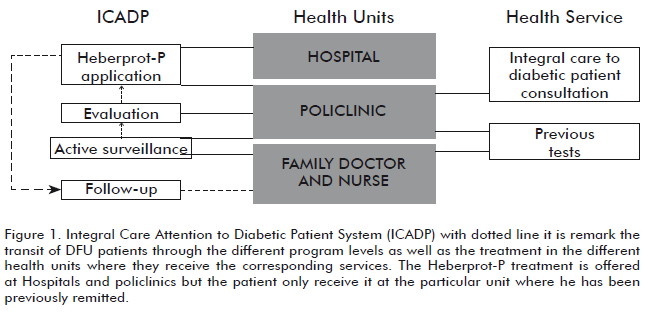
<body><![CDATA[<P   ><font size="2" face="Verdana, Arial, Helvetica, sans-serif">Since January 2010      it has been developed an action plant designed in three steps at the PHAS      level at Playa Municipality in Havana. The action plant includes several organizing      elements as: Design of a DM situational map at the municipality. Facilitating      human resources technical qualification at each Policlinic by offering technical      and practical courses to the staff about DM and its care. Training in determine      accurate DFU calculation in patients, promoting at the communities to set      up a census searching for DFU either by interviewing them when visiting the      policlinic or the family doctor or by searching them at the community. Assuring      needs for active DFU patients screening to verify the detection of silent      DM patients <I>in situ</I>. Determining the real DFU prevalence at the community      either by tracking DM patients among the local population or by detecting      them at each policlinic. Other alternatives as searching them by visiting      their houses were accepted as well, through active DM patient screening according      the established program indicated by the Public Health Minister. </font></P >   <FONT size="+1">        <P   ><font face="Verdana, Arial, Helvetica, sans-serif" size="2">Those patients who      qualify for this therapy normally were treated at the PAHS level if they carry      out not complicated DFU (complicated means deep and clinical manifestation      of infection and osteomyelitis) coming from the municipal population. </font></P >       <P   ><font face="Verdana, Arial, Helvetica, sans-serif" size="2">The appointments      to administrate Heberprot-P patients are those established by the Program      for the Integral Attention to DFU patients using Heberprot-p. The program      involved medical specialists in Medical and Integral Medicine (MIM); specialists      in DM, nurses, podiatric, nutritionists, Health Promoters and others able      to coordinate common efforts to establish a link with the secondary health      attention level formed by ophthalmologists, endocrinologists, dentists and      others. </font></P >       <P   ><font size="3" face="Verdana, Arial, Helvetica, sans-serif"><b>RESULTS</b></font><font size="2" face="Verdana, Arial, Helvetica, sans-serif">      </font></P >   <FONT size="+1">        <P   ><font size="2" face="Verdana, Arial, Helvetica, sans-serif">The Playa municipality      is located at northwest of Havana city province with an extension of 36.2      km and 17 km of costs. Playa holds a population of 192 438 habitants (52.9%      women and 47.1% men). Population density is 5160.3 habitants per square km.      The municipality is distributed in 9 health zones or areas totally covering      the whole population. Playa was the first municipality in introducing Heberprot-P      in its health services as a useful therapeutic option addressed to optimize      DFU patient care in a pilot study for later extension to the whole national      territory (<a href="/img/revistas/bta/v27n2/f0110210.gif">Figure</a>).      This study was carried out through a program divided in 3 different stages.      </font></P >   <FONT size="+1">        
<P   ><font face="Verdana, Arial, Helvetica, sans-serif" size="2"><I>&bull; Organizational      stage</I>: Started in January till February 2010. 49 days in total. </font></P >       <P   ><font face="Verdana, Arial, Helvetica, sans-serif" size="2"><I>&bull; Implemental      stage</I>: Started in March till July 2010. 150 days in total. </font></P >       <P   ><font face="Verdana, Arial, Helvetica, sans-serif" size="2"><I>&bull; Consolidate      stage</I>: Since July up today. </font></P >       <P   ><font face="Verdana, Arial, Helvetica, sans-serif" size="2">During the organizational      process first it was organized a Situational Room at Playa municipality. The      mapping of the 9 health areas was carried out and the whole population was      characterized including the evaluation of the target diabetic population.      Several working groups formed by doctors specialized in General Integral medicine      with knowledge in diabetes together with nurses, podiatry specialists, pharma      epidemiologists, docents and basic working groups were created in each policlinic      or health area from Playa. During this stage the working groups were trained      at the National Center for Angiology and Vascular Surgery (CAVS) specializing      them in detecting non complicated DFU (ulcers that might be even deep but      without bacterial infection), this included the organization of cure stocks      for carrying cure procedures using saline solution, hand surgical gloves,      surgery blade, dressing, etc and Heberprot-P vials for using them in treatments.      </font></P >       <P   ><font face="Verdana, Arial, Helvetica, sans-serif" size="2">Through the active      DM massive screening in Playa municipality, 10 778 patients were detected.      From them 1442 are DM type 1 patients and 9336 were DM type 2. This DM population      is the 5.6% of the total Playa population, according with the national rate.      All physicians who applied the Heberprot-P were trained to complete the requested      papers and documents for pharmaco surveillance tracking. The documents were      designed according a data dossier supplied from the Center for the Development      of Pharmacoepidemiology (CDPE) to track each DFU patient treatment and its      follow up as well. </font></P >       ]]></body>
<body><![CDATA[<P   ><font face="Verdana, Arial, Helvetica, sans-serif" size="2">For the implemental      stage: the following previous conditions were taken into considerations: 1)      Coordinating the active DFU patient screening and primary cure through involving      the basic health team involving the family physician ant the family nurse      as the first door to the primary attention care. 2) Personalizing each patient      characterization to personalize Heberprot- P treatment as well. 3) Combining      the use of Heberprot-P with the use of the Cuban health guidelines for diabetic      patients. </font></P >       <P   ><font face="Verdana, Arial, Helvetica, sans-serif" size="2">Several meetings      with different society sectors as Medical doctors, opinion and community leaders,      diabetes clubs and health promoter activists were carried out to promote massive      knowledge about the integral care of diabetic patients and about the risk      of DFU. In this effort the use of public information media as radio and TV      broadcasting stations were exploited. Also a documentary film was launched      compiling testimonies of healed patients after receive treatment with Heberprot-P.      </font></P >       <P   ><font face="Verdana, Arial, Helvetica, sans-serif" size="2">Regarding the specific      issue of treating patients with DFU with Heberprot-P, it is important to remark      that before starting any treatment with Heberprot-P, each patient must be      submitted to an integral clinical evaluation that covers internal medicine,      endocrinology, ophthalmology and podiatric analysis. The clinical and laboratory      tests include: glucose determination, complete blood cell count, creatinine      and erythrosedimentation determinations, also image studies as Rx of thorax      and ulcer affected area, plus abdominal, prostatic and gynecologic ultrasounds      are included as well in patient characterization too. Once all these tests      are analyzed, the physician decide if the patient qualify or not for Heberprot-P      application. </font></P >       <P   ><font face="Verdana, Arial, Helvetica, sans-serif" size="2">For better implementation      of this integral DFU treatment program with the use of Heberprot-P, an appropriate      reference and counter reference system has been implemented at the health      secondary level system. In this case headed by the National Institute of Angiology      and Vascular Surgery (NIAVS). In each consultation office, There are compiled      general and personalize records containing the evolution of each treated patient      with Heberprot-P. In this sense it is important to remark that 2 of the treated      patients (3.1%) ended their Heberprot-P treatment in their respective Policlinic      area, allowing a better contact and interaction between the specialized hospital      and the health area. </font></P >       <P   ><font size="3" face="Verdana, Arial, Helvetica, sans-serif"><b>DISCUSSION</b></font><font size="2" face="Verdana, Arial, Helvetica, sans-serif">      </font></P >   <FONT size="+1">        <P   ><font size="2" face="Verdana, Arial, Helvetica, sans-serif">The implementation      of a system to extend Heberprot- P use at the Health Primary Level Attention      Area (HPLAA) could be considered as a valuable tool for fast and easy treating      lesser complicated DFU. This program constitutes a solution to a previous      non solved problem until the design and implementation of this system. </font></P >   <FONT size="+1">        <P   ><font face="Verdana, Arial, Helvetica, sans-serif" size="2">It is a guarantee      to count with this implemented service at the HPLAA, because it is there where      patients can be first identified and either treated at this area or submitted      for a more specialized health services. To implement a Heberprot-P service      at the HPLAA allows to treat most of the patients in an ambulatory form. This      possibility reduce the risk of complications allowing a faster healing and      a return to social life in better conditions than in hospital treatments.      </font></P >       <P   ><font face="Verdana, Arial, Helvetica, sans-serif" size="2">The published literature      does not record any other program able to cover an integral care of DFU patients      as the one is described here in this article. Our strength are supported by      the possibility to produce a high standard recombinant human epidermal growth      factor, properly formulated as Heberprot-P together with a well developed      Primary Health System extended to all the national territory of Cuba and validated      in more than 50 countries by Cuban medical brigades working there. In this      moment, we are arriving to a new momentum in the Program for the Integral      care of the Diabetic Foot Ulcer patient expressed in putting Heberprot-P treatments      available at the primary health services. The Program is supported as well      by a network of communitarian structures and by radio and TV broadcasting      stations able to assume health educational activities to improve the quality      of life of the communities where the program is extended and implemented.      The interaction between all the different levels of the health sectors are      a strength in this program, which in this moment is incrementing the professional      motivation among different specialists at the Primary Health Attention Level      once they realize that a product as novel as Heberprot-P is available for      them. </font></P >       <P   ><font face="Verdana, Arial, Helvetica, sans-serif" size="2">So far now Heberprot-P      has been extended and used in 9 Policlinics of Playa municipality with a total      amount of 28 low complexity level DFU patients. All of them were treated ambulatory      showing a fast positive healing evolution and diminishing the treatment cost      for avoiding in hospital treatments. Because the program implementation, other      disease complications linked to Diabetes mellitus were easily controlled as      well. </font></P >       <P   ><font face="Verdana, Arial, Helvetica, sans-serif" size="2">A course addressed      to professional personnel linked to DFU treatment is in process to be implemented,      the course will focus in how to treat DFU at the Primary Health Attention      Level. The course, once functioning will allow bringing new elements about      how to treat DM and how to detect DFU at early state plus teaching how to      treat DFI with Heberprot-P from an integral new clinical and surgery perspective.      </font></P >       ]]></body>
<body><![CDATA[<P   ><font size="2" face="Verdana, Arial, Helvetica, sans-serif"><b><font size="3">WHY      IT IS IMPORTANT TO FOCUS IN THE DFU COMPLICATIONS AND ITS ASSOCIATED PROBLEMS      AT THE PRIMARY HEALTH ATTENTION LEVEL?</font></b> </font></P >   <FONT size="+1">        <P   ><font size="2" face="Verdana, Arial, Helvetica, sans-serif">Professionals from      the Primary Health Attention Level including family physicians, nurses and      basic working personnel are aware about the community population they care,      including familiar and social aspects. This guarantees the access and follows      up of each patient attention. By extending the care of DM and DFU to the Primary      Health Attention Level, the patient care is much better from the biological,      psychological and social point of views. With this program, Professionals      from the Primary Health Attention Levels are closer to the patients&rsquo;      social environment guaranteeing better results. The program interacts with      different social spaces as Health councils, schools and working centers. Staffs      are trained in communication techniques helping to establish better communication      channels with patients. The health attention is implemented focusing different      aspect of health-disease states described as: health promotion, prevention,      diagnosis, treatment and rehabilitation. Everything is developed in coordination      with other health attention levels as family physicians, basic working groups,      nurses, social workers etc. This integration helps to promote and to implement      at the community level fast methods to challenge different health problems      and solve them. The Primary Health Attention Level get in contact with community      problems through professionals trained in interviews addressed to increment      the quality of the service offered by the Primary Health Attention Level.      </font></P >   <FONT size="+1">        <P   ><font size="2" face="Verdana, Arial, Helvetica, sans-serif"><b><font size="3">CONCLUSIONS</font></b>      </font></P >   <FONT size="+1">        <P   ><font size="2" face="Verdana, Arial, Helvetica, sans-serif">By implementing an      adequate model for extending the use of Heberprot-P in the Primary Health      Attention Level, UPD patients will receive a better attention at this level      facilitating the articulation of the received services with the Secondary      and Tertiary Health Attention Levels. </font></P >   <FONT size="+1">        <P   ><font face="Verdana, Arial, Helvetica, sans-serif" size="2">The human resources      trained at the Primary Health Attention Level improve the way to implement      an integral care of diabetic patients with DFU. In this sense it is needed      to maintain and extend the human resource preparation at the Primary Health      Attention Level. </font></P >       <P   ><font face="Verdana, Arial, Helvetica, sans-serif" size="2">Considering the established      medical practice in Cuba at the Primary Health Attention Level, the clinic      evolution of UPD patients treated with Heberprot-P and their follow up can      be done through permanent and active pharma surveillance. </font></P >       <P   ><font face="Verdana, Arial, Helvetica, sans-serif" size="2"><b><font size="3">REFERENCES</font></b>      </font></P >       <!-- ref --><P   ><font face="Verdana, Arial, Helvetica, sans-serif" size="2">1. Heberprot-P -      Atenci&oacute;n integral al paciente con pie diab&eacute;tico + Heberprot-P      (sitio web). Disponible en: <a href="http://heberprot-p.cigb.edu.cu/">http://heberprot-p.cigb.edu.cu/</a>      (Consultado: 23 de agosto de 2010). </font></P >       <!-- ref --><P   ><font face="Verdana, Arial, Helvetica, sans-serif" size="2">2. Berlanga J, Lodos      J, L&oacute;pez-Saura P. Attenuation of internal organ damages by exogenously      administered epidermal growth factor (EGF) in burned rodents. Burns 2002;28(5):435-42.      </font></P >       <!-- ref --><P   ><font face="Verdana, Arial, Helvetica, sans-serif" size="2">3. Berlanga J, Caballero      E, Lodos J, L&oacute;pez-Saura P, Ram&iacute;rez D, Playford RJ. Epidermal      Growth Factor prevents multiorgan failure induced by thioacetamide. Gut 1999;44(Suppl      1):A70. </font></P >       <!-- ref --><P   ><font face="Verdana, Arial, Helvetica, sans-serif" size="2">4. Berlanga J, Prats      P, Rem&iacute;rez D, L&oacute;pez-Saura P, Aguiar J, Ojeda M, <I>et al</I>.      Prophylactic use of epidermal growth factor (EGF) reduces ischemia/reperfusion      intestinal damage. Am J Pathol 2002;161(2): 373-9. </font></P >       <!-- ref --><P   ><font face="Verdana, Arial, Helvetica, sans-serif" size="2">5. Berlanga J, Savigne      W, Vald&eacute;z C, Franco N, Alba JS, Del R&iacute;o A, <I>et al</I>. Epidermal      Growth Factor intra-lesional infiltrations can prevent amputation in diabetic      patients with advanced foot wounds. Int Wound J 2006;3(3):232-9. </font></P >       <!-- ref --><P   ><font face="Verdana, Arial, Helvetica, sans-serif" size="2">6. Fern&aacute;ndez-Montequ&iacute;n      JI, Infante-Cristi&aacute; E, Valenzuela-Silva C, Franco-P&eacute;rez N, Savigne-Guti&eacute;rrez      W, Artaza-Sanz H, <I>et al</I>. Intralesional injections of Citoprot-P&reg;      (recombinant human epidermal growth factor) in advanced diabetic foot ulcers      with risk of amputation. Int Wound J 2007; 4(4):333-43. </font></P >       <!-- ref --><P   ><font face="Verdana, Arial, Helvetica, sans-serif" size="2">7. Fern&aacute;ndez-Montequ&iacute;n      JI, Valenzuela-Silva CM, D&iacute;az OG, Savigne W, Sancho-Soutelo N, Rivero-Fern&aacute;ndez      F, <I>et al</I>. Intra-lesional injections of recombinant human epidermal      growth factor promote granulation and healing in advanced diabetic foot ulcers:      multicenter, randomised, placebo-controlled, double-blind study. Int Wound      J 2009;6(6):432-43. </font></P >       <!-- ref --><P   ><font face="Verdana, Arial, Helvetica, sans-serif" size="2">8. American Diabetes      Association. Diabetes Facts and Figures. American Diabetes Association, Alexandria,      VA, 2000.</font></P >       <!-- ref --><P   ><font face="Verdana, Arial, Helvetica, sans-serif" size="2">9. Ministerio de      Salud P&uacute;blica. Anuario Estad&iacute;stico 2007. Cuba.</font></P >       <P   ><font face="Verdana, Arial, Helvetica, sans-serif" size="2">Received in July,      2010. </font>    <br>     <font face="Verdana, Arial, Helvetica, sans-serif" size="2">Accepted for publication      in August, 2010. </font></P >   <font size="2" face="Verdana, Arial, Helvetica, sans-serif">Julio E Baldomero,    Centro de Ingenier&iacute;a Gen&eacute;tica y Biotecnolog&iacute;a, CIGB Ave.    31 entre 156 y 190, Cubanac&aacute;n, Playa, AP 6162, Ciudad de La Habana, Cuba    E-mail: <a href="mailto:julio.baldomero@cigb.edu.cu">julio.baldomero@cigb.edu.cu</a></font></font></font></font></font></font></font></font></font></font></font></font></font></font></font></font></font></font></font></font></font></font></font></font></font></font></font></font></font></font></font></font></font></font></font></font></font></font></font></font></font></font></font></font></font></font></font></font></font></font></font></font></font></font></font></font></font></font></font></font></font></font></font></font></DIV >      ]]></body><back>
<ref-list>
<ref id="B1">
<label>1</label><nlm-citation citation-type="">
<source><![CDATA[Heberprot-P: Atención integral al paciente con pie diabético + Heberprot-P (sitio web)]]></source>
<year>23 d</year>
<month>e </month>
<day>ag</day>
</nlm-citation>
</ref>
<ref id="B2">
<label>2</label><nlm-citation citation-type="journal">
<person-group person-group-type="author">
<name>
<surname><![CDATA[Berlanga]]></surname>
<given-names><![CDATA[J]]></given-names>
</name>
<name>
<surname><![CDATA[Lodos]]></surname>
<given-names><![CDATA[J]]></given-names>
</name>
<name>
<surname><![CDATA[López-Saura]]></surname>
<given-names><![CDATA[P]]></given-names>
</name>
</person-group>
<article-title xml:lang="en"><![CDATA[Attenuation of internal organ damages by exogenously administered epidermal growth factor (EGF) in burned rodents]]></article-title>
<source><![CDATA[Burns]]></source>
<year>2002</year>
<volume>28</volume>
<numero>5</numero>
<issue>5</issue>
<page-range>435-42</page-range></nlm-citation>
</ref>
<ref id="B3">
<label>3</label><nlm-citation citation-type="journal">
<person-group person-group-type="author">
<name>
<surname><![CDATA[Berlanga]]></surname>
<given-names><![CDATA[J]]></given-names>
</name>
<name>
<surname><![CDATA[Caballero]]></surname>
<given-names><![CDATA[E]]></given-names>
</name>
<name>
<surname><![CDATA[Lodos]]></surname>
<given-names><![CDATA[J]]></given-names>
</name>
<name>
<surname><![CDATA[López-Saura]]></surname>
<given-names><![CDATA[P]]></given-names>
</name>
<name>
<surname><![CDATA[Ramírez]]></surname>
<given-names><![CDATA[D]]></given-names>
</name>
<name>
<surname><![CDATA[Playford]]></surname>
<given-names><![CDATA[RJ]]></given-names>
</name>
</person-group>
<article-title xml:lang="en"><![CDATA[Epidermal Growth Factor prevents multiorgan failure induced by thioacetamide]]></article-title>
<source><![CDATA[Gut]]></source>
<year>1999</year>
<volume>44</volume>
<numero>^s1</numero>
<issue>^s1</issue>
<supplement>1</supplement>
<page-range>A70</page-range></nlm-citation>
</ref>
<ref id="B4">
<label>4</label><nlm-citation citation-type="journal">
<person-group person-group-type="author">
<name>
<surname><![CDATA[Berlanga]]></surname>
<given-names><![CDATA[J]]></given-names>
</name>
<name>
<surname><![CDATA[Prats]]></surname>
<given-names><![CDATA[P]]></given-names>
</name>
<name>
<surname><![CDATA[Remírez]]></surname>
<given-names><![CDATA[D]]></given-names>
</name>
<name>
<surname><![CDATA[López- Saura]]></surname>
<given-names><![CDATA[P]]></given-names>
</name>
<name>
<surname><![CDATA[Aguiar]]></surname>
<given-names><![CDATA[J]]></given-names>
</name>
<name>
<surname><![CDATA[Ojeda]]></surname>
<given-names><![CDATA[M]]></given-names>
</name>
</person-group>
<article-title xml:lang="en"><![CDATA[Prophylactic use of epidermal growth factor (EGF) reduces ischemia/reperfusion intestinal damage]]></article-title>
<source><![CDATA[Am J Pathol]]></source>
<year>2002</year>
<volume>161</volume>
<numero>2</numero>
<issue>2</issue>
<page-range>373-9</page-range></nlm-citation>
</ref>
<ref id="B5">
<label>5</label><nlm-citation citation-type="journal">
<person-group person-group-type="author">
<name>
<surname><![CDATA[Berlanga]]></surname>
<given-names><![CDATA[J]]></given-names>
</name>
<name>
<surname><![CDATA[Savigne]]></surname>
<given-names><![CDATA[W]]></given-names>
</name>
<name>
<surname><![CDATA[Valdéz]]></surname>
<given-names><![CDATA[C]]></given-names>
</name>
<name>
<surname><![CDATA[Franco]]></surname>
<given-names><![CDATA[N]]></given-names>
</name>
<name>
<surname><![CDATA[Alba]]></surname>
<given-names><![CDATA[JS]]></given-names>
</name>
<name>
<surname><![CDATA[Del Río]]></surname>
<given-names><![CDATA[A]]></given-names>
</name>
</person-group>
<article-title xml:lang="en"><![CDATA[Epidermal Growth Factor intra-lesional infiltrations can prevent amputation in diabetic patients with advanced foot wounds]]></article-title>
<source><![CDATA[Int Wound J]]></source>
<year>2006</year>
<volume>3</volume>
<numero>3</numero>
<issue>3</issue>
<page-range>232-9</page-range></nlm-citation>
</ref>
<ref id="B6">
<label>6</label><nlm-citation citation-type="journal">
<person-group person-group-type="author">
<name>
<surname><![CDATA[Fernández-Montequín]]></surname>
<given-names><![CDATA[JI]]></given-names>
</name>
<name>
<surname><![CDATA[Infante- Cristiá]]></surname>
<given-names><![CDATA[E]]></given-names>
</name>
<name>
<surname><![CDATA[Valenzuela-Silva]]></surname>
<given-names><![CDATA[C]]></given-names>
</name>
<name>
<surname><![CDATA[Franco-Pérez]]></surname>
<given-names><![CDATA[N]]></given-names>
</name>
<name>
<surname><![CDATA[Savigne-Gutiérrez]]></surname>
<given-names><![CDATA[W]]></given-names>
</name>
<name>
<surname><![CDATA[Artaza-Sanz]]></surname>
<given-names><![CDATA[H]]></given-names>
</name>
</person-group>
<article-title xml:lang="en"><![CDATA[Intralesional injections of Citoprot-P® (recombinant human epidermal growth factor) in advanced diabetic foot ulcers with risk of amputation]]></article-title>
<source><![CDATA[Int Wound J]]></source>
<year>2007</year>
<volume>4</volume>
<numero>4</numero>
<issue>4</issue>
<page-range>333-43</page-range></nlm-citation>
</ref>
<ref id="B7">
<label>7</label><nlm-citation citation-type="journal">
<person-group person-group-type="author">
<name>
<surname><![CDATA[Fernández-Montequín]]></surname>
<given-names><![CDATA[JI]]></given-names>
</name>
<name>
<surname><![CDATA[Valenzuela-Silva]]></surname>
<given-names><![CDATA[CM]]></given-names>
</name>
<name>
<surname><![CDATA[Díaz]]></surname>
<given-names><![CDATA[OG]]></given-names>
</name>
<name>
<surname><![CDATA[Savigne]]></surname>
<given-names><![CDATA[W]]></given-names>
</name>
<name>
<surname><![CDATA[Sancho-Soutelo]]></surname>
<given-names><![CDATA[N]]></given-names>
</name>
<name>
<surname><![CDATA[Rivero-Fernández]]></surname>
<given-names><![CDATA[F]]></given-names>
</name>
</person-group>
<article-title xml:lang="en"><![CDATA[Intra-lesional injections of recombinant human epidermal growth factor promote granulation and healing in advanced diabetic foot ulcers: multicenter, randomised, placebo-controlled, double-blind study]]></article-title>
<source><![CDATA[Int Wound J]]></source>
<year>2009</year>
<volume>6</volume>
<numero>6</numero>
<issue>6</issue>
<page-range>432-43</page-range></nlm-citation>
</ref>
<ref id="B8">
<label>8</label><nlm-citation citation-type="book">
<collab>American Diabetes Association</collab>
<source><![CDATA[Diabetes Facts and Figures]]></source>
<year>2000</year>
<publisher-loc><![CDATA[^eVA VA]]></publisher-loc>
<publisher-name><![CDATA[American Diabetes Association]]></publisher-name>
</nlm-citation>
</ref>
<ref id="B9">
<label>9</label><nlm-citation citation-type="">
<collab>Ministerio de Salud Pública</collab>
<source><![CDATA[Anuario Estadístico]]></source>
<year>2007</year>
</nlm-citation>
</ref>
</ref-list>
</back>
</article>
