<?xml version="1.0" encoding="ISO-8859-1"?><article xmlns:mml="http://www.w3.org/1998/Math/MathML" xmlns:xlink="http://www.w3.org/1999/xlink" xmlns:xsi="http://www.w3.org/2001/XMLSchema-instance">
<front>
<journal-meta>
<journal-id>1027-2852</journal-id>
<journal-title><![CDATA[Biotecnología Aplicada]]></journal-title>
<abbrev-journal-title><![CDATA[Biotecnol Apl]]></abbrev-journal-title>
<issn>1027-2852</issn>
<publisher>
<publisher-name><![CDATA[Editorial Elfos Scientiae]]></publisher-name>
</publisher>
</journal-meta>
<article-meta>
<article-id>S1027-28522010000300005</article-id>
<title-group>
<article-title xml:lang="en"><![CDATA[Fibrinolysis with recombinant streptokinase affects the prognostic value of cardiac troponin I in acute myocardial infarction: a ten-day follow-up]]></article-title>
<article-title xml:lang="es"><![CDATA[La fibrinolisis con estreptoquinasa recombinante afecta el valor pronóstico de la troponina I cardiaca en el infarto miocárdico agudo: 10 días de seguimiento evolutivo]]></article-title>
</title-group>
<contrib-group>
<contrib contrib-type="author">
<name>
<surname><![CDATA[Mainet-Gonzalez]]></surname>
<given-names><![CDATA[Damian]]></given-names>
</name>
<xref ref-type="aff" rid="A01"/>
</contrib>
<contrib contrib-type="author">
<name>
<surname><![CDATA[Padrón-Brito]]></surname>
<given-names><![CDATA[Nolaida]]></given-names>
</name>
<xref ref-type="aff" rid="A02"/>
</contrib>
<contrib contrib-type="author">
<name>
<surname><![CDATA[Abdo-Cuza]]></surname>
<given-names><![CDATA[Anselmo]]></given-names>
</name>
<xref ref-type="aff" rid="A03"/>
</contrib>
</contrib-group>
<aff id="A02">
<institution><![CDATA[,Hospital Hermanos Ameijeiras  ]]></institution>
<addr-line><![CDATA[Havana ]]></addr-line>
<country>Cuba</country>
</aff>
<aff id="A03">
<institution><![CDATA[,Hospital CIMEQ  ]]></institution>
<addr-line><![CDATA[Havana ]]></addr-line>
<country>Cuba</country>
</aff>
<aff id="A01">
<institution><![CDATA[,Center for Genetic Engineering and Biotechnology, CIGB  ]]></institution>
<addr-line><![CDATA[Havana ]]></addr-line>
<country>Cuba</country>
</aff>
<pub-date pub-type="pub">
<day>00</day>
<month>09</month>
<year>2010</year>
</pub-date>
<pub-date pub-type="epub">
<day>00</day>
<month>09</month>
<year>2010</year>
</pub-date>
<volume>27</volume>
<numero>3</numero>
<fpage>221</fpage>
<lpage>226</lpage>
<copyright-statement/>
<copyright-year/>
<self-uri xlink:href="http://scielo.sld.cu/scielo.php?script=sci_arttext&amp;pid=S1027-28522010000300005&amp;lng=en&amp;nrm=iso"></self-uri><self-uri xlink:href="http://scielo.sld.cu/scielo.php?script=sci_abstract&amp;pid=S1027-28522010000300005&amp;lng=en&amp;nrm=iso"></self-uri><self-uri xlink:href="http://scielo.sld.cu/scielo.php?script=sci_pdf&amp;pid=S1027-28522010000300005&amp;lng=en&amp;nrm=iso"></self-uri><abstract abstract-type="short" xml:lang="en"><p><![CDATA[The objective of this multicentre study was to identify the concentrations of cardiac troponin I having a higher probability of cardiovascular and extracardiovascular complications in patients with acute myocardial infarction that were treated with or without fibrinolysis at the intensive care units. These patients were followed for 10 days and divided into two prognostic groups: one without complications (n = 53) and other with clinical complications (n = 28). The plasma extracted from 3 h to 72 h after the onset of symptoms was retrospectively evaluated in an enzyme linked immunoadsorbent assay amplified with streptavidin-biotin for quantifying cardiac troponin I. About 45% of the patients had received recombinant streptokinase for fibrinolysis, from the onset of the symptoms and up to 6 hours. In the fibrinolysis group (n = 32), the concentrations of cardiac troponin I of complicated patients were similar to uncomplicated patients. Cardiac troponin I concentrations in patients without fibrinolysis (n = 49) were higher in complicated than in non-complicated patients (W = 287, p = 0.016). The biological activities of other cardiac biomarkers in complicated patients were as high as in uncomplicated patients treated with or without fibrinolysis. The concentration of cardiac troponin I of 2 ng/mL or higher, was a good predictor of the risk of clinical complications in patients without fibrinolysis (odds ratio: 6.6; 95% confidence interval: 1.5-29.4). In the infarction patients without therapeutic fibrinolysis, cardiac troponin I concentrations could be used to stratify them at the intensive care units and may be evaluated as an indicator of fibrinolysis in other studies.]]></p></abstract>
<abstract abstract-type="short" xml:lang="es"><p><![CDATA[El objetivo de este estudio multicéntrico fue identificar las concentraciones de troponina I cardiaca con mayor probabilidades de complicaciones cardiovasculares y extracardiovasculares en los pacientes con infarto miocárdico agudo que fueron tratados con o sin fibrinolisis en las unidades de cuidados intensivos. Estos pacientes fueron seguidos clínicamente por 10 días y divididos en dos grupos: no complicado (n = 53) y complicado (n = 28). Los plasmas extraídos de los pacientes desde las 3 horas a las 72 horas de inicio de los síntomas fueron retrospectivamente evaluados en un análisis inmunoenzimático en fase sólida amplificado con estreptavidina-biotina para cuantificar troponina I cardiaca. Alrededor del 45% de los pacientes estudiados recibieron fibrinolisis con estreptoquinasa recombinante desde el inicio de los síntomas a 6 horas de evolución. Con la fibrinolisis (n = 32), los pacientes complicados tuvieron las concentraciones de troponina I cardiaca similares a los no complicados. Cuando no se indicó la fibrinolisis (n = 49), los pacientes complicados presentaron mayores concentraciones de troponina I cardiaca que los no complicados (W = 287, p = 0.016). Las actividades biológicas de otros biomarcadores cardiacos fueron similares entre los pacientes complicados y no complicados en el tratamiento con o sin fibrinolisis. La concentración de troponina I cardiaca mayor o igual a 2 ng/ mL fue un buen predictor de riesgos de complicaciones clínicas en los pacientes sin fibrinolisis (razón de productos cruzados: 6.6; intervalo de confianza de 95%: 1.5-29.4). Los pacientes con infarto miocárdico agudo tratados sin fibrinolisis pudieran ser mejor estratificados por riesgos de complicaciones mediante la determinación de las concentraciones de troponina I cardiaca. Este biomarcador pudiera ser evaluado como indicador de fibrinolisis en estudios posteriores.]]></p></abstract>
<kwd-group>
<kwd lng="en"><![CDATA[cardiac troponin I]]></kwd>
<kwd lng="en"><![CDATA[fibrinolysis]]></kwd>
<kwd lng="en"><![CDATA[acute myocardial infarction]]></kwd>
<kwd lng="en"><![CDATA[short-term prognosis]]></kwd>
<kwd lng="es"><![CDATA[troponina I cardiaca]]></kwd>
<kwd lng="es"><![CDATA[fibrinolisis]]></kwd>
<kwd lng="es"><![CDATA[infarto miocárdico agudo]]></kwd>
<kwd lng="es"><![CDATA[a corto plazo pronóstico]]></kwd>
</kwd-group>
</article-meta>
</front><body><![CDATA[ <DIV class="Sect"   >        <P   align="right" ><font size="2" color="#000000" face="Verdana, Arial, Helvetica, sans-serif"><b>RESEARCH</b>      </font></P >   <FONT size="+1" color="#000000">        <P   align="left" >&nbsp;</P >       <P   align="left" ><font size="2" face="Verdana, Arial, Helvetica, sans-serif"><B><font size="4">Fibrinolysis      with recombinant streptokinase affects the prognostic value of cardiac troponin      I in acute myocardial infarction: a ten-day follow-up </font></b></font></P >   <FONT size="+1"><B>        <P   align="left" >&nbsp;</P >       <P   align="left" ><font size="3" face="Verdana, Arial, Helvetica, sans-serif">La fibrinolisis con      estreptoquinasa recombinante afecta el valor pron&oacute;stico de la troponina      I cardiaca en el infarto mioc&aacute;rdico agudo: 10 d&iacute;as de seguimiento      evolutivo<I> </I></font></P >   </B>        <P   align="left" >&nbsp;</P >       <P   align="left" >&nbsp;</P >       <P   align="left" ><font size="2" face="Verdana, Arial, Helvetica, sans-serif"><b>Damian Mainet-Gonzalez<sup>1</sup>,      Nolaida Padr&oacute;n-Brito<sup>2</sup>, Anselmo Abdo-Cuza<sup>3</sup></b>      </font></P >       <P   align="left" ><font size="2" face="Verdana, Arial, Helvetica, sans-serif">1 Center for Genetic      Engineering and Biotechnology, CIGB Ave. 31 / 158 y 190, Cubanac&aacute;n,      Playa, PO Box 6162, Havana, Cuba </font>    ]]></body>
<body><![CDATA[<br>     <font size="2" face="Verdana, Arial, Helvetica, sans-serif">2 Hospital Hermanos      Ameijeiras San L&aacute;zaro 701 y Padre Varela, Centro Habana, Havana, Cuba      </font>    <br>     <font size="2" face="Verdana, Arial, Helvetica, sans-serif"> 3 Hospital CIMEQ      Ave. 11-B / 216 y 11, CP 12100, Siboney, Havana, Cuba </font></P >       <P   align="left" >&nbsp;</P >   </font></font>   <hr>   <FONT size="+1" color="#000000"><FONT size="+1">        <P   align="left" ><font face="Verdana, Arial, Helvetica, sans-serif" size="2"><A href="mailto:damian.mainet@cigb.edu.cu"><FONT color="#0000FF"><FONT color="#000000">      </font></font></A> </font><font face="Verdana, Arial, Helvetica, sans-serif" size="2"><B>ABSTRACT<I>      </I></b></font></P >   <FONT size="+1"><FONT size="+1"><FONT size="+1"><FONT size="+1"><FONT size="+1"><FONT size="+1"><FONT size="+1"><FONT size="+1"><FONT size="+1"><FONT size="+1"><FONT size="+1"><FONT size="+1"><FONT size="+1"><FONT size="+1"><FONT color="#0000FF"><FONT color="#000000">        <P   align="left" ><font face="Verdana, Arial, Helvetica, sans-serif" size="2">The objective of      this multicentre study was to identify the concentrations of cardiac troponin      I having a higher probability of cardiovascular and extracardiovascular complications      in patients with acute myocardial infarction that were treated with or without      fibrinolysis at the intensive care units. These patients were followed for      10 days and divided into two prognostic groups: one without complications      (n = 53) and other with clinical complications (n = 28). The plasma extracted      from 3 h to 72 h after the onset of symptoms was retrospectively evaluated      in an enzyme linked immunoadsorbent assay amplified with streptavidin-biotin      for quantifying cardiac troponin I. About 45% of the patients had received      recombinant streptokinase for fibrinolysis, from the onset of the symptoms      and up to 6 hours. In the fibrinolysis group (n = 32), the concentrations      of cardiac troponin I of complicated patients were similar to uncomplicated      patients. Cardiac troponin I concentrations in patients without fibrinolysis      (n = 49) were higher in complicated than in non-complicated patients (W =      287, p = 0.016). The biological activities of other cardiac biomarkers in      complicated patients were as high as in uncomplicated patients treated with      or without fibrinolysis. The concentration of cardiac troponin I of 2 ng/mL      or higher, was a good predictor of the risk of clinical complications in patients      without fibrinolysis (odds ratio: 6.6; 95% confidence interval: 1.5-29.4).      In the infarction patients without therapeutic fibrinolysis, cardiac troponin      I concentrations could be used to stratify them at the intensive care units      and may be evaluated as an indicator of fibrinolysis in other studies. </font></P >       <P   align="left" ><font face="Verdana, Arial, Helvetica, sans-serif" size="2"><b>Key words</b>:      cardiac troponin I, fibrinolysis, acute myocardial infarction, short-term      prognosis. </font></P >   </font></font></font></font></font></font></font></font></font></font></font></font></font></font></font></font></font></font>   <hr>   <FONT size="+1" color="#000000"><FONT size="+1"><FONT size="+1"><FONT size="+1"><FONT size="+1"><FONT size="+1"><FONT size="+1"><FONT size="+1"><FONT size="+1"><FONT size="+1"><FONT size="+1"><FONT size="+1"><FONT size="+1"><FONT size="+1"><FONT size="+1"><FONT size="+1"><FONT color="#0000FF"><FONT color="#000000">        <P   align="left" ><font face="Verdana, Arial, Helvetica, sans-serif" size="2"><B>RESUMEN<I> </I></b></font></P >       <P   align="left" ><font face="Verdana, Arial, Helvetica, sans-serif" size="2">El objetivo de este      estudio multic&eacute;ntrico fue identificar las concentraciones de troponina      I cardiaca con mayor probabilidades de complicaciones cardiovasculares y extracardiovasculares      en los pacientes con infarto mioc&aacute;rdico agudo que fueron tratados con      o sin fibrinolisis en las unidades de cuidados intensivos. Estos pacientes      fueron seguidos cl&iacute;nicamente por 10 d&iacute;as y divididos en dos      grupos: no complicado (n = 53) y complicado (n = 28). Los plasmas extra&iacute;dos      de los pacientes desde las 3 horas a las 72 horas de inicio de los s&iacute;ntomas      fueron retrospectivamente evaluados en un an&aacute;lisis inmunoenzim&aacute;tico      en fase s&oacute;lida amplificado con estreptavidina-biotina para cuantificar      troponina I cardiaca. Alrededor del 45% de los pacientes estudiados recibieron      fibrinolisis con estreptoquinasa recombinante desde el inicio de los s&iacute;ntomas      a 6 horas de evoluci&oacute;n. Con la fibrinolisis (n = 32), los pacientes      complicados tuvieron las concentraciones de troponina I cardiaca similares      a los no complicados. Cuando no se indic&oacute; la fibrinolisis (n = 49),      los pacientes complicados presentaron mayores concentraciones de troponina      I cardiaca que los no complicados (W = 287, p = 0.016). Las actividades biol&oacute;gicas      de otros biomarcadores cardiacos fueron similares entre los pacientes complicados      y no complicados en el tratamiento con o sin fibrinolisis. La concentraci&oacute;n      de troponina I cardiaca mayor o igual a 2 ng/ mL fue un buen predictor de      riesgos de complicaciones cl&iacute;nicas en los pacientes sin fibrinolisis      (raz&oacute;n de productos cruzados: 6.6; intervalo de confianza de 95%: 1.5-29.4).      Los pacientes con infarto mioc&aacute;rdico agudo tratados sin fibrinolisis      pudieran ser mejor estratificados por riesgos de complicaciones mediante la      determinaci&oacute;n de las concentraciones de troponina I cardiaca. Este      biomarcador pudiera ser evaluado como indicador de fibrinolisis en estudios      posteriores. </font></P >       <P   align="left" ><font face="Verdana, Arial, Helvetica, sans-serif" size="2"><b>Palabras clave</b>:      troponina I cardiaca, fibrinolisis, infarto mioc&aacute;rdico agudo, a corto      plazo pron&oacute;stico. </font></P >   </font></font></font></font></font></font></font></font></font></font></font></font></font></font></font></font></font></font>   <hr>   <FONT size="+1" color="#000000"><FONT size="+1"><FONT size="+1"><FONT size="+1"><FONT size="+1"><FONT size="+1"><FONT size="+1"><FONT size="+1"><FONT size="+1"><FONT size="+1"><FONT size="+1"><FONT size="+1"><FONT size="+1"><FONT size="+1"><FONT size="+1"><FONT size="+1"><FONT color="#0000FF"><FONT color="#000000">        <P   align="left" >&nbsp;</P >       ]]></body>
<body><![CDATA[<P   align="left" >&nbsp;</P >       <P   align="left" ><font size="3" face="Verdana, Arial, Helvetica, sans-serif"><b>INTRODUCTION</b></font><font size="2" face="Verdana, Arial, Helvetica, sans-serif">      </font></P >   <FONT size="+1">        <P   align="left" ><font size="2" face="Verdana, Arial, Helvetica, sans-serif">Acute myocardial      infarction (AMI) is the first cause of the death in Cuba (1) and several countries      of the World (2, 3). AMI is a medical emergency because it has many clinical      complications, such as: arrhythmia, cardiogenic shock, transitional cerebral      ischemia, chronic renal failure and pulmonary embolism. Any one of these complications      can produce death. For this reason, while the diagnosis may be done rapidly,      therapeutic decisions -that may be made-could increase the patient&acute;s      survival. At the intensive care units, fibrinolysis and percutaneous transluminal      coronary angioplasty (PTCA) have decreased the death of these patients. However,      about seven out of ten patients with heart pain are admitted in these units      (with high technology and qualified personnel) without AMI after a longer      period of time, or having AMI without complications due to this cause (3).      This affects the quality of medical services because many patients with complications      are not able to receive this early attention. On other hand, certain patients      could receive less intensive care without affecting the quality of the medical      service (2, 4, 5). Cardiac troponin I (cTnI), because of its high cardiospecificity      and analytical sensitivity, has been used in the diagnosis of AMI and the      evaluation of the prognosis of patients with acute coronary syndrome (ACS;      includes acute unstable angina, AMI without ST elevation and AMI with ST elevation)      at a short-term, for example: 72 h (6), 24 h and 30 days (7, 8) and 42 days      (9, 10). For the short-term prognosis of patients with ACS, the incidence      of myocardial reinfarction, arrhythmias, refractory pain, congestive cardiac      failure and mortality and an increase of the blood concentrations of cTnI,      have been studied. However, no studies have reported the role of cTnI concentrations      for predicting other (cardiovascular and extracardiovascular) clinical complications      among patients with AMI at the intensive care units after fibrinolysis treatment.      It has, however, been demonstrated that the patients with increased concentrations      of cTnI in an ACS are more likely to present clinical complications at the      short-term follow up (3). Fibrinolysis is a good therapeutic choice in AMI      and can save the cardiac muscle when applied as early as possible (11, 12).      Due to this treatment, the cTnI concentrations could decrease in the blood.      Many patients with AMI reach the intensive care unit after receiving fibrinolysis      treatment. In this paper, we report cTnI concentrations in patients with AMI      determined in an enzyme linked immunoadsorbent assay (ELISA) after receiving      or not receiving fibrinolysis treatment and their prognostic values for detecting      any cardiovascular and extracardiovascular complications on the short-term      in these patients. </font></P >   <FONT size="+1">        <P   align="left" ><font size="2" face="Verdana, Arial, Helvetica, sans-serif"><b><font size="3">MATERIAL      AND METHODS</font></b> </font></P >   <FONT size="+1">        <P   align="left" ><font size="2" face="Verdana, Arial, Helvetica, sans-serif"><B>Groups of patients      and biological samples </b></font></P >   <FONT size="+1">        <P   align="left" ><font face="Verdana, Arial, Helvetica, sans-serif" size="2">The evaluation of      human beings subjected to research was done following the Helsinki Declaration      revised by the 52<sup>nd</sup> General Meeting of the World Medical Association      (Edinburgh, Scotland, October 2000). AMI was diagnosed when the patients after      determining two out of three criteria (clinical history, electrocardiogram      signs and bioche<FONT color="#0000FF"><FONT color="#000000">mical criterion)      of the World Health Organization for this disorder. The clinical element was      the history of chest pain for 20 min or more that did not decrease with nitroglycerine      treatment. The electrocardiographic elements showed an elevation of the ST      segment higher than 1 mm of limb derivations: DI, DII, DIII, aVL and aVF that      registered the same anatomical zone or higher than 2 mm in two or more precordial      derivations and left branch block. The patients with these two criteria were      considered to have an AMI with ST segment elevation (STEAMI). The biochemical      criterion was an increase of biological activities of enzymes in two determinations      that were twice as high as their normal reference limits during their diagnostic      windows. The concentrations of cTnI were not analyzed for the diagnosis. The      patients with chest pain resembling myocardial ischemia and increased cardiac      enzyme values, and electrocardiograms without the characteristic ischemic      changes were considered infarction patients with non-ST segment elevation      (NSTEAMI). The patients with STEAMI received 1 500 000 units of recombinant      streptokinase (Heberkinasa, Cuba) by a 60-min intravenous infusion. These      patients were classified in two prognostic groups: those with clinical complications      (bad prognosis) and another group without complications (good prognosis).      The cardiovascular complications were: arrhythmias and ventricular fibrillation,      congestive heart failure, cardiogenic shock, extension of myocardial infarction,      arterial hypotension or hypertension and cardiac death. The extracardiovascular      complications were transitory cerebral ischemia, acute pulmonary edema, bronchopneumonia      and acute renal failure. </font></font></font></P >   <FONT color="#0000FF"><FONT size="+1" color="#000000"><FONT size="+1">        <P   align="left" ><font face="Verdana, Arial, Helvetica, sans-serif" size="2">The plasma samples      were obtained at 3 hours of the beginning of chest pain and up to 72 h. The      plasma samples of patients with AMI and healthy donors were collected at the      coronary or intensive care unit of three hospitals of the City of Havana,      Cuba, and the Blood Unit of Marianao during the period of 1999 to 2002. The      samples were coded for the study, thereby becoming anonymous samples. The      confidentiality of the patient&acute;s personal data was kept throughout the      study. The plasma samples were obtained with 4 mmol of ethylen-diamine-tetracetic      acid disodium salt dihydrate (EDTA, Fluka, Switzerland) /L of blood and 2      IU (international units) of heparin (Imefa, City of Havana, Cuba) / mL of      blood as anticoagulants. The samples with haemolysis were discarded. All samples      after thawing were homogenized and centrifuged at 4 000 g to eliminate the      fibrin clots. </font></P >       <P   align="left" ><font face="Verdana, Arial, Helvetica, sans-serif" size="2"><B>Data collection      and follow-up </b></font></P >       <P   align="left" ><font face="Verdana, Arial, Helvetica, sans-serif" size="2">We collected the      following variables from the patient files: age, gender, race or skin color,      weight, history of hypertension, diabetes mellitus, hyperlipidoemia, smoking,      previous myocardial infarction, muscular trauma, chronic renal failure, chronic      muscular disease, hepatic disease and chest contusion. The general physicians      obtained the follow-up information for 10 days at the intensive or coronary      care unit. </font></P >       <P   align="left" ><font face="Verdana, Arial, Helvetica, sans-serif" size="2"><B>ELISA for quantifying      the concentration of cTnI </b></font></P >       ]]></body>
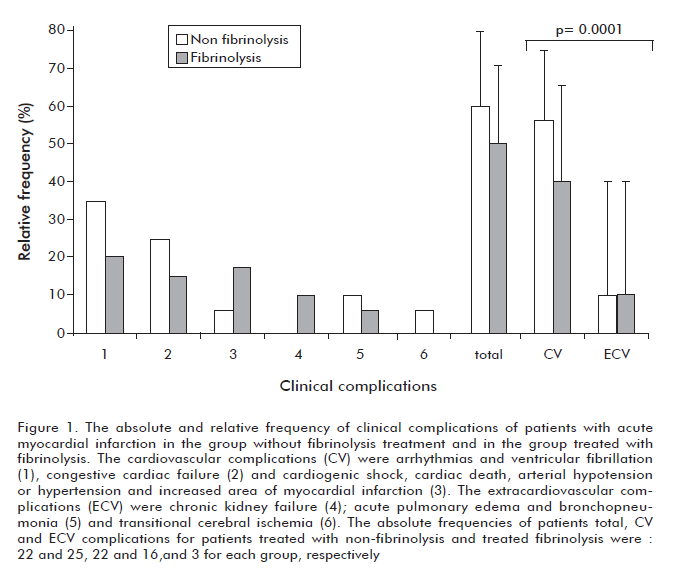
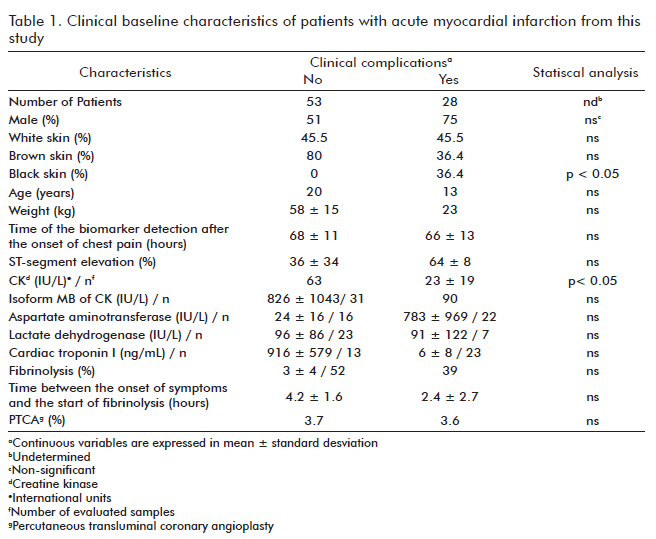
<body><![CDATA[<P   align="left" ><font face="Verdana, Arial, Helvetica, sans-serif" size="2">This method has been      described before (13) and the monoclonal antibodies (Mab) used, recognize      the stable part of the cTnI molecule as free and forming a ternary complex      (cardiac troponin C-cardiac troponin T-cTnI) or a natural cardiac troponin      complex. The CBTnI16 and CBTnI11 Mab (Immunodiagnostic and Genomic Division      of CIGB, Cuba) recognize the epitopes of cTnI: 89-FAELQD-94 and 26-YRAYAT-31,      respectively. The 19C7 Mab (Hytest, Turku, Finland) binds the epitope 41-      SASRKLQLK- 49. Briefly, the microtitter plates (Maxisorp, Roskilde, Denmark)      were coated with 15 &micro;g/mL of CBTnI 16 Mab diluted in 50 mmol/L carbonate      bicarbonate buffer pH 9.6 during 16 h. After the free sites of plates were      blocked with phosphate buffer of saline (PBS), 2% (w/v) skim milk (Oxoid,      United Kingdom) and tween-20 0.05% (v/v) placed at 37 &ordm;C for 1 h applying      100 &micro;L/well. The plasma samples and biotinylated 19C7 and CBTnI11 Mab      were separately diluted in the blocking solution. The samples and the biotinylated      Mab solution were added to the plate at the same step and were incubated together      for 15 min at 37 &ordm;C under 650 rpm agitation in the Titramax 100 machine      (Heldolph Instruments, Germany). The plasma had a final dilution factor of      1/4 to 1/16. The standard curve was prepared with troponin I in a ternary      complex that was diluted in blocking solution with 25% (v/v) plasma that was      formed by a pool of different donors. The streptavidine conjugated to peroxidase      (Amersham Pharmacia, Uppsala, Sweden) was diluted 1/1000 in the PBS tween-20      0.05% and was incubated for 10 min at 37 &ordm;C under agitation. After that,      the orthophenylenediamine dihydrochloride in the substrate buffer was added      to the plates. The enzymatic reaction was stopped with 50 &micro;L/well of      2.5 mol/L sulphuric acid and the plates were read in the PR 521 plate reader      (Tecnosuma International, City of Havana, Cuba) at 492 nm. The samples were      considered positives where the absorbances of wells were higher than the mean      absorbance plus 2 standard deviations of those wells with a blocking solution      in 25% plasma. The calibrator was the natural cardiac troponin complex (Hytest,      Turku, Finland). That reagent was diluted in the human serum pool of healthy      donors at 1 mg/L and filtered in the cellulose acetate with a 0.45 &micro;m      cut-off (Sartorious, Germany). The human cTnI represents 30% of the molecular      weight of the cardiac troponin complex. The concentration of cTnI in the cardiac      troponin complex solution was 300 ng/mL. The detection limit of this assay      was 0.1 ng/mL of cTnI and the standard curve had a range of 0.2 to 3.5. </font></P >       <P   align="left" ><font face="Verdana, Arial, Helvetica, sans-serif" size="2"><B>Other biological      assays </b></font></P >       <P   align="left" ><font face="Verdana, Arial, Helvetica, sans-serif" size="2">The quantification      of the biological activities of cardiac biomarkers: creatine quinase (CK,      Slave diagnostic, Siena) and isoform MB of CK (CKMB), aspartate aminotransferase      and the L-lactate dehydrogenase (Roche Boehringer, Mannheim, Germany) were      done following the manufacturer&acute;s instructions. The upper reference      limits were 195 IU/L for CK, 18 IU/L for CKMB, 37 IU/L for aspartate aminotransferase      and 450 IU/L for lactate dehydrogenase. </font></P >       <P   align="left" ><font face="Verdana, Arial, Helvetica, sans-serif" size="2"><B>Statistical analysis      </b></font></P >       <P   align="left" ><font face="Verdana, Arial, Helvetica, sans-serif" size="2">The odds ratio (OR)      and its 95% confidence interval (95% CI) and chi-square and its associated      probability were calculated for contingency tables in Statgraphic plus 5.1      for Windows (Statistical Graphics Corp, USA). The receiver operating characteristic      (ROC) curve and the area under curve (AUC) using Hanley and McNeil formulation      (14) were done with Epidat software (Galicia, Spain). The parametric (t-student)      and non-parametric (Mann Whitney) hypothesis tests were considered significant      when the two-tailed probability was lower than 0.05. All results for continuous      variables are expressed as means +/- standard deviations and categorical data      as percentage. The positive (LR+) and negative (LR-) likelihood ratios were      calculated using the formula: LR+ = sensitivity/ (1-specifi city) and LR-      = (1-sensitivity)/specificity (14). The Microsoft Excel software (Window,      USA) was used for organizing the data. </font></P >       <P   align="left" ><font size="3" face="Verdana, Arial, Helvetica, sans-serif"><b>RESULTS AND DISCUSSION</b></font><font size="2" face="Verdana, Arial, Helvetica, sans-serif">      </font></P >   <FONT size="+1">        <P   align="left" ><font size="2" face="Verdana, Arial, Helvetica, sans-serif">First, some considerations      about the detection limit and the cTnI standard used in the immunoassay and      the determination time of cTnI from the onset of chest pain to 72 h will be      discussed according to the purpose of this study. At present, there are many      enzyme immunoassays with a detection limit that is lower than the one that      was used in this study (0.1 ng/mL). For example, the detection limits of 0.034      ng/mL (15) and 0.015 ng/mL (16) have been reported in different immunoassays.      In spite of that, the cut-off value of AMI is considered to be &gt; 0.09 ng/mL      (16). The patients treated here had AMI. For this reason, it was unnecessary      to have an immunoassay with very high analytical sensitivity. The calibrator      used here has been suggested due to the stability of cTnI in the ternary complex.      Furthermore, it enables a decrease of the variation of different assays of      cTnI; although it is still unknown how the cTnI is released from the dead      cardiac cell into the plasma (17, 18). There are no differences for identifying      high risk patients with ACS when the cTnI concentrations are collected in      the first determinations (OR: 4.66; 95% IC: 3.12-6.97) and those based on      the concentrations of the cTnI peak (OR: 5.04; 95% IC: 3.3-7.71) (7). Ottani      <I>et al. </I>(7) suggests taking at least 2 samples of blood in the first      24 h to study the cTnI concentrations in the prognosis of these patients.      In the present study, the concentrations of cTnI were obtained in the first      72 h after the onset of symptoms and some patients had more than one determination.      The objective of this study was to find the clinical significance of concentrations      of cTnI higher than 0.1 ng/mL and to see if it were possible to prove the      stratification concept of patients with AMI accepted at intensive care units      through short-term prognosis, and to find a value of this biomarker for this      assumption. </font></P >   <FONT size="+1">        <P   align="left" ><font face="Verdana, Arial, Helvetica, sans-serif" size="2">This study included      81 patients with AMI and 28 (35%) of them presenting clinical complications.      Some patients (n = 10, 12%) had two or more complications and the total number      of complications was 44. The relative frequencies of cardiovascular complications      were: 45% for arrhythmias and ventricular fibrillation (absolute frequency      = 20), 30% for congestive heart failure (absolute frequency = 12), 11% for      extension of infarct, arterial hypotension or hypertension, cardiogenic shock      and cardiac death (absolute frequency = 6). The relative frequencies of extracardiovascular      complications were: 2% for transitory cerebral ischemia, (absolute frequency      = 1), 7% for acute pulmonary edema and bronchopneumonia (absolute frequency      = 3), 5% for acute kidney failure (absolute frequency = 2). <a href="/img/revistas/bta/v27n3/f0105310.gif">Figure      1</a><FONT color="#319A63"><FONT color="#000000"> shows the relative frequency      of clinical complications in patients with AMI treated with or without the      fibrinolysis agent. The relative frequency of cardiovascular complications      was higher than those of extracardiovascular complications (calculated Z =      3.84, p = 0.0001). The frequencies of cardiovascular and extracardiovascular      complications of patients with the fibrinolysis treatment were similar to      the untreated patients (<a href="/img/revistas/bta/v27n3/f0105310.gif">Figure      1</a><FONT color="#319A63"><FONT color="#000000">). The main personal pathological      backgrounds of these patients were arterial hypertension, previous AMI, and      peripheral arteriopathy (absolute frequency = 25 for a relative frequency:      57%) (<a href="/img/revistas/bta/v27n3/t0105310.gif">Table 1</a><FONT color="#319A63"><FONT color="#000000">).      </font></font></font></font></font></font></font></P >   <FONT color="#319A63"><FONT color="#000000"><FONT color="#319A63"><FONT color="#000000"><FONT color="#319A63"><FONT color="#000000">        
<P   align="left" ><font face="Verdana, Arial, Helvetica, sans-serif" size="2">The relative frequency      of patients with ST electrocardiographic segment elevation (t = 2.2, p = 0.028)      and brown skin (z = -2.38, p = 0.017) were higher in patients with complications      than in uncomplicated patients (<a href="/img/revistas/bta/v27n3/t0105310.gif">Table      1</a><FONT color="#319A63"><FONT color="#000000">). The onset of fibrinolysis      of the infarction patients with complications was faster than with uncomplicated      infarction patients. The rest of the clinical variables did not show significant      differences between complicated and uncomplicated patients with AMI. The elevation      of the ST electrocardiographic segment (84.6% non-survivals, n = 47 <I>versus      </I>14.6% survivals, n = 11 p &lt; 0.000 1) has been reported to be statistically      different in the baseline characteristic between the group of patients with      or without the risk of death and reinfarction when they were admitted with      the assumption of ACS (8). In that study, the cTnI concentrations were higher      in the patients that did not survive than patients that did survive. Nevertheless,      the concentrations of cTnI were found to have no significant differences between      infarction patients with complications and those without complications in      our study. In spite of that, mean concentrations of cTnI in complicated patients      were twice as high as those of uncomplicated patients. Due to the fact that      the group of patients included were only those with AMI and about 40 to 50%      of them had received the fibrinolysis treatment with recombinant streptokinase      at the intensive care rooms, we believe that the fibrinolysis could have a      protective effect on the myocardium and could decrease the cardiac damage      and the concentrations of cTnI in those patients, above all, if this treatment      was carried out as soon as possible. In our study, the mean starting time      of fibrinolysis varied between 2 h and 4 h after the onset of symptoms of      STEAMI (<a href="/img/revistas/bta/v27n3/t0105310.gif">Table 1</a><FONT color="#319A63"><FONT color="#000000">).      That period in patients with a bad prognosis was shorter than in the patients      with a good prognosis (W = 19.5, p = 0.015). This element can lead to a decrease      of the area of damaged tissue and the post-infarction clinical complications      in these patients (1). For these reasons, this biomarker was studied for prognosis      in the group of patients with AMI receiving or not receiving the fibrinolysis      treatment. The infarction patients having fibrinolysis had cTnI concentrations      that were not significantly different from the patients that were not treated      with fibrinolysis, compared in both the complicated and uncomplicated groups.      </font></font></font></font></font></P >   <FONT color="#319A63"><FONT color="#000000"><FONT color="#319A63"><FONT color="#000000">        
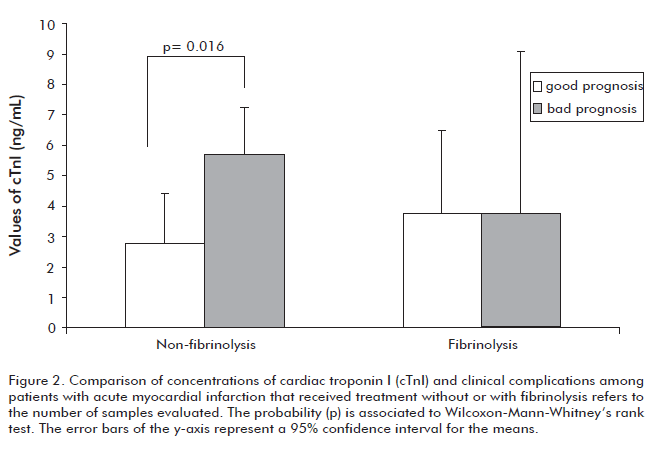
<P   align="left" ><font face="Verdana, Arial, Helvetica, sans-serif" size="2">The concentrations      of cTnI in patients treated without fibrinolysis were significantly (W = 287,      p = 0.016) higher in the group with a bad prognosis than in the group with      a good prognosis (<a href="/img/revistas/bta/v27n3/f0205310.gif">Figure      2</a><FONT color="#319A63"><FONT color="#000000">). However, in patients treated      with fibrinolysis the concentrations of cTnI of complicated patients were      as high as in uncomplicated patients. The clinical baseline characteristics      of the two groups of patients in the first comparison did not show significant      differences. In the second comparison, the clinical baseline characteristics      of the two groups of patients only showed statistically significant differences      in the relative frequency of patients with brown skin. This characteristic      in complicated patients was more frequent than in uncomplicated patients (z      = - 2.01, p = 0.044) in a small size sample (n = 10). For these reasons, the      concentrations of cTnI as a prognostic factor for AMI were studied in patients      without fibrinolysis. </font></font></font></P >   <FONT color="#319A63"><FONT color="#000000">        
]]></body>
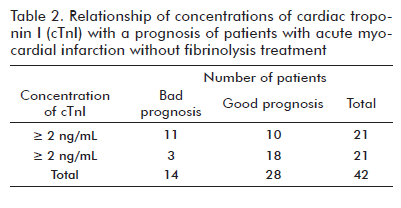
<body><![CDATA[<P   align="left" ><font face="Verdana, Arial, Helvetica, sans-serif" size="2">The concentrations      of cTnI in the ROC curve identified clinical complications in the infarction      patients without fibrinolysis (AUC: 0.73, 95% CI: 0.56 a 0.90). This result      suggests that the concentrations of cTnI discriminated both groups of (complicated      and uncomplicated) patients. The Szymanski&acute;s group (8) reported AUC:      0.76 (95% CI: 0.7-0.81) for cTnI concentration and 0.78 (95% CI: 0.72-0.83)      for CKMB mass for only identifying death in patients with suspected ACS at      their admission at the emergency ward, at which at a time the patients had      not received fibrinolysis treatment. In that study, the different values of      LR+ and LR- are not described. In the present study, the LR + and LR - for      different cut-off values were less than 10 and higher than 0.1, respectively.      The best result was for 2 ng/mL of cTnI that presented LR+ of 2 and LR- of      0.3. These likelihood ratios generate small changes from pre-test to post-test      probabilities, and the diagnostic power of cTnI as a biomarker of complications      in patients with AMI is low (14). For this reason, the concentrations of cTnI      cannot be chosen as a biomarker of complications in these infarct ion patients      without fibrinolysis treatment. Nevertheless, this study enabled the analysis      of 2 ng/mL of cTnI as a risk factor (<font color="#333333"><a href="#tab2">Table      2</a></font><FONT color="#319A63"><FONT color="#000000">). That concentration      of cTnI had a strong association with the type of prognosis of the infarction      patient without fibrinolysis (corrected chi square: 5.2; degrees of freedom:      1; p = 0.02). These patients had a higher probability of cardiovascular and      extracardiovascular complications in a short-term follow-up when the concentrations      of cTnI were equal or higher than 2 ng/mL (OR: 6.6; 95% CI: 1.5-29.4). This      absolute value is similar to the results of Stephen Hill (6) when analyzing      all patients with ACS and studying only cardiac complications in 72 h of follow-up.      The absolute value between cTnI assays should not be compared because there      is no commutability in the determination of this biomarker for different assays      (there is no universal standard material for cTnI determinations and there      is a difference in antibody epitope recognition between assays). However,      the clinical interpretation for each study with distinct cTnI assays for diagnosing      AMI is available. Both studies confirm the existence of a value of cTnI concentration      as the predictor of clinical complications at very short term. Antman EM <I>et      al. </I>(9) found that cTnI concentrations of over 0.4 ng/mL increased the      risk of reinfarction and mortality in 42 days of evolution when they studied      about 1000 patients with acute unstable angina and non-Q AMI. In that paper,      the patients with fibrinolysis administered within 72 h or PTCA performed      in the previous 6 months were excluded. In the present study, the AMI patients      treated with fibrinolysis or PTCA were not excluded and renal, cerebral and      pulmonary complications were also studied during ten days of the follow-up.      The group of patients studied here was more homogeneous than in the above      study. </font></font></font></P >   </font><font size="+1" color="#000000"><font size="+1"><font size="+1"><font size="+1"><font size="+1"><font size="+1"><font size="+1"><font size="+1"><font size="+1"><font size="+1"><font size="+1"><font size="+1"><font size="+1"><font size="+1"><font size="+1"><font size="+1"><font color="#0000FF"><font color="#000000"><font size="+1"><font size="+1"><font size="+1"><font size="+1"><font color="#0000FF"><font size="+1" color="#000000"><font size="+1"><font size="+1"><font size="+1"><font color="#319A63"><font color="#000000"><font color="#319A63"><font color="#000000"><font color="#319A63"><font color="#000000"><font color="#319A63"><font color="#000000"><font color="#319A63"><font color="#000000"><font color="#319A63"><font color="#000000"><a name="tab2"></a></font></font></font></font></font></font></font></font></font></font></font></font></font></font></font></font></font></font></font></font></font></font></font></font></font></font></font></font></font></font></font></font></font></font></font></font></font></font></font><FONT color="#000000">       <P   align="center" ><img src="/img/revistas/bta/v27n3/t0205310.gif"></P >   <FONT color="#319A63"><FONT color="#000000">        
<P   align="left" ><font face="Verdana, Arial, Helvetica, sans-serif" size="2">This study presents      certain limitations that allow us to make certain recommendations. The sample      size should be larger in different periods (0-12 h, 13-48 h and 49-72 h) since      the onset of the symptoms. The design of this study should be prospective,      which is a more real condition than a retrospective design. If a cut-off value      with LR + <font face="Symbol">&sup3;</font> 10 and LR- <font face="Symbol">&pound;</font>      0.1 (that does not depend on the prevalence) is found, the cTnI concentration      could be chosen as a biomarker of complications in patients with AMI admitted      at coronary or intensive care units. This concentration of cTnI could be used      at the used at the ward testing the cut-off of complications in patients with      AMI. Perhaps, this concentration could be studied as a criterion of fibrinolysis      or another therapy in these patients for decreasing the risks of complication.      Gunn <I>et al. </I>(19) have demonstrated the successful use of fibrinolysis      in patients without electrocardiographic criteria, but with clinical (chest      pain, smoking, hypertension, hyperlipidaemia, family pathological history      of atherosclerosis, etc) and biochemical (the increasing of CKMB mass determinations)      criteria of AMI. However, they suggest that this approach be demonstrated      in a sufficiently large group of patients and analyze the cost-effective ratio      in practice when using the streptokinase therapy for saving the lives in these      patients. Certain authors (20, 21) have also stated that the prediction of      thrombolytic therapy using a biomarker before 12 h after the beginning of      symptoms will be beneficial. The biomarkers studied for this purpose are the      concentrations of CKMB mass (19, 20), CK activity (21), cardiac troponin T      (20, 22) and the combination of CKMB mass, cardiac Troponin T and myosin light      chain (23). However, there are no results demonstrating a cardiac biomarker      or a group of them to be an indicator of fibrinolysis as suggested by Gunn      <I>et al. </I>That study could be repeated in patients with AMI using cTnI,      and also CKMB concentrations in patients with cardiac damage without electrocardiographic      criteria. Recently, the copeptin has been reported as a new rapid biomarker      of AMI (24), we believe that it could be studied together with cardiac troponins      in the stratification and therapeutic option of fibrinolysis of these patients.      </font></P >       <P   align="left" ><font face="Verdana, Arial, Helvetica, sans-serif" size="2">In a previous paper      (13), the authors found a patient with STEAMI at the diaphragmatic region      that had negative concentrations or activities of cTnI and other cardiac biomarkers      at 72 h. This patient had received fibrinolysis with recombinant streptokinase      at 90 min after the onset of the chest pain. We hypothesize that the rapid      treatment with fibrinolysis could have saved the myocardium tissue and decreased      the time of hypoxia and may have affected the AMI diagnosis of cardiac biomarkers      in this patient. Now, in this paper we demonstrated that the fibrinolysis      with recombinant streptokinase within six hours after the onset of the symptoms      changes the prognosis value of the cTnI in patients with acute myocardial      infarction using a 10 day follow-up. This present study suggests that a group      of patients with AMI symptoms that did not show characteristic ischemic changes      in their electrocardiograms, but had concentrations of cTnI of 2 ng/mL or      higher, should be admitted at the intensive care units more rapidly than other      patients with lower concentrations of cTnI. This decision can decrease hospital      cost without affecting the quality of medical services. This care is better      adjusted to the pathological state of these infarction patients. Furthermore,      the present study suggests that these patients should receive fibrinolysis      as another therapeutic option that may bring about better prognosis. The number      of patients with AMI that receive fibrinolysis treatment should be increased      with this new laboratory criterion when studies are made on how this criterion      could affect the benefit/risk ratio of fibrinolysis with recombinant streptokinase      in a new group of patients. </font></P >       <P   align="left" ><font size="3" face="Verdana, Arial, Helvetica, sans-serif"><b>CONCLUSIONS</b></font><font size="2" face="Verdana, Arial, Helvetica, sans-serif">      </font></P >   <FONT size="+1">        <P   align="left" ><font size="2" face="Verdana, Arial, Helvetica, sans-serif">In the group of patients      with AMI accepted in the intensive care ward: the elevation of the ST electrocardiographic      segment, the time between onset of chest pain and the start of the fibrinolysis      treatment and the frequency in persons with brown skin were found to be different      in the baseline characteristics between complicated and uncomplicated patients      with AMI. The concentrations of cTnI did not give prognostic information in      patients with AMI that had received fibrinolysis at the start of the chest      pain and with 6 h of evolution. However, the concentration of cTnI was a good      predictor of clinical complications on the short term in patients with AMI      admitted at the intensive care units and not receiving fibrinolysis treatment.      Thus, it has been demonstrated for first time in this paper that therapeutic      fibrinolysis affects the prognostic value of cTnI concentrations in patients      with AMI: These patients without fibrinolysis and with concentrations of cardiac      troponin <font face="Symbol">&sup3;</font> 2 ng/mL should be assisted more      urgently in the intensive care units than the infarction patients with lower      concentrations of this biomarker. </font></P >   <FONT size="+1">        <P   align="left" ><font size="3" face="Verdana, Arial, Helvetica, sans-serif"><b>ACKNOWLEDGMENTS</b></font><font size="2" face="Verdana, Arial, Helvetica, sans-serif">      </font></P >   <FONT size="+1">        <P   align="left" ><font size="2" face="Verdana, Arial, Helvetica, sans-serif">The authors wish      to thank the doctors and technicians of the Hermanos Ameijeiras and CIMEQ      Hospitals and the Cardiology and Cardio-vascular Surgery Institute for collecting      the biological samples and the clinical data at the intensive care or coronary      care units. The authors are very grateful to Carmen Valenzuela for offering      us the Epidat software and her statistical suggestions </font></P >   <FONT size="+1">        <P   align="left" > </P >       <P   align="left" ><font face="Verdana, Arial, Helvetica, sans-serif" size="3"><b>REFERENCES</b></font><font face="Verdana, Arial, Helvetica, sans-serif" size="2">      </font></P >       ]]></body>
<body><![CDATA[<!-- ref --><P   align="left" ><font size="2" face="Verdana, Arial, Helvetica, sans-serif">1. Mortalidad del      Anuario Estad&iacute;stico 2007. Estad&iacute;sticas de Salud en Cuba. Available      from <FONT color="#3851A4">URL:<a href="URL:http://www.infomed.sld.cu/servicios/estadisticas/">http://www.infomed.sld.cu/servicios/estadisticas/</a>      <FONT color="#000000">(august 3, 2009). </font></font></font></P >   <FONT size="+1"><FONT color="#3851A4"><FONT color="#000000">    <!-- ref --><P   align="left" ><font face="Verdana, Arial, Helvetica, sans-serif" size="2">2. Eisenman A. Troponin      assays for the diagnosis of myocardial infarction and acute coronary syndrome:      where do we stand? Expert Rev Cardiovasc Ther 2006;4:1-6. </font></P >    <!-- ref --><P   align="left" ><font face="Verdana, Arial, Helvetica, sans-serif" size="2">3. Ekelund U, Forberg      JL. New methods for improved evaluation of patients with suspected acute coronary      syndrome in the emergency department. Postgrad Med J 2008;84:83-6. </font></P >    <!-- ref --><P   align="left" ><font face="Verdana, Arial, Helvetica, sans-serif" size="2">4. Pi&ntilde;&oacute;n-P&eacute;rez      J, Cabrera-Cabrera R, Pita- Serantes C. Infarto mioc&aacute;rdico agudo &iquest;un      diagn&oacute;stico f&aacute;cil de realizar? Rev Cubana Med 2000;39:96-100.      </font></P >    <!-- ref --><P   align="left" ><font face="Verdana, Arial, Helvetica, sans-serif" size="2">5. Hamiltona AJ,      Swalesb LA, Neilla J, Murphya JC, Darragha KM, Rockeb LG, <I>et al</I>. Risk      stratification of chest pain patients in the emergency department by a nurse      utilizing a point-of-care protocol. Eur J Emerg Med 2008;15:9-15. </font></P >    <!-- ref --><P   align="left" ><font face="Verdana, Arial, Helvetica, sans-serif" size="2">6. Hill SA, Devereaux      PJ, Griffith L, Opie J, McQueen MJ, Panju A, <I>et al</I>. Can troponin I      measurement predict short-term serious cardiac outcomes in patients presenting      to the emergency department with possible acute coronary syndrome? Can J Emerg      Med 2004;6:22-30. </font></P >    <!-- ref --><P   align="left" ><font face="Verdana, Arial, Helvetica, sans-serif" size="2">7. Ottani F, Galvani      M, Nicolini FA, Ferrini D, Pozzati A, Di Pasquale G, <I>et al</I>. Elevated      cardiac troponin levels predict the risk of adverse outcome in patients with      acute coronary syndromes. Am Heart J 2000;140:917-27. </font></P >    <P   align="left" ><font face="Verdana, Arial, Helvetica, sans-serif" size="2">8. Szymanski FM,      Grabowski M, Filipiak KJ, Karpinski G, Hrynkiewicz A, Stolarz P, <I>et al</I>.      Prognostic implications of myocardial necrosis triad markers&acute; concentration      measured at admission in patients with suspected acute coronary syndrome.      Am J Emerg Med 2007;25:65-8. </font></P >       <!-- ref --><P   align="left" ><font face="Verdana, Arial, Helvetica, sans-serif" size="2">9. Antman EM, Tanasijevic      MJ, Thompson B, Schactman M, McCabe CH, Cannon CP <I>et al</I>. Cardiac-specific      troponin I levels to predict the risk of mortality in patients with acute      coronary syndromes. N Engl J Med 1996;335:1342-9. </font></P >    <!-- ref --><P   align="left" ><font face="Verdana, Arial, Helvetica, sans-serif" size="2">10. Kalra N, Sattur      S, Sorrell VL. Prognostic value of megatroponinemia after myocardial infarction.      Am J Med 2009;122:392-4. </font></P >    <P   align="left" ><font face="Verdana, Arial, Helvetica, sans-serif" size="2">11. Gupta A, Sabatine      MS, O&acute;Gara PT, Lilly LS. Acute Coronary Syndromes. In: Lilly LS, editor.      Pathophysiology of Heart Disease: A Collaborative Project of Medical Students      and Faculty. Third edition. Philadelphia: Lippincott Williams &amp; Wilkins;      2003. p.157-84. </font></P >       <!-- ref --><P   align="left" ><font face="Verdana, Arial, Helvetica, sans-serif" size="2">12. Bazart-Padr&oacute;n      P, Correa-Torres M, Ramos-Guti&eacute;rrez LB, L&oacute;riga-Garc&iacute;a      O. Aplicaci&oacute;n de estreptoquinasa recombinante en el infarto mioc&aacute;rdico      agudo. Rev Cienc M&eacute;d Pinar del R&iacute;o 2003; 7(2). </font></P >    <P   align="left" ><font face="Verdana, Arial, Helvetica, sans-serif" size="2">13. Mainet-Gonzalez      D, Sorell-G&oacute;mez L, Pichardo-D&iacute;az D, Reyes-Acosta O, Torres-Cabrera      MB, Abdo-Cuza A, <I>et al</I>. Evaluation of a rapid immunoassay for the quantification      of cardiac troponin I in the diagnosis of acute myocardial infarction (Spanish).      Qu&iacute;ma Cl&iacute;n 2003;22:419-30. </font></P >       <!-- ref --><P   align="left" ><font face="Verdana, Arial, Helvetica, sans-serif" size="2">14. Henderson AR.      Assessment of clinical enzyme methodology: a probabilistic approach. Quim      Acta 1997;257:25-40. </font></P >    <!-- ref --><P   align="left" ><font face="Verdana, Arial, Helvetica, sans-serif" size="2">15. Apple FS, Pearce      LA, Smith SW, Kaczmarek JM, Murakami MM. Role of monitoring changes in sensitive      cardiac troponin I assay results for early diagnosis of myocardial infarction      and prediction of risk of adverse events. Clin Chem 2009; 55:930-7. </font></P >    <!-- ref --><P   align="left" ><font face="Verdana, Arial, Helvetica, sans-serif" size="2">16. Di Serio F, Lovero      R, Leone M, De Sario R, Ruggieri V, Varraso L, <I>et al</I>. Integration between      the Tele-Cardiology Unit and the central laboratory: methodological and clinical      evaluation of point of-care testing cardiac marker in the ambulance. Clin      Chem Lab Med 2006;44:768-73. </font></P >    <!-- ref --><P   align="left" ><font face="Verdana, Arial, Helvetica, sans-serif" size="2">17. Bunk DM. Reference      Materials and Reference Measurement Procedures: An Overview from a National      Metrology Institute. Clin Biochem Rev 2007;28:131-7. </font></P >    <!-- ref --><P   align="left" ><font face="Verdana, Arial, Helvetica, sans-serif" size="2">18. International      Federation of Clinical Chemistry (IFCC), Committee on Standardization of markers      of Cardiac Damage (CSMCD) members and National Academy of Clinical Biochemistry      (NACB) Committee members. NACB and IFCC Committee for Standardization of Markers      of Cardiac Damage Laboratory Medicine Practice Guidelines: Analytical Issues      for Biochemical Markers of Acute Coronary Syndromes. Circulation 2007;115:e352-5.      </font></P >    <P   align="left" ><font face="Verdana, Arial, Helvetica, sans-serif" size="2">19. Gunn IR, Noreen      SM, Parnham AJ, Caslake CE, Mathews DM and O&acute;Brien IAD. Emergency serum      creatine kinase MB isoenzyme concentration in patients with suspected acute      myocardial infarction. Health Bulletin 1993;51(3):166-76. </font></P >       <!-- ref --><P   align="left" ><font face="Verdana, Arial, Helvetica, sans-serif" size="2">20. Keffer JH. Myocardial      markers of injury: Evolution and Insights. Am J Clin Pathol 1996;105:305-20.      </font></P >    <!-- ref --><P   align="left" ><font face="Verdana, Arial, Helvetica, sans-serif" size="2">21. Downie AC, Frost      PG, Fielden P, Joshi D, Dancy CM. Bedside measurement of creatine kinase to      guide thrombolysis on the coronary care unit. Lancet 1993;341: 452-4. </font></P >    <!-- ref --><P   align="left" ><font face="Verdana, Arial, Helvetica, sans-serif" size="2">22. Ravkilde J, Nissen      H, H&oslash;rder M, Thygesen K. Independent prognostic value of serum creatine      kinase isoenzyme MB mass, cardiac troponin T and myosin light chain levels      in suspected acute myocardial infarction. Analysis of 28 months of followup      in 196 patients. J Am Coll Cardiol 1995;25:574-81. </font></P >    <!-- ref --><P   align="left" ><font face="Verdana, Arial, Helvetica, sans-serif" size="2">23. Ohman EM, Armstrong      PW, Christenson RH, Granger CB, Katus HA, Hamm CW, <I>et al</I>. Cardiac troponin      T levels for risk stratification in acute myocardial ischemia. GUSTO IIA Investigators.      N Engl J Med 1996;335:1333-41. </font></P >    <!-- ref --><P   align="left" ><font face="Verdana, Arial, Helvetica, sans-serif" size="2">24. Keller T, Tzikas      S, Zeller T, Czyz E, Lillpopp L, Ojeda FM, <I>et al</I>. Copeptin improves      early diagnosis of acute myocardial infarction. J Am Coll Cardiol 2010;55:      2096-106. </font></P >    <P   align="left" > </P >       <P   align="left" ><font size="2" face="Verdana, Arial, Helvetica, sans-serif">Received in December,      2009.    <br>     Accepted for publication in July, 2010. </font></P >       <P   align="left" ><font size="2" face="Verdana, Arial, Helvetica, sans-serif">Damian Mainet-Gonzalez,      Center for Genetic Engineering and Biotechnology, CIGB Ave. 31 / 158 y 190,      Cubanac&aacute;n, Playa, PO Box 6162, Havana, Cuba. E-mail: <a href="mailto:damian.mainet@cigb.edu.cu">damian.mainet@cigb.edu.cu</a></font></P >   </font></font></font></font></font></font></font></font></font></font></font></font></font></font></font></font></font></font></font></font></font></font></font></font></font></font></font></font></font></font></font></font></font></font></font></font></font></font></font></font></font></font></font></font></font></font></font></font></DIV >      ]]></body><back>
<ref-list>
<ref id="B1">
<label>1</label><nlm-citation citation-type="">
<source><![CDATA[Mortalidad del Anuario Estadístico 2007: Estadísticas de Salud en Cuba]]></source>
<year>augu</year>
<month>st</month>
<day> 3</day>
</nlm-citation>
</ref>
<ref id="B2">
<label>2</label><nlm-citation citation-type="journal">
<person-group person-group-type="author">
<name>
<surname><![CDATA[Eisenman]]></surname>
<given-names><![CDATA[A]]></given-names>
</name>
</person-group>
<article-title xml:lang="en"><![CDATA[Troponin assays for the diagnosis of myocardial infarction and acute coronary syndrome: where do we stand?]]></article-title>
<source><![CDATA[Expert Rev Cardiovasc Ther]]></source>
<year>2006</year>
<volume>4</volume>
<page-range>1-6</page-range></nlm-citation>
</ref>
<ref id="B3">
<label>3</label><nlm-citation citation-type="journal">
<person-group person-group-type="author">
<name>
<surname><![CDATA[Ekelund]]></surname>
<given-names><![CDATA[U]]></given-names>
</name>
<name>
<surname><![CDATA[Forberg]]></surname>
<given-names><![CDATA[JL]]></given-names>
</name>
</person-group>
<article-title xml:lang="en"><![CDATA[New methods for improved evaluation of patients with suspected acute coronary syndrome in the emergency department]]></article-title>
<source><![CDATA[Postgrad Med J]]></source>
<year>2008</year>
<volume>84</volume>
<page-range>83-6</page-range></nlm-citation>
</ref>
<ref id="B4">
<label>4</label><nlm-citation citation-type="journal">
<person-group person-group-type="author">
<name>
<surname><![CDATA[Piñón-Pérez]]></surname>
<given-names><![CDATA[J]]></given-names>
</name>
<name>
<surname><![CDATA[Cabrera-Cabrera]]></surname>
<given-names><![CDATA[R]]></given-names>
</name>
<name>
<surname><![CDATA[Pita- Serantes]]></surname>
<given-names><![CDATA[C]]></given-names>
</name>
</person-group>
<article-title xml:lang="es"><![CDATA[Infarto miocárdico agudo: ¿un diagnóstico fácil de realizar?]]></article-title>
<source><![CDATA[Rev Cubana Med]]></source>
<year>2000</year>
<volume>39</volume>
<page-range>96-100</page-range></nlm-citation>
</ref>
<ref id="B5">
<label>5</label><nlm-citation citation-type="journal">
<person-group person-group-type="author">
<name>
<surname><![CDATA[Hamiltona]]></surname>
<given-names><![CDATA[AJ]]></given-names>
</name>
<name>
<surname><![CDATA[Swalesb]]></surname>
<given-names><![CDATA[LA]]></given-names>
</name>
<name>
<surname><![CDATA[Neilla]]></surname>
<given-names><![CDATA[J]]></given-names>
</name>
<name>
<surname><![CDATA[Murphya]]></surname>
<given-names><![CDATA[JC]]></given-names>
</name>
<name>
<surname><![CDATA[Darragha]]></surname>
<given-names><![CDATA[KM]]></given-names>
</name>
<name>
<surname><![CDATA[Rockeb]]></surname>
<given-names><![CDATA[LG]]></given-names>
</name>
</person-group>
<article-title xml:lang="en"><![CDATA[Risk stratification of chest pain patients in the emergency department by a nurse utilizing a point-of-care protocol]]></article-title>
<source><![CDATA[Eur J Emerg Med]]></source>
<year>2008</year>
<volume>15</volume>
<page-range>9-15</page-range></nlm-citation>
</ref>
<ref id="B6">
<label>6</label><nlm-citation citation-type="journal">
<person-group person-group-type="author">
<name>
<surname><![CDATA[Hill]]></surname>
<given-names><![CDATA[SA]]></given-names>
</name>
<name>
<surname><![CDATA[Devereaux]]></surname>
<given-names><![CDATA[PJ]]></given-names>
</name>
<name>
<surname><![CDATA[Griffith]]></surname>
<given-names><![CDATA[L]]></given-names>
</name>
<name>
<surname><![CDATA[Opie]]></surname>
<given-names><![CDATA[J]]></given-names>
</name>
<name>
<surname><![CDATA[McQueen]]></surname>
<given-names><![CDATA[MJ]]></given-names>
</name>
<name>
<surname><![CDATA[Panju]]></surname>
<given-names><![CDATA[A]]></given-names>
</name>
</person-group>
<article-title xml:lang="en"><![CDATA[Can troponin I measurement predict short-term serious cardiac outcomes in patients presenting to the emergency department with possible acute coronary syndrome?]]></article-title>
<source><![CDATA[Can J Emerg Med]]></source>
<year>2004</year>
<volume>6</volume>
<page-range>22-30</page-range></nlm-citation>
</ref>
<ref id="B7">
<label>7</label><nlm-citation citation-type="journal">
<person-group person-group-type="author">
<name>
<surname><![CDATA[Ottani]]></surname>
<given-names><![CDATA[F]]></given-names>
</name>
<name>
<surname><![CDATA[Galvani]]></surname>
<given-names><![CDATA[M]]></given-names>
</name>
<name>
<surname><![CDATA[Nicolini]]></surname>
<given-names><![CDATA[FA]]></given-names>
</name>
<name>
<surname><![CDATA[Ferrini]]></surname>
<given-names><![CDATA[D]]></given-names>
</name>
<name>
<surname><![CDATA[Pozzati]]></surname>
<given-names><![CDATA[A]]></given-names>
</name>
<name>
<surname><![CDATA[Di Pasquale]]></surname>
<given-names><![CDATA[G]]></given-names>
</name>
</person-group>
<article-title xml:lang="en"><![CDATA[Elevated cardiac troponin levels predict the risk of adverse outcome in patients with acute coronary syndromes]]></article-title>
<source><![CDATA[Am Heart J]]></source>
<year>2000</year>
<volume>140</volume>
<page-range>917-27</page-range></nlm-citation>
</ref>
<ref id="B8">
<label>8</label><nlm-citation citation-type="journal">
<person-group person-group-type="author">
<name>
<surname><![CDATA[Szyma’ski]]></surname>
<given-names><![CDATA[FM]]></given-names>
</name>
<name>
<surname><![CDATA[Grabowski]]></surname>
<given-names><![CDATA[M]]></given-names>
</name>
<name>
<surname><![CDATA[Filipiak]]></surname>
<given-names><![CDATA[KJ]]></given-names>
</name>
<name>
<surname><![CDATA[Karpi’ski]]></surname>
<given-names><![CDATA[G]]></given-names>
</name>
<name>
<surname><![CDATA[Hrynkiewicz]]></surname>
<given-names><![CDATA[A]]></given-names>
</name>
<name>
<surname><![CDATA[Stolarz]]></surname>
<given-names><![CDATA[P]]></given-names>
</name>
</person-group>
<article-title xml:lang="en"><![CDATA[Prognostic implications of myocardial necrosis triad markers’ concentration measured at admission in patients with suspected acute coronary syndrome]]></article-title>
<source><![CDATA[Am J Emerg Med]]></source>
<year>2007</year>
<volume>25</volume>
<page-range>65-8</page-range></nlm-citation>
</ref>
<ref id="B9">
<label>9</label><nlm-citation citation-type="journal">
<person-group person-group-type="author">
<name>
<surname><![CDATA[Antman]]></surname>
<given-names><![CDATA[EM]]></given-names>
</name>
<name>
<surname><![CDATA[Tanasijevic]]></surname>
<given-names><![CDATA[MJ]]></given-names>
</name>
<name>
<surname><![CDATA[Thompson]]></surname>
<given-names><![CDATA[B]]></given-names>
</name>
<name>
<surname><![CDATA[Schactman]]></surname>
<given-names><![CDATA[M]]></given-names>
</name>
<name>
<surname><![CDATA[McCabe]]></surname>
<given-names><![CDATA[CH]]></given-names>
</name>
<name>
<surname><![CDATA[Cannon]]></surname>
<given-names><![CDATA[CP]]></given-names>
</name>
</person-group>
<article-title xml:lang="en"><![CDATA[Cardiac-specific troponin I levels to predict the risk of mortality in patients with acute coronary syndromes]]></article-title>
<source><![CDATA[N Engl J Med]]></source>
<year>1996</year>
<volume>335</volume>
<page-range>1342-9</page-range></nlm-citation>
</ref>
<ref id="B10">
<label>10</label><nlm-citation citation-type="journal">
<person-group person-group-type="author">
<name>
<surname><![CDATA[Kalra]]></surname>
<given-names><![CDATA[N]]></given-names>
</name>
<name>
<surname><![CDATA[Sattur]]></surname>
<given-names><![CDATA[S]]></given-names>
</name>
<name>
<surname><![CDATA[Sorrell]]></surname>
<given-names><![CDATA[VL]]></given-names>
</name>
</person-group>
<article-title xml:lang="en"><![CDATA[Prognostic value of megatroponinemia after myocardial infarction]]></article-title>
<source><![CDATA[Am J Med]]></source>
<year>2009</year>
<volume>122</volume>
<page-range>392-4</page-range></nlm-citation>
</ref>
<ref id="B11">
<label>11</label><nlm-citation citation-type="book">
<person-group person-group-type="author">
<name>
<surname><![CDATA[Gupta]]></surname>
<given-names><![CDATA[A]]></given-names>
</name>
<name>
<surname><![CDATA[Sabatine]]></surname>
<given-names><![CDATA[MS]]></given-names>
</name>
<name>
<surname><![CDATA[O’Gara]]></surname>
<given-names><![CDATA[PT]]></given-names>
</name>
<name>
<surname><![CDATA[Lilly]]></surname>
<given-names><![CDATA[LS]]></given-names>
</name>
</person-group>
<article-title xml:lang="en"><![CDATA[Acute Coronary Syndromes]]></article-title>
<person-group person-group-type="editor">
<name>
<surname><![CDATA[Lilly]]></surname>
<given-names><![CDATA[LS]]></given-names>
</name>
</person-group>
<source><![CDATA[Pathophysiology of Heart Disease: A Collaborative Project of Medical Students and Faculty]]></source>
<year>2003</year>
<edition>3</edition>
<page-range>157-84</page-range><publisher-loc><![CDATA[Philadelphia ]]></publisher-loc>
<publisher-name><![CDATA[Lippincott Williams & Wilkins]]></publisher-name>
</nlm-citation>
</ref>
<ref id="B12">
<label>12</label><nlm-citation citation-type="journal">
<person-group person-group-type="author">
<name>
<surname><![CDATA[Bazart-Padrón]]></surname>
<given-names><![CDATA[P]]></given-names>
</name>
<name>
<surname><![CDATA[Correa-Torres]]></surname>
<given-names><![CDATA[M]]></given-names>
</name>
<name>
<surname><![CDATA[Ramos-Gutiérrez]]></surname>
<given-names><![CDATA[LB]]></given-names>
</name>
<name>
<surname><![CDATA[Lóriga-García]]></surname>
<given-names><![CDATA[O]]></given-names>
</name>
</person-group>
<article-title xml:lang="es"><![CDATA[Aplicación de estreptoquinasa recombinante en el infarto miocárdico agudo]]></article-title>
<source><![CDATA[Rev Cienc Méd Pinar del Río]]></source>
<year>2003</year>
<volume>7</volume>
<numero>2</numero>
<issue>2</issue>
</nlm-citation>
</ref>
<ref id="B13">
<label>13</label><nlm-citation citation-type="journal">
<person-group person-group-type="author">
<name>
<surname><![CDATA[Mainet-Gonzalez]]></surname>
<given-names><![CDATA[D]]></given-names>
</name>
<name>
<surname><![CDATA[Sorell-Gómez]]></surname>
<given-names><![CDATA[L]]></given-names>
</name>
<name>
<surname><![CDATA[Pichardo-Díaz]]></surname>
<given-names><![CDATA[D]]></given-names>
</name>
<name>
<surname><![CDATA[Reyes-Acosta]]></surname>
<given-names><![CDATA[O]]></given-names>
</name>
<name>
<surname><![CDATA[Torres-Cabrera]]></surname>
<given-names><![CDATA[MB]]></given-names>
</name>
<name>
<surname><![CDATA[Abdo-Cuza]]></surname>
<given-names><![CDATA[A]]></given-names>
</name>
</person-group>
<article-title xml:lang="en"><![CDATA[Evaluation of a rapid immunoassay for the quantification of cardiac troponin I in the diagnosis of acute myocardial infarction (Spanish)]]></article-title>
<source><![CDATA[Quím Clín]]></source>
<year>2003</year>
<volume>22</volume>
<page-range>419-30</page-range></nlm-citation>
</ref>
<ref id="B14">
<label>14</label><nlm-citation citation-type="journal">
<person-group person-group-type="author">
<name>
<surname><![CDATA[Henderson]]></surname>
<given-names><![CDATA[AR]]></given-names>
</name>
</person-group>
<article-title xml:lang="en"><![CDATA[Assessment of clinical enzyme methodology: a probabilistic approach]]></article-title>
<source><![CDATA[Quim Acta]]></source>
<year>1997</year>
<volume>257</volume>
<page-range>25-40</page-range></nlm-citation>
</ref>
<ref id="B15">
<label>15</label><nlm-citation citation-type="journal">
<person-group person-group-type="author">
<name>
<surname><![CDATA[Apple]]></surname>
<given-names><![CDATA[FS]]></given-names>
</name>
<name>
<surname><![CDATA[Pearce]]></surname>
<given-names><![CDATA[LA]]></given-names>
</name>
<name>
<surname><![CDATA[Smith]]></surname>
<given-names><![CDATA[SW]]></given-names>
</name>
<name>
<surname><![CDATA[Kaczmarek]]></surname>
<given-names><![CDATA[JM]]></given-names>
</name>
<name>
<surname><![CDATA[Murakami]]></surname>
<given-names><![CDATA[MM]]></given-names>
</name>
</person-group>
<article-title xml:lang="en"><![CDATA[Role of monitoring changes in sensitive cardiac troponin I assay results for early diagnosis of myocardial infarction and prediction of risk of adverse events]]></article-title>
<source><![CDATA[Clin Chem]]></source>
<year>2009</year>
<volume>55</volume>
<page-range>930-7</page-range></nlm-citation>
</ref>
<ref id="B16">
<label>16</label><nlm-citation citation-type="journal">
<person-group person-group-type="author">
<name>
<surname><![CDATA[Di Serio]]></surname>
<given-names><![CDATA[F]]></given-names>
</name>
<name>
<surname><![CDATA[Lovero]]></surname>
<given-names><![CDATA[R]]></given-names>
</name>
<name>
<surname><![CDATA[Leone]]></surname>
<given-names><![CDATA[M]]></given-names>
</name>
<name>
<surname><![CDATA[De Sario]]></surname>
<given-names><![CDATA[R]]></given-names>
</name>
<name>
<surname><![CDATA[Ruggieri]]></surname>
<given-names><![CDATA[V]]></given-names>
</name>
<name>
<surname><![CDATA[Varraso]]></surname>
<given-names><![CDATA[L]]></given-names>
</name>
</person-group>
<article-title xml:lang="en"><![CDATA[Integration between the Tele-Cardiology Unit and the central laboratory: methodological and clinical evaluation of point of-care testing cardiac marker in the ambulance]]></article-title>
<source><![CDATA[Clin Chem Lab Med]]></source>
<year>2006</year>
<volume>44</volume>
<page-range>768-73</page-range></nlm-citation>
</ref>
<ref id="B17">
<label>17</label><nlm-citation citation-type="journal">
<person-group person-group-type="author">
<name>
<surname><![CDATA[Bunk]]></surname>
<given-names><![CDATA[DM]]></given-names>
</name>
</person-group>
<article-title xml:lang="en"><![CDATA[Reference Materials and Reference Measurement Procedures: An Overview from a National Metrology Institute]]></article-title>
<source><![CDATA[Clin Biochem Rev]]></source>
<year>2007</year>
<volume>28</volume>
<page-range>131-7</page-range></nlm-citation>
</ref>
<ref id="B18">
<label>18</label><nlm-citation citation-type="journal">
<collab>International Federation of Clinical Chemistry (IFCC)</collab>
<collab>Committee on Standardization of markers of Cardiac Damage (CSMCD)</collab>
<collab>National Academy of Clinical Biochemistry (NACB)</collab>
<article-title xml:lang="en"><![CDATA[NACB and IFCC Committee for Standardization of Markers of Cardiac Damage Laboratory Medicine Practice Guidelines: Analytical Issues for Biochemical Markers of Acute Coronary Syndromes]]></article-title>
<source><![CDATA[Circulation]]></source>
<year>2007</year>
<volume>115</volume>
<page-range>e352-5</page-range></nlm-citation>
</ref>
<ref id="B19">
<label>19</label><nlm-citation citation-type="journal">
<person-group person-group-type="author">
<name>
<surname><![CDATA[Gunn]]></surname>
<given-names><![CDATA[IR]]></given-names>
</name>
<name>
<surname><![CDATA[Noreen]]></surname>
<given-names><![CDATA[SM]]></given-names>
</name>
<name>
<surname><![CDATA[Parnham]]></surname>
<given-names><![CDATA[AJ]]></given-names>
</name>
<name>
<surname><![CDATA[Caslake]]></surname>
<given-names><![CDATA[CE]]></given-names>
</name>
<name>
<surname><![CDATA[Mathews]]></surname>
<given-names><![CDATA[DM]]></given-names>
</name>
<name>
<surname><![CDATA[O’Brien]]></surname>
<given-names><![CDATA[IAD]]></given-names>
</name>
</person-group>
<article-title xml:lang="en"><![CDATA[Emergency serum creatine kinase MB isoenzyme concentration in patients with suspected acute myocardial infarction]]></article-title>
<source><![CDATA[Health Bulletin]]></source>
<year>1993</year>
<volume>51</volume>
<numero>3</numero>
<issue>3</issue>
<page-range>166-76</page-range></nlm-citation>
</ref>
<ref id="B20">
<label>20</label><nlm-citation citation-type="journal">
<person-group person-group-type="author">
<name>
<surname><![CDATA[Keffer]]></surname>
<given-names><![CDATA[JH]]></given-names>
</name>
</person-group>
<article-title xml:lang="en"><![CDATA[Myocardial markers of injury: Evolution and Insights]]></article-title>
<source><![CDATA[Am J Clin Pathol]]></source>
<year>1996</year>
<volume>105</volume>
<page-range>305-20</page-range></nlm-citation>
</ref>
<ref id="B21">
<label>21</label><nlm-citation citation-type="journal">
<person-group person-group-type="author">
<name>
<surname><![CDATA[Downie]]></surname>
<given-names><![CDATA[AC]]></given-names>
</name>
<name>
<surname><![CDATA[Frost]]></surname>
<given-names><![CDATA[PG]]></given-names>
</name>
<name>
<surname><![CDATA[Fielden]]></surname>
<given-names><![CDATA[P]]></given-names>
</name>
<name>
<surname><![CDATA[Joshi]]></surname>
<given-names><![CDATA[D]]></given-names>
</name>
<name>
<surname><![CDATA[Dancy]]></surname>
<given-names><![CDATA[CM]]></given-names>
</name>
</person-group>
<article-title xml:lang="en"><![CDATA[Bedside measurement of creatine kinase to guide thrombolysis on the coronary care unit]]></article-title>
<source><![CDATA[Lancet]]></source>
<year>1993</year>
<volume>341</volume>
<page-range>452-4</page-range></nlm-citation>
</ref>
<ref id="B22">
<label>22</label><nlm-citation citation-type="journal">
<person-group person-group-type="author">
<name>
<surname><![CDATA[Ravkilde]]></surname>
<given-names><![CDATA[J]]></given-names>
</name>
<name>
<surname><![CDATA[Nissen]]></surname>
<given-names><![CDATA[H]]></given-names>
</name>
<name>
<surname><![CDATA[Hørder]]></surname>
<given-names><![CDATA[M]]></given-names>
</name>
<name>
<surname><![CDATA[Thygesen]]></surname>
<given-names><![CDATA[K]]></given-names>
</name>
</person-group>
<article-title xml:lang="en"><![CDATA[Independent prognostic value of serum creatine kinase isoenzyme MB mass, cardiac troponin T and myosin light chain levels in suspected acute myocardial infarction: Analysis of 28 months of followup in 196 patients]]></article-title>
<source><![CDATA[J Am Coll Cardiol]]></source>
<year>1995</year>
<volume>25</volume>
<page-range>574-81</page-range></nlm-citation>
</ref>
<ref id="B23">
<label>23</label><nlm-citation citation-type="journal">
<person-group person-group-type="author">
<name>
<surname><![CDATA[Ohman]]></surname>
<given-names><![CDATA[EM]]></given-names>
</name>
<name>
<surname><![CDATA[Armstrong]]></surname>
<given-names><![CDATA[PW]]></given-names>
</name>
<name>
<surname><![CDATA[Christenson]]></surname>
<given-names><![CDATA[RH]]></given-names>
</name>
<name>
<surname><![CDATA[Granger]]></surname>
<given-names><![CDATA[CB]]></given-names>
</name>
<name>
<surname><![CDATA[Katus]]></surname>
<given-names><![CDATA[HA]]></given-names>
</name>
<name>
<surname><![CDATA[Hamm]]></surname>
<given-names><![CDATA[CW]]></given-names>
</name>
</person-group>
<article-title xml:lang="en"><![CDATA[Cardiac troponin T levels for risk stratification in acute myocardial ischemia: GUSTO IIA Investigators]]></article-title>
<source><![CDATA[N Engl J Med]]></source>
<year>1996</year>
<volume>335</volume>
<page-range>1333-41</page-range></nlm-citation>
</ref>
<ref id="B24">
<label>24</label><nlm-citation citation-type="journal">
<person-group person-group-type="author">
<name>
<surname><![CDATA[Keller]]></surname>
<given-names><![CDATA[T]]></given-names>
</name>
<name>
<surname><![CDATA[Tzikas]]></surname>
<given-names><![CDATA[S]]></given-names>
</name>
<name>
<surname><![CDATA[Zeller]]></surname>
<given-names><![CDATA[T]]></given-names>
</name>
<name>
<surname><![CDATA[Czyz]]></surname>
<given-names><![CDATA[E]]></given-names>
</name>
<name>
<surname><![CDATA[Lillpopp]]></surname>
<given-names><![CDATA[L]]></given-names>
</name>
<name>
<surname><![CDATA[Ojeda]]></surname>
<given-names><![CDATA[FM]]></given-names>
</name>
</person-group>
<article-title xml:lang="en"><![CDATA[Copeptin improves early diagnosis of acute myocardial infarction]]></article-title>
<source><![CDATA[J Am Coll Cardiol]]></source>
<year>2010</year>
<volume>55</volume>
<page-range>2096-106</page-range></nlm-citation>
</ref>
</ref-list>
</back>
</article>
