<?xml version="1.0" encoding="ISO-8859-1"?><article xmlns:mml="http://www.w3.org/1998/Math/MathML" xmlns:xlink="http://www.w3.org/1999/xlink" xmlns:xsi="http://www.w3.org/2001/XMLSchema-instance">
<front>
<journal-meta>
<journal-id>1027-2852</journal-id>
<journal-title><![CDATA[Biotecnología Aplicada]]></journal-title>
<abbrev-journal-title><![CDATA[Biotecnol Apl]]></abbrev-journal-title>
<issn>1027-2852</issn>
<publisher>
<publisher-name><![CDATA[Editorial Elfos Scientiae]]></publisher-name>
</publisher>
</journal-meta>
<article-meta>
<article-id>S1027-28522011000400005</article-id>
<title-group>
<article-title xml:lang="en"><![CDATA[Oxidative damage alters memory consolidation in adult rats]]></article-title>
<article-title xml:lang="es"><![CDATA[El daño oxidativo afecta la consolidación de la memoria en ratas]]></article-title>
</title-group>
<contrib-group>
<contrib contrib-type="author">
<name>
<surname><![CDATA[Díaz-Hung]]></surname>
<given-names><![CDATA[Mei-Li]]></given-names>
</name>
<xref ref-type="aff" rid="A01"/>
</contrib>
<contrib contrib-type="author">
<name>
<surname><![CDATA[González]]></surname>
<given-names><![CDATA[María E]]></given-names>
</name>
<xref ref-type="aff" rid="A01"/>
</contrib>
<contrib contrib-type="author">
<name>
<surname><![CDATA[Fernández]]></surname>
<given-names><![CDATA[Ivette]]></given-names>
</name>
<xref ref-type="aff" rid="A02"/>
</contrib>
<contrib contrib-type="author">
<name>
<surname><![CDATA[Horruitiner]]></surname>
<given-names><![CDATA[Irenia]]></given-names>
</name>
<xref ref-type="aff" rid="A02"/>
</contrib>
<contrib contrib-type="author">
<name>
<surname><![CDATA[Piedra]]></surname>
<given-names><![CDATA[Samuell]]></given-names>
</name>
<xref ref-type="aff" rid="A01"/>
</contrib>
</contrib-group>
<aff id="A02">
<institution><![CDATA[,Centro Internacional de Restauración Neurológica Departamento de Neurofisiología Experimental ]]></institution>
<addr-line><![CDATA[La Habana ]]></addr-line>
<country>Cuba</country>
</aff>
<aff id="A01">
<institution><![CDATA[,Centro Internacional de Restauración Neurológica Departamento de Inmunoquímica ]]></institution>
<addr-line><![CDATA[La Habana ]]></addr-line>
<country>Cuba</country>
</aff>
<pub-date pub-type="pub">
<day>00</day>
<month>12</month>
<year>2011</year>
</pub-date>
<pub-date pub-type="epub">
<day>00</day>
<month>12</month>
<year>2011</year>
</pub-date>
<volume>28</volume>
<numero>4</numero>
<fpage>250</fpage>
<lpage>254</lpage>
<copyright-statement/>
<copyright-year/>
<self-uri xlink:href="http://scielo.sld.cu/scielo.php?script=sci_arttext&amp;pid=S1027-28522011000400005&amp;lng=en&amp;nrm=iso"></self-uri><self-uri xlink:href="http://scielo.sld.cu/scielo.php?script=sci_abstract&amp;pid=S1027-28522011000400005&amp;lng=en&amp;nrm=iso"></self-uri><self-uri xlink:href="http://scielo.sld.cu/scielo.php?script=sci_pdf&amp;pid=S1027-28522011000400005&amp;lng=en&amp;nrm=iso"></self-uri><abstract abstract-type="short" xml:lang="en"><p><![CDATA[Glutathione is an important cellular antioxidant whose depletion leads to oxidative damage and alters short- and long-term synaptic interactions. Taking into account that the role of this molecule in learning and memory has been poorly studied, the present work evaluates the effect of the administration of L-buthionine sulfoximine (BSO) on glutathione content and markers of cellular oxidative damage (malondialdehyde, superoxide dismutase, glutathione peroxidase). BSO was delivered into the brain by intraventricular injection in the frontal cortex, hippocampus and striatum, evaluating the effect of the resulting glutathione depletion on learning and memory by means of the passive avoidance test, performed 7 days after administration. The results suggest that injecting L-buthionine sulfoximine unbalances the antioxidant enzyme system, resulting in damage to cellular lipid components. In addition, the data suggest the existence of a relationship between oxidative damage originated by glutathione depletion and memory consolidation.]]></p></abstract>
<abstract abstract-type="short" xml:lang="es"><p><![CDATA[El glutatión es un importante antioxidante celular, cuya disminución promueve el daño oxidativo y altera las interacciones sinápticas, a corto y a largo plazo. Su función en el aprendizaje y la memoria ha sido poco estudiada. Se decidió determinar el efecto de la administración del L-butionin sulfoximina sobre el contenido de glutatión, y los indicadores de daño oxidativo celular (malonildialdhehído, superóxido dismutasa, glutatión peroxidasa), a los siete días de la inyección intracerebroventricular, en la corteza frontal, el hipocampo y el cuerpo estriado, así como el efecto de la disminución del glutatión en el aprendizaje y la memoria, mediante la prueba de evitación pasiva. Los resultados sugirieron que el L-butionin sulfoximina induce un desbalance en la actividad enzimática antioxidante, que genera un daño en los componentes lipídicos celulares, y que existe un vínculo entre el daño oxidativo originado por la disminución de glutatión y la consolidación de la memoria.]]></p></abstract>
<kwd-group>
<kwd lng="en"><![CDATA[Oxidative stress]]></kwd>
<kwd lng="en"><![CDATA[glutathione]]></kwd>
<kwd lng="en"><![CDATA[L-buthionine sulfoximine]]></kwd>
<kwd lng="en"><![CDATA[antioxidant enzymes]]></kwd>
<kwd lng="en"><![CDATA[malondialdehyde]]></kwd>
<kwd lng="en"><![CDATA[learning and memory]]></kwd>
<kwd lng="es"><![CDATA[estrés oxidativo]]></kwd>
<kwd lng="es"><![CDATA[glutatión]]></kwd>
<kwd lng="es"><![CDATA[L-butionin sulfoximina]]></kwd>
<kwd lng="es"><![CDATA[enzimas antioxidantes]]></kwd>
<kwd lng="es"><![CDATA[malonildialdehído]]></kwd>
<kwd lng="es"><![CDATA[aprendizaje y memoria]]></kwd>
</kwd-group>
</article-meta>
</front><body><![CDATA[ <DIV class="Sect"   >        <P align="right"   ><font size="2" color="#000000" face="Verdana, Arial, Helvetica, sans-serif"><b>RESEARCH</b></font></P >       <P align="right"   >&nbsp;</P >   <FONT size="+1" color="#000000">        <P   ><font face="Verdana, Arial, Helvetica, sans-serif" size="4"><b>Oxidative damage      alters memory consolidation in adult rats </b></font></P >       <P   >&nbsp;</P >       <P   ><font face="Verdana, Arial, Helvetica, sans-serif" size="3"><b>El da&ntilde;o      oxidativo afecta la consolidaci&oacute;n de la memoria en ratas </b></font></P >       <P   >&nbsp;</P >       <P   >&nbsp;</P >       <P   > </P >       <P   ><b><font face="Verdana, Arial, Helvetica, sans-serif" size="2">Mei-Li D&iacute;az-Hung<Sup>1</Sup>,      Mar&iacute;a E Gonz&aacute;lez<Sup>1</Sup>, Ivette Fern&aacute;ndez<Sup>2</Sup>,      Irenia Horruitiner<Sup>2</Sup>, Samuell Piedra<Sup>1</Sup></font></b></P >   <FONT size="+1"><FONT size="+1"><FONT size="+1"><FONT size="+1"><FONT size="+1"><FONT size="+1"><FONT size="+1"><FONT size="+1"><FONT size="+1"><FONT size="+1">        ]]></body>
<body><![CDATA[<P   ><font face="Verdana, Arial, Helvetica, sans-serif" size="2"><Sup>1</Sup>Departamento      de Inmunoqu&iacute;mica.    <br>     </font><font face="Verdana, Arial, Helvetica, sans-serif" size="2"><Sup>2</Sup>Departamento      de Neurofisiolog&iacute;a Experimental. Centro Internacional de Restauraci&oacute;n      Neurol&oacute;gica, CIREN. Avenida 25 no. 15805, CP 11300, La Habana, Cuba.      </font></P >   </font></font></font></font></font></font></font></font></font></font></font>       <p>&nbsp;</p><hr>   <FONT size="+1" color="#000000"><FONT size="+1"><FONT size="+1"><FONT size="+1"><FONT size="+1"><FONT size="+1"><FONT size="+1"><FONT size="+1"><FONT size="+1"><FONT size="+1"><FONT size="+1">        <P   ><b><font face="Verdana, Arial, Helvetica, sans-serif" size="2">ABSTRACT </font></b></P >   <FONT size="+1"><FONT size="+1"><FONT size="+1"><FONT size="+1">        <P   align="justify" ><font size="2" face="Verdana, Arial, Helvetica, sans-serif">Glutathione is an      important cellular antioxidant whose depletion leads to oxidative damage and      alters short- and long-term synaptic interactions. Taking into account that      the role of this molecule in learning and memory has been poorly studied,      the present work evaluates the effect of the administration of L-buthionine      sulfoximine (BSO) on glutathione content and markers of cellular oxidative      damage (malondialdehyde, superoxide dismutase, glutathione peroxidase). BSO      was delivered into the brain by intraventricular injection in the frontal      cortex, hippocampus and striatum, evaluating the effect of the resulting glutathione      depletion on learning and memory by means of the passive avoidance test, performed      7 days after administration. The results suggest that injecting L-buthionine      sulfoximine unbalances the antioxidant enzyme system, resulting in damage      to cellular lipid components. In addition, the data suggest the existence      of a relationship between oxidative damage originated by glutathione depletion      and memory consolidation. </font></P >   <FONT size="+1">        <P   > </P >   <FONT size="+1">        <P   ><b><font size="2" face="Verdana, Arial, Helvetica, sans-serif">Keywords: </font></b><font size="2" face="Verdana, Arial, Helvetica, sans-serif">oxidative      stress, glutathione, L-buthionine sulfoximine, antioxidant enzymes, malondialdehyde,      learning and memory. </font></P >   <FONT size="+1"> </font></font></font></font></font></font></font></font></font></font></font></font></font></font></font></font></font></font>   <hr>   <FONT size="+1" color="#000000"><FONT size="+1"><FONT size="+1"><FONT size="+1"><FONT size="+1"><FONT size="+1"><FONT size="+1"><FONT size="+1"><FONT size="+1"><FONT size="+1"><FONT size="+1"><FONT size="+1"><FONT size="+1"><FONT size="+1"><FONT size="+1"><FONT size="+1"><FONT size="+1"><FONT size="+1">        <P   > </P >   <FONT size="+1">        <P   ><b><font face="Verdana, Arial, Helvetica, sans-serif" size="2">RESUMEN</font></b><font face="Verdana, Arial, Helvetica, sans-serif" size="2">      </font></P >       <P   align="justify" ><font size="2" face="Verdana, Arial, Helvetica, sans-serif">El glutati&oacute;n      es un importante antioxidante celular, cuya disminuci&oacute;n promueve el      da&ntilde;o oxidativo y altera las interacciones sin&aacute;pticas, a corto      y a largo plazo. Su funci&oacute;n en el aprendizaje y la memoria ha sido      poco estudiada. Se decidi&oacute; determinar el efecto de la administraci&oacute;n      del L-butionin sulfoximina sobre el contenido de glutati&oacute;n, y los indicadores      de da&ntilde;o oxidativo celular (malonildialdheh&iacute;do, super&oacute;xido      dismutasa, glutati&oacute;n peroxidasa), a los siete d&iacute;as de la inyecci&oacute;n      intracerebroventricular, en la corteza frontal, el hipocampo y el cuerpo estriado,      as&iacute; como el efecto de la disminuci&oacute;n del glutati&oacute;n en      el aprendizaje y la memoria, mediante la prueba de evitaci&oacute;n pasiva.      Los resultados sugirieron que el L-butionin sulfoximina induce un desbalance      en la actividad enzim&aacute;tica antioxidante, que genera un da&ntilde;o      en los componentes lip&iacute;dicos celulares, y que existe un v&iacute;nculo      entre el da&ntilde;o oxidativo originado por la disminuci&oacute;n de glutati&oacute;n      y la consolidaci&oacute;n de la memoria. </font></P >   <FONT size="+1">        ]]></body>
<body><![CDATA[<P   align="justify" > </P >       <P   ><b><font face="Verdana, Arial, Helvetica, sans-serif" size="2">Palabras clave:</font></b><font face="Verdana, Arial, Helvetica, sans-serif" size="2"><B>      </B>estr&eacute;s oxidativo, glutati&oacute;n, L-butionin sulfoximina, enzimas      antioxidantes, malonildialdeh&iacute;do, aprendizaje y memoria. </font></P >   </font></font></font></font></font></font></font></font></font></font></font></font></font></font></font></font></font></font></font></font>   <hr>   <FONT size="+1" color="#000000"><FONT size="+1"><FONT size="+1"><FONT size="+1"><FONT size="+1"><FONT size="+1"><FONT size="+1"><FONT size="+1"><FONT size="+1"><FONT size="+1"><FONT size="+1"><FONT size="+1"><FONT size="+1"><FONT size="+1"><FONT size="+1"><FONT size="+1"><FONT size="+1"><FONT size="+1"><FONT size="+1"><FONT size="+1">        <P   > </P >       <P   >&nbsp;</P >       <P   >&nbsp;</P >       <P   ><font size="3" face="Verdana, Arial, Helvetica, sans-serif"><b>INTRODUCTION </b></font></P >   <FONT size="+1">        <P   align="justify" ><font size="2" face="Verdana, Arial, Helvetica, sans-serif">Oxidative stress      is caused by excess pro-oxidant substances, insufficient antioxidant mechanisms,      or both [1]. One of the most important components of cellular antioxidant      defense mechanisms is endogen glutathione (GSH), a &gamma;-glutamyl-cysteine-glycine      tripeptide present at millimolar quantities in most cell types [2]. </font></P >   <FONT size="+1">        <P   align="justify" ><font face="Verdana, Arial, Helvetica, sans-serif" size="2">GSH protects cells      from oxidative damage arising from exposure to excess amounts of exogenous      and endogenous electrophilic compounds, contributes to nitric oxide (NO) homeostatic      regulation [3] and maintains cytosolic protein thiols in a reduced state [4].      In addition, it is involved in the recruitment, synthesis and release of glutamic      acid and &gamma;-aminobutyric acid, as well as the regulation of N-methyl-D-aspartate      (NMDA) and non-NMDA glutamatergic receptors [5]. </font></P >       <P   align="justify" ><font face="Verdana, Arial, Helvetica, sans-serif" size="2">Alterations in the      synthesis or steady state levels of GSH have been linked with neuronal death      and neurodegenerative diseases such as Parkinson&rsquo;s and Alzheimer&rsquo;s      disease [6]. Surprisingly little is known, however, about the <I>in vivo </I>role      of this antioxidant in cognitive processes. </font></P >       <P   align="justify" ><font face="Verdana, Arial, Helvetica, sans-serif" size="2">Considering that      memory formation requires changes in synaptic plasticity [7] and taking into      account that oxidative stress alters synaptic function [8], our group decided      to determine the effect of decreased GSH levels in the activity of the antioxidant      enzymes superoxide dismutase (SOD) (E.C. 1.15.1.6) and glutathione peroxidasa      (GPx) (E.C. 1.11.1.9), in the levels of malondialdehyde (MDA), an indicator      of lipid peroxidation, and in learning and memory. </font></P >       ]]></body>
<body><![CDATA[<P   ><font size="3" face="Verdana, Arial, Helvetica, sans-serif"><b>MATERIALS AND      METHODS </b> </font></P >   <FONT size="+1">        <P   ><font size="2" face="Verdana, Arial, Helvetica, sans-serif"><b>Animals </b></font></P >   <FONT size="+1">        <P   align="justify" ><font face="Verdana, Arial, Helvetica, sans-serif" size="2">This work employed      a total of 120 male, 2 months-old Sprague-Dawley rats supplied by the National      Center for the Production of Laboratory Animals (CENPALAB, Mayabeque, Cuba),      with an average weight of 250 to 300 grams. They were housed at a density      of 5 individuals per box under a temperature of 22 to 24 &ordm;C, with a relative      humidity of 60 &plusmn; 5% and a photoperiod of 12 h. Bedding was changed      twice per week, and water and food were provided <I>ad libitum</I>. All experimental      procedures complied with the ethical principles for animal research established      by Clark <I>et al. </I>[9] and the Canadian Council for Animal Care (CCAC)      [10, 11]. </font></P >       <P   ><font face="Verdana, Arial, Helvetica, sans-serif" size="2"><b>Induction of oxidative      stress</b> </font></P >       <P   align="justify" ><font face="Verdana, Arial, Helvetica, sans-serif" size="2">Rats of the group      receiving the injury were anesthetized with chloral hydrate (420 mg/kg bodyweight,      intraperitoneal) and placed in a rodent stereotactic surgery device. An incision      was made to expose the cranial Bregma point, from which coordinates corresponding      to the ventricle were set: AP -0.8; ML +1.4 and DV -4.0 [12]. Oxidative stress      was induced by injecting 7 &mu;L of L-buthionine-(S, R)-sulfoximine (BSO)      (10 mM in physiological saline solution) at a rate of 1 &micro;L/min, by means      of a 10 &micro;L Hamilton syringe. The group with the sham injury underwent      the same surgical procedure, but was administered physiological saline solution      instead of BSO. An additional control group was prepared with completely untreated      animals. </font></P >       <P   ><font face="Verdana, Arial, Helvetica, sans-serif" size="2"><b>Preparation of      biological samples </b></font></P >       <P   align="justify" ><font face="Verdana, Arial, Helvetica, sans-serif" size="2">Seven days after      surgery, the animals were beheaded under deep sedation with chloral hydrate      (840 mg/kg bodyweight, intraperitoneal). Their brains were removed and washed      with cold physiological saline solution, after which the relevant brain areas      (frontal cortex, hippocampus and striatum) from both hemispheres were dissected.      Tissue samples were frozen in liquid nitrogen and stored at -70 &ordm;C awaiting      further processing. </font></P >       <P   ><font face="Verdana, Arial, Helvetica, sans-serif" size="2"><b>Quantification      of total glutathione </b></font></P >       <P   align="justify" ><font face="Verdana, Arial, Helvetica, sans-serif" size="2">Cytosol fractions      were obtained by homogenizing tissue samples in 500 &mu;L of 5% 5-sulfosalicylic      acid in a Potter homogenizer (Bioblock Scientific), using 21 strokes at 1000      rpm in an ice-water bath. The obtained samples were centrifuged at 8160 x      <I>g</I> for 10 min at a 4 &ordm;C, thus yielding protein-free super-natants.      GSH concentrations were determined with the enzymatic recycling method of      Tietze [13], incubating 50 &mu;L of a 1.2 mM GSH standard, blank or the corresponding      sample with 400 &mu;L of 143 mM sodium phosphate/6.3 mM EDTA/0.24 mM NADPH/0.67      mM 5.5&rsquo;-dithiobis-2-nitrobenzoic acid at pH 7.5 for 25 min. at 37 &ordm;C      in a water bath. This mixture was transferred into a cuvette with 50 &mu;L      of glutathione reductase (GRD), 1 U/mL, recording optical density (OD) at      412 nm every 3 seconds for a total period of 1 min in a Shimatzu spectrophotometer.      The precipitated mixtures were incubated overnight at room temperature with      500 &mu;L of 1 M NaOH. For protein quantification, they were resuspended by      vortexing for several minutes, preparing 1:50 dilutions afterwards. </font></P >       <P   ><font face="Verdana, Arial, Helvetica, sans-serif" size="2"><b>Determination      of superoxide dismutase activity </b></font></P >       ]]></body>
<body><![CDATA[<P   align="justify" ><font face="Verdana, Arial, Helvetica, sans-serif" size="2">Brain samples were      homogenized in five volumes (w/v) of 1 M Tris/0.25 M sucrose at pH 7.5, using      21 strokes in a Potter homogenizer (Bioblock Scientific) at 1000 rpm in an      ice-water bath. The resulting samples were centrifuged for 15 min. at 16 000      x <I>g</I> and 4&ordm;C. SOD activity was measured in the resulting supernatants,      using the Marklund method [14]. Sample delipidation was performed by adding      30 &micro;L of chloroform and 50 &micro;L of methanol to every 100 &micro;L      of homogeneous compound, followed by vortexing for 1 min. and centrifugation      at 2448 x <I>g</I> for 20 min., extracting the supernatants. The assay employed      0.2 M Tris-HCl/2 mM EDTA pH 8.2 buffer. Pyrogallol was prepared at 5% in distilled      water and stored protected from light. OD<Sub>420 nm</Sub> was recorded every      3 seconds for a total period of 1 min. One unit of enzyme activity was defined      as the amount of enzyme inhibiting autoxidation by 50% at 25 &ordm;C. </font></P >   <FONT size="+1"><FONT size="+1">        <P   ><font face="Verdana, Arial, Helvetica, sans-serif" size="2"><b>Determination      of glutathione peroxidase enzyme activity </b></font></P >       <P   align="justify" ><font face="Verdana, Arial, Helvetica, sans-serif" size="2">Cytosol fractions      were prepared by homogenizing brain samples in 1 mL of 50 mM Tris/0.1 mM EDTA,      pH 7.6 in a Potter homogenizer (Bioblock Scientific), using 30 strokes (with      intervals of 1 min every 10 strokes) at 1000 rpm in an ice-water bath. The      resulting fractions were centrifuged for 15 min at 16 000 x <I>g</I> and 4      &ordm;C, extracting the supernatants and storing them at -20 &ordm;C until      further processing. </font></P >       <P   align="justify" ><font face="Verdana, Arial, Helvetica, sans-serif" size="2">The assay employed      0.1 M potassium phosphate/1 mM EDTA Na<Sub>2</Sub>/2 mM NaN<Sub>3</Sub> pH      7 buffer; solution X (1.25 mM GSH/187.5 &micro;M NADPH/0.3 U/mL GRD in phosphate      buffer) and, as substrate, 10 mM CuOOH in 50% ethanol. Fifty microliters of      sample (M) or homogenization buffer (B) and 400 &mu;L of solution X were mixed      in the cuvettes and incubated for 5 min. at 25 &ordm;C, followed by the addition      of 50 &mu;L of CuOOH. OD</font></P >   <FONT size="+1"><FONT size="+1"><FONT size="+1"><FONT size="+1">        <P   ><font face="Verdana, Arial, Helvetica, sans-serif" size="2"><b>Quantification      of malondialdehyde </b></font></P >       <P   align="justify" ><font face="Verdana, Arial, Helvetica, sans-serif" size="2">The homogeneous sample      was obtained using conditions similar to those employed for the SOD assay.      Two-hundred microliters of the sample were vortexed with 400 &mu;L of a 0.67%      thiobarbituric acid solution in 0.2 M HCl, then incubated for 15 min in a      water bath at 100 &deg;C and centrifuged at 2448 x g for 10 min. at room temperature.      The resulting supernatant (200 &mu;Lsample + 400 &mu;L reagent) was used for      measuring OD<Sub>535 nm</Sub>, using blank samples (200 &mu;L H<Sub>2</Sub>O      + 400 &mu;L reagent) as reference [16]. </font></P >   <FONT size="+1"><FONT size="+1"><FONT size="+1"><FONT size="+1">        <P   ><font face="Verdana, Arial, Helvetica, sans-serif" size="2"><b>Quantification      of total protein </b></font></P >       <P   align="justify" ><font face="Verdana, Arial, Helvetica, sans-serif" size="2">Total protein was      quantified using the Bradford assay [17]. One-hundred microliters of the sample,      bovine serum albumin (BSA) standards or the blank were mixed with 2 mL of      0.1 mg/mL Coomassie Brilliant Blue in 8.5% H<Sub>3</Sub>PO<Sub>4</Sub> / 0.05%      ethanol by vortexing, measuring OD<Sub>595 nm</Sub> in the resulting mixtures.      Sample absorbances were interpolated in a standard curve prepared with BSA      at 0.044, 0.066, 0.88 and 0.132 mg/mL,diluted from a concentrated stock whose      concentration was determined based on the extinction coefficient at 280 nm      of this molecule (k = 0.68 mL/mg). </font></P >   <FONT size="+1"><FONT size="+1"><FONT size="+1"><FONT size="+1"><FONT size="+1"><FONT size="+1">        <P   ><font face="Verdana, Arial, Helvetica, sans-serif" size="2"><b>Learning and inhibitory      memory. Passive avoidance </b></font></P >       <P   align="justify" ><font face="Verdana, Arial, Helvetica, sans-serif" size="2">During the passive      avoidance test, animals are placed in a box divided into identically sized      lit and dark compartments (each 30 x 30 x 25 cm), communicated through a 7      x 9 cm door, and must suppress their spontaneous preference for darkness in      order to avoid a punitive stimulus [18]. At 24 h post-injury, the rats were      placed in the lit compartment and were allowed to roam freely through both      compartments for 3 min. The training phase started 2 hours later, registering      the time of first entry into the dark compartment. After 6 min. of free exploration,      they received a 1 mA current (75-80 Hz) pulse of 3 s, after which the door      was opened, providing access to the lit compartment. If the rats did not remain      in the lit compartment for at least 1 min while avoiding the dark compartment,      the stimulus was applied again. At 7 days post-injury, retention was evaluated      by reapplying the test without the stimulus, recording the latency time for      each crossing between compartments in each phase. </font></P >       ]]></body>
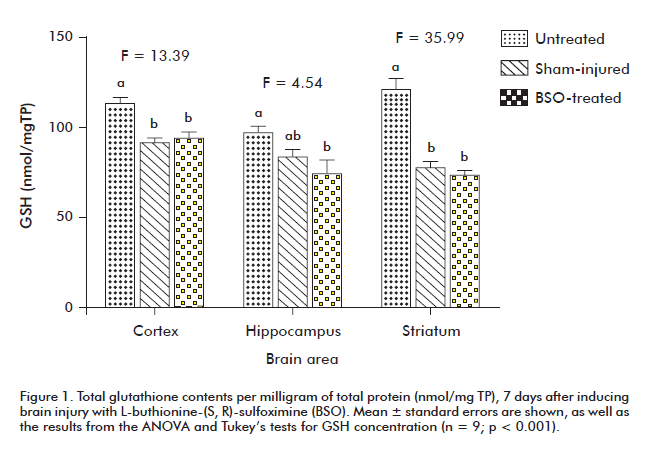
<body><![CDATA[<P   ><font face="Verdana, Arial, Helvetica, sans-serif" size="2"><b>Data processing      and statistical analysis </b></font></P >       <P   align="justify" ><font face="Verdana, Arial, Helvetica, sans-serif" size="2">Statistical analyses      were performed with the Statistic v6.0 software package. Normal distribution      and homogeneity of variance were verified with the Kolmogorov-Smirnov and      Levene tests, respectively. Oxidative stress variables were analyzed with      a one-way ANOVA followed by Tukey&rsquo;s test, using instead a non-parametric      Kruskal-Wallis test to compare independent groups failing to meet these criteria.      Statistical significance was set at p &le; 0.05. </font></P >       <P   ><font size="2" face="Verdana, Arial, Helvetica, sans-serif"><b><font size="3">RESULTS</font></b>      </font></P >   <FONT size="+1">        <P   ><font size="2" face="Verdana, Arial, Helvetica, sans-serif"><b>Biochemical analyses      </b> </font></P >   <FONT size="+1">        <P   align="justify" ><font face="Verdana, Arial, Helvetica, sans-serif" size="2">No differences regarding      GSH concentration were detected between sham-injured or BSO-treated animals      for any of the studied brain areas. However, both groups exhibited statistically      significant reductions in the GSH levels of cortex and striatum when compared      to untreated animals (p &lt; 0.05) (<a href="/img/revistas/bta/v28n4/f0105411.gif">Figure 1</a>).      </font></P >       
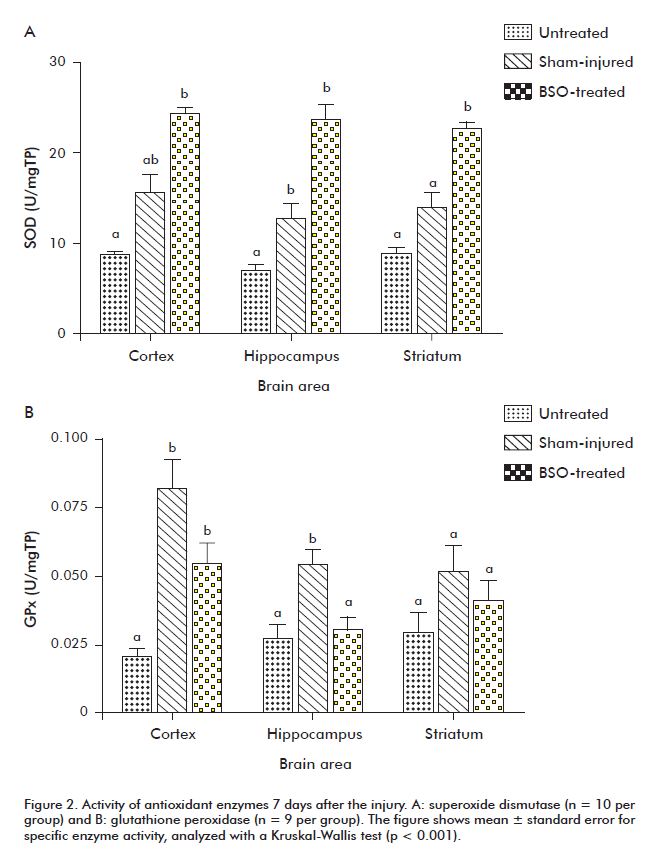
<P   align="justify" ><font face="Verdana, Arial, Helvetica, sans-serif" size="2">Although SOD activity      in BSO-treated animals was significantly higher than in healthy animals, the      same comparison, when performed against sham-injured animals, produced statistically      significant differences only for striatum. No statistically significant differences      were detected between the sham-injured and untreated groups (p &lt; 0.001)      (<a href="/img/revistas/bta/v28n4/f0205411.gif">Figure 2A</a>). </font></P >       
<P   align="justify" ><font face="Verdana, Arial, Helvetica, sans-serif" size="2">GPx activity was      highest in the sham-injured group, exhibiting statistically significant differences      with the hippocampus of BSO-treated animals and with the cortex and hippocampus      of untreated animals (p &lt; 0.01). These differences never reached statistical      significance for striatum samples (<a href="/img/revistas/bta/v28n4/f0205411.gif">Figure 2B</a>).      </font></P >       
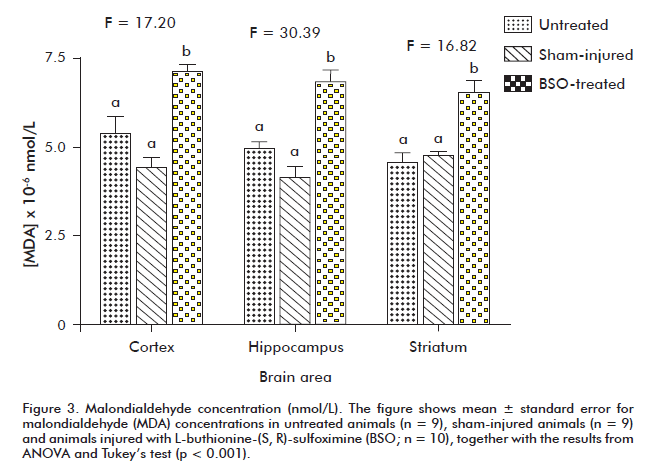
<P   align="justify" ><font face="Verdana, Arial, Helvetica, sans-serif" size="2">MDA levels exhibited      highly significant increases in all the studied brain areas of BSO-treated      animals (p &lt; 0.001) (<a href="/img/revistas/bta/v28n4/f0305411.gif">Figure 3</a>). </font></P >       
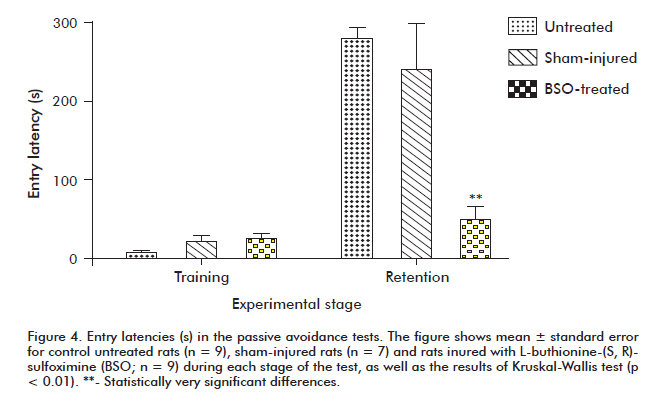
<P   ><font face="Verdana, Arial, Helvetica, sans-serif" size="2"><b>Behavioral studies      </b> </font></P >       <P   align="justify" ><font face="Verdana, Arial, Helvetica, sans-serif" size="2">All groups behaved      similarly during the training phase in the passive avoidance box. However,      when retention was evaluated 7 days later, the control and sham-injured animals      exhibited statistically significant (p &lt; 0.01) increases in latency time      for entry into the dark compartment when compared with BSO-treated animals      (<a href="/img/revistas/bta/v28n4/f0405411.gif">Figure 4</a>). </font></P >       
]]></body>
<body><![CDATA[<P   ><font size="2" face="Verdana, Arial, Helvetica, sans-serif"><b><font size="3">DISCUSSION      </font></b></font></P >   <FONT size="+1">        <P   align="justify" ><font size="2" face="Verdana, Arial, Helvetica, sans-serif">A number of studies      have found out that increased oxidative damage correlates positively with      early cognitive deterioration in Alzheimer&rsquo;s disease patients [19].      Normal aging also brings about progressive cognitive impairment, which takes      a particularly significant toll in memory-intensive activities. The identification      of free radicals as important players in this process has led to the appearance      of therapeutic strategies against aging and aging-related pathologies centered      on the inhibition or limitation of oxidative reactions involving these agents.      Although anti-oxidative therapy has enjoyed growing acceptance, especially      in Western countries, hard evidence on its benefits is still lacking due to,      among other factors, an insufficient understanding of the oxidative damage      mechanisms triggering the process, lack of consensus on what constitute reliable      markers of oxidative damage and oxidative status of the patients, and failure      to identify a therapeutic window of opportunity [20]. Deeper and more detailed      data are required, especially on the intricacies of the GSH system, taking      into account its prominent role in the maintenance of oxidative homeostasis      in the brain and its link to cognitive function [18]. </font></P >   <FONT size="+1">        <P   align="justify" ><font face="Verdana, Arial, Helvetica, sans-serif" size="2">Different studies      in humans, rats and monkeys have demonstrated that the qualitative codification      of stimuli takes place in brain structures operating, to a certain extent,      as independent memory systems. Such studies have focused mainly on the hippocampus,      striatum, amygdala and frontal brain cortex [21]. </font></P >       <P   align="justify" ><font face="Verdana, Arial, Helvetica, sans-serif" size="2">BSO has received      widespread use as inhibitor of &gamma;-glutamylcysteine synthetase during      both <I>in vivo</I> and <I>in vitro </I>neurological research<I>. </I>Its      effect is, however, transitory, and GSH concentration rebounds back to normal      levels by day 7 post-administration [22]. This explains why GSH concentrations      do not differ between BSO-treated and sham-injured animals, although both      groups still exhibit lower GSH levels than the non-treated group. </font></P >       <P   align="justify" ><font face="Verdana, Arial, Helvetica, sans-serif" size="2">Interestingly, MDA      levels remained high in the BSO-treated group despite the GSH rebound. This      suggests the presence of an oxidative imbalance in this group, supporting      the theory that oxidative damage is caused by self-perpetuating mechanisms      that outlive the originating event [23]. Decreased GSH concentrations should      inhibit the activity of mitochondrial complexes I and II and the production      of ATP, which would in turn result in the generation of reactive oxygen species      [24]. The latter may diffuse out to other cell compartments where they may      cause further damage. Therefore, a compensating response of the antioxidant      enzyme system was expected [5]. </font></P >       <P   align="justify" ><font face="Verdana, Arial, Helvetica, sans-serif" size="2">Although SOD activity      remained relatively high in the studied brain areas of BSO-treated individuals      when compared with sham-injured animals, this difference reached statistical      significance only for striatum samples, suggesting that this region is more      susceptible to GSH deficit, as SOD activity is a telltale sign of H<Sub>2</Sub>O<Sub>2</Sub>      accumulation. GPx uses GSH as electron donor for catalyzing the reduction      of H<Sub>2</Sub>O<Sub>2 </Sub>and other hydroperoxides originating from lipid      peroxidation and the metabolism of eicosanoids [25]. Hence, the GSH system      is essential for dealing with excess H<Sub>2</Sub>O<Sub>2</Sub>,<Sub> </Sub>protecting      biological membranes and other cell components against oxidative damage [26].      </font></P >   <FONT size="+1"><FONT size="+1"><FONT size="+1"><FONT size="+1"><FONT size="+1"><FONT size="+1"><FONT size="+1"><FONT size="+1"><FONT size="+1"><FONT size="+1"><FONT size="+1"><FONT size="+1"><FONT size="+1"><FONT size="+1">        <P   align="justify" ><font face="Verdana, Arial, Helvetica, sans-serif" size="2">That increases in      SOD activity are not matched by compensatory increases in GPx activity suggest      that the latter is sensitive to the low availability of GSH, specifically      in the hippocampus and striatum. </font></P >       <P   align="justify" ><font face="Verdana, Arial, Helvetica, sans-serif" size="2">Hydrogen peroxide      may oxidize key cysteine residues, altering the structure and function of      many proteins [27]. Neurons and glial cells produce NO, a species that can      react with O<Sub>2</Sub><Sup>-</Sup> anions, thus forming peroxynitrite (ONOO<Sup>-</Sup>)      and, in a situation where GSH is deficient, nitrosonium (NO<Sup>+</Sup>) ions.      The latter constitute strongly oxidizing species that can inactivate enzymes      such as succinate dehydrogenase, glutamine synthetase, cytochrome P<Sub>450</Sub>,      the Ca<Sup>2+</Sup>-ATPase of the endoplasmic reticulum, Mn<Sup>2+</Sup>-SOD      and GRD [28]. </font></P >   <FONT size="+1"><FONT size="+1"><FONT size="+1"><FONT size="+1"><FONT size="+1"><FONT size="+1"><FONT size="+1"><FONT size="+1"><FONT size="+1"><FONT size="+1"><FONT size="+1"><FONT size="+1">        <P   align="justify" ><font face="Verdana, Arial, Helvetica, sans-serif" size="2">The low enzyme activity      of GPx in BSO-treated animals may arise from oxidative damage of the protein      itself resulting, in turn, in accumulated H<Sub>2</Sub>O<Sub>2</Sub>. Hydrogen      peroxide is relatively stable in aqueous solutions, and can easily cross biological      membranes [29], triggering sequential reactions of lipid peroxidation and      forming aldehydes such as MDA [30]. MDA exhibited increased levels in the      studied brain areas of the BSO-treated animals, as expected if a compensatory      GPx response is absent, and in agreement with the results obtained by Rougemont      <I>et al. </I>after administering BSO to specific brain areas [31]. </font></P >   <FONT size="+1"><FONT size="+1"><FONT size="+1"><FONT size="+1">        <P   align="justify" ><font face="Verdana, Arial, Helvetica, sans-serif" size="2">Some research suggest      that the <I>in vitro</I> administration of H<Sub>2</Sub>O<Sub>2</Sub> inhibits      the activity of NMDA receptors [32]. It has been shown that a 40% deficit      in brain GSH is sufficient for decreasing the functionality of NMDA receptors,      due to the presence in the latter of cysteine residues sensitive to environmental      redox status [33]. Such an effect might well be enhanced by deficits in GPx      activity, as observed in the BSO-treated group. </font></P >   <FONT size="+1"><FONT size="+1"><FONT size="+1"><FONT size="+1">        ]]></body>
<body><![CDATA[<P   align="justify" ><font face="Verdana, Arial, Helvetica, sans-serif" size="2">Changes in intracellular      Ca<Sup>2+ </Sup>concentration mediated by the ion channels of NMDA receptors      are essential for activating the protein kinases that modulate, in the long      term, the efficacy of synaptic transmission and the levels of protein synthesis      required for the maintenance of long-term potentiation, as well as memory      consolidation [34]. </font></P >   <FONT size="+1"><FONT size="+1">        <P   align="justify" ><font face="Verdana, Arial, Helvetica, sans-serif" size="2">BSO-treated individuals      exhibited low entry latencies and thus, poor retention in the passive avoidance      tests. The association between entry into the dark compartment and punitive      stimulation took place in seconds, as well as the induction of long-term potentiation      [7]. This suggests that these animals are probably unable to maintain the      mechanisms that normally guarantee memory consolidation. </font></P >       <P   align="justify" ><font face="Verdana, Arial, Helvetica, sans-serif" size="2">Behavioral studies      related to oxidative stress have produced disparate results. Some research      on the effect of antioxidants on cognitive function suggests a direct involvement      of ROS in learning and memory [35, 36]. However, genetic engineering of the      &beta;-amyloid peptide has also suggested that oxidative stress is neither      necessary nor sufficient to cause memory impairment [37]. GSH deficits have      been linked to short-term memory and motivational impairment [18], in addition      to favoring oxidative processes that indirectly contribute to cognitive decline      [38]. </font></P >       <P   align="justify" ><font face="Verdana, Arial, Helvetica, sans-serif" size="2">These results suggest      that, independently from the triggering event, oxidative damage may persist      due to a state of unbalance in antioxidant enzymes that leads to increased      lipid peroxidation. The latter condition has a direct effect in biological      membranes and may be related to long-term memory impairment in BSO-treated      animals. </font></P >       <P   ><font size="2" face="Verdana, Arial, Helvetica, sans-serif"><b><font size="3">ACKNOWLEDGEMENTS      </font> </b> </font></P >   <FONT size="+1">        <P   align="justify" ><font size="2" face="Verdana, Arial, Helvetica, sans-serif">The authors would      like to acknowledge the contribution of Ariadna Costa Mujica, from the Biochemistry      Dept. of the School of Biology of Havana University (Cuba) and Daymara Mercer&oacute;n      Mart&iacute;nez, from the Neurosciences Center (Cuba) to the experimental      stage of this work, as well as the help of Lourdes Lorigados, Teresa Serrano      and Lissette Blanco, from the International Center for Neurological Restoration      (CIREN, Cuba). </font></P >   <FONT size="+1">        <P   align="justify" > </P >       <P   ><font size="3"><b><font face="Verdana, Arial, Helvetica, sans-serif">REFERENCES</font></b></font><b><font face="Verdana, Arial, Helvetica, sans-serif" size="2">      </font></b></P >       <P   align="justify" ><font size="2" face="Verdana, Arial, Helvetica, sans-serif">1. Jim&eacute;nez-Jim&eacute;nez      FJ, Alonso-Navarro H, Ayuso-Peralta L, Jabbour-Wadih T. Estr&eacute;s oxidativo      y enfermedad de Alzheimer. Rev Neurol 2006;42(7):419-27. </font></P >   <FONT size="+1">        <P   align="justify" ><font face="Verdana, Arial, Helvetica, sans-serif" size="2">2. Drake J, Kanski      J, Varadarajan S, Tsoras M, Butterfield DA. Elevation of brain glutathione      by gamma-glutamylcysteine ethyl ester protects against peroxynitrite-induced      oxidative stress. J Neurosci Res. 2002;(68):776-84. </font></P >       ]]></body>
<body><![CDATA[<!-- ref --><P   align="justify" ><font face="Verdana, Arial, Helvetica, sans-serif" size="2">3. Dalton TP, Chen      Y, Schneider SN, Nebert DW, Shertzer HG. Genetically altered mice to evaluate      glutathione homeostasis in health and disease. Free Radic Biol Med. 2004;37(10):1511-26.          </font></P >       <!-- ref --><P   align="justify" ><font face="Verdana, Arial, Helvetica, sans-serif" size="2">4. Chen J, Small-Howard      A, Yin A, Berry MJ. The responses of Ht22 cells to oxidative stress induced      by buthionine sulfoximine (BSO). BMC Neurosci [internet]. 2005 Feb 15 [cited      2011 Jun 14];6 [about 10 p.]. Available from: <a href="http://www.biomedcentral.com/1471-2202/6/1" target="_blank">http://www.biomedcentral.com/1471-2202/6/1</a>0      </font></P >       <!-- ref --><P   align="justify" ><font face="Verdana, Arial, Helvetica, sans-serif" size="2">5. Gonz&aacute;lez      ME, Fern&aacute;ndez I, Bauza JY. Indicadores de estr&eacute;s oxidativo en      cerebros de ratas viejas con d&eacute;ficit cognitivo. Biotecnol Apl. 2007;24:145-50.          </font></P >       <!-- ref --><P   align="justify" ><font face="Verdana, Arial, Helvetica, sans-serif" size="2">6. Chi L, Ke Y, Luo      C, Gozal D, Liu R. Depletion of reduced glutathione enhances motor neuron      degeneration in vitro and in vivo. Neuroscience. 2007;144(3):991-1003.     </font></P >       <!-- ref --><P   align="justify" ><font face="Verdana, Arial, Helvetica, sans-serif" size="2">7. Izquierdo I, Bevilaqua      LR, Rossato JI, Bonini JS, Medina JH, Cammarota M. Different molecular cascades      in different sites of the brain control memory consolidation. Trends Neurosci.      2006;29(9):496-505.     </font></P >       <!-- ref --><P   align="justify" ><font face="Verdana, Arial, Helvetica, sans-serif" size="2">8. Ansari MA, Roberts      KN, Scheff SW. Oxidative stress and modification of synaptic proteins in hippocampus      after traumatic brain injury. Free Radic Biol Med. 2008;45(4):443-52.     </font></P >       <!-- ref --><P   align="justify" ><font face="Verdana, Arial, Helvetica, sans-serif" size="2">9. Clark JD, Gebhart      GF, Gonder JC, Keeling ME, Kohn DF. Special Report: The 1996 Guide for the      Care and Use of Laboratory Animals. ILAR J. 1997;38(1):41-48.     </font></P >       <!-- ref --><P   align="justify" ><font face="Verdana, Arial, Helvetica, sans-serif" size="2">10. Guidelines for      the use of animals in Neuroscience Research. In: Olfert ED, Cross BM, McWilliam      AA, editors. Guide to the care and use of experimental animals. Canadian Council      on Animal Care. 2nd ed. Ottawa: Bradda Printing Services; 1993. p. 155-62.          </font></P >       <!-- ref --><P   align="justify" ><font face="Verdana, Arial, Helvetica, sans-serif" size="2">11. The use of animals      in psychology. In: Olfert ED, Cross BM, McWilliam AA, editors. Guide to the      care and use of experimental animals. Canadian Council on Animal Care. 2nd      ed. Ottawa: Bradda Printing Services; 1993. p. 163-5.     </font></P >       <!-- ref --><P   align="justify" ><font face="Verdana, Arial, Helvetica, sans-serif" size="2">12. Paxinos G, Watson      C. The rat brain in stereotaxic coordinates. 2nd ed. San Diego: Academic Press;      1986.     </font></P >       <!-- ref --><P   align="justify" ><font face="Verdana, Arial, Helvetica, sans-serif" size="2">13. Azbill RD, Mu      X, Bruce-Keller AJ, Mattson MP, Springer JE. Impaired mitochondrial function,      oxidative stress and altered antioxidant enzyme activities following traumatic      spinal cord injury. Brain Res. 1997;765(2):283-90.     </font></P >       <!-- ref --><P   align="justify" ><font face="Verdana, Arial, Helvetica, sans-serif" size="2">14. Marklund S, Marlund      G. Involvement of the superoxide anion radical in the autoxidation of pyrogallol      and a convenient assay for superoxide dismutase. Eur J Biochem. 1974;47(3):469-74.          </font></P >       <!-- ref --><P   align="justify" ><font face="Verdana, Arial, Helvetica, sans-serif" size="2">15. Flohe L, Gunzler      WA. Assays of glutathione peroxidase. Methods Enzymol. 1984;105:114-21.     </font></P >       <!-- ref --><P   align="justify" ><font face="Verdana, Arial, Helvetica, sans-serif" size="2">16. Buege JA, Aust      SD. Microsomal lipid peroxidation. Methods Enzymol. 1978;52:302-10.     </font></P >       <!-- ref --><P   align="justify" ><font face="Verdana, Arial, Helvetica, sans-serif" size="2">17. Bradford M. A      rapid and sensitive method for the quantitation of microgram quantities of      protein utilizing the principle of protein-dye binding. Anal Biochem. 1976;72:248-54.          </font></P >       <!-- ref --><P   align="justify" ><font face="Verdana, Arial, Helvetica, sans-serif" size="2">18. Cruz-Aguado R,      Almaguer-Melian W, D&iacute;az C, Lorigados L, Bergado J. Behavioral and biochemical      effects of glutathione depletion in the rat brain. Brain Res Bull. 2001;55:327-33.          </font></P >       <!-- ref --><P   align="justify" ><font face="Verdana, Arial, Helvetica, sans-serif" size="2">19. Markesbery WR,      Lovell MA. Damage to lipids, proteins, DNA, and RNA in mild cognitive impairment.      Arch Neurol 2007;64:954-6.     </font></P >       <!-- ref --><P   align="justify" ><font face="Verdana, Arial, Helvetica, sans-serif" size="2">20. Fusco D, Colloca      G, Lo Monaco MR, Cesari M. Effects of antioxidant supplementation on the aging      process. Clin Interv Aging. 2007;2(3):377-87.     </font></P >       <P   align="justify" ><font face="Verdana, Arial, Helvetica, sans-serif" size="2">21. Rueda-Orozco      P, Montes-Rodr&iacute;guez C, Soria-G&oacute;mez E, Herrera-Sol&iacute;s A,      Hopkins R, Guzm&aacute;n K, Pr&oacute;spero-Garc&iacute;a A, Ruiz-Contreras      A, Pr&oacute;spero-Garc&iacute;a O. Dependencia de los sistemas de memoria      al ciclo luz/oscuridad en la expresi&oacute;n de estrategias adaptativas.      Primera parte. Salud Mental 2006; 29:19-24. </font></P >       <!-- ref --><P   align="justify" ><font face="Verdana, Arial, Helvetica, sans-serif" size="2">22. Meister A. Glutathione      deficiency produced by inhibition of its synthesis, and its reversal; applications      in research and therapy. Pharmacol Ther. 1991;51(2):155-94.     </font></P >       <!-- ref --><P   align="justify" ><font face="Verdana, Arial, Helvetica, sans-serif" size="2">23. Garc&iacute;a      R, Gonz&aacute;lez M, Fern&aacute;ndez I, Casta&ntilde;o Y, D&iacute;az M,      Alberti E. Behavioral and oxidative metabolism disorders in a model of transient      induced cerebral hipoperfusion in rats. Biotecnol Apl. 2008;25:332-8.     </font></P >       ]]></body>
<body><![CDATA[<P   align="justify" ><font face="Verdana, Arial, Helvetica, sans-serif" size="2">24. Hsu M, Srinivas      B, Kumar J, Subramaniant R, Andersen J. Glutathione depletion resulting in      selective mitochondrial complex I inhibition in dopaminergic cells is via      an NO-mediated pathway not involving peroxynitrite: implications for Parkinson&rsquo;s      disease. J Neurochem. 2005;92(5):1091-1103. </font></P >       <!-- ref --><P   align="justify" ><font face="Verdana, Arial, Helvetica, sans-serif" size="2">25. Liddell JR, Dringen      R, Crack PJ, Robinson SR. Glutathione peroxidase 1 and a high cellular glutathione      concentration are essential for effective organic hydroperoxide detoxification      in astrocytes. Glia. 2006;54(8):873-9.     </font></P >       <!-- ref --><P   align="justify" ><font face="Verdana, Arial, Helvetica, sans-serif" size="2">26. Lv SW, Wang XG,      Mu Y, Zang TZ, Ji YT, Liu JQ, et al. A novel dicyclodextrinyl diselenide compound      with glutathione peroxidase activity. FEBS J. 2007;274(15):3846-54.     </font></P >       <!-- ref --><P   align="justify" ><font face="Verdana, Arial, Helvetica, sans-serif" size="2">27. Oliveira-Marques      V, Marinho HS, Cyrne L, Antunes F. Role of hydrogen peroxide in NF-kappaB      activation: from inducer to modulator. Antioxid Redox Signal. 2009;11(9):2223-43.          </font></P >       <!-- ref --><P   align="justify" ><font face="Verdana, Arial, Helvetica, sans-serif" size="2">28. Kuo WN, Kocis      JM. Nitration/S-nitrosation of proteins by peroxynitrite-treatment and subsequent      modification by glutathione S-transferase and glutathione peroxidase. Mol      Cell Biochem. 2002;233(1-2):57-63.     </font></P >       <!-- ref --><P   align="justify" ><font face="Verdana, Arial, Helvetica, sans-serif" size="2">29. Fisher AB. Redox      signaling across cell membranes. Antioxid Redox Signal. 2009;11(6):1349-56.          </font></P >       <!-- ref --><P   align="justify" ><font face="Verdana, Arial, Helvetica, sans-serif" size="2">30. Brunk UT, Terman      A. The mitochondrial-lysosomal axis theory of aging: accumulation of damaged      mitochondria as a result of imperfect autophagocytosis. Eur J Biochem. 2002;269(8):1996-2002.          </font></P >       <!-- ref --><P   align="justify" ><font face="Verdana, Arial, Helvetica, sans-serif" size="2">31. Rougemont M,      Do KQ, Castagne V. New model of glutathione deficit during development: Effect      on lipid peroxidation in the rat brain. J Neurosci Res. 2002;70(6):774-83.          </font></P >       <!-- ref --><P   align="justify" ><font face="Verdana, Arial, Helvetica, sans-serif" size="2">32. Jiang D, Akopian      G, Ho YS, Walsh JP, Andersen JK. Chronic brain oxidation in a glutathione      peroxidase knockout mouse model results in increased resistance to induced      epileptic seizures. Exp Neurol. 2000; 164(2):257-68.     </font></P >       <!-- ref --><P   align="justify" ><font face="Verdana, Arial, Helvetica, sans-serif" size="2">33. Steullet P, Neijt      HC, Cuenod M, Do KQ. Synaptic plasticity impairment and hypofunction of NMDA      receptors induced by glutathione deficit: relevance to schizophrenia. Neuroscience.      2006;137(3):807-19.     </font></P >       <!-- ref --><P   align="justify" ><font face="Verdana, Arial, Helvetica, sans-serif" size="2">34. Almaguer-Melian      W, Cruz-Aguado R, Bergado JA. Synaptic plasticity is impaired in rats with      a low glutathione content. Synapse. 2000;38(4):369-74.     </font></P >       <P   align="justify" ><font face="Verdana, Arial, Helvetica, sans-serif" size="2">35. Li J, Wang C,      Zhang JH, Cai JM, Cao YP, Sun XJ. Hydrogen-rich saline improves memory function      in a rat model of amyloid-beta-induced Alzheimer&rsquo;s disease by reduction      of oxidative stress. Brain Res. 2010;1328:152-61. </font></P >       <!-- ref --><P   align="justify" ><font face="Verdana, Arial, Helvetica, sans-serif" size="2">36. Veerendra Kumar      MH, Gupta YK. Effect of different extracts of Centella asiatica on cognition      and markers of oxidative stress in rats. J Ethnopharmacol. 2002;79(2):253-60.          </font></P >       <!-- ref --><P   align="justify" ><font face="Verdana, Arial, Helvetica, sans-serif" size="2">37. Butterfield DA,      Galvan V, Lange MB, Tang H, Sowell RA, Spilman P, et al. In vivo oxidative      stress in brain of Alzheimer disease transgenic mice: Requirement for methionine      35 in amyloid beta-peptide of APP. Free Radic Biol Med. 2010;48(1):136-44.          </font></P >       <!-- ref --><P   align="justify" ><font face="Verdana, Arial, Helvetica, sans-serif" size="2">38. Shukitt-Hale      B, Erat SA, Joseph JA. Spatial learning and memory deficits induced by dopamine      administration with decreased glutathione. Free Radic Biol Med. 1998;24(7-8):1149-58.          </font></P >       <P   align="justify" >&nbsp;</P >       <P   align="justify" > </P >       ]]></body>
<body><![CDATA[<P   align="justify" ><font size="2" face="Verdana, Arial, Helvetica, sans-serif">Received in July,      2011.     <br>     Accepted for publication in November, 2011. </font></P >       <P   align="justify" >&nbsp;</P >   <FONT size="+1">        <P   align="justify" > </P >       <P   ><font size="2" face="Verdana, Arial, Helvetica, sans-serif">Mei-Li D&iacute;az-Hung.      Departamento de Inmunoqu&iacute;mica. Centro Internacional de Restauraci&oacute;n      Neurol&oacute;gica, CIREN. Avenida 25 no. 15805, CP 11300, La Habana, Cuba.      E- mail: <a href="mailto:mldiaz@neuro.ciren.cu">mldiaz@neuro.ciren.cu</a>.      </font></P >   </font></font></font></font></font></font></font></font></font></font></font></font></font></font></font></font></font></font></font></font></font></font></font></font></font></font></font></font></font></font></font></font></font></font></font></font></font></font></font></font></font></font></font></font></font></font></font></font></font></font></font></font></font></font></font></font></font></font></font></font></font></font></font></font></font></font></font></font></font></font></font></font></font></font></font></font></font></font></font></font></font></font></font></font></DIV >      ]]></body><back>
<ref-list>
<ref id="B1">
<label>1</label><nlm-citation citation-type="journal">
<person-group person-group-type="author">
<name>
<surname><![CDATA[Jimenez-Jimenez]]></surname>
<given-names><![CDATA[FJ]]></given-names>
</name>
<name>
<surname><![CDATA[Alonso-Navarro]]></surname>
<given-names><![CDATA[H]]></given-names>
</name>
<name>
<surname><![CDATA[Ayuso-Peralta]]></surname>
<given-names><![CDATA[L]]></given-names>
</name>
<name>
<surname><![CDATA[Jabbour-Wadih]]></surname>
<given-names><![CDATA[T]]></given-names>
</name>
</person-group>
<article-title xml:lang="es"><![CDATA[Estrés oxidativo y enfermedad de Alzheimer]]></article-title>
<source><![CDATA[Rev Neurol]]></source>
<year>2006</year>
<volume>42</volume>
<numero>7</numero>
<issue>7</issue>
<page-range>419-27</page-range></nlm-citation>
</ref>
<ref id="B2">
<label>2</label><nlm-citation citation-type="journal">
<person-group person-group-type="author">
<name>
<surname><![CDATA[Drake]]></surname>
<given-names><![CDATA[J]]></given-names>
</name>
<name>
<surname><![CDATA[Kanski]]></surname>
<given-names><![CDATA[J]]></given-names>
</name>
<name>
<surname><![CDATA[Varadarajan]]></surname>
<given-names><![CDATA[S]]></given-names>
</name>
<name>
<surname><![CDATA[Tsoras]]></surname>
<given-names><![CDATA[M]]></given-names>
</name>
<name>
<surname><![CDATA[Butterfield]]></surname>
<given-names><![CDATA[DA]]></given-names>
</name>
</person-group>
<article-title xml:lang="en"><![CDATA[Elevation of brain glutathione by gamma-glutamylcysteine ethyl ester protects against peroxynitrite-induced oxidative stress]]></article-title>
<source><![CDATA[J Neurosci Res]]></source>
<year>2002</year>
<volume>68</volume>
<numero>6</numero>
<issue>6</issue>
<page-range>776-84</page-range></nlm-citation>
</ref>
<ref id="B3">
<label>3</label><nlm-citation citation-type="journal">
<person-group person-group-type="author">
<name>
<surname><![CDATA[Dalton]]></surname>
<given-names><![CDATA[TP]]></given-names>
</name>
<name>
<surname><![CDATA[Chen]]></surname>
<given-names><![CDATA[Y]]></given-names>
</name>
<name>
<surname><![CDATA[Schneider]]></surname>
<given-names><![CDATA[SN]]></given-names>
</name>
<name>
<surname><![CDATA[Nebert]]></surname>
<given-names><![CDATA[DW]]></given-names>
</name>
<name>
<surname><![CDATA[Shertzer]]></surname>
<given-names><![CDATA[HG]]></given-names>
</name>
</person-group>
<article-title xml:lang="en"><![CDATA[Genetically altered mice to evaluate glutathione homeostasis in health and disease]]></article-title>
<source><![CDATA[Free Radic Biol Med]]></source>
<year>2004</year>
<volume>37</volume>
<numero>10</numero>
<issue>10</issue>
<page-range>1511-26</page-range></nlm-citation>
</ref>
<ref id="B4">
<label>4</label><nlm-citation citation-type="journal">
<person-group person-group-type="author">
<name>
<surname><![CDATA[Chen]]></surname>
<given-names><![CDATA[J]]></given-names>
</name>
<name>
<surname><![CDATA[Small-Howard]]></surname>
<given-names><![CDATA[A]]></given-names>
</name>
<name>
<surname><![CDATA[Yin]]></surname>
<given-names><![CDATA[A]]></given-names>
</name>
<name>
<surname><![CDATA[Berry]]></surname>
<given-names><![CDATA[MJ]]></given-names>
</name>
</person-group>
<article-title xml:lang="en"><![CDATA[The responses of Ht22 cells to oxidative stress induced by buthionine sulfoximine (BSO)]]></article-title>
<source><![CDATA[BMC Neurosci]]></source>
<year>2005</year>
<month> F</month>
<day>eb</day>
</nlm-citation>
</ref>
<ref id="B5">
<label>5</label><nlm-citation citation-type="journal">
<person-group person-group-type="author">
<name>
<surname><![CDATA[González]]></surname>
<given-names><![CDATA[ME]]></given-names>
</name>
<name>
<surname><![CDATA[Fernández]]></surname>
<given-names><![CDATA[I]]></given-names>
</name>
<name>
<surname><![CDATA[Bauza]]></surname>
<given-names><![CDATA[JY]]></given-names>
</name>
</person-group>
<article-title xml:lang="es"><![CDATA[Indicadores de estrés oxidativo en cerebros de ratas viejas con déficit cognitivo]]></article-title>
<source><![CDATA[Biotecnol Apl]]></source>
<year>2007</year>
<volume>24</volume>
<page-range>145-50</page-range></nlm-citation>
</ref>
<ref id="B6">
<label>6</label><nlm-citation citation-type="journal">
<person-group person-group-type="author">
<name>
<surname><![CDATA[Chi]]></surname>
<given-names><![CDATA[L]]></given-names>
</name>
<name>
<surname><![CDATA[Ke]]></surname>
<given-names><![CDATA[Y]]></given-names>
</name>
<name>
<surname><![CDATA[Luo]]></surname>
<given-names><![CDATA[C]]></given-names>
</name>
<name>
<surname><![CDATA[Gozal]]></surname>
<given-names><![CDATA[D]]></given-names>
</name>
<name>
<surname><![CDATA[Liu]]></surname>
<given-names><![CDATA[R]]></given-names>
</name>
</person-group>
<article-title xml:lang="en"><![CDATA[Depletion of reduced glutathione enhances motor neuron degeneration in vitro and in vivo]]></article-title>
<source><![CDATA[Neuroscience]]></source>
<year>2007</year>
<volume>144</volume>
<numero>3</numero>
<issue>3</issue>
<page-range>991-1003</page-range></nlm-citation>
</ref>
<ref id="B7">
<label>7</label><nlm-citation citation-type="journal">
<person-group person-group-type="author">
<name>
<surname><![CDATA[Izquierdo]]></surname>
<given-names><![CDATA[I]]></given-names>
</name>
<name>
<surname><![CDATA[Bevilaqua]]></surname>
<given-names><![CDATA[LR]]></given-names>
</name>
<name>
<surname><![CDATA[Rossato]]></surname>
<given-names><![CDATA[JI]]></given-names>
</name>
<name>
<surname><![CDATA[Bonini]]></surname>
<given-names><![CDATA[JS]]></given-names>
</name>
<name>
<surname><![CDATA[Medina]]></surname>
<given-names><![CDATA[JH]]></given-names>
</name>
<name>
<surname><![CDATA[Cammarota]]></surname>
<given-names><![CDATA[M]]></given-names>
</name>
</person-group>
<article-title xml:lang="en"><![CDATA[Different molecular cascades in different sites of the brain control memory consolidation]]></article-title>
<source><![CDATA[Trends Neurosci]]></source>
<year>2006</year>
<volume>29</volume>
<numero>9</numero>
<issue>9</issue>
<page-range>496-505</page-range></nlm-citation>
</ref>
<ref id="B8">
<label>8</label><nlm-citation citation-type="journal">
<person-group person-group-type="author">
<name>
<surname><![CDATA[Ansari]]></surname>
<given-names><![CDATA[MA]]></given-names>
</name>
<name>
<surname><![CDATA[Roberts]]></surname>
<given-names><![CDATA[KN]]></given-names>
</name>
<name>
<surname><![CDATA[Scheff]]></surname>
<given-names><![CDATA[SW]]></given-names>
</name>
</person-group>
<article-title xml:lang="en"><![CDATA[Oxidative stress and modification of synaptic proteins in hippocampus after traumatic brain injury]]></article-title>
<source><![CDATA[Free Radic Biol Med]]></source>
<year>2008</year>
<volume>45</volume>
<numero>4</numero>
<issue>4</issue>
<page-range>443-52</page-range></nlm-citation>
</ref>
<ref id="B9">
<label>9</label><nlm-citation citation-type="journal">
<person-group person-group-type="author">
<name>
<surname><![CDATA[Clark]]></surname>
<given-names><![CDATA[JD]]></given-names>
</name>
<name>
<surname><![CDATA[Gebhart]]></surname>
<given-names><![CDATA[GF]]></given-names>
</name>
<name>
<surname><![CDATA[Gonder]]></surname>
<given-names><![CDATA[JC]]></given-names>
</name>
<name>
<surname><![CDATA[Keeling]]></surname>
<given-names><![CDATA[ME]]></given-names>
</name>
<name>
<surname><![CDATA[Kohn]]></surname>
<given-names><![CDATA[DF]]></given-names>
</name>
</person-group>
<article-title xml:lang="en"><![CDATA[Special Report: The 1996 Guide for the Care and Use of Laboratory Animals]]></article-title>
<source><![CDATA[ILAR J]]></source>
<year>1997</year>
<volume>38</volume>
<numero>1</numero>
<issue>1</issue>
<page-range>41-48</page-range></nlm-citation>
</ref>
<ref id="B10">
<label>10</label><nlm-citation citation-type="book">
<person-group person-group-type="author">
<name>
</name>
</person-group>
<article-title xml:lang="en"><![CDATA[Guidelines for the use of animals in Neuroscience Research]]></article-title>
<person-group person-group-type="editor">
<name>
<surname><![CDATA[Olfert]]></surname>
<given-names><![CDATA[ED]]></given-names>
</name>
<name>
<surname><![CDATA[Cross]]></surname>
<given-names><![CDATA[BM]]></given-names>
</name>
<name>
<surname><![CDATA[McWilliam]]></surname>
<given-names><![CDATA[AA]]></given-names>
</name>
</person-group>
<source><![CDATA[Guide to the care and use of experimental animals]]></source>
<year>1993</year>
<page-range>155-62</page-range><publisher-loc><![CDATA[Ottawa ]]></publisher-loc>
<publisher-name><![CDATA[Bradda Printing Services]]></publisher-name>
</nlm-citation>
</ref>
<ref id="B11">
<label>11</label><nlm-citation citation-type="book">
<person-group person-group-type="author">
<name>
</name>
</person-group>
<article-title xml:lang="en"><![CDATA[The use of animals in psychology]]></article-title>
<person-group person-group-type="editor">
<name>
<surname><![CDATA[Olfert]]></surname>
<given-names><![CDATA[ED]]></given-names>
</name>
<name>
<surname><![CDATA[Cross]]></surname>
<given-names><![CDATA[BM]]></given-names>
</name>
<name>
<surname><![CDATA[McWilliam]]></surname>
<given-names><![CDATA[AA]]></given-names>
</name>
</person-group>
<source><![CDATA[Guide to the care and use of experimental animals]]></source>
<year>1993</year>
<page-range>163-5</page-range><publisher-loc><![CDATA[Ottawa ]]></publisher-loc>
<publisher-name><![CDATA[Bradda Printing Services]]></publisher-name>
</nlm-citation>
</ref>
<ref id="B12">
<label>12</label><nlm-citation citation-type="book">
<person-group person-group-type="author">
<name>
<surname><![CDATA[Paxinos]]></surname>
<given-names><![CDATA[G]]></given-names>
</name>
<name>
<surname><![CDATA[Watson]]></surname>
<given-names><![CDATA[C]]></given-names>
</name>
</person-group>
<source><![CDATA[The rat brain in stereotaxic coordinates]]></source>
<year>1986</year>
<edition>2</edition>
<publisher-loc><![CDATA[San Diego ]]></publisher-loc>
<publisher-name><![CDATA[Academic Press]]></publisher-name>
</nlm-citation>
</ref>
<ref id="B13">
<label>13</label><nlm-citation citation-type="journal">
<person-group person-group-type="author">
<name>
<surname><![CDATA[Azbill]]></surname>
<given-names><![CDATA[RD]]></given-names>
</name>
<name>
<surname><![CDATA[Mu]]></surname>
<given-names><![CDATA[X]]></given-names>
</name>
<name>
<surname><![CDATA[Bruce-Keller]]></surname>
<given-names><![CDATA[AJ]]></given-names>
</name>
<name>
<surname><![CDATA[Mattson]]></surname>
<given-names><![CDATA[MP]]></given-names>
</name>
<name>
<surname><![CDATA[Springer]]></surname>
<given-names><![CDATA[JE]]></given-names>
</name>
</person-group>
<article-title xml:lang="en"><![CDATA[Impaired mitochondrial function, oxidative stress and altered antioxidant enzyme activities following traumatic spinal cord injury]]></article-title>
<source><![CDATA[Brain Res]]></source>
<year>1997</year>
<volume>765</volume>
<numero>2</numero>
<issue>2</issue>
<page-range>283-90</page-range></nlm-citation>
</ref>
<ref id="B14">
<label>14</label><nlm-citation citation-type="journal">
<person-group person-group-type="author">
<name>
<surname><![CDATA[Marklund]]></surname>
<given-names><![CDATA[S]]></given-names>
</name>
<name>
<surname><![CDATA[Marlund]]></surname>
<given-names><![CDATA[G]]></given-names>
</name>
</person-group>
<article-title xml:lang="en"><![CDATA[Involvement of the superoxide anion radical in the autoxidation of pyrogallol and a convenient assay for superoxide dismutase]]></article-title>
<source><![CDATA[Eur J Biochem]]></source>
<year>1974</year>
<volume>47</volume>
<numero>3</numero>
<issue>3</issue>
<page-range>469-74</page-range></nlm-citation>
</ref>
<ref id="B15">
<label>15</label><nlm-citation citation-type="journal">
<person-group person-group-type="author">
<name>
<surname><![CDATA[Flohe]]></surname>
<given-names><![CDATA[L]]></given-names>
</name>
<name>
<surname><![CDATA[Gunzler]]></surname>
<given-names><![CDATA[WA]]></given-names>
</name>
</person-group>
<article-title xml:lang="en"><![CDATA[Assays of glutathione peroxidase]]></article-title>
<source><![CDATA[Methods Enzymol]]></source>
<year>1984</year>
<volume>105</volume>
<page-range>114-21</page-range></nlm-citation>
</ref>
<ref id="B16">
<label>16</label><nlm-citation citation-type="journal">
<person-group person-group-type="author">
<name>
<surname><![CDATA[Buege]]></surname>
<given-names><![CDATA[JA]]></given-names>
</name>
<name>
<surname><![CDATA[Aust]]></surname>
<given-names><![CDATA[SD]]></given-names>
</name>
</person-group>
<article-title xml:lang="en"><![CDATA[Microsomal lipid peroxidation]]></article-title>
<source><![CDATA[Methods Enzymol]]></source>
<year>1978</year>
<volume>52</volume>
<page-range>302-10</page-range></nlm-citation>
</ref>
<ref id="B17">
<label>17</label><nlm-citation citation-type="journal">
<person-group person-group-type="author">
<name>
<surname><![CDATA[Bradford]]></surname>
<given-names><![CDATA[M]]></given-names>
</name>
</person-group>
<article-title xml:lang="en"><![CDATA[A rapid and sensitive method for the quantitation of microgram quantities of protein utilizing the principle of protein-dye binding]]></article-title>
<source><![CDATA[Anal Biochem]]></source>
<year>1976</year>
<volume>72</volume>
<page-range>248-54</page-range></nlm-citation>
</ref>
<ref id="B18">
<label>18</label><nlm-citation citation-type="journal">
<person-group person-group-type="author">
<name>
<surname><![CDATA[Cruz-Aguado]]></surname>
<given-names><![CDATA[R]]></given-names>
</name>
<name>
<surname><![CDATA[Almaguer-Melian]]></surname>
<given-names><![CDATA[W]]></given-names>
</name>
<name>
<surname><![CDATA[Díaz]]></surname>
<given-names><![CDATA[C]]></given-names>
</name>
<name>
<surname><![CDATA[Lorigados]]></surname>
<given-names><![CDATA[L]]></given-names>
</name>
<name>
<surname><![CDATA[Bergado]]></surname>
<given-names><![CDATA[J]]></given-names>
</name>
</person-group>
<article-title xml:lang="en"><![CDATA[Behavioral and biochemical effects of glutathione depletion in the rat brain]]></article-title>
<source><![CDATA[Brain Res Bull]]></source>
<year>2001</year>
<volume>55</volume>
<page-range>327-33</page-range></nlm-citation>
</ref>
<ref id="B19">
<label>19</label><nlm-citation citation-type="journal">
<person-group person-group-type="author">
<name>
<surname><![CDATA[Markesbery]]></surname>
<given-names><![CDATA[WR]]></given-names>
</name>
<name>
<surname><![CDATA[Lovell]]></surname>
<given-names><![CDATA[MA]]></given-names>
</name>
</person-group>
<article-title xml:lang="en"><![CDATA[Damage to lipids, proteins, DNA, and RNA in mild cognitive impairment]]></article-title>
<source><![CDATA[Arch Neurol]]></source>
<year>2007</year>
<volume>64</volume>
<page-range>954-6</page-range></nlm-citation>
</ref>
<ref id="B20">
<label>20</label><nlm-citation citation-type="journal">
<person-group person-group-type="author">
<name>
<surname><![CDATA[Fusco]]></surname>
<given-names><![CDATA[D]]></given-names>
</name>
<name>
<surname><![CDATA[Colloca]]></surname>
<given-names><![CDATA[G]]></given-names>
</name>
<name>
<surname><![CDATA[Lo Monaco]]></surname>
<given-names><![CDATA[MR]]></given-names>
</name>
<name>
<surname><![CDATA[Cesari]]></surname>
<given-names><![CDATA[M]]></given-names>
</name>
</person-group>
<article-title xml:lang="en"><![CDATA[Effects of antioxidant supplementation on the aging process]]></article-title>
<source><![CDATA[Clin Interv Aging]]></source>
<year>2007</year>
<volume>2</volume>
<numero>3</numero>
<issue>3</issue>
<page-range>377-87</page-range></nlm-citation>
</ref>
<ref id="B21">
<label>21</label><nlm-citation citation-type="journal">
<person-group person-group-type="author">
<name>
<surname><![CDATA[Rueda-Orozco]]></surname>
<given-names><![CDATA[P]]></given-names>
</name>
<name>
<surname><![CDATA[Montes-Rodríguez]]></surname>
<given-names><![CDATA[C]]></given-names>
</name>
<name>
<surname><![CDATA[Soria-Gómez]]></surname>
<given-names><![CDATA[E]]></given-names>
</name>
<name>
<surname><![CDATA[Herrera-Solís]]></surname>
<given-names><![CDATA[A]]></given-names>
</name>
<name>
<surname><![CDATA[Hopkins]]></surname>
<given-names><![CDATA[R]]></given-names>
</name>
<name>
<surname><![CDATA[Guzmán]]></surname>
<given-names><![CDATA[K]]></given-names>
</name>
<name>
<surname><![CDATA[Próspero-García]]></surname>
<given-names><![CDATA[A]]></given-names>
</name>
<name>
<surname><![CDATA[Ruiz-Contreras]]></surname>
<given-names><![CDATA[A]]></given-names>
</name>
<name>
<surname><![CDATA[Próspero-García]]></surname>
<given-names><![CDATA[O]]></given-names>
</name>
</person-group>
<article-title xml:lang="es"><![CDATA[Dependencia de los sistemas de memoria al ciclo luz/oscuridad en la expresión de estrategias adaptativas: Primera parte]]></article-title>
<source><![CDATA[Salud Ment.]]></source>
<year>2006</year>
<volume>29</volume>
<page-range>19-24</page-range></nlm-citation>
</ref>
<ref id="B22">
<label>22</label><nlm-citation citation-type="journal">
<person-group person-group-type="author">
<name>
<surname><![CDATA[Meister]]></surname>
<given-names><![CDATA[A]]></given-names>
</name>
</person-group>
<article-title xml:lang="en"><![CDATA[Glutathione deficiency produced by inhibition of its synthesis, and its reversal: applications in research and therapy]]></article-title>
<source><![CDATA[Pharmacol Ther]]></source>
<year>1991</year>
<volume>51</volume>
<numero>2</numero>
<issue>2</issue>
<page-range>155-94</page-range></nlm-citation>
</ref>
<ref id="B23">
<label>23</label><nlm-citation citation-type="journal">
<person-group person-group-type="author">
<name>
<surname><![CDATA[García]]></surname>
<given-names><![CDATA[R]]></given-names>
</name>
<name>
<surname><![CDATA[González]]></surname>
<given-names><![CDATA[M]]></given-names>
</name>
<name>
<surname><![CDATA[Fernández]]></surname>
<given-names><![CDATA[I]]></given-names>
</name>
<name>
<surname><![CDATA[Castaño]]></surname>
<given-names><![CDATA[Y]]></given-names>
</name>
<name>
<surname><![CDATA[Díaz]]></surname>
<given-names><![CDATA[M]]></given-names>
</name>
<name>
<surname><![CDATA[Alberti]]></surname>
<given-names><![CDATA[E]]></given-names>
</name>
</person-group>
<article-title xml:lang="en"><![CDATA[Behavioral and oxidative metabolism disorders in a model of transient induced cerebral hipoperfusion in rats]]></article-title>
<source><![CDATA[Biotecnol Apl]]></source>
<year>2008</year>
<volume>25</volume>
<page-range>332-8</page-range></nlm-citation>
</ref>
<ref id="B24">
<label>24</label><nlm-citation citation-type="journal">
<person-group person-group-type="author">
<name>
<surname><![CDATA[Hsu]]></surname>
<given-names><![CDATA[M]]></given-names>
</name>
<name>
<surname><![CDATA[Srinivas]]></surname>
<given-names><![CDATA[B]]></given-names>
</name>
<name>
<surname><![CDATA[Kumar]]></surname>
<given-names><![CDATA[J]]></given-names>
</name>
<name>
<surname><![CDATA[Subramaniant]]></surname>
<given-names><![CDATA[R]]></given-names>
</name>
<name>
<surname><![CDATA[Andersen]]></surname>
<given-names><![CDATA[J]]></given-names>
</name>
</person-group>
<article-title xml:lang="en"><![CDATA[Glutathione depletion resulting in selective mitochondrial complex I inhibition in dopaminergic cells is via an NO-mediated pathway not involving peroxynitrite: implications for Parkinson's disease]]></article-title>
<source><![CDATA[J Neurochem]]></source>
<year>2005</year>
<volume>92</volume>
<numero>5</numero>
<issue>5</issue>
<page-range>1091-1103</page-range></nlm-citation>
</ref>
<ref id="B25">
<label>25</label><nlm-citation citation-type="journal">
<person-group person-group-type="author">
<name>
<surname><![CDATA[Liddell]]></surname>
<given-names><![CDATA[JR]]></given-names>
</name>
<name>
<surname><![CDATA[Dringen]]></surname>
<given-names><![CDATA[R]]></given-names>
</name>
<name>
<surname><![CDATA[Crack]]></surname>
<given-names><![CDATA[PJ]]></given-names>
</name>
<name>
<surname><![CDATA[Robinson]]></surname>
<given-names><![CDATA[SR]]></given-names>
</name>
</person-group>
<article-title xml:lang="en"><![CDATA[Glutathione peroxidase 1 and a high cellular glutathione concentration are essential for effective organic hydroperoxide detoxification in astrocytes]]></article-title>
<source><![CDATA[Glia]]></source>
<year>2006</year>
<volume>54</volume>
<numero>8</numero>
<issue>8</issue>
<page-range>873-9</page-range></nlm-citation>
</ref>
<ref id="B26">
<label>26</label><nlm-citation citation-type="journal">
<person-group person-group-type="author">
<name>
<surname><![CDATA[Lv]]></surname>
<given-names><![CDATA[SW]]></given-names>
</name>
<name>
<surname><![CDATA[Wang]]></surname>
<given-names><![CDATA[XG]]></given-names>
</name>
<name>
<surname><![CDATA[Mu]]></surname>
<given-names><![CDATA[Y]]></given-names>
</name>
<name>
<surname><![CDATA[Zang]]></surname>
<given-names><![CDATA[TZ]]></given-names>
</name>
<name>
<surname><![CDATA[Ji]]></surname>
<given-names><![CDATA[YT]]></given-names>
</name>
<name>
<surname><![CDATA[Liu]]></surname>
<given-names><![CDATA[JQ]]></given-names>
</name>
</person-group>
<article-title xml:lang="en"><![CDATA[A novel dicyclodextrinyl diselenide compound with glutathione peroxidase activity]]></article-title>
<source><![CDATA[FEBS J]]></source>
<year>2007</year>
<volume>274</volume>
<numero>15</numero>
<issue>15</issue>
<page-range>3846-54</page-range></nlm-citation>
</ref>
<ref id="B27">
<label>27</label><nlm-citation citation-type="journal">
<person-group person-group-type="author">
<name>
<surname><![CDATA[Oliveira-Marques]]></surname>
<given-names><![CDATA[V]]></given-names>
</name>
<name>
<surname><![CDATA[Marinho]]></surname>
<given-names><![CDATA[HS]]></given-names>
</name>
<name>
<surname><![CDATA[Cyrne]]></surname>
<given-names><![CDATA[L]]></given-names>
</name>
<name>
<surname><![CDATA[Antunes]]></surname>
<given-names><![CDATA[F]]></given-names>
</name>
</person-group>
<article-title xml:lang="en"><![CDATA[Role of hydrogen peroxide in NF-kappaB activation: from inducer to modulator]]></article-title>
<source><![CDATA[Antioxid Redox Signal]]></source>
<year>2009</year>
<volume>11</volume>
<numero>9</numero>
<issue>9</issue>
<page-range>2223-43</page-range></nlm-citation>
</ref>
<ref id="B28">
<label>28</label><nlm-citation citation-type="journal">
<person-group person-group-type="author">
<name>
<surname><![CDATA[Kuo]]></surname>
<given-names><![CDATA[WN]]></given-names>
</name>
<name>
<surname><![CDATA[Kocis]]></surname>
<given-names><![CDATA[JM]]></given-names>
</name>
</person-group>
<article-title xml:lang="en"><![CDATA[Nitration/S-nitrosation of proteins by peroxynitrite-treatment and subsequent modification by glutathione S-transferase and glutathione peroxidase]]></article-title>
<source><![CDATA[Mol Cell Biochem]]></source>
<year>2002</year>
<volume>233</volume>
<numero>1-2</numero>
<issue>1-2</issue>
<page-range>57-63</page-range></nlm-citation>
</ref>
<ref id="B29">
<label>29</label><nlm-citation citation-type="journal">
<person-group person-group-type="author">
<name>
<surname><![CDATA[Fisher]]></surname>
<given-names><![CDATA[AB]]></given-names>
</name>
</person-group>
<article-title xml:lang="en"><![CDATA[Redox signaling across cell membranes]]></article-title>
<source><![CDATA[Antioxid Redox Signal]]></source>
<year>2009</year>
<volume>11</volume>
<numero>6</numero>
<issue>6</issue>
<page-range>1349-56</page-range></nlm-citation>
</ref>
<ref id="B30">
<label>30</label><nlm-citation citation-type="journal">
<person-group person-group-type="author">
<name>
<surname><![CDATA[Brunk]]></surname>
<given-names><![CDATA[UT]]></given-names>
</name>
<name>
<surname><![CDATA[Terman]]></surname>
<given-names><![CDATA[A]]></given-names>
</name>
</person-group>
<article-title xml:lang="en"><![CDATA[The mitochondrial-lysosomal axis theory of aging: accumulation of damaged mitochondria as a result of imperfect autophagocytosis]]></article-title>
<source><![CDATA[Eur J Biochem]]></source>
<year>2002</year>
<volume>269</volume>
<numero>8</numero>
<issue>8</issue>
<page-range>1996-2002</page-range></nlm-citation>
</ref>
<ref id="B31">
<label>31</label><nlm-citation citation-type="journal">
<person-group person-group-type="author">
<name>
<surname><![CDATA[Rougemont]]></surname>
<given-names><![CDATA[M]]></given-names>
</name>
<name>
<surname><![CDATA[Do]]></surname>
<given-names><![CDATA[KQ]]></given-names>
</name>
<name>
<surname><![CDATA[Castagne]]></surname>
<given-names><![CDATA[V]]></given-names>
</name>
</person-group>
<article-title xml:lang="en"><![CDATA[New model of glutathione deficit during development: Effect on lipid peroxidation in the rat brain]]></article-title>
<source><![CDATA[J Neurosci Res]]></source>
<year>2002</year>
<volume>70</volume>
<numero>6</numero>
<issue>6</issue>
<page-range>774-83</page-range></nlm-citation>
</ref>
<ref id="B32">
<label>32</label><nlm-citation citation-type="journal">
<person-group person-group-type="author">
<name>
<surname><![CDATA[Jiang]]></surname>
<given-names><![CDATA[D]]></given-names>
</name>
<name>
<surname><![CDATA[Akopian]]></surname>
<given-names><![CDATA[G]]></given-names>
</name>
<name>
<surname><![CDATA[Ho]]></surname>
<given-names><![CDATA[YS]]></given-names>
</name>
<name>
<surname><![CDATA[Walsh]]></surname>
<given-names><![CDATA[JP]]></given-names>
</name>
<name>
<surname><![CDATA[Andersen]]></surname>
<given-names><![CDATA[JK]]></given-names>
</name>
</person-group>
<article-title xml:lang="en"><![CDATA[Chronic brain oxidation in a glutathione peroxidase knockout mouse model results in increased resistance to induced epileptic seizures]]></article-title>
<source><![CDATA[Exp Neurol]]></source>
<year>2000</year>
<volume>164</volume>
<numero>2</numero>
<issue>2</issue>
<page-range>257-68</page-range></nlm-citation>
</ref>
<ref id="B33">
<label>33</label><nlm-citation citation-type="journal">
<person-group person-group-type="author">
<name>
<surname><![CDATA[Steullet]]></surname>
<given-names><![CDATA[P]]></given-names>
</name>
<name>
<surname><![CDATA[Neijt]]></surname>
<given-names><![CDATA[HC]]></given-names>
</name>
<name>
<surname><![CDATA[Cuenod]]></surname>
<given-names><![CDATA[M]]></given-names>
</name>
<name>
<surname><![CDATA[Do]]></surname>
<given-names><![CDATA[KQ]]></given-names>
</name>
</person-group>
<article-title xml:lang="en"><![CDATA[Synaptic plasticity impairment and hypofunction of NMDA receptors induced by glutathione deficit: relevance to schizophrenia]]></article-title>
<source><![CDATA[Neuroscience]]></source>
<year>2006</year>
<volume>137</volume>
<numero>3</numero>
<issue>3</issue>
<page-range>807-19</page-range></nlm-citation>
</ref>
<ref id="B34">
<label>34</label><nlm-citation citation-type="journal">
<person-group person-group-type="author">
<name>
<surname><![CDATA[Almaguer-Melian]]></surname>
<given-names><![CDATA[W]]></given-names>
</name>
<name>
<surname><![CDATA[Cruz-Aguado]]></surname>
<given-names><![CDATA[R]]></given-names>
</name>
<name>
<surname><![CDATA[Bergado]]></surname>
<given-names><![CDATA[JA]]></given-names>
</name>
</person-group>
<article-title xml:lang="en"><![CDATA[Synaptic plasticity is impaired in rats with a low glutathione content]]></article-title>
<source><![CDATA[Synapse]]></source>
<year>2000</year>
<volume>38</volume>
<numero>4</numero>
<issue>4</issue>
<page-range>369-74</page-range></nlm-citation>
</ref>
<ref id="B35">
<label>35</label><nlm-citation citation-type="journal">
<person-group person-group-type="author">
<name>
<surname><![CDATA[Li]]></surname>
<given-names><![CDATA[J]]></given-names>
</name>
<name>
<surname><![CDATA[Wang]]></surname>
<given-names><![CDATA[C]]></given-names>
</name>
<name>
<surname><![CDATA[Zhang]]></surname>
<given-names><![CDATA[JH]]></given-names>
</name>
<name>
<surname><![CDATA[Cai]]></surname>
<given-names><![CDATA[JM]]></given-names>
</name>
<name>
<surname><![CDATA[Cao]]></surname>
<given-names><![CDATA[YP]]></given-names>
</name>
<name>
<surname><![CDATA[Sun]]></surname>
<given-names><![CDATA[XJ]]></given-names>
</name>
</person-group>
<article-title xml:lang="en"><![CDATA[Hydrogen-rich saline improves memory function in a rat model of amyloid-beta-induced Alzheimer's disease by reduction of oxidative stress]]></article-title>
<source><![CDATA[Brain Res]]></source>
<year>2010</year>
<volume>1328</volume>
<page-range>152-61</page-range></nlm-citation>
</ref>
<ref id="B36">
<label>36</label><nlm-citation citation-type="journal">
<person-group person-group-type="author">
<name>
<surname><![CDATA[Veerendra Kumar]]></surname>
<given-names><![CDATA[MH]]></given-names>
</name>
<name>
<surname><![CDATA[Gupta]]></surname>
<given-names><![CDATA[YK]]></given-names>
</name>
</person-group>
<article-title xml:lang="en"><![CDATA[Effect of different extracts of Centella asiatica on cognition and markers of oxidative stress in rats]]></article-title>
<source><![CDATA[J Ethnopharmacol]]></source>
<year>2002</year>
<volume>79</volume>
<numero>2</numero>
<issue>2</issue>
<page-range>253-60</page-range></nlm-citation>
</ref>
<ref id="B37">
<label>37</label><nlm-citation citation-type="journal">
<person-group person-group-type="author">
<name>
<surname><![CDATA[Butterfield]]></surname>
<given-names><![CDATA[DA]]></given-names>
</name>
<name>
<surname><![CDATA[Galvan]]></surname>
<given-names><![CDATA[V]]></given-names>
</name>
<name>
<surname><![CDATA[Lange]]></surname>
<given-names><![CDATA[MB]]></given-names>
</name>
<name>
<surname><![CDATA[Tang]]></surname>
<given-names><![CDATA[H]]></given-names>
</name>
<name>
<surname><![CDATA[Sowell]]></surname>
<given-names><![CDATA[RA]]></given-names>
</name>
<name>
<surname><![CDATA[Spilman]]></surname>
<given-names><![CDATA[P]]></given-names>
</name>
</person-group>
<article-title xml:lang="en"><![CDATA[In vivo oxidative stress in brain of Alzheimer disease transgenic mice: Requirement for methionine 35 in amyloid beta-peptide of APP]]></article-title>
<source><![CDATA[Free Radic Biol Med]]></source>
<year>2010</year>
<volume>48</volume>
<numero>1</numero>
<issue>1</issue>
<page-range>136-44</page-range></nlm-citation>
</ref>
<ref id="B38">
<label>38</label><nlm-citation citation-type="journal">
<person-group person-group-type="author">
<name>
<surname><![CDATA[Shukitt-Hale]]></surname>
<given-names><![CDATA[B]]></given-names>
</name>
<name>
<surname><![CDATA[Erat]]></surname>
<given-names><![CDATA[SA]]></given-names>
</name>
<name>
<surname><![CDATA[Joseph]]></surname>
<given-names><![CDATA[JA]]></given-names>
</name>
</person-group>
<article-title xml:lang="en"><![CDATA[Spatial learning and memory deficits induced by dopamine administration with decreased glutathione]]></article-title>
<source><![CDATA[Free Radic Biol Med]]></source>
<year>1998</year>
<volume>24</volume>
<numero>7-8</numero>
<issue>7-8</issue>
<page-range>1149-58</page-range></nlm-citation>
</ref>
</ref-list>
</back>
</article>