<?xml version="1.0" encoding="ISO-8859-1"?><article xmlns:mml="http://www.w3.org/1998/Math/MathML" xmlns:xlink="http://www.w3.org/1999/xlink" xmlns:xsi="http://www.w3.org/2001/XMLSchema-instance">
<front>
<journal-meta>
<journal-id>1027-2852</journal-id>
<journal-title><![CDATA[Biotecnología Aplicada]]></journal-title>
<abbrev-journal-title><![CDATA[Biotecnol Apl]]></abbrev-journal-title>
<issn>1027-2852</issn>
<publisher>
<publisher-name><![CDATA[Editorial Elfos Scientiae]]></publisher-name>
</publisher>
</journal-meta>
<article-meta>
<article-id>S1027-28522012000300007</article-id>
<title-group>
<article-title xml:lang="en"><![CDATA[A novel strategy to improve antigen presentation for active immunotherapy in cancer. Fusion of the human papillomavirus type 16 E7 antigen to a cell penetrating peptide]]></article-title>
<article-title xml:lang="es"><![CDATA[Nueva estrategia para mejorar la presentación antigénica en la inmunoterapia activa del cáncer. Fusión del antígeno E7 del virus del papiloma humano tipo 16 a un péptido penetrador a células]]></article-title>
</title-group>
<contrib-group>
<contrib contrib-type="author">
<name>
<surname><![CDATA[Granadillo]]></surname>
<given-names><![CDATA[Milaid]]></given-names>
</name>
<xref ref-type="aff" rid="A01"/>
</contrib>
<contrib contrib-type="author">
<name>
<surname><![CDATA[Torrens]]></surname>
<given-names><![CDATA[Isis]]></given-names>
</name>
<xref ref-type="aff" rid="A01"/>
</contrib>
<contrib contrib-type="author">
<name>
<surname><![CDATA[Guerra]]></surname>
<given-names><![CDATA[Maribel]]></given-names>
</name>
<xref ref-type="aff" rid="A01"/>
</contrib>
<contrib contrib-type="author">
<name>
<surname><![CDATA[Batte]]></surname>
<given-names><![CDATA[Aileen]]></given-names>
</name>
<xref ref-type="aff" rid="A01"/>
</contrib>
<contrib contrib-type="author">
<name>
<surname><![CDATA[Soria]]></surname>
<given-names><![CDATA[Yordanka]]></given-names>
</name>
<xref ref-type="aff" rid="A02"/>
</contrib>
<contrib contrib-type="author">
<name>
<surname><![CDATA[Mendoza]]></surname>
<given-names><![CDATA[Osmani]]></given-names>
</name>
<xref ref-type="aff" rid="A02"/>
</contrib>
<contrib contrib-type="author">
<name>
<surname><![CDATA[Blanco]]></surname>
<given-names><![CDATA[Aracelys]]></given-names>
</name>
<xref ref-type="aff" rid="A02"/>
</contrib>
<contrib contrib-type="author">
<name>
<surname><![CDATA[Musacchio]]></surname>
<given-names><![CDATA[Alexis]]></given-names>
</name>
<xref ref-type="aff" rid="A03"/>
</contrib>
<contrib contrib-type="author">
<name>
<surname><![CDATA[Lugo]]></surname>
<given-names><![CDATA[Victoria M]]></given-names>
</name>
<xref ref-type="aff" rid="A04"/>
</contrib>
</contrib-group>
<aff id="A02">
<institution><![CDATA[,Centro de Ingeniería Genética y Biotecnología Bioterio ]]></institution>
<addr-line><![CDATA[La Habana ]]></addr-line>
<country>Cuba</country>
</aff>
<aff id="A03">
<institution><![CDATA[,Centro de Ingeniería Genética y Biotecnología División de Química Física Departamento de Proteómica, División de Química Física]]></institution>
<addr-line><![CDATA[La Habana ]]></addr-line>
<country>Cuba</country>
</aff>
<aff id="A04">
<institution><![CDATA[,Centro de Ingeniería Genética y Biotecnología Dirección de Desarrollo Tecnológico ]]></institution>
<addr-line><![CDATA[La Habana ]]></addr-line>
<country>Cuba</country>
</aff>
<aff id="A01">
<institution><![CDATA[,Centro de Ingeniería Genética y Biotecnología Dirección de Investigaciones Biomédicas Departamento de Cáncer, División de Farmacéuticos]]></institution>
<addr-line><![CDATA[La Habana ]]></addr-line>
<country>Cuba</country>
</aff>
<pub-date pub-type="pub">
<day>00</day>
<month>09</month>
<year>2012</year>
</pub-date>
<pub-date pub-type="epub">
<day>00</day>
<month>09</month>
<year>2012</year>
</pub-date>
<volume>29</volume>
<numero>3</numero>
<fpage>194</fpage>
<lpage>197</lpage>
<copyright-statement/>
<copyright-year/>
<self-uri xlink:href="http://scielo.sld.cu/scielo.php?script=sci_arttext&amp;pid=S1027-28522012000300007&amp;lng=en&amp;nrm=iso"></self-uri><self-uri xlink:href="http://scielo.sld.cu/scielo.php?script=sci_abstract&amp;pid=S1027-28522012000300007&amp;lng=en&amp;nrm=iso"></self-uri><self-uri xlink:href="http://scielo.sld.cu/scielo.php?script=sci_pdf&amp;pid=S1027-28522012000300007&amp;lng=en&amp;nrm=iso"></self-uri><abstract abstract-type="short" xml:lang="en"><p><![CDATA[Facilitating the delivery of exogenous antigens to antigen-presenting cells, ensuing processing and presentation via the major histocompatibility complex class I and induction of an effective immune response are fundamental for an effective therapeutic cancer vaccine. In this regard, we propose the use of cell-penetrating peptides fused to a tumor antigen. To demonstrate this concept we designed a fusion protein comprising a novel cell-penetrating and immunostimulatory peptide corresponding to residues 32 to 51 of the Limulus anti-lipopolysaccharide factor protein (LALF32-51) linked to human papillomavirus 16 E7 antigen (LALF32-51-E7). In this work, we demonstrated that the immunization with LALF32-51-E7 using the TC-1 mouse model induces a potent and long-lasting anti-tumor response supported on an effective E7-specific CD8+ T-cell response. The finding that therapeutic immunization with LALF32-51 or E7 alone, or an admixture of LALF32-51 and E7, does not induce significant tumor reduction indicates that covalent linkage between LALF32-51 and E7 is required for the anti-tumor effect. These results support the use of this novel cell-penetrating peptide as an efficient means for delivering therapeutic targets into cellular compartments with the induction of a cytotoxic CD8+ T lymphocyte immune response. This approach is promissory for the treatment of tumors associated with the human papillomavirus 16, which is responsible for the 50% of cervical cancer cases worldwide and other malignancies. Furthermore, protein-based vaccines can circumvent the major histocompatibility complex specificity limitation associated with peptide vaccines providing a greater extent in their application.]]></p></abstract>
<abstract abstract-type="short" xml:lang="es"><p><![CDATA[Facilitar la internalización de moléculas exógenas por las células presentadoras de antígenos, su procesamiento, presentación en el complejo mayor de histocompatibilidad tipo I y la inducción de una respuesta inmune efectiva, constituyen premisas fundamentales en el diseño de candidatos vacunales terapéuticos contra cáncer. Para ello se propone el uso de péptidos penetradores a células (PPC) fusionados con el antígeno tumoral. Para demostrarlo se empleó un novedoso PPC derivado de la proteína factor antilipopolisacárido de Limulus (LALF32-51), fusionado genéticamente a una muteína de la proteína E7 del virus del papiloma humano tipo 16 (VPH16), que denominamos LALF32-51-E7. En este estudio se demuestra que la inmunización con LALF32-51-E7, en el modelo murino tumoral TC-1 de VPH16, induce una respuesta anti-tumoral potente, protectora y de larga duración, cuyo mecanismo es la inducción de una respuesta celular mediada por linfocitos T citotóxicos CD8+ específicos contra el antígeno E7. La inmunización con la E7 sola o la mezcla de ella con el PPC no reproduce los efectos obtenidos con la fusión covalente LALF32-51-E7. Los resultados avalan este nuevo PPC como una herramienta atractiva para la internalización de antígenos con la consecuente inducción de una respuesta de linfocitos T citotóxicos CD8+. Además, abre una perspectiva promisoria para el tratamiento de tumores asociados al VPH16 responsable del 50% del cáncer cervical y de otros tumores. A diferencia de las vacunas peptídicas, las basadas en proteínas no están restringidas por el antígeno leucocitario humano y permiten una amplia aplicación.]]></p></abstract>
<kwd-group>
<kwd lng="en"><![CDATA[fusion protein]]></kwd>
<kwd lng="en"><![CDATA[E7]]></kwd>
<kwd lng="en"><![CDATA[cell-penetrating peptides]]></kwd>
<kwd lng="en"><![CDATA[LALF32-51]]></kwd>
<kwd lng="en"><![CDATA[human papillomavirus]]></kwd>
<kwd lng="es"><![CDATA[proteína de fusión]]></kwd>
<kwd lng="es"><![CDATA[E7]]></kwd>
<kwd lng="es"><![CDATA[péptidos de penetración celular]]></kwd>
<kwd lng="es"><![CDATA[LALF32-51]]></kwd>
<kwd lng="es"><![CDATA[virus del papiloma humano]]></kwd>
</kwd-group>
</article-meta>
</front><body><![CDATA[ <DIV class="Sect"   >        <P   align="right" ><font size="2"><font face="Verdana, Arial, Helvetica, sans-serif"><font color="#000000"><b>REPORT      </b> </font></font></font></P >       <P   align="right" >&nbsp;</P >   <FONT size="+1" color="#000000">        <P   align="right" > </P >       <P   ><font size="4"><b><font face="Verdana, Arial, Helvetica, sans-serif">A novel      strategy to improve antigen presentation for active immunotherapy in cancer.      Fusion of the human papillomavirus type 16 E7 antigen to a cell penetrating      peptide </font></b></font></P >       <P   >&nbsp;</P >       <P   > </P >       <P   ><b><font size="3"><font face="Verdana, Arial, Helvetica, sans-serif">Nueva estrategia      para mejorar la presentaci&oacute;n antig&eacute;nica en la inmunoterapia      activa del c&aacute;ncer. Fusi&oacute;n del ant&iacute;geno E7 del virus del      papiloma humano tipo 16 a un p&eacute;ptido penetrador a c&eacute;lulas </font></font></b></P >       <P   >&nbsp;</P >       <P   >&nbsp;</P >       ]]></body>
<body><![CDATA[<P   > </P >       <P   > </P >       <P   ><b><font size="2"><font face="Verdana, Arial, Helvetica, sans-serif">Milaid Granadillo<Sup>1</Sup>,      Isis Torrens<Sup>1</Sup>, Maribel Guerra<Sup>1</Sup>, Aileen Batte<Sup>1</Sup>,      Yordanka Soria<Sup>2</Sup>, Osmani Mendoza<Sup>2</Sup>, Aracelys Blanco<Sup>2</Sup>,      Alexis Musacchio<Sup>3</Sup>, Victoria M Lugo<Sup>4</Sup></font></font></b></P >   <FONT size="+1"><FONT size="+1"><FONT size="+1"><FONT size="+1"><FONT size="+1"><FONT size="+1"><FONT size="+1"><FONT size="+1"><FONT size="+1"><FONT size="+1"><FONT size="+1"><FONT size="+1"><FONT size="+1"><FONT size="+1"><FONT size="+1"><FONT size="+1"><FONT size="+1"><FONT size="+1">        <P   ><font size="2"><font face="Verdana, Arial, Helvetica, sans-serif"><Sup>1</Sup>      Departamento de C&aacute;ncer, Divisi&oacute;n de Farmac&eacute;uticos, Direcci&oacute;n      de Investigaciones Biom&eacute;dicas, Centro de Ingenier&iacute;a Gen&eacute;tica      y Biotecnolog&iacute;a. Ave. 31 e/ 158 y 190, Cubanac&aacute;n, Playa, Apdo.      6162, La Habana, Cuba. <Sup>    <br>     2</Sup> Bioterio, Centro de Ingenier&iacute;a Gen&eacute;tica y Biotecnolog&iacute;a,      La Habana, Cuba. <Sup>    <br>     3</Sup> Departamento de Prote&oacute;mica, Divisi&oacute;n de Qu&iacute;mica      F&iacute;sica, Direcci&oacute;n de Investigaciones Biom&eacute;dicas, Centro      de Ingenier&iacute;a Gen&eacute;tica y Biotecnolog&iacute;a, La Habana, Cuba.      <Sup>    <br>     4</Sup> Direcci&oacute;n de Desarrollo Tecnol&oacute;gico, Centro de Ingenier&iacute;a      Gen&eacute;tica y Biotecnolog&iacute;a, La Habana, Cuba. </font></font></P >       <P   >&nbsp;</P >       <P   >&nbsp;</P >   </font></font></font></font></font></font></font></font></font></font></font></font></font></font></font></font></font></font></font>    <hr>   <FONT size="+1" color="#000000"><FONT size="+1"><FONT size="+1"><FONT size="+1"><FONT size="+1"><FONT size="+1"><FONT size="+1"><FONT size="+1"><FONT size="+1"><FONT size="+1"><FONT size="+1"><FONT size="+1"><FONT size="+1"><FONT size="+1"><FONT size="+1"><FONT size="+1"><FONT size="+1"><FONT size="+1"><FONT size="+1">       <P   ><font size="2"><font face="Verdana, Arial, Helvetica, sans-serif"><b>ABSTRACT      </b></font></font></P >   <FONT size="+1"><FONT size="+1"><FONT size="+1"><FONT size="+1"><FONT size="+1"><FONT size="+1"><FONT size="+1"><FONT size="+1">        ]]></body>
<body><![CDATA[<P   align="justify" ><font size="2"><font face="Verdana, Arial, Helvetica, sans-serif">Facilitating      the delivery of exogenous antigens to antigen-presenting cells, ensuing processing      and presentation via the major histocompatibility complex class I and induction      of an effective immune response are fundamental for an effective therapeutic      cancer vaccine. In this regard, we propose the use of cell-penetrating peptides      fused to a tumor antigen. To demonstrate this concept we designed a fusion      protein comprising a novel cell-penetrating and immunostimulatory peptide      corresponding to residues 32 to 51 of the Limulus anti-lipopolysaccharide      factor protein (LALF<Sub>32-51</Sub>) linked to human papillomavirus 16 E7      antigen (LALF<Sub>32-51</Sub>-E7). In this work, we demonstrated that the      immunization with LALF<Sub>32-51</Sub>-E7 using the TC-1 mouse model induces      a potent and long-lasting anti-tumor response supported on an effective E7-specific      CD8<Sup>+</Sup> T-cell response. The finding that therapeutic immunization      with LALF<Sub>32-51</Sub> or E7 alone, or an admixture of LALF<Sub>32-51</Sub>      and E7, does not induce significant tumor reduction indicates that covalent      linkage between LALF<Sub>32-51</Sub> and E7 is required for the anti-tumor      effect. These results support the use of this novel cell-penetrating peptide      as an efficient means for delivering therapeutic targets into cellular compartments      with the induction of a cytotoxic CD8<Sup>+</Sup> T lymphocyte immune response.      This approach is promissory for the treatment of tumors associated with the      human papillomavirus 16, which is responsible for the 50% of cervical cancer      cases worldwide and other malignancies. Furthermore, protein-based vaccines      can circumvent the major histocompatibility complex specificity limitation      associated with peptide vaccines providing a greater extent in their application.      </font></font></P >   <FONT size="+1"><FONT size="+1"><FONT size="+1"><FONT size="+1"><FONT size="+1"><FONT size="+1"><FONT size="+1"><FONT size="+1"><FONT size="+1"><FONT size="+1"><FONT size="+1"><FONT size="+1"><FONT size="+1"><FONT size="+1"><FONT size="+1"><FONT size="+1"><FONT size="+1">        <P   ><font size="2"><font face="Verdana, Arial, Helvetica, sans-serif"><b>Keywords:</b>      fusion protein, E7, cell-penetrating peptides, LALF<Sub>32-51</Sub>, human      papillomavirus.</font></font></P >   </font></font></font></font></font></font></font></font></font></font></font></font></font></font></font></font></font></font></font></font></font></font></font></font></font></font></font></font></font></font></font></font></font></font></font></font></font></font></font></font></font></font></font></font>    <hr>   <FONT size="+1" color="#000000"><FONT size="+1"><FONT size="+1"><FONT size="+1"><FONT size="+1"><FONT size="+1"><FONT size="+1"><FONT size="+1"><FONT size="+1"><FONT size="+1"><FONT size="+1"><FONT size="+1"><FONT size="+1"><FONT size="+1"><FONT size="+1"><FONT size="+1"><FONT size="+1"><FONT size="+1"><FONT size="+1"><FONT size="+1"><FONT size="+1"><FONT size="+1"><FONT size="+1"><FONT size="+1"><FONT size="+1"><FONT size="+1"><FONT size="+1"><FONT size="+1"><FONT size="+1"><FONT size="+1"><FONT size="+1"><FONT size="+1"><FONT size="+1"><FONT size="+1"><FONT size="+1"><FONT size="+1"><FONT size="+1"><FONT size="+1"><FONT size="+1"><FONT size="+1"><FONT size="+1"><FONT size="+1"><FONT size="+1"><FONT size="+1">       <P   ><font size="2"><font face="Verdana, Arial, Helvetica, sans-serif"><b>RESUMEN      </b></font></font></P >   <FONT size="+1"><FONT size="+1">        <P   align="justify" ><font size="2"><font face="Verdana, Arial, Helvetica, sans-serif">Facilitar la      internalizaci&oacute;n de mol&eacute;culas ex&oacute;genas por las c&eacute;lulas      presentadoras de ant&iacute;genos, su procesamiento, presentaci&oacute;n en      el complejo mayor de histocompatibilidad tipo I y la inducci&oacute;n de una      respuesta inmune efectiva, constituyen premisas fundamentales en el dise&ntilde;o      de candidatos vacunales terap&eacute;uticos contra c&aacute;ncer. Para ello      se propone el uso de p&eacute;ptidos penetradores a c&eacute;lulas (PPC) fusionados      con el ant&iacute;geno tumoral. Para demostrarlo se emple&oacute; un novedoso      PPC derivado de la prote&iacute;na factor antilipopolisac&aacute;rido de <I>Limulus</I>      (LALF<Sub>32-51</Sub>), fusionado gen&eacute;ticamente a una mute&iacute;na      de la prote&iacute;na E7 del virus del papiloma humano tipo 16 (VPH16), que      denominamos LALF<Sub>32-51</Sub>-E7. En este estudio se demuestra que la inmunizaci&oacute;n      con LALF<Sub>32-51</Sub>-E7, en el modelo murino tumoral TC-1 de VPH16, induce      una respuesta antitumoral potente, protectora y de larga duraci&oacute;n,      cuyo mecanismo es la inducci&oacute;n de una respuesta celular mediada por      linfocitos T citot&oacute;xicos CD8<Sup>+</Sup> espec&iacute;ficos contra      el ant&iacute;geno E7. La inmunizaci&oacute;n con la E7 sola o la mezcla de      ella con el PPC no reproduce los efectos obtenidos con la fusi&oacute;n covalente      LALF<Sub>32-51</Sub>-E7. Los resultados avalan este nuevo PPC como una herramienta      atractiva para la internalizaci&oacute;n de ant&iacute;genos con la consecuente      inducci&oacute;n de una respuesta de linfocitos T citot&oacute;xicos CD8<Sup>+</Sup>.      Adem&aacute;s, abre una perspectiva promisoria para el tratamiento de tumores      asociados al VPH16 responsable del 50% del c&aacute;ncer cervical y de otros      tumores. A diferencia de las vacunas pept&iacute;dicas, las basadas en prote&iacute;nas      no est&aacute;n restringidas por el ant&iacute;geno leucocitario humano y      permiten una amplia aplicaci&oacute;n. </font></font></P >   <FONT size="+1"><FONT size="+1"><FONT size="+1"><FONT size="+1"><FONT size="+1"><FONT size="+1"><FONT size="+1"><FONT size="+1"><FONT size="+1"><FONT size="+1"><FONT size="+1"><FONT size="+1">        <P   align="justify" ><font size="2"><font face="Verdana, Arial, Helvetica, sans-serif"><b>Palabras      clave:</b> prote&iacute;na de fusi&oacute;n, E7, p&eacute;ptidos de penetraci&oacute;n      celular, LALF<Sub>32-51</Sub>, virus del papiloma humano.</font></font></P >   </font></font></font></font></font></font></font></font></font></font></font></font></font></font></font></font></font></font></font></font></font></font></font></font></font></font></font></font></font></font></font></font></font></font></font></font></font></font></font></font></font></font></font></font></font></font></font></font></font></font></font></font></font></font></font></font></font></font>    <hr>   <FONT size="+1" color="#000000"><FONT size="+1"><FONT size="+1"><FONT size="+1"><FONT size="+1"><FONT size="+1"><FONT size="+1"><FONT size="+1"><FONT size="+1"><FONT size="+1"><FONT size="+1"><FONT size="+1"><FONT size="+1"><FONT size="+1"><FONT size="+1"><FONT size="+1"><FONT size="+1"><FONT size="+1"><FONT size="+1"><FONT size="+1"><FONT size="+1"><FONT size="+1"><FONT size="+1"><FONT size="+1"><FONT size="+1"><FONT size="+1"><FONT size="+1"><FONT size="+1"><FONT size="+1"><FONT size="+1"><FONT size="+1"><FONT size="+1"><FONT size="+1"><FONT size="+1"><FONT size="+1"><FONT size="+1"><FONT size="+1"><FONT size="+1"><FONT size="+1"><FONT size="+1"><FONT size="+1"><FONT size="+1"><FONT size="+1"><FONT size="+1"><FONT size="+1"><FONT size="+1"><FONT size="+1"><FONT size="+1"><FONT size="+1"><FONT size="+1"><FONT size="+1"><FONT size="+1"><FONT size="+1"><FONT size="+1"><FONT size="+1"><FONT size="+1"><FONT size="+1"><FONT size="+1">       <P   align="justify" >&nbsp;</P >       <P   align="justify" >&nbsp;</P >   <FONT size="+1"><FONT size="+1">       <P   align="justify" > </P >       <P   align="justify" > </P >       <P   align="justify" > </P >       ]]></body>
<body><![CDATA[<P   ><b><font size="3"><font face="Verdana, Arial, Helvetica, sans-serif">INTRODUCTION      </font></font></b></P >   <FONT size="+1">        <P   align="justify" ><font size="2"><font face="Verdana, Arial, Helvetica, sans-serif">The persistent      infection with human papillomavirus (HPV), particularly type 16 (HPV16), is      associated with the development of malignant lesions of the oral and genital      tract [1]. Cervical cancer is the second cause of women cancer mortality worldwide      and the infection with HPV16 accounts for about 50% of all cases each year.      Currently, there are two licensed prophylactic HPV vaccines, but their benefits      might be visible only after decades. The prohibitive costs and the limited      number of HPV types included in these vaccines, and the fact that do not generate      therapeutic effects against established HPV infections have encouraged researchers      to develop therapeutic vaccines for the control of existing HPV infection      and associated malignancies. </font></font></P >   <FONT size="+1">        <P   align="justify" ><font size="2"><font face="Verdana, Arial, Helvetica, sans-serif">The HPV oncogenic      proteins, E6 and E7, are important in the induction and maintenance of cellular      transformation and are co-expressed in most HPV-containing cervical cancers      [2]. Therefore, these oncogenic proteins represent ideal target antigens for      developing vaccines and immunotherapeutic strategies against HPV-associated      tumors [3]. Unfortunately, exogenous proteins are weak immunogens, typically      inducing humoral immune responses while a strong tumor-specific cytotoxic      T-lymphocyte (CTL) response is necessary for a successful cancer vaccine.      Therefore, strategies employing adjuvants and fusion with immunostimulatory      molecules or more recently the use of cell-penetrating peptides (CPP) are      overcoming this problem. Today, various therapeutic vaccines against HPV infections      are in clinical trials, but none yet approved for marketing. </font></font></P >       <P   align="justify" ><font size="2"><font face="Verdana, Arial, Helvetica, sans-serif">The novelty      of this result is the design of an original vaccine (LALF<Sub>32-51</Sub>-E7      fusion protein) with promissory perspectives to treat HPV16 related malignancies,      based on the covalent linkage of a novel CPP with immunostimulatory properties,      the peptide from <I>Limulus polyphemus</I> anti-lipopolysaccharide factor      protein LALF<Sub>32-51</Sub>, and the HPV16 E7 mutein. </font></font></P >   <FONT size="+1"><FONT size="+1"><FONT size="+1"><FONT size="+1">        <P   align="justify" ><font size="2"><font face="Verdana, Arial, Helvetica, sans-serif">In this work,      we asked whether LALF<Sub>32-51 </Sub>would be capable of delivering biologically-active      proteins to the cytoplasmic compartment via the plasma membrane and if targeting      a viral oncoprotein to the cytoplasmic compartment could enhance a tumor-specific      immune response. It was demonstrated that LALF<Sub>32-51 </Sub>penetrates      the cell membrane and delivers E7 into cells. In a preclinical model of HPV16-induced      cervical carcinoma, vaccination with adjuvant-free LALF<Sub>32-51</Sub>-E7      fusion protein significantly improves the presentation of E7-derived peptides      to T cells <I>in vitro</I> and induces suppression of tumor growth [4]. The      current findings are original and constitute a promising approach in the development      of cancer therapeutic vaccines. This research was granted the 2011 Award of      the Cuban National Academy of Sciences.</font></font></P >       <P   align="justify" >&nbsp;</P >   <FONT size="+1"><FONT size="+1"><FONT size="+1"><FONT size="+1"><FONT size="+1"><FONT size="+1">        <P   align="justify" > </P >       <P   ><b><font size="3"><font face="Verdana, Arial, Helvetica, sans-serif">RESULTS      </font></font></b></P >   <FONT size="+1">        <P   ><font size="2"><font face="Verdana, Arial, Helvetica, sans-serif"><b>Cloning,      expression and purification of LALF<Sub>32-51</Sub>-E7 fusion protein </b></font></font></P >   <FONT size="+1"><FONT size="+1"><FONT size="+1">        <P   align="justify" ><font size="2"><font face="Verdana, Arial, Helvetica, sans-serif">The HPV16 E7      gene and LALF<Sub>32-51</Sub> were chemically synthesized as double-stranded      DNA. The HPV16 E7 sequence contained a base substitution of T by G in the      triplet encoding the first cysteine, in order to disrupt the binding site      of E7 to protein Rb. Both DNA synthetic fragments were ligated to pM238 <I>Escherichia      coli</I> expression vector [5]. The resulting plasmid encodes a C-terminal      histidine-tagged fusion protein consisting of LALF<Sub>32-51 </Sub>linked      at its C-terminus to the HPV16 E7 mutein, abbreviated LALF<Sub>32-51</Sub>-E7.      To improve safety, and since the ampicillin resistance gene is precluded for      use in humans, the kanamycin resistance gene was introduced as a selectable      marker of the final expression vector pPEPE7M-7K. </font></font></P >   <FONT size="+1"><FONT size="+1"><FONT size="+1"><FONT size="+1"><FONT size="+1"><FONT size="+1">        ]]></body>
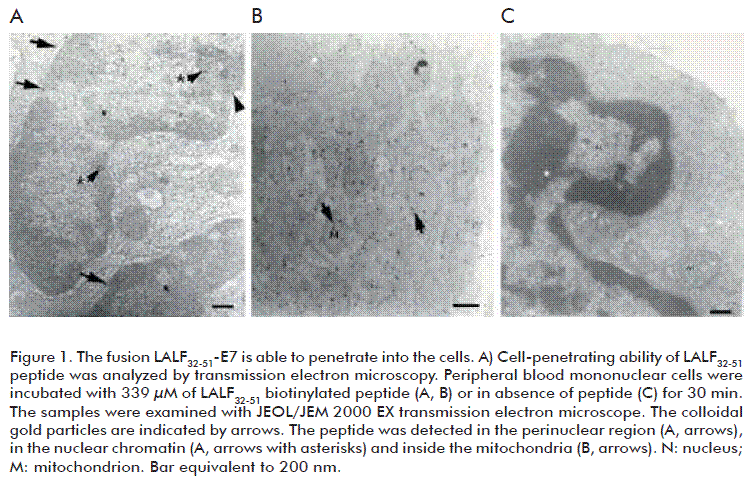
<body><![CDATA[<P   align="justify" ><font size="2"><font face="Verdana, Arial, Helvetica, sans-serif">The <I>E. coli</I>      strain BL21 (DE3) was used as host for recombinant protein production. BL21      (DE3) cells harboring pPEPE7M-7K were grown in a 5-L bioreactor, the cellular      biomass being further disrupted in a French press. After centrifugation, the      pellet was recovered and solubilized in 6 M urea. The soluble fraction was      purified using a His-Select&trade; Nickel Affinity Gel and standard immobilized      metal ion affinity chromatography procedures. The eluted fraction was further      loaded onto a HiPrep 26/10 desalting column. Finally, the fusion protein was      filter-sterilized (0.2 &mu;m pore size) and stored at -20 &ordm;C until use.</font></font></P >       <P   ><font size="2"><font face="Verdana, Arial, Helvetica, sans-serif"><b>Characterization      of LALF<Sub>32-51</Sub>-E7 fusion protein assessed by different methodologies      </b> </font></font></P >   <FONT size="+1"><FONT size="+1">        <P   align="justify" ><font size="2"><font face="Verdana, Arial, Helvetica, sans-serif">LALF<Sub>32-51</Sub>-E7      fusion protein was characterized by size exclusion analytic HPLC, sodium dodecyl      sulfate polyacrilamide electrophoresis under reducing and non-reducing conditions,      W<I>estern Blot</I>, transmission electron microscopy and mass spectrometry.      The fusion protein was obtained in a highly aggregated form, a property that      is considered very important to increase the immunogenicity of an antigen      preparation. The identity of LALF<Sub>32-51</Sub>-E7 was verified by mass      spectrometry. </font></font></P >   <FONT size="+1"><FONT size="+1"><FONT size="+1"><FONT size="+1">        <P   ><font size="2"><font face="Verdana, Arial, Helvetica, sans-serif"><b>LALF<Sub>32-51</Sub>-E7      fusion protein has the ability to penetrate into the cells </b></font></font></P >   <FONT size="+1"><FONT size="+1">        <P   align="justify" ><font size="2"><font face="Verdana, Arial, Helvetica, sans-serif">The cell-penetrating      ability of LALF<Sub>32-51</Sub> was demonstrated by transmission electron      microscopy using peripheral blood mononuclear cells (<a href="/img/revistas/bta/v29n3/f0107312.gif">Figure      1</a>), immunofluorescence microscopy in several cell lines (J774, CaSki,      HeLa, TC-1, SiHa) and confocal microscopy using murine splenocytes. The ability      of LALF<Sub>32-51</Sub>-E7 fusion protein to penetrate into cells was demonstrated      by immunofluorescence microscopy and <I>Western Blot</I> using J774 murine      macrophages cell line and by confocal microscopy using murine splenocytes      (<a href="/img/revistas/bta/v29n3/f0207312.gif">Figure 2</a>). Taking into account these results,      E7 protein is only detected inside the cells when E7 is fused to LALF<Sub>32-51      </Sub>peptide. </font></font></P >   <FONT size="+1"><FONT size="+1"><FONT size="+1"><FONT size="+1"><FONT size="+1"><FONT size="+1">        
<P   ><font size="2"><font face="Verdana, Arial, Helvetica, sans-serif"><b>Evaluation      of anti-tumor response generated by therapeutic immunization with LALF<Sub>32-51</Sub>-E7      in TC-1 murine model </b></font></font></P >   <FONT size="+1"><FONT size="+1">        <P   align="justify" ><font size="2"><font face="Verdana, Arial, Helvetica, sans-serif">In these experiments,      we used the murine H-2<Sup>b</Sup> tumor cell line TC-1 (containing the HPV16      E6, E7 and activated human Ha-<I>ras</I> genes) that was kindly provided by      Dr. TC Wu (Johns Hopkins University, Baltimore) and maintained as previously      described [6]. </font></font></P >   <FONT size="+1"><FONT size="+1">        <P   align="justify" ><font size="2"><font face="Verdana, Arial, Helvetica, sans-serif">To determine      if a LALF<Sub>32-51</Sub>-E7 vaccine could induce regression of established      TC-1 tumors and if the covalent linkage between LALF<Sub>32-51</Sub> and E7      could be relevant to anti-tumor response, female C57Bl/6 mice (ten per group)      were injected subcutaneously with 2 &times; 10<Sup>5</Sup> TC-1 cells in the      leg (day 0). Subsequently, on days 12 and 19 they were treated with phosphate-buffered      saline (PBS), 30 &micro;g of LALF<Sub>32-51</Sub>-E7, molar equivalents of      LALF<Sub>32-51 </Sub>alone, E7 alone or a mixture of LALF<Sub>32-51 </Sub>and      E7 (LALF<Sub>32-51 </Sub>+ E7). By the end of the 30 day observation period      (<a href="/img/revistas/bta/v29n3/f0307312.gif">Figure 3A</a>), only LALF<Sub>32-51</Sub>-E7 vaccination      induced a suppression of tumor growth. Therapeutic immunization with LALF<Sub>32-51</Sub>      or E7 a-lone, or a mixture of LALF<Sub>32-51 </Sub>and E7, does not induce      significant tumor reduction indicates that covalent linkage between LALF<Sub>32-51      </Sub>and E7 is required for the anti-tumor effect. </font></font></P >   <FONT size="+1"><FONT size="+1"><FONT size="+1"><FONT size="+1"><FONT size="+1"><FONT size="+1"><FONT size="+1"><FONT size="+1"><FONT size="+1"><FONT size="+1"><FONT size="+1"><FONT size="+1"><FONT size="+1"><FONT size="+1"><FONT size="+1"><FONT size="+1"><FONT size="+1"><FONT size="+1"><FONT size="+1"><FONT size="+1"><FONT size="+1"><FONT size="+1">        
<P   align="justify" ><font size="2"><font face="Verdana, Arial, Helvetica, sans-serif">Given the ability      of therapeutic LALF32-51-E7 immunization to induce a significant reduction      of TC-1 tumors, the correlation between antigen dose and anti-tumor responses      was examined. In these studies, therapy was initiated 14 days post-tumor implantation,      when 100% of mice had palpable subcutaneous tumors. Female C57Bl/6 mice (ten      per group) were injected subcutaneously with 2 &times; 10<Sup>5</Sup> TC-1      cells in the leg (day 0), then they were treated with PBS or either 30, 60      or 120 &micro;g of LALF<Sub>32-51</Sub>-E7 on days 14 and 21. By the end of      the 30-day observation period (<a href="/img/revistas/bta/v29n3/f0307312.gif">Figure 3B</a>), the      immunization with 60 and 120 &micro;g of LALF<Sub>32-51</Sub>-E7 resulted      statistically significant in the reduction of tumor volumes compared to 30      &micro;g LALF<Sub>32-51</Sub>-E7 immunization. Considering that no statistical      differences observed of tumor-volume reduction between the doses of 60 and      120 &micro;g of LALF<Sub>32-51</Sub>-E7, we chose 60 &micro;g of LALF<Sub>32-51</Sub>-E7      as the optimal dose to generate potent anti-tumor responses against E7 expressing      tumors in mice. </font></font></P >   <FONT size="+1"><FONT size="+1"><FONT size="+1"><FONT size="+1"><FONT size="+1"><FONT size="+1"><FONT size="+1"><FONT size="+1"><FONT size="+1"><FONT size="+1"><FONT size="+1"><FONT size="+1">        
<P   align="justify" ><font size="2"><font face="Verdana, Arial, Helvetica, sans-serif">Based on the      fact that two immunizations in a therapeutic setting with the protein LALF<Sub>32-51</Sub>-E7      induce a significant tumor volume reduction, we investigated the effect of      administering either three or four doses of this antigen. Female C57Bl/6 mice      (ten per group) were injected subcutaneously with 5 &times; 10<Sup>4</Sup>      TC-1 cells in the leg (day 0). Thirteen days post-tumor implantation, when      100% of mice had palpable subcutaneous tumor, a regimen of two, three or four      immunizations of 60 &micro;g of LALF<Sub>32-51</Sub>-E7 or PBS was conducted      at 7-day interval. By the end of the 43-day observation period, the therapeutic      anti-tumor activity induced by two immunizations with LALF<Sub>32-51</Sub>-E7      was comparable to that induced by three or four immunizations with this protein.      </font></font></P >   <FONT size="+1"><FONT size="+1"><FONT size="+1"><FONT size="+1"><FONT size="+1"><FONT size="+1"><FONT size="+1"><FONT size="+1">        ]]></body>
<body><![CDATA[<P   ><font size="2"><font face="Verdana, Arial, Helvetica, sans-serif"><b>Evaluation      of protection against tumor challenge in C57Bl/6 mice immunized with LALF<Sub>32-51</Sub>-E7      </b> </font></font></P >   <FONT size="+1"><FONT size="+1">        <P   align="justify" ><font size="2"><font face="Verdana, Arial, Helvetica, sans-serif">To examine      the ability of LALF<Sub>32-51</Sub>-E7 immunization to confer protection against      <I>in vivo</I> challenge with TC-1 cells in a prophylactic setting, female      C57Bl/6 mice (ten per group) were immunized subcutaneously either two, three      or four times with 60 &micro;g of LALF<Sub>32-51</Sub>-E7 or PBS at 14-day      interval. Thirty days after the last immunization, mice were challenged with      2 &times; 10<Sup>5</Sup> TC-1 cells in the right leg followed by an initial      period of 21 days. LALF<Sub>32-51</Sub>-E7 vaccination induced a potent suppression      of tumor growth and the effect of two immunizations was comparable to that      induced by three or four immunizations with this protein. On day 148 after      the first challenge, the tumor-free-animals from the LALF<Sub>32-51</Sub>-E7      vaccinated groups (five per group) were re-challenged with a larger dose of      TC-1 cells (2 &times; 10<Sup>5 </Sup>cells) in the left leg and observed for      an additional 60-day period. In addition, a new group of untreated mice was      challenged with tumor cells on day 148 to verify the tumorigenicity of the      TC-1 cells. The 100% (5/5) of the untreated mice were moribund by day 55.      In contrast, survival in the LALF<Sub>32-51</Sub>-E7 vaccinated group, that      received two immunizations, was 60% (3/5) over this 60-day period, similar      to the groups receiving three or four immunizations with the vaccine (p =      0.8985 and p = 0.7987, respectively). </font></font></P >   <FONT size="+1"><FONT size="+1"><FONT size="+1"><FONT size="+1"><FONT size="+1"><FONT size="+1"><FONT size="+1"><FONT size="+1"><FONT size="+1"><FONT size="+1"><FONT size="+1"><FONT size="+1"><FONT size="+1"><FONT size="+1">        <P   align="justify" ><font size="2"><font face="Verdana, Arial, Helvetica, sans-serif">According to      the results obtained in both therapeutic and prophylactic setting, two doses      of 60 &micro;g of LALF<Sub>32-51</Sub>-E7 are sufficient to induce a potent      and long-lasting anti-tumor response that can protect mice from tumor challenge.      </font></font></P >   <FONT size="+1"><FONT size="+1">        <P   ><font size="2"><font face="Verdana, Arial, Helvetica, sans-serif"><b>Evaluation      of anti-tumor response generated by the therapeutic immunization with LALF<Sub>32-51</Sub>-E7      co-administered with different adjuvants </b></font></font></P >   <FONT size="+1"><FONT size="+1">        <P   align="justify" ><font size="2"><font face="Verdana, Arial, Helvetica, sans-serif">Given de ability      of therapeutic LALF<Sub>32-51</Sub>-E7 immunization to induce TC-1 tumor volume      reduction, we evaluated if the co-administration of LALF<Sub>32-51</Sub>-E7      with different adjuvants could induce the regression of established TC-1 tumors      and promote long-term survival of the animals. In these studies, therapy was      initiated 14 days after tumor implantation, when 100% of mice had palpable      subcutaneous tumors. Female C57Bl/6 mice (ten per group) were injected subcutaneously      with 5 &times; 10<Sup>4</Sup> TC-1 cells in the leg (day 0). Subsequently,      on days 14 and 21 they were treated with either PBS, 60 &micro;g of LALF<Sub>32-51</Sub>-E7      alone or mixed with 120 &micro;g of the <I>Neisseria meningitidis </I>very      small size proteoliposome adjuvant (LALF<Sub>32-51</Sub>-E7 + VSSP), 30 &micro;g      of <I>N. meningitidis </I>outer membrane vesicles (LALF<Sub>32-51</Sub>- E7      + OMV) or 90 &micro;g of QuilA (LALF<Sub>32-51</Sub>-E7 + QuilA). By the end      of the 32-day observation period, the therapeutic anti-tumor activity induced      by LALF<Sub>32-51</Sub>-E7 alone was comparable to that induced by LALF<Sub>32-51</Sub>-E7      co-administered with VSSP, OMV or QuilA as adjuvants. </font></font></P >   <FONT size="+1"><FONT size="+1"><FONT size="+1"><FONT size="+1"><FONT size="+1"><FONT size="+1"><FONT size="+1"><FONT size="+1"><FONT size="+1"><FONT size="+1"><FONT size="+1"><FONT size="+1"><FONT size="+1"><FONT size="+1"><FONT size="+1"><FONT size="+1"><FONT size="+1"><FONT size="+1">        <P   align="justify" ><font size="2"><font face="Verdana, Arial, Helvetica, sans-serif">To determine      the effect of LALF<Sub>32-51</Sub>-E7 mixed with different adjuvants on long-term      survival, the animals were observed for a period of 110 days. Compared with      the LALF<Sub>32-51</Sub>-E7-treated mice, only the group immunized with LALF<Sub>32-51</Sub>-E7      + VSSP showed a statistically significant survival rate over this 110-day      observation period (p = 0.0386). </font></font></P >   <FONT size="+1"><FONT size="+1"><FONT size="+1"><FONT size="+1"><FONT size="+1"><FONT size="+1">        <P   ><font size="2"><font face="Verdana, Arial, Helvetica, sans-serif"><b>Immunogenicity      of the vaccine candidate as assessed by LDH-cytotoxicity assay and IFN-&gamma;      ELISPOT </b></font></font></P >       <P   align="justify" ><font size="2"><font face="Verdana, Arial, Helvetica, sans-serif">As an initial      step to identify the effectors mechanisms involved in the anti-tumor response      generated by the immunization with LALF<Sub>32-51</Sub>-E7, we evaluated the      cellular immune response by LDH-cytotoxicity assay and IFN-&gamma; ELISPOT.      The results obtained by LDH-cytotoxicity assay shown that the CTL activity      induced by LALF<Sub>32-51</Sub>-E7 immunization is dose dependent. The effectors      cells derived from mice immunized with 60 &micro;g of LALF<Sub>32-51</Sub>-E7      were significantly more cytotoxic than those from mice immunized with 30 &micro;g      of LALF<Sub>32-51</Sub>-E7. The highest ELISPOT numbers were found in mice      receiving LALF<Sub>32-51</Sub>-E7 alone. The number of IFN-&gamma;-secreting      splenocytes in mice immunized with LALF<Sub>32-51</Sub>-E7 alone was statistically      significant and approximately up to eight-fold higher than the rest of the      immunized groups (p &lt; 0.001).</font></font></P >       <P   align="justify" >&nbsp;</P >   <FONT size="+1"><FONT size="+1"><FONT size="+1"><FONT size="+1"><FONT size="+1"><FONT size="+1"><FONT size="+1"><FONT size="+1"><FONT size="+1"><FONT size="+1"><FONT size="+1"><FONT size="+1">       <P   align="justify" > </P >       ]]></body>
<body><![CDATA[<P   ><font size="3"><b><font face="Verdana, Arial, Helvetica, sans-serif">RELEVANCE      OF THE STUDY </font></b></font></P >   <FONT size="+1">        <P   align="justify" ><font size="2"><font face="Verdana, Arial, Helvetica, sans-serif">The relevance      of this result is the design of an original vaccine (LALF<Sub>32-51</Sub>-E7      fusion protein) with promissory perspectives to treat HPV16 related malignancies,      based on the covalent linkage of a novel CPP with immunostimulatory properties      (LALF<Sub>32-51</Sub> peptide from <I>L. polyphemus</I>) and HPV16 E7 mutein.      Our data underline the efficacy of this approach at inducing broad immune      responses <I>in vivo</I>, and offer a new strategy that could improve subunit      cancer vaccine in a clinical setting. </font></font></P >       <P   align="justify" >&nbsp;</P >   <FONT size="+1"><FONT size="+1"><FONT size="+1"><FONT size="+1"><FONT size="+1">        <P   align="justify" > </P >       <P   ><font size="3"><b><font face="Verdana, Arial, Helvetica, sans-serif">CONCLUSIONS      </font></b></font></P >   <FONT size="+1">        <P   align="justify" ><font size="2"><font face="Verdana, Arial, Helvetica, sans-serif">We provide      evidences that the fusion of protein E7 to LALF<Sub>32-51 </Sub>allows it      to enter cells and thereby significantly improves the presentation of E7-derived      peptides to T-cells <I>in vitro</I>. The LALF<Sub>32-51</Sub>-E7 fusion protein      was also found to be a potent immunogen <I>in vivo</I> when injected in the      absence of adjuvant, confirming the immunostimulatory capacity of LALF<Sub>32-51</Sub>.Furthermore,      fusion to LALF<Sub>32-51 </Sub>enhances the therapeutic anti-tumor activities      of viral protein-based vaccine. </font></font></P >       <P   align="justify" >&nbsp;</P >   <FONT size="+1"><FONT size="+1"><FONT size="+1"><FONT size="+1"><FONT size="+1"><FONT size="+1"><FONT size="+1"><FONT size="+1"><FONT size="+1">        <P   align="justify" > </P >       <P   ><b><font size="3"><font face="Verdana, Arial, Helvetica, sans-serif">ACKNOWLEDGEMENTS      </font></font></b></P >   <FONT size="+1">        <P   align="justify" ><font size="2"><font face="Verdana, Arial, Helvetica, sans-serif">We thank to      the following collaborators of the CIGB for their contribution to this work:      M&oacute;nica Bequet, Yanelys Morera, Marta Ayala, Silvio E Perea, Michel      D&iacute;az, Willy Fr&oacute;meta, Elisa M Ocumarez, Indira Mart&iacute;nez,      Yassel Ramos, Raychel Molina, Roc&iacute;o Garateix, Viviana Falc&oacute;n,      L&aacute;zaro H Betancourt, Luis Javier, Vladimir Besada, Lariza Gorovaya,      Ismariley Rev&eacute;, Jorge V Gavilondo, Raimundo Ubieta, Mariela V&aacute;zquez      and Gerardo E Guill&eacute;n.</font></font></P >       ]]></body>
<body><![CDATA[<P   align="justify" >&nbsp;</P >   <FONT size="+1">        <P   align="justify" > </P >       <P   align="justify" ><b><font size="3"><font face="Verdana, Arial, Helvetica, sans-serif">REFERENCES      </font></font></b></P >       <!-- ref --><P   align="justify" ><font size="2"><font face="Verdana, Arial, Helvetica, sans-serif">1. zur Hausen      H. Papillomaviruses in the causation of human cancers - a brief historical      account. Virology. 2009;384(2): 260-5.     </font></font></P >   <FONT size="+1">        <!-- ref --><P   align="justify" ><font size="2"><font face="Verdana, Arial, Helvetica, sans-serif">2. zur Hausen      H. Papillomaviruses and cancer: from basic studies to clinical application.      Nat Rev Cancer. 2002;2(5):342-50.     </font></font></P >       <!-- ref --><P   align="justify" ><font size="2"><font face="Verdana, Arial, Helvetica, sans-serif">3. Su JH, Wu      A, Scotney E, Ma B, Monie A, Hung CF, et al. Immunotherapy for cervical cancer:      Research status and clinical potential. BioDrugs. 2010;24(2):109-29.     </font></font></P >       <!-- ref --><P   align="justify" ><font size="2"><font face="Verdana, Arial, Helvetica, sans-serif">4. Granadillo      M, Vallespi MG, Batte A, Mendoza O, Soria Y, Lugo VM, et al. A novel fusion      protein-based vaccine comprising a cell penetrating and immunostimulatory      peptide linked to human papillomavirus (HPV) type 16 E7 antigen generates      potent immunologic and anti-tumor responses in mice. Vaccine. 2011;29(5):920-30.          </font></font></P >       <!-- ref --><P   align="justify" ><font size="2"><font face="Verdana, Arial, Helvetica, sans-serif">5. Yero D,      Pajon R, Niebla O, Sardinas G, Vivar I, Perera Y, et al. Bicistronic expression      plasmid for the rapid production of recombinant fused proteins in Escherichia      coli. Biotechnol Appl Biochem. 2006;44(Pt 1):27-34.     </font></font></P >       <P   align="justify" ><font size="2"><font face="Verdana, Arial, Helvetica, sans-serif">6. Lin KY,      Guarnieri FG, Staveley-O&rsquo;Carroll KF, Levitsky HI, August JT, Pardoll      DM, et al. Treatment of established tumors with a novel vaccine that enhances      major histocompatibility class II presentation of tumor antigen. Cancer Res.      1996;56(1):21-6. </font></font></P >       <P   >&nbsp;</P >       <P   >&nbsp;</P >   <FONT size="+1">        <P   ><font size="2"><font face="Verdana, Arial, Helvetica, sans-serif"><I>Milaid Granadillo</I>.      Departamento de C&aacute;ncer, Divisi&oacute;n de Farmac&eacute;uticos, Direcci&oacute;n      de Investigaciones Biom&eacute;dicas, Centro de Ingenier&iacute;a Gen&eacute;tica      y Biotecnolog&iacute;a. Ave. 31 e/ 158 y 190, Cubanac&aacute;n, Playa, PO      Box 6162, La Habana, Cuba. E-mail: <A href="mailto:milaid.granadillo@cigb.edu.cu">      <U><U><FONT color="#0000FF">milaid.granadillo@cigb.edu.cu</font></U></U></A><FONT color="#0000FF"><FONT color="#000000">.      </font></font></font></font></P >   </font></font></font></font></font></font></font></font></font></font></font></font></font></font></font></font></font></font></font></font></font></font></font></font></font></font></font></font></font></font></font></font></font></font></font></font></font></font></font></font></font></font></font></font></font></font></font></font></font></font></font></font></font></font></font></font></font></font></font></font></font></font></font></font></font></font></font></font></font></font></font></font></font></font></font></font></font></font></font></font></font></font></font></font></font></font></font></font></font></font></font></font></font></font></font></font></font></font></font></font></font></font></font></font></font></font></font></font></font></font></font></font></font></font></font></font></font></font></font></font></font></font></font></font></font></font></font></font></font></font></font></font></font></font></font></font></font></font></font></font></font></font></font></font></font></font></font></font></font></font></font></font></font></font></font></font></font></font></font></font></font></font></font></font></font></font></font></font></font></font></font></font></font></font></font></font></font></font></font></font></font></font></font></font></font></font></font></font></font></font></font></font></font></font></font></font></font></font></font></font></font></font></font></font></font></font></font></font></font></font></font></font></font></font></font></font></font></font></DIV >      ]]></body><back>
<ref-list>
<ref id="B1">
<label>1</label><nlm-citation citation-type="journal">
<person-group person-group-type="author">
<name>
<surname><![CDATA[zur Hausen]]></surname>
<given-names><![CDATA[H]]></given-names>
</name>
</person-group>
<article-title xml:lang="en"><![CDATA[Papillomaviruses in the causation of human cancers: a brief historical account]]></article-title>
<source><![CDATA[Virology]]></source>
<year>2009</year>
<volume>384</volume>
<numero>2</numero>
<issue>2</issue>
<page-range>260-5</page-range></nlm-citation>
</ref>
<ref id="B2">
<label>2</label><nlm-citation citation-type="journal">
<person-group person-group-type="author">
<name>
<surname><![CDATA[zur Hausen]]></surname>
<given-names><![CDATA[H]]></given-names>
</name>
</person-group>
<article-title xml:lang="en"><![CDATA[Papillomaviruses and cancer: from basic studies to clinical application]]></article-title>
<source><![CDATA[Nat Rev Cancer]]></source>
<year>2002</year>
<volume>2</volume>
<numero>5</numero>
<issue>5</issue>
<page-range>342-50</page-range></nlm-citation>
</ref>
<ref id="B3">
<label>3</label><nlm-citation citation-type="journal">
<person-group person-group-type="author">
<name>
<surname><![CDATA[Su]]></surname>
<given-names><![CDATA[JH]]></given-names>
</name>
<name>
<surname><![CDATA[Wu]]></surname>
<given-names><![CDATA[A]]></given-names>
</name>
<name>
<surname><![CDATA[Scotney]]></surname>
<given-names><![CDATA[E]]></given-names>
</name>
<name>
<surname><![CDATA[Ma]]></surname>
<given-names><![CDATA[B]]></given-names>
</name>
<name>
<surname><![CDATA[Monie]]></surname>
<given-names><![CDATA[A]]></given-names>
</name>
<name>
<surname><![CDATA[Hung]]></surname>
<given-names><![CDATA[CF]]></given-names>
</name>
</person-group>
<article-title xml:lang="en"><![CDATA[Immunotherapy for cervical cancer: Research status and clinical potential]]></article-title>
<source><![CDATA[BioDrugs]]></source>
<year>2010</year>
<volume>24</volume>
<numero>2</numero>
<issue>2</issue>
<page-range>109-29</page-range></nlm-citation>
</ref>
<ref id="B4">
<label>4</label><nlm-citation citation-type="journal">
<person-group person-group-type="author">
<name>
<surname><![CDATA[Granadillo]]></surname>
<given-names><![CDATA[M]]></given-names>
</name>
<name>
<surname><![CDATA[Vallespi]]></surname>
<given-names><![CDATA[MG]]></given-names>
</name>
<name>
<surname><![CDATA[Batte]]></surname>
<given-names><![CDATA[A]]></given-names>
</name>
<name>
<surname><![CDATA[Mendoza]]></surname>
<given-names><![CDATA[O]]></given-names>
</name>
<name>
<surname><![CDATA[Soria]]></surname>
<given-names><![CDATA[Y]]></given-names>
</name>
<name>
<surname><![CDATA[Lugo]]></surname>
<given-names><![CDATA[VM]]></given-names>
</name>
</person-group>
<article-title xml:lang="en"><![CDATA[A novel fusion protein-based vaccine comprising a cell penetrating and immunostimulatory peptide linked to human papillomavirus (HPV) type 16 E7 antigen generates potent immunologic and anti-tumor responses in mice]]></article-title>
<source><![CDATA[Vaccine]]></source>
<year>2011</year>
<volume>29</volume>
<numero>5</numero>
<issue>5</issue>
<page-range>920-30</page-range></nlm-citation>
</ref>
<ref id="B5">
<label>5</label><nlm-citation citation-type="journal">
<person-group person-group-type="author">
<name>
<surname><![CDATA[Yero]]></surname>
<given-names><![CDATA[D]]></given-names>
</name>
<name>
<surname><![CDATA[Pajon]]></surname>
<given-names><![CDATA[R]]></given-names>
</name>
<name>
<surname><![CDATA[Niebla]]></surname>
<given-names><![CDATA[O]]></given-names>
</name>
<name>
<surname><![CDATA[Sardinas]]></surname>
<given-names><![CDATA[G]]></given-names>
</name>
<name>
<surname><![CDATA[Vivar]]></surname>
<given-names><![CDATA[I]]></given-names>
</name>
<name>
<surname><![CDATA[Perera]]></surname>
<given-names><![CDATA[Y]]></given-names>
</name>
</person-group>
<article-title xml:lang="en"><![CDATA[Bicistronic expression plasmid for the rapid production of recombinant fused proteins in Escherichia coli]]></article-title>
<source><![CDATA[Biotechnol Appl Biochem]]></source>
<year>2006</year>
<volume>44</volume>
<numero>1</numero>
<issue>1</issue>
<page-range>27-34</page-range></nlm-citation>
</ref>
<ref id="B6">
<label>6</label><nlm-citation citation-type="journal">
<person-group person-group-type="author">
<name>
<surname><![CDATA[Lin]]></surname>
<given-names><![CDATA[KY]]></given-names>
</name>
<name>
<surname><![CDATA[Guarnieri]]></surname>
<given-names><![CDATA[FG]]></given-names>
</name>
<name>
<surname><![CDATA[Staveley-O'Carroll]]></surname>
<given-names><![CDATA[KF]]></given-names>
</name>
<name>
<surname><![CDATA[Levitsky]]></surname>
<given-names><![CDATA[HI]]></given-names>
</name>
<name>
<surname><![CDATA[August]]></surname>
<given-names><![CDATA[JT]]></given-names>
</name>
<name>
<surname><![CDATA[Pardoll]]></surname>
<given-names><![CDATA[DM]]></given-names>
</name>
</person-group>
<article-title xml:lang="en"><![CDATA[Treatment of established tumors with a novel vaccine that enhances major histocompatibility class II presentation of tumor antigen]]></article-title>
<source><![CDATA[Cancer Res]]></source>
<year>1996</year>
<volume>56</volume>
<numero>1</numero>
<issue>1</issue>
<page-range>21-6</page-range></nlm-citation>
</ref>
</ref-list>
</back>
</article>