<?xml version="1.0" encoding="ISO-8859-1"?><article xmlns:mml="http://www.w3.org/1998/Math/MathML" xmlns:xlink="http://www.w3.org/1999/xlink" xmlns:xsi="http://www.w3.org/2001/XMLSchema-instance">
<front>
<journal-meta>
<journal-id>1027-2852</journal-id>
<journal-title><![CDATA[Biotecnología Aplicada]]></journal-title>
<abbrev-journal-title><![CDATA[Biotecnol Apl]]></abbrev-journal-title>
<issn>1027-2852</issn>
<publisher>
<publisher-name><![CDATA[Editorial Elfos Scientiae]]></publisher-name>
</publisher>
</journal-meta>
<article-meta>
<article-id>S1027-28522014000100005</article-id>
<title-group>
<article-title xml:lang="en"><![CDATA[Recombinant hybrid proteins from pertactin type 1 and 2 of Bordetella pertussis are more immunogenic in mice than the original molecules]]></article-title>
<article-title xml:lang="en"><![CDATA[Proteínas híbridas recombinantes de pertactinas tipo 1 y 2 de Bordetella pertussis son más inmunogénicas en ratones que las moléculas originales]]></article-title>
</title-group>
<contrib-group>
<contrib contrib-type="author">
<name>
<surname><![CDATA[Quintana-Vázquez]]></surname>
<given-names><![CDATA[Diógenes]]></given-names>
</name>
<xref ref-type="aff" rid="A01"/>
</contrib>
<contrib contrib-type="author">
<name>
<surname><![CDATA[Coizeau]]></surname>
<given-names><![CDATA[Edelgis]]></given-names>
</name>
<xref ref-type="aff" rid="A01"/>
</contrib>
<contrib contrib-type="author">
<name>
<surname><![CDATA[Alvarez]]></surname>
<given-names><![CDATA[Anabel]]></given-names>
</name>
<xref ref-type="aff" rid="A01"/>
</contrib>
<contrib contrib-type="author">
<name>
<surname><![CDATA[Delgado]]></surname>
<given-names><![CDATA[Maité]]></given-names>
</name>
<xref ref-type="aff" rid="A01"/>
</contrib>
<contrib contrib-type="author">
<name>
<surname><![CDATA[Cárdenas]]></surname>
<given-names><![CDATA[Tania]]></given-names>
</name>
<xref ref-type="aff" rid="A01"/>
</contrib>
<contrib contrib-type="author">
<name>
<surname><![CDATA[Ramos]]></surname>
<given-names><![CDATA[Yassel]]></given-names>
</name>
<xref ref-type="aff" rid="A01"/>
</contrib>
<contrib contrib-type="author">
<name>
<surname><![CDATA[Chinea]]></surname>
<given-names><![CDATA[Glay]]></given-names>
</name>
<xref ref-type="aff" rid="A01"/>
</contrib>
<contrib contrib-type="author">
<name>
<surname><![CDATA[Berbers]]></surname>
<given-names><![CDATA[Guy A M]]></given-names>
</name>
<xref ref-type="aff" rid="A02"/>
</contrib>
<contrib contrib-type="author">
<name>
<surname><![CDATA[Guillén]]></surname>
<given-names><![CDATA[Gerardo E]]></given-names>
</name>
<xref ref-type="aff" rid="A01"/>
</contrib>
</contrib-group>
<aff id="A02">
<institution><![CDATA[,National Institute for Public Health and the Environment Laboratory for Infectious Diseases and Screening ]]></institution>
<addr-line><![CDATA[Bilthoven ]]></addr-line>
<country>The Netherlands</country>
</aff>
<aff id="A01">
<institution><![CDATA[,Centro de Ingeniería Genética y Biotecnología, CIGB  ]]></institution>
<addr-line><![CDATA[La Habana ]]></addr-line>
<country>Cuba</country>
</aff>
<pub-date pub-type="pub">
<day>00</day>
<month>03</month>
<year>2014</year>
</pub-date>
<pub-date pub-type="epub">
<day>00</day>
<month>03</month>
<year>2014</year>
</pub-date>
<volume>31</volume>
<numero>1</numero>
<fpage>33</fpage>
<lpage>42</lpage>
<copyright-statement/>
<copyright-year/>
<self-uri xlink:href="http://scielo.sld.cu/scielo.php?script=sci_arttext&amp;pid=S1027-28522014000100005&amp;lng=en&amp;nrm=iso"></self-uri><self-uri xlink:href="http://scielo.sld.cu/scielo.php?script=sci_abstract&amp;pid=S1027-28522014000100005&amp;lng=en&amp;nrm=iso"></self-uri><self-uri xlink:href="http://scielo.sld.cu/scielo.php?script=sci_pdf&amp;pid=S1027-28522014000100005&amp;lng=en&amp;nrm=iso"></self-uri><abstract abstract-type="short" xml:lang="en"><p><![CDATA[The present study explores the concept of hybrid pertactin (PRN) molecules for immunizing against Bordetella pertussis. New molecules were designed using an additive/inclusive approach that comprehends the complete sequences/ regions of two different types of pertactin (Prn). PRN molecules bear the two variable R1 regions from Prn1 and Prn2. The genes of Prn1, Prn2 and six variants of PRN were cloned in Escherichia coli, and PRN proteins were over-expressed at 25-30 % of total protein concentrations using the pET28a/BL21 Codonplus RP expression system. The proteins were purified (&gt; 90 % purity) using the His-tag /Ni-NTA affinity method with amounts of 8-10 mg/g of wet biomass. After refolding, the PRNs were recognized by anti-Prn monoclonal antibodies that bind protective conformational and linear epitopes/regions. Moreover, a panel of ten sera from individuals boosted with a commercial vaccine reacted with the PRN molecules without differences from the P.69 protein. The PRN proteins were highly immunogenic in Balb/c mice, with the induction of the IgG2a and IgG2b subtypes. Particularly, two PRNs (PRN2-lc-1 &gt; PRN2-1) induced highly significant anti-Prn1 antibody levels (p < 0.001). Moreover, the PRN2-lc-1 induced higher levels of antibodies (p < 0.05) against epitopes located at the immunodominant N-terminus region and the variable region R1. The PRN2-lc-1 and PRN2-1 molecules exhibited an enhanced immunological profile in Balb/c mice in terms of level of whole anti-Prn IgG antibodies in respect to natural Prn controls. These two molecules constitute valuable candidates for further evaluation in vivo in acellular vaccine formulations.]]></p></abstract>
<abstract abstract-type="short" xml:lang="es"><p><![CDATA[En este estudio se exploró el concepto de moléculas híbridas de pertactina (PRN) para inmunizar contra Bordetella pertussis. Se diseñaron nuevas moléculas mediante un método aditivo/inclusivo que comprendió las secuencias completas/regiones de dos pertactinas (Prn). Las moléculas PRN portan las dos regiones variables R1 de Prn1 y Prn2. Se clonaron los genes de Prn1, Prn2 y seis variantes de PRN en Escherichia coli. Las PRN se sobre-expresaron a 25-35 % de la concentración de proteínas totales, con el uso del sistema de expresión pET28a/BL21 Codonplus RP. Se purificaron por el método de afinidad His-tag /Ni-NTA proteínas con más del 90 % de pureza, con rendimientos de 8-10 mg/g de biomasa. Tras la reconstitución, las PRN fueron reconocidas por anticuerpos monoclonales anti-Prn contra epitopos y regiones conformacionales y lineales, involucrados en la respuesta inmune protectora. Un panel de 10 sueros de individuos reactivados con una vacuna comercial reaccionaron con las moléculas PRN a niveles similares a los obtenidos con la proteína P.69. Las proteínas PRN fueron altamente inmunogénicas en ratones Balb/c, e indujeron respuesta de anticuerpos IgG2a e IgG2b. Dos proteínas PRN (PRN2-lc-1 &gt; PRN2-1) indujeron niveles significativos de anticuerpos (p < 0.05) contra epitopos localizados en el extremo N-terminal inmunodominante y en la región variable R1. Estas dos proteínas mostraron un perfil de respuesta potenciada de anticuerpos (anticuerpos IgG totales antiPrn) en ratones Balb/c comparadas con los controles de Prn. PRN2-lc-1 y PRN2-1 son valiosos candidatos para evaluaciones posteriores in vivo, como parte de formulaciones de vacunas acelulares.]]></p></abstract>
<kwd-group>
<kwd lng="en"><![CDATA[hybrid pertactin]]></kwd>
<kwd lng="en"><![CDATA[Bordetella pertussis]]></kwd>
<kwd lng="en"><![CDATA[acellular vaccine]]></kwd>
<kwd lng="en"><![CDATA[immune response]]></kwd>
<kwd lng="en"><![CDATA[antibodies]]></kwd>
<kwd lng="en"><![CDATA[variable regions]]></kwd>
<kwd lng="es"><![CDATA[pertactina híbrida]]></kwd>
<kwd lng="es"><![CDATA[Bordetella pertussis]]></kwd>
<kwd lng="es"><![CDATA[vacuna acelular]]></kwd>
<kwd lng="es"><![CDATA[respuesta inmune]]></kwd>
<kwd lng="es"><![CDATA[anticuerpos]]></kwd>
<kwd lng="es"><![CDATA[regiones variables]]></kwd>
</kwd-group>
</article-meta>
</front><body><![CDATA[ <DIV class="Sect" align="left"   >        <P   align="right" ><font size="2" color="#000000" face="Verdana, Arial, Helvetica, sans-serif"><b>RESEARCH</b>      </font></P >       <P   align="left" >&nbsp;</P >       <P align="left"   > </P >       <P align="left"   ><font size="4" face="Verdana, Arial, Helvetica, sans-serif" color="#000000"><b>Recombinant      hybrid proteins from pertactin type 1 and 2 of <I>Bordetella pertussis</I>      are more immunogenic in mice than the original molecules </b></font></P >       <P align="left"   >&nbsp;</P >       <P align="left"   > </P >       <P align="left"   ><font size="2" color="#000000" face="Verdana, Arial, Helvetica, sans-serif"><B><font size="3">Prote&iacute;nas      h&iacute;bridas recombinantes de pertactinas tipo 1 y 2 de <I>Bordetella pertussis      </I>son m&aacute;s inmunog&eacute;nicas en ratones que las mol&eacute;culas      originales </font></b></font></P >       <P align="left"   >&nbsp;</P >       <P align="left"   >&nbsp;</P >       ]]></body>
<body><![CDATA[<P align="left"   > </P >       <P align="left"   ><font size="2" color="#201D1E" face="Verdana, Arial, Helvetica, sans-serif"><b>Di&oacute;genes      Quintana-V&aacute;zquez<Sup>1</Sup>, Edelgis Coizeau<Sup>1</Sup>, Anabel Alvarez<Sup>1</Sup>,      Mait&eacute; Delgado<Sup>1</Sup>, Tania C&aacute;rdenas<Sup>1</Sup>, Yassel      Ramos<Sup>1</Sup>, Glay Chinea<Sup>1</Sup>, Guy A M Berbers<Sup>2</Sup>, Gerardo      E Guill&eacute;n<Sup>1</Sup></b></font></P >       <P align="left"   > </P >       <P align="left"   ><font size="2" face="Verdana, Arial, Helvetica, sans-serif" color="#000000"><Sup>1</Sup>      Centro de Ingenier&iacute;a Gen&eacute;tica y Biotecnolog&iacute;a, CIGB Ave.      31 e/ 158 y 190, Cubanac&aacute;n, Playa, CP 11600, La Habana, Cuba.    <br>     <Sup>2</Sup> Laboratory for Infectious Diseases and Screening, National Institute      for Public Health and the Environment. Bilthoven, The Netherlands. </font></P >       <P align="left"   >&nbsp;</P >       <P align="left"   >&nbsp;</P >   <hr align="left">       <P align="left"   > </P >       <P align="left"   ><font size="2" color="#000000" face="Verdana, Arial, Helvetica, sans-serif"><b>ABSTRACT      </b></font></P >       <P align="left"   ><font size="2" color="#000000" face="Verdana, Arial, Helvetica, sans-serif">The      present study explores the concept of hybrid pertactin (PRN) molecules for      immunizing against <I>Bordetella pertussis</I>. New molecules were designed      using an additive/inclusive approach that comprehends the complete sequences/      regions of two different types of pertactin (Prn). PRN molecules bear the      two variable R1 regions from Prn1 and Prn2. The genes of Prn1, Prn2 and six      variants of PRN were cloned in <I>Escherichia coli</I>, and PRN proteins were      over-expressed at 25-30 % of total protein concentrations using the pET28a/BL21      Codonplus RP expression system. The proteins were purified (&gt; 90 % purity)      using the His-tag /Ni-NTA affinity method with amounts of 8-10 mg/g of wet      biomass. After refolding, the PRNs were recognized by anti-Prn monoclonal      antibodies that bind protective conformational and linear epitopes/regions.      Moreover, a panel of ten sera from individuals boosted with a commercial vaccine      reacted with the PRN molecules without differences from the P.69 protein.      The PRN proteins were highly immunogenic in Balb/c mice, with the induction      of the IgG2a and IgG2b subtypes. Particularly, two PRNs (PRN2-lc-1 &gt; PRN2-1)      induced highly significant anti-Prn1 antibody levels (p &lt; 0.001). Moreover,      the PRN2-lc-1 induced higher levels of antibodies (p &lt; 0.05) against epitopes      located at the immunodominant N-terminus region and the variable region R1.      The PRN2-lc-1 and PRN2-1 molecules exhibited an enhanced immunological profile      in Balb/c mice in terms of level of whole anti-Prn IgG antibodies in respect      to natural Prn controls. These two molecules constitute valuable candidates      for further evaluation <I>in vivo </I>in acellular vaccine formulations. </font></P >       ]]></body>
<body><![CDATA[<P align="left"   ><font size="2" face="Verdana, Arial, Helvetica, sans-serif" color="#201D1E"><b>Keywords:</b>      hybrid pertactin, <I>Bordetella pertussis</I>, acellular vaccine, immune response,      antibodies, variable regions. </font></P >   <hr align="left">       <P align="left"   ><font size="2" face="Verdana, Arial, Helvetica, sans-serif" color="#000000"><b>RESUMEN      </b></font></P >       <P align="left"   > </P >       <P align="left"   ><font size="2" face="Verdana, Arial, Helvetica, sans-serif" color="#000000">      En este estudio se explor&oacute; el concepto de mol&eacute;culas h&iacute;bridas      de pertactina (PRN) para inmunizar contra <I>Bordetella pertussis</I>. Se      dise&ntilde;aron nuevas mol&eacute;culas mediante un m&eacute;todo aditivo/inclusivo      que comprendi&oacute; las secuencias completas/regiones de dos pertactinas      (Prn). Las mol&eacute;culas PRN portan las dos regiones variables R1 de Prn1      y Prn2. Se clonaron los genes de Prn1, Prn2 y seis variantes de PRN en <I>Escherichia      coli</I>. Las PRN se sobre-expresaron a 25-35 % de la concentraci&oacute;n      de prote&iacute;nas totales, con el uso del sistema de expresi&oacute;n pET28a/BL21      Codonplus RP. Se purificaron por el m&eacute;todo de afinidad His-tag /Ni-NTA      prote&iacute;nas con m&aacute;s del 90 % de pureza, con rendimientos de 8-10      mg/g de biomasa. Tras la reconstituci&oacute;n, las PRN fueron reconocidas      por anticuerpos monoclonales anti-Prn contra epitopos y regiones conformacionales      y lineales, involucrados en la respuesta inmune protectora. Un panel de 10      sueros de individuos reactivados con una vacuna comercial reaccionaron con      las mol&eacute;culas PRN a niveles similares a los obtenidos con la prote&iacute;na      P.69. Las prote&iacute;nas PRN fueron altamente inmunog&eacute;nicas en ratones      Balb/c, e indujeron respuesta de anticuerpos IgG2a e IgG2b. Dos prote&iacute;nas      PRN (PRN2-lc-1 &gt; PRN2-1) indujeron niveles significativos de anticuerpos      (p &lt; 0.05) contra epitopos localizados en el extremo N-terminal inmunodominante      y en la regi&oacute;n variable R1. Estas dos prote&iacute;nas mostraron un      perfil de respuesta potenciada de anticuerpos (anticuerpos IgG totales antiPrn)      en ratones Balb/c comparadas con los controles de Prn. PRN2-lc-1 y PRN2-1      son valiosos candidatos para evaluaciones posteriores <I>in vivo</I>, como      parte de formulaciones de vacunas acelulares. </font></P >       <P align="left"   ><font size="2" face="Verdana, Arial, Helvetica, sans-serif" color="#201D1E"><b>Palabras      clave:</b> pertactina h&iacute;brida, <I>Bordetella pertussis</I>, vacuna      acelular, respuesta inmune, anticuerpos, regiones variables. </font></P >   <hr align="left">       <p align="left">&nbsp;</p>       <p align="left">&nbsp;</p>       <P align="left"   > </P >       <P align="left"   ><font size="3" color="#000000" face="Verdana, Arial, Helvetica, sans-serif"><b>INTRODUCTION      </b></font></P >       <P align="left"   ><font size="2" color="#000000" face="Verdana, Arial, Helvetica, sans-serif">The      gram negative bacterium <I>Bordetella pertussis </I>causes a highly contagious      disease known as pertussis [1]. The disease was a major cause of infant death      before pertussis vaccines were available [2]. The development of vaccines      and its early implementation contributed to an overt reduction of pertussis      cases worldwide [3]. However, after decades of vaccination the disease reemerged      in highly vaccinated populations [4] to become nowadays one of the most prevalent      vaccine-preventable disease of developed countries [5]. </font></P >       ]]></body>
<body><![CDATA[<P align="left"   > </P >       <P align="left"   ><font size="2" color="#000000" face="Verdana, Arial, Helvetica, sans-serif">The      number of circulating strains expressing the pertactin variant Prn2 has had      a gradual increase in the last decades. However, the strains used in vaccine      manufacture bear pertactin types different to Prn2 such as Prn1 [5]. Notably,      the differences between Prn1 and Prn2 are only limited to the variable region      1 (R1), which consist of GGXXP repeats. It has been reported that variation      in region 1 affects antibody binding and also the efficacy of a commercial      whole-cell vaccine. In this study, passive and active immunization indicates      that region 1 confers protective immunity and also contains a B-cell epitope      recognized both in humans and mice [6]. Functional studies in mice suggest      that the incorporation of Prn2 to acellular vaccine formulations could contribute      to the efficacy against pertussis [7]. </font></P >       <P align="left"   ><font size="2" face="Verdana, Arial, Helvetica, sans-serif" color="#201D1E">Since      current vaccines contain Prn1 and circulating strains, depending on the region      or epidemiological scenario, can express Prn1 or Prn2, a technological improvement      could be the use of a hybrid pertactin (PRN) containing the relevant epitopes      of Prn1 and Prn2. Theoretically, one hybrid molecule could contain two different      types of pertactin as a consequence of including the variable R1 region from      each type. In addition to expanding the vaccine spectrum, the new molecule      may be more immunogenic due to it contains a greater number of functional      epitopes, as a consequence to a duplication of a conserved region with immunological      relevance. The PRN concept can facilitate the production process and the widespread      use of a future vaccine, since a single downstream processing can result in      a molecule representing the pertactin types predominant in circulating strains      among populations of different epidemiological settings. </font></P >       <P   align="left" ><font size="2" face="Verdana, Arial, Helvetica, sans-serif" color="#201D1E">The      <I>Escherichia coli </I>host has been successfully used to obtain novel molecules      in an attempt to simplify pertussis vaccines production [8, 9]. Particularly,      the Prn protein has been efficiently expressed in <I>E. coli </I>with the      preservation of relevant epitopes [10]. </font></P >       <P align="left"   ><font size="2" face="Verdana, Arial, Helvetica, sans-serif" color="#201D1E">Based      on these precedents, the concept of PRN based on Prn1 and Prn2 was experimentally      addressed to study the expression levels, folding, purification and the assessment      of immunogenicity in Balb/c mice. </font></P >       <P align="left"   >&nbsp;</P >       <P align="left"   > </P >       <P align="left"   ><font size="3" color="#000000" face="Verdana, Arial, Helvetica, sans-serif"><b>MATERIALS      AND METHODS </b></font></P >       <P align="left"   ><font size="2" color="#000000" face="Verdana, Arial, Helvetica, sans-serif"><b>Prn      sequences </b></font></P >       <P   align="left" ><font size="2" face="Verdana, Arial, Helvetica, sans-serif" color="#201D1E">The      extracellular domain sequences of Prn1 (D1-G677, Uniprot Accession Number:      Q546U4) and Prn2 (D1-G682, Uniprot Accession Number: O88143) were taken as      reference for amino acid positions and are abbreviated as Ref. Prn1 or Ref.      Prn2 respectively. Henceforward, amino acid positions are referred to Ref.      Prn1 unless otherwise stated. </font></P >       ]]></body>
<body><![CDATA[<P align="left"   ><font size="2" face="Verdana, Arial, Helvetica, sans-serif" color="#201D1E">The      protein sequences encoding the extracellular domain of Prn were obtained from      Uniprot and Genbank databases: <I>B. parapertussis </I>gen BPP 1150 (Uniprot      Accession Number: P24328) and the 13 Prn types described for <I>B. pertussis      </I>: Prn1(Uniprot: Q546U4); Prn2 (Uniprot: O88143); Prn3 (Uniprot: O69259);      Prn4 (Uniprot: Q9S6M9); Prn5 (Uniprot: Q9S3M8); Prn6 (Uniprot: O69257); Prn7      (Uniprot: Q9S6N1); Prn8 (Uniprot: Q9S6N0); Prn9 (Uniprot: Q93L98); Prn10 (Uniprot:      Q8RSU0); Prn11 (Uniprot: Q8GJ68); Prn12 (GenBank: BAF35031.1), which was translated      to amino acid sequence and Prn13 (Uniprot: A4UTL5). </font></P >       <P align="left"   ><font size="2" face="Verdana, Arial, Helvetica, sans-serif" color="#201D1E"><b>Bioinformatics      tools </b> </font></P >       <P   align="left" ><font size="2" face="Verdana, Arial, Helvetica, sans-serif" color="#201D1E">Protein      sequences were aligned using ClustalW2 [11] available at <a href="http://services.uniprot.org" target="_blank">http://services.uniprot.org</a>.      Positions of conserved sequences identified were visualized in CHIMERA visualization      system [12]. </font></P >       <P   align="left" ><font size="2" face="Verdana, Arial, Helvetica, sans-serif" color="#201D1E">The      structural predictions of mature Prn1 and Prn2 of <I>B. pertussis </I>and      Prn of <I>B. parapertussis </I>(henceforward as Prn <I>B. pp</I>) were performed      using the I-TASSER algorithm server (<a href="http://zhang.bioinformatics.ku.edu/I-TASSER/" target="_blank">http://zhang.bioinformatics.ku.edu/I-TASSER/</a>)      [13]. The coordinates of Prn under code 1DAB.pdb from the Protein Data Bank      [14] were provided to the server as template. </font></P >       <P align="left"   ><font size="2" face="Verdana, Arial, Helvetica, sans-serif" color="#201D1E">The      sequences encoding the fragments A and B of the hybrid pertactin molecules      were selected using VMD 1.8.7beta5. </font></P >       <P align="left"   ><font size="2" face="Verdana, Arial, Helvetica, sans-serif" color="#201D1E"><b>Bacterial      strains, reagents and growth conditions </b></font></P >       <P align="left"   ><font size="2" face="Verdana, Arial, Helvetica, sans-serif" color="#201D1E">The      <I>E. coli </I>strain Top 10 F&rsquo; (Invitrogen) was used for cloning procedures      following standard methods [15], and the <I>E. coli </I>strain BL21 (DE3)-codonplus      RP (Novagen) for protein expression. Luria-Bertani broth (LB) was used as      standard growth medium for both plasmid manipulation and protein expression.      When necessary, culture media were supplemented with the appropriate antibiotics:      ampicillin (100 &mu;g/ mL), kanamycin (50 &mu;g/mL) and chloramphenicol (34      &mu;g/mL). </font></P >       <P align="left"   ><font size="2" face="Verdana, Arial, Helvetica, sans-serif" color="#201D1E"><b>Construction      of pET28a-<I>prn1 </I>and pET28a-<I>prn2 </I></b> </font></P >       <P align="left"   ><font size="2" face="Verdana, Arial, Helvetica, sans-serif" color="#201D1E">The      DNA fragments encoding the extracellular domain of Prn were amplified by polymerase      chain reaction (PCR) from genomic DNA isolated from <I>B. pertussis </I>strain      Tohama I (<I>prn1</I>) [16] and a clinical isolate (<I>prn2</I>). The PCR      was performed with the primers pET-A0-new-L and pET-D-new as previously reported      [10]. The PCR fragments were then digested with endonucleases <I>Nde </I>I      and <I>Bam</I>H I and inserted into pET28a plasmid (Novagen) to give rise      to pET28a-<I>prn1 </I>and pET28a-<I>prn2 </I>expression vectors. The final      constructions were selected after satisfactory restriction enzyme digestion      and DNA sequence analyses. </font></P >       <P align="left"   ><font size="2" face="Verdana, Arial, Helvetica, sans-serif" color="#201D1E"><b>Construction      of pET28a expression vectors of hybrid pertactin of Prn1 and Prn2 </b></font></P >       ]]></body>
<body><![CDATA[<P   align="left" ><font size="2" face="Verdana, Arial, Helvetica, sans-serif" color="#201D1E">The      hybrid pertactin molecules were generated using inverse PCR [17]. In all cases      the expression vectors pET28a-<I>prn1 </I>and pET28a-<I>prn2 </I>were used      as templates. Primers are shown in the <a href="/img/revistas/bta/v31n1/t0105114.gif">table</a>. </font></P >       
<P align="left"   ><font size="2" face="Verdana, Arial, Helvetica, sans-serif" color="#201D1E">The      DNA fragments were amplified using 0.1 &mu;g of the appropriate template vector      in a 50 &mu;L PCR containing 2.5 units of Platinum Pfx DNA polymerase HF (Invitrogen),      0.3 &mu;M of each primer, 0.3 &mu;M of each dNTP, 1mM MgSO4 and 2&times; PCRx      Enhancer solution with the following parameters: 5 min. initial denaturation      at 94 &deg;C; 15 s denaturation at 94 &deg;C, 5:30 min annealing-extension      at 68 &deg;C, (10 cycles) and 10 min final extension at 68 &deg;C. The PCR      products were gel-purified using Wizard SV Gel and PCR Clean-Up System (Promega).      The purified blunt end products were ligated and the plasmids were subsequently      introduced into TOP10 <I>E. coli </I>by transformation. Positive clones of      the different pET28a hybrid pertactin vectors were subjected to sequence analysis      to confirm the absence of point mutations. </font></P >       <P   align="left" ><font size="2" face="Verdana, Arial, Helvetica, sans-serif" color="#201D1E">The      six PRN molecules&rsquo; constructs were obtained as described in the following:      </font></P >   <DL   >      <DD   ><font size="2" face="Verdana, Arial, Helvetica, sans-serif" color="#201D1E">-        pET28a-<I>prn1-2</I>, coding for PRN1-2, was generated by PCR from pET28a-<I>prn1        </I>with primers 1 and 2. An independent PCR was performed using pET28a-<I>prn2        </I>and the phosphorylated primers 5 and 6. PCR products were subjected        to an end blunt ligation to obtain pET28a-<I>prn1-2</I>. </font></DD >     <DD   ><font size="2" face="Verdana, Arial, Helvetica, sans-serif" color="#201D1E">-        pET28a-<I>prn1-sc-2</I>, coding for PRN1-sc-2, was generated by PCR from        pET28a-<I>prn1 </I>with primers 1 and 3. The PCR product was then ligated        to the above described phosphorylated PCR fragment obtained from pET28a-<I>prn2        </I>and primers 5 and 6. </font></DD >     <DD   ><font size="2" face="Verdana, Arial, Helvetica, sans-serif" color="#201D1E">-        pET28a-<I>prn1-lc-2</I>, coding for PRN1-lc-2 , was obtained by PCR from        pET28a-<I>prn1 </I>with primers 1 and 4. The PCR product was ligated to        the above described phosphorylated PCR fragment obtained using pET28a-<I>prn2        </I>and primers 5 and 6. </font></DD >     <DD   ><font size="2" face="Verdana, Arial, Helvetica, sans-serif" color="#201D1E">-        pET28a-<I>prn2-1</I>, pET28a-p<I>rn2-sc-1</I>, pET28a-<I>prn2-lc-1</I>,        coding for PRN2-1, PRN2-sc-1 and PRN2- lc-1, respectively, were generated        by a procedure similar to those above described but reciprocating the pET28a-<I>prn1        </I>and pET28a-<I>prn2 </I>templates. </font></DD >   </DL >       <P align="left"   > </P >       <P align="left"   ><font size="2" color="#000000" face="Verdana, Arial, Helvetica, sans-serif"><b>Protein      expression </b></font></P >       <P align="left"   ><font size="2" face="Verdana, Arial, Helvetica, sans-serif" color="#201D1E">The      expression vectors for Prn1, Prn2 and hybrid pertactin proteins (PRN1-2, PRN1-sc-2,      PRN1-lc-2, PRN2-1, PRN2-sc-1, PRN2-lc-1) were introduced into <I>E. coli </I>BL21-Codonplus      (DE3)-RP (Novagen) as previously described [10]. Transformed cells from a      single colony were grown at 37 &deg;C under 100 rpm constant agitation in      50 mL LB media containing 50 &mu;g/mL kanamycin and 50 &mu;g/mL chloramphenicol.      Cells from the overnight cultures were used to inoculate 300 mL of fresh medium      (as described above) at an optical density at 600 nm (OD<sub>600</sub>) of      0.2 and further grown in one liter flasks at 37 &deg;C and agitation until      0.5 OD600. Protein expression was induced by adding 1 mM IPTG. The cell cultures      were further incubated for 4 h and cells were harvested by centrifugation      (5000 <I>g </I>for 10 min) and stored at -20 &deg;C until use. Protein expression      was estimated by bacterial cells resuspension and rupture, followed by 10      % sodium dodecyl sulphate polyacrylamide gel electrophoresis (SDS-PAGE), Coomassie      brilliant blue staining and densitometry analysis. The relative percent of      protein expression was calculated using the ImageJ software (National Institutes      of Health). </font></P >       <P align="left"   ><font size="2" face="Verdana, Arial, Helvetica, sans-serif" color="#201D1E"><b>SDS-PAGE      </b></font></P >       <P align="left"   ><font size="2" face="Verdana, Arial, Helvetica, sans-serif" color="#201D1E">SDS-PAGE      was performed to separate proteins as described [18]. Protein molecular size      standard RPN5800 (GE Healthcare) were used as reference. The samples at appropriate      concentrations were mixed with Tris-glycine SDS sample buffer (2&times;) and      boiled for 3 min before loading onto 10 % Tris-glycine polyacrylamide gels.      Bands were visualized by Coomassie brilliant blue staining. </font></P >       <P align="left"   ><font size="2" face="Verdana, Arial, Helvetica, sans-serif" color="#201D1E"><b>His-tagged      affinity chromatography of protein </b></font></P >       <P align="left"   ><font size="2" face="Verdana, Arial, Helvetica, sans-serif" color="#201D1E">Frozen      bacterial pellets (1 g of wet weight) were suspended in 10 mL of lysis buffer      (50 mM Tris HCl pH 8.0, 100 mM NaCl, 5 mM EDTA and 1 % Triton-X-100). The      cell suspension was incubated in ice and sonicated for 1 min at a 70 % of      amplitude setting, followed by a pause of 5 min. Sonication and pause steps      were repeated four times. The insoluble material was collected by centrifugation      and subsequently washed three times with a buffer containing 50 mM Tris HCl,      100 mM NaCl, pH 8.0. The pellet was then solubilized in 10 mL of solubilization      buffer (4 M Urea, 10 mM benzamidine, 500 mM NaCl, and 50 mM Tris HCl, pH 8.0).      After centrifugation, the supernatant was diluted to a final protein concentration      of 3 mg/mL in equilibrium buffer (4 M Urea, 500 mM NaCl and 50 mM Tris HCl,      pH 8). Then, 10 mL of the diluted sample was loaded onto a Ni-NTA affinity      column (2 mL column volume; GE Healthcare, USA) using a peristaltic pump at      a flow rate of 1 mL/min. The column was washed with 10 column volumes of equilibration      buffer and subsequently with a similar volume of 10 mM imidazole in equilibration      buffer. The pertactin proteins were eluted from the column in 10 mL of elution      buffer (4 M Urea, 500 mM NaCl, 50 mM Tris HCl, pH 8.0 and 50 mM imidazole).      </font></P >       ]]></body>
<body><![CDATA[<P align="left"   ><font size="2" face="Verdana, Arial, Helvetica, sans-serif" color="#201D1E"><b>Monoclonal      antibodies and human sera </b></font></P >       <P align="left"   ><font size="2" face="Verdana, Arial, Helvetica, sans-serif" color="#201D1E">Murine      monoclonal antibodies (mAbs) PeM1, PeM4, PeM19 and PeM29 were previously described      [19]. A stored panel of 10 sera from healthy individuals (adults) was used.      The sera were previously obtained after one month of a booster vaccination      with Adacel acellular vaccine (Sanofi Pasteur). </font></P >       <P align="left"   ><font size="2" face="Verdana, Arial, Helvetica, sans-serif" color="#201D1E"><b>Refolding      of proteins </b> </font></P >       <P   align="left" ><font size="2" face="Verdana, Arial, Helvetica, sans-serif" color="#201D1E">The      solution containing the purified unfolded proteins was diluted 10-fold in      refolding buffer (50 mM Tris HCl pH 8.8, 100 mM NaCl, 1mM EDTA and 200 mM      L-arginine) by slowly adding single drops into the stirred refolding buffer      (at a rate of 1 mL/min.). Proteins were allowed to fully refold during 24      h dialysis at 4 &deg;C against 2 L of refolding buffer. The refolded proteins      were dialyzed against 50 mM Tris HCl, pH 8.8, using Spectra/Por 7 dialysis      membranes with a molecular weight cut-off of 10 kDa (Spectrum Laboratories,      CA). The proteins were concentrated on an Amicon concentrator with a 30 kDa      cut-off (Millipore) to a final concentration of 0.4 mg/mL. The proteins were      stored at -20 &deg;C in the presence of 10 mM of benzamidine (Applichem, Germany).      </font></P >       <P align="left"   ><font size="2" face="Verdana, Arial, Helvetica, sans-serif" color="#201D1E">The      refolding procedure was evaluated by ELISA using the conformational mAbs PeM1      and PeM29. The mAbs were normalized to 0.5 mg/mL and assayed against P.69      Prn1 purified from <I>B. pertussis </I>(kindly provided by Chiron-Biocine,      Siena, Italy) and the refolded Prn1 (recombinant) protein. </font></P >       <P align="left"   ><font size="2" face="Verdana, Arial, Helvetica, sans-serif" color="#201D1E"><b>ELISA      for antigenicity </b> </font></P >       <P   align="left" ><font size="2" face="Verdana, Arial, Helvetica, sans-serif" color="#201D1E">Polystyrene      high binding 96-well ELISA plates (Costar&reg; Corning Incorporated, USA)      were coated 3 h at 37 &deg;C by adding 100 &mu;L of 0.05 M carbonate buffer,      pH 9.6 containing 2 &mu;g protein/mL to each well. The wells were washed four      times with PBS supplemented with 0.05 % Tween 20 (PBST) and then blocked with      4 % skim milk (Oxoid) in PBST for 1 h at 37 &deg;C. In a previous experiment      the mAbs were normalized to 0.5 mg/mL and titrated against P.69 (Prn1) using      two fold serial dilutions in blocking solution and starting at 1:2000. As      result the following dilution were used for the mAbs: PeM1 in 1:12 000; PeM4      in 1:4000; PeM19 in 1:6000 and PeM29 in 1:28 000, which give optical densities      values of 0.7 to 1.0 in a linear interval (r2 = 0.997). Then, the plates were      incubated for 2 h at 37 &deg;C followed by four washings as described above.      Bound mAbs were detected by using horseradish peroxidase-conjugated goat anti-mouse      total IgG (Sigma, St. Louis, MI). The human sera were assayed at 1:100 dilution      and a horseradish peroxidase-conjugated anti-human total IgG was used (Sigma).      The optical density at 492 nm was measured with a multiscan plate reader (Merk).      The mAb PeM19 was used to verify that equal amounts of protein were coated      in all of the ELISA experiments (CV &lt; 5 %). </font></P >       <P   align="left" ><font size="2" face="Verdana, Arial, Helvetica, sans-serif" color="#201D1E">The      mAb PeM29 and the specific sera for P.69, Prn2, PRN1-lc-2 and PRN2-1 were      evaluated against these same four proteins, both folded and unfold-ed. The      proteins were denatured by heating 5 min at 95 &deg;C. </font></P >       <P align="left"   ><font size="2" face="Verdana, Arial, Helvetica, sans-serif" color="#201D1E">The      different binding of each mAb to hybrid molecules were established using a      cut-off value established as follows: the optical densities from the hybrid      pertactin proteins with coefficient of variation (CV) greater than 5.0 % in      respect to P.69, Prn1 or Prn2 were considered with different (positive) binding      activity. For human sera, the D&acute;Agostino-Pearson normality test, Bartlett&rsquo;s      test for equal variances and ANOVA with Newman-Keuls multiple comparison test      were performed. The statistic analyses were performed with Graphpad Prism      5.0. </font></P >       <P align="left"   ><font size="2" face="Verdana, Arial, Helvetica, sans-serif" color="#201D1E"><b>Mass      spectrometric analysis </b></font></P >       ]]></body>
<body><![CDATA[<P   align="left" ><font size="2" face="Verdana, Arial, Helvetica, sans-serif" color="#201D1E">The      identity of the different proteins was confirmed by mass spectrometric analysis      using a hybrid quadrupole-orthogonal time-of-flight mass spectrometer with      a nanospray ion source (QTOF-2TM, Micromass, UK). </font></P >       <P   align="left" ><font size="2" face="Verdana, Arial, Helvetica, sans-serif" color="#201D1E">The      SDS-PAGE protein bands (stained) were faded and in-gel digested with trypsin      as previously described [20]. The mixture of tryptic peptides was loaded into      the borosilicate nanoflow tips and submitted to 900 and 35 V of capillary      and cone voltage, respectively. To acquire the ESI-MS/MS spectra, the first      quadrupole was used to select the precursor ion within a window of 3 Th approximately.      Argon gas was used in the collision chamber at ~3 10-2 Pa pressure and collision      energies between 20 and 30 eV were set to fragment precursor ions. Data acquisition      and processing were performed using MassLynx v3.5 (Micromass, UK). </font></P >       <P align="left"   ><font size="2" face="Verdana, Arial, Helvetica, sans-serif" color="#201D1E"><b>Protein      identification and concentration </b></font></P >       <P   align="left" ><font size="2" face="Verdana, Arial, Helvetica, sans-serif" color="#201D1E">Monoisotopic      masses of tryptic peptides were used to identify the protein in a non-redundant      database by peptide mass fingerprinting (PMF) with MASCOT (http://www.matrixscience.com).      Additionally, the most intense signals of every spectrum were sequenced by      collision induced dissociation. The MS/MS ion search option of the MASCOT      software was used to confirm the protein identity. Parameter settings considered      were the enzyme treatment, up to one missed cleavage, the molecular mass error      (0.1 Da) and the modification on cysteine (propionamide cysteine). Other (variable)      modifications such as methionine sulfoxide and the deamidation of glutamine      and asparagine were also taken into account. The molecular weight of the protein      and taxonomy were not restricted. </font></P >       <P align="left"   ><font size="2" face="Verdana, Arial, Helvetica, sans-serif" color="#201D1E">Protein      concentration was estimated using BCA&trade; Protein Assay (Thermo Scientific).      </font></P >       <P align="left"   ><font size="2" face="Verdana, Arial, Helvetica, sans-serif" color="#201D1E"><b>Immunogenicity      assay in Balb/c mice </b></font></P >       <P align="left"   ><font size="2" face="Verdana, Arial, Helvetica, sans-serif" color="#201D1E">Groups      of female mice (n = 9) were immunized with the following proteins P.69, Prn1,      Prn2, PRN1-2, PRN1-sc-2, PRN1-lc-2, PRN2-1, PRN2-sc-1, PRN2- lc-1 and a placebo      (buffer phosphate instead of protein). The inoculations were given subcutaneously      with 100 &mu;L of a formulation containing 0.2 &mu;g of protein adsorbed to      80 &mu;g of aluminum hydroxide gel adjuvant (HCL Biosector). Mice received      three doses at days 0, 14 and 28 and were bled at days -7, 14, 28 and 40.      The anti-Prn1 IgG titles in sera were estimated by the ELISA described below.      </font></P >       <P align="left"   ><font size="2" face="Verdana, Arial, Helvetica, sans-serif" color="#201D1E"><b>Antibody      response determination </b></font></P >       <P align="left"   ><font size="2" face="Verdana, Arial, Helvetica, sans-serif" color="#201D1E">The      antibody response was determined in Polystyrene high binding 96-well ELISA      plates (Costar&reg; Corning Incorporated, USA). Briefly, plates were coated      overnight at 4 &deg;C by adding 100 &mu;L of 0.05 M carbonate buffer, pH 9.6      containing 2 &mu;g of Prn1 protein/mL to each well. The wells were washed      four times with PBS supplemented with 0.05 % Tween 20 (PBST) and then blocked      with 4 % skim milk (Oxoid) in PBST for 1 h at 37 &deg;C. Then, the plates      were incubated for 2 h at 37 &deg;C with an appropriate dilution of serum.      An anti-Prn1 serum was included as reference curve with 100 arbitrary title      units. After four washings, bound IgG were detected by using horseradish peroxidase-conjugated      goat anti-mouse total IgG (Sigma, St. Louis, MI). The optical density at 492      nm was measured with a multiscan plate reader (Merck). The statistic analyses      were performed with Graphpad Prism 5.0. The D&acute;Agostino-Pearson normality      test, Bartlett&rsquo;s test for equal variances and ANOVA with Newman-Keuls      multiple comparison test were performed. </font></P >       <P   align="left" ><font size="2" color="#000000" face="Verdana, Arial, Helvetica, sans-serif">Immunoglobulin      classes and subclasses were determined using a mouse isotyping kit (Sigma).      </font></P >       ]]></body>
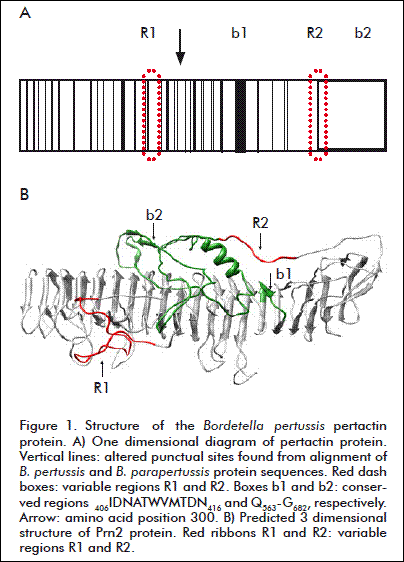
<body><![CDATA[<P align="left"   ><font size="2" face="Verdana, Arial, Helvetica, sans-serif" color="#201D1E">The      sera from groups immunized with P.69, Prn1, Prn2, PRN1-lc-2 and PRN2-1 were      also tested against the following linear peptides (coating, 5 &mu;g of peptide/mL):      P1, RGDAPAGGAVPGGAVPGGAVPGGFGPGGFG PVLDGW, located at variable region R1 of      Prn1; P2, RGDAPAGGAVPGGAVPGGFGPGGFGPGGFGPGGFGPVLDGW, located at variable region      R1 of Prn2; P3, PQPGPQPPQPPQPQPEAPAPQPPAG, located at region R2 and P4, IVKTGERQHGIHIQGSDP,      located at the N-terminus immunodominant domain. The differences observed      were analyzed using Kruskal-Wallis statistic and Dunn&rsquo;s multiple comparison      tests. </font></P >       <P align="left"   >&nbsp;</P >       <P align="left"   ><font size="2" face="Verdana, Arial, Helvetica, sans-serif" color="#201D1E"><b><font size="3">RESULTS</font></b>      </font></P >       <P align="left"   ><font size="2" face="Verdana, Arial, Helvetica, sans-serif" color="#201D1E"><b>Structural      predictions </b> </font></P >       <P align="left"   ><font size="2" face="Verdana, Arial, Helvetica, sans-serif" color="#201D1E">The      structure of the Prn protein has been previously determined for the first      539 amino acids [14]. For this reason the conserved region Q558-G677 was not      characterized by X-ray crystallography. In this work the structure of the      whole extracellular domains of Prn1, Prn2 and Prn <I>B. pp </I>were predicted      using I-TASSER [13]. The obtained models were structurally similar for the      three proteins although the program estimated the Prn2 model as the more significant      with a quality score of -1.21. As it is shown in <a href="#fig1">figure 1</a>,      the conserved carboxyl region Q563-G682 (Ref. Prn2) was predicted to fold      as a domain towards the amino end. In this region the predominant conformation      was coil (90 %). The domain appeared connected to the helical stem by the      variable region 2 (<a href="#fig1">Figure 1B</a>, R2). </font></P >       <P align="center"   ><img src="/img/revistas/bta/v31n1/f0105114.gif" width="402" height="560"><a name="fig1"></a></P >       
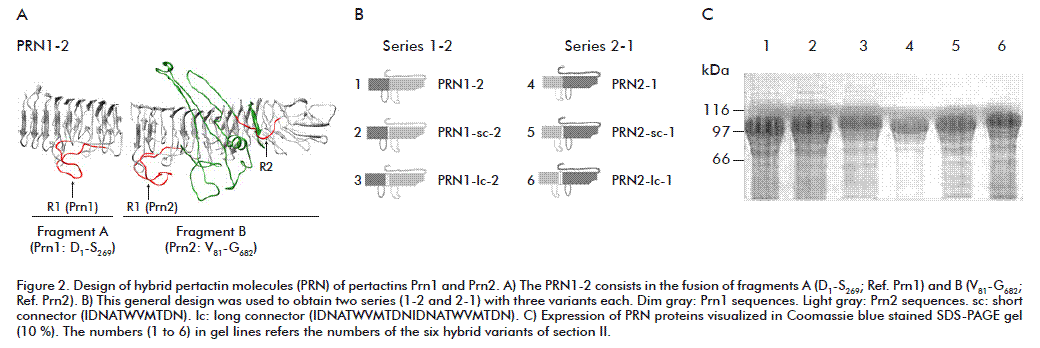
<P align="left"   ><font size="2" face="Verdana, Arial, Helvetica, sans-serif" color="#201D1E"><b>Molecular      design </b> </font></P >       <P align="left"   ><font size="2" face="Verdana, Arial, Helvetica, sans-serif" color="#201D1E">The      design of a PRN of Prn1 and Prn2 considered the following aspects. 1) The      frequency of point amino acid mutations at the amino terminus. In the first      300 amino acids (D<sub>1</sub>-G<sub>300</sub>) appeared 66 % (35/53) of the      altered sites (<a href="#fig1">Figure 1A</a>). 2) The conserved regions G<sub>377</sub>-L<sub>439</sub>      and Q<sub>558</sub>-G<sub>677</sub>. The region G<sub>377</sub>-L<sub>439</sub>      includes the sequence <sub>401</sub>IDNATWVMTDN<sub>411</sub>, which locates      near a domain involved in folding functions [21] while Q<sub>558</sub>-G<sub>677</sub>      sequence comprises the carboxyl end. 3) The structural proximity of the N-terminus      and conserved C-terminus. This is in agreement with a previous report [19].      4) The internal conserved domain involved in the folding function of Prn [21,      22]. Altogether, the regions mentioned comprise almost the entire Prn molecule.      Hence, a reliable approach for designing a PRN should satisfy that the complete      sequences/regions of the natural Prn protein are represented. This could be      achieved with an additive/inclusive design, which means to add another/different      variable R1 region to a Prn variant (Prn1 or Prn2). </font></P >       <P align="left"   ><font size="2" face="Verdana, Arial, Helvetica, sans-serif" color="#201D1E">From      the structure analysis it was predicted that region V<sub>81</sub>-S<sub>269</sub>      (Ref Prn1) or V<sub>81</sub>-S<sub>274</sub> (Ref Prn2) contains the smaller      number of amino acids needed to preserve the variable loop (R1) natively structured.      Therefore, if Prn2 or Prn1 protein frames are open at T<sub>80</sub> and a      V<sub>81</sub>-S<sub>269</sub> (Ref Prn1) or V<sub>81</sub>-S<sub>274</sub>      (Ref Prn2) fragment is respectively inserted in the same orientation of the      helical stem, PRN1-2 or PRN2-1 are obtained. For a practical purpose, as illustrated      in <a href="/img/revistas/bta/v31n1/f0205114.gif">figure 2</a>, the molecules can also be obtained      by the fusion of two fragments. For example, PRN1-2 can be formed by fusion      of the fragments A = D<sub>1</sub>-S<sub>269</sub> (Ref. Prn1) and B = V<sub>81</sub>-G<sub>682</sub>      (Ref. Prn2) to result in A-B (PRN1-2). Similarly, the PRN2-1 protein can be      obtained by fusion of the fragments A = D<sub>1</sub>-S<sub>274</sub> (Ref.      Prn2) and B = V<sub>81</sub>-G<sub>677</sub> (Ref. Prn1) to generate A-B (PRN2-1).      Another feature considered in the design was the similarity of the helical      cross section between the ends of the fragment to be linked. In proteins PRN1-2      or PRN2-1 there is a difference of 5 &Aring; between the N-terminus of fragment      B and the C-terminus of fragment A. To shorten this difference a chimeric      rung IDNATWVMTDNIDNATWVMTDN was inserted as a long linker between fragments      A and B which originated the PRN1-lc-2 and PRN2-lc-1 proteins. The chimeric      rung is a tandem duplication of the conserved sequence IDNATWVMTDN. This sequence      was also inserted as a short linker between fragment A and B to obtain PRN1-sc-2      and PRN2-sc-1. </font></P >       
<P align="left"   ><font size="2" face="Verdana, Arial, Helvetica, sans-serif" color="#201D1E"><b>Cloning,      expression and mass spectrometric characterization of hybrid pertactin molecules      </b></font></P >       ]]></body>
<body><![CDATA[<P align="left"   ><font size="2" face="Verdana, Arial, Helvetica, sans-serif" color="#201D1E">The      expression vectors for the expression of His-tag PRN proteins were constructed      using inverse PCR [17]. <a href="/img/revistas/bta/v31n1/f0305114.gif">Figure 3</a> exemplifies the      procedure followed to obtain pET28a-<I>prn1-2 </I>vector. The other five vectors      resulted from the same approach but combining different primer couples and      vector templates (see Materials and methods for details). The constructs fulfilled      restriction analysis with <I>Nde </I>I and <I>Bam</I>H I endonucleases as      well as DNA sequencing (data not shown). The expression vectors were used      to transform the strain BL21(DE3) Codonplus RP. The overexpressed bands represented      25-30 % of the whole cell proteins (<a href="/img/revistas/bta/v31n1/f0205114.gif">Figure 2C</a>)      and were analyzed by mass spectrometry. The signals of highest intensities      were selected for MS/MS analysis and submitted for automatic search with the      MASCOT software. This program indentified all the proteins with a high level      of confidence (score: 900-1300) with peptide sequences corresponding to Prn      of <I>B. pertussis</I>. The amino (GSHM<U><U>DWNNQSIVK</U></U>, m = 1514.71)      and carboxyl ends (<U><U>GDRGFTGDGGG</U></U>, m = 994.46) of Prn were confirmed      by manual inspection of the MS/MS spectra. Sequence coverage greater than      80 % was achieved for all PRN proteins. </font></P >       
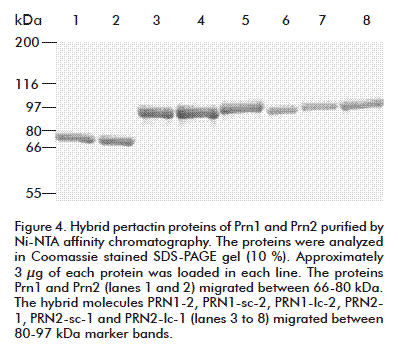
<P align="left"   ><font size="2" face="Verdana, Arial, Helvetica, sans-serif" color="#201D1E"><b>Purification      and refolding of recombinant Prn1, Prn2 and the six hybrid pertactin molecules      </b></font></P >       <P   align="left" ><font size="2" face="Verdana, Arial, Helvetica, sans-serif" color="#201D1E">The      His-tag recombinant proteins Prn1, Prn2 and the six PRNs were associated to      the pellet of rupture and represented approximately the 45-49 % of the precipitated      proteins. The insoluble aggregates were efficiently solubilized in the extraction      buffer containing 4 M urea. After Ni-NTA affinity chromatography the proteins      were obtained at levels of purity higher than 90 % (<a href="#fig4">Figure      4</a>).</font></P >       <P   align="center" ><img src="/img/revistas/bta/v31n1/f0405114.gif" width="396" height="346"><a name="fig4"></a></P >       
<P align="left"   ><font size="2" face="Verdana, Arial, Helvetica, sans-serif" color="#201D1E">The      refolding procedure was verified comparing the reactivity of purified Prn1      (from <I>E. coli</I>) and natural pertactin P.69 Prn1 (from <I>B. pertussis</I>)      with the conformational mAbs PeM1 and PeM29 as previously reported [10]. As      depicted in <a href="/img/revistas/bta/v31n1/f0505114.gif">figure 5A</a>, both mAbs showed similar      Abs values against the evaluated proteins (CV &lt; 5 %). </font></P >       
<P align="left"   ><font size="2" face="Verdana, Arial, Helvetica, sans-serif" color="#201D1E">The      recovery of the purification procedure was approximately 60 %. The protein      loss associated to column pass through, column washes, refolding (dialysis)      and concentration were less than 1 %. The described method allowed the rapid      purification of approximately 8-10 mg of refolded proteins per gram of wet      biomass. </font></P >       <P align="left"   ><font size="2" face="Verdana, Arial, Helvetica, sans-serif" color="#201D1E"><b>Antigenicity      evaluation of the refolded hybrid Prn molecules </b></font></P >       <P   align="left" ><font size="2" face="Verdana, Arial, Helvetica, sans-serif" color="#201D1E"><a href="/img/revistas/bta/v31n1/f0505114.gif">Figure      5</a> shows the positive recognition of PRN variants by four anti-Prn1 mAbs.      As expected, the mAb PeM19 (linear) recognized similarly the Prn1, Prn2, P.69      (Prn1) and the six PRN proteins (CI 95 %: 1.026- 1.063; CV = 3.55 %). The      binding of PeM29 (conformational) followed the order: PRN1-sc-2 &gt; Prn1,      Prn2, P.69 (Prn1), PRN1-2, PRN1-lc-2 and PRN2-1 (CI 95 %: 0.809-0.855; CV      = 4.42 %) &gt; PRN2-lc-1 &gt; PRN2-sc-1. Similarly, the binding of PeM1 (conformational)      followed the order: PRN1-sc-2, PRN1- lc-2 (CI 95 %: 1.317-1.389; CV = 1.68      %) &gt; Prn1, Prn2, P.69 Prn1, PRN2-1, PRN2-lc-1(CI 95 %: 0.979- 1.039; CV      = 4.15 %) &gt; PRN2-sc-1. The linear mAb PeM4 recognized the Prn molecules      in the following order: PRN2-1 &gt; PRN1-sc-2, PRN1-lc-2, PRN2-sc-1, PRN2-lc-1      (CI 95 %: 1.732-1.1.855; CV = 4.82 %) &gt; PRN1-2, Prn2 (CI 95 %: 1.527-1.667;      CV = 2.76 %) &gt; Prn1 &gt; P.69 (Prn1). </font></P >       
<P   align="left" ><font size="2" face="Verdana, Arial, Helvetica, sans-serif" color="#201D1E">After      thermal treatment at 95 &deg;C, the recognition of P.69, Prn1, Prn2, PRN1-lc-2      and PRN2-1 was reduced as average 12- and 2.5-fold for PeM29 and the specific      antiserum, respectively. </font></P >       <P align="left"   ><font size="2" face="Verdana, Arial, Helvetica, sans-serif" color="#201D1E">Sera      from individuals vaccinated with the Adacel vaccine recognized similarly the      Prn1, Prn2, P.69 (Prn1) and the PRN proteins. </font></P >       ]]></body>
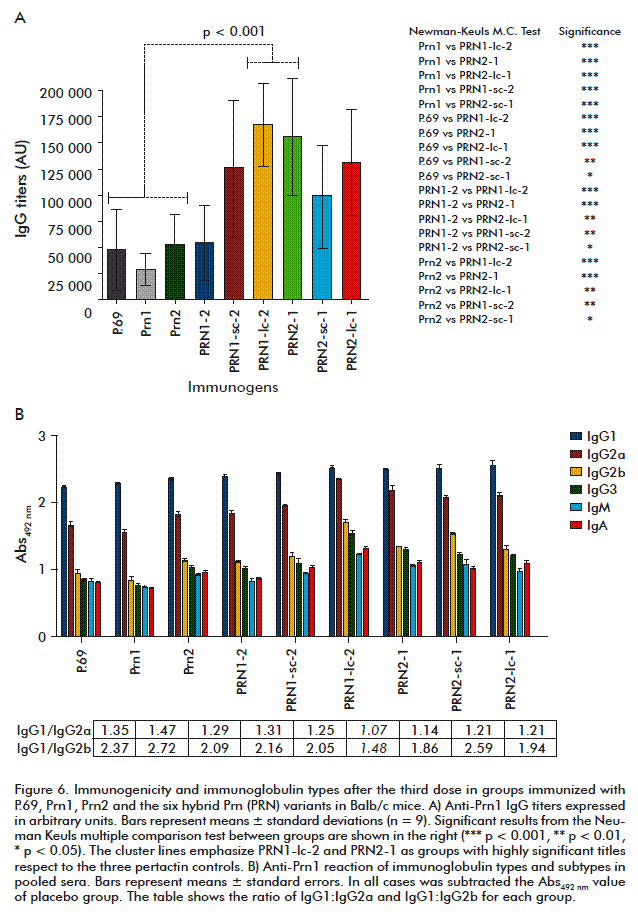
<body><![CDATA[<P align="left"   ><font size="2" face="Verdana, Arial, Helvetica, sans-serif" color="#201D1E"><b>Immunogenicity      of P.69, Prn1, Prn2 and the six PRN variants in Balb/c mice </b></font></P >       <P align="left"   ><font size="2" face="Verdana, Arial, Helvetica, sans-serif" color="#201D1E">The      sera of immunized mice (all groups) exhibited a significant IgG levels (p      &lt; 0.001) in respect to mice who received placebo (data not shown). After      the third dose, the mice immunized with PRN molecules showed higher levels      of antibodies as compared to the natural Prn controls P.69, Prn1 and Prn2      (<a href="/img/revistas/bta/v31n1/f0605114.gif">Figure 6A</a>). Particularly, PRN1-lc-2 and PRN2-1      induced very highly significant IgG levels (p &lt; 0.001) as compared to groups      immunized with the Prn controls. As shown in <a href="/img/revistas/bta/v31n1/f0605114.gif">figure      6B</a>, the profile of anti-Prn1 immunoglobulin subclass (analyzed from pooled      sera) was IgG1 &gt; IgG2a &gt; IgG2b &gt; IgG3 = IgM = IgA in all immunized      groups. The lowest values of the ratio IgG1/IgG2a (1.07) and IgG1/IgG2b (1.48)      were detected in sera from mice immunized with PRN1-lc-2. </font></P >       
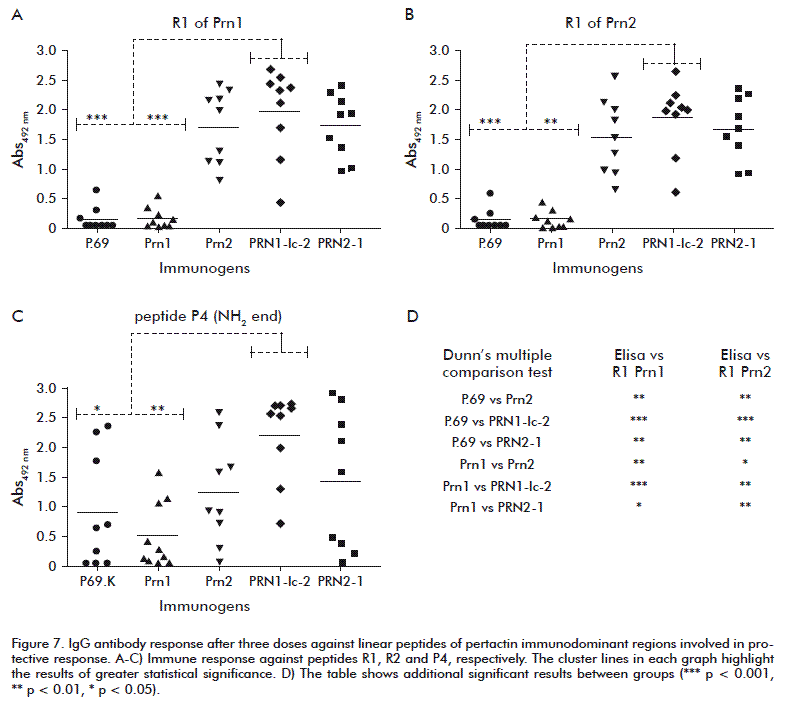
<P align="left"   ><font size="2" face="Verdana, Arial, Helvetica, sans-serif" color="#201D1E">The      sera induced by the pertactin controls P.69, Prn1, Prn2 and the two more immunogenic      hybrid molecules, PRN1-lc-2 and PRN2-1, were further evaluated against linear      peptides from the variable region R1 of Prn1, R1 of Prn2, the variable region      R2 and the P4 peptide (IVKTGERQHGIHIQGSDP) sequence located in the N-terminus      immunodominant domain. The region R2 was marginally recognized by 2 out of      9 sera from mice immunized with both P.69 and PRN1-lc-2 (data not shown).      The sera from groups immunized with PRN1-lc-2, PRN2-1 and Prn2 recognized      the variable region 1 of Prn1 and Prn2 with a significantly higher activity      than sera from mice that received P.69 and Prn1 (<a href="/img/revistas/bta/v31n1/f0705114.gif">Figure      7</a>). Only the sera from mice immunized with PRN1-lc-2 recognized the peptide      P4 (N-terminus region) with significant differences compared to P.69 and Prn1      control groups (<a href="/img/revistas/bta/v31n1/f0705114.gif">Figure 7C</a>). The immunoglobulin      subclasses were also evaluated with peptides P1, P2 and P4. The profile was      similar to the anti-Prn1 immunoglobulin subclass corresponding to the protein      PRN1-lc-2 the lowest IgG1/IgG2a and IgG1/IgG2b ratio (data not shown). </font></P >       
<P align="left"   >&nbsp;</P >       <P align="left"   ><font size="2" face="Verdana, Arial, Helvetica, sans-serif" color="#201D1E"><b><font size="3">DISCUSSION      </font> </b></font></P >       <P align="left"   ><font size="2" face="Verdana, Arial, Helvetica, sans-serif" color="#201D1E">The      purpose of this study was to design and develop hybrid molecules of Prn1 and      Prn2. The concept could be advantageous since a hybrid Prn could induce a      more immunogenic/protective response and be more effective against different      strains. Technologically, a hybrid molecule also could impact on reducing      production costs by avoiding the separate production of the antigens. This      strategy can also contribute to extend the effectiveness of a vaccine formulation      in different regions and epidemiological settings. </font></P >       <P   align="left" ><font size="2" face="Verdana, Arial, Helvetica, sans-serif" color="#201D1E">Recent      molecular epidemiological studies have demonstrated the circulation of strains      expressing different types of Prn. In Europe and the Americas prevail strains      harboring Prn2 [23-25] unlike regions in Asia where the displacement of Prn1      strains has been more gradual and both types of strains coexist [26]. In mouse      models, Prn1 strains colonize advantageously mice devoid of immunity, unlike      Prn2 strains that settle favorably in vaccinated animals, a fact consistent      with the predominance of Prn1 strains in unvaccinated populations [27]. There      is also involved the gap between vaccine and circulating strains, which adds      fuel to the complexity of pertussis disease. A great proportion of vaccinated      individuals with current vaccine (Prn1 strains) could be more susceptible      to be infected with Prn2 strains, mainly, at waning immunity. Consequently,      this could increase the number of trans-mitters/reservoirs of pertussis disease.      In this regard, efforts should be made to update the current vaccines to circulating      strains. </font></P >       <P align="left"   ><font size="2" face="Verdana, Arial, Helvetica, sans-serif" color="#201D1E">Considering      these facts, PRN molecules were designed with the support of bioinformatics      and structural analysis. The sequence examination of different variants of      Prn from <I>B. pertussis </I>and <I>B. parapertussis </I>showed a polarized      pattern of single amino acid substitutions towards the N-terminus region despite      the high degree of similitude/similarity among them. The accumulation of mutations      proximal to the amino end of the Prn sequence (first 300 aa.) is in close      relation with previously observed immunological aspects. The N-terminus region      was recently described as immunodominant, particularly in humans, with a 97      % of sera from infected and vaccinated individuals recognizing the first 110      aa.[28]. In addition, the first 230 aa. of this region contain dominant and      subdominant helper CD4+ T cell epitopes [29]. These features highlight the      importance of including the domain in the design of new molecules. Additionally,      the structural prediction using I-TASSER showed the conserved C-ter-minus      end folded in direction of the N-terminus end. This prediction is in agreement      with previous epitopic mapping with monoclonal antibodies that suggested that      the variable regions R1 and R2 are structurally close [19]. </font></P >       <P align="left"   ><font size="2" face="Verdana, Arial, Helvetica, sans-serif" color="#201D1E">Considering      the structural and sequence data, the concept of PRN from Prn1 and Prn2 was      explored (see the <I>Molecular design </I>section in RESULTS). Six variants      of PRN were cloned and expressed in <I>E. coli</I>. This host previously showed      to be convenient for the expression and purification of several natural variants      and deletion mutants of Prn [10]. Here, in agreement with the previous reports,      the PRN and the control proteins (Prn1 and Prn2) were similarly expressed      at high levels. For the PRN, the molecular size increase in 18 kDa had negligible      influence in protein expression. </font></P >       <P align="left"   ><font size="2" face="Verdana, Arial, Helvetica, sans-serif" color="#201D1E">The      six PRN, Prn1 and Prn2 were purified at levels of purity &gt; 90 % using His-tagged      affinity chromatography. Subsequently, the proteins were refolded and the      proper conformation of the PRN proteins was evaluated by ELISA using mAbs      against the discontinuous PeM1 and PeM29 epitopes. The mAbs PeM1 and PeM29      positively reacted with the refolded Prn1 (recombinant/<I>E. coli</I>) protein      and the native P.69 (Prn1) purified from <I>B. pertussis. </I>The equivalence      in binding activity for both mAbs suggests that the folding procedure was      appropriate. Previous studies showed that Prn folds efficiently during the      gentle subtraction of 6 M guanidine hydrochloride [10]. Here, similar results      were obtained using 4 M urea. </font></P >       ]]></body>
<body><![CDATA[<P align="left"   ><font size="2" face="Verdana, Arial, Helvetica, sans-serif" color="#201D1E">The      six PRNs were also positively recognized by the discontinuous mAbs, although      some variation was observed in respect to Prn1 and P.69 controls. Previous      studies showed that the bindings of PeM1 and PeM29 are respectively reduced      or abolished when deletions or point modifications are made in the first 110      residues of the amino end [22]. Here, the binding of PeM1 and PeM29 mAbs was      unaffected or improved for the PRNs with the exception of PRN1- sc-2/PeM1      which binding was reduced by half. Only after thermal treatment at 95 &deg;C      a lack of binding was observed for both natural and hybrid molecules, suggesting      an appropriate refolding of the PRNs. Additionally, the human sera from vaccinated      individuals were able to recognize the PRNs without differences respect to      Prn1, Prn2 and P.69. All the above results suggest that the refolded PRN molecules      and natural Prn share a considerable number of epitopes. </font></P >       <P   align="left" ><font size="2" face="Verdana, Arial, Helvetica, sans-serif" color="#201D1E">The      immunogenicity of the PRNs was further evaluated in Balb/c mice. After the      third dose, mice immunized with the PRN molecules exhibited equal or higher      levels of IgG respect to mice immunize with Prn controls. Particularly, the      IgG levels induced by PRN1- lc-2 and PRN2-1 were highly significant (p &lt;      0.001) with the presence of the subtypes IgG1, IgG2a and IgG2b. Specifically      in mice, IgG2a and IgG2b have been involved in cellular host responses to      bacterial infections [30, 31]. Furthermore, in humans, the anti-Prn antibodies      have been shown as crucial, mediating <I>B. pertussis </I>phagocytosis [32].      Additionally, the PRN1-lc-2 and PRN2-1 molecules elicited a significant response      against relevant epitopes associated to protection, such as the variable region      R1 [6] and the immunodominant N-terminal end domain [28]. </font></P >       <P   align="left" ><font size="2" face="Verdana, Arial, Helvetica, sans-serif" color="#201D1E">Noteworthy,      the immunological relevance of these results must be verified in functional      studies. Preliminary results showed significantly higher survival (p &lt;      0.001) in OF1 mice immunized with the proteins PRN1-lc-2 or Prn2-1 (alone)      against the virulent strain 18323 (Prn7) respect to non immunized mice in      the modified intracranial challenge assay (data not shown). </font></P >       <P   align="left" ><font size="2" face="Verdana, Arial, Helvetica, sans-serif" color="#201D1E">The      differences in IgG titers induced by a natural Prn and PRN molecules may be      due to several interrelated factors. An aspect that may be influencing the      antibody response is the duplication of the region V<sub>81</sub>-S<sub>274</sub>      (Ref PRN2) in the hybrid proteins. As mentioned before, several helper CD4+      T cell epitopes have been indentified in this region. Probably, the duplication      of these epitopes improves their presentation in the context of MHC-II promoting      the activation of effector B cells. It is suggestive that the mAb PeM4 recognizes      favorably the GGFGPGGFGP epitope (R1 region) in 5 out of 6 PRNs in respect      to pertactin controls. The hybrid pertactin molecules have two variable R1      regions and, therefore, two copies of this epitope. As shown by structural      analyses, the distance (&gt; 40 &Aring;) between the duplicated epitope facilitates      the simultaneous binding of two antibody molecules or B cell receptor molecules,      favoring B cell signaling. Interestingly, the GGFGPGGFGP epitope was also      better recognized in Prn2 than in Prn1/P.69 proteins. Since the R1 region      in Prn2 has a longer loop compared to Prn1 [33], the level of surface exposure      of this epitope could also be favoring its recognition by PeM4. Also in agreement      to this, mice immunized with Prn2 elicited higher levels of IgG against the      region 1 than the Prn1/P.69 proteins, suggesting that also the level of exposure      of this region could be promoting B cell activation. On the other hand, it      has been proposed that the C-terminal end of pertactin could play a concealing      role over N-terminal end [22]. Due to the design of the PRN molecules, the      GGFGPGGFGP epitope that localized closer to the N-terminal could be more accessible      as a consequence of the remoteness from the C-terminal domain. Similarly,      this statement could be fulfilled in the PRN1-lc-2 protein which elicits significant      levels of IgG against an N-terminal epitope. In relation with all above, the      structural arrangement specific to each protein may play a role in epitope      accessibility and consequently in the better titers and quality of the antibody      responses observed for PRN molecules. </font></P >       <P   align="left" ><font size="2" face="Verdana, Arial, Helvetica, sans-serif" color="#201D1E">Further      studies aimed at evaluating the protective capabilities of the hybrid molecules      are currently in progress. These hybrid molecules should be studied in the      context of combined formulations containing other pertussis components such      as pertussis toxoid and filamentous hemagglutinin, and also the diphtheria      tetanus toxoid. The different components in a combined formulation can modulate      the induction of an effective immune response against pertussis. </font></P >       <P align="left"   ><font size="2" face="Verdana, Arial, Helvetica, sans-serif" color="#201D1E">In      conclusion, here we report for the first time the genetic engineering of PRN      molecules from the <I>B. pertussis </I>Prn. These hybrid proteins constitute      promising candidates to further <I>in vivo </I>immunization studies. </font></P >       <P align="left"   >&nbsp;</P >       <P align="left"   ><font size="2" face="Verdana, Arial, Helvetica, sans-serif" color="#201D1E"><b><font size="3">REFERENCES</font></b>      </font></P >       <!-- ref --><P align="left"   ><font size="2" face="Verdana, Arial, Helvetica, sans-serif" color="#201D1E">1.      Bordet J, Gengou O. Le microbe de la coqueluche. Ann Inst Pasteur (Paris).      1906;20:731-41.     </font></P >       ]]></body>
<body><![CDATA[<!-- ref --><P align="left"   ><font size="2" face="Verdana, Arial, Helvetica, sans-serif" color="#201D1E">2.      Willems RJL, Mooi FR. From whole cell to acellular pertussis vaccines. Rev      Med Microbiol. 1996;7:13-21.     </font></P >       <!-- ref --><P align="left"   ><font size="2" face="Verdana, Arial, Helvetica, sans-serif" color="#201D1E">3.      Mattoo S, Cherry JD. Molecular pathogenesis, epidemiology, and clinical manifestations      of respiratory infections due to <I>Bordetella pertussis </I>and other <I>Bordetella      </I>subspecies. Clin Microbiol Rev. 2005;18(2):326-82.     </font></P >       <!-- ref --><P align="left"   ><font size="2" face="Verdana, Arial, Helvetica, sans-serif" color="#201D1E">4.      He Q, Mertsola J. Factors contributing to pertussis resurgence. Future Microbiol.      2008;3(3):329-39.     </font></P >       <!-- ref --><P align="left"   ><font size="2" face="Verdana, Arial, Helvetica, sans-serif" color="#201D1E">5.      Mooi FR. <I>Bordetella pertussis </I>and vaccination: the persistence of a      genetically monomorphic pathogen. Infect Genet Evol. 2010;10(1):36-49.     </font></P >       <P align="left"   ><font size="2" face="Verdana, Arial, Helvetica, sans-serif" color="#201D1E">6.      King AJ, Berbers G, van Oirschot HF, Hoogerhout P, Knipping K, Mooi FR. Role      of the polymorphic region 1 of the <I>Bordetella pertussis </I>protein pertactin      in immunity. Microbiology. 2001;147(Pt 11):2885-95. </font></P >       <!-- ref --><P align="left"   ><font size="2" face="Verdana, Arial, Helvetica, sans-serif" color="#201D1E">7.      Komatsu E, Yamaguchi F, Eguchi M, Watanabe M. Protective effects of vaccines      against <I>Bordetella parapertussis</I> in a mouse intranasal challenge model.      Vaccine. 2010;28(27):4362-8.     </font></P >       <!-- ref --><P align="left"   ><font size="2" face="Verdana, Arial, Helvetica, sans-serif" color="#201D1E">8.      Aminian M, Sivam S, Lee CW, Halperin SA, Lee SF. Expression and purification      of a trivalent pertussis toxin-diphtheria toxin-tetanus toxin fusion protein      in Escherichia coli. Protein Expr Purif. 2007;51(2):170-8.     </font></P >       <!-- ref --><P align="left"   ><font size="2" face="Verdana, Arial, Helvetica, sans-serif" color="#201D1E">9.      Jinyong Z, Xiaoli Z, Weijun Z, Ying G, Gang G, Xuhu M, <I>et al</I>. Fusion      expression and immunogenicity of <I>Bordetella pertussis </I>PTS1-FHA protein:      implications for the vaccine development. Mol Biol Rep. 2011;38(3):1957-63.          </font></P >       <!-- ref --><P align="left"   ><font size="2" face="Verdana, Arial, Helvetica, sans-serif" color="#201D1E">10.      Hijnen M, van Gageldonk PG, Berbers GA, van Woerkom T, Mooi FR. The <I>Bordetella      pertussis </I>virulence factor P.69 pertactin retains its immunological properties      after overproduction in <I>Escherichia coli</I>. Protein Expr Purif. 2005;41(1):106-12.          </font></P >       <!-- ref --><P align="left"   ><font size="2" face="Verdana, Arial, Helvetica, sans-serif" color="#201D1E">11.      Larkin MA, Blackshields G, Brown NP, Chenna R, McGettigan PA, McWilliam H,      <I>et al</I>. Clustal W and Clustal X version 2.0. Bioinformatics. 2007;23(21):2947-8.          </font></P >       <!-- ref --><P align="left"   ><font size="2" face="Verdana, Arial, Helvetica, sans-serif" color="#201D1E">12.      Pettersen EF, Goddard TD, Huang CC, Couch GS, Greenblatt DM, Meng EC, <I>et      al</I>. UCSF Chimera--a visualization system for exploratory research and      analysis. J Comput Chem. 2004;25(13):1605-12.     </font></P >       <!-- ref --><P align="left"   ><font size="2" face="Verdana, Arial, Helvetica, sans-serif" color="#201D1E">13.      Zhang Y. I-TASSER server for protein 3D structure prediction. BMC Bioinformatics.      2008;9:40.     </font></P >       <!-- ref --><P align="left"   ><font size="2" face="Verdana, Arial, Helvetica, sans-serif" color="#201D1E">14.      Emsley P, Charles IG, Fairweather NF, Isaacs NW. Structure of <I>Bordetella      pertussis </I>virulence factor P.69 pertactin. Nature. 1996;381(6577):90-2.          </font></P >       <P align="left"   ><font size="2" face="Verdana, Arial, Helvetica, sans-serif" color="#201D1E">15.      Sambrook J, Fritsch EF, Maniatis T. Molecular cloning: a laboratory manual.      2nd ed.New York: Cold Spring Harbor Laboratory Press; 1989. </font></P >       <!-- ref --><P align="left"   ><font size="2" face="Verdana, Arial, Helvetica, sans-serif" color="#201D1E">16.      Kasuga T, Nakase Y, Ukishima K, Takatsu T. Studies on Haemophilis pertussis.      III. Some properties of each phase of H. pertussis. Kitasato Arch Exp Med.      1954;27(3):37-47.     </font></P >       <!-- ref --><P align="left"   ><font size="2" face="Verdana, Arial, Helvetica, sans-serif" color="#201D1E">17.      Imai Y, Matsushima Y, Sugimura T, Terada M. A simple and rapid method for      generating a deletion by PCR. Nucleic Acids Res. 1991;19(10):2785.     </font></P >       ]]></body>
<body><![CDATA[<!-- ref --><P align="left"   ><font size="2" face="Verdana, Arial, Helvetica, sans-serif" color="#201D1E">18.      Laemmli UK. Cleavage of structural proteins during the assembly of the head      of bacteriophage T4. Nature. 1970;227(5259):680-5.     </font></P >       <!-- ref --><P align="left"   ><font size="2" face="Verdana, Arial, Helvetica, sans-serif" color="#201D1E">19.      Hijnen M, Mooi FR, van Gageldonk PG, Hoogerhout P, King AJ, Berbers GA. Epitope      structure of the <I>Bordetella pertussis </I>protein P.69 pertactin, a major      vaccine component and protective antigen. Infect Immun. 2004;72(7):3716-23.          </font></P >       <!-- ref --><P align="left"   ><font size="2" face="Verdana, Arial, Helvetica, sans-serif" color="#201D1E">20.      Castellanos-Serra L, Ramos Y, Huerta V. An in-gel digestion procedure that      facilitates the identification of highly hydrophobic proteins by electrospray      ionization-mass spectrometry analysis. Proteomics. 2005;5(11):2729-38.     </font></P >       <!-- ref --><P align="left"   ><font size="2" face="Verdana, Arial, Helvetica, sans-serif" color="#201D1E">21.      Oliver DC, Huang G, Nodel E, Pleasance S, Fernandez RC. A conserved region      within the <I>Bordetella pertussis </I>autotransporter BrkA is necessary for      folding of its passenger domain. Mol Microbiol. 2003;47(5):1367-83.     </font></P >       <!-- ref --><P align="left"   ><font size="2" face="Verdana, Arial, Helvetica, sans-serif" color="#201D1E">22.      Hijnen M, de Voer R, Mooi FR, Schepp R, Moret EE, van Gageldonk P, et al.      The role of peptide loops of the <I>Bordetella pertussis </I>protein P.69      pertactin in antibody recognition. Vaccine. 2007;25(31):5902-14.     </font></P >       ]]></body>
<body><![CDATA[<!-- ref --><P align="left"   ><font size="2" face="Verdana, Arial, Helvetica, sans-serif" color="#201D1E">23.      Mosiej E, Augustynowicz E, Zawadka M, Dabrowski W, Lutynska A. Strain variation      among <I>Bordetella pertussis </I>isolates circulating in Poland after 50      years of whole-cell pertussis vaccine use. J Clin Microbiol. 2011;49(4):1452-7.          </font></P >       <!-- ref --><P align="left"   ><font size="2" face="Verdana, Arial, Helvetica, sans-serif" color="#201D1E">24.      Borisova O, Kombarova SY, Zakharova NS, van Gent M, Aleshkin VA, Mazurova      I, <I>et al</I>. Antigenic divergence between <I>Bordetella pertussis </I>clinical      isolates from Moscow, Russia, and vaccine strains. Clin Vaccine Immunol. 2007;14(3):234-8.          </font></P >       <!-- ref --><P align="left"   ><font size="2" face="Verdana, Arial, Helvetica, sans-serif" color="#201D1E">25.      Bottero D, Gaillard ME, Fingermann M, Weltman G, Fernandez J, Sisti F, <I>et      al</I>. Pulsed-field gel electrophoresis, pertactin, pertussis toxin S1 subunit      polymorphisms, and surfaceome analysis of vaccine and clinical <I>Bordetella      pertussis </I>strains. Clin Vaccine Immunol. 2007;14(11):1490-8.     </font></P >       <!-- ref --><P align="left"   ><font size="2" face="Verdana, Arial, Helvetica, sans-serif" color="#201D1E">26.      Zhang L, Xu Y, Zhao J, Kallonen T, Cui S, Hou Q, <I>et al</I>. Effect of vaccination      on <I>Bordetella pertussis </I>strains, China. Emerg Infect Dis. 2010;16(11):1695-701.          </font></P >       <P align="left"   ><font size="2" face="Verdana, Arial, Helvetica, sans-serif" color="#201D1E">27.      van Gent M, van Loo IH, Heuvelman KJ, de Neeling AJ, Teunis P, Mooi FR. Studies      on Prn variation in the mouse model and comparison with epidemiological data.      PLoS One. 2011;6(3):e18014. </font></P >       <!-- ref --><P align="left"   ><font size="2" face="Verdana, Arial, Helvetica, sans-serif" color="#201D1E">28.      Hijnen M, He Q, Schepp R, Van Gageldonk P, Mertsola J, Mooi FR, et al. Antibody      responses to defined regions of the <I>Bordetella pertussis </I>virulence      factor pertactin. Scan J Infect Dis. 2008;40(2):94-104.     </font></P >       <!-- ref --><P align="left"   ><font size="2" face="Verdana, Arial, Helvetica, sans-serif" color="#201D1E">29.      Stenger RM, Poelen MC, Moret EE, Kuipers B, Bruijns SC, Hoogerhout P, et al.      Immunodominance in mouse and human CD4+ T-cell responses specific for the      <I>Bordetella pertussis </I>virulence factor P.69 pertactin. Infect Immun.      2009;77(2):896-903.     </font></P >       <!-- ref --><P align="left"   ><font size="2" face="Verdana, Arial, Helvetica, sans-serif" color="#201D1E">30.      Skerry CM, Mahon BP. A live, attenuated <I>Bordetella pertussis </I>vaccine      provides long-term protection against virulent challenge in a murine model.      Clin Vaccine Immunol. 2011;18(2):187-93.     </font></P >       <!-- ref --><P align="left"   ><font size="2" face="Verdana, Arial, Helvetica, sans-serif" color="#201D1E">31.      Nimmerjahn F, Ravetch JV. Fcgamma receptors: old friends and new family members.      Immunity. 2006;24(1):19-28.     </font></P >       <!-- ref --><P align="left"   ><font size="2" face="Verdana, Arial, Helvetica, sans-serif" color="#201D1E">32.      Hellwig SM, Rodriguez ME, Berbers GA, van de Winkel JG, Mooi FR. Crucial role      of antibodies to pertactin in <I>Bordetella pertussis </I>immunity. J Infect      Dis. 2003;188(5):738-42.     </font></P >       <!-- ref --><P align="left"   ><font size="2" face="Verdana, Arial, Helvetica, sans-serif" color="#201D1E">33.      Mooi FR, He Q, van Oirschot H, Mertsola J. Variation in the <I>Bordetella      pertussis </I>virulence factors pertussis toxin and pertactin in vaccine strains      and clinical isolates in Finland. Infect Immun. 1999;67(6):3133-4.     </font></P >       <P align="left"   > </P >       <P align="left"   > </P >       <P   align="left" >&nbsp;</P >       <P   align="left" >&nbsp;</P >       <P   align="left" ><font size="2" face="Verdana, Arial, Helvetica, sans-serif" color="#201D1E">Received      in March, 2013.     <br>     Accepted in December, 2013. </font></P >       <P   align="left" >&nbsp;</P >       <P   align="left" >&nbsp;</P >       <P align="left"   > </P >       ]]></body>
<body><![CDATA[<P align="left"   > </P >       <P align="left"   ><font size="2" color="#201D1E" face="Verdana, Arial, Helvetica, sans-serif"><i>Di&oacute;genes      Quintana-V&aacute;zquez</i>. Centro de Ingenier&iacute;a Gen&eacute;tica y      Biotecnolog&iacute;a, CIGB Ave. 31 e/ 158 y 190, Cubanac&aacute;n, Playa,      CP 11600, La Habana, Cuba. E-mail: <A href="mailto:diogenes.quintana@cigb.edu.cu">      <U><U>diogenes.quintana@cigb.edu.cu</U></U></A>. </font></P > </DIV >      ]]></body><back>
<ref-list>
<ref id="B1">
<label>1</label><nlm-citation citation-type="journal">
<person-group person-group-type="author">
<name>
<surname><![CDATA[Bordet]]></surname>
<given-names><![CDATA[J]]></given-names>
</name>
<name>
<surname><![CDATA[Gengou]]></surname>
<given-names><![CDATA[O]]></given-names>
</name>
</person-group>
<article-title xml:lang="fr"><![CDATA[Le microbe de la coqueluche]]></article-title>
<source><![CDATA[Ann Inst Pasteur (Paris)]]></source>
<year>1906</year>
<volume>20</volume>
<page-range>731-41</page-range></nlm-citation>
</ref>
<ref id="B2">
<label>2</label><nlm-citation citation-type="journal">
<person-group person-group-type="author">
<name>
<surname><![CDATA[Willems]]></surname>
<given-names><![CDATA[RJL]]></given-names>
</name>
<name>
<surname><![CDATA[Mooi]]></surname>
<given-names><![CDATA[FR]]></given-names>
</name>
</person-group>
<article-title xml:lang="en"><![CDATA[From whole cell to acellular pertussis vaccines]]></article-title>
<source><![CDATA[Rev Med Microbiol]]></source>
<year>1996</year>
<volume>7</volume>
<page-range>13-21</page-range></nlm-citation>
</ref>
<ref id="B3">
<label>3</label><nlm-citation citation-type="journal">
<person-group person-group-type="author">
<name>
<surname><![CDATA[Mattoo]]></surname>
<given-names><![CDATA[S]]></given-names>
</name>
<name>
<surname><![CDATA[Cherry]]></surname>
<given-names><![CDATA[JD]]></given-names>
</name>
</person-group>
<article-title xml:lang="en"><![CDATA[Molecular pathogenesis, epidemiology, and clinical manifestations of respiratory infections due to Bordetella pertussis and other Bordetella subspecies]]></article-title>
<source><![CDATA[Clin Microbiol Rev]]></source>
<year>2005</year>
<volume>18</volume>
<numero>2</numero>
<issue>2</issue>
<page-range>326-82</page-range></nlm-citation>
</ref>
<ref id="B4">
<label>4</label><nlm-citation citation-type="journal">
<person-group person-group-type="author">
<name>
<surname><![CDATA[He]]></surname>
<given-names><![CDATA[Q]]></given-names>
</name>
<name>
<surname><![CDATA[Mertsola]]></surname>
<given-names><![CDATA[J]]></given-names>
</name>
</person-group>
<article-title xml:lang="en"><![CDATA[Factors contributing to pertussis resurgence]]></article-title>
<source><![CDATA[Future Microbiol]]></source>
<year>2008</year>
<volume>3</volume>
<numero>3</numero>
<issue>3</issue>
<page-range>329-39</page-range></nlm-citation>
</ref>
<ref id="B5">
<label>5</label><nlm-citation citation-type="journal">
<person-group person-group-type="author">
<name>
<surname><![CDATA[Mooi]]></surname>
<given-names><![CDATA[FR]]></given-names>
</name>
</person-group>
<article-title xml:lang="en"><![CDATA[Bordetella pertussis and vaccination: the persistence of a genetically monomorphic pathogen]]></article-title>
<source><![CDATA[Infect Genet Evol]]></source>
<year>2010</year>
<volume>10</volume>
<numero>1</numero>
<issue>1</issue>
<page-range>36-49</page-range></nlm-citation>
</ref>
<ref id="B6">
<label>6</label><nlm-citation citation-type="journal">
<person-group person-group-type="author">
<name>
<surname><![CDATA[King]]></surname>
<given-names><![CDATA[AJ]]></given-names>
</name>
<name>
<surname><![CDATA[Berbers]]></surname>
<given-names><![CDATA[G]]></given-names>
</name>
<name>
<surname><![CDATA[van Oirschot]]></surname>
<given-names><![CDATA[HF]]></given-names>
</name>
<name>
<surname><![CDATA[Hoogerhout]]></surname>
<given-names><![CDATA[P]]></given-names>
</name>
<name>
<surname><![CDATA[Knipping]]></surname>
<given-names><![CDATA[K]]></given-names>
</name>
<name>
<surname><![CDATA[Mooi]]></surname>
<given-names><![CDATA[FR]]></given-names>
</name>
</person-group>
<article-title xml:lang="en"><![CDATA[Role of the polymorphic region 1 of the Bordetella pertussis protein pertactin in immunity]]></article-title>
<source><![CDATA[Microbiology]]></source>
<year>2001</year>
<volume>147</volume>
<numero>2885 Pt 11</numero>
<issue>2885 Pt 11</issue>
<page-range>95</page-range></nlm-citation>
</ref>
<ref id="B7">
<label>7</label><nlm-citation citation-type="journal">
<person-group person-group-type="author">
<name>
<surname><![CDATA[Komatsu]]></surname>
<given-names><![CDATA[E]]></given-names>
</name>
<name>
<surname><![CDATA[Yamaguchi]]></surname>
<given-names><![CDATA[F]]></given-names>
</name>
<name>
<surname><![CDATA[Eguchi]]></surname>
<given-names><![CDATA[M]]></given-names>
</name>
<name>
<surname><![CDATA[Watanabe]]></surname>
<given-names><![CDATA[M]]></given-names>
</name>
</person-group>
<article-title xml:lang="en"><![CDATA[Protective effects of vaccines against Bordetella parapertussis in a mouse intranasal challenge model]]></article-title>
<source><![CDATA[Vaccine]]></source>
<year>2010</year>
<volume>28</volume>
<numero>27</numero>
<issue>27</issue>
<page-range>4362-8</page-range></nlm-citation>
</ref>
<ref id="B8">
<label>8</label><nlm-citation citation-type="journal">
<person-group person-group-type="author">
<name>
<surname><![CDATA[Aminian]]></surname>
<given-names><![CDATA[M]]></given-names>
</name>
<name>
<surname><![CDATA[Sivam]]></surname>
<given-names><![CDATA[S]]></given-names>
</name>
<name>
<surname><![CDATA[Lee]]></surname>
<given-names><![CDATA[CW]]></given-names>
</name>
<name>
<surname><![CDATA[Halperin]]></surname>
<given-names><![CDATA[SA]]></given-names>
</name>
<name>
<surname><![CDATA[Lee]]></surname>
<given-names><![CDATA[SF]]></given-names>
</name>
</person-group>
<article-title xml:lang="en"><![CDATA[Expression and purification of a trivalent pertussis toxin-diphtheria toxin-tetanus toxin fusion protein in Escherichia coli]]></article-title>
<source><![CDATA[Protein Expr Purif]]></source>
<year>2007</year>
<volume>51</volume>
<numero>2</numero>
<issue>2</issue>
<page-range>170-8</page-range></nlm-citation>
</ref>
<ref id="B9">
<label>9</label><nlm-citation citation-type="journal">
<person-group person-group-type="author">
<name>
<surname><![CDATA[Jinyong]]></surname>
<given-names><![CDATA[Z]]></given-names>
</name>
<name>
<surname><![CDATA[Xiaoli]]></surname>
<given-names><![CDATA[Z]]></given-names>
</name>
<name>
<surname><![CDATA[Weijun]]></surname>
<given-names><![CDATA[Z]]></given-names>
</name>
<name>
<surname><![CDATA[Ying]]></surname>
<given-names><![CDATA[G]]></given-names>
</name>
<name>
<surname><![CDATA[Gang]]></surname>
<given-names><![CDATA[G]]></given-names>
</name>
<name>
<surname><![CDATA[Xuhu]]></surname>
<given-names><![CDATA[M]]></given-names>
</name>
</person-group>
<article-title xml:lang="en"><![CDATA[Fusion expression and immunogenicity of Bordetella pertussis PTS1-FHA protein: implications for the vaccine development]]></article-title>
<source><![CDATA[Mol Biol Rep]]></source>
<year>2011</year>
<volume>38</volume>
<numero>3</numero>
<issue>3</issue>
<page-range>1957-63</page-range></nlm-citation>
</ref>
<ref id="B10">
<label>10</label><nlm-citation citation-type="journal">
<person-group person-group-type="author">
<name>
<surname><![CDATA[Hijnen]]></surname>
<given-names><![CDATA[M]]></given-names>
</name>
<name>
<surname><![CDATA[van Gageldonk]]></surname>
<given-names><![CDATA[PG]]></given-names>
</name>
<name>
<surname><![CDATA[Berbers]]></surname>
<given-names><![CDATA[GA]]></given-names>
</name>
<name>
<surname><![CDATA[van Woerkom]]></surname>
<given-names><![CDATA[T]]></given-names>
</name>
<name>
<surname><![CDATA[Mooi]]></surname>
<given-names><![CDATA[FR]]></given-names>
</name>
</person-group>
<article-title xml:lang="en"><![CDATA[The Bordetella pertussis virulence factor P.69 pertactin retains its immunological properties after overproduction in Escherichia coli]]></article-title>
<source><![CDATA[Protein Expr Purif]]></source>
<year>2005</year>
<volume>41</volume>
<numero>1</numero>
<issue>1</issue>
<page-range>106-12</page-range></nlm-citation>
</ref>
<ref id="B11">
<label>11</label><nlm-citation citation-type="journal">
<person-group person-group-type="author">
<name>
<surname><![CDATA[Larkin]]></surname>
<given-names><![CDATA[MA]]></given-names>
</name>
<name>
<surname><![CDATA[Blackshields]]></surname>
<given-names><![CDATA[G]]></given-names>
</name>
<name>
<surname><![CDATA[Brown]]></surname>
<given-names><![CDATA[NP]]></given-names>
</name>
<name>
<surname><![CDATA[Chenna]]></surname>
<given-names><![CDATA[R]]></given-names>
</name>
<name>
<surname><![CDATA[McGettigan]]></surname>
<given-names><![CDATA[PA]]></given-names>
</name>
<name>
<surname><![CDATA[McWilliam]]></surname>
<given-names><![CDATA[H]]></given-names>
</name>
</person-group>
<article-title xml:lang="en"><![CDATA[Clustal W and Clustal X version 2.0]]></article-title>
<source><![CDATA[Bioinformatics]]></source>
<year>2007</year>
<volume>23</volume>
<numero>21</numero>
<issue>21</issue>
<page-range>2947-8</page-range></nlm-citation>
</ref>
<ref id="B12">
<label>12</label><nlm-citation citation-type="journal">
<person-group person-group-type="author">
<name>
<surname><![CDATA[Pettersen]]></surname>
<given-names><![CDATA[EF]]></given-names>
</name>
<name>
<surname><![CDATA[Goddard]]></surname>
<given-names><![CDATA[TD]]></given-names>
</name>
<name>
<surname><![CDATA[Huang]]></surname>
<given-names><![CDATA[CC]]></given-names>
</name>
<name>
<surname><![CDATA[Couch]]></surname>
<given-names><![CDATA[GS]]></given-names>
</name>
<name>
<surname><![CDATA[Greenblatt]]></surname>
<given-names><![CDATA[DM]]></given-names>
</name>
<name>
<surname><![CDATA[Meng]]></surname>
<given-names><![CDATA[EC]]></given-names>
</name>
</person-group>
<article-title xml:lang="en"><![CDATA[UCSF Chimera--a visualization system for exploratory research and analysis]]></article-title>
<source><![CDATA[J Comput Chem]]></source>
<year>2004</year>
<volume>25</volume>
<numero>13</numero>
<issue>13</issue>
<page-range>1605-12</page-range></nlm-citation>
</ref>
<ref id="B13">
<label>13</label><nlm-citation citation-type="journal">
<person-group person-group-type="author">
<name>
<surname><![CDATA[Zhang]]></surname>
<given-names><![CDATA[Y]]></given-names>
</name>
</person-group>
<article-title xml:lang="en"><![CDATA[I-TASSER server for protein 3D structure prediction]]></article-title>
<source><![CDATA[BMC Bioinformatics]]></source>
<year>2008</year>
<volume>9</volume>
<page-range>40</page-range></nlm-citation>
</ref>
<ref id="B14">
<label>14</label><nlm-citation citation-type="journal">
<person-group person-group-type="author">
<name>
<surname><![CDATA[Emsley]]></surname>
<given-names><![CDATA[P]]></given-names>
</name>
<name>
<surname><![CDATA[Charles]]></surname>
<given-names><![CDATA[IG]]></given-names>
</name>
<name>
<surname><![CDATA[Fairweather]]></surname>
<given-names><![CDATA[NF]]></given-names>
</name>
<name>
<surname><![CDATA[Isaacs]]></surname>
<given-names><![CDATA[NW]]></given-names>
</name>
</person-group>
<article-title xml:lang="en"><![CDATA[Structure of Bordetella pertussis virulence factor P.69 pertactin]]></article-title>
<source><![CDATA[Nature]]></source>
<year>1996</year>
<volume>381</volume>
<numero>6577</numero>
<issue>6577</issue>
<page-range>90-2</page-range></nlm-citation>
</ref>
<ref id="B15">
<label>15</label><nlm-citation citation-type="book">
<person-group person-group-type="author">
<name>
<surname><![CDATA[Sambrook]]></surname>
<given-names><![CDATA[J]]></given-names>
</name>
<name>
<surname><![CDATA[Fritsch]]></surname>
<given-names><![CDATA[EF]]></given-names>
</name>
<name>
<surname><![CDATA[Maniatis]]></surname>
<given-names><![CDATA[T]]></given-names>
</name>
</person-group>
<source><![CDATA[Molecular cloning: a laboratory manual]]></source>
<year>1989</year>
<edition>2</edition>
<publisher-loc><![CDATA[New York ]]></publisher-loc>
<publisher-name><![CDATA[Cold Spring Harbor Laboratory Press]]></publisher-name>
</nlm-citation>
</ref>
<ref id="B16">
<label>16</label><nlm-citation citation-type="journal">
<person-group person-group-type="author">
<name>
<surname><![CDATA[Kasuga]]></surname>
<given-names><![CDATA[T]]></given-names>
</name>
<name>
<surname><![CDATA[Nakase]]></surname>
<given-names><![CDATA[Y]]></given-names>
</name>
<name>
<surname><![CDATA[Ukishima]]></surname>
<given-names><![CDATA[K]]></given-names>
</name>
<name>
<surname><![CDATA[Takatsu]]></surname>
<given-names><![CDATA[T]]></given-names>
</name>
</person-group>
<article-title xml:lang="en"><![CDATA[Studies on Haemophilis pertussis. III. Some properties of each phase of H. pertussis]]></article-title>
<source><![CDATA[Kitasato Arch Exp Med]]></source>
<year>1954</year>
<volume>27</volume>
<numero>3</numero>
<issue>3</issue>
<page-range>37-47</page-range></nlm-citation>
</ref>
<ref id="B17">
<label>17</label><nlm-citation citation-type="journal">
<person-group person-group-type="author">
<name>
<surname><![CDATA[Imai]]></surname>
<given-names><![CDATA[Y]]></given-names>
</name>
<name>
<surname><![CDATA[Matsushima]]></surname>
<given-names><![CDATA[Y]]></given-names>
</name>
<name>
<surname><![CDATA[Sugimura]]></surname>
<given-names><![CDATA[T]]></given-names>
</name>
<name>
<surname><![CDATA[Terada]]></surname>
<given-names><![CDATA[M]]></given-names>
</name>
</person-group>
<article-title xml:lang="en"><![CDATA[A simple and rapid method for generating a deletion by PCR]]></article-title>
<source><![CDATA[Nucleic Acids Res]]></source>
<year>1991</year>
<volume>19</volume>
<numero>10</numero>
<issue>10</issue>
<page-range>2785</page-range></nlm-citation>
</ref>
<ref id="B18">
<label>18</label><nlm-citation citation-type="journal">
<person-group person-group-type="author">
<name>
<surname><![CDATA[Laemmli]]></surname>
<given-names><![CDATA[UK]]></given-names>
</name>
</person-group>
<article-title xml:lang="en"><![CDATA[Cleavage of structural proteins during the assembly of the head of bacteriophage T4]]></article-title>
<source><![CDATA[Nature]]></source>
<year>1970</year>
<volume>227</volume>
<numero>5259</numero>
<issue>5259</issue>
<page-range>680-5</page-range></nlm-citation>
</ref>
<ref id="B19">
<label>19</label><nlm-citation citation-type="journal">
<person-group person-group-type="author">
<name>
<surname><![CDATA[Hijnen]]></surname>
<given-names><![CDATA[M]]></given-names>
</name>
<name>
<surname><![CDATA[Mooi]]></surname>
<given-names><![CDATA[FR]]></given-names>
</name>
<name>
<surname><![CDATA[van Gageldonk]]></surname>
<given-names><![CDATA[PG]]></given-names>
</name>
<name>
<surname><![CDATA[Hoogerhout]]></surname>
<given-names><![CDATA[P]]></given-names>
</name>
<name>
<surname><![CDATA[King]]></surname>
<given-names><![CDATA[AJ]]></given-names>
</name>
<name>
<surname><![CDATA[Berbers]]></surname>
<given-names><![CDATA[GA]]></given-names>
</name>
</person-group>
<article-title xml:lang="en"><![CDATA[Epitope structure of the Bordetella pertussis protein P.69 pertactin, a major vaccine component and protective antigen]]></article-title>
<source><![CDATA[Infect Immun]]></source>
<year>2004</year>
<volume>72</volume>
<numero>7</numero>
<issue>7</issue>
<page-range>3716-23</page-range></nlm-citation>
</ref>
<ref id="B20">
<label>20</label><nlm-citation citation-type="journal">
<person-group person-group-type="author">
<name>
<surname><![CDATA[Castellanos-Serra]]></surname>
<given-names><![CDATA[L]]></given-names>
</name>
<name>
<surname><![CDATA[Ramos]]></surname>
<given-names><![CDATA[Y]]></given-names>
</name>
<name>
<surname><![CDATA[Huerta]]></surname>
<given-names><![CDATA[V]]></given-names>
</name>
</person-group>
<article-title xml:lang="en"><![CDATA[An in-gel digestion procedure that facilitates the identification of highly hydrophobic proteins by electrospray ionization-mass spectrometry analysis]]></article-title>
<source><![CDATA[Proteomics]]></source>
<year>2005</year>
<volume>5</volume>
<numero>11</numero>
<issue>11</issue>
<page-range>2729-38</page-range></nlm-citation>
</ref>
<ref id="B21">
<label>21</label><nlm-citation citation-type="journal">
<person-group person-group-type="author">
<name>
<surname><![CDATA[Oliver]]></surname>
<given-names><![CDATA[DC]]></given-names>
</name>
<name>
<surname><![CDATA[Huang]]></surname>
<given-names><![CDATA[G]]></given-names>
</name>
<name>
<surname><![CDATA[Nodel]]></surname>
<given-names><![CDATA[E]]></given-names>
</name>
<name>
<surname><![CDATA[Pleasance]]></surname>
<given-names><![CDATA[S]]></given-names>
</name>
<name>
<surname><![CDATA[Fernandez]]></surname>
<given-names><![CDATA[RC]]></given-names>
</name>
</person-group>
<article-title xml:lang="en"><![CDATA[A conserved region within the Bordetella pertussis autotransporter BrkA is necessary for folding of its passenger domain]]></article-title>
<source><![CDATA[Mol Microbiol]]></source>
<year>2003</year>
<volume>47</volume>
<numero>5</numero>
<issue>5</issue>
<page-range>1367-83</page-range></nlm-citation>
</ref>
<ref id="B22">
<label>22</label><nlm-citation citation-type="journal">
<person-group person-group-type="author">
<name>
<surname><![CDATA[Hijnen]]></surname>
<given-names><![CDATA[M]]></given-names>
</name>
<name>
<surname><![CDATA[de Voer]]></surname>
<given-names><![CDATA[R]]></given-names>
</name>
<name>
<surname><![CDATA[Mooi]]></surname>
<given-names><![CDATA[FR]]></given-names>
</name>
<name>
<surname><![CDATA[Schepp]]></surname>
<given-names><![CDATA[R]]></given-names>
</name>
<name>
<surname><![CDATA[Moret]]></surname>
<given-names><![CDATA[EE]]></given-names>
</name>
<name>
<surname><![CDATA[van Gageldonk]]></surname>
<given-names><![CDATA[P]]></given-names>
</name>
</person-group>
<article-title xml:lang="en"><![CDATA[The role of peptide loops of the Bordetella pertussis protein P.69 pertactin in antibody recognition]]></article-title>
<source><![CDATA[Vaccine]]></source>
<year>2007</year>
<volume>25</volume>
<numero>31</numero>
<issue>31</issue>
<page-range>5902-14</page-range></nlm-citation>
</ref>
<ref id="B23">
<label>23</label><nlm-citation citation-type="journal">
<person-group person-group-type="author">
<name>
<surname><![CDATA[Mosiej]]></surname>
<given-names><![CDATA[E]]></given-names>
</name>
<name>
<surname><![CDATA[Augustynowicz]]></surname>
<given-names><![CDATA[E]]></given-names>
</name>
<name>
<surname><![CDATA[Zawadka]]></surname>
<given-names><![CDATA[M]]></given-names>
</name>
<name>
<surname><![CDATA[Dabrowski]]></surname>
<given-names><![CDATA[W]]></given-names>
</name>
<name>
<surname><![CDATA[Lutynska]]></surname>
<given-names><![CDATA[A]]></given-names>
</name>
</person-group>
<article-title xml:lang="en"><![CDATA[Strain variation among Bordetella pertussis isolates circulating in Poland after 50 years of whole-cell pertussis vaccine use]]></article-title>
<source><![CDATA[J Clin Microbiol]]></source>
<year>2011</year>
<volume>49</volume>
<numero>4</numero>
<issue>4</issue>
<page-range>1452-7</page-range></nlm-citation>
</ref>
<ref id="B24">
<label>24</label><nlm-citation citation-type="journal">
<person-group person-group-type="author">
<name>
<surname><![CDATA[Borisova]]></surname>
<given-names><![CDATA[O]]></given-names>
</name>
<name>
<surname><![CDATA[Kombarova]]></surname>
<given-names><![CDATA[SY]]></given-names>
</name>
<name>
<surname><![CDATA[Zakharova]]></surname>
<given-names><![CDATA[NS]]></given-names>
</name>
<name>
<surname><![CDATA[van Gent]]></surname>
<given-names><![CDATA[M]]></given-names>
</name>
<name>
<surname><![CDATA[Aleshkin]]></surname>
<given-names><![CDATA[VA]]></given-names>
</name>
<name>
<surname><![CDATA[Mazurova]]></surname>
<given-names><![CDATA[I]]></given-names>
</name>
</person-group>
<article-title xml:lang="en"><![CDATA[Antigenic divergence between Bordetella pertussis clinical isolates from Moscow, Russia, and vaccine strains]]></article-title>
<source><![CDATA[Clin Vaccine Immunol]]></source>
<year>2007</year>
<volume>14</volume>
<numero>3</numero>
<issue>3</issue>
<page-range>234-8</page-range></nlm-citation>
</ref>
<ref id="B25">
<label>25</label><nlm-citation citation-type="journal">
<person-group person-group-type="author">
<name>
<surname><![CDATA[Bottero]]></surname>
<given-names><![CDATA[D]]></given-names>
</name>
<name>
<surname><![CDATA[Gaillard]]></surname>
<given-names><![CDATA[ME]]></given-names>
</name>
<name>
<surname><![CDATA[Fingermann]]></surname>
<given-names><![CDATA[M]]></given-names>
</name>
<name>
<surname><![CDATA[Weltman]]></surname>
<given-names><![CDATA[G]]></given-names>
</name>
<name>
<surname><![CDATA[Fernandez]]></surname>
<given-names><![CDATA[J]]></given-names>
</name>
<name>
<surname><![CDATA[Sisti]]></surname>
<given-names><![CDATA[F]]></given-names>
</name>
</person-group>
<article-title xml:lang="en"><![CDATA[Pulsed-field gel electrophoresis, pertactin, pertussis toxin S1 subunit polymorphisms, and surfaceome analysis of vaccine and clinical Bordetella pertussis strains]]></article-title>
<source><![CDATA[Clin Vaccine Immunol]]></source>
<year>2007</year>
<volume>14</volume>
<numero>11</numero>
<issue>11</issue>
<page-range>1490-8</page-range></nlm-citation>
</ref>
<ref id="B26">
<label>26</label><nlm-citation citation-type="journal">
<person-group person-group-type="author">
<name>
<surname><![CDATA[Zhang]]></surname>
<given-names><![CDATA[L]]></given-names>
</name>
<name>
<surname><![CDATA[Xu]]></surname>
<given-names><![CDATA[Y]]></given-names>
</name>
<name>
<surname><![CDATA[Zhao]]></surname>
<given-names><![CDATA[J]]></given-names>
</name>
<name>
<surname><![CDATA[Kallonen]]></surname>
<given-names><![CDATA[T]]></given-names>
</name>
<name>
<surname><![CDATA[Cui]]></surname>
<given-names><![CDATA[S]]></given-names>
</name>
<name>
<surname><![CDATA[Hou]]></surname>
<given-names><![CDATA[Q]]></given-names>
</name>
</person-group>
<article-title xml:lang="en"><![CDATA[Effect of vaccination on Bordetella pertussis strains, China]]></article-title>
<source><![CDATA[Emerg Infect Dis]]></source>
<year>2010</year>
<volume>16</volume>
<numero>11</numero>
<issue>11</issue>
<page-range>1695-701</page-range></nlm-citation>
</ref>
<ref id="B27">
<label>27</label><nlm-citation citation-type="journal">
<person-group person-group-type="author">
<name>
<surname><![CDATA[van Gent]]></surname>
<given-names><![CDATA[M]]></given-names>
</name>
<name>
<surname><![CDATA[van Loo]]></surname>
<given-names><![CDATA[IH]]></given-names>
</name>
<name>
<surname><![CDATA[Heuvelman]]></surname>
<given-names><![CDATA[KJ]]></given-names>
</name>
<name>
<surname><![CDATA[de Neeling]]></surname>
<given-names><![CDATA[AJ]]></given-names>
</name>
<name>
<surname><![CDATA[Teunis]]></surname>
<given-names><![CDATA[P]]></given-names>
</name>
<name>
<surname><![CDATA[Mooi]]></surname>
<given-names><![CDATA[FR]]></given-names>
</name>
</person-group>
<article-title xml:lang="en"><![CDATA[Studies on Prn variation in the mouse model and comparison with epidemiological data]]></article-title>
<source><![CDATA[PLoS One]]></source>
<year>2011</year>
<volume>6</volume>
<numero>3</numero>
<issue>3</issue>
<page-range>18014</page-range></nlm-citation>
</ref>
<ref id="B28">
<label>28</label><nlm-citation citation-type="journal">
<person-group person-group-type="author">
<name>
<surname><![CDATA[Hijnen]]></surname>
<given-names><![CDATA[M]]></given-names>
</name>
<name>
<surname><![CDATA[He]]></surname>
<given-names><![CDATA[Q]]></given-names>
</name>
<name>
<surname><![CDATA[Schepp]]></surname>
<given-names><![CDATA[R]]></given-names>
</name>
<name>
<surname><![CDATA[Van Gageldonk]]></surname>
<given-names><![CDATA[P]]></given-names>
</name>
<name>
<surname><![CDATA[Mertsola]]></surname>
<given-names><![CDATA[J]]></given-names>
</name>
<name>
<surname><![CDATA[Mooi]]></surname>
<given-names><![CDATA[FR]]></given-names>
</name>
</person-group>
<article-title xml:lang="en"><![CDATA[Antibody responses to defined regions of the Bordetella pertussis virulence factor pertactin]]></article-title>
<source><![CDATA[Scan J Infect Dis]]></source>
<year>2008</year>
<volume>40</volume>
<numero>2</numero>
<issue>2</issue>
<page-range>94-104</page-range></nlm-citation>
</ref>
<ref id="B29">
<label>29</label><nlm-citation citation-type="journal">
<person-group person-group-type="author">
<name>
<surname><![CDATA[Stenger]]></surname>
<given-names><![CDATA[RM]]></given-names>
</name>
<name>
<surname><![CDATA[Poelen]]></surname>
<given-names><![CDATA[MC]]></given-names>
</name>
<name>
<surname><![CDATA[Moret]]></surname>
<given-names><![CDATA[EE]]></given-names>
</name>
<name>
<surname><![CDATA[Kuipers]]></surname>
<given-names><![CDATA[B]]></given-names>
</name>
<name>
<surname><![CDATA[Bruijns]]></surname>
<given-names><![CDATA[SC]]></given-names>
</name>
<name>
<surname><![CDATA[Hoogerhout]]></surname>
<given-names><![CDATA[P]]></given-names>
</name>
</person-group>
<article-title xml:lang="en"><![CDATA[Immunodominance in mouse and human CD4+ T-cell responses specific for the Bordetella pertussis virulence factor P.69 pertactin]]></article-title>
<source><![CDATA[Infect Immun]]></source>
<year>2009</year>
<volume>77</volume>
<numero>2</numero>
<issue>2</issue>
<page-range>896-903</page-range></nlm-citation>
</ref>
<ref id="B30">
<label>30</label><nlm-citation citation-type="journal">
<person-group person-group-type="author">
<name>
<surname><![CDATA[Skerry]]></surname>
<given-names><![CDATA[CM]]></given-names>
</name>
<name>
<surname><![CDATA[Mahon]]></surname>
<given-names><![CDATA[BP]]></given-names>
</name>
</person-group>
<article-title xml:lang="en"><![CDATA[A live, attenuated Bordetella pertussis vaccine provides long-term protection against virulent challenge in a murine model]]></article-title>
<source><![CDATA[Clin Vaccine Immunol]]></source>
<year>2011</year>
<volume>18</volume>
<numero>2</numero>
<issue>2</issue>
<page-range>187-93</page-range></nlm-citation>
</ref>
<ref id="B31">
<label>31</label><nlm-citation citation-type="journal">
<person-group person-group-type="author">
<name>
<surname><![CDATA[Nimmerjahn]]></surname>
<given-names><![CDATA[F]]></given-names>
</name>
<name>
<surname><![CDATA[Ravetch]]></surname>
<given-names><![CDATA[JV]]></given-names>
</name>
</person-group>
<article-title xml:lang="en"><![CDATA[Fcgamma receptors: old friends and new family members]]></article-title>
<source><![CDATA[Immunity]]></source>
<year>2006</year>
<volume>24</volume>
<numero>1</numero>
<issue>1</issue>
<page-range>19-28</page-range></nlm-citation>
</ref>
<ref id="B32">
<label>32</label><nlm-citation citation-type="journal">
<person-group person-group-type="author">
<name>
<surname><![CDATA[Hellwig]]></surname>
<given-names><![CDATA[SM]]></given-names>
</name>
<name>
<surname><![CDATA[Rodriguez]]></surname>
<given-names><![CDATA[ME]]></given-names>
</name>
<name>
<surname><![CDATA[Berbers]]></surname>
<given-names><![CDATA[GA]]></given-names>
</name>
<name>
<surname><![CDATA[van de Winkel]]></surname>
<given-names><![CDATA[JG]]></given-names>
</name>
<name>
<surname><![CDATA[Mooi]]></surname>
<given-names><![CDATA[FR]]></given-names>
</name>
</person-group>
<article-title xml:lang="en"><![CDATA[Crucial role of antibodies to pertactin in Bordetella pertussis immunity]]></article-title>
<source><![CDATA[J Infect Dis]]></source>
<year>2003</year>
<volume>188</volume>
<numero>5</numero>
<issue>5</issue>
<page-range>738-42</page-range></nlm-citation>
</ref>
<ref id="B33">
<label>33</label><nlm-citation citation-type="journal">
<person-group person-group-type="author">
<name>
<surname><![CDATA[Mooi]]></surname>
<given-names><![CDATA[FR]]></given-names>
</name>
<name>
<surname><![CDATA[He]]></surname>
<given-names><![CDATA[Q]]></given-names>
</name>
<name>
<surname><![CDATA[van Oirschot]]></surname>
<given-names><![CDATA[H]]></given-names>
</name>
<name>
<surname><![CDATA[Mertsola]]></surname>
<given-names><![CDATA[J]]></given-names>
</name>
</person-group>
<article-title xml:lang="en"><![CDATA[Variation in the Bordetella pertussis virulence factors pertussis toxin and pertactin in vaccine strains and clinical isolates in Finland]]></article-title>
<source><![CDATA[Infect Immun]]></source>
<year>1999</year>
<volume>67</volume>
<numero>6</numero>
<issue>6</issue>
<page-range>3133-4</page-range></nlm-citation>
</ref>
</ref-list>
</back>
</article>