<?xml version="1.0" encoding="ISO-8859-1"?><article xmlns:mml="http://www.w3.org/1998/Math/MathML" xmlns:xlink="http://www.w3.org/1999/xlink" xmlns:xsi="http://www.w3.org/2001/XMLSchema-instance">
<front>
<journal-meta>
<journal-id>1027-2852</journal-id>
<journal-title><![CDATA[Biotecnología Aplicada]]></journal-title>
<abbrev-journal-title><![CDATA[Biotecnol Apl]]></abbrev-journal-title>
<issn>1027-2852</issn>
<publisher>
<publisher-name><![CDATA[Editorial Elfos Scientiae]]></publisher-name>
</publisher>
</journal-meta>
<article-meta>
<article-id>S1027-28522015000100006</article-id>
<title-group>
<article-title xml:lang="en"><![CDATA[Knowledge of the consumer from Murcia, Spain, on biotechnology and genetic engineering applied to food]]></article-title>
<article-title xml:lang="es"><![CDATA[Conocimiento del consumidor de Murcia, España, sobre biotecnología e ingeniería genética aplicadas a los alimentos]]></article-title>
</title-group>
<contrib-group>
<contrib contrib-type="author">
<name>
<surname><![CDATA[Viedma-Viedma]]></surname>
<given-names><![CDATA[Inmaculada]]></given-names>
</name>
<xref ref-type="aff" rid="A01"/>
</contrib>
<contrib contrib-type="author">
<name>
<surname><![CDATA[Balanza-Galíndo]]></surname>
<given-names><![CDATA[Serafín]]></given-names>
</name>
<xref ref-type="aff" rid="A01"/>
</contrib>
<contrib contrib-type="author">
<name>
<surname><![CDATA[López Nicolás]]></surname>
<given-names><![CDATA[José M]]></given-names>
</name>
<xref ref-type="aff" rid="A02"/>
</contrib>
<contrib contrib-type="author">
<name>
<surname><![CDATA[Serrano-Megías]]></surname>
<given-names><![CDATA[Marta]]></given-names>
</name>
<xref ref-type="aff" rid="A03"/>
</contrib>
</contrib-group>
<aff id="A02">
<institution><![CDATA[,Universidad de Murcia Departamento de Bioquímica y Biología Molecular ]]></institution>
<addr-line><![CDATA[ ]]></addr-line>
<country>España</country>
</aff>
<aff id="A03">
<institution><![CDATA[,Universidad Católica de Murcia Facultad de Ciencias de la Salud ]]></institution>
<addr-line><![CDATA[ ]]></addr-line>
<country>España</country>
</aff>
<aff id="A01">
<institution><![CDATA[,Universidad Católica de Murcia Facultad de Enfermería ]]></institution>
<addr-line><![CDATA[Murcia ]]></addr-line>
<country>España</country>
</aff>
<pub-date pub-type="pub">
<day>00</day>
<month>03</month>
<year>2015</year>
</pub-date>
<pub-date pub-type="epub">
<day>00</day>
<month>03</month>
<year>2015</year>
</pub-date>
<volume>32</volume>
<numero>1</numero>
<fpage>1401</fpage>
<lpage>1405</lpage>
<copyright-statement/>
<copyright-year/>
<self-uri xlink:href="http://scielo.sld.cu/scielo.php?script=sci_arttext&amp;pid=S1027-28522015000100006&amp;lng=en&amp;nrm=iso"></self-uri><self-uri xlink:href="http://scielo.sld.cu/scielo.php?script=sci_abstract&amp;pid=S1027-28522015000100006&amp;lng=en&amp;nrm=iso"></self-uri><self-uri xlink:href="http://scielo.sld.cu/scielo.php?script=sci_pdf&amp;pid=S1027-28522015000100006&amp;lng=en&amp;nrm=iso"></self-uri><abstract abstract-type="short" xml:lang="en"><p><![CDATA[Human beings always have distrusted from any innovation, especially in topics of food supply. The development of new technologies has contributed to innovation in the food industry. The aim of our study was to know the level of knowledge that the population in Murcia could have on biotechnology and genetic engineering applied to food production and his influence in the acceptance or rejection of these technologies. Results were confronted to other studies in different regions of Spain and Argentine. A quantitative methodology was followed, based on descriptive analyses and bivariable answers, in the Spanish region of Murcia. The results revealed a high level of awareness of the consumer on biotechnology and also a high perception of it as posing a risk for human health. The higher level of unawareness accounted for an increase in the level of distrust against both technologies for food production. This evidenced the need for educational programs able to orient the consumer on the benefits and potential risks of using biotechnology and genetic engineering for food production.]]></p></abstract>
<abstract abstract-type="short" xml:lang="es"><p><![CDATA[Los seres humanos siempre han desconfiado de cualquier novedad, sobre todo en temas de alimentación. El desarrollo de las nuevas tecnologías ha contribuido a la innovación de la industria alimentaria. Se condujo un estudio para conocer el nivel de conocimiento que tenía la población española sobre la biotecnología y la ingeniería genética aplicada a la producción de alimentos, y su influencia en la aceptación o rechazo de dichas tecnologías. Los resultados se confrontaron con los de otras regiones españolas y de Argentina. Se empleó una metodología cuantitativa, basada en el análisis descriptivo y de respuestas bivariables, para el estudio de la población de la región española de Murcia. Los resultados mostraron bajos niveles de conocimiento por parte de los consumidores sobre la biotecnología, así como una elevada percepción de riesgo para la salud debido al consumo de los productos derivados de la biotecnología. A menor conocimiento, mayores fueron los niveles de desconfianza respecto a ambas tecnologías aplicadas para la producción de alimentos. Esto evidenció la necesidad de programas educativos que orienten al consumidor sobre los beneficios y riesgos potenciales que tienen ambas tecnologías para los fines investigados.]]></p></abstract>
<kwd-group>
<kwd lng="en"><![CDATA[biotechnology]]></kwd>
<kwd lng="en"><![CDATA[genetic engineering]]></kwd>
<kwd lng="en"><![CDATA[foods]]></kwd>
<kwd lng="en"><![CDATA[consumer perception]]></kwd>
<kwd lng="es"><![CDATA[biotecnología]]></kwd>
<kwd lng="es"><![CDATA[ingeniería genética]]></kwd>
<kwd lng="es"><![CDATA[alimentos]]></kwd>
<kwd lng="es"><![CDATA[percepción del consumidor]]></kwd>
</kwd-group>
</article-meta>
</front><body><![CDATA[ <DIV class="Sect"   >        <P align="right"   ><font size="2" color="#000000" face="Verdana, Arial, Helvetica, sans-serif"><b>FOCUS      </b> </font></P >       <P align="right"   >&nbsp;</P >   <FONT size="+1" color="#000000">        <P   > </P >       <P   > </P >   <FONT size="+1">        <P   ><font size="2" color="#211E1F" face="Verdana, Arial, Helvetica, sans-serif"><B><font size="4">Knowledge      of the consumer from Murcia, Spain, on biotechnology and genetic engineering      applied to food </font></b></font></P >       <P   >&nbsp;</P >   <FONT size="+1" color="#211E1F"><B>        <P   ></P >   </B> <FONT size="+1" color="#000000">        <P   ><font size="2" color="#211E1F" face="Verdana, Arial, Helvetica, sans-serif"><B><font size="3">Conocimiento      del consumidor de Murcia, Espa&ntilde;a, sobre biotecnolog&iacute;a e ingenier&iacute;a      gen&eacute;tica aplicadas a los alimentos </font></b></font></P >       <P   >&nbsp;</P >       ]]></body>
<body><![CDATA[<P   >&nbsp;</P >   <FONT size="+1" color="#211E1F"><B>        <P   ></P >   </B> <FONT size="+1" color="#000000">        <P   ><font size="2" color="#211E1F" face="Verdana, Arial, Helvetica, sans-serif"><b>Inmaculada      Viedma-Viedma<FONT color="#000000"><sup>1</sup>, Seraf&iacute;n Balanza-Gal&iacute;ndo<FONT color="#000000"><sup>1</sup>,      Jos&eacute; M L&oacute;pez Nicol&aacute;s<FONT color="#000000"><sup>2</sup>,      Marta Serrano-Meg&iacute;as<FONT color="#000000"><sup>3</sup></font></font></font></font></b><FONT color="#000000"><FONT color="#000000"><FONT color="#000000"><FONT color="#000000"></font></font></font></font></font></P >   <FONT size="+1" color="#211E1F"><FONT size="+1" color="#000000"><FONT size="+1" color="#211E1F"><FONT size="+1" color="#000000"><FONT size="+1" color="#211E1F"><FONT size="+1" color="#000000"><FONT size="+1" color="#211E1F"><FONT size="+1" color="#000000"><FONT size="+1">        <P   > </P >   <FONT size="+1" color="#211E1F">        <P   ><font size="2" face="Verdana, Arial, Helvetica, sans-serif"><sup>1</sup> Facultad      de Enfermer&iacute;a. Universidad Cat&oacute;lica de Murcia. Avenida Jer&oacute;nimos,      135, 30107 Murcia, Espa&ntilde;a.     <br>     </font><font size="2" face="Verdana, Arial, Helvetica, sans-serif"><sup>2</sup>      Departamento de Bioqu&iacute;mica y Biolog&iacute;a Molecular. Universidad      de Murcia. Espa&ntilde;a.     <br>     </font><font size="2" face="Verdana, Arial, Helvetica, sans-serif"><sup>3</sup>      Facultad de Ciencias de la Salud, Universidad Cat&oacute;lica de Murcia, Espa&ntilde;a.      </font></P >       <P   >&nbsp;</P >       <P   >&nbsp;</P >   </font></font></font></font></font></font></font></font></font></font></font></font></font></font></font></font>   <hr>   <FONT size="+1" color="#000000"><FONT size="+1"><FONT size="+1" color="#211E1F"><FONT size="+1" color="#000000"><FONT size="+1" color="#211E1F"><FONT size="+1" color="#000000"><FONT size="+1" color="#211E1F"><FONT size="+1" color="#000000"><FONT size="+1" color="#211E1F"><FONT size="+1" color="#000000"><FONT size="+1" color="#211E1F"><FONT size="+1" color="#000000"><FONT size="+1" color="#211E1F"><FONT size="+1" color="#000000"><FONT size="+1"><FONT size="+1" color="#211E1F">        <P   ><font size="2" color="#211E1F" face="Verdana, Arial, Helvetica, sans-serif"><B>ABSTRACT      </b></font></P >   <FONT size="+1"><FONT size="+1"><FONT size="+1"><FONT size="+1"><FONT size="+1"><FONT size="+1"><FONT size="+1" color="#000000"><FONT size="+1" color="#211E1F">        ]]></body>
<body><![CDATA[<P   ><font size="2" face="Verdana, Arial, Helvetica, sans-serif">Human beings always      have distrusted from any innovation, especially in topics of food supply.      The development of new technologies has contributed to innovation in the food      industry. The aim of our study was to know the level of knowledge that the      population in Murcia could have on biotechnology and genetic engineering applied      to food production and his influence in the acceptance or rejection of these      technologies. Results were confronted to other studies in different regions      of Spain and Argentine. A quantitative methodology was followed, based on      descriptive analyses and bivariable answers, in the Spanish region of Murcia.      The results revealed a high level of awareness of the consumer on biotechnology      and also a high perception of it as posing a risk for human health. The higher      level of unawareness accounted for an increase in the level of distrust against      both technologies for food production. This evidenced the need for educational      programs able to orient the consumer on the benefits and potential risks of      using biotechnology and genetic engineering for food production. </font></P >       <P   ><font size="2" face="Verdana, Arial, Helvetica, sans-serif"><I><b>Keywords</b></I><b>:      </b>biotechnology, genetic engineering, foods, consumer perception. </font></P >   </font></font></font></font></font></font></font></font></font></font></font></font></font></font></font></font></font></font></font></font></font></font></font></font>   <hr>   <FONT size="+1" color="#000000"><FONT size="+1"><FONT size="+1" color="#211E1F"><FONT size="+1" color="#000000"><FONT size="+1" color="#211E1F"><FONT size="+1" color="#000000"><FONT size="+1" color="#211E1F"><FONT size="+1" color="#000000"><FONT size="+1" color="#211E1F"><FONT size="+1" color="#000000"><FONT size="+1" color="#211E1F"><FONT size="+1" color="#000000"><FONT size="+1" color="#211E1F"><FONT size="+1" color="#000000"><FONT size="+1"><FONT size="+1" color="#211E1F"><FONT size="+1"><FONT size="+1"><FONT size="+1"><FONT size="+1"><FONT size="+1"><FONT size="+1"><FONT size="+1" color="#000000"><FONT size="+1" color="#211E1F">        <P   ><font size="2" color="#211E1F" face="Verdana, Arial, Helvetica, sans-serif"><B>RESUMEN      </b></font></P >   <FONT size="+1" color="#000000"><FONT size="+1" color="#211E1F">        <P   ><font size="2" face="Verdana, Arial, Helvetica, sans-serif">Los seres humanos      siempre han desconfiado de cualquier novedad, sobre todo en temas de alimentaci&oacute;n.      El desarrollo de las nuevas tecnolog&iacute;as ha contribuido a la innovaci&oacute;n      de la industria alimentaria. Se condujo un estudio para conocer el nivel de      conocimiento que ten&iacute;a la poblaci&oacute;n espa&ntilde;ola sobre la      biotecnolog&iacute;a y la ingenier&iacute;a gen&eacute;tica aplicada a la      producci&oacute;n de alimentos, y su influencia en la aceptaci&oacute;n o      rechazo de dichas tecnolog&iacute;as. Los resultados se confrontaron con los      de otras regiones espa&ntilde;olas y de Argentina. Se emple&oacute; una metodolog&iacute;a      cuantitativa, basada en el an&aacute;lisis descriptivo y de respuestas bivariables,      para el estudio de la poblaci&oacute;n de la regi&oacute;n espa&ntilde;ola      de Murcia. Los resultados mostraron bajos niveles de conocimiento por parte      de los consumidores sobre la biotecnolog&iacute;a, as&iacute; como una elevada      percepci&oacute;n de riesgo para la salud debido al consumo de los productos      derivados de la biotecnolog&iacute;a. A menor conocimiento, mayores fueron      los niveles de desconfianza respecto a ambas tecnolog&iacute;as aplicadas      para la producci&oacute;n de alimentos. Esto evidenci&oacute; la necesidad      de programas educativos que orienten al consumidor sobre los beneficios y      riesgos potenciales que tienen ambas tecnolog&iacute;as para los fines investigados.      </font></P >       <P   ><font size="2" face="Verdana, Arial, Helvetica, sans-serif"><I><b>Palabras clave</b></I><b>:      </b>biotecnolog&iacute;a, ingenier&iacute;a gen&eacute;tica, alimentos, percepci&oacute;n      del consumidor. </font></P >   </font></font></font></font></font></font></font></font></font></font></font></font></font></font></font></font></font></font></font></font></font></font></font></font></font></font>   <hr>       <p>&nbsp;</p>       <p>&nbsp;</p>       <p> <font size="3" color="#211E1F" face="Verdana, Arial, Helvetica, sans-serif"><B>INTRODUCTION      </b></font></p>   <FONT size="+1" color="#000000"><FONT size="+1"><FONT size="+1" color="#211E1F"><FONT size="+1" color="#000000"><FONT size="+1" color="#211E1F"><FONT size="+1" color="#000000"><FONT size="+1" color="#211E1F"><FONT size="+1" color="#000000"><FONT size="+1" color="#211E1F"><FONT size="+1" color="#000000"><FONT size="+1" color="#211E1F"><FONT size="+1" color="#000000"><FONT size="+1" color="#211E1F"><FONT size="+1" color="#000000"><FONT size="+1"><FONT size="+1" color="#211E1F"><FONT size="+1"><FONT size="+1"><FONT size="+1"><FONT size="+1"><FONT size="+1"><FONT size="+1"><FONT size="+1" color="#000000"><FONT size="+1" color="#211E1F"><FONT size="+1" color="#000000"><FONT size="+1" color="#211E1F"><FONT size="+1" color="#000000"><FONT size="+1" color="#211E1F">        <P   ><font size="2" face="Verdana, Arial, Helvetica, sans-serif">Since the origin      of mankind, the food for human consumption changed over time as a reflection      of their adaptation to the environment and also their interaction with it.      The search for new food stocks to be integrated into their diet was a seminal      need. Influenced by such remarkable findings such as fire, food stock techniques,      food preservatives and others, humans widen and constantly modified their      dietary habits [1]. </font></P >   <FONT size="+1">        <P   ><font size="2" face="Verdana, Arial, Helvetica, sans-serif">Foods were considered      new at the time of their introduction to a given civilization and they are      commonly introduced into the diet due to geographic and cultural expansions      (for example, the arrival introduction of potato and tomato from American      continent into Europe in the 15teen century). Humans have been always resistant      to new events in first place and particularly to the introduction of new foods      into their diet unless forced by survival, but curiously, this has not forbidden      the free exchange of dietary products among different groups and cultures      [2]. </font></P >       ]]></body>
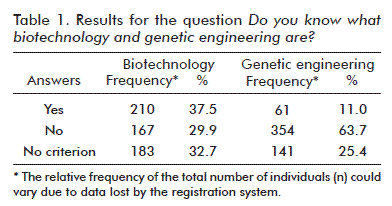
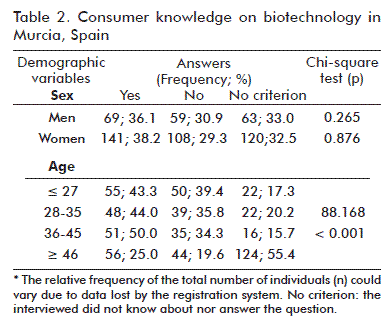
<body><![CDATA[<P   ><font size="2" face="Verdana, Arial, Helvetica, sans-serif">Noteworthy, during      the last 50 years, the most dramatic changes have occurred in the human diet,      more than in all the previous ages at once [3]. The societal advances including      the economy models and the technical advances made available to consumers      for food modification and processing have supported the inclusion of a wide      variety of new foods in human diet. </font></P >       <P   ><font size="2" face="Verdana, Arial, Helvetica, sans-serif">In fact, the food      industry has contributed for long to food innovation by introducing new techniques      for massive food processing and modification, but this has faced costumer      distrust due to unawareness on the potential long term effects, sometimes      the lack of adequate information about the newly introduced products, and      more recently, the introduction of genetically-engineered foods and their      media campaigns. </font></P >       <P   ><font size="2" face="Verdana, Arial, Helvetica, sans-serif">In this regard, there      have been remarkable social debates about the genetic engineering techniques      applied to food (commonly known as GM foods), as an example of the confrontation      between the scientific-technical advances and the fear to problems that the      uncontrolled technological advances could generate in advanced societies.      Technological advances commonly reach new frontiers and are put in practice      faster than the lag time that follows until its social acceptance or retraction      [4]. It cannot be forgotten that the development of applied sciences is conditioned      at large by social perception. </font></P >       <P   ><font size="2" face="Verdana, Arial, Helvetica, sans-serif">Since the development      of technological innovations and their social consequences have led to new      situations in which the public perception conditions the direction for developments,      we questioned which would be the awareness of the consumer on biotechnology      and genetic engineering as safe technologies to be applied for food modification.      </font></P >       <P   ><font size="2" face="Verdana, Arial, Helvetica, sans-serif">For this purpose,      a survey was conducted by using a quantitative methodology. An observational,      descriptive and transversal study was designed among the population of the      Spanish region of Murcia, based on a prospective data harvesting from March      to November, 2008, in order to support further comparison of the data and      results of similar studies previously conducted in other communities in Spain.      </font></P >       <P   ><font size="2" face="Verdana, Arial, Helvetica, sans-serif">Data were statistically      processed with basic descriptive tests and a bivariant analysis was done by      using the Chi-square parametric test. </font></P >       <P   >&nbsp;</P >       <P   ><font size="2" face="Verdana, Arial, Helvetica, sans-serif"><B><font size="3">CUSTOMER      KNOWLEDGE ON BIOTECHNOLOGY </font></b></font></P >   <FONT size="+1">        <P   ><font size="2" face="Verdana, Arial, Helvetica, sans-serif">Most consumers perceive      food biotechnology as equivalent to genetically modify foods, or paraphrasing,      &ldquo;to put genes into my soup&rdquo;. This affirmation is devoid of scientific      validity, since food biotechnology is nothing more than using a living organism      to generate food. In fact, the scientific community defines biotechnology,      in general, as <I>the use of a living organism for an industrial purpose </I>[5].      </font></P >   <FONT size="+1">        <P   ><font size="2" face="Verdana, Arial, Helvetica, sans-serif">The results obtained      in our study revealed that only 29.9 % of the population studied certainly      know what biotechnology is (<a href="#tab1">Table 1</a>), with more right      answers among young people, and increasing wrong answers with the increase      in the age of the population (<a href="#tab2">Table 2</a>). In a previous      study conducted in Valencia [6], there was found that only 48 % of young consumers      in the 15-25 years age range knew what biotechnology is and 29 % in Murcia.      In another study done in Navarra and Madrid regions [7], designed to evaluate      how much the consumer knew about biotechnology, the consumers from Navarra      believed to know less than those from Madrid, in spite of the very small number      of consumers from both populations believing to be certainly aware of biotechnology      (3.5 % and 13.3 %, respectively). Altogether, these results led us to believe      that the population in Spain is highly unaware of biotechnology and its implications;      despite it is an ancient technology. </font></P >       ]]></body>
<body><![CDATA[<P align="center"   ><img src="/img/revistas/bta/v32n1/t0106115.gif" width="390" height="204"><a name="tab1"></a></P >       
<P align="center"   ><img src="/img/revistas/bta/v32n1/t0206115.gif" width="388" height="323"><a name="tab2"></a></P >       
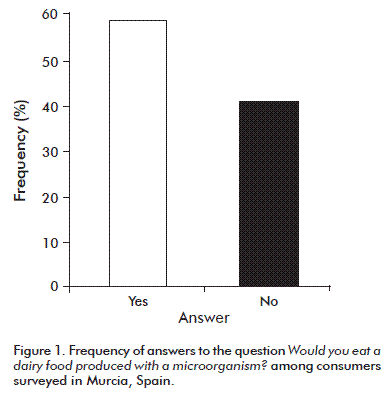
<P   ><font size="2" face="Verdana, Arial, Helvetica, sans-serif">Asking consumers      <I>Would you eat a dairy food produced with a microorganism? </I>was aimed      to confirm if the consumer could identify that this is one of the food biotechnology      applications and to corroborate their knowledge on that matter. Surprisingly,      41.1 % of the consumers answered <I>No </I>(<a href="#fig1">Figure 1</a>),      evidencing that most of them do not know what they daily do and that dietary      habits are not perceived as biotechnology-related. By the contrary, there      were 6.9 % of consumers that either would eat dairy products or actually know      that these are produced by using microorganisms, but their perception was      unrelated to any biotechnological process. </font></P >       <P align="center"   ><img src="/img/revistas/bta/v32n1/f0106115.gif" width="388" height="393"><a name="fig1"></a></P >       
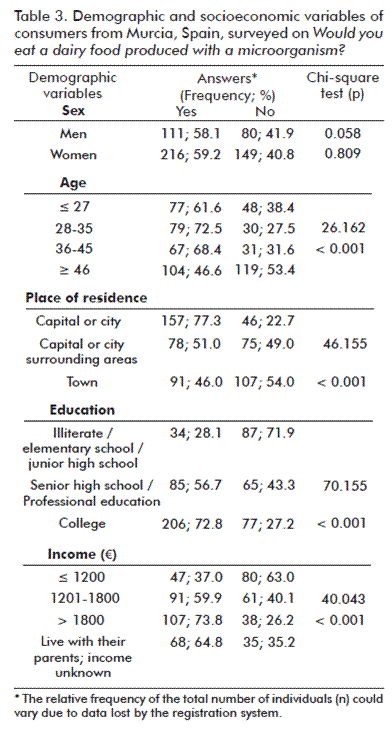
<P   ><font size="2" face="Verdana, Arial, Helvetica, sans-serif">The consumers with      the lowest knowledge on biotechnology in the Murcia region were older than      46, from rural communities, and of low education and incomes (<a href="#tab3">Table      3</a>). The fact that 27.2 % of consumers with college education asserted      that they would not eat a dairy food produced with a microorganism puts a      warning on the scientific level of the educational system in Spain, since      it would indicate the need for introducing contents in college programs on      the technologies that reach the consumer, beyond the general information provided      through media. </font></P >       <P align="center"   ><img src="/img/revistas/bta/v32n1/t0306115.gif" width="390" height="728"><a name="tab3"></a></P >       
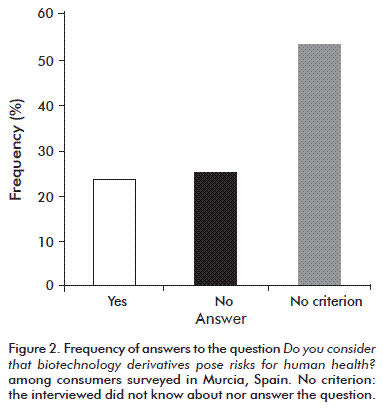
<P   ><font size="2" face="Verdana, Arial, Helvetica, sans-serif">In a study among      young consumers in Valencia [6], 61 % answered No to the same question, declining      to eat this type of product and evidencing a higher unawareness than the population      in Murcia. For a purpose equivalent to ours, in the Eurobarometer 2005 survey      [8], a yes-or-no question was proposed as assertion to customers on: <I>The      yeasts used to produce beer or wines are living organisms</I>. And 35 % of      the European population in that study considered that assertion false, reflecting      the general unawareness on food biotechnology issues. </font></P >       <P   ><font size="2" face="Verdana, Arial, Helvetica, sans-serif">In a human society      as that planned for the XXI century, focused on the survival of the human      species and pursuing the utmost possible living conditions, health is the      central concern among the population. Therefore, it is plausible that any      fact perceived as detrimental for health will be rejected, and that perceived      as beneficial accepted. Asking the consumer on <I>Do you consider that biotechnology      derivatives pose risks for human health? </I>revealed that 23.4 % of consumers      believed they do and 52.8 % did not (<a href="#fig2">Figure 2</a>). This let      us to think that in the region of Murcia there were many doubts and skepticism      about biotechnology, probably due to the unawareness on the matter. The same      question was formulated in Argentine in 2003 [9], and only 20 % of the surveyed      population considered that there were no risks for health, for a perception      lower than in our study, also considering that our study was conducted five      years later. Such level of distrust of the consumer on biotechnology-made      foods could lead to their rejection in advance, unless a proper education      could be provided on the factual risks that these foods could really have      for human health. </font></P >       <P align="center"   ><img src="/img/revistas/bta/v32n1/f0206115.gif" width="381" height="409"><a name="fig2"></a></P >       
<P   ><font size="2" face="Verdana, Arial, Helvetica, sans-serif">With the aim to know      the prejudices of the consumers on the risks of biotechnology foods for human      health, those people who considered that they posed risks were further asked      to declare which would be such risks to their consideration. A number of possibilities      were provided: allergies, health conditions, malformations, genetic mutations      and chronic diseases. A high percentage of consumers, 38.6 %, believed that      these foods posed risks but they could not specify their nature. Allergies      were the most claimed risk (36.3 %). Curiously, in the previously mentioned      study made in Argentine in 2003 [9], allergies also received the highest score.      Possibly, there has been a more significant awareness during the last years      among the population on the increase in allergies onset, which could be perceived      as related to biotechnology based on their misassumption. </font></P >       ]]></body>
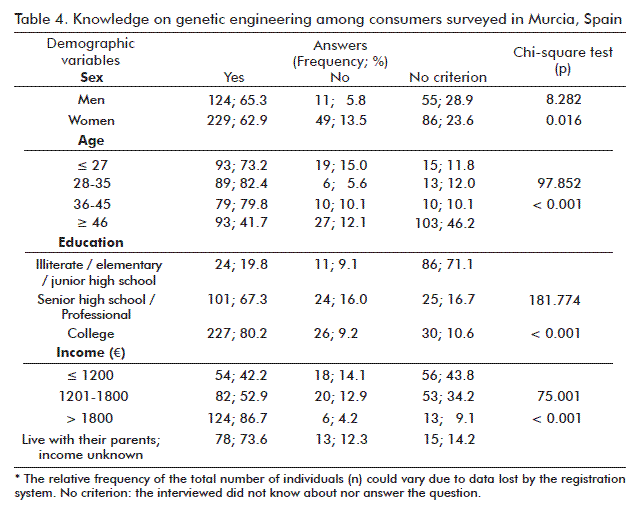
<body><![CDATA[<P   >&nbsp;</P >       <P   ><font size="2" face="Verdana, Arial, Helvetica, sans-serif"><B><font size="3">CUSTOMER      KNOWLEDGE ON GENETIC ENGINEERING </font></b></font></P >   <FONT size="+1">        <P   ><font size="2" face="Verdana, Arial, Helvetica, sans-serif">The customers of      Murcia were asked about <I>What do you understand for Genetic Engineering?      </I>And, surprisingly, a high percentage of the population surveyed (63.7      %) knew what genetic engineering is, in spite of being this technology newer      than biotechnology (<a href="#tab1">Table 1</a>). Noteworthy, 20.5 % of the      population confounds biotechnology with genetic engineering, what further      complicates the picture. Once again, elder people of lower education levels      and of low incomes show the lowest knowledge on this matter (<a href="/img/revistas/bta/v32n1/t0406115.gif">Table      4</a>). </font></P >       
<P   >&nbsp;</P >   <FONT size="+1"><FONT size="+1" color="#000000">        <P   ><font face="Verdana, Arial, Helvetica, sans-serif" size="2"><b><font size="3">ATTITUDE      OF THE CONSUMER TOWARDS GENETIC ENGINEERING AND ITS IMPLICATIONS</font></b></font></P >   <FONT size="+1" color="#211E1F">        <P   ><font size="2" face="Verdana, Arial, Helvetica, sans-serif">The European society      is not insecure to scientific developments, been characterized by trust and      optimistic attitudes, instead of coexisting with ambivalent positions against      certain technological advances such as the uncontrolled use of nuclear science      and genetic engineering [10]. </font></P >   <FONT size="+1">        <P   ><font size="2" face="Verdana, Arial, Helvetica, sans-serif">According to an opinion      poll conducted by the Spanish Foundation for Science and Technology in 2004      [11], the general population adopts a slightly positive attitude to science      and technology. In that study, Murcia was among the leading Spanish autonomous      regions and Madrid in the second group, this last above the mean for the country.      Navarra and Valencia communities were below the country mean. </font></P >   <FONT size="+1" color="#000000">        <P   ><font size="2" color="#211E1F" face="Verdana, Arial, Helvetica, sans-serif">There      has been evidenced that consumers perceive differently the use of genetic      engineering on foods depending on the given use [12]. The introduction of      the &ldquo;quality&rdquo; certification in the last years has proven to generate      a safety perception in consumers, providing them with a feeling of safety,      improvement, wellbeing and so on. If the action itself improves quality, the      given method is perceived as instrumental, not determinant for the acceptance      of the result. In line with this, when consumers were asked if they would      agree on using genetic engineering for purposes such as: to increase food      production, improve food organoleptic properties or quality, or to generate      oral vaccines, 67 % of them agreed if the final purpose would be the increase      in food quality (<a href="/img/revistas/bta/v32n1/f0306115.gif">Figure 3</a>). The other options received      fewer assertions, although the number of consumers accepting the use genetic      engineering for foods was greater for each of them. This last indicates a      positive attitude in the region of Murcia on food production. </font></P >   <FONT size="+1" color="#211E1F">        
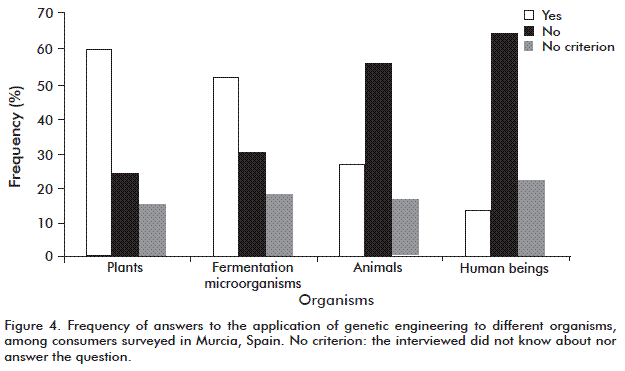
<P   ><font size="2" face="Verdana, Arial, Helvetica, sans-serif">Most concerns on      the use of genetic engineering were conditioned by the type of microorganism      modified or treated with this technology. In fact, consumers favored the use      of genetic engineering in foods and plants, in detriment of animals and humans      when questioned about <I>Do you agree with the use of genetic engineering      in plants, fermented foods, animals or humans? </I>(<a href="/img/revistas/bta/v32n1/f0406115.gif">Figure      4</a>). In the abovementioned survey in Argentine [9], plants were also favored      to animals. Precisely, the insecurity derived from the unawareness causes      the rejection of the consumer to use genetic engineering in animals and principally      in humans. It is intriguing if the perception would be turned if asking the      consumers on the use of genetic engineering techniques to improve human health.      Such an inquiry requires further studies. </font></P >       
<P   >&nbsp;</P >       ]]></body>
<body><![CDATA[<P   ><font size="2" face="Verdana, Arial, Helvetica, sans-serif"><B><font size="3">CONCLUSIONS      </font></b></font></P >   <FONT size="+1">        <P   ><font size="2" face="Verdana, Arial, Helvetica, sans-serif">A high level of unawareness      was found among the population in Spain on biotechnology and its application      in foods, in spite of younger consumers showed greater knowledge on this matter.      It was surprising the high number of consumers with college degrees that were      unaware of food biotechnology applications. The high degree of unawareness      drives the consumer to reject foods obtained by biotechnological or genetic      engineering procedures, caused by perceptions about them as posing risks for      human health. </font></P >   <FONT size="+1">        <P   ><font size="2" face="Verdana, Arial, Helvetica, sans-serif">The human behavior      of acceptance or rejection of the new is highly influenced by the background      knowledge of the matter in question. The lack of proper information on the      impact and relevance of biotechnology and genetic engineering for the human      diet among the population generates rejection from consumers, regardless their      dietary needs. </font></P >       <P   ><font size="2" face="Verdana, Arial, Helvetica, sans-serif">This evidences an      increasing need for a general call to all the society factors involved (educational      institutions, scientific communities and media, among others) to provide the      consumers with adequate and complete information on the actual benefits and      risks that biotechnology and genetic engineering-generated foods could represent      for human health. </font></P >       <P   >&nbsp;</P >       <P   > </P >       <P   ><font size="3" face="Verdana, Arial, Helvetica, sans-serif"><B>REFERENCES </b></font></P >   <B>        <P   ></P >   </B> </font></font></font></font></font></font></font></font></font></font></font></font></font></font></font></font></font></font></font></font></font></font></font></font></font></font></font></font></font></font></font></font></font></font></font></font></font></font></font></font></DIV >     <DIV class="Sect"   >       <!-- ref --><p><FONT size="+1" color="#000000"><FONT size="+1"><FONT size="+1" color="#211E1F"><FONT size="+1" color="#000000"><FONT size="+1" color="#211E1F"><FONT size="+1" color="#000000"><FONT size="+1" color="#211E1F"><FONT size="+1" color="#000000"><FONT size="+1" color="#211E1F"><FONT size="+1" color="#000000"><FONT size="+1" color="#211E1F"><FONT size="+1" color="#000000"><FONT size="+1" color="#211E1F"><FONT size="+1" color="#000000"><FONT size="+1"><FONT size="+1" color="#211E1F"><FONT size="+1"><FONT size="+1"><FONT size="+1"><FONT size="+1"><FONT size="+1"><FONT size="+1"><FONT size="+1" color="#000000"><FONT size="+1" color="#211E1F"><FONT size="+1" color="#000000"><FONT size="+1" color="#211E1F"><FONT size="+1" color="#000000"><FONT size="+1" color="#211E1F"><FONT size="+1"><FONT size="+1"><FONT size="+1"><FONT size="+1"><FONT size="+1"><FONT size="+1" color="#000000"><FONT size="+1" color="#211E1F"><FONT size="+1"><FONT size="+1" color="#000000"><FONT size="+1" color="#211E1F"><FONT size="+1"><FONT size="+1"><FONT size="+1" color="#000000"><font size="2" color="#211E1F" face="Verdana, Arial, Helvetica, sans-serif">1.      De Castro T. Fuentes olvidadas para la historia de la alimentaci&oacute;n      bajomedieval: cr&oacute;nicas, libros de viaje y biograf&iacute;as. Arqueolog&iacute;a      Medieval. 1996;6:247-53.    </font></font></font></font></font></font></font></font></font></font></font></font></font></font></font></font></font></font></font></font></font></font></font></font></font></font></font></font></font></font></font></font></font></font></font></font></font></font></font></font></font></font></p>       <p><FONT size="+1" color="#000000"><FONT size="+1"><FONT size="+1" color="#211E1F"><FONT size="+1" color="#000000"><FONT size="+1" color="#211E1F"><FONT size="+1" color="#000000"><FONT size="+1" color="#211E1F"><FONT size="+1" color="#000000"><FONT size="+1" color="#211E1F"><FONT size="+1" color="#000000"><FONT size="+1" color="#211E1F"><FONT size="+1" color="#000000"><FONT size="+1" color="#211E1F"><FONT size="+1" color="#000000"><FONT size="+1"><FONT size="+1" color="#211E1F"><FONT size="+1"><FONT size="+1"><FONT size="+1"><FONT size="+1"><FONT size="+1"><FONT size="+1"><FONT size="+1" color="#000000"><FONT size="+1" color="#211E1F"><FONT size="+1" color="#000000"><FONT size="+1" color="#211E1F"><FONT size="+1" color="#000000"><FONT size="+1" color="#211E1F"><FONT size="+1"><FONT size="+1"><FONT size="+1"><FONT size="+1"><FONT size="+1"><FONT size="+1" color="#000000"><FONT size="+1" color="#211E1F"><FONT size="+1"><FONT size="+1" color="#000000"><FONT size="+1" color="#211E1F"><FONT size="+1"><FONT size="+1"><FONT size="+1" color="#000000"><FONT size="+1" color="#211E1F"><font size="2" face="Verdana, Arial, Helvetica, sans-serif">2.      L&oacute;pez Nicol&aacute;s JM, Aguirre Balsalobre I. Los nuevos alimentos.      In: L&oacute;pez Nicol&aacute;s JM. Nuevos alimentos para el siglo XXI. Murcia:      Universidad Cat&oacute;lica San Antonio; 2004. p. 15-49. </font></font></font></font></font></font></font></font></font></font></font></font></font></font></font></font></font></font></font></font></font></font></font></font></font></font></font></font></font></font></font></font></font></font></font></font></font></font></font></font></font></font></font></p> </DIV >     <DIV class="Sect"   >       <p><FONT size="+1" color="#000000"><FONT size="+1"><FONT size="+1" color="#211E1F"><FONT size="+1" color="#000000"><FONT size="+1" color="#211E1F"><FONT size="+1" color="#000000"><FONT size="+1" color="#211E1F"><FONT size="+1" color="#000000"><FONT size="+1" color="#211E1F"><FONT size="+1" color="#000000"><FONT size="+1" color="#211E1F"><FONT size="+1" color="#000000"><FONT size="+1" color="#211E1F"><FONT size="+1" color="#000000"><FONT size="+1"><FONT size="+1" color="#211E1F"><FONT size="+1"><FONT size="+1"><FONT size="+1"><FONT size="+1"><FONT size="+1"><FONT size="+1"><FONT size="+1" color="#000000"><FONT size="+1" color="#211E1F"><FONT size="+1" color="#000000"><FONT size="+1" color="#211E1F"><FONT size="+1" color="#000000"><FONT size="+1" color="#211E1F"><FONT size="+1"><FONT size="+1"><FONT size="+1"><FONT size="+1"><FONT size="+1"><FONT size="+1" color="#000000"><FONT size="+1" color="#211E1F"><FONT size="+1"><FONT size="+1" color="#000000"><FONT size="+1" color="#211E1F"><FONT size="+1"><FONT size="+1"><FONT size="+1" color="#000000"><FONT size="+1" color="#211E1F"><font size="2" face="Verdana, Arial, Helvetica, sans-serif">3.      Mart&iacute;nez &Aacute;lvarez, JM. La evoluci&oacute;n de los h&aacute;bitos      alimentarios en Espa&ntilde;a: las nuevas tendencias, los nuevos alimentos      y su relaci&oacute;n con la salud. In: Nuevos alimentos para nuevas necesidades.      Madrid: Instituto de Salud P&uacute;blica; 2003. p. 7-33.</font></font></font></font></font></font></font></font></font></font></font></font></font></font></font></font></font></font></font></font></font></font></font></font></font></font></font></font></font></font></font></font></font></font></font></font></font></font></font></font></font></font></font></p>       <p><FONT size="+1" color="#000000"><FONT size="+1"><FONT size="+1" color="#211E1F"><FONT size="+1" color="#000000"><FONT size="+1" color="#211E1F"><FONT size="+1" color="#000000"><FONT size="+1" color="#211E1F"><FONT size="+1" color="#000000"><FONT size="+1" color="#211E1F"><FONT size="+1" color="#000000"><FONT size="+1" color="#211E1F"><FONT size="+1" color="#000000"><FONT size="+1" color="#211E1F"><FONT size="+1" color="#000000"><FONT size="+1"><FONT size="+1" color="#211E1F"><FONT size="+1"><FONT size="+1"><FONT size="+1"><FONT size="+1"><FONT size="+1"><FONT size="+1"><FONT size="+1" color="#000000"><FONT size="+1" color="#211E1F"><FONT size="+1" color="#000000"><FONT size="+1" color="#211E1F"><FONT size="+1" color="#000000"><FONT size="+1" color="#211E1F"><FONT size="+1"><FONT size="+1"><FONT size="+1"><FONT size="+1"><FONT size="+1"><FONT size="+1" color="#000000"><FONT size="+1" color="#211E1F"><FONT size="+1"><FONT size="+1" color="#000000"><FONT size="+1" color="#211E1F"><FONT size="+1"><FONT size="+1"><FONT size="+1" color="#000000"><FONT size="+1" color="#211E1F"><font size="2" face="Verdana, Arial, Helvetica, sans-serif">4.      C&aacute;mara M. Percepci&oacute;n social de los organismos modificados gen&eacute;ticamente.      In: Mu&ntilde;oz E. Organismos modificados gen&eacute;ticamente. Madrid: Ephemera;      2006. p. 157-73. </font></font></font></font></font></font></font></font></font></font></font></font></font></font></font></font></font></font></font></font></font></font></font></font></font></font></font></font></font></font></font></font></font></font></font></font></font></font></font></font></font></font></font></p> </DIV >     <DIV class="Sect"   >       <!-- ref --><p><FONT size="+1" color="#000000"><FONT size="+1"><FONT size="+1" color="#211E1F"><FONT size="+1" color="#000000"><FONT size="+1" color="#211E1F"><FONT size="+1" color="#000000"><FONT size="+1" color="#211E1F"><FONT size="+1" color="#000000"><FONT size="+1" color="#211E1F"><FONT size="+1" color="#000000"><FONT size="+1" color="#211E1F"><FONT size="+1" color="#000000"><FONT size="+1" color="#211E1F"><FONT size="+1" color="#000000"><FONT size="+1"><FONT size="+1" color="#211E1F"><FONT size="+1"><FONT size="+1"><FONT size="+1"><FONT size="+1"><FONT size="+1"><FONT size="+1"><FONT size="+1" color="#000000"><FONT size="+1" color="#211E1F"><FONT size="+1" color="#000000"><FONT size="+1" color="#211E1F"><FONT size="+1" color="#000000"><FONT size="+1" color="#211E1F"><FONT size="+1"><FONT size="+1"><FONT size="+1"><FONT size="+1"><FONT size="+1"><FONT size="+1" color="#000000"><FONT size="+1" color="#211E1F"><FONT size="+1"><FONT size="+1" color="#000000"><FONT size="+1" color="#211E1F"><FONT size="+1"><FONT size="+1"><FONT size="+1" color="#000000"><FONT size="+1" color="#211E1F"><font size="2" face="Verdana, Arial, Helvetica, sans-serif">5.      Ram&oacute;n D. Nuevas aplicaciones de la gen&eacute;tica en la alimentaci&oacute;n:      los alimentos transg&eacute;nicos. Alimentaci&oacute;n, Nutrici&oacute;n y      Salud. 2004;11(1):1-5.    </font></font></font></font></font></font></font></font></font></font></font></font></font></font></font></font></font></font></font></font></font></font></font></font></font></font></font></font></font></font></font></font></font></font></font></font></font></font></font></font></font></font></font></p>       <!-- ref --><p><FONT size="+1" color="#000000"><FONT size="+1"><FONT size="+1" color="#211E1F"><FONT size="+1" color="#000000"><FONT size="+1" color="#211E1F"><FONT size="+1" color="#000000"><FONT size="+1" color="#211E1F"><FONT size="+1" color="#000000"><FONT size="+1" color="#211E1F"><FONT size="+1" color="#000000"><FONT size="+1" color="#211E1F"><FONT size="+1" color="#000000"><FONT size="+1" color="#211E1F"><FONT size="+1" color="#000000"><FONT size="+1"><FONT size="+1" color="#211E1F"><FONT size="+1"><FONT size="+1"><FONT size="+1"><FONT size="+1"><FONT size="+1"><FONT size="+1"><FONT size="+1" color="#000000"><FONT size="+1" color="#211E1F"><FONT size="+1" color="#000000"><FONT size="+1" color="#211E1F"><FONT size="+1" color="#000000"><FONT size="+1" color="#211E1F"><FONT size="+1"><FONT size="+1"><FONT size="+1"><FONT size="+1"><FONT size="+1"><FONT size="+1" color="#000000"><FONT size="+1" color="#211E1F"><FONT size="+1"><FONT size="+1" color="#000000"><FONT size="+1" color="#211E1F"><FONT size="+1"><FONT size="+1"><FONT size="+1" color="#000000"><FONT size="+1" color="#211E1F"><font size="2" face="Verdana, Arial, Helvetica, sans-serif">6.      Calvo MD, Ram&oacute;n D, Peris J. La opini&oacute;n de los j&oacute;venes      valencianos sobre los alimentos transg&eacute;nicos. Los transg&eacute;nicos      ciencia y pol&eacute;mica. M&aacute;laga: HEFAME; 2000.     </font></font></font></font></font></font></font></font></font></font></font></font></font></font></font></font></font></font></font></font></font></font></font></font></font></font></font></font></font></font></font></font></font></font></font></font></font></font></font></font></font></font></font></p> </DIV >     ]]></body>
<body><![CDATA[<DIV class="Sect"   >       <!-- ref --><p><FONT size="+1" color="#000000"><FONT size="+1"><FONT size="+1" color="#211E1F"><FONT size="+1" color="#000000"><FONT size="+1" color="#211E1F"><FONT size="+1" color="#000000"><FONT size="+1" color="#211E1F"><FONT size="+1" color="#000000"><FONT size="+1" color="#211E1F"><FONT size="+1" color="#000000"><FONT size="+1" color="#211E1F"><FONT size="+1" color="#000000"><FONT size="+1" color="#211E1F"><FONT size="+1" color="#000000"><FONT size="+1"><FONT size="+1" color="#211E1F"><FONT size="+1"><FONT size="+1"><FONT size="+1"><FONT size="+1"><FONT size="+1"><FONT size="+1"><FONT size="+1" color="#000000"><FONT size="+1" color="#211E1F"><FONT size="+1" color="#000000"><FONT size="+1" color="#211E1F"><FONT size="+1" color="#000000"><FONT size="+1" color="#211E1F"><FONT size="+1"><FONT size="+1"><FONT size="+1"><FONT size="+1"><FONT size="+1"><FONT size="+1" color="#000000"><FONT size="+1" color="#211E1F"><FONT size="+1"><FONT size="+1" color="#000000"><FONT size="+1" color="#211E1F"><FONT size="+1"><FONT size="+1"><FONT size="+1" color="#000000"><FONT size="+1" color="#211E1F"><font size="2" face="Verdana, Arial, Helvetica, sans-serif">7.      S&aacute;nchez M, Barrena R. Comportamiento del consumidor navarro frente      a los alimentos de nueva generaci&oacute;n: alimentos transg&eacute;nicos      y alimentos funcionales. V congreso de econom&iacute;a de Navarra. 2003.    </font></font></font></font></font></font></font></font></font></font></font></font></font></font></font></font></font></font></font></font></font></font></font></font></font></font></font></font></font></font></font></font></font></font></font></font></font></font></font></font></font></font></font></p>       <p><FONT size="+1" color="#000000"><FONT size="+1"><FONT size="+1" color="#211E1F"><FONT size="+1" color="#000000"><FONT size="+1" color="#211E1F"><FONT size="+1" color="#000000"><FONT size="+1" color="#211E1F"><FONT size="+1" color="#000000"><FONT size="+1" color="#211E1F"><FONT size="+1" color="#000000"><FONT size="+1" color="#211E1F"><FONT size="+1" color="#000000"><FONT size="+1" color="#211E1F"><FONT size="+1" color="#000000"><FONT size="+1"><FONT size="+1" color="#211E1F"><FONT size="+1"><FONT size="+1"><FONT size="+1"><FONT size="+1"><FONT size="+1"><FONT size="+1"><FONT size="+1" color="#000000"><FONT size="+1" color="#211E1F"><FONT size="+1" color="#000000"><FONT size="+1" color="#211E1F"><FONT size="+1" color="#000000"><FONT size="+1" color="#211E1F"><FONT size="+1"><FONT size="+1"><FONT size="+1"><FONT size="+1"><FONT size="+1"><FONT size="+1" color="#000000"><FONT size="+1" color="#211E1F"><FONT size="+1"><FONT size="+1" color="#000000"><FONT size="+1" color="#211E1F"><FONT size="+1"><FONT size="+1"><FONT size="+1" color="#000000"><FONT size="+1" color="#211E1F"><font size="2" face="Verdana, Arial, Helvetica, sans-serif">8.      Gaskell G, Stares S, Allansdottir A, Allum N, Corchero C, Fischler C, <I>et      al</I>. Europeans and Biotechnology in 2005: Patterns and Trends. Final Report      on Eurobarometer 64.3. A report to the European Commission&rsquo;s Directorate      General for Research; 2006. </font></font></font></font></font></font></font></font></font></font></font></font></font></font></font></font></font></font></font></font></font></font></font></font></font></font></font></font></font></font></font></font></font></font></font></font></font></font></font></font></font></font></font></p> </DIV >     <DIV class="Sect"   >       <p><FONT size="+1" color="#000000"><FONT size="+1"><FONT size="+1" color="#211E1F"><FONT size="+1" color="#000000"><FONT size="+1" color="#211E1F"><FONT size="+1" color="#000000"><FONT size="+1" color="#211E1F"><FONT size="+1" color="#000000"><FONT size="+1" color="#211E1F"><FONT size="+1" color="#000000"><FONT size="+1" color="#211E1F"><FONT size="+1" color="#000000"><FONT size="+1" color="#211E1F"><FONT size="+1" color="#000000"><FONT size="+1"><FONT size="+1" color="#211E1F"><FONT size="+1"><FONT size="+1"><FONT size="+1"><FONT size="+1"><FONT size="+1"><FONT size="+1"><FONT size="+1" color="#000000"><FONT size="+1" color="#211E1F"><FONT size="+1" color="#000000"><FONT size="+1" color="#211E1F"><FONT size="+1" color="#000000"><FONT size="+1" color="#211E1F"><FONT size="+1"><FONT size="+1"><FONT size="+1"><FONT size="+1"><FONT size="+1"><FONT size="+1" color="#000000"><FONT size="+1" color="#211E1F"><FONT size="+1"><FONT size="+1" color="#000000"><FONT size="+1" color="#211E1F"><FONT size="+1"><FONT size="+1"><FONT size="+1" color="#000000"><FONT size="+1" color="#211E1F"><font color="#000000" size="2" face="Verdana, Arial, Helvetica, sans-serif">9.      S</font><font color="#0000FF" size="2" face="Verdana, Arial, Helvetica, sans-serif"><FONT color="#211E1F">arquis      A, Alais F. Consultas sobre la biotecnolog&iacute;a en la Argentina. Proyecto      SAGPYA UNEP-GEP para la elaboraci&oacute;n del marco nacional de bioseguridad.      2003 [cited 2009 Apr 16]. Available from: <A href="http://www.agrodigital.com/ante/32/SAGPYA.pdf" target="_blank">      http://www.agrodigital.com/ante/32/SAGPYA.pdf</A></font></font></font></font></font></font></font></font></font></font></font></font></font></font></font></font></font></font></font></font></font></font></font></font></font></font></font></font></font></font></font></font></font></font></font></font></font></font></font></font></font></font></font></font></p>       <p><FONT size="+1" color="#000000"><FONT size="+1"><FONT size="+1" color="#211E1F"><FONT size="+1" color="#000000"><FONT size="+1" color="#211E1F"><FONT size="+1" color="#000000"><FONT size="+1" color="#211E1F"><FONT size="+1" color="#000000"><FONT size="+1" color="#211E1F"><FONT size="+1" color="#000000"><FONT size="+1" color="#211E1F"><FONT size="+1" color="#000000"><FONT size="+1" color="#211E1F"><FONT size="+1" color="#000000"><FONT size="+1"><FONT size="+1" color="#211E1F"><FONT size="+1"><FONT size="+1"><FONT size="+1"><FONT size="+1"><FONT size="+1"><FONT size="+1"><FONT size="+1" color="#000000"><FONT size="+1" color="#211E1F"><FONT size="+1" color="#000000"><FONT size="+1" color="#211E1F"><FONT size="+1" color="#000000"><FONT size="+1" color="#211E1F"><FONT size="+1"><FONT size="+1"><FONT size="+1"><FONT size="+1"><FONT size="+1"><FONT size="+1" color="#000000"><FONT size="+1" color="#211E1F"><FONT size="+1"><FONT size="+1" color="#000000"><FONT size="+1" color="#211E1F"><FONT size="+1"><FONT size="+1"><FONT size="+1" color="#000000"><FONT size="+1" color="#211E1F"><FONT color="#0000FF"><FONT color="#211E1F"><FONT color="#0000FF"><font color="#211E1F" size="2" face="Verdana, Arial, Helvetica, sans-serif">10.      Osseweijer P. Campa&ntilde;as institucionales sobre biotecnolog&iacute;as      en Europa. Quark. 2004;33(julio-septiembre):39-49. </font></font></font></font></font></font></font></font></font></font></font></font></font></font></font></font></font></font></font></font></font></font></font></font></font></font></font></font></font></font></font></font></font></font></font></font></font></font></font></font></font></font></font></font></font></font></p> </DIV >     <DIV class="Sect"   >       <!-- ref --><p><FONT size="+1" color="#000000"><FONT size="+1"><FONT size="+1" color="#211E1F"><FONT size="+1" color="#000000"><FONT size="+1" color="#211E1F"><FONT size="+1" color="#000000"><FONT size="+1" color="#211E1F"><FONT size="+1" color="#000000"><FONT size="+1" color="#211E1F"><FONT size="+1" color="#000000"><FONT size="+1" color="#211E1F"><FONT size="+1" color="#000000"><FONT size="+1" color="#211E1F"><FONT size="+1" color="#000000"><FONT size="+1"><FONT size="+1" color="#211E1F"><FONT size="+1"><FONT size="+1"><FONT size="+1"><FONT size="+1"><FONT size="+1"><FONT size="+1"><FONT size="+1" color="#000000"><FONT size="+1" color="#211E1F"><FONT size="+1" color="#000000"><FONT size="+1" color="#211E1F"><FONT size="+1" color="#000000"><FONT size="+1" color="#211E1F"><FONT size="+1"><FONT size="+1"><FONT size="+1"><FONT size="+1"><FONT size="+1"><FONT size="+1" color="#000000"><FONT size="+1" color="#211E1F"><FONT size="+1"><FONT size="+1" color="#000000"><FONT size="+1" color="#211E1F"><FONT size="+1"><FONT size="+1"><FONT size="+1" color="#000000"><FONT size="+1" color="#211E1F"><FONT color="#0000FF"><FONT color="#211E1F"><FONT color="#0000FF"><FONT color="#211E1F"><font size="2" face="Verdana, Arial, Helvetica, sans-serif">11.      Fundaci&oacute;n Espa&ntilde;ola para la Ciencia y la Tecnolog&iacute;a. Alimentos      funcionales. Madrid: FECYT; 2005.    </font></font></font></font></font></font></font></font></font></font></font></font></font></font></font></font></font></font></font></font></font></font></font></font></font></font></font></font></font></font></font></font></font></font></font></font></font></font></font></font></font></font></font></font></font></font></font></p>       ]]></body>
<body><![CDATA[<!-- ref --><p><FONT size="+1" color="#000000"><FONT size="+1"><FONT size="+1" color="#211E1F"><FONT size="+1" color="#000000"><FONT size="+1" color="#211E1F"><FONT size="+1" color="#000000"><FONT size="+1" color="#211E1F"><FONT size="+1" color="#000000"><FONT size="+1" color="#211E1F"><FONT size="+1" color="#000000"><FONT size="+1" color="#211E1F"><FONT size="+1" color="#000000"><FONT size="+1" color="#211E1F"><FONT size="+1" color="#000000"><FONT size="+1"><FONT size="+1" color="#211E1F"><FONT size="+1"><FONT size="+1"><FONT size="+1"><FONT size="+1"><FONT size="+1"><FONT size="+1"><FONT size="+1" color="#000000"><FONT size="+1" color="#211E1F"><FONT size="+1" color="#000000"><FONT size="+1" color="#211E1F"><FONT size="+1" color="#000000"><FONT size="+1" color="#211E1F"><FONT size="+1"><FONT size="+1"><FONT size="+1"><FONT size="+1"><FONT size="+1"><FONT size="+1" color="#000000"><FONT size="+1" color="#211E1F"><FONT size="+1"><FONT size="+1" color="#000000"><FONT size="+1" color="#211E1F"><FONT size="+1"><FONT size="+1"><FONT size="+1" color="#000000"><FONT size="+1" color="#211E1F"><FONT color="#0000FF"><FONT color="#211E1F"><FONT color="#0000FF"><FONT color="#211E1F"><font size="2" face="Verdana, Arial, Helvetica, sans-serif">12.      Hollman WK. Public perceptions of biotechnology: another look. Nature Biotechnol.      1996;14:35-8.     </font></font></font></font></font></font></font></font></font></font></font></font></font></font></font></font></font></font></font></font></font></font></font></font></font></font></font></font></font></font></font></font></font></font></font></font></font></font></font></font></font></font></font></font></font></font></font></p>       <p>&nbsp;</p>       <p>&nbsp;</p>       <p><font size="2" face="Verdana, Arial, Helvetica, sans-serif">Received in January,      2015.    <br>     Accepted in April, 2015.</font></p>       <p>&nbsp;</p>       <p>&nbsp;</p> </DIV >     <DIV class="Sect"   ><FONT size="+1" color="#000000"><FONT size="+1"><FONT size="+1" color="#211E1F"><FONT size="+1" color="#000000"><FONT size="+1" color="#211E1F"><FONT size="+1" color="#000000"><FONT size="+1" color="#211E1F"><FONT size="+1" color="#000000"><FONT size="+1" color="#211E1F"><FONT size="+1" color="#000000"><FONT size="+1" color="#211E1F"><FONT size="+1" color="#000000"><FONT size="+1" color="#211E1F"><FONT size="+1" color="#000000"><FONT size="+1"><FONT size="+1" color="#211E1F"><FONT size="+1"><FONT size="+1"><FONT size="+1"><FONT size="+1"><FONT size="+1"><FONT size="+1"><FONT size="+1" color="#000000"><FONT size="+1" color="#211E1F"><FONT size="+1" color="#000000"><FONT size="+1" color="#211E1F"><FONT size="+1" color="#000000"><FONT size="+1" color="#211E1F"><FONT size="+1"><FONT size="+1"><FONT size="+1"><FONT size="+1"><FONT size="+1"><FONT size="+1" color="#000000"><FONT size="+1" color="#211E1F"><FONT size="+1"><FONT size="+1" color="#000000"><FONT size="+1" color="#211E1F"><FONT size="+1"><FONT size="+1"><FONT size="+1" color="#000000"><FONT size="+1" color="#211E1F"><FONT color="#0000FF"><FONT color="#211E1F"><FONT color="#0000FF"><FONT color="#211E1F">        <P   ></P >       ]]></body>
<body><![CDATA[<P   > </P >   <FONT size="+1">       <P   > </P >       <P   > </P >   <FONT size="+1" color="#000000">       <P   ><i><font size="2" color="#211E1F" face="Verdana, Arial, Helvetica, sans-serif">Inmaculada      Viedma-Viedma</font></i><font size="2" color="#211E1F" face="Verdana, Arial, Helvetica, sans-serif">.      Facultad de Enfermer&iacute;a. Universidad Cat&oacute;lica de Murcia. Avenida      Jer&oacute;nimos, 135, 30107 Murcia, Espa&ntilde;a. E-mail: <A href="mailto:iviedma@ucam.edu">      <FONT color="#0000FF">iviedma@ucam.edu</font></A> </font></P >   <FONT size="+1" color="#211E1F"><FONT size="+1"><FONT color="#0000FF"><FONT color="#211E1F">        <P   > </P >   </font></font></font></font></font></font></font></font></font></font></font></font></font></font></font></font></font></font></font></font></font></font></font></font></font></font></font></font></font></font></font></font></font></font></font></font></font></font></font></font></font></font></font></font></font></font></font></font></font></font></font></font></DIV >      ]]></body><back>
<ref-list>
<ref id="B1">
<label>1</label><nlm-citation citation-type="journal">
<person-group person-group-type="author">
<name>
<surname><![CDATA[De Castro]]></surname>
<given-names><![CDATA[T]]></given-names>
</name>
</person-group>
<article-title xml:lang="es"><![CDATA[Fuentes olvidadas para la historia de la alimentación bajomedieval: crónicas, libros de viaje y biografías]]></article-title>
<source><![CDATA[Arqueología Medieval]]></source>
<year>1996</year>
<volume>6</volume>
<page-range>247-53</page-range></nlm-citation>
</ref>
<ref id="B2">
<label>2</label><nlm-citation citation-type="book">
<person-group person-group-type="author">
<name>
<surname><![CDATA[López Nicolás]]></surname>
<given-names><![CDATA[JM]]></given-names>
</name>
<name>
<surname><![CDATA[Aguirre Balsalobre]]></surname>
<given-names><![CDATA[I]]></given-names>
</name>
</person-group>
<article-title xml:lang="es"><![CDATA[Los nuevos alimentos]]></article-title>
<source><![CDATA[Nuevos alimentos para el siglo XXI]]></source>
<year>2004</year>
<page-range>15-49</page-range><publisher-loc><![CDATA[Murcia ]]></publisher-loc>
<publisher-name><![CDATA[Universidad Católica San Antonio]]></publisher-name>
</nlm-citation>
</ref>
<ref id="B3">
<label>3</label><nlm-citation citation-type="book">
<person-group person-group-type="author">
<name>
<surname><![CDATA[Martínez Álvarez]]></surname>
<given-names><![CDATA[JM]]></given-names>
</name>
</person-group>
<article-title xml:lang="es"><![CDATA[La evolución de los hábitos alimentarios en España: las nuevas tendencias, los nuevos alimentos y su relación con la salud]]></article-title>
<source><![CDATA[Nuevos alimentos para nuevas necesidades]]></source>
<year>2003</year>
<page-range>7-33</page-range><publisher-loc><![CDATA[Madrid ]]></publisher-loc>
<publisher-name><![CDATA[Instituto de Salud Pública]]></publisher-name>
</nlm-citation>
</ref>
<ref id="B4">
<label>4</label><nlm-citation citation-type="book">
<person-group person-group-type="author">
<name>
<surname><![CDATA[Cámara]]></surname>
<given-names><![CDATA[M]]></given-names>
</name>
</person-group>
<article-title xml:lang="es"><![CDATA[Percepción social de los organismos modificados genéticamente]]></article-title>
<person-group person-group-type="editor">
<name>
<surname><![CDATA[Muñoz]]></surname>
<given-names><![CDATA[E]]></given-names>
</name>
</person-group>
<source><![CDATA[Organismos modificados genéticamente]]></source>
<year>2006</year>
<page-range>157-73</page-range><publisher-loc><![CDATA[Madrid ]]></publisher-loc>
<publisher-name><![CDATA[Ephemera]]></publisher-name>
</nlm-citation>
</ref>
<ref id="B5">
<label>5</label><nlm-citation citation-type="journal">
<person-group person-group-type="author">
<name>
<surname><![CDATA[Ramón]]></surname>
<given-names><![CDATA[D]]></given-names>
</name>
</person-group>
<article-title xml:lang="es"><![CDATA[Nuevas aplicaciones de la genética en la alimentación: los alimentos transgénicos]]></article-title>
<source><![CDATA[Alimentación, Nutrición y Salud]]></source>
<year>2004</year>
<volume>11</volume>
<numero>1</numero>
<issue>1</issue>
<page-range>1-5</page-range></nlm-citation>
</ref>
<ref id="B6">
<label>6</label><nlm-citation citation-type="book">
<person-group person-group-type="author">
<name>
<surname><![CDATA[Calvo]]></surname>
<given-names><![CDATA[MD]]></given-names>
</name>
<name>
<surname><![CDATA[Ramón]]></surname>
<given-names><![CDATA[D]]></given-names>
</name>
<name>
<surname><![CDATA[Peris]]></surname>
<given-names><![CDATA[J]]></given-names>
</name>
</person-group>
<source><![CDATA[La opinión de los jóvenes valencianos sobre los alimentos transgénicos. Los transgénicos ciencia y polémica]]></source>
<year>2000</year>
<publisher-loc><![CDATA[Málaga ]]></publisher-loc>
<publisher-name><![CDATA[HEFAME]]></publisher-name>
</nlm-citation>
</ref>
<ref id="B7">
<label>7</label><nlm-citation citation-type="">
<person-group person-group-type="author">
<name>
<surname><![CDATA[Sánchez]]></surname>
<given-names><![CDATA[M]]></given-names>
</name>
<name>
<surname><![CDATA[Barrena]]></surname>
<given-names><![CDATA[R]]></given-names>
</name>
</person-group>
<source><![CDATA[Comportamiento del consumidor navarro frente a los alimentos de nueva generación: alimentos transgénicos y alimentos funcionales]]></source>
<year>2003</year>
</nlm-citation>
</ref>
<ref id="B8">
<label>8</label><nlm-citation citation-type="">
<person-group person-group-type="author">
<name>
<surname><![CDATA[Gaskell]]></surname>
<given-names><![CDATA[G]]></given-names>
</name>
<name>
<surname><![CDATA[Stares]]></surname>
<given-names><![CDATA[S]]></given-names>
</name>
<name>
<surname><![CDATA[Allansdottir]]></surname>
<given-names><![CDATA[A]]></given-names>
</name>
<name>
<surname><![CDATA[Allum]]></surname>
<given-names><![CDATA[N]]></given-names>
</name>
<name>
<surname><![CDATA[Corchero]]></surname>
<given-names><![CDATA[C]]></given-names>
</name>
<name>
<surname><![CDATA[Fischler]]></surname>
<given-names><![CDATA[C]]></given-names>
</name>
</person-group>
<source><![CDATA[Europeans and Biotechnology in 2005: Patterns and Trends. Final Report on Eurobarometer 64.3. A report to the European Commission&#146;s Directorate General for Research]]></source>
<year>2006</year>
</nlm-citation>
</ref>
<ref id="B9">
<label>9</label><nlm-citation citation-type="">
<person-group person-group-type="author">
<name>
<surname><![CDATA[Sarquis]]></surname>
<given-names><![CDATA[A]]></given-names>
</name>
<name>
<surname><![CDATA[Alais]]></surname>
<given-names><![CDATA[F]]></given-names>
</name>
</person-group>
<source><![CDATA[Consultas sobre la biotecnología en la Argentina. Proyecto SAGPYA UNEP-GEP para la elaboración del marco nacional de bioseguridad]]></source>
<year>2003</year>
</nlm-citation>
</ref>
<ref id="B10">
<label>10</label><nlm-citation citation-type="journal">
<person-group person-group-type="author">
<name>
<surname><![CDATA[Osseweijer]]></surname>
<given-names><![CDATA[P]]></given-names>
</name>
</person-group>
<article-title xml:lang="es"><![CDATA[Campañas institucionales sobre biotecnologías en Europa]]></article-title>
<source><![CDATA[Quark]]></source>
<year>2004</year>
<volume>33</volume>
<numero>39</numero>
<issue>39</issue>
<page-range>49</page-range></nlm-citation>
</ref>
<ref id="B11">
<label>11</label><nlm-citation citation-type="book">
<collab>Fundación Española para la Ciencia y la Tecnología</collab>
<source><![CDATA[Alimentos funcionales]]></source>
<year>2005</year>
<publisher-loc><![CDATA[Madrid ]]></publisher-loc>
<publisher-name><![CDATA[FECYT]]></publisher-name>
</nlm-citation>
</ref>
<ref id="B12">
<label>12</label><nlm-citation citation-type="journal">
<person-group person-group-type="author">
<name>
<surname><![CDATA[Hollman]]></surname>
<given-names><![CDATA[WK]]></given-names>
</name>
</person-group>
<article-title xml:lang="en"><![CDATA[Public perceptions of biotechnology: another look]]></article-title>
<source><![CDATA[Nature Biotechnol]]></source>
<year>1996</year>
<volume>14</volume>
<page-range>35-8</page-range></nlm-citation>
</ref>
</ref-list>
</back>
</article>