<?xml version="1.0" encoding="ISO-8859-1"?><article xmlns:mml="http://www.w3.org/1998/Math/MathML" xmlns:xlink="http://www.w3.org/1999/xlink" xmlns:xsi="http://www.w3.org/2001/XMLSchema-instance">
<front>
<journal-meta>
<journal-id>2227-1899</journal-id>
<journal-title><![CDATA[Revista Cubana de Ciencias Informáticas]]></journal-title>
<abbrev-journal-title><![CDATA[Rev cuba cienc informat]]></abbrev-journal-title>
<issn>2227-1899</issn>
<publisher>
<publisher-name><![CDATA[Editorial Ediciones Futuro]]></publisher-name>
</publisher>
</journal-meta>
<article-meta>
<article-id>S2227-18992015000400005</article-id>
<title-group>
<article-title xml:lang="en"><![CDATA[Connected Permutations of Vertices for Canonical Form Detection in Graph Mining]]></article-title>
<article-title xml:lang="es"><![CDATA[Permutaciones conexas de vértices para la detección de formas canónicas en la minería de grafos]]></article-title>
</title-group>
<contrib-group>
<contrib contrib-type="author">
<name>
<surname><![CDATA[Gago-Alonso]]></surname>
<given-names><![CDATA[Andrés]]></given-names>
</name>
<xref ref-type="aff" rid="A01"/>
</contrib>
</contrib-group>
<aff id="A01">
<institution><![CDATA[,Centro de Aplicaciones de Tecnologías Avanzadas  ]]></institution>
<addr-line><![CDATA[ ]]></addr-line>
</aff>
<pub-date pub-type="pub">
<day>00</day>
<month>12</month>
<year>2015</year>
</pub-date>
<pub-date pub-type="epub">
<day>00</day>
<month>12</month>
<year>2015</year>
</pub-date>
<volume>9</volume>
<numero>4</numero>
<fpage>57</fpage>
<lpage>71</lpage>
<copyright-statement/>
<copyright-year/>
<self-uri xlink:href="http://scielo.sld.cu/scielo.php?script=sci_arttext&amp;pid=S2227-18992015000400005&amp;lng=en&amp;nrm=iso"></self-uri><self-uri xlink:href="http://scielo.sld.cu/scielo.php?script=sci_abstract&amp;pid=S2227-18992015000400005&amp;lng=en&amp;nrm=iso"></self-uri><self-uri xlink:href="http://scielo.sld.cu/scielo.php?script=sci_pdf&amp;pid=S2227-18992015000400005&amp;lng=en&amp;nrm=iso"></self-uri><abstract abstract-type="short" xml:lang="en"><p><![CDATA[Checking redundancies is one of the most significant tasks in graph mining. Canonical forms of graphs are widely used to guarantee and speed up this kind of task. In general, canonical form calculation requires to orderly check partial or complete prefixes of vertex permutations for picking up the codification to unambiguously represent a graph. In this paper, novel theoretical results are introduced for reducing the number of candidate prefixes to a specific subset associated with connected permutations. Furthermore, several interesting mathematical properties are also described and proved, including strong linkages among graph mining, discrete mathematics, and different kinds of canonical forms. Although this paper does not declare a scheme for directly reducing the complexity of finding canonical descriptions, our contributions can open novel opportunities for future improvements in graph mining by interrelating concepts from different existing approaches.]]></p></abstract>
<abstract abstract-type="short" xml:lang="es"><p><![CDATA[La verificación de redundancias es una de las taras más influyentes en la minería de grafos. Las formas canónicas son ampliamente usadas para garantizar y acelerar este tipo de tarea. En general, el cómputo de una forma canónica requiere la verificación parcial o completa de todos los prefijos de permutaciones de vértices, para seleccionar aquellas que representa sin ambigüedad al grafo. En este artículo, se introducen nuevos resultados teóricos enfocados a reducir el número de candidatos prefijos a un subconjunto específico con las permutaciones conexas. Adicionalmente, varias propiedades son también descritas y probadas, incluyendo fuertes vínculos entre minería de grafos, matemática discreta, y diferentes tipos de formas canónicas. Aunque este artículo no declara un esquema para reducir directamente la complejidad computacional para detectar formas canónicas, nuestras contribuciones pueden abrir nuevas oportunidades para obtener futuras mejoras en la minería de grafos, interrelacionando conceptos provenientes de diferentes enfoques que hasta ahora han sido propuestos de manera aislada.]]></p></abstract>
<kwd-group>
<kwd lng="en"><![CDATA[canonical form]]></kwd>
<kwd lng="en"><![CDATA[graph isomorphism]]></kwd>
<kwd lng="en"><![CDATA[connected permutation]]></kwd>
<kwd lng="en"><![CDATA[adjacency matrix]]></kwd>
<kwd lng="en"><![CDATA[spanning tree]]></kwd>
<kwd lng="es"><![CDATA[formas canónicas]]></kwd>
<kwd lng="es"><![CDATA[isomorfismo de grafos]]></kwd>
<kwd lng="es"><![CDATA[permutaciones conexas]]></kwd>
<kwd lng="es"><![CDATA[matriz de adyacencia]]></kwd>
<kwd lng="es"><![CDATA[árbol de cobertura]]></kwd>
</kwd-group>
</article-meta>
</front><body><![CDATA[ <p align="right"><font face="Verdana, Arial, Helvetica, sans-serif" size="2"><B>ART&Iacute;CULO  ORIGINAL</B></font></p>     <p>&nbsp;</p>     <p><strong><font size="4" face="Verdana, Arial, Helvetica, sans-serif">Connected  Permutations of Vertices for Canonical Form Detection in Graph Mining</font></strong></p>     <p>&nbsp;</p>     <p><font size="3" face="Verdana, Arial, Helvetica, sans-serif"><strong>Permutaciones  conexas de v&eacute;rtices para la detecci&oacute;n de formas can&oacute;nicas en la miner&iacute;a de  grafos</strong></font></p>     <p>&nbsp;</p>     <p>&nbsp;</p>     <P><font size="2" face="Verdana, Arial, Helvetica, sans-serif"><strong>Andr&eacute;s Gago-Alonso<strong><strong><sup>1*</sup></strong></strong></strong></font></p>     <P><font size="2" face="Verdana, Arial, Helvetica, sans-serif">  <sup>1</sup> Centro  de Aplicaciones de Tecnolog&iacute;as Avanzadas. La Habana, Cuba.</font>    <br>       ]]></body>
<body><![CDATA[<br> <font size="2" face="Verdana, Arial, Helvetica, sans-serif">  * Autor  para correspondencia: <a href="mailto:agago@cenatav.co.com">agago@cenatav.co.com</a> </font></p>     <p>&nbsp;</p>     <p>&nbsp;</p> <hr>     <p><strong><font size="2" face="Verdana, Arial, Helvetica, sans-serif"><span lang=EN-GB>ABSTRACT</span><em><span lang=EN-GB>    <br> </span>    <br> </em></font></strong><em><font size="2" face="Verdana, Arial, Helvetica, sans-serif">C</font></em><font size="2" face="Verdana, Arial, Helvetica, sans-serif">hecking redundancies is one  of the most significant tasks in graph mining. Canonical forms of graphs are  widely used to guarantee and speed up this kind of task. In general, canonical  form calculation requires to orderly check partial or complete prefixes of  vertex permutations for picking up the codification to unambiguously represent  a graph. In this paper, novel theoretical results are introduced for reducing  the number of candidate prefixes to a specific subset associated with connected  permutations. Furthermore, several interesting mathematical properties are also  described and proved, including strong linkages among graph mining, discrete  mathematics, and different kinds of canonical forms. Although this paper does  not declare a scheme for directly reducing the complexity of finding canonical  descriptions, our contributions can open novel opportunities for future  improvements in graph mining by interrelating concepts from different existing  approaches.    <br>     <br> <strong>Key  words:</strong> canonical form, graph isomorphism, connected permutation, adjacency  matrix, spanning tree.</font></p> <hr>     <p><strong><font size="2" face="Verdana, Arial, Helvetica, sans-serif">RESUMEN </font>  </strong> </p>     <p><font size="2" face="Verdana, Arial, Helvetica, sans-serif">La verificaci&oacute;n de redundancias es una de las taras  m&aacute;s influyentes en la miner&iacute;a de grafos. Las formas can&oacute;nicas son ampliamente  usadas para garantizar y acelerar este tipo de tarea. En general, el c&oacute;mputo de  una forma can&oacute;nica requiere la verificaci&oacute;n parcial o completa de todos los  prefijos de permutaciones de v&eacute;rtices, para seleccionar aquellas que representa  sin ambig&uuml;edad al grafo. En este art&iacute;culo, se introducen nuevos resultados  te&oacute;ricos enfocados a reducir el n&uacute;mero de candidatos prefijos a un subconjunto  espec&iacute;fico con las permutaciones conexas. Adicionalmente, varias propiedades  son tambi&eacute;n descritas y probadas, incluyendo fuertes v&iacute;nculos entre miner&iacute;a de  grafos, matem&aacute;tica discreta, y diferentes tipos de formas can&oacute;nicas. Aunque  este art&iacute;culo no declara un esquema para reducir directamente la complejidad  computacional para detectar formas can&oacute;nicas, nuestras contribuciones pueden  abrir nuevas oportunidades para obtener futuras mejoras en la miner&iacute;a de  grafos, interrelacionando conceptos provenientes de diferentes enfoques que  hasta ahora han sido propuestos de manera aislada.</font></p>     ]]></body>
<body><![CDATA[<p><font size="2" face="Verdana, Arial, Helvetica, sans-serif"><strong>Palabras clave:</strong> formas can&oacute;nicas, isomorfismo de grafos, permutaciones conexas, matriz  de adyacencia, &aacute;rbol de cobertura</font></p> <hr>     <p>&nbsp;</p>     <p>&nbsp;</p>     <p><font size="3" face="Verdana, Arial, Helvetica, sans-serif"><b>INTRODUCTION</b></font></p>     <p><font size="2" face="Verdana, Arial, Helvetica, sans-serif">Graph  mining is gaining more attention and significance, since advances in collecting  and storing data have produced an explosive growth in the amount of available  structured data (JIANG, 2013; MANSO, 2014; LI, 2015; VO, 2015). This situation  has boosted the necessity to develop new algorithms, called graph miners, to  transform this big amount of data into useful information for decision makers.  The main idea of several graph miners is to grow subgraphs into the graph  collection, adding a new edge or perhaps a new vertex at each step, calculating  the quality of each grown subgraph, and rejecting those with low scores. Thus,  the development of these miners requires techniques for dealing with the  redundancy of candidates during mining process, since the same subgraph can be  grown in several ways, adding vertices and edges in different orders. This  redundancy can significantly increase the execution times in graph mining  (GAGO-ALONSO, 2010a; VO, 2015).    <br>       <br> One  of the most widely used techniques, to avoid redundant search, consists in  defining a canonical form of a graph and using it for representing subgraphs  during the mining process (BORGELT, 2006). Some kinds of canonical forms have  been defined as strings of labels, which are built by concatenating rows or  columns of an adjacency matrix of a graph (INOKUCHI, 2000; KURAMOCHI, 2001;  HUAN, 2003). Others are defined as codes of tuples, which are obtained from a  spanning tree of a graph (YAN, 2002; NIJSSEN, 2004; BORGELT, 2006; LI, 2015,  VO, 2015). All of these approaches are focused on calculating the canonical  form of a graph, by traversing the set of vertex permutations.    <br>     <br> In  this paper, novel theoretical results for enacting the significance of a  specific subset of vertex permutations, called connected ones, in canonical  form calculation tasks are introduced. In fact, a theorem ensuring that only  connected permutations need to be checked during these tasks is mathematically  proved. In this sense, other propositions characterizing the cardinality of the  connected permutation set of specific kind of graphs are presented. These  results give distinction to the reduction achieved by this subset regarding the  whole set. Thus, a basic framework for future improvements in graph mining is  stated. Additionally, a linkage between graph mining and discrete mathematics  is described, in one of these new properties.    <br>     ]]></body>
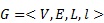
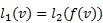
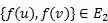
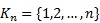
<body><![CDATA[<br> Additionally,  a new kind of code of tuples, called underlying code, is defined. This concept  is strongly linked with adjacency matrices and spanning trees, by means of  another theorem introduced and proved in this paper. Thus, this linkage opens  new research chances in graph mining by mixing the skilled features of the  above mentioned kind of canonical forms.    <br> The  rest of this paper is organized as follows. Firstly, the necessary background  for understanding the proposed work is described, including basic graph  definitions, previously reported propositions, and examples of canonical forms  for graphs. Next, the novel framework for characterizing canonical forms using vertex  connected permutations is presented, including the description of the  underlying code and its relationship with other canonical forms. Finally,  conclusions and future work are given.</font></p>     <p>&nbsp;</p>     <p><font face="Verdana, Arial, Helvetica, sans-serif"><strong><font size="3">METHODOLOGY </font></strong></font></p>     <p><font size="2" face="Verdana, Arial, Helvetica, sans-serif">In this section, the  necessary background (coming from the literature) for understanding the  proposed theoretical framework and the rest of the paper is presented. Examples  of canonical forms for labeled graphs are also included.    <br>       <br>   <strong>Graph definitions</strong>    <br> This paper is focused on  labeled simple undirected graphs. The formal definition of this kind of graph  is a classical concept in graph theory, labeled graph (HARARY, 1969), and it is  also given below.    <br>     <br> The <em>universe</em> of  labels is defined as a finite subset, <img src="/img/revistas/rcci/v9n4/fo0705415.jpg" alt="fo01" width="91" height="23">, of  positive integer numbers, called <em>labels</em>. Thus, <font size="3" face="Times New Roman, Times, serif">1</font>&nbsp;and <img width="8" height="23" src="/img/revistas/rcci/v9n4/fo0405415.jpg">&nbsp;are the lowest and highest elements in the universe  of labels, respectively.    ]]></body>
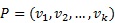
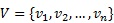
<body><![CDATA[<br>     <br> A <em>labeled graph</em> is a <font size="3" face="Times New Roman, Times, serif">4</font>-tuple, <img width="104" height="23" src="/img/revistas/rcci/v9n4/fo0605415.jpg">, where <em><font size="3" face="Times New Roman, Times, serif">V</font></em>&nbsp;is a set whose elements are called <em>vertices</em>, <img width="138" height="23" src="/img/revistas/rcci/v9n4/fo0305415.jpg">&nbsp;is a set whose elements are called <em>edges </em>(undirected edges are implicitly assumed),  each edge is a set with exactly two vertices, <em><font size="3" face="Times New Roman, Times, serif">L</font></em> &nbsp;is a set of <em>labels</em>, <img width="36" height="23" src="/img/revistas/rcci/v9n4/fo0505415.jpg">, and <img width="76" height="23" src="/img/revistas/rcci/v9n4/fo0205415.jpg">&nbsp;is a <em>labeling function</em> for assigning  labels to vertices and edges. A vertex <img width="35" height="23" src="/img/revistas/rcci/v9n4/fo0105415.jpg">&nbsp;such that <img width="34" height="23" src="/img/revistas/rcci/v9n4/fo1205415.jpg">, for all  edge <img width="35" height="23" src="/img/revistas/rcci/v9n4/fo1705415.jpg">, is an <em>isolated  vertex</em>. If for each pair of vertices <img width="36" height="23" src="/img/revistas/rcci/v9n4/fo3105415.jpg">and <img width="35" height="23" src="/img/revistas/rcci/v9n4/fo0105415.jpg">&nbsp;there is <img width="61" height="23" src="/img/revistas/rcci/v9n4/fo1105415.jpg">&nbsp;then <em><font size="3" face="Times New Roman, Times, serif">G</font></em> &nbsp;is named as <em>complete graph</em>.     <br>     <br> Let <img width="131" height="23" src="/img/revistas/rcci/v9n4/fo0905415.jpg">&nbsp;and <img width="132" height="23" src="/img/revistas/rcci/v9n4/fo1605415.jpg">&nbsp;be two graphs. It is said that <img width="15" height="23" src="/img/revistas/rcci/v9n4/fo1305415.jpg">&nbsp;is a <em>subgraph</em> of <img width="16" height="23" src="/img/revistas/rcci/v9n4/fo0805415.jpg">&nbsp;if <img width="47" height="23" src="/img/revistas/rcci/v9n4/fo2805415.jpg">, <img width="49" height="23" src="/img/revistas/rcci/v9n4/fo3005415.jpg">, <img width="48" height="23" src="/img/revistas/rcci/v9n4/fo2505415.jpg">, and the  function <img width="11" height="23" src="/img/revistas/rcci/v9n4/fo2705415.jpg">&nbsp;is a restriction of <img width="11" height="23" src="/img/revistas/rcci/v9n4/fo2205415.jpg">&nbsp;to <img width="14" height="23" src="/img/revistas/rcci/v9n4/fo2405415.jpg">. In this  case, the notation <img width="50" height="23" src="/img/revistas/rcci/v9n4/fo2105415.jpg">&nbsp;is used. </font></p> <font size="2" face="Verdana, Arial, Helvetica, sans-serif">A  function <em><font size="3" face="Times New Roman, Times, serif">f</font></em> &nbsp;is an <em>isomorphism</em> between <img width="131" height="23" src="/img/revistas/rcci/v9n4/fo0905415.jpg">&nbsp;and <img width="132" height="23" src="/img/revistas/rcci/v9n4/fo1605415.jpg">, if <img width="63" height="23" src="/img/revistas/rcci/v9n4/fo1905415.jpg">&nbsp;is a bijective function where <img width="103" height="23" src="/img/revistas/rcci/v9n4/fo1805415.jpg">&nbsp;for each vertex <img width="35" height="23" src="/img/revistas/rcci/v9n4/fo0105415.jpg">&nbsp;, <img width="108" height="23" src="/img/revistas/rcci/v9n4/fo2905415.jpg">&nbsp;and <img width="175" height="23" src="/img/revistas/rcci/v9n4/fo2605415.jpg">&nbsp;for all edge <img width="61" height="23" src="/img/revistas/rcci/v9n4/fo1105415.jpg">. A <em>subgraph isomorphism</em> from <img width="15" height="23" src="/img/revistas/rcci/v9n4/fo1305415.jpg">&nbsp;to <img width="16" height="23" src="/img/revistas/rcci/v9n4/fo0805415.jpg">&nbsp;is an isomorphism from <img width="15" height="23" src="/img/revistas/rcci/v9n4/fo1305415.jpg">&nbsp;to a subgraph of <img width="16" height="23" src="/img/revistas/rcci/v9n4/fo0805415.jpg">; in such case, the notation <img width="50" height="23" src="/img/revistas/rcci/v9n4/fo2005415.jpg">&nbsp;is used. </font>     <br>     <p><font size="2" face="Verdana, Arial, Helvetica, sans-serif">A <em>path</em> in <em><font size="3" face="Times New Roman, Times, serif">G</font></em> &nbsp;is a sequence of vertices <img width="115" height="23" src="/img/revistas/rcci/v9n4/fo4005415.jpg">&nbsp;with <img width="83" height="23" src="/img/revistas/rcci/v9n4/fo3705415.jpg">&nbsp;for each <img width="91" height="23" src="/img/revistas/rcci/v9n4/fo3205415.jpg">; in this  case, it is said that <img src="/img/revistas/rcci/v9n4/fo4105415.jpg" alt="fo41" width="14" height="23">&nbsp;and <img width="15" height="23" src="/img/revistas/rcci/v9n4/fo3905415.jpg">&nbsp;are connected. When <img width="49" height="23" src="/img/revistas/rcci/v9n4/fo3805415.jpg">, it is  said that the path <em><font size="3" face="Times New Roman, Times, serif">P</font></em> &nbsp;is a <em>cycle</em>. The graph <em><font size="3" face="Times New Roman, Times, serif">G</font></em> &nbsp;is <em>connected</em> if for all <img width="57" height="23" src="/img/revistas/rcci/v9n4/fo3505415.jpg">, <img width="30" height="23" src="/img/revistas/rcci/v9n4/fo3405415.jpg">, <img width="13" height="23" src="/img/revistas/rcci/v9n4/fo3305415.jpg">&nbsp;and <img width="13" height="23" src="/img/revistas/rcci/v9n4/fo3605415.jpg">&nbsp;are connected by at least one path. The  proposition&nbsp;1 offers a good characterization, already reported in the  literature, for connected graphs.</font>    <br>       <br>     <font size="2"><strong><font face="Verdana, Arial, Helvetica, sans-serif">Proposition  1.</font></strong><font face="Verdana, Arial, Helvetica, sans-serif"> For each graph <img width="104" height="17" src="/img/revistas/rcci/v9n4/fo4605415.jpg">&nbsp;with <img width="47" height="17" src="/img/revistas/rcci/v9n4/fo4705415.jpg">, the following statements are mutually equivalent: </font></font></p> <ol>       <li><em><font size="3" face="Times New Roman, Times, serif">G</font></em><font size="2" face="Verdana, Arial, Helvetica, sans-serif">&nbsp;is a connected graph. </font></li>       <li><font size="2" face="Verdana, Arial, Helvetica, sans-serif">There is a  permutation <img width="114" height="17" src="/img/revistas/rcci/v9n4/fo4205415.jpg">&nbsp;of the vertices in <em><font size="3" face="Times New Roman, Times, serif">V</font></em>, such that for each <img width="13" height="23" src="/img/revistas/rcci/v9n4/fo3305415.jpg">, <img width="60" height="17" src="/img/revistas/rcci/v9n4/fo4505415.jpg">, there is at least one <img width="126" height="19" src="/img/revistas/rcci/v9n4/fo4305415.jpg">&nbsp;where <img width="69" height="19" src="/img/revistas/rcci/v9n4/fo4405415.jpg">. </font></li>     ]]></body>
<body><![CDATA[</ol>     <p><font size="2" face="Verdana, Arial, Helvetica, sans-serif"><em>Proof.</em> The proof of theses equivalences can be found in a book of graph theory&nbsp;(DIESTEL, 2000).&nbsp;     <br>       <br>   Vertex permutations  fulfilling the statement&nbsp;1 of proposition&nbsp;1 are called in the scope  of this paper as <em>connected permutation</em>. A connected graph without cycles  is known as <em>simple tree</em>. The proposition&nbsp;2 provides relationships,  already reported in the literature, among the above mentioned concepts.  Moreover, it also supports the most commonly used canonical form definitions. </font></p>     <p><font size="2" face="Verdana, Arial, Helvetica, sans-serif"><strong>Proposition 2.</strong> For each graph <img width="104" height="23" src="/img/revistas/rcci/v9n4/fo0605415.jpg">&nbsp;with <img width="47" height="17" src="/img/revistas/rcci/v9n4/fo4705415.jpg">, the following statements are mutually equivalent: </font></p> <ol>       <li><em><font size="3" face="Times New Roman, Times, serif">G</font></em><font size="2" face="Verdana, Arial, Helvetica, sans-serif">&nbsp;is a simple tree. </font></li>       <li><font size="2" face="Verdana, Arial, Helvetica, sans-serif">There is a  permutation <img width="114" height="17" src="/img/revistas/rcci/v9n4/fo4205415.jpg">&nbsp;of the vertices in <font size="3" face="Times New Roman, Times, serif"><em>V</em></font>, such that for each <img width="13" height="23" src="/img/revistas/rcci/v9n4/fo3305415.jpg">, <img width="60" height="17" src="/img/revistas/rcci/v9n4/fo4505415.jpg">, there is only one <img width="97" height="23" src="/img/revistas/rcci/v9n4/fo5305415.jpg">&nbsp;where <img width="69" height="19" src="/img/revistas/rcci/v9n4/fo4405415.jpg">. </font></li>       <li><font size="2" face="Verdana, Arial, Helvetica, sans-serif"><em><font size="3" face="Times New Roman, Times, serif">G</font></em>&nbsp;is connected with <img width="34" height="17" src="/img/revistas/rcci/v9n4/fo5105415.jpg">&nbsp;edges.</font></li>     </ol>     <p><font size="2" face="Verdana, Arial, Helvetica, sans-serif"><em>Proof.</em> The proof of theses equivalences can be found in a book of graph theory&nbsp;(DIESTEL, 2000).&nbsp; </font></p>     ]]></body>
<body><![CDATA[<p><font size="2" face="Verdana, Arial, Helvetica, sans-serif">The graph <img width="131" height="23" src="/img/revistas/rcci/v9n4/fo5205415.jpg">&nbsp;is a <em>spanning tree</em> of <em><font size="3" face="Times New Roman, Times, serif">G</font></em>&nbsp;if <img width="38" height="23" src="/img/revistas/rcci/v9n4/fo5005415.jpg">, <font size="3" face="Times New Roman, Times, serif"><em>T</em></font> &nbsp;is a simple tree, and <img width="63" height="23" src="/img/revistas/rcci/v9n4/fo4905415.jpg">. Taking it  for granted, let <img width="114" height="17" src="/img/revistas/rcci/v9n4/fo4205415.jpg">&nbsp;be a permutation of <img width="15" height="23" src="/img/revistas/rcci/v9n4/fo4805415.jpg">&nbsp;according to the statement 2 of  proposition&nbsp;2.</font></p>     <p><font size="2" face="Verdana, Arial, Helvetica, sans-serif">Let us suppose that the  vertices <em><font size="3" face="Times New Roman, Times, serif">u</font></em> &nbsp;and <em><font size="3" face="Times New Roman, Times, serif">v</font></em>&nbsp;have indices <em><font size="3" face="Times New Roman, Times, serif">i</font></em> and <font size="3" face="Times New Roman, Times, serif"><em>j</em></font>,  respectively, according to the permutation <font size="3" face="Times New Roman, Times, serif"><em>P</em></font>. Let <img width="55" height="23" src="/img/revistas/rcci/v9n4/fo5505415.jpg">, <img width="54" height="23" src="/img/revistas/rcci/v9n4/fo5705415.jpg">&nbsp;and <img width="115" height="23" src="/img/revistas/rcci/v9n4/fo5905415.jpg">&nbsp;be the labels of <em><font size="3" face="Times New Roman, Times, serif">u</font></em>, <em><font size="3" face="Times New Roman, Times, serif">v</font></em>&nbsp;and <img width="61" height="23" src="/img/revistas/rcci/v9n4/fo5605415.jpg">,  respectively. Without loss of generality, it can be assumed that <img width="30" height="23" src="/img/revistas/rcci/v9n4/fo5405415.jpg">. The <em>tuple</em> of <em><font size="3" face="Times New Roman, Times, serif">e</font></em> &nbsp;regarding <em><font size="3" face="Times New Roman, Times, serif">T</font></em> &nbsp;is calculated as in (1). </font></p>     <p align="center"><font size="2" face="Verdana, Arial, Helvetica, sans-serif"><img width="234" height="39" src="/img/revistas/rcci/v9n4/fo5805415.jpg"></font> </p>     <p><font size="2" face="Verdana, Arial, Helvetica, sans-serif">Thus, each edge <img width="35" height="23" src="/img/revistas/rcci/v9n4/fo6205415.jpg">&nbsp;can be coded as a tuple, <img width="146" height="23" src="/img/revistas/rcci/v9n4/fo6705415.jpg">, where <img width="100" height="23" src="/img/revistas/rcci/v9n4/fo6005415.jpg">. The set <img width="18" height="23" src="/img/revistas/rcci/v9n4/fo7005415.jpg">&nbsp;is the <em>vocabulary</em> and it contains the  available tuples in the graph <em><font size="3" face="Times New Roman, Times, serif">G</font></em>.    <br> Let <img width="122" height="23" src="/img/revistas/rcci/v9n4/fo6105415.jpg">&nbsp;and <img width="118" height="23" src="/img/revistas/rcci/v9n4/fo6605415.jpg">&nbsp;be two tuple sequences, where <img width="96" height="23" src="/img/revistas/rcci/v9n4/fo6805415.jpg">&nbsp;for <img width="64" height="23" src="/img/revistas/rcci/v9n4/fo6305415.jpg">&nbsp;and <img width="61" height="23" src="/img/revistas/rcci/v9n4/fo6505415.jpg">&nbsp;and <img width="11" height="23" src="/img/revistas/rcci/v9n4/fo6405415.jpg">&nbsp;be a total order in <img width="18" height="23" src="/img/revistas/rcci/v9n4/fo7005415.jpg">. It is  said that <img width="45" height="23" src="/img/revistas/rcci/v9n4/fo7305415.jpg">&nbsp;according <img width="11" height="23" src="/img/revistas/rcci/v9n4/fo6405415.jpg">&nbsp;if one of the following conditions is true </font></p>     <p align="center"><font size="2" face="Verdana, Arial, Helvetica, sans-serif"><img src="/img/revistas/rcci/v9n4/fo7205415.jpg" alt="fo51" width="206" height="23">    <br>   <img src="/img/revistas/rcci/v9n4/fo7105415.jpg" alt="fo52" width="181" height="23"></font></p>     <p><font size="2"><strong><font face="Verdana, Arial, Helvetica, sans-serif">Canonical form based on string of labels</font></strong><font face="Verdana, Arial, Helvetica, sans-serif">    <br>       <br>   A graph can be represented  by its canonical adjacency matrix. This kind of representation has been used in  previously reported works for graph mining&nbsp;(INOKUCHI, 2000; KURAMOCHI,  2001; HUAN, 2001; LI, 2015). In this section, the string of labels is defined  in a slightly different way regarding previously published works, see (4),  giving priority to vertex labels over edge ones.    ]]></body>
<body><![CDATA[<br>       <br> Let <img width="104" height="23" src="/img/revistas/rcci/v9n4/fo0605415.jpg">&nbsp;be a labeled graph with <img width="47" height="17" src="/img/revistas/rcci/v9n4/fo4705415.jpg">&nbsp;and let <img width="114" height="17" src="/img/revistas/rcci/v9n4/fo4205415.jpg">&nbsp;be a permutation of the vertices in <em><font size="3" face="Times New Roman, Times, serif">V</font></em>. The <em>adjacency  matrix</em> of <font size="3" face="Times New Roman, Times, serif"><em>G</em></font> &nbsp;regarding <font size="3" face="Times New Roman, Times, serif"><em>P</em></font> &nbsp;is a lower triangular matrix <img width="124" height="23" src="/img/revistas/rcci/v9n4/fo7505415.jpg">&nbsp;where for each <img width="85" height="23" src="/img/revistas/rcci/v9n4/fo7405415.jpg">: </font></font></p>     <p align="center"><img src="/img/revistas/rcci/v9n4/fo7605415.jpg" alt="fo76" width="343" height="56"> </p>     <p><font size="2" face="Verdana, Arial, Helvetica, sans-serif">The adjacency matrix is not  unique for <em><font size="3" face="Times New Roman, Times, serif">G</font></em>. Since  each diagonal entry represents a vertex in the graph, each permutation of the  set of vertices corresponds to a different adjacency matrix. There are <img width="35" height="23" src="/img/revistas/rcci/v9n4/fo8005415.jpg">&nbsp;different adjacency matrices for <em><font size="3" face="Times New Roman, Times, serif">G</font></em>.    <br>   The <em>string of labels</em> of an adjacency matrix <img width="76" height="23" src="/img/revistas/rcci/v9n4/fo7905415.jpg">&nbsp;is built concatenating lower triangular rows  of <em><font size="3" face="Times New Roman, Times, serif">X</font></em>,  see&nbsp;(4). This string is made up by labels in <img width="45" height="23" src="/img/revistas/rcci/v9n4/fo7805415.jpg">.</font></p>     <p align="center"><img src="/img/revistas/rcci/v9n4/fo7705415.jpg" alt="fo77" width="333" height="23"></p>     <p><font size="2" face="Verdana, Arial, Helvetica, sans-serif">Let <img width="104" height="23" src="/img/revistas/rcci/v9n4/fo0605415.jpg">&nbsp;be a connected graph and let us suppose that a  DFS traversal in <font size="3" face="Times New Roman, Times, serif"><em>G</em></font> &nbsp;is performed. A <em>DFS tree</em> <img width="131" height="23" src="/img/revistas/rcci/v9n4/fo5205415.jpg">&nbsp;of <font size="3" face="Times New Roman, Times, serif"><em>G</em></font>&nbsp;is the rooted tree built as follow: the  starting vertex in the traversal is the root of <font size="3" face="Times New Roman, Times, serif"><em>T</em></font>, <font size="3" face="Times New Roman, Times, serif"><em>T</em></font>&nbsp;is a spanning tree of <font size="3" face="Times New Roman, Times, serif"><em>G</em></font>&nbsp;(<img width="50" height="23" src="/img/revistas/rcci/v9n4/fo8505415.jpg">) and <font size="3" face="Times New Roman, Times, serif"><em>T</em></font>&nbsp;contains the edges of <font size="3" face="Times New Roman, Times, serif"><em>G</em></font>&nbsp;that were used for the DFS traversal (<img width="45" height="23" src="/img/revistas/rcci/v9n4/fo8305415.jpg">).     <br>   The graph <font size="3" face="Times New Roman, Times, serif"><em>G</em></font>&nbsp;can have many different DFS trees because  there is more than one DFS traversal. Each DFS tree <font size="3" face="Times New Roman, Times, serif"><em>T</em></font>&nbsp;defines a unique order among all the vertices  in <font size="3" face="Times New Roman, Times, serif"><em>V</em></font>.  Therefore, each vertex could be numbered according to this <em>DFS order</em>.  Thus, a permutation of <img width="15" height="23" src="/img/revistas/rcci/v9n4/fo4805415.jpg">&nbsp;according to statement 2 of proposition 2 is  given. Assuming <img width="47" height="23" src="/img/revistas/rcci/v9n4/fo8405415.jpg">, the root  of <font size="3" face="Times New Roman, Times, serif"><em>T</em></font>&nbsp;is numbered with index <font size="3" face="Times New Roman, Times, serif">1</font> &nbsp;and the last vertex in the DFS traversal is  numbered with index <font size="3" face="Times New Roman, Times, serif"><em>n</em></font>. The last  vertex is also called <em>rightmost vertex</em> of <font size="3" face="Times New Roman, Times, serif"><em>T</em></font>.     <br> Each edge <img width="88" height="23" src="/img/revistas/rcci/v9n4/fo8805415.jpg">&nbsp;is coded as a tuple <img width="41" height="23" src="/img/revistas/rcci/v9n4/fo8905415.jpg">&nbsp;according to the DFS tree <font size="3" face="Times New Roman, Times, serif"><em>T</em></font>, see&nbsp;(1).  In addition, a linear order <img width="17" height="23" src="/img/revistas/rcci/v9n4/fo9005415.jpg">&nbsp;among the vocabulary <img width="18" height="23" src="/img/revistas/rcci/v9n4/fo7005415.jpg">&nbsp;could be defined as follows. Let <img width="90" height="23" src="/img/revistas/rcci/v9n4/fo8705415.jpg">&nbsp;and <img width="91" height="23" src="/img/revistas/rcci/v9n4/fo9105415.jpg">&nbsp;be two tuples, it is said that <img width="50" height="23" src="/img/revistas/rcci/v9n4/fo9305415.jpg">&nbsp;if and only if one of the  following statements is true: </font></p> <ul>       <li><font size="2" face="Verdana, Arial, Helvetica, sans-serif"><img width="294" height="23" src="/img/revistas/rcci/v9n4/fo9205415.jpg">, </font></li>       ]]></body>
<body><![CDATA[<li><font size="2" face="Verdana, Arial, Helvetica, sans-serif"><img width="294" height="23" src="/img/revistas/rcci/v9n4/fo8605415.jpg">, </font></li>       <li><font size="2" face="Verdana, Arial, Helvetica, sans-serif"><img width="156" height="23" src="/img/revistas/rcci/v9n4/fo9905415.jpg">, </font></li>       <li><font size="2" face="Verdana, Arial, Helvetica, sans-serif"><img width="156" height="23" src="/img/revistas/rcci/v9n4/fo9805415.jpg">, </font></li>       <li><font size="2" face="Verdana, Arial, Helvetica, sans-serif"><img width="162" height="23" src="/img/revistas/rcci/v9n4/fo10005415.jpg">. </font></li>     </ul>     <p><font size="2" face="Verdana, Arial, Helvetica, sans-serif">The lexicographic order <img width="15" height="23" src="/img/revistas/rcci/v9n4/fo9605415.jpg">&nbsp;is used to compare the tuples <img width="12" height="23" src="/img/revistas/rcci/v9n4/fo9705415.jpg">&nbsp;and <img width="12" height="23" src="/img/revistas/rcci/v9n4/fo9505415.jpg">&nbsp;regarding the last three components in each  tuple. This order is determined by comparing the third component as first  priority, next the fourth one, and finally the fifth one.    <br>   The <em>DFS code</em> of the  graph <em><font size="3" face="Times New Roman, Times, serif">G</font></em>&nbsp;regarding the DFS tree <em><font size="3" face="Times New Roman, Times, serif">T</font></em>&nbsp;is a sequence in <img width="18" height="23" src="/img/revistas/rcci/v9n4/fo7005415.jpg">&nbsp;built using <img width="17" height="23" src="/img/revistas/rcci/v9n4/fo9005415.jpg">. All the  tuples obtained from the edges in <font size="3" face="Times New Roman, Times, serif"><em>E</em></font> are sorted using <img width="17" height="23" src="/img/revistas/rcci/v9n4/fo9005415.jpg">&nbsp;to build this sequence. Thus, a graph <em><font size="3" face="Times New Roman, Times, serif">G</font></em>&nbsp;can be coded as a sequence of tuples, denoted  as <img width="66" height="23" src="/img/revistas/rcci/v9n4/fo9405415.jpg">, using one  of its DFS trees. A <em>canonical form code</em> of a graph <em><font size="3" face="Times New Roman, Times, serif">G</font></em>&nbsp;is defined as the minimum tuple sequence  according to <img width="17" height="23" src="/img/revistas/rcci/v9n4/fo9005415.jpg">&nbsp;among all DFS codes of <em><font size="3" face="Times New Roman, Times, serif">G</font></em>.     <br>       <br>   Other example of ways for  building a canonical form codes based on tuples were presented  by&nbsp;(BORGELT, 2006), using BFS trees instead of DFS ones, and the proposal  of (NIJSSEN, 2004), using graph backbone paths.</font></p>     <p align="left">&nbsp;</p>     ]]></body>
<body><![CDATA[<p><font size="2"><strong><font size="3" face="Verdana, Arial, Helvetica, sans-serif">RESULTS AND DISCUSSION     <br> </font></strong><font face="Verdana, Arial, Helvetica, sans-serif">    <br></font></font><font size="2" face="Verdana, Arial, Helvetica, sans-serif">In  this section, results of our research are presented, including the  novel framework for characterizing canonical forms using vertex connected  permutations, the description of the underlying code and its relationship with  other canonical forms.     <br>     <br> <strong>Novel properties for canonical adjacency matrix</strong>    <br>     <br> It is a fact that  the number of vertex permutation to be checked does not determine the  efficiency of canonical form calculations, since the most efficient algorithms,  for example&nbsp;(MCKAY, 1981), employ topological properties and label  occurrences for pruning partial permutation prefixes. However, there is a worst  case where such algorithms require checking the <em><font size="3" face="Times New Roman, Times, serif">n!</font></em>&nbsp;Vertex permutations.    <br>     <br> An interesting  property for describing the set of permutations to be checked is stated in  theorem&nbsp;3. This statement only uses topological properties of graphs for giving  distinction to the canonical permutation. Although the cardinality of this set  can be irrelevant for graph mining, this property could be used in the future  for enriching the already mentioned pruning strategies and speeding up  canonical form calculations. </font></p>     <p><font face="Verdana, Arial, Helvetica, sans-serif"><strong><font size="2">Theorem 3.</font></strong><font size="2"> The  canonical permutation of a connected graph is a connected permutation. </font></font></p>     ]]></body>
<body><![CDATA[<p><font size="2" face="Verdana, Arial, Helvetica, sans-serif"><em>Proof.</em> Let us suppose that <img width="114" height="17" src="/img/revistas/rcci/v9n4/fo4205415.jpg">&nbsp;is the canonical permutation of a connected  graph <font size="3" face="Times New Roman, Times, serif"><em>G</em></font> and <font size="3" face="Times New Roman, Times, serif"><em>P</em></font>&nbsp;is non-connected. Thence, there is <font size="3" face="Times New Roman, Times, serif"><em>i</em></font>, <img width="66" height="23" src="/img/revistas/rcci/v9n4/fo10305415.jpg">, such that <img width="78" height="23" src="/img/revistas/rcci/v9n4/fo11005415.jpg">&nbsp;for all <img width="137" height="23" src="/img/revistas/rcci/v9n4/fo10505415.jpg">. It is  easy to verify that <img width="36" height="23" src="/img/revistas/rcci/v9n4/fo10405415.jpg">, since <font size="3" face="Times New Roman, Times, serif"><em>G</em></font>&nbsp;is connected and <font face="Times New Roman, Times, serif"><em>Vn</em></font> &nbsp;cannot be an isolated vertex; thus, <img width="94" height="23" src="/img/revistas/rcci/v9n4/fo10605415.jpg">. Moreover,  there is <font size="3" face="Times New Roman, Times, serif"><em>k</em></font>, <img width="94" height="23" src="/img/revistas/rcci/v9n4/fo10805415.jpg">, there is  at least one <img width="137" height="23" src="/img/revistas/rcci/v9n4/fo10505415.jpg">&nbsp;where <img width="78" height="23" src="/img/revistas/rcci/v9n4/fo11005415.jpg">, since <font size="3" face="Times New Roman, Times, serif"><em>G</em></font>&nbsp;is connected.    <br>   Let <img width="283" height="23" src="/img/revistas/rcci/v9n4/fo11605415.jpg">&nbsp;be the permutation obtained from <font size="3" face="Times New Roman, Times, serif"><em>P</em></font>&nbsp;by swapping <img width="13" height="23" src="/img/revistas/rcci/v9n4/fo3305415.jpg">&nbsp;and <img width="15" height="23" src="/img/revistas/rcci/v9n4/fo3905415.jpg">. It  is easy to prove that <img width="215" height="23" src="/img/revistas/rcci/v9n4/fo11405415.jpg">. In fact,  the substring corresponding to the <font size="3" face="Times New Roman, Times, serif"><em>i</em></font>-th row (<img width="60" height="23" src="/img/revistas/rcci/v9n4/fo11305415.jpg">&nbsp;<img width="46" height="23" src="/img/revistas/rcci/v9n4/fo11205415.jpg">) in <img width="47" height="23" src="/img/revistas/rcci/v9n4/fo11105415.jpg">&nbsp;is lexicographically lesser than the one in <img width="51" height="23" src="/img/revistas/rcci/v9n4/fo11705415.jpg">, since  this substring in <img width="47" height="23" src="/img/revistas/rcci/v9n4/fo11105415.jpg">&nbsp;is <img width="45" height="23" src="/img/revistas/rcci/v9n4/fo10905415.jpg">, where <img width="54" height="23" src="/img/revistas/rcci/v9n4/fo11505415.jpg">, whereas  in <img width="51" height="23" src="/img/revistas/rcci/v9n4/fo10705415.jpg">&nbsp;there is at least a non-zero element on the  corresponding substring. Therefore, <font size="3" face="Times New Roman, Times, serif"><em>P</em></font>&nbsp;cannot be the canonical permutation of <font size="3" face="Times New Roman, Times, serif"><em>G</em></font>. This fact  contradicts the initial assumption. Therefore, the theorem becomes true by  reductio ad absurdum. </font></p>     <p><font size="2" face="Verdana, Arial, Helvetica, sans-serif">The  following propositions illustrate the number of connected permutations in  specifics kind of graphs. Proposition&nbsp;4 describes the behavior of this  number in paths, showing a strong and interesting linkage among graph mining,  graph theory, and some special numbers&nbsp;(CONWAY, 1996) coming from discrete  mathematics.    <br>       <br>     <strong>Proposition 4.</strong> Let <img width="104" height="23" src="/img/revistas/rcci/v9n4/fo0605415.jpg">&nbsp;be a graph representing a path;  that is, <img width="114" height="23" src="/img/revistas/rcci/v9n4/fo12905415.jpg">, <img width="223" height="17" src="/img/revistas/rcci/v9n4/fo11905415.jpg">, and <img width="36" height="17" src="/img/revistas/rcci/v9n4/fo12305415.jpg">. Then, the number of connected permutations of <font size="3" face="Times New Roman, Times, serif"><em>G</em></font>.    <br>         <br>     <em>Proof.</em> Let <img width="36" height="23" src="/img/revistas/rcci/v9n4/fo12105415.jpg">&nbsp;be the number of connected permutations of <font size="3" face="Times New Roman, Times, serif"><em>G</em></font>&nbsp;starting from <img width="13" height="23" src="/img/revistas/rcci/v9n4/fo3305415.jpg">.     <br>         <br>   First of all, an interesting  function sequence which will be used for counting the number of connected  permutations in the graph <font size="3" face="Times New Roman, Times, serif"><em>G</em></font>&nbsp;is defined. This sequence represents a strong  linkage between graph theory and some special numbers.    <br>       ]]></body>
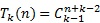
<body><![CDATA[<br>   Let <img width="63" height="23" src="/img/revistas/rcci/v9n4/fo12505415.jpg">, <img width="36" height="23" src="/img/revistas/rcci/v9n4/fo12405415.jpg">, be the  sequence of functions defined for each <img width="37" height="23" src="/img/revistas/rcci/v9n4/fo12005415.jpg">, according  the following recurrence formula: <img width="62" height="23" src="/img/revistas/rcci/v9n4/fo11805415.jpg">&nbsp;for <img width="36" height="23" src="/img/revistas/rcci/v9n4/fo12605415.jpg">, and <img width="147" height="23" src="/img/revistas/rcci/v9n4/fo12705415.jpg">&nbsp;for <img width="36" height="23" src="/img/revistas/rcci/v9n4/fo12805415.jpg">. In <a href="/img/revistas/rcci/v9n4/img/fo13005415.jpg" target="_top">(5)</a>,  the above mentioned function sequence is shown in expanded way: </font></p>     <p><font size="2" face="Verdana, Arial, Helvetica, sans-serif">where <img width="17" height="23" src="/img/revistas/rcci/v9n4/fo13105415.jpg">&nbsp;represents a binomial coefficient or the  number of combinations of <font size="3" face="Times New Roman, Times, serif"><em>r</em></font> &nbsp;items that can be selected from a set of <font size="3" face="Times New Roman, Times, serif"><em>n</em></font> &nbsp;items. Next, the following property of  binomial coefficients is underlined: </font></p>     <p align="center"><font size="2" face="Verdana, Arial, Helvetica, sans-serif"><img width="125" height="52" src="/img/revistas/rcci/v9n4/fo13605415.jpg"></font></p>     <p><font size="2" face="Verdana, Arial, Helvetica, sans-serif">which can  be proved by mathematical induction. For the base case <em><font size="3" face="Times New Roman, Times, serif">n</font><font face="Times New Roman, Times, serif"></font></em><font face="Times New Roman, Times, serif">=1</font>, it is  verified that <img width="169" height="23" src="/img/revistas/rcci/v9n4/fo13505415.jpg">. The  inductive step is also achieved since <img width="398" height="23" src="/img/revistas/rcci/v9n4/fo13305415.jpg">.     <br>   After  that, it is easy to prove that <img width="100" height="23" src="/img/revistas/rcci/v9n4/fo13205415.jpg">&nbsp;using mathematical induction. For the base  cases <em><font size="3" face="Times New Roman, Times, serif">n</font><font face="Times New Roman, Times, serif"></font></em><font face="Times New Roman, Times, serif">=1</font>, <em><font size="3" face="Times New Roman, Times, serif">n</font></em><font face="Times New Roman, Times, serif">=2</font>, <em><font size="3" face="Times New Roman, Times, serif">n</font></em><font face="Times New Roman, Times, serif">=3</font>, <em><font size="3" face="Times New Roman, Times, serif">n</font></em><font face="Times New Roman, Times, serif">=4</font>, and <em><font size="3" face="Times New Roman, Times, serif">n</font></em><font face="Times New Roman, Times, serif">=5</font>, the fact  is already known&nbsp;(CONWAY, 1996), and it can be verified in (5). The  inductive step is also checked, using (6), since <img width="317" height="23" src="/img/revistas/rcci/v9n4/fo13405415.jpg">.</font></p>     <p><font size="2" face="Verdana, Arial, Helvetica, sans-serif">Returning  to the graph <em><font size="3" face="Times New Roman, Times, serif">G</font></em>, it can be  seen that there is only one connected permutations starting from <img width="14" height="23" src="/img/revistas/rcci/v9n4/fo4105415.jpg">, since <img width="15" height="23" src="/img/revistas/rcci/v9n4/fo13905415.jpg">&nbsp;must be the second permutation element, and so  on. By symmetry, this fact is also true for <img width="15" height="23" src="/img/revistas/rcci/v9n4/fo15005415.jpg">. For <img width="36" height="23" src="/img/revistas/rcci/v9n4/fo13705415.jpg">, it can be  checked manually that there are <font size="3" face="Times New Roman, Times, serif"><em>n</em></font><font face="Times New Roman, Times, serif">-1</font> &nbsp;connected permutations starting from <img width="15" height="23" src="/img/revistas/rcci/v9n4/fo13905415.jpg">; this fact  is also true for <img width="15" height="23" src="/img/revistas/rcci/v9n4/fo15105415.jpg">-<font size="1">1</font>&nbsp;by symmetry. Thus, the symmetry <img width="120" height="23" src="/img/revistas/rcci/v9n4/fo14005415.jpg">, for each <img width="60" height="23" src="/img/revistas/rcci/v9n4/fo15205415.jpg">, can be  proven easily. Besides, it is easy to prove that <img width="136" height="23" src="/img/revistas/rcci/v9n4/fo14205415.jpg">, for <img width="58" height="23" src="/img/revistas/rcci/v9n4/fo14405415.jpg">, and it  can be calculated, by symmetry, for the remaining vertices. Thus, <img width="86" height="23" src="/img/revistas/rcci/v9n4/fo14105415.jpg">, for each <img width="86" height="23" src="/img/revistas/rcci/v9n4/fo14605415.jpg">. Finally,  the number of connected permutations of <em><font size="3" face="Times New Roman, Times, serif">G</font></em>&nbsp;is <img width="30" height="23" src="/img/revistas/rcci/v9n4/fo14905415.jpg">, using  properties of binomial coefficients.     <br>   The  Proposition&nbsp;4 is entirely irrelevant for graph mining, since there are <img width="31" height="23" src="/img/revistas/rcci/v9n4/fo14705415.jpg">&nbsp;strategies&nbsp;(NIJSSEN, 2004) for detecting  path canonical forms, taking into account the string of labels. Nevertheless,  it is presented for illustrating the contrast between connected and non-connected  permutation sets in a family of graphs (<img width="73" height="23" src="/img/revistas/rcci/v9n4/fo14805415.jpg">), without  considering labels.     <br>   This  fact emphasizes the usefulness of theorem 3 for distinguishing the canonical  permutation in paths. Similar results can be stated for cycles, see  proposition&nbsp;5. </font></p>     <p><font size="2"><strong><font face="Verdana, Arial, Helvetica, sans-serif">Proposition 5.</font></strong><font face="Verdana, Arial, Helvetica, sans-serif"> Let <img width="104" height="23" src="/img/revistas/rcci/v9n4/fo0605415.jpg">&nbsp;be a graph representing a cycle;  that is, <img width="114" height="23" src="/img/revistas/rcci/v9n4/fo12905415.jpg">, <img width="274" height="17" src="/img/revistas/rcci/v9n4/fo15305415.jpg">, and <img width="36" height="17" src="/img/revistas/rcci/v9n4/fo15405415.jpg">. Then, the number of connected permutations of <em><font face="Times New Roman, Times, serif">G</font></em></font></font> <font size="2" face="Verdana, Arial, Helvetica, sans-serif">&nbsp;is <img width="38" height="23" src="/img/revistas/rcci/v9n4/fo15905415.jpg">.     <br>   <em>Proof.</em> For the first position in a permutation, there are <em><font face="Times New Roman, Times, serif">n</font></em></font> <font size="2" face="Verdana, Arial, Helvetica, sans-serif">&nbsp;possibilities. For the subsequent <em>n</em>-2</font> <font size="2" face="Verdana, Arial, Helvetica, sans-serif">&nbsp;positions, there are only two possibilities  that guarantee a connected permutation. For the last position, there is only  one option for the last unselected vertex. Thus, the number of connected  permutations of <em><font face="Times New Roman, Times, serif">G</font></em>&nbsp;is <img width="38" height="23" src="/img/revistas/rcci/v9n4/fo15905415.jpg">.     ]]></body>
<body><![CDATA[<br>   Until  now, analytical formulae for more topologically complex graphs are not given.  For example in complete graphs, every permutation is connected. However, even  in barely complete graphs, a remarkable number of non-connected permutations  (see proposition&nbsp;6) can be detected.    <br> <strong>Proposition 6.</strong> Let <img width="104" height="23" src="/img/revistas/rcci/v9n4/fo0605415.jpg">&nbsp;be a complete graph with <em><font face="Times New Roman, Times, serif">n</font></em>&nbsp;vertices. The number of connected  permutations of <em><font face="Times New Roman, Times, serif">G</font></em>&nbsp;and the number of vertex  permutations, <em><font face="Times New Roman, Times, serif">n</font></em><font face="Times New Roman, Times, serif">!</font>, are the same. Let <img width="35" height="23" src="/img/revistas/rcci/v9n4/fo1705415.jpg">&nbsp;be an edge of <em><font face="Times New Roman, Times, serif">G</font></em>; then, the graph obtained from <em><font face="Times New Roman, Times, serif">G</font></em>&nbsp;by removing <em><font face="Times New Roman, Times, serif">e</font></em></font> <font size="2" face="Verdana, Arial, Helvetica, sans-serif">&nbsp;has <img width="89" height="17" src="/img/revistas/rcci/v9n4/fo15705415.jpg">&nbsp;connected permutations.    <br>     <br> <em>Proof.</em> The first statement is easy to check since any vertex permutation of <em><font size="3" face="Times New Roman, Times, serif">G</font></em>&nbsp;is connected due to completeness. Let us  suppose that <img width="61" height="23" src="/img/revistas/rcci/v9n4/fo16005415.jpg">.  Permutations starting with <em><font size="3" face="Times New Roman, Times, serif">u</font></em> &nbsp;and <font size="3" face="Times New Roman, Times, serif"><em>v</em></font> &nbsp;are non-connected ones. There are 2(<em><font size="3" face="Times New Roman, Times, serif">n</font></em>-2) &nbsp;permutations in this case. The remaining ones  are connected. Therefore, the proof was concluded.     <br> In  this way, theorem 3 could be used, in the future, for speeding up algorithms  for canonical form calculation. They only need to check connected permutation  prefixes, diminishing somehow the number of iterations.     <br>     <br> <strong>A linkage between Adjacency Matrices and Spanning  Trees</strong>    <br>     <br> The  question of establishing connections between adjacency matrices and spanning  trees has already been treated. In fact, several variants of constructing a  code from an adjacency matrix preserving the equivalence to a spanning tree can  be described&nbsp;(BAPAT, 1996). This section contains an example for illustrating  the connection with a kind of code only based on tuples describing edges and  structurally similar to the already known DFS code.     <br>     ]]></body>
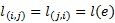
<body><![CDATA[<br> Let <img width="104" height="23" src="/img/revistas/rcci/v9n4/fo0605415.jpg">&nbsp;be a connected graph with <em><font size="3" face="Times New Roman, Times, serif">n</font></em>&nbsp;vertices and <img width="113" height="23" src="/img/revistas/rcci/v9n4/fo16405415.jpg">&nbsp;be a connected permutation of <font size="3" face="Times New Roman, Times, serif"><em>V</em></font>. The <em>first  edge</em> of <img width="13" height="23" src="/img/revistas/rcci/v9n4/fo3305415.jpg">, <img width="60" height="23" src="/img/revistas/rcci/v9n4/fo15205415.jpg">, in <font size="3" face="Times New Roman, Times, serif"><em>P</em></font> &nbsp;is defined by us as the edge <img width="78" height="23" src="/img/revistas/rcci/v9n4/fo11005415.jpg">&nbsp;such that <img width="57" height="23" src="/img/revistas/rcci/v9n4/fo16105415.jpg">&nbsp;and <img width="72" height="23" src="/img/revistas/rcci/v9n4/fo16205415.jpg">&nbsp;for all <font size="3" face="Times New Roman, Times, serif"><em>k</em></font>, <img width="60" height="23" src="/img/revistas/rcci/v9n4/fo16805415.jpg">. The  spanning tree of <font size="3" face="Times New Roman, Times, serif"><em>G</em></font>, made up  by the first edges of any vertex of </font><font size="3" face="Times New Roman, Times, serif"><em>V</em></font><font size="2" face="Verdana, Arial, Helvetica, sans-serif"> &nbsp;in <font size="3" face="Times New Roman, Times, serif"><em>P</em></font>, is called  by us the <em>underlying spanning tree</em> of <font size="3" face="Times New Roman, Times, serif"><em>G</em></font>&nbsp;in <font size="3" face="Times New Roman, Times, serif"><em>P</em></font>.     <br>     <br> Let <em><font size="3" face="Times New Roman, Times, serif">T</font></em> &nbsp;be the underlying spanning tree of <font size="3" face="Times New Roman, Times, serif"><em>G</em></font>&nbsp;in <font size="3" face="Times New Roman, Times, serif"><em>P</em></font>, coding  each edge of <font size="3" face="Times New Roman, Times, serif"><em>G</em></font>&nbsp;by means of <img width="41" height="23" src="/img/revistas/rcci/v9n4/fo8905415.jpg">, see (1).  Now, a total order in <img width="18" height="23" src="/img/revistas/rcci/v9n4/fo7005415.jpg">&nbsp;using <font size="3" face="Times New Roman, Times, serif"><em>P</em></font>&nbsp;is defined. Let, <img width="129" height="23" src="/img/revistas/rcci/v9n4/fo16705415.jpg">&nbsp;and <img width="131" height="23" src="/img/revistas/rcci/v9n4/fo16505415.jpg">&nbsp;be two tuples. It is said that <img width="51" height="23" src="/img/revistas/rcci/v9n4/fo16605415.jpg">&nbsp;if and only if one of the following statements  is true: </font></p> <ul>       <li><font size="2" face="Verdana, Arial, Helvetica, sans-serif"><img src="/img/revistas/rcci/v9n4/fo9205415.jpg" alt="3" width="294" height="23">, </font></li>       <li><font size="2" face="Verdana, Arial, Helvetica, sans-serif"><img src="/img/revistas/rcci/v9n4/fo8605415.jpg" alt="2" width="294" height="23">, </font></li>       <li><font size="2" face="Verdana, Arial, Helvetica, sans-serif"><img src="/img/revistas/rcci/v9n4/fo9905415.jpg" alt="5" width="156" height="23">, </font></li>       <li><font size="2" face="Verdana, Arial, Helvetica, sans-serif"><img src="/img/revistas/rcci/v9n4/fo9805415.jpg" alt="4" width="156" height="23">, </font></li>       <li><font size="2" face="Verdana, Arial, Helvetica, sans-serif"><img src="/img/revistas/rcci/v9n4/fo10005415.jpg" alt="1" width="162" height="23">.     <br>         <br>   </font></li>     ]]></body>
<body><![CDATA[</ul>     <p><font size="2" face="Verdana, Arial, Helvetica, sans-serif">The  lexicographic order <img width="15" height="23" src="/img/revistas/rcci/v9n4/fo16905415.jpg">&nbsp;is used to compare the tuples <img width="12" height="23" src="/img/revistas/rcci/v9n4/fo17105415.jpg">&nbsp;and <font size="3" face="Times New Roman, Times, serif"><em><font size="4">t</font></em></font><font size="1" face="Times New Roman, Times, serif">2</font> &nbsp;regarding the last three components in each  tuple. This order is determined comparing the third component as first  priority, next the fifth one, and finally the fourth one.     <br>       <br>   The <em>underlying code</em> of <font size="3" face="Times New Roman, Times, serif"><em>G</em></font>&nbsp;given <font size="3" face="Times New Roman, Times, serif"><em>P</em></font>&nbsp;is defined as a sequence in <img width="18" height="23" src="/img/revistas/rcci/v9n4/fo6905415.jpg">&nbsp;constructed using <img width="18" height="23" src="/img/revistas/rcci/v9n4/fo17005415.jpg">. All of  the tuples <img width="41" height="23" src="/img/revistas/rcci/v9n4/fo8905415.jpg">&nbsp;obtained from the edges <img width="35" height="23" src="/img/revistas/rcci/v9n4/fo6205415.jpg">&nbsp;are sorted using <img width="18" height="23" src="/img/revistas/rcci/v9n4/fo17005415.jpg">&nbsp;to build this sequence. Thus, a graph <font size="3" face="Times New Roman, Times, serif"><em>G</em></font>&nbsp;can be coded asa sequence of tuples, denoted  as <img width="79" height="23" src="/img/revistas/rcci/v9n4/fo17305415.jpg">, using one  of its DFS trees. A <em>canonical underlying code</em> of a graph <font size="3" face="Times New Roman, Times, serif"><em>G</em></font>&nbsp;is defined as the minimum underlying code  according to <img width="18" height="23" src="/img/revistas/rcci/v9n4/fo17005415.jpg">&nbsp;among all vertex permutations of <font size="3" face="Times New Roman, Times, serif"><em>G</em></font>.     <br>       <br>   Underlying  code becomes a novel kind of canonical form, preserving a semantics coming from  adjacency matrices and showing syntax based on tuples like DFS codes. The  following theorem boosts such affirmation. </font></p> <font size="2" face="Verdana, Arial, Helvetica, sans-serif"><strong>Theorem 7.</strong> Let us suppose that <font size="3" face="Times New Roman, Times, serif"><em>P</em></font>&nbsp;is the canonical permutation of <font size="3" face="Times New Roman, Times, serif"><em>G</em></font>. Let <img width="116" height="23" src="/img/revistas/rcci/v9n4/fo17805415.jpg">&nbsp;be a graph obtained from <font size="3" face="Times New Roman, Times, serif"><em>G</em></font>&nbsp;by relabeling vertices and edges, according to <img width="100" height="23" src="/img/revistas/rcci/v9n4/fo19005415.jpg">, for each <img width="61" height="23" src="/img/revistas/rcci/v9n4/fo17905415.jpg">&nbsp;and <img width="138" height="23" src="/img/revistas/rcci/v9n4/fo17605415.jpg">, where <img width="8" height="23" src="/img/revistas/rcci/v9n4/fo17705415.jpg">&nbsp;is the highest element in the universe of  labels <img width="9" height="23" src="/img/revistas/rcci/v9n4/fo17405415.jpg">. The tuple sequence <img width="84" height="23" src="/img/revistas/rcci/v9n4/fo17205415.jpg">&nbsp;is the canonical underlying code of <img width="15" height="23" src="/img/revistas/rcci/v9n4/fo17505415.jpg">.</font>     <p><font size="2"><em><font face="Verdana, Arial, Helvetica, sans-serif">Proof.</font></em><font face="Verdana, Arial, Helvetica, sans-serif"> Let us suppose that <img width="192" height="23" src="/img/revistas/rcci/v9n4/fo19105415.jpg">&nbsp;is a non-canonical underlying code of <img width="15" height="23" src="/img/revistas/rcci/v9n4/fo17505415.jpg">&nbsp;and <font size="3" face="Times New Roman, Times, serif"><em>m</em></font> is the number of edges in </font><font size="2" face="Verdana, Arial, Helvetica, sans-serif"><font size="3" face="Times New Roman, Times, serif"><em>G</em></font></font><font face="Verdana, Arial, Helvetica, sans-serif">. Thence,  there is a permutation <img width="14" height="23" src="/img/revistas/rcci/v9n4/fo19305415.jpg">&nbsp;such that <img width="306" height="23" src="/img/revistas/rcci/v9n4/fo19205415.jpg">, according  to <img width="18" height="23" src="/img/revistas/rcci/v9n4/fo17005415.jpg">. Thus,  there is natural number <font size="3" face="Times New Roman, Times, serif"><em>t</em></font>, <img width="65" height="23" src="/img/revistas/rcci/v9n4/fo19505415.jpg">, such that <img width="49" height="23" src="/img/revistas/rcci/v9n4/fo19605415.jpg">, for all <font size="3" face="Times New Roman, Times, serif"><em>k</em></font>, <img width="34" height="23" src="/img/revistas/rcci/v9n4/fo19405415.jpg">, and <img width="53" height="23" src="/img/revistas/rcci/v9n4/fo19905415.jpg">. Let us  denote <img width="132" height="23" src="/img/revistas/rcci/v9n4/fo20505415.jpg">&nbsp;and <img width="133" height="23" src="/img/revistas/rcci/v9n4/fo20605415.jpg">.    <br>       <br>   If <em><font size="3" face="Times New Roman, Times, serif">t = </font></em><font face="Times New Roman, Times, serif">1</font> &nbsp;then <img width="273" height="23" src="/img/revistas/rcci/v9n4/fo20205415.jpg">. In this  case, the string of labels of the matrices <img width="47" height="23" src="/img/revistas/rcci/v9n4/fo20105415.jpg">&nbsp;and <img width="51" height="23" src="/img/revistas/rcci/v9n4/fo20405415.jpg">&nbsp;starts with the labels of <font size="3" face="Times New Roman, Times, serif"><em>L</em></font>, where <img width="343" height="23" src="/img/revistas/rcci/v9n4/fo20805415.jpg">.  Therefore, <font size="3" face="Times New Roman, Times, serif"><em>P</em></font>&nbsp;cannot be the canonical permutation of </font><font size="2"><font size="2" face="Verdana, Arial, Helvetica, sans-serif"><font size="3" face="Times New Roman, Times, serif"><em>G</em></font></font></font><font face="Verdana, Arial, Helvetica, sans-serif">. This fact  contradicts the initial assumption. Therefore, the theorem becomes true by <em>reductio ad absurdum</em> in this case.     <br>       ]]></body>
<body><![CDATA[<br>   Now,  let us assume that </font><font size="2"><font face="Verdana, Arial, Helvetica, sans-serif"><img width="33" height="23" src="/img/revistas/rcci/v9n4/fo20705415.jpg"></font></font><font face="Verdana, Arial, Helvetica, sans-serif">, and <img width="214" height="23" src="/img/revistas/rcci/v9n4/fo20305415.jpg">. Then, it  is not difficult to check that the matrices <img width="47" height="23" src="/img/revistas/rcci/v9n4/fo20105415.jpg">&nbsp;and </font><font size="2"><font face="Verdana, Arial, Helvetica, sans-serif"><img width="51" height="23" src="/img/revistas/rcci/v9n4/fo20405415.jpg"></font></font><font face="Verdana, Arial, Helvetica, sans-serif">&nbsp;have the same (<font size="3" face="Times New Roman, Times, serif"><em>i </em></font>- <font face="Times New Roman, Times, serif">1</font>)-main  minor, and the first difference between them takes place at the </font><font size="2"><font face="Verdana, Arial, Helvetica, sans-serif"><font size="3" face="Times New Roman, Times, serif"><em>i</em></font></font></font><font face="Verdana, Arial, Helvetica, sans-serif">-th row.     <br>       <br>   Taking  into account the definition of <img width="18" height="23" src="/img/revistas/rcci/v9n4/fo17005415.jpg">, five  cases where <img width="53" height="23" src="/img/revistas/rcci/v9n4/fo19905415.jpg">&nbsp;are given. Each one of these cases will be  individually analyzed.</font></font></p>     <p><font size="2" face="Verdana, Arial, Helvetica, sans-serif">The  first subcase of the first case, <img width="41" height="23" src="/img/revistas/rcci/v9n4/fo21605415.jpg">, <img width="42" height="23" src="/img/revistas/rcci/v9n4/fo21805415.jpg">&nbsp;and <img width="42" height="23" src="/img/revistas/rcci/v9n4/fo21405415.jpg">, never  takes place in connected permutations of the same graph. In fact, the tuple of  the first edge of <img width="17" height="23" src="/img/revistas/rcci/v9n4/fo21905415.jpg">&nbsp;in <font size="3" face="Times New Roman, Times, serif"><em>P</em></font>&nbsp;is always located between <img width="27" height="23" src="/img/revistas/rcci/v9n4/fo22605415.jpg">&nbsp;and <img width="13" height="23" src="/img/revistas/rcci/v9n4/fo22205415.jpg">.     <br>       <br> Let  us suppose the first case, but in the second subcase <img width="41" height="23" src="/img/revistas/rcci/v9n4/fo21605415.jpg">, <img width="42" height="23" src="/img/revistas/rcci/v9n4/fo21805415.jpg">, <img width="42" height="23" src="/img/revistas/rcci/v9n4/fo22405415.jpg">&nbsp;and <img width="42" height="23" src="/img/revistas/rcci/v9n4/fo22305415.jpg">. In this  case, <img width="66" height="23" src="/img/revistas/rcci/v9n4/fo22505415.jpg">&nbsp;and the <font size="3" face="Times New Roman, Times, serif"><em>i</em></font>-th row of <img width="51" height="23" src="/img/revistas/rcci/v9n4/fo20405415.jpg">&nbsp;has a non-zero element in a position lesser  than the one the <font size="3" face="Times New Roman, Times, serif"><em>i</em></font>-th row of <img width="47" height="23" src="/img/revistas/rcci/v9n4/fo20105415.jpg">.  Therefore, <font size="3" face="Times New Roman, Times, serif"><em>P</em></font>&nbsp;can not be the canonical permutation of <img width="18" height="23" src="/img/revistas/rcci/v9n4/fo17005415.jpg">. This fact  contradicts the initial assumption. Therefore, the theorem becomes true by  reductio ad absurdum in this case.     <br>     <br> Now,  let us assume that <img width="33" height="23" src="/img/revistas/rcci/v9n4/fo20705415.jpg">, and <img width="214" height="23" src="/img/revistas/rcci/v9n4/fo22805415.jpg">. Then, it  is not difficult to check that the matrices <img width="47" height="23" src="/img/revistas/rcci/v9n4/fo20105415.jpg">&nbsp;and <img width="51" height="23" src="/img/revistas/rcci/v9n4/fo20405415.jpg">&nbsp;have the same (<font size="3" face="Times New Roman, Times, serif"><em>i</em></font> - 1)-main  minor, and the first difference between them takes place at the <font size="3" face="Times New Roman, Times, serif"><em>i</em></font>-th row.     <br>     <br> Taking  into account the definition of <img width="18" height="23" src="/img/revistas/rcci/v9n4/fo17005415.jpg">, five  cases where <img width="53" height="23" src="/img/revistas/rcci/v9n4/fo19905415.jpg">&nbsp;are given. Each one of these cases will be  individually analyzed.    ]]></body>
<body><![CDATA[<br>     <br> The  first subcase of the first case, <img width="41" height="23" src="/img/revistas/rcci/v9n4/fo21605415.jpg">, <img width="42" height="23" src="/img/revistas/rcci/v9n4/fo21805415.jpg">&nbsp;and <img width="42" height="23" src="/img/revistas/rcci/v9n4/fo21405415.jpg">, never  takes place in connected permutations of the same graph. In fact, the tuple of  the first edge of <img width="17" height="23" src="/img/revistas/rcci/v9n4/fo21905415.jpg">&nbsp;in <font size="3" face="Times New Roman, Times, serif"><em>P</em></font>&nbsp;is always located between <img width="27" height="23" src="/img/revistas/rcci/v9n4/fo22605415.jpg">&nbsp;and <img width="13" height="23" src="/img/revistas/rcci/v9n4/fo22205415.jpg">.     <br>     <br> Let  us suppose the first case, but in the second subcase <img width="41" height="23" src="/img/revistas/rcci/v9n4/fo21605415.jpg">, <img width="42" height="23" src="/img/revistas/rcci/v9n4/fo21805415.jpg">, <img width="42" height="23" src="/img/revistas/rcci/v9n4/fo22405415.jpg">&nbsp;and <img width="42" height="23" src="/img/revistas/rcci/v9n4/fo22305415.jpg">. In this  case, <img width="66" height="23" src="/img/revistas/rcci/v9n4/fo22705415.jpg">&nbsp;and the <font size="3" face="Times New Roman, Times, serif"><em>i</em></font>-th row of <img width="47" height="23" src="/img/revistas/rcci/v9n4/fo20105415.jpg">&nbsp;has a non-zero element in a position lesser  than the one the <font size="3" face="Times New Roman, Times, serif"><em>i</em></font>-th row of <img width="51" height="23" src="/img/revistas/rcci/v9n4/fo20405415.jpg">.  Therefore, <font size="3" face="Times New Roman, Times, serif"><em>P</em></font>&nbsp;can not be the canonical permutation of <font size="3" face="Times New Roman, Times, serif"><em>G</em></font>. This fact  contradicts the initial assumption. Therefore, the theorem becomes true by  reductio ad absurdum in this case. </font>    <br>     <br> <font size="2" face="Verdana, Arial, Helvetica, sans-serif">The  fourth case, <img width="41" height="23" src="/img/revistas/rcci/v9n4/fo21605415.jpg">, <img width="42" height="23" src="/img/revistas/rcci/v9n4/fo23205415.jpg">, and <img width="42" height="23" src="/img/revistas/rcci/v9n4/fo22905415.jpg">, never  takes place in connected permutations of the same graph. In fact, the tuple of  the first edge of <img width="18" height="23" src="/img/revistas/rcci/v9n4/fo23005415.jpg">&nbsp;in <font size="3" face="Times New Roman, Times, serif"><em>P</em></font>&nbsp;is always located between <img width="27" height="23" src="/img/revistas/rcci/v9n4/fo22605415.jpg">&nbsp;and <img width="13" height="23" src="/img/revistas/rcci/v9n4/fo22205415.jpg">.     <br>     <br> In  the last case, <img width="42" height="23" src="/img/revistas/rcci/v9n4/fo23405415.jpg">, <img width="42" height="23" src="/img/revistas/rcci/v9n4/fo22405415.jpg">, and <img width="42" height="23" src="/img/revistas/rcci/v9n4/fo22905415.jpg">, the  matrices <img width="47" height="23" src="/img/revistas/rcci/v9n4/fo20105415.jpg">&nbsp;and <img width="51" height="23" src="/img/revistas/rcci/v9n4/fo20405415.jpg">&nbsp;have the first difference between them at the  same cell position. In addition, it is verified that <img width="49" height="23" src="/img/revistas/rcci/v9n4/fo24105415.jpg">, since  both matrices have the same <img width="43" height="23" src="/img/revistas/rcci/v9n4/fo23805415.jpg">-main  minor. Therefore, <img width="45" height="23" src="/img/revistas/rcci/v9n4/fo24005415.jpg">. Now, if <img width="45" height="23" src="/img/revistas/rcci/v9n4/fo23705415.jpg">, then <font size="3" face="Times New Roman, Times, serif"><em>P</em></font>&nbsp;cannot be the canonical permutation of <font size="3" face="Times New Roman, Times, serif"><em>G</em></font>.  Otherwise, <img width="45" height="23" src="/img/revistas/rcci/v9n4/fo23605415.jpg">, it is  verified that <img width="47" height="23" src="/img/revistas/rcci/v9n4/fo23905415.jpg">, and then <font size="3" face="Times New Roman, Times, serif"><em>P</em></font>&nbsp;cannot be the canonical permutation of <font size="3" face="Times New Roman, Times, serif"><em>G</em></font>. Thus, the  theorem becomes true by reductio ad absurdum.     <br>     <br> Theorem 2 enacts an interesting linkage between adjacency matrices  and spanning trees. Additionally, a new kind of code of tuples is defined  keeping the semantics of adjacency matrices. This fact opens new skylines for  mixing graph mining results coming from algorithms based on string of labels,  for example: FSG&nbsp;(KURAMOCHI, 2001), FFSM&nbsp;(HUAN, 2001), grCAM&nbsp;(GAGO-ALONSO,  2010b), VEAM&nbsp;(ACOSTA-MENDOZA, 2012) and REAFUM (LI, 2015), and other ones  based on codes of tuples, for example: gSpan&nbsp;(YAN, 2002) Gaston&nbsp;(NIJSSEN,  2004), MoFa&nbsp;(BORGELT, 2006), and gdFil&nbsp;(GAGO-ALONSO, 2010a).</font></p>     ]]></body>
<body><![CDATA[<p align="left">&nbsp;</p>     <p><font face="Verdana, Arial, Helvetica, sans-serif" size="3"><B>CONCLUSIONS    <br>       <br> </B></font><font size="2" face="Verdana, Arial, Helvetica, sans-serif">The  main conclusion of this paper is that only connected permutations need to be  checked for calculating a kind the canonical adjacency matrix. A theorem  supporting such affirmation was stated and mathematically proved. In addition,  a characterization of the cardinality of the connected permutation subset was  given for specific kind of graphs; including: path, cycles, and complete graphs  without only one edge. Thus, the reduction of the cardinality achieved by this  subset regarding the whole set of permutations was emphasized. Additionally,  the proof of this characterization for paths shows a relationship among graph  mining, graph theory and <font size="3" face="Times New Roman, Times, serif"><em>k-</em></font>tope  numbers coming from discrete mathematics. These properties could be used, in  future work, for speeding up the redundancy checking in graph mining, since a  reduction of the number of iterations could be attained.    <br>     <br> Additionally,  the main idea of a previously published work (BORGELT, 2006), establishing  connections between two existing kinds of canonical form based on tuple code,  is expanded by including the link with canonical adjacency matrix. This fact  was supported by a new theorem stated and proved in this paper. Moreover, the  above linkage is achieved by means of the underlying code, a novel codification  strategy for labeled graphs.    <br>     <br> Future  work will be devoted to implement computational algorithms for canonical form  detection, taking advantage of the novel mathematical framework. In this sense,  we are trying to enrich the already reported pruning strategies, for example  the proposed one in the Nauty algorithm (MCKAY, 1981), by considering connected  permutation prefixes. Besides, some hybrid approaches between string of labels  and tuple codes will be designed and tested.</font></p>     <p>&nbsp;</p>     <p align="left"><font face="Verdana, Arial, Helvetica, sans-serif" size="3"><B>REFERENCES  </B></font>     ]]></body>
<body><![CDATA[<p><font size="2" face="Verdana, Arial, Helvetica, sans-serif">ACOSTA-MENDOZA, N.; GAGO-ALONSO, A.;  MEDINA-PAGOLA, J.E. Frequent approximate subgraphs as features for graph-based  image classification. Knowledge-Based Systems, 2012, 27, 381-392.    <br>       <!-- ref --><br>   BORGELT, C. Canonical forms for frequent  graph mining. In: 30th Annual Conference of the German Classification Society,  Universitat Berlin, Springer-Verlag, 2006, 337-349.    <!-- ref --><br>   CONWAY, J.; GUY, R. The Book of &nbsp;Numbers. New York, Copernicus,  Springer-Verlag, 1996. 310 pages.     BAPAT, R. Graphs and Matrices. New Delhi, Hindustan  Book Agency, India, 2010. 171 pages    <br>       <!-- ref --><br>   DIESTEL, R. Graph Theory. Electronic  Edition, Springer-Verlag, New York, 2000.    <br>       <br>   GAGO-ALONSO, A.; MEDINA-PAGOLA, J.E.;  CARRASCO-OCHOA, J.A.; MART&Iacute;NEZ-TRINIDAD, J.F. Full duplicate candidate pruning  for frequent connected subgraph mining. Integrated Computer-Aided Engineering,  2010a, 17(3): 211-225.    <br>       ]]></body>
<body><![CDATA[<br>   GAGO-ALONSO, A.; PUENTES-LUBERTA, A.;  CARRASCO-OCHOA, J.A.; MEDINA-PAGOLA, J.E.; MART&Iacute;NEZ-TRINIDAD, J.F. A new  algorithm for mining frequent connected subgraphs based on adjacency matrices.  Intelligence Data Analysis, 2010b, 14 (3), 385-403.    <br>       <!-- ref --><br>   HARARY, F.: Graph Theory. Addison-Wesley,  Reading, MA, 1969, 178-180.    <br>       <!-- ref --><br>   HUAN, J.; WANG, W.; PRINS, J. Efficient  mining of frequent subgraphs in the presence of isomorphism. In: 3rd IEEE  International Conference on Data Mining, Melbourne, FL,  IEEE Computer Society, 2003, 549-552.    <br>       <!-- ref --><br>   INOKUCHI, A.; WASHIO, T.; MOTODA, H. An  apriori-based algorithm for mining frequent substructures from graph data. In:  4th European Conference on Principles of Data Mining and Knowledge Discovery, Lyon,  France, Springer-Verlag, 2000, 13-23.    <br>       <br>   JIANG, C.; COENEN, F.; ZITO, M. A survey of  frequent subgraph mining algorithms, The Knowledge Engineering Review, 2013,  28: 75-105.    <br>       ]]></body>
<body><![CDATA[<!-- ref --><br>   KURAMOCHI, M.; KARYPIS, G. Frequent Subgraph  Discovery. In: 1st IEEE International Conference on Data Mining, San Jose, CA,  IEEE Computer Society, 2001, 313-320.    <br>       <!-- ref --><br>   LI, R.; WANG, W.: REAFUM: Representative  Approximate Frequent Subgraph Mining. In: SIAM International Conference on Data  Mining, Vancouver, BC, Canada, 2015. ISSN 2167&#8208;0099.    <br>       <!-- ref --><br>   MANSO, M.; PELLINO, S.; PETROSINO, A.;  ROZZA, A. A Novel Graph Embedding Framework for Object Recognition. &nbsp;In: Computer Vision - ECCV 2014 Workshops, 2014,  341-352.    <br>       <br>   MCKAY, B. D. Practical graph isomorphism. Congressus  Numerantium, 1981, 30: 45-87.    <br>       <!-- ref --><br>   NIJSSEN, S.; KOK, J.N. A quickstart in  frequent structure mining can make a difference. In: 10th ACM SIGKDD  International Conference on Knowledge Discovery and Data Mining, Seattle,  Washington, ACM, 2004, 647-652.    <br>       ]]></body>
<body><![CDATA[<!-- ref --><br>   VO, B.; NGUYEN, D.; NGUYEN, T.L. A Parallel  Algorithm for Frequent Subgraph Mining. In: International Conference on  Computer Science, Applied Mathematics and Applications, Metz, France, 2015,  163-173.    <!-- ref --></font></font>     <p align="left">     <p name="_ENREF_1">&nbsp;</p>     <p><font size="2" face="Verdana, Arial, Helvetica, sans-serif">Recibido: 19/09/2014       <br> Aceptado: 15/06/2015   </font></p>      ]]></body><back>
<ref-list>
<ref id="B1">
<nlm-citation citation-type="">
<person-group person-group-type="author">
<name>
<surname><![CDATA[ACOSTA-MENDOZA]]></surname>
<given-names><![CDATA[N]]></given-names>
</name>
<name>
<surname><![CDATA[GAGO-ALONSO]]></surname>
<given-names><![CDATA[A]]></given-names>
</name>
<name>
<surname><![CDATA[MEDINA-PAGOLA]]></surname>
<given-names><![CDATA[J.E]]></given-names>
</name>
</person-group>
<source><![CDATA[Frequent approximate subgraphs as features for graph-based image classification.]]></source>
<year>2012</year>
<page-range>381-392</page-range></nlm-citation>
</ref>
<ref id="B2">
<nlm-citation citation-type="book">
<person-group person-group-type="author">
<name>
<surname><![CDATA[BORGELT]]></surname>
<given-names><![CDATA[C]]></given-names>
</name>
</person-group>
<source><![CDATA[Canonical forms for frequent graph mining.]]></source>
<year>2006</year>
<page-range>337-349</page-range><publisher-name><![CDATA[Universitat Berlin]]></publisher-name>
</nlm-citation>
</ref>
<ref id="B3">
<nlm-citation citation-type="">
<person-group person-group-type="author">
<name>
<surname><![CDATA[CONWAY]]></surname>
<given-names><![CDATA[J]]></given-names>
</name>
<name>
<surname><![CDATA[GUY]]></surname>
<given-names><![CDATA[R]]></given-names>
</name>
</person-group>
<source><![CDATA[The Book of Numbers]]></source>
<year>1996</year>
<page-range>310</page-range><publisher-loc><![CDATA[New York ]]></publisher-loc>
</nlm-citation>
</ref>
<ref id="B4">
<nlm-citation citation-type="book">
<person-group person-group-type="author">
<name>
<surname><![CDATA[DIESTEL]]></surname>
<given-names><![CDATA[R]]></given-names>
</name>
</person-group>
<source><![CDATA[Graph Theory]]></source>
<year>2000</year>
<publisher-loc><![CDATA[New York ]]></publisher-loc>
<publisher-name><![CDATA[Electronic Edition]]></publisher-name>
</nlm-citation>
</ref>
<ref id="B5">
<nlm-citation citation-type="journal">
<person-group person-group-type="author">
<name>
<surname><![CDATA[GAGO-ALONSO]]></surname>
<given-names><![CDATA[A]]></given-names>
</name>
<name>
<surname><![CDATA[MEDINA-PAGOLA]]></surname>
<given-names><![CDATA[J.E]]></given-names>
</name>
<name>
<surname><![CDATA[CARRASCO-OCHOA]]></surname>
<given-names><![CDATA[J.A]]></given-names>
</name>
<name>
<surname><![CDATA[MARTÍNEZ-TRINIDAD]]></surname>
<given-names><![CDATA[J.F]]></given-names>
</name>
</person-group>
<article-title xml:lang="en"><![CDATA[Full duplicate candidate pruning for frequent connected subgraph mining]]></article-title>
<source><![CDATA[Integrated Computer-Aided Engineering]]></source>
<year>2010</year>
<volume>17</volume>
<numero>3</numero>
<issue>3</issue>
<page-range>211-225</page-range></nlm-citation>
</ref>
<ref id="B6">
<nlm-citation citation-type="journal">
<person-group person-group-type="author">
<name>
<surname><![CDATA[GAGO-ALONSO]]></surname>
<given-names><![CDATA[A]]></given-names>
</name>
<name>
<surname><![CDATA[PUENTES-LUBERTA]]></surname>
<given-names><![CDATA[A]]></given-names>
</name>
<name>
<surname><![CDATA[CARRASCO-OCHOA]]></surname>
<given-names><![CDATA[J.A]]></given-names>
</name>
<name>
<surname><![CDATA[MEDINA-PAGOLA]]></surname>
<given-names><![CDATA[J.E]]></given-names>
</name>
<name>
<surname><![CDATA[MARTÍNEZ-TRINIDAD]]></surname>
<given-names><![CDATA[J.F]]></given-names>
</name>
</person-group>
<article-title xml:lang="en"><![CDATA[A new algorithm for mining frequent connected subgraphs based on adjacency matrices]]></article-title>
<source><![CDATA[Intelligence Data Analysis]]></source>
<year>2010</year>
<volume>14</volume>
<numero>3</numero>
<issue>3</issue>
<page-range>385-403</page-range></nlm-citation>
</ref>
<ref id="B7">
<nlm-citation citation-type="">
<person-group person-group-type="author">
<name>
<surname><![CDATA[HARARY]]></surname>
<given-names><![CDATA[F]]></given-names>
</name>
</person-group>
<source><![CDATA[Graph Theory]]></source>
<year>1969</year>
<page-range>178-180</page-range></nlm-citation>
</ref>
<ref id="B8">
<nlm-citation citation-type="book">
<person-group person-group-type="author">
<name>
<surname><![CDATA[HUAN]]></surname>
<given-names><![CDATA[J]]></given-names>
</name>
<name>
<surname><![CDATA[WANG]]></surname>
<given-names><![CDATA[W]]></given-names>
</name>
<name>
<surname><![CDATA[PRINS]]></surname>
<given-names><![CDATA[J]]></given-names>
</name>
</person-group>
<source><![CDATA[Efficient mining of frequent subgraphs in the presence of isomorphism]]></source>
<year>2003</year>
<page-range>549-552</page-range><publisher-loc><![CDATA[Melbourne^eFL FL]]></publisher-loc>
<publisher-name><![CDATA[IEEE Computer Society]]></publisher-name>
</nlm-citation>
</ref>
<ref id="B9">
<nlm-citation citation-type="book">
<person-group person-group-type="author">
<name>
<surname><![CDATA[INOKUCHI]]></surname>
<given-names><![CDATA[A]]></given-names>
</name>
<name>
<surname><![CDATA[WASHIO]]></surname>
<given-names><![CDATA[T]]></given-names>
</name>
<name>
<surname><![CDATA[MOTODA]]></surname>
<given-names><![CDATA[H]]></given-names>
</name>
</person-group>
<source><![CDATA[An apriori-based algorithm for mining frequent substructures from graph data.]]></source>
<year>2000</year>
<page-range>13-23</page-range><publisher-loc><![CDATA[Lyon ]]></publisher-loc>
<publisher-name><![CDATA[Springer-Verlag]]></publisher-name>
</nlm-citation>
</ref>
<ref id="B10">
<nlm-citation citation-type="">
<person-group person-group-type="author">
<name>
<surname><![CDATA[JIANG]]></surname>
<given-names><![CDATA[C]]></given-names>
</name>
<name>
<surname><![CDATA[COENEN]]></surname>
<given-names><![CDATA[F]]></given-names>
</name>
<name>
<surname><![CDATA[ZITO]]></surname>
<given-names><![CDATA[M]]></given-names>
</name>
</person-group>
<source><![CDATA[A survey of frequent subgraph mining algorithms]]></source>
<year>2013</year>
<page-range>75-105</page-range></nlm-citation>
</ref>
<ref id="B11">
<nlm-citation citation-type="book">
<person-group person-group-type="author">
<name>
<surname><![CDATA[KURAMOCHI]]></surname>
<given-names><![CDATA[M]]></given-names>
</name>
<name>
<surname><![CDATA[KARYPIS]]></surname>
<given-names><![CDATA[G]]></given-names>
</name>
</person-group>
<source><![CDATA[Frequent Subgraph Discovery]]></source>
<year>2001</year>
<page-range>313-320</page-range><publisher-loc><![CDATA[San Jose ]]></publisher-loc>
<publisher-name><![CDATA[IEEE Computer Society]]></publisher-name>
</nlm-citation>
</ref>
<ref id="B12">
<nlm-citation citation-type="">
<person-group person-group-type="author">
<name>
<surname><![CDATA[LI]]></surname>
<given-names><![CDATA[R]]></given-names>
</name>
<name>
<surname><![CDATA[WANG]]></surname>
<given-names><![CDATA[W]]></given-names>
</name>
</person-group>
<source><![CDATA[REAFUM: Representative Approximate Frequent Subgraph Mining.]]></source>
<year>2015</year>
<publisher-loc><![CDATA[Vancouver^eBC BC]]></publisher-loc>
</nlm-citation>
</ref>
<ref id="B13">
<nlm-citation citation-type="">
<person-group person-group-type="author">
<name>
<surname><![CDATA[MANSO]]></surname>
<given-names><![CDATA[M]]></given-names>
</name>
<name>
<surname><![CDATA[PELLINO]]></surname>
<given-names><![CDATA[S]]></given-names>
</name>
<name>
<surname><![CDATA[PETROSINO]]></surname>
<given-names><![CDATA[A]]></given-names>
</name>
<name>
<surname><![CDATA[ROZZA]]></surname>
<given-names><![CDATA[A]]></given-names>
</name>
</person-group>
<source><![CDATA[A Novel Graph Embedding Framework for Object Recognition.]]></source>
<year>2014</year>
<page-range>341-352</page-range></nlm-citation>
</ref>
<ref id="B14">
<nlm-citation citation-type="book">
<person-group person-group-type="author">
<name>
<surname><![CDATA[MCKAY]]></surname>
<given-names><![CDATA[B. D]]></given-names>
</name>
</person-group>
<source><![CDATA[Practical graph isomorphism]]></source>
<year>1981</year>
<page-range>45-87.</page-range><publisher-name><![CDATA[Congressus Numerantium]]></publisher-name>
</nlm-citation>
</ref>
<ref id="B15">
<nlm-citation citation-type="book">
<person-group person-group-type="author">
<name>
<surname><![CDATA[NIJSSEN]]></surname>
<given-names><![CDATA[S]]></given-names>
</name>
<name>
<surname><![CDATA[KOK]]></surname>
<given-names><![CDATA[J.N]]></given-names>
</name>
</person-group>
<source><![CDATA[A quickstart in frequent structure mining can make a difference]]></source>
<year>2004</year>
<page-range>647-652</page-range><publisher-loc><![CDATA[Seattle^eWashington Washington]]></publisher-loc>
<publisher-name><![CDATA[ACM]]></publisher-name>
</nlm-citation>
</ref>
<ref id="B16">
<nlm-citation citation-type="book">
<person-group person-group-type="author">
<name>
<surname><![CDATA[VO]]></surname>
<given-names><![CDATA[B]]></given-names>
</name>
<name>
<surname><![CDATA[NGUYEN]]></surname>
<given-names><![CDATA[D]]></given-names>
</name>
<name>
<surname><![CDATA[NGUYEN]]></surname>
<given-names><![CDATA[T.L]]></given-names>
</name>
</person-group>
<source><![CDATA[A Parallel Algorithm for Frequent Subgraph Mining.]]></source>
<year>2015</year>
<page-range>163-173</page-range><publisher-loc><![CDATA[Metz ]]></publisher-loc>
<publisher-name><![CDATA[Applied Mathematics and Applications]]></publisher-name>
</nlm-citation>
</ref>
<ref id="B17">
<nlm-citation citation-type="book">
<person-group person-group-type="author">
<name>
<surname><![CDATA[YAN]]></surname>
<given-names><![CDATA[X]]></given-names>
</name>
<name>
<surname><![CDATA[HAN]]></surname>
<given-names><![CDATA[J]]></given-names>
</name>
</person-group>
<source><![CDATA[gSpan: Graph-based substructure pattern mining]]></source>
<year>2002</year>
<page-range>721-724</page-range><publisher-loc><![CDATA[Maebashi ]]></publisher-loc>
<publisher-name><![CDATA[IEEE]]></publisher-name>
</nlm-citation>
</ref>
</ref-list>
</back>
</article>